Shared posts

06 May 18:19

How to Get Massive Traffic from LinkedIn Groups

by Elvis Michael

As a blogger, you are effectively a business owner. This means that you should hang out where your audience likes to be as a way to form new professional relationships, grow your traffic, as well as your income.

This is where LinkedIn and its features come in.

LinkedIn members are primarily niche professionals that fully understand and appreciate business opportunities. They generally have money, and the ones that don’t are typically willing to make an effort if it means improving their status.

LinkedIn groups, more specifically, is where these people love to shoot the breeze and find new sources to improve their end-game. This effectively allows you access to highly targeted people who are serious and hungry for your content.

Without further delay, let’s look into the best ways to get traffic from LinkedIn groups.

Join Two or More Niche Groups

Most bloggers know the importance of creating a niche blog, as it primarily helps attract an audience with very specific interests. Similarly, LinkedIn groups with thousands of like-minded people are essential to your success.

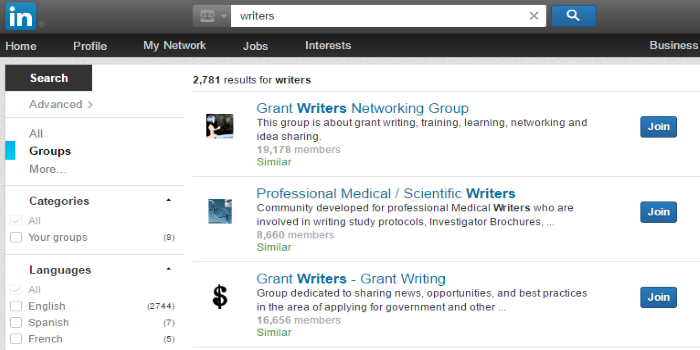
To search for a new group, simply type in your desired keyword into the LinkedIn search bar, then sort by “Groups” from the panel on the left. Click “Join” or “View” from the group you would like to become a member of, and wait for approval.

linkedin groups traffic

Be Picky

Refrain from joining dozens of niche groups thinking that more is better. This will only divide your attention and ultimately overwhelm you.

Instead, go for a handful of groups that have at least 10,000 active subscribers. This number is entirely subjective, but it’s better to join fewer groups with more members than having to participate in too many of them on a daily or weekly basis.

Analyze their Usefulness

Once accepted, analyze the overall engagement and level of interaction within these groups. Are people contributing often? Are they posting useful content and obeying the rules? Is the group owner actively involved and moderating it?

It’s important to join a well-maintained group because it essentially weeds out the bad apples and leaves you only with high-quality members. If you don’t feel comfortable with any given community, drop out and replace it with another.

Get Involved

Just to be clear: Getting involved does not mean spamming the group and dropping your links hoping for the best. Instead, become a valuable member by posting helpful topics and answering questions you are familiar with.

The most important part is to remain consistent by not disappearing for several weeks on end. Turn this into a daily habit and contribute while drinking your morning coffee or while watching a television show. However you decide to tackle this task, make sure you stay involved long-term.

Promote, But Not Much

You know how this one goes, but I will throw it out there anyway: Post non-promotional (and helpful) content 9 out of 10 times, and your group’s members will love you. This is where getting traffic from LinkedIn groups comes into play.

Say that you joined a group with 25,000 active members. You consistently provide useful information and are generally helpful. When you finally do post a link to your own website or property, people will already trust that you provide nothing short of great value.

Considering these members respect and value your input, you can safely expect a good engagement rate as a result.

Create Your Own LinkedIn Group

Joining an existing group grants several great benefits, including the fact that you’ll already have access to a large, niche audience almost from the get-go.

When you create a new group, however, you get the glorious benefit of sending out emails that reach your followers’ real email accounts. It’s like creating a hyper email list of members who know you a bit better thanks to your daily posting and sharing habits.

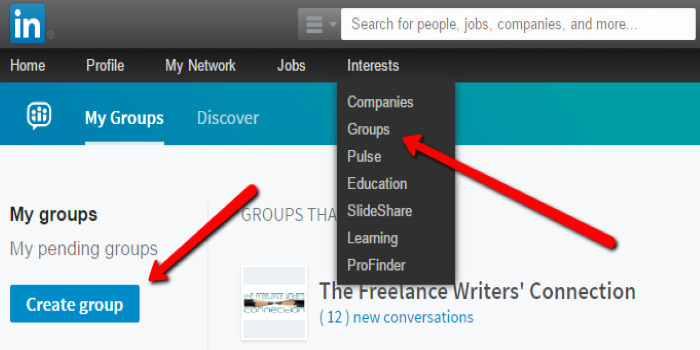
To create a new group, click on “Interests>Groups>My Groups> and finally, “Create Group.” Fill out all required information, and you are ready to go.

create (Custom)

I suggest you send out regular emails (perhaps bi-weekly) linking to useful member posts, as well as your own. It’s the perfect way to keep everyone happy and fully acknowledged.

In addition, you have a better sense of control because you’re not playing in “another person’s playground” but rather on your own.

From this point forward, connect with niche members and consistently invite people to join your new group.

Final Thoughts

Getting traffic from LinkedIn groups is a bit of an art and a science, but thankfully it’s all very manageable with the right mindset and approach.

Many bloggers are aware of LinkedIn groups, but not everyone has taken the time to truly leverage their potential. The key component here is to treat them just the same way you would handle your own blog and newsletter campaigns. Make them a part of your daily management; your hard work will soon pay off.

Don’t miss:
How Do I Start Promoting My Blog On Social Media? A Beginner’s Guide

06 May 18:18

After You Ask This One Question, You Can Ask Your Prospect Anything

by pcaputa@hubspot.com (Pete Caputa)

Questions are the key to sales. From the first insightful question that makes a prospect think, "This person might have something to offer me," to the ones that get a prospect to realize, "We need what this company has," to when you finally hit pay dirt and prospects say, "Yes! We are ready to solve this problem once and for all," questions are what drive a sales process forward.

Unfortunately, most people hesitate to ask the tough questions that challenge a prospect to think critically and differently about their situation and help a prospect visualize a better outcome or a surer path to their end goal. Why? Because these same questions challenge the status quo, piss off change-resistant influencers, and potentially offend decision makers.

In addition to being unsure how to ask the question, many salespeople suffer from what Dave Kurlan has dubbed a "need for approval." But it's not their prospects' feelings they care about. Salespeople don't ask difficult questions because they're afraid to lose the deal. They choose ignorance not because of their kindness and concern, but because of their fear and selfishness.

Okay. Hopefully I've made you feel guilty now. (See? You're already reaping the benefits of me suppressing my need for approval.) Are you ready to do the right thing for your prospect -- which just so happens to also be the right thing for you?

How I Learned to Ask Tough Questions

I first learned about the "need for approval" as one of many sales weakness when I hired Rick Roberge as a sales coach.

My objective management group sales assessment showed that I had a slight need for approval. I was afraid of rocking the boat with prospects, and believed they needed to like me to hire me. I'm not suggesting that people will do business with salespeople who they don't like. But we don't actually need our prospects to like us -- as much as we need them to respect us. And when establishing respect is in opposition to maintaining your likeability, you must risk sacrificing likeability.

When business relationships begin, they are often full of pleasantries. Prospects usually start conversations about things that are safe for them to share. They'll use positive words and are more comfortable talking about strengths and goals.

But to really get to the heart of why a prospect needs (or doesn't need) your solution, you need to get past the niceties and identify their priority issues. Salespeople must ask the questions that get prospects to open up about areas of concern, frustrating challenges, and personal consequences of inaction.

Over a year or so of coaching, Rick helped me overcome my need for approval. He taught me multiple things I could do when it felt risky to ask the tough questions. One of the most effective things he taught me is a simple question that allowed me to get permission from a prospect to ask the question. This lesson has served me well over the years -- you can learn to use it below.

I might have gotten over my need for approval a bit too well, actually. Years later, I remember a conversation with HubSpot CEO Brian Halligan where he said, "The problem with you is that you don't really care what other people think of you."

The truth is, I do care -- deeply. But when people hide the truth or stand in the way of achieving an important goal, I am willing to risk being liked. Too many people are afraid to risk their jobs or relationships to ask the tough questions, call out their peers, or challenge their boss's point of view, and that's understandable.

But a salesperson has less to lose: A deal instead of a job. Salespeople who ask tough questions of prospects, especially when those prospects are decision makers, usually earn respect and ultimately more business.

How Asking Tough Questions Uncovers a Prospect’s Compelling Reasons to Buy

Another one of Roberge's students, Carole Mahoney, became an independent sales and marketing consultant herself a few years ago. At her firm Unbound Growth, she is passing along Roberge's approach to her students.

One of her students, Michael Douglas, recently published an article explaining how he finally got over his need for approval and how that benefited him and his client.

In a meeting Douglas recently had, with his boss along as an observer, he learned the value of risking likeability to earn respect. Here's a transcript of the meeting:

MD: Alright, so we have this list of agenda items that you provided before the meeting. Where would you like to start?
Prospect: Let’s start here. [Points to the first item.]
MD: Okay, why do we want to start here?
Prospect: [Chuckling] Well, I guess because it’s first on the list.
MD: Is it the most important?
Prospect: Well, it’s all important.
MD: Okay, so help me out here. If you were to rank this in terms of value -- low, medium or high -- where would it fall?
Prospect: I don’t know. Probably low to medium.
MD: [After a pretty long pause.] You don’t know me very well. But if you decide you want to know me better after today, you will learn I am a very transparent guy. I have a question, but I am afraid to cross the line. If I ask it, and you think I crossed the line, will you tell me?
Prospect: [Looking at Michael with a puzzled look] Well, I am a transparent guy too so yeah, I’ll tell you. What’s your question?
MD: You don’t seem like the type of guy that flies by the seat of his pants. You have two hours scheduled with us today. You have brought in your team. Why would you commit that kind of time and resources to something that is a low to medium priority?
Prospect: [Looks down thoughtfully at the list]. Well, the first agenda is a medium to low for me, but a medium to high for my team. But the third one on this list is my highest priority right now. Our CEO is on me to fix that.

Don't think you could pull that off? Did you feel your stomach wrenching as Douglas persisted even after the prospect resisted answering his question the third time he asked it? How about the fourth time? Nerves and all, I bet you can do it too.

And I bet you'll have the same result. If you need further encouragement, keep in mind that there were two senior executives in the room, and the company has $22B in annual revenue. The executive Douglas was challenging has a direct line to the CEO. If he can persist in this situation, so can you.

How to Get Permission to Ask Tough Questions

As demonstrated by the transcript of Douglas' meeting, the key to asking a tough question or challenging a prospect on something is to get permission first. There's multiple ways to ask for permission, but the best way to preface it is warn them of your intent and ask them if it's okay to proceed. Here's another way that you can more generally set up the tough question:

You: There's something I feel I should ask you. I think it's in your best interest for me to ask it. But I'm worried that it will upset you. [Pause here.] 
Prospect: What is it?
You: I think this question is important. I won’t be able to help you effectively if I don't ask it. But I'm worried that you'll be upset. If I ask it, will you promise not to be upset?
Prospect: I don't know if I can promise that, but I'm pretty tough.
You: Will you at least tell me if I upset you?
Prospect: Yes. I can promise that.
You: [Ask your question.]

You can even do a head fake and suggest that you’re not going to ask them:

You: Oh. You know what. Nevermind. Let’s keep going.
Prospect: No. What’s your question?
You: Can you promise you won’t get mad?
Prospect: Yes. Fine, I promise.
You: Okay. [Ask your question.]

Bonus: How to Ask Forgiveness When You Do Upset a Prospect

Some of you are thinking, "I still can't do that." If you still think you’ll crash and burn, prepare yourself to ask for forgiveness too. Here's an example of what that sounds like:

You: A few minutes ago, I feel like I really upset you and it changed the course of our call. Did I screw up?
Prospect: No. It’s fine.
You: Are you sure? Did I offend you with the question I asked or was it something else?
Prospect: Yes, the question felt a bit invasive.
You: Can we rewind a bit, then? I certainly didn't mean to upset you. Can I explain why I asked you that?
Prospect: Yes.
You: Well, in order to really make a recommendation that is suitable for you, I am trying to understand X. Without X, it's hard to know whether or how I can help you best.
Prospect: I see. I can understand that. That makes sense.
You: Okay. Good. So, does it make sense for us to continue talking about how I can help?

Asking Tough Questions Is The Key to Influencing Change

Asking tough questions is the key to consultative selling. Doing anything less is just order-taking. Sales success is not about repping the newest product, making the best pitch, or hunting morning, noon, and night until you find the perfect ready-to-close buyer. Sure, those activities get many salespeople to quota. But the real life-changing stuff -- the stuff that makes dreams come true for salespeople and prospects alike -- is when a salesperson manages to change a prospect's point of view through questions.

Use these permission-seeking and forgiveness-asking approaches to ask the tough sales questions. I bet you'll be surprised by your prospect's reactions. I bet you'll earn your prospect's respect, as well as their business.

Are you going to ask the tough question the next time you're on a sales call or will you chicken out? (See what I did there?) Continue learning about other sales qualification strategies here.

HubSpot Free Sales Training

06 May 18:18

The End of Mad Men Marketing

by Jeff Ernst

Traditional marketing is broken. The cycle of creating a campaign, figuring out how much money you can throw at it, then using vaunted, unverified, and irrelevant metrics to show how well you did doesn’t work anymore. Much like Don Draper, traditional marketing has become a victim of its own hubris, and there’s no “teach the world to sing” Coke commercial epiphany as the scene fades to black. Before you drown out your sorrows like Don, you may want to check your workplace policy on bourbon before lunch…

As a veteran marketer and avid fan of Mad Men, I admired the panache of Don Draper and his ability to deliver the perfect pitch. The storyboards, the ads, and the campaigns are all perfectly designed to convey a controlled message to an open, receptive audience. If you drank enough of the marketing Kool-Aid and attended the marketing unicorn BBQ, the only hindrance to greater success was that the evil financial overlords weren’t allowing you to spend more to reach more people.

In the end, the reason we as marketers have always thought we were successful, is because we’ve been fooling ourselves. We provided detailed reports of how many eyeballs were exposed to our advertising efforts. We believed that each copy of that newspaper or magazine traded hands 18.5 times and that the number of impressions that tweet got was a real number (in case you don’t know…it isn’t). Today, after decades of the C-suite saying they love marketing but they can’t ever understand the value or impact, they’re finally saying, “prove it.”

Marketers are competing for two things – consumers’ trust, and attention. When you look at the traditional methods of social media marketing, the stark reality is:

  • 88% of the people who like you on Facebook will never return to your actual Facebook page
  • Only 1% of those under 35 say a compelling ad will sway their trust in a brand
  • You can’t place “Likes” on a balance sheet
  • Most social marketing software uses inferred data

So if you’re still with me to this point, and wondering what does matter and how to measure success in today’s (and tomorrow’s) marketing world…here’s how:

  • Engagement: If you’re competing for trust and attention, engagement means at least you’re getting their attention. But what is considered true engagement? Think of it in human terms – what does being engaged in the conversation mean? It doesn’t mean just pushing the like button or following somebody. It means talking about your brand or engaging in the conversation – sharing content, mentioning your brand, something that says to their friends on social media “hey, I’m talking about this or doing this and wanted you to know.”
  • Conversion: This is where marketers can prove actual business impact. This can be in the form of earned media, list subscription, or actual sales, but it must be something proving that followers actually did more than simply like your post. That they didn’t just look at your social post and press the like button – but didn’t actually read it, didn’t share it with friends, didn’t sign up for your email newsletter, didn’t download a coupon, didn’t visit the store, didn’t buy anything. As much as “growth hacking” can have a variety of connotations, the core of it is simple – a melding of sales and marketing that focuses on constantly testing, measuring and driving results.
  • Loyalty/Customer Experience: This is your chance to provide the right customer experience that encompasses what drives both loyalty and advocacy. Many are starting to wrap their head around “flipping the sales funnel” and knowing that if you find the right customers, give them the best experience and nurture those relationships, they’ll tell other people about it. Those people become advocates and you can harness their enthusiasm for your brand and it will make an impact on both loyalty and new customers coming to you from word-of-mouth. All of which can be measured.

So put down that bourbon, embrace the end of “Mad Men Metrics,” and focus on taking the necessary steps to ensuring your business, your job, and your results are sustainable for a long and prosperous future.

06 May 18:18

How to Use Your Content to Reach Millennials

by Keely Bailey

There’s a reason you’re constantly hearing and reading about Millennials—those born between about 1980 and 2000—because they are an enormous group of consumers with enormous buying power. According to a report by the consulting firm Accenture, there are about 80 million Millennials in the U.S. and each year they spend approximately $600 billion. They’re not just self-involved teens anymore either, Millennials now include those in their 20s and 30s, those with careers, homeowners, parents. By 2020 Accenture projects this generation’s spending as consumers in the U.S. will balloon to $1.4 trillion annually and represent 30 percent of total retail sales in this country.

This cohort of customers has also redefined marketing, resetting expectations of what people will get from brands both on and offline. What worked with their parents and their grandparents doesn’t work for Millennials. Google Think talks about “Gen C”, which it also calls (somewhat self-servingly) “The YouTube Generation” as a “powerful new force in consumer culture…. people who care deeply about creation, curation, connection and community.” Although Gen C isn’t defined by age, 80% are Millennials.

Reaching them is both easy—Millennials are plugged in to every social network via every known device on the planet—and tricky. What works is content that’s engaging, clever, useful and/or entertaining. One example is Tasty, Buzzfeed’s food and recipe video network that launched less than a year ago and is now the largest food network in the world. Its success has to do with its ability to connect with its audience, largely Millennials, by delivering to them what they like in the way they like it—videos about food that are short, visually engaging, easy to understand and potentially do-able.

You may not need a food network to reach your Millennial consumer, but you can create the kind of content that connects with them and that they want to share on social media. Here’s how:

Get their attention.

To get anyone to take an action, you first have to get their attention. That’s not easy to do with Millennials, who are bombarded with thousands of marketing messages each day. They generally tune out what doesn’t feel relevant or compelling. Your job is to get them to engage with your business and your brand, and that’s where high quality content comes in. Millennials are the first generation to be open to engaging with ads and content (not just receiving them). They will share them, but only if the content is worth sharing, which it often isn’t.

A study by Yahoo, Tumblr, Razorfish and Digitas found that 45% of Millennials don’t find ad content worthy of sharing. That means marketers need to do a better job of understanding what resonates with this generation. Another study done by youth market research firm Voxburner, The Youth Trends Report 2015, found that short, concise, visual and collaborative content is what will get the attention of Millennial consumers. Create ads or content campaigns (whether that’s blogs or email newsletters) that are short, clever and insightful.

Give them something of value.

Millennials consume a boatload of content each day in a variety of forms—blogs, news, online shows, social network posts and video. They watch a lot of videos, on a variety of platforms and devices. Your business needs to have a multi-platform marketing strategy that pulls Millennials in with content that engages, entertains and informs. Most of all, you should be creating and distributing non-commercial information that consumers find useful. Content marketing shouldn’t be self-serving (although ultimately it will serve the business). About 40% of Millennials don’t mind seeing ads if they are relevant to their lives, according to a YouTube-Nielsen multi-screen audience study, but they are highly sensitive to being played—if the brand’s message doesn’t resonate with them, that content or ad will be dismissed as noise. The information you send out should enhance their busy lives in some way, from offering an easy recipe for a weeknight dinner to a 6-second Vine video that makes them laugh.

Create an active community.

Millennials are inherently social creatures, and their social interactions—as in social networking—give them a sense of self. Google Think’s report said that “they are what they like, share, +1, tweet, comment on, retweet….” It also is how Millennial consumers determine what they will buy. They depends on others—whether that’s friends and family or review platforms like Yelp, TripAdvisor or Angie’s List—to get information, advice and recommendations. Your content will create a community around it by telling the story behind your business and the people who make it great. When your audience gets to know you and your company’s expertise, they are more likely to trust you and want to be part of that community. Encourage them to comment on blog posts and other content and then share their comments with other customers and readers. Provide teasers to your content on social media, invite them to your blog. Let them choose to sign up for your emails because the really like what you have to say.

Keep it real.

In every piece of content you create to promote your products, services and brand, be authentic. What you want is to inspire some kind of emotional attachment to your brand, but the only way to do that is to be straight with your Millennial customers. They are eager to share content that’s funny, poignant, speaks to their lifestyle or spurs them to action. It gives them credibility and validity within their communities, which is why content that’s pithy, smart, shocking, beautiful—you get the idea—will be readily shared and commented upon. Perhaps most importantly, it will begin the conversations you want to be having with your customers.

06 May 18:17

Three Ways to Get Your Product Reviewed on Amazon Right Now

by Michelle Penick

With as much noise as Amazon.com likes to make whenever it launches something new, the addition of Video Shorts to its website in 2014 was conspicuously subdued. Essentially the section was created to be a repository for short video content in the same vein as YouTube. However, the interesting thing is that Video Shorts isn’t trying to go head to head with the YouTube juggernaut—it’s acting as a promotional tool for Amazon’s retail department. Why brands should take note is because Amazon’s smaller library of videos means less competition for views, so video content producers can disseminate a targeted message as widely as possible.

But, as with anything regarding video marketing, the name of the game is getting eyeballs on the content—and more importantly, racking up those video reviews. Here’s how brands and marketers can get more reviews for their product clips on Video Shorts.

Seek and accumulate

Some companies like to take a shortcut and post fake reviews to pad their Amazon account with glowing feedback. This is a big no-no. Today’s consumers value authenticity above all else. The good news is that brands don’t have to search high and low for authentic reviewers. All that’s required is for companies to visit their own product page on Amazon and search for the “Customers who viewed this item also viewed…” tab. Next, look at the reviews for competing products and aggregate these reviewers in a spreadsheet (Google Docs works well for this). Then comes the hard labor of contacting each reviewer one by one and telling them there is a short video they might enjoy watching that features a product they have a proven interest in. Kindly request the viewer to leave a review if he or she is intrigued by the product video.

Those who don’t already have a product page on Amazon should get one ASAP. The beauty of Amazon Video Shorts lies in the potential to reach the consumer at the zero moment of truth—there is a link directly to the product on the right side of the video.

Reach for the top

While it’s certainly ideal to have a robust accumulation of reviews from enthusiastic, everyday Joes and Janes, it’s the “Top Reviewers” who are the real big fish. These are the semi-pro Amazon reviewers who have espoused enough opinions that they’ve earned a place at on the website’s “top customer reviewer” list. This carries a lot of weight in the online commerce community.

The method of seeking out Top Reviewers may be slightly different than finding those who’ve reviewed similar products—but it’s just as simple. Those who go to Amazon’s Top Reviewers page and drag the cursor over individual reviewers will find that their most-used tags appear. It’s up to the brand to find those reviewers with tags relevant to their particular product and note them in the spreadsheet. Sometimes the reviewer’s email is listed in their profile, and if this is the case then it’s time to shoot them a message. Always be polite and deferential in the quest to persuade folks to leave a review of a product.

And remember, the more the merrier, so keep adding names to that spreadsheet. Video marketers the world over will all say that having 100 4-star reviews is always better than 10 4.5-star reviews.

Leverage social media, newsletters and email

It’s also vital to utilize consumer data already at hand to drive people to Amazon Video Shorts. Anyone looking to get more reviews should have a call to action at the end of each one of their social media platforms, newsletters and email blast campaigns. These prompts should, among other things, link to the Video Shorts page and encourage satisfied customers to leave a review of the video. For brands who already have a healthy following on social media of satisfied customers and interested fans, it won’t take very much to leverage some of that goodwill in the form of a review.

One final lesson to be learned is that it’s unwise to look for an alternative to YouTube. Google’s clip site will be the big dog in town for the foreseeable future. What’s crucial is for brands to diversify video-marketing outlets, such as by utilizing Amazon Video Clips in conjunction with YouTube. Doing so will widen the audience across multiple platforms and ultimately drive more sales

06 May 18:17

Why Buyers Spend Only 32% of Their Time Talking to You

by Jean Moncrieff

Buyer_Persona_Blog_2.jpeg

According to a recent Gartner study of 700 buyers across the US, EMEA, Brazil, India, and China, buyers spend only 32% of their purchasing journey interacting with supplier-side content or sales people. The vast majority of time being spent on internal assessments, peer discussion and the recommendations of external experts. The bottom line, you’re getting into the game too late.

If you’re old enough, you’ll remember when it was super exciting to receive an email. Now you probably multi-select and delete them. And the whole content marketing strategy seems to be going in the same direction. We are being inundated with content – likely a significant portion of the most of the emails you delete everyday. And then there are the pop-ups, you’re out looking for helpful information and the first thing that happens when you open a website, a big pop-up asking you to sign up for some kind of offer – close the site.

Basically, marketers are getting lazy. Simply pumping out content designed to entice prospects into parting with their contact details so that the sales team can start pestering them. At the same time buyers have become so independent in their buying decision that good content isn’t getting to them until it’s too late in the game.

It’s time to reset; time to understand the process your buyer really follows when making a decision to purchase.

I’ve just finished listening to an excellent podcast were John Jantsch (Duct Tape Marketing) interviews Adele Revella from Buyer Person Institute. In the interview they talked about the need to move upstream in the buying process. As John puts it: somewhere between, “I need to go home earlier” and “I need an outsourced printing service”. Essentially you’re finding the marketing sweet spot – that point when a buyer identifies a problem or uncovers a need.

How do you find this information? Good question. You develop buyer personas.

But beware, this is where it can all go horribly wrong. The mistake most people are making is to take a rather simplistic view of how buyer personas are created. Instead of speaking to customers, we look inward – interviewing sales staff, customer support professionals, and the executive team. When the most important interview is with the customer.

Another common mistake happens when you put together a list of 8-10 customers to interview and their all your favourite customers. Make sure you include customers who have been a challenge to win, even prospect you didn’t win.

Then, when it comes to the interview, Revella suggests abandoning the scripted approach and starting with one simple statement:

“Take me back to the day your company first decided they needed a printing solution.”

You need to understand what happened in the early stages of the buying process, how your customer wrangled with the decision to use your company (or not). Listen to their story; the highs and lows of the decision-making process; the obstacles they had to navigate in selecting your company; the challenges in making sense of all the information they found along the way.

You can only do this by asking open-ended questions, listening, and probing throughout the interview. Doing this will allow you to understand exactly what you did to win their business.

You may be thinking, but creating buyer personas is only something for big businesses. And that’s you’re wrong. Why? Because most SMEs are thinking the same way.

This is your opportunity to get ahead of the pack!

Your customer will tell you exactly how they made their purchasing decision, from the moment they identified a need – it’s like having the answers before the exam. All you need to do is take the answers and use them to win over prospects.

Here’s the link to the podcast I mentioned, I recommend listening to it – podcast with John and Adele.

If you want to learn more about buyer personas and the buyer’s journey, download a copy of our Digital Distillation Plan.

12-Week Digital Distillation Plan

06 May 18:15

Marketing is from Mars, Sales is from Venus

by admin

Some things are predictable. Politicians lie. The sun rises in the East. Sales and marketing don’t get along.

The misalignment between sales and marketing is legendary to the point of cliché. The reasons are both obvious and not-so-obvious, yet all distill down to perspective. Neither sales nor marketing can change their perspective, nor would that be desirable. But one of the two teams can adapt. This will not end the misalignment, but it will increase profits.

Perspective

A definition of the word perspective is “the faculty of seeing relevant data in a meaningful relationship.” The gotcha word is “relevant”. What is relevant to a salesperson struggling to make their quarterly quota is different than what is relevant to a CMO trying to enhance a brand.

People with different perspectives rarely unite. Airlift a rural bible-belt citizen into a San Francisco transgender convention, and there will be little shared perspectives at first (though some begrudged concessions may occur after chitchat and cocktails). The perspectives not shared between sales and marketing are numerous and profound. Yet only one side has the ability and leisure to obtain a little of the perspective of the other side.

Where are the differences? A short list includes:

Sales

Marketing

Short-term focus Long-term focus
Art (selling) Science (strategy)
Agile Methodical
High-context (people-to-people) Low-context (broadcast)
Urgent (make your numbers) Passive (enduring success)
Quality (sales ready leads) Quantity (find then filter)
Deals Lifetime relationships

Distilled a bit, we see that sales has a different perspective on both the relationship to the customer as well as his value to the organization. Phrased perhaps to curtly, sales closes deals and puts cash in the bank, and does so by the end of the quarter. Marketing tries to make the entire market want the company and the product. Narrow versus broad. Immediate versus extended. Tactical versus strategic.

This dichotomy explains things like why sales won’t complete their CRM entries (which feeds long-term marketing needs) and marketing won’t generate yet another piece of collateral for a tiny subniche.

Mind the gap

Here is the big point. Sales cannot adapt to marketing. Certain small functions can be improved through coercion (such as sales completing their &^%#&^ CRM records). But sales cannot, and perhaps should not, be forced to see the world from marketing’s perspective. Sales people are hunters. Having them pay attention to every aspect of game management would keep them from bringing home dinner.

Marketing cannot be sales’ hand-and-foot servant either. Marketing needs to constantly think about the holistic nature of the market, product and buyers’ perspective. But marketing can adapt to sales, adding the perspective sales has to all the perspectives marketing studies (think of your sales team as yet another personae). By accepting that sales needs to be sold to, and that this begins with understanding their motivations, marketing can build a use case for the sales team.

From outside in

Like any go-to-market strategy, this begins by understanding the customer and their major motivations (sales needs to close deals within a limited amount of time, and do so quarter after quarter). To do so, they need a whole product (sales ready leads and the right arsenal of sales tools). The product that marketing designs for sales is thus geared to meet their primary motivation. It does not have to meet every motivation (just as your real products don’t have to meet every need or want of your regular customers), but the big needs must be satisfied, and the small ones understood.

Delivering this is the first step to creating a relationship with your sales team as you would in creating a relationship between customers and your company. Only once that initial trust (sale) has been made, can the relationship be made deeper, and you can ask for more (such as completing those &^%#&^ CRM records).

06 May 18:15

How to Make SaaS Inbound Marketing Work for Multiple Personas

by Kristen Hicks

saas-inbound-marketing

When your SaaS product gets into the hands of the right people, it can make a huge difference for them. You’ve seen it. If you can get those people who really need what your software can do to the point of trying it out, then the hardest part of your job is done.

You already know inbound marketing can help with that, but there’s still one big problem: The “right people” for your product don’t fit neatly into any one category. Maybe your software is equally useful for B2C and B2B customers, or maybe it can serve different but equally valuable purposes for different demographics.

You want to make sure your SaaS inbound marketing campaigns are designed with your audience top of mind, but how can you make sure you reach everyone with relevant information when their needs and concerns are different?

While it’s tricky, it can be done. Here’s how.

1. Determine which personas should be your priority

When companies start building out personas, it can be easy to go overboard. Trying to focus on too many personas at once is a rookie mistake.

You don’t need a persona that represents every possible type of person that might ever need your technology. Figure out which customer types are the most valuable to you and focus your efforts there.

Don’t worry about leaving people out if the personas you focus on don’t accurately reflect all of your customers. That’s not their job. In addition to helping you get inside the heads of your prospects, they’re also meant to help you clarify your focus.

You can’t be everything to everyone, so focus your attention on the few (usually three to five) audiences who can best use your product.

2. Identify the benefits and priorities common to each

When you’re confident you’ve narrowed down the list to the main personas that are most important to your company, the next step is to figure out what they have in common. What challenges do they all face? What does your software offer that benefits all of them?

CopyHackers suggests drawing out a Venn diagram to help you better identify the benefits that are useful across personas. This exercise helps provide you with an easy shorthand for where to focus when creating any marketing materials or messaging that should appeal to everyone, like your tagline or the copy on your website home page.

You can provide more specific, relevant messaging in other spaces, but you will need an overall message and positioning that speaks to everyone.

3. Build out separate campaigns for each

The unfortunate truth of marketing to multiple personas is that it means more work. The upside is, of course, the ability to deliver more relevant messaging your prospects will actually respond to.

Irrelevant messaging isn’t just wasted effort on your part; it can hurt your reputation with prospects or even drive them away entirely. Twenty-nine percent of people say they’re less likely to buy products from a company that presents them with irrelevant messaging, and a whopping 54 percent say they’ll unsubscribe after a marketing message that’s not relevant to them.

That shouldn’t be surprising. If someone comes to your website through a PPC ad targeting their persona, but then finds themselves on a page all about the benefits your product offers to another persona, you can bet they’ll bounce and see little need to return.

That makes it well worth the work to build out distinct inbound marketing campaigns for each persona to ensure you’re delivering relevant content and messaging to them each step of the way. Be sure to deliver distinct search ads, content, landing pages and emails specific to their needs and interests.

4. Make it easy for people to find the content that’s for them

Everyone that comes to your website should have an easy time finding what they’re looking for. While we discussed the importance of developing an overall messaging that appeals to everyone for spots like your home page, that doesn’t need to be the only messaging visitors find there. Include a clear visual indication of where your visitors should go next based on which persona they fall into.

When you visit the Buffer site, for example, you get a summary of the overall benefit of its product: “A better way to share on social media,” followed by tabs that let you choose between Individuals and Teams, so any visitor can be sure to see the messaging that’s right for them as they move down the page.

buffer_homepage

ExamSoft does something similar on its landing page, with general positioning followed by an option to Select Your Business. Once you do so, you get customized positioning for that specific persona. It offers the same choice on its resources page; visitors can easily limit the resources available based on how relevant they are to their industry.

examsoft_landing_page

Creating content that specifically addresses the needs and interests of each persona is important, but it’s just as important to make sure your target audience can find the content you’ve developed for them without much effort.

5. Make sure your internal data keeps different segments clear

This is important for two reasons:

  • If your internal records don’t keep up with which leads and customers fall into which persona category, you’ll end up sending them irrelevant information (and we already saw how damaging that can be).
  • To improve your marketing efforts over time, well-organized analytics will give you a clear picture of how your specific campaigns are working for your different personas.

Don’t send emails to your individual users about how your software helps business teams collaborate. You’ll be wasting your own time and worse, wasting theirs.

6. Get really good at repurposing

Having specific marketing campaigns built around multiple personas will be more work than targeting all your marketing to one, but it doesn’t have to mean a multiplication of your efforts. Some of the work you do for one campaign can be slightly tweaked so it’s relevant for another.

HubSpot has different blogs for different personas: one for agencies, one for general marketing information, and one for sales departments. Instead of writing three times as much content, whenever a topic they cover could be useful to multiple audiences, HubSpot writes slightly different posts on the same subject with tweaks that make them relevant for each.

A recent post on alternatives to sending a “just checking in” email was published both on their sales and marketing blogs. If you look at the two posts side by side, you’ll see that they cover the same territory—the writer didn’t have to completely rework the whole post and what it was saying—but there are enough little changes to make it a different post that’s crafted more with each specific audience in mind.

Creating great content is a big investment. Any opportunity you can find to make your marketing efforts stretch further is worth considering, and repurposing your content for different personas when it’s relevant to do so is a smart way to get more out of your efforts.

You know an audience is out there that needs what your software can do for them. It’s your job to clearly identify who they are, what they need, and make sure you get the right messaging to the right people to help them find you so they can give your product a try. It’ll take some hard work, careful planning and good organizational skills, but with these tips, you can deliver relevant inbound marketing campaigns to all of your important personas.

06 May 18:15

How a Data-Driven Buyer Journey Builds Better Customer Relationships

by Sharmin Kent

The range of technologies available to sales and marketing is vast and growing. And companies of all sizes recognize the value of sales and marketing tech: according to the 2015 Salesforce State of Sales, top teams are eight times more likely than underperformers to be heavy tech adopters. The report also reveals that high-performing companies are three times as likely as underperformers to view sales as the responsibility of the entire organization.

It’s clear that for companies to win and maintain customers, sales and marketing teams must work together consistently and efficiently. But how can companies ensure sales and marketing stay on the same page? It turns out that putting customers at the center of sales and marketing efforts lays a strong foundation for building the best process, from first interaction to long-term customer relationships.

By using a well-crafted tech stack, creating a shared set of goals and using data to personalize customer experience, companies can build a data-driven sales and marketing process that attracts the right prospects and converts them to loyal customers.

Share the same goals

It’s still common for companies to have completely different metrics for sales and marketing teams. But creating a single, comprehensive approach to the buyer journey gives companies the power to move more deals through the funnel. If an overall revenue goal isn’t met, it doesn’t matter how many leads were generated – the entire company loses.

“If you can’t buy a beer with it, it’s not a good metric,” said Matt Heinz, president of Heinz Marketing. “How an organization is structured is less important than common than common objectives.” It’s important for sales and marketing leaders to share knowledge as well as goals, so that their teams can give prospects the personalized attention they need to move to the next step in the sales process.

Use the same tech stack

Choosing solutions that play well with other technologies is critical to ensuring that sales and marketing teams current and accurate prospect data throughout the buyer journey. Whether it’s building a tightly integrated tech stack that pushes data throughout the process or finding a platform that sales and marketing teams can use together, giving companies a single source of truth makes data collection much easier.

“Creating an ideal customer profile is an integral element of our sales and marketing strategy,” said Phill Keene, manager of demand generation at TinderBox. “Part of that strategy requires us to give our sales and marketing team the ability to share knowledge in one place that’s accessible to everyone.”

Use data to personalize

Data is the answer to many sales and marketing conflicts, but it’s most effective when used to create a personalized experience for customers. Not every prospect will follow the same journey; that means companies must use the data they have to craft messaging, sales assets and late-stage content to serve their specific needs.

“Everyone knows people respond when they’re touched multiple times using a variety of media,” said Trish Bertuzzi, president of The Bridge Group. “But where things go awry is when prospect end up in the same vanilla nurture streams. Sales and marketing should look at different nurture tracks for different prospects. We have the technology – what we don’t have is the agreement to treat different buyers differently.”

When customers are treated as the top priority of an entire organization, sales and marketing teams can create a seamless internal process that translates to an effective and satisfying buying experience. It’s easier said than done – but the tools are available to companies willing to use them.

Download our free e-book to learn the secrets of the most productive salespeople.

05 May 20:30

How to Measure Your Sales Enablement Success

by Aaron Riddle

measuring-sales-enablement-success

Your marketing and sales efforts are heavily dependent on each other. Many organizations have both teams on their staff and some more than others are working separately to reach individual department goals.

Sales Enablement is a term that gets constantly brought up in many organizations, but is usually a concept that gets either pushed to the wayside or lost in the shuffle. Its potential benefits to your organization however, need to be considered, pursued and implemented to further improve your sales and marketing efforts.

Whether you are just getting started with a sales enablement platform or strategy or looking to improve your current efforts, there needs to be an accurate way to measure your success over time and learn new ways to continue helping your prospects down the funnel to becoming customers.

So how do you measure your sales enablement efforts effectively and successfully? Take a look at these ways to get you going on the right path:

1. “Ask Why”

In order to begin measuring your sales enablement efforts, we need to get back to why we are implementing or have implemented this type of strategy to our organization.
For you, it could mean that marketing is providing a consistent amount of leads and traffic, but your close rate after they’ve been handed to sales is low. Or, your looking to get a better handle on your marketing efforts and what is working with your sales team.

Take a look at the visualization at how sales enablement sits within the modern day sales funnel:

salesenablementchart3

Implementing or improving on your sales enablement strategy or function can change the overall focus of your organization and move it from a very operational focus of days past to a very strategic focus.

Organizations with an effective sales enablement function were:

salesenablementchart2
Demand Metric and HubSpot Joint Study 2013

By looking back at the question of why, you can begin brainstorming the key measuring factors to create and further move your efforts down the funnel.

2. Measure Effectively

You’ve gone back to analyze the why in your strategy and can now begin to put together the pieces to measuring the successes of your strategy. Your results can always can be sent back to a handful of metrics (Conversion Rates, Clickthroughs, Time to Quota), but that’s not the only piece you should be considering.

When looking at sales enablement (and with most launches of new initiatives), there needs to be a gradual approach to success. Trying to implement a sales enablement solution with a one-time initiative will never work and will most certainly fall to the wayside after a couple of weeks. Condense your efforts into multiple steps for an increased success rate and to keep it constantly on the minds of your sales and marketing teams (chat clients, email addresses set to sales and marketing only and other internal systems are great ways to keeping all of your feedback in one place).

HighSpot has a great five-stage maturity model to getting started at measuring your organizational success. This is a great example to see where you are at now and to better understand where you need to go. Although this doesn’t cover everything involved with the sales enablement process, it touches most of the points you’ll need to look at for success.
salesenablementchart1
HighSpot’s 5 Stage Maturity Model

A great way of getting started is sitting in on these conversations (as marketers) or listening to recordings of these conversations or email chains to find out exactly what types of questions your prospects are asking. From here, you can identify frequently asked questions as potential places to begin supplying content to your reps.

3. Analyze and Refine On Your Results

Now that you know the why and the what should you be measuring for continued success, now you need to know what to do with this data once it starts coming in from your organization.

What is the feedback you are receiving from your sales reps? Are they even using the tools you are providing? Better yet, how are your prospects doing post-marketing handoff? By asking these types of questions to your sales teams, you can begin to refine your approaches to what’s working and make improvements to what’s lacking and not working in your approach.

In the end, implementing a sales enablement strategy is an ideal approach to improving your sales efforts and aligning your marketing messaging and efforts with your organization. With the measuring in place, you can begin to show actionable results to help propel your results into the stratosphere.

Are you utilizing sales enablement efforts for your organization? If so, what are some ways you’re currently measuring your success?

The Smart Guide to Sales Enablement

05 May 20:12

Sleuthing by RBC’s Neil Downey reveals CAP REIT’s surprise shareholder

by Barry Critchley

According to Neil Downey, a managing director and real estate analyst at RBC Capital markets, the evidence is beyond a reasonable doubt.

What’s less clear is the motives behind the news that one real estate investment trust is the largest shareholder in another real estate investment trust.

In a note to clients this week, Downey said he has been convinced “for some time” that RioCan REIT (REI) has a major stake in Canadian Apartment Properties REIT (CAR.) Now “with Q1/16 disclosures, we now see evidence beyond a reasonable doubt that REI is CAR’s largest unitholder,” wrote Downey, who is a tad perplexed about the strategy behind the investment that was valued by RioCan at $323 million at the end of the first quarter.

He is perplexed in part because the two REITs operate in different parts of the real estate world: RioCan owns and manages Canada’s largest portfolio of shopping centres with ownership interests in a portfolio of 303 Canadian retail and mixed use properties, while CAPREIT defines itself as owning “multi-unit residential properties, including apartment buildings, townhouses and land lease communities located in or near major urban centres across Canada.”

Downey reached his conclusion about RioCan’s interest in CAPREIT through old-fashioned sleuthing. When RioCan reported this week, its financial statements showed $323 million of available for sale marketable securities (AFSMS.) Those securities were included in RioCan’s receivables and other assets and are determined on a mark to market basis.

Downey’s sleuthing further revealed that RioCan has been accumulating its AFSMS portfolio for several years. At the end of 2013, for instance, there were no holdings. But six months later (the second quarter of 2014) the investments had grown to $125 million. At the end of 2014, the holdings stood at $230 million: by the end of 2015 they had risen to $301 million.

Sleuthing was required because Downey writes, “RioCan has never disclosed the particulars of its AFSMS.” But RioCan does refer to “dividends and/or distributions arising on available for sale investments.”

In reaching his conclusion, Downey compared the unrealized gains or losses in RioCan’s AFSMS versus the change in CAPREIT’s unit price. And since the first quarter of 2015, there has been virtually no variance between the two. In Q3 of 2015, for instance the variance stood at -0.1 per cent; for the last two quarters the variance has been 0.0 per cent.

Downey then used a second piece of analysis to reach his conclusion: he looked at the income yield on RioCan’s AFSMS holdings and compared that with the distribution yield paid by CAPREIT. Comparing those two variables also generated zero variance.

Downey posited a possible reason for RioCan’s investment: it may fit with RioCan’s long term goal of developing about 18,000 multi-residential units which will be a mixture of rent and for sale. “Yet, REI has yet to develop the specific in-house expertise in this business whereas CAR has, in our view, a very strong operating platform,” he wrote, noting that RioCan has nixed the idea of acquiring an apartment manager.

Whatever the motive, Downey feels the investment is “validation of the calibre of CAR’s portfolio and platform.”

Calls to RioCan seeking a comment weren’t returned.


05 May 20:11

Let pharmacies sell medical marijuana, Loblaw president Galen G. Weston says

by CB Staff

TORONTO – Galen G. Weston wants in on the medical marijuana business.

Weston, the head of the country’s largest drugstore and grocery chain, said Thursday that pharmacists are well-positioned to dispense the drug in a safe manner.

“We’re an industry that is extremely effective at managing controlled substances,” said Weston, Loblaw’s president and executive chairman, following the company’s annual general meeting Thursday.

“It gives pharmacists the opportunity to work directly in real time with patients as opposed to doing it through the mail, working on their doses and making sure it actually has the therapeutic effect that it is intended to have.”

Although he doesn’t see any “safety or credibility” issues with the current mail system, where patients are sent the drug from a licensed producer, Weston said patients would be able to receive more consultation if the dispensing was done face-to-face.

If given the go-ahead from Ottawa, Loblaw (TSX:L) would be open to dispensing medical cannabis in all forms, at all their Shoppers Drug Mart and grocery pharmacy locations, Weston added. The company operates about 1,700 pharmacies under its various banners.

The pitch from Weston is not entirely new. A spokeswoman for Shoppers Drug Mart delivered a similar take in February in its efforts to persuade the federal government to allow pharmacists to sell medical marijuana.

Still, his comments mark the latest sign that the marijuana industry is increasingly seen as a legitimate way for businesses to make money in a hyper-competitive retail sector.

Loblaw is not directly lobbying Ottawa on the issue, but it is supporting the Canadian Pharmacists Association in its efforts.

Last month, the professional group updated its stance, saying it had growing concerns over what it calls a “lack of clinical oversight” in the use of medical marijuana if pharmacies don’t play a “front-line role” in providing access to the drug.

The Neighbourhood Pharmacy Association of Canada, whose members include London Drugs, I.D.A. and Rexall, also holds a similar view.

Under Health Canada’s rules, patients are only able to buy medical marijuana from licensed producers and are no longer permitted to grow their own, something they were allowed to do prior to 2013.

In February, a B.C. court recently struck down the law as unconstitutional. Federal Court Judge Michael Phelan ruled that forcing patients to buy marijuana through the mail from a licensed producer was an “arbitrary and overbroad” violation of patients’ charter rights.

Ottawa is looking at making changes to the regulations and expects to complete the process in August.

The Liberal government has also committed to legalizing recreational marijuana use, although no timeline has been given on that initiative.

Weston said Loblaw is currently focused only on the distribution of marijuana for medical use, not recreational use.

Follow @LindaNguyenTO on Twitter.

The post Let pharmacies sell medical marijuana, Loblaw president Galen G. Weston says appeared first on Canadian Business - Your Source For Business News.

05 May 20:10

Apple partners with commercial software giant SAP

by CB Staff

SAN FRANCISCO – Apple has announced a new partnership with German software giant SAP to develop mobile apps that business customers can use on iPhones and iPad tablets.

While Apple’s consumer product business is slowing, it’s been looking for new growth by tapping into the lucrative market for commercial technology. Apple has a similar arrangement with IBM to develop specialized apps for airline workers, sales clerks and other business users.

Under the new deal, Apple and SAP plan to release programming tools that software developers can use to build apps for Apple’s handheld devices. The apps will tie into SAP’s commercial software, which businesses use to manage inventory, manufacturing, sales and other operations.

Apple has recently begun selling “Pro” versions of its iPad tablets with features designed for business users.

The post Apple partners with commercial software giant SAP appeared first on Canadian Business - Your Source For Business News.

05 May 20:08

Creation of fourth wireless carrier will likely end up hurting consumers, study says

by Terry Pedwell, The Canadian Press

OTTAWA — Consumers were on the losing end of a gamble by the former Conservative government when it sought to create more competition in the wireless market by interfering in it, says a new report released Thursday.

And researchers at the Montreal Economic Institute say the country’s telecom regulator can learn from that failed policy by backing away from calls to interfere in the broadband Internet marketplace.

The report, titled The State of Competition in Canada’s Telecommunications Industry, says the sell-off of broadband spectrum last year that resulted in the takeover of Wind Mobile by Shaw Communications created “phoney” competition and will likely result in higher — not lower — wireless prices.

The Tories under former prime minister Stephen Harper touted the wireless spectrum sale as a way to create a viable fourth national wireless carrier.

That, they said, would create more competition and cut consumers a break on their cellphone bills.

It was a populist move that fed off a perceived sentiment of consumer outrage over some of the highest cell phone rates in the industrialized world.

But the study authors say the creation of that fourth player through Shaw’s $1.6 billion takeover of Wind last December means the company will have to invest hundreds of millions of dollars in equipment upgrades, with an expected increase in Wind mobile rates to pay for it.

“By insisting on the benefits of a fourth wireless player, the previous federal government went against a worldwide trend of consolidation in the wireless sector and embraced a static view of competition,” said the report.

“Can we have a sensible policy of not encouraging phoney competition but encouraging real competition?” asked study co-author Martin Masse, who sees the sale this week of Manitoba’s MTS to BCE as a prime example of how true market-driven competition should work.

Can we have a sensible policy of not encouraging phoney competition but encouraging real competition?

Despite that province’s loss of a major wireless service provider — and analysts who predict higher smart phone rates as a result — Masse said Manitobans may actually benefit from better service and stable, if not lower, pricing.

Masse notes that Bell and Telus are still small players in the province, which has been dominated by MTS and Rogers and already enjoys the lowest prices for wireless plans that include one gigabyte of data. BCE’s takeover of MTS will result in three major service providers instead of two large and two small players.

“I think that will increase competition there,” Masse said.

The report notes that Canadians are among the highest users of tablets and smartphones in the industrialized world and enjoy some of the most advanced wireless networks.

It adds the prices they pay for wireless services remain higher than in most European countries but lower than in the United States or Japan. But the report emphasizes that European countries have not kept up with investments needed to improve wireless services.

So far, the federal Liberal government has been hesitant to say anything regarding its broadband policy, other than to pledge investments to get telecom infrastructure built in places that currently don’t have access to high-speed Internet.

Innovation Minister Navdeep Bains said this week he’ll soon roll out a plan as part of the government’s innovation agenda.

“We committed up to $500 million for broadband connectivity to rural and remote regions,” Bains told The Canadian Press.

“This is direct fibre connectivity when it comes to broadband with particular institutions like hospitals and schools.”

During public hearings last month on the future of broadband, the chairman of the Canadian Radio-television and Telecommunications Commission expressed disappointment that Internet access and affordability received little attention in last fall’s federal election campaign.

Jean-Pierre Blais also noted that broadband funding announced in the March budget didn’t “appear to be tied to a clear policy on broadband and its deployment in Canada.”

In a speech, Blais called on the government and the telecom industry to develop a “national broadband strategy.”

But the MEI researchers note that 96 per cent of Canadian households already have access to download speeds of 5 Mbps in 2014 and over three quarters subscribe to providers offering even faster service.

“In this context, it is superfluous for the CRTC to try to duplicate what market players are already doing by imposing new regulations and taxing telecom company revenues to fund more broadband infrastructure rollout,” said Masse.

“Soon, all Canadians will be able to connect to the Internet at very high speeds,” said co-author Paul Beaudry. “And this is not because of any comprehensive national strategy devised by civil servants in Ottawa; it is because of competitive pressure on companies that need to adapt to consumer demand and attract more customers by offering faster broadband services at affordable prices.”

05 May 20:07

Why Content Marketing Is Essential to Customer Relationships and Brand Awareness

by Rick Whittington

Why Content Marketing Is Essential to Customer Relationships and Brand Awareness“Google only loves you when everyone else loves you first,” quipped entrepreneur Wendy Piersall in 2007. Want to increase the reputation of your brand online?

Content marketing is something you can’t ignore if you do marketing or advertising on the internet. If you want to attract customers and generate sales, content is crucial. From brilliant blog posts to video and more, you’ll need it to attract and close new business.

Here are a few reasons why content marketing is essential if you want your prospects to talk about your brand.

1. Content Marketing Builds Brand Awareness

Brand awareness is the extent to which consumers are familiar with your company. It can cement your position in a competitive marketplace or in a specific niche.

Exposing your brand through content marketing is a great way to build brand mindshare. Mindshare is the amount of buzz your product or service generates. The more mindshare your business has with your prospects, the more business you’ll attract.

Here’s how to do it.

  • Create content that addresses the needs of your ideal customer on a regular basis. Depending on your niche, you might write blog posts summarizing events in your industry. You might write product tutorials or how-to guides. You might tell a story of serving a customer via case studies. You might write product reviews or film demo videos. You might share slides from a talk or write a whitepaper.
  • Encourage your readers to comment and share your content. If you want this to happen organically, you’ll have to make it useful to them.
  • Don’t forget about how people will consume your content on a mobile device. eMarketer reports that there will be over 2 billion smartphone users in 2016. Smartphones are the second most popular device used to search the web. Produce content that’s easy to view on mobile devices like tablets and smartphones. Make sure your website is mobile-friendly too so people will have a positive experience.

2. Content Marketing Can Make Your Company an Industry Thought Leader

Thought leaders are experts in their respective niches. Publishing and sharing content over time will make you a go-to authority figure.

After I had been blogging for a few years, other companies began linking to our website. Journalists called for interviews on internet marketing topics. I appeared as a guest on podcasts. I spoke at conferences and meetings.

That’s not to brag. But it does prove the power of sharing your thoughts and stories.

So how can your company influence more purchasing decisions?

  • Put yourself out there. Create authoritative content that educates, informs and entertains. You may be an experienced practitioner in your industry, but are unknown. Offering up your experience can establish yourself as a specialist in your industry.
  • Don’t let perfect become the enemy of good. Your blogs and videos don’t need to be perfect. You just need to write them and film them, then share them. We write over 100 blogs per month for clients, and several good ones don’t get published because of overthinking.
  • Know your ideal prospect. Thought leadership requires a thorough understanding of your customer. Improve your credibility by citing reputable sources, checking facts and improving your social clout. Enlighten followers with expert industry-specific tips and must-read perspectives. Most importantly, write on their level, not your peers’.

3. Content Marketing Builds Trust

Creating relevant content can increase trust between your company and its customers. Having difficulty engaging with companies you want to sell to? A well-planned content marketing strategy can attract those prospects and make you a contender.

  • Don’t just talk about your products. Instead, compare your technologies with others. Write on the state of you ideal customers’ industry. Share tips that they will find useful.
  • Address the competition. Let’s face it. There are times when your competitor’s product is better than yours. Let people know the hows and whys. Both prospects and Google will reward you for it.
  • Don’t be afraid to talk about price/cost. My friend Marcus Sheridan (The Sales Lion) wrote a great piece on why you should talk about price. Read it. Your honesty will build trust, even if you aren’t the least expensive option.

Providing in-depth information positions your company as a transparent resource. It will increase your online reputation and you’ll see sales as a result.

Generating top-quality content increases engagement and boosts the visibility of your brand online. If you want to increase brand awareness or become a sought-after thought leader in your niche, content marketing might be the way to go.

Is outsourcing content creation right for your company?

05 May 20:02

Stop Listening, Start Targeting: Transforming Social Strategy Based On Affinity

by Tim Burke

Passive_Listening_Targeted_Engagement_Affinio

Brand strategy on social media has evolved based on listening and engagement. Brands have been taught to use social in a very prescriptive way:

Step 1: Listen to who is mentioning your brand on social

Step 2: Engage with these people

Step 3: Create and publish content

Many brands believe that, if done correctly, “magic” happens and these ‘engagers’ become customers and brand advocates. However, there has been increasing questions about the ROI of social. Brands continue investing millions of dollars in social strategies and some are questioning if they are generating positive returns. They engage with thousands to millions of people every year, but how many of them are existing customers? Or will become customers? Or even fit the profile of an ideal customer?

We believe that the issues of many brand’s social strategies are tied to the underlying assumptions that brands have been sold on for years, namely:

  1. People who engage with your brand = your ideal customers

  2. Engagers are the only “valuable” members of social networks

These assumptions are simply wrong.

First, people who engage with a brand are often not customers, not qualified to become customers, and don’t even fit the persona of a customer. Brands have invested in the development of building targeted personas, but listening / engagement strategies provide no way to map these personas to social profiles. So brands continue to spend money engaging with these people because they have no way of establishing if these random people fit the profile of their customers or not.

Second, there is a lack of visibility into the network connectivity between people on social, the communities they belong to, and how they are influencing one another. The greatest value behind social networks, the network itself, has been dominantly ignored in social technologies overshadowed by engagement and vanity metrics.

This is where social technologies have failed brands, and where we see the opportunity for the foundation of evolved brand strategy on social.

We believe:

  1. Social strategy should be based on active targeting, not passive listening Tweet this

  2. The greatest value of social networks is the network itself

  3. Ideal customers are ON social but may not BE social (80 – 90% of people on social “say” nothing, let alone mention your brand!)

How can a brand leverage Affinio’s affinity technology to transform its social strategy and improve ROI?

  1. Audit your Social Audience: who is your brand currently attracting? What communities do they belong to? Who do they share common affinities / interests with? What are their social personas? Do they fit your ideal customer? We’ve written about how to create these social personas here

  2. Stop Listening and Start Targeting: find the high-affinity communities (we call them “tribes”) on social that match your ideal customer, define the total addressable market (we can help you do this), and go after them with unified paid-owned-earned campaigns (we’ll show you how in our next post).

  3. Tie KPIs to ROI: Drop the vanity metrics! Who cares if you have 100,000 more followers if they will never be customers? Develop KPIs that assess your social strategy against ONLY your target communities. How many of your target audience did you get to the top of your funnel and ultimately, how many of them converted? We’re building businesses – this is the ultimate ROI metric.

Welcome to Social 2.0. Ready to transform your brand’s social strategy?

This post originally appeared on the Affinio blog

05 May 20:02

How to Find Clients Who Think You’re a Magician

by Jen Phillips April

Does this sound familiar?

Samantha is a photographer living in central N.J.

While her work is beautiful, she often works for less money than she’d like because she doesn’t know how to sell her services that well.

She ends up wasting a lot of time either on the phone or in person meetings with people who have no context for what a professional photographer charges and what their value truly is.

They don’t understand photo composition, lighting, and that “sixth sense” a photographer develops for snapping the perfect shot at the perfect moment.

In other words, they don’t value her work.

They’ll just use their iPhone, or get their nephew/spouse/friend to take the pictures.

As a result, no one is particularly happy. The would-be customer doesn’t get the quality they want because they didn’t appreciate the value of a professional.

The professional is busy beating herself up over not getting the work and stressing over the bills.

Does any of this sound familiar?

When Samantha Gets Smart

Tired of the grind, Samantha realizes something has to change. That’s when she takes a good look at her business. In fact, she spends an afternoon going through her past invoices and thinking through who she REALLY likes working with and why.

Who are the clients who appreciate her and don’t cancel sittings and quibble over prices? Who she enjoys working with?

AHA!

Samantha takes a good look at her business.

Who has she gelled with the best?

Where has she been able to do her best work….and which, it turns out…also been most profitable?

She realizes she enjoys shooting weddings and making a couple feel like royalty on their special day.

They also are the group least likely to complain about price. After all, Samantha’s checked around and her prices are in the mid-range of most other area wedding photographers.

So she decides to focus only on the bridal market. She revamps her website to showcase her bridal work. She starts showing up at nearby bridal shows and she develops referral relationships with a couple of large caterers, wedding venues and a florist.

Within a few months, Samantha is booked a year in advance and she’s doing it with less effort.

Love your clients

Now THAT’S What I’m Talkin’ About!

Do you hear the music?

Ok, ok, what does this have to do with you? After all, you’re not a photographer. You’re a writer/designer/consultant/sales person.

Exactly!

I tell you this story to illustrate a point about honing in on your market. It’s easier and more effective to focus in one area than it is to try to be everything to everyone.

It’s Ok Not to Know Right Now

It’s usually takes a few years before your ideal market and your interests/skill set become clear.

In the meantime, stop wasting your time trying to talk people into your product/service when they clearly don’t value/understand it. Instead, show your value as best as you can through your work and focus on finding your ideal clients.

I know that can sound “grandiose” when you have bills to pay but stick with me for another minute.

Ideal clients are not people “who will pay you something.”

Instead, they’re people:
1- You can help
2- Who value your work
3- Can pay your rate

That’s it in a nutshell.

You get to be picky here. In fact, you NEED to be choosy. This is your LIFE we’re talking about.

You get to CHOOSE.

This is so critical to your business success that I’m building out a course on defining your target market, where to find them and what to do once you do find them.

THAT’s the crux of all of your marketing efforts, just as you see with Samantha.

And it’s true for everyone: shoemakers, graphic designers, salespeople of all kinds. Your message (product/service) needs to align with their needs/desires at the right time.

When it does, your life is so much more joyous.

05 May 20:02

Case Study: Should You Adjust Your Business Model for a Major Customer?

by Mitchell Weiss
may16-05-175822295

“There’s another one!” Cameron Burke’s son said, pointing to a darkened streetlight across the park. “But it’s out too!” Cameron regretted having started this game with his four-year-old. His company, Lumiscape, produced smart, connected streetlights that had been installed in cities throughout the United States, including Cleveland, where they were now, visiting his parents. He and Graham had decided to squeeze in a walk to Forest Hill Park before bedtime, and he’d challenged the boy to count all the lights he could find. But they’d already seen three that weren’t working properly.

Even my hometown can’t get our products right, Cameron thought as he chased Graham over to the playground. He always vowed to stop obsessing about work when he was with his son, but it was a losing battle.

Editor’s Note: This fictionalized case study will appear in a forthcoming issue of Harvard Business Review, along with commentary from experts and readers. If you’d like your comment to be considered for publication, please be sure to include your full name, company or university affiliation, and email address.

Lumiscape was now six years old. Cameron had founded it with the idea of building an LED streetlight that would use a mobile signal to notify public works departments when the bulb needed to be replaced. He’d been an aide to the mayor of Philadelphia at the time and knew well how much time city workers spent documenting and following up on complaints about broken lights. But Cameron also had a bigger vision: Lumiscape’s products were designed to gather all sorts of data, including humidity, motion, and seismic activity, and, most important, UVA, UVB, and ambient light so that they could save electricity by dimming when appropriate. The innovative system promised to reduce local governments’ energy consumption and maintenance costs and improve their constituent relationships. Headquartered in Philly, Lumiscape now had customers in nearly every U.S. state and a few European countries.

Cameron allowed himself a quick smile as he thought of how well the system worked in some cities. But not here, he thought. And he’d seen and heard about similar cases of misuse elsewhere. Some localities had bought lights but failed to fully utilize the accompanying technology, which meant they couldn’t service them properly or achieve the hoped-for energy savings. Others had used their existing supplies of high-pressure sodium bulbs in the new lights rather than the smart LED ones. Some customers had failed to even install all the lamps they’d bought. Cameron hadn’t realized how difficult it would be for local governments to change the way they did business, even when they had the best of intentions.

The year before, prompted by all this, Lumiscape’s leadership had decided to pivot from a sales model to a subscription model. Instead of selling the streetlights and leaving the cities to manage them, the company would rent them out for a monthly fee, with installation, maintenance, and monitoring software all included. Lumiscape had also piloted a program in three sites to add Wi-Fi connectivity to the lights, allowing cities to offer internet service in public spaces.

The board had unanimously approved the proposal from Cameron and his COO, Stacy Hamiko, to shift to that strategy. It would position Lumiscape’s technology platform for growth as the smart-cities movement showed signs of taking off. And it would give the company more control over its product and brand and a more stable cash flow, which would translate into higher multiples from would-be investors.

“Higher!” Graham shouted. As Cameron pushed the swing, he felt his phone buzz. Assuming that it was his wife, telling him that her plane from Philly had landed, he looked at the text. It was from Stacy: “Houston’s live again. They want to buy 5,000 streetlights.”

“Houston?!” he said out loud.

“Texas,” Graham yelled from the swing.

Cameron smiled and said, “That’s right, bud.”

Houston had been one of Lumiscape’s first customers, five years earlier. The city manager had originally wanted 6,000 lamps but had cut the order back to 1,000 for budgetary reasons. Neil Hart, Cameron’s head of sales, had kept in touch, hoping that the deal could be resurrected at some stage. And now, according to Stacy’s text, it would be. There was just one problem: Lumiscape didn’t sell streetlights anymore.

They’re Back

Later that night, after Cameron had put Graham to bed, he called Stacy. She explained that she’d been copied on an e-mail to Neil from Houston’s manager, which said that he’d finally gotten approval to buy the additional 5,000 lights. “He mentioned something about surplus in their public works budget and some federal money they needed to spend,” she said.

“It’s just horrible timing,” Cameron said, shaking his head. “Do we know whether Neil has talked to them about subscriptions?”

“Not yet,” she said. “We all assumed the deal was dead. They were on our list but pretty far down it, to be honest.”

“Would they consider it?”

“Neil says not a chance. Even though this new pricing model would probably be better for them—a lower procurement threshold and all—Neil thinks that if it took the city manager this long to get approval for a purchase, there’s no way he’ll go back and say, ‘Never mind. Could we rent instead?’”

Cameron was torn. The mental math was easy: 5,000 lights at $600 apiece meant $3 million. It would be the largest sale to date for Lumiscape, which had taken in $30 million in revenue the year before.

But they had committed to this new subscription strategy, and with good reason. In fact, he and Stacy had used Houston as one example of why selling the streetlights didn’t give customers enough benefits or Lumiscape enough control. It had taken the city several years to install its initial order—and it hadn’t even installed all 1,000 lights. Worse, it apparently hadn’t hired or trained anyone to use the software tools.

“I should tell you that Andrew is already talking about drawing up the purchase agreement,” Stacy said.

Cameron sighed. “Of course he is.” Andrew Lowell, Lumiscape’s CFO, had thought it was a mistake to move exclusively to contracts. He had argued that the engineering team should be held responsible for making a product that customers could use correctly and that Cameron should push the engineers harder before changing the model. Andrew had wanted the company to both sell and rent the streetlights, preserving all sources of revenue and converting customers to the subscription model over time if need be.

Stacy and Cameron had disagreed. Too many customers weren’t using the lights to their full potential. The straight sales model simply wasn’t working. And given the budgeting process in most city halls, it was far easier to go to market with only one type of product. Even with just two options on the table, officials would feel obligated to run both to the ground with all the agencies involved.

“I’ll e-mail Andrew and tell him to hold off,” Stacy said.

“Good idea. But let’s call a meeting for first thing tomorrow morning and figure out our strategy.”

“You’re going to fly back?” she asked, concerned.

“No, but I don’t think this can wait. Let’s do a video call. We don’t want to lose Houston’s attention.”

The Next Morning

Cameron sat at his parents’ kitchen table and adjusted his laptop screen so that he could see everyone—Andrew, Neil, and Stacy—sitting in the small conference room at their Philadelphia office.

“Sorry I can’t be there in person,” he said. “Is the picture okay?”

Andrew spoke up. “Yes, except for that grim look on your face, Cam. Remember: This is good news.”

“I completely agree,” Neil said. “We’ve got their attention.”

“We’ve got their business, it seems,” Andrew said.

“Not so fast,” Cameron said. “We can’t sell them 5,000 lights—not after all the work we’ve put into the new strategy. Not with all the potential.”

“Moving to subscriptions is a long-term strategy,” Andrew said. “We knew it wasn’t going to be a clean break from the product model. Lots of cities still own their lights, and we aren’t going to buy them back. It will take years before we can convert our existing customers to subscriptions, so there’s no reason we can’t just grandfather Houston in.”

“He has a point,” agreed Neil.

“But don’t you think it will be confusing to talk with potential customers about the subscription product when they know that we just sold Houston 5,000 lights?” Cameron asked.

“I think we can explain the rationale,” Neil replied.

“We’ll look like we don’t have a strategy—like we’re being opportunistic,” Stacy chimed in. “This is a moment to test the new model. If we can convert Houston to subscriptions, we’ve got a great story to tell, not only to other potential customers but to investors.”

“I’ve already floated the idea, and it’s not going to fly,” Neil replied. “He said they have the $3 million to spend this year. How can we leave that money on the table?”

“Exactly,” Andrew said. He clearly had a strong opinion on this, as any good CFO would. But Cameron was reluctant to go back on their strategy decision so soon.

Andrew seemed to have read his mind. “I know I promised to support your decision on the model,” he said. “But I still don’t understand why we can’t do both. If different customers want different things, shouldn’t we meet them where they are?”

“Not if where they are is taking a pass on the best aspects of our product once it’s in the field,” Stacy said. “And failing to take advantage of the upgrades we’re going to continue to offer. We have to consider the brand.”

Cameron sat back and watched the three of them continue to debate. He knew it was on him to make the call, but he was still uncertain.

Lights Out

That night he went to Forest Hill Park on his own. He needed the fresh air, and his parents and wife were happy entertaining Graham. He sat on a bench and looked across the park at a flickering streetlight. He could tell from the way it was going on and off that it was using the wrong kind of bulb. This meant that it was not only creating an unpleasant experience (who wants to walk through a strobe light?) but also pulling more energy from the grid.

He got up to walk home and noticed that someone had spray-painted LIGHTS OUT on the base of one of the broken street lamps his son had noticed before. It was as if the universe was telling him that Lumiscape had to take better control over its product. If cities couldn’t maintain the lights on their own, the company could help them by bundling the software in the subscription, installing the units, fixing broken hardware, upgrading the lights as new features became available, and making the package affordable.

Cameron had felt sure that the subscription model was the way to go. It provided more value to customers, relied less on them and their workers to make the product succeed, and guaranteed more sustainable income for Lumiscape. It was a better model and would help him raise the company’s valuation before they went out for the next round of funding.

But could they really afford to say no to a $3 million bird in the hand? Was Andrew right to suggest a hybrid model? Or could they make this final sale and then shift their strategy once and for all?

Question: Should Lumiscape sell the streetlights to Houston?

This fictionalized case study is based on the Harvard Business School case “Bigbelly,” by Mitchell Weiss and Christine Snively. If you’d like your comment to be considered for publication in a forthcoming issue of HBR, please remember to include your full name, company or university affiliation, and email address.

05 May 20:00

The More People We Connect with on LinkedIn, the Less Valuable It Becomes

by Alexandra Samuel
may16-05-45363862

When it comes to social networking, is bigger always better?

Many internet users have taken Tim O’Reilly’s definition of a Web 2.0 application — “one that gets better the more people use it” — as a personal axiom. A big network, goes the argument, gives you reach and, potentially, that holy grail of “influence.”

Many users are beginning to discover, however, that a larger number of social network connections may be less valuable than a smaller, more intimate circle. With an enormous collection of friends or followers on a network, you lose the benefits of intimacy, discoverability, and trust, all of which can work better when you have fewer connections.

Social networks can help us balance the access and influence of large networks with the benefits of small networks, but to do so they need features that let users focus their engagement on subsets of the people they connect to or follow. There is something miraculous about how social networks can connect us to just about anyone, anywhere, even if we’re not Kevin Bacon. But most of the time we want to connect to specific people for specific purposes — and that’s just not possible with networks that drive us to stuff a one-size-fits-all contact list with as many names, email addresses, and mobile numbers as possible.

Let’s take LinkedIn as an example. I’ve long been an advocate for what I call the favor test: only connecting to people you know well enough to ask a favor of or do a favor for. That’s because the greatest value LinkedIn offers is its ability to help you get introduced to the people who can make a difference to your work. But you can only get those introductions if the second-degree connections in your search results are people who are connected to someone you know well enough to ask for an introduction. (And if the person you’re asking for the intro also actually knows the person you want to meet.) When you connect to everybody and their dog, your second-degree search results will include people who don’t actually know anyone you know, so you won’t be any further ahead in reaching them than you would be by simply cold calling.

Now, LinkedIn says, “We recommend you only connect with those you know and trust.” That’s reinforced with a little reminder on the window you see when you reach out to someone you’ve found on LinkedIn: “Only invite people you know well and who know you.”

While these tactful hints suggest that LinkedIn has a “smaller is better” philosophy, the platform’s interface tells a different story. Over the course of its 12-year history, the site has steadily moved away from encouraging people to build their networks very selectively, and toward encouraging users to connect to as many people as possible.

You can see that shift on Grow My Network, the page you go to if you click the profile icon that indicates you have new connection requests. Once upon a time LinkedIn gave its users something like an inbox: a page where you could review all your incoming connection requests as individual, email-like messages. Now your incoming connection requests appear as a strip of pending invitations on the top of a page that primarily serves to prompt you to send even more connection requests. The page loads with just three pending invitations visible (though you can click to see more) but with 24 suggestions of other people you should reach out to.

image1

LinkedIn’s connection process has been streamlined so that the outreach process now favors quantity over quality. Yes, if you view someone’s LinkedIn profile and connect from there, you’ll likely be prompted to add a personal note to the connection request (though apparently some users have to go digging for that personalization option).

Screen Shot 2016-05-03 at 11.42.05 AM

But much of the time, LinkedIn defaults to sending a generic connection request without giving you any opportunity to remind someone how you know each other or explain why you want to connect. If you try to add any of the people LinkedIn suggests under “People You May Know” or in second-degree connections in your search results, the network will instantly send that person a generic “I’d like to add you to my professional network on LinkedIn” message.

It’s easy to imagine the business logic that has led LinkedIn down this path. The more connection requests people send, the more people get brought onto the platform. And the more connections any one user has, the more they’ll use the platform, so LinkedIn can serve them more ads and sell them more upgrades.

This is a problem LinkedIn could solve, however, if it allowed us to categorize our connections and use those categories to filter search results. (Yes, you can add tags to your connections, but you can only use those tags to filter and view your existing connections.) All we need is a search option that allows us to limit searches not only to “second-degree connections” but also to “second-degree connections of [tag].” That would allow users to tag certain connections as “close” and to filter their search results to people who are connected to their close contacts.

Better yet, LinkedIn could make filtering by type of relationship a core part of the interface and philosophy by integrating it into all the site’s prompts and pages. Sure, encourage people to make lots of connections — but every time someone is sending or accepting a connection request, ask, “Is this someone you know well?” Use the responses to automatically build a “close contacts” list for each user, and then offer a “filter by close contacts” option as part of the search feature.

Helping people differentiate between close contacts and connections they don’t know well (or see often, or see at all) would both allow LinkedIn to serve its own goal of growing the network and support those users who want to build a big network so that they can use LinkedIn as a publishing platform and industry directory. At the same time, it would serve those of us who want to use the network to find and make the new professional introductions that can open up new opportunities and make a tremendous impact on our working lives.

If this seems like an outlandishly ambitious suggestion, it shouldn’t: The other major social networks already offer that kind of differentiation among connections, albeit to varying degrees. Facebook does the it best. You can go big on Facebook, friending up to 5,000 people and letting even more people friend you — or if you really want popularity, you can create a Facebook page and collect likes there. But you can also create specific lists of people with whom you want to share specific kinds of news and content, or use your restricted list to ensure that some people on your Facebook friends list see only your public content. That’s what allows you to be professionally personable on Facebook. By sharing work-related content with a “colleagues” list and family-related content with a “family” list, you can be selective about who sees what, achieving the benefits of intimacy without cutting off the opportunities that come from having more connections.

Just as important, Facebook lets you see other people’s news in specific contexts. If you’re overwhelmed by the volume of updates in your news feed, you can zero in on updates from people in a specific list or look at the latest from only your colleagues. You can achieve the same thing on Twitter by organizing your Twitter friends into lists instead of looking through your entire home feed (though Twitter doesn’t give you the same level of granularity when it comes to who sees what you post — either you make your account private, so only people you approve can see your tweets, or everybody sees your tweets). Both of these networks help us balance the value of a big network and the value of focused conversation by offering ways to organize and narrow down whose updates you see and, even more powerful (in Facebook’s case), by allowing you to target who sees your own posts.

Offering a more nuanced approach to how we connect with people would turn LinkedIn into the engine of a new way of looking at the role of social networks in our working lives. Connecting online is now as big a part of our professional networking as face-to-face meetings and conferences. But just as in the offline world, some of those connections are more meaningful than others. Translating those variations into our online experience would help professionals remember what we’re really trying to achieve through our social network connections: reach and influence, yes, but also the kinds of collegial relationships that can transform our careers.

05 May 20:00

How Do You Create Change? 11 Top Tips From Small Business Owners

by Shawn Rice

This post is sponsored by Aflac. For more resources, tools, and insights on small business benefits, visit Aflac.com.

Business success is measured by business growth, which is dependent on employee growth. Look to these tips offered by small business owners and find ways that may help you encourage employee growth and meet their evolving needs in your own company. The competitive marketplace among small businesses requires you to establish changes and benefits to attract strong employees.

Successful people and businesses recognize the need for change early.

In order to create change, small business owners need to plan and organize activities that help employees in understanding those changes and to teach them how to transform their work. Are you looking to make necessary positive changes to your workforce? Here are the top 11 tips from small businesses to assist you.

As a small business owner, how do you create change?

Consider delegating more in your business

“Twenty-one years as an entrepreneur taught me that delegation is my secret weapon for creating enormous momentum and change in my education business. Tapping the talents of others allowed me to pivot to new markets and products without investing huge amounts of my time to learn throughout the years.” – Dina Lynch Eisenberg, JD of OutsourceEasier.com

Objectively analyze

“Whether it is a process in your business, how you position your product or service or even how you sell, the first step is to want to change. Once you have decided that you want to change, step back and objectively analyze where you might be stuck or what process you will need to put in place to make any changes. Call in an outside, objective opinion if you are afraid that you can’t be objective. Last and most important, give yourself time for the changes to take effect and don’t try to change everything at once.” Anne Kleinman, President of Ad Infinitum

Address questions at monthly team meetings

“An employee benefit we offer is a weekly TinyPulse poll It is such a simple, yet effective tool that takes suggestions to create positive change for the company to ensure we are offering a positive work environment and more motivated employees. All suggestions are discussed weekly and if any questions are asked, we address those at our monthly all team meetings. This gives us a leg up to be sure each team member has a voice, and that it is being heard.” – Randy Stocklin, Co-Founder and CEO of Sunglass Warehouse

Be proactive

“Two of our core values relate specifically to change. The first is to be proactive and the other value is to ensure growth. Because we measure these values in our recruiting efforts, our culture remains one of consistent improvement and change. The team drives this.” – Ajay Pattani, Founder & CEO of Perfect Search Media

Show leadership

“As a business owner, I’ve found ‘show leadership’ is one of the best ways for me to create change in my company. If I expect my employees to work extra hours until the project is done or expect them to always be seeking further training and learning new things, I need to first be doing those things myself. So if there’s a certain type of behavior that needs to change in my small business, I start by looking in the mirror and changing that behavior in myself.” – Bryan Phelps, CEO and Founder of Big Leap

Build awareness and achieve acceptance and commitment

“Build Awareness for the change: clearly communicate that change is coming and clearly communicate what that change is. Be specific.

Achieve Acceptance: create anticipation for the change. You want employees to 1) want to know more, 2) know the implications of the change, 3) think about doing things or contributing in a new way.

Achieve Commitment: secure commitment from employees to embrace the new way as a company, as a team and as an individual. Being a force for good is a conscious choice, and you can build that within your culture.” – Kristi Daniels, President, Thrive 9 to 5, LLC

Do employee benefits create a positive work environment and more motivated employees?

Provide vacation time, generous salaries and bonuses

“My employees often share with me how much they appreciate the benefits of working for my company, something I appreciate. And, I am always looking for ways to recognize the good work of my employees. I send handwritten notes to all my employees on their birthdays and on their anniversary when they started working for my company. They are valuable assets and representatives of my company, and I want to make sure they understand that, and know that I value their work and their involvement. So, yes, there is no doubt that employee benefits create a positive working environment. My employees enjoy paid vacation time, full health care benefits, a company SIMPLE IRA, generous salaries, and end of the year company bonuses.” – Rocky Finseth, President & CEO of Carrara Nevada

Offer flexible work schedule

“As a small business owner implementing change in my company culture and improving my employee’s morale was my goal for last year. The first thing I added was a flexible work schedule for all of my employees. I knew offering a flexible schedule would decrease my employee’s stress levels. I also noticed my employee’s became more efficient and productive when I gave them the ability to spend more time with their family. They were responsible for their own work schedule and I believe that empowered them to work harder. The business environment is a very critical part to running a successful small business. When my employees are happy the whole office feels like a family environment.” – Lisa Chu of Black N Bianco Kids Apparel

Having fun by creating value for clients

“I create change by fostering an incredibly positive, upbeat company culture. We’re really a happy bunch because all of us have the same mission (creating value for our clients), believe in having fun, and we love what we do. When these three things are aligned among all team members, then you really do have the dream team – a team capable of changing the world for the better in some way.” – Emily Lyons, CEO of Femme Fatale Media

Crediting the team’s positives

“I look for ways to draw attention to the positives in the team, our clients and the business. I then try to show how the good things we’re doing impact and help us evolve into a more successful, more profitable business which allows us to do more good for our employees, as well as our Foundation that helps our community.” Mike Thakur, CEO of The Work Lodge

Great work for good people

“We have a simple philosophy: Do great work for good people. When following this principle everything else falls into place.” Shaun Walker, Creative Director/Co-Founder of HERO|farm Marketing & Public Relations

* * *

Do you see your business implementing any of these ideas? If not suggest, what you will do in the comments section.

This is a sponsored post. All opinions are 100% my own.

05 May 20:00

LinkedIn Strategies for Your Company

by Jonny Rosen

Once upon a time, LinkedIn was the alternative social network that everyone felt like they should have but no one really used. People felt like it was a great way to show off their work credentials in a way that they couldn’t on Facebook or Twitter, but few did much more with it.

Over time, the site grew into a legitimate networking and job-seeking tool. These days, everyone who is serious about their career has a polished LinkedIn profile that they use to send to hiring managers, potential business partners, and potential clients.

Businesses can also use LinkedIn to promote their brand, establish their authority, and connect with other businesses. Here are a few LinkedIn strategies for your company that can help you accomplish these goals:

Become a LinkedIn LION

Some people only connect with those that they know in real life on their LinkedIn profile. This is a mistake.

What’s the point in social networking if you are only talking to the people you already know?

LION is an acronym for LinkedIn Open Networker, and it means that you are willing to connect with anyone who sends you a request.

Sure, some people are only requesting to connect to promote their own brand, but most are interested in networking just like you. No matter what their intention, having those connections helps you to grow your audience and reach more people. You’ll be seen by people in your connection’s networks and so on.

Put Emphasis on Quality

There is an alternative to becoming a LION that doesn’t make you sacrifice its benefits: Emphasizing quality connections over quantity.

The idea is that you are still open to accepting any connection — so long as they are quality ones.

The connections don’t necessarily have to be people who you have met or who are in your industry, but they should be people who have large networks of their own, who complement what you do, who are leaders in their own field, or have something else of value to offer you.

The more quality connections you can build, the better your own network will be and the more you can get from the site.

Cut through the Noise

The larger your network, the more “noise” there will be.

Everyone has their own feed, and it will be cluttered with the posts of everyone in their network. The more those people publish, the more cluttered that feed will be.

How do you rise above it and grab the attention of the people in your network?

Just like with any other aspect of your marketing strategy, the key to your success is providing something of real value to your followers.

Write posts that entertain, that inspire, or that offer some solution, and write engaging headlines that attract their attention and show them exactly what you are offering. Then make sure you follow through on that promise. Otherwise, you’ll turn your followers away and they won’t be soon to trust you again.

Don’t be Afraid to Reach Out

A lot of people add connections on LinkedIn and then never say anything to each other again.

That’s another mistake.

Reach out to your connections from time to time, but make sure you have a good opening. Don’t just send cold pitches to your connections or they will think that you’re only interested in spamming them.

Wait until you see an opening in your feed. For example, you might see someone say that they’re getting ready to launch a new product, and you might reach out to say that you have software that can make it easier or you might say that you have a complementary product and suggest some kind of partnership.

Your message doesn’t always have to be promotional. Many connections would appreciate a small note that says you admire their new product or that compliments them on their latest video. These kinds of notes will actually spark more conversation and can lead to more long-term partnerships.

Be Active in Groups

Many people don’t know that LinkedIn actually has groups. However, the groups are a valuable tool that can help you make new connections and promote your brand.

Search the site for groups that are relevant to your niche or to your target audience and join them. Some groups are private, so you may have to do a little convincing to get in.

Once you are in, make sure you are contributing quality content. Don’t just post about your business all the time or everyone will think you’re a spammer. Instead, post comments and links that really answer the question or advance the conversation. Then, when you do have something about your business to include, people will actually pay attention and will know that your suggestion is legitimate.

LinkedIn has become a major player in social media, even though it isn’t as flashy as Facebook or Twitter. Make sure you are using it to its full advantage to increase engagement and promote your brand.

05 May 19:59

The Founder of Dogfish Head on Flouting a 500-Year-Old Beer Law

by Sam Calagione
may16-05-479420650

I’ll never forget going onstage at a beer tasting event in 1997. I was in my twenties and pretty nervous. The crowd seemed to really like hearing me talk about pouring pure apricot puree into the barley malt as it fermented to make Aprihop, our apricot-infused ale. But then an older, established brewer at a much bigger company followed me onstage.

“We are traditional brewers, not fad brewers,” he said at the podium. “I believe fruit belongs on your salad, not in your beer.”

This was early in the craft brewing renaissance. Most beer lovers, and even some of my fellow microbrewers, were underwhelmed by the ales we called “off-centered.” Some were hostile. They didn’t think it was cool that we were using everything from raisins to lavender in our beers. They thought we were heretics and weirdos. They said we were being disrespectful to brewing traditions. Whether they knew it or not, they were referring to the Reinheitsgebot, Germany’s beer purity law.

Five hundred years ago, on April 23, 1516, two Bavarian dukes enacted the law. “In all cities and markets and in the countryside,” the Reinheitsgebot reads, “only barley, hops, and water may be used for brewing beer.” (Yeast was added to the law later, after Louis Pasteur discovered what was doing the fermenting.)

At the time, brewers sometimes added soot, wood chips, and even toxic roots to beer. But experts think the law was really about protecting markets, not consumers. Brewers were barred from using wheat and rye so that bakers had enough to make bread. The law also capped the price of beer and effectively banned specialty beers from other regions.

I believe the centuries-long rule of the Reinheitsgebot has resulted in less diversity and creativity in the global beer marketplace. The regulation may apply only within Germany, but German emigrants exported their brewing tradition around the world. They founded Anheuser-Busch in the United States and Tsingtao in China. By the time I opened my business in 1995, homogenous industrial light lager dominated the commercial beer landscape worldwide.

I first read about Germany’s beer purity law in the New York Public Library in 1993, when I was doing research on my business plan. I knew Dogfish Head Craft Brewery was going to start off tiny, making 12 gallons of beer per batch. I wanted to make a strong statement. After reading the history of the Reinheitsgebot, I felt in my heart that the regulation is nothing more than a form of art censorship.

I have rebelled against authority and the status quo my whole life. As a teenager I discovered hip-hop and punk rock, feeling an immediate affinity for these outsider art forms. Eventually I would see parallels in craft brewing, where the bold and inventive stuff was happening not in the middle of the market but on the margins. And sitting there in the library, reading about this dusty old law that had narrowed the world’s taste for beer, I committed to brewing most of our beers outside of its feudal regimen.

I was going to flaunt the medieval regulation that had set the standard for beer for half a millennium.

When Dogfish Head opened in 1995, instead of genuflecting to established beer styles, we used exotic and fresh culinary ingredients. Within the first few months our beers used juniper berries, oak chips, vanilla beans, maple syrup, apricots, roasted coffee, and chicory.

It wasn’t easy. Beer drinkers were extremely skeptical, and people were afraid of change. With the company’s financial foundation still unsteady, bad publicity was the last thing we needed.

But we wanted to show beer lovers that we were tapping into brewing traditions far older than the Reinheitsgebot. For 10,000 years people have been making beer with whatever culinary ingredients and fermentable sugar sources they can grow wherever they happen to live. Save for the past 500 years, our ancestors didn’t limit themselves by creating or obeying laws about what natural ingredient should or could go into beer.

So in 1999 we reverse-engineered a 2,700-year-old brew. We partnered with the University of Pennsylvania Museum of Archaeology and Anthropology to do a sophisticated chemical analysis of drinking bowls excavated from the tomb of the king of Phrygia, in what today is central Turkey. It may be the final resting place of the real King Midas. Those bowls contained remnants of a beverage consumed at the farewell dinner outside the tomb.

Armed with that scientific knowledge, we recreated the brew from honey, barley, white Muscat grapes, and saffron. We called it Midas Touch. It gave credibility to what Dogfish Head was doing by showing that our company’s open-source brewing philosophy harkens back to the pre-Reinheitsgebot brewing era. In this way we may be the most traditional commercial brewery. Midas Touch remains a consumer favorite to this day.

Business experts look at what we did and say that Dogfish Head followed a blue ocean strategy. I guess the lesson for entrepreneurs is to question regulations — sometimes they benefit the consumer, but other times they just wall off a market. Instead of trying to get into the same rigged, competitive game as everyone else, ask yourself, “Can I create some new rules, a new space? Is there an opportunity to innovate, collaborate, and create value at the margins?”

One of my overarching beliefs is that most small businesses can benefit from spending more time focusing on the good karma that comes with collaboration, instead of the negative energy that bubbles to the surface when you focus on competition. That core belief has helped Dogfish Head grow from the U.S.’s smallest commercial brewery to a 300-person company selling millions of cases of beer in 30 states. We’ve also opened restaurants, distilleries, and a beer-themed harborside hotel.

Meanwhile, there are hundreds of other breweries constructing beautiful beers — not just with hops and barley but also with herbs, spices, fruits, and vegetables. Craft brewing communities are burgeoning in countries such as Australia, Italy, and Brazil, incorporating indigenous culinary ingredients and gaining market share and attention. This global movement has been marginalizing the Reinheitsgebot every day for many years now.

Don’t get me wrong. The Reinheitsgebot has endured because you can make great beer with the four core ingredients. But you can’t make many of the world’s boundlessly exotic and adventurous beers by sticking with only those four ingredients.

So in a way, I’m happy the German beer purity law exists — if it didn’t, I would not have had something so monolithic and overarching to rebel against when I started Dogfish Head.

The Reinheitsgebot is dead. Long live the Reinheitsgebot.

05 May 19:59

10 Companies That Are Rocking Instagram for Business

by Kelly Adams

What separates a successful Instagram for Business account from one that falls flat? How does a company like General Electric have more than two hundred thousand Instagram followers?

The theory is simple – a great Instagram account is one that is aesthetically pleasing, consistent, and provides value to its followers. In practice? Not so simple. A great Instagram account requires time, effort, and a clear strategy. Done well, it can inspire the audience and fellow marketers. So, check out these ten companies who are nailing the whole Instagram thing and read about their best practices:

1. Sharpie

Screen_Shot_2016-03-28_at_8.26.33_AM-805246-edited.png

Instead of pushing product, Sharpie has filled their Instagram account with art. Not only does this showcase the power of a few well-chosen Sharpies, it also involves users – they feature used-submitted art on a regular basis. (Which, by the way, is a win-win strategy – Sharpie doesn’t have to produce quite as much content and they engage with their followers.) When they introduced their new line of neon colors, they only featured images that used the new colors to spark the imaginations of their followers.

2. Petco

Screen_Shot_2016-03-28_at_9.01.20_AM-998121-edited.png

By focusing on what their market loves, Petco has curated an Instagram account with 202k followers. It’s filled with pictures of pets – mainly cats and dogs, but birds, hamsters, guinea pigs, and reptiles have all made an appearance. When Petco was pushing their Star Wars product line, they managed to improve their content by posting pictures of dogs and cats dressed as Star Wars characters. The Instagram force is strong with Petco.

3. General Electric

Screen_Shot_2016-03-28_at_9.31.28_AM.pngWe’ve all heard the phrase “like catching lightning in a bottle”– referring to doing something that’s almost impossible. Using one of their research labs, General Electric did exactly that – and then posted it on Instagram using the hashtag #unimpossible. When they aren’t posting something inspiring, you’ll find an array of incredibly aesthetically pleasing pictures of everything from jet engines to windmills. GE and their 219k followers prove that Instagram is less about the topic, and more about how you showcase it.

4. National Geographic

Screen_Shot_2016-03-28_at_9.39.18_AM.png

This almost feels like cheating, but at 46.7 million followers, National Geographic deserves a shout-out. Instead of featuring their magazines or their travel packages, they’ve focused on what they do best – amazing photography.

5. Legal Cheek

Screen_Shot_2016-03-28_at_9.47.53_AM.png

Legal Cheek is an online publication for current law students that offers everything from cheeky articles to legal career advice. Although they’re only at about nine thousand followers, they have mastered the use of memes for their narrow audience (you can read more about memes here). Be wary of using any memes – if you aren’t positive you’re using the right meme, you probably aren’t. I’ve seen a lot of companies use memes incorrectly, but Legal Cheek successfully uses them to create an entertaining Instagram account.

6. Applebee’s

Screen_Shot_2016-03-28_at_10.00.16_AM.png

Applebee’s found a great way to capitalize on the fact that people love to take pictures of their food – they created #fantographer, and their entire Instagram account is fan-submitted photographs of their food. Not only does this alleviate work for the Applebee’s team, they’ve created an incentive for their fan base to participate in their social campaign. You’ll probably gain a few followers if your picture is featured on the Applebee’s account!

7. Taco Bell

Screen_Shot_2016-04-04_at_9.37.22_AM.png

Taco Bell is known for their quirky marketing campaigns, and their team has hit the mark once again with their Instagram account. Filled with bright colors, hot sauce, and people gazing lovingly at tacos, this account takes a completely different approach to food than we saw with Applebee’s. The Taco Bell team knows what resonates with their market, and they’ve stayed the course with their Instagram. Is it still effective? Their 718k followers would say yes.

8. Frooti

Screen_Shot_2016-04-04_at_9.53.39_AM.png

If you’re not familiar with the company, Frooti is a mango fruit drink that is popular in India. Their Instagram account is filled with bright colors, incredibly creative pictures, and the most important thing – a consistent brand message. Anyone can see the time and dedication it has taken to curate the content on this account, and it’s only a matter of time before they reach hundreds of thousands of followers.

9. American Express

Screen_Shot_2016-04-04_at_10.21.34_AM.png

American Express does a fantastic job of showcasing the possibilities that come with having an American Express card. From travel to sports games to shopping sprees, this account appeals to multiple personas within their market. The American Express team uses aesthetically pleasing photos to jumpstart your imagination – what would you do if you had an American Express card?

10. Nike (Women)

Screen_Shot_2016-04-04_at_10.43.54_AM.png

It’s no surprise that Nike is running a successful Instagram account, so let’s take a look at one of their supplementary accounts – NikeWomen. Nike wants to capitalize on the ever-growing athleisure market, so they’ve created an Instagram account to rival the likes of Lululemon and Athletica. Aside from pictures of women exercising near mountains and beaches, Nike has come up with a great way to showcase their product while still creating value for their followers (see picture above). Brightly colored activewear can be difficult to coordinate, so the NikeWomen account does it for you in a beautifully designed way.

10 Useless Things To Cut From Your Marketing

05 May 19:58

How Important Are Confirmation Emails?

by Kayla Matthews

How Important Are Confirmation Emails

There’s a reason why email is the second biggest category where marketers spend their money. Dollar for dollar, email is still the most effective digital marketing tactic available.

Email confirmations are one branch of email marketing, and they can be used for many purposes. For example, when someone uses an online ordering system to purchase something from your website, they should get a confirmation email, so they know the order went through properly and when they can expect it to be fulfilled. If someone subscribes to your mailing list, they should get a confirmation email.

Additionally, when a customer or reader sends you a message, you should confirm you received it even if you can’t respond just that minute. Communication is the key here if you want to run a successful online business.

Crate and Barrel Confirmation

Image via Really Good Emails

Lack of Emails Can Frustrate Your Customers

Imagine you find a great deal on a new kitchen gadget, and you order it then and there. You go to your inbox to make sure you actually got the deal you think you did, but there isn’t an email from the company or the online ordering system. Did you get the deal? Did the order even go through? Should you try to re-order?

Lack of confirmation emails can be so frustrating for customers that they might refrain from ordering from your site in the future. A recent study of online ordering adoption in Saudi Arabia showed that the biggest uncertainty for customers was a lack of order confirmations.

Setting up an auto-confirm email when a customer buys something is so simple, there’s really no excuse for brands not to do it. Just as you’d show common courtesy to a customer in a brick-and-mortar store and thank them for shopping with you, you should show the same courtesy to online customers with a confirmation email.

Emails Can Help You Connect With Subscribers

When someone subscribes to your mailing list, they have a hierarchy of needs they expect you to meet. (highlight to tweet) They want:

  • Respect
  • Function
  • Value
  • Remarkable content


If you don’t provide these things, then your conversions may suffer, and your bounce rates may skyrocket. Taking the time to keep your emails as high in quality as you would website content can help you connect with your subscribers on a personal level. Once they are connected, they are engaged, and you have a much better chance of turning them into lifelong customers.

The Daily Muse does an awesome job with their subscription content. Their Sunday Inspiration newsletter is a key example of this. Subscribers get truly helpful advice about managing a career, work-life balance, and general life happiness. Rather than spamming subscribers once they’re signed up, The Muse selects the best-of-the-best content to share with their readers.

the muse

Double Opt-In

When setting up your email subscription, it is a smart idea to use a double opt-in. A double opt-in simply means the subscriber must first indicate they want to sign up for your emailing list and then confirm that subscription by responding to an email the system sends.

There are a number of reasons why you should do this step, including the fact that you’ll be absolutely certain those signing up are already engaged—and you’ll reduce your hard bounce rate and spam complaints. You’ll also have the opportunity to touch base via multiple email messages upon signup.

The blog A Life Of Productivity uses double opt-ins to make sure that people signing up for the email newsletter really want to read it. If a site visitor was somehow subscribed by accident, the subscription won’t go through unless they click the verification button sent to their email address.

A Life of Productivity

Make Your Confirmation Emails Visually Compelling

Even when sending a simple message that someone has been subscribed to your mailing list or that their order has been received, your emails should look similar to your website and other branding.

If you have a logo, you should use it across all your communications. Try to keep colors similar to what is on your website and logo. The last thing you want to do is come across as looking amateur or unprofessional.

Many people associate logos with specific colors, so be sure you choose a couple and stick to them for everything from employee uniforms to email communication to correspondence mailed to someone’s home.

Take Scoop.It!’s confirmation email, for example. The email uses the website’s colors to not only unify the brand, but also to accent the site’s double opt-in button. Subscribers instantly know where to click, and, as with all double opt-ins, if they were somehow subscribed by mistake, they can just ignore the email.

scoop it

No Reply Is a No-No

Have you ever been emailed something from a company and tried to reply only to be frustrated with a failed-to-send message response? A no-reply email frustrates your customers.

Instead, use a dedicated email to send out your messages and to keep business emails in a central location so you can answer customer concerns quickly and decisively. This level of customer service will help develop your reputation as a company that cares about its customers.

After you’ve set up confirmation emails, be sure to test them. You’ll also want to open those emails on multiple devices and make sure the appearance is exactly the way you’d like. Using confirmation emails can help you develop a better relationship with your customers—and turn subscribers into buyers.

Get more content like this, plus the very BEST marketing education, totally free. Get our Definitive email newsletter.

05 May 19:57

Why Ignoring Your Sales Quota Is Actually The Best Thing For Your Paycheck

by lye@hubspot.com (Leslie Ye)

ignore-your-sales-quota.jpg

They say that in life, only two things are certain: Death and taxes. But whoever said that forgot about salespeople, who can count on a third thing -- their quotas.

A quota is more than just the dollar amount of business each rep is tasked with bringing into the organization each month, quarter, or year. It represents the minimum standard of performance all salespeople must adhere to. More than that, it represents what happens when you don't bring in that money: Delayed promotion, reprimands, or even termination. It's scary stuff.

Buyers have a lot to say about salespeople, and it’s mostly negative. A recent HubSpot Research study revealed that only 3% of people consider salespeople trustworthy, and the #1 word buyers associate with sales reps is “pushy.”

It’s not as if salespeople are inherently noxious people. The bad sales habits that caused buyers to hate salespeople so much are born out of pressure to make their numbers. Singing for your supper is stressful (on top of that, 75% of top sales organizations raise quotas by 10% or more annually), and understanding the pressures salespeople face might do a lot to soften buyers’ attitudes toward reps.

You could argue that salespeople chose their profession -- aren’t they reaping what they sowed?

Maybe. That doesn’t make the job any easier. Whether they asked for it or not, the pressure for salespeople to hit quota, and their fear of failing to do so, are incredibly real.

This doesn’t excuse salespeople who behave badly. There’s a non-pushy, non-interruptive, helpful way to sell -- inbound sales. And inbound sales is good news for buyers and sellers alike. Reps who transition from outbound to inbound selling have better, more relevant conversations with happier prospects, while still hitting or exceeding quota.

Why? Because, ironically, achieving success in modern sales requires that reps de-prioritize the very thing they’re measured on each month -- their quota.

I’m not arguing that reps stop paying attention to their pipelines, abandon their forecasts, and hope for the best. That’s ridiculous. On the contrary, salespeople should know as much about each deal as possible, from the dollar amount to the date they are likely to close.

But the problem with placing your quota front and center is that it skews your entire mindset. While crushing your number is obviously important, it shouldn’t be the driving force behind everything you do.

Sales reps who see every new prospect and every new deal as just another obstacle to hitting 125% aren’t going to be as attentive and helpful as sales reps who approach each new buyer as someone they can help. When every deal is reduced to a dollar amount, it’s harder to care about a buyer’s specific needs, challenges, and goals. And when salespeople don’t take the time to understand these crucial details of a prospect’s situation, they’re far less likely to come up with a comprehensive plan or offer tailored advice -- the two things that make prospects want to buy your product in the first place.

A fixation on quota also presses salespeople to push prospects to buy who just aren’t ready. End-of-month pressure is real for salespeople and time-sensitive discounts have pushed buyers with real business pain to close a few days early, but when’s the last time a buyer with no established understanding of your product signed a deal because you told them you were at 70% of your number? If you don’t respect a prospect’s timeline, you’re far more likely to push them farther than they’re willing to go, which is likely to alienate them and lose you the deal in the long run.

But let’s be real. Your quota isn’t going anywhere, and the negative consequences of failing to meet it aren’t either. So what can you do to make sure you never need to resort to desperate tactics to meet your number?

The long and short of it: You need to prospect more. Modern salespeople need to have a larger pipeline than traditional salespeople would be used to, according to HubSpot sales director Dan Tyre.

“If you’re an inbound salesperson, you can’t push hard at the end of the month if it’s not what’s best for your prospect,” Tyre said. “So you need to create more new opportunities and prospect more to make sure you have enough deals to meet your number.”

And prospecting doesn’t just mean blasting through a cold call list. Getting really good at targeted prospecting is the only scalable way to bring new opportunities into your pipeline that stand a good chance of closing. To get started, check out HubSpot inbound marketing specialist Ali Powell’s comprehensive targeted sales prospecting guide.

Being an inbound salesperson doesn’t mean giving up on President’s Club, winning SPIFs, or a fat commission check. It’s about realizing that by putting buyers’ needs first and your needs second, you end up helping both of you more effectively. Because tailoring a sales process to a prospects’ needs means they’re more likely to see value in your product, and ultimately buy. Now that’s advice you can take to the bank.

HubSpot CRM

05 May 19:52

Super Charge Your Inbound Marketing & Sales Strategy with Your Blog

by Ryan Shelley

How_to_Use_Your_Blog_to_Super_Charge_Your_Inbound_Marketing__Sales_Strategy.pngWhen it comes to driving relevant visitors to your site and increasing the ROI of your marketing efforts, creating content that meets your users needs is a must. Delivering content that answers questions and addresses pain points for each stage of the buyers journey adds brand value and builds trust. Your blog impacts way more than your web traffic. It helps move your visitor from browsers to leads and finally to customers. Blogging is a great way to create persona centric content to super charge not only your Inbound Marketing strategy but your sales as well.

Blogging is a powerful tool in all stages of your inbound marketing and sales strategy. From attracting and converting new leads into customers to continually adding value to you current customer base, your blog can turn into one of your company’s greatest assets. Below are a few ways blogging can help super charge each phase of your inbound marketing and sales strategy.

Attracting Visitors With Compelling Content

In order to generate leads, you need traffic. In order to generate traffic you need persona centric content that is sharable and optimized for search. Your blog is the perfect place to answer questions and share helpful tips your persona is searching for online. Creating content around keywords your target audience is searching for will help grow your site and increase your search-ability. “T he average company that blogs generates 55% more website visitors, 97% more inbound links, and 434% more indexed pages.” (Hubspot) The key isn’t just creating content, but content that is actually helpful and engaging. But what good is great content if your buyers can’t find it? Google’s Andrey Lipattsev (Senior Search Strategist) confirmed in a Q&A session that links and content and content are the primary ranking factors in Google’s Search algorithm.

What you share and how you share it is more important than how often you publish. Blogs have been rated as the 5th most trusted source for accurate online information. But, in order for your blog to be trusted, you have to earn that trust. This is why really understanding who your audience is is key. Do your homework, invest in learning and you will reap the benefits. One tool I find extremely helpful is the empathy mapping tool from Xplane. This forces you to go beyond traditional buyer persona research and put yourself into your personas shoes. The better you understand your audience, the more relevant your content will be.

Keys to Attractional Blogging

  • Create content that is persona focused.
  • Optimized for your posts for Search.
  • Make is easy and delightful to share.
  • Create “Evergreen” content.
  • Cover helpful topics
  • Make it engaging for the users.

Blogging Vistors into Leads

Blogging is not just great for attracting visitors, it’s also a powerful way to generate leads. If your content engages your audience, answers their questions and adds value, they will be more likely to take action. This is where a number of companies fall short. If you are going through all the trouble to research your personas and creating content around and for them, you must have a way for them to take action. Having offers that address each stage go the buyers journey and using your blogs to promote those offers is key to lead generation. According to Social Media B2B, B2B companies that blog generate 67% more leads per month than those that don’t. This number would probably be even higher if all companies that blogged used best practices for lead generation.

Every blog you create should have a way for your readers to take action. This means using internal links and CTA’s (call-to-action) to give your reader a clear next step. One thing to remember is your offer needs to match the content. If you are writing a blog post that’s focused around new visitors, having a CTA for a free consultation is probably not a good idea. Ideally you need to have at least one offer for each stage of the buyers journey.

Awareness Stage:

In this stage your persona has just begun realized and expressed symptoms of a potential problem or opportunity. They are in research mode and are looking to identify the problem.

Some good offers for this stage include: Research reports, eGuides & eBooks, White Papers and Checklists.

Consideration Stage:

In this stage the persona has clearly defined and given a name to their problem or opportunity. Now they are committed to researching and understanding all of the available ways to solving their problem or opportunity.

Some good offers for this stage include: Comparison White Papers, Expert Guides, Webinars and Podcasts.

Decision Stage:

Here the buyer is close to making their final decision. They know what the problem is and how they want to solve it. The only thing left is to decide who to partner with. They are researching supporting documentation, data, benchmarks as well as endorsements to make or recommend a final decision.

Some good offers for this stage include: Vendor Comparisons, Product Comparisons, Case Studies, Trial Download, Consultations and Live Demos.

By understanding each phase and creating appropriate offers, you can create targeted blog posts that speak to each stage of the buyers journey. This will help you to contextualize your conversation and increase the likelihood of converting leads and moving them along the process.

Closing the Deal with Content

In today’s world about 80% of the buying process is done before a client ever talks to a vendor. This means that companies need to be proactive in reaching their base as well as making sure that marketing and sales are in alignment. Using your blog to nurture leads through the buyers journey is essential in today’s fast moving buyercentric sales process. According to research done by Hubspot, 57% of businesses have acquired a customer through their company blog. By creating content to meets your personas needs, you build trust. Trust is key to closing a sale. With the change in buying patterns, businesses have to adapt as well. Instead of selling products, we have must instead focus on selling solutions. The sales process begins the first time a visitors reads our blog. The impression we leave of them with the first visitor will set the tone and expectations for the next engagement.

In order to use our blog as a sales tools, we must create transactional content that helps the reader to take the next step. This is where your decision stage offers takes center stage. Writing a article about how your specific service solves a solution and following that up with a well timed CTA can go a long way in turning a visitor into a customer. This issue here is being able to set your self apart from the rest of the world.

With over 100 million blogs out there, it’s safe to say there is a lot of noise. One way we set ourselves apart is by using personalized marketing. With the help of one of our partners, Brightinfo, we create a personalized experience for both anonymous and returning visitors. This tools allows us to deliver the right piece of content or offer based on our the users interactions. By helping them find the answers they need, we become more of a trusted source which helps us better position ourselves to close the deal.

Keep ‘Um Coming Back

We discussed how your blog helps drive and covert traffic as well as helping your sales process, but there is one more very important way your blog helps your business. Serving your customers is essential is you want to grow your business. Word of mouth is still and will always be there best from of marketing. Creating content that speaks to your current clients, updates them on your new offerings and engages them in the process will help you turn them into promoters. To often we are so focused on nurturing leads we forget to nurture those who have already partnered with us. Don’t forget about the people who got you where you are.

No matter the size of you business or organization, blogging can be a powerful tool. Attract new visitors and convert them into by creating compelling content that helps them solve their problems. Help your leads take the next steps with transactional content. Continue to serve your customers by adding value to their experience with more in-depth customer-centric pieces. Use you blog not just as a part of your inbound marketing strategy, but as a sales and customers retention tool as well. Your brands voice will be determined by the content you produce.

Contextual Marketing | Inbound Marketing

05 May 19:52

ROO vs ROI – Digital Marketing’s New Success Metric

by Joshua Breyfogle

national-geographic-photo-contest-2011_37.jpg

Marketing is like the long holes on a golf course, digital marketing is no different. You can’t expect to get good quantifiable results in a short amount of time. Some people especially people who are not formally educated in marketing have this notion that you they can spend a little money and they should be able to see immediate results. On a par 5 hole it takes a couple whacks and some patience before you get to the green and the hole is in sight.

To measure the success of a marketing campaign or strategy the common form of measurement has been through the calculation of return on investment (ROI). However; the age in which we currently live, ROI may not be the best form of measurement. Return on investment always correlates directly to a monetary value. You calculate ROI by taking the net profit and dividing by the cost of the effort. This equation gives you ROI. However; now it’s taking much longer for consumers to travel through a sales funnel. ROI also falls short if you are in an industry that requires follow up; like investment advisors.

Return on objective (ROO) may be a better measurement especially for digital marketing. The return on objective is a far better scale on which to weigh your marketing efforts. In order to calculate this you must start by clearly defining your objective. The common objectives an investment advisor may have might be building brand awareness, establishing expertise, or the obvious one, getting leads. Once you determine the objective you can start tracking these results.

If you are aiming to build brand awareness then the number of impressions and their frequency will determine if this objective is being met. This is where the times a customer had to see you or your ads before buying. This used to be around 7, now some experts are saying that number is between 25 and 50. Does this mean a customer will see your ads 30 times and just hand over their money for you to invest? No. You still need to nurture and sell those customers.

So what if your objective is to get leads? Well then, once again you’ll be better off using ROO vs ROI. This is because ROI only focuses on the end monetary gain. You shouldn’t use that number to measure a marketing campaign if your sales skill is still the deciding factor. If 25 leads are generated through a digital campaign like social media and none were sold, you can’t just say they were cold leads and give up. Maybe it’s an issue with how you nurtured them or the way you approached the “sale”.

The real purpose of this was to challenge you to look at marketing as what it is, just the first step in the sales process. If we keep using the same old same tactics or measurements for success with highly evolved and different channels of marketing, we will feel like we are spinning our wheels. So don’t give up, if you aren’t getting a ROI step back and look at the ROO instead.

05 May 19:52

Identifying Your Ideal Customers

by Bob Apollo
Rnordman

Its their situation.....

Ideal_Prospect_Profile_Symbol.pngMarket segmentation has traditionally been based on demographic factors such as company size, sector and location. But these simple characteristics are hopelessly inadequate predictors of which specific organisations you should focus your marketing and sales energies on.

That’s because in any complex B2B sales environment, there will be a set of specific unique-to-you structural, behavioural and situational characteristics that are much more reliable indicators of the long-term potential of any given organisation, and of your chances of doing business with them either now or in the future.

I’m not suggesting that you should ignore demographics – but I’m urging you not to stop there when it comes to targeting your marketing efforts or assessing the attractiveness of your potential sales opportunities.

STRUCTURAL AND BEHAVIOURAL FACTORS

Common structural or behavioural characteristics often include whether the organisation behaves as an early adopter or a laggard when it comes to new ideas and technologies, whether they are a market leader or a follower, how they are funded, how they are organised (for example, centralised or decentralised), their market share ambitions, and whether their expansion strategy is through acquisition or organic growth as well which systems the organisation has already implemented.

As an example, in the early days of SaaS many of my clients learned to check whether their prospect had already implemented cloud-based systems elsewhere in their organisation, since this single data point had a huge impact on the length and complexity of the sales process and their chances of winning. Many innovative software vendors have also (through painful experience) come to recognise how important it is to test whether the prospect has a track record of buying “best-of-breed” solutions or whether they typically end up buying from established brands like SAP, IBM or Oracle.

Many of these structural and behavioural factors are usually fairly persistent – they tend not to change significantly over time, unless it is in response to a significant change in the organisation’s environment or circumstances. They are particularly useful in determining whether any organisation is likely to be a good long-term prospect.

SITUATIONAL FACTORS

But it’s the situational factors that typically indicate whether any organisation might prove to be a promising target in the here-and-now. Situational factors reflect short-term recent changes to the target organisation’s internal or external circumstances. The most common example is a recent change in management – a factor that often opens the door to change.

Other internal situational triggers can include changes in organisational focus, priorities or strategy, recent funding events or a recent acquisition, or a recent setback in the achievement of key performance indicators. External situational triggers can include recent changes in legislation or regulation, significant macro-economic changes, or a dramatic shift in the competitive landscape.

These situational triggers act as powerful catalysts for change: they disturb the status quo, and open the prospect’s eyes to the potential need for urgent change in response to the identified problem or opportunity. They drive the evaluation of new systems and new approaches, and often result in the willingness to spend money on a suitable solution.

DOING YOUR OWN RESEARCH

Of course, it’s harder to build up the relevant structural, behavioural and situational profiles than it is to buy an off-the-shelf list of “prospects” of a certain size, sector and location. But the effort invested in doing the research always has a significant payback in terms of better targeted marketing campaigns, and more effective opportunity qualification.

And that, of course, leads to finding and winning more of the right sort of prospects, shorter sales cycles, larger deal values and higher win rates.

If you haven’t already completed the exercise, here’s what I advise: start by profiling your most valuable current customers. Look for the common structural and behavioural characteristics – and ask them what situational triggers caused them to start searching for a solution. You’ll inevitably discover a number of significant patterns that could transform your marketing and sales focus.

You might find this guide helpful.

A Simple Guide to Compelling Messaging for the Complex Sale

05 May 19:51

The Boiler Room Rule For Content Marketing

by Tom Webster

NOTE: The video above contains some strong language. If you are offended by that, or in some other Not Safe For F-Bombs Environment, don't press play!

It took a few years, but it finally happened. I read the worst content marketing article in the history of content marketing. 

I'm not going to post it here, or shame anyone. This blog will never be about that. I will tell you that the subject of the article was something like "why it's important to write well in content marketing." This has almost ended content marketing for me. Almost.

I mean, who would ever argue the reverse?

But I understand why this article was written. I do. It was written because the mill demands grist. It was written because it would activate a tribe on the Interwebs that would share it with a "Hell, YEAH!" But the article was the rhetorical equivalent of "Why Water Is Important To Your Lake."

This article, and zillions like it, are part of the unfortunate reality that quantity works. So does quality, by the way--it's a false choice. But if you don't have quality, you can roll with quantity. Some, like my friends Jay Baer and Mark Schaefer, pull off the seemingly miraculous trick of providing both. But for the rest of us, we need to be comfortable with the fact that we have to expend our resources wisely: do we create a lot of content, or do we create a little great content?

Here's a way to think about this that might change your thinking, the next time you are about to hit "publish" on "Seven Ways To YOU WON'T BELIEVE THE THIRD WEIRD THING" or its analog for your business. Have you ever gotten a cold call? I get craptons of them. They don't work--at least on me. But people still do it, because it's a numbers game. Sales-driven organizations install vast phone rooms--called "boiler rooms"--where people dial for dollars every day, quickly moving past the 999 "Nos" to get to that single "Yes." The chance of any single call producing revenue is very slim. The chance of 1,000 calls producing revenue, however, is high. So boiler rooms operate, and will continue to.

Boiler rooms have a comforting math about them. Want to increase your sales? Increase your calls. Simple. But for every win a company puts on the board, it pisses off hundreds of "leads" who will never disassociate that "boiler room" image from that company again. Grab me at a conference some time and I'll recite my litany of shame for you--the companies that could deliver me nachos every day and I still wouldn't take their call.

That "boiler room" image is a little unseemly, right? Makes you feel a little queasy just thinking about it?

Companies that put out scads of scattershot listicles are the boiler room of marketing. Blogging for leads, not relationships. Will they get leads? Sure, as far as they define them. Some will convert. But many more won't.

And here is what I think these content "boiler rooms" don't consider fully: the non-response bias of the people this content doesn't convert. Because when I see a site or company pumping out this kind of content, the damage isn't that I simply don't become a lead. The damage is what I think about your company, its ethos, and its ability to solve my business problems, to be frank. It gives me the impression that this is not a company I want to be partners with. And for every lead "boiler room" content creates or converts, how many more walk away from those interactions feeling just as queasy about that brand as that clip above made you feel about stockbrokers?

Ultimately what I am getting at, as I often do, is the limits of clickstream data for things like this. Boiler Room content is very easy to quantify if you look at leads per post. But damage per post? Google Analytics won't tell you that.

      
05 May 19:51

Drive More Business! How to Use Content Marketing to Drive Sales

by Alen Bubich

content-marketing-image2

Customers are savvier than ever – especially when it comes to interacting with businesses online. Potential customers are just as interested in being entertained by your business’s witty marketing girl and her funny yet info-taining (informative and entertaining) blogs as they are about buying your products.

According to the Content Marketing Institute, 80% of decision makers prefer to get company information in a series of articles versus advertisements.

In order to drive sales, content marketing must be at the core of all your marketing initiatives. Without a clear and effective online content strategy, potential customers can get stuck in the labyrinth of the sales cycle and fall through the cracks without making a purchase.

Here’s quick guide on understanding content marketing and using it to drive sales

1. What is Content Marketing?

According to the Content Marketing Institute, content marketing is the art of communicating with your customers and prospects without selling. This form of marketing allows you to pitch your products or services in a manner that creates a pain-point, educates customers on the topic and provides your product or service as the solution of said pain-point. Essentially, you are delivering information that makes the buyer more intelligent and more likely to purchase from you.

“The essence of this content strategy is the belief that if we, as businesses, deliver consistent, ongoing valuable information to buyers, they ultimately reward us with their business and loyalty.” – The Content Marketing Institute

Want a crash course in the history of content marketing? Watch this video!

2. The Future of Marketing

Marketing gods such as Seth Godin have been praising content marketing as the future of all marketing – and we would have to agree. As seen in the graph below, there are many different types of content marketing. Which content marketing mix you choose should reflect where and how you interact with customers.

Content Marketing by Usage

Godin’s most impactful point is that the way businesses and customers interact has completely changed. Now marketing is about connecting with customers, not just spewing advertisements AT them and hoping they make a purchase. In order to be successful in your content marketing strategy, you must first identify whom you are speaking with, determine if they your target audience or buyers and from there create an authentic story.

3. How to Use Content to Drive Sales

Content-drives-sales4

According to Business2Community’s Brooke Ballard and the Customer Lifecycle, your Sales Pipeline has 7 Steps:

  • Attract Traffic
  • Capture Leads
  • Nurture Prospects
  • Convert Sales
  • Deliver & Satisfy
  • Upsell Customers
  • Get Referrals

The immediate takeaway here is that you can create content to fulfill each of these steps.

Your Content Sales Pipeline

At Social HorsePower, we envision content as the offspring of the Sales Pipeline and Customer Lifecycle. The three types of content (below) are the children holding the Sales Pipeline and Customer Lifecycle together – without which a bloody custody battle would ensue.

Your-sales-content-pipeline-3

Awareness Content

This type of content is intended for customers whom have no previous interaction or affiliation with your brand. Your job here is to get your content seen by as many people as possible. Awareness Content includes:

  • Social Media
  • Blogs
  • Your Website
  • Events
  • Presentations
  • Visuals (including Infographics)

Once you have captured their interest, you can now move on to the next step – why customers should choose you.

Consideration Content

Once a customer has gotten to know your brand and decided to trust you, they are in the consideration phase. This is the step in the process where you want to nurture them.

Nurturing the customer is another way of saying educate them on why/how your product will solve their problem. Early consideration and brand awareness content can often be similar, but after capturing their contact information, you should focus on going deeper with educational content.

Consideration Content includes:

  • Customer Success Stories
  • Whitepapers
  • Case Studies
  • Customer Testimonials
  • Other Forms of Social Proof

Decision Content

There are two forms of decision content: Pre-close and Post-close content. Pre-close content falls under decision content as it is critical to closing a sale.

Pre-close Content Includes:

  • Product Demonstrations
  • Proposals
  • Lists of Products with Prices

Post-close Content allows you to fulfill the last few steps in the Customer Lifecycle; Delivery & satisfy, upselling customers and asking for a referral.

Deliver & Satisfy: Are you sending out content to welcome new clients and ensure all their needs are being met? Most importantly, you must thank them for their purchase – everyone likes to be appreciated!

Upsell Customer: Once you know your customer is happy, you can then reach out to them to send them information on your newest products and upgrades.

Referrals: Are you mining your current, happy customers for new blood? You should be!

Wrapping it All Up…

Content marketing is the marketing of the present and future. It will only become more important to interact with customers in new ways as social media and blogging become more and more important in sales and customer lifecycles. Content is the helping hand guiding your would-be customers even when you’re not.

Has your business created a content strategy but are not sure how to start integrating it with your social strategy? Sounds like a job for Social HorsePower! We work with your content strategy and help you to understand what type of content work and which needs to be improved for optimal social media brand exposure.