
Shared posts

16 May 18:10

Disruption’s Long, Slow, Complex Journey

by Steven Sinofsky
Screen Shot 2016-05-14 at 3.23.15 PM.png

The original 1995 HBR article on disruption from Joseph Bower and Clay Christensen was titled “Disruptive Technologies: Catching the Wave”.

If you work in traditional retail you had a very bad week of headlines on reported earnings, reset guidance, and public market carnage. If you read those on your smartphone while also chatting with Alexa to place an order, these looked more like headlines for “Duh” magazine.

From Philz to Mo’z to Coupa Café, one does not need to go far in Silicon Valley before bumping into a conversation about disruption in some form or another. Despite being a term that originated on the east coast, disruption is a key part of the language of Silicon Valley. Defining a company or technology as disruptive, or declaring a company or industry to be disrupted is a basic conversation starter. While most startups aim to be disruptors, those that become successful will one day become targets of disruption. That’s why it is always helpful to dig into the complexities of this important business dynamic.

Disruption is a complex dynamic that is much easier to accurately declare after the fact rather than while it is taking place. In fact, if you are part of a successful company or product there’s a good chance a competitor is already using the language of disruption against you. Two of the key elements of disruption that are often overlooked in this dialog are worth some discussion:

  • Duration of entire disruption timeline
  • Impact on every business attribute

Duration of entire disruption timeline

When you read about disruptions that have taken place in the past, such as Blackberry versus iPhone (my old post), one can easily get the impression that disruption can almost be marked by a specific date or event. Blackberry usage did not drop to zero nor did the company shut its doors with the launch of the iPhone in 2007. Having a point in time is great for a narrative, but doesn’t help at all if you are on either side of disruption.

The past couple of weeks of market carnage in the retail sector included Macy’s, Walmart, Gap, Nordstrom, Kohl’s, L Brands, Ralph Lauren, and more. The only common thread in reading about all of these was Amazon which continues to dominate. One story trying to explain the challenges faced by Gap analyzed the situation, “[t]he Gap, which once suffused the zeitgeist, now barely registers.”

That’s pretty harsh. It is also a story from March 2006, more than a decade ago, The Shrinking Gap. While Gap might very well be in its twilight, it has been one very long and slow decline.

Retail’s mass disruption, from a Silicon Valley perspective, probably started when we ordered our first holiday books from Amazon in 1994, over 20 years ago — before the phrase disruption entered into our vocabulary. It is interesting to consider the book category and the impact Amazon has had (directly or indirectly) on Barnes & Noble simply because Barnes & Noble still exists.

One way to measure disruption is to consider the public market view of a company over the course of this increasingly long timeline. Here is $BKS from the time Amazon started selling books:

Barnes & Noble stock price starting from the launch of Amazon.

Why does disruption drag out? I mean we all used our first iPhones with apps in 2008 and Blackberry is still around. It almost seems like cruel and unusual punishment. Shouldn’t companies just be put out of their (or our?) misery?

The journey, at least through the lens of the stock price, is anything by straight down over the past two decades. In fact there are several significant peaks along the way. It is easy to dismiss these as Wall St dynamics like M&A activity, management changes, or even macroeconomic changes. In practice the reason disruption takes so long is due in part because of all the actions incumbents can take to try to avoid becoming the victims of the disruption that is “obvious”. In fact here’s Macy’s, which by all accounts has seen quite a run relative to the market over the past 5 years all while being disrupted:
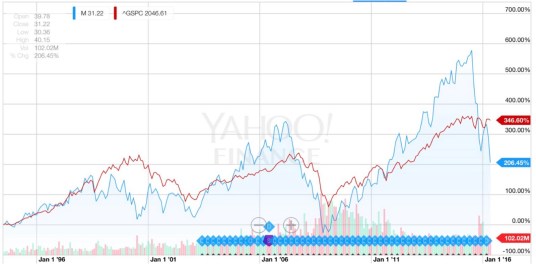
Macy’s stock price from the arrival of Amazon.com along with the S&P 500.

Why does disruption drag out? I mean we all used our first iPhones with apps in 2008 and Blackberry is still around. It almost seems like cruel and unusual punishment. Shouldn’t companies just be put out of their (or our?) misery? It is not so simple.

First, and most importantly, we should not confuse an ex-post view of the world with what is happening in real time. For every disruption that actually happens there were a lot of people, beyond a single company or technology, saying it would not happen. I remember having dozens of conversations, say in 2005, with customers (“users”), PC makers, and disk drive manufacturers about the rise of flash storage. As a technologist working on operating system support we had to make a bet on the future, but there was a loud and varied chorus of reasons why flash was either a long ways off or would never replace spinning disks: cost, capacity, ever-increasing needs, customer choice, and more. In some sense, everyone was right but we each had different views of the timeline. This week Western Digital finally closed the purchase of SanDisk, Western Digital Starts New Era As SanDisk Acquisition Completed. That sure took a while when I think back to those conversations with disk drive makers a decade ago.

Second, and this is the tricky part, incumbents really don’t just stand still like the proverbial deer in headlights. In fact, because incumbents have market presence, capital, business relationships, and a lot of people, they have the capability (and shareholder responsibility) to take many different actions. These actions tend to look rational and responsible and because of the market presence they often receive considerable attention.

Historically, we can look back on the Barnes & Noble Nook as almost desperate. But if you recall the in-store presence and broad outreach and that the competition was also just an “eReader” then this seems less desperate and more formidable competition for Amazon, except it wasn’t. At the time, though, many put it on equal footing with Amazon. In fact it seemed rather bold and strategic.

When the hard drive makers saw the rise of of flash, they responded on two fronts. First, they focused on very high capacity drives which would be cost prohibitive if done with flash. Second, they added flash to their spinning drives to bring the benefits of flash. That sounded amazing on paper. In practice these ended up bringing the existing unreliability, form factor, and power consumption to customers that already had more storage than they needed for their shrinking, battery-operated devices.

Time and time again, hybrid is the one thing that never works because you can never distill disruption down to a single attribute to be added to your existing business.

In the retail space, all of the earnings calls this week included discussions of the “online segment” of the major retailers. In the retail world, the equivalent of adding flash to a hard drive is “omni-channel”. Retailers talk about how much their online store is growing and how important it is to have both a physical presence and an online presence. The key strategy is that their existing assets are critical parts of the growth that everyone is seeing in the new online business. A Macy’s employee said, “[T]here’s a lot of investment being made in digital growth, which, by the way, is not all digital sales…Part of that is omnichannel investments, so the customers can easily go back and forth between stores and the Internet.” This isn’t new and even Walmart has been talking about that for quite some time.

There’s one word that sums up incumbent response to disruption — hybrid. The pattern is almost always the same, which is the new technology or approach that appears or threatens to disrupt an incumbent is best expressed by combining the new with the old. Time and time again, hybrid is the one thing that never works because you can never distill disruption down to a single attribute to be added to your existing business. More often than not, adding something also makes things worse in every dimension. Yikes.

Impact on every business attribute

It would be really great if as an incumbent facing disruption, all you needed to do to respond and thrive was just add something to all you were already doing. All the spinning hard drive makers needed to do was add flash. All retailers needed to do was stand up a web site. All Kodak needed to do was embrace digital (oh wait, they invented digital).

In our coffee shop discussions about disruption we tend to simplify how disruption is playing out and often zero in on some specific technology or business approach that appears to have incumbents hamstrung. We like to say “cloud” or “SaaS”, for example. As with most things, it turns out there is a lot more there.

Every successful business is made up at the highest level of a vast number of decisions and processes often described as the Four P’s or marketing mix. Within each of Product, Price, Place, Promotion we see many attributes:
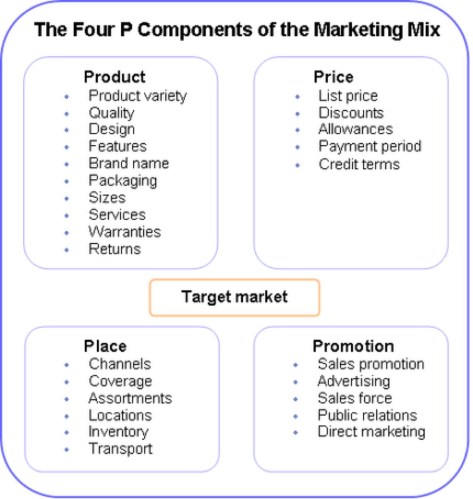
One of the many examples of the Four P’s of the marketing mix as a graphic.

The attributes of any of the P’s can be an arbitrarily long list. In fact the more successful a business and product become the most knowledge the company gains about their processes and approach. In turn, these become the very constraints that can’t be solved.

Instead of looking at a well-worn example, let’s look at a hypothetical example of a typical on-premises software company facing a new cloud competitor. From a high-level technology perspective, the difference is clear between cloud and on-prem. Digging into those details, however, one realizes that the architectural approaches are totally different (scale out v scale up). Continuing through the technology stack, you start to think about the tools and languages used which contribute to how the product is built — for example, integrations with third-party APIs via services compared to injecting customization code. One can look at the product from the systems management perspective and consider that most on-prem software was designed to be tweaked, customized, and actively managed by a nearby IT professional compared to cloud software that aims to bring simplicity, reliability, security by minimizing those touch-points. At the extreme, one (me) might assert that if you have on-prem software then something approaching zero lines of your existing code is “appropriate” to developing a modern cloud solution to compete.

That’s a real problem though because all of your features, your value proposition, your positioning, and go to market depend on that code. And you’re behind your new competitor in developing a cloud solution (by the way your competitor probably has a fraction of the features, customers, revenue, profits, partners, and more that you have). The idea of making a fresh start as a product or technology seems, literally, absurd. It is the rough equivalent of shutting down all your retail stores to focus on a web site.

As if that wasn’t enough, beyond Product the other 3 P’s also contribute to your assets — and now your liabilities. An example we see in cloud companies competing with many on-prem companies is a classic channel conflict. The on-prem world of software often served small/medium business with channel partnerships often called VARs. These partners would sell the software, but also sell the services of setting up a local server, deploying, and managing your software. This is a very healthy business and because of the need for a local presence (i.e. someone to come fix the server or back it up) the channel partnerships work well. In the cloud era, the utility view of SaaS all but eliminates this level of complexity. Channel programs can be replaced by broader outreach, lead generation, and a product that can be used without such a deployment step. Once again, an entire “P” has been uprooted and replaced with a new one. If you think this is easy, consider the elaborate relationships Barnes & Noble maintained with the book publishers. Not only could the Nook not disrupt the need for big box stores it had to maintain the relationships with publishers who were not exactly wild about digital books to begin with. Even with the Nook, the company found itself tied to all the other aspects of its business.

This hypothetical example is playing out across industry segments in enterprise software right now. While we talk broadly about the cloud as a technology, there is depth and breadth to the disruption that poses an incredible challenge to incumbents. When something is disruptive it is almost every single aspect of a business that is impacted.

The classic view of a response would be to drop everything and just do what it takes — hire new people, get them a different building, relax all constraints, and so on. Boy is that easier said than done. This is where the ability to change quickly and even the capital (or public market) constraints prove challenging. All the relationships a company develops as it achieves success, from customers to partners to investors and even to employees become challenges to overcome in the face of disruption. That is why attempting to “respond” to disruption is very much like trying to rebuild an airplane while in flight.

The allure of the hybrid shows here. A hybrid gives you the comfort of focusing on a single attribute of disruption and “addressing” it. Considering that disruption is almost always pervasive throughout the 4 P’s, one can see the weakness of such an approach. In the SaaS world, one only need look at the crazy channel programs incumbents employ in order to provide incentives and comfort to existing partners who no longer have servers to deploy and manage all while working to create a “hostable” version of the existing product.

Retail shows this challenge in a very visible way today. Imagine you oversee a 1000’s of retail outlets (Gap, Walmart, anything). These stores are capital intensive and in need of constant nurturing. For example, the Gap business model requires inventory turnover and new displays every couple of weeks. Your whole model is based on the cycle of new merchandise, advertising that, attracting customers, then repeating that. You know that if you slow that cycle down or do less of any element that your sales drop. If your sales drop then employees will become demotivated, the public markets will react, and then of course customers will notice and stop thinking your store is a great place to go. You are stuck in an over-constrained situation.

You have to find the capital to build out an entire “stack” to compete with the likes of Amazon. This includes merchandise that changes every minute, not every two weeks. It includes items you don’t normally carry. You might price things to match entire baskets of multiple brands and items rather than the commitment to specific line. You need to promote what is being bought by consumers, not what you committed to promote based on shelf-space deals or what you acquired. You pay employees for the code they write and data they analyze, not the in-store presence. You have to accomplish all of this while growing your retail business and stores because if you don’t do that then the capital to fund this hypothetical expansion won’t be there. In fact, for every dollar you spend on something new someone will tell you that the old thing is failing simply because you spent that dollar somewhere else! (That dollar can be across any of the 4 P’s!)

During this time there are many actions incumbents will take that will appear like they are going to power through the disruption. Certainly it starts from a hybrid of some form when it comes the product or service offering. Capital will be deployed to channel partners to keep them engaged. Positioning will be used to de-position the disruptor or to re-position the offering (for example, this week we learned a lot about down-market segments of retailers doing well, as if Amazon won’t also be selling those lines).

The fact that disruption is so sweeping is why it takes so long and why it is so difficult for incumbents to respond. As a disruptor one needs to be prepared for a long drawn out battle on many fronts because competitors don’t just pack up and go home or retreat to their existing businesses (well most eventually will do that).


While we talk about disruption in simple terms, it is enormously complex. The next time you’re having that conversation try to think about all the aspects of the company being disrupted and ask yourself what you would do. The lack of an answer might surprise you.

The goal of every startup is to build a business that creates an incredible and enduring foundation. In doing so it means the forces of disruption you once created will be pointed at you. The sooner you recognize the challenge and shift investments and efforts to what is new the better. When considering the likes of Facebook, Google, Netflix, or Amazon one sees a new generation of companies that were created with an intrinsic understanding of disruptive forces. One can see how these companies respond to change differently. That is very exciting because I think there is a new “theory” being created now and a true change in how companies operate.

— Steven Sinofsky (@stevesi)

16 May 18:09

13 things people say when they get fired that they later regret

by Jacquelyn Smith

hand over mouth

Being fired is one of the most stressful things than can happen to a person. 

So it's completely natural for anyone going through the dreaded process to feel a range of emotions — including intense anger — which can prompt them to say or do things they will later regret, says Michael Kerr, an international business speaker and author of "The Humor Advantage."

"Not only is the rejection hurtful, but you may feel the action was unfair," adds Lynn Taylor, a national workplace expert and the author of "Tame Your Terrible Office Tyrant: How to Manage Childish Boss Behavior and Thrive in Your Job." "Because most terminations happen without notice, anxiety about your livelihood and next move can be overwhelming. Being unable to defend yourself, coupled with the finality of the event, can quickly take you from shock and denial to anger."

Even if you suspected that your job was at risk, there is always some element of surprise involved — and being caught off-guard is when you can unwittingly make matters worse for yourself.

"If you're concerned about such a possibility, you might think strategically about how to best react after an event like this," Taylor says. "A good rule of thumb is to pause, breathe, think, and be proactive. You may be asked to sign documents, for example, but give yourself enough time to respond appropriately, when you're not in an emotional state."

As difficult as it is at the time, the best course of action is to try and keep a level head and not burn any bridges, adds Kerr. "Take a deep breath and err on the side of saying nothing if you feel you can't keep control of your emotions. And definitely avoid the temptation to say any of the following."

Here are 13 things people tend to say when they get fired that they later regret:

SEE ALSO: 12 words and phrases you're using at work that make you sound dumb

'Are you kidding me?!'

That's precisely what most employees are thinking when they get the unfortunate news, says Taylor. "That reaction suggests you're ready for combat, but your employer, like it or not, can abruptly end the conversation right there, and you may be walked out within minutes."

A much better approach is to take a deep breath, stay calm and focused, and try to be cooperative." This is not a situation you can control. But like most setbacks, it's 90% how you react, and 10% what actually happens," she says.

Consider how you want to be remembered on your last day by your boss, colleagues, and even your professional circle. "The business world is getting smaller each day with the help of technology. Think about how you'd want an employee to leave, keeping mutual respect top of mind."


'You can't fire me because I quit!'

"This classic line makes for many memorable movie scenes, but in real life it will only make you look spiteful," says Kerr.

In some cases your employer may give you the option of quitting instead of being fired, and there may indeed be advantages to offering up your resignation if that deal is made. But yelling it out in the heat of the moment could backfire on you big time, he explains.

"Unless you submitted a resignation letter, if you're being terminated, it's better to accept the news with grace and dignity," Taylor adds. "Even suggesting that you were planning to quit anyway is an obvious defense that has no redeeming value."

Keep in mind that most everyone has been or will be terminated from a job at some point in their life. And if your boss is unhappy with your performance, you'll both be better off if you move on to greener pastures. "Staying in a dead-end, stressful job with a difficult boss may offer a reliable routine," she says. "But 'routine discomfort' is not good for your self-esteem, health, or your career. So your best approach is to leave behind a positive impression, as difficult as that may be."


'I know where all the bodies are buried.'

Making any suggestion that you are going to not only take company secrets with you, but also hold them over their heads and potentially reveal them will create a huge level of distrust and may even evoke a legal reaction on your employer's behalf, Kerr warns.

Don't make threats of any kind. You'll be sure to regret it if you do.


See the rest of the story at Business Insider
16 May 18:08

America's former top spy is worried about Donald Trump

by Brett LoGiurato

Michael Hayden.

Michael Hayden didn't mince words when asked about Donald Trump's proposal to bar Muslim immigrants and tourists from entering the US.

It's not legally possible, the former director of the Central Intelligence Agency told Business Insider in an interview. It's morally reprehensible.

And, frankly, "it's dumb as dirt."

"Why in God's name would you want to close the borders of our nation to the adherence to one of the world's great monotheisms?" Hayden said during an interview in Business Insider's Manhattan headquarters. 

It was part of extensive comments critical of Trump, the presumptive Republican presidential nominee of whom many top Republican officials remain wary.

Hayden, the former director of the National Security Agency whom President George W. Bush nominated in 2006 to head the CIA, is one of a number of prominent past and present national-security officials who have remained skeptical of Trump's qualifications as commander in chief.

Hayden took aim at Trump over his plan to erect a wall along the US-Mexico border, his proposal to bar Muslims from entering the US, and his suggestion that the US might have to target the families of terrorists, among other things. 

"He has not shown me the capacity to treat international issues with the complexity and seriousness that they deserve," Hayden said. "And again, if I'm supposed to ignore those things — 'that was just done for the crowd' — frankly, that's an even worse problem. I'm going to take him at face value."

Hayden's first two choices succumbed to Trump. He had endorsed former Florida Gov. Jeb Bush, swinging to Ohio Gov. John Kasich after Bush's ouster from the race. 

Now? Out of the three major-party candidates left, Hayden says Hillary Clinton, the Democratic frontrunner, is best prepared in terms of national security.

"Of the candidates left, the only one who in any way seems to embrace the American liberal post-World War II foreign-policy consensus, have a fairly active American role in global things — the only one left standing is Hillary Clinton," Hayden said. 

Republican U.S. presidential candidate Donald Trump is surrounded by family members as he speaks during a campaign victory party after rival candidate Senator Ted Cruz dropped out of the race for the Republican presidential nomination following the results of the Indiana state primary, at Trump Tower in Manhattan, New York, U.S., May 3, 2016. REUTERS/Lucas Jackson

Hayden is hardly alone in the pantheon of national-security officials, especially those who have served in both Democratic and Republican administrations.

Former Secretary of Defense Robert Gates, who served under both Presidents George W. Bush and Barack Obama, told Business Insider in January that it was difficult for him to imagine a Trump administration. Though he didn't name Trump specifically, he criticized what he portrayed as candidates' fantastical proposals.

And Leon Panetta, who worked as both secretary of defense and CIA director, said in an interview published Friday that Trump's foreign policy is simply "crazy."

"The difference between Secretary Clinton and Trump — I mean, Trump is talking about the world in a way that takes us back to the 1930s. I mean, he's talking almost isolationism, America first. He's talking about distributing A-bombs around the world. Those are crazy positions," Panetta told CNN's Chris Cuomo. 

He added:

I'm not sure what he stands for. I'm not sure what his positions are. He takes one position one day, he takes another position the next day. He takes positions on, you know, immigration and building a wall, on getting rid of 11 million immigrants. He talks about distributing atomic weapons so that it's OK if Japan gets atomic weapons, if Korea gets atomic weapons. He says these things almost as if he's not even thinking. And then, you know, the next day he kind of changes his position to try to soften some of the things he says.

For his part, Hayden suggested Clinton is the best choice in the narrow lane of national security and foreign policy. But other policy prescriptions, he said, would make him hesitate before casting a vote for either of the likely nominees.

Hayden has been struck by the phenomenon of both Trump and Sen. Bernie Sanders, who remains a challenger to Clinton for the Democratic nomination. But he said they represent a "primal scream" from each party's electorates that doesn't necessarily translate to governance.

"I get that. I understand the anger. I'm kind of angry, too," he said. "But sooner or later, you have to realize you can't govern on a primal scream — that you need more stuff behind it. And I haven't seen the stuff."

SEE ALSO: 'You're gonna make me do this?' We had former NSA chief Michael Hayden watch the new Snowden trailer

Join the conversation about this story »

NOW WATCH: The real story behind Trump's taco bowl tweet

16 May 18:08

What is Poor Data Quality Costing You?

by Larisa Bedgood
marketing data quality

marketing data quality

Your data is a valuable asset. Especially in today’s world of faster consumers, your data needs to be in tip-top shape to target, engage and convert prospects. If not properly maintained, you risk any number of lost opportunities, decreased efficiency, and a negative impact to your bottom line.

Marketing data has become so important that 97% of companies feel driven to turn their data into insights, according to the 2015 Data Quality Benchmark report by Experian. According to the research, the top three drivers include:

  1. 53% – Wanting to understand customer needs
  2. 51% – Wanting to find new customers
  3. 49% – Wanting to increase the value of each customer

Chart reason for maintaining high quality data

Companies are clearly motivated by the opportunities that data represents – especially as it relates to improving interactions with customers and prospects. We have all heard that today’s consumers are more informed and have more choices than ever. Data has become the crucial driver when it comes to acquisition, retention, identifying cross-sell and up-sell opportunities, and improving customer experiences. However, the correct insights to accomplish these goals can only be derived if the underlying data is accurate.

Although companies understand the need for high quality data, 92% of organizations believe their customer and prospect data is inaccurate in some way. The level of inaccurate data is also climbing. The study revealed that 35% of US organizations believe that 32% of their data is inaccurate. This is up from 25% in one year’s time.

Ninety-seven percent of companies suffer from common errors associated with contact data alone. The three most common errors are incomplete or missing data, outdated information and inaccurate data.

chart most common data errors

So what exactly is poor data quality costing organizations? The research shows that 83% of companies believe revenue is affected by inaccurate and incomplete customer or prospect data in terms of wasted resources, lost productivity and communications spend.

While companies may understand that data quality is an issue, implementing a data management system seems daunting. The majority of companies cite lack of resources such as budget, talent, and time as the biggest barriers to getting started. However data quality management doesn’t need to be an overwhelming task nor does it need to happen overnight. Processes can start small and grow over time and even seemingly small improvements can have a big impact.

Here are several improvements that are easy to implement and can bring big pay offs:

Real Time Verification Services

Many data errors occur at the initial point of entry. Consumers are increasingly engaging with businesses across online channels and filling out any number of online forms, many times with incorrect information. Through the use of real time web services, this information can quickly be tested, corrected, and entered into a marketing system through real-time web verification services.

Consider these scenarios where real-time services can be used to correct and fill in missing data:

Scenario 1 – Typos

Maria is an avid shoe shopper and is visiting a large shoe ecommerce site. Maria fills out a news and special offers web form and provides her name, email address and City/State. The retailer always asks for City and State so they can provide email offers for the local retail store if there is one close to the prospect. While filling out the form Maria does not type her email address correctly. Instead of marialovesshoes@hotmail.com, she types marialoveshoes@hotmail.com. The retailer can use real-time web services to confirm the data provided during every online transaction. Using the full name and city/state that Maria provided, they can correct the email address in real-time before it is added to their customer database.

Scenario 2 – Not Enough Information

Jonathan Sauer is shopping for life insurance online. The insurer whose site he is visiting has found that visitors do not want to provide more than 3 pieces of information on their web form. Form abandonment goes up when a 4th piece of information is required. Generic responses to web inquiries do not generate successful conversions, so the insurance company has a screening model that predicts with great accuracy the best insurance product and offer to deliver to a prospect if they know the following:

  • Age
  • Family status
  • Occupation

Jonathan completes the fields on the web form which are simply name, phone, and email address. Using these three fields, the important data fields are appended from a national consumer database and his contact record is scored in sub-second time via the model.

The email response that Jonathan receives within seconds of completing the form contains information on the insurance product that is best for him, and an attractive offer to encourage him to call or request further information.

Contact Data Verification and Enhancement

Data decays at an average rate of 2% per month, which means you can expect 25% to 30% of your organization’s contact data to go bad each year under normal circumstances. With 97% of companies experiencing inaccuracies in contact data, a relatively simple way to maintain contact accuracy is through a third-party data provider who provides phone, email and address enhancement and verification services.

Email Append & Validation

Email marketing continues to be an important digital channel producing an average ROI of $44.25 for every $1 spent. Unfortunately, people change their email address, people leave jobs, or email addresses may simply be missing entirely from a customer or prospect record. Without much time or effort on your part, an email data solutions vendor can quickly correct and fill in these missing details. For example, a provider can append email addresses to postal addresses, and vice versa, validate addresses by flagging potential undeliverables, autocorrect syntactical errors, identify spam traps and complainers and more. Additional data elements can also often be appended to records such as phone number, age, income, presence of children, and numerous other demographics for a more complete customer picture.

Phone Append & Validation

Similar to email services, phone append solutions can be utilized as an easy way to maintain phone record hygiene. For example, existing residential and business telephone numbers can be verified, missing phone numbers appended to records, or name and address data can be provided for telephone numbers with reverse phone append processes.

Mailing Address Append & Validation

Every year approximately forty million Americans move their place of residence and/or business, but their old addresses often remain in mailer’s databases. As a result, mailings continue to go to old addresses and not the new ones. It is estimated that at least 8% of all mail is undeliverable because of incorrect addresses. Customer and prospect records can be run through National Change of Address processing (NCOA) to identify and update the addresses of people and businesses that have moved.

PCOA (Proprietary Change of Address) is another important address data hygiene process which can provide a significant return on investment. On average, only 65% of moves are reported to the US Postal Service each year. PCOA is a type of change of address processing that collects data from sources (banks, credit cards, magazine subscriptions, etc.) that have new change of addresses which were not reported to the post office in the traditional method: NCOA. For marketers and fundraisers trying to keep track of current customers and donors, that means a possible attrition rate of thirty-five percent.

Data is no longer a commodity that can be taken for granted, but the real value is only equal to the quality and accuracy of the data being used. Learn more about enhancing your web forms with real-time data services.

real time data verification solutions

16 May 18:05

Maximizing Value: An Interview with Sales Author Andy Paul

by PFPS

Are you maximizing value for your buyers? What will take your sales to the next level? Sales author Andy Paul returned to CONNECT! Online Radio to talk about just that.

In this interview, conducted by your host and sales coach Deb Calvert, Andy will share tips from his new book about accelerating your responsiveness, maximizing value delivered in each sales touch, and simplifying your selling results in compressed decision cycles to get greatly improved win rates. Andy will also provide a simple mnemonic device that all managers and salespeople can use to plan every sales touch, no matter how big or small, to ensure they are helping their prospects make fast and favorable decisions.

Deb Calvert on Connect Radio

Excerpts from Deb’s talk with Andy Paul about Maximizing Value!

Deb: “What should sellers be doing to earn more time with their prospects?”

Andy: “It really comes down to having what I call a value plan… and the value plan has two components. One is have a goal. What is the value we want to deliver to the customers in this call or in this interaction? And, two, what are the steps or what are the commitments we want them to take as result? So what’s the outcome we want… the goal and the outcome?”

Deb: “Let’s talk about about the new sales funnel.. why do we need a new one?”

Andy: “Well, why we need a new one is that in some very fundamental respects… customers’ behavior has changed… the power of the internet has created a new generation of customers that have the ability to be substantially pre-educated or self-educated about the product and service before they contact you.”

There’s more to learn! Tune in to find out more Maximizing Value and Increasing Your Time with Prospects!

This is just the start! Tune in for the rest of this powerful interview with Andy Paul to get detailed information about maximizing value. There’s no better way to make good use of your windshield time than by listening to CONNECT! Online Radio for Sales Professionals. This is where you will learn to cut out continuances, put an end to pending, and stop stalling out in sales.


Check Out Business Podcasts at Blog Talk Radio with CONNECT1 on BlogTalkRadio

The post Maximizing Value: An Interview with Sales Author Andy Paul appeared first on People First.

16 May 18:03

6 Surprising Ways for Growth Hacking Your Digital Startup to Success

by Jeff Bullas

Growth Hacking Your Digital Startup

There was no turning back. They had little food, disease was taking its toll and the instructions he had been handed were clear. It was a point of no return. Hernan Cortez was on the shores of the Atlantic.

He gave the order “Burn the boats“. The result.

Success.

A start-up can be seen with the same eyes. Give up your job, leap into the unknown and hope that it all works. It’s courage on steroids.

It’s scary and fraught with danger. Broken marriages and other collateral damage can result.

It’s the “do or die approach”.

The other is start a business while you keep your day job. Take that small idea, build the website…a blog, and just start. It’s the bootstrap business with little risk. But it means that to achieve the goal you will have to get up early, stay up late and say no to some of those social events.

There are no right or wrong ways. I know…. because I have done both.

Your risk appetite

But everyone’s appetite for risk is different.

It will vary according to your age, current relationship and circle of friends. It will also depend on the bank balance.

When you are young it is easy to run home if doesn’t all work out. As you get a bit older going back to live with Mum and Dad is a touch embarrassing and also reduces your dating options.

It sort of cramps your style.

Build an audience first

There is a phrase I have grown fond of. “Build an audience before you need them“.

Most of us don’t realise it but in a digital world the options to do this are extensive. It can be as simple as…

Connect on Twitter….

Build networks Linkedin…

Grow your email list….

Then start adding value to those connections before asking for anything in return.

The standard approach by most people is to sell first.

Buy my stuff…..

Order this……

It plain doesn’t work. But every day on Linkedin there they are. Just connected and guess what. The sales pitch is their first muttering.

The rules of the game are not complex.

Add value, educate and “then” sell. The marketing game is 75% education and the last 25% is the selling.

But first you need traffic and that all important online attention. It can be summed up in one word. Traction.

How to growth hack traffic

When I started the blog I decided to test all the shiny new toys for gaining traction.

These included Twitter, Facebook, Google plus, Instagram, Pinterest, Linkedin and YouTube, email and search engines. I tested re-purposing and re-publishing the posts.

This meant a bit more work.

It involved creating powerpoints for Slideshare and launching a personal magazine on Flipboard. Tumblr was tested and Medium was also used.

What worked for me was Twitter, Facebook and search and email.

In the main it was social media. Bbut if you aren’t prepared to consider other options then you are leaving a lot of traffic on the table.

In their book “Traction: How any Startup can Achieve Explosive Customer Growth“, Gabriel Weinberg and Justin Mares (The founders behind several successful startups including DuckDuckGo and Opobox) mention 19 different growth hacking categories. Here is the full list.

  1. Blog targeting
  2. Publicity
  3. Unconventional PR
  4. Search engine marketing
  5. Social and display ads
  6. Offline ads
  7. Search engine optimisation
  8. Content marketing
  9. Email marketing
  10. Viral marketing
  11. Sales affiliates programs
  12. Trade shows
  13. Offline events
  14. Speaking engagements
  15. Community building
  16. Business development
  17. Software engineering
  18. Sales
  19. Existing platforms

That’s a big list!

The challenge is that for most of us we will go to our comfort zones.

That might be social, selling, email marketing or even public speaking. The reality is that you need to test a bunch of channels to see what works and then focus on the tactics that work best. It will also vary for every type of business.

It is not one size fits all.

It will also change over time as the business evolves.

Successful marketing is not a singularity but the planned testing of multiple channels to market. The social and mobile web has made this possible.

Growth hacking your digital startup

There are no shortcuts. It will take time, persistence and a passionate purpose. Passion is vital as it will give you the energy to sustain the journey.

So what are some ways to build an audience?

1. Guest posting

This is all about adding value first. Most bloggers have a time problem but they have a ready made audience. So offer a guest post for their readers.

So write an awesome article and offer it for free.

Case study: Buffer

Back in 2012 I was approached by Leo Widrich who was one of the founders of Buffer. He asked if he could write a guest post that added value to my audience. The post title “10 Must Have WordPress Plugins Of 2012 Every Blogger Should Know About”

They were wanting to build an audience for their new sharing app and were doing that through approaching bloggers that already had substantial traffic.

But what I thought was very cool was that they were even willing to mention their competitors.

Today we know how successful that approach has been as a growth hacking strategy. This was done by other influential digital marketers such as Ian Cleary and Danny Iny with great success.

Growth Hacking Your Digital Startup

2. Build a big tribe on social media

This is not hard to do when it is done with focus and intention.

Facebook and Twitter were the early targets for bloggers and start-ups as they provided free traffic. Other networks emerged such as Pinterest and Instagram and they also became valuable ways to get attention online.

Today Facebook is harder to get that free traffic for bootstrapping growth but Twitter is still allowing free organic traffic.

Many online video bloggers discovered that YouTube was a great source of traffic that turned up from search and also building a tribe of followers on YouTube.

Case study: A blogger!

Early on in 2009 after launching my blog I went on a hunt to find the best ways to get free traffic.

I noticed that Twitter was able to drive page views for free by sending out tweets with a headline and a link. Hashtags didn’t exist and images were not included. Then we went on a mission to grow my followers.

As this manual task became unsustainable I also decided to automate the tweeting of the content with tools like Socialoomph.com (which I still use today) and today the 450,000 followers are a major source of traffic and discovery. I also discovered that you could also automate the tweeting of other people’s posts that I trusted using Twitterfeed. This allowed me to automate the sharing of great posts to Twitter without having to do it manually.

I explain how to automate the tweeting of your own and other bloggers content at this post “10 Smart Tips for Creating, Marketing and Sharing Content on Twitter“.

Growth Hacking Your Digital Startup

3. Relentless content marketing

Creating content around your topic and market is not new but it does work well.

It also has a few benefits.

It creates credibility and trust in your industry, it also improves your search engine rankings and it brings in referral traffic as people discover your awesome content and then talk about it on their blogs and then link to you.

Now you may say you aren’t a writer. But practice will quite often overcome this obstacle. It worked for me.

But if it isn’t your thing then…record videos or start a podcast like Pat Flynn.

Startups and digital entrepreneurs that are now pursuing it include Canva (whose initial traction point for traffic was hiring the digital influencer Guy Kawasaki),

Case study: Hubspot

Hubspot almost invented content marketing except they called it inbound marketing. Attracting traffic (rather than cold calling and paying for it with Google Adwords and other old school tactics) with resource rich content.

Their blog (now multiple blogs for marketing, sales and agency) was their main “go to” platform for achieving this. They have turned this into an art and science and today they attract 75,000 leads a month.

Growth Hacking Your Digital Startup 4. Run a ton of webinars

This piggybacks on the credibility, influence and the email list of the webinar partner. This Joint venture collaborative tactic also allows an affiliate income to be generated by their webinar partner and promoter.

Everyone wins.

What do you offer on a webinar? Great content….that you have packaged and makes a difference to to someone’s life.

Webinars can be created in Powerpoint and you will need other tools such as GoToWebinar and an email marketing platform to scale your efforts.

Case study: Leadpages

This has become their single most important lead generating tactic.

They have run hundreds of these both on their own and also with partners. Every week they run 2-3 webinars and each generates 100’s of email subscribers.

Growth Hacking Your Digital Startup 5. Write a book

This may seem daunting but it doesn’t have to be “War and Peace” at 1,000+ pages. Something from 50-100 pages can be enough. This can also be done before your day job, on weekends or late at night.

In this digital world it is also easy to self publish a book on Amazon. I know because I have done it. You can also print books on demand for about $2.50 a copy for paperbacks.

Bloggers and digital entrepreneurs that have done this well include Mark Schaefer, Guy Kawasaki and Mike Stelzner.

Case study: Keller Williams Realty

Gary Keller decided to write a book “The Millionaire Real Estate InvestorHis New York Times bestselling books have sold more than 2 million copies.

He also reveals the “One” thing that made Keller Williams Realty, Inc., one of the largest real estate companies in the world.

What was that?

It was writing a book that positioned him and his company as the authority in real estate in the USA.

Growth Hacking Your Digital Startup

6. Work with influential bloggers

Bloggers today often have larger audiences and bigger distribution than many popular magazines and newspapers. They also are global and have millions of passionate followers.

Using bloggers has become more widely adopted in the past couple of years but it has been done for the last 9-10 years by the early adopters such as Buffer, Mint and AppSumo as far back as 2007.

Most digital entrepreneurs develop a product and launch and then try and work out the marketing later. Business success is in planning and executing the marketing and the product in parallel.

Case study: Noah Kagan

Noah Kagan is the genius behind Mint (sold for $170 million to Intuit) and more recently AppSumo. He started planning Mint in 2007 and wrote the original business plan in 2007. In it he outlined which blogs he was going to target as well as other marketing channels.

Here is the summarized and refined list before he actually launched.

Growth Hacking Your Digital Startup

Image source: Growthhero.net

When you are launching your online business you will not know what will work and what won’t. So you have to throw a lot of mud against the wall to see what sticks.

Then you focus on the best performing tactics.

Noah sums it up this way:

  • Make your target list prior to launch.
  • Figure out your target list through: Buzzsumo, google searches, pick specific niches (at Mint it was Personal Finance, geeks (Paul Stamatiou) and GTD people) and other wild ways
  • Track with the Google Spreadsheet to know what’s working and what’s not.
  • Consider testing 2-3 different messages to people to see which get highest responses.
  • Use new methods to get a hold of people. Don’t be like everyone else
  • Oh yeah….have a great product

If you want to find out more there is a great post over at Buffer that covers in more detail how he did it at Mint and again at AppSumo.

How are your ideas panning out for creating the lifestyle and business that you dream about?

16 May 17:58

Don’t Push Me: What Makes Users Opt Out of Push Notifications

by Todd Grennan

Push notifications are a great way to make your brand’s voice heard. This powerful messaging channel allows brands to reach any customer, any time with effective, eye-catching messages across a wide variety of devices, making it easier to build an enduring customer/brand relationship.

In theory, at least.

It’s not that push isn’t a great way to engage customers, or that the promise of this channel has been oversold. But while the positive impact of push is very real, many brands find that their ability to use this channel to effectively reach their audience has been limited by customers’ reluctance to opt-in. There’s the rub: you can’t send push notifications to a customer who hasn’t agreed to receive them. And according to research carried out by Appboy (you know, us), 60% of iOS users and 40% of Android users opt out push notifications.

To ensure that this channel is a useful one, brands can encourage their customers to opt in and stay opted in for push notifications. The first step? Understanding what makes them opt out in the first place.

We asked 14 Appboy staff members to weigh in on how often they opt out of push notifications, what factors influence their decision, and what it would take for them to opt back in. While the results of this inquiry clearly aren’t statistically significant, they do provide a unique window into how people think about push. Take a look!

How often do people opt out of push notifications?

Leave me alone message

The 14 people we spoke to had a combined 1,526 apps installed on their phones, which works out to an average of 109 per phone. And while you might expect people working in tech to have a higher than average number of apps installed, that number is a little smaller than the 119 apps installed by the average iPhone user. However, there was a great deal of variance between individual respondents, with one person reporting only 23 apps on their phone, and another listing 297 apps on the two phones they carry.

In total, respondents opted out of push notifications from 584 of those apps, for a push opt-out rate of 38.3%. (That rate drops to 24.5% with Mr. 297 excluded.) Both those rates are lower than the average opt-out rate for Android devices and significantly lower than the rate for iOS devices; however, given that Appboy employees work in a field where messaging is of significant interest, they may be less likely to opt out of push for professional reasons. It’s also worth noting that there was wide range of behavior here, too. Multiple respondents reported opting out of virtually all push notifications right off the bat, while one person said they opted in to nearly every app that asked to send push.

While our pool of respondents contains both people generally open to opting in for push, and others who are extremely reluctant to do so, our examination didn’t find any real absolutists on the subject. Not a single respondent reported opting out of push notifications from every app they downloaded. Similarly, every respondent said that they had opted out of receiving push from a least a few apps.

That’s significant, because it means that even people who rarely opt in for push notifications are open to doing so under the right circumstances. But, by the same token, even people who nearly always agree to enable push are willing to cut a brand off if they’re messaged in ways that don’t work for them. That makes understanding their motivations even more important.

What leads people to opt out of push notifications?

When we asked respondents about their reasons for opting out of receiving push notifications, four major factors emerged:

Why People Opt Out of Push

1. 30% opted out because they received push notifications that weren’t personalized or relevant to them

Our respondents’ biggest pet peeve? Receiving push notifications from brands that are irrelevant and don’t convey an understanding of them as customers. Unfortunately, getting these kinds of messages is far from rare—78% of consumers reported that most of the push notifications they receive are irrelevant, according to a survey conducted by Delvv.

Berin Bezmen, Appboy solutions consultant:

“I don’t want to be notified on something that is not relevant to me. For example, if a department store is having a sale on men’s shoes—that is not relevant to me at all.”

Matt Willett-Jeffries, Appboy support engineer:

“I want to spend as little time as possible looking at my push notifications, while still obtaining as much relevant and useful information from them as I can. As a result, I chose to opt out of push in order to keep my push notifications both relevant and sparse.”

Paul Jonart, Appboy success regional lead:

“I opt out of ones that are clearly marketing-driven and not specific to me or my engagement (i.e. driving app usage when I am not really engaged with the brand/product).”

2. 25% opted out because they received too many push notifications

Push fatigue is a real problem. While push notifications are a powerful and effective way to reach customers with urgent messages, the attention-getting nature of this outreach channel can make it feel intrusive or overwhelming if used too frequently.

Donte Ledbetter, Appboy content producer:

“If the push notifications become too frequent … I won’t hesitate to opt out, or even uninstall the app, depending on my use of the app. There are only certain apps that I don’t mind seeing frequent push notifications from.”

Marion Nammack, Appboy customer success manager:

“I don’t like it when apps I rarely use try to sell me things—so if I’m getting weekly notifications from an app I rarely use, I’ll either opt out or uninstall.”

Berin Bezmen, Appboy solutions consultant:

“I don’t like receiving notifications and pushes multiple times a day. I get annoyed.”

3. 25% opted out because that’s their default response to being asked to enable push

For some of our respondents, all push notifications are suspect until proven otherwise. In some cases, respondents find this message type distracting and seek to limit how many they receive. For others, they’ve had too many negative experiences with previous brands to opt in for push without a good reason. In either case, this is a particularly tough prejudice to overcome, because it requires customers to change their regular behavior.

Tola Lakavivat, Appboy operations analyst:

“I default opt-out of [push for] any app I install, as I don’t want to have to grab for my phone unless an actual person is trying to reach me.”

Tina Lau, Appboy database marketing manager:

“I don’t usually opt in for push on apps that I’m just testing out for the first time.”

Sal Poliandro III, Appboy DevOps engineer:

“I generally out of push until I see the value of them within the app. Push notifications were abused for a long time by companies, which resulted in my default being opt-out.”

4. 20% opted out because they had no interest in receiving messages from the brand in question

Just because someone downloads an app, it doesn’t necessarily follow that they’re interested in receiving messages from the brand behind it. Maybe they only downloaded your app for a single, specific reason; maybe they dislike being interrupted by notifications and only opt in for push notifications for certain types of app. Whatever the reason, these are likely to be particularly difficult customers to convince to opt in.

Madhuri Shekar, Appboy senior producer for audience development:

“If a push notification can directly and immediately impact my day for the better, then I turn them on. By and large, I turn off push notifications for any entertainment-related apps (especially social networking—Facebook and Twitter), but leave them on for things that affect my immediate productivity, such as calendar notifications, Uber/Lyft, etc. I also leave messaging notifications on.”

Robbie Matthews, Appboy customer success manager:

“I don’t like push when it’s used as a sales medium. I’ve uninstalled a lot of commerce apps due to the sales element to them. That said, the transactional push are really helpful as reminders.”

Anushka Chhaya, Appboy accounting manager:

“I don’t like to be bothered during the day—I barely even like getting text notifications or WhatsApp push notifications. I like to have the ability to log into apps and check on my own accord. That being said, it’s really helpful to have an app remind me of something that needs to be addressed. Which is why I have the task and calendar apps’ push enabled.”

What does it take for people to opt back in for push?

Every respondent expressed at least a tentative willingness to opt back in for push notifications under the right circumstances. However, there was a range of responses when it came to what those circumstances would need to be. The most common factors cited by respondents were:

What it would take to opt back in for push

1. 41.2% would need to see evidence that they’d receive push notifications that were valuable to them

Successful messaging is messaging that demonstrates its relevance and value to the people receiving it. So it’s not surprising that respondents who opted out were willing to consider changing their mind if brands successfully sold them on the benefits of receiving push.

Sal Poliandro III, Appboy DevOps engineer:

“If the value of any notification was measured against the cost of context-switching and the interruptions [associated with each push], I would be way more likely to opt in. That’s just not the mindset of companies. They don’t seem to realize that making the notifications pretty or giving them catchy subject lines doesn’t make them stand out, because everyone is doing it. They need to add value to the interruption and be precise in the information they deliver.”

Anushka Chhaya, Appboy accounting manager:

“If a brand engaged me with something relevant to that day specifically, or to my day-to-day, I would be really inclined to enable push notifications for that app specifically.”

2. 29.4% would need to receive appealing messages in other channels

For nearly a third of respondents, multichannel messaging—done right—is key to getting them to agree to opt back in for push notifications. While push notifications often get the lion’s share of the attention, other outreach types, such as in-app messages, email, and News Feed Cards, can be effective ways for brands to engage their customers, especially ones who have opted out of push.

Donte Ledbetter, Appboy content producer:

“Not only would they have to make a compelling case to encourage me to change my mind, they would also have to demonstrate through other channels that their messaging is valuable. For example, if the in-app messages and emails I receive are highly personalized, and they can make a compelling case through another channel for turning on mobile push notifications, I’m more likely to change my mind and opt in to push again.”

Paul Jonart, Appboy success regional lead:

“If they send an email explaining why I should re-opt in and it was beneficial to me, I might change my mind.”

Tina Lau, Appboy database marketing manager:

“If I’ve already opted out of push for a brand, I would opt back in if I started engaging with the brand elsewhere (email, social, etc.) and discovered some value.”

Robbie Matthews, Appboy customer success manager:

“They could use other methods—in-app [messages], education tips—to draw me toward seeing the value [of opting in for push notifications] … and then I may be inclined to change my mind.”

3. 17.6% would need to be offered discounts or other incentives to re-enable push

Getting people to change their mind isn’t easy. But there’s a simple way to encourage people to opt back in for push notifications—give them concrete incentives to do so. That could be a discount, early access to content, loyalty points, or something else. The important thing is to make sure that the incentives your brand offers speak to the people you’re trying to reach; otherwise, you’re not likely to persuade many of them to enable push.

Madhuri Shekar, Appboy senior producer for audience development:

“[I’d only opt back in for push] if I’m promised that push notifications would give me an immediate, time-sensitive offer that I need to act on immediately to benefit from.”

Jen McNamee, Appboy channel development manager:

“I think that if brands offered incentives … I would [opt back into push]. For example, if they provided deals, money off.”

Berin Bezmen, Appboy solutions consultant:

“I think people love promotions and discounts, so [if a brand states] that opting in will notify me on promotions, then I will most likely opt in.”

Other positive factors highlighted by our respondents were:

  • Having a preference center to allow customers more control over the frequency and content of the push notifications they received
  • Sending customers fewer push notifications

What now?

Smiling woman on smartphone

Push is only becoming more important. Web push notifications and wearables push are starting to take off, making it even more important for brands to think seriously about how to encourage their customers to opt in (and remain opted in) for push on a variety of different platforms and devices.

How do you do that? First, show your audience the value of opting in for push notifications by priming for push. When it makes sense for your brand, use push re-permission campaigns to convince persuadable customers to re-enable push notifications. And keep your audience’s experience of your messaging and your brand top of mind.

16 May 17:58

The Benefits of Inbound Marketing vs. Outbound Marketing

by Chans Weber

As the owner of a digital marketing company and a HubSpot Platinum Agency Partner, it comes as no surprise that I help business owners and marketing managers understand what inbound marketing is, and how it differs from traditional outbound marketing, on a daily basis. Learning the differences between inbound marketing and outbound marketing is truly the key to business success in this digital age. The way consumers find products and services is changing so we have to change the way we market to our potential customers. With that being said, let’s jump right into the specifics:

What is Outbound Marketing?

To put it simply, outbound marketing is the concept of marketing to the masses in hopes of reaching the 1% of customers who are actually interested in buying your product or service at that time. Communication is a one-way street and customers are sought out via radio, TV advertising, cold calling, email blasts, direct mail, tradeshows, etc.

The problem with this “in your face” style of marketing, is that people are saturated with ads 24/7. So how do people respond to this intrusive marketing? They ignore it. Emails get deleted or sent to a spam filter. TV commercials are skipped. Radio is turned off, and junk mail gets thrown away.

The Shift in Consumer Behavior

In the age of technology, consumers have become much smarter. Now, all they have to do is type a query into a search engine to get the answers they are looking for instantaneously. With this access to endless information, consumers can make informed decisions based on articles, product reviews, and peer influences. Having this knowledge in hand, the decision to buy is made before ever stepping foot in a store, picking up a phone, or visiting a website.

What is Inbound Marketing?

Now that the consumer’s behavior has changed, marketing to these smarter consumers needs to adapt. Out with the old, in with the new. Inbound marketing uses the research phase of the buyer’s journey to its advantage. It is all about putting yourself in front of a potential buyer at the “moment of relevance” which is the time that they’re looking for you (or more likely your product/service).

Consider this: when someone does a Google search for “small business loan” it’s not because they want to read literature on what a small business loan is (most of the time), it’s because they are interested in getting a small business loan themselves.

This style of marketing uses SEO, PPC, content marketing, blogging, and social media advertising to ensure a business is in front of their target market, when their target market is interested in their product/service. This is achieved by providing relevant content that a searcher could benefit from.

Comparing Inbound vs Outbound

Besides the obvious differences in each strategy, there are many other advantages inbound marketing has compared to outbound. According to Demand Metric, content marketing generates 3 times as many leads as traditional outbound marketing, but costs 62% less. Let that soak in for a minute. From this information we can confidently say that not only does inbound marketing have a lower cost-per-lead but as stated by HubSpot’s State of Inbound Report, “Inbound campaigns achieve higher ROI than outbound. This holds true across different company sizes and budgets.”.

To sum it up, inbound marketing succeeds because it is permission based marketing vs interruption based. Instead of aggressive sales pitches, inbound marketing provides valuable content that attracts your target market and ensures you are in front of these prospects through the entire sales funnel.

Ready to take the leap into inbound marketing? Check out our FREE eBook “A Guide to Inbound Marketing Best Practices” today!

inbound marketing

This article originally appeared on the Leap Clixx Blog and has been republished with permission.

16 May 17:57

Get The Most Out Of Your Tradeshow Booth

by Jason Robbins

Tradeshows are a fantastic opportunity for you to expose and grow your brand. Often attracting thousands of attendees from all over the country and world, tradeshows put your message in front of a targeted audience. That being said, tradeshows are also the perfect embodiment of the term “sensory overload” with hundreds of brands screaming for attention. Follow these essential keys to success to help you prepare, setup, and work your tradeshow booth to ensure your message stands out.

Determine What Success Looks Like

Before investing in your target tradeshow booth, determine your key performance indicators for the event. Are you trying to generate sales leads? Are you promoting a new brand or product? Are you just hoping to network?

Know your show objectives and plan accordingly. Make sure that your projected return on investment justifies your cost investment. Once you have your KPI’s in place, build a game plan that enables you to achieve them. Setting goals ahead of time will help you make every decision that comes after.

Maximize Your Booth

If you reserve your spot far enough ahead of time, you can request optimal booth placement. Try to secure a booth next to high traffic areas. Some locations are naturally high traffic (close to main doors, food courts, etc.). However, if you scout out the venue in advance, you may find some non-traditional locations offering plenty of foot traffic. The path on the way back from restrooms, common routes to meeting rooms, or corners inside the main section can all offer high traffic patterns without the premium price.

Once you have been assigned your booth, think through the main entrances and attempt to set up your signage and displays to grab the most attention. The average exhibit attendee walking down the aisle considers each booth for three seconds. If your exhibit fails to capture his or her attention, they will move on to the next vendor.

Take a look at your messaging and branding. Can you instantly communicate your message in an engaging manner? Make the most of your booth with an eye catching design that presents your value proposition in a simple fashion that is easy to understand. Typically, attendees will find images and graphics more compelling than text – at least at first. Then, after their attention has been grabbed, they will shift to read your information. Make sure that your booth finds the balance between graphics to attract the attendee, and information that educates them and generates new business.

Be Memorable

This is the most impactful step to maximize your effect at the tradeshow. Each attendee will be issued countless run of the mill items, such as business cards, brochures, pamphlets, and pens from all the other vendors. This gives you a fantastic opportunity to set your brand apart from the rest by bringing branded, unique tradeshow giveaways.

If you choose to give away promotional products, attractiveness and usefulness are key. According to a study by the Advertising Specialty Institute, 54% of U.S. consumers who keep promotional outerwear only do so because they are attractive (BONUS: Almost 90% of consumers remember who gave them a promotional shirt). Aside from looking great, the items themselves should also be practical. 87% of those who kept branded power banks and 85% of those who kept desk/office accessories did so because they found them useful.

When choosing your promotional products, there are three main criteria to consider:

  1. Make your giveaways cost effective. This is why it’s essential to identify your KPI’s. Make sure your estimated return per lead justifies the products you are choosing to buy. It doesn’t matter if you give away Apple watches and become the most popular booth at the tradeshow ‒ if you can’t generate a return on your leads, you’re just hurting your business.
  1. Brand your gifts and giveaways. Guarantee that everyone who sees your item knows it came from your booth. The product’s branding, including logo, font, typeface, and color, must be consistent. The goal is for other people to take notice of your branded giveaway as users walk it around the tradeshow floor, so that others come looking for your booth on their own.
  1. Make your giveaways intriguing. The more your giveaway sticks out and is considered useful, the better the chance it will make it past the trash can and into attendees’ home or office. If everyone is giving away pens, why not take the unique approach of giving away something like phone chargers or USB drives? It is more memorable, more useful, and is unique.

Tradeshows offer a tremendous amount of potential for companies that want to grow their brand. They can be a crucial tool for attendees and exhibitors alike, or they can be a budget-crushing sinkhole. The key to avoiding the latter is proper planning and execution.

14 May 16:24

The most powerful atom-smasher in the world just turned back on — and it'll push the boundaries of physics even further

by Ali Sundermier

Large Hadron ColliderThe world’s most powerful atom smasher is at it again.

After spending the winter in hibernation, the Large Hadron Collider (LHC), a 17-mile-long particle collider near Geneva, Switzerland, is once again slamming together protons to investigate the fundamental building blocks of matter.

This time around the LHC is kicking atoms and taking names as it hunts for answers to some of the most pressing questions in physics.

Physicists will explore how we ended up with a universe of matter after the Big Bang as well as what makes up dark matter, a hypothetical substance that physicists believe makes up more than a quarter of the universe (compared to regular matter, which makes up less than 5%).

Discovering the Higgs

The LHC made headlines in 2012 when physicists at two of its four detectors announced that they had detected the Higgs boson, a staple in the Standard Model of physics which describes the basic building blocks of matter and the forces that govern them. The discovery of the Higgs helps explain how matter gets its mass.

The massive machine will continue colliding particles to allow physicists to further investigate the Higgs. Physicists will also investigate hints of a new particle that surfaced in the data from 2015. The hints, which take the form of mysterious bump in the data, could just be a coincidence, or they could be signs of a new particle — possibly a heavier cousin of the Higgs boson. If this unexpected particle exists, it could signify new physics beyond the Standard Model.

Two quadrillion collisions

A general view of the Large Hadron Collider (LHC) experiment is seen during a media visit at the Organization for Nuclear Research (CERN) in the French village of Saint-Genis-Pouilly near Geneva in Switzerland, July 23, 2014. REUTERS/Pierre AlbouyThe LHC’s 2016 season will last for six months, orchestrating roughly two quadrillion high-quality proton collisions, or about a billion per second. That’s six times greater than 2015’s collisions, and just short of the number recorded during the collider’s first run, which lasted six times as long.

The LHC is operating at nearly twice the energy as its first run. This jump in energy should allow physicists to push the boundaries of physics even further, exploring a new realm of physics that, until now, was out of reach. It will hugely increase the prospects of finding new massive particles.

“So far the Standard Model seems to explain matter, but we know there has to be something beyond the Standard Model,” Denise Caldwell, director of the Physics Division of the National Science Foundation, said in a press release. “This potential new physics can only be uncovered with more data that will come with the next LHC run.”

SEE ALSO: The most powerful machine on Earth was just halted by a tiny weasel

DON'T MISS: Take a look inside the most powerful physics machine on Earth

Join the conversation about this story »

NOW WATCH: How scientists uncovered a completely new world inside the tunnels of the most powerful physics machine on Earth

14 May 16:22

Despite FCC Rules, Linksys Will Keep Its Routers Open and Let You Hack Them

by Alan Henry

Back in 2015, the FCC introduced new guidelines that looked like a threat to anyone wanting to hack and install open firmwares on their routers. They backed off , but a lot of manufacturers are still locking their devices down , just in case. Linksys, the company just announced, isn’t one of them.

Read more...

14 May 16:14

Contradictions Bring Power To Brand Stories

by Guest Author

Contradictions Bring Power To Brand Stories

The basis of story is the underlying tensions or contradictions that we all face in our lives. The greater the contradiction, the more powerful is the story. Brands can uncover these contradictions through strategic storytelling.

In the first stage, you build a brand back-story, by reviewing the brand’s history, if there is one, and relevant research which can help guide the later stages of the process. In the second stage, you plot the category by decoding category communications and values to identify key themes and underlying tensions in the jobs that brands perform for customers.

In the third stage, in-depth interviews are used to reveal the deep motivations and hidden contradictions that drive customer behavior. Finally, workshops are used to build brand identity and individual stories, based on the findings of the first three stages and using creative writing approaches to inspire creative thinking. Co-creation approaches are often used to validate and optimize the outputs of the workshops. Let’s look at the stages one and two in more detail.

Building A Brand Back Story

Unless you are entirely new to a category, your brand has history. The start to finding the essence of your brand is much like that of a biographer researching an historical figure. If you want to fully understand your subject, you need to go right back to their childhood to see how their early years inform their later behavior.

Such inquiry is mostly based on desk research, reviewing past reports to create hypotheses and questions for later stages. It is often also useful to talk to friends of the brand (stakeholders) to get their point of view, which will also identify any immediate contradictions that may surface in the way that different stakeholders interact with the brand.

Like any good biographer, you need to prepare a set of questions. Here are some that I have found useful:

  • Who created the brand and why?
  • What was happening in the broader culture at the time the 
brand was first created?
  • How was the brand first positioned, and how has it been 
subsequently positioned?
  • What is the history of brand communications?
  • What are the best and most memorable communications 
created by the brand?
  • How have customers related to the brand over time?
  • How do they relate to the brand now?
  • What brand values or attributes make it stand out from the 
crowd?
  • How is the brand performing versus the competition?
    What are the main triggers and barriers for using the brand?
  • What is the brand’s character?
  • What are the brand’s strengths and weaknesses?
  • Does the brand have a functional or an expressive role?
  • Is the brand part of a low-involvement or high-involvement category?
  • Is the brand’s use episodic or routine?
  • Do customers use the brand exclusively or as part of 
a repertoire?
  • Does the brand owner want to attract new users, retain current users, expand the category overall, increase frequency of use, or create surplus value (charge more)?

These questions are a good start to exploring whatever material is available. Building a brand biography should not take long, but is important to framing the context of the other stages of the process. Brands are anchored in their past in customer minds, and they can never entirely escape that past.

Moreover, the past associations of a brand provide the bedrock for changing perceptions, provided that new directions are attached to existing perceptions, allowing customers to identify communications with their existing network of associations for the brand, as well as building new ones.

To try and change brand perceptions more radically, with little or no consistency with previous brand communications, is to waste time and money unless you have a very large amount of both. In a recent study conducted for an Asian telecommunications company, the company had invested considerable resource in an advertising campaign that was proving to have little if any impact on consumer awareness (and, by some measures, was having negative impact).

A review of category communications, along with an archetypal analysis of their new campaign, showed that the new communication direction was very far removed from customers’ existing perceptions of both their brand and of the category itself. The impact of this was that the advertising was completely unmemorable, despite its strong visual impact. Thus, there was no attachment in consumer minds between the advertising and the brand, and no associations were made. The company immediately stopped the campaign and reverted to more typical category communication.

Cracking The Category Codes

The next step is to analyze category communications to identify the key plot themes in existing communications and underlying tensions in the jobs that brands perform. It is important to look carefully across the key brands in the category and the range of touchpoints, including television and print advertising, online presence, retail spaces and other brand behaviors. It can also pay to look at new and growing brands too, to see what might be future directions for a category. Again, there are some key questions to ask of the category:

  • Are any brands in the category already in archetype territory?
  • How deeply are these archetypes communicated?
  • Do the brands have clear identities?
  • Do the brands have similar identities?
  • What archetypal stories do the brands communicate?
  • Which archetypes appear most suited to the category and 
the brands in the category?
  • Is there an opportunity for a new archetype in the category?
  • Which touchpoints most effectively express the archetypes of each brand?
  • Are the touchpoints consistent in what they express or are there contradictions?

The first step is to list all the signs and symbols being used in the category, including colors, shapes, graphic devices, images, names, language, typefaces, packaging and product formats, packaging and product materials, icons, ambience, lighting, use of sound and music and others.

Once all relevant signs are listed, the meanings, both literal and figurative, are decoded taking note of the context in which the signs appear. For example, in telecommunications advertising an image of a safari or zoo might literally reference exotic places and travel, perhaps a prize competition or roaming plan.

The same advertising can also express more figurative brand values such as exploration and discovery, implying that the brand helps each customer to be an authentic and unique individual.

The next stage of the process is to consider whether each meaning has an opposite meaning, and what this might be. Signs are grouped into natural themes and ideas, and are then placed in the context of the development of the category over time, including future directions that are developing.

It can be helpful to think in terms of the different binary oppositions that are implied in the category communications Once the key binary oppositions are identified, it is possible to map brands against key themes and ideas, and to explore potential contradictions and interesting combinations through quadrant maps and semiotic squares.

Now that you understand the category, the next goal is to get deep into the mind of the customer, which I will cover in the near future.

Contributed to Branding Strategy Insider by: Neil Gains, excerpted from his book, Brand Essense: Using sense, symbol and story to design brand identity, with permission from Kogan Page publishing.

The Blake Project Can Help: The Brand Storytelling Workshop

Branding Strategy Insider is a service of The Blake Project: A strategic brand consultancy specializing in Brand Research, Brand Strategy, Brand Licensing and Brand Education

FREE Publications And Resources For Marketers

14 May 16:13

How to Attach to the Customer’s Largest Business Problem

by Rachel Clapp Miller

Business problem

You’ve heard the saying, “Show up and throw up.” The phrase for showing up in front of a prospect unprepared is all too often a reality for too many salespeople.

Throwing every single element of your solution at a prospect and hoping the multitude of features and benefits impress the buyer, is a classic symptom of Seller Deficit Disorder. Sharing information that’s not relevant to what your buyer needs gives the perception that you aren’t listening to your buyer and perhaps, way more than the buyer needs (Read – too expensive).

Speak the Language

Each decision maker likely has key pain points that will drive him/her to make a purchasing decision. Sometimes they may be the same, sometimes they may not. Remember, as a salesperson you will get delegated to whom you sound like. Talk high-level business issues and you’ll find yourself with high-level decision makers.

Dig Deep

While your initial focus, should be uncovering the primary business pain or key objectives, don’t forget to dig deep. Don’t let the prospect describe the problem without asking pointed questions about the impact of that problem. A good way to uncover large business problems is to center your questions around money, time and risk. If you’re talking to someone in a lower level position, they likely won’t have the answers to the issues surrounding those three areas.

Uncover the Urgency

Part of uncovering a high-level business issue is to find the problem that can’t go another day without being fixed. If a buyer has a sense of urgency to generate more revenue or stop the bleeding from out-of-control costs, you’ll find there will be a need to move quickly. By dialing in on the urgency of the pain, you avoid distractions and the potential of diluting your message with less relevant details.

Differentiate Specific to Key Points

Once you’ve uncovered the problem, it’s important your buyer understands why it makes sense to purchase your solution over other alternatives. If the problem is big enough, the prospect should have concluded that it can’t wait andthe right high-level decision markers are involved: Your next step is effectively demonstrate why your solution is the better one. Here’s how:

  • Speak about your differentiators in a way that helps your customer form a link between your solution and the positive business outcomes your customer is looking to achieve.
  • Be audible-ready to focus your conversations on comparative differentiation – how your solution is better and/or different than your competition in a way that shows value for your buyer.
  • Use trap-setting questions to effectively build your differentiation into the solution requirements

Your ability to differentiate is a critical component to attaching to the biggest business issue. Even if you do a good job uncovering the problem, winning the opportunity to fix it demands an ability to effectively show why the prospect should select you.

articulating differentiation in the sales process

14 May 16:13

Your Value Proposition Isn’t What You Say

by Dave Brock

I’m amazed at the number of sales people that continue to think their value proposition is a pithy sentence that you say to a customer that all of a sudden causes them to pull out and sign a purchase order.

Every day, I get calls from sales and marketing people asking for help on their value propositions. After a few minutes of questions, they always seem to be looking for the same thing, “What are the few sentences that we can tell the customer that express our value and differentiation?” Most of them recognize they have to adapt those sentences to the customer–both the industry space, enterprise, and persona; but all are looking for those magical phrases the encapsulate the value, causing the customer to buy.

They struggle when I respond, “That’s both improbably and unimportant.”

In reality, our value proposition is less about what we say, but more about what we do with the customer. Of course we have to articulate what we are doing, but it’s never encapsulated in a couple of pithy sentences we deliver toward the end of a buying process.

Our value proposition is really about how we engage and work with the customer on a day to day basis. It starts long before we ever meet them and continues long after we’ve gotten the deal.

How we present ourselves in their space is part of our value proposition. Our knowledge, our reputation, the customers we work with, the problems we solve, the knowledge we share with customers long before they are customers, but early when they are just starting to learn.

Our perspectives on the industry, the issues and challenges organizations face, things organizations should be concerned with or thinking about begins to establish our credibility. Having a point of view that prospects and customers find interesting, that they can learn from—even though they may not agree. But helping our customers think about what they are doing, where they are going, opportunities they may be missing, alternatives they may consider are parts of what creates value for them and why they may be interested in engaging us. Again, much of this may happen long before our first encounters.

Engaging our customers in challenging conversations. Getting them to think more deeply about what they are doing, getting them to challenge their own assumptions, strategies, and methods. Helping them understand the importance of change and providing them direction that is both inspirational and confidence building is where we create great value and differentiation.

It’s conversations, dialogs, reconsidering positions, exploration and discovery. These are never encapsulated in a few pithy sentences.

It’s helping the customer consider change, to take action, to embark on opportunity and problem solving journeys to improve. It’ helping them define what they want to do, where they want to go, assess the risks, challenges and returns in doing so.

Helping our customers learn how to buy, where they may not know how–afterall, they don’t buy this stuff everyday. Helping them align agendas and priorities.

Assuring they gain support of executive management both by aligning with their priorities and providing business justified solutions and implementation plans are critical elements of the value proposition.

It doesn’t stop with a favorable decision, but continues afterwards, assuring the customer realizes the value they and we claimed. This is the part that is, possibly, the most risky for the customer. At this point, we’ve gotten the order, but the customers’ jobs are on the line.

Did they make a good decision? Are they achieving the results they committed to management?

Assuring our customers realize the value expected and committed is probably the most important part of our value proposition. From the customers’ point of view it’s all about their success.

From our point of view, it’s about our future–can we build and expand the relationship with the customer? Are we building a reputation and references that we can leverage with others? Do we create real value or empty promises.

It would be so much simpler if value propositions could be reduced to a few pithy sentences that we can deliver at the right time in a compelling manner.

The reality, fortunately, is that it is so much different. The reality is this difference creates the real ability to distinguish ourselves in ways important to the customer.

Is your company, are you creating value for your prospect, community, industry, market, and customers?

14 May 16:13

5 Elements of Great Webinar Promotion Emails

by Carole Snitzer

Email illustration. Sending or receiving email concept illustration. Flat design. Email marketing.

When it comes to promoting your webinars, you just can’t beat email. We recently asked the live audience of “Unlocking the Secrets to Driving Webinar Registration” how many pre-event promotional emails they send, and over 57% said they sent at least three. But, are they getting the most from those emails? On average, you have less than eight seconds to convince the reader that your message is worth spending time reading through all the way. How do you make those eight seconds work for you? These are the five elements of great event promotion emails:

Enticing Subject Line

Without a killer subject line, people may not even open your email. There is definitely an art and a science to crafting that killer subject line. The art lies in crafting a line that sounds cool enough to make people want to engage and read more. It should promise a change or offer a solution to a pain point or need specific to your audience. The line should be clear, exciting, and above all, short.

And what about the science part? That calls for A/B testing. Want to know whether questions or statements make better subject lines? Test it! Suspect that different audience segments might respond to different messages? Segment them out and test it! Thinking of experimenting with personalization in the subject line? Test it! The more test you run, the more you will learn about your audience — and the higher your next email open rate will be.

Clickable Banner

The top of your HTML emails should serve as an ad for your webinar. In fact, it could actually be a variation on the creative you used in your banner ads or paid social promotions. The banner should include the name of the webinar, time and date, an eye-catching image that supports the theme of your webinar, and a great big “Register Now” button (which, ideally, they then click on and register for).

Awesome Opening Line

They opened your email, saw a gorgeous clickable banner, and now… you have to wow them with an awesome opening line with the last few remaining seconds that you have their attention for. Your opening line is like the first few minutes of a great TV show. It needs to further pull the audience in so that they’re interested enough to keep watching — or in our case, reading. So have fun with it! Ask a thought-provoking question. Share an interesting statistic or fun fact to pique their interest. Pose a compelling hypothetical scenario. Show your readers that you understand their situation and their pain points, and they’ll want to know how you’re going to resolve them. Which brings us to…

Scannable Bullets

In three to five bullets, let the reader know exactly what they’ll get from attending your webinar. Address solutions to the paint points you raised in the opening line, or expand on the promise implied in your webinar title. Focus on actionable takeaways such as tips, how-to’s, and data points. Keep your bullets short, so the reader doesn’t have to do a lot of work. It should come together to look like this:

BLOG IMAGE_ unlocking_secrets_to_webinar_registration

Closing Call to Action

You caught their attention, you showed them what you have to offer; now it’s time to bring it home! Close your email with a clear statement of the benefits of coming to the webinar. This could be a light-hearted play on your webinar title, a natural conclusion to your opening line, or even a straightforward value prop. Then give the reader an obvious clickable button or bold hyperlinked copy so that they can register right away!

Looking for more great tips on bringing in bigger webinar audiences? Check out Unlocking the Secrets to Driving Webinar Registration.

14 May 16:06

4 Huge Mistakes Sales People Make on LinkedIn

by Will Humphries

LinkedIn is one of the most opportunistic social media tools for sales people, especially in B2B industries. However, common mistakes detract from the relationship and productivity gains for many reps.

Here are four huge LinkedIn mistakes that you want your team to avoid to optimise lead generation and social selling performance.

Selling Too Quickly

I’ve said this a number of times – people don’t connect on social media to attract a large volume of digital sales pitches. Instead, they connect with people they view as professional, credible and relevant experts to integrate into their network.

ProfitGuide.com recently noted that the majority of LinkedIn users are open to connections with potential suppliers. In fact, many professionals join social networks liked LinkedIn to generate business connections. Don’t immediately send an email or InMail pitch to a new connection. The response rate is extremely low.

Instead, share insights and backgrounds, interact through group and discussion forums, and then naturally shift into an initial sales contact when a contact is intrigued.

Misusing Profiles

If using LinkedIn for personal branding, it makes sense to create a personal profile page that reads like a resume. Employers source profiles looking for professionals with the right education, experience and skills to match job needs.

Social selling has a much different intent. As a sales rep, you want your profile page to read more like a customer-centric layout of the value you offer. Use a summary to provide a concise description of your role in delivering on the value your company provides.

Highlight your sales and business relationship accomplishments. Acquire quality endorsements of your skills as they speak to the interests of targeted prospects scanning your page. A professional photo is an important component of a quality LinkedIn sales profile as well.

Prospecting with Basic Search Only

Basic search is the simple search toolbar located at the top of the LinkedIn site. Many sales people enter job titles and other keywords in the hopes of hitting on quality B2B prospects. However, this type of search produces broad results that are often inefficient to quality and contact.

Advanced search is much more effective at targeting your prospects precisely. Filter based on factors such as geography, industry, job title and business size. You can also gain more details on prospect needs and preferences by interacting with them in group forums related to your business.

Not Using Content to Engage

LinkedIn offers excellent opportunities to extend the reach of your content marketing. You can share your own content as well as links to other relevant content. However, many reps simply post link after link to their timelines, which eventually causes people to get desensitised to them.

A great way to stimulate conversations is to use content that is relevant to your target audience. Don’t forget to add a personal message or insight when you share your own link or another party’s link.

Add comments to other shared content that highlight expertise and credibility. Your content is valuable on LinkedIn only when it is seen and when it contributes to conversations.

Common-LinkedIn-Mistakes

Viewing LinkedIn as a community-centered social learning platform may help a salesperson naturally interact and develop rapport with prospects.

Conclusion

You have to treat LinkedIn differently for social selling than career networking. Put your profile to work for you and your prospects.

Focus on engagement, not peddling products to new connections, start using advanced search opportunities, and engage through content.

14 May 16:05

The Power of Emotion: How to Turn Your Business Into a Memorable Brand

by Matt Press

In a nutshell, the businesses that harness the power of emotion are the ones that enjoy success.

Don’t underestimate it.

The logic is simple: as humans, we’re all emotional.

Every one of us.

There are poignant things that will always stir us; such as hearing your wedding song, smelling a freshly-cut lawn or looking at an old photo.

But that’s over-simplifying things.

Fact is, emotions aren’t always that obvious. We’re much more complex than that.

In reality, we experience a huge range of emotions during our day-to-day lives with a variety of intensity. Along with the extremes of happiness and sadness, there are degrees of excitement, anger, confusion, surprise, amusement, motivation… the list goes on.

We’re never devoid of feeling something. Our senses are never off duty. We move from subtle urges to strong reactions at the drop of a hat.

So it stands to reason, that if a brand can tap into our feelings and connect with us, they put themselves in a very powerful position.

Quite simply, the companies who use emotive branding cleverly can become memorable, influential and, more importantly, persuasive.

Why does emotion work in business and why should you care?

It’s a question of control.

When consumers are choosing between products, most decisions are made consciously with few made subconsciously.

There’s usually a myriad of factors that go into a sale. Maybe we buy goods because of cost, taste, perceived value or benefits. Perhaps simply because of plain old awareness.

And when we don’t buy, perhaps it’s because of time, confidence or budget.

Regardless, a sale is normally determined by the way we feel about the brand in question, or the way they’ve made us feel about a particular problem.

You could argue that sometimes we plump for a particular product for no premeditated reason. However, the chances are, that even in these circumstances, certain marketing messages have sunk into our subconscious at some stage.

Every business has a brand identity, whether it’s been intentionally created or otherwise. And perception is reality. It doesn’t matter whether you’re a start-up or a massive corporation, your opinion of your business doesn’t matter. It’s the opinion of your customers and prospective customers that does.

Make sure you’re in control of this.

So if you’ve not started to think about the way your brand connects psychologically with your audience, it’s about time you did.

How do brands use emotion?

The basic idea of branding and brand image is to convey meaning wherever your business puts in an appearance. This is usually done while adopting a certain strategy for use of language, color, images and tone of voice.

But the concept of conveying brand emotion is less about handpicking one of these aspects and more about changing your philosophy.

For instance, gone are the days of shouty sales pitches. Unimaginative and blunt advertising drills worked for Colgate in the 50s, but things have changed. In today’s world, clever and successful brands tell a story. And this narrative is relevant to the target audience.

Emotive brands engage consumers and convey a personality and an ethos that people may or may not choose to buy into. By using the power of human emotion to personify their business and all that they stand for, they attract loyal customers.

Some brands inspire us (think Nike, Sony, Innocent). Many impress us (Google, FedEx, Amazon). Plenty entertain us (Disney, Pixar, YouTube).

Whether your particular style of branding is gentle or in-your-face, if you’re constantly and consistently true to your brand, you probably won’t go far wrong.

A bit of history.

When mass marketing first came about, companies began to use brand identity in order to associate an idea or lifestyle with a brand.

By portraying a personality with values they could evoke an emotional response from (some may say manipulate) the consumer.

And you could argue that persuasion or manipulation through human emotion reached its peak with the rise of propaganda.

In the early 1900s, Edward Bernays – Sigmund Freud’s nephew – published works promoting the idea of ‘engineering psychology’, or the manipulation of public opinion in order to persuade.

He believed that advertisers should direct more of their attention to the study of human behavior, leading to a revolution in advertising that would eventually bring us to modern emotional branding.

Specific takeaways.

1. You don’t always need to play it safe.

Whatever line of business you happen to be in, take a look at your competition and analyse how your brand can stand out in your space.

If you’re in a market that’s really competitive, maybe it’s time to buck that trend.

In terms of marketing your product or service, it isn’t really the actual entity itself that defines your popularity. Think about how the public sees your brand and start looking at ways to alter their perception.

Product A and product B could be almost identical but there is a reason why the public has fallen in love with A over B. Start taking a few risks as far as your marketing strategy is concerned and wave goodbye to that comfort zone for now.

2. Colours and forms

In terms of a brand having an emotional effect on your intended audience, you need to look into the way that shapes and colours can actually generate positive sentiment.

Think about the colours in you logo or website and perhaps structure a palette around these shades.

Leave nothing to chance. A funeral director wouldn’t splash pink all over their website. An extreme example perhaps, but you can see there is a line – it’s just finding it.

Don’t forget that we’re all too quick to judge these days. Thanks to technology, customers have never been more accessible, but that comes at a price – unfortunately, our competitors are just a click away.

It’s said that we have just 7 seconds to make an impression on someone, so don’t waste them.

3. Language

Words are probably the most important weapon in your marketing armoury. They’re the one true common denominator between all businesses, and they’re ammo to sell your products or services.

I would strongly suggest creating a house style or style guide for your business so that you can create a strategy that you and all your employees can follow.

When doing so, be specific. Will you allow contractions? Are there any pieces of jargon in your market to avoid?

Consider the way that Apple is fond of using words like ‘gorgeous’, ‘faster’ and ‘beautiful’ when describing their latest products.

They’re not talking about supermodels here; they are using the power of language to encourage us to buy electronic goods. They’ve made tech sexy.

Be mindful of the fact that you can’t be all things to all people. By choosing words to attract a certain audience, you also risk excluding another sector of potential customers. Make sure you work out the profile of your most valuable clients and only concentrate on talking appropriately to them.

4. Offer an experience.

From your website UX through to experiential marketing, try to immerse consumers in some sort of memorable experience.

By doing this you’ll stir up human senses and emotions to create a closer bond. If the emotions are positive ones then they’ll resonate whenever the consumer comes into contact with your brand.

Everyone loves special attention and I bet we can all remember when a company treated us well.

You can make an experience out of the smallest opportunities – even a meta description on a Google search.

5. Tell a story.

Storytelling is one of our oldest art forms. This simple human pleasure is used in everyday communication to build bonds and create commonality. As a company, you need to use it too.

Storytelling will bring both your brand and the world to life, stimulating your target audience and engaging them with what you stand for, what you have to say.

But it’s all about context. Make your storytelling timely and relevant in order to create the emotive response that you’re looking for. Your products and services will then sell themselves.

In summary.

Stay true to what you’re looking to create and who you want to connect with. Be consistent in your messaging and tap into everyday emotion.

Then it won’t take much persuasion for consumers to respond to you, react to you…

… and remember you.

14 May 16:05

In The Know: Device Warranty Solutions

by Kevin Cundiff

No one would drive a leased sports car off the lot without a protection plan, so why do so many people take their brand new smartphones home without one?

Talk about asking for trouble: 35 percent of consumers have something go wrong with their phones within the first year! And without an extended warranty solution a replacement can be costly.

As sales professionals, it’s crucial to understand what your customers are thinking before you influence their actions. Get up to speed on helpful warranty solutions with these key tips, before you let the next new device owner walk out the door unprotected:

Customers don’t understand the value of their devices
Because many consumers are accustomed to subsidized prices, their concept of device value can be, well, a little off. In reality, smartphones actually cost closer to $600 than the $100 price tag customers typically see with a 2-year contract. When given the option to tack an extra ten bucks on their monthly bill they opt out, figuring they can replace the device at the same price if they happen to break or lose it. But as most carriers have moved from the contract model, customers will begin to recognize the true value of their phone when they have to purchase it outright. Help your customers avoid turning a minor mishap into a major headache by hooking them up with coverage before that happens.

Customers think manufacturer warranties cover everything Many consumers hear the words ‘warranty solutions’ and immediately tune out, but the additional protection attached to those words can make a huge difference. Manufacturer warranties are often only meant to cover mechanical issues, and typically don’t cover damages caused by the owner. In other words, dropping a phone in the toilet with only a manufacturer’s warranty can leave customers hanging out to dry. However, if a customer is willing to spring for a bit of extra protection, they can save a ton of dough in the long run.

Customers don’t clearly understand their options
Phones come in all different shapes and sizes—and so do protection plans. If there were just one option for everything, we’d take a pass too! But customers should understand there are many different warranty solutions available for a variety of individual needs. Help them find the package that’s best for them, then show them why it’s worth it.

14 May 16:05

The Economics of the Upsell

by Andrew Tate

It’s natural for companies to think about acquisition when they think about growth. Certainly in recent years, with capital readily available, growth strategies have revolved around increasing market share at all costs. Working out how to monetize these customers came later.

But acquiring new customers is expensive. As investment opportunities have dry up, it has become imperative that SaaS companies start to concentrate their efforts on reducing cash burn and building companies with healthy economics and an emphasis on efficient growth.

To do this, companies have to focus on lean revenue. And, one of the best ways to achieve lean revenue is to synchronize your sales and customer success teams to maximize the value every customer gets from the product through upsells.

The Importance of the Upsell

In SaaS, revenue can come from two sources: new customers or existing customers.

Revenue coming from new customers can be classed as expensive revenue. There are substantial costs incurred when acquiring new customers: marketing campaigns, sales teams, engineering overhead and commission all have to be paid for to get customers through the door.

Existing customers have already been through the initial, expensive funnel. Therefore these are the most profitable customers, as they require far less sales and marketing expense. Existing customer revenue comes from two main sources:

  • Renewals: SaaS services are intended to be used for a long time period. Whether a company is tied into a 1-year or a 5-year contract, high renewal rates should be a focus for any company wanting to make substantial profits.
  • Upsells: As a customer uses your service over time, they should be able to unlock further value. This can come from expanding their own company, or seeing more potential in your service than they originally found.

How much more expensive is acquiring new customers compared to retaining or expanding existing customers? In their annual SaaS benchmarking survey, Matrix Partners and Pacific Crest Securities looked at the customer acquisition costs (CAC) needed to acquire $1 of annual contract value (ACV) for new customers, upsells to existing customers, and renewals for existing customers:

Source: 2015 Pacific Crest SaaS Survey- David Skok

These results show how much more expensive new customers are than existing customers. The median CAC for $1 of new ACV was $1.18. This means that it would take a company more than a year to earn back the costs of acquiring new customers. The median CAC per $1 of upsells was $0.28, about 24% of the cost to acquire each new customer dollar. The payback period for upsell revenue is only about one quarter, almost a year less than for new customers.

As expected, renewals are cheaper still with a CAC of just $0.13, or 11% of that needed to acquire each new customer dollar.

That difference in CAC per dollar makes a substantial difference to the cash flow trough. In this scenario a company is gaining revenue continuously from either new customers with a CAC of $1.18, or from upsells with a CAC of $0.28:

Revenue from New ACV vs. Upsell ACV

Source: 2015 Pacific Crest SaaS Survey) – David Skok

Here we can see what a difference $0.90 makes in terms of the payback period.

If revenue is coming only from new ACV, customers that have cost $1.18 to acquire, the payback when constantly acquiring stretches beyond 2 years. When the cost of acquiring $1 ACV is less that a dollar, as in the case of upsells, then the compounding quickly starts to work in your favor. Here the payback period is only 6 months even when you are constantly adding (or expanding, in this case) new customers, and with a CAC of substantially less than the value of the customer (ACV in this case), the company continues to see considerable growth thereafter.

Top Companies Succeed By Capitalizing On Existing Revenue

The graph above may be from an idealized scenario, but the top companies are succeeding at building profitability through upsells. The Pacific Crest survey found that, while the median percentage of new ACV from upsells as 16%, the largest companies were substantially above this threshold:

Regular vs. 10% Shorter Sales Cycle

Source: 2015 Pacific Crest SaaS Survey – David Skok

These larger companies are relying more heavily on upsells, and have been consistent throughout the years the survey has been conducted. The companies in the $40MM-$75MM bracket were gaining the most from upsells, with double the median. This makes sense as these companies will still have room to grow through customers that haven’t yet released the full potential of the service. The number drops slightly for the very largest companies as they may have already explored most upsell opportunities.

The survey also segmented the results by growth velocity. Here an obvious trend emerges:

What Percentage of New ACV is from Upsells to Existing Customers?

With the exception of one category, the fastest growers are adding more new ACV from upsells than the slowest. This shows how important lean expansion revenue is to escape the cash flow trough and start growing fast. If you look back to the “Revenue from New ACV vs. Upsell ACV” the fastest growth companies are exactly the ones on that upward red-line trajectory, out-growing and out-pacing the companies that are still spending too much acquiring entirely new customers.

The survey noted an interesting change in the 2015 results compared to the 2014 results. In both 2014 and 2015 the fastest growing large companies were acquiring more new ACV from upsells than the slower growing large companies. However in 2014 there was no difference in the amount of new ACV from upsells in the fastest and slowest growing small companies. This has now changed, with even smaller companies seeing the gains available from upsells, and reaping the benefits for faster growth.

If we take the percentages from the largest companies and use them to calculate payback periods, again we can see the difference upsell ACV can make:

Revenue from Bottom 50% vs. Top 50%

Source: 2015 Pacific Crest SaaS Survey) – David Skok

With only 10% more revenue coming from upsell ACV the top 50% fastest growing companies clear the cash flow trough months ahead of the bottom 50%. Over time, the difference between the two widens as the top 50% fastest growers compound the gains made by low costs on upsell ACV.

In short, with upsells they grow faster and make more money.

How To Make Upsells Your Long Term Focus

This should all be enough to convince you that if you want to grow fast and increase revenue you need to increase your ratio of upsells. But that is easier said than done. Just because it is cheaper to acquire revenue through upsells doesn’t make it trivial.

As Allison Pickens, VP of Customer Success & Business Operations at Gainsight, says “it takes a village to renew and upsell a customer.” It requires a team effort, synchronizing your sales teams and customer success teams to make sure your customers are always using your service to its full potential. Here are four ways sales and customer success can maximize the likelihood of upsells in your organization.

New Sales
New customers are expensive, but existing customers come way of new customers—you can’t have the former without the latter. And to turn expensive revenue into lean revenue, customers need to be successful immediately. That means from day one sales reps need to assess the renewal and expansion possibilities for any of their prospects. If this isn’t a priority for a sales team then they can be acquiring the most costly of revenue: non-profitable revenue. These are companies that are badly qualified and that aren’t going to have success with your product. They’ll churn at the first possible moment, possibly never even escaping the payback period and remaining an outright cost.

This is one of the first points where your sales and customer success teams can work together. Using their knowledge of current successful customers, customer success managers can spot bad deals before they happen and notify the sales team that a prospect fits this specific profile.

Expand within the team
This is all about demonstrating constant value. If a customer is successful, they’ll want more, so upselling within a team is all about making a customer successful. Customer success can try to find out what other solutions the team uses and whether there is an avenue for offering a complete solution to that team. If something is stopping an expansion, then identifying early whether it is price, product, or training that is preventing the upsell helps the sales team find the right solution and helps the customer be more successful in the long term.

This is why customer success is vital to the upsell sales process. Customer success isn’t just reactive, its proactive. The best customer success teams aren’t waiting for problems to solve, they are out interacting with customers proposing solutions and finding out what customers truly want and truly need. With their extensive knowledge of the customers they can then circle back to the sales department and tell them exactly what a customer is missing and what they would benefit from. Suddenly sales knows exactly what to pitch and to whom.

Expand within the company
If a customer is successful, you will have an active supporter in the organization and therefore can start to look to develop further relationships in the company. This requires a customer success manager who is proactive, looking for how they can help the company beyond the immediate person or team they are working with (while continuing to make them successful).

An important part of this is understanding how to segment customers. Just because the team you are working with finds success in your product, doesn’t mean the rest of the company will. You have to understand the whole company, the challenges of each separate department, and where your solution can fit into each. A good customer success team will always be looking for these opportunities to develop further upsells and feed back the best information to the sales team.

Expanding outside the company
Advocacy doesn’t end at the company gates. One way to drive down the cost of expensive revenue from new customers is to have existing customers acting as your marketing team. This could be through:

  • Referral. Word of mouth is easily the best marketing channel. If a customer is successful, they will happily tell all their SaaS friends about you, cutting down on the CAC for those customers. Of course, the opposite is also true. Horror stories about your product or team will just as easily spread through the SaaS ecosystem.
  • Testimonial. Using success stories from current customers for case studies allows you to operationalize these positive references. Videos, ebooks, or articles showing how similar customers have succeeded with your product makes the lives of your sales and marketing teams much easier.

By enabling success, customer success can transform these customers into empowered advocates that make it easier for sales and marketing to perform with future customers.

Existing customers are cheaper than new customers. This isn’t news. But it’s important to truly understand how much of a difference these costs can make to your bottom line and your growth. Emphasizing expansion revenue, lean revenue, within your company will allow you to not only grow faster and increase revenue, but it will be on the back of making your current customers more successful. This, in turn, will lead to reduced costs for new customers through referrals and easier sales.

This positive feedback loop is built on committed customer success and sales teams, that are partnering to bring the most out of customers, making them successful, and making them want your product more and more each day.

14 May 16:03

Why Buyers and Sellers Inherently Disagree on What Things Are Worth

by Carey K. Morewedge
may16-13-540829383

Negotiations involve gaps in perceived value. When we are sellers, we feel that buyers offer too little. When we are buyers, we feel that sellers demand too much. This is true whether we’re actually exchanging goods or services for money, or whether we’re simply trying to make a fair trade.

This gap in the perception of value is called the endowment effect. If we own a good, we value it more than if we did not. The endowment effect influences us all, whether we are young children deciding whether to keep or trade a toy, or adults deciding the value of intangible things like our ideas and rights. Even chimpanzees show an endowment effect for food they are given! It influences the way we value everything from concert tickets to the environment.

The endowment effect creates frictions in negotiations. At least one party may feel shortchanged. Worse, both may walk away from the table. It creates all sorts of adverse effects in markets. We value government and employment benefits like health and safety regulations more if they are ours to lose than if we are asked to pay taxes or give up income to acquire them. We think public goods like drinking water, clean air, and public space are more valuable when they are owned by the government and sold or leased to firms in the form of a water bill, carbon tax, or development rights than when they are purchased by the government from private owners.

Explaining the endowment effect

Researchers trying to understand the origins of the endowment effect in the laboratory typically examine how it influences the value of simple consumer goods using three different methods. In an exchange paradigm, people who are randomly given one good are reluctant to trade it for another good of comparable value. In one illustrative study, only 11% of people given a coffee mug traded it for a large bar of Swiss chocolate, whereas only 10% of people given the chocolate bar traded it for the coffee mug. In a valuation paradigm, the minimum amount of money that people who are randomly given a good (“sellers”) demand to relinquish it is usually about two times as much as people who are not given the good (“buyers”) are willing to pay to acquire it. This gap is even higher for more unique and abstract goods (see the chart below). In a mere-ownership paradigm, people randomly given a good believe it is objectively better than do people to whom it was not given.

W160504_MOREWEDGE_WEVALUE


Traditionally, the endowment effect has been explained as a byproduct of loss aversion. When we are buyers, not owning the good is the status quo so acquiring the good is a gain. When we are sellers, owning the good is the status quo so giving it up is a loss. Because we are loss averse — losses impact us more than equivalent gains — this difference in perspective leads us to value goods more when we are sellers than when we are buyers.

More recent work has challenged this view. My collaborators, Lisa Shu of London Business School, Daniel Gilbert of Harvard University, Timothy Wilson of the University of Virginia, and I showed that losing a good is not required to find the endowment effect. Simply owning a good is sufficient. We found that research participants who were given a coffee mug were willing to pay as much to buy an identical second mug as they demanded to sell the first mug they were given. Both of these “endowed-buyers” and “endowed-sellers” valued these mugs more than buyers who were not first given a mug, whether these “unendowed buyers” were asked how much they would pay to buy one mug or two mugs.

In a second experiment, we endowed half of our research participants with a mug and did not endow the other half of the participants with a mug. We then had them act as “brokers” for the next participant. Brokers decided how much money that “client” would pay to buy or accept to sell an identical mug. We found that the amount of money brokers were willing to pay or would accept to sell depended on whether they’d been endowed with a mug or not, not whether they were buying or selling a mug of behalf of their client:

W160504_MOREWEDGE_PEOPLEWHO


These and other recent findings have prompted several alternative psychological process explanations to loss aversion.

Biased information processing theories suggest that buying and selling evoke different cognitive frames. Buyers focus on reasons to keep their money and reasons not to buy. Sellers focus on reasons to keep the item and reasons not to take the money. When buying a ticket to a sold-out basketball game, we might think about the hassle of getting there and what else we could do with the money. By contrast, when selling we might think about how much we paid for the ticket and the quality of the game.

But these theories don’t explain mere ownership effects, when we simply value a good more because we own it. Psychological ownership theories suggest that the endowment effect is due to the association that owning a good creates between it and our self. Associative ownership theories suggest that because we usually think positively of ourselves, a good gains an additional positive association when we acquire it—its link to us (e.g., “This is MY mug”). As evidence, people with higher self-esteem show a stronger endowment effect for the goods they own than people with lower self-esteem. Attachment ownership theories suggest that when we acquire a good, it becomes incorporated into our self-concept (e.g., “I’m a BMW owner”) and giving up the good is painful because it feels like losing part of our self.

In a recent paper in Trends in Cognitive Sciences, Colleen Giblin of Carnegie Mellon University and I suggested a cognitive framing account of psychological ownership effects. We suggest that owning a thing changes the way we think about it. Most of us exhibit a memory bias for things related to ourselves. We tend to pay more attention to and better remember information that is associated with us than other people, places, or facts.

Because we relate what we own to ourselves, owning may act as a cognitive frame, amplifying our attention to and memory for our possessions. Most “goods” have more good features than bad features. You probably wouldn’t buy a home, car, or pair of shoes if you didn’t like it more than you disliked it. If owners pay more attention to and better remember the features of the goods they own, those goods should then seem more valuable to owner than to non-owners.

Our theory can also explain why the endowment effect reverses for “bads”—things that are on the whole more negative than positive, like a traffic fine, an unpleasant task at work, or a broken appliance. We suggest that because ownership increases our attention to and memory for the things we own, bads seem worse when they’re our problem than when they are someone else’s problem.

Reducing the endowment effect

Fortunately, research has shown that it is possible to reduce the endowment effect.

One effective tactic is to direct the attention of buyers and sellers to the information that they ignore. Asking buyers to first think about the valuable attributes of the good they might acquire leads them to value the good more. Asking sellers to first think about what else they might do with the money they would receive—the opportunity cost of owning the good—seems to also reduce the price they demand to give up what they own.

Another effective tactic is to change the reference price that people use to evaluate the good. When buying or acquiring a good, one might remind sellers of cheaper alternatives, like used versions of the same good or similar more economical goods. When selling or trading a good, one might remind buyers of more expensive alternatives to what one is offering.

A third tactic is to get buyers to touch, hold, or imagine owning the good. Experiences like interacting with a product through a touchscreen, receiving a coupon for it, or temporarily being the highest bidder for it in an auction all have the potential to induce the endowment effect for the product if they make us feel like we own it.

No matter which side of the table we sit on, the endowment effect has the potential to lead to disagreements in the value of what is being negotiated. Being aware of its influence and how to defuse it can help us understand differences of perceived value, reduce them, and increase our likelihood of coming to a more satisfactory agreement for everyone involved.

14 May 16:02

Customer Piss-Off: Challenges in Providing Good Customer Service

by Angela Hausman, PhD

balance costs with value from customers

The era a customer service dates back to the beginning of commerce, when owners recognized its importance for their profitability. Huffington Post reports a whopping 61% of customers will go to a competitor if they get poor service.

Here’s what Zendesk says about customer service:

There was a time when customer support meant you told a shop owner your issue with what they sold you, and they either decided the problem was for them to fix or your own damn fault. But then the telephone was invented and everything changed.

While the channels for providing customer service changed, we didn’t know much about what “good customer service” looked like. customer serviceThen, in 1988, PZB (Parasuraman, Zeithaml, and Berry – featured at right in 2016) wrote a paper introducing a scale to measure service quality and things started to change. Recently, PZB were reunited at the Winter AMA conference in Las Vegas.

While that paper caused an uproar among academics, it showed the importance of customer service to a firm’s bottom line.

Attention to efforts to retain customers, introduced the term ‘customer relationship management’ to our lexicon. Frederick Reichheld of Bain & Company shows that increasing customer retention rates by just 5% increases profits by 25% to 95%. And, good customer service is one of the most important aspects of retaining customers.

Good customer service economics

On a gut level, most businesses accept that satisfying customers is important, but fail to provide an environment where customers are satisfied — or even delighted — with their products and services because other, seemingly more important things to worry about. The New York Times, Jay Goltz, sums up the problem this way:

On one hand, business is not that complicated. Take good care of customers and they will come back and send their friends. The complication comes when you add ever-increasing health insurance costs, an over-abundance of competition, and a customer base that has less time and higher expectations. Smart companies are refocusing on customer service because they can see the value.

I think we can all agree, some pretty serious economic conditions contribute to poor customer service by increasing wait times, slowing checkout lines, or other factors related to having sufficient staff to manage customers. I’m not an economist and I won’t attempt to address these problems.

But, let’s look at how quickly costs add up when your firm provided poor customer service unrelated to having enough staff.

Let’s start with the cost to acquire a customer: $10 (According to Entrepreneur, this is about what online retailers pay to acquire a customer. Cell phone providers spend over $300, while professional service firms spend nearly $200).

Value from a customer comes from: recommendations, lifetime spend, and efforts that reduce your costs.

Every customer who recommends you to a friend, who then uses your service adds a $10 to that value because you didn’t have to spend money to acquire that customer. Let’s say each customer brings in 2 more, that’s $20.

Customer lifetime value (CLV) refers to the amount of money your firm makes from a customer over the length of time they stay with your business. Let’s say your make $2 every time a customer walks in your store (probably a grocery store), but they shop there 120 times per year. That’s $240 per year and let’s say they shop with you for 5 years. The CLV of that customer is $1200.

Customers also reduce your costs. Using our grocery store example, let’s say a customer helps another customer find a product. That saves your staff time trying to help the searcher. Or, let’s say a customer isn’t sure they should buy a particular product because they don’t know how to cook it. A fellow customer offers suggestions for preparing a product. Again, that saves you having to demonstrate preparation or taking up room on the sales floor with material like recipes. Let’s say that’s another $10.

For a $10 investment, you’ve gotten a revenue bump of $1230.

What happens when you piss off a customer

  1. Customers go to a competitor
  2. Generates negative word of mouth
  3. Consumer sabotage
  4. Poor employee morale

Customers go to a competitor. Piss-off that customer and you’ll need to replace them, by investing $10, and possibly lose some of the revenue they generate as new customers often don’t provide the same revenue as older ones.

I’ve always argued it’s more important to measure ‘customer piss-off’ than satisfaction. A satisfied customer might continue buying, a pissed-off customer is likely to leave. Check out the infographic at the bottom, from our friends at Salesforce Desk, which shows that 78% of customers left after poor customer service.

I had a customer experience that caused me to reevaluate my shopping choices. I like shopping at Target because they usually have what I need at a reasonable price. On a recent trip, I was overcharged for items I bought. I had to wait a long time for someone to check the prices listed on the shelves to charge the right price. Now, you might see the problem as a human one — too few staff available to check prices. I see this as a computer problem — someone didn’t update the computer with new prices. Target needs a better system for matching prices with bar codes, so I reviewed my options and started buying many of these products from Amazon — as a prime member I get them pretty fast and can shop in my pajamas.

Negative word of mouth. Pissed-off customers also talk more about their experiences than satisfied customers. I still tell the story of buying my first car and how the salesman was a total jerk, implying I should go get some man to help me buy a car. That was 35 years ago. Not only have I never bought a car from them (Datsun, now Nissan), but my story probably impacted other potential buyers to cross them off their list. In studies, we see that negative word of mouth travels faster and 5X farther than positive word of mouth.

In today’s social media world, pissed off customers have a stronger voice than ever.

Consumer sabotage. Pissed-off customers have other options. We call one of these sabotage, even though it’s perfectly legal, such sabotage increases costs or customer piss-off for the firm. One example is taking a handful of napkins from a fast food restaurant or spilling food on the floors. Another is paying for items with pennies — technically, a firm can refuse to complete an exchange involving more than a reasonable number of pennies, but that just increases piss-off.

Poor employee morale. The inherent tension involved in poor customer service also leads to high turnover and lower productivity among employees who have to deal with the complaints. Disagreements occurring in public spaces contribute to poor perceptions of service among customers who’ve not even experienced poor customer service themselves.

Improving customer service

While I agree with all the recommendations from the infographic below, I have a few of my own to add.

  1. Listen and be proactive
  2. Make the customer whole
  3. Act quickly
  4. Implement changes to reduce future problems
  5. Have a contingency plan

Listen and be proactive. Don’t wait for customer complaints to arise. Manage by walking around is a term referring to a management style where managers walk around, literally or figuratively, to listen to customer feedback. Listen for online complaints over social networks, listen in your stores, listen to employees, listen to your data.

Sam Walton was a master of managing by walking around and he was hugely successful. His kids only listen to the data and the shine is off the business with declining year-over-year revenue in many stores.

If you find a customer complaint, own it, then fix it. You may want to take complaints offline, but sometimes it’s better to solve complaints in the sunshine.

Make customers whole. That doesn’t stop with just giving me what I paid for in the first place (and waiting 10 days for the refund on my credit card account). Make it up to me.

I used to teach of a case involving Club Med where they used a service failure on the flight to the property to build community and turn the bad situation into a fun experience.

Marriott, a leader in customer satisfaction, uses a system to ensure customers are made whole. They start by empowering employees to resolve problems on the spot and escalating unresolved complaints to upper management quickly. Satisfaction is a part of employee compensation.

Act quickly. Taking too long to resolve a problem allows the problem to escalate, causes more harm, and gives the customer more time to generate negative word of mouth. Make a complaint at a Marriott front desk, receive immediate compensation in the form of lowering your bill or a gift basket full of wine and cheese.

I once waited for a manager to authorize replacement of my unacceptable meal. By the time he got there, everyone else had finished eating, so I never got my meal. Taking the charge off wasn’t acceptable compensation.

Implement systematic changes. No one can provide 100% perfect customer service, there will be failures, sometimes beyond control. Analyze factors resulting in service failure and put changes in place to reduce future customer service problems.

For instance, Disney knows that poor customer service is more likely on weekends in the summer when parks are filled beyond capacity. They instituted a pricing plan to encourage visitors on less crowded weekdays.

Contingency plans. Shit happens. No one expects perfection, but they do expect you to act professionally by providing options. Airlines are my biggest complaint when it comes to contingency planning. While they don’t control the weather, airlines should have plans for when weather impacts travel, since it happens frequently. Instead, they often act as though it’s the first time weather ever grounded a plane. They scramble trying to figure out how to handle 1000s of folks stranded in the airport.

Developing a contingency plan might involve create scenarios for likely events that might cause failure, then figuring out ahead of time how to handle them.

Communication is key to avoiding poor customer service and implementing successful contingency plans. For instance, bad weather forecasts should trigger a series of communication events to both passengers and management so if bad weather, equipment failure, or other event appears likely, everyone knows what to do. Calling passengers to alert them to the potential for delays means they’re better prepared should they arise and less pissed-off. In last year’s winter storms season, for instance, passengers learned the airlines were waiving their fees for schedule changes that avoided stranding passengers during the storm.


The true cost of bad customer service
– Brought to you by Desk.com

14 May 16:01

Recognizing and Embracing the Disruption of Marketing

by Jim Brodo

marketing-disruption-lg

One of the benefits of being a Marketing leader for so many years is that I have created a network and peer group consisting of marketing professionals in similar job roles and functions. Some members of this group are in my industry, some are outside the industry, and some are even direct competitors who connect a few times a year to check in and share insights., This eclectic network has proven to be very valuable as it provides a common environment where we share ideas, client stories, best practices, laughs, and complain about the rapid changes in marketing. Recently, I have seen an increase in the number of texts that I have received from this peer group, all with legitimate concerns with the direction of marketing, demand generation, and sales. The disruption is in full force and new skills, tools, and approaches are needed to embrace the changes.

  • “Just ran a new eMail campaign. A total of 3 downloads from 25,000 emails.”
  • “My open rates have gone from 11% to 6%. The last few months.”
  • “I have experienced a 30% reduction from leads to opportunity on my content marketing campaigns. Nothing is working! Not sure what to do.”
  • “My costs are skyrocketing on Google PPC and the quality of leads is becoming in poor.”

In our texts and conversations back and forth, we all have shared the changes as a result of the disruption. Over the past 3-4 months there has been a real and significant panic about leads, arms raised about the shifts in SEM and SEO, frustration with the lack of opportunities being created from content and account-based campaigns, and an increase in our CEOs hammering us for greater flow of top of funnel deals and improved ROI.

How do we embrace the disruption? Despite all the new technologies and tools, marketing and demand generation is getting much more difficult and not easier! Here are some thoughts on why and what we should be doing about it.

Reliance on Content Marketing

Marketing teams have built up a reliance on content-based marketing programs. Everyone has bought into content marketing programs and are spending significantly on development of content. The challenge is that markets are finite and buyers are being barraged with content in the form of emails after emails and blog after blog. First, there is just so much innovative content to develop and second, there is just so much people can read and absorbed. We have to recognize that we will soon reach the saturation point of content and readers are going to tune it out.

Shift in Google’s Pay-Per-Click (PPC)

One of the biggest changes we are experiencing is the shift from Google away from the right hand pay Per Click (PPC) advertisements. I have read all of the information about how the right side ads were not all that affective, but removing all of those ads has created a real issue of supply and demand for PPC advertisers. We are all competing for limited “shelf space” and this is driving up costs. It’s a smart move by Google, but companies that rely on PPC for leads are going to spend more, or get really smart about what they are spending on.

Convoluted Messaging

Organizations continue to really struggle with messaging. They are trying. They are using neuro-marketing and other newfangled techniques, but messaging is getting over complicated and full of jargon. Look at the main competitors in any industry and the messages are undifferentiated and the value proposition unsubstantiated.

Recommendations to Embrace the Disruption

While things are changing in marketing, to be effective, you have to change and adjust as well. This has to occur in part by strong leadership, and as part of the execution of the departmental strategy over the long-term. This will take time, but here are a few short-term tactics that may help you Adjust:

A/B Testing on Landing pages and emails Blasts – Marketing automation tools are great as many of them provide tools to try A/B testing on emails as well as PPC Landing Pages. I am often very surprised that marketing teams do not actually use them, nor do they segment their audiences with different messaging. With email campaigns, leverage the tools of marketing automation by making up smaller targeted lists, crafting alternative messaging, and then implementing A/B tests on each segment. This will take a bit more time, but it is time well spent. With Landing Pages for PPC, try and test many different types of landing pages. Short, long, with video, without video, with an offer, with no offer. There are a lot of articles indicating best practices of landing pages, but you have to test what works best for you. I don’t feel that there is one set best practice as what works for one organization in one industry, may not work for another company. Just Test. Test. Test and test.

Personalization – I am a big proponent of personalized marketing. Some organizations have adopted account-based marketing where you focus your efforts and messaging at an account and sometimes industry level. In this instance of personal marketing, I am talking more about taking your efforts down a level and making your outreach personal to the individual level. Research your target buyer(s) on Google, LinkedIn, Twitter, etc and craft messages specifically to him/her. Marketing departments tend to shy away from this approach as it takes longer, is more difficult, and a bit more risky if it does not work.

Don’t Get Caught into the Numbers – we need to start focusing more and more on customers and the customer buyer cycle; it becomes less about reaching a desired lead number and more about desired opportunity or closed client goal. Think about different types of fishing, You can throw a large net out in the ocean and pull in a lot of different fish you can’t eat or sell, or you can focus on using the right bait and location to catch the big tuna. Don’t get so focused on reporting on a large lead waterfall number. When focused and tested marketing works, your credibility is proven, you provide value, and the rewards are much higher.

Relevancy – I have read many articles about the inability of sales and marketing professionals, as well as employees throughout the company, to articulate the company’s message and value proposition. Article after article identifies this inability as one of the biggest challenges that organizations face today. Many organizations are focused in the wrong direction to solve this issue. They focus on cute tactics to tighten messaging or just add as many buzz words to the company description as possible. What they are missing is a sound knowledge of business acumen. I have found that marketing and sales professionals struggle to really speak the language of business. They don’t fully understand their company strategy or their customer’s business. When you step back in this case, how can they be expected to articulate the value proposition and ultimately, prove their value proposition? In some shape or fashion, organizations have to make business acumen more of a priority. We have seen time after time that business acumen is nice to have, not a must have. HR should make this an integral part of every on-boarding program.

Nurturing – Nurturing leads in my opinion remains a major issues for sales and marketing functions. Some of this goes back to the discussion above on the lack of personalization, where too much of nurturing is implemented in an automated and a click the box mentality. If I had a dime for every time I heard “Ahh they just downloaded something. That is not a lead. Why should I follow-up with it? It’s not qualified.” I would be rich. Nurturing has to be a well thought out process. Just don’t send people standard “marketing stuff” and expect a response. You can still use your marketing automation tools, but try and connect with people at the individual level. Each lead should be treated as a piece of gold. Another suggestion that marketing and sales professionals need to do is actually use their sales training. Everyone sales person at some time is taught a variation of an objection resolution model. Use it! If you finally get through to a prospect while nurturing and they say we are not interested, manage the objection and learn why so that you may be able to uncover an actual need. Just don’t say “Ok” and never talk to that person again.

Face-to-Face Opportunities – Live events, like Trade shows and executive breakfasts, have taken a back seat to many digital approaches in marketing. Re-think your trade show and event strategy because it is an opportunity to be face-to-face with a prospect. If you attend a trade show, spend a lot of time supporting and driving traffic to your booth. There is nothing better than a live meeting. Just make sure you follow up after the show!

Summary

As more sales and marketing organizations evolve and disrupt their approaches by adopting digital marketing delivery, tracking tools, and analytics, marketing, sales and demand generation is going to become more and more difficult for companies. eMail blasts, re-marketing, webinars, content-marketing, if you are doing it, be aware that your competitors are doing the same thing. Your prospects are being inundated from all angles with similar messaging and campaigns and it is all becoming a blur to them. The more this happens, the more your products and services will become commoditized and the more difficult your job becomes. You need to constantly change your approach and provide insights, innovation, creativity, and value to prospects at a granular and individual level in order to distinguish your company from every other company.

14 May 16:00

What Do You Sell, Who Do You Sell It To and Why Everyone Has to Have The Same Answer

by dan.mcdade@pointclear.com (Dan McDade)

7 truths on sales and marketing part 2How to define a lead and gain agreement is the first of 7 Truths about Sales and Marketing that CEOs need to know. This post is part of a series about the CEO’s role in eliminating wasted marketing spend and increasing sales results.
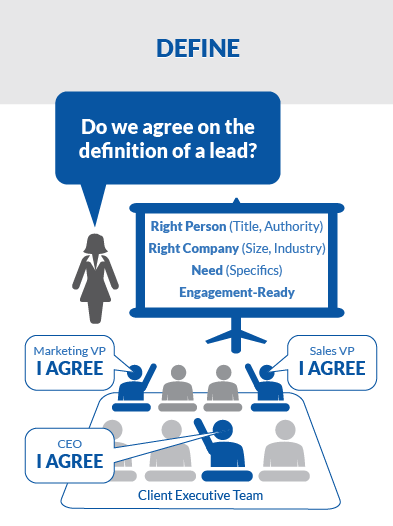
Today you’ll learn why lead definition is important and why you, as the CEO, need to be involved in building your own universal lead definition:

Shortly after I started PointClear I worked with a company that blew through $100 million because marketing was selling to one audience and sales was selling to another. Marketing was creating opportunities for $10,000 deals while sales was only interested in those valued $1 million plus. It didn’t matter that the biggest competitor in this space had a market value of $10 billion and sold $10,000 deals. Nor did it matter that our client had more sales executives than there were $1 million deals in the market.

I am still close to that VP of sales—he looks back with regret at all of the wasted effort that resulted in his company being sold to a competitor in a fire sale.

For whatever reason (was it beneath him?) the CEO failed to step in and act. It took less than two years for the company to go through $100 million.

The company had a good product—better than the competition—yet it disappeared. All because the CEO did not insist on a common definition of a lead. 

  1. Define what a lead is. Answer the questions: What do we sell? Who are we selling it to?

A couple of years ago I wrote a blog for Salesforce.com about lead definition. In that post I quoted a client and friend who at the time was CMO for a Fortune 100 company. One day, in frustration, he offered sales management the following approaches regarding spending $100,000 to generate leads. The options—which encompass very different lead definitions—were to focus on:

  • 200,000 contacts (name and title) in the right vertical—but with no email addresses.
  • 100,000 companies with up to three executive contacts—but with no email addresses.
  • 20,000 companies with multiple contacts and verified technical environment information—but with no email addresses.
  • 4,319 contacts who had downloaded a white paper with email addresses—but who may or may not be in targeted companies or have any need or authority to buy with email addresses, with inaccurate, incomplete or non-existent company firmographic information, and with no telephone numbers.
  • 117 appointments with people in the right companies who may or may not have any need or authority to buy.
  • 81 highly qualified sales opportunities with the right contact who has a need backed by some form of compelling event.

Sales management opted for 20,000 companies with multiple contacts and verified technical environment information. Sales reps did not know how to prospect for new business so the 20,000 “leads” were ignored and wasted. They also did not know how to follow-up on the highly qualified leads (the 81 option) so those sales ready leads were also wasted. My client and friend left for another opportunity and within six months the entire sales management team was terminated—all because there was no common definition of a lead within the company, and no agreed upon approach to managing leads.

Brian Carroll (MECLABS) has been talking about something he calls a Universal Lead Definition (ULD) for almost a decade. A ULD clarifies what a lead is to everyone in your organization, and these leads also:

  • Fit the profile of your ideal customer
  • Have been qualified as sales-ready
  • Spell out the responsibilities and accountabilities of Sales and Marketing
  • Make Marketing and Sales more efficient

Brian’s blog continues:

“ULD doesn’t need to be complex. Here’s an example from one of our past research partners, an $80 billion IT management organization.

An inquiry becomes a lead when it:

  • Fits the target customer profile (industry, revenue, number of employees, etc.)
  • Has interest from a decision maker
  • Needs what the company sells
  • Plans to evaluate the solution in three months or less
  • Plans to make a purchase decision in six months or less
  • Is ready to speak with a sales rep within two weeks

Setting and using this definition brought a 375% increase in sales-ready leads without an increase in spending.”

In my book, The Truth About Leads I suggest the following as criteria for a universal lead definition:

  • Industry or SIC code
  • Firmographics (revenue, # of employees, # of locations)
  • Identification of decision makers and influencers
  • Documentation of environment
  • Validation of business issues/opportunities
  • Decision making process and timeframe
  • Documentation of allocated budget or the process for budgeting
  • Documentation of the competitive landscape
  • Sense of urgency or a compelling event 

sales and marketing alignment!It is a mistake to delegate the creation of a universal lead definition to sales and/or marketing. If they, jointly or separately, could have solved this problem before they would have. This action is so important that it requires the CEO to be involved. Others that should be included in the discussion are other leaders such as the COO, CFO and, of course, senior marketing and sales management.

One final note in this discussion: It’s important to note that lead definition is not something to be done once and checked off the list. It’s a continuous process to assure that market trends, changes in the competitive landscape and your evolving offerings are taken into account. Later in this series we will talk about the Judicial Branch which keeps marketing and sales honest and allows for adjustments to the universal lead definition if needed.

The next blog in this series covers how to drive revenue from all sources: inbound, nurture and proactive outbound. You’ll learn how a balanced allbound marketing program helps you achieve the revenue you need by keeping you focused on the right market.


14 May 16:00

How to Get Killer B2B Leads at Trade Shows

by Wendy Marx

How to Get Killer B2B Leads at Trade Showsding

Sadly, getting leads is no slam dunk and not every lead you get is a hot one. You need to have the right audience, right message, right time — and the right strategy.

When it comes to trade shows, you might think that generating B2B leads is a piece of cake. After all, you’re under one roof, engaging with those who have an active interest in your industry, often for multiple days.

And, although LinkedIn is responsible for generating as many as 80% of all B2B leads, trade shows are still a successful staple of any B2B marketing strategy.

77% of marketers say trade shows generate a significant quantity of leads. ~ Tom Pick

So how can you make the most of your trade show experience?

5 Ways to Generate B2B Leads at Trade Shows

1. Contact the Right People Weeks Before

Typically, a trade show will release a list of press members who are covering the show. This may include bloggers, influencers, and journalists.

While these contacts are not themselves leads, their audience is. One of the most important steps you can take to snag time with these influential people is to reach out to them by email at least several weeks before a show. Request that they stop by your booth, and if possible, schedule a time for them to do so. Remember that media get jammed at trade shows so you want to be early enough for them to see you. If they are overscheduled or not attending the conference, not to worry. Offer them the opportunity to interview you in advance and embargo the interview till the show.

If you can, give them samples, a free trial, or a demo of your product or service. And don’t forget to provide background information or any helpful collateral.

2. Land a Speaking Engagement

Securing a speaking gig is a great way to generate more credibility around your brand, as well as yourself as a thought leader.

This isn’t always easy to do, so you must plan well in advance. Thought leadership begins with your owned media. In addition, once you have established credibility, you will have to submit an application to speak, likely months in advance. Here’s one tip to help get you in the door: Submit if you can with a customer. Trade shows are loaded with vendors eager to speak and you can differentiate yourself by presenting with a customer.

Landing a speaking engagement at a trade show is well worth the effort, as it will drive prospects, not only to your booth but to your website since you will (with any luck) create a memorable presence.

3. Establish Your Goals

Of course, the end game is always to turn strangers into buyers. However, the stage you’re at in your marketing game will largely determine your goals and means of achieving them.

If you’re a startup, your main mission at a trade show might be to create a buzz by handing out free swag. However, if you’re well-established, you might be aiming to launch a new product, or secure greater publicity.

Get your strategy in place by first determining your end game.

4. Get Busy on Social Media

In the weeks and days that precede a trade event, you’ll want to create a buzz on social media. If your brand is launching a new product at a trade show, why not use Snapchat to reveal a hint of the product, mentioning that the full product will be unleashed at the upcoming trade show.

While you’re at the trade show, take full advantage of Facebook Live to capture real-time highlights of the event.

5. Follow Up

Want to know something a bit frightening? One statistic says:

“90% of trade show attendees received no follow-up within 12 months of their visit.” ~ Danny Zecevic of Skura

If you want anything to come of your trade show experience, you must follow up. That means inputting new contacts into your CRM, reaching out via email or telephone, and asking for permission to add them to your email list.

Just think… if you can accomplish this one task that so few B2B companies are paying attention to, you’ll have the upper hand to win your prospects’ attention.

Ready to go conquer your next trade show? Just remember…

  • Make contact with the press well before the show.
  • Land a speaking engagement
  • Create and work within your trade show marketing strategy.
  • Publicize your presence at the event on social media.
  • Always follow up with the contacts you made at the show.

Trade shows are an essential part of the B2B PR process. Need more tips and tricks on how to effectively run a B2B PR Campaign? Download our FREE B2B PR Campaign Checklist!

New Call-to-action

14 May 16:00

Use This Jedi Mind Trick to Get Prospects to Quantify on Command

by Waylon McGill

At its core, selling is about helping prospects understand whether or not there is a good business case for buying your product and, if so, helping them navigate the buying process. Our focus here will be on the former; helping prospects evaluate the business case for using your product.

There are three steps to this process:

  1. Work with the prospect to uncover the relevant business issues (challenges or opportunities)
  2. Determine the full scope and implications of those issues
  3. Quantify the collective impact of those issues and implications in monetary terms

One and two form the foundation of good discovery, and are summarized well here. What I’d like to focus on today is 3; How to get prospects to quantify their business issues in monetary terms.

The Challenge

For the purposes of this piece, let’s say that you’re doing discovery together with the client and that you’re doing a great job of pulling out all the implications of their challenges. How do you get them to quantify in monetary terms? The obvious answer is to just ask them.

Unfortunately, prospects usually give vague or otherwise unhelpful responses like “I have no idea” or “a lot.” Resist the urge to believe that they actually have no idea, or that they may be trying to stonewall you. If they don’t know the answer off the top of their head, this is the type of response you will usually get.

Consider this, how often do you ask a question and the prospect responds, “Great question, I hadn’t really thought about that. Why don’t you give me a minute to think about it.” Probably not often.

My team tells me that less than 25% of our prospects are able to quantify things as straightforward as how much time they spend on a typical task a week or how much of their work goes unbilled (our target market is lawyers who live and die by their billable hours).

The natural follow-up is to ask the prospect to estimate or ballpark it. This will get you a slight bump in your response rate, but my team’s experience is that the bump is small and most people will respond with another vague response. Pressing beyond that point is likely to turn the prospect off.

The Solution

The solution is simple and remarkably effective. When you’re trying to get a prospect to quantify something and they say “I don’t know,” give them two options that cover the typical range for that particular challenge.

Here’s what it should look like:

You: What percentage of prospects do you think never respond to your cold outreach?

Prospect: Oh, I have no idea.

You: Ok, do you think it’s like 25% or is it more like 75%?

Prospect: Definitely more like 75%. Probably higher.

You will be amazed at how often this one little nudge will get the prospect to stop and really consider your question, and then quantify it for you. It’s incredible.

My team has gone from having less than 25% of our prospects quantifying critical challenges that we can solve for to well over 80%.

Ironically, the numbers people give us are often precise and outside of the range that we offered. Many times they think aloud and walk us through their thought process so we have the added advantage of understanding how they arrived at the number.

The Impact

If you’re running an SDR team consider the value this can add to the quality of the leads you convert. Imagine if 80-90% of the leads you passed over to your AE teams had detailed notes that included quantifiable costs associated with the various business issues. Numbers that the prospect themselves provided.

If you’re an Account Executive, imagine how much more compelling your business cases would be if you always had hard ROI numbers based on the customer’s own projections and estimates.

Imagine if your champions inside target accounts had these numbers when they needed to make a business case to finance for money.

Quantifiable business challenges are hugely valuable when it comes to closing the sale. Everything sounds well and good until the prospect needs to sign that contract or put in their credit card. It’s a normal psychological response to the “pain” of paying for things. Sometimes it makes prospects do irrational things like deciding at the last minute that they aren’t sure if they should invest $1,000 to generate a near-certain $2,000 return.

In situations like this, if you’ve done a good job of getting the prospect to quantify their challenges and the benefits of your solutions you can just remind the prospect of the numbers.

Prospect: Ok, you know what, why don’t you leave the contract with me and I’ll think about it.

You: I can definitely do that. But let me ask you, you mentioned that every week that you don’t have a solution in place you’re losing out on tens of thousands of dollars in sales pipeline. Why would you want to wait?

It’s a very direct question, but if asked right, it will frequently inspire a prospect to get over their last minute jitters and get a solution in place that is likely to provide a great return for them.

Caution

Sounding conversational is always important when selling, but never more so than when you’re really digging in and trying to get prospects to quantify things for you. When we first started placing more emphasis on coming out of qualification calls with quantifiable challenges we had some SDRs turn into sales robots.

You don’t want to sound like a sales robot building out the logic of a business case. “What challenges are you facing?” then, “Could you quantify that for me?” It’s not that you can never ask those questions, but it’s best to leave sales lingo out of your selling vocabulary.

Use normal everyday language that you would use if discussing a friends business with them. If it sounds like an interrogation you will lose the prospects trust and they will think that you’re trying to get these numbers so that you can use them against them.

The post Use This Jedi Mind Trick to Get Prospects to Quantify on Command appeared first on Sales Hacker.

14 May 16:00

Refine Your Lead Scoring With 3 Quick Tips

by Taylor Freitas

A new lead scoring study from Demand Gen Report is shedding light on how marketers use lead scoring and where there’s room for improvement. Some of the results were predictable, but there were also some pretty surprising findings — especially around the perceived effectiveness of lead scoring as a whole, despite the vast adoption.

For example, although 86% of marketers use lead scoring as part of their demand gen strategy, nearly half said their initiatives needed improvement.

If your lead scoring programs could use a boost, check out these three tips.

1. Include sales throughout the entire process. According to the report, many of the top goals of lead scoring programs revolve around helping sales see the value from leads delivered by marketing. As such, it makes sense that sales should have input on the qualifications of a sales-ready lead as they’ll be investing their time in pursuit of converting that contact.

If sales and marketing are jointly responsible for agreeing upon lead scoring criteria, both teams either win together or are both accountable if something is broken. Involving sales from the very beginning can help minimize tension and pointing the finger at marketing down the road.

Furthermore, 53% of respondents said they experienced improved marketing and sales alignment from scoring, and more than 40% saw improved conversion rates among leads.


2. Re-evaluate your criteria regularly.
The survey found that most marketers review their lead scoring model quarterly, yearly, or not at all. However, Justin Gray, CEO at LeadMD, maintains that scoring should be evaluated daily.

“Scoring gets evaluated daily whether marketers are listening or not,” he said in the report.

Dedicating time to review and update your model means that your marketing team can be more agile based on the most current knowledge you have about your best buyers. Perhaps you’ve shifted your personas and now target a different type of buyer. Or maybe you’ve recently determined that a specific promotional channel is more effective than others. You need your lead scoring model to reflect changes like these, which can happen frequently.

This is also why it’s important to keep sales involved at this point of the process. They can provide the concrete feedback as to why or why not your current lead scoring model is passing over appropriate leads.

3. Dig deeper into your marketing automation platform. According to Erin Bohlin, Research Director at SiriusDecisions, “many clients activate lead scoring as part of the initial MAP implementation. As a result, the strategy often hasn’t been considered, and sales may not have been part of the process.”

As it turns out, this is quite frequently the reason marketers are dissatisfied with their lead scoring programs. “Marketing automation has rapidly gone mainstream over the last several years, and we’ll continue to see it expand, reaching beyond 90%,” said Joe Galvin, an independent B2B Sales Analyst. “However, like SFA systems, having a system ‘in place’ is not the same as maximizing or even getting value from the system.”

If you’re not comfortable with the lead scoring functionality of your marketing automation platform, take advantage of the customer resources offered by your provider. Find your provider and log in here:

· Marketo
· Eloqua
· HubSpot
· Pardot
· Act-On

Head over to Demand Gen Report to access the complete survey for more in-depth insights. If you run webinars as part of your demand generation programs, be sure to check out the BrightTALK Guide to Lead Scoring for Webinars.

14 May 16:00

Modern Account Based Sales Development is the Death of Inbound and Outbound

by Leah Bell

Modern Account Based Sales Development enthusiast, and Sr. Director at Birst, Chris Pham is joining us on the SalesLoft blog as part three of a five part series on trends in sales development.

Sales development traditionally came from a world focused on the process of optimizing a lead. A lead typically means someone who has expressed interest — through a contact form on a website, a trial started or an asset downloaded. SDRs follow-up in the least time possible, diagnose the need, and close for a meeting. If they’re not doing that, then they’re cold calling people to drum up demand. In this traditional world, the one we’ve been living in for decades, there’s inbound and outbound.

That is no longer true in today’s world. Every enterprise B2B company needs to kill the notion of inbound and outbound.

A B2B company shouldn’t care if a prospect came to the SDR, or if the SDR goes to the prospect – what matters is the methodology and value they engage the prospect with, and how effectively they’re setting the stage for the AE. Instead, enterprise sales development organizations should move to the modern Account-Based Sales Development (ABSD) method.

Seeing the world in simply in/outbound terms frames the world in a salesperson’s eyes, with notions like, “this lead is coming to me,” or, “I’m approaching her.” This is a self-centered view of the world, which doesn’t help in doing the core job: creating demand in the company’s ideal target profile.

ABSD is a tactic specific to B2B enterprise sales because of the complexity of selling to large enterprise accounts, and the depth necessary to earn credibility with sophisticated buyers.

Using the ABSD model, SDRs should treat each lead, wherever it comes from, as an idea. A lead is a clue as to which accounts may fall into the ideal target profile and which accounts/contacts are worth their time to further develop. They point to potential transformation or initiatives within an account, guiding SDRs to craft a meaningful and provocative point-of-view (PPOV) which can be used to differentiate from the competition, and engage the prospect in meaningful discussion.

The development and penetration of each account lies with providing insightful value by doing research to understand the prospect’s environment, business challenges, and providing industry context on how your solution has previously been applied and to what end. This is the PPOV and by consistently delivering it SDRs earn time with prospects.

CEB Challenger Sale’s teach, tailor and take control methodology has fundamentally changed prospecting. The old in/outbound paradigm assumes marketing has done most of the lift and simply checks the turkey to see if it’s fully cooked (i.e. if a project has been started yet). This won’t work when the competition is moving to engage earlier than ever by teaching, tailoring and taking control.

modern account based sales development

In the modern Account Based Sales Development model, SDRs now have to understand a prospect’s business and technology so well — as to surprise and delight them with insightful analysis and new ideas — before they are aware of a problem. SDRs need to teach their prospects how they could potentially improve their business.

modern account based sales development

Furthermore, with the in/outbound paradigm there are only so many prospects who are innovative enough to self-realize their own need — these are Moore’s innovators. The problem is that there’s not very many of them in the world.

modern account based sales development

With ABSD, SDRs are on the frontline to teach the early adopters and the early majority — a much larger portion of the market. They are laying the first cables to bridge Moore’s chasm.

Although in/outbound is dead, it’s still critical to differentiate two different roles within sales development, though they are no longer inbound and outbound.

The Account Development and Market Development roles are needed to create a scalable way to manage territories, align with the field and, most of all, to create focus.

  • Account Development (ADRs) – focus on developing and penetrating roughly 100 accounts at a time.
  • Market Development (MDRs) – focus on maximizing account penetration within a geographic territory using each lead as an idea.

Both ADRs and MDRs should receive leads and go outbound to create demand.

In this way, modern Account Based Sales Development is best done in a hybrid model:

modern account based sales development

Typically ADRs will receive a minimal amount of leads (many of which they have driven to the website themselves through their outbound work), while MDRs receive the bulk of marketing’s efforts. Though hopefully this changes as Marketing teams get better at Account-Based Marketing (ABM).

The hybrid model creates straightforward field and sales development alignment, essential to building the teaming necessary to intelligently penetrate accounts.

It’s especially critical for MDRs to reframe this in/outbound discussion. Doing so will fundamentally redefine their role as a hybrid function. This new definition gives MDRs complete territory ownership, which empowers them to develop contacts in accounts that would otherwise be left dormant.

In the world defined by in/outbound – MDRs would process leads and the specific contact which comes with it. If a low level contact from Visa came in as a lead, MDRs would follow-up. In the perfect world, he would put 6 or more touches on the lead, and then would quickly move on to the next lead.

With ABSD, however, MDRs have complete ownership of the geographic market (less accounts owned by ADRs) and are empowered with the autonomy to pursue each lead as they see fit. MDRs are free to engage new accounts and contacts in ways that typical inbound reps would not or could not before. They can now focus on using their leads as clues in order to craft their penetration strategies and attack their accounts holistically.

Now, using the same low level lead from Visa would guide a MDR to craft a PPOV that can be delivered to that specific contact and all of the other contacts in the account that could mobilize a project. The MDR has been freed to thoughtfully attack Visa from all available angles.

Free yourself and your SDRs from shackles of the in/outbound paradigm.

For a more comprehensive look into SalesLoft’s internal SDR process, download the third section of our newest playbook trilogy, The Sales Development Playbook: Analyzing. In this section, we discuss how to measure and analyze your data, as well as the integrations at your disposal. Download our free white paper and optimize your sales efforts to start crushing your sales development goals today.

AnalyzingPlaybook_Twitter


The post Modern Account Based Sales Development is the Death of Inbound and Outbound appeared first on SalesLoft.

14 May 15:59

Common Sales Objections: Overcoming the “Send Me More Information” Blow-off

by Gillian Sontz

If you ask a room full of SDRs if they’ve experienced the “send me more info” blow-off, I guarantee everyone would raise their hand!

Training SDRs to overcome common sales objections is standard practice, but are you covering every scenario? Don’t let this standard push-back from prospects hold back your SDRs from being successful in booking qualified opportunities.

Here are some best practices to teach your SDRs that they can use to turn that “send me more information” push-back around and into a booked meeting.

1. Verify their email address

This may seem silly, but you’re never going to get a booked meeting if you don’t confirm the prospect’s email that you are sending the information to! Before you agree to send anything over, make sure you have the right email address for your prospect. It is as simple as asking, “before you let me go, what is the best email address for me to send you that information?”

2. Schedule a day and time to follow up

Some prospects are genuinely interested in what you have to say, but are simply just too busy and/or overwhelmed to commit to a next step with you. If committing to a demo or discovery call is too big of a next step for your prospect, it wouldn’t hurt to try a smaller step such as asking for a good day and time to follow up with them in the future. You can help guide the prospect by asking questions like, “what do your Tuesday afternoons look like?” or “would beginning of next week work?”

3. Send a calendar invite

After you and your prospect agree on a day and time to follow up, send over a calendar invite immediately to block off the time that was agreed on (5-10 minutes). This is not only a reminder for yourself, but also a friendly reminder to the prospect that they should be expecting your call.

4. Push for the call

Although some prospects are really just too busy to commit to a next step, sometimes scheduling a “follow up” is a blow-off in itself. Before you commit to the follow up call, try reasoning with the prospect in favor of a more detailed meeting. Oftentimes, sending a white paper or PDF can turn prospects off, or it goes to spam. What I like to say in this situation is, “I want to make the best use of your time. I can send you a white paper, but I think it would be more beneficial to have a high-level conversation so you can understand how we would work specifically with your company.”

5. Follow up to confirm that your prospect has received the information

If you do end up having to send over information to a prospect, keep them on the phone until they receive it. Sometimes emails with attached documents can get caught in spam filters, and yours could get lost. Ask your prospect if they received your email and are able to open it. This will also help ensure that your prospect actually downloads the content they requested.

6. CC your sales rep on the email

If the prospect would like more information, explain that you will copy your product specialist in the case that your prospect has any specific questions. Not only does this make you seem more credible and helpful, but also allows your closing rep to see what accounts you’re working.

7. Be persistent

If your prospect does not show up to the follow up meeting that was agreed upon and scheduled, or doesn’t respond to your follow up emails, keep trying to reach them. If they requested you send them information, it is most likely something on their radar. Don’t give up until you get a meeting booked with your closing sales rep or a definitive answer from the prospect!

The “send me more information” push-back often comes with a negative connotation, but by using the above tips, this push off can be transformed into a successful opportunity booked.

14 May 15:59

Brain Fitness and Big Bucks: How Cognitive Learning Leads to Higher Sales

by Jennifer Sullivan

Hal Becker says, if you want to keep your sales skills sharp, you need to hone the sales ax—the sales ax being your brain, of course. The word “cognition” is defined as any conscious mental activity, such as thinking, understanding, learning, and remembering. Study.com further describes cognition as “the process of acquiring and understanding knowledge through our thoughts, experiences, and senses. Whenever you see or hear something new, you go through a series of cognitive processes, which are the processes that result in learning.” Cognitive learning is important because it boosts cognitive fitness—the brain’s overall alertness—working toward “a state of optimized ability to reason, remember, learn, plan, and adapt. The more cognitively fit you are, the better you will be able to make decisions, solve problems, and deal with stress and change.” (Harvard Business Review, Cognitive Fitness) In fact, the more cognitively fit you are—the better you’ll be at nearly everything. Sales included.

According to HBR’s Cognitive Fitness, “The future belongs to companies with leaders who develop cognitive fitness for themselves and their organizations. CEOs need to be cognitive coaches to those whose work and decisions collectively create and propel the company’s strategy.” Clearly, sales reps that retain information better, reason better, and solve problems better—thanks to continued cognitive learning—will be all-around better advisors to their customers. They’ll be able to plan presentations more effectively and be quicker on their feet when the customer goes off script. They’ll be able to see patterns in buyer behavior they might not have noticed otherwise. Encouraging reps to continue learning long after onboarding is the greatest way to improve sales. Here are a few ways to incorporate more cognitive learning into your sales team’s daily routine.

Let Reps Learn By Doing – Help your sales team with their cognitive exercise by providing ongoing training, information, and challenges. Offer learning-by-doing opportunities “that enable deliberate practice by working through a systematic set of experiences, either simulated (online or in a workshop) or on the job. When reps work through a series of scenarios that guide them to learn key knowledge in a realistic selling context, they are more likely to… put it to use in the field.” (Cloning Your Top Sales Performers)

Provide Feedback and Coaching – One of the best ways to support continual cognitive learning is to supply reps with appropriate feedback and coaching “at the teachable moment.” The most critical teachable moments occur immediately before and after customer interactions. Reps can benefit enormously from a quick pep talk before a presentation—and even more from timely feedback afterward. “Leading companies are refining the coaching skills and process for their district managers, using fine grained coaching guides to provide reps with the targeted feedback they need to speed up their journey to top performer level.” (Cloning Your Top Sales Performers)

Encourage Mirroring – Another crucial form of cognitive learning is called vicarious learning. Vicarious learning is simply learning from other people. Reps can develop behaviors and skills just by watching—and mirroring—a mentor at work. “This is why new hires are often paired with experienced employees for their first few weeks or months—they can learn how to react to a variety of situations through vicarious learning much more effectively than they could by reading an employee handbook.” (Social Cognitive Theory and Workplace Learning) Modern sales organizations often collect video examples of what good looks like from top performers and share them across the team. Look for opportunities for reps to learn through imitation in your organization.

Foster Community Learning – Sales teams shouldn’t operate on an every-man-for-himself model. The very word “team” implies as much. Reps learn a great deal from hearing about one another’s experiences in the field—both good and bad. And community learning allows them to do just that: “Teams work through scenarios together so they are learning from each other in a structured environment to share best practices. Reps can reflect on their experiences by discussing them within a community of learners, which is critical to truly learning from those experiences.” (Cloning Your Top Sales Performers) Peer-generated video can help to capture those field experiences while they’re still top of mind.

Just-in-time learning tools have been developed in line with much of this thinking. They are designed to move away from training by fire hose and provide a platform that allows reps to learn on the job, to obtain ongoing coaching, and to learn from the top reps in the company. With the fast pace of innovation today, organizations need to adopt a plan to develop cognitive fitness to enable sales teams to keep up with the changes in their own products and services, as well as the business challenges of their clients. Leveraging mobile and video, a quality learning platform can help your sales team stay cognitively fit.

14 May 15:59

7 Examples of End-of-Funnel Webinars to Push Your Prospects Across the Finish Line

by Dallas Jessup

Marketers across the globe are tasked to generate leads, nurture them, and feed their sales team with high-quality potential contacts to generate new business. However, especially in the B2B space, sales cycles can take months depending on your product and adoption risks.

Many marketers focus on top-of-funnel content to generate buzz at the cost of neglecting the end of the buyer’s journey since there are fewer individuals engaging with those efforts.

Strategic marketers are always balancing the constant needs of sales representatives, whether it’s for acquiring net new names vs. or helping close existing pipeline. It can be hard for marketers, particularly at smaller companies, to step back and invest bandwidth in late-stage content that may not draw larger engagement numbers that broader thought leadership pieces command.

However, it’s critical for marketers to remember that more product-specific content is essential to help marketing’s impact on the business. Here are the top seven types of late-stage webinars you can run to push prospects across the finish line and ultimately close more business.

7. Product specifications. These are great sessions to assure the prospect that your solution fits their needs and is the right solution to help address their challenges.

AWS example:

6. Case studies. Real-life examples are a phenomenal way to connect with your audience. Buyers want to hear the success of another company before they invest time and money into your offerings. Leverage these presentations to generate confidence with knowledge and proof points.

NewVoiceMedia example:

5. Product updates. This one is pretty simple to implement. Whenever there is a new update, make sure to communicate this with your audience, as perhaps it solves their most critical needs. Depending on the velocity of your growth, you can always make these a quarterly update to align smaller updates to the big-picture theme. Buyers want to understand your investments in the product evolution.

Cradlepoint example:

4. Quarterly updates. Unlike the product update, quarterly updates are extremely popular with larger companies or industries where market trends are quickly evolving. Either focus on strategy updates, financial situations or next quarter’s roadmap. Creating a consistent presentation creates a rhythm for buyers to trust you and regularly engage with you.

Standard Life Investments example:

3. Solution integrations. Another great way to drive higher engagement numbers while remaining very product centric is hosting sessions with one of your partners. This highlights how your solution integrates with other key products and services that your target buyers are using.

Uberflip & Marketo example:

2. Demos. Some companies will host three or more live demos a month to make sure they’re addressing the buyer’s questions when they’re ready to buy. These sessions strive to answer lingering questions or uncertainties about the product or implementation of the product.

LogRhythm example:

1. FAQ. These sessions are great to help level set any buyer. Depending on the structure of the session they can be more focused on a specific subset of FAQs to really hone in on the needs. You can quickly turn the content into static collateral or a video to be leveraged for future outreach.

Cradlepoint example:

No matter the presentation, success comes through engaging presentations that connect with your buyer. Join Prezi and BrightTALK at 9am PT on May 18th as we discuss the science behind engaging webinar presentations.