Shared posts
Steve Andersen and Dave Stein: Building Long Term Customer Relationships By Moving Beyond the Sales Process – Episode #58
5 Ways a Sales Enablement Tool Adds Value to an Account-Based Selling Strategy

Account-based selling (ABS) is one of the hottest B2B sales trends for 2016 and is quickly becoming the go-to-strategy for organizations that want to maximize their sales potential.
Account-based selling is a B2B sales model that considers accounts to be markets of one, as opposed to the more traditional lead-based or contact-based approaches. Sales professionals focus on a set of highly-targeted, high-value accounts that have the greatest likelihood of purchasing and place all of their efforts into converting them to customers. It’s about placing quality over quantity and talking to the right people with the right campaigns, messaging, and content at the right time.
Account-based selling isn’t new by any means, but it has recently risen in popularity due to several factors at play in the B2B sales space.
1. The rise of the consensus sale: According to 2015 data from CEB, there are an average of 5.4 decision makers that must sign off on a purchase. That means it is more important than ever before to nurture multiple contacts across the company in order to connect with the right people, initiate internal conversations, turn the account into an opportunity, and close a deal.
2. Technology and data disruption: Recent advances in technology have begun to disrupt and transform the sales process and the way that reps engage and communicate with accounts, enabling a much more efficient and effective ABS approach. More importantly, technologies such as sales enablement help organizations to scale their strategy appropriately and drive company growth.
Account-Based Selling and Sales Enablement
ABS is transforming sales processes and the way that sales teams and individual reps sell. As SiriusDecisions says, “What makes account-based strategies so attractive right now is the way they combine insights for strategy and technology for execution.”
With a more focused approach and fewer targets, reps can be methodical, maximize their efforts, and extract the most value from their activities. According to Sales Hacker, ABS generates higher win-rates, shorter deal cycles, and larger deal sizes, as well as increases sales efficiency and productivity.
Read ahead to learn 5 ways that sales leaders can use sales enablement to help execute and scale a successful ABS strategy within their organization and add value to the sales process.
1. Enable and Empower Sales Reps
With such a targeted program, sales reps need to know what actions to take next in order to continue targeting the account and advance the opportunity. Information related to the selling space and market, different buyer personas, the products, and navigating the sales cycle changes over time, which is why ongoing coaching and training is imperative. Reps also often need direction in relationship management and guidance in balancing quality vs quantity of sales activities.
Tools such as playbooks allow sales leaders to provide the just-in-time coaching that is key in ensuring reps have the information and instruction they need to use content effectively in their engagements and progress prospects from one stage to the next.
2. Add Value to Engagements with Relevant Content
A key to account-based selling success is the ability for reps to customize and tailor their approach. After identifying the right people at the right accounts, sales reps need to engage the prospects with relevant content that is appropriate to their sales situation. B2B buyers expect an individualized purchase process that takes into consideration their unique challenges and priorities. And while prospects can usually find info such as pricing, technical overviews, and industry comparisons on their own, they often still need somebody to add meaning, offer context and perspective, and give actionable insights. So it is imperative that reps know who the audience is and how to best tailor the sales process for relevance and value.
Personalized and appropriate messaging and content are how sales reps will get the attention of key decision makers and will help them to nurture the sales process. Indeed, an Aberdeen survey shows that 75% of B2B customers prefer an account-based approach because of the personalization. A sales enablement tool supports this activity by recommending the best content based on sales situation, right in the CRM and email. And by making it as easy as possible to access the messaging and content, sales reps are far more likely to use it. A sales enablement tool also enables the sales force to execute this type of personalized account-based strategy at scale.
3. Build Trusting Customer Relationships
Account-based selling is less about selling product and more about selling value that’s specific to the account. An ABS approach allows sales the time to build those trusted relationships where reps truly understand the needs and challenges of the prospect and can offer relevant, valuable content and meaningful insights toward finding a solution. This tactic also helps sales reps to identify and leverage that internal champion who can help to promote the product/service amongst other decision-makers and, hopefully, advance the deal.
A sales enablement tool adds value to this process by surfacing content and messaging based on the specific sales situation. This enables sales reps to position themselves as trustworthy advisors and credible resources and to provide prospects with the right content to build a business case, make an informed purchase decision, and feel confident that they made the right one.
4. Improve Alignment with Other Departments
An account-based approach must be a united, organization-wide initiative – not a sales-specific or marketing-specific strategy. In fact, account-based selling is so closely related to account-based marketing (ABM) that the two cannot succeed separate from each other. For best results, ABM and ABS must be executed in tight coordination. Thus, a successful account-based strategy requires complete alignment with sales, marketing, operations, and even customer success to collaboratively identify, nurture, and close deals.
By coordinating sales enablement efforts, each team is working in-step with the others, with shared goals and a built-in feedback loop as to what works and what doesn’t. Marketing can arm sales teams with the latest content, research, industry info, and messaging; sales can leverage marketing’s resources to deliver timely and relevant content to accounts. This alignment enables much more powerful execution, whereas misaligned teams will waste time, effort, and money.
5. Measure Goals and Refine Strategy
Advances in technology have created a flood of data. Having accurate and appropriate measuring in place is integral to gaining deeper insights into the sales strategy and to guiding the sales process. With an account-based selling approach, sales activities are performed at the account level, eliminating much of the noise from en masse activities. This makes it easier to track activity, get an idea of what’s working and what’s not, and identify areas for improvement.
Dashboards and metrics with real-time data will help leadership determine which sales enablement factors advance deals through the sales cycle, generate the highest ROI, and optimize sales processes. Sales leaders have insights, visibility, and control over rep activity, as well as improved funnel and forecasting accuracy. This means that organizations can use data-driven decision-making to meaningfully refine their strategy and continually improve.
Download our free e-book to find out how to get more from every lead that enters your pipeline, routing them effectively and measuring every step of the way.

7 Examples of Highly Effective Lead Forms That Convert
Picture this: You’ve spent hours working on that piece of advanced content or perfect set of lead nurturing emails, created a beautiful CTA, and brainstormed the perfect copy for the landing page. You quickly add a form, click “Publish,” and wait for the leads to roll in. Unfortunately, they don’t.
What gives?
Before you scrap everything, give your form a once-over. It may not seem as important as content that resonates or mobile-friendly templates, but your form can make or break your conversion rate. Here are seven rules that highly effective lead forms usually follow:
1. They have as few form fields as possible.
A good rule of thumb when it comes to fields is to stick between three and five. However, here’s the tricky part – every single offer “requires” a different number of form fields. If you’re offering a monthly newsletter, it might be best to stick with a required email and an optional first name. If you’re offering a free quote for your services, you’ll likely need a lot more information. What you definitely don’t want to do, however, is require a lot of form fields for a small payout.

Unbounce is a great example. If you’d like to subscribe to the Unbounce blog, they only require you fill out two fields. Not only that, but the information they request is relevant to the offer – they’ll need your email address to deliver the blogs, but they also give you the power to select how many emails from them you’ll receive. This is how you get conversions.
2. They never submit.
Your “submit” button is the very last hurdle your visitor must jump before converting. To keep them engaged, make it more exciting and more persuasive than the word “Submit.” This is also a great way to let the visitor know what will happen next – using a verb like “Download” or “Access” is a gentle way to remind the visitor that he or she is getting something out of the conversion. Some of the best forms, though, use the Submit button to remind the visitor why they wanted the offer in the first place. Haskell’s Wine and Spirits, a Minneapolis-based family business, recently put together a recipe book that featured old family recipes, stories, and pictures, along with great wine recommendations to go with. Here’s the form on the landing page:

“Let’s get cooking!” is a lot more enticing than “Submit” or “Download,” right? Right. It reminds the visitor that once they download the recipe book, they will be able to make something absolutely delicious for dinner. And who doesn’t love good food? (Side note – is anyone else suddenly hungry?)
3. They avoid asking for sensitive information until necessary.
As marketers, we know that most people aren’t comfortable giving out a lot of personal information on the internet. What constitutes as personal, however, may surprise you. If you ask for or require personal information that doesn’t seem to relate to your offer, it can lower your conversion rate. If your offer is a blog subscription, even requiring something like a last name might be too much. Here’s a form from The Sales Lion that offers an introductory-level Inbound Marketing eBook:

Notice how the “Company Name” isn’t required? It may seem too personal for someone who is downloading an introductory-level eBook. It’s possible that the visitor is thinking of making a lateral career move, or is looking for information for their side business, and doesn’t want to give their company’s name. There are a lot of different reasons that someone may download an introductory-level eBook, and requiring a lot of information may make them run for the hills.
Here is a form for a different eBook offer from the same company. This one shares information on how to create a culture of inbound marketing within your staff. The motive to download this eBook is a lot less broad than an introductory-level book, which means that you can ask for a lot more information without driving your visitor away:

Since the Sales Lion also offers workshops to companies, they likely use this information to determine whether or not the visitor might benefit from an in-person workshop, as well.
In other words, asking for information that your visitor doesn’t think is necessary is a great way to look dishonest. Try to distinguish between the lead information you want and the lead information you need, and don’t go overboard.
4. The form stands out.
Make sure that your form stands out on the page. Try to choose a contrasting color, and make sure your form has room on the page to breathe. 
This form appears on the Unbounce blog exactly as you see it here – a blue form on a white background. The contrast is vivid, your eye is drawn to the orange Submit button, and they’ve used their brand colors. Perfect.
5. The form is visible above the fold.
Looking to try out HubSpot for a bit? Here’s what you’ll see when you click on their “Start Your Free Trial” button:

You can scroll down to find much more information on what the free offer entails, but they’ve made sure the form is visible above the fold. This is important because some people will come to your landing page knowing that they want what you’re offering – and they’re looking to “Submit.” The harder it is to find your form, the more likely they are to bail. If someone doesn’t need much time to decide that they want your offer, don’t give them the time to change their mind. Offering secondary information is a great idea, but add it below the fold.
6. They ensure the visitor’s privacy by linking to their privacy policy.
This is especially important if the form asks for personal information – things like home address, personal cell phone number, credit card information, etc. For example, Mint is a company that tracks all of your bank accounts, credit cards, and helps you budget.

Notice that they’ve included their Privacy Policy not once, but twice – important, because Mint is about to ask for some very personal information. One quick thing to know is that you want to avoid using the word “spam” anywhere near your form – that specific word has a tendency to decrease your conversion rate. Yep, telling people you won’t send them spam actually makes them worry about spam. So don’t!
7. They show social proof!
Basecamp, an online project management tool, does a great job of demonstrating social proof. Nobody wants to be the only person who fell for a scam, and social proof is a great way to instill trust in your visitor.

If 7,177 companies signed up to use Basecamp last week alone, it’s probably worth your time to try it out. Right? In fact, won’t you feel foolish if you miss out? That’s the power of social proof.
After all is said and done, remember that these “rules” are a little more like guidelines. Be sure to use your best judgment, and keep in mind that content is still king. If your offer doesn’t resonate with your audience, the form isn’t going to convert.

5 Tips to Building a Successful Sales Team
 Every business is different, but one thing that they all have in common? They need a successful sales team to survive. But, how do you go about building a successful team? Follow these tips:
Adjust your hiring process.
Sales positions should not come easy to new hires. There should be multiple interviews that put sales candidates in various situations to test how they can think on their feet. In one interview, ask your candidate to pitch you a random item found in the room and just give them a few minutes to prepare. In the next, ask them specific questions about how they would handle different situations. Look for clues that the employee is coachable, competitive but not confrontational, and a team player.
Invest in tools.
There are a number of tools that can make your sales team run more efficiently, so it’s in your best interest to use them and make sure everyone on your team is trained on how to do so. One of these tools is ToutApp, which provides sales analytics, tracking and template sharing across an entire team of salespeople. This will allow the team to hold each other accountable, compete to reach the highest sales, and share insight with each other on the way. LinkedIn Sales Navigator is another option for sales leaders to look into. This tool allows you to easily find new leads by connecting across common LinkedIn connections.
Hold frequent evaluations.
Once you think you’ve hired the dream sales team, you have to take the time to check in and make sure that they’re performing up to expectations. Although looking at each salesperson’s individual sales is important, it’s not the only metric that you should be measuring. For example, sales are important to convenience store distributors, however another important factor is the relationship that they are building with each retailer. Down the road, this distributor’s relationship tactic may lead to higher sales than a distributor who pays no attention to customers and only worries about the numbers. Try to look at the whole picture when evaluating each member of the team instead of focusing on just the numbers.
Teach after the sale strategies.
The sale should not be the end game for any salesperson, in fact, it should be just the beginning. After a sale is made, the sales team must focus on turning that one-time customer into a loyal one. For example, a beauty supply distributor who sells a line of cosmetics to a retailer should then focus on convincing the retailer to also take a chance on the same brand’s hair care products. Convenience store distributors should focus on securing a second order by showing their new customer that they can quickly restock products to meet the retailers’ needs. As a sales leader, it’s your responsibility to teach each member of the team the best practices in following up after a sale, keeping the customer happy and learning how to upsell.
Have you had success building a sales team? What strategy did you use to do so? Tell us in the comments below!
4 Strategies to Convert Prospects Into Valuable Referral Sources

As strangers move through the sales funnel to become leads, opportunities, then customers, every interaction they have with your company -- from engaging with marketing content, to email conversations with sales, to a kickoff call with your customer service team -- is an opportunity to turn a stranger into a brand promoter.
What business wouldn’t want to get their hands on loads of customers eager to bring referrals to them?
Click here to register for a free sales training course.
As an inbound salesperson, you’re the translator between the generic messaging found on your company’s website and the unique needs of your buyer. Prospects want to know how features are specifically going to help them and their specific situation. Prospects also want to know that you care about more than just closing the deal. They want you to genuinely care about their needs aren’t a shark looking to take their money. This tailored sales experience is what turns visits into leads into happy customers who are promoters of your brand.
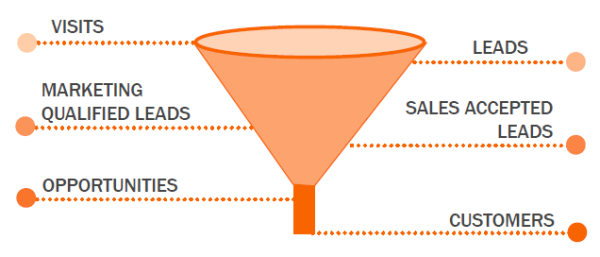
Here are four ways to not only advise your prospect, but also delight them throughout the sales process and lay the foundation for future referrals and more business.
1) Demonstrate that you’re an active listener.
With each call during the sales process, provide a recap of what you’ve previously learned. The beginning of each conversation should be all about restating where the prospect is now and the insights you’ve gleaned from your earlier conversations. This includes what challenges you’ve discovered that your prospect has.
2) Be a helper and suggest ways to achieve their goals.
Craft a customized presentation that connects your prospect’s goals and challenges to your offering, and shows exactly how they’ll benefit with your service. Customization means more than simply slapping the prospect company’s logo on the first slide in a generic PowerPoint presentation.
To customize a sales presentation:
- Clearly explain your buyer’s unique challenge. This also sets you up to uniquely position your product as the solution.
- Include pros and cons of different solution options.
- Use the same language your prospect uses. For example, if they refer to their customers as “clients,” use that same terminology.
- Explain to your prospect the resources that are available to them after they become a customer.
3) Make helpful recommendations that don’t 100% relate to your product.
Did you find overlooked detail that is contributing to their challenges? Do you see a quick win for their challenge they can implement without your product? These are all small details that add up big in building trust with a prospect.
4) Confirm budget, authority, and timeline on your prospect’s terms, not yours.
Based on what it takes to set up their account and implement your solution, work backwards to determine when your prospect should sign your contract -- even if it’s not your ideal timeline. You should always make sure your timeline is built around your prospect’s needs, not yours.
Inbound salespeople need to take the experience that Marketing created for that lead and continue it through the sales cycle. To learn more about how to use education to enhance the sales and customer lifecycle, join us for a Google Hangout on Friday, May 27th with David Arnoux, Co-Founder of Growth Tribe.


Using the Sales Process as a Blueprint for Rapid Behavior Change
Using the Sales Process as a Blueprint for Rapid Behavior Change
#1: Establish a Common Language
There are two things that unite virtually every sales organization: 1) the desire to improve sales performance and 2) to achieve results as quickly as possible. In this series of posts, I will discuss three ways in which the sales process can be used as a blueprint for rapid behavior change that drives better results. The first in the series focuses on the importance of establishing a common language to be used within the sales process.
Common Language is Essential
Change happens when a majority of people begin doing new things repeatedly. For sales organizations attempting to achieve a step change in performance, it all starts with the sales process. An effective and intuitive sales process will introduce a common language that sales professionals and their managers can use to discuss opportunities and their stage-by-stage progression through the pipeline.
Language is important. It’s not only what people say, or how they say it, but what they mean when they use certain words. When people share a common language, they become more unified. They “get” what the other is saying. They’re on the same page.
This doesn’t mean everyone has to speak English or Spanish or German. It means whatever their native tongue, sellers should speak the language of selling. At Richardson, we focus on terms like verifiable outcomes to mean leading indicators of success at each stage of the sales process. We use the same words consistently to create understanding across global organizations about the steps that every seller needs to take, the outcome that should be reached, and how sales managers should be coaching their teams to lead them to success.
When sales organizations use a common language, it enhances communication. When they link this common language to the sales process, they begin talking about selling activities in similar ways, with similar sequences. The nature of the conversation changes because instead of just talking about activities, they can talk about how the activity was conducted, exchange best practices, offer tips on how to do things better, and verify outcomes.
Consider this example. In the Discovery stage of the sales process, sellers undertake a number of activities to explore and assess an opportunity. The sales manager, instead of just asking whether these activities were done, can use a common language to dig deeper. “What kind of input did you get from the prospect when you used the Questioning Strategy Funnel?” “How did the prospect respond after receiving the validation letter that you sent; what feedback did you receive?”
When the sales process is designed in a way that clearly outlines the activities, customer dialogue models, tools, and verifiable outcomes for each stage, then conversations can be specific about progress achieved and milestones attained, leading to more confidence in sales forecasts.
Our clients confirm this happens within their organizations. They tell us that using a common language starts out changing the conversation between sellers and their managers — and this leads to behavior change that aligns with the sales process and desired verifiable outcomes. The language helps by setting clear expectations for sellers and also for managers who can better coach their teams throughout the sales process.
When sellers and their managers are aligned on how opportunities should be moving through the stages of the sales process, and they use the same language to identify progress and bottlenecks, the organization benefits in numerous ways. Sales performance improves because people are focusing on what matters most, and sales cycle can shorten because there is less inefficiency and misunderstanding of expectations.

The post Using the Sales Process as a Blueprint for Rapid Behavior Change appeared first on Richardson Sales Training and Enablement Blog.

Infuse Your Content with Small Stories for a Big Effect

Marketers are constantly hearing about the importance of storytelling in their marketing. They should be trying to tell their brand story. Lead with a story. Connect with a story.
For the average marketer, this can feel like a daunting change. You may just be getting the hang of this whole content marketing thing, where you are trying to provide value by educating your prospects instead of telling them about your products and services. And now you have to tell them a story. Is that in addition to trying to educate them, or instead of that? You feel like a new parent with that deer-in-the-headlights look. If only someone would tell you what to do.
There are plenty of resources about storytelling if you want to get started in a big way, but what if you want to get started in a small way? This blog post may be just the thing.
I work for a big company, and there are already plenty of stories about the company, and even our specific product suite. But that’s not where I’m going with our content. I have been thinking about story differently. I am using small moments of story to catch people off guard. (highlight to tweet) They are reading about a marketing topic, and suddenly they encounter a brief scene that they were not expecting. It could be a simple visual metaphor, but it could also feel like a very short story. In the middle of an ebook or other type of top-of-funnel content, I’ve created a short story in their mind.
Let’s look at some ideas that make these kinds of small story moments work. These are embedded in content that is helping to build trust, so a prospect will ultimately buy from your company.
Be Relatable
These stories have to be about things that people recognize from their own lives, or in this case, their own offices. In a piece about the importance of tools that help you manage resources, I included the following sentence: “It also lets you identify bottlenecks—we’re looking at you, Sandra—and brings efficiency to your content team.”
Every team has someone that is a bottleneck. Not only did I create a moment that is relatable, but I called out a specific person in a way that is totally unexpected. But when you read the sentence, you get an instant picture in your head of Sandra, and you think about your own bottleneck person. And this has made you think how nice it would be if there really was something that could solve this problem.
Be Memorable
Writers, which is what we were called before we were content creators, can get happy with well-turned phrase, but if it doesn’t stick in someone’s mind, it’s just another piece of content. We also need to keep educating our prospects about what we do.
I included this sentence at the beginning of a piece about segmentation and targeting: “Imagine walking down the street and trying to sell a ham and cheese sandwich to everyone you meet.” I continued to describe the different reactions of people and their condiment and cheese preferences.
Not only have I explained a concept—how much more successful your marketing and sales could be if you craft a message based on what you know about people—but also I’ve told a memorable story that forever ties this aspect of marketing automation to ham and cheese sandwiches.
Be Creative
No matter what kind of content you are writing, there is room for some creativity. Not only will it make you feel like a better writer (you’re probably never going to write the great American novel), but you will better connect with your prospects. By the way, that “great American novel” comment was just what I’m talking about. It created a picture in your head of a writer toiling away—very relatable to writers who wonder how they became marketers.
I’ll just leave this example here with no additional comment. It’s from a piece about lead scoring: “That’s because no matter how many trashy leads you have brought in with your crayon-drawn stick figures posted on neighborhood telephone poles, only the best ones get passed along to sales when you have properly set up your lead scoring.”
Be Humorous
Humor can be hard for many people. It is definitely subjective, but it is frequently unexpected. In the example below, the humor comes from the specificity of the details—another thing that creates strong mental picture.
I used the following to describe what it feels like when a company uses social media listening, gathers data, and immediately tries to sell you something: “Imagine you are sitting in your living room talking to a friend about a 10-pound bag of potatoes you just bought, and the doorbell rings. It is someone selling potato peelers. Whether it is the world’s greatest potato peeler or not, this feels like an intrusion.”
Be Understanding
These small stories that paint pictures in the minds of your prospects can also show that you understand them and their daily challenges. This particular example expresses that understanding quite literally: “Modern Marketers face a myriad of problems. Should I buy those new shoes? Should I have a diet soda with my burrito? How effective is my marketing?”
These questions are things that our prospects ask themselves every day. Again, the specific nature of the stories that are brought up in their mind are what make these effective. If you’ve wanted a particular pair of shoes, this brings them to mind. Maybe today is the day to visit your favorite burrito place for lunch. And now we have tied our company to things that you like.
Use Sparingly
Finally, this approach to storytelling needs to be used sparingly. If you want to connect with prospects by creating memorable pictures in their head, you do not want to overload them. A simple approach needs to remain a simple approach. Too many of these moments will just override each other and be somewhat counterproductive.
Get more content like this, plus the very BEST marketing education, totally free. Get our Definitive email newsletter.


10 Surprising Statistics About Marketing Technology
With the hot sector of marketing technology becoming better defined, insights are emerging from those using it – and the results are mixed. This blog explores the figures.
When your life revolves around marketing technology – creating it, implementing it, making sure people get the most from it – it’s a sobering thought that many people aren’t seeing its benefits yet. (An outcome much in evidence in the pages of Digital Doughnut’s Transforming Marketing Technology report this summer.)
Marketing technology benefits: hiding in plain sight
As marketing technologists, we can’t ignore these figures. Nor should we. Seeing the world from the customer’s perspective – including the risks of a bad implementation, or poor employee adoption – helps us become better.
Let’s give ourselves that reality check with 10 surprising statistics about marketing technology.
1) 66% of those investing in marketing technology don’t have a clearly defined budget.
That is nearly two-thirds of those investing in marketing technology. This is more important than it sounds. If marketing technology’s costs are split informally within departmental budgets without guidance, it’s less likely those technologies will have clear champions within the organisation, and their benefits will take longer to emerge. Budget holders are only human, after all.
2) Only 33% have a defined budget when it comes to implementing marketing technology.
So should you be in the one-third? Yes because a defined budget carries with it defined outcomes, like projections for ROI. A defined budget means people have a stake in making marketing technology work hard for them and driving real results.
3) Only 8% felt marketing technology had been implemented well.
It gets worse. With the best will in the world, there isn’t much “bad” software out there any more. Many technologies are out of the box solutions, so unhappiness lies in how it was rolled out across the organisation.
4) 40% did not think technology had been implemented even partially well, while 52% only thought it had been ‘good in parts’.
To put this into context it means that a whopping 92% of people did not feel that marketing technology had been implemented well. This information suggests it’s worth paying a lot of attention to how you get people on board. Answering their concerns, understanding their needs, providing demos and demonstrating the return on investment and personal benefit. The good news: a little engagement here goes a long way.
5) 40% of people were unconvinced of marketing technology’s benefits.
The sentiment exists for many of the same reasons listed above, making it vitally important that, as above, you get people on board and demonstrate the benefits of the technology.
6) 50% use marketing technology for delivering and analysing emails.
Delivering e-CRM emails and analysing the results are big uses of marketing technology, but what’s surprising is that many companies use it for little else. This is another reason why the benefits of marketing technology are so rarely felt – its capabilities are rarely maximised by users.
7) Only 40% of companies are using marketing technology for hot and current topics.
Even more shocking is that hot topics like social media (both publishing and monitoring) were quoted by barely 40%. For today’s marketer, that’s a huge opportunity to miss out on – as the social sphere grows, so can results.
8) Only 30% of companies are going full tilt in the content marketing arena.
70% of companies aren’t maximising their marketing capabilities with the use of technology. Sending deep, targeted, messaging to prospects and customers can be made easier when companies utilise the tools availability.
9) 31% of companies are using marketing technology for campaign management.
And the most surprising statistic of them all:
10) A mere 10% of companies are using marketing technology for improving the customer experience as a whole.
Perhaps in there, you can see the idea for bringing everybody in your organisation on board. Because delivering a smooth, connected customer experience across all departments is positive for everyone.
It means Sales get more leads, because every opportunity is picked up. It means Marketing drives up engagement levels, because they can make the conversation with the customer more personal. Joining the dots of the whole customer experience also flags up areas where operational processes can be re-engineered. And because of increased knowledge, every campaign and CRM programme wins higher responses.
That’s the real goal of marketing technology. Not numbers, not reports. not even single-version-of-the-truth databases (although they’re vital). But something much more human: building the ideal relationship between company and customer.
Takeaways
- Marketing technology isn’t about numbers and reports.
- Some companies are yet to be convinced of marketing technology’s value-add.
- Less than a third of companies are doing marketing technology right.
Download the full report to discover more surprising statistics about marketing technology: Digital Doughnut: Transforming Marketing Technology
This article was first published on the Oracle Modern Marketing Blog
Make Your B2B Marketing Campaigns Cross-Channel
Cross-channel marketing combines direct mail, telemarketing and email to great effect.
How many marketers use email in their campaigns? In 2015, 93% rated email as ‘important’ or ‘very important’ to achieve their objectives, an increase from 89% just 3 years ago. But interestingly, direct mail and telemarketing are two of the channels that are considered to work well with email marketing*. Used together, the channels can deliver more than the sum of their parts.
Why? Because of the nurturing effect.
Send a prospect a package and they’ll either open it… or not. But follow it up with an email and they’ll remember it better. Reading about it on social media will make them think about it again. Finish with a personal phone call and they’ll be ready to take action. That’s what cross-channel marketing delivers – action uplift. The uplift stems from using additional channels around the “core” to eke out every last percentage point of response. Here’s a suggested campaign plan that uses the strengths of each.
Creating the core: direct mail
Boxes or envelopes don’t always close a sale, but they get opened at far greater rates than email – particularly greater than the “scattershot” campaigns all-too-prevalent in today’s marketing. The reason isn’t hard to see: you’ve incurred a cost.
A physical box with a stamp on it has cost its sender money.
Traditional mail lets its recipient know you’re serious about contacting them. That’s why direct marketing lists tend to be cleaner than email lists: instead of a cloud of returned electrons, a package returned to sender costs serious cash. That’s why we suggest you put direct mail at the core of your next campaign. A clean list to get it on the right desk, a campaign idea to interest your contact in opening it and a targeted offer to start off the journey down the sales funnel. But it doesn’t end there.
Adding the buzz, with social media
Social media can do two things well. First, it can create buzz: an audience “making it their own” can spread the word further and cheaper than any broadcast medium. Second, it can extend the life of a campaign, by keeping it alive long after the envelope hits the desk. (Or – if you get it wrong, as brand giant Coca-Cola recently did – cause offence to your core customers.)
You can use social media in many ways, but make sure it’s integrated.
How about putting a #hashtag on the buckslip (that piece of paper that falls out of the envelope first) and prompting your recipient to check Twitter? When they do, you Tweet back with an added offer. (Known as “box and key” marketing. Or tell them the value of their offer will double if they send a blank email to you before midnight (letting you gather their email address.) All those light touches across social media add up to an increased chance of response.
Following up: email reminders
While email campaigns work, the channel can also be used as a nudge: regular reminders that an offer period is expiring or that the campaign is moving fast.
A series of nudges over time can increase the response rate of the core campaign dramatically.
Think of your audience as individuals, each with hot buttons and key issues to solve. How many will respond to a straight reminder of the offer? Perhaps 1%. How many will respond to a survey? Another 0.3%? Well, you’ve just increased your total response by 1.3%.
Driving the response: telemarketing
Personal contact by phone is a pricey channel and we suggest you use it last to get the largest (and most profitable) chunk of your audience engaged in your campaign.
What is that most profitable chunk? It’s the people who don’t have time to respond immediately.
In B2B it’s the most senior people, the largest budget holders, those with a great deal else on their minds. The most effective sales method understands your customers’ needs and speaks in a human voice… both ideally suited to telemarketing.
Don’t forget the data!
Of course, cross-channel marketing needs one overarching tactic: data. Don’t ever use a separate “email database” or “address database” and call it a cross-channel campaign. (61% of marketers say their business has been damaged by dysfunctional silos.)
The point with using multiple channels is not to “overlap”. It’s to cross-connect, make all the parts of your campaign look like an integrated whole.
Remember:
Follow our cross-channel marketing campaign plan for more sales leads:
– Put direct mail at the core to show your customers that you are committed to getting your message to them personally.
– Extend the life of your campaign by creating a buzz on social media.
– Reinforce the message and remind your prospects with an email ‘nudge’.
– Drive the response by telemarketing to the top decision makers.
– Remember to cross-connect to create an integrated cross-channel campaign.
Supersize User Adoption with Tailored Analytics
Have you heard the latest saying making its way around offices worldwide? “If it can’t be measured, you won’t get budget for it.”
This new mentality means everyone is laser-focused on results. Workers who may not have given data a second thought only a year ago are now using analytics tools to measure results and make data-driven decisions.
Sales reps want to track their daily activity levels against goals; hospital administrators want to monitor readmission rates against industry standards; and truck drivers want to analyze their fuel efficiency. Nearly everyone across every industry and role now needs to review, create, and analyze dashboards and reports. Wouldn’t you think, then, that most organizations would see heavy use of analytics from its workers? But according to the 2015 State of Self-Service Analytics Report from Logi Analytics, only 22 percent of business users were actually leveraging the self-service tools available to them – highlighting a large gap between analytics expectations and reality. If you want your workers to make data-driven decisions, you can’t just provide them with an analytics tool and assume they’ll use it. Focus instead on the complete analytic experience: If workers have easy access to dashboards that have been tailored to their needs, your user adoption will skyrocket.
Consider the Spectrum of Analytics Users
Why is it that, even if they have them on hand, the majority of users won’t leverage analytics tools? It’s because many analytics tools are built with the assumption that every user has the same role, skill set, and analytics needs.
If you’ve ever bought a pair of gloves that promise “one size fits all,” you know it never really does. The same is true of analytics software: A one-size-fits-all approach pretty much guarantees your adoption rates will stay low. Yet many organizations continue to purchase an analytics tool and provide it at the same level to all users, then wonder why user adoption is low.
To avoid the same fate, start by taking a step back and thinking about the users in your organization. Consider how a nurse would use analytics versus a hospital administrator; a sales manager versus an operations manager; or a production manager versus a financial analyst. For instance, a data discovery tool is likely going to be too complicated for the CEO who just wants to review a dashboard with the highest-level KPIs. On the other hand, offering simple dashboards will not be enough for a data analyst who prefers to interact with and analyze huge sets of data to uncover new insights on his own.
Workers at different levels won’t have the same skill sets, and they’ll want to take different approaches to data and analytics. In order to succeed with self-service analytics as an organization, it’s essential to provide the right tools to the right people in the right ways. The better you understand the varying needs of your end users, the better you can serve their needs with tailored self-service capabilities—leading to higher adoption rates and more-informed decisions.
How Scalable Solutions Help Analytics Succeed
As a quick solution to get everyone on the analytics bandwagon, some organizations have chosen to set up different, team-specific solutions for various user groups. Maybe some data analysts decided to go around IT to purchase a data discovery tool, or perhaps IT added a new modern tool in addition to its traditional solution. Whatever the cause, this often leads to a whole different issue: siloed point solutions that don’t work together and are difficult to maintain.
You’ll always have users on both ends of the spectrum—from those who want simple dashboards with a little interactivity to data-savvy users who demand drill-down analysis. By selecting a comprehensive self-service product suite that provides a range of capabilities that can be tailored to different roles and skills, you can match capabilities to your users. This also ensures the tools work together to create an agile analytics cycle.
Adoption and success in data analytics is never going to happen overnight. But if you give your users an analytics experience that matches their skills and needs, you will notice an increase in adoption. People will seek out the data they need to do their jobs and you’ll be on the path to a high-performing, data-driven culture.
25 Demand Orchestration Terms All B2B Marketers Should Know

B2B marketing is evolving quickly from simply generating demand to orchestrating it. Key to this transformation, yet often overlooked by all of us demand practitioners, are the terms that guide and enable measurement of our progress.
Definitions are important. They enable colleagues across departments and organizations to create common expectations. They allow uniform measurement. And they help demand marketers use their tech investments more effectively.
Consistent language improves demand marketing’s credibility with sales, customer success and the C-suite. Simply put, standardization is needed throughout the industry, and that applies to core terms as well.
SiriusDecisions has served as the standard in this process. Its “B-to-B Sales, Marketing and Product Dictionary” is the go-to resource for key definitions. Here we’ve drawn upon SiriusDecision’s dictionary to highlight and expand upon the most import terms related to demand orchestration (and added a couple more as well).
Demand generation
Demand generation is the marketing practice focused on discovering and engaging targeted audiences to raise both awareness and interest in a company’s products or services. This practice typically includes leveraging numerous data and media sources to deliver net-new leads and nurture them down the funnel. Demand generation largely still suffers from many manual processes, which demand orchestration software is seeking to solve.
Demand orchestration
Demand orchestration is both a practice and an emerging MarTech category. As a practice, demand orchestration is a more sophisticated version of demand gen in which a fully automated funnel, dynamic personal messaging and real-time analytics are realized. The demand orchestration technology category enables this realization. It resides atop marketing automation and CRM systems, seamlessly applying process automation, systems integration, program execution and data governance at the top of the customer acquisition funnel.
Inbound marketing
The practice of targeting unknown individuals with value-added content that drives them to self-identify on your owned websites and landing pages.
Outbound marketing
The practice of delivering account- or persona-targeted content via third-party lead acquisition channels such as content syndication, events, webinars, etc. to generate new contacts.
Account-based marketing (ABM)
A strategic approach B2B marketers use to find, engage and nurture decision-makers at pre-defined accounts. More than just an initial engagement tactic, a full-fledged ABM program also supports the post-sale customer lifecycle, using marketing’s toolkit to contribute to the overall customer experience at targeted accounts. The promise of ABM is efficiency and effectiveness. It decreases the amount of time and resources marketers spend engaging with less-valuable audiences, enabling them to target specific, proven audiences, generate higher-value leads and close a greater number of profitable deals.
If you’re using or evaluating ABM, you might want to grab this ABM Program Development Workbook.
Marketing tech stack
All the technologies used to enable your marketing processes. Marketing automation and CRM systems typically form the core components acting as hubs that connect numerous auxiliary platforms and tools. Integration between marketing technologies is key to a stack’s value.
You can get Integrate’s MarTech stack blueprint workbook here.
Data partner ecosystem
The universe of data and media partners used to generate leads, supplement prospect data or provide predictive data for modeling. Developing and properly coordinating this ecosystem is becoming a fundamental step demand orchestration.
Analytics
Solutions that enable organizations to use statistical models to make predictions based on current and historical behavior of buyers, customers, influencers, sales and channel partners. Data can be incorporated from internal sources such as the sales, marketing and product organizations and other internal business units.
Predictive analytics
Both a practice and a product category. The practice uses first- and third-party historical and exploratory data to anticipate outcomes and find the best ways to improve effectiveness (usually by identifying the right accounts and personas). The product category gathers the necessary data and automates the processes of analysis to generate predictive models.
Awareness
An early stage of engagement with a prospective customer, whereby various marketing tactics (display, video, search, social media, etc.) put a marketer on the prospect’s radar and is often used to obtain limited, often anonymous, prospect data. It’s a starting point for ongoing engagement.
Lead generation
A subset of demand generation/orchestration, along with awareness, that focuses on acquiring prospect-provided information (e.g., name, job title, interest) that can be used to score and nurture prospects through the stages of the customer acquisition funnel (or demand waterfall). Awareness and lead generation should work in harmony with one another.
Alignment (specifically, sales and marketing alignment)
The coordination and integration of strategies, processes and technologies used by the sales, marketing and product functions to maximize topline growth.
Inquiry
An individual who responds to a marketing offer from a demand generation tactic. This usually involves a minimal level of engagement, such as submitting an email address on a web form, though that information is short of purchase plans/timing of detailed demographics. An inquiry must provide more information via progressive profiling to reach the next level, which is a…
Marketing-qualified lead (MQL)
A person who has demonstrated some level of engagement, submitting more info than an inquiry and providing more visibility into their purchase plans, buying role and so on. In so doing, marketing has gained visibility into what to do next with that prospect. A marketing-qualified lead is typically a good candidate to be entered into a nurturing campaign. There are often MQL subsets, such as organizationally defined differences between a lead and a prospect.
Sales-accepted lead (SAL)
A lead that has been formally deemed sales-ready by inside, field or channel sales.
Sales-qualified lead (SQL)
An individual who has had multiple engagements/touches and demonstrated high enough engagement – by number of actions, lead score or both – to warrant immediate follow-up by sales. There are often SQL subsets, such as the sales-defined opportunity. Sales and marketing must have firm agreement on what meets the sales-qualified standard, what steps are taken upon reaching that milestone and how outcomes are recorded.
Opportunity
A lead that has satisfied sales qualification requirements to be included in the sales pipeline.
Pipeline
A concrete representation of potential deals, with forecast dates to close deals as well as details on revenue potential, prospective deal timing, key hurdles that must be overcome, and more.
Lead velocity
The measurement of how quickly leads move through the customer acquisition funnel/demand waterfall. Lead velocity is about speed (e.g., the time it takes for a generated contact to become sales-qualified lead), but is can also include measurement of conversions rates (the percentage of leads that convert through various points in the customer acquisition funnel). Slow velocity can negatively affect customer experience, sales-marketing alignment and revenue.
Pace
The rate at which a marketing activity is executed. Examples include pace of lead capture and delivery, pace of sales follow-up, and pace of lead conversion. Measuring pace is important because it highlights bottlenecks that may slow velocity. For example, if a media partner delivers all contracted leads during the last two days of the month, it limits how quickly subsequent marketing activities can communicate with those prospects, ultimately diminishing the value of the purchased leads, aka…
Lead/prospect data quality
Determined by the validity, accuracy, uniformity and age of lead information. Validity may refer to whether a lead contains an active email address or USPS-recognized physical address. Accuracy implies that all data points comply with selected audience criteria, such as specific job titles or company sizes. Uniformity refers to whether leads are formatted in a standardized way that allows for automated data delivery between systems. Age is tied to velocity; if roadblocks exist between data delivery, it allows prospect interest to cool and decrease data value. Accurate, standardized and fresh data result in better…
Lead nurturing
Structured efforts that aim to advance leads in the funnel with the ultimate objective of becoming a qualified opportunity. Nurturing uses a set of business rules to define what happens upon a lead’s action or inaction. Each step in a nurture process takes place in an automated fashion, driven by marketing automation software. The quicker demand orchestration efforts can produce and inject lead data into marketing nurture tracks, the better, because it will likely result in a higher….
Conversion rate
Percent of those who could take a desired marketing action that actually do so. Examples include inquiries converted to MQLs, SQLs to customers, marketing targets that convert by responding to a call to action, and event registrants who convert to attendees. Conversion rate is a primary metric of most demand marketing campaigns; a higher percentage is always better.
Lead scoring
Assigning points to a lead using a set of rules. In a typical scenario, a lead score is given a label that maps to pre-determined points thresholds, with the highest score being assigned to a “sales accepted” lead. Lead scoring usually works in tandem with lead nurturing.
Content syndication
The delivery of content (usually long-form content such as ebooks, white papers and case studies) to relevant, engaged audiences via online media partners or publishers. Often a key component of account-based marketing strategies.
These terms will continuously evolve as the industry matures. And while this is far from an exhaustive list of definitions or comprehensive explanation of terms, we hope it provides some useful clarity. When we speak a common language, we all perform better.
Salespeople Need More Ego, Not Less

Yes, you read that right. Before you disagree, hear me out here. Salespeople need to be selling with more ego, not less, so that they can build better relationships with prospects and customers.
First off, what does “ego” really mean and how does it affect you?
Ego is not about having a big personality or being pushy; ego is a person’s sense of self-esteem. You act far more kindly when you feel that you have value, and you’re also more attuned to what others want. It makes you listen and engage in a way that’s respectful and productive, and if you disagree, you do it politely.
But when people lack self-esteem and have low egos, they behave poorly. This becomes a big factor of the customer experience during a sales cycle, not to mention your working relationships with your coworkers and manager. But if you’re confident, then you become easier to work with, give straight answers, and are much more efficient.
Here are three common examples of how salespeople with low egos act, and how the situation changes when they have a healthy, high ego:
1. Low-ego salespeople interpret your questions as criticisms.
Because salespeople with low egos are on edge, they can often feel cornered when they’re not. In an effort to anticipate any objections they’re likely to face, they pounce quickly, even when it’s not really an objection. This is the result of their training going haywire, and only a salesperson with high ego knows how to relax and hear a prospect out without jumping to conclusions.
Scenario 1: Low Ego
Prospect: How much does your solution cost?
Salesperson: Look, I know that our competitors probably told you that we’re more expensive, but I want you to know that they’re misleading you. We’re totally affordable.
Prospect: Okay…so how much is it?
Scenario 2: Healthy Ego
Prospect: How much does your solution cost?
Salesperson: That’s a great question. Is price a large factor in your evaluation?
Prospect: No, I was just looking to get a ballpark.
Salesperson: Great, it’s $X amount.
2. Low-ego salespeople never give you a straight answer.
Salespeople are always looking to guide their prospects down a purchase path, but those with low egos often try to find shortcuts to get them there. The worst offense is when you receive a valid concern that needs an answer, either a yes or a no, and you don’t give them a direct one. It’s frustrating for your prospects and ruins your credibility. High-ego salespeople realize that there needs to be a mutual fit for them to get a sale.
Scenario 1: Low Ego
Prospect: But isn’t it true that your system doesn’t do X?
Salesperson: Our solution is totally comprehensive, so that’s not something that you’ll ever have to worry about with us.
Prospect: ….
Scenario 2: Healthy Ego
Prospect: But isn’t it true that your system doesn’t do X?
Salesperson: Good catch, that’s true. Is that critical to your evaluation?
Prospect: Not to me, but to my boss, yes.
Salesperson: Well, I’ll be honest with you. It’s not a native feature, but we do have technology partners who do that and are well integrated with our platform.
Prospect: Okay, I’m sure that’s fine.
3. Low-ego salespeople over-use industry lingo to the point of being incomprehensible.
They pack their answers with so many buzzwords that it obscures the true meaning. This is sometimes referred to as corporate-speak or “corpuspeak.” These types of salespeople are so worried that they won’t hit the right series of buzzwords that they end up trying them all. But confident salespeople know that bombarding clients with buzzwords makes them harder to understand, so they choose to speak in terms that are easy to digest.
Scenario 1: Low Ego
Prospect: Does this solution solve my problem?
Salesperson: Absolutely, because it’s the most seamless social widget packed with innovative collaboration aspects married with intuitive social trends analytics. No fire-drills necessary.
Scenario 2: Healthy Ego
Prospect: Does this solution solve my problem?
Salesperson: It does. You mentioned that your main objective is to drive more revenue, and our solution drives more quality leads to the salespeople, which results in 24-30% more revenue.
Is this starting to make sense now? The main idea here is that when salespeople aren’t confident, they go through a lot of extra motions that waste time. They’re also prone to seeing any concerns that are raised as a win-lose scenario, not a win-win, so they’ll engage in dishonest behavior and stray from answering a question directly. When they have a healthy ego, that fear of rejection melts away, and they’re able to be authentic and provide a far superior customer experience. So, if you’re looking to improve the buyer’s experience and close more deals, what do you need? More ego.
Let’s get to the heart of this: how does a salesperson develop more ego? What’s the secret recipe?
It’s a combination of all of these things:
- They have confidence. Salespeople are confident when they have the tools, resources, and knowledge they need and when management believes in them and they believe in their mission. Doubts in any of these areas can quickly cripple their confidence.
- They work in a strong sales culture. Salespeople need to be in a collaborative, supportive environment that picks them back up when they’re down.
- They’re rested and ready. Frazzled salespeople have low egos because they’re physically worn out. Don’t let this happen to you or your team.
- They’re immunized against sales “rejection flu”. Getting over the fear of rejection is a big component of building up a salesperson’s ego. They need to learn how to overcome it.
- They have a well-defined process to follow. Salespeople with low egos are typically nervous and lack a sense of how to close a deal. If you’re in the software industry, take a look at the 7 Steps for SaaS Sales Success infographic or come up with your own version to share with the team.
- They focus on earning trust. Low ego salespeople are trying to slam-and-cram deals because they don’t believe in the intrinsic value of their product or their own self-worth. Focus on first earning prospect’s trust and everything that follows will be much easier.
- They empathize with the customer. Have your salespeople shadow calls and think of themselves as customers so that they can see what good and bad sales calls sound like. If they put themselves in the customer’s shoes, they’ll have more confidence about the type of rep that they want to be.
Salespeople thrive in a solid sales environment that supports them, encourages them to do the right thing, and trusts them to be the face of the company. When these factors come together, it boosts their ego and improves the sales process and customer experience dramatically.
What other traits do you think salespeople need? Comment below!
Uber says it’s testing self-driving cars, offers glimpse of vehicle in Pittsburgh
Uber is finally giving the world a peek at the car it’s using to test self-driving technology.
The ride-hailing pioneer posted a photo of a hybrid Ford Fusion outfitted with a variety of sensors and high-resolution cameras to gather mapping data while honing autonomous driving capabilities. The car can be found tooling around the byways of Pittsburgh, home to what Uber calls its Advanced Technologies Center.
San Francisco-based Uber is throwing its support behind technology that lets cars drive themselves, relying less on human drivers. In a sign of the convergence amid startups, the auto industry, and established tech companies, Uber recently joined a coalition that includes Alphabet Inc.’s Google and Ford Motor Co. to advocate for safety regulations for self-driving cars and help bring them to American roads.

Related
“Real-world testing is critical to our efforts to develop self-driving technology,” Uber said in a Web post. “Self-driving cars have the potential to save millions of lives and improve quality of life for people around the world.”
Lest humans fret, Uber points out in the blog that when the car is in self-driving mode, a “trained driver” will be in the driver’s seat keeping an eye on things.
Mining projects getting close look in foreign aid review, says Bibeau
OTTAWA – The international development minister says she wants to see what more can be done to help indigenous people who are affected by Canadian mining operations abroad.
Marie-Claude Bibeau says that is one potential change in Canada’s foreign aid policy as she embarks on a sweeping review of the country’s international development assistance.
Bibeau announced the terms of wide-ranging public consultations on revamping aid policy this week, as the Trudeau government faced international pressure to boost overall aid spending to meet a UN target.
Bibeau stressed the need to help women and girls — a “feminist approach,” she called it — as well as recognizing the need to help failing and fragile states and deal with the impact of climate change.
She also plans to take a closer look at so called public-private partnerships that have seen aid dollars spent in conjunction with resource companies.
The previous Conservative government pushed these partnerships over the protests of many non-governmental organizations, while some Canadian companies have periodically faced accusations of riding roughshod over the rights of local indigenous people in developing countries.
Natural resource exploitation is important for the economic growth of many developing countries, Bibeau explained in an interview Thursday.
But she said she plans to review the preliminary reports on the five pilot projects involving Canadian resource companies in aid partnerships.
“We have a role to play … let’s say to protect mining workers and to have these companies have the best positive impact in their communities.”
The Conservatives were also accused of linking Canada’s trade ambitions too closely with its aid policy.
Bibeau said helping the poorest of the poor — her mandate — is separate from that of her colleague, International Trade Minister Chrystia Freeland, which is to foster Canadian business and investment opportunities abroad. But Bibeau said those two interests are not mutually exclusive.
“There’s always more that can be done for vulnerable people, so I really look forward to working in partnership with minister Freeland because we have different objectives but we share the same concerns in terms of human rights.”
The review will examine the 25 countries of focus where the majority of Canada’s development spending is targeted.
The decision to include countries such as Peru and Colombia, both of which have free trade deals with Canada, or Mongolia, where Canadian mining companies are heavily invested, has also been questioned by critics.
Without giving specifics, Bibeau said she expects some of those countries to change but added it’s too early to tell which.
Santiago Alba-Corral, the senior director of international development for CARE Canada, told a House of Commons committee earlier this week that the time had come for Canada to re-evaluate its countries of focus.
While the amalgamation of the now defunct Canadian International Development Agency with foreign affairs and trade under the new Global Affairs Canada banner might pay dividends, Alba-Corral warned of one possible risk.
“International development itself is undermined if it’s seen to support trade and diplomatic outcomes,” he told the Commons foreign affairs and development committee.
The government launched an on-line consultation this week that extends to the end of July.
Bibeau said she’s reaching out to civil society groups, and will leverage Canadian missions in developing countries to get on-the-ground input from local people.
She plans to deliver a five-year plan to cabinet later this year and she’s also consulting with Defence Minister Harjit Sajjan, who has also embarked on his own defence policy review.
The post Mining projects getting close look in foreign aid review, says Bibeau appeared first on Canadian Business - Your Source For Business News.
Competition Bureau launches market study to explore impact of fintech startups
TORONTO – The Competition Bureau has launched a study that will explore whether new regulations are needed to govern the growing financial technology or “fintech” sector.
The market study will also look at the competitive impact that the startups are having on the financial industry and how technological innovation is affecting the way that people bank.
During TD Bank’s (TSX:TD) last two annual shareholder meetings, CEO Bharat Masrani has called on regulators to introduce rules governing financial technology startups.
Masrani contends that new technology entrants in the financial space enjoy an unfair competitive advantage because they do not have to abide by the same rules as traditional banks.
He also says that security breaches and solvency issues at a number of fintech startups have left customers at risk.
The Competition Bureau is inviting industry stakeholders to make submissions on the topic.
Follow @alexposadzki on Twitter.
The post Competition Bureau launches market study to explore impact of fintech startups appeared first on Canadian Business - Your Source For Business News.
How to Define ERP Requirements for B2B eCommerce
If you’re a B2B company looking at implementing an eCommerce site, or increasing the capabilities of the B2B eCommerce site you already have, you need to define ERP requirements to ensure your site is integrated with your ERP in a way that meets the current and future needs of your customers.
Many companies run an eCommerce site without integrating it with their ERP. Doing so, however, limits the effectiveness and functionality these companies will be able to offer their customers. While a company may save money by running the systems separately in the short term, it could be a strategic mistake over the long term that will hamper the ROI of their entire B2B eCommerce channel.
The costs of failing to integrate ERP with your B2B eCommerce system can include the need to manually reenter invoices and orders (leading to higher labor costs and lower order accuracy), discrepancies between orders and customer data, an inability to provide real time inventory information, and reduced customer satisfaction.
When you are looking at setting up your B2B eCommerce channel, an important first step is to define ERP requirements and touch points so that you can avoid these costs.
Understanding the Challenges
For many companies, it can be challenging to define ERP integration requirements. This is especially true for more established companies that may be running an older version of an ERP that may not have been upgraded in some time.
Challenges of integrating ERP and B2B eCommerce include:
1. Business complexity
B2B commerce is generally more complex than B2C due to the long-term, established relationships with customers and different business rules that apply. Rules around inventory, discounts and promotions, payments and credit, delivery and reordering require tight integration between your back-office ERP system and the customer facing front-end of your eCommerce system.
2. Changing customer expectations
According to eCommerce and B2B, 80% of B2B companies implementing eCommerce believe that their customers’ expectations have changed due to B2C practices.
As we’ve discussed previously, most B2B buyers are also B2C customers in their life outside work. This means they come to your site with preconceived ideas about what capabilities your eCommerce experience should provide. Since the B2C eCommerce space is highly competitive, B2C companies are continually improving the technology and capabilities that their shopping sites can handle. These advances set a high bar for what B2B customers expect from their shopping experience.
3. No single source of data
Companies may be running a cobbled together collection of applications to achieve various business goals: an ERP to manage financial data, a warehouse management system to handle warehouse and inventory data, a sales order system to manage orders, and so forth. It’s important to determine which system is the “source of truth” for financial, customer and inventory data.
Define ERP Requirements for eCommerce
So how do you define how your ERP and B2B eCommerce are connected? You need to first take a look at your current customers – their expectations and the business rules they are used to working under. What can they do now? What do they expect to be able to do? What might they expect in the near future?
Let’s look at five of the most common business rules that your ERP and B2B eCommerce platform should be able to handle together.
Inventory:
Many B2B eCommerce customers expect real-time access to stock and inventory levels. They don’t want to place an order only to find that you can’t fill it, since this impacts their ability to deliver products on time and meet the needs of their customers.
Personalization:
Many B2B customers are used to working with a live sales rep who understands their business needs and can provide a personalized experience in terms of the products shown, pricing and promotions for which the customer is eligible, as well as delivery scheduling. The eCommerce site needs to provide an experience that is just as personalized.
Past, Scheduled and Repeat Orders:
Past orders often serve as a guide for reorders and indeed, a customer may have a “standing” or repeat order that they either place manually as needed, or at scheduled times. B2B eCommerce websites should be able to support this.
Payments:
One major difference between B2B and B2C eCommerce is that B2B is more likely to use methods like net payment terms that are set up and maintained in the ERP system, than online methods such as debit and credit card payments. You’ll need to define what payment methods and/or terms you’ll be offering on your B2B eCommerce site.
Cross Channel Management:
B2B customers may start transactions in one channel, (like your mobile commerce channel) and then want to switch to desktop eCommerce or a conversation with a sales rep to finish placing the order. You’ll need to define the touchpoints for integration between your ERP, field sales channel, mobile commerce channel, and desktop eCommerce channels in order to accommodate this.
In a sense, one role of the eCommerce application you choose is as a window for your customers into the back-end of your business. When you define ERP requirements, you are essentially determining what your customers need to see and how far to pull back the curtains. This means looking carefully at your customers’ expectations and your own business requirements to determine exactly how much visibility you should provide.
Has your organization defined ERP requirements for integration with a B2B commerce platform? What challenges did you face? We’d love to hear from you in the comments.
Germany's Bayer confirms takeover talks with US's Monsanto

BERLIN (AP) — Bayer's potential acquisition of Monsanto would create a giant seed and farm chemical company with a strong footprint in the U.S., Europe and Asia, combining two businesses with complementary geographical focus.
But Bayer might have to shed part of its business because of anti-trust concerns. And the price tag on any deal would be huge: Monsanto's market value is around $42 billion.
Germany-based Bayer AG said Thursday in a short statement that its executives had met recently with their Monsanto counterparts "to privately discuss a negotiated acquisition" of the specialist in genetically modified crop seeds.
The news of a potentially costly deal sent Bayer shares tumbling. They were down 8.6 percent at 88.10 euros in afternoon trading Europe time. Monsanto shares were 5.0 percent higher at $101.98 in New York.
Both companies are familiar brands on farms around the globe. Bayer, whose farm business produces seeds as well as compounds to kill weeds, bugs and fungus, said the proposed acquisition would help it "create a leading integrated agriculture business."
Monsanto, headquartered in St. Louis, Missouri, said it was reviewing Bayer's proposal. Neither company gave other details.
The possible deal had been rumored for a week but it was the first comment from either company.
"A combination of both companies would create $67 billion of annual sales and the world's largest seed and crop-chemical company," analyst Ulrich Huwald at Warburg Research wrote in a research note to investors. "However, the question is if Monsanto would be interested in a deal."
Huwald said that "the businesses are geographically complementary, with Monsanto having a strong presence in North America and Bayer in Europe and Asia."
A combination of the two would have 28 percent of the global market for pesticides and a strong presence in the U.S. corn and soybean seed business.
Huwald said that the two companies do overlap in their vegetable and cotton seed business, which could require divestments due to anti-trust issues. Bayer might also have to sell parts of its weed-killer business.
Anti-trust regulators can scrutinize mergers and takeovers and block them if they hinder free-market competition. If companies get too much control over a market, they can charge higher prices and have fewer incentives to innovate.
News of the talks follows a wave of consolidation in the chemicals industry: DuPont and Dow Chemical agreed to combine last year, and ChemChina agreed to buy Syngenta of Switzerland in March after Monsanto's own bid for its Basel-based rival failed.
Monsanto has some 20,000 employees and produces seeds for fruits, vegetables and other crops including corn, soybeans and cotton, as well as the popular weed-killer Roundup.
Its sales have suffered recently as falling crop prices have reduced farmers' spending on its genetically enhanced seeds. Meantime, the strong U.S. dollar has meant its products are more expensive overseas.
Bayer, which is headquartered in Leverkusen, Germany, specializes in health care and agriculture, employs some 117,000 people worldwide and had sales last year of 46.3 billion euros ($52.22 billion).
A former FBI hostage negotiator explains the psychology of negotiating using the example of a $3.50 mug

Take the same person, change one or two variables, and $100 can be a glorious victory or a vicious insult.
Recognizing this phenomenon lets you bend reality from insult to victory.
Let me give you an example. I have this coffee mug, red and white with the Swiss flag. No chips, but used. What would you pay for it, deep down in your heart of hearts?
You’re probably going to say something like $3.50.
Let’s say it’s your mug now. You’re going to sell it to me. So tell me what it’s worth.
You’re probably going to say something between $5 and $7.
In both cases, it was the exact same mug. All I did was move the mug in relation to you, and I totally changed its value.
Or imagine that I offer you $20 to run a three-minute errand and get me a cup of coffee. You’re going to think to yourself that $20 for three minutes is $400 an hour. You’re going to be thrilled.
What if then you find out that by getting you to run that errand I made a million dollars. You’d go from being ecstatic for making $400 an hour to being angry because you got ripped off.
The value of the $20, just like the value of the coffee mug, didn’t change. But your perspective of it did. Just by how I position the $20, I can make you happy or disgusted by it.
I tell you that not to expose our decision making as emotional and irrational. We’ve already seen that. What I am saying is that while our decisions may be largely irrational, that doesn’t mean there aren’t consistent patterns, principles, and rules behind how we act. And once you know those mental patterns, you start to see ways to influence them.
 By far the best theory for describing the principles of our irrational decisions is something called Prospect Theory. Created in 1979 by the psychologists Daniel Kahneman and Amos Tversky, prospect theory describes how people choose between options that involve risk, like in a negotiation.
The theory argues that people are drawn to sure things over probabilities, even when the probability is a better choice. That’s called the Certainty Effect. And people will take greater risks to avoid losses than to achieve gains. That’s called Loss Aversion.
That’s why people who statistically have no need for insurance buy it. Or consider this: a person who’s told he has a 95 percent chance of receiving $10,000 or a 100 percent chance of getting $9,499 will usually avoid risk and take the 100 percent certain safe choice, while the same person who’s told he has a 95 percent chance of losing $10,000 or a 100 percent chance of losing $9,499 will make the opposite choice, risking the bigger 95 percent option to avoid the loss.
The chance for loss incites more risk than the possibility of an equal gain.
Excerpted from NEVER SPLIT THE DIFFERENCE. Copyright © 2016 by Christopher Voss. Reprinted with permission of HarperBusiness, an imprint of HarperCollins Publishers.
Chris Voss is the Founder and CEO of the Black Swan Group Ltd and author of "Never Split The Difference: Negotiating As If Your Life Depended On It." He has used his many years of experience in international crisis and high stakes negotiations to develop a unique program and team that applies these globally proven techniques to the business world.
SEE ALSO: How to ace a salary negotiation, in 15 steps
Join the conversation about this story »
NOW WATCH: Here’s what scientists think aliens could actually look like
China's high-tech future emerges in factory town S

SHENZHEN, China (AP) — Forget Beijing and Shanghai. China's economic future is emerging in Shenzhen.
Formerly a collection of fishing enclaves next door to Hong Kong that became the epicenter of China's manufacturing-driven miracle, Shenzhen is reinventing itself again by staking its future growth on finance, technology and culture.
The metropolis teeming with millions of migrant workers is home to some of China's biggest and hottest companies. Many are led by a new wave of young Chinese entrepreneurs hoping to build global brand recognition.
Divided from the former British colony of Hong Kong by a river, Shenzhen has been the preferred laboratory for experiments by China's communist leaders since reformist Deng Xiaoping designated the tranquil area as the country's first "special economic zone" in 1979.
Now a sprawling megacity of 11 million people, its fortunes were made churning out cheap clothes, electronics and toys for big foreign brands. But low cost manufacturers like Apple supplier Foxconn have been moving inland or out of China as labor costs increased. Now the focus is on higher value-added, homegrown technology.
Innovative new companies are drawn by Shenzhen's well-established manufacturing supply chains and transport links, proximity to Hong Kong's banking and financial expertise, and better traffic, milder weather and less air pollution than Beijing and Shanghai.
"Shenzhen is becoming the new frontier for technology because it has the infrastructure for whoever wants to turn their ideas into products," said Eric Pan, founder of Seeed Technology, a contract manufacturer for "makers" - tinkerers, hackers and inventors.
Pan quit a job at Intel in Beijing and moved to Shenzhen seven years ago. He helped foster the city's "maker faire" movement, festivals that celebrate arts, crafts, engineering and open-source technology that have been spreading around the world over the past decade. Shenzhen's event last year drew 190,000 people.
"People rush over to Shenzhen. They are young, they are reckless and they shape the city. I think that's the fundamental difference from other cities in China," Pan said.
Established tech giants such as telecom gear makers Huawei and ZTE and internet company Tencent call Shenzhen home. So do rising stars like DJI Technology Co., the world's No. 1 supplier of civilian drones, inspiring local rivals such as Xenosky and Flypro. BGI, the world's biggest gene research center, and Kuangchi Science, the main investor in New Zealand jetpack maker Martin Aircraft, are also based here.
Emerging industries such as information technology, biotech, green energy and new materials now account for about 40 percent of Shenzhen's economic output, Mayor Xu Qin said last month, according to state media. He gave no specific figures.
"For us, everything is made here in Shenzhen or in the surrounding areas. All your suppliers are here, all your spare parts are here. It just made natural sense to start here," said Carl Pei, the 26-year-old co-founder of Android smartphone maker OnePlus. The three-year-old company scored a surprise hit with its first device, the OnePlus One, selling more than 1 million units in a marketing campaign that relied on social media buzz.
At OnePlus, the vibe is definitely more Silicon Valley than southern China, as staff glide around on skateboards and tend to the office dog. The company gets 80 percent of its sales, all online, outside of China and is expanding in Europe, India and the United States.
Shenzhen's economy expanded at an 8.9 percent pace last year, while nationwide growth slowed to a 25-year low of 6.9 percent. Per capita GDP has risen to 158,000 yuan ($24,334), on a par with Portugal. Meanwhile, growth in Hong Kong slowed to 2.4 percent.
Christopher Balding, an economics professor at Peking University's Shenzhen-based graduate HSBC School of Business, says Shenzhen's business environment is more open to hardworking newcomers than those of other Chinese cities where state-owned industries dominate and vested interests mean that success often depends more on government connections, or "guanxi."
"Competition is one of the things that really sets Shenzhen apart," Balding said. If China's leaders can replicate Shenzhen's innovation and competition-focused economic model nationwide, it would indirectly have an "enormous impact" on the world economy, he said.
"It's a relatively safe bet that in 10 years the tech sector in Shenzhen will be continuing to grow and thrive and kind of be the Chinese Silicon Valley," Balding said.
During a visit early last year, Premier Li Keqiang stopped in at China's first virtual bank and checked out a "maker space" for hobbyist inventors and entrepreneurs tinkering on prototypes, seeking to promote businesses relying on finance and innovation that Beijing is nurturing as the state-dominated economy matures.
Hoping to woo and nurture top talent, the city government earmarked 4.4 billion yuan ($676 million) to hire foreign experts such as scientists and academics to facilitate innovation and entrepreneurship.
The challenge is in how to refashion the city as a modern, desirable place to live and work, the kind of place highly educated, well-paid white collar workers, including those from overseas, will want to call home.
Shenzhen shares many of the same trappings of growing wealth seen in other big Chinese cities, including Shanghai and Hong Kong. Its 599-meter (1,965-foot) Ping An International Finance Center is the world's fourth-tallest, and China's second-tallest, skyscraper. Britain's Victoria and Albert Museum is collaborating with state-owned China Merchants Group on a design museum set to open next year.
Yet, like the rest of China, Shenzhen suffers from many side-effects from the past three decades of rapid industrialization, including sewage-choked rivers, grim and grimy factory zones on its fringes and sky-high property prices. The collapse of a mountain of construction waste last year killed nearly 60 people, exposing cost cutting and a lack of oversight.
Such issues haven't deterred young entrepreneurs like Jasen Wang, who moved to Shenzhen six years ago from Xian, another industrial city in north-central China, to start a robotics company. Wang joined an inaugural class of startups mentored by Hax, a hardware "accelerator" run by San Francisco-based venture capital fund SOSV that brings hardware entrepreneurs from around the world to Shenzhen twice a year for intensive research and development.
Now Wang's company, Makeblock, has $6 million in backing from Sequoia Capital and 160 staff making his robot kits, which look something like old-fashioned Erector sets.
"There's a lot more opportunities for entrepreneurs" Wang says of Shenzhen. "That's why a lot of young people want to come here to take risks."
___
Follow Kelvin Chan at twitter.com/chanman
A brutal remark from a high-speed trader tells you everything you need to know about where Wall Street is headed

A trade body set up by high-frequency trading firms just released a video highlighting the benefits these kinds of firms bring to financial markets.
The video also inadvertently spelled out some of the negative side-effects, too.
Towards the end of the video, Mark Gorton, the founder of Tower Research Capital, made the following statement (emphasis ours):
The most positive development on Wall Street in the last twenty years is the advent of electronic trading. You used to have a lot of very highly paid people on Wall Street. A lot of those jobs have been automated away. For average investors around the country, they should be very happy that they are saving money thanks to the new automated markets.
I am pretty sure that the Wall Streeters who have had their jobs automated away do not consider electronic trading the most positive development on Wall Street. In fact, I am pretty sure they're pretty upset about it. I've had emails from out-of-work traders saying as much.
Now, this isn't a negative side-effect of HFTs so much as the technology that has allowed them to prosper. Markets have gone more electronic. There are more computers and fewer traders.
Boston Consulting Group touched on this in a big report on the capital-markets and investment-banking industry earlier this week. The argument it made was that investment banks now need to think like information companies, as opposed to capital providers.
The report said:
Electronic markets also reduce the need for human labor, undermining the requirements for individual desktop software, terminals, and other graphical-user-interface products. This development increases the relevance of other layers in the technology stack, such as security, data centers, communication protocols, and physical networks.
That shift has a big impact on staffing. According to Credit Suisse, Goldman Sachs had 600 traders in New York City making markets in US stocks in 2000. Today, that number is down to fewer than 10. High-speed trading firms have taken over the floor of the New York Stock Exchange. Goldman Sachs and JPMorgan have both called themselves tech companies.
Elsewhere in the same video MMI, Jason Carroll, a managing director at Hudson River Trading, pointed out that the market was ripe for this kind of a technological advancement (emphasis ours):
We had a situation where people were literally yelling prices across the floor and making decisions in their heads about what they wanted to buy, how much they wanted to buy, what price they wanted to buy. The consequence was that the cost was relatively high. US equity markets were ready for a technological revolution.
As my colleague Bob Bryan noted in an article over the weekend, revolutions don't tend to work out for everyone involved.
Like it or loathe it, this is where Wall Street is headed. Fewer people. More technology. Different skill sets required.
Join the conversation about this story »
NOW WATCH: Be sure to learn the actual meaning of these real estate 'code words' before looking for a new place
Former CEO of a $33 billion fast-food company shares the greatest leadership insight he's ever had

When David Novak was appointed COO of PepsiCo in 1992, he began the practice of regularly holding roundtable discussions with 10-15 employees representing a sector of the workforce.
He had spent years in marketing, and believed that the best way to learn about operations was by building relationships with the workers on the frontlines.
One week in 1994, Novak decided to spend a week on the road, traveling from bottling plant to bottling plant and starting each morning with a roundtable chat. During his stay in St. Louis, he met with 12 or so route salespeople, the truck drivers who deliver and sell products to customers, to discuss merchandising.
"They all started raving about this guy named Bob at the end of the table," Novak told Business Insider. The salespeople took turns laying on praise, and when Novak looked at Bob, he noticed he was crying. He asked Bob why.
"And he said, 'You know, I've been working in this company for 47 years, I'm retiring in two weeks, and I didn't know anyone felt this way about me,'" Novak said.
"I thought to myself, gosh, here's a guy who's so talented, and had worked so long and so hard and didn't feel appreciated for what he did. Plus, he was so good at it. And if he had been recognized for what he did, he may have even had a bigger impact in the company."
He decided from that moment on that recognizing great work would be his No. 1 priority at any company he led. Novak is best known for his tenure as the CEO of Yum Brands — a collective of Taco Bell, KFC, and Pizza Hut founded in 2002 — during which he oversaw the creation of a fast food empire that now has 41,000 restaurants across 125 countries and a market capitalization of about $33 billion.
 Novak stepped down as CEO last year and retired as executive chairman this month, giving him time to reflect on his entire career. And from all of the lessons he's learned, he's confident that the best leadership insight he ever had was how powerful recognition is, and he credits it as the foundation to his success as an executive.
He's incorporated scenes like the PepsiCo roundtable with Bob into his new book "O Great One!," a business parable based on the argument that there is no greater motivator to do excellent work than to be recognized for it.
During his time at Yum and its properties, he found ways to make a culture of recognition as fun as possible, awarding exemplary performances with a gift and cash bonus. As head of KFC, he gave out rubber chickens; as head of Pizza Hut, he gave out foam "cheese heads;" and as head of Yum, he gave out a plastic set of teeth with feet.
Each award came with a framed photograph of Novak with the employee, and Novak received a framed copy, as well, which he would hang in the office he deemed "the best in corporate America." He guessed that he gave an average of 10 of these recognition awards each month, and so each office wall, as well as the ceiling and the hallway outside, became covered with photographs of him with employees across Yum.
Additionally, he would liberally give out "Customer Maniac" pins to employees whenever he saw great customer service during one of his trips to a Yum-owned restaurant.
"The important thing is that it's not just me that did the recognition," Novak said. "I started it, but now every company, every leader at Yum has their own individual recognition award. Like the president of Taco Bell gives away a sauce packet, if you go to one of our construction groups, they might give away a shovel, and if you go to a regional coach in Florida, he gives away this can — he calls it the 'You Can' award."
As for how to implement it at your own company, Novak suggests you:
- Don't overthink whether or not good behavior should be recognized and how often it should be. If an action registered as good work, then recognize it, even if it's just with words. ("I would rather much err on the side of too much recognition than not enough," Novak said.)
- Ensure that the highest praise is reserved for only the most excellent work.
- Recognize bad performance just as readily, but not publicly.
In retirement, Novak will be spending his time and energy promoting the value of recognition through his book, which serves as the launch of the O Great One brand.
"If you can create a work environment where everyone counts and everyone's appreciated, you're on your way to success," Novak said.
Join the conversation about this story »
NOW WATCH: 'Shark Tank' star Daymond John reveals the advantages of being broke
Leadership for the Future: Why the CIO Will Be Tomorrow’s CEO

In my latest Leadership for the Future post, I outlined a few ways that organizational structures will need to shift in the next five to 10 years to adapt to our technology-driven world. With a flatter, decentralized organizational model and more collaborative, cross-discipline teams, tomorrow’s winning organizations will require leaders with experience and skills that can navigate the new challenges this model brings and identify opportunities quickly. Tomorrow’s CEO must also be able to transform vision into innovation and inspire others to monetize this innovation and find new ways to gain marketshare.
The CIO is perfectly positioned to take on the role of CEO and employ the steps I outlined in the last post for creating a more effective and competitive organizational structure. Why? CIOs have three crucial skills.
Experience working with different technologies. Technology has always been tapped by organizational leadership. Former-CIOs likely spent a fair amount of time learning to mix and match different technologies to build the right operational environment. This is vital as organizations look to holistically approach technology and implement solutions across their organization and break down silos.
Experience managing knowledge and talent acquisition in a fast paced environment. No other line of business is exposed to as much change and fast-paced learning as the IT department. Almost every year, tech teams are required to learn new software and hardware to maintain a competitive advantage and ensure up-to-date IT security. A strong IT department innately has an execution mindset, another vital trait for successful organizations in the future.
Experience making risky decisions. CIOs are no stranger to placing bets on new and emerging technologies in order to secure competitive advantage for their organizations. This is important because when the world is changing so fast there is great potential for error. Risk management skills come from experience. For instance, Formula One drivers make fast decisions at very high speed – the need to make these high-speed decisions might cause less experienced drivers to crash. Hence, the faster the rate of change and the more complex the environment, the more important the experience level is for the decision maker.
Plainly stated, a former-CIO will approach the challenges faced by tomorrow’s leaders differently than other members of the C-suite. Below are a few ways that the CIO can foster innovation and growth in key areas including operations, marketing, and finance.
- Operations: If the CIO is the CEO, he or she will take operational management to the next level in two ways. First the CIO can leverage data and analytics to make operational processes more efficient. That includes changing product business models. For instance, product as a service is a new business model where the source of revenue is not the sale of the product but the sale of the services. There is an argument that every company will become a services company. GE, for instance, is leading in this directionSecond, as a former-CIO, the CEO will understand how to support and foster technology-enabled, fact-based decision making. Most current operations are managed through policy and basically on employee gut feelings. This leads to significant variation in the way decisions are made, which is frequently suboptimal. Information will allow the organization to standardize and optimize decision making.
- Marketing: Marketing is very quickly becoming a technology play. Mass marketing, the old-fashioned way, is quickly disappearing. First, we have marketing automation software that allows us to capture consumer data and communicate with consumers in a more personalized and direct manner. Second, marketing analytics is changing our understanding of how and why consumers do things. A former-CIO will approach marketing from a fact-based stand point. The nature of consumer research will change and become more focused on data-mining.
- Finance: Any CEO has to watch after the financial health of the company and deliver value. That won’t change with a former-CIO taking the reigns. He or she, however, won’t manage wait for quarterly results to make adjustments to strategy. Instead, they will manage finance and profit in real-time. What do I mean by that? We have technologies now that can track value and profit margin on a per-transaction level, i.e. in the general ledger. That is an amazing innovation that can revolutionize financial decision-making if properly implemented.
This is not to say the CIO can slide directly into the CEO’s seat – just that they are the best fit for the role. To prepare, CIOs should invest in learning all aspects of the organization before implementing sweeping changes. This includes diving into the nitty-gritty of operations, marketing, and finance prior to taking on the role of CEO. Learning on the job will be difficult because of the fast pace of change so they must prepare in advance. Of course, they will have to want to be CEO and have the personal dedication to learning. CEOs are typically groomed for their position, helping them to prepare. CIO’s aspiring to the top position should also expect and accept this support structure.
What are your thoughts on the topic? In your opinion, will the CIO will be the next CEO? Leave your comments below and stay tuned for the next post in my series when I’ll dive back into organizational structure and the key dimensions for tomorrow’s organizations.
'This is not the canary down the coal mine': Here's what the industry is saying about LendingClub's crisis

The current crisis at LendingClub caused a seismic shock in the world of finance and fintech.
The fiasco caused LendingClub's share price to crash by almost 50% in a week and attracted the attention of the US Department of Justice, the Securities and Exchange Commission, and New York regulators. Two of the biggest buyers of LendingClub loans — Goldman Sachs and Jefferies — have also "paused" business with the platform.
What does it mean for other pioneers in the space? Why did it happen and what lessons can be learned? And do other companies have similar skeletons in the closet?
Business Insider spoke to several figures in the European online lending industry since the story broke to get a sense of what they think the fallout will be from the LendingClub crisis. All agreed that this is not the end for marketplace lending but there are big lessons to be learned.
The poster child of online lending
For those not up to speed, LendingClub is one of many so-called peer-to-peer lenders (known as marketplace lenders in the US.) Its platform connects people who want to borrow money with people who want to lend cash at an attractive rate. Normally a bank would sit in between these two parties, taking the risk but also the bulk of the return.
These types of platforms, or some variation of them, have become hugely popular in the US and Europe since the financial crisis with other big players including Prosper, Funding Circle, and Zopa. For investors, they offer great returns when interest rates are at rock bottom levels. For borrowers like small businesses and consumers, they offered credit when other lines were drying up.
LendingClub was a poster child for the sector — it financed over $18 billion (£12.3 billion) worth of loans on its platform since 2007 and enjoyed the world's first float of a peer-to-peer lender in New York back in 2014.
Its swift fall from grace has been totally unexpected and many people in the fintech industry are now wondering what its crisis means for online lending as a whole.
'That’s like saying because one car crashes, no one should take cars anymore'
 "I don’t think it’s the canary in the coal mine," says Andy Whelan, CEO of GLI Finance, a London-listed company that invests in online finance platforms for small businesses. "If this was about defaults, I may have had a different view of it."
Whelan says LendingClub's downfall was simply a governance failure, not a problem with the model.
Anil Stocker, cofounder and CEO of MarketInvoice, says: "My feeling is [that] there is a bit of an overreaction from the media and certain interest groups who might benefit from talking in hyperbole about what’s going on. I don’t think P2P is dead as a model. I still think there are still, massively, core advantages compared to the incumbents."
Stocker's platform lets institutional investors and high net worth individuals buy invoices from small businesses that have yet to be paid, helping the business with its cashflow and giving the buyer a secured loan. It has funded over £750 million worth of deals to date.
Stocker says: "I don’t think it follows that because it happened to LendingClub, it’s going to happen somewhere else. That’s like saying because one car crashes, no one should take cars anymore — we should all go back to the horse-drawn cart because that’s tried and tested.
"This seems to be an internal issue for LendingClub, a company specific diversion from proper checks and balances. I don’t see a systemic failure of loans across peer-to-peer platforms, I don’t see a systemic conflict of interest. I think if you ask Zopa and Funding Circle and all these guys, they would say the same."
Yann Ranchere, a partner at fintech venture capital fund Anthemis, agrees, saying: "Ultimately, the risks of the loans or anything affecting the structure of the loans, it doesn’t seem to have anything around it, which would have been the critical thing for a marketplace lender."
'Whenever anything like this happens, the natural suspicion is who else is up to it'
.jpg) But Cormac Leech, an analyst at boutique London investment bank Liberum who specialises in the space, says: "This shows that the whole industry is less sustainable. You’re buying loans but you don’t actually know what you’re getting. You can look at the ingredients in the tin but you don’t actually know if they are the ingredients."
But Cormac Leech, an analyst at boutique London investment bank Liberum who specialises in the space, says: "This shows that the whole industry is less sustainable. You’re buying loans but you don’t actually know what you’re getting. You can look at the ingredients in the tin but you don’t actually know if they are the ingredients."
He hopes that the crisis leads to a beefing up of checks and balances at platforms and wants independent audits. He also wants a "global data repository."
"Every time a loan is made between two parties that data is captured in a database that is monitored, and the regulator has access to that. That becomes an official record of what’s taken place. Subsequently, if someone’s buying a loan part or a whole loan they can refer back to that database and verify what they’re buying. A little bit like in real estate with the Land Registry." (It should be said that most UK platforms already publish their loan books online.)
While most agree that LendingClub's crisis isn't a sign of systematic risk, there is a fear that it could be the tip of the iceberg in terms of bad behaviour. GLI Finance's Whelan says: "Whenever anything like this happens, the natural suspicion is who else is up to it."
Leech says: "LendingClub is, in fact, one of the better run players in this industry. If they run into this kind of difficulty, you have to think that there are worse transgressions happening and we just don’t know what they are."
MarketInvoice's Stocker has a more nuanced view: "A lot of these things might be happening when they were private and it might make sense, creating a fund that buys up some of the liquidity there. That could all make sense but when you then express it externally it could look like a horrible conflict of interest."
There may be skeletons in the closets of many platforms but if handled correctly they can be defused and not cause problems down the line.
'This isn’t like manna from heaven'
While LendingClub's rivals and colleagues may have got to grips with its implosion, how will institutional investors react? Many platforms rely on big banks or hedge funds to either buy up packages of loans made over their platforms or fund the loans directly. If they withdraw their funding, it could be a disaster.
Whelan, who sits between institutional investors and platforms, says GLI has received "very few" calls from institutional investors "because it is seen as an internal process control failure rather than a failure of the industry or the sector."
Stocker says MarketInvoice, which relies heavily on institutional cash, has had no calls. And Leech says hardly any of his clients have called for reassurance: "Most institutions we talk to are sophisticated enough to think for themselves and I know that LendingClub has been talking to their institutional investors a lot.
My impression is the big guys are having daily calls with them and what I hear is LendingClub is actually doing a pretty good job getting everyone comfortable
"My impression is [that] the big guys are having daily calls with them and what I hear is that LendingClub is actually doing a pretty good job of getting everyone comfortable [with that] there’s nothing to worry about."
He says institutional funding will almost certainly dip but adds: "The most likely way that this plays out is things go back to normal relatively quickly for the sector, possibly within as little as 12 months."
Still, Stocker thinks the LendingClub crisis could be a useful wake-up call to institutions looking to get involved with marketplace lenders: "A lot of institutional investors will pause to think, 'hey, not all peer-to-peer lending is the same.' This isn’t like manna from heaven. It’s not like LendingClub has suddenly managed to find a way to magic away defaults and loss rates. Peer-to-peer never said that. Investors need to understand what they’re getting themselves into."
Leech says: "Everyone has been so focused on the credit risk versus the available yield and [has been] taking it for granted almost that they were all completely honest. It has just kind of dawned on people that fraud risk at individual platforms is a key risk. I always thought platform fraud risk was the biggest issue for the sector."
Leech highlighted this fear in his keynote address to the industry conference LendIt Europe last year — you can read his whole presentation here.
'There is the question of finding the right balance of funding'
Aside from making sure checks and balances at other platforms are adequate, another lesson the industry is taking from LendingClub's implosion is not to get overly reliant on institutional funding, which can quickly dry up.
 Anthemis' Ranchere says: "There is the question of finding the right balance of funding sources to sustain the growth of those players and the change in terms of who is providing capital."
With Goldman and Jefferies pausing their buying on LendingClub for now, the platform has been forced to admit it may have to buy some of the loans made over its platform — a huge shift from having no inventory to taking on the risk itself.
Stocker says: "Whenever I think about funding on MarketInvoice, I want diversity. It’s painful, because it means potentially we don’t scale as fast but in the long run it’s more sustainable."
The UK's Peer-to-Peer Finance Association (P2PFA), the industry body for the sector, noted in a statement on its website shortly after Laplanche was ejected that: "Platforms are well aware of the importance of prudent growth and a good capital mix."
Leech says this is truer of European platforms in general: "Some of the platforms in the UK, for example RateSetter, are much more retail funded and I think in general the European platforms are less reliant on institutional capital. That should play to their advantage because I expect the institutions and hedge funds will pullback much more quickly."
'Why on earth did these guys do this?'
A big question remains for many — why did it happen? "The one thing that puzzled me was why on earth did these guys do this?," says Leech. "Look at the upside versus the downside."
One theory is that because LendingClub was valued like a tech company it was expected to grow like a tech company — superfast. That put pressure on executives and the company to move at break-neck speed, which is not always the best move in finance.
"I wouldn’t be surprised if these guys were making these decisions on very little sleep at 2 in the morning," says Leech.
I wouldn’t be surprised if these guys were making these decisions on very little sleep at 2 in the morning
Prior to its recent stock price collapse, LendingClub was valued around 30x revenues. Goldman Sachs by contrast trades on just over 2x revenues. Investors clearly expect LendingClub to do a lot of growing.
"There is a trade-off between risk and growth," says Stocker. "We could grow MarketInvoice much faster if we relaxed our risk constraints, it is as simple as that. But that’s not what we want to do because we’re building for the long term."
"It’s not old finance in disguise, as some people have been saying, but it’s not Uber — it’s somewhere in-between. Growing 60-70% a year is still pretty impressive. You don’t need to grow 300% a year, especially when it means avoiding mistakes that could destroy your business."
Perhaps the biggest takeaway from LendingClub is not for investors on these platforms but for investors in the platforms themselves. More moderate valuation multiples should be encouraged because the old tech mantra of move fast and break things doesn't work so well in finance.
Join the conversation about this story »
NOW WATCH: These are the best, highest-paying companies in America
The Giant Mistake You’re Making on LinkedIn

If you’re a sales rep, you’re probably on LinkedIn. (If you don’t, drop everything and go create a social selling-optimized LinkedIn profile right now.)
Take a closer look at your profile. If you’re like most people, it’ll include your job history, educational background, and your professional achievements.
But you’re not most people. You’re a salesperson -- which means your LinkedIn serves a different purpose than anybody else’s.
In the course of my job, I’ve probably seen 1,000 salespeople’s LinkedIn profile. They’re B2B and B2C reps, sell in and to dozens of different industries, and work all over the world. And the vast majority of them make the same giant mistake: Their LinkedIn profiles are built for recruiters, not prospects.
Think about it. You’ve probably seen hundreds of profiles of top reps that look like this:
Company #1
- Identify and secure meetings with prospects to create net new opportunities
- Top rep in segment for three of last four quarters
- Qualified for President’s Club three years in a row
- Achieved 204% of quota for 2015
These are impressive numbers, and you should absolutely include them when you’re looking for a job, because these are the numbers sales recruiters care about. But your prospects don’t.
They want to know what you’re going to do for them, and summing up your sales performance over the last year doesn’t tell them anything about that. It only lets them know that you’re very good at getting deals across the finish line -- which not only doesn’t help their situation, could create the impression you’re a ruthless, untrustworthy shark.
But you’re not (we hope). You’re an effective salesperson, but your primary job function is not to broadcast your achievements in terms of dollars and cents. It’s to demonstrate how you can help prospects achieve their goals and reach a better situation.
Rewrite your LinkedIn profile to highlight your sales success as it relates to your buyers. They want to hear about the other customers you’ve helped, the expertise you have in your industry (or theirs, if your product serves a specific industry), and what exactly you’ll be able to do for them.
Here’s an example of how a HubSpot rep could rewrite her profile from a description that sounds like the one above to one that would be helpful to prospects:
I help companies adopt the inbound methodology to transform their online presence into a consistent source of inbound prospects and revenue. I work with marketers in <industry or vertical> to identify and improve upon the weak spots in their marketing strategy and help them attract new customers.
My customers have achieved:
- X average ROI within Y months of adopting HubSpot
- X average increase in new customers
- X average increase in inbound lead flow
If you’re interested in a free consultation to explore new marketing strategies, you can reach out to me via <email> or <number>.
The difference between this description and the first one is that in the second, the sales rep demonstrates exactly what kind of value she can provide in a sales conversation. She outlines how she helps prospects achieve their marketing goals, and shows the results her customers have achieved using HubSpot.
This rep is putting her buyers first. She knows that buyers research their sales reps on LinkedIn, and she’s providing them useful information when they do.
Write your LinkedIn profile the same way. Be helpful to your prospects before they ever even meet you, and it will be easier for you to demonstrate why you -- and your product -- are the best for the job.


Inbound Marketing Stats You Need to Know About Buyer Trust

A recent survey from from Experticity reveals that the key driver to making a sale is trust. Yet only 3% of people consider marketers and salespersons to be trustworthy, coming in just below professional athletes and baristas. Ouch. But at least we’re still more trustworthy than politicians and lobbyists!

The good news is that inbound marketing—when done well—doesn’t fit the typical “marketer” and “salesperson” mold. Inbound marketing turns traditional sales and marketing on their heads. The mantra, “Always be selling” is now “Always be helping.” With inbound marketing, companies can establish themselves as thought leaders and educators, trusted advisors who help buyers to make the right purchasing decisions. Rather than pushing a product, successful inbound methodology earns buyers’ trust by providing helpful content that educates and delights.
Inbound Marketing Builds Buyer Trust
In fact, 74% of buyers trust content from businesses that aim to educate—with a few caveats:
- Include third-party sources and acknowledge opposing viewpoints for the sake of credibility
- Watch your tone—content that talks down to readers will turn them away
- Don’t try to sell them anything. Closing with a sales pitch will tank your trustworthiness.
The key is to provide objective content that can be verified.
What Types of Content Promote the Most Trust?
The type of content you’re creating influences its trustworthiness. Inbound content like Facebook posts, YouTube videos, and blogs are in the top five most trusted sources of online information, and blogs are third-most influential for shaping consumer opinion.
More good news for inbound marketers: a recent Forrester research survey found that buyers trust content they can find on their own terms rather than content that’s pushed out to them by brands. It’s even better if independent sources create the content, so make sure you’re also sharing third-party content that supports your message.
Shared Content’s Impact on Trust
You can boost your trustworthiness even more by making your content easy to share. Studies show that shared content is trusted more. While only 15% of consumers trust social media posts from brands, 70% of people trust brand or product recommendations from their network.
Make your content irresistibly easy to share by:
- Adding Share icons on your blog posts and landing pages
- Asking influencers to help get your content out
- Creating content that elicits high-arousal emotions (surprise, excitement, anger, astonishment, etc.)
- Creating multimedia content—people love to share videos, images, and gifs
- Incentivize sharing by recognizing sharers or entering them in drawings
Looking to increase your sales this quarter? Start by considering whether your prospects trust you. Then invest in smart inbound strategies that win sales by delighting your prospects with content they trust.

Rock Out Your Podcast: 10 Simple Do’s and Don’ts
The podcast is an ingenious digital marketing tool, offering an alternative — and highly effective — means of promoting your brand, demonstrating your authority, and reaching a captive audience. Over the last few years podcast consumption is on the rise with over 57 million active listeners:

So if you are looking for an effective way to reach your ideal buyers, chances are podcasts could be a good marketing strategy for your business.
Whether you’re starting your podcast or already rolling out episodes, these 10 simple podcasting do’s and don’ts will help you capture a new and more engaged audience:
Do: Target a Specific Niche
The podcast landscape isn’t as crowded as the blogosphere, but there is still plenty of competition. Searches for general topics return hundreds of results. Fortunately, there is room for growth in many niche areas. Instead of trying to compete with a myriad of general podcasts, find a specific angle that appeals to your target audience and that you are truly passionate about.
Don’t: Use Excessive Jargon
Although your podcast is targeted at a specific audience, you should assume that listeners know very little about the topic you’re covering. Use clear language that they’ll understand and avoid blanket statements at all costs. Many people use podcasts as background noise and mentally tune in and out, so it may be helpful to redefine terms from time to time.
Do: Maintain a Specific Routine
The best podcasts are easy to follow, in part because they involve a set routine. This routine does not have to be super specific, but listeners should know what to expect whenever they tune in. For example, Stuff You Should Know begins with a brief chat, expands into coverage of the selected topic (interspersed with a few sponsored messages), and then ends with reader mail. Entrepreneur on Fire follows a consistent routine. Both podcasts are wildly successful, in part because they utilize this winning formula for success.
Don’t: Be Overly Rigid
Routine is crucial, but if you stick too closely to a specific schedule, you’ll destroy the natural feel of your broadcast. It’s okay to occasionally go off topic or spend a few extra minutes discussing an intriguing idea. If you get too far off track, avoid abrupt changes, and, instead, gently steer the conversation back to your selected topic. The more prepared you are about the guest and the topic the more it will feel like a casual conversation, and the less it will feel like a scripted interview.
A great example of this is the podcast Inbound Unboxed. I recently joined Nicholas Scalice on his show to chat about inbound marketing. He had a great conversational approach to the episode while still having structure to the podcast.
Do: Edit Thoroughly
If your chief goal as a podcaster is to market a brand, it’s best to avoid live broadcasts. Instead, record a session and then take some time to edit out mistakes and awkward moments. Limit editing to incredibly long pauses or factual inaccuracies — there’s no need to edit out every “um” or “like.”
Don’t: Make Editing Obvious
Podcast editing is a lot like applying makeup; the goal is an attractive, yet natural product that appears to have been perfect all along. Caked-on foundation makes it look like you’re trying too hard, and so does excessive editing. It’s fine to edit out select awkward moments, but never do so at the expense of a conversation’s natural flow. The less choppy the podcast, the better.
Do: Keep Your Podcast to 30 Minutes or Less
More and more podcast listeners are tuning in on their mobile devices while they commute to work or during lunch time at the office. Studies show that the average podcast listener stays engaged for 22 minutes on average (Stitcher):

So if you are going launch a new episode, keep it bite-sized. Twenty to 30 minutes is a great length for your podcast, allowing you time to cover an important topic, yet short enough not to lose your entire listening audience.
Do: Measure Success
The goal of your podcast is to effectively reach and engage your audience. That means it’s not just about the quantity of episodes you produce but the quality. After you run your podcast be sure to measure key metrics such as number of listeners and subscribers, downloads, social shares, and reviews.
By measuring the success of your podcast, you gain valuable insights into what your listeners are interested in and what topics to stay away from in the future. It also gives you great data to share with potential advertisers and partners – turning your podcast into both a brand awareness channel and a direct stream of ongoing revenue.
Don’t: Make it an Advertisement
People don’t tune in to your podcast to be sold to every 5 minutes with the product of the day. Your community and listeners are engaged when you make it about the topic at hand and give them something valuable to take away and implement. If you are going to advertise to your audience be sure the timing is right, the ad spot fits your brand and your audience, and do it in moderation.
Don’t: Wait for Listeners and Subscribers
Just because you may have a killer podcast doesn’t mean the subscribers will roll in. If you want new listeners for your episodes, you have to go find them. Look to PR, blogging, guest blogging, or social as great channels to grow your audience. Another great way to keep in front of potential listeners and grow subscribers is by capturing their email on your website and using email marketing automation to stay top-of-mind.
A podcast is a great marketing tool that can propel you as an authority in your field and boost your brand awareness. By delivering a natural, yet professional broadcast that focuses on a niche area — you’ll be able to rock out your podcast and grow your subscriber base.
Canada’s cleantech industry is bigger than you think

(Creative Commons/US Navy)
Prior to 2014, Canada’s clean technology industry was growing at four times the rate of the country’s overall economy. Currently, it has 774 firms—that’s in comparison to the aerospace industry’s 700 and the automotive industry’s 450—and employs more Canadians than the forestry, pharmaceutical or medical device industry.
If these numbers surprise you, you’re probably not alone. The 2016 Canadian Clean Technology Industry Report—released by Analytica Advisors—aims to address the the lack of support for, and awareness of, Canada’s cleantech sector.
The Canadian clean technology industry operates across ten sectors, and the term is used to encompass all companies that use renewable solutions: everything from recycling to renewable energy to green transportation.
Though the industry experienced a growth rate of 10% from 2013 to 2014, it’s expected to slow to 5% between now and 2020. There are a number of factors contributing to that decline, but observers and leaders in the industry says financing is the chief hurdle right now.
“We know that the number one barrier that the industry has identified is financing,” says Celine Bak, CEO of Analytica Advisors. Analytica’s report identifies Canadian financial institutions “not rising to the challenge” of supporting cleantech companies, and charging too much for debt financing, as a major issue facing the industry.

Audrey Mascarenhas is the CEO of Questor Technology Inc., a company that generates energy by burning methane and other harmful waste gases. Questor has seen a consistent annual growth of 20% since its founding in 2004—until last year, when it experienced its first revenue decline.
Mascarenhas says that, while her company currently receives financing from Canadian banks, it wasn’t always that way. “It wasn’t easy in the early days, when we weren’t profitable,” she says. “I would say there is risk aversion [to cleantech] in the Canadian banking system. No one really understands or believes in the potential of cleantech in this country—it’s not on our radar screen.”
“Banks, as many people say, are in the business of pricing a risk,” says Bak. “Risk is all about experience. Lenders say, ‘Well, we haven’t seen 40 of these [new cleantech] projects. Generally we don’t lend unless we’ve seen 40.’” This presents a real problem to cleantech companies trying to get off the ground: “If we think about this as a new industry, we don’t have, in almost all cases, dozens of implementations for people to judge how risky something is,” Bak explains.
That’s not unusual, says David Rozin, director of knowledge-based industries for RBC. “The clean technology sector is not unlike other emerging sectors,” he says: they can be reliant on government funding and dedicated early-stage investors for some time before a viable ecosystem develops. “When these clean technology companies have reached the commercialization stage, we have dedicated experts who work with businesses to scale and continue growing.”
Kate Ballotta, spokesperson for the Canadian Bankers Association, says the clean technology sector presents specific challenges for Canadian banks. “As the report notes, it can be challenging to provide debt financing to firms who do not yet have balance sheets that banks can use as security, or the cash flow to be suitable for traditional debt financing,” she says. “These companies are typically in the early stage of the business life cycle and are more suitable for equity financing—a market which banks do not actively finance.”
Invisible at home
According to Bak, 43% of Canada’s cleantech revenues are domestic. The remaining 57% is international—34% from the U.S, and 23% from the rest of the world. “That’s not characteristic of an industry that’s made up of small firms,” she says. “It tells us something about just how hungry these companies are to do well internationally—but also that they’re struggling to find a market domestically.”

Mascarenhas identifies 50% of her company’s revenue as coming from outside of Canada. For Daryl Wilson, CEO of hydrogen-generator company Hyrdogenics, it’s 95%.
“We’re anticipating in the near future that we’ll see growth in our business in Canada, but for our 20-year history most of our business has developed outside of the country,” he explains. “Most of our business is focused in Europe, where historically there has always been a much higher focus on renewable energy and reduction of climate change impact.” Wilson says he recognizes the growing shift to recognize climate change in Canada, but adds that it’s an ongoing process.
“We end up creating companies that spend more of their time being successful outside the country, and that leads eventually to companies getting acquired, because the market conditions are too difficult domestically,” says Bak. “If we do that for all of our companies, then we will have missed the opportunity to build them at home.”
Mascarenhas agrees: “If you look globally, it’s one of the fastest-growing industries,” she says. “It’s the silent industry in Canada; we’re not even aware that this industry spends almost as much in R&D as the auto industry, or the aerospace industry.”
Mascarenhas believes that the innovation system in Canada is broken. “We haven’t done a great job helping small- to medium-sized enterprises (SMEs) grow,” she explains. “The U.S. is heavily focused on that right now, because they’re seeing SMEs as their economic growth engines for creating jobs and growing their economy and growing their GDP. I think we’re starting to say that, but we haven’t done anything really to support it. We spend a lot of money in R&D, but we’re putting it all in universities, which are really good at ideas, and writing papers, but they don’t build businesses.”

All three agree that more needs to be done to support the industry at home. “My company, right now our revenue is around $8.5 million. My big fear now is, how do I scale up and grow?” says Mascarenhas. “I have the potential to grow, and we’re already working globally, but I’m stuck because I don’t have the resources. It would be great to have an Economic Development Officer or someone to stand beside me saying, ‘Okay, I’m going to go help you open up more offices.’”
“There’s a number of positive policy initiatives that could help our growth,” agrees Wilson. “One of them would be spending on infrastructure in Canada that purposefully supports innovation and builds on Canadian and clean technology solutions.”
Wilson also wants to see a culture-shift in how Canadians go about marketing their own cleantech solutions. “Canadians are naturally somewhat risk-averse, so we need to get over that and take some chances on our own stuff more than we do,” he says. Wilson’s company has successfully sold hydrogen fuel cell rail technology in Germany. “As we tried to sell that in Canada for the last three years, we faced a lot of opposition with Canadian buyers saying, ‘Where else have you done this? We’re not prepared to take the risk of doing this for the first time.’” The solution? “We need to tell our own story better than we do,” he says. “It’s not Canadian to be self-promotional, but we need to promote ourselves much more strongly, because elsewhere in the world we are recognized as innovators and leaders, but on our home soil we don’t promote our solutions to the degree that we should.”
Bak has faith that the industry will continue expand, and that Canadians will come to recognize its growth. “The industry has been absolutely focused on investing in R&D and in innovation, and it continues to do that,” she says. “It’s attracting more and better quality lending terms, and that will make it possible for it to be a really good investment for Canadians who are wanting to put their money where it can make a difference—to society, to the environment, and also to them as investors.”

MORE ON SUSTAINABILITY, RENEWABLE ENERGY & INNOVATION:
- How to make corporate boards savvier about technology
- How to build a greener business
- Why natural gas is key to lowering Canada’s carbon footprint
- Why energy firms like Enbridge are hiring environmental activists
- Investing in greener office buildings really pays off for landlords
- How a Canadian fusion reactor could revolutionize the energy sector
- How Imaginea Energy founder Suzanne West is greening the oil business
- General Fusion raises another $27 million to advance its reactor concept
- How Tesla sparked the latest race for bigger, better batteries
- How NRStor stockpiles wind or solar power to use later
- How Annette Verschuren built Home Depot Canada into a $6 billion behemoth
The post Canada’s cleantech industry is bigger than you think appeared first on Canadian Business - Your Source For Business News.
Blowing Up the Funnel

Everyone hates the funnel
- Wastefully wide at the top. Frustratingly narrow at the bottom: Because companies knew little about buyers, they had to "fish with nets" as Jon Miller, CEO of Account-based Marketing company Engagio, calls it. Cast wide to capture a range of suspects and then progressively filter to find those that really want to buy. Most of this effort was wasted, especially at the top of the funnel, as the number of prospects who made it through was astonishingly low.
- The mid-funnel chokepoint: In the low-information era, filling the wide top of the funnel with prospects required a more cost effective (when compared to sales) one-to-many approach. Advertising and direct marketing attracts the masses. Once some knowledge was collected about prospects, they could be handed to the more expensive sales team to complete the job. The two teams constantly bickered over this serial handoff. Marketing invariably lost that battle.
- Customer pain: While the funnel is wasteful for marketing and frustrating for sales, customers also suffer in the low-information funnel. Extensive outreach from ignorant companies is an intrusive time sink. Irrelevant marketing content and unprepared sales people requires buyers to do most of the heavy lifting during the buying process. Lack of information about customers perpetuates the insular inside-out attitude that permeates many B2B companies.
Blowing up the funnel
Today, disrupters compete on experience quality as much as they compete with products. Buyers are now in charge – not vendors. With the Internet as a high-information resource, buyers now need the vendor much less than before.- Account-based Marketing (ABM): ABM "flips the funnel" by offering a narrow-at-the-top and wide-at-the-bottom alternative. For large B2B accounts, vendors can get to know a few high potential buyers better and create bespoke programs that serve them and build business over the long-term. Account focus is not new – but the ability to do this at scale is. Data and marketing technology is required.
- Analytics-based discovery and nurturing: Leading marketers are getting more sophisticated at using big data and analytics to locate high propensity buyers thus reducing the need to cast wide. Analytics and behavioral monitoring expands the pipeline by improving conversion. Painful intrusive filtering is replaced by relevant and useful nudging.
- Virtual sales or a buying service concierge: This emerging hybrid of digital and interpersonal selling is a far cry from the historical "me and my quota" sales rep. Imagine a typical virtual sales rep sitting at what looks like the console of an air traffic controller. But instead of directing jets through the airspace, they using social media, advanced analytics, cognitive systems, and other information tools to guide buyers through their decision journey. The scalable, high-touch model completely removes the old chokepoint and broadens the lower funnel with better conversion.
- "Loyalty" first marketing: A loyalty-first approach rejects the funnel with its casting and filtering altogether. Vendors use data to really understand their markets. They first build up a pool of fans with services, entertainment, and social benefits. The resulting brand loyalty gives them an opportunity to later monetize with products and services.
Maybe I'm being optimistic, but I believe that these high-information strategies will not only be more effective in today's world, they also have the potential to make it a kinder, gentler, place. Each requires that companies reach beyond a half-hearted marketing and sales "alignment" to a true information alliance. The mid-funnel chokepoint dies. In addition, knowing customers more deeply opens the possibility that companies will feel empathy for them.
(This post was first published on LinkedIn on April 28, 2016)
Supercharge Your Sales Funnel Velocity With Content

I don’t mean to get personal here, but do you have a leaky sales funnel? Are you losing some customers somewhere along their journey from initial contact to final sale? Or is your sales funnel fully clogged, in need of middle-of-the-night emergency attention that’s costing you a fortune?
Either way, I’ve got you covered—no charge—because either way, it’s all about your content.
Compelling content propels people down your sales funnel faster, increasing your velocity—which should be a KPI for all CMOs. If you do not have an accurate gauge on your velocity, the rate at which a customer or prospect moves through your sales funnel, you are losing money. Guaranteed.
An overly-short sales funnel does not offer enough to court and convert, while an overly complicated or clogged one can confuse customers who would otherwise pay off. The secret to increasing your velocity is to craft compelling content for each step of your sales funnel. They will stay with your brand if you deliver what they want when they want it. And it should be customized for your buyer personas.
Here are some suggested content ideas for each stage of your sales funnel.
Awareness
Blogging attracts visitors and traffic to your website; it is a key deliverable for the top of your sales funnel. Every time you write a blog post, it counts as another indexed page on your website, which improves your rank with search engines. Blogging also gives you exposure on social media sites, which dramatically broadens your audience. Topics should be timely, delivered frequently, and, most importantly, relevant to your customers and prospects.
Not to toot our own horns—but we will!—here is a blog post from the Roojoom team that attracted considerable attention: Managing the Content Pipeline with the Right Dose of Guest Bloggers. If people were unaware of, or uncaring about, the content pipeline, then surely a post about guest bloggers got their attention. It’s difficult coming up with new blog posts on a regular basis, so many organizations rely on guest writers to help fill in the calendar. This post delivered sound advice on how setting the right guidelines for guest bloggers will attract new readers, rather than confusing and losing them with the many mixed messages that come from several writers with varying interests and aims.
Interest
When your budding audience takes the next step, they are looking for more in-depth content. Offer them a case study; 54 percent of marketers believe it is the most effective form of content marketing. Present a challenge that will pique your audience’s interest and showcase your solution to keep them moving in the right direction.

Philips Color Kinetics shines a light on its products with a bright case study on how the company’s LED nodes for large installations beautified the entranceway to a new headquarters for DIRECTV. The case study dazzles with sharp photos and succinct text describing the project and product.
Feature Study
To further nurture and nourish your leads, consider a webinar. More than 60 percent of marketers use webinars to convert. To maximize webinar ROI, make sure you delve into a topic with search potential; thoroughly promote it well in advance through multiple channels, including your website and social media networks, and don’t be afraid of your own pitch (it is expected; don’t apologize for selling on a webinar).

Acquia, a SaaS company that helps organizations manage their CMS platforms, consistently offers informative webinars on Drupal, the open-source Web content platform that is the backbone of Acquia’s offering. After Drupal’s major upgrade to its eighth version last year, Acquia has been offering webinars on how to best use the new set of Drupal tools—a great example of lead nourishment, even if it’s a bit technical for this humble marketer.
Competitor and Pricing Comparison
Statistics show that whitepapers are the best way to further differentiate your brand and keep customers’ attention at this stage of your sales funnel. Whitepapers are the most requested form of content; they are preferred by 78 percent of B2B buyers. Writing a good one is no small task; it needs to be about 10 pages long, professionally designed, and rich with statistics, charts, tables, and references. Whitepapers are not a drive-by read. People expect you to put the time in so they feel equipped to make their decision. Do not let them down. You are so close to a sale!

Vroozi, a mobile procurement platform for companies looking to improve procurement and spend management, offers a 14-page whitepaper that is sharp, easy to read, lays out text in manageable chunks, and makes good use of photos. The whitepaper (Mobile Procurement Evaluation Guide) details why and how procurement can be effectively managed from a mobile device. By the end, potential customers have a deep understanding of how mobile procurement not only saves time and money, but how it also empowers individual employees to shop as they do in their personal lives and thus do the same for their employers.
Attract and Move Down the Funnel
Once you’ve outfitted your sales funnel with the right content at the right stage, make sure you tailor Google Analytics accordingly. Google Analytics gives you the ability to track your customers through each step of the sales journey. It shows you points along the way where different customers drop off, delivering the insight you need to increase your sales funnel velocity.
Every CMO should measure funnel velocity as a KPI. (highlight to tweet) You can start by feeding into your CRM the original date a prospect first visited your site. I built a dashboard in SalesForce that shows the average time spent on each funnel stage for each customer persona. The way I see it, my content team has only two functions: to attract relevant audiences and to help move them down the funnel as efficiently as possible. The Funnel Velocity KPI relates to them just as much as it does to sales, email, and lead-gen.
Do you measure sales funnel velocity as a KPI?
Get more content like this, plus the very BEST marketing education, totally free. Get our Definitive email newsletter.
5 Things to Know When Creating an Automated Email Series
In the new era of email marketing, marketers are intent on delivering subscribers exactly what they want. And technology is paving the way– email automation and personalization allow marketers to create enticing campaigns that engage subscribers.
Email courses are gaining traction, particularly for B2B organizations that need to educate their audiences in order to make a sale. In an email course, subscribers sign up to receive daily, weekly, or monthly emails to educate them on a topic. It’s like a helpful, tailored blog series that goes straight into their inbox.
Email courses encourage engagement and help generate familiarity with your brand.
How can you, as a marketer, get started with email courses? In this post, we’re sharing 5 things you should know when creating an automated email series.
How does an automated email series work?
An automated email series relies on automation. A subscriber will sign up for your course, and then they will receive emails on a scheduled basis. In this way, you can deliver content to subscribers and provide them knowledge.
Email courses can function independently from other email marketing efforts, and be highly targeted to certain groups. For example, you could create an email course for new customers to help them get onboard with your service. You could also have an email course that gives prospective customers fresh insights into your industry to help boost your authority in the space.
At Campaign Monitor, we have an automated email course about email marketing with 9 lessons to help marketers learn how to send email campaigns that get results. When a subscriber signs up, they receive emails on a timely basis that teach them a variety of tactics:
Lesson 1: Ideas for great subject lines
Lesson 2: Copywriting tips and tricks
Lesson 3: Free sites to get amazing images for email campaigns
Lesson 4: How to use a Google Analytics Dashboard with email marketing
Lesson 5: How we got a 127% increase in click-throughs by redesigning our email template
Lesson 6: How ConversionLab used email to turn lost website visitors into $120,000 in revenue
Lesson 7: How BuzzFeed uses email marketing to drive phenomenal growth
Lesson 8: How to integrate business apps with your email marketing tool
Lesson 9: How to choose the right email marketing software for your business
1. Choose a subject that excites your audience
The point of an email course is for your audience to learn something they don’t already know, but care about learning. You have to be very deliberate about choosing a subject.
You can start by looking at content that’s performed well on your blog, doing some keyword research, or talk to customers about what their biggest pain points are. Many companies repurpose content from their blog or knowledge-bases in their email courses.
Close.io, a CRM targeted at small sales teams, created an email course on startup sales, precisely because the team knew that’s what the audience cared about most. The course consisted of 13 emails, and most had open rates that exceeded 55%.

Buffer has a number of email courses, including Become a Social Media Expert, a 10-day email course to help marketers learn more about social media. The course includes info on when to post, how to post, and what types of reports to show your boss. This is a particularly good subject for Buffer to focus on as their product is a social media scheduling software.

2. Promote your email course like it’s a product
It’s a good start to create an email course, especially if you already have the content. But if you want to be successful, you have to promote your email course as though it’s a product.
That means you need to design and build a convincing landing page, consider paying for promotion on social media, and adding calls-to-action at the end of your blog posts to encourage readers to sign up.
At Campaign Monitor, we promote our email course via calls to action at the end of relevant blog posts that lead to a landing page where people can sign up.
The CTA looks like this:

And the landing page looks like this:

Much like a product, your email course can continue to reap benefits long after you’ve created it. Once you have the email course set up, you can use it to educate customers for a substantial period.
3. Use copywriting principles to make your emails engaging
If you’re going to do an email course, you have to make sure your emails are a pleasure to read. To do this, we recommend employing copywriting principles and spending significant time crafting your lessons.
Here are a few copywriting hacks to try:
- Use the PAS formula
- Experiment with A/B testing
- Use a “from name” that’s a real person
- Employ the 5 persuasion techniques: sensory words, evoke imagination, add the word ‘because’ and formulate sound bites.
4. Don’t overwhelm with too much content
When your subscribers sign up for an email course, they’re looking to gain information. Don’t overwhelm them with too much content. You need to be respectful of your subscribers and give them what they want.
That means keeping your emails short and being transparent about how many emails they’ll receive. We let subscribers know from the get-go that our email course is a 9-part email course so they know what to expect.
5. Give subscribers a next step when the course ends
There’s a reason to create email courses, and that’s to provide value to your subscribers. If you want your course to leads to conversions– however you define them– then you must direct subscribers to a next step.
Maybe you encourage them to get in touch with your sales team, sign up for another course, share the course on social media, or read a landing page about what services you offer. Don’t leave them hanging– the end of your course is a perfect opportunity to re-engage your subscribers.
At the end of the Campaign Monitor email course, we offer subscribers the opportunity to sign up for a free account.
Wrap up
An automated email series can educate your audience so they can make informed decisions. An email course will show that you’re an authority in the space and get subscribers familiar with your brand. When it comes time to make a purchase, your students will be more likely to choose you.