Shared posts
8 Rule-Bending Travel Hacks That Help You Fly Like a Boss
8 Email Segmentation Examples That Can Boost Conversions
You finally decide to invest the time and money into building an email list. Tons of articles explain the importance of email marketing for your business, but you continue to fail at achieving results. Instead you experience:
- Low open & click-through rates
- High unsubscribe rates
- And worse, you’ve been reported for spam.
So what are all the other successful email marketers doing that you’re not? Are they smarter than you? Is there some secret tool everyone is keeping to themselves?
No.
Here’s the difference: You’re “spraying & praying” by sending the same emails to your entire email list.
And this needs to end.
Stop sending general emails with no relevancy to your subscribers. Instead, start sending highly targeted emails that your subscribers actually want by segmenting your email list.

Why You Must Stop Sending The Same Emails To Everyone
Think about it: would it make sense to send the same sales email to both a brand new subscriber, and an engaged subscriber who has opened most of your emails?
No it wouldn’t!
That’s because your subscribers are in completely different stages of your sales funnel. Subscribers who regularly interact with your emails are going to be more “sales ready” than your new or casual users.
By segmenting your email list and identifying your new subscribers, you could focus on sending emails that build trust and rapport. Whereas for your most engaged subscribers, you could focus on sending emails aimed to convert them into paying customers.

So what are the benefits of email segmentation?
According to a study done by Lyris, 39% of businesses that segmented their list experienced higher open rates, 28% experienced lower unsubscribes, and 24% experienced higher sales.

Despite these proven and known benefits, most businesses continue to ignore email segmentation, or do it incorrectly. In a 2015 survey of 1500 participants, almost 50% of subscribers continue to receive irrelevant emails on a daily basis.
It takes a lot of resources to build your email list, so stop wasting your efforts by sending irrelevant emails to your audience. Remember, these subscribers already went through the hassle of giving you their email and permission. All you need to do is deliver content they actually want.
How To Send The Right Emails To The Right People
Fortunately, many of the major email service providers (MailChimp, AWeber, Drip) have built-in tools to automatically segment your email list (setup guides at the end of the article).
But the problem is that there are so many different ways to segment your email list. It’s tough to know which segmentation strategies can actually help you categorize your subscribers into meaningful categories.
So to help you choose the best email segmentation tactics for your specific business, here’s some inspiration of the 8 most effective ways you can categorize your email subscribers.
1. Based On Your Subscriber’s Position In The Sales Funnel
Christopher Gimmer from Snappa sends highly targeted emails depending on where their subscribers are in their sales funnel.
To explain how it works, here’s a screenshot of the process flow diagram they use to map out their email flow.

Using Drip, when a trial-user first signs up, they are automatically placed into “Phase 1”. The Phase 1 category is comprised of email subscribers who signed up and are interested, but just aren’t ready to buy yet. The main focus here is to ensure the subscribers get value from Snappa’s graphic design tool by encouraging them to use it.
What type of emails do they send to get these trial subscribers using their product? Christopher Gimmer responded with:
 Christopher Gimmer:
“During the trial stage, you want to show your trial users how much better their lives will be with your product. Now is not the time to educate them about your industry. Instead, you want to educate them about your product and how it works.” (via WPCurve)
After a subscriber uses Snappa’s product for the first time, they’ll automatically be placed into the “Phase 2” category. The goal of Phase 2 is to send highly targeted emails aimed to convert the activated trial-users into paid customers. To do this, Snappa sets up their email drip campaign so they can send relevant one-off emails based on certain actions they haven’t taken.

For example, one of Snappa’s features is to connect directly to various social media accounts. If a user hasn’t connected their account to Twitter, that specific user will receive an email with a tutorial on how to do so. This ensures that Snappa’s subscribers are extracting maximum value from their product to increase the probability that they’ll convert to the product’s paid version
Once a user finally upgrades to the paid version, they’ll be segmented into the “Phase 3” category based on their billing subscription (monthly or annual). For the monthly customers, after they’ve been a customer for 3 months, they’ll receive targeted emails to encourage them to switch to the annual billing cycle. By doing so, Snappa can increase the amount of cash flow and reduce churn.
Takeaway: Send highly targeted emails that educate your subscribers on how to use your product based on where they are in your sales funnel. A new subscriber could receive beginner tutorials, whereas power users could receive advanced lessons.
2. Based On How Often Your Subscribers Use Your Product
Similar to the Snappa example, another great way to increase your trial-to-customer conversion rates is to send targeted emails based on how often your subscribers use your product.
Prior to segmenting their email list, Groove was experiencing low trial-to-customer conversion rates. This is because they would send the same email sequence to every single one of their users. This meant that a subscriber who frequently uses their product would get the same email as a subscriber who never logged in after signing up.
To improve their trial-to-customer conversion rates, Groove ended up sending highly targeted emails based on their subscriber’s activity. Users who signed up but didn’t use Groove’s product would receive an email like this this:

Whereas, users who did use their product would receive an email like this:

Did you notice the difference?
The call-to-action in the emails sent to inactive users are focused on getting the user to setup their account. But, the emails sent to active users focus on customer development/support by inviting the user to a “demo” to show the active users how they can make the most out of Groove’s product.
Here’s what Alex Turnbull (CEO of Groove) has to say about the power of email segmentation:
 Alex Turnbull:
“Email segmentation means the difference between sending your subscribers something they might like, and sending them something that makes them amazed at how well you know them, their challenges, their goals and their interests. Marketers love email because of how scaleable it is, but scaling often dilutes the personal one-on-one relationships you build with your earliest subscribers, and segmentation is how we take that back.”
But what if the subscribers are still inactive?
Groove also segments their inactive users into a “rescue campaign” where they would send targeted emails at 7, 21, and 90 days after a user is deemed “inactive”. Here’s what the win-back email looks like:

By doing so, they were able to win-back around 2% of their customers that wouldn’t have converted otherwise.
Takeaway: Identify who your inactive, casual, and power users are. You can then provide custom advice to help reduce churn, and improve your trial-to-customer conversion rates.
3. Based On What Content Your Subscribers Download
Giving away valuable freebies that correspond with your product is a great way to identify which subscribers could be interested in your paid product.
Bryan Harris validated his online course before he even created it by asking for pre-payments. To do this, he segmented his email list based on the subscribers who downloaded content upgrades related to his paid course.
By doing so, he could then send highly targeted emails to subscribers who he knows are already interested in that particular subject:

Of the emails he sent, 72% would reply back! Those insane engagement rates were made possible because he knew exactly what his subscribers wanted. He would then send a follow-up email asking the subscribers to fill out a feedback form:

And for the subscribers who filled out his feedback form and expressed interest, he would send a link to pre-order his course.
The final results?

Of the 225 people he emailed, 17% of them ended up pre-ordering his course! This was enough demand to validate his online course.
Takeaway: Find out what your customers want based on which content upgrades they download. This should give you an idea of what type of content or products you can offer to them.
4. Based On What Pages Your Subscribers Visit
Similar to tracking what content upgrades your visitors download, you can also segment your subscribers based on the type of web pages they visit.
Imagine you ran a photography tips website and make money by selling classes. You can keep track of which existing subscribers visited your blog post about “top 5 photography courses”, and chances are, these subscribers are more likely to purchase.
In the case of ClickMinded, if one of their existing email subscribers visited their product page, or went to a page with a video SEO tutorial, the subscriber would automatically be segmented into their SEO course’s sales cycle.

The subscribers would then receive emails that are related to educational content. In this case, ClickMinded’s goal was to develop social proof to increase conversions by creating in-depth case studies of how their SEO course helped other businesses. In the next email, they would follow it up with a step-by-step guide on how to build links with SEO.
After developing credibility and the trust of the subscriber, the last email in the sequence is a promotion with a discount code to their SEO email course. Instead of sending SEO emails to their entire list, they only sent it to targeted subscribers who expressed interest by visiting relevant web-pages.
The results? ClickMinded generated $21,243 in revenue in 8 days.
Think this method only applies for businesses?
Political campaigns also keep track of which pages their subscribers visits to identify which issues resonate the most with their subscribers. By segmenting their list based on page visits, they can send relevant emails to convert subscribers into campaign donors. Here’s what Kate Faherty of IMGE has to say:
 Kate Faherty:
“A good political email list will increase its value by raising money, prompting an action, getting voters to the polls, and growing in preparation for the next election — all at the same time. That means patience is key in gaining conversions, and the value of a conversion doesn’t revolve around immediacy.
Take the opportunity early on to find out what your users care about, segment them into lists based on those issues, and when one of those issues gains relevancy in the news cycle or your campaign, ask your users to convert. A meaningful donation that your user knows will help support an issue they have a connection to will keep them coming back and donating again in this election — and in the next one.”
Takeaway: Identify your high value subscribers who are most likely to purchase from you based on the type of web pages they visit. You can then send educational/nurturing emails to build credibility and follow it up with a sales email.
5. Based On The Subscribers Who Don’t Complete Your “Double Opt-in”
If you don’t require a “double opt-in” process for your email list, you can skip this part. But if you do, be sure to segment your email list based on the subscribers who haven’t verified their email subscription.

For my personal blog, FounderOrigins, about 5% of my subscribers signed up but never verified their emails.

The solution? I would segment these subscribers into a separate list so I can follow-up with a re-verification email 3 days later:

The results? 20% of the subscribers would verify their email subscription. Again, these are subscribers that I wouldn’t have activated otherwise.
As a side note, I was curious as to why these people gave me their email but failed to complete the verification process. So I sent a follow-up email to those who signed up after my “re-verification” email and this was their response:

Takeaway: If you require a double opt-in process, some of your email subscribers are going to lose your verification email. Spend 10 minutes right now to segment your unverified subscribers and follow up by sending a re-verification email.
6. Based On Which Subscribers Don’t Open Your Emails
You can track which subscribers don’t open your emails and then segment these inactive subscribers into a re-activation campaign. You should then send highly targeted emails specifically to re-engage with your subscribers by recycling your emails.
Noah Kagan (Founder of SumoMe) improved his open rates by 30% just by automatically re-sending his emails to subscribers who didn’t previously open it. For example, here’s an email where 70% of his subscribers didn’t open it:

The solution?
Noah took the exact same email and changed only the subject line. He then automatically segmented the subscribers who didn’t open the email and resent it 4 days later. By doing so, he was able to get 7000 of his subscribers to read an email that they wouldn’t have otherwise.
Takeaway: Improve your open rates by targeting subscribers who didn’t open your original email. All you have to do is re-send the exact same email with a different subject line.
7. Based On Which Subscribers Reply To Your Emails
I highly recommend you try and encourage your subscribers to reply to your emails. By doing so, you’ll be able to:
- Identify your engaged users: Right away, you’ll be able to create a group of new subscribers who are more engaged than your average prospects.
- Whitelist your email domain: When a subscriber replies to your email, it’ll automatically whitelist your domain ensuring they receive all future emails straight into their inbox.
- Learn from your customers: You’ll gain a better understanding of the “decision triggers” and language your subscribers are using so you can use the same words in your copy to connect with them.
To explain how, here’s how I set up my automated email segmentation process:

Every single new subscriber on my personal blog will receive an email asking them what their biggest problem is (see red arrow in the above picture). Here’s what the email looks like:

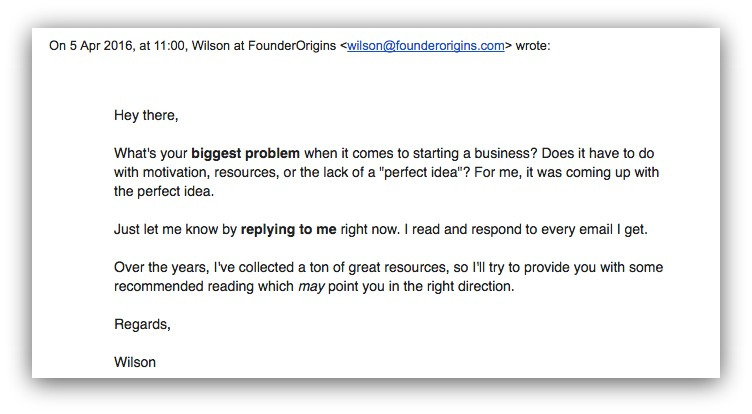
By sending an email where the main call-to-action is to encourage users to reply to your email list, you’ll be able to find out who some of your most engaged subscribers are. For example, I’ll get responses like:

Every subscriber that replies to my email will be automatically promoted into “Phase 3” of my email segmentation. These are my most engaged subscribers and they’re the ones who will receive every single blog update.

For comparison, the subscribers who are engaged and replied to my email has open rates 20% higher than my average casual subscribers.
But why is this important?
Because by identifying your most engaged customers by asking what their biggest problems are, you’ll eventually start to see the common issues your audience is experiencing. You can then send different types of emails, or create a product hypothesis based on your subscriber’s biggest problems.
Takeaway: Encourage new subscribers to reply to your emails by asking them what their biggest problems. This will help you identify who your engaged subscribers are, and the type of content/products they are interested in.
8. Based On Your Customer’s “Feature Requests”
Do your customers ever tell you, “you should do X” or “Y feature would be awesome!”?
If so, you should keep track of every single customer that puts in a feature requests. That’s because by doing so, Groove was able to achieve a 68% response rate on their feature launches.
For each feature suggestion, Groove would keep track of which customers originally requested it using Trello:

So when Groove actually launched that particular feature, they could create an email list of all the subscribers who expressed interest in that specific update:

The results?
They would get 68% of users replying back which ultimately provided their business with feedback on their products, improved customer relationships, and also brought back churned users into paying customers.
Takeaway: Keep track of your feature requests and which subscribers asked for them so you can follow up with them when the features are live.
Conclusion
I want you to use these 8 behavioral email segmentation strategies as inspiration, rather than copy/pasting it directly to your business. Your business is different than the ones in the examples, and the specific use cases might not apply
So the next step is to test which strategies work for your specific marketing strategy. Rather than applying your segmentation strategies to your entire email list, start by creating a small test group so you can determine how effective it is. If your test is successful, begin rolling it out to a larger group, and eventually to your entire email list.
But the main question remains. How do you actually implement all of this?
There’s no clear cut answer because it depends entirely on which email service provider you use, and the methods will be different for each provider.
That’s why I put together a spreadsheet for every segmentation strategy in this guide, and also included links to relevant tutorials for all the major email service providers (Mailchimp, AWeber, Drip, ConvertKit). Get a copy of it by going to the link in my author’s byline.
The Benefits of Writing by Hand Versus Typing

The debate over hand writing important notes versus typing them is one we’ve hit on before , but this graphic lays out all of the data clearly, and even offers some tips on choosing a writing implement based on the type of notes you’re taking.
The Creepy Things Uber Knows About You (And Other Non-Obvious Insights) | Issue #16
It seemed like the theme of the week was reduction through small tweaks as Twitter announced a long awaited small tweak to eliminate photos and videos from the allowable 140 character character tweet limit, the FDA made small changes to the iconic nutrition facts label after two decades, Victoria’s Secret made a change to finally discontinue its once popular print catalog and forgotten social media darling Foursquare charted its own brave new course with a chatbot announcement. Yes, there was plenty of reduction this week, but read on to learn why all these small tweaks will have more significance than you might expect.
If you find these stories useful, please share this email with a colleague!
Want these insights before anyone else? Join my email list to receive a curated collection of the most under appreciated marketing stories of the week and useful insights like these every Thursday – a full 24 hours before they are published on this blog!
Subscribe Here >>
FDA Finally Changes Nutrition Facts Label After 2 Decades
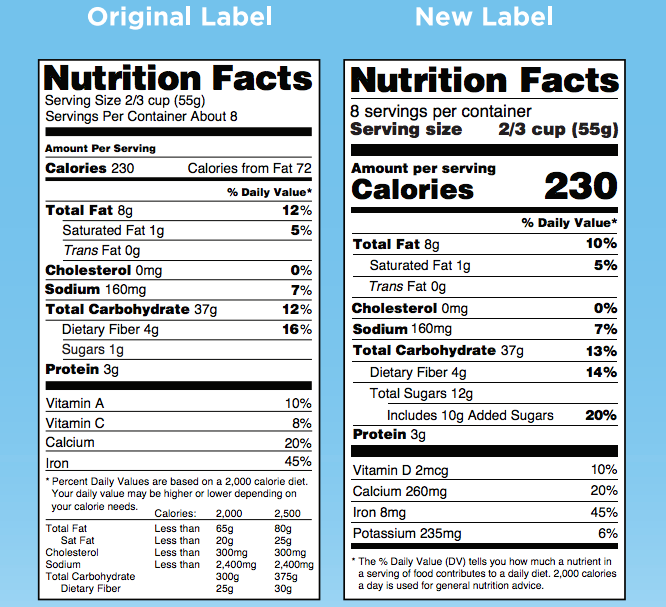
This week’s announcement of long awaited changes to the FDA’s iconic Nutrition Facts label were predictably described as something “the sugar industry hates.” The new label breaks out added sugars, adds more clarity around serving sizes and generally removes several confusing elements of the current two decade old label design. Beyond the changes, the new label design is a rare example of how mission can rise above politics and despite lobbying, money and powerful opposition … you can still get something important done.
Read the full story on FDA.gov >>
Foursquare Imagines A Chatbot As Your New Bestie

Imagine if your best friend who knows all the best restaurants and nightlife could proactively email you before you even asked for advice. That’s the vision behind the new SMS Chatbot from the creators of Foursquare called Marsbot. This is not on demand advice like Siri might offer – this is proactive pre-demand opt in advice based on your location, and it’s an interesting vision for how technology might offer value without being asked. As with any utopian vision of technology like this, it remains to be seen just how quickly and completely marketers manage to corrupt the ideal … or if we can find a way to get smarter and resist.
Read the full story on Foursquare Blog >>
The Creepy Things Uber Knows About You

In this accidentally revealing interview on NPR with Uber’s head of economic research, we get a taste of all sorts of insights Uber has been developing about us based on behaviour and data. Why we, for example, are more likely to pay a surge price of 2.1 times the normal rate versus 2.0 – or why we accept surge pricing more readily when our phone battery is low. For any student of how our brains work (which should include anyone in marketing!), this interview is an illuminating half hour show worth bookmarking and listening to when you have the time.
Listen to the full interview on NPR >>
The Surprising Resurgence Of Retail Bookstores

What if the death of bookstores has been completely exaggerated? One of my trends from the 2016 edition of Non-Obvious was “Strategic Downgrading” and it described the idea that sometimes consumers actively prefer the less connected. This article about best selling author Judy Blume’s new retail store in Key West includes surprising data about the growth of independent book stores and offers hope for lovers of bookstores as well as an important reminder that no matter how popular digital books get, there is still something beautifully human about holding a book in your hands and turning the pages yourself.
Read the full story on The Guardian >>
Tesco Lets Shoppers Create Rule Based Ordering
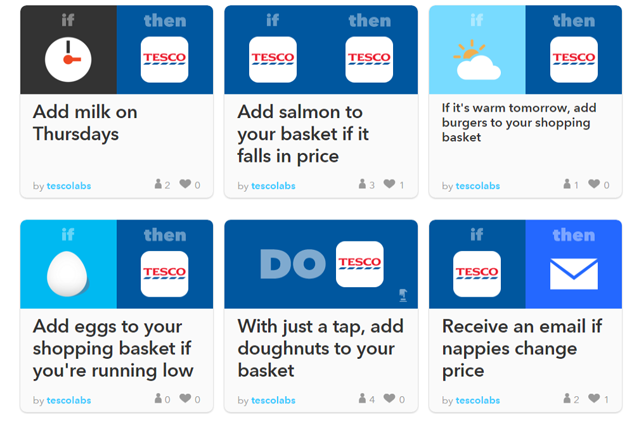
Perhaps the most surprising thing about the latest digital initiative from smart UK grocery brand Tesco is why no one else thought of it. The idea involves Tesco using the popular If This Then That (IFTT) app to let consumers easily create rules for automated ordering of products. So you can automatically place burgers in your shopping cart if it is a sunny day, or add milk every Thursday. If the idea catches on, it’s easy to imagine plenty of other retailers taking similar moves to create their own channels on the IFTT platform as well.
Read the full story on Retail Detail >>
How Are These Stories Chosen?
Every week I review more than a hundred data sources to curate the best and most under appreciated marketing stories of the week. The aim of this email is to spotlight these “non-obvious” stories, along with a quick take on why they matter for you. I hope you find this email interesting and useful … and am always open to your suggestions on how I might make it better!
Subscribe to get these stories every Thursday in your inbox >>
7 Content Marketing Tools You Need To Be Successful

Did you know that 59% of B2C marketers and 55% of B2B marketers are planning to increase their content marketing spend this year?
Content marketing has become an extremely competitive arena now. Businesses are vying to develop their strategies with an eye on engaging their audience with interesting content, that encourages profitable behaviors of the target clientele.
In today’s competitive market, you have to invest wisely to make your brand hog the limelight. It’s equally important to judge how well your content marketing strategies are performing against the industry standards. That makes planning your content marketing strategy a vital element in your business success.
Ideally, your strategy should have one simple tenet at its heart – to deliver unique, fresh and informative content that entices your target audience, taps into their interests and drives them to engage with your brand.
For this, you need to understand the buyer’s journey. It’s interesting to note that 70% of the buyer’s journey gets complete before they even reach out to a sales rep.
So focusing just on sales would make you miss out on a major part of the buyer’s journey.
With marketing automation tools, you can influence this journey at different stages:
- Awareness: This is the start of the buyer’s journey, where your buyer is probably unaware of your business and that they have a need. At this stage, you should focus on creating awareness for your business and offerings so that your buyers start to understand what you do, and how you can help them address their needs/overcome their pain points.
- Consideration: Buyers now have already shortlisted a few companies and start to do deeper research to arrive at a decision. You should use your marketing automation tools to keep track of their growing interest and adjust your content so that they see what can influence their decision in your favor.
- Decision: Buyers are ready to make a purchase and start thinking and comparing about implementation, costs, customer support etc, which will decide the company they’ll finally buy from. This is the time to get brand-specific with your content. You can use customer testimonials and case studies to brag about how others have had a positive experience with your offerings.

Let’s have a look at some tools that will help you experience content marketing success, and nurture buyer’s all the way along this journey:
1. BuzzSumo for research
This tool lets you find what works in your niche, for the competition and who to promote your content to for optimal exposure.
From finding hot and trending content around a topic, viral pages on competitor sites, content to share and curate, quality guest posting targets and influencers in a niche. To locating target placements for your infographics and promoting your content on Twitter, you can do it all with this tool.
Without a doubt you can boost your content marketing ROI with BuzzSumo.

BuzzSumo’s available plans are:
- Pro at $99/month – the starter plan for small teams and bloggers.
- Agency at $299/month – Agency teams can opt for it where they will get the Facebook Analyzer along with all Pro features.
- Enterprise at $999/month – This the best bet for brands and publishers that need advanced functionality for large teams.
Where is it used?
When referred to a number of instances where business owners and webmasters use this tool, it is seen that most of them use it either to find influencers within their industry, or writers who can contribute to their blogs.
Richard Moynihan, Social Media Editor at the Telegraph, and Jimi Smoot, an entrepreneur, use BuzzSumo to search influencers in their respective fields. Whereas, AJ Ghergich, of Ghergich & Co. uses BuzzSumo to track which content is performing well and then outreach and contact bloggers and writers to write for their website.
2. CoSchedule for organization
Managing the content on your website or blog is a breeze with this editorial calendar. With Co-Schedule, you can now keep your content as fresh, consistent and engaging as possible. This will help you fortify your web presence and grow your readership.
Thanks to its great layout, CoSchedule lays out all your scheduled posts with ease. You can even see all your scheduled social media posts in one place. It’s drag-and-drop feature, seamless integration with WordPress, easy scheduling of social media posts, rescheduling an old post (after checking from the dashboard how many times it has been shared and from where it has received the most traffic) are other features that make your content marketing job that much easier.
You can even use asks and comments on posts to create workflows for your team without emails. Some other features of CoSchedule are:
- Manage Google Docs Content
- Convert Google Docs & Evernote Content to WordPress
- Manage Evernote Content
- Several integrations to simplify your content marketing tasks

CoSchedule plans available are:
- “Solo Standard” at $15/month (per calendar billed annually) or $19 month-to-month for a single user, 5 social profiles; it’s suitable when you start building your audience.
- When you plan to use premium integrations and custom workflows to save time and publish even faster, “Solo Marketing” for a single user, 10 social profiles is suitable. It’s available at $39 month-to-month or $30/month (per calendar billed annually).
- “Solo Automation” is fit for those aiming to work smarter with auto-pilot publishing, robust social automation and data driven intelligence. This plan is available at $79 month-to-month or $60/month (per calendar billed annually).
Where is it used?
CoSchedule is a widely used editorial calendar that helps keep content fresh, consistent and engaging. Webmasters and site owners have claimed that they have seen a considerable growth in readership after they started using CoSchedule.
Arienne Holland, the Director of Marketing and Customer Experience at Raven said that their marketing team had to send about 75 fewer emails than before.
3. Crazy Egg for optimization
Apart from a heat map, Crazy Egg offers scroll maps, overlay maps and the confetti report. All these together help you get valuable insight into how your content is performing.
The heat map report displays actual clicks of your visitors to let you know how they engage with your website. Scroll maps gives you insight into time spent by visitors in viewing particular sections of your page.
You can use Crazy Egg to re-prioritize your vital content to areas of your more popular pages. The overlay displays a bunch of little colored markers, attached to every section that has been clicked.
To get more information about a particular section, you just need to open the relevant marker attached to it. Extensive information about each click is given by the confetti report. So, you can categorize clicks by country, browser, referrals and devices used to check how your content is doing and make adjustments where needed.

Available plans for Crazy Egg are:
- The Basic plan at $9/month for starting out. This plan provides daily reports for 10 active pages and 10,000 visits per month.
- Growing businesses should use the Standard plan at an annual fee of $19/month. This plan provides daily reports for 20 active pages and 25,000 visits per month.
- Plus at $49/month is Crazy Egg’s most popular plan. It offers hourly reports for 50 active pages and 100,000 visits per month. It also comes with mobile heat maps, advanced filtering and priority email support.
- To get all that you need, Pro at $99/month is your best bet. It offers hourly reports for 100 active pages and 250,000 visits per month. Other features are same as the Plus plan.
Where is it used?
When researched about the areas and reasons people used Crazy Egg for, it is seen that many use it to increase conversions, a few use it for improving their website design, while others use it for Local SEO.
Softmedia and Conversion Rate Experts saw a rise in conversion by about 51% and 25.9% respectively. Pagely used this tool to identify Design Flaws, while Local Visibility System used it for improving their Local SEO.
4. ConvertPlug for increasing email subscriptions
This is touted as the best WordPress subscription plugin currently available. Apart from bringing back your abandoning visitors, this tool can help you gain more leads and subscribers. So, if you are struggling to get subscribers for your newsletter, whitepapers or other content, ConvertPlug can help.
With it, you can;
- Build a robust email list
- Promote videos
- Drive traffic to your site/blog
- Share updates with your subscribers
- Get useful insight from analytics to fine tune your content to boost visitor engagement
- Offer coupons and special deals to bring back those visitors that were previously abandoning your web pages.
- Capture more leads and boost ROI

You can start using ConvertPlug at an unbelievable price of $21. This price tag includes QC by Envato, lifetime future updates and 6 months support. You can also pay just an additional amount of $6.30 to extend the support period to 12 months.
Where is it used?
ConvertPlug is being widely used to build effective email lists and hold back abandoning visitors. Ivailo Durmonski, in his case study posted on http://www.narrowem.com recently, said he experienced about 412% rise in email subscribers within a week of using ConvertPlug.
5. MailChimp for email marketing
Email marketing plays a key role in a business’s overall content marketing strategy. You can use MailChimp to automate your emails and send them to different audiences.
This tool lets you:
- Create your own newsletter or leverage one of its several elegant templates.
- Target different audiences by segmenting your mailing list based on preferences, behavior and previous sales.
- Send out your newsletter every time you update your blog, thanks to its RSS-to-email option.
- Know how well your marketing campaigns are doing by sending reports detailing who’s opening your newsletters or sharing them on social networks. With hundreds of app integrations for apps you already use, importing content from other sources and tracking your campaigns’ performance is made easy.
MailChimp also has apps that facilitate work on the move from iPhones and Androids.

Pricing plans for MailChimp:
- Free: If you have less than 2,000 subscribers, you can send a maximum of 12,000 emails every month for free.
- Growing businesses: Businesses with varying subscribers (from 1,001 – 1,500; 1,501 – 2,000; 2,001 to 2,500 and 2,501 – 2,600) can take their pick from plans costing $20, $25, $30 and $35 respectively.
- Pro Marketer: This enterprise-level package is suitable for 1,001 – 1,500 subscribers to 2,501 – 2,600 subscribers. Pricing varies from $20 to $35.
Where is it used?
The average open rate for emails is usually seen to hover around 20%. But, with the use of the automation feature of MailChimp, it was seen that the open rate was doubled instantly.
6. Buffer for social media scheduling
For busy business owners, managing their social media accounts and keeping them updated with fresh posts is an ordeal. Buffer brings a great solution by automating the process.
With Buffer, you can:
- Manage multiple Facebook, Twitter and LinkedIn Accounts
- Set up your own updating schedule
- Add/Change/Delete updates Easily
- Use Buffer with different browsers, leveraging its many extensions, apps and extras

Pricing for individuals:
- Individual for Free: For 1 user, 1 social profile per platform and 10 scheduled posts.
- Awesome at $10: For 1 user, 10 social profiles per platform and 100 scheduled posts.
Teams and agencies can choose from three plans namely Small ($99), Medium ($199) and Large ($399).
Where is it used?
When you think of promoting your business on social media – time, consistency, statistics and analysis are among a few things you need to think of. Buffer is an effective tool that has been helping a number of companies and businesses spread across social media. In a case study that speaks about Campaign Monitor using Buffer, it is seen that using the right features for the right purpose will help triple social media shares.
7. Google Analytics for tracking traffic
Gaining insight into which content your users are engaging with the most, as well as what works and what doesn’t, can help your content marketing strategy significantly.
With Google Analytics, you can:
- Find out your most popular web pages
- Find out your most popular/most shared blog posts
- Spot the type of content users are looking for on your website (with the site search functionality)
- See the clickable page elements your visitors interact with the most (using In-Page Analytics Reports within the Google Analytics’ Behavior section)
- Leverage UTM parameters to attach additional information to links that point to your website, thus collecting more in-depth data about the clicks leading visitors to your website
- Determine the location of visitors who make up the major chunk of your web traffic
- Detect the online campaigns that bring the most traffic and conversions.

Where is it used?
Google Analytics is a trusted tool that can be used to track the performance of all your marketing efforts.
Companies like Panasonic have used Google Analytics to improve the Return on Investment (ROI) obtained through their digital marketing campaigns. While tracking the performance and sharing it with various media tools, they managed to increase ROI by about 30%.
Wrap
Content marketing isn’t just about framing what to write and how to write. It’s much more than that. You not only need to create interesting, precise and engaging content, but have to ensure that it reaches your target audience and is shared by them across various social networking platforms.
It’s an uphill task but with the tools mentioned above, you can automate a sizable chunk of the job and get useful insights to fine tune your content to make it work.
Wooing your visitors and keeping your existing and potential customers happy with tailor-made content was never this easy!
Connecting with the Customer Means Moving Faster (and Smarter) Than Ever

Over the next five years, the volume and pace of information will only accelerate. Most businesses aren’t thinking about their customers as both digital and physical entities, nor are they thinking about how much of the physical world will have a digital presence. But by 2020, much of the everyday world will be connected: 50-200 billion devices, 90 percent of automobiles, and 173 million wearables. The smart-home appliance industry alone will be worth $79 billion. Connecting to the customer will mean connecting to the various products each customer uses.
In the Age of the Customer, information and connections are rich and complex, and will require companies to rethink how they deliver customer apps. And it’s not just about the apps themselves: companies must deliver unmatched customer experiences along with every app, and they must do so in release cycles of weeks, not months.
There are five technology trends fueling the customer’s changing relationship with business:
- Cloud computing: Cloud-based platforms allow massive scalability and unmatched agility to quickly adapt to ever-changing business conditions
- Mobility: Customers are accessing information across devices when and where they need it
- Social: Social channels allow users to collaborate with an expanded network of friends, families, and business peers in ways that have fundamentally changed the relationships we have with our customers
- Data science: Companies are using intelligent analytics to not only predict customer behavior but also provide advice to customers’ personalized experiences
- Internet of Things: Customers will be connecting to companies through physical products
These trends are all changing how companies connect to their customers — and even who those customers are. With bots, for example, enterprises work with an virtual agent working on behalf of a customer instead of the customer directly. Those are the gatekeepers businesses will interact with in the near future. And companies will need to think of new strategies to reach those digital assistants.
The “Internet Minute”
In addition to explosive increase in connected relationships, the pace of interactions from these connected relationships has accelerated, carrying everything from personal exchanges to business decisions with it. Let’s consider for a moment the massive quantity of interactions that takes place in an “internet minute”—

In 60 seconds, there are a massive number of customers using Google searches to find out about products, launching service complaints via Twitter, creating new relationships on LinkedIn, or making purchases on Amazon or the App Store. Being connected to the customer in this world requires a company to quickly capitalize on new information in real time to provide superior customer experiences.
These trends are all changing how companies connect to their customers — and even who those customers are. With bots, for example, enterprises work with an virtual agent working on behalf of a customer instead of the customer directly. Those are the gatekeepers businesses will interact with in the near future. And companies will need to think of new strategies to reach those digital assistants.
Delivering Apps in a Connected World
For businesses, apps are the way to reach customers at “internet speed.” But the traditional app development process takes 6-12 months. That’s not acceptable anymore, for two reasons. First, companies can’t afford to wait a year; by then, the customers they’re trying to reach will already have shifted their loyalty or adopted entirely new purchasing habits. But there also just aren’t enough developers in the world to do everything businesses want to do: There are 10 million app developers on Earth, but we need five times that to satisfy global demand.
Businesses need to be able to deliver new processes faster than ever before. And the products themselves should be faster, too: a mobile app must deliver value to a user in 30-60 seconds.
A company then has about a minute — an internet minute — to reach its customers. The strength of a platform like App Cloud is in compressing the time it takes to develop an app, expanding the pool of developers with AppExchange, and building in the ability to change more efficiently. All of this fuels the success of the business by fueling the success of the customer.
We’re fascinated by how companies have deepened their customer interactions through Salesforce’s Customer Success Platform. In the video below, we look at who’s innovating with Salesforce tools: how New England BioLabs made a smarter refrigerator that monitors what it’s storing, and how Red Robin Gourmet Burgers and Brews developed a more personal customer rewards program based on menu preferences, frequency of visits, and other specialized information.
Then, read on to learn how to connect business, customer, and product across any industry with our App Guide and Gallery.
Are You Using These 5 Strategies to Influence The IT Visionary?

Meet Erik. Erik is an IT visionary and potential buyer. Now, what does that mean? He works tirelessly to lead his company forward.
His role tasks him to understand current and potential threats, evaluate new products to improve efficiency of the company, keep employees happy and handle any technology-related fire drills.
In order to stay on top of the latest trends, Erik turns to online videos and webinars to deep-dive with industry experts and his peers.
As marketers, it’s our job to influence these online conversations to help these visionaries with their jobs to earn their attention (and budget).
Here at BrightTALK, we connect the brightest minds in the IT space with industry thought leaders and vendors to create real change – big and small. We recently compiled the data of over 756,000 IT professionals engaging with over 20,000 webinars and videos on BrightTALK in North America.
As the largest community on BrightTALK, the NA IT community is a vibrant, engaged group of IT visionaries who are looking to solve pressing job-related challenges and inform technology purchases.
Here are a few of the takeaways from the report to elevate your marketing program and inspire these visionaries. To learn more about influencing this buyer, download the full report.
1. Use BI tools like Google Trends to explore hot topics in your industry and see what people are researching. Leverage those insights to develop your webinars and videos around those subjects.


2. Humanize and diversify your content marketing mix.Switch up your marketing formats to draw in more attendees and re-engage your existing audience with fresh and exciting content. When surveyed, the IT community on BrightTALK expressed a preference for technical deep-dive webinars using real-life scenarios and short, episodic content highlighting current and coming industry trends.
Video edition:
Webinar edition:
3. Bring in multiple presenters. Your customers, partners, and internal and external thought leaders all have different perspectives that add unique value to your webinars. Recruit co-presenters who can add the most relevant color to your session. This also helps to diversify your content mix with different kinds of webinars (case studies with customers, industry benchmarks, and trends with partners or analysts, etc.). We typically see up to a 30% increase in attendance when clients use co-speakers. Try it out.
4. Extend the impact of your content with on demand. You only get 65.5% of your total viewership within the first 100 days of your live event. It’s essential to make your webinars and videos available on demand to maximize lead generation potential. And don’t forget to create a hub for your content. By creating a central location for prospects to engage with you, you’re able to create long-term relationships that you can nurture into prospects.

5. Measure your webinar program ROI. Directly connecting your marketing initiatives to revenue is the ultimate indication of success. Make sure your webinar platform integrates with your marketing automation and CRM platform to track ROI easily and be able to adjust with the latest insights.

All marketing initiatives should focus on the IT buyer’s challenges, share examples of success, and spark debate to capture these visionaries.
Download the report today to find out more about the content consumption habits and preferences of today’s visionaries.
Are You Doing the Right or Wrong Things on LinkedIn?

I’m hoping that most of you use LinkedIn regularly to post status updates, join groups and comment on discussions, as well as looking up people you are going to meet or would like to connect with.
These are all positive actions that can help you make the most of LinkedIn, but are you aware that there are some things that it is best not to do on LinkedIn?
The first thing I would recommend is to avoid spamming your connections. No one likes to be inundated with mass volume marketing material, to be constantly sold to or to receive demands to read your blogs. Treat your connections with respect; spamming just gets you a reputation and erodes the value of your personal and organisational brands.
Secondly, don’t just ask anyone to write a recommendation for you, think carefully about who you choose. LinkedIn research has shown that you are three times more likely to be looked at on LinkedIn if you have recommendations so they are a good thing, but if your recommendations are all from co-workers then that starts to look a little suspect doesn’t it?
Recommendations should include ones that have value, are credible, genuine and thoughtful from happy partners and clients. These can be powerful and help your business, whilst ones that are obviously a favour from a mate, or are a reciprocal recommendation from someone you have just recommended, don’t do you any favours and are easy to spot so be careful!
The third thing I advise you not to do is accept all the connection requests you receive. Whilst it might do your ego good to see the number of your connections increase, this is not a competition and there is no prize for the person with the highest number of connections. I only accept connection requests from people that I know or have spoken to that can add value to my life or business, or who I can help professionally with their business.
What’s the point in connecting with someone you don’t know, who lives in some far flung place and has a dubious career choice? Relationships at the end of the day are key to making LinkedIn work for you.
If you want to learn more about making LinkedIn work then get in touch.
3 Signs You Need to Audit Your Sales Content

With more companies investing cash into creating content, it’s easy to clog up your content management solution over just a few months of content creation. For some marketers, that might not seem like a particularly big issue. After all, you made it, you know what the purpose is, and you know where to easily find it.
For salespeople, it’s not so easy. They don’t have a map in their heads of what’s new and what’s stale, and if they have to navigate through clutter, that’s time taken away from actual selling. Auditing sucks, but here are 3 good reasons to hunker down (and how to go about it).
Sales Content Isn’t Getting Used
First thing’s first—one of the most important sales content metrics you need to be tracking is what’s not getting used. Content that isn’t getting used is just content that salespeople have to sift through before they get to what they will use. Auditing doesn’t mean just getting rid of it—it m8eans analyzing why it’s not getting used, which could be for a number of reasons:
- It’s duplicative
- It’s out of date
- It’s generic marketing content that doesn’t fit into the sales process
- It’s hard to get to (e.g., missing metadata, in the wrong folder)
- It’s off-brand, etc.
Like in a marketing content audit, take an inventory of what you have. Begin by with a simple count of what is and what isn’t getting used. Include where content is located in your inventory, along with usage metrics. You should also capture where that content is in the structure of your library.
Find what content is collecting dust and compare it to what isn’t. If you find out that salespeople are creating their own content and have access to it, include that content in your inventory; that’s the best way to see specifically what salespeople are looking for.
Actions you can take include:
- Cutting the content entirely (at least from your sales library)
- Adding keywords to make collateral easier to find (or incorporating it within a guided selling environment)
- Updating the look, feel, and/or tone to match more your popular content
- Create less generic versions of content suited for specific products, personas, or verticals
Content is Only Getting Used Sometimes or By Certain People
Popularity itself isn’t necessarily indicative of quality. Go one level deeper in your inventory.
Find out when content is getting used. When you conduct a marketing content audit, you should categorize content by what stage of the funnel it’s intended for (e.g., awareness, consideration, intent).
Sales content as we typically think of it falls into the intent and evaluation stages, where buyers are closer to purchase than awareness, but as salespeople engage prospects earlier in the sales cycle, that isn’t necessarily the case. You’ll want to categorize what stage of the funnel it’s intended for. You can then compare how you would categorize content to what stage it’s actually being used in by integrating your sales content management solution with a CRM. This can indicate if:
- You’re missing content for different stages of the funnel
- Certain content does better in certain stages
- Using certain content in one stage might be associated with a deal stalling or moving forward
Find out who’s using what. Your company doesn’t have one type of customer, and it probably doesn’t have one type of salesperson either. You can look at content usage using different types of segmentation including by sales rep performance, by region, by prospect industry, etc.
You might find out that some content might be incredibly popular when your sales organization is taken as a whole, but isn’t used at all by your top performers. You might find that salespeople selling to one industry have plenty of late-stage content, while those selling to another have none. Some next steps from there include:
- Guiding sales reps to the content that A-players use
- Removing or reworking content that isn’t used by top performers
- Creating content to fill gaps in segments (e.g., more relevant case studies or white papers)
Content is Getting Used Disproportionately
Marketers and salespeople have certain pieces of content they fall back to. There’s nothing inherently wrong with that. Sometimes we strike gold with a relatable video or a compelling set of data in a customer’s case study. But when a piece of content is performing on a whole other level and you don’t know why—that’s when you can run into problems. There are two big reasons to look into high-performing collateral when auditing.
The first is that, as we said above, just because something’s popular, doesn’t make it good (or mean it’s getting used appropriately). Once you’ve looked into when and who is using content, you can look at other things that might make collateral “popular” and make sure that the content’s usage isn’t getting artificially inflated:
- Are people presenting it because it’s one of the first items in the structure of your presentation app?
- Is it getting used, but isn’t associated with closed deals in your CRM?
- Do people reach it because they’re guided to it through an interactive questionnaire?
You could find that you need to change how sales content is organized, making sure good content isn’t nested too far down in folders and that content is properly associated with deals in your CRM. You could find that a questionnaire leading people to content isn’t asking the right questions. Make notes in your inventory including where content is in your app’s structure and number of closed or progressing deals individual pieces of content are associated with.
The second reason to dig into top-performing content in your audit is that, yes, often the most popular content is the best. Look at the best content within segments and broadly, and try to crack what makes them so good. List out the common elements of your best content in your inventory, and see how you can apply those principles to content that doesn’t perform as well.
This isn’t an inclusive list of reasons to do a sales content audit, but if you take the time to do it quarterly (or more often), you’ll be rewarded with better content, and salespeople who spend more time selling instead of looking for good content in a haystack.
A few resources that will help you in the auditing process include:
- How to Conduct a Basic, DIY Content Audit
- The Step-by-Step Guide to Conducting a Content Audit
- Increasing Sales Productivity: Perform a Sales Content Audit
For more tips on getting salespeople more time in front of customers, download our free eBook below.

Image credit: Please Clean Up Your Mess by Daniel Wehner | Creative Commons
This is about to be the best reason to switch from iPhone to Android (GOOG)

Probably the hottest point of contention in the Tech Insider newsroom is whether Android or iOS is the better ecosystem.
I tend to come down on team Droid. The affordability and openness of Google's ecosystem offers huge advantages over Apple's closed iOS. But I understand the case for iPhones: They're reliable, always up to date, and (mostly) just work.
Ask the average iPhone user why they stick with Apple's increasingly boring, expensive lineup though and the answer is simple: They're used to iOS. It's simple, beautiful, familiar, and easy to use. Trying to convince one to switch to Android is almost like trying to convince a Windows or OS X user to switch to Linux (the niche, techy PC operating system on which Android is in fact based).
But Google is on the verge of striking a major blow in the ease-of-use wars: Project Abacus, Google's plan to do away with smartphone passwords almost entirely.
With Abacus, due to release in the next several months, Android devices will keep track of biometric markers like walking gate, typing patterns, the look of your face, your location and other things to build an up-to-the moment "trust score" — a degree of certainty that the person holding your phone is in fact you. Different apps will be able to set different trust score thresholds at which you can use them.
This plan could largely kill the lock screen, finger presses, and other obstacles built into the current every day experience of phone use. In other words, it will make the average Android much more simple and easy to use than the average iPhone.
Do I think that will be enough to unseat Apple's throne atop the luxury phone mountain? No. But a huge majority of the world's smartphone users already use Android devices. And as iPhones get less and less interesting compared to premium Galaxies and HTCs, Abacus is exactly the kind of standout feature that could cause buyers on the fence to flip.
SEE ALSO: The top word that people in each state forget how to spell, according to Google
Join the conversation about this story »
NOW WATCH: 7 tricks buried in your iPhone that only power users know about
Are you Alibaba-literate? 5 things to know about company
SHANGHAI – Alibaba is the world’s biggest e-commerce platform. Over 420 million people scooped up $485 billion worth of stuff last fiscal year on Alibaba’s sites. The company went public in 2014, raising $25 billion — more than Facebook — in the largest offering in the history of the New York Stock Exchange. Here are key things to know:
___
WHAT IS ALIBABA?
Alibaba’s e-commerce platforms cater to both Chinese and global consumers, though the majority of its transactions are generated domestically. At its heart is Taobao, a Chinese consumer-to-consumer website much like eBay. Tmall offers merchants official storefronts to consumers in China. Alibaba and AliExpress connect businesses in China with buyers around the world.
___
WHAT ELSE DOES ALIBABA DO?
Alibaba has a financial affiliate that also runs a leading online payment platform called Alipay. Alibaba has stakes in Sina Weibo, China’s version of Twitter, as well as Youku Tudou, a video platform akin to YouTube. It’s also a major backer of Didi Chuxing, China’s dominant ride-hailing app and an investor in Uber rival Lyft in the U.S. It has made investments worth hundreds of millions of dollars each into various sectors including Singapore’s postal service, the photo- and video-sharing app Snapchat, newspaper publisher South China Morning Post group and upstart Chinese smartphone maker Meizu. It’s building up a cloud computing and internet infrastructure business, setting up data centres in the U.S. and elsewhere in the world.
___
WHO’S BEHIND THE COMPANY?
Alibaba was founded in the living room of Jack Ma, a former English teacher. A self-made billionaire, Ma is a folk hero to some Chinese.
___
WHY DO SOME PEOPLE HATE ALIBABA?
There is widespread suspicion that Alibaba knowingly profits from the sale of fakes on its platforms — a point Gucci America, among others, has made in an ongoing U.S. lawsuit. Some brands complain about how slow and difficult it is to get fakes removed from Alibaba’s sites. Alibaba says it has spent tens of millions of dollars on anti-counterfeiting and that it is constantly trying to improve its systems.
___
WHERE’S THE NAME FROM?
Ma wanted a name people around the world would recognize. He asked a waitress in a San Francisco restaurant if she recognized the name Alibaba and she said, “Yes, open sesame!” Drawn from “Ali Baba and the Forty Thieves,” the name stuck.
The post Are you Alibaba-literate? 5 things to know about company appeared first on Canadian Business - Your Source For Business News.
How to (Nicely) Push Back on Buyers Who Don't Tell You the Full Truth

People lie all the time. In fact, one study found most adults can’t last 10 minutes without lying. Yet while you can probably overlook the occasional fibs from your friends, family, and coworkers, you should never ignore dishonesty from a prospect.
After all, your ability to help them depends on having the right information. If they don’t give you the truth, the whole truth, and nothing but the truth, you’re going to develop recommendations that are wrong for their needs.
But when a prospect lies to you or omits key details, what should you do? Sure, you could say, “You’re full of it,” ... if you want them to hang up the phone or walk out of the meeting. Plus, it’s usually not clear whether the other person is purposely giving you bad information -- or they simply don’t know what they don’t know.
Rather than accusing them of lying, use these clever responses to make them think being honest was their idea.
1) “Huh, okay. When I’ve spoken with similar companies about [topic], I typically found they were [experiencing the opposite, came to a different conclusion, observed something else]. Can you go into a little more detail?”
Referencing your industry knowledge accomplishes three things. First, it reminds the prospect that you’ve got credibility. Second, it’ll create a sense of urgency -- will not having your product hold their business back? Finally, asking them to elaborate will help you identify whether they really are lying or they’re just an unusual case.
Here’s how this exchange might play out:
Prospect: Our customers would rather get support over the phone than over email or in the app.
You: Huh, okay. I’ve worked with about 45 companies in your industry, and the vast majority report that their users had ask for in-app and email help. Can you go into a little more detail?
Prospect: Hmm. Well, I think some of our users might want that too, a few have mentioned it to our customer support team. I’ll look at the results from our latest survey.
You: Yeah, let me know what you find! Since getting help over chat is fairly new, your users’ expectations might’ve changed pretty recently. Our own surveys show that satisfaction increases 300% after our customers install our platform.
2) “That surprises me, only because in a previous conversation I wrote down [contradictory fact]. Let me correct my notes.”
This response shows you care about having accurate information for their sake, not yours. Plus, it puts the fault on you, rather than them -- and that’s key, because accusing your prospect of giving you false information might only make them dig in more.
But even though you’re putting the responsibility on yourself, you’re still subtly suggesting that the facts don’t line up. Telling the prospect you’ll update your notes gives them the perfect opportunity to say, “Wait, I might’ve been wrong about that.”
You should also take this opportunity to make sure you’re working with the right person. It’s possible they’re giving you unreliable answers because they’re not senior enough or don’t have decision-making power. If you suspect this is the case, ask, “How would the decision process work with an offering like this? What would be your role in the process, and the roles of others on the decision team?”
And if turns out the prospect is a non-decision-maker, you don’t need to walk away -- here’s how to get them to sell the decision-maker for you.
3) “Alright. To clarify, [summarize what prospect said]. Did I get that right? Usually, I find …”
When your prospect has contradicted themselves or given you an answer your gut tells you is wrong, don’t automatically assume they’re crossing their fingers behind their back. Again, it’s possible they’re not purposefully lying to you. You may just need to do some digging to figure out if the prospect is confused, misinformed, or in the dark. That’s why this response is so handy: it steers clear of blaming the prospect by suggesting that if something sounds wrong, it’s because you misunderstood them.
However, it doesn’t sacrifice your credibility. By pointing to your previous experiences, you remind the prospect that you’re an expert in this area -- which reinforces their trust in you.
Finally, by asking, “Did I get that right?”, you give the other person the chance to acknowledge their error or clear up the confusion without losing face.
4) “Good to know. Can we explore that a little further?”
Sometimes, it’s best to get the other person to uncover their lie for you. Most falsehoods quickly unravel as soon as you start asking questions -- but since you’ve been asking questions throughout, the prospect won’t realize what’s going on. The key is to ask questions in a way that uncovers more information without getting the prospect defensive, and forces them to think critically about what they're telling you.
For example, let’s say the prospect tells you, “Our board doesn’t want to change vendors because we’re anticipating zero growth this year.”
You know this isn’t true, because you looked into the company’s latest earnings call. But rather than calling them on it, you say, “Ah, good to know. What will be your biggest challenges of adapting to that flat rate?”
Your prospect will either make something up -- in which case you can ask another question -- or come clean. Either way, you’ll get the truth without pissing them off.
5) “Hmm. That’s pretty unusual for [the industry, an organization of your size, the product category, the status of your business, etc.]”
If you want to be a little more directaggressive, try this response. You’re still not telling the prospect they're wrong, but you are plainly expressing your doubt. It’s best reserved for relationships that can withstand a little pressure.
Maybe you’re working with a prospect who really seems to trust you. Up until now, he’s been pretty transparent -- but he just told you his company’s budget is locked in for the rest of the year, and they can only afford your product if you slash the price by 35%.
You say, “Hmm. It’s pretty unusual for a company of your size to have finalized the budget so early.”
You could either wait for him to say, “Well, we might have a little flexibility,” or you could steer the conversation back to your product’s value by saying, “If money wasn’t an issue, would our service solve your problem?”
(Wondering how else to respond to budget objections? Here are 24 foolproof one-liners.)
With these responses, you can get the truth from your prospect without accusing or guilt-tripping them. Yet if they continue to give you bad info -- either because they’re being dishonest or because they have no idea what you’re talking about -- it's probably time to walk away.
How do you respond to dishonesty from your prospects? Let us know in the comments.


Metrics Every Sales Leader Needs to Track

Like baseball, sales has been called a game of numbers. If you’ve seen the movie “Moneyball,” you also know about the massive transformation that occurred when one losing team, the Oakland A’s, began tracking player metrics in new ways.
Today the sales industry is undergoing a similar transformation. Analytics are making it easier, faster, and more accurate for sales leaders to track sales metrics – such as the average number of calls your reps need to make to engage with prospects, the average number of appointments required to close a deal, or your team’s responsiveness.
By identifying and implementing the activities that speed – and therefore shorten – your sales cycle, you can gain the competitive advantage and boost revenue.
To effectively manage a sales organization, leaders must monitor three big buckets for sales metrics:
- Processes
- Team behaviors
- Buyers
Engagement analytics are transforming how leaders can capture metrics across all of these buckets.
Top metrics to improve sales processes
In his eBook “4 Ways to Put More Horsepower into Your Sales Process,” sales expert and author Andy Paul says that sales leaders need to document every customer-facing step of their sales process.
How do you get this information today? Do your reps input data into Salesforce or another CRM? Do they update consistently and accurately?
Engagement analytics make it easier to see all customer interactions without creating more work for reps or relying on them for updates. By capturing all buyer-side interactions, engagement analytics let sales leaders see individual and team behaviors in real-time. On a single dashboard, sales leaders can see:
- How many calls reps have made
- How many emails reps have sent
- How many quality connects have been generated by rep activities
The availability of this data makes it possible for sales leaders to easily monitor and measure other sales metrics, such as:
- The average number of prospects your team touches per week.
- The average number of activities your team needs to convert from one sales stage to the next.
- The average number of activities it takes your team to get to an opportunity, and the average number of emails and calls required for a quality connect.
- The average amount of time your team spends on the sales process.
Leveraging those metrics, you can establish methodologies that are based on what’s been proven to work for your organization.
By monitoring metrics, you can also uncover potential problems in your pipeline. If a rep says a deal is going to close but you haven’t seen activity for several weeks, its likelihood is lower.
Team metrics that drive higher performance
As a sales leader, you know that every single email, every phone call, and every interaction can impact performance. Insight into these activities, individually and as a team, is critical for you to lead your organization to success.
Engagement analytics can show you behavioral differences that exist between top and bottom performers. Using engagement analytics, you can quickly see the activities of one rep versus another.
By looking at what your A players do differently, you have an opportunity to coach your B and C players more effectively – and objectively – based on concrete data.
With a sales acceleration platform sales leaders get a single dashboard that shows all activities and activity levels. You can see what’s delivering the highest ROI, so those behaviors can be repeated across the team.
With repeatable practices, you can also speed rep onboarding processes. According to a Qvidian survey, “The State of Sales Execution,” 71% of sales reps take longer than 6 months to ramp up. Respondents also cited lengthy onboarding as a key challenge to achieve their objectives.
While this isn’t surprising news for sales leaders, analytics give you new metrics that can help onboarding through greater understanding about successful processes and behaviors.
Buyer metrics to speed sales cycles and personalize the experience
When it comes to buyer metrics, tracking prospect engagement has become a standards sales requirement. LinkedIn’s “State of Sales in 2016” survey found that 62% of inside sales professionals say email tracking tools are critical or extremely critical to close deals.
However, as a point tool, email tracking represents the tip of the iceberg. Engagement analytics can capture how prospects engage with your team’s emails and content – to a much deeper level and do it all in real-time. Using this data, you and your team get automatic prospect ranking, so opportunities can be prioritized based on buyer behaviors rather than gut feeling.
By seeing which prospects are most engaged, you can narrow the funnel to focus on the best opportunities – zooming in on those prospects most likely to become quality connects.
Analytics can also provide insight into other buyer metrics, such as which type of persona is purchasing most or which messaging resonates the most with your buyers by showing:
- Which email templates are getting the highest open and reply rates
- Which subject lines perform better through A/B subject line testing
This information provides value to leaders, reps – and even marketing – by showing which messaging resonates the most with buyers and demonstrating best practices for your sales emails – making prospecting and qualification more effective. Putting icing on the cake, these insights can also help you and your team personalize the customer experience.
Monitor metrics to win the game
Sales leaders need the ability to measure their effectiveness and track the metrics that matter. Analytics have become the best way to do this.
Per Moneyball lore, the Oakland A’s picked an unlikely catcher as a first round pick – perplexing everyone with the selection. Do you know why they chose him? Hint – it had nothing to do with his catching or hitting ability. The pick just happened to have a phenomenally high number of walks – something that the analytics had revealed were critical to winning games.
By capturing real-time data not previously available to sales organizations, analytics let you monitor metrics with unprecedented ease. Using these metrics, you can improve sales processes, coach reps to better behaviors, and drive more meaningful prospect interactions.
By measuring processes, rep behaviors, and buyer interactions more accurately, sales organizations are already increasing their quality connect rates.
4 Ways to Overcome Obstacles in Enterprise Sales

Engaging buyers and moving them through the sales cycle is always a challenge, but with enterprise prospects, that challenge intensifies. Not only are enterprise sales cycles significantly longer, but salespeople must engage with more decision-makers and influencers to close a deal.
No matter how large the company, the obstacles a salesperson faces when selling to the enterprise can be overcome. Here are four ways to break through roadblocks and improve the enterprise sales process.
Arm Yourself with Data
When an enterprise deal is at stake, sales teams need more than intuition to guide them to the close. That makes analytics one of the most useful tools at a salesperson’s disposal. Using data and analytics to determine customer engagement provides clear instructions on how to personalize the customer experience, the number of decision-makers and influencers involved in a deal, and when to move to the next stage in the sales process.
“The most successful salespeople excel at building relationships,” said John Kwiatkowski, vice president of enterprise sales at TinderBox. “Adding analytics into the mix provides improved insight that can significantly impact sales team performance. Having strong data can help sales teams prioritize their efforts toward deals in the pipeline with higher probability of closing, and steer them away from deals that might take too much time based on poor engagement.”
Invest in Thorough Discovery
A longer sales cycle for the enterprise presents both a challenge and an opportunity. Taking the time to conduct proper discovery can make the difference between building a strong relationship and ending a deal before it’s begun.
Discovery gives a salesperson the opportunity to validate their business case and personalize it for the customer. The complexity of an enterprise deal will require a great deal of research – and the more research a salesperson can conduct, the better they’ll know the customer. And knowing the customer is the best way to provide the right solution.
Make Selling a Team Sport
Analytics and discovery are just two critical elements of a successful enterprise deal, and salespeople can’t close an enterprise deal alone. When enterprise sales is approached like a team sport, salespeople can make quick work of the early- and mid-stage sales process and deliver the right solutions faster than the competition.
Enlisting members from across an organization – like marketing, finance and client success – ensures that enterprise salespeople can gather useful information from a variety of sources. And because high-performing companies are three times as likely as underperformers to view sales as the responsibility of the entire organization, working deals as a team increases the likelihood of closing.
Help Prospects Combat App Creep
App creep is real, and for enterprise companies it’s a serious obstacle to efficiency and effectiveness. In a crowded market, buyers must determine on their own which solutions will fit best into their sales tech stacks. That leaves many companies with a patchwork of point solutions that strain budgets, IT resources and sales team patience.
Enterprise organizations rely on salespeople to educate them on how to use technology Offering a platform solution – or a tightly integrated solution comprised of a small number of solutions – provides companies with a cost-effective way to solve complex problems. A single platform also levels out the learning curve for sales teams and increases adoption.
The buyer journey for enterprise companies is completely different from smaller companies. It’s the job of the enterprise salesperson to educate prospects, provide suitable options and deliver the best possible customer experience. Each obstacle to closing enterprise deals can be surmounted with accurate information, genuine interest in the customer, and patience.
Find out what sets the top sales teams apart. Download the free e-book to find out what makes a top sales team.

There are ominous signs for crude oil's recovery floating in oceans around the world (USO, WTI, OIL, VDE, BNO)

The worst of the crude-oil supply glut may not be over.
In the last few weeks, sentiment about the oil market has improved.
This happened, in part, after supply disruptions hit Nigeria and Canada. Additionally, Goldman Sachs analysts said that the imbalance between supply and demand may be correcting faster than they had expected.
But Adam Longson, head of commodity research at Morgan Stanley, is not yet convinced.
In a note on Monday, he said that the physical oil market is barely responding to supply disruptions.
Rising oil storage floating in tankers on the world's oceans and global gasoline stocks were among the concerning signs he pointed out.
"The poor physical market response suggests the worst of the market oversupply may not be over, which could be problematic as outages resolve," Longson wrote to clients.
For example, even after rebels took out up to 900,000 barrels per day of Nigerian production, as many as 20 cargoes for June delivery remain unsold and floating off the West African coast. And last week, Reuters reported that oil stored off Singapore's coast rose 10% week-on-week despite outages.
Longson again:
Southeast Asia floating storage is getting worse, with offshore volumes reaching the highest level in at least 5 years and continuing to rise WoW. The growing glut suggests oil markets are not as healthy as sentiment suggests. Similar situations are being repeated in the Gulf of Mexico and North Sea, but to a lesser degree, and product markets show a number of similar unhealthy trends.
He noted that the prompt Brent contract remains in contango, meaning that the spot price is cheaper than prices for future delivery. This is usually a sign that the market is oversupplied, and encourages traders to lock up inventories they can sell for higher prices later.
These so-called arbitrage trades have become unprofitable, Longson said. But they hide the fact that traders are making many of them with increasing amounts of debt, he said.
The worst oil crash in a generation happened in the first place because producers pumped out more crude than anyone needed.
And even now, many cargoes of oil are sitting on the world's oceans with few willing buyers.
SEE ALSO: One chart from Goldman Sachs shows why the oil industry is trapped
Join the conversation about this story »
NOW WATCH: This defunct oil rig in the middle of the ocean is now a cool hotel for divers
Why You Need A B2B Data Strategy And How To Implement One
In many of our previous blog posts, we’ve talked about how important data is to your business. But that understanding needs to be turned into something tangible – your organisation needs a B2B data strategy.
A data strategy will allow you to achieve your marketing and wider business goals by outlining clearly the steps you need to take to move towards these objectives.
According to research carried out by Marketscan and B2B Marketing, 96 per cent of B2B marketers say that data is regarded as “important” or “very important” within their marketing team – and that 90 per cent of senior management feel the same way. However, less than one third say that data is at the heart of their strategic decision making.
Clearly, knowledge does not always translate into action. But no matter how high the quality of your database, if you don’t know how to put your records to good use your business won’t realise the value of this prized asset.
The importance of a B2B data strategy
A B2B data strategy provides the foundation for everything you do involving data, from who you target through your marketing campaigns, to how you generate leads and increase sales.
Writing for LinkedIn, Stephen Lahanas says: “Without a centralised vision and foundation, different parts of the enterprise will view data-related capabilities differently. This inevitably leads to duplication of both data and data systems across the organisation and thus makes it quite difficult to determine the ‘truth’ of one’s data and will also drive up costs.”
In fact, around 60 per cent of B2B marketers feel that there is a data skills gap in their company, both in terms of management and analytics. Furthermore, 70 per cent feel that they are not getting the most from their database.
Implementing your B2B data strategy
Your data strategy should be something that will guide your organisation and result in clear actions, rather than a list of ambiguous objectives. Let’s look at three steps you can take to implement your B2B data strategy:
1. Clarify your aims
First of all, what do you want to achieve? This seems like a fairly straightforward question, but to formulate an effective data strategy, you need to really mine down into the detail. So rather than saying that you want to acquire more leads and customers, you might state that you want to generate 10 new leads a month and three customers.
Whatever goals you come up with, it’s important that they are SMART. That is:
Specific
Measurable
Attainable
Relevant
Timely
By adopting this approach, you are far more likely to be realistic about your aims – and, therefore, more likely to achieve them.
Once you have determined your various goals, it’s a good idea to type up your strategy and to share this document among your marketing and sales teams, to ensure that everyone is on the same page.
2. Carry out a data audit
As we have already established, your database and data strategy go hand-in-hand. So even if you’re confident in the quality of your records, it’s worth double-checking, to ensure you get the most out of your strategy.
You can carry out a data audit yourself, or by partnering with a B2B data consultancy. The latter option will allow you to access their in-depth knowledge and expertise and ensure that no stone is left unturned. Elements of a thorough data audit include:
- Correction of inaccurate records
- Addition of missing data
- Removal of “goneaways”
- Removal of duplicates
- Checking email address formats
- Flagging illegal data
- Identifying best customer profiles
- Calculating market penetration
- Identifying scope of untapped market
3. Be consistent
With a defined strategy and a clean database at your disposal, you are ready to begin working towards your goals. However, a mistake that companies often make is to invest large amounts of time and resources at the start of a new strategy, but then allowing this activity to drop off. By being consistent in your approach, you are more likely to achieve your goals and reap the benefits of your extremely valuable data.
What Is Lead Scoring And Why It’s Important
It’s one of the most important yet misunderstood concepts in the marketing world, which explains why if you ask 10 marketing consultants or agencies “what is lead scoring?”, you might end up with 10 different answers. Heck, you might even get 11 (marketing people are a creative and inventive bunch).
And so, before we explore why you should care about lead scoring, let’s clarify the matter once and for all with a simple, definitive answer to: what is lead scoring?
Lead scoring is a method of ranking prospects based on their detected likelihood of converting into customers.
That’s pretty much it. If you were expecting a convoluted answer full of marketing jargon, we’re sorry. We don’t do that at Leap Clixx. The above lays the foundation for what you need to know.
Why You Should Care About Lead Scoring
Now that you know what lead scoring is, we can jump over to what really matters: why you should care. Below, we highlight the 4 key reasons:
1. Lead scoring helps feed your sales and marketing teams with the right type of leads. Specifically, sales qualified leads (SQLs) can be engaged by sales teams, and marketing qualified leads (MQLs) can be engaged by marketing teams.
2. Lead scoring lets you make smarter, faster investment and resource allocation decisions based on how your pipeline actually looks vs. how you assume it looks (or wish it looked).
For example, if your sales team complains that they’re spending too much time engaging prospects that aren’t near or in buy-ready mode, then you can adjust your lead scoring system accordingly, and create more marketing-level content to prime and develop prospects.
3. When it’s done right, lead scoring significantly improves both the volume of prospect data captured, as well as the quality of data. Your business will learn more about your target audiences/buyer personas, and can leverage this in a variety of ways: everything from promotional campaigns, to product development, to content management and more.
4. Lead scoring can achieve the unthinkable and perhaps even miraculous: sales and marketing teams live together in harmony and communicate effectively, because they clearly see that they’re both on the same team – and they both need to win to be successful.
For example, sales teams can route intelligence and insight to marketing teams based on interactions with prospects (e.g. “we’re getting lots of questions from prospects about whether the new product update is backwards-compatible. Maybe you can put together a web page, video or datasheet about this?”). And marketing teams can return the favor (e.g. “We’re really playing up the fact that the new product update is an industry first, so please hammer this messaging home in your communication with prospects and make sure they know it’s a key differentiator for us”).
Learn More
Now that you have a simple and clear answer to “what is lead scoring?”, and you know why you should care, the next step is to make this highly effective method work in your business. And the way to do that is clear: contact Leap Clixx!
We’ll work with you to develop and implement a customized and results-focused lead scoring system. We’ll also collaborate with your sales and marketing executives, managers and teams to ensure that your system is constantly optimized and doing what it’s supposed to: filling your pipeline with qualified leads, and helping boost revenues and profits.
For more information about on lead generation, download our FREE eBook “Turn Your Website into a Lead Generation Machine“:

This article originally appeared on the Leap Clixx Blog and has been republished with permission.
Only Half of Your Web Inquiries Are Leads – A Study on Lead Validation
The Importance Of Lead Validation
What is lead validation? In Internet marketing, lead validation is the process of separating sales leads from other phone and form inquiries generated from the company website. As the presentation at the bottom of this blog post indicates, on average, about half of a company’s website inquiries are not leads. Instead, they are things such as spam, personal phone calls, sales solicitations and customer service inquiries.
From a salesperson’s point of view, having the marketing department validate all inbound leads delivers two very important benefits:
1. When inquiries are fed to the sales department wholesale, sales reps have to sift through or track down a lot of non-leads (as many as half of the total) rather than putting all their effort into genuine leads. This is time consuming, distracting and frustrating.
2. Lead validation, which necessitates a human being listening to phone inquiry recordings and reading form submissions, enables the company to identify the best of the best leads — ideally in real time — and get them in the hands of the best sales reps. This improves follow-up response time and follow-up quality close rates.
There is another indirect value for the sales department in conducting lead validation — nimble, continual improvement in Internet marketing campaigns.
When the marketing department judges the performance of its campaigns (SEO, paid search advertising, email, etc.) based on inquiries rather than actual sales leads, its data could be off by as much as half. Thus, a campaign that generates a lot of inquiries may in reality be generating few leads, whereas a campaign generating fewer inquiries may be generating more leads. By validating leads, marketers work off reliable data and adjust campaigns accordingly.
What does all this mean for sales? More leads, better leads and an ever-increasing pipeline of leads. Check out the research on the importance of lead validation below:
The Importance of Lead Validation study done by Aaron Wittersheim at Straight North
3 Terrible Time Wasters in Sales & How to Avoid Them [Research]

While technology can eliminate many inefficiencies and time wasters from sales and marketing organizations, some problem areas are outside the reach of technological solutions. More time is wasted as a result of poor strategy, bad hiring, unqualified leadership, and a lack of performance management than from flawed sales tactics.
Companies have invested in sales tactics for years. What they haven’t done is invest in lead management, immediate response to leads, lead resources, and proper intelligence on why companies buy, and why they don’t.
Here are three of the biggest time wasters in sales, and how to start reclaiming back your lost hours today.
1) Slow Response to Lead Inquiries
Every day we find another company that spends significant time and money to create a fancy website and improve its conversion rate only to let a lead sit for 24 to 48 hours before calling them back! Our repeated research and experience shows that only 45-50% of all leads get contacted, and reps only attempt contact between four and five times.
Laura Ramos of Forrester Research studied how effectively companies respond to their leads and wrote an article entitled “How Mature is B2B Lead Management?” In her study, only 10% of sales departments responded to leads within 24 hours and 41% responded to leads in one to three days. Nearly half of the sales departments she studied had yet to standardize how to route and respond to leads within the organization.
Hot leads cool off quickly. Our best clients know their key action is to call them back immediately.
Response time should be measured in seconds and minutes, not hours and days. Recent research by InsideSales.com in conjunction with Dr. James Oldroyd shows that the odds of contacting a lead increase 100 times if the attempt is made within five minutes versus even waiting 30 minutes, while the odds of setting an appointment increase 21 times in the same timeframe.
Best practice: Respond immediately to leads requesting demonstrations or pricing information, or have immediate questions. Other forms of lead offers should be tested to find the optimal time to respond for the highest conversion and qualification ratios. Automate lead qualification and routing to eliminate delays in entering your lead information into your system and getting them to the right sales rep.
2) Too Few Attempts to Contact Leads
While it may seem that giving up on a lead after five contact attempts saves time, this practice is actually a huge time waster. After spending thousands of hours and dollars creating and maintaining a campaign to attract leads, failing to follow up effectively is in effect dumping all those hours and dollars down the drain.
Jacques Werth, the author of High Probability Selling, quotes a 14% contact ratio in a B2B environment. Our studies show B2B prospecting contact ratios hovering around 10% across most industries. However, our studies also show that if a sales rep attempts to contact a lead four to six times, he or she reaches a lead contacted ratio of 55%. Such low actual contact ratios tell us one thing: Most sales reps are giving up too early!
We also found that most sales reps make follow up calls at roughly the same time each day. This seems counterintuitive: If a lead is unavailable in the morning, continuing to call them each morning for five days will waste time and yield little result.
Best practice: Track every dial and every contact. Separate your contactable leads from those without viable contact information. Track how many attempts your sales reps make to contact leads and the actual percentage of contacted leads for 30 days. Once you form a baseline, begin increasing contact attempts to increase your contact ratio.
3) Taking Too Many Notes
According to our research, the average sales rep spends a surprising seven and a half minutes after every call making notes. He or she usually recapped the conversation, scheduled follow-up events and tasks, and summarized emails, faxes, and proposals sent. Many reps recorded unimportant information.
We recommend recording information that:
- Provides a memory link back to the discussion;
- Records action items with associated date and time information;
- Clearly notes elements of a needs analysis or qualification.
Rather than re-typing information sent to the customer in the notes, simply link the actual emails, faxes, and proposals to the customer record in the database. Not only will you have a copy of the actual document, you will drastically reduce the amount of time spent in note-taking.
Best practice: Gather One Unique Aspect (OUA) from a conversation and record it rather than the entire conversation. Use the OUA for future communications and as a memory recall tool. Encourage reps to practice typing notes and linking information throughout the phone conversation to reduce time spent after the conversation taking notes by as much as 75%.
Editor's note: This post is an excerpt from InsideSales.com's ebook "15 Time Wasters of Inside Sales and Lead Generation," and is reprinted here with permission. Download the full PDF here.


The Power of Influencer Marketing, Part 2: How to Create an Influencer Campaign

In Part 1, we covered the basics behind influencer marketing: what it is, how it works, and how it lends to your overall marketing strategy.
In the next part of our series, we’ll lay out the groundwork for how to build your own influencer marketing campaign.
It starts with knowing what your influencer looks like.
Part 1: Identify Target Influencers
Identifying an influencer that is targeted in your niche is the first step of executing an influencer marketing campaign.
A good way to do this is to give yourself a clear understanding of who your customer is and what your target market consists of:
Step 1: Identify Your Audience
- Age: What’s the age range of your target customer? If you need help, look at your Facebook page insights. You can grab demographic info from insights to provide some basis for your assumptions.
- Gender: What’s the gender of your audience? And remember, the purchaser of a product isn’t always the one who uses the product. Who purchases your product, and who uses it?
- Location: Where’s the influencer based? This may have an affect on where their audience is based. No use working with an Australian social influencer if their audience isn’t in the right place.
- Platform(s) of Choice: Understanding your customer’s platform goes a long way in deciding the right influencer. An older audience may be more tuned into established bloggers, whereas younger audiences may be more attracted to something like Snapchat.
- Interests: Outside of the niche of your product, build a list of interests that define your audience.
Step 2: Reverse Engineer Your Influencer
Using the information from the above, build a profile of your target influencer. How old are they? Where do they live? What are their interests?
In doing this, you should be considering:
- Reach: Reach is a measure of eyeballs. It’s the 20M followers on Instagram. The 350,000 subscribers on Youtube. Reach is critical to measure and track overtime, as you’ll need to both 1) set a minimum standard and 2) get better at determining how much “reach” is enough to generate sales to justify an ad spend or marketing campaign.
- Niche Compatibility: Look back at the interests of your target customer, and the niche your product serves. Your decision to work with social influencers should directly involve a process of determining how niche-compatible your brand is with the social influencer’s. Remember, this is the “context” we talked about in Part 1.
- Cultural Compatibility: Here, it’s about evaluating an influencer to ensure they’re an appropriate cultural fit. While they may share context with your brand, an influencer may not be a good fit if there are other aspects of their persona that contrast or clash with your own. It’s about choosing the age “appropriate” influencer. Do you want the influencer who travels around the world to discover new bars, or the influencer who travels around the world to take nature photos? Both lean toward a travel niche, but one may be a better fit for your brand than the other.
- Community Compatibility: Just like the above, you need to add another layer of qualification to you influencer. This time, it’s in regards to their community, what it looks like, and what types of people actually engage with the content. When researching an influencer, read their comments, follow threads about them online, and give yourself a window into how their followers act and think. This helps you do two things: first, it helps you better understand if your influencer has the right audience, and second, it will help you work with the influencer to create better, more targeted promotions. The goal should be to help the influencer serve their audience with the right content.
With these considerations in front of you, create a picture of your influencer. Give her/him a name, a standard/average reach, and attributes that make them a good product market fit for your business.
Part 2: Locating & Reaching Out to Your Influencers
With your target influencer in mind, the next step is to get in touch and coordinate reviews.
There are two ways to go about doing this: 1) the approach that uses platforms, agencies and social media coordinators, and 2) the scrappy, DIY approach.
Approach #1: The Paid Approach
These solutions offer more automated ways to connect with content creators and influencers. The catch? They cost.
- Platforms/Agencies:
- Revfluence: Connects creators to brands and agencies who want to leverage content creation on social media.
- Captiv8: A platform to connect brands and influencers in a single marketplace. Also provides a tracking platform where you can get insights on your own audience.
- TapInfluence: Both a platform and agency. Prices start at $2000/year.
- Influence & Co: Helps brands become influencers themselves. They connect brands to media outlets and have brands develop and serve unique and value-driven content, positioning themselves to be influencers. Arguably more for a B2B space.
- Organizers: Organizers are people who may be running something like the DIY approach below, but have built a small business around it. They go by many names, including Blogger Coordinators, Social Media Managers, or Influencer Networkers.
Approach #2: The DIY Approach
The DIY approach, albeit scrappy, can be equally effective as a paid approach.
Keep in mind: You may still pay when you do it yourself. The money savings here is realized in you identifying and coordinating with influencers vs. someone else doing that footwork for you.
Step #1: Create a CRM or Spreadsheet to keep track of leads
As you work through this process, you may gather 100s of leads. The first step is to make sure you stay organized! You can use a CRM like Solve360, Hubspot, or Salesforce, or you can opt for a more manual, but affordable solutions, like a Google doc or Excel spreadsheet.
Tips:
- Download our Influencer Spreadsheet template
- Follow the outline to keep track of influencers you identify. Consider using separate sheets for different platforms, like Instagram, Youtube, and Twitter.
Step #2: Seek out your target influencers
You can find targeted influencers a number of ways:
- Online articles: Searching for “top [niche] bloggers” or “top [niche] instagrams” can provide hundreds of curated lists by bloggers. Here are some examples:
- Top 50 Beauty Blogs
- Top 100 Natural Food Blogs
- The 22 Best Fashion Blogs
- Hashtags: The best hashtags to use to find your influencers with will quickly become clear to you in your searching during Part 1. How so? Look at the hashtags they use!
- Identify 4-6 key hashtags
- Using a tool like Hootsuite, you can save searches and organize them by hashtag
- Instagram includes a popular section, as well as related hashtags and recent posts. Use this to target the most popular users who use your hashtag:

- Google Alerts: Consider setting up google alerts for keywords associated with your niche. When an alert is sent to your inbox, look at the source and determine if they’re an influencer who would work with your brand.

- Similar brands: Know of some similar brands to your own? You can also crawl their pages and mentions about them to identify influencers who you know have direct experience working with brands in your niche. You can also consider reaching out to those brands to ask how the experience went.
- Blogger Targeting: Bloggers are a great type of influencer – not only do they exert influence, but they also produce written content around your brand (arguably more beneficial than just an IG or Twitter mention). Find them, though, can take time. Luckily, there are a handful of tools you can use to find the right bloggers for you:
- Small or just starting out? Use Inkybee or BlogDash
- Established and working with a good budget? Use GroupHigh or Buzz Stream
Step #3: Reach out!
Now that you’ve found your influencers, you need to engage with them. When you do this, tailor each pitch and partnership to that influencer’s community. The best campaigns will be those that encourage authentic content creation that resonates with the influencer’s audience.
Starter prompt:
Hi [Name],
My name is [Your name] and I work with [company], a [niche] in a box. We are huge fans of your [channel type] and we would love to send you a box in exchange for a shout out on your social media. Let me know if you’d be interested in chatting more about this!
Keep some things in mind when using this prompt:
- It’s bare bones. Customize it as much as needed.
- Be specific about what you’re sending in exchange for their work, and be specific about what they need to get back to you.
- Incentivize them with other perks, like giveaways or special discounts for their audience
- Make sure you agree on how you can use the content. Ask if you’re able to repost, reuse, and remarket any content they create for you.
- Consider just sending a free product and NOT asking for anything in return – sometimes this works just as well, or better, than initially soliciting them for a review
- Consider how you can share promotions with them – maybe it’s a guest post, a shoutout in your newsletter, or something else
Step #4: Pay up
Working from the most financially cost-effective to the more dollar-driven forms of compensation…
- Shoutouts/Reposts: The most cost effective way to compensate a partner is to repost and promote their content. Give them photo credit by tagging them and linking to their posts about your product if it’s on a blog:

- Free Box: Another easy way to compensate reviewers is to give them the product for free. This might be part of your initial pitch, but if you haven’t considered it, it’s a great way to show appreciation of the blogger reviewing your product.
- Cash Comp: Paying a cash compensation to influencers is probably the most appealing option (for them). Rates will vary widely.
- Determine if a rate is required before you send a product for review
- Consider reach. Most people with below 50k on Instagram, for example, work with product trades vs being paid. If you’re getting an expensive quote from someone small, proceed with caution or consider ways to test how well their audience would respond to the idea.
- Referral Dollars: Referral dollars deal with cash payouts as well. In this paradigm, the influencer gets a bounty on each person who signs up.
- Affiliate dollars usually start around $5/customer
- Combine Cash/Referral Dollars for a complete package. You can deposit a dollar amount down against a bounty. For example, if you provide a $200 deposit then $10/commission, that influencer must get at least 20 customers before they get paid anything after $200.
Step #5: Keep the Relationship Warm
After the content has been shared, be sure to maintain connection with your influencers:
- Stay Engaged: Make a point to revisit their profiles, like photos, and leave comments!
- Repost Occasionally: You can continuously repost their content over time and tag them to keep you at the top of their mind
- Re-partner every few months (if #6 in this list checks out!)
Side Note: It’s critical to engage with the people who like or comment on your influencers posts. Make a point to follow them, reply to comments and engage with people who engage with the influencer’s content.
Step #6: Review and Tailor your Strategy/Contacts
Crucially, you need to track and monitor each campaign to really under the cash value it provides.
Fortunately, there’s a super easy way to do this: custom tracking URLs from Google Analytics, which you can see directly in your Google Analytics Dashboard.
- Create a custom UTM for each campaign
- Monitor in Google Analytics, under Acquisitions > Campaigns. They will appear on this list with the name you chose when you created

- Make sure you set up Goals in Google Analytics, so you can track how much revenue each campaign is contributing in sales.
Working with Social Influencers to Grow Your Business
With tools and tips in hand, take some time to build out your own influencer marketing campaign – whether it’s a paid campaign or DIY campaign.
What has worked for you with influencer marketing? Tell us in the comments below.
How to Supercharge Your Startup’s Sales Programme
The role of inside sales has evolved significantly over time, due to enhanced technology and the fact that more B2B buyers conduct research digitally.
For a startup, trying to effectively manage an inside sales programme in the midst of other responsibilities is very difficult.
Following are several reasons why a startup is better off outsourcing demand generation and other inside selling responsibilities to a speciality firm.
Sense of Urgency
You don’t normally have the luxury of patience as a startup. The statistics are against you from the start as the vast majority of new companies fail within a year. Therefore, you need to make decisions and operate with a sense of urgency.

Image property of http://www.statisticbrain.com/
Time Savings
Closely synced with the sense of urgency is the time that you save by outsourcing inside sales. You need to optimise productivity in each area of your operation. As a startup, you more likely have the capability to execute selling processes. Preserve time for your team to focus on converting prospects by letting a speciality firm focus on demand generation.
One of the reasons startups perform inside sales inefficiently is they aren’t as familiar with the most effective and efficient means of demand generation. A firm that engages in these activities on a daily basis is more equipped to efficiently get you appointments.
More Quality Leads
Speciality companies offer more than efficiency; you can also count a better supply of quality leads with a reputable provider. Top firms realise there is more value in effective leads than in a large supply of unqualified or ineffective leads.
During an initial consultation, an inside sales provider will attempt to identify the target buyers that align with your goals and solutions. When you get qualified leads, your team members spend less time on sales processes that aren’t likely to drive results. As an added benefit, Internal Results only charges its clients when an appointment is landed with a prospect. Therefore, you don’t have to worry about spending money on fruitless efforts.

A top inside sales provider implements strategies that help you get connected with high-potential buyers for your solutions.
Expert Sales Support
The expert sales support you gain is integral in executing the startup business phase as well. An established inside sales support provider understands how demand generation flows into lead nurturing and the rest of your selling process. They aren’t fragmented or unconnected activities.
When you collaborate with a quality inside selling firm, you build a connected system where the appointments you get set up nicely for nurturing and sales development. The expert provider should also take an active role in identifying reasons that your appointments aren’t helping you close deals. In some cases, adjustments may be required to your targeted customer profiles.
Conclusion
You don’t have time to learn how to succeed with inside selling as a startup business. You need to get demand generation right from the start. Additionally, outsourcing inside sales to a quality provider should lead to time savings, higher-quality leads and expert sales support.
How to Empower Your Sales Team to Become a Social Media Powerhouse

Social media can be a significant competitive advantage for your sales team – if they can leverage it. Getting to know their prospects better through social listening, identifying new leads by digging into data and establishing stronger relationship by engaging customers one-on-one is all possible with social.
Here are a few steps you can take to equip your team with everything they’ll need to become social media rock stars.
Enlist an evangelist
Often, when a new initiative is introduced to a team, it can take a frustratingly long time for everyone to get on board. You can speed up this process by identifying the most social media savvy salesperson, and elevating them to the rank of “evangelist.”
Evangelist is not necessary an official position, but is instead someone who champions a cause to their peers. In this case, your evangelist would be responsible for offering support to the members of their team who just don’t “get” social, and showcasing how it can be an effective tool in their sales efforts.
Your sales team will respond more positively to the push for social coming from one of their peers, rather than as a top-down edict from the management team. Plus, they will be able to see firsthand how effective social media is, as the evangelist begins using it to generate leads.
Support them with training
Not every salesperson is a natural when it comes to navigating the world of tweets and big data, nor should you expect them to be. As your social media sales program rolls out, have patience and offer training to your staff.
Training can come in all shapes and sizes, from a department-wide half-day session to personalized one-on-one meetings. It can come from a variety of sources too: your marketing department may have some tips and tricks to share, your evangelist can develop a program if they have been seeing success, or you can bring in outside help from a consulting firm.
And training shouldn’t stop once the team is comfortable using social media. Because of the constantly changing landscape, you should encourage on-going training in the form of conferences, formal lessons, online webinars and courses.
Reward innovation
Sales incentives like bonuses work well to motivate teams to perform, and they also work to motivate them to try something new.
Out-of-the-box thinking can be particularly effective when engaging in social selling, and you should encourage your team to be creative in order to maintain their edge.
The rewards that you offer don’t necessarily have to be monetary – sometimes sending an email to the team acknowledging the efforts of a particular salesperson is enough to show them that you support their creative thinking.
At the end of the day…
Your team already knows that social media is important. They just need to be unlocked. If you are able to encourage them and allow them to experiment, they will feel more secure leveraging Twitter, Facebook, LinkedIn and other communities to find, engage with, and convert leads.
Improving Sales and Marketing Alignment

Sales and marketing alignment is difficult to achieve, but it’s also one of the best opportunities for improving business results. When marketing and sales teams are aligned, marketing ROI, sales productivity, and top line growth all go up. To get full alignment, it’s not enough to have leaders from both teams aligned. You need alignment and commitment with everyone (or at least the majority of people) on both teams. To do this, everyone needs to have an opportunity to provide input, contribute to decision-making and provide feedback. Without that, there are several ways that alignment can become even slightly wrong.
1. Not aligned on objectives and constraints
One of the first places planning goes slightly wrong is when not everyone is on the same page with objective(s) and constraints. For example, let’s consider planning a North American road show with the objective of finding new opportunities. Most times, the event is planned with a small subset of individuals from marketing and input from a few sales leaders. The issue here is that many of these people are quite removed from day to day interaction with customers. They also tend to have a broader perspective and will be motivated by different things than the sales and marketing teams that will be accountable for making the road show successful. While the planning team isn’t going to get the planning entirely wrong, it’s likely they could be less wrong by getting more input from those who talk to customers everyday. Input for local considerations should also be factored in. While a North American road show needs to take a broader perspective, it should still consider local requirements or issues. The strategy for growth may be subtly different in one city vs. the next. One city may be weighted towards one industry far more than another.
A shared understanding of objectives and constraints should be rich and inclusive. Otherwise, there’s too much room for teams to make assumptions where they fill in the blanks. The objective is to find new opportunities. But more specifically, to find opportunities within this industry because recent trends indicate interest. Most of the sales team feel they could create new opportunities on this topic if they can start the right conversation with their customers. While teams are ready to execute in the West, the Eastern region is constrained because pre-sales resources aren’t as available and so the focus ought to be on those offerings that require less support.
While it clearly isn’t going to be possible to accommodate everyone’s wishes, gathering input does two things. First, it puts all considerations on the table so that potential topics, demand generation strategies etc. can all be properly evaluated against a full set of criteria. Second, by having an opportunity to provide input in a transparent way, there will be a better understanding how options are being evaluated and this creates more commitment.
2. Not aligned on the best way to achieve the objective
One thing there’s never a shortage of when it comes to marketing is ideas on what should be done. And, in reality, all these ideas have at least some merit. It’s also true that one idea can spark other ideas. The best ideas are often combinations of different ideas. This is the other place that alignment goes wrong. Coming up with the plan includes too few people, which does two things. One, it means the planning team is missing valuable input. Two, it means that invariably, some teams are going to feel like they had a better idea that the one they ended up with.
If you’ve gone through the process of getting input on objectives and constraints, everyone should be able to come up with good ideas for achieving the objective. In our example of a road show, the ideas would be based on event topics, format, presenter, etc. It’s important that all this communication is centralized so that everyone benefits from the process. It leads to the best idea and it again increases commitment.
3. Not giving people a voice in the decision-making process
While consensus is not ever going to be a likely result, excluding people from voicing their opinion and having a say in the decision-making process definitely limits commitment when the end result isn’t what they wanted. The worst thing for commitment is when one team or a subset of individuals feel like decisions were made without their input and they had no say in how to best achieve a mutually defined objective. For the road show, it feels like an event series is being forced on them that they don’t believe addresses their concerns. As a result, they’re trying to build a pipeline of opportunities off of an event that they believe is only 60 or 70% as good as it could be.
Give sales and marketing an opportunity to vote, debate and work through solutions together. Input into the decision-making process should also be transparent and centralized. Individuals and teams should be able to discuss options with each other directly. Being stuck between two parties that disagree can be time consuming, unproductive and frustrating. Allowing feedback and discussion to again be centralized and transparent allows all parties to be part of the discussion. Although a consensus isn’t a likely outcome, the opportunity to discuss builds further understanding, trust, and alignment.
4. Not getting enough feedback
The last stage of the process is one where things often, once again, go slightly awry. Even though everyone has been part of the process up to the final stages, it’s still likely that there are differences in some of the subtleties of how the plan should be executed. With our roadshow example, invite copy, the agenda, who’s presenting and which venue is selected are all things that could be slightly off between one team’s expectations and another. The end result is a road show where people feel like what’s being taken to market isn’t quite as good as it could be. This leads to disengagement and less commitment.
Being more inclusive in feedback is the final step in ensuring you have both teams as aligned as possible and everyone is as close to fully committed to the success of the plan as is feasible.
Tools and processes
The big challenge with being more inclusive in planning, decision-making, and feedback is that it’s a lot of work and potentially unrealistic if you have a large number of people in both teams. If you’re a small team, you can get all the key stakeholders in a room over a set of meetings to complete the steps above. With more than eight to 10 people, however, this becomes unwieldily, inefficient and scheduling may become a challenge. If you start scaling this to dozens or hundreds of people, it becomes impossible to be inclusive if you’re going to rely on meetings and email.
If you’re going to do this successfully, you’re going to need a better collaboration tool to facilitate. Here are a few considerations:
- Communication should be centralized and transparent to everyone involved. You should be able to organize the communication around the project and various threads. Without a clear structure, multi-threaded communications become too complex to follow.
- The more people you include, the more complex scheduling gets, so communication should be optimized to allow people to contribute when and where they are able or inclined to. A notification system for when new content has been added will help them stay up to date on the discussion as it progresses, or as topics that are of particular interest to them come up.
- You should have some way of kicking off and ending different phases of the planning process. Each phase should be time bound to make sure that an overall project timeline and critical path can be maintained. Input for objectives and constraints. Input for the best ideas. Voting and commenting on which idea is best. Getting feedback on the final plan.
- The right actions need to be available to facilitate the process. To get a signal from the noise, you’re going to need a way of objectively looking at input and feedback. Voting as an example is one way to achieve this. In the roadshow example, lots of votes for one topic is a good way to understand where to focus. If someone dislikes an idea, they should also be able to provide this feedback and state why. Ultimately, you’ll want to be able to organize the ideas, votes and comments in a way that allows you to pull out and communicate insights.
- While not strictly necessary, being able to measure activity and contribution levels is useful. As you get better at a more inclusive collaboration process between sales and marketing, you’ll start to develop some benchmarks for your organization. Is 50% participation in a particular project good or bad? Is it indicative of the amount of commitment and success you can expect for the plan or project?
Sales and marketing alignment is hard, but there are steps that can be taken to improve it. Each incremental step towards improvement has a strong multiplier to the success and outcomes you can expect. The key to this is being more inclusive and focusing not just on input between leaders of both teams, but between the teams themselves. With large teams, the key to doing this is going beyond meetings and email and leveraging better collaboration tools to facilitate the process.
Newsletters: The Unsung Heroes of Content Marketing

While newsletters are long-time staples for outbound marketing and direct mail campaigns, they’re sometimes overlooked for digital marketing, despite being one of, if not the most effective tools available.
Newsletters greatly boost the reach of your content, and should be integral to any content marketing program.
Remember, content marketing includes both push and pull actions—readers receive alerts about relevant content and also browse through websites to find relevant information. Newsletters are the perfect medium for pushing content to your target audience.
Newsletters are easily read on nearly any device, and are a powerful way to nurture an already existing audience as you strive to engage them and drive qualified leads for your sales team. This post explains why you should consider an email newsletter, which newsletter format to choose, and how to create the correct cadence.
Why Newsletters?
Newsletters are an essential element of closed-loop marketing campaigns where you produce content and measure the results. There are several business benefits. Newsletters have the power to:
- Encourage increased traffic and repeat visitors to your website
- Make it easy to determine who’s receiving, opening, and accessing additional content on your site
- Educate your target audience on a consistent basis, boosting brand awareness, affinity, and lead nurturing
Choose the Right Format
There are three different types of newsletters marketers typically use: corporate, lead nurturing, and curated. Each has a purpose and place in your marketing strategy.
- Corporate newsletters are designed to keep customers and prospects apprised of organization updates. They summarize recent announcements and press releases. This kind of newsletter typically appears monthly or quarterly.
- Lead nurturing newsletters seek to engage and influence prospects along your sales funnel. They include product and solution educational materials, sales information, and marketing offers. Their frequency is tied to your sales cycles and promotional campaigns.
- Curated newsletters build awareness of a topic, your organization’s perspective on that topic and your audience’s understanding of that topic. These newsletters are a mixture of third party and original content. (The perfect mix is 65% created content and 25% curated content, according to our Content Marketing Tactics Study.)
They should be published on a regular basis—weekly or even daily—depending on the topic and how often new information is appearing.
These newsletters are sent at a relatively high frequency and have a high open rate. A well-curated newsletter is not intrusive and is not necessarily viewed as an unsolicited interruption. It can be communication subscribers find useful when delivered to their inboxes.
Stick to a Schedule
The schedule counts. If you establish expectations and stick to that cadence, people will become used to your email arriving at a set time and be more likely to open it.
According to Curata’s recent business blogging survey, 39% of the best business bloggers send newsletters at least once weekly. These marketers know how to stay in front of their audience.

If there’s simply not enough content for a weekly or daily newsletter—that’s where content curation is incredibly useful: it supplements less frequently created original pieces to ensure you have a consistent stream of quality content.
Increase Sophistication With Segmentation
Newsletters are an important part of any content marketing toolbox. They work very effectively in conjunction with lead generation activities, such as collecting subscribers from a trade show or corporate website. Once you establish a subscriber base through a newsletter, you can become even more sophisticated with your outreach. Using automation and email marketing tools, you can segment your audience and nurture their interests by sending customized newsletters.
Newsletters are an awesome way to engage and nurture your audience until they’re ready to buy. But it’s vital to send them on a regular basis with high-quality, relevant content—using curation to economically provide additional content. For more insights about how newsletters fit into a content marketing program and curation activities, Curata’s eBook, The Ultimate Guide to Content Curation offers useful information for everyone from beginners to pros.
Get lessons from Salesforce’s Content Marketing Team to help you measure your content marketing strategy. Download the e-book.

Five Reasons Why B2B Companies Need Responsive Sites
Five Reasons Why B2B Companies Need Responsive Sites
As more business buyers research and place orders on mobile devices, B2B sellers need to make their web content easily accessible and useful on tablets and smartphones. We are at a global tipping point — one of the biggest shifts since the Internet began — with mobile web browsing surpassing PC usage in large numbers. According to the IDG Global Mobile Survey, 77% of business decision-makers use their smartphones to research products or services for their businesses before contacting a seller to make a purchase. Yes, we are talking to you, B2B sellers.
In the past, many B2B companies viewed mobile as a luxury add-on. But today, failing to embrace responsive design is increasingly risky. Prospects and customers now take the front-end research online and do it themselves before contacting a business (or potentially not contacting a business if its website isn’t up to par on a mobile device). Responsive design automatically renders web content properly on a user’s device, whether it’s a desktop, laptop, tablet or smartphone. That ensures your business can adequately serve customers regardless of the device they use.
Let’s explore five reasons why B2B companies must have a responsive site.
1. Work and play intersect now more than ever. While executives rely on mobile devices to conduct business research, many B2B sites are catering strictly to desktop users. One of the keys to long-term success and competitive advantage may be how quickly a company can develop and implement an effective mobile platform.
2. Cost savings and sustainability. While mobile apps and m-dot sites have been effective solutions for serving up mobile websites in the past, they aren’t sustainable or nearly as cost-effective as responsive sites. Managing multiple experiences is cumbersome, meaning that they inevitably become dated. A responsive approach to web design means a singular experience, updated in one location, that provides brand consistency across devices.
3. Mr. Big Shot, Google, says so. Google itself recommends that developers use responsive design. In its Webmaster Guidelines, Google says “making a website that is friendly to smartphone users has now become a critical part of website management.” In fact, with mobile users accounting for more than 50% of Google searches, last spring Google incorporated the “mobile friendliness” of a site into its ranking algorithm. This has a significant impact on the current ranking of content. Not having a mobile-friendly, responsive site will negatively impact the ability of your site to be ranked at the top of search engines.
4. Increased conversion rates. Aside from search and sustainability benefits, going responsive will also have a major impact on conversion rates from mobile users (which, if you remember from earlier in this article, account for 77% of business decision makers now). Obviously, if a website does not work on mobile or tablet devices, users will be unable to convert quickly and easily.
5. Branding benefits. It forces brands to really think about how they sell themselves. In the mobile-first content model, you start with the key message on the smallest screen and build out as you have additional real estate. You would be surprised how challenging that can be for the many B2B brands that have had complex messages in the past. This process of boiling everything down to what is really important often results in content and value proposition clarity that can transform the business.
Responsive design benefits everyone involved. Customers appreciate the simplicity, ease, and user-friendly experience that a responsive site delivers. They are able to find what they are looking for quickly and will be more likely to linger on your site, searching for information and solutions to their business problems. Companies will benefit because it allows them to make significant inroads with prospects without relying on the traditional sales funnel that, frankly, is no longer viable as an optimal lead generation and conversion tool, as buyers rely less on traditional means like phone calls and more on various forms of digital media.
Responsive enables you to present solutions that are user-friendly and establish yourself as a thought leader. In short, it is a means for attracting more qualified, relevant leads and even speeding up the conversion phase. And that, ultimately, is what it’s all about.
How to Win Your First Call with a Prospect

Assuming you did your preparation and are fully caught up with what your client needs, the next step is the actual call. Now, the first call with a prospect is an excellent opportunity to build on the rapport you have established before. Unfortunately, you have only one shot at getting it right before your prospect decides to discuss your offer further.
Keep these six steps in mind and you will definitely pave the way for an appointment or even get an order if you are truly great at what you do.
1) Explain the Purpose of the Call
After you are done reviewing all the information your prospect has provided so far, call them and clearly state your purpose. Be direct and honest about this as they do not have much time to waste on the phone.
2) Communicate Why This Call is Valuable
Just explaining your reason for calling is not enough. You need to specify the possible benefits to the customer. A client will often wonder why they should spend their valuable time listening to your pitch. Give them the answer they seek as soon as possible.
3) Confirm Their Interest
You need to confirm if they are interested in the solutions or products your pitched earlier and made them qualify as sales leads. A confirmation of interest will help make the next step a lot easier.
4) Discover The Customer’s Needs
You need to create an honest dialogue if you want to understand what the customer is expecting from your solution. Most customers will often provide vague statements of what solutions they desire. You need to ask relevant questions and help them clarify their needs.
5) Explain the Disadvantages of Not Meeting Those Needs
This is where your research and market expertise comes into play. Tell them what risks they face if they do not solve the problems addressed in the previous steps. Provide market statistics or quote relevant case studies to support your point.
6) Get a Commitment for the Next Step
Do not lose sight of your ultimate goal. You need to make sure you get a second call. Ask the client if they want to discuss more details. Try to focus on the biggest problem/need your client has communicated with you and do not hang up without a future commitment.
Despite these six steps, you should always be ready for unexpected curveballs. A little foresight goes a long way and can help you dodge them. Think of what objections the client might have and plan out your answers. Moreover, forget about focusing solely on giving out information and describing product benefits. Understand what kind of client you are dealing with by asking the right questions. This information will be valuable if you stick to this six-step formula and succeed on your first call.

Brag, Borrow, and Steal – Explaining Past Sales Positions

The most common statement to get any interview started begins with 4 magical words. “Tell me about yourself.” Within 10 seconds, studies show most interviewers have already decided how they feel about you. Then, they spend the whole interview either confirming the belief that you’re a good fit for the job or verifying the belief that you’re a bad fit. Instead of regurgitating your resume back to them during this critical time, come swinging with brags, borrows and steals that will help you land the job.
Brag
Be humble of course, but a little bragging can go along way. Before your first interview with a new company, you need to be as prepared for the interview as you would be for a perspective sales call. Once you’ve done your research on the company, prepare a few key sales highlights to brag about that are in line with the company’s needs. What does the company want to hear? Your measurable successes in the form of rankings, revenues and reviews.
- Rankings: Have any data or reports ready on where you rank amongst your peers.
- Revenue: Prove you drive revenue with your sales numbers in quarterly form.
- Reviews: This can be props from managers showing you’re a team player or rave reviews about how you supported a client through a long sales cycle.
- Relationships: Show them you’re not a get rich fast candidate, but in it for the entire sales cycle. Sales is all about networking. Describe the approach you have with building a network of leads that transformed into deals.
- Resourcefulness: You didn’t bang on the front door. Instead you read a LinkedIn blog the CEO posted, commented with a thoughtful remark, and followed up with a strategic email that landed you a new client. Show that you’re creative while converting.
Borrow
Nope, not asking you to lie. Borrow key points from the job responsibilities section and shape your answers to show you can sell in any industry. Take the first couple of words. Most sales job descriptions ask you to identify and create new leads. Instead of waiting for the interviewer to ask this question, when describing your previous sales history, use the same terminology they used to frame your sentences. The interviewer will be impressed you were able to provide a lot of the basic screening information, allowing them to spend less time asking you mundane questions and more time for you to build a relationship. Phrases like these are perfect to describe your current position:
- I’m a self-starter who takes initiative and has a sense of urgency that I proved by…
- I have experience selling cutting edge, disruptive technology to senior executives at the enterprise level demonstrated with…
- I’m forward-thinking and into data-driven analytics. Based on this, I make recommendations that align with client goals like…
Bonus points if the interviewer wrote the job description because who doesn’t like hearing their words parroted back to them in an intelligible way?
Steal
Steal the job away from other candidates by standing out from your competition. A few creative ways to do this:
- Create a business plan for the job instead of a repetitive cover letter.
- Invest in a basic website that visually shows some of your sales accomplishments. Include the link in your resume.
- Like sales, you want to speak to the decision maker. Try to find someone within the company who can put you on the interview fast track.
- You don’t wait for the recruiter to call you back. You follow up by calling them.
Lastly, if you don’t get another interview or the job, ask why. If you really like the company, invested time in going through the interview process, and they would consider you in the future, like any possible sales lead, it may not be a hard no; it may be a not right now. Set a follow up call in the future to keep them on your radar.

12 foods that will help you sleep

If you have trouble falling asleep, you may not have to resort to popping Ambien.
Some foods are naturally rich in tryptophan, serotonin and melatonin, the chemicals that regulate your body's internal clock.
Proteins and dairy — like nuts and yogurt — contain tryptophan, the amino acid you need to put your body to sleep. And carbohydrates — like breads and rice — can also help you sleep, since they help speed up the release of sleep-inducing chemicals, according to the National Sleep Foundation.
Here are 12 pre-bedtime snacks that are more exciting than chamomile.
Kava root naturally produces brain wave changes that calm the mind and relax the muscles. Try adding kava to a warm soy or coconut milk to reduce sleep deprivation or anxiety.

Source: WebMD, "Kava kava root supplements"
Cherries are one of the few natural foods that contain melatonin, the hormone that regulates your body's internal clock. One study found that extra tart cherry juice could help jet-lagged subjects sleep better than supplements.

Source: Health, "Best and Worst Foods for Sleep"
Yes, jelly beans can help you sleep. The candies rank high on the glycemic index, which means they speed up the release of brain chemicals that promote sleep. Be careful, however, as too many will result in a sugar high.

Source: Reader's Digest "10 Foods to Make You Sleepy"
See the rest of the story at Business Insider
6 LinkedIn Company Page Branding Strategies
Did you set-up a company page on LinkedIn and then forgot about it? You may have had the intention of building a LinkedIn company page for branding, but with a lack of strategy and understanding of WHY and HOW it was going to deliver any results to your marketing, you let it go and moved on to the next market activity.
When I am contacted for LinkedIn training, I always check to see if a company page was set-up. If it was I look for the current number of followers on the page and the last time someone posted to the page. Often I report back to a company that they have followers to their page and they have missed the opportunity to share news about their company due to the fact they have never posted content to the page.
People follow a company page because they are interested in learning more and staying informed about the company! When an update is posted it shows up in the news feed of the page followers. This is the ideal opportunity to build brand awareness, build your employer brand and create advocacy with employees.
Here are 6 LinkedIn Company Page Branding Strategies
Brand awareness
By posting content that informs and adds value builds brand awareness. A place to start is to ask the questions, “Did you know?” You can’t assume people know or understand your brand so informing them about the industry and how your company plays a role in that industry builds your brand awareness.
What is your company brand known for? Drive content around that. Let people know more about your brand, things that people would not necessarily know or connect to your company.
Showcase company culture
With access to more digital information than ever, people make decisions about out company well before we get a chance to talk with them. People by from people so to pull back the curtains and showcase your company culture can be a real game changer. A company to follow who does an amazing job is Zappos. They built their brand around their company culture
Demonstrate thought leadership
You are an expert in your industry, with that said you have the opportunity to demonstrate your thought leadership in many ways. When a CEO prepares a status update it their words, it shows they lead the company social initiative it drives innovation, corporate communication & brand recognition. The same would hold true when other members of the C Suite add comments or share content.
Additionally, having a strategy utilizing the Pulse platform whereby publishing long-form posts that add value to the reader will further develop authority in the industry.
Solve problems for your audience
Posting status updates that educate and solve known problems from customers is ideal content as long as it is not a sales pitch. Often companies have the notion if I provide too much information they won’t buy from me, but that is the farthest thing from the truth. When you become a consistent supplier of great information you position yourself as a ‘go to resource’ and that is a position of strength.
Think strategy: add keywords you are known for in as many posts as possible because LinkedIn is highly searchable and you will gain from the SEO.
Create showcase pages to highlight products or services
Showcase pages are an extension of your Company Page. They can be set-up for specific products and services and can be followed by different people. According to LinkedIn there are some distinct differences between the company page and the showcase page:
- Distinct design includes a larger hero image.
- Two-column feed design to highlight the most relevant content.
- Attract a distinct set of followers to a dedicated page.
- Deliver updates directly in the feed of your followers across mobile, tablet, and desktop.
Again, understanding that people can choose to follow one or more of your pages.
Following – Followers and follower counts are not shared between Showcase Pages and Company Pages. Followers can choose to follow as many pages they’d like. Followers from the parent Company Page cannot be migrated or carried over to a Showcase Page.
Showcase pages have analytics just as company pages do where you can test the effectiveness of the pages.
Add compelling images
Images are an important component to a content strategy and we are drawn to images more than text. They drive interest and solidify a point you may be making in an article or comment. The fact is, LinkedIn stats updates stand out with images.
A good size image for a status update is 550 x 375 pixels which is the same size you would use for a sponsored update (ad) that appears in the news feed. I recommend creating a new graphic image to accompany your own blog post, otherwise when you put a link to your blog post in the status update it automatically pulls any image you have in embedded in the article, however the size of the image that is pulled is a thumbnail size and will not have the same impact in the news feed.
LinkedIn Company Page Branding Strategies Drive Results
Building your company page content has additional benefits. One key benefit is added search engine optimization (SEO). LinkedIn content drives search results and the more relevant, keyword rich content you post on your company page will increase your SEO ranking.
A LinkedIn company page can help your company generate a competitive advantage while building your corporate brand, and employer brand.
3 Mistakes B2B Sales Leaders Make That Hurt Performance
Much is written about how the role of the B2B marketers changed over the years due to the shift in the buying process. And while this is true, and has been mentioned more than several times here on the ANNUITAS blog, I see very little being written or spoken about the role of B2B sales and how their roles have changed. Perhaps this is just me not being as deeply ingrained in the B2B sales world, but by and large, I have not seen much in the way of the changing role of sales in the B2B process. Furthermore, when I speak to prospects and engage with customers, I find that sales believes the changes are needed on the marketing side, but that there is little that they need to do to adapt. They could not be more wrong.
 As I continue to interact with many on the marketing side and am now also spending more time with those in sales leadership, I have seen some consistent themes that run across a good number (not all) of sales organizations. These mistakes must be corrected if B2B sales organizations are going to have any measure of success.
- Create Work To Keep Sales Teams Busy
I was on a call not too long ago with a client who said that they were going to start pulling industry lists from their house database and have their inside sales team begin a “call blitz”. Without getting into the specifics, I asked my client why they were taking this approach when the whole goal of us working together was to create a buyer-centric, perpetual demand generation program. The answer I received was “we need to keep them busy.” This is not the first time I have heard this plan for an inside sales team.
Simply creating work to keep a sales team busy is like running to the river to get water in a bucket rather than fixing the plumbing. It is a short-term fix that often supplies little in the way of results. The reality is that inside sales people who are very well paid should not be the “fix” for demand generation. They should be poised to either truly sell via the phone or to qualify leads that have indicated via their behavior (and corresponding demographic data) that they are at a point in their buying process that they want to have a discussion. Simply creating work to keep inside sales people busy is not only productivity problem, it is a sign that your demand generation engine is broken.
- They Measure The Wrong Things
I spoke this morning with a colleague who is in a fairly new role in his company and was telling me that the one key metric that their inside sales team is measured on is “call volume.” In his new role, he is attempting to move past this way of thinking and stress that quality far surpasses quantity, but he is experiencing resistance.
To be frank, measuring the volume of calls is one of the worst metrics any sales team could measure. When a buyer is in their buying process and ready to take a call, they often have many, in-depth questions. Buyers want to understand how the company’s solutions or services will benefit them, and want be sure their specific needs and challenges will be met. Calls of this nature can take 20-30 minutes or even longer and when done as part of a strategic demand generation program, will lead to a higher closed-won conversion rate, leading to increases in revenue. This is really what demand generation is about, quality over quantity. Call volume doesn’t matter.
- They Insist on Sticking to Their Sales Process
Not long ago I was meeting with a client and white boarding the buying journey. During this session the VP of Sales interrupted and stated, “I am not too concerned with the buying process. We have a sales process that will disrupt that and we will engage them when we need to.”
WHAT?!?
It was clear from his statement that he had no clue that the buyers do not care about an internal sales process. In fact, buyers determine when they are ready to engage with sales and buyers are no longer dependent on sales people to research and determine the right time for them to buy.
While there is a need to establish a lead management process and sales people should have a process they follow for the management of pipeline and revenue, too many sales leaders are in the dark about aligning their sales process to that of their buyers. As result, the unfortunate reality is that they are not converting potential buyers to customers at the rate they could be.
Demand Generation is not only a marketing activity. To be effective, both sales and marketing must be active participants in the process and this means changing the way many sales organizations and sales leaders approach their buyers.
Author: Carlos Hidalgo @cahidalgo CEO/Principal, ANNUITAS
The post 3 Mistakes B2B Sales Leaders Make That Hurt Performance appeared first on ANNUITAS.