Shared posts

14 Jul 16:07

3 Social Media Ideas for ‘Boring’ Businesses

by Peter Daisyme

When it comes to social media marketing, some businesses are simply more fun to manage than others. If you had the choice of marketing for Chipotle or Orkin, you’d probably choose Chipotle. Just because you’re tasked with marketing a “boring” business doesn’t mean you have to create a boring social media strategy. It may take a little extra creative juice to be successful, but that just makes it that much more satisfying! Here are three ideas you can use to enhance your current “boring” social media  ideas marketing. Focus on Building Value for Your Product/Services Businesses new to social media

The post 3 Social Media Ideas for ‘Boring’ Businesses appeared first on Blogging Tips.

14 Jul 16:06

Why Email Marketing Needs to be Part of Your Budget

by Marina Hoffmeier

Let’s face it. Email isn’t going anywhere.

Just check out this little fun fact: 91 percent of consumers check email on their smartphones daily.

And this one: 58 percent of adults check their email first thing in the morning.

Let’s assume those numbers don’t do it for you. I have a better one: 89 percent of marketers say that email is their main source for lead generation.

In a digitally dominated industry, the stats tell a pretty clear message: email is essential for any small business owner.

Not yet convinced it’s right for you? Let’s take a closer look at the variety of benefits of using email to communicate with customers and promote your business.

But first… why email marketing?

Email marketing allows you to build relationships with customers and promote your products or services without spending excessive money on wads of paper and stamps. It’s the most effective way of delivering a value proposition to prospects and customers through a more personal channel: their inbox.

When you grow your email subscribers, you’re not just collecting email addresses. You’re growing your tribe. When someone signs up to your email list, they’re telling you they’re interested in your business and what you have to send them. This is your chance to show your appreciation with valuable promotions, coupons and content that only subscribers have access to.

Plus, email opens up a direct line of communication and allows readers to access it at their leisure.

Email marketing can also help you communicate with more people, and save time. Now I know that sounds a bit confusing, but here’s why: when you can communicate with multiple people through email, you gain a unique way to nurture relationships with each one through their inbox. Plus, when you can schedule emails ahead of time and use email automation, you can let your emails do the work when you’re busy doing other things.

The ROI of email

Getting your audience to take action

One big benefit of sending email is the ability to encourage people to take a desired action. Whether that’s to click through to your new blog post, product page or customer survey, email’s a great way to drive traffic to your other assets.

Incorporating original subject lines, exclusive promotions, courses and upcoming events are all ways to call this audience to action. Keep in mind that you’ll want to make sure you’re talking to subscribers in a way that resonates with them – this is key to creating engaging content and getting people to open your emails.

Making a return on your investment

In order to make a difference in your pocket, you have to make a difference in the way you’re delivering information to your customers.

Email marketing is an inexpensive form of communicating to your audience.You might say, well, social media is free!

That may be true, but social media alone has it’s challenges. It’s a great channel for raising awareness of your brand, but it can limit your ability to communicate with them outside of those platforms. Not to mention, social platforms can change the rules of how brands interact with their followers whenever they please. If you couple your social activity with email, however, you get a more controlled and secure outlet to interact with your audience.

Look at what Cognique had to say:

Notice how the majority of those consumers prefer business communication via email. Plus, email is simply an effective place to promote a product or sale.

In order to reach the overwhelming potential in the online world, you have to connect on their level. They’re already accessible! If 74 percent want email, give it to them.

Connecting with your favorite tools

Connecting with your audience via email is great, but you don’t have to stop there. You can continue guiding customers through the marketing funnel by sending them to other channels like blogs, landing pages and social platforms, too.

When you sync your email marketing strategy with the rest of your marketing, it can have a powerful impact on your overall business growth. UseWordPress, LeadPages and Facebook? Great! Connect those to your email list so you can gain subscribers directly from your blog or landing page.

Growing your email list on the go

In a smartphone-oriented world, email allows you to remain accessible. When you’re on the go, you want to make sure you can stay connected with those you network with.

With your email list, you can encourage people you meet at networking events and conferences to subscribe so you can stay in touch. Whether you use the old fashioned pen-and-paper sign up sheet or download a mobile sign up form (like the Atom app) to your phone or table (like the example below), you can continue to grow your list wherever you are.

Now, that’s mobility!

Tracking email performance and making improvements

Tracking user data such as click open rates, unsubscribe rates and other actions expose strengths and areas of opportunity for improving your email strategy and growing your business. You can even manage your subscribers and get more information about them to send more targeted email content.

When looking for an email service provider, you’ll want to pay attention to the different statistics each provides, as well as how they calculate the data. Some ESPs, for example, calculate their open rates differently, which can impact the story its telling about your subscriber engagement. Either way is accurate, but you’ll want to make sure you’re interpreting the data accurately so you can make improvements for your subscribers.

Easy marketing and resources to grow your business

It doesn’t matter if you’re a beginner with little coding experience or an established web designer. A good email marketing service provider (ESP) will offer all the tools you need to help you get started on Day 1. Between easy-to-use editors, minimalist templates, automation, sign up form builders and more, you’ll have the resources you need to start growing your list and sending emails right away.

Don’t have a website? That’s okay, too! Certain email service providers will allow you to create a web-hosted sign up form so you can still grow and maintain an engaged email list. Or, you can create a landing page that integrates with your ESP to host your sign up form if you don’t have a website.

Pro Tip: When choosing an email service provider, it’s important to select one that offers an onboarding service and continued resources that helps you grow.

Ready to incorporate email marketing into your business?

AWesome! Feel free to try AWeber for a free 30-day trial to explore the endless potential of email marketing.

You can also take a look at our Growing Your Business Guide for the full rundown on using email marketing to build your business.

14 Jul 16:06

3 Ways to Run More Effective Client Meetings

by Maddie Cary

PPC agency life can be hectic – bouncing from tasks, meetings, phone calls, training, blog-reading. Within a given week, I can average 4-7 meetings per day. Sometimes it’s amazing that we can balance getting all of our tactical work done when comparing the time we spend living in conference rooms or enduring hour-long conference calls. How do we keep our sanity?

Hey, it’s what we do! And we’re (hopefully) good at it! But have you ever finished a meeting and found you were asking yourself, “What was the point of this meeting? What did we just accomplish”? Or worse, have you LED meetings where you felt like that at the end? Trust me, we’ve all been there.

The core of client and account management is communication – How do we speak to our target consumer audience to persuade them to take an action? How do we interpret the data to tell the performance story? How do we collaborate with our peers and our clients to achieve great results? It all comes down to how we communicate with each other, and meetings are where a lot of that talking happens. But does a lot truly get done? If you’re immediate answer is “no,” then it may be time to change how you run your client meetings.

Below are the top three tips I have for how to take your meetings from dud to stud.

#1: State Your Meeting Goal

Client meetings set goals

Say you jump on your weekly call with your client. Your assumption going in is that she’d like to review week-over-week performance and hear about the optimization tasks you’ve completed. But as you begin to chat, you find she’s discussing a new product line and launch dates. What was the original goal of the meeting? Where did it end up detouring? How do you get it back on track?

My suggestion here is going to feel awkward, but it works incredibly well – at the very start of your meeting, state what the goal of the meeting is. What are you hoping to accomplish in the next 30 mins? We all feel a sense of comfort when ambiguity is removed, so stating the meeting goal up front allows for the client to either confirm that they are on the same page as you, or interject to express their different desired goal. From there, you can set the expectation for what will be reviewed during your time together and ensure there’s a central topic to return to if the conversation moves in another direction.

Want to take it a step further? Make sure that the goal ties back to your client’s emotional need. They don’t just care about the goal, but about how it impacts them and how it’ll make their life easier or happier. Be sure to include that in your beginning meeting goal statement.

Here are some examples:

“The goal of our meeting today is to review our campaign structure suggestions and how they will aid in hitting your company’s monthly CPA target”

“Our meeting today will be centered on mobile search trends and their impact on your account, and end in a summary that you can provide your boss this week”

“Our goal during our time together today is to review weekly campaign performance and discuss how we’re pacing to your monthly KPIs”

#2: Stop Reading Off The Numbers

Client meetings take control

Agency folks get into a comfortable rhythm, particularly when leading client calls or meetings. We tend to want to just talk about the data, and save less time to discuss what the data means or what it’s guiding us to do.

But that’s what clients are paying us for! So CTR went down by 20% – okay, what does that mean to the client? And what are we as their agency going to do about it? The equation is typically 80/20 – we wrongly spend 80% of the meeting time walking through the data and 20% of the time talking about action items or next steps. If you want your client to believe in the value you bring to them, then you better switch to 20/80.

How do you do refocus on your account plans without appearing like you’re avoiding talking about performance? You have to be delicate with your approach. What kind of client are they? Are they well-versed in the channel you’re discussing? Do they want a bit more of the nitty-gritty tactical or optimization details? Or do they really only laser-beam focus on the core KPIs?

Know what your clients care about, and spend the majority of the time talking about optimizations, projects, and initiatives you as their agency are doing in order to help them grow. At the end of the day, a client can read a report of the numbers you send to them regularly. What they really want to know is what path their account is headed on and how they can deliver that message upward.

Before any client meeting, write down no more than three major data-supported performance takeaways from the previous week or month. Keep numbers clear and clean. (Did CTR go up by 27.24%? Say 28%. No one is going to remember the decimals.) And get straight to the point. Then, tie action items or next steps directly to those numbers.

Here’s a simplistic example:

“CTR went up 28% month-over-month, which was due to our bidding strategy adjustment to increase bids to aim for Positions 1 – 3. Therefore, for this next month, we’re going to continue bidding for the same ad positioning in order to maintain elevated CTR and get more people to our pages and through the conversion path.”

#3: Outline, Expand, Repeat

How to improve client meetings

How do you know your ideas are being believed by clients? You’re not going to find success if you’re waiting to get affirmation from them every time you share a nugget of knowledge or try to persuade them to your way of thinking. Instead, you know you’ve been successful when you hear your clients saying back to you what you’ve told them. That tells you they understand and trust in your knowledge, advice, and partnership.

Therefore, don’t share an idea once with your client and assume they’ve got it down pat. Especially if it’s a complex solution, or if it’s something you’re hoping to sell them on but sense resistance or roadblocks (also, please don’t just sell for the sake of selling – clients can smell it a mile away). Come to your client meeting ready to walk through the following three steps:

  1. OUTLINE the core ideas (keep it to 3-4, since beyond that is too much information)
  2. EXPAND on the details behind each core idea
  3. REPEAT the core ideas

Here’s an example:

OUTLINE

“I wanted to talk to you today about enabling mobile bidding in the account. The three reasons why I think we should do this include 1) capitalizing on growing mobile search trends in your vertical 2) utilizing your newly optimized mobile site experience and 3) accurately tracking mobile conversions to understand how that device targeting contributes to your monthly KPIs.”

EXPAND

Mobile searches are growing monthly, having surpassed desktop searches in 2015. Knowing this search trend is growing rapidly in your vertical, I think we should capitalize on this growing audience and enable mobile bidding…”

“We also now have a great opportunity to send mobile searchers to your mobile-optimized site, which will provide a better user experience and likely result in higher conversion rate opportunity…”

“Lastly, we can track mobile conversions just as we currently track desktop and tablet and can measure and understand the impact this device could have on growing your conversion volume month-over-month.”

REPEAT

“In summary, I think it’s a great time to enable mobile bidding in the account to capitalize on growing mobile searches in your vertical, send mobile searchers to an optimized landing experience for their device, and measure how mobile impacts your bottom line.”

This Seems So Simple…

You’re right, this isn’t complex stuff! But client managers often leave these simple processes and practices by the wayside because it means having to do preemptive planning and list-making – something we don’t always feel we have time to do.

Be intentional and make the time. Show your client you run an organized, efficient ship by coming to client meetings with agendas, checklists, and goals in mind so that you can accomplish more when you’re together.

Client meetings Wayne's World gif

Let’s end the “what was that meeting about?” feeling! Let’s deliver a better experience for our clients with better meetings.

14 Jul 16:06

5 Essential Elements to Include in Every Sales Pitch

by Ken Sterling

Effectively closing sales is the bread and butter of your business. Here’s how to hit a home run every time.

Elements of a successful sales pitchAccording to researchers at the University of Florida, 20% of all salespeople make 80% of all sales (also known as the 20/80 rule or the Pareto principle), which makes securing a spot in that top 20% crucial to running a competitive and profitable business. As such, a great sales pitch is key, but perfecting the art is an ongoing endeavor. Here are five essential elements to keep in mind as you hone your craft.

1. Striking Out

First and foremost, ditch the “sales pitch.” Instead, think sales conversation. Rather than a desperate bombardment of information (some of which will hopefully stick), a sales presentation should be a sales conversation, says Jacquelyn Smith of Forbes. Doing so immediately shifts the dynamic from a one-way, listen-to-what-I’m-selling fastball to a collaborative, solution-building home run (pardon the baseball analogies). Art Sobczak, President of BusinessByPhone.com, encourages framing your conversation as a “recommendation” so your prospective buyer knows that it’s a dialogue, not a monologue.

2. Preparation

To further facilitate collaboration, comprehensive preparation is a must. Possessing a deep well of knowledge about your buyer not only gives you an air of credibility, it also helps you develop a nuanced and highly targeted presentation. Every buyer is different, so gaining an intimate understanding of their particular needs will allow you to clearly communicate the specific benefits that your services will afford them.

To that end, developing a solid list of questions for your potential buyer is critical. Thoughtful and specific inquiries show that you’ve done your research and that you’re invested in solving a problem. This builds trust and positions you as a potential business partner, rather than simply a vendor. The golden equation, according to sales coach Wendy Weiss? Talk 20% of the time, and listen the other 80%.

3. Present Solutions

Once you’ve done your research, asked questions, and begun establishing a relationship with your potential buyer, it’s key to demonstrate that you have the unique power to solve their specific problems especially those problems they didn’t know they had in the first place. Showcase your in-depth knowledge of the buyer’s challenges, and then clearly outline the ways your product or service will address them. This is also a good time to toot your own horn with testimonials and a comparison of your products or services to those of your competitors.

4. Tell a Story

Storytelling is a quintessentially human, deep-seated part of our condition. This is probably why the most successful sales presentations tell a story — stories are more engaging and memorable than a simple display of facts and figures. They help your prospects truly understand the real-world value of your product or service.

5. Follow Up

This final (and luckily, straightforward) step is perhaps the most crucial. 80% of deals are clinched in the follow-up, so it’s imperative that you maintain consistent and deliberate contact with your prospects until you’ve gotten a definite “yes” or “no.” Securing a definitive commitment after making first contact — even if it’s just the promise that they’ll consider your product or meet with you again — lays the groundwork for the vital follow-up.

And with these tips in hand, you can be confident that every sales pitch will be a home run.

14 Jul 16:05

What Amazon Risks by Eliminating List Prices

by Rafi Mohammed
jul16-13-3290428

Welcome to Amazon’s bold new pricing initiative, which I’m calling the “In Jeff We Trust” strategy. The New York Times recently reported that Amazon is scaling back in mentioning list prices for products it sells. When a list price is not noted, Amazon simply provides the price it is charging. Even on Prime Day, Amazon resisted noting list prices — which would have made the deals appear even more attractive — on most of its sale items. While this move is admirable in intention — using list prices is often considered deceptive — its execution risks profits and means Amazon could miss an opportunity to emphasize to customers how strong its price position is.

The purpose of showing a list price and a much lower “our price” is to impress upon consumers they are getting a good deal. Never mind that list (or “original,” “compare to,” or “manufacturers suggested”) prices rarely comport to the market prices that other retailers are charging. Perhaps Amazon, which has yet to comment on this pricing change, is taking the high road or trying to avoid becoming a defendant in the increasing number of class action lawsuits being filed over deceptive advertising. 

Since consumers are dubious about the honesty of list prices, why are they so important? No one wants to overpay for products, yet it’s a hassle to check product prices at other retailers. A high list price creates an anchor in consumers’ minds. It is then used to evaluate whether or not an actual price is a good value. While consumers may not believe a list price is truthful, as long as it’s higher than a retailer’s actual price, we find comfort. Is this rational? No. But neither is believing that 99 cents is significantly lower than a dollar.

Eliminating list prices is analogous to JCPenney’s move to “everyday low prices.” Tired of playing the high list price/frequent sales game — and convinced that customers were too — JCPenney curbed sales and offered everyday low prices. The company essentially said to customers, “Trust us, our ‘Fair and Square’ prices are the best.” Customers weren’t convinced and as a result, the general merchandise retailer’s stock share price dropped from over $43 to under $14 in less than 15 months. JCPenney quickly reverted back to high list prices and a frequent sales cycle.

The drawback of eliminating list prices (or any type of comparison reference price) is consumers won’t have a “crutch” to help evaluate the deal-worthiness of Amazon’s prices. Customers have to either trust that Amazon is offering a good price or take the time to check other retailers.

Amazon needs to keep in mind that its lofty stock price is courtesy of Wall Street betting that its wild growth will continue. The value of a company is often measured as a multiple of its net earnings (price to earnings — P/E — ratio). A recent estimate of the P/E ratio for the S&P 500 is 24.07. This means the market value of the average company in the S&P 500 is equal to 24.07 times its annual earnings. In contrast, Amazon’s P/E ratio is over 300, which conveys that investors are less concerned with profits and more focused in their belief that the company will continue growing.

Due to its high P/E ratio, Amazon needs to be militant in advancing revenues. Any suspicion that the growth train is slowing will cause investor anxiety, resulting in a drop in stock price. The last thing that Amazon needs is a pricing strategy which encourages customers to visit rival retailers in search of better prices.

Amazon also missed the opportunity to implement a disruptive “look no further” pricing strategy. With its operational excellence and buying power, it can trounce the competition in price. But now the online retailer needs to demonstrate this pricing advantage by providing data-backed confidence to customers.

It should be easy for Amazon to scrape prices from rivals’ web site. It could list the average current price of each product next to Amazon’s price. Or perhaps adopt a variant of the Costco strategy — instead of using reference prices, the big box retailer pledges not to mark up its costs by more than 15%. My point is Amazon needs to find a way to clearly flaunt its price advantage to customers.

There is no doubt that Jeff Bezos, Amazon’s founder and CEO, is creative and entrepreneurial. So much so that even an event he created — Prime Day — receives national attention as a real holiday. Perhaps he’s even a great guy to pal around with. I’m just not sure if I’m ready to trust Jeff to always provide me with the best price. 

14 Jul 16:00

4 Ways To Make Your Sales Proposal Perfect

by Danny Wong

In the world of B2B sales there is no rest for the weary, even after a prospect has indicated purchase intent and a commitment to close the deal. At the last mile, a well-developed sales proposal can be your secret weapon to securing new business while a generic contract can sabotage all the hard work you have done to date.

A great sales proposal should serve to affirm the investment your client is about to make in purchasing your product or engaging your services. Sales proposals may be formalities in some ways (most of the information presented in them should have been conveyed to the client previously), but they are still an integral component of the overall customer experience, and the best examples get the buyer excited about what you and your company can do for them.

1. Keep it short but sweet

More is not always better when it comes to writing sales proposals. Some reps believe that long documents filled with reams of data will impress the client and demonstrate how much work has been put into this partnership, but this sale is not about how much work you have done; it is about making the customer’s life easier. Be clear and concise, and give them just the relevant information they need to complete the deal. There is no need to include specs and details that are not germane to your buyer’s situation just because they sound impressive.

The entirety of the sales journey is a form of storytelling, and the proposal should present that story in a clear narrative. The story starts with the customer having a problem and searching for a solution, and it ends with your presentation aligning with their desired outcomes. After reading the proposal they should be reminded again of why they are choosing your solution to service their needs.

2. Personalize every aspect of the proposal

Each buyer has a specific way of looking at their problem and they understand it from a unique perspective. If you are selling software to an IT manager and an operations manager, they are going to think about your product and what it is intended to solve in very different ways. Make sure your proposal utilizes language that your specific client is familiar with.

Just as your sales strategy should be customer-focused instead of product-focused, so too should the proposal accentuate this philosophy.

3. Ensure accuracy, honesty and flexibility

It is imperative that all information about specifications and pricing are presented accurately during this phase, and that you are always honest about the capabilities of your product. If the customer senses that you are trying to sneak hidden fees into the proposal you could lose their trust in an instant. Dishonesty is the quickest way to disrupt an otherwise solid sale.

B2B buyers also have a tendency to be impulsive creatures, and they may remember some piece of information after reading the proposal that causes them to rethink their buying needs. Offer flexibility in scaling up or down their demands by presenting them with several packages with customized pricing information. This way, you have an easy contingency plan in the event that they decide they want to modify their purchase. Additionally, it will reinforce the idea that you have taken the time to create a personalized experience for them.

4. Validate a strong start to a long-lasting relationship

Use the sales proposal as an opportunity to further demonstrate that you value your professional relationship with the client, and that you are concerned about the success of their business in the long term. Conclude your proposal by thanking them for their time and including information about how their account will be handled following the sale. Thus, you validate the idea that you and your company are dedicated to growing this mutually beneficial relationship.

14 Jul 16:00

4 Things to Consider When Expanding Your Business Into New Countries

by Jean Moncrieff

International_Expansion.jpeg

As a business owner, it’s exciting to see your business expand into new countries. On the flip side, international expansion can bring an array of new challenges.

Often small businesses wander into global growth by accident. The result of an opportunistic deal in another country. The deal went smoothly, the sales process was similar, and now the sales team is excited by the prospect of expanding into a new market.

You hear comments like:
Our local market is highly competitive. There’s an opportunity to expand into the US. Let’s divert some of our lead generation efforts in that direction.

But, for any major undertaking, it’s always important, to begin with, a sense of purpose. Is entering a new market part of your long term strategy? Can you afford to commit resources to this endeavour? Are your operations prepared for geographical expansion?

Before diverting resources toward a global marketing strategy, here are some things to consider:

Do you have a solid domestic market?

Ahead of transcending the borders of your home country, perfect your local business model. Refine your marketing process, your sales process, and your operations. Once you are “effective and fluid” on your home turf, it will be easier to expand internationally.

What can you learn from existing prospects?

Inbound marketing techniques lend themselves toward international expansion. You may find that thirty percent of your lead generation brings prospects from outside the UK. Rather than these leads, use the data to assess the viability of entering new regions, looking at things like:

  • The current traffic metrics by state or region;
  • Which content tends to be the most popular;
  • Are the leads coming from a particular vertical;
  • Can you identify the role of the prospect;
  • Research market pricing in that area;
  • Consider options for working with a channel.

Markets are fundamentally different

Markets with similar business cultures, buying cycles, and decision-making processes can be fundamentally different. Change the language and culture and those differences grow exponentially.

The US sales process is very different to the UK sales process. In the US, buyers prefer to deal with an American company; they are used to a well-defined sales process; and, selling in America is part of the culture. However, the US is also more comfortable doing deals despite never meeting face-to-face. In Britain, face-to-face relationship building is key to the selling process.

Identify a beachhead

You can’t sell everywhere successfully. Use the data you having been collecting to identify a beachhead market. A location with a target audience similar to your domestic audience; a market with a similar sales process; and, a place with the potential for expansion.

Keep in mind the fundamentals. Create buyer personas which capture the nature of the buyers and the buying process in your new target market. And if you are considering a channel strategy, develop partner personas.

Taking on global marketing can seem like a daunting undertaking, but it’s manageable if you set clear goals and think about one country at a time. Start taking advantage of some of the tips and resources above, and share them with your team members to begin weaving them into your current activities.

12-Week Digital Distillation Plan

14 Jul 16:00

Stop Over-Thinking Buyer Personas: The Only 5 Questions E-commerce Sellers Need to Ask

by Andrew Raso

Asking 100 questions to build a buyer persona is helpful – for a brand new marketer who knows nothing about their audience.

But if you’ve been at this for even a little while, you already have answers to nearly all these questions.

In ecommerce, you don’t have to overthink your buyer personas. Here are the only five questions you really need.

1. What are your audience’s pain points, and how can your product address them?

Pain points are the issues and challenges that keep people up at night, but they don’t have to be so serious.

Here are a few of examples of pain points and product solutions for ecommerce:

  • If they don’t buy your quirky office decorations, they won’t have a conversation starter with their new clients.
  • If they don’t have your wireless headphones, there’s no way to watch Netflix without waking the five-year-old.
  • If they don’t buy this plush pet cushion, they’ll never convince the cat to stay off their bed.

Understand the daily challenges your target audience faces and position your products as a solution.

2. What media do they consume?

Effective content marketing depends on finding the right distribution channels. And understanding what media your target audience consumes and where they go for information makes it easier to provide them with valuable content.

  • What blogs do they follow?
  • What TV channels do they watch?
  • What magazines do they read?
  • What are their favorite news outlets?

Understanding their favorite social channels probably gives the most opportunity to target and save time. The Pew Research Center did some research into the demographics of different social channels that you can use:

B2C1

Figure out which social platforms your target audience uses most and make your presence there the strongest.

3. What (or who) influences their choice of vendor?

There are a lot of factors that play into a person’s choice of vendor. Identify the key influencers of your target audience, such as:

Reviews

These matter for nearly every online shopper. According to Marketing Land, 90% of people say positive online reviews influence purchasing decisions.

B2C2

Social Media

Seventy-four percent of consumers depend on social media to guide their purchases today. Is your audience among them?

If your audience is turning to social media to make purchase decisions, you need to make extra efforts to illustrate your product and its benefits on these platforms.

Thirty-nine percent of Facebook users like brand pages so they can research different products. Take advantage of this kind of consumer research to optimize your marketing.

Recommendations From Others

If recommendations from friends and family are the biggest drivers of your audience’s purchase decisions, testimonials will be central to your marketing campaign.

You can also implement a rewards program that encourages current customers to recommend your products to others (e.g., invite a friend to create an account and get 10% off your next purchase).

Identifying the most important influencers for your target audience will help you optimize your content and distribution efforts down the road.

4. How can you appeal (uniquely) to their goals and values?

E-commerce is a growing market, and it’s likely you have plenty of competitors out there targeting the same audience.

Rather than taking on the same strategy as them and hoping for the best, it’s better to develop a unique selling proposition that sets you apart from your competitors.

Do this with a lot of competitor research, then find your own unique way to speak to your audience. You can:

Find what’s unique about your product.

Compare your product’s benefits to that of your competitors, and identify what makes yours unique.

You might not come up with much here, but that’s okay. Lots of ecommerce sellers have more or less identical products and compete on price alone.

Use online shopping pain points.

You can also take advantage of some of the common pain points consumers have about shopping online:

  • Fear of buyer remorse – Offer a money-back guarantee
  • Lengthy delivery times – Offer free next-day shipping
  • Fear the clothes won’t fit – Integrate a virtual dressing room

B2C3

Dig deeper into their goals and values.

I think the most impactful method is to dig into your audience’s values and goals outside of shopping.

For example, say millennial parents are a big part of your target audience. It turns out 50% of them try to buy products that support causes or charities.

Incorporate a charity donation program into your ecommerce site, and you have a powerful USP that shows your audience why they should buy from you instead of your competitors.

5. What are your audience’s expectations from you?

This question matters for getting customers and for retaining them. Identify what factors create a great experience for your unique audience so they’ll become loyal, repeat customers.

There’s a lot of variability in what makes people love a business:

  • According to Nielsen-McKinsey, 17% of consumers would recommend a brand that provides a slow but effective solution.
  • However, 33% of consumers would recommend a brand that provides a quick but ineffective response.

B2C4

Understanding your audience’s expectations will help you optimize your user experience for their needs.

Done right, this effort simplifies the purchase process, encourages sales, and turns repeat customers into loyal, long-term buyers.

Know any other essential questions for building e-commerce buyer personas? Comment below:

Images: Pewinternet, Marketing Land, Zugara, Receiptful

14 Jul 16:00

5 Emotional Characteristics of Truly Great Salespeople [SlideShare]

by ebrudner@hubspot.com (Emma Brudner)

sales-emotions.jpg

Sales is emotional -- for both buyers and sellers. On the buying side, choosing to invest a considerable sum of money into a product or service requires belief in the offering and also the salesperson vouching for it. On the selling side, reps must build genuine rapport with prospects and care about buyers' goals and pain points like their own.

However, letting emotions run wild is counterproductive to the sales process. So where does the balance lie between wearing your heart on your sleeve and getting trapped in a glass case of emotion, Ron Burgundy-style?

In the following SlideShare, SG Partners presents five emotional characteristics every great salesperson has in spades. Flip through the deck to discover how to hit emotional high points while keeping your game face on.

14 Jul 15:56

How to onboard a sales team in 4 weeks

by ramin@close.io (Ramin Assemi)

Nick Persico is a co-founder at Smart Host (Techstars Austin ‘14), where he runs sales. Before Smart Host, Nick worked at Close.io as the first person to ever sell the product when it first launched. You can follow him on Twitter and read his personal blog here.

sales_team.jpg

So you’ve just hired your first group of salespeople. Their first day is coming up, and you need to turn them into selling machines as soon as possible.

It’s typical for large and established companies to put new hires into long and exhaustive training programs. New hires can spend weeks or months going over the product, shadowing other employees, and attempting to learn through mock training exercises.

I experienced this myself. I was hired by Sysco, the largest foodservice distributor in North America, to be an outside sales rep at 21 years old. My first day was in the beginning of February, and they had me in a training program until the middle of May. That’s right, three months went by before I actually got to speak to my first prospect.

The beauty of being a startup is that you get to skip all of that nonsense. Forget long training sessions filled with hypothetical bullshit.

Let’s turn people with little or no experience into selling machines in just four weeks.

Onboard new reps faster with the free 4-week sales team onboarding schedule.

Before their first day

The first step to onboarding a sales team in four weeks is preparation. You need to have every day of each week mapped out. Not only do you need a schedule, but you need to have benchmarks at different points throughout the four weeks. To help you put this together, download the exact schedule we used when we onboarded our first sales hires at Smart Host a few months back.

At the end of two weeks, what milestones should each new hire have under their belt? Should they already have a pipeline? Closed a deal already? That’s up to you, but set a benchmark and make it clear that everyone should be on pace to hit the milestones.

Your sales team’s first day should always be on a Saturday. I’ve written about this in the past, and I believe it’s the most effective way to onboard anyone joining a company.

By coming in on Saturday, they get to meet the team without the distraction of the work day. They get a test run in finding your office. You can equip them with the tools they need and focus 100% of your attention on putting them in a position to be successful.

Most importantly, they know what’s expected of them when they come in Monday morning.

Week 1: They are making calls to prospects by noon on their first day

If calls are happening before noon on the first day, you’re off to a great start. The great thing about this goal is that it most likely requires them to have a script and access to all of the software your team uses internally. It also means they are learning how to do the job in a real way.

Stop fucking around with training sessions and put them in front of prospects as soon as possible. Let them learn the hard and fast way like you did.

Use the first week to let them learn the ropes on their own. Schedule a stand up at the end of each day where they can ask you questions. A daily stand up is very important for a number of reasons:

  • The team asks questions about direct feedback they are hearing out in the market. You can help them get better at managing objections or improve their pitch.
  • You’ll be able to figure out if the leads they’re calling are any good. Look at daily reach rates to see if you can add or improve on the lead list overnight.
  • They are part of the improvement process. The discussion is there to help everyone improve, as well as improve the sales process.

You didn’t learn how to ride a bike from your parents telling you about every aspect of how the bike worked. You just got on the bike, fell a bunch of times, and eventually figured it out. Treat new sales hires like they are learning to ride a bike. They’ll appreciate the process.

Week 2: Train them on the sales process as they move deals forward

The biggest mistake people make when training salespeople is overloading them with processes. You should not be spending time training the group on how to send a proposal or create a new user account.

No one sends a proposal or creates a user account until they earn it.

I always train new hires on the sales process as they are moving their deals forward. The most common and basic SaaS sales process is four weeks long. If they start their first week calling people trying to schedule product demos, they may be conducting those demos and creating opportunities in the second week. Tell them what they need to know as they move the deal forward.

New hires will reach certain parts of the sales process at different times. Train each person individually on each part of the process as they move forward. It will give you the opportunity to work with them 1-on-1 and continue to evaluate if they are a good fit.

Week 3: Focus on small individual improvements

By the third week, the good salespeople will start to separate themselves from the pack. They’re hustling every day, and getting better at pitching your product. Now it’s time to help each person work on their weaknesses.

One person may be weak at organizing their day. Another may be using the wrong terminology to describe something. Identify those weaknesses and communicate them, and have each person focus on improving on that single aspect of their sales game.

Use the single focus to see if they are capable of prioritizing things. Did they improve on that metric or trait? Did they take the feedback?

If so, you’re starting to build a great sales team.

Week 4: They can manage themselves

The fourth week is all about taking off the training wheels. Ask yourself: Are they realizing their mistakes and self-correcting? Are they working together to improve by sharing feedback? Are they following the schedule laid out in the first three weeks?

By the fourth week, your team should have a clear understanding of what’s expected of them, from their quota to their goals. Even if the goal is team-oriented for now, they should be aware and focusing on making it happen.

Bonus: 4-week sales team onboarding schedule

A few months back, we onboarded our first sales hires at Smart Host. To help other founders onboard their first sales hires, we're giving away our 4-week sales team onboarding schedule for free.

4-week sales team onboarding schedule

Recommended reading:

Training a new sales team? 5 ways to set them up for success
Enjoyed this article? Nick has written about onboarding new sales teams before and shares 5 great tips on training a new sales team to be their best.

The sales rep onboarding hack
Want to accelerate your sales ramp up, train new reps in less time? Here's a scalable strategy for onboarding new sales hires in a single day.

The ultimate sales hiring guide for B2B startup founders!
When to hire sales people, who to hire and how to manage them at every stage of your sales process. If you haven't read this post yet and are a startup founder hiring sales reps... this is a must-read!

14 Jul 15:56

10 Ways to Drive E-Commerce Sales During Slow Online Shopping Months

by Grant Thomas

Summer has arrived which means consumers are more prone to be travelling, spending time outdoors, and taking part in activities that divert their attention from all of the online shopping they should be doing! It’s no surprise that the summer months are the slowest when it comes to e-commerce sales, dipping by as much as 30% from top sales months like December.

So what does this mean for you? It’s time to get a bit creative and find different ways to drive sales during these slow months. Below, I’ve outlined 10 different ways that you can drive more engagement and sales revenue despite the lower level of demand during slow periods.

1. Get Seasonal!

Website design and seasonality matter when it comes to consumer behavior. Shoppers are much more inclined to engage with brands and retailers who consistently update their site to match seasons and holidays. This can be with design elements, imagery, promotions, and also with what products you showcase.

93% of consumers consider visual appearance to be the key deciding factor in a purchasing decision. Like it or not, shoppers are making purchasing decisions, at least partially, based on design so you have no excuses to keep up with the seasonal trends.

Don’t want to do a complete overhaul of your website for every holiday or season? You don’t need to! It’s super simple to implement seasonal pop ups to your site in just a few minutes. This will help you match the holiday or season, drive shopper engagement, and convert more sales without the dreaded development time you’d normally have to go through.

seasonal_pop_up_promotion.png

Summer themed promotion from Polar Pro Filters

2. Update Product Images and Descriptions

Want something that is going to help you in the short run and the long run? Use this down time to update product images and descriptions. Freshening up your product pages with optimized product images and new product descriptions will better provide shoppers with the information they need to make a purchasing decision. The clearer your products are described and represented, the better they are going to sell.

Also, updating content will help you on the SEO front. Perform some e-commerce keyword research to identify what your ideal customers are searching for. Then get to writing! Take advantage of the downtime and take this project seriously. You’ll see a significant impact. Here are some helpful tips on upgrading e-commerce product pages.

product_page_examples.png

Great product imagery and description from Tenkara Rod Co.

3. Run a Contest Giveaway

There is no better way to increase traffic engagement and conversion than a contest! This is your opportunity to create excitement and use something enticing to drive traffic to your site. Offer visitors a chance to win a big ticket item or bundle by simply entering their email address. This item could be one of your products or something that your ideal customer would be interested in.

evo_contest_giveaway.png

Attractive contest giveaway from Evo!

Shoppers are very likely to enter for a chance to win something of high value which means that you can better convert that traffic and rapidly build your email list! A simple contest can increase email capture by as much as 660%! In addition to generating traffic, a contest will provide you with plenty of new leads to market to during busy sales months where shoppers are more likely to buy.

4. Create Product Collections

To make is easier for shoppers to find what they are looking for, or even just give certain shoppers a place to start, create specific product collections. You’re essentially telling shoppers where to go on your site and making decisions on what to shop for easier. Some potential product collections are seasonal collections, a collection of similar items, buying guides, or a clearance section.

Draw attention to your product collections with emails and CTA pop ups in order to drive traffic directly to these specific pages. The entire purpose of this strategy is to provide an easier pathway for shoppers to make decisions and ultimately make a purchase.

5. Have a Sale

When sales are slow, have a sale! While many retailers are consistently running some sort of promotion on their site, this is more of a year round conversion rate optimization strategy. Running a sale requires lead time, promotion through various sales channels, and a discounting strategy.

Set some parameters for your sale. Length, discount amount, what items are sale eligible, and the goal at hand are a few things to consider. Here are a few key dates to focus your promotional sales strategy around. Other ideas are flash sales, back to school sales, and clearance sales.

6. Implement a Loyalty Program

I’m no loyalty program expert but I do know that they can be incredibly powerful in driving sales from current customers. This puts less stress on obtaining new customers during slow months and still allows you to drive sales. Our knowledgeable friends over at Sweet Tooth Rewards help retailers set up simple and effective loyalty programs so pay them a visit if you’d like to implement this sales tactic.

7. Clear out Excess Inventory

I’ve mentioned is a couple of times already but this can be a serious sales driver for your business. Consumers are always looking for a deal and clearance sections are a hot spot. It’s also a great thing for your business. You need to move inventory. If you don’t, it takes up valuable inventory space that could be better utilized for popular and fast moving products. Here are some ideas on how to clear excess inventory.

8. Create New Content

As an online retailer, content marketing can help you separate yourself from the competition by adding value to the shopping experience. Content provides more information to shoppers which can help them make a purchasing decision. Here are a few forms of content that will help you sell more:

  • Newsletters
  • How it works videos
  • Design and style guides
  • Beginner’s guides
  • Recipe books
  • Buying guides

e-commerce_content_marketing.png

Joybird’s Life and Design blog provides helpful guides on designing and decorating the perfect modern living space.

Focus on providing value that a big box store or competitor isn’t currently offering. Shoppers are much more likely to identify with your brand and purchase from you when you go the extra mile to provide a better shopping experience. You can also gate content to drive email sign ups on your site!

9. Focus on Email Capture

I’ve already mentioned a couple of tactics that can help you build your email list but I can’t stress the importance of email capture enough. Email is the lifeblood of your business and here are several reasons why.

Of all the new traffic that comes to your site, 98% of that traffic will leave without converting. Aside from getting a sale, capturing a visitor’s email is the most important goal in traffic conversion. Email is far more effective in converting sales than any other traffic source and is the most direct form of communicating to leads and customers.

Your email list can also be used to create custom audience facebook ad campaigns which allows you to target current leads with your Facebook ads. By focusing on email capture, you can better convert traffic, drive more sales, and increase ROI from your paid traffic campaigns. Here are several conversion tools to help build your email list.

email_capture_tools.png

10. Combat Cart Abandonment

Cart abandonment is the giant, 800 pound gorilla that stands in the your way of converting more sales. On average, 68% of shopping carts are abandoned which means there’s a lot of money left on the table. If you can slightly reduce cart abandonment, you can drastically increase monthly revenue. In order to take on the beast of a problem, we need to look at the causes.

Looking at the numbers, the main causes are unexpected costs (shipping, service fees, etc.), window shopping, and price shopping. Today’s shoppers are savvy and looking for the best deal possible. It’s this reason that you need to meet their needs and give them a reason to purchase. Discounts, free shipping, and other promotions keep shoppers on site and drive purchases.

To actively combat shopping cart abandonment, go directly to the source: cart and checkout pages. Engage shoppers who are about to abandon their cart with an exit pop up containing an enticing offer like the one shown below. Since these shoppers are so close to purchasing, don’t ask for anything in return, just give them the discount or free shipping. Your goal here is a sale! This simple tactic has helped brands reduce cart abandonment by as much as 30%!

exit_intent_ecommerce_promotion.jpg

There you have it! Ten actionable tactics to help you drive more sales, even when it’s slow. It’s important to look at both the short and long term benefits of each of these tactics. By incorporating some or all items on this list, you’ll begin to create consistent demand for your products and a more stable revenue stream.

Need some help implementing some of these tactics? We can help! Justuno provides conversion tools for email capture, sales promotions, and cart abandonment. Join us for our weekly conversion training session to see how to implement these tactics in just a few simple steps!

GET CONVERSION TRAINING

14 Jul 15:56

Signs You Shouldn’t Pursue An Inbound Lead

by Joel Goldstein

Inbound marketing costs 60% less than outbound, and many believe it is a far more effective strategy, too. But, not every inbound lead is worth pursuing. Avoid wasting your time by looking for these signs that you should not go after an inbound lead:

They may still be in school.

Do you have a blog with valuable content on your website? Not every person who signs up for email notifications when a new blog is posted or fills out a form to get access to the content is interested in buying from your company. In fact, many of them may not even be in a position to buy—they could still be in school. Any lead form that you have on your website should ask for the person’s occupation, so if it says “student,” then don’t bother with a phone call or follow-up email.

The lead doesn’t fit your buyer profile.

Every company has an average buyer profile that describes the type of customer that is or should be interested in the company’s products or services. If you receive an inbound lead that is the exact opposite of your typical buyer, it may not be worth your time. You don’t necessarily have to disregard this lead completely, but it would be wise to move it to the bottom of the priority list and focus more on leads that are a sure thing.

They only provided some of their information.

If an inbound lead is genuinely interested in what you have to offer, he will take the time to fill out the entire form. Inbound leads who leave some of the fields on the form blank are probably not as interested in the product as those who thoroughly fill out the form. The same can be said for those inbound leads who have provided information that is obviously fabricated. An address that starts with 123 is probably not real and either is a phone number with a 555 area code. Look past these leads and spend your time on the ones who have a genuine interest and need for what you have to offer.

They’ve converted before.

Before you call any inbound lead, check the company records to see if another salesperson or wholesale distributor has contacted the lead in the past. If the lead has been contacted numerous times in the past and never responded, then there’s really no point in you trying to call again. This person probably loves your company, but doesn’t really have a need for your products or services, which is why they are unresponsive. Perhaps they don’t work in an industry where your products are used, or they do, but don’t have the budget or live in the right location to become a customer. This will happen more frequently as your company grows in size and becomes more well known in the community.

How do you determine whether a lead is worth it or not? Share your strategy in the comments below!

14 Jul 15:55

The B2B Buyer Journey Explained

by Jed Singer

The Buyer Journey is a new marketing construct that replaces the classic Marketing Funnel.

You know the one:

Tactically, this funnel is fine for measuring individual campaigns (e.g. how’s this landing page doing?), but the concept no longer works for strategic B2B marketers. This is because the way that prospects purchase products and services from other businesses has fundamentally changed with the evolution of the web.

Bouncing Between Search, Social, Content

Search, social media, and the abundance of digital content that has become available to buyers online over the past ten years has resulted in new researching/purchasing behaviors. People use Google to search for solutions to their challenges; they ping their social networks for advice; and they look to evaluate potential products and vendors on their own, without talking to a salesperson.

Ask Forrester, CEB, SiriusDecisions, and the other research houses, and they’ll tell you that between 60% and 90% of the “buyer’s journey” is now self-guided.

And when buyers guide themselves, you’d better believe they’re not going in a straight line (down your ‘funnel’). They’re bouncing back and forth between buying stages (more of a ‘journey’). I might think this or that solution category is best suited for my challenge; however, once I get through the Comparison stage, I may realize I was wrong, and now I need to jump back to the Consideration stage.

I may hit the Evaluation stage (think of a free 30-day software trial), realize that the tool doesn’t have a feature that I require, and bounce back to the Comparison stage, or even all the way back to Consideration.

This doesn’t even touch on the fact that, more than ever before, B2B purchase decisions are made by teams, not by individuals. And teams have a way of getting off track, diverting the process even more from a clean, net one-way funnel.

This “bouncing” behavior has become incredibly common. Yet it breaks the Funnel construct. If marketers want to be successful today, we need to align on a Buyer Journey construct when designing our marketing strategies.

Is the role of Sales in B2B industries dead?

Of course not. It’s just taking on a new form. Once the buyer makes it through the early and middle stages of their Buyer Journey – and Marketing has done their job by educating and engaging them at each stage – Sales takes over somewhere during the Evaluation and Decision stages with their own funnel.

It usually looks something like this:

And Sales teams can attest to the fact that numbers are down, hitting cold call quotas is getting harder and harder, and they rely on Marketing to send them good quality leads more than ever before.

And so, when Sales says, “I need more leads!”, Marketing reacts. They adjust the MQL criteria to pump more new leads into the CRM and over to the Sales team.

But why doesn’t this work?

Because those new leads aren’t better leads; they’re the same leads as before, just being sent over to Sales earlier in their buying process, when they’re not yet ready to talk to a salesperson (they’re still doing their own research, remember?). So those leads don’t perform, and Sales says to Marketing “I need better leads!”

All the while, the Marketing team is trying to do more with less, as they deal with big changes to AdWords, cope with the ad blocker crisis, try to prevent fraud, and look for more affordable ways to generate good leads.

This all causes frustration.

Mapping The Buyer Journey

By switching over to a Buyer Journey model, marketers will be more attuned to actual customer-centric strategies (instead of shoehorning them into the old funnel mentality). Their marketing strategies will also be more aligned with the Sales team, which is mission-critical today.

If marketers build out more accurate Buyer Personas, map those personas to the stages of their Buyer Journey, document that Buyer Journey and circulate it with their teams, they will be poised for success.

This results in better communication; clearer goals and objectives; a more holistic strategy for inbound marketing through efficient and effective lead generating channels like Search, Social, and Content; and tactics that are designed specifically to accelerate each stage of the Buyer Journey.

Doesn’t that sound like a great world to be a marketer?

14 Jul 15:55

The Value Added Sales Funnel – How to Turn Your Web Site Traffic Into Income

by Ryan Shelley

The Value Added Sales Funnel - Turning Traffic into Income

So you’ve started an Inbound marketing campaign and the traffic and new leads are rolling in. So what’s the next step? Do you wait for the leads to progress through your workflows? Do you sit back and wait for them to call you? Do you take a more proactive approach and reach out to your new leads? For many business owners and agencies these are the hardest questions to answer. Inbound has not only shifted the way we market our products and services, it has shifted the way we sell our products and services.

Marketing and sales are still typically seen as two separate entities within a business structure. While this may be the case, the lines between marketing and sales are becoming more and more blurred. The internet has shifted more that just communication. It has changed nearly every facet of our culture. The days of cold calling aren’t completely over, but they have changed drastically. With the help of inbound marketing, sales people are more educated about their buyers than ever before.

Don’t Be Complacent

Before I share about our inbound sales approach, I do want to give a quick word of caution. This is a lesson I have learned the hard way. While Inbound methods like blogging, SEO, SEM and social media marketing are great for attracting visitors to your site, they can’t do all the work. When it comes to actually selling your product or service, there comes a point where human interaction is a must. Yep, that’s right, if you really want to sell you are going to have to talk to people.

It’s easy to sit back and wait for your leads to travel through your workflows and advance through the buyer’s journey, but businesses that grow take a proactive approach to selling, not a passive one. So let’s transition into how we can use the information we gather in with our inbound strategy to take our sales to the next level.

Sales Is Personal

There is a theme that runs through the very core of our agency. Everything we do is focused on creating a real, authentic and personal connection with the people we come in contact with. Yes we use automation software, but that’s just one piece of the puzzle. At the end of the day, people want to do business with people. This rule applies to corporations just as much as it does to small and mid-size companies and even e-commerce sites.

While the internet may have changed the way we initially begin a conversion, (some research has suggested that by 2020, 80% of the buying process will occur without any direct human-to-human interaction) human-to-human interaction is still extremely important. We are social creatures, there is no way to change that. Although the progression towards 80% seems scary, we do have something to fall back on, the old 80/20 rule.

The Pareto principle (also known as the 80–20 rule , the law of the vital few, and the principle of factor sparsity ) [1] states that, for many events, roughly 80% of the effects come from 20% of the causes. (Wikipedia) This means that now we are forced to put more into the 20% of the process we actually have with our prospects. For many in the traditional sales field this would mean trying to cram as many features and boring company accolades into a short and most likely failed sales call. In order to capitalize on the 20% and use it to our advantage, we must think differently about sales and how we interact with other humans.

The Value Added Sales Funnel

Just like any other aspect to your business, developing a scalable strategy will help you be more effective and streamline your success. On the marketing side, this is why we always begin agreements with what we call the Inbound GamePlan. In order to bridge the gap between marketing and sales, I developed what I call “The Value Added Sales Funnel.” The approach is simple, yet effective. The goal is to continually add value to the prospect with each interaction and conversion which leads them to see your company as a trusted resource and not just another vendor.

The Value Added Sales Funnel - How to Turn Your Web Site Traffic Into Income

Phase 1: Sell Value

Why should people do business with you? Why should they chose your competition instead? What keeps you up at night? What dreams to you want to achieve? These questions are powerful for many reasons, but mainly because they can help you determine why you do what you do. If you don’t believe in yourself or your services, why should anyone else? Once you have divided your “why” you can use this to begin to add a whole new dimension to your marketing and sales.

Selling value starts with selling your why. Before people ever buy your product or sign up for your service they need to trust you. Companies that start by selling their purpose begin to establish a personal connection with their prospect. This phase of “The Value Added Sales Funnel” begins before you ever pick up the phone or send an email. Here is where you align marketing & sales to tell share with your prospects a story of what could be. Connect them with the vision on the future and how a relationship with you will help them achieve it.

Building Case Stories

One way to sell value is through the use of case studies. The key here is to provide powerful and compelling information that connects emotionally. A case study should really seen more as a case story. Sure stats are nice, but how did your product and service change to improve your clients lives? How did you help them grow or solve a problem and what was the personal impact? “Self-Improvement” is a 10 billion dollar are year industry and Amazon has just shy of 1 Million self-help books you can buy, that’s nearly 10 times the amount of business development books. People want desperately to improve the quailty of their lives. Businesses that can help connect their product to peoples lives will create a community that not only buys but promotes them as well.

The Cost of Inaction

Building urgency is hard. This is where typical sales people come off as pushy and arrogant. What if instead of using fear, deadline and others forms of manipulation to get someone to buy, we educated them on the real cost, the cost of inaction. It’s easier to stay put with what you are doing, even if it’s less effective, for one main reason; it’s safe. What many fail to realize is that not taking action can be the riskiest move of all. Back in 2009 I had a chance to jump onboard with Hubspot. I had been using the website grader for some SEO clients and liked some of the other offers they were putting together. But, I was afraid. $200 a month for a tool seemed like a lot so instead of taking action, I decided to do things the way I always did them. Fast forward to 2015, I finally joined the Hubspot community and in less than 2 years I went from less than $40K a year to now on a path to $250k in revenue. Looking back, the cost of inaction was huge. Had I known, or was even educated on what that was, things may have been different.

Educating about “Sunk Cost”

Now blowing an opportunity can really throw you into a funk. But dwelling on what could have been doesn’t change the present nor the future. While inaction did cost me, I had to see it as a “sunk cost.” A sunk cost is a cost that has already been incurred and cannot be recovered. How many times have you heard a prospect say, “Well, we already bought this other product. It sucks but since we paid for it I guess we have to keep using it.” While this feeling may be valid, the truth is continually using a product or service that doesn’t work just because you already paid for it is a terrible decision. Educating your prospects about sunk costs will help them detach emotionally to the bad purchase and look for a new, better option.

The selling value phase is not about selling a product. In fact, in most cases no money will be exchanged. What will be exchanged is knowledge, relationship and trust. These are extremely important not just for you as the sale or marketing professional, but for the prospect as well. In this phase we are trying build the foundation to an authentic relationship. One where the buyer sees you as a trusted advisor.

Phase 2: Sell A Personalized Solution

As an agency we work off retainers. But here’s the deal, even if you have established some trust in phase one, very rarely are people willing or ready to make a long-term commitment. For the online marketing niche, most of this fear comes from being burned in the past. If you are in another industry there may be other forms of push back such as vendor relations, price, diverse competition and so on. In this phase of the sales process it’s key to talk to the prospect, either on the phone or in person. You need to be able to hear their concerns, empathize with their situation and use your own experiences to connect with them.

Do Your Homework

The biggest mistake I have made is not getting to know enough about the company or industry before the call. Thankfully I am pretty good a googling fast, but that’s not a scalable approach and can even lead to misinformation. If you are in the B2B world, doing research on the prospect’s industry, big players, and the up and coming businesses will help you get a better feel for what your prospect is up against. For B2C companies, knowing where a person lives and the culture of their community will help you better understand their surroundings. Breaking down demographics is also important.

Putting Things into Context

Selling to a Paper Company in Brunswick, GA is going to be very different from selling to one in the Pacific Northwest. Culture, community and different business models play a huge role. This goes for any industry. Too often we assume all companies in the same industry think alike. Just because they look similar on the outside, doesn’t mean you can sell to them in the same way. Personalization helps to create a unique experience for the person you are selling to. It takes what we learned in the first phase and puts it into action. This allows you to create a user focused solution to meet their specific needs and will give you a higher chance of them converting into a sale.

Selling personalized solutions is all about getting an initial commitment. As I stated above, we work off retainers and this causes some push back. We solved this issue by taking what is normally the first month of work and selling it as an initial offer. Instead of commiting to a year, we offer a 30 day engagementwhere we meet with a company’s teams, develop their personas and build a 12 month customized inbound strategy. This allows them to invest a smaller amount of time and resources and in return get a powerful strategy they can use themselves or hire us to implement.

Phase 3: Sell Your Service

The third and final phase is where you make your “pitch.” One of the mistakes I made early on was sending a proposal as soon as anyone asked. There are a few reasons this is not a good idea. First, it makes what you do more important than why you do it. Second, it puts way too much emphasis on price. And lastly it gives you no time to decide whether or not you want to to business with that person or company. The selling process is just as much about the prospect selling themselves to you as it is about selling yourself to the prospect.

Honesty and Transparency:

These are two terms that have been used and abused for decades. When I hear them the first thing that comes to mind is politics. But in reality, people desire honesty and transparency. Telling your prospects everything about your product and answering any questions they may have with honesty goes a long way. If you don’t know the answer, admit it and go find out. In this final phase remind them again about your why. Share with them the heart of your business and why you offer what you offer. Enthusiasm is contagious. Give them reasons to be excited.

The Bells & Whistles:

Features are nice but people don’t buy iPhones simply for the features. They buy them because of how they make them feel. Same goes from Mercedes, Tiffany & Co., fresh made Orange juice from your local grove and the list goes on. When in the final phase of “The Value Added Sales Funnel” it’s paramount that you connect your “features” to “feelings.” Again, why should they purchase what you are selling?

Making the Ask:

How you deliver your ask is crucial. “So, you wanna buy my stuff” is not a good pitch, yet that’s basically what many of us do. The key is to share, educate and connect with the prospect to a point where they ask “What’s the next step!” When you get that answer it’s time to share the details. But be careful! If you fall in to “sales person” mode you can kill the deal. Layout the next steps in a clear and actionable way. Before I ever send a proposal over I must get a yes to 3 questions.

  • Are you committed to your goals?
  • Are you committed to Inbound?
  • Are you committed to spend?

If I get even one no, I won’t send a proposal over. It’s key to always be in a place where you control the momentum. You are selling the solution, you are providing a service and you need to be sure you want to do business with that person.

At the end of the day, sales, just like marketing, is all about connecting. The better you are at educating, providing value, listening to your prospects, and building trust the greater chance you have to close the sale. It won’t happen on it’s own, growth never does. It takes practice, process and perseverance. This model is by no means perfect and it’s constantly being tweaked. But building processes take time. I’d love to hear your feedback so please comment below.

Happy Marketing!

Sell Smarter. Sell Faster

12 Jul 16:57

Why You Can’t Succeed at Social Without Fun

by Jay Baer

Jarrod Lyman - InstagramPassion, Authenticity, and Fun

It seems like a given that social marketing, a vehicle for engagement with an audience, should be fun. However that seemingly obvious fact can easily get lost in the shuffle of metrics, click rates, marketing plans, and C-suite approval.

But when the fun is lost, so goes the incentive for your audience to engage. If YOU are not having fun, then they will definitely not have fun either.

Jarrod Lyman brings a refreshing perspective to social that keeps enjoyment of life and his product at the forefront of his mind. It doesn’t hurt that his product is a beautiful swath of land in Oregon that provides endless outdoor entertainment and is capped off with the breathtaking peak of Mt. Hood. But beyond that, at the heart of his approach to social, is an understanding that if you don’t want to do it—whatever “it” is—neither will your audience.

Through his social-focused lens, Jarrod has transformed tourist marketing into a career that positively impacts his life, his community, and his brand.

In This Episode

  • How effective content and engagement leads to passionate brand ambassadors
  • Why picking the right channel means following the content’s lead
  • How enjoying what you do leads to winning social marketing
  • Why being successful means pushing business to your partners
  • How evolving channels and smartphones have led to an explosion of tourism content
  • The importance and growth of tourism marketing


Quotes From This Episode

“Social engages with people who are just discovering this destination and the people who already love it. It turns them both into ambassadors who will go and sing the praises of my destination for me.” —@jarrodlyman

“I let the story determine the length and the channel that it’s pushed through.” —@jarrodlyman (highlight to tweet)

“Guest bloggers really enrich the content on our site. They have that connection to the subject and that love. I can talk about it, but I may miss that inner story.” —@jarrodlyman

“If I’m not having fun writing it, they’re not going to have fun reading it.” —@jarrodlyman (highlight to tweet)

“We want people to absorb our content but we also want people to move on to our partners to see what else there is to offer.” —@jarrodlyman

“Tourism is one of the truest forms of economic development for a community.” —@jarrodlyman (highlight to tweet)

“It’s imperative that we forge partnerships and keep them strong so that we can leverage their efforts to help bolster what we do as well.” —@jarrodlyman

Resources


The Big Two:

Jarrod Lyman

What’s your one tip for becoming a social pro?

In social, it’s important to be real and love what you do. Passion comes through in anything and that is especially true with social. People can sense BS a mile away so be real, be authentic, and care about what you’re saying.

If you could do a Skype call with any living person, who would it be?

Unfortunately Jarrod doesn’t speak the same language as Bigfoot. So in absence of that choice, he’d go with Kevin Smith. Having just seen him perform live and experienced his passion for what he does in real life, Jarrod would jump at the chance to speak with him one-on-one to learn more about his approach to what he does, absorb some of that passion, and find ways to apply it to his own life.

See you next week!

12 Jul 16:56

How to Write with Power and Authority, Even if You Feel Like a Nobody

by Henneke

use it! you've got the power

In this overcrowded online world, do you ever wonder why people would listen to your advice?

I used to feel the same way.

I didn’t understand why people would read my writing tips when the web is awash with writing advice from people more experienced, more knowledgeable, and more authoritative than me.

Why would anyone listen to me?

I’ve learned that mindset was flawed.

When I learned how to write well, a new world opened up. I connected with people across the world. I built a thriving blog. People started listening to my advice — and more importantly, they acted on it.

Can you make an impact with your words?

As writers, our toolbox may seem limited. We can’t shout. We can’t use body language. We can’t even bang on a table to add weight to a message.

We only have our words to communicate with passion and power.

But written words are enormously powerful. You know that. When was the last time words made you smile? Or cry? Or inspire you to take action?

Once you learn how to write with power, readers start listening to your ideas, acting on your advice, and buying your products and services. You can inspire change — even if you feel you don’t have the required clout or authority right now.

Want to learn how?

Step #1: Write with clarity and substance

Weak writing rambles, rattles, and prattles.

Powerful writing, in contrast, is simple and to the point.

Many writers misunderstand this …

Writing with substance is not about writing longer articles. It’s not about word count. It’s not sharing as many tips as possible. The opposite is true. Often long articles lack substance; too many superficial ideas that compete for the reader’s attention weaken the content.

Substance is not about the breadth of your ideas; it’s about the depth of your arguments. Even an email of 100 words can have substance. A nugget of wisdom. A super-practical tip. A spark of inspiration.

Substance is about adding value, exceeding your readers’ expectations, and moving beyond the echo chamber.

“If you’re not adding value, you’re taking up space. The more space you take up, the more difficult it becomes to continuously earn your spot, and the more likely you are to become ignored and irrelevant.” – Sally Hogshead

So, how do you write with substance?

  • Have a clear purpose for each piece of content — how will you help your readers?
  • Create a list or mind map of what you want to include in your article.
  • Review your ideas and narrow down your topic — an initial mind map is often too unwieldy, so cull irrelevant ideas that lead readers astray.
  • Revisit your content’s purpose — will your content deliver on your promise? Will you solve a problem?

Becoming an authority is not about you. It’s about your readers. About their lives, their worries, their challenges, and their dreams.

Powerful writing starts with empathy, generosity, and a passionate drive to help your readers.

Step #2: Boost your authority with these content tricks

Focusing on a narrow topic may feel scary. Can you write enough? Will your article seem flimsy?

Don’t panic.

And don’t start adding irrelevant ideas and semi-related trains of thought.

Instead, use the three content tricks below to turn flimsy writing into persuasive and authoritative content.

Authority content trick #1: use specific examples

My favorite way to boost authority is using examples. They are an undervalued tool in your authority tool box.

Examples demonstrate how you translate theory into practice. Examples breathe life into your content by making abstract concepts concrete. Readers can visualize your ideas, and you show you’re not just talking the talk; you know what you’re talking about.

Want examples?

Each post discusses one narrow topic (writing in a conversational tone, writing sales copy, writing with substance) with a series of examples.

Authority content trick #2: add compelling statistics

Statistics are not my favorite type of content. I find numbers boring.

But it’s a mistake to ignore numbers.

Because numbers add substance to an argument. They show you know your field. They instantly make your content more factual.

For instance, for my own Enchanting Marketing blog, I wrote a post about 10 proven headline formulas. First, I present figures to explain how important headlines are:

“The average click through rate on Twitter, for instance, is only 1.64% (source, 2012), so 98 out of 100 people may read only your headline, and fewer than 2 of them click through.”

Then, for each of the headline formulas, I provide examples of popular headlines and support my points with facts:

“The ‘Burning Question’ formula is probably the most underused formula on the list. But its attraction is undeniable: the third most popular post on Moz (8.2k shares) and the fifth most popular post on HubSpot (13k shares) use this formula. We also know from research that questions get more clicks on Twitter than statements, and that subject lines with question marks get 44% more opens than those with exclamation marks (source).”

Statistics boost your credibility and appeal to rationality. But be careful: Don’t let the numbers undermine the clarity of your message. Only add research results and other numbers if they help clarify your ideas.

Authority content trick #3: support with quotes from experts

Can’t find any statistics to back up your argument?

Try using quotes from well-known experts. A quote demonstrates you’re familiar with other work in your field. Notice how I quoted Sally Hogshead earlier?

Strategically selected quotes support your claims. They help you “borrow” other people’s authority to grow your own.

Step #3: Inject power into your words

Does power make you think of dictators, bullies, and other dominant personalities?

As Sally Hogshead explains in her book How the World Sees You, power lives on a spectrum. Power’s gentle side manifests itself in the parental nudge and in the sports coach who motivates you to train harder.

Powerful writing inspires readers to take action. An effective sales page, for instance, encourages readers to click and buy. Strong social media updates make people click to read more. And authoritative blog posts motivate readers to implement your tips.

How?

Embrace your inner bossiness by using the imperative form and shorter sentences.

For instance, read this paragraph aloud:

Your job as a blogger is not simply to write tutorials that share tips, facts, and advice.

A useful tip that’s not implemented is like a riveting book that’s never opened. It’s forgotten and useless.

Instead of acting solely like a blogger dishing out your tips, you should become a mentor for your readers, a chief of your village, a leader of your tribe. You should fire up your tribe and jump-start their actions because your readers are waiting for you.

It feels a little flat, right? That’s because the sentences are long and the final sentences use “you should” instead of the imperative.

The alternative version below (from A Rabble-Rouser’s Rules for Writing Kick-Ass Closing Paragraphs) is more inspirational because it uses shorter sentences and the imperative form (“Fire up your tribe” instead of “You should fire up your tribe”):

Your job as a blogger is not simply to write tutorials.

Your job is not to share tips and facts and advice.

A useful tip that’s not implemented is like a riveting book that’s never opened. It’s forgotten and useless.

You’re not simply a blogger. You’re a mentor for your readers, a chief of your village, a leader of your tribe.

Come on. Fire up your tribe. Jump-start their actions.

Your readers are waiting for you.

Does that inspire you more?

The magic of writing

When I started writing, I didn’t think of myself as a writer. I doubted my skills. I didn’t know whether I had enough ideas.

But every time I had to write an article, I learned more about writing. I followed my curiosity. I discovered what I’m passionate about, and I learned what resonated with my audience.

You might think you don’t have enough to share. Or you might doubt your writing skills.

This is what I’d like to tell you:

You’re unique. You have unique experiences. And you’ll discover your voice and your passions when you write more. Writing brings clarity, deepens your understanding, and strengthens your ideas.

So, commit to writing. To creating valuable content. To being helpful to your readers.

Start making tiny ripples.

That’s how change begins.


Are you a writer who wants to become a Certified Content Marketer?

Inside Copyblogger’s Content Marketer Certification program, there’s a lot more for writers.

The training program helps writers make the most of their careers. Writers learn how to position themselves and their offerings, so that they can build profitable freelance writing businesses.

And the program is opening up soon. Drop your email address below and you’ll be the first to hear about it.

Find out when our Certified Content Marketer training program reopens:

The post How to Write with Power and Authority, Even if You Feel Like a Nobody appeared first on Copyblogger.

12 Jul 16:56

Scientists discovered an absurdly easy way to seem convincing

by Kevin Loria

Don Draper Mad Men

If you want to convince someone that your explanation for something is the best way to explain it, you might want to tack on some useless (though accurate) information from a tangentially related scientific field.

It turns out that when you tack on additional information from a respected field of study, people think that makes an explanation more credible.

That strategy can be devised from the findings of a recent study conducted by University of Pennsylvania researchers that was published in the journal Cognition.

And while this is a new finding, it's just one of several cognitive biases we have in favor of certain types of explanations. We think longer explanations are better than short ones and we prefer explanations that point to a goal or a reason for things happening, even if these things don't actually help us understand a phenomenon.

As the authors behind this most recent paper note, previous research has also shown that we prefer explanations of psychology when they contain "logically irrelevant neuroscience information," something known as the "seductive lure effect."

As former Tech Insider correspondent Drake Baer put it covering an earlier study on the same topic, "if you're trying to explain why someone did something, you can count on neurobabble to make you sound more convincing." All those references to the brain sound like they can really explain the ways our minds work, even if neuroscience is still a field we know little about.

human brain connectome

But until now, researchers haven't known if this argument-winning strategy was limited to using neuroscience to "explain" psychology or if it could be used to explain other areas of science as well. The UPenn team theorized people might in general prefer arguments that refer to more fundamental science, even if those references don't contribute to the explanation. They call this type of argument a reductive explanation (reducing one science to more fundamental parts).

To test this theory, the researchers created a hierarchy of sciences, going from least to most fundamental: social science, psychology, neuroscience, biology, chemistry, and finally physics. They recruited undergraduate students and people from Amazon's Mechanical Turk work marketplace and presented them with a survey designed to figure out whether useless reductive information made them consider explanations "better."

In each case, the researchers offered four possible explanations for a scientific concept: a good explanation, a good explanation that included the additional reductive information, a bad explanation, and a bad explanation that included reductive information.

marco rubio donald trump debate

As a general rule, their hypothesis panned out — people think explanations that have useless information containing details about a more "fundamental" science are usually better.

But there are some interesting exceptions and additional takeaways here.

  • Good explanations matter, and were rated better than bad explanations (even if the bad explanations had reductive information).
  • Adding useless reductive information made the biggest difference when researchers added neuroscience to an explanation of psychological science.
  • Participants trusted psychology the least and — in the one exception to the general rule — didn't think adding psychological explanations to social science made those explanations more credible (though these particular findings weren't statistically significant).
  • Study participants actually considered neuroscience more rigorous and prestigious than the sciences considered more fundamental by researchers (biology, chemistry, and physics). This could explain the big effect that neuroscience explanation has when added to explanations of psychological science.
  • Mechanical Turk respondents thought the explanations with reductive information were better than undergraduates thought they were. That information made a big significant difference for them, but it was less of a big deal for undergraduates. Different groups of people are going to evaluate information in different ways, and neither of these groups of people can accurately represent the way the entire population evaluates information.
  • People who were better at logical reasoning were better at evaluating explanation accurately (they gave less credence to reductive information). The researchers think this could mean that philosophers who have studied logic are less susceptible to this cognitive bias.
  • People who knew more about science were also better at telling good explanations from bad explanations.

So the next time you read an explanation of something, check to see if the author is adding useless information to support an argument, making you more inclined to believe them for all the wrong reasons.

And if you want to convince someone of something, you can see if adding some background scientific details helps sway the argument your way. Just try to rely on a science other than psychology.

Join the conversation about this story »

NOW WATCH: A neurologist reveals the biggest myth about the brain

12 Jul 16:53

How the Principles of Stoicism Can Help Your Personal and Financial Life

by Trent Hamm

Perhaps more than any other topic, I’ve found incredible amounts of personal value from the philosophical school of thought known as stoicism. I find stoicism invaluable for navigating the modern world while maintaining any semblance of self-control. I consider the ideas within stoicism to be an essential part of my own financial life (and personal life, as well).

Read more...

12 Jul 16:48

Some of the deadliest diseases in prominent countries are becoming less common and no one knows why

by Gina Kolata, The New York Times

Something strange is going on in medicine. Major diseases, like colon cancer, dementia and heart disease, are waning in wealthy countries, and improved diagnosis and treatment cannot fully explain it.

Scientists marvel at this good news, a medical mystery of the best sort and one that is often overlooked as advocacy groups emphasize the toll of diseases and the need for more funds. Still, many are puzzled.

“It is really easy to come up with interesting, compelling explanations,” said Dr. David S. Jones, a Harvard historian of medicine. “The challenge is to figure out which of those interesting and compelling hypotheses might be correct.”

These diseases are far from gone — they still cause enormous suffering and kill millions each year — but the list of killers that seem to be declining without full explanation is varied and striking.

Humans cannot, of course, cheat death. But it looks as if people in the United States and some other wealthy countries are, unexpectedly, starting to beat back the diseases of aging. The leading killers are still the leading killers — cancer, heart disease, stroke — but they are occurring later in life, and people in general are living longer in good health.

Colon cancer is the latest conundrum. While the overall cancer death rate has been declining since the early 1990s, the plunge in colon cancer deaths is especially perplexing. The rate of colon cancer deaths has fallen by nearly 50 per cent since its peak in the 1980s, noted Dr. H. Gilbert Welch and Dr. Douglas J. Robertson of the Geisel School of Medicine at Dartmouth and the Veterans Affairs Medical Center in White River Junction, Vermont, in a recent paper.

Screening, they said, is only part of the story. “The magnitude of the changes alone suggests that other factors must be involved,” they wrote. None of the studies showing the effect of increased screening for colon cancer has indicated a 50 per cent reduction in mortality, they wrote, “nor have trials for screening for any type of cancer.”

Then there are hip fractures, whose rates have been dropping by 15 to 20 percent a decade over the past 30 years. Although the change occurred when there were drugs to slow bone loss in people with osteoporosis, too few patients took them to account for the effect — for instance, fewer than 10 percent of women over 65 take the drugs.

Perhaps it is because people have gotten fatter? Heavier people have stronger bones. Heavier bodies, though, can account for at most half of the effect, said Dr. Steven R. Cummings of the California Pacific Medical Center Research Institute and the University of California at San Francisco. When asked what else was at play, he laughed and said, “I don’t know.”

Dementia rates, too, have been plunging. It took a few reports and more than a decade before many people believed it, but data from the United States and Europe are becoming hard to wave off. The latest report finds a 20 per cent decline in dementia incidence per decade, starting in 1977. With more older people in the population every year, there may be more cases in total, but an individual’s chance of getting dementia has gotten lower and lower.

There are reasons that make sense. Mini-strokes result from vascular disease and can cause dementia, and cardiovascular risk factors are also risk factors for Alzheimer’s disease. So the improved control of blood pressure and cholesterol levels should have an effect. Better education has also been linked to a lower risk of Alzheimer’s disease, although it is not known why. But the full explanation for the declining rates is anyone’s guess.

The exemplar for declining rates is heart disease. Its death rate has been falling for so long — more than half a century — that it’s no longer news. The news now is that the rate of decline seems to have slowed recently, although it still is falling. While heart disease is still the leading cause of death in the United States, killing more than 300,000 people a year, deaths have fallen 60 percent from their peak. The usual suspects — better treatment, better prevention with drugs like statins and drugs for blood pressure, and less smoking — are, of course, helping drive the trend. But they are not enough, heart researchers say, to account fully for the decades-long decline.

The heart disease effect has been examined by scientist after scientist. Was it a result of better prevention, treatment, lifestyle changes?

All three played a role, researchers said.

It’s not as if the waxing and waning of diseases have never happened before. And all too often these medical mysteries remain mysteries.

Until the late 1930s, stomach cancer was the No. 1 cause of cancer deaths in the United States. Now just 1.8 percent of cancer deaths in the United States are from stomach cancer. No one really knows why the disease has faded. Perhaps it is because people stopped eating so much food that was preserved by smoking or salting, or maybe it is because so many people took antibiotics that H. pylori, the bacteria that cause it, have been squelched.

In the 19th century, experts tried to explain why tuberculosis was a leading killer. That’s what happens when people live in cities, doctors said, and there is little to be done. By the start of the 20th century, 1 out of every 170 Americans lived in a tuberculosis sanitarium.

Then, even before the eventual development of drugs effective against it, TB started to go away in the United States and Western Europe. But experts disagree about why. Some say it was improvements in public health and sanitation. Others say it was changes in medical care. Others split the difference and say it was both.

The tuberculosis surprise was eclipsed in the 1930s as heart disease became ascendant. It would kill us all, the experts said. And sure enough, by 1960, a third of all U.S. deaths were from heart disease. Now cardiologists are predicting it will soon fall from its perch as the leading killer of Americans, replaced by cancer, which itself has a falling death rate.

Predicting future trends, Jones noted, “is often a suspect science in which slight changes in assumptions lead to substantial differences in projected futures.”

But Cummings has a provocative idea for further investigation. He starts with two observations: Rates of disease after disease are dropping. Even the rate of “all-cause mortality,” which lumps together chronic diseases, is falling. And every one of those diseases at issue is linked to aging.

Perhaps, he said, all these degenerative diseases share something in common, something inside aging cells themselves. The cellular process of aging may be changing, in humans’ favour.

“I want to look inside cells,” Cummings said. Inside, there could be more clues to this happy mystery.

12 Jul 16:47

25 Google Chrome tips and tricks that’ll help you get the most out of your web browser

by Jeff Dunn

google chrome party ces 2016

Though it might not be the most efficient browser in terms of overall performance (or privacy), Google Chrome is still the most popular of the bunch, and it can become plenty flexible if you know how to unlock its secrets.

So let’s help you do that. We’ve told you about essential extensions for Chrome in the past, but here we’ve rounded up a few easy, built-in tricks for getting the most out of Google’s omnipresent browser.

SEE ALSO: This startup promises to help you finally learn how to code (and not give up) for $20 a month

Search sites that aren’t Google right from the omnibar.

RAW Embed

If you go into Chrome’s settings, you’ll see a “Manage search engines…” button under the “Search” section. Click that, and you’ll see a list of sites you can search directly from the omnibar. Chrome will add most of these naturally.

So if you enter the URL for, say, Wikipedia, you can then hit Tab, and enter whatever Wiki article you want to find. This saves you the minor-yet-extra step of going to a site’s homepage before finding what you what to find.


You can use this to search your personal Gmail account, too.

Head back into that “Manage search engines…” window, scroll to the bottom to add a new search engine, and enter the following URL: “https://mail.google.com/mail/ca/u/0/#apps/%s”. (Gmail’s search function, in other words.) Then make the keyword “gmail.com,” or “mail.google.com”. Now, you can search your email as you would Wikipedia above.

You can do a similar trick with Google Drive through the URL “https://drive.google.com/#search/%s”. Again, it’s not a massive time saver, but efficiency is efficiency.


You can also do math equations up there.


See the rest of the story at Business Insider
12 Jul 16:45

Bankers bring cake and silly props to pitch for new business — according to a former Goldman Sachs analyst

by Tina Wadhwa

Baking

It's called a "bake-off," and for investment banks looking to land a role on a big initial public offering, it's a critical time.

That's when bankers will, one after the other, try to convince a company's executives that their firm is best equipped to get the executives the value they want in a public listing.

As it turns out, banks pull all kinds of stunts when they are trying to win this role — like presenting a cake with the company's logo.

Alan Li, a former tech, media, and telecom investment-banking analyst at Goldman Sachs, broke down the IPO process on a recent episode of his new podcast, "The Vampire Squid."

The bake-off

Once a company decides to go public, it holds a "bake-off," as Li called the competition between investment banks to take the company through the process. In some parts of the world, it is called a "beauty parade," which gives you a sense of what happens. One by one, firms roll into a conference room and offer up their services.

During this bake-off, banks pitch the company to show which knows it best — which really understands the company and its mission, goals, revenue, and risk factors. Banks usually have a 40- or 50-page presentation detailing their attributes and why they are in the best position to take the company public.

And many banks try different ways to stand out among their peers. Li has seen banks bring an "IPO survival kit" — bags of goodies like Red Bull, pillows, and sleeping bags, a sort of gag gift to show that they're in it for the long haul.

Other banks have literally baked cakes, decorating them with the company's logo. Others might show up to the meeting in matching shirts bearing the company name.

The company's management team and board then pick a winner, which becomes the "lead left" bank on the IPO (so named because of its placement on the offering document).

This gives the winner control of the process, a bigger percentage of pay, and bragging rights.

To "win lead left," Li said, is a "badge of honor."
Screen_Shot_2016 07 12_at_11_14_52_AM
There's good money at stake. On the world's biggest IPO — that of Alibaba Group — fees to underwriters totaled $300 million. For a deal like that, the wooing begins long before the decision to start a sale.

The hard work

All of that is just the beginning. The next step is for the company to file an S-1 document with the Securities and Exchange Commission. The document includes a business description, the legal and business risks of the company, how it will use the money raised in the IPO, financials, and management commentary, Li said.

The SEC may ask for comments, and the process can take months.

Next is the roadshow presentation, in which the lead-left bank creates a presentation of roughly 30 pages on the company for institutional investors like large pension funds, hedge funds, or mutual funds. These investors get to purchase the stock before the company goes public, and selling to them first brings stability to the stock price.

Roadshow presentations take seven to 10 days, and they include face-to-face meetings between investors and company management. These institutional investors give an indication of how many shares they want and at what price, while the bankers take notes in what is called "building the book." After the roadshow, bankers work out how to allocate these shares, Lin said, aiming for a mix of stability and liquidity.

Pricing

Next, the bankers price the shares and sell them to institutional investors the day before the company starts trading. Public investors will see a different, usually higher, price on the day of trading, depending on demand and interest from public investors. When the share price opens higher, it's the called the "IPO pop." If the stock price closes that day above the IPO offering price, this is seen as a successful IPO. If the price drops, it's a botched or unsuccessful IPO. The investment bank running the process may not have priced the company efficiently in the market.

Li takes a longer-term view, however. Facebook is considered one of the most infamous botched IPOs. Shares were sold to institutional investors at $38, the stock price was opened to the public at $42, and it traded back to $38 the same day. Twitter was seen as a successful IPO. On the first day of trading, it popped over 100%. But Facebook is now worth over $100 a share, while Twitter is going downhill.

You can find the podcast on Li's blog or on iTunes here.

SEE ALSO: A recent Goldman Sachs junior banker launched a podcast to explain everything you need to know about Wall Street

Join the conversation about this story »

NOW WATCH: The best and worst months to rent an apartment in major US cities

12 Jul 16:43

The Innovation Opportunity Chain

by Travis Barker

Learning organizations seek to leverage existing assets, human resources, and experience to generate additional values over time. These values are interdependent and rely on the organization’s commitment to:

  • Learning,
  • Retention of knowledge, and
  • Acquisition of new competencies in order to be sustainable.

Building upon previous platforms, the learning, knowledge, and added competencies become a competitive advantage for designing and delivering outstanding products & services.

Innovate Vancouver - The Innovation Opportunity Chain

Leveraging opportunities for innovation includes internal, external, and overlapping inter-dependencies. Several models have been promoted in the business literature over the past few decades.

  • The Value Chain emphasizes the organization’s internal processes & procedures as executed by specialized areas and functions of the business.
  • The Supply Chain Emphasizes the organization’s product & service delivery network and complements as well as builds upon the business’ internal value chain.
  • An additional model, the 10-types of innovation (developed by Walters, Pickel, & Quinn 2013), represents an Innovation Opportunity Chain that builds upon the existing models and adds the customer journey map.

The literature on UX, or the User Experience, has long recognized the competitive advantage acquired by businesses that focus on the user experience when designing products & services. Lean processes and the customer development model similarly place customer feedback in the front of iterative product & service design. When all three of these models are contrasted and compared the business case opportunities to build, integrate, and deliver new innovative products, services, and processes is strengthened.

Opportunities to improve efficiency, effectiveness, sustainability, and satisfaction exist throughout the business product/service lifecycle. From ideation, through production, and up through use and replacement there remain opportunities to exceed customer expectations. The business that is able to identify and build upon these opportunities will have a competitive advantage.

Innovation Opportunity Chain

The usability of your business products & services and the customer’s experience throughout the product/service lifecycle is determined by every choice you make.

What are your goals for introducing revolutionary new values into your business efforts? Leave your comments below.

12 Jul 16:43

The 4 Mistakes Most Managers Make with Analytics

by Anja Lambrecht
jul16-12-156908965

There is a lot of hype surrounding data and analytics. Firms are constantly exhorted to set strategies in place to collect and analyze big data, and warned about the potential negative consequences of not doing so. For example, the Wall Street Journal recently suggested that companies sit on a treasure trove of customer data but for the most part do not know how to use it. In this article we explore why. Based on our work with companies that are trying to find concrete and usable insights from petabytes of data, we have identified four common mistakes managers make when it comes to data.

Mistake 1: Not Understanding the Issues of Integration

The first challenge limiting the value of big data to firms is compatibility and integration. One of the key characteristics of big data is that it comes from a variety of sources. However, if this data is not naturally congruent or easy to integrate, the variety of sources can make it difficult for firms to actually save money or create value for customers. For example, in one of our projects we worked with a firm which had beautiful data both on customer purchases and loyalty and a separate database on online browsing behavior, but little way of cross-referencing these two sources of data to actually understand whether certain browsing behavior was predictive of sales. Firms can respond to the challenge by creating “data lakes”, holding vast amounts of data in their unstructured form. However, the very fact that these vast swathes of data now available to firm are often unstructured, such as in the form of strings of text, means it is very difficult to store them in as structured a way as could occur when data was merely binary. And that often makes it extremely difficult to integrate it across sources.

Mistake 2: Not Realizing the Limits of Unstructured Data

The second challenge to making big data valuable is its unstructured nature. Specialized advances are being made in mining text-based data, where context and technique can lead to insights similar to that of structured data, but other forms such as video data are still not easily analyzed. One example is that, despite state-of-the-art facial recognition software, authorities were unable to identify the two bombing suspects for the Boston Marathon from a multitude of video data, as the software struggled to cope with photos of their faces taken from a variety of angles.

Given the challenges of gaining insights from unstructured data, firms have been most successful with it when they use it to initially augment the speed and accuracy of existing data analysis practices. For example, in oil and gas exploration, big data is used to enhance existing operations and data analysis surrounding seismic drilling. Though the data they use may have increased in velocity, variety, and volume, ultimately it is still being used for the same purpose. In general, starting out with the hope of using unstructured data to try to generate new hypotheses is problematic until the firms have “practiced” and gained expertise in using unstructured data to enhance their answers to an existing question.

Mistake 3: Assuming Correlations Mean Something

The third challenge — and in our opinion the most important factor that limits how valuable big data is to firms — is the difficulty of establishing causal relationships within large pools of overlapping observational data. Very large data sets usually contain a number of very similar or virtually identical observations that can lead to spurious correlations and as a result mislead managers in their decision-making. The Economist recently pointed out that ‘in a world of big data the correlations surface almost by themselves’, and a Sloan Management Review blog post emphasized that while many firms have access to big data, such data is not ’objective’, since the difficulty lies in distilling ‘true’ actionable insights from it. Similarly, typical machine learning algorithms used to analyze big data identify correlations that may not necessarily offer causal and therefore actionable managerial insights. In other words, the skill in making big data valuable is being able to move from mere observational correlations to correctly identifying what correlations indicate a causal pattern and should form the basis for strategic action. Doing so often requires looking beyond big data.

One well-known example of big data is Google Trends, which uses Google’s records of aggregate search queries. However, it is also a case where the fact that the data is merely correlational limits is usefulness. Initially researchers argued that this data could be used to project the spread of flu. However, later researchers found that because the data was backward-looking, using search data only very marginally improved performance relative to a very simple model based on past time patterns.

To take a more specific example, imagine a shoe retailer that advertises to consumers across the web who have previously visited their website. Raw data analysis would suggest that customers exposed to these ads are more likely to purchase shoes. However, these consumers who have previously visited the website have already demonstrated their interest in the specific retailer even prior to viewing the ad, and so are more likely than the average consumer to purchase. Was the ad effective? It is hard to say. Indeed, big data here does not allow any causal inference about marketing communication effectiveness. To understand whether such ads are effective, the retailer needs to run a randomized test or experiment, where one subset of consumers is randomly not exposed to the ad. By comparing the purchase probabilities across consumers who were exposed to the ad and those who were not, the company can then determine whether exposing consumers to an ad made them more likely to buy. Value is delivered in such instances not primarily by the access to data, but by the ability to design, implement and interpret meaningful experiments.

It’s experimentation, not analyzing big observational datasets that allows a firm to understand whether a relationship is merely correlational or might be reliably predictive because reflects an underlying causal mechanism. While it may be challenging for a manager to improve profitability using even one petabyte of observational data describing customer behavior, comparing the behavior of a customer who was exposed to a marketing activity to that of a customer who was by chance unexposed — the results of an experiment – can help a marketer to conclude whether the activity was profitable.

Implementing field experiments, drawing the right conclusions, and taking appropriate action is not necessarily easy. But successful companies have developed the ability to design, implement, evaluate and then act upon meaningful field experiments. It is this “test and learn” environment, coupled with the skill to take action on the insights and understanding whether they can be generalized, that can make big data valuable.

However, because of diminishing returns to increasingly large data samples, such experimentation does not necessarily require big data. For example, Google reports that it typically uses random samples of 0.1% of available data to perform analyses. Indeed, a recent article suggested that the size of big data can actually be detrimental as “the bigger the database, the easier it is to get support for any hypothesis you put forward.” In other words, because big data often offers overlapping insights, a firm can get similar insight from one-thousandth of the full dataset as from the entire dataset.

Mistake 4: Underestimating the Labor Skills Needed

Experimentation is not the only method companies can use to infer valuable insights from big data. Another potential skill firms can develop is the ability to build better algorithms to deal with big data. One example for such algorithms is recommender systems. Recommender systems rely on algorithms trained on correlational data to recommend the most relevant products to a customer. Yet, it is not the size of the underlying data, but the ability to identify the critical pieces of information that best predict a customer’s preferences. Indeed, it is often not the size of the data but the machine learning algorithm used that determines the quality of the results. While predictive power may increase with the size of the data available, in many instances the improvements in predictions show diminishing returns to scale as data sets increase in size. But building better algorithms requires better data scientists. Companies that assume large volumes of data can be translated into insights without hiring employees with the ability to trace causal effects in that data are likely to be disappointed.

By itself, big data is unlikely to be valuable. It is only when combined with managerial, engineering, and analytic skill in determining the experiment or algorithm to apply to such data that it proves valuable to firms. This is clear when you compare the price of data to the price of data processing skills. The many contexts where data is cheap relative to the cost of retaining talent to process it, suggests that processing skills are more important than data itself in creating value for a firm.

12 Jul 16:40

We Analyzed 7+ Billion Shopping Sessions. What We Found Will Surprise You. (Hint: Desktop is Far from Dead…)

by Marc Hummel

I’ll cut right to the chase.

Desktop PCs still dominate e-commerce.

You can stop reading now. Don’t finish reading this post. Log into the UI of your e-commerce platform and turn off the responsive version of your online store. Delete your mobile app from the app store. Get rid of your multichannel e-commerce team.

That is if you’re OK sticking with the simple version of the story.

Of course, reality is a bit more complicated.

As part of our quarterly report of e-commerce benchmarks, we created a comprehensive look-back window of more than six million purchases (and 7+ billion sessions) made across the Monetate platform. And this sample is no small potatoes: it represents more brands in the IR 500 than any other personalization and optimization platform. We found that 90% of the people in our sample used a desktop to begin their online shopping journey. And 99% of that subset completed their purchase on a desktop computer.

But that doesn’t mean it’s all desktop all the time. The data we analyzed show that multichannel e-commerce is a real, albeit complex thing. A lot of it has something to do with that precious resource we all tend to squander: time.

While desktop computers account for the majority of online shopping sessions (75% of our sample), their time in the spotlight is limited. Desktop usage peaks during work hours (8am–4pm). Its share of page views never drops below 75% and peaks at 84% (at about 2pm).

Outside those hours, desktop remains strong, but mobile devices and tablets account for roughly 40–45% of page view shares during commuting hours, early mornings, and late nights. Mobile hits its peak popularity in the early morning hours and tablet in the late evening hours. (Mobile always maintains more traffic share than tablet.)

Device type graph

There’s a good reason to pay attention to these figures, and especially to which device is the first one used in the purchase process. That’s because the first device used is (more often than not) also the device that gets used to complete the purchase.

  • When browsing starts on a desktop, 99% of those sessions convert on a desktop.
  • When browsing starts on a phone, 64% of those sessions convert on a phone.
  • When browsing starts on a tablet, 84% of those sessions convert on a tablet.

With these insights in hand, you could tailor the shopping experience to your customer’s innate behaviors. And since the data we analyzed are averages of many e-commerce retailers, your unique customer base is likely to exhibit different behaviors.

Not to get all knowledge-is-powery on you, but the more you know about what your customers want from you and when and how they want it, the better you can optimize the shopping experience for conversion and convenience. And as our latest e-commerce benchmark report demonstrates, you can really make some small optimizations that can have a big impact on your business.

So go ahead and download your copy of the report now. We answer:

  • Where do buyers begin and end their journey and how important is one channel vs. the other?
  • How does desktop compare to mobile when it comes to average order values and pages/session?
  • How a premium fashion brand uses cross-channel experiences to increase AOV and conversion rates.

Share on LinkedIn

12 Jul 16:40

The Neuroscience of Sales: Resolving the Irrational Objection

by Christian Bowen

In Sales, we hear them all the time — objections from our customers that just don’t make a lot of rational sense… not to us, anyway. We don’t say it out loud, but we’re thinking, “What? Where did that objection come from?”

The irrational objection is one of the tougher challenges in Sales because we know that there is something deeper that the customer is not comfortable sharing. Also, the customer may not be fully aware of some of his/her deeper drivers. Since the sale will not progress until we resolve the objection, we need to discover what is causing the objection — but how?

Our brains — ergo, our customers’ brains — are wired with biases that cause errors in judgment. Because we may not be aware of these cognitive biases, even skilled questioning may not reveal them. During the sales dialogue, we need to identify and understand biases and get good at using “debiasing” techniques to move the conversation forward.

The Status Quo Bias

The status quo bias is at the root of many irrational objections. It’s really simple to understand — our brains don’t like change. Essentially, we have a preference for things to remain the same until the status quo becomes too uncomfortable to accept. This bias is a powerful and normal reaction for us in response to anything new and different, and it’s not just emotional — it’s physiological. According to research in the NeuroLeadership Journal, the brain likes to know the patterns that are occurring moment-to-moment. It craves certainty so that prediction is possible. Without prediction, the brain must use dramatically more resources, involving the more energy-intensive prefrontal cortex, to process moment-to-moment experiences.

Three Steps to Breaking Through

So, how do we fight through the emotions, chemicals, and everything else keeping our buyers anchored in the present? How do we make the status quo unacceptable?

  1. Acknowledge with empathy. We don’t need to alienate our customers by drowning them in pain; however, we do need to give them an emotional alternative to their way of thinking. It is normal and expected for our customers to be resistant to something new or different. Recognizing and acknowledging this is the first step.
  2. Understand their points of reference. It is important to begin uncovering information about how and why biases are affecting customers. Specifically, it is helpful to understand customers’ points of reference for the change. To what are they comparing this change? Usually, the comparison is negative, and we will need to separate that bad experience from our recommendation if we are going to move forward.
  3. Infuse new meaning. Infusing new emotional and logical meaning into existing points of view helps our customers see new possibilities. Our brains find it difficult to maintain two conflicting views simultaneously because we seek consistency. We need to help our customers “try on” new facts or views in ways that they can literally feel how their current assumptions may be inappropriate for the decisions at hand.

The next time we hear an irrational objection, using what we know about the status quo bias can make the difference between a resolution and a frustration. Though our customers’ objections may seem obviously irrational to us, they certainly do not seem that way to them. Moving forward requires empathizing with their perspective, understanding how their past experiences are shaping the objections, and reframing their points of reference by offering them new insights and possibilities to consider.

Consultative Sales & the Neuroscience of Sales

The post The Neuroscience of Sales: Resolving the Irrational Objection appeared first on Richardson Sales Training and Enablement Blog.

12 Jul 16:39

The Value of Silence in Your Discovery Process

by Rachel Clapp Miller

silence1.pngIf you want to be successful in sales, you need to effectively communicate. However, the ability to fully articulate your value and differentiation hinges on how well you listen.

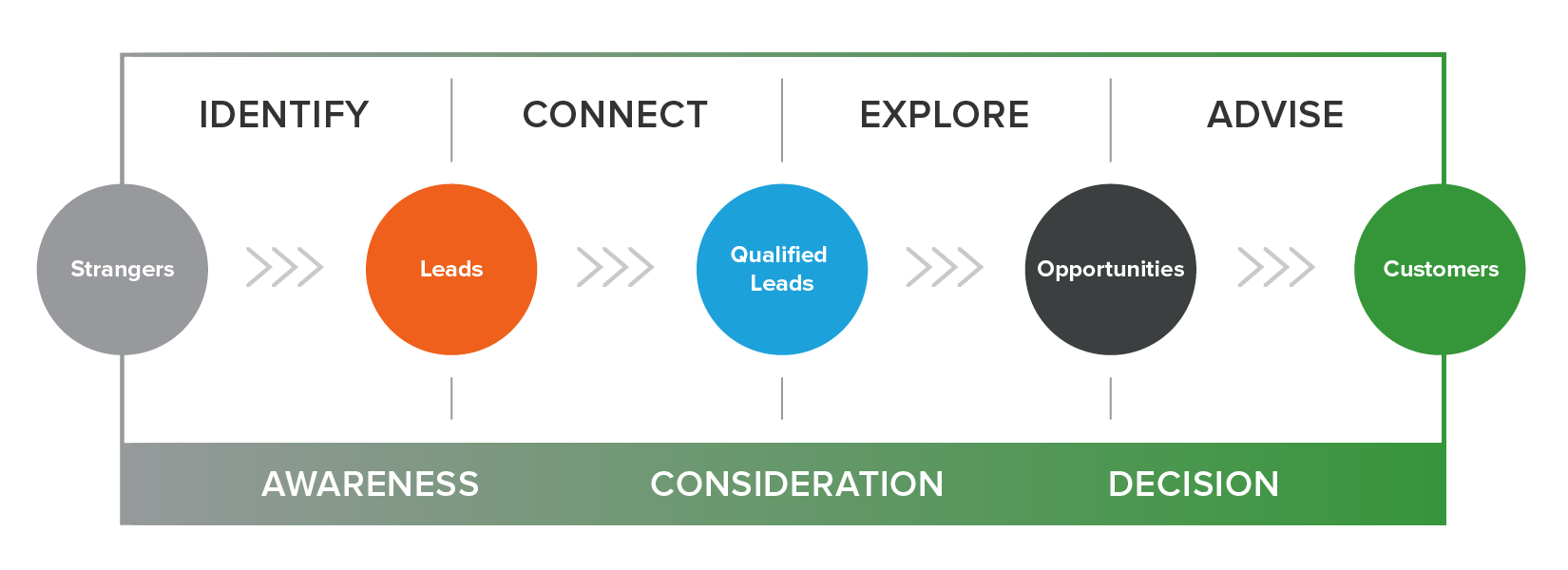
Think about how frustrating conversations are when you feel like the other person is not hearing what you are saying? You never want your buyers to feel that way.

Questions are important to your discovery process, but it is just as critical that you listen to the answers. First and foremost, the ability to listen and remain silent with a prospect shows genuine interest in what that person has to say. Buyers are used to reps overlooking their viewpoints to push forward with a sale. When you ask questions and listen (be quiet), you demonstrate your willingness to understand their current state.

Your Question Track

When executing a discovery session, you should have an idea of the key discovery questions that will help uncover pain. However, don’t be crippled by your question track. The answer to one question should inform the next question you ask. You may have great discovery questions, but if you simply run through your list on the Value Framework without tailoring them to the immediate conversation – they won’t do anything to help you advance the deal.

Borrow from Journalism

When you are conducting discovery, you’re essentially interviewing your prospect. You may balk at the fact that you are comparing sales to the news. But – hear me out. Your sales discovery session may not be 60 Minutes, but the skills are the same. A reporter needs a particular interviewee to shed light on the story, provide information and reveal facts that may not have been previously known. Your goals are very similar.

In journalism school, one of the first techniques you learn about interviewing is to be quiet. People are uncomfortable with silence, so they will often keep talking to fill the noise gap. Have you ever noticed on a news interview show, like 60 minutes, the interviewer waits for the person to answer and has no issue remaining quiet?

One of the best ways you can get people to elaborate is to remain quiet. Nod your head. Provide some validating statements and wait several seconds to see if the person continues.

Silence is a powerful tool in selling. For many reps, the ability to listen quietly and intently to a prospect is unnatural. They have a burning desire to speak. By learning to listen, you can show empathy to a buyer, learn all there is to know about his situation, and ultimately convey a strong value proposition.

Download our Ebook: The ROI of Sales Messaging

12 Jul 16:37

How to Tell What Stage of the Buyer's Journey Your Website Visitors Are In

by nvanderkolk@hubspot.com (Nick van der Kolk)

buyers-journey-website-visitors.jpg

The modern buyer’s journey has changed. Research shows that only 18% of buyers rely on a salesperson as a source of information when making B2B purchases. This is one of the main challenges sales reps face today: Due to the proliferation of marketing material on the internet, the modern buyer is no longer dependent on salespeople to access information to make purchase decisions.

But we can track prospects’ activity on our company websites. So from both a business opportunity and predictability perspective, sales reps need to understand website traffic in relation to where those visitors are in the modern buyer’s journey so we can provide targeted advice that’s relevant to what our buyers are looking for.

inbound-sales-methodology-small.png

How to Tell What Stage of the Buyer's Journey Your Prospects Are in Based on Their Website Visits

Awareness Stage

Buyers in this stage will: Visit your blog, interact with your social content.

How to tell your buyers are in Awareness mode: When buyers are in the Awareness stage, a salesperson’s job is to identify and connect with them. The vast majority of your website visitors are in this phase, as most Google searches and social media interactions are conducted by people still in the research phase.

These are people that have shown interest in key areas of what your business does but are early in their buyer’s journey. People visiting your blog and interacting on social are typically looking for answers, resources, education, research data, opinions, and insights.

Categorize the content on your website by the specific persona types it’s intended to serve. Then, using technology that tracks visitors’ website activity, you can keep track of the number of interactions they have and areas they have shown interest in. This serves the purpose of understanding what their interest area is and the amount of interactions are important to understand how engaged they are. Then, define trigger events you consider to be valuable and reach out when they happen.

Example: Let’s use the company ThaiShake as an example. The prospect, a woman in Thailand who wants to start her own business. She’s a vegan and knows a few things about nutrition, and is looking for business opportunities in that field. She researches online about business opportunities in this field and finds a blog post about being a Herbalife distributor.

After reading the post, she shares it on Facebook and asks if her social network has any opinions about this opportunity. This is a trigger event for us as she’s clearly engaged with the content, even though she hasn’t necessarily expressed any sort of commitment or clear interest in becoming a distributor herself. So while she is most likely not ready to make a decision now, it would be a good moment to connect, thank her for the share and provide her with additional content to help with her research. The actual content you provide in your outreach should be different based on the specific pages or posts that your prospect visits and shares.

If you don’t know who is visiting your company’s website or interacts with your social media, don’t worry -- you’re not the only one. HubSpot Sales makes tracking this activity possible.

Consideration Stage

Buyers in this stage will: Visit your product pages, benefits or features pages, and “About Us” or area of expertise content.

How to tell your buyers are in Consideration mode: Your website visitors are not equal. They are leads, customers, or complete strangers. Some will be engaged and qualified, while others will be engaged but a bad fit for your business.

As in the awareness stage, we are keeping track of our website visitors that have shown interest in our area of expertise and solutions we provide. For most organizations, the amount of these website visits will be significantly less than Awareness visits. However, you can still segment pages into interest fields and personas to help you craft a personalized response. For some organizations, the trigger event is the website visit of a product page itself, while others might require a minimum of five such interactions before considering it a trigger.

Example: Let’s revisit the ThaiShake example. As the woman moves down the funnel, she might open a few nurturing emails and do more research into the specific benefits of the Herbalife product. The company should start sending her more specific educational content based on what she’s reengaging with on the site.

Decision Stage

Buyers this stage will: Visit pricing pages, case studies, and “Contact us” pages.

How to tell your buyers are in Decision mode: Buyers who spend time examining your pricing page and case studies aren’t just looking at general information -- they’re determining exactly what it would take to become a customer. Buyers in decision mode are a salesperson’s low-hanging fruit since they’re the most likely to buy soon, meaning that your response speed and personalization are of even greater importance.

Example: The final step of our example is the prospect visiting ThaiShake’s “become a Herbalife distributor” page. This isn’t general educational or informative content -- she’s no longer simply researching the vegan nutrition space. If she applies, a sales rep should reach out as soon as possible with a closing sequence, but if she only visits the page a few times without applying then she needs to be nurtured further.

If you can segment and report on the different types of website traffic, you can create a funnel-type dashboard to see your entire pipeline segmented by buyer’s journey stage. Adapting your outreach to this information has several benefits:

  • Tailoring outreach from the first email to your prospects builds your credibility as a trusted advisor.
  • Focusing your sales efforts around targeting the buyers furthest down the funnel will increase your effectiveness.
  • Your forecasts will become more accurate because you’ll be able to map your buyers’ journey stages against your average sales cycle length and better anticipate when and if deals will close.

How do you determine what stage of the buyer’s journey your prospects are in? How do you use this information in your sales process? Let us know in the comments below.

HubSpot CRM

12 Jul 16:37

7 Easy Ways to Take Your Prospecting to the Next Level

by lhintz@hubspot.com (Lauren Hintz)

take-prospecting-emails-to-next-level.jpg

When you’re prospecting, most buyers you encounter are in the Awareness stage of their buying journey. Therefore, your goal is not to sell them on your product. Your goal is not to get them to see a demo of your product. Instead, your goal is to educate them enough to bring them to the Consideration stage of the buyer’s journey or disqualify them as a bad fit.

You’ll see that the Awareness stage of the buyer’s journey shown below matches the same point that salespeople move from identifying good fit leads to connecting with them.

inbound-sales-methodology-small.png

During an initial connect call or email conversation, your goal is to listen to your prospect’s goal or challenge they are exploring. You want to build up your credibility with the buyer so they trust your advice and want to spend more time with you. Highlight particularly effective and relevant content that addresses the unique perspectives of each buyer persona for your business.

Want to learn more? Register for free sales training, taught by a Harvard Business School professor.

If you notice you have gaps in the content, take note and inform your marketing team -- this will serve as a content roadmap for the future. For example, you may find that you have lots of content for a particular industry, but other important segments don’t have any tailored content content. Or maybe you have a lot of content, but it’s too generic and not specific enough to different personas. In the future, you (or your marketing team) can target content development to fill those gaps.

Here are seven best practices for initial email or phone conversations with prospects:

  1. Take an inventory of your existing content -- both marketing collateral and email templates. Review any blog articles, ebooks, webinars, presentations, or case studies your company has developed. Check your “Sent Items” in your email and you’ll find previous emails to prospects that will serve as excellent templates.
  2. Keep your outreaches short. Initial voicemails should be shorter than 15 seconds, and first-touch emails should be fewer than 200 words.
  3. Be sure you reference the buyer at least twice as much as you mention yourself. This feedback applies to company mentions, personal mentions, the word “I”, and the word “you.”
  4. End all emails with one question. The question should be short and a separate line. It should be focused on identifying a challenge or a goal. For example, if you mention you’ve heard great things about their sales team, you should ask, “How do you find such great salespeople?” If you are asking for time, be explicit about how much you are looking for: "When do you have 15 minutes to speak?" It’s important to note that initial emails should only include one question to keep your prospect focused on the most important takeaway.
  5. Sound human. Sound helpful. Avoid sounding like a legacy salesperson.
  6. The subject line is the most important element of your emails. Personalize the subject line to the persona’s perspective. Here’s 26 subject lines you can use to get started.
  7. The content you uncover in your inventory is just a guideline for what you could send to prospects. Salespeople should always be flexible enough to adapt available content to their style and to further personalize the content to the buyer’s context.

How do you make your prospecting outreach incredibly effective? Let us know in the comments below.

New Call-to-action

12 Jul 16:37

6 Sales Email Trends We Wish Would Die Immediately

by aja.t.frost@gmail.com (Aja Frost)

terrible-email-trends.jpg

Most of the time, we don’t realize trends are ridiculous until after they’ve faded away. Think: Pet rocks, shag carpet, Jazzercise, to name a few.

These six sales email trends, on the other hand, are so atrocious that we’re not just recognizing how horrible they are -- we’re calling for their immediate death. They’re worse than ineffective: They piss off prospects and immediately bring down your closing rate.

Read on to see which six email techniques you should stow away with your MC Hammer pants.

6 Horrible Email Trends That Need to End

1) Using a Fake “Re:”

According to data from 30 million emails, using “Re:” in your subject can generate a 92% open rate.

But that definitely doesn’t mean you should sprinkle “Re:” into outreach messages where it doesn’t belong -- because the end goal isn’t getting the prospect to open your email, it’s getting the prospect to respond.

Once someone reads your message and realize they’ve been duped, there’s no way they’ll be receptive to your offer. Email, meet trashcan.

2) Including Multiple Asks

Recently, salespeople have started packing their emails full of different “next steps.” For example, they might ask the prospect to point them to the best person for X, look over a article on Y, and find 20 minutes in her schedule to discuss Z. If you factor in their email signature, which suggests people check out their company’s site, that’s four separate call-to-actions.

Reps use this technique so they won’t be out of luck if their recipients don’t like the first suggestion. But it always backfires: Prospects feel overwhelmed by the number of options, you look desperate, and the chances of a response plunge dramatically.

That’s why you should always stick to a single CTA. Of course, you can -- and should -- still direct the prospect to helpful resources, but align your CTA with those resources so it doesn’t feel like a separate request.

Here’s an example:

Here’s a great article on specialized versus general IT staffing firms. Do you have 20 minutes on Tuesday after 3 p.m. to discuss those differences?

3) “Just Checking In”

You haven’t heard from the prospect in a while, and you want to put the ball back in motion. So you figure you’ll send a quick “just checking in” email.

However, these emails are extremely annoying to receive. They don’t provide a single ounce of value to the prospect. In fact, they actually negatively impact the prospect, since she has to waste valuable time on your pointless message.

And the biggest reason why these emails suck? Even though you’re not explicitly saying, “What’s with the holdup? I’m getting impatient!”, that’s the message you’re sending.

(Guilty of sending these? Check out our 23 better alternatives to check-in emails.)

4) Referencing a Weak Connection

If you’ve got an introduction or referral, by all means, ride that to the bank. But reps who simply go on LinkedIn, find a random mutual connection, and insert his name into their email are definitely misusing this technique.

After all, if the prospect does know the third party, the first thing they’ll ask is, “How do you know John Doe?” You’ll have to offer a lame response like, “We met at an event once.” And when John denies your story, the prospect will instantly stop trusting you.

And if the prospect doesn’t know the third party, they’ll wonder who John Doe is and why on earth they’d ever care that you knew him.

So hit backspace next time you find yourself writing, I saw on LinkedIn we’re both connected to [random stranger].

5) Writing All-Lowercase Subject Lines

Striking a friendly, human tone with your prospects shows them you’re not just a robot, programmed to sell. But it’s definitely possible to take this approach too far. Case in point: subject lines written in all lowercase.

Some reps think this style makes them look laidback and easygoing; unfortunately, it comes across as sloppy and inappropriately informal.

For example, imagine you were looking for a new sales tool, and you got an email titled “let’s chat about your lead gen software.”

You’re making a big decision -- one that could potentially change your entire sales strategy -- which means you probably want to work with someone who’s experienced, professional, and trustworthy. That subject line doesn’t communicate any of those attributes.

If, on the other hand, you got an email titled, “Here to Help You Generate More Leads,” you’d feel much more confident about the sender’s ability to add value.

6) Linking to Your Scheduling App in an Outreach Email

The other day, I got a great email from a sales rep. It was straight-forward, engaging, and clearly personalized. Then I got to the final line:

“I’d love to help you figure out your personal branding efforts. Here’s a link to my calendar -- choose a slot that works for you!”

Immediately, I rolled my eyes and closed the email.

I love picking out my own appointments with reps: It’s simple and easy. But sending the link before confirming the meeting makes reps look presumptuous -- as if you’re so sure the prospect will say yes, you’re not even bothering to ask.

The takeaway: Using a scheduling and availability tool is a great way to cut a few steps from the process, but wait until the prospect has agreed to a meeting. In the meantime, here are some other ways to engage a prospect in an outreach email besides asking for a meeting.

By kicking these trends out of your repertoire now (rather than one or two years later, when it’s really obvious they’re done), you’ll have a leg up on all the reps still using them. So say good riddance.

What do you think of these email trends? Any you’d add to the list? Let us know in the comments?

HubSpot CRM

12 Jul 16:37

Sales Qualifying Questions to Identify Prospects

by Joel Goldstein

sales

Leads are crucial to every business, but unfortunately, not every lead will turn into a sale. To filter out leads that aren’t worth your time, try asking these questions during the sales qualification call:

“What problem are you trying to fix with this purchase?”

The first question that you should ask any potential client is what business need or problem they are trying to fix by talking to you and considering your product. First, this will help you identify whether the lead understands what you offer. The lead may have misunderstood what your product is capable of, and therefore think that it solves a need that it really doesn’t. This question helps you filter out these types of leads and also helps you build the rest of your pitch since you know now what type of problems need to be solved.

“What other solutions have you tried?”

It’s important that you understand what the lead has attempted in the past so you know what has not worked for them so far. Knowing what competitors or other solutions have failed to solve a lead’s problem will help you pinpoint exactly what it is about your product that you need to focus on during the pitch. It will also help you frame the pitch to show the lead how different your offering is from the ones that have been tried before. This will help leads that are hesitant about trying something that may not work since they’ve been disappointed in the past.

“Why are you interested in making a change/buying this product now?”

If the client has had a problem for a long period of time, what has prompted him to finally do something about it by switching companies or buying your product? By finding out what his motivation is, you will be able to determine whether the client has a sense of urgency to make a decision. The client may have recently experienced some sort of trigger event which has led them to need your product or service. These leads will be more serious about buying from you—and quickly.

“Who’s the decision maker?”

A wholesale distributor or salesperson who is trying to qualify a prospect needs to know up front who will be making the final decision. If it’s the lead that you’re speaking to, then proceed as you normally would with the rest of the sales process. However, if there are other individuals involved, make sure that you obtain their contact information on the qualifying call and involve them in sales meetings. Otherwise, you will find yourself spending a lot of time with someone who does not even have the final decision on whether or not to move forward with your company.

Do you use any of questions to help you identify prospects? If the questions that you use didn’t make the list, share them in the comments below!