Shared posts

25 Jul 17:25

How Multichannel Retailing May Change Relationships with Suppliers

by Matt Osit

Today, retail isn’t just about how products are displayed in brick and mortar stores. It’s about the whole customer experience, from gathering information, to comparing products and pricing, to the delivery of products from suppliers to stores and their consumers.

Today’s multichannel retailing:

  • Combines the in-store as well as the online experience.
  • Incorporates mobile and even wearable technology.
  • Creates a multi-sensory shopping experience not possible in the online space.
  • Provides access to products and information not available in stores.
  • Allows retail and supply chain partners to analyze and predict shopping behavior.

Multichannel retailing in 2016 is about merging the online and offline experience. It’s about allowing customers to see, feel and touch products in stores, providing transparency and the information customers need to make decisions, and delivering on-demand fulfillment of products not displayed in stores to compete with the best of eCommerce.

But what does multichannel retailing mean for relationships between manufacturers and distributors and their retailers? Let’s take a closer look.

Multichannel Retailing: An Omnichannel Experience

Retail sometimes looks at mobile and online purchasing as a threat to their brick and mortar business. In doing so, they are missing the opportunities that omnichannel marketing could provide. Studies indicate that as many as 90% of consumers feel their smartphones are the easiest way to make a shopping list before entering a store. This is just one way that shoppers are increasingly using their mobile devices as part of the shopping experience.

Rather than seeing this as a threat, suppliers and wholesalers should encourage retailers to leverage this trend in their favor. A fact of life in retail is that while there may be limits to how much product retailers can actually carry in store, when they partner with wholesalers and suppliers to incorporate mobile shopping options that expand the selection available to shoppers in store, it increases store sales and improves customer service.

Suppliers can integrate omnichannel by partnering with retailers to set up in-store merchandising that points customers toward a mobile or online store where they can find a greater selection and more styles.

Supply Chain Collaboration

Customers who take advantage of omnichannel shopping may find a product in a retail store, and then purchase the same or a related product online. These are retail customers who carry with them the expectations of eCommerce: they expect to be able to get the products they want, when they want them, regardless of what’s on store shelves.

These changes mean that collaboration between retailers and their supply chain partners becomes increasingly important. Collaboration will transform supply chain relationships, requiring tighter linkages throughout the supply chain – from manufacturing and inventory management, to fulfillment and logistics execution, to display on the retail sales floor.

This means that suppliers and retailers must partner to provide logistics options such as home or in store delivery, that are competitive with the best of the eCommerce experience. In a sense, the retail store acts almost like a sample showroom and the wholesale supplier becomes a fulfillment partner. This means that wholesale suppliers and retailers will increasingly need to partner to improve their logistics and supply chain capabilities to meet customer demands.

Enhanced Personalization

Tailoring the shopping experience was once the role of the salesperson, but as consumers increasingly prefer to engage with mobile devices rather than real life product displays or store employees, retailers must look for ways to harness these preferences. Offering a more personalized shopping experience that incorporates mobile puts these changes in consumer behavior to work for retailers rather than against them.

There are two trends in personalization that are impacting retail now: the need for better data and analytics, and in-store beacons.

Data and analytics: Retailers are trying to gather more information about consumers, whether they are visiting an online or offline store so that they can offer more personalized marketing after the sale. These can come in the form of email offers that use past purchase information gathered at point of sale to promote additional products that might be of interest to consumers. However, these efforts face significant challenges: stores must first convince consumers to share their contact information, which they may be unwilling to do. In addition, while this kind of personalization allows retailers to personalize marketing efforts after the fact, it doesn’t really change the nature of the depersonalized in-store experience.

In Store Beacons: Retailers and suppliers are hoping that technology can solve this. The second trend in personalization is the introduction of in-store beacons. Beacons personalize the in-store experience for shoppers who are increasingly engaged with their mobile devices even as they shop. Beacons communicate with bluetooth-enabled wireless devices to enhance the customer experience and engage with customers in stores by providing discounts, rewards, recommendations and department-level deals, as well as personalized deals and product recommendations tailored for the consumers. Beacons are currently in use by large retailers like Target and Macy’s and are expected to”trickle down” to smaller retailers over the next few years.

Wholesale brands and suppliers have always been involved in helping retailers merchandise their products in stores and provide guidelines for their retail partners to follow, with an eye toward maximizing sales. But as mobile and eCommerce shopping increasingly threatens traditional retail business models, retail stores and their supply chain partners must partner in innovative ways to make the brick and mortar shopping experience complement online channels.

25 Jul 17:25

One of Mark Cuban’s best ‘Shark Tank’ investments works only 5 hours a day

by Eugene Kim

Tower Paddle Boards CEO Stephan Aarstol

Mark Cuban likes to call Tower Paddle Boards, a San Diego-based company that sells stand up paddle boards, one of his best "Shark Tank" investments ever.

The company's growth explains why. When Cuban invested $150,000 for 30% of the company in 2011, Tower Paddle Boards just had $260,000 in revenue. This year it expects to hit nearly $10 million in revenue.

But there's another reason that makes the 11-person startup special: Tower Paddle Boards is super efficient, having achieved that growth by working only 5 hours a day.

"Mark's response was positive when I first told him about the 5 hour workday," Tower Paddle Boards CEO Stephan Aarstol tells Business Insider. "He looks at it as, 'OK, it works for your company, but it’s not going to work for everybody."

Aarstol believes that a shortened workday could motivate employees to work more efficiently. And he is proving to be right through his own company, Tower Paddle Boards, which continues to expand, even after a year of rolling out the 5 hour workday. Last year, it was named the fastest-growing private company in San Diego. Aarstol has even published a book titled "The Five Hour Workday" this month.

"Our productivity just went off the charts. We're still growing and we're still super profitable. There are no downsides," Aarstol says.

Replacing an outdated standard

The inspiration for a 5 hour workday came from Aarstol's own experience. Having run multiple startups over the past 15 years, Aarstol always felt like 8 hour workdays were outdated standards.

He felt like a lot of time was being wasted at work. By forcing people to work less hours, he saw employees getting more creative and efficient, all the while achieving the same level of work. 

"Having that constraint on time forces you to come up with creative solutions. Everybody gets that with money — we’re just applying that to time," he says.

So last September, after a 3-month trial period, Aarstol rolled out a 5-hour workday fulltime to his company. All 11 employees now come in to work at 8AM every morning and leave by 1PM. And despite shorter store hours, his sales numbers haven't dipped at all, he says.

Aarstol says the best thing about having a 5 hour workday is that it's a great recruitment and retention tool. Employees love it because it allows them to spend more time pursuing other activities. It ends up boosting morale and nurturing more creativity.

"When you talk about knowledge workers, it’s about managing energy. How much real work gets done in a day?" he argues.

Aarstol believes his 5 hour workday idea should be applied to more companies across the whole country, which is why he published a book about it. It boosts productivity, helps hire smarter people, and creates a healthier lifestyle, he says.

"This is sort of what kind of life do you want to live question," he says. "It’s a choice. We can create a world where we’re off by 1PM every day. This shift is needed."

SEE ALSO: This perfect SAT scorer got rejected by the Ivy Leagues, but got on 'Shark Tank' and is now backed by Mark Cuban

Join the conversation about this story »

NOW WATCH: We tried the 'Uber-killer' that offers flat fares and no surge pricing

25 Jul 17:18

Malcolm Gladwell tells us about his beef with billionaires, police violence, and how his new hit podcast lets him explores issues in ways his books can't

by Richard Feloni

Malcolm Gladwell TBI Interview illustration

Malcolm Gladwell is angry, and he wants you to know why.

That's not to say that the bestselling author walks around in a rage all day — he's actually quite collected and soft-spoken most of the time, and ready to make a joke. But in his new hit podcast "Revisionist History," he explores certain topics in a way that readers of his books "The Tipping Point" and "Outliers" may find surprising.

Take, for example, the way he devotes three episodes to ways he considers the United States' education system is failing low-income students. To him, it's a subject worthy of nothing less than moral outrage.

We recently sat down with Gladwell to discuss what he wants to achieve with his podcast — which he confirmed has been approved for a second season — and how his worldview has evolved since the massive success of "The Tipping Point" launched him into pop culture 16 years ago.

We also discussed two of the biggest stories in America today, the presidential election and the public's relationship with the police.

When he got mad about a perceived injustice he was talking about, he'd raise his voice and throw up his hands, but often before cracking a smile, enjoying the energy of the discussion.

This interview has been edited for length and clarity.

Richard Feloni: With "Revisionist History," what are you finding that you can do with the podcast medium that you can't do with a book?

Malcolm Gladwell: There's an immediacy to it. I went on my Twitter this morning. The latest episode dropped last night at midnight and by 7:30 a.m. this morning there's already a long stream of people commenting on it on Twitter. That's very different from a book, which takes a long time to kind of gain traction.

Also, there's more freedom in the medium, more freedom to use emotion, to be outraged. A lot of these episodes are angry — or even funny — in a way that my books are rarely. My podcast unleashes my id.

Feloni: There are recurring topics that you keep coming back to in your career and that you have really strong feelings about. How do you pick your battles?

Gladwell: When it comes to battle picking, you ask yourself two questions: What is something that not enough people are talking about, and what is something that I believe I have something unique to say about?

bi graphics malcolm gladwell the malcolm gladwell bioSo the battles I've chosen are not the most important ones facing humanity. There are lots of issues more important than where billionaires donate their money, to use the example I discuss in the latest episode of the podcast. But I do think it's something we don't talk about enough, and I think that after 15 years of writing books and 20 years at The New Yorker, I now have a kind of platform that allows me to be heard when I sound off on these subjects. And I think it would be a crime not to use that platform.

And I think as a Canadian I do have something unique to say about America's educational system, which to an outsider is completely absurd. I mean, it's so nuts, that you kind of have to be from a different place to sort of speak to its inherent absurdity.

So I chose to dedicate three episodes of "Revisionist History" to what's wrong with the American educational system because it fits my two criteria for battles.

I like to go back and forth between my tried and true hobby horses and new things. I don't want to be like the angry old guy in the corner who is always ranting and raving about the same things — but I don't mind doing that just a little bit!

Feloni: You reach conclusions in your work in a way that prompts your audience to either do something or see the world in a different light. Do you find that always shaping these theses affects how you live your own life?

Gladwell: Since becoming a journalist, each time I engage with subjects I become more radicalized.

If you met me as a 21 year old, I was actually conservative. And I would describe my politics back then as quite complacent. I am now substantially to the left of my 21-year-old self. But it's not so much about political positioning as it is that I'm now substantially more outspoken than I was back then.

Writing about these various things has made me a little bit angrier, and it's certainly fueled my passion about things.

Feloni: Can you give me an instance where a certain topic has made you angrier?

Gladwell: I did a piece for The New Yorker in 2009 about concussions in football, and I am a serious football fan. I had watched football for 25 years without ever entertaining the notion that I was morally complicit in what the game was doing to people. And then I wrote that article, which made me think about, "Well, wait a minute. What does it mean for me to sit and watch and give my implicit consent to the economic enterprise that is football when the game itself is harming a huge number of its participants?" That's a very uncomfortable thought. It's not a thought that sports fans normally have to ask themselves.

I continue to watch football but now I'm conflicted about it! I think I am in the process of divorcing myself from the game. It's hard because I'm a serious fan. But every year I watch less and every year I feel guiltier about the football that I do watch, and the delight I take in people harming themselves. It's just crazy.

There are a million other sports you can watch that do not involve the physical destruction of the participants, right? I actually find myself watching a lot more basketball and a lot less football. So I am finding more productive outlets for my sports fanaticism.

That's a small example. But also, I give money to things that I think are worthy causes, and my definition of a worthy cause has been profoundly shaped by a lot of my writing.

Feloni: There's a section in your book "David and Goliath" where you mention that your views on affirmative action have evolved since you first publicly explored them in "Blink" eight years earlier. What's an idea commonly associated with you that your readers may be surprised to hear you no longer believe in?

Gladwell: In "Tipping Point," there's a chapter trying to explain the fall of crime in New York City. I talk quite positively about the broken windows theory [which states that cracking down on small crimes prevents larger crimes]. And that was written at a time, the late 1990s, where that idea was very much en vogue. I think that it had a place in New York's transformation, but I do think that in New York, and other places as well, that idea was taken too far. It led to a kind of punitive policing, which I think has clearly become a big problem.

bi graphics malcolm gladwell guide to gladwellBy "David and Goliath," published three years ago, I was talking about the opposite, about a woman in the NYPD who has had extraordinary results in reducing juvenile crime rates in Brownsville, Brooklyn by reaching out to the community, building relationships with the families of young offenders, and winning them over.

That's a case where my views have evolved substantially, and I hope that people don't take that chapter in "The Tipping Point" too seriously, because I just don't think it's relevant to 2016.

Feloni: I would assume that these ideas about the relationship between authority and the people it is intended to protect has been front of mind when we have a week of violence in Minneapolis, Baton Rouge, and Dallas.

Gladwell: A theme of "David and Goliath" is this idea of legitimacy, that civil societies work when the citizenry perceives their governing institutions to be legitimate, and that is based on three principles: fairness — that everyone is treated the same; transparency — that you know exactly what the consequences of certain actions are; and responsiveness — when you feel that you can stand up and complain and that you will be heard.

What the police do doesn't work unless the population believes in what the police are doing and believes in the legitimacy of the institution of the police force.

So the first task of a police force is not to fight crime and enforce the law. It is to establish legitimacy with the law-abiding citizenry and then fight crime and enforce the law. I think that's the issue.

When we look at the events in Ferguson and those that follow, the sad fact is that in many places in this country, the police have lost their legitimacy. They're no longer perceived to be transparent, predictable, open, and listening to the population, particularly in the African-American community.

At the same time, I think it's important to understand that we are talking about a small percentage of the police in this country and the populations in this country. By and large I think the policing of this country is done in a really good way. I think that we have a lot to be proud of, but I think we've gone awry a bit in the last couple of years.

The militarization of police, and the particular defensiveness of the police has led to these really troubling incidents and I don't think it's a trivial issue. I think that restoring the legitimacy of law enforcement has got to be one of the single most important tasks facing the country.

Feloni: From what you've seen and researchers you've spoken with, what are some things you think could be done to restore legitimacy?

Gladwell: One of the things I think the police have to do is to stop behaving like armies. There's a really brilliant writer named Radley Balko who's been writing a lot about this.

WATCH: Gladwell's advice for police

I saw that one photo recently of a young African-American woman standing calmly and peacefully in front of a group of cops in full on, not just riot gear, but equipment that made them look like they were in Fallujah! You can't have that — you can't have cops with automatic weapons and armored cars looking like they are about to take out ISIS in the middle of an American town. I mean, that's just crazy. I suppose you could make a case that they are under siege, but none of that is worth it. They are driving a wedge between themselves and the American population.

Every cop will tell you that their real job is being a social worker. That's what they do all day. The large majority of police officers in this country never even draw their gun, let alone fire it. They do conflict resolution, right? And if that's their job, why do they need to look like they're an occupying force?

The one thing that came out of Dallas was that the police chief reminded us what the real role of the police is — talk about a guy who with grace and dignity and wisdom took an incredibly volatile situation and showed what intelligent law enforcement ought to be doing, which is restoring peace and harmony to the communities that they are obliged to serve. There are plenty of police officers out there who do the job right and I think our job is just to elevate those people as role models.

Feloni: With the Republican National Convention this week we've officially seen Donald Trump rise from someone who many wrote off to now the GOP candidate.

Gladwell: Trump is an innovator who has shown how out of step the political establishment was. Which I think, probably, in the long term will be healthy. We have to figure out how to reinvigorate our political institutions and he's demonstrating to us the urgency of that task.

My biggest reaction to the convention is that I'm always surprised when people don't take the long view. So you have an extraordinarily successful democracy that's been around for going on 250 years, and it's been successful because of the strength of its institutions, and because people have respected those institutions.

The kind of rhetoric that people are using now strikes me as incredibly damaging. You may hate Hillary Clinton and you may have good reason for hating Hillary Clinton, but Hillary Clinton is one person who even if she's elected will be gone one day and you still have the task of keeping American democracy going.

You know, do I think a Trump presidency would be bad news? Yeah, I do, I'll be honest. Do I think that American democracy ends if Trump is president? No! I think, there are plenty of checks and balances in place. I think he would do some damage to the country but we would recover. The office of the presidency and American democratic institutions are a lot stronger than one person. So if he wins, our job is just to keep the office strong, right? And hope he'll be replaced by something better!

WATCH: Gladwell on the value of simplicity

Feloni: From "The Tipping Point" forward, the most common critique of your work is that you take a very complex topic, oversimplify it, and then draw conclusions that may be incorrect or harmful. What's your response to these critics?

Gladwell: Well, I would say first of all, anyone who wants to challenge the status quo always gets that response. Ninety percent of the time, that's just bull. That's just the way in which people choose to prop up their own privilege or their own particular position. So mostly I shrug it off.

And then other times I'll say why is simplifying things such a negative accusation? That's my job. That's called journalism! There is nothing more common than critics of journalists accusing them of practicing journalism. It is our function in the world to take things that are complicated and render them in a form that non-experts can follow and make sense of.

Do I occasionally oversimplify? Of course I do! That is my job as well. Sometimes you have to oversimplify.

If the choice is between keeping an issue in the dark because most of us can never access it, or reducing some of the nuance past the point where experts feel comfortable, I will always choose the latter. If you can introduce a topic to someone in a form that is digestible, then they can start adding back the nuance. We can have a conversation and we can start talking about the complexity, but you've got to start the conversation. My job, the way I see it, is to start the conversation.

I did a podcast episode on the liberal arts colleges Bowdoin and Vassar, and I used as my metaphor for how amenities have gotten out of control at American colleges the fact that the food at Bowdoin is over the top [and that means less money for scholarships]. Is that the whole story about amenities? No. I'm very plain in the episode it's not the whole thing, but I'm using that as my way in. I want people to say, "Wait a minute, what does that say about American colleges that you can get food at liberal arts colleges that is as good as what you would get at the Four Seasons?" Once you get it, once you grasp that point, then we can start to have a much more sophisticated argument.

There are some people, who I'll charitably call snobs, who are dismissive of any conversation that doesn't begin with the full level of complexity. That's just not how the world works.

Feloni: In the sixth episode of "Revisionist History," you revisit the argument that millionaires and billionaires who donate money to rich universities are wasting their money, which could do more good at much less wealthy institutions. It's an argument that you publicly started on Twitter last year when you criticized hedge fund manager John Paulson for his $400 million donation to Harvard. Business Insider then collected reactions from some of Wall Street's biggest power players upset with you. Did you see that?

WATCH: Gladwell says don't give money to Princeton

Gladwell: Yes! That was hilarious. Round up all these incredibly, really smart and sophisticated investors who have made billions of dollars and get them talking about a relatively complex social issue and they sound like idiots!

They give money to Harvard or Stanford because all their friends pat them on the back, they get their name on a prestigious building, and they get associated with all of the incredible brand value of those institutions, but they haven't thought, clearly, about the social justice implications of what they're doing. And they get uncomfortable when someone says, well wait a minute, you have not thought as seriously about your philanthropy as you have about your investment decisions and maybe you ought to take it as seriously.

You know, John Paulson thought deeply and brilliantly about the mortgage meltdown of 2007/2008. If he devoted even a fraction of the time, energy, and thought to this philanthropy as he did to that, the world would be such a better place. All I'm saying is you guys have IQs of 160, you have billions of dollars in the bank, and you are accustomed to deep and thoughtful analysis — for God's sake, think about your philanthropy, don't just write a check to the fanciest institution you can find!

bi graphics malcolm gladwell top running tipsI thought it was profoundly telling that instead of responding to that criticism by saying, "Actually, you know what, maybe I should think twice about where I give my $100 million," they got all defensive.

Feloni: What's your advice to high school students considering college, or recent college graduates embarking on their career?

Gladwell: This is connected to the point I make in the episode of "Revisionist History" where I compare how Bowdoin and Vassar spend their money.

What I would like is for high school students in this country not to ask the question what school has the best reputation and can make their résumé look the shiniest, but ask which school is doing the most for the United States? And that's why I said in that episode, don't go to Bowdoin, go to Vassar, and don't let your friends go to Bowdoin, and don't give money to Bowdoin! It's a deliberately provocative statement, but the gist of it is that you get the system that you choose. And if we want an educational system that takes social justice more seriously, we have to choose that.

And my advice for college graduates is don't reflexively give money to your alma mater, something particular to Americans that I find extraordinary. Take Princeton, for example — it has more money on a per capita basis than any educational institution in the history of educational institutions. There is no scenario where it can spend all the money its endowment generates every year. If there is anyone who gives a single dollar to Princeton, they have completely lost their mind. I will say that without reservation.

When people reflexively write checks to institutions that have billions of dollars in the bank, they are essentially committing a moral crime. Your money could do good in this world and you're choosing instead to waste it. People have to do a better job of that. You've got to find places where your money's going to do some good and direct your dollars towards that institution.

SEE ALSO: Anthony Bourdain discusses 'Parts Unknown,' his favorite restaurants, and how he went from outsider chef to the top of the food world

Join the conversation about this story »

NOW WATCH: Malcolm Gladwell on the presidential election: ‘Both sides have to chill'

25 Jul 17:17

11 Pinterest Myths Debunked

by Melissa Megginson

This post is based on a Facebook Live event I did with my co-worker, Madison, based on different Pinterest rumors we were hearing.

We’ve all heard them. The whispers in the social media blogosphere outlining theories to gain Pinterest followers fast or tips to increase engagement today. Soon we hear these theories so often we start to question our own sound judgment.

Yes, we are talking about Pinterest myths.

Those “suggestions” hit one popular blog then spread rampantly throughout the Internet. After such widespread appeal, dedicated audiences start to soak them up as pure truth. Some followers even go so far as to promote them on their own blogs, adding more fuel to the myth fire.

Next thing we know dedicated Pinners are deleting Pins right before their prime and filling queues with hundreds of daily Pins. Or worse, they are not even giving Pinterest a fair shot as a marketing tool.

We’re here to set the record straight!

In typical Tailwind fashion, we are even going one step further to finally put these myths to rest. Our team has finished an in-depth analysis of hundreds of accounts. We now have hard data to back up our time on the soapbox.

So without further ado, let’s dig into some serious myth busting.

1) Pinterest is Only for Middle Aged Women

There are 100 million active monthly users on Pinterest today. It’s not even feasible that they are all middle-aged women only interested in DIY activities or recipes. As a population, we are much more diverse than that.

Pinterest is a robust platform that caters to a variety of diverse interests, as well as age groups. One-third of millennials leverage Pinterest to plan for the future.

Topics include career planning, perusing business ideas or planning a vacation.

There are even millennial men Pinning interesting articles to their favorite boards.

Gasp!

Yes, men are on Pinterest as well. While they might not make up as large of a market share as women, men are seeing the widespread appeal of Pinterest. In fact, in 2014 alone Pinterest double the number of male users on the platform. Those numbers are set to drastically increase as men realize the powerful benefits of Pinterest.

2) It’s Good to Use the Exact Same Content on Other Platforms

If there is a single golden rule in social media, it’s to optimize for the platform you are on.

The creators of each platform designed the finer details of their medium to meet a different need in the marketplace. Facebook captures the here and now. Twitter gives you access to a global conversation. Instagram shows a beautiful snapshot of a far off place.

Pinterest inspires you for the future.

Optimizing for each platform shows the audience there that you understand what they are looking for. This will help you gain traction much faster than plopping your cookie cutter content on every medium.

Not optimizing is the equivalent of walking into a small town country bar in a tuxedo. Everyone knows you aren’t from around here. It just doesn’t fit in.

This doesn’t mean that you can’t share the same photo or blog post to each channel. What it does mean is that it’s increasingly important to tailor your layout and description for that platform. Facebook and Twitter leverage landscape photos. Instagram photos are square. Pinterest thrives on a vertical layout, maximizing the real estate and giving viewers a better chance to engage. Pinterest descriptions include more details, speaking the audiences’ interest to learn more.

Here’s an example of the same photo reformatted from Instagram to Pinterest.

Sharing on Instagram and Pinterest

3) Hashtags Work the Same on Pinterest as Twitter or Instagram

To tackle this myth, we decided to go straight to the source. Here is what the Pinterest help center states:

“Stick to one hashtag in your ad description. Hashtags don’t work on Pinterest like they do on other platforms—they don’t help you track what’s trending and they can confuse Pinners. If you do include a hashtag, try using your business name or tagline.”

Bottom line, Pinterest doesn’t use hashtags the way Twitter or Instagram does. Both of those platforms leverage hashtags to search for related content. Pinterest fundamentally serves as a search engine, thus eliminating the need for hashtags altogether. It’s also important to note that they don’t allow you to run an ad with a description including more that one hashtag.

If you do decide to include one in your description, leverage it as a brand recognition tool. This could either be your business name or your tagline. Use them, sparingly, to direct people to your business, not away from it.

4) Pinning in Real Time is Better than Using a Scheduler

First, we’ll dive into the core of this. Pinterest treats Pins Pinned through one of their scheduling partners exactly the same as a Pin Pinned in real time. Real-time Pinning does not give you a better advantage in the smart feed, nor does scheduling.

The main difference is consistency and timing.

Continually hitting optimal timeframes without a schedule proves to be a large hurdle for marketers. Optimizing when Pins begin to show in your follower’s feeds can improve the initial engagement rates for that Pin, which in turn impacts how many people will ultimately see the Pin in its lifetime. Additionally, meeting the desired volume of Pins for your specific strategy day in and day out without scheduling is a challenging task.

Since we are a scheduling platform, we did a little more digging into the success of accounts who leverage scheduling verse those who don’t.

In the first six months of a brand new Pinterest account, accounts that used Tailwind:

  • Were 3.6x more active;
  • Gained 6x as many followers;
  • Earned 11x times as many Repins;
  • Earned 3x times as many Repins per Pin on average.

Not to toot our own horn, but the numbers don’t lie. Scheduling on Pinterest, and subsequently the power of Tailwind, is rocking the Pinterest marketing space. Not a bad ROI for a $15 a month, and that’s only within the first six months of use.

Boo yeah!

5) It’s Ok to Use a Scheduling Tool that Isn’t a Pinterest Partner

In short, not using a Pinterest Marketing Developer Partner (MDP) puts you at risk. Users leveraging Promoted Pins and Buyable Pins open up more risk to fraud, potentially putting their bank account at risk, when not using a vetted partner.

Non-verified 3rd party tools require you to enter your Pinterest account e-mail and password into their platform. To put it bluntly, they don’t have the security infrastructure to keep your information safe.

Pinterest’s security operations far exceed the resources of any of 3rd party provider. They are equipped to manage the safety of millions of users.

Only trust who Pinterest trusts.

As a certified Marketing Developing Partner, with Tailwind you create your account by logging in through Pinterest. This means you are covered by Pinterest’s extensive security team as well as our own security measures.

Besides safety, there are other advantages to using an MDP.

As a Pinterest partner, we build tools that follow the rules and regulations. We work closely with Pinterest to ensure that we are putting out the best tools for you to use. This includes working in line with their vision for Pinterest users. Ultimately, this common ideology gives you a better footing creating and executing your Pinterest strategy.

6) You Should Pin 300+ Pins Per Day

Let’s kick off this section with, wow, that’s an insane number of daily pins! Even with a scheduling tool, maintaining that type of strategy can be daunting.

For sanity’s sake, we are happy to put a halt to this myth.

We’re currently working on a full analysis on this specific issue. What we’ve found so far is that Pinning more than a few Pins a day can help you grow your following.

There’s a catch.

Follower growth generally increases as you Pin more, but will flat line somewhere above 50 Pins per day. Pinners going above 50 Pins a day see a large drop off of Repins. Engagement drastically suffers above 50 pins.

There are diminishing returns in extremely high volume Pinning. It appears that penalties begin to occur at high Pin rates, which decrease the visibility of your Pins and profile.

7) Follower Count is the Most Important Metric

Here’s the scoop, your most important metrics are based entirely on your unique goals.

If you’re a blogger looking to increase website traffic, then your golden metric hinges on visitors from Pinterest. E-commerce sites need to evaluate conversations from Pinterest traffic. Brand awareness typically aligns with follower count and visibility. Individuals looking to establish themselves as an influence value follower numbers.

While follower count can factor into each of these goals, it’s not the end all be all. Most times it’s better to have a smaller, more engaged audience of your unique tribe as opposed to a giant following of digital zombies.

Know your goals for Pinterest, and then evaluate the metrics that help you measure your progress toward that goal.

8) Pinterest is Punishing Group Boards

Pinterest is not punishing group boards. They are still a great way to reach new audiences, curate quality content and see what type of content people respond to.

The difference is the Smart Feed.

For a long time, some Pinners used group boards to game the system. This resulted in the same spammy content being posted again and again. While it could help boost visibility, eventually it led to the board being less valuable to Pinners. The Smart Feed emphasizes quality, not the number of times you Pin. Pinterest adjusted the visibility of group boards to provide more value to users rather than encourage regurgitated content.

It’s time for a new strategy, one that is closer to the original intent behind group boards. Share new content that lines up with the content, description and theme of the group board. Find your Tribe by engaging with other users. Learn what’s working in your industry. Curate great content.

9) You Have to Pay for Traffic

Many Pinners saw a decline in traffic after the Smart Feed debuted. This is primarily because Pinterest adjusted the type of content users see.

Rather than chronological content, now users see Pins based on a mix of people who they are following, interests, related Pins, and, of course, Promoted Pins. How these Pins are ranked is a bit of a mystery. We do know that a number of factors go into how they are shown: domain quality, Pin quality, Pinner quality, and topical relevance.

At the risk of sounding like a broken record, quality is key.

The old days of trying to game the system by Pinning repeatedly are gone, as we mentioned with group boards. It’s back to basics. Verify your domain, optimize your Pins, use rich keywords, and make sure your site is strong.

If you’re still unsure about the Smart Feed, check out this in-depth article by our CEO Danny Maloney outlining all the ways changes, and advantages, that the Smart Feed brings.

10) Rich Pins Reduce Site Traffic

Rich Pins provide extra information in the Pin description. Recipes outline ingredients and products have purchasing information. Many users believe that the extra information limits the click through traffic.

That’s not the case.

Rich Pins provide extra information to entice engaged users to click through. While the recipe rich Pin outlines the ingredient list, users still have to click through to see the full set of instructions. Going the extra step to create a Rich Pin also enhances the user experience. The extra information gives Pinterest more data to pull from when aggregating content for users with similar interests.

It’s also important to note that the Pin ranking system factors in trust. Rich Pins indicate trust with Pinterest.

At the end of the day, the benefits outweigh any perceived negatives.

11) Delete Pins With NO Engagement

We saved the one we are most passionate for last: deleting Pins.

Quickly stepping up to the soapbox. Pulling out a megaphone. Ahem.

DON’T DELETE PINS WITH NO ENGAGEMENT!

Stepping down from the soapbox.

Deleting Pins solely because they didn’t perform well in the first few weeks cuts your virtual legs out from under you. Many Pins take weeks, if not months, to slowly make its way in front of the influencer whose Repin takes it viral.

If you’re a regular on our blog, this isn’t anything new. We’ve been on our soapbox about this particular issue for what feels like ages.

Well, now we can back it up. Here’s what our team discovered:

People who delete many Pins see very low Repin and follower growth rates, equivalent to those who only Pin 0-5 times per day.

Did you catch that last part? We’ll repeat it just to be safe. If you delete a lot of your Pins, your engagement is equivalent to those who only Pin 0-5 times per day. You’re doing as well as the person who ignores Pinterest completely!

If you’re going to invest the time and energy to put Pins out there, as least allow them the ability to bring returns. Otherwise, you are doing yourself a huge disservice.

We’ll call that myth extra busted.

Did we miss any myths? What other questions to you have about Pinterest? Let us know in the comments.

11 Pinterest Myths Debunked

25 Jul 17:13

Why The Best B2B PR Campaigns Use Influencer Marketing

by Wendy Marx

Why_The_Best_B2B_PR_Campaigns_Use_Influencer_Marketing.jpg

You’re releasing a new product and you need the launch to be a screaming success. So you do all of the things you would normally do when running a PR campaign. Among other assets, you have a well-crafted press release, a pithy tagline, a kick ass explainer video, media outlets lined up, and a killer social media strategy. What’s missing?

Influencers are missing.

By the end of this post, you’ll know:

  • Why it’s no longer enough to rely on old standby PR assets
  • Who influencers are, what they do, and how you can leverage their power

Why Old School Tactics Are No Longer Enough for Your B2B PR Campaign

I’m certainly not saying that you should ditch your press release, or give up on your social media strategy. Far from it!

However, the reality is that these tactics in and of themselves don’t deliver the results that they used to.

Here’s a sobering statistic:

According to Lou Hoffan, of PR Daily, in 2013, roughly 642,000 press releases were distributed by the top three services — PR Newswire, Businesswire, and Marketwire. That about 1,759 releases a day!

What are the chances of your press release reaching the right audience? Granted, there are some very specific steps you can take to ensure it’s visible. More about that here. But if there were a way to fast track your launch to get it in front of the right people, wouldn’t you want to do that?

Of course, social media promotion goes a long way, too. However, did you know that there are 500 million tweets sent out per day? As a result, many companies are watching their social media interactions drop more and more each year. The amount of available content is just overwhelming.

What’s the fix? Clearly, you need to drill down and find the audience that resonates with your brand. In fact, sometimes you need to drill down even further to target an audience that fits with a product you offer. For instance, showcases pages on your LinkedIn company page let you promote specific products and services and help to narrow the field of interest for your followers.

However, there’s another way to reach targeted followers: influencer marketing.

Who/What Are Influencers?

Being an influencer sounds like a pretty good gig, doesn’t it? Who doesn’t like to believe that they have pull over the thoughts and actions of others? However, we’re not talking about the Kardashians here.

No, in the business world, influencers are typically those who are a recognized authority in an industry. They didn’t get that way because they decided they’ve “arrived” and everyone must take notice. True influencers have worked hard to understand and work within their chosen field and they’ve built credibility as a result of their hard work. Influencers are a bit like local celebrities in the sense that the average person on the street may not recognize them, but to those in the know, the influencer’s name is almost synonmous with the industry.

Want to get some of that influencer juice yourself? Check out our thought leadership program and learn how you can go from Anonymity to Industry Icon.

What Does an Influencer Do?

Brian Sutter, contributor for Forbes, made a valid point when he wrote:

“Influencer marketing… cuts through all the noise of advertising.” CLICK_TO_TWEET.png

How exactly does that work?

What does a day in the life of an infuencer look like? Let’s call our influencer “Rex Roofer.”

Rex has seen many changes in the roofing industry since he started as a laborer 25 years ago. He pioneered seemless roofing technology that withstands even the most extreme weather. He’s not up on the roof much anymore, since he’s now busy helping other industry professionals.

Rex’s day may consist of answering phone calls about how to market new roofing products. He may also be prepping for a spot on The Weather Channel about roof safety since it’s the middle of hurricane season. Next week, he’s packing up to go speak at a trade show and meet with up and coming vendors as well as current clients. Rex also knows the importance of continuing to market himself as an industry leader. So he has meetings scheduled with his marketing team in order to continue to build an audience on Twitter, Facebook, and LinkedIn. In addition, he’s creating content that builds traffic to his own website, but also provides value for those in the industry.

Now, if you manufacture roofing materials, can you see how getting to know Rex would be a good idea?

How Can You Leverage the Power of an Influencer?

According to The Content Marketing Institute:

“Highly focused targeting and quality content are what generate a mutually beneficial relationship that will make your influencer strategy work.” ~Andrea Lehr CLICK_TO_TWEET.png

Clearly, having Rex’s stamp of approval on your new product (let’s say it’s an innovative shingle) would go a long way to lending credibility to your brand. A quick mention of your product while he’s on The Weather Channel would certainly be helpful. In addition, his 500,000 followers on social media are exactly the kind of audience you need. Your 30,000 followers may be loyal, but why should they take your word when they can take Rex’s?

So how do you get Rex involved in your product?

It may start with a simple phone call. Or, you may request to meet him at a trade show. Remember, influencers don’t need a sales pitch. If you have a good product, they’ll be able to recognize it from the start.

Next, you’ll want to get your product into Rex’s hands. Offer to send him a free sample or provide the materials for a small job. Let him test it out so that he can confidently and genuinely say that he believes in your product.

Finally, Rex will likely have some ideas about how to spread the word about your product, but he will likely not do it for free. Paid opportunities are commonplace among influencers. You don’t work for free, and you shouldn’t expect them to either.

Creating a successful B2B PR Campaign doesn’t happen by accident. It takes weeks, or even months of careful strategizing. And when you finally do launch your product, you want to make the most out of your campaign! You don’t have multiple chances to make a good first impression.

It’s with this in mind, that I’ve created the ultimate B2B PR cheat sheet. With this simple checklist, you’ll stretch your PR dollars even further, and increase your exposure. Download your copy — it’s on me!

New Call-to-action

25 Jul 17:13

Brian Solis: Thoughts on Disruption, Innovation and the Future of Marketing

by Natalie Meehan

The future of marketing. One sentence returning 411,000,000 search results on Google – but very few of those results will be useful, and how to best sift through so many thoughts on one topic?

For our Now You Know Conference in May we wanted our delegates, made up of leaders from some of the biggest brands and agencies in the world, to have the opportunity to listen to the thoughts of an undeniable expert on the subject.

Step forward, Brian Solis.

briansolis3

Digital pioneer, author, futurist and Principal Analyst at Altimeter (a Prophet company), Solis is better positioned than most to offer his thoughts on the future of marketing

In his keynote session, Brian Solis drew from his bestselling book, X: The Experience where Business meets Design, to inspire us to step up to the experiential challenge of business in 2016 and beyond.

He opened with a great point.

“I’m usually not the most loved person in a room when I come into a business, because my message is about bringing about change, and the people who are in that room have to be ready to hear that message and do something about it.

Leo Tolstoy, the Russian novelist, once said, ‘We all talk of change, but none of us talk about changing ourselves’.

The future of marketing – the future of anything really – requires that we take a step back in order to take all of these insights, to actually bring them to life as insights and convert them into things that matter.”

Here, in his own words, he explains.


Accidental narcissists

“I’ve studied the future of marketing, and experimented with the future of marketing, since the ‘90s.

In fact, there were a lot of online communities back in that day which were discussion groups, forums, message boards, and a lot of my initial experimentation which was pre-social media was actually social media – experimenting with how you could bring brands into these communities to better build communities around those brands.

Everything that I learned then, and that I still learn today, is counter-intuitive. And so what I want to spend this short time that we have together this morning doing with you is getting you to take a step back in order to move forward.

One thing that I think we can all appreciate is that technology is affecting each and every one of us, all of our friends, all of our families, much in the same way.

We’re becoming what I call ‘accidental narcissists’. Just think about when you post something on Facebook as an individual and you don’t get an immediate response.

There is a lull, a sinking feeling inside you. We get caught up as individuals, and also as marketers, in this notion that the only way to matter in this world is to get someone’s attention.

Facebook message and notification alert close-up on RGB monitor

But that’s actually not what it’s about; it’s about persistently being relevant, and that’s why data and insights matter.

But we tend to take things to make things, which don’t always have the effect that other human beings want. I mean think about it, your streams are so full of information that you can hardly keep up. It’s not like I’m sitting in there on the other side of the screen saying, ‘When are they going to publish that infographic?’ I can’t start my day until I get branded content.’

We get so caught up in the process in having to do things in order to justify a value, in order to measure things that have questionable value, and we get so busy in it all that we sort of forget that there are human beings on the other side of the screen.

We take the tech, we take the content, and we place greater value on the platforms that we’re putting it into – rather than trying to adapt our story, our message and our engagement for those platforms. That’s why we broadcast more than we engage.”


The re-invention of the brand

“But today, the idea of brand is being re-invented. Not because brands want to be re-invented, but it’s just the nature of what’s happening in the democratized web.

More people make decisions about a brand based on what their friends say, or based on reviews or based on YouTube videos, than they do based on what you say about yourself. This is why the future of brand is actually talking to and through people, through experiences that matter, that are so compelling that they have to be shared.

Color Social Networking

We haven’t figured that out, and this is where we have to bridge the gap.

There’s what we say we do, and there’s what people feel and share, and somewhere in the middle there is what I call the ‘experience to buy’.

Marketing is like Silicon Valley – where I live – one big echo-chamber.

We all celebrate the same things, we all look to others for inspiration and aspiration, but change has to start with you, as an individual, to see things differently and be able to get other people to see it differently as well.

What tends to happen is we allow ourselves to conform to the standards at which we operate. No matter how amazing the insights you get, you still have to put it in the same machine that looks at marketing through a lens of yesterday.

Is marketing as valued as it should be in the organization? Absolutely not. You have enough budget, enough resources to do what you need to do? Absolutely not.”

Experience and Return on Ignorance

“The metrics that we showed to demonstrate value and success are also based on legacy foundations and legacy platforms of which were built and designed for a world that just doesn’t operate in an era of accidental narcissism.

All of this starts by challenging convention and moving it forward.

You have to ask different questions. When you ask different questions, you get different answers, and those answers are what start to unfold your path for transformation.

ROI. You hear about it all the time. What if the ‘I’ was ‘Ignorance’?

What happens if you don’t try something new? It’s not about the attention that you get, it’s about the attention that you missed, or the attention that you didn’t get – that has a value on top of it as well.

All of the platforms you can use for measuring insights or captured insights, there are also platforms of which to show that your stuff has an impact, but you have to think about current state and future state; you have to think about what is the behavior that exists today, and how do I want to change it? How do I want to cause effect? What is happening today, and how do I want to change that?

Insights aren’t just about coming up with ideas. Insights are also about solving problems, and also about finding opportunities for both iteration and also innovation.

vintage glowing light bulbs on black background

What is the brand in this connective society today? We always talk about the same brands, we all have our favorites, but if you think about the importance of designing experiences, using insights to design experiences that people feel and people share, you then start to see why some of these brands compete at a very different level.

It’s because those insights are translated into things that come to life, where the marketing is the experience, where people become either related to, inspired by, moved by the things that you create.

Marketing has an opportunity not just to work on the top of the funnel, but also through the entire customer journey, the entire customer life cycle.

The experience doesn’t stop just because they saw great marketing. those insights could also lead to tremendous product advancements, better service programmes, whole new infrastructures for business that would start because marketing saw the opportunity to do that.

Once you’ve tasted a great experience you will never go back. That is your new standard.

New York, USA - May 6, 2016: Person using the Uber Taxi Cab App on Apple iPhone 6s Plus in the streets of New York City. The classic NYC Yellow Cab, which is the Uber Service Competition unsharp in the background. Uber Inc., based in San Francisco, develops, markets and operates the Uber mobile app, which allows consumers with smartphones to submit a trip request which is then routed to Uber drivers who use their own carr as an alternative to the classic taxi service.

I have actually studied how impatient we are becoming, because of apps like this. What’s the magic number for you when you call an Uber and you say ‘That’s too long?’ The average is seven to eight minutes.

That’s why marketing has to think differently.

There’s this incredible core shift in what your consumers value, the standards that they have now, for what meaningful engagement and experiences look like. And that has to start with you as an individual, because when we show up to work, we start thinking like marketers.

But we have to start thinking like people, and reverse engineer our way towards relevance.

Because every single one of us have had those moments of things that just matter so much to us as individuals, they touch us, they inspire us, they move us.”


Re-imagining marketing

“If you get someone’s attention and you settle for vanity metrics to justify that effort, it’s a path towards irrelevance. But if you make that moment something greater, make somebody feel something, somebody do something, those are inherent hooks.

What happens if we re-imagine what marketing could do and why?

If you think about just every aspect of what it takes to do business, we just take all of these touch points for granted, when in fact there’s an opportunity to recognize marketing is as much about what happens next as it is about getting someone’s attention.

There was a video that changed my world.

The video is of a one year old baby using an iPad, a natural. Her father thought it would be funny to take the iPad away and give her a magazine. So she takes it and starts crying.

Screen Shot 2016-07-19 at 10.40.12

To her, a magazine is an iPad that doesn’t work, and will be that way for the rest of her life. Mindblowing.

You’re designing for brains that don’t exist any more. The way that today’s brain has to see things and do something with it is radically different. We had to learn what an iPad is, she has to learn what a magazine is.

Marketing is undergoing these cycles of iteration, where you’re just doing the same thing better, whereas innovation is doing new things that create new value.”


The future of marketing

“You have to wonder about your role in the future of marketing.

Because if you’re waiting for somebody to tell you what to do, you’re on the wrong side of innovation.

Our aspirations are limited only by those from whom we allow to measure and validate us. That’s where this story begins. we grew up in a time where we were told to follow the rules, don’t ask questions, do as you’re told, this is the way it’s always been done for a reason.

Seattle, USA - January 26, 2014: An old Historic Alki Rainier Beer advertising sign on a brick wall in Occidental park in the historic Pioneer Square neighborhood.

That’s exactly why we’re where we’re at now. That’s exactly why there is so much disruption, and exactly why there is so much change needed.

The only way to make this more amazing is to let your inner juvenile delinquent out. Seriously.

We need more people challenging convention, we need more people thinking about new possibilities, we need more people to think about the human beings on the other side of the screen, because otherwise we’re not actually competing for relevance, we’re just doing what we have always done with new technology.

We’re buying time, not changing the world. And that’s why this is your time.”

25 Jul 17:12

7 Medium Optimization Tips To Get Your Articles To Go Hot

by Larry Kim

At a time when organic reach is declining (or dead) on many social networks, Medium is a shining beacon of hope if you’re feeling like your great content is going unnoticed and unloved.

One great thing about Medium is that it’s about the value of your ideas. It’s not just another place where the biggest names and celebrities dominate.

Medium Optimization Tips

Even if you aren’t a top influencer with a gazillion followers, or if your niche is small, your Medium story can get tons of views and green hearts (the Recommend button). It’s doable.

I’ve already showed you WHY Medium publishing is such a powerful lever for content marketers. Today I’m going to show you HOW to make sure your content on Medium performs at an awesome level.

I’ve been experimenting with Medium for a while, and I think I’ve cracked the code. Here are my best seven tips to optimize your Medium posts and get them to go hot.

1. Include A Powerful Image

Medium optimization tips include powerful images

A compelling image at the top of your content can help draw more readers into your post. Add an image immediately after your headline to guarantee it will appear as part of your teaser on mobile news feeds, like this:

Medium optimization tips mobile teaser feed

Visuals increase engagement, whether it’s on Medium or any other platform. Unless you include an image in your Medium post, your teaser will just be a few words (usually just the opening sentence of your post), which means fewer clicks and fewer readers.

Always try to include a great, eye-catching visual. The right image can help convey what your article is about and entice many more people to click on the Read More link.

2. Pay To Promote

Medium optimization tips pay to promote content social ads

You can run ads on Facebook and Twitter to promote your Medium posts. With just $50 as a catalyst, you can give your content a little inaugural push, to help it get to 200 hearts within 24 hours.

I’ve found that if you’re able to cross a 200-heart threshold within a day, there’s a great chance your article will start trending and be pushed out to users by the platform’s content recommendation article. Your pageviews will skyrocket.

Medium optimization tips hearts vs. pageviews on Medium

You’ll want to target your ads to people who have Medium accounts, because targeting people who aren’t on Medium is a complete waste of money if your only goal is to get hearts.

Once your post starts trending, more and more people will start seeing it, reading it, and hearting it. You want to achieve this Medium Virtuous Cycle and ride your unicorn post as long as you can.

3. Submit Your Article To Medium Publications

Medium optimization tips wildfire Game of Thrones Blackwater Bay

Why go it alone? Ask a Medium publication owner to add your article to their publication.

Getting your article featured in a publication will grow your reach beyond just your followers to reach however many followers that publication has. Getting featured in a really big publication can give you a huge boost – some Medium publications have more than 100,000 followers.

My Medium publication, All Things Marketing & Entrepreneurship, has nearly 10,000 followers – it’s already the largest marketing publication on the platform! So someone who is new to Medium and who has a small following could ask me to feature a post in my channel, which would open that person to a brand new and much larger audience.

4. Delete & Repost Your Articles

Medium optimization tips Jon Snow resurrected Game of Thrones

Not every Medium article you post will be a blockbuster. However, if you really believe your article should have done well, but it didn’t get reads and hearts for whatever reason, you absolutely can delete it and republish it.

Give your content a third chance (the first chance being wherever it initially published, and its second being its first incarnation on Medium) if it has less than 1,000 views and 50 hearts. Try again.

There is a bit of randomness to success on Medium. Some if has to do with publishing at the right time when people are active, creating a snowball of people recommending your post.

Just because your content underperformed twice doesn’t mean it will suffer the same outcome every time. Hopefully the third time is the charm. If you try more than 3 times, make sure you change the title and image because at some point, trying the same thing over and over again hoping for a different result becomes a bit insane. Also, wait at least a month or two between tries so as not to drive your followers crazy.

5. Build Your Twitter & Facebook Fans

Medium automatically syncs your followers to match your Twitter and Facebook followers. So you need to get more readers into your personal funnel.

Everything you’re doing to grow your Twitter and Facebook following will ultimately help you on Medium (just as, in turn, everything you do on Medium will help grow your Twitter following and Facebook fans). Even if just 1 in 10 people have an account, that will still help.

6. Follow People Who Engage With Your Content

Medium optimization tips Night King Game of Thrones

This one is so simple. Whenever people engage with your content, whether it’s through a recommendation or a comment, follow them back, which will result in them seeing a notification that you’ve followed them.

They’ve indicated they are interested in what you’re writing about. So keep them engaged! Strike while your content is still fresh in their mind.

The odds are pretty good that the people who have engaged with your posts will follow you back. Usually about a quarter of the people I’ve followed have followed me back.

7. Post On A Regular Schedule

You can’t just set up a Medium account, post the occasional article, and expect to gain any real traction. You’ll have to work at it. That means regularly posting interesting content.

Medium optimization tips regular posting schedule

I’ve been publishing two or three articles every week for about six months and the results have been pretty remarkable. My posts are generating anywhere from 250,000 to 500,000 views per month, and I’m picking up a couple thousand new followers per week, which means future stories are increasingly more likely to be successful.

What’s most amazing is that none of what I’m publishing is original content! It was all posted on other sites first. All the reads are incremental, meaning these people would have otherwise never read my posts.

Optimizing for Medium in a Nutshell

So that’s how you optimize for Medium, guys:

  • Use a great image.
  • Spend a few bucks on social ads to give your post a little push.
  • Work with Medium publications for more exposure.
  • Kill underperforming posts and bring them back.
  • Add more Twitter and Facebook followers.
  • Follow people who like your posts.
  • Post regularly.

Go forth and get more out of your content. Go forth and conquer Medium!

25 Jul 17:08

12 High-Impact Ways to Update Your LinkedIn in 5 Minutes or Less

by aja.t.frost@gmail.com (Aja Frost)

high-impact-linkedin-changes.jpg

Doing a complete overhaul of your LinkedIn profile is a pretty monumental task. So even though you know it’s in dire need of attention, you keep putting it off … and off … and off. Next thing you know, it’s been four months and your LinkedIn still sucks.

You don’t want to be the salesperson who loses prospects because you’ve got an ugly or incomplete profile. Enter these quick but impactful changes. They’ll have your LinkedIn spruced up in a matter of minutes.

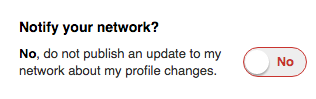
Before you dive in, remember to turn off your network notifications. This setting lets you edit your profile without blasting your entire network with updates. You can find the setting at the bottom of the right sidebar of your profile, and it looks like this:

Screen_Shot_2016-07-22_at_5.00.38_PM.png

Ready? Let’s go.

12 Quick LinkedIn Tweaks to Make Right Now

1) Make Your Headline More Engaging

Nothing puts prospects and recruits to sleep faster than a boilerplate headline. If yours currently reads something like, “Account Executive at Bookly” or “Client Growth Specialist at Hoynes,” it’s high time for a change.

To make your headline more engaging, use this formula: Helping [your customers] do [your product’s mission].

Want more in-depth guidelines? Check out our four secrets to writing a no-fail headline.

2) Update Your Current Position

Scroll down to your “Experiences” section. 

Do your description of your current role highlight the value you provide to your company or your clients? If your description is aimed at recruiters rather than prospects, you’re making a major mistake. Buyers don’t care that you squeezed the juice out of a dry territory -- they want to know whether you can help with their goals.

Here’s a good format to follow:

On average, my customers see:

  • Benefit #1
  • Benefit #2
  • Benefit #3

3) Ask for Recommendations

Imagine you were looking at two different items on Amazon: One with 12 reviews, and one with zero. Which one would you buy? Probably the first, since it has demonstrated value.

This phenomenon -- known as “social proof” -- occurs on social networks like LinkedIn too. With a few recommendations on your profile, prospects won’t have to take your word that you’re credible -- they’ll have the proof right in front of them.

Of course, not all recommendations are created equal. Choose five or six clients who know you well and will have positive things to say. Then, use this email template to ask them if they’d recommend you.

4) Add Relevant Marketing Material

If your company has produced any content (like PDFs, slideshares, videos, infographics, presentations, etc.), adding one to three pieces to your profile is a no-brainer. A page with a good balance of text and multimedia is far more interesting than one that’s all text, so you’ll automatically capture your prospects’ and recruiters’ attention. Plus, adding some content makes you look like a thought leader.


5) Publish a Post

By default, LinkedIn inserts your published posts right under your headshot and basic bio. That means prospects and recruiters scanning your profile will see your posts right away -- and you’ll score some instant credibility.

If you’ve written anything about your industry or product before, republish it on LinkedIn. (Just make sure to link back to the original article.)

Not a writer? That’s totally fine. Check out this newbie’s guide to writing for LinkedIn.

6) Rearrange Your Skills and Endorsements

LinkedIn automatically lists your skills by the number of endorsements each one has gotten. However, that order doesn’t always reflect their order of importance. To give you an idea, say “lead generation” is currently your top-endorsed skill. But since you sell an ad analytics platform, you want “display advertising” in first place.

You can reorganize this section by clicking the pencil icon next to any of your skills. Next, drag and drop your skills into your desired order.

7) Add Your Interests

If a prospect views your profile and sees you share a common interest, they’ll be primed to see you as a human -- not a faceless product-pusher.

Remember to keep your interests dinner-party-friendly. In other words, if you wouldn’t talk to a new acquaintance at a dinner party about it, don’t put it on your profile. You should also try to select a fairly broad list of interests so that you don’t alienate anyone. For example, you might add “travel, fly fishing, historical fiction, cooking, architecture, and rock climbing.”

Just make sure these are genuine interests. A short list is better than dropping in a ton of hobbies you’re barely familiar with.

8) Change Your Group Visibility Settings

Hopefully, you’re using LinkedIn groups to find prospects and build your credibility. (And if you’re not, get on that immediately!) But you’re also probably a member of several sales-focused groups, like Sales Best Practices or Technology Sales Professionals.

When prospects are browsing your profile, you want them to focus on the first type of groups. Luckily, you can actually select which are visible on your profile. Go to the Groups section and click the “Visible” button under a group you’d like to hide. Next, uncheck the box that says “Display group logo on your profile.” Repeat these steps for every sales group you’re in.

9) Create a Custom URL

Having a custom URL shows that you’ve taken the time to make your LinkedIn as user-friendly as possible, which will give you an extra credibility boost. To change your URL, find your current profile link under your headshot. Click the gear icon. You’ll be taken to a new page. Under the “Your public profile URL” section on the right, choose the Edit icon next to your URL, type the last part of your new custom URL (e.g. firstnamelastname, and save it.

10) Add Your Volunteering and Nonprofit Experience

Your profile should showcase your professional strengths and experience -- however, it can also give the prospect insight into your personality and show them you’re a real person. If you’re involved in any charity work, you should definitely add it your profile.

You’ll find the option to add organizations, causes, and volunteering experience in the “Add a section to your profile” box near the top of the page.

11) Follow Some Influencers

Prove your industry expertise by following its top influencers -- and even better, actually reading their content. LinkedIn has bestowed influencer status on roughly 500 of the world’s foremost thinkers, leaders, and innovators. You can figure out which influencers are most well-known in the space by checking out who your prospects follow.

12) Follow Your Prospects’ Companies

To show prospects you’re actually interested in them, HubSpot sales trainer Barrett King recommends following their companies. Just type their organization’s name into the search bar, find their page, and click the “Follow” button in the upper right-hand corner.

Final Steps

You’re not done yet. After you’ve finished editing, turn your network updates back on. Your connections will be back to getting alerts about your LinkedIn activity.

Now that your profile is looking great, your final mission is attracting some eyeballs. Go to your homepage and click “Share an update.” Then, in a separate tab, find a news article, blog post, or thought piece related to your product or space. Copy and paste the link into the update box, add a quick comment (for example, “Great report on the state of inbound marketing”), and click “Share.”

Your update will show up in every single one of your connection’s news feeds. They’ll naturally be drawn to click on your profile -- and when they do, they’ll be impressed.

Email tool in HubSpot CRM

25 Jul 17:06

Gotta Catch ‘Em All! Book Sales Appointments that Actually Happen

by Megan Tonzi

That’s it, you’ve done it! You’ve been honing your account-based selling approach and dedicating your time to a customized messaging strategy that has allowed you to qualify the target account that you’ve been working so hard on. You have all of the information you need in order to pass along this great opportunity to your closing sales rep. Now, all you have to do is set that first appointment for the next step.

As a sales development rep, there’s no greater feeling than getting on the phone with a targeted prospect, fully qualifying them, and passing them as an outstanding sales opportunity. It’s easy to get excited and assume that your prospect believes your offering to be as great of a fit for them as you do. And then, the appointment date rolls around and your closing rep hops on the conference line to the sound of…crickets.

Your closing rep walks over to the sales development team and asks, “What happened? I thought you said this was a great opportunity? I waited on the conference bridge for 15 minutes and your prospect never showed.

Your heart sinks. You thought for sure this account would be eager to discuss next steps with your rep and watch the tailored demo. Did you just assume they would show up at the agreed upon date, with no follow-up reminders or further contact?

To avoid that situation, there are seven steps and an objection handling formula that can be put in place to increase the success of booking appointments that actually occur. Start off by determining a standardized lead qualification and hand-off process for the whole sales team.

Before setting any appointments, a standardized sales process MUST be in place that is clearly mapped out, functional, and adopted by every team member. Defining a sales process that starts at the top of the funnel – from marketing to a closed sale – is step one to basically any other sales initiative you are looking to tackle.

At this stage, one aspect of the sales playbook should be focused on in particular, and that’s the lead hand-off process. This process should be well-documented and cover requirements needed from both, the sales development rep that is qualifying and passing the lead, and the closing rep. Expectations around what a qualified lead consists of and how it should be passed from one team to another should be crystal clear and documented.

To increase your conversion rates, use our 7 steps to book sales appointments that actually happen.

Download our latest guide, Align Your Sales Team to Increase Appointments & Pipeline Conversion Velocity, and don’t let sales opportunities slip away!

25 Jul 17:05

Get Customers with Pokemon Go #Gottacatchemall

by Anna Kachur

If you haven’t been living under a rock in the last week (and even if you have) you must’ve heard people obsessively talking about this new game called Pokemon Go. Nintendo’s latest breakthrough and one of the most talked about trends after Game of Thrones, this game has taken the country by storm.

1-go

It has become one of the must-have games for all ages: from teenagers to nostalgic adults. I’m quite sure your grandma would love it as well!

Pokemon Go is an augmented reality (AR) game that uses GPS and mapping capabilities in your mobile to let you see Pokemons and catch them in real life around your city’s landmarks. The objective of the game is to capture as many Pokemons as possible, train them and seize territories.

The game became such a hit, that it literally surpassed Snapchat and Facebook engagement rates. It has more daily activity than Twitter and Nintendo’s stock has risen by 51% in a mere week since the launch of the game.

This shouldn’t come to you as a surprise to see people strolling along the streets, glued to their phones searching for virtual creatures and stopping at random places as they go. They are players on a mission!

The internet has literally exploded with videos and screenshots of the Pokemons being captured all over towns with people coming out of their homes and getting outside with one common purpose. You see Central Park filled with hundreds of people rushing through in the middle of the night to catch a rare Pokemon. Nothing stops the gamers. This kind of attention is a huge opportunity for businesses out there. The popularity of the game can easily be used in your next marketing campaign. Here are some ideas how you can generate money off this trend and become part of the Hype.

Make use of “PokeStops”, “Gyms” and “Lures”

Ok, so before you actually start I suggest you download the game (it’s available on both iOS and Android) to get familiarized with the basics. There are a few things you should know about:

PokeStop

This is an area of the game where people come to catch Pokemons and acquire other virtual items. They are all around the city, situated near famous landmarks and popular spots, such as cafes, restaurants, clubs and just about anywhere, really. If your business is located in the city, there is a good chance there is one right next to you. Even if you are positioned in the Suburbans, there are plenty of spots where players will go to catch rare Pokemons. See this chart.

Gym

This is where players will be hatching day and night. In fact, if you noticed an insane amount of people suddenly gathering up around your front door, consider yourself lucky. Your place might be one of the “Gyms”, where players come to train their Pokemons and compete with each other. Gyms attract crazy amounts of foot traffic.

Once you identified where you’re standing you can plan your strategy. The very first thing you will want to do is to acquire so-called “Lures”. Probably one of the coolest things in this game for a business! What Lures do is attract more Pokemons to your area for 30 minutes. You can buy them in bulk which will cost you around $1.19 per hour. That’s a pretty cheap investment, isn’t it?! The players see these lures on their game map and come you to you to catch more Pokemons.

L’inizo Pizza Bar in New York made headlines reporting 75% stream in sales over the weekend. Guess how much the owner Sean Benedetti spend on his investment – $10. So make your store a Pokemon Hub and prepare to greet your newly acquired foot traffic!

20160713pokemonpizza-afp

Offer something of Value to Gamers only

Once your store is swirling with dozens of gamers, start attracting them by giving out discounts and special offers, try to come up with something that would help them. The key is to catch the customers before they catch the Pokemon.

cvbnm pokemon-team-mystic-01-2016

Get them excited by letting them know you have a rare valuable Pokemon popping up in your area. Check out this rarity chart by Rottem Guy on Reddit to know what to look for.

Tip: You can incentivize the players to join your mailing list by offering updates on player discounts, news or products. Maybe even set up a dedicated email with “Pokemon of the Day” headline.

This seasonal craze (for now) is an excellent opportunity to build a relationship with both your existing and potential customers. Be a part of a team and think of how you could support them and make your contribution.

The game is a battery hog, so there is one thing players will be short of and that’s battery life. This is where you come in: stock up with a few charges and offer a boost. You can set up a charging station for them to come by and take a break. Don’t be afraid to show a bit of Chutzpah! It works!

twitter pokemon

Offer your customers refreshments. They’ll most likely be exhausted and dehydrated after walking all day looking for Pokemons, they’ll appreciate the thought.

While they are recharging their batteries, they’ll be looking around the store and naturally, start chatting with you about your products. This is where you get your moment for an upsell!

Go an extra mile and give them hints on the next PokeStops in the area. Don’t know any? Ask them to fill you in. The aim is to get them to stick around and catch them all with all your nonvirtual items.

Connect your brand

There are three teams in the game: Instinct, Mystic and Valor. Each team competes to hold local landmarks and become the dominant power.

sub-buzz-4113-1468511061-1

Depending on your brand message, try and see if you can connect to one of the teams. For example, you could pick Mystic if you value wisdom or Valor if your brand promotes strength.

You could target a specific team and connect with them by publicly acknowledging them on your window sign. Something short, like: “We believe in bravery and courage. 50% discount on all skateboard collection for team Valor”.

Even those that don’t have an idea what you’re talking about will become curious and pop in to see what’s going on in the shop.

The game is impacting all aspects of players’ lives including their restaurant choices. In fact, the location of Gyms has become nearly a sole factor for players when choosing where to eat out. It’s a huge upsell for restaurants. By being a part of the game community, you not only bond with your customers but you create new lasting relationships. I mean, seriously, I would remember my #Charmander Chai Latte or a Jumbo Cappuccino with a hand drawn Mew on it!

coffeepoki

mmmm

Yelp has even launched a new feature helping the gamers find restaurants and other businesses that are located in or near PokeStops. Users can now search for cocktails, food or clothing knowing that they can catch another Pokemon right on the spot.

Get involved on Social Media

Get on it and start bragging on Facebook and Twitter about Pokemons in your store! If you want to skyrocket your sales, get in on the trend and talk about it! You’ve had a few rare Pokemons or maybe a lot of people coming to play because you’re an ultimate Pokemon magnet? Go ahead and be a total show off!

Some tricks you can use:

a. Have one of your customers play all day for you and take screenshots of Pokemon captured. You could incentivize a couple of kids (or adults) and offer them some nice perks in return, like lunch on the house or a couple of items from the store (headphones, books, etc). They’ll be thrilled to get some free stuff while playing their favorite game. By the end of the day, you’ll have enough material to post and brag about on Facebook.

b. Run a #hashtag contest, have your influencers and customers take pictures of them catching Pokemon in your store and posting it on their Social Media with you tagged in it. Encourage them to make videos and take pictures. Have a look at how Jonathan Gaurano has taken it to the next level with this super cool video.

c. Set up targeted Facebook ads in the geographical radius of your choice to spread the word about your local Pokemon. Those that are in close proximity will rush through the doors, especially if you’re located in a small town. Use hashtags such as #pokemon and #pokemongo

d. To give you a head start, we’ve created a Pokemon theme side tab that you can use on your Coupon Pop design, so you can increase your CTR, get more leads and sales by utilizing the power of Pokemon!

Tab2

e. Update your audience with latest news and peak luring hours. Check out this Chinese Restaurant in Sydney, Australia.

pokemon-go-2

Set up a pop-up shop

If you don’t have a physical brick and mortar shop or you’re selling mainly online, this could be your chance to show off your products and get some good exposure. The easiest way to do it is to check on the map where are the most popular meetups, gyms, and PokeStops. Then go and set up a pop-up store there. If you are a fashion designer, you have an amazing opportunity to show your collection to hundreds of potential customers. Shoot an announcement on Facebook saying something like:

“You’ve been waiting to see the latest collection, but you’ve been too busy catching Snorlax around town? We’ve decided to bring the latest pieces to you. Come by to Central Square tomorrow to our new pop-up shop and be sure there’ll be plenty of lures”

pop up shop
This might be your big moment. Stock up on your best sellers and buy a few lures. You’ll see enormous traffic and boost your sales in one day with minimum investment.

Kate-Space-Saturday-Pop-up-Shop-NYC-Untapped-Cities

If this is not enough there are now rumors about Niantic (Pokemon Go developer) planning to introduce sponsored locations, which means that retailers can use it to turn their locations into so-called portals. It should ideally work under the same principle as pay per click system.

twitterpok

This hot mobile game has taken the world and believe it or not, this is just the beginning. Businesses all around the planet have taken on the trend and have been cashing in on the Pokemon mania. You cannot know if it will stay here for years, all you know is that it will definitely bring you money in the next 6 months ahead and that’s an opportunity you wouldn’t want to miss. It’s tipping over Digital Marketing and is creating new connections among people. This is your time to shine!

25 Jul 17:05

6 Tips For Capturing Pokémon (And Revenue With Events)

by Garrett Huddy

While the buzz around Pokémon Go is a viral marketing success story itself, we noticed in playing the game that capturing Pokémon and capturing revenue with events have some crossover tips. Here are six tips that will help you improve your event strategy and your Pokémon catching strategy:

1. Evolve your pipeline

Tips For Capturing Pokemon (And Revenue With Events)

Pokémon Tip: While it’s possible to find powerful Pokémon in the wild, the best way to get a truly powerful Pokémon is to start with a weaker Pokémon and evolve it to reach its most powerful form.

Event Marketing Tip: While it’s possible to generate a high-quality lead from an event, the best way to close higher value deals is to use your events to accelerate your existing pipeline. Events serve as the perfect way to “evolve” an account to the next stage of the buying cycle.

2. Attract the right people

Pokémon Tip: It isn’t easy to find high-quality Pokémon near your location. Pokémon Go allows you to use special items to draw Pokémon to your location.

Event Marketing Tip: Your event needs a good invitation strategy and an attractive landing page to get your target accounts to register and attend. Getting the right people in the room is the first step to a revenue-generating event.

3. Go where your target accounts are

Pokémon Tip: If you stay in the same area, you’ll only keep finding more of the same Pokémon. You need to physically go to new locations to continue to find new Pokémon.

Event Marketing Tip: When you are hosting a big event, it makes sense to have your customers and prospects come to you. But if you want to engage more of your target accounts in person, you need to host an event in their city. A roadshow event strategy will help you get more face time with more high-value accounts

4. Know who’s around

Pokémon Tip: The game gives players a chance to see what Pokémon are in their area so they know if it’s worth staying in the general location to find a specific one. Your phone will also vibrate when a Pokémon appears in your area, so you don’t have to stare at your phone waiting for one to appear.

Event Marketing Tip: At events, it’s important to know who’s going to be there so your sales team is prepared for those conversations. Just like your phone buzzes when a Pokémon appears in your area, your on-site team should also get mobile alerts when their contacts arrive to make sure they make the most of the opportunity to connect with customers and prospects in-person.

5. Focus on accounts over leads

Pokémon Tip: In the game, there are a number of common, low-level Pokémon that on their own, don’t seem worth catching. But if you catch enough of the same type of Pokémon, you will be able to evolve it to a much more powerful Pokémon.

Event Marketing Tip: When you only look at leads from events, you may miss the big picture of what accounts those leads are coming from. Taking a strategic account-based selling approach means even lower-level contacts at an account are worth engaging to help you close a deal.

6. Have access to the right data on the go

Pokémon Tip: The game gives you quick and easy access to your Pokémon collection and detailed stats on each of them. It’s important to pay attention to this info to strategize on which Pokémon to use in battle and which Pokémon are ready to evolve to the next stage.

Event Marketing Tip: When your team is at an event, you need to be able to quickly and easily access data on attendees from your CRM and marketing automation platform. Mobile access to this contextual data will help your team have better, more personalized conversations with attendees to help strengthen relationships.

25 Jul 17:04

5 Common Mistakes Salespeople Make When Prospecting SaaS Customers

by Danny Wong

Selling software-as-a-service can be a challenge for many salespeople. If you’re not prospecting well enough, however, it can be almost impossible. Here are five common mistakes salespeople must avoid when selling SaaS solutions:

1. Not Digging Into Their Current Solution

A common objection is that prospects are already happy with their current vendor. Many salespeople use this objection as an easy way to get out of digging further. They’ll simply thank them for their time and promise to check-in several months down the line.

Salespeople should stop using this as a roadblock and start looking at it as an opportunity. Start digging into their current solution by asking the following questions:

  • Do you mind if I ask who exactly you’re using at this time?
  • Why are you so satisfied with your current solution?
  • What else could they do to ensure an even better experience?

Once you know who they’re using, you’ll have lots of advantages. You can create a plan that shows exactly how easy it would be to transition between solutions and list out the benefits of doing so. This information provides enormous opportunity if you’re able to leverage it properly.

2. Mismanaging Contacts

One huge mistake many salespeople make is that they simply only reach out to a single contact. When you’re pitching a software solution, many different people need to be involved. The managers of teams using the software, the purchasing office and any IT executives are all critical allies in the decision-making process. If you’re missing support from any of them, you might not be able to close the sale.

Even if there’s only one key decision maker, you don’t want to waste your first impression on them. Being able to come to them with a recommendation from one of their colleagues or employees gives you a huge advantage. They’ll be much more likely to actually listen to your pitch and give you serious consideration. Blowing that first contact, however, can ensure you never get a second chance.

3. Failing to Talk About Budget

Knowing a prospect’s budget is incredibly important. It helps you instantly determine whether or not they’re a good fit for your services and lets you know what tier of services to offer. You must find this out for each individual prospect since IT budgets vary wildly among companies. Some research even shows that small and mid-size companies will often spend more than larger ones. Making generalizations about budget results in spending time on sales you can’t close or leaving money on the table.

Even though it’s important to talk about your prospect’s budget, it’s not always easy. If your prospects are hesitant to share their budget with you, try to get a rough idea in other ways. Ask about any other IT projects they have on the table or ones that have been completed recently. Find out what their current IT environment looks like, and how often they refresh equipment. This should give you enough information to build out a reasonable estimate of their budget.

4. Purchasing Your Leads

Buying an email list is an easy way to keep your sales team busy, but it’s not especially effective. The problem is that these lists are usually outdated and overworked. Many of your leads may have already moved onto another company or are in another position, and the vast majority of them will have been called repeatedly by other companies that have purchased a similar lead list. This is why the average open rate for paid prospecting lists is between 0.01% and 0.1%.

Your best bet is taking the time to find prospects the old fashioned way.

5. Determining How Savvy They Are

Knowing exactly how tech-savvy a particular contact is changes the way you sell to them. That’s why it’s so important to determine their level of expertise early in the process. If you’re dealing with somebody who has very little technical knowledge, a simple user interface is important to them and something you should highlight in your pitch. Take your time and explain everything clearly. If you’re talking to the IT Manager or an engineer, on the other hand, you’ll need to be prepared to field technical, tough questions. The key is figuring this out as early as possible.

Prospecting is a difficult part of the sales process but by avoiding these five common mistakes any salesperson will close more sales than ever.

25 Jul 17:04

The Secrets to Engaging Business Buyers on the Phone

by Jeff Kalter

The Secrets to Engaging Business Buyers on the Phone

“Stop selling. Start helping.” — Zig Ziglar

When you’re on the phone with a business prospect, you likely have a goal of creating a sales opportunity or making a sale. Since you have quotas to meet, it’s not surprising that you’re laser focused on selling.

The only way you’re going to sell anything to other business people, however, is to help them to solve a problem. So when you make a business phone call, imprint the wise words of Zig Ziglar on your brain. “Stop selling. Start helping.”

That’s the key to engagement.

That said, it’s easier said than done. You need to know the secrets to putting your prospect’s problem in the forefront. Here are six steps you can take during a business phone call to help your potential customer.

1. Don’t Act Like a Robocall

You probably get plenty of calls that deliver recorded sales spiels. There’s no warmth and no connection. For the seller, it’s just a numbers game. You likely also receive calls from real, live human beings reading word for word from call scripts. These Robocalls and scripted calls have one thing in common. They focus on the callers’ rather than the recipients’ goals.

You need to flip this around. Instead of talking at prospects, talk with them. Most people enjoy conversations, but as soon as the sales pitch winds up they shut down.

2. Introduce the Benefits Your Company Offers

There is a critical difference between introducing your company with and without the supporting benefits. Let’s say one of our business development specialists called a marketing leader and said, “Hello, Mr. Prospect. I’m Sue Smith from 3D2B, a global teleservices company that makes business phone calls.” She’s focused on features, which are dry and uninteresting.

Instead, Sue might say, “We’re a global teleservices company that generates leads for our clients. In fact, when we partnered with a world leader in enterprise software to generate and nurture leads, we produced 17,000 leads, of which 85% were accepted by sales.”

Because marketing leaders are almost always interested in ways to generate leads their sales force will love, this statement is far more compelling.

3. Tell the Prospect Why You’re Calling

If you want to engage the prospect, you need to be upfront and honest. So tell prospects why you’re calling. Sue’s calling because she wants to introduce her lead generation services. But she needs agreement from the prospect that they are interested in learning about them. To find out, she simply adds a question to the statement above. After relaying the remarkable lead generation story, she says “If we can help you generate highly qualified leads, would you be interested?” Conversation started.

4. Invite the Prospect to Talk

When the discussion starts, you have cleared the first hurdle. Now it’s time to fuel the exchange. That doesn’t mean you need to do the talking. As Epictetus said, “We have two ears and one mouth so that we can listen twice as much as we speak.” What’s most important is that you listen actively with the goal of gaining a solid understanding of the issues your prospect is trying to resolve and their ramifications to his or her business. By delving into these areas, you will engage your prospect, be able to direct them to the solution that provides the highest value, and determine whether they are qualified to buy.

5. Recap the Call

By summarizing the call at the end, you ensure that you and your prospect have a shared understanding of the relevant topics. The recap should sum up the problem, a high-level solution concept and the benefits of it.

6. Determine the Next Steps

End the call by establishing the next step required to solve your prospect’s problem (and make the sale). Is it a trial, another phone call, an in-person meeting or something else? Whatever it is, make sure your prospect agrees and confirm the date and time for a future contact.

The next time you conduct a business phone call, make it your priority to uncover your prospect’s problems and help find a solution. Don’t worry about making the sale. If the potential customer is qualified and you take these steps to engage them, the sale will naturally follow. Talk with your prospect, not at them. When you introduce your company, emphasize the benefits you offer. Explain why you’re calling in a way that piques your prospect’s interest. Then, quickly invite them into the conversation, listen actively and keep the dialogue going by asking relevant questions. Finally, once you’ve explored the problems and introduced possible solutions, recap the highlights of the call and determine your next steps. By helping your prospect, you’ll be well on your way to making a sale.

25 Jul 17:04

Introducing the Essential Guide to Sales Analytics

by Matt Wesson

All sales functions are connected, and sales analytics is what ties them together. The number of calls your Sales Development Reps make affects the leads they generate, which in turn affects the demos they set for your Account Executives, and so on and so on.

All the answers and insights you’ve ever wanted about your sales team are right there at your fingertips, you just need to know how to speak the language. And the language of successful sales teams is analytics.

The language of successful sales teams is analytics.

Measuring key performance stats and creating a data-driven sales team can be the proverbial Rosseta Stone for deciphering how an individual rep or team is performing, what’s likely to happen in the future, and how performance can be improved. Every sales rep should understand the basics of sales analytics and sales operations professionals need to know the most essential metrics backwards and forwards.

That’s why we created our newest eBook, The Essential Guide to Sales Analytics.”

sales-analytics-ebook


Download the eBook today


This eBook compiles and defines all the key metrics your sales team should be tracking. With helpful definitions and an explanation of the value each metric provides to a sales team, this eBook is an essential tool for any sales operations professional or a sales rep looking to have a better understanding of their performance.

The eBook is divided into three sections:

Beginner Analytics: These are the easiest metrics to track and the ones you absolutely must be monitoring.

Intermediate Analytics: These metrics are slightly more complex and add more clarity to your sales operation.

Advanced Analytics: These metrics are the hardest to track, but offer the most detailed insights into your sales performance.

Within each one of these sections, the metrics are divided by sales function, so you’ll know exactly where to apply them for maximum effect. Those sales functions are: sales development, closing deals, and performance analysis.

So whether you’re just getting started with sales analytics or you’re looking to spot check your existing data-driven sales organization, this eBook will be a tremendous resources for years to come.

Download your free copy of the guide today!

sales-analytics-ebook

The post Introducing the Essential Guide to Sales Analytics appeared first on SalesLoft.

23 Jul 16:40

10 tiny gadgets every minimalist needs

by Clinton Nguyen

apple iphone smartphone desk

In theory, minimalism means getting more from less. Technology can often get in the way of that by packing in extra cables and design features that bloat or dilute functionality.

But there are plenty of gadgets on the market that are elegantly designed, minimalist, and do their job well. In many cases, these can fit right in your pocket. Here are a few we recommend.

SEE ALSO: The creator of a liquid meal replacement popular with techies could face charges for his shipping container house

Samsung's 128 GB thumb drive is actually the size of your thumb.

Most USB flash drives are roughly the length of your pinky. Somehow, this Samsung USB drive fits all of that into a tiny package that can hold up to 128 GB of space.  

Get it on Amazon for $10.99 for 32 GB or more.


Karma makes a pocketable Wi-Fi hotspot.

 If you're on the go and not already tethered to a data package, Karma makes a pocketable data hotspot for $15 per GB — less if you sign onto a monthly plan. 

Karma also offers a rewards program for making your hotspot public; anytime someone signs onto your network and registers their email for Karma, you net an extra 100 MB of data.

Get it on Karma's site for $149.


Tile makes sure your keys are never lost.

Tile first found success on Kickstarter making Bluetooth-enabled lost-and-found devices. The second generation Tile, pictured above, costs just $25, connects to an app on your phone, and has a loud alarm to alert you to its location. 

The battery only runs for a year, but after that, you can return it for a discounted replacement.

Get it on Amazon for $25.


See the rest of the story at Business Insider
23 Jul 16:40

How to Harness Disruptive Forces for Disrupting Innovation

by Randall Beard

Dis-ruhp-shuh n”―a radical change in an industry, business strategy, etc., especially involving the introduction of a new product or service…disrupting innovation.

We are swimming in marketing disruption. Data and technology are fundamentally changing the way brands market and interact with consumers. It’s almost a full-time job keeping up with all the changes.

What’s less well appreciated is that the same forces disrupting marketing are also disrupting new product innovation. New disrupting innovation tools will profoundly change the way companies discover, develop, and deploy new products. Disruptive new products disrupting new product development―a kind of “meta-disruption” if you will.

The Fundamentals of Innovation…Unchanging

Stepping back, the fundamental truths of what is required for new product innovation haven’t changed in decades and probably won’t ever change. Companies still need to:

  • Discover a compelling proposition. Identifying white space opportunities, generating and maximizing ideas, and finally, measuring and improving them is the starting point for Innovation, but it’s really, really hard. How hard? Only 25% of concepts tested by Nielsen show high likelihood of in-market success, primarily due to weak scores on consumer need and desire.
  • Develop a winning execution. Developing a product that delivers the proposition promise along with stand-out packaging and marketing communications that effectively translate the proposition into compelling marketing content is just as important as having a compelling idea. Among those product concepts Nielsen testing showed “ready” to move toward market launch, only 50% remained ready after consumers actually used the product.
  • Deploy with excellence in market. Ultimately, deployment excellence is the only thing that matters. Executing a strong marketing plan, tracking results, and optimizing on-the-fly are critical for success. Nielsen data shows that over 25% of new products that test strongly at both concept and product still fail because of weak in market execution.

The Mandate for Change

The fundamentals of discover, develop, and deploy are immutable and unchanging. But something needs to give. In a recent Nielsen client survey, 75% of respondents say they’re using outdated technology in their innovation process. More importantly, 85% of FMCG (fast-moving consumer goods) new product launches are unsuccessful. If ever there was an opportunity for disruption, disrupting innovation is the space.

While the requirement to discover, develop, and deploy will never change, what is changing is the role of disruptive technologies in the innovation process―that is “how” innovation gets done. Specifically, large data sets, digital platforms, adaptive targeting, and e-commerce are enabling dramatic new approaches to the 3D’s of innovation. And, these disrupting innovation forces, if harnessed, should lead to much higher success rates for those companies that take advantage of them.

Discovery…Disrupted

Large data sets offer immense opportunity for discovery. Companies are mining large scale unstructured and structured data to identify previously unseen innovation insights and opportunities. For example, text analytics applied to unstructured data like online consumer reviews, patent filings, CRM customer feedback, etc., can uncover trends, white space opportunities, and new product ideas.

New digital platforms enable much faster discovery. They automate research that was previously manual and labor intensive. For example, concept testing cycle times are melting from weeks to days, enabling companies to significantly reduce total initiative time to market by a month or more.

Digital platforms also enable iteration at scale. The counter-intuitive idea that quantity begets quality―e.g., the more ideas you create, the more winning new ideas you find―is now reality. “Evolutionary” algorithms enabled by digital platforms iteratively sort through ideas to find the strongest and most appealing ones. Companies quickly and efficiently test literally thousands or hundreds of thousands of ideas to find the best ones―ideas that generate +35% more volume potential, on average.

Finally, digital platforms enable collaboration―key to innovation success―at scale. Nielsen research shows that six-plus member teams generate concepts which, on average, significantly outperform teams with two or fewer people. Yet, the majority of concepts are created by two or fewer people. Collaboration at scale can be internal or external. Global teams of employees collaboratively build new concepts, of course. But they can also leverage the wisdom of the crowd, using digital platforms to source new product ideas from external third party players. More ideas, better ideas.

Development…Disrupted

Large data sets help companies design better products, line-ups and formats. Sophisticated text analytic tools help companies understand the relative impact of different product features on online consumer ratings and satisfaction. Mining online unstructured data also enables companies to spot important product trends or identify consumer “wish for” features and formats not always voiced in standard survey research.

Companies are discovering that e-commerce is more than a distribution channel. It’s also an innovation platform. Most major brands develop their new ideas with little thought to the e-commerce environment. Yet, digital platforms are enabling concept and product testing in an e-commerce environment. And not just new product ideas, but also alternative line-ups, pricing and packaging. Further, e-commerce site shopping optimization and iterative A/B pair testing will become the norm.

Deployment…Disrupted

Companies are learning how to deploy their new product innovations via “adaptive targeting.” That is, they will identify the consumers who have the highest purchase intent and volume potential for the new item and then focus more of their marketing against these types of consumers. They’ll know where these high potential consumers live, shop, and what media they consume. Launch marketing plans will be much more focused and efficient. After all, why market to consumers definitely not interested in buying your new product?

New initiative tracking―typically a highly manual, thankless task―usually assigned to a junior member of the brand team, will be transformed by digital platforms. In the new world, new initiative tracking will be highly automated, and just another total business driver. Brand teams will know how much innovation is driving their overall business, the key drivers of innovation performance, and the best levers to pull to improve results. New tools will give people the ability to simulate alternative marketing spend scenarios before actually pushing the button to adjust launch plans on the fly.

Harnessing Disrupting Innovation for Better Results

These four forces―large data sets, digital platforms, adaptive targeting, and e-commerce innovation platforms harnessed through new disrupting innovation tools―are changing the “how’s” of traditional 3D innovation. Companies will always discover, develop, and deploy new product initiatives. But if they want to advance beyond the 85% failure rate of today, they’ll need to embrace these technology disruptors to their advantage.

Disruptive new products disrupting new product development―let the “meta-disruption” begin!

23 Jul 16:40

GetResponse vs. Marketo: A Side-by-Side Comparison

by Anthony Carranza

With over 3.2 billion email accounts worldwide there are 416 commercial messages sent on average to subscribers. In spite of all the latest and new technologies offered through the various social media platforms and mobile apps email still outperforms because of its return on investment (ROI).
Consequently, investing on email marketing has an average return of 44.25 for every dollar spent. Without further ado, the faceoff between two cloud-based industry giants GetResponse vs Marketo. The all-in-one tool GetResponse tool takes on Marketo’s four discreet module system.

In this post, we’re going to compare each email provider´s features in the fields of:
• Pricing
• Email Marketing
• Landing Page Builder
• Auto Responder
• Webinar Tool

Pricing

GetResponse

In addition to great features and usability GetResponse offers competitive pricing that is more affordable than by the likes of Marketo. The approach to their pricing strategy is straightforward: no contracts, no obligations and cancel anytime. The pricing is matched up with the number of subscribers a business has and can help grow over time while maintaining control of costs.

Screenshot of the GetResponse prices.

Screenshot of the GetResponse pricing services.

Marketo

Marketo’s system is composed of four modules (marketing automation, consumer engagement, real-time personalization and marketing management). They can be purchased separately or combined into one single suite, but a more integrated or unified system is better suited for certain types of businesses. And the company’s modules are arranged into tiers: Spark, Standard, Select and Enterprise. Overall the Spark edition is pricier for smaller businesses, but their packages are price tagged higher than GetResponse’s pricing.

Choose a individual or a bundle plan for Marketo´s tiers of services.

Choose an individual or a bundle plan for Marketo´s tiers of services.

Point for Pricing Goes To: GetResponse

Businesses trying to drum up business or grow their subscriber base GetResponse offers huge opportunities. Keeping tabs on your resources, expenses and budget are instrumental, so opting for GetResponse is the safe route.

Email Marketing

Email marketing continues to evolve from one year to the next. The tactics behind designing an effective marketing campaign carried out are more creative today in large part because of the technologies available in the marketplace. When package email announcements with lots of visually appealing content that includes videos and illustrations the better the engagement will be. But moral of the story is maintain consistency and learn to listen to your audience.

GetResponse

The email marketing tools for GetReponse can be characterized as very intuitive, and easy to use. It has a responsive email design that is compatible with most devices (computers, tablets, smartphones, etc.). There is simplicity in customizing web templates with over 500 to choose from and designing eye-catching landing pages that helps increase campaign conversion and user engagement. The functionality and optimization tools help generate more transactions.

Email Marketing GetResponse

Marketo

For Marketo, email marketing tools is also graded as user-friendly, but tailored towards the best strategy based on the interactions with email subscribers. The information is heavily broken down into maximizing and testing areas like: subject line, layout and images, call-to-action, time of day sent, target audience, and more. So the email campaign is determined by the perceived value you deliver in your communications to subscribers, and is where you can capitalize on converting potential customers into legitimate leads.

Email Marketing Marketo

Point for Email Marketing: GetResponse

Both companies offer unique set of products and customizations for businesses looking to convert on their target customer, but GetResponse offers an easier platform to navigate. In addition, having mobile-ready responsive email design allows the business to really focus on getting the message out about current campaigns and promotions.

Land Page Builder

Landing pages have continued to change and evolve over time. It is not about putting too much or too little into them, but rather populate information that is essential to the user. After all they are your lifeline to your business.

GetResponse

On top of providing the best value for your money, the GetResponse selection of landing pages are responsive by default and allows to really personalize the presentation of news and make content that much more interesting. You can use the land page builder in three easy steps: choose template, customize your page and publish with a single click. It comes equipped with mobile-friendly pages ready for launch in minutes and no need to have an information technology (IT) background, or coding HTML knowledge.

Landing Pages GetResponse

Marketo

A year ago Marketo released fully responsive landing pages, and the landing page editor tool provides structured editing to really create vibrant pages. The tool allows you to create a landing page as a draft and share it with anyone. This testing enhancement facilitates users to have a peek into the responsiveness of pages and really optimize the site for the web along with mobile platforms.

Langind Pages Marketo

Point for Landing Pages Goes To: GetResponse

In this category, GetResponse enables users to really customize and personalize the experience to fit the interests of its customer base. It has enhanced the content´s presentation and ability to generate engagement, which is what is needed to produce sales.

Autoresponder

Autoresponders should be about facilitating the business, enterprise or entity the freedom to automate the message in a fluid and consistent manner. It is after all about tailoring, targeting and adapting the message to the needs of targeted customers.

GetResponse

Autoresponders 2.0 for GetResponse goes a step further with marketing automation. It can send follow-ups cycles, personalized birthday emails, 1-to-1 communications with easy to customized offers, and more. In other words, everything comes to pushing out action-based messages that respond to your targeted customer´s needs and interests by matching content that will trigger a transaction.

Autoresponder 2.0 GetResponse

Marketo

The Marketo system for using autoresponders is vastly more robust, and complex. Instead of simplifying the processes it instead can allow the user to select an auto response, schedule it and save it. Whereas everything should be automated and integrated Marketo implements this section with a series of steps.

Autoresponse Marketo

Point for Autoresponder Goes To: GetResponse

Autoresponders are just that much more nifty and loaded with action-based features for GetResponse. This gives GetResponse the clear edge as it has developed an automated responder that generates engagement and converts potential customers into leads.

Webinar Tool

Webinars are a great tool to really build brand loyalty and expose the company´s brand in a much more humane fashion. It also is a much more engaging channel for potential customers to become more familiar with products or services, and simultaneously convert them into purchases or leads.

GetResponse

With webinars the GetResponse solutions or in this case can equip you with a complete webinar marketing solution. You not only are able to acquire new clients, but have the ability to nurture existing leads. This is all possible because of the advanced integration with GetResponse´s email marketing and predesigned webinar invitations, and reminder templates.

Webinar GetResponse

Marketo

In this instance Marketo takes a comprehensive approach to creating webinars. To create or setup a webinar in GoToWebinar. Enter basic information like the name for webinar, description (optional), time, type, and schedule webinar. It does not currently support recurring webinars, so they are just single sessions between each Marketo event and GoToWebinar webinar.

Webinar Marketo

Point for Autoresponder Goes To: GetResponse

Creating visibility for your brand is one thing, but building a dialogue and a relationship with customers is what sets apart successful companies. The webinar tool from GetResponse allows for brands to set brand their unique efforts and build legitimate brand loyalty through the webinar tool.

And Winner of this side-by-side is GetResponse

Takeaways and Conclusions

GetResponse overall possesses simplicity, ease of use, affordability and best value for money. It is an ideal solution for marketing automation for small and medium-sized business (SMB) organizations. It empowers SMSs and online marketers to quickly get up and running successful campaigns.

On the other hand, if you are a fairly large business-to-business (B2B) company searching for a custom-built solution, and prospect engagement with specific business goals then Marketo is solid option.

Finally, GetResponse gives businesses a great return on investment (ROI), keeping costs under control whereas a Marketo solution might be out of your reach. What is evident is GetResponse is the runaway winner because of all the comprehensive features that are tailored to maximize campaigns for marketing automation.

23 Jul 16:39

Can You Trust the “Science” of Optimization?

by Rob Marsh

Fact: offering customers more choices kills conversion rates.

A scientific study proved it.

Fact: you can prime customers to behave in certain ways with certain phrases, images or ideas.

Researchers have shown it’s true.

Fact: if you give potential customers a small gift, you’ll create a debt that customers will eagerly repay.

Robert Cialdini wrote about that years ago in his popular book, Influence: The Psychology of Persuasion.

These ideas (and dozens of others) are so widely accepted that almost no one questions them.

But maybe we should.

That study about choices? Sometimes decreasing choices doesn’t increase response.

And that stuff about priming?

Well, scientists have struggled to reproduce the effects of several studies about priming, including this notorious study (mentioned by Malcolm Gladwell in his book Blink) where participants were “primed” with words like “Florida” and “bingo” then were observed walking more slowly—like the elderly.

But we can still trust Cialdini, right?

Why You Can’t Trust Everything Your Scientist Tells You.

Over the past year or two, scientific research has come under increasing criticism for how it is conducted and promoted. From the way studies are designed to dependence on grant money from government and private industry, even scientists are starting to talk about the problems with their research.

From an optimizer’s perspective, there are several reasons to be cautious when reading about the latest scientific discovery that identifies a new way to get customers to act. Things like…

1. Sometimes Researchers Make Honest Mistakes.

Nobody’s perfect.

And designing a study that controls for all the right inputs, includes enough participants to achieve statistical reliability, eliminates bias and false positives, and is replicable is exceptionally difficult.

In fact, it is so difficult that in 2005, scientist John Ioannidis published a paper with the title: Why Most Published Research Findings are False. In it he says,

“There is increasing concern that in modern research, false findings may be the majority or even the vast majority of published research claims. However, this should not be surprising. It can be proven that most claimed research findings are false.” [Emphasis added.]

Ioannidis outlines several areas where researchers commonly make mistakes. Often a model doesn’t account for all the possible inputs or doesn’t reach the appropriate statistical power. Other times researchers are unable to overcome their own bias, leading them to miss, bury or ignore significant findings. And research teams almost always work alone, interpreting results in isolation—meaning there’s no immediate feedback on their work as it progresses.

A review published in the Proceedings of the National Academy of Sciences found that of 2,047 studies retracted over the review period, 21.3% were retracted because the researchers made an honest mistake in their work.

Mistakes happen. And sometimes they get published and promoted as “the latest scientific breakthrough”.

2. Sometimes Scientists Make Stuff Up.

Scientific Fraud

Probably not a scientist, but…

That review I linked to above? It also reports that 43.4% of those retracted papers were pulled because of fraud or misconduct. Researchers fudging the numbers to deliver the results they need. Lab assistants adding false data to save time and work. Scientists compromising the peer review process. If they worked on Wall Street, some of these guys would be in jail.

And the amount of fraud is alarming—the percentage of papers retracted because of fraud has increased 10X since 1975.

The team at Retraction Watch has taken on the thankless task of tracking the hundreds of scientific papers retracted each year. These include dozens of retractions and corrections in the fields of psychology, sociology, neuroscience, consumer research and marketing—all fields that contribute to our knowledge of customer behavior.

Why do they cheat?

Money. Job opportunities. Publicity.

Academia places extraordinary pressure on scientists to do ground-breaking research in a “publish or perish” environment. Millions of dollars in research grants go to scientists with a track record of publishing positive results. Add to that the notoriety that comes when the media reports on an incredible result. It creates a powerful motivation to cook the data.

This might sound familiar to a lot of optimizers who experience similar pressure with their own research and tests.

3. Sometimes The Sample Size or Positive Effect Is Too Small.

Optimizers are familiar with the challenges of testing and statistical significance. To do it successfully, you need a large number of participants, which is difficult for any study, but even more difficult for research involving fMRI machines used in many of the studies looking for a neurological response to certain inputs (marketing ideas, storytelling, brand preference, etc.).

The cost of operating an fMRI machine is high. That means the studies that use them often depend on a small number of participant brain scans to draw their conclusions. It’s not uncommon for a neuroscience study to include 20-30 participants—which is almost certainly too low to draw any real conclusions that would apply to the general population, though some researchers disagree.

But it’s not just neuroscience with this problem. That study about priming that I linked to above? It had just 61 participants.

And the jam study that proved fewer choices increases conversions? Of the 502 customers who walked by, only 249 stopped at the display. And a total of 35 customers purchased.

That doesn’t mean the results are wrong. But it does mean they may not apply universally to the 7 billion inhabitants of the planet. Or your customers.

Similarly, just because a study reaches statistical significance, doesn’t mean that the effect of the study is meaningful. A statistically significant, but trivial effect size will make almost zero difference in the real world outcomes of the research. Relying on that kind of research for your marketing efforts would be a waste of time.

4. Lots of Research Simply Can’t Be Replicated.

Every year there are tens of thousands of new studies published in thousands of research journals. Almost all of it is original research. There are very few incentives for scientists to conduct research with the sole purpose of making sure a previous study is correct.

But with the large number of retractions every year (roughly 500 and increasing), there’s a growing movement to try to replicate the findings.

Unfortunately, the results of this movement are alarming.

Last year a team of researchers reported on their efforts to reproduce the findings of 100 studies published in three high-ranking psychology journals. They were only able to reproduce the results of 39 of them. What’s more, two-thirds of the researchers surveyed by Nature in a separate survey said that the lack of reproducibility is a major problem for science today.

5. Negative Results Don’t Get Published.

When was the last time you read a headline like this?

Researchers prove coffee has no effect on cancer rates.

Or, more appropriately for the optimizers who read ConversionXL…

New study shows price rounding makes no difference in conversions.

It doesn’t happen.

Or rather, it doesn’t happen very often.

In 2012, Daniele Fanelli published a paper titled, “Negative results are disappearing from most disciplines and countries” in which she analyzed 4,600 scientific papers published between 1990 and 2007 to measure the frequency of positive results. She reported that:

“The overall frequency of positive supports has grown by over 22%…”

Here’s the problem. Researchers often learn more from studies that fail, than those that succeed. But it’s more difficult to publish those studies. For obvious reasons, this impacts research design. Worse, scientists who pursue studies with negative findings receive less grant money and publish fewer papers.

Optimizers face a similar problem. We focus on tactics and ideas that increase conversions. As Dr. Brian Cugelman noted here, optimizers “are completely incapable of studying what factors are correlated with negative behavioral outcomes.”

That’s not necessarily bad, but it does mean we often don’t understand the factors that might depress response and we don’t get the full picture as we conduct our tests.

6. Sometimes What’s Touted as “Science” Isn’t.

Doc Brown

It kind of looks like science…

It’s pretty easy to write the words, “studies show” and plenty of people do.

As in…

“Studies show that green buttons are clicked twice as often as red.”

Doesn’t make it true.

Another example…

Have you seen one of the many articles or infographics about color psychology that say the color red will make you hungry?

Pages like this, this and this repeat that claim “according to research results”.

But good luck finding the research.

I spent two days looking. Nada.

There’s a study that says Nile Talapia fish will eat more in red light. But it’s quite a stretch to apply that to restaurant customers.

And contrary to the claim, there’s at least one study that suggests people eat less off red plates and drink less out of red cups.

If red can make you hungry, science doesn’t seem to be in any hurry to show it.

But that doesn’t stop people from repeating this claim as science.

Or food-industry designers using red with the mistaken assumption they are driving customer behavior.

Just because someone writes “according to the research” doesn’t mean there’s any actual research to show for it.

7. What Happens in a Lab or MRI Machine Isn’t The Same Thing that Happens on Your Site.

Well designed studies usually take place in controlled conditions that are radically different from the situation your customers are in. Let’s go back to the jam study. Shoppers were exposed to a table with a selection of jams, then encouraged by an assistant to find the jams on the shelf elsewhere in the store.

Is that how your customers add products to the shopping cart on your site?

It’s doubtful.

The online experience is completely different, which means the results from this study may not apply to your business. Your customers will act differently.

Most priming research involves exposing test participants to a certain “prime” like certain words or a subliminal prompt, then observing their behavior afterwards. Does this sound like your marketing efforts?

Probably not.

And remember how Cialdini tells the story of Hari Krishnas giving a small flower to people at the airport, then asking for a donation? People give in part because the gift creates a social obligation. But is that how you reach out to your customers—with a free flower, in an airport, asking for a small donation?

Definitely not.

Which means that what researchers find in the lab (and in their field studies) may not be directly applicable to your email campaign, sales funnel or landing page.

So Does This Really Mean We Can’t Trust Scientific Research?

Not at all.

It doesn’t mean that all scientists fudge the numbers. In fact, very few do.

It doesn’t mean that all research is bad.

And it doesn’t mean that we can’t learn from it (even the bad studies).

The vast majority of researchers are good people trying their best to understand very complex subjects.

But it does suggest that we need to understand what the science actually says before we treat it as the solution to our marketing or optimization problems. No one should assume that what works in the lab, will work on a website. Nor should they assume that because something works for another site or in a UX lab, that it will work on your site too.

So what to do?

Imagine this scenario: your CEO or client sees a study that reports pictures of smiling faces create positive feelings in customers. Immediately he sends an email to the marketing team asking them to replace all photos on the website with smiling people.

Because science.

Stop.

Instead of a reactive approach to every new (and possibly dubious) research finding, following a process will help ensure customer needs drive what you do. Your process should look something like this…

1. Start With a Problem.

What are you trying to accomplish? If you just want to make your customers feel happier, changing out the photos on your website may be enough. But happier customers don’t necessarily buy more.

Don’t start with the science. Start with your marketing goals.

Ask, what do we need to do? Increase customer responses to a drip campaign? Improve customer click-throughs on your squeeze page? Pull customers from your Facebook page back to your blog? Drive conversions on your landing page?

2. Understand What’s Keeping You From Reaching that Goal Now.

Why aren’t your potential customers doing that now? Identify the elements in your marketing that cause friction.

You need to understand your customer and why they aren’t doing what you want them to do. Are you using the right words so they feel understood? Are there other elements on the page that distract them from the goal?

Are they confused by too many options or calls-to-action? Do they need social proof or a guarantee to help eliminate risk? Are you offering too many choices? Too few? Or perhaps they don’t feel the pain your product solves.

A great way to find this out is qualitative research. Whether you use onpage surveys, phone-interviews, user tests, or some other approach—you should not guess what your customer is thinking. You need to do the research.

3. Use Science to Inform Your Strategy and Tactics.

Scientific idea

Yeah, I could use one of those. Source .

Once you better understand your customer needs and why they behave the way they do, it’s time to let science inform your thinking.

Maybe you need to drive conversions on your landing page and think what Cialdini wrote about creating scarcity in Influence will do the trick.

Or, you need to increase engagement with your email campaign and believe that the ideas about enhancing personalization in Roger Dooley’s book, Brainfluence, will help solve the problem.

Maybe you need to move customers from your social media page onto your website and the ideas you got from the ConversionXL blog about cognitive bias could provide the solution.

Whatever it is, this is where science can make a huge difference, by providing new ideas to test with your customers. But the marketing needs should drive the science you use, not the other way around.

4. Test. Learn. Then Test Again.

No matter how well you understand what your customer is thinking… no matter how good your strategy is… no matter what the science says about changing human behavior… you must test your tactics and evaluate what happens. Then make changes and test again.

Conclusion

Actually, marketers need more science, not less.

I started out with some of the reasons we need to be wary of scientific research. All true. But that doesn’t mean we should ignore it.

In fact, most optimizers should spend more time reviewing the research in a variety of fields like psychology, human behavior, sociology and neuroscience. That’s where you’ll find dozens of new ideas for tests that can help you better connect with your customers and meet their needs.

If you’re wondering how to tell the good science from the bad, start with research that’s peer-reviewed. Look for studies that demonstrate a significant effect (not just a statistically significant p-value). When possible, look for research with large sample sizes. Try to learn who sponsored the research. And, most importantly, test the research findings before you assume you will see a similar effect.

Done right, it’s a bit like hiring several thousand researchers to send you a steady stream of ideas to consider. Can you afford to ignore them?

Note: don’t have time to follow all the research out there? ConversionXL Institute does it for you, then presents you with the best ideas so you can test and put them to work. Check it out here.

23 Jul 16:39

How Older Businesses Can Start to Attract Younger Customers

by Mark Ellis

New customers

When you’ve been around for a long time in business a rather frightening thing starts to happen. Your customers start to vanish. They leave – gone, without so much as a wave goodbye or courtesy ‘thank you’ for your service.

The often unpalatable truth behind customer churn for well-established businesses is that clients simply reach the end of their life, whether it be a business shutting its doors in a B2B relationship or a B2C customer who has unfortunately passed away.

If customer churn isn’t identified within an older business and acted upon, the ability to attract new customers becomes increasingly difficult.

What’s more, if you find that your business typically attracts the baby boomer generation and fails to secure a younger clientele, you’ll no doubt be worried about its ability to survive as the millennials and generation X gradually take over.

The good news is that many industries have successfully overcome this issue and, in this post, I’ve got 5 incredibly simple methods that older businesses can use to attract younger customers.

1. Rethink your website design

Ask a member of the millennial generation to have a play with your website. Leave them alone with it for ten minutes before returning and asking their honest opinion. If they frown and say ‘it’s a bit wordy’ or ‘I couldn’t work out how to contact you’, some remedial work is needed.

The face of web design has changed considerably in recent times and the younger generation expect to see beautiful imagery over reams of text and site navigation that is almost video game-like. Any modern web designer will know how to engage them.

2. Open up

Are you overly cautious about how much information you provide on your website and within marketing campaigns? Do you hide the brilliant features that make your product a dream to use because you’re afraid competitors will steal your best ideas?

Of all the tips in this list, this one might be the hardest to adopt. Unless you’re Apple, secrecy and preciousness about one’s products doesn’t win you new customers. The new generations expect instant gratification online; they want to see exactly what it is that makes you special. Don’t hide it away.

3. Make your website the salesperson

Youngsters aren’t particularly keen on picking up the phone. In fact, most of them regard the one that nestles in their pocket as purely a way to access SnapChat and Facebook.

If your website’s main call to action (CTA) is a telephone number, you won’t capture new, younger customers. Turn it into a salesperson in its own right – add a video introducing the company, offer an online demo of your product and, as in tip 2, provide as much information as possible. A simple form that requests the email address and name of interested parties is all you need as the CTA.

4. Start a social media marketing campaign

Twitter, Facebook and LinkedIn are just three of the social media platforms that should feature prominently in every marketing plan. It doesn’t matter which industry you’re in – your new customers will be using these services to communicate and learn.

Thankfully, there are tips abound to help you get started in social media marketing.

5. Align yourself with a YouTube star

Forget reality TV – the new method for getting noticed is to build your own YouTube channel. There are now a huge number of YouTube stars, most of whom are making a tidy living from presenting themselves as experts within their chosen field.

Most of these people are ‘ordinary’ souls like you and I, and are usually very approachable as a result. Try and find someone who regularly films themselves talking about a topic that relates to your business and who has a large following on YouTube. Make contact and tell them about your company – it’s pedigree and how you think your story could be of value to them will usually elicit a response.

Aligning yourself with the new generation of superstars is a brilliant way to spread the word about your business online.

Summary

I’m not for one minute suggesting that any of the above are easy tactics for which you’ll be able to instantly drop everything and begin tackling, but they should feature in your future plans.

Choose just one and get to work. You’ll need to play the long game and wait for results with these new forms of promotion, but once they start working, the domino effect will ensure a younger clientele starts knocking on your door.

Image credit

23 Jul 16:38

7 Tactics to Gain a Competitive Advantage

by Alana Kadden Ballon

The number one competitor nearly all companies face is “no decision,” when a prospect decides to stick with what they have. According to SBI, 58% of evaluations, result in companies maintaining the status quo. And yet, competitive information is the most frequently requested sales enablement topic we get from sales teams.

Why? Because the best reps know that the presence of a competitor increases the odds that the prospect is serious about the evaluation and will ultimately purchase something. Nonetheless, many reps still commit a competitive cardinal sin: they think just listing off the differences will win the deal.

Many sales reps rely on the prospect to tell them which other companies they are considering and then rattle off the differences. By then, it could be be too late. The competition has already set traps and you are stuck playing defense. Go beyond a simple list of differences. Don’t be afraid to qualify out; working deals you can’t win wastes valuable sales time and puts you far behind your competitors overall.

Providing coaching on how and when to position against your competitors in the sales cycle can dramatically increase your win rates and drive sales productivity by qualifying out earlier. Here are the 7 areas reps should be differentiating, what reps should do at each stage and a sales tool to create:

  1. Before Qualification: Do Your Homework

Clue #1: Evaluate who they are connected to.

Are any of their key customers or partners flagship customers for your company or the competition?

Did your prospect recently connect to someone who works at a competitor on LinkedIn? Follow them on Twitter or other social platform?  Post in a forum about their evaluation?

What you need to do: Study up. If you see they are connected to a competitor, study up on how you are different and be ready as you head into the sales cycle to identify needs that only your solution can solve and stories of customers who have selected your solution over your competitors’.  

  1. Qualification & Discovery

This is the most important step because it can set up the rest of the evaluation in your favor. Of course, you will ask who they are evaluating, and they may or may not be forthcoming.

Clue #2: They ask about functionality where your competition excels. This means they have probably spoken to your competitor already.

No matter what their answer, it’s important to get your prospect to both articulate and prioritize their needs.

What you need to do: Demonstrate your subject matter expertise by telling them stories about a similar customer. Share that customer’s top priorities (which you can uniquely solve), and ask your prospect if they have similar needs. It might be something that the prospect hadn’t considered. If they have a partnership or other close connection with your partner, respectfully ask them about it.

Determine if your solution is a good fit. Dig deep into their needs and decision criteria to determine what the true requirements are, if they are willing to pay a price premium and the cost of the problem they are facing. If their top requirements are a perfect fit for your competition or cost is the only consideration, ask yourself: Is this deal winnable? If not, if you suspect that you are merely being evaluated because they have to look at 2 options, qualify out and find deals that you can win.

Get a list together of common red flags that mean you could be losing to the competition.

Sales Tool: List of questions to ask to uncover differentiated needs vs. each competitor


Is the deal winnable? If not, qualify out and make #sales you can win!
Click To Tweet


  1. Identify a Coach and, if possible, a Champion

Clue #3: The buyers will or will not engage with you individually

According to IDC, most decisions will have over 8 decision makers, so you will have a lot to choose from. You need a coach who will give you the inside scoop after the meeting is over. Ultimately the winner will be the solution with the strongest internal advocates, so find a champion who will make your case to the rest of the purchasing team. Your coach and champion are likely two different people.

What you need to do: Build rapport and gain trust with as many people as possible to find the person or people who can fulfill these roles. When you think you have found these people, engage with them 1:1, find out what’s in it for them individually if this project is a success and work to make them successful. Map out your relationships at the account, including who you think can influence the decision and who might be pulling for the competition.

This is another time to validate whether or not, based on the players, the deal is winnable. If IT makes all decisions and they like the competition, share your concerns with your prospect. A true coach or champion will provide tips on how to win over the team or examples of when they have been overruled in the past. If they don’t provide any help, you haven’t found a coach or champion.

  1. Discovery Follow-up: Set the Evaluation Plan

After discovery, send an email summarizing the prospect’s goals, needs and outlining the evaluation and the agreed upon decision criteria. During discovery, you suggested requirements based on similar customers you know your competition can’t win – make sure to include that.

Summarize what you heard during qualification and discovery and get confirmation that this is indeed correct. Don’t let your competitor win because they checked a box on an RFP list; make them show it.

What you need to do: Create a customized evaluation plan. Guide the evaluation when competing against certain competitors. Do you need them to test out certain functionality? Mock-up a complex process? Test with a certain data volume?

Sales Tool: Sample evaluation plans for each competitor

  1. Demonstration

Prospects complain that demonstrations all look the same. Even weak products can put together great demos. The key, which you are probably already doing, is to tie everything back to their decision criteria and set traps for your competitor.

What you need to do: Don’t bad-mouth the competition. Summarize your prospect’s needs upfront and how your solution meets those needs. Link areas of your solution to the prospect’s needs and validate with stories about customers and what they found valuable – and where your customers found the competition to come up short. For example: “Customer X found that other solutions they evaluated couldn’t do this, and cost them ______ (time, money, productivity, etc.).”

Set up strong next steps to prove out what they saw.

Sales Tool: Demo script that includes where to point out value propositions that are competitive differentiators against different competitors

  1. Trial or Proof of Concept

Follow the evaluation plan you recommended in step 4. Prove out the solution strengths that will meet their key needs. Be honest with your prospect about what to expect and how to prepare. Be honest about areas of your solution that might be a bit clunky, if you did your diligence in step 2, those aren’t their top needs.

What you need to do: Get the prospect’s hands on your tool. Make the picture you have painted a reality. Make sure they hold your competition to the same standards.

Sales Tool: Trial or POC checklist for each major competitor of things that must be included in the evaluation to set you apart.

  1. Negotiation

In loss data, the most common reason cited by reps for a competitive loss is price. If you did your due diligence earlier in the process, you should never lose on price at this stage, even if that is the reasoning the customer gives. Don’t just send over a price and don’t create it in a vacuum.

What you need to do: Determine that if costs were equal, they would select your solution. If that isn’t the case, the selling might not be done. If you are the recommended vendor, use the cost of the problem you gathered in step 2 and ROI benchmarks gathered from other customers to frame your investment proposal. Work with your coach and champion to structure the deal in a way that works for your team.

Sales Tool: ROI calculator and sample executive presentation


At every stage, stay paranoid – ask yourself, and your prospect if necessary: why will we lose this deal? Engage at each stage on a personal level, continuously validate the prospect’s needs and position how you can uniquely meet them. Never stop proving the value, but don’t be afraid to qualify out if there are too many red flags. Happy selling!

The post 7 Tactics to Gain a Competitive Advantage appeared first on Sales Hacker.

23 Jul 16:38

6 Types of Transactional Emails That Every Email Marketer Should Know

by Kevin George

6 Types of Transactional Emails That Every Email Marketer Should Know

As an email marketer, subscriber engagement is undeniably one of the most critical factors that makes or breaks your efforts in converting your subscribers into lifetime customers. Considering that 54% of US and Canadian consumers consider ending their brand loyalty if they are sent irrelevant content and offers, according to CMO Council, what’s the way forward?

Repeated surveys have proven that transactional emails are more effective at engaging subscribers and result in greater ROI than bulk emails. In fact, Experian reports that the average revenue per transactional email is two to five times greater than standard bulk emails and that they have almost eight times the open and click rates. Yet, out of all marketers, only 40% are using transactional emails.

The Components of a Transactional Email

A transactional email, otherwise known as an operational email, is essentially a personalized email that’s system-triggered by a subscriber’s unique behavior during an online transaction (registration, form-fill, purchase, etc.). Here are a few best practices to consider as you’re developing your transactional email campaign:

  • Send it from a recognized ‘From’ address. No one likes seeing emails from do-not-reply@xyzdomain.com.
  • Use a subject line that clearly summarizes the purpose of the email. Avoid adding promotional language in the subject line or your email could be flagged as spam.
  • Write copy that acknowledges and thanks the subscriber for their activity and conveys excellent customer service. While the CAN-SPAM act allows a transactional email to be used for promotions, the message of the email should primarily be transactional in nature.
  • Include a recognizable and clickable brand logo and incorporate your brand colors to boost brand recognition.
  • Use links that serve a specific purpose.
  • Be friendly, informative, and timely.

If you aspire to join the 40% marketers who are sending transactional emails and seeing serious results, then sending friendly, timely, and informative emails is a must. Here are six types of transactional emails you can send your subscribers based on their behavior:

1. Email Address Confirmation/Registration Emails

If a buyer subscribes to your newsletter, fills out a form, or registers for an event or webinar on your website, send them an email to confirm their action. This enhances the customer experience and sets the tone for building a trusting relationship. You can also use these emails as a double opt-in for subscribers to confirm their email address. Some businesses do this to confirm that subscribers enter valid email addressed, which is a great way to keep your database clean.

Email address confirmation and registration emails are also a great way to provide your subscribers with additional information they may need like your contact email, phone number, or social media profiles, and it opens the door for them to connect with you in different ways. For example, Best Buy’s welcome email contains various calls-to-action (CTAs) to help subscribers learn more about their different services.

Best Buy Confirmation Email

2. Password Resets

If your website has a portal for visitors to log into, make sure that when your subscribers request a password change, they receive timely, personalized, and clear instructions regarding the password reset procedure. Moreover, with the prevalence of phishing activities, adding a link or email where they can report unauthorized password requests strengthens your credibility. This email from Treehouse has clear instructions on how to perform a password reset, an alternate link, and a contact email for any issues that come up.

Treehouse Password Reset

3. Order Confirmation Emails and Purchase Receipts

After subscribers make a purchase or register for a conference, follow up with an email that confirms their order and includes their shipping information and tracking links when applicable. Buyers are often eager to view their order confirmation because it provides reassurance that their purchase was processed and gives them information on when they’ll receive their order. This order confirmation email from Fitbit includes a receipt and link to check the order status in real-time.

Fitbit Order Confirmation

Take advantage of your subscriber’s high level of engagement by showcasing customer testimonials or cross-selling relevant products, services, or events. In fact, Experian reports that transactional emails that include cross-sell items have 20% higher transaction rates than those without.asking for referrals within the email. You can also use order confirmation emails to ask your subscribers for referrals. For example, Skillshare includes a referral code at the bottom of their receipts to encourage their subscribers to refer their friends.

Skillshare Receipt

4. Feedback Emails

There is always room for improvement, and one of the best ways to improve the customer experience is to understand how your buyers feel. Ask your subscribers for feedback directly based on the proper context (e.g. after they book a trip from your website or 3-months into their software subscription). Since their feedback can be extensive, you may want to provide a CTA to a landing page to collect it. For example, after a game, the Arkansas Razerbacks send attendees an email thanking them for attending, recapping the scorecard, and directing them to click a link to take a survey about their experience.

Razorback Feedback Email

5. Reactivation Emails

Reactivation emails are sent to subscribers who have previously interacted with brand, but haven’t continued to engage. This could include consumers who abandon their shopping cart before making a purchase, email subscribers who haven’t been opening your emails, or existing customers whose subscriptions are expiring soon. Target your offers based on each subscriber’s behavior and lifecycle stage (e.g. send more aggressive offers to subscribers with lower engagement or existing customers who are likely to churn).

Reactivation emails are a great way to keep your brand top-of-mind and remind your subscribers about the value your brand provides. You can take a humorous approach like Bonobos or send a clear-cut email that gets to the point like Apple Music.

Bonobos Re-engagement

Apple Music Renewal

6. Website/App Extension Emails

Increase engagement by bridging the divide between your different channels. By providing in-email functionality that connects to your website or app, subscribers have the freedom to interact with you on their preferred device. For example, LinkedIn sends a CTA email when you receive a new LinkedIn invitation that is personalized and prompts the user to confirm the invitation.

LinkedIn App Extension

No matter what industry you’re in, transactional emails can help you generate more revenue, build brand loyalty, and improve your email deliverability. Are you ready to take them on? Trigger away!

Are you currently sending transactional emails in your campaigns? Share your tips and tricks below!

23 Jul 16:38

How to Repurpose a Case Study (Plus 21 Specific Ideas)

by Elisa Silverman

case study primary

A well-done case study is a fantastic, evergreen piece of content. No wonder they rank as the most effective form of written B2B content, and third most effective B2B content marketing tactic overall – just behind in-person events and webinars.

case study effectiveness

Producing a case study requires an extra amount of client and project management in order to get buy-in and participation from the client. Coupling the costs of producing a case study with its inherently high value makes case studies rich ground for repurposing.

When you create a case study – or any piece of content – it can be either a flash in the pan or an asset generating ongoing value. When you do nothing with your case study but post it on your website along with your other case studies, it sits on the “flash in a pan” side of the continuum.

To repurpose your case study, you re-use its content and other content elements generated in the process of creating the case study. Repurposing is what converts a piece of content into an ongoing marketing asset. Looking for ROI on your content creation? Repurposing is a key strategy.

Case studies are particularly well suited to repurposing because the content generated to create the case study is evergreen. A success story will always be a success story. Even if your company stops offering the product or service that’s central to one case study, it remains a real world example of the kind of success your company can accomplish.

What Makes Case Studies So Valuable

The power of the case study isn’t only because it’s a success story. It’s a success story being told by a client. It’s a testimonial with exponential influence. According to Demand Gen’s 2016 Content Preferences Survey, case studies are seen as containing independent analysis about a product or service, which is critical during the decision stage. 72% of the survey’s respondents said case studies were the most valuable type of content viewed during their decision-making process, trailing only third party reports, which came in at 77%.

Case Study 2

B2B buyers want to hear from similarly-situated companies. They’re risk-averse and want assurances of how your product or service has worked in the real world. They want validation they can share with the rest of the buying committee and senior management.

If you want an excellent, detailed look at how to create an effective case study, check out CopyBlogger’s great article on how to write a case study.

In the meantime, here are the basic building blocks of preparing a case study and the final product. You should start seeing the repurposing possibilities.

  1. Client interview[s]
  2. Research of quantifiable metrics, including what the client is willing to share for publication
  3. Summary sidebar
  4. Data point graphic(s)
  5. Client provided images
  6. Headline and subheader options
  7. Substantive content laying out the journey from problem to be resolved to challenges in finding and implementing the solution, and on to success

Consider all these components part of your case study ingredients, which can be endlessly remixed with other content ingredients into multiple content stews.

Repurposing Multipliers

How can you present the same information in different formats so it reaches the broadest swath of people regardless of their preferred way to consume content? Then, how can you emphasize different aspects of the story to appeal to people and personas with different priorities? That’s what repurposing multipliers are all about. The main repurposing multipliers are format and perspective.

Format Variety

The format list includes long and short form content, audio and visual content, and graphics and images. Format variety also includes whether the repurposed content is stand-alone or part of another piece of content. A common way to repurpose a case study is to have both long and short form. They’re still both the case study. The short form can also be easily tweaked to be a blog post directing people to download the complete case study or another piece of related, longer form content.

But repurposing your case study content can also be a matter of dropping bits of information or content from the case study into entirely different pieces of content. Every case study you put together should have a summary sidebar, which usually is contained in a graphic element. Once you have a number of case studies, you can curate all the sidebars into a single infographic.

Perspective Variety

Let’s say you’re a workforce scheduling SaaS and you organize your case studies by industry. That makes good sense. A hospital has different staffing needs than a fulfillment center. But they both have HR departments. They both have people in management who need to accurately forecast staffing needs.

If you’re collecting the right scope of information from clients during each case study’s research phase, you’re more likely to get the kind of information you can re-package in multiple ways.

When our workforce scheduling software company starts putting together a white paper for its “Harriet, Head of HR” persona, it has a wealth of content to insert into the white paper. It has a variety of HR manager testimonial quotes and HR-relevant success metrics already pulled from case study interviews. Weaving its own client success content into its white paper on topic XYZ differentiates that company’s white paper from all the other scheduling software companies writing about the same topic.

Now the company’s white paper not only provides unique information to the reader by way of sharing real world examples and perspectives, it’s also reinforcing the company’s own value.

Creating a Case Study with Repurposing in Mind

Planning upfront, before you start doing the interviewing and research to put the case study together, will go a long way to maximizing the repurposing value of your case study. Indeed, done well, you can create multiple case studies from the same planning.

Now most of the prep work here requires consent from the client being profiled in the case study. You don’t want to have to keep going back to the client to ask for more permission to do more. Depending on how much you want to do with the case study content, here are some things to ask the client for permission or commitment to do up-front:

  • Record their interviews, either video or audio-only
  • Share publicly some of their internal metrics
  • Provide some photos, either of interviewees and/or hero image demonstrating some aspect of the client’s usage of your product or service
  • Agree to let you use the content they’re giving you to create the case study (interviews, images, metrics) outside of the case study itself

Some clients are more comfortable with all this than others. Use your knowledge of any specific client to gauge what you can ask for and what not to bother about.

Once you start collecting the underlying information, you want to pull together a lot more than you can effectively use in just one case study. A typical case study interview can run from 30 minutes to an hour. You never use the entire transcript, or even just every bit of information shared in the interview in the end case study, right? Well, don’t throw away the rest of that content just because it didn’t make it into the case study you’re currently putting together.

To ensure you’re collecting all the information you need for the case study and its repurposing, standardize your interview process.

  • What are the ideal role(s) in the company to be interviewed
  • What background information do you want to have before you interview anyone on the client side
  • Use a standard list of interview questions, which you can tweak to dig deeper into this client’s particular story
  • What are the common success metrics you want to have (e.g., our scheduling software company may want to get numbers on how its software improved staffing forecasting accuracy from all its case study subjects)

Take the same approach with all the metrics and images you collect from the client. Give the client some guidance as to what sort of metrics and images will be helpful. This way, you can collect some standardized information you can curate from other case study participants to create new content.

Having said that, be responsive to stats and photos your client wants to give you to use. Your client isn’t just participating in the case study because they love you (although that’s probably part of the reason why). Your client understands the case study is content they can use as well. Content they don’t have to pay for. They’re doing you a favor by participating, so let them take advantage of the opportunity to distribute some of their information that reflects their priorities. Another good reason to let the client share with you the metrics and images they want – it’s good, current intel on what matters most to them.

If you plan your case study with repurposing in mind and collect the information you need to enable high-powered repurposing, you should finish the collection process with a hefty chunk of content you can now use in countless ways (I’ll count some of them out a bit further down.)

“I already have a bunch of case studies. I didn’t plan them this way!!”

Not a problem. Planning out and collecting this scope of information is an ideal scenario, one you should try to put into practice to the degree possible. At the very least, get agreement from the client that you can use what they do provide in future content and standardize your interview process.

But back to your current case studies. As I wrote earlier, case studies are awesome because they’re evergreen. Whatever content you do have in the case studies you’ve already done can yet be repackaged and reused in multiple ways. If you still have the transcripts or recordings of the interviews, you probably have a lot more information available as well, so go back and take a second look.

On to the Repurposing Ideas

From a content creation viewpoint, there are three ways to execute a piece of repurposed content:

  1. Re-formatting
  2. Re-working
  3. Original

Reformatting means taking a piece of the case study as it is and, with minimal extra work required, turning into a new format. This could be curating a bunch of your online case studies into a Flipboard or using rejected headline ideas as social media content promoting the case study. It could be editing down an audio or video recording into its own mini-case study, or just editing it into testimonial clips that can be embedded on a landing page or lead nurturing email.

Re-working and original content requires a bit more effort and may use content collected that didn’t make it into the final case study. You might convert a written case study into a slide deck presentation. Another example is to create a new graphic that shares a data point you’ve generated from analyzing the data provided by case study subjects. Use the graphic in social media and landing pages.

I’ve been peppering this post with specific repurposing ideas. Let me make it easy here:

21 Content Ideas for Repurposing a Case Study

Let’s start with case study itself:

  1. Complete, long form case study
  2. Short form case study, which can be tweaked into a blog post or newsletter article
  3. Slide deck version of case study
  4. Edit audio or video recording into its own case study
  5. Rewrite the case study as a series of informative articles for relevant trade publications
  6. Present the journey described in the case study graphically
  7. Curate online case studies into Flipboard or other online compiling tool
  8. Curate all the sidebars into a single infographic or presentation
  9. Drop data graphics created for the case study into blog posts or white papers
  10. Optimize an “old” case study for a new audience or to take advantage of any SEO changes
  11. Chop up the bewhatzis out of it to generate snackable social media bites (this applies to unused case study content too)

Gaining value from content collected for the case study, but not necessarily used in it:

  1. Convert rejected headlines and subheaders into a go-to social media bank for promoting the case study
  2. Insert on-point testimonials from client interview into other content, written or graphic, and video or audio if you have it. These could be in hard copy brochures, white papers, landing pages, presentations, webinars, etc
  3. Use the case study as the basis of a press release with focus on a staggering success metric
  4. Analyze data provided by multiple case study participants to generate some meta-data and conclusions that can be the form
  5. Curate data points, quotes, and graphics used in case studies into visual formats such as social media graphics or new slide deck presentations
  6. Find common themes among case study interviews that can be used as angles for new articles, whether used as your own blog posts or newsletter articles, or pitched to other sites or trade publications
  7. Curate your short form case studies into industry or persona segmented reports (or any other format)
  8. Create a best practices white paper or “Top 10 Tips” cheat sheet using the client feedback; this might regard implementation challenges or improving a certain performance metric
  9. Create a decision tree graphic that displays what questions clients asked themselves during their decision-making process and how their answers lead them to your company
  10. Use edited portions of audio and/or video content in webinar

The one – critical – element I’ve left out so far are the distribution channels. I don’t consider the channels repurposing directly since they’re not the content itself. However, distribution is critical to effective use of content.

So I invite you to get creative and expansive with all the distribution channels you select to use for all this repurposed content, as channel variety is another multiplier. So whether it’s cross posting different pieces of repurposed content on sites like Medium, GrowthHackers, YouTube, etc, diversify your distribution options with the same gusto as you’ve given the repurposing.

What’s your best case study repurposing project? Share it below in the comments section.

23 Jul 16:37

The (Almost) Lost Art of Listening in Demand Generation

by Lee Anne Wimberly

Marketers talk. A lot.

Well, a lot of us do. But some of the best, most successful marketers I’ve known listened a lot more than they talked. I’m guessing it has something to do with the fact that 76% of B2B enterprise marketers have a content strategy but only 50% say their content aligns to buyer pain points and challenges via ANNUITAS B2B Enterprise Demand Generation Study.

Listening

There’s definitely a disconnect somewhere.

Content Marketing Strategy

Really listening means not listening for what you want to hear, but being open to hearing it all. Julian Treasure, an author and speaker on conscious listening, says a major obstacle to listening is a common tendency to filter and judge others’ talk based on pre-existing assumptions, expectations and intentions. Whether that manifests as marketers listening for the sound bites that prove their messaging is on point or “happy ears” when sales is sure that the prospect is ready to buy despite signals to the contrary, improving our ability to listen is key to content strategy for a successful demand generation program.

Too often, content strategies aren’t based on buyers. Often that’s because a group of marketers holed up in a room somewhere for a “workshop” and hatched a strategy without any input from buyers. What’s even worse is going to the trouble of lining up customer and prospect interviews and wasting that precious resource by not asking the right questions or not listening and processing what is being said.

A previous article provided tips on how to make sure you’re gathering the right inputs for building personas. Once you have those inputs, what are some things to listen for that can inform your content strategy?

Formats-
Listen to format clues. For example, if a persona really prefers white papers to dig deep into technical topics, don’t abandon the format because it isn’t what all the cool kids are doing.

Channels and Buying Function-
Don’t fight their preferences. If a persona values peer relationships and networks above all else, listen to them and make all of your content easily shareable so they can share it. If they don’t respond to vendor emails at the top of the funnel, make sure your top of funnel content is optimized for search if that’s their preference. Maybe their part in the buying committee is later in the process and you don’t need to create as much top of funnel content for them. It all depends on what you hear.

Opportunities-
Find a way to rise to the top. There are some personas who use vendor web sites as their go-to source of information. If that’s the case with your buyer, and your competitors often fail to provide the relevant content they need, take the opportunity to outshine the competition and provide buyers what they want, where they want it.

Motivation-
According to Forrester in B2B Prospecting Goes Digital In The Age Of The Customer, 72% of B2B marketers said engaging anonymous buyers before they self-identify is a major challenge. Content that is built with the buyer in mind can go a long way to driving that crucial first step of self-identifying, but there’s another aspect of listening to get it right – understanding motivation.

In the past, I’ve heard really smart people make bewildered statements about how they can’t believe that someone would not behave logically, knowing what we know they know. The truth is, people buy, not companies, and people come with their own agendas and motivations, which may or may not coincide with the logical conclusion we think they should make when presented with all the facts.

Listening for motivation is a little more nuanced. Few people will come right out and tell you their motivations, and many may not be self-aware enough to tell you if you asked. To get to motivation, you’ll need to triangulate a bit using multiple sources to get to their key priorities and pain points, understand their internal customers and what’s going on in their industry and role that might motivate them differently than pure “logic” tells you they should act.

When it comes to building a solid content strategy as part of a demand generation program, remember:

“We have two ears and one mouth so that we can listen twice as much as we speak.” Epictetus

23 Jul 16:36

3 Big Financial Realities for Small Business

by Dan Blacharski

Small businesses have always faced financial challenges, but today’s economic and politically-charged climate makes those challenges even more evident. Business credit is increasingly unavailable for small businesses, midsize businesses face a challenge in gaining control and transparency over their IT spending, and companies of all sizes – even large, incumbent providers – face the ongoing threat of irrelevancy. Solutions to these challenges are available, but the first step to staying alive is to acknowledge the changing climate, and realize that it’s not going to be as easy as you thought.

Small business credit? What small business credit?

Small businesses, almost by definition, don’t usually meet the underwriting requirements to obtain loans from traditional banks. Despite commonsense advice to keep your business separate from your personal life, if you’re early-stage, or just too small to be on the bank’s radar, the banks will often force your hand in this matter by requiring you to put up personal collateral or rely on your personal credit score to get business credit. As a result, many startups and even ongoing small SOHO operations rely on personal lines of credit and the owner’s personal credit cards to get things going, or to pick up the slack during the inevitable cash flow hiccups that every small business faces.

But even those personal resources may not be enough, and in the past year, the average credit limit of newly opened accounts has dropped. While the difference isn’t that significant for borrowers in the “super prime” category with FICO scores of more than 780, entrepreneurs and SOHO operators are more likely to have lower credit scores simply because of the risk path they have taken. Want a perfect credit score? Get a job at the post office, and pay your bills on time with that steady paycheck. But if you really want the thrill of entrepreneurship, your income is going to be on a roller coaster from week to week, and your FICO is probably going to take a hit. For those who have the bug, it’s worth it – but there’s going to be less money available. Even borrowers with prime credit scores of between 661 and 780 are seeing 3.2 percent lower credit availability, with “near prime” seeing 8.8 percent less, subprime 17.5 percent less, and deep subprime (300 to 499 FICO scores) seeing 25.9 percent lower credit limits.

Entrepreneurs may need to look outside of the traditional banking realm to overcome this dilemma, with newer solutions like crowdfunding, peer lending, and accounts receivable factoring to make ends meet.

Losing control of IT spending

As much as we love to blame the government, sometimes they do get things right – and a new report issued by the IT COST Commission, a vendor-neutral project created by a group of private-sector and government IT leaders, offered some insight into why the government spends so much on IT maintenance, and so little on innovation – and offers a solution to giving the public more value for their tax dollars. Businesses struggling to gain visibility into an increasingly complex IT spending environment should take notice.

It’s easy for even a small company to lose sight of what’s being spent on technology. At the governmental level, keeping track of it is a Herculean task. The Federal government – much like private firms – suffer from what’s colloquially known as “shadow IT,” a phenomenon that occurs because of the low cost and simplicity of as-a-service technology. Because it’s so easy to implement, it tends to just get deployed by line managers without input from above. The downside to that convenience is a potential for redundancy, and an inaccurate picture of how much money is really being spent on technology.

The 2014 Federal Information Technology Acquisition Reform Act (FITARA) took government agencies to task, giving agency CIOs authority over all technology spending, creating an environment in which the actual value of IT spending agency-wide can be tracked and analyzed.

The report from the IT COST Commission notes that 75 percent of the Federal IT budget is devoted to operations and maintenance, leaving less available IT-driven innovation. The Commission’s recommendations for increased visibility, a stricter methodology known as Technology Business Management, and greater transparency of IT spending is said to create an environment in which that balance could be shifted towards greater innovation.

Businesses of all sizes can take an example from this initiative, and put processes in place to use the tech budget for innovation first, and maintenance second.

You’re at risk of becoming irrelevant

Some companies are very good at selling basic, commodity goods, and they make a lot of money at it. The problem though, is that margins are very slim, and you have to do a lot of volume to be successful. This leads to the “Wal-Mart” phenomenon, in which larger competitors can often sell at retail for cheaper than what you as a small business have to pay wholesale.

Research from Loyola University’s Center for Urban Research and Learning found that a small retailer’s probability of going out of business was higher for those closer to a Wal-Mart, with the probability falling by six percent per mile in all directions from the Wal-Mart store. While there is a loss of jobs from the surrounding small retailers, that loss is about equal to Wal-Mart’s addition of employment in the same area, meaning that the large Wal-Marts are simply absorbing retail sales from other stores, rather than creating any additional employment or value.

The lesson to small businesses – especially retailers – is that selling basic, commodity items to your neighborhood is no longer enough. Added value, in terms of outstanding and personalized customer service, customized or unique goods not available at the larger stores, or being first to market is what makes small businesses win in this difficult environment.

23 Jul 16:36

How Most Social Media Experts Are Wrong About LinkedIn

by Kristina Jaramillo

Shotgun vs Rifle Image 2

I’ve read from many social media experts (including Jay Baer) that you should take a scattershot approach to LinkedIn. Now, don’t get me wrong, I usually love Jay’s blog content on ConvinceandConvert.com.

But…. on his blog, in LinkedIn group discussions, on LinkedIn Pulse and even in his presentations (including the one at Social Fresh), Jay mentioned that shotguns trump rifles in social media. Like many other social media experts, he believes that social media should be a volume play and that you should be focused on broadcasting the same content to the widest possible audience, regardless of the different needs, wants, and expectations of their followers or connections.

In a recent article in Content Marketing Institute’s magazine, Jonathan Crossfield compares this method to a realtor’s flyer marketing efforts. He talks about how once a week, his mailbox contains at least one real estate flyer mentioning that they recently sold a house in his area and if he has considered selling his home. Now, Jonathan is renting, so I’m sure his landlord would have something to say about it. You see, it’s a wrong message to the wrong audience. The same thing happens when you do not take a rifle approach and focus on targeted audiences.

A shotgun approach may be better when you have a lower cost product or solution when you need as many leads and subscribers as possible to get a return on your social media investment. But, when your programs require a minimum investment of thousands of dollars and can go to hundreds of thousands of dollars – then you better be sure you’re focusing on specific audiences and that you are relevant.

More Reasons Why I Disagree With Most Social Media Expert’s Shotgun Approach When You Have a High Priced Solution

Social media experts who are going for reach on LinkedIn and other social media platforms are taking the “social” out of “social media,” and those sales and marketing executives that follow his approach are just seeing social media as another advertising medium to gain more brand awareness.

Those that have been following me know that I’m against using social media platforms like LinkedIn for brand awareness, as I have combated recent reports coming from Forrester. By taking a prospect-centric, rifle approach that is laser focused on very specific, targeted audiences, our clients (including professional service firms, technology companies, and other B2B organizations that have solutions starting at a minimum of $10,000) are generating leads and building real relationships. One of our clients, a data integration technology company, is opening the closed doors of sales and marketing leaders at Dell, Cisco, HP, Staples, Wells Fargo, and many Fortune 1000 B2B organizations. By providing very specific, relevant content, our client is getting these leaders to join their exclusive LinkedIn community. And, because of the group discussions, these leaders are raising their hands mentioning that they want to talk to sales.

Do You Think Our Client Would be Able to Get these Leaders’ Attentions if:

  • Their LinkedIn profiles did not speak to their prospects needs– or communicate their value.
  • The discussions we were starting in the LinkedIn groups and the content that we were putting on LinkedIn Pulse was of general nature, and did not speak directly to their very targeted audiences.
  • We were focused on just getting reach, instead of building relationships using relevant content and staying engaged with them on a 1-to-1 basis.

You see, B2B sales and marketing leaders that follow the scattershot approach that many social media experts are preaching (and are not focused on very specific, targeted audiences) will really lose out on all the relationship building benefits that social media– especially LinkedIn– can bring. These sales and marketing executives are losing focus and are taking their eyes off the prize (relationships that turn to closed deals and ROI) as they are focusing solely on reach.

I’m sorry, but social media reach without engagement that leads to revenue means nothing. Engagement means everything – especially when you have a high priced solution, or program with a complex sale. Before they invest heavily in your solutions, B2B buyers want to ensure that you understand their specific challenges. They want to be able to recognize and understand your specific value.

Watch this on-demand webinar to see what other lead generation and engagement mistakes social media experts and sales and marketing leaders are making on LinkedIn.

22 Jul 16:10

The Republican National Convention, explained in helpful charts

by Max Knoblauch
Https%3a%2f%2fblueprint-api-production.s3.amazonaws.com%2fuploads%2fcard%2fimage%2f153151%2frnc
Feed-twFeed-fb

The Republican National Convention, much like Donald Trump's entire campaign, has been quite a ride.

Between broken pledges, stolen speeches and Rudy Giuliani screaming "America" about a dozen times, it'd be perfectly understandable for you to have difficulty making sense of it all. That's where we come in.

We've taken the liberty of explaining some of the convention's less conventional moments with a few helpful charts.

Cheers to the memories.

Image: max knoblauch

Image: max knoblauch

Image: max knoblauch

Image: max knoblauch Read more...

More about Rnc2016, Politics, Watercooler, Humor, and Art Graphics
22 Jul 16:08

Here's the age you peak at everything throughout life

by Meghan Bartels and Skye Gould

Life doesn't come with a road map. But that hasn't stopped scientists from wanting to build one.

A range of studies examine how our physical and mental traits, ranging from attractiveness to smarts, change as people rack up birthdays. 

The best news is that no matter how old you are right now, there's something you'll be better at a few years or decades from now:

when you peak at everythingOf course, these are all averages. Many of the above points mark the middle of a range of ages that the scientists identified. And of course everyone's life is different. You may have experienced these years ago, or may not for another decade or two, and that's totally fine. You do you.

Want more details on why we peak at these ages? Check it out:

Learning a second language is easiest when you're around 7 or 8.

Linguists and psychologists are still very much arguing about this one, but it's pretty commonly accepted that learning a second language is easier for most people when they're younger, before puberty.


Americans are least likely to die at 9 or 10.

The first few years of life throw up lots of stumbling blocks, but the odds of dying within the next year are very low for 9- and 10-year olds. About 9,999 in 10,000 kids make it through each of these years.


Brain processing power peaks at 18.

One of the key ways cognitive scientists test your brain's processing power is through what's called a digit symbol coding test — they set each number equal to a certain symbol, then give you a string of numbers and ask you to convert them to the correct symbol. On average, 18-year-olds fare best on the task, according to a study published last year.


See the rest of the story at Business Insider
22 Jul 16:08

McDonalds employees reveal ordering hacks and secret menu items

by Herrine Ro

mcdonalds

McDonalds is a fast food staple — a classic spot for burgers, nuggets, and fries.

But just when you thought that you knew its menu inside out, employees divulged the existence of a secret McDonald's menu on Quora.

From secret menu items to customizing classics and snagging the freshest fries, here are the top tips on hacking the official menu.

Secret menu items that are worth trying 

mcgangbang

Former employee Tony Bridges warns that secret menu items are unofficial, meaning that employees are not trained in making them, or even in charging for them. Should you want to take the risk though, the following secret menu items were suggested:

Grilled cheese sandwich — "There are two different ways of making this, either on the grill or by running the whole sandwich through the bun toaster. I've done both. Busy restaurants won't do this for you because it ties up the equipment for just one sandwich, and the cheese has pretty high odds of messing something up." - Tony Bridges

McGangBang — "I think Reddit made this up, and it became briefly popular. It's a McDouble and a McChicken on one bun." - Tony Bridges

Big 'n Tasty — "It used to be an official menu item, but it hasn't been for years. It's not so much a secret menu item as some people don't pay enough attention to the menu to realize it hasn't been on offer for five years (10, in some locations), but all the ingredients are still in the store and the vets remember how to make it." - Tony Bridges

Land, Air and Sea — "It's a quarter-pounder with a fillet of fish and a crispy chicken, all in one sandwich. Best. Sandwich.  Everrr." - Rich Pantini 

Rootbeer float — "Another thing some stores will make for you is a rootbeer float if you ask nicely.  They will charge you for the rootbeer and an ice cream cone." - Diane Ulrich

For a fresh burger, order your beef patties with no salt 

mcdonalds fries workerThis also works for chicken and fries, but is more time-efficient, meaning employees will acquiesce more readily.

"If it's slow, order your beef patties with no salt. I think they're better that way, but more importantly, they have to make them fresh, so you're not getting patties that have probably been sitting in the warming tray for however long. You can just order fresh instead of no salt, but I recommend you try them unseasoned. I really think they're better. Also, it takes less than a minute to make fresh regular patties." - Tony Bridges

Save money on Big Macs by ordering the Ghetto Mac

"Order a McDouble and ask them to substitute lettuce and Mac sauce for ketchup and mustard. You used to get this substitution for free, but most of the McDonalds' in the area have started to charge for these substitutions.  Nevertheless, it tastes close enough to a Big Mac for almost 1/3 the price." - Andrew J. Lee 

Ask for grilled onions instead of getting them raw 

"Sometimes you can get [employees] to grill the quarter onions for you before they put them on the burger. I wouldn't try this at a busy place, but it's so much better." - Tony Bridges

Upgrade your standard burger with a fried egg

McDonald's Egg McMuffin Breakfast Sandwich 8

"Add a fried round egg to any lunch sandwich. Naturally, you can also get an Egg McMuffin with an extra egg." - Scott Soloway

 Make any burger taste like a Big Mac

"You can order Mac Sauce (the sauce from the Big Mac) on any burger you like." - Jonathan Deesing

Join the conversation about this story »

NOW WATCH: Here's what popular dog breeds looked like before and after 100 years of breeding

22 Jul 16:04

Ready For a Shock? Only 15% of Salespeople Are Doing This [Research]

by ebrudner@hubspot.com (Emma Brudner)

social-selling-15-percent.jpg

Salespeople like to beat quota. According to Sales Benchmark Index, reps who incorporate social media into their process acheive 66% higher quota attainment than their less socially savvy peers. Therefore, according to the rules of logic, salespeople should love social selling.

It makes sense on paper, but reality doesn't always match theory -- for better or worse. If the above reasoning made perfect sense to you, prepare yourself for a shock. A recent research report from GetApp,a company that reviews sales management software, revealed that a mere 15% of salespeople are using social media in their prospecting efforts.

Email emerged as the sales contact channel of choice, followed closely by phone, and face-to-face. Social media lagged behind these more traditional methods.

Channels_used_for_propecting_GetApp_2016.png

What's holding salespeople back from hopping on the social selling bandwagon? One plausible reason is time -- specifically, the lack thereof.

"The 'Always Be Closing' mantra doesn’t apply to social media, with research and then subtle engagement being key actions before even thinking about closing," GetApp's Karen McCandless writes in the research report. "Sales professionals need to take the time to research contacts and the companies they work for, look for connections in common, and explore stories they have commented on or issues they are interested in."

While it's true that taking a relationship-building approach to sales is more time-consuming than simply picking up the phone and cold calling your way through a purchased lead list, this more buyer-friendly method pays dividends in referrals and repeat business.

As HubSpot Sales VP Pete Caputa points out, "Relationship skills are still what builds businesses."

So what do you think? Does the 15% statistic strike you as low? Do you dabble in social selling, and if so, have the results been worth the effort? Share your thoughts with us in the comments below or talk to your sales peers in real time on our Slack channel.

HubSpot CRM

22 Jul 15:46

Top 10 Marketing Automation Mistakes

by Howard J. Sewell

It’s well documented that, of the companies who invest in marketing automation, many fail to achieve maximum return from that investment, or even utilize marketing automation technology to its full capacity.

Many of the pitfalls that cause the returns on marketing automation to fall short can be distilled into a handful of common issues. In our agency’s work with marketing automation users, we’ve identified 10 of the most common mistakes to avoid:

1. Not having a larger strategy/plan for how you plan to use the platform.

marketing automation mistakesEasily the most common problem we see with marketing automation deployments is the absence of a plan or strategy for how the company plans to put that technology to use. Frequently, this is due to a backlog of campaigns and other tactical needs – as soon as the platform is deployed, the company moves immediately into “campaign mode” to address that backlog, and never has the time thereafter to hit “pause” and address the big picture. Ideally, a company investing in marketing automation should have a solid plan, including quantitative objectives and campaign workflows to address key audience segments, before the technology is even turned on.

2. Launching lead scoring too soon.

Lead scoring is a core marketing automation functionality, and a key driver for one of the primary benefits of the technology, namely sales productivity. A well-planned, well-designed lead scoring schema ensures that sales reps are spending time with the leads that most merit the investment. Unfortunately, for many of the same reasons that companies fail to develop a larger lead management strategy (see #1, above), new marketing automation users tend to rush to put a basic lead scoring schema in place in an attempt to “shorten time to value”. Unfortunately, when that basic schema fails to score leads appropriately, reps will very quickly lose confidence in the system, and start to ignore lead scores altogether.

3. Not setting up SPF and DKIM.

SPF (Sender Policy Framework) and DKIM (Domain Keys Identified Mail) are two key technical settings that are often overlooked by new marketing automation users, but should be a standard part of any marketing automation implementation. In simplest terms, incorporating both SPF and DKIM into your DNS (Domain Name System) settings means you’re telling other email servers that you’ve authorized your marketing automation vendor to send emails on your behalf. Failing to incorporate these settings can have a major impact on email deliverability, because those same servers will send emails “from” your domain but are in fact sent from an IP address with a domain associated with your marketing automation vendor. That discrepancy may cause your outbound emails to be blocked.

4. Not changing default email domain to properly brand tracking links.

In a similar vein, many new users fail to change the default email domain to a domain that reflects their own brand. Platforms vary, but broadly speaking a marketing automation platform will take whatever tracking links you put in an email and automatically rebrand it to one that reflects its own server. (For example, Marketo users might see links that reference something that looks like: mkto-af53353.com.) However, you can choose your own email branding/tracking domain (referred to as CNAME) and map that domain to the auto-generated domain created by the platform. As with SPF and DKIM settings, failing to do so can have a major impact on email deliverability.

5. Not testing enough.

The core functionality of marketing automation technology – i.e. the fact that it “automates” multi-touch email campaigns – means that many of the programs it enables are of a type that continue over time, triggered by a particular event or action. It’s these repeatable programs that are prime candidates for A/B testing – subject line, headline, message, offer, landing page, etc. – because any learnings from those tests can immediately be deployed to improve ongoing campaign performance. Unfortunately, many marketing automation users fail to test, sometimes at all, even though the underlying technology makes it remarkably easy to do.

6. Trying to be too complex too quickly.

I’ve written earlier in this space about the myth that is the B2B “customer journey” and how, in reality, it’s almost impossible to know, even with the most advanced marketing technology in place, exactly where an individual prospect is in the lead lifecycle. However, that doesn’t stop some marketing automation users from designing incredibly complex programs on Day One designed to “reach the right person, with the right message, at the right time.” That may be a laudable, if unrealistic, goal, but the effectiveness with which you’re able to deliver relevant information to each and every prospect is typically much greater if you start small, design basic programs to address key areas of need (tip: start with the very top of the funnel) and then test and iterate from there, building out a more complex program over time.

7. Sending too many emails.

Marketing automation makes it easier to send multiple, automated, personalized emails, at scale. But just because the technology allows you to increase your email volume substantially doesn’t mean you should. If anything, the true value of marketing automation is that it allows you to email smarter, delivering information that’s more timely and relevant. Don’t make the mistake, as many do, of bombarding your database with emails just because you finally have the firepower to do so.

8. Not investing in first-class, professional templates

It’s a common fallacy, as with martech in general, that simply the act of implementing marketing automation breeds success, and that the technology alone renders all other factors – content, offer, creative, etc. – irrelevant. Of course, all these factors are as important as they ever were. Without them, as a client once observed, marketing automation simply gives you the power to “create more cr*p, more quickly.” One of the first steps we recommend to new marketing automation users is to develop a library of custom email and landing page templates that not only reflect their brand but that also adhere to best practices for deliverability, responsive design, etc. (We normally advise a template version for each major use case – say: white paper campaigns, Webinar invitations, and newsletters.)

9. Lack of segmentation.

Marketing automation provides the ability to segment – and version – campaigns not just based on demographics (job title, industry, geography) but also behavior – Webinar attendees, Web page visitors, people who haven’t responded to emails in the last 6 months. However, few users take full advantage of segmentation. Again, in large part due to the campaign demands put on most marketing operations teams, companies default to a “one size fits all” email strategy because that’s what allows them to get campaigns out the door faster. In the process, email performance suffers because the emails are generic and lack relevancy to individual users. (In a similar vein, many companies fail to standardize or normalize data fields – job function is a prime example – that are necessary in order for segmentation to take place.)

10. Not setting up data management to empower effective reporting.

One of the primary benefits of a well-executed marketing automation system is the degree of visibility it affords companies into campaign metrics, revenue attribution, lead velocity through the sales funnel, and overall marketing performance. But few marketing automation users generate the reports that would provide this visibility, in part because they don’t set up the platform’s data management features in a way that would empower effective reporting. Marketing automation platforms generally don’t tag or track everything automatically, but it’s relatively simple to set up “campaigns” to perform data tasks such as date stamping a field, copying one field to another, etc.

For further information on a related topic, download our free white paper on “Top 10 Tips for Lead Nurturing Success.”