Shared posts

14 Feb 23:54

How One SDR Built a Sales Journal to Take Control of His Day

by tbertuzzi@bridgegroupinc.com (Trish Bertuzzi)

mannyalamwala.jpgOur featured author today is Manny Alamwala, Business Development Associate at Vision Critical. He joins us for the latest in our Inside Sales Practioner Series.

 
As an SDR, I’ve become more aware of the reality behind the saying “time is money.” Not being time-wise leads to fewer meetings booked, fewer opps generated,  lower income, and (at worst) being moved out of the role.

I've observed that high achievers are disciplined with their time and focus on what's most important at any given moment. They know what they have to do and when they have to do it before they start their days.

Recently, I went to a bookstore to find a journal to help me focus. As I looked at the different types available, I came up with an idea of a role-specific journal to be used for inside sales. At the heart of it, all inside sales professionals are doing the same type of tasks: research, prospecting, calling, emailing, social media, qualifying, etc.

My spin on an Inside Sales Journal

An SDR would take 5 minutes at the start and end of each day to set goals and track results. Here's what one page (one day) would look like:

insidesalesjournal.jpg

Inspiring Quote – Sales can be tough, emotionally. Starting the day off with a quote puts us in the right frame of mind.

Weekly Challenge – Challenges chosen by leaders in the industry to help the SDR grow in professional life.

Most Important Task of the Day – Humans are terrible multi-taskers. Writing down one major task for the day will hold us accountable and put it in our subconscious throughout the day. Over time, achieving that one major task every day will put the SDR on top of the leaderboard.

People I Need to Contact Today (no matter what) – This is the primary reason for the SDR role, to book meetings with the right people. Writing down their names, will keep us focused on who we can’t let slip through the cracks.

Call Counter – This is a psychological motivator to achieve activities. Making calls can be hard, especially for new SDRs. Gamifying the process by coloring in the circles every time a call is made and using different colors for rejections or connections is a fun way to achieve activity goals and see results add up.

Time Blocks – Build the day before it begins and be disciplined with time.

Results Tracker – Sales is a numbers game. You can’t improve what you don’t track.

What Went Well Today? - There are days it feels like nothing is going right. Leaving the office on that note can hurt confidence and motivation. There’s always a silver lining to every day, even the worst of them. Taking the time to think about the good and writing it down will keep the SDR in a positive frame of mind to start fresh the next day.

What Could I Have Done Better Today? - Reflection is necessary part of growth. Small, incremental improvements every day will result in high achiever performance in the long run.

Seeing results from a journal

This type of Inside Sales Journal can help reps reduce stress, be more focused and productive, and think clearer. Reps could share pages with their managers during one-on-ones. Often, the numbers we see in Salesforce don’t represent what’s happening on a deeper level.

What do you think? 

In the comments below, please let me know your thoughts. Could this help SDRs day-to-day? Would you add anything? Remove something? Would this be helpful as a leader in your one-on-one meetings with your reps?

UPDATE:  The Sales Journal site is now live.
 

14 Sep 15:51

Case study: How the Bentley of calculators stays relevant and drives sales with Close.io

by johanna@close.io (Jo Johansson)

sales-crm-review.jpg

Monroe Systems for Business has a legacy like few other companies. The inventor, manufacturer, and supplier of commercial calculators was founded in 1912 by Jay R. Monroe. Today, the 104-year-old company is a household name to accounting professionals.

Monroe has earned the trust of Fortune 500 companies, non-profit organizations and government agencies, including the likes of NASA.

Even Hollywood has recognized the strength of the Monroe brand. Their products have landed on major television networks and hit series including the show Mad Men. Today, Monroe continues to innovate and their Monroe UltimateX, is the most advanced adding machine available on the market.

Jason Marsdale, Senior Sales and Marketing Manager at Monroe Systems, shared with us what the business looks like today and how Close.io helps the deal count go up, daily.

Maintaining relevancy

image00-1.png

Then and now: The original Monroe G calculator and today’s Ultimatex model.

Over 100 years ago, in a small New Jersey factory, nine men operated a lathe and two small presses, bringing the first Monroe calculator to the business world in 1914. At its peak in the 1980s, Monroe had 300 sales and service branch offices in the United States.

Eventually, things started to change. Businesses started to rely on computers more and more. Plus, low cost electronic calculators became available in the US. Even though these low cost products were inferior, sales started to decline.

But for many businesses in the financial industry, such as high-level accounting firms and financial firms, printing calculators still remain the most efficient tool.

In this digital age, the calculator is a device that lives outside of any network, keeping data safe from hackers. Even better, they require no system updates and the sole purpose of the device is calculations, free from interruptions. That’s why Fortune 500 companies, government agencies, and other accounting professionals continue to rely on products from Monroe Systems for sensitive financial information.

Jason explains, “People are returning to devices that live off the grid. A calculator is an independent device that is extremely efficient, and that’s something that contributes to their appeal.”

The end of manual data entry

Jason joined Monroe Systems in January 2016 to spearhead the sales and marketing efforts for Monroe. Soon, it became clear that they needed more control over, and visibility into, their sales process.

Lacking a streamlined sales process

Before Close.io, the sales process was fully controlled by the individual sales reps. While the process was functional, the data was a mess. The system in use, a glorified Microsoft Excel program, was missing follow-up reminders or any form of activity tracking, such as calling or emailing.

When Jason joined Monroe Systems, he started asking questions. No one knew the average length of the sales cycle. No one knew what the pipeline looked like without combining tons of data. It was extremely time consuming, if not impossible, to answer questions regarding the sales process.

Lacking a concrete explanation of how the sales reps managed their time and what they aimed to accomplish, he knew that they needed a better solution.

At his previous company, Jason had been introduced to Close.io. While he was exploring various solutions for Monroe, Close.io’s ability to eliminate manual data entry and significantly cut down admin time made the decision easy.

Seamless transition from their old CRM to Close.io

Most of Monroe’s employees have been with the company over 10 years. With that comes routines, a certain way of doing things.

Typically when you want to introduce new technologies and processes into that kind of environment, you’re met by resistance. But not at Monroe. Jason proactively led the transition over to Close.io and made sure everyone understood how this would benefit the entire team.

He could quickly demonstrate how our inside sales CRM would improve their workflow, make them more productive, allow them to easily see sales activity reports, and help them close more deals in less time.

To help with the transition, Jason provided his employees with a training manual that catered to their internal processes. Outlining every single step of the process using screenshots, the employees learned everything from making a call, adding tasks and creating opportunities.

The result? Within a week everyone was completely fluent in the Close.io platform.

“Close.io has saved us a considerable amount of time not only from a data entry standpoint, but also when it comes to internal communications. Everything is available to everyone, so no one is ever left in the dark.”

Hitting the numbers

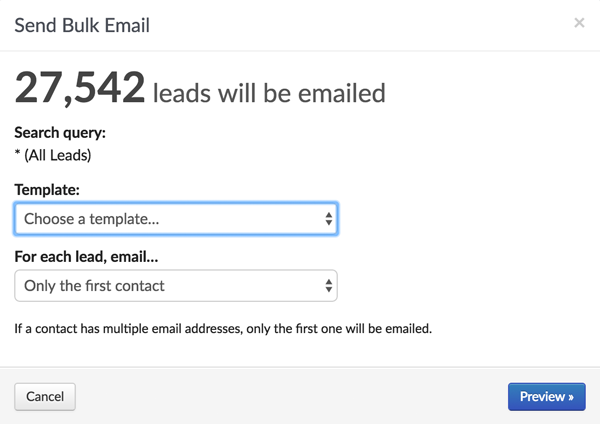
In their first month of using Close.io, almost 27,000 people were contacted. Senior management and employees alike were in awe.

“It was incredible. Previously, we just didn’t have the ability to a) email and call people in a scalable way and, b) track our performance.”

By using Close.io, they were able to speed up the sales cycle and get in touch with leads and customers that normally wouldn’t hear from them until months down the road.

Utilizing the bulk email feature and integrated calling, Monroe experienced a huge spike in sales in the first month.
crm-customer-case-study.png

One of the sales reps experienced a staggering increase of 50 percent in his personal sales while others saw an increase of 10–20 percent. Jason confirms, “These numbers have been relatively consistent because we sped up the sales cycle significantly.”

Calculating the benefits of Close.io

When Jason was looking into Close.io, he did his homework.

He anticipated price to be the biggest objection, so he made sure to do the math. He wanted to clearly demonstrate to his team what the time savings would be, and that the cost of Close.io could easily be generated in sales within one week.

He calculated that each sales rep was spending 3 hours and 13 minutes on prospecting and figuring out who to call when in their lead lists. They would then make an average of 20 calls per day, per rep.

The amount of time spent doing calls, entering notes, writing and sending emails, and placing orders needed to be cut down significantly.

During his Close.io trial, Jason found that determining who to call went from 30 seconds down to 5 seconds or less. Leaving a voicemail using voicemail drop, went down to 5 seconds. Emailing dropped from 5 minutes to 1 minute. Entering notes dropped from 30 seconds to 10 seconds.

In the end, Jason got those 3 hours and 13 minutes down to just under two hours.

In actual revenue terms, Jason then anticipated that the time saved would approximately be another $5,000 a month. For each representative, that would be approximately $60,000 a year.

Boom. Money.

Unrivaled visibility

The best part according to Jason, even apart from the spike in revenue, was the increased visibility. Having an overview of the entire pipeline, and seeing exactly what stage each lead was in and who should be contacted next, was something that hadn’t previously existed at Monroe.

“I’m able to track the duration of the phone calls and say alright, how many meaningful conversations did we really have today? It’s a seemingly small feature that provides huge insights.”
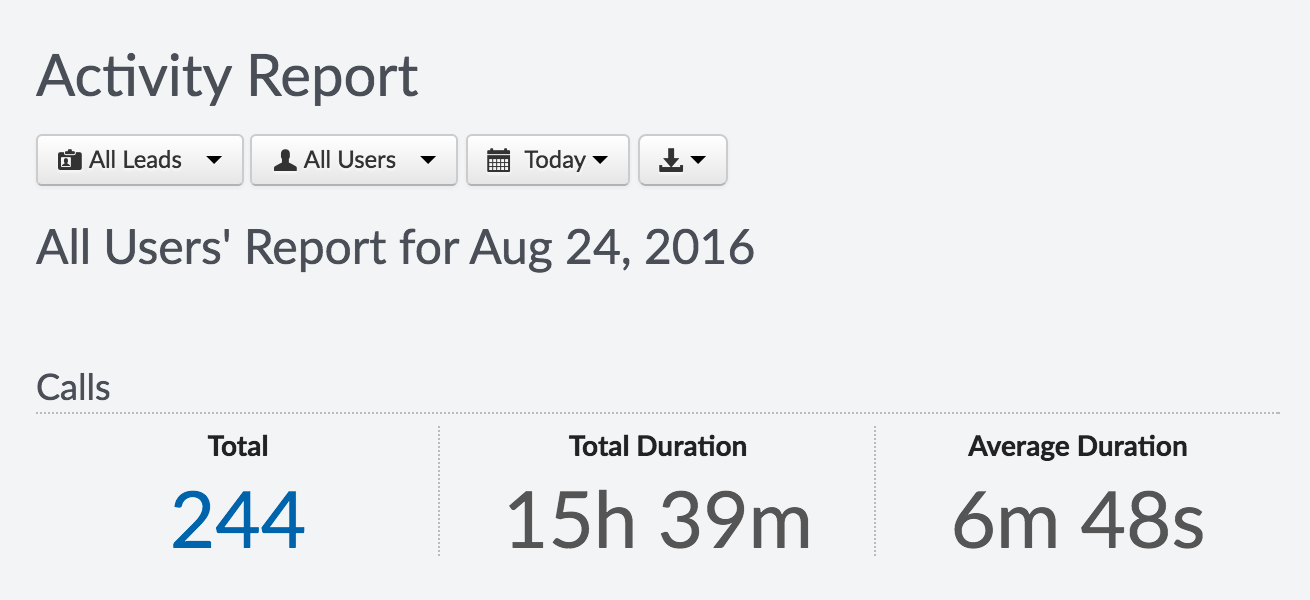
image01-3.png

Jason could not stress the importance of visibility enough, saying it creates a healthy sense of internal competition in the office. “The sales reps can see exactly where they’re at at all times, and they always know what to do next in order to drive additional sales.”

A more personalized sales process

Recently, customers have been given a survey for their experience with Monroe. On a scale of 1–5, there was not one response below a 4.

“Thanks to Close.io, the selling process has become more personalized than ever. Our representatives know who is calling them, when they last ordered, if they’ve seen an email, and other important account information—all on one screen.”

They’ve tailored their Smart Views to their organizational needs, giving their sales reps another level of granularity when it comes to looking at the opportunities and ability to grow the company.

“My team loves when they can look at their territory and instantly see things like customers who have yet to call or email them back, or customers they haven’t spoken to in 60 days.”

Jason continues, “Many of the things that relied on our team keeping track in their heads are now programmed into Close.io and viewable with a click of a mouse. This means we can now focus 100 percent on the customer experience and closing those deals.”

Next, Jason is looking forward to experimenting more with how their workflow is set up and create even better ways of reaching the right customers and empowering his sales team to create more value for both customers and the company.

Want to see what our inside sales CRM can do for your sales team? Try Close.io for free for 14 days.

Recommended reading:

Customer case study: Foursquare
Customer case study of Foursquare, the local search & discovery mobile app, on how they're using our sales CRM to manage their sales leads & accounts.

Customer case study: Krossover
"With Close.io, we have been able to increase a sales rep outreach 10x, which has lead to bigger pipelines, and more revenue!" For more about how Close.io has helped the startup Krossover grow its revenue, continue reading the case study.

Customer Case Study: Bench.co
This is how Bench is using Close.io to manage their sales pipeline and win more sales opportunities.

28 Aug 01:21

Amazon Vehicles Is a Massive Database for Researching and Comparing Cars

by Thorin Klosowski

Amazon’s launched a new car researching tool, Amazon Vehicles. Here, you can search for cars from a variety of years using an array of search parameters.

Read more...

28 Aug 01:16

5 Ways to Organize Email Marketing to Achieve Higher ROI

by Guest Post

5 Ways to Organize Email Marketing to Achieve Higher ROI written by Guest Post read more at Duct Tape Marketing

5 Ways to Organize Email Marketing To Achieve Higher ROI - Duct Tape MarketingI like to say that email marketing is like a headed cabbage. It might seem like a simple concept, but it has many layers.

In fact, the deeper you go into the email rabbit hole, the more you realize that there are more things you need to pay attention to and optimize than you had thought.

Before you know it, you can get overwhelmed with ESP features, analytical metrics, and dozens of option forms. This can result in a disease that I call email confusion; companies that suffer from it show symptoms such as low open rate, low click-through rate, and unengaged subscribers.

Luckily, there is a very effective cure for that. If you organize your email marketing effectively, you’ll see the results right away: improved open rates, engaged subscribers, better conversion rate and higher ROI.

In this post, I’m going to share 5 things you can do to organize your email marketing. There is a special bonus for overachievers at the end of the post, so be sure to check it out.

1. SEGMENTATION / TAGGING

Segmentation is the cornerstone of email marketing because it informs smarter campaigns. By grouping your subscribers based on a set of characteristics, or triggers, you ensure that you send relevant information to a highly targeted audience.

Many email service providers (ESPs) let you tag each subscriber based on the actions they performed, such as buying your product, visiting sales page, or dropping out of the webinar half-way.

To make sure you have good data on hand to segment your subscribers, make sure you set up tagging for every kind of event that’s relevant for your business.

Even if your ESP doesn’t allow tagging, there is a number of ways you can segment your list simply based on campaign activity. Look at the following groups and see how you can serve them differently:

  • subscribers who open most of your emails but don’t click
  • subscribers who click but don’t convert (send them a new campaign with more reasons to purchase your product)
  • subscribers who didn’t open the last email (if it was an important email, re-send it with a new subject line)
  • subscribers who have consistently replied to your emails (they are your biggest fans, so treat them accordingly)

2. ORGANIZING OPT-IN FORMS

If you’ve been building your email list for a while, you probably have dozens of opt-in forms floating around your website, landing pages, and affiliate web properties.

Many of them probably use similar language or offer the same opt-in freebies.

If you don’t keep those forms organized, you might end up doing double work and wasting time that could be better spent on email analytics or A/B tests.

A big step towards organizing your opt-ins is creating them in one platform, whether that’s your ESP or another tool, such as LeadPages.

Being able to look at a single page with a list of all opt-in forms you own will allow you to save time on creating new ones, analyze and compare their performance and reuse the most effective ones.

3. EDITORIAL CALENDAR FOR EMAIL

You need to have a thought-out strategy and schedule for your email marketing so that the emails you send feel like a coordinated campaign (vs. a series of one-off messages).

While developing a content calendar takes time, it will save you more time down the road, because your marketing team won’t have to go through the same strategizing process for each of the emails they send.

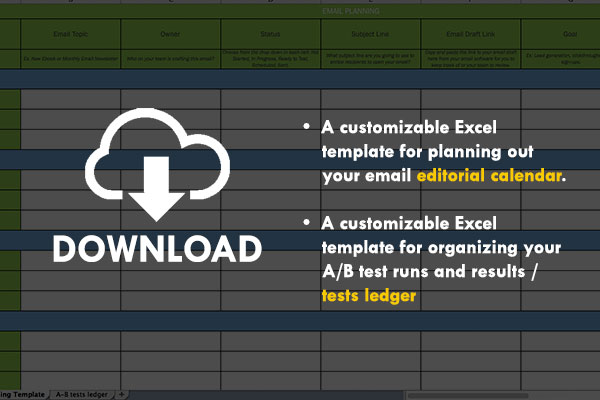
Here are a few details to include in your email planner (you can download an Excel template for this planner at the end of the post):

  1. Email send date.
  2. Email topic.
  3. Owner. (Who on your team is crafting this email?)
  4. Subject line.
  5. Goal. (Examples: lead generation, purchase, event signups, etc)
  6. Target segment / persona.
  7. Send list.

4. LEDGER FOR A/B TESTS

A/B testing is one of the most powerful tactics you can use for developing best-performing email campaigns. You can learn powerful insights about your audience and rely on hard data (instead of your gut) when crafting your next email campaign.

However, the bigger your team is and the more tests you run, the easier it is to get lost in results if you don’t keep them organized.

This is why you need to keep a ledger with all tests that you’re running. If you’re using a tool that helps you organize this — great! If you’re not ready to invest in a tool yet, build out an Excel spreadsheet with the following columns:

  • Test start and end date
  • Hypothesis
  • Success metrics
  • Confidence level
  • Key takeaways

If you want to download a pre-made testing ledger template, there is a link at the end of this post.

5. IDEA LOG

Finally, any email marketing manager should always keep a pulse on what other players are doing with email. Which means… they need to subscribe to dozens of newsletters and regularly check them.

I can immediately see this becoming an inbox nightmare very quickly.

Here are a few steps you can take to keep spying on others’ email marketing efforts and keep that business tidy:

  • Create filters in Gmail that would sort different newsletters in respective labeled “folders” (make sure to check off “Skip the inbox” so that these messages don’t distract you in your main inbox)
  • Schedule an hour every week where you go through all newsletters to check for cool campaign and design ideas and examples of excellent copywriting
  • Export the best examples to a shared Evernote folder

BONUS: TOOLS TO BECOME A MORE ORGANIZED EMAIL MARKETER

Keeping email marketing organized pays off in many ways, the most important one of which is higher return on your investment.

To help you organize your efforts well, I prepared an Excel template that you can use to plan your emails, build an effective email strategy and keep track of all experimentation you’re doing.

It’s completely free, and you can download it right here.5 Ways to Organize Email Marketing To Achieve Higher ROI - Duct Tape Marketing

I’d love to hear how YOU are organizing your email marketing: the tools, the tricks, the smart hacks — please share them in the comments!

Kasey LuckKasey Luck runs Bold & Zesty, a free newsletter about email marketing & productivity. Previously she did marketing at the most active venture fund in the world, 500 Startups, where she grew email list by 25,000 subscribers in 1 year. Connect with Kasey here.

28 Aug 01:15

2 Powerful Lessons In Brand Pricing And Value

by Derrick Daye

Brand Pricing, Value And Outcomes

Two short stories illuminate powerful lessons in pricing and value for marketers and the brands they serve.

In the movie the Local Hero a Texan oil firm attempts to buy out a small Scottish town and turn it into an oil refinery.

From the earliest concept, writer and director Bill Forsyth had only one man in mind to play Felix Happer, the head of the oil company, who eventually falls in love with the town and saves it from destruction.

He wanted Burt Lancaster.

This presented the producer, David Puttnam, with a problem. Lancaster loved the script, but wanted $2m to play the role. That was a third of the film’s entire budget, and far more than the producers could afford.

So negotiations began. For six months, Puttnam tried every tactic he knew to get the price down. Each time, Lancaster reconfirmed his desire to make the film and pointed to the only stumbling block: his $2m+ fee. With only days left before filming began, the Local Hero production team admitted defeat and agreed to the star’s demands. At the film’s silver anniversary celebrations in 2008, Puttnam recalled Lancaster’s recalcitrance: ‘The bugger would never, ever, ever break his price. We ended up paying him the price he quoted at the very first meeting.’

It’s a story worth retelling to marketers when focused on the subject of pricing to illustrate one of the topic’s most important lessons: you must hold the line. If your quality is good and your targeting and positioning are right, have confidence in the price you have set and do not consider dropping it. Remember, something cannot be good and cheap. Don’t be afraid of a premium price or maintaining it in the face of market pressure.

Too many marketers contradict their brand’s positioning either by launching at too low a price or dropping that price too easily at the first sign of trouble.

The consulting firm McKinsey has long observed that between 80% and 90% of incorrect pricing decisions are made by managers who charge too little for their products. That’s a stunning fact and comes with an even more astonishing implication: these organizations could have enjoyed better margins and unit sales – as well as stronger brand equity – if they had only followed the Burt Lancaster School of Pricing.

The Champagne brands, for example will destroy millions of liters of bubbly in the face of a dismal sales year, rather than discounting price, damaging their brands and destroying their long-term prospects.

It’s certainly the approach that Lancaster would have endorsed. He was a man who knew his value and ensured that his customers knew it too. A few weeks after he signed on with Local Hero, CBS called the film’s producers to confirm that, because of Lancaster’s presence in the key role, they would be paying $2.2m for the rights to show it.

Lancaster’s ‘outrageous’ fee had actually made money for the picture. Puttnam recalls it as a ‘powerful lesson’ on pricing and value, and it’s one from which many marketers could also benefit.

Pricing, Value And Outcomes

Burt Lancaster’s example of ironclad price integrity brings us to another important lesson in pricing and value especially for those of us involved with the development of strategy and creative.

In a story that has been told many times before, Picasso illustrates how what is valued should not be measured by effort, energy or time but by outcomes. In some fashion we hope it will help you sell in the value of your ideas now and in the future.

Picasso is sketching at a park. A woman walks by, recognizes him, and begs for her portrait. Somehow, he agrees. A few minutes later, he hands her the sketch. She is elated, excited about how wonderfully it captures the very essence of her character, what beautiful work it is, and asks how much she owes him. “5000 francs, madam,” says Picasso. The woman is incredulous, outraged, and asks how that’s even possible given it only took him 5 minutes. Picasso looks up and, without missing a beat, says: “No, madam, it took me my whole life!”

This is a story about mastery. It’s also a story about outcomes and how they should command our focus and drive the decisions we make about pricing and value. More directly, leading creatives, strategists and brands today should focus on optimal outcomes, rather than how much time is involved in producing them.

Outcomes are the only thing that matters now.

Co-authored with Mark Ritson.

The Blake Project Can Help: Accelerate B2C and B2B Brand Growth Through Powerful Emotional Connections

Branding Strategy Insider is a service of The Blake Project: A strategic brand consultancy specializing in Brand Research, Brand Strategy, Brand Licensing and Brand Education

FREE Publications And Resources For Marketers

28 Aug 01:15

10 Email Marketing Software Must-haves

by Sal Partovi

With so many different options for email marketing software today, it can be challenging to know how to narrow down your options.

Do you go for the option that’s most affordable? Or the one that has the best email templates and tools for building amazing, professional-looking emails?

In most cases, the answer is: It’s a combination of factors.

So what should you look for when assessing email marketing software or are considering switching from your current service provider? In this post, we’ll cover 10 must-haves (and a bonus) to look for including everything from mobile capability to support.

1. Rich selection of email templates

In this day and age, no one needs to create an email from scratch. Who has the time? Your email marketing software provider should have a rich selection of email templates that serve many different email marketing purposes–from newsletters to promotions, announcements, and beyond–that can be quickly and easily customized to fit your branding.

Campaign Monitor Email Template Selection

Keep in mind that aside from simple, elegant design, templates should also be flexible enough to include features like dynamic content and personalization so your messages are as relevant as possible for subscribers. If templates are missing these features, it’s a red flag.

2. A powerful email builder

In the era of DIY marketing, you need an email builder that’s intuitive and easy to use with simple drag and drop features (so you don’t have to take a training course before you can get started using it.)

Virgin Email Builder

Ideally, a WYSIWYG editor (what you see is what you get) works well, as there are no surprise changes that happen after an email is sent out to subscribers. You can simply click, drag, and drop different pieces within the template, such as:

• CTA buttons
• Hero images
• Dividers
• Text
• Spacers

From there, you can customize colors, text size, fonts, add your logo, and make the template completely seamless with your other branding elements.

3. Mobile ready for the mobile world

In a world where more than 50% of emails are opened on a mobile device, you can’t afford to work with an email marketing software that doesn’t think with a mobile first mindset.

Topshop Mobile Ready
The mobile trend is no passing fad, either. In recent years, mobile email opens have increased by as much as 30%, and data shows that one out of every three clicks within an email occurs on a mobile device.

Make sure you’re selecting an email marketing software that not only automatically optimizes your email campaigns for you on a variety of different mobile devices, but has plenty of mobile-friendly templates that make building a mobile email stress-free.

4. Built-in design & SPAM testing

Before sending out your email campaign, you’ll want to see a preview of how your template, images, and messaging will display in a variety of different inboxes both on desktop and mobile devices. Look for an email marketing software that helps you ensure your emails look great in any email client.

FontShop Design and SPAM Testing
And because there are many strict laws and regulations around SPAM emails, you’ll also want to select a provider that allows you to test your campaigns before you send them out to subscribers. Testing your content pre-send helps you proactively catch the material that triggers SPAM reports at the desktop, server, and firewall levels. That means more of your emails reach the subscriber’s inbox, and far fewer end up in the SPAM folder.

5. Reasonable sending limits & unlimited options

As your email list size continues to grow, you don’t want to be limited by the send frequency of your email marketing software. When you’re just starting out, look for a provider that provides a variety of levels for sending and offers both monthly and pay as you go plans to provide you the best flexibility.

For example: If you have a list of 500 subscribers, you should be able to send them all at least 3-4 emails per month, right? That means you’d want to look for an email software that would allow 2,500 email sends per month at the 500 subscriber mark to give you some wiggle room.

Then, as you grow your list and upgrade to a higher sending tier, make sure you have unlimited sending abilities.

Taking this approach will help you scale your email so you’re making a smart investment with high ROI based on business size.

6. Flexible pricing

Do you need to start right out of the gate with a massive budget for email software? Probably not. But at the same time, simply sticking with the tools included in most freemium models isn’t enough to give you all of the functionality and analytics you need to be successful.

So what do you do? Do you opt in for one of the high-end tools with a lot of features you’re really not ready to use yet?

No–you’d be throwing a lot of good money away. You need email software that can grow with you and can help keep your costs low and the return on your investments high (all while still delivering the functionality you need.) Look for an email tool that can scale and grow with your business that has flexible pricing with low, medium, and enterprise tiers.

7. Rich reporting capabilities

With the right resources, email marketing is one of the most measurable marketing mediums marketers have at their disposal. Therefore, be sure the email software you choose has rich reporting capability that enable you to be sure you’re spending your time, money, and effort in the right places. Look for reports with key metrics such as:

• Open rate
• Click-through rate
• Unsubscribe rate
• Bounce rate

These high-level data points show the overall success of your campaigns. However, there should also be secondary reporting options that can be accomplished with integrations that reveal deeper metrics that can help you improve the design or strategy of your campaigns overall.

Sephora Email Marketing Reporting Capabilities

Look for deep-dive reporting that helps you better understand what works and what doesn’t in your email campaigns.

8. Seamless surveys

Surveys, delivered via email, help keep customers happy and keep your business functioning at a high level. From Net Promoter Scores to customer satisfaction, these email-delivered surveys help you keep a pulse on many different aspects of your business at any given time. And by giving your customers a voice and collecting this valuable feedback, you can outpace the competition with an ever-improving business operation.

Surveys
Look for an email marketing software that allows you to embed mobile-ready surveys in your email campaigns so you can optimize each and every customer experience.

9. Integrations and plugins

As email is often an important piece within a larger marketing technology stack, it’s important that it easily extends and integrates with a variety of other business applications–like your CRM, eCommerce, or CMS solution (just to name a few.)

Campaign Monitor Integrations and Plugins

By integrating these apps, you can make your email campaigns hyper-targeted, personalized, and extremely relevant to your customers based on their unique preferences and history with your brand. Doing so is proven to increase success with email marketing, too. Campaign Monitor offers a powerful selection of apps and integrations in our very own App Store.

10. World-class, 24/7 Support

From time to time, you’re going to need help with your email marketing service. It happens. When that time comes, you want to be sure your email service provider is there to help. Test the waters with a few different providers by performing a couple of experiments.

• How long it takes to reach a support rep via email or phone
• Browse online troubleshooting resources
• Ask for help with a common problem
• Seek out additional support resources

You should look for an email marketing software that provides 24/7 support through a variety of channels so you’re never left waiting for help when you’re in an email crisis that could impact the success of your business. Think about it: There’s nothing more frustrating than not being able to get in touch with a real human being when you need help.

Bonus: Marketing automation capabilities

We are always looking for ways to send better, more targeted content and at scale and there’s no better way to do this than with marketing automation. Marketing automation is simply combining data about customer behavior with personalized journeys and beautiful, on-brand content to deliver the right message at the right time to the right person. Every ESP should offer a simple to use, but powerful marketing automation solution for you.

Wrap up

Let’s do a quick round-up of the 10 email marketing software must-haves (plus a bonus):

1. Great selection of templates
2. Easy, powerful email builder
3. Mobile-ready
4. Design and SPAM testing
5. Reasonable send limits
6. Flexible pricing
7. Rich reporting
8. Seamless surveys
9. Integrations and plugins
10. Fantastic, mind-blowing support
Bonus. Marketing automation capabilities

If you can find a provider who checks off all of these boxes, you’ve found a great match.

28 Aug 01:14

Are Your Marketing Personas Your Sales Market Segments?

by Mike Moran

pixabay_carnival-411494_1280

Marketing is supposed to lead to sales, right? So why is it that we marketers sometimes throw up unnecessary impediments to selling things? I’ve talked in the past about how you better make sure that the steps in your marketing Buyer Journey matches the phases of Sales Funnel. That way, when you learn which content is moving prospects in the Buyer Journey, you can suggest the same content for sales people to share with their clients for offline sales.

Today, I want to talk about something similar. All marketers worth their salt have created a set of personas. And they are important, because they fuel your content strategy–it is always easier to write for a specific audience. Personas give your writers a specific person to write for. The problem comes in when you haven’t thought through how those personas relate to market segments.

Market segments are often used in marketing plans to decide which groups of prospects to target, but they are also frequently used in sales plans. Often, sales teams take different approaches with different market segments. Sometimes they use a different sales pitch, emphasize different features, or even offer different packages and pricing.

Market segments are not equivalent to personas. Market segments, especially in B2B, can be based merely on the firmographics of the prospect company (company size, industry, geography, etc.) while personas describe individual people that comprise the buying team (HR partner, C-level executive, plant manager, etc.). Even in B2C, market segments are often rooted in demographics while personas pursue motivations and psychographics to deeply address customer intent.

When this disconnect occurs, you lose some key advantages. You might have all sorts of data (big and otherwise) about which content moves which personas from step to step in the Buyer Journey, but no way to apply that to your offline opportunities that salespeople are working through the Sales Funnel.

To bridge this gap, you need to do a little more work. Make sure that your salespeople understand (and influence) the formation of your personas. Personas should be constructed so that salespeople can readily assign their prospects to marketing personas–their individual prospects in B2B situations–so that your CRM system can suggest the right content for salespeople to share with them.

How would that work? Your marketing analytics can help you know which content is moving different personas from step to step in the Buyer Journey. If you have aligned your Buyer Journey to your CRM’s Sales Funnel, you already have some built-in great ideas for salespeople to share with their clients to move them deeper into the funnel. Aligning personas to market segments and then to individual members of client prospect teams takes it one step further.

Keep asking yourself how to better align marketing and sales and take more advantage of your marketing materials to actually grow revenue.

28 Aug 01:14

3 Stealth Tools For Competitor Analysis

by Kevin Ho

3 Stealth Tools For Competitor Analysis

These days, it can be tough to keep up with all of the new trends in advertising, social media, landing page design — the list goes on and on.

It seems like as soon as you read about something, there’s a new and better version of it.

Just learned about retargeting? Well now your competitors are using lookalike audiences.

Just optimized your landing pages using exit popups? Well your competitors just added a custom javascript popup triggered using marketing automation.

When does it end?!

Well luckily there are tools designed to help keep you up to date with what your competitors are up to. This way you can leverage their findings, inspire your own tests, and leapfrog their success.

This article compiles the 3 best tools for keeping tabs on your competitors. The tools are broken down into three key categories that you’ll need for maximum competitor analysis:

  1. Landing Page Design & CRO
  2. Paid Traffic
  3. Organic Traffic & Social Media

Competitor Analysis Tool #1

Landing Page Design & CRO: Crayon


Crayon is a diamond in the rough for marketers. Crayon’s platform allows you to search through landing pages, pricing pages, and entire website redesigns for a number of different industries. You can sort by things like amount of traffic, website platform, mobile pages, and even color.

3 Stealth Tools For Competitor Analysis

Crayon is great for getting a bird’s eye view of what’s going on in your industry. For instance, are you competitors adding social login buttons? How about color scheme changes? Are there some general trends that are catching on that you should be following?

Crayon will help you find out.

3 Stealth Tools For Competitor Analysis

But of course, you won’t always feel (or have the time) to browse. That’s why Crayon allows users to specify specific competitors in order to get notified about any type of website changes they make.

3 Stealth Tools For Competitor Analysis

How that for keeping an eye on the competition?


Competitor Analysis Tool #2

Paid Traffic: SpyFu


When I first heard about SpyFu, my first question was “is this legal?” My followup question was “what’s it called again?”

SpyFu is a powerful competitor analysis tool designed to give marketers an in depth look at exactly how much their competitors are spending on paid media.

3 Stealth Tools For Competitor Analysis

Simply insert a competitor’s URL and get access to a dashboard of information ranging from their estimated monthly adwords spend, percentage of organic to paid traffic, and top paying keywords with total volume and CPC.

And to clarify, SpyFu is legal, but be warned: it may make you feel like a secret agent.

Pro Tip: Dive even deeper by checking out the history of your competitors PPC under the “AdWords History” section. You can click on a month and see the past AdWords ads they ran, while clicking on the link in the ad to see what the corresponding landing page looks like.

3 Stealth Tools For Competitor Analysis


Competitor Analysis Tool #3:

Organic Traffic & Social Media: Similar Web


Similar Web is the first place that our team looks when investigating traffic on a competitor’s site.

And that’s because Similar Web is a simple and free way of getting the lowdown on the total amount of organic traffic, referral traffic sources, bounce rates, and key competitors.

To get started simply insert your competitor’s URL then browse through a variety of analytics and key insights.

3 Stealth Tools For Competitor Analysis

Pro Tip: If outreach and inbound links are a priority for you, consider looking under the “Referrals” section to determine any relevant forums, publications, and blogs are mentioning and linking to your competitors.

If these sites are linking to your competitors, they might be interested in linking to you as well. Make a list of relevant sites, and track down who to contact using email hunter.

3 Stealth Tools For Competitor Analysis


Putting it Together


Keeping up to date with what your competitors is a critical component of any business. After all, there’s a million different articles, podcasts, and videos online that can all teach you something. But the most important lessons come from what is being done, not what is being said.

Staying informed about what your competitors are doing might be one of the quickest and high impact initiatives you can take. And if you are looking to stay up to date, remember to keep up to date where it matters:

  • Landing Page Design & CRO
  • Paid Traffic
  • Organic Traffic & Social Media

What’s your favorite spy tool? Feel free to share it in the comments below.

28 Aug 01:14

Here are the top Wall Street firms to work for, according to LinkedIn's users

by Business Insider

Goldman Sachs promo video

The hunt for talent is getting more and more difficult.

LinkedIn published a list of the top 40 companies in the US that are best at finding and keeping great employees.

The ranking is based on the actions of the social network's more than 433 million members, including jobs they have applied to, attempts to view and connect with companies, and how long new hires stick around.

While tech giants such as Google and Apple dominated the list, we singled out the most attractive firms on Wall Street.

Banking has become a less attractive career option amidst a tough business climate, and top players in the industry are rolling out new initiatives to stem the wave of departures. To win the war for talent, Wall Street firms will have to adjust their strategies and rethink who their competitors are.

Here are the four big financial firms that stood out in LinkedIn's ranking:

SEE ALSO: Bryon Wien shares the most important investing advice he learned from his late mentor

4. Morgan Stanley

What: A bank that offers consumer services and has been expanding aggressively into wealth management (with $2 trillion in assets under management) as trading revenues dwindle.

Morgan Stanley CEO James Gorman emphasized the need to have a management team ready to manage the next financial crisis, according to comments he made at the DealBook Conference last November.

He said the bank takes a long-term view in hiring and promoting employees. "It's like the plenary going on in China. We have our own mini plenary around talent in 5, 10, and 15 years. So I look at the organization charts and ask, who, 10 years from now, could be in a senior role? What do we need to do to start moving them around to get them with the right toolset?”

Perks: Workers are encouraged to dress more comfortably, and they receive more qualitative and frequent feedback. And vice presidents get four-week paid sabbaticals.>

Overall ranking: 40 (Source: LinkedIn)


3. Goldman Sachs

What: A dream place to work for aspiring investment bankers, but also increasingly looking good for computer scientists, programmers and engineers. CEO Lloyd Blankfein likes to refer to Goldman Sachs as a "tech company."

The bank is changing how it hires (goodbye, brainteasers) and provides feedback to its younger employees. It also went through a period of "juniorization," where more younger people have been hired, especially in the operations, tech, and compliance units.

Perks: Expect five-star amenities such as a huge subsidized canteen, a gym with memberships that work like a progressive tax, and dry cleaner on site.

Overall ranking: 27 (Source: LinkedIn)


2. Deloitte

What: A auditing giant based in New York that provides accounting, consulting, and tax services.

Deloitte, which has 225,000 employees, receives 1.9 million job applications every year. Its tech-infused services and scope of work have attracted those with STEM (science, technology, engineering, and mathematics) backgrounds. The company told LinkedIn that their employees are "challenged by interesting work."

Perks: Offers a "marketplace" featuring various perks, education reimbursement, and, most importantly, sabbatical programs that can run up to six months for "personal or professional growth opportunities."

Overall ranking: 24 (Source: LinkedIn)


See the rest of the story at Business Insider
28 Aug 01:12

How to Hire a Salesperson

by Anthony Iannarino

Part One:

It’s easy to get trapped in the belief that you are hiring salespeople only for a certain set of skills. You focus your time and attention on what it is you want salespeople to do in the way of activities. The salesperson’s skills, their attributes, and their beliefs must be considered, but they often crowd out one of the most important constituencies you should be considering: your prospective clients.

The first test to add to your evaluation is whether the salesperson you are considering is the person you want to deliver to your prospective and future clients.

You are hiring for your prospects and clients.

It makes sense to ask yourself some questions to include your prospect’s and client’s needs as part of your evaluation.

  • Will your prospective clients want to buy from this person?
  • Does she have the proper beliefs, attitude, and skills to actively work with your prospective clients to help them get the results they seek?
  • Will she be someone that they trust and consider part of their management team?

Who Are You Adding to Your Prospect’s Team?

You spend a lot of time considering your value proposition, what you deliver to your clients and how you deliver it. You also spend a lot of time considering how you compete and win. It very much matters who you place at the intersection of creating value for your prospects and who represents you as you compete for opportunities.

Your prospective client’s decisions about whether or not to buy from the salesperson you have offered them is a real evaluation of how well you made your hiring decision. It’s worth considering—especially when the salesperson is part of the solution.

  • Were the last three or four salespeople you hired the right people for your prospective clients and clients?
  • What really makes a salesperson the right salesperson to deliver to your prospects and clients?
  • How instrumental is the salesperson in understanding your prospective client’s need and delivering the right solutions?
  • If you were in your prospective client’s position, what would you want your company to deliver in the way of a salesperson?

alt text image of people waiting to be interviewed

PART TWO:

This is the second of three tests. Now you have looked at the sales person from you prospect’s perspective. You have to make a similar decision: Do I want to work with this salesperson every day?

Part of Your Team

Sometimes you may hire as if it’s enough that the person you hire can do the job for which you are hiring them. Rarely is this ever true. We spend most of our waking hours at work, and that means we often spend more time with the people we work with than we do with our family and friends.

The salesperson’s cultural fit cannot be overlooked.

It is important that the salesperson you hire fits you and your team. You are going to have to manage the salesperson, and that means you are going to spend time with them. You have to make a determination as to how well you believe you can work together.

The rest of your team is also going to have to work with this person, including the parts of your organization outside of sales. As the salesperson works on opportunities, delivering will require that they work with your operations team, your accounting team, your risk team, and your management team. Are they the right fit? Is this someone who is going to be easily brought into the company and the culture?

It’s easy to believe when hiring that it is enough that the person can do the job. But if they aren’t someone that you and your team are going to want to work with on a daily basis, then it is going to be difficult to for either the salesperson or the team to produce results.

This doesn’t mean that the salesperson doesn’t also need to possess all the skills, abilities, beliefs and behaviors that the position requires. But you have to want to work with the salesperson you are hiring, just as your client is going to have to want to work with them.

  • Do you consider how much time you are going to have to spend with a potential team member and your willingness to do so?
  • What attributes, like likeability, are important when considering adding a salesperson to your team?
  • What kind of person do they need to be to navigate your company successfully? What kind of relationships will they need and who with?

alt text image of a person electing a person on a blackboard

PART THREE

:

This third test is really more about you than it is about the salesperson, and this test is often the real determinant as to whether or not your salesperson will succeed or fail.

This test is: How willing are you to take the actions necessary to ensure that this salesperson succeeds?

Your Commitment to Your Salespeople

Once you hire this person to sell for you, you are committed to doing all that is in your power to ensure that they succeed (this is, in part, why it is so important that they are a great cultural fit).

As their sales manager or sales leader, you will have to invest your limited time and energy in this salesperson’s success. You will have to make certain that the salesperson has all of the training, the tools, and technologies to succeed in their role. You will also have to sure that they are successfully on-boarded, successfully introduced into the culture, and that they know how to navigate the organization to get results.

These tasks fall to you as a commitment that you make when you hire a salesperson, and so your willingness to give this salesperson your time and support is critical.

A Greater Commitment Still

Once you have hired the salesperson, you are also going to have to be willing to help them with any shortcomings they have in their sales skills, their sales behaviors, and actions, as well as their beliefs about sales. If you discover that they aren’t exactly where they need to be in regard to the skills and attributes they need to succeed, by hiring them, you are committed to helping them.

Because these are often more challenging issues to help the salesperson improve, this is a greater commitment. You may not be able to uncover the areas that need improvement during the interviewing process, so you must be certain that you believe strongly enough in the salesperson’s ability to learn, as well as your commitment to ensuring their success before you hire them.

  • What commitment do you make by hiring a salesperson and adding them to your team?
  • What does that commitment require of you as their sales manager or sales leader?
  • Can your newly hired salesperson be expected to perform as well as she needs to if you withhold your full support?

These three tests will help you hire salespeople that can and will succeed.

The post How to Hire a Salesperson appeared first on The Sales Blog.

28 Aug 01:12

9 Struggles Only A Digital Marketer Would Understand

by Kevin Ho

9 Struggles Only a Digital Marketer Would Understand

Digital marketing is not a job for the faint of heart. Your friends think you waste your days on Facebook, and your parents think you know things about “the internet”.

But what do you actually do?

Truth be told, digital marketing is tough. And that’s because the space that you work in is constantly changing.

Once you get past the mountain of jargon and into the nitty gritty of conversion rate optimization, email marketing, and maintaining social engagement, you might look back and realize that there’s a lot of ground to cover and that few people around you feel your pain.

Well we do.

That’s why we’ve compiled 9 gif’s that only a digital marketer can understand.

Whether you’re a social media manager, content marketer, PPC specialist or something in between there’s a gif in here that’ll float your boat. Even if not, feel free to click here to tweet this article just to let your Followers know you’re still reading about “marketing things.”

Without further ado, let’s get to the gifs!


When you send a newsletter with the wrong link


9 Struggles Only a Digital Marketer Would Understand

It’s happened to the best of us. Somewhere between copying over a newsletter template, adding a UTM code, or simply inserting your links, things can get overlooked and the wrong link gets sent.

Does this make you a bad person?

No. But does it make you look a careless marketer.

To remedy this, ensure to always test your emails before sending. Make a habit of clicking on all of the links before you press send and save yourself some tears.


When an influencer tweets out one of your articles

9 Struggles Only a Digital Marketer Would Understand

Break out the bubbly! An influencer just tweeted a piece of your content.

Does that make you famous? Not quite. But it goes a long way to prove you know what you’re talking about.

Influencer outreach is one of the best ways of increasing the reach and overall visibility of your content. At Wishpond we’re huge advocates of Brian Dean’s Skyscraper Technique for content amplification.

Promoting your content to be seen and shared by influencers might not be easy, but it is a marketing milestone worth celebrating.


When you discover a high converting CTA


9 Struggles Only a Digital Marketer Would Understand

If you’ve read any articles about CTA optimization you might have heard tips like:

  • Make your CTAs action oriented
  • Make your CTAs benefit oriented
  • State exactly what your CTA button is going to do

The list goes on, but at some point you need to stop thinking about hypotheticals and put that theory into action.

Depending what you’re offering, different CTAs will make sense in different contexts. But that doesn’t mean that you can’t uncover a hidden gem of CTA text that works better than all of your CTAs combined.

For us those have been simple:

  • Get Started
  • Create My Free Account
  • Create My [Insert product here]

What are yours?


When your boss changes your KPI halfway through the month


9 Struggles Only a Digital Marketer Would Understand

I can’t speak for you, but whether your KPI’s are website traffic, product signups, blog subscribers, qualified leads or a combination, the way in which you plan for your marketing activities will vary.

That’s why marketers find it so frustrating when their KPIs are suddenly switched up halfway through the month.


When no one shares your blogpost


9 Struggles Only a Digital Marketer Would Understand

So you’ve spent hours laboring over a blog post, you’ve done your research on the best content types and jam packed your post with as much value as humanly possible.

Yet for whatever reason, whether it was a problem with your headline, how the topic resonated with your audience, or any number of other things, people just didnt feel like sharing your post.

Well that sucks!

It happens to the best of us. All you can do is dust yourself off and get back at it.


When people find out you’ve been retargeting them


9 Struggles Only a Digital Marketer Would Understand

I often hear “I see your ads everywhere, you guys must spend a fortune on advertising.”

The truth is we don’t spend that much on ads here at Wishpond, but we do invest in retargeting from our different content and blog pages.

The problem is that a lot of non-marketers are unfamiliar with the term “retargeting,” and telling people that you’re basically stalking them online based on a cookie in their browser can come off a little bit creepy (to say the least).

As marketers we’re all aware of how effective retargeting is, but it can still make a social interaction with a prospective customer a bit awkward from time to time.


Finding out that Facebook’s changing organic reach (again)


9 Struggles Only a Digital Marketer Would Understand

If you’re a social media manager, new updates from Facebook can have a serious impact on your job function and overall efectiveness.

This is especially true if your contributions are measured based on social media reach and engagement.

Although we know might know that the changes Facebook makes are to help with the overall user experience (which is great for us users), as marketers we can’t help but cringe every time Facebook releases a new newsfeed change and we have to scramble for a month or two.


When you see an email with Hi {{First-Name}}


9 Struggles Only a Digital Marketer Would Understand

We’ve all heard that “personalization is the key to engagement.” And this can be true when segmenting users based on interest, location, or buyer readiness within your sales funnel.

But one old school personalization technique – namely the use of merge tags in an attempt to increase email open rates – can sometimes backfire, especially when the merge tag doesn’t populate the user’s name.


Trying to figure out SEO like


9 Struggles Only a Digital Marketer Would Understand

We all know how crucial SEO is for a business. The problem is that as marketers, as much as we hate to admit it, sometimes pages end up ranking for terms other than what we optimized for, or will randomly receive random traffic spikes for reasons beyond our control.

As much as you can search through Google Analytics and use your SEO software tools, sometimes at the end of the day you’re just left wondering…

9 Struggles Only a Digital Marketer Would Understand


That’s a Wrap


There’s our list of 9 things only a digital marketer could understand. I’m interested to know, can you relate to any of these?

What’s the biggest struggle your team is facing these days?

Is there something you’d add to this list?

Let me know! I’d love to hear from you in the comments!

28 Aug 01:11

What About Seller Personas?

by Dave Brock

By now, hopefully, everyone knows the importance and power of Buyer Personas. Understanding who our buyers are, what drives them, how they are measured, the key issues they face, and all sorts of other things enables us to connect and engage them more effectively.

We can focus our content and our discussions in ways that are most impactful and meaningful to them. We can talk to them about the things they are most likely to be interested in in their “language.” We can create and communicate value in terms that directly impact their success.

Personas have shifted the way we develop much of our content. Our playbooks teach us about each of these roles, and guide us to engaging them in high impact conversations.

But too often, our conversations break down. We know what they care about, we know how we should be talking to them, but we fall short in our abilities to actually have the right conversation.

As an example, a few months ago, a SDR called to discuss sales performance management. It’s a topic near and dear to my heart, it’s what we speak about with all of our clients. a core theme of Sales Manager Survival Guide is sales performance management.

The call started well, she introduced herself, the company, and wanted to talk about issues I had with sales performance in my company. I responded, “Actually, I don’t have issues. The team is doing very well, we’re ahead of plan……”

She asked, “How do you measure and track performance?”

I responded, “There are two key sets of metrics that provide the leading indicators, and naturally we look at revenue attainment as a trailing indicator.”

She replied, “You may not be tracking enough things, you should probably be doing more. Often customers struggle because they don’t have the right tools to make it easy to track performance…”

Curious, I asked, “Why do you think we aren’t tracking enough things? We’ve studied they key drivers to our business, and the two that we track seem to be really good for us?”

She then started to talk about a whole bunch of metrics, number of calls per day, call duration, and more.

I responded, “We’ve looked at those metrics, and they really aren’t meaningful for our business. Here’s why we’ve chosen what we’ve done….”

At this point, the call was going downhill very fast. To the sales person’s credit, she understood. She was trying to get out of the call, suggesting a follow up call from an account manager or a demo—I have to give her credit, she went for the demo.

She clearly recognized she was way over her head. She wasn’t able to support her end of the conversation.

She’s a BDR, focused on outbound prospecting calls. She’s been doing this for a little over 12 months, it’s her first major sales job.

She had a playbook, she had a script—all of which she was executing pretty well, but she wasn’t able to engage me on a conversation that I was interested in being engaged.

And it’s unfair to expect her or most other BDR/SDRs to engage senior sales leaders in a meaningful conversation about sales performance management. Particularly, if the engagement strategy is to bring insight and help the customer learn.

It’s not arrogance on my part, I want to learn from anyone I can. It’s the things that keep me up at night (and those that fit my category of persona) require some experience base in business or sales management. Experience that a playbook is not likely to give.

She simply didn’t have the experience base. She could read her script, but as I started to ask questions, as I wanted to deepen the conversation, she wasn’t able to do this. And it wasn’t her fault.

I wonder how many opportunities BDR/SDRs miss simply because they can’t hold up their end of the conversation?

I wonder if we might be more effective in our prospecting if we started thinking about the Seller Personas, aligning the right sales people with the buyers?

What if this company had assigned a more experienced sales person–perhaps one being developed to be a front line sales manager? The quality and level of engagement in that conversation would have been much deeper, it probably would have provoked me to ask for more.

We already know the power of this in other types of sales specialization roles. As our products and solutions become more complex, it’s impossible for the sales person to have deep enough knowledge on all the products. For decades (perhaps even millenia), we’ve had specialists. A person who knows the application area, the solution very well. For example, I often hired people who had been manufacturing managers to sell manufacturing control systems. Or engineering designers to sell product design solutions.

We know that if we are going to engage the customer in deep conversations about their business or function, we have to be able to hold up our end of the conversation.

Yet in the very first call, we throw people who are ill equipped—experientially and knowledge-wise–to hold up their end of the conversation.

We try to engage with insights yet when the customer says, “tell me more,” or “what about,” or “why should I be thinking about that,” or “I don’t agree,” we can’t continue the conversation other than to suggest we arrange a follow on meeting. We have the opportunity to engage the customer in the very conversations we want to have, but we fail in the very first conversation.

Why should the customer continue?

What if we started rethinking our outbound strategies? What if we started thinking about sales personas? What if we started aligning the right sales personas with the right buyer personas?

What would that do to our conversion rates?

In our own company, we’ve had that strategy for years. There are certain personas that I’m less effective with than other members of our team. There are certain industries or markets that I’m less effective with than other members of our team. As we look at our outbound prospecting conversations, we align who we are calling — persona, industry, market, solution—with the best people in our own organizations. Our “connection rates” are very high, the people we reach feel we can offer real insight and value, consequently are excited to have a conversation. Not all of those convert–at least immediately–but we’ve had a high impact conversation and established the start of a relationship we can nurture over time.

Our first conversations lay the groundwork for any future conversations. Our first conversations create lasting first impressions about our companies, our solutions, and our potential to create value.

Doesn’t it make sense to align the right selling personas with the right buying personas?

If we sell IT development tools, to development managers, how much more effective would we be if our people had at least watched an IT development team doing a project? Or had participated in some way themselves?

If we sell manufacturing control systems, how much more effective would we be if our people had spent a little bit of time in a manufacturing facility or had a manufacturing background?

If we sell sales and marketing automation systems to executives in those functions, how much more effective would we be if we had people who had managed or lead a team before?

Perhaps as we look at the people we put into SDR/BDR roles, as we look at maximizing the results we want to produce, we need to rethink who we put into those roles, better aligning them with the customer personas we expect them to engage.

28 Aug 01:10

What Is Your Customer Buying?

by Tibor Shanto

By Tibor Shanto – tibor.shanto@sellbetter.ca 

Most sales people are good at telling you what they sell, not necessarily communicating how the customer will be ahead as a result, but they are good at telling. Regularly scheduled role play in team meeting will usually help you get ahead of that. While this will help with the delivery and to ensure that they are delivering the message, it does not ensure the message is right.

This is not always the fault of the front line rep; they will usually run with some version of what they are given. The version they run with will be determined by which camp of the ever popular ‘80/20’ they are in. The 20% is not the worry, they will take what they are given, understand how it will help drive objectives, and then enhance it based on their experience and past successes. The challenge is the 80%, whose version will be altered and diluted, delivering less results, leading the 80 Percenters to say “This doesn’t work, I just gonna do what got me so far.” This is where having role play as part of your routine once a month at the minimum, will allow the sharing of best practices, and practice. This coupled with the observations made while you are riding along to real prospect calls, should allow you to lead things in the right direction.

Once you have a couple rounds of role play and practice, spice things up a bit, and have your sales people articulate what their prospect is buying and why – rather than what they are selling and why.

Don’t be surprised if what you hear is the mirror opposite of what they said “they were selling”. In fact, many managers may themselves miss that, because they grew up the same system, and have become tone deaf to the message and have fallen victim to same message related brain washing as their reps. If you have the type customer base that will indulge, I would ask one to sit in and provide feedback, and I would also have you marketing participate so they can be hands on.

Going further, I suggest coupling the role play of why someone did not buy, with an actual opportunity review of the opportunity lost. In most instances sales people will point to price or product fit as reasons for loosing. At the same time, third party companies who are paid to carry out post mortems on lost opportunities consistently find that the real reason had more to do with reps’ inability to understand what the prospect was trying to do.

The best way to help reps change is to have them articulate what their prospect is buying, if they cannot do that, you can bet they will not be able to sell them. Once you can get them to do that, you can introduce a line of discovery that encourages prospects. A continuous rotation of role play: “What we sell/What they buy” will ensure you are offering real value to buyers, and success for your reps.

Become one of the thousands of sales professionals receiving my latest updates on sales execution, tools, tips and more.   

Join Now!

The post What Is Your Customer Buying? appeared first on Renbor Sales Solutions Inc..

28 Aug 01:10

5 Things That Frustrate CEOs About Sales – and What You Can Do About It

by Graham Curme

CEOs understand that the importance of the sales organization extends much farther than just closing deals.

Because the sales organization represents the first point of live and personal interaction with your buyers, it’s critical to your brand perception. Because your sales team directly affects how a customer feels about your business, it’s essential for building customer trust and loyalty. Because sales has the first insight on spending changes, it’s the best barometer that you have for monitoring market shifts and your own growth.

However, if you talk to many CEOs about sales today, you’ll find that they’re frustrated by their sales organization, and here are five reasons why:

#1. Sales leadership isn’t strong enough

Without strong sales leadership, you cannot build a strong sales organization. Yet, bad sales leadership is an endemic frustration for CEOs and remains a common cause of poor sales performance.

You need to be sure that your sales managers have the leadership skills needed to manage a sales team. Just because someone was a great salesperson does not make him or her a great sales leader. In fact, the skill sets are quite different.

Sales leaders must have adequate training or experience to be effective. If they’re a new manager, they need to be mentored and given time to build their leadership skills.

CEOs also need to work closely with sales leadership. You need to identify the right sales processes and target customer and understand your available resources – so that you can optimize processes, repeat, and scale.

#2. Subjective sales data

Too many sales leaders rely on sales data provided to them by their sales people about whether a deal will close or not. Companies cannot rely on subjective sales data or ‘gut instinct’ to make critical business decisions.

To succeed, sales leaders need timely and accurate data about their pipeline. They should be able to see how their team engages with prospects and the level of activity in real-time. If they don’t have this insight, they’re simply passing inaccurate and subjective data up the food chain to the CEO where it can cause bigger problems for the business.

#3. Poor sales forecasting

One clear outcome of subjective sales data is bad sales forecasting – arguably the biggest frustration that CEOs have with sales. If the forecast data that the sales leader gives the CEO is wrong, it negatively impacts every aspect of the business. If you’re a manufacturing company, you make key decisions regarding your supply chain and manufacturing resources based on what you’re told that the sales team is going to sell. If that forecast is wrong, it’s a costly mistake.

Once again, it’s critical for sales leaders to have insight into the activities and activity level of their organization. Without concrete data on what’s really happening – monitored on a daily basis – your sales leaders are just pulling forecasts from thin air.

#4. Not enough of right opportunities being created

CEOs want faster and more accurate qualification. When sales people sell in the wrong places to the wrong prospects, things move at a snail’s pace, and the business loses. Additionally, by wasting time looking in all the wrong places, sales misses the right opportunities – the ones that can really mean something to your business.

First, sales and management must agree on their buyer. Then, they need to look at best practices to speed the qualification process – including a combination of automation and analytics. With automation, sales people can reach more people, faster, and then leverage analytics to quickly prioritize them.

#5. Sales and marketing don’t work well together

If you’re reading this blog, you already know about the discord that oftentimes exists between these two organizations. But, CEOs need every single department in the business to put its weight behind the goal of winning customers.

Organizations need to make sure that marketing and sales are partnered together toward this end. For starters, get marketing and sales on the same system. If you’re using disparate systems – or they aren’t shared – they don’t have full access to the same data and are misaligned. Because there should be no excuses that they’re not on the same page, they need access to the same information.

As a CEO and a life-long sales person, these are the top frustrations that I’ve seen – and they are all tied closely together. For strong leadership and an accurate forecast, you need timely and concrete data. For improved marketing and sales alignment, you need visibility across systems. According to Forrester, insights-driven businesses will take $1.2 trillion a year by 2020. To get those insights for your sales organization, you need automation and analytics.

28 Aug 01:10

4 Ways To Outsell The Top Sales Rep

by Kathleen Smith

Every sales organization has at least one person who seems always to be at the top of their game. They kill their quota and crush commissions left and right.

And you’re always wondering: “what are they doing that I’m not?”

It’s time to claim your rightful place at the top of the sales leaderboard. Here’s how:

Build Your Content Arsenal

First, you need to get comfortable with content. Content is one of the salesperson’s best weapons. Each type offers different advantages for different stages of the sales process, different personas, and different use cases.

That’s why you want to build your personal library of content; so that you can use the right piece of content at exactly the right time.

Start by creating a mental index (or better yet a spreadsheet) of all of the content that is available to you. Be clear on what each piece is ‘saying,’ when to use it, and what buyer personas will find it useful.

Then actually use the content. Did you know that 60-70 percent of content goes unused? No wonder marketing gets a little testy when you start asking for new content. The goal for your content library is to be fluent in all of the relevant assets and information available so that it’s all at your disposal when you need it.

But don’t limit yourself to the content produced by your company’s marketing team. Think critically about content. What do you need that you don’t already have? One way to supplement your arsenal is always to be on the lookout for third-party (read: from reputable, non-competitive sources!) content that you can leverage. Industry research reports, links to blog articles, and shareable assets like infographics or videos can be great pieces to add to your personal arsenal and can lend further credibility to your pitch.

Use Technology To Maximize Your Time

One thing that sets apart a top producer from someone who’s in the middle of the pack is that they’re ruthless with their time. They do what they can to maximize their time so they can spend time on what really matters — closing more deals. And luckily, there’s a lot of really, really killer sales tech out there that can help you do this. Everything from automating and streamlining your prospecting activities to getting a deal inked is becoming exponentially more efficient when using the right sales technology.

If you’re lucky, and you have a kickass sales ops manager who can help get you up to speed with the latest tools, you’re all set — leverage that person’s knowledge.

If your team doesn’t have a role for this function, then take matters into your own hands and do some research on Product Hunt. Here’s a well-curated collection of sales tech to get your research started. Want to talk about digitizing and automating the documents you use during the sales process? We got you.

Get Up Close And Personal With Your Customer Personas

Top sales performers know that it’s important to get close to their customers. Close enough to feel their pain.

Cultivating customer empathy will allow you to anticipate your prospects’ objections and to handle them accordingly. Having a deep understanding of your customers allows you to pitch directly to prospects’ pain points and position your product or service as an antidote to the things that make daily life harder for your prospects.

And most importantly, when you get your customers, you come across as sincere and you’ll pass the ‘sniff’ test of whether you really get their needs or if you’re just an order taker trying to get the sale.

Be A Subject Matter Expert In Your Products or Services

Last, you’ll need to build profound expertise around your sales offerings, whether you sell products or services.

This seems like it would be a very clear “no duh” but far too many sales reps fail to glean more than a superficial understanding of what they’re selling.

Here’s the thing: today’s buyers are savvy. It’s absolutely possible that they’re savvier than you are as a result of all the research they’ve done.

So, you need to understand your product or service as if you were the customer buying it for your own business. That includes knowing (off the top of your head!) how your offerings stack up against competing companies’ offerings (that’s where Battle Cards can help). Developing a deep, deep knowledge of what you’re selling within the context of who you’re selling it to is absolutely critical to becoming a top producer.

Overall, to outsell the bullpen champs, you need to dig deeper than the top producers already have:

  1. Uncover the content that will help you educate, inform and convince your prospects to buy from you.
  2. Dive into your customer personas and learn so much about who they are and what they need that you can actually empathize with them.
  3. And most importantly, develop an expert-level understanding of how what you’re selling can really impact the pains and needs of your customers.

In doing these things, you’ll be able to boost your own sales performance and in the process, you’ll send the current champ to the back of the pack.

28 Aug 01:10

The Five Traits of a Great Inside Sales Person

by Tim Killenberg

Cloud technology is tearing down departmental silos and enabling sales to happen anytime, all the time. We see this happening from SMB and mid-market sectors all the way up to enterprise and global companies. Inside sales has become a multidisciplinary “one-stop shop” for acquiring, expanding, and supporting customers.

This means that the capabilities of inside sales have expanded greatly and the expertise required for success is higher than ever. As experts in driving cloud revenue, N3 has identified several competencies that drive success in modern inside sales.

Active Listener

The importance of listening has been in the sales vernacular from the start, but the rise of inside sales has elevated it from the lip service of listening for a few concerns or opportunities to truly understanding customers completely. When technical support, sales, and account management are integrated in an inside sales environment, new opportunities for service can reveal themselves at any touchpoint. Active listening during every engagement reveals the upsell and cross-sell opportunities that drive top-line revenue growth.

Digital Citizen

Many of the lead generation and sales processes that were historically handled by field representatives are being replaced by technology. Tools like LinkedIn, Marketo, Olark, and Salesforce are the new icebreakers, meeting makers, and problem solvers. Leveraging inside sales is much more effective and efficient in helping buyers through their journey, and these technologies are helping to drive revenue faster. As sales prospecting is now being aided by social networking and customer database subscriptions, people that thrive using different apps, tools and social networks are today’s most successful networkers and future closers.

Analytical Thinker

Inside sales has a legacy of performing the upfront legwork of the sales process with the heavy lifting left to field sales. Those days are over, and modern inside sales team members must be creative solution experts, able to think on their feet and solve problems quickly. With low barriers to exit and entry in the cloud, sales move in real-time and inside sales must be equipped to handle any issue or question as it happens.

Self-Starter

Analytical thinking is one critical element to providing a solution, but without the initiative to act, it’s meaningless. Today’s inside sales people must have the drive to deliver results to customers and an entrepreneurial mindset that motivates them to be proactive in problem solving — both for the customer and your organization. Every team member must be confident to step outside their comfort zone to find solutions that are not ‘in the script’. Quick thinking go-getters are the new standard for inside sales.

Passionate Believer

The modern inside sales team is a collegiate environment focused on solving problems for clients, not just selling them. The ‘as-a-service’ aspect of the cloud requires constant value validation towards customers. This can only be achieved when everyone on the team is fully ‘behind’ the product and the company. It’s a passionate believer that will go the extra mile to keep the client happy, connecting him or her with the right people in the company when needed. This makes company culture and cultural fit more important than ever.

Keep these in mind when evaluating your inside sales needs.

28 Aug 01:09

10 Reasons Prospects Hate Your Sales Presentations [SlideShare]

by lye@hubspot.com (Leslie Ye)

sales-presentation-mistakes-slideshare.jpg

Sales has evolved a lot since the days when Willy Loman was traveling door to door. You know how -- buyers are more informed than ever before, people want to buy instead of being sold to, and sellers no longer hold all the power.

But there’s something that’s still part of most sales processes: The sales presentation. Whether you’re demoing software via a screenshare or putting together a formal boardroom presentation, even in the most consultative sales processes there comes a time where you’ll have to make your pitch.

And when that time comes, you’d better be prepared. If your presentation is packed with too much information, your prospects will have trouble retaining what you’re saying -- we can only remember three major points before we start to lose information.

The SlideShare below from Stinson Design outlines nine more major mistakes that can sink a sales presentation. Check it out to learn strategies for overcoming these potholes.

HubSpot CRM

28 Aug 01:09

4 Signs it’s Time to Hire a Sales Consulting Partner

by Rachel Clapp Miller


Walking_Signal.png

Hiring a sales consulting partner is a big decision for your business. You know your organization best. It’s important to keep what’s working and fix what isn’t. To produce lasting results, a sales leader needs to “find the right fit” for the critical pieces of the sales transformation puzzle.

Long story short, if you need to generate more revenue per rep, you may want to consider bringing in an outside perspective. It’s likely that the problem won’t go away without a concerted effort to change course. Below are four challenges we see most often.

1. You’re Losing Margin and Deal Sizes Are Getting Smaller

This challenge often points back to a problem with the customer message. If you’re experiencing lost margin and smaller deal sizes, it’s likely your customers aren’t clear on the value your solutions provide and how they’re better and different from your competitors.

If you ask your reps and key company leadership, “(1) what problems you solve for your customers and (2) how do you do it differently from your competitors,” you are more than likely going to get very different answers. Your customers are getting the same mixed message.

A successful sales conversation requires that your sales team link high priority customer needs to your business solutions. Without the ability to articulate value in a way that resonates with a customer’s problems and business objectives, you will never increase margin and deal size. Working with the right partner can help your organization clarify this message cross-functionally. Building this alignment is not easy. An outside perspective can help you get there faster. When you are losing margins and missing you’re number, speed is likely one of the most important requirements.

2. You’re Losing Your Top Performers and You Frequently Make Bad Hires

A top-performing sales team relies on its people. Once you have the right people on board, success becomes a lot easier. Salespeople aren’t a commodity. A professional who fits perfectly into one organization may not as effectively align with the needs of another. Putting data behind your sales hiring process can bring science to the “art of the gut” that may be currently driving your hiring practices. When you calculate what a bad hire costs you in lost time and productivity, an outside data methodology to align the right people to the right roles can be the one thing that improves your sales organization long term.

Find the Right Partner for Your Sales Initiative: Download our Guide

3. Your Sales Cycles are Too Long and You Lose Deals to “No Decision”

An effective sales process maps to and facilitates your customer’s buying process. Don’t assume that one size fits all. It’s likely that your market has different segments of buyers, and these segments have different needs. As a sales leader, make sure that your sales process is on target to align with the needs of your buyers.

Your sales process needs to be defined so that:

  • your reps know what they should be doing and when
  • your managers have the line-of-sight they need to coach and drive accountability
  • your organization is able to better qualify opportunities based on buyer-driven criteria

The foundation of a useful sales process is a sales-consumable set of tools and templates customized to your organization. A partner can help you create the tools needed to help your sales team effectively manage opportunities, while spending the most time possible on actually selling.

4. Your Sales Forecasts are Inaccurate and You’re Not Effectively Penetrating Accounts

If you’re dealing with a fire drill every quarter, your organization needs repeatable and consistent sales planning processes. Repeatability and consistency drive effective sales planning. Sales organizations that provide their managers with critical line-of-site are able to create efficiencies in forecasting, account and territory planning and opportunity reviews. To effectively lead a sales organization, managers need a repeatable rhythm that guides the sales planning and execution processes. This rhythm must also include a method to define expectations and inspection points.

Managing the forecast is often one of the most frustrating parts of a sales leader’s job. If it was easy to fix your sales planning process yourself, you probably would have done it already. Stop the bleeding. Hire someone to help. The money you’ll pay to an outside perspective is likely incremental to the waste you’re experiencing every quarter not having this process in place.

Conclusion

Outside experts have the benefit of experience. As a sales leader, you may be too close to the problem to really drive change. In addition, transforming your sales organization takes work. It can’t be a hobby to your day job. Business doesn’t stop when you’re undergoing a sales initiative. The easiest way to drive results while keeping reps selling is to hire an outside partner. Remember, sales organizations like GrowthPlay have worked with some of the best and brightest companies in the world and have seen patterns of success. At the same time, their business reputation depends on your success.

Sales Transformation Decision Guide

28 Aug 01:08

6 Steps for a Successful B2B Cross-Sell and Upsell Strategy

by Anastasia Pavlova

6 Steps for a Successful B2B Cross-Sell and Upsell Strategy

Are you doing enough to hit and potentially exceed your revenue goals? If you’re not marketing additional products or services to existing customers, you’re missing out on low-hanging fruit.

To thrive and succeed in today’s competitive environment, you need to incorporate cross-sell and upsell into your marketing strategy to reap the full benefits of your hard-won customers. In fact, data from Forbes reveals 90% of the customer value for B2B businesses is actually obtained after the initial sale. Don’t leave this on the table for others to grab—start implementing customer marketing today.

But how can you get started? Follow these six steps to build an effective customer demand generation strategy for cross-sell and upsell:

1. Start With Your Goals

By understanding your goals from the start, you can ensure that everything in your cross-sell and upsell strategy is aligned to help you achieve them. For revenue marketers who support sales, which is most B2B marketers, bookings revenue is the ultimate metric. By mapping your goals for each stage of the revenue funnel, you can measure your impact along the way.

It’s a good idea to work backwards from your sales team’s bookings revenue goal (usually a quota) to calculate how many wins (closed-won deals), opportunities, SQLs (Sales Qualified Leads), MQLs (Marketing Qualified Leads), and campaign successes you need to generate based on your internal revenue funnel.

Revenue Funnel

Leverage historical data on conversion rates between revenue stages, sales velocity (time it takes to convert a customer to buy more products, and campaign performance to understand the type and number of campaigns you’ll need to hit your goals. If you have a marketing automation platform, it’s important to map out your customer revenue model, taking into account your unique business cycle and its complexity, sales velocity, and the flow of customer leads. And if there’s not enough historical data for you to look back at, it’s never too late to start building your baseline so you can test and optimize your campaigns over time!

2. Understand Your Target Audience

The next step is to understand who your audience is and build detailed customer profiles, including their roles in the organization, goals, needs, and pain points—at every stage of the buyer journey. Because your audience consists of existing customers whose demographic and behavioral data are already in your database, it’s likely that you already have all this information at your fingertips. However, you’ll still need to create personas to identify the best products or services to cross-sell or upsell that are most relevant to each customer’s unique interests.

3. Develop a Customer Journey

Your customers will be going through different journeys depending on the size, type, and complexity of their organization, their sales cycle, and the complexity of your product or solution. Below are some common stages that you should consider. Through each of these stages, you should be working in collaboration with customer-facing organizations to accelerate the customer’s transition from one stage to the next.Customer Journey

During enablement, which includes post-sale onboarding and enablement services, it’s critical to match the customer’s original expectations set by sales with the reality of the customer experience. At this point, it’s best to give your customers time to get ramped up with your product before you present them with other opportunities.

During the adoption and retention stage, your objectives should include driving up usage, platform adoption, and customer retention across all segments and growing overall usage maturity so that your customer is ready to buy more products and services from you during the growth stage, where you’ll continue to provide value to your customers by identifying cross-sell and upsell opportunities.

Then, once your customer is successfully using your product, realizing value from it, and having a great customer experience along the way, they’ll be more likely to recommend your product to others and advocate for your brand, which is another huge opportunity on its own. In fact, according to the Edelman Trust Barometer, 84% of B2B businesses initiate the buying process with a referral.

4. Segment Your Customer Base

From a strategic standpoint, you’ll want to identify the biggest and most profitable segments—those with the highest customer lifetime value potential. Equally important, hone in on the smallest and least profitable customers that demand a lot of effort and resources and determine whether you should continue investing resources into making them successful or deprioritize them, and change your acquisition strategies accordingly. This is a decision that should be made as a company, so you should collaborate with business stakeholders, customer success team, segment marketing and other groups.

From a programmatic standpoint, you can segment by demographics, firmographics, geography or location, and behavior, as well as product ownership, usage, and product interest. With a marketing automation platform, you can define your segments with great precision, which is instrumental to the success of your marketing programs.

5. Map Products and Solutions to Segments

Once you’ve defined your marketing segments, take a look at the products and services in your portfolio and map those products to your segments. Start by looking at what products or solutions your customers already own (which should be available in your CRM system) and where the “white space,” or opportunity, is. Based on your evaluation, you can build special views for your salespeople in your CRM system so they know exactly what to sell to each of their accounts. And for your own campaigns, you can build smart lists that will help you deploy very targeted cross-sell and upsell campaigns to your customer segments.

6. Design Your Program Mix

Finally, it’s time to determine your marketing tactics. You’ll want to use a mix of different programs designed to engage your customers across a variety of channels. The good news is that you don’t need to spend money on expensive acquisition programs like advertising and search since you already have access to your customers. Take a look at the channels and devices they typically engage on and reach them there.

If you don’t know what programs work well just yet, start small by testing some proven tactics like email, webinars, live events, nurture programs and go from there. You’ll be able to optimize and scale your programs as you grow—just make sure that you start with your goals so your programs are measurable from the start and drive towards your goals.

What’s your take on customer base marketing? Have you seen value from focusing on it in your organization? Share your thoughts in the comments below.

Looking for more on customer base marketing? Check out our ebook, Customer Base Marketing: How To Keep Your Customers Coming Back For More.

Marketo Virtual Event


28 Aug 01:08

5 Skills Every Salesperson Will Need in 2020

by afrost@hubspot.com (Aja Frost)

skills-every-rep-will-need-by-2020.jpg

Salespeople, beware: Your jobs are in danger. According to a report from Forrester Research, one million B2B sales roles will become obsolete by 2020 -- which means roughly one quarter of current salespeople will be out of a job.

Want to avoid becoming irrevelant? We’ve outlined the top five skills every rep will need by 2020. To future-proof your career, start honing these abilities now.

1) The Ability to See the Bigger Picture 

Glenn Donovan, founder of Sales Coach for Startups, predicts that by 2020 every employee will know how their job fits into their company’s larger strategy. This trend will completely change how reps sell, Donovan says.

Imagine you provide expense-tracking software. You used to kick off the sales process by demonstrating the functionality of your product to a mid-level HR professional. Then they’d bring in the decision maker, who would determine whether the software aligned with their budget and strategic objectives.

But now, that HR professional has three goals they need to accomplish by the end of the quarter, and they already know how your product works through online research. They need you to be a consultant, and if you can’t show them how your offering helps with those goals, they’re not going to buy.

“We think we can still win people over by sheer force of will, but that’s a mistake,” Donovan says.

To succeed, reps will need to immediately figure out how their product fits into both the prospect’s individual goals and the overall company strategy.

2) The Ability to Build an Online Brand

Having a strong online presence will definitely help you in the present -- but in four years, Donovan says, it’ll mean the difference between winning and losing deals.

Buyers say they’re far likelier to engage with salespeople if they’re thought leaders or subject matter experts. Building that reputation is much harder (maybe even impossible) if you’re not active online.

More than half of buyers say their relationships with vendors are getting stronger because there’s more trust, and 45% cite “personal relationships” for boosting their vendor satisfaction.

Can you leverage trust and personal relationships without a strong social media presence? Sure, but it’ll definitely be harder -- especially as social media’s importance in our professional lives starts rivaling its importance in our personal ones.

“You won’t be able to leave it all to marketing,” Donovan says. “You’ll be responsible for creating your own digital presence.”

Get started now with this comprehensive guide to social selling.

3) The Ability to ‘De-Educate’ Prospects

The majority of buyers already read three to five pieces of content before talking to a rep. And as time goes on, buyers are only going to consume more content.

But not all content is created equal. It's becoming more common to find prospects who've been misinformed or misled by subpar sources -- making your role as a trusted advisor even more relevant.

To be successful in 2020, you’ll need to be skilled at “de-educating” in the prospect -- in other words, figuring out where their knowledge is faulty and setting the record straight.

Pulling this off usually requires a Challenger approach. To learn more, check out a five-minute overview of "The Challenger Sale."

4) The Ability to Ask Good Questions

Asking effective questions already sets top reps apart. However, in four years it’ll be the common denominator for all salespeople.

To understand why, think about how much time you currently spend explaining how your product works to buyers. In the future, they’ll get the same information from how-to videos, case studies, and other content.

But guess what a case study can’t do? Ask the right questions to diagnose the buyer’s pain. Once you’ve identified their unique challenge, you can help them overcome it. Providing this unique value to prospects will let you thrive in 2020 and beyond.

As Appcues director John Sherer puts it, "Sales reps will need to be able to give or facilitate high quality customer support in order to maximize the value they can add to a prospect in a sales process. 

(If you’d like to brush up on your ability to dig into a prospect's situation, take a look at these 10 tips for asking more effective sales questions.) 

5) The Ability to Understand Data

Do you let your gut guide every move you make? Or do you combine your instincts with data-backed insights? If you chose the second option, Donovan says that you’re well-prepared for the future.

Many reps already have access to information they can use to prioritize their selling efforts and identify the most qualified leads. By 2020, it’s pretty likely every rep will have this data.

But having data and leveraging it aren’t the same thing. You’ll need to understand the story it’s telling, from which sales activities are working and which are less effective down to the product features a specific prospect will need most.

"Combining experience and intuition with data is the best mix," Donovan explains. "Without good judgment, the data may mislead you."

The takeaway: Start using a data-driven strategy now, so you’ve got enough time to familiarize yourself with the tools and processes.

For more sales tips that will arm you for success in 2020 and beyond, sign up for HubSpot’s free Inbound Sales Day event on September 14th, 2016. 

New Call-to-action

28 Aug 01:08

How One SDR Built a Sales Journal to Take Control of His Day

by tbertuzzi@bridgegroupinc.com (Trish Bertuzzi)

mannyalamwala.jpgOur featured author today is Manny Alamwala, Business Development Associate at Vision Critical. He joins us for the latest in our Inside Sales Practioner Series.
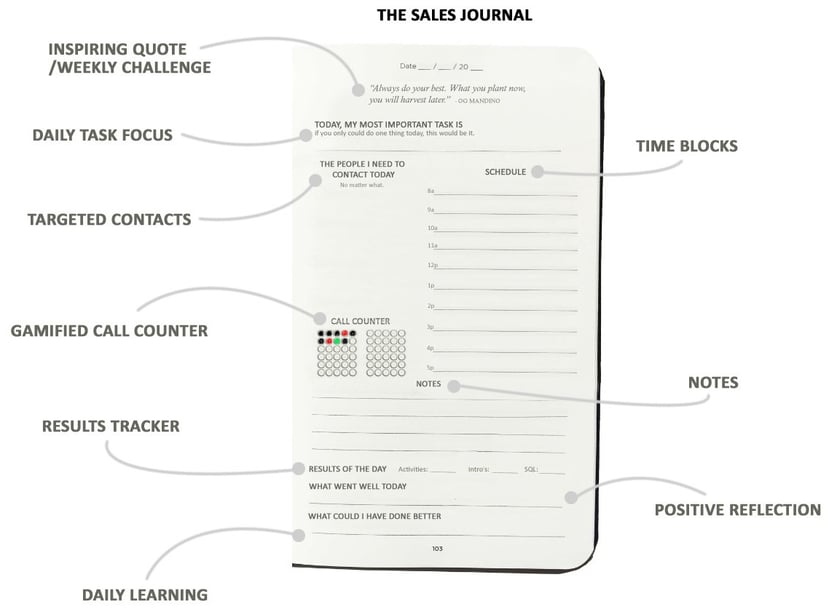
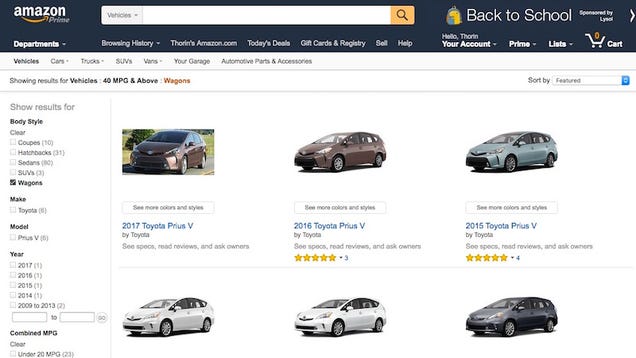
 
As an SDR, I’ve become more aware of the reality behind the saying “time is money.” Not being time-wise leads to fewer meetings booked, fewer opps generated,  lower income, and (at worst) being moved out of the role.

I've observed that high achievers are disciplined with their time and focus on what's most important at any given moment. They know what they have to do and when they have to do it before they start their days.

Recently, I went to a bookstore to find a journal to help me focus. As I looked at the different types available, I came up with an idea of a role-specific journal to be used for inside sales. At the heart of it, all inside sales professionals are doing the same type of tasks: research, prospecting, calling, emailing, social media, qualifying, etc.

My spin on an Inside Sales Journal

An SDR would take 5 minutes at the start and end of each day to set goals and track results. Here's what one page (one day) would look like:

insidesalesjournal.jpg

Inspiring Quote – Sales can be tough, emotionally. Starting the day off with a quote puts us in the right frame of mind.

Weekly Challenge – Challenges chosen by leaders in the industry to help the SDR grow in professional life.

Most Important Task of the Day – Humans are terrible multi-taskers. Writing down one major task for the day will hold us accountable and put it in our subconscious throughout the day. Over time, achieving that one major task every day will put the SDR on top of the leaderboard.

People I Need to Contact Today (no matter what) – This is the primary reason for the SDR role, to book meetings with the right people. Writing down their names, will keep us focused on who we can’t let slip through the cracks.

Call Counter – This is a psychological motivator to achieve activities. Making calls can be hard, especially for new SDRs. Gamifying the process by coloring in the circles every time a call is made and using different colors for rejections or connections is a fun way to achieve activity goals and see results add up.

Time Blocks – Build the day before it begins and be disciplined with time.

Results Tracker – Sales is a numbers game. You can’t improve what you don’t track.

What Went Well Today? - There are days it feels like nothing is going right. Leaving the office on that note can hurt confidence and motivation. There’s always a silver lining to every day, even the worst of them. Taking the time to think about the good and writing it down will keep the SDR in a positive frame of mind to start fresh the next day.

What Could I Have Done Better Today? - Reflection is necessary part of growth. Small, incremental improvements every day will result in high achiever performance in the long run.

Seeing results from a journal

This type of Inside Sales Journal can help reps reduce stress, be more focused and productive, and think clearer. Reps could share pages with their managers during one-on-ones. Often, the numbers we see in Salesforce don’t represent what’s happening on a deeper level.

What do you think? 

In the comments below, please let me know your thoughts. Could this help SDRs day-to-day? Would you add anything? Remove something? Would this be helpful as a leader in your one-on-one meetings with your reps?

UPDATE:  The Sales Journal site is now live.
 

28 Aug 01:08

4 Ways Your Sales Team Should Be Using LinkedIn (But Probably Isn't)

by paige@sweetfishmedia.com (Paige Southard)

four-ways-sales-team-linkedin.jpg

It’s sales 101 to use LinkedIn as a prospecting tool, but are you really squeezing every last drop of value out of it?

Most salespeople use LinkedIn to research and connect, but that’s only the tip of the iceberg.

The platform is valuable for research, but it’s also a relationship-builder, brand advocate, research tool, publishing platform, and marketing asset.

If you don’t know how to utilize the power of LinkedIn in all of these areas, keep reading.

1) To Build Their Personal Brand

Does your LinkedIn profile look like an online resumé? A list of your past jobs, roles at each, and a handful of recommendations?

If so, start hitting delete. Your LinkedIn profile is not an online resumé -- it’s a branding opportunity.

Using LinkedIn to communicate your skills and expertise is a self-centered approach. It’s time to turn that on its head.

Talking about yourself creates much less of an impact than branding yourself as the solution to your readers’ problems. Here’s how to do it:

Let’s break this down into a couple of important sections:

The Headline

You make your first impression on LinkedIn through your profile picture and headline. Make your headline a one-line elevator pitch of the problem you solve or value you create for clients. Use relevant keywords, be specific, include skills or accomplishments, and sound like a human.

Rewrite “James Carbary, Founder, Sweet Fish Media,” to “James Carbary, We Create Relationships Between B2B Companies & Their Ideal Clients.”

The former only communicates a title, while the latter offers clear, targeted value. An executive at a B2B company would be much more compelled to click and connect with the person attached to the second headline.

Past and Present Roles

Communicate your past and present roles in terms of value created for clients. John Nemo, best-selling LinkedIn author and trainer, breaks his present and past role descriptions into five subheadings:

  1. What I do
  2. How I do it
  3. What others say
  4. Who I work with
  5. Other relevant resources

This clear title and answer format covers the what, how, who, and testimonial accounts of the value provided. You’re not trying to toot your own horn: You’re communicating the benefit created for your clients at each role you’ve had.

Bonus tip: Capitalize each subheading to capture readers’ attention.

2) As a Research Tool

LinkedIn is such a powerful tool for B2B sales because of its research capabilities. The free version gives you a fair amount of options, and if you upgrade to LinkedIn Pro, the options are endless.

Search for your ideal prospect (job title, industry type, physical location, etc.), and reverse engineer that information to discover what they care about.

Look at the KPIs in their job descriptions. Do they care about direct sales, research, business development, customer experience, or something else? Use that information to tailor your outreach.

Side note: Check out 7 Little-Known Ways to Find New Prospects on LinkedIn to learn how to get creative with your prospecting.

This research will also give you ideas for keywords to include on your own page. Optimizing it for terms your prospect cares about will make your profile far more compelling.

3) As a Relationship-Building Sales Funnel

It’s well and good to tout the brand-building aspect of LinkedIn. But how does the platform actually make you money?

Creating a sales funnel on LinkedIn is something every salesperson should be doing, and it all begins with relationship-building.

When adding someone on LinkedIn, make a strong first impression with a genuine message instead of the default, “I’d like to add you to my professional network on LinkedIn.”

The best introductions include a customized message that begins building a genuine relationship from the initial request.

One important thing to always include is a simple, non-pushy call-to-action.

Here are a few connection requests to get the creativity flowing:

Offer Your Expertise

Hi [first name],

I saw the article, [article title], you posted. My team and I have created a system that streamlined that exact process and saved us hours in our week.

I’d be happy to share what worked for us. Up for a phone call?

[Your first name]

Connect and Offer a Freebie

Hi [first name],

I saw the article, [article title], you posted this week. I thought you also might like this article: [relevant article that could solve a pain point in their business].

I also have two more articles that share strategies to [solve the problem mentioned above] -- want me to send them your way?

[Your first name]

Invite Them to Be On Your Podcast (Or Other Opportunity):

Hey [first name],

Just came across your LinkedIn profile, and I thought you’d be a great guest for our podcast [podcast name].

Any interest?

[Your first name]

Feature Them in a Blog Post

Hi [first name],

I’m writing a blog post on [blog post title], and I’d love to feature you and your company.

Up for it?

[Your first name]

Your only goal for the initial contact is to get a response: Nothing less, nothing more. It’s just to start a conversation, and it should be treated that way.

Once the connection is made, it’s time to use the Relationship tool on LinkedIn.

The larger your network grows, the more important it becomes to keep your connections organized. This feature allows you to tag connections into sorted groups, add notes, record where and how you met, set follow-up reminders, and track all messages and conversations you’ve had with a connection.

A beneficial way to use the Relationship Tab is to organize your LinkedIn connections into different sales funnel categorizations: Leads, potential prospects, clients, and any other categories that fit.

For a more detailed explanation of this feature, check out this article from LinkedIn: LinkedIn’s Relationship Tab: Organize Prospects & Build Relationships.

4) A Publishing Platform

Publishing content on LinkedIn allows you to expand your brand, connect with your network, and build trust. There are five main points to note:

Reach Your Entire First-Degree Network With One Click

When you publish on a LinkedIn post, everyone in your first-degree network gets a notification in their feed. There’s no fancy algorithm you need to figure out; it shows up automatically in their news feed. Pretty great, right?

Reach Your Second-Degree Network Through Interactions

When someone likes, shares, or comments on your post, the floodgates are opened. When a first-degree connection engages with your content, it opens your post’s visibility to your second-degree network through that connection.

People who interact with your content should be considered warm leads. The interest in your area is there, so take advantage of that momentum.

Get Featured on LinkedIn Pulse

LinkedIn Pulse is another way your content can spread like wildfire. You can tag @LinkedInPulse with a description of your post, and your piece has the potential to get featured on the Pulse page.

Track Performance With LinkedIn Analytics

A huge benefit to posting on LinkedIn is the analytics feature. You can see what types of content are popular, who is reading and engaging with your content, and then tailor accordingly.

For the skinny on LinkedIn Analytics, check out New Analytics for Publishing on LinkedIn: See Who’s Viewed Your Published Post.

Niche Content Marketing

LinkedIn allows you to target niche audiences within your network by sorting and grouping your connections. By doing this you can publish targeted content to these niche audiences.

When publishing content, your goal should be to solve a pain, not to sell your product.

LinkedIn is not just another social network to keep up with.

It is a resource and tool that every salesperson needs to be digging deeper into every day. It’s a platform for prospecting, publishing, branding, communicating, sharing, and relationship building.

Take advantage of its capabilities, and your sales game will never be the same.

Subscribe to the B2B Growth Show on iTunes. If you don’t use iTunes, you can listen to every episode by clicking here.

HubSpot CRM

28 Aug 01:08

Your CRM is Sales Mission Control {Infographic}

by Matt Wesson

An astronaut has a million things to remember second to second. Oxygen levels, suit integrity, the direction of their ship, the effect of gravity. It’s truly staggering the amount of information they are bombarded with. But they aren’t up their doing it alone. They get plenty of help from mission control down here on earth.

Sales professionals aren’t unlike those astronauts. They have to remember emails, phone calls, meetings, names, demo scripts, product features, and a million other moving pieces in order to perform their job each day. Unfortunately, sales professionals don’t have a team at mission control they can rely on, but they have something almost as good: their CRM.

CRM (customer relationship management) tools are designed to organize, maintain, and track mission critical information for all key sales functions. From the new leads coming in to the latest touchpoint of that big account ready to close, a CRM knows all. But some sales teams are struggling to use their CRM effectively, causing a blackhole of time and productivity.

We created the infographic below to show you how this communication problem impacts a sales teams productivity and how to fix it. Don’t forget to download our latest eBook, “Houston, We Have a Sales Problem” for even more sales problems that might be holding you back.

Sales-Mission-Control

Download your copy of the eBook today to launch into greater detail on other sales problems like this, how deeply they impact a sales organization, and what using the right sales tools can do to solve them.

Let’s get ready for take off.

SalesProblemCTA

The post Your CRM is Sales Mission Control {Infographic} appeared first on SalesLoft.

28 Aug 01:07

Building Your Sales Data Strategy

by Rachel Serpa

Hands framing distant

As renowned physicist Lord Kelvin once said, “If you cannot measure it, you cannot improve it.” With sales leaders struggling to stand out in today’s increasingly demanding market and overcome decades of “art of sales” ideology, these words could not ring more true in the sales industry.

Having seen the growing importance of “big data,” some sales teams have begun haphazardly collecting and storing data within their CRMs and other sales platforms. Of course, this comes with its own set of problems, with 38% of sales leaders admitting that they simply don’t know what to do with their data.

To quote Facebook’s VP of Engineering Jay Parikh, “If you aren’t taking advantage of the data you’re collecting, then you just have a pile of data.” To start capturing data in a meaningful way that can be measured and make a true impact on your business, you must have a plan in place.

According to sales consulting firm LiquidHub, there are 4 types of data every sales team should capture:

  • Contact: email, name, company, etc.
  • Demographic: industry, location, etc.
  • Transactional: communications, purchases, etc.
  • Relationship: characteristics, likes, dislikes, etc.

So how do you capture all these different types of data? How do you know exactly what data points you need? And how do you use it to make smarter decisions? Let’s dive in.

Know What You Don’t Know

Taking a data-driven approach to sales is rooted in the discipline of the Scientific Method. Every sales leader has certain observations and assumptions about what’s going on with his or her sales performance, but the difference between the art and the science of sales is taking a step back and testing and analyzing these hypotheses.

Wood Bookshelf in the Shape of Human Head and books near break wall, Knowledge Concept

For instance, don’t just guess that deals from one territory aren’t closing because your reps on that team aren’t up to par. What else could it be? What other data points could you collect to further analyze this situation? Perhaps you could look into seasonality, lead source, competitors – the list goes on. In taking this investigative approach, not only will you get the answers you seek, but you’re also likely to uncover some fresh insights that you didn’t have before.

Develop a Sales Process

Once you are aware of the data points you would like to collect, one of the best ways to capture that data is to formalize a sales process. A sales process outlines the exact steps reps must take to move a deal from one stage of the sales pipeline to the next. Imagine a business with a pipeline composed of the following stages:

Screen Shot 2016-08-03 at 4.26.19 PM
A structured sales process might require reps to have an on-site meeting, complete a comprehensive industry analysis and receive confirmation that they’ve made the short list of competitors before moving a deal from the Evaluation to the Consultation stage.

As you capture the information necessary to complete each step of your sales process and develop a consistent data set, you will be able to measure, understand and improve performance over time. Research shows that there is an 18% difference in revenue growth between companies that define a formal sales process and companies that don’t. If you’re curious to learn more, check out this free eBook: 3 Keys to Unlocking a Scientific Sales Pipeline.

Maximize Data Quality

The only thing worse for your business than having no data is having bad data – in fact, According to Ovum Research, “dirty” data can cost a business 30% of revenue. So how can you make sure your sales team and tools are collecting the quality of data needed to yield true insights?

  • Don’t force sales reps to use multiple systems to send emails, make calls or run reports. All-in-one sales solutions increase the likelihood of data input and completeness by boosting rep adoption and preventing data from becoming siloed across various sales tools.
  • Make sure your sales tools are as seamless to use as Google or Yelp, even on mobile devices. If field reps can’t enter information on-the-go, the chances they will enter this data accurately and entirely is slim to none.
  • Automate as much data collection as possible. The less data reps have to enter manually, the more data is captured and the lower the chances of human error impacting data integrity.
  • Integrate with other key systems across your business, like Zendesk, Marketo or HubSpot. This ensures that you have a clear and complete view of your customers, including their lead sources, campaign participation or open support tickets.

Choose Your Metrics

Close up of vintage tape measure on rough wooden surface

As any sales expert ought to know by now, simply measuring revenue doesn’t offer much insight into sales performance, and certainly doesn’t tell you how to get better. Access to a high quantity and quality of data allows sales leaders to go beyond revenue and examine the many facets of sales performance. What’s more, new sales metrics are emerging that can measure performance across key conversion points within the sales funnel, providing specific steps that can be taken to impact growth.

For a full breakdown of these new metrics of sales, check out this white paper. For now, let’s use one of these metrics as an example: Lead Yield. Lead Yield is just one example of a Yield Measure, or measures that can help you understand how much value you get in return for your investments at each stage of the sales pipeline. Lead Yield can be calculated using the following simple formula:

Sales Revenue / # of Leads Generated

Understanding your lead yield enables you to more accurately score and prioritize leads from your various marketing channels and sources based on those that ultimately generate the most value for your business. It also gives you deeper insight into the data points and qualities you should be looking for when it comes to prospecting – i.e. contact title, company size, industry, other technologies in use, etc.

Lead Yield

Start Strategizing

Building a sales data strategy is becoming one of the foundational components of a successful sales organization. But without the right information, data quality and metrics, your business won’t get very far. If you’re interested in learning more about applying scientific processes to your sales, check out our Sales Science Academy, and enroll today.

28 Aug 01:07

Is Your Sales Story (Messaging) Compelling or Repelling?

by Mike
hand attracts sale with a large red magnet

An effective sales story (or messaging) changes everything. And I mean everything.

Your “story” is your most critical sales weapon partly because your “story” ends up in all of your other weapons. Think about it. Your LinkedIn profile has elements of your story. Your prospecting emails and proactive phone calls use pieces from your story. So do voicemails. Sales calls. Presentations. Demos. Proposals. All of the sales weapons contain elements and talking points from your story. So isn’t it worth asking?

Is your story compelling? 

Unfortunately, most salespeople’s and company’s stories are not compelling. They’re often boring. The main reason they’re boring? They are self-focused – way too oriented around the company and the offering/solution, instead of around what’s on the mind of the client/prospect.

During workshops when I ask salespeople to do an exercise that puts them in a position where they need to tell part of their story to a prospective customer, below is an assortment of the types of talking points sellers typically share:

“We provide ______________.”

“We’re privately held and have been in business X years.”

“We are the largest Y in our space.”

“Our unique processes…”

“We have the widest assortment, most experience, best____, blah, blah, blah”

“Our solution is…”

“We manufacture/offer/supply…”

What’s wrong with each/all of these talking points? In and of themselves, nothing. But as the lead-in to your sales story, a lot. The biggest issue is that the entire focus is wrong!

Salespeople (and marketing people for that matter) should ask two critical questions after every “story statement” they make to a prospect:

  1. So what?
  2. Who cares?

Most sales pitches/elevator speeches/half-baked value propositions do the opposite of what we want them to. Instead of attracting the customer, these pathetic sales stories repel them. Tired of self-absorbed sellers, the moment a buyer hears the all-too-common “we do this, we do that, we’re the best” they are turned off and their defense shields go up.

Here’s the harsh truth: Customers don’t care what you do or how great you think your company/solution is. They want to know what’s in it for them. Feel free to quote me. I pretty much say that everyday to someone.

If you want to get the prospect to lower their defenses and invite you in for a dialogue…if you’d like them to perceive you as a professional problem-solver, value-creator, and maybe even as an expert or consultant, then stop leading with what you and your company do, and start your story with the issues already on their mind!

A compelling sales story leads with the issues you address for your customers:

  • their pains that you remove
  • their problems that you help solve
  • the opportunities you help them capture
  • the new, better results and outcomes your solution helps achieve

I promise you: An effective sales story changes everything. STOP leading with what you do and START your story with a handful of the compelling issues you address for clients/customers. When you do that well, everything  changes.

If you’d like some help crafting a sharper, compelling, client-issue-focused, differentiating story, check out Chapter 8 in New Sales. Simplified. It might be the most popular chapter in the book, and not only will it walk you through an exercise to make your story more compelling, it also provides examples of other stories to help you draft yours.

___________

Speaking of books and the importance of your story…

Over the next month or so, three incredibly valuable, very different sales books are being released from top-notch authors. I’m beyond honored to have been asked to contribute the forewords to two of them and the introduction to the other. As each book approaches its release date, I’ll do a full post for each because I believe you will greatly benefit from all three. I certainly have. For now, here’s a teaser in case you want to put in a pre-order, and look for more on these future bestsellers soon:

sell with a story - small

‘Sell with a Story’ by Paul Smith takes one of my favorite topics to an entirely new level. Paul shows you how top sellers use stories and storytelling in all phases of the sales process, and he provides super-practical tools to help you draft and power-up your stories, too. You’ll love this highly entertaining book, too,  because, wait for it, it’s full of great stories!


high profit prospecting small

‘High-Profit Prospecting’ from Mark Hunter is going to help you make your pipeline of sales opportunities fatter and healthier. Mark knocks down the bogus straw men and myths that prospecting doesn’t work, and offers powerful, clear, actionable tips to help you find and create more leads – and to do it in a way that protects your image and enhances your profit. Phenomenal book!


only sales guide - smallAnthony Iannarino is my #1 Go-To Sales Guru and ‘The Only Sales Guide You’ll Ever Need’ might be the most comprehensive sales book written in the last decade. It shares the truth about who wins big in sales, why they win, and how they do it. He shows us that sales success is not situational, it’s about the seller. And he shares who you need to become and what you must do to win consistently.

28 Aug 01:07

3 Keys to Unlocking a Scientific Sales Pipeline

by Rachel Serpa

Close-up shot of an old rusty key inside a keyhole

In its most basic form, a sales pipeline is a visual framework that illustrates how deals move through the sales cycle. A quick glance at a company’s sales pipeline should illustrate all of the business it’s currently working to close and expecting to win over a period of time.

Seems simple, right? However, in a recent study conducted by Vantage Point Performance and the Sales Management Association, 44% of executives revealed that they believe their organizations are ineffective at managing their sales pipelines. This is because effectively building, maintaining and optimizing a sales pipeline is a lot more complicated than pouring leads in and getting wins out. Doing it right requires taking a scientific approach.

A sales pipeline is merely a representation of a much more complex underpinning sales process that outlines the exact steps reps must take to move a deal from one stage of the pipeline to the next. Having a clearly defined sales process in place leads to a series of consistent data points that can be measured to understand, predict and improve performance over time. In fact, research shows that there is an 18% difference in revenue growth between companies that define a formal sales process and companies that don’t.

There are three vital steps every business needs to take toward establishing a scientific, measurable sales pipeline and process that drives repeatable, predictable sales growth.

1. Define your sales pipeline stages
2. Establish pipeline stage requirements
3. Map your process to the sales formula

Define Your Sales Pipeline Stages

As mentioned earlier, a sales pipeline illustrates how deals move through your company’s sales cycle. It helps to visualize this pipeline as a funnel, with unqualified leads entering at the top or wide end of the funnel, and closed deals exiting at the bottom or narrow end of the funnel.

In between are various stages, or milestones, that represent the major steps it takes to progress sales prospects from initial conversation to close. These stages vary by company, and while defining them may seem like an exercise in naming conventions, it is actually a highly critical decision that essentially lays the foundation for your sales process.

To get the most value out of these stages, we recommend having 5 or fewer. The more stages you have, the harder it becomes to explain the specificities of each stage, which inadvertently shifts the focus from the customer and closing the sale to meeting internal requirements. It also increases the chances of deals jumping back and forth between various stages, making it difficult to accurately measure the success of your pipeline.

Here are some examples of stage combinations that make up a sales pipeline:

Screen Shot 2016-07-27 at 12.35.22 PM

Establish Pipeline Stage Requirements

Now that you’ve defined the key milestones within your sales pipeline, how do you know when it’s time to move a deal from one of these pipeline stages to the next? Outlining these specific steps and exit criteria is the heart and soul of your sales process. While this may require you to initially rely on educated guesses, as you consistently follow and measure these steps over time, you will learn what needs to be adjusted – and it will be worth it. A formalized sales process leads to a 65% increase in individual reps hitting their targets and an 88% increase in companies hitting their goals.

Let’s go back to the first example pipeline we provided earlier and examine some of the information and steps that a company might require before moving a deal from one stage to the next.

Screen Shot 2016-07-27 at 12.39.41 PM

The Prospecting stage is where all leads, whether inbound or outbound, enter your pipeline. Not all of these leads will be the right fit for your business, so you must establish that they meet your requirements before moving them to the Qualified stage. Asking the right qualifying questions will also prevent your team from wasting precious time chasing prospects that won’t convert.

While a business can certainly create its own unique set of qualifying questions, there are many existing and proven sales methodologies to choose from that can help. One of the most popular sales methodologies is BANT, which was introduced by IBM to help companies qualify and score prospects based on their Budget, Authority, Needs and Timeline. Other examples include MEDDIC, GPCT, CHAMP….you get the picture. For the sake of this exercise, let’s use BANT to list out some of the questions a rep might ask to help qualify a prospect.

Screen Shot 2016-07-27 at 12.42.12 PM

Get the Free eBook

Want to learn how to establish requirements for the other stages of your pipeline? How about how to map your process to the sales formula? To finish reading, download our latest eBook, 3 Keys to Unlocking a Scientific Sales Pipeline, here.

28 Aug 01:07

How to Nurture Your Prospects Toward The Sale

by Bryan Caplan

how to nurture your prospects ftimage 1

A new customer sees your company’s website, a post on social media or a testimonial from a satisfied client and reaches out to learn more.

Getting a customer’s attention is never easy but now comes the hardest part — closing the deal.

Not every sale is a simple conversion. In fact, 63 percent of people requesting information on your company today will not purchase for at least three months and a whopping 20 percent will take more than 12 months to buy. (Source: Marketing Donut)

So how do you keep a potential customer interested when they have so much time to lose interest in your product?

The answer is learning how to nurture your leads.

What is a nurtured lead?

Think of it like planting some cherry tomatoes — you start out with a handful of seeds and by paying careful attention to pests (competitors), giving it something sturdy on which to grow (your expertise) and watering periodically (direct outreach) one day that fruit will finally be ripe enough to pick and enjoy.

When someone expresses interest in your company you never want to leave them hanging. Turning that lead into a nurtured lead means taking actions to make sure you are in contact with them from when they reach out to when they finally make that purchase no matter how long it takes.

Why do you need to nurture your business’s leads?

Not only do nurtured leads more frequently turn into sales, but they also make 47 percent larger purchases than non-nurtured leads. [Source: The Annuitas Group]

Simply put — your business can’t afford un-nurtured leads.

What are the best ways to nurture your leads?

One way to make sure your potential customer never cools is by utilizing email marketing tools including an autoresponder.

Automating your lead management is a smart way to keep your leads warm and improve your bottom line while not costing you invaluable time and resources. The proof is in the pudding here: companies that automate lead management see a 10 percent or greater increase in revenue in only 6-9 months. [Source: Gartner Research]

Start off by welcoming your new lead with a Welcome Email. Crafting the perfect welcome message is key to starting this new relationship on the right foot. Learn how to craft an effective welcome message in our post ‘How to Write a Winning Welcome Email.’

From there, set up that new lead on a series of autoresponder messages to supply them the information they need to maintain the relationship in the weeks and months, maybe even years, ahead.

What is an autoresponder?

I always like to describe autoresponders as the Ron Popeil “Set It and Forget It” of email marketing. Of course, you don’t really “forget it” but using an autoresponder creates one less daily task for you as a small business marketer.

An autoresponder is a series of email marketing campaigns that are sent to your subscribers in the order and frequency that you decide.

autoresponder for leade nurture image

The time savings you’ll experience when implementing an autoresponder are substantial, especially if you follow our advice to grow your email list.

To help you visualize, here’s a sample schedule for an email autoresponder. It’s important to note that the order and timing of these email campaigns can and should be changed depending on how your audience receives and reacts to your messaging:

  • Welcome Email (within 24 hours) – A winning Welcome Email greets your leads and makes them feel as if they are a part of something bigger like a family or a team. Our recent blog post on writing a winning Welcome Email provides all the tips and tricks you need to make a lasting first impression.
  • About Your Organization (Day 3) – Give your new lead a look behind the scenes of your organization. Are there certain people you want to highlight (like the sales team or the office admin who greets them when they call?) Does your organization have a great story that helps to convince these leads to do business with you? This is your time to show your cards and add some personality.
  • Features and Benefits (Day 10) – Now your lead needs to know what’s in it for them. How will doing business with your organization add value to their life or job? This is where you include certain things you think they need to know about your product or service and paint a picture of why they should buy.
  • Client Testimonials and Press (Day 17) – Perception is key here! After greeting the lead and promoting the benefits of your product or service, you need to establish credibility. Incorporate some text or video testimonials into this email to demonstrate how other consumers, like them, have experienced your business. If you have some good press from a local news source, then include a snippet of the article with a link to the news site.
  • Ask For The Sale (Day 24) – Now that you’ve laid some groundwork in nurturing your lead, it’s time to ask for the sale. In this email, you can offer a promotion or discount, or you can simply say, “Can we set up a meeting?” This is your chance to be direct and have a sole call-to-action: get them on the phone or in the office to close the sale.

Of course, there’s no surefire way to build an autoresponder, but at least this provides you with a basic idea of how this amazing automated tool works to build your business. In the end, all the effort you put into your autoresponder development will undoubtedly pay out in spades.

Turn your prospects into paying customers.

Not every prospect is going to buy from you on Day 1, but that doesn’t mean you should overlook the importance of developing relationships and inching them closer to a sale.

Start by asking your best customers why they decided to buy from you and let this guide the messages you create for your autoresponder series.

Have questions about lead nurturing we didn’t cover? Ask us your best questions in the comments below.

28 Aug 01:07

The Best Lead Generation Software You’re Not Using

by Jessica Edmondson

laptop, cup and diary on table in office

How to make leads generation as easy as catching a dodo bird

Every marketer knows that lead generation isn’t as easy as it once was. But imagine if leads generation software could make leads as easy to capture as the infamous dodo bird. The dodo bird is well known for its willingness to be captured, however it wasn’t because it was extremely stupid or suicidal but due to its lack of survival instinct or reflexes that was a result of it having no predators prior to the arrival of humans in its ecosystem. This trusting nature made them incredibly easy to be caught by Dutch settlers.

Unfortunately, leads are a little better at adapting to new circumstances than the dodo. Therefore, it is no surprise that SEO and PPC are harder than ever before due to a combination of it being mined thoroughly and tools like ad blocker which in 2015 grew in adoption by 48% in the U.S. according to PageFair’s 2015 ad blocking report. Along with this, the flooding of inboxes by email have led to the automatic reflex to delete all and custom and default spam filters take care of the rest. In other words, businesses and consumers alike have developed their own digital reflexes meant to protect them from unwanted interactions.

So how are you supposed to break through these automatic reflexes taking place in the digital space and make leads act a little more like the dodo bird? By being greater than just one lead generation software.

While there has been much talk about relationship oriented selling breaks through barriers, in order to be successful at that your different lead generation software needs to have solid connections with each other and be able to take part in each stage of the buyer’s journey. Therefore, the best lead generation software you’re not using in in fact four with integrated approaches that cover the whole buyer’s journey. This includes:

  • Digital analytics
  • Marketing automation software
  • CRM
  • Referral marketing software

4 of the best lead generation software you’re not using together

Digital analytics software – Digital analytics software keeps track of lead generation metrics that are usually part of the beginning of a buyer’s journey. While there are basic analytics like clicks and downloads of assets, make sure that your web analytic software is tracking more advanced metrics that apply to long-term goals. These more advanced metrics include real-time reporting, SEO keyword analyses, and behavioral traffic flow. From this insight you can optimize your website and assets for high-quality traffic.

Unsurprisingly, one of the best digital analytics software is Google Analytics. Google Analytics provides you with important data about the prospects or leads who are visiting your digital presence. Within Google Analytics users can capture advanced insight into how visitors interact with a digital presence, how they arrived, and measure the sales and conversions that occur, along with much more.

Marketing automation software – Marketing automation software automates repetitive marketing tasks to help business get found online and provide advanced analytics and insight into all marketing initiatives in order to optimize and personalize them. Two features that provide this value are lead scoring and lead nurturing. They enables marketers to pinpoint quality leads and understand what stage of the buying process leads are at to nurture them accordingly. Marketers can then place them into campaigns that are personalized to their needs. This lead generation software is often most effective in the middle of the buyers journey after awareness but before they become an SQL, although different features can be applied throughout a customer’s lifetime.

Hubspot is a top marketing automation software for small and medium sized business. With goal-based email nurturing and in-depth analytics along with features that enable marketers to manage and leverage their social media presents, a business can generate greater number of quality leads and help convert them to SQLs, opportunities, and finally, customers.

CRM (Content Relationship Management) – CRM are used by sales to manage and analyze lead and customer interaction, and data throughout the customer life cycle to drive closing of leads and increase sales conversions. However, many times marketers assume that a CRM should be used exclusively by sales but this isn’t necessarily true. The value that a CRM can offer a marketer is in its ability to continue the tracking of MQLs and discover what marketing efforts are producing the leads that convert to customers.

Salesforce provides one of the best CRMs on the market. In addition to keeping track and managing contacts, the Salesforce CRM track sales leads, opportunities, and customers with an ever increasing amount of dedicated integrations. Based on their 2015 customer relationship survey, their CRM has increased sales productivity by 44%, increased win rate by 37%, increased sales by 37%, increased lead conversion by 43% and increased forecast accuracy by 48%.

Referral marketing software – Referral marketing software harness the power of your current customers, partners, and employees’ relationship with their network by incentivizing them to provide a warm introduction that extends the trust of the previously built relationship to include your brand, increasing the likelihood of them buying by 400%, (Nielsen). Your current customers, partners and employees understand who in their network is in market for your product or service to create a 4X higher conversion rate than typical marketing channels. This lead generation software is a powerful part of keeping current customer and partners engaged and can increases referred customer’s lifetime value by 16% compared to non-referred customers (Harvard Business Review).

Amplifinity is one of the top B2B referral marketing platform that creates a dedicated channel for lead generation for companies with direct sales teams. Amplifinity understands the importance of offering an integrated lead generation approach for the whole buyer’s journey and has a deep Salesforce integration through a managed packaged app that brings sales and customer success teams into the process.

Find the best lead generation software for you

There are many types of lead generation software available to enable your lead generation efforts. When deciding what your next investment in lead generation should be make sure your return on investment makes sense. To decide if referral marketing software should be the next lead generation software on you adoption list tryout the ROI calculator to discover what your personal referral ROI could be.


28 Aug 01:07

Data-Driven Sales Coaching: How to Help Your Team Hit Home Runs

by Rachel Serpa

bat and baseball

As a sales leader, you’ve probably realized that coaching your reps can make a difference in their performance. However, you may not realize exactly how much of a difference it can make. According to the Corporate Executive Board Company, reps who receive just 3 hours of sales coaching per month exceed their goals by 7%, boosting revenue by 25% and increasing the average close rate by 70%.

But let’s be real: being a good sales coach is hard. That’s probably why 73% of sales managers admit to spending less than 5% of their time coaching – because perhaps the only thing worse than not coaching at all is coaching poorly. The worst kinds of sales coaching sessions can be categorized into three groups:

1) Instant Replays: These sessions occur when sales leaders waste 1:1s by asking reps to provide recaps of their recent activities and conversations. Rather than using the time to discuss strategies for improvement and provide value for the rep, the meeting is used to get the manager up to speed.

2) One-sided Conversations: Perhaps the most negative of all coaching tactics is to talk at a rep, rather than with him or her. During these “conversations,” managers spout off about all of the things they would have done differently if they were in the reps’ shoes, offering subjective feedback that serves mostly to stroke their own egos.

3) Performance Evaluations: One of the most important things to remember about coaching is that it is not a performance evaluation. 1:1s should never be spent rehashing everything a rep did right or wrong; rather, the time should be used to discover ways he or she can increase contract values, identify decision makers faster, etc.

If you want to avoid these types of sales coaching pitfalls at all costs, there is only one way to do it: data. Sales leaders who take a data-driven approach to coaching are able to provide constructive feedback that builds reps’ confidence and generates measurable results. Here’s how.

Agree on a Sales Process

A formalized sales process leads to a 65% increase in individual reps hitting their targets and an 88% increase in companies hitting their goals. That’s because a good sales process clearly outlines the exact steps reps need to take to move a lead further along at each stage of the sales pipeline.

For example, imagine a business with a sales pipeline composed of the following stages:
Screen Shot 2016-07-21 at 3.50.43 PM

A structured sales process might require reps to have an on-site meeting, provide a customer reference and receive verbal confirmation that they’ve made the short list of competitors before moving a deal from the Qualified to the Quote stage.

Sales coaching becomes much easier with a formalized sales process in place because, as reps capture the data necessary to complete each of these steps, managers are able to follow along with their activities and communications, eliminating the need for a play-by-play later on. In addition, a sales process provides a baseline for feedback around how to best accomplish and complete these key milestones.

For a complete breakdown of how to build a successful data-driven sales pipeline and process, download this free eBook.

Measure Together

As the famous saying goes, “Give a man a fish and you feed him for a day; teach a man to fish and you feed him for a lifetime.” Part of effective sales coaching means that you are helping your team grow and learn how to make better decisions on their own – not just telling them what to do.

One key way to achieve this is to take time in your 1:1s to analyze and examine sales reports together. This way, any discoveries that are made are the product of a joint effort, and any risk of offering subjective feedback is eliminated. Examples of sales reports that a coach might view with his or her reps include call and email outcomes, time to first action, sales goals and more.

To foster a truly data-driven sales culture, all reps should have access to the data they need to independently track progress and make smarter, more strategic decisions, even outside of 1:1s. Scientific sales leaders are choosing sales software that has the power to capture and process big data and provides real-time analytics plus robust permission controls. This way, reps are able “fish” on their own and get their hands on the reports they need when they need them.

Offer Actionable Insights

A recent study showed that 58% of sales reps feel as though sales tools are used more to monitor their performance than increase it. In truth, while many sales platforms promise deep insight into how to improve sales performance, the reality is that most are actually providing reports that simply describe sales results. If you want answers to basic questions such as, “are my reps performing according to plan?” these reports can give you a simple yes or no answer. Unfortunately, there’s not much “insight” to be gleaned from these types of surface-level observations.

In contrast, next-generation sales platforms not only enable managers to understand who’s hitting quota, but they also provide prescriptive sales insights that reveal the actions sales teams can take to achieve desired outcomes. Armed with these actionable, quantifiable insights, sales leaders can help reps understand how to scientifically improve their performance.

For example, with the knowledge that reducing time to first call to 17 minutes can significantly impact revenue, sales managers can work with reps on strategies to optimize efficiencies and reduce their time to first call to this amount of time. No performance evaluation, no subjectivity, just science.

Apollo Pic for Coaching Blog

While sales coaching isn’t easy, data science and technology is evolving to help sales leaders take a much more data-driven and effective approach. If you’d like to learn more about how to put science at the center of your sales processes, check out this free eBook, How to Eliminate Sales Forecasting Fallacies with a Data-Driven Approach.

28 Aug 01:06

The Formula for Conquering a Target Account

by Willy Sheets

Sales development reps must have a clear, concrete plan of action when it comes to conquering the jungle that is account-based prospecting. It may be an SDR’s natural instinct to want to reach out to as many relevant contacts as possible in order to get the most leads over to their team, but this is not always the most effective approach.

Prospecting many different accounts and contacts with no particular purpose or rhythm can leave an SDR’s database exhausted and in disarray. Using a target-based approach to prospecting allows SDRs to focus on a small number of accounts at one time, making sure they are passing high quality leads over to their reps.

Let’s take a deeper look at the art of conquering a target account.

Step 1: Identifying the Appropriate Contact

This is the first leg of the account-based prospecting journey. SDRs must select the most relevant titles and put them through their call cycle, in order to identify the final decision maker or influencer. It is important to disposition contacts as you go through them, as well as to extract as much sales context as possible from each and every conversation. The basic premise of this strategy is to continually leverage information and insights obtained from previous interactions within an account, and then use these insights to help guide the conversation with the next prospect. Once you have identified the appropriate contact, it is time to qualify the account.

Step 2: Qualifying the Account

A tactic often overlooked in account-based prospecting, is qualifying the company as early as possible in the sales process. Even if you get a prospect at an account live and they say they are not the appropriate person, don’t hang up! They may be able to provide answers to your qualifying questions. By qualifying the company sooner rather than later, not only are you getting a head start when you finally reach the decision maker, but also you are eliminating any accounts that may not be a fit from the start. Since account-based sales development means that SDRs are only focused on a handful of accounts at one time, it is easier to collect and organize qualification information for each account. Be sure to ask insightful probing questions that uncover pains or needs, instead of questions that can be answered with a “yes” or a “no”. The more insight into an account that you can provide for your rep, the better! Once you have gathered all your qualification information, it is time for your rep to pounce on the opportunity and close the deal.

Step 3: The Hand-off

Qualifying and closing are independent functions of the sales development process, but both rely on the targeted efforts of SDRs. Sales development reps must dissect ALL the conversations they’ve had within a target account, and make sure to include any and all insights when passing it off to their rep. A great way to organize multiple conversations within a target account, is to create a write-up containing all referrals and conversations. This not only makes reps’ lives easier, but also gives them a detailed looked int the account.

Scheduling a demo or discovery call is not conquering a target account. Conquering a target account means diving in deep, hunting for the right person, gathering all the qualification information you can, and handing it off to your rep to go in for the kill!

How are you ensuring your reps are making the most of their target account lists?