Read more on The Goal of the “Are We A Fit Call” (aka “AWAF”)…
The post The Goal of the “Are We A Fit Call” (aka “AWAF”) appeared first on Predictable Revenue.
Georgia Tech engineering student Ryan Pickren has turned his knack for computer hacking into a lucrative side-career. He's now the number one most successful contributor to United Airlines' Bug Bounty Program, which rewards hackers with frequent flyer miles for finding security flaws in their website.
Produced by Arielle Berger. Original reporting by Matt Weinberger.
Follow BI Video: On Twitter
This story was delivered to BI Intelligence Apps and Platforms Briefing subscribers. To learn more and subscribe, please click here.

Scheduling push notifications at optimal times during the day can significantly improve user retention and boost revenue, according to Leanplum. In fact, by sending a push notification when a user is most likely to open it, app publishers can boost retention rates seven-fold in the first 30 days of users installing the app. This can significantly impact publishers’ ability to monetize their apps.
Leanplum’s report, based on over 200 apps, found that just by sending push notifications, user retention could increase by around 20%. Roughly 75% of users stop using apps within the first few days of downloading them. That share of users drops to around 8% by day 30, Leanplum notes. This severely diminishes app marketers’ ability to engage with users.
Retaining even a small share of users can result in a significant uptick in revenue. For example, if Uber were able to re-engage just 15% of its dormant users though push notifications, it could earn more than $1 million in revenue each day, the study estimates.
Nevertheless, there is still a challenge in convincing users to enable push notifications and engage with them. On iOS devices, for example, while 45% of users enable push notifications on average, just 9% click through. This is because many users view push notifications as annoying, according to a Localytics study. However, the recent iOS 10 update has made the lock screen on iPhones much more interactive, which could help empower push notifications even more.
Cutting through the noise of an overcrowded app market is critical for any app developer looking to build a viable user base. There are now well over 3 million apps available across the world’s five largest app stores. Delivering the right product to the right audience at the right time in this environment is imperative to the success of any app.
The challenge of marketing an app effectively has made app-install ads — an ad unit that directs users to download a mobile app — an essential tool for developers seeking to stand out in the Google Play and Apple app stores. This is why it's not surprising that more marketers are using paid channels to drive downloads than ever before. In fact, over 80% of respondents in a survey of the top 100 grossing mobile app developers noted they plan on increasing their spend on app-install ads in 2015.
Will McKitterick, senior research analyst for BI Intelligence, Business Insider's premium research service, has compiled a detailed report on mobile app-install ads that looks at the revenues from app-install ads and how they're expected to grow over the next five years. It also looks at the performance of app-install ads and how these metrics are expected to change over time.
Furthermore, the report examines the top app-install ad products and pricing models offered by the leading advertising platforms, including Facebook, Twitter, Yahoo, and Google, as well as newer app-install formats from Instagram and Snapchat. Looking to the future, the report examines how companies are shifting their app-install ad spend to new formats, as well as the new tools they're using to improve optimization and ad effectiveness.

Here are some key takeaways from the report:
In full, the report:
To get your copy of this invaluable guide, choose one of these options:
The choice is yours. But however you decide to acquire this report, you’ve given yourself a powerful advantage in your understanding of the fast-moving world of mobile app-install ads.
GAHCHO KUÉ, N.W.T. — Seen from inside an approaching aircraft, the Gahcho Kué diamond mine seems to materialize out of nowhere, a speck of industrial development amid an endless stretch of low vegetation and tiny lakes imprinted on the northern Canadian rock face. Here, there are no natural points of reference. The view looking out from one side of the mine is nearly indistinguishable from any other.
But beneath the surface, the location is distinct from its surroundings. Under the cap rock at Gahcho Kué are three vertical tubes of mineral — known in the industry as pipes — rich with diamonds. The mine is expected to produce 54 million carats of diamonds during its 12-year lifespan, making it the world’s largest new diamond mine to be constructed in 13 years.
The joint-venture operation, located about 280 kilometres northeast of Yellowknife, is 51-per-cent owned by De Beers Group of Companies, a privately owned diamond mining and retail company, and its massive London-based parent, Anglo American PLC. Toronto-based Mountain Province Diamonds Inc. owns the other 49-per-cent stake.
It’s very important we bring this mine up to commercial production in the time we say we will

But the new mine is more than just a rare development in the diamond industry. De Beers touts Gahcho Kué as a much-needed economic boost for the Northwest Territories, saying it will add $5.7 billion to the local economy during its lifespan. It also represents new hope for the company’s Canadian operations, a stable new supply that comes at a time of heightened uncertainty in the diamond industry.
Gahcho Kué will offset declining production at the company’s other two Canadian diamond operations, which have met setbacks amid falling diamond prices and local opposition.
In December 2015, De Beers began shuttering operations at its Snap Lake mine in the Northwest Territories, and put the project up for sale this summer after the mine’s economics became unfeasible. A planned expansion at its Victor mine, located in northern Ontario, has been delayed because of resistance from the local Attawapiskat First Nation.
Gahcho Kué entered production in mid-2016, and the consortium hopes to ramp up to full capacity in the first quarter of 2017.

“It’s an important supply for us,” said Mark Cutifani, chief executive of Anglo American, standing near the edge of one of three open-pit mines at Gahcho Kué. Anglo’s investment in diamonds is part of its broader strategy to focus operations around diamonds, platinum and copper.
De Beers chief executive Bruce Cleaver is equally eager to reach full capacity. “It’s very important we bring this mine up to commercial production in the time we say we will,” he said.
New diamond mines are a rare phenomenon. Cutifani said there hasn’t been a major discovery in the industry for 20 years, and new projects can take at least half that time to bring into production.
Meanwhile, diamond miners are digging ever deeper in order to replenish falling production. Based on internal research, mining companies claim the precious mineral could fall into a deficit in next five years as new supplies straggle behind demand.
“Even if we were to discover something today, it might take 10 years plus to build a new mine,” Cutifani said. “So mines like this become very important in filling that demand gap for the next 10 years.”
Gahcho Kué is Canada’s sixth commercial diamond mine. At 4.5 million carats per year of production, it will account for about three per cent of the global diamond market.
Diamond mining in Canada first became commercial in 1998 with BHP Billiton Ltd.’s Ekati development in the Northwest Territories. Since then, Canada’s remote northern tundra has steadily attracted international miners despite its myriad challenges.
The $1-billion construction of Gahcho Kué was an immense logistical undertaking. Most supplies were trucked into the site via an ice road that begins near Yellowknife, a journey that can take as long as 20 hours. Due to the truck’s heavy loads, the ice road season is typically restricted to between six and eight weeks beginning in early February.
“It’s a very short window,” said Robert Smith, supply chain superintendent at De Beers.
In 2015, the company moved 2,500 truckloads of supplies up to the mine over the ice road, transporting everything from diesel fuel to spare components for the facilities.

Unexpectedly warm winters sometimes diminished the thickness of the ice road, which further complicated transport. At one point, drilling rigs had to be disassembled and put onto six separate truck beds in order to be brought on site, according to one contractor.
The mine’s camp during peak construction could house up to 800 workers, making it one of the most populous centres in the Northwest Territories. The mine’s management somewhat generously refer the camp as “the town” of Gahcho Kué, but it has its own water sanitation system, airstrip, recreational facility and convenience store, as well as a diesel-fired power facility that can generate as much as 16 megawatts of electricity — about a seventh of that generated in the entire NWT.
The camp is surprisingly comfortable considering the outside elements. At night, as a hockey game is broadcast on a television in the dining hall, it is easy enough to forget that the mine is a couple of hundred kilometres from the nearest small city.
From an operations standpoint, mining in the north also has its challenges. The mine has a 9:1 strip ratio, meaning that for every 10 truckloads of rock that is dug up, only one will contain kimberlite, the green-tinged rock that tends to contain diamonds.
As a result, Gahcho Kué’s processing facility sorts through enormous volumes of kimberlite in order to separate the diamonds. The facility at full capacity will process between 40 and 50 truckloads of kimberlite per day, each weighing well over 200 tonnes.
You’ve got some very high-value diamonds here, and you’ve got some very low

The kimberlite is run through a series of separation stages, including crushers, screens, laser detection and other processes before the final hand-sorting phase. Every day, those 50-odd truckloads are reduced to about 12,000 carats worth of diamonds, just enough to fill a few large soup cans.
Almost all the diamonds mined at Gahcho Kué will be sold as gemstones for necklaces and rings, while lower-quality diamonds will be used in the manufacturing of industrial hardware such as drill bits and saw blades.
“You’ve got some very high-value diamonds here, and you’ve got some very low,” says Simon O’Brien, a diamond inspector for De Beers. “So I think [Gahcho Kué] is probably about average, where it sits in terms of its value.”
The actual value of those diamonds is changing as fast as consumer preferences are. Millennials, for instance, would rather spend money on electronics and travel than expensive jewelry. Marriage rates are also at historic lows in many Western markets, particularly in the U.S., which accounts for about 45 per cent of the global diamond market.

“Millennials are obviously an interesting phenomenon for us,” De Beers chief executive Cleaver said.
According to a recent report commissioned by De Beers, demand in 2015 for polished diamonds plateaued in China and declined in India, and those are the markets where demand is expected to grow most rapidly. The two countries combined to make up just 21 per cent of the global market, suggesting there is plenty of room for growth.
In Western markets, non-committal young people could soon put a dent in diamond wedding ring sales. However, increasingly affluent single women are expected to replace some of the waning demand by buying more diamonds for themselves, the report suggests.
In the near term, however, even De Beers is subdued in its forecast. “We don’t see a significant amount of growth in 2016 in consumer demand — the words we use are cautiously optimistic,” Cleaver said.
Another headwind is a recent influx of artificial diamonds, which are manufactured in labs rather than mined from the Earth’s depths. Manufacturers have slowly improved processes that use carbon, heat and intense pressure to create synthetic diamonds that are, in some cases, more perfectly cut than the real thing.
Consultant Frost & Sullivan expects annual diamond supplies to fall to just 60 million carats by 2050 from a peak of nearly 150 million carats in 2018. And it estimates more than half of those diamonds in 2050 will be of the cheaper artificial variety.
Manufactured diamonds present a challenge for the diamond industry since buyers are increasingly demanding that their purchases come from ethical sources.
That demand has led De Beers to boost its marketing efforts. The company helped develop the Kimberley Process, a certification scheme that aims to weed out so-called “conflict diamonds.”
Even so, the younger generation’s enthusiasm for diamonds is uncertain. As spending habits change, Cleaver said his company has heavily invested in selling developing countries on the allure of diamonds. But most of the industry’s future remains pegged on India and China.
“Beyond that,” Cleaver said,“it’s really a question of where to spend your marketing dollars.”


How do you encourage leads to take that final hurdle and buy from you?
One of the most powerful ways is with a customer success story.
Case studies & success stories let you showcase one customer’s experience as an example of what to expect from you and your product or service.
They give you the chance to:
As long as you don’t forget the golden rule, that is.
What’s the golden rule?
A great customer success story needs to be a great story, too.
Whether they’re told through text, audio or video, all the best case studies follow a very simple but very effective template. It’s a classic story structure that you’ll be familiar with from basically every book, movie and play you’ve ever seen.
Most importantly, it works, giving you the power to touch the hearts and convince the heads of your leads — hopefully converting them into buying customers along the way.
And I’m going to walk you through that template now.
 In a small town there lives a brave knight. He spends his days keeping the townsfolk safe and generally doing good. The smiles on their faces make all his battles worthwhile.
This stage is more commonly known as the situation part of any good case study. It’s an introduction that gives context to the rest of the story.
A mistake many businesses make is thinking they’re the hero in their success stories. But the real hero should always be your customer, not you.
(You actually play more of a supporting role, like a powerful ally. More on that later.)
And that’s why you should begin your success stories with an intro into your client. Take some time to introduce them, what they do and why. Give some detail on their values, their history and their goals. It doesn’t have to be comprehensive, but it should give your audience enough background to understand everything that comes next.
Template: Company X is ____. For ____ they have helped ____ to ____. They believe ____. Their goal is ____.
Example: Room & Board is a furniture and home furnishings retailer. For more than 35 years they have helped families to create practical, comfortable and timeless living spaces. They believe the surroundings you live in should be a reflection of who you are. Their goal is to provide the most helpful, personal and convenient service possible to their customers.
 But not all is well in the town. A nearby witch begins to terrorise the knight, eventually putting a spell on him so dreadful that he is unable to protect the townsfolk any longer.
Next we come to the problem part of your success story. This is where you raise the stakes and introduce an issue that puts everything at risk.
You want to make this problem really hurt. Be sure to use real testimonials in this section, even if you don’t use them anywhere else in the case study. (Though you should: your customer’s words are always more authentic than your own.) Tease out your client’s pain point and use the language they use to explain how it affected them.
Be clear on why the situation is so bad, and why the problem must be solved. How long has it been going on? How does it stop your client from achieving their goals? How does it jeopardise their future?
Template: Company X were struggling to ____. As a result they couldn’t ____. They needed ____.
Example: Room & Board were struggling to provide a seamless customer experience across their physical store and online. As a result they couldn’t deliver a buying process completely tailored and relevant to each customer. They needed a way to connect their digital presence to their real-world interactions with customers.
 Luckily, in his hour of need the knight meets a magical fairy who agrees to help him. After a long fight she removes the spell and banishes the witch from the town forever.
It’s time for the solution to your client’s problem. That’s your cue, of course. At this stage you add yourself to the success story and explain how you solved the core issue.
Remember, you’re the ally that helps the hero defeat their enemies. In this section you can include more information about yourself, but the focus should remain on your client.
Feel free to cover why your customer chose you over the competition. Just make sure you return to how your product or service solved their problem and the process they went through to implement it. Specifics are great here. Were there any hitches or setbacks along the way to success? Which part of your offering was most useful?
Template: Solution Y allows Company X to ____. Thanks to ____, ____. Now Company X uses Solution Y to ____.
Example: The Salesforce Marketing Cloud allows Room & Board to merge its online and in-person selling process. Thanks to its database of purchasing decisions and predictive intelligence, the business can create deeper and more personal relationships with customers through automated recommendations. Now Room & Board uses the Marketing Cloud to send all of their customer communication.
 The knight thanks the fairy and returns to defending the townsfolk with more determination that ever before. The townsfolk reward him with a grand castle, and everyone lives happily ever after.
Finally, we come to the outcome of the case study. This is where you detail all the good things that happened thanks to the solution and wrap up the story.
Include as many details as possible at this stage. The more specific you can be about the real benefits to your customer, the more impressive it will sound to your audience. Whether they’re qualitative or quantitative, be sure to include them.
How did things get better for your client after they used your product or service? Are they achieving their goals? How has their situation changed as a result? And why does it matter? Make your audience really care by grounding these points in the important goals and values you established earlier in the success story.
Template: Solution Y has helped Company X to ____. Their goal of ____ is now ____. As a result they ____.
Example: The Salesforce Marketing Cloud has helped Room & Board to generate a 40% higher average order value. Their goal of delighting their customers with a personalised service is now simpler to achieve than ever. As a result they have seen an ROI of 2800%.
Did you notice the example I used in each of the steps above?
That wasn’t made up. It’s a real success story from Salesforce that does a great job of following this logical story structure to first hook the audience and then build trust.
Here’s the full template itself, followed by the case study video and the timecodes that correspond to each of the 4 sections of the template.
1. Situation: Company X is ____. For ____ they have helped ____ to ____. They believe ____. Their goal is ____.
2. Problem: Company X were struggling to ____. As a result they couldn’t ____. They needed ____.
3. Solution: Solution Y allows Company X to ____. Thanks to ____, ____. Now Company X uses Solution Y to ____.
4. Outcome: Solution Y has helped Company X to ____. Their goal of ____ is now ____. As a result they ____.
1. Situation: [0:00-0:40] Room & Board is a furniture and home furnishings retailer. For more than 35 years they have helped families to create practical, comfortable and timeless living spaces. They believe the surroundings you live in should be a reflection of who you are. Their goal is to provide the most helpful, personal and convenient service possible to their customers.
2. Problem: [0:40-1:02] Room & Board were struggling to provide a seamless customer experience across their physical store and online. As a result they couldn’t deliver a buying process completely tailored and relevant to each customer. They needed a way to connect their digital presence to their real-world interactions with customers.
3. Solution: [1:02-2:35] The Salesforce Marketing Cloud allows Room & Board to merge its online and in-person selling process. Thanks to its database of purchasing decisions and predictive intelligence, the business can create deeper and more personal relationships with customers through automated recommendations. Now Room & Board uses the Marketing Cloud to send all of their customer communication.
4. Outcome: [2:35-3:45] The Salesforce Marketing Cloud has helped Room & Board to generate a 40% higher average order value. Their goal of delighting their customers with a personalised service is now simpler to achieve than ever. As a result they have seen an ROI of 2800%.
An effective customer success story works just like any other story. It should be compelling enough to catch your audience’s attention and keep it, while also being memorable and emotional.
But the magic template? Situation, problem, solution, outcome.
Of course, you can add to this simple 4-stage structure. But this core format will give the support your case studies need to convince your leads to buy, no matter how complex they become.
Learn the step-by-step process to convincing your audience.
Packed full of our expert advice on how to identify the right story, choose the right client, and use your video case study effectively.


Salesforce is rumored to be one of the parties interested in buying Twitter, according to a CNBC report on Friday.
Why in the world would Salesforce, a business software company mostly used by salespeople, be interested in a consumer social media service like Twitter?
Quick answer: Twitter is one of the most widely used prospecting tools used by salespeople these days.
Long gone are the days of salespeople solely relying on existing rolodexes and wining-and-dining tactics to sell stuff. Instead, they use social media sites, like Twitter, LinkedIn, and Facebook, to learn more about potential buyers and gain real-time insights into what they're interested in — even giving rise to a term called "social selling."
According to a recent survey by LinkedIn, more than 70% of sales professionals said they use social selling tools, like LinkedIn, Twitter, and Facebook, making them the most widely used sales technology. Moreover, 90% of the best-performing salespeople said they use these social selling tools, while nearly 50% of the respondents said they spend at least 3 hours a week in these apps. Perhaps it explains why Benioff tried so hard to buy LinkedIn earlier this year.
Salesforce actually published a blog post back in 2014 emphasizing the importance of Twitter in selling. It cites things like engagement and lead generation as reasons for Twitter's effectiveness, calling it the "largest cocktail party in the world."
Twitter's massive amount of data could of course be used to immediately boost Salesforce's artificial intelligence and machine learning capabilities. Salesforce just rolled out a new AI feature called "Einstein" this week.
But any person engaged in selling to big companies know the value of Twitter. Vineet Jain, CEO of Egnyte, tells us Twitter is increasingly becoming a valuable tool to his company, which sells cloud storage software to some of the largest companies in the world, like Nasdaq, Ikea, and Red Bull.
“Twitter has made an unintentional impact on the sales side of business, which may be what Salesforce is most intrigued by at this point. Because sales has evolved to a much more personal experience now, I would say that behind LinkedIn, Twitter has become the most widely adopted social tool for salespeople to qualify, prospect, and create conversations with potential customers," Jain told Business Insider.
It's also worth noting that Salesforce CEO Marc Benioff didn't flat out deny his interest in buying Twitter, when Business Insider asked about it back in August, after Salesforce bought Quip. Although Benioff made it clear that he couldn't comment on any potential acquisition activity, he did say Salesforce would continue to look for companies to buy.
"Whenever there’s an opportunity that we feel benefits Salesforce and our customers, we will always do whatever we can to make an acquisition happen. We love being able to take on the risk of an acquisition because many of them become really successful," Benioff told Business Insider at the time.
Salesforce declined to comment on this story.
Yet, Wall Street doesn't seem too excited about Salesforce's interest in Twitter. Salesforce shares are down 5% as of Friday afternoon.
"I think it would be an unnecessarily expensive and risky transaction for salesforce, particularly given the pivot in Twitter's own business to build up the media side of its business," Stifel's analyst Tom Roderick told Business Insider.
SEE ALSO: Salesforce adds to its $4 billion spending spree by quietly buying another company
Join the conversation about this story »
NOW WATCH: NASA is bringing back one of its most experimental and dangerous programs
The combination of abilities required for elite lead generation is hard to find. To attract the right types of people to your business in an efficient way is a virtual art form.
The following are several core abilities of sales professionals that excel in lead generation.
Great lead generators begin with a plan. Experts in landing leads don’t just start calling on the first prospects that come into their view.
Before cold calling, you need to identify the ideal buyers for each particular solution that you offer.
Only after selecting your optimal accounts is it time to implement calls. At that point, artful lead generation involves delivering a powerful glimpse into the value proposition your company offers to a chosen prospect.
Amateur lead generators fail to distinguish the major differences that separate the backgrounds and motives of individual buyers. However, great prospectors rely on intent data to gain more familiarity with a particular buyer before making a call.
Intent data includes more specific details on a prospect’s geographical and location-based behaviours and enhanced demographic traits. Further insights in these areas help the cold caller understand the motives, preferences, and needs of the buyer at a deeper level.
While lead generation involves initiating a call to a prospect, the best lead generators are actually great listeners. Even on a first call, a prospect is put off by a typical salesperson talking at them.
Inviting the buyer to share insights on the types of problems or issues faced establishes a sincere desire on behalf of the company to help.
It also allows the rep to take a more targeted approach to getting the appointment.

It takes listening skills to hear and understand a prospect’s message, and detail orientation to capture key elements of the conversation.
The ultimate goal of a lead generation call is to get a buyer to commit to a meeting. Therefore, artful reps need to guide the conversation in this direction.
Making the prospect comfortable on the phone is an ability that few salespeople naturally possess. It takes time and practice to instil comfort in someone you call on for the first time.
It doesn’t do much good to get a targeted prospect to accept a meeting if you aren’t thorough in capturing and recording profile data.
Recording prospect data and notes from the initial call in CRM software is essential to a successful first meeting and transition into lead nurturing.
Sales reps need to review contact profiles prior to the in-person visit to prepare the best need discovery and presentation activities.
There are few salespeople that can consistently and efficiently land appointments through lead generation.
In a traditional sales organisation, reps are typically better at nurturing and building sales than hooking prospects.
It has become common in B2B to partner with specialists that have expertise in lead generation. Internal Results is one of those specialists. We have a team of dedicated professionals that partner with your firm to get you the leads you want.
 As of Q2, 2016 Microsoft Azure has achieved 100% year-over-year revenue growth and now has the 2nd largest market share of the Cloud Infrastructure Services market according to Synergy Research.
451 Research’s latest study of cloud computing adoption in the enterprise, The Voice of the Enterprise: Cloud Transformation – Workloads and Key Projects provides insights into how enterprises are changing their adoption of public, private and hybrid cloud for specific workloads and applications. The research was conducted in May and June 2016 with more than 1,200 IT professionals worldwide. The study illustrates how quickly enterprises are adopting cloud-first deployment strategies to accelerate time-to-market of new apps while reducing IT costs and launch new business models that are by nature cloud-intensive. Add to this the need all enterprises have to forecast and track cloud usage, costs and virtual machine (VM) usage and value, and it becomes clear why Amazon Web Services (AWS) and Microsoft Azure are now leaders in the enterprise. The following graphic from Synergy Research Group’s latest study of the Cloud Infrastructure Services provides a comparison of AWS, Microsoft Azure, IBM, Google, and others.

Seven Ways Microsoft Is Redefining Azure For The Enterprise
Being able to innovate faster by building, deploying and managing applications globally on a single cloud platform is what many enterprises are after today. And with over 100 potential apps on their cloud roadmaps, development teams are evaluating cloud platforms based on their potential contributions to new app development and business models first.
AWS and Microsoft Azure haven proven their ability to support new app development and deployment and are the two most-evaluated cloud platforms with dev teams I’ve talked with today. Of the two, Microsoft Azure is gaining momentum in the enterprise.
Here are the seven ways Microsoft is making this happen:
Bottom line: Amazon AWS and Microsoft Azure are the first cloud platforms proving they can scale globally to support enterprises’ vision of world-class cloud app portfolio development.
Sources:
451 Research: The Voice of the Enterprise: Cloud Transformation – Workloads and Key Projects
Gartner Magic Quadrant for Cloud Infrastructure as a Service, Worldwide 2016 Reprint
Microsoft Earnings Release FY16 Q4 – Azure revenue grows 102% year-over-year
Synergy Research Group’s latest study of the Cloud Infrastructure Services
At this point, you’ve probably heard about the benefits of marketing automation for business. For example, it can lead to a 451% increase in qualified leads. Marketing automation adoption has skyrocketed, and with it comes a learning curve.
According to research by SiriusDecisions, 85% of B2B marketers feel they aren’t using their marketing automation software to its full potential.
But the good news is, you don’t have to pay to teach yourself about marketing automation to get the most benefit out of it. Here are 10 free resources that can help you.
This video from Kinetic is available on YouTube. It’s only seven minutes long and is a great starting point for beginners looking to learn more about marketing automation.
It covers the role of automation in online marketing and the different processes it can help with. The video explains the hallmarks of automation that drive customer satisfaction and dives into how personalization can improve your strategy even more.

This is an infographic from Adecco, a company partnering people and businesses with the help of marketing automation. It shows you (in pictures) how marketing automation works and how it can help your business. It covers a lot of ground, including:
If you want to get an overview of marketing automation and see the data behind its success, check out this infographic.
This free resource is a webinar from Mautic, which includes an educational video and accompanying slides.
It offers an overview of marketing automation and explains the key features it has, such as monitoring, lead specific details, campaigns, and landing pages. It also walks you through some basic use cases to help you visualize the benefits for yourself.

This informative video comes from Jon Miller, co-founder and VP of Marketing at Marketo, and Rand Fishkin, CEO of Moz. They come together to share their secrets for driving success with marketing automation.
It’s nearly an hour long, so even advanced marketing automation students can probably learn a thing or two. The hosts discuss how the tools digital buyers use have changed in recent years and how you can still market to people who delay engagement with sales.
Watch the video to understand the full potential of marketing automation and how it can work together with inbound marketing to drive revenue.
The Marketo Blog covers all sorts of digital marketing topics, making it one of the best resources out there for people who want to learn more about marketing automation. Just click to the Marketing Automation section, and you’ll find hundreds of helpful resources.
Here are some examples of the great content you can learn from:
Marketo’s Definitive Guide to Marketing Automation lives up to its name.

It covers every aspect of marketing automation, including email marketing, landing pages, campaign management, lead generation, prediction/scoring, CRM integration, social marketing, and more.
The guide shows you how you can use different automation strategies to nurture relationships with leads and retain/extend customer relationships.
This Magnet 360 Webinar features Scott Litman and Adam Postelnek, top managers from the company. No matter if you’re a B2B, B2C, or Channel marketer, this webinar highlights your opportunities to get a competitive advantage with marketing automation.
It compares and contrasts market-leading tools and highlights success stories of game-changing engagement. The Magnet 360 Webinar is a great resource to help visualize how your organization can succeed with marketing automation as well.
This free guide from Hubspot focuses on how to optimize your marketing funnel and convert more leads.

All you need to do is offer up some contact information to get access.
It covers marketing automation workflows, when you should integrate automation into your marketing strategy, and how to segment leads. It also covers recommended strategies for your own automation workflows.
More importantly, it offers a sense of urgency to adopt marketing automation – if you aren’t managing your leads properly, you’re wasting time, resources, and money.
This infographic from TechnologyAdvice covers the four main elements that drive results with marketing automation.
It appears alongside an Entrepreneur blog post by content manager Zach Watson. Backed up with informative statistics about the industry, the infographic gives you a quick visual look at the strategies you should use most.
Oracle Marketing Cloud is a cross-channel marketing solution, integrating content, social media, and data management. Their Modern Marketing Blog offers great resources covering the basics of automation, plus more specific categories like mobile marketing.

Here are some of their recent posts that dig deep into marketing automation best practices:
Know any other resources I should add to the list? Tell me in the comments:

If your business is product- or service-oriented, then you already know the importance of business leads. Business leads are the new blood that keeps your organization running. Without leads, your entire enterprise will slowly succumb to the withering effects of customer attrition. As such, establishing dependable lines of communication with your leads should be one of your top priorities. And, while paper mailers, voicemail messages, and social media posts are valuable additions to your communication arsenal, in all likelihood email is still your most effective means of lead communication.
Email remains one of the most critical points of engagement: Statistics show that 75 % of companies make their initial response to a business lead through email. Email allows marketers to deliver targeted messages to prospects at the times that they are most likely to respond. However, whether or not that email elicits a response from the prospect depends upon a number of factors, not the least of which is how well the email is written. Even the best offers will result in lackluster response rates unless they are presented in a clear and engaging way.
Naturally, the ability to put together a coherent sentence with proper spelling and grammar is a big plus when composing an email, but it’s still only just the beginning.
What follows are five important email writing skills that can improve business lead response rates:

1. Make it Personal
In today’s world, business prospects are bombarded by emails. Approximately 108.7 billion business emails are sent and received every day. In fact, the sheer number of unsolicited emails received by the average consumer on a daily basis has necessitated the creation of specific ‘spam’ blocking programs and email filters. As a result, it’s becoming more and more difficult to get a prospect’s attention through email. Follow-up emails need to be personalized, with specific attention paid to subject lines. According to research, 43% of email recipients click the ‘spam’ button based on the email ‘from’ name or email address. And, 35% of email recipients open email based on the subject line alone (personalized subject lines are 22% more likely to be opened).

Personalization provides relevance. Today’s marketers have access to all kinds of prospect information gathered via web forms, third-party lists, and social media that can be used to personalize both subject lines and email content. Populating an email with the first name of the recipient adds a strong personal touch. People tend to respond to seeing their names in print more than any other words, and when they do, they become more engaged and trusting of the message. Finally, any information relevant to the prospect that can provide some context for a follow-up email will go a long way toward getting a positive response. Personalization is important for keeping customer retention rates high and raising response rates from business leads who could potentially become new customers.
2. Be Clear and Concise
Business prospects are busy. According to a study by the Radicati Group, business users sent and received an average of 121 emails a day, and this is expected to grow to 140 emails a day by 2018. With everything else on their plates, decision makers have no time or patience for vague emails that ramble on without quickly coming to a point. They respond much better to emails that “cut to the chase,” avoid generalities, and present a value proposition in a clear and concise manner.
Strong subject lines that clearly spell out what the recipient should expect, and that convey a sense of urgency can greatly increase the chances of an email being opened. Clarity and brevity should also be a rule for the body of the message. Sometimes marketers rely on too many adjectives and exclamation marks, which can cheapen the message and reduce credibility. A better solution is to get to the point, presenting the offer in specific terms and explaining precisely how the product or service solves a problem.
3. Use a Specific Call-to-Action
In keeping with the “clear and concise” rule, the call-to-action should be as straightforward and easy to understand as possible. Asking a prospect to do something that is not clearly spelled out can lead to frustration for the recipient, and more often than not, a direct route for your email into the ‘spam’ folder. The best approach is to ask the prospect to make a simple decision, such as to buy or not buy. Putting responsibility back on the prospect by concluding with open-ended sentences such as, “Looking forward to hearing what will work best for you” shows a lack of confidence in the offer… which can be the kiss of death for a business lead.
4. Make a Persuasive Case
With more on-demand options, prospects have high expectations, and the old saying that “the customer is always right” applies now more than ever. Still, many organizations spend large sums on B2B lead generation, only to lose prospects and sales due to emails with offers that just aren’t worthwhile.
As powerful as a subject line may be in getting an email opened, the rest of the email should be equally persuasive. Of course, a potential customer must first determine your email is worthwhile to open and read. Once the offer is stated—and it needs to be a good one—the remaining body of the email must be constructed to build a compelling case for that offer. Every sentence should be relevant and add new information (or some sort of value) that engages the prospect and builds to the final call-to-action.
5. Scrutinize Before Sending
Great sales emails aren’t written on the first try. It usually takes several rewrites, along with lots of polishing, editing, and proofreading before a follow-up email is ready to send. Proofing is essential for ensuring proper spelling and grammar, as these kinds of mistakes come across as unprofessional, and can easily derail a response. Each sentence should be scrutinized impartially to make sure that it sounds genuine and has the right tone and verb strength to engage the reader. Likewise, the email as a whole should be analyzed to make sure that it connects with the reader and carries the message in a clear and powerful way.
We live in the age of communication. With each new digital frontier, new methods of communication are born, forever changing the way that businesses and customers exchange information. But despite this ever-increasing arena, one of the most commonplace communication channels—email—remains not only the most widely-used, but also the most effective.
Email is a powerful communication channel, and organizations that implement these and other writing skills in their business lead follow-up emails will enjoy higher response rates, more sales, and greater competitive advantage. With so much riding on your emails, it only makes sense that you should invest the time and effort in improving your messages. After all, an email that fails to elicit a response is, when all is said and done, really nothing more than spam.
Maybe you started your business because you wanted more freedom from life. Not being shackled down to a cubicle, being fed up to “here” with reporting to someone else. Someone who has no care for you, your time, or your mental health.
Burn-out is a huge risk on the road. In fact, not even from being on the road. Burn out can happen while you’re simply living. Waking up and getting out of bed is a struggle for most people!
How, if putting on their day clothes is such a burden, are people supposed to tackle the business world and dominate that agenda rolling around in their head?
Falling over dead from stress and anxiety? Happens to me almost every other month. Even when I’m not on the road. I didn’t heed the warnings, early on in my entrepreneurial adventure, of people who said you have to work hard. Harder than most average people.
Because success is allergic to average. It is! People who are average, do average things, and run their businesses like everybody else… Won’t see long-term success.
So you started your own business to see that kind of success. To reclaim your life, and draw up possibilities that’d transform your dream into a reality. You’ve done away with “if only”s and “what if”s.
Famed Anne Dorko (with her degree in Media Arts) did away with those, and got to see the world. Freely, while using her degree! Isn’t that the ultimate goal? Being able to sit at The Feast with the top 5% of successful people?
Now it’s time to take it to the road and expand, expand, expand.

Photo by Alexas_Fotos, CC0 1.0
Here are some sage tips for keeping your business’s head above water while you’re out on the road.
Before hitting the road. This is no time to have a flimsy branding message you one-off’ed in a couple hours. Even if you’ve done all the necessary steps with your team to chisel out the rough diamond that is your message…
Rehearsing it until you know it by mind, by heart, by soul, and becoming “one” with it… is crucial towards a successful road run. (Plus, it gives you opportunities to make it less boring. Keep things fun, and interesting. Nobody looks forward to being bored by a talk or speech or image.)
Because the chances for impromptu events, seminars, or just meeting some of the local flavour – chances like that are high. Extremely high.
Take the instance that you met someone new. You didn’t know you two would meet. You just went out to a local drive-in and, on the walk back to your hotel, someone says hi to you at a crosswalk.
And you two get talking. And meshing. They’re as interesting as you are! Somehow, someway the experience comes to your business. What are you going to be? Prepared to wow or prepared to bore?
Does this seem like a no-brainer? Making sure that each and every single place you visit or stay in… has a stable and secure wifi access point? If not, having this mySpot can come handy.
If it does – that’s good. That’s real good. That means you’ve done your diligent research in verifying (thrice, if need be) that every pit-stop you tackle and visit is capable of…
Fulfilling the reason you’re on the road in the first place.
Don’t be one of those business owners who travels abroad in the vague hopes places have a sturdy and fast internet connection. Run a finger through your itinerary and cross-check haunts you’re going to pass through.
Blogging day to day, on a regular basis, takes commitment and superior focus-management skills. Unless the way you manage your hours is meticulous, well thought-out… while keeping your brand’s edge, and your followers/friends in mind… Blogging is pure hell.
Here’s why: blogging in and of itself doesn’t pay much. No, the genius behind blogging (on your own site and guest blogging for other people) is twofold: 1) You establish yourself as an authority and, 2) You’re building quality, active leads.
It’s easy as 123 to get started. And, if you already have, you know what I’m talking about. Many successful entrepreneurs cite blogging as their numero uno method of “reaching out” to people. Building awareness. Putting your stamp on the world.
Bonus: You can update your blog, on the run, in an hour or two and keep your visitors in the daily loop about your happenings. Isn’t the whole point of blogs about sharing information, knowledge, and insights? It isn’t just a marketing platform.
When you’re on the road, you need a source of passive income. You need to. There’s no way you can have a monumentally successful (financially, personally) business without auto-pilot income. This is why copywriting (what legendary copywriter Claude Hopkins called, being an in-print salesman) gives you a strategic advantage, over your competitors, when you’re on the road.
Because in the end, it’s all about the royalties/commission you get. World-renoun copywriter Dan Kennedy, in his hey-day, demanded 10% royalties. In his contract. The man wrote sales letters that sold for tens of thousands (up to millions!) of dollars, and made his clients huge $$$$’s.
In fact, check out this Amazon listing for Dan S. Kennedy. He has a plethora of “No B.S.” marketing books. Some of them were written YEARS ago! Isn’t that the dream? Being handsomely paid a king’s ransom for work you did a long time ago?
Communication is paramount. I’ll say it again: in business, communication is vital toward ensuring your business’ success. Everybody knows that!
Yet, many failed startups sink after a year or two (especially when they’re travelling) because the team didn’t keep in touch in real time. Services like Google Drive would help you. Having the right apps, such as Skype (which is the norm, I’m sure you know) or Trello keep you and your team on the same page.
Even when everybody’s spread continents apart.
Bonus: Staying in the loop gives you better chances to delegate tasks to your colleagues and partners. Isn’t the goal of “freedom” in business to do LESS work?
Like these awesome app that turns your mobile into a timesheet. Winning.
Bonus Tip: Remember
Take it from me, the road is long. It’s tough. I’ve met eight, nine entrepreneurs (and solopreneurs) – at one seminar. Back in my early jumping-pad as a marketer (for poets. Not a huge market or income. I wasn’t in it for the money back then). I had three following seminars and workshops to get to.
It’s easy to forget why we do things – things we presumably love, what we obsess over. What pulls us towards something. If you can remember that? If you can cement the why behind what you’re doing?
The long journey towards success will be even sweeter than it is now.
SAN FRANCISCO — LinkedIn wants to become more useful to workers by adding personalized news feeds, helpful messaging “bots” and recommendations for online training courses, as the professional networking service strives to be more than just a tool for job hunting.
The new services will arrive just as LinkedIn itself gains a new boss — Microsoft — which is paying US$26 billion to acquire the Silicon Valley company later this year.
LinkedIn said the new features, which it showed off to reporters Thursday, were in the works before the Microsoft takeover was announced in June. But LinkedIn CEO Jeff Weiner said his company hopes to incorporate some of Microsoft’s technology as it builds more things like conversational “chat bots,” or software that can carry on limited conversations, answer questions and perform tasks like making reservations.
Chat bots are a hot new feature in the consumer tech world, where companies like Facebook, Apple and Google are already racing to offer useful services based on artificial intelligence. As a first step, LinkedIn says it will soon introduce a bot that could help someone schedule a meeting with another LinkedIn user, by comparing calendars and suggesting a convenient time and meeting place.
The new bot will be part of an online messaging service that LinkedIn is gradually expanding to make it easier for users to communicate without opening a new screen or switching to email.
LinkedIn is also adding more personalized features to its news feed, where members can see articles and announcements posted by their professional contacts. A new “Interest Feed” will offer a collection of articles, posts and opinion pieces on major news events or current issues.
While many people already turn to Facebook, Twitter or individual news sites for similar updates, LinkedIn managers suggest their feeds will be more tailored to each user’s professional interests, by a combination of human editors and computer algorithms. Similarly, LinkedIn says it’s begun using the online training resources of its Lynda.com educational subsidiary to make personalized recommendations for online courses that augment each user’s current skills or career interests.
The new features are the latest additions LinkedIn has made to its core service in recent years — for example, by inviting prominent people and ordinary members to write their own articles or essays for the site.
LinkedIn Corp. makes most of its money from fees that job recruiters pay to use its database of more than 450 million members worldwide. But it wants to keep members engaged so they check in regularly and keep their profiles updated. Weiner and other executives say they want to make the site useful for more than just job-hunting.
The idea is to “help members be more productive and successful in what they’re trying to do,” said LinkedIn vice-president Ryan Roslansky in an interview.
LinkedIn has measured an increase in routine visits to its website and mobile apps over the last year, Roslansky said, even after the company cut back on the volume of email notifications that it sends to members. It did so, he acknowledged, after members complained they were getting too many emails.
Microsoft Corp., meanwhile, wants to augment its own workplace software with LinkedIn’s stockpile of information about its members’ job histories and professional contacts. It may combine LinkedIn’s data, for example, with online programs that Microsoft sells to businesses for managing sales, hiring and other back-office functions.
Weiner, who is expected to continue running LinkedIn as a semi-independent subsidiary of Microsoft, said the two companies are working on ways to integrate some services. But he said he wasn’t ready to disclose more details.
The Associated Press

With public infrastructure funding in the U.S. nearly tapped out, a new study says smart city projects could tap into billions in private funds, according to a report by Siemens Financial Services into funding for smart cities.
The report found that smaller “SmartStart” projects have the potential to access around $33 billion in private sector asset financing.
See also: Smart city success requires roadmaps not free association
The researchers defined SmartStart projects as initiatives that help cities digitalize their infrastructure that are characterized as low-risk and high return on investment.
Siemens Financial calculated the total private funding amount available by looking at 13 countries and the potential accessible financing that the top 40% of these nations’ cities could raise privately for SmartStart projects.
This report follows a similar study that found the U.K. could access nearly $7 billion in private capital for similarly small-scale smart projects.
“Cities around the world are increasingly engaging in smart development to improve efficiency of local services, enhance sustainability, improve the lives of their citizens, and develop their competitiveness,” said Siemens Financial CEO of Commercial Finance Gary Amos. “Private sector asset finance allows cities to make the full range of SmartStart technology investments in a timely manner.”
Siemens Financial chose to focus on private sources of capital as public sector budgets around the world are proving inadequate for properly funding the many smart city projects that are on the books. With governments struggling to find the resources, private financing is becoming a top priority for smart city proponents who want to see these initiatives become reality.
This sentiment was reinforced by the U.S. Transportation Secretary who recently admitted there is not enough government funding to cover the nearly $1 trillion gap in infrastructure financing.
“By diversifying their sources of funding for smart investments, cities can benefit from the resulting savings and improvements to citizens’ services without any delay,” said Amos.
The report said that asset financing is a good fit for SmartStart projects because funding options are widely available, uncomplicated, cheap and quick to set up.
Researchers concluded that nine types of early stage smart projects are ideal contenders for private funding because of their good record for delivering ROI and their history of having already attracted asset-financing deals.
These projects include: low-energy street lighting, road pricing, parking systems, improved medical technology and online citizen self-service.
The post How cities can to tap into $33B in private funds for innovation appeared first on ReadWrite.

Becoming a modern sales rep doesn’t just mean using new technology or adopting different processes: It also means changing your mindset.
You might be using an automated sales tool or connecting with prospects on social media, but your efforts won’t come to fruition if you’re still hanging on to outdated beliefs.
Buyers are no longer dependent on salespeople for product information and pricing -- and if they figure out you’re using old-school methods, they’ll steer clear. Read on to learn the mental shifts every quota-crushing rep has already made.
Should you know your product inside and out? Absolutely. But these days, functional knowledge is table stakes. Your prospects can find pricing and feature information online, which means modern reps must find a different opportunity to educate to stay relevant.
That’s why you must understand your prospect’s industry and business. If you’re well-versed enough to offer new insights, buyers will want to spend their time with you. Be a business consultant, not a product description come to life.
Whether they voice them or not, almost every prospect has objections. If they didn’t, they probably would have bought already.
Most salespeople realize the importance of bringing those reservations to light. However, many think that closing requires “overcoming” or “handling” them. This mindset is counterproductive: You should be helping prospects understand why the deal is in their best interests.
Think of every objection as a chance to learn more about your prospect’s priorities. Instead of “overcoming” it, resolve it.
In the past, email and phone were the only two ways to reach buyers. But now there’s a whole range of options: You can tweet at your prospects, engage with them on LinkedIn, comment on their blog posts, and talk to them on Facebook.
According to the Sales Benchmark Index, reps who incorporate social selling into their strategy reach 66% higher quota attainment than those who do not. Modern reps should utilize all the platforms available to them to maximize their chances of success.
Yet only 15% of salespeople contact their prospects through social media. If you’re in the 85% who does not, you should think twice. Social selling takes more time, but it clearly pays off.
Thinking of sales as a pure numbers game is a recipe for failure. When you focus on the quantity of your leads, rather than the quality, you inevitably end up poor fits and bad opportunities. You spend your time calling as many people as possible instead of focusing your efforts on a smaller group of prospects who could actually benefit from your product at this exact moment.
As Jill Konrath explains, the top reps are spending their time with less prospects, not more. That allows them to think critically about their prospect’s goals and objectives, how they can guide them through the buying process, and where to add value.
Letting your prospect determine the course and content of your conversations is a scary thought for most salespeople. However, forcing them to follow your agenda usually won’t work: Not only will their questions go unanswered, you’ll waste time on things they care less about.
The solution? Incorporate them in the agenda-setting. Once you’ve explained what you’d like to cover, ask, ‘Does that sound good? Is there anything you’d like to add?” When they go down a conversational path you hadn’t planned for, don’t shut them down. On the contrary, adapt the agenda to fit this turn.
Sometimes, your prospects will bring up topics you’d rather discuss further down the line. According to a report from HubSpot Research, 58% of prospects want to talk about pricing on the first call versus 23% of reps. Similarly, 54% of prospects are ready for the product conversation on the first call, yet only 23% of salespeople want to delve into the details.
HubSpot’s VP of Sales Pete Caputa has two recommendations:
To learn more about walking the line between your prospect’s conversational priorities and your own, check out the full post here.
If you’ve ever struggled to figure out the specific traits separating an ultra-successful salesperson from an average one, now you know the likely answer: The better rep has the right mindset. Adapt your own mindset, and watch your selling abilities improve.


Today's business world is as complex as ever. And it's always changing.
Ray Carvey, executive vice president of corporate learning at Harvard Business Publishing, a subsidiary of the Harvard Business School, says management structures today are very different than 20 years ago, namely because of the middle manager.
Carvey describes today's business world as "volatile, uncertain, complex, and ambiguous," and says it's crucial to stay productive through this time of change.
According to Harvard Business Publishing's report, "Leading Now: Critical Capabilities for a Complex World," there are eight critical capabilities leaders must possess to be effective today.
"Leaders who know how to manage complexity are skilled at solving problems and making decisions under fast-changing systems," the report says. Even before any definitive information is available, effective leaders must assess a situation's complexity and choose appropriate courses of action.
Carvey says that managing a global business wouldn't have made the list 10 years ago, but today, understanding global markets and knowing you're in a global market is key. Leaders must maintain a global focus on a day-to-day basis. "This includes assessing what's happening with consumers, competitors, the economy, and the politics of the markets in which their businesses operate," according to the report.
Just as thinking globally is a must, a forward-thinking approach is also necessary. "While older practices focused on long-term strategy development, today's world requires a more continuous process: Leaders must always be prepared to adjust their strategies to capture emerging opportunities or tackle unexpected challenges," the report says.
 With the ever-increasing levels of competition, "no strategy can sustain a company's competitive edge indefinitely," the report says. Regardless of how successful something may be, there can always be an emphasis on innovation. Effective leaders understand this and are focused on taking a business to the next level.
Successful leaders take networking beyond advancing their own careers, the report says. Rather, they view it as a way to benefit the organization and create relationships with "customers, suppliers, strategic partners, and even competitors." No matter how it's used, though, effective leaders in this category must "demonstrate a talent for collaboration," according to the report.
It's absolutely crucial to keep employees at all levels of an organization interested and engaged in the work being done. It's all about giving them a feeling of value. Simply retaining employees isn't the goal. "People can occupy jobs for years, but they won't create value for their organizations if they're not invested in their work," the report says. It's up to the leader to ensure employees actually feel that they're making a difference.
Again, this is a matter of understanding the continuous change that's occurring. Something that may have worked brilliantly in the past won't necessarily work again. "Adaptable leaders steer clear of a 'that's how we've always done it' mentality," the report says. Instead, they look at new realities through fresh eyes so they can spot and seize valuable opportunities.
Learning agility is the trait most everyone struggles with, Carvey says. As business strategies and models evolve, the leader must, as well. Effective leaders take the initiative in finding opportunities to learn. "They continuously experiment with new approaches, using techniques such as rapid prototyping," the report says. "And they take time to reflect on their experiences so they can learn from successes and failures."
Keep in mind, however, that as the business world continues to change, the key traits necessary for leaders to be successful may also change. In a volatile environment, the ability to react to new scenarios is imperative.
A previous version of this post was written by Steven Benna.
Join the conversation about this story »
NOW WATCH: These college majors lead to the highest starting salaries

… And More Importantly, Strategies to Improve Them
Author and sales expert Dave Kurlan doesn’t pull any punches when it comes to the state of sales: “Ineffective salespeople—weak and poor performers—make up a whopping 62% of the sales population.” It’s common that many sales managers feel the daily weight of this statistic.
What contributes to it? We know there is no shortage of books and trainings trying to fix the problem, so why are so many sales professionals struggling?
To answer that question, I asked Alan Allard, founder and CEO of Genius Dynamics, Inc. He is an expert in human behavior and performance improvement for sales professionals and sales leaders and specializes in performance management in organizations.
In my interview, I wanted an answer to this overriding, troublesome dilemma in the sales community, and so posed this question: “Despite all the money invested in training salespeople to sell more, there is still a substantial deficit in the number of effective salespeople. What’s your take on that?”
Alan provided 4 key reasons, which can be used in any area of talent development:
Training is the main go-to resource for increasing sales, but it does not truly facilitate behavior change. Coaching is ideally suited to meet that need. Training can raise awareness, impart important information but it falls short in changing behavior. So, as an example, if a salesperson isn’t consistently asking for referrals, a workshop telling him or her effective language to use is necessary—but not sufficient.
In my experience, this is the challenge with any skill training initiative – talking about a skill, does not a skill make.
Alan suggests there are two primary questions sales professionals must be able to sufficiently answer if they want to increase their sales and income.
The first is: “What behaviors or action must I consistently engage in to sell more, to sell faster, or to sell bigger?” The answer would probably entail prospecting for new business, asking for referrals, following an effective sales model, selling on value and not price, providing great service, and so on.
The second question is “How can I get myself to execute the things I already know to do?” Alan went on to share a very important insight that can help sales managers utilize their training budgets much more successfully.
Sales professionals (even new ones) know “what” they need to do. It’s getting themselves to do what they know, and to do it consistently. Every salesperson knows they need to prospect for new clients. But few do it day in and day out. We can learn all the how-tos from sales managers, workshops, books, podcasts and blog posts. The challenge isn’t the knowing—it’s the doing.
The ongoing “what” messages they hear without successful change generates guilt and shame. All the continuous training or input from a manager encourages and reiterates the “what”: motivate yourself, be optimistic, and bounce back from your setbacks. But if it doesn’t occur, they feel guilty about not doing what they know to do to reach the next level. That emotional weight then makes it harder for them to do what they must do to sell more effectively.
Sales professionals know guilt and shame slows them down but they don’t know how to stop it and ironically they are too embarrassed to discuss it and many sales managers don’t have the emotional intelligence and therefore insight to sufficiently addressed.
They are not customized for the unique needs of each salesperson and leave out “asking the how question”. It’s not that generic training can’t be helpful on some level, however, they do fall short because the how to apply the generic tactics will be very different for each salesperson. We all know motivation is as unique as each person is.
These four reasons really can be applied to any professional skill that needs to be developed from leadership to time management. They summarize the challenges organization have in approaching training, skill, and capability development from a generic, singular, one size fits all approach.
Strategies to Implement
So what’s the solution? Alan suggests and uses a high-impact solution to address the low percentage of successful sales persons. It is a two pronged use of coaching.
External Coaching: This can be done as a one-on-one format or as a facilitated peer group coaching. The first is faster but the second can be very effective. Coaching is ideal for finding specific answers that work for the person being coached. Coaching allows the coach to ask enough questions to dig deep enough to find answers to that “how” question for each sales person.
Internal Coaching: Alan teaches his clients how to utilize self-coaching to reach higher levels of sales success and has done so no matter what level of struggle. The best way to learn how to self-coach, Alan suggests, is to start with being coached by an expert coach. But even if that doesn’t happen, a salesperson can do so with a proficient self-coaching model and external support.
Alan calls his coaching model “GPS.” Here’s a simple introduction to it:
G = Goals (Identify your goals. Are they yours or your sales manager’s? Do you own them?)
P = Plan (What’s your action plan that will get and keep you going? This is where you consider what you’ve been doing so far—what’s worked well and what hasn’t worked so well? What obstacles to your plan have you run up against? What are your solutions?)
S = Support (This includes external and internal support. External support includes a number of things: Do you need more support from your company in some way? Do you need training on your CRM? What do you need from your manager or what do you need more of? Can a colleague help you in some way? Do you need to understand your sales model better—perhaps practice it with your manager or a colleague?)
Internal support means learning how to play the inner game better by self-management, including training psychological and emotional training, mental mastery, and emotional intelligence. This element is the foundation to the rest of the “GPS” model.
Alan’s suggestions teach us that taking a much more committed and strategic approach to sales training and development is absolutely necessary if we do not want our sales force to reside in the 66%.
As a sales manager or individual sales professional, what next steps will you take to integrate the insight and advice that has been shared?
You’ve done your homework and have an understanding of what a sales funnel is, what its role is in your business and how you should go about constructing one.
Now, you need to put all that knowledge into action, which is where this checklist comes in. Follow this checklist from start to finish and by the end, you will have a highly effective sales funnel that will help you find and convert visitors into paying customers.
(Note: In order to accommodate the different learning styles of our readers, this sales funnel checklist is presented in both infographic form and text.)


Step one is to find your product (or choose an existing one) and to decide who you’re going to sell to. For example, you may decide that you’re going to sell a webinar about business systems to entrepreneurs who need to automate their business.
Make sure that you:
 Once you know what you’re selling, you can work out who you’re selling to. This is an excellent time to pull out your ideal client profile. If you haven’t created one, do it now. Write a profile for your fictional ‘buyer persona’ and make sure that you know everything there is to know about this person.
You now need to make sure you are reaching this audience in the best way possible. This might well mean that you’re going to set up a PPC campaign that will be shown to people who are searching for your product, or people on Facebook that perfectly match the demographics you set out for your buyer persona. Getting the right person to your site makes all the difference.
Your sales funnel is going to be split into at least five ‘touches’. This means you’re not selling your big-ticket item right away but rather building up interest in your product and getting people to want to buy from you that way.
At the same time, you’re selling items of gradually increasing value to get people more used to buying from you and more trusting of your brand.
A typical sales funnel might look as follows:
In other cases, you might have multiple products of incrementally increasing the price to gradually increase the amount people are spending with you.
As you go through these steps, you might consider the structure most often used to sell: AIDA. AIDA stands for:
Awareness
Interest
Desire
Action
You can take your visitors through each of these stages as they go through your steps.
Also, think about MOVING THE FREE LINE. This means considering at what point the customer starts paying. How much information are you going to give away for free before they need to begin paying you? (Learn more.)
Once your visitors have gone through most of the sales funnel, what’s left is to try and sell to them.
This means that you’re going to send them to a sales page, which will employ a well-crafted sales pitch to make people want to part with their money.
Some tips to improve your conversion rates include:

How to Create a Compelling Six-Second Brand Story? written by Guest Post read more at Duct Tape Marketing
 With the proliferation of media and the rapid adoption of digital channels, consumers are bombarded with thousands of brand messages and stories every day. In fact, marketing experts estimate that, on average, people are exposed to over 5,000 advertisements each day, making it harder than ever to gain the customer’s attention.
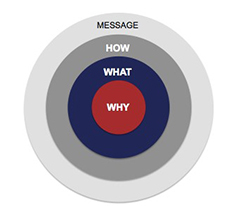
The reality is that you have six seconds to tell your brand story and make a connection with your customer. Yes, six seconds. A 6-second window to give your customers, your audience, a reason to care, and a reason to want to learn more about your offer. Success in those six seconds depends on the perceived value that your brand will bring to the customers’ lives: the “Why you do what you do.” This message needs to be always refined through the lens of simplicity, clarity and alignment; the three foundational pillars that a brand story absolutely must have to connect and engage with the customer.
Why should a customer care? Why should they listen to your story? Wrestling this question to the ground from the customer point of view requires you to go to a deeper and more emotive level of engagement with your customers by distilling down the “why you do what you do” as a company into a “why” that captures the customer’s imagination.
Most marketers focus on the “What”: the product and its functionalities. Whereas the customers are willing to know “Why” that product is so different than all the other options available, and “Why” does it matter to them. For customers, the “Why” must speak to the true impact and purpose that you deliver to their life. It must resonate with the customer in such a way that he or she wants to be a part of the brand story.
With that in mind, here are the top five guidelines to create a compelling 6-second brand story:
Your brand story must be simple, clear and aligned with your customer’s needs and wants. It must be bold and encourage exploration.
Simplify the essence of “Why” the brand matters, or what is the value that it brings to the customer. Most customers have neither the time nor the inclination to try to figure this out on their own, which is why this question needs to be answered through the simplicity of a great story.
Give people a reason to care, a reason to buy, and a reason to stay. People don’t buy from making logical, rational buying decisions. They make emotional decisions and then justify those decisions by rationalizing them with facts.
There is a huge difference in whether your audience views your story as just another transactional relationship or a story that emotionally connects with their professional or personal journey.
“Good marketers tell brand stories; great marketers tell them with purpose.”
What do you want people to think when they see or hear your brand? People will be more engaged if they can actually relate to a story rather than listening to fact-laden statements about the wonders of a product.
Compelling stories resonates when the audience can put themselves at the center of the story. We must make customers the hero, while the brand assumes the role of a mentor. When your goal becomes participation, rather than control, the hero is more likely to let you into their world [and their story]. You can start by focusing on experience-based efforts for a better customer engagement.
“Make the customer the hero of your story”
– Ann Handley, MarketingProfs
That’s it! Sounds easy right?
Not really… Creating a compelling 6-second brand story can be challenging. It requires a diverse set of scientific skills and an artistic eye. No matter how short the message is, never short-change the depth and richness of the story. And always remember to ask yourself: does your brand story pass the test of simplicity, clarity, and alignment? Can you tell the brand essence in six seconds? Is the story so compelling that it can transform your customer into a storyteller on your behalf?
Once you have the Story, the next step is to connect with your customers through formats that they consume, in channels that they use, across every touchpoint in the buyers’ journey. Your customer is not only at the center of the story but also at the center of your strategy.
“Story without Strategy is Art; Story with Strategy is Marketing”
Your Strategy should be a clear path to reach your target audience with the right message, through the right channel, at the right time. It requires ruthless focus and consistency throughout your entire organization, both internally and externally.
Now, all that’s missing to truly transform your marketing is the alignment of the Systems, which is how you communicate that Story to the consumers. It enables you to flawlessly execute your Strategy and measure the return on your marketing investment. All the enabling technologies, employee communications, sales collateral and processes must be fully aligned to bring your brand to life.
This is the secret of Transformational Marketing: Having the right Story, the right Strategy and the right Systems in place to unleash the true power of your brand. Transformational Marketing alters business models by changing how organizations market, communicate, and sell to customers. By providing products and services that actually make the customers’ lives better, companies build valuable customer experiences and transform customers into brand advocates.
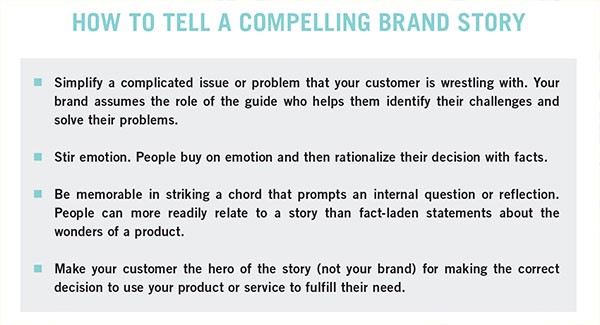
 Dave Sutton is a global authority today on Transformational Marketing– enabling businesses to reach, connect and engage with customers in a way that gives them a reason to care, a reason to buy, a reason to advocate and, most important of all, a reason to stay. He is the founder of TopRight, LLC– a Transformational Marketing firm that helps companies move to the top right quadrant of their competitive frame, and corner the markets where they choose to compete. TopRight’s 3S Playbook model of the right Story, the right Strategy, and the right Systems turns sales transactions into customer experiences that connect and communicate why you do what you do and what difference it makes for your customers. Follow Dave @TopRightPartner.
Ready to stack the deck? There is a key combination of critical components that any B2B company can use to build themselves an ABM team of aces. It requires each account-based marketing function to fill their role to the best of their ability, creating a system that functions properly — where all roles are supporting their fellow marketers.

And all of these account-based marketers are aiming for a common target: revenue. While other metrics might be used in different situations to gauge movement toward the ultimate KPI, revenue is the critical metric that carries the most weight. Show revenue contribution, and you’ve proven your ABM team’s weight in gold.

The CMO could be considered the gatekeeper of success. The decisions they make and how they support their team can make or break the effectiveness of the other seven roles. The value of account-based marketing is in the details, and the CMO should enable their team with all the strategy assistance and martech approval necessary. Also, they often oversee their team’s ABM strategy formation and assist with the final stages of the target account list and the account grading system.
Not only should they be knowledgeable about ABM strategy and tuned into their team’s account-based marketing plan, but the CMO should also be the primary champion of ABM across the company.

The marketing director dives deeper into the details than the CMO in terms of both theory and structure. They own the target account list and grading system, and they coordinate the strategy plan that is implemented by the other five roles.
While the marketing director relies on the expertise of their crew of ABM aces, they’re responsible for representing the strategy’s performance to the CMO and other executives. They formulate the details of the ABM strategy and coordinate its implementation across their team.

The marketing operations specialist is in charge of technology. Martech solutions and integrations are their area of expertise. As the marketing team seeks to orient their marketing strategy, results, and reports by accounts, it becomes necessary to acquire martech that will map leads/contacts to their respective accounts. The acquisition, onboarding, and integration of this martech solution (usually in the form of attribution) is a task owned by the marketing operations specialist.
Advanced attribution solutions that are also integrated within the CRM can automatically map leads/contacts to accounts without any huge hassle, custom solution, or manual maintenance. The data is organized by account and displayed within the CRM.
A CRM integration also allows the sales team to have access to the same account data. They’ll be able to see the types of engagement marketing has instigated through all levels of the pipeline. Using that information, salespeople can decide which accounts are ready to move forward, and which ones still need time in the nurture/outreach process.

The content ninja (writer / marketer) has a unique role in the process of account-based marketing. They have the responsibility to create content that is specifically targeted toward the personas that make up their target account list. This means that they might need to hone in on those personas even closer, discovering precisely which pain points, benefits, and features of a product or service will attract the specific types of individuals that make up that list.
It’s a process of hyper-targeting the scope of their content creation and focusing on a specific, identified list, rather than a vast sea of demand gen prospects.
You’ll also notice that the content ninja is the only one not wearing a tie, and that’s because they’re cool, casual, creative folks. And ninjas don’t wear ties. Everybody knows that.

The email manager is responsible for email outreach to the target account list. Once a contact’s email address has been obtained through a list, an event, a webinar, a content offer, or some other type of form fill, the email manager sets up the required workflows for the nurturing process. He/she can create different nurture workflows for the various account grades, and emails can also be highly personalized in order to help prompt engagement.
Email marketing is one of the top marketing channels, according to the State of Pipeline Marketing 2015, and thus, the ABM email marketer has some important shoes to fill.

The optimization specialist can either be his or her own entity, or another role can double-up and take on this role. Oftentimes, one of the content writers will assume these responsibilities, or the paid media manager will step up and handle some of the details. The optimizer ensures that each piece of the marketing strategy is optimized (or in the process of being optimized) to its full potential.
A/B tests, variations, image swaps, button colors, email nurturing sequences, titles, copy, site navigation — all should be tested and optimized in order to best accommodate the buyers on your target account list.
Account-based marketing also focuses on personalization, since you have a specific list of companies you’re targeting. This allows your website, your email outreach, and other forms of your content to be highly personalized as the optimizer hones in on the list of target accounts.

The paid media manager plays a pivotal role on the account-based marketing team, but only if a company has a medium-to-high paid media spend. Ad platforms are coming out with better ways to target companies — and one of these ways is to target by account. The paid media manager can run ads specifically to individuals who work at the firms within the target account list, which means that every single click garnered from those campaigns is valuable.
Paid media (display ads, paid search, paid social, etc.) is a powerful asset to an account-based marketing team, if it’s leveraged correctly. A paid media manager can run ads to open opportunities, giving contacts at those accounts the option to consume down-funnel content, which keeps them engaged through to close. Marketers can run ads to a set of contacts/personas at a target company, ensuring that each individual involved in the buying decision is primed, ready, and armed with the information they need.
The paid media manager also has a unique ability to influence the account engagement score — the score assigned to an account through an algorithmic assessment performed by an advanced multi-touch attribution solution. This score tells the marketing team how well the contacts from these targets accounts are engaging with marketing activities. All in all, the paid media manager’s ability to zero in at an account level makes them an indispensable member of the ABM team.

Wondering why a member of the sales team is included in the list of members that make up an ABM dream team? One of the effects of account-based marketing is a holistic view of the pipeline. There’s no longer a “handoff” of leads between sales and marketing. Rather, the two teams begin to overlap, and the critical metrics are shared between them — specifically, the account engagement score. Marketing primes the pump and sales makes a seamless transition when the engagement score is high.
This means that the sales team, and primarily the director of the sales team, needs to be involved in the ABM strategy process so that he/she can orchestrate their team’s sales efforts accordingly. The account engagement score, marketing touchpoint reports, and sales outreach are all connected pieces of an overall puzzle — and when that puzzle is assembled correctly, you begin to see accounts closing left and right.
Each member of the ABM team has a critical part to play. And when you put all seven of these aces together, you’ve stacked your deck and you’re bound to win big.


Many business leaders are fond of the spurious Peter Drucker quote that “you can’t manage what you can’t measure.” This attractive, apocryphal quote breaks down upon inspection. While effective metrics are essential for focusing attention and achieving results, they can also overpower better sense. Mismeasurement can lead to mismanagement.
Most industries cower to a few central metrics, the yardsticks that define the winners and losers. For example, same-store sales or sales per square foot measure success in the retail industry, and various volume measures do it in commodity industries. Metrics tried and proven over years become a guide to what’s important, driving resource allocation. But these metrics can become tyrants. When things change, outmoded metrics can threaten a firm’s survival.
Consider the automotive industry. The entire industry obsesses each year, even each week, with reports of unit sales of cars, influencing the behavior of auto producers, suppliers, channel partners, industry analysts, and investors. For years, U.S. automotive manufacturers owned rental car companies in the hopes of maintaining strong unit sales figures by captive fleet purchases (which were also to maintain volume to fulfill their onerous union obligations).
In a future dominated by autonomous vehicles and ride-sharing schemes, a typical family might decide to own fewer cars or none at all — meaning lower unit sales, all else equal. And yet the utilization rate of each individual vehicle will likely increase. The resulting higher asset utilization should mean more service and replacement parts requirements, traditionally higher margin businesses than selling the original vehicle. But to thrive in that future, the auto industry will have to get over its obsession with unit sales.
Companies in industries facing change have to change their key metrics, often before the new reality is clear. As Carlos Tavares, chair of PSA Peugeot Citroën, explained to me, “Unit sales will remain important, but this shouldn’t be our driver….To be ready, we must experiment and learn as markets change.”
Over the past year, I’ve discussed with Tavares and many other business leaders how core metrics impact behavior and performance over the near and long terms. From these conversations and other research and consulting, I’ve come to believe that companies can and must protect themselves from the tyranny of metrics by taking the following four actions on an ongoing basis.
Know your metrics and the behaviors they drive. Everyone at your company should understand which metrics drive the business, and what behaviors they encourage. Joe Nigro, CEO of energy company Constellation, told me, “Everyone needs to know how each metric fits into the big picture…why and how we’re measuring something, and how it’s relevant to performance.” (Constellation and its parent company, Exelon, are clients of my firm, Clareo.)
Core metrics naturally acquire power in an organization, but people might not be aware of how they can bias decisions. “In-store experience” has long been a core metric for retailers, and for good reason. However, as online commerce rose in importance, traditional retailers were slow to shift focus to online experience metrics. Brands such as Borders Books and Best Buy spent enormous funds and attention on enhancing in-store capabilities.
Even when major retailers committed to their online presence, the dominant bricks-and-mortar business requirements circumscribed what their online businesses could do. Walmart entered online retailing relatively early, in January 2000, but the world-leading merchant took perhaps a decade to reconcile the friction between competing “click and brick” metrics. Former Walmart.com CEO Carter Cast recalled to me, “Back in the early 2000s there were many things we wanted to accomplish with our online business but had a hard time doing because of the perception that we’d interfere with the well-oiled efficiency of the physical stores. For example, while we were one of the early companies to develop an ‘order online, pick up in store’ service capability, it took us years to launch because of the fear we’d slow down store operations. I understood the concern of our store operators, but customers were asking for the service.”
A key word here is perception. New business models can hurt a company’s existing businesses; however, if they work, they can enhance overall performance. The questions become, what should we measure, and who gets the credit? Even though an “order online, pick up in store” offering might increase same-store sales — a crucial traditional metric — who benefits from the lift, the online business unit or the store? To what extent is online ordering cannibalizing sales from the traditional store? Meanwhile, before a store sees increased sales volume, the new capabilities and resources (e.g., floor space, staff attention) required to fulfill in-store pick-up can impair performance. Who takes the hit?
Track metrics at your peripheries. The big threats and opportunities usually come from the periphery of your industry, rather than from your core competitors. They start in other markets, with other customers, or with stealth incursions into the edges of your market. These new entrants often bring new business models, and thus measure performance differently than incumbents. It’s a good idea to pay attention.
Against which metrics are they building their businesses? Consider how those metrics relate to your incumbent businesses, or might enable your company to pursue new opportunities. For instance, digital media has evolved rapidly since measuring “eyeballs” during the first dot-com boom of the late 1990s. From click-throughs to conversions, metrics have reflected what has been possible to achieve, and in some cases has defined entire businesses. Meanwhile, most traditional media companies spent far too long addicted to circulation numbers and prime-time ratings.
Companies should also learn from innovators in other markets, considering how those metrics might translate to their own businesses. For years, Rackspace built an industry-beating IT hosting business by focusing on customer satisfaction in an industry dominated by competitors obsessed with low costs. Rackspace emphasized different metrics than its competitors and achieved differentiated results. The company’s founders set out to build the “Lexus of hosting,” a radical concept at the time. Measuring customer service and satisfaction in ways similar to a luxury products or hospitality company played a significant role in Rackspace’s success.
The company’s experience also emphasizes that metrics can’t afford to be static; the signals at the periphery are always changing. Today Rackspace and all IT-focused companies are being challenged to define their roles in a world dominated by cloud computing models, which is upending metrics across the industry. This didn’t happen overnight. In the late 1990s forerunners to today’s cloud services were known at application service providers, or ASPs. This concept evolved to software as a service, or SaaS models, followed later by cloud computing. While cloud is a more advanced notion, both ASP and SaaS provided foresight to where the industry might trend. Companies paying attention could envision future business models and accordingly shift their success metrics. Those that remained focused on traditional measures are playing catch-up, and some won’t survive.
Prioritize metrics that reflect value to customers, rather than simple volume or efficiency. New business models don’t only come from new entrants; sometimes, incumbents introduce new ways to add value and track performance. Properly motivated and led, incumbents can be particularly dangerous, as they already have scale and credibility. For decades aircraft engine manufacturers focused on unit sales. In the 1960s UK manufacturer Bristol Siddeley introduced “power by the hour,” charging for safe, effective operations rather than individual aircraft engines and parts. Bristol’s acquirer, Rolls-Royce, upgraded this approach in the 1980s. The power-by-the-hour metric tracks performance in terms of a company’s value-add for customers, rather than purchase volumes. Bruno Esposito, an industry veteran and entrepreneur, lamented to me, “It took some companies decades to overcome their focus on selling more aircraft engines, even though what airlines wanted was safe, efficient operations and predictability of costs. Power by the hour aligns customers and suppliers. Unit sales don’t.”
Many traditional commodity or product-focused industries, such as mining, oil and gas, or chemicals, tend to focus on the volume of product purchased and shipped: tons, barrels, liters, etc. This is an obvious metric, but it biases a company toward decisions that reinforce the commoditization of its own offerings. Focusing on them means that new business concepts — ones that might decrease the volume sold but replace it with value-added services or services that better align customer and supplier incentives — can be easily missed.
Metrics that reflect the value companies bring to market provide greater insight into whether they are succeeding at their customer value mission. Note, though, that abstract metrics, such as customer satisfaction, often lack specific insight into what lies behind the results. Customer satisfaction should be an essential metric for every company, but satisfaction metrics require complementary assessments to understand the core value being provided.
Experiment with emerging, alternative metrics — and iterate. Once you see new metrics emerging, apply these new metrics to assess your current businesses. You might find ways to modify your business models to remain relevant, or you might find that your current business is on a long, slow slide to oblivion.
Most business services enterprises, such as law firms or consultancies, measure some form of “utilization” (e.g., billable hours). Investments in software or automation could hurt billable hours, especially on these firms’ routine, lower-value-added offerings. Instead, introducing metrics that assess a firm’s ability to efficiently resolve client problems, especially in lower-value-added offerings, might support investments that are anathema to the simple billable hours metric. As automation improves, clients will eventually move to solutions best able to serve their needs.
Even if a company experiments with a new metric rather than widely implementing it, experimenting early on can keep a firm competitive, as well as help uncover opportunities to improve alignment with technology trends and customer needs.
Conquering the tyranny of metrics requires ongoing experimentation and iteration. A one-time assessment is a good start, but it’s not enough. To manage the risks of measurement biases, companies must check and recheck their core metrics. Nigro recommends challenging metrics at least annually, perhaps during a company’s annual budget cycle or strategy development process. Consider not only whether the metrics you’re measuring are still relevant but also whether you can do better.
Changing the ways we measure success means changing how we define success. Waiting until the market has already changed means playing catch-up. Given how companies construct themselves around optimizing against their metrics, waiting until market shifts are obvious often means waiting until it’s too late.
In the good old days, the buying process meant buyers routinely met with salespeople to learn about their products and to begin a dialog about possible needs. Along the way, they developed a relationship.
Buyers were happy to have introductory meetings with salespeople. They were valuable sources of information, not only about their products but also about the industry.
Salespeople, empowered by useful information, had significant control over the buying process. They could “push” the buyer toward a decision.
All that has changed. There are two key reasons: the internet and corporate downsizings.
That means salespeople have less control over the buying process. They must pull their customers, not push them. Sellers must sell the way their customers want to buy.
The schematic below shows the buying cycle in many sales situations mapped against the selling cycle. Instead of initially presenting a solution, sellers must first convince buyers that they have a problem and that the problem is worth fixing.
The interaction between the salesperson and the purchase decision maker is like a dance with many intertwined steps. It’s a back-and-forth process of uncovering needs, evaluating options, and then agreeing on a solution.

To illustrate how this process works, we’ll use a hypothetical example. Riley is a salesperson for Titan Systems, which sells software to manufacturing companies. She is trying to convince Fred, the manufacturing vice president at ACME Industries, to buy Titan’s newest product, Titan 2000.
Riley will take Fred through a series of steps to educate him about the issues and Titan 2000. There are five stages:
STAGE #1―DEFINE THE PROBLEM

Riley’s first step is to get Fred’s attention. She needs a reason to contact him.
She knows that a private equity firm has recently purchased ACME. The private equity firm has a reputation for pushing operational efficiency at its portfolio companies.
Riley thinks Titan can reduce ACME’s headcount because it automates certain tasks. This should appeal to the new owners’ cost cutting focus. It could also make Fred look good.
After an initial phone call, Fred recognizes the potential opportunity. He agrees to meet with Riley.
STAGE #2―DECIDE WHETHER TO TAKE ACTION

Automating tasks is not Fred’s highest priority. He is focused on producing more units to meet sales demand.
Riley’s immediate challenge is to convince Fred that automation will have a big payoff and that the project should move to the top of his priority list. She provides him with an ROI analysis showing a $500,000 a year reduction in headcount costs.
After reviewing Riley’s info, Fred is convinced the project is worthwhile and that he must do something.
STAGE #3―EVALUATE OPTIONS

Now that Fred is ready to act, he must decide on a solution: Titan 2000, another vendor, or do it in house.
Riley needs to convince Fred that that Titan 2000 is the best solution. Through a series of presentations and additional info, she persuades Fred.
Note that she didn’t push Titan until Stage #3 of the process. She first had to convince Fred (a)he had problem (or opportunity) and (b) it was worth fixing.
STAGE #4―SELL SOLUTIONS

Fred is sold on Titan 2000. He must now sell his CFO, IT Director, and CEO.
He does this by having Riley present to all the senior executives. He then works internally to build a consensus with his colleagues. At the same time, he works with Riley to address the individual concerns of each executive.
With a tentative consensus in place, Fred asks Riley to submit a formal proposal.
STAGE #5―APPROVE AND CLOSE

After reviewing the proposal, the executive team approves the project. Riley then works with Fred on the implementation plan.
Riley pulled Fred through the decision making sales process. She didn’t try to push a solution.
Fred had to be convinced of the size of the opportunity and of Titan’s value. He then became an evangelist for Titan within ACME.
Once Fred was on board, he was Titan’s most effective “salesperson.” Riley helped Fred and ACME’s executive team buy the way they wanted to buy. She also made Fred look like a hero.

What makes your products different from others on the market? This is what retailers will want to know when you pitch to them in an attempt to get your products on their shelves. To woo retail buyers, you need to develop a unique selling proposition for your brand, but how? Follow these tips:
Define a specific target audience.
The first step is defining your target audience, which you should have already done by now if you are in business. But, take it one step further when you’re creating a unique selling proposition and be incredibly specific. If you think your target audience is women between the ages of 25-30, find out more about who these women are. Where do they work? What do they do for fun? How do they spend their money? Be as specific as possible when creating your target audience so you can truly understand their needs.
Think about the customers’ problems.
Now that you know who your customer is, think about what problems they have in their life. Why would they be attracted to your product? Then, think about the choice they have when faced with your product and your competitors’ products. Put yourself in your customers’ shoes and write down what benefits your product has over your competitors. For example, TOMS shoes offers customers the satisfaction of knowing when they buy a pair of shoes, another pair is donated to a child in need. This is a unique benefit that could make a customer choose TOMS over every other brand. But, your unique selling proposition doesn’t have to be on as large of a scale as TOMS. It could be you offer all natural ingredients and your competitor doesn’t, or your product is more lightweight and affordable than your competitors. Whatever it is, you need to identify it as part of this process.
Condense it.
If you’re creating a unique selling proposition to pitch to retailers or wholesale distributors, you need to catch their attention immediately. Come to a pitch meeting ready to launch into your unique selling proposition right away. But, this type of audience is busy, so they will quickly lose interest if you can’t explain your unique selling proposition in a sentence.
How can you reduce pages of thoughts on your target audience and their problems into one sentence? A great way to condense your thoughts is to think of it as a promise you are making to consumers. Taking the TOMS example, their promise would be “for every pair of shoes purchased, we will donate a pair of shoes to a child in need.” This is short and to the point, so buyers will be able to immediately understand what you’re talking about. Write out your unique selling proposition as if you are making a promise to the customers you are trying to attract, and you just might win over retail buyers in the process.
How have you created a unique selling proposition for your brand? Have you ever pitched it to a major retailer? Tell us about your experience in the comments below!

As a small business or startup, you know how quickly expenses can pile up. Your PR strategy doesn’t have to be one of them. Thanks to a number of online tools and resources, small business PR does not have to break the bank.
When you boil it down, the size of your company doesn’t matter — nor does your budget. Just because you don’t have the deep pockets of bigger B2B companies does not mean you can’t develop a PR strategy that puts your startup in the media spotlight and generates new leads.
But how?
We have assembled a simple, but effective, list of budget friendly PR strategies (some of them even free!) that you can utilize right now.

Small Business PR, Meet Budget Friendly Strategies
An influencer has a lot more clout than your average customer — and is a relatively inexpensive way to generate excitement for your startup PR. Begin to engage with influencers by following them on social media and commenting on what they say. Once you have developed an online relationship — and only then — reach out. See if you can offer a demo or free use of your product or service. In return, ask if they will mention your product or service.
An endorsement from an influencer can mean the difference between a “Yeah that sounds somewhat familiar” response, and a “Where can I get that?” response.
Influencers can facilitate greater reach of your content, improve quality, and inspire more buyer engagement –Lee Odden
Studies show that nearly half of all B2B researchers and those who make purchase decisions are millenials. Would you like to tap into the millennial market of business decision makers? Influencers can help make that happen. Millennials often make purchases based on influencer recommendations.
Have you heard of this nifty resource? If not, now’s the time to learn. HARO stands for Help A Reporter Out, and is a free service that connects you with journalists who are working on articles.
Once you sign up, you will receive daily emails with source requests from various reporters. When you see an opportunity that fits your small business PR needs, you can craft and send a pitch that fits that opportunity. The ball is then in their court, and they can reach out if interested.
Video is rapidly becoming a powerful force in B2B marketing. Are you leveraging this influential tool in your startup PR? If not, there’s no better way to begin than with Facebook Live. It’s free, and easy to implement.
Facebook has given B2B marketers the opportunity to provide their audience with a live look at what’s happening at events –Emily Ahlbum
Gain a larger audience by scheduling and announcing the topic, date, and time in advance. Then your audience can log on to see it at that time, or know to look it up later.
Facebook offers a number of resources to marketers, including nifty audience demographics tools that helps you zone in on your ideal audience. And the real kicker? It’s not costly. You’ll only need to spend anywhere from $10 to $300, depending on what services you choose!
Twitter is a valuable, budget-friendly resource. Create a branded Twitter page, and from there you can generate buzz about your business, boost your brand awareness, and establish yourself as a thought leader in your industry.
Twitter also allows you to follow and join in on various discussions. Keep track of industry-specific hashtags and keywords that will allow you to hone in on hot-button conversations. Share your expertise when appropriate, and get your small business’s name into people’s minds.
Small businesses can connect with their local communities on Twitter in order to get in front of a local audience. –Lauren Dugan
You can also host (or co-host if you don’t yet have an established audience) a Twitter chat, possibly in an “Ask the Expert”-type setting. Promote this chat ahead of time with multiple tweets about the date and time, as well as the topics you’ll discuss. Encourage people to participate. In this way, you position yourself as a respected and trusted authority in your industry.
These two social networks sometimes fall through the cracks of B2B marketing, but are still a great way to enhance your startup PR strategy with stunning visuals. Create a helpful and vibrant infographic that will reach a wider audience. Design visually appealing and thought-provoking graphics that speak to your audience. Include relevant and popular hashtags — or create your own, company-specific hashtag to track views and shares.

Would you like to reach out to bloggers and journalists to get some media coverage, but don’t know where to begin? Services like MuckRack take the guesswork out of contacting the media. This service allows you to search keywords, company names, beats, and media types to find the right fit for your next pitch.
Don’t just go to industry events or read about these after the fact — get off the sidelines and get in the game! Become a speaker. Don’t be afraid to start out in a smaller role in the beginning. If possible, bring a client or customer with you to co-present — this adds a compelling human element, and bolsters your story.
What questions are people asking in your industry? You can find and answer these on Quora. This puts your content and your expertise in the spotlight. Create a profile that includes your business name and Twitter handle. When appropriate, you can also include a link to your business’s website in your post. As your credibility grows, people will be more likely to visit your site directly when they have questions or problems.
Not sure how to distribute your press release? PRWeb will do it for you. Your job is to craft a newsworthy press release about your small business — a product launch, a promotional event, fundraising — and this service will distribute it to news sites and search engines.
What niche publications does your audience read? Find out and target these smaller publications and blogs in your industry. Because they’re smaller and more niche-specific, they get pitched to less often. They’ll most likely be more open to using you for guest posts, or as a source for future articles.
Get in where there is already a buzz. Find a way to participate in a major story that is happening in the news. One of our clients was able to get top placement by commenting on the presidential primary candidates from a sales perspective.
Your content is a pivotal key to growing your credibility as an industry thought leader. And the fact that many sites will allow you to do this for free just sweetens the deal. These sites include LinkedIn Pulse and Medium, as well as others. Make sure it doesn’t end there — include a link to your website where you can nurture that interest.
Once your content is on these sites, ensure a maximum amount of traffic by promoting them on your social media networks.
Buzzsumo and similar tools give you a window into your audience and answers the age-old question : what resonates? Find out what kinds of content people are clicking on, and how to improve your content to better reach your audience.
Offer special awards for your key customers, and then feature these customers on your social media channels. Tag them in these posts, and their followers will also get a glimpse, and have a better chance of remembering your business.
Get your foot in the door while you grow your small business PR. These strategies, while not requiring any hefty dollar signs, do require time and effort on your part. But if you achieve success in your startup PR endeavors, it’s worth every minute.

Everyone is Searching
The internet has completely transformed business and culture. We’ve entered into an information golden age. You can find exactly what you’re looking for and a route to where you’re going in a just a few seconds. Need to go to the airport? Easy. Want to get a rental car? Done. Hungry? No problem. If you want it, Google will find it.
Right now, there are over 40,000 Google searches per second.
97% of consumers use the internet when looking for a local product or service.
88% of consumers check online reviews before they make a local purchase.
Also 88% of consumers trust online reviews just as much as personal recommendations.
50% of consumers who search on a phone for a local store make a visit in the same day.
And 18% of local mobile searches lead to a sale within one day.
It’s a very clear pattern. People search, then they go, then they buy. People use and trust the internet. You need to take advantage of the facts and put yourself in a position where local consumers are finding you and your business.
Google My Business (GMB) Google My Business (GMB) allows business owners to list their company online, provide key information about their company, and attract new customers.
Here are some tips to help you take advantage of your GMB listing.
Google My Business is the primary business listing service of Google, and has undergone various changes over the past couple of years. In order to be eligible, companies need to either have a physical location or have direct face-face interactions with their customers.
Google provides some additional specific guidance for Chains and Brands, Departments within other businesses, Universities and Institutions, and Individual Practitioners.
Joy Hawkins, Google My Business Top Contributor, put together a nice ‘best practices’ guide specifically for Individual Practitioners.
Your GMB page allows you to control how your business is presented in Google search results, maintain up to date useful information about the company, showcase photos, and respond to reviews. Investing a little tender love and care into your listing can attract new customers the next time they’re searching on Google.
1. Go to https://www.google.com/business/

2. Enter your business name, address, phone number, and category.

3. Begin the Verification process.

Earlier this summer, we would have only been able to verify our GMB listings via a snail mail postcard or phone call. As of July, 2016, Google has started to include email verification, simplifying the process for business owners.
Claiming and verifying your GMB listing is the very first step, because some people don’t even do that. Since Google wants to make sure that users find what they’re looking for, it’s essential that GMB listing is accurate with up to date information.
So what information is required for an optimized GMB page?
Something as simple as the business name can really trip people up. Some companies try to ‘game’ the system by including a city name or a keyword, when it’s not actually in the name of the business. That’s a no no, and can get your GMB listing censored for spam.
So what’s the best practice for entering your business name?
Straight from the horse’s mouth:
Your business name, address and phone number are the most important parts. Make sure to get them right. Double check them. Then check again.
Choose specific categories that are relevant to your business. We have a much better chance to rank for something specific like “organic juice bar” or “break and muffler repair” than more generic terms like “smoothies” or “auto repair”.
Google recommends only selecting one or two categories, but there hasn’t been much data collected on the actual results of using two versus five categories. The important aspect of categories is that they are specific and relevant.
It’s pretty shocking that almost half of all small businesses do not have a website in 2016. Setting up a website for your company is easier and cheaper than it’s ever been before. Even for the technophobe, launching a website does not need to be an intimidating task.
A few benefits of including your website on your GMB listing:
That’s HUGE.
Make sure your website is mobile friendly. Mobile searches, especially for local businesses, are becoming more and more prominent. Using a non-mobile friendly website on your phone is an incredibly frustrating experience for users. Don’t leave a bad taste in their mouth by directing them to website burdened with a clunky mobile experience.
Photos of your business were once just a nice aesthetic addition to your listing that might help you stand out, but they do in fact impact search rankings.
According to Google, “Businesses with photos receive 42% more requests for driving directions to their location from users on Google, and 35% more clicks through to their websites than businesses that don’t have photos.”
There are a variety of types of photographs worth uploading:
Preferred photo – Recommend the photo that you want your customers to see alongside your business name on Google Maps and Search. Google determines which photo will be shown first using a number of factors, like how well the photo represents the services or products the business offers. Pictures of food at a restaurant, for example, tend to rate well. Although your first photo preference is taken into account, there’s no guarantee that your preferred photo will be the first photo on Google.
Profile photo – Add a profile photo to help your customers recognize your business on Google. Your profile photo will be featured next to your business name on your Google+ page. It should be a different photo from your business logo, which should be added in the “Logo” section.
Logo – Add your logo to help customers identify your business. Square-sized logos display best on Google.
Cover photo – Add a cover photo to showcase your page’s personality. Your cover photo is the large photo featured at the top of your Google+ page. Note that this photo will be cropped to fit a 16:9 aspect ratio.
Additional photos – Add different kinds of photos to spotlight features of your business that customers consider when making purchasing decisions. You can add different kinds of photos depending on the kind of business you manage.
Their recommended best practice for photos:
Format: JPG or PNG
Size: Between 10KB and 5MB
Minimum resolution: 720px tall, 720px wide
Quality: The photo should be in focus and well lit, and have no photoshop alterations or excessive use of filters. The image should represent reality.
Still at a loss for the types of photos worth adding to your listing? Google provides a handy chart for guidance:

Need help finding a professional photographer? Check out Google’s Trusted Photographer directory.
Make sure to update your business hours regularly. Since the majority of searches are for a local business, they need to know if your company is open! That’s one of those ‘micro-moments’ that Google recommends you’re prepared for.
Don’t forget to include holiday hours!
Remember a complete and detailed listing will increase click through rates. The more you include the better. Customers are looking for information.
Beyond the basics, here are a few more things you can do to fully optimize your GMB listing.
Think about it. It’s almost free advertising. Why not get started? The better your listing the more return on investment you’ll receive. Google search plays a huge part in local business. Give it a good shot. Nail the basics, and focus on your customers. That’s really the biggest thing. Who are you trying to attract? Build a profile that they will like. Create exposure for your business and grow your customer reviews.
It’s long been conventional wisdom that trying to reach a wide audience is usually beneficial in business, but far too many companies spend needless resources chasing leads that aren’t likely to pay off in the long run. As an alternative strategy, many B2B-focused companies have discovered that account-based marketing has the potential to revolutionize their sales.
By making the simple change of allowing marketing and sales professionals to focus their resources on a specific client, companies are learning that it’s possible to create additional value for their customers and reach the untapped potential of their accounts. A recent study found that 60% of organizations that had been using account-based marketing for one year experienced at least a 10% bump in revenue.
So if account-based marketing has suddenly become de rigueur for so many innovative B2B organizations, how did we get to this point? Most experts believe that simple forms of account-based marketing emerged in the world of 1960’s advertising agencies, where the agencies would pull out all of the stops in order to keep big clients happy. Most agencies relied heavily on the support from these power-player accounts, who would not only make up a substantial portion of their billings, but would also lead to headline-grabbing press that would keep the names of the partners in the news.
Later, it became clear to many B2B sales and marketing leaders that the specificity that was inherent in an account-based marketing strategy could do wonders for their companies. Most B2B-focused organizations target very specific customers, and they discovered that if they created a strategy that took advantage of this in unique ways they could better service their clients and grow revenue from existing accounts. The challenge was to take the very informal practice that emerged from the advertising industry and incorporate the principles into a concrete plan of action that could be replicated, measured, and improved upon.
There are many different kinds of companies who can benefit from implementing account-based marketing techniques, but there are a few characteristics that make some organizations particularly well-suited to the process. Your company may be a good candidate for account-based marketing if:
One of the key benefits of account-based marketing is that it helps to better integrate your sales and marketing strategies, creating a seamless handoff that results in more conversions.
If your company is already in the business of serving a smaller number of customers that have a potential for significant revenue growth per account, then you will likely benefit greatly from account-based marketing.
In most cases, acquiring new customers is demonstrably more expensive than growing existing accounts. You may be wasting resources by constantly pursuing new revenue when there may be areas where you can provide additional value to your existing customers.
Account-based marketing doesn’t exist to wring additional revenue from your customers, it creates an opportunity for your sales and marketing professionals to provide a highly-specialized level of service and discover new ways to provide value for existing clients. It’s great for the customers, because research shows that approximately 75% of buyers desire more personalized offers.
Your sales and marketing team members will likely benefit from the strategy as well. Account-based marketing techniques give them the chance to perform targeted research about their clients and industries, gathering knowledge that can help them improve the customer experience and earn exceptional accolades for their services.
Account-based marketing strategies also help to reduce the drain on your resources. You’ll spend less time and resources courting leads and prospects that may never convert, and you may also be able to reduce your client churn percentage; a serious concern for most growing B2B organizations.
Once you’re ready to start reaping the rewards of an account-based marketing strategy, it’s important to understand how to optimize the execution and get the most value out of your effort. Initially, your primary focus should be on identifying which accounts and personnel are high-value and how you need to allocate your resources accordingly. Then you can get down to the business of developing overall messaging and creating content that is relevant, valuable, and personalized. This is the stage where robust data analysis truly shines as it allows you to dig deep into what your most valuable customers truly need from your organization. Finally, you can determine the best marketing and sales channels for your specific clients and put your strategy into play.

According to HubSpot's 2016 State of Inbound report, LinkedIn is a valuable B2B prospecting resource. Social selling is a priority for more salespeople than ever before, with 42% of those surveyed already communicating via networks such as LinkedIn for business.
Done right, LinkedIn prospecting can bolster call- and email-centric outreach and help teams develop rapport with leads. But if you find yourself reaching out and coming up with nothing all too often, you might be sabotaging your social efforts.
How many LinkedIn connections do you have? I’d guess enough to fill a small venue. But how many of those connections are a good fit to your buyer personas? Probably not many.
While it’s tempting to boost your network by connecting with as many people as possible, to be successful, you need to work towards quality over quantity. To do that:
The clue to LinkedIn success is in the name. You’ve got to have a link with a prospect to have a successful ‘in’! There are multiple ways to leverage LinkedIn for introductions to prospective customers. But if you connect out of context, you’re doing more harm than good.
A clear reason for engagement and a solid value proposition are key to making positive connections. To avoid sabotaging your efforts:
Remember, the goal with prospect connection requests is not necessarily to expand your network, but to take that first step toward establishing yourself as a trusted advisor.
Sent a connection invite or InMail and had no immediate response? Wait. It’s important to know when to follow up for best results. To avoid sabotaging your follow up:
Think of your profile as the first impression a prospect has of you and your company. If that profile is shabby, out of date, or lacking insight, you’re on the fast track to sabotaged sales efforts. As a few quick ways to create a good first impression, you should:
However you do it, prospecting isn’t easy at the best of times. In fact, State of Inbound 2016 shows it’s still the part of the sales process that reps struggle with most, especially when leads aren’t educated in your solution and aren’t aware of your reputation as a trusted advisor. So don’t sabotage yourself! Start building LinkedIn presence and relevant network today.


In B2B marketing, perhaps no two words are as important as Traffic and Conversion. These two spell the difference between being in the black and being in the red. But you probably already know this by now: More web traffic does not always mean more leads. Traffic that does not convert is useless. That’s really unfortunate. Luckily, you can still increase your leads production without necessarily increasing your web traffic. Convenient, right?
Here are surefire ways to increase your conversion – meaning, turning traffic into leads – without actually increasing your web traffic.
I said amplify. Not just state or declare or put it there for all to see. Maximize and optimize it by making sure it grabs the viewers’ or readers’ attention the moment they see it, or at least, creates a strong connection with them. A convincing declaration of your unique selling point can build trust and keep prospects on the page longer than they originally intended.
Pro tip: Use “action” words, not just passive words. And yes, sell the solution to their problem, not your product. Don’t be too salesy like a snake oil salesman.
Really, just KISS it, or “Keep It Short and Simple”. Or “Keep it Simple, St****.” The simpler your homepage is, the easier for the viewers to navigate through it and find what they need and want. Just make sure it answers these questions:


Don’t make the common mistake of talking about yourself at length. Harping about your accomplishments will bore, if not totally turn off your viewer.
Pro tip: Remember, the homepage is yours, but it’s about the customer or client or guest. If it’s about them, they’ll stay longer.
It’s the goal of the webpage to at least generate inquiries. If your headlines can’t be seen, what do you think would make any visitor want to learn more from it? Make sure your headlines attract the visitors’ attention as soon as their eyes land on the page. And that “Contact Us” page? It’s not just for display. You really have to make an effort to make it as user-friendly as possible – make it visible and easy to read. No fancy fonts, please. If can make your contact number(s) so conspicuous the visitor doesn’t have to look for it, so much the better.
Pro tip: You have to make the visitors feel confident in you, in your product or service or whatever you’re selling.
What sounds better than freebies? Rewards! Incentives! Bonuses! Use the psychology of free stuff. I don’t know, but there’s something about those words that give them a really nice ring when spoken. Positive reinforcement almost always works, and it’s true especially in marketing. When you add something extra – like a reward or bonus – to your unique selling point, it’s easier to close the deal with the visitor. Offer a “money-back guarantee” or “free replacement” or “lifetime warranty” and chances are, you’ll clinch the sale.
While you have already effectively differentiated your product or service from the competition through your unique selling point, the incentive to bonus or reward adds value to the whole thing, and even builds a deeper client-business relationship.
Pro tip: Your message should be “You can’t get from others what I’m offering you.”
The previous four tips focus on optimizing the webpage. This last one is a no-brainer in terms of increasing leads without increasing web traffic volume. Why not try some of the most effective outbound marketing strategies?
Event marketing is a simple and easy way to interact with prospects and turn them into leads. Experiential event marketing is even better, as it goes beyond the mere physical presence of people at an event. Here are some unconventional event marketing campaigns, find out why they totally worked.
And of course, there’s good old targeted telemarketing if you want fast results. Whatever medium you choose, the most important thing is choosing an efficient and effective third-party service provider.
Pro tip: Do not settle. When you’re outsourcing, you simply do not settle for mediocre results.
One key takeaway here is, when you implement something new, make sure it’s measurable so you’ll know what works for you and what doesn’t. More importantly, don’t stop trying testing new things. Observe what your competitors are doing successfully that you may apply to your own. If you don’t think imitation is the highest form of flattery, then just make it your inspiration.
This post originally appeared at The Savvy Marketer’s Blog
Ever been to a bar? Or perhaps a restaurant? Or any place for that matter and tried to talk to someone? How do you make friends? How do you meet someone new?
Consider your potential audience as someone you’d like to befriend or a person you’re attracted to. Now, do you spam them with long-winded reasons to accept your friendship or do you show value by starting a two-way conversation? The sane way would be the latter, i.e. to introduce yourself, tell them about who you are, what you do, etc. Your brand’s long-term social media strategy could use a more personal touch. Getting a date or befriending someone in the real world is gaining a follower in the brand world. It has to be approachable, mutually beneficial, and most importantly, authentic. Truth be told, we would definitely keep away from the strange, creepy person who keeps on trying to be our friend. The more you socialize your brand, the more likely customers will develop a bond and engage with your business, eventually sticking with you for the long term.
Brand awareness is essential for your target audience to see who you are, what you are selling, and how it will benefit them. The content you share via your social media channels determines whether you are the creepy person, or the trendy one they want to hang out with. I’ve realized a lot of startup brands that I’m currently involved with, try to sell (convert) right from day one, without proper branding or engagement. Yes, PPC campaigns as well as paid ads on Facebook get a lot of downloads, but then you end up with an uninstall rate of more than 80%. So what do you do to fix that?
Now, right after you meet someone new, do you ask him or her to move in immediately? Or do you ask your new friend to become your best friend? Doesn’t work that way, does it? Not just in your social life, but it works the same way for your customers as well. After the awareness phase is executed properly, you require engagement i.e. dates and hangout sessions. Now that they know the basics, you form a deeper connection. A bond of trust between a user and the brand is essential, or else soon you’ll be facing trouble in retaining them. Of course, the regular gifts and giveaways will keep them around for a while, but then someone better looking or friendlier comes by, and that’s it for you then.
What kind of engagement works? From trending hashtags, to anything that can spice up the relation: quizzes, facts, photo contests, etc. Basically, you’re providing them with a platform to connect with you and speak up. When you’re not busy responding to the conversation, use your time to start one by creating exclusive social content about the things you’re known for and want to be known for. Properly planned social content tells a simple story that appeals to audiences’ motivations to connect with each other. Doing this establishes credibility, which is the jet fuel for igniting likes and shares
Time is always of the essence. Chiming in quickly when they are well connected with you isn’t just better for staying in the conversation as it’s happening; it’s what customers already expect of you. If you wait too long to propose, she’s going to think that you’re not interested. Building a positive brand connection is synonymous with appealing to positive emotions like inspiration, enlightenment, and amusement. Creating content that aims to elicit an emotional response that fits within that spectrum will likely spark more conversations about your brand.
After weeks of engaging e-books, webinars, blog posts, videos, tweets, photos and more, you’ve reached the point where you have generated leads and need to get them to buy, or in other words, “say I do”. (Usually, I like to ask my friends with startups to use the time they’re spending on developing the product for brand awareness and engagement). Since you already know your audience (who you’ve befriended), you know the demographics, the geographic and what will get you a positive answer, all you need to do now is to push for conversion. Properly placed CTA links and buttons on your channels, along with the kind of content that reminds users of how your product will benefit them converts leads to customers. Plan a big social media event, like a promo code that gives discounts, freebies, points, or anything to add incentive to the sell.
Once you have convinced the potential audience to become a regular user, it’s time for them to introduce you to their friends. By taking the right approach to facilitating ongoing dialogue, customers will reward you by becoming advocates for your brand, similar to when someone introduces you to their friends. This results in the most powerful form of advertising: positive word of mouth.
A happy customer is the best brand ambassador you can ask for.
Social media is in a constant state of evolution, with its users dictating where it will grow next. Smart brands are aboard that journey for the long haul. Understanding what your customers want reaps the same rewards as understanding your friends: lively engagement, reliable influence, and unshakable loyalty. Many successful brands use social listening to foster a bond with their followers. By tracking conversations using specific phrases or words, brands are able to discover opportunities to create content or understand audience behaviors. Properly executed customer service is vital in ensuring that your customers are long-term. Lots of brands giveaway vouchers and coupons for customer acquisition, but then there’s nothing for loyal customers. Even the slightest loyalty program, goes a long way. In his NY bestselling book, Youtility, Jae Baer points out “Instead of selling, if you help someone, you get a customer for life.” This is indeed what a lot of companies lack today. Our focus lies on new customer acquisition and we forget the existing ones.
As I mentioned earlier, the best brand ambassador you could ask for, is a loyal and happy customer. When your friends introduce you to someone they enjoy hanging out with, you try to do the same. However, the ones who they have had bad experiences with, well, you end up avoiding them, don’t you?

Take a look at failed businesses and you will see a common problem among them. They may be in different industries. Some may have no funding, while the others may be heavily funded. Look closely though, and one problem will always surface: Companies fail because they are unable to sell their product or service. Believe it or not, even the best product won’t sell itself. When it comes to selling on social media, many businesses will tell you it can’t be done. However, with the right approach, a social media campaign, properly executed, can be a critical piece of your sales machine.