I first heard of the Net Promoter Score from Fred Reichheld, one of its co-developers, in a talk he gave at a vendor conference. When he stated that “the NPS is the best predictor of business growth,” my interest was piqued. Why? I have never found evidence in my 20+ years of experience to support that statement. Since his talk and the release of his book on the same topic, I have conducted many studies to examine the merits of the NPS claims. Additionally, other researchers, from both industry and academia, have conducted research on the NPS. Our basic conclusions: the NPS claims are not true and there are a lot of problems with their research claims.
My research addressed several issues surrounding the NPS claims, not just the original claim. Based on mine and others’ research, I present my list of 5 NPS myths. Additionally, I present evidence that debunks each myth as well as what you can do to improve how you measure customer loyalty. You’ll see that the NPS is not all that it’s cracked up to be.
5 NPS Myths
Myth 1: NPS is the best predictor of growth
Fact: The NPS is not the best predictor of growth. Keiningham et al. (2007), looking at the personal computer industry, found that satisfaction is just as good as the NPS at predicting growth. They also found the same pattern of results in other industries (e.g., insurance, airline, ISP). In all cases, satisfaction and NPS were comparable in predicting growth.
What you can do: Use other loyalty questions. The use of the other two common loyalty questions, “Overall sat” and “Buy again,” result in the same conclusions as when you use the NPS.
Myth 2: Net scores are easy to understand
Fact: Net scores are ambiguous; You can arrive at the same NPS score using different Promoter and Detractor scores. Net score creates a metric on an entirely new scale (from -100 to 100) that is different from the original customer rating (0 to 10). Additionally, CX professionals exhibit bias when interpreting summary metrics. Also, the segments used to calculate the NPS are arbitrary. Specifically, while the NPS formally defines Promoters as customers who gave ratings of either 9 or 10, we found that Promoters could also include respondents who gave a rating of 8, 9 or 10.
What you can do: Use mean or top-box scores as summary metrics instead of net scores. The use of the mean keeps the group metric on the same scale of measurement as the original ratings (0 to 10). Train your employee on statistics and statistical thinking (long-term).
Myth 3: The NPS is the only loyalty question you need in your survey
Fact: Customer loyalty is multidimensional; it is not a single thing and you simply can’t measure “loyalty” with a single question. There are really three different types of customer loyalty. The three types of loyalty are: Retention, Advocacy and Purchasing. In a nationwide study asking over 1000 customers about their current network operator, different loyalty questions were predictive of different types of objective business growth metrics:
- Retention loyalty questions were the best predictor of future churn rate
- Advocacy loyalty questions (including the recommend question) were a good predictor of new customer growth
- Purchasing loyalty questions were the best predictor of Average Revenue per User (ARPU) growth
What you can do: Measure all types of customer loyalty that are relevant to your business. Consider the different ways your customers can contribute to the bottom line and ask about those types of loyalty behaviors. Here is a more comprehensive list of customer loyalty questions you can use in your next customer survey.
Myth 4: High correlation between NPS and customer experience (CX) illustrates importance of CX in driving recommendations
Fact: The correlation between NPS and CX is artificially inflated because both are measured using the same method (a survey asking for self-reports; both use similar rating scales). The true correlation between CX satisfaction and customer loyalty is much lower than what is indicated when self-reported metrics are used to measure both variables. As your loyalty metric becomes more objective (asking about number of people to whom you recommended, for example), the correlation between “recommendations” and CX decreases significantly.
What you can do: Use objective loyalty measures in your analysis. Integrate your disparate data silos (e.g., CX system, CRM, Mixpanel) to link objective loyalty metrics (e.g., number products purchased, amount spent) with CX metrics (satisfaction with product, service). When you analyze these data, the results will be a better reflection of reality.
Myth 5: The claim that “NPS is the best predictor of growth” is widely accepted by CX professionals
Fact: In a survey of CX professionals, Only 25% of CX professionals said they believe the claim that the NPS is the best predictor of growth. This finding is more remarkable for CX professionals from loyalty leading companies. Of CX professionals from loyalty leading companies, only 14% agree with the NPS claim. Of CX professionals from loyalty lagging companies, 42% agree.
What you can do: Share your concerns about the NPS (along with the supporting research) with your CEO and CMO. Sharing the alternatives of the NPS with them to help move your loyalty measurement program forward.
Summary
This post summarizes scientific evidence that debunks the popular beliefs about the NPS. I presented 5 popular beliefs about the NPS and show why those beliefs are not supported by evidence. The evidence shows that the NPS: 1) is not the best predictor of business growth, 2) is difficult to understand, 3) is insufficient in capturing all the components of customer loyalty, 4) inflates the importance of CX on loyalty and 5) is not widely accepted by most CX professionals. These myths are presented in Table 1.

Your job may require you to use the NPS. Your livelihood might depend on selling the NPS. If you want to keep using, supporting, loving the NPS, go ahead. I really don’t care what loyalty metric you choose to use. What I do care about is sharing evidence-based conclusions and helping companies optimize the use of their data. The quality of your customer analytics is only as good as the metrics you analyze. In this post, I shared the empirical evidence regarding the myths of the NPS and what you can do to overcome them.
References
Hayes, B. E. (2008). Net promoter score debate: The measurement and meaning of customer loyalty. Business Over Broadway.
Hayes, B. E. (2008). Customer feedback programs best practices: An empirical investigation. Business Over Broadway.
Keiningham, T. L., Cooil, B., Andreassen, T.W., & Aksoy, L. (2007). A longitudinal examination of net promoter and firm revenue growth. Journal of Marketing, 71 (July), 39-51.
Morgan, N.A. & Rego, L.L. (2006). The value of different customer satisfaction and loyalty metrics in predicting business performance. Marketing Science, 25(5), 426-439.
Netpromoter.com (2007). Homepage.
Reichheld, F. F. (2003). The One Number You Need to Grow. Harvard Business Review, 81 (December), 46-54.
Reichheld, F. F. (2006). The ultimate question: driving good profits and true growth. Harvard Business School Press. Boston.




 Welcome to Finance Insider, Business Insider's summary of the top stories of the past 24 hours.


 Interactive media should be created to meet the unique needs of each type of customer who buys your product. For example, we tailor messaging to moms with images and video that speaks to their unique needs, which is different than the messaging we use for seniors. We call these “personas,” and interactive media will convert at a higher rate when it’s customized for the audience who sees it. –
  We just put together a publication quiz that helps narrow down which publications you should be trying to get published in based on your audience and topic goals. At the end, we provide the option for quiz takers to call us for more information. We wanted to make it as straightforward and easy as possible to ensure those interested knew that we could be a great resource for them. –
  It’s a bit like the “chicken and the egg” because you need to properly target your audience in order to generate leads. But when you do receive a huge amount of traffic, you need to know where these individuals are coming from. If you can determine where the leads come from, you can determine their need and the sort of language necessary in order to generate serious business. –
  There are two key aspects to effective interactive media: value and measurability. Ensure you’re providing a clear value for your customers, whether it’s entertainment, calculation, education, etc. Internally, you’ll want to be able to measure that value via some sort of engagement metric such as time of use, percent of completions, number of shares, etc. –
  I’ve found the best way is to provide great value through interactive content. My business sells marble, which is a visual product. People want to see what it would look like in their home or office. If consumers can easily imagine how our product would look in their setting, they’re more likely to buy it. –
  Use interactive media to capture the cookie or email, and then target these users via your retargeting and email marketing sales funnels. Interactive media belongs higher up in the sales funnel, and can be used as a way to gain “permission” to market to your users. Make these lists hyper-focused based on interests in order to deliver personalized messages to move them down the buying funnel. –
  Target past customers, visitors to your site, and people who match multiple data points similar to those you usually convert. Once you have the right audience, you must stand out from the crowd. Appeal to a person’s emotions by focusing on important aspects of their lives such as happiness, sex, death, or desire. Emotions have a greater chance of prompting action, making converting easier. –
  The basic tenets of effective content have not changed despite the proliferation of interactive media and the evolution of technology. You need to be useful, helpful, entertaining, actionable, valuable, or a combination thereof. So don’t reinvent the wheel. Do what works. Create content that serves your market in some way, and remember to take a stance on issues so your voice cuts through. –
  Web users are swamped with innovative, high-quality calls on their attention. It takes a lot to stand out from the crowd, and timid or unoriginal interactive media will simply be ignored. I advise businesses to invest in creative and technical talent, because that’s the only way they’ll stand out and generate interest. Make it smart, relevant, original, useful and targeted. –
  You have to offer value and focus on benefits, not services. Tailor content to what your audience wants, and offer them value to engage with your brand. People are bombarded with different offers every day. Incentivize them to convert. –
 This story was delivered to BI Intelligence "


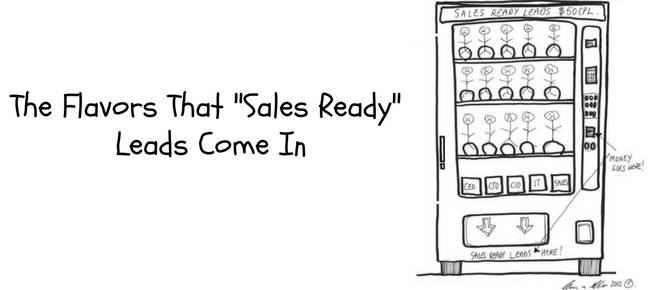


 There are a couple of major distinctions here. With automated account-based marketing, you can build rules that automatically associate the right leads to the right accounts as new contacts are identified over time. This, along with the ability to group audiences based on identified criteria, allows you to create self-maintaining and accurate audiences that support your business objectives over time.


 The importance of lead velocity to B2B marketing is widely understood. However, discussions on the topic, and more importantly, how to increase velocity, often take a back seat to the flashier aspects of demand marketing, such as account-based marketing.


