

When you want to change your life, you probably have a specific goal in mind. However, if you only adopt new habits to meet that goal and then stop, you’ll end up back where you started. Instead, focus on building whole new habits.
When you want to change your life, you probably have a specific goal in mind. However, if you only adopt new habits to meet that goal and then stop, you’ll end up back where you started. Instead, focus on building whole new habits.
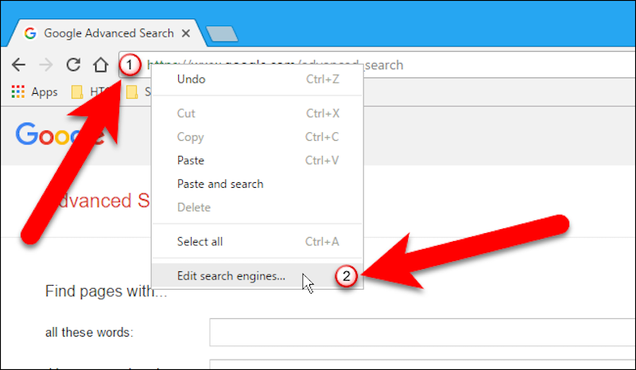

It’s easy enough to add events to Google Calendar, and you can even do it from your email. If you use Chrome, there’s another way to add events quickly directly from your address bar.
The time you wake up in the morning is an indication of how strong your hustle is. The later your sleep, the weaker your hustle. The more times you hit the snooze button, the more certain it is you have nowhere to go and no one to be. I know, you’re a “night owl.” Commerce happens when the sun is shining.
The amount of money you invest in your personal and professional development is an indication as to whether or not you have gone “all in” on you. The less you invest in you, the more certain it is that you are not an asset that is appreciating in value.
If you are not taking care of your health and well-being, you aren’t going to possess the energy necessary to do the work you need to do to succeed. You can’t hustle without energy to burn.
If you don’t read, your hustle isn’t what it should be. Knowing how to read and not reading is the same as being illiterate. The ability to think well and understand your world is critical to success, and avoiding it means success will avoid you.
What work you prioritize is an indication as to how much you hustle. If your actions indicate that you believe browsing the web and spending time in your inbox are what’s important, it is clear you aren’t pursuing your dream. Hustlers work on their biggest priorities first.
A calendar with white space is an indication your hustle needs some hustle. A clear calendar indicates someone who is waiting for the world to act on them. Not too may things indicate a lack of hustle like waiting for work to show up. That isn’t your real work.
If someone has to ask you to do your work and hold you accountable for results, the hustle is weak in you. Hustle means working hard and with a sense of urgency. It also means working on what’s important. No one should ever have to ask you to do what you should already be doing.
You aren’t interested and aren’t learning about business. Your business. Your client’s businesses. The business of business. The general economy. Not knowing anything about business is an enormous drag on your hustle.
These are all signs of a lack of hustle. None of them, however, are fatal. All are easily remedied with a little ambition, a mission worth pursuing, and a desire to live a life of purpose. You are here to live and produce to your full potential.
The post How To Know If Your Hustle Is Weak appeared first on The Sales Blog.

Remember Viterra? It’s the former Saskatchewan Wheat Pool that was acquired by Swiss conglomerate Glencore International in 2012 for $6.1 billion. In April a 40% stake in its parent, Glencore Agriculture Products, was quietly repatriated by the Canada Pension Plan Investment Board for US$2.5 billion as Glencore shed assets to pay down debt. It’s a story oft repeated, where a foreign giant swoops in to buy a Canadian resource company at the top of the market, only to regret it later. Think: Nexen, Alcan, Inco and Falconbridge. Maybe it’s time to put more faith in canny Canadian investors who know these volatile industries better than anyone.
As Enbridge Inc.’s pending $37-billion takeover of Houston-based Spectra Energy Corp.—which will create Canada’s largest company—shows, mega-deals can go both ways across the border. Given what’s taken place here, Enbridge likely knows it ain’t worth it just for bragging rights.
Calgary’s one-time digital darling Smart Technologies has had a rough time since going public in 2010. The maker of electronic smart boards was squeezed by shrinking school-board budgets and a failed foray into the business market. The resignation of founders David Martin and Nancy Knowlton four years ago was only a temporary reprieve. In May the company accepted an offer from Taiwan’s Foxconn Technology Group—yes, that Foxconn, the iPhone-maker infamous for its suicidal employees. It’s not the fairy-tale ending many wanted, but it gave shareholders $4.50 a share in cash (up from a low of $2.19 in January) and demonstrated the value of knowing when to abandon a dream, take the money, and move on.
November saw Montreal-based Gildan Activewear bid $66 million for the intellectual property and other assets of American Apparel, a troubled clothing company. It’s already precarious position was exacerbated when Canadian founder Dov Charney was ousted in 2014—that had just filed for bankruptcy for the second time in 13 months. Gildan opted not to buy the chain’s nearly 200 stores, and may or may not continue to operate its U.S. factories. It seems American Apparel’s brand has value, but its considerable corporate baggage does not.
For years QHR Technologies (recently acquired by Loblaw Cos.’ Shoppers Drug Mart) and Telus Health (a division of the telecom) fought tooth and nail to get health authorities to digitize patients’ medical records using their respective systems. Then, in June, they agreed to work together to achieve seamless interoperability (so if a person moves from one province to another, their records follow them). Evidently, like Microsoft and Apple before them, they realized that their rivalry was hampering the growth of their market.
The post The five most important lessons about mergers and acquisitions for 2016 appeared first on Canadian Business - Your Source For Business News.

Image via Unsplash
Nearly all potential customers with electricity consult online ratings and reviews before making a purchase.
Bad reviews kill good marketing.
Recently, I worked on a Webinar with our partners at Yext about the importance of reviews, and how to manage them, and get more. It was definitely one of the best (and most important) Webinars I did in 2016.
Visit the Yext wrap-up post to watch the Webinar, for free.
Consumers often use mobile search at the beginning of their purchase funnel, and Google serves up reviews right at the top of the results for local searches of this type.
 For example, this Google search for “brewery” prominently returns a map, plus ratings/reviews for breweries in my area. A specific search for “Upland Brewery” (my local favorite, owned by my friend Doug Dayhoff, who recently started an entrepreneurship blog) shows that of the ten first-page results returned by Google, six of them include ratings/reviews: Google, Facebook, Yelp, TripAdvisor, Zomato, and Beer Advocate.
These are third-party reviews, residing on sites we don’t own or control. People believe in the veracity and accuracy of that content. In fact, 80% of Americans trust at least some ratings and reviews as much as they trust recommendations from friends and family members.
Third-party reviews are important because they drive foot traffic. Even if you’re a terrific marketer, if a prospect sees a 3.1 average when they find you in search, you’re not likely to convert that person to a customer.
But there’s a second type of review that is just as important: first-party reviews. These are the reviews that are on YOUR website. They’ve been common on e-commerce websites for years, but are now popping up on retail, restaurant, and professional services sites.
You’re going to see more and more first-party reviews because they help convince customers late in the funnel, by ratifying their decision to make your enterprise the finalist for their purchase.
 AND, when present, Google ranks first-party reviews even more prominently than third-party reviews. For instance, this local search for Denny’s in California. Notice how locations.dennys.com comes up first? This is a mobile-formatting local landing page that includes first-party reviews, gathered from actual Denny’s customers using the Yext reviews platform. (Yext sponsors my Social Pros podcast)
Both types of reviews are increasingly critical because they give consumers information shortcuts to making buying decisions in a crowded, noisy, competitive landscape.
In the Webinar, I cover:
Give it a watch, I think you’ll like it.

Editor’s note: This post is part of a paid sponsorship between Convince & Convert and Yext.

The Internet of Things (IoT) will fundamentally change all industries, from agriculture to transportation to healthcare. In the next few decades, nearly everything in our world will become connected.
But with that increased connectivity comes several concerns. For example, the IoT will generate immense amounts of data, which will put pressure on the Internet and force us to come up with more efficient ways to transmit and store this data.
Perhaps chief among these concerns are the infrastructure considerations as other sectors grow thanks to the IoT.
Below, we've outlined the future of IoT infrastructure management, along with some IoT infrastructure companies that are leading the way.
As the population continues to move toward cities in the coming years, municipalities will have to deal with increasing population pressures. To handle this, they will more frequently connect their public infrastructure in order to more efficiently run their cities and improve quality of life for residents. And cities have already started implementing some of these strategies.
Connected surveillance cameras, for example, help police departments keep an eye on areas with high crime rates. Connected traffic lights help cities ease congestion in high-traffic areas. And connected streetlights allow cities to keep their energy costs down.
BI Intelligence, Business Insider's premium research service, expects municipalities around the world to increase their spending on IoT systems from $36 billion in 2014 to $133 billion in 2019. Furthermore, this investment will generate tremendous returns for these municipalities and create $241 billion in economic value for these cities by 2019.

Cloud computing, usually just called "the cloud," involves delivering data, applications, photos, videos, and more over the Internet to data centers. The Internet of Things, meanwhile, is the term for the connection of devices (other than the standard ones such as computers and smartphones) to the Internet. Automobiles, kitchen appliances, and even heart monitors could all be connected through the IoT. And as the Internet of Things explodes in the next few years, more types of devices will join that list.
Cloud computing and the IoT both serve to increase efficiency in our everyday tasks, and the two have a complimentary relationship. The IoT generates massive amounts of data, and cloud computing provides a pathway for that data to travel to its destination.
Some of the more popular IoT cloud platforms on the market include Amazon Web Services, GE Predix, Google Cloud IoT, Microsoft Azure IoT Suite, IBM Watson, and Salesforce IoT Cloud.
Fog computing is more than just a clever name. Also known as edge computing, it provides a way to gather and process data at local computing devices instead of in the cloud or at a remote data center. Under this model, sensors and other connected devices send data to a nearby edge computing device. This could be a gateway device, such as a switch or router, that processors and analyzes this data.
Big data is exactly what it sounds like: it's a lot of data. The Internet of Things is allowing us to generate more data than ever before, and the eye-popping numbers are still climbing. The "Internet of Everything," which consists of all people and things connected to the Internet, will generate 507.5 zettabytes of data by 2019, according to Cisco. For context, one zettabyte = one trillion gigabytes.
BI Intelligence believes that fog computing will be instrumental in analyzing all of this data, as it offers several advantages that a cloud computing model simply does not have. These include quicker data analysis, reduced costs tied to data transmission, storage, and management, as well as enhanced network and application reliability.

The Internet of Things will also transform the way governments defend their nations, as IoT security becomes more prominent. Some nations have already started to employ remote-controlled drones in combat situations, and many are looking ahead to using robots to carry out military missions.
Frost & Sullivan forecasts that military robot shipments will grow from 13,000 in 2014 to 126,000 in 2020. This will coincide with greater overall military spending, as MarketsandMarkets expects the countries with the top 10 defense budgets to increase from $1.16 trillion in 2014 to $1.75 trillion in 2020.
The IoT will transform all industries, governments, and lifestyles in the coming decades, and infrastructure will just be one piece of that.
That's why BI Intelligence has spent months compiling he greatest and most detailed text on the IoT: The Internet of Things: Examining How The IoT Will Affect The World.
To get your copy of this invaluable guide to the IoT universe, choose one of these options:
The choice is yours. But however you decide to acquire this report, you’ve given yourself a powerful advantage in your understanding of the fast-moving world of the IoT.
Did you know only 3 percent of marketers get full value out of their marketing technology tools?
A recent report by Walker Sands Communication and Scott Brinker explored “The State of Marketing Technology: Closing the Gap Between Innovation and Adoption.” The report is based on a survey of more than 300 marketing professionals and highlights how the explosion of martech tools has re-shaped the industry.
There has been a disconnection between innovation and adoption of marketing technology, likely due to the explosive, 84 percent year over year growth of martech solutions. There are currently more than 3,874 options in the market. Fortunately, according to the report findings, that gap seems to be decreasing as companies catch up with the fast-moving martech ecosystem.
Check out a few highlights and interesting stats that caught my attention. You can download the full report here.
One of the most refreshing advancements in this year’s Marketing Technology report is the data indicating tool integration is becoming easier for organizations. When asked about the obstacles to martech adoption, only 24 percent of marketers indicate that difficulty of implementation/integration is an issue, which is down from 35 percent last year.

If marketers are innovators, they are more likely to rank their companies as innovators. Part of that could just be perception; how they see technology adoption in their lives is a lens by which they either see or don’t see what’s happening at their companies. Or maybe people just gravitate toward companies that match their preferences in technology. The correlation is very strong. — Scott Brinker, chiefmartec.com

Although 50 percent of marketers surveyed indicated that budget was the main obstacle to marketing technology adoption, martech budgets are growing. Only 2 percent indicated a slight decrease in budget while an astounding 70 percent indicated an increase — 20 percent of which expect a significant increase in martech investment.

While the CMO and VP make the majority of martech decisions, 7 out of 10 marketers have led a purchase decision for at least one tool in the past three years.

A new breed of digital marketers may be better equipped to get the most value from marketing technology solutions.
Marketing owns technology — but is that really a good thing?
Among marketers who say the marketing department owns martech, only 59 percent rate their companies’ abilities to fully leverage their tools as “excellent” or “good”. Compare this to the 93 percent rating of “excellent” or “good” when Customer Experience owns martech, the data suggests that traditional marketers may not be best suited to be technologists.

It’s important to remember adopting technology doesn’t drive innovation — it’s the organizational changes ignited by the technology adoption that drives innovation.
The report notes that “most marketers feel this healthy tension as they try to navigate an ever-shifting technology landscape.” Creative tension is a behavioral adaptation that magnifies creativity and facilitates transformational change. This can be a very productive and good form of stress or eustress. As marketers, when we are faced with an unresolved issue or a big challenge, this triggers us to perform at our peak and release more energy into dealing with the problem, and generating solutions for better results.
By understanding and identifying the ways to use Marketing Technology to generate creative tension, you have a great opportunity to magnify organizational creativity and facilitate the transformational changes your brand needs to stay relevant today.

Of all the lessons I’ve learned about innovation and change, one stands above the rest: There is no such thing as an average or old-fashioned business, just average or old-fashioned ways to do business. The thrill of breakthrough creativity doesn’t just belong to upstart companies with the most radical technologies. It can be summoned in all sorts of industries and all walks of life, if leaders can reimagine what’s possible in their fields. In fact, the opportunity to reach for the extraordinary may be most pronounced in fields that have been far too ordinary for far too long.
One inspiring and instructive case in point is what Ray Davis and his colleagues at Umpqua Bank have achieved over the last two decades, in a field that is about as traditional as it gets. Davis took over as CEO in 1994, when Umpqua was a tiny community bank with five branches in Roseburg, Oregon. It had $140 million in assets, was privately held (worth $20 million), and had a plain-vanilla strategy no different from thousands of other community banks. Today, Umpqua, headquartered in Portland, has 300 locations in five states, $25 billion in assets, and a stock-market value of more than $4 billion. As American Banker, the bible of the industry, noted, “Few banks in the country have undergone as thorough a transformation” as Umpqua under Ray Davis, which is why the magazine bestowed upon him a Lifetime Achievement Award.
Most importantly, Umpqua has created a one-of-a-kind relationship with customers that distinguishes it from other community banks. Davis and his colleagues invented a retail experience that appeals to all five human senses: sight, sound, even taste. Umpqua locations host book clubs and yoga classes, serve Umpqua Blend coffee and specially made chocolates, invite merchants to open pop-up stores, become hubs for local businesses and civic groups. Today, Umpqua is a passion brand that stands for something colorful and hopeful in an industry that feels bland and broken.
Ray Davis will soon be stepping down as CEO of Umpqua Bank, so I asked him to reflect on his two-plus decades as a banking revolutionary. What could other CEOs learn from what he and his colleagues have built? What might leaders misunderstand about what it takes to do something this distinctive? What’s hard about sustaining innovation as a company gets bigger and its environment keeps changing? His reflections amount to a game plan for game-changers — lessons for achieving extraordinary things, even in ordinary fields.
There’s a difference between being creative and being reckless. Umpqua stands out in radical ways from the banking establishment. But that has not required big, audacious, risky financial moves. “The level of risk was small as far as I was concerned,” Davis told me. “First of all, if you don’t differentiate yourself you’re in a death spiral, so doing nothing is its own risk. But when it comes to financial performance, we have been consistent and steady, through the best of times and the toughest of times. Being distinctive does not mean you bet the company on any one decision.”
Big change sticks when it’s the result of lots of little changes. There was no “aha moment” behind Umpqua’s dramatic transformation, no single bolt of insight that put the bank on a new course. “Banking had always been such a chore,” Davis told me. “In the mid-nineties, we asked, ‘Why can’t banking become something people enjoy?’ So we tried a few things. They felt good, so we tried a few other things, and it kept going. I’m not sure there’s anything particularly brilliant about what we’ve done. But over time, there’s something brilliant about what this has become.”
The more you change, the more you have to keep changing. Over two decades, Umpqua has built the most distinctive physical retail experience in U.S. banking. Of course, customers now look to their phones, computers, and online apps to for much of their banking needs. So Davis, even after he steps down as CEO of Umpqua, will remain CEO of Pivotus, an Umpqua company based in Palo Alto that is translating the physical Umpqua experience into the virtual realm. “We are building a one-of-a-kind digital banking platform that does not exist anywhere today,” he told me. “We want to take this incredible customer experience and put it on a digital platform.”
There’s a difference between being admired and being copied. Ray Davis and his colleagues are genuine celebrities in community-banking circles, and in the financial-services field more generally. Umpqua is “so highly regarded by its peers,” American Banker wrote, “that bankers from all over the world regularly travel to Portland to study its approach.” Davis has spent time with executives from China, Russia, Australia, and across the United States. Yet as much as these visitors marvel at what Umpqua has built, few plan to build something similar. “I recently had a CEO visit and tell me, ‘This has been a terrific two days, I can’t believe what you’ve done.’ So I asked, ‘How will you apply this to your bank?’ And he said, ‘Oh, we won’t do any of this, it’s way too hard.’” That’s a sobering reality check about the challenges of making change, and a powerful invitation for leaders prepared to rethink what’s possible in their fields. Remember, what your competitors won’t do will surprise you.
As you reflect about what you’ve achieved at your company and with your career, and as you think about what it will take in the years ahead to do something extraordinary in your field, no matter what field you work in, you may want to borrow a page from Ray Davis’s revolutionary playbook. And remember…There’s nothing standing in the way of breakthrough innovation other than your capacity to imagine it.

Many B2B marketers use LinkedIn as part of their content marketing strategy. In fact, 94 percent use it to distribute and share content. But what happens when you’re sharing content on LinkedIn and not getting the results you expect?
It’s possible to get excellent results using this powerful tool by taking actions many other marketers are missing. Here are five simple actions for capturing more attention from your target audience today.
Posting a status update is powerful because it helps you stay in front of your target audience consistently. Consistent communication ensures your brand is top of mind when a prospect does finally need your products and services.
Once posted, these updates are sent to all first-degree connections, but you also can strategically select groups of people in your network and send updates to only those individuals.
What is the true impact of these updates?
According to LinkedIn, if you post a status update every weekday during a month, you’ll reach 60 percent of your target audience. Not bad, right? But what type of content should you post as updates? Here are a few suggestions.

The goal is engagement, so share articles you think would provide great value to the audience.


When sharing this link, you might write, “Only 30 percent of organizations say they’re effective at content marketing. Check out this report.”
You can also post content your company has created in-house, such as customer success stories, white papers and blog posts, and then promote that content through LinkedIn status updates. Test out this strategy, and see how it affects engagement for your brand.
LinkedIn Pulse allows content marketers to reach millions of users. When an article is posted, not only is the article made available to everybody, but it is also easily viewed by your contacts. Like status updates, this helps you stay in front of your audience. Here are a few steps to successfully post on this platform.
Once the content is designed and you’re ready to post, select the day and time that provides the greatest impact. For example, LinkedIn reports it receives the highest traffic Monday through Friday, mornings and midday. Start by posting during these times, and then track your results internally to better understand the ideal posting time for your target audience.
Most B2B marketers belong to at least a few LinkedIn groups, but not all are maximizing results from this tool. One of the major benefits is the ability to understand what topics resonate best with your target audience.
For example, let’s say you post a question about a pain point your audience is facing. Posting the question yields dozens of responses and engagement. At this point, you have some valuable information. You know there is enough interest on the topic to invest resources in developing a piece of content such as a white paper, blog series or report. Here are a few tips for using LinkedIn groups more effectively to harness more interest in your brand.
A LinkedIn company page highlights basic facts and details about your company, but it’s also a conduit for potential leads. When prospective companies want to learn more about your company, they often arrive at your LinkedIn page. Many marketers, however, set up this page and then forget about it — which is a lost opportunity.
For example, check out Microsoft’s LinkedIn page. They share updates related to their brand, such as the article “Reinventing Business Processes,” which received 1,107 likes and 54 comments.

GE is another good example of a company that regularly updates their company page to tell their story. For example, they recently posted an update related to the workplace titled “Break the wheel of monotony… Go #Beyond Usual.” The update captured 554 likes.

You can also add showcase pages to your LinkedIn page to help you focus on niche areas of your business. For example, GE added a page called “Future of Work.” Having this separate LinkedIn page allows the company to communicate relevant messaging and talk to a specific target audience.
Post too little, and you’ll lose the attention of your target audience. But if you post too much, you risk becoming an annoyance. So, what is the right balance? For maximum results, you should produce about one post per business day, or at least 20 posts per month. Here’s a quick guide.
Status updates. Post about once daily. People are busy, so not everyone will view every update, but if you post at this frequency, you’ll reach a large portion of your target audience.
Group postings. The content you post to groups should be relevant and add value, so post only your very best stuff here. Post in relevant groups about once a month. Create a schedule to help you track what you’ve shared where, and the results of that marketing effort. Here’s an example provided by the Content Marketing Institute:

Company page updates. Share updates about your company once every few weeks. By keeping this page updated, when a prospect is searching for information about your company, this page will be current and up to date.
LinkedIn is a powerful tool for B2B marketers, allowing them unprecedented access to their target markets instantly. But to get the most from this platform, marketers must deploy a highly-targeted strategy, and test out that strategy to ensure it is performing.
With greater focus, however, this platform provides excellent results as your brand engages and communicates with prospects with greater impact, driving more leads and more profitable results for your organization.


In Poolside Sales Chat episode 28, I talked about why and how you should be sharing updates on LinkedIn. Sharing updates on LinkedIn should be a regular part of your social selling strategy.
Sharing your message is how you build your reputation, keep your reputation and create engagement with people. Posting LinkedIn status updates is also a way to be useful to your audience by giving them information that they can apply in their professional lives. You are building your brand and your network on LinkedIn; therefore, it’s vital that you’re sharing updates consistently to reinforce your brand and add value to your audience.
How you share on LinkedIn is important. Remember, the reason you’re sharing your message is to build your reputation and add value to your network.
It’s crucial that you measure the reach of your status updates. Knowing what types of posts are creating the most engagement will help you to fine tune your strategy. And knowing what works best for your audience will help you to have the biggest impact.
Knowing why and how to share updates on LinkedIn is an important part of your social selling strategy. Watch the Poolside Sales Chat and listen to the podcast to learn more about how to improve the way you interact on LinkedIn.
Feature image source: Unsplash.com.

Many marketers called 2015 the year of influencer marketing, but now we’re at the end of 2016 and interest is still growing:

Even more marketers are starting influencer marketing this year, because the numbers don’t lie:
All the interest in influencer marketing does create a problem though – everyone is vying to get the attention of the same influencers.
So if you want to really stand out, you need to do more than just retweet their posts.
Here are 22 proven tips I’ve gathered for getting influencers’ attention.
Simply put, the best way to get your influencers’ attention – and the attention of anyone else interested in your niche – is by creating content that is better than everything else out there.
Here’s an example from this blog:

Create a comprehensive resource that other bloggers can’t easily replicate. If it’s really something that offers value to your influencers’ audiences, they’ll feel compelled to share even without you asking.
If an influencer just posted a blog post, they probably have a close eye on their analytics. Set up a notification or add their blog to your RSS feed to make sure you’re one of the first to share their content after it’s published.
This will help them identify you as an influencer – and increase the chances they’ll return the favor and share your content as well.
The best bloggers (and influencers) make a habit of responding to comments and questions on their blog posts.
Be a conversation starter by commenting on their blog posts – your influencer will appreciate it. Make sure you have a clear name and photo on your Gravatar account, so the influencer will recognize you on other platforms as well.
Strong online influencers pay attention to where their traffic comes from and what kind of links they’re building.
Link to your influencer’s content from your own pages, and they will see your domain show up in their backlink analysis.
They’ll probably get curious about the context of the link and click through to your site.
At the same time, if your links start generating real traffic for their blog, that’s a favor they may want to return.
A common influencer marketing tip you hear is “engage on social media,” but a lot of people miss the point. If you’re going to tweet at them, you need to say something relevant that encourages them to continue the conversation.
Avoid saying things like “Great post yesterday!” and instead bring up questions or comments that encourage discussion.
Even if your influencer doesn’t respond directly, their followers might, leading to a big discussion your influencer will notice.
You know what kind of content people can’t resist sharing? Something about them.
Write a blog post that features your influencer or their site (e.g. Top 5 [Niche] Blogs to Read in 2016).
Then reach out to them and tell them they were featured. Provide a link to the post to make it easy for them to share.
Here’s an example of one I was featured in recently:

If you’re looking to get the word out about a product or service you offer, try giving your influencers a free sample, a sneak peak, or a free trial.
This tactic won’t work with just anything. You need to offer something that’s actually useful to them, so they’ll be interested in testing it out.
Also make sure whatever you offer is exclusive. Influencers will be less enthusiastic about a free trial if it’s available to everyone.
Giving an influencer exclusive access to your product or service encourages them to write a review about it and share their experiences, especially if the product piques the interest of their own audience.
The best way to target influencers is to draw in people who are looking for influencers themselves, or who want to build partnerships for other reasons.
For example, you can target link builders who are trying to build their SEO. Do this by creating content that link builders try to get featured in, like weekly roundups of “Top 10” content.

Doing this will increase the chances that they reach out to you, because they want to appear in your content. If you say yes, they’ll become an easy influencer – more than happy to share.
If your influencer hosts any webinars, Google Hangouts, or other opportunities to communicate one-on-one, this is your best opportunity to stand out.
Attending their online event shows you have genuine interest in them and their work. And because these events tend to be more exclusive, your influencer is more likely to remember you after.
Sometimes the best way to get the attention of an influencer is to ask them to become a partner instead.
Your audiences are related, which means you can create some valuable content together by pooling your resources. You can poll your audiences and create a joint research report, or work together to create a comprehensive guide.
Neil Patel makes these kind of partnerships all the time on QuickSprout:

Your influencers spend all day talking about their niche. Engaging with them about related topics is a great way to draw attention.
But sometimes, the best way to stand out is to make the conversation more personal.
If your influencer has similar hobbies as you, for example, or also has two daughters, take advantage of things in common to make your social conversations more personal.
When everyone else is talking about niche topics, you’ll stand out because you’re relatable on a personal level.
Heading to an industry conference this year? If possible, figure out who else in your industry will be attending beforehand.
Even if you’re a small fry in your industry, meeting someone face-to-face can make a big impression. So make a point of interacting with big players in your niche at conferences or events.

Attend their speeches, and try to strike up a conversation if you can. Ask a question about something they mentioned, or bring up some of their previous work you admire.
While everyone else is hiding behind their computer screens, you’ll have a face to a name.
Twitter seems to be the main focus for a lot of influencer marketing these days. It’s a valuable platform, but if you really want to stand out, you should seek your influencers out on other social networks as well.
Repinning their pins on Pinterest or rescooping their curated content on Scoop.it will make it easier to stand out, since there’s less engagement noise on these platforms. And seeing that you follow all their social profiles will show them you have real interest.
Does your influencer offer a product or service that you’ve used? If so, they’d probably really appreciate a review.
Review their business on Google My Business, Yelp, or other third-party review sites. If it’s a really nice, positive review, your influencer will remember it, and may even ask your permission to host a version of it on their site, or a testimonial.

Guest posting on their blog is a great way to build a relationship before you ask them to become an influencer. And since a guest post is hosted on their blog, they’ll definitely want to share it!
Look and see if your influencer has a “Write for Us” page or something similar. If not, reach out to them by email, and pitch a topic you think their audience would love.
If you guest post regularly, it’s easy to build a relationship so they share your other content regularly as well.
Social media platforms aren’t the only places where you can connect and engage with your influencers.
They’re probably out there commenting on blogs, posting on Reddit, and engaging in industry discussions on forums and Q&A sites.
Finding where they hang out will require a little Google stalking on your part, but it creates plenty of new opportunities to join the discussion and become memorable.
Influencer marketing is all about getting others to help you. Some people forget the key to success lies in being valuable to them.
Scour their blog, and look for any gaps in their content topics recently. Then, create content that brings value to both of your audiences.
When you reach out to ask them to share, you will genuinely know that the content can help their audience. Your influencer is likely to notice this as well.
Your influencers probably have some amazing content from previous years that’s gathering dust on their blog.
Bring their post back to life by repurposing it into a slidedeck, infographic, or video. Scott Scowcroft does this by repurposing Hangouts on Air (HOAs) into small, informative pieces of content:

The people who made the original content appreciate his synopses and are often happy to share them as well.
There’s a lot more you can do to be an asset to your potential influencers than just sharing their content.
Look for ways you can be helpful beyond becoming an influencer, such as:
A lot of the biggest players in any industry aren’t too worried about getting rich from influencers. Bring a different kind of value to the relationship to really stand out.
A big influencer in your niche probably has a lot of actionable advice. Prove their advice works and write a post about it, and they’ll be more than happy to share.
For example, say they have a post called “10 Steps to Grow Your Twitter Following.” Put it to action, document your efforts, and demonstrate the results!
Getting influencer attention by stalking them online and filling their social feed won’t make you look good.
You should definitely try multiple strategies to get noticed, but pace yourself. Appear too pushy and you’ll get a negative response or be ignored.
This tactic is seriously underrated. Most marketers jump right to the advanced tactics of getting an influencer’s attention, and they forget the value of being blunt and asking them directly for help.
One of three things can happen in this scenario:
Know any other tips I should add to the list? Tell me in the comments:
With the opportunity to connect with target audiences via email, social media platforms, and other online outlets, companies have more ways than ever before to get their message in front of the right customers and prospects.
From its reputation for high ROI to the ability to tie-in personalized content, email marketing offers unique, value-driven ways to deliver campaigns and allows marketers to connect with customers and drive revenue in a way that’s unparalleled.
In this post, we explore why every integrated campaign should include email marketing.
For the most part, the email inbox is still sacred space. And because it’s not limited in exposure by algorithms on social media platforms, it’s staying power makes it extremely valuable.
As a result, email marketing is known for delivering impressive ROI. And data proves this: VentureBeat reported that email has the highest ROI of any marketing channel, McKinsey research shows that the average order value of an email is at least three times higher than at of social media, and McKinsey research shows that the average order value of an email is at least three times higher than at of social media, and in comparison to direct mail, email delivers 21.5% higher ROI.

Add to this the fact that the DMA reported 77% of marketing ROI comes from segmented email campaigns, and it’s not all that surprising that well-designed email campaigns should always play a core role in the modern integrated campaign.
Beyond email’s ability to deliver value, it also offers marketers a chance to tie in personalization to their integrated campaigns. And today, personalization is extremely important when it comes to crafting highly effective integrated campaigns.
Why? Because it works. Personalized emails generate 58% of all revenue according to the DMA, and 74% of marketers say targeted personalization increases customer engagement.
Personalization can take many forms. From incorporating a subscriber’s first name to building out robust customer journeys that are time or action triggered, email marketing has unique advantages on the personalization front.
What does this look like in action? Take a look at how Monica Vinader uses personalized customer journeys to tie in email with integrated campaigns around products:

As you can see in the example, these personalized, automated email series allow the brand to send highly relevant product marketing campaigns that no doubt work alongside additional marketing efforts to educate shoppers and generate revenue.
Retaining current customers is far less expensive than acquiring new ones–so when creating integrated campaigns, it makes sense to tie in emails specifically aimed at customer retention.
It pays to take on these efforts, too. According to Temkin Group, loyal customers are 5x as likely to repurchase, 5x as likely to forgive, 4x as likely to refer, and 7x as likely to try a new offering.
So how can you use email to drive customer retention in integrated campaigns?
To see this tactic in action, take a look at this example of a customer retention email from Derwin Dental:

Incorporating customer retention emails into integrated campaigns is a simple way to proactively address customer churn while driving sales at the same time.
The more places and ways you can interact with your audience, the better. That’s why when you think about integrated campaigns, you probably think about creating multiple touch points across channels for as many customer interactions as possible.
Having email as one of the touchpoints is good news because a well-design campaign allows you to get in touch with buyers in their preferred format, whether that’s on a mobile device or a home desktop computer. Considering 68% of emails are opened on mobile devices, this is just one more way you can accommodate your audience.
Plus, with integrations that allow you to connect your store and social sharing tools, you can make your messages go even further. Win-win!
The bottom line here: Integrated campaigns become much stronger when email marketing is part of the equation, thanks to its ability to drive ROI and customer retention, to integrate customer data for smart personalization, and the resources that make shopping only a click away.
The next time you’re considering your strategy, think about how you can make email marketing a key part of the equation.
We've all heard the phrase ‘the client is king’. In practice, this means that an important part of marketing is an exercise of empathy, which consists of finding out who our audience is, so we can give them what they want in a better way than our competition.
This simple idea should also be the center of your efforts when it comes to increasing your leads. You should adjust to them, and to their buying process. You should give your prospects the answers they are looking for, when they’re looking for them, in an appropriate way to address the subject of their interest.
But let’s start from the beginning. You may have heard the term “inbound marketing” before. If you haven't, it mainly consists of making leads come to you, rather than you going to them. Unfortunately, that doesn’t mean it enables you to let the prospect do all the work.However, it is a great strategy to work your way into gaining leads that are interested in what you have to offer.
Inbound marketing’s key to attracting clients is quality content: knowledge and information related to what you do that your prospects find interesting or useful. They probably won’t surf the internet looking for the cool ads of your locksmith business’s new campaign, but they’ll sure want to know how can they fix their lock if their key got stuck in it and they can’t get into their house. Your path to obtain more and better leads can start from there.

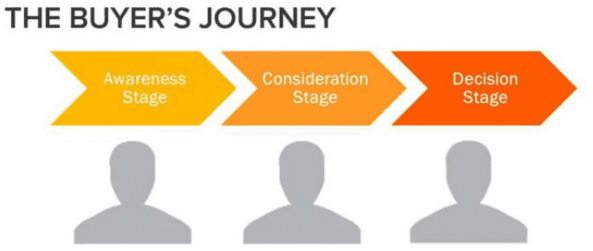
Since the whole point is to create content to attract your leads, it’s crucial that you consider which stage of the buyer’s journey they are on, so you can create the content they are looking for in that specific moment. The stages are three:
Different content should be created for each different stage, so the prospects can find exactly what they are looking for in that particular point of the buying process. In the case of the Consideration Stage, every format that proves useful to explain, elaborate or exemplify the solutions your product or service can deliver to the prospect can be a good option. Case studies, white papers, lists and product reviews are good choices to create content for this phase.
Also, it’s important for the content to be as visual as possible. Text-based content can be very good if you want to provide a large amount of information with low cost, but 65% of people are visual learners, so using images will make understanding much easier.
This is also a good reason to prefer visual content marketing formats. But even putting aside its didactic potential, they have a proven formula to boost impact and effectiveness. Introducing infographics in your content, if you don’t yet do it, can lead you to increase your traffic by 12 percent. And in the case of presentations, they are 43 percent more effective if they include visual aids.
However, to really enhance the performance of your content through visual marketing content, the best thing you can do is to use video. Internet video is on the rise: by 2019, consumer internet video traffic will be 80 percent of all consumer internet traffic (in 2014 it was already 65 percent). This rise in traffic includes mobile as well, which is a growing trend itself. Also, Youtube reported that mobile video consumption rises 100 percent every year, and an important Facebook executive says that in 5 years, all content on Facebook will be video. When it comes to content and inbound marketing, video is both the present and the future.
Video content comes in many formats, some of which are better suited for the Consideration Stage. For example, Educational Videos can provide information about how to solve a problem the prospects may be having. These are good to show the way a product works. A good example of these are Moz’s Whiteboard Friday Videos, which are all about SEO-related topics:
Another good option is Testimonial Videos. They enable you to use your client’s satisfaction to establish credibility for your business, so they are an excellent choice when this is your priority. A good way to create a stronger impression with this type of video is to make as many clients as you can to share their experience with you on them, like in this video from The Blessed Bean.
If you think your company’s culture, personality and human side are strong points to make an impression, you can create a Company Culture Video and show what you do from a more sensitive perspective. In this video created by Wistia, Zappos’s staff explain how being happy and having fun at work is a major priority to them.
However, the most adjusted and natural choice for this particular stage of the buyer’s journey is an Explainer Video. This is the case, basically because it’s perceived to do exactly what you are supposed to do in this phase: explain what the company and the product can do and how they can meet the prospect’s needs. It is supposed to explain your product or service, not a subject in general, as Educational Videos do. And as good as Company Culture Videos and Testimonial Videos can be to stress certain aspects of your company, like its personality or reliability, when the buyer is wondering what your company is about and ‘what-is-in-for-me-if-I-choose-you’, nothing cuts to the chase better than an Explainer Video. For example, this Explainer Video, created by Yum Yum Videos for Walmart, explains the seamless buying experience that the brand’s clients can enjoy, being able to find information about every product from their smartphones, as well as their personal computers and inside the store.
The Consideration Stage is all about making the best possible case about what you have to offer, at the right time, with the right formats and media. Get this right and you shall gain more and better leads, which will result in more and better clients, which is what your business (and every other) is all about.
 Thanks to Silvio Acevedofor sharing their advice and opinions in this post. Silvio Acevedo is a digital content professional, passionate for everything related to social communications. You can follow him on Twitter or connect on LinkedIn.
With untold millions of sales professionals in the world, sellers play a role in any economy. While our jobs are nominally to place solutions, we are uniquely positioned to make a difference: as the intermediary between clients and providers, we can make sales a spiritual practice and become true facilitators and Servant Leaders (and close more sales).
WHAT’S WRONG WITH SALES?
The current sales model is a time-waster, restricts success, and is horribly inefficient. We close 5% of our sales and waste 95% of our time (approximately 130 hours a month per seller); our product data is well-represented online so pitches based on product details may be irrelevant; we connect with only those who are ready to buy, and ignore the possibility of facilitating and serving people en route to becoming buyers.
Until people have tried, and failed, to fix their problem themselves, and then figured out how to manage any disruption that a new solution might cause their environment, they aren’t buyers. It’s only when:
will they seek help through a purchase. Indeed, buying is a change management problem before it’s a solution choice issue.
People don’t want to buy anything, they merely seek excellence and will buy something only if that’s the only way to achieve it, and they are absolutely certain they cannot fit it themselves. And the sales model, using eyeballs, content, price, and needs assessments seeks to place solutions, ensuring that the only people they find are the low hanging fruit – those who have already gone through their process of determining they need an outside solution.
Because sales focuses on only the final steps of a buying decision, and overlooks the change process necessary to get to that point, it’s only possible to attract interest from those who have ended up there. Others who may need us eventually won’t even heed our messages, regardless of their need or the efficacy of our solution. As a result, we end up closing 5% and wasting a helluva lot of time being ignored and rejected.
It’s not what we’re selling that’s the problem – our solutions are just fine. It’s the process of pushing solutions rather than first helping those who will become buyers facilitate their necessary change process that’s misplaced, mistimed, and misguided, leading to the win-lose quality of sales: sales becomes a product/solution push into a closed, resistive, private system, rather than an expansive, collaborative experience between seller and buyer wherein both attain a win-win.
And we end up seeking and closing only those ready to buy at the point of contact – unwittingly ignoring others who aren’t ready even though they may need our solutions, and just need to get their ducks in a row before they’re prepared to make a decision.
Imagine having a product-needs discussion about moving an iceberg and discussing only the tip. That’s sales; it doesn’t facilitate the entire range of hidden, unique change issues buyers must consider – having nothing to do with our solutions – before they could buy anything. Failure is built in.
But when we begin our conversation at the point where people are considering change in the area our product resolves, and lead them through their change management before selling, we are in a position to truly facilitate them through all of the issues they must resolve (even those that aren’t obvious), have all stakeholders in the loop from the start, and help them figure out how to address the disruption of bringing in a new solution. Then we are true servant leaders.
IS SELLING PREDATORY?
Seller’s restricted focus on placing solutions, the listening for needs rather than for ability to serve, all but insures that kindness, respect, and true facilitation are unwittingly overlooked as we focus on selling instead of facilitating buying. A major factor is our one-sided communication:
I’ve been a seller, trainer, consultant, and sales coach since the 1970s, been a buyer as founder of a tech start up 1983-1988, and have personally worked with dozens of global corporations and untold thousands of sellers. I see sales as a near-predatory job: sellers spend their time seeking and following, pitching and positioning, networking and calling to find those few set up to buy something, and ignoring a large population of potential buyers who merely aren’t ready, but could be with true facilitation.
The model is fraught with guesswork and hope, manipulation and persuasion, white lies and exaggerations – not to mention highly ineffective when the time spent vs sales closed ratio is examined. Not only are we wasting time pushing/chasing folks we’ve deemed prospects (A real prospect is one who WILL buy, not someone who SHOULD buy; the current sales model doesn’t know the difference.), but the global nature of staffing patterns and decision makers in our client’s environments causes closing to take 30% longer. And the very nature of the web makes most pitches and presentations moot. In fact, buyers often know more than sellers.
Sales unwittingly ignores the real problem: it’s in the buying, not the selling. The sales model’s focus on placing solutions keeps us from using our positions as knowledge experts and Leaders to facilitate buyers down their own path to excellence.
Truth is, as outsiders we can never know all the elements that have created and maintained their status quo, or what needs to happen internally for them to be ready to make a purchase. We might ‘know’ how our solution would make a difference, but we can never know how they will buy. And here is where we can truly serve.
SALES IS SHORT-SIGHTED
Indeed, the job of ‘sales’ as merely a solution-placement vehicle is short-sighted.
But we can truly serve clients AND close more sales, by adding a Change Facilitation capability that expands our entry points into the buy cycle, makes the buying decision process much more efficient and makes sales a spiritual practice (that closes dramatically more sales in a fraction of the time). Here’s my definition of ‘spiritual’:
Different from sales, which
To elaborate:
Aspiring to a win-win
Win-win means both sides get what they need in equal measure. Sellers believe that placing product or resolving a problem offers an automatic win-win but that’s not wholly accurate.
Buying isn’t as simple as choosing a solution; buyers first must resolve the entire system that created and maintains their problem (problems never occur uniquely). The very last thing they want is to buy anything, regardless of their apparent need. As outsiders we can’t know the tangles of people and policies that hold their problem/need in place. The time it takes them to design a congruent solution that includes buy-in and change management is the length of their sales cycle. Buyers need to do this anyway; it’s the length of the sales cycle. They will do this with us or without us, so it might as well be with us.
If we enter first as Change Facilitators and help buyers efficiently traverse their internal struggles (that we can never be a part of per se), we can help them get to the ‘need/purchase’ decision more quickly and be part of the solution – win-win.
We’re wasting a valuable opportunity to share this process with them by only wanting to sell – and then wait and hope, while competitively chasing after those who show up after they’ve completed their internal work without us.
If we enter earlier, work with them as Change Facilitators (with wholly different skills and goals) to help them facilitate their change, we can spend our time capturing and serving more real prospects, and spend less time seeking out the low hanging fruit. We can use our time more profitably to develop real buyers and simultaneously serve them, rather than fighting to find those who are ready. Let’s shift gears and enter earlier with a different hat on.
Believe it or not it becomes a very efficient process and great time saver: no more chasing those who will never close; no more turning off those who will eventually seek our solution; no more gathering incomplete data from one person with partial answers. We can enable those who can/should buy to buy in half the time and sell more product – and very quickly know the difference between them and those who can never buy. Win-win. [All the change issues buyers must address are in my book Dirty Little Secrets].
The whole is greater than the sum of its parts
There are several pieces to the puzzle here.
We are all here to serve each other
Sellers understand enough about the systems in our areas of expertise to help buyers traverse their change route that could lead to a sale. With an entry point of systems excellence rather than solution placement, buyers immediately recognize the benefits from a collaboration with the seller and are happy to invite sellers onto their decision team and not seek other competitors. Win-win. The Facilitative Question I developed for Wachovia’s Small Business Banker’s cold calls helped prospects immediately realize a problem they had to resolve rather than say ‘No’ to an appointment request:
“How are you currently adding banking resources to the bank you’re currently using for those times you seek additional support?”
With no disrespect, no push, no information gathering or asking for an appointment, this Facilitative Question above (as one of several asked in a specific sequence, using specific words) merely pointed to the problem they might have to resolve over time. [Note: I invented Facilitative Questions to lead brains through to change, rather than conventional questions that elicit biased data.] The results were astounding: against 100 prospecting calls and a control group: 10% appointments vs 27%; 2 closes in 11 months vs 19 closes in 3 months; we facilitated discovery immediately and served: we actually helped folks figure out their own configuration for change. And we only visited those who could close.
One more note: people are happy to buy in a short time frame once they know, and figure out how to manage, the full set of change issues they’ll have to deal with (Fire a team? Retrain users? Get rid of software they’ve used for years?). As I’ve said above, they must do this before they can buy. And we’re not helping them. But we could. And truly serve them in the process.
There is no right answer
Sellers often believe that buyers are idiots for not making speedy decisions, or for not buying an ‘obvious’ solution. But sales offers no skills or motive to enter earlier where buyers are not at the point of even knowing if – let alone what – they might buy. We must expand the definition of a buying decision as the route down the 13-step path from the status quo through to congruent change. Includes the people, policies, relationships, and history – the systems issues that insure Systems Congruence – that maintain the status quo and must be addressed before they consider buying anything.
Once buyers figure out their congruent route to change, they won’t have objections, will close themselves, and there’s no competition: buyers are the ones with the ‘right answer’; sellers facilitate change management first and then sell once everything is in place. No call backs and follow up and ignored calls. Win-win.
No one has anyone else’s answer
By adding decision facilitation, everyone focuses on uncovering the right questions. Collaborative decisions get made that will serve everyone.
Let’s change the focus: instead relegating sales to a product/solution placement endeavor, let’s add the job of facilitation to first find people en route to becoming buyers, then lead them through to their own type of ‘excellence’ through their internal change process first, and then using the sales model when they’ve become buyers. Then buyers make better, quicker, more congruent decisions – with more/quicker sales, less tire-kickers, better differentiation, and no competition, and sales close in half the time.
THE NEW WAY
As a seller and an entrepreneur (I founded a tech company in London, Hamburg, and Stuttgart in 1983), I realized that sales ignored the buying decision problem and developed Buying Facilitation® to add to sales as a generic change management to be used as a Pre-Sales tool.
Buyers get to their answers eventually; the time this takes is the length of the sales cycle, and selling doesn’t cause buying. Once I developed this model for my sellers to use, we made their process far more efficient with an 8x increase in sales – a number consistently reproduced against control groups with my global training clients over the following decades.
With Buying Facilitation® we can add a new capability and level of expertise and be a part of the decision process from the first call. Make money and make nice.
We no longer need to lose prospects because they’re not ready, or cognizant of their need. We can become intermediaries between our clients and our companies; use our positions to efficiently help buyers manage their internal change congruently, without manipulation; use our time to serve those who WILL buy – and know this on the first contact – and stop wasting time on those who will never buy. Let’s stop merely trying to place our solutions, and use our knowledge and care to serve our buyers and our companies in a win-win. Let’s make sales a spiritual practice.
____________
Sharon Drew Morgen is a breakthrough innovator and original thinker, having developed new paradigms in sales (inventor Buying Facilitation®, listening/communication (What? Did you really say what I think I heard?), change management (The How of Change ), coaching, and leadership. She is the author of several books, including the NYTimes Business Bestseller Selling with Integrity and Dirty Little Secrets: why buyers can’t buy and sellers can’t sell). Sharon Drew coaches and consults with companies seeking out of the box remedies for congruent, servant-leader-based change in leadership, healthcare, and sales. Her award-winning blog carries original articles with new thinking, weekly. www.sharondrewmorgen.com She can be reached at sharondrew@sharondrewmorgen.com.
The post Sales as a Spiritual Practice first appeared on Sharon Drew Morgen.

With the holidays just around the corner, every blogger, company, and influencer under the sun is creating gift guides for their products and services.
It’s a timely and smart plan, but a successful guide is more than just a list of useful products. In fact, the list of products is just the beginning. A productive guide—one that will generate leads, bring in customers, and increase individual sale totals—takes into account strategic marketing tactics. In short, don’t let the holiday spirit make you lose sight of your strategy. (highlight to tweet)
Here are eight ways to improve the marketing for your gift guide this holiday season.
Just like the text on your pages cannot be presented in long, hard-to-read paragraphs, so too should you avoid the urge to present a long list of gift ideas. The rule that users decide within seconds whether to stay on your page applies to gift guides as well.
Instead, break down your gifts by age, interest, or another metric that makes sense for your audience. This beautiful gift guide by the Rifle Paper Company breaks down their gift ideas by interests—foodie, animal lover, traveler—to make it easy to find your desired next step within seconds. Users can click through instantly and are more likely to stay on the site as a result.

As a marketing maven, you know that people need to hear messages at least seven times before they stick. Your videos, blog posts, and other content should not be “one and done.” Instead, use your gift-giving guide to revisit existing content to help it reach a wider audience and increase saturation with your existing one.
Take a look at CJ Pony Parts’ holiday gift guide, which features YouTube videos explaining auto accessories, parts, and other car swag. This approach offers a more complete picture than a listing of goods and will position you or your client as an expert.

It turns out that seeing is believing when it comes to online content. Digital communications with images enjoy over 90 percent more views than text-only content. You know that to be true in your everyday digital communications, and it will apply to the gift guide as well.
Boden USA leads their holiday guide with a snowy, cheerful video and offers graphics, festive font headings, and adorable family photos. The cleverly titled “Outfit-inator” provides an interactive option for those searching for clothes. These visuals go beyond stock photos of products—they engage the customer and insert every user into the holiday scene.

Don’t let the holiday spirit distract you from the basics. You should still incorporate keywords, phrases, and strategic links into this unique content to get the desired boost. With over 90 percent of Fortune 100 companies incorrectly tagging their images on normal content, it’s easy to see how image-heavy giving guides might also be ill-used.
This guide from Pennsylvania Wine and Spirits features easy navigation and plenty of internal links and keywords based on types of spirits, cocktails, and food pairings for those searching for gifts you can drink.

Even if your company isn’t a non-profit, you can get in the holiday spirit and capitalize on Americans’ desire to give more during the Christmas season by publicizing the donations made by your company. Charitable giving increases during the holidays, with about 34 percent of all charitable giving occurring in October, November, and December.
You can tap into that philanthropic spirit through your giving guide. Companies like Toms Shoes publicize their mission at the beginning of their 2016 gift guide. “Buying a pair gives a pair” reads the headline, allowing customers to give an added meaning to their purchase. At a time when we’re all thinking about charitable giving, this detail can push more customers to click “buy.”

The point of these gift-giving guides is to turn visitors into customers. But no matter the price point or the type of store, the most important part of the process is the first stage of checkout. In fact, that first stage in the checkout process, where you ask customers to register or proceed as a guest, is where almost 40 percent of customers disappear.
Don’t require too much information up front, and let your customers know there aren’t many steps left by using a progress notification. A visual letting them know there are only three steps, or that they’re already halfway to purchase, can keep them hooked. Think about the beauty of e-commerce giant Amazon’s “One Click Ordering.” Get as close to that gold standard as you can by using cookies, email identification, guest checkout, and other time-saving options.
E-commerce is critical to almost every modern business. But within that large umbrella, the fastest-growing segment is purchases made via mobile device. On Black Friday alone, mobile sales accounted for about 30 percent of total commerce.
Test your site on various mobile devices to ensure the consumer experience is seamless. Make checkout easy by using mobile-friendly payment options like PayPal or Apple Pay. Online marketplace Etsy provides an app for its customers that will save payment information and connect with PayPal, meaning users can order easily from their phones and tablets.
A common misconception with digital content is that the work is done once you hit the publish button. Actually, the work is just beginning.
Use your social media channels to promote the guide, and don’t forget your email lists. You can segment your email marketing for the gift guide to test different approaches, like featuring presents by price or by gender. Then, use the data from your test email to adjust future emails to ensure high engagement.
Incentivize sharing by offering additional discounts to those who provide email addresses of friends and family, or who share the link on their own social media sites. Apartment Therapy’s gift guide allows you to narrow down by price, interest of the recipient, and more, plus a “Pin it” button from Pinterest to encourage sharing.

Gift-giving guides are ubiquitous this time of year, so it’s critical that you set yours apart from the others. There are two components to the success of an online gift-giving guide. The first, as always, is content. But as the saying almost goes, “If a tree falls in a forest, no one will find it on a gift-giving guide.” The way you market your guide is just as important as its content. Savvy, strategic marketing is the vehicle for reaching the widest audience and generating the highest possible sales.
Get more content like this, plus the very BEST marketing education, totally free. Get our Definitive email newsletter.

How much should a lead cost?
My answer to this is, and has always been, probably more than you think, but definitely less than you are currently paying. If you want more information on understanding how much you should be paying for a lead, check out our How Much Should a Lead Cost whitepaper.
Here are a few examples that will help you understand your cost per lead:
Example #1
We once worked with the marketing director at a division of one of the world’s largest software companies. This individual was paying content aggregators $23.15 per lead. From one vendor alone they bought 6,000 leads. I was having breakfast the SVP of sales one day and he told me that they received no leads from marketing. I asked about the 6,000 leads and he said “why don’t you try calling a few of them and see what you think about them?”
So we did. And guess what? Only 1.8% of the so-called leads were even with qualified companies much less qualified leads. No sales rep is going to go through their share of 6,000 “leads” to find 108 qualified companies. So after spending close to $140,000, the leads went into a black hole in CRM. Despite our findings, marketing said that “this was an important source of leads, we just can’t afford to have you qualify them so we will continue to send them directly to sales.”
Example #2
A client provided 4,200 hospitals with 7,500 contacts and asked us to have a conversation with each contact on the list. If we had done exactly what we were asked to do, we would have talked to contacts at 3,815 unqualified hospitals and missed talking to 419 qualified hospitals that were not on their list. The actual cost per lead (doing it using Account-based Marketing processes) was about $1,200 vs. the $8,750 per lead it would have cost to do what we were told.
You might think that these are extreme examples, but they are not.
While doing research for this blog I found one study that was quoted frequently stating that technology leads cost $51 – $100. This is both meaningless and misleading. My friend Matt Heinz says: I think a lot of companies want a single, easy answer and it’s just rarely if ever out there. Or they want to “growth hack” for cheaper leads but those rarely lead to quality deals. Matt also feels that the question “what should a lead cost” is the wrong question. He prefers and will soon blog about what he calls “the acceptable acquisition cost”.
Let’s look at an example of how you might come up with “the acceptable acquisition cost”:
Now let’s assume that you are looking for a 10x ROMI (return on marketing investment). Then, your acceptable acquisition cost per lead is $1,200.
There are lots of variables that make this an over-simplified example. The variables are that there are more SaaS solutions sold today than even just a few years ago and with SaaS you have to estimate the lifetime value of a contract and calculate net present values. Too, the simplistic example shows a higher margin for premise based solutions including services. Lastly, the simplistic example shown has all marketing and sales cost lumped into the break-even point.
Keeping in mind the disclaimers, a $1,200 lead cost for a $100,000 solution is a LOT more realistic than $50 - $100. If you are sending leads to the field that are costing $50 - $100, chances are most of the leads are ending up in a black hole.
Watch for Tip #6 in this series. In that tip we'll talk about tripling the return on marketing and sales investments through effective nurturing.


It’s the most wonderful time of the year! Well, for most of us it is – and in the sales world, that means retail sales.
But what about the rest of us in sales? For us, December can be a pretty tough time of the year. If you’re in B2B sales, it can be difficult to get appointments with prospects. And if you’re selling to consumers – say insurance or real estate – it can be almost impossible to have a great month.
Or … is it?
When it comes to selling, the holiday season reminds me of an economic recession: It seems bad on the surface, but it’s actually a hidden opportunity! Here’s why:
During a month when people are preoccupied with Christmas shopping, making holiday plans, traveling, hosting guests and so on, for every prospect who is unavailable, guess what – just as many salespeople are unavailable!
That means your competitors are just as distracted and slacking off at work this month as everyone else!
And when your competition isn’t doing their job, it’s a golden opportunity for you to swoop in like a hawk and take their business.
“This can be your biggest month, every year.”
That’s what my best sales manager ever used to tell me. He’d get so frustrated each December, when he knew full well that there were plenty of prospects out there who were not only ready to BUY but were in fact frustrated that they couldn’t get salespeople to pay serious attention to them.
He told me that if I would put as much effort into my job each December, instead of just assuming that it was a “bad” month, it would actually be my BEST month every year.
Why?
For the exact same reason I explained above: Because my competition (and even my co-workers) were all slacking off instead of focusing on making sales.
So here are some tips on how you can make December your best month, each and every year:
1. Pretend it isn’t December. You may have heard me talk about the mistake most salespeople make of slacking off at the beginning of each month and scrambling to make quota at the end of each month, which leads to inconsistency – top salespeople treat every day the same, regardless of which time of the month it is. The same is true right now – just because it’s December doesn’t mean you should assume you won’t sell much. In fact, the opposite is true: By becoming determined to make it the BEST month of the year, you will!
2. For B2B Salespeople: Business owners like myself have a tendency to make large purchases in December, for the simple fact that if we want to get our tax deductions in for the year. Now, a word of warning: Never tell a prospect they should buy because your product is a “tax deduction.” This will only make you look foolish and ignorant, simply because virtually all business expenses are tax deductible! However, timing is important, and it won’t hurt to remind a business owner or executive that they might as well take advantage now and reduce this year’s tax bill.
3. For B2C Salespeople: This is where it gets tricky. Since most of my subscribers in B2C are in insurance, finance, or real estate, I’ll cover those big three first.
If you’re in insurance or financial services, use the same tax pitch I just mentioned for B2B. Perhaps someone has been putting off opening a personal IRA or 401(k) and you can use this opportunity to remind them that if they take action now, they will get the tax advantages on this year’s tax bill. If you’re a real estate agent, you can pitch the first-time homebuyer tax credit to potential first-time buyers. (For all of these examples, you need to focus specifically on the prospects who are in these categories.)
4. Remember New Year’s! Just about everyone has New Year’s Resolutions of some variety. Individuals set goals. Businesses also set goals – new targets and plans for the new year. Remind prospects that if they take action now they’ll be all set and ready to go when January 1st arrives.
But most important of all … remember that this time of year, your competitors are slacking off! Which means it’s time for you to pounce! Take action now! Attack!
Treat December, not only like it’s no different than any other month, but also that it will be your BEST month, and guess what – it will be!
Thanks again for reading, and happy selling!

There are a million reasons why you might want to email or message a stranger on the internet. For our purposes let’s assume that you have a product, article, idea, or inquiry of some kind that you’re hoping another person will take interest in. This is essentially an internet cold call and it comes with advantages and disadvantages. If you want to increase your chances of receiving a response, I have a few suggestions that can help steer you in the right direction. Remember that you’re asking them for a favor, so act accordingly.
Be Considerate
Never forget that there’s another person on the other end of that inbox you just catapulted your email into. If by chance they happen to read your outreach, it’s your job to make sure it’s a pleasant experience. Being considerate toward them is reflected in two main ways: the way you speak to them as well as the actual content of your message.
You’ve never met the recipient of your email before and they don’t owe you anything. Be very careful in your over-enthusiastic invitations to “grab some coffee” or “jump on a quick call” so that you can “pick their brain.” All three of these things can eat up a lot of time in their probably very busy day. Remember to be considerate in the way you write as well as in what you request. This is particularly important when outreaching via social media where everything you say is publicly available. It’s possible to generate great leads on social media as long as you always put your best foot forward.
Demonstrate Value
I once received an email from an individual telling me that I simply HAD to take advantage of their proposal, because it was a “great opportunity.” Yet they never showed and convinced me it was, instead preferring to tell me it was. I was never convinced because they’d never even tried.
Use some business etiquette, folks. Don’t try to brute force the padlock open, especially when you don’t have leverage (value to offer) or the key (knowledge of their pain point). State your case and be respectful without demanding attention like a toddler.
Tell your email recipient who you are, what you want, and why you’re qualified. Be specific in your requests. The individual you’re emailing isn’t a mind reader – make sure your words are clear and actionable.
I’ve received too long emails in the past from people who don’t understand how to be brief. If you want to write for them, ask. If you want them to review your product, say so. There’s no need to wax poetic.
Choose Your Audience Wisely
Don’t be a time waster either. Know the background of the person you’re pitching and what they specialize in before you press ‘SEND’. Don’t pitch a new type of dog treat to an ESPN sportswriter: you’re barking up the wrong tree. Even when you’re on the correct site it is possible to pitch the wrong person. Do research and try to find the best person to answer your requests as directly as possible. Sending emails into generic web form inboxes isn’t a great way to get your email read or responded to. Reach out to the person with the authority to answer your questions and fulfill your requests. Choose wisely and you’ll be more likely to hear back.
Remember to be considerate of their time, demonstrate the value you bring to the table, and above all take the time to know your audience. Each of these are elements to crafting outreach that can help you get responses from the busiest professionals. Go forth, email, and comment below if you’ve found success using any of these tips!
Terry Flaherty is a Research Director at SiriusDecisions, a B2B marketing veteran, and a respected expert on Demand Generation (or Demand Creation, as SiriusDecisions prefers to call it.) He’s also the acknowledged godfather of the SiriusDecisions Demand Waterfall®, which makes him the person to blame every time your manager asks you about MQL conversion rates. I talked to Terry recently about the changing role of the Demand Waterfall in an era when many pundits and martech vendors are attempting to redefine the rules by which Demand Generation works.
(HS) Tell us how the demand waterfall came to be.
 (TF) Companies strive for better alignment between marketing and sales. A key element of that alignment is a standard set of terms and definitions to describe key stages in the lead management process. Without a common language and understanding of this shared process, marketing and sales can’t communicate clearly. Any measurement of the process will likely yield different results. The SiriusDecisions Demand Waterfall was designed to provide this common shared language between marketing and sales to define a standardized lead management process.
(HS) Why is it important for B2B companies to know their waterfall model and the conversion metrics between different stages?
(TF) Sharing a common model allows marketing and sales to focus on key operational metrics such as conversion rates, velocity and volume. All three of these metrics work together to define lead management performance. Conversion rates measure efficiency of the engine. Velocity identifies the time to move across stages, and volume measures the number of leads at each stage. Understanding efficiency of the process is important because it directly impacts required volumes and budget. An inefficient lead management process requires more volume (and budget) at the top of the waterfall to reach a revenue goal. But in most organizations, budget is a constraining factor, so maximizing the efficiency of the engine by measuring and improving conversion is critical.
(HS) What can the waterfall tell us and help us improve?
(TF) The waterfall helps us understand the efficiency of our lead management process. That gives us a data point as to how we’re currently doing in this process. We can take that data and create trend analysis to answer the question of trends and improvement. We can compare last quarter to the previous quarter and see if our efficiency is improving or declining.
But that analysis is only part of the story. One of the advantages of adopting the SiriusDecisions Demand Waterfall is the ability to compare your lead management process performance against peers with the same process stages and definitions. That comparison of actual performance against peers provides great context to identify areas in the lead management process (the sub-processes) where we are under-performing. Looking at the performance across the sub-processes provides insight into waterfall performance patterns (i.e. above benchmarks in some areas and below benchmarks in others in the process). These patterns can then help pinpoint the cause of the under-performance.
For example, if we’re significantly above benchmark in the automation qualification sub-process converting INQ to AQL), and then significantly below benchmark in telequalification (converting AQL to TQL) then it’s likely we’re flooding the telequalification team with unqualified leads prematurely, and we may want to focus on refining our lead scoring models.
(HS) Redefining the lead funnel seems to be an industry unto itself these days, much of it in the service of selling marketing technology. Every so-called thought leader has a different idea of what the funnel should look like. Should people pay attention to these different models?
(TF) There are 2 key questions to consider when looking at a model:
– Does the model accurately represent my lead management process?
– Does marketing, sales and teleservices agree on the model?
Models differ based on the level of granularity they provide at some of the key sub-processes in the lead management process, and in most cases are complementary to the demand waterfall. A very common situation where the waterfall aligns with another model is the integration of the waterfall with the more detailed sales process. Depending on the sales methodology, it may include seven, eight or more stages in the process of qualifying and closing a deal. The SAL, SQL and Closed/Won Waterfall stages align to waterfall stages. The same is true for more detailed models in teleservices looking at touch attempts, conversations, call quality and other factors. So yes, pay attention if they provide additional insight and can align with your overall process.
(HS) Is the original, classic demand waterfall still valid? If it changes, is that because we understand the buying process better, or because selling and marketing have changed?
(TF) It’s absolutely still valid. The waterfall is a modular framework, and you use the stages that represent your current lead management process. When we released the rearchitected waterfall, we added some additional stages to the original waterfall based on the additional insight that marketing automation provided for lead scoring, as well as the increased adoption of the telequalification function. If you don’t have lead scoring and telequalification in your organization, then the waterfall model you deploy looks like the original waterfall. And as your processes evolve, you can add additional stages to your waterfall and benefit from the appropriate benchmarks based on your new process.
(HS) Where does the waterfall go from here?
The biggest change I’m seeing with the waterfall is that it’s evolving from being considered an interesting report to now becoming a critical element of both marketing execution and planning. One major factor driving this evolving role is the increased filtering of waterfall data based on context. Companies don’t measure a single waterfall today. Instead, they are applying filters to measure the lead management process based on contexts for customer type, deal size, market maturity, geography and other key factors. These filters deliver more precise insight about how the lead management process performs in these contexts.
The waterfall is now supporting 4 key use cases for marketing and sales leaders:
– Service level management. The waterfall provides the framework needed to define and govern key hand-off points between marketing, teleservices and sales
– Waterfall diagnostics. Compares current performance to benchmarks (by context) to understand where and why the lead management process is under-performing
– Revenue forecasting. Allows companies to look forward and determine the revenue potential in their current waterfall today, and project when that revenue will occur. Based on that projection, organizations take take action to prevent revenue gaps before it’s too late.
– Demand planning. Uses the waterfall conversion data to forecast the total waterfall volume needed to meet revenue goals. Marketing programs and budgets then align to support these waterfall goals.
(HS) Thanks Terry!
Maybe you’ve heard the term ‘maturity assessment’ floating around in the sales and marketing departments…but you’re not quite sure what exactly it is.
Let’s clear that up.
For the user, a maturity assessment is essentially a resource that helps indicate whether or not a certain solution or strategy is right for you based on the answers provided within the assessment. For the business, it’s a discovery tool that helps better qualify leads based on responses within the assessment – to see if they’re “ready.”
As part of a content-enabled campaign, there’s value in a maturity assessment both for the user and the provider – and it helps both parties understand important information involved in the decision-making process.
Let’s look at these in a bit more detail, explore the advantages of using them, and examine some real-life examples, too.
As we touched on earlier, the maturity assessment is a resource that provides value both to the participant and for the business distributing the assessment.
Users that complete an assessment enter their unique input and are able to learn about their needs, pain points, and gaps in service through their own self-discovery process. Overall, this makes the lead education process feel more organic and more personalized, as it’s not a formal sales pitch – and it’s a highly personalized experience, too.
For example: A business owner interested in learning about VoIP options might complete an assessment to find out if they currently have the right phone solution in place, to see if they have enough bandwidth to take on an upgrade, or to see how they stack up against other businesses already using this technology.
For marketers, these assessments are helpful because they allow sales teams to spot super MQLs who are ready to be sent to the sales team as ideal customers. Maturity assessments can be an important part of larger lead scoring efforts, and can help the sales department better prioritize leads to follow up with.
For example: Based on the responses to one of these assessments, sales teams can categorize respondents who fit the super MQL criteria and quickly follow up with them to continue the lead nurturing process. In some instances, this might mean entering these leads into a specific email segment so that automated email campaigns can continue the lead nurturing process via a drip campaign.
Now that we understand the value behind maturity assessments, let’s look at some examples from companies who are leveraging these resources to understand what they look like in action.
A maturity assessment helps both parties understand important information in the decision-making process
In the example below from Service Now, we can see how a person completing this assessment is actively learning about their unique IT needs, while also sharing important customer data at the same time.
The beautiful thing about this is that both parties are getting value out of the engaging, interactive experience. There’s no pushy sales pitch being made, and the customer is being honest about their needs and service gaps. Win-win.

In this maturity assessment from Euler Hermes, participants are learning whether or not strategic credit management could be helpful for their business. As the user works through the questions, they’re actually scoring themselves as prospective leads – but they’re also learning about their pain points and gathering helpful information along the way. The information is flowing two ways, not just one.

Hubspot conducts a free website analysis for those who are interested in learning two things: 1) How well their website currently performs, and, 2) Where improvements can be made.
Since Hubspot is a website platform, this is a fantastic way for them to provide valuable information to potential leads in exchange for customer data. From here, they can follow up with personalized marketing messages based on the results of the assessment and nurture leads until they’re ready to convert.


Maybe at this point you’re thinking, “This all sounds great! I’d love to build my own maturity assessment…but where do I begin?”
There are a few key sales qualifying criteria you’ll want to include in your assessment to help ensure it’s an engaging experience for the user and that it gathers the right information you need for the sales and marketing teams.
Often times, the best way to find out what you should include is to conduct your own assessment of sorts:
Once you’ve gathered your data and know what you’ll include within the assessment, you’ll want to find a tool for building out this piece interactive content and be sure that the data from it will integrate into your CRM, ESP, and/or lead scoring/sales tool. Doing so helps insure that the data collected within assessments is easily shared across platforms and can be put to work without complex and time-consuming data merges.
From here, you can build and launch your custom maturity assessment and start educating your leads and gathering essential data from them at the same time.
Now is time to start thinking about how to build your own assessment to bolster sales in the year ahead
We know that lead scoring is already being used by 86% of marketers, but the question is: How can those efforts be fine-tuned for better, more efficient results? It seems that content like interactive assessments is certainly part of the answer to that question, thanks to their ability to gather customer data in a passive, engaging format.
Now is the time to start thinking about how you can build your own assessment to bolster your sales in the year ahead. By gathering the right customer data up front, you can vastly improve the efficiency and effectiveness of this department and generate impressive ROI (which are both always good things.)
In an evolving sales environment where more purchasing decisions are made entirely online, the relationship between sales, marketing, and the buyer continues to shift—and slow-adopting companies continue to fall behind.
As the year comes to a close, take a moment to carefully consider the alignment of your sales and marketing teams. Are they working together in perfect harmony? Or are they creating inefficiencies by stepping on one another’s toes? For most businesses, the answer lies somewhere in between.
Fortunately, by taking a moment to answer these three critical questions, you can ensure that your teams operate ever more seamlessly in 2017 and beyond.
1. Are Your Teams Collaborating to Meet Shared Goals?
Though their roles are different, sales and marketing teams share the same ultimate goal: to grow revenue by serving customers. If this is true, then why is it so common for the two teams to work at cross-purposes? The answer lies in the difference between larger strategic goals and smaller tactical objectives.
“The biggest [alignment] challenges tend to be that both groups are extremely busy and can get caught up in their own short-term goals,” shares Debbie Farese, Director of Marketing at Hubspot, in LinkedIn’s Sales and Marketing eBook. “Marketing’s most direct goals tend to be generating leads, while for sales, it is to close customers.”
The problem with short-term goals is that the bigger picture gets lost in the shuffle. For example, marketers may direct all of their energy toward garnering a large quantity of leads, then deliver leads that don’t match sales reps’ needs.
To avoid this, sales and marketing must meet together to establish common goals, then maintain consistent communication to ensure that those goals are being met.
Leaders should consider developing a sales-marketing service level agreement (SLA) that codifies the relationship, creating accountability through agreed-upon benchmarks and measurable performance metrics. That way, there won’t be any question which goals matter—and whether both sides are holding up their end of the bargain.
2. Have You Identified Your Target Buyer?
Before sales and marketing teams can work meaningfully toward their shared goals, they must agree on a clear, mutual understanding of their target audience. Even if communication is perfect and both teams are chipping away at the same goals, that energy can be misdirected if they don’t aim at identical audience segments.
Sales and marketing may disagree about their target buyers for a variety of reasons. Perhaps marketing is working from an outdated concept of the company’s audience that hasn’t evolved with recent changes and trends. Or marketing may rely on broad buyer profiles that don’t provide enough context to zero in on specific segments.
It may sound like these are problems only for marketing—but the onus is also on sales to communicate effectively, especially when it comes to transferring qualified leads.
Communication is the most important element here, but proper research is important, too. One way for both teams to learn more about their buyers, including their motivations and buying patterns, is to meet them where they already hang out.
In today’s digital world, this might be a blog, a forum, or a relevant industry group on LinkedIn. To foster alignment, marketers and sales reps should work together to harness these channels, not only to find their buyers, but also to better understand their needs and desires.
3. How Consistent Is Your Messaging?
Most marketers and sales reps already know that consistent messaging is critical. In fact, it’s an absolute necessity when dealing with leads and prospects. However, though sales may be consistent in its own messaging, for example, their communication often contrasts with the messages coming from marketing. That’s a problem for the buyer, who will end up confused or put off by that dissonance.
As with identifying audience segments, this again often a problem of communication. In fact, targeting and messaging are inextricably linked: only after you’ve identified the right buyer can you reach them with specific, tailored communications that land at the right place and time. If sales and marketing work together to find the ideal buyer first, their messaging will be both more effective and more consistent across channels.
If your sales and marketing teams are already working toward mutual goals, with a shared target buyer and consistent messaging, then you’re in great shape. If not, don’t worry—there’s no better time to improve your sales and marketing alignment, and by doing so now, you’ll ensure that your teams remain ahead of the curve in the long term.
To learn more about achieving true alignment across your teams, download our free eBook Solving Sales and Marketing Alignment .


Author: Scott Minor
Many marketers, including our team at Marketo, use Twitter as an effective platform for reaching potential and existing customers. However, there was no shortage of negative press for the micro-blogging social network this year.
Recently, Twitter announced that marketers will no longer be able to create lead generation campaigns with Twitter’s Lead Generation Card feature. In a statement to Marketing Dive, Twitter provided some commentary on their decision: “We are always experimenting with the best ways to help advertisers effectively connect with consumers. At this time, we intend to focus our efforts on building and improving other performance offerings that will help us drive the best performance for advertisers.”
What’s a digital marketer to do without Twitter ads? Here are five ways you can react to the news about Twitter killing off lead generation ads:
Okay, so you could panic, but there’s more than a month left to use the feature, which will be removed on February 1, 2017. Until then, you can still create and edit lead generation campaigns and lead generation cards. You can also view your cards (but not edit them) through March 1st, and once they’re truly gone, you still have other viable options, which I’ll cover in more detail below. Plus, campaign analytics don’t have a sundown date, so you can still look back at your metrics to optimize your campaigns on other channels.
If you weren’t using lead generation ads, this change won’t matter much to you (I’m in this category myself). These cards were designed to capture just three bits of data about a user (name, Twitter handle, and email address) without prompting the user to leave Twitter. This information is auto-filled, so it’s incredibly fast and easy for users to submit it. However, great user experiences don’t always make for the most qualified, full-of-intent contacts.
Unlike Lead Generation Cards which capture user data within Twitter, Website Cards direct users to a landing page on your website. While it’s up to you to capture your own data (e.g. through a gated landing page), you have the opportunity to capture more data about the user. You can also include the URL directly within the picture to meet the character limit and append tracking parameters to track conversions.
Here’s an example of a Website Card we ran on Twitter to promote our new Definitive Guide to Social Media Marketing.
 If you’re using a comprehensive marketing automation platform, like Marketo, you can create a custom landing page, add a form for the user to fill out, link it to your database, and then schedule any needed follow-up (e.g. alert sales, add the new user to a nurture email stream, and so on). You can also capture information that wasn’t available from Lead Generation Cards, so you can ask for the details that really matter to your organization (e.g. company name, job title, annual income, timeline to purchase, or other key demographic data). Furthermore, you can set up these campaigns to optimize for website conversions, not just clicks, and Twitter will focus your spend on users who convert on your landing page, not just those who click on your Website Card.
More than 317 million people use Twitter at least monthly and daily active users grew 7% over 2015, according to data from Twitter, so there’s a strong likelihood your customers and prospects are among them. In addition to trying to acquire new contacts and customers from the social network, try promoting offers specifically designed for those who have visited your website before, but haven’t yet shown they’re sales-ready or haven’t purchased in awhile.
You can build customer profiles based on demographic and behavioral data in your marketing automation platform, and then upload these lists (Twitter calls them Tailored Audiences) to target your Twitter campaigns exclusively at them. You can still geo-target as needed, but this way, you can skip the interest/keyword/follower targeting and integrate your paid ads campaign as a cohesive part of your overall cross-channel strategy.
If you’re not already running Facebook Lead Ads, they’re very similar to the feature that Twitter will be shutting down. When someone clicks on a Facebook Lead Ad, they will see a form and can fill it out without being redirected to a new webpage. However, Facebook allows you to ask more questions on the form, as well as customize one of your own (and a list of drop-down options, if you like). You can also set them up to track Offline Conversions from your Marketo database, so you can see not only which ads acquire the most leads, but which ones drive the most sales/conversions.
Despite some bad press, Twitter is still a vibrant social network that’s especially well-suited to breaking news. And we’re starting to see more positive announcements, including live video and a new life for Vine. There are also other great options for savvy marketers to explore on Twitter, including ways to stay top-of-mind for your audience, research keywords and interests that are important to your organization, and reach influencers in your space. The key is to test different kinds of content and ads, measure your results, and optimize your resources based on what’s most effective.
I’d love to hear about your experience with Lead Generation Cards in the comments below. Did you generate lots of conversions with them? How are you reacting to the news?

5 Ways to Respond to Twitter Killing Off Lead Generation Ads was posted at Marketo Marketing Blog - Best Practices and Thought Leadership. | http://blog.marketo.com
The post 5 Ways to Respond to Twitter Killing Off Lead Generation Ads appeared first on Marketo Marketing Blog - Best Practices and Thought Leadership.
The sales handoff between the Sales Development Rep and Account Executive is a crucial piece of the modern sales process. This is where a potential lead becomes a viable sales prospect. Having a set process established between the teams ensures that no leads fall through the cracks, and holds both the SDR and the AE accountable for their specific responsibilities in the qualification and selling process. But what’s even more critical about this process is making sure all the details of the sales handoff are accurate within Salesforce.
As an organization scales, opportunities start to recycle over time. And as those opportunities come back up in the sales process, current reps need to understand what’s previously happened within the deal. Logically, this requires all the right information in Salesforce, so that five months down the road, newer reps can quickly pick up the opportunity where it left off, and nobody is dropping the ball along the way.
“Getting that information in Salesforce is critical,” says Angela Kirkland, a SalesLoft Account Executive and former SDR. “There’s an exact field where that information should live, and that way, it’s standardized across both teams, and all the reps know where to look for it.” And keeping that process standardized starts with Salesforce.
That’s why we created our recent ebook, “Salesforce for Sales Engagement: Sales Development Reps,” to help SDRs understand their lead records in Salesforce, and seamlessly execute the sales handoff.

With the right dialer and email tools to supplement Salesforce, modern Sales Development Reps can achieve success faster and more efficiently. In most companies, success for an SDR comes from setting an appointment. Once that appointment is set, it’s time to hand off the lead to an AE, or whichever sales function services the middle and bottom portions of your sales funnel.
But in order to keep these steps seamless within Salesforce, try following these three steps to ensure no ball is dropped and all activities are recorded along the way:
Salesforce makes it easy to update a lead’s status and reassign to a new user, making the SDR-to-AE handoff seamless. But by creating a specific rule in Salesforce that keep SDRs from being able to pass on the opportunity without first filling out the opportunity owner name to a corresponding Account Executive, you’re creating a failsafe for the technical side of the sales handoff. “There’s literally no way an SDR can forget to put in that information,” Angela reminds us, “because changing the opportunity owner name to the AE’s name is part of the process.”
A pro now at both sides of the process, Angela knows the Service Level Agreement, or SLA, for the sales handoff like the back of her hand. “We have a standardized process, an SLA between our SDR and AE team that outlines what we need to find out in order to qualify and set the meeting.” Essentially, the sales development team works to set qualified demos and appointments for the sales team, and the agreement is there to outline the “code of conduct” between the two departments. The goal is to create a documented set of rules, guidelines, and expectations between the two parties to remove as much gray area from the sales handoff as possible.
As mentioned above, it’s crucial for all of the information gathered and activities executed on an opportunity to be listed within Salesforce for all future activities. If input correctly, a lead’s records will have all of the relevant activity data from your dialer and email tools, as well as any notes or comments you’ve added. “The AE puts all of their information in the opportunity notes,” reminds Angela, “and the SDR has a pre-qualification field on the opportunity, where we put our information for them to review before the meeting.” By keeping these lead records up to date, you’re further ensuring that the ball will never be dropped on an opportunity.
While Salesforce was built long before personalized sales engagement took the place of old school sales tactics, it still functions as an incredible database for SDRs to manage, work, and advance their leads. Passing leads between sales teams used to be an uncoordinated, fumbling process, but with the right sales engagement tool and a seamless integration, SDRs can turn Salesforce from a simple customer relationship management tool into a powerful sales enablement machine.
—
Download your free copy today and start getting the most out of Salesforce with your lead records. Just few small tweaks to your process can turn a CRM like Salesforce into your secret weapon for customer acquisition.

The post Standardize Your Sales Handoff with Salesforce appeared first on SalesLoft.
“I don’t like using sales scripts because they don’t encourage genuine organic conversations with prospects. Do you agree?”
I disagree with this statement and here’s why…
Top sales scripts that work follow a formula that creates a conversation between the two parties.
It follows a successful process that allows for dialogue while covering (or uncovering) key steps needed in order to determine if an opportunity exists, if you are speaking with the right person and if the prospect can afford your solution to their problem, all while having a “conversation”.
Bad sales scripts on the other hand, fail because they try and hypnotize the prospect into a yes pattern or get forced agreements from the prospect.
OBJECTIVE BASED SALES SCRIPTS
When you realize that sales can be broken down into small, winnable objectives or agreements, sales scripts quickly become your ally, and not your enemy.
Knowing exactly what to say BEFORE ever picking up the phone, no matter if you get a gatekeeper, prospect’s voicemail or the decision maker on your sales call, will catapult your sales numbers far and above any Captain Wing-Its out there that continuously fly by the seat of their pants, sales call after sales call.
Understanding what your objectives are of each phase of the sales cycle, and using the proper script to execute them, allows for measured success while still allowing for the sales person to “be themselves” while having room to ad-lib where necessary.
– Michael Pedone

The internet is a wild and strange place. Nowhere is this more apparent than YouTube, where anyone can upload a video to share with the world. After a bit of thinking, you might realize that a lot of popular YouTube videos are really weird. However weird those popular videos are, they’ll never compete with insane stuff from the depths of YouTube. These videos, often gathered on the /r/DeepIntoYouTube subreddit, were passed over with few views despite residing on the site for years. Individual videos are great, but today we’re going to highlight some crazy YouTube channels you’ll have to see to...
Read the full article: 11 Crazy YouTube Channels You Need to See to Believe

How would you like to be the reason someone smiles today?
Doesn’t it feel wonderful and causes you to smile when you’re acknowledged for an accomplishment? When someone is truly kind to you without any intention of reciprocation?
I recently discovered just how wonderful that feeling is.
When eVision Media won an Abbotsford Chamber of Commerce Business Excellence award at the end of November, my Facebook feed was inundated with hundreds of likes, congratulations and well wishes. It truly was overwhelming to be the receiver of such incredible heart-felt wishes!
Being on the receiving end of such attention was not only flattering but also had me deeply touched that so many people thought kindly of my team and I.
So much so that it had me ponder my own actions, or inactions as the case may be, on social media.
How many times did I scroll past someone sharing their good news… too busy to pause long enough to congratulate them?
How many times did I simply hit the “like” button and move on after someone posted a huge victory of their own?
Too many times.
So many that I made a decision to change that and this article urges you to think about your own actions on Social Media too.
Now I make a conscious effort to pause long enough in my busy day to spread a simple message of kindness on my social media channels. Whether it’s a quick “Congratulations!” or a response to a question I can help with, I know my acts of kindness are paying it forward for all the kind acts I’ve received over the years.
Will you join me?
By making a conscious effort in performing these acts of kindness on social media, you will not only help make the world a better place (after all, doesn’t the world need more kindness in it?) but you will also see a positive shift both personally and professionally in your own life.
There are plenty of other ways you can pay it forward and share kindness with others on social media. Help me grow this list by posting in the comments section below your own ideas. And don’t forget to implement them!
 Taking on any change management initiative can be logistically overwhelming. With the time and investment of budget and resources, you need to ensure that your initiative is set up for success.
Doing the hard work up front will lead to a roll-out that’s set up for success. In this post, we’ve outlined some key areas that will help you demonstrate leadership and commitment around your initiative.
Success of your initiative is only possible with active involvement from top organizational leaders – from the very beginning. If you want your sales organization to embrace the new initiative, you need to actively demonstrate leadership and participation. You can’t show up at the kick-off, say a couple of motivational lines and leave the room. You need to be involved and demonstrate leadership through every aspect of the initiative. Otherwise, you give your reps and front-line managers too many excuses not to adopt the initiative.
When it comes to sales adoption, it’s important to remember that a short list of factors determine the outcome of any change initiative. Leadership is in control of most of them. Remember these key factors:
Your sales initiative will be more successful if the content is practical for the sales teams. Think tip sheets, not complicated spreadsheets. If the content is easy to use, your sales team will use it immediately after training, when the chance for adoption is the highest. They’ll see results quicker and adoption will be easier because of the early success.
True sales transformation is achieved when there is an adoption mindset. Assessing where your organization stands, with reinforcing those behaviors, will help you create the priority and collaboration you need to make your next sales initiative a success.


I am a big proponent of superconsumer strategy: find, listen to, and engage with your most passionate customers; understand their tastes, emotions, and behaviors; lean into the aspects that also resonate with a much larger group of potential superconsumers; and then tailor your decision making, coordinate, and concentrate your cross-functional investments, and innovate—both your product and your business model—to give these consumers what they want and need.
I’ve found that managers who fully embrace a superconsumer strategy learn more from their consumers through increased empathy. These managers are more persuasive at getting buy-in from the leaders in their organization, make better strategic decisions, and achieve more stable, more predictable, and longer-term growth.
I also know all too well that, like all strategies, superconsumer strategies can be hard to implement, because of internal processes, misaligned incentives, and organizational structures that are difficult to navigate. And even if you’re successful at overcoming those obstacles, it’s very hard to keep up the momentum. Good leadership certainly helps, but more often than not, the organization will revert to business as usual.
That’s why it’s imperative to ensure your strategy deeply resonates with your organizational culture. With superconsumers, this is actually straightforward. And this is not just the superconsumers outside your organization who are passionate about your products and services. I’m talking about the superconsumers who are inside your organization, working at every level: the fashionista who works in the mail room at the headquarters of an apparel company, or the finance manager who works for a pork brand and who eats three pounds of bacon in any given week. My point is, inside the walls of your company, there are superconsumers who are passionate and engaged. So find them, ask questions, and let them help you. Let your superconsumers be superconsumers at work.
The key is to look beyond just the obvious places like marketing. Superconsumers can exist in your company across all functions. And they’re sure to have great ideas about how to improve your products and business.
If there are superconsumers in your midst, and if they’re encouraged to speak their minds, they will inject your culture with extra doses of energy, empathy, and creativity.
The airline industry has experienced great volatility from deregulation, takeovers through mergers and acquisitions, and, as always, unpredictable forces of nature. So when I asked Mark Krolick—managing director of marketing and product development at United Airlines—about the hypothesis that having more superconsumers as leaders or employees enhances business performance, he smiled. “My guess is that one hundred percent of United’s employees are superconsumers of travel,” he said. “The romance of travel is near and dear to everyone’s heart. There can be a lot of stress in this industry. It’s not for everyone. But our employees know this full well and embrace this because it is a labor of love.”
Krolick also noted that a meaningful number of United Airlines employees are also pilots—these are super-superconsumers. Krolick himself is a pilot, and although he does admit that his pilot skills don’t necessarily help him out in the day-to-day aspects of marketing, they do help him appreciate the challenges that exist on the front lines and cross-functionally. “The learning curve in any industry is steep, but it is particularly so in the airline industry. The superconsumer effect is realized in more loyalty, lower turnover for United and in the industry. Longer tenure reduces the challenge of a steep learning curve.”
Keith Levy, who oversaw the creation of Bud Light Lime and other similar products as vice president of marketing and sales for Anheuser-Busch, took a similar stand on in-house superconsumers. (Disclosure:Anheuser-Busch is a former client.) He estimated that 95 percent of Anheuser-Busch employees loved and enjoyed beer and the remaining 5 percent loved beer but could not drink it for medical reasons like celiac disease. The passion was infectious. Levy told me that his wife would accost people for drinking a competitor’s beer. Levy, now at Royal Canin, a pet food company, told me that the same employee passion holds true there. Once his employees start feeding their pets Royal Canin and seeing the clear benefits, they become much more energized and work harder because they have firsthand experience of the impact of the products they are making and selling.
Both Krolick and Levy highlight a seminal point: passion is not a finite resource. Time is a finite resource, but energy is not. In one of my favorite articles, “Manage Your Energy, Not Your Time,” Tony Schwartz and Catherine McCarthy go deeper into energy: “Defined in physics as the capacity to work, energy comes from four main wellsprings in human beings: the body, emotions, mind, and spirit. In each, energy can be systematically expanded and regularly renewed.” Energy is an expanded resource that few companies fully tap into. Schwartz and McCarthy describe how to access this energy: “To effectively reenergize their workforces, organizations need to shift their emphasis from getting more out of people to investing more in them, so they are motivated—and able—to bring more of themselves to work every day.” Sounds like letting superconsumers be superconsumers at work, doesn’t it?
I spoke with Patty McCord, the former chief talent officer of Netflix from 1998 to 2013. During her tenure, Netflix stock grew more than forty times bigger, so she speaks with authority about building a high-performance company. In fact, she literally wrote the book on it. Along with Reed Hastings, Netflix’s founder and CEO, she wrote a PowerPoint presentation on Netflix culture. The presentation quickly went viral and has been viewed more than five million times. Sheryl Sandberg, chief operations officer of Facebook, called McCord and Hasting’s presentation the most important document ever to come out of Silicon Valley.
Since Netflix employees were binge-watchers in their personal lives, they were empathetic to the viewing habits and behaviors of their consumers, especially when Netflix went from DVD-by-mail to streaming. Because employees themselves tended to hide their guilty pleasures—the TV shows and movies they liked but which they’d never admit to others—they saw an opportunity: “When streaming came,” McCord said, “all of us working at Netflix realized that it opened up a new category of movies and TV shows. This was ‘junk food’ TV and movies that we all secretly enjoyed watching, but didn’t necessarily want it publicly displayed on our desks. We often had fun kidding each other about that.”
And as they could more precisely measure consumer behavior—what people were watching, when they joined, when they watched, if their streaming behavior was increasing or decreasing—employees could parse the information more meaningfully because they truly understood and emphasized with their consumers rather than treating them like data points. “It was as if our consumers were sitting right next to me at the company,” McCord said. “And guess what—we discovered we were no different than our consumers . . . We stopped judging our consumers and ourselves about our media habits. And that freed us to better serve our consumers because we understood their needs without judging them.” As media enthusiasts themselves, Netflix’s employees were self-aware enough to realize that consumers have a variety of tastes and that there was no reason to stick exclusively to proud-to-watch content. And self-awareness, according to McCord, is ultimately the key to Netflix’s success because it “makes it so much easier to put the customer first. Self-awareness makes it easier to be selfless.”
More often than not, we look for creativity from senior executives and so-called high-potential employees. These employees are very important, of course, but as Michelle Stacy, the former president of Keurig, told me, there are two groups of employees that we often overlook: those in the middle of the organization and younger employees, or millennials. (Keurig is another former client.)
“As leaders,” Stacy said, “it is always so easy for us to lean toward the stars in an organization. We can count on them. They are usually more highly motivated and need less direction so we gravitate toward them and choose to spend our time with them. However, it’s the middle of the organization that needs our time. They will benefit the most from being mentored. They need to feel valuable and that they are being developed. When this middle feels valued, then they stay engaged.”
Since Keurig was growing at a fast clip, Stacy knew that she needed to create a culture full of employees who loved coffee as much as their consumers did and who were dedicated to the company: “We couldn’t get paralyzed. We had to reward risk taking and initiatives. And that is where the middle was invaluable. We were growing so fast it was hard to oversee everything. That our employees loved a wide variety of coffee . . . like our consumers [did] made it easier to trust they would do the right thing.” Being in the lobby of Keurig and seeing the sea of coffee choices is like being a kid in a candy store if you love coffee. The sense of adventure, exploration, and discovery when you first walk into the building is a daily reminder of the joyful experience Keurig is trying to provide to each consumer.
Most leaders recognize that culture is critical, but sometimes it is hard to quantify the benefits. But unleashing a culture of superconsumers has clear benefits. Let’s say that the increased energy from a superconsumer culture produces 10 percent more labor productivity. People go the extra mile and may be willing to stay a little late because it is fun. Would you rather drive productivity that way or increase your labor costs by 10 percent? If this example sounds like a fantasy, consider Gallup’s observation that only 32.5 percent of US employees are engaged at work. According to this pollster, 50.8 percent of employees are “not engaged,” and 17.2 percent are “actively disengaged.” You probably can’t do much about the 17.2 percent who are actively disengaged—who alone cost the United States $450 billion to $550 billion in lost productivity, according to Gallup. But most likely, a reasonable number of the middle 50 percent are themselves superconsumers or have a close family or friend who is a superconsumer of the category they work in. Couldn’t you reach them this way?
Let’s say that the empathy in your company increases 10 percent because of a superconsumer culture. Certainly, this increase will clearly benefit your external metrics like customer satisfaction scores. But empathy has internal benefits, too. By flattening a hierarchical structure, empathy can empower all the workforce and, ultimately, your organization. Consider Nordstrom’s purpose: “To provide a fabulous customer experience by empowering customers and their employees who serve them.” Not only has this purpose served Nordstrom well for decades, but it has helped the company overcome the multichannel challenges most retailers struggle with. One of the biggest obstacles for brick-and-mortar retailers that are trying to win online as well is internal organizational conflict. If a customer is in the store, but buys it on a phone online, who gets the sale—the physical store or the e-commerce site? Nordstrom has increased its sales by 50 percent from 2010 to 2015 through both online and offline sales.
It achieved this growth by arming its store employees with digital information about their shoppers’ past purchases and enabling mobile checkout without the need to send the shopper to a cash register. The retailer also has an app that alerts employees to the latest trends on Pinterest. All of this digital technology—be it apps, analytics, or social media tools—is tightly integrated to serve the customer via Nordstrom’s empowered employees.
As the final benefit of a superconsumer culture, creativity has perhaps the greatest upside but the widest variability. A great example of creativity from superconsumers in your midst is what happened to Steve Hughes, the CEO of Sunrise Strategic Partners (a $300 million private equity fund). Hughes was inspired to create Grovestand brand orange juice when he was working for Tropicana and paid attention to some superconsumers right under his nose. While walking the factory lines one day, he noticed some plant workers on break. They were drinking orange juice and adding back to their drinks the pulp that the machines had separated from the juice. Curious, Hughes asked them why they were doing this. They told him that the pulp made the juice seem as if it were freshly squeezed. Creativity from superconsumers from within provided the creative spark that launched a huge innovation.
In the end, the incremental value of a superconsumer culture may in fact exceed the value of any superconsumer strategy. A shift in consumers, increased competition, or some unexpected external shock may require a tweak in strategy over the years. But a strong superconsumer culture, where the newest entry-level employee can offer an opinion on growth because he or she is a superconsumer, has an impact that can last decades. A strong superconsumer culture, where employees are willing to give a bit more because they know what their customers are feeling, can be the difference maker in a hypercompetitive world.
Is there any one of us who doesn’t wish that our workplace had more energy, empathy, and creativity? Who wouldn’t want to work at a place like that?
This article is excerpted from the Harvard Business Review Press book Superconsumers: A Simple, Speedy, and Sustainable Path to Superior Growth.



