Tesla will begin rolling out its Autopilot features for vehicles with second-generation in-car computing and sensing hardware on Monday, Elon Musk announced via Twitter. The new revision will be deployed a to small test group of 1,000 initial testers, as well as all other Tesla vehicles equipped with the new hardware. Initially the update will be in shadow mode for those beyond the test pool,… Read More
The Commodore Amiga, ahead of its time and murdered by corporate mismanagement, etc., remains in fairly common use thanks to an enthusiast community and sheer physical longevity. And now a documentary is here so everyone can know how totally awesome it is, reports Ars Technica's Jeremy Reimer.
Viva Amiga is a wonderful look at the the history of the platform, the people who built it, and the users who loved it. The opening title says it all: "One Amazing Computer. One chance to save the company. One chance to win the PC wars." This message sets the stage nicely for a dramatic and passionate tale.
The trailer's embedded above and you can watch the whole thing on Amazon and other platforms. It's just an hour long so there are no excuses. I'm hitting it right now and will begin reviewing retired engineers' haircuts and Hawaiian shirts forthwith.
To get a better sense of what’s happening in the ROS community, if you have not already done so, I highly recommend reviewing the ROSCon 2016 program. You can also find all the video recordings in this gallery. As the goal of ROSCon is to share information between the entire community we record the talks and make them available online. We’ve sold out our venues the last two years and are looking forward to another ROSCon next fall!
Photo: OSRFROSCon 2016 was another great event bringing ROS community members together to share how they’re using ROS to solve their challenges.
Part of understanding our growing community is to try to measure it. For the last six years we’ve been generating metrics reports. These reports can give a sense of aggregate what’s happening in the ROS community. Our most recent report is from July 2016. David Lu has put together plots of several of the metrics across the last six years which can be quite informative.
This year we wanted to dig a little deeper into the code metrics, so we downloaded the source of all of packages listed in the Indigo Igloo rosdistro and ran some analysis.
The total line count is over 14 million lines of code
There have been 2,477 authors
And 181,509 commits
Averaging 73.3 commits per author
You can see the commits as a function of month in this graph.
Image: OSRF
Our committers are active around the world as evidenced by the commits coming in at all hours of the day.
Image: OSRF
And the git commits record 24 different time zones (out of 39 possible).
Analyzing the repository for significant lines of code using SLOCCount shows:
4,077,199 significant lines of code
This represents an estimated 1,236 person-years of development
For a sense of scale, that is an average of 137 developers contributing full time over the last nine years!
For those of you curious about the breakdown by language lines of code, it is as follows:
cpp: 2,608,592 (63.98%)
python: 553,332 (13.57%)
ansic: 297,629 (7.30%)
xml: 280,615 (6.88%)
lisp: 149,439 (3.67%)
java: 135,343 (3.32%)
ruby: 26,484 (0.65%)
sh: 21,120 (0.52%)
This only represents the packages publicly released into the Indigo rosdistro index.
“We’re planning our next release, Lunar Loggerhead, to coincide with Ubuntu’s next release, Zesty Zapus. With these, the ROS community can continue to rely on the many libraries, tools, and capabilities they have come to know and enjoy, as well as begin to experiment with the new features in ROS 2.0”
Note that the tools only worked on Git repos so code from other source control systems was excluded. There are also a few projects which predate ROS but have ported to use ROS and their history is included.
We’re looking forward to continuing growth through 2017 leading up to the 10-year anniversary of ROS. With the Beta 1 version of ROS 2.0 out, there will be space for new development. We’re planning our next release, Lunar Loggerhead, to coincide with Ubuntu’s next release, Zesty Zapus. With both of these, the ROS community can continue to rely on the many libraries, tools, and capabilities they have come to know and enjoy, as well as begin to experiment with the new features in ROS 2.0.
Another exciting project to watch is the upcoming TurtleBot 3! The TurtleBot and TurtleBot 2 have been great platforms for learning and prototyping. However by packing that same capability into a smaller platform with more punch we look forward to it providing another avenue to grow the ROS community.
We write these anniversary posts to help give you a sense of how ROS has been doing over the past year, but we’d certainly encourage you to find out for yourself. Get involved. Write or edit a wiki page. Answer a question on ROS Answers. Come to ROSCon. And, when you’re ready, think about helping to maintain ROS itself, or even contributing a brand new ROS package.
The Open Source Robotics Foundation (OSRF), which maintains ROS, is doing great, but the long-term success of ROS depends on every member of the incredibly awesome ROS community. If you’re already an active part of the ROS community, we can’t thank you enough; and if you’re not, think about how you can help ROS grow and thrive for the next nine years, and beyond.
This article originally appeared on ROS.org’s blog.
Tully Foote is the ROS Platform Manager at the Open Source Robotics Foundation. His work at the Open Source Robotics Foundation is a continuation of his work at Willow Garage where he focused on ROS development, building core tools and libraries to support the ROS community. Prior to Willow Garage he worked on all three DARPA Grand Challenges, twice on the Caltech team and in the Urban Challenge on the University of Pennsylvania team. He is also the co-creator of the TurtleBot, a platform designed to expand the availability of robotics to new communities.
We live in the information age, and that’s reflected in the emergence of content marketing as a significant part of business marketing strategies. Create the right content and you can grow your business organically, as people find it via search engines and social media. Providing valuable content also establishes your business as an authority in its field, enhancing its reputation.
However, it’s time consuming to generate content and develop a marketing action plan for that content. If you get it wrong, you could end up investing a large chunk of valuable time on a failed campaign. That’s why it helps to incorporate content marketing tools to strengthen your efforts.
Here are five content marketing tools that can take your strategy to the next level.
One of the most difficult aspects of content marketing is consistently coming up with ideas for new content. BuzzSumo uses analytics to show you what content is trending and where. You can see what is being shared the most across any of the major social media networks and filter the results by the type of content (blog posts, infographics, videos, etc.).
Want to know which topics will get you the best results? BuzzSumo can show you topics related to your business that are the most popular right now, helping you create content that is more likely to trend. This tool’s analytics show you where your advertising is best spent to bring in more of your target audience. It also has information on which influencers are getting the most traction in your market, so you can find the right people to promote your content.
Curata is a content curation software that simplifies the process of finding and publishing content. It offers two products: a content creation software and a data-driven content marketing platform. If you’re having trouble sticking to a publishing schedule or curating content, Curata is a huge help. It draws and organizes content from hundreds of thousands of sources, and it has a self-learning engine so you get better results the more you use it.
You can publish content you find through Curata across any of your channels in one click. This makes it easy to maintain a steady stream of content without needing to generate the content yourself. Curata also analyzes the results of the content with your audience, showing you the outcome of your efforts and giving you the information you need to update your strategy when necessary.
The most effective way to start building your business’ social media accounts is through automation, and when it comes to platforms, it’s hard to beat Buffer’s ease of use and excellent features. Buffer works with Twitter, Facebook, LinkedIn, Google+, Instagram, and Pinterest, so you can manage all your accounts in one place.
Posting consistently is a key factor in building a social media following, but that’s also a big-time commitment, especially when you’re attempting to build an audience on multiple social networks. Instead of periodically posting on social media throughout the day, use Buffer to set up a schedule of posts. You can use their Chrome browser extension and mobile app to add content to your queue at any time.
Not only does Buffer save you time, it also uses analytics to determine the best times of day to post content. Its Twitter analytics are especially useful, as it checks when your followers are active and analyzes the engagement your tweets get.
With the rising number of businesses employing remote workers, managing everyone in a global content marketing operation can be a challenge. Contently helps keep your content marketing team organized, whether it consists of remote employees, freelance creatives, or both.
Everyone involved in a project can stay connected and collaborate with in-line commenting, email notifications, and a messaging system. The platform has cloud storage for everything related to your content, allowing you and your team to access it 24/7.
Using Contently, you’re able to view assignments on a dashboard, set up deadlines, track progress, and approve content. The platform also has tools for obtaining legal approval of completed content and sending invoices. In addition to its powerful content management capabilities, Contently can provide suggestions to help you generate ideas for new pieces of content.
As anyone with content marketing experience knows, the saying “if you build it, they will come” doesn’t apply to online content. Getting your content in front of an audience is a challenge in and of itself. Outbrain is the leading content discovery platform on the web, so it can significantly grow your audience through increased visibility. It is a pay-to-play tool, but if you have the money in your marketing budget, this is a simple and effective way to get your content out there.
Outbrain is able to promote just about any type of content you want, whether that’s an article, video, infographic, or something else. Your content is placed on popular local and national sites as a promoted suggestion. When your audience finishes reading an article and are looking for something new to check out, they’ll see a link to your content.
There’s only so much time in the day, and with all that goes into effective content marketing, you could easily spend it all on mundane tasks. A more efficient and effective solution is to use the powerful content marketing tools listed above to streamline as much of the process as possible. This leaves you with more time to put towards your overall content marketing strategy.
The analytics available through these five content marketing tools are also extremely useful, as they break down what type of content is working well and show you the results of your content. Having more information speeds up and improves your decision-making process, so you can maximize returns on all your marketing efforts.
Google has been increasing its focus on travel for a while now.
Along with recent updates to its online airfare comparison tool, Google Flights (which now tells users the cheapest times to book tickets), it’s also launched its first native app in the sector.
Among the various core ingredients of talent and career success, few personal qualities have received more attention in the past decade than emotional intelligence (EQ), the ability to identify and manage your own and others’ emotions. Importantly, unlike most of the competencies that make it into the HR zeitgeist of buzzwords, EQ is no fad.
All this is good news for people with higher EQ. But what can those with lower scores do to improve their intrapersonal and interpersonal skills? Is it possible to increase your own and others’ EQ beyond its natural levels? While Goleman and other popular writers argue that (unlike IQ) EQ is malleable and trainable, EQ is really just a combination of personality traits. Accordingly, it is not set in stone; it is largely heritable, shaped by childhood experiences, and fairly stable over time.
This does not mean that the effort put toward sculpting emotionally intelligent behaviors is a waste of time. It simply means that focus and dedication is required. The same goes for helping others to act with EQ when they are not naturally inclined to do so. Here are five critical steps for developing EQ:
Turn self-deception into self-awareness. Personality, and thereby EQ, is composed of two parts: identity (how we see ourselves) and reputation (how others see us). For most people there is a disparity between identity and reputation that can cause them to ignore feedback and derail. Real self-awareness is about achieving a realistic view of one’s strengths and weaknesses and of how those strengths and weaknesses compare to others’. For instance, most people rate their own EQ highly, yet only a minority of those individuals will be rated as emotionally intelligent by others. Turning self-deception into self-awareness will not happen without accurate feedback, the kind that comes from data-based assessments such as a valid personality tests or 360-degree feedback surveys. Such tools are fundamental to help us uncover EQ-related blind spots, not least because other people are generally too polite to give us negative feedback.
Turn self-focus into other-focus. Paying due attention to others is tantamount to career success. But for those with lower levels of EQ, it’s difficult to see things from others’ perspectives, especially when there is no clear right or wrong way forward. Developing an other-centric approach starts with a basic appreciation and acknowledgement of team members’ individual strengths, weaknesses, and beliefs. Brief but frequent discussions with team members will lead to a more thorough understanding of how to motivate and influence others. Such conversations should inspire ways to create opportunities for collaboration, teamwork, and external networking.
Be more rewarding to deal with. People who are more employable and successful in their career tend to be seen as more rewarding to deal with. Rewarding people tend to be cooperative, friendly, trusting, and unselfish. Unrewarding individuals tend to be more guarded and critical; they are willing to speak their minds and disagree openly but can develop a reputation for being argumentative, pessimistic, and confrontational. Although this reputation helps enforce high standards, it’s only a matter of time before it erodes relationships and the support for initiatives that accompany them. It’s important that these individuals ensure an appropriate level of interpersonal contact before tasking someone or asking them for help. Proactively and frequently sharing knowledge and resources without an expectation for reciprocity will go a long way.
Control your temper tantrums. Passion and intense enthusiasm can easily cross the line to become moodiness and outright excitability when the pressure’s on. Nobody likes a crybaby. And in the business world, those who become particularly disappointed or discouraged when unanticipated issues arise are viewed as undeserving of a seat at the grown-ups’ table. If you’re one of many people who suffer from too much emotional transparency, reflect on which situations tend to trigger feelings of anger or frustration and monitor your tendency to overreact in the face of setbacks. For example, if you wake up to a bunch of annoying emails, don’t respond immediately — wait until you have time to calm down. Likewise, if someone makes an irritating comment during a meeting, control your reaction and keep calm. While you cannot go from being Woody Allen to being the Dalai Lama, you can avoid stressful situations and inhibit your volatile reactions by detecting your triggers. Start working on tactics that help you become aware of your emotions in real time, not only in terms of how you experience them, but, more important, in terms of how they are being experienced by others.
Display humility, even if it’s fake. Sometimes it can feel like you’re working on an island managed by six-year-olds. But if you’re the type of person who often thinks, “I’m surrounded by idiots,” then it’s likely that your self-assured behaviors are seen as being arrogant, forceful, and incapable of admitting mistakes. Climbing the organizational ladder requires an extraordinary degree of self-belief, which, up to a certain point, is seen as inspirational. However, the most-effective leaders are the ones who don’t seem to believe their own hype, for they come across as humble. Striking a healthy balance between assertiveness and modesty, demonstrating receptiveness to feedback and the ability to admit one’s mistakes, is one of the most difficult tasks to master. When things go wrong, team members seek confident leadership, but they also hope to be supported and taught with humility as they work to improve the situation. To develop this component of EQ, it is sometimes necessary to fake confidence, and it’s even more important to fake humility. We live in a world that rewards people for hiding their insecurities, but the truth is that it is much more important to hide one’s arrogance. That means swallowing one’s pride, picking and choosing battles, and looking for opportunities to recognize others, even if you feel you are right and others are wrong.
While the above recommendations may be hard to follow all the time, you will still benefit if you can adopt them some of the time. Much as with other coaching interventions, the goal here is not to change your personality but to replace counterproductive behaviors with more-adaptive actions — to build new habits that replace toxic tendencies and improve how others perceive you. This is why, when coaching works, it invalidates the results of a personality test: Your default predispositions are no longer evidenced in your behaviors.
Strategy … we all know what it means, right? Just for grins, let’s look at a simple definition:
A plan of action designed to achieve a major or overall aim.
Clear enough. So why would the majority of content marketers have no documented strategy, according to Content Marketing Institute? And by “documented,” I mean a plan that you literally write down.
This is what happens when you document your strategy, again according to CMI’s research:
You’ll be far more likely to consider yourself effective at content marketing.
You’ll feel significantly less challenged by every aspect of content marketing.
You’ll generally consider yourself more effective in your use of all content marketing tactics and social media channels.
You’ll be able to justify spending a higher percentage of your marketing budget on content marketing.
For many small companies, the “marketing budget” is simply the time you allocate for content creation and promotion. And wasting time can often be more painful than wasting money, so let’s not do that, okay?
Your mission, should you choose to accept it
Before we get to the steps, we need an objective for our strategy. Our “major or overall aim,” per the definition.
The major or overall aim for commercial entities is sales.
Even if you’re a nonprofit or charitable organization looking for new or repeat donors, it’s dolla dolla bills, y’all.
“But Brian,” the voices in my head object. “What about branding, engagement, social sharing, SEO, comments …”
“Let me stop you right there,” I tell the voices. Which is awkward, because I’m in a crowded coffee shop.
An effective content marketing strategy will hit on all of those things (and more) along the buyer’s journey to the point of sale. While larger enterprises may convince themselves that “brand awareness” is a legitimate objective of content marketing, you’re too smart for that.
New customers and clients. Repeat and recurring customers and clients. Increased revenue and profit. These are the “major or overall aim” of your content marketing strategy.
Trust me, if you invest time and money into content marketing to “get your name out there,” you’ll end up a year from now curled up in a corner, sobbing uncontrollably.
No one wants to see that.
So, let’s run through the three steps to formulating your strategy.
The three simple steps
Content marketing strategy ultimately boils down to three simple components. Not necessarily easy, but we know by now that simple and easy are two different things.
1. Who:
Before you can get someone to buy from you, you need to know what to say to them, and how to say it. You’ll never get that right unless you know who you’re talking to.
Call them personas, avatars, or even characters if you like.
Your first step is to do the research that allows you to create a fictional, generalized representation of your ideal customer.
Don’t underestimate the importance of the word ideal in “your ideal customer.” Although you always put the problems and motivations of the prospect first, you should proactively choose the type of person you want to reach. And it might be even more important to purposefully exclude the “wrong” people.
2. What:
Now that you know who you’re talking to, you can start to figure out what they need to hear from you. You’ll also want to place yourself in the shoes of the prospect along the buying journey, so you can deliver the right information at the right time.
It could be a funnel sequence, product launch, or defined period of time on your editorial calendar.
What do they need to know to do business with you, and in what order?
A big part of the “what” also involves influential touchpoints. You need to figure when it’s best to emphasize, for example, authority and social proof, and uncover the best moments to overcome preliminary objections.
3. How:
Now we get to the creative part. By taking the time to understand the who and the what, you now know how to craft messages exactly how the prospect needs to “hear” that information.
The “who” reveals the stories you should tell, not just to transmit information, but to create a unifying sense of connection. The “what” tells you how to craft an overall narrative with a through line that ties directly into the prospect’s motivation for change.
Instead of guessing blindly, you’ll deliver the perfect analogies, anecdotes, and metaphors that make your ideal prospect view you as the only reasonable choice.
The voices are back. I might need to see someone about this.
First of all, don’t even begin thinking about how you’re going to create and distribute the content. That’s usually where people start, which is why so many organizations are doing “content” but not content marketing.
As my friend Robert Rose smartly points out, content strategy is about how you get content created, whether in-house, with the help of freelancers, or by hiring an agency. It also involves how to spread that content once it’s created.
Content marketing strategy is mapping out the overall plan for what the content creators should be creating and spreading.
While you’ll certainly adapt and iterate based on what happens when your content is actually out there, creating a documented strategy will help you get closer to the mark, earlier. You’ll save time and money no matter how you decide to create and spread the content.
And no worries if the above leaves you with unanswered questions. For the next three weeks, I’ll be taking you on a deep dive to discover the who, what, and how for your own content marketing strategy.
Editor’s note: Check out additional posts in our new content marketing strategy series …
"You can be the most disciplined, brilliant, and even wealthy individual in the world, but if you don't care for or empathize with other people, then you are basically nothing but a sociopath," writes Kamia Taylor.
Empathy, as business owner Jane Wurdwand explains, is a fundamental human ability that has too readily been forsworn by modern business.
"Empathy — the ability to feel what others feel — is what makes good sales and service people truly great. Empathy as in team spirit — esprit de corps — motivates people to try harder. Empathy drives employees to push beyond their own apathy, to go bigger, because they feel something bigger than just a paycheck," she writes.
Time management
Effective time management is one of the most highly valued skills by employers. While there is no one right way, it's important to find a system that works for you and stick to it, Alina Grzegorzewska explains.
"The hardest thing to learn for me was how to plan," she writes. "Not to execute what I have planned, but to make so epic a to-do list and to schedule it so thoroughly that I'm really capable of completing all the tasks on the scheduled date."
Numerous studies show that being consistent with your sleep schedule makes it easier to fall asleep and wake up, and it helps promote better sleep in general.
Providing real-time responses 24/7 on any mobile device anywhere is the new normal in 2017.
54% of B2B companies selling online report that their customers are using smartphones to research purchases, and 52% say that their customers are using smartphones to buy online
The majority of CEOs (86%) see mobility as essential to creating and sustaining a competitive advantage.
Industrial manufacturing CEOs prioritize mobility (73%), cybersecurity (72%) and data mining and analysis (70%) as their top three priorities for attaining competitive advantage.
PriceWaterhouse Coopers (PWC) annually surveys global CEOs to learn about their current and future priorities, plans and technology adoption trends. PwC’s 18th Annual Global CEO Survey (free, no opt-in) is based on interviews with 1,322 CEOs located in 77 countries. The survey provides valuable insights into the strategic direction enterprises are taking with technology investments.
The following graphic from the report illustrates the strategic importance CEOs are placing on mobile technologies:
Competing On Accuracy, Speed And Responsiveness Is How You Win Today
CEOs at the world’s leading industrial manufacturing companies share a common focus on how to continually improve the accuracy, speed, and responsiveness of their companies using mobile technologies. A recent study by research firm Forrester shows that 54% of B2B companies selling online report that their customers are using smartphones to research purchases, and 52% say that their customers are using smartphones to buy online.
Being ready to respond with complete quotes, pricing, order status, delivery dates, updated service information on a 24/7 basis on any device anywhere is the new normal. Amazon’s ability to take orders, process, ship and deliver them in some cases all within 24 hours is driving up expectations in B2B selling too. And a key part of making sure you can compete in 2017 and beyond is by having an integrated mobile apps strategy that provides customers the information they need when they need it.
The following are five ways real-time mobile apps delight customers and streamline manufacturing:
Enabling configure, price and quoting (CPQ) apps to provide real-time updates on any device, anywhere wins more deals and keeps customers sold on doing business with you. According to a recent Gartner study, the competitor in any deal who is the first to produce a quality quote will win the deal 70% of the time. Given the competitive intensity around delivering the first, highest quality quote possible, having mobile apps that are based on real-time Salesforce and SAP integration is a must-have. From the very first interaction with any new prospect to closing a sale, having mobile apps that deliver real-time information gained through CRM and ERP integration is key.
Being able to answer “When will my order ship?” anytime, anywhere on any device, at any time is what it takes to win and keep customers today. It’s time to challenge the outdated assumption that customers only want to speak with you when your legacy systems are available. The best manufacturers are modeling Amazon today, providing real-time alerts on when orders are being prepared to ship, providing e-mail and text alerts and delivery times and shipping information. Mobile apps need to be used to extend past the boundaries of legacy systems that don’t meet the minimum expectations of customers today. The CEO of an electrical machine manufacturer told me that once he was able to launch mobile apps for his customers, there was a 76% reduction in order status calls to the enterprise sales teams and 13% increase in sales the first six months these apps were available.
Getting in control of quality and being able to manage customer expectations and relationships to positive outcomes with accurate data. Quality, compliance, inbound inspection and quality assurance are applications that often are isolated from CRM, ERP and customer service systems. The lack of integration between these systems wastes valuable time in getting back to customers on how best to solve quality problems and address questions they may have. That’s why it’s so important to have compliance, product quality, and quality assurance data delivered on mobile apps in a context the customer can use. Having this data available over mobile apps, enabled for customers’ use via Salesforce integration, reduces problem escalations and provides greater accuracy. Enabling quality data on mobile apps also helps to unify operations and production, giving everyone on the shop floor visibility into quality levels of order and long-term, over product lines being produced. Making data and reporting available company-wide often requires integration to SAP ERP and legacy systems, with companies including enosiX emerging as market leaders.
Reducing Field Service call cancellations and delays by accurately communicating parts and staffing requirements shows respect for your customers. There is nothing more frustrating from a customer’s perspective than waiting for a field service technician to show up, only to find they don’t have the necessary parts or are told the problem was completely different than the one that needs to be solved. By enabling Salesforce integration with field service apps and providing customers with real-time alerts to their mobile devices via an app, field service calls can lead to solved problems and higher customer satisfaction faster.
Providing customers with real-time updates via mobile apps on delivery dates driven by supply chain conditions helps in managing expectations while giving production planners the information they need to meet demand. Manufacturers whose business models rely on rapid inventory turns, tight production schedules, and thin margins are the leading early adopters of mobile technologies for logistics and supply chain coordination. Enabling mobile apps to provide the latest updates on Available-To-Promise (ATP), Capable-To-Promise (CTP) requires SAP integration across the Salesforce platform. Being able to provide updates on how suppliers are potentially impacting their delivery dates on orders is invaluable in managing expectations over the long-term.
The best salespeople share certain characteristics. Some of these traits aren’t popular, but it’s my experience that they are necessary. Here are two of the biggest.
Combativeness
The first attribute is combativeness.
I have never had a top producing salesperson who wasn’t combative. I don’t mean competitive; that’s something different. I mean that they were willing to fight, to argue their point, to go to battle for what they wanted.
The best-performing salespeople I have ever led fought with me over things they believed to be important. They argued with me over strategy, tactics, customers, deals, and execution. They were productive arguments, constructive disagreements, not just arguments for argument’s sake.
These same salespeople argued with clients too. They argued about what the client needed to change. They fought for the things they needed to gain a competitive advantage. They fearlessly defended their pricing, not in a way that destroyed relationships, but in a way that honored the relationship.
They also fought for their clients when operational changes were needed. If they needed to ruffle feathers, feathers were ruffled. If they need to go up the org chart to get changes, up they would go. This doesn’t mean that they weren’t also capable of being extremely nice, extraordinarily charming, and that they didn’t also show appreciation for the work that the people on their teams did to support them and their clients. It doesn’t mean that didn’t work well with others all the time, nor does it mean they didn’t collaborate.
Every high performing salesperson I have ever managed was difficult to “manage.” But this “downside” comes with a major advantage. And this brings us to the second attribute.
Desire to be Led
The second attribute was that these salespeople are easy to lead. You don’t really manage top producers; you lead them.
These high-performers didn’t need me to motivate them to do their jobs. They didn’t need me to tell them what to do. All they needed to know was their goal and our strategy to win. Once they were given direction, they managed themselves. They want to be led. They want to win. They want everyone to play as hard as they do.
Being successful requires that you sometimes make people uncomfortable, that you have the difficult conversations, and that you fight for what you believe to be right.
Are you too worried about being perceived in some way that you avoid these things?
Next year, 75 percent of internet use will be mobile—and a big reason is the changing habits of millennials. How do you reach a generation that wants its content à la carte and on-the-go?
The trick is better understanding how they consume content and how those habits change by platform, moment, or simply mood. From cross-device strategy to micropayments for everything from news content to crosswords, find out how to build a vibrant—and revenue-smart—content strategy that coincides with mobile lifestyles.
Where Are Millennials Spending Their Money?
To start, millennials do consume news—and a lot of it. 85 percent say keeping up with the news is important to them, and 69 percent consume news daily, per a study from the Media Insight Project. More importantly, they’re paying for it—40 percent of millennials have personally paid for the news out-of-pocket. (highlight to tweet)
So what are they paying for, and how? To understand this, it’s critical to look at a couple of other trends—like TV-watching.
Cable TV, and bundling specifically, is under assault, thanks to offerings from OTT services like Netflix, Amazon Prime, and Apple. The overall consensus is that millennials want to cut the cord—that is, stop paying for channels they don’t care about and pay only for content they like.
In the online content business (like the one news is in), this has led to a number of clever ways to forego basic subscription models and conceive new ones.
Smart Windowing
From November 7–9, in prime election mania, The New York Times granted everyone unlimited access to both its online and mobile stories (which it shared on Facebook, of course). This is a great way to give people a sense of what your premium offerings feel like, and it has a strong precedent: During Brexit, a major financial event, FT.com opened its paywall as well, yielding a 600 percent rise in digital subscriptions. 20 percent of FT.com readers are millennials.
Micropayments
Millennials love micropayments! For the past year, the Winnipeg Free Press has offered a micropayment option in addition to its all-access digital subscriptions. If you don’t feel ready to take the leap, an article you like costs just $0.27, and payment is simple and quick. (If you don’t like the article after all, refunds are just as speedy.)
À La Carte Pricing for Special Content
32 percent of New York Times readers fall into the millennial demographic, and while many may pick and choose their news stories, that’s not all they’re interested in. For this reason, the paper offers separate payment options for access to its crossword puzzles. In Q1, the crossword Stand Alone grossed two million dollars in revenue.
Selective Metering
People’s habits change from moment to moment and from platform to platform; why should a meter stay the same? Some papers offer a certain number of articles or features free via mobile, and a different number via desktop, where content is less consumed. But you can get even more creative: Change your meter around a rainy day or a big event. Or offer more generous content availability during low-traffic periods (“happy hour” for your website). A meter can evolve as readily as people can.
Smart Collaborations
Millennials consume a range of services, so why not tap into this audience? The Times, a British paper, has a co-sell collaboration with Spotify, whose 100 million users and under-40 demographic is highly desirable.
What Platforms Do Millennials Love Best?
Another point worth taking to account—which we’ve already touched upon a bit—is differences in platform use. Today, 65 percent of digital media is consumed via mobile, making it a key resource for content availability; 35 percent of millennials grab their smartphone first thing in the morning.
The Economist has been particularly clever in this regard. Its Espresso app offers a curated selection of articles each day, none over 120 words—what it calls a “shot of journalism.” The result is that this paid app has been downloaded over one million times.
Quartz has also nailed down how millennials like to consume news: Its own sponsored news app delivers a short, curated selection of stories in the form of text messages. You get a short blurb, then the option to learn more, or jump to the next story. The app is also jam-packed with charts, GIFs, and emoji, making news consumption feel more conversational, and perfect for a mobile context.
The lesson in all this is that the decline in basic subscriptions, and the rise of new technology, has gifted us with more imaginative ways to approach content consumption.
Millennials, like any up-and-coming generation, are curious and inquisitive. Their presence in social media also puts them under a lot more pressure to make smart choices about what they choose to consume, but also to be informed about anything that might come up in conversation—from politics to culture to the economy.
Take advantage of that by better responding to the consumption style that suits them best.
Get more content like this, plus the very BEST marketing education, totally free. Get our Definitive email newsletter.
“We need to figure out the ROI justification and which teams we’re going to roll this out to,” my prospect said with confidence. “Once we do that, I can’t think of anything stopping us from moving forward.”
Despite that seemingly strong buying signal, my heart sank.
I had just started my new position at Gong and I was asked to meet on-site with this potential customer to move them closer to signing a deal.
So why did my heart fall into my stomach instead of race with excitement upon hearing that?
Any other sales professional would have been excited to hear that phrase uttered from their prospect’s lips. It seemed like such a sure thing, on the surface.
But I had a piece of knowledge most sales leaders and professionals have never had…until now.
Two Counterintuitive Sales Forecasting Insights Revealed by Artificial Intelligence
By the end of this short post you’ll understand why the above story makes sense, despite its counterintuitive first impression.
You’ll learn why that above so-called “buying signal” actually has a negative correlation with win-rates and forecast accuracy.
You’ll also discover the other side of the same coin: how a single cautious, indecisive word uttered by your prospect can increase (yes, I said increase) forecast accuracy by 73%.
We used our own platform to analyze 25,537 anonymized B2B sales calls from 17 customer organizations in search of data-driven sales conversation insights.
For the curious, here’s a quick summary of how we gathered this data:
As mentioned, we analyzed 25,537 B2B sales calls from 17 customers. These customers were mainly mid-market, high growth SaaS companies. All of these calls were account executive conference calls conducted on platforms like GoToMeeting, Zoom, Webex, etc., rather than SDR or prospecting calls
Each call recording was mapped to its corresponding CRM record. This allowed us to analyze calls against outcomes like win-rates, forecast accuracy, sales cycle length, and revenue produced
As the calls were recorded, they were also speaker-separated, cleaned, and transcribed from speech-to-text
Finally, we used Gong’s conversation analytics capabilities to analyze the calls and transcripts, auto-categorizing events within each call such as key moments, topics discussed, and seller/buyer behaviors
Beware the Phrase “We need to figure out __________________”
Think back to the story I told at the beginning.
Remember when my “heart sank” despite what seemed like a strong buying signal?
Here’s why…
Every B2B sales professional worth his or her salt will eventually ask the “timing question.”
“When do you estimate moving forward with this project?”
“What does your timeline look like for purchase?”
“How soon do you foresee getting this agreement executed?”
It turns out when your prospect responds to your timeline question with some variation of “We need to figure out ________________,” there is an unmistakable negative correlation of getting that deal closed within your estimated forecast.
Your odds of closing that deal on time drop significantly when your prospect utters those words (or some variation of them).
Counterintuitive, but true.
Now you understand why my heart sank in the story at the beginning of this post
“Probably” Justifies “Happy Ears”
On the other side of the same coin, we also discovered a response to the timeline question that has a strong positive forecasting correlation.
The word “probably.”
In other words, when you as a sales professional ask for timeline and the prospect cautiously responds with the word “probably __________________________,” you have a much higher likelihood of closing the deal within the estimated forecast.
Again, counterintuitive but true.
After all, the word “probably” isn’t exactly strong, decisive, confident language.
Only in hindsight does it make sense: the prospect is likely responding cautiously because of how seriously they are considering the purchase.
They don’t want to get backed into a corner by a pushy sales rep with happy ears, so they verbally distance themselves.
A Sales Conversation Insight Generation Machine
We’ve only revealed the tip of the iceberg.
25,537 analyzed sales calls reveals many more insights than just the two we covered here, as I’m sure you can imagine.
There are many more AI-driven sales conversation revelations we discovered such as:
“Talk-to-listen” ratio trends against win-rates
How often pricing is discussed in winning sales conversations
The exact time window top performing AEs discuss pricing
A specific type of language that increases sales win-rates 32% on average (hint: it’s not “assumptive language”
Keep in mind: there are many more to come over the next months and quarters. Be sure to keep tabs on us by visiting Gong.io. And if you’re a B2B sales leader with an account executive team of at least 10 and you’re interested in seeing what Gong is all about, go here to request a Gong demo.
For women in tech, sexism is so often encountered that it unfortunately comes to be expected.
A new 30-second ad by deodorant company Secret shows just how embedded gender-based bias is in the industry by telling the story of two women pitching their startup to men at the top. The comedic ad, called "Pitch," illuminates the worries and preparation women asserting their tech talents have to go through to prove their value in "the boys' club."
In the spot, two women enter an elevator on their way to a big-deal business meeting. After perfecting their handshake, one takes to quizzing the other on the stats of their startup. Read more...
Let’s be honest: Nobody likes flab, especially when it comes to content.
Few things are worse than coming across a chunk of copy stuffed with icky, flabby, worthless words that don’t need to be there. They’re distracting and alienating, and it drives your readers away.
To become a better writer and provide more value to your readers, get rid of these 15+ words sooner rather than later:
OK, it’s not a word – it’s a phrase. But still. This is one of the flabbiest things I see.Plenty of people use the phrase, but not one sentence would stop working if “in order to” was deleted. This one small change makes the statement clearer.
2. Really
“Really” clogs your content. Think of it this way: If you’re saying something is “really” tall, you’re missing the mark. How tall is it? Quantify it. If something has “really” improved, readers want to know how much. Qualify it. While the purpose of “really” is to exaggerate something, readers respond better to text that gets more granular in its measurements. With that in mind, swap this vague term out for a more accurate descriptor. If you can’t be more descriptive, delete “really.”
The word 'really' clogs your #content. Don’t use it, says @JuliaEMcCoy. #writingtips Click To Tweet
3. Believe and think
“Believe” and “think” both imply that something is either opinion or that nobody is sure how valid it actually is. Both are bad for your copywriting. People are more interested in the facts and hard information than they are in vague thoughts. What’s more, even if you are writing an opinion piece, readers should understand that based on the context, making “I think” a needless phrase.
These two words also are used when a writer isn’t sure about the statistic or fact, and that is dangerous. Again, readers want solid information, and merely “thinking” a statistic is true isn’t enough to get it past the firing squad. Don’t include if the fact needs to be qualified as a thought or belief.
4. A lot
“A lot” is similar to “really” in terms of vagueness and flab. Saying something is “a lot different than it used to be” robs your readers of an experience. While they understand that something has changed, they don’t know what it was or how much it’s shifted. They want more specific information to make good decisions and to connect with your writing on a deeper level.
Instead of using these vague phrases, replace them with hard-and-fast statistics. Go for percentages, pounds, solid units of measurement. Those quantifiable terms perform better than the old standby “a lot.”
5. Always and never
These two aren’t flabby, but they are seldom true. If you say, “Marketers never consider their clients,” you’re horribly off base. Applying an all-inclusive adjective paints with too broad a brush on the topic and is reckless. Instead, opt for “few” or “rare” if you need to quantify but don’t have the numbers. The same thing applies for “always.” Instead opt for words like “most” or “many.”
6. Stuff
Stuff is a downright unprofessional term that harms your content. It is not descriptive or specific. Instead define what that “stuff” is. Consider these two headlines: “Stuff You Should Do for a More Successful Blog” or “5 Writing Tricks for a More Successful Blog.” The second headline is specific and clearly states what the article is about, which is more helpful to your readers.
The only time “just” has a place in your content is when you’re talking about something being just as in “fair.” For example, “The trial was just.” Uses of “just” to imply something is small or inefficient (e.g., “She just couldn’t do it”) don’t add anything to the sentence. In most cases, you can remove the word “just” without affecting the sentence’s meaning.
8. That
“That” may seem like an inoffensive word, but it’s usually not necessary. For example, “It’s the most delicious cake that I’ve eaten” could just as easily be “It’s the most delicious cake I’ve eaten.” Remove this flabby word for more streamlined content.
9. Then
“Then” makes your writing stammer, which is the opposite of what you want for professionally created content. To smooth your text, remove the word “then” whenever the sentence still makes sense without it. And don’t start sentences with “then” because it makes the sentences sound clunky and can make them difficult to read.
10. Literally
People frequently misuse the word “literally.” It means exactly. Whether used correctly or incorrectly, the word often is superfluous. Get rid of it or replace it with something more descriptive and precise.
11. Virtually
Virtually means nearly or almost, or by means of virtual reality technique. In most cases, the sentence makes sense without this flabby addition. Unless you’re talking about someone who works remotely, virtually has no place in your writing.
Unless you’re talking about someone who works remotely, 'virtually' has no place in writing, says @JuliaEMcCoy. Click To Tweet
12. Completely and entirely
You can remove “completely” entirely from your sentences without affecting them (and “entirely” too). If you want to emphasize or visualize the completeness, use more descriptive terms. For example, “the cup was filled to the brim with water,” works much better than “the cup was filled completely with water.”
13. So
“So” is another word that doesn’t do much. Despite this, however, many people still use it, particularly as a transition or explanatory word. Delete it without affecting the sentence’s meaning.
14. Got
“Got” is a lazy word because it doesn’t tell people much about how or why someone got something. Look for words that add power such as “obtained” and “earned.”
15. Often
“Often” teases readers by telling them that something happens frequently without being clear. With this in mind, replace “often” with a descriptive term such as “five times a week” or “20 times a day.”
Strive for stronger writing
Cutting or replacing flabby words is a key component to improving your writing. You must edit yourself mercilessly. As you read each word or sentence, consider whether it contributes to your meaning. If not, get rid of it.
As you get rid of the flab, you can build up the muscles in your content:
Use action verbs
Limit the use of adjectives
Avoid idiomatic expressions
As you write in a way that’s easier for people to understand, your content is more likely to attract more readers, which should deliver better results for your content marketing program.
If you update your website or blog more often, Google will love you! Don’t you want some Googly Love?….. Like me, I am sure you crave it every night before sleep.
Will get back on that thought but for a moment, I want you to think of your blog or website as a Store that you own and your individual blog posts as items you put on display in that store, obviously you are doing that to attract customers and make sales.
Each item displayed is your individual story.
Would you still display the same items that you did, say, a year back?
Will people still purchase an item from your store that they know is old and outdated?
Probably not!
While it may seem like common-sense that your precious store won’t survive that way for long. People often forget that the same goes for their blogs.
If you keep ignoring your old blog posts and continue to showcase it on your blog as they already are, you stack the odds against your favor.
How? Because The Internet is a keeper.
As your old blog posts still continue to generate some amount of traffic for years, they need to stay updated according to the reading habits of today.
That is the only way your old stuff will continue to generate some value for current readers and eventually may result in more pageviews and signups. Vox proves this perfectly.
Yes, I know creating new content is exciting and something you look forward to every week. But there is a glaring problem which comes with it…..it’s expiration date. In general, 95 percent of the content you create will get most of its traffic within the first two to three days of publishing.
After some weeks it will come under the category of ‘old’.
Old and outdated content=bad content.
So, the importance of updating outdated content can’t and should not be ignored.
Before we come onto defining exactly why it’s so important, we will first come on to who is it important for.
Amongst many other reasons, you probably write and will continue to write for 3 major things-
1. For Search Engines(The Googly Love!)
There is no doubt that Google sends you traffic, a lot of it. And the conquest to reach the top of your SERP’s seems like it will never end.
Higher you rank, more the traffic, more googly love, more sales!
2. For your Audience
When you put effort in your writing, you expect something in return. That can be to get more eyes on your blog, more exposure, more likes, more shares, or more sales. It can be anything but it sure is for an audience.
3. For Yourself
Whether it is your hobby, escape, desire, profession or you just write for the heck of it, you write for your own self.
And updating old content regularly makes all of them happy in some way.
Here are some reasons why updating old, stale content is important for all the above mentioned entities-
For Search Engines
Google loves new Content Whether you update an old article, add a new article, an image, some comments or just make some change on your site, ‘Googlebot’, google’s crawler, will LOVE it.
Frequent content, frequent index
Doesn’t matter if its fresh content or updated content, the more you push out content, more frequently your site will get indexed by Google.
A site that is updated once a day, or at least two to three times a week, is considered a frequently updated site.
If you are active in the eyes of Google, you will see your search engine ranking shoot up automatically. It’s all about how often you can get yourself indexed by providing value to your readers.
For your Audience
Hunt for Fresh Content
Like Google, your audience craves new content as well. As I said before, the links you build are forever. Some traffic may still continue to flow from year old posts and when you put the effort to update that content, people notice.
Ultimately this shows that your business is active, alive and worthy of your reader’s attention which can benefit you greatly in the long run.
Keeping Links in check Keep a constant check on the assets of your blog or website, its backlinks.
Over time, the resources you once proudly linked to may not be available now or worse, even be dead. You’ll have to check all of them one by one or better, save some time and use a backlink tracker to keep a close eye on them from one place.
Prevention is better than cure. It is always better to check and update all your links from time to time rather than disappointing an engaged reader.
Builds Trust You write for your audience to gain their trust and loyalty, once you do that you pave your way towards sales and growth. And the only way you do that is by providing value to them. Delivering fresh content consistently, updating old content, being active, providing value, no broken links.… this all leads to a happy, more engaged reader-base that loves you.
Is it not what every writer wants?
For Yourself
A Second Chance Some of your posts break all your personal records, while some make you feel worthless. By updating old content, you always have a chance to give your not-so-hot content a second chance.
If you had invested a good amount of time in a blog and knew it was worth a lot of attention but somehow couldn’t promote it well or it didn’t generate much buzz back then, re-evaluate where it went wrong, update and give it a second life.
Stories Evolve Sometimes you don’t have all the information when you publish something. This is especially true in news, where being first or fast is essential. You continue to reach out to sources. Stories continue to evolve. Sometimes facts come out days or weeks later.
If you publish this type of content, add updates, whether you call it an editor’s note, a post-script, or simply an update. You can indicate this by adding a note about the update near the beginning or at the end of the post.
You Evolve too The way you write today will undoubtedly be better than what you wrote years or months before, when you were still learning.
All your stories represent you and showing the best of you to your readers is a must. So, updating old stories that don’t match to your current writing style becomes as important as creating new ones, that way it keeps the tone of your blog constant and appealing.
Now that we know the importance of updating old content, let’s move on to the 9 steps describing how to actually update your stale content the right way-
“But I’d rather work on this with you, than to go ahead and start with someone new.” — Big Sean
Identify popular posts Your popular posts should be the first ones to get updated. To identify them, dig out some stats and data of your previous year.
Spend some time improving those pages to encourage readers to visit other pages of your site or add in some monetizing techniques to make those pages work a bit harder for you.
Keep the existing URL The popular URL is popular for a reason. While it may seem like a better idea to create an entire new page and replace it with the outdated page for getting a little more into your index, but why create a new page and start all over?
I’d rather prefer to update the existing content to keep all the authority in one place. Moreover, that way I won’t have to compete with myself.
Remove excess words Change some of your bigger paragraphs into lists, would an infographic say more than the big article you included the first time?
If nothing else remove all of the excessive jargon and extra words you used a few years ago when you were trying to make it.
New Intro and Outro The possibilities are endless on this one. Add some more spice to your blog by creating a different Intro altogether or change your CTA.
Ask for their advice, offer something rather than asking for comments and shares when you initially wrote it.
Opportunity to add more Keywords When you update, look for any new keywords that you could incorporate to capture a whole segment of new traffic. The way people search changes every day, so it’s likely they’re searching new keywords but want the same information. Synonyms.
Add Visuals The world is more image and video conscious now. People like pictures. If your site is light on pictures, dress it up with some new ones, but not the same tired pictures everyone already has. Bring your own creativity to the table or Invest $10 on some new images that will impress new and returning visitors alike. Just make sure the visuals you add are relevant, useful, and help tell your story — you should never add boring visuals just for the sake of adding them.
Add new comments Sometimes just adding new comments or replying to previous queries can reignite the spark your blog once had. Give it a try.
Re-Promote Once the content is updated and ready to publish, bring it back into your promotion schedule. Include it in your next email campaign, post it on social media, submit it to directories or incorporate it onto your homepage.
Sometimes it’s better to just Delete A lot of your content can be updated and optimized, but there’s some content that just doesn’t need to exist anymore. These are the things like:
Old products or services you no longer offer
Former employee/executive profiles
Job postings
Similar or duplicate blog posts
If you consider deleting your old content, simply add some custom messaging and related links to other places users could go if they land on your old content to provide a better reader experience.
Are you up for it?
Updating old content is a pretty amazing way to get into the eyes of Google without putting in much effort, certainly it takes much less effort than creating a new blog post from the ground up.
Just Follow these 9 simple steps on updating your old content the right way and It sure will deliver better search rankings, more links, more traffic, more social shares, and new customers discovering you to an extent you could not even imagine.
I’ve been slacking on updating my old content just because I find it boring, but I just recently discovered it’s potential and will start implementing it in my own content strategy. I am up for it, are you?
If you liked this piece and want other people to discover it as well, please consider recommending.
Uber is trying to morph its image from an adversary of cities to a new friend.
For years, city officials have complained that Uber withholds too much data from the cities. Uber, for its part, argued that cities shouldn't have access to its data. Even now, the company is fighting New York City over data and pleading with customers to take its side.
Still, Uber is hoping to present itself as more of a friend than foe to cities and now it's investing resources to help its cause. On Sunday, the company is unveiling a new tool that takes years of trip data across its cities worldwide and makes it available to the public under a new tool called Movement.
Movement isn't the infamous "God View" that lets Uber see every car that's on the road.
Instead, the public tool anonymized and aggregates trips into specific zones of a city — either by census tract or traffic zones that city planners use. If there are too few trips to a certain section of the city, the company won't show the data available.
Using Movement, everyone from city officials to civic groups can look at how long it took to get from one part of the city to another on an exact day and time or they can compare how traffic (as seen via trip times) has changed over a period.
It may not solve a city's traffic woes, but the data release is intended as a free tool to help the government understand what's happening in its city. For example, Washington DC could see which specific zones traffic spiked in when it shut down the Metro on March 16, 2016. In the future, the tool could be used by transportation officials to determine where to add extra bus lines to alleviate the congestion if it needs to shut down the entire Metro again.
To be clear, this is data that Uber has bottled up for more than six years and largely refused to release. The company only decided only nine months ago to do something with it after it promoted Andrew Salzberg, a former New York operations leader, to its head of transportation policy. Now Salzberg is in charge of helping cities work with Uber instead of the company taking an antagonistic approach.
"We have something that’s of immense value for public agencies, the stuff that’s core to the agencies but hard to find. It’s not really part of our thinking because we don’t manage streets, we don’t plan infrastructure, we’re never going to do that," Salzberg said. "So why have this stuff bottled up when it can provide immense value to the cities we’re working in?"
A team of engineers and product managers based in Seattle is now in charge of working on tools like Movement to finally turn Uber's years of trip data into something that's useful to those outside the company as well. The company has used trip data internally to inform a lot of its business decisions, but it realized this "data exhaust" — or what Jordan Gilbertson, the product manager, called the already spent data with no use to the company — could be of use to the cities it's been trying to work more closely with.
"The goal with this is how do we make data available for obvious public interest and public purpose while maintaining privacy controls on individual riders and individual drivers and trips. So that has been kind of the core philosophy here, finding a way for people external to the company to get the really valuable nugget for something without giving up privacy," Salzberg said. "That’s a product that we’ve been building on for awhile, and I think the culmination is here."
Millennial – A name given to the generation of people who were born between 1982 and 2004. Sometimes referred to as ‘Gen Y’, as they follow ‘Gen X’.
First and foremost, a disclaimer – I am a millennial, and because my generation is the largest in the workforce as of 2015 (there are 53.5 million of us and growing), I wanted to share a few tips and tricks to help you tap into fresh talent.Everywhere you look you see businesses working to capture, and most importantly, retain millennial talent. Businesses can expect to see what is being called the ‘Boomer Brain Drain’, over the next two decades. What this means, is that we can expect to see the average, large, company lose 30-40% of its workforce due to retirement, according the Office of Employment Projections. There are obvious successes in the tech world, especially in Silicon Valley where the average age of most employees is 35. However, that does not mean there aren’t ways in which you can attract and retain younger individuals without having to model your approach after the tech startup culture. Here’s what you can do to engage Gen Y:
Reach Them Where They Already Are
1) Social Media: an Essential Millennial Communication Tool
Millennials are drawn to innovation. They don’t want to work in the same stagnant environment their parents did. Establishing a social media presence is necessary if you want to catch millennial flair and add younger ages to your workforce. Are you recruiting on sites like Indeed, LinkedIn, and CareerBuilder? Great! If not, stop reading and go set those accounts up this second. We promise to be here when you get back.
Research at FurstPerson has shown using sites like the ones listed above can successfully drive applicant flow to your company. However, if you want to reach millennials, you should be focusing your efforts on social media. Websites and phone applications such as Facebook, Twitter, Instagram, and even Snapchat are places to consider focusing resources to recruit millennials. On Snapchat alone there are over 100 million daily users, and companies such as Goldman Sachs and JP Morgan have already started recruiting their talent through snaps.
Give the Kids What They Want
No, I don’t mean hold their hands and give out participation trophies. What I mean is pay attention to what is motivating millennials to apply to companies, to take jobs, and to stay at those jobs.
2) Work/Life Balance: Flexibility is Key
Millennials aren’t always super excited about traditional work hours. We all know that work/life balance is critical for business. However, when millennials were surveyed 95% said it was important? Or that a whopping 70% said it was very important to them. There are a multitude of ways to provide a sense of work/life balance to your employees as well. Offer them flexible hours. Instead of working 9 a.m. to 5 p.m., offer 7 a.m. to 4 p.m. or 10 a.m. to 6 p.m. Maybe your employees would like to work four 10 hour days instead of five 8 hour ones. Let them work from home. You may be worried about productivity, but a healthy number of people, including millennials and those from other generations, prefer this option. Plus, this could cut over-head expense for your company. It’s potentially a win-win situation here for both you and your employees.
3) Development: Talk to Me!
When it comes to giving us what we want in a job, providing developmental opportunities and mentoring is crucial. Feedback and growth is a critical motivator for most millennials. A survey conducted by Robert Half International and Yahoo! HotJobs found over 60% of millennials want to hear from their managers at least once a day.
While you might think this importance of feedback puts the responsibility on managers, there is also a role that recruiters can play in vocalizing and marketing the developmental culture of their company. It is critical businesses advertise – and deliver – on this motivator. How critical? When surveyed, 65% of millennials reported the opportunity for personal development was their primary reason for accepting a job offer. In contrast, only 21% said starting salary was the primary reason. Why is this so important to them? Generally, millennials greatly value the opportunity to grow in their career. They want to receive significant amounts of feedback compared to past generations to reach their goals, and they aren’t afraid to ask for it.
Car shipment crossing the Canada-U.S. border at Niagara Falls. (John Moore/Getty)
Fluidconcepts has produced office furnishing for MGM Studios, H&R Block and Variety magazine, among other U.S. clients. Indeed, while the workspace designer and manufacturer may be based in Oakville, Ont., roughly 60% of its sales take place on the other side of the border. So the U.S. election results have caused some anxiety for Byron Leclair, the firm’s president.
President-elect Donald Trump plans to renegotiate or “break” the North American Free Trade Agreement and scrap the Trans-Pacific Partnership, which would have further reduced trade barriers. Despite the threatening rhetoric, Leclair is not overreacting just yet, opting to hold a wait-and-see position. “It’s speculation at this point, as it always is,” he says. “Right now we are focused on keeping contact with our U.S. customers and letting them know we value our relationship.”
That’s the best course of action for any Canadian business owner right now, says Colin Robertson, a former diplomat and vice-president of the Canadian Global Affairs Institute. “Canadian companies need to remind their American counterparts that this relationship is working for both parties,” he says. “Likewise in Congress, there are both Democrats and Republicans who see the value of closer trade relations with Canada because it serves America’s prosperity.”
The Ottawa-based Canadian Manufacturers and Exporters trade association has advised its 10,000-plus members to avoid any drastic business decisions based on hunches. Senior vice-president Mathew Wilson has faith in the unparalleled relationship between Canada and the U.S.“We don’t just import and export with the U.S. We build things together,” he says, still adding that now is as good a time as any to start thinking about trade diversification.
Putting aside what might or might not happen, there are still some promising export opportunities between the two nations. Energy exports, specifically crude, experienced a year of flat growth due to the Alberta wildfires, but they’ll see a 12% gain next year as demand catches up with supply, according to Export Development Canada (EDC). Consumer goods, a star performer this year thanks to a weaker loonie and robust American spending, will continue to grow next year, albeit moderately, in areas such as household appliances, clothing, and jewellery.
One industry with a shaky but still promising outlook is forestry. About 70% of softwood lumber exports go to the U.S. and 2017 could bring hefty U.S. duties on Canadian timber, increasing costs for producers at home. However, the rebounding U.S. housing market provides some optimism; demand for construction materials such as lumber and wood panelling is expected to stay strong.
“One thing that Canada has to offer to the U.S. is proximity,” says Robert Pelletier, EDC’s U.S. chief representative. “If you think of transportation costs or just-in-time inventories, we certainly have an advantage. That’s not going to go away despite changes in policy.”
Homegrown companies also have one more advantage in their arsenal: the Canadian brand. Says Pelletier: “Companies really like working with Canadian firms because the country is known for reliability and quality.”
Immersive technology is having its moment. After decades of gestation, the catch-all term to describe virtual and augmented reality (VR and AR) has finally gone mainstream. In November, Google previewed a VR headset that people actually seem to like wearing. And it’s hard to find a 3D film or video game experience that doesn’t have an immersive element. In short, people are now comfortable with the idea of interacting as pixels, and it is changing the way they want to work.
That’s promising news for companies keen to use the technology both as a nifty show of bleeding-edge clout and as a bona fide way to boost productivity. And it’s creating huge opportunities for the businesses that install, support and modify the tools that make the magic happen.
Take Accenture, where CEO Pierre Nanterme has taken to using holographic technology—a form of augmented reality—to digitally beam himself into meetings and conferences. Yes, it cuts down on Nanterme’s travel budget, but it also positions the global tech consultancy as a forward-thinking outfit to both clients and potential hires. “The hologram is a bit demonstrative,” says Steve Convey, Accenture’s technology lead for Canada. “Are we getting value out of that today? Not really, but we are showing that we’re on the cutting edge of something that can transform business.”
Convey says that transformation will come from giving employees access to experts remotely—not simply for meetings, but for problem-solving. “Imagine a paramedic responding to an emergency,” he says. “Doctors with specific skills can help provide care or decisions to that emergency responder through AR.” Likewise, technicians working in remote locations—on an oil rig, say, or in an aircraft—can call on distant experts for help with repairs.
And then there’s professional development. “Training in a virtual world can be as good as on a real piece of equipment,” says Brian Blau, a San Francisco–based research vice-president at Gartner who specializes in immersive tech. In some scenarios, simulated training is superior to the real thing: Not only does it eliminate the risk of accidents in high-risk jobs, it has been proven to shorten instruction periods and increase people’s abilities to remember what they learn. Those who take part in simulated surgical training, for example, retain as much as 80% of what they learned a year later, compared to 20% among people who are taught in traditional ways.
While many of the VR and AR technologies that support this kind of activity are still nascent, that’s changing quickly. According to a recent report from the International Data Corp., the immersive tech space is poised to generate US$162 billion in revenue by 2020, up from US$5.2 billion today. With so much activity happening, Tony Bevilacqua, a former gaming entrepreneur, saw an opportunity—not to develop immersive tech, but to support it. “I’d go to the trade shows and see insane demos of all these virtual reality prototypes,” says Bevilacqua. “It was really clear to me that there was going to be a significant gap in how people understand and measure these experiences.”
Bevilacqua founded cognitiveVR, a Vancouver-based company that provides early stage immersive tech companies with analytics and insights to help optimize their product. “We look at how customers are moving through the applications, how they engage with the application, and their levels of compliance,” says Bevilacqua, whose customers are building applications for gaming and entertainment applications, yes, but also for health care, real estate and architecture. Some clients already have products on the market, including Osso VR, which makes a medical training device.
Recent investments into the sector suggest a very bright future for companies like cognitiveVR. More than US$3.5 billion in venture capital has gone to immersive tech firms since 2014—and it’s not all going to fund gimmicky video games. “Two years ago, everything was a prototype. It was about trying to show off what the technology can do. And that was great, but now we’re seeing the industry shift to a business viable technology stage,” explains Robert Merki, Bevilacqua’s colleague and the director of product at cognitiveVR. “2017 is going to be a huge year for VR and AR.”
The “Big Idea” behind relationship marketing is that staying engaged with key relationships puts you at a strategic advantage for your current business efforts and the task at hand. By consistently following up, keeping these relationships warm, and adding value, we are able to nurture new, repeat, and referral business opportunities.
One of the hardest parts of this, however, is that pesky little word consistently. As much as we try:
There are people who we forget about.
There are people who we worked with at one point, then moved on.
There are introductions we never followed up on, in-person meetings we never kept track of, etc…
Bottom line, there are people in our past network that we rediscover the importance of.
We all know that feeling – for whatever reason or another, you find yourself staring at a contact record for someone who you haven’t spoken to in two or three years. If only I had stayed in touch!
How to revive your past relationships:
I could let your overwhelming guilt and shame invigorate your desire to make sure that you don’t repeat your mistake again, but I’d rather provide a little bit more value to you.
We see a relationship where our mindshare is completely exhausted – but how do we reconnect with them?
Let’s dive in.
First, get in the right mindset
You might be concerned that they hate you or that they’ve forgotten about you. But think how you feel – you feel bad that you didn’t stay in touch with them – they are likely to feel the same (after all, we’re social creatures!). Plus, what’s worse – reinvigorating a relationship with just a tinge of guilt, or never speaking to them again and never deriving any more happiness or value out of that relationship? Yeah, I thought so.
OK, so what can you do?
Open with complete honesty. We all have people we haven’t spoken to in some time, and this contact is no different. You could make up a silly excuse if you want to (“my dog ate your business card!”) – but it’s best to leave it at just “I know it’s been some time since we last spoke, I hope you’re well.”
Remind them of who you are. I would not recommend that you assume they know who you are and remember the details of your relationship. Take a look at the last email conversation you had with them, is that relevant?
Consider replying to that email – as if you’re an archaeologist who has just uncovered this past artifact. Otherwise, remind them of how you two know each other. “We were introduced via __________” or “We met at __________” or “We used to work together at ________” – all of them work.
Share any social objects (commonalities or personal details). If you were a good student of relationship marketing or otherwise super organized, you hopefully have some notes on them. If not, no worries, some quick online research can solve that. For example, if they had shared with you last time that they were a new parent, ask them how parenting is going. If you went to the same school, drop a hint to that connection to help jog their memory.
This hopefully evokes some additional memory with the person, and if nothing else can increase mindshare. What can work really well is if you are able to cite a more timely event that triggered your outreach – such as their name coming up in conversation, or you having an experience that reminded you of them,
State your purpose of reconnecting. Remember, our reptilian brains are always looking out for danger, so someone who just happens to reappear in our world may be met with suspicion. Not being clear why you are connecting can lead to further distrust. If you have a very specific, immediate short term goal in mind – don’t hesitate to bring that up.
Otherwise, give your reason – such as “I just want to ensure I stay connected and valuable to my past clients” or “I know we would love to work together at some point in the future.”
Be Positive and Patient
And just like any relationship you want to keep warm, they may not respond immediately, or at all. Don’t hesitate to follow up again after a week. And if you’re looking at your email, unsure whether you should actually reach out, if you should engage at all – just remember: most people won’t. You will. You’ll set yourself apart in a big ol’ crowd, giving you everything to gain and nothing to lose!
Recent cases highlighted in the media suggest that executives, in a desperate quest to quench the market’s unquenchable thirst for growth, are ignoring reason and dictating growth targets so insurmountable that their employees are turning to unethical and perhaps illegal means to achieve their goals (e.g., Wells Fargo, Enron, VA). Are you worried about something like this happening in your organization? You might believe that you’re an innocent pawn in this game, but as a manager, you have a responsibility to ensure that unreasonable targets don’t unleash harmful behaviors on your team.
Harmful behaviors come in many forms. At the relatively mild end of the spectrum, unrealistically high targets can motivate employees to game the system using short-term tactics that can be destructive in the long run. Common examples of such trade-offs include upselling products or services that are of little value to the customer or selling at unprofitable prices. Less-common but more-dire consequences of unrealistic targets include immoral actions such as charging customers for services they didn’t want or invoicing for work that never happened.
It’s easy to lay the blame for inappropriate targets at the feet of those well above you in the hierarchy. It’s tempting to exonerate yourself and attribute any negative behavior to the mistakes made at the top. But that would be an abdication of your responsibility as a manager. When those above you fail in their leadership obligations, the responsibility falls to you. For the people on your team, you are the leadership. They are counting on you to guide them through the precarious choices they face.
The first thing your team is counting on you to do is to question unreasonable targets before accepting them. Too few managers have the courage or the wherewithal to do anything but roll over when their boss hands them an astronomically high number. If you receive a target for your team that you believe is unattainable, it’s your responsibility to share your concerns. The point is not to reject the goals, which might have negative repercussions on your career. Instead, you must calmly and rationally share the facts and highlight your concerns.
For example, you could say, “I saw the $2 million target for our team. That would represent a 23% increase over last year at a time when our staffing has been cut. To reach these targets, each team member would have to improve their year-over-year performance by 38%, when the best improvement we’ve ever achieved is 11%. I’m concerned that attempting to achieve those targets will encourage short-term thinking that will affect our customer satisfaction and ultimately constrain our growth. Are there opportunities to revisit this target?”
Although it would be nice to think that advocating for a more reasonable target would work, my experience has been that it seldom does. The pressures to perform and to grow are simply too high. In that case, you’re saddled with unachievable goals and your role is to mitigate the negative consequences. There are a variety of techniques you can try.
You do have one other recourse if your boss won’t change your target: You can ask for the resources you’ll need to be successful. In the example above, you might ask for additional staffing to reduce the burden on each employee. Alternatively, you might ask for additional marketing or advertising support, or for tools to reduce the administrative burden.
Once you’re clear on the hand you’ve been dealt, engage your team in some creative thinking about how to be successful. A team member is most likely to turn to counterproductive or unethical behaviors only after exhausting the more appropriate options. Your job is to make sure that there is always a constructive option for what to try next. Continually engage the team in generating ideas. Ask questions such as, “Where do we get the most traction?” and “What approaches are working best this month?” Where possible, provide data and help the team glean insight that inspires new approaches.
As important as it is to provide good options, it’s equally as important to define the off-limits options. Be explicit in asking, “What would we not be willing to do to hit our target?” or “What would give us short-term gain but create long-term pain?” Having an open discussion about the types of behaviors that aren’t acceptable will create strong social pressure to stay within the lines.
Setting up clear boundaries for good and bad behavior will be helpful, but it won’t necessarily be sufficient to curtail counterproductive or unethical behavior. You need to be vigilant about how your team members are working toward their goals. In both group and one-on-one conversations, ask specifically about the techniques people are finding effective. Probe for detail to increase your confidence that they are using appropriate strategies. Make it clear that you’re paying attention to what they achieve and how they achieve it. The right amount of scrutiny will discourage bad behavior.
You also need to reduce the likelihood that employees will resort to unsavory approaches if they feel personally exposed or vulnerable. Be extremely careful not to embarrass or belittle a team member or cause shame for not reaching targets. Be quick to discourage competition within the team that might exacerbate the temptation for rogue behavior. Don’t compare team members to one another; instead of calling out individuals who are having success, focus on strategies that are working.
Finally, in the face of unreasonably high targets, question any extraordinary results. Dig into the numbers and understand what is making the outlier abnormally successful. This will serve two purposes. First, it will allow you to test for any untoward approaches and manage any unethical behavior. Second, in the cases where you find that everything was on the up and up, it will give you an opportunity to share the successful approaches with the whole team. A little skepticism is important when there’s a risk of bad behavior.
It’s a terrible position to find yourself in when you’re forced to manage a team toward unrealistic targets. Unfortunately, many of the management techniques you use to drive performance in normal circumstances can drive unproductive or unethical behavior in this case. Make sure you’re focusing the team on positive and constructive approaches and keep an eye out for bad behavior.
So LinkedIn decided to shut down the SlideShare lead generation product. Are you walking around aimlessly wondering what to do with your content and how you will produce leads this month? So many questions without answers.
Snap out of it, this is great news! The sunset of SlideShare’s lead generation services may actually prove to be a win, as this product may have been underperforming on your goals (whether you realized it or not). Yes, you had an easy to use self-service performance-based product, all good — BUT where was the quality aspect? You paid a nice low CPL and in return received a list of leads that included every person who requested your content in your set geographic region, whether they fit your accepted target customer persona or not…to be clear that included: students, interns, contractors, retirees — all of the above were acceptable leads by SlideShare standards.
Yes, maybe you saw high top of funnel volume, but if 75% of the leads did not match your companies accepted job function, job level, company, or industry, how far did these campaigns actually take you? Starting to see the light? Let’s keep going…
Onto Bigger and Better Things:
Now, you’re shopping for a new solution to fill this big lead generation hole in your life, here are the features I believe you want and need:
Content syndication
Lead generation
Cost-per-Lead (don’t waste your money paying for traffic or impressions if you want leads)
Controlled budget
Volume and scale
Self-service management
Professional-level targeting capabilities — NEW!
Lead criteria — NEW!
Campaign reporting — NEW!
…am I right?
Professional-Level Targeting & Lead Criteria
The biggest voids in SlideShare’s solution were professional-level targeting and lead filters; but maybe you didn’t realize these were possible? To run the most effective CPL campaigns (first of all, always go CPL over CPM and CPC) you need these two elements:
Identify who you want to capture – your target audience: Going beyond the basics of geographic region, gender, and affinities, narrow in on your company’s target personas by job function, job level, company size, industry, and geo.
Run a lead generation campaign that only accepts leads matching your lead criteria: Only pay for a lead when the professional that requests your content matches the requirements YOU set, including: by job function, job level, company size, industry, and geo. You may find that one or two of the lead criteria options are critical, while others such as ‘industry’, you are willing to accept professionals from all industries.
These two factors sound so obvious, but are not available in many solutions today. It’s quite simple, do not pay for leads you can’t use.
Campaign Reporting:
Yes, SlideShare provided a report listing the leads captured per campaign; however, it would be nice to go a bit deeper wouldn’t it? Marketers want to get their hands on the meaty insights that are going to help optimize campaigns — and they want them fast. Understanding the variations in the type of content requested by a professional’s job level or industry can be extremely valuable — and also visualizing performance in comparison to your lead generation goals can be quite eye opening. Access to more advanced campaign insights empowers you and your team to make quick pivots to run the most optimized campaigns and generate the leads you need to be successful.
So, What Now Day Dreamers?
It is important for B2B marketers to know that SlideShare was not the only solution offering low cost self-service content syndication lead generation, nor was it the best in show. Clearly, I know these features exist or else I wouldn’t be spouting off about them.
The first company offering B2B marketers of all industries and company sizes full control to create, manage, and optimize content syndication lead generation campaigns is NetLine Corporation. NetLine’s self-service solution, NetLine Portal, reaches 125 million unique monthly visitors and generates 70 thousand leads monthly across 300 industry sectors. Marketers can upload content, set their target audience, lead criteria, and budget to launch a campaign in minutes. Campaigns are performance-based so you only pay for leads that match your criteria. Campaigns start at $9 per lead and you can create a free account instantly on their homepage without commitment or a credit card.
A second lead generation provider is TechTarget. While specifically focused on enterprise-level technology buyers, this company offers a variety of lead generation and content marketing solutions, driving 18+ million monthly visits. Pricing is not disclosed on their website, users are asked to fill out a contact form to receive more information.
A third company also heavily focused on enterprise-level technology buyers is IDG. This company offers a range of lead generation and content marketing services across 147 countries via a database of 44 million IT and business-decision makers. Pricing is not disclosed on their website, users are asked to fill out a contact form to receive more information.
It’s a New Day
Have I convinced you to stop mourning the loss of the LinkedIn SlideShare lead generation product? I sure hope so. You can do better. Just remember, if your goal is lead generation, run a campaign that is structured to deliver leads via a COST-per-LEAD pricing model — and while you’re at it only pay for leads that meet your specified criteria.
What is B2B sales? That can be a tricky question to answer. In truth, it's a pretty broad term that can encompass a range of industries, organizational strategies, personal techniques, sales process structures, methodologies, and roles — so as you can imagine, the prospect of writing a comprehensive guide on the concept is pretty imposing. But hey! My living literally depends on my ability to make “imposing” sales concepts accessible.
So to those of you who are curious as to what “B2B sales” means, I‘m going to try to cover as many of the bases I listed above as possible and offer some clarity — and to help me help you, I’ve gathered some key data, connected with sales leaders in my network, and put in a gosh darn lot of effort to string together as thorough a B2B sales guide as possible.
At a high level, the concept of B2B sales is pretty straightforward — it‘s literally in the name. It’s when one or more stakeholders from one business (generally from the sales department) sell something to one or more stakeholders from another business, specifically to serve business interests.
In many cases, B2B sales involve high deal values and long sales cycles — after all, they're conducted at an organizational level. That generally means B2B deals…
Impact several stakeholders
Involve multiple decision-makers
Require significant financial investments
Revolve around products or services that might require onboarding
…along with several other elements that make them particularly labor-intensive, high-stakes, and finicky. But for all of their value, prevalence, and significance, research from Zippia indicates that they only represented 23.6% of all sales in 2023 — and if we‘re being real, if you Googled "B2B sales," I’m guessing you already know that sales isn't limited to B2B.
But still, for the sake of this article‘s flow and ranking potential, I need to call out that there’s another type of sales called B2C. Now, who wants to see how the two differ?
B2B vs. B2C Sales: How They’re Different
As a quick refresher, “B2C” stands for business-to-consumer. That means a B2C sale involves stakeholders from a business selling directly to an individual who leverages the company's product or service for their personal needs or interests.
So from as high a level as possible, the difference between B2B and B2C is that the former is used for business needs and the former is used for individual consumption. Shocking — I know.
But if you want to get more granular, here are some more in-depth distinctions between the two — supported by this super neat graphic I made!
But if that doesn't provide enough context, here are a few more things that make B2B selling unique:
B2B deal sizes tend to be larger than B2C ones. It makes sense, a B2B sale can have massive implications for an entire organization whereas a B2C deal generally impacts one individual consumer.
B2B sales involve more stakeholders. Again, a B2B deal is conducted on an organizational level whereas a B2C sale is conducted on a personal one, so naturally, B2B sales tend to involve input from an average of five decision-makers (according to HubSpot's 2024 State of Sales Report).
B2B sales cycles are longer. I keep touching on this, butB2B buying decisions are more complex and higher stakes than B2C ones. In turn, they involve a much more thorough, structured sales process — from prospecting to qualification to pitching to objection handling to closing. Those wider-reaching implications and more labor-intensive stages naturally extend the average B2B sales cycle beyond that of the average B2C one.
A B2B business generally has a smaller total addressable market than a B2C one. This one is pretty straightforward — there are far fewer businesses than consumers. That automatically limits most B2B companies' markets, relative to their B2C counterparts.
B2B selling involves higher acquisition costs. This is a natural extension of every point listed here. Selling bigger deals in smaller markets to more stakeholders across longer sales cycles means higher CAC.
B2B marketing is generally more focused than B2C. B2B products and services are less applicable in daily life than B2C ones — they occupy much more narrow niches, so B2B marketing materials and efforts are much more likely to be channeled into industry-specific events and publications than B2C offerings.
Obviously, this list of differences isn't exhaustive, there are several other differences between the two brands of sales — and if you want some additional context, check out our post on B2C sales.
Now that you have a sense of some B2B sales fundamentals, let's get a picture of what the concept can look like in action.
B2B Sales Examples
While there is a wide range of industries for B2B sellers, there are four primary types of B2B selling: B2B SaaS sales, supplier/producer sales, producer/reseller sales, and Business-to-Government (B2G) sales. Here's a closer look at each one.
B2B SaaS
B2B Software as a Service — most commonly referred to as B2B SaaS — is one of the most prominent categories of products B2B salespeople sell. These solutions might include CRMs, project management software, or conversational intelligence programs. All of those products represent software solutions businesses can leverage for broader business interests.
Gong selling conversation intelligence software to sales orgs
Asana selling project management solutions to enterprises
Supplier/Producer
A producer is a business that ultimately produces and sells finished goods — so the B2B sellers that sell into this market generally sell them the raw materials they need to use to manufacture those goods.
Resellers sell the goods and services that other businesses produce. Resellers don't make any significant changes to these products, but they improve the visibility and reach of the products they carry and offer more focused distribution channels for finished goods.
Examples of Producer/Reseller Sales
Kraft-Heinz selling food products to grocery stores
Small businesses selling through online marketplaces like Amazon
Governments around the world buy products, services, and raw materials to serve their communities. Businesses build partnerships with national, state, and local governments to support programs like highway repair, disaster relief, or public health.
Examples of B2G Sales
Everstream Analytics selling risk management and supply chain software to government agencies
Now that you have a sense of the various forms B2B sales can take, let's look into some concrete statistics that are shaping the B2B sales landscape.
B2B Sales Statistics
To give you a little more context about the current state of B2B sales, we've pulled some B2B sales statistics from our 2024 State of Sales Report.
64% of B2B sales professionals offer self-service tools to buyers to help guide their purchase decisions.
52% of B2B sales pros say buyers use self-service tools more than they did before.
85% of them say self-service tools are effective.
Sales pros who offer buyers self-service tools are 47% more likely to be performing better than their goals this year compared to those who don’t.
59% of B2B sales pros in the U.S. use sales enablement content — up from 48% in 2023.
31% say customer testimonials are the type of sales content that resonates most with prospects.
31% say its social media content.
30% say it's product demos.
79% of B2B sales pros who use sales enablement content say it's important to making a sale.
The median B2B deal size is $4,000.
47% of all deals are between $1-$5,000.
With these stats in mind, let's explore the trends that are taking shape in the world of B2B sales.
Trends in B2B Sales to Watch in 2024 [New Data]
1. AI-related resources are becoming increasingly popular (if not essential) — you should probably start keeping up.
Want to hear a secret that you totally haven't been hearing anything about at all whatsoever for the past few years? AI is changing an awful lot of things.
Mind-blowing insight, right?
Regardless of how obvious that statement might sound, it's still worth calling out that AI is radically altering pretty much everything everywhere forever — and B2B sales is definitely no exception.
The game has changed for buyers and sellers alike. According to our 2024 Sales Trends Report, 63% of sales leaders say AI makes it easier for them to compete with other businesses in their industry.
Additionally, our State of AI report found that 71% of sales professionals said AI/automation tools impacted the way they planned to sell in 2023 — and 60% said AI-related tools were important to their overall sales strategy.
All of this to say, AI-related resources are becoming increasingly popular — to the point that it could be argued that these tools are transitioning from a “nice to have” to a “need to have” for B2B sales orgs.
What can you do about it?
As a B2B sales professional, the best thing you can do for yourself on the AI front is keep an open mind and be willing to embrace these resources as they become available to you. If your sales org folds a new AI-related resource into its tech stack, don't hold out from it out of stubbornness or routine.
AI resources can help with several facets of sales life — a lot of which are just time-consuming, grating, and inefficient. Our State of AI report found that the three most popular use cases for AI in sales are automating manual tasks (35%), offering data-driven insights (34%), and helping write sales content or prospect outreach messages (31%).
It probably won't serve you to keep handling those tasks manually — and the reps we surveyed agree. The sales pros who we contacted overwhelmingly said that these AI use cases help reach their goals.
2. You need to bolster your self-service resources.
We just touched on this in the previous section, but we're going to call it out again — self-service resources are becoming absolutely essential in the context of B2B sales. According to our 2024 State of Sales report:
64% of B2B sales professionals offer self-service tools to buyers to help guide their purchase decisions.
52% of B2B sales pros say buyers use self-service tools more than they did before.
85% of those sales professionals say self-service tools are effective.
Sales pros who offer buyers self-service tools are 47% more likely to be performing better than their goals this year compared to those who don’t.
We‘re living in the era of the empowered buyer, so if you don’t offer your prospects the kind of resources that enable them to understand your product on their own — like demos, chatbots, free trials, and customer stories — you're selling yourself short.
Here's a closer look at some of the most popular self-service tools available.
What can you do about it?
If you have the authority to make decisions about your sales org's tech stack, consider investing in automated resources — like informational and action-oriented chatbots. You should also consider leveraging freemium options or free trials for your offering.
You should also invest in creating sales collateral like customer stories and case studies. Additionally, sales teams should work across departments to create and maintain product-oriented hubs like knowledge bases and FAQ pages.
Simply put, if you have the bandwidth and authority to invest time, energy, and capital into resources that make it easier for your buyers to acquaint themselves with your offering on their own time, do it.
As an individual rep, you can start capitalizing on this trend by making the buying process as seamless and simple as possible for your prospects — you want their experience with your product to start off on the right note.
From there, stay in touch with them. Ensure that everything is going smoothly on their end. Once they've officially gotten their sea legs with your product, ask them for reviews — positive customer testimonials can be some of the most effective self-service resources you can leverage.
As I said, we're living in the age of the empowered buyer — so naturally, you need to empower your buyers if you want to keep up.
3. You still get a ton of mileage out of happy customers.
It pays to keep your existing customers happy, and I mean that literally. Making an effort to keep customers delighted, engaged, and onboard is objectively more lucrative for B2B organizations than deprioritizing them.
According to a 2023 report from Zippia, customer referrals account for 54% of all B2B leads — and it might go without saying, but happy customers are much more likely to talk you up than ones who feel like they've been cast by the wayside.
But happy customers' value extends well beyond helping with lead generation. That same study found that returning customers, on the whole, generally have shorter sales cycles than new prospects — making winning repeat business particularly cost- and time-efficient.
And in our 2024 State of Sales Report, we found that 28% of sales professionals point to drawn-out sales processes as the biggest reason prospects back out of deals — meaning shorter sales cycles close more reliably and take strain off the reps involved.
What can you do about it?
One way you — as a sales rep — can capitalize on this trend is by consistently following up with prospects after closing. It might not seem like much, but letting prospects know you appreciate their business, providing them with support and relevant resources, and checking in every now and then can go a long way in retaining business and making room for upselling.
At an organizational level, businesses should invest in effective, reliable support and customer success infrastructures. It's a little bit of a cliche buzzword at this point, but “delighting” your existing customer base is essential if you want to minimize churn and generate additional revenue from the people you already serve.
4. You need to educate your customers.
The Zippia report I just referenced also found that the number one selling point for B2B buyers is insightful content, with 51% relying on content for pre-purchase research. Zippia's research also found that buyers are five times more likely to engage with a sales rep who imparts new insights about their business.
Buyers are becoming less receptive to aggressive marketing and more inclined to buy from companies that tailor their approaches and add value at every stage of the sales process. Personalization is the future, and this point is a key byproduct of that trend.
What can you do about it?
So what does this mean for you, as a sales rep? Well, simply put, you better know your s***.
You can start by developing extensive product knowledge. Understand everything you possibly can about your solution — its features, its key benefits, its shortcomings, its strengths, its pricing structure, its place in your competitive landscape, who usually buys it, who never buys it, your ICP, your buyer personas, and virtually anything else you can think of that might clue you into the questions prospects might ask and the answers you should give.
From there, you need to conduct extensive research before any viable sales engagement. What is this prospect dealing with? Why are they looking for a solution like yours? Do they already leverage a product that does what yours does? What is their budget? How is their company faring financially? What is its mission? How does it present itself? Who are its competitors?
Scour public-facing resources for any kind of context you can get on your prospect's business. Look at any content it publishes. Brush up on its industry and competition. One way or another, gather enough context to offer insightful guidance, explain the specific benefits your prospect can expect to see and why, and thoroughly address any concerns they might have as they arise.
5. You need to thoroughly prepare before dealing with prospects.
The 2023 report from Zippia I‘ve been referencing also found that prospects often find that B2B sales reps haven’t done their homework well enough — 82% of B2B buyers complained that the sales professionals they deal with are underprepared. More specifically:
78% were unhappy with the complete lack of case studies or examples sales reps could share with them.
77% don’t believe sales reps understand their issues or how the B2B’s products could solve them.
75% say that reps didn’t come prepared with knowledge of their business.
I'm sure there are plenty of B2B sales professionals who might resent those sentiments, but you know what they say: “The customer is always right.” They‘re the ones paying, so it’s on you to adjust.
What can you do about it?
The short answer? Your homework. You need to prepare as thoroughly as you can ahead of your engagement with prospects — but I understand that might be tricky, especially in certain sales roles.
For instance, if you're an SDR, you might be reaching out to a (ridiculously) high volume of prospects every day. It might not be 100% viable for you to memorize the mission statement and leadership team of every organization you connect with.
If that‘s the case, make sure you understand your vertical as well as you possibly can. Know the kinds of businesses you’re engaging with. Understand the pain points they most commonly run into. Have a bank of relevant examples and case studies, and take any other strides you can to make sure you can improvise insightfully.
If you‘re further up the ladder, it’s on you to go in-depth on the accounts you‘re looking to close or manage. Zero in on the public facing materials you can find, diagnose your target’s issues via the insight you gather both through those resources and more involved knowledge you accumulate throughout the sales process, and go into every conversation thoroughly prepared.
B2B Sales Strategies
1. Be likable, but remember you‘re not trying to be your prospect’s best friend.
Zach Drollinger, Senior Director of Sales at Coursedog, says B2B salespeople need to toe the line when getting familiar with prospects. He says, “You can't do well in B2B sales if you're not likable, but there's a line. I've seen reps get too caught up in being liked by a prospect that they forget to be professional. You're trying to convert them into a customer, not a new best friend.”
How to Do It
This can be tricky, but you need to bear in mind that a B2B sale is a professional engagement — and it should be treated as that, above all else. Frame yourself as a consultative, helpful resource, and prioritize educating your buyer above socializing with them. Don‘t be cold, callous, or rude, but don’t sacrifice too much frankness or authority either.
2. Sell yourself (not literally).
Bryan Berlier, Senior Sales Executive at Oracle, stressed the importance of selling yourself beyond your offering when conducting B2B sales. He says, "When selling B2B, you‘re not just selling your product, you’re selling yourself (not literally).
“You have to sell your prospect on you if they're going to trust you enough to buy. So show them that you actually care and know what you're talking about beyond your pitch — be confident, empathetic, and prepped.”
How to Do It
Come ready and composed — and be able to speak to the context around a deal that might not be covered in your immediate plans for the conversation. Successful B2B selling starts with you framing yourself as a thoughtful, consultative resource for a prospect. So avoid coming off as a rigid, transactional sales machine.
3. Ask for referrals.
Former HubSpot Sales Director Dan Tyre stressed the importance of following up with prospects for referrals in B2B sales. He says, “This is so important but so easy to skip over. Call current customers and ask for referrals. When was the last time you got a call from a vendor who thanked you for your business? Never? Exactly. Wouldn't you be impressed if you got a call?”
How to Do It
Tyre offers this example of how to approach this kind of call: “Mr. Fuchs, this is Dan from HubSpot. I am calling you to thank you for being a great customer. Over the last few months, you've seen some solid growth. I'm calling to thank you for your business, give you my cell phone number, and let you know that if you ever have a question, you can call me directly. We hope to be a great partner for years to come. By the way, do you know anyone else who might be a good fit for our product or services?”
4. Be an expert on all things your product.
Sunny Sandhu, Account Executive at Ascent Cloud, suggests that all B2B salespeople take the time to really know their product. He says, "Know what your offering does inside and out. It pays to know every small nuance about what makes your product or service the best choice for the person you're speaking with and how it differentiates from solutions like it.
“I used to dread hopping on the phone in the first few days of starting a sales role. But as I learned more about my industry, product, and the value we could bring, I became that much more confident. Calls became exciting when I finally knew I was fully equipped to address concerns and answer even the most technical of questions.”
How to Do It
Like so many other elements we‘ve touched on in this guide, the key to delivering on this strategy is doing your homework. Take the time to develop extensive product knowledge, a thorough understanding of your competitive landscape, and a top-to-bottom picture of your vertical. With all of that in mind, you’ll be able to craft a compelling value proposition and conduct more effective B2B sales efforts.
6. Focus on improving lead targeting.
Tyre also emphasized how successful B2B sales can rest upon the quality of your leads. He says, “Great leads generate reliable sales. Not-so-great leads can leave you hanging on for days or weeks while you put in the effort — only for them to go with another brand.”
How to Do It
According to Dan, the best way to deliver on this point is to “[refine] your lead targeting process with a focus on eliminating leads that are unlikely to buy or may take significant time to convince. By creating a set of qualifying criteria for B2B leads such as their current position, previous purchase history, and how the lead was generated — did they reach out or did you contact them — your team can pinpoint leads more likely to purchase.”
Now let’s walk through what a successful B2B sales process could look like.
1. Conduct market research.
Begin the B2B sales process by performing high-level market research to understand the current state of demand for your offering. Get clear on who your competitors are in your segment, and familiarize yourself with their techniques and strategies to understand what messaging your prospects are hearing from other sources.
2. Determine your ideal buyer persona.
Take time to figure out what companies fit your buyer persona. Besides considering what your prospects sell or offer, be on the lookout for contextual information about how business is progressing. For example:
Have they recently launched a new product?
If you are selling to startups, did they recently close a round of fundraising?
Have they had any leadership changes in the past six months?
Utilizing an email finder tool can significantly streamline the process of finding the right buyer, ensuring efficient outreach and maximizing your sales efforts. This information can help you find out if companies are ready to invest in your offerings, and is a helpful addition to your buyer persona information.
3. Map out the buyer’s journey.
Now that you are clear on who your audience is and how your offering will serve them, it's time to map out how the customer will purchase your offering. To do this, walk through the steps a potential customer could take to reach your product or service.
Typically, prospective customers go through the following stages when making a purchase:
Awareness: The buyer realizes they have a problem or pain point.
Consideration: The buyer figures out how to solve the problem, and is researching different products or offerings that could help.
Decision: The buyer compares available options, and decides which course of action to take.
As part of your sales process, you should be able to identify and track where your prospects are in the sales journey. Doing so empowers you to strategize so you can put forth tactics that will meet them where they are in the process.
For example, say a company is in the awareness stage of a buying decision. Inundating them with pricing or product information wouldn’t be appropriate because they have not decided to make a purchase to solve the problem yet. They are simply acknowledging that the problem exists.
4. Qualify leads.
A sales-qualified lead is a lead that is ready for a direct sales pitch. Everyone who shows interest in your offering won’t turn into a qualified lead. When you’re figuring out if a B2B prospect is sales-qualified, ask them questions like this:
What problem are you trying to fix? — This question will help you find what product or offer to recommend as the sales process progresses.
Have you tried to solve this problem before? If yes, why didn’t the previous solutions work? — This question will give you important context about what will and won’t work to solve the customer’s problem. Additionally, you’ll know exactly what pain points to speak to if your product is the right fit.
Who makes the final purchasing decisions? — In B2B you’re not selling directly to a consumer. So, you may have to work with several points of contact to close the deal. Understanding who you need to involve to make the final decision, what that process will look like, and the total budget can help shape your sales strategy.
5. Meet face-to-face.
If your customer’s needs and your products or services align, try to communicate face-to-face as much as possible. As we’ve discussed, B2B sales are higher-stakes in nature, and it may take more time to close a sale.
Meeting face-to-face (in person, or through video) to answer the customer’s questions, deliver your pitch, and address concerns can help you build trust with the customer. That relationship is harder to create over the phone or through email.
6. Close the deal.
As the sale comes to a close, the work isn’t done. If the result is a sale, now is the time to facilitate an agreement outlining the payment terms. You may also want to coordinate with your company’s service organization to make sure that onboarding and support are ready for your customer.
If the result isn’t a sale, thank the prospect for their time and offer to stay in touch to support any needs they have in the future. Sometimes a “no” is simply a “not right now” and you gained valuable insight that will support future sales.
7. Track results and improve.
High-performing sales teams are constantly measuring the results of their processes to improve. When you are regularly measuring and striving to improve the results of your organization’s B2B sales metrics, you and your team are able to improve productivity and overall performance. Key metrics B2B sales teams should be tracking include:
Sales Productivity Metrics — Measuring sales rep productivity will help point out inefficiencies in your processes that may be costing you sales.
Average Lead Response Time — In B2B sales, every minute matters. The sooner you can respond to a lead inquiry the more likely you are to land the sale, making average lead response time an essential metric to track.
Marketing Qualified Leads to Sales Qualified Leads Conversion Rate — This measures how many leads brought in through marketing efforts become sales qualified. While it’s often tracked by marketing organizations, it’s helpful data for sales teams to be aware of to support pipeline creation.
Closed won Opportunities — This metric signifies a successful end in the sales process. It’s when the lead becomes a customer by making a purchase. Tracking how many of your total closed deals result in sales (versus closed lost opportunities — how many closed deals did not result in sales) can help you understand the overall success rate of your sales process.
The following 9 selling strategies are real-world tips from insiders who routinely close huge B2B sales. Use these account-based selling tips and you’ll develop an approach that helps you close more B2B sales — right away.
B2B Sales Tips
1. Subscribe to your prospect’s content.
Does your prospect’s business have a blog, newsletter, or social media feed where they regularly share content? Give them a follow and check out their updates.
This will help you understand their business priorities and how they engage with their prospective customers. It will provide valuable insight that will aid the B2B sales process because you can speak to how your offering will help your prospect serve their customers.
2. Skip straight to the real decision-makers.
Most businesses put their buyers and purchasing managers at the front of buying situations — but they’re not actually qualified to make any buying decisions. That’s why the most successful B2B salespeople skip right over those folks, and straight to the real decision-makers.
Don’t waste your time developing relationships with buyers or purchasing managers, no matter how convenient or comfortable it may feel. They simply don’t have the budget — or the authority — to make an actual investment in your product or service. Instead, sell only to stakeholders who have the authority and budget to actually make buying decisions.
3. Sell actual business results and outcomes.
Businesses aren’t interested in your product or service. They’re interested in the results and outcomes you can help them achieve.
In the past, salespeople could close B2B sales by pitching the benefits and features of their products. Not anymore. Today, you need to focus on selling tangible, bottom-line business results if you want to dominate your competition in B2B sales.
4. Be crystal clear about your value proposition.
If you’re going to sell to a multi-million dollar business, you’d better be ready to quickly and clearly articulate your value proposition. Many B2B sales go down the gutter simply because salespeople fail to show what sets them apart from the competition — and what value they bring to the businesses who buy from them.
When engaging with prospective businesses, make sure you are clear on your offering’s unique value proposition. B2B sales deals tend to have higher dollar values and higher stakes by nature.
To win the sale, you have to be able to articulate the value your offering brings to the potential customer. Any prospect you engage with should be able to understand the problem your offering intends to solve. When put into words, this is called a value proposition.
A value proposition identifies what your prospect’s problems are, and how your offering can help you solve their problem. If you serve multiple customer segments that could be looking for solutions to different problems, you should have a value proposition in place for each segment.
The most successful B2B salespeople script and memorize their value propositions, so they can easily rattle them off at any given moment.
5. Get face-to-face with decision-makers.
We’ve already talked about selling directly to decision-makers and skipping over those buyers and purchasing managers. But now it’s time to talk about how to sell to decision-makers.
When you’re selling high-end products or services that need serious investment, you have to meet your prospects where it’s most convenient for them. Being available when and where your prospect is looking for you can make all the difference between closing your sale — or losing it.
6. Stand behind your premium pricing.
Successful, profitable businesses don’t care about your prices — in fact, they only care about the value you provide and the final results. If you lower your prices when selling to businesses, you’ll only attract prospects who can’t afford to invest in valuable solutions.
To dramatically improve your B2B sales, stand behind your premium pricing, and watch as you close bigger sales more often — with better prospects.
7. Dig deep to discover challenges.
Seek to truly understand what’s going on at the business you’re selling to. What key frustrations are they dealing with? How much do those challenges cost the business on a monthly basis? How about on a yearly basis?
The answers to these questions can propel your B2B selling strategy to be more lucrative than you can imagine. It’s as simple as that.
8. Keep your emotions in check.
Selling to successful businesses is tough. Dealing directly with powerful decision-makers at those businesses is even tougher.
That’s why one of the best tips for closing B2B sales is to keep your emotions in check. Don’t take things too personally. Stay calm, and don’t get intimidated when you’re inevitably working with a difficult customer. If they sense you’re scared or nervous, it could jeopardize your sale.
9. Give three options in your B2B proposals.
Don’t make the crushing mistake of only offering one option in your proposal to B2B prospects. If you do this, decision-makers are exponentially more likely to shop around looking for other options, better prices, and different services.
Instead, give each business three options that vary in price and value. Let them choose whichever one fits their budget and best address their needs. You’ll be surprised by how many go with the priciest option.
Use B2B Sales to Reach Your Business Customers
B2B sales doesn‘t look the way it used to — but that’s (mostly) a good thing. There are more channels for customer conversations. You have broader access to decision-makers. And your team has more data than ever to help you find the most important problems to solve for your customers.
All of those changes make for a range of exciting, lucrative opportunities — you just need to stay on top of the right trends and strategies to keep up.
Editor's note: This post was originally published in January 2017 and has been updated for comprehensiveness.
Yes, it’s true. I was surprised – when I read the article about what the most stressful jobs are, I came across all the usual suspects – police officer, firefighter, soldier, air traffic controller – and some unexpected ones like schoolteacher.
But the one that really threw me was salesperson!
I certainly never thought of sales as one of the 10 most stressful jobs out there, but apparently I was wrong. I personally always enjoyed selling. In fact I love it!
And in working with thousands of salespeople all over the world, I certainly wouldn’t think of sales as being so extremely stressful.
The article made many good points.
For one, it pointed out that sales is a “what have you done for me lately” kind of job. You need to keep producing, ALWAYS, in order to not only make enough to live comfortably, but to keep your job in the first place.
To add to the problem, we’ve been in a bit of an economic recession for a few years now, and that makes things even worse, since some people and some companies just won’t buy no matter what, no matter how good your sales skills or your arguments are.
According to the article, the median annual income for a salesperson is only $61,000, with 73% reporting high stress.
73%!! That’s nearly 3 out of 4!
It doesn’t have to be this way!
Let’s look at the two big reasons that make sales so stressful:
1. Ongoing quota, that you need to meet RIGHT NOW, regardless of your past performance. You may have blown out 200% last year, but if you’re not doing that today, this month, right now, you’ll probably get fired. Which is doubly hard right now since jobs are more scarce and salaries are lower.
2. Difficult prospects who don’t want to spend money. One of the issues in today’s economy is housing – as a business owner, which banks consider “Self-Employed,” buying a house for my wife Dana and I was about as enjoyable as an IRS audit. And I was told that without very high credit scores and very high income, I would have been out of luck. Likewise, you can have excellent sales skills, but if people have decided that they’re not going to spend money, or in the case of the mortgage example, they can’t get funding to buy from you, then they’re not, and that’s that.That’s the bad news.
You may not realize that there is GOOD NEWS in all of this.
Tough times give a hidden advantage to salespeople who know what they’re doing. In other words, yes, a larger majority of prospects tightening up budgets and don’t want to hear from salespeople.
So, the trick to excelling in a recession is to leave low-quality prospects who aren’t highly qualified for your competitors to waste their time with.
While your competitors and everyone else are out struggling, while they’re trying to sell to people who won’t even consider a purchase until things improve, you can spend 100% of your time with prospects who are ready, willing and able to buy right now.
I went through a similar experience after 9/11 happened. I was a few hundred percent for the year and already over my September 2001 quota by the 10th of the month, but starting on 9/11, sales simply stopped.
That’s when necessity forced me to ONLY spend time with those prospects who were not only wiling, but WANTING to buy.
(I worked on straight commission at that time so it was doubly important that I not fool my time away with anyone who wasn’t ready to buy immediately.)
It took a process of perfecting the lead-generation techniques I already had and further refining and systemizing them to the point where they filled my inbox with hot, qualified, ready-to-buy leads that wouldn’t waste my time and who wanted to BUY.
You see, the real stress in being a sales professional comes from lack of leads and the pressure to continually find more prospects and keep your pipeline full. Most salespeople still depend on cold calling, despite its ineffectiveness in today’s Information Age economy where decision makers can build a virtual wall around themselves with technology, and the fact that the average return on cold calling is 1%, and only as high as 3% for those who are real pros at making cold calls.
If you want to de-stress your sales job, you need to eliminate cold calling from your sales activities and focus on other methods that work. Case in point, you’re reading this article on LinkedIn, and LinkedIn is one of THE most powerful ways to get new prospects into your pipeline, and buying. LinkedIn Sales Navigator has produced amazing results for many of my clients.
Always remember, it usually isn’t until times of difficulty or challenge that people find their inner selves and really begin to excel and succeed in life. If you’re finding sales to be challenging right now, realize that this may be your cue to change what you’ve been doing and learn new and better ways of selling.
Learn how you can stop cold calling forever and become a sales rock star by downloading a 37-page PDF preview of the Never Cold Call Again System here.
This past Saturday I was reading an old issue of Men’s Health I found laying around the house.
One article was about how empowered women have become, and in particular, how it’s now just as common for a woman to approach a man and ask him out as it is for a man to approach a woman.
This wasn’t the big news, though….
What really stood out in the article was this little tidbit:
“Not only are women asking men out nowadays, but more importantly, women report that they’re far more attracted to a man they approach, versus a man who approaches them!”
This flies in the face of traditional opinion on the subject of dating, but nevertheless, it’s true.
And that begs the question: WHY is it true?
The answer is simple: People want what is difficult to get.
More importantly, the thing in question doesn’t actually have to be hard to get. It only has to seem that way.
The reality is that when a woman goes up to a man and asks for his phone number, he may have been just as ready to approach her – but because she approached him, he seems hard to get even if he’s not.
In other words, it’s all about perception. The reality of the situation doesn’t really matter.
How To Use This Principle To Get Easy Sales
Now to the point of this article: How you can use this dynamic to get easy sales – and perhaps more importantly, how you’ve unknowingly let this dynamic work against you, and why it’s cost you sales.
We’ve established the fact that the person who must make the initial approach ends up wanting the desired object more than if things had happened the other way around.
This means you must take a serious look at how you’re initiating your sales processes.
If you are approaching your prospects to begin the sales interaction, whether it’s through cold calling or some other method of contact, you set into motion a dynamic where you become less desirable than if the prospect was forced to approach you.
When a prospect approaches you for a sale, regardless of how they find you, they immediately place a higher value on you and your product or service, than they would on a salesperson who cold called them.
A great example of this dynamic is why referrals are such good leads – it’s because the prospect is calling you, as the result of being given your name by a friend or colleague, rather than you having to call them.
The bottom line here is that if you’re cold calling, you’re putting yourself in a position where you’re instantly of less value than those who are getting prospects to call them.
Even though you’re selling the same product or service at the same exact price when cold calling, as you are when someone calls you, the hard truth is that those who call you are going to put a lot more value into what you’re selling and will be far more likely to buy right now.
You need to stop cold calling if you want to watch your sales and your closing rates go up dramatically!
Learn how you can stop cold calling forever and become a sales rock star by downloading a 37-page PDF preview of the Never Cold Call Again System here.
Every B2B marketer's holy PECR is on the chopping block
So, you thought the Privacy and Electronics Communications Regulations, your precious PECR, was going to save you from the new ePrivacy rules. Unfortunately not. The PECR appears to be on the chopping block and there is only one way it is going: to fall in line with the new EU General Data Protection Regulations.
"Oh!" I hear you cry. "But I didn't listen to the GDPR changes because I assumed it didn't apply to B2B marketers!"
Well, I have good news and bad news for you. Let's start with the good news, shall we? You've got the rest of this year and until 25th May 2018 to make sure your marketing data does comply with the GDPR. There are 17 months between now and then, giving you plenty of time to make sure that anyone on your email mailing lists has given you prior consent to email them.
The bad news is, you needed to start yesterday. The new EU General Data Protection Regulations that are coming into force are tough. Tougher than tough. If you email a business prospect without getting their prior consent then you face a €20 million or 4% of your annual global turnover. That's enough to ruin some businesses. In fact, when Canada introduced a similar ePrivacy law a few years ago, many companies floundered because their marketing team either ignored the new regulations or tried to evade them.
Hold on...I've never heard of PECR. What is it?
Right, so for those of you who need a quick recap, let us explain why PECR was the B2B marketer's holy grail. The Privacy and Electronics Communications Regulations gave us a clear indication that B2B email marketing could use a soft opt-out approach. Given that the GDPR didn't say whether it was B2B or B2C specific, some B2B marketers thought they were in the clear.
Then, we discovered that a new ePrivacy Directive was under review and a leaked review was circulated. The Directive informs and directly impacts PECR. And it said it was going to align with the GDPR.
In fact, Article 16 Paragraph 1 of the Directive states, “The use of electronic communications services by natural or legal persons for the purposes of transmitting direct marketing communications is allowed only in respect of end-users who have given their prior consent.”
Now, let's put that into English. A 'natural person' refers to a human being, I.e. consumers. A 'legal person' is a company, plc or public authority. Which means Article 16, Paragraph 1 tells us that the new ruling when it comes to unsolicited email marketing to corporate subscribers (someone from their business address) will need their prior opt-in consent. Which is exactly what the GDPR told us we were going to have to do.
So why did our holy PECR fail us?
It's not that PECR failed us, it's just that B2B marketers were kind of hoping it wasn't going to change. After all, the GDPR didn't specifically mention B2B or B2C but PECR did. The previous PECR gave clear instructions on what was acceptable for B2B and email marketers. What many marketers didn't anticipate was the judges gavel falling like an axe on PECR's head. Which is what appears to be happening. Which is why we're telling you to get your marketing data GDPR compliant NOW.
The fact is, it hasn't been one clean sweep of a blade. It's been more of a hacking motion. The GDPR took the European Commission years to review and agree on the final wording. Then there was the great debate about whether Brexit affects UK marketers having to comply with the GDPR. Now, PECR appears to be in review and there has been a clear indication that it's falling in line with the General Data Protection Regulation.
The proposal for the new PECR, however, hasn't been confirmed yet. The likes of the DMA and other organisations will no doubt lobby against the ePrivacy Directive that looks to amend PECR. Given the timeframes it takes for these proposals to go through numerous amends, it could be months before the final wording is agreed upon.
But while that axe is swinging, you – poor marketer – should not waste time trying to dodge the blows. One day soon that axe is going to fall and you're going to need to be prepared.
Prepare the battle axes!
So, now we know we're going to battle. Our holy PECR is about to abandon us, the GDPR is approaching and here we are standing in the B2B swamp land with no plan. It's time for us to create a battleplan together. We all know the age-old rule of war: there is strength in numbers.
The more data we have double opted-in with their prior consent, the more genuine prospects we will have to market to when the GDPR hits us full force. Imagine this shield of compliance around your marketing lists, if you will. Layer after layer of protection.
Prior consent = check
A record of the consent message stored = check
The security of your storing system = check
The retrieval process in line with GDPR = check
The disclosure process also in line = check
The erasing process sorted = check
With this compliance defence, we won't even feel the GDPR hit us. Well, not initially. The best defence is offense. That means we, as B2B marketers, need a way to make sure we can move forward once the GDPR is in place. Where we can continue to make sure our marketing is feeding our sales pipeline.
Of course, we have already seen how this works in the likes of the B2C world and other countries that have already adopted similar ePrivacy laws. We have an advantage. We know that gated content, social media, website subscription pop-ups and event subscriptions can all drive new marketing prospects towards us. In fact, B2B marketing teams that have already started using this are seeing double opt-in rates between 50 – 75%.
Now, because this is war for B2B marketers, we need to start using these GDPR compliance tactics now. The EU has told us that its regulation is crossing the channel and coming towards us, but that takes time. We have a limited window in which we can double opt-in and get as many marketing prospects give us their prior consent with whatever method we wish. (As long as it complies with current laws, obviously.)
Yes, that's right. Until the GDPR comes into force, we can still use our standard email marketing with a soft opt-out approach. We can still purchase targeted data lists and make sure we capture as many possible leads in our GDPR compliance pool. Now is the time to use every marketing tactic in your arsenal. Make sure you have as much data double opted-in to your communications as possible.
You know the rules. There is strength in numbers. The winners will have the greatest pool of GDPR compliant prospects.
What happens after the battle?
If PECR's review goes through as the current leaked review suggests, consumers are going to see changes to how companies use online tracking and cookies. But for B2B marketers, the main change will be on how we handle marketing moving forward.
Under the new rules, a financial company would be unable to email a small SME to offer their services unless they've already opted-in to their marketing communications and confirmed their identity. This puts both businesses at a disadvantage. The financial company will struggle to contact prospects if they are relatively unknown. The SME will be unable to hear about potential offers that would make them better suited to work together.
It's why we've spoken about how paid and sponsored updates on the likes of social media and search engines will grow more prominent. B2B marketers will, likely, feel some GDPR effects. You'll have a smaller pool of targets to pass through the sales pipeline, but they will be higher quality. So far, we've seen double opted-in data click-through rates go from <1% to 19%. If they want your marketing communications, it's likely they'll want your sales pitch eventually too.
According to the PECR review too, existing customer soft opt-in for email marketing will remain. That means that if you obtain a business or individual email address during the course of the sale, you can use that email address for marketing purposes. The stipulations are that the marketing messages must be used for similar products or services and has a clear opt-out option.
While customer marketing is spared and results improved, we can understand why some B2B marketers are seeing little consolation in this. The new ePrivacy laws are going to change the face of B2B marketing as we know it. But unless you want to be running around like a headless chicken when 25th May 2018 arrives, I suggest you heed this advice and start working on becoming GDPR compliant.
Thanks to Simon Moss for sharing his opinions and thoughts in this blog post. Simon Moss is a Chartered Marketer with over eight years’ marketing experience gained primarily in the B2B marketplace. He currently looks after the marketing for CommuniGator and WOW Analytics, a leading digital marketing agency providing email marketing solutions and cutting edge technology that enables you to maximise the value of every visit to your website – identifying and naming prospects visiting corporate websites. You can follow him on LinkedIn or connect on Twitter.
About half of all Internet users have made a digital purchase. More people are buying online. The ecommerce business is increasing and Statista predicts that by the year 2021, online revenue generated by ecommerce, will have doubled since 2015.
Smart Insights conducted a poll based on a survey of 1500 of their members. The question was, “What is the biggest trend in digital marketing as shown by what will make the most difference to your business (or your clients if you work for an agency or as a consultant), i.e. which digital marketing technique will give you the most uplift or incremental benefits?”
The top three trends, as defined by these hands-on marketers, is what we’ll be discussing in this article, and specifically what they mean for ecommerce:
No 1: Content marketing
No 2: Big data
No 3: Marketing automation
No 1: Content marketing
22% of marketers say that content marketing is the number one marketing priority in 2016.
What is content? It is information that is engaging, relevant, engaging, helpful, interesting, entertaining or inspirational. It comes in the form of text, image, video or audio.
Seven out of the top ten ecommerce stores in the world, use content marketing as an integral part of their business strategy.
You may ask why an ecommerce store would need content when their primary goal is to sell products…well, content marketing increases customer scope.
Actually, nine out of ten B2B buyers report that content has a “moderate to major effect” on their buying decisions. In addition, 84% CEO’s and VP’s use social media networks before purchasing. (Source)
Content is a big deal for any online business nowadays. It’s why the world’s top earning blogs make between $15 000 and $30 000 a day, some of which publish content 600 times a week!
The major benefits of content marketing for commerce include:
Higher search engine ranking = more website traffic = more sales.
Become the go-to in your niche. An example is Shopify, an ecommerce platform that dominates the entire ecommerce niche from an informational point of view.
The majority of your customers are not ready to buy when they first land on an ecommerce store. Using content can keep them as a subscriber until they’re ready to buy.
Increase loyalty by increasing engagement with your current customers. This leads to more sales and word of mouth advertising.
No 2: Big Data
17% of marketers consider big data – data that is used to provide a better customer experience leading to higher conversions – to be the second most important priority in 2016.
Most marketers are already using Big Data in some form or another – Google Trends is one way of accessing Big Data, and monitoring social media is another.
Here’s a practical example you may have noticed: you do an Internet search for, let’s say travel locations. The next time you log into Facebook, you suddenly start seeing ads about travel in your news feed… That’s Facebook using Big Data for more relevant ad targeting.
For ecommerce, Big Data is especially exciting because it can bring back prospects who abandon their shopping carts, and turn them into customers. Big Data can personalize your user’s experience to such an extent, that you’ll make sales where you wouldn’t usually.
Use Big Data to:
Keep better tabs on your business.
Track customer behavior.
Develop new products.
Track customer preferences.
Improve marketing campaigns.
Ad targeting.
And much more…
You are only limited by your imagination and budget, with what you can do with Big Data, which brings us to our next point…one way of utilizing Big Data is with marketing automation tools like GetResponse who includes shopping cart abandonment workflows in their software…
No 3: Marketing automation
13% of marketers consider marketing automation to be the third most important marketing priority in the next year.
Marketing automation not only dramatically cuts down the time needed to perform routine marketing tasks, but also results in increased leads.
What are marketing automation benefits specific to ecommerce?
Win back shoppers who abandon shopping carts. If the average shopping cart abandonment rate is 68%, that’s the amount of sales you’re losing if you don’t manage the process.
By tracking everything, ecommerce stores can understand user behavior and use it in their marketing funnel to increase leads.
Use surveys to understand your target audience better and improve keywords, as well as local SEO keywords.
Automate and optimize transactional emails.
Optimize product pages and landing pages with A/B testing.
Capture new leads with specials, and use webinars to attract new customers.
Build loyalty programs and engage with your customers more effectively.
In summary
Research shows that almost half the amount of Internet users have bought something online and that by 2021, ecommerce revenue will have doubled since 2015.
1500 Digital marketers who took part in a poll, confirmed that the top three marketing trends for 2016 included:
Content marketing as the most important marketing strategy for 2016, followed closely by
Big Data, which 17% report as the second most important area to focus on, and in third place is
Marketing automation, which gets a 13% vote of importance.
Creating lead generating content that is not only well-written and compelling, but that actually drives sales, is easier said than done.
You have to understand the importance of timing your message to the buyer journey stage and addressing specific needs and challenges of targeted personas.
The following is a look at several ideas and tips for creating lead generating content that optimises sales results.
Have a Purpose
How many times have you heard the phrase “Content Is King”?
Content won’t drives sales unless it has a clear purpose.
You should never write marketing content without knowing your targeted readerand the intended outcome of the reader’s consumption.
If your goal is to reach a prospect when he is conducting his first initial exploration of a problem, tailor your message to offer a general informational overview.
When a prospect is farther along, such as in the consideration stage, craft messages that highlight points of differentiation and value with your solutions.
Understand Your Buyer
Just as a salesperson performs need discovery before presenting a solution, you need to understand your buyer and his situation before creating informative or persuasive content.
Along with the buyer’s journey stage, develop a persona profile on his deep needs and business issues. Consider the potential lost revenue or high costs faced without a resolution.
Your buyer is a person too, even though he or she represents a business.
Therefore, the more you can build up his profile in areas such as demographics, psychographics and geographics, the better.
A clear picture of your reader gives you a better shot at pinpointing his concerns and motives before writing content.
Vary Your Methods and Features
It often takes more than one attempt to get someone to listen to a message, whether within a selling situation or not.
Mixing up the format and features of your content can improve your odds of connecting with a particular buyer in the right way at the right moment.
In one scenario, a buyer may want content that includes in-depth copy supported by facts and features. In a different situation, it may take creative images, infographics or videos that demonstrate value to get a buyer interested.
Be Helpful
Helpful, informative content is important.
However, you need to consider which buttons to press that actually cause a reader to take action.
Emotional appeals almost always carry greater persuasive weight than logical ones.
In your buyer persona, identify the emotions that contribute to the target’s current problem and those that would drive a purchase.
For instance, a buyer frustrated with the ongoing hassle of coordinating technical support for a piece of equipment is driven by frustration.
Your offering of a peace-of-mind solution could hit the spot in convincing him to make a change.
Envisioning an actual person reading content at the other end of a computer connection often helps you develop persuasive language.
Final Thoughts On Lead Generating Content
For lead generating content to drive sales, you need to think your process through much like a salesperson.
Create a deep, thorough profile of your buyer’s needs, current journey stage and personal characteristics.
Craft varied content that intends to emotionally persuade a buyer to take the desired action.
Lastly, but most importantly, educate your customer in a knowledgeable and trustworthy manner.
Internal Results has a proven formula for distributing content that drives sales with our Content Syndication program.
A study featured in Forbes magazine concluded that salespeople using social media to prospect vastly outsell those who cold call for new business.
Yep, it’s true. But it’s really no surprise, is it?
Here are the facts:
Social Media vs. Cold Calling Results:
– 78.6% of salespeople using social media out-perform those who aren’t
– Social media users exceed quota by 23% over social media non-users
– 40% of salespeople have closed deals via social media
And my favorite statistic of all in this report:
Salespeople using social media to sell spend less than 10% – that’s right, less than TEN PERCENT – of their time prospecting!
How much of their time do cold callers spend prospecting? That answer is easy:
Most of it!
And that’s the biggest flaw of cold calling of all: TIME.
“But cold calling works for me!”
I hear that one all the time. In a conversation I had with Jeffrey Gitomer a while back, he said that salespeople always tell him, “But I make a lot of money cold calling!”
His reply: “You and I have different definitions of the term ‘a lot.'”
Salespeople who think that cold calling “works” for them really don’t understand the value of their own time. Or, they place no value on their time at all.
Forget about the fact that 80% of decision makers surveyed said they’ll never buy from a cold call. Forget about the fact that technology is making cold calling damn near impossible nowadays.
Forget all that, and think about this: If you’re relying on cold calling for your sales leads, you are using up a HUGE, TREMENDOUS amount of your time to accomplish that!
The recent Baylor University study on cold calling concluded that it takes 7.5 HOURS of cold calling to get one – ONE! – truly qualified appointment.
Every morning, when I check my LinkedIn inbox and read messages from former cold callers, there are always at least a few who mention how much more free time they have in their lives, and how astounded they were to finally realize just how much time cold calling was costing them – and how draining it was both physically and mentally.
Think about this: If you can cut the time you now spend on sales prospecting in half, and spend the time saved face-to-face with hot, qualified prospects, just how much more would you sell? I’m willing to bet the number would astound you.
That’s what you can do by switching from cold calling to social media for prospecting.
And The Best News Of All….
The best, and most promising bit of data in the Forbes report, was this:
75% of salespeople who are succeeding with social media have had ZERO formal training on how to sell with social media!
That means you can really excel and destroy your competitors if 3 out of 4 have not made the effort to learn.
If they’re doing that well with no training on the subject, just think of what you could do if you made the effort to really learn the ins and outs of social media selling!
Learn how you can stop cold calling forever and become a sales rock star by downloading a 37-page PDF preview of the Never Cold Call Again System here.
B2B content marketing is one of the most important online marketing strategies employed by various businesses. This form of marketing has been there for years and is still there to stay. While others think that B2B content marketing may decrease in 2017, there are trends that prove otherwise. We will look into the trends that show B2B content marketing will not be boring in 2017.
Video will increase
One of the trends that we expect to see in B2B content marketing in 2017 is an increase in video as a form of marketing. Video plays an important role in the success of marketing strategies. Without including videos in your marketing strategies, you will not see positive ROI on your marketing strategies. Statistics show that 85% of content marketers report positive ROI when using video. When included in B2Bcontent marketing, videos will enhance the marketing strategy and thus, ensure that B2B content marketing is not boring in 2017.
Inbound marketers are creating more content
Another trend that indicates B2B content marketing will still be viable in 2017 is the constant increase in the creation of content by inbound marketers. This is a clear sign that B2B content marketing will not be boring in 2017. Were it to be boring, inbound marketers would not be creating more content. In fact, data compiled by Written indicates that 93% of inbound marketers are busy creating more content on weekly basis. The trend by inbound marketers shows a ray of hope for B2B content marketing in 2017.
Social media is critical for content promotion
Social media is always moving forward in terms of trend. Every year, social media sites are highlighted as the leading platforms for content promotion. It is fun to engage in social media marketing. The fact that it is fun to engage in social media marketing clearly shows that content marketing will still have a place in 2017. Many businesses will be seeking to target other businesses in social media and make the best out of social media marketing. With this in place, B2B content marketing will not be boring in 2017.
Content is driving demand
According to a study by Mattermark and Drift, indicates that about 80% of companies have blogs or other forms of online publications. The data is from the 50 fastest-growing B2B companies. If this study is anything to go by, then it is very clear that B2B content marketing will not be boring in 2017 for more companies will be seeking to have their online presence felt.
B2B buyers are demanding personalized content
One major trend that will dominate 2017 is the requirement by B2B buyers to get personalized content. This means that companies have to create personalized content to meet the demand of the market. In doing this, they will be engaging in content marketing and thus proving the point that this form of marketing is still here to stay and will not be boring in any way.
Influencer marketing
Another trend that we expect to sustain B2B content marketing in 2017 is the inclusion of influencer marketing as part of marketing strategy in 2017. This time, influencer marketing will be contextualized in a way that both the celebrity and the brand benefit greatly. With immense benefits from this partnership, B2B marketers are bound to continue with content marketing in a bigger way.
VR and AI
Virtual Reality (VR) and Artificial Intelligence (AI) are among the leading technological trends that will make content marketing more fun. Google is putting more focus on AI and therefore many companies will be keen on implementing the use of this technology to improve their marketing.
Conclusions
Of course, many other trends show how content marketing will be fun in 2017. The above mentioned are only a few that can confirm that 2017 will not be boring for B2B content marketers.
 Tesla will begin rolling out its Autopilot features for vehicles with second-generation in-car computing and sensing hardware on Monday, Elon Musk announced via Twitter. The new revision will be deployed a to small test group of 1,000 initial testers, as well as all other Tesla vehicles equipped with the new hardware. Initially the update will be in shadow mode for those beyond the test pool,… Read More







 Outbrain






 Providing real-time responses 24/7 on any mobile device anywhere is the new normal in 2017.


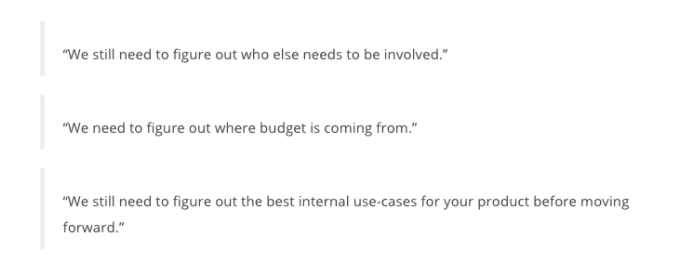

/https%3A%2F%2Fblueprint-api-production.s3.amazonaws.com%2Fuploads%2Fcard%2Fimage%2F340129%2F45e2a99b-68d2-44de-bd37-95df0e176990.jpg)










 Snap out of it, this is great news! The sunset of SlideShare’s lead generation services may actually prove to be a win, as this product may have been underperforming on your goals (whether you realized it or not). Yes, you had an easy to use self-service performance-based product, all good — BUT where was the quality aspect? You paid a nice low CPL and in return received a list of leads that included every person who requested your content in your set geographic region, whether they fit your accepted target customer persona or not…to be clear that included: students, interns, contractors, retirees — all of the above were acceptable leads by SlideShare standards.
 These two factors sound so obvious, but are not available in many solutions today. It’s quite simple, do not pay for leads you can’t use.

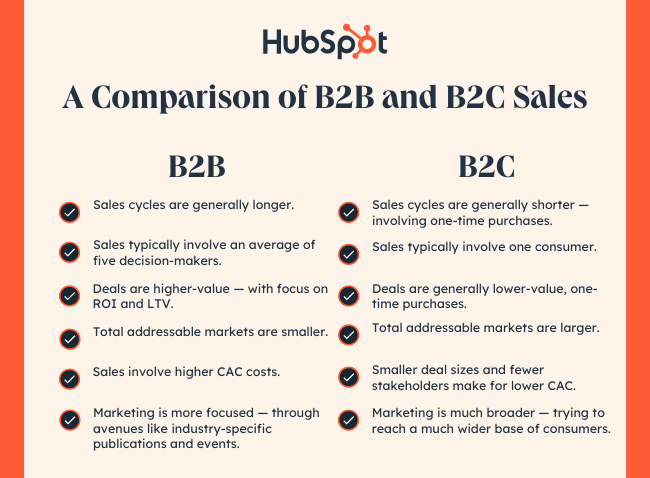
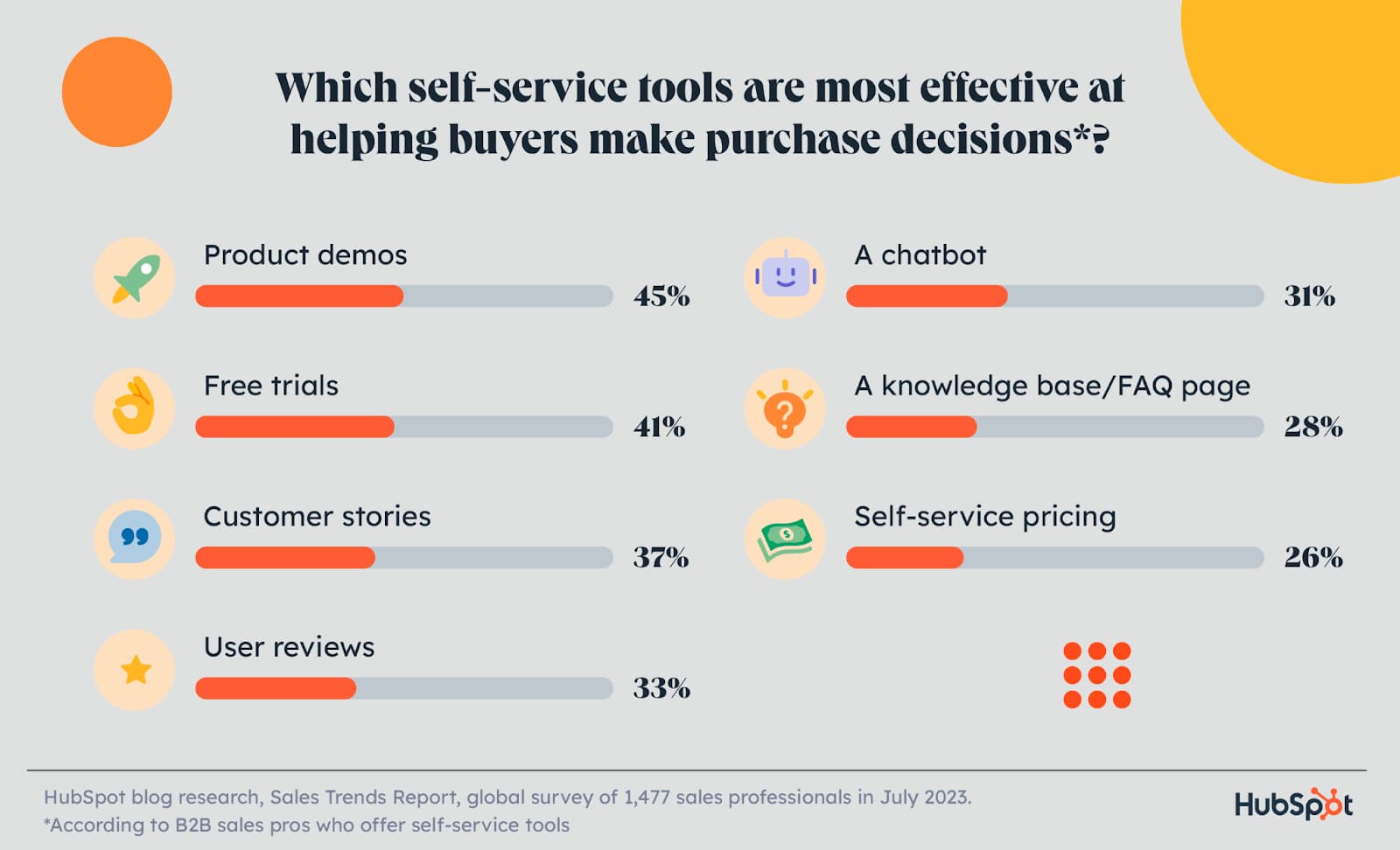
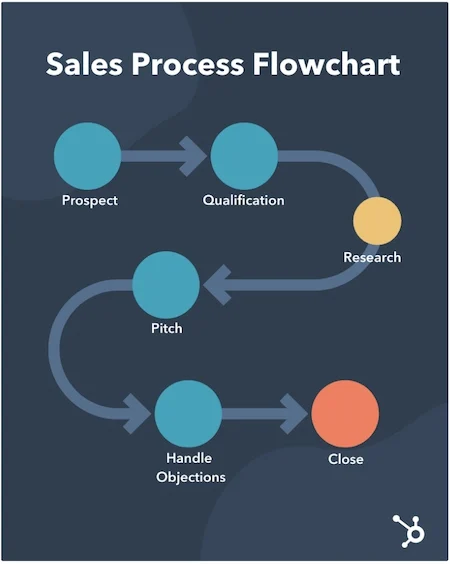
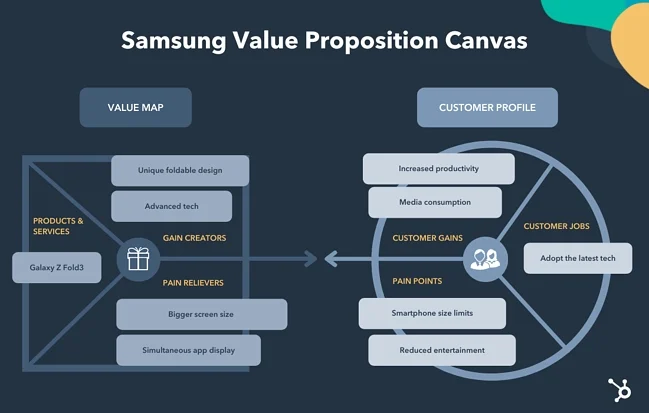


 Thanks to Simon Moss for sharing his opinions and thoughts in this blog post. Simon Moss is a Chartered Marketer with over eight years’ marketing experience gained primarily in the B2B marketplace. He currently looks after the marketing for CommuniGator and WOW Analytics, a leading digital marketing agency providing email marketing solutions and cutting edge technology that enables you to maximise the value of every visit to your website – identifying and naming prospects visiting corporate websites. You can follow him on LinkedIn or connect on Twitter.