Shared posts

13 May 15:48

8 Useful Google Tools and Apps You May Have Overlooked

by Shubham Agarwal
google-apps-tools

Google’s ecosystem of services has exponentially ballooned over the years. Whether it’s the smart home market, mobile, entertainment, or the web, Google has managed to attain a dominant position in a wide range of sectors.

Being such a large conglomerate, Google also has a number of lesser-known products apart from the chartbusters. Here are some useful Google tools and apps you may have overlooked and should give a try.

1. Google Shopping

Google Shopping homepage

Google Shopping is an aggregator platform that lets you browse listings from a bunch of e-commerce services. The website functions as an extension to the widgets Google displays when you look up a particular product on its search engine.

On Google Shopping, you can search for items and check their availability as well as pricing on wherever they’re up for sale. In addition, dedicated pages for products can be accessed directly on Google Shopping and you can even read their reviews and descriptions.

Google Shopping also takes cues from the data Google has on you such as your browsing habits and suggests products you might be interested in. It’s compatible with several categories including Electronics, Skin Care, Books, and more.

2. Google Jamboard

Google Jamboard is from the company’s hardware division and is a digital whiteboard for enterprises. Jamboard is essentially a 55-inch, 4K touchscreen on which teams can scribble and discuss.

Since the board can connect to the internet, all your sessions are uploaded automatically eliminating the need for you to manually take pictures.

Plus, there are a series of collaboration tools that enables you to work together with remote employees too. Jamboard can detect up to 16 touchpoints at once so that multiple users can sketch and brainstorm.

3. Google Sites

Google Sites demo

Google Sites is a design tool for quickly developing mockups for new websites. It features a straightforward layout where you can drag and drop elements and edit them however you want without going through any learning curves.

Google Sites also offers a couple of themes you can apply. On top of that, you have the ability to create and link pages for producing the entire website.

Moreover, Sites integrates well with Google’s other products such as Sheets, Docs letting you import documents or charts. You can share your sites with other users and collaborate with them in real time.

Once you’re done with the design, you can preview the site and publish it at a custom URL if you’d like to instantly share it with someone else.

Want to understand the extent of Google Sites’ capabilities? Learn how to make your own website using Google Sites.

4. Google Expeditions

Google Expeditions is primarily built for classrooms and comes with guided virtual reality tours for students. The apps host a vast library with trips ranging from the outer space to historical landmarks.

With Google Expeditions, you can explore key sights in 360-degree while a narrator details the stories behind them. Google says there are over 200 lessons and all of them can be streamed for free. Furthermore, Google has been gradually Augmented Reality experiences to the app lately.

If you don’t have a VR headset, Google Expeditions can render in 2D as well. It can be installed on both iOS and Android.

5. Google Trusted Contacts

Trusted Contacts useful Google apps

Google’s Trusted Contacts is a safety app using which you can keep tabs on your loved ones’ whereabouts. You can share your location with your trusted contacts in real-time and request theirs.

Users have the option to temporarily or permanently give access to their location and revoke whenever they want to. On the app, people can post updates too while they’re in transit to inform others about their status.

What’s more, there’s an emergency feature which automatically shares your location with your trusted contacts if you don’t respond to a request in a specific time period.

6. Google Domains

Google domains search

Google Domains is another handy utility by the company that, as the name suggests, lets you manage and purchase domains. On Google Domains, you can buy new addresses or transfer your existing ones if you find the interface more appealing.

In addition, it offers a series of other tools for tasks you need to perform after acquiring a new domain. That includes site creation apps from Google’s partners like Squarespace, Wix, WordPress, and services to form a custom email account.

Google also throws in a few complimentary add-ons such as a privacy filter, customizable sub-domains, email forwarding, and more. It supports all the extensions as well whether you want .biz or .dev.

7. Google Tilt Brush

Tilt Brush is a full-fledged painting app for high-end Virtual Reality headsets such as HTC Vive and Windows Mixed Reality devices. Google Tilt Brush houses every tool you would need to draw a masterpiece out of thin air. It turns your room into a canvas and all you need to do to doodle is wave your hand.

There is a multitude of brush options, color palettes, and shades. Google Tilt Brush can even connect with Poly so that you can upload your artwork to the web.

Google also offers a handful of tutorial videos if you’d like to get started and understand how to operate it.

8. Google One

Google revamped its cloud storage subscriptions a while back. It’s now called Google One and includes much more than just additional cloud space.

Apart from extra storage, Google One brings you 24/7 access to Google Support, the option to share your plan with up to five other family members, Google Store discounts, Google Play credits, and more.

It’s not available globally but it can be bought in a ton of regions such as the United States. Google One starts at $1.99/month for 100GB and goes all the up to $9.99/month. The additional storage is applied across most of Google products like Drive, Gmail, and Photos.

More Google Apps You Might Have Never Heard Of

Google has expanded its reach into a wide gamut of internet fields. Most of the time, however, users don’t go past its leading services such as Google Maps and Google Search.

The aforementioned apps are just some of Google’s lesser-known products. There are a bunch of other Google apps you might have never heard of.

Read the full article: 8 Useful Google Tools and Apps You May Have Overlooked

13 May 15:46

Inputs, Outputs, and Getting What You Want

by Anthony Iannarino

Let’s assume your goal is to make more money. If your focus is on making more money, the input might be for you to do everything in your power to acquire more money, followed by behaviors that repel money from you. Money is an output that is generated by the input that is “creating value for other people.” Those who try to increase the amount of money they have without creating value for others struggle to acquire it, or worse, doing things that are illegal, immoral, or both.

Maybe you want to meet your goals, your sales quota. If your focus is on getting people to do what you want, when you want, you are going to struggle to meet your numbers. A quota is an output only delivered by serving your clients where they are and by helping your contacts have the conversations they need to move forward with the change you are recommending. (See The Lost Art of Closing: Winning the 10 Commitments That Drive Sales, my second book). When the input is skipping stages to get a close faster, you find that outcome moving away from you the harder you push.

You need more prospects. You need a bigger, healthier pipeline of opportunities. You might spend your time on social sites, pitching strangers who connect with you and leaving comments on posts as a way to get attention. You might also rely on your marketing department to generate leads for you. When the input isn’t enough to generate the output, you have to change the input, in this case with proactive, targeted outreach, and strategies that result in the acquisition of new opportunities.

If you want to accelerate the time it takes you to produce some result, you first have to ensure that the inputs, your strategies, your actions, and your energy are appropriate to the output. You will not obtain any outcome with inputs that are not correct or sufficient to produce them. However, there is good news; everything you need to know to deliver the results you want is already known, documented, and readily available for you—should you be willing to do the work.

The post Inputs, Outputs, and Getting What You Want appeared first on The Sales Blog.

13 May 15:46

How to Use Color to Improve Your Conversion Rate

by Chris Christoff

Color psychology is a concept often used when marketing a product or service. It’s no secret that color is capable of altering the mood and emotions of consumers. Business owners emerging on the market now are leveraging their use of color far more than ever before.

Customer perception can change dramatically depending on the color of your brand, the design scheme you use on your website, and even the color of your individual products. Many new marketers and entrepreneurs want to learn more about color and how they can use this simple psychological trigger to improve their conversion rate.

We want to take a careful look at how color impacts our behavior and what we can do to sales numbers just by using the correct hue.

Red Builds Excitement and Drives Conversions

There’s a massive debate in the marketing community over what color button to use when you want a consumer to follow your call to action (CTA). In many cases, this could mean convincing a customer to sign up for your email list, taking a survey, or even purchasing a product.

A study from Hubspot revealed that red CTA buttons outperformed green buttons by a staggering 21 percent. As we can see below, red is a color that drives excitement, creates a sense of urgency, and appeals to impulse buyers.

Source

The lesson here is simple enough if you want to create a sense of urgency make sure you’re using red when promoting limited time offers, flash sales, and countdown timers.

Use Contrasting Colors

On the website design side of things, you should try to use a combination of complementary colors in both your brand and website design. However, contrasting colors are equally crucial for highlighting certain information and products you want consumers to see. Here’s an example showing the difference between contrasting and complementary colors on a color wheel.

Source

Triadic colors are a specific type of contrasting color, and also an effective color to use on your call to action. When you’re trying to find a triadic color, move across the color wheel one-third of the way all the way around and every color you land on is considered triadic.

For example, if your primary color is purple, your contrasting triadic colors would be green and dark yellow. These colors will stand out in your copy and on your website, which can have a marked improvement on your conversion rate.

Use Your Brand Color to Set Expectations

Consumers will instantly categorize your brand based on the colors you use in your logo. There are plenty of different emotions you can invoke just by using the right colors when your brand pops up on social media or your website.

Let’s look at a chart showing the typical emotions associated with brand colors, and some examples of how businesses are using their brand color to their advantage.

This color guide is one of the most circulated images that show color theory in action. Remember when we discussed red building excitement? Look at some of the brands that feature red, and you’ll start to see a pattern. Brands like Nintendo, Netflix, Lego, and Target use the color red because they want people to feel excited about the products they offer. When looking at Lego and Nintendo, they have the added benefit of appealing to children — which matches with their brand.

Now let’s look at the color green, which is meant to inspire a sense of peace and good health — most of the brands under this umbrella match one or both of these concepts. Animal Planet, John Deere, Spotify, and Holiday Inn all inspire a sense of peace. Meanwhile, Whole Foods, Tropicana, and Starbucks paint a picture of health and wellness.

We could go on, but the point here is obvious. When you’re creating or altering your brand logo, consider the emotions you’ll invoke in consumers when they stumble across your brand. The goal is to create a logo with colors and a design that matches the personality of your ideal customer and leaves them with a positive feeling that they will associate with your company.

Conclusion

There are countless ways you can inject color into your marketing strategy to improve your lead quality and conversion rate. It’s a good idea to split test your campaign with different CTA colors to see how your audience responds As your business evolves and you build your company image, you’ll be able to create more effective content and marketing that will bring in more conversions.

11 May 18:24

To Build Your Brand’s Following, You Need to Give Value First

by Rachel Sullivan

There are no shortcuts to good marketing. This may be an unpopular opinion, but I strongly believe it.

Sometime within the last five to 10 years, the meaning behind the term “growth hacking” has morphed into an excuse to use hacks (sometimes more closely resembling tricks) to achieve growth at any cost.

“How can we 10x our Facebook followers by next week?”

“Can we fit more keywords into this blog post so we rank No. 1 on Google?”

“What can I do to get more people to open my cold sales email?”

“People are leaving our site without converting. Can we add some popup forms to increase conversions?”

Sound familiar?

The problem with all of these questions is that it’s all about your company,
and not at all about your audience.

Of course, you have goals to meet and your business ultimately needs to profit. But, by framing your problems in this light, you’re more likely to come up with a solution that only gives you a quick win and hurts your audience long-term.

Too many of these marketing hacks lead to disaster.

Have you clicked on an interesting sounding post in your Twitter feed, then land on a blog only to be inundated by a notice in the footer prompting you to accept cookies, a pop-up blocking the whole screen asking you to subscribe to a newsletter, and yet another pop-up asking you to chat with Rob the Robot?

By the time you click your way out and can see the article, you’re already turned off – and you haven’t even read the content yet.

There’s nothing inherently wrong with any of these approaches, but together, it’s an incredibly poor user experience. Perhaps conversion rates rose a bit, but at what cost? Did any leads become customers?

It’s not just marketers, either. I’ve seen some attempts from salespeople so desperate to make the first connection they sacrifice the possibility of ever building a relationship. A sales rep once called our main office to inform a coworker, “Rachel and I were just chatting over email and she asked me to call.” Besides dishonesty, the problem with that approach is, I don’t work from our main office and so my co-worker knew I wouldn’t have asked to be reached there.

I’ve also had a few sales reps forward what looks to be an internal email chain with their boss, complimenting our organization for doing “great things” and asking the sales rep to reach out – when really it just looks like a staged conversation.

It doesn’t cut it.

Again, the initial calls booked or success rate may increase – there has to be some reason companies keep attempting these weak tactics – but it certainly does not help the long-term relationship or the prospect’s impression of the company.

The right way to build a community.

The B2B buying cycle is different these days, and both marketing and sales teams have to adjust. Buyers have so much information at their fingertips. Gartner found the typical B2B buyer is 57% of the way through the purchasing cycle before they even speak to a salesperson. And, 83% of buyers are turning to digital channels for information even late in the purchasing cycle.

Buyers are looking for self-serve information to make a purchasing decision, and they are absolutely going to turn to companies that provide helpful, valuable advice well before the “official” sales cycle is initiated.

Here’s what companies should do to build a following of interested, engaged prospects:

1. Provide value first.

Chris Penn recently answered a question about building a community. He said:

“Anytime you’re talking about growing an audience, you have to give way more than you take. You have to give content. What stuff is valuable? What would legitimately help people, and probably won’t even benefit you? … You can accelerate the initial capital of attention with things like advertising dollars, public relations campaigns and evangelists and influencers, but you still need to be patient because it will take a long time to build a community.”

People need a reason to follow you or engage with your content. You want to be a resource to help them solve their problems, but your goal should not be to sell first. Buying a bunch of Facebook followers gives you a good vanity metric, but doesn’t mean anything for your marketing goals. Provide resources that are helpful and valuable, and begin building your brand as a trusted expert. Over time, you will impact sales, but it won’t be overnight.

2. Determine and articulate your company narrative.

Where do you see the future of the market? What is the desired promised land your product will lead customers to? How do you make your customers’ lives better?

This is your company narrative and it should be the focus of your content marketing. The strongest content tells stories.

It captivates, it advises, it counsels. It doesn’t sell.

If you’re selling a CRM solution, focus your storytelling on effective sales techniques, advice for building stronger sales teams or achieving a better customer experience. There will be times to write about product updates or news, but your product should not be the center of your content.

You need to capture people’s attention by helping them solve a problem they have – likely before they even know they need the solution you sell. Content marketing is a long-term game. The benefit is, it keeps working for you and the results compound over time.

3. Help the buyer solve their problem.

The job of sales is not to make a sale. I’m not being facetious here – the job of sales is to help prospects diagnose and solve their problem. Taking this mindset positions sales teams as an ally to buyers and eliminates the high pressure tactics that turn buyers off.

Remember, the relationship doesn’t end once the sale is made. You want to establish the foundation for loyalty and evangelism. There’s nothing stronger than a recommendation or testimonial from a happy customer.

There is no shortcut to any of these approaches. Sure, you can growth hack your way to an initial uptick in site traffic or top-of-funnel conversions, but if your content, team and product don’t deliver, you will not succeed in today’s market.

Invest in your marketing and customer experience. Look to growth hacking as a way to accelerate success, not as a replacement to true value.

11 May 17:06

Why You Shouldn’t Rely Too Much on Marketing Best Practices

by David Dodd

More than two decades ago, Michael Porter warned about the dangers of relying on benchmarking and “best practices” to produce business success. In a landmark article in the Harvard Business Review, Porter drew a sharp distinction between operational effectiveness – which often involves identifying and implementing best practices – and real business strategy.

Porter argued that competing primarily on the basis of operational effectiveness is usually a recipe for disaster. He wrote: “The more benchmarking companies do, the more they look alike . . . As rivals imitate one another’s improvements in quality, cycle times, or supplier partnerships, strategies converge and competition becomes a series of races down identical paths that no one can win.”

Four years after Porter’s article, Philipp Nattermann made a similar argument in an article for the McKinsey Quarterly. In this article, Nattermann contended that benchmarking and the use of best practices are important ways to improve operational efficiency, but they are not tools for strategic decision making. He wrote that business leaders rely too much on benchmarking and best practices because:

“. . . they don’t understand that benchmarking is simply an operational tool. Instead, they all want to occupy the point on the strategic landscape they their most successful competitor has staked out. Soon other competitors can be seen herding, lemminglike, around that best practice company’s product, pricing, and channel strategies. Products and services become increasingly commoditized and margins tumble as more and more incumbents compete for smaller and smaller segments of customers and industry resources.”

Despite the risks associated with best practices, business leaders continue to regard the identification and implementation of best practices as one of the most powerful management tools at their disposal. And it’s not difficult to understand why the use of best practices remains so popular. It seems imminently reasonable to identify the practices of successful, high-performing companies and then emulate those practices.

The Allure of Marketing Best Practices

Marketers can become particularly enamored with best practices. After all, marketing success is difficult to achieve and even harder to sustain because the marketing landscape is always changing, and because it’s incredibly hard to predict what marketing methods, channels, and message formats will appeal to potential customers. In these circumstances, it shouldn’t be surprising that marketers are attracted to “proven” best practices.

Marketing best practices are often portrayed as effective and reliable tools for achieving marketing success, but the reality is more nuanced. Marketing best practices can be helpful when they are understood correctly and used appropriately, but it’s easy for marketers to become enthralled with the promised benefits of best practices, and forget their limitations.

Widespread Use Decreases Effectiveness

One of the most paradoxical characteristics of marketing best practices is that the more widely they are used, the less effective they tend to become. A marketing best practice can derive its effectiveness from several sources. It can be effective because it’s based on sound business principles, or because it resonates with how potential customers make decisions, or because it effectively leverages the capabilities of a particular medium of communication.

But marketing best practices are also highly effective – at least for a while – because they are distinctive. When a best practice is new, it tends to be used by a relatively small number of companies. Therefore, the practice stands out in the marketplace and captures the attention of potential customers. But as more and more companies implement the practice, it loses some of the distinctiveness that made it highly effective. Content marketing is a good example of a marketing best practice that is now more challenging because it is so widely used.

The bottom line is, identifying and implementing marketing best practices may lead to a temporary improvement in marketing results, but it won’t necessarily deliver superior marketing performance over the long term. Superior long-term marketing performance requires an effective marketing strategy and the use of marketing methods and tactics that will make your company distinctive in the marketplace.

Image courtesy of Paul Mison via Flickr CC.

Originally published here.

11 May 16:48

The Problem with Influencer Marketing and How To Fix It

by Jess Burns

There are two extremes when it comes to influencer marketing. There’s the positive side, where studies show that businesses earn $6.50 for every dollar spent on influencer ads. And then there’s the negative side, where research says that 25% of the $2 billion spent on influencer marketing is wasted due to inauthentic content.

While endorsements and sponsored content can certainly be a gold mine for increasing brand awareness and demand, it’s not as easy as just funneling your marketing budget to influencers.

If you want to succeed with influencer marketing, your main objective should be finding the right influencers to work with. Unfortunately, that’s often the biggest challenge for brands to overcome.

The Inefficiency of Choosing Influencers

There are plenty of moving parts in influencer marketing. But at the core of it all is your relationship with influencers. Choosing influencers that perfectly fit your brand, your goals, and your products is essential.

Many brands seem to have taken an analytical approach to finding the right influencers to work with. You do some keyword research around your brand and products, search for those keywords within the bios/posts of social media profiles to find a pool of potential influencers, and then prioritize by follower count.

With all of that information in hand, you might manually sift through profiles and choose a handful of influencers to contact about sponsored content.

This whole keyword-based approach is a problem. And Rand Fishkin explains why:

“In a rational world, marketers wouldn’t seek out the accounts that happen to use the words+phrases they’re searching for, nor those that have the biggest total followers. Both of those are easily game-able. Neither of those indicate that the account even reaches the people you necessarily want to target.”

Rand goes on to explain that the best way to find the right influencers is to focus on defining your target audience. Who are the influencers most followed (and engaged with) by the people you’re trying to reach?

By flipping the equation from keywords and follower accounts to target audiences and engagement, you can lay the foundation for influencer marketing that delivers real ROI.

But there’s a lot of room for error when you take this approach. Keyword usage is something you can get quantitative data on whereas behavioral insights into your target audience can be harder to come by—and even harder to evaluate manually.

With the right intent data, you can fill this gap and put your influencer marketing strategy on a path to success.

The Value of Intent Data in Influencer Marketing

Most brands are familiar with first-party intent data. These are the insights you gain from prospects and customers that interact directly with your brand, whether that’s through content downloads, sales demos, or social media mentions.

Those first-party intent insights might help you prioritize inbound leads and work more effectively with sales. But in terms of influencer marketing, first-party intent data won’t take you too far.

To start identifying influencers more effectively, you need third-party intent data you can trust. This data provides insight into the actions of prospects and customers outside of your own platforms — industry and competitor blogs they read, webinars they watch, and, most importantly for influencer marketing, their social media activity.

The right third-party data drills down into your specific target audience. As a result, you gain key insights into the social media profiles your target audience follows, the influencers they trust, and the publications they continuously mention and interact with.

This is the kind of concrete data you need to ensure your influencer marketing campaigns will be effective. Instead of trying to make educated guesses about which influencer relationships will work, you can invest your marketing budget in accounts that have proven engagement with your target audience.

Not only that, but you can dig deeper into the kind of behavior your target audience has with certain influencers. This is when you have to align your goals with the influencers you choose. If you’re trying to convert leads at the bottom of your funnel, you’ll want to pay closer attention to influencers with high conversion rates. If you’re focused more on brand awareness, higher-level engagement may be more important for the influencers you work with.

Whatever your goals are, you need to find the right third-party data and get the most value out of it. But that can be easier said than done.

If you want to learn more about working with third-party intent data, download our free report, Demystifying B2B Purchase Intent Data.

11 May 16:48

How to Use Email Marketing Segmentation to Grow Your Business

by Michael Ugino

If you asked customers what’s the one thing they want more of from retailers, they’d say personalized customer experiences. Customers don’t want to be seen as nameless faces in a sea of people; they want to be treated as individuals.

Ken Morris, Principal at Boston Retail Partners, explains personalization this way, “Effective customer engagement requires retailers to offer a personalized, relevant, compelling and consistent experience across channels.” He continues, “In today’s crowded and highly competitive market, personalization is a critical component for optimizing the customer’s shopping experience.”

One place to put this thinking into action is within your customer communication strategy. Sending generic email blasts that were the norm years ago doesn’t cut it today. Your messages have to be relevant and customized if you want a shot at converting more leads and keeping your current customers engaged.

Email marketing segmentation is one way to do this. Segmentation lets you group together similar email subscribers and send each group different types of emails based on factors like their preferences, interests, purchase history, location, buyer persona, and more.

Let’s take a closer look at how email marketing segmentation works and explore ideas for what you can do to customize your communication strategy.

Segmentation boosts customer satisfaction and retention

Before you segment your email subscriber list, first you have to understand how segmentation works. It’s more than splitting customers based on gender or general preferences. These factors are important — especially if you have a small list and limited customer data — but deeper segmentation has a direct impact on customer satisfaction and retention. This, in turn, increases your revenue:

email marketing segmentation

[Source]

As your customer base grows, you’ll notice how they use your site differently. For example, if you sell organic groceries online, some of your subscribers will prefer browsing your recipe pages, while others prefer browsing your product pages.

If you have seasonal sales that promote specific products, sending the same message to all of your subscribers will catch the attention of some, but not all. The more alienated customers feel, the less likely they are to stick around — they’ll simply unsubscribe, which takes away your chance to nurture and turn them into long-term, satisfied customers. After all, why would they want to listen to a business that doesn’t understand their basic needs?

This is where email marketing segmentation comes in. It lets you create a system that categorizes your customers so you serve them better. Totes Isotoner Corp, an e-commerce retailer specializing in umbrellas, footwear, and winter accessories found that many of their customers spent a lot of time browsing certain product pages. The retailer segmented their email list based on the pages people spent time on and sent promotional emails related to each product category. The result was a tremendous increase in sales.

The benefits of segmentation don’t stop at higher sales, customer satisfaction, and retention:

email marketing segmentation

[Source] Studies show the numerous benefits of list segmentation

Higher open rates, more relevant emails, and lower opt-outs are additional benefits that companies experience when they take the time to segment their email list.

Segmentation simplifies customer categorization

A global study by Mailchimp found that segmented emails have a 14.31% higher open rate and a 100.95% higher click-through rate than non-segmented campaigns. To take advantage of these higher rates, use the customer data you collect to segment your subscriber list.

Fortunately, segmentation can be broken down into four main categories:

[Source]

Based on the data you collect and the type of messages you want to send, these categories act as a framework for you to identify how to segment your subscriber list and what types of emails to send. Here are four examples based on each of the categories above:

1. Demographic: Income

Some of your subscribers might be more price-sensitive than others, so it’s beneficial to make them aware of price changes. When you have a sale, be sure to send this group an email letting them know that products they’ve viewed in the past are available for less.

email marketing segmentation

2. Geographic: City

Depending on where your subscribers are located, it doesn’t make sense to send location-specific emails to everyone. For example, if there’s a special event at one of your brick-and-mortar locations, only notify subscribers who are nearby.

email marketing segmentation

3. Behavioral: Special occasion

A great way to personalize emails is to acknowledge special occasions. This can be a birthday, customer anniversary, or a milestone. Send an email with a special offer to show customers that you value their business and want to celebrate with them.

email marketing segmentation

4. Psychographic: Interests

Send shopping event reminders based on the interests subscribers have shared. For example, send an email like the one below that targets subscribers who’ve expressed an interest in hearing about product events:

The more information you have about your subscribers and customers, the more you can fine-tune the types of messages you send. This level of customization ensures you’re always sharing relevant information so that open and click-through rates increase over time.

Let’s say you sell home furniture and accessories online; here are a few examples of how this framework guides the types of emails you send.

Note: you can create these segments based on where subscribers spend time on your site, their purchase histories, their profiles, and their preferences.

Segment #1 – Millennial newbies

This segment consists of subscribers between the ages of 18-24, who live in the city, have an active lifestyle, and browse your ‘small spaces’ product pages often. Since this segment is likely made up of renters or students living in dorms, chances are they’ll be interested in smaller furniture with multiple uses.

In this case, it makes sense to send this segment promotional emails for versatile, lightweight furniture that’s easy to move around and fit into small spaces.

Segment #2 – Settled families

This segment consists of subscribers who have a family, live in the suburbs, and prefer function over style. They might spend time browsing your living room, kitchen, and dining pages. When you have year-end blowout sales, send this group offers for larger furniture for a variety of rooms in a house or apartment.

Segment #3 – Minimalist bargain hunters

This segment includes subscribers who are interested in trends, have purchased certain types of products in the past, and shared in a recent survey that they like minimalist furniture and accessories. Based on where subscribers are in their customer journey, you can send anything from product recommendation emails based on interests, to special offers based on location, to reminders to customers who abandoned their cart at checkout.

email marketing segmentation

You can even go beyond the framework outlined above to add in your own categories. For example, if you offer a subscription box service, relevant behavioral categories to include are: subscription type, length of subscription, and referrals.

Best practices to maximize email success rate

To make sure your email marketing segmentation strategy converts more leads to customers and boosts engagement and customer satisfaction, there are a few best practices to consider:

  • Align your segments with your buyer personas. Buyer personas are representations of the different types of people in your audience. They’re grouped together by characteristics similar to the segmentation categories we discussed. Make sure your segments are similar to your personas to avoid sending different types to people expecting familiar content.
  • Establish regular communication. Don’t be afraid to send regular emails to subscribers. They want to hear from you, that’s why they signed up for your email list. If you’ve done a good job of creating segments, then you can rest assured you’re sending relevant emails to subscribers that they’ll want to open and read.
  • Nurture the customer experience. Remember, you’re trying to create a customer fan base. You’re supposed to be a partner with customers, reminding them about your value. Don’t just focus your email campaigns on marketing; nurture the customer relationship by also sending educational and informative content as well.
  • Choose email marketing platforms that support segmentation. Use platforms like Campaign Monitor and Mailchimp that let you create and automate customer journeys based on your segments. Also, make sure your email marketing platform lets you group your segments separately to simplify your campaigns.
  • Track and analyze email results. Segmentation lets you track how responsive each group is to your messaging. You can check open rates, click-through rates, and conversions to see what types of content get the most engagement within each segment. As you get a better understanding of each segment’s preferences, send more customized messages to each group.

It’ll take some time to figure out how to maximize these practices, but once you do, you’ll see how much more effective your business is and how much more receptive subscribers are.

Making email marketing segmentation work for you

Instead of treating all of your customers the same way, personalize your communication to show that you understand and appreciate their unique needs.

A/B test different versions of your emails to learn more from your customers so that your campaigns are always targeted and well received. Over time, you’ll notice a shift in engagement and even your revenue.

11 May 16:47

More people are going to be healthily living past 100, and Bank of America sees a $610 billion market there by 2025

by Lydia Ramsey

older man elderly man jogging nature running exercise thinking outdoors

  • As humans begin to live longer than 100, it's going lead to a $610 billion market by 2025, according to analysts at Bank of America. 
  • That's going to be driven by advances in food, medicine, and technology. 
  • "Technology is on the cusp of bringing unprecedented increases to the quality, and length of human lifespans," the analysts wrote. 
  • Visit Business Insider's homepage for more stories.

In the near future, more humans will be living longer and healthier past the age of 100.  

Analysts at Bank of America see a market that could be worth $610 billion by 2025, up from $110 billion today. It'll largely by driven via advancements in technology, both used preventatively and to treat some of the conditions associated with getting older. 

"Technology is on the cusp of bringing unprecedented increases to the quality, and length of human lifespans," the analysts wrote in a report published on May 8. 

Bank of America broke down that potential $610 billion market into five subgroups: genomics, big data, future food, ammortality, and moonshot medicine. 

Read more: Investors bet nearly $1 billion on startups that want to defeat aging, but there's a key challenge ahead

Genomics

One factor the analysts realized could contribute to people living longer and healthier would be a large uptick of people getting their genomes sequenced. As many as 1 in 4 people in the world could have their DNA mapped out by 2025, according to research cited by the Bank of America analysts.

That'd be a massive jump from where it's at today. So far, about 26 million people have taken at-home DNA tests to look into ancestry and/or health traits based on small pieces of the genome. While the cost to sequence genomes has gone down drastically over the years, it can still cost $1,000. But between personal genetics, gene-editing tool CRISPR, and advancements like gene therapy to treat inherited diseases, the market could balloon to $41 billion by 2025, the analysts wrote. 

Big Data

As we amass more information from sources like sequenced genomes, that data could help with new breakthroughs in drug discovery and development. 

Ideally, new sources of data will help give researchers a more comprehensive picture of patients, helping personalize treatments or tailor new drugs to work precisely how the researchers want them to.

Ultimately, Bank of America expects the market around big data in healthcare to reach $36 billion by 2025. 

Read more: Scientists are working on cancer treatments that attack the disease's 'Holy Grail.' Big pharma and biotechs have already invested more than $1 billion.

clean meat san francisco 27

Future Food

Changes in our diets might help us live healthier to 100 as well, with one of five preventable deaths worldwide tied to diet, Bank of America noted. 

Alternatives to the way we eat now could be a big opportunity for food companies. 

"Next gen products such as lab-grown meat, where costs have fallen 99.7% in the past six years, and the rise of 'flexitarian' diets that reduce meat consumption are among the future food solutions in a market opportunity worth $7.5 billion by 2025," the analysts wrote. The market seems to be catching on. During the initial public offering of Beyond Meat, the makers of plant-based burgers saw its stock surge by 163%.  

Ammortality

By far the biggest of the subgroups highlighted by Bank of America is something the analysts dubbed "ammortality." The researchers define it as "living healthier, better and longer" as an alternative to "immortal," or simply living forever. 

Helping us live healthier for longer are tools like health-tracking wearables and the ability to meet with a doctor without going into the office, as well as electronic health records used to digitally log patients within health systems. The interest in remote monitoring for chronic conditions is driving the growth in the market, the analysts noted. 

The market right now is $86 billion, and it's expected to jump to $504 billion by 2025. 

Moonshot Medicine

The analysts put research on anti-aging treatments into the "Moonshot Medicine" subgroup. These new approaches might be able to help with particular conditions, like Alzheimer's disease or Parkinson's disease, or they help prevent muscle loss or other visible signs of aging. 

Investments into startups trying to find a cure for aging are exploding. And the report pointed to projects Silicon Valley companies like Alphabet's life sciences company Verily is working on in its "quest to disrupt death," as Bank of America put it. 

Right now, the market for anti-aging stands at just $1.6 billion. By 2025, that could grow to $20 billion, the analysts wrote. 

Join the conversation about this story »

NOW WATCH: A cardiologist revealed the truth behind red wine's health benefits

10 May 16:37

Ignoring this Management Task Will Cost You Dearly | Sales Strategies

by Colleen Francis
A good sales organization centres around a good sales coach. In fact, coaching is what drives top performance in sales teams. More importantly, sales teams with coaches—who are being coached on average 3 hours per rep or month—see anywhere from …
Read More »
10 May 16:22

Artificial Intelligence: The Future of HR?

by Declan Moloney

You spot a new job advert you love the look of. You update your CV, double check your references and send it across. In rapid succession you find your CV being screened, your background being investigated and follow up questions being sent over.

Is this the world’s most efficient HR professional? No. It’s a new tool which is making a massive splash in almost every aspect of business – Artificial Intelligence (AI).

So, could AI be used to make Human Resources well, less human? From a HR professional point of view, AI may be used to streamline the recruitment process. From conducting detailed candidate research to allowing chatbot technology to decipher the best questions to ask new potential employees.

Beyond the recruitment process, AI could be used to highlight performance issues, identify changes in employee sentiment and even make recommendations on the termination of employment. It could also be used to streamline and increase the value of the onboarding process. Quickly and efficiently working out which areas of operation need more coverage and those which are easily communicated.

This may all seem positive to the busy HR professional. But as an industry which relies so heavily on human interaction and rational, could AI really be the saviour it promises to be?

Unemotional Intelligence

Understandably, many employees are concerned about the application and vast scope of AI within the HR process.

With the removal of human rational, comes decisions based purely on process rather than calling upon common sense to make alterations and intervene when they are not working in the business’s best interest.

One rather unbelievable example of this is the case of Ibrahim Diallo. This case highlights the potential issues of trusting AI to recognise human errors and make adjustments where appropriate. Ibrahim found himself experience a myriad of denials of access to systems at his business. After three weeks of personal and business confusion, Ibrahim discovered his previous manager had failed to update his contract of employment. Even once the error had been discovered, Ibrahim’s supervisors were unable to remedy the issue through intervention.

AI is only as good as the data you input. The tools learning process is based on analysing past experiences and data and then applying that information in a decision making process. If the past experiences and data is incorrect then AI will not make the best decisions.

No more humans in HR

Another understandably concerning aspect of adopting AI widely across HR processes is the potential for it to make the employment of many HR professionals obsolete. Although initially this may cost save and speed up processes, in the long term it removes the benefit of professional human experience. Ultimately this will lead to AI inevitably making poor decisions which will be difficult or impossible to remedy.

Based on AI’s learning process and without intelligent human intervention, once bad decisions have been made by the system, these bad decisions are likely to compound over time. This will ultimately lead to disaster for the business in question.

Yet this ability to learn from past experience and continue to develop decision making based on new data and inputs is the exact reason why many HR software vendors are working towards incorporating AI into their products and services.

HR – more than just processes

When you really look into the full scope of human relations, it becomes obvious that AI certainly cannot replace all of these areas:

Staffing and recruitment

This includes the full selection and recruitment process, pay, employee benefits and the termination of employment. This activity relies on ethical hiring practices being applied by HR professionals.

Pay grade & compensation

Human resource teams are responsible for setting, monitoring and editing pay grades and scales within an organisation. This includes market research into industry norms as well as understanding the value of each employee to the business as a whole.

Professional development

HR are also widely responsible for staff training and development. This translates to the continuous search of individual and organisational needs and creating development plans to help current staff fill those skill gaps.

Health & safety

Compliance to health and safety regulations is another key element of the HR functions responsibility. This will include making changes in the workplace to ensure the continual meeting of standards.

Employee wellbeing

This responsibility involves ensuring that all employee rights are adhered to. This will usually involve acting on all employee claims and disputes as well as monitoring any breaches of current regulations. This may often lead HR professionals to representing the organisation in negotiations.

It takes a human…

Human resources professionals are constantly working to the ultimate goal of achieving optimal performance. This is achieved through the continuous improvement of both the employees and the organisation as a whole. This direction makes it clear why many professionals within the industry are keen to implement automation through AI where possible, speeding up the process of achieving this goal.

Many professionals even bet on AI transforming HR entirely.

However, are we really likely to see humans disappear from human resources? It’s unlikely. Just like we saw predictions during the 19th-century industrial revolution that all labour work would become a thing of the past, similar predictions in the 21st century are likely to produce similar results. After all, AI will need a human input if it is to remain effective at its job.

Studying the history of the industrial and technological revolution shows that the loss of jobs is always a concern in certain industries. However, these fears are invariably unfounded. Although, in many cases, those which operate in these industries do have to retrain and develop new skills in order to keep up with the revolution.

AI is not all-encompassing

As it goes, AI is not as intelligent as it might seem, at least not yet. In fact, most AI which is used to undertake complex tasks such as HR functions still requires at least some element of human supervision. This is primarily due to the fact that is cannot replace human rational and reasoning.

AI is unlikely to ever be able to judge the emotional elements of human resources. This includes understanding whether a potential candidate is really going to fit in with their new team or being able to offer true empathy during a difficult time.

Even the more basic functions such as a chatbot being used for interview questions will need to be sense checked by a human HR professional to ensure that common sense is being applied throughout the interview process.

All-out battle or collaboration opportunity?

You may have guessed it already. The answer to whether AI is the future of HR is in many ways – yes. But will that future mean no human HR professionals? It is highly unlikely.

Rather than being a case of AI vs HR professional, it is more a case of working out how HR professionals can work with and leverage AI to their advantage.

The key to understanding the benefits of AI and contributing to a positive adaptation experience is to see it as not only a time-saver but a boost to current operations. Those that are currently in or are looking to become a HR professional should keep an eye on the latest AI developments and focus their career on developing their relationship with such technologies.

10 May 16:20

How Behavioral Science Powers Brand Choice

by Richard Shotton

How Behavioral Science Powers Brand Choice

Behavioral science is currently one of the hottest topics in marketing. This attention isn’t undeserved; if anything, we should devote more of our time and energy to the subject. After all, it’s the study of why people make decisions. Not the study of how people make decisions in theory. No. It’s the study of how people make decisions in reality, with all the wonderful, messy and surprising detail that involves. Since marketers are interested in decision making in commercial situations, it’s hard to think of any more relevant topic.

A Robust Approach To Marketing Decisions

Relevance isn’t the only strength though, it’s also highly robust. It’s based on the peer-reviewed experiments of some of the world’s leading scientists. Academics stretching from contemporary Nobel Laureates, like Daniel Kahneman and Richard Thaler, to historic figures, like B. F. Skinner and Elliot Aronson.

Even though the discipline has academic roots, it is immensely practical. Consider a bias like price relativity. This is the idea that consumers have no fixed conception of what is good value. Instead, they work out whether an item is a fair price by considering what they have previously paid for something similar.

At first it sounds like a dusty academic finding. But it should interest marketers as it means they can boost their consumer’s willingness to pay by orders of magnitude if they can change their comparison set.

Brands have done this many times – from Red Bull to craft beer. But the best example is Nespresso. If it had been devised by a lesser team than Nestle they may have launched it in half pound bags in Albertsons.

Had they done so, and charged the same per gram price they do now, those bags would cost $45.00. There is no way on earth anyone would spend that much on a bag of coffee. It would feel like a barely legal rip-off.

But of course, that’s not what Nestle did. They sold Nespresso in pods, and since each pod gives you a cup serving the comparison set changes to Costa Coffee or Starbucks. Suddenly, 57 cents for a pod of Lungo feels remarkably good value compared to $4.00 for a flat white. But 57 cents for a pod or $45.00 for a one pound bag are the same per gram price. One seems remarkably good value, while one feels exorbitant.

Nestle has made billions from applying a well-known bias from behavioral science to their marketing.

An Insight For Every Occasion

The robustness and relevance of the discipline should be enough reason to apply behavioral science. But there is another, underappreciated strength: its remarkable range. Behavioral science is not a single, grand theory but rather a collection of insights and ideas exploring the human condition.

The variety means that whatever problem you are facing, there will be an experiment to draw on.

These insights stretch from those with a strategic application, to ones with a media planning application (such as avoiding confirmation bias) even to matters around pricing or media placement.

Of course, this diversity can be confusing but there are many frameworks that help to navigate the complexity and steer you towards the right bias. Perhaps the most useful is the EAST framework which was designed by the UK Government’s Behavioral Insight Team and which you can access for free here.

Hopefully, the three strengths of behavioral science (relevance, range and robustness) are enough to convince you of the discipline’s importance. But perhaps the final word should go to Kevin Chesters, the ex-CSO at Ogilvy:

If you’re a planner and you don’t employ behavioral science in your day job, then you’re a bloody idiot. It would be like being a pilot and forgetting to use your eyes.

Contributed to Branding Strategy Insider by: Richard Shotton, Head Of Behavioral Science at MG OMD and the author of The Choice Factory, the best selling book about applying behavioral science to advertising. Originally published by TheMarketCreative.

The Blake Project Can Help: Make your messaging relevant in The Strategic Brand Storytelling Workshop

Branding Strategy Insider is a service of The Blake Project: A strategic brand consultancy specializing in Brand Research, Brand Strategy, Brand Growth and Brand Education

FREE Publications And Resources For Marketers

10 May 16:19

Hyperbolic Discounting: How to Use This Psychological Bias to Sell More

by mhart@hubspot.com (Meredith Hart)

Monday morning.

I'm groggy, tired, and in dire need of coffee. It's time to make the first decision of the day:

Should I make coffee at home or buy a coffee?

As I'm weighing my two options, my phone lights up with a notification -- it's from Starbucks.

Limited time! Purchase a beverage and get a free pastry.

Oh boy! Here's where the justification process kicks in. If I buy a coffee now, I'll also get free breakfast. That's too good of an offer to pass up.

I open the Starbucks app and look at the number of rewards points I have. There's not enough for a free coffee now, but I only need a few more. I'm almost there.

If I buy now, not only will I have coffee and breakfast, but I'll also be immediately rewarded with points toward a free beverage.

Starbucks has mastered hyperbolic discounting.

So, what is hyperbolic discounting? And how can you use it to sell more?

Download Now: Free Sales Pricing Strategy Calculator

A psychological bias, or cognitive bias, is defined as, "the tendency to make decisions or take action in an illogical way."

In the case of hyperbolic discounting, this means that even if a reward in the future is better or more valuable than an immediate reward, people are more likely to choose the short-term reward anyways due to psychological bias.

Ready to see what hyperbolic discounting looks like in action?

The clothing store, Everlane, is known for: Exceptional quality. Ethical factories. Radical Transparency. And it's an example of a business that uses hyperbolic discounting.

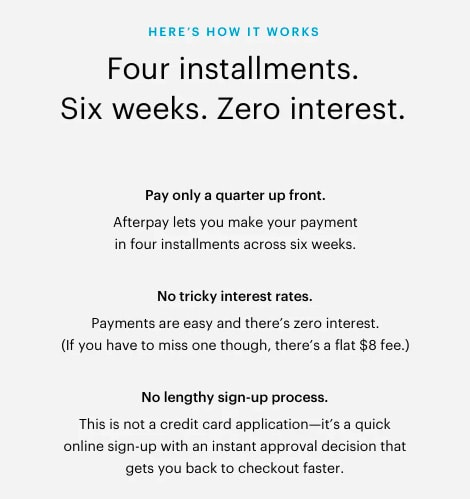
It has an e-commerce sales method called Afterpay, where customers can buy now and pay later. They pay a portion of the balance up front and the rest is paid in quarterly installments.

Everlane Buy Now Pay Later

Source: Milled

Purchasing a new wardrobe is expensive, and for consumers, Afterpay allows them to delay the financial burden. They get the immediate reward of purchasing the items they want, without having to pay the entire cost up front.

Everlane benefits from this because the customer purchases more than what they originally budgeted for.

By providing multiple opportunities for smaller discounts, the effect of this compounds over time and impacts revenue in a positive way.

Hyperbolic Discounting in Marketing and Sales

Here are some ways you can use hyperbolic discounting when selling products or services.

1. Loyalty Programs and Point Systems

How do loyalty programs and point systems work?

They're rewards programs offered by companies to customers who frequently make purchases. Loyalty programs often give customers free merchandise, rewards, coupons, or even advance released products.

These rewards incentivize your customers to purchase from you. And smaller, short-term rewards play into consumers' psychological bias and gives them the instant gratification they're looking for.

As an added bonus, loyalty programs increase the likelihood people will recommend your product or service. In fact, 70% of consumers would be more likely to recommend a brand with a good loyalty program.

If we apply this to Starbucks, it means the company has 16 million members who will recommend Starbucks and its rewards program to other people: their family, friends, roommates, and co-workers.

2. Limited Time Offers

If you saw this in your inbox, would you be compelled to click?

Limited Time Offer Example

Limited time offers create a sense of urgency for the consumer. It makes them think, "If I don't buy now, the price will never be this low again. I'll have missed a great opportunity."

Oftentimes, they'll buy the product on the spot, choosing the short-term reward. Examples of limited time offers include:

  • [Product name] is back, for a limited time only
  • Last chance! Save $25 on [product name]
  • Flash sale! X% off [product name]
  • Only hours left for savings on [product name]

3. Delay Payment

Do you have a credit card? If so, you're likely familiar with delaying payments.

It's easy to slip into the "buy now, pay later" mindset. And it only takes a swipe of your credit card to get the immediate satisfaction from purchasing a product you want. And many companies like J. Crew, Kohl's, and Amazon have credit card programs.

Another simple way to implement a "delay payment" option is to allow customers to buy the product and pay for it with incremental payments.

People who delay payment are interested in the short-term reward of purchasing the product when they want it. The almost immediate satisfaction they get from buying the product outweighs the financial cost they need to address in the future.

Hyperbolic discounting over time can lead to increased sales, so you should include it in your arsenal of pricing and selling strategies.

Editor's note: This post was originally published in May 2019 and has been updated for comprehensiveness.

pricing strategy

10 May 16:17

Get to Know Your Customers: 3 Ways to Do It Right

by Stacey Danheiser

By 2020, companies will primarily be competing on the basis of customer experience. (Walker Study). This means customers will choose to work with companies that offer the best experience and value. In fact, a CEI study found that 86% of customers will pay more for a better customer experience. But in order to meet your customer’s rising expectations – you have to have a deep understanding of your customer.

Technology is Not the Magic Pill

In the race to survive, succeed, and stay relevant, brands and businesses are becoming more focused on integrating digital technologies across all facets of their operations, including customer service, sales and marketing. But with so much focus on delivering mobile-first, self-serving, digitally-driven experiences, many companies have lost sight of what matters most — the customer!

Technology is powerful but it can’t do everything. Sometimes businesses forget that. They become so dependent on tech tools that they tend to forget that they are ultimately dealing with real people. For example, today companies are increasingly using chatbots to assist visitors on a website. But we have a long way to go before AI-driven virtual assistants can even master the art of casual conversation, let alone solve all of your customers’ problems.

It’s Expensive to Just “Guess” About What Customers Want

By neglecting human connection, businesses not only risk losing consumer trust but also fail to know them better, which turns out to be a costly mistake. According to Deloitte and Touche, customer-centric companies are 60% more profitable than those that are not focused on the customer. On the flipside, B2B companies waste a whopping $958 million on ineffective marketing every year.

And it’s not hard to see why.

There’s an evident gap between what buyers want and what they are being offered, as hinted by the graph below (Demand Gen B2B Buyers Survey Report). It shows that customers want B2B vendors to provide better-researched content and go easy on sales messages.

Not only that; they are practically begging to do business with companies that take time to understand them and their needs — a factor that matters the most for customers when it comes to choosing vendors.

Sales People Need to Up Their Ante

If there’s one area where the impact of knowing your customers plays out the most, it has to be sales. So it’s not difficult to imagine that in a company that doesn’t pay attention to their customers, sales would suffer. And that’s exactly what’s happening when 57% of sales reps are not meeting their quotas. In fact, as the Miller Heiman chart below shows, the percentage of sales reps that are meeting quota is declining. Of course, there are multiple reasons involved here — from changing customer demands to evolving technology to economic issues. But one thing is for certain: Knowing your customers better will only help.

Customers expect a world-class experience – from interacting on your website, to talking with a sales rep, to placing an order and paying for it. And, if the value of your product or service isn’t articulated in terms that the customer cares about, they will take their business elsewhere.

Some forward-thinking organizations have rightly figured out that in order to deliver what customers want and need, they need to align their marketing and sales teams. But the majority of companies are not operating this way, which means the one to suffer is your customer – and ultimately your bottom line.

Bring the ‘Personal Touch’ Back into Your Business

Let’s ditch the guesswork and get to know them better. Here are three ways to help you start the process.

  1. Admit that you don’t know everything about your customer
    I can’t tell you how many marketing and business strategies I’ve reviewed where customer input was completely absent. Instead, the customer was represented by a group of people across marketing or sales or product teams. Not only is this approach a big waste of time, but personal bias — such as when a dominant opinion influences the whole group — is impossible to avoid and can be a big problem.So here’s what happens. A lot of personal opinions are thrown around, and the loudest voice wins. Assumptions about the customer are made, which always leads to a lot of time, energy, and money wasted on ineffective marketing and sales campaigns. In other words, your bias as a marketer or a sales person could easily be sending you in the wrong direction.

    There’s only one opinion that matters: Your customer’s. Therefore, be the voice of reason and ask — “has anyone talked to a real customer about this?” If the answer is not ‘Yes’, then stop what you’re doing and talk to your customers before moving forward.

  2. Step out of your internal bubbleHow often do you meet with customers? It doesn’t matter what your role is – if you’re a CEO, business owner, marketer, salesperson, customer service, billing – whatever your function, your customers are a great source to help shed light on how your business is doing and provide ideas for improvement.

    But you have to ask for their feedback. And it doesn’t always have to be a big, formal engagement or survey. Send them a quick email and ask them how your company is doing and if they have any suggestions or need help. Better yet, take them to lunch or call them up and learn more about what they are trying to accomplish this year, or where they’re stuck. You may learn new ways that your company can expand its offering.

  1. Tap into the front linesThere are certain functions that interact daily with customers. Your sales team, customer service team, or billing team, for example. So when you can’t get out and talk or meet with customers, they are your next best source.

    The goal is to learn what’s most important to your customers and how you can serve them better. The more connected you are with your customers, the better you will be delivering highly personalized experiences — the key to repeat purchases, increased revenue, and customer loyalty. It’s a win-win.

Businesses that can keep up with their customers and deliver amazing experiences will always outpace their competitors.

A version of this article previously appeared here.

10 May 16:16

Five Trends Shaping the State of Sales in Europe

by Orla Walton
Five trends shaping the state of sales in Europe

Editor's Note: This post originally appeared on the LinkedIn Sales & Marketing Solutions EMEA blog

Skilled sales people have never been in greater demand than they are in 2019, with ‘Sales Leadership’ ranking in the Top 10 most in-demand skills in EMEA, and ‘Persuasion’ the second most sought-after soft skill in the region. Which, though, are the sales skills that are most effective for engaging B2B buyers, closing deals, and securing revenue and lifetime customer value for their businesses?

Technology is changing the way that both buyers and sellers approach the sales process. Across Europe, sales organizations are rapidly adopting new tools and tactics. However, the importance of traditional sales skills and qualities remains. It’s sellers’ ability to combine the two that is critical to meeting buyers’ evolving expectations.

LinkedIn’s Annual State of Sales report provides a detailed analysis of sales trends and techniques across different markets. Each year we speak to buyers and sellers about the most important factors that influence them to start a conversation – and what matters most when it comes to closing deals. For our 2019 report, we took a detailed look at three markets in Europe: France, Germany and the UK. In each of these countries, we spoke to more than 500 B2B buyers and 500 sales professionals. By comparing the data for each market, we can identify the key sales trends that are influencing the region as a whole – and the subtle difference that show how buying and selling varies across countries.

All of the sales professionals in our survey had succeeded in meeting or exceeding their quota during the previous year. However, within this sample, we also identified a group of top sellers who had beaten their targets by 25% or more. Comparing the techniques adopted by these sellers to those of their peers helps to identify the approaches that are proving most effective in each market.

Here are the key trends shaping sales in Europe:

Trust is the key to closing deals – but other factors vary
The ability to establish trust is the skill considered most important by sellers when closing deals. In every market, over a third of sellers describe it as the single most important factor in sales success: 38% in Germany, 35% in the UK and 33% in France. Well over half of all sellers place trust in the top two most important factors, including 59% in Germany, 58% in France and 57% in the UK. The ability to form a human connection with buyers remains vital across the region.

However, when we look at the supporting factors helping sellers to close deals, interesting differences emerge. Sales professionals in the UK are sensitive to the impact of price and the value and Return on Investment (ROI) that they can demonstrate. Over half of UK sellers (57%) select price as one of their top two factors, compared to only 34% in France and only 29% in Germany. Similarly, 53% of UK sellers select Value/ROI in the top two, compared to 47% in France and only 35% in Germany.

In Germany, by contrast, it’s the ability to provide ‘Strategic Counsel’ that provides the basis for trust, with sellers selecting this as the second most important factor in securing a deal. In France, Strategic Counsel also ranks second among top sellers.

Sellers increasingly depend on tech
Across Europe, technology is transforming every element of the sales process through tools for CRM, collaboration, networking, sales intelligence and more. In Germany, 99% of sellers describe technology as either important or very important to their ability to close deals. In the UK, it’s 90%. In France, over half of all sellers say that their use of technology has increased in the last year, whereas only 10% say they use it less often.

Sellers in France make the most regular use of sales tech with 34% using such tools on a daily basis, compared to 33% in the UK and 26% in Germany. However, in every country 80% of sellers use sales technology at least every week. Top sellers use significantly more tools than their peers. In France they use tools from 3.9 different tech providers on average, compared to an average of 2.6 for other sales professionals.

The influence of sales technology is set to increase further as B2B businesses invest in a greater range of tools. More than half of the sellers we surveyed (56% in France and the UK, 48% in Germany) expect their company to increase its investment in sales technology this year.

Three types of sales technology were used by more than half of all sellers across all three countries: CRM, networking platforms and collaboration tools. Of these, networking and collaboration technologies had consistent levels of use across markets while the popularity of CRM tools varied more significantly. In Germany, 70% of all sellers use a CRM system, compared to 60% in the UK and 55% in France.

Top sellers are more likely to use sales intelligence tools – and more likely to use LinkedIn
B2B buyers demand that sellers reach out with insights that are relevant to both their business and their own specific role. In the UK, for example, 78% say they won’t engage with a sales rep who lacks business-specific insight. This puts a growing emphasis on sales intelligence tools, and across the countries that we surveyed, we see top sellers making significantly greater use of these tools.

In the UK, 49% of top sellers use sales intelligence technology, compared to only 38% of their peers. In France, 58% of top sellers use sales intelligence tools for three hours a week or more. Of these, 35% use the specialist sales intelligence capabilities of LinkedIn Sales Navigator, with a further 43% using LinkedIn in general as a sales intelligence platform. LinkedIn is also the most significant source of sales intelligence in Germany, where 37% of all sellers use Sales Navigator and 21% use LinkedIn.

Social media plays a growing role throughout the buyer journey
Social media isn’t just an important source of sales intelligence. Both buyers and sellers depend on it at crucial stages of the journey towards a purchase: from researching options to closing deals. Sellers in Germany are the most social in their approach, with 60% using networking platforms, compared to 57% in France and 55% in the UK.

Relevant social media is the first place that buyers turn to when researching their options. It’s chosen by 27% of B2B buyers in Germany and 26% in France. In the UK, 87% of sellers describe networking platforms as very important to their ability to close deals – and this rises to 95% among top sellers. B2B buyers agree, with 63% saying they are more likely to consider suppliers whose salespeople reach out on LinkedIn.

In Germany, 65% of sellers follow potential customers on social media. When asked to choose the one social network that’s most important to their selling efforts, 42% opted for LinkedIn, more than any other platform.

Marketing alignment delivers massive competitive advantage
Our report confirms that effective marketing alignment delivers massive competitive advantage to sales teams – and this rule holds true across Europe. Top sellers are significantly more likely to describe the quality of their marketing leads as ‘Excellent’. In France they are almost three times more likely to do so, with 60% of top sellers agreeing compared to 22% of their peers. In the UK, 75% of top sellers agree that marketing plays a big role in closing deals.

The importance of sales and marketing alignment is confirmed by B2B buyers themselves. In the UK, 47% say they are more likely to engage with a sales professional who represents a strong, professional brand. In Germany, 72% say that consistency between sales and marketing matters. However, across markets, buyers say that this consistency is often lacking. In France, 55% of buyers say they experience different messages from sales and marketing either most or all of the time. In the UK, it’s 52% - and in Germany, 44%.

A shared view of the buyer journey is an essential starting point for aligning sales and marketing more effectively. However, sellers across Europe report different rates of progress towards aligning their data in this way. In France, 40% of buyers report a lot of overlap in the data used for targeting. This drops to 31% in Germany and 25% in the UK.

What the trends mean for the future of sales
Our survey shows that technology is transforming the experience of buying and selling across Europe. Sellers’ ability to manage their time, build stronger relationships and engage larger buying committees increasingly depends on having the right tech tools available – and having the effective support of data-driven marketing. However, the ability to close deals still depends on human qualities and connections.

Buyers respond to sales people who can build rapport and demonstrate an understanding of both their own and their business’s needs. That depends on the smart use of sales intelligence and sector insight. It’s significant that the top-performing sales professionals in our survey were significantly more likely to use the specialist tools available through LinkedIn Sales Navigator for both sales intelligence and closing deals.

You’ll find more detail on the State of Sales in Europe in our country-specific reports for France, Germany and the UK. Our full, global report is also available for free download now.

See how LinkedIn Sales Navigator can improve your state of sales


10 May 16:15

Data-Driven Sales Enablement (In 4 Easy Steps)

by Mark Cheever

Effective sales enablement in the Digital Age blends the traditional practice of aligning business needs to training with the (far trickier) task of finding new and innovative ways to make training as targeted as possible to the needs of the learner.

Achieving this “recipe for success” poses quite a challenge—especially for those in the highly competitive IT industry, where a rapidly changing industry and strategic change further complicate the ability for sales executives to meet customer needs while also making their quota.

While there is no easy path to creating world-class training aligned to business needs, you can put Big Data to work for learners in ways that help uncover an individual’s skill gaps and make it easy to address them using prescribed enablement.

Here’s a four-step process on how the marriage of Big Data and prescribed learning can drive sales success in the Digital Age.

Step 1: Get to Know Your Learning Audience

Even the best training in the world will not effect change if no one takes it, which underscores the need to survey and interview sales executives whenever possible to understand their learning needs. Very often you will find that—despite increasingly hectic schedules—sales executives want to learn, but only have time for easily-consumable training targeted to their specific learning needs.

This feedback, coupled with direction from sales management on the business needs and KPIs that matter most (e.g. Accounts Won, Deal Close time, Opportunities Created, etc.) will help to form a holistic view on the overall needs your Big Data-Driven, prescriptive learning approach will seek to resolve.

Step 2: Define Success at Every Level

With your needs defined, the next step is to compile a globally standardized list of skills crucial to sales executive success in the field—universal skills that span all roles such as prospecting, territory planning, account planning, business and financial acumen (to name a few). You may also identify the skills specific to success in specific Lines of Business to provide deeper, role-specific insight.

With your universal and role-specific skills defined, work with sales and LoB enablement leadership to assign a target proficiency level for each skill on a scale from 0 to 4 (e.g., New (0), Basic (1), Intermediate (2), Advanced (3) or Expert (4)).

Step 3: Gather Your Data

Next, create a survey that gives your sales executives the chance to self-assess their own, perceived proficiency level across the skills you’ve compiled in Step 2 and using the 0-4 scale. At the same time, each participating sales executive should be assessed across the same skills by their manager to gain a knowledgeable, third-party perspective.

By comparing the results—that is, the difference (if there is one) between the sales executive and or manager rating vs. the target proficiency level described in Step 2—you will be able to identify a list of skill gaps for each sales executive.

Step 4: Putting Big Data Work

Once learning gaps are identified and analyzed, highly personalized, targeted learning plans can be created for each participating sales executive. In each report, sales executives receive an overview of their identified gaps along with direct links to training designed specifically to help close them.

Data collected from the sales executive/manager assessments will also provide your sales leaders with invaluable insight into top skill gaps across regions and Market Units along with an overview of the skills that correlate most highly with quota attainment—itself, invaluable insight for short and long-term enablement planning.

Additional Takeaways

    • When completing steps 2 and 3, resist the urge to measure too many skills (which leads to diluted data) and or overcomplicate sales executive/manager surveys. Focus on the most critical skills and the business challenges you’re trying to solve. Keep survey questions simple and to the point.
    • Targeted learning plans are only useful if sales executive follow-through and complete recommended learning. To ensure AEs are accessing their plans, encourage managers and sales executives to reference their plans during 1-on-1’s and career development sessions.

The post Data-Driven Sales Enablement (In 4 Easy Steps) appeared first on OpenView Labs.

10 May 16:09

Sales Lessons From the 9 Most Successful Shark Tank Deals

by Josh Bean

Shark Tank, a popular American reality television series on ABC, started its 10th season in October 2018. The focus of the program is the initial pitch made by hopeful entrepreneurs to eager investors.

While many of the 5 million people who watch Shark Tank do so for entertainment, some of us watch for the popular show’s weekly education on how to successfully sell your product to high-profile prospects.

And, believe it or not, we can take away a lot of sales lessons from those success stories. Below, we identify nine of the most successful Shark Tank businesses and share what you can learn from them.

1. Scrub Daddy

[Source]

The Scrub Daddy sponge can scrape tough stains without losing its fun shape. On Season 4, Aaron Krause, founder of the company, demonstrated the sponge’s capabilities, easily removing the stains from glass and other kitchenware. Two of the investors (or Sharks), Daymond John and Kevin O’Leary, were interested in the product, but Scrub Daddy eventually partnered with inventor and entrepreneur Lori Greiner for $200,000, in return for 20% equity in the business.

Result: In 2012, before the pitch, the Scrub Daddy was carried in just five supermarkets. Today, the Scrub Daddy is available in thousands of retail stores. The company also generates revenues of over $30 million and is considered to be the most successful Shark Tank deal of all time.

Sales Lesson: Learn how to negotiate and focus on the other side of the deal, not yours.

Scrub Daddy had offers from multiple investors. Greiner’s original offer was $200K for 30% equity in the company. When Krause realized that more pressure was on the investors than on himself, he negotiated a better deal with Greiner — and the rest is history. Assuming that your product/service offers genuine value, don’t focus on your own limitations during a sale. You’ll miss the big picture. Instead, recognize the reasons for investor purchase.

2. LollaCup

[Source]

When their own kids struggled to use existing child cups with straws, husband and wife Mark and Hanna Lim created Lollacup. With several offers on the table, including from O’Leary and John, Lollacup eventually partnered with businessmen/investors Mark Cuban and Robert Herjavec for $100,000 in return for 40% equity in the business.

Result: The company has now expanded into Lollaland with a variety of product offerings for young children. Lollaland has made more than $2 million in sales since the Shark Tank pitch on Season 3.

Sales Lesson: If you can get what you ask for during your sales call, take it.

The Lim’s were originally seeking $100,000 for a 15% stake in their company. But after an offer from O’Leary, they made a counteroffer of $100,000 for 40%, which both Cuban and Herjavec eventually agreed to. Rather than trying to push the offer lower, the Lim’s took the deal. The lesson here? While negotiation is important, don’t back out on the price you offer. Nobody likes a greedy salesperson, or one who won’t keep their promise. It also damages trust in the customer relationship.

3. Tipsy Elves

[Source]

Tipsy Elves is a holiday-themed apparel company that specializes in ugly sweaters and even costumes and ski gear. Before presenting to the Sharks, cofounders Evan Mendelsohn and Nicklaus Morton put an extensive amount of preparation into their sales pitch, including memorizing the gritty details of the business, such as conversion rates and customer-acquisition costs. Their hard work paid off — Robert Herjavec invested $100,000 for a 10% stake.

Result: The company saw $600,000 a year in sales before appearing on Shark Tank. They are now bringing in more than $50 million in revenue. Their clothing is even worn by celebrities such as Ryan Reynolds and Jimmy Kimmel.

Sales Lesson: Tailor your pitch to your customer’s pain points.

The Tipsy Elves founders had this to say: “We tailored our pitch to the sharks we were most interested in: Mark Cuban (with his internet experience and ability to expand the online brand presence), Daymond John (with his retail and branding experience), and Robert Herjavec (because of his internet experience and presence in Canada, another big market for us).”

Know who you’re presenting to when making a sale. Research the customer’s needs and wants (review buyer personas, company websites, decision-maker LinkedIn accounts, etc.) so you can speak to how your product or service provides value. Also, practice your sales presentation as much as possible, and be ready to answer tough questions.

4. Groovebook

[Source]

Created by husband-and-wife team Julie and Brian Whiteman, the Groovebook app lets customers order a photo book using their smartphones. Subscribers can easily free up phone space with the app and receive a monthly photo book for $3.99. In Season 5, Mark Cuban and Kevin O’Leary snapped up the deal and collectively invested $150,000 in the subscription-based service in exchange for 80% licensing rights.

Result: 500,000 subscribers jumped on the product soon after the Shark Tank pitch. In 2014, the company was acquired by Shutterfly Inc. for $14.5 million (the company was only 18 months old). Kevin O’Leary named the deal one of his top investments from the show.

Sales Lesson: Work alongside your sales team, and avoid silos.

The success of this business was a joint effort. Brian Whiteman first created a photo book for his wife to cheer her up after she lost her phone (and the thousands of pictures on it). Together, they developed the smartphone app so other people could easily have hard copies of their digital photos.

Sales is a team activity. Build relationships with other reps on your team by discussing deals in the pipeline and strategies for meeting your quotas. Silos are a major problem across departments. Avoid this gap within your sales team. A CRM is an excellent way to ensure that all team/customer conversations are recorded. You can also track sales team performance.

5. Squatty Potty

[Source]

Invented by a mother, father, and son as a result of the mother’s colon issues, the Squatty Potty is an ergonomic toilet stool that helps users. . . take care of their bathroom business. Lori Greiner invested $350,000 for 10% equity in the company on Season 6.

Result: The Squatty Potty made $1 million the day after the episode aired. At the end of 2017, the Squatty Potty had almost $33 million in sales. The company has also created different versions of the product, including a glow-in-the-dark Squatty Potty.

Sales Lesson: Prove your value to the customer.

The Squatty Potty wasn’t exactly a glamorous investment. The Sharks’ mouths dropped to the floor when Bobby Edwards and his mother Judy asked for the $350K investment in the toilet product (a $7 million company valuation). The pair was not deterred. Pitched as “a simple product that changes lives,” the Edwardses highlighted the negative health effects of the traditional method of “taking care of business,” complete with charts and statistics. They also highlighted their sales ($2 million in the first two quarters of that year).

Needless to say, the Sharks were hooked. Take this approach when selling to your own customers. Even if you think you’re selling the best product in the world, potential customers are not going to buy in unless they can see the value for themselves. Give them the why, and back up your claims with evidence, such as case studies of other happy customers.

6. BuggyBeds

[Source]

Packaged with an eye-catching green logo, BuggyBeds are glue traps for bedbugs. Simply stick the traps under beds, chairs, etc. — the traps do the rest and prevent infestations. All five Sharks invested a combined $250,000 for 25% of the company.

Result: After the Shark Tank pitch, the product saw $1.2 million in sales in 2016. BuggyBeds is sold in more than 20 countries.The company has also expanded to other products, such as pet flea and tick glue traps, mosquito-repellant bands, and mattress and pillow protectors.

Sales Lesson: Align sales with your marketing and customer support departments.

“Sleep tight, and don’t let the bedbugs bite” was the final line of Maria Curcio and Veronica Perlongo’s BuggyBeds pitch. While there was definitely a market for their product (and the Sharks knew it), BuggyBeds did an excellent job of marketing and getting the Sharks excited about the glue traps. As with the Squatty Potty, bedbug prevention is not exactly an exciting investment. But combined with the compelling pitch and eye-catching visuals, BuggyBeds sold the Sharks on the concept.

Ensure that your sales, marketing, and support departments are working together. Among many problems, unaligned departments can result in inaccurate sales enablement material from marketing or missed sales opportunities with customer support. Combat the gap with alignment strategies. For example, implement a “sales rep for a day” shadowing program for all departments to learn sales skills. Create a CRM feedback loop with your marketing department. Bridge the gap between customer support and sales by aligning your metrics and communication channels. Get creative with your strategies.

7. Wicked Good Cupcakes

[Source]

If you’re craving a cupcake, Wicked Good Cupcakes has your back. Cofounders Tracey Noonan and Dani Vilagie, mother and daughter, created gourmet cupcakes that could be shipped nationwide in cute jars while staying fresh. On Season 4 of Shark Tank, Kevin O’Leary invested $75,000 in exchange for a cut of every cupcake sold.

Result: Wicked Good Cupcakes has generated $14 million in sales. The company also has cupcake truck franchises and opened a franchise in Fort Wayne, Indiana.

Sales Lesson: Solve the customer’s problem, don’t sell the solution.

Noonan and Vilagie opened up their first cupcake store in October 2011 in Cohasset, Massachusetts. The demand for their delicious cupcakes quickly grew, and requests to ship to other states began to come in. It was difficult, however, to ship cupcakes and have them arrive at their destination fresh and whole. The mother-and-daughter team then discovered that mason jars could be used to package and ship the cupcakes, keeping them fresh for up to 10 days.

Take a page from this mom and daughter’s book — match solutions with problems. As a sales rep, you need to understand your customers’ problems on a deep level. Listen to customer concerns. What keeps them awake at night? Why does your product or service solve their problem? Get feedback from current customers, and create buyer personas that outline common problems for each type of customer. Build the relationship around the customers’ best interests rather than trying to push a sale.

8. Ten Thirty One Productions

[Source]

This company takes haunted hayrides to the next level. Entertaining scares await anyone brave enough to interact with Ten Thirty One Productions haunted attractions, such as Ghost Ship. On Season 5, Mark Cuban pledged $2 million for 20% of the entertainment company — the largest investment on the show up to that point.

Result: Since the Shark Tank episode, the company has expanded its scary experience offerings to New York. Revenues were projected to grow between $2 and 3 million in 2017.

Sales Lesson: Demonstrate your passion for the product.

Ten Thirty One Productions was a success before Shark Tank because the cofounders, Melissa Carbone and Alyson Richards, did as much as they could to sell the horror experience before needing the investors. For example, the pair used $365,000 of their own money and investments from friends to set up the original Los Angeles Haunted Hayride in 2009.

If you want to be a great salesperson, you need to be in love with the product or service you sell. Customers will be able to tell if you’re not really invested in your own product.

9. Copa Di Vino

[Source]

Granted, wine company Copa Di Vino did not land a deal with the Sharks. Despite appearing on the show twice, the investors didn’t buy into the idea of wine packaged in small cups (although O’Leary did make an offer for the patents rather than the brand).

Result: Before the show, the company had $500,000 in sales. Thanks to the exposure from Shark Tank, Copa Di Vino’s sales grew to $12 million in 2016. Walmart and Kroger are two major stores that now offer the product.

Sales Lesson: A sale isn’t always the right fit.

Your product or service is not going to be the right match for every customer — and you shouldn’t try to sell to people who ultimately don’t need your product (the customer relationship will be rocky from the start). Know who your customers are. Focus on the quality of the leads in your pipeline rather than on the quantity.

Also, be transparent with potential customers. If you discover in the qualification stage that a lead doesn’t really have a need for your product, let them know. Just because they’re not a good fit at the time, that doesn’t mean they won’t need your product or service later on. You’ll also build trust with potential customers by proving that you value them over the sale.

Conclusion

The sales lessons from these Shark Tank deals share a theme: building and nurturing the customer relationship. No matter what level you’re at in your sales career, never lose sight of meeting the needs of your customer base and creating an amazing customer experience. Use these sales lessons to succeed in your own “shark tank” world of sales.

10 May 16:09

Sales Leadership Requires Being Authentic and Transparent

by Mark Hunter

You can’t just run and hide. You can’t exhibit one style on Monday and then be a completely different person on Tuesday. The days of faking it are over. We’ve all read stories and seen companies falsely live out their mission statement.

News flash! This same behavior that we see in companies is sadly alive and well in all of us. Too often, a person will profess that they are a great leader and then immediately turn around and do something stupid. I’ll be blunt…people are always watching! The era of thinking that you can have two styles is gone, mainly thanks to social media and the increased level of visibility in our society.

How can you expect anyone to respect you, let alone pay attention to you and what you’re saying if they see you modeling two different kinds of behavior? It’s an understatement to say that this is an issue. More importantly, don’t go around thinking that just because those around you are like this that you can be too. Our world is crying out for authenticity and transparency. Think of the friends that you have: would you choose to be friends with them if you never knew how they were going to behave?

Leadership is not merely talk. Real leadership is actions and that is why I firmly believe that actions carry more weight than words. That’s definitely the case for me. The expression that we all will have our 15 minutes of fame at least once in our life no longer applies. We are on 24/7; there will never be a moment when somebody isn’t watching.

Living a life of authenticity and transparency means that you’re genuine in every situation at every moment. The bigger your footprint in your company, with your customers, and in your community, the more authentic and transparent you need to be. Too many times I talk to people that feel the opposite: because they are bigger than life, they can get away with more. False!

Take a look at the people around you. Who is transparent and authentic in how they live? I’m sure you notice a peace and calmness about them. Why? Because they don’t ever have the stress of having to fake it and they don’t have to worry about their actions in the moment or afterwards. Authentic people don’t live with regrets.

Today, your goal is to be 100% who you are. Don’t try to be somebody else or fake your way through something. Live like this and you’ll start down the path of being truly authentic and transparent. Trust me, the world will value you the most if you are real.

Copyright 2019, Mark Hunter “The Sales Hunter.” Sales Motivation Blog. Mark Hunter is the author of High-Profit Prospecting: Powerful Strategies to Find the Best Leads and Drive Breakthrough Sales Results

09 May 16:36

Data Troubles: What If You're Trying, But You Still Don't Know Much About Your Customers

Everyone in your company is working hard to understand how customers think. But what if all that effort and all the investments in customer platforms, your understanding of your customer is only marginally better. Detailed customer insight can be hard to come by. Here's the likeliest cause of that problem. Read the full article at MarketingProfs
09 May 16:28

Sales Prospecting in the Age of Digital Relationships: 3 Essential Techniques for SMBs

by Amanda Bulat
#SmallisMighty

Editor's Note: This post was originally published on our SMB blog. 

A genuine smile and a firm handshake: these two ingredients were once part of a reliable relationship-building recipe in sales. But today, with so many of our interactions and engagements taking place in the digital space, such classic personal touches are fleeting.

How can we recreate this sense of closeness and familiarity without the luxury of a face-to-face meeting — especially during the introduction phase? For sellers at small- to mid-sized businesses (SMBs), the stakes have never been higher.

Why Sophisticated Prospecting Matters for SMBs

Fostering the image of a trusted, responsive partner tends to be one of the main advantages for an SMB in comparison to a larger enterprise. Strong relationships yield upsells, cross-sells, and referrals that lead to efficient growth. But the most challenging step is the first one: you can’t build trust if you don’t make the right impression.

At a time where 90% of decision makers say they never respond to cold outreach, finding ways to warm up your introductions is a vital aspect of modern sales prospecting. Beyond the poor results they yield, spammy prospecting practices are damaging to an SMB’s reputation; word gets around when sales reps from a particular company are slamming inboxes with irrelevant, cookie-cutter messaging.

At LinkedIn, we find that our sales teams achieve larger deal sizes and convert opportunities at a 15-18% higher rate when using a warm introduction. But of course, this is easier said than done, especially for a lean business with limited resources and fledgling professional networks.

So how can you effectively pursue this objective — building the types of meaningful relationships that propel your business — in the “post-handshake” era? Drawing from the bevy of tips and insights available in our Sales Academy guide and beyond, here’s a look at three essential techniques.

Three Critical Techniques for Successful B2B Prospecting

Salespeople will be positioning themselves well by following the social contract, developing emotional connections, and creating constructive tension. Here’s more on these three key relationship-building tenets.

1. Give Before You Get

The best way to spark a conversation with a new contact is to receive an introduction through a mutual connection. This instills an immediate sense of recognition and credibility. But it’s important to remember that asking for an intro is asking for a favor. Look at it from the referrer’s perspective, knowing that they have a reputation to upkeep. Give them confidence that you can truly make a positive impact for the contact in question. And think about ways you can assist that referrer in return.

The social contract is a transactional principle that applies to many things in life, from business to backscratches. We need to build up equity and trust if we want those things to come our way.

As such, once you get in touch with a prospect, it’s always wise to deliver value upfront. Here too you are asking for a favor — even if it’s initially just taking the time to hear you out. Pointing the individual toward a piece of customized valuable content, or a helpful third-party resource they might not be aware of, can help you establish yourself as a consultative partner, rather than a pushy pitcher.

2. Make an Emotional Connection

Don’t be deceived: emotion plays a major role in B2B purchasing decisions. “We know that business decisions are made emotionally and justified rationally. There have been a number of reports that show the importance of emotion in business decision making,” Christoph Becker, CEO of the New York agency gyro, tells B2B News Network.

Even though LinkedIn is primarily viewed as a professional platform, that doesn’t mean personality and feelings don’t matter. In fact, one can argue they matter even more: genuinely connective stories and conversations stand out amidst business content and career updates.

This doesn’t mean you should shoehorn humor or drama into your approach; it’s advisable to be authentically yourself. Highlight shared interests or experiences with prospects. Learn about the things that truly matter to them — the successes they enjoy, the failures they fear — and become an advocate in these particular areas to the extent it aligns with your business.

3. Create Constructive Tension

Motivating action is one of the most difficult elements of driving a sales dialogue forward. How can you move someone from “I’ll think about it” to “I’ll act on it” without pestering, or forcing a false sense of urgency? The answer often lies in constructive tension.

One suggested technique is to craft an empathetic narrative anchored in numbers. This will enable you to illustrate the risk and negative impact of failing to take action, while backing it up with objective data. In doing so, you can strike an effective balance between emotion and logic — your prospects feels the weight of their pain, and understands the path to resolving it.

Even if you aren’t able to sway a potential buyer, don’t view it as a total loss. There are many advantages to making a good impression and leaving things on a positive note. Perhaps this individual can refer you to another opportunity (in which case it’s back to technique No. 1), or maybe they’ll think of you first once their problem elevates to a need. This, in essence, is why relationships are everything.

A New Era of Sales Requires a New Playbook

There’s an old saying that goes, “The handshake of the host affects the taste of the roast.” In other words, that first interaction is a tonesetter for all that follows. When done right, a warm and informed initial outreach can become the digital equivalent of a firm and hearty handshake.

By providing value upfront (to both prospects and referrers), developing emotional connections, and creating constructive tension to move things forward, you’ll be on the path to lasting relationships with long-term dividends.
 

To learn more about these techniques and others, download our guide, LinkedIn Sales Academy: Mastering the Relationship Element of Prospecting.


09 May 16:27

If They Want to Change, They Will Pay More

by Anthony Iannarino

The reason Apple was able to take on the PC was that Apple made beautiful products that were not plagued with the challenges of the PC—and at a higher price point. At the time Apple executed this strategy, you could buy a PC or a laptop for a few hundred bucks, and Apple offered you a MacBook Pro at something close to the highest price available.

Apple did not go the market with the pitch, “We are just like a PC but cheaper.” They went to the market with, “We are different, and we are better, and people are switching.” Then they ambushed unsuspecting shoppers by popping up retail stores that drew people in to look at their products, products that looked much better designed than PCs, even if those old Apple designs can’t match Apple now.

It’s important to understand the elasticity of price and general strategy. Pitching that you are just like your competitor but cheaper is an admission that you are investing even less in what you provide than their current provider, that you are making even greater concessions. This is why “Me too, but for a few bucks less” only attracts the population of clients or customers who mistake price for value.

Another segment of the market, a larger segment in many markets, isn’t interested in maintaining the status quo and all the challenges they are experiencing. These clients and customers will pay more to eliminate those challenges and produce better results. It can be difficult to believe, but it is true that people who are willing to change for better results are also willing to pay a little more to obtain them.

If you have a compelling, differentiated offering that happens to have a higher price than your competitors and alternatives, you should embrace the advantage this provides you as a salesperson. Instead of avoiding the investment conversation and withholding your price as long as possible, you are better off leading with it, promising what you provide is better than what they are experiencing now—and worth the greater financial investment.

Essential Reading!

Get my 2nd book: The Lost Art of Closing

"In The Lost Art of Closing, Anthony proves that the final commitment can actually be one of the easiest parts of the sales process—if you’ve set it up properly with other commitments that have to happen long before the close. The key is to lead customers through a series of necessary steps designed to prevent a purchase stall."

Buy Now

The post If They Want to Change, They Will Pay More appeared first on The Sales Blog.

09 May 16:27

How Bootstrapped Businesses Grow (and 5 That Did)

by mhart@hubspot.com (Meredith Hart)

As a high schooler, I had a part-time job at a dry-cleaning business. It wasn't the most glamorous or engaging job and I worked alone. Since there was a lot of quiet time between customers, I had the opportunity to daydream.

I've always had an entrepreneurial spirit, and I thought to myself:

If I could start my own business, what would I do?

My key requirements for the business were:

  1. It had to be inexpensive to begin.
  2. It needed to be something I could do on my own.
  3. It needed to have a positive impact on customers.

Through a lot of Googling and research and reading at the library, I decided I'd make soy candles.

Why soy candles?

  1. The startup costs were manageable for a teenager on a minimum wage budget.
  2. I could manage every aspect of the business (production, marketing, sales, etc.).
  3. Candles made from soy wax are more eco-friendly than the paraffin wax used by most brand name candle companies.

After learning how to make candles through YouTube videos, books, and blog posts, I was ready to get started. I created a business plan, used a portion of my savings, purchased candle-making materials, and made my first batch of candles in my parents' kitchen.

Since materials were my biggest expense, I had to minimize costs in other areas. I used a free tool to create my website and social media (e.g., Facebook and Twitter) to get the word out about my business.

Reflecting on this experience, I realize 15-year-old me built her own bootstrapped business.

While my business didn't see the same success as well-known, bootstrapped businesses (e.g., Apple, Dell, Facebook), it did allow me to run it effectively with little capital and resources.

You'd be surprised by how many successful businesses got their starts from bootstrapping. Ready to find out which companies are actually bootstrapped businesses? Let's take a look.

What is a bootstrapped business?

A bootstrapped business is one that's started without external assistance or investment. These businesses are often funded on personal savings. The money earned from sales is reinvested in the business to help it grow.

It's often used by small businesses and startups as an early-stage strategy. Then, once the business is more established, some entrepreneurs accept outside investment and funding.

Bootstrapping works well for organizations that thrive best when innovating for necessity. At the same time, it requires strategic planning to be executed in a way that's beneficial, and not harmful, for the company. Here are the main plays for a successful bootstrapping strategy:

1. Managing Cash Flow

The bootstrapping strategy works best for businesses with short business cycles so that managing cash flow doesn't become an issue. Otherwise, you'll need to plan to have enough cash on hand for all operations. The last thing you want is capital tied up when you need it most.

2. Budgeting for Need

The art of bootstrapping really comes down to making good decisions — with access only to personal and internal capital, each expense should be carefully considered. Despite having greater creative freedom due to the lack of external stakeholders, it's important to categorize expenses into "musts" vs "would like tos" to keep perspective and stay running lean.

3. Acquiring Assets

In the context of bootstrapping, the discussion often involves acquiring financial assets, but there are other assets that must be acquired at as little cost as possible:

  • Skilled employees to fill knowledge gaps
  • Relationships with third parties, vendors, and clients alike, who can add value to your strategy
  • Tools and resources for streamlining operations at little to no cost

4. Sharing Equity

While it seems counter-intuitive, bootstrapping may involve leveraging equity instead of capital. There may be situations where accepting smaller profit shares for the growth of the company may be necessary such as implementing performance-based profit sharing with internal stakeholders as motivation or entering into strategic partnerships.

Advantages and Disadvantages of Bootstrapping

Bootstrapping isn't for all businesses or even business models. Weigh the pros and cons as you decide if this financial strategy is right for your organization. 

Advantages

Financial Control

With bootstrapping, you are in control of all finances because it's your money that's being used to fund business activities. This allows you to allocate the money to areas of the business that you believe are the most important.

Creative Freedom

Since you aren't responsible to investors, you're able to use the money in the way you see fit. You have the freedom to identify the things that are most important to you and your business.

Reinvest Profits

Instead of paying back investors, you can reinvest the money you earn into the company. This could be spent on product development, marketing, or other areas of the business.

advantages and disadvantages of bootstrapping

Disadvantages

Personal Risk

Since you haven't taken any outside funding, you're personally responsible for the results of the business. This can be especially challenging if the business goes under and you're left with loan and credit card debt.

Lack of Connections

If you don't pursue funding it can be more challenging to find opportunities and connections. When investors and venture capitalists invest in your business, they often bring their expertise and network with them. Without their advice and connections, it can be challenging to identify potential business opportunities or partnerships.

Slower Growth

Depending on how much money you have to invest Typically, more money allows you to invest in product development. So if you're strapped for cash, it can be difficult to grow your business quickly.

Examples of Bootstrapped Businesses

These businesses began with a bootstrapped model and ended up flourishing. See how they were able to achieve great success:

1. Apple

quote from steve wozniak that reads "My goal wasn't to make a ton of money. It was to build good computers."Image Source

Apple was founded in 1976 by Steve Jobs and Steve Wozniak. They started building computers in Jobs' parents' garage. They started with a minimum viable product (MVP), the simplest, most basic version of your tool or service possible. It was named: Apple I.

This quote from Steve Wozniak sums up his intention behind starting Apple:

"My goal wasn't to make a ton of money. It was to build good computers."

A mindset like this is necessary when bootstrapping a business. Growth is often slower when you fund your business yourself. Your priority should be to create the best product or service you can.

With a well-developed product, you'll have satisfied customers and word will spread about the quality of your product. Fast forward to the present day, and Apple is valued at over $1 trillion dollars.

2. Patagonia

yvon chouinard quote that reads "I know it sounds crazy, but every time I have made a decision that is best for the planet, I have made money."Image Source

Patagonia's founder, Yvon Chouinard, began making pitons (metal spikes used to secure mountain climbing rope) in 1957.

"Chouinard made his first pitons from an old harvester blade and tried them out … on early ascents of the Lost Arrow Chimney and the North Face of Sentinel Rock in Yosemite. The word spread and ... before he knew it, he was in business."

He built a shop in his parent's backyard and he sold his climbing gear from the back of his car. This led to the creation of Chouinard Equipment, which became the largest supplier of climbing hardware by 1970. The business eventually became Patagonia, and Chouinard didn't take outside investment along the way.

Patagonia has seen even more success in recent years, with Yvon Chouinard's net worth valued at over $1 billion and Patagonia's sales approaching $1 billion as well. When asked about its success he says, "I know it sounds crazy, but every time I have made a decision that is best for the planet, I have made money."

The company continues to innovate. And Chouinard's passion for change, and changing the world for the better, is reflected in his business.

3. PleaseNotes

cheryl sutherland quote that reads "Trust that you are headed in the right direction. If you feel like you have something more to give, it is your obligation to give it."Image Source

PleaseNotes sells personal development and motivational paper products such as affirmation collections, guided journals, and decals. The company has been endorsed by thought leaders such as Les Brown and Monique Coleman and has gained popularity on over 15 countries.

But the company itself was born from a weird period of transition. Founder Cheryl Sutherland took the leap and quit her corporate job to follow her passion of helping people become their best selves. She began in 2016, using her personal savings, credit cards, and crowdfunding to get PleaseNotes off the ground. After meeting and then being subsequently ghosted by investors and turning down one bad investing pitch, she chose to continue on her own.

After securing a grant and getting mentorship, PleaseNotes got the boost it needed. The business has been featured in publications such as Forbes and Fast Company, and PleaseNotes products were finalists in the 2017 National Stationery Show for "Best New Product."

4. GoPro

nick woodman quote that reads "The slow bootstrap worked really well [for GoPro] ... As long as you can bootstrap not at the sacrifice of competitive advantage, bootstrapping is a really powerful thing because it allows you to be totally devoted to your vision."Image Source

Bootstrapping allowed GoPro to begin its journey to success. Founder, Nick Woodman said:

"The slow bootstrap worked really well [for GoPro] … As long as you can bootstrap not at the sacrifice of competitive advantage, bootstrapping is a really powerful thing because it allows you to be totally devoted to your vision."

Woodman realized the importance of having control over your business, without the pressure from outside investors. By staying true to his business, he was able to build a company that had a $3 billion valuation at its IPO.

5. Spanx

sara blakely quote that reads "Don't be intimidated by what you don't know. That can be your greatest strength and ensure that you do things differently from everyone else."Image Source

Sara Blakely, the founder of Spanx, bootstrapped her business with $5,000 from her personal savings. She had the idea for her company when she was working as a door-to-door, fax machine salesperson. To save money on legal fees, she even wrote and filed her patent application herself.

Her advice for entrepreneurs is clear, "Don't be intimidated by what you don't know. That can be your greatest strength and ensure that you do things differently from everyone else."

As a bootstrapped business, it's important to rely on your creativity and innovation to grow your company. With the success of Spanx, Blakely now has a net worth of over $1 billion.

Keeping the pros and cons of bootstrapping in mind along with the lessons from these four inspiring companies, you'll want to decide if bootstrapping is a strategy that you want to use in your business. 

Editor's note: This post was originally published in May 2019 and has been updated for comprehensiveness.

09 May 16:27

How To Grow Your Business With Influencer Marketing

by Jared Atchison

If you’ve just created an online store or website that needs traction, influencer marketing may be the answer to your prayers. As time goes on, using influencer marketing has become a more popular, widely spread strategy to grow your business, and see real results. This is when you get someone well-known in their niche or industry to endorse your products and services to a like-minded audience. As a result, you usually see a boost in conversions, traffic, and sales.

There’s a common misconception that influencer marketing means having an influencer endorse your brand in a couple of posts and watching the sales trickle in, but this is misleading and dangerous. You won’t reach any of your goals with this mentality because there’s no thought, planning, or strategizing behind it.

Research conducted by Twitter found that 49 percent of respondents depend on influencers for shopping recommendations. It’s a valuable strategy that has proven to build onto businesses and grow them exponentially, so not to take advantage of it is a huge waste.

Here are a few tips to help you get started with influencer marketing so you can grow your business.

Set specific goals and KPIs first

Before you even begin your search for the influencers you want to sponsor your brand, you need to lay out your goals and key performance indicators (KPIs). These are specific metrics that tell you how well your business is performing from influencer marketing so you can determine what works best and optimize your strategy it if needed.

Linqia’s 2018 The State of Influencer Marketing report found that 90 percent of marketers measure the success they get from influencer marketing by its engagement while 59 percent and under measure clicks, impressions, and conversions. These are all important KPIs you want to track throughout your influencer marketing strategy so you know how it’s affecting your business and where you can improve.

Image source

Let’s dive into a few different goals you may have for your influencer campaign:

  • Increase product sales
  • Increase engagement levels with visitors
  • Generate brand awareness
  • Capture email addresses
  • Increased followers on social media
  • Boosted website traffic

Use the right platform

You need to look for influencers that use the same platform as your audience so it’s easier to cater to their needs and for them to get introduced to your brand. Choosing the platform that’s most popular with your target market means you can increase user engagement, build a list of subscribers, and improve your lead generation.

Setting up your campaigns on the wrong platform could mean a reduction in ROI and time and resources wasted. That’s why doing the research beforehand is imperative. By mapping out all the details beforehand, you eliminate extra room for error and are prepared for positive results.

Ask yourself where your audience hangs out the most and is most active. This factor is more important than where they’re most popular because you want to catch their attention in the place you know your content is most likely to get seen.

Understand your target market

Without fully knowing your target audience, it’s impossible to pick influencers to endorse your products that also match their target market. It doesn’t make sense to reach out to an influencer whose niche is in gaming and ask them to endorse beauty products. Hardly anyone from their pool of followers — no matter how vast — will be interested because those offers don’t cater to their needs or interests.

Create customer personas, also known as buyer personas, of your ideal customers that outline important details and give you an idea of their needs, interests, pain points, and problems. They help you reach your goals faster so you can get the results you want sooner.

Image source

By adequately researching your target audience, you eliminate the guesswork for how much your influencer’s audience will take to your products and services. It’s also essential to stick to influencers who have similar branding, values, and messages as you. It makes more sense for like-minded brands to come together to promote a product or business and will click better with your audience.

Wrapping up

Influencer marketing is a growing trend that’s giving businesses extra revenue, followers, engagement, and much more. When done right, it could be the boost your business needs to grow and prosper as it’s a great way to grab your audience’s attention and get them listening. However, doing your research and planning in advance is a great way to ensure that this method will work for your business.

09 May 16:21

'That would look like 70% of traffic is gone': Here are the winners and losers of Google's plans to add privacy tools to Chrome

by Lauren Johnson

Sundar Pichai

  • Google is rolling out changes to its Chrome browser that have some advertisers worried about how they will use data to target users.
  • The move has big implications for how publishers and ad-tech companies make money from web surfers.
  • Given their clout, Google and Facebook could be the biggest winners, while publishers that have first-party data could benefit.
  • Companies that focus on retargeting and attribution could take a hit, and consumers could end up seeing junky ads even as they get more control over their privacy.
  • Visit Business Insider's homepage for more stories.

Google's decision to add more privacy tools to its Chrome browser while cutting back on cookie-based ad targeting is sending ripples through the ad-tech world.

On Tuesday, Google announced that it would let consumers block and choose how advertisers use third-party cookies to target them with ads. Google didn't say when these tools would be available, but that it would limit how ad-tech companies use third-party data to serve ads. Specifically, Google will restrict fingerprinting, where advertisers use information like consumers' location or device type to target them with ads, even if a consumer has opted out of third-party tracking.

Google also said that it plans to roll out a browser extension to let consumers see the data that's used to serve them ads on publishers' websites. The company also plans to include the browser extension into software that other ad-tech companies can use to tell consumers what information is collected on them.

Depending on how widely people adopt third-party blocking, the changes could be a blow for ad-tech companies that specialize in retargeting like Criteo, Rubicon, and AdRoll.

Read more: Google is overhauling how it sells programmatic advertising, and some marketers are concerned it means that the tech giant could steal more ad share

Chrome dominates the browser market with about a 60% share, per Statcounter, versus Safari's 15%. That means Google's move could be far more sweeping than Apple's similar changes to Safari in 2017, said Jay Wells, senior director of strategy at Merkle.

"If third-party tracking is deprecated across the browser, that's a significant amount of data that the programmatic industry needs to create identity," he said during a panel hosted by ad-tech company TripleLift on Wednesday. "That would look like 70% of traffic is gone. The winners in the short-term will be [companies] who can create first-party data."

Here's who stands to gain and lose from Google's changes.

Winners

Facebook and Google 

Google naturally stands to win in favoring first-party data since it has reams of its own data across its own search, email and video services that can be used for ad targeting.

Its decision could also end up helping other big tech companies like Facebook. Facebook and Google often get hammered by advertisers who complain that the platforms are walled gardens in terms of how data is stored and shared. With Google limiting ad-tech companies that can operate in Chrome, the move suggests that walled gardens aren't likely to come down for advertisers.

Plus, Facebook has money to fend off regulation that ad-tech companies do not have.

"The more complex and onerous regulations are, the more it hurts smaller businesses, the startups and less funded companies," Wells said.

Publishers with first-party data

Under regulation like the European Union's General Data Protection Regulation (GDPR) and the upcoming California Consumer Privacy Act, high-end publishers including The Guardian have focused on collecting first-party data from readers over using third-party data from ad-tech companies. Such publishers could benefit if advertisers start buying directly from them in the wake of Google's changes, Wells said.

Michael Balabanov, SVP of sales for The Guardian US, said advertisers may shift to serving ads to consumers based on articles that they've read.

But first-party data also comes with targeting limitations, and less targeted ads are typically cheaper for advertisers. Since Apple rolled out changes to third-party tracking, he said that The Guardian's cost per thousand (CPM) have fallen 40% for ads served to Safari browsers, and he worries that the impact from Google will be more significant.

"If Chrome came out rolling the same protections, that would be really worrisome for a lot of publishers," he said. "Buyers need to change the way the way that they're buying to more contextual aspects."

Consumers

Google's changes reflect how regulations and privacy are pressuring Google to be more transparent about how it uses data.

It's not clear how significantly consumers will seek out Google's tools to change their preferences, but it could be a step in the right direction in helping consumers understand how their data is used.

"Our experience shows that people prefer ads that are personalized to their needs and interests — but only if those ads offer transparency, choice and control," Prabhakar Raghavan, SVP of Google ads and commerce, wrote in a blog post. "However, the digital advertising ecosystem can be complex and opaque, and many people don't feel they have enough visibility into, or control over, their web experience."

Losers

Ad-tech companies that specialize in retargeting

Ad networks and ad-tech companies that specialize in cross-device targeting including Criteo, The Trade Desk, and MediaMath stand to be some of the biggest casualties of Google's move.

"They need to come up with Plan B, fast," Matt Prohaska, CEO and principal of Prohaska Consulting, said of retargeters.

In a statement to Bloomberg First Word, the French ad-tech company Criteo said that it expected Google's changes to have a "neutral to potentially low single-digit negative" impact.

Tech firms working to solve attribution

Joella Duncan, director of media strategy for global consumer solutions for North America at Equifax, said multi-touch attribution companies that Equifax uses to help marketers pinpoint which of their ads drove a sale would get less data back, making their models less accurate.

Duncan did not name any such vendors but research firm Forrester lists companies like Neustar, Analytic Partners and IRI as examples of attribution companies.

Consumers, again

With less third-party data for advertisers to work with, Prohaska said consumers could wind up seeing more spammy ads that are less targeted than they have been.

"The upside of personalized content and monetization should outweigh privacy concerns," he said. "There's going to be a pendulum swing of 'get this away from me.' And we'll have punch-the-monkey ads and a lot of untargeted garbage. We don't need to go back to that."

Join the conversation about this story »

NOW WATCH: Here's what 'Game of Thrones' stars look like in real life

09 May 16:18

Marketing Automation Fatigue Might be Destroying Your Database. Here’s How to Stop it.

by Jonathan Pavoni

As the consuming public starts demanding more information about the products and services that they purchase, marketing automation software becomes a necessary tool for marketers in every industry.

This software allows practitioners the ability to communicate to a large and diverse group of prospects over a specific amount of time. However, the “automation” part of marketing automation can sometimes lead to list fatigue and message saturation.
The combination of this powerful software and a “hungry” sales team can churn through even a large database fairly quickly. So the question becomes how do you ensure that marketing automation software is adding names to your database instead of depleting it?

In this blog post, we’ll unpack some of the practical and actionable ways to safeguard your marketing database.

The Problem of Database Fatigue

All organizations, regardless of industry or market size are dealing with a database of leads and prospects. The typical marketing team is putting together campaigns, premium content and email messages to communicate with this pool of potential customers.

In addition to all the great efforts that the marketing team is putting forth, the sales team is also making efforts to communicate with these prospects on a daily basis. Typical sales teams are making calls, sending emails and visiting with prospects at trade shows and conferences throughout the year. This plethora of marketing and sales “touches” can quickly overload and overwhelm potential customers.

These tactics, if not closely monitored, can lead to database fatigue, opt-outs, and message saturation. When these negative outcomes transpire, it can be difficult for organizations to re-engage these prospects even when they’re ready to make a purchase decision.

Combatting Database Fatigue

The issue of database fatigue is a real problem that must be reversed if marketing teams want their message to be heard and consumed by their buyer personas. Smart marketing and sales teams are working closely to monitor both the frequency and type of messaging that prospects are receiving. Here are some practical and actionable steps that organizations can take to make sure that their prospects continue to stay engaged with their product and service messages throughout the purchase lifecycle:

1. Monitor Frequency

The frequency of your marketing and sales communication must be closely overseen. There’s no magical number of days or weeks that need to pass between touches.

Rather, marketing and sales should be creating their own communication frequency benchmarks based on internal trends and best practices within their industry. This communication frequency “tight-rope” must balance the priorities of keeping the organization top of mind, while not annoying and overwhelming the prospects with information.

2. Monitor Engagement

In addition to monitoring the frequency of marketing communication, committed marketers are also checking prospect engagement levels. Things like are emails being opened, is content being downloaded and are prospects watching the videos that have been produced?

By monitoring engagement levels, marketers and salespeople can keep a finger on the pulse of whether the messages are resonating with potential buyers. If engagement levels are high, this is a good indication that your message is resonating, and your communication frequency is timely.

3. Creating Recycling Programs

Closely-knit sales and marketing teams are constantly passing leads back and forth. Even the most productive and competent sales teams will have a significant number of leads that do not convert to customers.

Astute sales managers are turning these leads back over to the marketing team for continued nurturing. Additionally, they are providing the marketing team detailed information on why the prospects didn’t convert to a customer.

Marketing teams are then taking this information and creating lead recycling programs. These recycling programs have marketing messages, campaigns and premium content that speaks specifically to these prospect’s concerns. The end result is highly relevant and pertinent content that keeps prospects engaged even after an initial lost sale.

Build the Top of the Funnel

Finally, the marketing database should never be a static element. If marketing teams aren’t constantly adding names to the top of the funnel the result will be database depletion, regardless of how large the initial prospect list is.

Rather, both marketing and sales should be constantly adding leads to the top of the funnel. These leads should be coming in through a variety of different tactics and channels like search engines or email marketing (such as HubSpot, Marketo or Pardot).

A well functioning marketing and sales funnel will have new leads constantly entering the top. Then marketing automation and sales efforts will mechanically move these leads down through the stages of the funnel. Once the leads have traversed down through the funnel, they either convert to customers or get recycled. A dynamic set of strategies and tactics will make sure that the marketing database does not stagnate and deplete, but instead just cyclically repeats.

Conclusion

Marketing automation software is an extremely powerful tool that can help teams of all sizes foster personalized and highly relevant conversations with thousands of people simultaneously. However, it is important for marketers to constantly monitor important benchmarks like how many touches a prospect has received, what the prospect’s engagement levels are and what tactics are in place to continually fill the top of the funnel.

By closely tracking these metrics organizations can be assured that sales and marketing will be closely aligned, the funnel won’t get depleted, and most importantly, prospects will be engaged with your messaging at every stage in the sales funnel. If you work to implement processes and procedures to ensure your marketing database never depletes, you’ll be amazed at the effect this has on your sales numbers and bottom line!

*OpenView does not promote any specific marketing automation software. 

The post Marketing Automation Fatigue Might be Destroying Your Database. Here’s How to Stop it. appeared first on OpenView Labs.

08 May 17:27

How and why the payments industry will experience massive growth over the next five years

by Andrew Meola
  • The payments ecosystem is undergoing a period of digital transformation, which will spur tremendous growth in money moved around the globe in the next five years.
  • Consumers and businesses will make 841 billion noncash transactions worldwide in 2023, up from 577 billion in 2018.
  • The next five years will mark a pivotal transformation in how companies and consumers handle payments.

The impact of payments’ digital transformation is rippling around the world, in both advanced economies and developing countries.

Payments Forecast Book Cover

Across major global regions, the total volume of e-commerce transactions is expected to rise 91% over the next five years to hit $5.7 trillion by 2023.

With such impending immense growth, it’s crucial for any business that even touches the payments industry to understand what’s ahead.

Take, for example, noncash transactions, which include debit card, credit card, direct debit, and credit transfer transactions that are conducted either online or offline. Consumers and businesses will make 841 billion noncash transactions globally in 2023, a 46% surge from 577 billion in 2018. The rise in global card and terminal penetration, coupled with increasing digital payments volume, will will be the key drivers in this growth.

To successfully navigate this changing landscape, individuals and organizations must understand the full extent to which digital transformation will affect the payments industry, the key drivers of this growth, and how it all relates to the work they do every day.

Business Insider Intelligence, Business Insider’s premium research service, has forecasted the future of the payments ecosystem in The Payments Forecast Book 2018 — and the next five years will be critical for the following four areas:

  • Global Payments: Asia, North America, and Europe will be the three main growth regions in the next five years, and will make up 70% of all noncash transaction growth by 2023.
  • US Payments: In the US, P2P and retail payments combined will still be less than a quarter of the size of the B2B payments market by 2023 ($6.3 trillion vs. $27.3 trillion).
  • US E-Commerce: Total e-commerce spending in the U.S. will surpass $1 trillion by 2023, and the average consumer will spend $2,959 online.
  • US Emerging Payments: By 2023, 67% of US adults will have used BOPIS (Buy Online Pickup In Store) at least once in the last 12 months.

Want to Learn More?

People, companies, and organizations all over the world are racing to adopt the latest payments solutions and prevent growing pains amidst a technological transformation. The Payments Forecast Book 2018 from Business Insider Intelligence is a detailed four-part slide deck outlining the most important trends impacting the payments ecosystem around the world — and the key drivers propelling each segment forward.

Representing thousands of hours of exhaustive research, our multipart forecast books are considered must-reads by thousands of highly successful business professionals. These informative slide decks are packed with charts and statistics outlining the most influential trends on the leading edge of your industry. Keep them for reference or drop the most valuable data into your own presentations to share with your teams.

Whether you’re newly interested in a topic or you already consider yourself a subject matter expert, The Payments Forecast Book 2018 can provide you with the actionable insights you need to make better decisions.

Join the conversation about this story »

08 May 17:23

How to Make Lead Magnets That Are Irresistible to Your Audience

by Syed Balkhi

Are you creating lead magnets to grow your email list but none of your site visitors are taking the bait? If you’ve spent hours creating a stunning lead magnet like a guide, template, or checklist, it can be disheartening to discover that your audience isn’t opting-in. But don’t scrap your lead magnet idea just yet!

There are a number of simple tips and tweaks that you can implement that will take your lead magnet from blah to outstanding. Instead of website visitors passing over your lead magnet, they’ll click right away, which will grow your email list like crazy. An email list that’s full of subscribers who enjoyed your lead magnet will boost engagement, build trust, and increase conversions.

Here’s how to make lead magnets that are irresistible to your audience.

Showcase your lead magnet, front and center.

If you want your website visitors to download your lead magnet, you can’t just add a basic text link at the bottom of your blog posts. Rather, you need to make your lead magnets stand out and grab the attention of your audience. A great way to showcase your lead magnet, front and center, is by using popups.

Image Source

There are a number of popular lead generation tools that allow you to easily create great-looking popups to showcase your lead magnets and grow your email list. With a popup you can display a targeted message, one that users can’t miss, at exactly the right time. So, before a user leaves your site, you can capture their attention with a popup that entices them to download your lead magnet.

Use analytics to find out what your audience wants.

Sometimes, the lead magnet that you’re offering isn’t what your audience is truly interested in, and therefore, they’re not opting-in. So, if you’re lead magnets aren’t successful, consider tweaking the content of your lead magnet, or changing the content completely. In order to figure out what your audience wants, take a look at your website analytics.

By analyzing your website analytics, you can discover what pages or blog posts are most popular with your audience. The pages and posts that are most visited are a good indication of what your audience is interested in the most. For instance, if your most popular blog post is about Instagram marketing, create a lead magnet centered around that topic. Knowing exactly what your audience wants will allow you to create lead magnets they’ll be excited for.

Make the benefits clear.

Your website visitors won’t be tempted to click on your lead magnet if they don’t know what it is or how it will benefit them. According to the Marketing Insider Group, when you give your subscribers a good idea of the kind of content they’re signing up for, the opt-in rate can rise by almost 85%. So, you need to make the benefits of your lead magnet clear to your audience.

Take a look at this example from Backlinko. Their message is plain as day; if you download this lead magnet, they’ll show you how to get 25,000 visitors to your website a month.

Image Source

Not only do you need to make the benefits of your lead magnets clear, but it should solve a problem for your target audience. Your audience comes to your website because they need help with something, so consider that when creating your lead magnet and promoting the benefits of it. The best, most successful lead magnets solve the pain points of your audience.

Make it easy to consume.

Another tip to make lead magnets that are irresistible is to make your lead magnets easy to consume. Not everyone has the time to sit around and read a long eBook, so if you’re offering your audience one, many users will probably pass on it. Instead, offer them a lead magnet that is short, simple, and that they can start using right away.

Instead of creating an eBook or guide, consider creating a checklist, calendar, or printable. These lead magnets are types that your audience can immediately print off and use. Plus, not only will your audience get the full value of your lead magnet in less than 5 minutes, but it will be easier for you to create as well.

Over to you.

Don’t forget to try out multiple different lead magnets. Not all of your audience members will be interested in the same thing, after all. Plus, with multiple different lead magnets, you can find out what performs best and do more of the same, instead of wasting your time with ineffective lead magnets. With these tips for how to make lead magnets that are irresistible to your audience, you can generate more leads for your business. Your new and improved lead magnets will turn website visitors into happy subscribers that are primed to become paying customers in the future.

08 May 16:54

What Do Our Customers “Owe” Us?

by Dave Brock

Someone wrote to me, somewhat earnestly, “We need to know the buyer has our best interests in mind…..”

As I reflected on this statement, similar statements came to mind: “The customer owes me a return call,” “I took the time to meet with them, why won’t they respond?”

I’m sure you have your own versions of these statements about what proper etiquette or behavior is, what we are owed by our customers.

Every once in a while, I have those same experiences. It’s frustrating. You have what you think is a great conversation, then the customer disappears, they never respond. When that happens, I’m confused, angry, upset. I wonder, “what happened?”

It happens to all of us, for good, bad, probably mostly unknown reasons.

But honestly, our customers owe us nothing!

It’s not their jobs to owe us anything! In some sense, any time they choose to invest in us, any feedback or responses, we get might be considered gifts, not entitlements.

Our challenge is that we have to earn every minute the customer chooses to invest in us. Those minutes they invest with us take them away from their responsibilities and their jobs.

If we aren’t creating value in every interaction with the customer, we are wasting their time.

Virtually every survey of customer opinions about sales reinforce this:

  • “They (sales) don’t understand me or my business!”
  • “They aren’t prepared when they meet with me.”
  • “They talk about what they want to talk about, not what I want to talk about.”
  • “They don’t know their products.”
  • “They waste my time!”

A common issues most sales people face is getting in to see the customer. But, given the customer feedback, why should the customers let us in?

Some sales people might say, “But that isn’t fair, it isn’t polite human behavior…”

So what! Get over yourselves!

Ironically, when we do focus on earning every minute the customer invest in us, when we do seek to create value in every interaction, this issue rarely comes up.

Which causes one to wonder about the sales people saying, “We need to know the buyer has our best interests in mind…..”

08 May 16:46

Three Keys To Building B2B Success With Millennials

by Megan Totka

A funny thing happened as B2Cs were trying to figure out how to best sell to Millennials: Those very same Millennials who we were targeting as consumers started to take leadership positions at their employers. Now it’s B2B’s turn to find the best ways to sell to Millennials.

To successfully relate to and sell to Millennials in management positions, you need to consider three important areas:

  • Attitude
  • Values
  • Communication styles

Attitude

The “corner office” hierarchal mentality is contrary to the way many Millennials think. The corner office has been replaced by the open office. There is a certain democratization – or at least the perception of democratization – that is becoming important in management today.

There’s another quality that is crucial to couple to this, and that is the importance of relationships to Millennials. Let me illustrate this with an example.

A friend of mine worked in a Silicon Valley startup many years ago where everybody pitched in where they could, crossing department lines, and doing whatever was necessary to move the company forward. Soon they had a major opportunity with IBM and found themselves meeting with IBM management in Binghamton, New York. There was significant culture shock on both sides and frankly, the Silicon Valley upstarts didn’t speak the same language as the Big Blue “suits.”

If your company leans heavily to the top-down management style, you risk suffering these types of problems. It will be hard to develop the relationships necessary to nurture long-term B2B success with Millennial management if you’re too “old school.”

Values

The desire of Millennials to make the world a better place is well known and has played a major role in the consumer realm. However, don’t think that it won’t also be important in B2B commerce.

In fact, it might be even more important because in B2B relationships companies are really striking a kind of partnership with one another. I don’t think that a company where the management structure has been flattened and where Millennials are assuming important leadership roles will want to partner with companies that don’t exhibit a tangible dedication to making improvements in areas such as the environment and social justice.

This desire to improve conditions can also be used to “turbo charge” relationship building; why not partner with a neighboring company to do a local improvement project? Nothing builds relationships faster than working side-by-side.

Communication styles

Millennials and the follow-on Generation Z are the first fully digital groups to hit the consumer market and workforce. As such, they have cultivated a taste for gathering information via digital channels. This stretches from “traditional” blogs to the latest mobile apps. Further, they like to do the research themselves…or at least the initial research. The first touch point for Millennial buyers is a search engine.

However, it doesn’t stop there. You can expect Millennials to also seek your Facebook page, see if you have a YouTube channel, and probably look you up on LinkedIn. The bottom line for this is that Millennials are the driving force behind the boom in content marketing.

Only after they feel they have a handle on what they want and what you provide will they begin to go through more traditional channels for information. If you fail to provide sufficient information via these digital channels, they will not be able to build the foundation they need to push their interest in your product or service to the next level.

With these principles in mind, is your B2B company evolving to meet the needs of Millennials in management, or do you have some work to do?

08 May 16:46

5 Reasons for Documenting Your B2B Content Marketing Strategy and Calendar

by Christa Tuttle

B2B Content Marketing Strategy

Like most B2B organizations, you probably have developed a content marketing strategy (if not, time to play catch up). Without a strategic blueprint that clearly spells out how you plan to use and develop marketing content, which building blocks you already have in place and where your gaps are, you might be sabotaging your future success. And once that foundation is in place, your next steps should include creating a comprehensive marketing content calendar that details how and at what pace you’ll address these gaps over time. As the old saying goes, “a goal without a plan is just a wish.”

So, why is it so important to have a plan and well-considered processes in place when it comes to content marketing instead of “just doing what you can” as team members have time? The reasons are many, but in short, developing a content marketing calendar that supports your broader content marketing strategy…

1. Creates accountability for content and aligns your team around common goals

Establishing a detailed content calendar that denotes which team members own the different elements of your content development efforts goes a long way towards creating accountability. Like anything else, your calendar needs to be enforced and maintained, but adhering to it will mean a consistent flow of valuable information to prospects and customers. In addition to assigning specific team members to specific deliverables, it should denote which funnel stage the content serves, which personas are being targeted, due date and other information relevant to your strategy.

2. Helps you allocate resources within the team to achieve desired results

With a formal, regimented content calendar in place, it will be easier to allocate team resources to complete the pieces and keep the content machine moving smoothly. Your content calendar’s primary purpose is to schedule when, where, and what you should post/publish, as well as outlining the types of content you plan to create. Having an established cadence of consistent high-value content keeps both prospects and customers interested and engaged, so identifying and addressing internal resource challenges that could hinder your ability to meet these content demands is important.

3. Guides which type of content to develop

Developing a detailed content calendar also provides a framework for outlining the specific “content buckets” you’ll need to address and ideally will include example topics and guidance on what percentage of your content development should be allocated to each bucket. In addition to helping you create the right types of content for each part of the buyer’s journey, a well-crafted marketing calendar gives you insight into how well you’re covering the span of pain points your solutions address and the areas of knowledge that your market would expect you to cover.

Planning tip: Get together around a white board with your product management team to ideate and align on the most pressing problems and issues current customers or prospects are dealing with. When able, get further validation of these topic areas with long-time customers and prospects that you’ve established a strong dialogue with. Then, use this information to guide your content strategy and further prioritize your content marketing calendar.

4. Aligns team on target audience profiles

As we indicated earlier, a detailed content calendar will define which persona is being targeted with each piece and what stage the intended audience is at in the pipeline. It’s critical that you develop materials which personally resonate with your audience for greatest impact. Naturally, this can’t occur if your team hasn’t already developed and operationalized buyer personas. Keeping personas front and center in your content development processes helps your team focus on audience needs instead of your own.

5. Establishes urgency and priorities for your marketing content

No doubt, putting your content plan in a documented format complete with the type of content you want produced and a deadline for getting it completed will provide a necessary rigor and discipline around this process. It’s even comforting for team members who have been assigned specific content pieces that there’s a schedule in place to keep everyone accountable. With all this in place, you’ve really done everyone a favor in setting them up for success.

Bonus tip: A helpful element in the content development equation is devising a useful keyword strategy around topics your audience is interested in. Keywords help search engines connect your audience with the content they’re looking for. Your content calendar can help you plan and track keyword focus to boost your site’s organic traffic.

Get your team together or if you’re going this alone, block out time on your calendar and get focused on the job at hand. There’s even a variety of content calendar tools out there in template formats to help plan all of your company’s content. Remember, your content should never be about YOU. Creating insightful content which solves customer problems and proves to them you understand their business should be your “true north” as you embark on this journey.

08 May 16:42

5 Common B2B Marketing Technology (Martech) Stack Mistakes to Avoid

by Kelly MicKey

PhotoMIX-Company / Pixabay

As he was searching for the right filament for his incandescent lightbulb, Thomas Edison supposedly said, “I have not failed. I’ve just found 10,000 ways that won’t work.”

Hopefully, by learning from these mistakes before you build your B2B martech stack, you will not end up in a position requoting Mr. Edison. In fact, you may save some time, money, and frustration along the way.

Have you seen the latest Marketing Technology Supergraphic from www.chiefmartec.com and Scott Brinker? There are 7,040 vendors on it! Where do you begin with your marketing technology strategy? Hopefully, not by making these documented mistakes which have derailed many a well-intentioned martech stack development.

Martech Mistake #1: Not Having a Process…or a Purpose…

Let’s face it, most of us start out by purchasing a few tools or platforms for a few specific purposes. Customer Relationship Management. Marketing Automation. Social Media Marketing. For example. It’s not until we have run campaigns on each of them for a while that we realize it might be nice if they were “integrated” together.

Few of us take a step back and ask why? Are we trying to convert new customers faster with this technology? Are we trying to do a better job of engaging existing customers? Are we trying to learn where prospects and customers spend most of their time? Are we hoping to analyze and predict behavior and conversion rates? Are we trying to see how to communicate better? Even if we answer “yes” to all of these questions we still need to get better at prioritizing these purposes and figuring out how. Too many of us jump to execution and jump right over strategy in an effort to take a shortcut and show some sort of results faster. Slow down and lay the ground work with a strategy. It will pay off in the long run.

Martech Mistake #2: Not Asking for Directions or Having a Guide...

In Mistake #1, we see that many try to move ahead without answering “why?” In Mistake #2, we will learn that too many of us try to build our marketing technology stack without answering “how?” This is a confusing journey you are on.

If you were traveling in unfamiliar territory, had no GPS signal, and got a bit lost, what would you do? If possible, you would ask for directions. Or you would have a guide with you and you wouldn’t have gotten lost in the first place.The same holds true for building a martech stack.

Time for a moment of truth: most of us are not marketing technologists. So, depending on the size of your organization, you should hire marketing technologists or work with consultants who can help guide you on your B2B martech journey. For a small company, you may only be able to leverage one or two marketing technologists. According to Gartner, for a large enterprise, your FTEs may translate into teams of marketing technologists with a couple of leaders.

“Time for a moment of truth: most of us are not marketing technologists.”

Kelly J. Waffle

As shown in the graphic below, www.chiefmartec.com and Scott Brinker talk about this journey as traveling through “Golden Ages of Martech.” In the first golden age of martech, we were inundated with innovation and growth from martech vendors. There were few limits. Some vendors were pitching cloud or all-in-one suites. Others were pushing best-of-breed point solutions. As I said earlier, most marketers are not marketing technologists and many organizations ended up with “Frankenstacks.” Compromise abounded and true integration rarely appeared.

We are now in the “reckoning age of martech” where more mergers and acquisitions among vendors are occurring. Vendors are trying to raise money, go public, and acquire or get acquired. Some companies and technologies will survive. Some will not. Where does your trust and confidence lie with many of these vendors?

As we move toward “the second golden age of martech,” Brinker believes that we are starting to see vendors offer “open platforms that serve as stable foundations, augmented by large ecosystems of specialized third-party apps that are more deeply integrated.” It probably is prudent and less risky to work with an internal or external team of marketing technologists who understand the subtleties and nuances happening weekly in the every-changing martech space. Stick to what you are good at doing.

Martech Mistake #3: Not Doing Your Homework…

Unfortunately, too many of us are busy and overworked. We don’t do our due diligence. Instead, we take shortcuts to save time and enjoy convenience. Too many of us listen to the “thought leadership” put out by vendors in conferences, case stories, blogs, guides, white papers, infographics, and more. Some vendors will even map out ecosystems, infrastructures, and stepped processes for us.

Please take the time to do your homework when it comes to building a marketing technology stack. Speak with consultants at conferences. Read blogs written by “non-vendors.” Talk with peers at different companies. But be careful of analysts or consultants who are seen “partnering” with specific vendors on a regular basis. Look for folks who will give you the good and the bad on a given vendor or technology.

“I have not failed. I’ve just found 10,000 ways that won’t work.” – Thomas Edison

Martech Mistake #4: Not Getting to One Source of Truth…

One of the most frustrating parts of building a B2B martech stack is trying to get the reporting to line up. Numbers show up one way in your marketing automation platform. They show up a little differently in your CRM platform. A survey from Leadspace and the Marketing Technology Industry Council showed that the average number of martech products in a given stack is 16 so having reporting that does not line up can get aggravating very quickly. This inefficiency and ineffectiveness will also impact future decisions, budget justification, and measured ROI. Make the investment of time, resources, and money to address this issue at the beginning of your martech stack journey.

Martech Mistake #5: Not Knowing the Value Created by Technologies…

According to that survey by Leadspace and the Marketing Technology Industry Council, only 12% of marketers consider the amount of value creation from their technologies to be “significant.” This percentage is concerning and highlights a critical disconnect between marketing technology benefits and marketers. Again, most of these marketers are not marketing technologists and do have the understanding and appreciation of most martech beyond CRM and marketing automation.

This mistake has to be addressed within your organization if you are going to be successful with martech stack development. The amount of money, training, and time required to bring on new tools makes marketing technology purchases seem expensive to any sized organization. You must be able to show that new technology will improve processes, help teams to meet strategic goals, generate revenue, acquire or retain customers, or save money.

By avoiding these mistakes, you put your team in a better position to integrate and optimize your martech stack. It is a worthwhile effort that will eventually enable you to leverage automation, data, artificial intelligence, processes, and insights to take marketing, sales, and other departments to new levels of performance and impact. But it does take work. As Thomas Edison once observed, “We often miss opportunity because it’s dressed in overalls and looks like work.” If you catch yourself or your team making these and other mistakes, expect to end up with a Frankenstack that will only cause frustration, heartache, and more work.

“We often miss opportunity because it’s dressed in overalls and looks like work.” Thomas Edison

Additional Resources: