Shared posts

19 Apr 16:25

Microsoft is killing off passwords (MSFT)

by Rob Price

keyboard broken laptop smashed macbook letters hacking password security

Passwords are a nightmare to remember — but Microsoft thinks it has a way to do away with them for good.

The American tech giant has announced an alternative way users can sign into their Microsoft accounts, using only an app on their smartphones.

Instead of memorising a long and convoluted password, the user just installs the Microsoft Authenticator account. When they try and log in with their username, it sends a notification to the user's phone.

All they have to do is tap to approve, and they've logged into their account — no password required.

"With phone sign-in, we’re shifting the security burden from your memory to your device," Microsoft director Alex Simons wrote in a blog post. Your phone does the job of securing your device, in other words, so your brain doesn't have to.

There's limitations to this approach, of course. You need access to your phone, for a start — so if you lose it, or don't always have access to it, you'll need to remember a password as well to ensure you can still get into your account.

So maybe don't forget them all just yet.

microsoft no password

But it's no surprise Microsoft is doing this. Passwords are a constant pain point in security, because people are absolutely awful at picking them. One analysis of leaked data found that the world's most popular password is the depressingly easy-to-guess "123456", followed by "123456789", then "qwerty".

These passwords are a security nightmare because it makes it relatively easy for hackers to break into victims' accounts — and the problem is compounded because people re-use the same weak passwords over and over and over again.

If you re-use passwords, it means that if any one of your accounts gets breached, then all of your other ones are also vulnerable. Hackers frequently test stolen passwords against accounts on other services to see if they work — and everyone from Drake to Mark Zuckerberg has been hacked this way.

Experts instead recommend you use a strong, unique password for every account and service — storing them with a password manager app to relieve the strain of trying to remember them. (And with two-factor authentication enabled.) But it's hard to get the message across to ordinary people (and even password managers aren't immune to security issues), so it makes sense that companies like Microsoft are looking for alternatives to passwords.

Meanwhile, some companies are looking at far wilder password replacement tech. Everything from heartbeat recognition to lip-reading and edible identity-verifying pills is being experimented with — the aim being to finally kill off passwords for good.

Join the conversation about this story »

NOW WATCH: Forget the iPhone 7 — here are 13 reasons the next iPhone will blow everyone away

19 Apr 16:24

How to use the 7Ps Marketing Mix

by Annmarie Hanlon

What is the 7Ps Marketing Mix and how should it be used? The marketing mix is a familiar marketing strategy tool, which as you will probably know, was traditionally limited to the core 4Ps of Product, Price, Place and Promotion. …..

The post How to use the 7Ps Marketing Mix appeared first on Smart Insights.

19 Apr 16:24

How to Brief Your Blogger For the Best ROI

by Claire Broadley

My colleague Paul recently wrote about outsourcing your blog to the perfect writer. In his post, he briefly touches upon the concept of writer briefing, and how different businesses order blogs. We work with dozens of clients on a weekly basis, and they all have their own approach to choosing the themes that we write about.

No two companies are the same in the way they approach this. But getting the strategy right is key to getting ROI from your content, as well as ensuring that the relationship between client and blogger is productive long-term.

3 Types of Brief

In his article, Paul mentioned at the three types of brief that we usually work from when we’re blogging for businesses. I’ll quote the details here for ease of reference:

  • Full, detailed brief: The client provides clear instructions on the topic and the angle for the blog, with a title and links to relevant material to research.
  • Title only: The client has a title or topic in mind for the blog, but the detail and the research are left to the writer.
  • Open brief: This amounts to not really providing a brief at all. The writer is left to come up with any topic they deem relevant, within guidelines agreed at the start of the service.

As with most content writing strategies, there is no hard and fast rule about which is ‘better’. But there are certainly pros and cons to each approach.

1. The Detailed Brief

Writing on paper

Full briefs are precise guides with very little wiggle room for the blogger. Often, the client will do a fair amount of research to develop a full brief. They’re looking for the writer to pull everything together, rather than setting out to create their own narrative.

They’re looking for the writer to pull everything together, rather than setting out to create their own narrative.

Pros: The client generally gets what they want at the end, with very few change requests. That’s because the content writer doesn’t have that much space to deviate from the brief. This cuts down on the number of changes and can result in a faster turnaround for everyone, so better ROI on the project as a whole. It’s a good way to work if you have a very precise content strategy in mind.

Cons: The client can spend a lot of time duplicating the blogger’s work. That’s because the blogger will generally have to go out and retrace the client’s steps. Also, it’s not unusual for a full, detailed brief to be longer than the resulting blog; I have personally seen briefs of 1,200 words for a 500-word article. While there’s nothing wrong with being very clear about requirements, it can be inefficient to over-work the brief to that extent.

When should you supply a full, detailed brief? If you’re working as an intermediary for another company, and the content will be passed on to someone else, a full, detailed, brief can save you a lot of time processing changes. So detailed briefs work well for agencies that are under strict instructions. But avoid this approach if you’re trying to create a large amount of content. Writing a brief that’s double the length of the resulting blog simply isn’t a sustainable approach.

2. Title Only

Checklist

If you have a pretty good idea about what you want to cover on your business blog, you can supply a list of titles or themes for your writer to follow.

You want to keep your writer on-topic while allowing them a certain amount of freedom to explore the subject for themselves.

Pros: Coming up with titles, or topics, is a quick and easy process. It gives the blogger an idea of what’s important to you, without pinning them down to a precise narrative, and it lets you have a say in the creative process.

Cons: Even though you’ve supplied a title, the writer doesn’t have anything else to go on. So you might get something back that wasn’t exactly what you had in mind. This can cause tension between client and writer. Perhaps the title didn’t provide enough guidance or wasn’t clear enough about the direction of the piece.

When should you supply a title? Title-only briefs are great for hands-off clients that still want to steer the topics on their blog. They also work well in the early days of the relationship when clients have lots of ideas. But as a client, you need to work with a blogger that you can trust. Put an agreement in place that specifies what happens if the content isn’t quite right. For example, maybe you could agree that minor changes are free, but major rewrites are billable.

3. Open Brief

Blank paper

The open brief is essentially a free pass for the blogger. You let them write what they want, within your niche, and you don’t steer the topics in advance.

They know your niche, and they know what you don’t want. But you don’t provide daily or weekly direction.

Pros: The open brief method is the fastest way to get a new blog started. As long as the blogger is working within pre-defined topic boundaries, you’ll get relevant content with the minimum of fuss. If you’re working with a lot of clients and ordering white label content, this approach lets you process a huge amount of blogs with barely any effort, therefore increasing ROI.

Cons: If you don’t provide a brief, you have little recourse if you receive a blog that you don’t like. You’ll have to work with the writer to fix the content, and you might have to pay for it. If you don’t trust your writer, or they don’t have full understanding of what you do, this is a risky way to work.

When should you supply an open brief? We recommend open briefs if a business doesn’t have the resources to constantly come up with content ideas. It’s also good for agencies whose clients are happy to let the content writer choose topics. But it’s critical that there is a relationship of trust. If the blogger goes wildly off-topic, you have the right to ask for the content to be changed. But if you just don’t like the topic that’s been chosen, it’s more of a grey area.

Research Doesn’t Always Cost Extra

The approach you take to briefing a blogger depends on your own resources, as well as your attitude towards your blog generally, and the relationship you have with your blogger.

But there’s an important point to remember.

Many clients approach us thinking that they’ll pay less if they develop a full brief. That isn’t necessarily true.

For example, we offer idea generation and research to the majority of our regular customers. The only time we charge for research is if the client specifically wants pre-sight of the entire piece before it’s written, or they want to comb through the data we’ve found for themselves. Typically, that would mean that we produce complete breakdown of the article, with links and sources. It’s extra work, so we charge for it. But it’s usually not required.

If you are providing full briefs every time, and it’s eating into your day, you might want to slacken the leash. When research time is part of the package price, you may as well let your blogger do it for you. And sometimes they can find data and facts that you may not have found elsewhere.

It all helps with improving your ROI on content.

3 Things You Should Always Control

Contract

There’s certainly an argument for trusting your content writer when coming up with ideas for blogs. But there are a few things we recommend keeping a close eye on, even if you’re relaxed about the article content:

  1. Pricing. You should have a pre-agreed rate based on the approach you want to take. For example, we bill the same rate regardless of the briefing method (unless we’re asked to do an exceptional amount of additional research or drafting, and in that case, we get pre-approval). But not all companies work this way, and you need to be sure that you’re aware of what something will cost you. If an article is going over-budget, you should work with your blogger to pull it back.
  2. Word count. The length of your blogs will usually be pre-agreed, and that will determine the usual pricing. If a topic warrants a longer word count, your writer should ask you for permission before they start the work. Of course, they may choose to supply a little extra content free of charge, from time to time. In that case, most clients wouldn’t complain.
  3. Deadlines. It’s important that your business blog is updated with fresh content regularly. If something needs more research, it’s going to take more time. Be clear about your deadlines and make sure your writer is on board with those deadlines.

How Do You Brief Your Writer?

I’ve been a professional content writer for 7 years. I’ve worked with thousands of clients, all with different approaches to briefing. There is no correct way to brief a blogger. But I’ve learned that trust is a big factor in productive relationships.

How do you brief your writer? Could you benefit from changing your approach? You might want to gradually move from a detailed brief to a more open style of working. It’s a very safe way to set out your requirements without exposing yourself to risk.

Briefing is a tough topic to draw a conclusion on. It’s really about what works for you and the company that you’ve chosen. But as a general rule, the less work you duplicate, the more productive everyone will be.

19 Apr 16:22

New Research: How Much You Talk Impacts Your Close Rate

by Matt Wesson

I always find it interesting when science validates conventional wisdom. It’s both satisfying to know you were on the right track, and angst-inducing to know that following that wisdom is no longer an option. Such is the case with the traditional sales notion that you should “listen more than you speak.”

In a recent blog post, Chris Orlob, Senior Director of Product Marketing at our long-time partner Gong.io, highlighted a number of interesting takeaways his team found after applying machine learning to 25,537 B2B sales conversations from 17 of their customer organizations. One such takeaway was, you guessed it, the talk-to-listen ratio of those sales calls directly impacted their win rates.

The Average Rep Talks Too Much

So, how is the average B2B sales rep doing? Not so great as it turns out. Going.io found that the average B2B sales rep speaks 65–75% of the total time on the call. While many sales reps would try to explain this away as a normal breakdown for a call that’s being run by the rep, it’s easy to see why this is a problem if you focus on the value of a call.

This is what the average sales dialogue looks like

For all intents and purposes, it’s pretty safe to say that the time you spend talking on a call provides you with no value. You already know everything you’re saying. You’re not uncovering any new information for yourself. The only way for you to get value from a call is if it is coming from the prospect.

From that perspective, it’s easy to see why only getting 25% of the potential value from a call can be a big problem.

There is an Ideal Ratio

So what? Isn’t this all just conjecture until you can tie it to results? You’re right, so let’s look at some results.

When analyzing the talk-to-listen ratio of the top performers from their sample of 25,537 conversations, Gong.io discovered that the top closers talked less than bottom or even average performers. A lot less. While average performers spoke over 50% of the time, top closers never spoke more than they listened.

Based on the talk-to-listen ratio of these top performers, Gong.io was cable to determine the ideal ratio for the most successful sales calls. The ideal talk to listen ration is 43:57 in favor of listening. It doesn’t have to be by much, but the conventional wisdom holds true: listen more than you talk.

Room for Improvement

If you’re a big talker with a lot of room to grow in the listening department, don’t despair. Gong.io also found that you don’t need to hit that exact ratio to see results. Every little improvement you make has an impact on the success of you’re calls. You don’t have to change your style overnight. The chart below shows that an increase in the prospect’s talk-time from 22% to 33% can significantly increase opportunity win-rates.

So you’ve got no excuse. The conventional wisdom of “listen more than you speak” has proved more true than anyone could have guessed, and there’s real improvement to be had for any sales reps willing to listen just a bit more.

Big thanks to Chris and Gong for the incredible data. If you want to learn about your own sales call habits, check out our integration that syncs all the power of Gong directly into SalesLoft.

The post New Research: How Much You Talk Impacts Your Close Rate appeared first on SalesLoft.

19 Apr 16:21

‘A reversal of fortunes’: Oilfield companies’ prospects set to rebound in the first quarter

by Geoffrey Morgan

CALGARY – A rebound in the oil and gas industry is poised to boost drilling and fracking companies, which have felt the pressure of the oil price downturn the longest, as analysts expect activity and pricing to rise 10 to 15 per cent over the coming year.

As oilfield services companies begin reporting their first quarter earnings this week, led by Mullen Group Ltd. on Wednesday, investment banks expect the sector to post surprisingly improved financial results.

CIBC World Markets analyst Jon Morrison said in a research note Tuesday that activity levels and operating margins of fracking companies, or pressure pumpers, should beat analyst expectations for all three Canadian providers – Trican Well Service Ltd., Calfrac Well Services Ltd. and Canyon Technical Services Ltd.

Morrison upgraded Trican’s stock to “outperformer” but maintained his target price of $6.75 per share. He also raised his target price on Canyon to $7.4 from $6.9, — the company agreed last month to a merger with Trican.

The analyst also predicted that oilfield service companies’ ability to hire enough people would become “a material challenge” and that “labour pinch points are starting to arrive across the energy value chain and we don’t believe that will alleviate anytime soon.”

Fracking companies, in particular, hit just 40 to 60 per cent of their hiring targets, Morrison said.

“Although the Canadian pressure pumping sector has faced immense duress over the past two years, look for partial reversal of fortunes in (the first quarter),” Morrison said.

Other oilfield services providers, like drilling companies, could expect better pricing for their services over the next 12 to 18 months because the average Canadian oil and gas producer expects its oilfield services costs to rise 10 to 15 per cent in 2017, Morrison said.

“Overall, we believe these figures better align with current market realities and may end up being light as select large ticket service costs are already up high double-digit percentages from the bottom,” Morrison said.

Similarly, AltaCorp Capital analyst Aaron MacNeil said that “by all measures, activity was really strong in the first quarter, perhaps not from a historical perspective but certainly from a sequential perspective.” He said that oilfield services providers are usually the last companies in the broader industry to experience a rebound.

“You always see activity first and you see pricing lag,” MacNeil said. He also said that while prices have risen for pressure pumping companies, the inflation has not affected all oilfield services providers equally.

Prices in the Canadian drilling industry, for example, are set in October before the busy winter drilling season begins. This year, however, Organization of Petroleum Exporting Countries (OPEC) agreed to an output cut after those prices were set and so oil prices rose without leading to a price rebound for drillers.

MacNeil said he expected prices drilling companies charge oil and gas explorers and producers would rise in the second half of 2017 as a result.

However, he also said in a research note the West Texas Intermediate benchmark oil price seemed to be range-bound in the low US$50-range and revised his 12-month target price on several oilfield services companies – including top picks like Precision Drilling Corp. – downward as a result.

Precision’s 12-month target price was cut from $10.25 to $9, Ensign Energy Services Inc. was cut from $12.50 to $11.50 and Shawcor Ltd.’s target price was cut from $47.50 to $42.75.

Financial Post

gmorgan@nationalpost.com

Twitter.com/geoffreymorgan

19 Apr 16:21

How To Create Quote Pictures For Sharing On Social Media

by Sue Cockburn

Sample-Branded-Quote-PicturesSample-Branded-Quote-Pictures

Quote pictures or images are popular on social media. In particular, Facebook, Instagram, Pinterest, Twitter and, believe it or not, even LinkedIn.

Why Are Quote Pictures So Likeable And Shareable On Social Media?

One reason quote pictures are so likable and shareable on social media may be that they are easy to view and process. Quote pictures often contain concise nuggets of wisdom, inspiration, or humour that we can readily agree with or like, or not, with very little effort.

In an era where, at least in the west, we are bombarded with information, finding content that is easy to process visually and aligns with our beliefs or dreams is a welcome break. It’s also easy to like and share with others in our network with a simple tap or click of a mouse.

Of course, that doesn’t mean that our focus should be solely on sharing quote pictures. But, to not do so when people clearly enjoy and like them doesn’t make sense either.

When it comes to social media, taking advantage of the various content options available allows us to reach a broader audience. The more varied yet relevant ways we can find to share our message in a way that has value to our target audience the more opportunity for us to impact and buiid influence with those we want to do business with.

For businesses active on social media, any type of good quality branded content has the potential to grow awareness of our brand. Shareable quote pictures or images are no exception.

How Easy Or Difficult Is It To Create Quote Pictures?

Creating quote pictures may feel like a daunting task but it needn’t be. The key is to get the process in place for creating your content, and then to regularly create and share them on social media.

Today it’s possible for anyone to create good quality quote images for sharing on social media.

There are numerous online tools where anyone can create quote pictures, branded ideally. Software and apps are available that allow you to do this from your desktop or mobile device. Most of these tools for creating quote pictures offer a free version. More on that in a moment.

For this post, the focus is on creating pictures or images similar to those in the samples above, with quotes, tips or other snippets of text, along with a high-quality photo, image or background, and your unique branding.

The first thing you’ll need to decide on is what quote(s), tip(s) or other snippets of text you will put on the shareable picture(s) you are creating. Think less is more when deciding on what to share. You want the text to be large enough to read and short enough to be digestible almost at a glance.

If you share your quote pictures on Facebook and plan to pay to boost them, to increase the number of people who see them, there are specific guidelines you need to be aware of. Click here to learn about Facebook’s guidelines for using text on images.

#1. Finding Quotes, Sayings & Tips To Share

Do you have thoughts, tips or quotes of your own already lined up to share? If so, jump down to “#2. Finding FREE High-Quality Stock Images” … or keep reading for tips you can use to build up your library of thoughts, tips, and quotes for future reference.

Start off by deciding where you’re going to capture all the great thoughts, tips and quotes you’d like to share.

  • An online tool like Word in Google Docs or Evernote to capture what you find?
  • A desktop tool like Word or Pages to capture what you find on your laptop or computer?

Decide on the format for capturing quotes, sayings, and tips that will work best for you. A way that is easy for you to access and add to, and also easy to copy and paste from when you’re putting together your images.

The goal is to create a library of quotes, thoughts and/or tips that you’d like to share online, and that is easy to add to when you find something new.

Be sure to capture the author’s name along you can include their name at the end of the quote, saying or tip, to ensure proper attribution.

Where to Find Inspirational Quotes and Sayings

Search Engines

Search Engines offer a rich source of websites with vast numbers of quotes on different topics, as well as views of quote images that others have shared online. To take advantage of the information available through search, here are a few tips:

  • Identify the keywords you’d like to find quotes about (for instance, ‘inspiration,’ ‘leadership,’ ‘customer service,’ etc.)
  • Use Google, Bing or Yahoo to search for quotes using the theme or keyword(s) you’d like quotes for. For instance, ‘quotes about inspiration’ or ‘inspirational quotes.’ Usually, these searches will generate a list of websites that carry quotes as well as a visual gallery of quotes produced by others.
  • Scan through the search results to find quotes that will work for your goals and target audience.
  • Capture any quotes you’d like to use in your preferred online or desktop format, for easy access when you are ready to create your pictures or images. Writing them out is also an option, although more labour intensive. Also, capture the quote author’s name where available so you can include their name on the quote image.
  • Double-check any quotes used. Don’t assume that because someone says ‘so and so said it,’ that they did. If there is any doubt at all, do a deeper search to ensure that the quote and attribution are correct.

Articles & Books

Articles and books can provide interesting one-liners for using as quotes that may not have been captured by others, yet.

  • When reading ANYTHING be alert to sentences that may work well as quotes.
  • Highlight each quote as you read it, for recording once you’re done. Or, capture it immediately by adding it to your list of quotes stored online, on your desktop or hand written. Whatever works best for you.
  • Capture the name of the person who should receive credit for the quote, so you can include their name at the end of the quote, for correct attribution.

Your Own Insightful Tips Or Sayings

Most of us have some wisdom or various tips inside of us that may be interesting/valuable to others. In particular, to our target audience. From time-to-time, or when we set time aside to let it percolate, these insights and tips bubble up to the surface and we can then capture them for sharing. This includes tips, inspiration or words of wisdom that would fit nicely on an image for sharing on social media.

Just as with quotes found through search engines, and articles and books, capture your own ‘words of wisdom’ or tips at the time they come to you, for sharing later. If you don’t write them down you are liable to forget them! (Or, maybe that’s just me!)

#2. Finding FREE High-Quality Stock Photos & Images

High-quality free stock images are now readily available online. For more on using free stock images – and whether you should – check out this article.

You have a number of options when it comes to finding a background to place your text upon. You can use a:

  • Different high-quality photo or image for each picture quote.
  • Background colour or image that is associated with your brand.
  • Background with some design elements that may differ for each picture quote.

Each brand – business, non-profit organization, individual – will be somewhat different. A veterinary clinic or pet store using images of pets in their quote pictures will be more interesting and effective than if they use a plain background (who can resist cute dogs and cats!)

Where To Find Photos

Sources For Free Stock Photos & Images

At the time of writing, you can easily find free stock photos and images for personal or commercial use. Always check the photo licensing before downloading as some free photos have restrictions. For more on using free stock photos for your business click here.

Here are a few websites that have free stock photos, most of which can be used without restrictions or attribution:

For more stock photo websites check out this excellent article from Canva: Free Stock Photos: 74 Best Sites To Find Free Awesome Images.

Your Own Photos

If you would like to use your own photos, ask yourself these questions:

  • Are they high-quality professional-looking photos (sharp, not blurry; good, not poor lighting)?
  • Will they work well with text overtop the images (with a background for the text or without)?
  • If they include people – particularly children – do you have written permission to use the images in a public manner?

#3. Putting It All Together

Not everyone (in fact, most people, unless you’re a graphic designer) knows how to use Photoshop and/or InDesign to create quality images with text overlaid for use on the Internet, or in marketing materials.

However, there are a number of free online tools that make it relatively easy for anyone to put together images (photos, illustrations, backgrounds, etc.) with text for sharing on social media.

Basic Image Design Tools

Some online tools are basic and easy to figure out. Their options are limited but they do the trick … add text to images that you can then download as graphics for sharing.

One online tool for those who are just getting started is Quozio. With Quozio you enter your text, then choose a background from selections they provide.

Sprout Social’s article 36 Free Tools for Creating Unique Images provides a list of basic and more advanced image creation tools, for all kinds of image design projects.

Buffer’s article 14 Great Tools to Create Engaging Infographics and Images For Your Social Media Posts provides good information on this topic as well.

Click to learn more about Canva (not an affiliate link!)

Canva: An Image Design Tool With Lots of Options

Canva is the tool I recommend to clients looking for a relatively easy online design tool. Launched in 2013, Canva makes it easy for anyone to create image designs, like quote pictures, blog graphics, social media cover images, flyers, posters, invitations and more, for FREE using their online platform. It also has paid plans with more features.

Canva makes it easy to create graphics for use online and even for print. The options may make it seem a bit more complicated initially, but it is actually very straightforward, once you get the hang of it. Taking some time to play around with Canva will leave you feeling quite comfortable with the software. It is essentially drag and drop!

Canva provides you with:

  • A variety of font choices
  • Free and paid background choices
  • Free and paid stock photo choices (although using a site like Unsplash or Pixabay will give you more free photo and image options)
  • Pre-designed layouts to choose from (based on what you want to design and, for social media, where you want to share the image)
  • The ability to upload your own photos (including those you found elsewhere, like on Unsplash or Pixabay)

The best way to see what Canva is all about is to take it for a test drive. This online tool can be of huge value to solo entrepreneurs and small business owners. Larger ones too!

Canva also provides different sized templates for you to work with for the different social networks.

Adding Your Branding

Adding your branding to an image you will share on social media – whether a website address, a logo or your social media handle – helps build awareness of your brand. You’ll see this on the quote pictures at the top of this article.

Keep your branding subtle but easy to see. If it’s too big it will often discourage sharing. Make sure your branding is also high quality … not blurry, difficult to read, whether you are using a logo or text. Remember, what you share and the quality of what you share says something about the quality of your business.

Use fonts and colours, photos or backgrounds, and quotes, tips or sayings that fit with your brand’s personality and values.

Design Resources

One of the other reasons to check out Canva is the training resources they provide for wannabe designers, solo entrepreneurs, keen staff, etc. Their training tutorials cover a wide range of topics, including how to use fonts, colours, images, backgrounds, shapes and icons, layouts, branding and more. They are a serious resource for anyone wanting to learn – and the resources are FREE.

While Canva itself is free for a basic plan, one can upgrade to get additional options. That said, the free plan is pretty skookum.


If you have a Facebook Page, spending money to promote your branded quotes to a broader audience on Facebook can be a smart decision. However, Facebook doesn’t like images with a lot of text on them. They will limit the reach of what you are boosting, or not show it at all if you don’t pay attention to their guidelines. Read Facebook Boosted Posts: How Much Text Can You Use On Images? to learn more about their guidelines.


This article first appeared on the Growing Social Biz Blog.

19 Apr 16:21

4 Email Newsletter Ideas for Bloggers

by Monica Montesa

4NewsletterIdeasBloggersSocial

An email newsletter is a great way to promote the awesome content you publish on your blog. According to a study from Radicati, a message is five times more likely to be seen in an email compared to Facebook. Not to mention, email is 40x more effective at acquiring new customers than Facebook or Twitter. However, coming up with fresh and engaging content to send subscribers day after day, week after week and year after year can be harder than you think. Writer’s block happens to the best of us, but don’t get discouraged when you need some fresh ideas for your emails. To help you plan your next newsletter and send content subscribers will love, read on to get four ideas you can start using today.

1. Repurpose your best legacy content

Writer’s block can strike at any moment. If you struggled with what to write on your blog, that could put you in a difficult position when it comes to crafting your email newsletter. For times when you’re light on content, your oldie-but-goodie legacy blog posts should be your best friends. Repurposing older, high-performing blog posts in your newsletter is a great way to source content, save time and drive new traffic to your best work. Consider using your evergreen content (the type that isn’t time-sensitive), such as how-to information and answers to frequently asked questions. If there’s any recent industry news that your post could tie back to, even better. Add that fresh spin to your legacy content in your email newsletter to emphasize its timeliness and importance. In a recent newsletter for our blog, we featured a post, “51 Open-Worthy Subject Line Ideas” that was written months ago – and it resulted in one of our highest performing emails ever!

AWeber 51 Subject Line Ideas | Newsletter Ideas for bloggers By repurposing this blog post, we were able to breathe new life into it and double our average click-through rate.

2. Interview an industry thought leader

Are you ready to channel your inner journalist? Interviewing an expert in your field is a great way to entertain, educate and engage your readers, while adding a fresh perspective to your email newsletters. Interviewing influencers can be intimidating, especially if you’ve never conducted an interview. But stepping out of your comfort zone and reaching out to an influencer in your field can do wonders for your credibility and readership, especially if your guest has a large audience. There’s an art to conducting a stimulating, engaging interview. Learning to interview effectively may take some practice, but as long as you research your subject, plan your questions in advance and set up interviews ahead of time, your discussion should be an interesting, exciting addition to your blog’s email newsletter. If you’re feeling particularly creative, try recording these interviews and turning them into videos or podcasts to link back to on your blog. Interviews make for great interactive content, allow you to reach new audiences and help drive engagement for your email newsletters.

3. Feature loyal readers and customers

Just as you can interview and feature high-profile “celebs” within your industry, try doing the same for your loyal readers. In many cases, your readers might better relate to the success story of a person who doesn’t have as much klout as an influencer. Their success might feel more attainable, even if it’s not on the same scale as an influencer. On our blog, we frequently share success stories from our customers after conducting in-person interviews. This is helpful because we get to meet and learn about all of the awesome things they’re doing with email marketing to support their businesses or projects. It also inspires our readers who hope to do the same. After posting the customer story, we include it in our weekly blog newsletter, like this one featuring photographer Jared Polin:

Jared Polin | Newsletter Ideas for Bloggers | AWeber

Pro Tip: Include visuals to further entice your newsletter subscribers to click through to your post. Don’t have a fancy DSLR camera? Use the camera on your mobile phone to capture high-quality images. Then try one of these free design tools to edit your images to perfection. Need a quicker way to feature customers? You might want to consider sharing user-generated content from your subscribers, such as social posts. In Paleo Pete’s email newsletter, he shares Instagram images tagged by his readers and encourages them to keep it up:

Paleo Pete | Email Newsletter Ideas for Bloggers |AWeber

4. Provide exclusive offers

Offering incentives to subscribe to your blog’s newsletter is a great way to build your audience, but it’s also an effective way to keep them happy after they’ve signed up. Adding exclusive freebies, coupons or sneak-peeks into your next newsletter can help you promote a product, strengthen subscriber loyalty and drive traffic to your blog or website. Putting the finishing touches on a new ebook? Offer it to your blog subscribers first in your newsletter – and let them know! Use this time to collect feedback and gauge interest in it before launching it into the wild. This way, you can delight your existing fans and make improvements to your ebook to increase the appeal and value to newcomers. Or if you offer a paid product, consider sending the occasional “Thank You” discount or freebie to convert your readers into customers.

Send newsletters that knock your subscribers’ socks off

A well-written and designed email newsletter can help expand your blog’s audience and build relationships with readers. Writing a compelling email that connects with your audience may seem challenging at first, but with the ideas listed above, you should be able to create fresh, creative newsletters subscribers can’t wait to read. For more ideas on what to write in your emails, sign up for our free, seven-day email course, What to Write in Your Emails. As a special bonus, you’ll also get 20+ free email content templates!

19 Apr 16:20

Getting Real Business Value from Customer Journey Mapping

by Joe Wheeler

I spend a lot of time with client organizations that have invested both time and resources into mapping their customers’ journey so I have seen the gamut of touchpoint maps, emotional curves and even on one occasion, the stunning graphical portrayal of the path taken by a certain Persona, frustrated with trying to return a laser printer. Of course, some are better than others, some are based on data, some on opinion but the real question is a simple one: What impact did they have in helping the company create greater value for shareholders?

Some might argue that that is asking too much of journey mapping. After all, they are just one of many tools experts trained in Design Thinking use to better understand the functional and emotional roller coaster that is associated with what we deliver to customers.

I disagree. In my experience, when done well, and leveraging mobile technology, customer journey mapping can provide a powerful platform for greater customer-driven innovation, generated faster and with higher quality.

To achieve tangible business value from journey mapping exercises, I suggest you answer three questions:

  1. Does your journey map tell a powerful story from both employees and customers?
  2. Does your journey map align your whole organization toward a common view of your collective performance in delivering a competitively superior experience?
  3. Does your journey map go beyond telling the story, to actually doing something about it?

Let’s take them one at a time.

Does Your Journey Map Tell a Powerful Story from Both Employees and Customers?

Certainly, the core idea of a journey map is that it visually highlights the customer’s view of their experience. Good journey maps do more than just describe what happens, they actually uncover those things that were previously invisible to us. They explain the reasons for a customer’s specific behavior or the alternative path they took when confronted with an unexpected roadblock. But for most organizations, there is another journey that is just as important and that is the experience of the front line employee.

In fact, we would suggest that there is a level of risk that is taken if you view the journey solely from the customer’s perspective. There are three reasons why this matters:

  1. Frontline employees provide additional context: Although they can’t tell you what the customer is thinking or feeling, they do have helpful insight into what customers are doing, and they provide great insight as to what is happening, especially around those touchpoints that represent chronic problems in the experience.
  2. The gap matters: Understanding the gap between how customers versus employees see the experience is really important. It is not uncommon to see a clear divergence between what customers see as important and how you are performing from the employees’ view of the same experience. Closing these gaps is vital. The “satisfaction mirror” that exists between frontline employees and customers is often a critical driver of loyalty and advocacy.
  3. Clues to future experiences: Hidden in this information are clues to exceeding customer experiences in ways that you would never imagine if you hadn’t seen it for yourself. I will never forget what Danny Wegman of Wegmans Food Markets told me in describing the relationship between his employees and their customers:

“If you measure the service you get at Wegmans compared to some other place, we always come out pretty good on that. But I think it’s gone to a new level. I hear that when some folks are in a bad mood, they go to Wegmans to cheer up. People greet you with a smile and ask you if you want a taste of something. Customers get a happy fix and that makes our people feel spectacular. It’s circular.”[i]

We have seen this countless times in the caring and skilled interactions of our clients’ high performing frontline employees as they carry the heart of their firm’s brand promise to every customer interaction.

Perhaps I have overstated this point. Well good, it deserves to be overstated. As more and more digital channels are introduced to intermediate the customer experience, employee interactions become even more critical, not less. Let’s never forget the words of Fred Reichheld who told us back in 1996 in The Loyalty Effect, “If you wonder what getting and keeping the right employees has to do with getting and keeping the right customers, the answer is everything.”[ii] For your journey map to treat front line employees as merely silent witnesses to the customer experience is to ensure you are learning only half of the story.

Does Your Journey Map Align Your Whole Organization Toward a Common View of Your Performance in Delivering a Superior Experience?

The problem with most customer journey maps is they aren’t terribly portable. If you convert them to a PDF, they are usually so detailed it is hard to view them on anything smaller than a 60 inch monitor. Printing them out as posters is a good idea, but as with one client, the only way we could view their recently completed map was to visit their head office. Even if the map was developed using an online tool, often reviewing what it says can be like viewing a map of the London Tube. You know Piccadilly Circus Station is there somewhere, but it takes a while to find it.

Like many tools that over time, find themselves over engineered, many journey mapping tools suffer from trying to communicate too many things through too small a window. No wonder so many line managers can’t find the value in journey maps.

The way journey maps overcome these limitations is perhaps obvious. Follow three principles to ensure the product of the hard work of developing them translates into tangible impact:

  1. Bring the story to life through media: If a picture is worth a thousand words, then a video is worth a million. Present a journey map not informed by fancy graphics, but by the perceptions, voices and emotions of actual customers and employees. It is one thing to review a score about your “lost package” performance, or to read a few customer comments – it is another thing entirely to hear the impact it has on the person who was counting on its delivery.
  2. Combine quantitative and qualitative: It helps to tell the story with both media and facts. We believe presenting both, side-by-side, adds color and insight to help focus on real improvement opportunities and to test new ways to innovate that would create measurable changes in consumer behavior.
  3. Make it easily shareable: By shareable I mean throughout the organization, but also to key trusted advisors as well. Being able to easily share the journey map invites comments and insights from the best experts in the world on your particular topic and provides significant business value.

CX Journey Maps that provide this level of transparency and leverage rich media to tell a compelling story, not only create alignment, but additionally they generate energy and enthusiasm toward a common purpose.

Does Your Journey Map Go Beyond Telling the Story to Doing Something About it?

Remember the point of all of this? When do we start to see the business value?

The best journey mapping tools don’t just capture the nuances, emotions, and often hidden opportunities to improve the customer experience; they provide a platform to engage directly with customers to co-create solutions to the gnarly problems they uncovered.

Speed matters. Taking weeks if not months to take action based on the data collected from journey mapping can be a fool’s errand. It’s essential to move right from priority issues identified by customers into brief, targeted online discussions with those same customers. As a result, you can better understand their issues, brainstorm solutions that weren’t obvious, and test solutions that will regain their trust and loyalty instead of waiting six weeks to hire a market research firm.

CX Journey Maps that achieve real business value actually aren’t “maps” at all. They are really an “always on” qualitative research platform, allowing an organization to deeply understand what customers are experiencing and take action that positively influences desired behaviors. Married with a robust CX management system, they provide a comprehensive solution to harness customer-driven innovation in about half the time of traditional methods.

Move Forward

Technology continues to advance our ability to understand the customer experience with greater granularity and insight. Traditional barriers to engaging with customers are no longer an excuse for taking months to implement improvements that exceed targeted expectations and outperform competitors. Journey mapping tools of the past served their purpose, but it is time to acknowledge the value they added and move forward to a new standard that is enabled by digital devices and SaaS-based platforms that are themselves re-writing the rules of competition.

The Internet of Things is not a buzzword. It is how the world works; it is time customer experience journey mapping caught up.

[i] James Heskett, W. Earl Sasser and Joe Wheeler, The Ownership Quotient, Harvard Business Publishing, 2008 pp. 104-105

[ii] Frederick Reichheld, The Loyalty Effect, Harvard Business School Press, 1996, p. 91

19 Apr 16:19

6 Reasons Why You Should Buy – Not Build – Your Next CRM

by Rachel Serpa

With analyst predictions placing CRM market value near the $40 billion mark, it’s easy to assume that every company on the planet has chosen to invest in CRM. But contrary to popular belief, many companies are still on the fence as to whether they should buy a CRM from one of the more than 350 vendors on the market, or build it themselves.

While constructing a customized CRM from the ground-up is certainly possible, companies that are dead-set on taking this route may be in for a little more than they bargained for. Here are 6 common reasons businesses cite for building their own CRM solutions, and why buying makes more sense.

“Our business is unique, so our CRM should be, too.”

Why Buy: Constructing a solution around your company’s exact requirements sounds great in theory, but the reality is that these projects typically take a lot more time and money than anticipated. Leading CRM vendors offer the ability to customize their platforms to your business needs. What’s more, many provide access to professional services teams that work directly with your business to build features and functionality around your unique sales processes.

“It’s cheaper to build a CRM in-house than pay licensing fees.”

Why Buy: While avoiding monthly or annual licensing fees is cause for celebration, the party won’t last long. Consider the following long-term yet overlooked cost-drivers associated with building a CRM:

– Maintenance: Those few minutes of downtime we all experience for regular maintenance of our favorite SaaS platforms can turn into weeks when updating homegrown solutions. Minor fixes due to changes in browsers, servers or operating systems can be major drains on time and resources.
– Updates: You built your system especially for your business – great. But what happens when your company scales or shifts strategies? These regular growing pains can become excruciating for sales teams operating on internally owned CRMs.
– Bugs: CRM vendors conduct extensive testing to resolve any bugs or issues prior to go-live. In contrast, any kinks in homegrown systems are often discovered on-the-job, and can ultimately inhibit productivity and performance.
– Staff: How do those annual licensing fees stack up to the salaries that you have to pay your engineers to build and maintain your CRM? Keeping headcount on staff to handle any updates or issues after go-live is a must.
– Time to Market: Building something from scratch obviously takes much longer than implementing a solution that already exists. The cost of poor productivity and organization while waiting for your CRM to be built can add up.
– Training: How will you ensure that your solution is effectively adopted by your team? Be prepared to shell out extra funds for third-party or internal resources to create personalized training materials and deliver them to the sales organization.

To read the rest of the misconceptions about building your own CRM and the reasons why you should buy, download our latest white paper.

19 Apr 16:15

Marketing Mindfulness

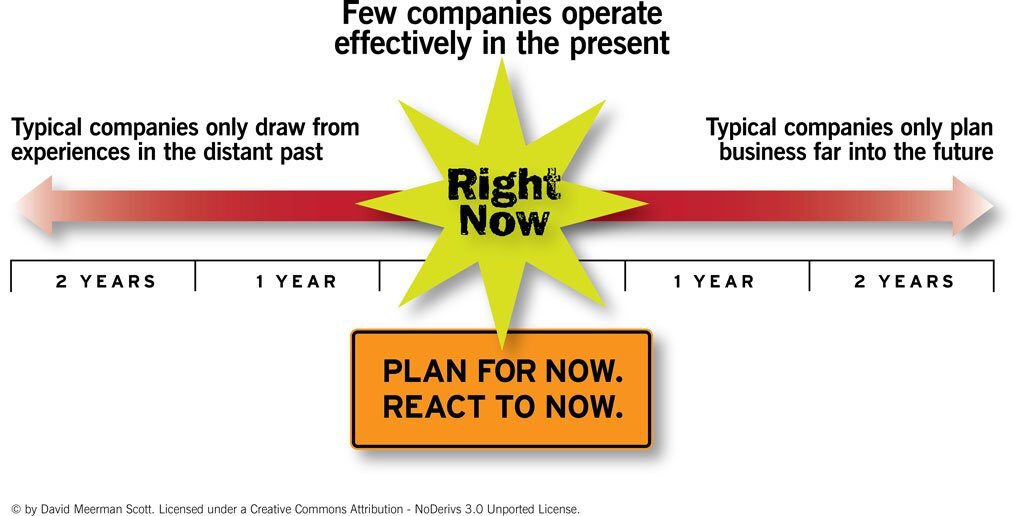
Most marketers are focused way too much on the future. They’re only developing marketing plans and creating programs for next week, next month, and next year. The problem is that these people aren’t taking advantage of what’s happening right now, today, this moment. We need to develop some Marketing Mindfulness to reach buyers when they’re ready.

19 Apr 16:15

Why Sales Team Managers Should Leverage Sales Enablement

by Matt Ellis

Sales team manager

Sales managers, more than anything, are coaches. Their job is to put their team in a position to succeed by providing them with tools, strategies, and encouragement that helps reps sell better. To do this managers need to be constantly on the search for tactics and resources that will aid them in their efforts to motivate and support their teams. A great sales manager will have a host of qualities that makes them effective.

But oftentimes managers are so swamped with responsibilities that it can be difficult to devote the attention necessary for developing their team the way they’d like. As such, it’s possible that sales teams can begin to evolve and grow on their own, attempting to keep pace with an industry that is changing every day.

To keep a sales team acting as one cohesive unit that’s operating on the same page, sales managers need to ensure they are staying up-to-date with the latest technologies and trends. Sales enablement is a field that has experience rapid growth and provides managers with the perfect opportunity to supply their teams with invaluable tools. As such it’s important to understand how that happens and to follow sales enablement best practices. Here are a few reasons why sales team managers should leverage sales enablement for their teams.

Improve the Effectiveness of Outreaches

One of the most difficult tasks in Sales is getting your foot in the door. No matter whether a lead is marketing qualified or cold, it’s hard to clear the hurdle of the initial outreach. As buyers become more accustomed to personalized selling – 74% of buyers are annoyed when content doesn’t speak to them according to CMO – Sales, more than ever, needs to be on point with their engagement.

Sales managers can ease their team’s difficulties in outreach by providing them with tools that give them a full picture of the buyers they are engaging. Sales reps will spend a majority of their time within an organization’s CRM to learn more about a buyer, track activities, and plan their outreach. But only focusing on sales technology ignores a treasure trove of information that Marketing has acquired.

A MAP hosts all of Marketing’s interactions with a buyer and can provide vital data to Sales. This information includes the specific web pages, content, and campaigns a buyer has interacted with. Knowing those granular details could be the difference between success and failure with an outreach attempt.

But, Sales doesn’t often have the time to be hopping between the two disparate technologies to dig through analytics. So sales managers need to ensure they have everything they need readily available. A sales enablement platform integrates both solutions so that information flows in both directions. When a sales rep is looking at a potential buyer within the CRM, they will immediately have all of the information Marketing has collected and can start crafting an outreach that will feel more personal.

Get a Clear Picture of Your Buyers’ Needs

Every sales manager knows the importance of content. Not only are they constantly hearing about it in meetings with Marketing, but there’s proof in data too: a DemandGen survey found that 64% of respondents said that content had a significant impact on their purchasing decision.

However, content isn’t effective just because it’s sent to a buyer. There’s nothing that says someone will respond or be engaged by a piece that is sent to them regardless of the content. Each buyer is unique and will have interest in particular solutions and products. For a content piece to work it needs to truly resonate with the individual who receives it.

This is a difficult proposition for Sales because it is often nearly impossible to ascertain why a piece worked or didn’t work. A buyer who is willing to openly discuss the effectiveness of content is a rare – and maybe nonexistent – breed. A sales manager needs to implement a solution that will allow their team to gather that information on their own, and derive their own conclusions from the data.

Content analytics reveal a complete picture of a buyer. By tracking the minute details of how someone interacts with a piece of content, Sales can gain a clear understanding of their needs. Instead of guessing and assuming, content analytics show exactly what parts they engaged with, and for how long. Using this information, sales managers can prime their teams for interactions by shedding light on the specific needs a buyer has, and how reps should go about speaking to those needs.

Allow Your Team to Create Their Own Content

As previously mentioned, content is important – personalized content even more so. But creating personalized content is a time-consuming endeavor. Marketing generally doesn’t have the resources or bandwidth to fulfill one-off requests and doesn’t want Sales creating their own for branding and consistency reasons.

So what’s a sales team manager to do? They need to enable their team to provide buyers with the kind of content that will resonate, but they also need to respect Marketing’s time and wishes. A sales enablement solution that allows the sales team to create their own content – like Seismic’s LiveDocs – is the best of both worlds.

This type of technology creates a middle ground that makes both teams happy. Marketing uploads a piece of content to a central location accessible by everyone. They then mark which parts of the content should be configurable, and which should never change. This removes the possibility of a mistake that ruins the look and feel of a piece, but allows Sales to quickly create a personalized piece of content.

By allowing their teams to create one-off personalized content, sales team managers put their reps in a position to succeed. The team can use personalized pieces during every stage of the buyer’s journey to speak directly to individuals and their specific needs. In turn, managers can rest easy knowing that their efforts to leverage sales enablement have given their teams a whole host of tools to improve their productivity and results.

19 Apr 16:07

In a Price War, Everyone is a Loser!

by Dave Wakeman

Lately it seems like as a business culture we are more and more hearing about price wars, the destruction of retail brands, and how cost cutting management initiatives are driving lower and lower customer satisfaction.

And, I get it.

All of these things sound great in the abstract.

Our competitors offer a discount and are stealing market share, let’s fight back by offering our own discount.

Everyone is flocking to the low prices at Old Navy, let’s do that same strategy. We need the sales!

We need to cut costs to get to our revenue and profit projections. Customers won’t notice the decrease in service quality.

All of these good ideas, all end in a similar manner:

Burned out brands.

Frustrated customers.

Companies in worse shape than they started.

The simple fact is that price wars, discounts, and cutting to the bare bones are all strategies that make everyone losers: management, employees, customers, and other stakeholders.

Let’s take a quick look at all 3 of these ideas and try to uncover alternatives that will make everyone just a little bit happier.

Instead of a price war, how about fighting a war based on value:

When the only value you provide your customers is being cheapest, you are a commodity.

Full stop.

If you are a commodity, the lowest and cheapest thing is what wins!

Full stop.

If you are a commodity, you really only have one direction that you can go: down.

That’s not a great position to be in as a business.

Because you can only go so low.

Instead of getting into the losers’ battle of a price war, the better thing for many of the companies that find themselves in prices wars should be focusing on value.

Value can take any number of forms: tangible or intangible.

The key for many of the businesses that are in price wars is that the only battle field they are choosing to fight on is the one of price.

Why not quality?

Why not service?

Why not selection?

There are any number of more viable ways to win, but price wars are losers.

Don’t Discount As A Reflex:

This is very much hand in hand with the above idea.

But it seems like so many of our retail outlets have fallen into the trap of constantly discounting as a reflex, to the point that they can never get their customers to pay full price.

Cutting prices doesn’t work to a new normal.

Why?

Because you’ve trained them to wait for the discount. Which comes because you can’t hold out to make the sales you need to keep the business afloat. So you discount.

A never ending cycle.

Martin Lindstrom did a fantastic study that he writes about in Buy-ology that talks about the neuroscience behind discounts and how if you start discounting you have turned your brand into a discount brand for 7 years.

Its true.

People say Apple products are too expensive. But they sell more phones than anyone. They never discount at the Apple Store.

What do you think of the Apple brand?

That’s its premium.

Do you expect a discount?

No!

On the flip side, look at J. Crew.

Their brand is a mess.

They can’t decide if they are a high brow fashion house. They can’t decide if they are a middle quality clothe shop.

When stuck in the middle of nowhere, what do you do?

If you are J. Crew, you discount.

And they have the declining sales for 3 straight years to show that discounts as a strategy are a failure because all they’ve done is help accelerate an identity crisis based on not knowing who their customer is.

We see this same strategy play out in industry after industry.

Look at sports, they fear the decline of the season ticket as a valuable purchase for fans.

But they fail to add value to the ticket outside of some cheesy group events, a potential discount from the team store, and maybe a gift.

So when fans don’t buy, they discount and insult the people that were willing to invest in their product at the full price to start with.

Whatever the question is, the answer is absolutely almost never to discount. There are exceptions, but way too few to try to discuss here.

Cut costs to rescue profits:

I don’t know where the saying came from, but it goes something like this: “You can’t cut your way to growth.”

But we see it all over the place, organizations find themselves in a pickle and are struggling to hit their profit goals.

So the first thing that goes is any kind of service or amenity that was likely one of the key factors in acceptance of the brand to begin with.

The key is, you can’t cut your service and product too much and hope that no one notices because your customers always do.

On a recent trip to the UK, I was reading the British newspapers and saw several papers talk about the declining quality of British Airways short haul flights.

The explanation of this is that they are feeling price pressure from competing short haul carriers with bare bones operations.

The thing about British Air is that they have a quality image and a reputation that the others don’t have.

So the reaction to cut services is ill-fated because if you go down the road of subtraction, you fall into that price race and discounting policy that leads to the commodity trap.

If you are in a position similar to this, instead of fighting your competition on price and by cutting all the things that make you unique, refocus on the things that you do best.

In the case of British Air, maybe improve the short haul entertainment, food, or service. Maybe there is a partner that is looking to engage the short haul customer more? Maybe there is a way to package more and create more perceived value for your target audience?

The key is, even when you are a huge brand and company, not everyone is your target market.

And, you have to be strong enough as a brand that you know that you are never going to win everyone over, so trying to do something like that is just bad for business.

Again, if the question is cutting to grow: the answer is that doesn’t work.

19 Apr 16:06

Do the Work You Are Capable Of

by Anthony Iannarino

One summer I was invited to work for the husband of a family friend. The job was mindless, something anyone could do. It was also repetitive and mindless. But the pay was pretty good for a teenage kid, and I needed the money.

I worked harder than anyone around me. I also worked faster than anyone around me. I was doubling and tripling the output of the full time employees, and it was not going unnoticed. The managers and supervisors were impressed, and they praised my work, even though I did not believe there was anything exceptional to what I was doing.

At break, a number of the full time employees cornered me. They told me to slow down to the pace of the rest of the workers there. They told me that I was making them look bad, and that they were being paid for that level of production, so they weren’t going to work any harder.

I was too young to know how to handle it, and I was intimidated by a group of much older people cornering me to insist I slow down. So, I ended up finding a way to work by myself, and at my own pace.

Up until this point, I wasn’t aware that this mindset existed.

Here’s the thing. When you do only the minimum work you are capable of, you will only be paid the minimum amount commensurate with that work. Withholding the real value you can create only ensures that you are never earn what you are capable of earning.

The full time employees believed they were punishing the company by producing less than they were capable of, but in reality, they were taking money out of their pockets.

A poor mindset leads to poor activities and poor results. Do the work you are capable of.

The post Do the Work You Are Capable Of appeared first on The Sales Blog.

18 Apr 17:25

Sorry, Leaders Aren’t Entitled to Be Opinionated

by Liz Kislik

“But I’m entitled to my opinion!” a vice president insisted. I was facilitating a work session with a client’s leadership team. Our goal was to resolve a longstanding business problem, with the full participation of dueling factions within the group.

If you’ve ever been part of a management team that’s going in circles on a crucial issue, you know the process can cause great offense, and fuel anger and resentment. That’s why a facilitator can be useful: to help participants expose any underlying conflict that’s feeding their resistance to resolution, and to identify and confront both interpersonal and structural implications and triggers.

Otherwise, even when you’re dealing with senior executives — like the objecting vice president — most participants take their usual positions and give their standard arguments. Sometimes it takes an outsider to point out when they’re holding forth about long-held beliefs and strongly felt emotions rather than using relevant data to clarify issues and answer questions.

Opinions Are a Source of Decision Data

Committed people often believe that the fact that they have opinions should make a decision obvious — perhaps even more so when they’re deeply wedded to their views without significant or accurate evidence to back them up. Our feelings are facts — they exist as tangible things in the world. But that is not enough reason for them to drive business decisions.

After this facilitated session, the vice president and I discussed both the legitimacy of having an opinion, and the responsibility of having an educated opinion, not one based purely on taste and preferences.

Relying on one’s personal perspective as a reason to hamstring a process without bringing relevant, new evidence to bear sounds more like a 1950s parent than a thoughtful business person: “Because I said so! And if it’s the way I feel about it, then it’s obviously right and true.” Mature executives with emotional intelligence outgrow the mindset that the world revolves around them and their opinions.

Not All Opinions Are Created Equal

How much should any single opinion count? Does it matter how strongly that opinion is held?

Leaders’ opinions automatically go on the table as data points in the formulation of the decision-making dialog. But if the leaders are not open to the opinions of others who have expertise, savvy, a personal stake, or new information to share, then they’re acting as autocrats, not as thoughtful or progressive leaders.

Still, any opinion being considered must be able to hold water. So when you’re assessing a variety of viewpoints, it’s reasonable to ask kindly, “What’s your evidence or basis for that stance?” It’s also valuable to dig deeper to understand future implications. Ask participants to take their views to their logical conclusions: “Before I/we make a judgment, I’d like to understand your rationale. Why do you think that would be the cause/outcome?”

Say your Director of Operations has been making decisions on his own every quarter for the last 10 years, and has been wrong only twice, it’s probably still worth taking his opinion. His pattern of accuracy and track record of satisfactory, money-making results may be strong enough that when he sniffs the air and says, “I think it’s best to go in this direction,” it should count more than someone else’s gut feeling.

On the other hand, if your analytics group prepares hundreds of multipage reports each month, but the analysts push the buttons without fully understanding the ramifications of the numbers they’re presenting and the reports have a history of being error-ridden, then it doesn’t make sense to use the data for decision-making without checking the accuracy of the specific reports you’re relying on.

The Leader Sets the Tone

Madonna said, “Listen, everyone is entitled to my opinion.” The vice president in my facilitation felt the same way! But unilaterally calling the shots is rarely a successful business strategy, and it’s certainly not one that most executives can apply. If your team has a pattern or habit of making decisions without clear supportive evidence, slow everything down. Explain to them that, as a group, you all need to be more conscious and intentional about the decision-making process.

Because you want open, thoughtful discussion of your options and opportunities, it’s useful to emphasize that everyone is absolutely entitled to their own opinion, but that those opinions are more likely to be accepted as useful and valid by others if they’re educated opinions, based on reliable data.

18 Apr 17:07

Do you have a customer retention plan?

by Expert commentator

Why a focus on the fundamentals of customer retention is essential to business growth

Many marketers are grappling with the challenges posed by fundamental changes in consumer behaviours, increasingly competitive markets and a host of digital technology developments, mobile innovations and social media proliferation.

The good news is that marketers are far better placed to operate in this brave new world than they may think! The fundamentals of customers, brands and marketing have not changed.

However, customers are still the most important asset of any business, so in my view, the number one priority for marketing  to acquire and retain customers by creating a compelling value proposition and brand story that resonates with customers.

There is a danger if there is too great a focus on customer acquisition, then businesses spend too insufficient time on managing customer retention. Instead the balance is wrong and they focus too much on acquisition using paid, owned and earned media and insufficient time on understanding and encouraging customer loyalty and advocacy.

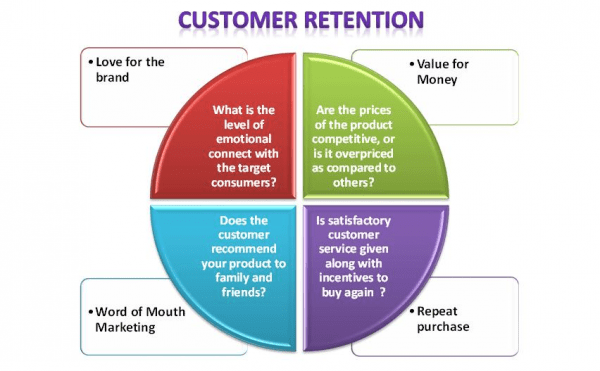
Creating a retention plan enables businesses to focus on these 4 key questions to improve customer loyalty identified by Kanti Banerjee in what he calls the Full Circle approach to Customer Retention.

customer-retention-plan-diagram

Why is a focus on planning and managing retention essential?

The changes referred to earlier will yield opportunities for marketers to reinvent their value propositions, brand positioning and customer experience to take advantage of the new customer engagement opportunities. This isn’t easy (but it’s exciting and rewarding if you get it right) but best practice is starting to emerge with brands applying an obsessive focus to creating value for customers realising high payback:

  • Starbucks – using mobile to enhance the in-store experience
  • Sephora – using social media to making shopping a fun and collaborative experience
  • Hertz – using micro-targeted, mobile messages (in the airport) to save their customers time and stress
  • ASOS – personalising every aspect of the customer experience from web store recommendations to customer communications to parcel tracking

These brands have all started with the Customer. They have worked out how the new content, technology, media and channel opportunities can add value for customers, and then designed a technology and delivery solution to make it happen. They apply these 5 key modern retention marketing principles:

1. Deliver a seamless customer experience across all customer touch points.
2. Adopt a more reactive, real-time approach to customer communications – the customer is in control now and brands must respond quicker and more appropriately to them.
3. Unlock the power of content as a value creating resource.
4. Harness the power of social media to connect and empower customers.
5. Leverage the moment in time and place personalisation opportunities afforded by mobile interactions.

So in recalling the famous war-time poster, it is very much a case of marketers remaining calm and building on their existing customer retention programmes. This does require a certain data and technical literacy; creative and innovative nature; appreciation of the opportunities and constraints of new social and mobile channels. However these are extensions to current marketing strategy and must build on existing programmes rather than being pursued as new standalone initiatives.

They have kept sight of the fundamentals of marketing :

  • 1. It is always easier to sell to existing customers than cold prospects – start in your own back yard with and high performance customer retention programmes.
  • 2. Understand customer behaviours and attitudes and develop deep insights into needs and motivations. Identify and exploit the new customer insights resulting from customer engagement across digital, social and mobile channels.
  • 3.Focus on key customer segments.
  • 4. Be innovative and creative in developing and testing new value-creating initiatives.
  • 5. Design customer journeys that co-ordinate interactions throughout the customer lifecycle and make it easy for customers to meet their needs at each stage.
  • 6. Use personalisation as a competitive differentiator – other brands can copy your product, service model and pricing but they don’t know what you know about your customers.

None of these disciplines will be new to marketers. They are the core principles of the marketers’ craft which will underpin strong value propositions. The achievement of the brands cited above is that they have future-proofed these by adopting a new set of principles

The financial arguments for a retention focus are compelling too. Ross Beard compiled this summary of customer retention research which remind us why we should focus more on planning and managing retention:

  • It is 5-7 times more expensive to acquire a new customer than to keep an old one

  • It costs a company $234 every time they lose a customer

  • Loyal customers are worth up to 10 times as much as their first purchase

  • 86% of consumers quit doing business with a company because of a bad customer experience

  • 78% of online customers recommend a brand to friends and other contacts after a great customer experience

The rallying cry therefore is for confident, assertive marketers to lead the way in embracing changes and fully exploiting the new technology and media opportunities to reinvent retention programmes that deliver an :

  • enhanced experience for your customers
  • increased ROI for brands

The new Smart Insights guide to creating a customer retention plan

To give more detailed advice on how to improve customer retention through a planned approach, I have written the recently published Smart Insights Retention Strategy Plan guide to help marketers review and improve their customer loyalty. It covers these 7 Steps:

  • Step 1. Establish a clear framework for understanding customer retention effectiveness.
  • Step 2: Benchmark your current retention programmes.
  • Step 3. Create a customer retention and growth strategy.
  • Step 4. Implement practical tools to support the retention programme.
  • Step 5. Define typical retention KPIs and performance measures.
  • Step 6. Use content marketing, social media and email marketing for growth
  • Step 7. Align organisation and technology
Thanks to Andrew Campbell for sharing his advice and opinions in this post. Andrew is an experienced digital marketer with a wide breadth and depth of experience. He has worked on high pay back email programmes for leading brands such as Aviva; Netflights; Thomas Cook and East Coast. As a freelance consultant Andrew has extensive front line experience in designing multi-channel CRM programmes that fully leverage the email channel. He is also actively involved in sharing and promoting best practice as a trainer, speaker and lecturer. You can follow Andrew on Twitter or connect on LinkedIn.
18 Apr 17:07

Why and How to Productize Your Marketing

by Scott Maxwell

Editor’s Note: This article first appeared on Inc. here.

Every marketer knows that “product” is the first of the 3Ps of marketing, coming before pricing and place. It’s also a truism that products should sell themselves.

Until fairly recently though, that was meant in a figurative way. In other words, the product didn’t really sell itself, but a high-quality product will generate positive word of mouth that will sell more products.

The emergence of the “growth hacker” a few years ago presented a new option. Growth hackers could be hybrids of marketers and coders, using A/B testing and other metrics to test marketing in real-world conditions. Another aspect of the growth hacking mindset is a merger of product development and marketing.

A classic example of this is Hotmail. When the product launched in 1996, its creators put a note at the bottom of each email asking recipients to “get your free email at Hotmail.” That product literally sold itself. As usual, the B2B market lagged in this respect, but now what I like to call “product-led growth” is the norm as more startups productize their marketing.

How It Works

What Hotmail did was merely add a call-to-action to its product. Admittedly, this really isn’t an option for products outside the realm of digital media. However, these days every business is a software business, so there are a lot more options for product-led growth.

Product-led growth isn’t just about call-to-action messaging though. It means taking a cue from software development and releasing a minimum viable product that morphs depending on customer feedback. For instance, Amazon has a rule that before the company embarks on a new product initiative, someone on the product team needs to create a fake press release discussing its benefits. The company uses that as a roadmap.

Slack is another example. Rather than selling software, CEO Stewart Butterfield says the company is selling a positive user experience. Expensify (OpenView is an investor) is based on a similar premise. Filing expense reports is usually an arduous process that’s made worse by poorly designed software. But what if users find the experience so much better that they become evangelists for the platform and bug their bosses to use it on the corporate level?

The Product-izing Trend

Product-led growth dovetails with another general business trend of productizing services. Like most business ideas, this is an old one. The idea of franchising, for instance, is to strip down an experience (like a restaurant) to a repeatable formula for signage, cooking times, etc. Famous chefs productize their offerings by writing cook books.

Similarly, some service companies have learned that much of what they offer, including training and expertise, can be offered in the form of a product, often a SaaS product. For instance, rather than merely offer consulting, Adobe has a suite of products that executives can use to market themselves better.

Smart companies these days are essentially product-izing their marketing. That is, they are baking in marketing to their products.

Let the Product Do the Selling for You

One of the lessons of the dot-com bust was that expensive ad campaigns weren’t necessary. In the wake of Pets.com and its famous Super Bowl ad, we’ve seen scores of B2B companies like Dropbox, Slack, Expensify and Datadog (again, OpenView is an investor) gain traction without standard marketing campaigns.

These are companies that consider their product to be the most important of the 3P’s. That may have always been the case, but the days when you could overcome a mediocre product experience with splashy advertising or hard charging sales is long gone. Consumers won’t take your word for if that your product is great. They need to experience it for themselves first. And that’s where the opportunity lies.

The post Why and How to Productize Your Marketing appeared first on OpenView Labs.

18 Apr 17:04

8 Things Millennials Fall For

by Aleh Barysevich

The golden rule of marketing is to know your audience. To date, no generation has been as exposed and as researched as Millennials. Luckily for you, as currently they make up 25% of the U.S. population, and their spending power sums up to approximately $600 billion a year, which makes them the most influential consumer group and marketers’ prime target.

Born between 1980 and 2000, Millennials are the first digital natives, who grew up in the era of infinite choice yet worst economy; which, in turn, has imposed a certain mark on their purchasing habits and patterns.

Millennials are often being generalized and perceived as financially dependent teens, self-centered gadget-addicts with an attention span lower than of a goldfish, but in fact they are no uniform group, as they form a huge and diverse generation with a significant age-range (from 17 to 37), marching into absolutely different stages of adulthood and approaching them in less than traditional ways. Millennials face harsh economic realities, with milestones of adulthood not being as affordable as before. But it’s not that they don’t spend anymore – due to circumstances they just start spending selectively; they don’t lack loyalty like some would say, yet due to the shift of values you may need to reconsider the ways to gain it.

There are lots of obstacles that make marketing to Millennials tough; still, the generation has its common traits to use as hints, so in this post let’s dive into who Millennials are, and what they expect you to be.

1. They Are Educated and Cost-Conscious

Millennials are known to be the most educated generation ever. Education is now being treated as an investment into future and as an expensive yet necessary consumer good; respectively, student loan payments are taking up a growing share of postgraduate Millennials’ income. According to LinkedIn survey, 61% of Millennials have student loans, and the average value of the debt is $20-25K, which forces Millennials to postpone buying a home, getting married and having a family. In addition, first time ever most part of post-graduates from 18 to 34 tend to live with parents. Millennials might want to, but don’t really have too much to spend.

Keeping that in mind, you can melt a cost-conscious Millennial heart with all kinds of small treats: they happily participate in giveaways (which can increase your brand’s exposure with the power of reposts and retweets), fall for deals, use the reward apps and validate their special ‘get the 5th latte for free’ cards (such kinds of deals also encourage them to return). The research shows that 56% will even switch brand for coupons.

2. They Expect Great Customer Experience

Apart from being selective in spending, they expect the buying experience to be flawless, and you to be helpful and attentive.

When it comes to how technology performs, they expect convenient integration between all digital platforms and your accessibility on all social media networks; when it comes to your brand – it’s important that it has a human face. This stands for everything: from content being meaningful, funny and relevant to who they are, to thoughtful and supersonic support from your side. To provide that you’ll have to get to know them, and to monitor their feedback carefully. Good news is – they are defining themselves in social networks and happily share their outlook and feedback online.

To be on top of what they say about your brand, what they like and what they lack – you might need a helping hand: luckily, social media listening tools like Awario, Mention, and Brand24 are getting pretty popular now – using one can help you stay in touch with Millennials, monitor and react to what they say, and engage with them, without it getting overwhelmingly messy. Just do your best to make any aspect of buying easy, ensure that you’re at hand in case of any issue, and be personal.

3. They Research and Value Transparency

The other reason why it’s crucial to master social media listening – is that the Millennials tend to extensively research the products online before buying. Having a tone of options to choose from, they rely on all kinds of reviews and ratings (influencers’ and user-contributed), friends’ advice, and overall buzz around retailers. Surveys back up the fact that user-contributed content matters ‘from somewhat to a lot’ to 84% of Millennial consumers while making purchasing decisions, so you really should keep it neat: if there’s a complaint – be the first one to react, if there’s nice feedback or a reasonable request – never ignore that either. Think of ways to encourage your customers to leave reviews, make it as easy as possible for them, and don’t forget to embrace what you get – your brand’s reputation can be your most valuable asset.

To gain Millennials’ trust you should also do your best at being honest and transparent, especially if you promise a lot. To increase the transparency and to share the excitement of doing your thing with your consumers – you can use trendy live video streaming to invite them behind the curtains of your business, or you can provide the insights any other way: create how-it’s-made videos, arrange virtual tours to your facility, office space or a supplier’s farm, share your corporate culture or internal events – these are all proven ways to help a user feel related to the brand and trust it more.

4. They Need You to Ease Their Everyday Life

With all those sorts of challenges on the way to stepping full-force into the adulthood, Millennials seem to have enough on their plate; to get some rest they expect the products and services to make their life easy and no-fuss in any possible way. The best you can do is to help them solve everyday quests and offer something truly efficient and convenient. There are lots of various brands to take example of: Proctor & Gamble with the commercial for Tide Pods showing off the innovative technologies used and focusing on product’s ‘no-time-and-effort’ qualities, Pizza Hut providing visible promise time even before you order, or Uber app showing a real-time car map for your convenience. Even if you can offer a monthly subscription for razor blades, but show innovative approach to pricing and top it up with hilarious commercials – that may work (it did for Dollar Shave Club).

5. They Are Socially Conscious and Care About Self-Image

Millennials do show empathy and care about things. Driven by personal life outlook more than by any specific ‘norms‘, they value kindness, acceptance and open-mindedness, and are not so brand-obsessed anymore. 37% of them surveyed by MillennialMarketing confirmed that they would prefer spending to support a cause they believe in (even if paying more), and nearly 50% said they would be willing to purchase from a company supporting a good cause.

To reach Millennials for real real, you’ll have to speak to their values, be it ethical buying, charity or just accepting themselves and others. Such campaigns resonate well among Millennials, as this also makes them feel that your brand helps them convey the desired image of themselves. Great example is Dove’s ‘Beauty Confidence Mission’ that took roots from a survey showing that only 2% of women claimed themselves to be beautiful.

You can make a serious statement, like Airbnb with campaigns appealing to acceptance or supporting refugees.

You can put it in a more playful manner, like Uber’s collaboration with shelters for #UberKITTENS, that offered on-demand kitten delivery for a 15-minute snuggle (with most kittens eligible for adoption).

But the point is – if your brand stands for more than just products, it will be more worth supporting.

6. They Are Willing to Belong and Prefer to Be the First-Hand Experiencers

For Millennials, happiness isn’t about possessing anymore: according to the survey conducted by Harris, 55% of Millennials say they’re spending more on events and live experiences than ever before. Same survey shows that 78% of them value it over ownership and would rather spend money on a desirable experience/event than on a material thing. Apart from that, Millennials show positive and open-minded outlook on life with an emphasis on exploration, self-discovery and self-improvement. Airbnb nailed it by embracing Millennials’ crave for adventure and making the ability to ‘belong anywhere’ their main message. Nike nailed it by creating a motivated community and by selling the experience of improving yourself on top of just sportswear.

You can do, too – by thinking of an experience aligning with your brand, be it a community behind your product, a sponsored music fest, an outdoor event, an in-shop presentation, or a marathon for charity.

7. They Are Keen on Self-Expression

Expressing your identity is in your nature; however, Millennials are the first generation that has a complete set of tools to do that – they make tattoos and color their hair, they express opinions online, wear the clothes of brands that reflect their lifestyle and buy products that align with their principles. So it’s worth thinking of how your brand can reflect their self-image and correspond to their outlook on life.

Apart from spending on experiences and being in a community, 40% of Millennials claimed that they want to participate in co-creation of products and brands, as they feel they have more control though direct involvement. You can think of a way you can let your consumers feel involved: you can personalize a product from your side, like Coca-Cola did by swapping their logo with names to give a global product a bit of a personal touch; or, you can let your consumers customize their experience with you from their end – take example of Lego setting up a Mosaic Maker booth to let people make own portraits out of Lego.

8. They Are No Fans of Commitment and Averse to Making Big Decisions

In the modern era, when the moto is ‘you only live once‘, and when ‘norm‘ is a rather vague concept – it’s no surprise Millennials are averse to commitment, knowing there are many alternative options of how the adulthood may look like.

This pretty much explains the growing popularity of so-called ‘sharing economy’ allowing to rent a home, a car, a special-occasion suit or even a song through Apple Music. And it’s not only that renting is cheaper than buying: firstly, possessing a thing that you only need occasionally or once – is nowhere near as efficient; secondly, it goes well with the temptation to try as much as possible before settling. While accessing, you are also exempted from maintenance responsibilities.

To keep pace with the new mindset you should think of a sharing potential of your product or service, offer flexible pricing and short-term commitment options. Or, you can go the other way around and think of a collaboration like realtor.com did: teamed up with Airbnb for the #trybeforeyoubuy campaign to let people book a stay in their potential neighborhood and get a feel of the local community – that’s a creative example of offering a test-drive to ease the process of making a huge decision.

Bottom Line

As you may have noticed – there is no ‘one size fits all‘ with Millennials, and almost no point in targeting them according to any specific life stage, as they go through different ones and choose different ways. Still, you should focus more on their personal traits and lifestyles, cause if you find a matter to unite them around, detect an everyday concern you can help them get rid of, if you share their outlook on life and don’t take everything too serious – you can totally win quite a few Millennial hearts.

18 Apr 17:02

Targeting Change Agents

by bob@inflexion-point.com (Bob Apollo)

Change Agent.pngOne of the biggest challenges for any sales person when qualifying a new potential sales opportunity is judging whether the deal is real - and whether the initial contact is someone who has the ability to make things happen.

Sometimes it’s obvious that the person reaching out to you is on an information gathering exercise for someone else, or simply pursuing an enquiry based on nothing more than personal curiosity.

But often, the person comes across as credible. They may even claim to be the decision maker. How can we make a more informed judgement about whether they are really capable of driving the change agenda?

THE CONSENSUS SALE

The question is particularly important in typical complex B2B sales environments where there are likely to be multiple stakeholders, and where investment decisions often depend on achieving a certain level of consensus on whether change is necessary at all and if it is, what to change to and with what degree of urgency.

In these sort of complicated and lengthy decision-making environments, and in the absence of a truly compelling and urgent reason to change, the easiest (and most common) outcome of the buying decision process is simply to conclude that they might as well just stick with the status quo, at least for the moment.

The authors of “The Challenger Customer” shared some persuasive research about how purchase intent declines dramatically as the number of stakeholders grows. And with 6.8 participants in the average decision making team we shouldn’t be surprised that “do nothing” is often our fiercest competitor.

I don’t intend to duplicate their findings - although I do recommend that you read their book - but I do want to explore some of the practical implications of this challenge, and to suggest some ways of both avoiding “false positives” and dealing with marginal projects more effectively.

HOW DECISIONS ARE REALLY MADE

My first recommendation is that we should never take a prospect’s claim to be the ultimate decision maker at face value. Without directly confronting their credentials, it’s always a good idea to explore who else is affected by the issue, what impact it is having on all the affected parties, and how the organisation might have tried to address the issue in the past.

If our current contact is unable to articulate the basic business implications of the issue, or to identify the other affected parties, it’s a reliable indicator that they are unlikely to be somebody who is going to be able to drive the change agenda.

We also need to understand how other similar issues have been dealt with before, and what the decision-making process and team was for these projects. It’s particularly useful to understand the dynamics behind similar projects that might have failed to get approval, and where those projects fell down in the decision process.

BUYING DECISIONS ARE CHANGE PROGRAMMES

Significant buying decisions are in their essence change programmes - and change programmes tend to fail without a strong change agent at the helm - someone who is capable of aligning their colleagues into a “coalition of the willing” that is capable of not only recognising the compelling need for change but also making change happen.

These change agents are sometimes but not inevitably the people with the budget and the ultimate decision authority, but if they are not they have the ear of these powerful players and are respected by their colleagues as someone who can be trusted to make drive the change agenda.

If our current contact does not demonstrate these “change agent” characteristics, we would be wise to explore whether other potential change agents exist, and whether we can engage them in our sales campaign. If we cannot identify and engage a potential change agent, it would be sensible to carefully assess the chances that the project will actually be approved at the end of the day.

RELATIVE PRIORITIES

This, of course, is not simply about the merits of our project or the leadership of the change agent we have identified. It’s also about the relative importance of this project set against all the other projects the prospect could choose to invest in.

So in addition to assessing the case for change and the quality of the person leading the change agenda, we also need to be very keenly aware of how closely the project is linked to one of the handful of critical priorities that the customer organisation is working towards.

In fact, if you cannot associate the project you are working on with one of the customer’s prime initiatives, this is another reason to proceed with caution - or to see if there is any way in which you can establish such a connection.

That’s why it’s so important to accurately assess not only whether there is a compelling need to take action and whether the project is being led by a proven change agent on the customer side, but also to assess the relative priority of the project against everything else the customer organisation cares about.

If we can accurately assess and act upon these factors, the outcomes are obvious: we will pursue fewer opportunities that end in “no decision” and we can convert what might otherwise have turned out to be marginal opportunities into successful sales.

By the way, if you're interested in some of the broader principles behind Value Selling, I think you'll appreciate this guide.

ABOUT THE AUTHOR

Apollo_3_white_background_250_square.jpgBob Apollo is a Fellow of the Association of Professional Sales and the Founder of UK-based Inflexion-Point Strategy Partners, home of the Value Selling System®. Following a successful career spanning start-ups, scale-ups and mature corporates, Bob now works with a growing client base of tech-based growth-phase businesses, equipping and enabling them to systematically create and capture mutually meaningful value in every customer interaction.

18 Apr 17:01

What Is Lean Marketing … Really?

by valueacceleration

Occasionally I feel the need to resurrect this question. As I have noted a few times in the past, the term Lean Marketing has become bastardized by consultants with their own agendas. Since we are consultants too, one could argue that we also have an agenda. We do. That is to keep the term “lean” from being bastardized for no value-add.

Marketing itself is a broadly defined, and therefore effectively undefined, term. Adding a new modifier and now broadly defined term “lean” just makes it even more vague.

The term “lean” has been around for decades and basically means removing “costs” that do not add value. Running lean does not mean running on a small budget. It means not doing things that don’t add value. Just because you try something that does not work does not imply waste, if you learned from it.

The first attempted change to lean when applied to marketing was to suggest small budgets. I wrote about this in 2009. The popularity of the book, Lean Start-Up, which has good concepts, but is more about agile than lean, further bastardized the term lean. As a result of that book, many have started referring to Lean Marketing as meaning the application of so-called Lean Start-Up principles to marketing. Again, lean is about removing waste, not doing it cheaply. Waste is waste. Mistakes made while learning are not waste unless they were preventable, or you don’t learn.

Lean thinking is a valuable tool in the application of business processes. Revenue side or fulfillment side. Agile and flexible organizations usually have a competitive advantage from the use of those skills and methods. They are not about lean; they are about methods.

In the end it’s about doing the right things right. Being fast and flexible has always been a competitive advantage, but as we note in our book, Value Acceleration, what was once a competitive advantage, soon becomes a competitive necessity. That is what’s happening today with agility and flexibility. They are becoming a competitive necessity.

Constraint Analysis, Lean Thinking, and Continuous Improvement are the three cornerstone process tools needed to compete effectively. Learn them, apply them, and win.

Mitch


18 Apr 17:00

The First Wave of Corporate AI Is Doomed to Fail

by Kartik Hosanagar
apr17-18-48688494

Artificial intelligence is a hot topic right now. Driven by a fear of losing out, companies in many industries have announced AI-focused initiatives. Unfortunately, most of these efforts will fail. They will fail not because AI is all hype, but because companies are approaching AI-driven innovation incorrectly. And this isn’t the first time companies have made this kind of mistake.

Back in the late 1990s, the internet was the big trend. Most companies started online divisions. But there were very few early wins. Once the dot-com bust happened, these companies shut down or significantly downscaled their online efforts. A few years later they were caught napping when online upstarts disrupted industries such as music, travel, news, and video, while transforming scores of others.

In the mid-2000s, the buzz was about cloud computing. Once again, several companies decided to test the waters. There were several early issues, ranging from regulatory compliance to security. Many organizations backed off from moving their data and applications to the cloud. The ones that persisted are incredibly well-positioned today, having transformed their business processes and enabled a level of agility that competitors cannot easily mimic. The vast majority are still playing catch-up.

Insight Center

  • The Age of AI
    Sponsored by Accenture
    How it will impact business, industry, and society.

We believe that a similar story of early failures leading to irrational retreats will occur with AI. Already, evidence suggests that early AI pilots are unlikely to produce the dramatic results that technology enthusiasts predict. For example, early efforts of companies developing chatbots for Facebook’s Messenger platform saw 70% failure rates in handling user requests. Yet a reversal on these initiatives among large companies would be a mistake. The potential of AI to transform industries truly is enormous. Recent research from McKinsey Global Institute found that 45% of work activities could potentially be automated by today’s technologies, and 80% of that is enabled by machine learning. The report also highlighted that companies across many sectors, such as manufacturing and health care, have captured less than 30% of the potential from their data and analytics investments. Early failures are often used to slow or completely end these investments.

AI is a paradigm shift for organizations that have yet to fully embrace and see results from even basic analytics. So creating organizational learning in the new platform is far more important than seeing a big impact in the short run. But how does a manager justify continuing to invest in AI if the first few initiatives don’t produce results?

We suggest taking a portfolio approach to AI projects: a mix of projects that might generate quick wins and long-term projects focused on transforming end-to-end workflow. For quick wins, one might focus on changing internal employee touchpoints, using recent advances in speech, vision, and language understanding. Examples of these projects might be a voice interface to help pharmacists look up substitute drugs, or a tool to schedule internal meetings. These are areas in which recently available, off-the-shelf AI tools, such as Google’s Cloud Speech API and Nuance’s speech recognition API, can be used, and they don’t require massive investment in training and hiring. (Disclosure: One of us is an executive at Alphabet Inc., the parent company of Google.) They will not be transformational, but they will help build consensus on the potential of AI. Such projects also help organizations gain experience with large-scale data gathering, processing, and labeling, skills that companies must have before embarking on more-ambitious AI projects.

For long-term projects, one might go beyond point optimization, to rethinking end-to-end processes, which is the area in which companies are likely to see the greatest impact. For example, an insurer could take a business process such as claims processing and automate it entirely, using speech and vision understanding. Allstate car insurance already allows users to take photos of auto damage and settle their claims on a mobile app. Technology that’s been trained on photos from past claims can accurately estimate the extent of the damage and automate the whole process. As companies such as Google have learned, building such high-value workflow automation requires not just off-the-shelf technology but also organizational skills in training machine learning algorithms.

As Google pursued its goal of transitioning into an AI-first company, it followed a similar portfolio-based approach. The initial focus was on incorporating machine learning into a few subcomponents of a system (e.g., spam detection in Gmail), but now the company is using machine learning to replace entire sets of systems. Further, to increase organizational learning, the company is dispersing machine learning experts across product groups and training thousands of software engineers, across all Google products, in basic machine learning.

This all leads to the question of how best to recruit the resources for these efforts. The good news is that emerging marketplaces for AI algorithms and datasets, such as Algorithmia and the Google-owned Kaggle, coupled with scalable, cloud-based infrastructure that is custom-built for artificial intelligence, are lowering barriers. Algorithms, data, and IT infrastructure for large-scale machine learning are becoming accessible to even small and medium-size businesses.

Further, the cost of artificial intelligence talent is coming down as the supply of trained professionals increases. Just as the cost of building a mobile app went from $200,000–$300,000 in 2010 to less than $10,000 today with better development tools, standardization around few platforms (Android and iOS), and increased supply of mobile developers, similar price deflation in the cost of building AI-powered systems is coming. The implication is that there is no need for firms to frontload their hiring. Hiring slowly, yet consistently, over time and making use of marketplaces for machine learning software and infrastructure can help keep costs manageable.

There is little doubt that an AI frenzy is starting to bubble up. We believe AI will indeed transform industries. But the companies that will succeed with AI are the ones that focus on creating organizational learning and changing organizational DNA. And the ones that embrace a portfolio approach rather than concentrating their efforts on that one big win will be best positioned to harness the transformative power of artificial learning.

18 Apr 17:00

4 ways your finance department can survive automation

by Sponsor Post

Oracle FPO

To keep any company’s finance function current, CFOs and other senior executives must understand how to use machine learning and adaptive intelligence responsibly — with minimal risk to fiduciary integrity. It’s important to understand how these algorithms are operating, what decisions they’re making, and what the ramifications might be for shareholders. With much of the time-consuming data crunching becoming automated, here are some ways CFOs can restructure the finance team to adapt.

1. Create a data lab for experimentation

A data lab is a creative space and platform for innovation where developers can bring together discrete data sets and use machine learning to identify hidden patterns and predictions, which can then be commercialized to add value to the business. However, new automation techniques must be tested before implementation so a well-run lab can allow companies to test new kinds of machine learning algorithms and assess the potential risks before the technique is applied.

2. Form a data ethics committee

A data ethics committee can audit algorithms for unintended consequences, which can reduce the risks associated with machine learning. Algorithms need auditors just as much as — if not more than — any other area of the business.

Before you put any of your data lab findings into practice, examine all the potential pitfalls, including any legal, financial, and brand implications. According to technology research firm Gartner, by 2018, 50% of business ethics violations will occur through improper use of big data analytics.

3. Build an economic model for information assets

Even small to midsize companies collect far more information than they might ever commercialize — and as more and more devices are connected to the Internet of Things, the amount of data transmitted will grow. Not all data needs to be stored; some will be just noise and only a fraction of it might be useful. A good economic model should help finance teams build a corporate culture that accurately assesses the value of stored data and is not afraid to reassess it as the game changes. There’s a lot of power in this relatively young science, so don’t underestimate the importance of prioritizing which information assets deserve the most attention.

4. Prepare staff and invest in advanced analytics skills

The World Economic Forum predicts that by 2020, 5 million jobs will be lost to artificial intelligence. Already, finance organizations are increasingly automating traditional accounting tasks of performing transactions, reconciling accounts, and compiling reports. With these tasks automated, CFOs and their teams can refocus on analytic skills. This won’t just be an advisory role; understanding machine learning and AI will free up finance to focus on identifying new business opportunities and providing strategic guidance to the company.

As machine learning continues to evolve, finance leaders should familiarize themselves as much as possible with the business opportunities it creates. The winners will be neither the machines or humans alone, but the two working together effectively to create new products, services, and value. 

Is your finance team an analytics powerhouse? Take this quiz to find out.

This post is sponsored by Oracle ERP.

Join the conversation about this story »

18 Apr 17:00

Publishers Clearing House: Lessons in Audience Neglect

by Eric Webb

We all know of Publishers Clearing House (PCH). Their annual sweepstakes draws a lot of attention. Started by a direct marketing firm to help drive subscriptions for publishers, it grew steadily from the 1950’s and expanded into selling merchandise as well. In 2006, they purchased several online companies to develop a way to engage the younger audience and be more efficient.

Just as PCH did away with the door-to-door magazine salesperson, their online channel has grown to do away with the complex direct mail pieces sent to potential subscribers. The problem they face is in how often (daily) they engage, the poor explanation of how to enter, and the very scam-looking email that is sent each time (all resulting in audience neglect).

The lure of winning $5,000 per week is a great response-generating offer, but it falls apart once you see the email. Beyond the $5,000 per week offer, there are daily prizes and weekly prizes that are presented with blinking buttons and due dates to create action. While all are typical direct marketing techniques, the plethora of attention getting objects and font sizes is enough to cause you to go cross-eyed.

Ultimately, the data they are collecting, which they will use to improve their understanding of each participant, will be filled with invalidated interests because most people don’t know what to do and are only clicking through to improve their chances of winning (in their minds). But the long-term impact, in my opinion, is that their participants will not continue to enter year over year, If they do, the data on them is going to get worse, resulting in incorrect future offers.

The prize offer is too great and the “cost” of entry (in time) is next to nothing. While providing accurate information or engaging in a “search” is supposed to open the door to merchandise and subscription sales, the consumers on the forums I found were confused about the whole process which is another indication of audience neglect by PCH.

After clicking on the email, I land on a page that is asking me to do a search, any search; they don’t care. And if I can’t think of something, I PCH Example of More Confusioncan click on the buttons before so I chose something stupid like “pet monkey.”

This would appear to be an important part of the entry process, but it really isn’t. By just clicking on the entry, I’m entered. But after the first effort you continue to receive daily emails which just become annoying and even more confusing.

Everyone in the forums was confused and complaining about the program. The time will come when this program, with its audience neglect, will become ineffective as consumers become inoculated to the grind of sanctioned spam. Yes spam. Even though each entrant signed up for it, it’s still spam because it’s not wanted, and it’s sent to create the premise that maybe you didn’t enter.

As marketers, be aware that even when someone signs up for your communications and wants to engage, you still have to learn to what degree and how to present it in order to gain the lifetime value of that consumer.

You break that trust of engagement when you “throw-up” your offer on a daily basis. It may be effective now but it won’t last.

18 Apr 16:59

Not Having Strategic Conversations with Customers? Here’s How to Fix That

by Jim Berardone

Not Having Strategic Conversations with Customers? Here’s How to Fix That

I keep hearing “our Customer Success Managers need to have more strategic conversations with our customers.” I’ve heard this in numerous discussions with customer success executives over the last year. And more recently, I continued to hear the same thing while attending customer success conferences and meetups in San Francisco, Toronto, Denver, and Pittsburgh. This is a big problem. If CSMs aren’t having strategic conversations with key customers, it will be very difficult to proactively move their accounts forward in any significant way. This keeps us all up at night.

I want to share a technique that customer success executives can use to help CSMs be equipped for strategic conversations with key accounts. For years, I worked with newer product managers to help them think more strategically. The technique I used was to ask three key questions that pushed them to seek the fundamental knowledge and insights they need for effective strategy discussions. Below, I’ll share and unpack these questions that I’ve adapted for customer success managers.

Three questions CSMs need to answer to engage in strategic customer conversations

1. Where is your customer going?

Strategy is what one intends to do to move from its current state to a desired future state. Therefore, a CSM’s readiness for strategic conversations must begin with knowledge of a customer’s objectives and goals. If a CSM doesn’t know where a customer is going, how can they have any hope of engaging that customer strategically? When your CSMs knows this answer – down to the level of the organizational unit that purchased your solutions – they can add value in several ways: (a) focusing attention on actions that will have the most impact on a customer’s goals; (b) providing meaningful guidance to a customer; (c) evaluating a customer’s progress; and (d) demonstrating the value they’ve realized. When a customer is lacking effective goals, a CSM can help them. I discussed how a CSM can do this in a recent blog post.

2. How will your customer get there?

I’d want a CSM to understand three items: (a) the primary approach a customer is taking to get to their desired future state; (b) the initiatives the customer will take to execute it and when; and (c) the role your solutions play in this. This knowledge of their customer’s strategy is important for several value-adding tasks including:

  • Identifying opportunities to add value with your other existing products, services, and programs
  • Anticipating and prioritizing unmet customer needs
  • Aligning the roadmaps for products, services, and programs with the needs of key accounts
  • Relating the actual use of your products, modules, and features to the customer’s desired outcomes
  • Sharing best practices and lessons learned from other customers with similar strategies

3. Where is your customer today?

The current state of the customer is often the focus of a CSM. But, for this question, I’d want to know if a CSM understands how a customer is doing versus their goals and versus benchmarks created from the results achieved by other similar customers. More specifically, do they know (a) Where is the customer doing well? (b) Where could they improve? (c) What has changed? (d) Where have we helped them effectively? (e) Where have we held them back? When a CSM has these comparative insights, they have the basis for adding value in several more ways including: prompting exploration of the reasons behind the results; sharing potential remedies known to work with other customers; and demonstrating the additional value a customer has realized with a solution.

Ask these questions regularly

Strategic conversations with customers begin with understanding the strategic context of a customer. If your CSMs need to have more strategic customer conversations, try asking these questions on a regular basis in your internal customer review meetings. Because of your interest, your CSMs will put more emphasis on getting this information and understanding it. Plus, you’ll gain opportunities to coach and develop their strategic thinking skills. Ultimately, when your customers and Customer Success Managers are talking strategically, customers will move closer to their goals and you’ll move closer to yours.

18 Apr 16:59

What Most Companies Miss About Customer Lifetime Value

by Michael Schrage
apr17-18-hbr-steven-moore-people
Steven Moore for HBR

For managers and marketers alike, the power to calculate what customers might be worth is alluring. That’s what makes customer lifetime value (CLV) so popular in so many industries. CLV brings both quantitative rigor and long-term perspective to customer acquisition and relationships.

“Rather than thinking about how you can acquire a lot of customers and how cheaply you can do so,” one marketing guide observes, “CLV helps you think about how to optimize your acquisition spending for maximum value rather than minimum cost.” By imposing economic discipline, ruthlessly prioritizing segmentation, retention, and monetization, the metric assures future customer profitability is top of mind.

For all its impressive strengths, however, CLV suffers from a crippling flaw that blurs its declared focus. The problem is far more insidious than those articulated in venture capitalist Bill Gurley’s thoughtful CLV vivisection. In fact, it subverts how customers truly become more valuable over time.

When my book Who Do You Want Your Customer To Become? was published, five years ago, its insight was that making customers better makes better customers. While delighting customers and meeting their needs remain important, they’re not enough for a lifetime. Innovation must be seen as an investment in the human capital and capabilities of customers.

Consequently, serious customer lifetime value metrics should measure how effectively innovation investment increases customer health and wealth. Successful innovations make customers more valuable. That’s as true for Amazon, Alibaba, and Apple as for Facebook, Google, and Netflix. No one would dare argue that these innovators don’t understand, appreciate, or practice a CLV sensibility.

Pushing organizations to rethink how they add value to their customers stimulates enormously productive discussion. A fast, cheap, and easy exercise for clarifying the innovation investment approach emerged when I operationalized my book’s principles. The simple but provocative tool generates actionable insights. Having facilitated scores of workshops around it worldwide, I know it gets results.

Ask people to complete this sentence: ”Our customers become much more valuable when…”

The immediate answers tend to be predictable and obvious. For example, customers become much more valuable when “they buy more of our stuff” or “they pay more” or “they reliably come back to us” or “they’re loyal to our brand.”

There are no prizes for recognizing that these initial responses reflect the variables that go into computing traditional CLVs. While everyone agrees these things are important, participants in the exercise quickly recognize how limited, and limiting, those instant answers are.

It doesn’t take long before the answers start to incorporate an investment ethos that sees customers more as value-creating partners than as value-extraction targets. For example:

Our customers become much more valuable when…

  • they give us good ideas
  • they evangelize for us on social media
  • they reduce our costs
  • they collaborate with us
  • they try our new products
  • they introduce us to their customers
  • they share their data with us

Almost without exception, these follow-on answers are disconnected from how the firm calculates customer lifetime value. But, almost without exception, these responses push people to revisit and rethink how customer value should be measured. At one company the immediate response was to look for correlations between CLV and net promoter score. At another, the conversation led to discovering a core group of top-quintile CLV clients, who served as essential references for closing deals with firms identified as top-decile CLV clients. Those reference firms instantly won renewed attention and special treatment.

The more diverse and detailed the answers, the more innovative and insightful the customer investment. The most-productive conversations came from cross-functional, collaborative interaction — not just from marketing, R&D, or business unit leaderships.

For example, for a global industrial equipment provider, customers became more valuable when they performed more self-service diagnostics and shared that information with the firm. That led directly to the firm’s technical services teams offering cloud-connecting APIs and SDKs that let customers customize remote diagnostic gateways for their equipment. Customers embracing self-diagnostics inherently boosted their CLV. Not incidentally, information access swiftly redefined how the company qualified prospects and computed lifetime customer value.

By investing in and enabling new customer capabilities, firms create new ways for customers to increase their lifetime value. Making customers better truly does make for better customers.

But in keeping with the segmentation spirit of CLV, the question can easily be edited and modified to produce targeted insights. For example, at one workshop we used two versions of the sentence: “Our best customers become much more valuable when…” and “Our typical customers become much more valuable when…”

The innovation investment insights for one’s best customers proved qualitatively and quantitatively different from those for one’s typical customers. Forcing people to rigorously define the distinctions between typical and best frequently leads to even greater creativity around customer value.

My favorite CLV vignette emerged from a session at a global financial services giant in London. As the responses grew longer, richer, and more detailed, one of the participants called attention to an interesting fact. Some of the answers, he observed, began with “we,” as in, “Our customers become much more valuable when we do something.” The others, however, began with “they,” as in, “Our customers become much more valuable when they do something.”

“What is the difference between the potential customer lifetime value when we do something versus when they do it?” he asked. After a few moments of silence, the conversation went to a whole other level of engagement, around how the firm wanted to engage with and invest in its customers.

The best investment you can make in measuring customer lifetime value is to make sure you’re investing in your customers’ lifetime value.

18 Apr 16:55

6 Benefits of Hiring an Inbound Marketing Consultant

by Ryan Ruud

lady waiting for an inbound train

Inbound marketing is a lot more than a buzzword or a trendy way to talk about marketing strategy. It’s a process and approach to driving growth and creating momentum in a modern, measurable, and scalable way. For organizations looking to up the ante in their sales, inbound marketing can be a great solution. Companies that follow the inbound process have been shown to be 4x more effective in driving revenue and hitting sales goals.

What’s involved in inbound marketing?

At a high level, inbound marketing focuses on attracting traffic, converting traffic to leads, and nurturing leads to new sales and opportunities. This may sound easy enough but the inbound process includes a variety of moving parts. For example, it can include ongoing strategy, research and analysis, creating and updating content, content promotion, reporting and optimization, email marketing, social media, ad campaigns and more.

If that seems like a lot to swallow for a small- or medium-sized organization, you’re right. Many large companies also struggle to effectively get all of the pieces of the inbound machine moving. It takes time, but at a 4x payout it’s worth the effort. One of the ways to stack the deck in your favor is to consider working with an inbound marketing consultant or partner.

Here are the top reasons and benefits for considering an extra hand for your inbound marketing efforts.

There’s a lack of resources

As I mentioned above, there’s a lot that needs to happen to get inbound marketing humming. For organizations that don’t have the budget to hire a team to plan and execute, a consultant or a partner can bring the necessary resources and usually at a cost that’s more economical. (More on that in a moment.) You’re not alone: lack of resources (staff, funding, and time) continues to be a major hurdle to achieving lead and revenue goals for more than 60% of B2B marketers.

You don’t understand mechanics

Maybe you understand the principle: attract traffic, give them a reason to convert, nurture them into customers, etc.—but you don’t entirely understand how the sausage is made. A consultant or partner should and can make sure the important parts are functioning.

Benefit from their experience

Consultants and partners have experience across diverse industries and trying different approaches to attracting traffic, converting to leads, and nurturing into new opportunities. This diverse set of experiences can come in handy as the strategy hits brick walls and you need to come up with new ideas to test.

Get comprehensive planning

Having someone who can come in from the outside and look at the whole plan objectively can be a big help. Sometimes being in the day to day of all the other things you have to do can get overwhelming. This can make the planning and execution of inbound fall low on an ever-growing checklist of to- dos and the best of intentions eventually end up resulting in bad performance.

Spread out the cost

With an inbound consultant or partner, costs can often be spread out. A consultant will have resources that are shared across their team and other clients. Instead of your organization needing to hire a copywriter, SEO expert, social manager, etc., you can leverage shared resources from your consultant/partner.

You’ll be able to learn as you go

Oftentimes, you can learn from your consultant as you go. When you feel ready to take on parts of the program yourself, you can! Most consultants are willing to work with you at contract renewals if you have new resources that are up to speed on inbound mechanics.

Final Thoughts

Not only is inbound marketing an effective mechanism for driving growth, it also costs less than other tactics. If you’re struggling to get all the pieces of inbound moving, getting some help from a consultant might be a smart play. If you do consider hiring an inbound marketing consultant, I share a great deal more about what to expect from the hiring process here, such as areas of expertise, costs, tips for success, and more. What has your experience with inbound marketing been like? Leave a comment with your tips for making inbound a success.

18 Apr 16:55

Introducing PointDrive

by Bill Burnett
  • pointdrive-1

Sales Navigator is the best version of Linkedin for salespeople. However, we know that there is another, arguably more important, party in the B2B exchange: the buyer. Today, I am excited to announce the release of PointDrive, new functionality now available inside of Sales Navigator, that offers a more professional way to deliver personalized content and drives greater engagement between buyers and sellers.

Engaging the buyer with a personalized experience

Successful salespeople tell great stories. But what happens when you have a terrific meeting and your prospect asks for more information, like a presentation, data sheet, or testimonial video? You send them an email with a bunch of attachments and links that looks something like this:

  • pointdrive-2

The problem?

Navigating an email full of attachments and links can be cumbersome for your buyer at best and downright frustrating at worst. Data shows that there are 6.8 people in the buying process, which means it’s more important than ever to enable your decision makers and champions with the right content and message to cascade internally.

  • pointdrive-3

With PointDrive, you can seamlessly package up your content and message in a professional and branded way that provides your buyer with easy access to the information they find most relevant. And, with as many as 70% of your buyers opening emails on the go, PointDrive delivers personalized content that looks great on any device, whether your buyer is on desktop, tablet, or mobile.

Measuring buyer intent

In addition to the unique content experience PointDrive provides buyers, understanding how they engage and following up with data driven insights has never been more important for you as a seller. 

  • pointdrive-4

PointDrive will help you to track engagement and intent during the deal cycle.  When you use PointDrive, you gain visibility into what content your buyers find most compelling with detailed insights into how they are consuming.

  • pointdrive-5

In addition, as your content is forwarded, PointDrive gives you full visibility into other viewers inside the organization. This allows you to identify key decision makers involved in the buying decision and quickly save them as additional leads from target accounts in Sales Navigator.

With the added PointDrive functionality, sales teams can use Sales Navigator to help influence deals throughout the entire customer lifecycle. This focus on personal and engaging content delivery coupled with accurate and real-time insights adds value for all customer-facing individuals. From account managers sending quarterly business reviews, status updates, and product announcements to customer success teams onboarding new customers and training users on new functionality, we hope you are as excited to jump in as our own internal teams have been at LinkedIn.

PointDrive is available as part of our Sales Navigator Team and Enterprise subscriptions. To learn more, please visit this page. We look forward to your feedback.

18 Apr 16:55

LinkedIn’s New Lead Gen Forms vs. Facebook Lead Ads

by Allen Finn

Late last year I wrote a blog post on the 5 questions advertisers should ask themselves each quarter.

In it, I suggested seeking opportunities on new networks. Facebook and Bing? No brainers. Twitter? Eh. But LinkedIn? My feelings were, uh, strong…

linkedin lead gen forms vs facebook lead ads

A certain unicorn-hunting Thought Leader™ might have had similar feelings

7 things larry kim hates about linkedin ads

Today the fourth item can be crossed off Larry’s list.

Today, I come to you a changed man, a man convinced that symphonic arthropods aren’t all Reid Hoffman and Co. have going for them (ad-wise, at least).

Why the change of heart?

LinkedIn Lead Gen Forms.

What’s a LinkedIn Lead Gen Form?

Per LinkedIn, Lead Gen Forms are “a new solution that helps you drive even more high-quality leads from your Sponsored Content campaigns by removing the main barrier to mobile conversion: making someone complete a clunky contact form on a smartphone.”

Per me, they might be LinkedIn’s route to viability as an ad platform.

linkedin lead gen form ad

Prior to, oh, about yesterday, LinkedIn sponsored content was clunky and overpriced, making it damn near impossible to leverage the social network’s robust business-centric targeting. It sucked.

Today? Less so.

These new lead ads are a push towards capturing valuable information from almost half a billion potential prospects on the devices they use most: their phones. LinkedIn has removed two major barriers to conversion that businesses advertising on mobile devices face:

  1. Mobile landing page experience
  2. Completing a form using nothing but thumbs

Now, when a targeted LinkedIn user clicks the new “Sign up” button on a piece of your sponsored content, they’re brought to a (mostly) pre-populated lead form. LinkedIn pulls pertinent data right from a prospect’s probably-up-to-date personal page, ensuring accurate contact information. From there, you can either share content with a prospect (now a bona fide lead) or direct them to your website.

No typographic errors attributable to meaty digits. No dummy demo accounts. No Eastern European spam bots. Just leads, baby.

Over on Facebook, many advertisers have already found success using lead ads; it stands to reason that LinkedIn’s Lead Gen Forms will be a boon for advertisers, too. Let’s take a closer look at some of the key factors in determining whether LinkedIn Lead Gen Forms are right for your business.

LinkedIn Lead Gen Form UX

The general look and feel of LinkedIn’s lead ads is very much comparable to their Facebook equivalent. From a prospect’s perspective, the ad flows seamlessly from your piece of sponsored content to a mostly pre-populated form and then to a thank you page.

The fact that so much pertinent lead information can be pulled directly from LinkedIn profile pages makes the experience seamless for prospects. Lead gen forms cannot exceed seven questions, so even if there’s information a prospect needs to input manually, doing so isn’t as cumbersome as it could be.

It’s also worth mentioning that prospects can edit pre-populated contact information (email address and phone number) if those pulled from their LinkedIn profile are no longer valid.

linkedin lead gen form questions advertisers can ask

How does it compare to Facebook Lead Ads?

At first glance, LinkedIn Lead Gen Forms have two steps fewer than Facebook lead ads.

facebook lead ad

The lack of a terms and conditions page makes LinkedIn Lead Gen Forms a bit quicker to complete, but the difference seems negligible. Finally, the autocompletion of key contact information, shared by both platforms, makes conversion easier on a mobile device.

LinkedIn Lead Gen Form ROI

TBD… for now.

We haven’t run them yet, but per LinkedIn, “Ninety percent of the 50 customers surveyed from our pilot beat their cost-per-lead (CPL) goals. They also saw lower CPLs with Lead Gen Forms compared to their standard Sponsored Content campaigns.”

linkedin lead ads make the platform better for b2b advertisers

Now, this statement makes it seem as though lead gen forms are exceptionally effective. In reality, they’re probably not quite as good as LinkedIn is touting (yet). Based on my limited experience, standard Sponsored Content has not proven particularly effective; beating CPL goals associated with the format is nothing to slouch at, but improving upon something mediocre doesn’t necessarily mean extraordinary value or results. Try ‘em out, but tread lightly.

How does it compare to Facebook Lead Ads?

Lead gen forms on Facebook are a mixed bag and largely depend on your vertical and the targeting methods you’re using. I’ve seen accounts that attempt to use lead ads at the top of the funnel and they bring in a ton of unqualified leads. This gets expensive real quick.

Conversely, as a mid-funnel and pre-close tool (used in a remarketing campaign to encourage a nurtured lead to book a demo) Facebook lead ads are straight fire. I imagine LinkedIn will function similarly; that being said, since there are probably less spam accounts on LinkedIn than Facebook, and the targeting options all but ensure some semblance of professional interest, Lead Gen Forms could have a bigger impact on top of funnel campaigns.

LinkedIn Lead Gen Form Lead Quality

Here’s where I think LinkedIn Lead Gen Forms will make their mark.

LinkedIn is unique among social networks in that advertisers can leverage mounds of professional data that’s (usually) up to date. The profile stewardship exhibited by most members ensure that the lead data captured by advertisers is up-to-date (much less likely to be a fake email address or phone number), creating better informed, easier-to-convert sales opportunities.

linkedin targeting options for lead ads

How does it compare to Facebook Lead Ads?

Facebook is valuable to advertisers because everyone and their mother uses it.

LinkedIn’s user base is much smaller than Facebook’s (just under half a billion), but now that lead gen forms are available to advertisers, their cost combined with the amount of profession-based targeting information available should make it the perfect channel for B2B marketers.

LinkedIn Lead Gen Form Measurability

The two most important KPIs you can track within the LinkedIn UI are CPL and form fill rate. And since there’s no need for a prospect to visit your website on their path to conversion, there’s no need for any kind of tricky tracking code implementation on your part.

linkedin lead gen forms kpi measurability

Per LinkedIn, the internal reporting tools allow advertisers to “track key metrics like CPL, form fill rate, and other important data points to measure the value you’re getting from your ad spend. In the near future, we’ll also include demographic reports that show the exact number of leads you’re getting from specific audience segments.”

That last part gets me especially excited, since this demographic information has the potential to improve performance on other channels, too.

How does it compare to Facebook Lead Ads?

LinkedIn and Facebook both have a lot to learn from Google when it comes to measurability. While both platforms have made strides of late and they both offer more robust targeting options than AdWords, the extent to which you can measure things like attribution and other advanced metrics still lags behind.

LinkedIn Lead Gen Form Manageability

Per LinkedIn, Lead Gen Forms are already compatible with Zapier and Driftrock. If you use either of these systems for marketing automation, LinkedIn leads will pull into your existing CRM in real-time.

driftrock linkedin intergration

There are plans to offer integrations with Marketo, Microsoft Dynamic 3654, and Oracle Eloqua, too. Stay tuned.

marketo logo facebook integration

How does it compare to Facebook Lead Ads?

Just like Facebook, if you use a non-compatible CRM and don’t have a team of developers who can work with the LinkedIn API, you can still harvest magical, delicious, top-shelf leads. All you need to do is download the CSV file containing your lead. Just don’t forget to check in frequently; doing so would allow those scorching hot prospects to cool off or worse, stumble upon your competitors.

Also worth noting: LinkedIn’s launch article alludes to their giving advertisers the ability to include Lead Gen Forms in sponsored InMail campaigns for both mobile and desktop later this year. This should take another step towards relevance for B2B marketers.

18 Apr 16:55

How Strategic Content Converts to Email Subscriptions and Sales

by Brian Clark

"Content marketing is broader than email marketing, but your email list remains your core focus." – Brian Clark

When we talk about content marketing strategy, all the discussions of heroes, journeys, and maps can seem a bit esoteric.

What does it look like in real life? And how exactly does it relate to email marketing?

Content marketing is a broader discipline than email marketing, but your email list is the core focus. In fact, the primary purpose of content that is distributed in other ways (social, search, ads) is to begin the email relationship.

So, let me walk you through an imaginary campaign that takes you from a documented strategy to a working funnel. I’ll use my site Unemployable as the stage for this particular campaign.

Please note that the documented portions of the strategy below are much more abbreviated than you would do for yourself. It’s just an illustration that will help you better understand how a documented strategy translates into real-world digital marketing.

Let’s take a look.

Objective:

Why are we pursuing this?

The business objective is to sell StudioPress Sites to people who want to start a new website.

Who:

In the “who” phase, we identify a single persona that we’ll keep in mind as we craft content.

This particular campaign will focus on freelancers looking to slowly move away from serving clients by shifting to a product-based business model. Our persona is a freelance writer named Penny.

Penny was thrilled to break away from the corporate marcom world and start her own business. She still loves the independence and flexibility, but some days the stress of working with clients gets to her. Instead of one boss, she answers to several demanding contacts, each with different management styles and project requirements.

While she dreams of creating her first digital product, Penny dreads the thought of investing her time into something that doesn’t sell. She wants to develop a business based on her passion for cooking, not by teaching people to write. While she still wants to pursue the dream, her doubts about how to get started have kept her from taking even the first step.

Penny is a pragmatic and ethical person who is allergic to hype and incredible claims of internet riches. She is driven by a sense of fairness, and she holds disdain for those who take shortcuts at the expense of others.

Her worldview is that hard work is rewarding, and she often tells herself she should just be happy with the clients she has. Still, she’s willing to work a side hustle to pursue her dream, if only she could find the right path.

What:

In the “what” phase, we identify the sequence of information that the prospect needs to achieve her goal.

Now it’s time to identify the type of information that Penny will need to take action, and the order that will guide her step by step to transformation.

And since we’re trying to convince Penny to purchase a StudioPress Site, we’ll also need to communicate why it makes sense to do business with us over someone else.

Here are some broad considerations that we will turn into specific pieces of content and copy:

  • Penny will need on-point content that addresses her desire to turn a passion into a business.
  • The credibility of the source will be key to overcoming Penny’s skepticism.
  • Given her freelance practice, Penny needs to know that she has the time to make this happen.
  • She’ll need a way to validate her ideas and gain confidence.
  • Penny wants to see specific examples of how people like her have succeeded.
  • As a non-technical creative, Penny must be assured that she won’t be overwhelmed by technology.
  • Finally, Penny must receive an offer that motivates her to take action.

Now we can take these primary information points and map them out as a sequential journey. Or you can simply create a story outline that corresponds with each piece of content in the sequence.

How:

In the “how” phase, we take what we know about our prospect in order to best present the information.

Penny is a creative business person striving to become more entrepreneurial. Her no-nonsense attitude suggests a “just the facts” approach, but her need for case studies and real-life examples opens her up to persuasive storytelling.

Given her potential for skepticism, we’ll walk the line between “yes, this takes work” with constant reassurance that it’s totally doable. Characterizing the entire process as an act of creation will appeal to Penny’s sense of pride as a professional writer.

The tone can be somewhat snarky when it comes to “get rich quick” formulas, especially at the beginning. The goal is to strongly differentiate the advice from the stuff business-opportunity people are looking for, and instead present this as a valid way to build a business that serves others just as it also provides value to the owner.

Here’s Penny’s experience

At this point, we want to summarize how Penny experiences the journey your content is taking her on. We’ve worked to empathetically understand her, and now we want to see the path from her perspective to better refine how we guide her through it.

While taking a short break from a client project, Penny sees an article on Facebook that catches her eye. It’s called Why Now is the Wrong Time to Create a Digital Product. She sees that the post is sponsored, which means that it’s a paid distribution, but the topic is worth the click because it’s so on point to her predicament.

The article confirms her own doubts about creating an ebook or course, which means the content has entered the conversation already playing in her head. She’s nodding in agreement that starting with an idea for a product and simply creating it leads to failure more often than not.

Instead, the article argues that you need to first develop an audience around the topic you’re interested in. The piece goes on to argue that you should do market research by promoting other people’s relevant products first to discover what this particular audience wants to buy.

Penny is stoked, because she feels like the author is speaking directly to her. The end of the article contains an offer for a free course called Building Your Digital Business the Smarter Way.

The landing page is beautifully designed. The copy is abundant, but not obnoxious. She recognizes the author as the founder of Copyblogger, a site she read religiously when she was starting her freelance writing business.

The course is tied to subscribing to the weekly Unemployable newsletter. She smiles at the brand, and figures at minimum she’ll get some solid tips for running and growing her main business.

Penny registers for the course, providing her email address. She’s not naive — she knows there’s something for sale at some point, but this seems like the information she’s been waiting for.

She accesses the first lesson of the course immediately, which talks about validating product ideas by selling other people’s stuff — also known as affiliate marketing. Then there’s an unexpected shift, as the focus of the lesson moves to stories of people who make tens of thousands, and even hundreds of thousands, of dollars a month through affiliate marketing alone.

Just when Penny’s BS detector is about to blare, she encounters the story of The Wirecutter, a gadget review site powered by commissions from Amazon’s Associates program. The business was acquired by the New York Times for $30 million in 2016.

That piece of legitimacy has Penny hooked. If she can build an audience interested in cooking, there are all sorts of products that she can promote through Amazon and other affiliate programs. Maybe she doesn’t have to create a product at all.

But how to build the audience?

That comes in the next lesson, which arrives the next day by email. It talks about two vitally important channels for affiliate marketing — email and search.

The lesson advises to write one high-impact article every week, based on developing a documented content marketing strategy (this is getting meta now). But beyond that, the topic turns to content curation as a way to get people on her email list when she’s just starting out and building her authority.

This resonates with Penny. She knows there is so much good stuff out there in the world of recipes and cooking techniques. But she also knows there’s a bunch of junk and sorting through that for people has value. She can use social ads and guest posting to drive traffic to her newsletter, which now has a compelling value proposition.

The next day, her inbox reveals a tutorial on modern SEO — a topic that gives her the willies. She discovers it’s not that scary once you understand how technology can help amplify your great content, which is the most important part.

This lesson is the first time StudioPress Sites is mentioned, just briefly at the end. Penny is intrigued, but not ready to buy.

Next comes the final lesson, which is a piece about WordPress performance and security. Penny understands that you’ve got to have confidence in your theme, plugins, and hosting in order to provide a great experience for your visitors. StudioPress Sites is mentioned again, a little more prominently since it’s the solution to all those concerns.

On the next day, it’s the time for an offer. Penny gets the opportunity to get rolling with her new cooking site without paying a dime for the first month. She jumps on the deal, knowing she can cancel before paying if it turns out that she isn’t impressed with StudioPress.

But the journey’s not over

Now, our customer onboarding at StudioPress becomes part of the journey. If Penny doesn’t set up her site within those first 30 days, there’s a chance she’ll give up and cancel.

Fortunately, Penny does get her new site rolling, using one of the included themes and obtaining a custom logo from a designer she works with. She’s assembled an RSS list on Feedly of all her favorite sources for cooking content and is working up an overall strategy for her original content.

Just then, she’s delighted to receive an invitation to a webinar that will help her document her content marketing strategy and build her email list. It’s actually the next piece of content in the sequence she opted-in to — except it’s a version for people who purchased, designed to increase retention.

An alternate webinar that contains a different offer is provided to those who haven’t yet bought. This is a very simple example of how marketing automation can empower you to personalize the experience your prospects and customers encounter.

Meanwhile, Penny enjoys the weekly Unemployable newsletter, which provides advice related to both her freelance business and the direction she’s headed. She even begins promoting StudioPress Sites as an affiliate in the “do-it-yourself” section of her writing site. And finally, Penny eventually upgrades her StudioPress Site to the Commerce Plan as she begins creating her first natural cooking course.

The adaptive experience

Now, this person and her story are a fiction, right? But the better you know your prospect, the more accurate the experience will be. Once you put the content out there, you can test, tweak, and rearrange until you’re hitting all the touchpoints just right.

Once you’ve gone through the process of identifying with Penny at a very personal, human level, technology can then do amazing things. Your basic linear sequence of what she needs to hear from you can take into account all sorts of variables.

  • What if she doesn’t do the third lesson? How do you get her back on track?
  • What if she clicks on a certain link within a lesson? How does that change how you perceive her state of mind?
  • What if she powers through every lesson, but ignores every offer? What does that tell you about her viability as a prospect?

This is the point where marketing automation becomes magical. Not before you understand how to engage with your prospect on an empathetic level, but definitely once you do. You’re not only creating better content, you’ll have a better understanding as to what behaviors have significance during the sequence.

The clarity comes from “who”

I actually know Penny pretty well, since she’s one of the handful of “characters” I think of when I curate Unemployable and choose topics and guests for the podcast. We also have several different avatars for various use cases for StudioPress Sites.

Having a concrete persona to “talk” to makes things so much clearer. Instead of some vague notion of a funnel, you can actually see yourself as the mentor, guiding your prospect along on the journey, step by step.

And when it comes to email marketing, you’re no longer just “list building” in the abstract.

They say the money is in the list, but that’s not necessarily true — it’s got to be the right list that takes the right people on the right journey.

Have you mapped out your content marketing strategy yet? Let me know about the experience in the comments.

The post How Strategic Content Converts to Email Subscriptions and Sales appeared first on Copyblogger.

18 Apr 16:54

Maximize Success by Optimizing the Customer Lifecycle

by Cindy Collins-Taylor

Maximize Success by Optimizing the Customer Lifecycle

As marketers, we want to maximize our results at every step of the customer journey. We want to attract more prospects, capture critical information, nurture them, and convert them into closed deals.

That’s easier said than done, of course.

At Act-On, we understand that marketing can be complicated and even confusing at times ‒ unless you have a comprehensive and easy-to-use system to help you stay focused, organized, productive, and effective. Our marketing automation platform enables you to run your programs smoothly in order to drive better business outcomes.

Act-On’s integrated marketing workspace is built to enable marketers to address the needs of the customer experience, from brand awareness and demand generation to customer loyalty. For best results, you’ll need to first thoroughly understand your opportunity for engagement at each stage of the customer lifecycle ‒ and Act-On’s software makes that not only possible, but easy.

In our Customer Lifecycle Optimization Playbook, we’ll show you how, with Act-On, you can create a prospect marketing lifecycle structure that lets your team reliably meet your goals, craft winning strategies, and realize a quicker return on investment.

This playbook is a starting point to your success with customer lifecycle optimization. It defines a purpose for each stage, sets clearly defined instructions, and creates a foundation for your marketing automation strategy. It also provides a set of sequential projects, empowers the launch of marketing campaigns, and builds a comprehensive marketing structure for the entire prospect lifecycle.

You’ll get an overview of every step in the process, from getting started through attracting, capturing, nurturing, converting, and expanding your customer base. You’ll get simple, actionable tips for marketing effectively at all stages to give you a strong advantage in the following areas:

  • sparking interest in your product or service;
  • transforming more prospects into sales;
  • onboarding and keeping customers for the long term, and;
  • ultimately strengthening customer relationships through upselling and cross-selling.

Here’s a quick breakdown of how we define the different phases of your customer’s journey and how using marketing automation can help positively impact the bottom line.

In the attract phase of the customer journey, marketing automation (MA) helps your team leverage current content to build landing pages, use social media to find customers, and optimize ways to get your content seen on-line.

To capture more leads, MA allows you to connect effectively with prospects via forms by making it easy to invite prospects to view exclusive content and attend webinars and other events. It also aids you in identifying content that could be gated.

To nurture prospects in the next part of the process, marketing automation can help you use drip campaigns by sending targeted, personalized, dynamic content. You’ll also be able to easily combine profile information with behaviors to promote more exclusive content.

During the convert stage, MA allows you to focus on hot prospects by empowering your sales team with marketing-approved email templates and other essential tools and information they need to connect with the most qualified leads at just the right time.

As you work to expand your customer relationships, you can use marketing automation to keep the momentum going by focusing your efforts to supply customers with information and training about purchased products and/or services. It will help you find opportunities to upsell and cross sell and more closely engage with customers so that they become valued advocates for your brand and contribute referrals.

Let’s not fail to mention how marketing automation can greatly enhance your ability to report on and measure conversion rates to help you identify areas to improve, keep prospects flowing through the customer lifecycle, and measure marketing’s contribution to revenue.

Additionally, we’ll provide you with ongoing customer success resources for the lifetime of our relationship ― and that’s just one more benefit that sets us apart from the rest.

18 Apr 16:54

The Reality of Social Media Selling

by Frank Rumbauskas

Social media is the big buzzword right now in sales, and in small business marketing. Everyone wants to know how to sell with social media.

In fact, I sent a survey out to existing clients not too long ago, asking what they would like my next book or product to be about, and a whopping 56% voted for social media.

So, with that in mind, I want to lay out the facts, along with my opinions (which are based on real-world experience), on social media:

First of all, social media is fantastic. It certainly has its place in the world of selling and sales prospecting. But, is it the end-all and be-all that many people are making it out to be?

No, it’s not. And here’s why:

A successful salesperson – or small business owner – will use any and all efficient and effective tools at her disposal. This means that even though social media can be effective if used properly, it should never be the only method used to attract new customers.

Let’s use Twitter as an example: Twitter literally exploded onto the social media scene and it wasn’t long before you saw the blue Twitter logo just about everywhere. As a result, tons of salespeople and small business owners immediately jumped in, trying to use Twitter to get new customers.

The problem is that Twitter is not the best-suited avenue for gaining new customers; it is most effective in retaining existing customers and getting them to come back for repeat business. A local restaurant will do great announcing their daily specials on Twitter, but for many others, it can be a total waste of time.

Another example is Facebook, particularly Facebook advertising. Facebook advertising is awesome for any kind of local business that wants to target a specific niche. For example, a local gourmet coffee shop can target people within 10 miles who like Starbucks. This type of targeting on Facebook advertising is extremely effective and will bring in new customers. But for a business like NeverColdCall.com, as an example, it provides a relatively poor return on investment.

On the other hand, LinkedIn has been phenomenal for NeverColdCall.com because nearly all of its members are in sales in one form or another, but if that coffee shop were to try to promote on LinkedIn, they’d be wasting their time and money. (And to clarify, I don’t really consider LinkedIn to be a social media site – it’s really a business networking site.)

So, the bottom line is that social media does work, but it only works where it’s appropriate for a particular business/industry and its target audience, and where it’s used correctly.

Can social media work for salespeople, or for a small business?

YES!

BUT – don’t expect it to provide you with 100% of your leads. Don’t let your guard down and think you can eventually stop all of your other lead-generation activities just because you’re fully engaged with social media.

You can’t.

But you can – and should – use social media to supplement an existing lead-generation strategy, that employs multiple techniques that hit prospects and the target market from different angles.

As an example, a Facebook page or Twitter feed is a great way to continually follow up with interested prospects and keep them on top of your business and your offers, and of course to keep you in their minds for when they’re ready to buy. But you still need a solid lead-generation system to get people to “like” your Facebook page and follow you on Twitter in the first place.

When you learn that much of the hype about social media is just that – hype – and realize that it’s just another set of tools you can use to enhance your existing lead-generation platform – a very effective set of tools when used properly – you’ll be using it the right way and will profit from it very effectively.

Learn how you can stop cold calling forever and become a sales rock star by downloading a 37-page PDF preview of the Never Cold Call Again System here.