Shared posts
Stephanie Chandler’s Five Essential Books for Writers
Jeff Bezos’ Secret Message for Marketers
Marketers, channeling their inner Maverick (Tom Cruise’s character in ‘Top Gun,’ often find themselves thinking “I feel the need, the need for speed” but are plagued by internal speed bumps and stop signs. Little do they know that buried in Jeff Bezos’ annual shareholder letter is an approach for helping them accelerate marketing efforts, and navigate past internal road blocks.
Working with hi-tech clients, I learned the necessity for quick execution. Pipelines must be filled, leads progressed and converted, and quotas achieved. IBM had two “mantras” when it came to accelerating marketing execution. The first was the rule of “70%” and the second was “Fail Fast.” Once you had roughly 70% o f what you needed (information, insight, etc.) to execute you then got into the market, letting the results refine your program and thus quickly course correcting. Built on the idea of the yield curve, the greatest gains in progress were made during the first 70% of effort, refining the remaining 30% being too costly and time-consuming.
“Failing fast” was built on the idea of quickly testing “concepts” or theories. If IBM wanted to experiment with something new or different it would construct tests to quickly measure results to either scale or kill the program. These two guide points have influenced my thinking over the many years.
So it was interesting to see Jeff Bezos picking up on these same principals in his annual shareholder letter. Except he added his own twist. In his letter, he warns of becoming a “Day 2” company. He defines Day 1 companies as obsessed with customers, skeptical of proxies, eager to adopt new external trends, and perhaps most importantly, their ability to make high-velocity decisions. For him, Day 2 companies become static, quickly becoming irrelevant and out of business eventually. The key to staying in “Day 1” is the ability to move quickly, experiment patiently, accept failures, and “double down when you see customers delight.”
Bezos believes that there is no “one-size-fits-all” to decision making but rather “two-way doors” where decision can be reversed. Those decisions in his words use a “lightweight” process. It starts with what he phases as “disagree and commit.” Given the growing number of stakeholders in the decision-making process, could this be the secret marketers have been searching for to eliminate speed bumps?
As Bezos describes it, “If you have conviction on a particular direction even though there’s no consensus, it’s helpful to say, ‘Look, I know we disagree on this but will you gamble with me on it? Disagree and commit?’ By the time you’re at this point, no one can know the answer for sure, and you’ll probably get a quick yes.”
Giving the success of Amazon, this is a piece of advice we should all heed. For marketers, the key to making this approach work is “conviction.” It means doing your homework, having the facts to support your point of view, and the courage to take a risk. Going fast brings with it the risk of failure, but as Bezos states “being wrong may be less costly than you think, whereas being slow is going to be expensive for sure.”
And Mr. Bezos knows a thing or two about flying fast. On the day he released his annual shareholder letter, Amazon stock closed over $900, up 50% over the year. Need any more proof that this “maverick” got it right?
Want Efficient Energy? Try Carbon Dioxide-Powered Turbines

Ask yourself 4 questions to figure out if you're successful

The more complicated life becomes, the harder it is to define success.
As in: You're crushing it at work, earning one promotion after another, but you've barely seen your kids in weeks, and honestly, you don't feel so great about yourself.
And on the flip side: You stay at home with your kids every day, watching them blossom into happy, healthy little people, but your entrepreneurial potential is being left untapped, and you don't really feel fulfilled, either.
Whether you're dealing with one of the above quandaries or something else, there's a more realistic framework for evaluating your life choices than simply "I am/am not successful."
That framework was highlighted in the new book, "Barking Up the Wrong Tree," by Eric Barker, who runs a popular blog by the same name. It was originally developed by researchers Laura Nash and Howard Stevenson, who worked together at Harvard.
As they wrote in a 2004 Harvard Business Review article, Nash and Stevenson studied hundreds of high achievers in different domains. The researchers found that there are four "irreducible components of enduring success": happiness, achievement, significance, and legacy.
When he visited the Business Insider office in May, Barker explained how four questions can help you use this framework to evaluate your life:
- Happiness: "Am I enjoying what I'm doing?"
- Achievement: "Am I doing well and getting ahead in my career?"
- Significance: "Is what I'm doing having positive effects on the people I love?"
- Legacy: "Is what I'm doing making the world a better place?"
"When people deposited a little bit in each one of those buckets on a weekly or monthly basis, they ended up finding a good approximation of work-life balance," Barker said.
Happiness and achievement
One way to hit the first two metrics pretty easily, Barker said, is to find a career where you're using your "signature strengths," or the skills that you're particularly good at.
Research suggests that "the more often you use those skills, the more you're happier, you're respected, you feel good about your job." What's more, "if you're using those skills in your job, you're going to achieve more," Barker said.
Significance
In terms of the third metric, significance, you'll want to get a sense of whether your work affords you enough time and money to support your family and the people you love.
Legacy
Finally, when it comes to the fourth metric, legacy, you'll want to honestly consider whether the work you're doing is positively benefitting society and the world at large.
Too many people, Barker said, make the mistake of using a "collapsing" metric — evaluating their life according to just happiness or just money, for example.
Other people make the mistake of "sequencing" — trying to focus first on education, then on their career, then on their relationships, for example. "Life is never that clear-cut," Barker said.
No one's saying that hitting all four metrics all the time will be easy. But it's important to take the time to figure out what will make you personally fulfilled. If you start out with the intention to incorporate all four elements into your work and life in general, you'll at least have a better chance of feeling successful.
Join the conversation about this story »
NOW WATCH: A psychologist explains why self-esteem is a sham and can get in the way of your success
Slow and steady wins the race: these robotic turtles will comb the desert for landmines
A team of researchers at Arizona State University are developing a fleet of robotic turtles that could one day be used to detect landmines in the field.
The post Slow and steady wins the race: these robotic turtles will comb the desert for landmines appeared first on Digital Trends.

10 interesting digital marketing stats from this week
It’s back to business this week (I'm back from gallivanting at an industry event), so let’s get straight down to some trusty stats.
The roundup includes news about UK online sales, customer targeting, and influencer marketing. You can head on over to the trusty Internet Statistics Compendium if you fancy delving into more.
How To Block Social Sites For Your Own Damn Good

The Royal Society for Public Health just released a report containing what you already knew about social media: it ain’t good for you.
14 simple hacks every wine drinker should know

There's nothing better than unwinding after a long day with a tall glass of vino.
But what if your white wine isn't cold enough yet, your trusty corkscrew breaks, or you slop red wine down your favorite white button-up?
Never fear, because in honor of National Wine Day, we've rounded up the best tips that every oenophile should know. Keep scrolling to see our hacks.
SEE ALSO: How to grill the perfect steak
DON'T MISS: Here's the right way to roll up your shirtsleeves
How to open a bottle without a corkscrew

Ribbon method
1. Use a pen to push the cork entirely into the bottle.
2. Hold the ribbon in a "u’"shape and guide it into the bottle and underneath the cork so that it cradles the bottom.
3. Hold the base of the bottle with one hand and the ends of the ribbon with the other.
4. Use force to pull the ends of the ribbon until the cork comes out.

Shoe method
1. Shove the bottom of the bottle tightly into the opening of a shoe.
2. Grip the neck of the bottle with one hand and the toe of the shoe with the other.
3. Firmly hit the sole of the shoe against a wall until the cork loosens. Then use your hand to pull it the rest of the way out.
How to keep white wine cold
 Wet paper towels
Wrap the bottle in a wet paper towel and put it in the freezer for 10 minutes.
See the rest of the story at Business Insider
10 Mistakes That Cause Kickstarter Projects To Be Delayed
Crowdfunding can be incredibly thrilling, right? You’ve been dreaming about something for months, maybe even years, and now you finally have a chance to bring it fruition. And so you carefully put together your Kickstarter campaign, estimating how much it will cost and when you’ll be able to ship it.
Hold on. Don’t take it live yet. There is something you need to know.
A huge number of Kickstarter projects are delayed.
A study in 2012 found that a whopping 84% of Kickstarter’s top 50 projects shipped late.
Before you launch your project, you need to know why so many projects ship late so you can know how to avoid those mistakes.
Here are 10 common problems that cause Kickstarter projects to ship late.
#1 – You’re Way Too Confident

When you’re in the initial stages of creating a product, it’s hard not to be excited. Confident. Thrilled. You’ve seen the early results and know that you’re onto something big. You can already see that this is going to change things.
When you’re in this state of mind, you usually feel incredibly confident. Confident that you can make everything work. Confident that you can get the product to market in time. Confident that you can navigate all the challenges.
But when you actually get into the process of turning your initial idea into a mass produced reality, you suddenly realize how complex everything is. You have to deal with supply chains and backorders and power outages.
You have to figure out how to ship everything to the customers as well as stay on top of any issues that arise. A single break in any of these links can cause your Kickstarter project to go off the rails. Before you know it, you’re delayed weeks, maybe even months.
#2 – You Didn’t Price Things Correctly
You might think that pricing is easy. You simply add up the cost of the materials, assembly fees, and any other obvious fees. But when things actually begin moving, you may find that you didn’t leave enough room for yield losses (example: damaged products that didn’t make it the whole way through the assembly line) or design changes.
When these things start to happen, you usually only have two options: eat the losses or delay shipment. It’s hard to stomach these types of losses, which is why many creators choose to delay their shipments.
#3 – You Sold Way Too Many

Sounds like every creator’s dream, right? You hoped to sell 1,000 and end up selling 10,000. And while this certainly can be exciting, it almost always leads to significant delays.
Several reasons for this:
- Problems are discovered when producing initial large batches, which then need to be scrapped, which then eats up money.
- Supply chain issues arise because you didn’t anticipate the volume of parts needed.
Speaking of his own experiences with Kickstarter, Triggertrap creator Haje Jan Kamps writes:
[Some companies can’t handle] the adequate orders of magnitude: A company that is an expert on designing a product that will be manufactured in a quantity of 30 units at a price point of around £1,000 is not necessarily good for a production run of 1,000 units at £30: They are completely different skill sets.
Ideally, you’ll be able to start a bit smaller and then ramp up as all the problems get ironed out. This will allow you to ship on time.
As CNN noted:
Over and over in our interviews, the same pattern emerged. A team of ambitious but inexperienced creators launched a project that they expected would attract a few hundred backers. It took off, raising vastly more money than they anticipated — and obliterating the original production plans and timeline.
#4 – You Over Promised
One of the great temptations with crowdfunding is to promise too many features. You’re excited, and you can’t wait to show people what your product can do. And, you really want to get people on board with your campaign. This often leads to promising way more than you can actually deliver.
It’s far better to start simple and make sure you can deliver. Start with your core, most powerful features, and then slowly expand over time. With each iteration, you can add in something else. Rather than promising everything at the start, promise one great thing.
#5 – It’s Difficult To Scale Your Prototype

Many prototypes are made in homes. You create your own mold, buy some supplies, and figure out how to do everything yourself. It hardly costs you anything and doesn’t take a crazy amount of time. You then estimate overall costs and delivery time based on your very small efforts.
However, when you start to scale, you realize that there is no way you can mass produce your product using your original process. Suddenly you need to bring in experts and factories and large suppliers. Costs rise, production time increases, and all your initial estimates go out the window. Your only option becomes delaying shipping.
#6 – You Encounter Cultural Barriers
If you outsource some or all of your production overseas, you may find yourself encountering unexpected barriers. Communication challenges can cause confusion, different expectations can create tension, and a lack of knowledge about importing and exporting can seriously delay things.
In order to avoid this, do research about the manufacturing process in the specific country your product is being made. Know what you’re getting into so that you properly estimate the ship date.
#7 – You Underestimate Lead Times For Components
The “lead time” is how long it takes for component manufacturers to actually get the components in your hands. It’s incredibly easy to underestimate how it will take to have components delivered.
When it comes to securing the components, you usually have one of two options: go straight to the manufacturer or use a distributor. If you’ve done your research and know the lead time involved, you can usually use a manufacturer, which will be much cheaper. If you use a distributor, you’ll be able to get the components much more quickly but will end up paying more, which can quickly burn up your cash.
#8 – Your Scope Keeps Getting Bigger

What happens if you are shooting for $10,000 and end up raising $150,000? Sounds like a dream, right? You’ll probably start adding on stretch goals and hire more people to speed things up.
But adding stretch goals means you have more to deliver and hiring more people means you have a bigger staff to manage. Both of these things can end up significantly delaying your product.
#9 – You Hire The Wrong People
Sometimes you hire people who are completely wrong for a job. You contract a manufacturer who makes big promises, only to completely drop the ball. This happened with the Kreyos Smartwatch, which raised $1.5 million out of a $100,000 goal.
Creator Steve Tan wrote of the manufacturer:
What I don’t understand till now is, with the success of Kreyos, and the amount of money we paid him, why didn’t Pro [CEO of Viewcooper Corp] invest in talent or hiring the right people. The total amount of people working on Kreyos from his end was only around 4 people, some of whom we realized are just working part time. We wouldn’t have minded him pocketing so much money if he at least delivered something that we can fix for our backers and customers and continue selling for a few more months until we conceptualize a new and improved version.
Tan’s mistake ultimately ended up killing the entire project.
#10 – You Run Out Of Money
Sometimes, despite all your best efforts, you simply run out of money. You run into massive production problems or encounter cross-cultural assembly issues you never expected. Maybe you discover a design flaw and have to scrap a large batch. You’re only option is to throw money at the problem and try to fix it.
When you have to throw a lot money at problems, there’s a good chance you’ll burn through all your raised funds. In that case, you have to looking for outside funds. The best case scenario is that you get those funds and ship late. The worst case is that you have to scrap your entire project.
Conclusion
Kickstarter is an amazing platform that allows creators to create amazing projects. However, it’s also a swamp that is full of potential pitfalls. Successfully taking a project from prototype to being shipped takes skill.
Do your research. Ask the right questions. Figure out what some projects are delayed and then plan for those types of delays. If you do things correctly up front, you’ll be spared innumerable headaches on the back end.
The Art of a Great Sales Pitch
Today’s sales ‘pitches’ are no longer simply a stack of information thrown at prospects.
Instead, effective sales pitches today are two-way conversations.
Listening to a prospective buyer’s wants and needs is as important as providing information about products and services.
Furthermore, asking follow-up questions, pinpointing their pain, and offering a solution that meets their company’s challenges will be more effective and more successful for both parties. Even so, preparation is key to the best sales pitches. They show the business knows their products or services well, understands the prospect’s business, and respects the prospect’s time.
How to Prepare a Sales Pitch
While preparation is a must, the pitch shouldn’t be over-practiced or robotic.
After all, people do business with people they like. Friendly and professional will get a salesperson far further than stiff and formal. In fact, a great first sales pitch should begin with a top-notch first impression. This is where the sales team can shine by knowing their products and services and how they will benefit the prospect.
Additionally, it’s important to keep in mind the multitude of things vying for everyone’s attention nowadays, and understand that keeping the audience immersed in the message is critical. The only way to do that is by having information that is relevant to the buyer and actively engaging them in the discussion. Preparation takes work.
Due diligence
It’s safe to say that most services or products will not sell themselves, so crafting a pitch that will be fruitful requires more than just regurgitating data. A good pitch requires an understanding of the customer, which requires some stealthy research beforehand.
It’s important to know about their company, their competitors, and their industry in general and any trends. It’s also important to ask questions during the initial contact so that the message is tailored to meet the challenges the company faces.
Eliminate extraneous chatter and keep the buyer focused. Showing that you understand their pain points and how they can be addressed is the goal.
Share Vital Details
The research done on the company and their challenges pays off when they realize how well the product pitch fits with their pain points, and can visualize it solving their problems.
Best-selling author Guy Kawasaki calls this enchantment, and says, “Enchantment is the purest form of sales. Enchantment is all about changing people’s hearts, minds and actions because you provide them a vision or a way to do things better.
The difference between enchantment and simple sales is that with enchantment you have the other person’s best interests at heart too.” Customers respond best to those services or products that directly address a current problem or need that they have, so every sales pitch should be geared toward unique needs of the business being pitched.
How to Address Objections
Respectfully addressing objections is part of a good sales professional’s repertoire. The best salespeople anticipate objections that might arise and have responses to those at the ready.
There are four basic types of objections that arise: budget, authority, need, and time, with the acronym BANT.
Being prepared to discuss all four is wise, with the goal being to show value to the prospect. Budget objections can be countered with the amount of money that a product or service can save a customer. If a customer is currently using a competing product, it’s important to point out what makes the new solution different and better.
Listen carefully: A fantastic pitch is great, but really hearing a prospect is even better. Being overconfident or sticking too closely to a script can be a mistake. Always let the potential customer do most of the talking and listen carefully to what they are saying. Responding with thoughtful answers shows they are being heard. This will go no small distance toward making their buying decision easier.
Ask for the sale: Listening to the buyer is critical, but asking for the sale after the presentation is even more so. Sales professionals need to take the lead and offer a call to action that is the next step – whether that is signing on the dotted line today, offering a trial period, or following up in three days. Never wait for the customer to “get back to you”. Failing to proactively address the call to action will result in fewer sales and more frustration.
How to Make a Sales Pitch
Bringing the prospect to the table for a presentation is in itself no easy feat; it takes nurturing and endless rapport-building to get a potential buyer interested in a product they might not even have known existed.
Never waste an opportunity. Always keep the pitch on-message and clear to keep a buyer enthralled with the service or product offering. Review the pitch repeatedly and cut until it’s lean and concise, and — especially — free of buzzwords that sound insincere.
Always keep in mind that the buyer’s attention is at a premium, with many companies and products vying to get a piece of it. The best product in the world will not make a bit of difference if they do not know about it.
Everything boils down to painting the picture of a better solution in the prospect’s mind. If they are convinced your product or service will make their life easier or better, they will buy. Never leave things to chance; carefully construct and finely tune every pitch for maximum results.
Push where it hurts, but gently
Solving the right problem for the prospect makes for a good pitch, an almost guaranteed sale, and lots of success. The pitch needs to gently poke the prospect’s pain points, reminding them why they need this service of product offering, and then laying out the benefits it will give them.
Poke a little harder
What happens if they don’t address the problem they currently have? If they are using legacy computers and need to convert to the cloud, how can they be convinced to move? Do they understand the maintenance costs of delaying? What about security issues and hardware obsolescence?
Use the setup
Get prospects ready for the pitch by pointing out problems with other solutions. Why aren’t visitors buying or calling? Where do their existing products or services fall short? What better solutions are out there and available to them?
Final Thoughts
When working with prospects, it is crucial to know how to perform a great sales pitch.
Being prepared by doing appropriate and in-depth research on the company, the industry it belongs to, and trends in the industry is the first step. In the meantime, building rapport with the potential prospect and ensuring that the buying partner is at the table is another key. Figuring out the company’s pain points and how the products or services fit into their challenge is the key to closing sales. Always, always ask for the sale, and if the answer is no, follow up relentlessly.
Pricing the Internet of Things: Insights from Liveworx

The Liveworx conference ran from May 22 to 25 in Boston this year. Almost 10,000 delegates attended with about 99 companies exhibiting. This conference is PTC’s flagship event to highlight its Internet of Things and Augmented Reality platforms.
The Internet of Things (IoT) is coming of age, transforming everything from product design and manufacturing (the factory floor is a major focus for IoT solutions), supply chains (in Deloitte’s words we are moving from Traditional Supply Chain to the IoT enabled Digital Supply Network), to how we imagine everyday objects. Almost all driverless cars are using IoT technologies and virtually every medical device you can think of is being attached to the Internet and data is collected.
One thing we noticed from the exhibition floor was the number of companies featuring data integration. Companies like Glassbeam take many different data feeds, from machine level data to structured data and everything in between, and look for the patterns that make this data wave meaningful to other systems.
Security is another big topic. There are a lot of security threats associated with the IoT (The Internet of Risky Things) and one of the main value propositions of a platform like PTC’s Thingworx is that it will manage security. This is a very good thing, given the amount of healthcare data that will be flowing across networks, the connection of IoT solutions to the financial system, and the risks associated with drones and other autonomous vehicles (there were a lot of people demonstrating drone technologies at Thingworx).
One interesting application was from Amalto, which combined the PTC Thingworx platform with its own business integration platform to develop a better way to manage water transport in the oil & gas industry. Basically, sensors are put in water storage tanks and when the water reaches a certain level a ticket is automatically issued to a water transport company. The entire transaction chain is captured in Blockchain (the distributed ledger technology behind Bitcoin) and the bank pays the water transport company almost immediately instead of the 90-120 days that they tolerate today. As the water transporters are often relatively small companies operating on tight cash flows this is a big deal for them.
How will the Internet of Things transform pricing?
Big changes are coming to pricing. Just as cloud computing enabled subscription models and Software as a Service, the Internet of Things will transform how we price many other things. The change drivers are
- Data, there will be a lot more data in all sorts of formats
- Connection, IoT devices will connect with each other and multiple networks
- Modularity, the best of breed IoT solutions are highly modular and demonstrate the properties described by Kim Clark and Carliss Baldwin in their classic book Design Rules
What does this mean for pricing?
To begin, a lot more pricing will be model driven. Pricing will depend on building and connecting three different models: the economic or value model (how the solution delivers value to the customer), the usage model (how the solution is used) and the pricing model itself. These three models will interact to generate the actual invoices, to the extent that invoices are still used that is, most payments will be automated.

Over time, the impact will go well beyond model driven pricing. The combination of modularity, composability and availability of data will have three long-term results.
- More prices will be set by M2M auctions carried out by the IoT applications and their components
- Pricing will be composed based on configuration and value rather than fixed in price schedules
- Configurations will be dynamically driven by value and cost
This will be a very different world from the one in which we live today. In some ways, it will resemble the world of the airlines, where load balancing has become a critical pricing driver, overwhelming brand and all other considerations. If cost becomes the only consideration though, we will be missing a great opportunity to optimize for value. To avoid the commoditization that has plagued the airline industry, there has to be a focus on value to the customer as well as cost.
IoT companies and pricing consultants alike are going to need some new skills. The most important of these will be modelling skills. Very few people today know how to build a value model and fewer still understand how to connect value models with usage models to design pricing. The dark science of auction mechanism design will also become more important and one hopes more transparent. A lot of the skills developed in the financial sector over the past decade will get transferred into IoT pricing. It will be a brave new world that has such people in it.
Interested?
See the slides from Steven Forth’s talk on ‘How will the Internet of things transform pricing?’
Read our interview with PTC CTO Andy Timm and Platform CTO Joe Biron.
Ibbaka is focused on developing pricing solutions that leverage the power of the Internet of Things. Join us on this journey.
The Right Way To Send Push Notifications
Last week I wrote about the need to be skeptical about some of the wilder claims concerning success in push campaigns. You know the sort of thing: “this one secret trick will increase your engagement rates by over 70%”. I’m not necessarily saying there is no value in some of these approaches, but I firmly believe success is usually driven by the more fundamental design decisions within any given campaign.
In my previous post I spoke about relevancy, and for me that serves as a reminder that ultimately push campaigns are about communication, about conversation – about talking to individuals. Technology is rarely the reason that a conversation is more helpful, persuasive or effective. Instead, it is understanding the other party, saying the right thing, and saying it at the right time that makes all the difference.
With that in mind, I’d like to propose a few general principles that you might want to follow when building push notification campaigns. As I say – these are principles. This is not a random assortment of techniques (“use the word “you” in the text!”, “keep messages to 100 characters or less”, “wait seven days before sending a reactivation push campaign!”) but instead a way to find the right path for your business, and the best way to communicate and build relationships with your customers.
I hope you find these ideas useful. Many of them are not new, but then re-inventing the wheel is not the point. Rather we are reminding marketers seduced by technology what the wheel looks like!
Rules For Successful Push Notification Campaigns
1. Maximize Push Opt-In Rates
This might sound obvious, but in the digital age if you want to speak to someone, you need their permission first. In the world of push, that isn’t necessarily easy. The user has to make an active choice to accept notifications, and with many marketers using push to send unfocused and unhelpful messages, the default answer is often “no”. With only a limited number of opportunities to ask for these permissions, it doesn’t take much for that response to become permanent.
That’s almost certainly why push opt-in rates often hover around or below the 50% range – which means you’re already cutting your potential audience in half and severely limiting the potential of the campaigns and messages you create.
The main cause of poor opt-in rates? Asking for permissions using a default dialogue and at the default time (usually when the app is first opened). There’s two things wrong with that approach. Firstly, a default opt-in request offers no indication of why the user might want to receive push notifications. And second, asking for permissions straight up, before a user has any sense of what the app involves, or what notifications it might be sending, is asking to be refused.
But of course to look on the bright side, it is relatively straightforward to fix these issues. Here’s how:
- Give users a little time before asking for opt-in. This is, of course, something of a balancing act. On the one hand, you will want to ask for permissions as early as possible, before you start losing users. On the other – right at the start of the app experience is almost always the wrong time. This is something to test, but the principle should be that permissions are requested when the user has a decent feel for the app and some understanding of how push notifications might be used.
- Use a two-step process when asking for permissions. Rather than rely on a default messages, show an in-app campaign to relevant users that explains how notifications are used and clearly states the benefit to the user. In a media app, as shown, it might be to stay on top of breaking news. In financial services, it could be to deliver balance alerts. When users are confident that notifications are helpful and relevant, they are far more likely to opt-in to receive them.

2. Target Your Push Campaigns
This comes back to relevance. The closer a push campaign gets to spam, the less effective it becomes. Untargeted campaigns to millions of users, that are potentially relevant to none of them, aren’t just ineffective – they are actively inviting your user base to delete the app (lets put aside the fantasy that these users will diligently turn off push in their settings, because that isn’t what happens).
At the heart of relevance is targeting. It’s about ensuring that you use the fantastic data – from multiple channels and sources – that is at your disposal. And by doing so, deliver messages that mean something to the recipient, and are effective as a result.
It’s understandable that marketers want to send messages to lots of people. That’s what we do. We like activity and it is very hard to break the belief that more messages to more people equals more effectiveness. But other than in very specific circumstances, if you’re sending a message to the entirety of your user base, something has almost certainly gone wrong.
Let’s take one obvious example. Imagine the mobile app of a news channel. Perhaps they would feel that any user of that app who has opted in to push notifications should receive breaking new alerts? Well, maybe. But what if this specific alert relates to sports – and the user has never visited the sports section despite having spent over 2 hours in the app? What if it promotes a story the user has already seen? What if it’s the middle of the night local time and the user has never used the app at this time?
If you’re not asking these questions (and many others like them) and creating more sophisticated segmentation based on the answers, you may very well be in spam territory. That’s going to kill the effectiveness of your campaigns, but as we’ve noted earlier, the consequences can get significantly worse that that…
It’s also important to remember that targeting is an active, real-time activity, that can take into account data from multiple sources. Another example from the not-too-distant future: if you’re a cab-hailing app then it’s possible to know that a) it is raining and b) that your user is at home with a restaurant booking in twenty minutes time.
That knowledge isn’t based on the slow-moving process of creating customer ‘segments’ and campaigns addressed to them, but rather on the real-time handling of data with the intention of making push notifications – like a simple “need a cab?” – appear at just the right time.
3. Don’t Forget A/B Testing
Push notifications – even interactive push notifications – don’t have a huge amount of space to get their message across. And if that content isn’t compelling, the user won’t click and the opportunity to engage has been lost. On that basis, ensuring that your content is just right is incredibly important.
Unfortunately, content is probably the focus of more misguided advice than any other area in mobile marketing. The market is flooded with well-meaning recommendations for increasing engagement rates. We noted these above: ‘use images’, ‘use emoticons’, ‘always personalize’ etc. In many cases these techniques certainly can work. But there is frequently a sense that many of these recommendations prioritize what is possible over what is desirable. Remember ‘splash screens’ on corporate websites? That’s what I’m talking about.
So if random ‘facts’ aren’t the answer, what’s the smartest way to deliver compelling content that gets the job done, and gets the user from an initial glance to active engagement? A/B testing.

A/B testing interactive notifications like these can help any business make the right content decisions
Organizations often have problems with creativity (and creative people – I can say that because in my more poetical moments I fancy myself to be one). Whether a push notification, for example, is ‘good’ or ‘bad’ is a matter of opinion, after all. But in another sense, it isn’t. ‘Good’ can be defined by answering the simple question:
“does it deliver on my business objectives?”
Seen in that light, whether the highest-paid-person likes it is irrelevant. Competing content is simply tested against real user data with the ‘winner’ being the message that works most effectively.
One important caveat, and one I alluded to in my post last week: remember to measure effectiveness using the metrics that really matter to you. Click-thru rate, for example, is a poor metric unless all you care about is page views within the app. Instead, take the time to run content A/B tests that measure success against the ongoing engagement, retention, and revenue associated with each audience.
And as a last note, when looking at metrics do make sure to do so for the entire audience that saw the notification – not only those that clicked it. There is a ‘halo effect’ associated with push notifications and they can influence these metrics even when they haven’t been clicked.
4. Think About What Happens Next
A push notification campaign is only an invitation to a particular experience. In very few cases is clicking on the notification an end in itself (if it is, you are probably using the wrong success metrics). Given this is the case, it is vitally important to optimize what happens next, and ensure the notification itself is well integrated with that experience.
Too many push notifications engage the user, deliver the all important click… and then dump that same user straight back to the ‘home screen’ of the app. At this point they can be forgiven for wondering what happened to the fantastic offer or content they were told about moments ago. The trail then goes cold as the user struggles to find precisely the incentive that led them back to the app in the first place.
As a result what may on face value look like a superficial success – remembering what we said about click-thru rates – is anything but. However, it’s easy to make sure this doesn’t happen to your push campaigns: simply ensure that a click deposits the user in a meaningful place in the app that maintains the ‘context’ of the initial message. In other words – create integrated mobile marketing campaigns.
To give the most obvious example, a push notification prompting a particular purchase should aim to lead the user right to the store, and indeed the item, that has been offered for sale – as shown below. Even better, the content should be changed to remind the user of the specific offer they responded to and keep the trail warm.

To do that, of course, you’ll probably need to be able to edit the in-app experience dynamically in order to construct and deploy the relevant content without requiring app-store approval (that process being far too time-consuming to support rapidly deployed campaigns). This requirement does mean that effective deep linking isn’t just about entering a link – but with the right platform in place, it is more than feasible.
A further alternative is to create in-app messages or campaigns (think pop-up screens) that trigger as soon as the app opens in response to the specific click in the notification. In this instance, highly targeted messages can be created that continue the user on their journey and – more importantly – help ensure the user gets to the end goal that really matters to you. Simple.
5. Ensure Push Is Part Of A Multi-Channel Marketing Strategy
It is a commonplace observation, but it is nonetheless true. The man or woman in the street interacts with a ‘company’ or brand, not an app or a website. Although push notifications can of course be effective in mobile-first or indeed mobile-only businesses, for those operating in multiple channels then push should exist as just one aspect of an integrated multi-channel strategy.
What does that mean in practice? Well, to give an obvious example, it means that if a push notification is intended to remind a shopper that they have left something in their cart on mobile, make damn sure they haven’t already completed the purchase on the website. So multi-channel marketing starts with sharing data, and sharing it in real-time, across desktop, mobile, back-end systems and indeed bricks-and-mortar branches.
In push terms, it also means:
- Considering which channel is most appropriate for any given communication at any given time, and
- Making use of push based on non-mobile events, and even when driving non-mobile outcomes
Let’s take those two ideas in turn and briefly expand on each of them. Push is, of course, just one way of speaking to your customers. There are others: email, SMS, above-the-line advertising, even a good old-fashioned voice call. Many modern 360° marketing campaigns make use of all these channels in some way.
Perhaps more importantly, in any given tactical situation, one may be more effective than the other. If a particular customer consistently ignores push, and opens email, then learn from that and speak to them via the channel that works for them. And of course in the same way, if email isn’t working, use push as a fall back – but be led by your customers themselves
The second case makes use of the fact that the mobile phone is a personal device. We carry it with us everywhere we go, and as a result it is a channel that enables communication based on time and location, in addition to what we already know about any given individual. That in turn makes it a great way to talk to users – even about things not strictly related to mobile.
Let’s imagine a user who has visited a bank branch. As part of a customer service initiative we want to collect feedback on their experience. With mobile, we can deliver a push notification inviting that user to a simple mobile-native survey experience. We get live, in-the moment (and hence accurate) feedback, all by using push, even though the interaction itself was not on mobile. The possibilities of this type of ‘geofence marketing’ are legion – and the results are engagement rates that put more traditional channels to shame.

Filling the Value Vacuum

The precise proportions vary a little depending on what researcher you listen to, but the general conclusion is remarkably consistent: the majority of meetings with sales people generate little meaningful value for the potential customer. They often turn out to be a complete waste of their time.
A big part of the explanation can be found in studies that conclude that customers value business expertise four times more highly than product knowledge but that the average sales person is four times more comfortable discussing product details than having a business issue focused conversation.
Given this imbalance, perhaps it’s no wonder that it has become so difficult to persuade a prospect to accept an initial phone call or a meeting, or to get them to agree to advance beyond the initial stages of a sales interaction. They simply don’t see the value in spending any more of their precious time…
Of course, top sales performers stand out as the exceptions, but If the sales profession is going to fill this “value vacuum”, we’re going to have to do it by equipping all of our sales people to create some meaningful value for the customer before we expect to get any in return.
THE GOAL: VALUE-CREATING CONVERSATIONS
Giving our sales people yet more product training clearly isn’t going to solve this problem and will probably make it even worse. Instead, we’re going to have to equip every member of our sales organisation to have value-creating business-level conversations with their prospects.
This is a harder fix, but a necessary one – and we’re going to have to tackle one of the root causes of the problem first. You see, the problem often starts with how we choose to market and position what we do. Rather than promoting our product, we should be promoting the problems we solve.
STICKING WITH THE PROBLEM
That at least gives our sales people a head start, because it allows us to lead with the customer’s issues and not with our solution. But then we’re going to have to coach them to stick with the problem, and not leap straight to pitching our product or service the moment the customer acknowledges a need we think we can solve.
Starting and staying with the problem brings huge advantages: it encourages the customer to talk about their situation, and it gives us the opportunity to share our experiences of helping similar people in similar organisations to address similar issues.
It allows us to probe for the consequences of the issue, to understand who else is affected and how they have been impacted, to learn how they might already have attempted to deal with the problem, and to judge whether the issue is currently regarded as merely irritating, truly important or genuinely critical.
RESISTING THE “ITCH TO PITCH”
We need to this before we give into the temptation to pitch our company or our product in any level of detail. We need to do this because these are the conversations that our prospective customers value. We need to do this because these conversations educate and stimulate our prospect and build trust in our expertise. And we need to do this because we will end up learning things that will be of tremendous value to us.
We need to train our sales people to understand their prospect’s most common business issues. We need to equip them with stories, examples and anecdotes that reflect our collective experience. We need to coach them in the use of our customer’s business language, and not just on our arcane product terminology.
HIRING VALUE-CREATING SALES PEOPLE
And, of course, we need to hire the right people in the first place. Genuine industry experience can, of course, help. But it’s even more important that we hire sales people with the necessary curiosity and emotional intelligence that will equip them to create and capture mutually meaningful value in every customer interaction.
Filling the value vacuum will require that we raise the bar in both our recruitment and development of sales people. But if we don’t, our customers will be even less keen to engage with us in the future.
Will You Be Disintermediated
Despite what you have heard, all salespeople are not going to disappear due to artificial intelligence. That concept is being thrown around a lot right now – often by people afraid of selling or totally ignorant of what sales really is. It doesn’t matter how much they throw it around, it is still an untruth.
Disintermediation means the reduction in the use of intermediaries between producers and consumers. There is no doubt that this has happened at a rapid pace over the last two decades in many economic sectors. There is such a thing as the coming onslaught of AI, but before you cower or revel in the notion of a world where there is no need for salespeople, you must understand our economy.
We have an hourglass economy. It has a big top, a narrow middle, and a wide bottom. The internet is disintermediating anything it can. If you’re a book seller or retailer, Amazon’s ease of use has already impacted or erased you. Amazon Prime or Prime Now means that you can get things you want quickly with less hassle.
If you’re a salesperson and the internet creates the same value as you do, by talking about features and benefits and lower pricing, you are going to be disintermediated. If, on the other hand, you move into the higher part of sales where there is more money, you will be where people want high trust, high value, and high caring. You will be disintermediation-proof, because people making high dollar purchases want a trusted advisor, they want council, and they want insights; the internet cannot provide all of these.
In the higher realm of sales, relationships are important and you are more than a salesperson, you are a business partner. In this realm what you do is so intertwined with your client that they have to know, like, and trust you. You must provide the right advice and the next initiative. That is a different arena, and there is already a dearth of salespeople with the business acumen to do the job well.
If you have the ability to act as council and the ability to manage change and be strategic, you are untouchable. The grey matrix of AI will not obliterate all sales people. The question is, are you creating enough value for you to avoid being disintermediated?
The post Will You Be Disintermediated appeared first on The Sales Blog.
3 Ways Artificial Intelligence Is Transforming Sales
There’s no doubt about it, the market is buzzing about Artificial Intelligence (AI). Consider the following predictions:
– According to Bank of America Merrill Lynch, the market is projected to grow to $153 billion by 2020, comprising $83 billion for robotics and $70 billion for AI-based analytics.
– The rise of AI is predicted to lead to cost reduction and new forms of growth that could amount to $14-$33 trillion annually.
– Research firm Markets and Markets estimates that the AI market will grow from $420 million in 2014 to $5.05 billion by 2020, thanks to the rising adoption of machine learning and natural language processing technologies in the media, advertising, retail, finance, and healthcare industries.
With companies and professionals everywhere hedging their bets on the success of this technological trend, sales is no different. As the solutions and technologies to make AI a reality become increasingly available, sales is transforming right before our eyes in three pivotal ways.
Greater CRM Adoption & Data Awareness
The number one ingredient needed for AI to be effective is data. And we’re not just talking about any old data – we mean high-volume, high-quality data. On that note, the number one place where sales data should be collected and stored is in the CRM.
As sales teams are beginning to contemplate the usage of AI to improve their performance, they are being forced to come to terms with the dirty secret of the CRM industry: 74% of sales teams using CRM have poor adoption. What’s more, 88% of CRM users admit to entering incomplete customer information, and 63% have duplicates in their CRM. Garbage in, garbage out.
In order to even contemplate reaping the benefits of AI, companies need to first ensure that all of sales is consistently using their CRM, which you can learn all about here in this free resource. Then, they must optimize their processes and protocols to make sure as much data is captured as accurately and completely as possible. Here are a few ways that this is being done:
– Choose a CRM with an intuitive, consumer-grade user interface that reps actually want to use. Make sure this solution functions properly across all devices.
– Wherever possible, automate data collection. This has two benefits: it will ensure that this information is always captured, and it will also help you avoid data entry errors.
– Integrate your sales platform with other key systems across your business to capture as much relevant prospect and customer information as possible.
– Put a standardized sales process in place that requires reps to follow a certain set of steps and capture particular pieces of information before moving a deal from one pipeline stage to another.
– Keep your data as standardized as possible. Drop-downs and systematic nomenclature are great ways to make sure that you get the data you need in a correct and consistent format.
Predictive Analytics
At this point, “predictive analytics” is nearly synonymous with “artificial intelligence.” That’s because this is the most common type of AI in use by companies today – and it works. Businesses that have the right data and strategies in place to leverage predictive analytics see a difference, with high-performance sales organizations claim to be 4x more likely to use predictive analytics than underperformers.
As the name implies, predictive analytics anticipate what will happen in the future. It takes many forms, one example of which is email sentiment. Using natural language processing, predictive sales platforms can detect whether or not an email that you’ve received contains any negative sentiment, signaling that the deal may be in jeopardy. Examples of words or phrases that may trigger negative sentiment alerts include “unhappy,” “need to speak right away,” “disappointed,” etc.
Another key sales function that is benefiting from the application of AI is forecasting. While sales forecasting used to be a dreadful and time-consuming process that typically ended in more questions than answers, AI-enabled forecasting tools can estimate the win likelihoods and close dates of your deals based on your previous wins and performance patterns. Using this and other key information, they can then calculate the probability of winning deals to predict expected revenue and help you create more accurate sales forecasts.
Clearly, these types of tools and capabilities help sales teams achieve an unprecedented level of productivity and growth. Predictive analytics is effectively changing sales as we know it by generating intense competition that requires companies to become faster and smarter in a way that only data can facilitate.
Prescriptive Insights
While predictive analytics have no doubt changed the face of sales, what many companies are just discovering is that the ability of AI to transform sales hasn’t stopped there. The next generation of artificial intelligence in sales is upon us in the form of prescriptive insights.
Prescriptive sales platforms have the power to dynamically codify and analyze millions of data points at once to isolate the key dimensions impacting your sales performance and make actionable recommendations. In other words, prescriptive insights don’t tell you what’s happening or what might happen; they tell you why something is happening and the specific levers you can pull to increase sales growth.
For example, Chicago-based publisher Guerrero Howe was on a mission to understand the value of its referrals to determine how its sales reps could most effectively spend their time. With the power of prescriptive insights, they were able to codify and isolate the key factors impacting their sales performance.
It turned out that they had prospects who were providing plenty of referrals — but not much in the way of revenue. While these referrals generated significant revenue per deal, they were not being closed. After further analysis, Guerrero Howe discovered that the reason for this was rep-related, with some reps closing these specific deals at a much higher rate than others. At the end of the day, Guerrero Howe was able to walk away with prescriptive insights around the profiles of its best referrals, as well as key areas for sales coaching.
We’re Living in the Future of Sales
Gone are the days when artificial intelligence was something you could only dream about or watch on the Jetsons. We are living in the future, and AI has already begun to impact sales in huge and transformational ways. For more on the growing role of AI in sales and how you can future-proof your business, download the free eBook, Beyond Predictive Analytics: Why the Future of AI in Sales Is Prescriptive.
How Snapchat Influencer Marketing Drove a 51% Increase in Sales For L’Oreal
If you were on Snapchat last fall, there’s a chance you saw someone talking about a clay mask.
After all, there were over 2,000 millennial women sharing photos of themselves in the mask and posting review videos.
No, it’s not some new fad. Well, it might be, but it didn’t just happen out of nowhere.
It was a Snapchat marketing campaign that L’Oreal had run to promote its new skincare brand Pure Clay Mask.
The cosmetics giant recently disclosed that their Snapchat efforts, part of a bigger cross-channel influencer campaign, drove over a 51% lift in sales of its clay mask.
How did they do this and what can we learn from this campaign? Let’s take a look:
How It Worked
L’Oreal has long been finding success from leveraging Snapchat’s paid ads, such as vertical video ads and Sponsored Lenses, but this past fall, they turned to influencer agency BzzAgent to test out organic advertising. The two teamed up to produce a wide-scale campaign across various social channels.
To promote L’Oreal’s Pure Clay Mask, the agency put together an influencer marketing program, deploying over 2,000 female influencers to post photos, videos, and reviews across Snapchat, Twitter, Facebook, Instagram, Pinterest, and Youtube.
Across the six channels, the campaign reached over 740,000 consumers, with Snapchat seeing the most activity.
Since Sponsored Lenses, filters that activate in selfie mode and alter your face, can be steep, costing anywhere from $450,000 to $750,000 for several-day events, it’s encouraging to see that influencer marketing can drive just as much if not more ROI than paid ads.
Rebecca Cutbill, a product manager for L’Oreal, told AdWeek that this influencer campaign was actually a test. “We’ll continue to explore Snapchat for everyday influencer campaigns in the future,” she said.
Going Against The Grain
Snapchat wasn’t built to be an influencer marketing channel.
The Snapchat team has been firm on their stance in keeping the platform authentic. Meaning influencers, celebrities, and everyday users all interact the same way. Users with more followers don’t get promoted to some sort of leaderboard or discovery page. Unlike most other social channels which have started to cash in on influencer marketing as a revenue source, the ephemeral messaging app relies on advertising.
On the other hand, Instagram, YouTube, and Twitter often suggest trending content from popular users through push notifications or discovery pages. But Snapchat is all about seeing content from everyone you already follow.
And there’s little to no visibility into your engagement metrics.
But this doesn’t mean that influencer marketing is counterintuitive to Snapchat. Or that L’Oreal’s campaign was just a stroke of luck.
Most influencers build up their presence across several channels. Influencer Lauren Riihimaki, posts DIY content on social as LaurDIY. She has more than five million subscribers on YouTube, two million followers on Twitter and Instagram, and averages 250,000 views per snap on Snapchat.
As a micro-influencer myself, with around 3,600 followers on Instagram, 1,100 followers on Twitter, and 60 views per snap, I see the value in being multi-channel.
The more channels you’re on, the deeper your brand impression is and the greater your reach. After all, 72% of consumers prefer to connect with brands across channels.

Snapchat’s weaknesses can also become big advantages for influencers and brands.
Given the platforms’ focus on one-to-one messaging, campaigns like L’Oreal’s feel more authentic. It’s more of a conversation than a sponsored post. L’Oreal’s Pure Clay Mask campaign drove over 500 stories on Snapchat.
Snapchat also guarantees brands a very targeted, engaged audience. It’s the channel if you want to talk to millennials.
Marriott recently launched a wide-scale influencer marketing campaign on Snapchat to capture more millennial wallet share. Last year, only 28% of Marriott’s hotel guests were between the ages of 18 to 34, compared to Airbnb’s 50%.
The Marriott team partnered up with four influencers – Jen Levinson, Tom Jauncey, Sara Hopkins and Diipa Khosla – giving each of them Spectacles, glasses with a small camera embedded to the corner of the frame, to document their adventures in cities around the world.
Each influencer would take over the brand’s Snapchat account once a month.
Influencer takeovers are very common on Instagram, where influencers first announce on their account that they will be over on a brand’s account for a set period of time. The value of the takeover really is leveraging the influencers’ following and introducing your brand to this new audience through a mutual connection they know and love.
Marriott’s campaign was kicked off by Jen Levinson, who posted videos from Berlin, Germany to both her channel and Marriott’s branded channel.

Similar to L’Oreal, this was Marriott’s first time investing this heavily in influencer marketing on Snapchat.
“We want to give you that first person point of view from the members’ vantage point… we only have a limited amount of time to capture your attention, so we felt like these influencers have such a strong presence, they’re camera-ready, they have a built-in audience to really bring those brands to life,” Amanda Moore, senior director of social and digital marketing of loyalty at Marriott Rewards told AdWeek.
Breathing Some Fresh Content Into The Mix
Will successful campaigns like L’Oreal’s and Marriott’s inspire the Snapchat team to make the platform more influencer-friendly?
It could be a huge win for brands and influencers if more organic discovery was built into the app. But it could also mean more competition on the app. Updates like that could bring on a bigger flood of influencer marketing campaigns.
The marketplace has already become rather saturated on other social channels, with demand driving the cost of influencer posts up. Big-name influencers now getting paid anywhere from $1,500 to $300,000 per post! That’s why it’s important for brands to secure their presence by investing in multiple touch points and channels – Snapchat being one of them.
Influencer marketing on Snapchat can be a powerful alternative to paying big bucks to run a campaign on more established channels. It’s unexpected, it hasn’t been overdone (yet), and it’s more personal.
Winery or ‘weedery’: Vineyards rip up grapes, switch to pot
Bill and Barbara Steele moved to this sleepy corner of Oregon to start their own winery after successful, high-powered business careers.
Now, more than a decade later and with award-winning wine to show for their hard work, they are adding a new crop: marijuana.
Oregon’s legalization of recreational pot two years ago created room for entrepreneurial cross-pollination in this fertile region abutting California’s so-called Emerald Triangle, a well-known nirvana for outdoor weed cultivation.
Recreational marijuana cannot be sold legally in California until next year. But a few miles north of the border in Oregon, a handful of winemakers are experimenting with pot in hopes of increasing their appeal among young consumers and in niche markets.
“Baby boomers are drinking less. Millennials are coming into their time, economically, where in 2016 they were the fastest-growing consumers of wine, both in dollars and volume,” said Barbara Steele, who runs Cowhorn Vineyard & Garden in rural Jacksonville with her husband.
“They’re looking for an experience of ‘wine and weed.”’
The Steeles leased their land to grow 30 medical marijuana plants last year, and this year they are growing double that amount to be branded with the same label as their wine. They started with seeds in plastic cups under incubators in their laundry room, and pride themselves on a “seed to smoke” philosophy.
This year’s crop also is for medical use, but the Steeles are seeing the benefits of the expanding market from legal recreational pot. Their weed was reviewed alongside one of their white wines in Stoner Magazine, an Oregon cannabis publication.
“That conversation is possible here because our quality _ the agricultural possibility _ is so high. This is an amazing growing region,” Barbara Steele said.
It’s hard to know exactly how many in the wine industry are looking at pot here, but there’s plenty of buzz surrounding the subject.
Some vineyards are ripping out portions of grapes in favour of marijuana plants or leasing land to private growers. Others are talking about wine-and-weed tourism, including high-end shuttles that would stop at local wineries for tastings and at marijuana farms for glimpses of how pot is prepared for market.
“There are a few wineries setting up very large recreational grows right now,” said Brent Kenyon, of the marijuana consulting business Kenyon & Associates, based in southern Oregon. “The ‘weedery’ and the winery. I think that’s huge, and we see it developing.”
But that enthusiasm comes with a caveat. Marijuana is still federally illegal, and wineries must keep their wine and weed businesses separate or risk losing a federal permit that allows them to bottle and sell wine.
That means establishing two distinct lots for tax purposes and keeping two licenses with the state, said Christie Scott, alcohol program spokeswoman for the Oregon Liquor Control Commission, which also licenses recreational marijuana. Vineyards that grow grapes but don’t have a liquor license, however, could get a recreational marijuana license, she said.
In the nearby Illinois Valley, Katherine Bryan is tackling these challenges as she launches a marijuana business with her son.
She owns Deer Creek Vineyards with her husband, but her pot operation will be called Bryan Family Gardens and will operate on land next to the vineyard.
“We want to be as transparent as possible because when you’re under the federal government umbrella for your wines, you have to be very, very careful,” Bryan said.
She plans to grow several hundred marijuana plants with a focus on organic cultivation and an eye toward a high-end market.
They already have some buyers lined up and are installing greenhouses and lighting as they await approval of their recreational license.
“I get $2,000 a ton for my pinot gris grapes, whereas I can make potentially $2,000 or more per pound of cannabis,” Bryan said. “We have 31,000 plants out here for grapes, so I’m pretty sure I can handle 300 to 500 cannabis plants.”
Mark Wisnovsky, of Valley View Winery in Jacksonville, says some vintners are upset because of the stigma associated with marijuana. But his family’s winery was the first in the Applegate Valley in 1971, and everyone thought they were crazy then, too, he said.
The family isn’t cultivating marijuana now, but Wisnovsky has been a vocal supporter of those who want to do so.
Diversifying with weed could save vineyard owners who have overplanted grapes for years, he added.
“A job’s a job, and money’s money, and we have capabilities here that are unique,” he said. “We either take advantage of the situation or let it steamroll over us.”
The post Winery or ‘weedery’: Vineyards rip up grapes, switch to pot appeared first on Canadian Business - Your Source For Business News.
One Simple Strategy to Draw In More Buyers
Did you know that you have 7 seconds or less to convince someone to buy your book?
And when readers are surveyed they consistently report book covers plays a major role in purchasing decisions, especially if the author is unknown to them or the book wasn’t recommended to them by a trusted source.
Consider this, when people hear information they’ll likely remember 10% or less three days later, but when a memorable image is paired with that information the retention rate skyrockets to 65%.
Even more proof, Tweets with images receive 150% more retweets than tweets without images and Facebook posts with images see 2.3X more engagement than those without images.
My point being: images are powerful. They can make or break your marketing strategy, and if you don’t think your book cover is one of your most powerful tools – you have a lot of catch up work to do on what it means to be a successful author.
So with these important pieces of information in mind I want to give you some tips on how to utilize the insanely effective, relatively inexpensive strategy known as the book cover makeover. Yep, even if your book is published it’s not too late to ensure your cover is selling for you! Remember, “it’s okay” is not a marketing strategy.
Here’s why YOU want a #bookcovermakeover (hint: sell more books with these tips) via @bookgal
Click To Tweet
I connected with TLCgraphics.com and they sent me some great examples of how a book cover makeover can be a huge success, as well as some tips! Here is what their team had to say:
- The front cover is like a billboard, with mere seconds to attract attention. Be sure it gets attention for the right reasons!
- A cover shouldn’t tell a novel’s entire story, but provide intrigue.
- Don’t mix more than 2–3 fonts.
- Keep your type and any borders at least 1/2” from the edges of your pages.
- Be aware that the meanings of colors differ with cultures.
- A good cover will fit with the book’s genre, yet stand out from its competition.
And here are some really impressive examples of book cover makeovers that completely changed the book’s marketability!
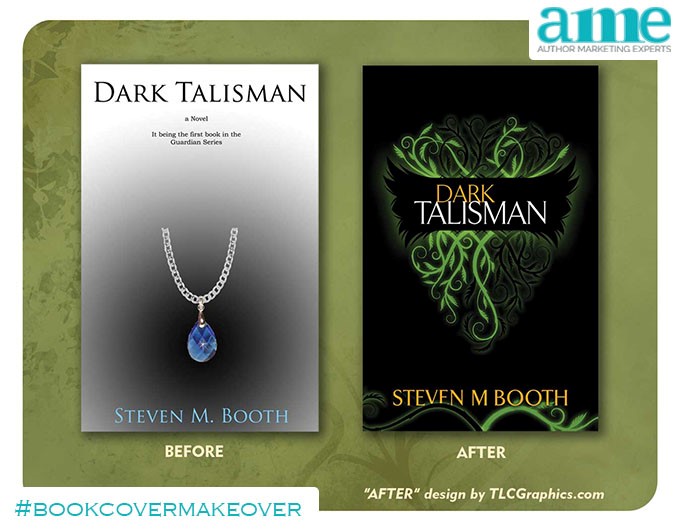
This book cover makeover took the title from what looked like a copy and paste home job to something that really spoke to the mood of the story, to emotions, without being so literal:
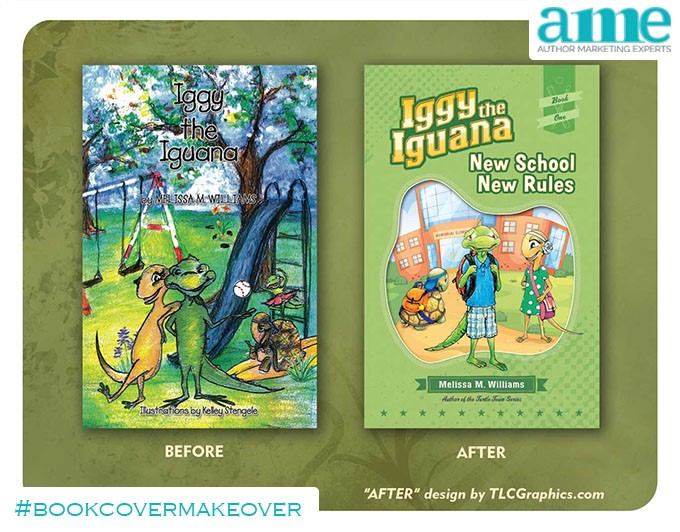
This book’s original cover was hard to read, plus the author was missing out on a key selling point that shows parents there’s an educational element to it as well – when it comes to non-fiction especially, you don’t want to make people guess – most shoppers don’t have the time:
BONUS: I previously focused on specific issues we often see with children’s book covers, if that’s your genre, please read up on those warnings and tips here!
This title went from being all about the author (with no obvious benefit to the reader), to a travel guide! This is a huge transformation that likely started selling lots more books:

The level professionalism was really elevated with this book cover makeover. The background alone on the original was headache inducing, there was too much happening. In the new version the author instantly seems more credible, and the overall look and feel just really captures the time period and essence of the topic:

This should be a pretty obvious “win” to anyone making comparisons, but it’s a good reminder that something can look perfectly okay, until you work with a professional designer who can take your vision and make it a product that people want to buy:
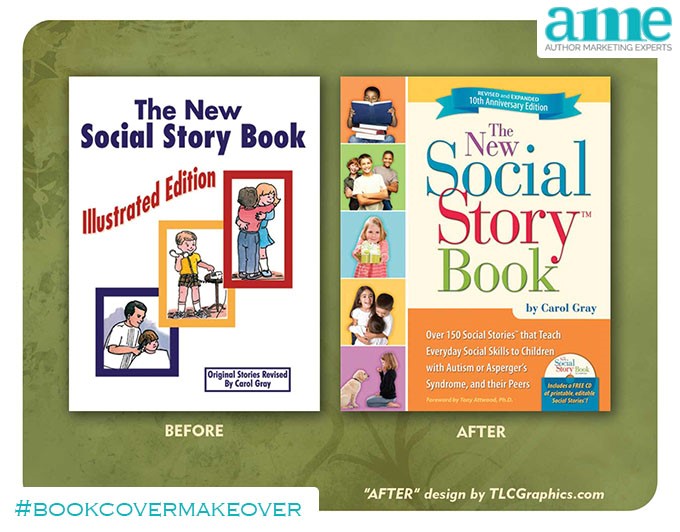
Book cover cardinal rule: do not put your face on the cover unless you’re a household name. If your target market won’t recognize you, don’t do it. Plus, once you get your mug shot off there it leaves a lot more room to ensure your title pops:

This cover is a good example of one that really doesn’t speak well to its genre. The original could be a research paper for all we know. The book cover makeover produced imagery that speaks to what works for novels in a way that allows you to allude to different elements in the story, but in a way that flows artistically:

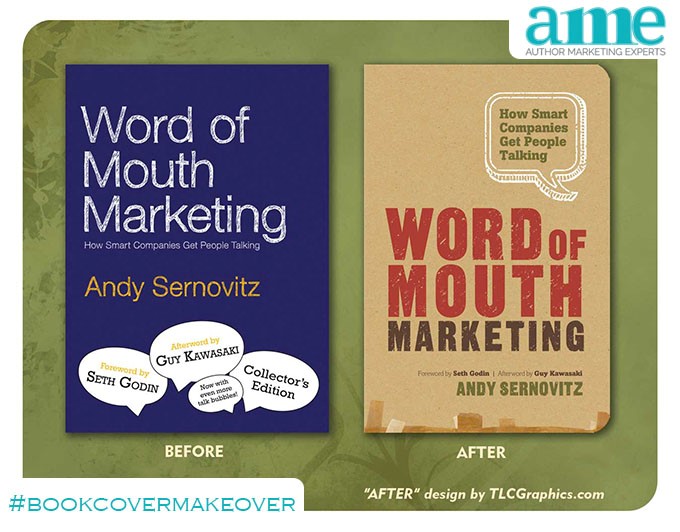
Here’s a great example that shows you don’t always need a full revamp to achieve a much more pleasing, market appropriate effect. The second version has a very current look and feel that speaks to aesthetic trends across multiple industries; it’s a smart way to show the importance of understanding your buyer market and what’s current:
Having a child with special needs can be very challenging, but if you put yourself in the parents’ shoes, they don’t just want guidance, they want support, and hope, and positivity. This rings true for a lot of books in the self-help and health & wellness categories. Notice how these two makeovers put a much more positive spin on the subject matter, and in turn made the books much more appealing and marketable:


I hope most of these book cover makeovers made sense to you! Sure, if you only saw the original you may not have cringed, but once you compare them to a design that was constructed by someone who does this for a living, who tracks trends and understands visual marketing – it’s a no brainer.
Not only does a well-done cover sell your book organically, it makes you more marketable. And that’s what usually concerns me when authors reach out for promotional help. When I know a book isn’t doing the author, topic or genre justice, I speak up.
A killer cover will sell more books organically. Do you need a #bookcovermakeover? via @bookgal
Click To Tweet
Because the difference in the responses we’d get from potential readers, reviewers and media for the “before” books compared to the “after” books is likely dramatic!
So at this point you may be willing to give a book cover makeover a shot, but you’re wondering where to start. And you probably want to be able to give the designer some input, and I totally get that. I recommend looking at the bestsellers in your primary genre on Amazon. This is usually very telling! If you’re a little skeptical, you’ll expect to see carbon copies of the same concept over and over again (and that’s not what I’m encouraging you to do), but in reality you’ll get a feel for which fonts seem to work with your genre, how to arrange different elements, even color schemes, because color is so important for drawing certain kinds of emotions. This is an important time to leave the ego at the door and learn from those who are already successful!
Once you find some book covers that speak to you, get in touch with a few designers. They should have a portfolio, they should have worked in your genre before, they should be able to share detailed parameters for the work and cost (how many versions and how many edits are included, for example). I’d also recommend working with a designer who has worked with book covers before, because there’s a big difference in terms of knowledge between someone who does design work and someone who works with book covers specifically.
Planning a #bookcovermakeover? Here are tips to consider! via @bookgal
Click To Tweet
Pricing can vary greatly from one designer to the next and just because one charges more doesn’t mean they’re a good fit for your book, so don’t force it. Expect to see quotes everywhere from $200 to $1500 and up, but honestly if you’re getting quotes in the $100-$500 range that’s likely your sweet spot. I’ve had covers designed for $2500, $700 and for $250 – sometimes it also depends on the genre. Fiction books, in general, tend to be less expensive in terms of cover design,
Once you have your cover it gets real easy! Amazon has clear steps for dealing with image changes on their website.
If you’ve done a book cover makeover to one of your books, please post on our social media with before and after photos using #bookcovermakeover! We’ll pick a winner at random and share their book with my extensive social networks on Facebook, Twitter and Instagram!
4 Tips for Connecting With Your Prospects on Facebook

If you had to choose between LinkedIn or Facebook for connecting with prospects, which would you choose?
The right answer might be Facebook. According to the 2017 State of Inbound report, salespeople have more success reaching buyers on this platform than LinkedIn.

What’s more, 74% of respondents say they use Facebook professionally. It’s clear Facebook is no longer just for finding old classmates or looking at cooking videos.

But it doesn’t matter where you’re connecting with your prospects if you’re not using the right strategies. The following four tips will guide your approach.
1) Use Facebook as a Touchpoint
Because Facebook’s search is less powerful than LinkedIn, consider using Facebook to build rapport with a buyer after you’ve identified them as a potential fit.
For example, perhaps a lead downloads one of your content offers. You email them and offer to answer any questions; the same day, you send them a friend request on Facebook.
Not only does this keep you top-of-mind, your prospect is likelier to accept your request because you seem familiar.
To learn more about modern selling, click here to download the free 2017 State of Inbound report.
Once they’ve become your Facebook friend, use the platform as another touchpoint.
Here’s a sample cadence:
- Day 1: Email and Facebook request
- Day 3: Call
- Day 5: Email and “like” a Facebook post
- Day 7: Call with voicemail
Although you can message Facebook users whom you’re not friends with, it’s probably not the best use of your time.
These messages will show up in a separate tab:

The chances of your prospect seeing you've messaged them -- let alone reading your message -- are low.
2) Show Your Personality
Facebook feels less buttoned-up than other platforms. With that in mind, you can be a little more personal and casual when you talk to prospects. If you’re too formal, you’ll seem out-of-touch.
But don’t want to go too far in the other direction. Use proper punctuation, spelling, and capitalization, and steer clear of acronyms.
To illustrate, here are three opening lines.
Too formal: “Hello, John. I hope you are well. Given your interest in local marketing, I thought you might be interested in this blog post.”
Too informal: “yo john. check out this fire post on local marketing”
Just right: “Hey, John. Wanted to pass along a post on local marketing I thought you’d like -- there’s some good stuff in the second section about sponsorships.”
3) Be Human
Thanks to your prospect’s profile, you have access to a ton of handy information. Use these details to build rapport; for example, if you both love the Netflix show Stranger Things, you might kick off a conversation by saying, “Hi from a fellow Stranger Things fan. I’m wondering if … ”
Beyond their hobbies and interests, you can also take advantage of their work history. Many people fill out their Facebook profiles with their current and former job titles and employers. Ask a relevant question about their career, such as, “I see you transitioned from Support to HR. What was that like?”
You can use this intel as well to create valuable introductions. For example, if the buyer is a channel sales manager, and one of your business contacts is as well, you might ask if they’d be interested in talking to your contact and getting her thoughts on some common partner acquisition challenges. If they are interested, it’s easy enough to add your contact to the chat. (Of course, ask your connection for permission first.)
4) Keep Your Conversations Short
It’s much quicker and less interruptive to confirm your meeting time with the buyer over Facebook Messenger than email. The day before (or the morning of), send them a quick message along the lines of, "Hey, just wanted to check in about our call at X time. Does that still work for you?"
Unlike answering an email, which requires a certain level of thought, the prospect can reply almost instantaneously.
The same principle applies to random questions either of you may have. Maybe they’re speaking with their boss and need to double-check your product’s dimensions. Instead of sending you an email or calling you, they can simply pull out their phone, message you, and get an answer -- all while talking to their manager.
On your end, perhaps you’re looking into potential integrations they’d benefit from and want to know whether they use one of your partners. It takes just two seconds to message them and find out.
Facebook can be a powerful tool in your arsenal. Follow these tips, and your Facebook friends will translate to closed deals.

8 New Ways to Rethink Failure

If you want to be great at sales, you need to get comfortable with failure. Selling requires you to constantly put yourself on the line: From requesting referrals and calling new prospects to pursuing a whale or entering a highly competitive situation.
The more chances you take, the likelier you are to occasionally -- even frequently -- fall flat on your face.
But as Winston Churchill said, “Success is not final, failure is not fatal: It is the courage to continue that counts.”
Stop beating yourself up for failing. These eight perspectives will help you see your failure in a positive light.
(More of a visual person? Jump straight to the corresponding infographic we created with 24Slides.)
1) A Chance to Increase Your Resilience
There are only two possible responses to failure: Either you give up, or you get up and try again.
If you take the second route, you’ll inevitably become more resilient. Bouncing back gives you confidence. The next time you fail (yes, you’ll fail again), you’ll remember this situation and think, “I overcame X, so I can overcome Y.”
Rather than viewing yourself as a failure, see yourself as a person who refuses to let setbacks stop them and will continually experiment until they reach their goals.
2) The Beginning -- Not the End
We tend to think of failure as the end of an opportunity. Your prospect decides to go with another vendor, so you mark the deal as “closed/lost” and move on. The end.
However, every failure is actually a beginning. Maybe you follow up with that prospect when their contract is close to renewal. They’re impressed by your persistence and decide to switch their business to you. Or perhaps this experience motivates you to work on your value differentiation skills. Once you’ve gotten better at making your product stand out, you start losing far fewer deals to the competition.
As Tony Robbins said, “Think of failure as an experience, not a tattoo.”
3) Proof You Took a Risk
If you never try, you’ll never fail. Failure is proof that you were ambitious. You could avoid picking up the phone and calling prospects or asking for the order, but then you’d never connect with buyers or close deals.
At the end of the day, you should be proud of your failures. Each one represents a time you put yourself out there.
Just make sure you’re not repeating your failures. It’s not brave to repeat your mistakes -- it’s simply dumb.
4) A Situation for Gaining Knowledge and Experience
Being successful 100% of the time makes you overconfident, which hurts your ability to realistically assess risk. You’ll make foolish decisions as a result.
Let’s say you’ve been the top-performing salesperson in your vertical for the past two quarters. Buoyed by these results, you decide to focus all your energy on an opportunity five times larger than normal. You believe you’re capable of closing this deal, even though your sales manager warns you they’ll probably want a more robust solution.
Ultimately, she’s right. You miss your quarterly quota by a long shot because you ignored the rest of your pipeline.
Failing this time means in the future, you’ll be careful to simultaneously work smaller deals with higher closing probabilities.
5) A Test of Your Assumptions
Salespeople rely heavily on assumptions. Think about the ones you’ve made this week alone, from “That type of buyer isn’t serious” and “She has enough budget” to “Those deals rarely close” and “They’ll probably get the most value from these two features.”
Assumptions help you make decisions more quickly and accurately, since tossing out your prior experience with every new prospect would be highly unproductive. However, if you’re operating under the wrong assumption, you need to know as soon as possible.
Failing tells you that one or more of your beliefs is wrong. For example, you assume small companies always care about price, so you aggressively discount with a prospect who would have been willing to pay full price.
As long as you learn from your false expectations and don’t repeat them, failure will help your bottom line.
6) A Series of Small Wins
The road to failure is paved with a series of small wins. Every time you’ve made a mistake, you probably made several good decisions along the way.
To illustrate, suppose you misidentify the prospect’s needs -- meaning your demo covers the wrong features and benefits.
You’re understandably pissed at yourself. But if you think about it, you had to do five things right to arrive at the demo in the first place:
- Make them interested in talking to you
- Earn their initial trust by adding value
- Getting them to schedule a connect call
- Using an upfront contract to secure a discovery meeting
- Asking enough relevant questions they agree to a demo
- As you can see, there’s no way to fail without succeeding first. Zoom in on these wins if you’re feeling insecure.
7) An Opportunity to Be More Empathetic
Failing is a humbling experience. You realize that you’re not invincible -- you have flaws and shortcomings, just like everyone else.
This revelation might sound like negative, but in moderation it’s good for you. If you think you’re the universe’s gift to sales, you’ll have a hard time relating to anyone else. Once your ego has taken a couple hits, your empathy for others will shoot up.
Not only does this benefit your collaboration skills, it also improves your leadership abilities. Great leaders can relate to their team members’ challenges. Do you want to be a sales manager or director someday? Empathy will be key.
8) A Sign You’re On the Wrong Path
Failing can show you that you’re on the wrong path before the stakes get too high. Suppose you try a new method for reaching the decision maker. After this strategy fails with a few smaller accounts, you decide to go back to your old way.
That decision saves you from making a mistake with the next -- much bigger -- account you chase. Rather than losing one $300,000 deal, you lose two $50,000 deals.

How do you typically react to failure? Let us know in the comments.


“94% of Buyers Research On-Line…” So What!?
As a warning, I’m on a rampage and am channeling my inner Keenan, so I’m likely to explode and use strong language.
I’m seeing all the tired old statistics circulating again. The numbers are all over the place:
- Customers are 57-92% through the buying process before engaging sales.
- 72-94% of buyers are B2B buyers are researching on line.
- 68% of B2B buyers now purchase goods on line.
There are endless amounts of data saying that B2B buyers are letting their fingers walk through Google at some point in their buying process. There are endless research studies talking about B2B buyers are completing their purchase transaction on line.
My reaction is: Who Gives A Damn??!!!! (I know Keenan would have chosen another word)
I also think, all those numbers should be 100%! 100% of our buyers should be leveraging the web! 100% of the purchase transactions should be completed electronically!
All the people making these statements are trying to establish a causal effect around the death of sales people or the changing job of the sales person (In reality, I think it’s really driven by people wanting to shift focus and spending out of sales into marketing and web content, or sales people wanting to hide behind social selling.).
The problem with all of these analyses is a fundamental misunderstanding of what sales people do!
The implication is the primary role of the sales people are to be walking/talking data sheets and order takers! That’s the smallest part of the sales person’s job–and it’s been that way in my whole career in selling (which spans 3 decades!).
If that’s the real job of sales people, then line them up and walk them all off a cliff into the ocean. There are cheaper, faster, more effective ways to produce revenue.
These studies, pundits, and researchers misunderstand what professional selling is.
Yes, a small part of it is being an information concierge–providing brochures, data sheets, case studies, educating customers about feeds and speeds, features and benefits. But there’s so much more.
Great sales people help customers identify problems and opportunities to grow and improve.
Great sales people help incite the customer to change by helping them understand the consequences of doing nothing.
Great sales people recognize the customer struggles to buy. They know a high percentage of buying efforts result in No Decision Made. Great sales people help facilitate the buying process, aligning diverse agendas, priorities.
Great sales people challenge the customer’s thinking about what they are trying to achieve, their needs, priorities, alternatives they could consider. They also help customers understand risk and ways they can mitigate that risk.
Great sales people realize there is a “last mile” challenge as customers assimilate information from the web. They recognize the customer struggles with “What’s this mean for me?” They help translate what they customers learn about the solutions into what it means to them specifically.
Great sales people realize their customers have to create a business justification, they have to understand change management and create an implementation plan, they have to sell what they want to their management. Great sales people provide customers great leadership in doing this.
Great sales people recognize the ultimate differentiator is not the product or solution. In fact, the product is table stakes. By the time the customer gets to a short list, any solution will do.
Great sales people recognize they are the differentiator, the difference between winning and losing. The value they create in the buying process is what sets their offerings and solutions apart.
Great sales people recognize it is irresponsible to wait until the customer reaches out and engages us. They realize, not enough may do this, so they go out and hunt, finding opportunities and engaging customers.
Great sales people recognize it is irresponsible to let the customer fail to recognize they can and must change. They are compelled to seek customers succeed and grow, so they proactively engage people in thinking differently about their businesses.
Great sales people recognize that order taking has nothing to do with great salesmanship (or saleswomanship). An order results from great saleswomanship.
Great customers know there is much more to buying than letting their fingers walk through Google, getting information. They know buying is more than entering a transaction in a shopping cart. Great customers know they need help and welcome the insights and value created by great sales people.
I hope we can stop all this friggin BS!
We should agree, 100% of customers should be leveraging the web to get information about solutions. 100% of the purchase transactions should be executed digitally (EDI has been around for decades, there are all sorts of purchasing solutions, web based solution–it should be a non issue.) We should agree on the 100% as a goal so we can stop talking about this and distracting ourselves from the real issues our customers and our companies face.
Yes marketing people and consultants looking for funding will continue to use this as an argument to reduce sales spending. And a fair share of sales people will use this as an excuse to not be great sales people.
But none of this has anything to do with the real job of great sales people!
If you want to talk about marketing content, online engagement, online fulfillment, please do! These are all important in helping connect with and engage customers. They are important complements to the things that great sales people do, but don’t displace the need for great sales people doing great jobs.
Let’s cut all the crap in these tugs of war between marketing and sales. Forecasting or wishing for the death of sales is wasted breath.
Let’s focus on serving customers, helping them grow and improve, through that driving our revenues and share.
Customer Data Platforms: The Next Big Shift in SaaS Marketing Stacks?
I’m sure you consider yourself data-driven.
You make decisions based on data. Problem is, most companies aren’t using their data to the capacity they could be. It’s almost a universal problem, and it means you’re leaving money on the table.
You see, the current structure of the modern marketing stack leads to a large amount of data fragmentation. As we collect more and more data, it’s becoming increasingly hard to piece together and manage that data, and more importantly, to use that data in real-time to build better campaigns.
A Brief History of Marketing Technology Software
Though it wasn’t intended, the last two articles I wrote on the PlainFlow blog have formed a series:
- The Modern SaaS Stack and the Unexploited Amount of Data is a walkthrough that shows how companies use Modern SaaS Stack to cover their Marketing/Support/Sales activities from day-0. How their product leaders and CMOs embrace the change adjusting product/marketing strategies based on new technologies.
- In AI implications on Marketing and Analytics, I placed my considerations explaining how and why Artificial Intelligence (AI) will shape the next generation of Analytics and Marketing SaaS products.
In retrospect, there is a clear thread between the two posts. That thread is what leads me to think that something is changing and today’s’ Marketing SaaS landscape might look like different very soon.
As very often happens, to understand the present, you have to know the past.
Contact Management: The Beginning
Back in 1986 when digital marketing was just taking off, a company called ACT! launched a contact management software. That was designed to allow information storage and manage customer contact information. All manual operations.
7 years later, in 1993, Tom Siebel thought that Oracle (the company where he was employed) could have sold the internal sales application as a standalone product. When Larry Ellison rejected his idea, he left Oracle and created his own company. It didn’t take too long for the Siebel Systems to become the leading provider on the market.
Siebel took off the most important features from the Database Marketing Systems and combined them with contact management solutions software. Et voilà: the first CRM.
Enter Cloud Computing and Marketing Automation at Scale
The industry had to wait for about 4 years to have a new genius disrupting the industry of CRM. His name was Mark Benioff (another former Oracle Executive) and in 1999 he had the pleasure to introduce the business world the first CRM in Cloud. The Salesforce era was only at the beginning.
After that, the adoption of the cloud as a more scalable and cost-effective approach allowed small/medium business to build CRMs around very specific market needs and establish dominance in new vertical segments.
In early 2000, the diffusion of Personal Computers transformed the way users made decisions and the paradigm buyer/seller changed again.
Mark Organ, saw a tiny space in the already very crowded CRM industry and founded Eloqua. It was 2003. Marketing automation (as we know it today) was just born. Eloqua was first the product built by marketers, for marketers. Organizing multi-channel campaigns, segmenting audiences, and distributing personalized content, suddenly appeared to be easy, like never before.

The Marketing Automation industry immediately became such a good opportunity for new businesses. Eloqua was the proof of that. It took less than a couple of years to see the beginning of the dances with the next generation of Marketing Automation Platforms: Marketo, Pardot, ExactTarget, and many others.
In only a few years from its launch, Marketing Automation was already the biggest subset of the whole CRM industry.

Limits and Problems of Marketing Automation
There are, of course, limitations with marketing automation as we know it today. These, in my mind, break down in three ways:
- Data accessibility
- Marketing automation fatigue
- The rise of PQL over MQL model
1. Data Accessibility
Back to those (early) days when Marketing Automation was just born, the world was web-centric. The situation is now completely different from that.
Now users interact with digital products in much more complex and different ways than a decade ago. As I previously explained in this article, the complexity of user interactions and the increasing of medium devices had led to an unusual proliferation of SaaS products vertical on specific markets with specific needs.
The perfect combinations of products with specific features not only is cost saving but can assure a better quality compared to the traditional all-in-one solutions.
SaaS stacks give companies the agility they need to move fast, but often they are the cause of a huge data fragmentation. Valuable customer data is buried in these disconnected tools.
Data continues to be the bedrock of success for a lot of departments in every company, no exception for marketing.
Your marketing is always as good as your data. The more complex your stack is, the more customer data you are spreading across many different tools, and the more time you (or your engineering team) will need to reassemble the puzzle and get a full reasonable picture.
This is a representation of how the data fragmentation will exponentially growth with the complexity of your stack.

In yellow, the “personalization-curve” tells you how much of your data you’re actually exploiting. While the SaaS stack complexity and the data fragmentation increase, you still have the same level of personalization. The huge amount of customer data you’re generating, it’s silo’d in these tools.
The blue intersection points out the “data dead-loss” – data that you have but you can not use.
2. Marketing Automation Fatigue
Recently, I’ve been reading what Highrise CEO Nathan Konty wrote on Signal v. Noise about how they do drip campaigns differently.
What Nathan pointed out is a very common issue with tactic “fatigue” that exists in many fields, like Human Aesthetic, Spoken Languages, or even Cinema. There is no exception for marketing. Andrew Chen explained this as the Law of Shitty Clickthroughs. Basically, a tactic’s effectiveness fades with time as an audience is exposed to it more often. This happens in advertising all the time.

This effect is even more clear when it comes down to marketing automation. When every marketing/product team at every company, in every industry adopt the same “best-practices” than those standards progressively lose their efficiency over time.
This “fatigue” has been explained by two psychologists with the Wundt-Berlyne curve.
When a stimulus is unlike anything encountered before, we are dealing with absolute novelty, and we experience pleasure. The hedonic value of a stimulus is regarded as a function, rising to a peak (X1, Optimal level of hedonic value) and then falling progressively to a Disillusion phase (X2).
The arousal is considered to be directly related to the novelty of the stimulus.

Marketing (just like many other industries) constantly needs new triggers to enable innovations and keep the arousal and the perceived hedonic value as much high as possible.

We’re now at the point where you can see an automated “personal email” from a mile away.

To put it in other words, we’re about to enter the Disillusion stage.
3. The rise of PQL over MQL model
The MQL (Marketing Qualified Lead) is a prospect that somehow expressed interest in your company/product and it’s ready to interact with a human, often Sales Development Reps.
Marketing and Sales departments are strongly aligned on the definition of MQLs.
The Product Qualified Lead (PQL) flips of 180° degrees the traditional MQL model. MQL starts with demographic properties of each user. The PQL prioritize the user’s behavior and the level of product adoption.
While the MQL model asks first “What’s the email of this contact? Is it a B2B or B2C email?”, “What is the company where this contact is working at?” and “What is his role in the company?”, the PQL starts by asking “Did he try the product?” and “What feature did he try first?”.

To put it in layman terms, sell first to those are happy with your product, before they even pay.
As Christopher ODonnell explained, the real challenge with the PQL model is getting free users this far down the engagement path.
But when it comes down to dealing with product metrics, traditional Marketing Automation platforms have multiple handoffs that lead to communication gaps, data blind spots and inability to scale the process.
Marketing Automation Platform are good at “nurturing and serving up personalized content” but not so great when it comes down to onboarding, driving initial success and gradually let new users test & try your product features.
Data Management Platform ∩ Marketing automation capabilities
Let’s have the panoramic view:
- We have SaaS products that are able to generate an incredible amount of data from one side. They are cost effective and really powerful when combined together but sometimes completely disconnected and hard to integrated without extra work done by engineering teams.
- Automation engines from the other side: powerful products that aren’t completely unaware of the stack that you’re using and the data it is producing. Just like cars with a great engine but no wheels.
Skewed, wrong, impartial or nonexistent data can only lead to skewed, wrong, impartial or nonexistent actions.
This is where the Customer Data Platform comes in. From one side, it seamlessly integrates with each of the SaaS product you’re using in your stack as the primary way to get data, from the other side it has advanced automation capabilities to actually operate.

The Goldilocks Zone: Data Management Platforms that seamlessly integrate with your stack meet some automation capabilities.
Customer Data Platforms give you a 360-degree view of each one of your customers.
A sample of questions that can be answered by Customer Data Platforms:
- Is this user active or not?
- Did they ever pay for my product?
- Where do they prefer to be contacted, via email or with browser notifications?
- How many tickets did they open in the last month?
- What’s the NPS score for my product?
- What are the chances of churning for this user?
But that’s not all, you can actually combine all those data to refine segments and audiences and deliver remarkable journeys to your customers.
The Cycle of Customer Data Platform will look like this:
- Connect the applications you’re using in your stack
- Combine, analyze the data and connect the dots
- Understand and extract relevant business insights
- Act: take or suggest decisions based on what you’ve learned so far
Why Customer Data Platforms Will Be a Game Changer
Customer Data Platforms will fill the current technology gap in three important ways:
- Data loss minimization
- SaaS stack scalability
- Tactic fatigue
Data Loss Minimization
A Customer Data Platform knows the exact configuration of the tools that you’ve included in your stack.
In this new scenario, while the data fragmentation does not increase, as the stack becomes more complex, the data loss decreases and the personalization-curve follows the same trajectory of the red-line.
 Customer Data Platforms minimize data loss.
SaaS Stack Scalability
While traditional all-in-one vendors usually have high substantial switching costs, Customer Data Platforms give to modern companies the ability to change their stack on the flight as their businesses evolve over time.
This allows companies to change the technology their teams are using very quickly without losing critical data along the way.

Tactic Fatigue
When your marketing stack is way more extensive and it takes care of an unlimited number of touchpoints and interactions that your users have when using your product, it’s way easier for you to create unusual user journeys.
The better you know your customers, the better you can serve unforgettable experiences.
Conclusion
The ability to understand the impact of new consumer-facing technologies is more important than ever. This brings a lot of new challenges also for people who are not directly involved in software engineering.
Tomorrow’s marketers and product managers who will be able to pick up and use the right technologies are the ones who will have a serious impact on your business.
The next big challenge I see is connect the increasing amounts of data we’re collecting with the ability to take action upon that data. Customer Data Platforms are filling that gap, so if you’re worried about data loss, tactic fatigue, complexity, or scalability issues, look into CDPs as a potential solution.
How to Avoid Collaborative Overload Within Your Content Team

Long a staple of highly productive, high velocity teams, collaboration has been the focus of many technology solutions over the years.
Yet, constant interruptions and multitasking affect productivity, as detailed in the studies highlighted in The Collaboration Curse article in The Economist. The distractions of an environment where teams are encouraged to contribute to everything leave little time for the critical thinking that can make a real difference to an organization’s success.
The issue is that many of the so-called collaboration solutions, such as email, Slack, etc., address communication but don’t actually help with the collaborative work.
Many so-called collaboration tools address communication but don’t help collaboration, says @dholstein
Click To Tweet
Could this be why your creative teams are throwing on headphones and saying “just stop collaborating with me”?
Great creative needs collaboration
Most content projects involve three kinds of collaborators:
- Creatives are inspired by the brief and create multiple versions from the feedback until the assets are approved.
- Managers provide the creative direction and closely oversee the program to keep it on time, on budget, and focused on delivering the specified business goals.
- Stakeholders may be additional reviewers or have ultimate approval of the final output. They always need a high-level understanding of how the project fits in with the company’s overall brand and plans.
Each of these collaborators relies on the active engagement of the others in a creative process that rarely follows a linear path. It’s never easy, yet it is a key element in producing great creative work.
But when the review and approval process happens on a plethora of one-size-fits-all business collaboration tools, it can quickly spin out of control. Creatives are assaulted by random bursts of feedback via their inbox and chat rooms. Managers struggle to keep their teams all on the same page or have to run after the approvers. Stakeholders have no visibility into what’s happening across all the content initiatives without demanding a time-consuming email update or sitting through a mind-numbing status meeting.
In that collaboration model, everybody feels overwhelmed and stressed. This leads to lost time, wasted dollars, and, ultimately, lower quality creative output that doesn’t achieve needed business results. As leaders, we need to make nurturing the creativity of our teams a top priority.
7 Ways to Accelerate Your Content Review and Approval
3 tips for stress-free creative collaboration
When collaboration works well, 85% of us say it can be the best part of our days. However, when it’s bad, 56% say it’s the worst .
Great collaboration is all about the people – educating them about what works and using a more thoughtful approach to the tools we adopt – to improve the quality and impact of the content produced. Here are my three tips for more stress-free creative collaboration.
1. Break bottlenecks
A creative team struggling to deliver enough quality output jams up your marketing and, consequently, your company’s revenue flow. In a recent survey, 48% of businesses said revenue growth was hurt because they could not deliver quality content fast enough.
Just as your nearest airplane exit may be behind you, your bottlenecks may not be in the direction you’re facing. The jams may start with your creative team. Sixty percent of creatives struggle with interpreting feedback from reviewers and more than a quarter say reviews rarely happen. Or does the biggest bottleneck come with distributing approved assets to their channel owners and/or in-market teams. Or does it occur because sales and support teams are not educated on how to best use the new content?
Identifying where the true bottlenecks lie is a key first step to unblocking your flow of content and developing stress-free collaboration.
Identifying where the true bottlenecks lie is a first step to unblocking flow of #content, says @dholstein.
Click To Tweet
Is Time Really the Problem? Break the Bottlenecks in Content Production
2. Teach people how to give feedback
With over half of businesses seeing an increase in the number of stakeholders reviewing creative projects, the challenge of getting actionable feedback is growing. Sales, support, or other departments who may be requesting content may not have had the opportunity to develop that skill of providing clear, actionable feedback.
I recently read an interesting post by a video producer who said he needed to train his marketing team on how to give feedback. He asked them to be more precise with their comments (“more emotional … but which emotion?”) by understanding that technical terms may mean different things to a layperson than they do to a video editor.
Investing a little time to educate new players in your creative collaboration about how to best give actionable feedback is time well spent.
Teaching people how to give clear, actionable feedback is time well spent, says @dholstein.
Click To Tweet
3. Collaborate in context
It’s not productive to receive feedback on a creative project alongside miscellaneous topics and distractions found in a typical inbox. It’s worse when the creative receives more comments via Slack and even more by a phone call. Not only does this cacophony create extra work for the creative who has to interpret all this feedback into an actionable revision, it also means there’s no system of record for everyone involved to track changes and progress.
Develop a single system for collaboration – let the creative work exist alongside the collected comments and approvals. This keeps the entire team – creatives, managers, and stakeholders – on the same page and avoids costly misunderstandings.
Develop a single system for collaboration to avoid costly misunderstandings, says @dholstein.
Click To Tweet
How to Document Your Content Marketing Workflow
Conclusion
Great collaboration depends on trust. Create a trustworthy process where bottlenecks are eliminated, and collaborators know how to offer usable feedback, while working from the same page.
Addressing the creative collaboration process through education and more specialized tools will create the proper context to deliver better creative and business results.
6 Ways to Energize Your Content Marketing Team (and Your Content)
Want your content team to collaborate successfully? Help them learn the same language by bringing them to Content Marketing World, Sept. 5-8 in Cleveland, Ohio. Special discounts are available for groups.
Cover image by Startup Stock Photos
The post How to Avoid Collaborative Overload Within Your Content Team appeared first on Content Marketing Institute.
Why Your Website Isn’t the Best Place for Your B2B Case Studies and Success Stories

Case studies are one of the most powerful weapons in your B2B marketing arsenal.
According to the CMO Council, nine out of ten B2B buyers say that online customer success content has a major effect on their purchasing decisions.
Meanwhile, a hawkeye study found that 71% of B2B buyers in the awareness stage and 77% in the evaluation stage cited testimonials and case studies as the most influential types of content.
However, many B2B marketers don’t get the most value from their success stories. They put lots of effort into interviewing customers, writing their stories, and getting approvals … but then they bury the content on their websites and hope leads will find it.
The sad truth is that if you don’t have amazing SEO, no one will find your case studies.
B2B Buyers Don’t Trust You
Another problem with only posting your case studies on your website is that B2B buyers don’t trust what companies say about themselves. They are bombarded with sales messages and simply don’t believe what you say in your marketing.
Instead of going to your website to learn about your products, buyers turn to their peers for referrals. They often turn to third-party, peer recommendation sites at the end of their buying process – when they want validation that a product or service delivers results.

One B2B marketer says, “We have 50 pieces of customer success content on our website, but buyers don’t want to view them on our site. They want to see them on a third-party site.”
To connect with today’s ad-wary customers, you must get in their inner circles. This means promoting your case studies not just on your website, but on other trusted channels.
The Problem With Third-Party Review Sites
Many B2B marketers ask their customers to post reviews on third-party review sites.
While good reviews can help you stand out from the pack, you can’t ensure that all of your reviews are positive. Just one bad review can turn off potential customers – even if you have 20 amazing reviews.
And, reviewers on third-party sites tend to speak of software from their personal, user experience perspective. They don’t tell the whole story about how your technology helped them solve a business challenge.
A New Way to Get Your Case Studies In Front of the Right Leads at the Right Time
Posting case studies on your website and seeking user-generated reviews can benefit your marketing.
But, you should also consider uploading your customer success stories and testimonials to a third-party case study directory. These sites serve as a neutral third party who validates your content. They give you a platform that goes beyond your website – helping you reach a wider audience and close late-stage sales leads.
When a case study directory has great SEO, sales-ready leads will find you. Most buyers who visit these directories are late-stage leads who search for terms such as, “Company XYZ + case studies, customer success stories, or testimonials.”

And, third-party case study directories let you showcase your best side. You control exactly which content you post, and you don’t need to worry about a bad review killing a sale.
How to Get the Most Value From a Third-Party Case Study Directory
To get noticed in a third-party case study directory, you must keep your content fresh. Google likes new content, so you can improve your search results by posting customer success stories, videos, and testimonials on a regular basis.
Also be sure to upload case studies about customers in different industries and roles. This will make it easy for sales-ready leads to find stories that align with their needs.
Peek inside HubSpot’s Multi-million Dollar SaaS Growth Strategy
Editor’s Note: This article first appeared on Medium here.
If you’re in SaaS, you can’t help but hear about HubSpot’s massive growth.
They have a traffic rank of #5 in the world… in the online marketing tech space. This doesn’t include websites they’ve built to build their community and fill the top of their sales funnel. They are a major player in the SMB SaaS market.

#5 in Internet and Telecom > Online Marketing
It is my hope in this article to show you what’s truly working online in SaaS by giving you a glimpse into the strategies and tactics of one of the SaaS industries biggest players.
What you see below is not conjecture or theory. This is the real facts behind a major SaaS company, the marketing strategies they use, and the tactics used.
About HubSpot

HubSpot was founded in 2006 by Brian Halligan and Dharmesh Shah. In 8 years they grew from zero to $100M+ revenue, with an IPO in 2014.
Perhaps best known for their inbound marketing prowess, HubSpot’s rocketship growth trajectory makes them the second fastest SMB SaaS company to ever IPO.
Both Brian and Dharmesh had successful backgrounds in tech before launching HubSpot. Brian was VP of Sales at Groove Networks, which was acquired by Microsoft, and Dharmesh was founder and CEO of Pyramid Digital Solutions, which was acquired by SunGuard Data Systems.
In 2009, Brian and Dharmesh co-authored a book called “Inbound Marketing: Get Found Using Google, Social Media and Blogs”.
Lastly, Brian and Dharmesh were named in the Inc. Founders 40 in 2016.
Summary Of Their Strategy
While they have about a dozen sites over the years, it appears that there are 4 critical websites key to HubSpot’s online marketing strategy.
The bulk of their traffic is from inbound marketing, primarily through organic search. However, they are are also spending money on paid search ads. Their blog post CTAs and ads are driven to landing pages with a very basic level visual design, short form copy and a full lead form.
On their landing pages they offer hundreds of different lead gen incentives (to match their blog article content and the searcher’s intent) in exchange for a full lead. Beyond the lead they sell inbound marketing software for a subscription fee based on their customers number of CRM contacts.
Traffic Profile For HubSpot.com
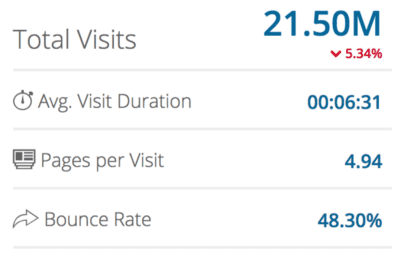
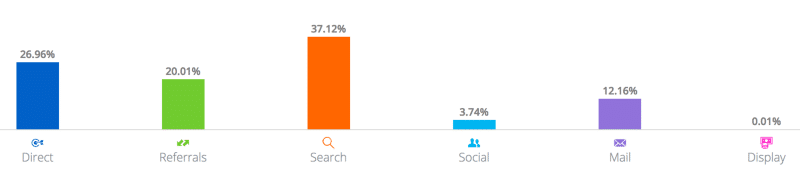
This is their public facing main site. It gets an enormous amount of organic (earned) traffic from the search engines. HubSpot put A LOT of focus on content marketing and SEO.
The reason I say that is when I look at the keywords they are ranking for and which ones are sending them the most traffic, they have thousands of generic key phrases like “Website Leads” and “Grow Email List” ranking on the first page of Google.
From analyzing HubSpot’s 69,087 organic keywords I could count 5,905 that rank on the first page of of Google and 10,440 that rank on the first page of Bing/Yahoo!.

HubSpot First Page Keyword Rankings
They are also spending a moderate amount of money each month on paid search ads. When I investigated their paid search ad strategy it was primarily advertising their Free CRM, which has a core feature set of the main product, and leads SMBs to upgrading to their paid version once they experience HubSpot’s value and want to use the full feature set.
There is a lot of valuable content accessible from the HubSpot website which I believe is contributing to their low bounce rate and high time on site.
Traffic Profile For Inbound.org
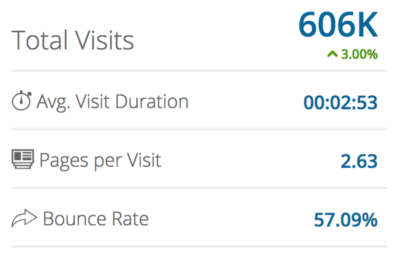
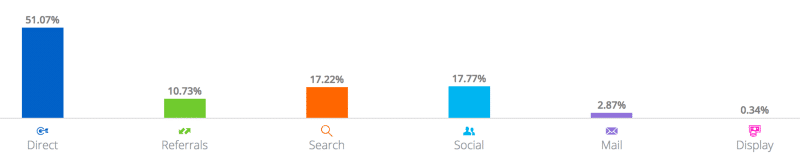
Inbound.org is an online hub for marketers to connect, learn and find jobs. It is funded by HubSpot Labs, an R&D department within HubSpot.
This site is primarily driven by high direct traffic from their main site, the 200,000+ community members who go straight to the site to login, organic search and 90%+ of social traffic from Facebook.
One of HubSpot’s largest revenue generators is channel sales. Just like Xero leverage accounting partners to grow their business, Hubspot’s marketing agency partners account for 40% of their revenue (as of their last earnings call).
Inbound.org is the perfect community for HubSpot to stay engaged with current marketing agency partners, educate them on the latest marketing trends, help them find new employees, get real-time feedback on their products and attract new potential partners into their ecosystem.
They have 3,400+ partners servicing thousands of HubSpot customers, helping them get better results, month in and month out. HubSpot’s partner program for marketing agencies recently scaled up past $100M in annual revenue.
Traffic Profile For WebsiteGrader.com

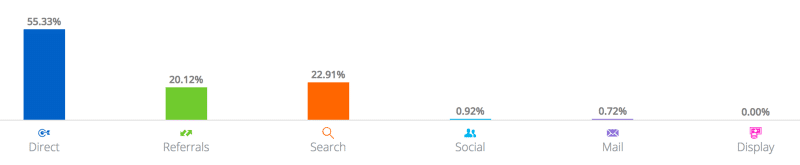
HubSpot Website Grader
HubSpot’s free Website Grader tool was the first ever project to come out of HubSpot Labs in 2007. A person enters their website URL and email address to see how strong their website is out of 100.
They then get recommendations on what they need to improve when it comes to:
- Performance (30 points)
- Mobile Readiness (30 points)
- SEO (30 points)
- Security (10 points)
Aside from being a super helpful tool for small business owners, it is also a great example of how to build a free tool to drive millions of market specific TOFU (top-of-funnel) leads to your SaaS company.
Dharmesh posted on Inbound.org about how significant the tool has been to HubSpot’s success…
A simple little tool that helped millions of people improve their websites — and in the process, helped HubSpot become a publicly-traded company [NYSE:HUBS] with over 15,000 customers and a market value of over $1.6 billion.
— Dharmesh Shah
The majority of website traffic for the tool comes from the HubSpot blog, suggesting that blog content combined with a strong market specific lead magnet can be a great combination to acquire TOFU leads at scale.

WebsiteGrader.com Top Referring Sites
Since their success with Website Grader, HubSpot have got ultra-granular with their TOFU lead generation. They now create blog posts with blog post specific lead magnets on their main website to fill the top of their sales funnel with thousands of leads every month.
Traffic Profile For ThinkGrowth.org
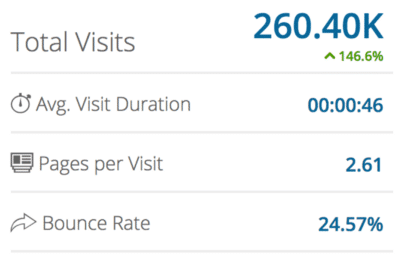
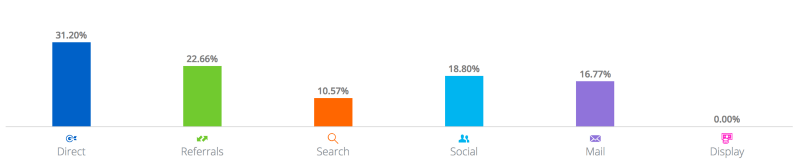
HubSpot Medium Publication
ThinkGrowth.org is a HubSpot Medium Publication that was launched on April 17, 2015. It was first branded as ReadThink.com, then re-branded to ThinkGrowth.org on Dec 14, 2016.
Here is what Janessa Lantz, Principal Content Marketing Strategist at HubSpot said about what their Medium publication represents:
ThinkGrowth.org reflects a commitment to thinking deeper — asking questions, poking holes in the easy answer, and exploring past the first page of Google’s search results. It’s also a commitment to finding the right questions, the kind that will move your career and business forward.
— Janessa Lantz
HubSpot’s launch on Medium was based on this premise: more and more people are consuming articles directly from platforms like Medium, Facebook, and podcasts so they want to be where their readers are.
Early posts were mostly cross-published content from the HubSpot blog, but HubSpot quickly realised that their “optimized for search” blog content wasn’t generating many views on Medium.
They had the best success by finding writers on the rise on Medium like Seth Godin, Nir Eyal, Larry Kim, steve blank and Danielle Morrill and syndicating content they had created — exposing both them and HubSpot to a new audience.
By “optimizing for people” with opinion pieces, personal accounts and reaction posts from top writers and influencers, HubSpot found content that would often have a stronger performance than their home blog.

HubSpot’s 1st Year on Medium — Image Source
Not only did HubSpot breakthrough the “Plateau of Despair” and grow well beyond 160,000 views per month, but their Medium publication is now the 18th largest publication on Medium:
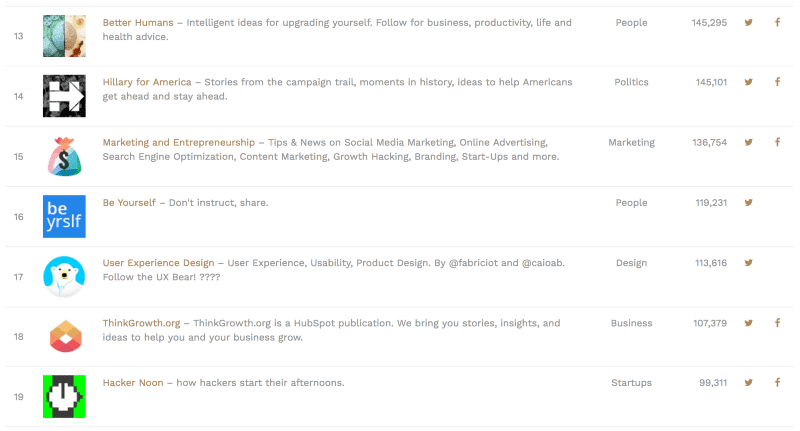
Medium Top Publications — Image Source
Since their success on Medium, HubSpot have decided to invest in a brand new team focused entirely on “offsite” content strategy which is being headed up by Meghan Keaney Anderson, Sam Mallikarjunan and Janessa Lantz.
They have over 150 guest writers and take guest submissions at medium@hubspot.com
Top Performing Blog Posts
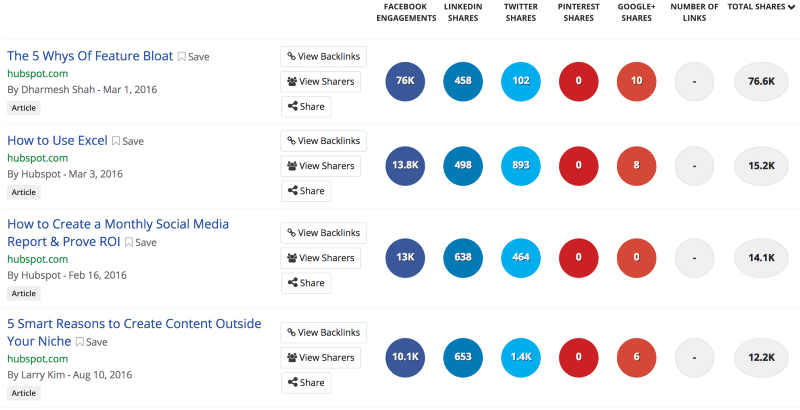
Notice that some of their blog posts aren’t the type you’d typically see on a website that sells inbound marketing software.
Their most shared post generate leads for their HR department to fill their product management jobs pipeline (high-growth companies need to hire!):

5 Whys Of Feature Bloat Blog Post > Product Management Jobs Landing Page
The second most shared is an opt-in page for a free guide on “How To Use Excel”:
How To Use Excel Guide
You may be thinking… why in the heck are HubSpot teaching people how to use excel?
Trust me… this isn’t a mistake.
The smart team over at HubSpot did their research and found that their are 27,000+ people every month searching for “how to use excel”.
Google Search Volume for “how to use excel”
When you search for “how to use excel” on Google, the first organic search result to pop up is a HubSpot blog post titled “How to Use Excel: 14 Simple Excel Shortcuts, Tips & Tricks”.
And guess how they are using that blog post to generate leads?

How To Use Excel Blog Post > How To Use Excel Guide
In the blog post they have 3 CTA’s that link to their “How To Use Excel” guide:
- Native link at the start of the blog post
- CTA box on the bottom right after you scroll 20% down the page
- CTA image at the bottom of the blog post

3 Blog Post CTA’s: Native link, CTA box, CTA image
If you take a look through HubSpot’s blog, you will see that these 3 blog post CTA’s are consistent across most of HubSpot’s blog posts.
Sometimes they all go to the same lead magnet (like in the example above). Other times, all 3 CTA’s will go to 3 different landing pages with 3 different lead assets relevant to that blog post.
HubSpot has thousands of these “owned media” lead assets, with their own dedicated landing pages.
Here is an example of 5 blog posts and lead assets from HubSpot’s Marketing Blog that they are using to fill the top of their funnel:
- Blog Post: How to Plan a Content Marketing Strategy: A Start-to-Finish Guide; Lead Asset: Marketing Plan Generator
- Blog Post: 6 of the Best Messaging Apps for Different Scenarios; Lead Asset: The Marketer’s Guide To Mobile
- Blog Post: 5 Overlooked Metrics Your Agency Needs to Measure for a Profitable 2017; Lead Asset: New Client Intake Form
- Blog Post: How to Build a Process for Growth Experiments; Lead Asset: 2017 Marketing Experiment Templates
- Blog Post: 8 Timeless Business Lessons From Bill Belichick; Lead Asset: How To Be A Leader eBook
As you can see… HubSpot are an inbound content AND lead generating machine!
One thing HubSpot do really well, is update old blog posts to make them relevant again today with an Editor’s
Note at the top of post to let people know what has been updated.
Here is an example:
2006 Updated Blog Post
This is a great strategy to generate more leads from old, evergreen content pieces.
Top Performing Paid Search Ads
They have 587 PPC keywords that they are bidding on, but almost all of their ads were a version of the above.

Here is what their entire paid search funnel looks like for their Free CRM offer:
There were a couple of other ads like one with the headline “Free Lead Generation Tool – Start Capturing Leads Today” which were spot targeted ads for a free version of their HubSpot Marketing product.
However, their 3 main active paid search funnels are below and drive traffic to these 3 landing pages:
- Unbranded CRM Keywords > CRM Ad > Free CRM Offer
- Branded Inbound Marketing Keywords > Inbound Marketing Ad > Inbound Marketing Assessment Offer
- Branded Keywords > Demo Ad > Demo Offer
This is a very mature account and the most recent data in the tool doesn’t represent where they started.
When I look back over the years I can see that HubSpot have tested many different offers including:
- Free Price Quote
- Free 30 Day Trial
- Free Marketing Guides
They have now pruned all but the most profitable keywords and segments over the years and found the best offers that convert for the highest buy-intent keywords in their market. Either that or they are grossly under-utilizing one of the best ad platforms on the Internet (not likely).
Landing Page Breakdown
This is the above-the-fold section of their Free CRM landing page. It’s important to note that if anyone comes to this page, they can make a quick decision from the info provided in this first section.
Their “Get Started” CTA button leads the visitor to a half lead (email, company name, website URL) form after clicking through.
Everything they need to convert their user is in this section…
- An image of their “Google Partner Certification” helps instantly add credibility by associating themselves with a big brand name aka Google
- Emphasis of their headline is about the #1 pain point their market faces (ie: bad sales process)
- Sub-headline gives people a high-level overview of what the HubSpot CRM does and uses buzzwords that trigger an emotional response with their audience (ie: brand new, tricks and capabilities)
- A strong call to action in contrasting colours to the background image let people know exactly what the next step is if they’re interested
- Some people like to read, and some people like to watch. A short 2 min video testimonial from 1 of HubSpot’s customers boosts social proof here
If people want more information before making a decision, they can scroll down and read these 4 points:
- The market for CRM software is fiercely competitive. HubSpot know this, so they talk about their key USPs here (like powerful data enrichment functionality, adding leads from your inbox and one customer view) to help people understand if this CRM will be the right fit for them
- Introducing benefits like ‘10-second installation’ and ‘100% Free’ help to overcome objections people usually have with a product like this
Now people know how HubSpot’s CRM is different from others and the benefits it provides in the 4 points above, they let people know it is just 3 simple steps to get started in the next section:
- Adding a screenshot from inside the software helps people understand what they are going to see when they use the product
Then to round out the page, they have one final CTA:
- It’s been proven over and over again that headshot’s with short text testimonials right above or below CTA buttons and lead forms increase conversions — use them
Conclusion
If you are in the same market as HubSpot, you certainly have your work cut out for you. However, I hope this brief has helped you to see what areas they are strong in and where they might be weak.
If you are not in the market you should be thinking about how you can apply what they are doing to YOUR SaaS, in YOUR market.
You should not be thinking my SaaS is different so none of this applies. Trust me after having worked with numerous SaaS companies — no SaaS is that different. These strategies work in all SaaS markets.
Also, take notice as to what is not here. The strategies they are and aren’t using is important to identify.
What strategies and tactics are not showing up here that some experts say you MUST be doing. I find it much more effective to learn from what’s actually in play and working with the biggest players, than trying to guess.
Double-down on what works. Ignore everything else. It is just a distraction.
Want More Growth Studies Like This?
If you would like to be updated when we release new growth studies like this, you should sign up to get VIP access here.
What You Should Do Now
If you are serious about becoming great at growth marketing, you should download our amazingly useful growth hacks spreadsheet.
If you’d like us to help you implement HubSpot’s traffic and conversion strategy in your business, you can apply here.
The post Peek inside HubSpot’s Multi-million Dollar SaaS Growth Strategy appeared first on OpenView Labs.
These Popular Windows Apps Use the Least Resources

When you choose a certain piece of software, what are your criteria for selecting it? Maybe you prefer the aesthetics over the competition or need features that its competitors don’t offer. These are valid reasons, but some people decide by another value: resource usage. Whether you’re trying to conserve battery on your laptop or have an older computer that’s running slowly, choosing the least resource-intensive programs is important. Using the lightest app to do the job can save resources for other programs. Let’s take a look at four main categories of Windows programs — browsers, text chat clients, PDF viewers,...
Read the full article: These Popular Windows Apps Use the Least Resources
“Do Sales People Make A Difference?”
Steve Burton posed an interesting question on LinkedIn:
When a large ticket item 500k + is purchased in a B2B transaction how much of it so you think is down to the salesperson’s skill ? If we analyzed some these deals would the majority just be down to the buyer putting the 3 most well known options on the table and picking the most sensibly priced deal with the simplest on boarding ?
My knee-jerk reaction was, “Well of course!” But as I thought about it, I revised my position:
Top performers always make a difference, but not only at the tail end of a sales cycle. Their biggest difference is much earlier on, perhaps in inciting the customer to change, or helping them through their buying process. Top performers teach and lead their customers. They are a valued part of the customer buying process.
Part of what makes top performers the best is they find and define opportunities far before anyone else does. As a result, they have huge influence in shaping what the customer seeks to do. Since they are doing this, price is seldom the determining factor when the customer makes a decision. But let me come back to this later.
Unfortunately, this represents a minority of sales practice. Too many salespeople are basically walking/talking data sheets. They add little value to the customer, other than answering questions about the products that customers can’t find on the web. They may be useful in arranging demos or other things, but usually are in react mode with customers driving them (and their competitors).
Too many organizations seem to build their strategies around waiting until the customer has defined their needs, requirements, and priorities–then having the sales people respond to them, positioning their products as positively as possible.
Increasingly, these activities can be replaced with well-designed websites, configurators, and shopping carts, making the sales person less important.
In cases where they can’t be automated, too often the activities of the salesperson as “information concierge” are undifferentiated. That is, they are doing the same thing their competition is doing. Again, in these cases sales people don’t make a difference. If all else is equal, the customer will buy on price.
Perhaps instead of asking, “do sales people make a difference,” we should be asking, “how can salespeople make a difference,” then orienting everything we do to responding to that issue.
Customers struggle–they need help, though sometimes they may not recognize they need help. Great salespeople–those that make a difference are those focused on helping their customers improve, achieve their goals, or reach their dreams.
Sales people make a difference by:
- Helping educate customers about how they might better achieve their goals and improve.
- Creating a compelling need to change by helping the customer understand the consequences of doing nothing.
- Helping customer organize themselves to buy, aligning the various agendas, priorities and goals of the buying group.
- Helping the customer ask the right questions, helping them understand what they may not know, but need to know in making the decision.
- Helping the customer understand critical risks and issues important to their success in selecting and implementing the decision.
- Helping the customer understand critical issues in implementing the solution and achieving their goals.
- Helping the customer build the business case and justification for the solution.
- Helping the customer learn how to sell what they want to their management.
- Assuring the customer achieves the goals/values they expected.
- Finding new opportunities with the customer to continue to improve.
Sales people can make a difference. Customers want sales people who do make a difference.
It’s our decision about whether we choose to make a difference and create value for the customer.
Are You Suffering From SDD – Sales Deficit Disorder? If You Are, Here’s The Cure
Sales is not an easy job. It requires a lot of different skill sets and abilities to really be effective in this career. Often those new to sales or those transferring from one type of sales to another find themselves suffering from SDD.
SDD or Sales Deficit Disorder is not an incurable condition. In fact, by reviewing your current sales practices and making a few changes, you can actually cure yourself. Bad habits, lack of sales process and simply not having the experience are often at the heart of SDD, along with the following:
- Missing The Business Question – selling a product isn’t just about product knowledge. It is about asking the business for their business once they understand the value of the product or service. If you aren’t asking this direct question, don’t anticipate any response from your customers.
- Finding a Need – are you providing your customers with an answer to their problems, needs or challenges? By highlighting how your product resolves these issues in their life rather than on discount pricing or monthly promotions, you create an interest and a solution.
- Not Listening – while you are there to make a sales pitch, some very well worded, open-ended questions to find out what the buyer is looking for. Try to find the challenges they are facing or find the current deficit in their supplier, which will allow ] you to tailor the presentation to their needs.
- Being Easily Shut Down – the perception of the chance to make a sale will influence how much effort you put into the pitch. If you don’t think it will happen, you don’t try as hard and walk away on the first “not interested.”
By thinking of every sale as a strong possibility, you are more confident, better prepared and more resilient to those mixed messages that buyers may be sending.
5 Signs You’re Ready For An Indirect Channel Strategy
One of the most popular questions I am asked is, “How do I know when my business is ready for the channel?” No doubt, adopting an indirect channel strategy is a big step for any company. There are many things to think about and consider before you move in that direction. How do you know your organization, culture and offerings are ready for the channel? And, more importantly, how do you make sure you are successful the first time out of the gate?
It may seem like a daunting decision, so, let’s break it down. It should go without saying that most companies maximize profits by maximizing revenue. But what if adding more direct sales resources is not a practical approach? That’s usually the first sign that you may be ready for an indirect strategy. However, there are other, somewhat less obvious signs that you may be ready. Here are my top 5 scenarios that should be on every CEO’s radar.
1. You need to get to the mid-market to sell your product or service.
Enterprise is great. But it is finite. Mid-market, however, has vast opportunities. Mid-market is loosely defined as a company between $100M and $1B in annual revenue. As you can imagine, that wide definition includes a very large number of businesses. It is a large enough number to know that the only cost effective way to target mid-market is by leveraging channel partnerships. Looking to get to small businesses? The same logic applies. More often than not, small and medium businesses will have a supplier for all or part of their IT Services.
2. Your product or service is not a stand-alone offering.
If your solution requires other products, services or other companies in the mix during an end user sale, and you do not provide them as a company, then the channel is the way to build your solution for customers. The breadth and depth of partner expertise and complementary technology solutions add to your offering and improve the “whole product” offered to customers. This means partners can offer your components within a combined solution sale.
3. Your growth strategy includes opening new geographies.
According to CompTIA, outside of North America channel and indirect business models represent 80% of the IT industry. So, if you’re looking to go abroad, channel should be your plan. Not only can an indirect strategy help you get to revenue faster, partners will also mitigate the risk, taking on credit and collections for their business and navigate the local culture and language.
4. Your growth strategy includes new vertical markets.
Entering new vertical markets or industries can be challenging because they require you to understand the dynamics in that industry. To be effective quickly in a new vertical, you need to know the exact customer profile, the media, press and events that the vertical client’s participate in, the detailed business challenges, and industry governance regulations – national, state, (province) and city. The right channel partnerships can help you navigate new verticals and build much stickier and differentiated value offerings for your client base.
5. Your product/service is bought by someone outside of IT.
According to a study by IDC, 61% of the current IT projects are funded by Line of Business (LoB) buyers, and LoB decision makers have additional influence in another 20% of IT projects. This new category of buyer and influence is very important in a sales cycle. If you don’t already own this level of relationship, a channel strategy may be the right fit. Investing in that sooner than later makes sense, as LoB decision makers will make significantly more of the software and solution decisions over the coming years.
Chances are if you identify with one or more of the above scenarios, a channel strategy is the right move for you. Once you’ve decided to move in this direction, you’ll need the guidance of a channel expert to help you execute properly. The only thing worse than missing your channel opportunity is missing the expertise to do it right the first time. With the right strategy, channels can be a wealth of opportunity.
Looking for information on spinning up a channel sales program? Be sure to check out the Ultimate Field Guide to Building a Channel here.

By downloading this eBook, you are agreeing to receive periodic emails from OpenView.
The post 5 Signs You’re Ready For An Indirect Channel Strategy appeared first on OpenView Labs.
Closed-Won Opportunities: Changing Contacts Into Customers
Sales CRM software—such as SalesForce, Zoho, and Hubspot CRMs—have radically changed how sales teams manage, pitch, and close sales deals. Driven by the growth of cloud-based computing and mobile applications, CRM sales have grown exponentially between 2009 and 2015, and data has shown that those who have embraced CRM software have increased their ability to meet their sales quotas. CRM software helps all the different teams understand the sales cycle and change more contacts into customers. More specifically, the software’s sales funnel, which shows the work from initial prospect to closed-won opportunity, allows companies to streamline the sales process through data analytics, refined efficiency, and develop more sophisticated sales techniques. Understanding and analyzing these key aspects, particularly the closed-won opportunity, allows companies to grow their sales.
Understanding ‘Closed-Won’
To understand the significance of the closed-won opportunity, it is necessary to know how the sales funnel works. The sales funnel is a crucial way to imagine the sales cycle visually, and it is also one of the best ways for teams to navigate their way through the cycle. The CRM software’s sales funnel functions as a crucial element to help teams meet sales quotas. The sales funnel is an upside-down pyramid that represents the process all customers and potential customers go through, from the initial contact through ordering and reordering a product. At the widest area of the sales funnel is every potential customer (or, sales prospect) for the sales team, and at the narrowest is those customers who have already signed the deal and are beginning to receive the product (or, when the deal is a closed-won deal). In the ideal scenario for the sales team, the contact that starts as a sales prospect ends as a closed-won opportunity. The sales funnel uses quantitative data to identify the number and type of sales prospects at each stage in the funnel; it can also identify places where sales methods can be improved.
A closed-won opportunity is the stage of the sales funnel in which a contact has inked the deal and become a customer. In other words, an opportunity that had a certain percentage possibility of becoming a closed deal at the start of the funnel is now 100% certain to end with a sale. It’s opposite, the closed-lost opportunity, is where contact with the sales prospect has been terminated, and there is now a 0% chance of a sale. While, of course, the closed-won opportunity represents the successful end stage of a sales cycle, there are elements and techniques that lead to a close-won deal. When teams are prospecting sales—whether attempting to cold-call new sales prospects or cultivating old leads— closed-won deals are likely when they use more than one team member and establish strong connections through repeat communications. Alternatively, sales that emphasize a quick and efficient closing tend to end in more closed-won deals than those that take more than thirty days. Significantly, it’s worth noting that not all prospective customers end in ‘closed-won’ (in fact, that number hovers around 30%), so the object is not to take every prospect to a closed-won scenario. However, good analytics can help management routinize elements that make deals successful, creating an environment that maximizes opportunities.
Analyzing and measuring a ‘closed-won’ opportunity
One of the crucial aspects of sales CRM software has been its ability to manage, measure, and analyze successful closed-won opportunities to help create a more efficient and successful sales force. Key metrics help team leaders and managers understand differences between day-to-day variations and real concerns. Also, having a broader, more complex way of measuring closed-won opportunities will help create a more effective sales system that is unique to a product or company. For example: are most of the closed-won deals with existing customers, or are they from a new customer base? On the one hand, existing customers show repeat business, while on the other hand winning over new prospects is a sign of growth. Alternately, tracking closed-won deals by size or product helps to understand the successes and challenges of particular sales teams.
While the goal of a sales prospect should be to have it end in a closed-won scenario, there is also much to be learned by more fully understanding the specifics of a closed-won opportunity, which can lead sales teams to more effectively manage their existing customers, seek new prospects, and refine sales strategies. Instead of being outside the pipeline, the closed-won opportunity is the end of it and should be considered as an integral part of the sales experience. By analyzing successful sales—in other words, by seeing what went right—industry leaders have a chance to capitalize on existing methods that have proved successful. Moreover, recent digital tools and current CRM platforms help examine the role of the closed-won deal in successful sales team strategies.