As a customer success professional, it’s not uncommon to look at customer churn and ask yourself, “What are we doing wrong?” While everyone makes mistakes sometimes, there are clear trends in customer success that can be addressed with strategy and insight.
When we came across customer success thought leader Lincoln Murphy’s LinkedIn post on the biggest mistakes in customer success, it got us thinking.
Here, we’ll discuss how customer success leaders can not only anticipate these common mistakes, but also overcome any missteps made in the customer journey.
10 Biggest Customer Success Mistakes and What to Do Next
1. You’re not putting the customer first.
Often referred to as the ‘golden rule of customer success’, the entire idea of putting the customer first is at the root of customer success theory. Too often, Customer Success Managers (CSMs), leaders, or even company executives can become over-excited and try to push customers into doing something they’re not ready for, like agreeing to an upsell or activating a new department. While the thought comes from the right place, this is a common example of putting the contract and revenue before the customer’s wants, needs, and comfort level. Step back and make sure that any decisions are for the good of the customer before you bring them to the table.
2. You’re not focusing on individual required outcomes.
At their heart, CSMs are creatures of habit. It can be easy to try to fit customers into a mold of how you think a customer journey should look. We get it—everybody loves routine. But not all customers think, act, or respond alike. The key to keeping and growing customers is to focus on the needs and outcomes for individual customers, not on generic outcomes or responses. This keeps customers, and customer success team members, awake, engaged, and on their toes.
3. You don’t have defined KPIs or outcomes.
How can you deliver value if you don’t even know what that value looks like? CSMs are often lured into a sense of process—just slowly checking milestones off of a list. But your customers enter into a relationship with your organization to solve clear problems and reach clear goals. Customer success leaders must make sure they don’t lose site of these KPIs and desired outcomes, because losing sight of these goals could mean losing a customer altogether.
4. You’re not delivering on experience.
While, of course, it’s fundamental to deliver on the previously mentioned KPIs, it’s also important to not lose sight of the overall customer experience. Customers know that there are multiple vendors out there who can deliver similar solutions for relatively same costs. The key differentiator between SaaS vendors is the overall customer experience they provide. CSMs must be able to deliver on the experience while still addressing the issues important to individual customer accounts.
5. You’re confusing silence with success.
It’s a common misconception that silence on a customer’s end automatically means they’re experiencing success. Customers, much like people in everyday life, don’t always speak up right away when something is wrong. This is why CSMs should diligently monitor metrics and data that often bring to light underlying issues or red flags. A customer relationship could be saved if a CSM proactively addressed a problem that the customer hasn’t even yet uncovered.
6. You’re focusing on the logos, not the people.
As customer success professionals know, it’s sometimes easy to forget that customer accounts are indeed made up of people not much different from yourself. There are a myriad of distractions, including several SaaS vendor accounts (no, you’re not the only one!). It’s important to build relationships with as many faces as possible within your customer accounts, across all user profiles and roles. Recognizing customers as people and not just as logos helps build value and strengthen your customer relationships.
7. You’re not uncovering root issues.
Yes, it’s true that churn, attrition, and lost revenue are huge issues for customer success leaders. These are all just outcomes, however, of deeper root issues. As customer success leaders and executives, it’s critical to identify the underlying cause of recurring customer churn, not to just hastily patch up the holes. Where can processes and procedures be modified to ensure these issues don’t happen again?
8. You haven’t implemented a culture of customer success.
Customer success is not just the responsibility of a handful of people in one department in a larger organization. Every person working for a SaaS organization, from the CEO to the newest intern, should be focused on creating the best possible customer experience for new, current, and prospective customers. When everyone in a company is focused on this singular goal, other departmental KPIs become streamlined and easier to achieve. At ClientSuccess, we call this “Customer Success as a Culture”.
9. You’ve forgotten that expectations run both ways.
CSMs can sometimes fall into the rut of letting customers walk all over them when it comes to deadlines, goals, and other expectations. It’s important to remember, however, that a customer relationship is a 2-way street. CSMs will deliver on pre-determined promises and goals, but this often means that customers are responsible for delivering on their own promises, too. If a customer success team can’t hold their customers accountable, there isn’t much chance of customers thriving and succeeding in the long run.
10. You’ve entered into relationships with bad fit customers.
Although it may be strange to even consider saying ‘No’ to a prospective customer, this is a huge mistake many SaaS organizations make that comes back to bite them in the long run. Down the road, entering into relationships with customers without any success potential is just setting everyone up for failure. Customer success professionals should work closely with sales and executives to determine when an account should be cut loose and when it should be accepted.
Continuing the Conversation
What do you think of Lincoln Murphy’s 10 biggest customer success mistakes? Let us know what else you would add to the list!
Learn more about how ClientSuccess can help your company develop a strong customer success methodology and strategy with easy-to-use customer success software by requesting a 30-minute demo.
Influencer marketing has become a bit of a buzzword in the marketing industry as of late. Merriam-Webster defines influence as “the power or capacity of causing an effect in indirect ways.” From my perspective, influence, as it relates to marketing, is someone who resonates with an audience, makes an impact and provides value.
Why Should Marketers Invest in Influencer Marketing?
A recent study conducted by Content Marketing Institute found marketing campaigns that include influencers show a 10x increase in conversion rates. Think about that in terms of return on investment (ROI). That’s a potential return of over $9 for every dollar invested. Why wouldn’t you make a sound investment like that? And according to McKinsey, those customers who do convert have a tendency to stick around. They’ve reported that influencer campaigns achieve, on average, a 37% increase in retention. The numbers don’t lie. Marketers should explore how to engage influencers throughout the year. In this blog, we’ll examine what it takes to get and influencer engagement strategy started.
Resources: Determine what it will cost to implement and integrate a new influencer engagement program. And in addition, what it will cost if you don’t secure relationships with the top influencers in your industry—and the competition does.
Targeting: Research the top influencers you want to engage with and how you want to collaborate. Outline the where and when, types of engagements (webinars, speaking engagements, tweet chats, live streams, podcasts, etc.)
Sustainability: Think about how you can continue building the relationship beyond a single engagement. Create a long-term strategy that outlines future engagements to maintain consistent touch-points and a cadence of collaborations.
ROI: Identify what you’ll get by investing in an influencer program. Clearly define the impact an influencer program will have on your marketing, brand, and business.
Get Your Targeting Right
One mistake I often see marketers make is thinking of influencer engagements as a one and done strategy. However, in a digitally connected world, where individuals are following and engaging with influencers on a daily basis, aligning your brand with those influencers consistently is becoming more important than ever. Let’s dig a little deeper into how to determine the best fit for your brand.
How should brands start to identify influencers?
Observation: Look at who your target audience is following. This is a quick and easy way to identify who your audience is listening to and engaging with.
Understand Impact: Determine who will be impactful and provide the most value to your audience. Most influencers are creating and publishing new content on a regular basis. Research and review their top content to determine if what they’re creating is relevant, consistent, and helpful.
Understand their Voice: Ensure their tone and style matches, or complements the brand.
Credibility: There are a plethora of qualified, knowledgeable professionals out there who would be happy to work with your brand. Why waste your time on somebody who isn’t genuinely knowledgeable and engaging?
Who Runs the Program?
Once you’ve developed a strategy and identified who you’re looking to build a relationship with, you’ll need to think about how to collaborate with the key stakeholders involved in managing an influencer engagement program. These roles will differ from company to company, but you may want to consider:
Social media managers will be on the front lines interacting daily. Involving the influencers in tweet chats, live streaming, quotation templates, live tweets at events.
Content marketing managers to create content that incorporates influencer responses and views in blogs, ebooks, etc.
Corporate communication managers to negotiate contracts for event appearances, videos, commercials, 3rd party publications, etc.
Analyst Relations interact with a decidedly different set of influencers, but they still fit the definition and should have a plan for ongoing engagement and relevant touchpoints.
Customer marketing should always be involved. Your biggest, most impactful influencers are your very own customers. Sure maybe they don’t have 170,o00 followers on Twitter, but they do have first-hand experience to share with their peers—who are often your target audience.
Employee advocacy to include your own internal influencers in the program and amplify the activities that you are doing with external influencers.
A single point of contact that continues to build the personal relationship.
Make Your Program Sustainable
According to the report Influencer 2.0: The Future of Influencer Marketing by Traackr and TopRank Marketing, 55% of marketers plan to spend more on influencer marketing next year, and for those companies that already spend more than $250,000 on influencer marketing, that percentage jumps to 67%. But whether you have a big, small, or non-existent budget, it still makes sense to start influencer marketing now.
If you have a team of influencer stakeholders like I listed above, work with them to map out your big initiatives as anchors throughout the year, then craft activities and engagement points across the year. Don’t be afraid to be scrappy! Focus on making sure there is a value exchange and not simply continual asks of your influencers. You will find that as you gain momentum and success you can argue for more resources.
Measure the Impact
Let’s dig into how to measure the ROI of an influencer marketing campaign. Early stage metrics would include an increase in social media reach and impressions. You can also take a look at mentions, share of voice and new followers during the duration of your campaign. Later stage metrics can include UTM parameters that allow you to keep track of how many users are visiting your website from influencer referrals, and then further down the line convert. Another way to track the effectiveness of an influencer campaign is using a unique discount or coupon codes and then track how many of each are redeemed or submitted.
Ultimately, influencer marketing will boil down to one thing at the end of the day, relationships. Getting the ball rolling can be as simple as reaching out, introducing yourself and your product, meeting them face to face, shaking their hand and chatting about how you can create alignment between your business goals and their goals.
There aren't enough buyers for the oil available in the world.
Last November, the Organization of Petroleum Exporting Countries tried to solve this by agreeing to lower production. But this was not enough, and Libya, Nigeria and Iran — three members that weren't part of the agreement — have raised their production.
So have US shale-oil producers, who this week extended a record-long streak of adding drilling rigs.
And so, the supply side failed to avert a 4% slide in oil prices this week to the cheapest levels since OPEC agreed to cut output in November.
Strategists at Bank of America Merrill Lynch are skeptical that higher demand would be the solution.
"It is hard not to notice some cyclical red flags" that risk counteracting higher oil prices, said Sabine Schels, a commodity strategist, in a note with colleagues on Friday.
"While most investors blame supply for today's low oil prices, demand has also failed to improve at the speed required to rebalance the global oil market. Looking into 2H17, we now doubt that demand growth will accelerate sufficiently and see downside risks to our forecasts of 1.3 million b/d in both 2H17 and 2018. In the absence of a mirroring supply response, softer consumption could push 2018 balances into surplus. Put differently, demand will not break the current downward price momentum for now."
Any takers?
Oil demand in the first quarter slowed and was weaker than expected, Schels said, after examining demand growth by region.
The strategists initially pointed to a number of temporary factors like a warmer-than-usual winter in the US and India's decision to void the highest denominations of its currency. But as demand weakness extended into the second quarter, it became clear that these weren't the only reasons.
Worse still, Schels said, is that the demand weakness is spreading to markets that are usually strong including the US and China. "This suggests that cyclical, rather than solely transient, factors are perhaps also at play here."
One exception is that air transport has been stronger.
Beyond that, the global economic picture doesn't suggest that countries are going to be demanding more oil soon.
"Clearly, the uncertainty around tax reform has started to dampen sentiment and confidence, with negative consequences for investment and hiring decisions," Schels said. "In Asia Pacific and Japan, economic data and inflation has also started to roll over. In Latin America, the situation in Brazil is unstable leading us to halve our GDP growth expectations for next year to 1.5%."
China provides the clearest example of a cyclical slowdown, Schels said, amid a softening in industrial production and electricity generation.
BofAML forecasts a slowdown in China's economic growth and thinks that could lead to a slowdown in imports of crude oil.
Central banks could also be complicit in keeping oil demand by forging ahead with raising interest rates. Schels noted that it becomes harder to finance consumption of oil when interest rates rise. Also, if higher rates lead to a stronger dollar, emerging-market countries that are big consumers of energy products could face higher costs.
"Tighter money at a time of weaker activity poses deflationary risks and spillover to the real economy," Schels wrote.
B.C. has always been a hotbed for lacrosse. So perhaps it’s only fitting that the best lacrosse player in history comes from Victoria.
“Over the years, Gary Gait has been described as the Michael Jordan of the sport and the game’s Pavarotti or Nureyev,” wrote The Vancouver Sun’s Gary Kingston in 2011. “His identical twin brother, Paul, is often ranked just behind him.”
This isn’t hype. Check out his record from his biography in the B.C. Sports Hall of Fame: “Gait won the National Lacrosse League MVP award a record six times, the Major Indoor Lacrosse League championship game MVP twice, and 2005 MILL MVP.
“He retired as the NLL’s all-time leader in goals (634), assists (526) and points (1,160) and remains among the all-time leaders despite being passed by a handful of longer-serving players. He added 66 goals in 22 career playoff games.”
The teams he played on benefited. He won three NCAA championships in four years at Syracuse University in N.Y., three Mann Cups, three Major League Lacrosse titles, three MILL/National Lacrosse League titles, the 2004 Heritage Cup, and the 2006 World Lacrosse Championship, representing Canada.
Gary Gait when he was playing for the Victoria Shamrocks in 1997.
He even invented the “Air Gait,” a move where he soared over the back of a goal to throw a lacrosse ball into the net. His first Air Gait goal is so famous in the sport that it’s on YouTube as “The goal that changed lacrosse forever.”
“I was always willing to take chances and that went right to our style of play,” said Gait when he was inducted into the B.C. Sports Hall of Fame. “Taking risks, creating opportunity.”
The Gait brothers did well when they played for separate teams, but when they were playing together, they were something else.
“At 6-foot-2 and 220 pounds, they possessed the perfect combination of power and speed,” said Kingston. “Combine that with their soulmate sense and they were often unstoppable.”
“’You just have that extra little bit of chemistry,” said Gary. “When you’re a twin, you have that ability going into it and that makes it much easier to elevate your play as well as your brother’s.”
The Gaits have lived in the U.S. since they moved there to go to Syracuse. But Gary Gait said the proudest moment in his career came playing for Canada in 2006, when he scored four goals in the final quarter to lead Canada to a 15-10 win over the U.S.
“In some way, shape or form, it had been 20-plus years trying to win back the gold from the U.S.A.,” said Gait, who is now 50. “To finally get that done on Canadian soil was definitely a career highlight capper for me.”
Is there more to this story? We’d like to hear from you about this or any other stories you think we should know about. Email vantips@postmedia.com.</p
It’s common for sales leaders (and salespeople themselves) to look to their large, strategic customers year after year to sustain or drive increased revenue performance. However, the availability of options, decreasing customer loyalty, higher expectations and constant competitive threats are making forecasted business from your best customers anything but a certainty. All too often, account growth strategy and plans are isolated events and are missing one critical component – the buyer.
An enterprise-wide, customer-centric approach to working with strategic accounts is a mainstay of sales organizations that understand that markets change but that customers are always relevant. Because the business environment in which your customers operate has become more challenging, salespeople need to increase their proficiency in identifying and meeting needs to have credibility as a trusted advisor, one who helps the customer decide how to buy and doesn’t just sell.
4 FACTORS AFFECTING ACCOUNT GROWTH STRATEGY
(1) Renewed Emphasis on Price
Price has always been important in business. In today’s environment, funding is scrutinized. Customers feel like they should look longer and harder to justify why they are buying a particular solution at a specific price. As pricing pressures increase, more and more firms find customers trying to “commoditize” the solutions that suppliers offer.
(2) Greater Complexity
The business environment has become increasingly complex. An IBM study of more than 1,500 CEOs cited increasing complexity as a major challenge to the managerial and leadership ranks of most companies. Most of the CEOs in the study did not feel confident that their organizations had the ability to successfully adapt and respond to this complexity.
(3) Higher Levels of Ambiguity
Ironically, as access to information has proliferated, the level of ambiguity in the business environment has increased. This uncertainty makes it hard to determine what long-term strategies and short-term tactics will be most effective in reaching business goals and even whether those goals are still relevant. High levels of ambiguity create a tendency to preserve the status quo, although this is rarely an effective means of increasing revenue, saving on cost, or proactively managing risk.
(4) Decreasing Customer Loyalty
The last decade has seen a divergence between customer satisfaction and customer loyalty. It used to be that when a salesperson checked with a customer and the customer said they were satisfied, this meant they would pick them over their competitors. Now, a customer may say that they are satisfied or even very satisfied and still switch to a competitor. Long-term customer loyalty is eroding. What is the result of these forces on how salespeople sell to large accounts?
Customers take time to weigh value vs. price, which puts an emphasis on being able to quantify the value that a salesperson brings to the relationship.
Customers are struggling with complexity, so trusted business advisors are needed to help them organize that complexity and, whenever possible, simplify rather than add to it.
Higher levels of ambiguity mean that most buying decisions are now made by consensus. This involves many more stakeholders than before, and salespeople need to develop coalitions in favor of changing the status quo.
The decrease in customer loyalty means that salespeople need to be continuously bringing new insights and ideas about how to help stakeholders improve their business performance and gain recognition from those stakeholders for the value created.
Collaborative account development helps salespeople look at their customer’s needs from the point of view of the customer while bringing in an outside objectivity. The traditional account planning process – where you plan once per year – needs to be replaced by an ongoing process and approach where salespeople co-create value with customer stakeholders, resulting in a deeper understanding of their customer’s business and increased alignment between their own and their customer’s organization. Your salespeople will be able to elevate the level of your relationships with specific customers to have a “seat at the table” as their trusted business advisors.
Customers don’t care about a salesperson’s latest product or your industry-leading service if it is not relevant to their goals, objectives, and business challenges. What your customers want are ways to better manage their businesses, which is what a trusted business advisor does. By consistently following this process of understanding a customer’s business intimately, aligning your account team with the client, and engaging stakeholders to validate and modify opportunities to work collaboratively together, you create value for that customer and earn a place in their decision-making process.
Sajjad Bhojani, Head of Multi Channel Marketing and Developments outlines the Dunelm process for digital strategy creation
Our recent research on managing online channels shows that many businesses still don't have a digital strategy, although a good proportion now do. Our templates and guides give ideas on how to structure digital plans, but there is also the question of what is the best process for developing online and multichannel plans and reviewing performance against targets. To help answer this question I spoke to Sajjad Bhojani, when he was Head of Multi Channel Marketing and Development at Dunelm and asked to explains their process for strategy creation and ongoing management of online channels. (This case study was originally in 2014, but we're sharing again to fit in with our multichannel marketing theme, since there are some interesting learnings).
Dunelm is the UK’s largest homewares retailer with a portfolio of 140 out-of-town superstores with the ‘Simply Value for Money’ proposition. Its online store features over 17,500 products under the brand name Dunelm (formerly Dunelm Mill) with reserve and collect now available from their site. This Ideas and Advice site section shows how they are using a form of content merchandising to showcase their range of products.
Their annual report reveals that multichannel growth was one of four key strategic objectives in 2013 which were Enhance (specialist proposition); Expand (Store Portfolio); Grow (Multichannel) and Develop (IT and Logistics infrastructure) . In 2013 online sales accounted for 4.1% of total in 2013 increasing to 4.5% in the final quarter.
Many thanks to Sajjad for freely sharing the Dunelm process midway through last year, we both hope it will help professionals and students looking to understand best practice for processes of creating multichannel strategies. The answer to the second question has a great summary of how multichannel retailers can vary their marketing mix online.
What is your process for creating a digital marketing strategy?
The business has an ongoing three year plan, which is revised every 18 months or so. It has the standard Profit and Loss projections for the online sales part of the business. Project P and L is based on estimates of growth in traffic and sales based on conversion models. These targets stay fairly fixed within that period, but are re-reviewed as part of the annual planning process.
For introducing new features to the site and improving our digital marketing we have an 18 month roadmap for development of new features and are currently adopting a new agile model for faster delivery.
What's included within your Ecommerce strategy?
I see the 4Ps of the Marketing Mix as still vital to take strategic decisions for multichannel retailers.
Product relates to the range of products we offer on our site, similar to the stores, and how we prioritise them through merchandising such as featured offers on the home page or different categories. Product and merchandising also includes stock management and availability – key conversion drivers.
With Price multichannel retailers need to consider whether they have consistent pricing with stores, this is the approach we have. The right approach for Pricing will vary by market. For example, I don’t believe that in our sector, channel-specific pricing such as online discounts is right. But it may be in other sectors such as Electrical where price checking can be important and pure plays are dominant.
We fundamentally believe in a multi channel approach thus price consistency is just as important as brand consistency across all our channels. Though as part of our great proposition we always aim for competitive pricing. Web exclusive pricing – was probably more relevant earlier on in the development of Ecommerce to encourage use of web, but we don’t want or need to encourage customers to try the web now and unnecessarily erode margin now.
There’s also the risk that differential channel pricing can be confusing. Customer’s are multichannel they don’t see Dunelm as two different companies. However we do offer free delivery for consistency too, although this is currently for orders over £50 or £150 for furniture.
For me, Place online is about offering the right experience, but also offering the right product or content for each online journey. Merchandising search listings for example (“searchandising”) is really important. You have to decide the combination of featuring products with stock, offers or best sellers which will vary as retailers will runs different promotions and campaigns at any one time. Increasingly customers use the web as a research tool before visiting stores whether that be to find where their local store is or latest trends, colours and styles. As such the the site needs to provide this content in a way that’s easy to find and deliver it an enjoyable experience.
Place today, also involve mobile access to our site. This has grown significantly so that it is now 20% of out traffic. But is a browsing channel, so conversion rates will be lower. It’s used for different applications depending where the consumer is. If you look at our target audience of busy females, they are always on the go and are increasingly using their smartphones and for research and store locator while shopping. We try to encourage use of mobile through in-store features like point-of-sale posters and shelf-ticket labels explaining the benefits of mobile whilst trialling in store WiFi
We use different forms of qualitative and quantitative research both online and in store about usage of website. However, it is difficult to have a complete “single view of channel”, since it’s not possible to collect email address consistently across channels for example.
Place also relates to how you combine online and in-store experiences. We want to provide a service that fits around the varied needs of our customers, that's why we've expanded our delivery options to include Reserve and Collect where customers can reserve products online for free and then collect in-store at a convenient time.
Promotion is about driving visitors using the channels available to all such as search, affiliate and display. There is also promotion to existing customers using Email marketing where we look to encourage increases in average order frequency and breadth of categories purchased in, those are our KPIs here. Many customers will have bought in single category, so the CRM programme will encourage the next purchase. This is another area we’re looking to refine and we now have a specific role within the team for this.
How do you manage conversion rate improvements and the implementation of new features on the site?
We’re not that advanced at this stage in our use of conversion rate optimization since we’re currently updating our Ecommerce platform to the latest edition of IBM Websphere. For example, we’re planning AB or multivariate testing in the future. We see it as more of a priority to introduce better personalization features onto the site. We do have basic product recommendations based on wisdom of crowd, but human intervention is required to implement the rules.
We’re around 12 months from an active customer experience improvement programme, but the intention is to implement a tool to help use these approaches. It’s not simply a case of choosing the right tool, resource is a big challenge too, we need a specific analytics resource and content/copy creation resource to make the updates.
Instead, what we currently do when we introduce new features we involve users to check that the experience is effective. This is typically a two-phase process where we review the experience with customers based on an initial working version of the page. For example, we may be improving our product page template, so we will create working wireframes for customer review before building the full template. We will then test again with customers to make minor changes when in User Acceptance Testing (UAT).
What is your process for getting the right investment in marketing channels?
How we assign our online marketing budget overall is simple overall - it’s based on Return on investment (ROI). For every £1 of investment we have to generate a return within a fixed revenue target from a combination of the site or instore (through Reserve and Collect), although we need to understand contribution to in-store better. To ensure that we’re using the right mix of digital media, we have to drill down to consider different types of investment, for example brand investments such as display advertising and direct response elements such as paid search (Google AdWords).
Direct response is directed at hitting the sales target with investment re-reviewed each month. What’s important is how you test and learn. It’s an evolving strategy with separate budgets identified for each channel and different KPIs for search and display since the intent is different.
Search is hugely important, it’s core to most retailers including us, but you have to separate investments and analysis for brand and non-brand search behaviour. Brand searches are where people know about us already and they search for Dunelm on its own or with a product name or category. It’s important to connect these searchers with the right product, but even more important to attract visitors searching more generally. To help here we have invested in a non-brand SEO strategy, which has involved improvements to site content and architecture, on-site optimization and off-site optimization looking at linking patterns. This is a fixed-line investment, which has seen significant improvements year-on-year.
We have a rolling series of test for different channels. For example, we have a display retargeting budget where we conduct different trials each month. We are reviewing budget for prospecting – attracting new customers via Ad networks and have a new affiliate programme too.
As we review the effectiveness of our media spend we review relative return on investment from different categories, for example focusing on higher average order items. With the breadth of our product range we need to! For each category we review brand, non-brand, direct response and email sales for the previous year and then where can show.
With the importance of branded search, non-branded search visits is separated out as a separate channel in our analysis. The team has a weekly visit and sales target to hit. Year-on-year performance weekly review is a key part of setting performance targets and spend analysis. We also have separate targets for reserve and collect against home delivery linking through to profitability of these channels.
If you needed any further proof that Amazon is shaking the US commercial landscape to its very core, look no further than the past week.
Amazon's $13.7 billion deal for Whole Foods has had a ripple effect across sectors. The grocery industry, an $800 billion addressable market in the US, according to Goldman Sachs, has a low level of e-commerce penetration. That could be about to change. Traditional grocery-store players like Kroger, Costco, and Target saw their stocks get battered after the deal was announced.
In short, Amazon is rapidly putting its stamp on industries far and wide. Capable of creating or erasing billions of dollars of market value with even the smallest action, the tech titan has investors and corporate employees alike shaking in their boots.
The rise of Amazon hints at a broader question that looms over executives in traditional consumer-facing industries. If a tech giant can in one fell swoop land a deal and emerge as a key player in an $800 billion industry, what's stopping a new entrant doing the same in my industry?
"It's been a while since we've seen such an aftershock from an M&A transaction," said Marc-Anthony Hourihan, UBS' cohead of mergers and acquisitions in the Americas. "These ripples seem to be going in much broader sectors."
Amazon's acquisition of Whole Foods, combined with reports that the company will start directly selling Nike products, has helped the tech giant add $18 billion in market cap in the past week. In contrast, $31 billion in competitor market cap has been wiped out in the same period.
Add the two amounts together and you have an almost $50 billion gap.
Walmart and Costco have been hit the hardest, both losing more than $8 billion in value since the Whole Foods deal was announced on June 16. Whole Foods stock has been trading above Amazon's offer of $42 a share, however, signaling that investors believe a bidding war could emerge and drive up the final price for Whole Foods.
At the same time, Morgan Stanley said in a research note that the retail drug space could experience a wave of M&A action as companies try to outflank Amazon.
"Competition across the supply chain continues to increase as Amazon inches closer to entering drug retail on the heels of the Whole Foods acquisition," the analysts said, highlighting CVS and Express Scripts as companies with strong merger opportunities.
Business Insider dug into the wreckage from the past week, looking at the three most affected industries in the US stock market. Here's how the damage looks, with handy acronyms dreamed up by BI for each group:
Grocers, aka Woodstock (WDSTCK) — Walmart, Dollar General, Supervalu, Target, Costco, Kroger
Grocers were most directly affected by the Whole Foods deal, and the losses are deep and widely distributed. The market cap-weighted Woodstock (WDSTCK) index have dropped 7.8% since the acquisition, including a 5.9% decline the day it was announced.
While the companies themselves have been getting shelled, traders betting against them reaped a big windfall. Short speculators made about $500 million in the week ended June 16, according to data compiled by financial analytics firm S3 Partners.
Sporting good retailers, specifically those selling apparel, were most directly affected by a Goldman Sachs report saying Nike may start selling products on Amazon. The market cap-weighted Duff (DUF) index has dropped 3.3% in the two days since the news. DUF pared its loss on Thursday after sinking 3.8% the day of the report. The group is still out about $300 million in market value since the Goldman note.
It was the latest rocky patch for a sector that's come under pressure in 2017. Even before the news of Nike's possible Amazon partnership, DUF was down 28% year-to-date.
Selling directly on the site eliminates a layer between Nike and the consumer, allowing the company to better control pricing and presentation. Goldman sees it as a deal worth potentially up to $500 million of revenue yearly — an additional 1% of global sales for the Nike.
That's money coming out of the other retailers' pockets.
While not as directly linked to the Amazon/Whole Foods deal as grocers, pharmacy stocks were still collateral damage. The market cap-weighted Quack Me (CWACME) index dropped 2.5% on the day of the announcement.
While the selling stemmed from anxiety over Amazon possibly entering the pharmacy business, it's not the first time those fears have mounted. A report in May that the company is seriously considering breaking into the space led to speculation about what that might look like.
However, CWACME proved more resilient than its WDSTCK and DUF peers, erasing that loss in the days following the original Whole Foods purchase.
The most efficient way to exploring other planets may be sending humans to orbit, and letting robots do everything elseImage: NASA/GSFCThe most efficient way to exploring other planets may be sending humans to orbit, and letting robots do everything else.
As we start looking towards more comprehensive exploration of the Moon and of Mars, the assumption is that we’re working on sending humans to the surface of those worlds. It’s going to be exponentially more difficult and dangerous than sending robots, but that’s what exploration is all about, right?
There’s an article in the current issue of Science Robotics that discusses an alternative approach—a kind of compromise between sending only humans or only robots. The idea is using robotic telepresence for planetary exploration. From orbit, the authors argue, a small team of humans would remote operate rovers and other robotic systems and as a result they could do more exploration while keeping the overall mission safer and cheaper.
We already use telerobotics for planetary exploration—we’ve got robots all over the solar system sending us data and then patiently doing what we tell them to do. This is different than telepresence, because of the latency involved: It takes long enough (minutes to hours) for a signal traveling at the speed of light to make it from Earth to Mars or Saturn and back again. That means that there’s no way for us to have a real “presence” experience.
In the Science Robotics article, Dan F. Lester, Kip V. Hodges, and Robert C. Anderson from Exinetics, in Austin, Texas, Arizona State University, in Tempe, and NASA Jet Propulsion Laboratory, in Pasadena, Calif., argue for sending humans into space specifically to reduce latency to something tolerable (better than 0.5 second), for example going into orbit around Mars (but not to the surface) just to make it so that humans can control robots on the surface through telepresence in near real-time—with the robots also doing things on their own when needed.
Using relatively simple assistive autonomy, a horde of robots can spend most of their time wandering around on their own, while a few humans jump between them via telepresence from orbit to provide guidance
The European Space Agency (ESA) tried this kind of thing out recently, with an astronaut on the International Space Station (ISS) directly controlling a robot on Earth. We wrote about it here, and there’s an article from ESA here. NASA has been trying it in the other direction as well, controlling Robonaut 2 on the ISS from the ground.
There are lots of reasons why space agencies are working on orbital telepresence, many of which are illustrated in the NASA artwork at the top of this article. Using relatively simple assistive autonomy, a horde of robots can spend most of their time wandering around on their own, while a few humans jump between them via telepresence from orbit to provide guidance.
Image: JPL/Caltech
Due to the time-delay for signals to travel from Earth to Mars and back, NASA scientists can’t directly teleoperate a robotic explorer like the Curiosity Mars rover (shown above in a self-portrait combining multiple images taken last year). But astronaut-scientists aboard a spacecraft orbiting Mars may one day teleoperate in real-time a horde of exploration robots all over the Martian surface.
The robot horde can consists of all kinds of different platforms, like driving robots, flying robots, robots that can scale cliffs, robots with arms, robots with drills, robots with lasers, or anything else you want. If some of the robots get stuck or break, it’s not a big deal, you’ve got more. Some robots could even collect samples on the surface, and then send them up to you inside little rockets. And, as autonomy improves and robots get better at autonomous navigation and even doing autonomous science, humans will be able to control more and more of them at once, only stepping in when necessary.
As I see it, there are two fundamental questions about using telepresence robots for exploration:
The first is whether humans really can do a better job at exploration than robots can. It’s certainly true right now: Humans may not have the patience of robots, but we’re able to quickly and efficiently use all kinds of scientific tools, take samples, move things, traverse things, and use our brains and experience to very quickly make decisions about what’s worth exploring and what isn’t. Except for that last thing, you can easily imagine how a robot could easily make for better, or at least more efficient, explorers. A robot can move faster, lift and carry more, and handle a wider variety of terrain. As long as that robot has the same kind of sensing and manipulation capabilities as a human (or better, which isn’t hard to imagine), the only thing missing is the brains and experience. Putting a human in the loop through telepresence could solve that problem.
The second question is much harder to answer: How much value is there in having a human experience another world in person? How do you calculate the worth of having humans walk on the Moon, for example? It was certainly an inspirational giant leap for mankind moment, but was it really worth the incredible hassle and expense of trying to keep those humans from dying there, and then having to bring them back again? Maybe in the 1970s, it was, because 1970s robots were mostly terrible. But again, imagine what robots will be like within the next five to 10 years, or more specifically, what telepresence will be like. My guess is that the audiovisual experience will be pretty close to the real thing, and that haptic controllers will make things feel nearly as real as, uh, reality. Even if that’s true, however, it doesn’t really answer the question—is it worth going somewhere in person, partly because it’s hard, just to be able to have that experience? And is it worth doing even if it’s so dangerous, and so expensive, that people die in the attempt and other exploration is sacrificed as a result?
As robots and telepresence get more capable and more reliable, NASA isn’t the only one who will have to make decisions like these. Already, you can rent telepresence robots for conferences and to tour museums (or zoos), getting some significant percentage of the value of being there in person without having to spend time and money on travel.
It’s certainly better than nothing right now, but at some point, it might be almost as good as the real thing in some ways, and even better than the real thing in others. For those of us who don’t have the option for travel, telepresence will be a valuable tool, and for those of us who do have the option for travel, we’ll have to decide whether it’s really worth it, for destinations around this world, or to another.
If you use a laptop or desktop computer, chances are it has a microprocessor from the Intel 808x line, regardless of whether it’s a Windows machine or a Mac. The utter dominance of these Intel microprocessors goes back to 1978, when IBM chose the 8088 for its first personal computer. Yet that choice was far from obvious. Indeed, some who know the history assert that the Intel 8088 was the worst among several possible 16-bit microprocessors of the day.
It was not. There was a serious alternative that was worse. I know because I was in charge of the organization within Texas Instruments that developed it: the TMS9900. Although this dog of a chip went on to be used in the world’s first 16-bit home computer, you’ve probably never heard of it. As they say, history is written by the winners.
This particular chapter of history is interesting not just for TI’s chip but also for another also-ran, the Motorola 68000, which was technologically superior to both the Intel 8088 and the TMS9900. And yet the 68000 did not end up in the IBM PC. Here is the inside story of how IBM came to pick an inferior chip, TI birthed a loser, and Motorola’s seeming winner lost, too.
Photo: Texas Instruments
Chip Pitch: In 1978, the author gave a presentation on TI’s TMS9900 16-bit chip, which was being considered for the IBM personal computer. TI did not get the contract.
I joined Texas Instruments in 1972, fresh out of graduate school, and about two years later I found myself giving a presentation to Jack Carsten, the manager of TI’s MOS Division in Houston, where the company’s work on metal-oxide-semiconductor chips was based. As a young engineer, I was somewhat intimidated by Jack, who sat with his feet on the conference room table throughout my presentation, smoking a cigar and muttering “bull****” when he disagreed with something that was said.
At the time, the “Big 3” semiconductor companies—Fairchild, Motorola, and TI—were struggling to make the transition from bipolar integrated circuits to metal-oxide-semiconductor circuits. MOS chips required a substantially different design and process technology from those of bipolar chips, and chip startups like Intel moved much faster than the established companies. Of the Big 3, TI had done the best job of making the transition, thanks in large part to people like L.J. Sevin [PDF], who left TI in 1969 to form Mostek and later became a venture capitalist. Carsten, who had previously served as general manager of TI’s profitable transistor-transistor logic (TTL) family of products, was also a key player in making the move to MOS.
TI’s MOS Division had achieved its most notable success with logic chips for the emerging handheld calculator market. Although the company had competed with, and eventually beaten, Intel to develop the first general-purpose microprocessor, TI engineers didn’t really pay much attention to either the Intel 4-bit 4004 or 8-bit 8008 microprocessors. TI did take note of Intel’s 8080 and subsequent 8080A 8-bit microprocessors, which showed much more promise than the 4004. The MOS division was given the job of catching up to Intel in both microprocessors and DRAM (or dynamic random-access memory, which can cram in more memory cells per chip than can static RAM but has to be constantly refreshed to prevent data loss).
And thus, a strategy for general-purpose microprocessor development emerged at TI. The key assumptions behind the strategy were that application software would drive the evolution of these chips and that with a successful line of MOS ICs, TI would be in a position to develop an industry standard for minicomputers, defense systems, and consumer products, all of which were rapidly growing businesses for the company. But to do that, TI would have to leapfrog the current 8-bit state of the art, represented by Intel’s 8080, and be first to market with a 16-bit architecture. From this strategy emerged the plan for the TMS9900.
Image: Intel
The Winner: Though the Intel 8088 microprocessor was far from perfect, IBM chose it for its personal computer, which launched in 1981.
TI had already demonstrated its computer prowess in the supercomputer race of the late 1960s. Driving that race were oil companies seeking a competitive advantage in 3D seismic analysis for oil exploration, which was TI’s founding business. IBM, Control Data Corporation, and others competed in this race, but TI was the first to market with its Advanced Scientific Computer [PDF].
So for TI, selecting a chip architecture for the 16-bit microprocessor was straightforward. TI had a strategy of “one company, one computer architecture,” which aimed to exploit any synergies among the company’s disparate divisions. TI’s Data Systems Division had already launched a family of TTL-based minicomputers for use in Ramada Inns across the United States. So the TMS9900 would use a chip architecture very similar to that of the TI minicomputer.
Carsten’s team knew that development of the TMS9900—as well as a bipolar version for the military market called the SBP9900—would require time and that the chips probably wouldn’t be ready until 1975 or ’76. In the meantime, the MOS Division needed to act. The plan was to start by copying the Intel 8080A to get something into the market, then develop a TI-original 8-bit microprocessor architecture (which would be called the TMS5500), and finally move to the 16-bit TMS9900. (National Semiconductor had already released a 16-bit general-purpose logic chip set, called the IMP-16, but because of its multiple chips, it never achieved much popularity.)
The TMS9900 had its fair share of development challenges and delays, but it was finally ready in 1976. Even then it faced several big problems. First, there were no compatible 16-bit peripheral chips. Without peripheral chips to handle communications and storage, the microprocessor would be worthless for system designs. The second problem was that the 9900 architecture, being the same as that used in TI’s minicomputers, had only 16 bits of logical address space, which was the same as the 8-bit microprocessors of the day. This problem couldn’t be solved without developing a whole new architecture. The final problem was that while TI could use a single microprocessor technology for its minicomputer, defense, and semiconductor businesses, competitors in those businesses would be at a disadvantage if they adopted the TI microprocessor architecture in their products.
Photo:
Computer History MuseumThe Loser: Among the major problems plaguing TI’s TMS9900 was a lack of 16-bit peripheral chips, which rendered it useless for system designs.
To attack the lack of 16-bit peripherals for the TMS9900, TI engineers landed on an innovation. Why not put an 8-bit port on the TMS9900, so that the large number of existing peripheral chips designed for 8-bit microprocessors would work with it? I’m sure the idea sounded reasonable at the time. The result was the TMS9980, which emerged in 1977. The attachment of an 8-bit peripheral to a 16-bit microprocessor negated the only real advantage of the 16-bit architecture: its performance. The 9980 took two instruction cycles to execute an instruction for an 8-bit peripheral, thus cutting the effective performance in half and making it no better than existing 8-bit microprocessors. Before TI’s grand plan was realized, Carsten left to become VP of sales and marketing at Intel, no doubt sensing that Intel was going to be a difficult competitor to beat in the microprocessor market.
Intel was, of course, developing its own 16-bit microprocessor, the 8086, which was eventually introduced in April 1978. The company addressed the lack of compatible 16-bit peripheral chips in exactly the same way TI had, by adding an 8-bit port to its microprocessor, which yielded the Intel 8088. Like the TI 9980, the Intel 8088 was also a dog, showing reduced performance compared to the 8086 in any real system design. The Intel chip did have one fundamental advantage over the TI chip: It had 20 bits of logical address space instead of 16. That translates into the ability to address one megabyte of memory, as compared to 64K bytes for TI’s 9900. In addition, the off-chip registers for the TMS9900 and 9980 slowed down their performance even more.
And while Intel had successfully developed alternate production sources for the 8086, TI struggled to close similar deals. At the time, most customers wanted at least two competing suppliers for any new family of semiconductor components, to ensure product availability and keep down prices.
Meanwhile, a few competitors had announced plans for their own 16-bit general-purpose microprocessors. Motorola’s 68000 was the most ambitious. Although it had 16 external pins, it actually had a 32-bit architecture internally, with the ability to address 24 bits of logical address space externally. A follow-on product would probably be able to address 32 bits. Zilog, creator of the popular 8-bit Z80 microprocessor, announced it would introduce the 16-bit Z8000, which had a segmented memory, in late 1978 or early 1979. Unlike the 68000, though, the Z8000 had a straightforward 16-bit architecture.
Image:
Pauli RautakorpiThe Also-Ran: Motorola’s 16-bit 68000 microprocessor had a 32-bit internal architecture, but the chip wasn't ready in time to be considered for the IBM PC.
In October 1978, six months after the announcement of the Intel 8086, I moved to TI’s MOS Division and became the manager for microprocessors. By this time, everyone at the company, and many people outside the company, knew that TI’s 16-bit microprocessor strategy wasn’t working. Compounding that problem was the division’s largely unsuccessful attempt to develop a compatible 16-bit microcontroller, called the TMS9940, which was in its fifth or sixth re-spin by the time I arrived. I knew I was inheriting a difficult situation. So why would I give up a good job as engineering department manager of the consumer products group? The answer is location, location, location. The microprocessor business was based in Houston, whereas TI had moved the consumer products group to Lubbock, Texas. Lubbock is a city where the correct answer to the question, “How do you like living here?” is “The people are wonderful.” The country music singer Mac Davis, who grew up there, once wrote a song whose refrain went “I thought happiness was Lubbock, Texas, in my rearview mirror.”
Shortly after I arrived in Houston, I was told that I would need to give a presentation on the TMS9900 to a group from IBM that was working on a very secret project that required a 16-bit microprocessor. The group came from a rather unusual location for IBM: Boca Raton, Florida. I spent a lot of time preparing, gave what I thought was a well-polished presentation, and diligently followed up. But the IBM team displayed limited enthusiasm. We wouldn’t know until 1981 just what we had lost.
John Opel, president and then CEO of IBM, had done something rather revolutionary when he formed the Boca Raton group, which later became known as the Entry Systems Division. He realized that personal computers from Apple, Commodore, Radio Shack, TI, and others might eventually pose a threat to IBM’s dominance of the computer business. So he gave the Boca Raton group, which reported to Philip (Don) Estridge, carte blanche on the product it was developing—which was the IBM personal computer, of course. They could use third parties for anything they chose, including the operating system and application software. This latitude made the system quite “open” by IBM’s standards, and it would presumably accelerate the time to market. Opel imposed one restriction, however. The product would carry the IBM name, so it couldn’t damage the corporate reputation for quality and reliability. To that end, IBM’s massive quality-assurance organization had to sign off on the product before it could be released.
Photo: IBM
Overnight Success: The IBM 5150 personal computer debuted in August 1981. The US $1,565 price did not include the monitor, printer, or two diskette drives.
Selection of a 16-bit microprocessor by the IBM team couldn’t have been much of a debate. The Motorola 68K, as it was later known, was undoubtedly the hands-down winner. It had the largest logical address space, which was even more important than the minimum 16-bit internal architecture. It was also easily expandable to a full-fledged 32-bit architecture. And, most important, the 68K was a “Big Endian,” unlike the other contenders. The terms “Big Endian” and “Little Endian” refer to the order in which a computer stores bytes in memory. As 16-bit architectures evolved from 8-bit architectures, engineers had to decide which 8-bit byte came first in a 16-bit word. Digital Equipment Corp. chose the Little Endian approach for its Programmed Data Processor (PDP) and VAX architectures. Intel also opted for Little Endian. But IBM’s computers were all Big Endians. For a Big Endian to talk to a Little Endian, the byte order had to be reversed in real time. This conversion of data was nontrivial at the time. Motorola’s 68K required no such conversion for use with the IBM PC. So why aren’t we all using 68K-based computers today?
The answer comes back to being first to market. Intel’s 8088 may have been imperfect but at least it was ready, whereas the Motorola 68K was not. And IBM’s thorough component qualification process required that a manufacturer offer up thousands of “production released” samples of any new part so that IBM could perform life tests and other characterizations. IBM had hundreds of engineers doing quality assurance, but component qualifications take time. In the first half of 1978, Intel already had production-released samples of the 8088. By the end of 1978, Motorola’s 68K was still not quite ready for production release.
And unfortunately for Motorola, the Boca Raton group wanted to bring its new IBM PC to market as quickly as possible. So they had only two fully qualified 16-bit microprocessors to choose from. In a competition between two imperfect chips, Intel’s chip was less imperfect than TI’s.
TI’s TMS9900 didn’t just quietly die after missing the brass ring of the IBM PC. Senior managers still held out hope of leveraging corporate synergy. Surely TI’s yet-to-be-announced home computer could use the TMS9900?
The computer’s development team reluctantly agreed to give it a shot. The group was the result of an unhappy merger of two departments, one that had been developing a video game console and the other a personal computer. The hybrid product they came up with was suitable for neither application. But TI doggedly pursued it anyway. The TI-99/4, as it was called, came to market in 1979, followed by the TI-99/4A in 1981. The company eventually sold 2.8 million units, most of them at a significant loss, before pulling out of the home computer market in 1984. [For more on the TI-99/4, see “The Texas Instruments 99/4: World’s First 16-Bit Home Computer.”]
Meanwhile, the Intel 8086 architecture evolved and overcame its shortcomings. (It is still a Little Endian, but that makes little if any difference today.) And Motorola, with its superior technology, lost the single most important design contest of the last 50 years.
While I’m on the topic of also-rans, let me say a few words about the IBM PC’s operating system. The logical choice for a 16-bit operating system was an extension of the popular CP/M operating system, developed by Gary Kildall at Digital Research and based upon Zilog’s Z80. IBM’s Boca Raton group understood the momentum behind CP/M as an open standard, and so they commissioned Digital Research to develop a version, called CP/M-86. Later in the process, however, Microsoft came through with the MS-DOS operating system, about which much has already been written. And so the world of PCs evolved in a different direction for both the operating system and the microprocessor.
So what are the lessons to be learned from this history? One is that for anyone developing a product based on rapidly changing high technology, being first to market is paramount, no matter how extensive the limitations of your initial product may be; today, this concept is known to Silicon Valley types as creating a “minimal viable product.” Provided your product has distinctive new capabilities, your customers will explore innovative ways to use it.
The second lesson is that, if you’re running a large corporation that wants to create a skunk works project free of the baggage of tradition, think hard about any restrictions you place upon it. It’s likely that restricting the operating system for the IBM PC would have provided IBM with much better long-term value than did imposing onerous qualification procedures. No one could have anticipated the magnitude of the impact of personal computers, but the real value lay in the operating system compatibility rather than in the hardware. If IBM, and not Microsoft, had controlled MS-DOS, Windows, and so on, the computing world would now be a different environment.
Finally, for people who are mainly bystanders watching a high-tech parade of events, keep your eyes open for opportunity. In TI’s case, we concluded in 1979 that the TMS9900 had lost the general-purpose microprocessor race, and so we looked ahead to what would be important after general-purpose microprocessors. Our strategy focused on special-purpose microprocessors and led to the development of the TMS320 series of digital signal processors [PDF]. Announced at the International Solid-State Circuits Conference in February 1982 and introduced the following year, the 320 DSP family and its derivatives became nearly half of TI’s revenue, groomed the company’s current management, and put TI into a competitive position for the race for the embedded processor system on a chip. In the 1990s, this strategy reversed TI’s decline in ranking among the top semiconductor companies and generated billions of dollars in chip sales for baseband modems, disk drive controllers, and a wide variety of other products.
A correction to this article was made on 26 June 2017.
Meet your new superpower: the power to be everywhere. With automated email campaigns, you can deliver a targeted sequence of emails to be sent automatically on a schedule of your choosing – which makes it possible to build relationships with subscribers no matter where you are! You can keep your readers engaged by delivering targeted automated campaigns, like a welcome series, product launch series, customer onboarding sequence, or even an online email course. But how do you get started? Read on for five tips on building an effective and high converting automated email marketing strategy.
1. Keep the subject line short and sweet
Your subject line should be influenced by your email content and the segment of subscribers you’re sending to. The subject line is your chance to grab readers’ attention and get them to read on. It only takes subscribers a few seconds to scan their inbox and decide if your email is worth reading. So, keep the subject line short, sweet and persuasive. It’s also important to note that engagement rates typically decline over the course of an automated email campaign. As a result, you’ll want to spend extra time creating eye-catching subject lines to keep subscribers reading. Try adding a sense of urgency by using phrases like “Last Chance” or “Ends Now” to encourage subscribers to take advantage of your offers while they still can. Personalizing the subject line can also boost open rates and engagement. Adding a person’s name and saying things like “You need this” or “You’ve got to check out these deals!” makes for a more personal experience. Also, stay away from misleading subject lines. They can cause your subscribers lose trust in you, and give them a reason to delete your email and unsubscribe from your list.
2. Send valuable content
In case you haven’t heard, the email blast is dead. Email marketing isn’t just a matter of blasting every email address on your list, in the hope that someone will click a link and purchase immediately. It’s about delivering value and helping people. The fastest way to get marked as spam is by sending emails based on whatever ideas pop into your head. Instead, you should strive to send emails your audience cares about. Emails that bring value to their lives in some way. The best way to do this is by focusing on your audience’s needs and challenges. How does your business help to solve them? Add it to your email. Whether this takes the form of a new blog post you recently published that addresses a common customer question, a story of someone who uses your product or service, or an email that highlights the benefits of your product, this is the kind of information your subscribers want. Not sure what to send? Try interviewing a “celebrity” in your industry, featuring a customer testimonial or offering targeted bonus content. This is the kind of valuable content that will motivate them to open your emails, click links you’ve provided and become loyal customers. Want more tips on what to write in your emails? Check out our What to Write in Your Emails guide – which includes over 30 email copy templates – and course!
3. Set up a welcome series
A welcome email is the first message subscribers receive when they sign up for an email list – if you have one set up. And you should! A welcome series is a simple campaign to create, and it’s one that everyone who sends email should have. Why? Because it sets the tone for your email list and brand. It’s also your opportunity to thank subscribers for joining your list and set expectations as to what they will receive from you in the future. Whether your automated email campaign has one email or six, it should be informative and helpful. To create a welcome series, focus on one email at a time. The most basic email should welcome subscribers, thank them and include other ways to stay connected. Including links to your social media profiles and contact information are just some of the ways you can encourage interaction outside of the inbox. Either in a different paragraph or a different email, try sharing your best content or products. Your new subscribers won’t necessarily be familiar with you, so repurposing older content and giving them guidance is a great way to help them get situated. In the next paragraph or next email in the series, learn more about your audience and start to develop a relationship. Prompt direct engagement with a question like “What’s your biggest challenge?” and ask them to reply to the email. Or, encourage them to participate in another recurring event, such as a pre-scheduled webinar. Be sure to go through this process again with tailored content for your remaining campaigns. Your targeted automated welcome campaigns will be all set up and ready to go in no time.
4. Segment your list
Email segmentation allows you to sort subscribers into different groups, and serve them email content that’s most relevant to them. The goal of segmentation is getting a better idea of who your customers are and best serving them with content they want to see. And by sending the right messages to the right people, you can help drive higher open and click-through rates. So, how do you segment your subscribers? Subscribers can be grouped based on demographics like job position or location (by asking subscribers to select an option when they sign up to your list or linking out in your welcome email) or responsiveness, like opens or clicks in previous emails. There are no right or wrong segments, but there are a few that are more effective than others, depending on your business. For example, if you run an online shop, you may want to segment subscribers based on their purchases. This way, you can send them emails highlighting upcoming deals on similar items.
5. Measure and record the results
Check your open rates, your click-through rates, unsubscribes and any other key metrics that are relevant to your strategy. See a drop in engagement? Take a closer look at the email. Many factors affect how subscribers interact with your emails, so test out a few changes to see what’s wrong and what you need to do to fix it. Your email analytics can tell you different stories about subscriber engagement and the kind of content they like most. This can help you understand where you need to make improvements, deliver more value and increase the success of your emails.
Build better automated emails
Creating an effective automated email campaign can be tough, but that’s why we’re here to help! Now you know how to build your emails ― so, what do you write? We can answer that! Download our free What to Write in Your Emails course and guide and get 30+ fill-in-the-blank email templates today.
Emails help foster a lasting relationship, keep your brand front of mind and help you drive sales. It’s not just any email though, like all marketing tools, it should be integrated with all of your social platforms to complement and strengthen your overall marketing strategy.
What kinds of emails bring in the most sales? Well, you’ve got to remember you can’t sell 24/7 or your customers will quickly grow tired of you. So, the best way to increase sales through email marketing is to deliver value by staying in touch.
As a small business owner, the goal for your emails should be to keep your business front of mind and nurture customer relationships in 5 simple ways:
Newsletter
Almost anything goes for newsletter content. Whether there’s a feature about your upcoming event, team spotlight, industry news or product tips, testimonials, blogs and infographics, your options are endless!
Promotional
Entice your customers with a great deal. Remember, it doesn’t have to be 50% off, it could be free shipping or a complimentary consultation.
Welcome
Think of this kind of email as a virtual handshake. Introduce your new subscriber to your company. It can be a quick welcome email with a promotion, or you can try a newsletter style introduction.
New or Repeat Product Purchase
Spread the word about the latest service or products in-store. Be sure to include a link so it can be booked or purchased instantly.
Remind your customers to rebook your service or reorder your products with a timely email.
‘We Miss You’
Saying something as ‘simple’ as “We Miss You” with a discount or special offer may encourage the customer you haven’t seen online for a while to come back again.
The transparency of delivery, open rates and click-throughs makes email marketing a rewarding strategy.
Got something to say?
Get it off your chest! We’d love to hear your suggestions, thoughts and comments on anything related to this post or small business marketing in general: submit your comments below.
When some people talk about cost savings, they are really talking about price reductions. To them, the easiest and fastest way to see an improvement on their Profit & Loss statement is to reduce the actual spending in a category by extracting a price concession. That is, in fact, one way to reduce costs. It is also the most direct way to reduce costs.
The direct way to reduce costs is not very often the best choice when what you cut costs of things that are strategic, and where reducing costs actually takes money out of the outcomes you are trying to improve.
Maybe people are using too many Post-it Notes. Maybe they waste paper. Maybe they are wasting money on things that are unnecessary to the results you are trying to produce. By all means, cut away. But what about spending on things that are strategic, that produce real value, that allow you to compete and win in your space?
For most companies, a greater investment in one line on a Profit & Loss statement can massively reduce another line, generating greater cost reductions than had that supplier reduced their price. One company I know charges 3 times as much for their product than anyone else charges for what is perceived to be the same product with the sales result. Prospective clients are horrified by the idea of adding 3 times the cost to that line on their P&L, especially after bidding work at the lower price. But this company’s product reduces their labor spend by 75-percent, and the cost of labor is their greatest expense.
By spending more on one line, you can drive down costs on other lines. For this to be true, you must be able to justify the delta between your price and the price your prospective client is paying now—and you have to convince them that price and cost are different, and that lowering the price often has the opposite effect of what they’re trying to accomplish.
One of the greatest challenges for rapidly growing organizations is how to remain nimble in the midst of growth.
As companies scale, more processes are required to coordinate the growing workforce. And the additional management layers that come with them can slow an organization down.
It’s often the reason why large organizations become weighed down with bureaucracy while small companies remain quick and agile.
“Earlier this year, an employee wanted to send a customer a T-shirt with our logo as a gift. There was nothing special about this particular shirt. It was an ordinary, 100% cotton crew neck. But by the time this employee got approval—factoring in his own time and everyone else’s up the org chart who had to weigh in before signing off on the request—the cost of this t-shirt had ballooned to at least $200.”
Many organizations today are trying to hedge against inflated processes like these by changing their organizational structures. Hootsuite, for example, appointed a “Czar of Bad Systems” to help improve internal processes.
In today’s rapidly-evolving business environment, growing organizations need to remain fast and efficient. And some large, geographically dispersed and complex organizations seem to be able to maintain a level of agility despite their size.
How do they do it?
Nurse Next Door is one organization taking a radically different approach to solving this challenge by embracing a culture of self-leadership. They are one of North America’s fastest growing home care providers, with 150 franchise locations delivering high-quality home care services to seniors.
I recently spoke with Nurse Next Door’s President and CEO, Cathy Thorpe, to learn more about what they’re doing, and why.
Rethinking the Value of Middle Management
Cathy took over operations for Nurse Next Door in 2014 and by the beginning of 2016, she was already questioning the efficiency of their organizational structure.
“I wasn’t seeing the results that justified a structure of middle management, and I started to question the role of management in general. For example, whenever there was an issue in our Care Services call center, such as a scheduling interruption between a Care Service Specialist and a caregiver, the specialist would have to email the management team. Then the management team would review, assess and investigate it, and hours later act on it after reviewing 50 -100 more of these requests. Management, to me, was proving ineffective.”
Thorpe’s epiphany came several months later. “I saw a post on LinkedIn titled, ‘10 Things That Require Zero Talent’ (source unknown). I read it and thought, these are basic adult skills people struggle with, and managers deal with on a daily basis. But these skills require personal accountability and professionalism; not management.”
Middle managers would often deal with people arriving late or unprepared to meetings, for example, and thinking it was ok. These behaviors added unnecessary delays. Key pieces of information were missing from these meetings, thus requiring another meeting.
“Our leadership team also realized we were too involved in operational things,” Cathy shared. “We had our hands too deep in the water when it wasn’t necessary. It was starting to affect our team’s performance because they were complacent with waiting for direction from us instead of being proactive.”
Cathy and her team quickly realized that management can’t teach people work ethic or motivation. “We don’t need middle managers to manage people. We need everyone in our organization to hone these skills and take personal and professional accountability. We need people who show up with these skills every day, without excuses.”
Part of this thought was driven by the fact that Nurse Next Door is rapidly growing, and they didn’t want to lose momentum or slow down. “We need to make the best decisions for the company and at a timely pace. To do so, people need to be 100 percent present, accountable, and results driven. It’s hard to support and drive a culture of hypergrowth when your team can’t manage themselves.”
So, over the next few months, Cathy’s team took the “10 Things That Require Zero Talent,” and started distributing it around the office as a cultural artifact. Thus, the journey to self-leadership began.
10 things that require zero talent | adapted by Nurse Next Door
Shaping A Culture of Self-Leadership
Thorpe and her team eliminated most middle manager roles across the company to create a mostly flat organizational structure. The Team Lead role was eliminated in the call center, for example, and they transitioned Care Specialists to specialized Account Manager roles, giving them more direct control and empowerment over customer-facing decisions.
They also began figuring out how to attract, recruit, and retain self-motivated team members, and find ways to best support them to be successful in this new, autonomous work environment.
By adopting Daniel Pink’s concept of Mastery, Autonomy, and Purpose, team members are encouraged to develop and explore their personal and professional goals and take initiative to proactively identify and improve inefficient processes in their daily work lives.
Nurse Next Door also eliminated annual performance reviews in favor of guidance and feedback in the moment. “We embraced and integrated Kim Scott’s concept of Radical Candor with both our HeartQuarters (headquarters) team and with our Franchise Partners,” Cathy shared. “It takes time to figure out your style of giving feedback. People are conditioned to take feedback as criticism, rather than a gift. It takes time to shift this mindset, but we are getting to a point where giving feedback is taking less energy and becoming more natural.”
The Benefits Of Self-Leadership
Thorpe’s efforts to embrace a culture of self-leadership has shown some significant performance gains in a rather short timeframe:
Increased productivity: Employees are more productive as they manage themselves and their results. They proactively solve problems and develop new ideas to find a better way, rather than wait for direction.
Increased satisfaction: People take ownership of their role, and are engaged and connected to the brand. They are brand ambassadors who are committed to the organization and have a strong sense of purpose. Results from a Nurse Next Door engagement survey (Fall 2016) noted that 94 percent of employees agree that they are inspired to do their best work with the company.
Created a team of leaders: Thorpe believes everyone on the team can be a leader regardless of their title. People report to their peers and hold each other accountable. They are decision makers, and in turn, are advancing their skills at a much faster pace.
Improved business performance: Nurse Next Door has experienced 20 percent growth year-over-year. By encouraging team members to be bold and disruptive, they drive innovation and create significant competitive advantages for the organization in the home care industry.
Given these accomplishments, how can you create a faster, leaner culture of accountability and encourage autonomy in your organization?
Five Things You Must Know About A Culture Of Self-Leadership
Cathy shared five tips to help your team embrace a culture of self-leadership.
Self-leadership doesn’t mean your team makes decisions in a vacuum. Formalize how you want your team to give you updates and when they should seek your advice. Expect some collateral damage if you don’t, because people might make decisions and you have no idea what is going on. Perhaps they didn’t inform you of what they were doing, didn’t seek advice, or didn’t make the best decision. Clear up any communication gaps.
Work together on the ‘what’ and let your team figure out the ‘how.’ But, don’t just jump ship immediately. You need to establish guidelines and create alignment in order for this to be successful. To implement a culture of self-leadership, your team needs to understand your strategy. If your team doesn’t know why they are doing something, regardless of their effort, the purpose is lost because they don’t have a clear picture of the goal.
Create a culture of feedback. Have the necessary and hard conversations with your team. Establish your culture of care and trust. Whether you build trust through weekly updates, one-on-ones or a systemized process, it is important to develop an authentic relationship with your team. By establishing trust with your people, you are building the foundation for success.
Have high expectations of your staff. If you don’t, they won’t. Expectations hold people accountable. Come up with your own customized “Ten Skills That Require Zero Talent List” to set the basic expectations of your self-led players. This will be incredibly helpful in creating stepping stones to a culture of self-leadership. If you expect mediocrity you will get mediocre results. Expect excellence.
Allow the personal and professional to blend. Welcome authenticity and respect. You must establish respect and trust with your people and genuinely care about them, otherwise, a culture of self-leadership will not thrive. “I believe one of the reasons that self-leadership works so well at Nurse Next Door is because people come to work with the same respect they carry in their personal life,” says Thorpe. Imagine how exhausting it is for people to show up to work every day having to be someone else. How can you expect them to give it their best and connect with your culture if they are constantly pretending?
“As a medium-sized organization, a culture of self-leadership works exceptionally well,” says Thorpe. “I believe a culture of self-leadership can be effective in any organization, but this model is not for everyone. Some people feel comfortable being told what to do and some leaders don’t feel comfortable leading less. From our experience, we find this model works best for self-led players who can accept feedback.”
The retail space is competitive and ever-changing. No one wants to be held to a 12-month launch timeline costing half a million dollars or more for an ecommerce campaign, B2C site or employee site.
That’s why dozens of enterprise brands at the leading edge of technology are choosing SaaS –– specifically, BigCommerce –– to power new ecommerce initiatives and stay competitive in a quick-to-innovate market.
“We’re seeing a trend with large brands leveraging SaaS ecommerce platforms to design shopping experiences in a fraction of the time and cost as legacy systems without compromising requirements.
These shopping experiences vary from creating unique direct to consumer shopping channels on social media to custom purchasing portals that serve a B2B customer segment. This is all representing a shift in approach, ‘Agile Commerce’, that brands are taking in order to keep pace with rapidly evolving customer needs.
We’re excited because the BigCommerce Enterprise platform is uniquely positioned to support large brands’ unique challenges of being agile while meeting enterprise requirements of performance, security and flexibility at scale.” –– Daniel Townsend, Founding Partner, The Plum Tree Group
Here are the top 7 ways enterprise brands are getting SaaS on their approved vendor list to increase campaign revenue, sell additional inventory and launch brand innovation initiatives on time and under budget.
Direct-to-Consumer Deployments
Legacy B2B and wholesale brands are needing to launch additional B2C channels to harness consumer fanfare around their product.
With B2B still priority for the business, these B2C sites must be cost-effective, meet modern UX standards and pass procurement’s strict requirements for stability and security.
See how these 8 enterprise brands make this work.
Camelbak
Taser
Cetaphil
Benzac
Toyota
Paul Mitchell
QVC
Ben & Jerry’s
Streamlined B2B Ecommerce
As the new generation of buyers ages into management positions, more and more B2B customers are wanting to buy online –– and expecting the same B2C UX experience they get elsewhere.
For Koch Industries’ Georgia Pacific brands, BigCommerce is the solution of choice for a portal-restricted site that allows fast and convenient B2B purchasing of their Bleached Board cardboard.
Franchise Stores
Delaware North is one of the U.S.’s largest umbrella brands. Headquartered in Buffalo, the company operates in the lodging, sporting, airport, gaming and entertainment industries, employing more than 55,000 people worldwide and generating over $2.6 billion in annual revenue.
Each of Delaware North’s individual brands operates as a franchise establishment, with local management and brand rules. However, top-flight technology spans their catalog. Multiple of Delaware North’s franchise operations –– including the Carolina Panthers and the Grand Canyon’s merchandise store –– use BigCommerce to power their fan sites and drive additional online revenue from loyal consumers.
Carolina Panthers
Grand Canyon Store
Upselling and Reselling
Assurant and T-Mobile’s device upgrade partnership allows T-Mobile customers to send in their old devices. Those devices end up in an Assurant warehouse.
When the old phones began taking up too much space, the Assurant team decided to offer the phones to employees at customized prices –– launching a B2E site on BigCommerce.
Three months in, the employee store was so successful, Assurant launched the reselling site to the public and wholesalers as an additional revenue channel pulling in both B2C and B2B revenue.
Their BigCommerce website utilizes built-in Customer Groups to allow three audience segments to purchase from one website.
Assurant’s MyWit Brand
B2E + Internal Collateral Self-Service
Cargill uses BigCommerce to manage marketing collateral via downloads, as well as requesting collateral creation for various business units. The company uses SSO/SAML to authenticate users with SailPoint. That way, if an employee is no longer with the company or if a random user tries to login, they will be blocked.
Other B2E use cases we see across brands like DuPont and Sony are:
Employee uniform online stores or items employees are required to purchase for the job.
Selling product at cost to employees, or offering them special product for being an employee.
Cargill
Sony
Education and Publishing Vertical
Ecommerce has disrupted the business model of every industry –– and education is no different. This is why universities and traditional textbook suppliers like Harvard and Nelson Education have partnered with BigCommerce.
Harvard is launching a direct to consumer site to sell educational material to the public –– helping to spread the power of knowledge far beyond Cambridge.
Nelson Education is taking this idea even further. With BigCommerce (and partner Be a Part Of), the brand is launching both a direct to consumer site for students, as well as a B2B site for schools to purchase bulk orders on a regular basis –– using built-in customer groups to pre-populate negotiated prices and a quoting tool for quotes on the spot, no phone call required.
Nelson Education
The Power to Innovate
Are you wanting to take your business to the next level with an innovative solution or campaign? Geo-targeted roll outs are common for enterprise brands to test out demand and feasibility before expanding to larger markets.
Philip Morris uses the BigCommerce platform for invite-only access to the company’s new cigarette delivery service in Australia. Philip Morris is already making headlines in the UK for eliminating the conventional cigarette and removing them from convenient stores thanks to immediate delivery.
In V2, they will be rolling out API integrations with BigCommerce to become the UberEats of cigarettes.
Final Word
The move to SaaS has only begun. As SaaS platforms like BigCommerce continue to innovate and open APIs, enterprise brands can shift resources from tech debt to marketing and advertising spend, which increase sales and boost the bottom line.
When sci-fi movies started depicting AI as a means for computers to take over the world, people began to fear the idea of artificial intelligence.
However, most consumers do not realize that they are interacting with AI on a daily basis. In fact, AI is in their home right now, especially if they have the latest smartphone, computer, or tablet.
One person that is more than aware of the capabilities of artificial intelligence, and the benefits, is Tim Hayden. Tim Hayden boasts more than 20 years of marketing and consulting expertise. He is also the brains behind NION Interactive, GamePlan, and 44Doors. The country’s biggest brands rely on Tim’s expertise to help them adopt better communication through technology, including Kraft Foods, Bacardi, ExxonMobil, and Dell.
Tim advises technology startups and is an avid investor in companies looking to change the world’s technology. So, he is more than qualified to share his insights on artificial intelligence and the use of chatbots for marketing and customer service.
More importantly, he sits down to dispel the fears of artificial intelligence once and for all.
WHAT IS ARTIFICIAL INTELLIGENCE?
AI is not new. In fact, Tim highlights how it has been around for decades.
AI is intelligent, learns from itself and experiences, and allows companies to replace humans with specific steps. Chatbots use AI technology and work as a primary interface for conversations between brands and consumers.
Chatbots are an extension of today’s AI capacity.
CONSUMERS USE AI EVERY DAY
What is interesting is that most users are engaging with AI on a daily basis. Take Siri, for example. Apple iPhone users ask Siri a question, request Siri to play a song, or ask Siri to set the next day’s alarm. Siri is AI.
Also, when a consumer selects the online chat feature with a brand, most likely they are speaking to a chatbot or form of AI conversation. While that chat can direct the user to a human representative, these bots are there to answer fundamental AB questions to lighten the load on human customer service teams.
THE POWER OF BACK AND FORTH COMMUNICATION
Chatbots are designed to handle back and forth communications. When a question is asked, they have an intuitive response system that identifies the question and answers appropriately. With consumers carrying devices 24 hours per day, brands need a way to communicate around-the-clock without hiring overnight customer service representatives to handle the load.
Hundreds to thousands of companies on social media, especially Facebook, use chatbots, says Tim. He recommends Facebook users do a search for chatbots and they will see all their favorite brands using chatbot technology – including small businesses and local retailers.
AI today is obtainable for even the smallest firm, says Tim.
He points out that the code for AI and chatbots is shared among companies, and it is accessible. For as little as $50 per month, a company could initiate a chatbot service to handle customer service.
COMPANIES SHOULD ANNOUNCE CHATBOTS
While chatbots and AI are everywhere, Tim points out that corporations should at least tell consumers they are interacting with software. While they don’t need to announce it blatantly, Tim says there are instances where it is evident it is not a human, and that is fine.
Tim highlights how customer service used to outsource overseas, and customer service ratings declined due to a lack of empathy. Naturally, consumers want to feel like they matter to a brand.
Also, Tim recommends making chatbots and AI seem more personable. The chatbot should have a name, like how Apple named their AI Siri. A fun, creative name makes it easier for consumers to interact with AI and not fear it.
THE BENEFITS OF UTILIZING AI AND CHATBOT TECHNOLOGY
While many consumers are wary about interacting with a chatbot, there are benefits to using them for the consumer and brand alike.
· Around the Clock Access: AI gives companies the opportunity to interact around-the-clock. They don’t have to worry about overseas outsourcing to have human beings answering simple questions. Instead, their chatbot is there to provide those answers in the middle of the night.
· Intuitive: AI is intuitive. It learns from questions it receives, searches the internet, and programs itself to better respond. Companies can use consumer complaints, inquiries, and search terms via Google Analytics to personalize their chatbots and make answers more accurate for consumers interacting with them.
· Immediate and Accurate: One significant benefit that Tim points out to skeptics of AI is that AI will deliver more precise answers faster than a human can. It scours the web and finds the answer to a customer’s question. With consumers demanding immediate access when it is convenient for them, it only makes sense to deploy AI options.
· More Conversions: Companies can convert more website visitors to buyers with chatbots available 24/7. These chatbots answer questions, help consumers find the right products, and can upsell services – further increasing a company’s revenue potential.
THE CHATBOTS OF HOLLYWOOD ARE NOT REALITY
For those who fear interactions with AI, they must realize that AI is not a set it and forget it situation. In fact, companies continually monitor their software, update it, and help it learn. Once programmed, AI will not take over communications and start altering chat. In fact, a programmer is the one making AI more personable and helping it evolve.
CHATBOTS WILL NOT REPLACE HUMAN JOBS
Chatbots and AI are there to supplement customer service, but they are not a replacement for that human touch. Tim points out that companies using these services are just filtering the natural inquiries so that their customer service representatives have more time to handle difficult inquiries, complaints, and questions.
Tim points out that his site shares a new, informative piece each week. They offer collaborative research and insights on the latest technology – including information to dispel those fears about the use of AI.
ABOUT TIM HAYDEN
With more than 20 years of marketing and business leadership experience, Tim Hayden has been a founder of new ventures (NION Interactive, GamePlan, 44Doors) and a catalyst for innovative change within some of the world’s largest brands (Dell, Bacardi, AMD, ExxonMobil, Hilton Worldwide, Kraft Foods, Edelman, and others).
Part social anthropologist, part strategic marketing executive, Tim studies communications behavior and how new media and mobility are reshaping all of business. From operations to marketing and customer service, he assembles technology, adoption and communications initiatives that lead to efficiency and profitability.
The past and current investor/advisor to technology startups, Tim actively consults with entrepreneurs and ventures to capitalize on opportunities and shifts across many different industries.
Tim has also proudly served in executive board and leadership positions with the Austin Chamber of Commerce, Meals on Wheels and More, Austin Sports Commission, Austin Technology Council, International Experiential Marketing Association, Ballet Austin and other non-profits.
People often ask me what Amazon Optimization entails and I tell them that when I do it for an author, I look at things like their keywords, their categories but also, I look at the real estate that Amazon has given each book because in 90% of the optimizations I do, their Amazon book page isn’t being used to its full extent.
Optimizing your Amazon book page isn’t just about the things you can’t see, like keywords – but also about the things you can see. A book description, and beefing it up, is an obvious fix but what about promoting your other books? Or a giveaway you’re doing? Or promoting your social media? All of these things are possible and all of them are within the guidelines of Amazon’s Terms of Service. So let’s take a look at what some creative authors are doing with their book page and discuss how you might incorporate some of these ideas into your own Amazon real estate!
How you can make the most of your Amazon book page! #amazonhacks #indieauthors via @bookgal Click To Tweet
Author Central Enhancements
You may or may not be aware of all that you can do with your Amazon Author Central page so let’s take a look at one of the most underused components: Book Details.
Within the Book Details segment, you can add all sorts of great things to your Amazon book page. Notes from the author, About the Author, Inside Flap, From the Back Cover and much more. Here’s what the page looks like, when you access it via your Author Central page:
So you see, just by clicking on the “Add” button, all of the great things you can include with your book. Now, let’s see how folks are using this section, as well as the book description, to really enhance their Amazon real estate.
Your Top Reviews
It goes without saying that you want to really push your top reviews, right? So why not add them to the Editorial Review section. Make sure that you cite who they are from, and you can even bold certain words to call attention to them. Take a look at what one author did with this:
As you can see, this author chose to bold only the publications or author names, but you could bold words, or entire sentences to put more attention on particular aspects of a review. Bolding phrases, instead of the attribution is often a better idea in cases where the reviewer may not be known, or even well-known. I see this a lot with authors who get a lot of author praise for their books. Unless the author who is blurbing you is a household name, your potential reader may not know who they are so, instead, draw more attention to particular aspects of the review instead.
Creative Ways to Use Your Bio
So, in an article I did a few weeks ago, I talked about creative ways to write a bio for your Amazon book page, but there are also some fun things you can do with the bio space itself, like mentioning your freebie and newsletter sign up!
Here, this author really drove home the point of being part of her fan club, she’s got a link to her website, as well as her social media and her reader’s group!
Your “From the Author” Section:
This is one section, in particular, that you can have a lot of fun with. First up, you can use it to make an announcement, like a forthcoming audio book!
Amazon’s Author Central is loaded with #bookmarketing power! Here’s how you can #sellmorebooks!… Click To Tweet
You can also use it to promote any freebies, special offers, or your social media!
But you can and should also use this section to get in more of your keyword strings, especially if you weren’t able to fit them all into your book description in an organic way. An example of this, could be to list, specifically, who your target audience is, along with some nuances of the book, you make that personal connection that gets potential buyers to say, “That’s me!”:
Example:
My books are meant for all adults interested in psychological suspense, as well as people intrigued by social engineering, esoteric history, mind control programs, strategy and corruption in the intelligence profession and government, twists and turns, eccentric characters, and flipping secret agent fiction on its head.
Editor Blurbs
Here’s something you may not have thought of, why not get a blurb from your editor and include it in your book details. Look at what this crafty author did with their editor blurb:
Maximizing Your Book Description
A lot of indie authors think that the space for their book description should be just that: a book description. And while that’s a good start, there’s so much more you can do with it to make the most of your book marketing. Take a look at what this smart author did, by listing all of her books so the reader knows that there’s much, much more than just the book they are considering!
So each series she has is listed out, in detail, I really love that!
And in this case, the author listed not just the books, but their URL, too!
Here’s a great non-fiction example of an author who really emphasizes and pushed people to the buy button for his book. You can see he actually treated this book description like a sales page, with a big, bold DOWNLOAD in the center of it, then at the bottom, he reminds folks to scroll back up.
In this example, the author started his first sentence with something that will get the reader nodding and thinking: “this is me!” and that’s exactly what you want.
Here you’ll see how this author actually teased her other book, in the description of her latest release. This is never a bad idea, because if readers love the current book, they’ll likely buy all of your titles! And keep in mind, this works for fiction and non-fiction book promotion, too.
If your book has bonus content, you should list that in the book description as well. But one of my favorite ways to enhance your book description is to do some focused reader targeting.
Both of the above examples really give the reader a solid sense of what they’re buying. The worst thing you can do is surprise your reader with a book that isn’t what they expected it would be. This may also get reflected in your reviews, if you aren’t clear what your book is, and isn’t. And while you don’t have to do this with every book, if you can add in one or two sentences that helps the reader know if this book is what they’re looking for, it could help your sales and reader engagement tremendously. Also, readers in genre fiction are looking for specific things. So, HEA (happily ever after) is something pretty specific to romance, obviously, so if you’re writing romance you you’ll need to tell your reader if there is no HEA at the end of your book, the same is true for any genre fiction really. You should know what the reader wants, and then key into those elements in your book description.
Knowing what your reader wants is key to #bookmarketing! Optimize your Amazon page with these… Click To Tweet
And because readers are often sensitive about length of a book, you could list that as well. This is especially good if you have a lot of books, some of them being novellas and others full-length. And again, book length tends to be pretty genre specific, too. Meaning that readers of genre tend to like novellas, as well as full-length books and some readers will buy both!
And finally, it goes without saying that your book description is the single most important piece of your Amazon real estate (other than your outstanding book cover and book title) so make good use of it. Don’t lead your book description off with some meandering sentence that will never sell books, instead use your elevator pitch right up front. What’s an elevator pitch? Well, it’s a short, punchy, smart, enticing blurb that will get your reader to say: I want more! Here are some great examples:
I find some of the best examples of this by trolling the bestseller list on Amazon and also, as you no doubt noticed, also the romance fiction market, because these authors tend to be more willing to experiment and play around with their book page, as you’ve no doubt noticed. And yes, I used a number of fiction examples but most, if not all, of these will work for any genre, fiction or non-fiction. You just have to get creative and use the real estate that Amazon has given you. And my recommendation is that you use every square inch of it. Once you get the reader onto your page, you must do everything you can to keep them there!
One last cool option, remember to pull in accolades from other sites or platforms. For example, Goodreads has Listopia, and we’ve had clients make it into the top 10 for their category/list on Listopia – which is huge, it’s all based on reader and user votes – and this is something worth bragging about! Reviews and awards aren’t the only things worth mentioning in your book description, keep that in mind, get creative. If you’re unfamiliar with Listopia get a quick intro by reading this post.
Amazon’s Author Central is filled with opportunities for book promotion, and for building a kickass Amazon book page. And, don’t forget about all of Amazon’s international pages – they’re a treasure trove of potential sales you should take advantage of!
If you want some more in-depth, DIY Amazon tips and tricks you must check out our newly updated Master Amazon & Sell More Books video series. You won’t believe all the “secrets” we’ve shared, including step-by-step instructions. It’s a must-have for your self-promotion arsenal. Find out more and snag the limited time discount now!
Professional services firms are always looking for new ways to gain a competitive advantage—but that doesn’t always lead them to offer something new. All too often in the professional services field, you see lots of competition with very little differentiation. Firms claiming distinction, but able to demonstrate very little difference.
In fact, most firms rely on “me too” differentiators, so they all sound pretty much the same. You’ve probably heard any number of firms discuss their “great people”, “exceptional service“ and how they are “trusted advisors.” Maybe you’ve used the same lines — and maybe those claims are true. But they’re so vague, and they’ve been repeated so often, that they’ve lost their power.
How can you avoid the trap of identical messaging and stand out from the competition? The answer lies in brand research. Let’s explore some of the most common questions about brand research and how it can help firms get ahead.
What is Brand Research?
To answer this question, we first have to nail down a definition for “brand.” In short, your brand is the product of your reputation and your visibility. If you have a great reputation for specific expertise and high visibility within your target audience you have a strong brand. Your brand is how people in your industry understand your firm — the projection of your expertise and experience into the marketplace.
Brand research is a process of formal data collection and empirical analysis that explores both your reputation and your visibility to help you better understand the marketplace and your firm’s role in it. Brand research can also help you understand the characteristics that truly set you apart from the competition in the eyes of your prospective clients.
What is the Impact of Brand Research?
Studies show that firms that conduct brand research grow faster and are more profitable than firms that do not.
Figure 1 shows that even occasional research has an impact. More frequent research produces a bigger impact.
Why? Research gives firms an evidence-based foundation on which to build a solid strategy — including data-driven brand positioning and messaging.
Often, major decisions about a firm’s messaging and business direction are based on guesswork or assumptions. “This is probably a message our audience will respond to.” “I think this is a service our clients would appreciate.”
By conducting research, you know that you are on the right track — and that certainty can save you a lot of pain and effort down the line. Brand research can give you solid answers to questions you were guessing at before: for instance, the differentiators that matter most to your clients or the services they would most like to see you offer.
There is another major benefit that many firms overlook. If all your leadership isn’t in complete agreement about the direction your firm should take, research can provide objective guidance and help get everyone in alignment. When facts replace opinion, it’s easier to gain consensus.
When Should You Use Brand Research?
There are a number of junctures at which a firm would be well advised to conduct brand research. Here are some of the most common examples.
Top 10 Examples of Brand Research Scenarios
Following a merger or major acquisition
Launch of a new practice or service line
When growth has stalled
Facing powerful new competitors
Experiencing downward pricing pressure
When your target audience has changed
When considering a new name or identity
When the firm’s look and feel become dated
To increase the ability to attract top talent
When professionals don’t know how to describe the firm
Some of these are the big moments in the life of a firm. These are the pivotal periods during which a firm stakes out a new identity or a new path for the future. They typically involve major decisions with major consequences. As such, they are opportune times to guide the path forward with data.
But research isn’t just for moments of big, disruptive change. You may simply find that you have outgrown your old brand. What once differentiated you no longer embodies the value that you provide to clients. This will happen many times in the life of most firms, and research helps you rebrand to communicate who you really are today.
Similarly, when you decide you want to accelerate growth and gain a competitive advantage, research gives you the knowledge you need to get there efficiently.
What Can You Learn From Brand Research?
As it turns out, you can learn a lot. Common research topics range from how the marketplace views your firm to who your true competitors are and how you differ from them. In short, you can gain insight into the entire client journey.
Below are some examples of the most insightful brand research questions.
Top Brand Research Questions
What are your target clients’ priorities?
How do you fit in?
How is your firm perceived in the marketplace?
Who are your true competitors?
How do you compare?
How do your best prospects search for a firm like yours?
What are they most interested in?
What turns them off?
What tips the scale?
How well does your firm deliver on its promises?
What do your clients value most about your firm?
How loyal are your current clients likely to be?
What is your potential for more referrals?
What other services do your current clients want you to offer?
Studying these topics usually uncovers some surprises. You may discover “hidden competitors” you hadn’t known about. You may also learn that your clients value traits in your company that you had never appreciated before — traits that might make good differentiators.
Likewise, you can study your firm’s strengths, weaknesses and the reasons clients choose you — all of which may guide your firm’s differentiation and positioning.
You may think you know the answers to these questions already — but after conducting research, most firms find significant gaps between internal perspectives and the facts on the ground. Assessing these perception gaps is another important function of research, helping you check your assumptions and evolve your internal views of the marketplace.
What Are the Major Brand Research Methods?
There are four research methods that professional services firms use most often. But it’s important to note that only two of the four are effective and practical.
Informal or unstructured interviews. This may be the most common type of research employed by professional services firms, interviewing clients without performing any formal scoring or analysis. These interviews are often carried out by internal team members or design firms. While well-meaning, this informal approach is rarely useful. Respondents are often highly guarded, producing misleading — or outright incorrect — conclusions.
Focus groups. These work for consumer products, but they are not very effective in the B2B world. The reason is simple: clients are reluctant to reveal any significant information to a group of competitors. Equally problematic, assembling a useful focus group in the professional services world can be expensive and a logistic challenge. Focus groups are rarely the right choice.
Online surveys. Research conducted through online surveys can be effective, as long as it is carried out by people who have deep experience with the relevant audiences. You must know how to craft the right questions if you are to get useful and actionable information. As long as your research team understands your industry and is seen as “independent” from your firm, online surveys can an affordable way to reach a geographically diverse audience with a degree of anonymity that will reassure respondents — and encourage more accurate answers.
Structured interviews. These interviews are typically conducted by phone, and they tend to offer the best of both worlds. Because they are structured, you can develop sophisticated analyses and insights. And because they are relatively personal, you can pick up indirect information — such as emotion and nuances in a participant’s language — making note of those details and scoring appropriately. Structured interviews can also be used in conjunction with surveys to provide multiple angles of insight. As with other methodologies, the independence of the researcher will reinforce the confidentiality of the person’s answers and encourage more candid responses.
Selecting the appropriate research method can make all the difference between a useful, productive study and one that falls short of your goals.
How Can You Turn Brand Research into Growth?
Research will help you better understand your firm’s strengths, weaknesses, current opportunities and emerging threats. With this detailed, multidimensional picture of your firm and its place in the market, you can then proceed to develop an informed strategy.
It’s generally most effective to document your brand strategy — your true differentiators, the positioning you will adopt moving forward — into three related documents.
Differentiators — This is a simple list of individual differentiators that set your firm apart from your competitors. Some of these differentiators may be decisions that you make to do things differently. For example, specializing in an industry. Others may be characteristics of your firm that you discover during the course of your brand research.
PositioningStatement — Positioning statements are short paragraphs that describe what your firm does, who it does it for (your clients) and why they select you above your competitors. It describes how you are positioned in a competitive marketplace and serves as the DNA of your go-to-market strategy.
Messaging Architecture — This third strategic document identifies your primary audiences, e.g., potential clients, referral sources, possible employees and which messages are appropriate to each. Each of these messages must be consistent with your overall brand positioning. The document may also identify common objections and concerns you will encounter from each audience and outline the arguments you can use to counter them. This is a very useful document when you are developing promotional materials or pulling together a proposal.
These living documents will serve as an internal reference point as you begin to project your research-driven rebranding through various marketing channels.
And this is the stage at which you will begin to really drive growth, as you translate your new, differentiated messaging into the material that communicates your brand. This material takes many forms, including your logo, tagline, brand identity guidelines, website, marketing collateral and much more.
The brand research also serves another important function. It can help your entire team talk about your firm in a coherent way and make your business development efforts more consistent. Nothing persuades technically oriented folks like objective research data. Replacing opinions with facts ends many unproductive debates.
Brand research gives you the tools you need to put your firm on a path to fact-driven growth and profitability — and to forge ironclad competitive differentiators. In a field of “me too” messages, a little research can make all the difference.
As you spread your research-driven messages, which are highly targeted and relevant to your audience, you will find your marketing efforts connecting with more potential clients and driving higher growth. And this is how you can join the group of the fastest-growing, most profitable professional services firms.
It’s a question I’ve studied for years, as part of the win-loss analysis research I conduct.
There’s a tendency to assume that the salesperson lost because their product was inferior in some way. However, in the majority of interviews buyers rank all the feature sets of the competing products as being roughly equal. This suggests that other factors separate the winner from the losers.
In order to identify these hidden decision-making factors, more than 230 buyers completed a 76-part survey. The research project goals were to understand how customers perceive the salespeople they meet with, explore the circumstances that determine which vendor is selected, and learn how different company departments and vertical industries make buying decisions. We had six key research findings:
#1: Some Customers Want to be Challenged
What selling style do prospective buyers prefer? The survey shows 40% of study participants prefer a salesperson who listens, understands, and then matches their solution to solve a specific problem. Another 30% prefer a salesperson who earns their trust by making them feel comfortable, because they will take care of the customer’s long-term needs. Another 30% want a salesperson who challenges their thoughts and perceptions and then prescribes a solution that they may not have known about.
From a departmental perspective, under 20% of accounting and IT staffers want to be challenged, while 43% of the engineering department does. Over 50% of marketing and IT prefer a salesperson who will listen and match a solution to solve their specific needs. The sales department equally preferred having a salesperson listen and solve their needs and being challenged; HR was equally split across all three selling styles.
There’s an interesting explanation for selling styles preferences, which is based on whether the buyer is comfortable with conflict. Seventy-eight percent of participants who preferred a salesperson who would listen and solve their specific needs agreed with the statement: “I try to avoid conflict as much as I can.” Conversely, 64% of participants who preferred a salesperson who challenges their thoughts disagreed with the statement and are comfortable with conflict.
#2: It’s Really a Committee of One
Whenever a company makes a purchase decision that involves a team of people, factors including self-interests, politics, and group dynamics will influence the final decision. Tension, drama, and conflict are normal parts of group dynamics, because purchase decisions typically are not made unanimously.
One critical research finding is that 90% of study participants confirmed that there is always or usually one member of the evaluation committee who tries to influence and bully the decision their way. Moreover, this person is successful in getting the vendor they want selected 89% of the time. In practicality, it can be said that a salesperson doesn’t have to win over the entire selection committee, only the individual who dominates it.
#3: Market Leaders Have an Edge
In most industries a single company controls the market. Compared with their competitors, they have a much larger market share, top-of-the-line products, greater marketing budget and reach, and more company cachet. For salespeople who have to compete against these industry giants, life can be very intimidating indeed.
However, the study results provide some good news in this regard. Buyers aren’t necessarily fixated on the market leader and are more than willing to select second-tier competitors than one might expect. In fact, only 33% of participants indicated they prefer the most prestigious, best-known brand with the highest functionality and cost. Conversely, 63% said they would select a fairly well-known brand with 85% of the functionality at 80% of the cost. However, only 5% would select a relatively unknown brand with 75% of the functionality at 60% of the cost of the best-known brand.
Not surprisingly, the answer to this question differed by industry. The fashion and finance verticals had the highest propensity to select the best-known, top-of-the-line product, while manufacturing and health care had the lowest.
#4: Some Buyers Are “Price Immune”
Price plays an important role in every sales cycle. Since it is a frequent topic during buyer conversations, salespeople can become fixated on the price of their product and believe they have to be lowest. However, decision makers have different propensities to buy, and the importance of price falls into three categories. For “price conscious” buyers, product price is a top decision-making factor. For “price sensitive” buyers, product price is secondary to other decision-making factors such as functionality and vendor capability. For “price immune” buyers, price becomes an issue only when the solution they want is priced far more than the others being considered.
Study participants were asked to respond to different pricing scenarios, and their responses were analyzed to categorize their pricing tendency. From a departmental perspective, engineering would be classified as price immune; marketing and sales as price sensitive; and manufacturing, information technology, human resources, and accounting as price conscious. From an industry perspective, only the government sector would be classified as price immune. Banking, technology, and consulting would be price sensitive, while manufacturing, health care, real estate, and fashion are price conscious.
#5: It’s Possible to Cut Through Bureaucracy
The most feared enemy of salespeople today isn’t solely their archrivals; it’s buyers’ failure to make any decision. This is because every initiative and its associated expenditure is competing against all the other projects that are requesting funds. Do the departments have different abilities to push through their purchases and defeat their company’s bureaucratic tendency not to buy?
The answer is yes. Based on the research results, sales, IT, and engineering have more internal clout to push through their projects as opposed to accounting, human resources, and marketing. Therefore they’re better departments to sell into from the salesperson’s perspective.
#6: Charisma Sells in Certain Industries
Imagine three salespeople who’ve pitched products that are very similar in functionality and price. Which would you rather do business with:
A) A professional salesperson who knows their product inside and out but is not necessarily someone you would consider befriending
B) A friendly salesperson who is likable and proficient in explaining their product
C) A charismatic salesperson who you truly enjoyed being with but is not the most knowledgeable about their product
While top selection in every industry was the friendly salesperson, the media and fashion industries selected “charismatic salesperson” more than most, and the manufacturing and health care industries had the highest percentage of “professional salesperson” responses.
Many salespeople behave as if buyers are rational decision makers. In reality, human nature is complicated, and a mix of factors — some rational, some not — determine how buyers evaluate sales reps and who they select. Ultimately, it is the mastery of the intangible, intuitive human element of the sales process that separates the winner from losers.
Are you sending boring, generic emails that look just like the past 100 your prospects have gotten from reps? Or are you trying to stand out from the crowd?
We've rounded up a handful of battle-tested, clever sales emails from HubSpot sales reps -- and included a few new templates for you to try out for yourself.
How Humor Can Make Sales Emails More Effective
When it comes to sales emails, a little levity goes a long way. Most messages are straightforward and serious -- and boring. Adding a fun twist to their outreach helps reps distinguish themselves from the competition and make their pitch more memorable.
In addition, humor usually puts recipients in a better mood. Once their prospects are smiling, salespeople usually have a far better shot of getting time on their calendars.
That being said, no gimmick can make up for a bad sales process. If reps aren't capable of asking probing questions, diagnosing their prospect's needs, consistently adding value throughout the conversation, tailoring their pitch to the individual buyer's situation, and surfacing urgency, an attention-grabbing email will make zero difference to their bottom line.
Funny Sales Email Templates
1. The funny sales pitch
According to Yes! 50 Scientifically Proven Ways to Be More Persuasive, businesspeople who sent a funny, inoffensive cartoon to their negotiation partners before negotiating generated higher levels of trust and 15% larger profits than those who didn’t send a cartoon.
Salespeople can leverage the same trust-building effects by including a cartoon in their outreach email.
[Prospect name], are you struggling with [challenge]?
Hi [prospect name],
Some salespeople are all about how you can help them ...
But I’m interested in your objectives. In working with similar companies [in X industry or vertical/of similar size in X region], I’ve found many struggle with [major business challenge].
If this is something you’re challenged with as well, have you considered [strategy/tip]? I have some other ideas that might help too.
Best,
[Your name]
2. The response to “we’re all set” or “no thanks”:
Hearing this standard objection doesn’t necessarily mean there’s no opportunity. Use this template to make buyers think twice about brushing you off. If they’re truly not in a position to buy, they’ll remember you when the timing is better. And if they are a good fit, disarming them with a funny meme will likely lead them to think, “Hmm, this doesn’t seem like the average salesperson. Maybe I should give them a chance after all.”
To immediately differentiate yourself from other salespeople -- and hopefully, make the buyer laugh -- send them a tongue-in-cheek sales email as a follow-up to the compelling event.
[Prospect name], I hate sales emails
Yes, I’m sending you one right now, but in my defense it’s because you [requested more information on X/Y trigger event just occurred].
If you’re not interested in [accomplishing X results/discussing relevant challenge or opportunity], please let me know so I can stop being a hypocrite.
Seriously, every time I click “Send,” it pains me. Help stop my suffering and find a time on my calendar here.
Walking around the conference floor isn't usually the most scintillating activity in the world. Use this template to provoke your prospect's curiosity and make a conversation with you seem more fun than the typical booth chat. Even if they don't respond, they're likelier to stop by when they see your company's name.
Cheer [salesperson] up at [conference]?
Hey [prospect name],
Saw you were involved with [organization]. I'm curious if you're going to the [conference]? We'd love to meet up with your team. I know one guy on my team would especially love to meet up:
Want to book a quick side meeting or swap some text and meet up at our booth?
[Your name] a.k.a. [nickname] (this will make sense when you come to the booth)
Rather than pretending your previous (unsuccessful) contact attempts never happened, bring them out into the open. Then, hook the prospect by discussing why this time is different.
Ch-h-h-a-n-g-e-s
Hi [prospect name],
I’ve reached out to [company] several times over the past few years. What I talked about clearly didn’t resonate. I heard the collective yawn and have made some changes.
This partnership is now about three simple things:
Helping you improve [X area of business]
Helping you solve [X challenge]
Helping you achieve [X results]
If the above sounds interesting, let's connect so I can provide more information on how we have started a new chapter.
Traditional guilt-tripping doesn’t work. Your prospect will be far likelier to reschedule if you make a light-hearted reference to the no-show.
Just like Ross Geller's Prom Night ...
Hi [prospect name],
We haven't been able to reschedule our [product] meeting and it's reminding me a lot of when Rachel stood up Ross on Prom night ...
Jokes aside, I was curious if you are still interested in putting time back on the calendar for us to discuss strategies for [achieving X goal or outcome].
Here's my calendar if you'd like to discuss in more detail. If you're simply not interested anymore, not a problem, just let me know so I can return my tuxedo. :)
Few things are more frustrating than a promising prospect who abruptly stops returning your calls and emails. Sometimes, an Adele reference is what you need to bring them back.
Hello from the other side
Hello [prospect name],
I must have called a thousand times ...
On a more serious note, last time we talked about [pain] and how [product] could help [drive X results/accomplish X goal] over [specific timeframe].
Are you still interested in continuing our discussion? If not, please let me know so I can stop blasting Adele.
No matter where you work, the office feels different on Friday. Everyone's a little more relaxed and a little less uptight. Take advantage of the laidback mood, and shoot your prospect a Friday-themed message that won't hurt their ears.
It's Friday
Hi [prospect name],
I bet the subject line made you think there'd be a Rebecca Black gif or video inside this email. But I wouldn't do that to you.
The real reason I'm reaching out is to ask about your strategy for X [in 2018, next quarter, in response to Y trigger event]. I have a few suggestions I'd be happy to talk through -- after the weekend, of course. Are you free on Monday next week?
Thanks,
[Your name]
9. The cheerful email
Does your prospect seem like they'd be responsive to a little cheer? Send them this upbeat email.
Life is good
Hi [prospect name],
The sun is shining, the birds are singing, and you know exactly how to [solve X likely pain point, respond to Y trigger event, hit Z objective]. Right?
If you're still working on that last one -- which I know is a focus for many [description of company profile] right now -- I'd love to offer some of the strategies I've shared with [customer #1] and [customer #2]. My calendar is available here: [Meetings link]. I hope to speak with you soon!
Cheers,
[Your name]
10. The "no rush" email
Want to make sure your prospect knows they've got plenty of time (within reason) to learn about whether your company and product is right for them? Try this template, that uses pop culture to set the right tone.
This is why the GOT finale failed ...
Hi [Prospect name],
If you watched "Game of Thrones," you know about that ending. If you never cared about "Game of Thrones," chances are, you still know about that ending. My two cents? It was totally rushed and haphazard.
Let's not be "Game of Thrones."
I'd love for us to take as much time as we need to get to know our respective businesses and see if we're the right fit for each other. If you'd like to kick things off with a quick call, book some time on my calendar here: [Insert Meetings link]
Long live the Mother of Dragons, [Your name]
11. The fill-in-the-blanks email
Just need to get them to open the email in order to pique their interest? Try this template to open a conversation with a prospect.
A puzzle for you
Hey there [Prospect name],
L_T'_ CH_T T_IS W__K
Were you able to fill in my puzzle? Correct answer is (drumroll, please ...) "Let's Chat This Week."
I know you're busy, but I'd love the opportunity to learn more about your goals and share how I can help you meet them. Book some time with me here: [Insert Meetings link]
Your neighborhood Pat Sajak, [Your name]
Not every buyer will be responsive to a humorous or offbeat email. Before sending one of these templates to your prospect, consider what you know about their personality and preferences from previous interactions or their social media accounts. If they seem more conservative or buttoned-up than your average buyer, a more traditional sales email might be wise.
But as CEO of Sales Hacker Max Altuscher says, "Don't be overly cautious. For the most part, if a prospect is just not answering you no matter what you do, sending a funny message is a great last-ditch effort."
I’ve written a lot about how SaaS technologies are shaping the future of marketing. My latest post on Conversion XL deeply explains the reasons why modern companies are flocking from the traditional all-in-one solutions software to a marketing stack approach. Before I get into SaaS sales technology, allow me to provide some more context.
Modern companies well understand that the perfect combination of different SaaS products with subject matter expertise (and specific features) not only reduces costs, but also assures a more scalable approach.
This gives them the ability they need to change the building blocks of their stack on the flight with no engineering overhead and data loss.
It is no surprise why all modern marketing teams are following this new approach.
In my previous analysis, I dissected the SaaS landscape from a marketing perspective but I never explained how things are moving from a SaaS sales standpoint.
Well, buckle up, because here it comes.
The Next SaaS Sales Wave is Coming
The marketing ecosystem has changed dramatically over the last 5 years.
I’m talking about when the market was dominated by fewer vendors with a bigger market share.
The graph below represents the marketing curve in red and the sales curve in yellow.
While in marketing we’re seeing what Brinker defines as the long tail marketing curve (where there are a few giants with huge market share and dozen of thousands of small providers), in sales we still can see only a few big players.
What we might expect in the sales landscape is a smooth transition to the marketing landscape configuration. Much more variegated and much more crowded.
Before we go deeper in our analysis let’s understand how SaaS sales technologies are broken down:
1. CRM Products
Your choice on the CRM will have a significant impact on your ability to measure the performance of your sales team. Salesforce is the standard for CRMs.
2. Inbound Sales Products
Salespeople who are lagging with inbound lead generation can bolster their sales with Inbound Sales product.
Hubspot literally owns the name Inbound and is the leading product in the market.
Popular tools used today include Datanyze, ZoomInfo and InsideView.
4. Profile Enrichment Products
When it comes down to collecting data of potential leads, your team has to build and optimize forms on your website, connect those forms to the CRM database and let a marketing automation platform update the CRM when there are new changes.
And yet a lot of your data is still incorrect, outdated, or duplicated.
This is where profile enrichment technologies come in. These products are able to go beyond the emails to understand the lead’s actual position and responsibilities at a company.
5. Outbound Sales Products
Salespeople who aren’t generating enough outbound leads can strengthen their sales stack by incorporating in their stack outbound sales product like Yesware, ToutApp and Outreach.io.
We will transition from pure Sales Enablement Software products to AI enhanced products. Well known consumer companies like Netflix, Amazon and Google are all already using AI techniques to improve their products.
In the last stage we’ll see the rise of sales companies where the Artificial Intelligence components is the actual core value.
This is where new vertical sales AI products will unlock entirely new opportunities rather than just optimizing existing products.
So the question is, why sales and marketing people should care about this? What impact will have this on their daily job?
The answer to this question breaks down in three ways:
The ability to understand technologies
The ability to orchestrate technologies
The ability to understand data
1. The Ability to Understand Technology
Back to early 2000s, the situation was totally different and understanding whether or not an external piece of software was suitable to be integrated in the company existent infrastructure was was part of the CIO daily job.
Back to those days, the CIO would have served up on a plate all you needed to do your job as a salespeople, as a marketing manager or a software engineer.
Nowadays, the rise of the cloud and the proliferation of SaaS products, has dramatically changed this equation.
The access to software and technology is not centralized anymore and adopting an additional SaaS sales product in your stack has never been easier.
Understanding the technology doesn’t mean being able to write software; it means being able to evaluate what software or what specific technology you or your company can use to solve a given problem.
In a world where everyone have access to technology, being able to pick up the right software for your business is nothing short than a competitive advantage.
2. The Ability to Orchestrate Different Technologies
The ability to pick up the right software will probably be not enough. Your sales machine will only work when all the pieces will be integrated in a meaningful way.
This mean that knowing what’s the right SaaS product to solve a given problem is only the 50% of your job.
The other 50% is about making sure that your new SaaS product is well connected with the rest of your stack and you’re not missing any sort of opportunities for the products that you’re paying for.
Just like an engineering manager needs to understand how he can use the IaaS building blocks provided by cloud providers like Amazon Web Services or Microsoft Azure, in the very same way, salespeople and marketers needs to know how to integrate different SaaS sales and marketing vendors. The need to be aware of the benefits and the drawbacks different sales and marketing stack configurations.
SaaS orchestrators like PlainFlow (full disclosure: I’m one the founders) will help companies to adopt new technologies without engineering or integrations cost.
Marketers and Salespeople will be able to design advanced customer’s journeys by orchestrating the technologies they’re already using in their stack in a meaningful way.
The more are the technologies in your stack the more are the building blocks available to you and the more are the chances for you to deliver a unique customer experience.
Tomorrow’s marketers and sales managers who will be able to pick up and use the right technologies are the ones who will stay ahead the game and will have a serious impact on their business.
3. The Ability to Understand Data
Each SaaS product in your stack that interacts at any level with your business is generating data. How big is that data-hole? It depends on how many technologies you’re using in your stack.
Most of salespeople still fail at data; and whether you like it or not, data has become an integral part of sales.
Whether you work in small company or in a big organization, in order to be a successful marketer or salesperson, you need to learn how to leverage data to make more informed decisions.
By utilizing data in your sales funnel, you will be able to understand which activities are working and which aren’t.
The perfect combination of instincts and data-backed insights with experience and intuition is what’s required for the salesperson of tomorrow.
Conclusion
A. The Sales landscape that we know today will change soon in favor of a more variegated market populated by thousands of small sales enabler product.
B. The rise of Artificial Intelligence will help the proliferation of a new generation of SaaS sales products.
C. To stay ahead of the game salespeople not only will need the ability to understand the benefits of new emerging technologies, they will also have to know how to successfully orchestrate them and interpret the data they produce.
Imagine you’re standing at the base of a 72-story skyscraper in Singapore, and somewhere within that building, there’s the potential for a new client. How many doors would you have to knock on to find that prospect. And even then, how would you know what their challenges were, or how you could help solve them?
That’s a challenge that sales teams in my industry – freight forwarding – have been grappling with for years. A traditional industry, with a conservative approach to adopting new technologies, this same technophobia often extends to our salespeople as well. Traditional – some might say “antiquated” – sales tactics like cold-calling, sending letters in the mail, and going door to door are still the main tools teams have in their arsenal — tools that are becoming less useful every day.
But at Crane Worldwide, a leading global freight management and logistics service provider, we knew from day one that we wanted to do things differently. We pride ourselves on pioneering and integrating the latest innovations in the industry at Crane, because it enables us to better connect with and serve our customers, helping them meet their full potential.
As chief sales officer, it’s my job is to arm my team with new tools they can use to be more effective, to help them accelerate their sales cycle, to close bigger deals.
To do all that, I knew we needed to update our sales tactics. We had to eliminate the legwork of going door to door and making fruitless cold calls. We had to look to new technologies to help us scale back on time-intensive tasks and scale up on making real connections. And for us, this meant social selling with LinkedIn Sales Navigator.
Bringing our sales team on board
Many people on our sales team were unfamiliar with Sales Navigator. Even more were comfortable just sticking to the same old tactics. We needed to figure out how to get them excited about something new.
It took some trial and error, but over time, we found the following tactics to be most effective:
Find champions within your senior leadership team to promote the use of Sales Navigator during conference calls and management meetings.
Share examples of team members who are successfully using the platform, and describe the specific tactics they’re using to drive sales.
Regularly communicate the benefits of Sales Navigator – repetition is crucial – and provide the sales team with links and resources to help them get started.
Encourage your sales force to make Sales Navigator part of their daily routine – starting with 15 minutes in the morning and afternoon.
Ask the team to “try to break Sales Navigator” by constantly trying new things within the platform – trial and error is a great way to learn a new technology.
Tap into the competitive nature of salespeople by publishing everyone’s Social Selling Index (SSI) scores once a week.
Use the insights, strategic recommendations, and training resources from your LinkedIn account team.
New technology means new efficiency
If some members of our sales team were initially resistant to Sales Navigator, you wouldn’t know it by watching them today. Once my team started making social selling a daily habit, they learned just how efficient Sales Navigator can help them be. Instead of going door to door, they can now research potential accounts, discover solid leads, and connect with prospects through InMail – all without leaving their desk.
That lessened legwork has helped us shorten our sales cycle by an average of three to six months. We can find leads faster, qualify them quicker, and ultimately hit a lot more market space in a short period of time.
So now when one of our sales reps is standing at the base of that skyscraper in Singapore, she’ll know exactly which client she’s there for, which door to knock on, and how she can help. And that’s because this time she will have an appointment, thanks to Sales Navigator.
Want to learn more about how Crane Worldwide uses LinkedIn Sales Navigator? Read the full case study.
If your goal is to truly excel in sales – be the best salesperson that you can be or put together the most effective sales team – you have to get to the heart of the craft. What drives sales? Why would people buy from you, and not from your competition? Why do they stay despite available alternatives?
The answer strips the science and art of sales down to its core: relationships.
A purchase is the start of a relationship. You woo leads and prospects into considering you, over your rivals. And, like most love affairs, a long-lasting, mutually beneficial business relationship relies on trust.
“The trust that a customer has in your company and in you strongly outweighs the techniques you use to sell. Establishing trust is better than any sales technique.” – Mike Puglia, Vice President of Marketing at TimeTrade, an American software company.
Trust goes a long way in sales. And, the best way to establish trust is through lead nurturing.
What Is Lead Nurturing?
Lead nurturing refers to developing relationships with your customer base, at all stages of the sales funnel. It is your hand held out, ready to assist, at any time that your lead or potential buyer requires help or more information. It is done through conscious communications and marketing efforts that speak to leads at different stages of the sales process. You provide answers when needed – verbally or in the form of content – as well as open venues for conversation.
According to Marketo, a provider of automated marketing services, 50% of leads are not yet ready to buy. Add to that, a study by MarketingSherpa found that around 80% of new leads don’t convert to sales. What can make a huge difference? Lead nurturing.
Lead nurturing is your way of being present in your prospect’s mind, without the negatives that have been associated with sales (pestering, unsolicited calls, etc).
Consider the numbers. Marketo found that companies that are able to effectively implement lead nurturing enjoy 50% more sales at around 33% less cost. Likewise, demand generation services company The Annuitas Group observed that nurtured leads are likely to make 47% larger purchases.
If you are not implementing any lead nurturing efforts yet, you should. The market is buyer-driven. Your sales and marketing strategies have to focus on developing and sustaining relationships with your buyers.
Why Should You Implement Lead Nurturing?
If the probability of increasing your sales revenue is not enough to convince you to implement lead nurturing, consider these other advantages:
Becoming a Thought Leader: Lead nurturing relies on establishing trust, and a great way to do this is to build up your reputation. Available content is not just there to answer your target market’s questions. It is also there to establish you as a thought leader. Helpful and relevant content communicates your expertise to your audience. When it’s time to buy, people will always turn to the experts that they trust.
Bridging Communication Gaps: A study by InsideSales.com says that 35% to 50% of sales are closed by those who respond fastest to customer queries. This is where lead nurturing content comes in. Once you have identified the common pain points and interests of your target audience, you can craft content that is responsive to these common concerns.
Being Consistent In Your Customer Communication and Engagement: According to a study by Genius.com, 66% of buyers are influenced by consistent communication and relevant engagements. Presence makes a world of difference in moving prospects down faster through your sales funnel, closing deals and maintaining business relationships. This could be through follow-ups or available content. What you end up doing through these is you nurture relationships at different stages of the funnel by simply being present.
Finding New Sales and Referral Opportunities: Nurturing your leads implies that your customers get to know you more. They become more knowledgeable about the range of your products and services. They also begin to trust you as an expert in these products and services.
This can open up up-sell and cross-sell opportunities for you. Likewise, your leads can decide to refer you to friends who may be more ready to buy.
How To Choose Leads For Lead Nurturing
If you’ve implemented a reliable lead generation process, then perhaps many of your leads are qualified. But, remember that not all leads are the same. They come in as leads at different stages of your sales funnel and at varied levels of readiness to buy.
How do you know which leads to focus on? Lead nurturing takes time and some investment in content marketing and sales automation. For it to be effective, you have to know your audience. Know exactly which leads are the best fit leads, and devote more of your time nurturing these.
The best way to get to your best leads is to develop a data-backed lead scoring strategy. In lead scoring, you rank leads according to their perceived value, based on their information, interests and actions.
Here are some points to consider: Lead Fit: For lead fit, you look at perceptible characteristics of your prospects and see if they fit your ideal client profile.
The data you need here are easily accessible, such as demographics (job title, company, experience, etc.), firmographics (size, revenue, location, etc.), and BANT (budget, authority, need and time). Many of these can be searched online. Or, you can implement simple subscription forms for access to your gated online content.
Lead Interest: You can assess lead interest by the user’s actions online (and offline, if possible). For instance, time on your website or engaging with you through your social media communicate interest. Make a list of these actions, and assign a score for each.
Lead Behavior: Lead behavior takes interest to the next level. Your lead may be clicking on your blog links and reading your posts. Or, they may have accessed or downloaded gated content, such as product guides. Maybe they clicked on the link you sent via email or actually replied back to you with questions. As in lead interest, assign a score for each behavior.
Buying Stage: Your lead’s online behavior and actions can also tell you where they are in the sales funnel. For instance, reading blog posts puts them on top, at the early stages of the funnel. Signing up for demos or requesting for quotes places them closer towards the bottom. Assign higher lead scores for actions that indicate readiness to purchase.
Of course, this does not mean you should neglect the rest of your leads. A good lead nurturing system requires you to have content and follow-ups that move your prospects through the funnel and minimize leakage.
No matter your industry focus, the correct tools will help you to get the job done better and more efficiently. This is particularly relevant in sales when you consider the diverse range of tasks that each professional must complete in order to properly nurture and convert a lead.
Today, there’s more pressure on the digital workforce than ever before. There is so much competition out there that it’s harder than ever to be heard. However, tools can give you a competitive advantage. According to LinkedIn’s 2016 Sales report, 82% of salespeople thank tools for their success at closing deals.
So, which solutions will help you to transform your desk into an incredible selling machine?
Let’s take a look at some essential tools!
1. Customer Relationship Management Software
Customer Relationship Management software, or “CRM” tools like Salesforce help salespeople to organize their strategies. With these systems, you can manage your leads and customers, schedule follow-up calls, and more. Crucially, you can also write notes from your last meetings, so that when you do follow-up with customers, you can give them the personalized experience they expect. For instance, you’ll have the background info to mention your client’s kids, or ask her about her new job, building loyalty as you do.
2. Productivity Apps
Productivity applications cover a pretty broad selection of sales tools. Some are pre-integrated into CRMs, others need to be downloaded yourself. Productivity apps can include file-sharing services like Dropbox, or digital note-management solutions like Evernote. Tools like Evernote make it easier to combine all of your notes into a single place, and share them across a range of devices, so you can take your desk with you wherever you go.
3. Power Dialing
Did you know that the average sales development rep makes around 46 calls a day? That’s a lot of time spent hitting numbers on a keypad, which could otherwise be spent chasing up new leads, replying to emails, and building customer relationships. Dialing software like Phoneburner can simplify the calling process. It allows salespeople to manage and search through calls easily, as well as leave one-touch voicemails and emails. That means more time spent closing sales, and less time listening to dial tones.
4. Email Productivity Software
Email is still a crucial part of the sales process, but it’s one that many professionals have failed to simplify. Implementing tools like Contactually, can help you take control of both your email, and social media accounts, so you’re constantly in touch with the people that matter. If you’re interested in boosting your personalization, or segmentation strategies, you could also download tools like Sidekick, which gives you info into a person’s job title, social profile, recent tweets, and more.
5. Social Media Efforts
Social selling solutions can help salespeople build and initiate powerful relationships with their social followers. No matter which platform you’re using, there’s usually a way to make it more effective for you. For instance, social monitoring tools like HootSuite can help you to sort through relevant messages, and tune into the important info your leads are sharing. It can also help you to automate your social posts.
6. Refine your Sales Intelligence
Finally, data will always be vital to a good selling strategy. Even simple solutions like LinkedIn can help you to learn more about your potential competitors and leads, while building a stronger brand for your business. There are also solutions from Salesforce, like data.com, which give salespeople the chance to peer a little deeper into what makes their customers tick. The more you know about your client base, the more you can create a sales experience that appeals to them.
Power up Your Sales Desk
It’s easy to see how sales technology could give even the best salespeople a powerful edge over the competition. With the right tools, you can improve your productivity, and achieve better results. After all, the top salespeople surveyed by the LinkedIn study we mentioned before were 24% more likely to attribute their success to sales tools.
Whether it’s email tracking, productivity tools, CRM, or automatic dialing, the right tech can simplify your work experience, and help you to close more sales than ever before.
This year, the Fortune 500 welcomed 20 new companies to its list. Two of those companies were created in the past year. Pretty incredible, right?
The rapid success of these companies, and many more, can be partly attributed to salespeople. The majority of businesses depend on a talented sales force to grow, and yet, there are very few preparatory programs for people entering sales.
This is a vulnerability for companies whose future success relies on their ability to close the right types of leads.
We’ve recently published two eye-opening reports covering the state of the sales business and the education and training programs of those working in the industry. Continue reading to learn more about the needs of sales professionals and the evolving industry.
1) 46% of salespeople didn’t intend to go into the sales profession.
According to the Department of Labor, there are about 9 million people in non-retail sales roles in the U.S. alone. That’s roughly 2.8% of the population. However, when we asked our respondents, only 39% said they intended to go into sales.
The results varied greatly by gender -- just 30% of women intended to go into sales compared to 47% of men.
2) Those who did not intend to pursue sales are less likely to seek training outside of work.
Because people enter sales with no formal training, we asked our respondents where they pursue new training and learning opportunities. We discovered that salespeople that intended to go into sales enjoy going to outside sales conferences and networking events, while those who did not rely heavily on 1:1 coaching or in-house training.
This reliance on managers for coaching is most prevalent among women. If a manager is unable or unwilling to mentor their sales reps, female salespeople will be affected the most.
Considering that 46% of salespeople didn’t intend to go into sales, companies should consider dedicating extra resources to training their sales staff so they feel ready and empowered to succeed.
3) Salespeople spend a significant part of their day on administrative tasks.
We know that salespeople are hired to sell, but is that how they spend most of their time? We found that sales professionals spend a significant portion of their day on administrative tasks. While they do spend a considerable amount of time selling, the majority of their day is spent writing emails, performing data entry, prospecting, and scheduling meetings. Fortunately, there are many free tools that can help reduce the burden of administrative tasks so salespeople can stay focused on reaching their goals.
4) 17% of respondents did not attend a four-year college.
Since there isn’t a college major for sales, we were curious to learn what salespeople studied before entering the workforce. Based on our respondents, we found that 24% of salespeople majored in business and many others had a background in engineering, liberal arts, communications, and math.
Furthermore, we learned 17% of respondents did not attend a four-year college.
5) Closing more deals is a top sales priority.
According to State of Inbound, 71% of sales professionals say closing more deals is their top priority. This was followed by improving the efficiency of the sales funnel (44%) and social selling (29%).
However, 28% of salespeople believe closing deals is the most challenging part of the sales process for reps, signaling a need for new or additional training.
These top priorities and selling strategies would require a major shift from businesses and salespeople. This could pose a bit of a problem because our most recent research shows that once salespeople find a selling method that works for them, they stick to it.
6) Most expect to spend $10,000 or less this year on sales technologies and training.
A large portion of salespeople didn’t intend to go into sales, don’t attend external trainings, and spend the majority of their day on administrative tasks. In spite of this, most companies expect to spend less than $10,000 this year on sales technologies and training.
7) Sales people aren't trusted in the buying process.
When we asked businesses what information they rely on when purchasing a business software, a salesperson was the last source of information. It's important for sales to work with marketing to get access to third-party reviews, vendor guides, and more. This will help ensure that the best quality leads are being passed along.
Is your business investing in additional sales tools and trainings? Let us know what’s helped you and your sales team meet your goals!
“WHEN YOU TAKE RISKS, YOU LEARN THAT THERE WILL BE TIMES WHEN YOU SUCCEED AND THERE WILL BE TIMES WHEN YOU FAIL, AND BOTH ARE EQUALLY IMPORTANT.” —Ellen Degeneres
“SUCCESS IS NOT FINAL, FAILURE IS NOT FATAL: IT IS THE COURAGE TO CONTINUE THAT COUNTS.” —Winston Churchill
There’s a disconnect between what we say as B2B executives and marketing leaders and how we lead and act on the metrics we ask for and celebrate. We love to use inspirational quotes, like the ones above, as we talk about topics like agile, digital marketing or being customer-led. Yet, do those words of wisdom connect to actions? Are we asking how we can be doing better? Are we looking at our content and being honest about what’s not working and then seeking to understand why before we abandon it altogether? Do we spend more time touting media impressions than digging into where our digital journeys are broken or could be improved?
Our teams are talking and they’re watching. They are talking about how they’re often asked to deliver “bright and shiny” activities that produce “vanity metrics” that are the infamous hockey sticks (up and to the right) or that can be manipulated. Everyone knows that the sexy and the sizzle feed into overall awareness and positivity, but they also want to really dig into what’s not working and learn if the campaigns and activities are connecting with the right audiences—without fear. In fact, a recent TrackMaven study shows that nearly 51% of marketers are still focused on metrics that aren’t tied to leads or Sales.
And, agencies? Agencies are notorious for touting reach, eyeballs and inflated social metrics without offering up or asking for permission to dig deeper.
This odd dynamic exists for a variety of reasons: quarterly earnings and sales cycles, old-school agency thinking, the inability of many organizations and agencies to think about marketing investment like a portfolio with near-term and long-term investments, and the reality that we didn’t always have the tools we have today. Mostly, I think it’s that executives are fearful of what the “not so good” might unleash.
It’s time. It’s time to follow through on what we say we believe and embrace metrics that suck—or that just don’t seem quite right. Here are three actions to take today to change the way we look at metrics.
Change the narrative.
Increase the frequency that your team looks at metrics and engagement scores. Don’t wait for quarterly reviews. Refuse to have any report or discussion that hides metrics that aren’t performing well or that shows they aren’t reaching the right audiences. Boldly start reporting up the good (and not so good) as it’s important to coach leadership to become accustomed to you being a marketing leader that shows data-driven insights that are real and authentic. Change the narrative and the way you, your team and your agency speak about ROI and metrics so people start to get excited about how you can always improve and use your money more efficiently.
Look for, and demand, to understand cause and effect.
Deploy the “power of 3” andask “Why?” threetimes as your team looks to understand why you aren’t getting the right Business Decision Maker (BDM) to engage with your content. It could be as simple as your UX being wrong. Executives can ask more of their teams and agencies by not just requesting vague “performance” analysis but asking for their organizations to link how the content and campaigns being developed help solve for “x” business problem. Or, maybe your media is too focused on a persona versus those who are actively searching for you.
Ask for/demand recommendations on how to measure better or how to continuously improve. Every metric or indicator that seems off should be followed by an active discussion and/or reasoned thought about how to improve. Constantly monitor and test. What is great about being in marketing today is that we can test and measure and tinker. Expectations should be clear internally and with clients that all content—unless explicitly stated otherwise—is created to be constantly improved based upon analytics. It’s a great time to be a marketer because we can merge creative, technology and optimization. We should not fear giving up control to listen and improve the way we connect with our customers and target audiences.
Know when to fold ’em.
Be honest with your team, agency and leadership when something really isn’t working. Your IT Decision Making (ITDM) audience may not want to hear about you and your offering. They may not be ready to give you their name. Make the call when it’s “just time.” Too many marketing efforts continue well past their natural shelf life. Be like CSI: [insert city] and always forensically look at what can be learned from a failed or “end-of-life” campaign and activity. Chances are you learned something rich about your target audiences. Maybe you learned that events are good for Sales but hard to measure ROI. Or, that there’s a big disconnect between what Marketing is generating and how Sales is moving forward with them (great time to look at sales enablement!).
The world is moving fast and is saturated with analytics, insights and tools. It’s time to think about the culture change that must mature along with it. Vanity metrics are nice, but they are becoming too expensive and removed from the real results of loyalty and revenue.
Let me know your thoughts on how you’re measuring, celebrating and improving on your metrics that (initially) suck.
A valid concern of any early stage founder is when and how much to spend on sales and marketing. In the few years surrounding an IPO, a company might allocate 40% of opex to sales and marketing, while a fledgling startup may have a single salesperson among a team of engineers.
Most startups shouldn’t be spending much on traditional marketing – expensive PR campaigns and broad content efforts can take more than six months to come to fruition. The best leads will be those that come from referrals and direct sales efforts, since skipping the nurture stage means closing deals faster.
That said, there’s a way to grow during your early days that won’t divert resources away from engineering. You can build marketing right into your product with little impact on your runway.
When you can’t spend much on marketing, build it into your product from day one.
Brilliantly executed by companies like Slack and Expensify, this approach involves deciding on key drivers of growth and incorporating them into core product features. Read on for ways to implement marketing tactics in your application.
Ask This Question: What Do Users Need to Succeed?
When you know what makes a user experience great, you can build a sticky product that keeps them coming back. Try to anticipate what will make the product easy to understand and use, like:
Intuitive UX that makes it easy to navigate for the first time
Support and training for new users
A way to track their progress and benchmark themselves against other users
A way to collaborate and share with other team members
Strong analytics that justify their investment
Once you’ve built and prioritized this list, decide which functionality you can include in your prototype and start testing it alongside core features before you launch.
Make Onboarding Natural and Intuitive
The best developers understand that onboarding can make or break an app, and a good onboarding experience can greatly reduce churn. Without in-product onboarding features like tutorials or progress indicators, you’ll have to rely on emails (which often go ignored) to encourage people to engage. Plus, you’ll spend too much time and money on answering simple support questions or providing services that aren’t scalable. And that’s if you manage to keep your users around – on average, 77% of users will abandon an app within 3 days of installing it.
You can build onboarding into your product as early as your signup process. Foursquare is an example of an app that employed smart onboarding starting from the first time a user launched their app, and then made it even better. Back in 2015, Foursquare had people talking when it introduced an option to “Skip Sign Up”, when similar apps on the market didn’t give users access unless they went through the tedious process of creating an account. Offering an option to bypass the “Sign-In Wall” must have worked, because Foursquare went on to remove the Sign-In Wall completely and now brings users straight to the search page, meaning users can get straight into knowing the app and its features.
Foursquare’s Login Page 2015
Foursquare’s Login Page 2017
For some apps, attention to onboarding needs to continue throughout the user’s experience, prompting users to complete training and perform setup tasks as they explore the application. There is no perfect onboarding formula that applies to every app. That being said, some of the best examples have a few things in common. They break the onboarding process down into easy, digestible steps that users can complete when they want. They only ask for information that’s crucial at the moment, spreading out the pain of form-filling and profile-building over time. And they make sure the user performs a few key actions as soon as possible so they don’t lose interest.
Facebook Messenger’s onboarding flow tells the user they can text anyone in their phone within 3 screens—presenting a key feature from the get-go
Offer Support Options from the App
In addition to having a good docs page and support options for your users, you can build support features into the product that encourage more activity. Companies like WalkMe make it easy to teach news users with tips and tutorials in the product, while tools like Intercom let customers live chat with your support team right from the app.
Encourage Upsells from Your Active Users
Your current users are your biggest asset. They already derive some value from your product, so they’re more likely to spend a little more. It only makes sense to capitalize on your customer base for new revenue opportunities, and there are plenty of options to choose from if you take this angle: you could promote services, related products, or premium features to users already engaged with your app. Further incentivize these upsells by offering free trials first and customizing the messaging for those in trial mode.
Ask for Referrals, Reward Both Parties
Your current customers are also most likely to refer you to someone else. You can allow paying users to bring in free users, rewarding both parties by giving them credits which can be redeemed as discounts. Companies like Uber and AirBnB have really nailed their referral programs, creating incredible user growth – not only have they saved the time, money and grunt work they may have spent on traditional marketing efforts, but they have also been able to step back and let their user base generate growth for them.
Insightly has built a solid referral engine into their application. When you start using the product, you’re prompted in-app to do things like change your timezone in your user settings. Once you’re done there, the default screen is set to referrals – you can see who you’ve sent referrals to, whether they’ve signed up, and how much credit you’ve earned toward your own account. Insightly created a walk-through video when they first added the feature earlier this year which shows you how they did it:
The Compounding Power of In-Product Marketing
The great thing about incorporating these tactics into your product is that it scales. Your user base can grow without demanding an equal increase in resources, and the logic you’ve already built keeps working for you with every new signup. When you do have a bigger marketing budget, you can spend it on powerful campaigns tied directly to the data on user activity you’ve been tracking from the very beginning.
Chart of the Day: B2B marketers place SEO Rankings and Traffic Generation above Leads or Sales
SEO is one of the most important channels in any B2B marketing strategy but is often overlooked. Despite its track record in virtually every industry, B2B marketers can feel overwhelmed with the amount of work that goes into ranking your business in the results pages of Google (and Bing etc). When you first starting out with your SEO strategy you need to research keywords, identify your target keywords, write the content, generate links and even after all that you still may not appear in the SERPs due to Google's reluctance to tell anyone how it actually works. Which is why SEO remains a unique challenge for B2B marketers.
But if you get it right you may find that Traffic Generation is less of an issue and you need to focus on turning that traffic into leads and sales.
What are the most important goals for an effective SEO strategy to achieve?
Interestingly, on the topic of SEO goals, research from DemandWave found that 50% of the respondents saw 'Search Rankings' as the most important goal for an effective SEO strategy. I find it concerning that Search Ranking featured so high. While your position on the search engine results page is obviously important it can be misleading. For example, if you rank #7 for say 'Umbrella' which gets over 450,000 searches a month you are going to generate more traffic to your side than ranking #1 for 'umbrella with red spots' with under 100
Finally, for any marketing channel, the ultimate goal should always be lead conversion and sales revenue, particularly for SEO. The fact that only 33% see the channel as a revenue driver is astonishing.
With an effective SEO strategy in place, you will find that it will become one of your highest revenue generating channels in your digital marketing strategy.
You’re doing it all wrong. You can’t push your development team to work one whole year on a product and then give your marketing team only three weeks to do their magic and successfully launch it.
Signed,
A Concerned CMO
Most startups never become more than startups because in the earliest stages of the game, they are completely obsessed with one thing: the product. This product, they are convinced, is destined to alter the fate of humanity! But no, it doesn’t, because only after it is too late, do these singularly-focused companies discover that their marketing and sales teams cannot find a way to present and move this thing – this cursed product!
(And forget about pricing, retention and investor feedback – when you have tunnel vision on a product, everything on the periphery turns to chaos.)
We can put an end to this kind of myopic nightmare. My experience tells me that successful startups are divided into two types:
Those that stumble upon a great product at a great time. These are the rare companies where even though their performance is mediocre, inexplicably fortunate things just happen to them.
Those that engineer a product keeping marketing, sales, retention, business and investors in mind from the start. These companies do not compromise, do not relent and do not launch until they find the product that meets their multifaceted criteria.
Based on my observations and experience with the second type of startup, I created a simple checklist that allows you to develop and launch a product that will sell like hotcakes. My Product Launch Readiness (PLR) checklist is simple – by design. Why?
Because startups have the natural tendency to be so in love with their own ideas, they convince themselves they are on the right path no matter what. The countless pitches their founder spouts sound so mundane to the listener, yet on and on the founder goes, insisting on detailing what they believe the listener does not understand, and then shrugging and throwing his hands in the air – “But… our product!”
The PLR checklist is designed to help you help your teams and the startup leaders you work with to “get real” and face the facts.
When it comes to evaluating Product Launch Readiness, I take a very strict, proactive and thorough but efficient approach.
As simplified and logical as this checklist is, it originated thanks to the new obsession keeping me up at night: Building emotionally-centric funnels for companies that are going funnel-centric. You can read about the latter here and can plan on reading about the former soon, but let’s cut to the chase.
Take a look. You’ll see four dimensions:
Business and Investment
Sales
Marketing
Product and Success
Note that there are no mandatory fields included in the checklist. Because every industry and business is different, I leave it up to you to decide what is mandatory and what is not. Note also that there are no more than twenty criteria under each category. Short but comprehensive is the name of the Product Launch Readiness game – which clearly is no game to you, or to your investors.
Answering Yes or No in the Business and Investment dimension, about everything from potential adoption rates and disruptive power, will shed light on the viability and profitability of your product. How you tally up here will give you insight into how potential investors will see you. I cannot urge you enough to put on your Bionic Glasses so you can see your product through a thousand different pairs of eyes.
Dimension 2: Sales
Now, in the Sales dimension: You have spent all your time, money and talent on creating your product, but if the sales team cannot walk into a room and easily show potential customers how to work the damn thing, what good is it? This is a very straightforward question, but you have no idea how many startups ignore it. And what about the Business 101 concept of creating a product with built-in upsell potential? You go to a baseball game and are upsold a soda to go with your hot dog. You may believe your product is superior to the basic hot dog, but if you’ll only ever offer one superior thing, you can expect investors to keep moving right along – to your competitor – as they should.
Dimension 3: Marketing
Ah, the Marketing dimension – my personal favorite. Your product might be a highly specialized valve that only big oil companies will buy, which is just about the furthest thing from sexy, but remember: Marketers have to be able to manufacture desire. As a CMO, I’m pushing especially hard for Yes answers in this column. Is the product interesting? Will it generate high growth and word-of-mouth? Will that un-sexy valve stand out as unlike any valve that came before it, and merit conversation around the water cooler? It had better.
Dimension 4: Product and Success
When running through the Product and Success dimension, note: A product’s job is not just to be cool and provide value, but also to subtly remind users and customers that they cannot live without it. A product cannot just attract customers; it must retain them. Beyond customers, the product must impress stakeholders and generate opportunities for growth. One-trick ponies are destined for the glue factory.
Bottom line: If you want to build a company that feels viral on the inside – to employees – and goes viral on the outside – via customer evangelizers – use this PLRchecklist. Get everyone involved by giving them a simple Yes/No say, and you’ll create an atmosphere of clarity, purpose, incentive and excitement that will spread like wildfire.
Use this checklist in the earliest stages of your product design after a few iterations of the product have been prototyped. This proactive approach will save time, effort and money, which in turn will boost morale, cut turnover and draw future investors. See too many No’s for comfort? Stop: Do not Pass Go for $200 (do not pass Go for $2 million)! Nothing forces you to eliminate excuses and dive into figuring out why the No exists, faster than the No existing.
No is a fact, and its presence on this checklist cuts your work out for you. Get to it.
Also a fact: Product launches are never stress-free. Sales and marketing teams in B2B environments usually have it worse – at least the B2C’ers have done some market research – they’ve run a few focus groups. But either way, all too often you meet marketers in these rush-to-start startups who have received brilliant products, yet are still scratching their heads: “How in the world do we market this? This makes no sense. Nothing about it is intuitive.”
I know some people might think that for their customer base and industry, an exciting product launch or one that instantly shuts the competition down, is impossible to achieve. I get that it’s rarely easy, but I do know that it is always possible, even if your company hasn’t found its magic formula yet. There are plenty of examples of successful product launches, where what would normally be considered the worst possible market to create a viral, easy-to-move and easy-to-understand product is taken by storm, by a newcomer who took on the challenge – just think Salesforce and Slack! And then consider this: If you think an amazing product launch is not relevant to your quadrant, in truth, it means the rewards have the potential to be that much greater.
The PLR checklist aims to prevent the lack of vision, unity and accountability that turns so many potentially great startups into failures. It helps eliminate a mindset and management style that cannot make it in the modern age of online marketing and sales (i.e. “But that’s not what we envisioned: We don’t understand why there was such a disconnect between our fabulous product and its delivery. It just fell flat.”).
Investing in the time to count your Yes/No responses early on sheds unnecessary weight in the form of features, bells and whistles and so on before you get your product to the starting gate to launch it. For example: The PLR allows your team to discover and focus on features that will help move the product – such as adding a dashboard that will interest additional stakeholders other than the obvious user (such a feature will promote business expansion) – rather than spend time on the server response rate when your user pulls a report.
Speed is everything these days, in terms of getting ahead and staying ahead of the competition, and product leanness effects speed. Questions that are dumped on a product after the fact – by your sales and marketing teams, and obviously, by customers – create confusion, muddy the waters and slow your game.
I’m not saying you need to fill in each box of the PLR checklist, or that you need to reach 90% Yes-status before beginning on product design and testing, but you do need to achieve mostly Yes’s in a certain number of these boxes to ensure things will go smoothly.
If you can fill your Product Launch Readinesschecklist with Yes’s, your product will make sense to people. It will engage them emotionally. They will want to talk about it, word will spread and traffic will grow. From there, you’ll find it easier to raise money moving forward.
Try this checklist, and then, hey, why not take it with you to your next investor meeting and use it as part of your pitch? Report back to me: Did you get the money, or not? Is your product the next to go viral? I hope so. I want to hear all about it.
Ten years ago, Jeanne Harris and I published the book Competing on Analytics, and we’ve just finished updating it for publication in September. One major reason for the update is that analytical technology has changed dramatically over the last decade; the sections we wrote on those topics have become woefully out of date. So revising our book offered us a chance to take stock of 10 years of change in analytics.
Of course, not everything is different. Some technologies from a decade ago are still in broad use, and I’ll describe them here too. There has been even more stability in analytical leadership, change management, and culture, and in many cases those remain the toughest problems to address. But we’re here to talk about technology. Here’s a brief summary of what’s changed in the past decade.
The last decade, of course, was the era of big data. New data sources such as online clickstreams required a variety of new hardware offerings on premise and in the cloud, primarily involving distributed computing — spreading analytical calculations across multiple commodity servers — or specialized data appliances. Such machines often analyze data “in memory,” which can dramatically accelerate times-to-answer. Cloud-based analytics made it possible for organizations to acquire massive amounts of computing power for short periods at low cost. Even small businesses could get in on the act, and big companies began using these tools not just for big data but also for traditional small, structured data.
Along with the hardware advances, the need to store and process big data in new ways led to a whole constellation of open source software, such as Hadoop and scripting languages. Hadoop is used to store and do basic processing on big data, and it’s typically more than an order of magnitude cheaper than a data warehouse for similar volumes of data. Today many organizations are employing Hadoop-based data lakes to store different types of data in their original formats until they need to be structured and analyzed.
Since much of big data is relatively unstructured, data scientists created ways to make it structured and ready for statistical analysis, with new (and old) scripting languages like Pig, Hive, and Python. More-specialized open source tools, such as Spark for streaming data and R for statistics, have also gained substantial popularity. The process of acquiring and using open source software is a major change in itself for established businesses.
The technologies I’ve mentioned for analytics thus far are primarily separate from other types of systems, but many organizations today want and need to integrate analytics with their production applications. They might draw from CRM systems to evaluate the lifetime value of a customer, for example, or optimize pricing based on supply chain systems about available inventory. In order to integrate with these systems, a component-based or “microservices” approach to analytical technology can be very helpful. This involves small bits of code or an API call being embedded into a system to deliver a small, contained analytical result; open source software has abetted this trend.
This embedded approach is now used to facilitate “analytics at the edge” or “streaming analytics.” Small analytical programs running on a local microprocessor, for example, might be able to analyze data coming from drill bit sensors in an oil well drill and tell the bit whether to speed up or slow down. With internet of things data becoming popular in many industries, analyzing data near the source will become increasingly important, particularly in remote geographies where telecommunications constraints might limit centralization of data.
Another key change in the analytics technology landscape involves autonomous analytics — a form of artificial intelligence or cognitive technology. Analytics in the past were created for human decision makers, who considered the output and made the final decision. But machine learning technologies can take the next step and actually make the decision or adopt the recommended action. Most cognitive technologies are statistics-based at their core, and they can dramatically improve the productivity and effectiveness of data analysis.
Of course, as is often the case with information technology, the previous analytical technologies haven’t gone away — after all, mainframes are still humming away in many companies. Firms still use statistics packages, spreadsheets, data warehouses and marts, visual analytics, and business intelligence tools. Most large organizations are beginning to explore open source software, but they still use substantial numbers of proprietary analytics tools as well.
It’s often the case, for example, that it’s easier to acquire specialized analytics solutions — say, for anti-money laundering analysis in a bank — than to build your own with open source. In data storage there are similar open/proprietary combinations. Structured data in rows and columns requiring security and access controls can remain in data warehouses, while unstructured/prestructured data resides in a data lake. Of course, the open source software is free, but the people who can work with open source tools may be more expensive than those who are capable with proprietary technologies.
The change in analytics technologies has been rapid and broad. There’s no doubt that the current array of analytical technologies is more powerful and less expensive than the previous generation. It enables companies to store and analyze both far more data and many different types of it. Analyses and recommendations come much faster, approaching real time in many cases. In short, all analytical boats have risen.
However, these new tools are also more complex and in many cases require higher levels of expertise to work with. As analytics has grown in importance over the last decade, the commitments that organizations must make to excel with it have also grown. Because so many companies have realized that analytics are critical to their business success, new technologies haven’t necessarily made it easier to become — and remain — an analytical competitor. Using state-of-the-art analytical technologies is a prerequisite for success, but their widespread availability puts an increasing premium on nontechnical factors like analytical leadership, culture, and strategy.
No matter your size, thinking big is pivotal to success in B2B PR. That is how you achieve thought leadership and brand recognition.
It’s easy to think small — to stay in your comfort zone, where you knock off a press release every once in awhile, and call it good. Successful PR, however, is all about pushing boundaries, embracing new techniques, and staying ahead of the curve.
Learn how you can take your B2B public relations to the next level, and think bigger for your company. The following are 8 ways that you can amplify your company’s content, and meet your B2B public relations goals.
8 Ways to Bring Big Ideas to Your B2B PR
1. Work Backwards From a Clear End Goal
Start with your end vision. What would you like to accomplish as a company? A great way to bring an idea to life is by starting with the end-product. A key component to your vision might be to write down that dream headline that you would like to see when your vision comes to fruition.
For instance, would you like to get press coverage for your involvement in charity? Then start big. Imagine the successful headline that will put you on the front page. It could be something like, “Local B2B Firm Meets Goal of Feeding 1,000 Hungry Families.”
Have you already thought of your dream headline? Once you have it, work back from there. Set smaller, more manageable goals that will help you reach that big headline. You’ll find it easier to get more people on board and involved when you have a set end-goal to pursue.
2. Invite Influencers to Contribute to Your Content
Influencers are a big deal in niche industries, and can amplify your content’s reach. While it may be difficult to get an influencer on-board for a full guest post, it’s a much easier task to get a blurb or pro tip from an influencer that you can then leverage within your content.
Imagine the power behind such blog posts as,
15 Pro Tips From the Security Industry’s Leading Experts
or…
[Influencer’s name] Weighs in on the Biggest Problem Facing the Security Industry
Once you have this content locked down, you can leverage your influencer involvement to promote it. Build anticipation for the content by talking it up on social media before it is released. Once it’s out, tag the influencers involved on social media so that they can share it with their audience. Share it several times to ensure that the maximum amount of people get a chance to read it.
Your content shouldn’t have an end-date. Once you hit publish, there’s plenty you can do to extend its usefulness. For example, make it easily shareable. Create click to tweet links of several important snippets of your content that people can easily share on Twitter. Create social media images with influential parts of your content that others in your industry will be interested in sharing.
4. Find Content That’s Already Popular…And Make It Better
It can sometimes feel like your competitors have all the successful content. But you can use this to your advantage. Use programs like BuzzSumo and SEMrush to find what content is currently blowing up within your industry. Then take that piece of content and give it an all-star upgrade. Amplify its value with a more modern design, in-depth content, and even additional pro tips.
Once you have a superior piece of content, it’s time to distribute it like crazy. Use social media and email marketing to get as many eyes on it as possible.
And don’t forget to use this content to shine a light on new content. Include a link to just-published content within your popular post. Think of it as the virtual equivalent of hanging out with the popular kids. The goal is that some of that fairy dust will end up on the new content.
5. Focus on Big Pieces of Content
One large, high quality piece of content is going to outperform 10 other lower quality pieces of content put together. To accomplish this, your content creation should begin with a solid content strategy that aims at truly high quality content, as well as promotion of that content. In-depth content such as eBooks and guides may take more time to put together, but in the end will lead to increased credibility and owned media potential.
6. Leverage Special Content For Visitors Who Share
Sharing isn’t just for kids. When readers share your content on their social networks, this is PR gold. But how do you convince readers to share?
Instead of your traditional gated content that requires the user to input his or her contact information, why not make special content downloadable in exchange for a social share? People get the free eBook (or video, or case study) once they share their download announcement on social media. This gives them the content they want, and boosts the recognition of your brand at the same time — a clear win-win situation.
7. Test the Waters for Big Events
Events are a key way to establish yourself as a thought leader and industry authority. But this is sometimes easier said than done — it can be overwhelming to jump feet first into a large-scale event. Make it easier on yourself by testing the waters first with a smaller event.
It doesn’t have to be a large, fancy affair. Make it more intimate and less structured. Invite a wide range of people to participate — perhaps include an industry analyst, someone from the media, a business customer, and an author, to speak on a current industry topic or trend. This kind of environment can foster many thought leadership quality discussions that you will have been responsible for creating.
Then, if all goes well, you can start planning a larger-scale event that will no doubt garner more attention.
8. Become Part of a Niche Community
While it’s great to participate in larger industry communities, don’t ignore the power that the smaller niche communities (such as on LinkedIn) hold for your content promotion. Oftentimes, participating in smaller, niche communities can give you more of a chance to engage with and provide value to others in your industry.
Participation in these communities allows you to establish yourself as an industry expert, create brand awareness, and share your valuable content. There’s even a chance that your content may be chosen for syndication by other blogs and publications in your niche. In short, these smaller communities are a great stepping stone on your way to bigger, thought leadership opportunities.
Key Points to Remember…
Include influencer input in small ways to attract more attention from a wider audience.
Use popular content from competitors to create even better, more in-depth content.
Prepare yourself for hosting a large event by starting with a small, intimate one.
Get involved in smaller, niche communities where you will have more opportunities to engage and be heard.
Just because you are a small B2B business doesn’t mean that your B2B PR ideas have to follow suit. Use these 8 tactics to start thinking big and you’llamplify your content’s influence and achieve thought leadership success.



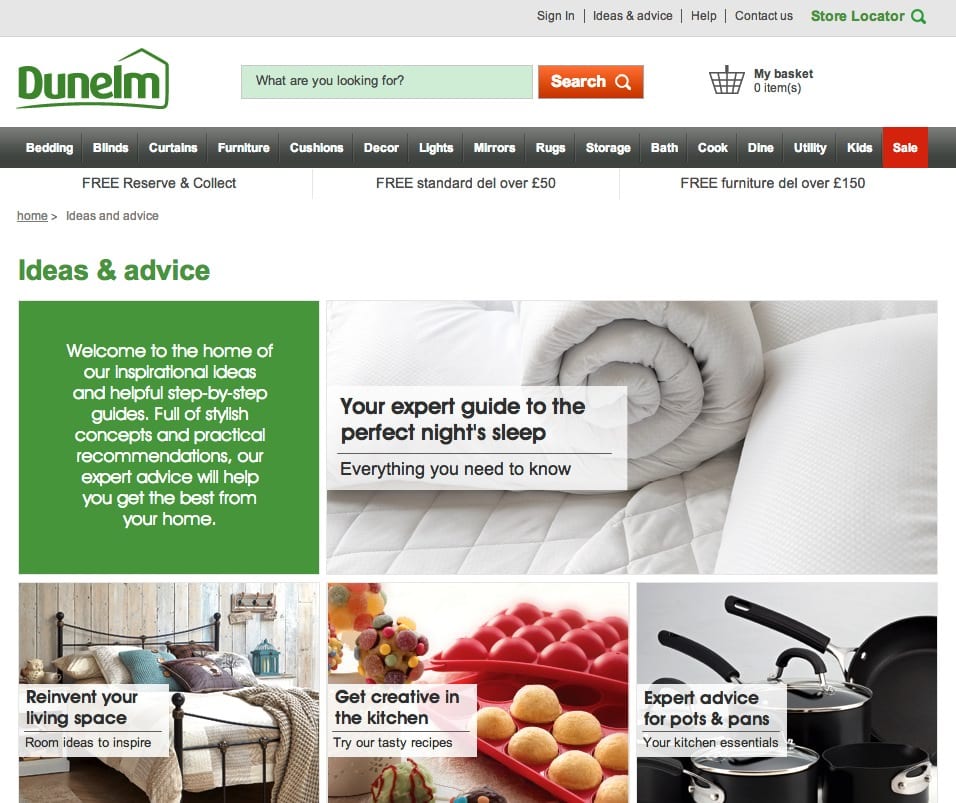
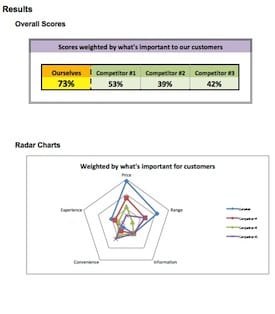



 “I wasn’t seeing the results that justified a structure of middle management, and I started to question the role of management in general. For example, whenever there was an issue in our Care Services call center, such as a scheduling interruption between a Care Service Specialist and a caregiver, the specialist would have to email the management team. Then the management team would review, assess and investigate it, and hours later act on it after reviewing 50 -100 more of these requests. Management, to me, was proving ineffective.”










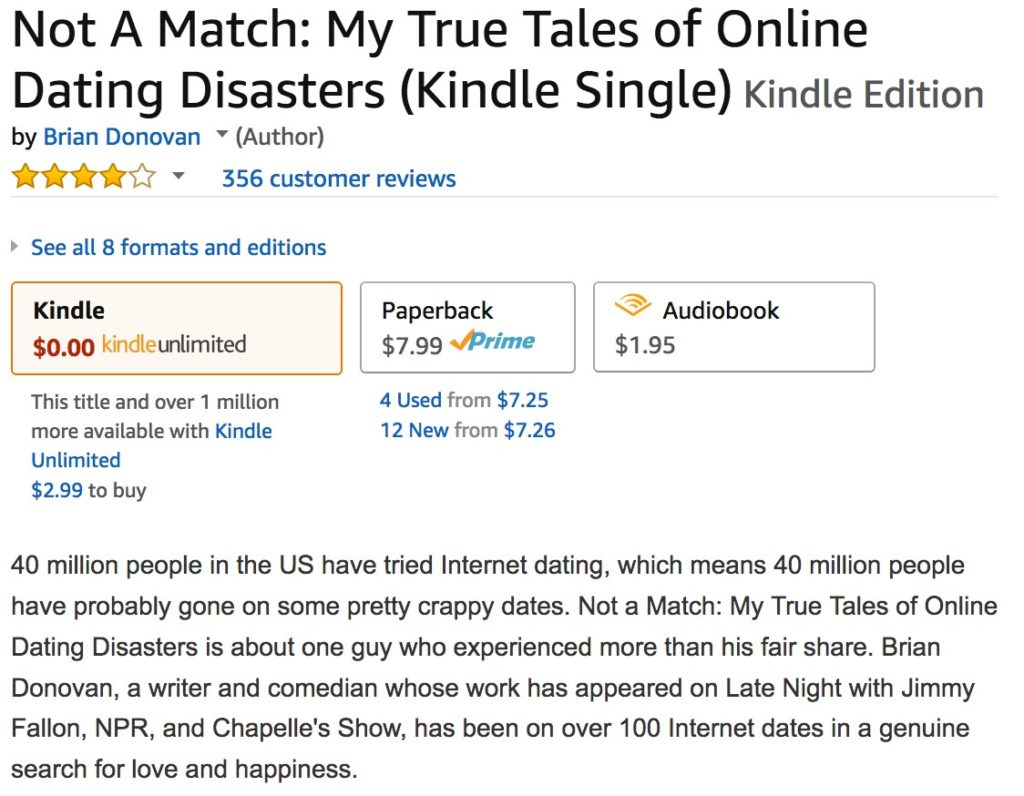




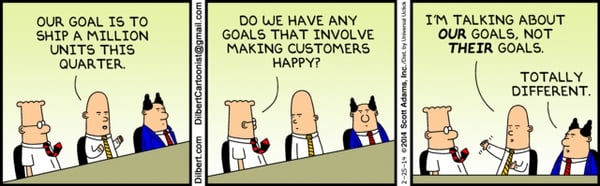







 Source:


 Source: