Shared posts

07 Aug 16:26

Sales cycles: An actionable guide to sales cycle management

by steli@close.io (Steli Efti)
team-meeting-sales-cycle

Companies with a defined sales process see 18% more revenue growth than companies without one. Think about that.

Are you making as many sales as you want to? Bringing in all the revenue you deserve? Building enough customer relationships to ensure the long-term success of your company?

If you answered "yes" to these questions, congratulations. You don't need this guide. See you later.

But if you think your sales team can do more, welcome. This is the ultimate guide to sales cycles (also known as sales life cycles).

The sales cycle, in a way, is the heart of your company. It's how you turn people who have never heard of you into customers. That's how you generate revenue, hire more salespeople, build your empire, and retire to your own private island.

(Want my best advice on every aspect of building, managing, and scaling a winning B2B sales team? Download a free copy of The Sales Library today! It's packed with actionable advice, templates, checklists, scripts and strategies.)

We're going to cover everything you need to know about sales cycles, from what they are to how to document them to how to make them better. Here's what's in store:

Let's start with the basics.

What is a sales cycle?

A sales cycle is a collection of steps that salespeople take to turn a lead into a customer. That includes everything from prospecting to closing the sale (and sometimes even beyond closing). Sales cycles vary between companies and industries, but they usually have a similar sequence of steps.

seven-step-sales-cycle-processThis, for example, is a six-step sales cycle diagram that includes everything from prospecting to closing. Image credit: Daniel Nilsson via SlideShare.

The steps in your sales life cycle will differ from other companies' processes. Here are some of the stages you might include in your sales cycle:

  • Prospecting
  • Qualifying
  • Researching
  • Connecting
  • Setting up appointments
  • Pitching
  • Addressing objections
  • Following up (we've written an entire book on that!)
  • Closing
  • Asking for referrals

Most companies don't have this many steps in their cycle. Six or seven steps is usually enough. Later, we'll see a sales cycle template that only has three steps—as well as a sales cycle flow chart with over a dozen.

What influences the number of steps in your process? It’s mainly what you sell, how you sell it, who you sell to, and your sales goals, among other things. You'll find what works best for your team.

7 reasons why you need a sales cycle process

Whether it's documented or not, you have a sales cycle. If it's not documented, you might have many different cycles. Every salesperson has their own habits and processes. And it might work... but it's a mess.

That's a shitty way to do things. You need a documented sales cycle that every sales rep can use.

If your salespeople already have their own sales processes that are working, why should you step in and force them to use a different one? You trust your salespeople to do their jobs, so why tell them how to go about it?

Your reps might make sales with their own cycles, but there are huge benefits to a standardized sales process:

  1. Consistency: Sales reps don't forget or skip steps in the process.
  2. Transparency: Sales managers can see where reps are killing it and where they need work.
  3. Repeatability: Your sales teams can stick with what works, based on data gathered from your company.
  4. Easier handoffs: If every sale goes through the same stages, changing from one salesperson to another is no problem.
  5. Prioritization: Sales reps know where to spend their time to make the biggest difference in your pipeline.
  6. Faster onboarding: Reps can ramp up quickly when they have a document outlining every step they need to take.
  7. Predictability: It's easier to forecast your sales when you know how long each stage takes.
  8. Increase sales: All of the factors above contribute to a better, more effective sales program.
  9. Better sales ROI: An improved sales process means you get more out of every dollar you spend on your sales team.

Depending on how your company is currently running its sales program, you might see more benefits, too. But even with just these, taking the time to establish and document your process will be worth it.

Download our free Sales Library for strategies and templates you can use when developing your sales cycle process.

Sales cycle stages: 8 steps to sales success

sales-cycle-stages-to-sales-success

Every sales team has their own sales life cycle. But there are some general steps that are common among most companies. These are the eight sales life cycle stages that we use at Close.

We've used them for years, and they've helped us build a kickass sales pipeline. You can use them as a template to start documenting your own sales process. Or you can start from scratch; either works.

Here's our proven-to-work, eight-stage B2B sales cycle:

1. Prospecting

You need raw material for your salespeople to turn into gold—this is where you find that material. During prospecting, you'll find the companies you think might be interested in your product. You might use

At this point, you'll have two buckets: suspects and prospects. Suspects are companies you think might be interested. Prospects are companies that are definitely interested. Sometimes, sales teams use other terms like “sales leads.” What’s most important is that internally, within your company, you have clear definitions for the nomenclature you use.

Prospecting is often part of the marketing department's responsibilities, or in the hands of sales development reps. So this is often also called the sales and marketing cycle; they're pretty much the same thing.

2. Researching

Your suspects and prospects have needs. If you can meet those needs, you'll get the sale. So how do you know what they need? You research.

Check out their social media feeds to see what they talk about, and find something you can connect over. See where they've been mentioned in the news to get an understanding of where they are in the company lifecycle. Look at org charts to see who the decision-makers are. Trawl funding news to see if they have cash to spare.

Crunchbase-showing-results-of-funding-rounds-for-companiesCrunchbase is a popular source of information on companies that you can use during the research phase of your sales life cycle.

Depending on the size of the deal and the sales process, sales reps should spend some time figuring out how to convince the prospect that they should buy. It might feel like a waste of time at first, but it can sometimes pay off. But don’t go overboard; over-researching your prospects is just as bad as not researching them at all.

3. Connecting

We're still laying the groundwork for selling here. Sales reps get in contact with qualified prospects during this stage and try to set sales appointments.

Setting appointments can be a complicated process in itself. It often requires sending multiple emails, leaving lots of voicemails, rescheduling meetings at the last minute, and tons of following up. But when this step is done, your salespeople will have a meeting with a prospect—and that's crucial.

4. Presenting

It's time to sell, and this is where your sales reps get to shine. The type of presentation you do depends on what you're selling. You might show the prospect around your software, do a demo of your product, or present an outline of how your services will benefit the prospect.

sales-cycle-stages-presenting

Whatever the case, this is the step where you convince the prospect to buy. This is selling.

5. Addressing Objections

Before you close a deal, your sales reps will have to deal with sales objections. Here are a few objections they might come up against:

  • "I can't make a decision now, call me back next month."
  • "We don't have the budget for this."
  • "We like the way we're doing things now."
  • "I'm already in a contract with another vendor."
  • "Your product doesn't have all of the features we need."
  • "Send me more information and I'll get back to you."
  • "I don't want to commit to a contract."

They can be frustrating as hell. But dealing with objections is a part of the sales life. Reps need to be ready to deal with each one of these. Experienced reps know that certain objections come up more often than others. Include those common ones in your sales documentation so all of your reps have an easier time dealing with them.

You might be tempted to put addressing objections in the same stage as making the pitch. They're part of the same conversation, right?

Yes, but listing this step separately encourages your sales team to better prepare for objections.

When a rep looks at your documented process and they see "address objections" listed as a sales life cycle step, they know they need to be ready for it. Even if they think they're ready for the most common objections, this stage encourages them to spend a little more time getting ready. And that's always a good thing.

6. Closing the Sale

Once the customer is satisfied that you've addressed their objections and can solve their problems, it's time to close the sale. Present the contract, get the prospect to sign, and get yourself a new customer.

Unfortunately, it's rarely that simple. A lot of other things need to happen. You'll often have to wait for the deal to get approved by higher-ups, or have a few final negotiations to finish. You might even have to run your presentation again.

This is another step where your sales rep gets to do what they do best. Give them the time and resources they need to close a great deal.

closing-the-sale-handshake

Many people think this is the last sales cycle stage. But we're not done yet.

7. Delivering

Your prospect signed the contract and it's time to deliver. Get your product to your customer and make sure they know how to use it. The sooner they start seeing a quantifiable benefit, the better.

This might mean getting your implementation or customer success teams involved. Do whatever you need to at this stage to help your customer get the most out of your product.

8. Asking for Referrals

Referral sales are the best. You can skip right to setting an appointment when one of your customers tells you about another person who probably wants your product or service. Getting a referral saves you a ton of time.

But your salespeople need to ask for those referrals. And there's no better time than right after you make a sale.

Your customer just agreed to give you money for your product—so they're obviously excited about it. This is when they're most likely to want to share what you're selling with their contacts.

Asking for a referral right away isn't easy, but it's absolutely worth it, and it's a crucial part of the eight-step sales life cycle.

Bonus Tip: Set up reminders to follow up with your customer after three, six, and twelve months.

If you want to stay on top of your follow-up game, we've got something for you: Our CRM has powerful follow-up features that suit your workflow. You can easily set reminders to follow up with a contact using the tasks feature, when sending an email, or using automated email sequences.

Close-showing-follow-up-tasks-for-salesperson

Automating follow-up reminders will save you more time than you can imagine.

With Smart Views, you can even create dynamic lead lists of prospects you should follow up with in bulk!

(And no matter what software you use, you should definitely claim your copy of my book The Follow-Up Formula, where I share actionable advice on how to follow-up effectively.)

See how they're doing, ask about referrals, and provide any help you can to make sure they're succeeding with your product. You'll get more repeat and referral customers this way.

Sales cycle length: What to aim for and how to shorten it

The length of the sales life cycle varies between companies and industries. But there are some benchmarks you can use to gauge your own process.

average-b2b-sales-cycle-length-chart

Here's what CSO Insights found for the average sales cycle length in B2B sales.

One study found that 28.2% of B2B companies had a 4–6-month sales cycle when selling to new customers. About 20% made the sale in 1–3 months, and 18% took over a year. That's a long time.

In enterprise sales, a 6-18 month sales cycle is not uncommon at all.

When selling to existing customers, though, companies were more likely to close the sale in 1–3 months. Which is one reason why repeat customers are so valuable.

These are very rough guidelines. There are a huge number of factors that influence the length of your sales cycle. Here are a few:

  • Cost of your product
  • Average company size of your customer
  • How well your target market knows your company
  • Your sales win rate
  • Sales process quality
  • Sales rep turnover

Any of those factors can make your sales cycle longer or shorter. To find your own sales cycle length, use a CRM that helps you track leads through the entire process.

Sales cycle time: typical, full, long, short

Knowing the length of your sales cycle in relation to your industry average is nice. But keep a close eye on how long it takes to close a sale compared to your own average, too.

With detailed tracking, you get an idea of how your typical and full cycles work together and see if you're working with a long or a short cycle.

  • Typical sales cycle: This is the sales cycle that your reps usually go through. It might be the eight-step process above or something similar. In the B2B world, a typical sales cycle is in the range of 4–6 months.
  • Full sales cycle: There may be times when your reps go through additional steps. For example, if you work with large enterprises, reps might need to spend time finding the right decision-maker to get in touch with. This is your full sales cycle, and it could take a year or longer.
  • Long sales cycle: If your sales cycle is longer than the average in your industry, you have a long sales cycle. This isn't necessarily a bad thing. But it's good to know. If your cycle is a year or more, you can confidently say that it's a long cycle.
  • Short sales cycle: If your cycle is shorter than similar companies, you have a short sales cycle. B2B companies completing their cycles in under four months are reliably short-cycle companies. This is probably an advantage—but if you're skipping valuable steps, it could be a liability.

How to shorten the sales life cycle

The best way to shorten the sales cycle is to create a sales process focused on efficiency and repeatability. It's not about skipping steps. It's about making them more efficient. There are two ways to do this:

  • Spend time gaining insight into the companies you sell to.
  • Parallelize processes so you can take multiple steps at once.

If you can do those two things, you'll shorten your sales cycle and make more sales in a given time.

This might sound simple, but it can be really hard. When you ask a buyer what the process for closing is like, they'll give you a short answer. They'll say, "Well, my boss has to approve this, then it'll go through purchasing, and then we're in business."

But that's rarely the case. There are almost always more steps involved, and you'll have to dig to get more information on those steps. Once you have that information, you can start parallelizing your processes.

This has its own difficulties. You need clear documentation of what your sales cycle includes, as well as which stages of the cycle are required for future steps. At some point, you should find that one step doesn't need a previous one to be completed.

That's when you create parallel processes. For example, you might find that your customers typically need to get approval from their boss and then get approval from the legal department. Instead of waiting for the first approval, why not get started on the second at the same time? This can shorten your sales life cycle by days or even weeks.

Experiment with different tactics for shortening your sales cycle. When you find something that works for your team, stick with it.

5 sales cycle examples and templates to learn from

Creating your own sales cycle documentation from scratch is a lot of work. It's easier to start with a template or build from someone else's example. Here are five good options:

1. How to build a sales process that gets you results and scales with your business

From prospecting to following up and asking for referrals, it'll help you develop a repeatable, fast sales cycle.

Key takeaway: Selling starts long before the sale.

2. 7 stages of the sales cycle

This flow chart (near the end of the linked article) breaks down the stages of the sales cycle into steps taken by the customer, your sales team, and your account managers.

sales-life-cycle-flow-chart

Lucidchart's sales life cycle flow chart includes multiple groups and options for progression. You don't need something this complicated, but if you're willing to put in the time, go for it!

Key takeaway: It's not just the sales team that's involved in your sales cycle.

3. How to design a sales process for B2B sales

You can put a lot of detail into your sales process, and Nilsson shows you exactly how to do that.

Key takeaway: There's always more to the sales cycle than you currently have documented.

4. Three-step sales process (aka, the default process)

Want to start with the most minimal sales cycle example? Here it is: qualify, pitch, close. That's it.

Key takeaway: You don't have to use a highly complex sales process if you don't want to.

5. How to design a killer sales process

60-minute-sales-cycle-infographic

You can think of your sales cycle on the scale of months or on the scale of minutes. Hit the link above to see the rest of this great infographic.

Step 2 on this page details a sales cycle template that documents the first 60 minutes of contact. Your sales might take longer, but this diagram is a good reminder to focus on details when you're documenting.

Key takeaway: Be detailed in your sales cycle documentation and focus on incrementally improving each step.

7 tips to improve your sales cycle process

Your sales cycle is the heart of selling at your company. If it doesn't work, it's not moving you forward. You're stuck. And you need to make it better to get unstuck. Here are seven ways you can do that.

1. Improve your lead generation

The first step in your sales cycle is filling your pipeline with leads. This affects every step thereafter. If you have a ton of low-quality leads, your research phase will take forever and high-quality leads will slip through the cracks. Your reps will spend a lot of time weeding out bad leads.

By better qualifying your leads in the first place, you make every subsequent step more efficient. Want to see how we generate a huge number of high-quality leads at Close? Here's how we got 200,000 leads in four years.

2. Collect and analyze data

If you don't know how your sales process is performing, you can't make it better. By using a CRM's sales cycle tracking, you can see how every lead goes through the sales process, how long it takes for them to move from step to step, your team's win rate, and a bunch more useful information.

Close-CRM-showing-sales-opportunities-with-value-and-confidence

Close has all the information you need to start analyzing and improving your sales cycle steps.

You can use sources of data other than your CRM, too. Ask your sales reps how they go through the process to see if you're missing any steps. Keep collecting information no matter how developed your sales cycle is—you can use it to improve your sales process, monitor your improvements, and keep an eye on how your sales team is performing.

3. Address bottlenecks

No matter how well you think you've built your sales cycle, there will be bottlenecks. Every process has weak points. The data you collect from your CRM and other sources can help you address them.

Look at these numbers regularly to see where you can improve. Maybe your objection-handling stage takes longer than you think it should. You could put together a document for prospective customers that outlines your answers to the most common objections. Think creatively about how to make your weakest stages stronger.

4. Score leads to help sales reps prioritize prospects

Not all prospects deserve a lot of your sales team's time. Scoring leads makes it easy for reps to see who they should call, email, or put off until another day.

Do this during prospecting. Figure out what your best customers have in common, then create a scoring system. Are large clients more likely to buy from you? New companies? Mission-driven organizations? Companies with outdated software? Take the time to figure this out so you can guide your sales team on where they should spend their time.

5. Keep all of your communication in one place

Having call recordings, SMS logs, and emails in a single place lets reps make more informed decisions throughout the sales process. When you make a hundred calls a day, you forget what you talked about at 8:00 AM.

Close-CRM-showing-contact-history-with-customer

Notes on calls, emails, texts, and in-person meetings should all be stored in a single location to keep things organized and easy to reference.

A sales-focused CRM will seriously boost your team's productivity.

6. Automate wherever you can

You can create and go through a sales cycle manually, but why would you? There are so many ways to automate it. You can make prospecting, emailing, calling, following up, and just about every other part of your sales cycle easier with automation.

In our own CRM, you can automate dialing, and make every rep more efficient. You can automate email sequences to save time and be more consistent. You can reach 60% more leads with less effort. Who couldn't use that kind of help?


7. Document your sales process

If you've made it this far, you're probably already committed to documenting and standardizing your sales cycle process. But I'll say it again: have a clear, concise explanation of your sales cycle—and keep it where reps can find it.

It makes onboarding easier, it helps reps when they space on what to do next, and you can reference it when you're looking at metrics. It might take a while to create this documentation, especially if you've never documented a sales cycle before. But it's worth it. Just do it. Trust me.

Spin up your sales cycle for better sales and more revenue

So there it is—everything you need to know about sales cycles. We've covered a lot of information here, and it might feel a bit overwhelming. But everything we've covered will help you create, document, and improve your sales process.

That means more sales and revenue. That's what we're all after, right?

Don't be stressed about going from no sales cycle to a perfect one. Start with one step.

If you have no sales cycle at all, start collecting information from your reps to see what they're doing.

If you have a vague idea of your sales process, look into your CRM's sales cycle information to get more exact details on what's happening and how long it takes

If you're confident in your current sales lifecycle, look for ways to make small improvements in each stage.

Just start with one step at a time, and you'll end up with an awesome sales process that gets you great results in no time.

The Sales Library contains actionable advice, strategies and templates for every aspect of sales cycle management—and you can download it free today!


ACCESS THE SALES LIBRARY NOW

11 Jul 20:33

Stop selling, start helping

by Drew McLellan

sellingA while back, we explored some of the key takeaways from a content marketing trends report produced by the Content Marketing Institute (CMI), and I identified some trends worthy of more in-depth exploration. They included:

  • Well-researched personas can help teams create successful content; however, too few content marketers (42%) are actually talking with customers to understand their needs.
  • Nearly all of the successful B2B content marketers (90%) prioritize the audience’s informational needs over their sales/promotional message, compared with the 56% of the least successful.
  • B2 content marketers primarily use email (87%) and educational content (77%) to nurture their audience and may be missing other opportunities (e.g., only 23% are using community building/audience participation to bring new voices to the table.)

Most recently, we talked about the importance and power of personas when they are done well, with actual data to augment your own customer knowledge and insights. Today, we’re going to tackle the second bullet, which is all about understanding what kinds of content are useful in the selling process.

What this study is emphasizing and we’ve certainly seen this with our clients – is that the more you sell in your content, the less it sells. There are a couple of reasons for this. First, it’s much less likely that sales or promotional content will be found in the first place. Odds are, your audience finds your content through search. The search engines work hard to respond to the query with quality content that answers the question posed. Helpful, informational content is almost always going to rank higher than promotional copy.

The second reason why salesy content doesn’t sell as well is because it’s a sales pitch and as consumers, we don’t respond well to sales pitches, especially when we are in the exploration stage of the buying journey. We might not even be in the market to buy anything. But when a brand consistently helps us learn more, make better decisions, or do some DIY activities that serve our family or our business, we are indebted to them. We value their good counsel or how easy they made it for us to get some answers.

When we are further along in the buying journey or when someone asks for a referral, the brand that offered helpful, informative content and didn’t make us feel rushed or pitched, is going to be in our consideration set, if not our sole choice.

What does helpful and informative content look like?

  • How-to videos with demos
  • Downloadable documents with step-by-step instructions
  • Detailed answers to questions you get asked every day
  • Hacks that a novice might not know to have a better experience
  • Best practice metrics or guidelines
  • Questions to ask before you XY or Z (Do not slant these to make your product or service the only choice or option)
  • Webinars that teach
  • Podcasts with guests who illuminate, inspire or educate (or all three!)

The best helpful and informative content may not mention your specific product or service at all, but it speaks right to the needs of the people who would most likely value your product or service.

I get it. It’s so tempting to toss in a little sales message. Resist the urge. Fight to have your altruistic intentions remain pure. Don’t give in to the temptation. Be patient. Remember how you feel when a salesperson rushes at you. You want to flee.

Your whole goal is to make your audience want to come back again and again because you are so helpful. When they get to the right spot on the buying journey, I promise you, the results will speak for themselves. They will seek you out.

But you have to let them get there through discovery.

The post Stop selling, start helping appeared first on McLellan Marketing Group.

11 Jul 20:27

The future of car ownership: Cars-as-a-service

by Matt Burns

Car shoppers now have several new options to avoid long-term debt and commitments. Automakers and startups alike are increasingly offering services that give buyers new opportunities and greater flexibility around owning and using vehicles.

Cars-as-a-Service

In the first part of this feature, we explored the different startups attempting to change car buying. But not everyone wants to buy a car. After all, a vehicle traditionally loses its value at a dramatic rate.

Some startups are attempting to reinvent car ownership rather than car buying.

Don’t buy, lease

My favorite car blog Jalopnik said it best: “Cars Sales Could Be Heading Straight Into the Toilet.” Citing a Bloomberg report, the site explains automakers may have had the worst first half for new-vehicle retail sales since 2013. Car sales are tanking, but people still need cars.

Companies like Fair are offering new types of leases combining a traditional auto financing option with modern conveniences. Even car makers are looking at different ways to move vehicles from dealer lots.

Fair was founded in 2016 by an all-star team made up of automotive, retail and banking executives including Scott Painter, former founder and CEO of TrueCar.

11 Jul 20:25

3 things your CRM needs today to empower your sales team for tomorrow

by steli@close.io (Steli Efti)
crm-sales-team

When it comes to CRMs, the competition is extremely fierce—in fact, there are more than 500 CRMs listed on sites like G2 Crowd and Capterra. 

But here’s the thing: Despite the number of CRM options available to businesses, only a handful of CRM companies have been able to consistently achieve brand recognition, word of mouth publicity and sales.

So why do organizations choose one CRM over all the others? The answer is simple: That CRM offers a product with capabilities that businesses cannot ignore.

dwight-schrute-its-true

If you’re looking to invest in a CRM, these are the 3 things that your CRM of choice *really* needs to have—things that will empower your sales team to win. 

Let’s look at them:

1. Ease of Use

Did you know that when it comes to CRMs, 72% of sales executives would trade functionality for greater ease of use

Yes, you read that right!

(That’s an important stat for CRM companies to remember too.) 

Surprisingly, ease of use isn’t a top priority for businesses shopping for a CRM. Don’t get us wrong—while companies may say they want an easy-to-use CRM, they often chase the CRMs with the most flashy features instead of focusing on the basic element of usability, which is crucial for their sales teams.

In a survey, ease of use was rated as the most important CRM feature by 65% of sales teams.

top-sales-crm-features

That’s why we believe the ease of use is one of the primary characteristics to look for when choosing a CRM.

(Did you know that you can literally get set up and running with Close CRM in minutes, and start emailing and calling your leads? Try it free for yourself!)

But how can you tell whether a CRM is easy to use before you buy? Here are a few things to look for that will contribute to easing of use in the long run: 

1. Intuitive UI: Is there anything more powerful than UI when evaluating tech tools? We think not. UI isn’t just about how the product looks, but how it feels.

A clunky UI will hinder your sales reps from using the tool as much as you’d like them to. Nobody likes wrestling with a tool that’s not intuitive or that crashes all the time, and you can’t afford to have leads falling through the cracks. That’s why the CRM of your choice should adhere to the basics of UI design and should be designed in a way that’s valuable, accessible, intentional, intuitive, invisible and beautiful. 

2. Superior integrations: A good CRM is one that offers superior integration capabilities as it lets information move seamlessly. Integration ensures that information is easily available for those who need it—in this case, your sales reps.

sales-crm-social-recommendation-serious-crmSales teams using Close can integrate with other awesome communication, prospecting, analysis tools seamlessly which help them make sense of the lead—where the leads come from and how they need to act on it. 

Taking a demo or signing up for a free trial will really help you to evaluate the above-mentioned factors. But before you seal the deal, do invest time in checking the below-mentioned factor as well: 

3. Quick learning curve: CRMs that offer a quick learning curve are preferred and speak volumes about the effectiveness of the tool. 

It’s a basic ask...

sales-crm-social-recommendation-easy-to-use

The ones that are too technical to understand lead to a lot of wasted time and impact the productivity of your sales team. So the best way to ensure that you haven’t signed up for a product with complicated setup and a tedious learning curve is by speaking with peers in the industry as well as evaluating the length that the support team goes in order to provide you with a stellar experience. 

“The Close team has been a helpful resource to our team. As we leverage Close to manage our pipeline, they’ve worked closely with us to understand our business and ensure we get the most out of the CRM. Their expertise in Smart View optimization has offered clearer insights into lead funnel and faster follow-up. Further, their knowledge in integrating other tools through Zapier has brought great value to our team.” - Amanda Mullet, Sales Operations Manager, HomeLight

“The Close team has been extremely helpful. I regularly email them to ask for insights into how to best approach a process within the capabilities of the Close CRM. They’re always on point with their insights, quick to respond and very helpful in every ask. The support we receive is a big part of why we have decided to stay with Close, a true differentiator.” - Mojan Butler, CoPilot

“The Close team have really gotten to know our business. I don't have to get them up to speed on what we do, just the particular issue we are trying to solve. If you've got business challenges in your sales organization that you are thinking through (and really, who doesn't!), these guys excel in understanding what you want to accomplish and proposing effective solutions.” - J.T. Allen, President and CEO, myFootpath

Always ensure that you use a CRM that helps you focus less on setting it up and more on the important bit—sales. 

2. Ability to deep dive into data

To be successful in achieving their sales targets, any sales team should be able to see what’s working for them and what’s not. And there’s only one way to know that, and that’s through data. 

A report published by Nucleus Research found that data accessibility for sales people is key to shortening the sales cycle, on average, by 8-14 percent and therefore a key feature 

CRMs with smart reporting tools help sales teams to see if they’re making enough calls, are there enough leads available for sales reps to act upon, how many emails were sent, how many leads were converted...and so on..

How does this analysis tie with a team’s growth? 

Data analysis helps sales teams make informed decisions, improve their efficiency and productivity and drive the company towards success. It is no brainer that the CRM you choose should be able to give you fruitful insights into your sales team's productivity, pipeline, and performance. 

At Close, we’ve recently revamped our activity overview report and have added a brand new activity comparison report that shows amazing data points in real time. 

Here’s how the reports work:

Remember without an inbuilt data reporting tool, all that your CRM does is simply document things. It’s a wasted opportunity to see the bigger picture and the one you should avoid. 

3. One stop solution

Effective sales organizations are 81% more likely to be practicing consistent usage of a CRM or other system of record. (source: Aberdeen Group)

If we have to go by these above-mentioned statistics, it’s clear that to be effective at sales, most companies tend to stay hooked on to a CRM for long. That’s why it is necessary that CRM offers a one-stop solution to your sales team.

So what are a few features/pointers that are essential for a sales team to be able to make the most of their sales CRM? Here’s a quick list: 

  • Allows you to manage your workflows
  • Provides you with enough insights to stay on top of your pipeline
  • Lets you track every touchpoint with your leads 
  • Offers efficient in-built tools such as two-way email syncing, email sequences, in-built calling, built in SMS, predictive dialers and powerful search

A good sales CRM will not only provide you with the best features but also continuously upgrade the existing ones.

Think of it like this: A CRM that doesn’t evolve with the needs of your sales team, isn’t going to be of much value at a point. At Close, we are extremely aware of this problem and that’s why we strive really hard to deliver the best offering to our customers.

Close-product-update-blog-posts

Wrapping It Up

With a plethora of choices available today, picking the right CRM—the one that empowers your sales team, can be difficult...we get it. 

Most companies waste a lot of time scrutinizing sales CRM features when instead they need to know only three things—how easy & effective is the CRM, whether it offers a one-stop solution to the sales team and whether it provides an ability to deep dive into the data.

stephen-colbert-thats-it

What type of sales CRM do you plan to invest in? Does it tick all the checkboxes as mentioned in this article? Let us know in your comments below.

Not a Close user yet? See how much our CRM with built-in calling, emailing, texting, and powerful reporting helps you take your sales productivity to the next level. Start your free trial.

TRY CLOSE

11 Jul 20:25

5 Ways to Improve Sales Demo Show Rates

by Laura Hall

Here is an observation that is sure to shock you: people can be flaky.

I’ll give you a moment to pick your jaw up off the floor.

Now that you’ve recovered, let’s talk about demo show rates. An age-old problem in sales is prospects agreeing to a product demonstration and then no-showing. Short of hypnosis, there is no way to getting people to do what they’ve committed to 100% of the time. However, we have a few suggestions that might help.

Let’s start at the beginning. More than anything else, the most important part of increasing your demo show rates is vetting prospects to ensure that they are properly qualified. There should be a certain level of buy-in from the prospect before a demo is scheduled. Your time, as well as theirs, is valuable and there’s no sense wasting it on a product demonstration that doesn’t benefit anyone. Is your offering a good fit? Can you identify a hypothesis of need? What is the specific pain point you can solve?

Assuming you’ve spent the time vetting and qualifying leads, here are a few things we’ve found to be effective in keeping demo show rates up.

5 Ways to Improve Demo Show Rates

1. Build Value

Is your prospect coming into your scheduled demo show with the understanding of the value you offer? When show rates start to drop off, it often indicates that you aren’t building enough value up front. If a potential customer is ‘bought in’ to the fact that you may have the solution to a problem they’re experiencing, they are much more likely to honor their commitment to a demo.

Spend time independently researching industry trends and reading recent news about the company. Use your findings to craft a message that provides real value before the demo ever occurs. Providing value up front signals that the rep actually cares and imparts a feeling of reciprocity that means the prospect is more likely to show up.

2. Involve Your Team

SDRs and AEs can help each other out by adding additional voices. Having the AE emails the prospect in advance adds legitimacy. Use the research your team has already done to frame a conversation that demonstrates an understanding of the prospect’s needs. Include well-educated questions based on what you’ve learned to further pique their interest and stand out among the competition.

Advice on sales demo from Rob Falcone

3. Start Telling a Story Early

Early in the customer journey, paint a picture of success the prospect can identify with. Tell a customer story that aligns to allow the prospect to imagine their own journey to success. If you can establish a connection between your solution and their pain point, it goes a long way to keep them invested in the process.

Relevant parallel customer journeys reassure prospects that you’ve been through this before, and you have the ability to also solve their problem. This goes beyond simply creating value. It positions you as a business partner that understands what keeps them up at night and is invested in their success.

4. Don’t Delay the Demo

If you’re scheduling demos more than a few days in advance, it can negatively impact your show rate. An informal survey of SDRs at a SaaS company showed that, when the demo was scheduled 2.5 days out, show rates were about 90%. When that lead time was extended to 4 days, the show rate dropped to 70%.

Scheduling demos sooner gives prospect less time to forget about their commitment. It also conveys urgency and a desire by the SDR to solve the prospect’s problem sooner rather than later.

5. Confirm. Rinse. Repeat.

When you schedule a demo with a client, make sure and reiterate the time and the date and get confirmation. Let them know that you value your time as much as theirs. This is a good time to reiterate the relevant customer journey story (see #3 above) and assure them you’ll be showing them how your product can also solve their pain.

It doesn’t have to be deadly serious – you aren’t trying to get them to show for a court date. Use a little humor to help drive home the idea that they want to show up. Here’s an example:

SDR: Hey, Joe. I just want to confirm that we’re good to demo on tomorrow at 2 pm.

Prospect: That still works for me.

SDR: Awesome. I’m including my senior implementation consultant on that call. She was a key player in the customer story we discussed earlier. I think her insight into your specific situation will add a lot of value for you.

Prospect: Okay, thanks.

SDR: Great! So barring any outbreak of an Oregon Trail-like disease, I can expect you there?

Prospect: *chuckle* I’ll talk to you tomorrow.

Bonus tip: Text them an hour before to confirm.

6. Bring in the Big Guns

For a key account, it might be necessary to pull in senior members of your team to illustrate the importance of the meeting. Having someone from your management team reach out adds to the legitimacy of the demo.

Unsure of who to involve? Mirror the level of seniority you’re working with on the prospect side with firepower from your end. For example, if you’re scheduling a demo with the CRO at a larger target account, ask your CEO reach out in advance and express interest in their business needs. When the directive is coming from the C-suite, a prospect is unlikely to miss the demo.

When in doubt, ask your sales manager for advice.

Let’s be real.

We can’t change human nature. There are no certainties in life. There might actually be an outbreak of dysentery while fording a river. You’ll probably still experience a no-show periodically. However, keep these tips in mind next time you’re scheduling a demo and you’ll hopefully experience a lot less of them.


Looking for more ways to conduct a successful demo? Check out our episode of the Hey Salespeople podcast with Rob Falcone, Director of Sales Engineering at Guru and author of Just Effing DemoListen to the full episode here for more insights on demoing.

Make sure to subscribe so you can follow along as Jeremey interviews the brightest minds in modern sales to bring you immediately actionable advice!

10 Jul 14:08

7 Habits Successful AEs Use to Make their Sales Pitch a 10/10 (Part 1)

by Dave Kennett
habits of successful AEs

As the CEO of an On-Demand Inside Sales Coaching Company, I review literally hundreds of hours of recorded discovery and demo calls.

As you might guess, my team and I have picked up on the subtle and surprising patterns followed by successful inside sales reps.

And in this article, I’ve consolidated 7 habits that separate the best from the rest:

These are the things we consistently see high-performing Account Executives do on their discovery/demo calls. Starting today, you can do them too — and level-up your selling game.

1. The Best Sales Pitch

In just a minute, I’m going to walk you through some insider tips for making your best sales pitch. But first, let me tell you what not to do — and that’s to discount the power of live, face-to-face interaction.

If you went to visit a customer, would you sit in the room opposite them and talk through the wall?

Of course not! So why don’t sales professionals switch on their video camera more frequently during screen shares? Video helps build trust, credibility, and rapport.

And here’s the thing…

More often than not, when you use video, the prospect will turn on their video in return. This allows you to see the prospect, which helps you read their nonverbal cues.

There is a certain magic that happens when you look someone in the eye. And it simply can’t be achieved through audio alone.

2. Less PowerPoint, More Demo

Do you recall the last time you sat through a demo call with a ton of PowerPoint slides and thought, ”Oh man, this is exciting! Show me more slides please!”

Yes? OK, then you are probably an accountant or something and shouldn’t be reading this article anyway 🙂

Seriously though, use the power of the demo to capture the prospect’s attention — not a static, 5-word, 5-bullet-point slide.

RELATED: How to Give a Sales Presentation to Executives: 10 Essential Tips

The best sales pitch may have one or two slides at the beginning to “level-set” and hoist the proof points of your company. But I recommend leaving it at that and quickly moving on to the demo.

Imagine walking onto a car lot to buy a car and getting whisked away by the salesperson to watch a boring 25-minute PowerPoint before looking at the car — which is sitting just 20 feet away from him.

That wouldn’t happen, right? Why not? Because you would be thinking, “Just show me the damn car!”

So how do you think your prospect feels staring at a bunch of slides and being “talked at” for the first half of your demo?

Now, you may be thinking, “Dave, we are selling complex 6-figure enterprise solutions with 12-month sales cycles. How dare you compare that to buying a car!”

I hear you… but… sitting through a 25-minute PowerPoint for a complex enterprise solution before the actual demo is still sitting through a 25-minute PowerPoint. Just ensure that your slides are chosen very intentionally and are making the most of your prospect’s time.

Think on that a bit, and if you still think it’s necessary then fair enough! 🙂 At least use these tips to wow your prospect and keep them engaged.

3. Double Down on Discovery

So often, we see AE’s rely solely on brief notes from the SDR before they launch into their demo.

But beware…

The AE’s with the best close rates take an opportunity before the demo portion of the call to build on what was learned by the SDR. This allows the rest of the call to be more tailored to the prospect’s needs.

RELATED: Solving the SDR to AE Handoff: An Actionable Guide for Sales Development Leaders

My tip: Have your questions written down in checklist format in front of you — either on a notepad or electronically. Even the best sales professionals get thrown off of their game sometimes, so it pays to have your questions written and ready.

I know you have done this demo so many times that you can do it in your sleep. But don’t be the sales equivalent of that restaurant server that comes to the table with no pen/paper and takes the order for 10 people. We all know he is going to forget to exchange the fries for salad, and 3 steaks will show up medium-well instead of medium-rare.

You have one shot at getting a clear and complete understanding of their current situation, so make sure your questions are ready to go.

4. Make Meaningful Check-Ins

When presenting to a prospect remotely, it’s important to conduct frequent check-ins to create an engaging experience and to calibrate on a shared understanding.

But this shouldn’t just take the form of asking, ”Any questions on that?”

The sales professionals we see who have the best win-rates and quickest sales cycles take the time to pause several times throughout the demo and say something like,

”I’d just like to pause here for a minute and check in with you. What are your thoughts on this feature? How would this feature work for you, compared to your current solution? What kind of user feedback do you think you would receive on this?”

5. You’re an Expert: So Act Like One

We’ve all read The Challenger Sale (Mathew Dixon & Brent Adanson), right? It’s a must-read if you are serious about your career in sales.

This book suggests that one of the six differentiating traits of a top sales professional is their ability to “offer a unique perspective to the customer.”

I couldn’t agree more. Our data at Replayz validates it.

If you are selling to a Product Marketing Manager (PMM), for example, how many PMM’s do you talk to in the course of a month/quarter/year? Maybe over 100/year?

Well… spoiler alert… that PMM you are selling to likely doesn’t speak with 100 other PMM’s per year, and certainly not for 30–60 minutes each, learning about their individual pain points and challenges.

That means you’re the expert.

You “get” their challenges and can empathize with them. Just as important, you can explain from an “expert’s” standpoint how your solution has helped dozens of their colleagues in other companies solve the exact same challenges.

RELATED: Why Selling to Your Customers Stated Needs is Completely Wrong

Now they view you as a helper — not a pesky sales rep — who specializes in their area and can give them a unique perspective.

6. Tell More Customer Stories

People don’t remember what you said. What they do remember is how you made them feel. For that, stories win.

Stories touch emotions. Features and benefits don’t. Which is why the best AE’s we coach at Replayz consistently share 3–5 customer stories throughout a 50-minute Discovery/Demo.

Where do you get effective stories?

Invite a Customer Success Rep to your sales huddles once per week and ask them to share 3 new, short but compelling customer stories.

Or make a point of calling existing customers every month or so. In previous selling roles, I did that, and it gave me first-hand context and fantastic stories that helped create believers out of my prospects.

7. Wrap It Up Like A Pro

OK, so we all know that best practice for an AE is to never leave a call without getting the next call on the calendar with the prospect. That should be table stakes here — the price of admission.

But as all top AE’s know, a sales professional has no business leaving a demo without asking the prospect what their decision-making process looks like.

I cringe when I hear AE’s asking the customer, ”So, what makes sense as next steps?”

Intuitively, it sounds like the right question to ask. But it puts 100% control in the prospect’s court. The best sales pitch makes sure to calibrate with the prospect first by asking a number of questions like these:

  • “What does your decision-making process look like?”
  • “Where are you currently at in that process?”
  • “Who makes the final decision?”
  • “Who holds the budget for this?”
  • “Do any of those people above need to see this demo, or would it be helpful to you if I spoke with them?”
  • “How is our solution looking relative to the competition so far?

…and for bonus points: floating the old trial close!

You would be surprised how many times I see top AE’s actually get a Yes when they just ask. Granted, this is more relevant in a more transaction sales process.

After finding out all of this, I would propose next steps and ask the prospect what they think of them. This makes the next steps more of a collaborative process, as opposed to leaving it all up to your prospect.

Conclusion

Hopefully, the tips above were useful in upping your selling game! If any of those points feel uncomfortable to implement, I encourage you to push yourself out of your comfort zone and give them a try.

Happy Selling!

I would love to hear your thoughts on these 7 habits below, along with your other pro-tips!

#sales #accountexecutives

The post 7 Habits Successful AEs Use to Make their Sales Pitch a 10/10 (Part 1) appeared first on Sales Hacker.

10 Jul 14:06

How to Use LinkedIn to Turn Cold Prospects Into Warm Leads

by Josh Turner

Do you want more warm leads from LinkedIn? Wondering how to use LinkedIn to schedule more calls or meetings with new leads? In this article, you’ll discover how to use four LinkedIn marketing features to nurture leads. #1: Recommend a Group Post for More Exposure to All LinkedIn Group Members In the past, LinkedIn groups […]

The post How to Use LinkedIn to Turn Cold Prospects Into Warm Leads appeared first on Social Media Marketing | Social Media Examiner.

10 Jul 13:52

Are You The Salesperson Creating Value For Your Customer?

by David Brock

I was talking to a team of sales people about engaging their customers with insight and getting them to think about their businesses in different ways.

They happened to sell supply chain management software. The software, like most other supply chain software solutions enabled their customers to better understand and manage inventory, orders, quality, scheduling and other things with their supplier.

We had developed some unique insights based on benchmarks with customers and supported by case studies.

As we were talking about what these meant to the customer and how to engage the customer in the conversation, a sales person raised an issue.

“As much as we like to think our solution is unique and highly differentiated, our competitors can do similar things. How do we deal with the situation where we are providing the insights and the competitors say, ‘We can do the same thing/'”

It was an important question, too many haven’t thought this out.

How would you handle it if you were presenting the value your solution creates and the competitor simply says, “We can do that as well!”

Too often, the reality is that our solutions aren’t highly differentiated from our competitors. Certainly there are some things we do better and some they do better, but for the most part it may be very difficult to differentiate the value of the alternative solutions–at least in substantive ways.

The differentiator is the sales person that engages the customer in those insight driven, learning conversations. That’s what the customer is paying for that’s what the customer is buying.

Certainly, the actual ability to produce the result through the implementation of the solution, is critical, if everyone can do the same thing, how is the customer going to make a decision.

It will always be to the sales person that is providing them the leadership to look at their business differently. It’s the sales person that helps them identify where they can improve, how they can do it, what it might mean that’s truly creating value for the customer.

Your competition isn’t doing that. They are simply saying “I can do the same thing,” but they aren’t the people helping the customer identify how they can grow, improve, achieve.

Sure your customer might say, “They can do the same thing only 10% cheaper!”

Your immediate, proud response must be, “But where were they giving you the ideas and identifying the opportunity to enable you to solve that problem and to better achieve your goals?”

Our products and the value they create when implemented are table stakes. We absolutely have to produce the results, otherwise we shouldn’t be considered. But others can too.

What’s going to cause the customer to buy from you is the leadership you provide to help them run their businesses better, because they aren’t getting that from your competition!

10 Jul 13:51

Contact Discovery: Using Paid Media for Your Account-Based Marketing Strategy

by kniemisto

Offering high-quality products and services to your customers is table stakes for any company to survive. But it’s hardly the be-all and end-all of business success.

In today’s digital era of transformation, the experiences your organization provides are equally important. As a reminder, people buy experiences, not just products. And to deliver remarkable customer experiences, you need to shift from a lead-based only marketing approach to a combined lead and account-based marketing strategy.

In our last blog on account insights and profiling, we outlined how to find your ideal customers, build the right target account lists using artificial intelligence, and use AI-powered account-level insights to create hyper-personalized account-based experiences (ABX) for ABM.

Now, we’ll dive into how you can leverage paid media for ABM to hydrate your target account lists by discovering net-new contacts within each target account and treat them to unforgettable experiences that truly make an impact.

But first, let’s talk about the concept of buying groups for account-based marketing strategies.

How are buying groups relevant to your account-based marketing strategy? 

The single most important thing to remember about B2B marketing and sales is this: No one person is responsible for making a purchasing decision on their own.

In fact, the average B2B purchase involves more than five decision-makers—all with varying levels of influence and authority. And that’s why traditional standalone lead-based marketing efforts without an account strategy is quickly becoming passé.

After building your target account list and prioritizing which accounts to target, it’s time to confirm the buying group that you want to market and sell to. A buying group is a specific set of key individuals for each account who will be part of the decision-making process and who ultimately all need to agree to purchase your product.

Successful ABM requires identifying all the key contacts within an organization’s buying group and sending them timely, relevant, and personalized communications tailored to their specific roles, responsibilities, and interests.

For instance, while you’d initially want to engage with a company’s CMO throughout a campaign, you might want to engage with the IT director at the same time or hold your messages to them until later in the buyer’s journey for that specific account.

The content would also differ. The CMO’s communications would revolve around their challenges and your solution’s benefits related to ROI and revenue. The IT director would receive information about the ease of implementation and integration, and time-to-value.

Of course, before you start thinking about the right time to reach out and the right content to send, you need to make sure you’ve identified all the right decision-makers for each buying group within your target accounts.  And that’s where contact discovery comes in.

Discover new contacts using two account-based advertising strategies

Paid media for ABM helps you with contact discovery, or attracting new and unknown contacts and mapping them to key personas within target accounts.

Here are two popular paid media use cases for your ABM strategy: 

1. Target unknown contacts within your known target accounts

Here, you start out with a list of accounts that are currently in your database. So, you’re fully aware of the companies you’re marketing to, but you don’t have all the right contacts for each buying group within each account yet. The goal is to upload that list of accounts into a paid media network, match the accounts into their database, and send ads to contacts within each account.

This will allow you to send account-based ads to net-new contacts at these companies across the web in hopes that they convert and become a known contact within your target accounts. Depending on the ad network, marketers can use this strategy to penetrate accounts and pinpoint people in the buying groups you most want to reach.

Just keep in mind: You have a finite audience to sell to, so you better make the most of your efforts.

2. Target unknown contacts within unknown accounts 

This is a situation where you can make something out of nothing. After developing the criteria for your ideal customer profile, you can discover both new accounts and new contacts for your ABM strategy. Often times, sales and marketing teams find that they don’t have enough target accounts, or they simply want more.

In this situation, you upload a list of your best-fit customer accounts into paid media networks. Using their look-alike models, the paid media networks can find new accounts that are similar to the attributes of your existing customer account list.

You can then run ads to contacts within the new accounts that the paid media network is suggesting.  And if they convert on an offer, you’ll secure a net-new contact in a brand-new target account for your ABM strategy

One thing to remember is you shouldn’t limit yourself. Increase your reach as much as possible across multiple networks while also being mindful of potential overlap of the same contacts across different account-based marketing ad networks.

Successful paid media campaigns for ABM require a marketing automation solution

A sophisticated marketing automation solution is the key to maximizing the success of your paid media campaigns for your ABM strategy.

Launching advertising campaigns for your ABM strategy is a great way to discover new contacts and accounts, but the customer experience should not start and stop there. Marketing automation solutions help continue the customer experience by automatically incorporating new contacts into nurture campaigns and scoring models to ensure that relevant, personalized and timely engagement continues across the buying journey. This is extremely important because most contacts don’t want to be followed up with right away just because they’ve interacted with your brand just once.

For example, let’s say a new contact converts from one of your paid media campaigns by clicking on an ad and downloading your latest white paper. This contact has now become a known contact within one of your target accounts, but what do you do next? Just because they downloaded a piece of content for the first time doesn’t mean they want to be followed up with by an aggressive sales rep right away.

Instead, use your marketing automation solution to nurture them in context to the account they belong to rather than an individual lead-based nurture program. View their conversation in context with all the other contacts within the buying group inside the account and make sure that your marketing automation solution is set up to engage each contact based on the account-level insights and strategy.

Marketing automation is a key part to a successful ABM strategy, especially when you’re wanting to continue and automate the account-based customer experience across your marketing channels after discovering new contacts and accounts across paid media channels.

The post Contact Discovery: Using Paid Media for Your Account-Based Marketing Strategy appeared first on Marketo Marketing Blog - Best Practices and Thought Leadership.

10 Jul 13:50

Pricing across maturity models

by Steven Forth
190709.png

Maturity models are enjoying their moment in the sun. Over the past thirty years, they have developed from a nerdy preoccupation of process and policy geeks (I used to be one of those but claim to be recovering), to a key organizational development tool, to an important marketing framework. Over the past few years, they have increasingly been used to shape pricing strategy.

Please take our survey Value, Innovation and Pricing Insights from CEOs

We mentioned this in our recent post Pricing your solution portfolio: Part 3 - Looking for Interactions and even referenced the Job Architecture Maturity Model in our post on Why your job architecture needs a competency model on our People Insights blog.

This provoked some questions from our readers on just how to use a maturity model to inform your pricing strategy, and we try to answer these here.

Let’s start by asking what a maturity model is and how they have become so important. The current incarnation got its start back in the mid-1980s when it was realized that software development was expensive, complicated and that not all organizations do it well. This resulted in the Capability Maturity Model (or CMM) developed mostly by the Software Engineering Institute at Carnegie Mellon University. The initial work was mostly funded by the US defense sector, which realized how much it was coming to depend on software for all aspects of operations. The CMM is now the CMMI (Capability Maturity Model Integration) and has its own organization, the CMMI Institute. Those interested in maturity models can find a wealth of information there.

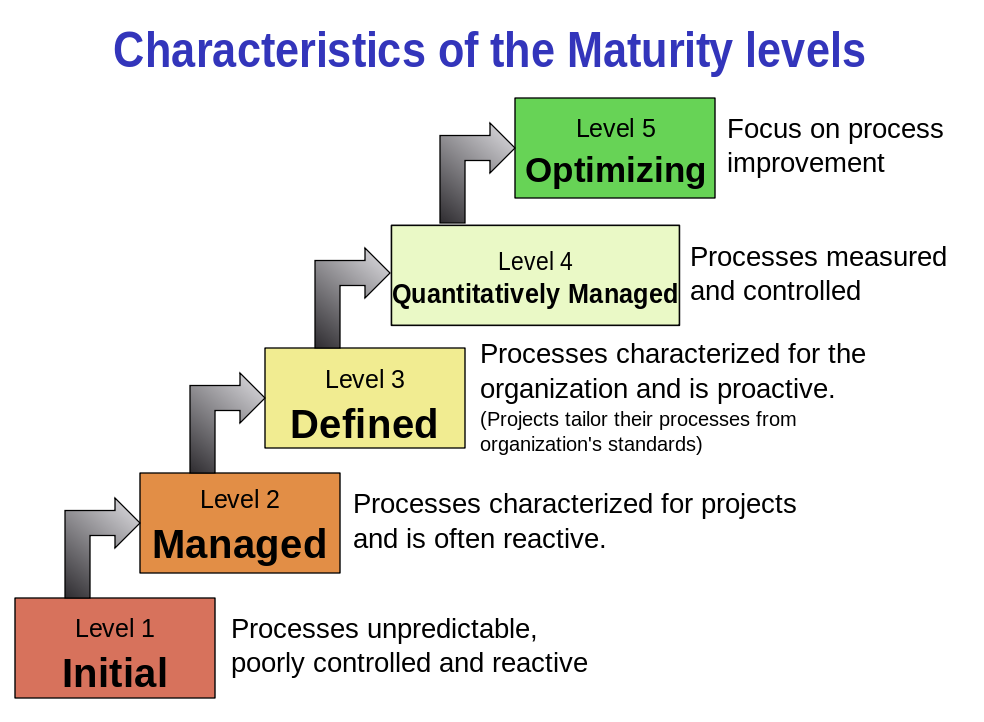
The original CMM was focused on process. Over the years this has shifted in many cases to a concern with outcomes, but let’s look at the initial idea. The archetypal maturity model moves across five stages from 1, no process, to 5 where processes are constantly being optimized. (This image comes from Sally Godfrey who is one of the world’s leading experts on maturity models.)

A basic maturity model

From their initial applications in software, engineering maturity models have branched out into all sorts of surprising areas. Here are some examples.

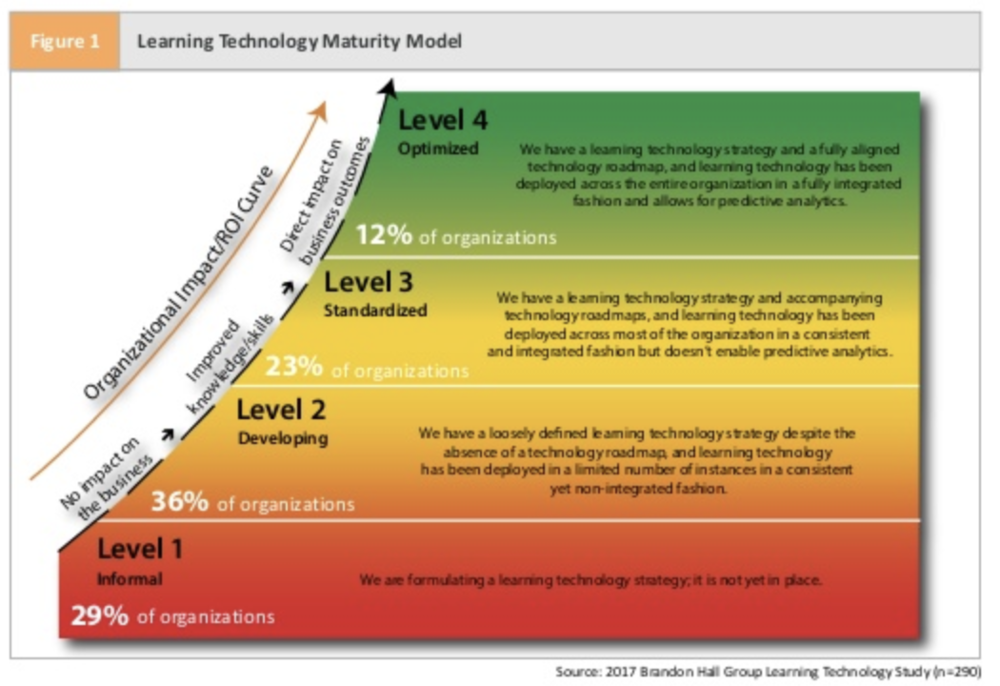
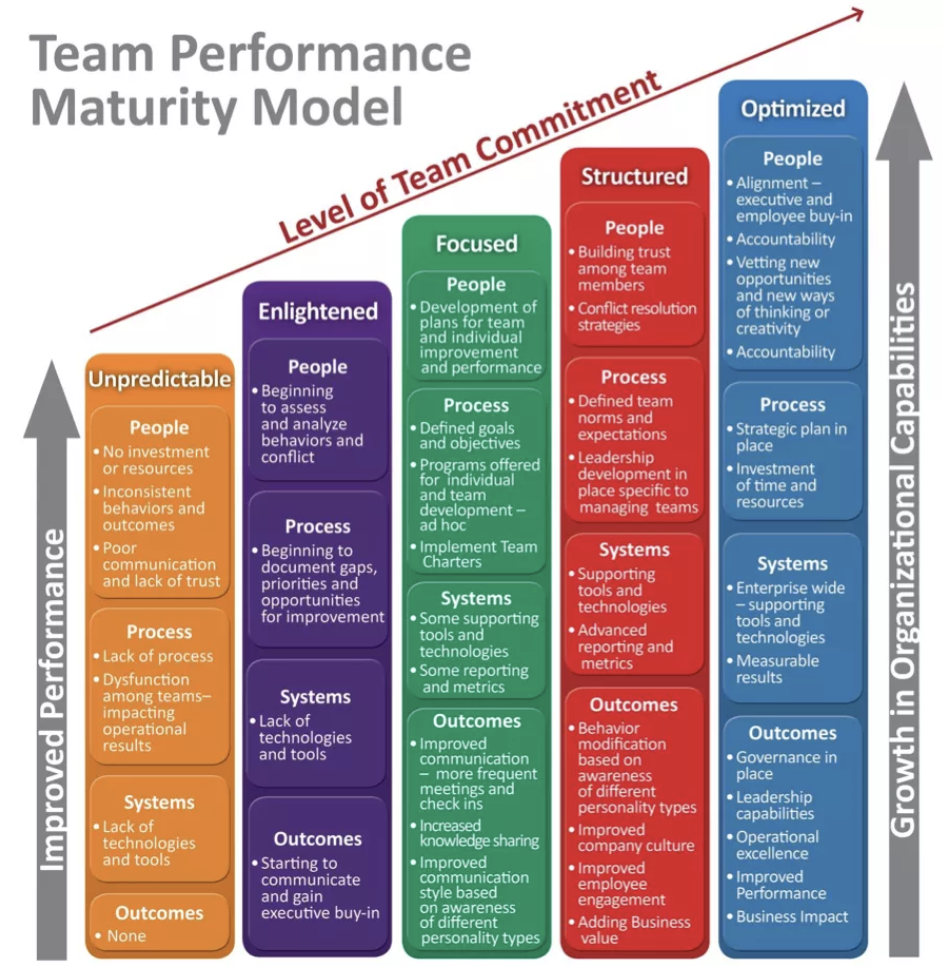
The research and advisory group Brandon Hall uses maturity models extensively. Here are two examples, a Learning Technology Maturity Model and a Team Performance Maturity Model.

Brandon Hall Learning Technology Maturity Model Brandon Hall Team Performance Maturity Model

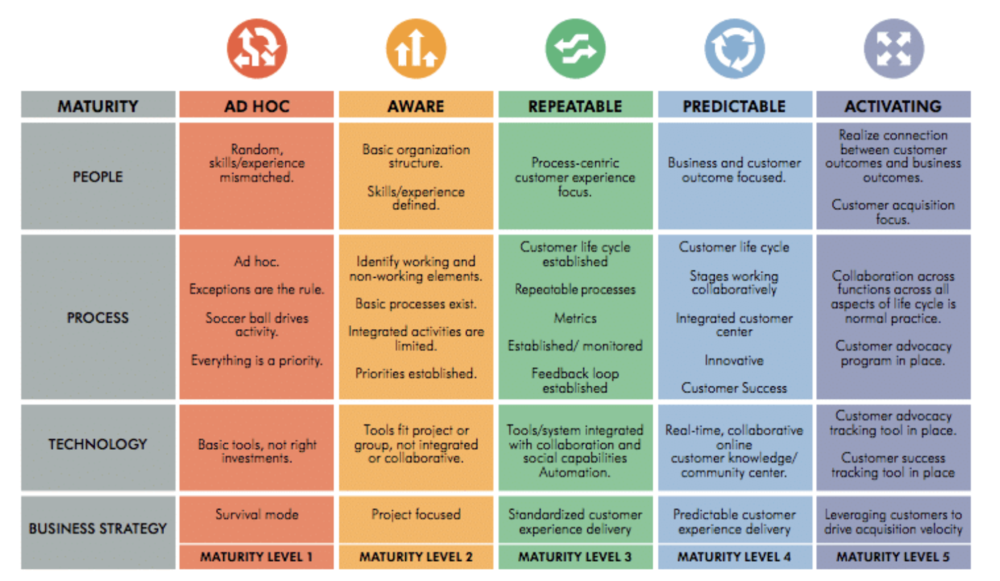
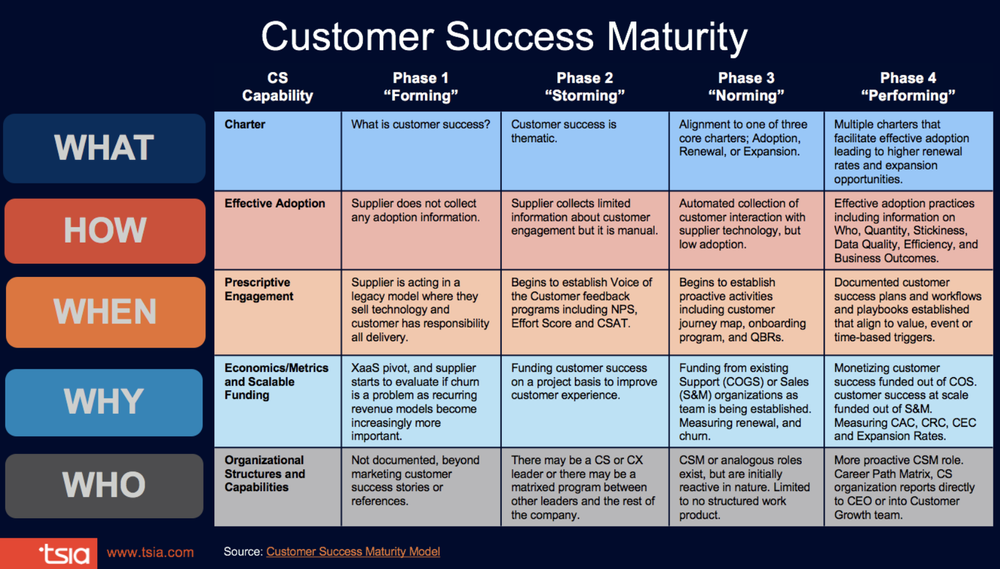
OpenView Venture Partners and the Technology Services Industry Association (TSIA), both organizations that we work closely with, have each published maturity models for customer success. Understanding the business impact of customer success and how to monetize it is an important question for many organizations these days.

OpenView Customer Success Maturity Model TSIA Customer Success Maturity Model

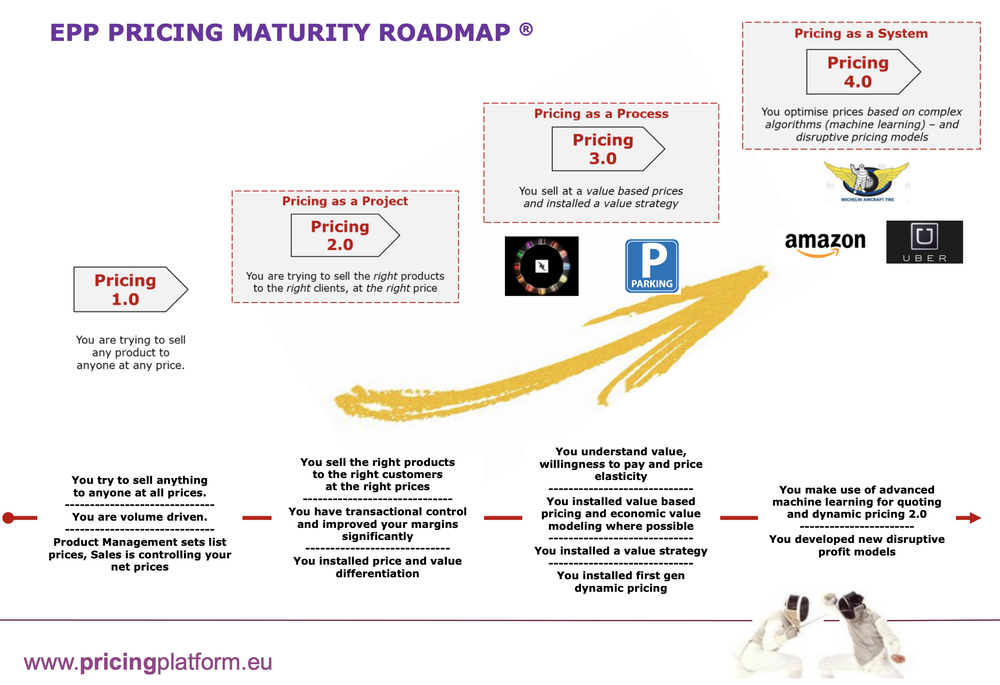
There are of course ‘pricing maturity models’, this one from the European Pricing Platform.

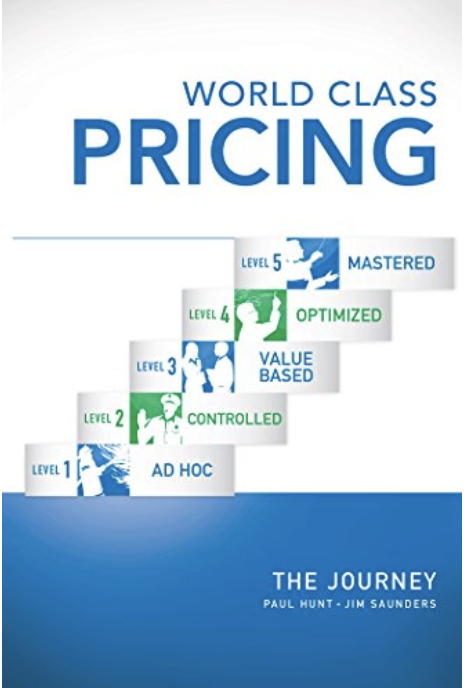
European Pricing Platform Pricing Maturity Roadmap Hunt and Saunderson World Class Pricing

Paul Hunt and Jim Saunders have even written a pricing book organized around pricing maturity. See World Class Pricing: The Journey.

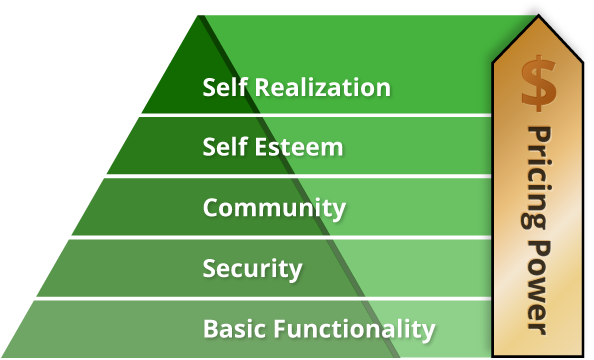
A close reading of maturity models (and there are hundreds of these available) suggests that they have been evolving from a focus on process to a greater concern with the outcomes each phase is meant to deliver to the organization. This maps quite well to emotional value drivers. At Ibbaka, we use Maslow’s hierarchy of human needs to organize emotional value drivers and understand their impact on pricing. Generally speaking, the higher the emotional value driver on Maslow’s hierarchy, the greater the pricing power.

190709_ibbaka-maturity-model.png

So how can a maturity model help you with your pricing strategy? It all comes back to value. Let’s assume there is a maturity model available for your solution. If there is not, then you should consider developing one. The value drivers at each level of the maturity model are going to be different, and this is true for both emotional and economic value drivers.

For emotional value drivers, the higher levels of the maturity model map quite well to the higher levels of Maslow’s hierarchy of human needs, and in our work we have found that there is more pricing power at the higher levels of maturity models.

With economic value drivers, the situation is a bit more complex. Here one has to go deep into how you are creating value for your customers and what new value is added at each stage of maturity. Keeping with the classic, process-oriented approach to maturity models, here is one possible mapping. Note that the value comes from moving from one level of the maturity model to the next.

Level 1 to Level 2: From random to managed.

Emotional Value Drivers cluster on basic functionality.

Economic Value Drivers are often weak at this point and focus on error or risk reduction. This transformation is necessary to set the stage for future value. If this is all your solution does, you are likely to struggle to claim a decent price.

Level 2 to Level 3: Moving from managed to defined.

Emotional Value Drivers cluster on security.

Economic Value Drivers are often based on efficiency. Improved efficiency can have many positive economic outcomes and it is worth working through all the different ways this can impact the customer business model. Improved efficiency is not limited to operating expense reduction. A more efficient pipeline can lead to higher revenues. Efficiency can also make current capital investments more productive, thereby delaying the need for further capital investments. Many innovations have their first impact at this transition.

Level 3 to Level 4: From defined to controlled.

Emotional Value Drivers cluster on security and self-esteem. Note that ‘community’ was skipped over. Process-oriented maturity models generally do not lead to community. This is not true with other types of maturity models. Maturity models built around the type of outcome often include emotional value drivers based on community.

Economic Value Drivers. Once a process in controlled it becomes predictable. This can be an economic value driver in its own right. Predictability does many things for a business. It makes resource allocation more efficient and helps rationalize investment. At present, most successful business solutions are focused on one form of control or another. This should not be the end-point. If you stop here, some smart competitor will find a way to take your customers from controlled to optimized.

Level 4 to Level 5: From controlled to optimized.

Emotional Value Drivers. We are finally getting to self-esteem and self-realization (at least for process nerds). It is unfortunate that so few business solutions (at least those realized in software) are actually able to do optimization. Optimization generally entails exploring complex design spaces and avoiding local optima, those traps that prevent us from getting from an acceptable solution to a better solution. This is still a hard problem for computers, even with AI, and most transitions from Level 4 to Level 5 require some level of professional services.

Economic Value Drivers. Optimization has greater potential for economic impact than the other stages combined. It generally takes a lot of work to quantify optimization value drivers, and many conversations with customers. But if you have helped a company move from one stage of a maturity model to another you will have built up the trust needed to have these conversations. This is where the greatest value is created, and it should be the destination that your customer success organization is designed to deliver.

Permalink

10 Jul 13:49

Hitting Your Target: Why Account-Based Marketing and Influencers Are the Perfect Match

by Nick Nelson

I’ve never been very good at saving money — unless I’m saving for something specific. Give me a defined target, and the intrinsic motivation that comes along with it, and I’ll get there. There is much to be said about the value of focus in achieving a goal. The same philosophy is at play with account-based marketing (ABM). Everyone knows it’s important to bolster a business pipeline — just as it’s smart to save money — but lacking clear direction can be a hindrance. This is especially true at a time where B2B prospects crave personalization and tailored experiences more than ever. As the saying goes, if you’re talking to everyone, you’re talking to no one. ABM provides a focused framework for pursuing your ideal prospective customers. Here comes the twist: Influencer marketing can be the perfect pairing with the approach, providing additional voices who can speak authentically and credibly to the exact people you want to reach. [bctt tweet="As the saying goes, if you’re talking to everyone, you’re talking to no one. And that's one reason why #ABM and #InfluencerMarketing can be a perfect pairing. @NickNelsonMN" username="toprank"]

How Account-Based Marketing Works

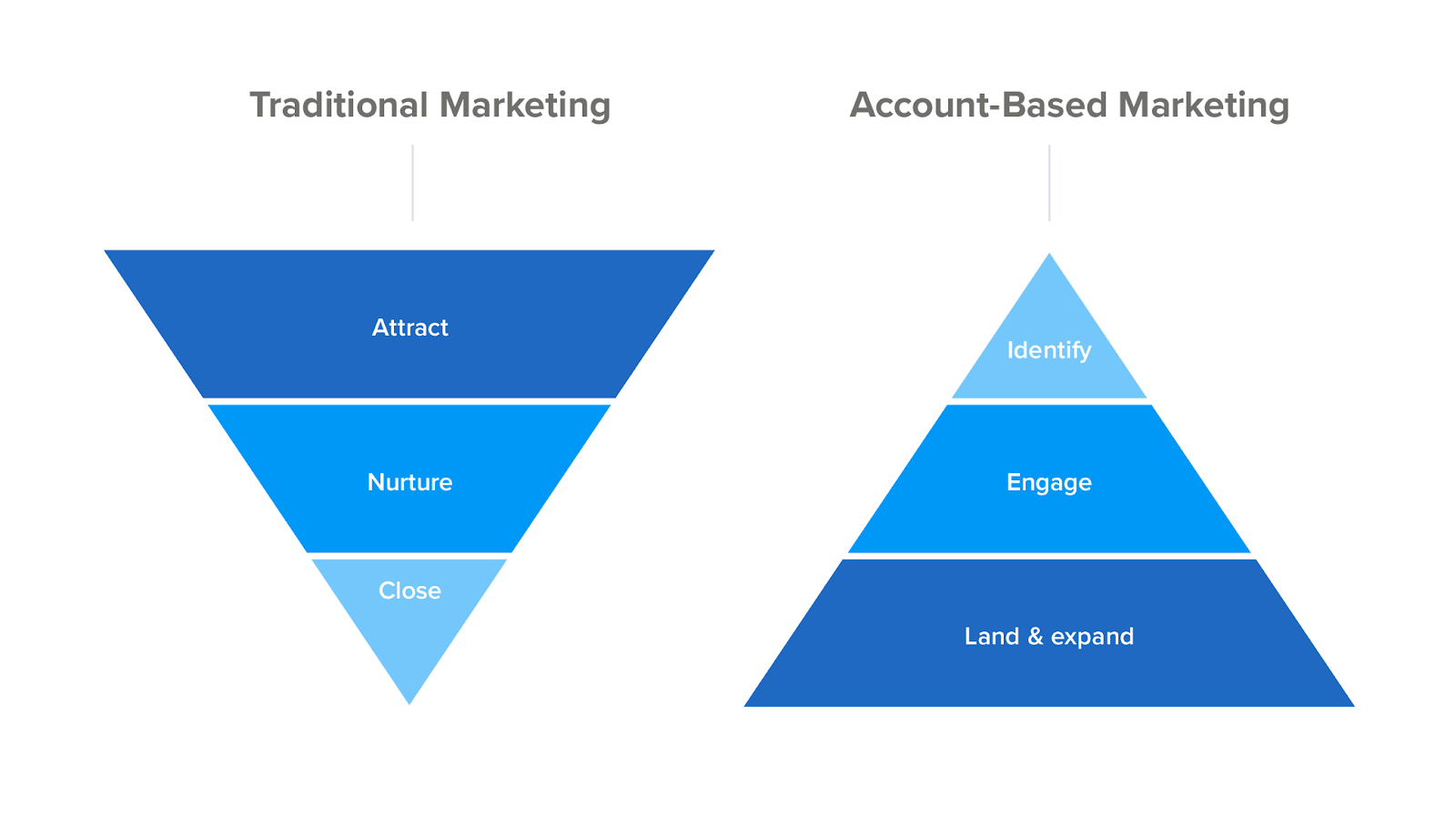
There’s nothing too complicated about it. Basically, rather creating buyer personas and orienting your B2B marketing strategy toward companies that are similar, you instead identify specific companies you’d love to have as customers, then align your strategy more directly.  Once you’re able to win an account’s business, you can shift focus to growing the partnership through upselling, cross-selling, and referrals — a technique often referred to as “land and expand.” This graphic, via SuperOffice, provides a visual explanation of how the ABM process differs from a traditional sales funnel: The prevalence of ABM is growing rapidly as B2B organizations come to embrace the logic behind it. Research found that 61% of companies reported having an established ABM practice in 2018, up from 36% in 2017. 

Combining ABM with Influencer Marketing

In general, B2B marketing is undergoing a fundamental shift — from quantity to quality. Savvy organizations recognize that meaningful engagement is far more valuable than overall reach, so they’re refining their strategies to connect with the right prospects, rather than emphasizing vanity metric volume.  At TopRank Marketing, we follow a similar mantra with influencers. It’s not about who has the most followers, or the gaudiest personal brand. It’s about who resonates most with your specific customers and prospects. ABM helps bring clarity to the matter because you can more confidently pinpoint individuals who are influential with the precise businesses you wish to win over. [bctt tweet="It’s not about who has the most followers, or the gaudiest personal brand. It’s about who resonates most with your specific customers and prospects. @NickNelsonMN #InfluencerMarketing" username="toprank"] Once you’ve defined a list of target accounts, you can begin to map out their buying committees and gather insight around the individuals who are likely to impact purchase decisions. When marrying your influencer strategy to your ABM program, you’ll want to consider questions like these:
  • Who is influential to people within your targeted accounts? Based on their professional networks and social media activities, which influencers do they pay attention to and trust? 
  • What topics do your target accounts talk about most? Try to get as specific as you can, then seek out micro-influencers and niche experts with authority in that particular area.
  • Who will the people in your target accounts be able to relate to? Authenticity is essential for influencer engagements. You’ll want to identify candidates at similar-sized companies, and with similar roles/functions.
When it comes to making a bottom-line impact, you’ll especially want to concentrate on finding partners with purchasing influence (i.e., they can speak from experience or expertise about your solution and its benefits) for co-creation of content. In essence, this knocks out two birds with one stone, assisting with the development of powerful assets that can activate the influence of your collaborators. 

Bring Focus to Your Marketing Strategy

B2B influencer marketing isn’t about enlisting the trendiest Instagram celeb with the most followers. (Well, it is for some companies, but those ones tend to struggle with it.) Instead, it’s about finding the perfect alignment with your audience. Nothing brings more clarity and precision to understanding your audience than ABM, which swaps out theoretical personas for actual organizations and people. This intersection of ABM and influencer marketing represents one of the most promising frontiers for B2B marketing, especially when it comes to the pursuit of enterprise customers. Not only do influencer partnerships help you break through and gain visibility with busy decision makers at these coveted accounts, but also drive engagement and persuasively move the needle. [bctt tweet="The intersection of #ABM and #InfluencerMarketing represents one of the most promising frontiers for B2B marketing, especially when it comes to the pursuit of enterprise customers. @NickNelsonMN" username="toprank"] Influencer marketing plays well with numbers B2B marketing tactics. Learn how influence also intersects with SEO.

The post Hitting Your Target: Why Account-Based Marketing and Influencers Are the Perfect Match appeared first on Online Marketing Blog - TopRank®.

10 Jul 13:48

The Insight Track with Nancy Nardin: Setting the Record Straight on Sales Technology

by Alex Rynne

Technology helps sales reps get the job done. From longtime fixtures like CRM software and email prospecting to emerging approaches using artificial intelligence, machine learning, and predictive analysis, modern sales reps rely on a suite of digital tools to fill and convert pipeline. 

But, according to sales technology stack expert and Smart Selling Tools founder Nancy Nardin, we shouldn’t be focusing so much on these tools themselves. Rather, it’s about what we do with them.

Successful sales reps know that nurturing buyer relationships and winning deals requires more than a suitable CRM system. When it comes to effective selling (and teaching), Nancy reminds us that nothing beats listening and asking the right questions. The most effective reps get to know their buyers on a personal level, using empathy and personalization to move conversations forward. 

Read on for an inside look at the “four pillars of a sales stack,” the pitfalls of CRM dependence, her favorite recent sales book, and more.

Nancy Nardin Shares the Insight Scoop on Successful Selling

What does your role at Smart Selling Tools involve? What inspired you to found the company?

I saw this movement toward SaaS-based solutions as a window of opportunity for those who wanted to create innovative software aimed at sales organizations. CRM has certainly been around a long time. Many people thought of it as “all you need.” Then, solutions aimed at specialized areas started popping up. Sales enablement is one example. Another is scheduling software.

I could see a need to catalog the options, understand the trends, and educate the market. At Smart Selling Tools, we provide free resources to learn about sales tools, featuring the top solutions. I spend a lot of my time in product briefings, conducting go-to-market strategy sessions with vendors, hosting educational webinars, and producing videos that review sales tools.

Which tools do you think are most essential for today’s seller?

Our first SalesTech Benchmark survey found that there were four solutions favored far and above others: CRM, Online Meetings, eSignatures, and what we call lead/list building (you can think of it as finding prospects to sell to). We asked about 26 different types of tools and those four solutions were above the others by a wide margin. As a result, I call them the four pillars of a sales stack. We’re conducting the 2019 SalesTech Benchmark survey now. If people participate, they’ll get a free copy of the results.

Your sales career started back in the early ’80s, selling laptops before anyone knew what a laptop was. What’s the biggest change you’ve witnessed in sales, at a macro level, since then?

CRM is not enough. CRM is an important element, but it doesn’t facilitate a lot of the things that salespeople do on a daily basis. It doesn’t find new leads for you. It doesn’t keep track of activities like phone calls or meetings (unless you manually log them). It doesn’t tell managers what works on sales calls. It doesn’t do a good job of prioritizing high-volume prospecting. 

CRM was the first sales app born from the needs of large field organizations who were just beginning to arm their sellers with laptop computers. Back then, it was referred to as Sales Force Automation or SFA. It was followed soon after by a digital slideshow solution by GRiD Systems, the laptop company I sold for. It wasn’t until around 2005 that the world began to see new types of sales tools come to market.

“CRM is not enough. CRM is an important element, but it doesn’t facilitate a lot of the things that salespeople do on a daily basis.” — Nardin

Do your habits and tendencies as a sales professional ever cross over into your personal and social life? Any amusing examples to share?

Interesting question! I admit, I do expect more from salespeople I encounter in my personal life. I notice when they’ve asked a good question at the wrong time. I have to keep myself from wanting to coach them as they’re selling to me!

From your view, which effective sales tactic is most overlooked or underutilized in the profession today?

It’s a tie between listening and asking good questions! Salespeople often listen just long enough to start talking. They’re not really listening or responding to what the buyer says. In that vein, they often ask a question and use the answer as a jumping off point to pitch. Step back and really hear your prospects. Comment on their answers and ask another question.

“Salespeople often listen just long enough to start talking. They’re not really listening or responding to what the buyer says.” — Nardin

What are some personal traits that you feel make you a more effective salesperson and teacher? 

There are a couple things. For one, I’m empathetic. I also don’t take things personally. I’m good at what I call informed persistence. I don’t give up, but I try to offer new information or ideas in my follow-up – not just the same ’ol “checking in” message. It’s important for sellers to be confident without being arrogant and to be patient without being weak.

Are millennial buyers different from past buyers? What guidance would you offer to sellers as they engage this new wave of decision makers?

I’m afraid I can’t answer that question. I haven’t sold to enough millennial buyers. With all the talk about millennials, I’d say they share these things in common with other generations: they don’t want you to waste their time, they want to be respected, and they’re looking for ways to make a difference.

What's your stance on the ever-thorny topic of "cold-calling"?

Well, I just did a webinar on cold-calling with Natalie Severino of Chorus. I enjoyed our conversation! We talked about whether it’s dead or alive (it’s alive), the right ways to get people to engage, the anatomy of a good opener, pitch, and close — and more.

What’s the best book (sales-related or otherwise) you’ve read recently?

The most recent book was The Path Made Clear by Oprah Winfrey. It was good to step back from all the business books I read, take a deep breath, and remember the big picture. Honoring your calling, as Ms. Winfrey calls it, is not just about success but of significance.

I have to mention a sales book as well. There are so many of them. One of my favorites is the recent book by James Muir called The Perfect Close. You can get a lifetime’s worth of sales education in this one book. To help you put it into practice, he’s published a step-by-step workbook. I can’t recommend it enough.

Which emerging technology (AI, machine learning, predictive analytics, etc.) do you see as most promising for sales at large? 

The ones that help salespeople reduce the FAT in their sales process. AI holds great promise because of its focus on doing things that people can’t do, or can’t do fast enough. The F in FAT stands for “fetching.” Salespeople do a lot of fetching (like finding information, contacts, insight, collateral). A stands for “assessing” things like “who should I call next?” or “what needs to be done to advance a particular deal?” And T stands for “task-doing.” Tasks can be things like entering meeting notes or call dispositions into the CRM. Those are all things that AI and machine learning have the potential to help with.  

What’s the most obnoxious habit you see prominently from salespeople these days, and how would you advise them to alter that behavior?

The “set-it-and-forget-it” prospecting approach. Sales tools make it possible for sellers to put outreach cadences in action. The problem is, they often do it in a way that is too formulaic and impersonal. It goes like this: Email 1 – Pitch, Email 2 – Bringing this to the top of your inbox, Email 3 – I’ve been trying to reach you, Email 4 – Break up. That’s a whole lot of wasted activity.

Who is one up-and-coming salesperson to watch, and why?

Anyone who graduates from Dr. Howard Dover’s program at the University of Texas, Dallas, or Dr. John Peterson’s program at Northern Illinois University, or Joël Le Bon of The Johns Hopkins University - Carey Business School. Their students are amazing!

Set It and Go Get It

Technology has come a long way since the debut of personal laptops in the early ’80s. Today, innovative tools are transforming the way sales reps conduct business. But, as expert Nancy reminds us, nothing can replace thoughtful communication, strong conversation, and a personal touch.

To succeed in today’s vast and ever-changing sales industry, reps have to think beyond sophisticated CRM systems and get back to the heart of every successful transaction: relevant, valuable, and personalized connection. Emerging new tools are designed to augment, not replace, these essential selling mainstays.

For even more influential guidance from industry pros, subscribe to the LinkedIn Sales Blog.

10 Jul 13:48

Are You Even Ready to Prospect?

by Mark Hunter

How can you ever expect to achieve the results you need from prospecting if you aren’t prepared to prospect? Prospecting is tough enough, so you shouldn’t make it even harder on yourself. Watch this video to learn how you prepare to prospect to ensure you prospect effectively:


The worst thing you can do is sit down, suddenly start making prospecting calls or sending out emails and expect results. Most likely, you’ll be disappointed with your results. Prospecting effectively includes getting ready and this always has to involve working a day ahead. How you spend your time preparing to prospect the day before determines the outcomes of your prospecting. The work you accomplish beforehand has a significant impact on your results. I like to say, “tomorrow begins today,” and this is especially true when it comes to prospecting.

Getting ready to prospect is more than just having a list of people you intend to reach out to. Before the end of the day today, you should decide who you will prospect, what questions you intend to ask them and your goal for each person who you plan to contact tomorrow. Doing all of this ensures that you won’t waste your time or the time of those you call. Also, you’ll have more confidence with each call if you get ready the day before. Finally, planning ahead gives you goals so you can measure your effectiveness.

Did you notice that I did not tell you to decide what you’re going to say to the prospect? Rather, I told you to know what questions you should ask.  The last thing a prospect wants to hear is a long-winded pitch about you and your company. The only way you can expect to engage a prospect is by truly engaging them and this starts with asking questions to get them talking. Take time to develop questions that you feel will grab the prospect’s attention and engage them in the conversation. You will never be in a position to ask the right question at the right time unless you take the time to prepare.

When you take the time to prepare in advance to prospect, you’ll be amazed at your success!

Download my newest ebook, 50 Prospecting Truths to gain more insights on how to prospect effectively.

Copyright 2019, Mark Hunter “The Sales Hunter.” Sales Motivation Blog. Mark Hunter is the author of High-Profit Prospecting: Powerful Strategies to Find the Best Leads and Drive Breakthrough Sales Results

09 Jul 18:06

The Value of an Email Opt-Out

by Tom Wozniak

In email marketing, many marketers look at an opt-out or unsubscribe as the worst-case outcome from an email being sent. There’s some obvious logic involved in that belief. If an email recipient unsubscribes, you can no longer market to them, meaning you lose the opportunity to ever sell them a product or service, engage them in reading your content, or simply maintain that relationship over time through email messaging. That all seems pretty negative. Probably because of that, many email marketers think little about these opt-outs, other than making sure the unsubscribe request is received, processed, and that the email address is removed from future mailings. Who wants to focus on the negative?

Well, as it turns out there is actually a lot of value in those opt-out requests for email marketers, if they take the time to evaluate them and learn about the possible reasons behind the decision of email recipients to ask to be removed from future mailings. Opt-outs should be analyzed in the same way you pore over your positive performance metrics, like open rate, click rate, click-to-conversion rate, and conversions.

With these positive email performance metrics, marketers look at a particular metric in relation to various aspects of the campaign – audience segments, email content, subject lines, offers, etc. Does a particular subject line drive higher open rates? Do different audience segments deliver a higher conversion rate with a certain offer? Do certain email layouts deliver higher click rates?

The same approach works when evaluating opt-outs.

  • Is the opt-out rate higher for certain audience segments?
  • Is a particular subject line correlated to higher or lower opt-out rates compared to other subject lines?
  • Do certain types of offers lead to varied opt-out activity
  • Do you receive more opt-outs from certain geographic regions than others on average?

This is not an exhaustive list, but provides a few useful ways to evaluate your opt-out requests. The next step is to take that information and use it in your overall campaign optimization process. Like positive marketing signals, these opt-out insights shouldn’t be considered in a vacuum. They should be included as a part of evaluating the overall performance of a campaign or the various elements that were being tested in a campaign.

For just about every email campaign, the ultimate goal is to optimize toward the most important positive performance metric, which is typically a conversion of some sort (a completed sale, a submitted lead form, etc.). But a fully developed optimization strategy will involve looking at multiple performance metrics and evaluating how they impact the marketer’s strategic marketing objectives over the long term. It is possible to optimize a campaign to drive conversions over the short-term, that may not be in line with longer term goals. This is where an evaluation of all relevant positive and negative signals comes into play, and a closer look at your opt-out activity can help drive improved performance down the road.

09 Jul 18:06

Want to Earn and Build Customer Trust? Email is the Most Powerful Tool Businesses Have

by Ross Sibbald

Today’s customer has more choices available to them than ever before. At the same time, technology has made it easier to switch between those choices. For example, switching banks or insurers can be done in a matter of minutes, with just a few taps on a smartphone.

In this kind of environment, organizations need to provide their customers with reasons to remain loyal. The most powerful of them being trust.

In fact, a recent study by Deloitte Digital found that trustworthiness is the trait that makes customers feel the most aligned with their favorite brands.

Email as a preferred channel

The thing is, trust can’t be built in a vacuum. It requires organizations to practice ongoing communication and engagement. Importantly, it requires them to do so on whatever channel, each of their individual customers prefer.

And for most customers, that preferred channel is email.

The numbers might vary, but study after study has shown that most people would rather have organizations communicate with them via email than text, phone calls, direct mail, or social media. This holds true, regardless of age and socio-economic background.

There’s a very good reason for that: email is accessible (most internet users have an email address), the customer can reaTd it when they want to and it provides the kind of exceptional customer experience that drives loyalty.

More than almost any other form of customer communication, email allows for hyper-personalization, customization, and the kind of data that ensures each customer gets maximum value from the organization’s communications.

It should hardly be surprising then that global management consulting firm McKinsey & Company found that the rate at which emails prompt purchases is three times that of social media, and it also delivers an average order value 17% higher.

Relevance and safety

It’s worth noting, however, that there are two key elements, organizations need to keep in mind if email is to be used successfully in building and maintaining trust:

  1. The email communication has to be relevant
  2. Security is key

Technology has made the former a lot easier to deliver.

Real-time data, dynamic content and artificial intelligence are all powerful tools when it comes to creating the perfect message for each person, at the perfect time.

Even with all that technological power, however, it’s still vital that an organization’s email communications feel authentic. Being the digital equivalent of a sleazy salesperson is no way to build trust.

Finally, and perhaps most importantly, people have to feel secure, when engaging with emails they receive from a business. Email-based cybercrime is a major concern for many consumers.

An organization can go a long way to easing those fears by educating consumers about what it’s doing around email security and how they can keep themselves safe – this is particularly important, as it empowers customers, further driving trust and loyalty.

Fostering connection

Ultimately, if a customer is really going to trust an organization, they need to feel connected to it.

Building and maintaining that sense of connection requires ongoing, relevant, and useful communication. And on all those fronts, email’s power is hard to beat.

09 Jul 18:05

Why A Solid Landing Page is Key to Effective PPC

by John Jantsch

Why A Solid Landing Page is Key to Effective PPC written by John Jantsch read more at Duct Tape Marketing

Some marketers choose to send prospects who click on their paid search results to their website’s homepage. While this will certainly get them to a page with relevant information about your company, it is not the most effective option when dealing with search marketing.

Instead of sending people to a generic page, it’s far more effective to design a custom landing page with information and an offer tailored to the verbiage in the paid search ad. While landing pages serve a number of other purposes, one of my favorite techniques is to create one for PPC ads. Here, we’ll look at the many benefits to creating a solid landing page for PPC, and what elements go in to creating a winning page.

Increase Conversion Rate

Designing a custom landing page is one of the keys to increasing conversion rates on ads. Your ad copy should be for a specific product or offer. When a reader clicks on the link, they want to learn more about that certain thing, not be taken to a page that’s more generally about your business.

When visitors are driven to your homepage, it’s now up to them to root around for information that’s relevant to what they saw on the ad. Even if you have a great website, it’s easy for them to grow frustrated and impatient, looking for the information they wish they had right in front of them in the first place. That makes them more likely to give up their search and return to the SERPs.

A custom landing page, however, that addresses the messaging from the ad directly, presents the reader with everything they want to know. This is a lot more likely to generate an immediate positive response from viewers.

Keep Cost per Click Low

A landing page with a high conversion rate also works to keep your cost per click low. When more people convert, you’re generating more revenue from the ad campaign, which means that you’re getting more bang for your marketing buck along the way.

Earn a Higher AdWords Quality Score

There is yet another bonus to creating an effective landing page for PPC ads. When you achieve higher conversion rates and keep visitors on your site for longer, Google takes notice. They infer that the content on your website must be highly relevant to searchers, and so in turn improve your standing on their site. They reward good ads with better placement and show them more frequently.

How Do You Build a Great Landing Page?

So now that you understand all of the value that a solid landing page can bring, let’s talk about how to create one. (And if you’d like a look at what not to do when creating a landing page, check out this post.)

Focus on One Call to Action

Visitors to the landing page are coming there because of the offer you made or product you cited in your PPC ad. Your landing page should contain just one call to action, and it should be directly related to the offer or product from the ad.

Let’s say, for example, that you own a plumbing company. Your PPC ad touts your same-day service. People clicking that ad are probably not interested in the work you do installing environmentally-friendly plumbing systems as part of home renovations. They likely have an emergency situation and are in need of immediate assistance. Your landing page should have a call to action that drives them directly to your online booking system so that they can get on your calendar ASAP.

Keep the Page Clean and Simple

Because visitors are coming there with one express purpose in mind, they don’t need a whole lot of information to convert. Instead, a simple headline; one big, bold, relevant image; and a clear description of the details of the product or service you’re offering will do.

Going back to the plumbing example, start with a headline that says something like “Same-day plumbing services, 365 days a year.” The image should be a hero image—one of your plumbers in front of his truck, striking a bold pose that says, “I’m ready to solve all your plumbing problems!”

Then the description of the service should include what you’re offering (licensed plumbers for same-day service) and what is expected of consumers (there’s a flat-rate fee for your service).

If you’re looking for inspiration when it comes to designing your own landing page, check out these examples, gathered together by Instapage.

A solid landing page can help your PPC ads perform better, rank better, and generate more revenue for your business. By keeping your messaging narrow and targeted, you speak directly to the immediate needs of your prospects. And by building a simple, visually engaging page, you guarantee that you’ll catch their eye and hold their interest.

09 Jul 17:35

The Complete Guide to Running Effective Email Nurture Campaigns

by VerticalResponse

Step aside, expensive marketing tactics. There’s an affordable way to invest in your audience that pays off for your company — and your customers. Join us as we delve into email nurturing.

What is email nurturing?

Email nurturing engages potential customers with the hope of turning them into loyal customers. When a visitor performs a specific behavior on your website, it triggers an email with targeted information to nurture that relationship with your brand. Data, personas and demographics come together to segment email lists; these allow you to send relevant content that helps customers on their journeys — whether they want to learn, research or purchase — while leaving an impression.

You can send a series of these targeted emails in a nurture stream to guide the potential customer through the buying process. Rather than just generating leads, the focus is on the follow-up with those leads.

Like anything worthwhile, it takes time to see results with email nurturing. Show customers you’re not wasting their time by offering useful information or extras like an eBook or case study. Based on their behavior with your content, you can interact with your audience in a natural way that leads them to take further action with your business.

The difference between email nurture and drip campaigns

Confusion is common around email nurturing and drip campaigns. To clear this up, here are some quick facts about drip campaigns:

  • A series of emails sent to a general audience at a set schedule
  • Risk coming off as salesy or annoying if the frequency is too high
  • Often sent as a series to consistently put your business name in readers’ inboxes

Email nurturing campaigns aren’t based on a set schedule.

  • Based on behavior (i.e. downloading an eBook, visiting a specific page multiple times or attending a webinar)
  • Provides educational content while encouraging engagement
  • Continually triggers emails based on past actions

The importance of email nurturing

According to Erica Adams, Integrated Marketing Principal at VerticalResponse’s partner company Deluxe, lead nurturing is important because “it meets a prospect where they’re at in their journey and offers relevant, timely resources to help them make thoughtful decisions.” Adams goes on to say, “Today’s buyers are independent in their research and decision-making, and lead nurturing gives you the opportunity to help them and position yourself as an expert.”

How to run effective email nurture campaigns

Creating your first, or fiftieth, email nurture campaign can feel overwhelming. We’ll break it down in six steps:

  1. Identify how you help customers or what solutions you have to offer. Divide them into different categories. For example, a salon may separate hair color kits from products for different hair types. If a lead completes a quiz about their hair type, the salon would place them in a category that makes sense for them. The salon could empathize with its customers’ problems by sending out an email asking what they’re looking for, such as products for frizzy hair, tips to increase volume or ways to grow out hair.
  2. Dig into your customer’s journey. Think about their behaviors, thoughts and feelings at every interaction with your company. Understanding potential pain points and roadblocks will help you nurture leads at each stage. Better yet, if you’ve got a team in sales or research, have them survey users or dig through customer reviews to see where problems arise.
  3. Gather information about your leads to help you tailor your communications. Items like forms on your website, email interactions and customer research can help. Here are some ways to divide your focus:
    • Demographics such as job title, experience or location
    • Level of authority a lead has
    • Needs or wants
    • Engagement on social and with emails as a gauge of interest (clickthroughs, comments, shares and downloads are good ways to measure email and social engagement)
    • How likely they are to buy, based off of their behaviors, so you can get them what they need when they need it
  4. Work on the emails. Users coming to you for the first time will likely enjoy videos or blog posts. Sharing helpful information and being a resource at this stage builds a trusting relationship between you and your potential customer. As they interact with your company more, use follow-up emails with products or services that can help with whatever they’ve been looking at on your site or things you think could help them. Case studies and webinars are great for this. As they move closer to a purchase decision, try product demos, free consultations or customer testimonials. Since they’ve trusted you this far, take it home by including a strong call to action (CTA) so readers know what to do next.
  5. Consider how Email Automation can help. Knowing your audience is hugely important, but you don’t have to personally write to each and every lead individually. VerticalResponse’s Email Automation helps send the right campaigns to your defined leads once they complete a certain action. You can also see who opened and clicked through your emails.
  6. Measure and adjust as needed. A strong nurture campaign requires reflection and evolution as time goes on and customer needs change.

Email nurture best practices

Adams provides additional advice for your nurture streams:

  • Personalize: Make the experience unique just for them. The idea is to send the right content to the right people at the right time to build trust and provide value. Ideally, they’ll see you as a resource and continue opening your emails once you’ve proved yourself. Personalizing to their interests helps reach this objective.
  • Value customers’ time: Don’t make the mistake of emailing leads every day. They won’t have time to digest your information. They may even feel annoyed and unsubscribe.
  • Engage leads: Ask for their feedback or offer something you think they’d find value in. Try a bonus eBook for someone who has downloaded multiple eBooks or a sneak peek into a product they’ve preordered.

Examples

See nurturing emails in action. Use these examples as inspiration you can transfer to your business.

To capture attention, mattress company Casper uses witty wording and a customer testimonial to draw shoppers who’ve abandoned their carts back to the Casper website:

casperv3.png

Below is an example of celebrating your customer. Airbnb’s email puts itself in customers’ minds without asking readers to buy anything:

airbnb2.png

As a bonus, here are firsthand recounts of the benefits of email nurtures:

“It’s helped us to grow our business over the last year. I have been able to add my new customers easily, and it’s simple to create email campaigns. This is great for me because I don’t enjoy computer work. But I have my emails out to customers in no time. We have a great turn around in customers responding to what we are offering through our emails.” — Elaine Meade, Cheerful Dreams

“The simplicity and speed of being able to create a professional looking email was much appreciated. The feedback results such as opens, clickthroughs etc. is very helpful to improve content and segmentation opportunities.” — Geoff Walker, Wycliffe

“The big advantage to me is the ability to have sub-lists that group my members in geographic and other ways. I can easily create lead pages, email campaigns and Facebook posts. VerticalResponse has made it easy for me, a small business entrepreneur, to create professional programs, sign-up pages and email follow-ups!” — Meghan Nunes, Total Body & Lifestyle Coaching

Nurturing your customers doesn’t have to feel salesy, and following leads doesn’t mean you have to just “market” at customers. Find ways to connect with your customers when they need you, and you’ll be rewarded with loyal, long-term fans.

09 Jul 17:35

How to Turn Traditional Discovery into the Exploration of Change

by Anthony Iannarino

In the past, the word discovery was used to describe both a stage in the sales process as well as an outcome. Both the stage and the outcome described the process of asking clients to share their dissatisfaction with their results, their supplier, and their challenges. Discovery presupposed that the client was dissatisfied, and if you get them to share all the ways they were unhappy, you could share with them how you might help improve their results and their experience.

Like any strategy or tactic, over time it can lose some of its effectiveness. You would be hard-pressed to identify all the many factors that have made what I will call “traditional discovery” less effective over time, as there are many.

  • There is no doubt that many businesses now have fewer people who are being asked to do more with less; we are leaner.
  • It’s also true that the purchasing function has gained both power and influence, with larger companies consolidating suppliers while also ensuring they have enough vendors to take care of their needs, and making traditional discovery more difficult.
  • There is also a drive to achieve consensus before making significant changes, as well as a willingness to live with the status quo, the two of which may be more closely linked than we recognize.

All of these factors, as well as the many more missing from this list, leads to more difficulty making a case to displace the status quo.

If the idea of solution selling began with traditional discovery, modern consultative selling now starts with something that might be more accurately termed “Exploration,” if only to shift both the strategy and the outcome.

The Difference in Discovery and Exploration

In traditional discovery, the outcome is to ask questions that caused your prospective client to disclose their dissatisfaction, that dissatisfaction being necessary for you to create an opportunity. In Exploration, the idea of discovery is broadened to include different approaches and different outcomes, both of which require more business acumen, as well as more significant sales acumen.

Exploration opens up several possibilities and a higher likelihood of creating a new opportunity by allowing for the Exploration of any known problems, challenges, or dissatisfaction while also creating a space to explore what is possible, the better results available to your dream client even if they are not presently dissatisfied. More still, the idea of exploring change moves past the idea that dissatisfaction by itself is enough to compel your prospect to change; if it were, your prospect would already be working on change.

Exploration offers the ability to explore change when the client’s dissatisfaction may not rise to a level that yet compels change, allowing you to share the context that should cause the client to act.

If you have wondered why you have had meetings with prospects who are dissatisfied, who need to do something different, and who still do nothing, it is because they are not yet compelled to change. This is why you have meetings with stakeholders who are happy to have discovery meetings with you and then go dark, which brings us to another shift worth exploring here.

B2B Sales is a Game of Consensus-Building

The idea of traditional discovery, while still being valuable, tends to lose something when there are more stakeholders involved in decisions to change. Let’s say you found a stakeholder with a title and the responsibility for the very outcome you can improve. You have had a traditional discovery call, and this stakeholder has shared her dissatisfaction. You might believe you have an opportunity, but the fact that the four other people who would have to agree to change were absent from your conversations makes it unlikely.

The idea of Exploration takes a different look at opportunity creation, starting with the idea that you are exploring change, a change that is going to require the support of multiple stakeholders.

In The Lost Art of Closing: Winning the 10 Commitments That Drive Sales, I provided an outline of the commitments one generally needs to obtain along the path from target to close. In that book, and on LinkedIn, I made note of the fact that the sales process and the buying process are both nonlinear. It’s unlikely that a complex B2B sale progresses through stages without going back over ground already covered, and without some conversations that a traditional approach would have seen as needing to occur later in the linear process, we try to adhere to.No more pushy sales tactics. The Lost Art of Closing shows you how to proactively lead your customer and close your sales. The Lost Art of Closing

You are likely now to find different stakeholders in different places along the continuum of “dissatisfied” or what Exploration might better describe as “compelled to change.” Exploration extends to exploring change and collaborating with more stakeholders to build consensus. It recognizes that the change you are asking—and helping—the client to make is organizational.

Intentionality and Change

In one of my businesses, I started asking clients to provide me access to the stakeholders who were going to be affected by any decision to change as the next step in our rather linear process more than two decades ago. Just paying attention to their needs not only increased sales and improved our results, but it also increased the speed at which we won deals. We recognized that without allowing them to participate in Exploration, we not only wouldn’t have their support, we would also create resistance to their executing the solution (which sometimes boiled down to not placing orders).

What was interesting about meeting with a lot more stakeholders, including end-users, was that there were always more people compelled to change that would have been left out of the conversation.

Even though traditional discovery is valuable, approaching conversations as the Exploration of Change allows for a broader conversation about change and greater outcomes when it comes to creating new opportunities.

Essential Reading!

Get my 3rd book: Eat Their Lunch

"The first ever playbook for B2B salespeople on how to win clients and customers who are already being serviced by your competition."

Buy Now

The post How to Turn Traditional Discovery into the Exploration of Change appeared first on The Sales Blog.

09 Jul 17:35

Going Beyond Sales and Marketing Alignment: The Key to True ABM Success

by Brandon Redlinger

For many years, we have heard about the importance of marketing and sales alignment – yet in many cases this essential relationship doesn’t seem to have improved much. It is critical to agree on goals at a high level (aligning, great!) but creating a valuable day to day working relationship is what teams should strive for. But how?

ABM helps marketing and sales work more effectively because it clearly requires a shared goal – but to drive success, teams need ongoing collaboration. Teams doing ABM for a small set of target accounts know this today. Often, field marketing works very closely with a sales representative to understand the goal and how BOTH of their efforts will drive meetings and ultimately, a deal. When this type of working relationship exists, the conversation switches from sales vs. marketing sourced deals to company sourced deals. When you have team alignment, marketing doesn’t have lead commits, and sales doesn’t have daily dial numbers. An entire company sources the deal and closes the account together.

A shared goal is a good first step, but here are some other tips we have found really help the revenue team become unstoppable.

Three Elements of Revenue Activation: People, Processes and Systems

People: Structuring Your Team to Ensure Success

ABM is a team sport. But the roles and responsibilities of your team members are going to be different than traditional roles within sales and marketing. Let’s start by first taking a look at an overview of the roles that key departments play in ABM.

Marketing:

      • Ensure clear lists of accounts are identified and prioritized
      • Work with sales on account entitlements and program roll-out
      • Allocate budget
      • Provide insights and intelligence for accounts plans
      • Have goals and reporting for each buying stage

Sales:

      • Select accounts by tier
      • Build out account plans
      • Lead outbound efforts for target accounts
      • Collaborate with marketing on programs
      • Report on account progress

Once you have a clear understanding of your departmental roles, you can go one level deeper and look at the responsibilities of individuals within each department. The good news is that you can leverage a lot of your current team and their strengths to bolster your ABM initiatives for quick wins and ongoing success.

For your ABM team, most of these roles exist within your current organization already. If your company has a heavy ABM emphasis, you may want a Director of ABM. Yet, if you are just getting started or have a hybrid role, you may leverage current team members to run some ABM programs.

You can also evolve your team over time if that makes sense for the business.

Processes: Setting Up Key ABM Operations

As with most things in business, saying something doesn’t always make it so! We can’t just wake up and decide to have our revenue teams be more aligned. Beyond ABM stand-ups, which we’ve written about before, here are a few select (and more tactical) points that can make coordination and running ABM more successful.

Set Clear Goals and Definitions: At the onset of an Account Based Marketing program, have a hypothesis and establish a goal.

Here is a simple example:

It is also ideal to have a Plan of Record (POR). Simple aspects to cover include:

    • Define upsell/cross-sell
    • Marketing contributes x% to pipeline
    • Partner or channel contributes y% to pipeline
    • Sales contributes z% to pipeline

    Figure out which accounts to pursue. Want to spend less time prospecting cold accounts? Start by selecting the right accounts. Want to have higher close rates? Start by selecting the right accounts. Want to close larger deals? Start by selecting the right accounts. Want to shorten your sales cycles? You guessed it – start by selecting the right accounts.

    Selecting the right accounts is too large and important of a topic to try to tackle in one post. That’s why we’ve written an entire ebook on the subject, How to Select Your Target Accounts to Ignite Your ABM.

    Establish Service Level Agreements. We’ve talked about roles and responsibilities, and we’ve covered definitions and language. Now, we must break down the silos and align your team with Service Level Agreements (SLAs). These are designed to establish agreement across the entire team and, more importantly, align thinking and compensation on comparable business results.

    Example SLAs to consider:

        • Set agreed upon definitions and criteria for key definitions, such as Marketing Qualified Account, Sales Qualified Account, close/lost opportunity, inbound and outbound
        • Set agreed upon KPIs, metrics and benchmarks
        • Establish a dashboard and reporting that key members can easily access
        • Have clear rules around time for follow up and what qualifies as true outbound

    Systems: Using Tech to Streamline Activities

    The best thing about technology for ABM is it helps you automate and streamline manual processes. But be careful – the goal isn’t to automate everything, especially the things humans are better than technology at, like building relationships. Here’s where you can rely on systems to make alignment and ABM success inevitable.

    Have a shared ‘system of record’ to track accounts. It does not help coordination if marketing tracks leads but sales tracks accounts – that is not going to help alignment. For example, marketing automation systems are lead-based. It makes it more challenging to report on marketing impact at an account level, which is what is interesting to sales. Make sure you have an account foundation so you can have a complete account view to track coverage, awareness and engagement.

    Help Sales prioritize their time. One of the best ways marketing can help sales is highlighting the accounts to spend time on. Time is money and you want your sales team to be able to act quickly and sure up their best bets. It helps them to see early stage engagement data and who was involved.

    Make sure Marketing and Sales activities are visible. All teams want to understand what is working and what is not. Make ALL activities visible so revenue teams can see it’s a joint effort (and rarely it’s just ‘one thing’).

    “Sales and Marketing – Both of you desperately need to empathize with the other party. Those are the organizations that win. But that’s up to the head of marketing and the head of sales — to be aligned at the top and create the air-cover for their marketing and sales teams to be able to create a cohesive unit. And that’s what great alignment is.”
    –Gary Vaynercheck, CEO, Vaynermedia

    Conclusion

    A functional marketing and sales relationship is important to hit the revenue and growth goals we all have. ABM, due to the focus on accounts, helps teams align around goals more easily. Layering in some of the tips in this eBook can ensure your team is aligned and also well-coordinated.

    The post Going Beyond Sales and Marketing Alignment: The Key to True ABM Success appeared first on OpenView.

09 Jul 17:34

Standing Out in a Crowded B2B Market

by Dave Sutton

Telenor is one of Norway’s largest and oldest telecoms providers, a 164-year-old Viking that suddenly found itself operating in a 21st-century market bustling with young, strong competitors. Luckily, Werner Toniste, Head of Digital Media, felt this circumstance wasn’t a drawback, but an opportunity. He decided he would try and leverage the brand’s reputation in an effort to revitalize the company in a hugely crowded northern European B2B market.

But how? To do this, he needed to obtain more B2B prospects without going through traditional channels, while keeping a lid on costs. No doubt, the situation required a comprehensive digital transformation that would improve business-to-business relations and leverage better consumer insight. But that wasn’t all. Telenor had structural issues to hammer out, low conception of the buying and optimization cycle, no way of benchmarking channels, and limited info on audience behavior with no way of rapidly sharing campaign insights.

Ellinor Axell, Telenor’s Head of Marketing, also wanted her sales team to stop making time-consuming cold calls and instead follow warm leads. The long-term goal was to eliminate cold calling altogether, and use strong brand story and insight to locate clients with strong potential for growth.

So, what to do? Telenor needed to find a way to be more targeted and personalized while also achieving better coordination among internal stakeholders. Making the switch meant far more than merely moving the marketing budget to digital, it meant making a holistic digital transformation that would re-center appealing B2B brand story and cost as little as possible.

That’s when Toniste and Axnell decided to call up Albert, a self-learning marketing solution program. Telenor would never be the same.

Making the A.I. Leap

Tonsite and Axnell’s decision to go with Albert was based partly on the idea that the transformation would be a two-fold process that recast internal marketing operations while also introducing a digital customer acquisition program. They needed a partner that could handle both aspects while maintaining brand messaging conformity and keeping the focus on the customer.

“We’re proving that you don’t always need more people to get more stuff done. We are producing so much more relevant content with less resources than before, and generating a 432% return on our ad spend thanks to AI.” —Werner Toniste, Digital Media & Analytics Manager, Business

The A.I. from Albert began its work straight away. By tying Telenor’s real-time insights to cross-channel digital marketing orchestration, creative teams got quick and regular feedback on the performance of content. Meanwhile, the A.I. program continually offered fresh insights that the team used to tailor strategy and bradning in real time.

This approach led to faster creative production and storytelling than ever before: new brand content was produced within hours of Albert’s assessments. As a result, the company gained a competitive advantage as it could create the best campaigns and buy the right types of ad placements at the right time.

By virtue of the work with Albert, Toniste and Axnell have completely restructured Telenor’s marketing function and resources. Content creation is handled both in-house and partially by agency partners, and the staff continues to run large-scale brand story campaigns on traditional channels using Albert’s insights to inform creative. It now requires just one dedicated in-house person to run the technology and act as a liaison among the larger marketing team, which saves the budget.

The Takeaway

“We’ve achieved 122% in increase in qualified leads from our digital channels, and we’re able to attract and retain better talent because of our use of AI.” —Ellinor Axell, Head of SME Sales and Marketing, Business

Toniste and Axnell have given a legacy company a dramatic digital awakening that has transformed how Telenor functions both in both the local and international B2B marketplace. As a result, Telenor plans to pilot Albert across its brands in the various countries in which it operates.

After just the first year of working with Albert, Toniste saw major gains he wouldn’t have seen otherwise: 122% increase in leads, 30% reduction in marketing spend, and an incredible 432% return on ad spend. The benefits keep flowing in, usually in the form of fresh customer insight and usable market data. Telenor has achieved incredible data optimization and high levels of customer insight. All this has made active cold calls irrelevant and led to a relationship-based sales model that has not only maintained but improved its focus on the customer and on elevating and customizing their strong brand story for unique B2B audiences.

That means that this old Norwegian legacy brand is no longer constrained by old habits and traditional marketing. It stands reborn, a fully transformed modern company and a soaring symbol of what ambitious, digitally transformed big business can do for brands in the contemporary telecoms market. Through the use of AI and smart digital branding and storytelling, Telenor has carved a new niche for itself in an overcrowded 21st-century B2B field.

08 Jul 16:19

How to Turn Sales Objections into Opportunities

by Gerhard Gschwandtner
Salespeople often get caught in a trap of reactivity around objections. When this happens, they start throwing better deals at the buyer without truly understanding what the objection is about.
08 Jul 16:17

Business Model Innovation

by Fred Wilson

I’ve shared my views on this before here at AVC. I believe business model innovation is more disruptive than technical innovation.

A good example of this was moving from web apps to mobile apps, which was largely a technical innovation. While the move to mobile certainly created some new companies, it largely strengthened the market position of the big Internet companies because there was little to no business model innovation.

Compare that to the move from desktop computing to the web. We saw massive disruption as we went from a licensed software business model to an advertising supported business model, which has evolved into an advertising/subscription freemium business model.

I am excited about the move to crypto based business models supporting decentralized apps for this very reason. I think it opens up the possibility that some very large new companies will be created that innovate largely on entirely new business models.

An area that is particularly ripe for this kind of innovation is user generated content or, more broadly user generated products and services.

If you think about something like Instagram, the software is great but could fairly easily be replicated. But the network of users and the content they create is impossible to replicate. That is where the value is created. Or think about Reddit where the community creates the content. Or think about Waze where the users generate the data about which way has the least traffic.

In these sorts of businesses, the ideal model would remunerate the users for creating the content and allow them to take their content elsewhere if a better deal were to emerge.

That is precisely what a decentralized application built on an open data protocol would do from a technology perspective. And the remuneration of the user is what a token incentive model would offer in terms of a new business model.

So why have we not seen this emerge yet? Bitcoin has been around for over ten years. People have been mining Bitcoin and earning tokens for doing so for more than a decade. This new business model is sitting there in plain sight.

Well first of all, quite a few entrepreneurs have tried. Steem is a decentralized Reddit with a token incentive model and it has been around for a while now. There are over 150 decentralized apps in the Blockstack app store (Blockstack is a USV portfolio company).

So it is not for lack of trying.

I believe the primary inhibitor to this business model innovation is that it requires users to own crypto-assets and store them in a wallet somewhere and be comfortable using them to access decentralized apps. That has not gone mainstream and we need a killer app to make that happen. That is why USV has gotten behind Libra. We think it could be the thing to get mainstream users there.

But if not Libra, I am confident it will be something that gets billions of users holding and using tokens on our phones. And when that happens, a wave of business model innovation will be upon us. I’m super excited for that.

08 Jul 16:17

To achieve a high price, you don’t always need high quality

by Mark Schaefer

achieve a high price

By Mark Schaefer

Last week I wrote a post about how your price communicates a message about your brand. This prompted a lively discussion online about the importance of quality in this equation. Many chimed in that if your quality does not live up to the price expectation, you’ll fail.

This makes good sense … but it’s not always true. There are plenty of examples where quality has little or no impact on a purchase decision or the price that is paid.

In fact, you could say the difference between a raw market value and the actual achieved price is the impact of marketing.

Here are some examples where quality is not necessarily part of the price consideration.

1. It’s a great story

In my living room I have a beat up green table.

It’s a little rickety, has paint stains on it, and the drawer doesn’t work very well. By any standard, this is not a high quality piece of furniture you should have on display in your home. If you saw it at a yard sale you would probably pass it by. Yet I paid a couple hundred dollars for the thing and it’s my favorite piece of furniture in the whole house.

Why?

I buy stories.

Almost everything in my house has a story behind it. It’s not just a vase or a panting or a lamp … it’s a story I can tell a visitor.

This table has a story behind it. It’s an authentic piece of hand-crafted primitive furniture from a farm near my home. You can see the years of family projects in its nicks and bumps and stains. The thing is alive with personality.

And, the quality sucks compared to anything you would buy in a furniture store. But I just like it.

Creating a story behind the brand is a very important part of marketing.

2. Sentiment

When I was a kid I fell in love with an album by Jethro Tull called Songs From The Wood. It was an extraordinarily complex record blending rock, folk, classical, and jazz — sometimes in the same song! For me, it stood out as bold and experimental. I wore the thing out.

And of course I began to explore the band’s other albums. Their early stuff was awesome. And so I continued to buy every record they made because I fell in love with the band. They became part of my life story.

I bought their records even when they sucked. And boy did some of them suck. Years and years of suck in fact. I suppose in this case I was buying “hope!”

It was irrational for me to buy poor quality products year after year. But consumers are not rational. They are emotional. And emotion means money.

Maybe Star Wars or Elvis or Power Rangers connect to you in an emotional way? Everybody has something that they love — and buy — for irrational reasons.

3. Scarcity

Do you remember that Beanie Baby craze?

achieve a high priceIn particular, there was the famous, limited edition purple Princess Diana bear. On October 29, 1997, the Ty Company released the famous bear and created a collector frenzy.

Collectors swooped them up, anticipating that they would be worth hundreds of thousands of dollars one day.

Now let’s level set here for a moment. This bear probably cost less than 50 cents to produce. A fair market price with retail mark-up might be $2.50. Yet the bears were trading at one point for thousands of dollars. Toy lovers thought the scarcity would translate into long-term riches.

Clearly, people were buying something other than the quality of the bear!

Alas, the Beanie frenzy subsided. A Princess bear recently sold for $1 on eBay!

4. Celebrity

Kim Kardashian sells every sort of skin care product imaginable. Are the products any good?

Quality is probably a secondary consideration in this purchase. Kim Kardashian is a celebrity, and in our society, celebrities equal authority, whether deserved or not.

Lady Gaga just launched a beauty line. An article said:

To judge from the first commercial, the brand will have all the glitter and gloss we’d hope for from Lady Gaga. It’s got attitude too. “The last thing the world needs is another beauty brand,” the commercial’s voiceover says. “But that’s too baaaad.”

There is no mention in here about quality or even product benefits. It’s about glitter and attitude, which what her fans expect! And, they’ll but the stuff.

Helping people aspire to be a celebrity through the products they use has been one of the oldest marketing tactics in the books. In the early 1900s film star Charlie Chaplin was one of the first to take money to endorse products. Baseball slugger Babe Ruth made more money hawking cigarettes, soda, and hotdogs than playing baseball.

We love these stars and by association, we love the products they sell, regardless of price.

To achieve a high price, you don’t always need high quality if you have a Kardashian in your corner.

5. Habit

There has been a lot written lately about the importance of consumer habit.

achieve a high price

A Chevy tattoo

Essentially, the research shows that many consumers are lazy. If you can become part of the habit of their lives, it can be hard to unseat those traditional products, even if you have better quality or higher value.

A great example is trucks. In America, there are two great camps — The Ford camp and the Chevy camp.

For a die-hard Chevy fan, it probably doesn’t matter how many quality awards Ford wins. They are Chevy people, perhaps over generations. The brand has become part of their life routine and they could not imagine a change.

I heard one owner who was experiencing quality problems with their truck comment, “I’d rather bitch than switch.” Exactly.

To a lesser degree, people may reach for the same breakfast cereal or carpet cleaner because that is what they have always used. Why switch?

To achieve a high price, you don’t always need high quality

The main theme I want to emphasize today is that sure, quality matters. Price matters. But there are A LOT of things that can potentially matter to customers.

That’s what makes marketing so endlessly fun and fascinating — the combination of psychology, sociology, and anthropology that brings a product to life!

Don’t get too focused on any one thing like social media or content marketing. You’ll miss the bigger picture of how marketing really works in the world.

Keynote speaker Mark SchaeferMark Schaefer is the chief blogger for this site, executive director of Schaefer Marketing Solutions, and the author of several best-selling digital marketing books. He is an acclaimed keynote speaker, college educator, and business consultant.  The Marketing Companion podcast is among the top business podcasts in the world. Contact Mark to have him speak to your company event or conference soon.

Top illustration courtesy Unsplash.com

Other images marked safe for re-use by Google search.

Some links are affiliate links

The post To achieve a high price, you don’t always need high quality appeared first on Schaefer Marketing Solutions: We Help Businesses {grow}.

08 Jul 16:17

The Top 5 Customer-Centric Goals for an Enterprise

by Mia Jacobs

rawpixel / Pixabay

These days, customers expect personalized service. Whether they’re shopping for software or a way to increase sales, they expect you to be right there next to them searching for every potential edge that will help them grow their business.

The digital transformation of business means that customers can easily leave a professional relationship that isn’t working for them. Enterprises need to keep customers happy because it’s never been easier for them to find alternatives.

As a result, the most important customer-centric goals for an enterprise exclusively focus on knowing customers, delivering value, and doing so in a repeatable, annual cycle of commitment and recommitment.

Constantly Deliver Value

Customers expect high standards. Delivering clear value makes you critical to your customer’s success and future growth. The loyalty that inspires pays off in the form of recurring revenue.

To realize customer lifetime value, you should target these five key customer-centric goals:

  1. Understand your customers
  2. Deliver value early
  3. Nurture customer growth
  4. Proactively engage customers
  5. Build the enterprise around the customer

By striving for these goals, you put the customer at the center of all your business’ actions and decisions. There’s no better way to provide a great customer experience than by surrounding them with attentive, responsive, and personalized service.

Understand Your Customers

All customers are essentially seeking the same thing: ROI on investment and to achieve their personal business goals. Still, you need to know more in order to build a highly responsive and personalized service.

Start by gathering all the information you can about how a customer uses your product and how it links to their core business. Every customer interaction, demographic profile, product usage statistic, article of feedback, and feature adoption rate contains insight you can share across your enterprise to inform future engagements. You want to connect the dots of relevant customer data and turn it into actionable insights by creating a contextually relevant digital representation of your customer.

If a customer reaches the seat limit on their license, you should know. If a customer stops using your product for a week, you should know. If a customer has to wait on an escalation request, you should know.

The more you know about the actions your customer takes, the more proactively and effectively you can serve them.

Deliver Value Early

Realizing value is the heart of the customer relationship. And the sooner you can demonstrate value and help customers meet their goals, the sooner you can deliver on the promises made during the sale.

So, onboard rapidly and efficiently, making sure customers have all the information they need to hit the ground running. The first step is to focus on your customer’s goals and helping them achieve them by driving the right engagement behavior. It’s also helpful to operationalize your engagement model so you can proactively and intelligently engage customers. The goal, after all, is to familiarize them with the product so they can integrate it into their daily workflows and start seeing ROI.

Nurture Customer Growth

In order to help your customers grow, you need to effectively engage with your entire customer base throughout the whole lifecycle. This means adjusting your engagements depending on what stage of the customer journey a customer is in, whether it is onboarding, adoption, or renewal.

You should also constantly monitor customer success metrics that link directly to business results. Look for answers to these three questions:

  • Is the customer using the product?
  • Is the customer getting value from the product?
  • Is the customer enjoying a positive relationship with your enterprise?

To uncover those answers, monitor customer success metrics that measure active time spent within product, license utilization over time, fluctuations in customer feedback, and outcomes such as free trial conversion and survey response rates.

Personalize Engagement Model by Modifying Best Practices

Use your deep knowledge of your customers to predict future events and take action. This could mean anticipating potential bottlenecks in the onboarding process or providing educational opportunities for new features before a customer asks for help. If you know your customer’s goals, you can create a personalized guide to future growth.

By closely monitoring customer progress, you should be able to recognize repeated product patterns. Take a hierarchical look across your accounts and anticipate your customer’s future needs based on what others have and are currently experiencing.

Build the Enterprise Around the Customer

Every time a customer engages with your enterprise, they should feel like the only customer on your books, like you know everything about their experience. Responsive, personalized service stems from genuine customer understanding. You have the customer data and product knowledge to make every engagement worthwhile.

Another strategy is to share your customer knowledge across the entire enterprise. This way, you encourage team members to log every interaction and fill each customer engagement with personalized knowledge. Every member should be empowered to access customer data, participate, and play a role in impacting customers’ business outcomes.

Customer-Centric Goals that Produce Results

All customer-centric goals should aim to provide value based on a solid understanding of the individual customer. Like personal shoppers that know what a customer will like based on previous experience, enterprises must collect customer data with an eye toward using it to improve the customer experience.

The digital marketplace challenges us to sustain our customer relationships over time in order to generate recurring value that is ultimately far more important than a single sales event. When you deliver lifetime value, you can reap lifetime rewards.

08 Jul 16:11

How to Take Action on ABM Account Data

by Baillie Ward

Taking Action on Intent

Intent signals are signals that are triggered by a prospective buyer’s web behavior that indicates they might be in the market for a specific product or service. Capturing buyer intent data is an invaluable asset in your marketing arsenal; knowing your target accounts are in-market for your product/service can bolster your marketing efforts and strengthen your sales outreach, ultimately leading to more opportunities (and closed deals).

But as we’ve emphasized before, just having the data at your disposal doesn’t mean your marketing and sales outreach will automatically improve.

In fact, one common problem our customers face is trying to navigate the wealth of intent data at their disposal – and, once they’re interpreted it, they then have to figure out how to take action on it.

Another common challenge? Divvying up those accounts amongst the sales team. Obviously, your sales team members will want dibs on the accounts showing intent – but you need a process that evenly (and fairly) distributes accounts across the team while also making sure you’re taking action on the data at your disposal.

The solution? Rules of engagement.

By defining the rules of engagement for your marketing and sales teams, you can ensure you avoid this particular minefield.

Rules of engagement are triggers that set off specific actions and define the boundaries of account relationships. These triggers are similar to “if this, then that” logic.

ABM Account Data

From a sales perspective, defining the rules of engagement sets clear eligibility criteria, which allows a rep to answer the following question: “Am I, Rep A, allowed to reach out to a contact at this account?”

From a marketing perspective, defining rules of engagement can also help to tailor your marketing outreach.

Here’s how to define and activate engagement triggers for your marketing and sales teams.

How To Set Up Your Triggers

If you have an account-based platform like Terminus with an account-based rules engine, it can automatically manage, execute, and measure the success of your rules of engagement. If you are just starting out and don’t have an account-based platform, you’ll want to create sublists to manage the next steps and measure success.

Step 1

Define the inputs to your trigger. These should be based on a combination of fit, intent, relationship, and engagement account attributes. It could be for a combination signaling an account is highly valuable and likely in a buying cycle, it could be the complete opposite, or somewhere in the middle. You’ll want to respond to different combinations of account signals in different ways. The rules of engagement are the key to scaling your account-based program.

Step 2

Define your actions. This could be moving an account to a new list, program, campaign, or sending an alert to sales. Here are some examples:

  • Add an account to an account-based display advertising campaign.
  • Send sales an alert that a target account is engaging with your pricing page.
  • Add an account to a LinkedIn advertising campaign.
  • Send a direct-mail piece to an account.
  • Request for an executive to send a handwritten letter.
  • Invite contacts from an account to an event.
  • Get contacts for an account from a contact provider.
  • Add the account to a sub list.

Step 3

Define your process. Plan what steps need to happen and who needs to be involved from the time the trigger is set off to when the action is complete. For example, if you are triggering an executive to write a handwritten letter you might plan the following steps:

  • Sydney Bristow, Marketing Ops Manager, will add the account to the executive email list.
  • Sydney Bristow, Marketing Ops Manager, will send an alert via email to the sales owner of an account that has qualified for an executive email.
  • The email will ask the sales owner to provide the executive contact from the account that they would like the letter to go to, address, and personal details that should be included in the letter.
  • Michael Vaughn, Demand Gen Manager, will send a request via email to the appropriate executive at her company, Credit Dauphine, with the information provided by the sales owner.
  • Michael Vaughn, Demand Gen Manager, will get the letter from the executive and mail it via USPS.
  • Sydney Bristow, Marketing Ops Manager, will add the contact to the executive email Salesforce campaign.

Note that if you use an account-based platform like Terminus in combination with a direct mail tool like Sendoso, you can automatically trigger many of these steps.

By clearly defining the rules of engagement for your sales team, you can avoid confusion, better tailor your marketing outreach, and have clearly defined boundaries for account relationships – which can make it easier to monitor progress through the account lifecycle.

You can learn more about taking action on your account data by downloading our Complete Guide to Account Targeting.

08 Jul 16:11

How to End a Business Email: The 5-Step Formula

by dtyre@hubspot.com (Dan Tyre)

Did you watch the final episode of "Game of Thrones?" If you were an avid fan of one of the most watched series finales in the history of television, the ending was probably pretty important to you. Why? Well, the ending is arguably the most important part of the journey.

Consider the rules the same when it comes to ending your emails.

Email isn’t a particularly good way of making an argument, changing someone's mind or solving a problem. I don’t advocate trying to close a deal over email or even move the deal in a meaningful way.

Email is a great way to recap a conversation, get a quick opinion and keep people informed. It’s a crucial way to share information in business, and good email structure is essential for getting an effective response -- or any response at all.

With most business email, the subject line is the most important real estate, but closing the email is critical to delivering on the message.

In today’s business world, there are a few different ways to end your email and a few hard-and-fast rules to keep in mind.

The 5-Step Formula for Ending a Business Email

1. Consider Your Relationship with the Recipient

As you craft your email and the close, take a moment to consider your relationship with the reader. You should end an email differently to someone you work with every day than, say, to someone you’re introducing yourself to for the first time.

2. Make it Short

It’s Different in 2019. Today’s noisy world requires, expects, and appreciates shorter emails and even video emails to deliver information.

Get to the point. If I get to the end of an email and don’t have all the information I need to make a next move or I don’t understand what you’re talking about, I’ll likely press delete or I’ll ask for clarification.

In most cases, it’s better for everyone if you cut to the chase. Short means one line for a summary, one line for a quick question or follow up, and a comprehensive email signature that has everything I need in order to get in touch with you or learn more about your company.

I am not a big fan of “All the best,” “Regards,” “Best,” “Sincerely,” or other traditional closings. It seems superfluous at best and disingenuous at worst. Just your name, “Dan” or “Dan Tyre” should do the trick. If you need to choose a sign-off, I’d go with one that’s a little more action-oriented, such as:

  • “I’ll follow up with more information soon.”
  • “Let me know how [insert event] goes.”
  • “Saw the weather in [insert city] was going to be hot this week. Stay cool!”
  • “Excited to tackle [challenge] with you.”
  • “Looking forward to helping you make this quarter your best ever.”

3. Brush Up Your Signature

An email signature is the second most important part of your email -- next to the subject line. Find out how to craft the perfect email signature here, and brush up on the basics below.

  • Use your full name, so that it’s easy for people to know who you are
  • Include your title
  • Include a link to your website, product page, pricing page, or “about us” page
  • Include a meetings link
  • Include a banner or badge touting a recent accomplishment, award, or acknowledgement your company has received
  • Include your professional headshot
  • When appropriate, include your professional or company social media links

Your email signature should, at a minimum, include your name, email, and phone number so the recipient doesn’t have to chase down those details to get in touch with you.

end-business-email

Image source: Josh Jordan

Including your title, location, and social media links is optional, but sets you apart and makes your signature memorable. I’m not a big fan of a funny quote or image unless it’s in support of the main message.

how-to-end-business-email

Image source: Donald C. Kelly

I am also a big fan of including a meetings link so if someone needs to get on my calendar quickly, they can in one click. HubSpot offers a free meetings tool in the HubSpot Sales Hub and it makes a huge impact in providing convenience to your email recipients.

4. Add a Call to Action

If the goal of the email is to spur discussion or start a relationship, I like to give a clear question that defines an action and is designed to get a quick response. Here are a few suggestions:

5. Reign In The Funny

If you choose to use humor in your email closing, make sure it’s funny, non-offensive, and doesn’t get lost in translation. Smiley face emojis can help here -- when you’re familiar with the recipient.

It's Friday

Hi [prospect name],

I bet the subject line made you think there'd be a Rebecca Black gif or video inside this email. But I wouldn't do that to you.

The real reason I'm reaching out is to ask about your strategy for X [in 2018, next quarter, in response to Y trigger event]. I have a few suggestions I'd be happy to talk through -- after the weekend, of course. Are you free on Monday next week?

Thanks,

[Your name]

send-now-hubspot-sales-bar

When in doubt, err towards the side of a clear and concise closing over a humorous one.

Ending a business email is an important process. Follow this five-step formula and see how it changes the way you send and receive business messages.

08 Jul 16:07

The Shift From Sales Reps to Trusted Advisors

by Dan Burtan

mohamed_hassan / Pixabay

Buyers today can obtain product information without ever talking to a salesperson, embarking on as much as 57% of the buyer’s journey alone before ever speaking to a sales rep. Because prospects and buyers are savvier and more educated, they expect salespeople to act as trusted advisors and present them with information.

When buyers come to salespeople, they expect sales to build off the research they’ve done, to provide them expertise, and give them what they think they need to make a decision. A trusted advisor is a salesperson, but a salesperson may not be a trusted advisor. Learn why and how salespeople can become a trusted advisor to prospects and customers.

According to recent research from Forrester, sales teams are increasingly moving to a consultative approach. Salespeople that help buyers navigate through complex products or buying decisions are increasingly valued.

So what exactly is a ’trusted advisor’? Anthony Iannarino, B2B sales industry speaker and thought leader, says the following about trusted advisors. “The idea of being a trusted advisor isn’t something separate from being a salesperson; it is a set of behaviors and attributes that great salespeople possess. Being a trusted advisor means that you have the ability to diagnose your client’s business problems and challenges and then to make the right recommendations to improve their situation.”

Why should salespeople shift to becoming trusted advisors?

Being a trusted advisor, presumably on top of day-to-day sales activities, sounds like a lot of work. Why would a sales rep want to take the extra steps and invest the additional effort to engage in consultative activities with their prospects?

Below are a few reasons to consider making the transition, many which revolve around the need for reps to develop trust:

1. To adapt to changing buyer expectations.

Just as the B2B selling space is evolving, so are buyer expectations, needs, and requirements for their sales reps. There is also a higher perception of risk involved, as buyers fear reduction in job security, damage to their professional credibility, inability for the software to technically perform as promised, and loss of monetary investments.

2. To advance deals more efficiently and effectively.

Trusted advisors can move deals through the pipeline more quickly because of the relationship that they have built with prospects. Research shows that the more trusted an individual is, the greater their sales effectiveness.

3. To create positive customer experiences.

Sellers should focus on the sales experience. A McKinsey study showed that 70% of buying experiences are based on how the customer feels they are being treated. A sales rep that embodies the principles of being a trusted advisor can deliver a positive customer experience and prospects and customers are more willing to engage with sales conversations.

How do salespeople act like trusted advisors?

You can’t just be a trusted advisor – you have to work towards it and earn it. This role takes time and investment of effort, and it must be developed through deliberate actions.

Trusted advisors offer value and actionable insights. They do not just push products and try to make a sale. They focus on the customer’s ROI. They do not just consider price and revenue for their organization.

Trusted advisors think long-term and build relationships. They do not just go for short-term gains. Trusted advisors make decisions about what’s best for the customer. They don’t always prioritize their own interests.

Trusted advisors are constantly learning and are viewed as subject matter experts. They do not just scrape by with minimal knowledge. They constantly visit their company’s sales portal to stay updated on the industry and company announcements.

1. Practice active listening and ask challenging questions

If a rep doesn’t understand what their prospect’s problem is, how can they sell a solution? Salespeople act as trusted advisors by asking open-ended questions in order to learn about their customer’s needs, challenges, and pain-points. Top salespeople summarize prospects responses to show that they were actively listening and that they accurately understand the business problem.

2. Tailor to the buyer’s needs and emphasize value

B2B buyers look for vendors who understand their business and the challenges they face and who can offer valuable insights into resolving their pain-points and business problems. In fact, sales teams that challenge and engage prospects with value-add insights are twice as likely to hit their quota. Adding value to prospects means being able to provide perspective on the market, knowing what to say to support a prospect’s business case, and offering relevant content to help the prospect make a purchase decision.

3. Focus on honesty and building relationships

Prospects can tell when you are being insincere or simply pushing a product down their throat. Trusted advisors focus on sincerity, authenticity, and genuine passion. If a solution won’t solve the customer’s problem, then it shouldn’t be recommended. Top sales reps and trusted advisors focus on maintaining and preserving the relationship at all costs. If you want to keep your customers for the long term, you’ve got to become invaluable by becoming a consultant they can trust.

Sales enablement technology

Sales enablement technology helps shift sellers to be more valuable to buyers by acting as trusted advisors rather than salespeople. Sales enablement technology helps sales reps to become trusted advisors by equipping them with the tools to develop business relationships and build their credibility. This technology enables reps to be proactive rather than reactive by helping them know what to say, by recommending the right content at the right sales stage and increases buyer engagement.

08 Jul 16:06

SaaS Pricing and Packaging: What to Do When Things Go Wrong (And How to Avoid Disaster)

by Amanda Kleha

Pricing is a crucial, pivotal element in any SaaS success story. It can be a game-changing growth lever. It can also create major controversy and unrest with customers. Most frustratingly, despite its central role in building and sustaining a company, it’s not a skill that’s taught in business school.

For a lot of companies, especially startups and expansion-stage organizations, figuring out pricing involves a lot of trial and error. It’s also a good idea to learn what you can from others who have already traveled the road you’re on.

I have had the opportunity to learn a great deal, both from others and through my own pricing experiments. As the first marketing hire at Zendesk, I underwent something of a trial by fire that proved to be a very valuable experience. I’ve also advised at Airtable and Outreach.io. In my current role as CCO at Figma—a collaborative design platform—I apply all my knowledge about the things that worked well and the things that went wrong. Both have lessons to teach.

War Story – The Price Change that Went Wrong (And What We Learned from the Experience)

At Zendesk, we made a pricing change every year. Early in my time with the company, we made a change that ended up causing a bit of a customer relations challenge. It was a touchstone moment that made us realize in very concrete terms not only the importance of pricing overall, but also the importance of a clear and detailed communication plan to accompany any pricing change roll out.

The situation was this: our engineering team was constantly innovating and adding new functionality. Month after month, we added new features to our existing packages, but didn’t increase the pricing. Eventually, we hit a kind of tipping point where we felt justified in charging a higher price in order to get a return on all the value we were delivering.

At the time, the decision was based mostly on intuition and conversations with customers and employees. Ultimately, we made the final call to raise prices for new customers. Existing customers could keep their original price with one catch, they had to upgrade to an annual commitment. We had a number of customers that paid month-to-month.

As you might imagine, many of Zendesk’s customers were not thrilled with this offer. Worse, they made their feelings known in a very public way. My job, once the bad feedback started coming in, was to figure out what the less vocal customers were thinking and propose a plan to move forward. I put together a survey and collected a lot of feedback, then we pulled company leadership together and locked ourselves in a room for a couple days.

In the end, we decided to fall on our sword and grandfather existing customers into the old pricing with no caveats. The experience was fairly traumatic internally, but it was also a wonderful learning experience that set the tone for how we thought about future price changes.

That particular pricing “experiment” gifted us with three big takeaways:

  1. It’s critical to think the rollout all the way through.
    The most obvious lesson was that we should have spent a lot more time making sure that the changes we were proposing would fly. We should have talked to many more customers beforehand, collecting valuable data that would likely have pointed us in an alternate direction and saved us (and our customers) a lot of pain and anguish.
  2. It’s a good idea to document your pricing philosophy and decisions.
    We did two forward-thinking things at Zendesk to help us ground our pricing changes. First, we developed and documented a pricing philosophy that helped not only center us as a team, but also made it easier for us to onboard new employees who needed to get up to speed fast. As a complement to this, we kept records about why we made each pricing change. These were some of the most strategic and important decisions we made as a company. It was really beneficial to be able to give new hires a sense of where we’d come from and how we got to where we were.
  3. Don’t forget about the importance of infrastructure.
    Being able to make fast and frequent pricing changes in a scalable way is one of the market advantages a company can have against competitors. In retrospect, I would have spent a lot more time brainstorming with our product and engineering teams to build an even more efficient and flexible billing infrastructure that was intentionally designed to support this kind of pricing evolution.

Big-picture Pricing Strategies – Good Ideas that Work for Everyone

Along the way, I’ve picked up a few additional general pricing insights that can be applied pretty universally.

It’s important to regularly spend time on packages and pricing.

Like any core piece of your business, pricing requires regular, intentional attention. While it’s easy to get caught up in urgent day-to-day matters, it’s critical to the long-term health of your business to schedule quarterly meetings for you and your team to do a deep dive on pricing and packaging. If your pace of innovation is high, you’re likely making some kind of pricing/packaging decision every six to twelve months. There are a variety of triggers for these shifts ranging from customer response (or lack of), competitor adjustments, or changes you’re making to your own product. Taking the time to check in on a quarterly basis will keep you one step ahead of the game.

Pricing accountability isn’t a one-person job.

With pricing and packaging being such an influential part of any SaaS business model, how do you assign responsibility for this aspect of your product? In the early stages, it’s typical for the CEO to want to own pricing; but as the company grows and you learn more about your market, primary responsibility should shift to a partnership between a product leader and someone on the go-to-market side. Ultimately, pricing needs to be a priority across the entire organization. Getting buy-in from cross-functional teams is mandatory for success. To help ensure this kind of cohesion and continuity, we created internal decks to shop a pricing change around internally before we implement. This helps uncover and address the various effects a change will have across your company, which in turn makes it easier for everyone to get aligned around the shift.

Deciding on a price is the easy part. Rolling it out well is the hard part.

As the Zendesk experience made clear, while coming up with pricing is not really a walk in the park, it can seem simple when compared with the delicate and sometimes complicated task of rolling new pricing out to an existing customer base. In general, customers don’t usually have a problem with reasonable price changes. They just don’t like to be forced into a change. Think carefully about making any changes that put your customers in a corner. Instead, consider alternative ways to charge more. If you have new features, you might make them an add-on or offer a new upgrade plan. These kinds of approaches are more customer friendly because they create customer autonomy with more options and control. Bottom line—be respectful of your customers’ feelings and opinions.

Two Common Questions – Freemium and the Self-serve/Enterprise Combo

Apart from understanding how to set your prices, change them without alienating your customer base and assign pricing accountability within your organization, there are a couple other questions that come up again and again:

1. When does freemium make sense?

Freemium is a very effective strategy in a lot of instances, but you shouldn’t do it just because Slack is doing it. There are, in fact, a few clear indicators that can help you assess the situation. You might be a freemium-ready company if:

      • Adoption of your product can start with an individual or a team rather than requiring an entire department or even the whole company to sign up
      • Your product doesn’t require a lot of upfront set up
      • Your buyer is also your product’s user
      • You’re not trying to be a luxury brand
      • You can provide enough value in a free version of your product to attract usage while still holding something back that’s worth a premium
      • You want to foster faster adoption
      • You’re willing—and have the resources—to sort out how to keep your marketing and supports costs in line

If enough of these indicators point to a strong potential for freemium success, your next step is to consider the two essential things you need to master in order to make a freemium strategy work:

Get your packaging right. If you give away too much and have nothing left of value to charge for, your whole plan will fall apart. And, if you don’t give away enough, you won’t be able to achieve the adoption you need. It’s a delicate balance that requires careful thought.

Get your upgrade paths right. With a freemium element in the mix, your marketing team will have to manage two distinct tasks: getting people in the door and converting them to paying customers. This dual path will also have implications for your product and engineering teams who will need to build for those upgrade paths.

One final note on freemium—be aware that your measurement metrics will be wildly different than for a paid product. You will need to orient yourself around a different set of benchmarks in order to accurately gauge progress and performance.

2. How do you manage pricing with a model that combines self-serve and enterprise products?

Another question that comes up is how to navigate the intersection between your go-to-market strategy and pricing and packaging, especially in situations where your business model combines a self-service option and a sales-enabled enterprise offering.

First rule is that your go-to-market strategy should drive your pricing and packaging, not the other way around. This is in large part because the cost of your go-to-market strategy and the price your customers are willing to pay will be two key data points that will inform where you set your prices. For example, if you have a complex selling process that requires salespeople to convert prospects, you need to make sure your pricing structure covers that expense.

The key difference between self-service and sales-enabled pricing is the flexibility you have when it comes to transparency. At the self-service end of the spectrum, you’ll need to present your pricing in a very transparent way so that buyers can easily understand and evaluate it. At the other end of the spectrum with sales-enabled enterprise sales you have more leeway to work with sales teams and prospects on case-by-case pricing that is less transparent. This gives you the opportunity to test various pricing scenarios to help you figure out what works best.

On a related note, another common question is when to add sales or customer success to a self-service business. At Figma, I was intentional about being responsible for both marketing and sales so that I would have the ability to see the full picture across both business models. One of the insights I’ve gleaned from having this perspective is that it’s time to bring in a sales team when you’re seeing deals come across the table that have the potential to be bigger if you had a sales rep talking with the prospect.

We identify these kinds of deals for Figma by overlaying data about the prospect so we can see where our biggest opportunities lie—not just self-serve customers who are paying the most, but individuals within certain organizations where we know there’s a serious land-and-expand opportunity. In certain cases where we see that potential, it can be to our benefit to get a sales person involved even if there’s only one user who is paying with a credit card. Self-service is going to be a lot slower to infiltrate an entire enterprise company without a sales rep.

Ensuring efficiency in your sales efforts requires reserving your sales team to work only on deals that you know you wouldn’t be able to win or maximize without sales support. Beyond that, there’s no special sales person profile you need to hire for; but there are some organizational considerations. Once you are combining self-service and sales-enabled models, all your operational teams need to straddle those two worlds. Your onboarding needs to be effective for the self-service buyer (e.g. Can I do my job better with this product?) while also being able to distill the product demands of big, sales-nurtured customers (e.g. When will we see ROI if we make a move to this product?). Your roadmap needs to accommodate two very different models with very different requirements. Your product marketing team has to be able to speak to two different kinds of buyers. And, of course, you need to develop two different cost structures.

It’s really a cultural shift that has to happen across your entire company to work well.

Final Word – A Fast-food Analogy and a Call for Collaboration

The last bit of advice I’ll share is something we picked up from the team at Simon-Kucher. They recommend that pricing packages should have three things: leaders, fillers, and NO killers.

The concept can be easy to understand through a fast-food value meal metaphor. In the value meal, the burger is the leader (the thing most people want in the bundle) and the fries and drink are the fillers (features most people want, but which aren’t the main driver for purchase). “Killers” are any features that devalue the bundle. So, in the value meal example, a killer might be a cup of coffee because most people ordering a burger meal do not want it with a cup of joe. Adding the coffee would make customers feel like they were being forced to pay for something they didn’t want in the first place.

With a SaaS product, figuring out which of your bundle’s features are leaders, fillers and killers is all about talking to your customers and looking at usage data to see how they are actually engaging with various features.

A lot of companies make the mistake of presuming that their product team should define the value of each feature, but this can put you way off base. A product team might value a feature based on how complex it is on the back end or how long it took to develop. None of that figures into how a user values a feature. If you want to understand how users value various features, it’s best to go straight to the source. After all, customers are the ones who will be responding to the packages you offer, so why wouldn’t you want to ask them upfront about what they’d like to see? At the end of the day, developing pricing and packaging is a collaborative effort, not only with all your internal teams, but also with your customers. And when you get everyone on board up front, you greatly reduce the risk of making major pricing mistakes.

The post SaaS Pricing and Packaging: What to Do When Things Go Wrong (And How to Avoid Disaster) appeared first on OpenView.

08 Jul 16:06

How likely is your customer to take action?

by bob@inflexion-point.com (Bob Apollo)

Action This Day TrimmedOne of the most significant mistakes any sales person can make is to assume that their prospective customer is inevitably going to buy something, and that the only remaining questions are what, when, and who from.

Some purchases are admittedly inevitable - for example when an organisation needs to guarantee a source of raw materials for an essential process. But the vast majority of business purchases are discretionary in some way or another.

It’s no wonder that - according to a wide range of research - the most common outcome of a potential B2B buying exercise is actually a decision to “do nothing” and to stick with the status quo.

Selling against the status quo

You’d think it obvious, wouldn’t you, that any credible sales proposal ought to promote the need to take action as well as promoting the distinctive advantages of the vendor and their recommended solution?

And yet - unless my experience is particularly unusual - the vast majority of sales proposals still tend on focus almost exclusively on why the customer should buy our solution, rather than on why the customer needs to take action at all.

That strategy may work when the purchase is indeed inevitable. But it’s a hopelessly inadequate approach when the purchase is discretionary, or when there is any doubt as to whether or when the prospect will take action.

As regular readers will know, I’m no great fan of using “BANT” [Budget, Authority, Need and Timeframe] as the primary means of opportunity qualification. But even BANT qualified opportunities can fall prey to “do nothing” or “do it later” decisions.

Identifying and amplifying the Cost of Inaction

And whilst of course we need to help our customers to justify the return they can expect to get as a result of investing in our proposed solution, we first need to help them to recognise the costs and consequences of inaction - and what bad things could happen if they choose to continue on their current trajectory.

The perceived Cost of Inaction often turns out to be pivotal to a decision to spend money on a new solution, and there is solid psychology behind this. Research by the Nobel prize winning behavioural economist Daniel Kahneman proved that buyers are 2-3 times more likely to respond to the threat of loss than they were to the potential for gain alone.

So, one of the very first things we need to qualify a potential opportunity for is the current likelihood that the prospect will take action. We need to determine whether this action is inevitable, probable or possible. Many sales methodologies use the term “compelling event” to identify inevitable purchases.

What is a "compelling event"?

A compelling event might - for example - be the potential to run out of a critical raw material for an essential process. Or it might be a legal requirement to comply with a particular piece of legislation by a defined date.

These examples are probably genuinely compelling. But there are many other so-called “compelling events” that could in fact be subject to slippage without the customer’s core business actually being compromised. These opportunities are probable rather than inevitable.

Failing to identify a truly compelling event should not by itself be a reason to qualify out an opportunity. But if - as in the vast majority of typical opportunities - timely customer action is not actually inevitable but merely probable or possible, we need to take responsibility for developing the perceived Cost of Inaction to the point where action becomes significantly more likely than it would have been without our intervention.

Resisting the "Itch to Pitch"

When our customer acknowledges a need that we are confident we can address, many sales people’s natural reaction is to respond by immediately telling the customer how their solution can deal with the identified problem. But they would do far better to stick with the customer’s issue instead.

Before pitching our solution, we need to know more about our prospective customer’s current situation. What caused them to identify the need in the first place? And what would happen if they failed to address the issue and decided they could afford to stick with the status quo?

What would be the consequences to their business? Would they be critical, significant or merely frustrating? How might they have tried to deal with the issue before, and with what sort of results? And why is now the right time to take action?

What about the other as yet-unrecognised implications and consequences of the issues they have already identified? And what about the other related issues, implications and consequences they may not even be aware of or have considered?

Fools rush in...

Whenever we rush to pitch our solution in response to a declared need, we miss the invaluable opportunity to assess the true impact of the problem, and to persuade the customer that action is more urgent than they might have previously thought.

And it’s far more difficult - and somewhat unnatural - to try and retrace our steps once we have made the switch from “discovery” to “pitch” mode. In fact, it’s often too late to reverse the damage.

This is one of the main reasons why apparently promising opportunities end up stalling in the middle or towards the end of the sales process. The sales person moved ahead too quickly and created false momentum in the pipeline.

False Momentum and Premature Elaboration

Presentations were made, demonstrations done, and proposals delivered. All without having really understood how important the underlying problem was, or how motivated the customer was to take action.

Mike Bosworth coined the phrase “premature elaboration” to describe this behaviour. It’s an unfortunate affliction, but it’s also an eminently treatable condition. All we have to do is to have the discipline to conduct a thorough diagnosis of the prospective customer’s condition before we propose any form of solution.

Diagnosing before we Prescribe

And that’s true even if the customer is pressing us for a presentation, a demonstration or a proposal. We wouldn’t trust a physician who prescribed a solution to a potentially complex health issue without first conducting a thoughtful diagnosis, and nor should the sort of customer we would want to do business with trust a vendor who operated in this mode.

Let’s make it our mission as sales people to always fully understand the circumstances behind our customer’s situation. And let’s make an informed judgement about whether the likelihood of their taking action is inevitable, probable or possible before we invest significant resources in the opportunity or make it part of our forecast.


ABOUT THE AUTHOR

bob_apollo-online-1Bob Apollo is a Fellow of the Association of Professional Sales, a member of the Sales Enablement Society, a founding contributor to the International Journal of Sales Transformation and the Sales Experts Channel and the founder of Inflexion-Point Strategy Partners, the leading UK-based B2B value-selling experts.

Following a successful corporate career spanning start-ups, scale-ups and market leaders, Bob is now relishing his role as a pro-active advisor, coach and trainer to high-potential B2B-focused sales organisations, systematically enabling them to transform their sales effectiveness by adopting the proven principles of value-based selling.

08 Jul 15:51

Sales cycles: An actionable guide to sales cycle management

by steli@close.io (Steli Efti)
team-meeting-sales-cycle

Companies with a defined sales process see 18% more revenue growth than companies without one. Think about that.

Are you making as many sales as you want to? Bringing in all the revenue you deserve? Building enough customer relationships to ensure the long-term success of your company?

If you answered "yes" to these questions, congratulations. You don't need this guide. See you later.

But if you think your sales team can do more, welcome. This is the ultimate guide to sales cycles (also known as sales life cycles).

The sales cycle, in a way, is the heart of your company. It's how you turn people who have never heard of you into customers. That's how you generate revenue, hire more salespeople, build your empire, and retire to your own private island.

(Want my best advice on every aspect of building, managing, and scaling a winning B2B sales team? Download a free copy of The Sales Library today! It's packed with actionable advice, templates, checklists, scripts and strategies.)

We're going to cover everything you need to know about sales cycles, from what they are to how to document them to how to make them better. Here's what's in store:

Let's start with the basics.

What is a sales cycle?

A sales cycle is a collection of steps that salespeople take to turn a lead into a customer. That includes everything from prospecting to closing the sale (and sometimes even beyond closing). Sales cycles vary between companies and industries, but they usually have a similar sequence of steps.

seven-step-sales-cycle-processThis, for example, is a six-step sales cycle diagram that includes everything from prospecting to closing. Image credit: Daniel Nilsson via SlideShare.

The steps in your sales life cycle will differ from other companies' processes. Here are some of the stages you might include in your sales cycle:

  • Prospecting
  • Qualifying
  • Researching
  • Connecting
  • Setting up appointments
  • Pitching
  • Addressing objections
  • Following up (we've written an entire book on that!)
  • Closing
  • Asking for referrals

Most companies don't have this many steps in their cycle. Six or seven steps is usually enough. Later, we'll see a sales cycle template that only has three steps—as well as a sales cycle flow chart with over a dozen.

What influences the number of steps in your process? It’s mainly what you sell, how you sell it, who you sell to, and your sales goals, among other things. You'll find what works best for your team.

7 reasons why you need a sales cycle process

Whether it's documented or not, you have a sales cycle. If it's not documented, you might have many different cycles. Every salesperson has their own habits and processes. And it might work... but it's a mess.

That's a shitty way to do things. You need a documented sales cycle that every sales rep can use.

If your salespeople already have their own sales processes that are working, why should you step in and force them to use a different one? You trust your salespeople to do their jobs, so why tell them how to go about it?

Your reps might make sales with their own cycles, but there are huge benefits to a standardized sales process:

  1. Consistency: Sales reps don't forget or skip steps in the process.
  2. Transparency: Sales managers can see where reps are killing it and where they need work.
  3. Repeatability: Your sales teams can stick with what works, based on data gathered from your company.
  4. Easier handoffs: If every sale goes through the same stages, changing from one salesperson to another is no problem.
  5. Prioritization: Sales reps know where to spend their time to make the biggest difference in your pipeline.
  6. Faster onboarding: Reps can ramp up quickly when they have a document outlining every step they need to take.
  7. Predictability: It's easier to forecast your sales when you know how long each stage takes.
  8. Increase sales: All of the factors above contribute to a better, more effective sales program.
  9. Better sales ROI: An improved sales process means you get more out of every dollar you spend on your sales team.

Depending on how your company is currently running its sales program, you might see more benefits, too. But even with just these, taking the time to establish and document your process will be worth it.

Download our free Sales Library for strategies and templates you can use when developing your sales cycle process.

Sales cycle stages: 8 steps to sales success

sales-cycle-stages-to-sales-success

Every sales team has their own sales life cycle. But there are some general steps that are common among most companies. These are the eight sales life cycle stages that we use at Close.

We've used them for years, and they've helped us build a kickass sales pipeline. You can use them as a template to start documenting your own sales process. Or you can start from scratch; either works.

Here's our proven-to-work, eight-stage B2B sales cycle:

1. Prospecting

You need raw material for your salespeople to turn into gold—this is where you find that material. During prospecting, you'll find the companies you think might be interested in your product. You might use

At this point, you'll have two buckets: suspects and prospects. Suspects are companies you think might be interested. Prospects are companies that are definitely interested. Sometimes, sales teams use other terms like “sales leads.” What’s most important is that internally, within your company, you have clear definitions for the nomenclature you use.

Prospecting is often part of the marketing department's responsibilities, or in the hands of sales development reps. So this is often also called the sales and marketing cycle; they're pretty much the same thing.

2. Researching

Your suspects and prospects have needs. If you can meet those needs, you'll get the sale. So how do you know what they need? You research.

Check out their social media feeds to see what they talk about, and find something you can connect over. See where they've been mentioned in the news to get an understanding of where they are in the company lifecycle. Look at org charts to see who the decision-makers are. Trawl funding news to see if they have cash to spare.

Crunchbase-showing-results-of-funding-rounds-for-companiesCrunchbase is a popular source of information on companies that you can use during the research phase of your sales life cycle.

Depending on the size of the deal and the sales process, sales reps should spend some time figuring out how to convince the prospect that they should buy. It might feel like a waste of time at first, but it can sometimes pay off. But don’t go overboard; over-researching your prospects is just as bad as not researching them at all.

3. Connecting

We're still laying the groundwork for selling here. Sales reps get in contact with qualified prospects during this stage and try to set sales appointments.

Setting appointments can be a complicated process in itself. It often requires sending multiple emails, leaving lots of voicemails, rescheduling meetings at the last minute, and tons of following up. But when this step is done, your salespeople will have a meeting with a prospect—and that's crucial.

4. Presenting

It's time to sell, and this is where your sales reps get to shine. The type of presentation you do depends on what you're selling. You might show the prospect around your software, do a demo of your product, or present an outline of how your services will benefit the prospect.

sales-cycle-stages-presenting

Whatever the case, this is the step where you convince the prospect to buy. This is selling.

5. Addressing Objections

Before you close a deal, your sales reps will have to deal with sales objections. Here are a few objections they might come up against:

  • "I can't make a decision now, call me back next month."
  • "We don't have the budget for this."
  • "We like the way we're doing things now."
  • "I'm already in a contract with another vendor."
  • "Your product doesn't have all of the features we need."
  • "Send me more information and I'll get back to you."
  • "I don't want to commit to a contract."

They can be frustrating as hell. But dealing with objections is a part of the sales life. Reps need to be ready to deal with each one of these. Experienced reps know that certain objections come up more often than others. Include those common ones in your sales documentation so all of your reps have an easier time dealing with them.

You might be tempted to put addressing objections in the same stage as making the pitch. They're part of the same conversation, right?

Yes, but listing this step separately encourages your sales team to better prepare for objections.

When a rep looks at your documented process and they see "address objections" listed as a sales life cycle step, they know they need to be ready for it. Even if they think they're ready for the most common objections, this stage encourages them to spend a little more time getting ready. And that's always a good thing.

6. Closing the Sale

Once the customer is satisfied that you've addressed their objections and can solve their problems, it's time to close the sale. Present the contract, get the prospect to sign, and get yourself a new customer.

Unfortunately, it's rarely that simple. A lot of other things need to happen. You'll often have to wait for the deal to get approved by higher-ups, or have a few final negotiations to finish. You might even have to run your presentation again.

This is another step where your sales rep gets to do what they do best. Give them the time and resources they need to close a great deal.

closing-the-sale-handshake

Many people think this is the last sales cycle stage. But we're not done yet.

7. Delivering

Your prospect signed the contract and it's time to deliver. Get your product to your customer and make sure they know how to use it. The sooner they start seeing a quantifiable benefit, the better.

This might mean getting your implementation or customer success teams involved. Do whatever you need to at this stage to help your customer get the most out of your product.

8. Asking for Referrals

Referral sales are the best. You can skip right to setting an appointment when one of your customers tells you about another person who probably wants your product or service. Getting a referral saves you a ton of time.

But your salespeople need to ask for those referrals. And there's no better time than right after you make a sale.

Your customer just agreed to give you money for your product—so they're obviously excited about it. This is when they're most likely to want to share what you're selling with their contacts.

Asking for a referral right away isn't easy, but it's absolutely worth it, and it's a crucial part of the eight-step sales life cycle.

Bonus Tip: Set up reminders to follow up with your customer after three, six, and twelve months.

If you want to stay on top of your follow-up game, we've got something for you: Our CRM has powerful follow-up features that suit your workflow. You can easily set reminders to follow up with a contact using the tasks feature, when sending an email, or using automated email sequences.

Close-showing-follow-up-tasks-for-salesperson

Automating follow-up reminders will save you more time than you can imagine.

With Smart Views, you can even create dynamic lead lists of prospects you should follow up with in bulk!

(And no matter what software you use, you should definitely claim your copy of my book The Follow-Up Formula, where I share actionable advice on how to follow-up effectively.)

See how they're doing, ask about referrals, and provide any help you can to make sure they're succeeding with your product. You'll get more repeat and referral customers this way.

Sales cycle length: What to aim for and how to shorten it

The length of the sales life cycle varies between companies and industries. But there are some benchmarks you can use to gauge your own process.

average-b2b-sales-cycle-length-chart

Here's what CSO Insights found for the average sales cycle length in B2B sales.

One study found that 28.2% of B2B companies had a 4–6-month sales cycle when selling to new customers. About 20% made the sale in 1–3 months, and 18% took over a year. That's a long time.

In enterprise sales, a 6-18 month sales cycle is not uncommon at all.

When selling to existing customers, though, companies were more likely to close the sale in 1–3 months. Which is one reason why repeat customers are so valuable.

These are very rough guidelines. There are a huge number of factors that influence the length of your sales cycle. Here are a few:

  • Cost of your product
  • Average company size of your customer
  • How well your target market knows your company
  • Your sales win rate
  • Sales process quality
  • Sales rep turnover

Any of those factors can make your sales cycle longer or shorter. To find your own sales cycle length, use a CRM that helps you track leads through the entire process.

Sales cycle time: typical, full, long, short

Knowing the length of your sales cycle in relation to your industry average is nice. But keep a close eye on how long it takes to close a sale compared to your own average, too.

With detailed tracking, you get an idea of how your typical and full cycles work together and see if you're working with a long or a short cycle.

  • Typical sales cycle: This is the sales cycle that your reps usually go through. It might be the eight-step process above or something similar. In the B2B world, a typical sales cycle is in the range of 4–6 months.
  • Full sales cycle: There may be times when your reps go through additional steps. For example, if you work with large enterprises, reps might need to spend time finding the right decision-maker to get in touch with. This is your full sales cycle, and it could take a year or longer.
  • Long sales cycle: If your sales cycle is longer than the average in your industry, you have a long sales cycle. This isn't necessarily a bad thing. But it's good to know. If your cycle is a year or more, you can confidently say that it's a long cycle.
  • Short sales cycle: If your cycle is shorter than similar companies, you have a short sales cycle. B2B companies completing their cycles in under four months are reliably short-cycle companies. This is probably an advantage—but if you're skipping valuable steps, it could be a liability.

How to shorten the sales life cycle

The best way to shorten the sales cycle is to create a sales process focused on efficiency and repeatability. It's not about skipping steps. It's about making them more efficient. There are two ways to do this:

  • Spend time gaining insight into the companies you sell to.
  • Parallelize processes so you can take multiple steps at once.

If you can do those two things, you'll shorten your sales cycle and make more sales in a given time.

This might sound simple, but it can be really hard. When you ask a buyer what the process for closing is like, they'll give you a short answer. They'll say, "Well, my boss has to approve this, then it'll go through purchasing, and then we're in business."

But that's rarely the case. There are almost always more steps involved, and you'll have to dig to get more information on those steps. Once you have that information, you can start parallelizing your processes.

This has its own difficulties. You need clear documentation of what your sales cycle includes, as well as which stages of the cycle are required for future steps. At some point, you should find that one step doesn't need a previous one to be completed.

That's when you create parallel processes. For example, you might find that your customers typically need to get approval from their boss and then get approval from the legal department. Instead of waiting for the first approval, why not get started on the second at the same time? This can shorten your sales life cycle by days or even weeks.

Experiment with different tactics for shortening your sales cycle. When you find something that works for your team, stick with it.

5 sales cycle examples and templates to learn from

Creating your own sales cycle documentation from scratch is a lot of work. It's easier to start with a template or build from someone else's example. Here are five good options:

1. How to build a sales process that gets you results and scales with your business

From prospecting to following up and asking for referrals, it'll help you develop a repeatable, fast sales cycle.

Key takeaway: Selling starts long before the sale.

2. 7 stages of the sales cycle

This flow chart (near the end of the linked article) breaks down the stages of the sales cycle into steps taken by the customer, your sales team, and your account managers.

sales-life-cycle-flow-chart

Lucidchart's sales life cycle flow chart includes multiple groups and options for progression. You don't need something this complicated, but if you're willing to put in the time, go for it!

Key takeaway: It's not just the sales team that's involved in your sales cycle.

3. How to design a sales process for B2B sales

You can put a lot of detail into your sales process, and Nilsson shows you exactly how to do that.

Key takeaway: There's always more to the sales cycle than you currently have documented.

4. Three-step sales process (aka, the default process)

Want to start with the most minimal sales cycle example? Here it is: qualify, pitch, close. That's it.

Key takeaway: You don't have to use a highly complex sales process if you don't want to.

5. How to design a killer sales process

60-minute-sales-cycle-infographic

You can think of your sales cycle on the scale of months or on the scale of minutes. Hit the link above to see the rest of this great infographic.

Step 2 on this page details a sales cycle template that documents the first 60 minutes of contact. Your sales might take longer, but this diagram is a good reminder to focus on details when you're documenting.

Key takeaway: Be detailed in your sales cycle documentation and focus on incrementally improving each step.

7 tips to improve your sales cycle process

Your sales cycle is the heart of selling at your company. If it doesn't work, it's not moving you forward. You're stuck. And you need to make it better to get unstuck. Here are seven ways you can do that.

1. Improve your lead generation

The first step in your sales cycle is filling your pipeline with leads. This affects every step thereafter. If you have a ton of low-quality leads, your research phase will take forever and high-quality leads will slip through the cracks. Your reps will spend a lot of time weeding out bad leads.

By better qualifying your leads in the first place, you make every subsequent step more efficient. Want to see how we generate a huge number of high-quality leads at Close? Here's how we got 200,000 leads in four years.

2. Collect and analyze data

If you don't know how your sales process is performing, you can't make it better. By using a CRM's sales cycle tracking, you can see how every lead goes through the sales process, how long it takes for them to move from step to step, your team's win rate, and a bunch more useful information.

Close-CRM-showing-sales-opportunities-with-value-and-confidence

Close has all the information you need to start analyzing and improving your sales cycle steps.

You can use sources of data other than your CRM, too. Ask your sales reps how they go through the process to see if you're missing any steps. Keep collecting information no matter how developed your sales cycle is—you can use it to improve your sales process, monitor your improvements, and keep an eye on how your sales team is performing.

3. Address bottlenecks

No matter how well you think you've built your sales cycle, there will be bottlenecks. Every process has weak points. The data you collect from your CRM and other sources can help you address them.

Look at these numbers regularly to see where you can improve. Maybe your objection-handling stage takes longer than you think it should. You could put together a document for prospective customers that outlines your answers to the most common objections. Think creatively about how to make your weakest stages stronger.

4. Score leads to help sales reps prioritize prospects

Not all prospects deserve a lot of your sales team's time. Scoring leads makes it easy for reps to see who they should call, email, or put off until another day.

Do this during prospecting. Figure out what your best customers have in common, then create a scoring system. Are large clients more likely to buy from you? New companies? Mission-driven organizations? Companies with outdated software? Take the time to figure this out so you can guide your sales team on where they should spend their time.

5. Keep all of your communication in one place

Having call recordings, SMS logs, and emails in a single place lets reps make more informed decisions throughout the sales process. When you make a hundred calls a day, you forget what you talked about at 8:00 AM.

Close-CRM-showing-contact-history-with-customer

Notes on calls, emails, texts, and in-person meetings should all be stored in a single location to keep things organized and easy to reference.

A sales-focused CRM will seriously boost your team's productivity.

6. Automate wherever you can

You can create and go through a sales cycle manually, but why would you? There are so many ways to automate it. You can make prospecting, emailing, calling, following up, and just about every other part of your sales cycle easier with automation.

In our own CRM, you can automate dialing, and make every rep more efficient. You can automate email sequences to save time and be more consistent. You can reach 60% more leads with less effort. Who couldn't use that kind of help?


7. Document your sales process

If you've made it this far, you're probably already committed to documenting and standardizing your sales cycle process. But I'll say it again: have a clear, concise explanation of your sales cycle—and keep it where reps can find it.

It makes onboarding easier, it helps reps when they space on what to do next, and you can reference it when you're looking at metrics. It might take a while to create this documentation, especially if you've never documented a sales cycle before. But it's worth it. Just do it. Trust me.

Spin up your sales cycle for better sales and more revenue

So there it is—everything you need to know about sales cycles. We've covered a lot of information here, and it might feel a bit overwhelming. But everything we've covered will help you create, document, and improve your sales process.

That means more sales and revenue. That's what we're all after, right?

Don't be stressed about going from no sales cycle to a perfect one. Start with one step.

If you have no sales cycle at all, start collecting information from your reps to see what they're doing.

If you have a vague idea of your sales process, look into your CRM's sales cycle information to get more exact details on what's happening and how long it takes

If you're confident in your current sales lifecycle, look for ways to make small improvements in each stage.

Just start with one step at a time, and you'll end up with an awesome sales process that gets you great results in no time.

The Sales Library contains actionable advice, strategies and templates for every aspect of sales cycle management—and you can download it free today!

ACCESS THE SALES LIBRARY NOW