Shared posts

15 May 19:29

How to Get Stakeholder Buy-in for Your Marketing Priorities

by Lee Frederiksen

Every day at Hinge, we talk to marketing teams from professional services firms of every stripe. And if there is one thing they have in common, it’s the challenge of getting management stakeholders to buy into critical marketing initiatives. That’s what we want to tackle in this post.

Let’s start with a quick look at what’s behind this resistance.

Why stakeholders don’t support marketing

While there are many individual reasons for a lack of stakeholder buy-in, they typically fall into several broad categories:

  • Stakeholders don’t believe there is a need to change long-standing practices. “Our clients are different.” “We’ve never gotten a client from our website.” Because their personal experience doesn’t include success with contemporary marketing strategies, stakeholders reject the need to do anything differently.
  • They don’t believe that marketing can make a difference. They do not have confidence that marketing can actually improve growth or profitability. They fear spending money and time, only to have nothing change. In some cases, they may even question the competence of their marketing team.
  • They are afraid that they will be asked to do something they are unable or uncomfortable doing. Fear of change is certainly a part of it, but there is more: “Will I be asked to do something that is profoundly uncomfortable or embarrassing? What if someone asks a question that I don’t know how to answer?”
  • They have motivations that run counter to marketing priorities. Senior leaders may be waiting out the clock until retirement, or the firm’s compensation system may strongly favor billable work over business development. In other words, you may be battling a hidden force that makes all of your efforts much harder.

In some ways, it should come as no surprise that there is resistance to marketing from the top. After all, the professional services marketplace does not have a long history of embracing marketing. And many of today’s professional services leaders went into the business with little interest or education in marketing principles. Add in a bit of misinformation, and you have today’s situation.

So, if you are responsible for marketing success, what can you do to generate the stakeholder buy-in you need to do your job?

Top Strategies to Secure Stakeholder Buy-In

While there is no magic formula for building support, we’ve identified ten strategies that we have seen work in many firms. Each is based on solid behavioral principles.

  1. Use data to educate.

The most common frustration we hear from marketing professionals is that their superiors don’t value their thoughtful recommendations. When we dig a little deeper, however, we find that in most cases marketers aren’t supporting their recommendations with data.

Even if they are not data heads, most professionals are influenced by facts and research. As rational professionals, top executives think of themselves as anchored in reality. Facts still matter, so use them to build a compelling, research-supported case.

The data is there. In fact, Hinge publishes many free studies and other resources that can arm you with the facts you need to build a compelling case. They are there for you. Use them.

  1. Find a peer firm example.

Nothing gets a stakeholder’s juices flowing like a hated competitor’s successful marketing program. This deep-seated urge to best the competition has inspired many marketing initiatives.

Almost as good is seeing a trusted peer firm launch a successful campaign or program. Most stakeholders don’t want their firm to be a test case for an untried program. But if you can show them that others have already succeeded with a specific marketing approach, you can reduce that anxiety.

Look to your trade associations or potential service providers for examples of firms to showcase. If you can demonstrate that comparable firms have successfully executed what you are recommending, you will be much closer to achieving stakeholder buy-in.

  1. Get an outside expert to educate stakeholders.

No matter how right you are or how well-researched your recommendations, there are inherent limits to your influence. You may be too familiar to your long-time colleagues, so it’s easy for them to take you for granted. Or in the eyes of your colleagues, you may be “too new” or “too young” to understand your clients.

Repeat after me, “you are never a prophet in your own land.” Sad, but true.

So what is the solution? Bring in an outside expert to educate and inform your stakeholders. Make it someone they will respect and trust. An outside expert’s observations and recommendations will often carry more weight than the very same points coming from you.

Given Hinge’s heavy focus on research-based results, I have often been asked to be one of these “experts from afar,” as have a number of my colleagues. We have been impressed by how often this strategy has helped galvanize stakeholder support for critical initiatives. Often, the internal marketing person’s influence increases as he or she become associated with the “new thinking.”

  1. Do a comprehensive piece of research on your firm’s brand.

If research is the currency valued by professional services stakeholders, then research on your own firm and clients is the gold standard. Nothing is more relevant or persuasive than what your clients and referral sources have to say about your firm and its place in the marketplace.

We have seen this type of research turn some of the harshest critics into all-in supporters. To be effective, the research must be objective and credible. Stakeholders will want to be sure they can trust the conclusions.

We’re not talking about a cursory client satisfaction study. Rather, your research should profile your target clients and seek to understand how they view your firm, how it compares to alternatives, what issues they are struggling with, how they seek advice, what distinguishes your practice from competitors, and the like. If you are interested, we discuss key research topics in more detail in a post on brand research for professional services firms.

  1. Try an experiment with one practice.

If you can’t get buy-in for a firm-wide change, try an experiment with a single practice. In our experience, many firms already have a practice or two that they have targeted for more growth. Sometimes it is new or has been recently acquired in a merger.

Whatever the specific reasons, stakeholders may already agree that this practice “needs help.” And they may be willing to try an approach they would be hesitant to adopt in their own practice area. This is the opening you need. It gives you a chance to prove that your ideas work. The key is to make sure that the testing is accompanied by evaluation and an analysis of results. You must learn from the test to make progress.

This Test–Measure–Learn approach illustrated in Figure 1 can be applied in many areas of the firm. If you can help it take root in the firm’s culture it will open the door to testing service offerings, market entries, pricing options, automation strategies and marketing programs. It will be a big win for the firm as a whole.

Figure 1. The Test–Measure–Learn approach

Test-Measure-Learn

  1. Describe modern professional services marketing as a team sport.

Back in the day, business development was an individual endeavor. The marketing department was little more than administrative support. As a billable professional, you were required to generate your own leads, nurture them and convert them into clients. If you were good at securing new business you were thought of as a “rainmaker” on a fast track to a partnership.

What if you couldn’t do it all? Often, your career prospects were limited.

That was then. Today, a lot has changed. Modern marketing, with all its new technology and digital techniques, has become increasingly complex. We have recognized that asking any individual to be good at all these skills is not a winning strategy.

To explain this new paradigm, start talking about marketing as a team sport. Figure 2 shows some of the talents you will need to field a modern marketing program. No one person can master all of these skills. Instead, you will need to assemble a team of specialized players — whether in-house, outsourced, or a combination of the two. All players need to understand your objectives, the strategy you will use to achieve them and their roles. To win in today’s complex marketing environment, all your players have to work off the same playbook.

Figure 2. The modern marketing team

Introducing this concept to your firm can build a sense of shared purpose and a realization that there can be a role for many skill sets. It can also help a firm understand it needs to acquire additional skills.

  1. Train and involve internal talent.

One approach to building your team is to train internal billable resources. There is an obvious appeal to this strategy. Your firm is already paying their salaries, so why not get more productivity by training them to perform a part-time marketing role? And if yours is a firm of reasonable size, you likely have people who are more than willing to learn something new.

For example, in an earlier study on employer branding we found that some folks (especially Millennials) highly value the opportunity to represent their firm on social media. So give them the opportunity to be a part of the marketing/business development team. By involving others, you expand your resources, improve results and build support for future initiatives.

This strategy also helps your colleagues realize when there are important unmet needs. More professionals are engaged and in a position to advocate for resources to improve results. This support can be very helpful when budget time rolls around or if you are building stakeholder buy-in for your latest project.

  1. Outsource key roles.

As you build your team, you may realize you need some marketing skills you can’t afford to develop in-house. Strategy development, website design and performance analysis are common examples. How can you handle this situation? How do you even get support for the resource?

One approach is to position the use of the outside resource as a test (see 5 above). This allows you to test it the “right way,” using someone who knows what they are doing from the outset. If the test is successful, you will have proven the benefit of the technique you were testing and can move to making it a permanent program using whatever resource makes the most sense.

Another variation is to use your outside resource as an expert (see 3 above) to educate your stakeholders. By interacting with the expert, stakeholders can become more knowledgeable about what works in today’s competitive marketplace. If you plan to employ this strategy, you’ll have to be careful to select a resource that can command the respect of your stakeholders — and deliver the results you need.

  1. Change the incentive structure.

Stakeholder resistance is often encouraged by an incentive structure that rewards the wrong behavior. Compensate people based solely on hours billed and you will struggle to get support for marketing or business development activities. So change the incentive system.

This may seem like an insurmountable goal, but ponder it for a minute. If the incentive system is counterproductive to growth and sustainable success it should be changed — and it is in the stakeholders’ interest to do so. Some, or even most, of the current stakeholders probably already know it.

We have seen situations where the marketing department provided the impetus to galvanize opinion and launch a new approach. By the way, any time there is a change in firm leadership is a great time to consider this option.

  1. Do fewer things but do them better.

Many professional services marketing approaches feel a bit like a game of Whack-a-Mole. Try one tactic over here, then a different one in another practice, and then a third somewhere else, etcetera. The problem is that you do nothing with enough consistency or depth to give it a chance to succeed.

And if you never succeed, you will not build up the creditability to earn stakeholder respect. So focus on fewer initiatives and do them with enough focus to succeed. Try using data (see 1 above) to show that you need to do a technique correctly and with enough frequency to be effective.

Many stakeholders find this argument credible and consistent with what they have “suspected” was true. By attempting fewer things you will save money. Use your budget to do the high-priority things well.

A Final Thought

Developing stakeholder buy-in for marketing and business development projects can be a challenge, especially in a professional services firm. But it is certainly not impossible. We have seen these principles and strategies work again and again.

Understand the sources of resistance, then select the strategies that address them best. And don’t give up. We have seen some of the biggest naysayers become huge marketing fans.

15 May 19:29

The Key to Wielding Big Data in Ecommerce to Build Personalized Experiences and Improve Retention

by Maddy Osman

Ecommerce Big Data

The surfacing of the Facebook debacle involving Cambridge Analytica and the massive amounts of data collected from 87 million users, which was used to influence the 2016 presidential election, revealed big data as the powerful beast it can be.

Even when used with good intentions, as Facebook CEO Mark Zuckerberg alleged his company did, data can lead people, and businesses, astray.

Wired dives straight to the heart of the matter:

“Modernity provides too many variables, but too little data per variable. So the spurious relationships grow much, much faster than real information. In other words: Big data may mean more information, but it also means more false information.”

The cherry picking that can be done with big data allows you to manipulate information to tell you whatever you want it to, which is great for headlines, but bad for business.

However, that’s not to say that big data can’t still be an essential tool in your arsenal as your grow your ecommerce channel.

The key to wielding big data in such a way as to make it work for you demands you focus on two things:

  1. Your circle of competence.
  2. The way the world works.

One of the most exciting yet challenging things about running an ecommerce site or channel is unpredictability — though the possibility of having to appear before the Senate, as Zuckerberg did, is perhaps not the kind of excitement that any business owner wants to be involved with.

Nonetheless, both technology and human behavior are constantly changing, and as a business owner or ecommerce manager, you have to be ready to adapt.

Due to the ease of creating and maintaining an ecommerce shop, as well as the rise of micro-brands, today’s market is riddled with cutthroat competition and decreased customer loyalty.

Online businesses are constantly looking for ways to retain customers and improve the customer experience, not knowing that the solution is right at their fingertips.

Despite the intense competition, ecommerce business owners have an advantage over traditional retailers that own brick and mortar shops.

Ecommerce is nimble and adaptable; these businesses aren’t confined to a particular location and often have inventory or retail leases to worry about when using 3PLs or running an ecommerce-only operation.

Ecommerce businesses do have the ability to reach a global market, with access to information that brick and mortar retailers don’t have.

Nonetheless, it is even more essential that ecommerce business owners and managers operate within their circle of competence.

Everyone has a circle of competence created through study and experience. The key is to function within this circle and leverage your expertise to amplify your output.

When you are properly leveraging your deeper understanding of a market, product, or clientele, you are able to reap larger rewards for the same amount of effort than someone operating outside their circle of competence.

As Warren Buffet wrote in a 1996 Chairman’s Letter,

“What an investor needs is the ability to correctly evaluate selected businesses. Note that word ‘selected’: You don’t have to be an expert on every company, or even many. You only have to be able to evaluate companies within your circle of competence. The size of that circle is not very important; knowing its boundaries, however, is vital.”

Combining your understanding of how the real world works with your circle of competence will allow you to utilize big data to your advantage.

In other words, it can help you build a data-driven ecommerce business.

What is Big Data and Why Should You Use it?

Big data is a big buzzword when it comes to modern business management. It refers to extremely large data sets that may be analyzed to reveal patterns and trends in human behavior.

With people producing an estimated 1.7MB of new information per second, it is expected that our accumulated digital universe of data will grow from 4.4 zettabytes to 44 zettabytes (or 44 trillion gigabytes) by 2020.

digital universe

Many brands think access to big data is confined to big retailers that can afford an in-house team or who can afford to buy data from data brokers.

You’ll be happy to discover that this logic is flawed, as even the smallest businesses have the means to access and analyze ecommerce big data.

Ecommerce platforms like BigCommerce track and give merchants access to consumer behavior data, which business owners can use to make informed decisions.

Yet, despite having so much ‘power’ in their hands, less than 0.5% of available data is being used for these purposes.

In this, we’ll look at how you can leverage ecommerce big data effectively to grow your business and better serve your customers.

Want more insights like this?

We’re on a mission to provide businesses like yours marketing and sales tips, tricks and industry leading knowledge to build the next house-hold name brand. Don’t miss a post. Sign up for our weekly newsletter.

The Benefits of Using Big Data in Ecommerce

According to a study by BARC, some benefits of using big data include:

  • Making better strategic decisions (69%).
  • Improved control of operational processes (54%).
  • Better understanding of customers (52%).
  • Cost reductions (47%).

This is crucial for ecommerce businesses. As you scale, “getting geeky” about your data becomes more and more important. Data-driven ecommerce businesses regularly measure and improve on the following:

  1. Improve shopper analysis.
  2. Improve customer service.
  3. Personalize customer experience.
  4. Provide more secure online payment processing.
  5. Better target advertising.

How to Use Big Data for Ecommerce Business Success

1. Shopper analysis.

Big data is helpful in developing buyer personas or shopper profiles.

This helps you to determine customer preferences, such as which products they like best or what times they usually shop.

These insights can be used to improve your operations.

For example, you can use the information about peak shopping times to get rid of excess stock at sale prices or run social ads during these timeframes.

Ecommerce big data may also reveal some unexpected shopping behaviors.

For instance, using big data, Walmart discovered that people who bought diapers also tended to buy beer. Imagine the cross-promotional opportunities…

For businesses using SaaS technologies or data analytics tools, these kinds of insights are often easy to uncover.

BigCommerce Insights Analytics

BigCommerce Insights Analytics automatically serves up this type of information.

2. Customer service.

Customer service plays a huge role in ecommerce.

It costs 5x less to retain customers than acquire new ones and loyal customers spend up to 67% more than new customers.

If customers are not satisfied, 13% of them will tell 15 or more people they are unhappy. Conversely, if they had a positive experience, 72% said they would share this with 6 or more people.

Online retailers can use big data to track customer service experiences, like showing how fast your response times are — which plays a huge factor in customer service.

71% of online customers expect to be able to access help online within 5 minutes.

Big data can also be used to track delivery times and customer satisfaction levels, and help companies identify potential problems—then resolve them before a customer gets involved.

Integration apps and tools like Reamaze can help you do this in a matter of minutes.

“I’ve used many helpdesk products in the past and it doesn’t get any better or simpler than Reamaze. This is a well thought out product with the perfect set of features. It took me about 10 minutes to set everything up. Literally.

I can help customers using Live Chat directly on my store. I can even see what customers are doing and where they go. Works with my emails and social accounts too!” –– Reamaze Customer Review

Reamaze App

Full customer service integration from on-site chat to Facebook messenger and beyond. This app also pulls in customer on-site activity data to help you identify pain points or poor UX experiences.

“I’m just starting to setup Reamaze helpdesk. I created an account and got it working on my store in minutes. Truly great integration. Reached out to their support and they were very helpful. Looks like it’s going to be a winner in supporting my future customers with live chat.

Apparently they also offer a real time live dashboard so I can see which customers are on my store and what they’re doing. This is a native integration so I can see customers’ order data as well.” –– Reamaze Customer Review

3. Personalized experience.

With the cutthroat competition in the ecommerce industry, ecommerce personalization isn’t just something to set your business apart — it’s practically a requirement.

Big data can help by giving insights on customer behavior and demographics, which is useful in creating personalized experiences.

You can use ecommerce big data to:

  • Send emails with customized discounts and special offers to re-engage users.
  • Give personalized shopping recommendations.
  • Develop flexible or dynamic pricing, which relies on external factors such as consumer demand and competitors’ pricing. A 1% increase in price translates to 8.7% increase in profits. Walmart uses online shopping big data to determine patterns that point to higher profits. For example, a product sold on its own may not make as much profit compared to pairing it with something else.
  • Present targeted ads, as different customers want different/relevant messaging. You may already be using some form of big data by presenting targeted ads on your social media networks.

One easy way brands are personalizing the on-site experience for existing customers – and thus improving retention – is with customer groups.

Here is how customer group personalization works:

  1. Determine your best customers.
    BigCommerce customer insights
  2. Create a VIP customer group for those customers.
    BigCommerce customer groups
  3. When you launch new products, make those items exclusively available to the VIP customer group for a certain amount of time.
    BigCommerce customer groups VIP
  4. Offer that group discounts no one else gets.
    BigCommerce group discounts

4. Secure online payments.

Big data can also help in securing online payment processing.

It has the ability to integrate different payment functions in a centralized platform, making it easy to analyze trends.

It’s worth calling out the risk in using a centralized platform for this purpose. Having a lot of sensitive personal information in one place can be a draw for hackers. PCI Compliance helps to mitigate this, as well as data tokenization.

To view which payment methods are working best, create a custom orders view and select the payment method(s) you want to track.

Payment Method Tracking

You can do the same for your various channels by creating a custom view to see order type by that channel.

order method tracking

5. Supply management and logistics.

Stocking the right inventory can be a challenge for online retailers.

Order too little and you have missed an opportunity for selling, and too much means taking on the extra cost to store products and a risk of not being able to sell it all.

Predictive analysis through the use of ecommerce big data can help with these supply chain issues in terms of:

  • Trend forecasting: Using social listening to determine which items are causing a buzz, or your On the Rise product data.

BigCommerce Product Insights Report

  • Determining the shortest routes: Amazon uses big data to help in their expedited shipping process. They find a vendor closest to the buyer to reduce shipping cost.

Multi-Warehouse Orchestration

For determining the shortest routes and using multi-warehouse capabilities, most brands use an ERP like Brightpearl or their preferred vendor.

These ERPs serve as the a single source of truth, connecting orders back in to the system and routing shipping information appropriately.

In order for this top work, API call limits and speed are incredibly important –– as is your system integrator.

SILK Software helped Flip Flop Shops setup a multi-warehouse, in-store pick up model for the international brand.

Here is how it works:

When an order is placed on FlipFlopShops.com, it is automatically routed to the appropriate manufacturer via BigCommerce’s integration with Hublogix, so the end customer has a seamless buying experience.

Customers can also locate the nearest FFS store location to them, and if they are to place an order, the system will automatically calculate the nearest store based on shipping zip code and credit that franchise a percentage of the sale.

Recorded business outcomes:

  • Sales growth across all franchises, both on and offline.
  • A single site and source of truth for all online sales

ecommerce big data shipping

Executive Summary

Ecommerce big data is a very helpful tool for the competitive ecommerce business world.

In order to make it work, though, you need:

  1. The permission of your user to collect the data (as required by GDPR).
  2. Smart data programs that offer value to your customer.
  3. To keep the data small, and function within your area of expertise. Not all data points matter.

For brands using SaaS platforms like BigCommerce, you already have access to useful tools allowing you to make sense of your customer data as well as collected on-site data for A/B testing and UX experiments.

Now, the key is for you to operate within your circle of competence in order to avoid the pitfalls of big data and use it as a tool to power business growth, setting yourself apart from other businesses.

As only less than 0.5% of available data is being used to power business growth, set yourself apart from other businesses by using online shopping big data.

Want more insights like this?

We’re on a mission to provide businesses like yours marketing and sales tips, tricks and industry leading knowledge to build the next house-hold name brand. Don’t miss a post. Sign up for our weekly newsletter.

15 May 18:08

The Steps Every Salesperson Should Take to Solicit Recommendations on LinkedIn

by Kylee Lessard
To Support what you say about yourself, ask for recommendations and endorsements from satisfied clients.

You wouldn’t buy a car or big screen TV without reading ratings and reviews, right? The B2B buyers you work with are no different.

Put yourself in the shoes of your ideal sales prospect for a moment. Suppose two sales reps reached out to you. Their messages were equally insightful, and upon reviewing their LinkedIn profile, you find that both sellers are equally experienced. You notice one major difference, though. One seller has several glowing recommendations from B2B buyers just like you. The other seller doesn’t have any. Who are you more likely to respond to?

When a buyer reviews a salesperson’s profile and discovers strong endorsements from customers who faced similar challenges, it’s only natural that the buyer would place more confidence in the salesperson. The firsthand experience shared by the buyer is a good indicator of what future buyers can expect when they work with you.

Tips for Seeking LinkedIn Recommendations

Think about the ultimate goal of your LinkedIn recommendations: to influence prospective buyers to engage with you. Ask yourself, what do my ideal buyers care about? What are their top fears and challenges? What makes them successful, and how can I support that as a seller?

Make it easy for your existing customers to write compelling recommendations that will persuade future prospects to engage with you. It may seem assumptive to sketch out what you’re looking for, but to a busy decision maker with little time, this extra context is often appreciated, and makes it more likely that you’ll score a superb recommendation. Here’s a format for how you might go about requesting a recommendation from a satisfied buyer:

Hi [Customer name], hopefully you agree that by working together, we were able to:

  1. Solve [ideal sales prospect pain point]
  2. Achieve [ideal sales prospect goal]
  3. Overcome [ideal sales prospect logistical issue]

Using this approach, you can gently steer recommendations so that they speak to the tangible benefits your ideal buyers care about most.

How to Solicit Recommendations on LinkedIn

When you’re ready to ask existing and prior customers for their support, take the following steps to request a recommendation:

  1. Open up your LinkedIn profile page. Scroll down to the Recommendations section.
  2. Click "Ask for a recommendation," then enter the name of the person you’d like to ask when prompted. That person’s name should appear in a drop-down menu.
  3. Complete the Relationship and Position fields.
  4. Draft a personalized message and hit Send.

A personalized message can take time to craft properly, but it’s absolutely worth the investment if you receive a useful, descriptive, and persuasive recommendation in return.

If coming up with what to say stumps you, or you're uncomfortable asking for the help, refer to our example below and adapt the phrasing to suit your situation:

Hi [recipient’s name],

Warm professional intro that doesn’t drag on. “I just wrapped my meeting with the implementation team and I got word that we’re already seeing an increase in production. That’s great!”

Get quickly to the point. “I’ve thoroughly enjoyed working with you on your company’s initiative and I sincerely hope you feel the same way. I’d be honored if you could write a recommendation on my LinkedIn profile that speaks to my willingness to tackle complex problems and my ability to collaborate with multiple teams to not just create a tailored solution, but also deliver it within the expected timeframe.”

Conclude with a thanks-in-advance. “Thank you for considering my request. I’d welcome the opportunity to write a recommendation for you as well. Your communication is always clear, organized, and proactive, which is why my team members and I love working with you.”

With a few solid recommendations on your profile, you’re well on your way to showing buyers you’re the best choice to help with their current situation.

Discover more tips for building an attention-worthy personal brand using LinkedIn with our new guide, Read Me If You Want to Create an Effective Sales Profile on LinkedIn.

15 May 18:07

How to Stay Competitive in the Growing World of Influencer Marketing

by Jeff Epstein

How to Stay Competitive in the Growing World of Influencer Marketing

Not so long ago, internet marketing was all about affiliates. It was one of the more effective ways to reach a mass audience, and brands could compete with one another through an affiliate publisher, or web portal, to increase exposure and drive sales.

Now, ordinary individuals can gain massive reach through a single social channel. Brands that once relied on affiliates to promote their products online are turning to influencers to lend more legitimacy to their wares.

Because of my background in affiliate marketing, I can say with confidence that influencer marketing is the new wave of affiliate marketing. The most engaging of influencers leverage the newest, most exciting technologies to provide a better experience for their audiences.


Brands that once relied on affiliates to promote their products online are turning to influencers.
Click To Tweet


The Future of Influencer Marketing

It’s easy to see what I’m talking about just by looking at trends. Consumers are “cutting the cord” from cable television, instead choosing to create their own viewing experiences from their phones, tablets, and computers. Those still tethered to the tube now have the ability to skip what they deem unnecessary and consume digital content whenever they want.

Cord-cutting—and a growing skepticism about what brands say about themselves—has bolstered the impact of user-generated content, making celebrities (or microcelebrities) out of people with knacks for taking selfies and videos of themselves.

The influencer marketing space will keep evolving, especially as people continue consuming digital content. Greater sophistication will emerge regarding the ways that brands customize their messaging and measure the impact of their marketing efforts—particularly through this new breed of media personality.

Platforms of Influence

Curated newsletters are growing in popularity. If you follow business influencers on platforms like Twitter or LinkedIn, you will most likely find them promoting an article in a newsletter. And if you like what you read, you’ll keep going back. Eventually, the authors of that content will become trusted sources of information, and what they say will have some sway over your thoughts. And when they start promoting a product or service, it just might become a viable purchasing decision.

Newsletters and blog posts are nothing new, but what I’m getting at is the importance of thinking outside the box to reach your target audience. It’s becoming increasingly clear that traditional marketing methods are no longer enough to increase brand awareness. You need to lean on the people who have influence with your ideal customers.

3 Tips to Influence Others

How do you use these influencers to your advantage? Keep these three strategies in mind.

1. Be selective in your choice of influencers.

Influencer marketing is like any other form of marketing—at least when it comes to the basics. It’s essential to understand your audience members before you can reach them, let alone provide them with anything of value.

Segment your target audience into personas based on their likes, interests, and hobbies. Then, find influencers who already appeal to those personas, rather than selecting influencers solely for their reach.

Athletic shoe brand ASICS successfully targeted a variety of personas by harnessing influencers at different levels of expertise. To promote FrontRunners, its global health and fitness initiative, it sourced content from amateur, semi-professional, and professional runners. These influencers created profiles and blog pieces the brand used to target a wide range of readers, from those interested in distance running to those just in the market for a shoe.

Relevance is, after all, the most important element in your relationship with any influencer. Reaching the right people requires choosing an influencer who shares the same target audience as your brand. And with 83 percent of consumers trusting friend and family recommendations, it’s easy to tap a source that has authority over purchase decisions. Followers of influencers often regard their videos, photos, and other posts as endorsements from a trusted friend.

83 percent of consumers trust friends and family

2. Go niche with your influence.

Plenty of influencers reach millions of people, but partnering with them sometimes provides the same results as other “mass” marketing efforts: a big bang for few bucks—at least on the back end.

Instead, try looking for influencers or channels with smaller followings. They often offer more engaged and devoted fan bases. They will also know their audiences well and communicate in ways that will generate responses.

Sperry embraced this method when it elected to go smaller with a 2016 campaign that partnered with more than 100 Instagram micro-influencers. The boat shoe brand sought loyalists who were already sharing primo photos of the shoes via their personal Instagram accounts and asked the customers to create similarly alluring photos for Sperry’s own account. The approach had less to do with ROI and more to do with widening the brand’s social imprint, which can produce financial dividends in due time. Sperry saw what possibilities could arise from investing in niche influencers, like what Amazon did when it invested in the live-streaming video platform Twitch.

Twitch viewers watch other people play video games. The platform currently has more than 100 million monthly visitors, with nearly half clocking more than 20 hours of viewing each week. Amazon saw so much potential in Twitch’s ability to drive game sales that it bought the service for nearly $1 billion in 2014. Influencers on the channel feature products they like, earning commissions on any resulting sales. Twitch has proved an easy way to tap a big potential audience.

3. Create the right mix of content.

Think of influencer marketing like you would content marketing: It provides just as many types of content, and each content type connects you to a different portion of your audience.

In other words, don’t rely solely on short-form content platforms like Snapchat or Instagram. Although these platforms have viewer influence, depending exclusively on them means you might miss out on opportunities that only long-form content can provide. Instead, consider using sites like Medium to strike the right balance with your mix of content. Unlike Snapchat or Instagram, Medium provides a channel for your audience to dig deeper into topics.

You should always be curating marketing collateral, and any good collection has more than one form of content. The real trick is knowing when to use a picture, video, article, or even email to further the conversation.

Influencer marketing is quickly becoming the most powerful weapon in a marketer’s arsenal of strategies. Using it effectively comes with a learning curve, and it can take time, energy, and a whole lot of research to find the right influencer to promote your brand. But once you do, it can be a match made in heaven for your bottom line.

The post How to Stay Competitive in the Growing World of Influencer Marketing appeared first on Convince and Convert: Social Media Consulting and Content Marketing Consulting.

15 May 18:06

How to Sell an Event

by Grant Cardone

This is how I sell big events around the country

I used to go around the country doing small, baby events—I’m talking about 50 people in a room for a 4 or 8-hour seminar. If I did a gig with 300 or 400 people, that was huge. Since those times, I’ve grown and I’ve learned how to sell out an arena with nearly 10,000 people, and I want to teach you how I do it!

There are 5 steps to follow:

#1 Have an Idea/Goal:

This is the first step to doing anything. Everything starts in your mind. Back in December 2016, I had a simple idea, but I knew making it into reality would be a big task. I wanted to put on a “10X” conference (branded after my bestselling book The 10X Rule) for entrepreneurs, business owners, and anyone looking to increase their income in life. It would be a 4-day event with over 20 speakers, and I wanted thousands of people to be there to make it a great networking opportunity as well.  

This is perhaps the most simple step, but it’s also the most difficult. If you don’t have a good idea that people want, you’re not going to sell anything anyway. So first start with a good idea, and make a goal of how many units or tickets you want to sell.

You also need to pick a price. What will you sell each seat for? Will it be a bargain $99 event or a premium $5,000 ticket? Keep in mind you should have different levels of tickets for sale to have selections for people to choose from. Just as no good restaurant has only one thing on the menu, your event should have at least 3 options for people to choose from.

I’ve done General Seating, Executive Seating, Executive Floor Seating, VIP seating, and Premium Seating. You can call it what you wish and price it what you wish—just make sure that you deliver more value than what they pay and everyone is happy!

Be careful not to price your tickets too low—events have many unexpected expenses you don’t think about beforehand! 

Ok, you have the idea, a goal, and got prices figured out. Now what?

#2 Create a Website:

At this stage I tell my team to put it up online right away—there is no delay. Too many people wait for weeks and months planning and organizing before getting their product to the public. You shouldn’t wait—act right away and get the ball rolling.

It doesn’t need to be perfect right away, so don’t worry if you don’t like it. You can improve this page as time goes on with better images, better copy, and placement of buttons and so forth.

Remember, at this stage, you may not even have a venue ready yet!

It doesn’t matter, put a BUY button in there and set up the backend so you can begin taking orders. I began selling tickets to the 10X Growth Conference long before I nailed down a venue. I didn’t even have a date set! You see, at this stage you’re just running on an idea and a goal—you haven’t figured out all the details.

Keep in mind also that in this early stage, if you want to sell anything you need to give people something NOW or have SCARCITY (ideally you have both). This is because…

  • A) They don’t know the date—this stops people from committing
  • B) They don’t know the place—this brings more uncertainty.

But I am living proof you don’t need a date and venue before you start selling tickets to an event.

What you do need is something they can get INSTANTLY for purchasing, or have some limit to the time or number of tickets you’ll sell at this early bird price.

Ok, you have a web page up and can sell tickets now. Now what?

#3 Make Physical Things to Show/ Hold

The problem with selling an event is that oftentimes people want to see what they get—and it’s hard to show something physical, especially if you haven’t done an event before.

For this reason, it’s good to get some sort of tickets made, even if you’re not going to use physical tickets—it shows people something. 

When I pitch, I like to show people because seeing is believing. I sell many digital products on the internet that have great value but they are only consumed on your computer/phone—they’re virtual. Because of this, I have my graphics guys make “physical mock-ups” of what they would be getting if the product were physical—like a box of DVDs or something:

This works because people like to see what they’re getting. Even though these products above have no physical reality, the digital content contained in each product would make a box set like pictured above if we were ever to sell a physical version of them. So don’t be afraid to play the “what if?” game. Imagine your product as a physical thing and create it!

This isn’t deceiving because people KNOW they are buying an event or getting something digital, but it helps them make sense in their head of what they’re actually getting with your offer.

Remember, this goes back to GIVING someone something instantly for buying now. Maybe you have something like an e-book or an audio program that they can get when they purchase a ticket. It gives them something to enjoy NOW since the event is sometime in the future. 

Your buyer could buy later—but you’re getting them to buy now because of what you’re giving them NOW. Maybe it’s not anything digital, maybe you have something actually physical that you ship to them when they purchase. Great! People like to see and touch, so figure out what you can give them to make the decision now and not delay it until later. 

#4 Flip the Story

The problem with selling is that different stories work for different people. Let me explain.

One guy goes to Las Vegas because he wants to gamble and win big money. His story is about how much he can win.

Another guy wants to go to Las Vegas because he wants to get away from work, he’s exhausted with his 9 to 5 and just wants some fun. His story is how much he’s going to enjoy himself.

The next guy wants to go to Las Vegas to be a bad boy…Another guy goes to impress his girlfriend…

You get the point—people have different motivations inwardly for doing things. If my marketing pitch is all about come to Las Vegas to win big money, that may convince the first guy but won’t do anything for the guy who just wants a weekend getaway with no expectations of financial gain.

This is why you need different stories to sell an event.


You also need to flip the story when it comes to your offers. It’s very difficult to sell out a big event with just a single offer.

What I do is create multiple landing pages, one for each story I want to pitch. Every event should have multiple landing pages you can send people depending upon on the story you’re telling. Your initial web page is your home base, it’s the generic page and gives all the information about the event, but as you create more offers you need more landing pages that are specific to those offers.

The last thing you need is an overcrowded website with too many offers going on.   

Here are some examples of story flips:

  • Buy a ticket get in my mentoring program FREE
  • Buy a ticket get a FREE personal coaching session
  • Buy a ticket get 12 months access to my online Cardone University for FREE now
  • Buy a ticket, get 100% credit back on any digital products in my store
  • Buy a ticket get your airfare/hotel included
  • Buy one ticket, get a second ticket FREE

Do you see the different stories playing out here? I’ve got people who want to spend time with me, I’ve got other people who just don’t want to deal with booking a hotel and want me to take care of that, and still others just looking for a special deal. 

Your story flips will probably be different. Maybe you do Bitcoin giveaway, the possibilities are endless! The point is, FLIP YOUR STORIES!

#5 Lead Generate

Once you have all your landing pages up to easily send people to different places, now it’s just a numbers game. You need traffic. Even for a guy like me with millions of followers on social media, I don’t depend solely on organic traffic. This is where paid ads on Facebook, Google, Instagram, and YouTube come in.

If you’re not an expert on this, my team can help. I created 10X Productions as a full-service digital advertising agency that takes care of all your needs. Check us out HERE to see what we can do for you.

Summary

Have an idea/goal, create a website, make physical things to show/hold, flip the story, and lead generate.

You’re ready to sell out an event! 


—Grant

Grant Cardone is a New York Times bestselling author, the #1 sales trainer in the world, and an internationally renowned speaker on leadership, real estate investing, entrepreneurship, social media, and finance. His 5 privately held companies have annual revenues exceeding $100 million. Forbes named Mr. Cardone #1 of the "25 Marketing Influencers to Watch in 2017". Grant’s straight-shooting viewpoints on the economy, the middle class, and business have made him a valuable resource for media seeking commentary and insights on real topics that matter. He regularly appears on Fox News, Fox Business, CNBC, and MSNBC, and writes for Forbes, Success Magazine, Business Insider, Entrepreneur.com, and the Huffington Post. He urges his followers and clients to make success their duty, responsibility, and obligation. He currently resides in South Florida with his wife and two daughters.

15 May 18:06

If You Believe You Will Be Disintermediated by Technology, I Agree.

by Anthony Iannarino

If you believe that you will soon be disintermediated by technology, I agree with you; you will be disintermediated by technology.

If you believe that you cannot greater value than a technological solution, then you are certain to lose to technology. If you see technology as a threat to your role, you are already lagging here.

If you believe that people will prefer to buy from a computer pretending to be a person than from you, you are probably correct. Maybe you’re not a people person. Maybe you don’t even like people. Maybe people who prefer not to deal with people who are trying to take advantage of them will feel differently about an algorithm programmed with the same intention that caused the stereotype that still plagues salespeople now.

If in your heart of hearts, you know that you lack the resourcefulness, the imagination, and the creativity to help people generate new ideas, technology just might be a better decision than choosing you. If you are not a creative resource, the technology to transact is already moving ahead of you.

If the best you can do for another person is replicate what technology can already do, you are going to find it very difficult to create any real, compelling, differentiated value. If you don’t provide a reason to choose you, there is no reason to choose you. You are now the value proposition.  That means your value prop must beat an algorithm.

If caring about other people, being thoughtful, and being proactive is beyond any commitment you might make as it pertains to serving others, then you are missing the same things that technology is missing, namely humanity.

Since the beginning of our time on Earth, people charged with making decisions have always turned to trusted advisors for help. The trusted advisor now and in the future will be aided by artificial intelligence, machine learning, and data. But more than just being a flatlander, they will possess the wisdom necessary to make good decisions, adding the subjective context to the decision they help to shape.

Those who believe they will be disintermediated most certainly will be. Those who believe they will not be replaced by a technology will find a very similar role to the role they have now available to them in the future. A few of us may, in fact, help you shape the decision as to what to automate, how to program your artificial intelligence, and from whom you should buy this exciting new technology.

Meet the new boss. Same as the old boss.

The post If You Believe You Will Be Disintermediated by Technology, I Agree. appeared first on The Sales Blog.

15 May 18:03

Sales Enablement Is Here to Stay: Here Are 3 Irrefutable Reasons Why

by Jon Daane
Sales Enablement Benefits

Here are three of the top sales enablement benefits that increase revenue and drive sustainable growth.

Sales leaders, welcome to the new paradigm.

It doesn’t matter if your product or service is the best in the world. If your sales team doesn’t have the right resources and training, you will lose sales.

In today’s fast-paced world, you need to get your junior reps up to speed quickly. Relying on your seasoned vets to “wing it,” won’t cut it anymore. Maintaining a high-performing sales force requires a series of focused actions, executed at the right time and in the right order.

Here’s the bottom line: if you want to drive sales results, you need a repeatable, scalable process you can apply to your entire sales team. It needs to be augmented by tools, support, and training.

What happens if you don’t have a sales enablement program?

  • Your sales training process will probably be ad hoc.
  • There’s a good chance your sales team is underperforming.
  • Deals are slipping through the cracks due to more sales conversations.

Sales enablement isn’t a trendy buzzword for an organization that will slow your reps down. It has become a key sales function that top sales organizations recognize as a strategic advantage. Just take a look at how much the role has grown in the past two years:

Sales Enablement Benefits: Job titles on LinkedIn

Source: https://twitter.com/salesenablement/status/941220473202864128

What Does a Good Sales Enablement Program Look Like?

Sales enablement is quickly becoming the focus of high-growth companies around the world. Why? Because they know they can’t maintain growth and compete without a consistent, cross-functional strategy that does the following:

  1. Optimizes the onboarding process for new sales reps
  2. Delivers the right content to sellers at the right time
  3. Achieves sales and marketing alignment

3 Sales Enablement Benefits You Can’t Resist

1) Increased revenue
2) Shorter sales cycles
3) Better sales and marketing alignment

1) A sustainable process to increase revenue

Sales enablement is not a one-time fix. One-and-done training might give your team a temporary boost in confidence and activity. Research shows that without reinforcement training, your reps will forget ~90% of the training within 1 week.

Sales reps, like athletes, need to practice continually to reach their highest potential. If you don’t have ongoing programs that help reps learn and hone their skills, they won’t perform at their best.  

Now, let’s attack a common myth head-on:
“We only hire reps who are veterans in this industry. They already know how to sell, so they don’t need sales training.”  

Really? Your reps know everything there is to know about selling? They consistently embrace all sales best practices and avoid every sales mistake? They’re always up-to-speed on your messaging, product offerings, and buyer personas?

Didn’t think so. That’s like a world-class athlete saying, “We won yesterday’s game, so I don’t need to practice today.”

Past performance on its own does not guarantee future results.

The best sales enablement programs allow you to spot mistakes faster. Plus, they give you the data to make the necessary corrections.

Start by examining your new hire onboarding process. Look beyond the boot camp and ensure you have programs in place to support your reps months after they complete their formal training. Regular, short reinforcement bursts are a great way to make sure that knowledge isn’t lost and forgotten. This technique is called microlearning and science has shown it to be more effective than traditional learning alone.

With the right sales enablement technology, you can deliver microlearning and timely refreshers to your sellers. For example, what better time to reinforce your negotiation strategy than when your rep is prepping for a pricing discussion?

Dos and Don’ts

Do:

  • Create a dedicated sales enablement function within your organization, if you don’t have one already.
  • Deliver ongoing training to your sales team. This could range from short quizzes related to different stages of the sales cycle, all the way up to objection handling practice via role play and video coaching.

Don’t:

  • Tell sales and marketing that they need to create a sales enablement initiative with no strategy, goals or resources.
  • Assume that anyone on your team knows it all, even your top performers. (Everyone can benefit from ongoing training.)
  • Cling to the belief that sales reps only need training when they first join your team, and then never again after that.

2) Shorter sales cycles

There are a number of ways sales enablement can help shorten your sales cycle. First, analysts estimate that the average rep spends nearly ⅔  of their time on non-sales-related activities.

Consider the time your reps spend looking for sales collateral, tracking prospect interest, and entering data into your CRM. It’s no wonder they’re falling short!

Adopt sales enablement best practices, and your reps will be able to share the right content with the right prospects much more quickly.  

Another way to shorten the sales cycle is to equip reps with coaching and knowledge at exactly the moment they need it. They will be better prepared to deliver relevant messaging that sells your value and moves the conversation forward.  

The best sales enablement tools can get them just in time training and targeted sales collateral. That way, even if your reps don’t know something they’ll be able to:

  • Learn it in the moment.
  • Remember it for future use.
  • Be fully prepared for the opportunity at hand.

Dos and Don’ts

Do:

  • Examine where your reps spend most of their time. Modern sales enablement tools can surface the right content within their CRM, email, mobile devices, or on all three.
  • Use a sales enablement platform as the single source of truth for all your content. Make it easy for your reps to find the right content, instantly.

Don’t:

  • Allow your marketing team to continually pump out large volumes of content without a way to measure its usage and effectiveness.
  • Make it hard for your reps to find content by having it scattered across multiple, hard-to-navigate content repositories.

3)  Better sales and marketing alignment

Time and again, we hear CEOs and CFOs express the same major pain point. When you get right down to it, misalignment between two or more departments costs everyone time, resources, and money. A sales leader I worked with in the past used to say, “The enemy is outside the walls of our company, not inside it.”  

Unfortunately, in many organizations sales and marketing just can’t seem to get on the same page. When sales and marketing disagree on the quality of leads, follow-up on leads, and the suitability of marketing content, the blame game can bring productivity to a screeching halt.

This is an area where the sales enablement function is critical to your team’s success. Sales enablement can act as “organization glue” and align your sales and marketing teams. When sales and marketing are aligned on strategy, goals, and metrics, here’s what happens:

  1. Marketing stops wasting money on leads of poor quality.
  2. Marketing gets actionable data and feedback on sales content.
  3. Sales gets high-quality content and training that helps them sell.
  4. Both departments stop pointing fingers and start aiming for the same target.

The key to achieving sales and marketing alignment begins with planning. When sales and marketing are aligned, it becomes far easier to increase revenue by executing the right actions day in and day out.

Dos and Don’ts

Do:

  • Marketing needs to know which content would be most valuable for sales, and sales needs to be able to find that content in less than three clicks. This is an ongoing conversation. First, look at your sales reps’ favorite content and make it more easily available. Then scale that process and surface other documents similar to their top picks.
  • Track content engagement from both sellers and prospects. Which content is involved in winning deals? Which content is only used sporadically, even if it’s easy to find?

Don’t:

  • Rush the conversation between marketing and sales. This is a great way to waste time and create even more frustration.
  • Hope your content is OK just because you’ve invested time, money, and energy in creating it. Is it contributing to the results you want to see? If not, you need to change something. And changing your attitude from ignorance to denial doesn’t count.

Sales Enablement Is NOT a Nice-To-Have

To stay competitive and grow revenue, you need a sales force performing at their best every day. Sales enablement needs to be a vital part of your strategy if you fuel your growth.

Here’s why you need to embrace sales enablement:

  • It gives you a sustainable process for increasing revenue for years to come.
  • Getting sales and marketing on the same page is your key to boost efficiency and ROI.
  • Sales enablement can shorten your sales cycle, again increasing efficiency and revenue.

If you’re struggling to build up your team, sales enablement can help. What if you’ve already got a sales enablement program in place? Then use these tactics to accelerate growth even higher. But just remember, your competition is reading this article, too.

Are you ready?

The post Sales Enablement Is Here to Stay: Here Are 3 Irrefutable Reasons Why appeared first on Sales Hacker.

15 May 18:03

Enhance Sales Momentum

by jobermayer@salesleadmgmtassn.com (James Obermayer)


Momentum in sales and sports is a strange phenomenon. Most ‘players’ don’t realize it exists until it slows, stutters and grinds to a halt. Then everyone gets excited, but they don’t seem to recognize momentum has a life of its own. They don’t appreciate that there are things that both enhance momentum and kill it. In this article we’re going to discuss momentum killers for salespeople and organizations.

In sports, all sorts of issues are blamed when teams suddenly stop winning. Winning pitchers who can’t throw a strike or super basketball players who can’t shoot are common when they lose their mojo (another word for momentum). For salespeople and sales managers, few understand the Prime Directive of Sales Management: Enhance Sales Momentum (Never Interrupt It).

Sales momentum isn’t about sales skills. It’s measured as a product of its mass and velocity of your sales efforts. The greater the velocity, the more likely your momentum will continue, unless the sales effort runs into major obstacles. The obstacles can be external to the company or most likely a result of interior decisions and mistakes.

___________________

Why it Matters:

“Sales momentum isn’t about sales skills. It’s the mass and velocity of your sales efforts. The greater the velocity, the more likely your momentum will continue, unless the sales effort runs into major obstacles.”

__________________

Obviously, you can see I have a liberal arts degree and did not take physics in college. I have however, managed many sales organizations. In each, I was acutely aware of the effects that a lack of sales momentum has on an organization. In fact, as I approached each assignment I first quietly looked for symptoms that would kill sales momentum.

Let’s assume your organization’s sales have recently slowed and everyone is pointing fingers at everyone else. Salespeople only know that forecasted deals have been delayed, customers aren’t returning calls, and new prospects are slow in coming, or at least it appears that way. But then, someone outside the organization asks questions about things that could have had an influence on the organization’s forward momentum a few months before the slump. For instance:

  1. Leadership Changes. Changes in direct senior management (mainly the president and/or the sales manager) often lead to momentum killers. These changes are often unwelcome and may cause a disruption and slowing as salespeople determine the consequences of change. In some instances, the change may be welcome, and momentum may increase. This usually produces a temporary blip in sales as the changes are digested. If coupled with some of the following items, however, it can be serious.
  1. Compensation Adjustments. Changes in compensation, especially done mid-year, often lead to disruption. Salespeople immediately assume management is “screwing with my comp,” and assume it’s not to their advantage. Doors slam, calculators hum, cursing is heard and recruiters are called. If you must make changes, do it at the start of the year when there may be off-setting positive things to discuss.
  1. Quota Changes. This is a fact of life for salespeople, and as they become more experienced, they can expect a change in quotas from year to year. But, the changes need to be realistic. New quotas are immediately factored into forecasts, but the numbers may take 3-6 months to materialize, if at all. Irresponsibly changing quotas can dramatically disturb the “mass” effort of your salespeople.
  1. Territory Adjustments. Salespeople expect there may be territory adjustments at the beginning of a year. Yet, when done across the board in many territories, especially mid-year, you can expect a major hiccup in sales momentum as salespeople judge the consequences, adjust their schedules, meet new accounts and prospects, etc. There are several types of territory changes:
  • Changes at mid-year, taking on part of a neighboring area, are difficult to implement. It can be a temporary time suck for the entire territory, disrupting sales for 3-6 months.
  • Complete changes of territory (territory swapping) can create a 6-12-month ramp-up with no guarantee of success. An example is transferring one rep to fill another open or new territory. Expect a downturn.
  • A reduction in territory size can also lead to a disruption, especially if coupled with increasing quota requirements. See item 5. This is more of a mental issue requiring salespeople to focus on all the opportunities in their area and not just the low-hanging fruit.
  1. Product Additions, Without Product Deletions. It isn’t unusual for management to come up with a new product, add a quota for that product (which adds sales time), but then fail to adjust other product quotas. You’ve probably heard management say, “Hey they’re in the account anyway, why not add something else for them to talk about and sell?” It seldom works that way. Adding a new product takes time away from another product. If you’re lucky, you’re trading dollars, but not usually without a slowdown in revenue and momentum. This slowdown shows up in 60 days as some sales drop in older existing products, while new product sales have yet to rise.
  1. Sales Lead Brownout. A sales lead brown out (a substantial reduction in sales leads) is usually a result of a reduction in marketing spending on lead generation. A brown out effects the velocity of your sales efforts. The reduced velocity starts to show up within three months of the “brownout,” as salespeople scramble to find new prospects without the help of marketing. Even when lead flow is repaired, it takes 6-9 months for this error to be fixed and sales to resume on a predictable ramp.
  1. Industry Competition, Changes and Regulations.
  • Changes in technology can slow the sale of current and now newly-obsolete products.
  • Government regulations and laws can disrupt sales—think sequestration budgets for the U.S. federal budget in 2013 (still an issue for many), and the new email GDPR in the European Union in May of 2018.
  • New competitive products, either from new competitors or with new and better technology from existing competitors, can disrupt momentum. This usually has a long-term effect.

These are a few of the momentum killers for any company. May I suggest that before you make substantial changes in company operations, you consider the momentum consequences for your sales organization. If sales are down, look back a few months and you’ll probably see what triggered the problem. 

Never forget:

The Prime Directive of Sales Management: Enhance Sales Momentum, Never Interrupt It. Nothing else matters for a successful company.

15 May 18:03

Learn from the Masters! 16 Successful Entrepreneurs Share Their #1 Email Tip

by Christa Sgobba

best email marketing tips

Almost 150,000 emails are sent every minute. Talk about steep competition in the inbox. But there are certain marketers whose messages rise above the rest. They’re the ones with amazing open and click-through rates, ever-growing email lists, and ridiculously high ROI (return on investment). So how do these masters do it? To find out, we reached out to some of the most successful email marketers in the world — many of which are AWeber customers — to get their greatest tips

1. John Corcoran, Rise25

John Corcoran, of Rise25, calls email his “number one priority” for communicating with and capturing prospects to his email list. His business helps conference organizers, coaches, consultants, and software companies increase engagement and add new revenue streams by holding small group events for their high-value attendees.
“Use webinars to grow your list. We’ve done over 300+ webinars in our business, and it’s the most effective tool I know of to capture leads and build a list of prospects. We’ve done webinars which have helped us to add as many as 3,000 new leads just from one webinar. It's far more effective than nearly anything else I know.” – John Corcoran

2. Shane and Jocelyn Sams, Flipped Lifestyle

After years of job losses, bad bosses, and daycare problems, former school teachers Shane and Jocelyn Sams finally started their own online business, which allowed the husband and wife to replace their income and quit their full-time jobs. Now, they help other people do the same at FlippedLifestyle.com. The Flip Your Life Blueprint helps other families become self-sufficient, and spend less time worrying about money and more time together. For six years, email has been the driving force behind their online business.
“The best thing you can do to make more money is email your list every day. Completely lose the fear of how often you email your list. Your goal is to find the red hot center of your email list, the people who want to open every email, who want to click every link — because those are the exact people who will buy everything you sell! When we started emailing our lists every single day, our open rates actually increased and we doubled monthly revenue in 60 days.” – Shane Sams

3. Steve Chou, My Wife Quit Her Job LLC

For nine years, Steve Chou has been using email to turn prospects into paying customers, both for digital products at MyWifeQuitHerJob.com and physical products at BumbleBee Linens. Visitors aren’t always ready to purchase the first time they hit the site, Chou learned, so it’s vital to give them ample opportunities to visit again and again. That means deliverability must be one of your main priorities.
“Run all of your emails through a tool like mail-tester or GlockApps to test your email for deliverability. Sometimes innocuous trigger words or incorrect email formatting can adversely affect the number of inboxes you can reach.” – Steve Chou

4. Henneke Duistermaat, Enchanting Marketing

In 2012, Henneke Duistermaat founded Enchanting Marketing. Her business helps brands and entrepreneurs find their own voice so they can confidently share their ideas and sell their services to their audience. Since then, Henneke has relied on email as the main channel to engage and interact with her audience, promote her blog posts, and sell her writing courses and books. She is constantly providing value to her readers so they keep coming back for more.
“The best thing I’ve done is turn my downloadable e-book into a “snackable” writing course. This course is a welcome series for new subscribers. Each email features one writing tip that readers can implement straightway. As I send the emails at a high frequency—initially daily; after the first week, every other day—I can build a relationship with new subscribers. The open rates are between 30 to 50 percent, and even higher for the first couple of emails.” – Henneke Duistermaat

5. Philip Taylor “PT,” FinCon

While FinCon — a business dedicated to helping financial influencers and brands produce better content and expand their reach — is active on all the major social media channels, PT believes that email remains the single best way to connect with his community. It allows him to communicate relevant information — like in-person meetups and annual conference updates — at the right time to interested segments of his audience.
“Test everything. When we first started sending out emails, we had no idea what the right strategy was — how many emails to send out and when, etc. We also had no clue which specific topics surrounding our business our subscribers were interested in. Just within the past two months, we’ve begun utilizing AWeber’s broadcast automations, and we’re starting to organize our tags and segments even more by tracking who is clicking which links.” – PT

6. Steve Gordon, The Unstoppable CEO

Since 2006, Steve Gordon has been using email to power The Unstoppable CEO, which helps business owners “sell” their brand by building marketing systems that position them as experts and trusted authorities. While advertising, direct mail, podcasts, and other strategies are beneficial as introductions to potential new clients, it’s email that helps him develop a deeper relationship with his potential customers and ultimately advance the sales process.
“For four years, I wrote a daily email to our audience, about 1,000 emails in total. I learned that to quickly write an effective email, you need to write to one person. So, I printed a picture of one of our clients — the one I most wanted to clone. And every day, I looked at that picture and wrote an email to him. It forced me to think about what I could write that would impact this real person that I knew and cared about. Then, I’d remove his name from the top and send it to our list. When I did that, our emails got a lot more effective.” – Steve Gordon

7. Robert C. Brown, Robert C. Brown Online / Oakland Piermont Ltd

For over a decade, Robert C. Brown has used email as a way to share great content on a consistent basis with his audience at Robert C. Brown Online, where he helps clients transform and grow their coaching or consulting businesses.
“I tend to apply the 80/20 Pareto rule to my email: only one in every five emails will contain an outright sales pitch. The rest of the time, I am committed to providing value for free. That's the way to build long-term trust with your audience and ultimately log repeat customers and clients.” – Robert C. Brown

8. Ella Glasgow, Your Voice Success

Ella Glasgow founded Your Voice Success as a way to help women in business speak with confidence in front of any audience from any stage. For the last five years, Ella’s been using email as a direct communication tool to provide a “personal touch” when a phone call just isn’t possible. So she makes sure those emails are authentic. She wants her clients to know there’s an actual human being behind her messages, helping them find solutions, grow, and learn.
“Speak in your own voice in your emails. Your audience is there because of you — not the person you think you need to pretend to be. Sometimes it can seem that we need to change up the way we ‘speak’ in emails to sound more professional. I find that this takes away from you, and has the potential make you look like a fraud.” – Ella Glasgow

9. Maryn Boess, GrantsMagic U

Back in 1998, Maryn Boess built her first email list to power her nonprofit training business. Then, in 2015, she created GrantsMagic U, an online “school” dedicated to building a virtual community and providing grantwriting training for people in the nonprofit world. Since then, email marketing has taken on an even more vital role in her business, allowing her to stay in touch with her vast community of almost 4,800 members in 49 states and 18 countries outside the U.S.
“The best tip — and it’s one I’m still working on for sure — is to communicate one-to-one, not one-to-many. I tend to naturally ‘shout’ in my emails, kind of like me standing up in front of a large group and talking to everyone all at the same time. It’s personal, but not really. I know that my best open rates — and the emails that I get feedback on for being the most engaging — are those that come straight from my heart and are written as if to a dear friend.” – Maryn Boess

10. Melanie Rembrandt, Rembrandt Communications, LLC

Melanie Rembrandt considers email marketing a vital tool to the success of Rembrandt Communications, which helps businesses boost sales and awareness through content marketing, SEO copywriting, and public relations. Whether serving as an introduction to a new contact or a complete drip campaign, email has helped build her client base by getting out the right message at the right time.
“Keep your customers top-of-mind and provide them with valuable information. Think about what keeps them up at night, and then, provide a solution. This can be an easy tip sheet, a link to a valuable article, the name of a good referral, and much more. Once you know what your customers want, you can create a blog relative to that issue. Then, send out a link to the blog via email. By giving your customers current and valuable information they will want to share with others, you will create a positive, long-lasting relationship that leads to sales now and in the future.” – Melanie Rembrandt

11. Brian Basilico, B2b Interactive Marketing, Inc.

An award-winning author, speaker, and coach with more than 40 years of marketing experience, Brian Basilico has used email to help drive his business, B2b Interactive Marketing, for over 12 years. During that time, he’s learned a ton about email as a content distribution platform for his own business. In fact, effective use of email is one way he trains his clients to systematize their marketing efforts online.
“Experiment with different techniques for different audiences and messages. I find plain text works best for general communications since it mimics most email in the inbox. Graphics are effective with content marketing, but keep it simple. Content is king, but consistency is queen — and the queen rules.” – Brian Basilico

12. Karon Thackston, Marketing Words

Karon Thackston considers email an essential part of the Marketing Words promotional plan, giving them a greater ROI than organic search media or paid ads or posts. One reason? Email allows the company — which develops digital products to train website owners, Amazon sellers, copywriters, and marketing teams on how to create conversion-driven copy — to reach all their followers on one platform on a consistent basis.
“Take advantage of AWeber’s automation features for campaigns. We’ve been gradually merging our lists and inserting tags so we can target messaging to our subscribers with a greater degree of accuracy. When the content of emails is laser focused, readers take notice and respond. This allows us to instantly move customers, insert additional tags based on their interests, and track what works and what doesn’t.” – Karon Thackston

13. Jeremy Ryan Slate, Command Your Brand Media

Jeremy Ryan Slate uses email as a relationship-building tool to drive interest to his business, Command Your Brand Media, which helps entrepreneurs get booked on top-rated podcasts. Using email to foster a connection helps build his credibility as a “teacher” and expert, which makes the audience more receptive to engaging further.
“Share more compelling ‘hero’s journey’ related material [a storytelling structure used in novels and movies that can be applied to your customer case studies]. It helps the reader develop a connection with you. This accomplishes a few things: First, it gives your permission to teach them, and second it allows them to feel like they have been in your shoes.” – Jeremy Ryan Slate

14. Ann Handley, Ann Handley

Author and speaker Ann Handley believes email remains the best vehicle for building a business. That holds true for both her digital marketing company Ann Handley, and at MarketingProfs.com, a marketing training and education company where she is a partner. Since 2010, Ann has used email as the backbone of her digital marketing strategy, helping her audience gain better understanding of who she is as a person and fostering a deeper connection.
“Email is a two-way street, not a one-way highway. Never ‘blast’ an email. ‘Blast’ is an ugly word that implies aggression. Love your list—don’t antagonize it by ‘blasting’ it. Have fun and be useful. Invite subscribers to reach out. Seek feedback, and ask them questions. Build a community of like-minded people by seeking their input and then—this is the important part — responding.” –Ann Handley

15. Todd Durkin, Fitness Quest 10 and Todd Durkin Enterprises

Email is personal trainer Todd Durkin’s primary way to communicate and connect with his clients at his brick and mortar gym, Fitness Quest 10, when they’re not in session. But it also serves another role as well—to provide the engaging health, workout, and wellness-related content to encourage potential clients to begin their own fitness journey. Since 2008, email has also been vital to expanding the reach of his company Todd Durkin Enterprises, where he uses public speaking, books, live events, and online coaching to help millions of people find the motivation they need in their own lives.
“Be consistent with your content delivery. Whether it’s once a day, once a week, or once a month, just be consistent. And one thing I always ask myself is, ‘Will this email potentially change someone's life?’ If so, then it’s a great email and worthy to be sent. If not, then rework it until it resounds with the energy, spirit, and soul needed to transform someone’s life.” –Todd Durkin

16. Mark Asquith, Podcast Websites

As a SaaS business, Podcast Websites — a software platform that helps podcasters create their own content and brand hub — uses email to make sure its members have the best and most personal experience possible, explains Mark Asquith. For the last three years, he’s been gaining vital insights through email campaigns on what his members respond to, and how they interact directly with the business.
“When we first started Podcast Websites, we didn’t realize how much of a pivotal role email marketing plays within a SaaS business. We were simply trying to ‘sell’ the product. The second that we switched our focus to building relationships via email, we noticed a sharp increase in everything from return engagement to physical sales. Email is a very personal medium, and my number one tip is to treat it as such. Build that relationship, be the trusted guide, and build friendships through valuable, engaging content — oh, and ask people to reply to you directly — they so appreciate it!” –Mark Asquith
Looking for an easy-to-use Email Service Provider with world-class deliverability? Then start your free 30-day trial with AWeber today.

The post Learn from the Masters! 16 Successful Entrepreneurs Share Their #1 Email Tip appeared first on Email Marketing Tips.

15 May 18:03

4 Top Digital Marketing Tools

by Susan Gilbert

Use These Digital Marketing Tools and Improve Your Reach

Use These 4 Digital Marketing Tools and Improve Your Reach

Building a brand image involves using the best tools that will grow your community and conversion rates. Your business needs the latest resources in order to keep up with a constantly changing online environment and better manage your marketing campaigns. Do you need to improve your reach, but don’t know where to start? Take advantage of these tools, and let me know how these work for you!

1) Amplify your social media marketing – Oktopost

Track your leads and improve your understanding of your target market. With Oktopost you can schedule your content well in advance on social networks like Facebook, Twitter, and Google Plus. Features include lead attribution, social engagement, audience analytics, content analytics, and data portability. You can give their online software a try by requesting a live demo to see it in action.

2) All in one CRM and marketing combined – Hatchbuck

If you are looking for better relationship building and measurement, and more then you will love this software. Hatchbuck helps you manage your contacts and customers with a simple CRM interface so that you know when a prospect is getting ready to make a purchase. Create drip campaigns with autoresponders for your emails that are professional and timely. Integration includes Eventbrite, SurveyMonkey, Unbounce, and more.

3) Better PPC and SEO marketing – Topvisor

Research trending keywords and analyze your website all from one place. Topvisor helps you to check all of the major search engines to find out how your business is ranking. Get ideas for your content’s keywords along with key metrics in order to find the most valuable search terms. Backups and cloud storage are included so that you will never lose your research.

4) Track and analyze the competition – Crayon

If you want to get a complete overview of what others are doing in your industry then this resource will provide that for you. Crayon includes tracking over 100 data types of over 7 million sources with intelligence updates organized in an easy to understand format. Gain broad marketing insights that will help improve your sales, teams, and campaigns.

Hopefully you will find these digital marketing tools useful to your brand strategy. Are there any that you would like to add as well?

15 May 18:03

The State of B2B Lead Generation in 2018

by Jeremy Durant

Lead generation strategies, methods, channels, and tools continue to be a major focus for B2B marketers in 2018 and for good reason – it impacts the bottom line.

Recently, we conducted a survey for B2B marketers on the state of lead generation to get insight into what’s working for lead generation and what challenges are marketers facing.

Here are the results of the survey.

Top Lead Gen Source: Word of Mouth / Referrals

When asked where B2B marketers are generating leads, the two main sources were Word of Mouth / Referrals and Company Website. More than 80% of survey respondents said that Word of Mouth / Referrals were the primary source of leads, while 70% of respondents listed their company’s B2B website as a lead generation source.

Biggest Challenge: Not Enough Time

When asked about the biggest challenges with lead generation, the results were more varied. Out of the respondents, 48% stated that their biggest challenge was not having enough time or being spread too thin, 33% pointed to a poor/undefined sales process, another 33% indicated a lack of quality leads, and 23% indicated a lack of budget was their biggest challenge.

Lead Nurturing: Personalization Wins

In terms of lead nurturing, almost 80% of survey respondents stated that they used personalized calls or email campaigns as lead nurturing, 64% listed email campaigns, and 49% pointed to content marketing offers (i.e. white papers, guides, tip sheets, etc). It was interesting to see that manual personalization was the main lead nurturing activity for B2B marketers responding to this survey, particularly with the industry rhetoric about trying to automate personalization.

Cross-Selling & Up-Selling: Personalized Approach

Next, we polled respondents on what activities and methods they use for cross-selling or up-selling clients. Personalized calls and/or emails was the leader with 55% of respondents using this method, followed by email campaigns (41%) and blog posts (31%).

Lead Attribution: Yes or No?

To increase lead generation, it’s important to know which channels are driving the best quality leads. As such, we asked B2B marketers whether they perform lead attribution to determine the source of the leads. Only 44% of respondents are currently performing lead attribution regularly, while another 28% are determining lead attribution sometimes.

Referral Leads Top the List

Lastly, we surveyed our respondents on where the majority of their clients come from. According to the responses, almost half of clients are referrals from partners or existing customers, followed by outbound marketing and sales, with a smaller percentage coming from inbound marketing.

What B2B Marketers Say About Lead Generation

We asked B2B marketers, “What is your biggest lead generation challenge in 2018?” The answers varied quite a bit and covered everything from not being able to find the right marketing staff and not having enough time to invest in certain lead gen activities. Below is a sampling of the responses:

“Overcoming a push strategy where leads are found through email lists, and other data collection services; creating a pull strategy where leads opt-in is my biggest challenge for 2018. Finding somewhere to look to incorporate a new crop of leads is hard enough as many times you don’t know where to look, but to gain registered users who find you and want to be involved with you is even harder. Because I’m not selling anything, it’s important to attract my clientele and not push them away or get banned by them from emails and WhatsApp notifications as I won’t be able to distribute otherwise. Audience management is the key to building roads that sustain an infrastructure of progress.” – AC Grindl, General Manager, Milla de Oro Magazine.

“Our biggest lead generation challenge for 2018 is getting more response from our online presence. We have backed off in-person networking during the past 18 months because it is so time intensive hoping to replace it with online networking.” – Chris Elliott, Owner, LPE, Inc.

“We have struggled to find competent, qualified staffing & get budget approval for that headcount. It took us about 16 months & 3 different people in the role to fill a content marketing position with someone skilled enough to handle it.” – Kristen Ortwerth, Director of Marketing, Symplr.

15 May 18:03

The Top 13 Ways You Can Improve Your Sales Training Today

by SalesDrive, LLC

improve-sales-training-with-sales-team

There is no denying that sales training is integral to the success of your sales team.

But just how important is sales training?

 Very important.

With proper training, your sales reps can hone in on the skills that are required to be successful and properly learn how to implement them into their work.

Unfortunately, most sales training programs fall short of sales managers’ expectations. Though companies in the United States are, according to Training Industry, dumping over $161 billion into sales team training, it seems the results rarely meet or exceed expectations in the end.

In fact, much of the training ends up being a waste of both time and money.

According to research, 87% of what people learn in a live training will be forgotten in just 30 days.

How does that make you feel about the current state of sales training?

Probably not great.

And if your company has experienced first-hand this high rate of unsuccessful training, chances are you need to restructure your sales training techniques in order to get the greatest return on investment.

With some planning, you can develop a customized sales training program for your company that ensures your salespeople gain and retain the information they need, and provides them with a way to practically implement the strategies they learn.

When your salespeople are able to properly utilize a strong training program, you will see some major improvements in your company overall.

So how can you bridge the gap between your current sales training and an effective training program that will actually improve your sales team?

Continue reading to discover the keys to improving your sales training so you can put an end to wasting your time, your salespeople’s time and your money on profitless training.


13 Techniques Every Sales Manager Needs to Improve Sales Training

To create the most successful sales team training, here are some techniques that every Sales VP or Sales Manager needs to implement today.


1. Keep it short

Just like anyone else, your salespeople cannot retain great amounts of information given to them at one time.

Though you may be eager to give them all the tools and information they need for success at once, doing this runs the risk of overloading them.

In turn, this renders your sales training highly ineffective.

Rather, opt for what is referred to as “micro-learning,” which means more frequent, shorter training sessions.

Because the average person cannot hold their attention for longer than 20 minutes, many sales training programs are adopting the concept of 30-minute training sessions that happen over a three-month time period, as opposed to one 6-hour intensive session.

These shorter training sessions help to keep the topic consistently on your sales reps’ minds, and allows them the space and energy to retain more information in the long-run.


2. Make it interesting

bored-salesperson-needs-more-interesting-training

Everyone has sat through a painfully boring PowerPoint presentation and wished they were somewhere else. This causes them to lose focus and miss any important takeaways from your company’s sales training.

To improve sales training, find ways to engage your sales reps that will make this a valuable and memorable experience for them.

Incorporate interactive activities into your training, including quizzes, role playing, group discussions and possibly relevant games.

Instead of sitting them down and having someone talk at them, allow them to interact with the training every few minutes. This will guarantee their attention stays more focused, and that they hold on to more of the information you are sharing.


3. Provide multiple options for learning

More and more companies today are saying “goodbye” to the concept of sending an entire sales team off to advanced sales training in one big group.

There are a number of reasons for this, including the fact that it halts your company’s entire sales process for as long as the training lasts.

Furthermore, because there are many styles of learning, many companies have also found a major benefit in diversifying the way their training is delivered to their salespeople.


I. Online training

With the busy lives people lead today, chances are rare that you can find a time and a place that fits everyone’s schedule to conduct your professional sales training. Instead, make the training convenient and accessible at different times, and on different platforms. This ensures all your sales reps gain access to the training and can all benefit equally from the information, even if they cannot make it to one specific meeting.

One of the best ways to do that is by providing your sales team with online training. Your sales reps can schedule their training during times that are optimal for them, rather than dropping everything to rush to an in-person training at an inconvenient time.

In addition, online sales training allows reps to move at their own pace and brush up on information on the go.

Podcasts, videos and emails are top options for delivering information in manageable bites to your sales reps.


II. In-field training

While providing online training to your reps is a must, it is also necessary to take the time to do some in-field training with your reps.

There is only so much they can learn from online lectures and readings. And for sales training to be effective, your salespeople need to actually go out into the field and apply the training strategies they had been taught.

The best way that you can be sure they are getting the most out of training is by joining them on their sales calls or face-to-face meetings.

By watching them apply the lessons they learned, you will be able to see the effectiveness of the professional sales training.

But most importantly, you will be able to analyze your reps’ work and provide immediate feedback after a sales call.

By observing their interactions with actual sales leads and sharing your analysis of the rep’s performance with them, you both stand to gain a great deal.

This is a great opportunity for you to help your reps improve their pitches and their closings, which, as you know, are both key parts of the sales process.


III. Mobile Training

mobile-training-necessity-sales-training

Many companies have started to implement mobile-friendly training to improve their sales teams.

As you know, salespeople are spending more time on their phones every day, and most are using their phones to conduct business in some form.

As a result, mobile sales platforms have become a great way to bring training to your reps anytime, anywhere.


4. Do not forget about the millennials

Projections show that by 2020, millennials will make up 46% of working professionals in the United States.

So, it is in your best interest to ensure the training you have for your company takes into consideration the learning styles and the behaviors of this generation.

This includes things such as:

  • Higher level of comfort with technology
  • Different communication preferences
  • More independent thinking

By changing your sales training to suit this generation of salespeople, your company will continue to evolve and become more effective.


5. Be specific with your content

The best way for your salespeople to remember their training is to make it relevant to your particular product or service.

Though some parts of training may inevitably be general, you want your training content to be as specific as possible. This way, your sales team can start applying their lessons into their sales process immediately.


6. Communicate expectations

communicate-expectations-sales-training

A crucial part of basic sales training is to clearly communicate what your company expects of each salesperson.

The ideal way to do this is to schedule a meeting with each rep during the training process and talk with them one-on-one about what you are requiring of them.

To help them stay focused on the target set forth for them, hand them a paper with these expectations written out or send an email with these expectations, so that they can refer back to it at any time.


7. Provide scripts

Giving your salespeople scripts is a great way to prepare them for different situations they may experience in their calls.

You want to be careful that you do not create scripts that are too detailed, and that your salesperson will simply end up reading off of during a call. After all, no one likes receiving a sales pitch that sounds like it is read off a cue card.

Instead, provide necessary information and ways to get past common objections in an outline that will leave room for your salespeople to input creativity and personality into the call.

Here are a few topics that you want to be sure are covered in your sales training:

  • How to cold call
  • How to cold email
  • How to be an active listener
  • How to solve problems
  • How to communicate value to potential customers
  • How to close
  • How to track prospects
  • How to acquire prospects

By specifically covering each major part of the sales process, you can be sure there is no confusion among your salespeople on how to handle some of the most common issues they will inevitably experience. This also helps to create a more uniformed process amongst your entire sales team.


8. Create a buddy system

Joining a sales team as a newbie can be quite overwhelming. New team members, new expectations, new tasks and a lot of new information to learn.

Not only is all of this overwhelming, it is also intimidating.

You can help rid some of the newbie’s concerns by pairing an experienced member of your sales team with a new one.

Because the more senior salesperson has already experienced being new to the team at some point, he/she will likely know the struggles that the new sales rep is facing, and how to help.

This buddy system will also give your new salesperson a way to ask questions that does not take up all of your time.

In addition, this will boost the confidence of the experienced sales rep, as you have asked him to serve as a mentor.

It is a win-win situation for all.


9. Measure and track progress

measure-progress-salespeople

The only way to really know whether your sales training program is a success is if you are tracking and measuring the results.

Though your sales team may be enjoying the seminars on different topics, if you are not seeing an increase in your sales with the implementation of these seminars, then what are you actually gaining from them?

Keep your eye on the numbers and make sure that the effort you are putting into sales training is bringing success on the other end.


10. Reward achievements

Telling your salespeople they are doing well will give them great confidence.

However, rather than using a general “good job!” statement, specifically state what it is the sales rep did that warranted recognition.

“Great work handling that difficult call.”

“Not only did you meet your goal of X, you exceeded it by X%.”

Do you see how those specific examples show your salesperson that you are really paying attention to their individual work?

That will push your sales reps to continue excelling in their work.


11. Schedule ongoing coaching sessions

In order to get the most out of your training program, you will want to continue the learning and the conversations between you and your reps even after the training program has ended.

There is a great way for you to do this: via on-going coaching sessions.

Simply set up weekly, bi-weekly or monthly coaching sessions with each salesperson.

These do not have to be long — just 15 minutes is enough. These sessions will give each rep an opportunity to ask questions and show you that they are implementing their training into their work.


12. Ask your sales team for feedback

feedback-sales-training-from-team

A follow-up session after the training is a great way to assess the effectiveness of your sales training.

Schedule 30 minutes with each sales rep and allow him to lead the conversation. Getting honest feedback from each sales rep is crucial to the ongoing success of your sales training.

If the rep does not cover the following topics in their conversation, be sure you ask:

  • Their thoughts on the training
  • What they took away from the training
  • If there are other training techniques they would like covered
  • If there are other ways of learning they would like to try

Incorporating these techniques for improving your sales training will make a noticeable difference in your company. You will find that your reps find learning more fun, they are able to retain information better and they are more motivated.

And you know what all those things mean — more sales.


13. Assess Your Salespeople with Production Builder™

Have you tried all of the techniques listed above and are still not seeing a noticeable improvement in your sales training?

The answer could lie in the way that you understand your salespeople and how they work.

Sometimes, despite your best efforts, you are not able to pinpoint what is holding your sales team back from meeting their true potential.

The answer often lies in understanding the non-teachable characteristics that make up each one of your salespeople.

Successful salespeople possess a high level of Drive – a trait necessary for long-term sales success.

The Production Builder™ is a tool that objectively evaluates each of your salespeople to determine whether that individual has the Drive necessary to become a high-performing salesperson.

For your high-Drive salespeople, The Production Builder™ provides customized training and mentoring recommendations to help you understand how to best motivate and train that individual to break out of their sales slump and become a high performer.

For your low-Drive salespeople, the report offers recommendations to help them better reach their full potential. Many low-Drive salespeople are most effective in supportive sales roles, such as lead nurturing and follow ups, rather than lead prospecting.

Curious how your sales reps score?

Our FREE trial assessment includes The Production Builder™ Report. Give the trial to one of your current salespeople to evaluate its recommendations. Request your free trial today!

The post The Top 13 Ways You Can Improve Your Sales Training Today appeared first on SalesDrive, LLC.

15 May 18:02

5 Critical Factors to Consider When Choosing A Small Business CRM

by Uzi Shmilovici

qimono / Pixabay

Well, we’ve got some bad news for you – choosing the right CRM for your small business can be a very daunting and confusing task.

Combined with the fact that your choice will have a major impact on your revenue growth, you’d better get that decision right.

The good news is that if you will take into consideration the following 5 key factors, you are more likely to make the right decision.

Adoption – will your team use it?

Many CRM initiatives fail because companies fail to recognize a simple truth – any CRM investment will go down the drain if your team members do not use it.

Sure, you can force your team to use the system, but this will result in poor data quality in your system. And if that happens, you won’t be getting the business insights that you were expecting.

Now, more than ever, employees in organizations are expecting their work software to be as good as their everyday consumer software.

To overcome this challenge, you should:

  1. Choose a modern and easy to use CRM – design and user experience are critical. If the CRM you choose is not easy to use, it will not be adopted by your team
  2. Choose an all-in-one CRM system – look for a system that captures a lot of the data automatically. With email integration and voice integration, all of the interactions can be captured so your reps don’t bear the burden of continually updating the system

Total Cost of Ownership – Did You Consider All The Costs?

Some of the biggest costs in buying and implementing a CRM system are not visible out of the gate. Apart from the license fees for the system, there are at least two additional cost elements that you would want to get clarity on:

  1. Cost of implementation – setting up and configuring the system takes some initial effort. Ideally, the vendor you are choosing can offer you a affordable implementation package that will help you get started on the right foot or even better, makes the administration of the system so simple that you don’t even need any help in setting the system up
  2. Cost of ongoing maintenance and support – to keep the system up to date and in good shape is critical. If the system administration is too complicated (typically will happen with products like Salesforce), you would have to hire a part time or full time CRM admin which might cost you twice the cost of the licenses on an annual basis

Scale – will it scale with you?

Some CRM systems are great for 2-3 users but will break once you have more than 8-10 people using the system. You surely don’t want to over invest early on, but at the very least you’d like to have the peace of mind that the choice you are making, will support you in the next 3-5 years.

The last thing you want to do is deal with an unexpected project to switch a CRM while you are trying to grow your team and your business.

Here are 4 capabilities you’d like to make sure the system you are choosing has in store:

  • Permissions – allowing team members to see specific data in the system
  • Advanced reporting – for your future reporting needs
  • Automation – ability to set automate workflows (for instance: Add a task when a deal moves to the next stage)
  • Open API – as you grow your business, you might want to start integrating your CRM with other IT systems

Need – does it support your core requirements?

As you are starting your research and buying process, it would be wise to put together a list of core requirement that are important for your business. You probably have some of the key requirements in your head, but putting them down to paper will help you make sure you are not missing any important requirement as you are making your CRM choice.

It might be that no one system will perfectly address all the needs that you have. To be able to make the right decision, it’ll be beneficial for you to list down your “must-have” requirements. As an example, if you have a field sales team or a door-to-door sales team, a native mobile app for iOS and Android will be a must and there are very few vendors that provide that.

Here’s a free CRM requirements template that you can download and use.

Expected results – what is your vision for success?

You’ll be surprised how many people are overlooking this step. Many companies start a project of choosing and implementing a CRM system without a clear vision of what they will achieve with a CRM in place.

Yes, CRM is a critical software to enable sales and customer relationships, but setting clear goals and targets for the project is key. This will help you focus on these in your evaluation process so you can try to understand how the different vendor offerings can support your goals.

The more concrete your goals are – the better decisions you’ll be able to make. Are you planning to increase your number of leads? Maybe increase the upsell opportunities with your existing customers? How about increasing your win rate?

Choosing the right Small Business CRM can yield incredible growth and a fantastic return on investment. Choosing the wrong one can cause heartburn and setbacks. Let these 5 key factors guide your decision and be nice to other SMB owners and sales leaders and share this on LinkedIn, Twitter or Facebook.

15 May 18:02

How to Make Sure Agile Teams Can Work Together

by Alia Crocker
may18_15_956911822
Marina Nasr / EyeEm/Getty Images

Increasing volatility, uncertainty, growing complexity, and ambiguous information (VUCA) has created a business environment in which agile collaboration is more critical than ever. Organizations need to be continually on the lookout for new market developments and competitive threats, identifying essential experts and nimbly forming and disbanding teams to help tackle those issues quickly. However, these cross-functional groups often bump up against misaligned incentives, hierarchical decision-making, and cultural rigidities, causing progress to stall or action to not be taken at all.

Consider the case of an organization in our consortium, the Connected Commons, that uncovered a ground-breaking audio/visual technology which would differentiate the organization in existing channels but also had the potential to open up entirely new markets. The CEO heralded it as a pivot point in growth and formed a cross-functional initiative of 100+ top employees to bring it to new commercial channels. Yet, unfortunately progress did not match expectations. Employees assigned to the effort struggled to make time for the work. They often did not understand the expertise or values of different functions, and advocated too aggressively for their own solutions. The group was surprised several times by the demands of external stakeholders. Despite this project’s visibility, critical mandate, and groundbreaking technology, the organization was ultimately hindered when it came to agile collaboration. This story is not unique.

Insight Center

A significant part of the problem is that work occurs through collaboration in networks of relationships that often do not mirror formal reporting structures or standard work processes.  Intuitively, we know that the collaborative intensity of work has skyrocketed, and that collaborations are central to agility. Yet most organizations don’t manage internal collaboration productively, and assume that technology or formal org charts can yield agility. These efforts often fail because they lack informal networks—for example, employees who share an interest in a technological innovation like artificial intelligence or a passion for environmental sustainability, who can bridge the organization’s entrepreneurial and operational systems by bringing cutting-edge ideas to people who have the resources to begin experimenting and implementing them.

Our research focuses on agility not as a broad ideal, but rather on where it matters most — at the point of execution, where teams are working on new products, strategic initiatives, or with top clients. All of these points of execution are essential for organizations, yet all encounter inefficiencies unless they’re managed as a network. We assessed these strategically important groups in a wide range of global organizations via network surveys, which were completed by more than 30,000 employees.  We also conducted hundreds of interviews with both workers and leaders in these companies. We found that agility at the point of execution is typically created through group-level networks such as account or new product development teams formed from employees drawn throughout the organization, lateral networks across core work processes, temporary teams and task forces formed to drive a critical organizational change or respond to a strategic threat, and communities of practice that enable organizations to enjoy true benefits of scale. These and other lateral networks provide agility when they are nurtured along four dimensions — 1) managing the center of the network, 2) engaging the fringe, 3) bridging select silos, and 4) leveraging boundary spanners. Leaders who nurture their internal networks in this way produce better outcomes—financial, strategic, and talent-related. Here’s how:

W180502_CROCKER_TOMANAGE


Managing the Network’s Center

When agility is viewed through a network lens, it becomes apparent that collaboration is never equally distributed. We typically see that 20-35% of valuable collaborations come from only 3-5% of employees. Through no fault of their own, these people become overly relied upon and tend to slow group responsiveness, despite working to their wits’ end. They are more likely to burn out and leave the company, creating network gaps, which then become another barrier to agility. Senior leaders need to consider where overload on the network’s center might preclude agile collaboration and:

  • Encourage overwhelmed employees to re-distribute collaborative work in conjunction with their managers. Groundbreaking work from the Institute for Corporate Productivity(PDF) found that acknowledging and shifting collaborative demands in this way is a practice that’s three times more likely to be found in high performing organizations compared to those with lower performance.
  • Understand how employees have ended up in the center – and if it is a result of formal position or personal characteristics, then take the corrective actions necessary to reduce overload. For example, simple shifts in a few behaviors can yield as much as 18-24% more time for collaboration. Such behaviors include: managing meetings more efficiently, creating an effective climate of email use, blocking time in calendars for reflective work, negotiating role demands, and avoiding triggers that lead us all to jump in on projects or meetings when we shouldn’t, to name just a few.
  • Map the interdependencies between different teams where your central players contribute, in order to understand and plan for potential risks. When a star sits at the center of multiple projects, a surprise shock in one team can create nasty ripples well beyond the jolted team. Be sure team leaders have a backup plan to cover these emergencies.

Engaging the Network’s Fringe Players

Agility requires the integration of different capabilities and perspectives to understand VUCA issues and figure out what kinds of experts are needed to tackle them. But those who see the world differently or who are new to a group often languish at the network edges. Whereas those in the center may be over-relied upon, those on the fringes are often not tapped in a way that allows for agile collaboration. For example, our research shows that it can take three to five years for a newcomer to replicate the connectivity of a high performer. Few organizations provide such luxury of time, however: our research also shows that if an experienced hire doesn’t get integrated into substantive projects within the first year, they are seriously at risk of leaving before they reach the three-year mark.

Getting others to trust fringe employees is essential for drawing them into agile collaboration.  Their competence isn’t usually in question, if you have rigorous hiring and merit-based promotion processes; the trick is getting others to trust their motives (“Will he take undue credit?” or “Will she walk away with my clients?”) if few colleagues can vouch for their character. Senior management can help by taking the following actions:

  • Create a “hidden gems” program to help unearth high-potential but overlooked experts who could take some of the burden off of overworked central players. Role model this behavior by, for example, assigning an up-and-comer to co-lead a high status initiative.
  • Help those on the fringe to create “pull” for their work. Instead of pushing expertise on others across the network, these employees need to be seen as a strategic resource to be pulled into opportunities. This is done by identifying mutual value and matching capabilities from the fringe to needs across the network.
  • Pair newcomers and network influencers through staffing or mentoring. This simple practice triples newcomer connectivity compared to those who do not get this experience.
  • Create inclusive and trusting environments to facilitate agile collaboration. A culture of fear exists when employees do not feel safe to come forward with ideas, and those on the fringe may be less confident about contributing. High performing organizations are 2.5 times more likely to facilitate an environment of safe communication (PDF).

Bridging Select Silos

Every organization we studied struggled with silos across functions, expertise, geography, level, and cultures — whether occupational or national. The network lens can help uncover specific points that if crossed could yield agility benefits, rather than inefficiently bridging all silos. Often, this means connecting people across units or geographies doing similar work to yield benefits of scale, or identifying points where integrating different perspectives yields agile innovation. This type of multidisciplinary collaboration produces higher revenues and profits because it tackles higher-value problems. Motivating experts to engage in agile collaboration requires them not only to identify and appreciate knowledge from other silos, but also to be willing to give up some control and autonomy over a project’s direction. Senior leaders can help motivate experts with the following actions:

  • Set specific goals and reward agile collaboration. Our research found that, compared to lower performing organizations, high performance organizations are three to five times more likely to reward collaboration (PDF), motivating employees to move beyond silos. Our studies of firms that use peer feedback to effectively identify and celebrate agile collaborators show that these bottom-up processes often uncover excellent people whom the formal performance reviews might otherwise overlook.
  • Use data and analytics to understand where silos exist, in order to unlock possible agile collaboration. In one study, we found discrepancies in connections between headquarters and affiliates, and poor collaboration between engineering and sales. This insight produced the business case for holding brainstorming sessions to build connections and improve communication. A data-driven approach is not only more accurate and less biased than relying on individuals’ perceptions, but also more convincingly demonstrates the quantifiable upside for agile collaboration.
  • Identify experts scattered across silos and key cross-points in the firm for agile collaboration. Set up “communities of practice” or business development initiatives to help share expertise or resources. For example, many business service firms are prompting professionals who serve customers in similar industries such as insurance or biotech to meet informally and share sector insights and leads. The well-connected act as bridges to and from silos. Some firms have successfully tasked high-potential employees with tracking the evolving expertise in adjacent departments, which has to be a dynamic process—definitely not a knowledge database. These employees should be recognized for identifying opportunities to use cross-silo knowledge. Exchange programs or rotational programs can help here, too.

Spanning External Boundaries

Agility thrives when employees understand their organization within the broader ecosystem, and continually scan for market developments that pose either threats or opportunities. Doing so requires dynamic knowledge of external bodies such as competitors, customers, regulators, and expertise communities or associations. Those who span the boundary between internal and external actors can solve problems in unique ways, because they can access knowledge from these different worlds. They can also facilitate agile collaboration by efficiently integrating disparate viewpoints and creating multi-stakeholder solutions, but they need to be properly empowered, managed, and resourced in order to do so. Senior managers can facilitate this by doing the following:

  • Identify and enlist boundary spanners to help tackle vexing problems. People who connect the organization with its ecosystem can propose plans that can be feasibly implemented, since they have access to the shortest informational paths in the network and legitimacy in the broader environmental context.
  • Nurture relationships and promote the exchange of information by organizing forums or special events that convene key players from across the ecosystem. This approach helps to create more people in your organization who are capable of functioning as bridges to external parties, and it provides insights on pain points and opportunities in the ecosystem.
  • Promote connectivity to key external stakeholders. High performing organizations are 2.5 times more likely to encourage interaction with external stakeholders (PDF) such as clients, suppliers, regulatory bodies, or professional associations. Senior managers should require employees who are well-connected internally to work on external connections, or suggest that those who are well-connected externally mentor junior employees in networking to ensure boundary spanning.

Managing these collaborative players as part of a network can help organizations be more agile.  Although agile collaboration requires continual re-assessment of complex problems, it is possible for firms to combine and recombine essential expertise from across points in the network to address VUCA issues. By steadily nurturing agile collaboration, senior management can more effectively and more efficiently access the necessary depth of expertise of key collaborators within the organization.

15 May 18:02

Virtual Management: Coaching Remote Sales Employees

by Kyle Taylor

We are more connected now than ever before. Technology allows us to have face-to-face conversations in an instant, and businesses are adapting to enable remote options within their organizations. This creates a whole new set of challenges for sales managers who are coaching remote sales employees. They must ensure remote sales teams remain engaged, efficient, and utilize the coaching tips without being physically present.

A survey by Virgin Media Business predicts that by 2022, 60% of office-based employees will regularly work from home.work from home employees This shift from a traditional work environment might prove beneficial for businesses. A study by Stanford University found that there is a 13% increase in productivity of remote workers.  The key is proper management of remote sales teams.

As the number of remote employees continues to rise, businesses have to adjust how they manage and coach remote employees.

Invest in Coaching Technology

Remote coaching has a number of challenges; one of those should not be the technology. For a manager to successfully coach a remote team, a company needs to invest in the right sales technology that makes it easy to remain connected. That can include cloud-based storage for remote access to documents, mobile CRM access, video conference technology, and screen sharing capabilities. These tools provide sales managers visibility and keep teams on the same page.

Live Call Studio is a great resource to have for real-time feedback and sales coaching without needing to physically be there. A sales manager can join calls and provide coaching tips and feedback from anywhere, at any time.

Provide Clear Expectations

We all need direction. Setting measurable goals and clear standards and expectations is a first step in providing it. It’s easy to get distracted on the internet, especially when working from home (I’m looking at you Netflix). Having procedures and expectations in place helps maintain focus and accomplish goals. When setting standards, a manager should ask themselves, “What is the priority and why? What are the important metrics for success?”

When an employee understands what they need to accomplish, how success will be measured, and why these goals are important, it holds them accountable. If they find themselves distracted, goals and expectations can help refocus and prioritize their time.

Defined and measurable outcomes also make it possible to track progress throughout the year. At each meeting, ask what they have been doing to accomplish each goal, and review metrics to ensure everyone is on the right track. Regular check-ins hold both the sales rep and the manager accountable.

Provide the Agenda in Advance

A meeting without an agenda is like shopping for groceries without a list. It wastes time and money and increases the risk of missing important items. Without the advantage of water cooler conversations in the office, effective meetings are particularly important.  Providing an outline in advance allows remote employees time to prepare for upcoming meetings. It also allows for reps to have input into the agenda and prioritize items to be sure questions are addressed.sending a daily agenda Working remotely has unique challenges that a manager might not be aware of. Allowing employees to contribute to the agenda and focus on what they view as important lends itself to a productive meeting for both parties.
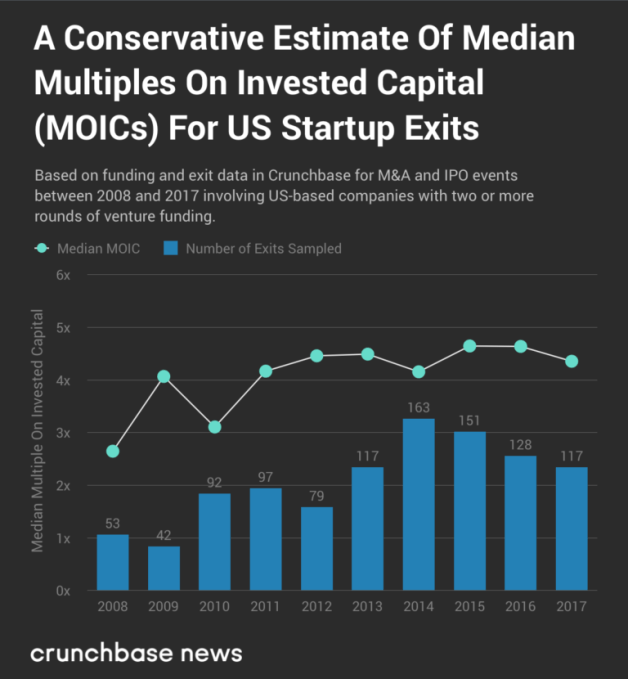
In this case, don’t leave the best for last. Important agenda items should not be held until the end. As we all know, meetings tend to run over. Ensure you address the most critical issues by prioritizing them for the beginning of the meeting.

Communication, Trust, and Inclusion

“We need to talk.” We’ve all heard it before, but that doesn’t mean your employees need to suffer the same feeling of dread those four words evoke. When coaching remotely, communication is paramount. Vague, open-ended emails can cause anxiety and misunderstandings. Feedback should be direct and specific if there is an issue or coaching opportunity.

For instance, if a manager notices a lead has been stuck in the same cadence for too long, check in on that specific lead, roadblocks encountered, and solutions attempted. Isolating a single account focuses the meeting, which saves time and allows the rep to review their notes and the manager to focus coaching efforts.

Trust and inclusion go hand-in-hand. One way to build trust is to share the best personal or professional news at the beginning of meetings. This practice helps to develop a deeper relationship, which leads to more personalized, effective coaching. Inclusion in the company culture allows reps to become more personally invested in its success.

Have you ever had a virtual Happy Hour? I worked for a company where virtual happy hours were scheduled monthly, and everyone shared a drink over a video conference to discuss their highlights from the month. The personal bonding time helped nurture a sense of inclusion and connection with the team, and a stronger tie to the organization.

Wrap-Up Each Meeting with a Call to Action

A bias towards action leads to efficient use of meeting time. Meetings should conclude with a list of action items for follow up. Take time to revisit the agenda and discuss meeting outcomes. It’s a great way to maintain engagement and ensure everyone’s time in the meeting is productive.

Here’s something you can try at your next meeting:

At the end of the meeting, select someone at random to give a recap. The possibility of being chosen encourages reps to remain engaged. It also holds each team member accountable for the key takeaways and objectives.

Sending a summary email with meeting notes is another practice that enables both managers and remote sales reps to align with outcomes. The notes are also a useful reference document in case there is any question about action items.

Be Consistent

Consistency is key, especially when it comes to coaching. Studies show there is an 88% increase in productivity when coaching is consistent. That means an established schedule and routine with clear expectations.

A consistent meeting time with a defined agenda, ongoing training, and regular feedback are all excellent ways to set sales reps up for success. Consistency serves to not only reinforce expectations and goals but also holds sales managers accountable.

Accomplishing goals without accountability is difficult. If there is no investment on the manager’s part then why should the employee make the goals a priority? Responsibility reinforces a structured sales process and promotes a healthy sales organization.

What Did We Even Remotely Learn?

With the increasing number of remote employees, it’s important that a sales organization remain flexible and adapt to the changing market. Often, in the modern sales organization, employees no longer need to be physically in the office to be successful. With the ability to connect virtually, a sales organization can tap into talent pools they previously were unable to.

Having a system in place for coaching and managing remote employees is critical to success. The right sales technology stack, clear and direct communication, and consistent meetings with actionable agenda items will put your organization on track.


Looking for more tips on leveraging technology to coach more effectively? Download our eBook here!

The post Virtual Management: Coaching Remote Sales Employees appeared first on SalesLoft.

14 May 15:58

How to Succeed at Sales Accountability

by Sandler Training

Learn how to hold salespeople accountable for their behaviors. Whether it is yourself or your sales team, Hamish Knox and Haley Ayraud will help you learn the best practices for sales accountability and building new habits.

14 May 15:42

Why You Should Never Buy an Email Database (And What You Need to Do Instead)

by Ivan Kreimer

mcmurryjulie / Pixabay

Do you remember when you first learned about email marketing? In most cases, one of the first things you learn is about the importance of building an email list.

Building an email list represents the foundation of a successful email marketing campaign. But doing so takes time and effort, and there aren’t a lot of shortcuts.

Some marketers believe they don’t have the time to build an email list, so they decide to hack the process by buying one. They reason that at the end of the day, a subscriber is a subscriber, and the email marketing stats prove it works, right?

If you agree with this, then you need to make a step back and reconsider your decision. Buying an email database is one of the most dangerous business decisions you can make.

We’re sharing why you should never buy an email database, as well as advice on what to do instead.

Why buying an email database is a bad decision

There is only one way to have an email list, and that’s by growing it. Buying lists is an out-of-date tactic that won’t get you far.

Buying a list is, as the name suggests, when someone purchases a list with a certain amount of email addresses. This can include name, phone numbers, location, verification, and more. Some services promise many things, like deliverability rate, accuracy, and more, yet they rarely work.

When you build a list, you need to attract and convert people to give you their email addresses. You also need to validate the emails with a double-opt-in process, which gives you the permission to email them.

Here’s why buying an email database is a bad decision.

It’s ethically wrong

Buying an email database is morally wrong. After all, you’re buying a list of email addresses without subscribers’ consent. This is a violation of their privacy, and it won’t endear them to you.

Not only is buying an email database unethical, but it’s also likely to result in bad results for your business.

ESPs will ban you

Email service providers (ESPs) won’t allow a user to add a list without a double opt-in, unless you are migrating a list from another ESP and can guarantee that you verified the list in the past.

If the ESP finds that their user is sending spammy emails (based on the responses of the recipients), it can ban you from their email system. Therefore, you will quickly lose all your email business.

You will spend your money on useless emails

The companies that sell lists can have old inactive emails in them, which means some of the emails won’t get opened. Therefore, you will spend money on emails that are worth nothing.

What’s more, spam-detection software like SpamAssassin can detect if the sender is a spammer and send all their emails to the recipient’s spam folder without any action from the recipient.

Subscribers will ignore you

Your ultimate goal is to make people do something valuable for your business, whether that’s signing up for a webinar, buy a product, or hire you for your services.

When you buy an email list of people who don’t know (or trust) you, they will ignore your emails. Even if the ESPs don’t ban you or if the emails are verified, these subscribers are highly unlikely to respond to your messages.

How to build an engaged list that you own

Give away value that serves your audience

You need to put your audience before yourself if you want subscribers to trust you. With so many companies using email, it’s hard to stand out in their inbox. If you focus on providing subscribers with valuable content, you will gain your audience’s attention. Once you have their attention, then you can start getting the results you desire.

The idea of giving before taking can manifest itself in many ways, the most common ones include giving away:

  • Discounts and offers, particularly by first-time shoppers in e-commerce stores
  • Ebooks, also known as lead magnets
  • Free courses sent by email

Segment, segment, segment

Realtors have one golden rule: location, location, location. Email marketers, consequently, have their own: segment, segment, segment.

Your list is made up of people with different needs, demographics, and behaviors. That’s why you need to segment it based on those attributes, which then will let you follow the other golden rule of email marketing: be relevant.

Email marketing works, but only when people want to open your emails, click through them, and act on your offers. If your emails aren’t relevant, why would anyone want to open them? Even if you gave money away, relevance plays a crucial role in making your emails more effective.

Segmentation allows you to find the right audience for your emails, which then helps you deliver the email at the time they most need it. The segmentation could be based on demographic, behavioral, or professional data you have.

The high relevance of welcome emails explain their performance: on average, 320% more revenue is attributed to them on a per email basis than other promotional emails.

Make email subscription easy

If you want to get people to subscribe to your email list, you need to make it easy to do so! If you hide your opt-in boxes and use ambiguous copy, it will hard to persuade people to give their personal information to your company.

To make the opt-in process easy for your users, the first thing you have to do is to add an email list building tool on your site, like Sumo and OptinMonster, among others.

Second, you need to use more than one opt-in tactic. You can use email pop-ups, slider, welcome mats, or embedded opt-in forms. Whichever tactic you choose, make sure to use more than one.

The reason behind this idea is in the difference in which people experience different opt-in forms. Some people will dislike welcome mats, while they won’t mind a slider. Other people will have a completely opposite experience.

Wrap up

In simple terms, buying an email list won’t do any good to your business; people won’t open your emails, trust you, and act on your offers. Even if it takes you more time, you need to build and own a list. Most importantly, you need to get started before you even need one, so if you haven’t gotten started, challenge yourself to start today.

14 May 15:42

Looking for a better exit? Get out of the game early

by Alex Wilhelm
Jason Rowley Contributor
Jason Rowley is a venture capital and technology reporter for Crunchbase News.

VC investing is a game of putting money into a company and hopefully getting more out. In an ideal world, the value placed on a company at acquisition or initial public offering would be some large multiple of the amount of money its investors committed.

As it happens, that multiple on invested capital (MOIC) makes for a fairly decent heuristic for measuring company and investor performance. Most critically, it provides a handy metric to use for answering these questions: For US-based companies, have exit multiples changed in a meaningful way over time? And, if so, does this suggest something about the investment landscape overall?

Coming up with an answer to this question required a specific subset of funding and exit data from Crunchbase. If you’re interested in the how and why behind the data, check out the Data and Methodology section at the very end of the article. If not, we’ll cut right to the chase.

Exit multiples may be on the rise

A rather conservative analysis of Crunchbase data suggests that, over the past decade or so, exit multiples were on the rise before leveling off somewhat.

Below, you can see a chart depicting median MOIC for a set of U.S.-based companies with complete (as best we can tell) equity funding histories stretching back to Series A or earlier, which also have a known valuation at time of exit. That valuation is either the price paid by an acquirer or the value of the company at the time it went public. In an effort to reduce the impact of outliers, we only used companies with two or more recorded funding rounds. With that throat-clearing out of the way, here’s median MOIC over time:

It should be noted for the record that the shape of the above chart somewhat changes depending on the data is filtered. Including exit multiples for companies with only one reported funding round resulted in slightly higher median figures for each year and a more steady linear climb upward. But that’s probably due to the number of comically-high multiples some companies with single small rounds and large exit values produced. There are surely examples of companies that raised $1 million once and later sold for $100 million, but those are fewer and further between than companies with missing data from later rounds.

What might be driving the rise in exit multiples?

The rise in exit multiples may have to do with the fact that more companies are getting acquired at earlier stages.

Crunchbase data suggests that startups earlier in the funding cycle tend to deliver better exit multiples. In an effort to denoise the data a bit, we took the Crunchbase exit dataset and filtered out the companies that raised only one round. (Companies that raised only one round produced a lot of crazy outlier data points that skewed final results.)

This suggests that, in general, the earlier a startup is acquired in the funding cycle the more likely it is to deliver larger multiples on invested capital.

Now, granted, we’re working off of small sample sets with a fair amount of variability here, particularly for startups on opposite ends of the funding lifecycle. There is going to be some sampling bias here. Founders and investors are less likely to self-report disappointing numbers; therefore, these findings aren’t ironclad from the perspective of statistical significance.

But it’s a finding that nonetheless echoes a prior Crunchbase News analysis, which found a slight but statistically significant inverse relationship between the amount of capital a startup raises and the multiple its exit delivers to investors and other stakeholders. In other words, startups that raise less money (such as those at seed and early-stage) tend to deliver better multiples on invested capital.

The changing population of companies finding exits

So does the tendency for earlier-stage companies to deliver better investment multiples have anything to do with upward movement in MOIC ratios? It could, particularly if more seed and early-stage startups are headed to the exit these days. And as it turns out, our data suggest that’s happening.

The chart below shows the breakdown of exits for venture-backed companies based on the last stage of funding the company raised prior to being acquired or going public. We show a decade’s worth of funding data, this time including all exits from U.S. companies with known venture funding histories since seed or early stage—some 5,275 liquidity events in all. For 2018, we also include stats for exits through the beginning of May. Given reporting delays and the fact that there are still eight months left in the year, this is certainly subject to change.

Now, to be clear, over the past decade, there has been some notable growth in the overall number of exits for U.S.-based venture-backed companies across all stages.

But, in some ways, the raw number of deals doesn’t much matter. After all, figures from several years ago aren’t really actionable to founders and investors looking for an exit sometime this year. What matters, then, is what the mix of exits looks like, and at least for the set of companies we analyzed here, the past ten years brought an ultimately small but nonetheless notable shift in the mix of companies that get acquired or go public.

Seed and early-stage companies now make up a larger proportion of the population of exited companies now than in the past. And since companies at that stage tend to deliver higher multiples, it is likely responsible for part of the increase over time.

There are certainly other factors besides the influx of seed and early-stage ventures into the mix of exits, but sussing those out will require further investigation.

It should go without saying that any venture-backed company that gets acquired or goes public is a success, at least of some sort. After all, a tiny fraction of new businesses secure outside funding from angel investors or venture capitalists, and only a small proportion of those get acquired.

Any exit is better than none.

Data and methodology

Let’s start by saying that there is probably no canonically correct way to do this sort of analysis and that since Crunchbase News is working off of private company data, what hasn’t been aggregated programmatically is subject to self-reporting bias. Founders and investors are more likely to disclose exit valuations that make them look good, so this may skew our findings higher.

Definition of funding stages

Here, we use the same funding stage definitions as Crunchbase News does in its quarterly reporting.

  • Seed/Angel-stage deals include financings that are classified as a seed or angel, including accelerator fundings and equity crowdfunding below $5 million.
  • Early stage venture include financings that are classified as a Series A or B, venture rounds without a designated series that are below $15M, and equity crowdfunding above $5 million.
  • Late stage venture include financings that are classified as a Series C+ and venture rounds greater than $15M.
  • Technology Growth include private equity investments in companies that have previously raised venture capital rounds.

Building the base dataset

Here are the basic process we used:

  1. We started by aggregating pre-IPO venture funding raised by U.S.-based companies. We focused only on equity funding only (angel, seed, convertible notes, equity crowdfunding, Series A, Series B, etc.), and did not include debt financing, grants, product crowdfunding, or other non-equity funding events. We did include private equity rounds, if and only if PE was the terminal round and the company had raised a seed, angel, or VC round prior to raising PE.
  2. For each company, we recorded the stage of its first and last known funding rounds.
  3. We excluded any company whose first round was Series B or later.
  4. We excluded companies that were missing dollar amounts for any of their equity funding rounds.
  5. We then retrieved the valuations at acquisition or IPO for each of the companies, again excluding any companies for which terminal private market valuation was not known.
  6. Finally, for each company, we divided valuation at exit by the amount of known venture funding, resulting in the multiple on invested capital from equity financing events.

In conjunction with choosing to start with Series A and earlier funding events, we believe this produced a set of companies with reasonably complete funding histories. Granted, there are “unknown unknowns,” like later rounds that weren’t captured in Crunchbase, but there is no good way to control for those.

14 May 15:41

Anorak will use Open Banking to sell life insurance

by Patricio Robles

For years, upstart fintechs have aimed to create innovative experiences that deliver value to consumers, often at the expense of entrenched financial institutions. 

One of the ways they have accomplished this is by using a variety of techniques to retrieve their users' data from the financial institutions they bank with.

Read more...

14 May 15:41

Solving the #1 Problem in Business: More Sales Pipeline

by Tony Hughes
man solving a problem on a whiteboard

Editor’s Note: This guest post was contributed by Tony Hughes, sales leadership speaker, consultant, and author of COMBO Prospecting.

Professional selling has never been more exciting, and finding ways to reach potential clients has never been easier. So why are the rates of failure in selling today higher than ever? Commoditization, increased (and often surprising) competition, cheap offshoring, disruptive technologies, and the dismantling of trade barriers are all hurting business. Seller must find a way to go to the next level in creating value and loyalty with customers.

This is not easy when we live during a time of empowered, yet distracted, buyers who have been deadened to all the outreach being blasted at them by sales and marketing machines. These sellers are typically inwardly focused on gaining approval of their business case, then securing  funding, rallying support and achieve consensus for change, then marshalling a team to procure and implement. Buyers are facing a world of pain just like sellers.

Amidst all this, sales and marketing teams must find a way to break through and provide the sales success that enables everyone to thrive.

We are all connected but disengaged

Everywhere I go, I see silent sales floors and drone armies of passive millennials checking their smartphones hundreds of times per day as they blast Spotify in their ears like social selling whirling dervishes. And to what end?

There’s never been a more connected yet disengaged ethos in the history of mankind. Older salespeople struggle as if punch-drunk as they try to embrace the right technologies and automation to drive higher levels of effective activity to save their careers. Many resist customer relationship management (CRM) systems and sales automation tools when they should embrace both. Few hone the right value narrative and build a strong personal brand that oozes credibility, insight, and value.

The old guard often enjoys the support of inside salespeople and loves to use that weekly meeting to school the marketing team on how to build a better value message or marketing program. But truth be told, the most successful senior executives, right up to the CEO herself, will take time out of every day to make targeted outreach calls to critical clients.

Executives are caught between mentorship and micromanaging

I’ve seen CEOs (especially of start-ups) take this too far, micromanaging, acting as frontline seller and client services head, putting together the slides, flying and doing the pitches, and taking over every facet of the organization under the guise of mentorship.

Effective delegation is still critical, but that does not mean as a leader of a business, team, or consultancy that you shouldn’t be building out your own targeted lists of prospects. Every CXO should be mining their network of extended contacts to understand where “six degrees of connection” exists. Wildly, your growth from zero to $10 million and $10 million to $100 million is already living within your social network. If you are a CEO reading this, now’s the time to get serious about your use of  LinkedIn!

Social is the X-factor, rather than a distraction

Every CEO should personally embrace LinkedIn, not just have their executive assistant (EA) do it on their behalf. Personal brand on social is table stakes for most startup leaders, but in the Global 2000, it’s a competitive advantage. Look at the very best leaders like  Howard Schultz of Starbucks who allows a direct channel from every employee.

Employee advocacy is the most powerful PR engine ever invented. Getting the whole organization buzzing about your solution creates what I call a “bee swarm,” causing ‘surround sound’ for your target. But you can also think about the “thunderclap” technique: one announcement shared by thousands in your company across all social media. The engagement levels are earth-shattering, and your message can go viral.

Technology has made us forget how to sell

One of the problems with selling today is that the rise of the silent sales floor is killing business. To save careers and rescue sales results you need to create the right focus, mindset, and culture within the enterprise. Sales is an ancient craft, and it is the engine of every economy.

When it comes to personal growth, economic growth, and interpersonal development, quality selling is essential. It’s about face-to-face, human-to-human interaction. It’s about confronting your fears and raising the priorities of C-level executives. It is still the people in power who buy, even if they demand consensus before approving the commitment.

Sellers must become experts at delivering outcomes, managing risks, building the business case, navigating politics, building consensus, aligning products and services, and implementing technology and solutions. But sellers don’t get to do any of that unless they can first break through to their customers by harnessing the powers of persuasion and understanding of human psychology. Using these tools intelligently allows sellers to extend their reach and maximize their effectiveness and efficiency.

We’ve all witnessed those top operatives who seem to have a sixth sense and can read people like a book. How do you think they developed those faculties? By clicking the mouse endlessly like cats watching tennis? No, they built that Gladwellian thin slice in the trenches. They grew by boxing their opponents against the ropes. They learned to live by the sword and die by the ramifications of a single gesture. They developed an unbreakable belief in what they were doing and then had the courage to risk failure, embrace the difficult, and learn by doing. With a whisper, they mastered the art of engineering value and consensus and then closing the deal - all with a genuine desire to help their customer.

It’s your turn to step into the ring

You must explore the mindset involved in new business development. Yes, you are helping customers find a better future, but you are also being the hunter, taking the kill back to the cave, and nailing the pelt on the wall.

In addition to boxing, selling can be compared to professional sports such as baseball or cricket: In baseball, if you hit 3 pitches out of 10, you look like a genius; in cricket, you wait for the one ball in an over that you can hit to the fence.

In new business sales, you must be ready to be rejected dozens of times in a row. You can’t take your ego into the office; you need to leave your personal baggage at the door and focus.

Successful selling will include a lot of rejection, and you can’t let this deter you. Expect it and know that you are going to push yourself harder than ever before to break through. Imagine how many times Muhammad Ali got punched before he became the world champion.

To keep pace with the latest in selling, subscribe today to the LinkedIn Sales Blog.

14 May 15:40

5 Ways B2B Companies Are Using Influencer Marketing to Get Customers

by Eric Siu

You might think that influencer marketing is just for consumer products, but even in a business, decisions are made by people – people who can be influenced by others that they respect and trust.

B2B brands that don’t work with influencers are missing out on a huge opportunity to shape customer behavior, build trust and authority in their industry and, ultimately, make more sales. At the end of the day, customers and clients trust the opinions and tastes of thought leaders, colleagues, and market analysts more than they do a brand’s personal claims about how awesome they are. They want to see content that relates to them, not you.

Think about it. If I told you that my digital marketing agency could offer you the best ROI on the Internet, would you believe me? Maybe. But probably only if you’ve been following my work for a while. But if you didn’t know who I was, you’d be much more likely to trust the word of another business owner who used our services or independent reviews.

5 Ways B2B Companies Are Using Influencer Marketing to Get Customers1

Thousands of business owners and executives are running into problems and challenges every day, and working with influencers can help. But B2B influencer marketing is different from consumer influencer marketing – it’s not as simple as paying someone with 500,000 Instagram followers to wear your product and tag you. It’s about making smart partnerships and providing value in your industry.

Today, I’m going to show you five examples of B2B companies that are working with influencers to attract and convert more customers.

Influencer Campaign #1: IBM

IBM Watson is a pretty cool project. One of the first recognizable names in the AI space, it lets businesses harness the power of artificial intelligence to process large sets of data to make better business decisions. It’s also served as a giant PR boost for IBM, which has helped position them as a company that is pushing the boundaries of business and technology in both consumer and corporate markets.

But the problem? Most people don’t understand the amazing things they can do with it. So IBM partners with influencers to showcase its power. These influencers could be customers or they could be recognizable names in other industries.

Last year, IBM partnered with fashion designer Gaurav Gupta to design a dress using artificial intelligence, which debuted at the Vogue Women of the Year Awards. It used Watson’s “Personality Insights” feature that was connected to LED lights to change the dress’ color depending on the personality of the wearer.

5 Ways B2B Companies Are Using Influencer Marketing to Get Customers2

This showcased a powerful IBM Watson feature to the world (“Personality Insights”) as well as introduced the technology to an entirely new industry (fashion) – one that may not have recognized how they could incorporate artificial intelligence into what they do.

Influencer Campaign #2: VideoFruit

You don’t have to be a massive company to use influencer marketing. Bryan Harris, founder of VideoFruit, helps businesses and entrepreneurs grow their websites and e-mail lists.

He partnered with Noah Kagan, founder of Sumo, simply by writing a guest post on his personal blog, OkDork. It worked brilliantly.

5 Ways B2B Companies Are Using Influencer Marketing to Get Customers3

At the time, his site got about 285 daily visitors. But as soon as he published the guest post, he received 1,086 visitors that day and 686 more the following day. In all, that was about a 500% increase in traffic for those two days.

But what’s even more important is that he also boasted a 12% conversion rate. In other words, 215 of those visitors became subscribers. That’s almost a whole day’s worth of traffic which means, of course, that this partnership made sense.

The readers of OkDork were interested in the topics Bryan was writing about; they just needed to be introduced to him. Note that Noah had to do very little work throughout the process. He just let Bryan post on his site and told his audience about it.

But this is still influencer marketing. By publishing Bryan’s content, Noah was vouching for his value and giving Bryan access to a large audience he had already built.

Influencer Campaign #3: American Express

American Express serves both B2C and B2B markets, which means that it needs a lot of marketing to make sure it keeps generating demand on both sides: if stores don’t accept American Express, consumers won’t get the card, but if consumers aren’t getting the card, then why would stores go through the hassle and higher fees of accepting the card?

AmEx has done a lot of influencer marketing on the consumer side, most recently with their #AmexAmbassadors program to promote the benefits of their platinum card.

But they also use influencers to reach potential business clients as well. One of their most famous campaigns was the “Love My Store” promotion. They partnered with designer Grace Bonny to design decals for store owners to place in their window to advertise “AmEx Cards Welcome.”

Then they partnered with HGTV host Emily Henderson to create a series of videos that provided helpful tips to small business owners. At the end of each video, they showed a clip of the decal and included a link to get your own.

5 Ways B2B Companies Are Using Influencer Marketing to Get Customers4

Did you notice the influencer inception? Not only did American Express use influencers to convince the stores to download and place these decals in their window, but they also turned the stores into influencers by promoting their brand around the country.

The campaign was a huge success with over 5 million impressions and 50,000 social engagements from small business owners. Over 400,000 Love My Store decals were distributed, making it the most-ordered decal available from American Express.

Influencer Campaign #4: Me (Eric Siu) and Neil Patel

If you or your brand has an audience of your own, that can be a great way to convince other influencers to work with you.

In 2016, I partnered with Neil Patel to start hosting a marketing podcast called Marketing School.

5 Ways B2B Companies Are Using Influencer Marketing to Get Customers5

I already had experience from my own podcast, Growth Everywhere, and my marketing background. Neil and I talked about co-hosting a daily 5-minute podcast that delivered quick, actionable marketing tips – like How to Do B2B Marketing on Instagram – to help both our existing readers.

This has been a win-win for both of us because our knowledge and skill sets complement one another so we can cover a wider variety of topics and provide even more value to our listeners.

It also helps us expand our audiences because we cross-promote the podcast on our own channels. Many times listeners of one show will follow the other because they know that if Neil trusts me, then I must have something of value to offer – and vice versa.

Influencer Campaign #5: PricewaterhouseCoopers

It’s important for B2B companies to remember that clients aren’t your only target audience. If you want to attract top talent, it’s also important to pay attention to your employer brand.

PwC wanted to improve their employer brand in the eyes of Millennials but didn’t have a trendy influencer handy. They wanted PwC to be a cool place to work — bragworthy for young people.

So what did they do? They created their own influencer.

You see, the accounting and consulting firm has overseen the counting of the votes for the Academy Awards since the 1930s. It’s a big responsibility, but for the most part has gone unnoticed and unmentioned. So PwC decided to increase awareness of their role in the Oscars in an attempt to connect their brand with a younger audience.

They did this by taking the lowliest of heroes and raising it to stardom – I’m talking about #BallotBriefcase.

This was the briefcase that actually carried the envelopes containing the winners’ names from New York to Los Angeles. They created a Snapchat profile that documented its journey across the country in different cities.

As it became famous, over 2,000 employees from offices in six different cities waited in line for up to 45 minutes just to meet the BallotBriefcase. PwC encouraged employees to share photos on social media and use the hashtag #BallotBriefcase on Twitter.

It might sound a little cheesy, but it worked. In comparison to the rest of PwC’s campaigns around the Oscars, the BallotBriefcase reached 136 times as many people (that’s 136,000%!). More than 12.3 million impressions on Twitter and another 126,000 impressions on Instagram.

The biggest lesson here is that influencers can be anyone. In this case, you could say the influencer was the briefcase. But really, it was also the employees who snapped photos and shared them across social media, generating millions of free impressions and a lot of brand awareness for PricewaterhouseCoopers.

Conclusion

This was just a sample of how B2B brands of all sizes are using influencer marketing in different ways to improve their marketing and brand image, and get more customers.

I encourage you to take some time this week to review your target audience and look at who they follow and listen to, both online and off. See how you can work with those influencers to create compelling content that will engage your audience and make them want to know more about your business and its benefits.

The post 5 Ways B2B Companies Are Using Influencer Marketing to Get Customers appeared first on OpenView Labs.

14 May 15:40

GraphPath plans to combine Knowledge Graphs with the blockchain

by Mike Butcher

Last year I covered the launch of GraphPath, a new startup that had developed a platform that aimed to “insert AI into global corporates” by making it easy to create and manage so-called Knowledge Graphs with its “Knowledge Graph-as-a-Service” technology.

Knowledge Graphs are essentially a way to organize data in an endless network of facts and relationships. It’s similar to Facebook’s ‘social graph’ (which contains highly descriptive data about how people are connected) but instead is about how knowledge is connected. In theory, you could use blockchain to create a knowledge graph, and in fact, that’s what the company claims to have now done. Google’s Knowledge Graph powers its search functions, and according to the company contains over 70 billion facts.

Today it’s announcing GraphOS, which is described as “the world’s first decentralized operating system for Knowledge Graphs on the blockchain, that will be enabled by the GraphOS Protocol,” according to Demian Bellumio, GraphPath’s CEO.

What does that mean in plain English?

Basically, it means GraphOS will allow for a network of Knowledge Graphs to be safely and securely be interconnected via blockchain technology. Through this network, a wide array of participants, such as Knowledge Graph owners, data providers, knowledge experts, and data scientists will be able to transact with each other. GraphPath calls this ecosystem, a Graph Operating System, as it will manage all the resources necessary to run the Network, thereby the name GraphOS.

Bellumio says that in order to really derive value from a Knowledge Graph, not only do enterprises need to master the complex technologies that are necessary to build and manage these complex semantic data systems, but they must also have access to large volumes of data.

A telco that builds a graph with just their customers’ app usage data, will never be able to draw powerful insights from that data alone, according to Bellumio. It would also need QoS data, web browsing data, and even geolocation.
.
So how does an enterprise engage with other enterprises or data providers to acquire this complementary data? That’s where blockchain and smart contracts come in.

The GraphOS Protocol provides a mechanism for defining and exchanging knowledge assets, such as data, code, ownership and governance details, feeding into the complementary data.

In addition, GraphPath plans to open-source all of its tools, while making them all natively support the GraphOS protocol.

GraphPath is also planning an ecosystem around this idea. It’s also now creating the GraphOS Consortium, which will be co-chaired by GraphPath’s CEO Bellumio and Andrew McLaughlin, who has worked with ICANN, Google, the US Government and Tumblr. Consortium members include Chris Boos from Arago and Antoine Blondeau from Sentient, Carlos Domingo from Securitize and SPiCE VC and Shayne Coplan from TokenUnion, and Andrew McLaughlin from Higher Ground Labs and Michael Sarasti from the City of Miami.

14 May 15:39

7 Big Obstacles to Repeat Business You Should Avoid

by Greetje den Holder

Every day, businesses are pouring all their resources into attracting new customers while neglecting the customers they already have. They are missing out on a huge opportunity because current customers are far easier to re-engage and resell to. In fact, research shows it is five to twenty-five times more expensive to attract new customers than it is to retain and convert current customers into repeat customers. Are you neglecting the customers you already have? Are you not selling enough to current customers? The following obstacles to repeat business might be the reasons why. Overcome them and you might be able to sell a lot more!

I have established the following list using recent articles by Choncé Maddox and Dan Tyre.

‘7 Big Obstacles to Repeat Business You Should Avoid’ Every day, businesses are pouring all their resources into attracting new customers while neglecting the customers they already have. They are missing out on a huge opportunity because current customers are far easier to re-engage and resell to. Are you not selling enough to current customers? The following obstacles might be the reasons why. Overcome them and you might be able to sell a lot more: http://bit.ly/RepeatBus

Obstacles to repeat business – 1: not overdelivering

Do not just deliver what you promised; provide even more value. You should not be afraid to go the extra mile. When you deliver high-quality results, it beats out the competition and it establishes a proven track record with the customer. If you can exceed a customer’s expectations, they are more than likely to hire you again.

One thing I like to do as a translator is delivering the translation at least one day before the promised deadline. I am confident my customers never find themselves waiting for me to turn in work.

Obstacles to repeat business – 2: not providing a pleasant experience

Exceeding expectations will also help you create a pleasant experience for your customer. Set realistic expectations and stick to the terms. Offer excellent customer service as well as a user-friendly experience. Your sales page should not be misleading or have a confusing checkout process because if working with you becomes a hassle, they probably will not return to do business.

Obstacles to repeat business – 3: being slow to respond

As a business owner, your typical workday can be hectic. Still, it is a good business practice to offer unmatched customer service and respond to questions in a timely manner. Being attentive to their questions and emails shows that you are a reliable professional and can motivate customers to hire you for repeat business.

Obstacles to repeat business – 4: Not expressing your interest in working together in the future

Simply let people know you are looking forward to working together again. Ask one-time customers to consider you for future projects. If you are selling products, ask your customers to join your email list and let them know about other products they can purchase from you in the future.

Obstacles to repeat business – 5: not rewarding customers for their loyalty

The most common form of loyalty building is with a financial incentive for repeat purchases. You offer users a discount on their next purchase or service billing. They come back to you and you can establish yourself as one of their go-to providers. In fact, if you nurture your customers into brand evangelists, they will eventually do your marketing outreach for you.

Obstacles to repeat business – 6: failing to identify ways to stay in touch post-sale

It is important to develop a roadmap for communication after the sale. A consistent approach builds trust with customers, which leads to long-term loyalty. For best results, you want to keep communication channels as predictable as possible and fall in line with your customers’ existing expectations.

Obstacles to repeat business – 7: not continuously improving your product or service

Ask for honest feedback. You can do this via email, over the phone, or using online forms. Combine customer feedback with accurate metrics and you have the killer formula that will help you evolve your customer experience to be the best it can be.

14 May 15:39

Why Marketers Shouldn’t Overlook the Power of Email

by Wayne St. Amand

TeroVesalainen / Pixabay

As organizations continue to take digitally-driven and omnichannel approaches to marketing, one tried-and-true communications channel continues to get the short end of the stick: email. Email marketing has evolved with the digital age, offering more capabilities to drive awareness, conversion, and retention than ever. Yet, despite the longevity and ubiquity of email, recent research from the DMA indicates its budget has plateaued or declined while investments in other digital channels continue to accelerate.

Email’s stagnant budget is likely representative of the outdated methods marketers use to quantify the channel’s value: open and click rates. These metrics no longer suffice when it comes to accurately gauging the influence that email marketing can have on current and prospective customers.

To uncover the hidden power of email, marketers need to move beyond clicks and open rates and instead focus on email’s ROI. Gaining visibility into the bottom-line impact of email and how it works in combination with other digital channels offers two major benefits to marketers.

Breaking down silos for holistic view of customer journey
Today’s empowered consumers interact with brands across more channels and devices than ever before. The problem is that email, like most other channels, is typically executed and measured in a silo. And when channels are measured in silos, it’s incredibly difficult to track the full consumer journey or identify the influences and synergies that exist between channels and tactics. Operating in silos also prevents marketing teams from working together toward shared goals, creating disjointed and oftentimes conflicting experiences for consumers.

To understand the true impact of email, marketers need to move away from siloed measurement to an approach that accounts for the cross-channel consumer journey. Methods like multi-touch attribution consolidate data and fractionally assign credit to all the channels and tactics that influenced a desired action or business outcome. With a holistic view of all marketing channels, marketers can quantify email effectiveness and ROI, and understand how email works in combination with other channels and tactics to drive engagement, leads, conversions, sales, and other desired results. Moreover, adopting attributed metrics as a source of truth opens up opportunities to optimize not just promotional campaigns, but triggered, targeted, and even transaction emails as well.

Improving content relevancy
Email marketing makes its boldest impact when it can deliver smart, customized and, most importantly, relevant messaging and offers. But relevance remains a ‘known unknown’ for many marketers, with two in five (42%) marketers saying that only ‘some’ of their emails are relevant to their customers at best.

This is another area where more advanced measurement approaches can help. It can be difficult to know which marketing messages are resonating among different audience segments when marketers lack insight into the attributes and preferences of their customers and prospects. Multi-touch attribution approaches that incorporate robust audience attribute data into the analysis give email marketers an opportunity to fine-tune campaigns and develop focused, personalized messages for the right audience. With greater intelligence into the creatives, messages and offers that are most effective for each audience, marketers can create a better experience for consumers, while driving the best results for the business.

In today’s market, consumers expect brands to deliver a personalized, relevant experience across all touchpoints, including email. By moving away from flawed metrics like opens and clicks and embracing more advanced measurement approaches, marketers can maximize the effectiveness of their email marketing programs, as well as their marketing mix overall.

14 May 15:39

How to User-Proof Your Product Strategy

by Jana Barrett

rawpixel / Pixabay

The more we automate business processes, the more we lose sight of our customers. It’s a reality in SaaS and practically every industry in the world. Though technology has undoubtedly made our jobs easier and improved the overall customer experience, it’s also distanced us from the people we serve. This is especially true for product teams, who are increasingly separated from the end users they’re building for.

Luckily, reconnecting with customers isn’t all that hard. You just have to make the choice to do it. Here are some simple tips on re-engaging your end users and building a customer-centric product strategy.

Creating a Product Strategy that Drives Adoption

1. Collaborate with customer-facing employees.

To understand what kind of features your customers want, turn to those who interact with them on a regular basis. They’re tapped into the “pulse” of your target audience, so it’s important to bring them into the discussions when you’re thinking about adding, removing or improving features.

Too often, executives make decisions based on assumptions rather than experience. They may think they know their customers better than they do, or they assume a competitor’s recently released feature is something they should mimic. Sometimes, this method leads to unnecessary or unwanted changes due to the lack of communication between the user base and the upper-level executives.

Rather than working off assumptions, talk to your support agents, your sales reps, and anyone else who has first-hand experience with customers. Get their take before you develop new features and plan the product roadmap.

2. Rethink how you prioritize feature requests.

Most product teams have a love/hate relationship with feature requests. Sure, they can inspire innovation and help you build more customer-centric products, but they can also be a major dredge to analyze, prioritize, and implement. If you find yourself constantly ignoring or rolling your eyes at new feature requests, it may be time for a new approach.

There are plenty of tried-and-true methods for managing feature requests. For example, Kayako uses a Feature Prioritization Matrix to rank feature requests based on four weighted factors, which focus on customer impact and perceived value. This formula helps them combat subjective decision-making, rule out unrealistic requests, and introduce more features their customers truly want.

3. Create a beta program.

When you’re launching a new product or feature, it’s easy to get caught up in the momentum of the release and overlook minor flaws. Luckily, your customers won’t hesitate to point them out! The best way to catch them before launch? Beta test.

When you give a select group of customers early access to new products, you get direct feedback from your target audience. Customers use your products differently than you do, so they can catch bugs and user experience gaps that your QA team might miss. Plus, inviting customers to beta-test products gives them a sense of validation that can improve customer loyalty.

So how do you create a beta program that gets results? First, ask the right questions. Here are some things you can ask beta members when they’re trialing a new product or feature:

  • What are you primarily using this for?
  • What’s the best aspect of this feature?
  • What’s the most confusing part of this feature?
  • How much would you pay for this?
  • Why wouldn’t you use this feature again?
  • What would you add or change?
  • If you could fix one thing, what would it be?

Remember to be specific. Generic questions like “Is this feature useful?” won’t give you actionable feedback. You’re trying to draw pointed, detailed feedback from your beta users to make sure the feature is spot-on when it’s launched to the public.

4. Send an annual Voice of the Customer survey.

Want to collect a wide range of user feedback at once? Sending a Voice of the Customer survey once a year can help you stay in tune with customer needs and identify common challenges. You can include standardized metrics like Net Promoter Score, which give you a clear picture of changes in customer sentiment year by year.

In addition, you can use the feedback to better define your audience and improve your go-to-market strategy. If you’re using a CRM like Salesforce, you can even map survey results to customer records and build out advanced reports and dashboards using the data. With an enhanced picture of your customer base, you can customize your content, sales pitches, and messages to deliver personalized service throughout the customer journey.

5. Host focus groups.

Survey tools like GetFeedback make it easy to stay in sync with customers, but there’s something to be said about hearing feedback first-hand. By gathering customers together, you can ask targeted questions and allow customers to engage with one another in a way that can’t be done online.

Here are a few tips to pull off a successful focus group:

  • Invite relevant users that align with the kind of feedback you’re looking for
  • Aim for 8-10 participants
  • Have a list of specific questions premade
  • Use a variety of questions and activities (role playing, word association) to maintain interest
  • Select a strong moderator to keep the conversation on track
  • To limit bias, the moderator shouldn’t be someone inside your company
  • Record the focus group
  • Have a plan to analyze and use the feedback collected

6. Keep an eye on the competition.

You have to know what your competitors offer. That doesn’t mean you have to mimic everything your competitors do. Quite the contrary. They could introduce a new feature that flops, attempt to debug a feature and make it worse, or go through a rebranding that customers aren’t fond of.

What’s the best way to “spy” on your competitors? For starters, use their products. Nothing will get you up to speed faster or give you a clearer sense of their user experience. There are also plenty of tools that can help. Set up Google Alerts to be notified when your competitors are mentioned online, and use SEMRush to view your competitor’s online data, like organic keywords and rank, ad keywords, and website traffic.

How does your product team prioritize feature requests? Let us know in the comments!

14 May 15:39

The Benefits of Email Marketing

by Lauren Meeker

geralt / Pixabay

With so many different marketing channels to choose from, it can be hard to figure out which will work best for your business. This article outlines the key benefits of using email as a marketing tool, and how it can help you to accomplish your business goals.

Generate New Leads

Email marketing has been shown to be one of the most effective ways of acquiring and keeping customers, with 80 percent of professionals reporting that email drives stronger customer acquisition and retention than any other channel. Sending the right email is an excellent way to target people who have actively expressed interest in your company by opting in to your mailing list. From here, you can sell them on your services either by offering more information, demonstrating your unique selling point, or offering special promotions.

Customer Retention

Once you’ve got a customer, you need to hang on to them. Sending regular emails allows you to stay “top of mind” and increases the chance that customers will buy from you again. It’s also a great way to convey your brand values, encourage engagement and build credibility through sharing interesting and valuable information. Your emails don’t always have to be sales-focused!

Drive Conversions

Email marketing has been shown to have a higher conversion rate than both direct mail and social media. That’s right – on top of being extremely cost effective and easy to implement, email marketing also gets better results than most other channels. There’s very little to lose and a lot to gain by building email marketing into your business!

Cost Effectiveness

One of the greatest benefits of email marketing is that it doesn’t cost a lot to implement. Many email marketing tools are free to use and easy to automate, meaning that you won’t need to spend hours manually sending out emails. Unlike direct mail, there’s no need to spend money on printing or mailing out flyers. You also have the benefit of already having a list of interested people, so that you don’t have to spend advertising budget bringing people into your marketing funnel. Overall, email marketing has been proven to provide strong results with just a fraction of the cost of most other marketing channels.

Personalized Experience

Email marketing can be integrated with existing customer databases and CRM tools to create highly personalized experiences. By segmenting your mailing list, you can craft emails tailored to different customers’ needs, their stage in the buyer’s journey and other variables like age, gender and location. Customers are more likely to open emails that speak directly to them!

Measurable

Unlike strategies like direct mail, email marketing is easily measurable. You can track open rates, click rates and purchases as a result of email clicks, which will show you what works and what doesn’t. You can also carry out A/B testing that allows you to compare different approaches side by side, and measure their effectiveness through unique discount codes to be used on your website.

Easy to Integrate

Email marketing is easy to integrate with your other marketing efforts. For example, by embedding links in your emails, you could use your email newsletter to encourage customers to follow you on social media or check out your latest blog. On top of that, you can integrate your email marketing with your existing analytics and CRM tools, giving you access to powerful, in-depth insights.

Good Email Marketing ROI

Between the low cost of operation and the highly targeted audience, email marketing ROI can be very impressive. In fact, studies have shown that effective email marketing can deliver an average ROI of $38 for each $1 spent!

One of the most attractive aspects of using email marketing is that it isn’t as limited by internal budget constraints as other channels are. It’s possible to execute a successful email marketing campaign with a very small budget, meaning it’s accessible to businesses of all sizes and life stages.

How to Accomplish Your Business Goals With Email Marketing

As outlined above, email marketing is an extremely flexible channel that can help you to achieve a huge variety of business goals.

To get started with your own email marketing, here’s a simple process to follow:

  1. Create a SMART goal for your business (specific, measurable, attainable, relevant and time-sensitive).
  2. Design an email marketing campaign that will help you achieve this goal. Build your email list from your existing customer database.
  3. Integrate the campaign with other channels if necessary.
  4. Execute the campaign.
  5. Use analytics to track the success of the campaign.
  6. Make changes and use A/B testing to improve the campaign if needed.

Here’s a simplified example of what the process might look like:

  1. Goal: Increase holiday sales by 10 percent.
  2. Create emails offering personalized special offers to customers.
  3. Integrate with CRM tools to personalize emails correctly.
  4. Send emails during the holiday season.
  5. Look at sales analytics for the period of the campaign.
  6. Analyze the success of the different emails and decipher what worked best.

Achieving your goals with email marketing is all about setting clear goals, executing a targeted campaign, integrating with other tools and using analytics to track success and make improvements.

How to Increase Email Marketing ROI and Boost Email Marketing Effectiveness

Your email marketing ROI depends on how large your mailing list is, how engaging and effective your emails are, and how closely you’re tracking your results.

Use the following tips to help you to maximize your email marketing ROI:

  • Grow your email list. Use freebies and lead magnets to encourage people to opt-in.
  • Use automatically triggered retargeting emails, e.g. send out an abandoned cart email when customers fail to checkout on your website.
  • Segment your list and personalize emails for each segment.
  • Carry out A/B testing. Track your results and make changes accordingly. Learn what works best and continue to build on the techniques that work as you optimize your campaigns.
  • Optimize your emails for mobile viewing.
  • Optimize your emails for deliverability.

As with any marketing, the more effort you put into email marketing, the better your ROI will be. One noteworthy study showed that 77 percent of ROI comes from segmented, targeted and triggered campaigns, so these are smart places to focus your attention.

Overall, we’ve outlined how email marketing can be an incredibly cost-effective, segmentable, ROI-positive marketing tool. If you’re looking to generate more leads, drive conversions and automate key parts of your marketing process, then it is time to start taking advantage of the many benefits of this very powerful tool.

14 May 15:39

5 places your inbound funnel is bringing in bad customers

by steli@close.io (Steli Efti)
Going in style-min-1

Every smart sales rep knows you can’t go out and sell to just anyone. You have an ideal customer. And you’re going to have much higher levels of success if you target that exact person. So why don’t you do the same with your inbound sales?

Too many startups and SMBs see a customer at their door with a fistful of cash and suddenly forget all the work they’ve put into defining their ideal customer.

But just because a lead fills out a contact form or signs up for a free trial, doesn’t mean they’re a good customer. And in many cases, they’re the exact type of customer you want to turn away.

The fastest and easiest way to figure out if a prospect is good or bad for your business? Qualify them effectively! Click here to download a (free) list of my 42 best qualifying questions!

Why you need to stop falling for the “They came to us” trap

An unqualified inbound lead is just as bad as an unqualified outbound one. And there are lots of examples of inbound interests that might come to you that either will just waste your time, or convert into bad customers.

They might be:

  • Too small: They’re students or small businesses looking for a free service who will never convert.
  • Bad use cases: They don’t have the right use case to get value from your service.
  • Too large: They’ve got deep pockets but need features you’re not prepared to give them.
  • Business partnerships (when you’re not ready): They’re channel partners who are promising the world, but you might not have the resources or time to work with them.
  • Potential investors: They just want to know more about you and are going to suck up a lot of your time and energy.
  • Competitors: They want to pick apart your funnel and see what they can steal for their own company. (And yes, you absolutely should do this yourself.)
  • International trials: They could theoretically be good customers, but you’re not set up for their currency or language, or can’t service them for legal or technical reasons.

You would never actively go out and try to sell to any of these people. So why even entertain them when they come to you?

I get that it’s hard to leave money on the table. But let’s look at the realities of selling to one of these bad customers for a second.

Let’s say you’re a company that deals exclusively with SMBs. Then, all of a sudden, an enterprise-level deal lands right in your lap. It might seem like a sign, or an opportunity. But really it’s a ticking bomb:

  • Do you have enterprise experience and expertise?
  • Is your product designed for this level of user?
  • Do you have the kind of support and service they expect?

“Well, no. But they came to us…”

That’s not a good enough reason. A bad customer is a bad customer. That doesn’t change just because it’s easy to close them. You need to tell them no and then change your inbound funnel so more people like them won’t find you in the first place.

How to say no to a customer that wants to give you money

If you’re not setup for serving a customer, you need to tell them no before they get invested or move further down your funnel. Simply tell them:

“We appreciate your interest, but our product isn’t built for your use case. But here are some alternatives that might be a better fit for you.”

They might push back, but you need to be firm. As I’ve said before taking money from the wrong clients can be a death sentence for your company. So stop them before they get any further.

5 ways to disqualify non-ideal customers in your inbound funnel

Once you’ve dealt with these non-ideal inbound leads, you need to analyze how they found you and why they thought you might be right for them.

Just like you segment and qualify the leads you reach out to, you can design your inbound funnel to sort out as many non-ideal customers for you as possible.

Start by looking at and optimizing your:

  1. Marketing: Are you going wide or deep? It’s easy to get caught up in vanity metrics like traffic and sign-ups, but if you’re marketing to the wrong people you’re just filling your funnel with noise.
  2. Ad copy: Your advertising and messaging should speak to your idea customer, but it should also actively disqualify your non-ideal customer as well. For example, if you want to disqualify customers looking for free or cheap products, instead of “Free trial” you could say ”starting at $65 a month.”
  3. Website design: Your design can tell a customer if they’re in the right place or not. If a government agency came to Close.io, they might be put off by our language and Arrested Development references. That’s on purpose. We don’t want them as customers.
  4. Sign-up Form: What you ask a customer in your forms can tell them they’re not a good fit. For example, if you want to only work with established companies, add a field that asks “are you an organization of 25 or more people?” Or, require them to choose their role from a dropdown and only give them options of the kind of customer you want.
  5. Pricing and trials: Do you offer free trials or not? Do you require a credit card up front? Do you even show pricing before someone talks to a rep? Each one of these will attract (and repel) a certain user.

If you don’t know who your ideal customer is yet, start with the one you can learn from the quickest

All this advice assumes you know who your ideal customer is. But if you don’t and are still doing customer development, remember this: Time can either be your greatest ally or your worst enemy.

Ask yourself what the time investment is to test whether this customer is the right one. Can you survive for that long even if the sale doesn’t happen? And does the potential reward make it worth the risk?

For example, an enterprise client might offer a potentially huge deal, but often take 18 months to close (even if you use some of our tips to shorten the sales cycle). Whereas an SMB client might take a month or two.

Designing an inbound funnel for a customer that takes a few months to go from marketing to trial to converting to a customer is a lot less risky than designing one for a customer that takes 18 months.

Whenever possible, go fast. Look for the verticals that give you the most insights in the shortest period of time and learn as you go. The path to success is paved with clear outcomes, good or bad. Most startups fail not because of their failures, but because they get stuck in the middle—the place I call “the maybe-zone”. That’s where you’re operating on hopes that things will work out some day in the future.

Don’t be fooled into thinking a customer that came to you is an easy win

You need to be just as diligent about who you let into your funnel as who you reach out to. Because the more time you spend dealing with the wrong customers, the less time you have to actually sell to the right one.

Taking on a customer is always your choice. So if someone came to you, ask why? Are they your ideal customer? If not, tell them no. And then figure out how they got in and plug the leak.

Are you sick of dealing with bad inbound leads? Tell us your stories and strategies in the comments below.  

Don't know what questions to ask to qualify your leads? Download our free list of the top 42 B2B sales questions. 

 Learn how to ask better Sales questions 

12 May 16:03

How Sales Operations Contributes Valuable Insights to Product Management

by Dan Bernoske
Great companies know how to educate the market about their products.   But what if the buyer isn’t buying from you, even if they’ve been educated? What if Marketing has actively informed the market with a sound content marketing strategy? In
12 May 15:47

Artificial Intelligence: A Question of Data

by Daniel Burrus

Business people, not to mention the public on a global basis, are getting increasingly excited, as well as concerned, about the potential of artificial intelligence (A.I.)—so much so that China’s growing involvement in A.I., and the vast quantity of data that China is capable of generating on a daily basis, has many wondering if the U.S. will be a leader or follower in this important technology category as the future unfolds.

Data is the fuel that feeds A.I. The more data you have, the more A.I. can learn and adapt. Most feel it’s all about the quantity of data. I have been sharing both in my international speeches and consulting that data quantity is good but not if the quality is bad, and this concern should be forthright for anyone involved in A.I.

The value and quality of data being used by A.I. is a key to getting not only the best but also valid insights and suggested actions from A.I. and machine learning applications. If those are of questionable quality, so too will be the results and analyses produced by A.I.

As A.I. grows, so should our focus on the reliability of data upon which A.I. lives.

China Catches Up

As far back as October 2016, China had overtaken America in the number of published journal articles on “deep learning,” an increasingly important form of A.I. Additionally, PwC, a consulting concern, predicted that A.I.-related growth will boost global GDP by roughly $16 trillion by 2030, with roughly half of that growth occurring in China.

All this is certainly eye-catching news. But it is not surprising. If nothing else, there’s a lot more data to be gleaned in China simply because their population is so much larger than that of the U.S. And, the resulting insights from A.I. will undoubtedly prove useful throughout the world, not just in China.

But, to me, it also has a certain feel of gold rush recklessness to it—a mad dash to be the first, the biggest, the most involved.

There’s certainly nothing wrong with that. But, at the same time, I also firmly believe we need to remain focused on the integrity of the entire process. And that boils down to the information without which AI simply cannot function.

If Trash Goes In, What Comes Out?

A well-worn axiom summarizes the situation at hand: “Garbage in, garbage out.” It’s a simple, reliable formula. The end product of anything depends on the quality and integrity of whatever went into making it.

That’s particularly critical with A.I. As we all know, there’s good data and there is bad data. Bad data can come from many causes including mistakes during entry. And the quality of that data drives the value and relevance of the analytic output of A.I.

Some may argue that quantity of data is far more important—in effect, that “it’ll all work out in the end” by good data rising to the top.

Recent history has already proven that’s far too much emphasis on blind faith than genuine confidence.

Not Just Bad, Outdated

Of further concern is data that, at one point, may have been accurate but has lapsed into irrelevance. That makes “legacy data” every bit a point of concern than data that, however current, is simply wrong.

One strategy to help ensure data accuracy and integrity is to make certain to analyze as much data as possible. As this article points out, if a business is only looking at a part of a dataset, they will more likely miss some of the smaller details.

Additionally, make certain to employ sufficient legwork when collecting data for analysis. Analyses can often be thrown off if the source generating it is unreliable or the context in which the data is generated isn’t taken into account.

All this is of particular importance when looked at in the context of the Internet of Things (IoT), through which sensors collect data and machines communicate with other machines. If flawed information or analysis derived from faulty data enters through IoT and is subsequently shared, unraveling the entire string of misinformation could prove a major headache.

Yes, A.I.’s capacity to analyze and learn is changing the way the world works, plays and communicates. But let’s make sure that the data and information that impacts all those areas is as reliable as it possibly can be.

Ready to see the future and plan with greater confidence? Have a look at the new Anticipatory Leader System today!
12 May 15:47

GDPR is Good News for Email Marketers – Really

by Matt Harris

For some, May 25, 2018, will mark a turning point in their email marketing outreach, for others, an abrupt shift from what was once the Wild West of email marketing.

The impetus for these changes — the EU’s General Data Protection Regulation (GDPR) — has been heralded in some quarters as an occasion for much hand-wringing. Some have even nicknamed it GDP-Argh.

But that’s a futile and short-sighted view of the changes GDPR will bring. For one thing, there’s nothing marketers can do about it. You may despise GDPR but failure to comply can carry significant costs that go beyond just fines. For another, and even more importantly, there is a bright side to the EU forcing everyone’s hand — compliance will make your email marketing better. So rather than seeing GDPR as a headache, consider embracing it as a chance to improve customer relationships.

Here’s why:

It’s the customers’ data anyway

Looking at the customer data you collect as your brand’s property, as something you own, is misguided. Data is like any other form of personal property in that you shouldn’t just take it or try to finagle it out of the owner’s hands. Instead, you should ask permission to use it. And if a customer wants their data back, you should honor their request.

That also goes for any data previously collected. There is no grandfathering under GDPR — if you have old data collected without asking for consent, then you either need to purge it or reach out and ask for consent to keep it and continue using it. Overwhelmed by the idea of requesting new consent, UK pub chain JD Wetherspoon deleted its entire list of 650,000 customers last year. For some European marketers, the risk of running afoul of data consent laws isn’t worth the effort of asking for fresh consent and is too great to justify holding onto such data.

But there can — and should — be a middle ground. Consider purging extremely old data belonging to customers who have demonstrated no recent engagement, while asking for new consent from customers who have made a recent purchase or opened/read/clicked a recent email.

It gives you a chance to reboot your marketing

Broadly speaking, GDPR will force marketers to shift to permission-based marketing. This is a good thing. As marketing guru Seth Godin has noted, permission marketing is “…the privilege (not the right) of delivering anticipated, personal and relevant messages to people who actually want to get them.” In Godin’s view, permission isn’t a legal construct, it’s an agreement in which the consumer chooses to offer up their attention in exchange for something of value, like information or entertainment.

In other words, the stakes for marketers have now been raised. Instead of trying to hoodwink users into joining your email list, you should entice them with a “what’s in it for me?” reason to share their data. This is your opportunity to make a compelling case for the exceptional experience their data will allow you to offer.

And you’ll have ample opportunity to make that case. For instance a double opt-in (a second step in the subscription process) provides space to reinforce the value you offer and bolster your customers’ willingness to sign up for your emails.

So don’t sweat the details

From a marketing perspective, GDPR presents a golden opportunity to create a more useful (though likely smaller) email list, made up of genuinely interested customers.

That’s why rather than trying to parse the legal language of GDPR, marketers should make all consumer data permission-based. This goes for U.S.-based marketers, too. For them, it’s not a question of whether a (potentially small) percentage of customers are located in Europe, but rather a question of whether treating customers differently based on location makes good business sense. Let’s face it — it doesn’t.

The latest uproar over Facebook’s handling of consumer data should dispel any misconception that U.S. customers are sanguine about how you use their data. A better approach is to earn the trust of all your customers, no matter where they are.