By Ben Taylor Many businesses collect lots of data. The problem is that these volumes of information rarely add up to anything meaningful or useful. In fact, 75 percent of CFOs and CIOs say they have trouble using the data to make decisions. Sales professionals have an opportunity (and an obligation) to leverage the value of …
The business case for sales development is built on flawless logic and verified by market data. It’s a lot better to sell to qualified prospects than to try your luck on a complete stranger.
The more time your closers spend taking moonshots, the less sales they actually make. That’s why the fastest growing B2B brands on the planet also run the largest and most sophisticated sales development teams in their class.
The key takeaway: selling success is directly proportional to the efficiency of your sales development team.
Here are key sales development concepts and tactics you should know about:
Sales development is the field, process, or team that focuses on the early stages of the sales cycle.
This includes customer research, prospecting, initial engagement, lead qualification. Sales development teams identify the best prospects to connect with and assess which of these can be considered promising enough to vet into the official pipeline as Sales-Qualified Leads (SQLs).
Sales development originated in the 1980s, primarily in the B2B tech ecosystem. For players in this sector, revenue growth depended on sales force specialization.
Different teams owned different elements of the selling process such as lead generation, prospecting, nurturing, closing deals, and customer success. In many successful B2B companies, sales development has come to own the prospecting and lead qualification process.
Over the years, sales development has evolved into an indispensable element common to most high-growth sales organizations. Without sales development, sellers’ efficiency would suffer, causing close rates and corporate revenues to plunge.
As relevant technologies advanced, sales development became even more powerful with data analytics software, real-time business intelligence services, auto dialers, call performance monitors, email tracking solutions, automated lead generators, and other sophisticated prospecting tools.
Today, some organizations have developed two distinct roles for business development and sales development. While these two roles have similar functions, they are different. Business developers are one step removed from the sales team, combining marketing and sales skills to generate leads for SDRs to work with.
What does a sales development practitioner do?
Sales development reps (SDRs) perform only a subset of the functions commonly attributed to stereotypical sales professionals.
For one thing, SDRs do not need to close deals and are often exempt from traditional sales quotas. Hence, the favorite industry meme “Always be closing” applies only tangentially to sales development reps.
Instead, SDRs take lead generation and qualification very seriously. Instead of quotas, SDRs aim to beat a different set of activity and performance metrics.
Sales prospecting and lead qualification
Sales development reps are the go-to experts when it comes to finding potential clients, grading product-market fit, and keeping sales pipelines brimming with quality leads.
Often, SDRs manage the transition point between marketing and sales by further qualifying the marketing qualified leads (MQLs). By fulfilling their role, SDRs enable senior sales reps and account executives to close more deals faster.
Personalized email outreach and appointment setting
SDRs leverage all available channels to get the job done. They use the company’s CRM pretty much like a limb but they also probe the deep corners of social media to discover new prospects. After which they create highly personalized emails to make meaningful connections.
Following this, they clock dozens of calls in a day to make follow-ups and set appointments to accurately identify problems and determine whether any of their company’s solutions squarely address those problems.
To give you an idea of how the best sales development reps actually spend their day, here’s a real-life minute-by-minute coverage.
How to ramp up your SDR team
Here’s the advice sales leaders gave on how to ramp up your SDR team:
Taft Love
Be careful about setting strict performance-based promotion goals early on (you’ll be promoted as soon as you get ___ SQLs in one month).
Role play is a great way to speed up SDR performance. Set aside time each week to role play. Bring in people from other teams to participate. Nothing helps a new rep get comfortable like practice followed by coaching.
Create team goals so that there is incentive for SDRs to help one another. If the top performer of your team knows something the others don’t, give him or her a reason to share.
Our transition structure is still being refined, but the goal is to set up a 6+ month path from SDR to AE. The last two months of the transition are used as ramp months where a portion of the SQLs remain with the SDR so that they have some pipeline in place when they’re promoted.
The day I learned that an SDR is a bouncer and not an usher, the job changed. Even on outbound calls, it shouldn’t be assumed that the person is a good fit. It’s surprising how quickly people will try to convince you that they’re a good fit when you stop pushing and express doubt.
Jonti McLaren
Have a strict onboarding and training process.
When role playing starts, present to peers first. Then graduate to senior folks, then execs, etc. As they continue they’ll gain confidence, training, and preparation at each step.
Take advantage of team selling – training and practice gets you so far, listening to dozens of real sales calls with real situations ramps reps quickly
Iterate on above as you see success. Your # of members (per your question) is a smaller input than what is/has worked successfully in the past. You should learn and iterate a la Lean Startup and continue to improve your process
Lots and lots of conversations. The more they have, the faster it happens, and the more accessible coaching is….those are the keys to figuring out if they are going to be successful
Preston Clark
Get the SDR’s on the phone day 1! Get them to 20 calls per day the first week. Training aside, you have to assume they won’t understand the market until they’ve made 3,000 dials. The faster they get to 3,000 the better. Don’t ignore the other aspects of on-boarding, but don’t forget the calls!
Make sure the SDR’s stay put for at least 12-months– and that their expectations have been managed to this date. No matter what, 12-months. 6 months is too fast. They won’t get good for 2-3 months– and then you’ll want them training by example for a few months for the other guys you’re ramping up to replace them.
Scott Lorenson
Underscore the importance of not being afraid to fail and to have fun with prospecting. I even ask my reps to share their *epic fails* with the team! But as they continue to dial, learn from past calls and not make the same mistake twice.
Lastly, the first thing I make clear on my initial phone screen is that I need a minimum 12 months (or more) in this role. And that I don’t want to hear whining 6-8 months in, “When can I become an AE?” If they can’t commit to that, I can’t commit to them.
Adam Chambliss
Start new SDR’s in pairs or groups whenever possible. Not only will it save your sanity from having to on board multiple times in a short span, but the SDR’s will enjoy the training more when learning with peers.
People learn in different ways, so mix styles throughout. Tell them how to do, show them how to do it, & make them practice/apply a great deal themselves. Also, mixing teachers/mentors helps.
Document all info that you want them to learn. We created a Playbook that contains scripting, processes, consumer profiles, best practices, etc. It helps you keep track of what needs to be taught. We also give them a soft copy of our Playbook on day 1 to start making them accountable for self-development. I message: “we will cover all of this, but LEARNING is on you. Everything you need to know is in this.” I’ve had several that take it home & start reading it religiously that night
And one tip on promotions: make them show some capability of doing the AE job before you promote them. We give them a metric to strive for in the SDR role to make them eligible to APPLY for promotion. As an AE applicant, they have to interview just like an outside hire. They also have to run a demo. If we aren’t satisfied, we do not promote them. The key here is to also give them very specific feedback on why they aren’t qualified yet & help them develop a plan to improve & re-apply.
There are a few instances where individuals were discouraged by not getting promoted & quit. Honestly though, we would’ve eventually lost those folks in the AE role by having to manage them out due to poor performance. Most SDR’s that “failed” promotion the first time end up taking the feedback, improving, getting promoted, & doing well as an AE.
Aaron Ross
Why not start new hires someplace other than in outbound, or even sales? Outbound is just about the slowest place to learn your what you need to learn in sales.
Put them on the frontlines of Customer Service, Account Management or other areas of the business where they get to interact directly with customers. This way they can become extremely knowledgeable as fast as they can about the market, customers, and product.
They’ll be much more effective, much faster and this is true for anyone in sales.
Allows them to have a lot of conversations off the bat (easier to get a hold of – we sell mostly to the enterprise, but we have a lot of inbound from small companies). This is key to a quick ramp.
Has them run a prospect through our full qualification criteria in order to disqualify. This ingrains our qualification process into their mind.
Puts them in the mindset of “you are not good enough for me”. This is the interesting one. I’ve found that it helps MDRs/SDRs who have zero experience quickly gain the ability to guide a prospect conversation.
If you know the prospect is not “good enough” for you, then you can mentally flip roles. The prospect has to sell you instead of you selling them. This helps give the reps confidence, which is the one thing that you need to build on very early with zero-experience reps.
I recommend doing this in the first week and mix in with calling qualified prospects.
Kirsten Nelson
My favorite way to spin up SDRs quickly is to have them work events, especially booth duty. Hearing the questions that customers ask, listening to (and memorizing) answers really puts a lot of information in context quickly.
The best thing about it is that they get to learn who the customers are, what they care about, and how your company addresses those needs. This can perform much better, be more enjoyable, and soak up less resources than training on internal systems or policies.
Hopefully as the team gets bigger you can leverage more senior people to help with onboarding. This let’s your team take on additional responsibilities and allows you to see additional potential in reps and your team.
I would also add that the process should not change only based on the size of the team, but also on things like shifts in target verticals, additional lessons learned. In general you should always try to “break” your process every few months so you don’t get stuck in a rut or potentially find a better way.
My advice on promotions is that they are earned, not structured. There should be a path with certain expectations and goals being met. However a promotion should also be based on initiative. Telling your reps that they have to do “Projects” to help the team and leave it purposely vague helps in many ways:
It will help the cream rise to the top.
It will make them become more self-reliant and not have to be spoon fed. (Which is the difference between good and great in my opinion.)
It can help you get outside your own comfort zone and make you think.
Sales development strategy
An organization’s sales development strategy greatly impacts its chances of meeting revenue targets and achieving growth. A winning sales development strategy covers three key elements: people, process, and technology.
The sales development strategy should focus on delivering high performance on relevant metrics that ultimately translate to higher topline figures. Thus including recruitment to training and even software adoption.
In many B2B organizations, sales development is closely aligned with marketing such that their respective strategies complement each other and coincide in many crucial touch points.
As buyers become more sophisticated, SDRs are compelled to adopt many marketing techniques such as video prospecting and context-based outreach.
Sales development process
As the business world radically transforms into a customer-centric landscape, the sales development process should similarly start with the buyer on spotlight. That means how a company establishes its ideal buyer personas (IBPs) and the benchmarks it uses to define a sales-qualified lead are of crucial importance.
Only after a qualified lead has been fully defined can a team start to develop the processes, tools, and the tactics that will comprise its sales development apparatus.
Steps in the sales development process
1) Identify what a sales qualified lead is, based on —
demographic qualifiers (industry, location, company size)
contact person’s specific role (authority) in the organization
subject’s willingness to engage the sales team
problem vs product fit
budget (capability to purchase a solution or subscribe to a service)
situational context or urgency (timeline)
2) Align sales and marketing efforts based on SQL definition
3) Establish process and assign roles for —
Inbound (marketing-driven) leads
Outbound leads (prospects belonging to a company’s total addressable market and who are discoverable by SDRs)
4) Engage lead via email, phone call, and other channels
5) Qualify lead’s likelihood of purchasing a product
6) Determine whether lead is worth pursuing —
Ignore lead if resources required to sell outweigh potential value
Vet lead into the sales pipeline as Sales Qualified Lead (SQL) if potential value justifies further allocation of resources
7) Hand over ownership of SQL to account executives
Set a meeting between SQL and account executive to move the customer journey forward
Sales development skills and salaries
The SDR position represents the entry point for a career in tech sales. ServiceNow Senior Director Ralph Barsi outlines four key responsibilities SDRs need to fulfill:
Research, identify, and prospect for new clients
Make lots of phone calls and send lots of emails
Schedule quality appointments and meetings
Create and develop new opportunities (add prospects to the pipeline)
For their efforts, SDRs enjoy an average salary of US$48 K according to Glassdoor, with experienced SDRs taking home as high as US$60 K to US$70 K.
Meanwhile, sales development reps employed by SaaS enterprises receive significantly higher salaries, starting from US$60 K (base) to as much as US$118 K, as reported by RingDNA.
Skills and traits of the best SDRs
Product knowledge
Customer-centricity
Full awareness of the buyer journey
Active listening
Marketing communications (email, social media, voicemail, live phone calls)
Objection handling
Familiarity with sales software and lead generation tools
SDRs use all relevant tools and tactics to find prospects across the addressable market who match the company’s profile for a sales-qualified lead (SQL). They use phone, email, and social media messaging to spark conversations and set breakthrough appointments.
On the other hand, account executives lead the effort towards getting prospects to sign deals by adeptly performing demos and customizing solutions to prospects’ specific pain points. Account executives also partly own the responsibility to keep customers loyal to the brand through continuous engagement and value sharing.
SDR success is primarily assessed based on the number of qualified leads they funnel into the pipeline as well as the number of successful appointments they are able to schedule. On the other hand, AE success largely depends on the number of deals they close.
Sales development metrics & KPIs
Different organizations adopt varying sets of sales development metrics and key performance indicators (KPIs) depending on their business models. However, sales development metrics generally fall under two main categories:
1. Activity/Operational
Tracks how efficiently SDR’s perform basic tasks and include the number of calls, emails, meetings, and qualified leads SDRs are able to deliver over a certain period of time
Monitors the quality and outcome of an SDR’s contributions to the sales process and include the percentage of qualified leads that eventually become paying customers, the average deal size of these customers, and the average time it takes to transition these qualified leads from start to end of the sales cycle.
Useful metrics for sales development
Number of outreach attempts per day/week/month: Tracks the number of emails, calls, and meetings SDRs make over a specific period of time.
Open and response rates for outreach attempts: Monitors how often prospects open or respond to emails and voicemails.
Number of SQLs per week/month: Monitors how many SQLs an SDR is able to vet in a given period.
Number of calls per win: Tracks the number of calls it generally takes to orchestrate one successful deal.
Number of SQLs per win: Tracks the quality of SQLs
Average deal size per SQL: This metric determines whether sales development reps are vetting high- or low-value opportunities into the pipeline.
SQL win rate: This metric monitors how many qualified opportunities are lost or won over time.
Share of pipeline volume (number and deal size) sourced by SDRs: This metric monitors the relative contribution of SDRs to the organization’s potential output.
Tools & Technology for Sales Development
Technology is an SDR’s best friend. In fact, much of the tech stack for sales organizations address the needs of sales development reps.
Because many of the tasks SDRs need to perform, software automations represent a very welcome addition to the SDR’s tool kit. Particularly when it comes to email and call management. Advances in AI and machine learning have also made life much easier for SDRs improving their ability to find, engage, and qualify leads.
Top tools that SDRs use
Accent Accelerate
Sales professionals using Accent Accelerate gain complete visibility into the entire sales cycle. Opportunities, selling activities, and customer sentiment are some key elements here.
Bigtincan
Augmented by AI, this software provides real-time intelligence about prospects. It also recommends the best content to engage them with at every stage of the sales process.
CircleBack
CirlceBack helps SDRs organize all the contact information from their email, phone, and social media accounts into one enhanced address book. CircleBack can be integrated into CRMs.
Cognism
Fueled by automation machine learning, Cognism enables SDRs to accelerate prospecting activities. Thus making it easier to find and connect with the right prospects.
Datanyze
SDRs can use Datanyze to probe a prospect’s website to get a top-view picture of the technologies and services they use. This helps SDRs make smarter decisions on product fit.
Engagio
Engagio provides a clear view of an organization’s decision-making structure. SDRs can thus identify the best contact persons to engage.
Hoopla
SDRs and other members of the sales team can improve selling performance through Hoopla’s analytics, data visualizations, and gamification capabilities.
LeadGenius
This solution crunches real-time data to enable sales practitioners to locate and engage prospects better.
LevelEleven
LevelEleven leverages performance data to manage sales activities and promote positive sales behavior among SDRs and their peers.
LinkedIn Sales Navigator
Most enterprise decision-makers are on LinkedIn. LinkedIn Sales Navigator makes it easier for SDRs to spot and reach them.
Outreach
Because SDRs use email all the time, they’ll reap huge benefits from Outreach’s voice and email automation features. To save time, SDRs can also integrate Outreach into their CRM to log all their messaging activities.
Pipedrive
Smaller teams that prefer a leaner and more visual CRM can turn to Pipedrive to get complete awareness of their sales activities and goals.
Salesforce
CRM means Salesforce for many successful enterprises. This platform’s long-term dominance of the space allows it to enhance its feature set with a wide range of capabilities and integrations.
SalesLoft
This universal prospecting platform empowers SDRs to move the needle when it comes to the number of appointments, demos, and qualified leads they deliver.
Yesware
SDRs benefit from this tool’s prescriptive analytics, outreach automation, and insight-generating capabilities. Among other things, Yesware can glean prospect sentiment by tracking email open and response rates and other behavioral indicators.
Sales leaders on “How to keep your SDRs happy and performing”
From the Sales Hacker community:
Happy SDRs and ADRs are armed with the right tools that make them effective. Being chained to an autodialer all day is no fun. Cold calling uninterested prospects is a necessary evil but can suck the life out of a person.
Investigate and invest in new tools for your reps so they continually improve and simultaneously add the latest tools to their resume.
They may stay longer if they are having fun, doing well and adding to their resume.
Assuming they’re not rightfully graduating to AE, it would have to do with engagement. Now, I’m no different than any other schlup panhandling stats, but this one caught my eye in reference to your question. I couldn’t not post it.
According to CSO Insights, sales forces with low engagement lost 14% of their people involuntarily. This percentage shrank to 8% at organizations with high engagement.
Active engagement is neither happenstance nor simply a ‘nice’ idea,” the report states. “Rather, the data show that highly engaged firms, especially their managers, are supported and actively ‘in the game,’ coaching their reps and being supported with timely/accurate metrics — all of which translates into better performance numbers.
SDR’s are no different than anyone else. They all want to succeed and contribute. Companies have been giving them tools for years now and the average time on the job is still less than 10 months.
What SDR’s need to know Is HOW to use the tools. They need proven, predictable ways to execute their job that will actually achieve the outcomes to match the expectations management puts on them.
We have seen dozens of companies that have been successful at doing this. They see 200% or more increase in results. They positively attrit many SDR’s and keep them around much longer.
Among the things that all these companies have in common, is they they have processes that help SDRs see success very early on. They help SDRs understand WHY things work they way they do and (perhaps most importantly) they take the guesswork out of every aspect of the SDR role.
Cold calling, although essential skill, is only a small portion of selling. For the benefit of all there should be an intermediate step up from DR to AE, an Inside Sales role. Inside Sales should be more of the same cold calling with closing of smaller, less strategic deals.
My experience is strictly in larger enterprise sales, and understand this doesn’t work as well for SMB, but SMB shouldn’t have DRs supporting them to start with.
– Jason Stefani, Account Executive at Box | @jstef10
Something that has worked well for us is “newness”. Make sure there are new things happening on a constant basis.
A lack of newness is how any and every relationship (working or personal) goes stale.
The SDR role is a very repetitive position. Even if you’re extremely good at it, you’re generally doing the same thing every single day.
We’re always doing coaching and training, tweaking the scripts, emails, etc, but I’ve never heard an SDR go “AWESOME! A new script! YES!” The 1-on-1 meetings are always a good time to keep people engaged, but obviously there needs to be something more.
Having a clear path to success and promotion is huge too, but it does not motivate or keep people pumped up on a day to day basis.
Here are some things we do to try and incorporate newness:
Random power hour of calls. Get the team together and just crush for 1 hour straight.
Make calls standing up or pacing around.
Top dialer picks the in-office Pandora station.
FLASH contests AKA next meeting scheduled gets free lunch. $10 is taped to the board.
Unknown Competitions. Picking a day and myself saying, “The first dial of the day is getting X” and rewarding that person at the huddle. They didn’t know the contest was even happening.
Tie Tuesdays – ditch the jeans and come in looking sharp for a day.
Even something as dumb as a desk switch up.
Things that haven’t worked:
Spiff’s – The classic if you hit X then you get $$, as you might know well, $$ is not a great motivator of activity
100% agree with Kevin here. We create new campaigns/initiatives monthly. The primary KPI’s stay the same, but we add spiffs and contests built around these new campaigns. As everyone has stated, the jump is HARD. But a little gamification goes a long way.
Please note that this is a perspective on a longer sales cycle versus something more transactional.
ADR/ SDR roles are essential roles in the sales process and need to be looked at as not a stepping stone role. As long as sales reps are doing well, then they will like their role. I believe that the initial expectation is important of being transparent about the role, but at the same time, there needs to be incentives, realistic goals, appropriate feedback on performance and a change in structure.
Additionally, Expectations shouldn’t be tied to the number of dials or amount of time on the phone, but their real success to the organization and what they are actually adding.
Here are some of the questions you should ask yourself, the manager:
What type of sales cycle are you supporting?
If there is a high attrition rate, then why?
Are you hiring ADRs or account executives?
Are you being transparent?
How can I make employees happy and excited to come to work?
– Joe Corrales, Strategic Account Manager at Questel SA
Final takeaways: Sales development do’s & don’ts
Representing the typical stepping stone to an executive sales career, sales development might be the most activity-intensive role in a sales organization.
However, it’s also among the elements most crucial to the success of a profit-oriented B2B company. A sales force with a sagging pipeline of low-quality leads is heading towards oblivion. In contrast, an organization with a highly motivated and effective sales development team often always leads the pack.
Here are some final tips SDRs should consider to deliver excellent performance.
Do your math
Prospecting and lead generation is largely a numbers game. Improve your sales activity metrics by using technology and tactics that help drive SDR performance. Practice effective time management so you are always performing the right sales activity at the right time.
Do your homework
Numbers alone won’t cut it. Be the best at what you do by building skills, gaining top-notch product knowledge, and learning prospecting tricks from mentors.
Don’t take it personally
Selling is rarely a walk in the park. By sheer volume, the negatives may seem to outweigh the positives at any given time. However, the right outlook, behavior, and strategies will help you become better at engaging prospects and rolling with the punches.
Don’t lose focus
Selling has become a buyer-centric paradigm and focusing on prospects is a good tactic to adopt. Establishing the right buyer personas and ideal customer profiles at the onset will help your team make reliable product fit assessments later on.
A B2B technology client had a content calendar that showed what content assets were either in production or were slated to be published online. However, the calendar wasn’t full. This posed a problem for the social media marketer.
When addressed, the head of content directed the social media specialist to post content from the company’s archives when new content wasn’t available. The social media pro obliged. After all, if there wasn’t a consistent cadence of posts on social media, the company would look old, like it wasn’t active in the marketplace, right? Wrong.
The archived content was old. The messages were not current, not aligned with where the brand was at that moment. The quality of the content wasn’t consistent with what was being created at the time. It was like asking your today self to introduce your old self to your current friends. Um…
What was happening? That B2B technology company was posting too much. It was diluting its brand on social media.
For some reason, they bought into the many studies which seemed to say that B2B technology companies should be posting a certain amount of times on specific social media platforms, daily, weekly, etc.
What started happening was that their audiences could not discern what that company did. They also lost credibility with their Followers and were unfollowed, in the thousands. Too many messages and too much creative hurt and did not help their marketplace differentiation and position.
Here are tips on how to post enough on social and still be relevant to your audiences.
Take a Step Back
Don’t look at your content calendar from what you could post. Look at it from what you have to post based upon deadlines that align with your announcements. Are you releasing a product soon? Got a locked in release date? Are you announcing a partnership, new round of funding, new acquisition, new hire? If you take a step back and realign your social media with your public relations and marketing efforts, you won’t over post. You will be on plan.
Extend the Reach of Your Content
We used to think that when promoting a webinar on social, a social media marketer should post two weeks before the webinar date and once on the date of the webinar. Not true, if that webinar is of high value to your organization. That also applies to other assets. Use varying messages within the copy of your content to create multiple posts that all tie back to your overall message to drive engagement to the chosen live date. Extend the reach of your content to provide more value to your audiences and you will create more impressions to drive activation.
Go Niche
As a B2B technology public relations professional or marketer, you are not going to be able to have your messages always resonate with your entire audience. There will be times when your messages only pertain to a certain user group, an event, a particular set of people who only have purchased a license for one of your products, and so forth. Take advantage of this opportunity and go niche. In other words, carefully find the best keywords and hashtags to bring attention to this content on social media and target those contacts/influencers. Don’t overuse hashtags nor don’t over tag any person or company on social.
To be an effective social media marketer today, we must focus on the quality of content and to whom we are directing that content to. We have to get away from the mindset that more is better or less is more.
It’s more important that we strategically show how B2B technology companies are differentiated and positioned in the marketplace and avoid just trying to be relevant by being the most active voice on social media.
Vancouver architect Michael Green has joined forces with the Silicon Valley design-build startup Katerra, a company that promises to shake up the construction sector just as technology has transformed other industries from taxis to accommodation.
On Wednesday, Green said Katerra bought out the shares in his firm, MGA, but it will remain a stand-alone entity within the larger company as Katerra continues to “advance the cause of building more tall buildings using mass-timber materials.”
He declined to cite a value for the transaction, but said the acquisition will give MGA access to the tools, materials and techniques that Katerra is developing as a “vertically integrated” design-build firm working in mass timber.
“What we’re able to do now is take the stuff we’ve been doing out of our 25-person firm in Gastown and bring it to a much bigger scale in North America,” Green said.
The goal, Green said, is to use Katerra’s integrated technology and processes to reduce the cost of delivering high-quality buildings and attractive architecture.
Green wrote the book on tall timber structures in 2012, The Case for Tall Wood Buildings, that laid out a manual to build high-rises as tall as 30 storeys using materials such as cross-laminated timber panels and glue-laminate beams.
Katerra has made waves as a startup that raised $220 million US from traditionally tech-related venture-capital funds, which it is pouring into establishing capabilities to design buildings and produce the mass-timber materials they need to pre-fabricate components in factories to assemble on site.
“Michael Green and his team have built a reputation for engaging design and leadership in the use of mass timber,” said Katerra’s chairman and co-founder Michael Marks in a news release, which supports Katerra’s mission to use “cutting-edge technology to revolutionize the construction industry.”
Growth sectors are among the most expensive in the stock market, but offer a wider range of returns than those which are more undervalued.
This creates better opportunities for stock pickers who can identify the biggest winners, according to Laurence Taylor, who supports approximately $17 billion in equity strategies at T. Rowe Price.
Amazon is probably the clearest example of the winner-takes-all scenario in which one firm's growth crushes its antagonists.
There are many reasons to worry about the technology sector.
Despite being one of Wall Street's favorite places to invest, the sky-high valuations of many companies have brought back flashbacks of the dotcom bubble. Yet, this is to be expected of growth stocks, so-called for their ability to deliver earnings gains above the market average.
Their growth over the last few years has widened the gap between the best- and worst-performing companies. For investors like T. Rowe Price's Laurence Taylor, this makes growth sectors more appealing to stock pickers than value sectors, considered cheap relative to their fundamentals, like utilities.
"Growth investors excel in industries where you've got big dispersion of outcomes, because of the disruption and the winner-takes-all nature of growth and disruption," Taylor, who supports approximately $17 billion in equity strategies, told Business Insider.
Amazon is probably the clearest example of the winner-takes-all scenario in which one firm's growth crushes its antagonists — brick-and-mortar retailers in the consumer-discretionary space. The company has essentially forced most of consumer retail to invest more in e-commerce. But not every company has survived; Taylor said Toys R Us (though not publicly traded) was a recent example of a company that was disrupted beyond repair, as it announced bankruptcy and plans to close all US stores.
In the energy sector, the winners are shale-drilling companies competing with their deepwater counterparts. In industrials, it's newer companies at the forefront of automation versus General Electric, an original member of the 1896 Dow Jones industrial average that's in the process of exiting legacy businesses like locomotives. In healthcare, it's companies innovating through biotech for big populations versus pharma giants under fire for drug prices.
"That is the case for active management to be on the right side of that change, to find the winners and avoid the big losers," Taylor said. Telecoms, utilities, and staples are "much more correlated within sectors, much less fertile for innovation, and that is where you naturally see less dispersion of outcome," he said, as illustrated in the chart below.
The Global Focused Growth Equity Fund which Taylor helps oversee recently took Facebook from a 0% position to one of its biggest holdings. That was even as the social network got embroiled in a data-sharing scandal that affected most of its users.
"It's a pretty cheap stock given earnings and cash flow," Taylor said. It had a price-to-earnings ratio of 28.09, versus 53.11 for the broader Internet Software & Services sector on Thursday, according to Bloomberg data.
Facebook demonstrated how even the biggest tech stocks became more differentiated, each with its own growing risks or opportunities. These are important to keep track of, since the savvy stock picker would look past labels (growth versus value) and understand company fundamentals. As Facebook dealt with Cambridge Analytica, concerns mounted over Apple iPhone X sales, Alphabet's spending increased, but Netflix subscriptions soared.
"The way you've seen some uncertainty and idiosyncratic risk come to those companies has given us a chance to add to the ones that perhaps are looking a bit more risky or contrarian," Taylor said.
Most companies have some sort of training program for their employees. Whether it is a handbook, training sessions, or a fully automated LMS (Learning Management Software) program, your goal is to make sure your employees understand your company, brand, products and/or services, and general procedures.
What most companies don’t realize is that you can integrate your training program with your employee recognition program. By rewarding employees through recognition and rewards for completing training modules, you grow both programs and encourage more employee engagement.
Here are some of the ways integrating training into your recognition program will benefit your company and its culture.
Increased Interaction with the Program
You can add your training materials directly to your recognition program or even integrate it with your LMS. When you pair recognition with your training initiatives your participants will be able to track their progress all within a website they are already used to visiting. They can view training modules, look at their rewards, and nominate others all within the same place. For users who have so many logins to remember, or who aren’t at desks all day, having one place to go to is a big benefit.
Reward Training on Products/Services
When you incorporate training into your recognition program, you can implement rewarding systems alongside the videos, documents, and quizzes that make up the education piece. From badges to achievement awards, with or without a monetary value, any kind of reward can help boost participation in your training program. The recognition turns into a sort of incentive. Then, when participation increases (as it does when employees are incentivized), your employees will know more about your product and/or services.
This can be particularly helpful across departments, or branches of the organization. The more your employees know about the company and other processes besides their own, the better they will be able to do their job. It all starts with the training, which can get a boost by adding a fun element (such as recognition) to the mix.
Ethics and Safety
If your company is dedicated to keeping the workplace a friendly and safe place to work, having ethics and safety training is a great tool. When an employee completes a quiz with all right answers, they deserve recognition. This can be a monetary or non-monetary prize. An achievement badge or a note of appreciation from the company could be enough to reward an employee who successfully completes the ethics training. In addition to making the company a safer place to work, it will also minimize the risk the company has if safety or harassment issues arise.
Social Interaction on Social Stream
When your users complete a training module, you can have award notifications show up on the social stream of recognition messages. If your recognition program allows it, your employees can like and comment on messages. In this situation, your employees would see that John Smith completed the Safety Training module with a 100% on the quiz. That employee can like or comment to congratulate John Smith on finishing the module. Then, if enough people are completing the module, the employee may feel a bit of peer pressure to complete it for his or herself. The cycle will continue, thus increasing engagement.
Integrate with LMS
All the aspects of integrating your training program with your recognition program would work far more smoothly if your company integrated their LMS program with the recognition solution. This will automate the process and allow for your company to customize the training modules. It would save you time managing the program, freeing up the ability to focus on other important tasks.
Special thanks for Scott Breece for helping compile this content.
Customer success has, for good reason, become the backbone of many of the most successful and fastest growing SaaS businesses today. These companies recognize that customer success has the power to influence many boardroom metrics including growth rate, payback, retention and others. While customer success should be a company wide mandate, customer success teams quarterback customer adoption, growth and ultimately customer happiness. These teams combat user learning curves, successfully onboard and support customers and assist with full product adoption and growth.
Given the increase of technology to achieve customer success at scale and the continued focus on achieving net negative churn, we’ve compiled this exhaustive customer success resources guide. Whether you call your team customer success, customer value, customer happiness, etc. this guide will provide you with all the information you ever wanted to know on building and running a successful CS practice.
The Essential Guide to Customer Success Customer success is pivotal to the effective operation of SaaS companies. In this guide, Nick Mehta, CEO of Gainsight, discusses some of the core concepts of every successful CS team.
Understanding Customer Experience in SaaS To deliver a truly customer-centric experience, customers must understand each part of the user journey. Myk Pono, a Marketing and Product Growth leader, dives into customer success terminology and presents the differences between the user touchpoints, interactions and engagements in this article.
An Introduction to Customer Success Want a better understanding of the basic building blocks around customer success? Look no further than this exhaustive guide.
The Success Gap: A Huge Opportunity You Haven’t Considered For all of the thought that goes into building your product, sometimes an overlooked gap remains between the tool’s functional ability and the customer’s desired outcome. Lincoln Murphy of Sixteen Ventures discusses how to find and fix this “success gap” to better your brand and product.
Customer Success: Nearly Everything You Need to Know This guide by Typeform’s Eric Johnson covers a multitude of customer success topics broken into helpful sections ranging from the customer journey to building out your CS team. If you need easy-to-digest best practices and examples, this post gets the job done.
Building a Customer Success Team
How to Build a Customer Success Organization as Your Startup Grows The needs of the customer and their expectations change over time. Michael Redbord, VP of Services and Support at Hubspot, dives into a detailed guide on what a company should and shouldn’t focus on throughout this evolution.
Hiring for Customer Success When hiring a customer success manager, like any position, there are a specific set of qualities needed to be successful. Dave Blake, Founder and CEO of ClientSuccess, offers his top 6 attributes to look for in this article.
Inside Customer Success: Typeform Want an inside look at how a customer success leader structures their team? Get the inside scoop from Typeform.
Your Customer Success Leader Needs to Be Able to Run Through Walls Sometimes walls will exist that block recurring value for your customers and by proxy, your business. In this thought provoking article, Ross Fulton offers his suggestions: say “no” to the sales team and building awareness that the customer is not always right.
Churn. What is it? How to calculate it? The title says it all This article provides a great overview of why customers churn, the different types, how to calculate it and what an acceptable level of churn looks like.
The Magic of Negative Churn No matter what, every SaaS business will experience customer churn. But some companies have mastered the art of customer success so much so that they actually generate negative revenue churn. Find out how they do it in this article.
Net Promoter Score: Vanity or Value Metric? Has net promoter score become more ego booster than value metric? The key is ensuring it’s just one part of the CX equation. Find out how in this article.
Three Core Areas of Customer Success that Executives Measure When it comes to Customer Success, what areas do executives care about most? Learn why renewal revenue, expansion revenue and customer sentiment matter most and how to measure each in this article.
What Every SaaS Business Needs to Know About User Adoption User adoption is the bedrock of any best-in-class customer success strategy because it sets the foundation for users’ understanding of and success with your company and your product. But how do you achieve said adoption? UserIQ’s Rachel Orston lays it out.
Before you Plan your Product Roadmap Before you plan your product roadmap, it’s important (and a good use of your time) to find out first which features users are actually using. Intercom explains how here.
How to Overcome Customer Experience Blindspots More companies are realizing they need to get back to delivering exceptional customer experiences. Here’s where you’re falling short and how to fix it.
10 Ways to Stop B2B Churn Churn can greatly hurt your bottom line. But what are the signs and how do you stop customers from churning? 10 ways to stop churn here.
5 Keys to Unlocking Negative Churn in B2B SaaS Achieving negative churn is the gold standard for B2B SaaS companies. So how do you actually get there? In this article, five tips to unlock that holy grail.
Customer Success: The Path to Pricing Success Customer success, when utilized successfully, can have a positive impact on price. Learn how to leverage CS to maximize price and willingness to pay in this article.
16 Ways to Turn Customers into Brand Advocates Your best customers shouldn’t just use your product, they should advocate for it. In this article, find sixteen different ways to turn customers into brand advocates.
Communities & Additional Resources
OUTCOMES: The Customer Success Community OUTCOMES is a customer success community where members can learn, share and grow knowledge of customer success. Join the community here.
Quora: Customer Success Quora is a useful resource to ask and search through a variety of questions. Answers may vary but if you look hard enough, you are bound to find small nuggets of wisdom and insight.
Slack Communities (like Customer Retention/Happiness or CS Heros) If you use Slack already, joining a customer success slack community should be an easy add. Above are two we’ve been recommended for a direct line to CS pros and expert resources. Happy chatting!
A Fortune 250 B2B company spent a quarter of a million dollars trying to solve the wrong problem.
A new product line had failed, and the company believed the problem was either poor product delivery times or lack of effort by the sales force. After throwing millions at both problems, they finally realized what the real issue was: misaligned goals between marketing and sales. The product line was priced to grow market share, yet the sales force compensation was structured to incentivize salespeople based on profit margin maximization. As a result, the frustrated sales force focused efforts on selling other products in which the goals were more aligned.
This company isn’t alone. Marketing and sales departments often set their strategies, and goals, separately from each other. Our research on B2B sales management found that in particular, a common problem is lack of alignment around product pricing and sales force compensation strategies. This both demotivates salespeople and inadvertently encourages them to sacrifice company profits to meet their own goals.
We conducted an experiment, preceded and followed by in-depth interviews with B2B salespeople, in which the salespeople were asked to read one of four scenarios containing unique combinations of goals of the pricing and compensation strategies. Over 150 B2B salespeople were involved in the research. The salespeople were from across industries and had an average of 15 years in the sales profession. Our research uncovered three dangers of misaligned goals of the pricing and compensation strategies.
Danger #1: Misaligned goals demotivate. When two goals are misaligned, it reduces the sales force’s perception that they can achieve either goal. This is demotivating and can reduce their commitment to the organization. In this example, we had salespeople react to scenarios in which the goal pairings for price and compensation were, respectively, either market share growth and profit margin maximization, or the reverse. The misaligned conditions fared worse than if the goals were the same for both pricing and compensation. Our participants were well aware that prices increase for legitimate reasons and might at times be out-of-sync with their own compensation goals. However, salespeople were often reluctant to believe that every price change was warranted. One salesperson said bluntly, “It then takes educating your customer about why they have to pay more. A lot of times it is just BS.” Another said despondently, “It’s all corporate. We cannot change anything. This mismatch creates a teeter-totter where we have to decide what to sell and what not to push. It’s really discouraging.” The effect of the misaligned goals reduced hope of the salespeople and created a defeatist climate.
Danger #2: Misaligned goals signal unnecessary difficulty. Misaligned goals are perceived by salespeople as more difficult. While difficult goals are not necessarily problematic, the challenge is when the sales force believes that the misalignment of goals is simply unnecessary, or that the goal combination makes it impossible to be successful. A salesperson described his views on price in terms of the actions he took, “I’m not going to go out and push it real hard when it is not right. I’m not going to talk about that product that’s too expensive relative to what I’m pushed to do.” Salespeople know and track the lost sales resulting from misalignment. As one salesperson stated, “We have goals, and every week I am walking away from a deal. When I don’t reach my sales goals, I pull those out and say we could have hit the goals but we walked away from this, this, and that. Lost sales opportunities.”
Danger #3: Salespeople will find the resources to achieve goals, at a cost. To compensate for the mismatch between pricing and sales force compensation goals, salespeople may offer additional resources such as free training, free freight, and customized products. Salespeople described a regular reaction to misaligned goals of adding ancillary services as a way “to sweeten the pot.” Salespeople were asked if they believed these additional services masked the true success of a product. “Definitely,” stated one salesperson. She added, “If they added the costs of flying people out for demos, our midnight phone calls….oh, [management] probably doesn’t want to really know what it costs. They think it is easy to sell anything.” While adaptive selling can be seen as a skill of a strong salesperson, in some cases it may be that that adaptive selling is disguising deeper problems or eroding profits.
Since misaligned goals are so costly, how can companies try to solve this problem? One way to align the goals more closely would be to involve salespeople in discussions of price. However, our research suggests this will be a difficult path for many companies to take. In the opening example, the sales force attempted to articulate the real problem of misaligned goals to management. However, management was convinced that the problem was rooted elsewhere.
An evident contrast between the sales management’s and the sale force’s views on pricing emerged from our research. Sales managers firmly believed that price was rarely, if ever, the problem in achieving sales success. This may be one of the reasons that the sales force was not involved in discussions of price setting. Instead, sales managers shared a view that salespeople often “cry wolf” when expressing to management that a price is too high for a given market.
Sales managers did not believe that salespeople should be awarded the ability to set or to influence price. A sales manager quickly responded with a laugh, “Oh, no way. You can’t give them pricing authority. No way. They’d go right to the bottom, to the path of least resistance.”
Another described what he believed was the limited view of salespeople concerning price saying, “Do they fully understand how we arrive at the pricing itself? No, they have no idea. When I was a salesperson, the only thing I was interested in was having the lowest possible price so that I could make the most sales.”
When sales were slow, sales managers did not blame price but instead tended to focus on sales force effort, or more specifically, the lack thereof. As one flatly stated, “I don’t think they are working hard enough.”
Salespeople, unsurprisingly, had a different view. The salespeople were very aware of marketplace nuances when it came to pricing. They felt that management did not have the same level of experiences and knowledge about customers, nor about the contemporary competitive landscape. A salesperson explained his views of management this way: “They overestimate, like most managers, the brand equity. They think that we should be able to command that price, that the distributor should pay that price, and that our products are better or that we are better. Everything we do is better; they think. They just ask us, ‘Why can’t you sell that? And why won’t they pay for it?’ They think all the theoretical stuff should just flow right through. They don’t actually understand the reality.”
Another salesperson said more bluntly of the managers, “They do not have a clue.” Another veteran salesperson conceded, “They [marketing management] don’t understand what price to set, they don’t understand how customers value their products. What management thinks and reality are different.”
While the managers in our study dismissed salespeople’s knowledge, the salespeople we interviewed clearly understood that prices may reflect underlying cost structures of the company. As one said, “The bottom line is that if the company doesn’t make money, none of us are here.” We think companies could benefit from early involvement and collaboration with the members of the sales force during initial discussions of product strategy, otherwise companies may fall prey to the three dangers that can result from misaligned goals.
Companies today face stiff competition from rivals and complex demands from customers. Their salespeople can be a resource in overcoming these challenges. Aligning the goals of the marketing team and the compensation strategies of the sales force is a necessary step, and should be part of a larger dialogue between both teams.
Building the right sales process can accelerate sales, but even the best sales process will be ineffective without the right team and metrics in place. To set your sales team up for success, Andie Dovgan, vice president of global sales at bpm’online, shared some of his sales success tips in his presentation “Designing a Holistic and Scalable Sales Model” at bpm’online’s ACCELERATE event in Boston (May 3-4, 2018). Select insights from his presentation are below.
Before defining your sales process and hiring the right salespeople, there’s one small, but very important, task that needs to be accomplished: Sales leaders must establish their segmentation strategy to understand each buyer’s profile and expected buying process. It’s “the number one issue,” according to Dovgan. You don’t want to hire an enterprise-level sales professional and have this person chasing SMB deals. So, before you begin your hiring process, make sure you have clearly defined whom your buyers are, what kind of behaviors they have, and the skillsets needed to sell to them. Once you’ve segmented your buyers, you can assign the leads to the right salespeople and apply the right sales and customer success strategies to make sure your processes are aligned with the company’s business model.
Hire the Right Salespeople
Any good sales strategy requires that you hire the right people. This means you must find out if a candidate is a good fit for your company. But how do you do that?
First, define a very concrete set of competencies. If you’re looking for specific sales experience, don’t simply ask if the candidates have it. For example, if you require candidates to have strategic selling skills and you ask candidates if they have this experience, they might reply, “Yes.” Most everyone thinks it’s about selling “advantages and benefits,” but it’s not, Dovgan stated. To find out for sure, ask which formal sales methodologies or certifications they’re familiar with and see how much it influences the way they sell. Find out the types of deals they were working on previously (e.g., the types of buying personas, deal volumes, sales cycles, quota sizes, etc.,). Then, ask the candidates to break down a typical sales situation at your organization and explain how they would tackle them. Check whether the stated methodology was used for opportunity analysis, he stated.
In addition to finding a candidate who has the experience you’re looking for, you also need to have chemistry with this person. The candidate might have an incredible amount of experience, but if you’re not excited to hire this person, “you’re probably not talking to the right individual,” Dovgan offered. It’s essential, he added, that you hire a person with the right skills who can also get people excited.
These are only two examples of competencies to consider. Generally, it is advisable to hire someone who satisfies roughly five relevant competencies, Dovgan stated.
To help you assess each candidate, he also recommended setting up a scoring model that enables you to score all applicants as objectively as possible.
Define Your Sales Process
When it comes to setting up a sales process, many companies simply define the stages and activities and that’s it. But that’s woefully insufficient. “The truth is if you want to measure and fully manage your sales based on the process, you need to go much, much [further],” Dovgan stated.
First, sales leaders must establish their critical pillars for success, such as steps needed to execute within each stage (e.g., deliver a demo), promotion outcomes that are required to move to the next level (e.g., convert your contact person into a vocal advocate or get access to an executive buyer), and sales tools (such as opportunity assessments or differentiation matrix) that empower reps to apply a more strategic approach to managing their opportunities. Each stage of the sales process should have a yielded data-driven probability score that identifies the likelihood of closing a deal when each stage is completed.
For example, to move the opportunity from the Develop stage (which could yield a 40% likelihood to close) to the Prove stage (which could yield a 60% chance to close), Dovgan stated the following criteria must be met: You have at least one champion inside the account. The value analysis has been completed and you have quantified the expected outcomes. Your proposal has been presented and approved by the executive sponsor.
To help sales reps move from the Develop stage to the Proof stage, Dovgan suggested “having a very strong champion within your account.” He added that salespeople should be connected to a power sponsor, or someone who has the authority to sign off on the deal. Keeping track of these details, he suggested, enables organizations to more objectively determine the probability of closing a deal.
To help salespeople move through the sales process, sales leaders should ensure the sales process is aligned with each buyer’s journey and market expectations. Additionally, Dovgan suggested sales leaders should identify the stages and activities that are best suited for their organization. He also shared that the sales process should be scalable and repeatable for newcomers, connected with the sales forecast model, and fully automated within the CRM system.
Measure and Improve Performance
“Performance is the number-one challenge in sales management,” Dovgan stated. That’s why he offered some essential metrics to measure.
Some key performance metrics to measure include forecast accuracy, average rep attainment, total target attainment, deals closed per rep, number of reps above quota, and deal size and cycle accuracy.
Key pipeline metrics include the number of deals, pipeline volume, weighted volume, pipeline-to-quota ratio, win/lose rate, pipeline growth dynamic, and committed/forecasted pipeline.
Additionally, some productivity metrics to measure include the number of customer interactions, selling time, number of customer meetings, number of calls/emails and their correlations with pipeline-level metrics.
Using these performance, pipeline, and productivity metrics, sales leaders can identify performance gaps and take the necessary actions to help your sales reps be more successful. And, when combined with the right sales team and sales process, you will be well-positioned to accelerate sales and build a scalable and repeatable model.
Target market research is an ongoing process in a constantly changing marketing world online. It’s important to have a personal brand message that is relevant and up to date. There are several factors that determine whether a customer is driven to make a purchase, including seasons of life, the current economy, competition, ect.
After you have done the necessary research and have created an ideal customer profile it’s time to evaluate how to bring your brand image up to date.
The right marketing strategy takes consistency, knowledge, and time. Here are several ways your business can keep up with your competitors and best reach your leads and customers:
Track your industry – Create a specific schedule in order to stay up to date with the new trends inside your market. Plan this well ahead of a new product to launch or an update for your branding. Use your existing social networks to find out what your audience is responding to the most in addition to the analytics from your website.
Meet the customer’s needs – Your buyers want to know how your brand’s product or service will best meet their needs. Find out how to improve, and even exceed their expectations over the competition. With both communication and feedback you will also discover the needs and desires of your community.
Create something of value – A strong social media presence with daily interactions will create trust. Great content and advice can also go a long way in providing real value that they can use. Surveys for reviews and feedback as well as activity in social groups will also help you reach people where they are at.
Use segmentation – Find out through your lists who is purchasing your products or services and why. These can then be broken up into different subgroups depending on they type of transaction, the geographical location, etc. This type of information will allow you to provide something to your customers that they may not have considered before.
Creating a fresh target market research plan throughout each month on a consistent basis will keep your personal brand on top when it comes to creating more visibility. Track your progress on the number of interactions, subscribers, sales, and so on. Regular research will help your brand stay ahead of the game in a changing online marketplace.
The number of apps and new technologies flooding the marketplace has people saying more and more about how sales is now a science and no longer an art. I’m struggling with this, because the more tech becomes entrenched in the sales process, the more I feel sales is an art.
If my goal is to merely complete a transaction and, for that matter, a priced-focused transaction, then I’m embracing tech as the primary process when it comes to sales. The problem I see is tech is anything but personal. It’s great at executing tasks, but it’s lame with regard to dealing with intellectual thinking and emotions.
I might be willing to be led by Google maps when driving to a restaurant, but I’m certainly not going to use technology to tell me what to order, how to eat, how much to eat or even how much to tip. Think about this with regard to your customers. Do they want to be relegated to interacting with an app? They probably do if your level of sales leadership is so pathetic it turns customers off.
BUT if you provide quality leadership, then certainly your customers gain much by interacting with YOU.
Last week I was on the Internet looking to buy some software I thought I needed. After digging around on the web and the software website, I gave up and scratched the idea. The reason was simple — the website failed to answer my questions and there was zero chance of getting a live person on the phone.
When was the last time you experienced your own sales process? I’m sure the software company I wanted to buy from thought their website was great. They even listed on the site the number of “customer service awards” they had won. Hmmm, sure made me wonder who they were competing against to “win” those awards.
Regardless of how good we think our apps, AI, and technology are, we can’t forget the “art” of selling, and that’s where you come into play. When we fail to demonstrate sales leadership with how we deal with our customers, we’re saying we’re not concerned about maximizing revenue.
Potential customers looking to interact with a human will do so, and if you can’t provide it, they’ll resort to social media. Are you comfortable with allowing social media sites to control your outcome?
Sales is an art. It always will be regardless of how much science is involved. It’s why I say sales is more than B2B or even B2C, but rather it’s P2P — people to people. Your objective is to find ways to not decrease the level of human interaction, but to increase it and in so doing you will be demonstrating sales leadership.
A coach can help you excel in your sales career! Invest in yourself by checking out my coaching program today!
For multichannel retailers, pricing strategy can be complicated and confuse shoppers. Research by Elie Ofek and colleagues offers alternative approaches.
Create a Winning Pinterest Business Marketing Strategy
If you haven’t visited Pinterest for a while it may be time to take a another look — since 2010 this large platform has grown tremendously with over 200 million users today — 80 percent are engaging on mobile. Many consider Pinterest business marketing to be a part of their social media strategy. This is also a great place to build your brand and attract website subscribers in an age of constant changes in search.
According to Omnicore over 5 percent of referral traffic comes directly over from Pinterest. And that two-thirds of pins come from brands and consumer products.
This social platform continues to grow and reach an even larger demographic. It is more important than ever for brands and businesses to include this network in their marketing and SEO strategy. In order to be effective it’s important to have an understanding of how this platform works best. Here a few ways your business can stand out and attract more subscribers with a proper Pinterest business marketing strategy:
1 – Visual content selection
This could include memes, videos, helpful tips, an informative infographic, ect. Determine which categories would fit best for your niche through the search tool and other target market research methods. Especially focus on what matters to your audience the most — the more specific and focused your pins are the more likely they will be seen and re-pinned.
For example, I focus pins on the topics of social media, marketing, and other tips in my Marketing Maniacs board, which has a high level of repins, clicks, and likes:
2 – Add a ‘Pin’ button
Once a pin is made the potential for long-term sharing is great, which is more than Facebook, Twitter, Google Plus, Instagram, and even YouTube. They key to success is to make your content easy to find and share for the most exposure. By adding a ‘Pin It‘ button to your website your brand or business will begin to see more activity and traffic:
3 – Establish at least 5 targeted boards
If your business is re-charging your Pinterest account or starting a fresh one a good rule of practice is to create at least five targeted boards with pins in place. These need to include two steps:
Your mission statement – Pin content that reflects what your company is about. This can include humorous or inspirational quotes, tips, moving videos, ect. This shows a human side of a brand, and builds your following much faster than promotional pins.
Pin atleast once a day – Thousands of pins are being added each day. And you want your customers to stay interested and engaged in your content. Create a mix such as infographics, videos, and tall images like this one from Louise Myers pinned to my Life Thru Infographics board:
4 – Include Rich Pins
Increase your sales by setting up your website to post rich pins, which contain additional information such as real-time pricing, article pins for reading lists, map locations for travel, and more. You may need to hire a web developer if you are not tech savvy. Otherwise the instructions are very straight forward right from Pinterest.
5 – Smart Use of Pinterest Third-party Apps
Since 2015, Pinterest began the Pinterest Developers Platform for third party apps by top developers like Buffer and TailwindApp. Hootsuite now also allows for scheduling in its professional subscription, which provides detailed analyzing of your pins and engagement.
6 – Monitor your progress
Track how your pins are performing right inside Pinterest’s powerful analytics tool. This is a great way to learn what your audience likes, and make adjustments accordingly. As a brand or business this information is important for optimizing your content for your niche audience.
Remain focused and active on Pinterest. Your brand or business can showcase what you have to offer as well as bring more subscribers to your website. Be sure to re-pin what others are sharing for even more visibility, especially on targeted group boards.
There’s a lot of buzz around price differentiation these days, especially with the spotlight on AI and big data. Machine learning makes it much easier to customize the marketing of products and services – and that includes the price.
Let’s be clear: price differentiation is not a new phenomenon. We encounter it regularly and, as consumers, often profit from it. Market-goers can sometimes get bargain prices on fruit and vegetables if they come at the end of the day as the stallholders are packing up. Frequent customers get discounts through loyalty programs. And there’s no objection to these kinds of price discrimination.
Despite that, people do have issues with the general idea of price differentiation. We exposed a representative sample of consumers to different types of differentiated pricing in a large-scale experiment and found that they did not like the idea in principle regardless of whether or not they benefited from the initiative.
Why? To begin with consumers feared that differentiated pricing would bring long-term disadvantages. Although they might gain from lower prices at certain times, they felt they might lose out more often.
And even those who accepted that they would benefit more often than not disliked the idea because they were worried that other consumers might get a still better deal. Envy of others is a big factor in customer dissatisfaction: if I receive a sizeable discount on a pair of sunglasses, I will be unhappy about my bargain if I discover my neighbor bought the same pair for even less. It doesn’t matter that I benefit: if someone else gets a better deal than I do, I resent it. This has the potential to seriously damage my relationship with and attitude towards a company engaging in price differentiation, for all the economic sense it makes for me and everyone else. What starts as differentiation becomes discrimination.
How can companies prevent this from happening? Our research suggests that respecting the following four rules will help you make sure that your price differentiation is seen as fair (or at least not too unfair):
Have a good reason. Differentiated pricing is seen as fair if it has socially desirable effects (for example, senior citizen and student discounts or free entry for children), or if it discourages avoidable waste (lower prices for perishable products right before expiry). If customers suspect that the sole motive behind different prices is company profit, the pricing scheme will be hard to sell.
Combine price with product differentiation. The more similar two transactions are, the less acceptable different prices will be. However, companies can use variations in willingness-to-pay to offer different product versions. This is already familiar territory: many companies offer a basic version and a premium version of the same product and customers can self-select in the higher or lower price segment, but do not have the feeling of being ripped off. Product customization can supply the same cover; customers selecting product features expect the price to reflect their choices.
Make pricing predictable. Another way of giving customers control over whether to benefit or not from a differentiated price is to make discounts (or premiums) predictable in time. For instance, car owners know that fuel is often cheaper in the early evening of a workday than on a holiday morning. If I do not care to pay a few cents more or need to get gas very urgently, I will be prepared to pay the higher price without blinking an eye. I won’t blame the gas station for the higher price, because I know I could have paid less if I had planned my refueling better.
Proceed incrementally. People can accept differentiated pricing. As noted above, we are already used to it in a number of sectors. In addition to market stands, we see it every day in the airline and hospitality industries. We’re also used to gasoline prices fluctuating during the day. But our research suggests that consumers will be more likely to accept differentiating pricing schemes if they are introduced gradually. We also find that that time-based differentiation is more acceptable the less frequently prices are changed because fluctuating prices put the burden on the consumer to figure out favorable prices.
There is more to successful pricing than hitting individual consumers’ reserve prices and it will be a long time before computers can model your reactions to the prices the Joneses next door are getting. Human beings aren’t likely to ignore the Joneses next door anytime soon, that means that totally personalized pricing is still a long way off.
We’ve all heard Tom Cruise’s famous line from Jerry Maguire, but showing your sales team members the money is often a complicated equation. In this guide, you’ll find tips for designing sales compensation packages that yield results and actually scale.
As most CEOs have discovered at some point, sales compensation is very often a delicate balancing act. Pay too little, and you will never be able to recruit (or retain) the kind of game-changing sales talent that fuels growth. Pay too much, however, and you will struggle to scale your sales organization as that growth occurs.
The key, of course, is to find the middle ground — the point at which every employee who makes up your sales organization feels fully motivated to deliver results that fuel smart growth.
And while there’s no secret formula that will help your business find that middle ground, there are some best practices that can help expansion stage companies design sales compensation packages that incentivize optimal performance from every sales function.
Salary or Bonus-Heavy Compensation: Which Model is Best?
Here’s the short answer to that question: At the expansion stage, the more you can leverage compensation to results, the better off you (and your sales team) will be in the long term.
Commission or bonus-focused compensation plans provide tremendous upside for growth and allow CEOs to truly leverage their people — all while those people are given ample opportunity to make significantly more money than if their income was largely dictated by a fixed salary figure.
Simply put, if your compensation plan is largely tied to your sales organization’s ability to achieve specific objectives and targets, then everyone will be incentivized to perform the kinds of revenue-driving activities that yield those results. The value that you place on certain performance measures will vary, but the idea is to create an environment that rewards urgency and provides upside for over-performers.
Ultimately, that model won’t just help you appeal to (and retain) A-level sales talent, it will also make it easier to scale because your up-front investment in additional sales headcount will be less expensive.
Of course, there’s no blanket approach that expansion stage companies can use to fairly and effectively compensate every single member of their sales organization. Lead generation or business development reps (BDRs) will obviously need to have their performance measured and compensated against different leading indicators than inside sales reps and sales management may need to be compensated based on an altogether different set of metrics.
So, as you begin to build or evolve your compensation model to promote efficient growth, be sure to keep these compensation tips in mind for each level of your sales organization’s hierarchy.
Sales Executives (VP of Sales, Chief Revenue Officer, etc.)
In most expansion stage software companies, sales executives are charged with all aspects of the company’s sales distribution model, the relationship and accountability of the sales and marketing departments, and driving (and ideally exceeding) quarterly targets. As such, sales executive compensation should be based on meeting specific sales goals and profit targets, as well as a manager or executive’s role in helping achieve key corporate objectives.
Ultimately, that compensation needs to be a confluence of salary, commission and bonus. The breakdown of those three components will vary greatly depending on who you hire, what that person is motivated by, and what your company is trying to accomplish, but the point is that sales executive compensation should be greatly tied to the entire sales organization’s performance against objectives.
Inside and Outside Sales Reps
Because these members of your sales organization are responsible for closing new business, their compensation should accurately reflect their ability to accomplish that objective. For instance, their salary may be based on leading indicators like number of appointments, new opportunities in the funnel, pipeline management, etc., while their bonus and commission is very simply a reward for their performance against specific revenue targets. The goal here is to reward efficiency, effectiveness, and results.
If you have already formed a lead generation or outbound prospecting team, you know that it can be an exhausting role that requires reps to endure constant rejection. Making matters worse, these reps are not responsible for actually closing business, so structuring a bonus or commission program for them can be difficult.
That being said, you should still tie some part of this role’s compensation package to results. For instance, 30 percent of a lead generator’s income could be based on the number of appointments they set and the number of opportunities they create.
Commission Capping and Payout Frequency
Regardless of how you structure your sales team’s bonus or commission structure, you should never — under any circumstances — place a cap on the amount of variable compensation someone can earn.
Why?
Because if your company’s bonus and commission payouts are indeed tied to results, then why would you want to encourage reps or managers to stop performing once they have reached their payout limit? Unfortunately, that’s exactly what a commission cap will do. Worse yet, by removing any real incentive or reward for going above and beyond the call of duty, you could also kill team morale and create a poor company culture.
As for how often each of the roles above should receive their commission, McDonald says that it is important to consider the context of each person’s situation. Lead generation reps, for example, will likely be fresh out of college and living month-to-month, so you may need to pay out their bonuses monthly. VPs of Sales, on the other hand, are much more likely to be financially secure, in which case tying their variable compensation to annual goals or company equity is perfectly acceptable.
Understand and Tie Compensation to Your Goals
The bottom line is that startup and expansion stage leaders must first understand their growth potential and where they want their organization to go if they hope to design a sales compensation plan that can help them get there.
To do that, simply start with your revenue goals and objectives and work backward. For instance, if you want to bring in $1 million in new business, how many deals will you need to close to get there? How many opportunities will you need to actually close those deals? How many leads will you need to generate those opportunities?
Lastly, for your employees’ sake, try to keep your sales compensation plans as simple to interpret as possible. You want to clearly illuminate their path to financial success. If you are unable to do that, it may cause your sales organization to focus on the wrong activities and objectives, or spend an inordinate amount of time thinking about how reach their targets — and both scenarios are recipes for disaster.
Making it Complicated. When designing a compensation plan, the tendency can be to go overboard getting really detailed and trying to address every possible scenario. Don’t get bogged down. The goal should be to keep it simple and make it easy for reps to clearly see where they stand at any given point.
Failing to Align Metrics with Business Goals. Your plan should be tailored to incentivize behaviors that are really going to move the appropriate needles for your company’s particular business model and stage of growth. For example, since startups often need cash flow, compensation might be focused on promoting up-front payments.
Treating Your Plan Like a Contract. The goal shouldn’t be to confuse, intimidate, or bore your sales reps to tears. Do everyone a favor and treat your comp plan like a marketing asset, instead. Again, make it clear and keep it simple.
Using Metrics You Can’t Track. Nothing kills a plan quicker than basing it around metrics that are difficult or impossible to actually measure. Whenever possible, avoid metrics that are dynamic (something that changes over time like pipeline), estimated, subjective, or incomplete.
Not Providing Real-Time Visibility. Even with the most simple plans, it’s important to provide a way for reps to calculate how much money they can make and where they stand in relation to their quota. Not only can having a clear dashboard boost motivation, it can also alert managers to who needs help and coaching.
Not Preparing for Staffing Challenges. Turnover in sales is typically high. Be sure to take it into account along with ramp-up time for new hires and other potential challenges you’re not anticipating. In short, always incorporate some wiggle room.
Not Reserving Room in Your Budget for Ad-Hoc Spiffs. Give yourself flexibility to launch quick contests and campaigns. You never know when you’ll need an extra boost.
In the initial stages of a company, the leadership team does all the selling. But, there comes a time when you realize you can’t continue to grow your business even if all your time is focused on the selling. You need help. You need to hire your first salesperson. How do you do that? Knowing when to hire and how to hire the right person can be difficult.
Hiring your first salesperson can be a daunting process and you shouldn’t do it alone. We recommend that you hire expert help because hiring the wrong salesperson can waste your time and your money. I’ve seen so many failures in this area, I never recommend you do it alone. So, if you’re unsure then hire a company that specializes in recruiting and screening sales and sales management candidates.
How do you know when it’s time to hire your first salesperson?
Jamie:
This question comes up a lot, especially with startups. While there is no hard and fast rule that applies across the board, here are some questions to ask yourself to determine if it’s time:
– How busy are you? Are you working 70+ hours a week and having little time for sales?
– Are you about to launch a product that will require more focus on sales?
– Do you have time to follow-up on leads or are you missing critical opportunities?
– Does the time you plan for selling continuously get interrupted by other business urgencies?
– Do you have time to travel to meet clients or prospects? Or are you hesitant to travel because you need to be in the office?
– Is your close rate sufficient to generate the sales revenue you need?
– Can you meet your revenue goals doing all the selling yourself?
– Do you have a clear job description for the sales position?
– Do you have the time and mental stamina to train someone right now?
Alice:
If I have answered these questions and decide I need to hire, what should I be looking for?
Jamie:
There is an old saying that “All roads lead to Rome.” Your company is “Rome.” And when it comes to hiring a sales rep, the person you hire is like a road that leads inexorably back to you and your product or service.
The way they act and respond, whether they connect to the customer can alter the way your valued customers feel and think about your brand.
You are looking for someone who will represent your brand well. When you are looking for top-shelf sales talent you need to know they have the confidence and drive for it. Unlike balloons, you cannot pump them full of drive to help them fly upwards. They either have it, or have a strong potential for it, or they do not.
You should look for sales reps who are:
– Engaging: They not only need to be a good storyteller, and able to emotionally synch with a customer, they also must know when to listen.
– Empathetic: and see things from the customers’ viewpoint. They need to be able to meet the customer on a human level and work with them to find solutions. Not just to sell them something, but to genuinely solve a problem. That keeps customers coming back.
– Resilient: They need to be able to roll with the punches and keep going.
– Adaptable: They need to be able to adapt quickly to your company and to the changing sales environment.
– Driven: They must be driven to succeed.
– Collaborative: They should be a team player and fit your company culture too. If they do not “play well with others”, you don’t want them on your team!
– Gritty: Top salespeople need fire in their belly so to speak, in other terms “grit” – that sales DNA.
Alice:
So, the leader is responsible. Hiring the best sales rep can’t make up for sales leadership. I’ve seen this many times. The leader hires and then does not support the new hire. When sales are not as expected the salesperson is blamed. This causes an turnover which is quite expensive and lack of sales. What are the biggest mistakes entrepreneurs make in hiring their first salesperson?
Jamie:
Too many new business people just don’t know the ropes yet. As Donald Rumsfeld, the Secretary of State under George Bush famously said, “There are known knowns and unknown unknowns.” In other words, you know some things, others you learn as you go along.
Many new entrepreneurs simply do not know what to look for in a sales rep. They may hire the first warm body that comes along, only to regret it down the line. You need to find sales rock stars, not sales “rocks”.
It is very challenging to source, qualify and successfully court top sales people and often entrepreneurs don’t have the time or the knowledge to support that process successfully.
Alice:
What are the costs of hiring your first salesperson and what are the costs of doing it wrong?
Jamie:
The cost of getting it wrong can be devastating. It can even tank your business. Over 75% of all startups fail. One of the biggest reasons is that they fail to find the right people. They either hire the wrong person or they hire a great person and can’t support them. Both are expensive mistakes.
It all starts right there when you choose the people who will either move you forward or drop you into the spin cycle. That goes for everyone you hire, not just your sales team. However, sales teams can literally make or break a company. On average, one poor hire costs you at a minimum, 30% of their yearly earnings. Add to that lost opportunities and the cost of recruiting and training a replacement, and even a small company can be looking at a loss of five figures or more. Not to mention any damage they could have done with customers and prospects out in the marketplace.
There is no cost for doing it right – it is considered an investment!
There is no cost for doing hiring your first #salesperson right – it is considered an investment! @jmcrosbie Click To Tweet
Alice:
Why is it important to get help from a recruiting professional?
Jamie:
Time, Money and Pain
A professional recruiter understands the ins and outs of sales. They can use sophisticated behavioral and mindset qualifications, and proper vetting to isolate key indicators which can predict the likelihood of future success. A multi-pronged approach considers the company’s criteria for hiring (industry experience, skillsets, education, etc.), combined with multiphase in-depth interviews, and targeted simulation evaluations. All of which gives you the candidates that are most likely to succeed.
Not only that but a recruiting professional is able to attract the top talent in the market. These are sales professionals that are working and winning and are looking for an upgrade to their career. Oftentimes, when companies do the recruiting themselves they are using resources that are focused on attracting unemployed candidates. These are typically the salespeople who got fired for not hitting quota or left before they got fired.
Alice:
Thanks for sharing all these great tips for hiring your first salesperson, Jamie. A lot of them apply to hiring in general. So if you are a startup who wants to hire your first salesperson or if you have a growing business and need to hire more salespeople, I recommend you take Jamie’s advice or better yet, give her a call.
Are you building your B2B sales team? What are the challenges you’re facing besides hiring? We’d love to help!
We’re holding our first ever Facebook live on June 1st @ 1 PM Pacific where we will be discussing how to hire your first sales rep. Do you have questions? Follow our company page and join us on June 1st!
It can feel like a complete waste of time and energy to pursue one of your dream clients when they are locked down in a contract with one of your competitors. When years and years pass, with no change, it doesn’t seem to make sense to continue to call and ask for a meeting with someone who has never shown the slightest inclination towards changing. Here are five reasons why you should never give up pursuing your dream client.
Current Partner Fails: Your competitor may have won the business a long time ago and may have done a tremendous job solving the problem they were hired to solve. They may be doing an outstanding job right now. However, commercial relationships have ups and downs, and if you are not communicating through the ups and downs, you’ll miss the opportunity to have a conversation when they are struggling or failing to produce results.
Current Partner Apathy: Over time, it’s possible for your competitor to become apathetic about serving their existing client, your dream client. They were “gung ho” at the beginning, but now they worked with your dream client long enough that they are apathetic about making changes, solving systemic problems, or going the extra mile. You will not know when this happens, in your dream client will not know you’re there to solve their problem if you do not continue to pursue them.
Decision-makers Change: At any company, people change jobs and move on. This is true for your dream client as well. Even though the decision-makers that you’ve called on for years have expressed to you they have no intention of changing partners, at some point, some of them will leave their company to pursue a new opportunity or retire. You can monitor these things on the social channels, but to make sure that you know when changes occur, you must continue to pursue the clients you want most of all.
Client Needs Change: Your competitor may have been doing an excellent job for the last 6.5 years. But those 6.5 years are now over, and your dream client may, in fact, have new challenges, new opportunities, and the new needs that accompany them. Your competitor may or may not be able to help them with those new needs. You want to be known before this happens. You make that unlikely or impossible if you give up on your dream client.
Persistence Pays: Persistence pays off over time. It’s an installment plan. When your competitor has your dream client locked down, persistence matters most of all. You don’t expect to win this week. You don’t even expect to win this quarter. But you are future-oriented, and you are playing the longest of long games with the most important prospects in your territory. When there is a change in circumstances or events that trigger some new need, you want to be known, and you want to be someone who has persisted long enough to have earned the right to be considered as a potential replacement for your dream clients existing partner.
You are already going to spend part of your week nurturing your dream clients. You are also going to be prospecting, doing the work to create new opportunities. Even though your attempts to communicate with your dream client may be less frequent, they should be no less persistent than your efforts to create opportunities in what you might consider being warmer leads and easier clients in which to create opportunities.
Note: If you are new here you may not know what a dream client is. It’s a client who will perceive what you do as massive value and will allow you to capture some of the value that you create. They are unlike regular prospects, and the fact that winning one makes a significant difference to you and your company, and it makes a considerable difference to your dream client.
How do you get the sales team and marketing team to work together?
There’s a lot of talk about the increasing need to align sales and marketing functions within organizations. Customers are expecting a seamless experience. And it’s getting more difficult to split the different parts of the customer life cycle between the sales team over there, and the marketing team over here.
Instead of keeping the two separate and distinct, it’s clear that the new buyer’s journey requires them to become closer. And at the same time, both marketing and sales professionals are being expected to expand their role. Juggling all of this can be challenging.
The New Expectations for Marketing and Sales
The growing number of platforms and channels are pushing marketers to create an increasing amount of content. At the same time, it’s easier than ever to quantify ROI for different marketing initiatives. So marketers are being expected to create more material and being held to higher standards for what they produce.
On the other side of the aisle, there’s increasing pressure on sales people to engage their prospects and customers with relevant insights. Digital communication has become a powerful tool for engaging in long-term value- and relationship- building. That means salespeople need content to share, and unfortunately, most sales people don’t have the training, experience, or desire to create it.
Alignment doesn’t always come smoothly or easily, though. Both sides often resist taking a cue from the other. Some of this stems from old feuds and politics, but there’s also a feeling that the each is out of touch with the other. For example, sales often sees the marketing team as isolated and out of touch with what’s happening “in the trenches.”
This is the perfect place for the marketing department to extend an olive branch to the sales team. By doing so, they can make their jobs a lot easier. By actively engaging with their sales teams to help create content, marketers can create better content that drives the customer relationship. This approach can have a lot of positive effects:
It builds the relationship between the sales and marketing teams.
It allows you to create higher-quality content more quickly.
The sales team is more likely to share content because they are involved in its creation.
This approach will shine a light on any gaps in your current thinking.
Practical Questions to Bring Marketing and Sales Together
So how do you do this? Don’t over-complicate the process. On a regular basis, marketers should sit down for a few minutes with the sales leaders in their organization. Not the sales managers, but the actual top sales reps who are actively engaged in hitting quota and bringing in the business. Don’t take up too much of their time, but every week or month, ask them a few questions:
What are the favorite stories that you are telling your prospects right now?
Salespeople are inveterate storytellers. Their job is to connect with a person, uncover their needs, and use persuasion to create action. Stories help them connect and move their customers. Find out what they are sharing with their prospects. It might be a story about a success another customer had (that you aren’t aware of). Or it might be of something completely outside of the company that illustrates a relevant point.
These narratives could be woven into the content you are creating. Or they could become the content – imagine a video of a salesperson talking enthusiastically about how a customer saved time, money, and energy with your product.
What has been your biggest win lately?
The best stories are the wins. Find out what wins your salespeople have had lately and how they got them. What information proved valuable to the customers? What competitors did they beat, and how? What did the customer say when they decided to go ahead and work with your company?
Salespeople sometimes have big egos, but they have often earned them through hard work and lots of customer engagement. They can tell you what’s happening in the successful engagements with the customers, what they are thinking and what’s important to them. There’s a host of material you can glean and repurpose.
Why aren’t people buying from you?
When you get past the “I don’t have any good leads” bluster, you’ll find that there are legitimate challenges and objections that salespeople are running into. Is there a particular feature that your product lacks or is there a competitor that seems like they are better? Or are prospective customers too comfortable with the status quo and resistant to change?
By learning these, you’ll have a direct line into what sort of content you should be creating. Work with the sales team to figure out which content would help educate and inform customers: Set the sales team up for success.
Create a Virtuous Cycle of Cooperation
Whether you ask these questions daily, weekly, or monthly, you’re setting up a virtuous cycle that makes everyone happier and more productive. When you ask a sales person for their input on the content you create, they are way more likely to actively use that content. Then, when they have a better customer conversation because of that content, they are going to come back to you with more ideas.
And the cycle keeps going. But you have to get it started somewhere. So why not ask these questions today?
Consumers today do most of their research online — often on their smartphones — and by the time they call, they want specific assistance from a live person, and they expect it quickly. According to a Google study, 61% of mobile users call a business when they are ready to purchase; 57% call because they want to talk to a person, not a computer or an automated call system.
But too many of those phone calls end with a resounding click! That’s the sound of lost sales (and wasted marketing spend) as prospects grow frustrated waiting on hold or being bounced around from agent to agent to get the help they need.
Consumer Reports research revealed that 75% of survey respondents found it “highly annoying” when they could not get a live person on the phone. When you tell customers that their call is “important” while you ask them to “continue to hold,” you’re essentially telling them the opposite: that their business isn’t important to you.
But it doesn’t have to be this way. And it shouldn’t.
Source: Consumer Reports
The key to promptly providing consumers with the help they need to become customers is arming yourself with the tools that will allow you to use your customers’ online journeys to optimize their offline experience when they call.
From the First Point of Contact
Many marketers invest tremendous effort and significant budget on creating personalized digital ad campaigns to generate leads, appointments, and customers. But many fail to prepare for what happens next. What happens if these customers—as is common for major or urgent purchases, such as a car, exterminator, insurance policy, vacation, business technology, or mortgage — prefer to pick up the phone to ask questions, book appointments, and make purchases instead of filling out a web form?
Customers may lose interest if their calls are sent to agents, departments, or business locations that have no idea why they are calling and can’t help them — or even worse, if they are sent to voicemail. They certainly will not feel that you’re catering to their needs. And in this marketplace, where customers highly value personalized interactions, you may be missing an opportunity to convert. According to a Zendesk survey, 72% of customers faulted companies for bad customer service if they had to explain their problem to multiple people.
Source: Zendesk
The good news is that you can create a better experience for your sales prospects that will increase conversions, marketing ROI, and build brand loyalty by seamlessly continuing their online journey as they move offline and call.
To a Customized Call Experience
What if, instead of long hold times and unhelpful agents, your interactive voice response (IVR) system knew exactly what product the customer had been studying—let’s say replacement windows on a building supply website—and greeted the customer by asking, “Do you have questions about our window products?” That individualized process anticipates the customer’s concerns, personalizing and streamlining the customer experience.
Imagine if the agent who then answered the customer’s call knew which pages the customer had already interacted with on your website. Or they knew where the person was located and what Google search led them to your website before calling. This is all analytics data marketers can leverage to improve their campaigns, and it can be used to personalize the caller experience.
Now imagine if that agent getting the call specialized in precisely the type of products this consumer was considering and was in the correct regional office for this prospect’s location. Now, the sales agent’s informed and localized assistance leaves the caller feeling as if your company understands and cares about his or her needs, which increases your chances of making a sale. This level of personalized call routing is essential for a frictionless caller experience.
If the customer doesn’t convert on the call, you can still use the information you’ve gathered about their online journey and offline voice interaction to retarget them with the most relevant emails and search, social, and display ads to get them to re-engage and become customers.
To the Next Customer
By studying customer interactions and determining the marketing channels, ads, search keywords, website interactions, targeting strategies, and caller experiences driving the best results, you can not only optimize to drive the most revenue, but also eliminate friction for your current customers and build a repeatable, scalable process that draws in and clinches future prospects.
Connecting the dots between the customers’ online and offline journeys is the key to more conversions—and technology such as call tracking, AI conversation analytics, and IVR makes it easier than ever to gather deeper insight into consumer decision-making and purchasing. To learn more, download the eBook, The Digital Marketer’s Guide to Personalizing Caller Experiences.
There’s an old saying in the literary community, “write what you know.” Ideally, writers across our industry—bloggers, content marketers, social media managers— would be able to follow that advice. But in reality, there will be more times than not that you are asked to cover a topic you have very little knowledge of or interest in. This doesn’t make you less-qualified, no one is an expert in everything. It would be impossible.
A diverse mix of projects fall into your lap as a PR professional, and you have to be able to execute them the best you can. Maybe a new client that specializes in high-tech medical equipment just came on your radar. Maybe you failed math in high school and were just asked to write about new accounting practices. Before you give up, remember: the topic won’t matter if you’re already a talented writer.
But how do you fake it ‘til you make it when it comes to these intimidating writing projects?
Do your research.Getting started is always the hardest part; use a quick Google search to get going. You can gather information from trade publications, read similar articles for inspiration, and identify facts and statistics that will strengthen your piece. You might even learn something! And being able to explain continuous covenant operations to your friends over dinner is sure to be a crowd pleaser.
Reach out to an expert. Don’t be afraid to ask for help. Go through your LinkedIn connections (maybe even some Facebook friends) and see if anyone happens to be an expert in your topic. Social media is your friend here. Industry experts can give you information that you might not have found on your own, helping you craft a unique and original piece.
Get a second or third (or fourth) opinion. Your research has no doubt helped you craft something you’re proud of, given the circumstances. But unfortunately, you are still not an expert. Have a trusted co-worker (or several) fact check and proofread your work. Your co-workers are there to support you and someone will likely be able to offer insight.
Writing is a skill like any other and it presents its own set of challenges. Remember to stay calm, ask questions, and trust in your ability as a writer. You may not always be able to write what you know, but at least you’ll know what to do.
Your Google My Business listing and subsequent knowledge panel might have more impact than you think when it comes to selling the products and services your business offers. For a lot of local businesses their Google My Business listing actually drives more leads than their website does. Google isn’t replacing your website but it’s a good idea to be aware of the close relationship. If you don’t have the infrastructure in place to track phone calls and clicks from your GMB listing you should seriously consider changing that ( don’t rely on questionable insights from your Google dashboard ).
The majority of searchers these days are on a mobile device and they want information presented to them as quickly and easily as possible without the need for complicated navigation. In order to improve user experience Google made even more information accessible right from your business knowledge panel. This goes beyond staples like your phone number, address, and directions. Searchers can also read reviews, find additional menu links, read descriptions, and scope out your business amenities. In order to help you maximize your lead opportunities in a time where less customers are actually visiting your website I’ve put together this list of 5 simple Google My Business optimization tips for small and medium sized businesses.
1. Select The Most Relevant Category
Google’s algorithm for local pack and finder results is tri-modal which means it factors in proximity, relevance, and prominence when doing the math on which businesses to show. You’re pretty much stuck with your location but you can and should make the effort to improve the other two elements. The best way to show Google that you’re the best dealer for the job is to have the right category on your listing. Sure you can always find something generic as your primary category but you can most likely be more specific than that. For example if you’re a roofer you can choose “roofing contractor” instead of just “contractor”. Don’t forget to fill in some subcategories as well, you can have up to 10 categories for your listing.
2. Let Customers SMS / Text You
Do you have a phone number that allows customers to text you? Why not give them that option right from your knowledge panel in search. If you go to your GMB dashboard you’ll see an option for messaging that allows you to verify and activate a chat feature for your customers. Once activated it only shows up on mobile but it will make it even easier for your customers to get in touch. We all know how much people love to text!
3. Generate Reviews
Some businesses do a really nice job of reputation management and others just don’t seem to get how essential it is. Not only do reviews factor into the rankings for local search but they also have a serious impact on user behaviour. According to a Bright Local study 85% of consumers trust online reviews as much as a personal recommendation. 77% of consumers think that reviews older than 3 months are no longer relevant. In a 2017 study they also found that 20% more local searchers will call a business after reading just one positive review. Those are just a few of the compelling reasons you need great reviews for your business. Google might not be the only review platform that matters for your dealership but it’s arguably the most important. Depending on your industry there might also be other specific platforms that your customers use to evaluate their options. One example is HomeStars if you provide any kind of home service.
4. Add A Menu Or Contact URL
Remember what I said earlier about mobile users not wanting to navigate your site to find what they’re looking for? The menu url in your dashboard is just another opportunity to make their experience a little easier. This option isn’t available for all categories but if it is you’ll see that secondary url option when you edit your website link from the GMB dashboard.
5. Take Advantage Of Google Posts
Google posts are another element that can deliver small ranking benefits if used regularly but that’s not where their power lies. Your knowledge panel likely shows up for any type of branded search related to your business and that’s a lot of opportunities to drive awareness with your audience. Forget the home page slider on your website that everyone ignores, if you want to promote your current sale, event, latest blog post then a Google post is the perfect way to create some extra attention.
6. Review Your Dashboard Regularly
One thing local business owners don’t seem to realize is that they don’t have complete control of their dashboard. Google makes the final call on things like your primary listing photo and anybody can suggest edits to your business information. Google will notify you in the dashboard if you have any updates that need to be reviewed. However if you neglect your listing you could end up presenting inaccurate information to your customers like business hours and contact details that might cost you money.
By implementing these 6 simple tips your local business will be generating more leads than ever, even if customers never look at your website once!
Do cold calls feel like the equivalent of banging your head against a cement wall? That’s the experience most salespeople have when making cold calls. Not pleasant…
But cold calling really can work. Making dials to prospects that you don’t know absolutely can—and does—lead to actual sales.
And yet, fewer and fewer salespeople are cold calling these days, which opens up a world of opportunity for those salespeople who learn to embrace the power of the cold call.
In this video, I’m going to show you how to make a cold call that actually works. Check it out:
1. Clarify your overall prospecting strategy.
If you’re solely making cold calls, with no other prospecting outreach, then chances are you’re going to have a tough time building a book of business. Using only cold calls to prospect is really difficult. If none of your prospects ever have the slightest idea of who you are, then trying to get them to talk to you is like pushing a rock up a hill every single day…only to have it roll right back down. That’s why the first step to learning how to make a cold call that actually works is to clarify your overall prospecting strategy.
Here’s what I mean by that. You need to identify all the strategies you can use, in combination with cold calls, to make sure your prospects understand who you are before you get them on the phone. It’s not 1987, when the only strategy we had in sales was making cold calls or knocking on doors. Today, we have so many other tools we can leverage along with prospecting calls. That way, when we actually get prospects on the phone, they have an idea of who we are.
2. Warm up the call with other outreach.
Let’s get deeper into the idea that prospects should know who you are before you ever get them on a cold call. If you make a pure, freezing cold call to a prospect, they have absolutely no idea who you are. While it’s possible for this to work and turn into a sale, it’s highly unlikely. Because we have other tools at our disposal (such as email, LinkedIn, other forms of social media, snail mail, knocking on doors, etc.) we can warm up those cold calls with strategic outreach before we ever make a dial. Making sure the prospect has a sense of who you are before you call them will greatly increase the likelihood that they’ll give you those first 30 seconds.
If you really want to master how to make a cold call, try to warm up each call with other forms of outreach before you ever make that first dial. This will slowly build a little bit of a relationship between you and the prospect, even though you haven’t spoken yet.
3. Know your prospect.
This is really important. We must know who our prospect is before we get them on the phone. If we’re going in completely cold, and we have no idea who they are except for that they’re a name on our list, it’s going to be a lot harder to get them to open up.
The more research you can do ahead of time, the better. And don’t scramble to do your research between each call. Do your research before you make calls altogether. That way you can just briefly review your notes on each prospect, make the call, and be able to demonstrate that you know who they are, time and time again. Knowing your prospect is crucial to understanding how to make a cold call that actually works—and it’s all about preparation.
4. Personalize your script.
This builds on the last idea of knowing your prospect. Now that we know the prospect, we want to incorporate some of that research and insight into our script. What’s their title? What company are they at? What are some of the things that might be going on in their world right now? Incorporating these personal data points into your script will make the prospect feel a lot more open to starting a conversation with you.
5. Follow a script.
Salespeople always tell me, “I don’t like to follow a script. It makes me sound scripted.” Well, when I hear that, all I can think is that they sound scripted because they’re bad at following their script. Scripts don’t make you sound bad. Failing to practice your script until it comes naturally to you is what makes you sound bad.
Imagine if every actor said, “Oh, I don’t like using a script because it makes me sound scripted.” Isn’t their whole job as an actor to follow a script…and yet make it seem like they’re not following a script? That’s what acting is. And the same thing is true for how to make a cold call.
If we don’t follow a script in sales, we’re going to be all over the place. It just happens. If you’ve ever made a cold dial and you didn’t use a script, then you know what I mean. Without a script, you end up just kind of meandering and saying whatever comes to your mind. That’s complete madness.
Follow a script. Get it really tight, including exactly what you’ll say with those personalization details built in. That way, you’re following the absolute best process and you can continue to improve and refine that script over time.
6. Have contingencies.
Stuff happens on cold calls. They can be tough. Prospects push back. Remember, they just answered the phone; they probably thought it was their spouse or their kid calling them and picked up automatically. And suddenly they get you instead. Chances are, they’re going to do whatever they can to try to push back and get off the phone.
But what’s great is that human beings behave in very predictable ways. So there are only a few likely outcomes as a result of them trying to push you off the phone.
By being prepared for those likely outcomes, you can have contingencies in place to help you keep them on the phone just a little bit longer. So when you initially make that call and they’re like, “Yeah, actually, this isn’t a good time,” what do you say? You’ve got to have that contingency laid out. Make your plan ahead of time so you can push through to get the next 30 seconds on the call. Having those contingencies in place is one of the key pillars of how to make a cold call.
7. Dig, then recommend.
This is really tactical, but so powerful. And it’s only possible now because we’ve got such amazing technology that allows us to send a calendar invite right away, while we’re still on the phone with the prospect. When you’re establishing the next step, don’t just say, “Okay, I’ll send you the calendar invite after we get off the phone.” Instead, say something like, “Would you mind just doing me a quick favor? Check your email right now, see if that invite I just sent you came through.” When they say, “Yeah, I see it,” then you say, “Okay, great. Would you mind just accepting that now so we’re on the same page and we have it locked in?” If they’re unwilling to do that, then you don’t have anything real in the first place. Better that you know now.
9. Power through.
One of the biggest mistakes I see salespeople make when learning how to make cold calls is simply that they waste time. They make a cold call, it goes well or it goes poorly, then they either pat themselves on the back or they pout for a few minutes, they go drink some water, they go to the bathroom, they take a quick walk, and then they come back and make the next dial. In other words, salespeople can really take their sweet time in between cold dials.
This allows them to make maybe 10 dials an hour. It’s deeply inefficient. Thankfully, there are newer technologies such as power dialers that allow us to make the next dial immediately after the last call is over. Or, if a prospect doesn’t answer the phone, then boom!—onto the next dial instantly. Power dialers are one of the most powerful pieces of technology because they simply enable us to power through and make a ton of cold calls per hour.
In fact, a typical power-dialing session can enable a salesperson to make 60 to 80 dials in an hour. This keeps things moving forward and basically breaks the natural human rhythm of slower dialing, procrastinating, and taking little breaks between calls. Power dialers allow you to power through and make you 4–6x more efficient at cold calling than you normally would be.
So there you have it. Now you know how to make a cold call in 9 simple steps. Which of these ideas did you find most useful for your own cold calls? Be sure to share below in the comment section to get involved in the conversation.
More Cold Calling Tips…
Salespeople are constantly asking me about cold calls…
The most common frustration I hear is: “My cold call script never works. Prospects just don’t want to hear from me.”
But there are plenty of salespeople out there making cold calls that are super effective.
They’re setting up tons of appointments through cold dials.
So, what makes some cold calls more effective than others?
More often than not, it all comes down to the cold call script being used.
There are a few strategies you can use to start making more effective cold calls that end up in sales. One of those strategies is to improve your cold call script.
In this video, I’m going to show you how to build a cold call script that actually works. Check it out:
10. Always follow a cold call script.
This might sound obvious, but it doesn’t matter how good your cold call script is if you don’t use it consistently. Any salesperson who makes a lot of cold dials and doesn’t follow a script is doing the equivalent of banging their head against a cement wall as hard as they can 20 to 50 times a day.
You simply must follow a script for your cold calls. Always.
Many salespeople push back on this idea. They say, “If I use a script, then I’m going to sound scripted.” If you feel like you sound scripted, you just need to practice more. Try the script over and over again until it feels more natural to you and stops sounding scripted. That’s it.
I use a script every time I make a dial, and it doesn’t sound scripted because I’ve practiced it countless times. Just think of an actor in a movie. Without a script, it doesn’t work. You need to have a script every single time you’re making a cold call.
11. Pattern interrupt with contingencies.
Your script for the first 10 seconds of any cold call is extremely important. Those 10 seconds set up the call for success or failure. Now, most salespeople today are starting cold calls by saying, “How are you today?” Don’t do that. Instead, break the pattern.
I call this “pattern interrupt with contingencies,” and it’s key to any successful cold call script. You want to interrupt the pattern by asking a different question or using another phrase to engage the prospect in a way they haven’t heard a lot. And then have your contingencies ready.
For example, instead of opening the cold call by asking, “How are you today?” instead ask, “Did I catch you at a bad time?” or “How have you been?” I don’t care what it is—just break the pattern and be different.
Then, be ready for the prospect’s response. When they try to get off the phone, use the prepared contingencies in your script to keep the call going.
If the prospect replies, “Yes, this is a bad time. Can you try me later?” you want to have one sentence built into your script that will get the call to the next step in the conversation. That’s what contingencies are all about.
12. Get permission up front.
When it comes to building a cold call script that actually works, it’s imperative that you get permission to continue the call from the prospect up front. If you just plow through your script without asking permission, prospects will either stop paying attention or try to get off the phone as quickly as possible.
Craft your cold call script to say something like, “Would it be okay if I just shared with you exactly why I called and, if afterwards it doesn’t make sense, we can hang up? Sound fair?” This is a great way to get permission to continue the call.
13. Super-short intro.
The introductory part of your cold call script should be very short. You simply don’t have a lot of time. Your prospects are busy—typing something on their keyboard, looking at emails, texting, getting yelled at by a spouse during a pandemic. Whatever it is, there are lots of other things on their minds. So keep you introduction super-short, one sentence only.
This is why a script is so important. If you don’t have a script to keep you accountable to that one-sentence intro, you’re going to meander all over the place, and your prospects will lose interest.
14. Dangle the carrot.
Picture a horse that’s walking around, chasing a carrot that’s dangling just out of reach in front of its face. What is the carrot that can get your prospects to engage with you on a cold call?
Your cold call script must include a piece of content or insight that serves as the carrot to dangle in front of your prospects, so you can demonstrate something that gets them to say, “This person is useful to me. I’m willing to stay on the phone just a bit longer and hear them out.”
15. Demonstrate quick insight.
Demonstrating insight makes your cold calls much more effective because it enables you to be seen as someone with expertise and authority, as opposed to just a cheeseball salesperson.
Think about what can tell your prospects that demonstrates some real insight, and build that straight into your cold call script. Is there some data, statistic, or information you can share to quickly engage them?
16. Share their challenges.
This is one of the best ways to demonstrate insight through your cold call script. Say something like, “George, some of the challenges that I’m seeing a lot of our clients face in today’s marketplace are A, B, and C.” By sharing challenges that your prospects find relevant, you show that you’re an expert in their world—and they’ll be much more likely to want to connect with you.
17. Engage.
Once you’ve crafted your cold call script to share challenges, you want to build in true engagement for your prospects. So you might say, “George, some of the challenges that I’m seeing a lot of our clients face in today’s marketplace are A, B, and C,” and then follow up with the engaging question, “Does any of that sound familiar to you?” or “Does that make any sense for your world?” The actual question you incorporate into your cold call script isn’t that important. The point is to have a question in there that truly engages the prospect in conversation and can really get them talking.
18. Keep your cold call script short.
Keep your cold call script short. Why? Because cold calls are short.
If the prospect starts talking a lot and they want to keep going, that’s fine—but don’t build out a super-long script because shorter scripts are much more effective at actually scheduling the appointment.
Remember, the only goal of a cold call is to get a meeting of some kind scheduled on the calendar as a result of the call. The more you meander, chat, and blab, the more likely you are to lose the prospect.
19. Make a recommendation.
Once you feel like you’ve got them engaged and talking, it’s time to make a recommendation. Build something like this into your cold call script: “George, can I make recommendation?” The prospect will say, “Sure.” Then you can say, “Okay, great. Why don’t we schedule a call and…,” fill in the blank. Make a recommendation for that next step.
20. Get the clear next step.
Always get a clear next step scheduled at the end of a cold call. The only successful cold call is one that has a clear next step. It doesn’t have to be a sale. (Chances are it’s not going to be a sale, but you always want to have a clear next step before you get off the call.)
The best clear next steps are scheduled appointments in your calendar. Be sure to build language for scheduling a next step right into your cold call script, so you never skip this critical point of the call.
So, there you have it. Now you know exactly how to build a cold call script that actually works. I want to hear from you. Which of these tips will you implement in your own cold call script? Be sure to share below in the comment section to get involved in the conversation.
Even More Cold Calling Tips…
Do cold calls feel like a waste of your time?
You wouldn’t believe how many salespeople tell me cold calls just don’t work for them anymore.
In reality, cold calls actually can work for you. In conjunction with the right strategies, cold calling can be one of the most effective ways to get through to your ideal prospects.
Sometimes, you just need to start over from the beginning to get back on track.
That’s why, in this video, I’m going to take you back to basics with Cold Calling 101, showing you 13 simple steps to cold calls that work. Check it out:
Cold Calling Video Summary:
21. Cold calling can’t hurt you.
The first step to effective cold calling is to realize that cold calls aren’t going to hurt you. Many sales reps are so scared of potential rejection that they hold back when it comes to taking risks with cold calling.
But to implement the right cold calling techniques, you have to get comfortable with taking risks. That means you need to face your fears, and realize that cold calling can’t hurt you.
First off, it’s important to understand that there’s nothing a prospect can actually do to harm you. Quite frankly, there’s just nothing they can do. They can’t even really report you to anyone. (Yes, I’m sure in some countries there’s a way for sales reps to get “reported” somehow—but the reality is, the risk of this is so low, it’s a waste to think about.)
The best way to deal with cold calls that go south is to stop taking yourself so seriously. If it seems like a sales call is going nowhere, start to get playful. Take more risks, as opposed to getting more nervous. You’ll find that, as a result of your new approach and lack of fear, a lot of those calls will actually turn around and get back on track.
Knowing that cold calling can’t hurt you will make you a stronger salesperson than ever before.
22. Make cold calling a game.
When thinking about how to make a cold call, one of the basics is that cold calling is about numbers. It’s about pushing through potential rejection until you ultimately get through to a prospect who’s a good fit, is willing to have a conversation with you, and might lead to a next step and setting a time to talk.
The reason that most people hate picking up the phone and making cold calls is that there’s a low success rate—around 1% or 2%. This low rate of success means that in order to get one scheduled meeting with a prospect, sales reps have to make 99 calls that go nowhere.
The more you can make this process a game, the better off you’ll be. Have fun. Be playful. Make cold calling a game. If prospects are being rude, step up your game and thicken your skin. Try something totally new. Be willing to make cold calling a game.
23. Be willing to take risks.
I know it might seem like this step is repeating some earlier ideas, but it’s so important, I can’t emphasize this enough. Taking risks is absolutely key to cold calling techniques. When you take risks during cold calls, your likelihood of success will increase for two reasons.
First, when a sales call is going off track, you can save it by stepping in with a contingency plan. This may seem too risky for most salespeople, but as a result of taking that risk and pushing back on the prospect, you’re increasing the chances of the sales call working out.
Second, being willing to take risks makes the process of cold calling much less painful. When you’re comfortable with the idea of risk-taking—and potentially messing up—the discomfort of cold calling lessens dramatically. The reason most people in the world are unwilling to make a cold call is that they’re just afraid of messing something up. When you’re not afraid of making a mistake, good things start to happen.
On the other side of this coin, you’ve got to be willing to deal with the consequence of a call going wrong. And you know what? It’s not that big of a deal. It doesn’t matter. If you completely screw it up, it doesn’t matter.
I remember one of my first successful cold calls was with the head of marketing for a Fortune 500 company. And I remember being so nervous, but I also remember thinking that I really had nothing to lose. I realized that I’d gained nothing up til that point, so if I was willing to take risks on that call, I was more likely to be successful. As a result of that mindset, I was able to get that meeting and schedule a time to talk, which ultimately turned into a sale. But if at any point along the way that call had gone south, and it didn’t turn into a meeting, so what? Like one of my mentors always used to say, “Some will. Some won’t. So what? Next.”
24. Warm it up as much as possible.
I don’t mean get warmed up for the call; I mean warm up the actual cold calling interaction with the prospect as much as possible—before it happens.
Make sure that by the time you actually get prospects on the phone, they already know who you are. This requires that you incorporate the cold call within a prospecting campaign.
A prospecting campaign should be a full process of 20 touches over the course of a couple months. Send them emails, send them letters, stop by their office, or doing whatever else you can to make yourself known to prospects. Then, when you get a prospect to pick up the phone, the interaction is already warmed up.
Recent data shows that the average sales rep gives up on the first or second attempt when contacting a prospect. But most of the attempts that actually get through happen on the sixth or even seventh attempt. Be sure to warm up your cold calling as much as possible, so that way it’s not actually a real cold call by the time you get them on the phone.
25. Script out the entire call.
I get more pushback on this idea than almost any other sales advice I give. So many salespeople tell me, “Oh, I don’t like to use a cold calling script. It makes me sound scripted.” My response is always the same, “What’s your favorite TV show? What’s your favorite movie of all time? Do you think they didn’t use a script? Of course they did. They practiced the script, so that by the time they actually went to film it, it looked totally and completely natural.”
The best TV shows and movies out there don’t sound scripted at all—but in fact, they’re very tightly scripted. The same is true for effective cold calling techniques.
Make sure your entire cold call is scripted out. By doing this, your calls are going to be so much tighter than they ever were before. Going off the cuff is going to get you into a lot of trouble. What we want to do is make sure that we’re focusing completely on that prospect, and not using any wasted verbiage. When salespeople make calls that are not scripted, they’re all over the place, the call takes forever, and the prospect is completely uninterested. So create cold calling scripts for the entire call.
26. Know your first seven seconds cold.
We don’t often think about how we’re initially introducing ourselves to prospects. By knowing your first seven seconds inside and out, you’re going to be so much more likely to get to a next step with a prospect on a cold call. In cold calling, those first seven seconds are buying you the next 25 seconds.
Use those first seven seconds to catch the prospect off guard. Then, throughout the entire call, you’re always fighting for those next 25 seconds.
Know exactly what you’re going to say in your first seven seconds of every cold call. A best practice is to use pattern interrupts that make the prospect think, “Maybe I should talk to this person. Do I know this person? Do I not know this person? Should I be polite? Should I be rude?” You want to begin the cold call in a way that catches them off guard, and buys you time.
One line in particular is effective at this. Try opening your next cold call by saying, “Hey George, Marc Wayshak calling, how have you been?”
27. The more you talk about you, the worse you do.
The data shows that when sales reps talk about themselves or their own companies, they do significantly worse with prospects. The more you talk about yourself when cold calling, the worse you’ll do.
Don’t focus on how great your company is, what you do, or who you are. Instead, you want to get through your introduction quickly, and immediately talk about the purpose of your call. Don’t tell your whole story. Just introduce yourself, state the purpose of your call, and then turn the conversation over to focus on the prospect’s own challenges and objectives. That’s all they care about anyway.
28. Focus on the challenges you’re seeing.
During b2b cold calling, one of the best ways to engage prospects in conversation is to focus on the challenges you’re seeing in the marketplace. This will show that you have your finger on the pulse of what’s actually happening. You’re showing that you have real expertise, and you’re not talking about yourself. You’re providing some real value around those key challenges the prospect is dealing with.
At the same time, you’re increasing your chances of engaging the prospect in a conversation they actually care about. Your more likely to get them talking, telling their story, and talking about their challenges. When prospects open up like this, your chances go up of scheduling a meeting and ultimately closing the sale.
Focus on the challenges you’re seeing by using a line like this: “George, right now I’m finding that a lot of companies in your marketplace are dealing with the following challenges: x, y, and z.”
29. Engage them to start talking.
As I said before, the more prospects start to talk in a meaningful way, the more likely they are to stay on the phone with you, and the most likely you are to schedule a next step that turns into a sale. While so many sales reps are focused on a sales pitch featuring whatever it is that they sell, they should instead be engaging prospects in a true dialogue.
Don’t let your cold calls become monologues where you’re just listing off challenges the prospect is facing and how you can solve them. Instead, work hard to engage them to start talking—because once they start talking, they’re in.
So let’s say you’re on a cold call and just used that line from the previous step: “George, right now I’m finding that a lot of companies in your marketplace are dealing with the following challenges: x, y, and z.” Now, follow this up with: “Does that resonate with you?” or “Do these issues ring true for you?”
What you’re doing is inviting them into the conversation. Let’s say they say, “No.” Then maybe you follow up with a question like this: “Fair enough, it sounds like this conversation doesn’t even make much sense. Before I hang up, could I ask you just one last question?” And they’ll always say yes to that.
This is your last change. Say something like this: “If there were one thing that you could be doing with [something related to whatever you sell], what would it be?” Let them answer. Engage them to start talking.
30. Dig into what’s really going on.
Once you’ve got the prospect talking, don’t go into sales pitch mode. When a prospect says, “Actually, one of the challenges we’re dealing with is this,” don’t say, “Well, I’ve got the solution for you!” Instead, say, “Tell me more.” Dig into what’s really going on. Ask questions about the challenges the prospect is facing. Make sure the prospect understands the value of solving those challenges. Do your due diligence to find out if the prospect really is a good fit for what you sell.
31. Get that next step locked in.
This is the most important part of effective cold calling techniques. You absolutely must establish a next step. I always ask sales reps and my sales team, “What’s the purpose of a prospecting call, or a cold call?” They respond, “To get a sale.” But that’s not true.
Yes, the ultimate goal is to get a sale in the long run. But the short-term goal of a cold call is just to get a scheduled clear next step. This means that we need to ensure that we lock that next step in. Whether it’s a face-to-face meeting, a webinar, or a phone call, get that time to talk scheduled on the calendar.
32. Confirm the next step.
When you get someone to agree to scheduling a meeting, while you’re on the phone with them, send out a calendar invite. Make sure that it gets into their inbox, and that they accept the invite.
Say, “George, can I make a recommendation? How about we set up a meeting, where I’ll come to your office, and we can really dig more deeply into this, and I can share with you some best practices on how many of our clients have solved these challenges before. Would that make some sense?” If George says, “Sure, yeah, absolutely,” then you say, “Great, so what would work for you?” Go back and forth, nail down a time and a date, and say, “Are you in front of your computer or your phone by any chance?” George will say, “Yeah, of course.” Say, “Great. I’m going to send you a calendar invite right now, and just be sure that you see it come through. This way we can avoid any back and forth. Does that make sense?” And George will say, “Sure.” Confirm that next step.
33. Don’t run away from the phone after each call.
As I said before, cold calling is about numbers. It’s about making a lot of dials. The difference between cold calling that’s effective and cold calling that gets you nowhere is simply a matter of picking up the phone right after you hang up with your last prospect. Get right back onto the phone, dial the next number, and keep pushing through.
Don’t run away from the phone after each call. Get right back into the next.
I’ve never seen people who are great cold callers making only five cold calls at a time. The most effective cold callers are making many, many dials each and every single day. That might mean 20, 30, 40, 50, or even 100 dials in one day. And the only way you get through that number of dials is if you don’t run away from the phone after each call.
So, there you have it. Now you know Cold Calling 101, and you learned the 13 steps to cold calls that work. I want to hear from you. Which of these ideas did you find most useful? Be sure to share below in the comments sections to get involved in the conversation. If you enjoyed this, check out my free eBook on 25 tips to crush your sales goals.
This truism certainly extends to sales prospecting. The most successful strategies involve an integrated combination of channels and activities, with each reinforcing another and contributing to a well-rounded lead gen methodology.
In this post, we’ll cover how you can use LinkedIn InMail in conjunction with other sales outreach tactics to keep your pipeline healthy and strong.
LinkedIn InMail Strategy: A Multi-Pronged Approach
InMail is a valuable communication channel for B2B sellers. An active and helpful presence on LinkedIn can help you gain familiarity among B2B buyers; InMail offers a means to reach out to these potential buyers and capitalize.
While we’d suggest that InMail should often be your first choice for outreach, it doesn’t need to be your only one.
InMail and Email
One of the biggest problems with sales prospecting emails is that they are often out-of-the-blue, bearing minimal relevance or meaningfulness to the recipient amidst everything else in their inbox.
When you engage someone through InMail, you reach them in a more fitting context, on a platform where they already converse and network professionally. Plus, they can see your name and face and can click on your profile to learn more about you. In an impersonal world of digital interactions, this matters.
Take cues from the content someone shares, or past interactions, to customize your message and tailor it to the person you are reaching out to. It’s always advisable to start off your InMail by referencing a topic or theme you’ve identified as a priority for them based on research.
Offering fresh insights, or pointing to a new study, can be good ways to establish yourself as a helpful resource and earn a response.
There’s a reason that — according to data featured in our new guide, Read Me If You Want to Improve Your InMail Response Rates on LinkedIn — InMail generates a 300% higher chance of soliciting a response than email. But this doesn’t mean you should simply push email aside. It still has its place in a balanced approach.
If you have a prospect’s email address, consider following up through that channel after a few days if you haven’t heard back on your InMail. Refer back to your original message to reduce that “out-of-the-blue” vibe.
InMail and Phone Outreach
Cold calling has gone out of style, but that doesn’t mean dialing up a prospect can’t be effective. We all prefer different communication channels, and it’s possible someone received both your InMail and email, only to find it easier to answer your call or return your voicemail.
Depending on your industry and other factors, placing a call at the same time you send an InMail could boost your conversion rate. Or you may opt to call two weeks later when following up. Experiment to find out which approach works best for you and your prospects.
InMail as Part of a Social Selling Strategy
At its core, social selling is about building relationships and helping others. Empathy, interest in collaboration, and a problem-solving mindset are characteristics you can easily convey through InMail. Combining other channels like email and phone will improve your chances of getting a response.
With a balanced prospecting strategy, your response rates can soar.
It’s been six months since Amazon launched in Australia and the e-commerce giant is on track to smash the competition.
Amazon.com.au went live on Dec. 4, 2017, boasting more than 2,000 third-party sellers within 24 hours, according to business intelligence firm Marketplace Pulse. A month later that number had grown to over 5,000, with an average of 55 new sellers joining every day.
But as the marketplace approaches the half-year mark, its trajectory has slowed considerably, with just 2,112 new sellers setting up shop in May.
Amazon Australia by the numbers
Source: Amazon Australia
Today, nearly 14,000 sellers have products listed for sale, but it seems that Australian consumers are losing interest in the online store.
While the site attracted 14.3 million visitors in December, based on SimilarWeb data, monthly traffic dropped to 10 million in April. By comparison, eBay Australia, the market leader down under, had 75.7 million visitors that month.
In addition, despite the average seller having eight products listed for sale, only 4,359 of them have received at least one feedback review since the site’s launch, with only 2,497 receiving one in a month, which gives a rough indication of the number of active sellers.
In a bid to attract more merchants and buyers alike, the marketplace introduced Fulfillment by Amazon (FBA) in late February.
The service offers traders the opportunity to ship their products to the company’s fulfillment center in Melbourne and pay Amazon to store, pick, pack and deliver customers’ orders directly as well as handle returns. Meanwhile, buyers can avail of fast, free delivery on Amazon-fulfilled orders over AUD$49.
As of May 29, 19 percent of Amazon Australia’s top sellers were using FBA, with an average of five products listed.
Prime is on the way—but eBay got there first
When Amazon announced plans to rollout FBA in Australia, it also revealed that its Prime subscription service would launch in mid-2018—likely in time for the e-tailer’s annual Prime Day extravaganza, which takes place in early July every year.
Amazon has more than 100 million Prime members globally and the service includes exclusive discounts and free expedited shipping on millions of items, as well as unlimited music and video streaming.
That said, eBay has beaten Amazon to the punch, announcing on May 29 that eBay Plus would launch in Australia in mid-June. The program, only available in Germany right now, will offer Australian shoppers free delivery and returns on millions of items for AUD$49 a year.
Source: eBay
While it doesn’t specify exactly how fast shipping will be and won’t include any sort of streaming services, it’s still a significantly cheaper option than Prime. There’s been no word yet as to how much the latter will cost Australian consumers, although annual subscriptions are £79 in the UK and USD$119 in the U.S.
EBay Plus members will also get access to special deals and discounts as well as double Flybuy points (Australia’s largest loyalty program) on all eBay Plus purchases.
eBay Australia sellers banned from using FBA
EBay is loathe to give up its market dominance down under. Not long after Amazon Australia launched FBA, eBay quietly banned its Australian sellers from using the service to fulfill orders.
According to the marketplace’s recently revised policy, “You may not use a third-party provider to fulfill eBay orders on your behalf, when the third party is another retailer or marketplace, such as Amazon. This includes third parties that are owned, directly or indirectly, by another retailer or marketplace; and the order is being fulfilled from within Australia.”
Source: eBay
It’s worth noting that similar restrictions do not exist on eBay’s U.S. or UK sites.
Final thoughts
Despite the slow start, Amazon Australia has nearly tripled in size over the past six months and Marketplace Pulse predicts it will have over 50,000 sellers on board by the end of 2018.
Not to mention, it’s Amazon’s fastest growing marketplace relative to its size, having added more new sellers than Japan, Mexico, Brazil and China so far this year.
And eBay certainly isn’t allowing Amazon’s lackluster debut to lure it into a false sense of security, which indicates that it’s merely a matter of when, not if, the e-commerce giant will crack the country.
At the end of the day, Australia’s e-commerce market is expected to reach nearly USD$12 billion in sales this year and will continue to grow to cross USD$16 billion by 2022. So smart sellers would be wise to enter the market now.
I recently had the privilege to work on a very special project with my friends at GapingVoid and LinkedIn. We set out on a creative endeavor to explore the intersection of story, art, humor and candor as a means of fostering self-reflection and inspiring personal and professional change. The result is a something I’m very proud of…a new short and sweet but compelling ebook, Once Upon a Digital Time: How to be an amazing storyteller when everyone is a “storyteller.”
To help promote the release and further contemplate the power of story, I spent time with Megan Golden, Content Marketing Leader at LinkedIn. In our very candid and personal conversation, I shared the story behind the story and why we need to first take back “storytelling” from marketers to learn and unlearn our way to true storytelling and engagement. I wanted to share our conversation with you here. I hope it helps you…
How Storytelling Can Save Marketing: Bestselling author Brian Solis explains why storytelling isn’t just a tactic – it’s a whole new marketing philosophy
“Marketers really need to consider that this is a very sacred word.” That’s how Brian Solis, the author of Engage! and X: The Experience When Business Meets Design, launched into our discussion of storytelling. Straight away, it told me that this wasn’t going to be your average discussion about marketers telling stories. It was going to be a lot more challenging for marketers, and it was going to have a lot more to say about how our discipline needs to evolve.
I had the chance to interview Brian as part of our work together on Once Upon a Digital Time, a new eBook that explores why marketers have become so obsessed with telling stories – and what that really means for the future of our discipline. We created the book with Brian and Gapingvoid, the culture design group co-founded by Brian’s long-term artistic collaborator Hugh MacLeod. The result is a challenging take on what storytelling really means for marketers that, thanks to Hugh’s fantastic illustrations, is also very funny.
Interviewing Brian was my chance to explore some of the big ideas in Once Upon a Digital Time in some more depth. He didn’t disappoint. As he explains in this interview, Brian believes that marketers who simply adopt the title of storytellers aren’t doing the hard yards they need to do, to get this right. Storytelling isn’t just a sacred concept, it’s also a concept that demands real commitment – and real organizational change. The reward for going through that journey towards becoming a genuine storyteller is a future-proofed approach to marketing itself.
Here’s how our discussion played out:
Megan Golden:
There are over half a million LinkedIn members with storytelling listed in their profile. Why are modern marketers self-categorizing themselves as storytellers?
Brian Solis:
I always remember a quote from a very interesting, well-known advertiser, who was fond of saying to agencies and other marketers, “You’re not an effing storyteller!” This advertiser had read an interview with one of the most famous rollercoaster designers in the world, and this rollercoaster designer categorized his work as storytelling. For the advertiser, this showed how easy it is for us to believe we’re storytellers, just because we produce content or we produce experiences. He was making the point that being a storyteller takes much more than just saying you’re a storyteller. We keep saying it, not because it’s true, but because it feels good to say you’re storytelling instead of admitting you’re in marketing.
Personally, I think of storytelling as an aspirational title of sorts. I’m an optimist and so I want to believe that marketers do genuinely believe that they’re storytellers. What they need to consider though, is that this is a very sacred word. We’ve bought into the aspiration and the ideal of storytelling-based marketing, but we haven’t yet gone through the exercise of what it actually takes to become a storyteller.
I realized this several years ago when I was writing my book, X: The Experience When Business Meets Design. I was guilty of thinking that, because I was in control of the narrative, I was a storyteller. I wasn’t. My response was to find a storyboard artist to teach me the art and science of storytelling. That made a big difference, but I can tell you that even after going through that, I would never put storyteller in my title. It’s too sacred a term and we have to respect that.
Megan Golden:
You say in our book that marketers have ended up distracted by social media follower numbers, and lost their sense of purpose. How do you know when the purpose is missing? And how can you reclaim it through storytelling?
Brian Solis:
The challenge for marketing is that it’s adapting storytelling, it’s adapting social media, it’s adapting mobile, it’s adapting all of these new channels on the basis of a classical foundation of what marketing means. It has a traditional matrix that has to adapt to new times, technologies and trends. That matrix ends up focused on the wrong things.
It’s not that marketers don’t get it. It’s more that they’re packaging technology into a construct that they know. It’s self-reinforcing. Executives therefore see marketing in these terms, and fund it and support it in these terms. They’re supporting what marketing is, not what it could be.
This is a time for reinvention and innovation. In the book, we talk about using storytelling not just as a guiding light for the future of engagement and experience, but also as a catalyst to drive innovation. What does it take to tell a great story? What does it take to really understand your audience? What does it take to be really compelling? What does it take to move, guide and inspire them?
The answers to those questions are going to take some marketers out of that old construct and start them building something new: a new generation of marketing that’s less about ‘Marketing’ and more about experience and engagement.
This raises the question: once I have your attention and you have my attention, what are we going to do about it? When you start thinking in these terms, you’re stepping in a new direction, and you continue to step in new directions as you pursue these ideas. I call it ‘progressive transparency,’ moving beyond what marketing used to focus on and taking an interest in ‘The Embrace’, or what happens when you engage.
The challenge that marketers have today is that their budgets, resources and expertise are all emblematic of how we viewed marketing yesterday, not of how marketing needs to be tomorrow. We get caught up in these cycles of allowing marketing to be driven and guided by executives, who want to see certain things communicated in certain ways. I mean the fact that legal has such a strong voice in what we can say and what we can’t say, or what the narrative has to be according to the “optics of the organization”. These are all designed based on yesterday’s view of what marketing is, and this holds marketing back from what it could be.
Megan Golden:
How were you originally connected with Hugh MacLeod and what is it about Hugh’s illustrations that you feel really bring your words to light?
Brian Solis:
I was part of the startup community that eventually became Web 2.0 and then developed into social media. Hugh was also part of that group. He was coming from Savile Row and leaving the advertising world behind. He was using cartoons to express some of the really amazing things that technology was starting to empower us with, and all of the paradoxes that it had introduced into our lives. He was also taking shots at the way marketing kept focusing just on the next advertisement. We orbited the same circles in the Web 2.0 world and in its earliest stage, that community wasn’t just about working. It was also about validation and self-help and support. We would meet for drinks and bring all of the entrepreneurs together to talk about what we were working on, and help us get everything to the next level. I just instantly bonded with Hugh. He’s a wonderful human being and so witty and clever.
Megan Golden:
You wrote a book a couple years ago, X: The Experience When Business Meets Design. In there you talked about the need for businesses to invest in experience architects. Can you explain how storytelling plays into the design of those experiences?
Brian Solis:
Once I got to the core of what an experience was, I realized that you can’t design experiences unless you’re intent on them. When someone comes into contact with your brand, your product, your service, your packaging or your representative, you don’t want them just feeling the value of those parts; you want them to feel more than the sum of those parts. You have to design the experience as a story where everything comes together into an arc that people will feel, walk away with, and talk about. So, it was very intentional way of looking at experiences. I think it was a little early as an idea, and now it’s starting to be appreciated a bit more.
So, the idea of becoming an experience architect is essentially not unlike becoming a storyteller. It’s about being able to build experiences by transforming every aspect of a company around the experiences you want to deliver.
The real challenge is that we approach all this acting like marketers. We talk like marketers. We measure like marketers. We talk at people based on what other people have approved us to say and none of it feels human. That has to change. The first step is realizing that we’re in denial. Then we can accept the need for change and start moving in a new direction.
“I love receiving generic emails and text messages,” said no-one ever. We have to understand that marketing is what it is. The reason it doesn’t have a seat at the table in most C-suite discussions is because it’s not aligned with business growth and it’s not aligned with customer experiences.
But it could be! Marketing doesn’t have to be a discipline or a function. It could become the work that customer experience teams are doing by using communication, touchpoints, technology and channels to deliver experiences holistically. I think marketing’s futures are bigger than we give them credit for because we’re still stuck looking at what marketing was rather than what it could be. The reason storytelling in marketing matters is because it starts to force us to move beyond that. When we accept it as the sacred term that it really is, it absolutely demands transformation. It’s not just another marketing tactic.
—
Please download Once Upon a Digital Time to learn the philosophy and creative process that can help you tell genuinely compelling stories. At a time when everyone thinks of themselves as a “storyteller”, Once Upon a Digital Time will help you to become the real deal. It’s irreverent, it’s inspiring, and it could change the way you go about creating content.
Brian Solis
Brian Solis is principal analyst and futurist at Altimeter, the digital analyst group at Prophet, Brian is world renowned keynote speaker and 7x best-selling author. His latest book, X: Where Business Meets Design, explores the future of brand and customer engagement through experience design.
Invite him to speak at your event or bring him in to inspire and change executive mindsets.
Creating a partner program is no simple task. A program framework will outline all the benefits you can offer to a partner, and all the requirements you’d like to receive from a partner. It will define your relationship and govern the terms of your engagement.
The “Channel”, as we know it, has evolved. It seems like new channel types are being born daily and the demand and monetization of cloud/SaaS have reshaped the way vendors and partner work together. With all this change, it’s important to have a modern program that meets the needs of today’s partners and tomorrow’s clients. So, no matter if you are just starting your channel program for the first time, or are renewing existing programs, here are some best practices to creating a modern program that works for your business.
There are 3 phases to a modern and robust program:
Differentiation: This is where you define the program and all the supporting processes
Engagement: This is where you define how your partners will connect with you.
Collaboration: This is where you define how you will work together and with other partners.
Consider that if you make wholesale changes to your existing partner program, a partner may take a considerable time to adapt to and understand the intricacies of the changes. It may take 3-6 months for partners to adapt to the changes from announcement date causing confusion in the channel and poor partner experience and missing out on benefits and falling short on requirements. If you are starting a new program, you’ll still have to give partners a grace period to meet your requirements. Change doesn’t happen overnight, but if managed properly, changes can be a great thing.
Now let’s look at some of the best practices in each category:
Differentiation
You may think of partners as a revenue channel, but it is actually much more than that. There are many opportunities that partners bring to your business beyond revenue. If you want to capitalize on that, you will need to differentiate yourself from the rest of the pack and embrace everything a partnership can bring you. To get started, you can start thinking about a few of the most popular best practices:
Provide a clear set of benefits and requirements for each designated level within your program. Most plans are crafted around requirements for revenue and training. However, today’s modern programs are doing away with these requirements, and ranking partners by overall commitment and leading indicators to revenue, not the revenue itself. This type of program is a refreshing change, but one that requires diligence and self-control from the vendor to capture these activities and give credit to partners when due. Data capture and control are keys to moving forward with these value-based programs.
Establish a project team with executive sponsorship to determine budget, operational requirements, and legal considerations. You may want to include appropriate stakeholders throughout the organization (legal, finance, operations, sales) to avoid surprises and unnecessary delays in implementing a partner program.
A successful program will proactively provide reporting and other metrics to their partner base as well as internal stakeholders. Data is a very important part of the partner intelligence you need to have to make decisions about changes you need to make to your program in the future. Best to start collecting that data now.
Engagement
Now that you have some sort of plan to work with partners, you now need to actively work with them and engage them with your program. Your goal here is to get partners completely entangled with all the benefits you are offering, and help them meet the requirements you laid out in your program.
Consider the behavior you want from your partners. There are many levers within a program that you can adjust to get the exact behavior you want. It is just a matter of layering in various activities or incentives to drive behavior in one direction or another. Review some of the following best practices when laying out your engagement strategy:
Establish reasonable training requirements based on partner level. At the lower end, program entry will have minimal requirements and benefits. Partners are hesitant to take billable engineering resources out of the field for several consecutive days to obtain certifications unless there is a clear path to revenue or a specific financial benefit.
Provide different mediums for consuming ongoing training and engagement opportunities, live, virtual, in person roadshows. Often times this is done using a Partner Relationship Management tool, also known as a “Partner Portal”, to help partners consume the various types of resources you have.
Another type of engagement lever is financial. This could be in many different forms but the most common one is deal registration.
Most vendors like deal registration because it gives them some insight into a partner’s pipeline, helps to reduce channel conflict and then rewards this behavior with some additional discount. But be careful here, as there are other ways to understand a partner’s pipeline, so be sure you are rewarding the right kind of deal registration.
Overall profitability is key. Often incentives or rebates can be used to drive the behavior you want and increase margins for partners. A best practice is to be sure you are driving the behaviors alongside a program initiative, not just for day-to-day business. So if you are rewarding individual sellers with spiffs, be sure the spiff closely aligns with a larger initiative you have, otherwise this engagement tool is not serving you as well as it could be.
Collaboration
The last phase of the program building is around working together with the partners in the field, and collaborating on success. As the word “collaboration” would imply, this phase requires communication between vendor and partner.
Establish a cadence and flow of communication. Regularly scheduled communications such as emailed newsletters, social media or web-based meetings are great examples.
The best way to promote collaboration with your partner is with joint business planning. Business plans can be as simple or as complex as the business relationship needs, but should always be done with both parties in agreement, and managed on a regular schedule.
Your output of all of this should be a documented program and set of partner resources that meet the needs of your business and provide value to your partners and their clients. If you take the time to consider each of these phases, and the specific areas in each phase, you and your partners will enjoy the benefits of this balanced, modern partner program for a long time to come.
Can we talk about your sales process? It seems that every organization has invented its own sales process stages. Some of them are extremely complex; Others are as simple as three steps. Whatever your process looks like, the most important thing is to understand where your buyer is. You need to align your sales process with your buyer’s process to be relevant and to create value.
Approaching a customer or a client with the mindset of meeting a sales quota or bettering a previous sale is already putting a sales professional at a disadvantage. This creates a focus or a sales agenda which will block out the information the customer is providing.
Sales professionals must be authentic in sales meetings. Learning how to be an authentic sales professional means learning to be open-minded and listen to customers. This creates an opportunity to see the problem or the challenge and create an innovative solution.
Utilize Storytelling to Persuade
Customers, particularly C-suite customers, need to see how a product or service addresses their unique needs in their business. Authenticity is about hearing their story and not trying to drive the bottom line sales numbers. Active listening provides undivided attention and boosts creativity. This allows the sales rep to provide a story about the benefits of the product or the service as it relates directly to the challenge for the customer.
To be able to match the product or service with the needs of the client, sales professionals need to stop memorizing the specifications and details of the products or services and focus on the value to the customer. The value and the benefits of the products and services will create the sale – not the specs and details.
Avoid Manipulation
A lot of sales techniques and tools are, at best, ways to manipulate people into making a purchase. This may include playing on fears or concerns, creating a type of pressure around the sale, and driving for a close. Authentic sales professionals never pressure the prospect, they provide meaningful advice and creative, customized solutions.
Manipulate the potential buyer during sales meetings creates a palpable atmosphere of distrust and distance. While these tools may work for some buyers, they usually only work once. At the same time, manipulation may provide a one-time sale, but may also prevent even a second meeting if the buyer walks away feeling manipulated.
Persuasion is about Authenticity and Trust
Additionally, when playing mental games with the client, the sales professional is not being authentic, genuine, and effective as a co-creator of a solution to a problem. Effective persuasion is about providing information on value, benefits, and advantages of a product or service. However, it must be provided naturally in the conversation with the customer.
Being persuasive starts with understanding the specifics of how the product or service can help the customer. This knowledge is invaluable to a sales rep and provides a natural stepping stone in the dialog. Sales professionals must learn to effectively transition from hearing the customer’s story and challenge to providing a working solution for the products and services.
Every sale opportunity a rookie SDR misses translates into lots of 0s losses for the company. It’s time to invest in your SDRs’ training to generate better results.
SDR stands for Sales Development Representative and is a person that focuses solely on outbound prospecting. Big companies usually separate sales reps into different roles to make their processes more efficient.
An SDR’s job is to free the sales executives of the time-consuming task of prospecting so they can spend more time selling to qualified leads. Instead of closing deals, SDRs focus on moving leads through the pipeline.
7 Skills an SDR should master
1. Have an in-depth product knowledge
First and foremost, it’s crucial that the sales reps know EVERYTHING about the product or service they are trying to sell. You can’t sell something you don’t believe in, so make sure you provide your SDRs with any information they might need.
2. Know your audience
Second, once they have learned everything about the product or service, it’s time for them to understand the audience.
Instead of teaching your SDRs how to pitch, teach them how to listen and understand the problems your customers are facing.
Thus, they will be able to provide the best solutions and interact with customers in a more personal way.
3. Be familiar with the sales language and the selling process
The third thing that an SDR should be familiar with is the language of sales and the selling process. Many companies have their own “style” when it comes to sales. Got a process that you have developed internally and has proven to be successful?
Make sure your SDRs know it by heart!
4. Know how to use a CRM and CTI
Fourth – knowing how to use CRMs and CTIs effectively is extremely important, as those provide valuable information about the prospects. But SDRs need to also learn how to adapt their strategy to every prospect, given the known facts.
Different buyers have different buying journeys, move at different speed and respond differently to pushy methods.
5. Master video prospecting
The fifth skill an SDR should master is video prospecting. The hardest part that sales reps need to face nowadays is standing out in the minds of their prospects.
Once upon a time, emails and cold calls were highly effective, but these days, when our inboxes are spammed with dozens of emails, salespeople need to turn to more innovative solutions to get through to their leads.
With the rise of social media, we are consuming more video content than ever before, because marketers took full advantage of this trend. Why can’t your SDRs do the same?
Sixth – quality is more important than quantity. Thus, a more personalized, humanly approach is desired when SDRs are contacting leads.
Building a relationship with the leads will have a huge impact on their journey through the sales pipeline, even if that means reaching out to fewer of them.
What you can do to make sure you don’t miss out on any leads is build a strong process through which your SDRs can both approach leads in a personalized way, while still having enough time to do prospect research.
7. Stay committed
The seventh thing is commitment. Ok, this isn’t exactly a skill, but it’s still an important requirement for any SDR — make sure yours are committed, but for the good reason.
There are 3 types of commitment:
affective commitment
continuance commitment and
normative commitment.
Affective commitment is directly linked to the passion the SDR has for the job. In order for an SDR to be passionate about their job, they need to identify themselves with the company culture.
Continuance commitment means that the SDRs will continue to do their job as long as the company makes them feel appreciated.
And normative commitment means that SDRs remain committed to their job even if they don’t feel passionate or happy anymore (often out of loyalty).
Prospecting tips
Sales Development Representatives’ job focuses more on lead generation rather than closing deals, therefore they should master the lead qualification process. This is especially important because it helps rule out bad fits so they don’t waste time.
Then, they need to grasp the importance of perfect timing. Following up in a timely manner is important but knowing when not to push too much if the timing isn’t right is also important, if not even more so.
Giving value to prospects. Helping prospects overcome their struggles shouldn’t be limited to the solutions your company can offer. When SDRs are trying to build a relationship with their prospects, sending helpful insights (study cases, infographics etc.) could prove highly effective.
And finally, they should be there for their customers, even after they closed the deal. Word of mouth is a powerful tool that not nearly enough SDRs use to their advantage.
By being helpful to past customers they might get introduced to people they would not have been able to get a hold of otherwise.
Keeping track of customer satisfaction KPIs such as the Net Promoter Score (NPS) is also a good way to make sure that the SDR-customer relationship is a positive one.
How to develop accounts
Do not make SDRs pitch.
A good SDR should not try to push the product or service to their prospects. Instead, they should learn how to identify the challenges their prospects are facing (even when they don’t open up about them) and only intervene to suggest possible solutions.
Approaching prospects in a non-stalkerish way.
Sometimes, it’s better to approach someone on social media, or even offline, at networking events, before directly contacting them.
Whether it’s liking an interesting article or asking a mutual friend for a casual introduction at the gym, this will result in the prospect getting to know a little bit about the SDR before being presented with an offer.
When the prospect gets to know the SDR first, this helps to maximize the chances of that prospect converting, or at least listening. This goes hand in hand with the last one, as prospects don’t always open up easily.
Attract “influencers” within a company.
Although every company has its decision-makers (CEO, President, Board of Directors etc.), those aren’t probably the ones who will end up using the product or service you are offering. A good SDR should try to attract as many “influencers” as possible to create a buzz within the company. Once you grab the attention of the decision-makers, it should be easier to build a case.
How to overcome no’s
Unlike account executives, who often get recognition for their closed deals, SDRs lead a mostly unglamorous life. The repetitiveness of the job is enough to make anyone feel low; facing a difficult prospect might completely deplete their energy.
But an SDR can’t let one bad interaction ruin the rest, so resilience is of utmost importance. That’s what separates high-performing salespeople from the rest. A good SDR will consider any rejection an opportunity to learn more.
They will try to understand why they were rejected and how they can perform better so they can change the outcome next time.
Or maybe, they don’t have to wait until next time: you can still change someone’s mind. The first thing you have to do when faced with a rejection is to find a way to make your prospect say “yes” to a topic related to the rejection motive.
Then, you can try to use persuasion tactics in order to steer the conversation in a direction where you can present your product or service as a viable solution to the prospect’s rejection motive.
Even if this method has only 50% chance of your prospect changing their mind, if an SDR doesn’t go this extra mile, there’s a 100% chance for the “no” to remain a “no”.
And if that fails, a “no” is still not a bad thing. Managers can take it up a notch and transform something negative into something positive — transform it into a competition!
They can award the least lucky SDR of the month and this way, even though they came in last in terms of performance, it will help make them feel better as well as motivate them to do better next time.
I hope these tips will help you leverage the true power of inbound sales and ditch outdated, ineffective, spam-worthy sales prospecting techniques.
This article discusses the steps and necessary metrics to drive account retention and expansion:
Common issues facing Customer Success (CS) teams
How to resolve and prevent those issues
The process for resolving those issues
The leading metrics that ensure you’re on track to accelerate profitable growth
Resources (including a whitepaper and template) to put this system into action
Use Leading Indicators
Many Customer Success teams measure their performance via customer retention and expansion rates. These aren’t bad measures – KPIs should generally measure outcomes – yet those KPIs are lagging. A good CS leader needs to know how well team members are strengthening customer relationships. And they need to know it well in advance of a renewal / sales event. That is, getting leading indicators of team performance is the key to successful coaching, improvement, and accelerated growth. So what metrics are good indicators of strengthened customer relationships?
To define proper leading metrics, it’s critical to first define the problems that B2B CS teams face:
Loss of an executive sponsor or critical contact in the account: When a key player leaves the company suddenly you, the “vendor,” have little support from the customer.
Non-responsive contacts in the account, especially from executive sponsors: Why won’t those folks respond to you?
Loss of wallet share or inability to expand: Competitors might already be in your account. Whether you are both working with the same team or are in other parts of the business, you’re looking to displace them as much as they are looking to displace you.
And of course, the dreaded cancellation: This is always top-of-mind.
The solution to each of these problems is
Strengthen relationships with your core constituencies. Mitigate your risk by making sure there is a strong relationship with more than 1 person in the account. Even better, make sure there is a strong relationship between your company and all the members of the “buying committee” (the people that hold the budget and make / influence decisions regarding your products and services).
Differentiate and add value for your customer contacts at every interaction. Never “check in.” Make sure to offer or add value, or provide a “What’s in it for me” (WIIFM) reason for someone to engage with you.
Make sure those key contacts are perceiving value from your company.
With those objectives in mind, the key is to measure adherence to processes that execute on those solutions. As an example, we all know a key measure of Sales performance is attainment of quota. But a good sales manager never waits until the end of the quarter to find out if the team is being successful: They’ll measure percentage of deals (or quota) in each phase of the sales stages and ensure there are well-defined exit criteria before moving to the next phase. A new sales opportunity generally doesn’t enter a proposal stage without already having well-defined needs (problem) statements, identified budget holders, and evaluation criteria. A good sales manager helps the team acquire and build on those items from the prospect via clearly defined processes.
Your process as a Customer Success leader should be similar. You know that you need strong relationships with Buying Committee members, and you know that they need to perceive value. So how do you do that? Start with the right mindset yourself:
Know that people want to be heard. Use that to your advantage.
Know that the most successful CS operations engage the right people to (1) Ask your customer contacts simple questions to find out what’s working and what theywould like to see improved, then (2) jointly define problem statements linked to appropriate solutions with the impacted people. For example, perhaps you see a number of end-users not using the product or expressing frustration, and realize those customer employees are relatively new and never went through the formal training program. With that problem identified you can now (3) work with the customer to craft the resolution plan, and (4) be sure to jointly (both you and the customer are certain to play a role in the solution) execute the plan, with appropriate communications along the way. Foisting a “solution” upon someone that isn’t part of this process does nothing to strengthen the relationship.
Know that those that don’t want to participate in the process probably don’t feel enough “pain.” You’ll need to show them the opportunity. What do they lose out by not participating? What do they gain by collaborating with you?
Now the process is easy:
Engage the right contacts with an open mind. Ask them what they think about the things that matter most to them: value, ease, quality, and contribution to their success. Consider using a B2B-centric customer feedback tool such as TopBox to be able to collect and visualize the health of the account in a scalable way. You couldn’t possibly create account plans for 100% of your large/strategic accounts at one time, so why ask your customers for feedback all at at once? Engaging each of your “top” accounts well in advance of their individual renewal event ensures there are no surprises later. And collecting feedback in this manner gives you a powerful vehicle for sharing it in a trustworthy (direct) manner with other departments inside your company. Avoid the “telephone” game that has skeptics contradicting what you hear from various customer meetings because they’ve heard something different from a smaller set of customer contacts. You’re all on the same team and should be working from the identical inputs to get to the right outcomes. Amplify the voice-of-the-customer by ensuring everyone across the company hears customer feedback directly to know what’s working along with the optimal improvement opportunities.
Include the right customer contacts in your account-planning processes (i.e. what you are going to do about what they told you). Allow them to have a voice in how you work with them.
Show everyone how you listen and drive real-world results.
This “Customer Engagement” process can be operationalized. It allows you to get proactive, aligned on a plan of action, and differentiate yourself as a value-add contributor to solving their concerns and issues, which leads you to solving your own (retention and expansion). Here’s what the engagement looks like:
Feedback as an Operating System for Accelerated Growth: Strengthen customer relationships by engaging the right people at the right time via a simple closed-loop feedback process that uncovers hidden concerns and addresses them before they cause harm.
And now that we have a simple process that can address your relationship-strengthening needs, it becomes a rather simple exercise to establish the right measures that let you get proactive:
What percentage of accounts have the Buying Committee clearly defined in Salesforce? It all starts here… if you don’t even know the right contacts then how can you strengthen relationships?
From what percentage of accounts (and/or revenue) are you hearing what is working and what needs improvement? Remember that not all accounts are equal – loss of a large strategic account is probably more painful than loss of a small or non-profitable account, so consider “voice to value” and prioritize engagement with those accounts that matter most, and at a point-in-time that gives you plenty of runway to address the situation.
For what percentage of revenue do you have a Joint Success Plan defined and agreed with the account?
For what percentage of accounts/revenue are you measuring and obtaining the agreed milestones?
For what percentage of accounts have you identified expansion opportunities?
The good news is that these measures can be easily obtained with a bit of configuration in Salesforce and your customer feedback tool. We’ve written a whitepaper on this topic that provides step-by-step details that will allow your CSMs to engage the right customer contacts with the right plays. And we’ve also provided a Joint Success Plan (JSP) template to drive the discussion (nay, customer-facing “QBRS” that become poor sales pitches for all your own stuff… use that extremely valuable time as a customer engagement opportunity!).
A critical added benefit: Now that you have the customer insight to drive the critical 1:1 relationship strengthening activities, it’s an easy next step to share and amplify the voice-of-the customer across your company so everyone can hear and see what’s working and not working. The more you can share, the easier it is to engage those that need to have your back (including Product, Finance, Support, Sales, and Leadership).
What is your CS process? Are you measuring those stages in the process that matter? Are you engaging the right contacts in the account, strengthening relationships, and demonstrating value? If not, are you optimizing your investment of time and resources?


 The SDR position represents the entry point for a career in tech sales. ServiceNow Senior Director Ralph Barsi outlines four key responsibilities SDRs need to fulfill:


 Reward Training on Products/Services


 This article provides a great overview of why customers churn, the different types, how to calculate it and what an acceptable level of churn looks like.









































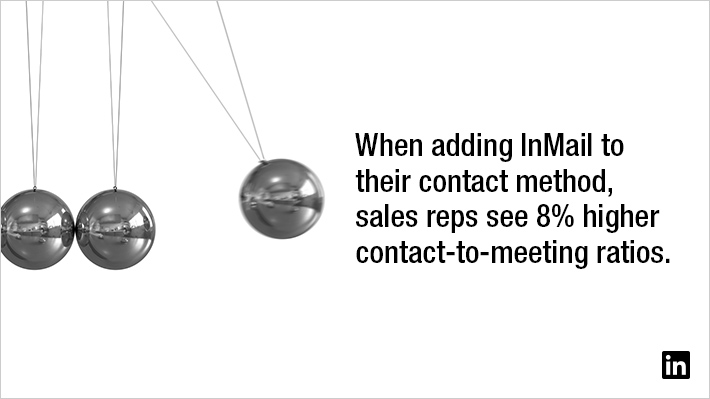





 Megan Golden:
 Megan Golden:
 Megan Golden:


