Shared posts

06 Jun 15:58

Summarize Long Emails at the Top to Communicate More Effectively

by Alicia Adamczyk

Here’s a productivity tip managers and workers would do well to incorporate into their every day email routine, courtesy of comedian and author Franchesca Ramsey from her days working at Upworthy: summarize lengthy emails up top so your recipients know what they’re in for.

Read more...

06 Jun 15:55

What can SaaS sales leaders learn from the world of Retail?

by Mark Ackers

5 months ago, my world changed… I was told, by my wife that I was going to be a father. Gulp!

06 Jun 15:55

9 Sales Pitch Examples (Plus Tips on How to Write Your Own)

by Gabe Larsen

Your sales pitch can make or break the deal. Trust me, after 16 years in sales I’ve seen it time and time again. Fumble the pitch and a prospect goes cold.

Sales reps need to have their pitch perfect before meeting with a customer. It’s about perfecting your opening line, your verbal business card, and the first thing your customers hear when you call or meet with them.

In my time in sales, I’ve heard my fair share of both great and less-than-stellar pitches. In this post, I’d like to discuss the anatomy of a good sales pitch and share examples of the best sales pitches I’ve seen.

→ Download Now: 25 Elevator Pitch Templates

Table of Contents

Salespeople are past the point of giving prospects hour-long presentations to sell products or services. Nobody has that kind of time and, to be honest, if you need an hour to relay your value proposition, you‘re doing it wrong. (Psst: If you need help creating a value proposition, we’ve got you covered.)

Remember: They're called elevator pitches for a reason. Ideally, if you're giving me one, I should be able to understand what you have to offer in the time it takes to get from the lobby to my floor. I need to be hooked by your opening line so I’m reluctant to leave the elevator because I’m so intrigued.

A good salesperson should be able to get their message across compellingly and concisely. If you can nail your sales pitch, odds are you'll have more time to talk down the line.

What is a product pitch?

A product pitch is not much different than a sales pitch, but it’s specifically focused on a product or service. When I pitch a product, I go in-depth and emphasize how the product works, how it will solve customers’ pain points, and the specific benefits it will bring to customers.

A sales pitch can be broadly focused. Let’s say I’m at a consulting firm that offers a wide range of services. I’m selling the business as a whole, rather than a specific product or service, like a CRM platform or accounting tool.

Parts of a Sales Pitch

If you have time to properly expand and work on a conversation, touch on points of interest. Here’s a framework you can use for building your pitch:

  • Problem. Start with a statement or question about the problem you solve. You can present the problem using a personal anecdote, question, or eye-opening statistic. Answer the why.
  • Value statement. Share a very clear, concise statement of value. Be action-oriented and outcome-focused. Avoid using jargon. Share benefits.
  • How we do it. Highlight unique differentiators and explain what you do.
  • Proof points. Provide clear reference examples and list recognizable achievements. Share industry validation and awards.
  • Customer stories. Share customer examples and successes. Tell emotional and personalized customer stories. Make it real and tangible.
  • Engaging question. Close the pitch with an open-ended question, creating a space to have a conversation.

Many companies use success stories in their pitches to ensure the sale. Name-dropping really works, so be sure to use that to your advantage. And if my product is small or light enough to keep in my pocket, I should always have one on hand to show prospects.

I always stress the need for a concise sales pitch. So keep it free of professional jargon, don't get into the weeds, and be sure to talk more about your prospect and their problems than yourself.

Nothing’s more off-putting than a bragging salesperson talking about themselves, their company, or their services. That’s what I call the “me monster.” The actor in your story is the customer, not you — period.

Distribution Matters

Lastly, presentation and distribution are everything. You need to deliver your sales pitch to the right person at the right time with the right tools on hand (like a demo, free trial, or presentation).

The sale starts with your list of contacts. Define your list and personas, know their correct contact information, get an introduction, and make sure you contact them at a time of day when they’re likely to respond.

How to Start a Pitch

Starting a sales call is arguably the hardest part of the pitch. You have to grab your prospect’s attention so that they actually want to hear the value of your product and how it can help their business. But before you can share the product’s value, you have to hook the prospect.

When starting a pitch, I make sure to do the following:

  • Starting with the problem. I always start with the problem my offer solves. Unless customers know what my team can do for them, they won’t be open to hearing how our product is a solution.
  • Tailoring the start of the pitch to their vertical. No one wants to hear a general pitch that would apply to any business. Instead, I research their vertical and use the information I find to personalize my pitch immediately.
  • Offering stakes. If they don’t solve the problem using our solution, what do they have to lose? I don’t need to state it in such clear terms. However, alluding to the risks at the start of my pitch helps me secure buy-in straightaway.

Here are a few methods for starting a product pitch, but remember: Try to stick to thirty seconds, or one to two sentences if you’re delivering the pitch via email.

Start off with a personal anecdote.

I always start a pitch with what I know best — myself. While I don’t think you should focus solely on yourself throughout your entire pitch, starting off with a personal anecdote can help you speak with more authenticity and foster empathy.

The key here isn’t to focus on the product’s merits. How many product pitches start off with “This product helped me achieve X results in X amount of time”? A lot. And I’m already yawning. And no one cares about results unless they know the problem first.

Instead, my personal anecdotes focus on a problem that my offering can solve. Make it as excruciating as you’d like — and don’t forget to be genuine and connect your anecdote to their business.

Ask a question that relates to the problem you solve.

Oh, yes, the good old question. While it might verge on overused, it’s not to be dismissed. Asking a question is a highly effective way to start a pitch. The question should, again, focus on the problem.

I stick to yes or no questions and tailor them specifically to the business I’m pitching to. If I’m speaking to a real estate business, I craft questions that articulate a problem specifically experienced by real estate firms. If I’m selling a property management software, it could be as simple as, “Do you spend way too much time tracking individual property sales? That’s time better spent actually showing homes to prospective buyers.”

Start with a stat that resonates and offers stakes.

Starting with a stat can be effective — but it has to resonate with the audience and offer stakes. In other words, what does the stat have to do with the problem? How does it reflect a potential and critical downfall that could harm your prospect?

Let’s say that I’m selling yard maintenance services. Starting off with “50% of homes don’t use yard maintenance services” is a lazy and boring way to begin my pitch. Instead, I say that “50% of homes don’t use yard maintenance services, resulting in thousands paid to HOA every year.”

Now that you know how to start your pitch, it’s time to deliver the rest of it. Use the following tips to secure buy-in in less than three minutes.

1. Do your research.

A thoughtful, effective sales pitch speaks to how your specific offering suits your prospect's specific circumstances … specifically — and in this context, specificity is the byproduct of thorough, thoughtful research.

Productive sales pitches are framed around a problem a prospect is facing. You can‘t identify potential gaps and inefficiencies in how a prospect’s business operates if you don't know their business.

Scour any public-facing resources the business has. That could be the information on its website, its bank of case studies, or list of customers. You also have to have a solid pulse on industry trends and insight into its competitive landscape.

One way or another, gather the perspective you need to deliver a thoughtful, relevant pitch. You don‘t have to rattle off every fact and figure you pull about your prospect, but you don’t want to speak in vague platitudes that would apply to just any business.

2. Make it short.

A sales pitch isn‘t a conventional presentation. You’re not going to have PowerPoint slides. You‘re not going to have complimentary pastries on a boardroom table. And, most of all, you’re not going to have your audience’s time and patience for long — at least not until they’re sold on your product.

3. Make it clear.

This ties in with the previous point. You don’t have the time to go on tangents or talk about anything but the message you’re trying to get across. Your pitch has to be lean and to the point. It has to register with your listener immediately. That means speaking with intention and clarity.

If I’m pitching a product, I want to ensure that I clearly communicate how it will solve the prospects’ pain points. My listeners should leave with a clear picture of how their day-to-day will improve if they decide to make a purchase.

4. Make sure you're speaking to them, specifically.

Remember that one time three points ago when I said sales pitches should be specific? I'm going to elaborate on that a bit more here.

Should your pitch be concise? Yes. Should that come at the expense of specificity? No. You don't want to speak vaguely, mentioning how “businesses” in general can benefit from your solution. You want your prospect to understand that your solution will work for them in particular.

Take the insight you‘ve gathered from your research. Understand their circumstances and pain points, and apply that knowledge via a pitch that shows you’re looking out for their specific interests.

5. Explain who your customers are.

Consider the picture you’re going to paint in your pitch. Give your listeners perspective on who’s buying your product or service. They want to know that you have a lucrative, engaged market in mind. Be specific in identifying who will be interested in your product. Then, try to convey why your listeners should be interested in them.

6. Explain the problem they're facing.

Cover why your customer base needs you. Your target market is only as valuable as the problems you can solve for them. Convey a problem they consistently face. If I’m pitching a spreadsheet software for accountants with functionality Excel doesn’t have, I could discuss how hard it is to bookkeep without my software's unique features.

7. Explain how your product addresses their needs.

At this point, you’ve established who you’re selling to. You’ve established why you’re selling to them. Now, you have to establish why they’d buy from you. What can you do better than your competition?

As mentioned above, you need to clearly explain how your product addresses their needs. Continuing with the accounting example, you could touch on how your unique data visualization features make busywork more efficient.

8. Describe what success with your product will look like.

Show the benefits of your product on a broader scale. In the example we’ve been using, I can talk about how accountants who use my software have more time to spend with important clients or the flexibility to spend time with their families. I can show how my product makes customers’ lives better as a whole.

Ideally, your pitch should be a one-liner summarizing what your company does, how they do it, and for whom. And this is not just a requirement for sales reps. Anyone in your company, from the CEO to sales consultants, needs to know your one-line sales pitch by heart.

9. Provide social proof.

If you can, think about sliding in a mention of how any of your prospect's industry peers have seen success with your solution. Prospects are typically more inclined to trust your customers more than they trust you.

After all, those companies don‘t have anything to gain from you winning your prospect’s business. You want to keep your pitch concise, so don‘t get too caught up listing off every organization in your prospect’s competitive landscape that leverages your solution — but a quick reference to one of your more successful, relevant customers can go a long way.

10. Brace for objections.

I keep mentioning this, but I‘ll say it again: Sales pitches are supposed to be concise. If all goes well, you’ll generate some immediate interest, but you won't have the space to address everything your prospect might want to know in your pitch itself.

You have to be prepared to field some questions, and your ability to answer those questions thoughtfully will stem primarily from experience and research. Familiarize yourself with the common objections you get from companies in your vertical.

Pull from your research to understand your prospect‘s unique circumstances, and be prepared to field questions relevant to those. And when you’re fielding objections, remain composed and non-confrontational. You're trying to frame yourself as a helpful, consultative resource for prospects — not as arrogant or argumentative.

11. Follow up.

A sales pitch sets a sales engagement in motion. Capitalizing on a thoughtful, well-executed one requires some persistence. According to a report from Invesp, 80% of sales require five or more follow-up calls — so if you want to make the most of your pitch, be prepared to conduct some additional outreach.

How can you make your sales pitch the best it can be? Here are some sales pitch presentation examples and ideas.

1. Tell a story.

Keep your listeners engaged by telling a brief story. The story could be either about the company or how a customer found success through your product or service. In this latter example, I can start with the issue the customer was facing, lead into the solution, and end with the key results the customer achieved.

If you think storytelling is difficult, don’t fret. Just think of your favorite movies and TV shows — how did they keep you engaged? Try to emulate the same tricks as you try storytelling during a sales pitch. Use images and interactive elements to enrich the experience for your listeners, keeping in mind who your audience is and what their preferences are.

Pro-Tip

Your story doesn’t even need to be an anecdote. This sales pitch presentation example from a template deck I found in Canva demonstrates how to communicate a relevant industry statistic at the beginning of your pitch. In my opinion, data is a great way to tell a story.
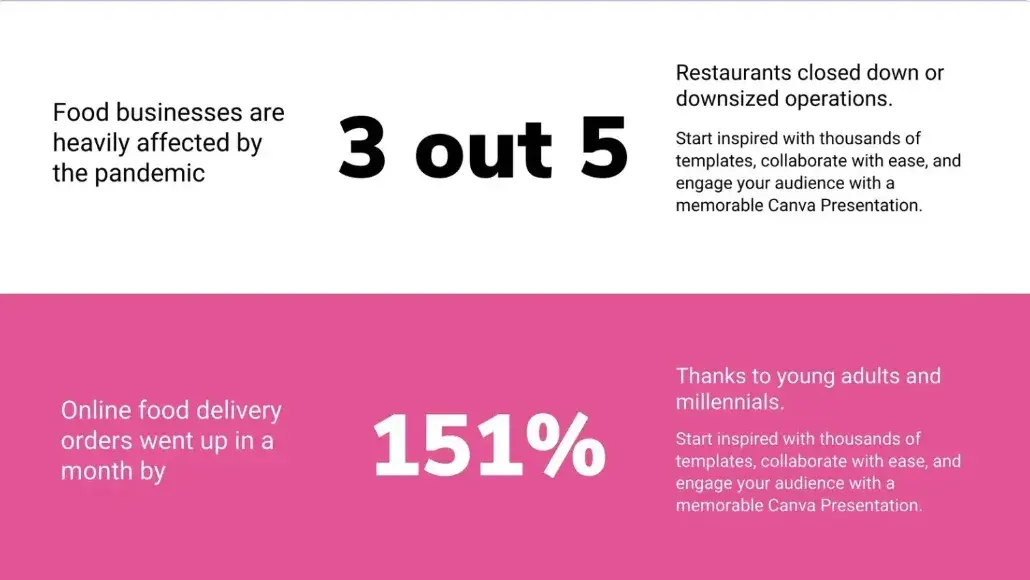
a sales pitch example revolving around storytelling

Source

2. Include a value proposition.

A pitch is a vehicle for you to convey why a prospect should consider your solution — making your value proposition the crux of your entire pitch. If you can‘t articulate your offering’s value, you can't give them a compelling “why”.

What value will you provide for this person or their company? While your pitch should be short and sweet, the value proposition is the core of your sales pitch. To offer the greatest amount of impact, your value prop should come after you identify the problem that your prospect faces in their day-to-day. The value prop is the proposed solution and is the make-or-break moment of your pitch.

Create a value proposition canvas to guide the wording of your value prop. Remember that the gain creator and pain relievers connect directly to the customer's situation. Leveraging these two sections will help you create a pitch that directly speaks to your prospect and their needs.
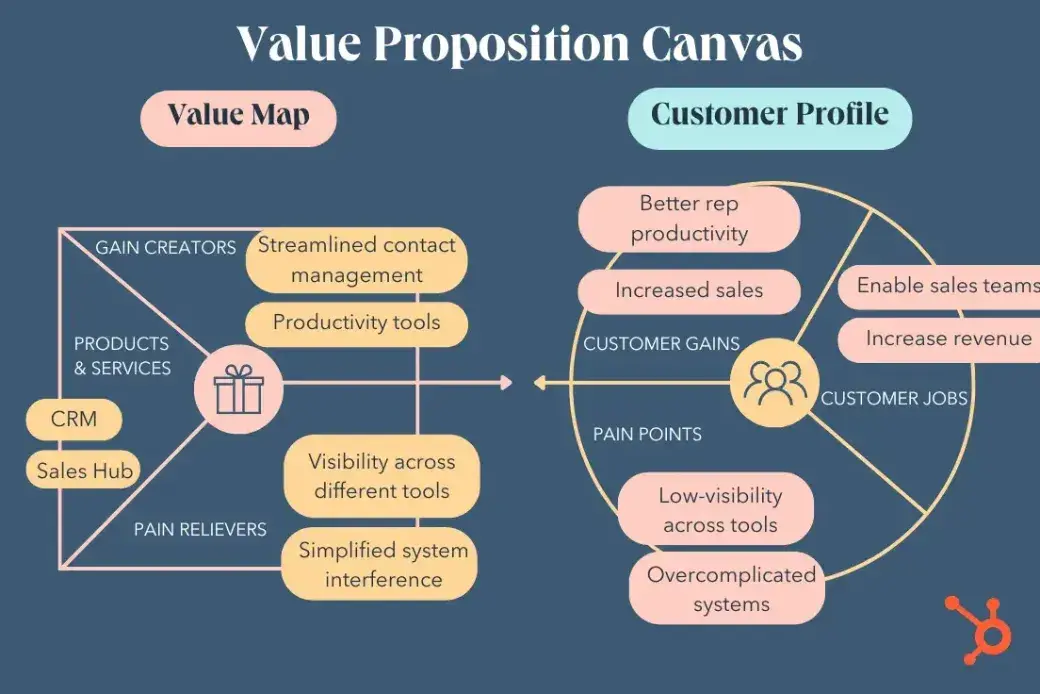
a sales pitch example designed to highlight a value proposition

Source

Example

In this sales pitch presentation template, the company clearly outlines its competitive advantages as a way to communicate their value prop.
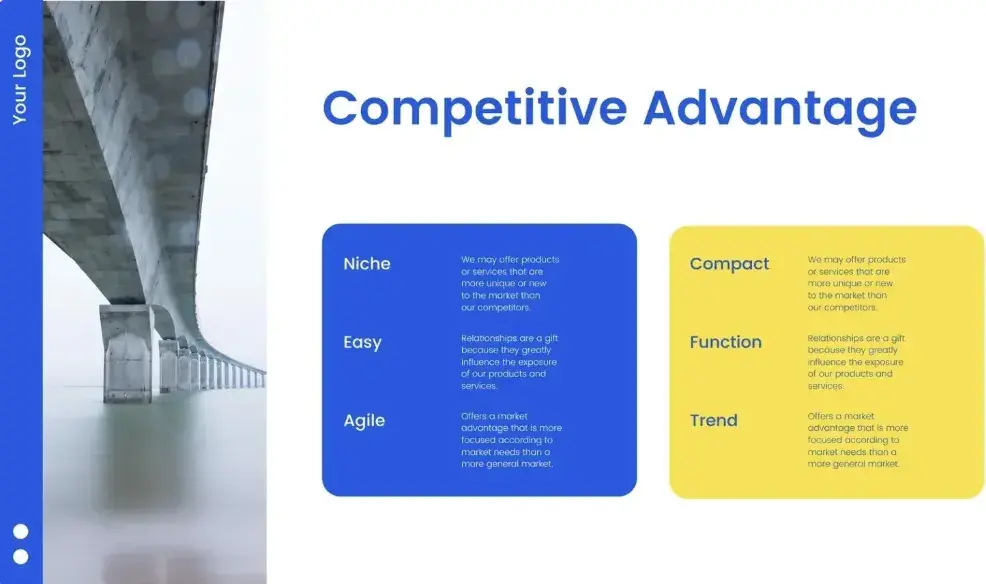
a sales pitch example that speaks to competitive advantage

Source

3. Personalize the sales pitch.

Who are you talking to? Make sure your sales pitch is relevant to them and piques their interest. You’ll be able to customize it so it addresses the items that are most important to the person you’re speaking with.

This idea applies to any pitching method or technique you use. No matter what, the sales pitch should speak to your prospect’s highly specific pain points and needs.

For instance, if I’m selling enterprise-level software to senior-level executives, I might adjust my tone and delivery to be more formal and poised. The scrappy owner of a startup, however, might appreciate more humor and levity. I recommend studying prospects to figure out the best pitching method for them.

Pro-Tip

For personalization to have the most impact, you must have had a productive discovery call where you asked questions that uncovered your prospect’s most urgent needs. Leverage the information you found out during that process to hone your pitch.

Also, consider using dedicated sales software to store all your contacts’ details and leave notes next to each prospect with any information that helps you personalize your message — especially handy if you’re pitching at scale.

a discovery call template to support effective sales pitches

4. Switch up your pitch.

There are a variety of sales pitch types to choose from:

  • The one-word sales pitch. Reduce the entirety of your value proposition and company mission to one word. For instance, at HubSpot, my one-word sales pitch might be “growth.”
  • The question sales pitch. Opening your pitch with a question not only piques curiosity but also engages the end recipient. I may ask, “How much money does your company waste on manual sales activities that could be automated?”
  • The rhyming sales pitch. Using rhyme can make your pitch more memorable to buyers and even incite a laugh. For instance, if I were pitching Sales Hub to a potential business, I might say, that Sales Hub covers every sales need from bottom to top and makes you an elite member of the sales automation club. I’m absolutely not a poet, though.
  • The subject line sales pitch. If I’m primarily selling a product over email, I can craft a sales subject line that pitches the product to prospects.
  • The X sales pitch. You don’t need to get on X (previously Twitter) for this one. Instead, think about how you’d word your pitch if you only had 280 characters to work with. What would you emphasize? What would you omit?
  • The Pixar sales pitch. Place your ideal buyer persona, their key problem, and their solution in a story that more or less follows the familiar Pixar structure: Once upon a time _____. Every day, _____. One day _____. Because of that, _____. Until finally, _____.

Pro-Tip

Depending on the potential customer and situation, change up the type of pitch you use. Alternatively, as the sales process progresses, you can use different types of pitches and identify the ones that your prospect most effectively responds to.

5. Practice your pitch.

Practice, practice, practice. Once you've created your pitch, practice it so you feel comfortable presenting it in front of prospective clients. You can do this in a few ways: By simply standing in front of a mirror and practicing, by filming yourself using your phone or laptop camera, or by role-playing with a colleague.

I especially recommend the last option because you can get live feedback during or after the exercise. Role playing is a valuable sales training technique that has helped me build my pitching muscles while also putting me in situations where I have to think on my feet.

6. Try not to use metaphors.

Odds are your sales pitch isn’t happening in an English classroom. The idea of incorporating vivid, clever comparisons might seem effective in theory, but there’s a good chance you might confuse your prospect. Remember, you want to keep things clear.

If you feel compelled to use metaphors, keep them business-related or extremely familiar (like “it’s important to walk before you run” or “we should compare apples to apples”). Don’t use sports-related metaphors unless you’ve made a connection with your prospect on that basis — maybe they played baseball as a child like you did, or you’re both fans of the same sports team.

7. Create a WOW moment.

One way to ensure your pitch is memorable is by blowing the listener or recipient’s mind. You might do this by stating a fact that is counter-intuitive, demonstrating the product/service’s best-selling point in a shocking way, telling an outlandish story, or emphasizing your product’s most unique feature.

For instance, let’s say that I’ve established my company’s customer service as one of my key selling points. During an office visit, I might take the prospect on a tour of the customer service floor to show them the service team in action and even introduce them to the chief customer officer on a first-name basis. Talk about creating a positive impression! With that move, I cement the authenticity of my claims while delighting the prospect.

Pro-Tip

If you’re pitching virtually, you can use your sales pitch presentation as an opportunity to walk through a demo. Take a moment to think about some of the pain points or needs the customer has already shared so you can personalize your demo and share a feature that would meet their needs most.

8. Appeal to emotions.

Understanding your customers is central to consistently nailing sales pitches, and when you do, it’s good to convey that. One way to do so is to use empathy, revolve your pitch around their life experience, and find commonalities between you and them. Try to find out small tidbits about their career, their upbringing, or even their childhood so you can use empathetic statements and connect on a more personal level.

In my opinion, the sales pitch template below demonstrates one way to weave emotions into your presentation: by calling out and outlining customer pain points with clarity — and empathy.

a sales pitch example that revolves around making an emotional appeal

Source

If you’ve both worked at startups in the past, for instance, you can appeal to your prospects’ emotions by mentioning how limited budgets can be during those early startup days. You can then either help them feel glad that they have a larger budget now or lead to the returns of your product.

9. Back it up with facts.

While consumers make decisions more often with emotion, they still need to rationalize the decision to themselves and/or other key stakeholders. By providing statistics or case studies that support the emotional appeal, you’re providing credibility that will help them feel as though they’re making the right decision.

For case studies specifically, I recommend incorporating a few into your sales pitch presentation. If there’s no time to cover the specifics, I usually include a QR code or shortened link where it’s easy for prospects to access our case study library.

Example

Here’s an example of how to briefly showcase customer testimonials or case studies in your sales pitch presentation.

a sales pitch example highlighting the importance of providing proof and backing claims up with facts

Source

10. Tap into their fear of missing out.

Fear of missing out (FOMO) is a powerful motivator and can create a great sense of urgency. The last thing you want is for them to be dazzled by your sales pitch but procrastinate long enough for that feeling to fade away. Instead, get them to take action right away.

11. Educate them.

You want to establish yourself as an authority in your space. Some interesting, relevant facts can help grab your customers' attention and add a certain degree of legitimacy and trustworthiness to your pitch. In addition, provide more resources that the prospect can refer to as they continue exploring your company and your offerings. That way, they can find out more at their own pace.

It’s also important to provide supplemental information that doesn’t necessarily educate them about your product but about how they can do things more efficiently at their business. For instance, if you sell design software, you can send them links to resources that teach them how to design assets for social media platforms.

Great Sales Pitch Examples

If you’re in need of inspiration, take a look at the following sales pitch examples. They're short, focus on the customer, and effectively convey value.

1. Phone Sales Pitch

When I have an opportunity to pitch over the phone versus email, I feel like I’ve won the lottery.

That’s because making a sales pitch over the phone gives me the opportunity to establish a personal connection with my prospects and guide them to the next step in the buying process. This is one of the most powerful pitching methods because it happens in real time, allowing me to gauge interest and adjust my pitch accordingly.

Phone pitches are commonly done by cold calling but can also be used in warm calls to existing leads or even follow-up calls after initial contact. So, what does an effective phone sales pitch look like? Here’s an example:

example of a sales pitch conducted via phone that covers value propositions and objections

What I like: This pitch shows that I’ve done my research. I can remind the prospect of the pain points that they have. The script then provides a solution if the prospect objects to the offer.

Pro tip: Check out HubSpot’s sales call templates for more inspiration on how to create a winning phone sales pitch.

2. Voicemail Sales Pitch

While I love a phone pitch, I recognize that not every phone sales pitch goes as planned. The prospect may not pick up. In fact, 80% of sales calls go to voicemail. That’s why I always have a voicemail sales pitch on hand, just in case I end up in a game of phone tag.

When leaving a voicemail, you have the opportunity to make an attention-grabbing message that piques the curiosity of your prospect. A well-crafted voicemail pitch can create a sense of urgency and leave your prospects more motivated to return the call.

If you continue to have trouble getting in contact with a prospect, keep trying. The more you call them, the more likely they will pick up eventually — it just might take some persistence.

Check out this example of a successful voicemail sales pitch:

example of a sales pitch conducted concisely but thoughtfully via voicemail

What I like: This voicemail states who I am and why I’m calling. I can then explain how the prospect could benefit by returning the call.

Pro tip: I can also use voicemail as a way to redirect your prospect to another channel, such as email. For instance, I could leave a message saying something like, “Hey Sarah, it’s Gabe from XYZ. No need to call me back. I’m calling to let you know I just sent you an email with some marketing statistics I think you’ll appreciate. Let me know what you think!”

For more examples on how to leave an intriguing voicemail, check out HubSpot’s free voicemail script templates.

3. Email Sales Pitch

When you have a large number of prospects to contact and don’t have the time to call each one, sales emails are a great way to connect. One of the major benefits of pitching via email is convenience. Emails can be accessed anywhere at any time, allowing your prospect to review the pitch whenever it works for them. Plus, it can be saved for future reference.

While it may be tempting to send out a generic pitch to all your prospects as a way to save time, it’s important that each email pitch is well-written, compelling, and tailored to each recipient. Emails that are too spammy and sales-y are more likely to end up in the trash and leave you on read.

Here’s an example of what an effective email sales pitch looks like:

example of a sales pitch conducted via email

What I like: This pitch is clear and concise and allows me to acknowledge that the prospect is busy. I can quickly and clearly demonstrate value. From there, I can use skimmable bullet points to draw attention to the benefits of using the service.

Pro tip: There are tons of different ways to write an email pitch, especially since each prospect has their own unique needs and pain points. To save some time, check out HubSpot’s free sales email templates.

4. Sales Presentation Pitch

If I’m lucky enough to make a pitch in person, I always prepare a sales deck, which is a presentation used to enhance your pitch. Sales decks are often created with programs like PowerPoint, Google Slides, and Keynote. You can also find tons of pre-built templates in Canva if you’re looking for something polished that you don’t have to create from scratch.

A sales presentation pitch can be beneficial because it uses visual elements, like images, graphics, and charts, to showcase your product features, benefits, and value proposition. Plus, the structured format ensures a logical flow of key points and keeps the presentation focused instead of overwhelming your prospect with too much information.

Take a look at this sales deck pitch for UpstartWorks:

an example of a sales pitch conducted via presentation that's enhanced by a visually engaging sales deck

Source

UpstartWorks utilizes an animated slide presentation to communicate with their prospects. Plus, they even have a PDF version of the slides to distribute when the presentation is over.

What I like: This deck lists all of the benefits of working with the company and uses data to communicate why ecommerce isn’t going anywhere. I like that the deck demonstrates expertise. Beyond that, it uses engaging visuals to capture the audience’s attention.

Don’t have time to create your next slide deck? HubSpot’s free powerpoint templates can give you the kickstart you need to create a visually compelling presentation.

5. Elevator Pitch

No matter what type of situation I’m in, I want to have a quick and easy sales pitch ready to go at any moment. Instead of ABC (always be closing), I have an ABP mindset (always be pitching). That’s where elevator pitches come in.

The idea is that I quickly and effectively convey the key value proposition, benefits, and unique selling points of my offering in 60 seconds or less — aka the duration of an elevator ride. An elevator pitch can come in handy at networking events, job interviews, industry conferences, or any situation where a quick and compelling introduction is needed.

Here’s an example of an elevator pitch that can be used for a sales opportunity:

example of a sales pitch elevator pitch covering the benefits of hubspot's crm

What I like: This pitch starts off with a question to grab the prospect’s attention. I can then remind them of a frequent pain point before providing a solution. I can then invite the prospect to learn more about the offering.

Pro tip: For more elevator pitches — including ones that can be used for networking and investment opportunities — check out HubSpot’s free elevator pitch templates.

6. Video Sales Letter

A video sales letter takes the key elements of any other sales pitch and presents them in video form. They can be used in various ways, such as on websites, landing pages, social media platforms, or sent directly to your leads.

The major benefit of going with a video sales letter is that videos provide an opportunity to tell a compelling story about your product or service in a way that you can’t with other mediums. By combining visuals, narration, and music, you can really capture the attention of your prospect, evoke emotions, and make a lasting impression that can help move the buying process forward.

Glorify’s video sales letter for their instant background removal is a great example.

What I like: The video immediately presents a common problem that ecommerce vendors and marketers deal with and offers a solution. Beyond that, the use of animated visuals and catchy audio make it engaging to watch. Plus, I can actually see how to use the tool.

7. Social Sales Pitch

Social sales pitches are tailored messages delivered to prospective customers through social media platforms, like LinkedIn. This process is often referred to as social selling.

Unlike traditional sales pitches that can be more direct and transactional, a social sales pitch aims to establish relationships and build trust with prospects by delivering valuable and relevant content. The goal is to increase brand awareness and drive conversions by aligning your sales message with the interests and needs of your prospects.

Here’s an example of social sales pitch that works when you have a mutual connection:

example of a sales pitch conducted via social media that references a mutual connection between the sales rep and the prospect

What I like: This pitch immediately establishes credibility. I can see how the product has worked for other customers. Them I have the chance to learn more.

Pro tip: Take your social sales pitches to the next level by using some of the tips in HubSpot’s free guide on social selling.

8. Website Sales Pitch

A website sales pitch refers to the persuasive messaging and strategic content displayed on a website to attract and convert potential customers. It aims to capture visitors’ attention, engage them with compelling content, and guide them towards taking a desired action, such as making a purchase, filling out a form, or contacting your business.

Compelling website pitches often include storytelling, product or service descriptions, customer testimonials, and persuasive elements like pricing incentives or limited-time offers.

Here’s a great example of a website sales pitch from LISNR:

example of a sales pitch conducted via website for an ultrasonic proximity platform

Source

What I like: This website pitch uses the company’s origin story as a storytelling device. I can clearly see the company’s values. Then, I can see how the company has grown over time.

9. Follow-Up Pitch

So, what do I do if my prospect doesn’t respond to my first pitch? I follow up with them. A follow-up pitch gives me the opportunity to reignite the conversation, reinforce my value proposition, and address any questions or concerns a prospect might have.

Follow-up pitches can be delivered through a number of channels, but phone calls and emails are the most common. Ultimately, the goal of a follow-up is to continue nurturing your relationship with the prospect and convert them into a customer.

Here’s a great example of a follow-up after connecting with a prospect on social media:

example of a sales pitch that revolves around a following up with a prospect

What I like: This pitch states how the sales rep and prospect initially connected. Then, it cuts to the chase. There’s also a call to action that asks the prospect to sign up for a newsletter.

Pro tip: Following up can feel awkward sometimes, especially when you’re new to sales. HubSpot’s follow-up email templates can help you create friendly follow-ups without all the stress.

Sales Pitch Presentation Examples

To pull everything together that we have discussed in this post, I would like to share three quick examples of sales pitch presentations. These video presentations showcase the attributes of a strong pitch — that includes telling a story, emphasizing your company’s value proposition, and solving for customers’ pain points.

1. Algoplanner.

In this sales pitch, Algoplanner — a supply chain SaaS company — uses a strong storytelling method. I like how they first set up a clear problem statement, tapping into prospective customers’ emotions (read: overwhelmed, overworked). Then, they position themselves as the solution.

2. UpSend

UpSend, a former customer service software, has a great sales pitch presentation here. I like how they focus on setting up the problem they are solving for — and then clearly illustrating how their product adds value.

3. Surfe (Previously leadjet)

The revenue workspace Surfe illustrates another strong sales pitch. They quickly tell the story of their prospective customers’ pain points and communicate a lot of understanding. Then, I like how clearly they illustrate how their product solves those pain points.

Bonus: HubSpot

This isn’t exactly a pitch presentation but instead a podcast episode with CTO Dharmesh Shah about how the company has grown over time. However, I included this episode in the list because Shah goes into the anatomy of HubSpot’s early sales pitch.

“What we said was, ‘By the way, everything you’ve done in marketing doesn’t work any more…’ When you’re selling to a VP of marketing, you’re creating an existential crisis in their head when you’re telling them everything they know how to do well is no longer relevant,” Shah says on the episode.

Then, Shah could recommend a change in direction with HubSpot.

Why a Short Sales Pitch is a Good Pitch

An important note to make about these sales pitches is that they are all amazingly optimized for a short conversation. (Notice how short the three pitch examples above are?) I can't stress enough how much brevity matters for a sales pitch. Talking too much, using filler words, and talking about your company for more than two minutes can easily kill a conversation. So, keep your sales pitch short, clean, and simple! Your customers will thank you.

Editor's note: This post was originally published in June 2019 and has been updated for comprehensiveness.


06 Jun 15:55

Canadian Government’s Phoenix Pay System an “Incomprehensible Failure”

by Robert N. Charette
That’s the nicest thing that could be said for a debacle of the first rank
Photo: iStockphoto

Canadian Auditor General Michael Ferguson’s latest assessment of the country’s misbegotten attempt to develop a new government-wide payroll system was blunt: “The building and implementation of Phoenix was an incomprehensible failure of project management and oversight… Overall, we found that there was no oversight of the Phoenix project, which allowed Phoenix executives to implement the system even though they knew it had significant problems.”

As a result of world-class project mismanagement on the Phoenix project, the Canadian government now owns and operates a payroll system “that so far has been less efficient and more costly than the 40-year-old system it replaced,” Ferguson states.

Exactly what went wrong and why? The answers have only been hinted at in government documents until last week, when Ferguson published his second audit of the Phoenix project. While his first audit focused on the project’s operational impacts on Canadian civil servants, this latest audit focuses on the management decisions made during its development and go-live period. Those decisions are directly responsible for the cost of the system rising from the original C$310 million estimate to at least C$1.2 billion through 2019—with tens of millions more likely to be spent before its hoped for replacement comes on line in 2025.

The Canadian government finished rolling out Phoenix in April 2016, despite numerous problems that became evident when it initially went live in February of that year. The decision to move forward, despite growing operational problems and calls to suspend its deployment, has made life a Dante’s inferno for some 193,000 civil servants. That group―more than half of Canada’s federal workers―has at various times over the past two years received either too much, too little, or no pay at all.

As of April 2018, there were still some 372,000 Phoenix payroll-related transactions waiting to be processed and corrected. Unless the current clearance rate improves, the last of the payroll problems won’t be fixed for another five years.

Ferguson’s audit describes what is essentially a manual for senior managers desiring to sabotage IT projects. Phoenix executives decided to defer or remove more than 100 of Phoenix’s 984 pay processing functions, restoring them only after it was fully deployed. The executives decided to scale back Phoenix functionality in order to save both development time and money because the estimated software development cost was C$119 million more than the C$155 million originally budgeted for.

Instead of asking for more money, which would undoubtedly lead to a lot of uncomfortable questions from politicians who were wary about the project in the first place, Phoenix executives worked with the prime contractor, IBM, to force-fit the project into the existing budget. This required reducing its functionality, testing, schedule, and project development staffing. How much the development of Phoenix was compromised by these decisions was never communicated to the departments and agencies whose employees would be bear the brunt of the program’s defectiveness.

The audit report makes clear that during the development of Phoenix, which was understood to be high risk from the start, a string of decisions turned those risks into insurmountable problems. For instance, in reviewing a sample of 81 pay processing functions, the auditors found that 20 percent failed testing. Worse, the functions that failed never were retested. Furthermore, the system was never subjected to end-to-end testing. The wrapping paper and bow on those miscues was the decision to scrub the sole Phoenix pilot rollout that was supposed to be conducted with one department in order to assess how well the system worked under real-world conditions. The rationale: to save money.

Executives decided to launch Phoenix with known significant security weaknesses, the audit reveals. Although deployment began in February 2016, there was no plan to address these high-security risks until December 2016. Similarly, a separate set of system weaknesses putting civil servant personal privacy at risk were not fully assessed before deployment. This led to nearly a dozen documented privacy breaches post-launch.

Moreover, a contingency plan existed in name only. The audit report states that the “plan” was finalized less than two weeks before Phoenix went live. But it “did not explain how problems would be resolved, what specific tasks would be needed to carry out the contingency plan, and who would be responsible for these tasks.” It’s no surprise that the contingency plan was never tested to see whether it would work.

Brimming with confidence based on nothing, Phoenix executives ignored the advice offered by an outside risk assessment and shut down the old payroll system when Phoenix went live rather than run them in parallel.  

As if the rollout wasn’t already a perfect storm, they based Phoenix on a version of PeopleSoft that will not be supported by Oracle beyond 2018. And it would have been completely uncharacteristic of the Phoenix executives if they had bothered to make plans to upgrade the software to a newer version. They apparently believed that software upgrades were unnecessary for the payroll system to remain operationally effective and secure for at least a decade.

The audit concludes that those executives “had received more than enough information and warning that Phoenix was not ready to be implemented, and therefore, they should not have proceeded as planned,” Ferguson noted. However, the executives actively dismissed all negative information and decided to go forward anyway, “prioritiz[ing] meeting schedule and cost over other critical elements, such as functionality and security.”

Just as damning: Even as Phoenix was obviously failing by the summer of 2016, Phoenix executives continued to downplay the rampant payroll problems, proclaiming instead that Phoenix was “functioning as designed.” Unfortunately, because of the project’s poor setup and lack of oversight, that statement was entirely true. It took until early this year before the government finally realized that, no matter how much money was thrown at it, there was no way to ever make Phoenix work properly.

I have read and documented many examples of incredibly poor IT management decisions over the years, such as those made in relation to the Queensland Health payroll system project and the U.S. Coast Guard electronic health record system project. However, the total number of poor executive decisions made in relation to the Phoenix effort ranks among the greatest I have ever seen on a single project.

Ferguson’s audit report lists a number of obvious recommendations for avoiding a similar debacle in the future, which Public Services and Procurement Canada, the government organization in charge of implementing Phoenix, promises to implement. However, as Ferguson admits, to successfully put his recommendations into place will require a major culture shift in both government managers’ and line-workers’ behavior. This means creating a culture where senior executives, presented with evidence that their IT-related decisions may actually be wrong, actually admit it. The culture should also make civil servants willing to speak out publicly when their managers make senseless decisions.

Unfortunately, IT history is filled with similar auditor recommendations following a major governmental IT project failure. One won’t ever lose money betting against cultural shifts of the type Ferguson recommends actually being implemented.

06 Jun 15:53

The One Technology You Should Invest In Now

by Anthony Iannarino

In a presentation that I saw today, one slide features a Swiss Army knife. The following slide was a massive Swiss Army knife, much larger than anything I had ever seen before. As soon as I saw the second slide, I was struck by the concept. More is not better than better.

The sales technology stack continues to grow larger and larger for most companies. Someone finds a new way to use technology to achieve some kind of outcome, and it becomes another tool to make salespeople more efficient than ever, solving a problem that no one perceived as a problem until the product was created.

You need a CRM to manage your customer relationships. Then you need to start adding additional capabilities, like allowing the prospective clients to schedule with the salesperson by clicking on a link in their email, a function that has to be most underutilized capability in the sales stack. Add to that a social selling component to allow salespeople to share content, a lead generation component, document management for contracts, quoting software, screen sharing, conference calling, video conferencing, and Slack for communication. There is seemingly no end to what a salesperson needs to sell effectively, even though you would do well to add up your monthly spend on technology and tools.

The pictures I saw in the slide presentation showed a regular Swiss Army knife and one that was so large and unwieldy that it would be worthless to the person trying to use it. If I were to swap out the picture of the first knife, I would replace it with a pocket knife with a single blade, that blade representing the tool that lives between the salesperson’s ears, and the one tool that counts for more in the creation and capture of new opportunities than any other technology by a country mile.

For many companies, the investment that is being driven into the latest and greatest technology would be better directed to the improving what matters most when it comes to generating results, and that is the salesperson themselves. Sharpening that tool will do more to help you produce better results more than anything else.

The post The One Technology You Should Invest In Now appeared first on The Sales Blog.

06 Jun 15:52

Flipping the Script on the 80/20 Rule in Sales

by Anil Kaul

80/20 Rule in Sales

Also known as the Pareto Principle, the 80/20 Rule is a formula stating 80% of sales are made by 20% of sales reps. It can feel impossible for underperforming reps to crawl out from under -- but it's not. Artificial Intelligence makes it easier than ever to flip the 80/20 rule on its head and make all reps high performers.

The 80/20 rule in sales, sometimes called the Pareto Principle, has been around forever. It’s a formula stating that 80% of sales are made by 20% of sales reps, and it sometimes seems as immutable as a law of physics.

Sales managers and business leaders try to move the ratio with training, but up to 87% of training content is forgotten within a few weeks. Coaching is no solution either. Sales managers typically spend 5% of their time coaching, rather than the expected 50%.

Some sales managers try to hire their way to greater productivity, but replacing salespeople is a costly proposition. Companies can spend up to $97,000 to replace a team member, and the learning curve is steep: Most new hires take about 10 months to become effective.

Sales managers try all these strategies and more to break free of the 80/20 rule. But, eventually, as if responding to the pull of gravity, sales performance reverts to 80/20 or a number close to it.

The good news is a new technology is emerging with the power to flip the script on the 80/20 rule: artificial intelligence (AI). AI is already improving sales operations by automating tedious tasks like updating the CRM system giving reps more time to focus on sales. But AI is capable of so much more. Here are three ways AI is poised to fundamentally transform the 80/20 rule in sales.

How AI is Flipping the Script on the 80/20 Rule

1. AI will provide guidance based on real-time marketplace factors

Instead of a traditional static playbook, AI provides a dynamic playbook guiding salespeople so they can maximize opportunities. AI can analyze enormous datasets and recognize complex patterns that humans can’t detect.

It can ingest marketplace data about new product releases, changes in buyer behavior online, and factor it all in producing guidance personalized for each opportunity.

A dynamic, AI-driven playbook in action might work like this: Picture a sports equipment sales team trying to sell a basic line of elliptical machines to a hotel chain. Negotiations seem to be going well, but suddenly, the buyer isn’t returning calls.

An AI-enabled sales tool detects a marketplace shift; a competitor is offering a discount on machines that sync with smartwatches. And armed with that information, the original sales team upgrades its offer and stays in the hunt.

2. AI delivers intelligent recommendations

Because it’s capable of weighing so many factors simultaneously, AI can provide salespeople with intelligent recommendations that make a sale much more likely.

It also explains the rationale behind the recommendations it provides, giving the sales team valuable customer knowledge and talking points to help close the deal. This ability eliminates the risk posed by a “one-size-fits-all” approach to sales.

For example, say a sales team is trying to meet a quarterly sales volume target for Product X. Naturally, they’d focus on moving that product when meeting contacts. But there might be signals they miss for other opportunities.

An AI-enabled sales solution could pick up on those signals, such as a LinkedIn article or social media chatter a prospect posted about a need best met by Product Z. The AI tool can recommend a product that will resonate with the prospect -- and tell the rep why.

3. AI identifies the right communication channel for each contact

Some people respond immediately to texts and ignore emails. Others ignore sales-related texts and prefer to converse on the phone. And others respond best to face-to-face meetings. The problem is, salespeople who deal with hundreds of prospects will find it difficult to remember individual preferences.

AI doesn’t have that problem — an AI-enabled tool can identify which communication channels work best for each prospect and steer the rep in the right direction every time.

AI factors in not only which communication channels were used recently but also analyzes data on contacts and transactions, identifying which communication modes were used before previous sales were made, as well as other factors to find the right channel for a specific contact.

These three AI capabilities only scratch the surface of what’s possible when big data and machine learning are combined in a continuously improving AI tool. By providing guidance that’s tailored to each opportunity, delivering intelligent recommendations, and identifying the most effective communication channel AI-enabled sales tools can do the unthinkable: flip the script on the 80/20 rule.

According to Harvard Business Review, a scientific approach to improving sales effectiveness can increase productivity in salespeople in the lower performance quartiles by up to 200%. Top performers benefit from a science-based strategy too, with an average productivity increase of 50% across the entire salesforce.

AI-enabled sales support can keep the 20% of the salesforce that carries 80% of the load producing at peak levels, while bringing the 80% of reps who underperform up to speed. Cracking the 80/20 rule is a true game-changer. Companies that adopt AI tools and supercharge performance across their sales organization will gain an unbeatable competitive edge.

HubSpot CRM

06 Jun 15:50

The Uberization of telcos

by David Riggs

For the past decade, telecommunications companies around the globe have been grappling with falling average revenues per user equaling stagnant growth rates.

While particularly mobile operators have enabled increasing prosperity in third-world countries, new ways of working and fueled entirely new markets, much of the wealth created has landed on the books of companies that we look upon with increasing discomfort: Google, Amazon, Alibaba, Tencent and others. And as if this was not enough, the very ingredient — ubiquitous connectivity — that has served as lubricant for the disruption of entire industries is now on the verge of being disrupted itself.

While many expect finance or healthcare to be next on the list of global serial disruptors, and technologies like wearables, blockchain and AI are cited to be the nails in the coffins of these industries, small players have cooked up the ingredients that could well marginalize today’s prevailing telco business models globally. There are three ingredients that could make that happen…

Lack of customer trust

Among the top 100 most trusted brands globally, you will find companies of almost any industry, except telco. You will find our serial disruptors, big brand consumer packaged goods, car manufacturers — even banks, payment companies and healthcare service providers. But you won’t find telcos. In their battle for growth, telcos globally have largely alienated their customers for the sake of managing yield and profitability.

Furthermore, simple customer engagement processes are often broken, and telcos have struggled to achieve a high quality of service with zero defects, high responsiveness and a great customer experience on even their most relevant customer interactions. They have broken the trust equation with their customers.

An existing trusted relationship is hard to disintermediate.

Why is that relevant? Because trust is an important ingredient in disintermediation, à la Uber or Airbnb. Uber has put trust and ease into the car-hailing business, while Airbnb has put the trust in-between guest and host. On the flip side, an existing trusted relationship is hard to disintermediate.

However, the telco-customer relationship, as global brand indicators show, is ready to be disrupted. Perhaps even more so than the bank-client or doctor-patient relationships.

Liquid infrastructure

While telcos are grappling with fixing their customer front ends, becoming more nimble and responsive to customer needs and putting “greatness” back into the overall customer experience equation, small startups (and large telco suppliers alike) are creating what is known as “liquid infrastructures.”

In today’s cloud-based world, global network traffic is exploding while traffic patterns, with globally scaled and load-balanced cloud-based back-ends, are becoming more and more fluid and less predictable. Likewise, decreasing enterprise assets actually connect to the enterprise network directly.

The internet of things (IoT) is creating massively distributed architectures with globally roaming assets that need to seamlessly blend into critical enterprise applications. So, enterprises are challenged with creating more flexible network infrastructures that not only connect their various operating sites, but also create reliable connections to public cloud service providers, while connecting remote and mobile IoT assets to the core network. And all that while accommodating massive shifts in traffic patterns depending on the day of the week, time of day or reconfigurations happening at service providers.

Liquid infrastructure promises to provide a solution for such challenges, and it’s not a concept telcos are capable of, or offering, in the market place as of now. It is players like Waltz Networks, a venture-backed startup from San Francisco, that are disrupting the market place by providing solutions for the completely self-managed, liquid infrastructure that can handle today’s network demand.

Envision such an offering as a global OTT service and you have a recipe for a serious contender to the global enterprise telco services market.

“On the fly” mobile access

Redtea Mobile is another such interesting disruptor in the telco space. Imagine your IoT assets are roaming around the world globally. Which telco would you go to in order to buy a data plan, plus device management, which enables you to provision and deprovision your devices globally and on the fly?

Telcos globally have been struggling to come up with competitive offerings that make managing such global asset bases economical and a breeze. That is firstly because none of the globally leading telcos can offer a truly global network — be it of their own or partner assets. Secondly, given multiple telcos are forced to collaborate if they want to offer a global virtual mobile data service, long-standing roaming agreements often stand in the way of economical pricing models. Telcos are not yet willing to sacrifice existing global roaming revenue at the expense of a potentially growing global IoT mobility data market opportunity.

Companies are better off disrupting than being disrupted.

Despite these challenges, however, the demand is increasing. While global mobile traffic was 7 exabytes in 2016, it will skyrocket 700 percent by 2021. That’s where Redtea Mobile comes into the picture. With Redtea Mobile’s technology, you could imagine someone buying regional capacity with enough associated international mobile subscriber identities (IMSI), the unique numbers assigned to mobile phone users, around the globe at wholesale prices, bundling this capacity as a global mobile IoT data service, and reselling it to enterprises globally to fuel their IoT devices.

The way Redtea Mobile’s technology works is that it can reprogram eSIMs on the fly from the cloud, so a device that operates on one mobile network in one country can be reprogrammed to another network on the fly once it crosses the border.

Both Redtea Mobile and Waltz Network enable the disintermediation of telcos, cutting out the expensive middle man. In the scenarios described above, the end-customer relationship would likely not reside with the telco, but with a service provider smartly repackaging core telco services with new technology into an over-the-top (OTT) service that completely marginalizes the telco to a pure infrastructure provider — much like the Uber drivers or the Airbnb property owners. And, as my first argument suggests, it is unlikely that many customers will bemoan the demise of global telcos as customer-facing service providers.

So what can telcos do?

Enough cases have proven already that companies are better off disrupting than being disrupted.

True, telcos have one strength that is impossible to beat — they own assets that are hard, in most markets impossible, to replicate. However, while telcos will not vanish entirely, they run the risk of being completely marginalized. To prevent that, they should drive disruptive change of their own. While small companies are innovating, telcos could be at the forefront of deploying those technologies across their infrastructure and of developing new and innovative offerings that disrupt their prevailing products and business models on top of those technologies.

Will this be enough to win? No, telcos will still have to fix the trust equation with their customers, become more responsive, etc.

But if telcos rely on their stagnant existing revenue streams and are too timid in embracing disruption, they are likely to continue their slow path toward the ultimate horror scenario of many telco executives: that of becoming a dump pipe.

06 Jun 15:49

SAP gives CRM another shot with with new cloud-based suite

by Ron Miller

Customer Relationship Management (CRM) is a mature market with a clear market leader in Salesforce. It has a bunch other enterprise players like Microsoft, Oracle and SAP vying for position. SAP decided to take another shot today when it released a new business products suite called SAP C/4HANA. (Ya, catchy I know.)

SAP C/4HANA pulls together several acquisitions from the last several years. It started in 2013 when it bought Hybris for around a billion dollars. That gave them a logistics tracking piece. Then last year it got Gigya for $350 million, giving them a way to track customer identity. This year it bought the final piece when it paid $2.4 billion for CallidusCloud for a configure, price quote (CPQ) piece.

SAP has taken these three pieces and packaged them together into a customer relationship management package. They see this term much more broadly than simply tracking a database of names and vital information on customers. They hope with these products to give their customers a way to provide consumer data protection, marketing, commerce, sales and customer service.

They see this approach as different, but it’s really more of what the other players are doing by packaging sales, service and marketing into a single platform. “The legacy CRM systems are all about sales; SAP C/4HANA is all about the consumer. We recognize that every part of a business needs to be focused on a single view of the consumer. When you connect all SAP applications together in an intelligent cloud suite, the demand chain directly fuels the behaviors of the supply chain,” CEO Bill McDermott said in a statement.

It’s interesting that McDermott goes after legacy CRM tools because his company has offered its share of them over the years, but its market share has been headed in the wrong direction. This new cloud-based package is designed to change that. If you can’t build it, you can buy it, and that’s what SAP has done here.

Brent Leary, owner at CRM Essentials, who has been watching this market for many years says that while SAP has a big back-office customer base in ERP, it’s going to be tough to pull customers back to SAP as a CRM provider. “I think their huge base of ERP customers provides them with an opportunity to begin making inroads, but it will be tough as mindshare for CRM/Customer Engagement has moved away from SAP,” he told TechCrunch.

He says that it will be important with this new product to find its niche in a defined market. “It will be imperative going forward for SAP find spots to “own” in the minds of corporate buyers in order to optimize their chances of success against their main competitors,” he said.

It’s obviously not going to be easy, but SAP has used its cash to buy some companies and give it another shot. Time will tell if it was money well spent.

06 Jun 15:45

2 Steps to Make Your Town More Welcoming to Local Business

by Grant Henninger

The following article by Strong Towns member Grant Henninger is republished from his blog, On Prosperity's Road, with permission. Grant is the founding principal of Mobius Planning and is a candidate for city council in Anaheim, CA.


The conventional wisdom today is that we’re facing a retail apocalypse. Malls are dying and rents at regional shopping centers are collapsing. At the same time, certain retail experiences are thriving. The challenge many retail centers are facing is that they are largely filled with the same collection of stores, all selling products that can be purchased online, often at lower prices. The antidote to the retail apocalypse is to stop competing on the internet’s playing field (commodity products at low prices) by selling unique, bespoke, and curated items from small, locally owned shops. Unfortunately, the needs of locally owned retailers and chain retailers are significantly different, both within their retail space, and how the entire building and development sit within the context of the community.

1. Local businesses and developments need local financing.

In commercial real estate, as in everything, form follows financing. For new commercial and mixed-use development, the only new developments that are built are ones that can be financed. For most new developments, banks require signed leases from chain retailers before they’re willing to provide a loan for construction. (These chain retailers are also often called “national credit tenants.”) These larger chains probably won’t break a lease and go bankrupt, or at least if they break the lease they’ll pay the required penalty. This gives the bank some assurance that the new retail center will have some tenants and cashflow once construction is complete.

Unfortunately, these chain retailers often require a level of design and construction that is incompatible with the needs of smaller and locally owned businesses. The most visible sign of this is that chain retailer require twenty feet or more from the floor to the roof, and floor to ceiling windows with metal casings. Achieving these design standards requires that the building be constructed with steel and concrete, or at least concrete block. This type of construction is much more expensive to build than the type of wood framing you’d find in a typical house. This additional construction cost is then passed on to the tenants in the form of higher rent, which smaller and local businesses often can’t afford.

In addition, these retail centers also often have suites that are too large for many smaller businesses. A typical depth for a new retail space is sixty feet. Even a very narrow space of twenty feet requires that a small business lease out 1,200 square feet. This is three or four times as much space as is needed for many new businesses.

A good example of the small spaces new businesses need is Kinko’s. When Paul Orfalea opened the first Kindo’s near the University of California, Santa Barbara in the 1970s, his space was so small that he had to put his copier on the sidewalk while he was working. From this tiny space, Kinko’s grew into a multi-billion dollar business and was eventually purchased by FedEx, where today it goes by the name of FedEx Office. Without the tiny space in Isla Vista, Kindo’s would have never existed.

The only way to change the types of retail spaces that are being built, and to make them more suitable for small and local businesses, is to change the demands of financing. National banks will always play it safe, and for them that means relying upon national credit tenants so they minimize the chance of losing their money. Unfortunately, this approach does not maximize the value for our communities and it does not optimize our outcomes. In order to build real estate that serves the needs of our local community, we need a local source of financing. We need local financial institutions that see a grander vision for our community, and who understand how thriving locally owned businesses raise the quality of life for everyone living there.

2. Local businesses need welcoming, walk-friendly streets.

Not only do the design of the actual buildings matter, but the way the neighborhood comes together around the building is just as important. Many chain retailers, especially the big boxes and restaurants, can serve as destinations in their own right. People will willingly get in their cars and drive to these businesses. Unfortunately, smaller locally owned businesses have a much harder time becoming a similar type of destination on their own.

Small shops need to be located in close proximity to one another, where it is easy to visit multiple shops on foot. In essence, a collection of small shops becomes a department store, simply located in separate suites. To create such a distributed department store requires the careful arrangement of stores near one another and a street system that promotes walk appeal.

Commercial centers that cater to small businesses need a strong manager to curate the types of stores so that they support one another, instead of taking business from one another. The manager also needs to have the ability to coach and mentor the business owners as they start and grow their shops, and turn the neighboring businesses into a support group to help ensure mutual success.

But the manager, the business owners, and the developer can’t do this on their own. If the neighborhood does not have walk appeal, then it will be difficult to get customers walking from one shop to another. The large indoor malls did this to great effect, it became easy to walk from one store to another in a comfortable environment. For most retail spaces, the neighborhood environment is largely defined by the street and the parking lot. If the street is made to a human scale, rather than a car scale, then it can become comfortable and developers will be willing to place their buildings facing the street without a large buffer, often accomplished through the use of a parking lot.

The first step towards encouraging the growth of small and locally owned businesses is to make roads human scaled. The goal is not to move people through your towns retail areas, but to support the businesses in those areas. Do this by slowing down the cars, narrowing lane widths, widening sidewalks, adding bike lanes and parallel parking, and by growing an urban forest to provide shade and cleaner air to the pedestrians walking from store to store.

Once a community has changed those standards for their built environment, it needs to figure out a way to build local sources of financing so it can keep its wealth local. By taking these two simples steps to ensure that streets have walk appeal and to create local sources of financing to build retail space that caters to local businesses, any town can create a thriving small business community.

(Top photo by Johnny Sanphillippo)


06 Jun 15:44

I Ask for 15 Introductions a Month. Here's the Email Template that Works

by Matt Bilotti

When I meet someone new, I go through a six-touch process to ensure we build a real relationship. Upon reaching that point of true connection, this individual becomes a first-degree connection -- a.k.a., someone I can comfortably ask a favor of.

One of the great benefits of networking is leveraging these first-degree connections to make new connections.

Every individual we add to our network is linked to dozens of other potential connections -- in other words, our second degree connections.

first-degree-connections-second-degree-connections-introduction-networking-sidekick-content

We've all heard of this connections concept from LinkedIn. The problem is, since everyone on LinkedIn is constantly connecting with everyone, the line between who is and isn't a real first- or second-degree connection often becomes blurred.

That's why when many people ask a first-degree connection for an introduction to a second-degree connection, whether on or off LinkedIn, many people naturally employ a poor strategy. It typically looks like this:


Hey Michael,

It was great meeting you last week at the conference. You mentioned you know Alexa from Example Ventures. Alexa seems like a fantastic person and I would love to connect with her. Can you introduce me?

Thanks,
Matt

send-now-hubspot-sales-bar


While this is a friendly approach, it's riddled with some major problems.

Problem: We're making ourselves the priority. The person we're reaching out to has their own schedule and responsibilities. Just because we had a great chat while waiting in line for coffee doesn't mean they're ready to spend time helping us.

Solution: Include an "appendix" or drafted email introduction in the body of the email. This makes it easy for the first-degree connection to copy, paste, and send.

Problem: We're not making our value clear. Without further researching their relationship, we don't know how close Michael (our first-degree connection) and Alexa (second-degree connection) even are. What if Michael is trying to improve his relationship with Alexa? If he gets the email above, we're asking him to put his reputation on the line.

Solution: Explain the reasoning behind the connection.
If Michael understands why we're trying to connect with Alexa, he may recognize the value as a benefit to his relationship with her. If we're able to provide Alexa with something that will benefit her, why wouldn't Michael want to be the facilitator of that success?

Problem: We're hogging all the ownership. With the email template above, Michael can easily say "No" or completely ignore our email. While I use HubSpot Sales to know when an email is or isn't being ignored, I ultimately want a response. To solicit one, we have to be more considerate of our first degree connection.

Solution: Pose the introduction as a question instead of a statement. So instead of, "I know you're extremely busy and would greatly appreciate ..." I'd say, "Would you be willing to introduce me? I understand, if you're too busy."

Soft Introduction Email

With these solutions in mind, I typically structure my introduction emails as so:

[Greeting of choice]

[Statement that re-iterates the context in which we met or what we’re asking for]

[Reference to the contact we would like to be introduced to, reason behind why we're asking what we are]

[Closing question that clearly states what we're after, explains that we've made it as easy as possible to make the introduction, and something that appeals to their ownership over saying yes or no]

[Closing of choice]

Using this structure, the poor email introduction from before would be re-written like this:


Michael,

It was fantastic meeting you last week at the Orange Conference. I enjoyed our conversation about innovative software and building great things.

As we were discussing the software I'm working to build, you mentioned knowing Alexa over at Example Ventures and how she's an expert in this space. If you're willing, an introduction to Alexa would be greatly beneficial and she might be interested in learning more.

I understand you have a busy schedule, so I attached a short blurb below to make the introduction as easy as possible. Would you be able to take a moment to introduce me?

Thanks,
Matt

Message: Matt is helping his company grow to make Cutting Edge Software as seamless as possible. His role involves getting feedback to help his team sell better. Cutting Edge Software is a solution that does some pretty great things, and he knows it can be way better. Matt would love to connect with you to hear what your thoughts are, so he can relay your expertise and thoughts to his team.

send-now-hubspot-sales-bar

This email approach has helped me effectively connect with many second-degree connections. Give this strategy a try and increase your connect rate.

HubSpot CRM

06 Jun 15:43

China seems 'worried' about Malaysia's new leadership, and a suspicious $2 billion deal could be the first sign of trouble

by Tara Francis Chan

Malaysia Prime Minister Mahathir Mohamad

  • Malaysia's new Prime Minister Mahathir Mohamed has repeatedly said he will be reevaluating Chinese investments in the country, including those that are part of Belt and Road Initiative.
  • This week, Malaysia's finance minister said it is referring payments worth $2 billion for Chinese-built pipelines to the anti-graft commission because of a potential connection to a financial scandal linked to former Prime Minister Najib Razak.
  • The probe could be a bad sign for other Chinese investments, including a $14 billion railway joining Malaysia's coasts.
  • Chinese think tanks and state-funded firms closely watched the live results of Malaysia's election in May and seemed concerned about the future of foreign investment in the country.


Since gaining independence from Britain in 1957, there had never been a change of power in Malaysia — until last month.

Malaysia's opposition alliance staged a historic win at the ballot boxes, seizing power from the incumbent Prime Minister Najib Razak who had been plagued with financial scandals. Instead, voters picked the 92-year-old opposition figure and former prime minister, Mahathir Mohamad.

It's a seismic shift, and one unlikely to please China.

On the campaign trail, and even as he was sworn in, Mahathir brought up the need to review Chinese investments in Malaysia, which is a crucial country in President Xi Jinping's expanding Belt and Road Initiative (BRI). It could also hint at Mahathir's potential desire to reassess the economic, and potentially diplomatic, relationship between the two countries.

Euan Graham, the director of the Lowy Institute's international security program, told Business Insider after the election that Beijing is likely nervous about Mahathir taking office.

"Would China be happy with the result? I suspect they will be rather worried because Najib has been almost taken for granted as a pliable figure," Graham said.

Najib rarely protested China's claims in the South China Sea, and instead oversaw as much as $93 billion in Chinese investments for port and railway projects.

There was even a potential plan in 2016 for a Chinese construction company to be awarded a domestic rail project linking Malaysia's two coasts, in exchange for paying $850 million for assets from 1MDB, the state investment fund from which hundreds of millions of dollars were reportedly found in Najib's personal bank accounts the year prior.

That $14 billion project is one Mahathir has flagged as being possibly "unnecessary" and "strange," as he put it, saying he would try to renegotiate the deal with China.

"Mostly it was about trying to make the prime minister [Najib] popular and it cost billions of dollars," Mahathir recently told the Financial Times.

And the Mahathir government's latest move likely have China even more worried.

Malaysia is investigating a Chinese project that already cost $2 billion

Singapore

Days into the job as prime minister, Mahathir announced the country's "staggering" debt was far greater than Najib indicated. Malaysia owes $251 billion, which accounts for about 80% of its GDP.

The flow-on effect is Mahathir's government appears to be looking at more expensive infrastructure projects that can be cut.

Malaysia's Finance Minister Lim Guan Eng announced on Tuesday that the Najib government paid a Chinese firm $2 billion, which is nearly 90% of the value for two pipeline projects that are less than 15% complete.

Payments scheduled for the two pipelines, which were being built by the China Petroleum Pipeline Bureau and organized by Najib's office, were arranged by date — like bill payments — rather than coinciding with project milestones.

Lim has referred the payments to the anti-graft commission, and said it is considering seeking Beijing's help regarding the potential role of money laundering.

"We are strongly suspicious this is all part of the 1MDB scam," Lim said.

Just last week, Mahathir canceled a multi-billion dollar high-speed rail link to Singapore because the prime minister believes it won't bring money into the economy.

Chinese firms were worried on the night of Malaysia's election

American flag Chinese flag Beijing

As election results rolled in on the evening of May 9, Chinese companies were clearly concerned about the unknown world Malaysian politics was entering.

Will Fung, a lawyer based in Beijing who traveled back to Malaysia to vote, told Business Insider he was contacted by Chinese firms almost immediately.

"As we are watching live results last night, a few Chinese think tanks and especially state-funded organizations were keeping a very close monitoring of the results, and wanted my feedback as a chamber head," said Fung, who is also the chairman of the Malaysian Chamber of Commerce and Industry in China. "I reiterated that Malaysia will continue to be a destination for foreign investments, the difference is we are going to be more transparent."

Fung also said that ahead of Malaysia's election, a lot of Chinese media were reporting as though Mahathir was "anti-Chinese."

"That’s a misperception that I have tried to explain to them, that there is a need to [seem this way] by Mahathir if trying to win the election and get local Malay support."

But with so many projects potentially being tainted because of their close ties to Najib and 1MDB, Mahathir may start taking a harder line on Chinese projects.

According to Graham, Mahathir's relations with the US were "famously scratchy," and the former prime minister had a far more Pan-Asian approach when he led Malaysia before Najib.

Graham continued: "The question is whether the Pan-Asian sentiment will play in China's favor or whether the China relationship has become, to some extent, toxified by the questions around Najib's financial dependence on China and his association with corruption scandals."

SEE ALSO: Police found $28.6 million-worth of cash sitting in an empty apartment linked to Malaysia's former prime minister Najib Razak

Join the conversation about this story »

NOW WATCH: Why some countries are more corrupt than others

06 Jun 15:42

What’s up with all those empty commercial storefronts in new mixed-use developments?

by Rachel Quednau

Milwaukee, Wisconsin, where I live, is going through a massive building phase, with new construction popping up on every corner in and around our downtown and other popular neighborhoods. If you live in any number of mid-sized cities, this is probably a familiar story. And because recent trends in urban planning have encouraged a return to mixed-use developments, those sorts of buildings dominate the new construction landscape. It has resulted in some lovely new ground-level restaurants and shops emerging in areas that previously lacked much street life.

 A four- or five-story apartment complex with an empty retail space on the bottom floor. How familiar is this scene? (Source: Johnny Sanphillippo)

A four- or five-story apartment complex with an empty retail space on the bottom floor. How familiar is this scene? (Source: Johnny Sanphillippo)

But here’s the more common picture: a cookie-cutter five story apartment building over a vacant commercial space. This image is probably also familiar to you if you live in one of those cities experiencing an urban growth spurt. One might expect this set-up to last a few months, perhaps, while the apartment units are in the process of being filled and the building manager seeks a commercial tenant. But in fact, in my city, it’s not unusual to see a commercial space sitting empty for months and sometimes years. There are buildings like this near my home and, while they may be a shade better than the derelict one-story structures or vacant lots that used to occupy the area, an empty space is an empty space. At the end of the day, a vacant storefront makes the whole street feel neglected and undesirable, and it isn’t fulfilling its purpose.

At first, the whole scene just didn’t make sense to me. What business owner wouldn’t want to move into a brand new space with freshly painted walls, new windows and a blank canvas to lay out in whatever way suited the needs of the business? Why were these storefronts sitting empty?

A Problem of Scale

New businesses blossom all the time in my city. I seem to read about a new restaurant or bar opening almost every day. So there is clearly a demand for commercial space. Why not these newly built commercial spaces then, especially when most of them are in highly attractive, busy neighborhoods?

The basic answer is, of course, that the rents are too expensive for small businesses. And one major factor contributing to this cost is, undoubtedly, the size of the new commercial spaces being built in mixed-use developments. Glancing down a historic commercial street in my neighborhood, the new mixed-used developments stick out like a sore thumb because their ground-floor commercial units are much larger than the other, older commercial spaces on the street.

If size is the problem, why not just build smaller commercial spaces to begin with, or subdivide a larger space when you realize no one wants to lease the big one?

Multiple developers and planners I spoke with in my research mentioned that today’s developers may be building those commercial spaces in the hopes of attracting a chain — businesses that typically want a larger amount of space than your typical mom-and-pop clothing store or barber shop.

Others pointed out that more spaces and tenants create more work for the building owner or manager. In a private Facebook group for developers and builder, one planner and architect wrote, “Less tenants means less operating costs and less people to deal with.” Another member of the group added, “The cost of separately metering utilities, fire separation protection and the greater cost of build-out are all issues.”

Because many of the typical mixed-used buildings cropping up in cities like mine are being constructed by big developers with deep pockets, they can afford to let commercial spaces sit vacant rather than go through the hassle of creating units for multiple tenants.

 A big developer that can afford to build apartments of this size can also afford to let the mandatory commercial space on the bottom floor sit vacant. (Source: Johnny Sanphillippo)

A big developer that can afford to build apartments of this size can also afford to let the mandatory commercial space on the bottom floor sit vacant. (Source: Johnny Sanphillippo)

A Mismatch in Motives

At the end of the day, though, large developers constructing large new apartment buildings with large commercial spaces on the bottom floor — all financed by large banks — is hardly a recipe for building strong, economically productive towns. These developments may be mixed-use and walkable, but they are not materially contributing to the creation of a varied, strong local economic fabric.

Yet many of our cities are increasingly mandating mixed-use construction — following the latest hot trend, instead of recognizing the heart of why mixed-use matters. (As we’ve shared many times here at Strong Towns, mixed-use, walkable neighborhoods produce a much higher tax value per acre, but they do little good if they sit vacant.)

Strong Towns contributor Nolan Gray wrote in January in an article titled “Mixed Up Priorities for Mixed-Use Buildings”:

Having seen and experienced great streets and neighborhoods with ground-floor retail, urbanists today assume that, to build a great neighborhood, you need to have a lot of ground-floor retail. Ignoring that causation may work both ways here, they settle on the easiest solution: mandate it wherever possible. The result is the empty storefront blight that we now see in cities across the country.

Nolan points to three factors necessary for ground-floor retail to be successful: developers with experience building and managing mixed-use urban retail, an existing and successful retail corridor, and rents that are high enough to sustain the space while still being affordable to businesses.

Meeting those three criteria can be a tall order for many developments, and this is why we see so many empty commercial spaces where mixed-used construction is mandated, says Nolan. Developers “must build [ground floor commercial space] to build the associated profitable use—housing—but the costs of operating and marketing retail and the risk of signing an unprofitable lease in a bad market make keeping the space occupied a bad deal,” Nolan writes.

In the end, the vacant storefronts are a bad deal for our neighborhoods though, because we end up with streets pockmarked by vacancies while small business owners who need commercial space can’t afford it.

Small Scale Solutions

Luckily, this trend of empty storefronts in mixed-used buildings doesn’t have to be long-term. Developers across the country are finding creative ways to return to the traditional way of building, which happened at a smaller, more incremental scale.

In a conversation last fall with Strong Towns member Adrienne Olson who works in downtown development in Fargo, North Dakota, she highlighted the fact that, in planning a new mixed-use development in her city, her company had intentionally chosen to construct commercial spaces that were smaller than average because they noticed a need for smaller, more affordable options in their local business community.

 Small storefronts and apartments line a historic urban street. Let's get back to building more like this. (Source: Johnny Sanphillippo)

Small storefronts and apartments line a historic urban street. Let's get back to building more like this. (Source: Johnny Sanphillippo)

An architect-developer based in Portland named Kevin Cavenaugh has made it his mission to develop modest, affordable buildings on smaller-than-average plots of land. The Minnesota newspaper, MinnPost, recently covered some of his efforts:

One of his first projects was The Ocean, a former Tire Factory outlet that is now home to four micro-restaurants, small spaces that are the next step up for food truck owners.

Another is the Zipper, built onto a triangular lot on a car-oriented arterial he compared to Minneapolis’ Lake Street. It too holds micro-restaurants as well as a punk-rock nail salon called “Finger Bang” and a bar and outdoor space with fire pits.

In Muskegon, Michigan, a very small-scale storefront initiative has been wildly successful in creating opportunities for local businesses as well as bringing life back into a neglected downtown. As I wrote last year, the city of Muskegon “hired a builder to manage the construction of 12 wooden buildings ranging from 90-150 square feet at a cost of just $5,000-6,000 per chalet.” Today, those buildings are filled with local purveyors of clothing, food and gifts, and five new chalets have been added to meet the growing demand for small commercial spaces.

Another planner and developer in the private Facebook group I mentioned above shared:

We have a couple small storefront spaces in our small town downtown and they are/have been great starter spaces for several businesses that then expanded to larger spaces in the same downtown. I have been looking at the interstitial areas of our downtown looking at spots where small footprint (~500 sq ft or less) new construction could happen. We have many side parking lots with prime frontage and building side yards that could easily have additional buildings slotted in without removing or disturbing any of the existing storefront buildings.

Meanwhile, developer and friend of Strong Towns, Monte Anderson, suggests creating “small owner occupied retail / office spaces to go with multi-family or high density residential. You can get a high price for the land because it is so small it won’t matter, and you will get the best entrepreneurs because they can own.”

One thing is clear: the provision of affordable, appropriately-sized commercial spaces that small businesses rent and utilize is probably not going to come from large, wealthy developers. It is going to come from people like you and me who see the underutilized areas in our neighborhoods and creatively come up with ways to fill them. 

Head to our small-scale developers page to learn more about getting started, and why this form of development is so crucial for our communities.


06 Jun 15:40

The 6 Things You Need to Know from Social Media Examiner’s Latest Social Marketing Report

by Kayla Matthews

The 6 Things You Need to Know from Social Media Examiner's Latest Social Marketing Report

You can throw a lot of money at your social media marketing efforts without seeing the results you’d like. However, one way to ensure your social media marketing campaigns will be successful is by studying what works on different social platforms and applying those concepts to your own marketing efforts.

Social Media Examiner’s 2018 Social Marketing Report offers some nuggets of information. The 2018 report is the 10th annual report by Social Media Examiner and covers the major social media channels. The report is 44 pages long and chock-full of findings, but there are six key takeaways in the report valuable to nearly any type of business.

1. Measuring ROI Is Difficult

Of the marketers surveyed in Social Media Examiner’s report, only 10 percent felt they could effectively measure return on investment (ROI) for social media activities. Others felt they could somewhat measure ROI. Without a firm understanding of which social media activities successfully translate into sales, it can be a real challenge to know which campaigns to repeat and which ones to ditch.

What It Means: Figuring out ways to better track ROI for specific social media marketing campaigns is key. Create separate landing pages to learn which visitors convert into customers, and get a better measure of how well ads on social media work.


Only 10% of marketers feel they can effectively measure their social media ROI.
Click To Tweet


2. Business Partnerships Are Growing

More than 50 percent of those who’ve marketed on social media for three years or more added new partnerships. These relationships are particularly valuable to smaller businesses that might not have the resources to accomplish big events on their own. By teaming up with other businesses, however, they can host events or afford more expensive marketing campaigns than they could manage on their own.

What It Means: Don’t focus all your social media marketing on B2C. Focus on B2B as well, with an eye toward building new bonds between you and like-minded business owners.

10 percent of marketers

3. Marketers Tend to Start With Facebook and Instagram

Newer marketers tend to focus their efforts on Facebook and Instagram—88 percent and 55 percent of new social marketers, respectively—while seasoned marketers spread their efforts across multiple platforms.

Nearly all B2C marketers (97 percent, in fact) focus on Facebook. Instagram is a close second, attracting 72 percent of B2C marketers, while Twitter is in third place with 62 percent. (If these rankings surprise you, keep in mind that Instagram has more than 500 million users, and 300 million of them are active every day.)

What It Means: If you’re just starting out in social media marketing, Facebook and Instagram are common places to start. However, as your social media savvy increases and your business grows, don’t be afraid to branch out into other social media networks to diversify and expand your reach.

4. Marketers Continue to Focus on Facebook

The report revealed that 67 percent of marketers prefer Facebook over all other social media platforms, an increase of five percent from 2017. Other platforms come in far behind Facebook, with LinkedIn at 12 percent, Instagram at 10 percent, and Twitter at only five percent.

The intuitive internal algorithms of Facebook are likely the key reason for this preference. The platform offers the ability to focus advertising on a specific audience with very specific behaviors.

What It Means: It’s vital for your business to have a strong presence on Facebook. However, effective Facebook advertising requires narrowing your target audience to fit your niche. This specificity will earn you the most traction from your Facebook advertising.

97 percent of B2C marketers

5. Snapchatting Isn’t Gaining Traction

Snapchat still isn’t very popular in marketing circles, likely because Snapchat content is fleeting in nature. Only six percent of marketers indicated they’d increased Snapchat promotions in the last year, and only 16 percent said they had any plans for increasing Snapchat marketing. Snapchat may be an effective way to reach younger generations, but Instagram also targets a similar audience without the inconvenience of one-off posts that disappear quickly.

What It Means: If you feel your marketing efforts are already stretched thin, Snapchat may be low on your list of potential online marketing channels.

6. Advertising on Facebook Is a Must

Marketers shared that, in addition to organic activities, they’re also taking out paid ads on Facebook. Around 72 percent of marketers used Facebook for paid social media advertising, while only 31 percent used the second-place choice, Instagram.

What It Means: Split your advertising budget by shifting more focus to Facebook. If you have $100 to spend, invest at least half on Facebook advertising, and spread the rest to other outlets as needed.

Social Marketing for 2018

The face of social media marketing changes quickly, but Facebook remains a vital player year after year. Regardless of where you focus your social marketing, learn who your audience is and where best to reach them, then factor in statistics about which platforms work best to draw in new leads. By combining this information, your social media marketing is certain to succeed.

The post The 6 Things You Need to Know from Social Media Examiner’s Latest Social Marketing Report appeared first on Convince and Convert: Social Media Consulting and Content Marketing Consulting.

06 Jun 15:39

51 Revealing Sales Interview Questions to Hire the Best Reps

by SalesDrive, LLC
best-questions-hire-superstar-sales-reps

As a Sales Manager or hiring manager, it is your duty to find new sales reps who are promising and destined to bring success to your company, beyond just sales skills.

However, there are many parts to this process. First, you have to find sales candidates worthy of an interview. Second, you must conduct an interview that will ensure each candidate is as promising as their resume claims. And third, you have to review the candidate’s responses to determine whether they are worth of hiring.

Make an error in one of these interview steps and it could cost your company anywhere from 30-50% of the salesperson’s annual salary. And that is for an entry-level job. If the job was a mid-level sales position, a salesperson’s exit from the company could rack up a bill of 1.5 times their annual salary.

No company is going to be okay with watching that kind of money walk out the door.

So, how do you make sure this does not happen? How do you hire only the best salespeople?

You conduct a solid interview, which means asking the right questions so you feel confident in your hiring decision.

The Best Sales Interview Questions to Ask Your Candidates

The key to hiring a strong sales rep, who will be with your company long-term and will excel at sales, is to start with an effective sales interview process.

Knowing specific sales interview questions and the types of responses to look for will help you identify the salespeople with the most potential to succeed in your company.

Check out our list of the best sales interview questions you should be asking your candidates.

Prospecting and Lead Nurturing Sales Interview Questions

1. How do you stay current on your target market?

Despite the fact that their previous sales job may have been in a completely different field or industry, your candidate’s response to this question will show whether they have the interest and Drive to stay on top of the current trends in your target market.

This research will help them gain a better understanding of their target customers’ needs and wants, so they can better communicate the value your company can provide.

2. What is your approach to researching prospects prior to a call?

In addition to knowing basic information about the prospect, the key to building a great relationship with prospects is for your salesperson to try to connect with them on a more personal level. This will help the prospect feel a deeper connection to your salesperson, as opposed to competitors. That deeper connection will help close a deal.

By researching prospects ahead of a pitch, your salesperson has a better chance at finding a way to connect with them.

To gain more insight, your salespeople should, at the very least, visit the company website of the prospect to gain a better understanding of their needs. They may even find a bio page on a specific prospect there.

If your candidate goes a step further and researches their prospect on LinkedIn or through a basic Google search that is a promising sign that they make an effort to build a relationship with their prospects.

3. Which questions do you like to ask your prospects?

Many successful salespeople put less emphasis on the actual pitch, and more on asking the prospect questions. This helps to further develop a relationship with the prospect while giving your salesperson additional information to build a more solid pitch at the end of the conversation.

You want your candidate’s answer to be full of open-ended questions that allow them to learn more about the prospect.

sales-people-nurturing-client-relationships

4. How much time do you spend nurturing customer relationships versus looking for new clients?

There are two types of sales roles: hunters and farmers. It is important to identify which role your candidate is best fit for prior to hiring. Placing a salesperson in to a role that they do not have the right personality for will only result in turnover.

If you are looking to fill a role where the responsibilities will include new business acquisition, then you need someone with previously successful experience as a hunter. If you have open sales positions that require lead and client nurturing and maintaining existing relationships, then you want to look for a farmer salesperson.

To identify which role your candidate will succeed in, prior to hiring, administer the DriveTest®.

5. How do you establish trust with your prospects?

Your salesperson will not be able to get to know a customer and their wants and needs without establishing a level of trust. That trust allows the customer to open up to your salesperson, and share their pain points.

The response to this question should be something that makes you feel as if you trust the candidate.

6. How do you define a successful first meeting with a prospect?

Whether in-person or over the phone, you want the response to indicate that they have gathered enough information from the prospect to know how to move forward in the sales process.

ask-sales-interview-questions-addressing-client-pricing

7. What do you feel is the best way to address pricing with a prospect?

Following a sales process is crucial, and the candidate’s response to this will show whether they plan to follow that process. Ideally, they will present the price by first demonstrating its value.

8. How do you acquire leads?

If your company requires cold calls or emails, then a candidate who responds by saying they have only ever had warm leads will not be a good fit for you. Rather, you want someone who provides specific details about how to get leads on their own.

Common Skill-Based Sales Interview Questions

9. How will you go “above and beyond” in this position?

This question does not have a wrong answer — unless the answer is that the candidate will only do what is specifically asked of them.

The ideal candidate is someone who is willing to put in the time and effort to go beyond minimal expectations to deliver value to both your company and your customers.

10. How do you handle rejection?

Rejection is inevitable in the world of sales. And how your salespeople handle objections and rejections says a lot about their personality and therefore sales success.

Your candidate needs to be highly optimistic in order to not take those rejections personally and, instead, use them as motivation to close the next deal.

A candidate who knows that each “no” gets them closer to a “yes” is the type of salesperson you want on your team.

11. How do you approach a short sales cycle versus a long one?

First, your candidate needs to recognize these two types of sales cycles are very different from each other.

Second, they need to know short cycles require quick closes, and long ones require a much more individualized experience.

12. In what areas do you think our company could use some improvement?

The response to this question will show you whether your candidate has spent sufficient time researching your company. It also shows you whether he or she is a creative thinker and problem solver – both of which are vital to long-term sales success.

You are looking for a response that dives deep into your company.

13. If I hired you for this position, what would you do during your first month with the company?

A self-starter is what you want in a salesperson. Asking this question will show whether your candidate has what it takes.

Responses demonstrating uncertainty are major red flags.

Though your candidate does not need to have a stellar master plan for their first month, they need to show the ability to create a plan and set themselves up for the first sale.

ask-sales-interview-questions-salesperson-self-teaching

14. Have you taught yourself something lately? If so, what was it?

Constantly striving for self-improvement is a great quality to have in your salespeople.

If the candidate has no response to this, it likely means they will remain stagnant and not be able to rise to the top of your sales team.

15. What motivates you as a salesperson?

If money is the only thing motivating the candidate, consider it a red flag.

Great salespeople are motivated by an innate Need for Achievement and a strong sense of Competitiveness – with themselves, their peers and even with the customers.

16. What traits do you believe a strong salesperson has?

First, determine what traits you want in a salesperson, and see if the candidate’s response aligns with what you are looking for.

Research shows for long-term sales success, a salesperson must have Drive; which is made up of three personality traits: Need for Achievement, Competitiveness and Optimism.

17. What was a typical day at your previous sales job like?

The ideal response to this is similar to what a typical day at your company is like for a salesperson. Though there will certainly be some adjustment required in a new company, you do not want too drastic of differences.

Situational Sales Interview Questions

18. At what point do you stop pursuing a prospect?

Although you do not want your salesperson to be so pushy that potential clients are totally turned off from making the purchase; you do want a salesperson who will be persistent. Some sales experts suggest making up to six attempts before throwing in the towel.

19. Have you ever decided a prospect was not a good fit and turned them away?

It is never a good idea to hire a salesperson who thinks a product or service works for everyone. Knowing when the customer is not a good fit for your company’s product or service, and turning them away is a key quality in a salesperson.

Consider it a red flag if the candidate’s response is, “No, I never turn prospects away.”

20. How do you feel about meeting with clients face-to-face?

This may not be relevant to your company, but in the case it is, you want your sales reps to be comfortable doing this.

ask-salesperson-questions-dealing-tough-days

21. How do you forge on during a hard day?

There really is not a wrong answer to this question.

Rather, this question helps you to get to know the candidate and whether they are someone who needs a bit of time to recover from a hard call, or whether they are able to get over it immediately and move on.

22. How have you turned around a streak of bad calls?

Every good salesperson goes through periods of struggle.

If your candidate claims they have never experienced this, that is a huge red flag.

Going through these tough times is part of the job, and you want a candidate who is able to learn from the experience and move forward.

23. Describe a time when a prospect made things difficult for you, and how you won them over.

The ability to put aside pride and continue pursuing a difficult prospect is a key quality in a good salesperson. This shows they are able to take personal feelings out of the equation and focus on the task at-hand.

24. What are your tactics for establishing a relationship with a potential client?

A sales candidate who relies primarily upon email and a rare voice message is a red flag.

You are looking, instead, for someone who researches and spends time building a relationship over the phone and/or in person.

25. What do you say to a prospect to close a sale?

The ideal response for this is something that does not put pressure on the prospect and steers clear of manipulating them as well. A salesperson’s closing pitch needs to feel natural and confident.

26. How do you acquire referrals following a sale?

Candidates who heavily rely on referrals may be cause for concern. This could be a sign that they are not comfortable with prospecting new leads on their own.

By pushing their current clients too hard for referrals to sustain sales, your candidate might negatively impact the relationship they have built up with the customer.

27. What do you say on a cold call?

Rather than general answers such as “I would talk about the company’s products or services,” you want a response that is more along the lines of a role-play. It needs to sound natural and unscripted, though it likely is scripted.

28. If you could start any company, what would it be?

Having the entrepreneurial spirit is a great quality in a salesperson. Their answer to this question will help you to learn more about their goals and what motivates them.

29. Would you rather make your quota or have happy customers?

Although a quota is important, you do not want a sales representative who prioritizes quotas over giving customers the support they need.

In the long run, happy customers lead to improved relationships, company reputation and ultimately more sales.

sales-interview-question-sell-me-this-pen

30. Sell me this pen.

This basic sales interview question will show you how well the candidate thinks on their feet. If the candidate responds to the “sell me this pen” question initially by asking questions, that is a great sign.

31. Take me through the steps of your sales process, from beginning to end.

It is important that the candidate has at least some idea of a sales process, even if the position is entry-level. Their response to this question will also show you the way they organize the process in their head.

32. Teach me something new.

The job of a salesperson is to do more than simply rattle off the features of your company’s product or service.

The job is to share knowledge about the product or service, and show the prospect why they need it in their life.

If your candidate can teach you something by clearly communicating how it works and what kind of benefit it will provide you in an interesting manner, that is a great sign.

Behavioral Sales Interview Questions

33. If we had a magic wand and could improve three things about your previous job, what would those three things be?

There is no specific right or wrong answer here, but the candidate’s response to this “Magic Wand Question” will give you a great deal of information about them.

Since the best predictor of future behavior is previous behavior, it is important to know what kind of environment and mindset your candidate is coming from. This question can provide very valuable insight into your candidate’s previous work history and will give you a more honest response.

Are they optimistic that the company could be improved? Do they harbor resentment toward their previous employer? Do they have lofty expectations that could never reasonably be met within your company?

ask-sales-interview-questions-regarding-handling-criticism

34. Name a time you received criticism and how you handled it.

A candidate who takes criticism personally and gets defensive is a major red flag. Your company needs someone whose response will show they learned from the situation and accepted the need for improvement.

35. What is your ultimate career goal?

According to a Glassdoor survey, the lack of opportunities for growth was among the top reasons a salesperson leaves a company. If your candidate’s response to this question is something you cannot provide, consider it a red flag that they may be leaving the company sooner rather than later.

36. Who do you feel most comfortable selling to?

The response you are looking for here is one that describes your target buyer.

37. Do you believe learning plays a role in sales?

Steer far away from a candidate who does not believe in the concept of continued learning. Because the world of sales changes often, it is absolutely crucial that your salespeople are lifelong learners who stay on top of current strategies.

38. What is the best advice you have ever gotten?

Hopefully, the response to this will be something sales-related that your candidate will use in their daily work.

39. What do you do for fun?

What someone does for fun and whether they spend their free time passively (watching television or movies), creatively (pursing hobbies), or actively (engaged in sports or outdoor activities) can tell you a lot about the type of salesperson they will be and what kind of Drive they have.

40. Why did you decide to pursue a career in sales?

Start waving your red flag if the candidate’s response to this question is something to do with commission or lack of other job opportunities.

41. How do you feel about collaborating with a team?

The importance of collaboration may not be high on the list at your company, but you do want a sales rep who is willing to work well with others (“a team player”). Sharing information with colleagues and learning from them is a great way to build strength within your sales team.

42. How would a former client describe you?

There are a number of good responses to this, but if your candidate describes “helpful” as a noted qualities, consider it a good sign.

43. What is your vision of an ideal sales manager?

This is another question that does not really have a wrong answer; but the response will give you insight into how the candidate envisions a relationship with you and could alert you to potential conflicts if you or your company cannot provide the kind of support they desire.

44. What was the company culture like at your previous company?

In this response, you want to pay particular attention to what the candidate complains about.

If they talk about long hours and unattainable quotas and your company thrives under the pressure of challenges and late nights, then they are not going to be happy at your company.

45. What are the values you think every salesperson should have?

You want to look for answers here that align with your company’s values, as well as ones that make for a good salesperson, such as patience and integrity.

interview-question-regarding-salesperson-superpower

46. What is your superpower?

Everyone has something in which they excel. And, the way your candidate responds to this will show you their strengths and how self-aware they are of them, which is vital to self-improvement.

47. What would we need to coach you on?

There are a few reasons why this is a good question to ask.

  1. It shows the candidate is self-aware and knows the areas in which they need improvement.
  2. It will determine whether the thing they need is coachable or not.
  3. It gives you a starting point once the candidate begins working with your company.

48. Why do you want to work for us?

If the candidate struggles to come up with a solid answer for this one, chances are they are just looking for any job they can get. This is obviously the opposite of what you want for your sales team.

You want a response that clearly indicates the candidate wants to work specifically for your company.

49. Why should we hire you?

Confidence is an important quality in a salesperson, but you do not want it to go too far to where it becomes arrogance. The candidate’s response should be just that — confident, but not arrogant.

50. Can you give an example of a time you have used creativity to keep existing clients?

The ability to be creative, especially when it comes to retaining clients is a must for salespeople.

The candidate’s response should reflect their ability to problem solve and improvise when necessary.

51. What questions do you have for me?

If your candidate does not have any questions for you, that should be a major cause for concern.

This is your candidate’s chance to ask open-ended questions to get to know you, your sales team, and your company. Their response can be very reflective of how they will interact with prospects, and whether they will be able to generate thoughtful and insightful questions.

Tying It All Together

As you can see, there are a number of great sales interview questions which will provide you with a deeper understanding of your candidates, as the hiring manager.

However, an interview on its own is not enough.

Phone screenings and in-person interviews still leave much to be desired when it comes to ensuring whether a candidate is the right addition to your sales team.

In fact, many candidates interview strongly because they have researched common sales interview questions and have spent time developing the perfect responses.

This, however, does not mean they will have the Drive needed to actually succeed in your company.

The best way to determine whether your candidate truly has Drive is by using an online sales aptitude test, like The DriveTest®, prior to the interview process.

Sales aptitude tests help you identify which candidates have the most potential to succeed in sales, so you do not waste countless hours interviewing the wrong candidates.

Between the sales test and the difficult sales interview questions above, you will have an objective and more comprehensive view of whether this candidate has the most potential to succeed in a sales career with your company.

Request a free trial of our sales assessment test and start improving your sales interview process today!

The post 51 Revealing Sales Interview Questions to Hire the Best Reps appeared first on SalesDrive, LLC.

06 Jun 15:39

9 Proven Ways to Generate Leads Online: A Beginner’s Guide

by R. Pawan Kumar

What’s harder than being new to the world of online lead generation? Realizing there are so many ways you can generate leads.

You’re not alone in this; it really is overwhelming. Sending emails, writing a Facebook post, creating an infographic, hosting a webinar—practically every other online activity seems ideal for lead generation.

It’s a bummer when you find out there was a lead gen channel you could’ve used but didn’t.

That’s where this blog can help you.

In the next 15 minutes, you’ll get a concrete list of 9 channels you can use to generate sales leads online. I’m diving deep into each channel to analyze its characteristics and scope; when you know what each channel is capable of, it’s easier to decide which one(s) you should focus on. This blog is deliberately exhaustive so it can double up as your checklist; you might just want to bookmark this one.

Here’s a quick look at the 9 before we dive into each of them:

            • Content marketing
            • Landing pages, website optimization and SEO
            • Email
            • Social media
            • Webinars
            • Review platforms
            • Online PR
            • PPC ads
            • Display ads

1. Content marketing

It doesn’t matter if you’re B2B or B2C—if you want to organically generate sales leads online, content is the way to go.

Content marketing involves creating and distributing educational content about your domain. Your primary intent is not to sell your product/service, but to create trust and authority around your voice and, by extension, your business. This is an “inbound” way of generating leads for your business, as opposed to the outbound model of making a plain sales pitch up front.

Here’s an example of how this is done.

Let’s assume you make CRM software. If you write a lengthy blog about why your product is better than X and Y, it’s just another product push on the internet. Instead, if you write a blog about how CRMs in general help businesses manage their leads better, you’re providing answers to a question businesses are constantly asking. Your blog—if written well—can be the content they’re looking for. It automatically gets people interested in who you are and what you do, and now you have a conversation starter for your business.

Content marketing can be done using a variety of content formats.

Format | Description

Blogs Writing a blog is very different from writing an article on paper. A lot of factors come into play, like optimizing your content to align with what people are searching for, making sure the relevant keywords are included in your blog, and formatting your blog to make it readable (with short paragraphs and plenty of white space). Remember to pick topics that people are talking about, and maintain a conversational tone when you’re writing.
Infographics The staple rule of infographics remains simple: more graphics, less text. An infographic, by definition, is information presented in a graphical format. So instead of listing a bunch of stats, for instance, you use graphical elements (like icons) around each stat and whip them together into a neat image. This image can be embedded in or shared across websites. When you decide to create your first infographic, check out Canva, a user-friendly tool that’ll help you get started in no time.
Videos Video is quickly outranking text as the most engaging form of online content. In 2015, social video boasted 1200% more shares than text and images combined, according to Brightcove. As attention spans keep decreasing, 1-minute videos (and shorter) are getting maximum engagement. You might want to remember this the next time you make a video.
Images On the internet, visual content trumps textual content every day. You can use stock images from platforms like Shutterstock (for licensed pictures) and Unsplash (for free photos). If you’re looking for quality graphic designers who can create a visual voice for your brand, communities like Dribbble and Behance are hotbeds of talent.
SlideShare decks SlideShare decks are great for a couple of reasons: you get your point across quickly, and you get to repurpose content from a longer content piece (like a blog). If you’re wondering how a PowerPoint presentation can be effective for an audience outside your organization, Netflix’s culture deck went viral after it appeared on SlideShare.
Memes I’m not kidding. Memes connect with a wide audience, so the best place to use them is social media. And memes are not out of place in B2B—if you can nail pop culture references and find parallels with your business/domain, you’ll resonate. Case in point: The Daily Sales, a page that discusses life in sales, on LinkedIn.
GIFs (Graphics Interchange Format) Again, I’m not kidding. As much as dog GIFs and cat GIFs seem like cheap thrills, they help you come across as a business that millennial customers can relate to and approach. And it’s not just funny GIFs; content about your product/service can be turned into GIFs too. A short GIF can be used in place of a how-to video, for instance. For some of the best stock GIFs on the internet, take a look at Giphy.
Podcasts For people who prefer audio content and have to endure long commutes, podcasts fit right in. You need to have a long-term goal with podcasts because they’re not one-off content pieces; they’re served as a series. Also, when people tune into your podcast, they expect quality discussions and insights in return for their time—so remember to steer clear of rambling conversations. For the record, podcasts can be video too.
White papers This is the more traditional content format among the lot. A white paper is a long-form write-up that’s extensive, well-researched and often packed with statistics and quotes. It sets you up as a thought leader in your space, so you’ve got to be extra careful when you’re writing white papers. You also need more time to write them. White papers are usually gated content, which means the visitor must provide their email ID to access the white paper.
Case studies Case studies are perfect testimonials for your business, because they have customers talking about how they’ve used your product/service to solve their problems. It’s not just your big customers who can give you great case studies; if you’ve done business with someone long enough, they can make for a great story. Reason? There’s always someone out there who can relate to another business’s problem(s).

All this content can be produced and distributed through your own website, but there’s another way too.

Creating content for third-party websites is crucial to earning backlinks—the links that lead back to your website from other sites. Here’s an example of how this works: you write a blog for a third-party website, and in return, you get to include a link back to your business in the blog. Your content reaches a wider audience; both you and the third-party website reap the benefits of this readership. Third-party websites generally have stringent guidelines on how you can promote your business within your content. For instance, you cannot have the same number of hyperlinks that you’d have for a page on your own website. So you’ll need to be careful about where you place your precious link(s).

Remember that you just cannot discount the power of backlinks in content marketing. Google recognizes a website largely on its authority, and backlinks from credible domains lend significant authority to your own website. This, in turn, determines where your website ranks on Google for the search terms you’re targeting.

But more on that in the next section.

2. Landing pages, website optimization and SEO

A landing page is where visitors land after being directed from an ad you’ve posted on Google, or from a link in your social media posts. It’s an opportunity to present your business and convert the visitor into a lead.

Successful landing pages combine copy and design in a way that establishes your value proposition in the reader’s mind.

In the heading of a landing page (called H1 in HTML parlance), you typically outline the customer’s problem or provide a solution. The H1 is consistent with the message in the ad/social post that led the visitor here. The landing page then proceeds to explain how your business can solve the problem, but not in too much detail; a landing page usually doesn’t exceed 3-4 folds.

Landing page

An example of a landing page

The lead’s information is captured through a signup form and/or a CTA (call-to-action) button in the page. To prevent visitors from dropping off, landing pages generally have no external links, although businesses sometimes take a chance by including a solitary link back to their website.

Landing pages are a classic case of trial-and-error: you try various H1s, move elements around the page, and keep iterating on the CTA copy until more and more visitors convert into sales leads. A tool like Freshmarketer is useful when you want to analyze your landing page for clicks, scroll rates and other forms of engagement.

These tips will help you generate more leads from your landing pages:

  • Avoid walls of text.
  • Make your copy visually appealing by laying it out in bullets and shorter paragraphs.
  • Use a judicious mix of images and videos.
  • Keep the page brief, and prioritize value over length.

Optimizing your website in particular and your content, in general, requires a sound understanding of SEO (search engine optimization) techniques.

SEO can be slightly intimidating to those who’re new to Google and its mysterious ways, but you don’t need to panic.

Think of SEO as a sustained activity to spruce up your online presence so more people can find you.

For more people to find you, you need to break into page one of Google. Let’s admit it, you and I don’t go past Google’s page one, and neither does the rest of the world.


To stake your place on page one of Google, your website must contain content that matches searchers’ intent. And it must be optimized for both desktop and mobile users. #SEO #LeadGen
Click To Tweet


This implies a ton of work: getting images to scale according to screen size, ensuring tables don’t bend into the edge of a smartphone’s screen, writing copy keeping in mind the page’s real estate/character limits, and many more such nuances.

Be sure to include different content types on your website: copy, images, videos, animations, CTAs. And be sure to place them all in strategic locations. If you place a sign-up CTA below a video explaining what your product does, you have a higher chance of attracting clicks than when you place the CTA above the video.

In a website, two elements are indispensable: a chat widget and a signup form. Using live chat to respond instantly to a website visitor is essential if you want to keep their interest alive and gain mindshare. A real-time interaction can often be the difference between a visitor dropping off and becoming your lead. As for the signup form, make sure you request only for the essential details, and desist from making the visitor feel like they’re filling out some application form.

Use a tool like Moz or Ahrefs to pick up keywords that are used in your industry. There are two sides to this strategy: you either pick a high-volume keyword (which means more people are searching for it, and there’s already a ton of content around it), and you create quality content to break into this competitive space. Or you pick keywords with low search volume, create content around them, and gain first-mover advantage in this space. You can create content in the various formats already discussed in this blog, but for the specific purpose of website optimization, SEO pages—in-depth webpages around a specific topic—work really well.

To illustrate, a lot of first-timers to the CRM space begin by googling “What is CRM?”. This keyword is raging hot; it has a monthly search volume of 54K. An SEO page that answers this question is a good way to grab eyeballs and become a part of the discussion, especially if you’re a SaaS company that makes CRMs.

3. Email marketing

People like to write obituaries for email. It’s a soft target because it’s a relatively old channel of communication.

But here’s a reality check: email is alive and kicking.

Along with content marketing, email is the most preferred channel for generating sales leads online, according to a report from Ascend2.

And the reasons are pretty straightforward too.

  • It’s simple (you don’t need a developer’s efforts or a designer’s time to write an email).
  • It’s valuable (an email is often the first point of entry to a lead).
  • It’s ubiquitous (everybody has an email ID, and that’s not changing anytime soon).

In fact, you even have email templates that you can use to connect with prospects right away.

Email template sample

A sample email template

So how does email marketing actually help you generate sales leads?

Imagine a website visitor signs up for your blog. You know they’re interested in what you’re talking about. If you’re a B2B SaaS company, you can leverage this interest to begin a personalized discussion that eases them down your sales funnel.

You can use subject lines that reference their recent activity on your website. (Can I share some useful info about our pricing?)

You can address them by name at the top of the email. (Hey Walter! It’s been a while since we caught up. How have you been?)

You can draw their attention to developments in your business that they might be interested in a new blog, a product update, or a promotional offer. (You get a flat 40% off on your annual subscription if you sign up this week.)

Always use a single CTA in an email. Asking your recipient to do too many things in one email usually means they’ll do nothing at all. If it’s an offer to download an ebook, state it without ambiguity; don’t distract them with multiple offers.

With time, you’ll develop a relationship with your recipient, and this can lead to a product signup, a product purchase, even a referral.

4. Social media

The best thing about social media is it’s hard to keep up with sales leads once they start flowing in.

But when do they start flowing in? That takes some work and time, but it’s not too difficult when you have quality content and a distinctive voice.

Take Wendy’s on Twitter.

Wendy’s has 2.57 million followers as I write this. They distinguish themselves with a stinging sense of humour, take digs at the competition in clever ways, are quick to seize upon current trends, and most importantly, they reply to tweeters. Not all the time to everyone, but enough to maintain a healthy relationship with Twitterverse.

A sample of how Wendy’s speaks:

A Wendys tweet where they reply to Tweeters

On social media, a lot of businesses make the mistake of using it only like a megaphone to blare out announcements about themselves.

Don’t.

Take time to discuss news about your industry, share tips that aren’t always compiled by you, and never shy away from a conversation. People are very perceptive to a brand’s voice, and if yours is unique, they’ll recognize and appreciate it instantly.

On the other hand, as a targeted exercise, you can also employ a number of tactics to generate sales leads through social media.

Run a contest/poll, invite people to join a campaign, go live on Facebook—in addition to sharing links (leading back to gated content), running paid ads, announcing referrals and product/business updates. On social media, your lead generation initiatives are really only limited by your own creativity.

It also helps to remember that you need to be able to switch tones depending on the platform, and still retain the brand’s essence. Wendy’s on Twitter speaks differently from Wendy’s on LinkedIn, but you know it’s them.

You can find below a list of popular social media platforms. I’ve segmented them by B2B and B2C, but like a lot of things digital, boundaries are blurring and businesses are exploring everything. So take a look at each platform before deciding what’s best for your business.

For B2C: Facebook, Twitter, Snapchat, Instagram

For B2B: Anything from the above list as appropriate, Quora, Reddit, LinkedIn

A quick note on Quora and Reddit here. These are information hubs, not promotional platforms. While Quora is a shade lenient in allowing you to plug your product into an answer, Redditors are quick to spot a marketing attempt and quicker to penalize you. The standard rule of social media applies here: genuine conversations only.

5. Webinars

Webinars are to online lead gen what events/trade shows/conferences are to offline lead gen. It all comes down to picking a topic that people are interested in, getting the right speaker on board, and having a quality conversation.

Sounds a lot like a podcast? Not really—and for two main reasons:

  • Your audience needs to sign up if they want to attend your webinar. A podcast doesn’t require signups.
  • A webinar is a live discussion. A podcast is a recorded file.

You can use various channels to let the world know you’re hosting a webinar. Your website can have a sticky header, you can send emails to your mailing list, and you can share a link to the webinar on your social media pages.

When you’ve completed your webinar, here are a couple of recommended follow-up practices:

  • You can send targeted messages to your registrants based on registrant type, like existing customers, recurring registrants, and new registrants.
  • You can transcribe the webinar into a blog and publish it, so it can reach a wider, different audience. If you’re able to distil the insights into a presentation, you can repurpose your webinar on SlideShare too.

Webinar transcript as a blog post

Webinar transcript as a blog post

When you get a renowned speaker for your webinar, their popularity enables you to gain more sales leads. Their tweets and posts reach far and wide, so the leads generated from this activity can be shared between the two of you.

The speakers for your webinars usually cost you, depending on how popular the speaker is. But if you’ve got a strong social circle, and you can’t afford to spend too much, you can leverage this network to help set you up.

6. Review platforms

Every business in every industry has at least one hugely popular platform for search, discovery and reviews.

The hospitality industry has TripAdvisor.

The food industry has Yelp.

The job search industry has Glassdoor.

Software has a bunch of prominent options, including Capterra and G2 Crowd.

If you’re in B2B SaaS, you start by getting listed on a site like Capterra. And then the adventure begins: obtaining reviews from your users/customers.

Review platforms are completely user-driven, so you’ll need to pull out all your networking skills to keep the review count ticking. Some users are more than happy to leave reviews on request. Some others need an incentive, like a discount on your product/service, or a gift card. Negative reviews don’t need your initiation, of course. Just make sure you’re on hand to respond to the review, and close the loop by following up with the respective reviewer.

Profile of a CRM

How a brand’s profile looks like on G2 Crowd

These review platforms are your content bank—they’re a form of content marketing without you writing the content. New businesses and those looking for a change step into these review platforms, read the reviews, and often make a decision solely on the authenticity of what your users say. This is one very important reason for you to refrain from posting fake reviews.

An important pointer: update your profile on every single platform where you’re reviewed. You cannot afford outdated information about your business anywhere on the web. Discerning searchers can quickly notice inconsistencies between profiles on different websites, so don’t take any chances.

7. Online PR (Public Relations)

I’ve included online PR towards the end of this list because it involves spending money.

Look out for product evangelists and social media influencers—their word can amplify traffic to your website and help you generate more sales leads. But these people don’t come cheap. If you’re a small business or a startup, it’s a better idea to spend your first few months generating leads through content, social media and email before you step into this game.

Press release example

A sample press release

For online press releases, PRWeb and PRNewswire are two popular websites. Many other news sites syndicate content from these two, so if you can develop connections here, you’ll get a wide reach and quality backlinks. However, both PRWeb and PRNewswire are paid press release sites, so again, keep an eye on your budget before you approach them.

8. PPC (pay-per-click) ads

PPC ads are the first three or four search results that appear on Google when you type stuff like “best crm software.” They look exactly like regular search results, except that they have the tag “Ad” before the hyperlink.

Pay-per-click ads example

PPC ads on Google

As the name suggests, PPC ads cost money. You create them on Google Adwords, and this is how they work—a visitor clicks on your ad and goes to a landing page where you explain your business; you pay Google for each click you get. The amount you pay is directly dependent on the popularity of the keyword you’re writing your ad around. Closely contested keywords require you to spend more because many businesses are bidding for them. A less popular keyword means unexplored territory, so you’ll spend lesser.

So who invests in PPC ads? Businesses who can’t afford the time to organically rank at the top of Google’s search results, but have the budget to spend on ads.


Three key benefits from investing in PPC ads: you get into the first fold of search results (which is the hottest property on Google), you capture people’s attention, and you increase the probability of a click. #PPC #LeadGen
Click To Tweet


Generating a lead through PPC ads is all about optimizing your copy with the relevant keywords, within the limited space you have. Notice from the image that each PPC ad comprises a title, a hyperlink, and a meta description.

That’s all you have.

You need your best copywriters to capture your business succinctly if you want to get people to click on your ad. Because of this paucity of ad space, businesses generally prefer fragmented keywords rather than descriptive sentences here. Well chosen words, when arranged judiciously, can describe your business better in this context.

9. Display ads

Display ads are the digital equivalent of hoardings and billboards, on a much smaller canvas, of course.

Display ads are more creatively satisfying than PPC ads—you get to play around with copy, images, illustrations, and even animation. But a couple of features from PPC ads remain the same here:

  • You work with limited ad space.
  • When someone clicks on your ad, they go to a landing page.

Example of a display ad

To make your display ads a valuable lead gen channel, here are a few best practices you can follow:

  • Be careful while selecting websites where your ad is going to be featured. These must be domains that are as close to your target audience as possible, they must be domains with authority, and they cannot be controversial websites.
  • Address a problem or provide a benefit—DO NOT spend that precious ad space waxing lyrical about your company. Your viewer is scrolling down that page in a second or lesser, so you’ve got a very, very minimal timeframe to offer value and seize their attention.
  • Ensure a consistent message between your display ad and your landing page. You can’t have an ad that talks about why your CRM is the best for startups, and then lead the visitor to a landing page that explains what your CRM system can offer for businesses in general.
  • Even if you have no body copy in your ad, invest all your energy in writing a clear CTA. The CTA button appears prominently, and plays the most crucial role—that of getting the viewer to click. Choose the colour, copy and placement very carefully.

So there you have it.

9 ways, each with a unique ability to generate more sales leads for your business.

You must be wondering: leads come in through so many channels, do I need multiple sales tools to handle them all?

No.

With a single tool like Freshsales CRM, you can store leads, make calls, send emails, set up meetings, create reports and find out what your leads are looking for on your website and inside your product.


Know other lead gen techniques we’ve missed out in this blog? Tell us in the Comments!

Happy selling 🙂

06 Jun 15:39

Trade Show Timeline: Plan Smarter

by Jillian Tempestini

iStock

It’s been said that the best way to predict the future is to plan for it in the present. In the trade show world exhibitors can do just that by following a trade show timeline.

There is a lot to remember when it comes time to start planning for a trade show, and sometimes your to-do list can seem endless. That’s why we’ve created a helpful timeline that guides you through an entire year of successful trade show preparation.

Follow this timeline to make a huge impact at your next event and avoid common planning pitfalls.

12 Months Out

For a stress-free planning process, begin 12 months prior to a trade show for a relaxed task schedule. This generous time frame allows you to design a dynamic exhibit, select the right show and define goals.

Here are a few things to consider as you begin the planning process.

Does attending a trade show align with company goals?

Your trade show timeline should begin with figuring out whether or not exhibiting is in your best interest, and if attending an industry event aligns well with your organization’s overall marketing plan for the year.
Defining a clear objective or goal the first step to figuring out whether a particular event is the right fit for your company.

Here are a few common goals that exhibiting at a trade show can help you achieve:

  • Boost brand awareness in a new or established market
  • Connect with customers to generate leads and sales
  • Network with industry professionals, investors or potential business partners
  • Gain competitive insight from other companies within your industry

Once you’ve established your goal, the next step is to find a show that matches your overall marketing objectives.

Determine the right show to attend

One of the most effective means of determining which show to attend is by requesting show statistics from events you are interested in attending. Viewing attendee numbers, demographic information, average booth space cost, travel expenses and a list of competitors who attended will help you determine if the show is right for your business. From there, you can compare different shows to see which offers the most benefits at the best price, and if the location and dates work for your team.

If your company has attended trade shows before, analyze the results to determine which show offered the greatest return on investment and ways that you can improve upon the previous plan.

Finally, once the trade show has been selected, be sure to set reminders for important deadlines. Explore early bird registration discounts to save money on a booth space and exhibition fees.

9 Months Out

After you determined that your company should exhibit, and have picked out a show that will benefit your brand, it’s now time to create definitive trade show goals and objectives. At the 9 month mark on the trade show timeline, you will need to meet with your team to set realistic and obtainable trade show goals, trade show booth requirements and a solid budget estimate.

Objectives & Goals

As you begin the planning process, it is important to sit down and plot out a desired outcome for your trade show or event. Goals can change depending on the show or current marketing objectives like a product launch or promotional campaign.

Additionally, it is important to define success in order to analytically measure trade show results. Make sure to communicate these success benchmarks with your team so that everyone is on the same page. Once goals and objective have been clearly defined, then it’s time to begin working out the details.

Exhibit Design & Planning

By the 9-month mark on your trade show timeline, it’s time to plan for your exhibit.

When planning and designing a trade show exhibit, you need to first identify how much space you will need to meet your trade show goals and objectives. From there, it important to design with your goals in mind.

For example, if you’re launching a new product, then creating the perfect product display should be a priority. If the goal is to increase brand awareness, then knowledge-based resources should be readily available.

Here are a couple popular exhibit layouts to consider:

  • Island exhibits are exposed to the aisle on all four sides, allowing attendees open access.
  • Inline exhibits are linear, and often feature reconfigurable options perfect for multiple shows.

When the dimensional requirements for your exhibit are hashed out, the next step is to figure out the graphics and design components that fit within your space. Experienced exhibitors should also decide if their existing trade show exhibit can get the job done– or if they need to rent or purchase a new asset.

Be sure to think outside of the box and discuss unique exhibit solutions, like attractive product displays or an exciting virtual reality experience.

Smart Budgeting

Your trade show budget will determine much of what you can and cannot achieve, so solidifying a solid budget or a close approximation early on in your trade show timeline is crucial. Since you have already created your goals and understand your trade show booth needs, it should be easier to set an overall budget for your event.

Breakdown of trade show costs:

  • Exhibiting Space – 30%
  • Show Services – 20%
  • Exhibit Design – 10%
  • Shipping and Drayage – 10%
  • Promotional Material – 5%
  • Booth Staffing & Travel – 20%
  • Miscellaneous Costs – 5%

6 Months Out

Once you hit the 6-month mark on your trade show timeline it’s time to start thinking about the marketing campaign you surrounding your event. Planning your advertising, direct mail, email marketing, promotional items and giveaways around the 6 month period will give you plenty of time to build the pre-event buzz essential for trade show success.

Advertising, Social Media, Direct Mail and Email Marketing

No matter what your trade show objectives are, attracting attendees to your exhibit is key. To draw attendees to your booth you will need to announce your presence to the world.

Around 6 months, you should outline which outlets you believe will help you best attract visitors and begin placing ads in them. Advertising online on industry sites and in industry publications can help drive attendees to your exhibit space.

You will want to buzz on social media in the weeks leading up to your event, to increase reach and excitement.

Promotions & Giveaways

Promotions and giveaways are staples in drawing attendees to an exhibit space. Planning for promotions and giveaways depends on your budget, and what your event marketing goals are.

If you want to build product awareness giving away product samples and having in-booth demonstrations is a sure-fire way to draw a crowd. If you want to generate leads, having contest and in-booth giveaways such pens, notebooks or treats works well. Simply have attendees fill out a lead form to receive their giveaway.

Contests are also a great way to get attendees excited about your brand and reward loyal customers with cool ticket items.

3 Months Out

At the 3-month point, you should have all of the major details figured out. However, there are many smaller tasks that need to be tackled before you can set sail for your event. The final stretch of your trade show timeline should be focused on finalizing these details, tying up loose ends such as travel and accommodations, training your booth staff and scheduling dinners and meeting with clients and prospects for networking.

Finalize Event Details

Last minute details can be a headache, so make sure to have a plan in place to confirm important dates with vendors and event coordinators. Be sure to double-check venue amenities, such as wifi and electricity. Check-in with your installation and dismantle service, as well as drayage, to confirm shipping logistics, move-in dates and set-up details.

Once these items have been taken care of, you should be ready to go!

Training Your Staff

A well-trained booth staff is the greatest asset an event marketer could ask for, so making sure your team is briefed and primed for the event is essential. Rehearse sales pitches, train staff members on products, discuss the branded messaging your organization wants put across and create a list of goals and procedure for your team to follow. Beginning this process 3 months out gives your staff enough time to train and get comfortable with their roles.

Travel and Accommodations

Traveling for trade shows can be difficult if you don’t make sure you have all of your ducks in a row. If at all possible, try to get a bundle on airfare and hotel rooms. Making accommodations at least 3 months in advance gives you a leg up in securing room and flight bundles, while also taking care of one of the more stressful parts of event planning by taking it off your plate early.

Networking

Attending face-to-face marketing events is all about networking and creating connections. To help your organization better network, consider sending invitations to current clients attending your event. These invites can be for a consultation or a dinner in appreciation of your ongoing relationship. You can also reach out to prospects you are courting. Extending invites to prospects may help seal the deal or sweeten the pot. You should send out invites about a month in advance of your event. This gives your invitees enough time to respond confidently and also allows you time to secure reservations for dinner or the ability to create a personalized packet for consultations.

Looking for more? Get the Trade Show Checklist

Never miss another trade show deadline with Nimlok’s Ultimate Trade Show Planning Checklist, which outlines common “to-do” items in the months leading up to and after an event. From reserving booth space to promoting your presence at the show, this checklist will help you juggle your trade show to-do list.

Tweet

06 Jun 15:39

10 Quarter-End Strategies to Make Your Number

by Mark Hunter

Four weeks to go in the quarter, and you’re in a panic because you’re falling short.   Missing your quarterly number means no bonus and no bonus means the vacation you want to take your family on is not going to happen.

The pressure is building.  Is this you this quarter?  Was this you last quarter?  Could this be you next quarter?

Quick — what are the solutions to help you make you number?   That’s the question for which you want an answer!

Here are my 10 strategies for making your quarter-end number:

1. Stop trying to hit homeruns and instead go for the singles.

Hitting a homerun is great, but more times than not what comes before the homerun are a lot of strikeouts.  The last month of any quarter when you’re chasing your number, you need to be focusing in on singles.

These are the deals you can close much faster.  Save “swinging for the fences” for the beginning of the quarter or the start of the year when you have time to recover if the homerun is not going to happen.

2. Target your existing customers.

I see too many salespeople failing to secure the incremental extra business that can come fast from existing customers, only because they never stayed in touch with them. Your existing customers have already bought from you, so they’re comfortable with you. Credit is already set up and they’re ready to buy more, but you need to make the call.

3. Sell the value of time.

Customers may say they want to wait, but a decision to wait means they won’t receive the value of what you have to offer now.  Link the value of what you offer to time with a dollar amount.

4. Focus your selling on what you can deliver this quarter.

Getting the big order on inventory you won’t have until next quarter is not going to help you now.  Sales managers, this is where you play a key role by keeping your salespeople up to date with what’s available and what’s not.

5. Stay in your sweet spot with your sales efforts!

What I mean is now is not the time to venture into a new industry, a new geography or areas where you don’t already have a presence. That tactic simply is not going to be a good use of your time.  Focus on these areas at the start of the quarter, when you have more time to build awareness.

6. Reach out and ask for referrals.

Referrals typically will always close faster than somebody where you have no prior relationship or connection.

Don’t forget — just as you’re looking for referrals, so too are others looking for them.  Referrals are a two-way street.

7. Don’t over complicate your sales proposals!

Keep things as simple as possible for the customer to say “yes.”  This means don’t give your customer too many options. I never want to go with more than three options and I prefer just two.  Two options gives them the ability to decide but will not overwhelm them.

8. Use Mondays and Fridays to your advantage.

This is something you should be doing every week, but it’s even more important now.  Don’t allow yourself to believe customers don’t want to hear from you on Mondays or Fridays. Make the call. Remember, it’s your bonus that’s on the line.

9. Telephone overrules email.

You know I’m a fan of the telephone when it comes to sales, and it’s especially true as the end of the quarter approaches.  You can’t afford to have any delays, and the best way is by calling.   The email blast you want to send might make you feel good, but in the end it’s the sales you close this quarter that count.

10. Don’t ever give up and never stop believing in what you can do.

Last week I was talking with a salesperson on the phone who just a couple of quarter ago was struggling big time. The numbers weren’t there and neither was his attitude.  This quarter it’s a new ball game. His attitude is spot on and he’s closing deals. Your attitude and focus will play a much bigger role than you realize.

A coach can help you excel in your sales career! Invest in yourself by checking out my coaching program today!

Copyright 2018, Mark Hunter “The Sales Hunter.” Sales Motivation Blog. Mark Hunter is the author of High-Profit Prospecting: Powerful Strategies to Find the Best Leads and Drive Breakthrough Sales Results

06 Jun 15:39

Churn Reduction Fails Without Sales Onboard

by Remen Okoruwa

Editor’s Note: This article first appeared on the StatusQuota blog here.

Customer success teams are vital for keeping churn low. But if the sales team isn’t involved in improving customer retention, your company is doomed to fail.

A customer-centered culture cannot and should not be isolated to one team. Everyone in the business must be aligned with delivering an amazing experience. If one department takes their eye off the ball, the company will suffer.

Yet oftentimes sales teams are out of sync with customer success efforts. They have sales reps hitting quota by bringing on customers that are not suited for the company’s product. This solution mismatch creates big headaches for customer success managers who are left holding the bag.

Tell me if this story sounds familiar: Hours are sunk into extended customer onboarding. User adoption never picks up. CSMs hear disenchantment creeping into the customer’s voice as time drags on. And when the contract comes round for renewal, your “customer champion” has disappeared and you can bet they’re not going to be coming back.

This state of affairs is way too common in SaaS-land. But there’s no need to despair (yet). There are tactics you can use to better align your sales effort with retention strategy.

Let’s walk through a few of the strategies you can use to create a retention-focused sales team.

Make Customer Retention a Part of Sales Compensation Plans

Incentives drive behavior. That’s why a sales compensation plan is such an important tool. The comp plan is more than just a description of payment terms. It is a statement of company values, telling a salesperson all the things she must do in order to “earn” her keep.

There is no single “perfect” sales comp plan. As a company grows, its focus and priorities will change. And the comp plan must adapt as well.

Former HubSpot Chief Revenue Officer Mark Roberge illustrates this point beautifully in his book The Sales Acceleration Formula.

HubSpot’s very first sales compensation plan was dead simple: each salesperson received an upfront payment of $2 for every dollar of MRR they brought on. So a salesperson bringing on a $750 / month contract would receive $1,500 as their commission.

But HubSpot wasn’t naive – they knew churn would be a potential issue. So they also instituted a four-month clawback provision. That meant if an account canceled its contract within the first four months, the salesperson would repay the commission. Only after four full months on the platform would a salesperson keep the entire payout.

This program was wildly successful, driving HubSpot’s customer count from 100 to 1,000 within 6 months.

But customer churn skyrocketed and was causing a whole new set of headaches. Salespeople weren’t setting good expectations for customers. They were hungry to close deals and weren’t overly concerned about ensuring a good customer-solution fit. Unsurprisingly, the greatest churn happened in month 5, right after the clawback provision had expired.

Comp Plan Innovation: Set Sales Commission Based on Customer Churn

So this led to the first comp plan innovation: varying the sales commission based on average customer churn. Mark stack ranked each of his salespeople by their customer churn rates. Doing so revealed a 10X difference between the best and worst churn performers on the sales team. So then he implemented a new compensation scheme:

The top quartile with the lowest churn saw their commission doubled to $4 per dollar MRR sold. The 2nd quartile saw a big bump as well, earning $3 per dollar MRR sold. 3rd quartile sales reps held steady at $2. But the bottom quartile saw their commission cut in half to $1 per dollar MRR sold.

This was a massive statement for everyone on the team. It transformed the perception of customer retention for each of the sales reps.

The four-month clawback rule made churn a stick to avoid. And to avoid it, salespeople were gaming the system. Now finding accounts that wouldn’t churn was a highly sought reward. This also introduced a degree of competition into the whole process. Salespeople could compare each other based on account churn and revel in the success of moving into a higher pay bucket as account quality improved (people really like comparing themselves to each other).

This program was massively successful. It led to a 70% reduction of churn in just six months.

The lesson here is clear. Tying sales compensation to customer retention goals and instituting accountability processes to reinforce desired actions can quickly address the “bad behavior” leading to customer churn.

Let’s switch gears now and examine another tactic for getting sales aligned with customer retention.

Creating Customer ROI Models

Customers don’t buy products. They purchase solutions to problems. If they are being sold on a bunch of features that sound awesome but don’t resolve an underlying pain, they will walk away eventually.

When salespeople bring on clients without a well-defined value proposition at the time of purchase, the customer success team is forced to fight with one hand tied behind its back. Onboarding and adoption are much harder if you don’t really understand what success looks like for the customer.

That’s why a customer ROI model is so vital. An ROI model is a simple calculation that ties activity and actions in your software platform to outcomes the customer wants and values. ROI models enable vendors and their customers to get aligned with business goals and tie product usage to measurable value creation.

Here’s what this looks like in practice.

Conversica offers an AI chat automation solution that enables organizations to dramatically scale up their outreach efforts. This creates value for clients in a couple ways:

  • Reduces manpower required to manage sales and customer support inquiries
  • Guarantees follow-up on certain communications ie. no more salespeople letting leads “slip through the cracks”

It would be easy to include these value propositions as part of a sales script and forget about them after the deal closes. But there’s a much bigger opportunity here.

Instead, you can tie these two value propositions to existing cost and revenue benchmarks. To do so you need to gather operating benchmarks from the company as part of the sales process. These details can include:

  • Average # of hours salespeople spend following up on leads
  • Average time spent by call center worker responding to support requests
  • Base salary of a salesperson
  • Base salary of call center worker
  • Average engagement rate on sales leads
  • Average size of a sales contract

Once the sales team has gathered these metrics, the customer success team can use them to build an ROI model which calculates dollar cost savings and projected incremental revenue associated with using the service.

You can see how Conversica highlights these ROI-focused, outcome-based results in their case studies:

statusquota-conversica-sales-ROI-case-study

With this kind of information available, it becomes much easier to drive adoption and growth with a customer’s organization. You are focusing on value created for them, not just activity that is happening on your platform.

What’s more, these metrics are impactful as proof points to empower a customer champion who needs to fight for the budget to keep your solution in place.

Conclusion

Getting sales team aligned with customer success is vital for sustainable growth.

Without providing incentives to bring on sticky customers, your sales reps are more likely to sign accounts with big churn risks.

And if the sales team isn’t helping to build a clear customer ROI model, customer success will struggle to drive adoption for want of a clear link between activities and desired outcomes.

Making everyone care about the customer is the not-so-secret weapon in building an amazing SaaS company.

The post Churn Reduction Fails Without Sales Onboard appeared first on OpenView Labs.

05 Jun 15:48

Fixing Your Client Dilution Problem

by Karl Sakas
Heres how to fix the Client Dilution problem at your agency!

Tired of tiny clients who demand too much? Your agency might have a Client Dilution problem. Here’s how to fix it!

During an agency consulting project several years ago, I discovered the agency had been working for $5 an hour.

How did that happen? One of their clients cut their marketing retainer. The agency’s accountant updated the invoices… but no one told the PM. For two months, the agency continued delivering at the old level.

In my calculations, they averaged $5 an hour—less than minimum wage, and much less than the agency’s $150/hour target rate.

What went wrong? The digital agency had nearly 100 active clients—the retainer’s scope-change slipped through the cracks.

Lots of clients can be great for revenue, but terrible for profits—and “too many clients” are just one symptom of a Client Dilution problem.

Definition of Client Dilution at agencies

Getting just $5/hour is an unusual situation, but it’s a symptom of a common issue at agencies—what I call the Client Dilution problem. It’s the flip side of the Client Concentration problem.

Client Dilution refers to a pattern of small-budget clients demanding big-budget service from your agency. It combines over-servicing and under-charging to a degree where you hurt your profit margins… and your team’s morale.

The following quiz will help you check if this might be affecting your agency.

[Quiz] Do you have a Client Dilution problem?

If you answer “often” or “all the time” to 2+ questions, your agency may have a Client Dilution problem.

1) We have more than 25 active clients, and net profit margins are below 20%.

2) Clients who pay less than 3% of our annual revenue want weekly calls.

3) Our smallest clients are the most-demanding.

4) I’m struggling to find a way to get small clients to contact us less often… or to “fire” us so we can replace them with bigger clients.

5) Past clients show up expecting instant turnaround on their new request.

6) We regularly over-deliver by 20% or more… or we don’t track time, so we’re not sure how much each client requires.

7) Non-retainer clients expect retainer-level help, but they keep refusing to sign a retainer contract.

Got a Client Dilution problem? Read on for how to fix it!

How to fix your Client Dilution problem

Want to prevent a painful Client Dilution problem in the future? Keep these points in mind:

  1. Think twice about raising (or keeping) your client count above 20 active accounts. You probably won’t accidentally charge $5/hour, but more than 25-30 clients typically means a higher risk of things slipping through the cracks. At a minimum, fire any small, low-margin clients.
  2. Set & enforce a minimum level of engagement (MLoE) for new clients. This concept from Blair Enns at Win Without Pitching helps you front-load the process of preventing Client Dilution. New clients should make things better… not worse.
  3. Monitor how much time you’re spending on each client. Even if you charge on a milestone or value-based pricing model, your team’s time is ultimately your “inventory.” Do a sample set of Work Breakouts to calculate the profit impact. Over-delivery costs you money, both directly and via Opportunity Cost.
  4. Transition existing clients to a higher spend… or fire them. It’s harder but not impossible—here’s how to rank your current clients, and how to raise prices for existing clients. This may include putting one-off clients on retainer… or pointing them elsewhere.
  5. Connect a client’s level of service to their price tier. That is, lower-budget clients can’t get the same level of service as your higher-budget clients. If that seems unfair, consider airlines—Economy passengers don’t get to sit in First Class, no matter how much they think it’s unfair. Here’s more on price tiers or bands.

Your situation may require additional solutions, but I’d start with a combination of the ones above.

Not only will fixing things help you increase net profits, you’ll likely be less stressed, and your team’s morale will improve because they’re not at each tiny client’s beck and call.

Don’t want to reduce your client count?

Disagree with my advice about having 10-20 clients? If you have more than 25 clients, a Client Dilution problem is practically guaranteed—and you need to fire clients to fix things.

How so? Imagine you have 40 active clients. Let’s say the top five are 50% of revenue, and the next 10 are an additional 30% of revenue. That means your smallest 25 clients produce only 20% of your revenue, averaging 0.8% apiece. Yet many of those individual clients surely demand more than 0.8% of your team’s time—which makes those clients part of your Client Dilution problem.

Those smallest clients are likely costing you money, and you need to fix that (see above)… unless you like subsidizing your clients out of your own pocket.

Worried about losing revenue?

In my experience, many agency owners are reluctant to fire clients because they’re concerned it’ll hurt revenues. If your annoying clients are big, you’ll need to tread carefully. When it’s Client Dilution, though, those annoying clients are inherently small.

That is—firing your worst small clients will have a small negative impact on your revenue. And since you’ve been over-delivering, firing them can actually boost your profits.

Several years ago, I advised an agency in Virginia that struggled with Client Dilution. I asked the CEO to rank her clients by revenue… and then to identify her most-annoying clients. Interestingly, they skewed toward the lowest-revenue end. Combined, the three worst clients totaled only 9% of revenue—and the worst was less than 2%.

With my recommendation, the CEO fired the worst client without hurting revenues—and she simultaneously increased agency profits and team morale.

What Client Dilution is not

Client Dilution is different from my “strategically free” concept, where you choose to over-deliver (and intentionally call it out to clients). It’s also different from a single client or two being overly-demanding. And it’s not Client Dilution if the small clients aren’t demanding more than they’re paying to receive.

The key is that it’s a pattern of relationships skewed unfairly toward your clients—frequently where your over-delivery regularly exceeds 50% of their paid budget, and where you feel like you have no choice but to comply.

Question: What’s the next step to fix your agency’s Client Dilution problem?

05 Jun 15:47

The Problem With Charging What You’re “Worth”

by Devon Smiley

Today we’re going to talk about one of the hot-button words of negotiation.

A word that some people use all the time.

A word that I try to avoid whenever possible.

A word that seems to get a reaction from most people…and it’s not often a positive one.

how to charge what youre worth without freaking out devon smiley negotiation entrepreneur small business.png

Worth.

Charging what you’re worth. Asking for what you’re worth. Illustrating your worth.

How do you feel right now, hearing that?

Some people are super keen. “I’m worth a whole heck of a lot!” they say and happily go about transforming their business and lives to reflect that.

Others – myself included – feel uneasy. How do I measure my worth? Can you measure the worth of a human being? And besides, there’s this little voice in my head telling me that my worth isn’t all that much. Certainly not more than I’m getting right now. So to ask for any more is just ludicrous.

Sigh. See? All sorts of baggage comes up around the word worth.

Here’s some ways of working through that when it comes up

#1. De-personalize it.

Think about what your time is worth – for example. It’s not about you as a person, it’s about you as a key resource in your business.

#2. Convert it to value created.

Figure out how much value you create for your clients, partners and collaborators. For example, knowing that within an hour and with a well crafted email full of guidance I can help a client save $12,000 on an event they’re hosting equates to a TON of value. Excellent to keep in mind when I get squirmy about asking for what I’m worth.

pricing strategy money mindset pricing mindset entrepreneurs freelancers.png

My challenge for you this week is a quick-fire exercise. Make a list of the last 5-10 clients you’ve worked with, and how much they’ve paid you.

Then, jot down the return on investment they’ve seen. There’s your value. And the worth of what you’re doing as an entrepreneur.

Now – put that mini list someplace safe so that the next time you’re getting ready to negotiate, and are feeling the urge to settle or ask for less…you can whip that baby out and boost your ambition.

Let me know in the comments below that you’ve got your list done and ready to go in breaking through that “worth” roadblock.

05 Jun 15:46

Why Your Sales Process Should Start with a Hypothesis of Need

by Kyle Taylor

We all (hopefully) remember the term “hypothesis” from science class. It’s an educated assumption that requires further examination but serves as a starting point for investigation. The hypothesis of need in the sales process is similar as it allows the seller to prepare prior to the first call using customer profiles to form a hypothesis about what problems they can solve for the customer. This preparation allows the seller to have answers ready before ever speaking with the customer.

As a salesperson researches a lead (here are 6 tips for that), they are collecting data to help inform their hypothesis. What are the customer’s pain points? What are the trends in the industry? Where can your solution help? Knowing this information allows salespeople to hypothesize a reason for the call. If that reason is strong, objections can be more easily overcome.

Put Yourself in The Customer’s Shoes

The first step in developing a hypothesis of need is to put yourself in your prospect’s shoes. Think about what type of accounts they target, who the competition is, what they’ve recently done, and how their industry is positioned. Understanding these areas gives you great building blocks from which to form a hypothesis.

It’s about being relatable to a customer. When they see that a salesperson has done their homework and can understand their frustrations, prospects feel more comfortable discussing their business needs in a consultative manner. No one wants to be sold to. We just want someone who can help with our problem. If a salesperson can demonstrate that they are there to find the solution, the buyer becomes interested in learning more.

“70% of people make purchasing decisions to solve problems. 30% make decisions to gain something.”(Impact Communications)

I’m sure we’ve all had experiences with this. Recently it happened when I purchased a suit for my brother’s wedding. With the suit picked out, all I needed was a pair of shoes to match. However, the salesperson refused to listen to my immediate problem and instead tried to repeatedly upsell me on the cardigans the store had on sale. I love a good cardigan, but the salesperson was focused more on selling me something instead of addressing my needs. He missed out on an easy sell by not discussing my needs first.

It’s the difference between selling to the customer, and being the consultant wanting to help solve a problem.

Have a Purpose

Amazon is famous for knowing what you want to buy before you buy it. This is no accident. Armed with consumer data and buyer profiles, they can deliver consumer goods quickly and efficiently. Salespeople can take this lesson in predictability and apply it to their roles. Get to know your prospects so that you can deliver the right solutions at the right time. “Winging it” isn’t a sales strategy. Not a good one, anyway.

There is no way of predicting every objection. If I had a crystal ball, I wouldn’t be writing this… I’d be in Vegas! What a salesperson can do is use research to form a hypothesis and come to meetings as a consultant. By having a purpose and a well-thought-out approach, you come across as knowledgeable and present yourself as an expert in the field. This builds trust with the customer and strengthens the relationship.

Understanding the company can help sellers navigate alternative solutions and differentiate themselves from the pack. Asking open-ended questions based on the hypothesis of need further develops the theory. Being able to pinpoint unique advantages over the competition is possible when a seller understands how a company is positioned and the prospect’s pain points.

Have Relatable Content Ready

With the purpose clearly defined, the next step is to prepare materials that help a salesperson be seen as an advisor and to relate to a buyer on their level. 80% of survey respondents believe that personalized content is more effective than “unpersonalized” content (duh). Don’t leave home without it, as the saying goes.

Case studies are an excellent way to showcase how your product served as the solution for a similar company. When developing a hypothesis, you should reflect on customers that experienced comparable situations. Sharing those success stories not only helps a sense of empathy with a prospect but also provides a real-world example of how your solution solved a similar problem.

If you, as a salesperson, hypothesize that a company has difficulty with pipeline management, then personalized content addressing that specific issue could be the ticket to get your foot in the door. Relatable content that provides valuable information to the customer helps generate more interest in your solution. If pipeline management is an issue, then why speak at length about coaching solutions? Focus on what’s important to the customer and address their needs directly.

For example, suppose a customer wants their reps to spend more time on the phone to be more effective. Content centered around telephone capabilities would be appropriate. Materials that demonstrate the benefits of solutions like Live Call Studio and LocalDial that address the customer’s problem directly. This positions the seller as someone who listens to needs and finds solutions that will help a customer achieve their goals.

Hypothesize and Define Value and ROI

At the end of the day, buyers want to know one thing: what’s the return on investment? It’s the old “WIIFM” concept (ICYMI: that’s “what’s in it for me”). The seller’s job is to demonstrate the value that their solution provides, and what type of long and short-term results they can expect. An easy formula to remember is:

Motivation = Perceived Benefits – Perceived Cost

Motivation is the fuel that transforms a prospect into a customer. We tend to get comfortable and set in our ways; it’s a seller’s responsibility to nudge the customer to take the first step in finding a solution. Motivation is created when the buyer is shown the benefits they can expect to see, minus the cost to implement. It’s all about the ROI!

Demonstrating the ROI can be done several ways. For instance, if a seller anticipates that a company’s sales team spends too much time on administrative tasks, the ROI might be the amount of free time they will gain to do actual prospecting. The extra time could lead to 10 more calls per day, and we know (from our open-ended question asking) that X percentage of those will turn into meetings. The ability to use all of the information gleaned to reach a real ROI calculation again shows the customer that a seller is prepared and looking at the solution from all angles.

A prospect won’t buy something if there isn’t value in it for them. No reasonable person would. When a seller can demonstrate the value of their solution and the return a prospect can expect to see in their investment, it sets them apart from the competition. Getting to the ROI and, consequently, the “yes,” is more natural when a salesperson begins with the advantage of a hypothesis of need.

The hypothesis of need is a critical step in preparing for a successful sales call. Put yourself in the customer’s shoes and understand their perspective; be an advocate for your customer. Spend time preparing your hypothesis of need, have a well-thought-out purpose, provide supporting content, and be able to demonstrate the ROI for the prospect. It’s hard to say no to someone who is offering you the answer to your problem and can lay out a timeline for an ROI!


Download a copy of the eBook today and take your account executive team into the modern sales era.Account Executive Success e-Book

The post Why Your Sales Process Should Start with a Hypothesis of Need appeared first on SalesLoft.

05 Jun 15:44

How to Train Your Brain to Be Creative: Lessons for Marketers

by Jodi Harris

train-brain-creative-lessons-marketers

For many years, I worked alongside a talented content marketer who often insisted she just wasn’t “a creative person.” Though there was plenty of evidence to the contrary (I won’t embarrass her by sharing details), she refused to believe her brain was capable of generating big, innovative ideas or turning them into groundbreaking storytelling.

Rather than argue with her, I thought I’d prove her – and, by extension, any other marketer who thinks crafting imaginative, one-of-a-kind content is a task best left to “artistic types” – wrong once and for all.

To do this, I gathered compelling evidence, perspectives, and advice from some of the most imaginative, inspirational, and downright impressive minds in the world of creative content pursuits.

If you don’t create, you stagnate

Beyond the critical role it plays in tech innovation, personal self-expression, product development, and simply making our world a more interesting place, creativity may be the most important determining factor in whether a content marketing program is properly positioned to thrive or doomed to fail.


Creativity in your #contentmarketing program may be the most important factor in its success, says @joderama.
Click To Tweet


Imagine how difficult it would be to accomplish any of these long-term business goals without setting off a spark of ingenuity now and again:  

  • Standing out from your competition. When cutting through the noise in a crowded space, take a lesson from notable marketing vloggers Andrew and Pete: Believing that “playing follow the leader will keep you always in a state of being one step behind,” the duo infused advice-filled videos with their signature quirky charm and forged an award-winning niche for themselves in the process.

Playing follow the leader will keep you always in a state of being one step behind, says @AndrewAndPete.
Click To Tweet


  • Scaling your reach and influence. No single marketing approach will work forever or for everybody. If you want to bring new folks around to your way of thinking – and get them to share it with their friends – have a range of creative broad strokes to entice them.
  • Overcoming attention fatigue: Over time, even your most popular content pieces can get overshadowed by the shiny things hitting your subscribers’ news feeds and inboxes. Delivering something unexpected can shake loose the cobwebs and reignite the passion they felt when they first signed on to engage with your business.
  • Reenergizing your content team. It can be hard for content creators to stay focused and motivated when they are producing the same content pieces over and over. Giving them the time and space to explore new ideas can strengthen their sense of ownership over their work – and their job satisfaction.

You could be the next creative mastermind (yes, you!)

Despite what staunch status quo supporters might think, creativity can come from anywhere – and from anyone. Don’t believe me? Maybe the opinion of a creative genius (and minister of silly walks) will hold more weight:

“Creativity is not a talent – it’s a way of operating… (It’s) not an ability that you either have or do not have.” – John Cleese


#Creativity is not a talent, it’s a way of operating, says @johncleese. #cmworld
Click To Tweet


Creativity in context

Following this theory, anybody (including my former colleague) can learn to be more creative if they so desire. Of course, it’s going to take some work; but it’s a lot easier if you know how to get yourself into the right frame(s) of mind first.

As Mr. Cleese explained in his well-known 1991 presentation on how to be creative (which informed some thoughts he expressed in his 2015 keynote address at Content Marketing World), people who excel in creative roles are often particularly adept at alternating between two critical states of being:

  • Open mode – Your mind is relaxed, expansive, contemplative, inclined to humor, and playful, which allows natural creativity to surface.
  • Closed mode – Your mind is still active, yet its function is more purposeful and focused. It’s where you organize your ideas and decide how to implement them in a meaningful way.

To excel at #creativity – alternate between open mode and closed mode states of being, advises @JohnCleese.
Click To Tweet


Creativity in content

Of course, when you’re talking about creativity from a content marketer’s perspective, you don’t often have the luxury of cultivating the ideal mindset before getting something down on the page. After all, you have deadlines to meet, business goals to reach, and eager subscribers you can’t disappoint just because your creative muse doesn’t have a safe space in which to work her magic.

In fact, if you ask Unthinkable Media’s Jay Acunzo, the whole idea of expecting to be visited by a mythical spirit doling out creative inspiration is a bigger fallacy than the existence of unicorns (which, as we all know, live in abundance in a magical land called Silicon Valley).

The muse is an excuse: In his recent webinar on improving creativity in content marketing, Jay calls BS on the whole idea of invoking an ephemeral spirit to catalyze creativity. As he sees it, the idea of an artistic muse is nothing more than an excuse that allows creative types to absolve themselves of culpability when ideas don’t pan out – or don’t pour forth at all.

Fortunately, Jay believes that once you stop approaching creative endeavors as a product of divine intervention, you can make them happen in a more reliable and constructive way. And, as with Mr. Cleese’s recommendations, it all starts with a simple mental switch.

Set ground rules for groundbreaking ideas

As Jay explains, what we view as “creative genius” is typically based on a well-polished final product that draws admiration from a broad audience. But what we often fail to consider is how many small moments of action had to happen behind the scenes before that first big success earned its spotlight. (Remember, even Thomas Edison must have had a few epic fails before debuting the light bulb – why else would he have reportedly referred to it as “an invention with 1,000 steps?”)

Similarly, Jay characterizes creativity as a lifetime of small, deliberate motions; not a single, monumental shift. He encourages aspiring innovators to approach creative endeavors by building a manageable process around producing them.


#Creativity is a lifetime of small, deliberate motions, not a single monumental shift, says @jayacunzo.
Click To Tweet


“Content creators often shy away from the idea of process because of how the concept is typically applied,” he says. “Yet, structuring your creativity can be a helpful tool if you find the right framework.”

For example, if you are looking to strengthen your creative muscles but don’t have the resources or permission to experiment within your regular content responsibilities, Jay suggests building a body of creative work more gradually, using one of these methods:

  • Side projects: Carve out a bit of your own free time to build a single idea; but make sure to work consistently as long as it takes to see it to completion.
  • Side pockets: If your company allows for “10% time” projects (like Google and Coca-Cola have reportedly done), find a small pocket in this allocation to put your creative energies to practical use.
  • Extractions: Identify a creative effort you admire and deconstruct it to learn what “made it tick.” Once you discover its mechanisms, look for ways to apply what you’ve learned to your content initiatives. Share your ideas with your team, using the original example as proof of its potential to succeed.
  • “Up the mountain, down the mountain:” If your goal is to write a book, test a single idea in a smaller format, like a tweet. If you get traction, look for a way to incrementally expand it into a larger piece, like a blog post. Continue to build toward your goal, testing your idea’s resonance as you go along. Once you have achieved your intended purpose, go back “down the mountain” to distribute it using the same channels and formats you leveraged in its development.

Creativity-block busters

While the right framework can help you nurture your inner innovator, visionary marketers may encounter plenty of other challenges on the path to greater content creativity. Here are a few examples, along with some helpful suggestions for conquering them.

Securing the buy-in to experiment

In her recent post on generating content ideas, Carla Johnson contends it’s often not our ideas that fail to win stakeholder support, but rather how we’ve been conditioned to pitch untested ideas.


It’s not our #content ideas that fail to win stakeholder support, but bad pitching practices. @carlajohnson
Click To Tweet


To keep bad pitching practices from killing your best creative ideas, Carla shares a process that aligns with a popular, human-centered approach called design thinking:

  1. Start with an observation. This will provide a practical context and help stakeholders understand the inspiration behind your idea.
  1. Distill the observation’s essence. Next, distill the broader meaning you observed. Bring the big theme anyone can relate to, which demonstrates your understanding of and empathy for the situation.
  1. Relate it to your brand. Connect the dots between your observation and its relevance for your business, which will help provide the necessary aha moment around your creative idea. 
  1. Explain your idea generation. When you preface the explanation of how you generated your idea with the observation, distillation, and relation to your brand, hone in on why your observation matters ­– and how it has an opportunity to create value for your organization.

Don’t start w/ the #content idea. Share an experience & distill into a relatable theme. @carlajohnson
Click To Tweet


Conquering procrastination

On the other hand, sometimes it can be better to beg forgiveness later rather than ask for permission first. For example, if you let yourself get too caught up in ideation and explanation, you might run out of creative steam before your content ideas can take shape. This can lead to the total productivity killer known as procrastination – where you delay the creative process because you simply aren’t sure where or how to get it started.

In one of their recent videos, Andrew and Pete offered a few techniques you can use to keep the procrastination bug at bay:


Handling creative criticism

Another issue that often plagues content creators is how to deal with detractors, naysayers, and others who don’t share your drive to shake things up. While it can be hard to hear that your ideas don’t meet someone else’s approval, Jay says that, rather than deflecting negative critiques, creators should embrace any and all feedback: “While we always want our ideas to be right in theory, we need to accept that reality doesn’t always work in absolutes,” he says. “Criticism is a powerful signal that something isn’t connecting.”

Settling the quantity vs. quality debate

While this is a question that seems to pop up in just about every discussion on content creativity, Jay thinks it’s time to shut the door on this question –  which he views as a false, misleading choice – once and for all. “When management asks for quantity, give them results that demonstrate the value of quality,” he advises.

Tap your own keg of creativity

If you are looking for more answers to your big questions on creativity and content, I highly encourage you to watch Jay’s Ask Me Anything webinar on creativity.

In the meantime, I’d love to hear from you: What inspires you to think outside the box when you face a content marketing challenge? What holds you back from pursuing innovative ideas? Please share your thoughts in the comments.

Hear from inspiring creators like Jay Acunzo, Andrew & Pete, and Tina Fey in person at Content Marketing World Sept. 4-7 in Cleveland, Ohio. Register today and use code BLOG100 to save $100. 

Cover image by Joseph Kalinowski/Content Marketing Institute

The post How to Train Your Brain to Be Creative: Lessons for Marketers appeared first on Content Marketing Institute.

05 Jun 15:44

Is this the most counterproductive sales metric?

by bob@inflexion-point.com (Bob Apollo)

37667300_sIf we’re driven by data and interested in statistics, there are a wide range of sales metrics we can choose to monitor. Assuming that we have collected the data in the first place, we can measure win rates, sales cycle velocity, changes in deal value or close date and all manner of other indicators.

If our data is good enough and we know how to interpret it, and if we are able to slice and dice it (and I realise that these are big “ifs”) then we can come to some powerful and illuminating conclusions about how and where we can most effectively improve sales performance and revenue reliability.

But I have in mind a metric that’s rather easier to measure - even with the least sophisticated CRM system or spreadsheet - and yet is capable of driving desperately dysfunctional behaviours if it is not used in an intelligent fashion. Can you guess what it is?

It's raw pipeline value and in naive hands it has the potential to be “the most counterproductive sales metric”.

As with so many other apparently simple perspectives, raw pipeline value is more useful in predictable, straightforward, numbers-game-driven B2C or very simple B2B sales environments where output is closely and directly correlated to a combination of input and energy applied.

Quality is more valuable than raw quantity...

But in complex B2B sales, an obsession with raw sales pipeline value can lead to some truly counter-productive behaviours and negative sales consequences. Raw pipeline value is a quantitative metric, not a qualitative metric. We need to be aware of it, but we should not be using it as the primary measure of the health of our sales pipelines.

And even weighted pipeline value - if naively calculated in the traditional fashion by applying the same standard percentages to every opportunity that has reached a certain stage in the sales pipeline - isn’t that much better (the only effective way of weighting complex B2B sales pipelines, by the way, is to assess each individual opportunity’s chances of closing based on clearly-defined deal-specific qualification parameters).

But back to our old friend, raw pipeline value. As we’ve acknowledged, it’s a purely quantitative metric. It makes the assumption that the number and value of opportunities (regardless of their quality) has some sort of useful predictive value.

Driving dumb behaviours...

But far from helping, an obsession with raw pipeline value can actually hinder sales people, their managers and the demand generation folks in business development or marketing from making smart choices.

It can cause marketers and business development reps to believe they have done a good job when they flood the top of the sales funnel with weakly qualified opportunities that are never going to close and which instead act as a distraction from the unrecognised better-quality opportunities they are jostling for attention with.

And it can (I've seen it happen) discourage otherwise apparently sensible sales people from qualifying out their weaker opportunities for fear that their sales manager will give them a hard time for having a shrinking pipeline - an interesting manifestation of the "law of unintended consequences".

Sending out the right signals...

First-level (and above) sales managers have a significant responsibility here, particularly if their primary focus is on the easy-to-measure stuff (raw pipeline value) rather than the harder-to-measure but more valuable indicators that properly reflect the true quality of the pipeline.

You’ll probably have observed that top sales performers have too much respect for their own time to waste it chasing opportunities that are never going to close. They are appropriately ruthless in removing the dead wood. They have no problem defending the consequent reduction in headline pipeline value to their manager, because they know it drives superior results and higher commissions.

In fact, when you compare top performer productivity it typically shows far better conversion ratios than their less able peers. They know that winning four deals out of seven is far more effective than winning two or three out of ten.

Establishing a virtuous cycle of success...

Top performers use the time freed up to invest more time in the high-quality opportunities, and in conducting targeted prospecting to fill their future pipeline with more of the right type of deals - creating a virtuous cycle of success.

It’s obvious, isn’t it: if we focus our sales people on doing a few things well, both we and they will be more successful. But if we or our sales management team inadvertently send them signals through our obsession with raw pipeline value that quantity counts for more than quality, then we and they will get the results that those behaviours deserve.

If we focus on quality of both opportunity and sales execution, we will establish a platform for reliable, predictable performance and revenue growth. But if we ignore or downplay the importance of quality, we and our sales people will end up doing a lot of things badly.

By the way, if you are a salesforce.com user and have reached the stage where you are starting to realise the potential value of sales analytics to help you and your sales people to focus on high-quality sales behaviours, I strongly recommend that you evaluate InsightSquared. I’ve heard nothing but good things from the clients that are using their platform. If you’re not wedded to salesforce.com, then Membrain is a brilliant complex-B2B-sales orientated CRM with a bunch of invaluable analytics and sales guidance built in.

If you’re unable or unwilling to invest in these sorts of technologies at this time, I would at least recommend that you identify the handful of factors that best define deal quality and your chances of winning, and that you assess and assign a deal-specific probability based on these factors to every active opportunity. That way, when you run a weighted pipeline calculation you can at least be more confident that it will actually have some useful meaning.

But please, don’t rely on raw pipeline value as your primary metric. It’s more likely to lead you astray than lead you in the right direction...


IF YOU LIKED THIS, YOU'LL PROBABLY ALSO APPRECIATE:

BLOG: Is sales "process" really the right metaphor?

BLOG: Is scope creep suffocating your opportunities?

BLOG: 12 key sales qualifiers

BLOG: Shaping our customer's "why"

BLOG: Starting with "Why?"

BLOG: Discovery - the foundation of B2B sales success

BLOG: The compelling case for hastening slowly


ABOUT THE AUTHOR

Apollo_3_white_background_250_square.jpgBob Apollo is a Fellow of the Association of Professional Sales and the founder of UK-based Inflexion-Point Strategy Partners. Following a successful career spanning start-ups, scale-ups and corporates, Bob now works with a growing client base of tech-based B2B-focused high-growth businesses, equipping them to Sell in the Breakthrough Zone by systematically creating, capturing and confirming their unique value in every customer interaction.
05 Jun 15:44

It’s The Reaction Stupid – Not The Trigger Event!

by Tibor Shanto

By Tibor Shanto

Ten years ago I got involved in a project that eventually led to me co-authoring what became an award-winning book, Title.

A lot has changed in 10 years, including how I view trigger events, their limitations, and how you can take some basic concepts, update them to give you a much more powerful way to engage a wider range of buyers than presented in the book.

I recently sat down with Will Barron at Salesman Podcast to discuss what the thinking was then, and why some of it is no longer valid (and why some were not then).

I know it is hard to move on sometimes, but the world is evolved and so should you if you’re going to stay ahead of quota and your competition. Fail and you serve no value to your buyers.

Open to debate if you are stuck in the book.

The post It’s The Reaction Stupid – Not The Trigger Event! appeared first on TiborShanto.com.

05 Jun 15:44

9 Sales Pitch Examples (Plus Tips on How to Write Your Own)

by Gabe Larsen

Your sales pitch can make or break the deal. Trust me, after 16 years in sales I’ve seen it time and time again. Fumble the pitch and a prospect goes cold.

Sales reps need to have their pitch perfect before meeting with a customer. It’s about perfecting your opening line, your verbal business card, and the first thing your customers hear when you call or meet with them.

In my time in sales, I’ve heard my fair share of both great and less-than-stellar pitches. In this post, I’d like to discuss the anatomy of a good sales pitch and share examples of the best sales pitches I’ve seen.

→ Download Now: 25 Elevator Pitch Templates

Table of Contents

Salespeople are past the point of giving prospects hour-long presentations to sell products or services. Nobody has that kind of time and, to be honest, if you need an hour to relay your value proposition, you‘re doing it wrong. (Psst: If you need help creating a value proposition, we’ve got you covered.)

Remember: They're called elevator pitches for a reason. Ideally, if you're giving me one, I should be able to understand what you have to offer in the time it takes to get from the lobby to my floor. I need to be hooked by your opening line so I’m reluctant to leave the elevator because I’m so intrigued.

A good salesperson should be able to get their message across compellingly and concisely. If you can nail your sales pitch, odds are you'll have more time to talk down the line.

What is a product pitch?

A product pitch is not much different than a sales pitch, but it’s specifically focused on a product or service. When I pitch a product, I go in-depth and emphasize how the product works, how it will solve customers’ pain points, and the specific benefits it will bring to customers.

A sales pitch can be broadly focused. Let’s say I’m at a consulting firm that offers a wide range of services. I’m selling the business as a whole, rather than a specific product or service, like a CRM platform or accounting tool.

Parts of a Sales Pitch

If you have time to properly expand and work on a conversation, touch on points of interest. Here’s a framework you can use for building your pitch:

  • Problem. Start with a statement or question about the problem you solve. You can present the problem using a personal anecdote, question, or eye-opening statistic. Answer the why.
  • Value statement. Share a very clear, concise statement of value. Be action-oriented and outcome-focused. Avoid using jargon. Share benefits.
  • How we do it. Highlight unique differentiators and explain what you do.
  • Proof points. Provide clear reference examples and list recognizable achievements. Share industry validation and awards.
  • Customer stories. Share customer examples and successes. Tell emotional and personalized customer stories. Make it real and tangible.
  • Engaging question. Close the pitch with an open-ended question, creating a space to have a conversation.

Many companies use success stories in their pitches to ensure the sale. Name-dropping really works, so be sure to use that to your advantage. And if my product is small or light enough to keep in my pocket, I should always have one on hand to show prospects.

I always stress the need for a concise sales pitch. So keep it free of professional jargon, don't get into the weeds, and be sure to talk more about your prospect and their problems than yourself.

Nothing’s more off-putting than a bragging salesperson talking about themselves, their company, or their services. That’s what I call the “me monster.” The actor in your story is the customer, not you — period.

Distribution Matters

Lastly, presentation and distribution are everything. You need to deliver your sales pitch to the right person at the right time with the right tools on hand (like a demo, free trial, or presentation).

The sale starts with your list of contacts. Define your list and personas, know their correct contact information, get an introduction, and make sure you contact them at a time of day when they’re likely to respond.

How to Start a Pitch

Starting a sales call is arguably the hardest part of the pitch. You have to grab your prospect’s attention so that they actually want to hear the value of your product and how it can help their business. But before you can share the product’s value, you have to hook the prospect.

When starting a pitch, I make sure to do the following:

  • Starting with the problem. I always start with the problem my offer solves. Unless customers know what my team can do for them, they won’t be open to hearing how our product is a solution.
  • Tailoring the start of the pitch to their vertical. No one wants to hear a general pitch that would apply to any business. Instead, I research their vertical and use the information I find to personalize my pitch immediately.
  • Offering stakes. If they don’t solve the problem using our solution, what do they have to lose? I don’t need to state it in such clear terms. However, alluding to the risks at the start of my pitch helps me secure buy-in straightaway.

Here are a few methods for starting a product pitch, but remember: Try to stick to thirty seconds, or one to two sentences if you’re delivering the pitch via email.

Start off with a personal anecdote.

I always start a pitch with what I know best — myself. While I don’t think you should focus solely on yourself throughout your entire pitch, starting off with a personal anecdote can help you speak with more authenticity and foster empathy.

The key here isn’t to focus on the product’s merits. How many product pitches start off with “This product helped me achieve X results in X amount of time”? A lot. And I’m already yawning. And no one cares about results unless they know the problem first.

Instead, my personal anecdotes focus on a problem that my offering can solve. Make it as excruciating as you’d like — and don’t forget to be genuine and connect your anecdote to their business.

Ask a question that relates to the problem you solve.

Oh, yes, the good old question. While it might verge on overused, it’s not to be dismissed. Asking a question is a highly effective way to start a pitch. The question should, again, focus on the problem.

I stick to yes or no questions and tailor them specifically to the business I’m pitching to. If I’m speaking to a real estate business, I craft questions that articulate a problem specifically experienced by real estate firms. If I’m selling a property management software, it could be as simple as, “Do you spend way too much time tracking individual property sales? That’s time better spent actually showing homes to prospective buyers.”

Start with a stat that resonates and offers stakes.

Starting with a stat can be effective — but it has to resonate with the audience and offer stakes. In other words, what does the stat have to do with the problem? How does it reflect a potential and critical downfall that could harm your prospect?

Let’s say that I’m selling yard maintenance services. Starting off with “50% of homes don’t use yard maintenance services” is a lazy and boring way to begin my pitch. Instead, I say that “50% of homes don’t use yard maintenance services, resulting in thousands paid to HOA every year.”

Now that you know how to start your pitch, it’s time to deliver the rest of it. Use the following tips to secure buy-in in less than three minutes.

1. Do your research.

A thoughtful, effective sales pitch speaks to how your specific offering suits your prospect's specific circumstances … specifically — and in this context, specificity is the byproduct of thorough, thoughtful research.

Productive sales pitches are framed around a problem a prospect is facing. You can‘t identify potential gaps and inefficiencies in how a prospect’s business operates if you don't know their business.

Scour any public-facing resources the business has. That could be the information on its website, its bank of case studies, or list of customers. You also have to have a solid pulse on industry trends and insight into its competitive landscape.

One way or another, gather the perspective you need to deliver a thoughtful, relevant pitch. You don‘t have to rattle off every fact and figure you pull about your prospect, but you don’t want to speak in vague platitudes that would apply to just any business.

2. Make it short.

A sales pitch isn‘t a conventional presentation. You’re not going to have PowerPoint slides. You‘re not going to have complimentary pastries on a boardroom table. And, most of all, you’re not going to have your audience’s time and patience for long — at least not until they’re sold on your product.

3. Make it clear.

This ties in with the previous point. You don’t have the time to go on tangents or talk about anything but the message you’re trying to get across. Your pitch has to be lean and to the point. It has to register with your listener immediately. That means speaking with intention and clarity.

If I’m pitching a product, I want to ensure that I clearly communicate how it will solve the prospects’ pain points. My listeners should leave with a clear picture of how their day-to-day will improve if they decide to make a purchase.

4. Make sure you're speaking to them, specifically.

Remember that one time three points ago when I said sales pitches should be specific? I'm going to elaborate on that a bit more here.

Should your pitch be concise? Yes. Should that come at the expense of specificity? No. You don't want to speak vaguely, mentioning how “businesses” in general can benefit from your solution. You want your prospect to understand that your solution will work for them in particular.

Take the insight you‘ve gathered from your research. Understand their circumstances and pain points, and apply that knowledge via a pitch that shows you’re looking out for their specific interests.

5. Explain who your customers are.

Consider the picture you’re going to paint in your pitch. Give your listeners perspective on who’s buying your product or service. They want to know that you have a lucrative, engaged market in mind. Be specific in identifying who will be interested in your product. Then, try to convey why your listeners should be interested in them.

6. Explain the problem they're facing.

Cover why your customer base needs you. Your target market is only as valuable as the problems you can solve for them. Convey a problem they consistently face. If I’m pitching a spreadsheet software for accountants with functionality Excel doesn’t have, I could discuss how hard it is to bookkeep without my software's unique features.

7. Explain how your product addresses their needs.

At this point, you’ve established who you’re selling to. You’ve established why you’re selling to them. Now, you have to establish why they’d buy from you. What can you do better than your competition?

As mentioned above, you need to clearly explain how your product addresses their needs. Continuing with the accounting example, you could touch on how your unique data visualization features make busywork more efficient.

8. Describe what success with your product will look like.

Show the benefits of your product on a broader scale. In the example we’ve been using, I can talk about how accountants who use my software have more time to spend with important clients or the flexibility to spend time with their families. I can show how my product makes customers’ lives better as a whole.

Ideally, your pitch should be a one-liner summarizing what your company does, how they do it, and for whom. And this is not just a requirement for sales reps. Anyone in your company, from the CEO to sales consultants, needs to know your one-line sales pitch by heart.

9. Provide social proof.

If you can, think about sliding in a mention of how any of your prospect's industry peers have seen success with your solution. Prospects are typically more inclined to trust your customers more than they trust you.

After all, those companies don‘t have anything to gain from you winning your prospect’s business. You want to keep your pitch concise, so don‘t get too caught up listing off every organization in your prospect’s competitive landscape that leverages your solution — but a quick reference to one of your more successful, relevant customers can go a long way.

10. Brace for objections.

I keep mentioning this, but I‘ll say it again: Sales pitches are supposed to be concise. If all goes well, you’ll generate some immediate interest, but you won't have the space to address everything your prospect might want to know in your pitch itself.

You have to be prepared to field some questions, and your ability to answer those questions thoughtfully will stem primarily from experience and research. Familiarize yourself with the common objections you get from companies in your vertical.

Pull from your research to understand your prospect‘s unique circumstances, and be prepared to field questions relevant to those. And when you’re fielding objections, remain composed and non-confrontational. You're trying to frame yourself as a helpful, consultative resource for prospects — not as arrogant or argumentative.

11. Follow up.

A sales pitch sets a sales engagement in motion. Capitalizing on a thoughtful, well-executed one requires some persistence. According to a report from Invesp, 80% of sales require five or more follow-up calls — so if you want to make the most of your pitch, be prepared to conduct some additional outreach.

How can you make your sales pitch the best it can be? Here are some sales pitch presentation examples and ideas.

1. Tell a story.

Keep your listeners engaged by telling a brief story. The story could be either about the company or how a customer found success through your product or service. In this latter example, I can start with the issue the customer was facing, lead into the solution, and end with the key results the customer achieved.

If you think storytelling is difficult, don’t fret. Just think of your favorite movies and TV shows — how did they keep you engaged? Try to emulate the same tricks as you try storytelling during a sales pitch. Use images and interactive elements to enrich the experience for your listeners, keeping in mind who your audience is and what their preferences are.

Pro-Tip

Your story doesn’t even need to be an anecdote. This sales pitch presentation example from a template deck I found in Canva demonstrates how to communicate a relevant industry statistic at the beginning of your pitch. In my opinion, data is a great way to tell a story.

a sales pitch example revolving around storytelling

Source

2. Include a value proposition.

A pitch is a vehicle for you to convey why a prospect should consider your solution — making your value proposition the crux of your entire pitch. If you can‘t articulate your offering’s value, you can't give them a compelling “why”.

What value will you provide for this person or their company? While your pitch should be short and sweet, the value proposition is the core of your sales pitch. To offer the greatest amount of impact, your value prop should come after you identify the problem that your prospect faces in their day-to-day. The value prop is the proposed solution and is the make-or-break moment of your pitch.

Create a value proposition canvas to guide the wording of your value prop. Remember that the gain creator and pain relievers connect directly to the customer's situation. Leveraging these two sections will help you create a pitch that directly speaks to your prospect and their needs.

a sales pitch example designed to highlight a value proposition

Source

Example

In this sales pitch presentation template, the company clearly outlines its competitive advantages as a way to communicate their value prop.

a sales pitch example that speaks to competitive advantage

Source

3. Personalize the sales pitch.

Who are you talking to? Make sure your sales pitch is relevant to them and piques their interest. You’ll be able to customize it so it addresses the items that are most important to the person you’re speaking with.

This idea applies to any pitching method or technique you use. No matter what, the sales pitch should speak to your prospect’s highly specific pain points and needs.

For instance, if I’m selling enterprise-level software to senior-level executives, I might adjust my tone and delivery to be more formal and poised. The scrappy owner of a startup, however, might appreciate more humor and levity. I recommend studying prospects to figure out the best pitching method for them.

Pro-Tip

For personalization to have the most impact, you must have had a productive discovery call where you asked questions that uncovered your prospect’s most urgent needs. Leverage the information you found out during that process to hone your pitch.

Also, consider using dedicated sales software to store all your contacts’ details and leave notes next to each prospect with any information that helps you personalize your message — especially handy if you’re pitching at scale.

a discovery call template to support effective sales pitches

4. Switch up your pitch.

There are a variety of sales pitch types to choose from:

  • The one-word sales pitch. Reduce the entirety of your value proposition and company mission to one word. For instance, at HubSpot, my one-word sales pitch might be “growth.”
  • The question sales pitch. Opening your pitch with a question not only piques curiosity but also engages the end recipient. I may ask, “How much money does your company waste on manual sales activities that could be automated?”
  • The rhyming sales pitch. Using rhyme can make your pitch more memorable to buyers and even incite a laugh. For instance, if I were pitching Sales Hub to a potential business, I might say, that Sales Hub covers every sales need from bottom to top and makes you an elite member of the sales automation club. I’m absolutely not a poet, though.
  • The subject line sales pitch. If I’m primarily selling a product over email, I can craft a sales subject line that pitches the product to prospects.
  • The X sales pitch. You don’t need to get on X (previously Twitter) for this one. Instead, think about how you’d word your pitch if you only had 280 characters to work with. What would you emphasize? What would you omit?
  • The Pixar sales pitch. Place your ideal buyer persona, their key problem, and their solution in a story that more or less follows the familiar Pixar structure: Once upon a time _____. Every day, _____. One day _____. Because of that, _____. Until finally, _____.

Pro-Tip

Depending on the potential customer and situation, change up the type of pitch you use. Alternatively, as the sales process progresses, you can use different types of pitches and identify the ones that your prospect most effectively responds to.

5. Practice your pitch.

Practice, practice, practice. Once you've created your pitch, practice it so you feel comfortable presenting it in front of prospective clients. You can do this in a few ways: By simply standing in front of a mirror and practicing, by filming yourself using your phone or laptop camera, or by role-playing with a colleague.

I especially recommend the last option because you can get live feedback during or after the exercise. Role playing is a valuable sales training technique that has helped me build my pitching muscles while also putting me in situations where I have to think on my feet.

6. Try not to use metaphors.

Odds are your sales pitch isn’t happening in an English classroom. The idea of incorporating vivid, clever comparisons might seem effective in theory, but there’s a good chance you might confuse your prospect. Remember, you want to keep things clear.

If you feel compelled to use metaphors, keep them business-related or extremely familiar (like “it’s important to walk before you run” or “we should compare apples to apples”). Don’t use sports-related metaphors unless you’ve made a connection with your prospect on that basis — maybe they played baseball as a child like you did, or you’re both fans of the same sports team.

7. Create a WOW moment.

One way to ensure your pitch is memorable is by blowing the listener or recipient’s mind. You might do this by stating a fact that is counter-intuitive, demonstrating the product/service’s best-selling point in a shocking way, telling an outlandish story, or emphasizing your product’s most unique feature.

For instance, let’s say that I’ve established my company’s customer service as one of my key selling points. During an office visit, I might take the prospect on a tour of the customer service floor to show them the service team in action and even introduce them to the chief customer officer on a first-name basis. Talk about creating a positive impression! With that move, I cement the authenticity of my claims while delighting the prospect.

Pro-Tip

If you’re pitching virtually, you can use your sales pitch presentation as an opportunity to walk through a demo. Take a moment to think about some of the pain points or needs the customer has already shared so you can personalize your demo and share a feature that would meet their needs most.

8. Appeal to emotions.

Understanding your customers is central to consistently nailing sales pitches, and when you do, it’s good to convey that. One way to do so is to use empathy, revolve your pitch around their life experience, and find commonalities between you and them. Try to find out small tidbits about their career, their upbringing, or even their childhood so you can use empathetic statements and connect on a more personal level.

In my opinion, the sales pitch template below demonstrates one way to weave emotions into your presentation: by calling out and outlining customer pain points with clarity — and empathy.

a sales pitch example that revolves around making an emotional appeal

Source

If you’ve both worked at startups in the past, for instance, you can appeal to your prospects’ emotions by mentioning how limited budgets can be during those early startup days. You can then either help them feel glad that they have a larger budget now or lead to the returns of your product.

9. Back it up with facts.

While consumers make decisions more often with emotion, they still need to rationalize the decision to themselves and/or other key stakeholders. By providing statistics or case studies that support the emotional appeal, you’re providing credibility that will help them feel as though they’re making the right decision.

For case studies specifically, I recommend incorporating a few into your sales pitch presentation. If there’s no time to cover the specifics, I usually include a QR code or shortened link where it’s easy for prospects to access our case study library.

Example

Here’s an example of how to briefly showcase customer testimonials or case studies in your sales pitch presentation.

a sales pitch example highlighting the importance of providing proof and backing claims up with facts

Source

10. Tap into their fear of missing out.

Fear of missing out (FOMO) is a powerful motivator and can create a great sense of urgency. The last thing you want is for them to be dazzled by your sales pitch but procrastinate long enough for that feeling to fade away. Instead, get them to take action right away.

11. Educate them.

You want to establish yourself as an authority in your space. Some interesting, relevant facts can help grab your customers' attention and add a certain degree of legitimacy and trustworthiness to your pitch. In addition, provide more resources that the prospect can refer to as they continue exploring your company and your offerings. That way, they can find out more at their own pace.

It’s also important to provide supplemental information that doesn’t necessarily educate them about your product but about how they can do things more efficiently at their business. For instance, if you sell design software, you can send them links to resources that teach them how to design assets for social media platforms.

Great Sales Pitch Examples

If you’re in need of inspiration, take a look at the following sales pitch examples. They're short, focus on the customer, and effectively convey value.

1. Phone Sales Pitch

When I have an opportunity to pitch over the phone versus email, I feel like I’ve won the lottery.

That’s because making a sales pitch over the phone gives me the opportunity to establish a personal connection with my prospects and guide them to the next step in the buying process. This is one of the most powerful pitching methods because it happens in real time, allowing me to gauge interest and adjust my pitch accordingly.

Phone pitches are commonly done by cold calling but can also be used in warm calls to existing leads or even follow-up calls after initial contact. So, what does an effective phone sales pitch look like? Here’s an example:

example of a sales pitch conducted via phone that covers value propositions and objections

What I like: This pitch shows that I’ve done my research. I can remind the prospect of the pain points that they have. The script then provides a solution if the prospect objects to the offer.

Pro tip: Check out HubSpot’s sales call templates for more inspiration on how to create a winning phone sales pitch.

2. Voicemail Sales Pitch

While I love a phone pitch, I recognize that not every phone sales pitch goes as planned. The prospect may not pick up. In fact, 80% of sales calls go to voicemail. That’s why I always have a voicemail sales pitch on hand, just in case I end up in a game of phone tag.

When leaving a voicemail, you have the opportunity to make an attention-grabbing message that piques the curiosity of your prospect. A well-crafted voicemail pitch can create a sense of urgency and leave your prospects more motivated to return the call.

If you continue to have trouble getting in contact with a prospect, keep trying. The more you call them, the more likely they will pick up eventually — it just might take some persistence.

Check out this example of a successful voicemail sales pitch:

example of a sales pitch conducted concisely but thoughtfully via voicemail

What I like: This voicemail states who I am and why I’m calling. I can then explain how the prospect could benefit by returning the call.

Pro tip: I can also use voicemail as a way to redirect your prospect to another channel, such as email. For instance, I could leave a message saying something like, “Hey Sarah, it’s Gabe from XYZ. No need to call me back. I’m calling to let you know I just sent you an email with some marketing statistics I think you’ll appreciate. Let me know what you think!”

For more examples on how to leave an intriguing voicemail, check out HubSpot’s free voicemail script templates.

3. Email Sales Pitch

When you have a large number of prospects to contact and don’t have the time to call each one, sales emails are a great way to connect. One of the major benefits of pitching via email is convenience. Emails can be accessed anywhere at any time, allowing your prospect to review the pitch whenever it works for them. Plus, it can be saved for future reference.

While it may be tempting to send out a generic pitch to all your prospects as a way to save time, it’s important that each email pitch is well-written, compelling, and tailored to each recipient. Emails that are too spammy and sales-y are more likely to end up in the trash and leave you on read.

Here’s an example of what an effective email sales pitch looks like:

example of a sales pitch conducted via email

What I like: This pitch is clear and concise and allows me to acknowledge that the prospect is busy. I can quickly and clearly demonstrate value. From there, I can use skimmable bullet points to draw attention to the benefits of using the service.

Pro tip: There are tons of different ways to write an email pitch, especially since each prospect has their own unique needs and pain points. To save some time, check out HubSpot’s free sales email templates.

4. Sales Presentation Pitch

If I’m lucky enough to make a pitch in person, I always prepare a sales deck, which is a presentation used to enhance your pitch. Sales decks are often created with programs like PowerPoint, Google Slides, and Keynote. You can also find tons of pre-built templates in Canva if you’re looking for something polished that you don’t have to create from scratch.

A sales presentation pitch can be beneficial because it uses visual elements, like images, graphics, and charts, to showcase your product features, benefits, and value proposition. Plus, the structured format ensures a logical flow of key points and keeps the presentation focused instead of overwhelming your prospect with too much information.

Take a look at this sales deck pitch for UpstartWorks:

an example of a sales pitch conducted via presentation that's enhanced by a visually engaging sales deck

Source

UpstartWorks utilizes an animated slide presentation to communicate with their prospects. Plus, they even have a PDF version of the slides to distribute when the presentation is over.

What I like: This deck lists all of the benefits of working with the company and uses data to communicate why ecommerce isn’t going anywhere. I like that the deck demonstrates expertise. Beyond that, it uses engaging visuals to capture the audience’s attention.

Don’t have time to create your next slide deck? HubSpot’s free powerpoint templates can give you the kickstart you need to create a visually compelling presentation.

5. Elevator Pitch

No matter what type of situation I’m in, I want to have a quick and easy sales pitch ready to go at any moment. Instead of ABC (always be closing), I have an ABP mindset (always be pitching). That’s where elevator pitches come in.

The idea is that I quickly and effectively convey the key value proposition, benefits, and unique selling points of my offering in 60 seconds or less — aka the duration of an elevator ride. An elevator pitch can come in handy at networking events, job interviews, industry conferences, or any situation where a quick and compelling introduction is needed.

Here’s an example of an elevator pitch that can be used for a sales opportunity:

example of a sales pitch elevator pitch covering the benefits of hubspot's crm

What I like: This pitch starts off with a question to grab the prospect’s attention. I can then remind them of a frequent pain point before providing a solution. I can then invite the prospect to learn more about the offering.

Pro tip: For more elevator pitches — including ones that can be used for networking and investment opportunities — check out HubSpot’s free elevator pitch templates.

6. Video Sales Letter

A video sales letter takes the key elements of any other sales pitch and presents them in video form. They can be used in various ways, such as on websites, landing pages, social media platforms, or sent directly to your leads.

The major benefit of going with a video sales letter is that videos provide an opportunity to tell a compelling story about your product or service in a way that you can’t with other mediums. By combining visuals, narration, and music, you can really capture the attention of your prospect, evoke emotions, and make a lasting impression that can help move the buying process forward.

Glorify’s video sales letter for their instant background removal is a great example.

What I like: The video immediately presents a common problem that ecommerce vendors and marketers deal with and offers a solution. Beyond that, the use of animated visuals and catchy audio make it engaging to watch. Plus, I can actually see how to use the tool.

7. Social Sales Pitch

Social sales pitches are tailored messages delivered to prospective customers through social media platforms, like LinkedIn. This process is often referred to as social selling.

Unlike traditional sales pitches that can be more direct and transactional, a social sales pitch aims to establish relationships and build trust with prospects by delivering valuable and relevant content. The goal is to increase brand awareness and drive conversions by aligning your sales message with the interests and needs of your prospects.

Here’s an example of social sales pitch that works when you have a mutual connection:

example of a sales pitch conducted via social media that references a mutual connection between the sales rep and the prospect

What I like: This pitch immediately establishes credibility. I can see how the product has worked for other customers. Them I have the chance to learn more.

Pro tip: Take your social sales pitches to the next level by using some of the tips in HubSpot’s free guide on social selling.

8. Website Sales Pitch

A website sales pitch refers to the persuasive messaging and strategic content displayed on a website to attract and convert potential customers. It aims to capture visitors’ attention, engage them with compelling content, and guide them towards taking a desired action, such as making a purchase, filling out a form, or contacting your business.

Compelling website pitches often include storytelling, product or service descriptions, customer testimonials, and persuasive elements like pricing incentives or limited-time offers.

Here’s a great example of a website sales pitch from LISNR:

example of a sales pitch conducted via website for an ultrasonic proximity platform

Source

What I like: This website pitch uses the company’s origin story as a storytelling device. I can clearly see the company’s values. Then, I can see how the company has grown over time.

9. Follow-Up Pitch

So, what do I do if my prospect doesn’t respond to my first pitch? I follow up with them. A follow-up pitch gives me the opportunity to reignite the conversation, reinforce my value proposition, and address any questions or concerns a prospect might have.

Follow-up pitches can be delivered through a number of channels, but phone calls and emails are the most common. Ultimately, the goal of a follow-up is to continue nurturing your relationship with the prospect and convert them into a customer.

Here’s a great example of a follow-up after connecting with a prospect on social media:

example of a sales pitch that revolves around a following up with a prospect

What I like: This pitch states how the sales rep and prospect initially connected. Then, it cuts to the chase. There’s also a call to action that asks the prospect to sign up for a newsletter.

Pro tip: Following up can feel awkward sometimes, especially when you’re new to sales. HubSpot’s follow-up email templates can help you create friendly follow-ups without all the stress.

Sales Pitch Presentation Examples

To pull everything together that we have discussed in this post, I would like to share three quick examples of sales pitch presentations. These video presentations showcase the attributes of a strong pitch — that includes telling a story, emphasizing your company’s value proposition, and solving for customers’ pain points.

1. Algoplanner.

In this sales pitch, Algoplanner — a supply chain SaaS company — uses a strong storytelling method. I like how they first set up a clear problem statement, tapping into prospective customers’ emotions (read: overwhelmed, overworked). Then, they position themselves as the solution.

2. UpSend

UpSend, a former customer service software, has a great sales pitch presentation here. I like how they focus on setting up the problem they are solving for — and then clearly illustrating how their product adds value.

3. Surfe (Previously leadjet)

The revenue workspace Surfe illustrates another strong sales pitch. They quickly tell the story of their prospective customers’ pain points and communicate a lot of understanding. Then, I like how clearly they illustrate how their product solves those pain points.

Bonus: HubSpot

This isn’t exactly a pitch presentation but instead a podcast episode with CTO Dharmesh Shah about how the company has grown over time. However, I included this episode in the list because Shah goes into the anatomy of HubSpot’s early sales pitch.

“What we said was, ‘By the way, everything you’ve done in marketing doesn’t work any more…’ When you’re selling to a VP of marketing, you’re creating an existential crisis in their head when you’re telling them everything they know how to do well is no longer relevant,” Shah says on the episode.

Then, Shah could recommend a change in direction with HubSpot.

Why a Short Sales Pitch is a Good Pitch

An important note to make about these sales pitches is that they are all amazingly optimized for a short conversation. (Notice how short the three pitch examples above are?) I can't stress enough how much brevity matters for a sales pitch. Talking too much, using filler words, and talking about your company for more than two minutes can easily kill a conversation. So, keep your sales pitch short, clean, and simple! Your customers will thank you.

Editor's note: This post was originally published in June 2019 and has been updated for comprehensiveness.

05 Jun 15:43

6 Steps to Building a Moneyball Sales Team

by Tracey Wik
Moneyball Sales Team

Editor's Note: This guest post was contributed by Tracey Wik, Managing Director, GrowthPlay.

You might be wondering what a “Moneyball” sales team is and how it applies to your team. The premise is based on the book, Moneyball: The Art of Winning an Unfair Game, by Michael Lewis. In the book, Lewis argues that the front office of the Oakland A’s took advantage of more analytical gauges of player performance to create a team that could compete successfully against competitors in Major League Baseball with deeper pockets.

The idea behind Moneyball, both the book and the movie eventually based on the book, is that the collected wisdom of baseball insiders (including players, managers, coaches, scouts, and the front office) over the past century is subjective and often flawed. The book also outlines how statistics in baseball such as stolen bases, runs batted in, and batting average, typically used to gauge a player’s ability, are relics of a 19th-century view of the game and the statistics that were available at the time.

This same kind of wisdom gleaned from sports can help build a superstar sales team. Like sports teams, great sales teams aren’t made up entirely of superstars. They’ll have a few strong athletes and some who excel more than others with certain skills. Most winning teams are comprised of people who are consistent, average to above average, and predictable performers.

In baseball and business, ongoing low performance gets you one thing—benched or booted off the team. Sales teams should follow the same philosophy for the most impact.

According to GrowthPlay’s research, your salesperson is the single largest determining factor (39%) in a customer’s purchasing decision. No other factor—product, quality, or pricing, equals the impact of a salesperson.

We help build Moneyball sales teams in growing organizations and have boiled it down to six steps. Here’s how to build your own Moneyball sales team:

Step 1. Run a Customer Audit

In Moneyball, the Oakland A's performed an audit by measuring market size, revenue opportunities from television and attendance, and benchmarked other markets to determine the budget available for players.

For a sales department, a customer audit is a powerful, predictive sales management process that can accurately identify and measure the key factors that influence customers’ purchase decisions. Conducting a customer audit and you’ll be able to do the following:

  • Accurately segment your markets
  • Understand key benefits sets each market needs
  • Measure the value your product/service
  • Compare your business performance against competitors
  • Measure the performance of your people
  • Implement tactical and strategic solutions based on customer feedback

Step 2. Create Sales Profiles

The key to making a successful selection is in identifying the right skills and behaviors needed for a particular job and using those as a starting point. The tricky part is identifying what exactly those skills and behaviors are. Just as baseball has specific positions—pitchers, outfielders, basemen, each role calls for unique skills. And as your business progresses towards a more complex organization, you may have already (painfully) learned that people don’t play multiple roles effectively.

To determine a select group of skills that statistically differentiate top and bottom performers for a specific sales role, you need to create a profile first. This will define what sets high potential performers apart from the low performers.

There are two main parts to a validation study:

  • Quantitative: Current employees who complete an assessment that are scored against work-related skills measured by the assessment and the data is then merged with actual performance data.
  • Qualitative: Taking information about the duties, activities, and responsibilities of those in the role and noting individual differences, in terms of knowledge, skills, abilities, and other attributes, making the distinction between low and high performers.

Step 3. Audit Your Current Talent Pool

In the Moneyball movie—they took a former outfielder who wasn’t a strong runner but his statistics showed that he could get on base, so they made him a first baseman.

In sales, when you audit your current talent pool, you can get a better understanding of who will be the best fit for new roles, what employee training is needed for different positions, and what is your current bench strength.

Step 4. Implement a Selection System

In baseball and most other sports, recruiting is an ongoing activity through high school, college, and the minor leagues. Sports teams have a time-tested and formal process, which uses analytics to predict athletic performance.

In sales, you need a selection system to help you hire, place, and train the right people for the right positions using science that can pinpoint particular strengths and weaknesses for specific job profiles.

In Moneyball, you’ll see a group of experienced scouts discounting the traditional subjective methods to find players. Today, you need subjective and objective techniques. It’s the harmony of art and science when applied to sales teams.

Step 5. Training and Development

Professional athletes don’t sign their first major league contract then magically drop the need for coaching. The pros have multiple coaches based on their position, plus nutrition, and mindset.

The same goes for business. Training and development isn’t one-size-fits-all or a one and done deal.

In sales, training and coaching isn’t an “event.” To achieve the greatest possible ROI, an organization needs to plan its training and consulting resources and strategy carefully. This will drastically improve developmental ramp-up time and improve sales productivity and effectiveness.

Step 6. Hold Exit Interviews

While you may be inclined to let employees just quietly leave when they’ve decided to move onto another role, you might want to have a structured chat with them before they leave. Exit interviews can capture critical causes of employee turnover. You can then use this information when designing new employee retention offers. These exit Interviews will give you helpful feedback on reasons for leaving associated with compensation, benefits, professional development, work environment, and management behaviors.

Through the Moneyball story, we learned that Billy Beane, the General Manager of the Oakland A’s, managed to win more games with less money to spend than most other franchises in Major League Baseball. This interesting story also contains all of the principles of progressive Talent Management—Diagnostics, Metrics and Reporting, Selection/Assessment, Compensation and Performance Management.

Whether you run the sales team for a small or large company, at some point, you’ll run up against economic barriers. None of us can afford to spend money on talent in the way that we have in the past. To survive, much less succeed, companies must work more creatively and implement the needed tools to help them manage their greatest asset—their people with the most current and progressive methods.

To keep pace with the latest thinking in sales and sales management, subscribe today to the LinkedIn Sales Blog


05 Jun 15:42

5 Easy Ways to Find and Hone Your Brand Voice

by Katy French

Finding your brand voice can seem intimidating, but it’s not a chore. It’s not even a hunt. Your brand voice already exists; you just have to identify, articulate, and share it with the world. But how do you uncover it, and where do you start?

There are plenty of suggestions out there. Some involve a lengthy, drawn-out process. Some require a talking stick and a group therapy session. While those may work for some people, most brands don’t have to dig that deep to find their voice. In fact, the process can be positive and, dare we say, fun.

You might not come to a consensus in your first brainstorm, but you can make the process of finding your voice a lot easier with a few helpful shortcuts and exercises that we’ve personally put to the test.

First, Start With Your Core Identity

Before you try to define your brand voice, you need to be clear on who you really are. Whether you’re starting from scratch or rebranding, you must have your core identity articulated (aka your vision, mission, and values). This helps you understand who you are, what you do, and why you exist. Only then can you think about how to communicate this identity via your brand voice.

If you haven’t already done this as part of your brand strategy, define your core identity now:

  • Vision: Why your company exists
    • C5’s Vision: To build a world where everyone can live a happy, healthy life.
  • Mission: What your company does
    • C5’s Mission: We do good work with good people. Through trusting partnerships, we build and distribute powerful visual content that educates, engages, and inspires.
  • Values: How you do what you do
    • C5’s Values: Do Good Work, Value Our Partners, Be Good to Each Other, Be Humble, and Experiment Often.

Once you’ve completed this exercise, you can start to explore your voice.

5 Ways to Find Your Brand Voice

You’ll want to gather your brand team and any other relevant stakeholders for your early brainstorms so that you know you’re on track from the get-go. There will likely be strong opinions, but these tips and exercises can help you guide the conversation and steer you toward a consensus.

1) Build Your Personas

Different groups of people communicate differently. A tween doesn’t speak the way a baby boomer speaks. A yogurt brand doesn’t speak the way a muscle car brand speaks. If you’re trying to find your voice, consider who you’re speaking to.

Your brand should always be genuine and authentic, but it needs to communicate in a way that connects with your target customers. If you haven’t already, follow our step-by-step guide to create audience personas that represent the different types of people you’re trying to reach.

We recommend starting with three personas, although you can do more if you like. Consider how these people talk, the words they use, the challenges they face, how they express themselves. What publications do they read? What do their Twitter feeds look like? What’s their sense of humor? Your job isn’t to regurgitate what they do, but to help you find a voice that they can relate to.

Some prompts that can help:

  • After people interact with our brand, they should feel ___________.
  • Three words I think of when I think of that feeling are___________, ___________, and___________.
  • A brand that makes me feel that way is___________.
  • That brand’s tone is___________.

2) Become a Celebrity

One helpful way to start the brand voice conversation is to describe your brand as a person that most people are familiar with (a celebrity), then use additional terms to qualify it. For example, you might describe your brand of whiskey as George Clooney (e.g., debonair and distinguished), then dive into personality traits and tone (e.g., intelligent, witty, worldly).

3) Quiz Your Team

Ask as many people as possible to choose five adjectives to describe your brand—including everyone from your junior-level accountant to the company founder. When you get the results back, look for common descriptors or themes.

This exercise is also helpful because it will identify both the commonalities in your brand perception and the discrepancies. Large discrepancies in opinion indicate a larger branding problem: Your employees don’t understand who you are, why you’re here, or what you’re doing.

4) Review Your Own Content

Sometimes we think too hard about who we want to be when we should just focus on who we are. Take a deep dive into the content you’ve created to examine the way you currently communicate.

Look at your last 20 tweets, your last few blog posts, your sales materials, newsletters, etc. When you view your content as a whole, you’re likely to identify a few common threads.

Look for certain words, phrases, or descriptions that jump out. Are your newsletter subject lines a little edgy, just like your tweets? Do your blogs provide helpful tips? These through-lines may hold helpful clues to help you crystallize your voice.

5) Try a Generator

If you’re feeling tired or creatively stuck, try Portent’s brand voice generator, an interactive tool to help you hone in on your voice. Simply answer a series of questions and they’ll guide you to your “voice,” and even offer up examples of copy that captures that type of voice.

You shouldn’t necessarily take this as the final word on what your brand voice is. But it’s a good way to start a conversation about it—or identify what you most definitely aren’t.

Document Your Verbal Identity

Once you’ve decided on your brand voice, include your verbal identity in your brand guidelines. (This will help employees and any freelancers or agencies understand the brand voice and how to apply it.) What you add is up to you, but some of the more common elements include:

  • Voice
  • Tone
  • Brand persona (just like your audience persona—but for your brand)
  • Vocabulary (language guidelines for words you do and do not use)
  • Messaging architecture (your total messaging, including positioning, value prop, tagline, and brand stories)
05 Jun 15:41

Outsourced Tele-prospecting: 10% less cost, 90% more revenue

by dan.mcdade@pointclear.com (Dan McDade)


Remember the old light beer tagline: “Tastes Great, Less Filling”? It was a best of both world’s brand promise, and part of a hugely successful campaign.

There's another win-win value proposition that applies to outsourced tele-prospecting: “Costs Less. Generates More.” Outsourcing inside sales really does save you money while at the same time providing you the leads and revenue you need to be successful.

The fact is, insourcing tele-prospecting is harder, and more expensive, than most imagine. This link takes you to a paper that presents the hard numbers that show that whatever you call it—tele-prospecting, business development, inside sales or something else—outsourcing is your better bet.graphic-outsourced-teleprospecting (rotated)

The misconception that building an internal team gives you more control and costs less is widespread. What marketing and sales executives who object to partnering with a specialized firm fail to add up are all the costs of establishing an inside team. They account for labor, commissions and benefits, certainly. But usually they aren’t considering the bigger picture, one that’s full of hidden expenses: Equipment, software, G&A, management and administration are significant added costs.

Other costs not considered in the buy/build decision are those associated with turnover, including rehiring, retraining, and lack of productivity when a position is vacant.

Look at the numbers carefully. Even if you decide to insource (or already have an inside sales team), consider outsourcing as a way to benchmark internal results, test new markets, solutions and/or approaches and to cover vacant territories.

Click here for a build vs. buy analysis—both from a cost and revenue standpoint.
05 Jun 15:40

The 2 Most Compelling Words in Tele-Selling and Tele-Prospecting – by Jim Domanski

by Robert Terson
If you use the telephone to sell and/or prospect there are two words that you must use and apply continuously because they will ultimately increase your sales and leads. The two words are actually contained in the sentence above.  Can you identify them?  Because if you can, you’ve caught the spirit of this article and […]
05 Jun 15:40

7 Easy Steps to Setting More Qualified Sales Meetings

by Kasia Kowalska

Keyword: “more qualified sales meetings”

All of the work that you’ve done leads to one single point: the sales meeting. From prospecting to qualifying to follow-ups, it all leads to your chance to pitch your product or service to your lead.

After all, this is when you finally get to sell. Now you have the chance to see all of your hard work pay off in the form of a commission and a satisfied new customer.

If your goal isn’t to book more qualified sales meetings, it probably should be. However, sometimes when we’re in the middle of it, it can feel difficult to know why we’re not seeing the results that we want.

If you struggle to book more qualified sales meetings, or you’re interested in a few tips and tricks to book even more, here are the six easy steps that you can follow and see results.

  1. Start with a plan.

The key to setting more qualified sales meetings is to plan. Without a plan, you end up shooting in the dark. You won’t know whether you’re hitting your targets, because you don’t know where your targets are. Creating a plan will also make it possible to determine whether the steps you’re taking are working or not. A scattershot of new techniques without any follow up or follow through isn’t going to bring in results. A targeted approach is the best way to narrow down on what’s effective – and what’s not.

  1. It’s about qualifying out as much as qualifying in.

When you want to book more qualified sales meetings, it makes sense to focus on quantity. But you shouldn’t forget quality. Not only is asking for a half an hour meeting a huge commitment for your leads, but it’s also a lot of time for you. You want to ensure that the qualified sales meetings that you’re booking are just that: qualified.

Targeting your attention to people that need your product or service will help you conserve time for the leads that are mostly likely to buy. In the end, the number of meetings you schedule doesn’t matter if they’re all dead ends.

Asking qualifying questions will help you determine who is a good fit for your product or service. If you want general guidelines about how to ask effective sales questions, you can check out this article on the 7 tips you need to know.

  1. Ask for introductions.

As any marketer knows, word of mouth is like gold. It’s when your customers do the work of marketing your brand for you. For salespeople, the equivalent are introductions.

What do introductions do? They engender trust. Your prospect will be instantly more amenable to your ideas, thoughts, and sales pitch because they will transfer the trust they have for their peer or colleague to you.

Why are people hesitant to take sales meetings? Because, frankly, no one likes to be sold to. Now is your chance to show that you’re different. You’re not here to make a sale. You’re here to fix a problem.

  1. Use psychology to get them saying ‘yes’.

This is a handy little trick that’s probably been used on you and you didn’t even notice. Have you ever walked through a mall and the salespeople at the kiosks in the middle will ask you a question?

That’s actually a psychology trick. They’re hoping they can get you to say ‘yes’ to something little. Humans are more likely to say ‘yes’ to a bigger ask when they’ve already said ‘yes’ to smaller asks.

You can try a similar trick as well. Ask your prospect for help. It can even be something as small as, “I’d love to get your insight on X.” People can’t help but want to show their expertise. These tricks can put you on the road to more qualified sales meetings.

  1. Position yourself as an expert.

Let’s face it – outbound marketing is hard. Cold leads are the hardest to convert of all. It’s much easier to sell to someone that comes to you. One great way to get prospects to search you out is to position yourself as an expert in your industry.

How you do this might depend on your strengths, but it can range anywhere from speaking at industry conventions to writing informative articles. Not only are you creating value for potential customers, but you’re making yourself visible.

When people see you offering advice and solving problems for free, they’ll be more interested to hear what you can do for them with a little investment.

  1. Leverage technology to make your work easier.

One of the great things about selling today is that you can pass off a lot of the grunt work of lead mining to computers. At the end of the day, sales is a numbers game. The more prospects you contact, the more qualified sales meetings you’ll book.

You don’t have to limit yourself to the number of calls you can make in a day. In fact, research shows that sales reps only spend about a third of their day on sales tasks. The rest of the day is bogged down in administrative work.

  1. Make sure to ask for a meeting.

Sometimes this step is so incredibly obvious that we completely forget to do it. As the saying goes, “You miss 100% of the shots you don’t take.” Make it a point to ask for meetings at the end of a call (if it’s appropriate) and be specific.

A Harvard University psychologist found that people were 34% more likely to let someone cut them in line if they explained why they needed to cut. So not only do you want to offer a time and date, but you also want to say why you want the meeting.

For example, your ask might sound something like, “Are you available for a 20-minute meeting on Wednesday at 10 am? I’d like to talk to you about how we could increase your employees’ productivity by 12%.”

What is your tip for booking more qualified sales meetings? Let us know in the comments below.