
Even though this gadget won't give you a slap in the hand whenever you're spending unwisely, it will certainly alert you if someone steals your wallet. … read more
Even though this gadget won't give you a slap in the hand whenever you're spending unwisely, it will certainly alert you if someone steals your wallet. … read more
Secondhand stores and thrift shops are filled with neck ties with all kinds of cool patterns and textures, and most go for only a dollar or two each. The problem? They're often way too wide to match the lapels of modern suits.Good news: its actually super extra incredibly easy to alter the width of a tie, and it takes precious little knowledge and equipment to do it, like an iron and scissors. No sewing machine required.
Crafter Mark Montano made this helpful video to walk you through the process.
via Craftzine. Top photo: Ludlow Suit Jacket (Center Vent) in Italian worsted wool from J. Crew

When Swiss designer Till Könneker moved into his new apartment, he loved the clean, minimalist design...but not the fact that it had zero built-in storage place. So, he came up with this clever storage cube to house his bed, book and record collection, and shoes and clothing. Oh, and this is the best part: 
Boom! Hidden storage for all that stuff nobody has any business looking at. Till drew up his design and shares the plans at Behance. Though the plans are sparse, they definitely give insight into the process. Of course, to create a unit that you can walk into, you'd have to have pretty tall ceilings, but those tend to be the norm in places like this. (These look to be around 10') You could pull off a similar idea in a standard 8' space, turning the hidden storage into more of a crawl space.

See more at Till's Behance page: The Living Cube
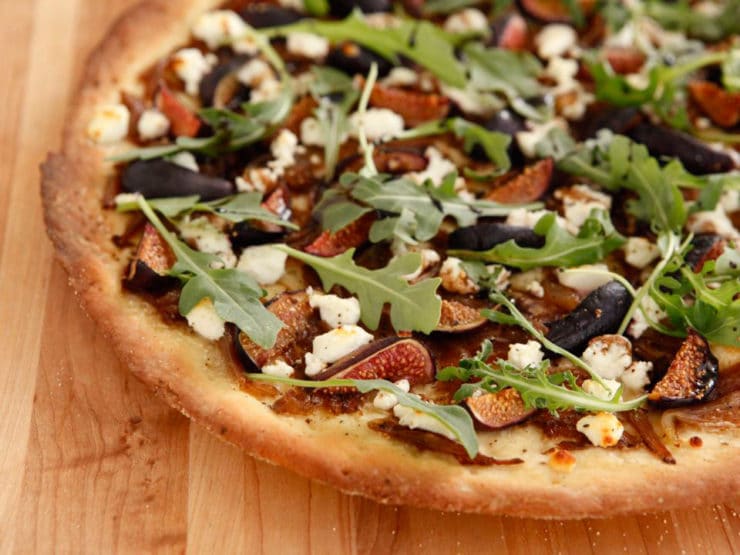
For as much as I enjoy eating pizza, you’d think I would make it regularly. I don’t! It’s just one of those things I never really got around to mastering in all these years of home cooking. Last week, when I asked you what I should do with all of the figs on my overflowing fig tree, many of you asked for a fig and goat cheese pizza recipe. Great idea! But I’m not a pizza expert, not even close… and you know that I only want the best recipes on this site. I’m not about to experiment on you! So, I called for help. My assistant Ashley has a boyfriend, Gary, who happens to be a culinary school graduate… AND he worked in a restaurant that served lots and lots of pizza. Score! In fact, Ashley and Gary met while working together in that very restaurant back in their home state of Indiana. How cute is that??
This is Gary, peppering our pizza. Don’t you love his hat?
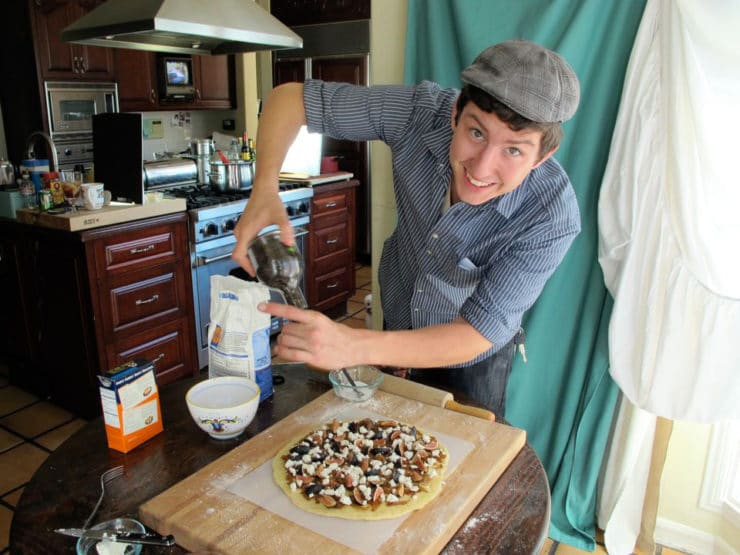
Please excuse the drapey sheets in the background. My breakfast nook doubles as a photography studio. Don’t judge.
I told Gary I wanted to do a goat cheese pizza with fresh figs, caramelized onions, and fresh arugula with a maple-balsamic reduction drizzled on top. The toppings were easy, but I needed help with the crust. I wanted something simple, tried and true, and THIN… we only indulge in thin crust pizza nowadays, as I like to taste the toppings more than the bread (and we can have more pieces without feeling so guilty about the carbs). I also like the crunchy edges of a thin crust pizza. Together with Gary, we came up with something super simple and scrumptious. Don’t fear the pizza… anybody can do this!
For the caramelized onions, we were inspired by Melissa Clark’s genius method for getting sweet, intensely flavored onions in less than half the time. The process involves starting the onions in a dry pan. Sounds strange? Maybe, but by golly, it works! Melissa’s method is somewhat sparse on details (pan temp? time?), so I wrote out the details based on my experimentation below. I also added a short deglaze with water after the initial browning, which helped to unstick the onions from the pan and cut down on the amount of oil I needed to use to get the onions fully caramelized. Of course, you can caramelize them the old fashioned way if you want to… this method just makes the process go faster, and requires less oil.
I added a bit of maple syrup to the balsamic reduction, which gave it a sweet depth that paired beautifully with the figs. When reducing the balsamic you’ll be left with more than enough for two pizzas, so if you want to double the rest of the recipe, go for it– no need to make extra balsamic. You could also make a nice green salad and drizzle that extra balsamic on top. Delish! Make this for somebody you love, and expect many, many kisses in return.
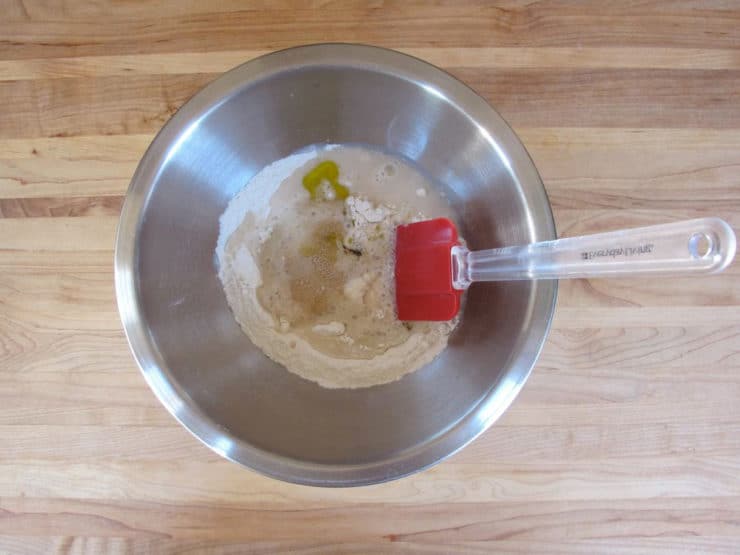
 In a large bowl, combine flour and kosher salt. Add the yeast mixture along with the olive oil and mix until thoroughly combined.
 Transfer dough to a floured surface. Knead the dough for 5 minutes and shape into a ball.
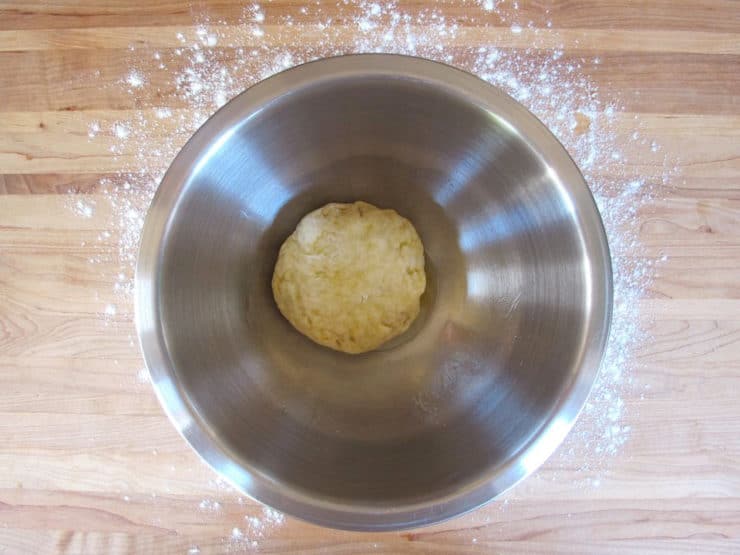
 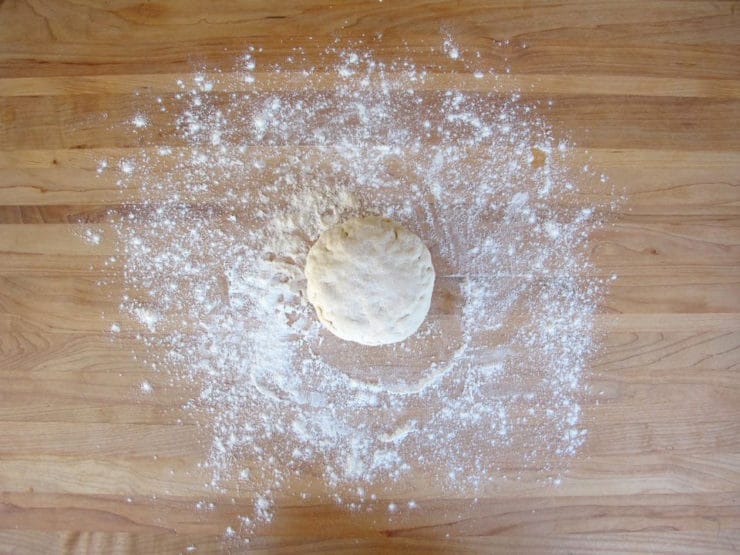 Place the dough into an oiled mixing bowl and turn to coat. Cover and allow to rise for 1 ½ - 2 hours, or until it has doubled in size.
 Meanwhile, make the balsamic reduction and caramelized onions. To make the balsamic reduction, add the balsamic vinegar and maple syrup to a small saucepan and cook on medium-low heat until the liquid has reduced to ¼ its original volume, roughly 15 - 20 minutes. Check and stir regularly to make sure it doesn't burn.
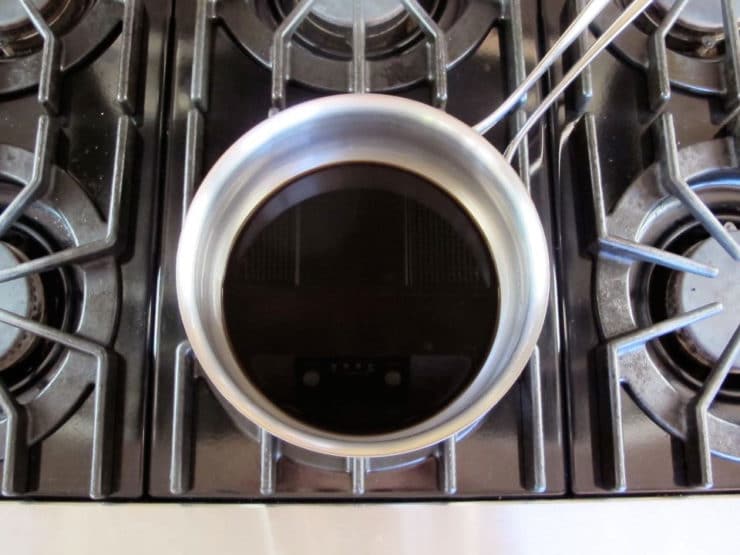 When finished, the reduction will be very dark in color, similar to chocolate syrup.
 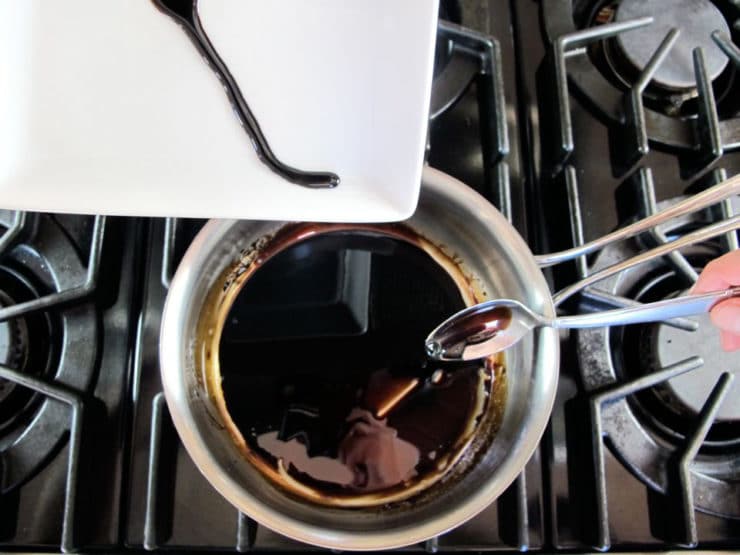 To make caramelized onions, place sliced onions in a dry pan over medium-high heat and cover with a lid.
 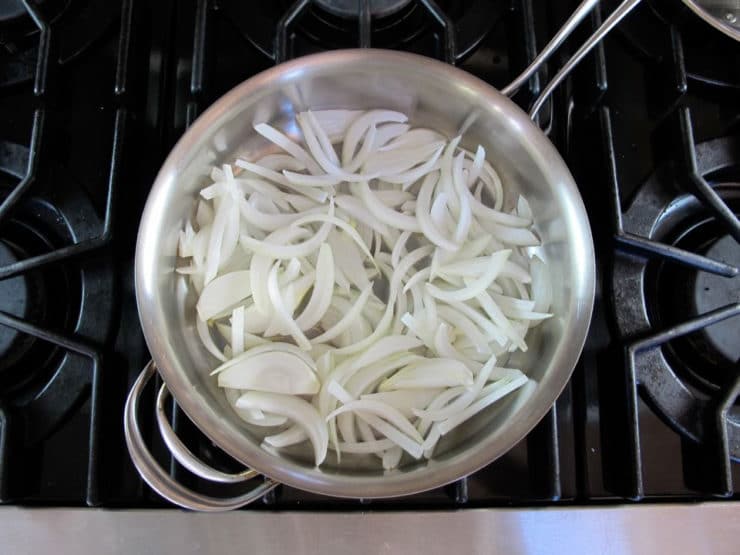 Check and stir regularly, until a good amount of color has developed, about 5-7 minutes. Deglaze your pan using the ¼ cup of water, stir the onions well and be sure to scrape up the brown bits that have collected on the bottom of the pan. Once the water has cooked off, add 1 tbsp olive oil and salt and continue to cook the onions about another 5 minutes. When finished, the onions should have a nice deep dark brown color and a sweet smell.
 Once the dough has doubled in size, you are ready to assemble and bake the pizza. Preheat oven to 450 degrees and place a pizza stone or sheet pan into the oven to allow it to come to temperature as well. (A pizza stone is recommended; they are a great investment if you're planning to make a lot of pizza, because they help the crust bake evenly and crisply).
 Poke several small holes with a fork in the bottom of the crust.
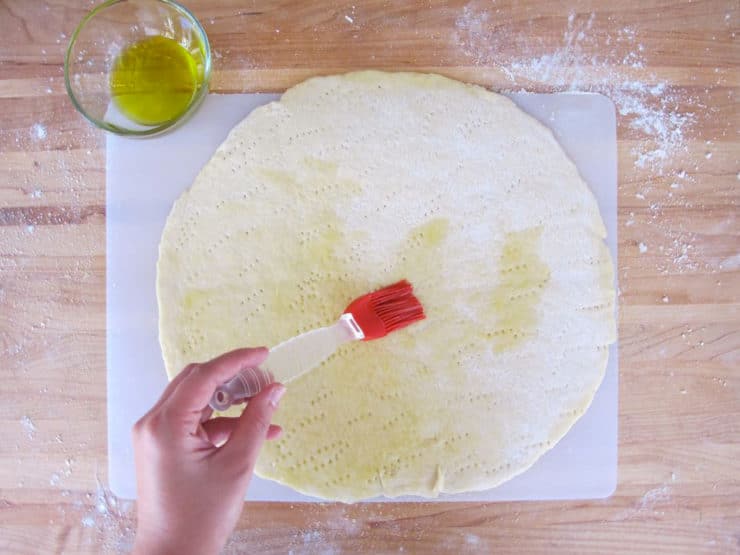
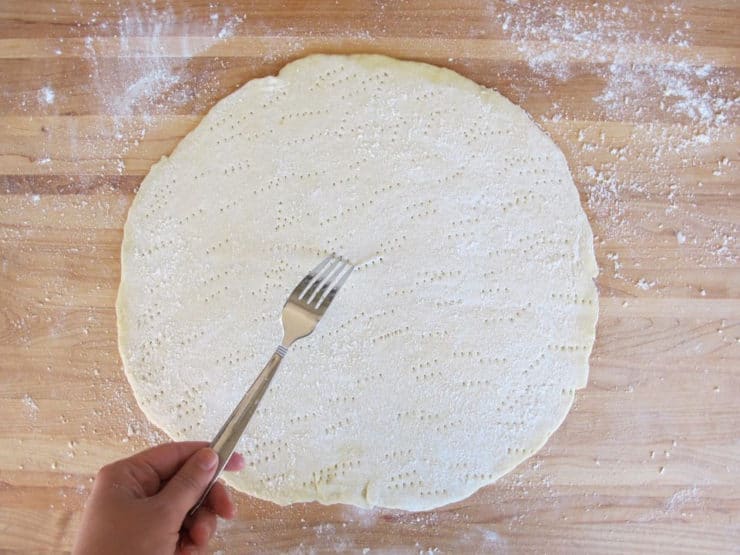 Sprinkle a good amount of corn meal onto a lightweight cutting board before transferring your rolled dough to the new surface for topping assembly. Brush the crust with olive oil.
 To slice figs, first remove stems, then cut in half. Cut each half into thirds. Then sprinkle the caramelized onions, sliced figs, and goat cheese across the top of the pizza. Be sure to sprinkle the toppings evenly.
 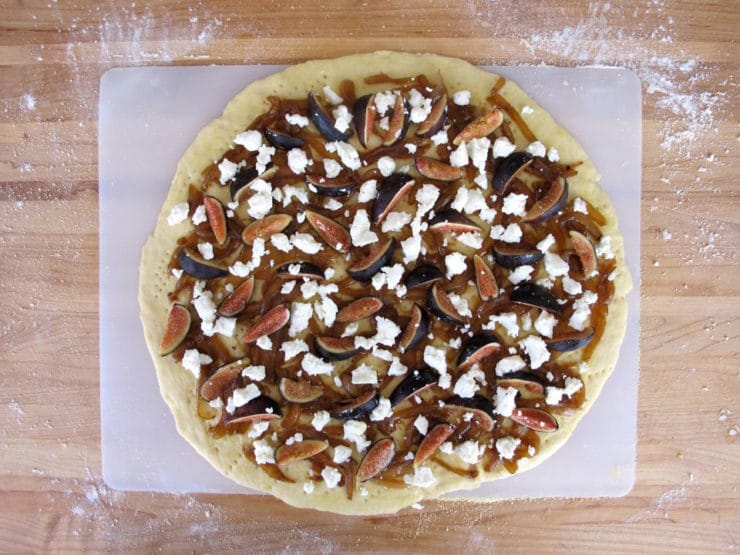 Carefully transfer the assembled pizza to your preheated pizza stone or sheet pan. Bake for 10-12 minutes or desired doneness.
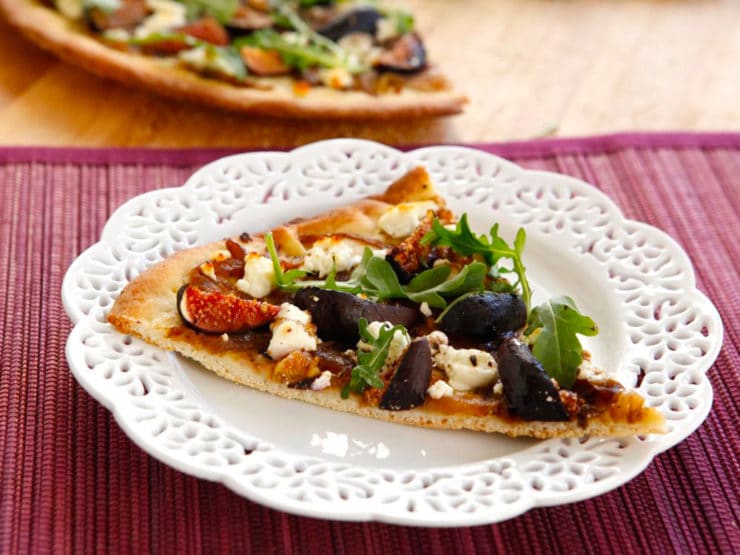
 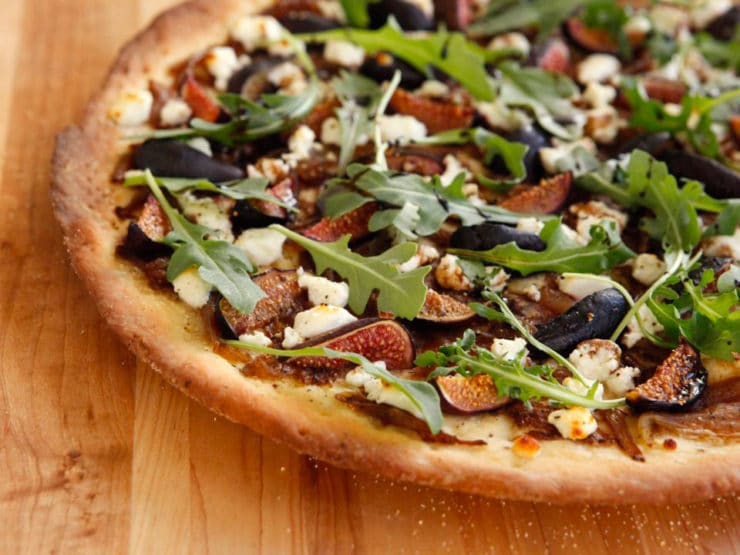 Allow the pizza to cool slightly, then top with fresh arugula and drizzle with the balsamic reduction. Slice, serve, and enjoy!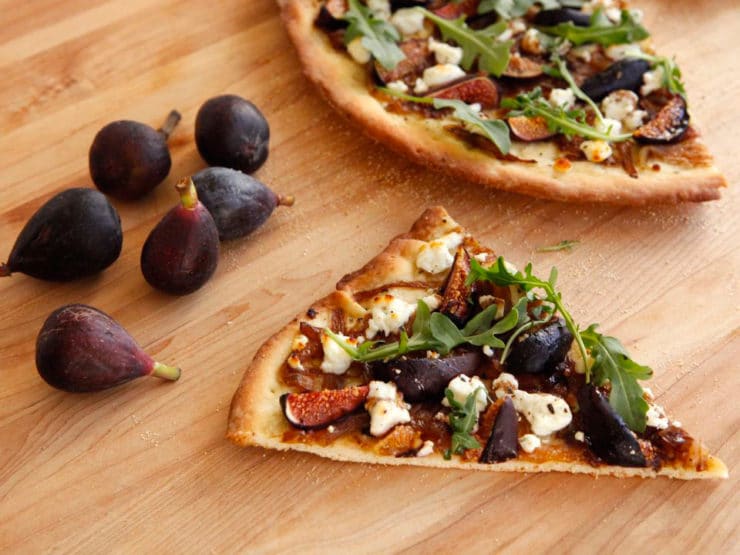
Other Great Recipe Ideas
The Pioneer Woman – Tomato Basil Pizza, Two Ways
Weelicious – Green Machine Pizza
Dinner in Venice – Spring Fling Pizza
Cookin’ Canuck: Vegetarian Naan Pizza with Eggplant and Cilantro
The Washington Redskins need to rebrand. The mounting pressure makes it clear, from mainstream media to federal lawsuit, people want Dan Snyder to change the name of his team, often viewed as a racial slur against Native Americans.
To me, the issue has come to a fore. I can not buy any gear, purchase any tickets, or support this team so long as it insists on calling itself a racist name. I will not spend one dollar on Danny Snyder’s football club so long as they are called the Redskins.
This is not an issue of liberal protest. I am a Washingtonian of 20+ years, a Nationals partial season ticket holder, and a regular at many local sporting events. Even the Green Bay Packers CEO came out against the name, calling it derogatory.
The last two times I publicly critiqued brands were BP in 2010 during the oil spill, and Komen for the Cure in 2011-12. I don’t criticize brands often because done frequently as a marketing consultant it creates conflict of interest issues, including a better than thou attitude that doesn’t build a strong reputation. I also know what it’s like to be on the receiving of a post like this.
Know that my motive is personal and as a consumer in the Washington marketplace. If the Redskins were to come to me, offer me tickets or a consulting contract, I would tell then “no thank you.” That’s how strongly I feel about the matter.
Dan Snyder also feels strongly, as he told the USA Today, “We’ll never change the name. It’s that simple. NEVER – you can use caps.”
And like so many other issues in the past, NFL Commissioner Roger Goodell lacks the foresight to see the conflict the name continues to cause.
That’s an unfortunate polarizing attitude. I think Danny Snyder and the NFL will have to change the name whether they like it or not. It will become increasingly apparent that the Redskins name is bad business. More and more customers will walk no matter how good the team is.
ESPN published a great story showing the negative business effects of Native American names, and how ensuing name changes create increased revenues. Done right, a name change could galvanize the franchise.
Let’s hope Dan Snyder is humble enough to change his words. Somehow I doubt it. Until then, don’t expect to see me wearing burgundy and gold.
What do you think?


Being an egomaniac author with an inferiority complex, I commissioned a Helix Review to analyze Exodus against all published works within The Book Genome Project as well as making specific comparisons to titles in the science fiction genre. The big data mash-up tells you a ton about how your book works and your particular writing style.

So the first thing you can tell is that Exodus is short! In spite of its length, it does have a healthy vocabulary for its length. Sentence length is average. While classified as a science fiction book, it tends to have longer paragraphs than most books within the genre.
The review also analyzes the text for complexity, dialog and pacing. To help compare the book, I suggested Margaret Atwood’s The Handmaid’s Tale. Often classified as a science fiction book, The Handmaid’s Tale shares similarities with Exodus in that they are both dystopian future fiction books focusing on religious fundamentalism and oppression.

As you can see, in almost every category Exodus exceeds The Handmaid’s Tale. It has more action, complex language, dialog and descriptive text. My book is slightly slower paced than Atwood’s. It fits within the norms of the genre except that it moves slower than and has more complex language than other science fiction books.

The final piece of useful information I got from the book was the general elements that fit into the story DNA. I have been focusing on the religious conflict, but Helix shows time, rivers (lots of rivers in Exodus), conflict, combat, pain, rocky terrain and history as critical underlying components in the book.
Then Helix shows you how these elements rank against the general book project and your genre.

So all in all, you learn a lot about what you wrote, and how your book fits within the larger context of the Book Genome Project. Now if the big data analysis could only tell you if the book was good!
What do you think of big data barometers like the Helix Review?
I am on vacation until September 30th and will not be responding to comments. The floor is yours!

For 18 months, this Subway in a shipping container served lunch to workers constructing the One World Trade Center skyscraper.

This week was a BIG week for technology for about 1/3 of the country, myself included. Apple released the newest version of their operating system, iOS7, yesterday and it was an all-out downloading frenzy for a while. Everywhere you look today, online or otherwise, all everybody seems to be talking about is this new operating system. That is, everyone except me. Instead of upgrading to iOS7 this week, I chose to go out and invest in a Motorola Droid Maxx this past Friday. And honestly, I couldn’t be happier with my decision.
Up until this point in my life, I had been a loyal Apple user with a capital “L”. Android was garbage and I was never changing. Even before I had an iPhone, I was shunning android devices, opting for disastrously inadequate alternatives such as the Palm Pixi. (Remember that phone? It really was cute, but a total piece of shit. What kind of fucking smartphone only has 1,000 apps? Get the fuck out of here, WebOS)
Then, in the last couple months I started to grow frustrated with the limitations of iOS. That’s not to say that the operating system wasn’t working for me, because it was. I will never deny that Apple makes a sound device. But, I wanted something more. I wanted a phone that had the capability to look and do exactly how and what I wanted it to. I wanted a phone that didn’t force me to look at all of my apps every second of every day or bury them in folders that really don’t look that nice on my home screen. Simply put, I wanted a phone I could customize.
Last week I hit my breaking point. Nothing bad happened with my iPhone; I didn’t break it, it didn’t die, I just got tired of looking at the same damn screen every day. Knowing full well the color change of iOS7 wouldn’t placate my ache for something new, I started to research android phones because of their incredible customizability.
After about 10 solid hours of research, unboxing videos, tutorials, and reviews I had found my new phone, the Motorola Droid Maxx. With an unprecedented 48 hours of battery life, built-in wireless charging capabilities, a 10MP camera, a 5-inch Super AMOLED display, 2GB of RAM, and 32GB of internal storage, I was sold before I even walked into the store.
Now, almost a full week in, I am in love with my new ANDROID powered device. I have a SICK looking OS (pictures below). Sadly, the camera does leave a little bit to be desired, but the battery is seriously insane. And when I tell you this battery is killer, I have had it running since 6:45 AM, it is 8:11 PM now, and I still have 67%. And I use my phone a LOT during the day.


If you have ever considered switching from iPhone to Android, I would highly encourage you do so. I firmly because that this year is the year to try out a different device because of the minor changes included in the iPhone 5S.
Now, I highly anticipate this post to generate some lively debate. So let the Apple-Android wars in the comments begin.
And, may the odds be ever in your favor, Apple, because Droid most certainly does.
I have a special soft spot for Lemon Drops. 
There are few memories I have of my grandmother but one that sticks out the most in my mind is how she always had Lemon Drops candies waiting for my sister and I whenever we came to visit. Now it is of no surprise to all of you that as a kid I loved candy and showed no partiality to anything sweet so again, no surprise that I would eat drop after drop until my tongue was battered from the rough sugar.
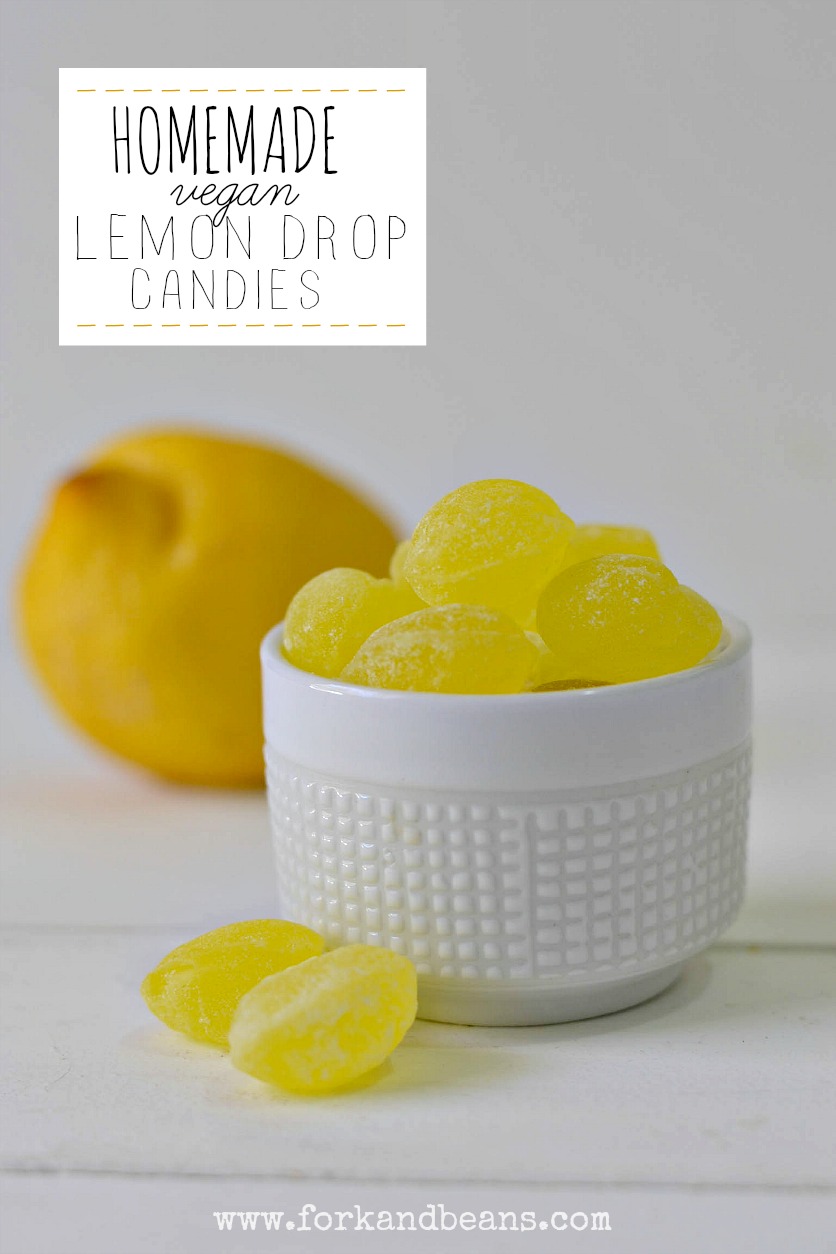
This homemade version makes me feel like I am 6 again with my sister, reaching my hand into the candy dish… (Happy Birthday, Sissy!)

The Harvest Festival Oct 13 ! (If you are a crafter who may be interested in a spot, we feature handcrafted goods vendors only – $50 for a spot – email linda@narrowsbg.org if any questions or for a registration form)
The post Harvest Festival – Bay Ridge appeared first on .
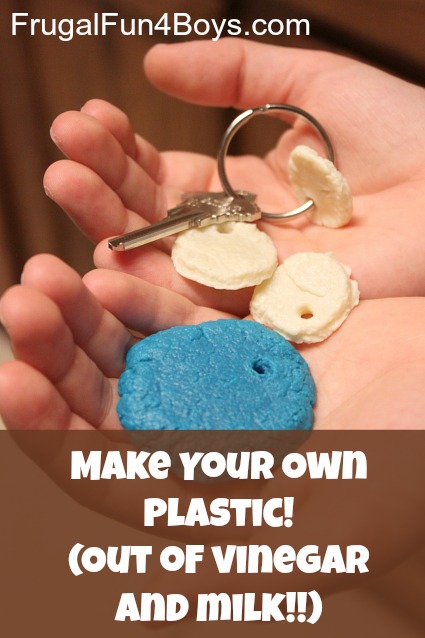
For his 10th birthday, Aidan received the book Sneaky Uses for Everyday Things (affiliate link) from one of his friends. It’s a pretty awesome book. The book contains 42 different inventions to make out of household materials such as a homemade battery, an electronic greeting card, and a makeshift telescope. Aidan was really intrigued by the page on how to make plastic out of milk and vinegar. I stalled for several days on this one because it sounded messy and smelly, but we finally did the project and wow! It was easy to do and SO much fun!
To make plastic, you will need:
First, put one cup of milk in a pan and heat it until warm. It doesn’t need to boil – just be warm.

When the milk is warm, stir in 1 T of vinegar. The vinegar will cause the milk to quickly separate into curds and whey. The acid in the vinegar causes the protein strands in the milk to coagulate. The curds are casein, which is used in the production of glue and some plastics. Who knew?

Pour the contents of the pan into a strainer. Use a spoon to squish out the extra liquid.

Knead your plastic with your hands and use a paper towel to dry off any excess moisture.
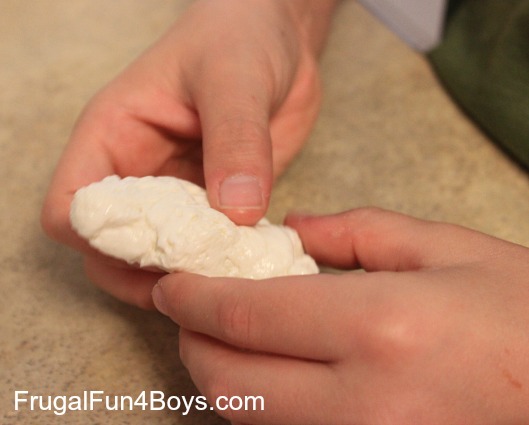
Then mold your plastic into whatever shape you want! It’s a little tricky to mold because it has a texture sort of like ricotta cheese (which is probably what it is?). We flattened it out and used a measuring spoon to cut out circle shapes for key chains.

We also made a second batch and added a few drops of blue food coloring to the milk before heating.
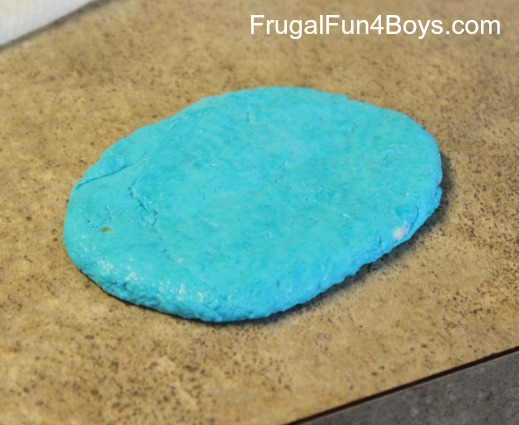
Let your creations dry for 48 hours or more. I had my doubts about this stuff becoming anything that resembled plastic, but it worked!!! We found that smaller, thinner shapes dried better and faster. The blue color dried darker than it looked when it was wet.
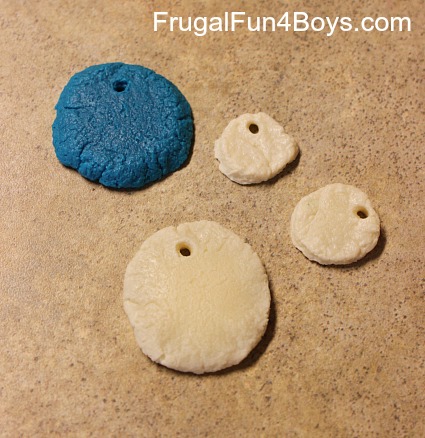
We used straws to make holes for the key chains before they dried. Our holes shrank as they dried, so beware! They were barely big enough to be key chains once they dried.
You can paint your plastic to decorate it however you want. We used acrylic paint.

What else can you do with homemade plastic?
For more crazy science fun, check out our exploding chain reaction made with craft sticks!

The idea of fitting electronics into a film SLR in order to capture digital photos with it is not new. The thing is, most of the ideas we’ve shared ranged from April Fools jokes to promising concepts that never seem to advance beyond that.
The DigiPod is the first product we’ve seen actually become a reality. It’s a digital cartridge that fits inside your old film SLR, and if it makes it to market, it could be quite groundbreaking.
The DigiPod was designed by UK developer and former photographer James Jackson, who has spent the last 5 years perfecting his design for this Digital Film Pod that could put his old Nikons, Canons and Leicas back in the game.
Much of his time designing the DigiPod was spent researching a similar attempt by a company called “Silicon” from 2000, and learning as much as he could about digital photography. The product he came up with is a simple “pod” that loads right into the back of your film SLR and interacts with the automatic or manual mechanics in the same way that film would.
Taking a picture is as easy as pushing the shutter button. And once you’ve taken a picture, you prepare the camera for the next shot by “advancing the film” in the same way you would if there were actual film in there.


A prototype is ready and the manufacturers are lined up, all Jackson needs now is the funding, which he is attempting to secure through Indiegogo. In order for the DigiPod to make it into consumer’s hands, he’ll need to raise almost $307,500 (£199,000), and so far the first few days of the campaign have seen no backers.
That goal is set so high in order to maintain the current price of $370 ($310 for early bird backers). But if you want one of your own, there’s even more incentive to tell your friends. The current model will come with a 2/3-inch sensor, but the more people that back it, the bigger the sensor he’ll pack inside.

A sample photo captured using Jackson’s 1/2.5-inch prototype sensor
Jackson needs 1,000 backers to reach his current goal, but if the number hits 2,000, the sensor size increases to 1-inch. And if they hit 5,000, they’ll go even bigger and put a 4/3-inch sensor inside.
For now 5,000 seems very far away when the campaign hasn’t even logged its first backer, but who knows what will happen in the next 41 days. To learn more about the DigiPod and put your name down for one of the early bird models today, head over to the campaign’s page by clicking here.
Looking to incorporate drone photography and videography into your wedding photo packages? Make sure you’re a pro at flying the drone before getting it anywhere near your clients.
The video above is an example of what can happen if you’re not.
It was uploaded to YouTube earlier this month by a wedding photographer who goes by WeddingMan123. In the description, he states that he was using a DJI Phantom aerial drone quadcopter that had a GoPro camera mounted to it.

The drone camera that was being used
The bridal shoot was being done two days prior to the actual wedding, and the photographer was attempting to do some flybys of the bridge and groom near the beginning of the shoot. After doing one successful flyby, the photographer decided to bring it around for another pass.
The second time was not the charm.
WeddingMan123 says he “underestimated the lift time,” and ended up flying the drone camera directly into the side of the groom’s face. The impact resulted in a cut on the man’s cheek and another on the side of his head.

Too late to pull up.
“I felt horrible,” WeddingMan123 writes. Luckily for him, the couple laughed it off, cleaned up, and continued with the shoot. Afterward, they even requested that the video be uploaded to the Web.
We’re guessing WeddingMan123 will be putting in a little more practice before attempting another bridal shoot drone flyby.
(via Gizmodo via Imaging Resource)


Fire and rockets - what's not to love?!

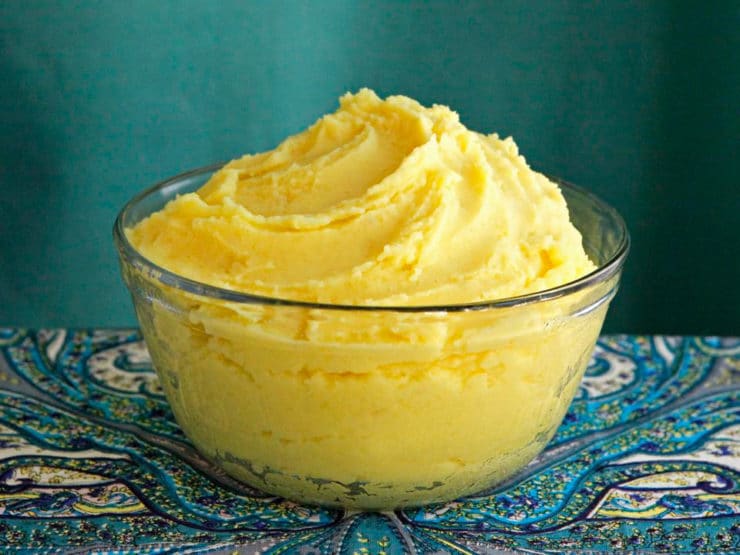
For almost every holiday gathering in my home, I make a pot of mashed potatoes. It’s an easy, no-fail kind of side dish that is loved by both kids and adults alike. So often, pareve potatoes rely on lots of margarine to achieve a buttery flavor. In this dairy-free version, I challenged myself to create a flavorful mash while using as little margarine as possible. The resulting potatoes were rich and creamy with a hint of exotic saffron flavor. Nobody missed the butter!
If you’re not worried about making these potatoes dairy-free, feel free to substitute butter for the margarine, milk for the non-dairy milk, and heavy cream for the coconut milk. These subs will take this recipe from amazing to “holy cow these might be the best mashed potatoes I’ve ever tasted.” For reals!
Saffron can be expensive; I tend to reserve it for holidays and special occasions. These potatoes would make an elegant side dish for Rosh Hashanah, or any holiday. They have a lovely golden color, creamy flavor and fluffy texture. I hope you love them as much as we do.
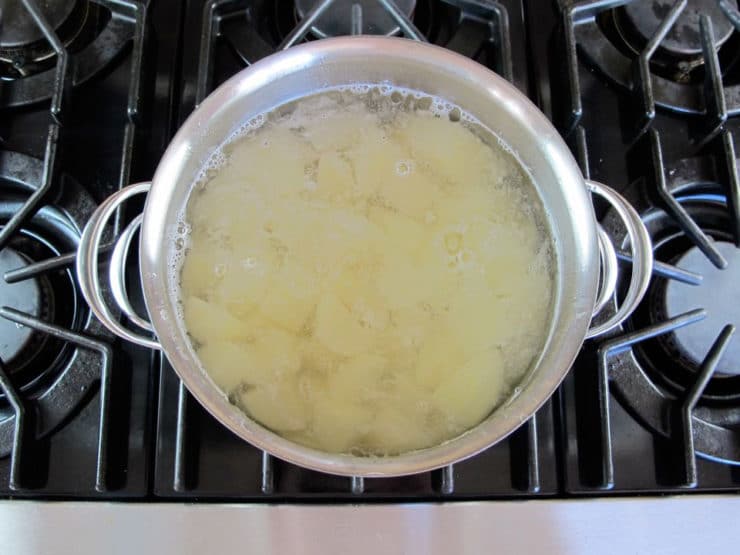 While potatoes are cooking, grind the saffron threads to powder with a mortar and pestle. Add 1 tbsp of hot water to the ground saffron and let it soak for a few minutes.
 When the potatoes are done cooking, drain them thoroughly and return them to the hot pot on the stovetop. The heat source should be turned off; the residual heat from the pot will “dry out” the potatoes a bit, allowing them to soak up more of the good stuff later.
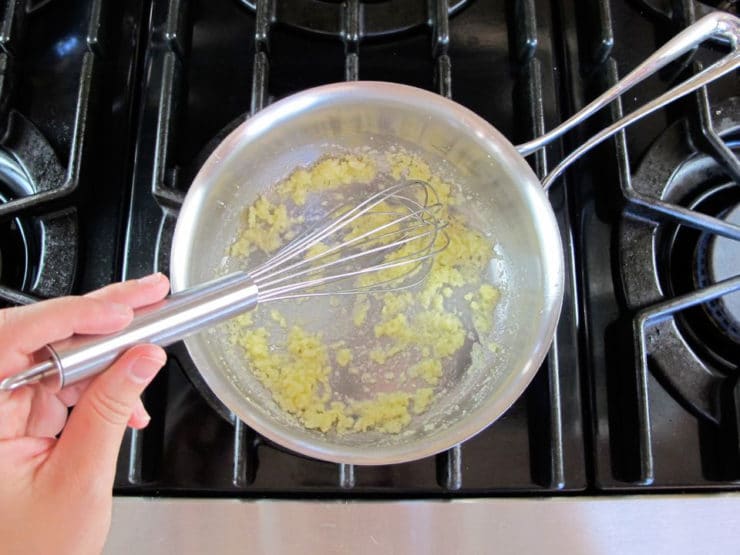 Whisk in the non-dairy milk, coconut milk, crushed garlic, ½ tsp salt and the saffron water. Heat the mixture over medium, whisking frequently, till it boils and thickens.
 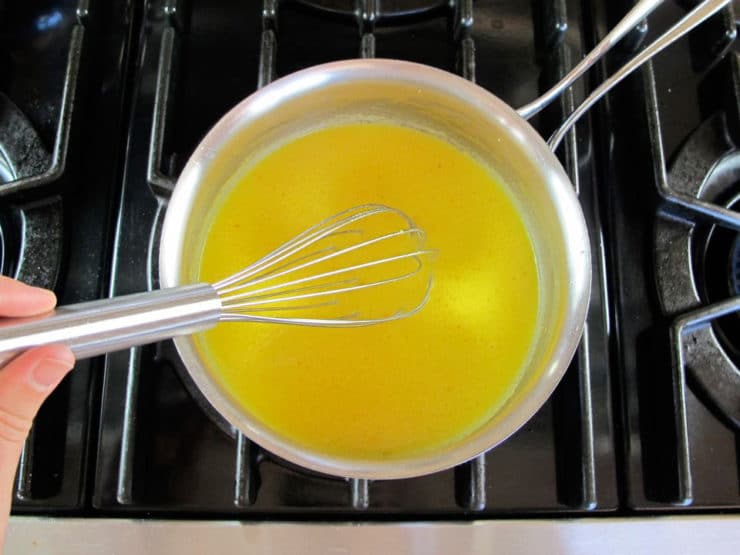 Pour the creamy saffron sauce over the cooked potato chunks, then mash with a potato masher till smooth. If using a potato ricer, push the cooked potatoes through the ricer first, then stir in the sauce. If the potatoes need moisture, add more non-dairy milk as you mash. Season with salt and pepper to taste. Don't skimp on the salt-- I usually use around 1 1/4 teaspoons or more. The salt really enhances the flavor of the saffron. Use white pepper if you want a more uniform golden look to the potatoes (without any black flecks).
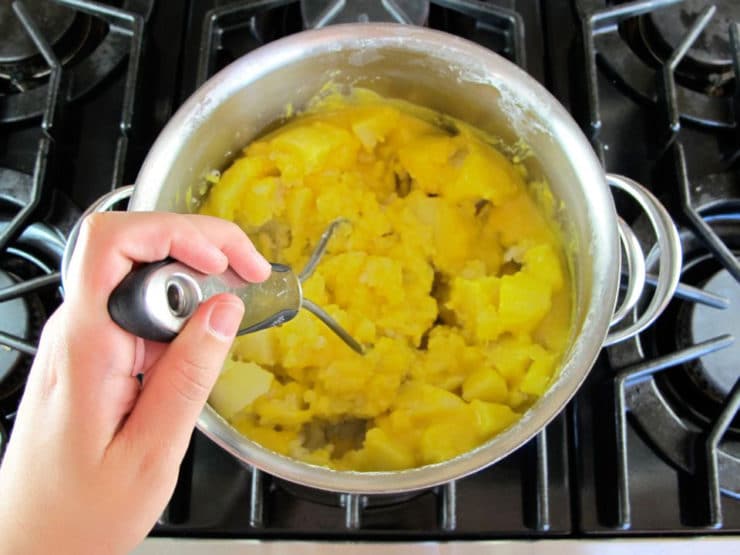 Serve immediately.
A friend of mine grew up in New York surrounded by kosher delis and appetizing shops. One of his favorite childhood memories was walking down to the corner store, where they kept large wooden barrels filled with pickles. His father would give him a boost so he could reach deep down into the bottom of the barrel to retrieve what he called “armpit pickles,” so named because you’d have to reach into the brine up to your armpit to get the best, most flavorful pickles. Though the name might not sound appealing, my friend looks back on armpit pickles as one of his fondest childhood food memories.
Pickling got its start about 4,000 years ago, long before delis began popping up on the East Coast. Pickling began as a way of preserving food. To create a pickle, fresh vegetables or fruits are immersed in an acidic liquid or saltwater brine until they are no longer considered raw or susceptible to spoilage. In the case of pickled cucumbers, saltwater brine is a common choice, which results in lacto-fermentation. Lactic microbial organisms, much like the kind that cause milk to curdle, develop. These organisms turn the naturally occurring sugars of the foods into lactic acid. In turn, the environment becomes acidic quickly, so that it is no longer possible for any spoiling bacteria to multiply. Cucumber pickles can also be made with a salt and vinegar brine, a popular choice for home cooks.
Kosher dills have their own unique history. In Claudia Roden’s The Book of Jewish Food, she explains that pickled vegetables were a dietary staple for Jews living in Poland, Russia, Lithuania and the Ukraine. The sharp flavor of pickles paired nicely with the bland bread-and-potato diet of these cold weather countries. For several generations, it was a fall custom for Ashkenazim to fill barrels with cucumbers, beets and shredded cabbage (sauerkraut). They were left to ferment in a warm place for several weeks, then relocated to cool, dark cellars. The pickles would last through the long cold winter until spring, when new crops of fresh produce were available.

When a heavy influx of eastern European Jews arrived in New York City during the late 1800s and early 1900s, immigrants introduced kosher pickles to America. The process of “koshering” pickles required a rabbi who would supervise the entire production, ensuring that each step was done correctly and that the equipment was used exclusively for pickle making. Cucumbers were washed, then piled in large wooden barrels along with dill, garlic, spices, kosher salt and clean water. They were left to ferment for a few weeks to several months; shorter fermenting time produced brighter green “half sours,” while longer fermentation resulted in “full sours.” Pickles were sold on pushcarts in the immigrant tenement district of New York City. Over time, a multitude of Jewish owned shops began selling pickles straight out of the barrel from their storefronts. Eventually, pickling became a profitable business within the Jewish community.
Pickles are deeply ingrained in Jewish food culture, as emblematic of the Ashkenazi Jewish diet as matzo ball soup and brisket. Sadly, nowadays it’s much more difficult to find a classic kosher dill. Most of the small-scale pickle businesses have died off, replaced by mass-marketed pickles sold in grocery stores. If you’re searching for real Jewish pickles, your best bet is to visit a kosher deli. The first thing that should arrive on your table is a dish of pickles—a combination of full sour and half sour cucumbers, and sometimes a few other vegetables. In a true old-school deli, one should never have to ask for pickles. Their sharp, salty flavor and crunch is the ultimate counterpoint to a fatty corned beef or pastrami sandwich. Oy, I’m making myself hungry.
Most folks don’t have the time or patience to produce old fashioned lacto-fermented kosher dills. This Quick Pickle recipe is a super easy method for quickly producing yummy pickles. The prep only takes about 10 minutes. They aren’t true kosher dills due to the small amount of vinegar used in the brine, but they are quite delicious, and they pickle much faster than the old fashioned kind. My own blend of pickling spices, including chili pepper flakes for heat, adds terrific flavor. Keep them in the fridge for a couple of days, and voila! Quick pickles.
I recently had a reader request a recipe for lacto-fermented kosher dills (no vinegar). If you are interested too, let me know in the comments and I’ll try to squeeze it into my end-of-summer blogging schedule. What’s your favorite kind of pickle… kosher dill? Sweet? Half sour?
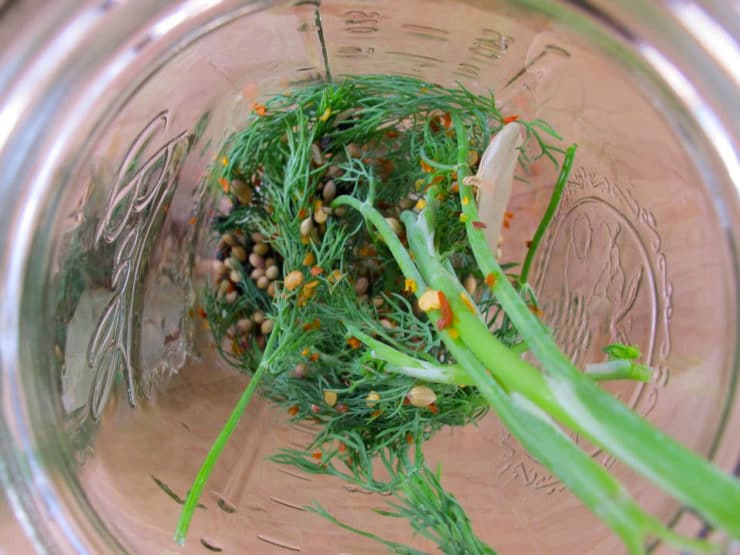
 Place the blanched garlic, fresh dill, bay leaves and other spices into the pickling jar or jars. If using two jars, divide the ingredients evenly between them, half in each. The red pepper flakes are optional, and will add a little kick to your pickles—if you don’t like spice, feel free to omit.
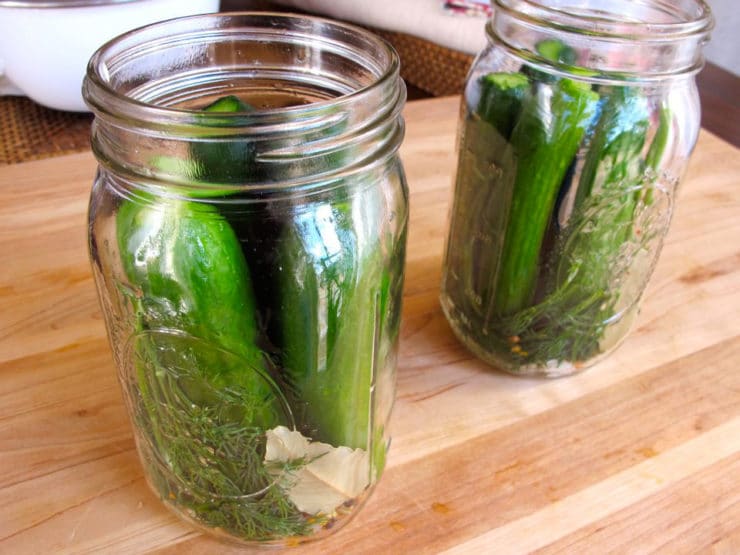
 Slice off the tip ends of each cucumber, then place them into the jars, half in each jar. It’s okay if they’re tightly packed, they will shrink up a bit as they pickle.
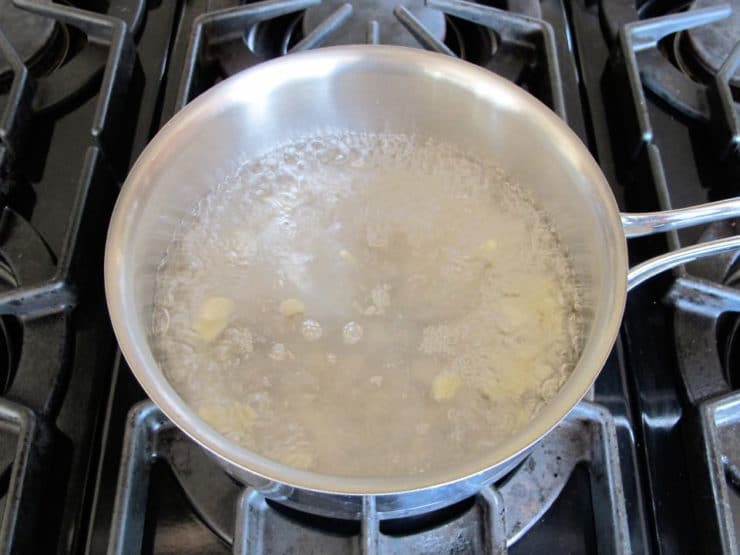
 In a saucepan, bring the water, white vinegar, and kosher salt to a boil, whisking till the salt is fully dissolved. Boil the mixture for about 1 minute, then remove from heat. Pour the hot brine through a funnel into each jar, submerging the cucumbers completely in liquid.
 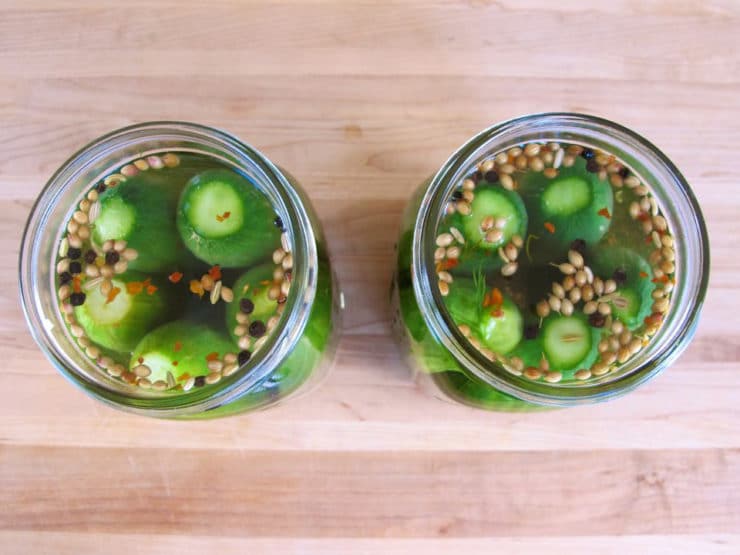 Let the jars cool completely to room temperature (this will take a few hours). Secure the lids and place pickles in the refrigerator. Your first pickle will be ready to eat in 48 hours; they’ll become more pickled and flavorful as they age. Pickles will keep for up to 2 months.


I can't shake the feeling that the National Security Agency thinks I'm a chump.
I mean, I've written a lot about them. I've talked to their media contacts. I've been denied clarifications. I've pored over their press releases and page after page of NSA documents that former contractor Edward Snowden took from them and leaked to the Guardian's Glenn Greenwald.
Yet when I sent the NSA a formal request through the Freedom of Information Act, asking what the agency had collected on me through two big programs — a telephone metadata collection program and PRISM — they acted like I was a total newbie at this stuff. Read more...
More about Online Privacy, Prism, Us World, Us, and Nsa
America’s only mile high club airline is based in Cincinnati, Ohio. It’s a hit - but not for the reason you think.
 |
This is the complete 3-part video review combined in one full 45 minute long video. Topics covered include detailed criticism of the film, the revelations fr...
|
From:
comicbookgirl19
Views:
71402
 
2530
ratings
|
| Time: 42:44 | More in Entertainment |

Source: Google Maps.
Earlier this week, any chance that 93 Lounge would wake up from its coma was ended once and for all when the New York State Liquor Authority revoked the bar’s license to sell alcohol.
The 93 Lounge has run into trouble with nearby residents and local officials for quite some time over complaints regarding noise and suspected drug use. Community Board 10 recommended against renewal of its on-premise liquor license last April, and a patron intentionally used his car to run over other partygoers early in the morning on New Year’s Day.
93 Lounge has been closed since April, when police and officials from the NY State Workers’ Compensation Board raided the bar over failure to comply with workers’ comp insurance law.
Denise Romano of the Home Reporter reported that the SLA commissioners accepted the recommendation of an administrative law judge to revoke the bar’s license this past Tuesday.
Will Bredderman of the Bay Ridge Courier wrote that the reasons cited by the SLA for the revocation were its failure to have a list of bouncers available during a February 2 police visit, and for allowing dancing without a cabaret license – not for noise, fights, or motor vehicle mayhem.
We’ve observed that the cabaret law has been fairly toothless – at least under the Bloomberg Administration – in dealing with troublesome nightspots like Amnesia on 4th Avenue and 101st Street, and similar clubs in Dumbo and Greenpoint. Amnesia was eventually closed – also as a result of not providing workers’ compensation insurance – but a new club took its place shortly thereafter.

An experimental reusable rocket built by the private spaceflight company SpaceX has soared though a series of ever-higher test flights over its Texas launch site, but it may have just taken its most awesome leap yet: a sideways rocket hop.
Nicknamed Grasshopper, the rocket prototype successfully performed a sideways "divert" test on Tuesday, Aug. 13 at SpaceX's proving grounds in McGregor, Texas. SpaceX released an amazing video of the sideways Grasshopper rocket flight yesterday.
The new video shows SpaceX's Grasshopper launching to an altitude of 820 feet. The rocket then went into a hover mode, moved 328 feet sideways, and then returned back to the center of its launch pad. From launch to landing, the flight lasted just over one minute. Read more...
More about Space, Flight, Rocket, Grasshopper, and Elon Musk
Michael Dettlaff went to an Arkansas state park, spent 10 minutes looking at the ground, picked up a rock, and left $15,000 richer.
This chain of events sounds a little less implausible when you know that the rock was a diamond. And the park was called Crater of Diamonds State Park. And you’re allowed to go there, look for diamonds, and keep anything you find.
Still, it doesn’t happen that often. Since 1975, only 31 people have found diamonds over five carats at the park. (This one is the 27th largest of those.)
The New York Daily News writes:
The Apex, N.C., family didn’t even realize what it had.
“When I brought this rock out of the bag the guy who’s there, he just went bug-eyed and he said, ‘Hang on a second. I need to take this to the back room,’” Michael told ABC. “So then people start coming from everywhere and they’re like, ‘Oh yeah. It’s a big diamond.’”
The 5.16-carat “God’s Glory Diamond,” as renamed by Michael, could be worth as much as $15,000.
We hope this is going into Michael’s college fund, because he’s going to need all the credentials he can get if he hopes to keep making the equivalent of $90,000 per hour.


Backpack Science is a summer series of easy at-home experiments geek dads can perform with their kids while school’s out. It is written by (San Francisco) Exploratorium science educator Ken Finn. This article is #5; you can find the whole series here.
My daughters and I love to build shockingly giant structures from this super-lightweight material. Newspaper can be found everywhere, and what better way to put it to good use before it’s recycled than to build a massive tower? Every time we do this project, we’re amazed by the strength of one sheet of tightly rolled newspaper.
What you’ll need:
How it’s done:
 Roll up a sheet of newspaper into a long, tight “stick” shape. Do this for 3 sheets.
 Tape 6 or 7 tetrahedrons together to create a ground base for the tower.
Surprising Structures (images included), excerpted with permission from The Science Explorer, 1997, published by Exploratorium © Exploratorium, All Rights Reserved.
Thanks for reading GeekDad. Please consider clicking through to our site, we'd love to have you become more involved in our community!
 Taiwanese computer manufacturer Acer reported a surprising second quarter loss caused by slowing revenue and increased costs, with quarterly revenue down more than 19 percent year over year. It seems that the worldwide shift away from PCs may be hurting Acer’s core business.
According to Jim Wang, Acer’s President, the company’s plan to boost revenue is to build more Chromebooks, because Windows isn’t cool anymore.
“We are trying to grow our non-Windows business as soon as possible,” Wang told investors during the company’s earnings call, according to a report by the Wall Street Journal. “Android is very popular in smartphones and dominant in tablets…I also see a new market there for Chromebooks.”
It’s unclear whether or not Google is providing any further incentives or assistance for Acer when it comes to expanding its Chromebook lineup.
Wang’s statement comes as Microsoft highlighted the poorly-reviewed Acer Iconia W3 tablet in its latest advertisement attacking the iPad mini.
Blair Hanley Frank is a technology journalist based in the San Francisco Bay Area. He has also worked for Macworld, PCWorld and TechHive. He can be found on Twitter @belril.

Robert Downey Jr. knows a thing or two about comebacks. Can he get HTC back on track?
The smartphone maker, trying to carve a bigger place for itself in a world by dominated Apple and Samsung, has signed the “Iron Man” star to a two-year deal to help raise the company’s profile and define its brand in the minds of the smartphone-buying public.
 The first HTC ads starring Downey Jr. will air later this week. After seeing a sneak peek, I can say they will definitely stand out. The ads are quirky, to say the least — featuring Downey in a series of scenes representing various interpretations of the HTC acronym, such as the “Hipster Troll Carwash” (above).
The ultimate message: “Here’s To Change.”
The campaign comes at a pivotal time for HTC. Despite a strong critical response to the HTC One, the company has struggled against leading Android smartphone maker Samsung. HTC’s financial results have shown the effects, and the company believes it will help to make more of a name for itself in the minds of smartphone buyers.
HTC went to Downey in part because executives saw parallels between the actor and the company, said Tom Harlin, the company’s director of communications for North America. Downey is respected as an actor, yet he doesn’t follow the typical Hollywood mold.
The campaign was inspired in part by Downey asking what the letters HTC stood for. (In reality, the name originally stood for High Tech Computer Corp.) Downey and his team had “a lot of creative control over the ads that we ultimately created,” Harlin said.
The first ad airs Thursday. Here’s a teaser video in the meantime.
Disclaimer: I hate cable companies.
Well, who doesn’t, am I right? Paying $50, $80, $100 a month or more for scores of channels that just aren’t that good. How many times have you flipped through channels 2 through 200 looking for something to watch that didn’t suck? Lots of times? All the time?
This year, I finally joined the ranks of the cord-cutters – dropped an $80/month TV package when I realized that I was watching most of my TV through Netflix – House Of Cards, Sherlock, Game Of Thrones (yes – I still cling to my DVD-by-mail service), etc. Everything else, I could find a much cheaper alternative to cable TV. Doctor Who? Watch for $3 an episode through Amazon.com. NFL football? Buy a decent indoor antenna and watch over the air.
The Big Bang Theory? Assuming I don’t watch it over the air, I can watch it over the weekend on CBS.com.
Time Warner – the cable TV provider in Bay Ridge – has always been very aggressive with content providers in negotiating rebroadcast fees, same as Cablevision and other American cable TV providers. Aggressive to the point of being dicks. They haven’t been shy about temporarily pulling a station from their TV package as a means of gaining leverage, the consumer be damned.
But they haven’t gone as far as blocking a content provider from their Internet service. Not because they aren’t obnoxious enough… I’m pretty sure they are. But they’re flat out not allowed to block access. In the U.S., net neutrality is the law of the land for Internet service provider. An ISP is obligated to be neutral to what kinds of sites their customers can access, so Time Warner can’t block CBS, or any other site.
Unfortunately, the same principle does not apply to the content providers themselves. There are a number of reasons why an Internet site would block access from certain ISP’s or computer locations.
A high-security site may wish to allow access only to computers at a certain location (somehow, I imagine the National Security Agency’s PRISM program works so only someone physically located at an NSA site can access it). Media redistributors like Netflix or iTunes may allow or block access based on country or region to comply with contractual agreements with the content owners.
Somewhat dubiously, ESPN has restricted its online-only channel, ESPN 3, to only those ISPs which have agreed to pay per-subscriber fees to the sports broadcaster, rather than appealing directly to the consumer, as seen in the Netflix model – thus denying access to Cablevision subscribers until just a few months ago. (Time Warner has done something similar with NY1, though I would make the case that people who can’t watch NY1 are the ones getting the better deal.)
And now, CBS has blocked Time Warner Internet customers from watching shows online because they wanted to jump onboard the dick bandwagon. In order to punish a business rival.
And the consumer – and the spirit of network neutrality that has benefited individuals from the Internet’s very start – be damned.


 Geoff Livingston on Google+