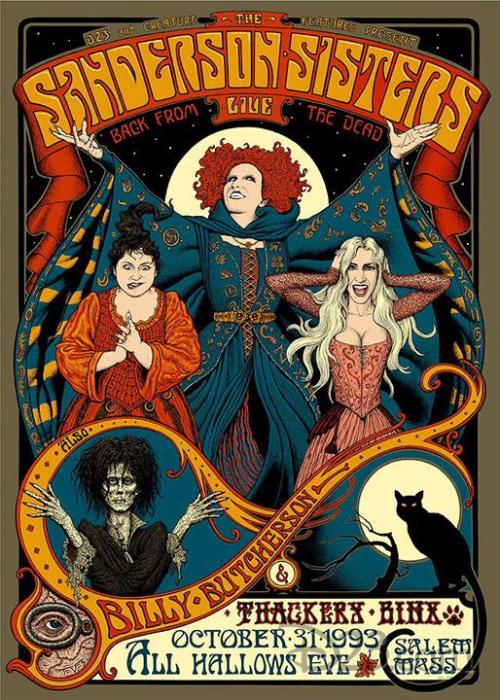
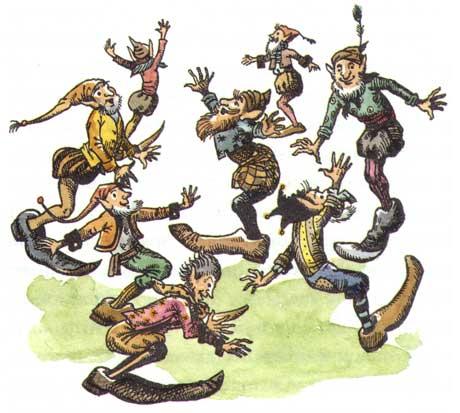
Here's hoping this experiment goes well. Design by Ross Nover. Crotchety grousing, as ever, by yours truly.
If you'd like a poster version, it's available here.
SCALE game play clip for the Kickstarter. Scale the moon, flood the earth the sail it.

The title of a new paper from three economists at the Federal Reserve is bloodless: "Aggregate Supply in the United States: Recent Developments and Implications for the Conduct of Monetary Policy"
But its conclusions are chilling.
The paper offers a depressing portrait of where the economy stands nearly six years after the onset of recession, and amounts to a damning indictment of U.S. policymakers. Their upshot: The United States's long-term economic potential has been diminished by the fact that policymakers have not done more to put people back to work quickly. Our national economic potential is now a whopping 7 percent below where it was heading at the pre-2007 trajectory, the authors find.
As Dave Reifschneider, William Wascher and David Wilcox sum up in their abstract, “The recent financial crisis and ensuing recession appear to have put the productive capacity of the economy on a lower and shallower trajectory than the one that seemed to be in place prior to 2007.”
What seems to be happening, they argue, is that people who lost their jobs in the recession have now been out of work for years, leading their skills to atrophy and them to become less attached to the workforce. As those workers’ productive capacity diminishes, so does the total potential of the U.S. economy.
The authors argue that while the “natural” rate of unemployment — the proportion of joblessness in a fully healthy economy — has likely risen due to the recession, that effect should be dissipating. “We see the evidence of recent years as suggesting that the natural rate of unemployment may have moved up between and 1 percentage points since the onset of the recent recession,” they write. “However, the evidence also suggests that the factors leading to this increase have begun to reverse and that further increases in aggregate demand might therefore bring about further healing in the labor market.”
But beyond analyzing the economic situation in which the United States finds itself, the Fed staffers make an important argument worth considering for policymakers here and around the world.
There is a tendency to think of a nation’s “aggregate supply,” or potential output, as something that exists outside the realm of influence by short-term economic policy. The economic potential, after all, comes from the education of its people, the richness of its land, the quality of its machines — all things that a central banker can’t do much of anything to influence.
In other words, supply is “exogenous” to a policymaker’s economic model. But that may turn on its head in circumstances like the present. They write:
The implications for monetary policy may differ sharply from what is commonly presumed because much of the supply-side damage could be an endogenous response to weak aggregate demand. If so, then an activist monetary policy may be able to limit the amount of supply-side damage that occurs initially, and potentially may also help to reverse at a later stage such damage as does occur. By themselves, such considerations militate toward a more aggressive stance of policy and help to buttress the case for a highly aggressive policy response to a financial crisis and associated recession.
In other words, when there is weak demand and people remain out of work, the cyclical downturn can become a structural downturn. That means that policymakers should move particularly aggressively to keep that from happening.
It’s not a new argument; the activist wing within the Federal Reserve has been making this argument for years now, pulling their hair out trying to urge their own colleagues and fiscal policymakers in Congress to do more to try to avert a loss of America’s long-term economic potential. But expect this new paper to help their case.

    
|
It’s his father, Rafael Cruz. One of Rafael’s many insane rants, which David Corn reported on last week:
A Ted Cruz spokesman claims that these “selective quotes, taken out of context, mischaracterize the substance of Pastor Cruz’s message.” Corn thinks that response isn’t going to cut it:
Does Ted Cruz believe it’s a joke to accuse the president of trying to destroy God? Or that his father was kidding when he suggested Obama is “wicked,” asserted that the president is attempting to “destroy American exceptionalism,” said he wants government to be God, and insisted that “social justice is a cancer”? As for attacking the son with the father’s statements, the senator did not explain why it’s unfair to hold him accountable for remarks made by a person Cruz’s campaign routinely deployed as an official surrogate. According to campaign disclosure records, Cruz’s Senate campaign paid Rafael Cruz about $10,000 in traveling expenses in 2012 and 2013. And in August the conservative National Review noted that the father-son duo had forged a “political partnership,” reporting: “Cruz has kept his father, a 74-year-old pastor, involved with his political shop, using him not merely as a confidant and stand-in, but as a special envoy. He is Cruz’s preferred introductory speaker, his best messenger with evangelicals, and his favorite on-air sidekick.” Put it this way: Rafael Cruz is far closer to Ted Cruz and his political endeavors than Jeremiah Wright was to Obama and his campaigns.
What I find fascinating about the Cruzes is that they really do have a unified Christianist-Tea-Party worldview.
Rafael Cruz is a Dominionist, who believes that America is a Christian (not a Judeo-Christian) nation, and that its laws should be a version of Christian sharia, not secular arrangements for a diverse society. Ted Cruz, for his part, wants to shred the post-FDR safety net, balance the budget now, even during a lingering depression, and return to a bare-bones federal government that he believes was the intent of the Founders. Both are fundamentalists with fundamentalist texts: the entire Bible, including the Old Testament, and the Constitution as viewed by Americans more than two centuries ago. Both these belief-systems are responses, it seems to me, to the bewildering complexity of modern life, the globalized economy, and resentment of the claims of the poor and sick and needy. And for these very reasons, they are absolute and rigid. In a time of widespread economic distress, they are also very potent populist appeals to an imagined past that was once simple, Christian and just.
They are best seen, to my mind, as prophets, not pols. Only a prophet would risk throwing the entire world economy into a second Great Depression, shutting down the federal government, and wrecking the credit of the United States in order to protest a duly enacted law. But prophets are dangerous in politics – and Cruz is a very gifted demagogue. He was, after all, brought up by one.

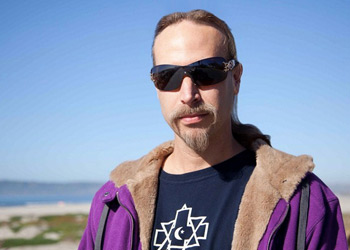 Mike from Mother Jones writes, "Josh Harkinson profiles David Bronner, the 40-year-old, hallucinogen-dropping, Burning Man-attending scion of the Dr. Bronner's soap empire, who channels roughly half of the company's substantial profits into activism, including the Washington State GMO-labeling bill that voters will decide upon tomorrow. Bronner, who favors the labeling of foods with GMO ingredients, has been arrested for planting hemp seeds on the DEA's lawn and for a performance-art protest where he milled hemp seeds in a cage outside the White House. He also sued the DEA (and won), so that his company could legally obtain hemp oil as a soap ingredient. Since David took over, Dr. Bronner's sales have soared. It's on track to bring in $64 million in revenues this year. But in a strike against corporate greed, Bronner has capped the company's top salaries at five times that of the lowest-paid warehouse worker."
At first, David Bronner (Jim's son) wasn't sure he wanted to become the next standard-bearer for the soap-making clan. After graduating from Harvard in 1995 with a biology degree, he wound up in Amsterdam and immersed himself in its psychedelic drug culture. "I just had my life explode on many levels of identity," he recalls about a late-night ecstasy and LSD trip at a gay trance club. These experiences and a lot of reading eventually opened his eyes to the value of his grandfather's All-One philosophy, and the power of the soap company as a vehicle for change. In 1997, he let his dad know that he was ready to work for the family business, but only "on activist terms." A year later, his father died of lung cancer and Bronner, at the age of 25, became the new CEO.
Early on, Bronner decided that he'd rather feel good about his job than worry about making a ton of money. In 1999, he capped the company's top salary at five times that of the lowest-paid warehouse worker. He employs a lot of people he met at Burning Man, including Tim Clark (official title: Foam Maestro), a buff guy whose job mostly consists of driving a psychedelically painted foam-spewing fire truck to music festivals, which is about as close as the company gets to actual marketing. (Dr. Bronner's has run ads in Mother Jones.) Bronner also employs lots of grandmotherly ladies like office manager Nina Vujko, an intensely loyal, 32-year employee whose office is plastered with photos of her coworkers' babies.
Limiting executive pay and spending virtually nothing on advertising left a lot of extra cash for improving the products and funding social campaigns—which have often gone hand-in-hand. For years, the soap had included an undisclosed ingredient, caramel coloring. As the new CEO, Bronner wanted to remove it for the sake of purity, but feared that die-hard customers would assume the new guy was watering down the product. So he decided to incorporate hemp oil, which added a caramel color while also achieving a smoother lather. But there was a hitch: A few months after he'd acquired a huge stockpile of Canadian hemp oil, the Bush administration outlawed most hemp products. "Technically, we were sitting on tens of thousands of pounds of Schedule I narcotics," Bronner recalls.
How Dr. Bronner's Got All Lathered Up About GMOs 
|
|
 The trash is a mundane place to find the magical work presented anonymously as "The Box of Crazy". This could be the next Codex Seraphinus! Or, perhaps, it's marketing for something or other. In any case, the William Blake-esque paintings are a particularly fine touch. Business Insider, collating the work of Redditors, runs through components of its rather too-neat origin story. Sometimes, I wish people could just enjoy a good yarn rather than focusing entirely on finding details that permit the shouting of "Hoax! Hoax!"—but such are our times.
|
|

Cory: You took a bunch of runs at building a world where a million stories could unfold—The Carpet People, Truckers, and, finally, Discworld. Is Discworld’s near-total untethering from our world the secret of its staying power?
Terry: It isn’t our world, but on the other hand it is very much like our world. Discworld takes something from this world all the time, shows you bits of the familiar world in new light by putting them into Discworld. Is that staying power? You tell me.
Cory: What’s the secret to Discworld’s unplumbable depths, and is there something a big world lacks when compared to one that’s smaller (in more than one way), like the Carpet?
Terry: We know about Earth; we know an awful lot about the solar system. When you do Discworld, you, the writer, can more or less change anything if you want to, if you can make it fit. It means you’re god, and that’s a great responsibility. 
As a writer, you can take bits of the universe and put it in your own new universe. Working in Discworld, you use the word sandwich, and you think: Can I do this? Now I’ve got to have a reason why a sandwich is a sandwich—in our world, it was named after the man associated with its invention, the Earl of Sandwich. Can you have your own universe and still have sandwiches? You have to do it all yourself and decide if you need to open the door into our reality at the same time.
Once Discworld started moving, as it were, it started moving almost of its own volition, because I would write a Discworld novel, and that novel required that such and such should be available, or whatever, and that means that the next time, that’s real in Discworld and the thing grows. And I must say it grows to be rather bigger than a carpet—but with care, it can have just about anything in it.
I’m finishing up Raising Steam, in which the railroad comes to Ankh-Morpork, and an awful lot of things have to be made and discovered until you get to the top of that pyramid. You can’t have Vaseline until someone’s invented something else. You have to create and understand a lot of things before you can move on. And so, since I work on Discworld almost all the time, it grows because I need it to.
Cory: Do you think that there’s any way you could have kept us in the Carpet for anything like the number of books that we’ve gotten from Discworld?
Terry: I was about to say “No,” but right now I wonder. . . . If the idea had taken, I don’t know. I really don’t. But how would it be? It would be almost a kind of . . . People in the Carpet are more or less tribal. What would happen if I . . . You’ve got me thinking!
Cory: Contrariwise, I feel like Dodger could have been the start of its own saga, about any number of characters from Dickensian England—do you think the world of Seven Dials has enough material to fuel a Pratchett engine through quite so many books?
Terry: The answer is yes. Because it’s all there. The people Dodger meets are real, the places he goes are real, and all I have to do is put in that little touch of fantasy, i.e., Dodger himself. Queen Victoria was real, though it’s hard to believe—and she’s free; you don’t have to pay to use her. There’s a whole lot of people that Dodger could have met. I’m pretty certain he’s going to meet Darwin or his grandfather (more likely) at some point.
If I run with it, no limitations, I could keep it going, I think. I know a lot of the stuff. I know how they talk, I know the history. It doesn’t really matter if I put a bit of fantasy in to make the pie rise. You can go into the world of “What if?”
Cory: So much of your work is about the legitimacy of authority. You write a lot of feudal scenarios, but you also seem like a fellow with a lot of sympathy for (and suspicion of!) majority rule. The witches gain authority through cunning and compassion (Nanny Ogg), through knowledge and force of will (Granny Weatherwax). Kings rule by divine right and compassion for the land; Vetenari, out of the practical fact of his ability to control the city’s factions. The Carpet People is shot through with themes of who should rule and why. Where does legitimate authority spring from?
Terry: The people! The only trouble is the people can be a bit stupid—I know that; I’m one of the people, and I’m quite stupid.
Lord Vetinari is that wonderful thing: a sensible ruler—that’s why he’s so popular. Everyone grumbles about him, but no one wants to chance what it would be like if he wasn’t there. I like Vetinari. I don’t mind authority, but not authoritarian authority. After all, the bus driver is allowed to be the boss of the bus. But if he’s bad at driving, he’s not going to be a bus driver anymore.
Now, an interesting sideline on this is the question of the writer’s position is vis-à-vis authority.
A journalist looks at authority as a target as a matter of course. You don’t actually have to fire, but you see it as a target. Since I am tainted as a journalist, I can’t separate that out from being a novelist, and my personal view is that you look askance (at the least) at authority. Authority must be challenged at every step. You challenge authority all the time to keep it on its toes. Vetinari works because there aren’t enough people who think he’s doing a bad job; they’re all factions, in any case. So he balances the world. It’s not everyone being happy, but rather not too many of them being unhappy.
Now you, Cory, seem like a fellow with a lot to say about authority yourself. Where would you say legitimate authority springs from?
 Cory: This is a question I’ve put a lot of thought into as well. I think that just authority arises from systems that fail gracefully. That is to say, the important thing isn’t what happens when the ruler does something that you agree with—the important bit is what happens when she does something stupid and terrible.
I am far more interested in graceful failure than blazing success. If you select a leader by a means that contains robust oversight, a meaningful recall mechanism, and recourse to alternatives (an independent judiciary, say) in the event of substantial wrongdoing, the authority is legitimate, because if things were going badly off the rails, you could replace her.
This is something that worries me about Lord Vetenari. He is, like all of us, imperfect. Lacking any checks on his authority (apart from civic uprising), he is likely to fail badly, even though he succeeds brilliantly.
All that said (and to your question below): the *reason* to have authority is to simplify the task of getting on together. But technology lowers coordination costs and so undermines the case for governance in some instances. I generally refuse to predict the future (on the grounds that SF writers who dabble in futurism are like drug dealers who sample the product—unlikely to come to a good end). But when pressed, I say, “To imagine the future, imagine the cost of coordination trending towards zero in more and more domains. Now we make encyclopedias and operating systems the way we used to organise bake sales. What if we could build skyscrapers that way? Airplanes? Air traffic control systems?
The Carpet People concerns itself with many questions of infrastructure and public works—another theme that has featured in many of the most enjoyable Discworld novels, especially Going Postal/Making Money. Ultimately, it comes down to the builders, the wreckers, and the free spirits. Now that we’ve arrived at a time of deep austerity, what do you think the future of infrastructure is?

Terry: To crack and fall away, I sometimes think. From what I see around me, it’s people doing it for themselves. We know the government is there, but we know they have no real power to do anything but mess things up, so you do workarounds.
On the matter of builders, wreckers, and free spirits, I’d say that Tiffany Aching [beginning with The Wee Free Men] is a builder. Moist von Lipwig [beginning with Going Postal] is a free spirit, but also a builder—I think people can go in and out of sequence. My dad was a mechanic; maybe my interest in builders starts there. You made your own catapult. You made your own crystal receiver. He encouraged in me that kind of thing. Even if it was dangerous, he took the view that I ought to be clever enough to know what I was doing.
My parents were practical people. That’s the word that is missing here: practical about just about everything. The ground state of being of practicality. Sometimes things need tearing down—and that might be, as it were, the gates of the city. But if we talk without metaphors, I would say that building is best. Because it is inherently useful.
And you, Cory? Do you want to make the case for wreckers?
 Cory: Never wrecking for its own sake. But disruption, yes, I’ll make that case. There is no virtue in the fact that all of us use toilets, but only some of us clean them. If we invented a machine tomorrow that obviated toilet scrubbing, that would be an unalloyed good, even though it also obviated the work of toilet scrubbers.
That isn’t to say that a just or caring society should cast aside the toilet scrubbers. The Luddite fight is miscast as a fight against technology, but it’s not—the Luddites smashed looms over a difference of how to apportion the dividends from automation, not because they objected to automation itself.
Kevin Kelly has a marvellous “robotics curve” that goes:
1) A robot/computer cannot possibly do what I do.
2) OK, it can do a lot, but it can’t do everything I do.
3) OK, it can do everything I do, except it needs me when it breaks down, which is often.
4) OK, it operates without failure, but I need to train it for new tasks.
5) Whew, that was a job that no human was meant to do, but what about me?
6) My new job is more fun and pays more now that robots/computers are doing my old job.
7) I am so glad a robot cannot possibly do what I do.
I’m not so sure about #6: we seem to be perfecting a system that only provides a living to financiers who invest in robots. This won’t work (if the bankers have all the money, no one can buy the things the robots make). We need a system that distributes automation’s dividends or we’ll end up with nothing at all.
One thing I’ve always enjoyed about your books with feudal settings is that it seems you get something like the correct ratio of vassals to lords. I always get a sense that for every ermine-trimmed guild boss in Ankh-Morpork, there are a thousand potato farmers in a shack in a field somewhere. So much of fantasy seems very top-heavy—too many knights, not enough serfs. Do you consciously think about political and economic considerations when you’re devising a world?

Terry: I’ve never been at home with lords and ladies, kings, and rubbish like that, because it’s not so much fun. Take a protagonist from the bottom of the heap, and in the same way it’s good to have a female protagonist, as she’s got it all to play for. Whereas people in high places, all they can do is, well . . . I don’t know, actually: I’ve never been that high. If you have the underdog in front of you, that means you’re going to have fun, because what the underdog is going to want to do is be the upper dog or be no dog at all. And I’ve never felt the need to have lords and ladies as my champions, as it were.
In Ankh-Morpork there are notables, some of whom are stupid, and some of whom are useful and likeable, but it’s a mercantile place. It’s money that matters. And where do I get that from . . . ?
Cory: Damon Knight once told me that he thought that no matter how good a writer you are, you probably won’t have anything much to say until you’re about twenty-six (I was twenty at the time and he was my writing teacher, at Clarion—ouch!). You’ve written about collaborating with your younger self for the reissue of The Carpet People. Do you feel like seventeen-year-old Terry had much to say?
 Terry: That’s the best question you’ve asked all day!
I think the he had a go, and it wasn’t bad. And then he was clever enough to read a hell of a lot of books and every bound volume of Punch. But when I was younger, I didn’t have the anger. I think you have to have the anger. It gives an outlook. And a place from which to stand. When you get out of the teens, well out of the teens, you begin to have some kind of understanding, you’ve met so many people, heard so many things, all the bits that growing up means. And out of that lot comes wisdom—it might not be very good wisdom to start with, but it will be a certain kind of wisdom. It leads to better books.
The Tiffany Aching series is what I would most like to be remembered for, and I couldn’t have written Tiffany Aching when I was seventeen. I just wouldn’t have had the tools.
But the question remains: As a writer of fantasy, can I be a proper writer? I don’t do literature, I do writing—you get paid for writing, for literature you just get plaques to put on the wall. I never really bother about it. I don’t think anyone in the genre does. It doesn’t really matter; it’s what you’re doing: you’re working. Writing happens; it’s what I do. I’m here; I do it. I like doing it. I like getting paid for it. I like the fun.
Being an author is not as much a job: it’s a life.
Thank you, Cory. It’s been fun.

Cory: “Being an author is not as much a job: it’s a life.”
Preach, brother!
It’s been fun for me, too. You certainly have your share of plaques on the wall and a richly deserved sword made of genuine sky-metal, but as a reader of your works, the thing that matters most to me is the books, for which I am heartily grateful.
|
|

First things first. Henry Blodget is completely right about bathroom attendants.
The Business Insider publisher wrote a piece Friday about New York restaurant Balthazar’s practice of having an employee standing in the rest room all day, wiping down the sink and helping customers who have just relieved themselves dry their hands. As Blodget writes, the practice is weird and creepy and uncomfortable, particularly in a small rest room.
Keith McNally, the owner of the restaurant, apparently was persuaded; he is eliminating the bathroom attendants so that Blodget and other Balthazar diners can now wash their hands in peace (after some hand-wringing over whether Blodget’s post cost three hard-working Balthazar employees their jobs, McNally made it known that other roles will be found for them inside his restaurant empire).
On one level, this is a silly little story that says more about the narcissism of the media types who eat at Balthazar (a Google News search turns up a whopping 1,500 results on the subject) than anything meaningful. But before the story is finally flushed down the drain, there is one aspect of the tale that speaks to something a little bigger.
The fact that Blodget (and all right-thinking people) are a little unnerved by bathroom attendants is a testament to the age we're living in: one where attentive personal service can be actually a disadvantage for a business. Consider some of my own personal preferences which seem to be widely shared:
I much prefer booking my own train tickets and hotel reservations on the Internet to calling an 800 number and talking to a human being.
I hate buying gasoline in New Jersey, where by law an attendant must fill your car up for you. I'd rather just pay at the pump and do it myself.
I don't like it when I stay at a nicer-than-usual hotel and they all but insist on carrying my bag to my room for me. If I just have one small bag, I'd really rather carry it myself, thank you very much.
When you see the world of early 20th century Britain portrayed on Downton Abbey, it is the opposite extreme. For the ultra-wealthy, there were servants everywhere, helping with the most menial tasks, like getting dressed. Even middle-class Britons had household help. Agatha Christie, born in 1890, later recalled that she couldn’t have imagined being so rich as to afford an automobile, nor so poor that she would not have servants.
But in the last century, per-capita incomes have risen dramatically, making the cost of hiring a servant higher. Meanwhile, technology has made the need for a house full of workers lower. Washing machines, modern kitchen equipment, clothing that you can put on without the assistance of a manservant or lady in waiting — all of these things made it practical even for affluent families to do without an army of servants.
At the same time, we’ve gotten more egalitarian as a society. Cost constraints aside, most people would find having a servant help them dress as uncomfortable today as Henry Blodget finds having a bathroom attendant help him wash his hands.
This is probably a case where preferences have evolved with practicality. As the 20th century progressed and wages rose, fewer people could afford servants and home technology improved, and so in contrast to Agatha Christie, someone growing up in modern times is unfamiliar with the experience of having people around all the time.
This is what progress looks like! And with the change at Balthazar, a century-long trend reaches its apex.

|
|

Let’s go to Kentucky, a deep red state which has nonetheless set up one of the best systems for getting health insurance for the poor. We have heard an awful lot of gripes from those with insurance on the individual market, and those with Cadillac-style plans who have been forced to adjust. But the people we haven’t yet truly seen or heard are those getting affordable insurance for the first time in their lives. Maybe I’m a squish, but this report from the NYT helped put some of the political cock-fighting into perspective:
The woman, a thin 61-year-old who refused to give her name, citing privacy concerns, had come to the public library here to sign up for health insurance through Kentucky’s new online exchange. She had a painful lump on the back of her hand and other health problems that worried her deeply, she said, but had been unable to afford insurance as a home health care worker who earns $9 an hour.
Within a minute, the system checked her information and flashed its conclusion on Ms. Cauley’s laptop: eligible for Medicaid. The woman began to weep with relief. Without insurance, she said as she left, “it’s cheaper to die.”
What price can you put on that? Or on this:
So far, [insurance agent Donald Mucci] has enrolled just a few longtime customers in exchange plans. They include Mrs. Shields, 49, a widow who had been rejected by insurance companies because she has diabetes. She is paying $745 a month for coverage through a program for people with pre-existing conditions, but the program will end in January.
Mrs. Shields, who has an annual income of about $17,000, qualified for a monthly premium subsidy of $232 a month. With Mr. Mucci’s help, she chose a silver-tier plan offered by Anthem that has a $2,450 deductible and a $4,500 out-of-pocket maximum. She will pay a monthly premium of $151 after the subsidy.Mr. Mucci said he would get a commission of $18 from the transaction. Before the health care law, he said, he would typically receive a lot more.
“Is it a win?” he said. “For Judy, it sure is.”
At the core of this technocratic edifice is something quite simple: the lifting of intense anxiety, the restoration of personal dignity, the chance to live better and longer, the opportunity to be free of physical pain. In the end, though I remain skeptical about whether the ACA is the best possible solution to the plight of those in such need, it is the only solution at hand. I want it to work. And I find the brutal attacks on it to be devoid of any true sense of what it feels to be alone and sick and terrified.
(Photo: Affordable Care Act navigator Adrian Madriz (R) speaks with Lourdes Duenas, who is looking for health insurance, during a navigation session put on by the Epilepsy Foundation Florida to help people sign up for health insurance under the Affordable Care Act on October 8, 2013 in Miami, Florida. By Joe Raedle/AFP/Getty.)

 Narnia Recap: In which the crew land on an island inhabited by apparently disembodied voices.
  |
| @ narnia.wikia.com |
Zephyr DearFlorida left turn: There is a left turn lane and light, and enough cars in that lane to block it for three rounds. You turn right, then make a U-turn half a block down the street.
California left turn: There is a left turn lane, but no left turn light. You hold your breath and dodge through a yellow or red light.
Massachusetts left turn: There is no left turn lane or light. You squeeze your car between the lanes in the middle of the intersection while waiting for a yellow or red light.
Western Washington left turn: There is a left turn lane with a dedicated light. You turn in an orderly, polite fashion when the light directs you to.
Eastern Washington left turn: You can pretty much go whenever. It’s not like there’s anyone coming.
Emily Esfahani Smith explains:
Brain size generally increases with body size across the animal kingdom. Elephants have huge brains while mice have tiny ones. But humans are the great exception to this rule. Given the size of our bodies, our brains should be much smaller—but they are by far the largest in the animal kingdom relative to our body size. The question is why. Scientists have debated this question for a long time, but the research of anthropologist Robin Dunbar is fairly conclusive on this point. Dunbar has found that the strongest predictor of a species’ brain size—specifically, the size of its neocortex, the outermost layer—is the size of its social group. We have big brains in order to socialize.
This helps explain why socialization is so strongly connected to our happiness:
When economists put a price tag on our relationships, we get a concrete sense of just how valuable our social connections are—and how devastating it is when they are broken. If you volunteer at least once a week, the increase to your happiness is like moving from a yearly income of $20,000 to $75,000. If you have a friend that you see on most days, it’s like earning $100,000 more each year. Simply seeing your neighbors on a regular basis gets you $60,000 a year more. On the other hand, when you break a critical social tie—here, in the case of getting divorced—it’s like suffering a $90,000 per year decrease in your income.


Thorium Concept Car - Image Courtesy www.greenpacks.com
Maggie has shared a couple (here, here) articles on Thorium as a super-fuel. This sounds like a fantastic implementation!
Via IndustryTap:
Laser Power Systems (LPS) from Connecticut, USA, is developing a new method of automotive propulsion with one of the most dense materials known in nature: thorium. Because thorium is so dense it has the potential to produce tremendous amounts of heat. The company has been experimenting with small bits of thorium, creating a laser that heats water, produces steam and powers a mini turbine.Current models of the engine weigh 500 pounds, easily fitting into the engine area of a conventionally-designed vehicle. According to CEO Charles Stevens, just one gram of the substance yields more energy than 7,396 gallons (28,000 L) of gasoline and 8 grams would power the typical car for a century.

|
|
Over the weekend, Amy Goldstein and Juliet Eilperin reported that much of Obamacare’s flaws were not due to the president’s lack of attention or focus:
On the balmy Sunday evening of March 21, 2010, hours after the bill had been enacted, the president had stood on the Truman Balcony for a champagne toast with his weary staff and put them on notice: They needed to get started on carrying out the law the very next morning. It was not ready even though, for months beginning last spring, the president emphasized the exchange’s central importance during regular staff meetings to monitor progress. No matter which aspects of the sprawling law had been that day’s focus, the official said, Obama invariably ended the meeting the same way: “All of that is well and good, but if the Web site doesn’t work, nothing else matters.”
But they also report that healthcare.gov was “was hampered by the White House’s political sensitivity to Republican hatred of the law — sensitivity so intense that the president’s aides ordered that some work be slowed down or remain secret for fear of feeding the opposition.” Andrew Sprung sees the logic of this strategy:
The dominant charge in the incompetence indictment is that political considerations drove policy. But in this case, the “political considerations” consisted of sidestepping sabotage or trying to avoid providing new fodder for it. Perhaps in some cases, fear of taking propaganda hits should not have trumped operational considerations. But that’s easy to charge in hindsight. And the “political” considerations — evading sabotage — were in service of getting the law implemented well.
… [I]t seems clear to me that Obama should have drilled deeper into the administrative structure of the website-building project. Charges that the tech project did not have the right leadership or management structure seem well founded. Perhaps the responsibility for failing to find that leadership can be laid at the doorstep of DeParle, or Lambrew, or Sebelius, or Obama, or all of the above. But the decisions that Goldstein and Eilperin detail are not on their faces irrational. The damage done to the law and to the country by Republican sabotage, on the other hand, is unmistakable.
Drum adds, “No federal program that I can remember faced quite the implacable hostility during its implementation that Obamacare has faced.” Tomasky searches for a parallel:
Has there ever been a law in the history of the country as aggressively resisted by the political opposition as this? Republicans didn’t do this with Social Security. Most of them voted for Social Security. They didn’t do it with Medicare. They, and the Southern racists who were then Democrats, didn’t do it with civil rights. There was a fair amount of on-the-ground opposition to that, but it wasn’t orchestrated at the national level like this was. And when the Voting Rights Act was passed the year after civil rights, Southern states in fact fell in line quickly. Check the black voter-registration figures from Southern states in 1964 versus 1966. It’s pretty amazing.
No, to find obstinacy like this, you have to go back, yes, to the pre-Civil War era. The tariff of 1828, the Kansas-Nebraska Act, which led to the civil war in “Bloody Kansas” and ultimately to the Civil War itself.

“So our animals can’t turn around for the 2.5 years that they are in the stalls producing piglets. I don’t know who asked the sow if she wanted to turn around…. The only real measure of their well-being we have is the number of piglets per birth, and that’s at an all-time high,” – Dave Warner, spokesman for the The National Pork Producers Council, in 2012. For video of what is being done to these animals, see my earlier post here.

"As much as anything, I think the videos saved me. The prosecution edited them, but we showed the whole thing. It was plain that Ender was not the provocateur. After that, it was just a second-guessing game. [...] We got the judges to agree that the prosecution had to prove beyond doubt that Ender would have won the war without the training we gave him. After that, it was simple."OBJECTION!
"As soon as we get the reports back on the bugger colony worlds. I mean, there they are, already fertile, with housing and industry in place, and all the buggers dead. Very convenient. We'll repeal the population limitation laws [...] and all those thirds and fourths and fifths will get on starships and head out for worlds known and unknown."You know, I hadn't thought about it until last week's comment thread, but why aren't there queens on any of the formic colony worlds? Why didn't Ender have to bust planet after planet to eradicate them all? And why in the world would formic housing and industry be remotely suitable for human use? Colonists are going to get to these worlds and find decaying, rusty cemetary-cities filled with the desiccated husks of millions of nightmares. Honestly, who wants to sign up for that instead of, you know, base camp? I want to hang out at base camp. Forget hive cities.
[He] listened as the psychologists and lawyers argued whether murder had been committed or the killing was in self-defense. Ender had his own opinion, but no one asked him. Throughout the trial, it was really Ender himself under attack. The prosecution was too clever to charge him directly, but there were attempts to make him look sick, perverted, criminally insane.Trying to court-martial a colonel by instead expounding roundabout ableist psychological slander against the colonel's prize student who is the favourite person of everyone on the entire planet does not sound like the actions of someone 'too clever'. That sounds hilariously inept. You court-martial Graff by asserting that he gambled humanity's survival on the belief that a miraculous military strategist would find a way to survive a fistfight to the death, and put it on Graff to somehow prove that it was necessary to do this, despite the thirty-six other genius commanders all performing so well without killing two classmates. Then you move on to handling Ender by screaming "THERAPY, THERAPY FOR EVERYONE, IS ANYONE PAYING ATTENTION" and so forth. Obviously.
The one thing he could not bear was the worship of the colonists. He learned to avoid the tunnels where they lived, because they would always recognize him--the world had memorized his face--and then they would scream and shout and embrace him and congratulate him and show him the children they had named after him and tell him how he was so young it broke their hearts and they didn't blame him for any of his murders because it wasn't his fault he was just a child--
He hid from the as best he could.Sounds about right, yeah. Ender refuses to let himself off the hook for Stilson, for Bonzo, for the entire formic civilisation, and I suspect we're supposed to think he's being too hard on himself, but anything less would be even more terrifying, and so this rings true. All too much of human history (and present) tells us how quickly we forgive murderers if they're on 'our side'.
"He decided to be a statesman?"
"I think so. But in his cynical moments, of which there are many, he pointed out to me that if he had allowed the League to fall apart completely, he'd have had to conquer the world piece by piece. As long as the Hegemony existed, he could do it in one lump."
Ender nodded. "That's the Peter that I knew."Yeah, Ender, that does sound like someone you'd feel superior too. That rat bastard of a brother of yours who just goes and benefits from saving the world. I have a wild guess that exactly zero of those still-breathing civilians would prefer to be dead as a statement on Peter's supposed moral vacuum.
"Funny, isn't it? That Peter would save millions of lives."
"While I killed billions."
"I wasn't going to say that."Well, what were you going to say, Valentine? Because that's a really weird thing to just throw in there. Peter has always been about power over people; wanting to have as many subjects as possible is exactly in-character for him. Your conviction that he's made of murderousness is fanon. But Valentine explains that Peter intended to use Ender as his last stepping-stone to planetary domination, so she threatened him with compilations of videos of him tormenting Ender as a child and pictures of slaughtered squirrels, "enough to prove in the eyes of the public that he was a psychotic killer". Remember what I said before about this book being consistently sympathetic and positive about having and handling mental illness? I take it back. Mental illness is only a reason to be sympathetic to people we like; for the people we hate, it's an incurable condemnation and a weapon to be used against them.
And from the slings that once were used to carry infants along with adults into the fields, he learned that even though the buggers were not much for individuality, they did care for their young.So, the vast majority of the population are made up of female drones that can't reproduce anyway, and all young are derived from a tiny handful of queens, but they lack the specialised labour to maintain nurseries and instead prefer to have random drones haul larvae around while they're doing agricultural work? I'm guessing this is a remnant of the original story where the aliens functioned in some completely different, vastly more humanoid way?
A deep depression in the middle, partially filled with water, was ringed by concave slopes that cantilevered dangerously over the water. In one direction the hill gave away to two long ridges that made a V-shaped valley; in the other direction the hill rose to a piece of white rock, grinning like a skull with a tree growing out of its mouth.
"It's like a giant died here," said Abra, "and the Earth grew up to cover his carcass."It looks, in point of fact, exactly like Fairyland in the mind game. There's an overgrown playground nearby, like the one where Ender fought the child-faced wolves. The formics built it, fifty years earlier, during the war. Ender tries to send Abra away; Abra warns Ender that it might be a trap; Ender says he doesn't care if they want revenge. They keep flying (apparently they've been in a helicopter all this time? Three days by helicopter seems like a hell of a long way between the only two human settlements on the planet) and find the cliff and the ledge and the tower at the End of the World. Ender leaves Abra in the chopper and climbs the wall. The same room is there, with the mirror that showed Peter's face, though it's just a dull sheet of metal with a rough humanoid face scratched into it. Behind that, a dormant, silk-wrapped pupal formic queen, and Ender instantly knows that she carries enough fertilised eggs to start a colony on her own. She links to his mind, the philotic effect, and Ender realises why he had so many nightmares at Eros--as the formics traced his mind back through the ansible and tried to understand him. She shows him her birth, the old queen preparing her, memories of the campaign as the human fleets destroyed the formics over and over.
She had not thought these words as she saw the humans coming to kill, but it was in words that Ender understood her: The humans did not forgive us, she thought. We will surely die. [....]
We are like you; the thought pressed into his mind. We did not mean to murder, and when we understood, we never came again. We thought we were the only thinking beings in the universe, until we met you, but never did we dream that thought could arise from the lonely animals who cannot dream each other's dreams. How were we to know?Ender takes the cocoon and promises to find her a world to start again. When he returns to the colony, he writes a book, a history of the formics from the memory of the queens. They lament the tragedy of the wars, and it's really very beautiful aside from the terrifying undercurrent of pro-colonialist appropriation apologetics:
But still we welcome you as guestfriends. come into our home, daughters of Earth; dwell in our tunnels, harvest our fields; what we cannot do, you are now our hands to do for us.They did 'start it', as wars of annihilation go, but it's hard not to see this as the kind of thing that makes people think it's okay to co-opt the possessions of subjugated cultures, dressing up in warbonnets for Halloween and fracking for oil on sovereign First Nation land because, really, it's all our country now and all that killing happened a long time ago and it's not like those people are really around anymore, right? And now we have the slaughtered people literally forgiving and welcoming their killers.
"We have to go. I'm almost happy here."
"So stay."
"I've lived too long with pain. I won't know who I am without it."Gluuuuuuuuuurge. Apparently no one else in the last decade has thought to suggest that Ender should get a therapist either. But he does have a real goal, because he needs to find a world for the formic queen to hatch, so they travel, Andrew Wiggin the Speaker for the Dead and Valentine Wiggin "writing down the stories of the living while Ender spoke the stories of the dead". And for once I don't know what happens next.
ENDER'S GAME may be the prettiest movie I ever hated.
— Ana Mardoll (@AnaMardoll) November 2, 2013
no worries. i’m sure at the time i would’ve sensed internalized transphobia from a mile away, but i am actually only happy you have gotten past it.
to be honest, i don’t even remember it. i’ve gotten so much shit from folks in response to defending all members of the trans community (as if such a thing truly existed) that i actually didn’t recall it in specific.
what i will say, is that i hope in your future you will continue to fight your own ideology.
what do i mean by that? ideology in this case is another word for “idealism” in the german philosophic sense. ok, that sounds pretentious, what the fuck am i on about? i mean that we come to things with certain categorial and conceptual knowledge, we come to empirical knowledge already tainted by ideology.
the counter-strategy to this is materialism. another jargony word, but it is rather simple, and the meaning is just “how does my category of self reproduce itself, and how does that constrain the knowledge i have or believe is possible?” so how, in the mundane crass finite way, do humans continue existing, since they don’t exist atemporally or essentially?
the answer is by examining “means of production” which is again another fancy way of saying not simply how do we produce more humans (like babbys) but how do we produce ourselves, as individuals, over and over again each new day, each hour, each minute?
i put this to you because i worry given the context of your performance that you are attracted to other ideologies. that categorical knowledge appeals to you and guides you against the nature of messy compassion you really need to survive. i say this with deep sympathy, because dominant ideology is cruel, and you must survive. i fucking insist.
but to be concrete, i can’t respect a vegan that doesn’t take serious the conditions of production of food for the humans that labor in it. why? the categorical information about the feelings of any species other than my own is secondary, because i recognize that as an individual i can do nothing for any other species. only with the cooperation of my entire species can i extend any compassion.
and so you must ask yourself the only thing you can as an individual, have i done everything in my power to understand the economic system that motivates people, for instance, to consume animals? have i done everything in my power to examine why i feel free not to act as other people, as independent fully from all other histories, and only appealing to transcendental morality? (this secondary question is critical for white men to examine.)
if you are the man i think you could be, you will see the answer is “not yet.” and if you are like me, in some time you may think to yourself, “only if all of humanity is without suffering can we really extend our compassion, and the cause of our suffering is…” if you are me in specific, you would say “class society” at the end of that sentence, but you are your own man, so i leave it to you.
in any case, i hope this sufficiently redeems you in your own eyes and reminds you that i am merely a man with other concerns for justice, and that what you may apologize to me for is for yourself—if you want to really apologize to me you must know what upsets me. and the above is only a glimpse of it.
that said, you have my love and support and respect as a brother, and i wish you strength on your journey to better understand yourself and your species.
Richard Vedder warns that American universities are on a “tax-exempt debt binge” that will only end in disaster. ”A decade ago, no one seriously predicted cities would go bankrupt, forcing municipal bondholders to absorb large losses,” he writes. “In a few years, we will probably be hearing similar stories about some universities”:
Schools are exuberantly borrowing, in some cases issuing 100-year (century) bonds. Some bond offerings are justified, even wise, as schools are taking advantage of low interest rates to reduce future debt-service obligations. But a lot of this activity is financing construction of high-end student housing, faddish “centers” and stadiums. … Ohio State University borrowed $500 million for 100 years, mostly to build new dormitories. Will the buildings last as long as the debt used to pay for them? Not likely. The University of California issued $860 million in century bonds last year and, as an encore, an additional $2.39 billion in conventional debt recently. (If that sounds like a huge amount, consider that Harvard University, which has about 22,000 students compared with the UC system’s more than 225,000, is more than $6 billion in debt – about $300,000 for every student.) These debt-financed building sprees are increasingly troublesome at a time of unsustainably rising college costs.


"Hey, evolution, what are you doing for Halloween?"
"Well, I made this moth, and then I dressed it up like two flies feeding on a big wet pile of bird crap."
"Um."
"I even made it smell like bird crap.”
"I see."
"Isn’t it awesome?"
"Why couldn’t you just do ‘sexy cat’ like everyone else?"

|
|
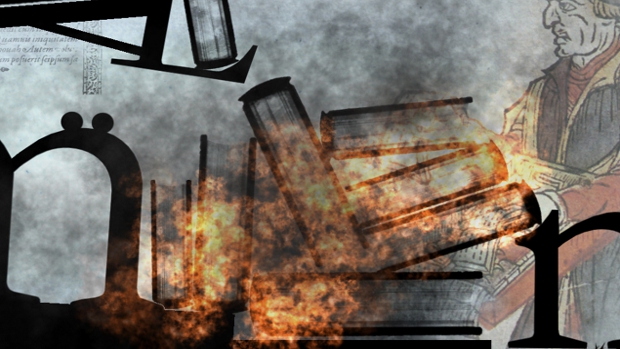
Type:Rider is one of those game concepts that doesn’t exactly scream thrill-a-millisecond, but that’s because it’s too busy artfully scrawling, scratching, writing, and typing it out to care. It’s a fairly basic platformer, but the twist is that all levels are themed after various evolutions of the written word. I suppose you could call it edutainment (there are even quick, optional passages about the origins of each script that appears, if you care to read them), but it’s also a very beautiful, well-constructed experience. You take satisfying, just-floaty-enough leaps between letters, dancing on air between centuries of human knowledge. There’s a free demo if you’d like to try it out, or you can find more details below.
@Brandon whitmer, we have arrested all the violent offenders in Five points. Thank you for sharing your views and giving us reasonable suspicion to believe you might be a criminal, we will work on finding you.
The post was deleted almost immediately, but not before it was noticed and screencapped. In the resulting furore, Santiago lied about it.
This is Interim Chief Santiago posting. I was just notified that one of my staff members deleted my post. I put everyone on notice that if you advocate for the use of illegal substances in the City of Columbia then it's reasonable to believe that you MIGHT also be involved in that particular activity, threat? Why would someone feel threaten if you are not doing anything wrong? Apply the same concept to gang activity or gang members. You can have gang tattoos and advocate that life style, but that only makes me suspicious of them, I can't do anything until they commit a crime. So feel free to express yourself, and I will continue to express myself and what we stand for. I am always open to hearing how our citizens feel like we can be effective in fighting crime.
After Popehat inquired after it, however, Ruben Santiago was forced to admit being a liar.
Chief Santiago did write those two posts. I believe the original comment was misconstrued. I appreciate you reaching out to CPD.
Chief was trying to say that he puts would-be-criminals on notice — if you commit a crime or plan to commit one, CPD will work hard to investigate and press charges according to the law.
It’s easy for social media posts to be misunderstood. The man who was so-called threatened openly admitted that he was not offended and appreciated the work of CPD.

|
|
Earlier this week, Forbes put out a “World’s Most Powerful People” list with Putin at the top. I wasn’t kind. (It’s a bit of an epic smackdown, if you want to watch). Simon Tisdall was also gob-smacked:
[T]he praise for Putin from Forbes, a magazine that supposedly champions individual free enterprise, as a man who “has solidified his control over Russia”, is jaw-dropping. If power is to be measured by the successful imposition of authoritarian governance, then surely Kim Jong-un, North Korea’s dictator, should be Forbes’ No 1? On this basis, Saddam Hussein and Joseph Stalin would qualify for emeritus awards.
In point of fact, Putin’s power is largely illusory – a false idol erected and nurtured by a phalanx of Kremlin cronies, and maintained through control of Russia’s fast-depleting oil and gas revenues and an ever more repressive grip on civil society and the media.
The whole farce was obviously a way to get media attention (success!) but also an obvious product of Obama derangement syndrome. Some people cannot see foreign policy in anything but crude schoolyard terms – in which case, Obama’s willingness to give Putin the Syria WMD brief was clearly a sign of the president’s comparative weakness. This vote was obviously designed to stick the president in the eye. And have you looked at Forbes lately? They make Buzzfeed look like a virgin when it comes to advertorial.
More to the point, we’ve seen that Russia’s oversight has – so far – resulted in an unexpected success in destroying the chemical weapons sites by the deadline, which is today. You won’t hear that on Fox – but it’s a huge success. Obama’s avoidance of getting dragged into Syria’s civil war was obviously a wise move; to get an end to Syria’s WMDs at the same time is pretty damn cool. The outcome was a win-win for both Obama and Putin – and the world. And Obama made it happen. Not so powerless after all.

Security researcher Dragos Ruiu has been painstakingly untangling a weird, scary piece of malicious software that compromises the BIOS of the computers it attacks, allowing it to infect machines with different operating systems. He's dubbed it "badBIOS" and has seen it infect machines that aren't connected to the Internet. It appears that its initial vector may be a USB exploit, spreading by memory stick, but after that, it appears that it continues to communicate with other infected machines by ultrasonic networking through its hosts' mics and speakers (!). On Ars Technica, Dan Goodin has a deep dive into the strange, freaky world of badBIOS.
Ruiu said he arrived at the theory about badBIOS's high-frequency networking capability after observing encrypted data packets being sent to and from an infected machine that had no obvious network connection with—but was in close proximity to—another badBIOS-infected computer. The packets were transmitted even when one of the machines had its Wi-Fi and Bluetooth cards removed. Ruiu also disconnected the machine's power cord to rule out the possibility it was receiving signals over the electrical connection. Even then, forensic tools showed the packets continued to flow over the airgapped machine. Then, when Ruiu removed internal speaker and microphone connected to the airgapped machine, the packets suddenly stopped.
With the speakers and mic intact, Ruiu said, the isolated computer seemed to be using the high-frequency connection to maintain the integrity of the badBIOS infection as he worked to dismantle software components the malware relied on.
"The airgapped machine is acting like it's connected to the Internet," he said. "Most of the problems we were having is we were slightly disabling bits of the components of the system. It would not let us disable some things. Things kept getting fixed automatically as soon as we tried to break them. It was weird."
Meet “badBIOS,” the mysterious Mac and PC malware that jumps airgaps [Dan Goodin/Ars Technica] 
|
|