Shared posts

31 Oct 22:05

Joel Watson Is The Only Reason I Am Leaving Webcomics Forever

Zephyr Dear

Hey remember this?

Joel Watson is the original author of the webcomic question and answers I responded to in an aggressive way a few weeks ago. He writes and illustrates the webcomic “Hijinks Ensue” and lives in Dallas, Texas in the U.S. In his responses to other people’s defense of some of my points he has made it clear that, like a lot of white men, he is uncomfortable being referred to as a white man, so in this post I will refer to Joel Watson as a black woman. Pictured above is Spike Trotman of Iron Circus Comics. She and Ayo were both recently interviewed on Inkstuds by David Brothers.

Joel Watson, a black woman, understandably feels upset that I responded to her positively-intended webcomics advice with acerbic, condescending criticism.

In order to express my disagreement with Joel Watson, a black woman who I love and respect and who I believe has innate value as a person but who I think has not taken the time to think a lot of these things through, I want to reiterate what might be the “content” of my original “hateful parody” with less “snark” though I will still refer to Joel Watson as a black woman.

Does sexism happen? Yes. Does it happen to most women at some time during their lives? Of course. Does it happen to some women a lot of the time? Certainly. Does it happen to every woman every moment of her life? Is hyperbole the MOST AMAZING WONDERFUL FANTASTIC THING EVER?!?!?!? 

We are sexists, our culture is sexist, and because of that, women (all women, 100% of women and 100% of all men, and everyone) are affected constantly by social structures and patterns of thinking and behavior that limit what we can conceive of for ourselves and each other, and this directly and negatively affects the nature of our reality for everyone everyday.

By not communicating anything about this reality to an adult watching over the development of a female person who will be directly affected by these social dynamics, I felt an opportunity had been lost. I felt this was emblematic of male-dominated creative cultures that want to believe we are past misogyny “except for in superhero comics” or whatever exaggerated misogyny we can tolerate nearby so we have something to point at and say we’re better than.

This has nothing to do with Joel Watson in particular, except in as much as it has everything to do with every particular person and how we choose to conceive of the world around us and how that affects all of us. Because Joel Watson is a black woman and one of the few black women making a living off her comics work online (I don’t know of one other than Spike Trotman, and I’m not sure if it would be worse if this is because of my ignorance or because there are no others), I was surprised she didn’t have a broader view of these things to begin with.

I think this next quote sums up where I part from the culture of webcomics forever. Thank you for reading so far.

Nearly 50% of the world’s population, over three billion people, live on less than $2.50 a day.

33.4 million people have AIDS and 2/3 of those people live in a 3rd world country. 

870 million people are starving. 850 million of them live in a 3rd world country.

"There is no webcomics industry" doesn’t matter because nothing matters. The world is an industry of suffering. An industry of pain. We should all just give up now because the fact that we are able to sit at our computers, or on our phones and freely express opinions on the Internet while not starving to death or fighting for our lives day in and day out means we will never know the truest depths of human suffering. How can anything I say or do ever matter if there is even one person out there who has it harder than I do? Or, is that argument perhaps completely ridiculous?

No one has ever made this argument, but it is a good argument to pretend has been made if you’d like our current social order to continue unabated. No one told Joel Watson that her suffering didn’t “count” but she still felt it necessary to recount her personal hardships. As much as I love and respect Joel Watson, and we know that she is an intelligent and strong black woman, I think she has made some fundamental mistakes with respect to her conception of the world.

To look at our world as “an industry of suffering” and accept this as the current state of affairs is understandable. The world can seem like it is made primarily of suffering with occasional breaks for not-suffering, and if you find a little break for not-suffering why wouldn’t you try to stay there forever? Why not live safely, in the suburbs, forever? Only Joel can answer that question for herself, but I can tell you why I will not be spending my life this way.

Suffering is inevitable for all of us. It is unavoidable and the fear of suffering helps to magnify our pain exponentially. Without the fear of suffering, any possible behavior is open to us. Because I have memories of past suffering and present empathy for others, I have the desire to reduce the suffering around me.

Joel Watson, a black woman with a voice in popular culture, has an important role to play in expressing her perspective and experience. Since I was born a white male, I think the most productive thing I can do in this culture might be for me to give up as much of my privilege as I can conceive of, and renounce systems that want me to experience “pleasure” or “safety” (as defined by our culture) at the direct cost of the suffering of others. I understand that other human beings come to different conclusions about living. This is where I’m headed.

The number of people suffering unnecessarily would be effectively reduced by humanity, I think, if we became less prone to accept the suffering of others as “inevitable” and the suffering of ourselves as “undesirable.”

And I say “men AND women” because the fear is rampant on both sides. Sexist men are afraid of women and people like you and John are encouraging women to be afraid of sexist men. You aren’t warning a female artist to be wary of sexism, you are ensuring that sexism will live inside her (as fear) and persist forever.

Sexists in comics and on the Internet are just extremely focused jerks. When you stop giving jerks power by fearing them, and just do whatever you want to do without asking them for permission or approval, they eventually get tired and go away. 

I believe that discussing things like this does not give power to fear. I believe that discussion of negative aspects of reality, even those that some people don’t experience or feel responsible for or feel comfortable hearing about, is what will actually help take the fear out of our social spaces. I believe there are many negative aspects of our culture that will not be affected by ignoring individuals. I believe that the social structures and ways of thinking we have used to damage ourselves for generations will not get tired and go away. Deeply ingrained patterns of thinking and behavior do not need our attention; they survive more easily the less people enacting them are aware of what they are doing.

The point I am trying to make is that fear in general will harm you more than the person or thing you are afraid of. When giving a young artist advice, I tend to steer more towards encouragement than “here are some things to fear.” I certainly don’t have all the answers, and my examples above do not apply to sexism in all it’s forms. People can be really awful to each other. My only goal is to steer people towards being less awful to each other. 

Better than educating each other about the structures of our world, better than changing our behavior, better than reevaluating our assumptions about ourselves and each other and the world around us, better than all those things is being nice. Let’s be polite about the continued destruction of the natural world.

Let’s be kind about the dissemination of sexism, racism and classism through systems of value that are flawed and broken, and whose proponents and participants have moved their self-preserving prejudices away from conscious exclusion of named communities to unconscious fear and lack of empathy for the other, which each individual participant in the system consciously believes that they do not have and that they are not responsible for this perspective’s negative effects on others.

Let’s allow the information that surrounds us to exclude low-income minority communities, most likely a short drive from wherever you are if you are in the U.S., who are being terrorized by economic violence, by prejudice, by law enforcement. If the system you live off of and uncritically participate in is an “industry of suffering,” then occasionally someone who has been ground into the dirt by that industry of suffering will wander into the gated community of your life and say something rude to you.

Just discussing these kinds of things from a different perspective is “rude” or “mean” or “condescending” to a lot of people, but uncritically supporting economic systems and patterns of behavior that hurt people every day is “inevitable” and “normal” and “fine.”

In order to turn masses of suffering people away from the safe spaces created by our affluence, we must tell ourselves stories to make ourselves feel powerless. This is “just the way it is” and there’s nothing we can do about it. There are too many suffering people for us to make a difference in their suffering. This story provides us with the attitude we need to shut out our natural empathy through years of its retelling. This preserves the current order and allows some people to believe they are avoiding suffering by maintaining their positions in hierarchies that can be made to appear stable.

I think the desire for everyone to be “nice” is an easy way to dismiss people who are strongly, negatively affected by cultural values you support. I think that the webcomics people I have spent my time around are too nice to seriously consider using their tremendous affluence to affect the system that gave them that affluence while preventing it from reaching others. I think rich people are afraid. I think if you are strongly, personally offended by someone pointing out you could’ve let a little girl’s mom know that life isn’t always easy for girls on the internet or in the world, I think that means you are afraid of your own responsibility, your culpability in this complex web of cultural and social interrelationships we inhabit. Maybe you’d like to do something about it instead of being afraid. If you don’t, I don’t want to know you.

22 Feb 00:06

Pomplamoose's one-take, projection-mapped video for Happy Get Lucky

by Cory Doctorow

Pomplamoose's mashup of Happy and Get Lucky isn't just a great song -- it's a fantastic video in which Nataly and Jack manipulate props so that loads of clever, playful video-elements are projection-mapped onto them. The entire thing is in one, continuous take, with the musicians hauling props in and out of the projector's beam and getting the alignment exactly perfect every time. It's a feat of technical mastery and a fantastic work of art -- bravo!

Pharrell Mashup (Happy Get Lucky) - Pomplamoose (via Waxy) vidoes,youtube,music,happy mutants,makers,


21 Feb 23:55

geekygothgirl: murphmanfa: sandvichette: vigilantespanties: F...


geekygothgirl:

murphmanfa:

sandvichette:

vigilantespanties:

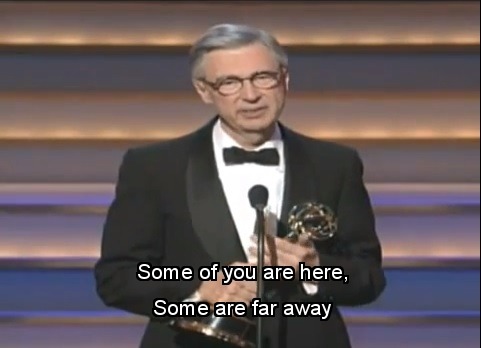
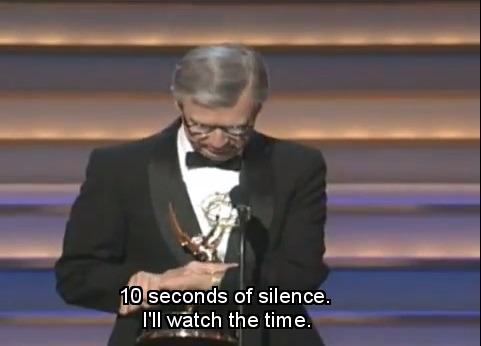
Fred Rogers Acceptance Speech - 1997

Our neighbor didn’t die, he was just needed someplace else.

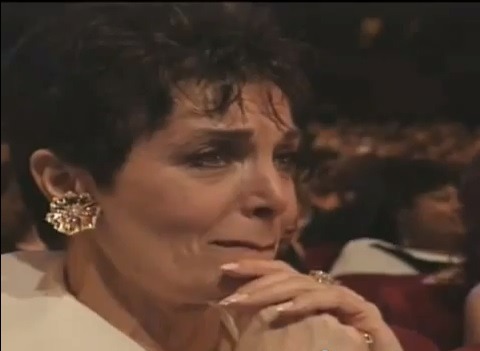
He took a moment that was about recognizing him and turned it into a moment to recognize everyone who was there and everyone who made it possible for him to do what he does. If you want a perfect example of why he is so fondly remembered and such a great person, it’s tough to find a better one than this.

Mister Rogers is like, the one person where the more I find out about him, the more I love about him. It’s such sweet relief, rather than being disappointed in a celebrity when you find out more about their personal life, to go “my God, what a thoroughly good human.”

21 Feb 20:31

So Some Ted Nugent Lyrics

by Josh Marshall

From one of Ted's biggest hits "Stranglehold"

You ran the night that you left me

You put me in my place

I got you in a stranglehold, baby

You better trust your fate

...

You ran the night that you left me

You put me in my place

I got you in a stranglehold, baby

That night I crushed your face

Read More →
21 Feb 04:57

Mall cops freak out over steampunk meetup, call the real cops

by Cory Doctorow


A group of steampunk cosplayers arranged to meet up at Westfield Plaza Camino Real near San Diego to ride the mall's Victorian carousel. But Westfield's mall cops were terrified of the cosplayers and evicted them all, escorting them to the door, calling the cops, and making them wait until the police arrived (the police basically shrugged and said, "Look, it's stupid, but it's their mall").

The mall cops -- and their corporate overlords -- cited a variety of dumb policies in support of the action, including a ban on wearing costumes that obscured the wearer's face (which didn't describe the cosplayers' outfits), a ban on gathering in groups larger than three (ORLY), a ban on photography without the subjects' permission (the steampunks, having gathered to have their photos taken, can be presumed to have consented to the pictures). Basically, it's a case of mall cop authoritarianism followed by the usual bland corporate doubling-down.

Of course, kids -- especially kids who happen to be brown -- already know that malls are capricious and fraught replacements for the public square. Mall cops basically hate anything that doesn't accord with their view of what a shopper should be and relentlessly discriminate against anyone they don't like. Back when I was in high school, more than half of my school had been banned from College Park, the mall in Toronto that was across the street from the school, by sneering jerks from Intercon security, who had the full backing of their management and the mall management.

The irony of ejecting people for wearing steampunk clothes in rich: malls are full of steampunk-inflected clothing, as the commodification mills of the fashion industry relentlessly mine subculture for new looks to put under glass. And here, too, is another parallel to the much more widespread discrimination against brown kids, who are often ejected on the pretense of wearing "gang" clothes -- clothes whose styles have been snaffled up, denatured, and repackaged for sale in the stores whose rent keeps the mall in business.

My family (four of us, three dressed in Victorian clothing) arrived early to eat lunch before riding the carousel. We parked near the entrance with the carousel and began walking down the mall to find a restaurant. We saw two other people from the group walking the other way. We found a McDonald’s and since the choices at the mall seemed rather limited and 1pm would come up soon, we ordered our food and sat down to eat. It was only a minute or so later when we were approached by a security guard who said we had to leave. You can imagine our surprise....

...We asked to see the policy and were told we could not. We asked to see the manager (either go to him or have him brought to us) and were told no. We were also told that they were calling the police. We were allowed to finish our lunch but the guard had to stand over us and escort us out.

While we were finishing, the other two people whom we had passed earlier returned, followed by their own security guard. They had gone through the same procedure and had asked the guard if they could come see us before leaving. Having now finished eating, we all left for the door by the carousel.

When we got there, we found more people had arrived, and a guard at the door was not letting them beyond the entrance to the mall. The security guards said we had to wait outside for the police.

Steampunk Carousel Outing Cut Short By Security Guards [Kim Keeline/KPBS]

(Thanks, Greg!)

(Photo: Laura Lusk)


21 Feb 01:58

American Indian History, Through Indian Eyes

American Indian History, Through Indian Eyes:

In the currently prevailing view, the biggest reason for the demographic decline of American Indians was not colonization, however unfair or terrible that may have been. Rather, the blame is assigned to European communicable diseases such as small pox, to which Indians did not have immunity. American diseases, in turn, did not cause sufficient casualties to deter European advancement (Africa’s diseases and terrain did deter Europeans, and this is probably why Africa today has many millions of Africans and not European immigrants). This view of history, where geography, natural environment, domestication of crops and mammals, and the co-evolution of microorganisms play an equal if not more important role in shaping the course of the world, was originally proposed by Alfred Crosby in his 1972 book The Columbian Exchange. Crosby’s thesis is also the basis for Jared Diamond’s more famous Guns, Germs and Steel, published 25 years later.

No doubt disease was a huge factor. But I also find that shifting the blame to germs sometimes becomes a convenient excuse. It takes the following form: “Well, there were so few of them and unfortunately disease killed them off.” It ensures that history is never closely examined. Besides, I do not feel the impact of disease can be viewed in isolation; it has to be considered in view of the relentless conquest that American settlers were imposing on North America at the same time or just after pandemics had taken their toll. The equivalent might be an invading army in Europe, intent on keeping land only to themselves, just after the locals had gone through the horrors of the Black Death.

If there had been no disease and only colonization, the American Indians would have wrested power back eventually. In one alternate version of history, the entire continent is still ruled by its original inhabitants, a multitude of nations across the continent, demographically much stronger — similar to how Africa is today. In another, colonization was only partial, and armed indigenous resistance against settlers continues even today. A harmless echo of the latter is in a t-shirt I repeatedly come across at contemporary American Indian gatherings such as powwows; the image on the t-shirt shows armed Apache warriors (Geronimo is on the right) and the tongue-in-cheek statement: “Homeland Security: Fighting terrorism since 1492.”

If there had been only disease due to contact through trading and no subsequent conquest, then indigenous populations would have likely developed immunity and recovered in the long run — just as European populations recovered after the plague. There has, in fact, been an upward trend in American Indian populations in the last hundred years (from 600,000 in the 1890s to 3 million now), as hostilities have – officially at least – ceased. That upward trend would have been much more significant if the Indians had retained more of their original territories. Of course, such an outcome could not have been palatable to an America that was continously expanding westward, from one coast to another, fulfilling its so called Manifest Destiny. The US government kept breaking treaties and it moved many groups by force to faraway places. The Cherokee Trail of Tears is just one example. This is why most Indian reservations today are not in the locations that the tribes were originally based. The loss of key points along rivers and other resource-rich locations meant that there were no safe havens for indigenous populations to recover, adjust and grow to a new equilibrium.

So disease may well have drastically reduced numbers upon initial contact, but it was unrelenting conquest and displacement that ensured that population levels could not bounce back to their full potential.

20 Feb 23:58

"Right, well, you know, in sum, what I took from Camus was the idea that to commit to an unlikely..."

“Right, well, you know, in sum, what I took from Camus was the idea that to commit to an unlikely cause or a cause that is, seems, almost certain of defeat, seems absurd. But to not commit is also absurd given the situation. And only one choice of those two offers even the remote chance at dignity. But more than that, the idea that democracy works without there being a constant fight, without us— you know, listen, people who walk away and say I’m not going to play this game by which I might lose or which the odds are stacked against me, and want the lofty position of walking away and saying, “No more.” They’re going to achieve nothing except a more rapid decline in their society.”

- David Simon
20 Feb 23:58

doubting my salvation

by forgedimagination

Picasso_Pablo-Crucifixion
Picasso, “The Crucifixion”

One of the phrases I heard quite a bit in the fundamentalist church I grew up in was “You need to check up on your salvation.” It usually followed a long diatribe on sin, or wordliness, or unrighteousness, and the church-cult leader would say it to make sure we all understood that real Christians feel convicted when they hear sin being preached on. Real Christians feel crushing guilt. Real Christians have the Holy Spirit pricking their conscience day in and day out. If we could get through an entire sermon on sin without feeling a single twinge? Well, then, we needed to “check up” on our salvation, because we probably weren’t saved.

Interestingly, and perhaps paradoxically, I got a completely different message about “doubting my salvation.” Real Christians didn’t doubt their salvation, because real Christians could point to a specific time, a specific place, a specific prayer; and any time the Devil assailed them with doubts (and it was always the Devil doing this), a real Christian could point to that moment and say “get thee behind me, Satan!” That moment gave us “assurance of our salvation.” That moment became our testimony.

My first “moment” was when I was five or six. It was around Halloween, and my Sunday school teacher told a horrifying story about druids going from house to house flaying little children alive and burning pieces of their skin inside of pumpkins. He finished his lesson by telling us that Jesus could protect us from the demons if we “asked him to come into our heart.” Terrified, I spent the entire night curled up in my dark bedroom begging Jesus to protect me from the demons I was positive were going to snatch me out of my bed.

Later, when I was around eight, I realized that Christians got baptized, and when I asked to be baptized the lady I spoke to at church asked me when I’d “gotten saved.” Initially I was frustrated because I didn’t know what the heck she was talking about, and it took a few weeks to communicate my confusion to my mother. When I finally understood what “getting saved” meant to a Baptist, I explained to the woman about that night when I asked Jesus to come into my heart to save me from the demons. She wasn’t entirely convinced by that story, so she led me through a “sinner’s prayer.”

When I was eleven, I was in a revival service listening to an evangelist describe the horror of the crucifixion. The next night he preached a message about the difference between “profession and possession.” He explained how people can walk around saying they’re a Christian but who aren’t “saved” at all. In a sudden burst I realized that I had never really “gotten saved,” so I decided I’d go down to the altar at the end– but wait, what if the Rapture happened before the end of the service? I’d be “given over to a reprobate mind” for not getting saved before the Rapture and go to hell!

So, I walked myself through the Roman’s Road and prayed another sinner’s prayer in the middle of the sermon.

Those were my moments. Those were the times I could point to and declare, definitively, that I was saved. I didn’t have to worry about “doubting my salvation.” I had a rock-solid testimony. Any time I felt conflicted, or unsure, or afraid of hell, I could point to that moment and tell myself there was nothing to worry about.

~~~~~~~~~~

There are moments when I wish for the simplicity of my childhood. When I long for the comfortable black-and-white of saved and not saved– it was so quantifiable, so objective. Saved people had repented of their sin and asked Jesus to save them during a sinner’s prayer. Unsaved people had never done that. It was simple. Easy.

Now, though, that things have become far more complicated and far more gray, I find myself struggling again and again with questions.

Is God real?
Does he love me?
Was Jesus God?
What is Election?
What does the Atonement mean?

Does God send people to hell for no other reason than they’d never heard of Jesus?
Do I want to be a Christian anymore if the answer to that is yes?

And, when I’m asking these questions, you better check up on your salvation comes flitting through my head, unbidden and unwanted. I wish I could banish that phrase from my memory. I wish I’d never heard it once– let alone the countless times it was screamed at me. I wish I could get rid of it, because it makes these questions so much harder. There is a part of me– and sometimes this part of me is big, sometimes it is small– that wonders if I could possibly be a real Christian if I am plagued by these sorts of doubts. How can I call myself a Christian if I’m putting myself into the position of “judging God by human standards”? How can I call myself a Christian if I doubt his existence– or, if not his existence, then if he cares about human reality at all?

How can I be a Christian and doubt?

I know, most of the time, that doubt isn’t the antithesis of Christianity or faith. I know having serious questions about my religion doesn’t disqualify me from embracing it. But, I’m still, sometimes, terrified of being sent to hell– eternal conscious torment–  for my unbelief. Somehow strangely sure that not feeling constant nagging guilt means that I can’t be a real Christian. That my new-found comfort of dwelling in the gray means that I no longer “know whom I have believed, and am persuaded that he is able to keep that which I have committed unto him against that day.” I am comfortable questions, with perhaps never knowing what it means to be “saved” or “one of the Elect” and that must mean that I’m not. Because surely real Christians know that.

There is still a little girl inside of me curled up on her bed begging Jesus to protect her from the demons.


20 Feb 23:40

The difference between a white guy breaking into a car and a black guy breaking into a car

by Rob Beschizza

Simple Misfits conducted a test. They had a white guy spend 30 minutes ostentatiously trying to break into a car. Everyone ignored him, including a passing police officer. Then they had a black guy do the same th—-LET'S SEE YOUR FUCKING HANDS, GET UP AGAINST THE WALL. [via Gawker]


20 Feb 21:03

Hollywood wants "$400m a year" from the California taxpayer

by Rob Beschizza

Hollywood, legendary home of creative accounting, wants a new round of subsidies. David Sirota at Pando Daily:

Now that California has a budget surplus, the question for the state’s lawmakers is pretty simple: Should they use all the new money to reverse recession-era cuts to social programs. Or, should they spend up to $400 million a year of the new resources on more taxpayer handouts to the film industry? Yesterday, 59 California state legislators called for the latter, sponsoring a bill to increase tax credits to the film and television industry. Call it yet another Hollywood heist, this one engineered with a double-shot of chutzpah.


20 Feb 21:01

Silicon Valley’s acquisition fever is bad for innovation

by Timothy B. Lee

It's become so common that we take it for granted: a start-up is born, raises venture capital, grows rapidly, and then is acquired in an 8-, and 9-, or even 10-figure deal. In recent years, Tumblr, Instagram, Waze, Yammer, and now WhatsApp have followed this path. In earlier years, the same thing happened to household names like YouTube and Skype. Read more at The Switch. 


20 Feb 21:00

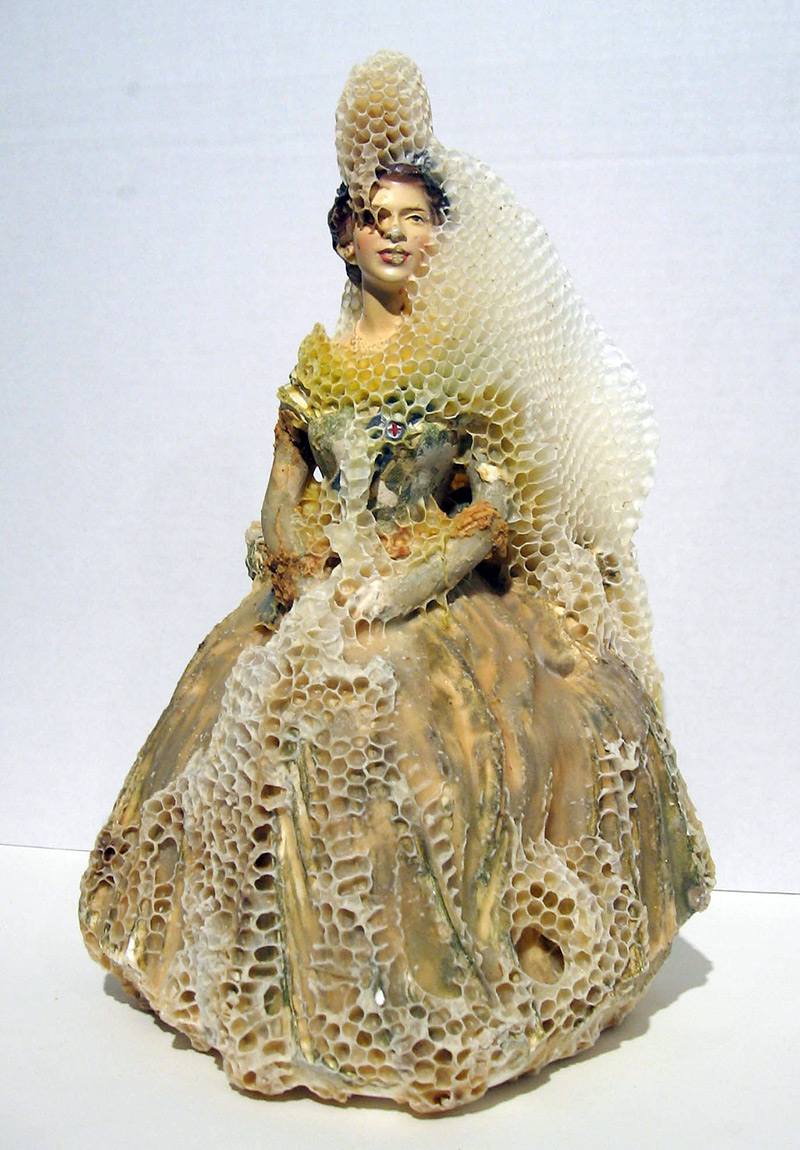
Sculptor collaborates with honeybees to cover statues with comb

by Cory Doctorow


Canadian artist Aganetha Dyck carefully coaxes bees into enmeshing tatty porcelain statuary with honeycomb, for a result that is both otherworldly and beautiful, like the remains of a long-fallen civilization on whose bones has arisen an insectoid hive-colony. She calls the bees her "guest workers." Her work will be on display at the Ottawa School of Art from March 3, 2014 in a show called Honeybee Alterations.

Born in Manitoba in 1937, the Canadian artist has long been interested in inter-species communication and her research has closely examined the the ramifications of honeybees disappearing from Earth. Working with the insects results in completely unexpected forms which can be surprising and even humorous. “They remind us that we and our constructions are temporary in relation to the lifespan of earth and the processes of nature,” comments curator Cathi Charles Wherry. “This raises ideas about our shared vulnerability, while at the same time elevating the ordinariness of our humanity.”

Artist Aganetha Dyck Collaborates with Bees to Create Sculptures Wrapped in Honeycomb [Christopher Jobson/Colossal] (via JWZ)

(Photos: William Eakin)


20 Feb 20:56

Taibbi Joins Greenwald

by Andrew Sullivan

That’s a major coup for First Look.

20 Feb 01:31

Kid Shot Dead By Cops, Witnesses Say He Was Holding Wii Remote

by Luke Plunkett

Kid Shot Dead By Cops, Witnesses Say He Was Holding Wii Remote

Police say that 17 year-old Christopher Roupe was shot and killed because he answered the door pointing a gun. Everyone except the Police say he opened the door holding a Wii Remote.

Read more...


19 Feb 21:30

"With the upcoming fourth season of A Game of Thrones about to hit TV screens, you will soon see ‘If..."

With the upcoming fourth season of A Game of Thrones about to hit TV screens, you will soon see ‘If you like reading GRR Martin, why not try these authors?’ displays going up in bookshops. I will give a book of mine, of their choice, to the first person who can send me a photo of such a display that isn’t entirely composed of male authors. Because I’ve yet to see one. I have challenged staff in bookshops about this, to be told ‘women don’t write epic fantasy’ Ahem, with 15 novels published, I beg to differ. And we read it too.

But that’s not what the onlooker sees in the media, in reviews, in the supposedly book-trade-professional articles in The Guardian which repeatedly discuss epic fantasy without ever once mentioning a female author. That onlooker who’s working in a bookshop and making key decisions about what’s for sale, sees a male readership for grimdark books about blokes in cloaks written by authors like Macho McHackenslay. So that’s what goes in display, often at discount, at the front of the store. So that’s what people see first and so that’s what sells most copies.


-

Juliet E. McKenna being brilliant (so what else is new) on the SFWA shoutback, public perceptions of the field, and equal access to offensiveness, sexism and idiocy. (via dduane)

In March 2012, while browsing in my then-local Waterstones in St Andrews, Scotland, I encountered a laminated booklet in the SFF section - produced entirely by Waterstones - that listed various recommended authors. I was so appalled by the almost total lack of women and POC that I photographed it as evidence. Behold:

image

P1050787

P1050788

P1050789

P1050790

P1050791

P1050792

P1050793

P1050794

P1050795

P1050796

P1050797

P1050798

So, to be clear: of the one hundred and thirteen authors listed in the genre-specific sections, there are a grand total of nine women and, as far as I can tell, zero POC. In the final two pages - the “If you like this, you’ll love-” section, things are little better: of the ten authors with suggestions after their names, two are women; but of the 101 authors recommended as comparisons, only twelve are women - and, tellingly, of those twelve, a whopping eight are listed as being similar to another female author. As far as this list is concerned, women have essentially become a speciality category, almost exclusively recommended because their work resembles that of another female author, and not because of their contributions to various other genres. As for POC authors, as far I can tell, there’s not a single one on any of the lists.

And, of course, as Juliet McKenna predicted, the authors recommended for fans of George R. R. Martin? All men.

When I saw the booklet, I suggested to a staff member that perhaps they might like to reconsider the contents, given how unrepresentative they were, and how many fabulous authors were missing from them. The sales person, a young man, looked vaguely sheepish, but said the matter was out of his hands. I don’t know if this same booklet is still in use by any other Waterstones stores, but if it is, it badly needs upgrading and replacing - because if I were a new genre reader looking for advice and guidance, literally the only conclusion I could draw from its contents is that SFF is a white man’s game.  

19 Feb 20:57

Futurist reviews Her

by Rob Beschizza

Ray Kurzweil guesses at when stuff from Spike Jonze's near-future Her will be available. [via Kottke]

I would place some of the elements in Jonze's depiction at around 2020, give or take a couple of years, such as the diffident and insulting videogame character he interacts with, and the pin-sized cameras that one can place like a freckle on one's face. Other elements seem more like 2014, such as the flat-panel displays, notebooks and mobile devices.

Samantha herself I would place at 2029, when the leap to human-level AI would be reasonably believable. There are some incongruities, however. As I mentioned, a lot of the dramatic tension is provided by the fact that Theodore's love interest does not have a body. But this is an unrealistic notion. It would be technically trivial in the future to provide her a virtual visual presence to match her virtual auditory presence, using, lens-mounted displays, for example, that display images onto Theodore's retinas.

Kurzweil notes the "all-too-common flaw of science futurism movies"—to introduce a single technological change to "an otherwise unchanged world". But his analysis of how Her differs is itself mostly a list of multiple technologies and their correspondence to his technological timeline of the future. Kurzweil's science fiction is so immanent within him that he seems to miss the fact that the technologies are props, and that Her's situation in the sociological present is, actually, the point.


19 Feb 20:57

learning the words: selfish

by forgedimagination

selfish

Today’s guest post is from Cassidy, who dissects different ideas embedded in Christian fundamentalist culture at Roll to Disbelieve. “Learning the Words” is a series on the words many of us didn’t have in fundamentalism or conservative evangelicalism– and how we got them back. If you would like to be a part of this series, you can find my contact information at the top.

I grew up Catholic, and there’s not a word more hated and feared in Catholicism as much as these two syllables: “selfish.” Every story I ever heard as a child drilled down on “selflessness” and “sacrifice,” especially for women. Every family value centered on sacrificing my own needs to advance the whole. I didn’t even question this virtue.

I converted to Protestantism in my teens, working my way through denominations till I reached fundamentalism, and in fundamentalism I learned entirely new reasons to hate and fear selfishness. The rigid gender roles and bizarre hierarchical system I was taught depended upon ignoring my own needs to meet the needs of those around me– especially my husband. This image of “selflessness” dominated what women in my church were taught– always, always, we were to give way to others. This was how we were told we could serve our god, and how we would build happy homes and marriages. That it felt so distinctly abusive and did not seem to be working in our home lives the way we’d been promised it would? That was our fault too. We just needed to be less selfish.

Even after leaving my husband and Christianity, “selfish” was still a word I feared. I couldn’t just want something for myself, I had to be able to justify it. I couldn’t even say “no” unless I had a really good excuse. I couldn’t just not want to have kids. I had to have some very good excuse for not wanting kids–to “purchase” my right to not have children with how much I was contributing to society and how much I really loved children deep down. I couldn’t even just not be a Christian–most Christians seem to think that ex-Christians left because of “selfishness,” and I’ve certainly been accused of it more times than I can count.

You can probably guess that even after leaving the religion, my relationships were in shambles. I lacked any concept of boundaries. As a Christian I’d been taught that couples were “one flesh,” so boundaries were considered quite selfish. That’s some hard indoctrination to lose! My next partner, who wasn’t even a Christian, quickly discovered that accusations of selfishness worked marvelously well to keep me in line.

One day I realized that these accusations of “selfishness” he was always lobbing at me were over perfectly reasonable needs. I was “selfish” to refuse to give him more drug and booze money, or to refuse to do all the housework and work full-time besides, or to demand respect and courtesy. I was so very, very selfish.

I began to look back at all the other times I’d been accused of selfishness. Without hardly any exceptions, these accusations were hurled over similar concerns. It wasn’t “selfish” to not want kids. It was what I needed to do with my life to be an authentic and happy person. It wasn’t “selfish” to want to study what I studied in school, or to get a divorce from my overbearing, stalking, abusive preacher ex-husband, or to demand my partner share equally in the housework if we were both working full-time, or to leave a religion that had proven downright toxic to my mental and emotional health.

I began to see these accusations of selfishness in a much larger context–in the context of “what makes accusers really uncomfortable with what my refusal means.” I began to realize that it was the people who lobbed these accusations that stood to gain by my acquiescence. I began to notice that these accusations often got flung in absence of what was good for me as a person, but that they were often the things that would allow the accusers to maintain their dominance. It seemed a little odd that these accusations seemed to be used in a way that strong-armed me–that once someone had said the magic S-word, all discussion stopped. But wouldn’t it seem like the folks who are getting their way are really the selfish ones in these situations? Who’s really selfish, the person being cowed and forced into line, or the person who gets to declare by fiat who is and isn’t selfish, who gets to make another person’s most private decisions?

I began to realize that the decisions they labeled “selfish” were decisions that challenged my accusers on a number of levels. Thus, I had to be silenced.

I still remember the day I realized I didn’t have to “purchase” my personal decisions or convince anybody of their validity. I didn’t have to talk someone into accepting my personal decisions. That day, I learned to separate out my needs from those of my group. I remember realizing that it was hugely suspicious that what my accusers thought was “selfish” was really just me doing or saying something that made their privilege look too obvious or too negative.

The journey began with a single step: the first “no.” The first refusal. The first insistence on boundaries… and it got easier every time. Now, it’s second nature.

I know now that “selfishness”—as defined by fundamentalists– is actually a healthy trait. I do not fear it or the accusation of it. I know that each one of us must balance our own needs with that of society and decide what we need for ourselves to be healthy and happy–and that it’s not “selfish” at all to make those sorts of decisions. I’ve learned how to separate out “stuff that impacts others and thus deserves consideration” and “stuff that doesn’t impact anybody but me and therefore it doesn’t matter what others think of my decision either way.”

I know that it’s okay to do things for myself. I know it’s fine to say “no” if acquiescing would make me feel overextended. I know that boundaries are a very healthy thing in relationships and that over-enmeshment (and the contempt that it breeds) is the real enemy. I know that sometimes we have to limit what we give of ourselves so we can maintain our sanity. If group unity depends upon me being abused or feeling over-extended or harmed, then maybe the group is the problem–not me.


19 Feb 20:35

Cossacks!

by Josh Marshall

Good Lord. When I heard that Russia was bringing in Cossacks to brutalize their underpeople and undesirables, I thought it was a metaphor. But no. Cossacks.

Not just for raping and killing Jews in the late 19th century any more ...

19 Feb 20:35

"Thank goodness! I didn’t know if anyone was coming! Are you OK? Did you have trouble getting here? I..."

“Thank goodness! I didn’t know if anyone was coming! Are you OK? Did you have trouble getting here? I baked these for your staff. You are always so nice to me when I have a question. I hope they don’t make you stay open long. I will check the new mystery shelves and then head home myself. Oh, dear, sweet boy! You remind me of my grandson. Try to stay warm. Yes, let’s go in.”

-

When a librarian struggles through storm and snow to open the building, and sees the seventy-two year old patron standing outside with fresh-baked cookies, and thinks to himself, you’re the reason why I tried. (via yahighway)

I just teared up.

19 Feb 20:14

Why I Don’t Trust Anyone’s “Perfect” School Model

by Ben Orlin

The STEM-Focused

The Arts-Focused

The Traditional

The Progressive

The Interdisciplinary

The Public

The Private

The Charter


19 Feb 20:03

Q & A

by Fred Clark
Zephyr Dear

their eyes tho

19 Feb 20:02

Candidate: Protecting LGBT is New Jim Crow

by Josh Marshall

GOP House candidate says laws protecting gays are a step back to the days of Jim Crow.

19 Feb 01:55

"Social spending, also, is strongly and inversely correlated with guard labor across the nations..."

“Social spending, also, is strongly and inversely correlated with guard labor across the nations shown in the graph. There is a simple economic lesson here: A nation whose policies result in substantial inequalities may end up spending more on guns and getting less butter as a result.”

- One Nation Under Guard
18 Feb 22:44

Pensacola Christian College and sexual abuse victims

by forgedimagination

crowne centre

I’ve never named the college I attended for undergrad– not here, not anywhere else online. I have never brought it up here on my blog because I didn’t want it to become about the specific place I went to college. The problems that exist there exist at most other fundamentalist colleges, and I didn’t want anyone pigeonholing me. I was also  trying to avoid the harassment I personally know comes with critiquing this college in public.

It’s been sort of obvious anyway– despite my best intentions– that I went to Pensacola Christian College. I even managed to graduate, and I was one of the nauseating people that managed to accrue less than 15 demerits a semester (although I’d completely given up by my senior year and graduated with a whopping 170 my final semester).

The reason why I’ve decided to bring this up now is that I’m going to write an article about PCC, but I need your help.

If you travel in the same sort of online circles that I do, you’ve probably at least heard about what’s been happening at Bob Jones University. I’ve mentioned how BJU fired GRACE recently, and I’ve been aware of the problems at BJU for over a year now. However, yesterday, The New Republic published an article that detailed how the same exact things have been happening at Patrick Henry College.

As I’ve been reading all of these articles, my heart has been heavy because, as a graduate of Pensacola Christian College, I know that what’s been happening at Bob Jones and Patrick Henry have also been happening at Pensacola Christian. I personally experienced a small taste of it– when I tried to explain what my rapist had done to me the staff counselor interrupted me in the middle of a sentence to ask what I had done that I needed to repent of. I also know women who have been expelled because they reported being sexually assaulted.

I am currently outlining an article that I’m hoping will be published in a major online news outlet– like the Times or the Post, who published articles on BJU. In order to do that, however, I have to have more than just my own solitary story.

I need your stories, too.

If you were ever a student at Pensacola Christian College, a sexual abuse or rape victim, and had an encounter with Student Life, floorleaders, residence managers, or the counseling staff concerning your abuse, could you please contact me? I promise that I will keep  you anonymous if you would prefer not to be named, and I will only include as many details as you feel comfortable sharing. I will do my honest-to-God best to make sure I tell your story how you would want it to be shared, and that I will treat you with grace, dignity, and respect.

You can e-mail me at forgedimagination@gmail.com

I know how much emotional strength and resilience it take to tell a story like this one, so please don’t feel any pressure. If you contact me and then later change your mind, I will respect that, as well.

Thank you.

edit: please read my comment policy before commenting.  Victim blaming myself or any of my readers, or engaging in rape apologism will guarantee that I block you without appeal.


18 Feb 21:56

What’s The Best Way To Get Clean? Ctd

by Andrew Sullivan

In response to the reader who wrote that “AA works 100 percent of the time for people who are 100-percent committed to the program,” another writes, “Like much of AA’s homespun wisdom, that statement is completely untrue, yet very helpful at the same time”:

Most meetings begin with a reading that states: “Rarely have we seen a person fail who has rigorously followed our path.” Who knows how true that really is, but when you’re desperate to stop drinking, hearing that can give you hope. I have no idea if I could have gotten sober on my own. I have no idea if AA is the best approach. Clearly it isn’t the only way, and Bill Wilson himself never suggested that it was. What I do know is that when I was desperate and had no idea how I could stop drinking, AA members gave me hope. They had been where I was and were in a better place now. I’ll always be grateful to AA for that.

Another reader:

People in recovery understand that the statement that AA “works 100 percent of the time for people who are 100-percent committed to the program” is like saying that if you enter a room, you are going to stay in that room, unless you leave it. It’s not meant as a claim of a perfect record of keeping sober everyone who has ever gone to a meeting. It’s meant as a short, easy to remember slogan that just might keep someone from leaving the room when they are having a really bad day.

Anyone who has been in recovery for a while will tell you honestly that they know they are always about to leave the room, and possibly lose their sobriety. This isn’t a damning indictment of the ineffectiveness of the program; it’s a real-time understanding that there are no guarantees in life and no short-cuts to true self-awareness, and being in denial about that is what fucked up your life in the first place.

You will never, ever, hear anyone put themselves forward as an official spokesperson for AA, whether to promote the program, make claims about its effectiveness, or make any statements of what AA endorses or refutes. The whole point of the “anonymous” part of AA is to keep AA out of any public or political controversy. To argue against what AA “says,” or what the 12 steps unfairly mandate, is to misunderstand what AA actually is – a loose network of groups of people who get together, regularly, anonymously, to talk to each other. That’s it. That’s all AA is. The 12 steps are a framework that gives the conversation some structure, but it’s not a creed or contract. Everyone is free to interpret them in their own way, and use them however they see fit – as long as their way worksfor them.

Another refocuses the discussion:

The reader who wrote about his roommate becoming a smoker and sugar junkie illustrates a point that I haven’t seen discussed in this thread: Addiction is both a mental and physical process. This is why so many people who come into the rooms struggle to find serenity: They switch one addiction for another. The process of getting high – whatever the drug or activity – activates all sorts of biochemical triggers all by itself independent of the substance or activity’s effects. It’s Pavlovian.

George Carlin gave an interview to Playboy years ago where he talked quite brilliantly about this: how the ritual of cleaning his dope before he rolled a joint was just as comforting to him as the “high” itself and an integral part of the process. This is why people associated with 12-step recovery often say that “We’re a nation of addicts.” All one has to do is spend 30 minutes watching TV to see how advertising pinpoints and perpetuates this “mental craving” that is also a part of the addiction cycle. We’re taught from birth that some “thing” can assuage whatever bad or uncomfortable feelings we have. The addict is wired to want, and then need, more and more regardless of the consequences.

18 Feb 21:45

Kickstarting a business-card-sized board-game

by Cory Doctorow

Noah sez, "My dear friend Sam Strick of Laboratory Labs and Scroll Down to Riker, is currently running a Kickstarter for an awesome board game that he designed, originally, to fit on the back of a business card. In addition to it's ultra small form factor (which means I'll be able to carry it with me wherever I go) it's the first game I've seen that has a communal worker pool. That coupled with it's lack of randomness means the game play has more of the feeling of something classic, like chess or checkers, than you're standard eurogame. At $5 a pop it's an easy - and painless - buy. For as long as I've known Sam his ideas have been strikingly unique and compelling, and rest assured that the extra money generated by this kickstarter, in addition to completing some of the cooler stretch goals, will lead directly to helping him and produce more awesome games."

This ticks all my Kickstarter boxes: low cost to pre-order, indie creator with a track-record for shipping, fun, beautiful.

Here's Province in his words: "Two families vie for power as you settle a new provincial town. Build camps and banks, smithies and harbors and control growth as your town develops! Province is a two player game where you must strategically manage your resources and workers to build, complete goals, and score the most victory points to win! The game features a communal worker pool representing the available workers in your town. Players move their workers to generate resources (Labor and Coin) that are used to build the various Structures, which in turn effect resource generation. But your opponent can also move the workers leaving you without the resources you need!"

Province - A Competitive Building Microgame for 2 Players Thanks, Noah!)


18 Feb 21:23

Can A Whistleblower Be A Journalist?

by Andrew Sullivan

Daniel Soar suggests that “there’s a serious sense in which Snowden is more journalist than whistleblower”:

As journalist, Snowden was extraordinarily conscientious. [Glenn] Greenwald says that on the memory sticks he was given the documents were meticulously organised and indexed, with not a single one miscategorised: he didn’t doubt that Snowden had read them all. The evidence certainly points to Snowden’s knowing quite a bit about their contents.

In his book [The Snowden Files, author Luke] Harding describes the moment when Ewen MacAskill, the Guardian journalist who travelled to Hong Kong along with Greenwald and [Laura] Poitras to meet Snowden for the first time, took out his iPhone and asked Snowden whether he minded ‘if he taped their interview, and perhaps took some photos’.

‘Snowden flung up his arms in alarm,’ Harding writes, ‘as if prodded by an electric stick … The young technician explained that the spy agency was capable of turning a mobile phone into a microphone and tracking device; bringing it into the room was an elementary mistake in operational security, or op-sec.’ Every paranoiac probably supposes as much, but Snowden knew exactly what it was that the spooks might have done to MacAskill’s phone. We too now know, thanks to a document released at the end of January, that GCHQ has developed a virus called WARRIOR PRIDE that can be invisibly installed on devices. It comes with ‘iPhone specific plugins’: the one that does the tracking is TRACKER SMURF; the one that turns the thing into a microphone is NOSEY SMURF. These are facts that you wouldn’t want to unlearn.

18 Feb 21:10

George Zimmerman regards self as victim, a fallen soldier, Christlike

by Rob Beschizza

"The only judge is The Lord, and when I meet him I'll know how he feels."

A rational society would kill George Zimmerman or give him a reality show. [Video Link via Gawker]


18 Feb 20:46

Gettin' Aggressive On Climate Change

by David Kurtz

Gazillionaire former hedge fund manager funding political org to push for action on climate change is a yawner, but doing it via attack ads in 2014 races is notable.

18 Feb 20:40

Dems Catching A Huge Break

by David Kurtz

Why GOP absolutism on the Affordable Care Act is hamstringing their effort to make Obamacare the defining issue of 2014.