Shared posts

20 Aug 21:01

Criminal Minds S03E09: A Hacker is searching for files and then...


Criminal Minds S03E09: A Hacker is searching for files and then later doing a Hacker battle.

FAIL-Quote from the  scene:

"Wow!…. This system is insane…Its completely linux based…..open source programming…….you don’t see this in government systems in outside of like Switzerland!"

The code on the left side is from an IBM guy, using linux as a screensaver with qemu inside windows. http://www.ibm.com/developerworks/jp/linux/library/l-scrnsave/#ibm-pcon  Scroll down to “QEMU” and you see the code.

The code on the right is some VB code for ejecting a removable media. I could not find a source for the code. A few seconds later you see this kind of VB code:

http://imgur.com/gfoSmP1

You can watch the complete scene at youtube.

https://www.youtube.com/watch?v=DNLB7bFA_U4

20 Aug 20:08

CAN I GET A SHOUT OUT TO THAT STORE OWNER IN FERGUSON FOR RELEASING THE FULL VIDEO AND PROVING THE POLICE WERE LYING ABOUT MICHAEL BROWN ROBBING HIS PLACE

Not that that video was ever relevant, except to people who think that, for black people, the penalty for shoplifting should be execution without trial. I wouldn’t worry about convincing those racist assholes of anything.

20 Aug 17:55

Twitter to add "tweets from accounts you don’t follow" to timelines

by Rob Beschizza
So far, this has meant tweets favorited by people you do follow, but the idea is clearly to get users accustomed to feeds made of all sorts of things you can't curate—"a terrible decision on Twitter’s part, and I’ve seen nothing but complaints about it," adds John Gruber.
19 Aug 20:48

Police op-ed: 'Do what I tell you,' I may shoot you if you 'threaten to sue me'

by Xeni Jardin
Sunil Dutta: "If you don’t want to get shot, tased, pepper-sprayed, struck with a baton or thrown to the ground, just do what I tell you." Read the rest
19 Aug 19:06

Ferguson In Black And White

by Dish Staff
by Dish Staff

YouGov registers an immense racial split regarding views on Ferguson:

Ferguson YouGov

Pew’s numbers are in the same ballpark:

Blacks are about twice as likely as whites to say that the shooting of Michael Brown “raises important issues about race that need to be discussed.” Wide racial differences also are evident in opinions about of whether local police went too far in the aftermath of Brown’s death, and in confidence in the investigations into the shooting.

But Aaron Blake is most interested in Pew finding that, “that even at this very early juncture, Americans as a whole see the shooting of Brown as more of a racial issue than the shooting of Martin by neighborhood watch volunteer George Zimmerman.” Annie Lowrey and Jesse Singal provide context for the racial split:

The idea of “two Americas” is a cliché by now, but here it’s apt.

White Americans are much less likely to be the victim of a crime, and much more likely to trust the police to act on their behalf when they are. Black Americans, who are on average much more likely to require police assistance than whites, often don’t trust that when officers arrive, they will be a helpful presence. This lack of trust can erode a nation’s basic functions. Judith Levine, a sociologist at Temple, has researched trust in the context of low-income women, and she makes a strong case that when people don’t trust institutions, it makes it a lot harder for those institutions to do their jobs, even when they have the best intentions.

Ambinder asks whites to mentally put themselves in the shoes of blacks:

Imagine you are black, and you, and your friends, and your family, are regularly stopped, delayed, accosted by the police, simply because of your proximity to something else; imagine having to fear being stopped by police on the street where you live. Feel what that must be like. Don’t try to rationalize it. Just feel it for a moment.

Now you might understand what Ferguson is really about, and why, even as you take the side of police in these types of American tragedies, you might want to sympathize with those who are protesting. They’re not protesting the fact of policing; they very much want the police to briefly militarize their neighborhood if their friend gets robbed. But what they really want is to be able to trust the police. And they can’t, because their first and continuing experiences with law enforcement are often brutal, beyond proportion.

18 Aug 20:54

Capital Rap

by Josh Marshall

On the far right, folks like the always predictably horrible David Horowitz say we need to look at Michael Brown's rap lyrics to decide whether he deserved to be shot.

18 Aug 20:43

Anyone holding a "Support Darren Wilson" sign?

Racists: what is it that makes you think that this racist murderer cop doesn’t have enough support? Multiple police forces are doing everything they can to cover up his actions and suppress any protest.

PS. There’s your White Pride Parade, you fucking pieces of shit, enjoy it.

18 Aug 20:42

Ferguson From Abroad

by Dish Staff
by Dish Staff

Today the world is a world of tyranny and lies. The flag of #HumanRights is borne by enemies of human rights w/US leading them! #Ferguson
Khamenei.ir (@khamenei_ir) August 15, 2014

National news in the US is world news everywhere else, and the continued chaos in Ferguson, MO, is drawing some international attention, including a brief Twitter lecture from the Iranian Supreme Leader on America’s moral bankruptcy. Zack Beauchamp finds that more than a little ironic:

The Iranian government itself does not treat minorities particularly well. Take Iran’s Kurds, for example. About 6.5 million Kurds live in western Iran, but not in peace. A 2009 Human Rights Watch report documents widespread restrictions on Kurdish free speech (like banning books), denial of due process rights to Kurds suspected of political dissidence, and torture of Kurdish detainees. Dozens of Kurds are on death row, often convicted of political offenses.

But here’s the catch: Khamenei, awful as he may be, still has a point about Ferguson. Despite the staggering hypocrisy of his tweet, he’s correct that the police conduct in Ferguson is unconscionable and racist. The United States doesn’t, or shouldn’t, want human rights-abusing enemies to be able to point to things like this to whitewash their own abuses.

It’s not just Iran, either. Josh Kovensky takes note of how Ferguson is being covered in the Russian media:

An RT article, “Protests Against Police Tyranny have Spread Across the Main Cities of the USA,” suggested that the nation is on the brink of chaos as the “rage of Americans … spreads across the entire country.” Sputink i Pogrom, a nationalist newsmagazine, tweeted out, “What do you think? Should Russia grant Obama asylum in Rostov after the Ferguson Maidanites occupy Washington?” And Svobodnaya Pressa, a popular Russian news website, ran an article calling the Ferguson protests “AfroMaidan,” in reference to Euromaidan protests in Kiev, Ukraine, earlier this year.

In that Svobodnaya Pressa article, Sergei Bespalov, the docent of the humanities division of the Russian Academy of Agriculture and State Service, attributes the events in Ferguson in part to the “fact” that white Americans have “prejudice towards African-Americans … in their blood.” Bespalov predicts further unrest, adding that “if [Obamacare] is cancelled, this could … provoke racial conflicts,” and that “a significant part of African-Americans and Latinos could perceive [Obamacare’s cancellation] as a challenge from the white majority.”

This coverage harkens back to the way Ameircan racism was portrayed in Soviet propaganda during the Cold War, Karoun Demirjian adds:

The United States’ problems with racism have long been a favored topic for Russians, dating back to the heyday of the Soviet Union. During the 1920s and 1930s, Soviet leaders pointed to the existence of Jim Crow laws in the United States as a way of asserting the moral superiority of the Soviet Union. Racism, which was illegal in the Soviet Union, was deemed a systematic byproduct of capitalism. In the civil rights era, especially, the Soviet Union used American anti-black racism as fodder to challenge the United States’ claims to leadership of the “free world.”

Soviet and modern-day Russia alike have had their own problems with racism as well, of course – to the point where Russia was recently rated by one publication as one of the worst countries for people of color to travel in. But that stigma doesn’t cause the Russian government to pull any punches with the United States over the situation in Ferguson – or to refrain from using it as an opportunity to highlight America’s race problems to their fullest extent.

In light of this international scrutiny, Max Fisher’s tongue-in-cheek “if it happened there” version of the Ferguson story is particularly relevant:

Missouri, far-removed from the glistening capital city of Washington, is ostensibly ruled by a charismatic but troubled official named Jay Nixon, who has appeared unable to successfully intervene and has resisted efforts at mediation from central government officials. Complicating matters, President Obama is himself a member of the minority sect protesting in Ferguson, which is ruled overwhelmingly by members of America’s majority “white people” sect.

Analysts who study the opaque American political system, in which all provinces are granted semi-autonomous self-rule, warned that Nixon may seize the opportunity to move against weakened municipal rulers in Ferguson. Missouri’s provincial legislature, a traditional “shura council,” is dominated by the opposition faction. Though fears of a military coup remain low, it is still unknown how Nixon’s allies within the capital will respond should the crisis continue. Now, international leaders say they fear the crisis could spread.

18 Aug 18:29

He’s a wealthy young businessman with a dark secret. He’s ridiculously good-looking....

He’s a wealthy young businessman with a dark secret.

He’s ridiculously good-looking.  He’s been involved with dozens of women, but because of his dark secret he’s hurt some or all of them.  He doesn’t really care who they are; when he meets them he already has a fantasy that he wants to project on them and make them fit into.

He’s self-assured and charming, but a little bit socially awkward. He has many acquaintances and business contacts but few close friends; you get the sense he just isn’t interested in people he can’t use.

He goes on a lot about how troubled he is—the book is even named after the way he describes his perceived mental problems—but he never acknowledges that it’s really his wealth and social power that allow him to get away with what he does.

Christian Grey is Patrick Bateman.

image

17 Aug 03:21

Mo’ne Davis Dominates at Little League World Series

by John Gruber

Two-hit complete game shutout from the most popular athlete in Philadelphia. She struck out the side in the sixth inning to end the game.

17 Aug 03:18

Fuck the new police rolling into Ferguson, we aren't "healing" just because we aren't getting gassed, because he's still dead. Double fuck the military cops that are going to keep doing whatever the fuck they want after this blows over. And triple fuck Mike Brown's killer, officer Darren Wilson.

I don’t know, I’m pretty sure murderer Darren Wilson is suffering enough, what with being suspended with pay and all. I bet that’s really tough.

16 Aug 05:41

A Petty Man’s Tale Of Extremely Minor Revenge

by drew

smart

This man’s description of taking revenge on his wife through his programmable thermostat is definitely true, and none of it is made up. Also, it happened in real life, for sure.

16 Aug 05:37

The world's most valuable comic is now on eBay

by David Pescovitz
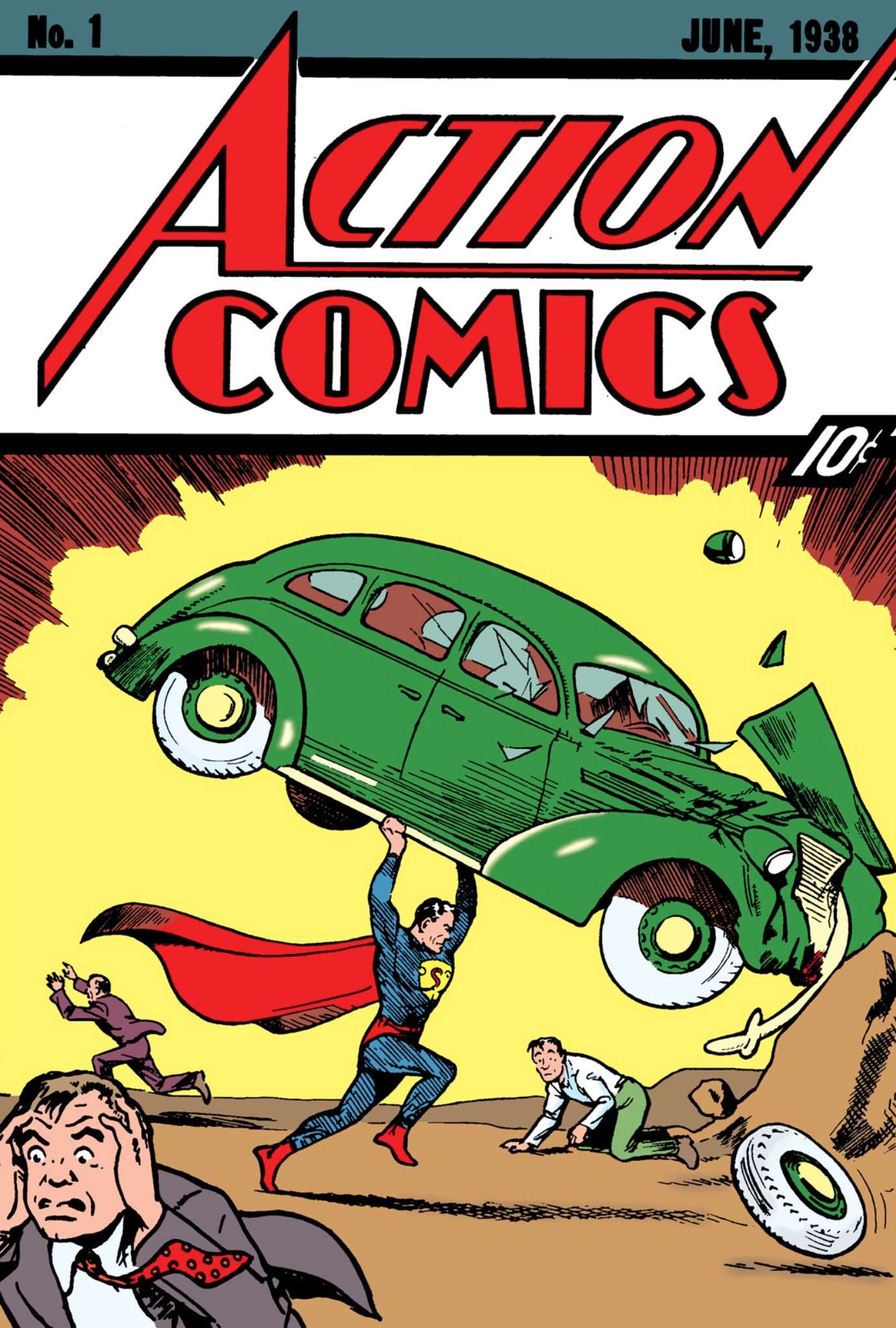
Action_Comics_1 The most valuable comic book in the world, a fine copy of Action Comics #1 (June 1938) with the debut of Superman, is up for auction on eBay in a benefit for the Christopher & Dana Reeve Foundation. Here's the story of its provenance:

16 Aug 01:55

A Map of the Introvert’s Heart By an Introvert

by Xeni Jardin
 Gemma Correll


Gemma Correll

We missed this wonderful illlustration when it hit the internet last month, but how timeless is Gemma Correll's map of an introvert's heart? (more…)

15 Aug 21:03

Hey Aaron, just wanted to say that I really love your comic and as an artist who plans to make my own webcomic someday, your work is a truly inspiration. Also, the quality of your painting and details of EVERY SINGLE PAGE is just amazing. Anyway, thank you!! I mean it.

Thanks very much, and for no charge, here’s some unsolicited advice: don’t wait to make a webcomic.

Never wait, just make it. Sitting on an idea or holding off until you “get better” is not going to make your comic better. Just start drawing and writing and putting something out there, because even someone with ten failed attempts is ten times more experienced than someone who’s still waiting.

15 Aug 18:16

beckycloonan: Little comic about how to make zucchini bread in...


beckycloonan:

Little comic about how to make zucchini bread in these trying times. Dedicated to CB Cebulski, Mike Hardin, Ming Doyle, and anyone else who sunk my zucchini bread deep within their bodies.

i declare this comic: the best

15 Aug 18:13

Stubborn Obstacles: What's Hindering Female Engineers? - Knowledge@Wharton

Stubborn Obstacles: What's Hindering Female Engineers? - Knowledge@Wharton:

TIL that in China, 40% of engineers are women, and in the former USSR, women accounted for 58% of the engineering workforce.

14 Aug 23:42

Read This

by Josh Marshall

After a week of basically non-stop suck, check out this powerful on the scene reporting from Wesley Lowery on what appears to be the dramatically changed mood at the protests this afternoon/evening in Ferguson. Ron Johnson, the state Highway Patrol officer now in charge of the police response is marching with the protesting crowd. Amazing read.

14 Aug 21:43

Tips For Being An Unarmed Black Teen

by Rob Beschizza
The Onion: "6. Try to see it from a police officer’s point of view: You may be unarmed, but you’re also black."
14 Aug 19:42

US veterans: Ferguson Police Department’s response is a clusterfuck

by Xeni Jardin
More on responses to the police crackdown in Ferguson, MO by U.S. veterans of the wars in Iraq and Afghanistan that the police actions so closely resemble--vets say it's not only overkill, but totally clueless. Read the rest
14 Aug 19:42

The endgame for American civic responsibility. Pt. I

by David Simon
I’m going to write something fresh about Ferguson, Missouri, and the once-extraordinary notion that law enforcement officers — uniquely authorized, trained and armed as they are to use lethal force against American civilians in peacetime as is necessary to serve the commonweal — need not be identified when they have in fact taken a human […]
14 Aug 18:04

I so, so badly want to believe in transformative/restorative/rehabilitative justice, I really hate...

I so, so badly want to believe in transformative/restorative/rehabilitative justice, I really hate the idea of punishment*, but…

It seems like so many attempts that I’ve been personally involved in have ended one of two ways:

1.  ”Our ‘let’s all just hug this out’ community mediation process that works so well for minor disputes will totally work for major violence.”

2. “Here’s your rehabilitation. It looks exactly like regular prison.”

I still believe in the ideas, but they don’t do any good if people just use them as new labels to slap on old injustices.

*”Punishment” meaning an action done for the purpose of causing suffering.  If actions that are necessary to make reparation, to protect people, or to enforce people’s personal boundaries happen to make the offender unhappy, that’s not punishment by my definition, that’s just time to sing the “you can’t always get what you waaaant” song.

14 Aug 17:33

Where Are the Libertarians on Ferguson? Here, LMGTFY

by Elizabeth
by Elizabeth Nolan Brown

Why aren't libertarians talking about #ferguson? tinyurl.com/mqwlyu6
Katha Pollitt (@KathaPollitt) August 14, 2014

Apologies for another defensive libertarian post, but there seems to be a meme going around that libertarians don’t care or aren’t talking about what’s going on in Ferguson, Missouri. And like most things mainstream left/right pundits say about libertarians, it has almost zero relation to the truth. “Why aren’t libertarians talking about Ferguson?” The Washington Post’s Paul Waldman asks. Why, indeed?

A cop kills an unarmed kid over a jaywalking dispute, and @AP's take is to vilify the people who are angry about it. bigstory.ap.org/article/missou…
Radley Balko (@radleybalko) August 10, 2014

Here's my new post on police militarization and what's happening in #Ferguson overlawyered.com/2014/08/police…
Walter Olson (@walterolson) August 13, 2014

I've been saying this a lot in the past couple of days, but let me just reiterate, #ACAB forever and always.—
Cathryn Berarobitch (@VSleazy) August 12, 2014

Until the public comes to understand how the US Supreme Court made police shootings easy to justify the conversation can't move forward.—
Walter Katz (@walterwkatz) August 10, 2014

"Without government, who will murder people for walking on the roads?"—
Scott Shackford (@SShackford) August 12, 2014

Radley Balko, a libertarian writing for the same paper as Waldman (and who literally wrote the book on the dangers of U.S. police militarization), reported on Ferguson in the paper and has been tweeting nonstop about it. Here are some thoughts from Jonathan Blanks of the Cato Institute from the day of the shooting. Here’s Reason, where I work, covering the shooting and its aftermath this whole time. Here’s Conor Friedersdorf covering it at The Atlantic. Here’s some more of the ample, ongoing commentary from libertarians on Twitter:

"You can see evidence of militarization of the police in the suburbs. You can find examples basically anywhere." citylab.com/crime/2014/08/…


Jesse Walker (@notjessewalker) August 12, 2014

revolting. RT @BmoreConetta: Scene right now just blocks from where #mikebrown was shot. #ferguson http://t.co/ETwHHJGmGc
David Harsanyi (@davidharsanyi) August 13, 2014

Least believable thing about Idiocracy was setting it 500 yrs in the future #Ferguson youtube.com/watch?v=WD8aZV… youtube.com/watch?v=542zyQ…
Gene Healy (@GeneHealy) August 14, 2014

Live Now: @CatoTimLynch talks #Ferguson, criminal justice on @WBALradio w @BryanNehman buff.ly/1r6IESl #tlot #tcot
Cato Press (@CatoPress) August 12, 2014

If I were in Ferguson, I wouldn't knock the police, I'd hope they could protect me from this occupying militia: http://t.co/M46Z8GY5XC
Timothy P Carney (@TPCarney) August 12, 2014

Snipers aiming at peaceful demonstrators. I take it this means the Constitution has been formally rescinded. http://t.co/BnEuj3nHZg
Thaddeus Russell (@ThaddeusRussell) August 13, 2014

"Your right to assemble is not being denied." — Police loudspeaker. Laughter. Non-infowars dude: "That is as Orwellian as it gets!"—
Lucy Steigerwald (@LucyStag) August 13, 2014

Michael Brown's killer should have been out of a job Sunday. A court can decide his guilt. The PD should be able to fire him beforehand—
Ed (@edkrayewski) August 13, 2014

If you don’t think libertarians are talking about (and outraged over) Ferguson, you’re clearly not reading or talking to many libertarians.

To make his case that libertarians were being silent on this, Waldman cited two Republican politicians and one libertarian journalist that only writes a weekly column. (He does note at the bottom of the article that Reason was, in fact, covering Ferguson.) Leaving aside the fact that two-thirds of this sample of libertarians does not consist of libertarians, it’s still an absurd premise. One could easily pick three GOP or Democrat politicians and writers not talking about Ferguson and conjure up a similar storyline.

@davidharsanyi Yep. Come to think of it, why isn't @KathaPollitt asking: where are all the Dem Senators on Ferguson & police militarization?—
Glenn Greenwald (@ggreenwald) August 14, 2014

Waldman et al clearly want to give the impression that libertarians “believe that when somebody’s grandson has to pay taxes on their inheritance, it’s a horrifying injustice that demands redress, but when somebody else’s grandson gets shot walking down the street, that’s just how things go sometimes,” as he wrote at the Post. But this is a lie, or at least self-deception. Cato’s Jason Kuznicki sums up the mindset nicely:

I disagree with libertarians on some stuff. So… I'll have less cognitive dissonance if I forget the other stuff.—
Jason Kuznicki (@JasonKuznicki) August 13, 2014

People like Waldman and Pollitt try to claim the moral high-ground on these issues. But in times that matter, they would rather waste time and space on making libertarians look bad than come together with us on a serious issue on which we all agree.

14 Aug 17:30

'Militarization'

by Josh Marshall

As the situation in Ferguson has escalated, we and others have been talking more and more about the militarization of police work in the US - something we're seeing to a wild degree in Ferguson but is actually pervasive across the United States. We have several pieces in the works you'll probably see over the course of the day delving into various aspects of that part of the story. But there's one part of this, one caveat, worth noting. A substantial amount of what we're seeing might be better termed the "Hollywoodization" rather than the "militarization" of police work.

Read More →
14 Aug 05:31

Uber Playing Dirty With Competitors

by John Gruber

Erica Fink, reporting for CNN/Money:

Uber employees have ordered and canceled more than 5,000 rides from rival Lyft since last October, according to new data provided by Lyft. The data was obtained at CNNMoney’s request when reporting another story on the companies’ competition.

It’s the latest in a pattern of aggressive and questionable tactics by Uber to control the car-on-demand market, according to rivals.

Love the Uber service, but it’s hard to like the company.

12 Aug 22:30

the inherent contradictions of Shark Week

"Sharks!  Nature’s perfect killers!  Deadly, toothy, vicious!  Scary awesome power-fantasy animals!  Raarrr!  We just roared to represent a creature that has no vocal cords!  That’s how mean sharks are!"

"Sharks are ecologically important, incredibly unlikely to hurt you, and many species are endangered.  Please support shark conservation."

"We’ve taken every precaution to make sure our cast and crew are safe when they work with these sharks.  We would never want someone to be bitten."

"…although if they were, it would make some kick-ass footage, and we’d probably be able to build an entire special around it.  Hmm.”

11 Aug 21:44

Cheap Beer and the Psychology of PlayStation Now Pricing

by Jamie Madigan

Sony recently launched its new Playstation Now service that lets you rent access to streaming games. 1 Prices vary by game, but they always follow the same structure. Take, for example, Darksiders II:

Thanks to Josué Cardona from Geek Therapy for hooking me up with the PlayStation Now screenshots.

Thanks to Josué Cardona from Geek Therapy for hooking me up with the PlayStation Now screenshots.

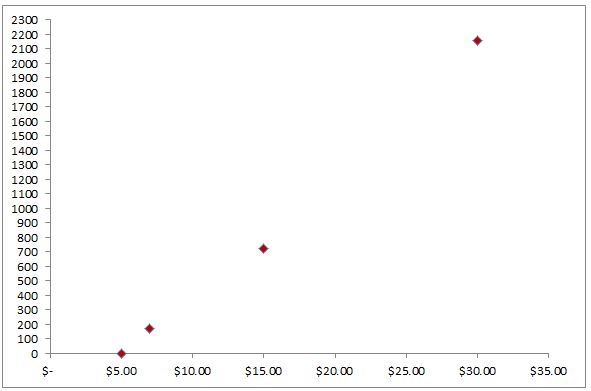
Those prices are:

  • 4 hours for $4.99
  • 7 days for $6.99
  • 30 days for $14.99
  • 90 days for $29.99

You may look at those options and be baffled as to why Sony would even include the “4 hours for $4.99 option.” Four hours? There are very few games that can be fully experienced in just four hours, and Darksiders II is definitely not one of them. For just two more dollars you can get the game for 7 days –that’s 164 additional hours. So why even have a 4 hour option that nobody is going to pick?

Well, I’ll tell you why. But first we’re going to have to talk about beer. Yaaaaay! Beer!

Back in 1983, Joel Huber and Christopher Puto, both from Duke University at the time, asked a bunch of students to pick a six-pack of beer from a set of choices.2 One group had these options:

  • A bargain beer that cost $1.80 and had been rated a 50 out of 100 on quality
  • A premium beer that cost $2.60 and had been rated a 70 out of 100

Given these two options, only 33% chose the bargain beer.

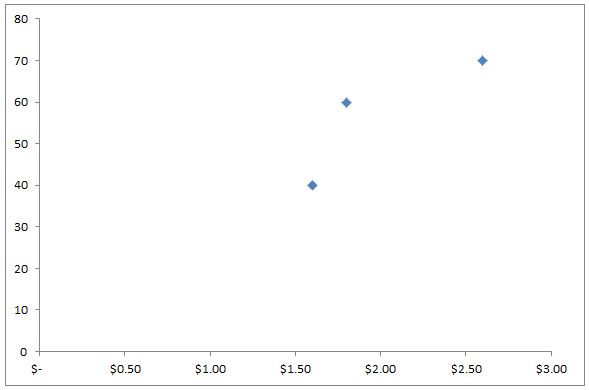
Another group of identical students, though, was asked to pick from three options: the first two of which were the same as above, plus what Huber and Puto called a “distractor” option. So their choices were:

  • A cheap, nasty beer that cost $1.60 and had been rated a 40 out of 100 on quality
  • A bargain beer that cost $1.80 and had been rated a 50 out of 100
  • A premium beer that cost $2.60 and had been rated a 70 out of 100

Here’s how those choices look in plot form:

beer_graph

What happened when that third distractor was added? Nobody wanted the nasty beer, but simply having it there made choice of the bargain beer rise from 33% to 47%.

In other words, the presence of the worthless decoy stole market share from the premium beer and gave it to the bargain beer.

Psychologists studying consumer choice call this an “attraction effect.” It happens when one choice dominates another by being mostly similar to it, but better in at least one important aspect. The reason, as usual, is because of how our brains are wired. We simply aren’t very good at evaluating things in absolute terms, like the value of having access to a game for a certain amount of time relative to how much it will cost. Instead, we are biased towards making comparisons between things that are most similar and ignoring or devaluing other choices for the sake of simplicity. The third choice –the premium beer in the example above– gets undervalued for the sake of making the decision simpler.

As you’re probably guessing at this point, the PlayStation Now pricing structure also uses a decoy to trigger the attraction effect. Look again at Darksiders II, which is currently priced thusly:3

DS2_PSNow

Granted, PlayStation Now prices vary by game, but they all follow the same pattern. The Dark Siders II options look like this on a plot, which has # hours on the Y axis:

psnow_graph

Similar to the beer sipping subjects in Huber and Puto’s study, we would expect shoppers to see that the 4 hours for $5 option is dominated by the 168 hours for $7. Thus people are more likely to limit their choice to those two options because it’s less mentally taxing and requires less wrestling with abstract concepts like value. And thus we should see an attraction effect where the presence of the 4 hour option causes more people to choose the 7 day option than if there were no decoy.

Why would Sony want people to go for the 7 day option? Maybe they have data showing that it’s the sweet spot where people are more willing to pay, or they’re likely to spend more over time if they do it in $7-ish chunks. Maybe they think customers are unlikely to rent multiple games at once, and they don’t want them tied up for 30 or 90 days at a time with one game.

But whatever their reasons, now you know about the psychology involved and you can make a more informed choice.

Follow me on Twitter, Facebook, or RSS.

11 Aug 21:39

In with the Bad, Out with the Good

by Shambhala Times Editor

a buddhaCOLUMN: Dharma Teaching
On Tonglen

guest article by Shastri Ethan Nichtern
orginally published on Shambhala Sun

“Accepting and sending out” is a powerful meditation to develop compassion for ourselves and others. Shastri Ethan Nichtern teaches us how to do it in formal practice and on the spot whenever suffering arises.

Tonglen, which in Tibetan means “accepting and sending out,” is one of the most powerful and intense compassion meditations in the Buddhist tradition.

The Buddhist definition of compassion is inherently intense and expansive: the willingness to stay open and available to pain and suffering, both in oneself and others. So Tonglen does more than help us develop compassion for others. It also transforms our own lives. Using our imagination and respiratory system, it helps us stay present with difficult feelings and relationships that usually provoke resistance and distance. Tonglen gives us incredibly effective mental tools for meeting painful encounters throughout the day.

Tonglen in Four Steps
Before the session, contemplate your intention to stay present with suffering, which is traditionally called the bodhisattva intention. Spend a few minutes doing mindfulness of breath practice to help ground you. Then begin the four steps.

Step One: Connecting with Bodhichitta
(About 3 Minutes)
First, take the attitude that you are in a safe space. Wherever you are practicing should feel like a good place for working with annoyance, anger, grief, anxiety, and whatever else comes up. Remind yourself that if something arises you can’t handle right now, it’s fine to return to the breath and take a more relaxed approach to practice.

Next, connect with absolute bodhichitta (enlightened mind) for a minute or two. Absolute bodhichitta refers to the mind that is always (and already) awake, beyond doubt or fixation. It is the aspect of our awareness that is always observing, yet not caught up in thought. Have a moment of feeling completely open, not fixated on any object of mindfulness and simply available to the environment around you.

Now connect with relative bodhichitta for a minute or two. Relative bodhichitta refers to active expression of compassion in the world. The mind experiences vulnerability, trauma, and confusion, and it meets these situations courageously. You might physically feel your heart-center, noting the fragility of a heartbeat, or you could recall a difficult yet psychologically manageable memory that connects you with your “soft spot.” It should be a memory that makes you feel tender in an inter- connected and energized sense, not one that provokes personal shame or overwhelming fear.

Step Two: Mindfulness of Breath with Texture
(About 3 Minutes)
Begin paying attention to the breath again, with the following simple visualization:

As you inhale, pollution enters your body: smoke, darkness, or just a general feeling of difficulty and obstruction. Because you have connected with absolute bodhichitta, the mind that is always open and observing, this negativity has nowhere to “stick” in your body, so it can be processed and transformed. To aid this, you might imagine that your body is not really solid but made of a kind of holographic, light-based substance.

As you exhale, imagine releasing pure, bright, nourishing air. If your mind wanders, come back to the breath and re-establish this textural rhythm of accepting and sending out. Your body is now like a recycling plant, “accepting” pollution and “sending out” clean energy.

Step Three: Accepting and Sending While Working with People
(About 10 Minutes)
This third stage, focusing on recipients of your tonglen, represents the bulk of the practice session. You can meditate for a few minutes on each recipient of your compassion. There are many ways to choose the people you want to work with, but it’s best to start with yourself.

You might also bring a short list of potential recipients to the cushion, people you know are having a hard time. You can practice more spontaneously: after beginning with yourself and a specific recipient, you could work with whoever simply arises in your mind as you sit.

Without too much analysis, imagine each recipient’s present trauma or struggle. With each inhalation, accept (or just stay present with) the difficulty of that person, and with each exhalation, and without too much judgment, send to them whatever might help their situation. If you think ice cream would help the person, you don’t have to contemplate whether or not it’s good for their diet — just exhale ice cream! If you don’t know what they need, imagine that you are sending them healing light as you exhale.

Step Four: Universalizing the Practice
(About 3-5 Minutes)
Maintaining the inhale/exhale cycle, visualize suffering beyond any individual level. You could expand spatially out- ward from your body, allowing in all the suffering in your building, your block, neighborhood, and so on. Or you could do Tonglen for suffering groups: your family, a struggling community, a war-ravaged country. Either way, let the group size gradually expand until you are taking in suffering directionlessly and breathing out ease and healing light in all directions. You could imagine that you are doing so through every pore in your body.

Finally, return to resting in open awareness for as long as it lasts until you are swept away by thoughts. In this last stage, relative and absolute bodhichitta are unified in practice because they were never truly separate to begin with.

Close by following the breath and letting any tension or pain that arose in the practice dissolve as you exhale. Breathe extra deeply if it feels good, maybe even sighing a few times. Let go into a relaxed and present state of mind.

Tonglen on the Spot
Whenever you bear witness to suffering in your daily life, do Tonglen for one to three breaths. For example, if some- one yells at someone else on the street, breathe in the argument and breathe out understanding. You can also do this for yourself if someone hurts your feelings. It can just be as quick as one cycle of breath. You don’t even have to stop what you are doing; just invest enough energy to stay present with the suffering on the spot without over-analyzing it. In my experience, doing Tonglen on the spot even three times within a busy day builds the heart muscle of compassion in a truly transformative way.


~~
Ethan NichternEthan Nichtern
is a senior teacher (Shastri) in the Shambhala tradition, founder of the Interdependence Project, and the author of One City. His third book, The Road Home, will be published in early 2015 by Farrar, Straus and Giroux.

11 Aug 20:58

ENTJ Confessions #58

"People need to understand that when I’m "arguing" with you there are two possible reasons why I am doing so. A. Because it’s entertaining to push you to your limits. B. Because I already know I’m right and it’s fun to see you realise it too!"

11 Aug 18:37

Can Lawmakers Only Make Laws that Corporations Allow?

by Jay Livingston, PhD

We refer to Senators and Congressional representatives as “lawmakers.” We democratically elect these people so that they can write and enact laws. But every so often the curtain parts, and we get a glimpse of who’s writing the laws, though these are usually laws that don’t make headlines. There was that time during the Bush years when corporate lobbyists were sitting right next to elected representatives – mostly Republican – at a committee hearing, telling them what to say.  The GOP defenders got all huffy at those who had pointed out who was really running the legislation show.

Last week’s New York Times has an article (here) about efforts to close loopholes in corporate tax laws.  Three-quarters of the way through the story, we get this paragraph (emphasis added):

Elaine C. Kamarck, the co-chairwoman of a bipartisan coalition of businesses and organizations that support a tax overhaul, says the only way a tax bill will pass is to use any savings derived from closing corporate loopholes solely to lower the overall corporate tax rate. The companies that have joined the coalition, which include Boeing, AT&T, Verizon, Walmart and Walt Disney, have agreed to put every loophole on the table, she said, because they believe “a low enough basic tax rate is worth giving up exemptions.”

The message is clear: our elected representatives can change the law only if a handful of corporations agree. Ms. Kamarck tells us that these corporations have selflessly allowed their tax dodges to be put “on the table.” Presumably, had they not been so magnanimous,  these corporations would not allow Congress to change the law.  She also implies that if the tradeoff – fewer exemptions but lower rates — doesn’t benefit the corporations, they’ll take their loopholes off the table and stop our elected representatives from changing the law.

Nice. I think that educators are so valuable to society that their income should not be taxed. But that table Ms. Kamarck mentions – the one where you tell Congress which tax rules you’ll accept – I can’t get anywhere near it.  So I pay my taxes. In fact, last year, I paid more in taxes than did Verizon and Boeing combined.  They, and several other huge corporations, paid zero.

I am, of course, naive to think that it was really Congress that wrote the laws that allow these corporations to pay nothing, and not the corporations themselves. How else?

Jay Livingston is the chair of the Sociology Department at Montclair State University. You can follow him at Montclair SocioBlog or on Twitter.

(View original at http://thesocietypages.org/socimages)