
Visible tattoos can be a bad idea in the professional workplace, but companies are getting more lenient as time goes on. Here are some of the most tatt00-friendly companies you can work for.

Visible tattoos can be a bad idea in the professional workplace, but companies are getting more lenient as time goes on. Here are some of the most tatt00-friendly companies you can work for.
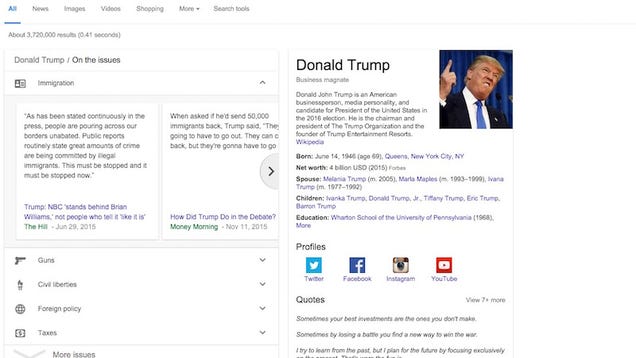
Google’s rolled out some nice new features related to this years election. You can now instantly find a candidate’s stance on issues as well as track the primary results.

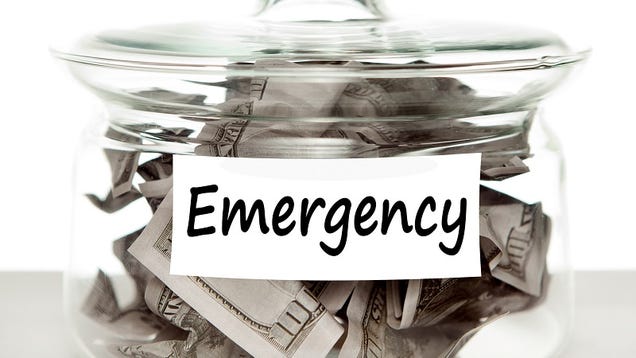
While the general guidelines for emergency funds are up for debate , most people agree it’s a good idea to at least have one. While you decide how much money to put in yours, make sure you incorporate all of your small, essential expenses—not just the big stuff.

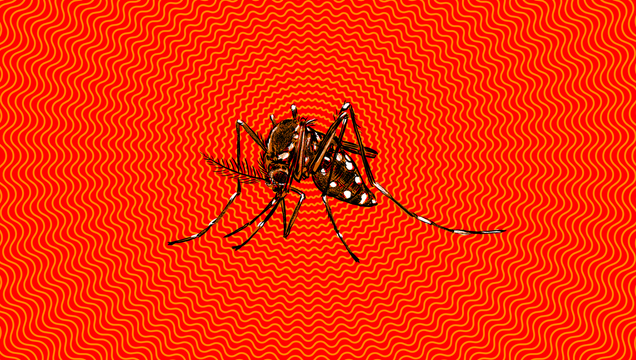
Zika, the virus suspected to cause brain defects in Brazilian babies, may start showing up in the southern United States this summer. It’s already a concern for travelers , and the World Health Organization considers the epidemic a global emergency. Don’t freak out, but do stock up on bug spray.

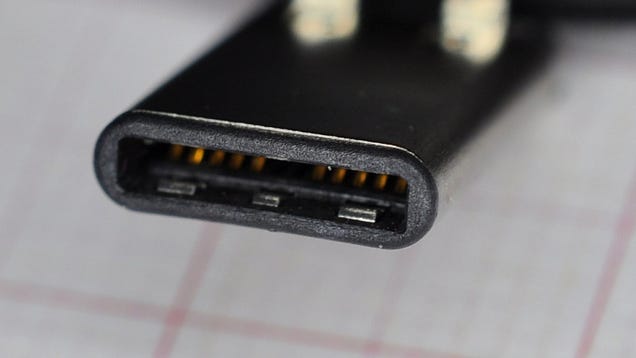
Very few phones have the new USB Type-C cables just yet, but there are enough that manufacturers have jumped on the accessory train. Be careful when you buy, though. Some are so poorly made, they’re actually damaging hardware.


This regularly-scheduled sponsored Q&A column is written by Eli Tucker, Arlington-based Realtor and Rosslyn resident. Please submit your questions to him via email for response in future columns. Enjoy!
Question: If somebody slips and gets hurt on the icy sidewalk outside of my home, will my homeowner’s insurance cover medical bills?
After last week’s blizzard, I got a lot of questions related to homeowner’s insurance coverage, so I reached out to a reliable professional to address your questions. This week’s column is brought to you by Max Olson, a third generation insurance professional who owns the Olson Insurance Agency in Arlington VA. More information can be found at http://www.NationwideMax.com. Take it away Max…
Homeowners Insurance can cover most winter-related claims if the policy is set up properly. Considering the average home insurance claim is over $8,000, it’s important to know what is and isn’t covered. Lets look at the most common claims and how coverage can be extended from your home insurance policy.
Trip & fall lawsuits
Make sure to properly clear your sidewalk area once safe to do so because ultimately you could be liable for someone tripping and falling on the sidewalk outside of your house. Your home insurance should provide some coverage for this (typically around $300,000) under the personal liability coverage. If you desire more coverage than this, you may want to talk to your insurance agent about getting an umbrella policy.
Burst pipes due to freezing
The home insurance policy will cover the damage that the water causes but it generally won’t cover the damage to the pipe itself. If the pipe is damaged and a slow leak is found weeks later, generally most policies will exclude coverage saying that the damage is a maintenance issue.
Wind damage
Whether wind directly damages your home or causes a tree to fall on your home, most policies cover the resulting damage. The deductible that you pay for this type of claim may be different than your normal deductible. Depending on your policy, this could be 2-5 times larger than your normal deductible. Some insurance companies have raised these deductibles across the board and unless people have actually read their declaration pages at renewal (not common) they aren’t aware of the changes.
Water backup
Often, after the snow begins to thaw it can create a large amount of water around the house. If you have a sump-pump, make sure that your insurance policy covers “Water/Sewer Backup” or the damage caused if your sump pump fails might not be covered. This is one of the most common home insurance gaps that I see.
Overall, homeowner’s insurance is a great way to protect yourself from the damage that Mother Nature can do to your home. Every few years just make sure to review your coverage and deductibles with your insurance agent so when something does happen, you won’t be surprised that the coverage is different than you expected.
If you’d like a question answered in my weekly column, please send an email to Eli@RealtyDCMetro.com. To read any of my older posts, visit the blog section of my website at http://www.RealtyDCMetro.com.
Eli Tucker is a licensed Realtor in Virginia, Washington DC, and Maryland with Real Living At Home, 2420 Wilson Blvd #101 Arlington, VA 22201, (202) 518-8781.
The post Ask Eli: Common Winter Damage Covered by Homeowner’s Insurance appeared first on WTOP.
Washington Post |
The real Potomac is nothing like 'Real Housewives' — except for the money Washington Post Before he was an award-winning Hollywood screenwriter and producer, Darren Star was just a teenager from Potomac. His dad was an orthodontist, his mom a freelance writer, and he lived in a big brick house where he used to throw basement parties for his ... Real Housewives of Potomac, Episode 3: Frisky for WhiskeyWashington City Paper (blog) all 30 news articles » |

With 23 states and D.C. allowing medical marijuana and four states — Colorado, Washington, Oregon, and Alaska — plus D.C. legalizing pot for recreational use, the U.S. weed market pulled in an estimated $5.4 to billion in sales last year total, reports MarketWatch, up from $4.6 billion in 2014.
According to a report from a cannabis analytics firm New Frontier and Arcview Market Research, sales of recreational pot shot up 184% year over year, up to $998 million in 2015 from $351 million in 2014. Colorado and Washington state were responsible for a lot of the industry’s growth, the report said. Colorado tax revenue and recreational sales is predicted to be $135 million for 2015, a 77% hike from $76 million in revenue in 2014. Washington pulled in $70 million in tax revenue.
The marijuana train won’t be going off the rails anytime soon: the report estimates that the weed industry will continue to grow by 30% annually. California, Nevada, Arizona, Massachusetts, Maine, Rhode Island and Vermont are all expected to decide on recreational legalization this year, while Florida, Ohio, Missouri, and Pennsylvania will vote on medical legalization in some form.
This, despite the fact that marijuana is illegal under federal law and is classified as a Schedule I drug.
In comparison, beer, wine, and liquor stores that sell directly to consumers (not including grocery stores or gas stations) raked in about $48 billion in sales last year, while tobacco generated around $43 billion. Weed sales aren’t dinging booze sales yet either, as we learned last year. At least, not so far.
Recreational marijuana sales hit nearly $1 billion in 2015 [MarketWatch]

 When you put a real, living human being’s likeness in a video game, you need their permission. But do you need an okay from that person’s tattoo artist — or a company that claims to have purchased the copyright for that design — to digitally recreate their body art?
A company called Solid Oak Sketches, which paid several tattoo artists for the authority to license their designs, is suing [PDF] the makers of the NBA 2K16 video game in federal court, alleging that the use of these tattoo designs — featured on players like LeBron James, Kobe Bryant, Kenyon Martin, and others — without Solid Oak’s permission is a violation of copyright.
(NOTE: Neither the NBA nor any of the players mentioned in this story are parties to this lawsuit.)
Whether or not tattoos are protected by copyright has yet to be concretely established by legislation, regulation, or litigation. There have been some high-profile lawsuits — most notably Whitmill v. Warner Bros, in which the artist who created Mike Tyson’s face tattoo sued when the design was replicated without permission in The Hangover 2. However, that case and others have been settled out of court, meaning no legal precedent has been established.
In 2012, tattoo artist Christopher Escobedo sued video game company THQ, alleging that it violated his copyright by reproducing, without authorization, his tattoo design on in-game likenesses of MMA fighter Carlos Condit. But because THQ had recently gone bankrupt, a bankruptcy court limited his possible award to $22,500. He appealed and, like the Hangover case, it was ultimately settled out of court.
In the NBA 2K16 complaint, filed yesterday in a New York federal court, Solid Oak noted that the judge in that Whitmill case has publicly stated that “Of course tattoos can be copyrighted.”
In fact, the U.S. Copyright Office granted registrations to the designs in the lawsuit in the summer of 2015. On July 8, a lawyer representing the artists — the same lawyer who had sued over the Mike Tyson tattoo — contacted Take Two Interactive, the publisher and distributor of NBA 2K16, to broach the idea of a settlement “to resolve this matter quietly and amicably.”
On July 28, the lawyer then suggested a settlement of around $1.9 million, including more than $800,000 to close the books on the alleged copyright violations and $1.1 million for a license to continue using the designs in the game.
No deal was reached, the game was released in Sept. 2015, and the lawyer involved in these efforts to reach a settlement is not involved in the present lawsuit.


While there’s no official pre-approval process for products labeled “Made In U.S.A,” there are federal standards for what that phrase means, and a company can get into trouble for slapping “Made In U.S.A.” on imported products — like the glue company accused of misleading consumers about where its sticky stuff comes from.
The FTC on Tuesday filed charges against Ohio-based Chemence for deceiving consumers by making in “Made in U.S.A.” claims about its Kwik Frame, Kwik Fix, and Krylex brands.
According to the complaint [PDF], Chemence deceived consumers into buying its glue products by falsely claiming the items were “Made in the U.S.A.” or “proudly made in the U.S.A.”
In reality, the FTC found that at least 55% of the essential raw materials used in Chemence’s products were actually imported.
So while the glue ingredients were indeed combined in the U.S., too many of those components came from outside the country.

In addition to deceiving consumers about its products, the FTC alleges that Chemence also assists others in misleading potential customers by distributing its Made in U.S.A. marketing materials to private-label sellers and other retailers who promote these glues.
With its lawsuit, the FTC seeks monetary relief for duped consumers and a court order permanently prohibiting Chemence from deceptive origin claims in the future.
“For many shoppers, a claim that a product is made in the U.S.A. is a big selling point,” Jessica Rich, Director of the FTC’s Bureau of Consumer Protection, said in a statement. “Companies should not overstate the amount of U.S. content their products actually contain.”


The devices replace an existing rigorous physical education requirement that the university previously had, where students tracked their exercise and other physical activity and assigned it point values according to a university system. Students completed the logs, which were part of their physical education grade, but why not use a technological solution if one exists?
This year, the university issued students a Fitbit Charge HR, which measures their steps walked or run and heart rate. For their class, they have to average 10,000 steps per day and 150 minutes of exercise every week.
While some employers (notably Target) offer Fitbits to employees as part of corporate wellness challenges, requiring students to use them for a grade is new. A school official explained to thee Washington Post that what data the school can see from students’ logs is limited: they apparently can’t see sleep logs, for example.
If that seems onerous, you should keep in mind that Oral Roberts has stricter schools than most colleges that you’re probably familiar with: they
Fitbits now mandatory for students at this Oklahoma university [Washington Post]

If a company worth $36 billion ruins your front yard, you’d hope it would have the decency to scrounge up some pocket change to make things right — or at least have the common courtesy to explain why it wasn’t doing anything to repair the damage.
CBS Dallas/Fort Worth has the story of a woman in Keller, TX, who says a FedEx truck ripped up her yard when it drove onto her lawn and got stranded — and that the tow truck that eventually extricated the FedEx vehicle did even more damage to her property.
The driver and his boss promised that the lawn would be repaired, but the homeowner was skeptical.
“He kept saying ‘I’ll come back and fix it,'” she tells CBS, “I told him he’d done more damage than one man was going to be able to fix.
After weeks of no movement on the matter she turned to the local media.
“I was raised that driving on someone’s lawn was something you never, ever, ever do,” the homeowner tells CBS. “To damage someone’s property and then just stonewall me… ‘Oh well, if we don’t call her back she’ll go away,’ makes me angry.”
Once CBS got involved, miraculously FedEx couldn’t stop calling the homeowner to apologize tell her that a check was on the way to pay for the damage.
For its part, FedEx says that all drivers working for FedEx are expected to “make every delivery with the utmost care. This behavior is not consistent with the professionalism FedEx demonstrates in safely and securely delivering millions of packages to customers every day.”
We assume that “professionalism” was also lacking in each of the following videos of FedEx drivers:


Foodborne illness outbreaks have dominated the news in recent months: E. coli and norovirus at Chipotle, listeria in prepackaged Dole salad mixes, and salmonella in cucumbers. These outbreaks have sickened — and in some cases killed — consumers, and one food safety expert says that inadequate safety oversight is at least partly to blame.
Bill Marler, a lawyer specializing in food-borne illness, shared his insights and observations on the food safety industry after working in it, or alongside it, for more than 30 years with the Washington Post.
In the interview, Marler touches on just how perplexing the foods safety industry is, and why consumers often prefer to forgive and forget after outbreaks.
The piece offers a wealth of information on why the system could be improved and why things are they way they are. While you should check out the interview, we’ve compilied seven things you should know about the way our food is monitored.
1. Different considerations for different pathogens: Current food safety laws allow for the recall of “adulterated” meat products containing poisons, toxic pesticides, unsafe food additives, or any “deleterious substance which may render it injurious to health.” But since bacteria, even some that may be harmful, is commonly found on raw meat, the presence of a pathogen does not automatically mean it’s adulterated.
But in the wake of the deadly 1993 E. coli outbreak at the Jack In The Box burger chain, the USDA declared that E. coli is an adulterant in hamburger meat. The beef industry fought the decision, but a court ultimately upheld the USDA’s decision.
2. Salmonella is one of the biggest health threats to consumers: Because it’s not considered an adulterant, you’ll find salmonella on raw chicken products regulated by the USDA. However, salmonella is a no-no on food items overseen by the FDA.
Part of the reason salmonella outbreaks aren’t always treated with the same urgency as those involving E. coli, is because there hasn’t been a crisis like there was at Jack in the Box, Marler says.
That’s not to say there haven’t been large salmonella outbreaks. In 2013, hundreds of people from all over the country got sick from eating salmonella-tainted chicken from large poultry producer Foster Farms. But falling ill from eating food cooked at home doesn’t seem to carry the stigma of food poisoning from a big-name restaurant chain.
When it comes to salmonella, the mentality, Marler says, is that there’s really nothing that can be done about it, “it’s really the consumer that is at fault if anybody gets sick, it’s their problem.”
3. The system works, but then again it doesn’t: The public health system is made up of 51 separate departments of public health — the CDC and 50 states.
But that doesn’t mean the system isn’t safe. In fact, Marler puts the U.S. food safety system in the middle of the road: not the safest, but not the worst in the world.
4. It’s not always about the why: To Marler, the U.S. does a good job of monitoring foodborne illnesses. But like the case with Chipotle, it doesn’t necessarily find the root cause, it just keeps track of people who have positive stool cultures. But that isn’t always enough.
5. A lack of manpower: The government lacks sufficient resources to allow for a level of inspection that should be required for products.
For example, while there is one inspector for every meat plant in the U.S. – overseen by the USDA – there is a much smaller number of inspectors working on the FDA side, which oversees 80% of U.S. food supplies and imports, and has a much smaller crew of inspectors.
“Most of the foodborne illness outbreaks that I have been involved in over the past 20 or 30 years, most of the manufacturing facilities have never had an FDA inspector in them,” Marler says.
6. Half-hearted backup: Third-party audits are also part of the system: companies like Walmart, Costco, and McDonald’s tell their supply chains they need to pay for an audit of their businesses.
So in essence, the companies are paying for their own audits, and according to Marler this is a problem because the “likelihood that you’re going to get a bad or unfavorable audit is remarkably close to zero.”
7. Outbreaks are a result of a broken system: Foodborne illness outbreaks vary in size, causes, and responses depending on where they start. But, Marler says that each issue is more or less the result of a system that allows these things to happen in the first place.
Why a top food poisoning expert won’t ever eat these foods [The Washington Post]

 In Manhattan this week, there appeared a mysterious Oreo-shaped door in a wall. When you open the door, to no one’s surprise, you find Oreos. Parent company Mondelez plans to use the door, which they call the “Oreo Wonder Vault,” to introduce new flavors to the public shortly before they reach real-life stores. Today, they opened up the vault to distribute Filled Cupcake Oreos.
We wondered when this product first came out how it would work. We weren’t able to make it to the vault or get any early samples, but the Huffington Post tells the world that the cookies taste pretty much like the chocolate Oreos that have been available for a while now… with a dollop of vanilla-flavored creme in the middle.
The vault is a literal hole in the wall! pic.twitter.com/IbhVThOIUY
— Anna Menta (@annalikestweets) February 2, 2016
OFFICIAL REVIEW: I like them pic.twitter.com/Rla2VacGxQ
— Anna Menta (@annalikestweets) February 2, 2016
Here’s what Oreo says you would find on the other side of that door if you were allowed inside. Seems kind of large for downtown Manhattan.
Here’s What’s Behind the Mysterious Oreo Door That Popped Up in NYC Today [AdWeek]

The Local Woof is a column that’s sponsored and written by the staff of Woofs! Dog Training Center. Woofs! has full-service dog training, boarding, and daycare facilities, near Shirlington and Ballston.
How much do you rely on your sense of smell?
For humans smell is an important part of taste. It can also bring back memories from childhood or special events. It can even warn us of danger when we smell smoke or food that has gone bad. But our sense of smell is mostly a background sense, something that we notice once in a while.
It is estimated that a dog’s sense of smell is 10,000 to 100,000 times more sensitive than that of a human. What does that mean for your dog? It may be that their sense of smell is actually more important than their ability to see. Smell may be the main sense that your dog uses to make sense of the world. Check out this article for more information.
It makes sense then that it is a deep part of doggy nature to smell every gate post and telephone pole. It is highly recommended to let your dog sniff to his heart’s content on a walk. It’s good for him and uses an enormous amount of brain power. The area of a dog’s brain that is devoted to decoding smell is huge.
So how can we use this information to help our dogs? One way is to teach them to use their sense of smell. So many dogs need a way to get good mental and physical exercise and nose work may be the answer. Do you have a dog who “needs a job?” Teach him scent work.
Nose work class is a fun activity inspired by the scent detection tasks of police and military dogs. Classes can help shy dogs come out of their shell and help excitable dogs learn how to settle down to work. As your dog’s handler, you learn to read your dog’s signals and gain a new perspective into how they experience the world.
Any dog can benefit from nose work games. Dogs participating in scent games can be any age from puppy through senior, and any breed from working dog to lap dog. Dogs do not even need any obedience skills or previous training! The only requirement for class is that dogs are able to crate quietly (with owner present) while they wait their turn.
Ready to let your dog exercise his or her sniffing talent? Our next classes begin on Friday, February 19.
The post Local Woof: Canine Scent Work appeared first on WTOP.
WASHINGTON — Potomac Phil, a stuffed groundhog, has predicted an early spring and six months of political gridlock on Capitol Hill, in his fifth annual appearance in Dupont Circle park.
In a tongue-in-cheek homage to Punxsutawney Phil, the Dupont Circle festival features presenters in top hats, polka music, and groundhog-shaped cookies and coffee.
Follow WTOP’s live blog about Potomac Phil.
The post Dead groundhog Potomac Phil predicts early spring, nasty political climate appeared first on WTOP.
WASHINGTON— In a crime that acting Prince George’s County Police Chief Hank Stawinski says “shocks the conscience,” a mother and 2-year-old are dead after a shooting in Fort Washington, Maryland Tuesday morning.
Around 7 a.m., the mother was found in a parking lot in the 1300 block of Palmer Road, according to the Prince George’s County Police Department spokeswoman Julie Parker. The toddler was in a nearby car.
“The woman was pronounced dead on the scene. The toddler was taken to the hospital and pronounced dead. At this point, this is a very active police investigation. We can’t get into a lot of details at this point because of that,” says Prince George’s County police spokeswoman Julie Parker.
Calling this a “profoundly sad day,” Stawinski says detectives are “actively pursuing leads.”
“As soon as we know all of the facts, we’ll come back to you and share them with you,” he said during a morning conference.
Police received several reports of people hearing gunfire, but are asking anyone with information to call Crime Solvers at 1-866-411-TIPS (8477) or text PGPD plus your message to CRIMES (274637). Tips also can confidentially be reported online through Crime Solvers.
The crime has “enraged” Prince George’s County State’s Attorney Angela Alsobrooks.
“This is absolutely unacceptable in any civilized society that a child should be killed in this way,” says Alsobrooks.
Alsobrooks says once an arrest is made that the county will “spare no resource in holding that individual accountable.”
Watch the news conference with Stawinski and Alsobrooks.
The post Double homicide under investigation in Fort Washington appeared first on WTOP.
 Nearly two months after United Airlines said it would turn back the clock and start providing passengers with free nibbles, American Airlines is also jumping on the snack bandwagon, once again offering complimentary treats — and, on some flights, free meals — to economy-class travelers.
Earlier today, American announced that this return to the glory days of free inflight snacks will roll out to travelers on select flights in the coming weeks.
The airline’s transcontinental flights from New York to Los Angeles and San Francisco, and from Miami to Los Angeles will the be the first to offer an array of complimentary snacks. The carrier’s other domestic flights are expected to distribute the free treats in the main cabin by April.
As with United’s snack selection, the time of day will determine which treat passengers receive on American. Flights departing prior to 9:45 a.m. will be stocked with Biscoff cookies, while travelers on flights after 9:45 a.m. will have a choice between the Biscoff cookies or pretzels.
If a quick snack isn’t enough to hold you over on your trip to Hawaii, starting in May, American will offer complimentary full meal service in the main cabin for all flights between Hawaii and Dallas/Fort Worth.
In addition to upping its snacking game, American announced Tuesday that it would also boost its entertainment offerings. Flights equipped with in-seat televisions will now have 40 movies, 60 TV shows, and 300 music albums for passengers to choose from.
“We want customers to choose American every time they fly,” Fernand Fernandez, American’s vice president – Global Marketing, said in a statement. “We are giving our customer more choices to enhance their personal flying experience by offering new service and new entertainment options in all cabins.”


Police in Morro Bay say someone called up Burger King late on Saturday night, and claimed to be a representative for the fire department, saying there was an emergency involving a gas leak (H/T San Luis Obispo Tribune).
The caller said all the restaurant’s windows needed to be broken for ventilation… and apparently, the employees followed instructions to the letter, smashing through many of the windows.
When police and fire personnel showed up in response to the possible gas leak, they found broken glass everywhere, but no gas leak. Police are now investigating the prank call.
As a reminder, the fire department is very likely not going to call a business directly to warn about something like that. If you receive a call claiming to be from a public safety agency that seems off, call 9-1-1 to confirm that what they’re telling you to do is right.
This isn’t the first time we’ve heard of unscrupulous people taking out a fast food joint with a prank call: just up the coast in Oregon this last December, in December, pranksters forced several McDonald’s locations to close when someone called claiming to be a representative for a fire protection equipment company that remotely monitored the fire suppression systems at each restaurant, and convinced workers to test those systems by turning them on.

 For all those times when you’re in the mood to eat Pizza Hut, but just feel like you should be eating more precious metals with your cheese and sauce, the chain is putting an expensive twist on its new Stuffed Garlic Knots Pizza, by sprinkling a “nearly $100 worth” of edible gold on top.
Pizza Hut’s publicity stunt pizza (stuntza?) is timed to this Sunday’s Super Bowl 50, which will be played in Santa Clara, CA between the Carolina Panthers and the Denver Broncos.
“It’s not every day that the Golden Anniversary of the Big Game is played in the Golden State, so we felt it was only appropriate to celebrate with a limited-edition Golden Garlic Knots Pizza,” said Jared Drinkwater, Vice President of Marketing, Pizza Hut in a press release.
There won’t be an unlimited supply of these special-edition Golden Garlic Knots Pizzas, Pizza Hut says, and you won’t be able to request one directly: 50 people who order a Stuffed Garlic Knots on Feb. 7 in select markets will have a chance to receive one of the 50 special golden pizzas. They’ll arrive in a custom gold-colored- box along with a $100 Pizza Hut Gold Card.
As to whether you’ll have a chance to eat gold on Sunday, according to the rules, it’s only open to residents in these states: Texas, Ohio, Rhode Island, Mississippi, Georgia, Louisiana, and West Virginia. You also have to be at least 18 years old


The moment you realize you’re locked out of your car or your home is never a good one. But now that everyone is armed with a smartphone, it’s an easy thing to search for a local locksmith on Google and have someone show up to the rescue. But not every listing out there is tied to a legitimate business, as scammy fake locksmith companies are hiding in plain sight, waiting to slam customers with pricy bills for their services.
The New York Times has an eye-opening, in-depth report on the business of scammy locksmith listings that result in customers paying exorbitant sums to get back into their homes and cars. The scam involves listings for “local” business that, in reality, are companies that send out poorly trained subcontractors who do their best to charge customers way beyond what they should be paying.
The story is worth reading in its entirety, but we pulled out a few things from the piece that we found particularly interesting.
1. Lead generators are masters of the bait-and-switch: Some companies listed in Google’s results in the area reserved for local services companies are actually call centers, that may be out of state or even in a different country. These businesses are known as lead generators, or lead gens, that have tricked Google into displaying them as physical stores in their neighborhoods, when in reality, they’re ghosts. Customers get a quote for around $35-$90, but when the subcontractors show up, they often demand much more money for their services, sometimes all in cash. This kind of operation is one of the fastest-growing sources of consumer complaints, according to the Consumer Federation of America.
2. Those ads for $19 locksmith services are probably too good to be true: Locksmith search results will vary depending where you live, but the NYT specifically calls out ads that dominate AdWords, Google’s paid advertising platform.
“Nearly all of those ads promise ‘$19 service,’ or thereabouts, a suspiciously low sum, given that ‘locksmith’-related ads cost about $30 or so per click, depending on the area,” the NYT notes.
We came across one such paid advertisement after searching for “locksmith” from Brooklyn, for example, though we have not investigated its authenticity.
3. There are lead gen hunters on the case: Some people are fighting back as best they can, including a former DHL driver who started correcting edits made to Google Maps via the company’s Map Maker tool after finding mistakes along his former route. He’s a volunteer known as a Mapper, who propose and approve edits voluntarily, with help from Google. Once he discovered locksmith spam, he started spending 70 hours a week deleting it from Maps.
“It was like a video game except it had a moral element to it,” he told the NYT. “At the end of the day, I’d have wiped out 1,000 locations and I would think, that’s 1,000 phone calls that didn’t get made, 1,000 consumers who didn’t get scammed. I felt like Superman.”
4. Critics say Google isn’t doing enough to fight the problem: While the lead-gen operations themselves are the ultimate villain, some in the industry are pointing the finger squarely at Google, saying the tech company isn’t doing enough to fight the spread of locksmith spam.
“Google has been subpar on this,” Danny Sullivan, a founding editor of the website Search Engine Land told the NYT. “When problems arise, they kind of deal with them as they pop up, but they don’t correct systemic flaws that are out there.”
The avenging Mapper/former DHL driver agrees, saying that fighting spam is “boring” for Google, adding that the company would rather have its software coders working on cool products or solving the most interesting problems. He was eventually fired from his non-paying Mapper job when he tried to call Google’s attention to the locksmith spam problem by inserting a fake business into a map and highlighting it on a Mappers’ forum.
Google says it’s fighting the good fight, while acknowledging that it’s not easy.
“We’re in a constant arms race with local business spammers who, unfortunately, use all sorts of tricks to try to game our system and who’ve been a thorn in the Internet’s side for over a decade,” a Google spokesman told the NYT. “As spammers change their techniques, we’re continually working on new, better ways to keep them off Google Search and Maps. There’s work to do, and we want to keep doing better.”
Fake Online Locksmiths May Be Out to Pick Your Pocket, Too [New York Times]


Landry’s announced today that its findings show that criminal attackers installed a program on payment card processing devices at some of the properties under its umbrella. The company manages dozens of chains like Morton’s Steakhouse, McCormick & Schmick’s, and the Rainforest Cafe, as well as several hotels, resorts, and casinos, including the Golden Nugget chain.
“The program was designed to search for data from the magnetic stripe of payment cards that had been swiped (cardholder name, card number, expiration date and internal verification code) as the data was being routed through affected systems,” Landry’s said in a statement.
The company says that the payment card data breaches at its restaurants and venues happened during three periods between May 2014 and December 2015: 1.) between May 4, 2014, and March 15, 2015; 2.) between March 16, 2015 and May 4, which included “a small percentage of locations” affected; and between May 5, 2015 and Dec. 3 2015.
For a list of Landry’s Inc. properties that were affected by the data breach including the dates those locations were affected, click here.
Landry’s says in its statement that it continues to work with law enforcement investigating the breach, and has enhanced its payment security measures.
“We are also working closely with the payment card networks to identify potentially affected cards so that the card issuers can be made aware and initiate heightened monitoring of those accounts,” the company said. “For those customers we can identify as having used their card at an affected location during that location’s at-risk window and for whom we have a mailing address or e-mail address, we will be mailing them a letter or sending them an e-mail.”
Customers are also urged to remain vigilant in monitoring their card statements, and should immediately report irregularities.


The NFL announced today that both CBS and NBC will get Thursday night games for at least the 2016 and 2017 seasons. In order to make room on the loveseat for a second partner, it’s increasing the number of primetime network games to 10, meaning NBC and CBS will each get five.
And just to minimize the odds of the two competitors bumping into each other as they swap broadcasting duties, CBS will get the first five games of the season, with NBC picking up the remaining half. Yes, you’ll still need to figure out where the NFL Network is on your cable listings for those other Thursday games that aren’t simulcast on the broadcast networks.
Just like with the CBS deal, NBC will produce the game using its broadcasters (presumably Al Michaels and Cris Collinsworth, with Bob Costas getting paid to show up for a few minutes and look like he’d rather be watching baseball). All games will air on both the NFL network and on whichever broadcast partner shows up that week.
It wasn’t that long ago that ABC appeared glad to hand off Monday Night Football to its sportier corporate cousins at ESPN, so why are the networks all clamoring to put sports back on primetime? Most likely, it’s the ad money.
Even though Thursday Night Football is rarely the most watched game of the week, it brings in some big-time ad money. In 2014, a single commercial on a CBS airing of TNF sold for more than $400,000 for 30 seconds.
In addition to the fact that football has grown in popularity over the last decade, meaning bigger audiences for advertisers, the games are watched primarily on live TV. So, unlike primetime sitcoms, dramas, or reality shows that can be watched at your convenience, with live football there’s no skipping over annoying, repetitive ads with your DVR.

Mobile wallets and payment apps: they’re supposed to make it simpler and easier to pay for stuff, or at least let us grab lunch when we’ve forgotten our wallet. Yet there’s now a wide variety of payment apps out there, including systems that are only for one brand of phone (Samsung Pay, Apple Pay) or only for one retailer (Walmart Pay). Which can you use for what purpose? Which is compatible with ancient smartphones?
Why are some retailers and consumers so excited about mobile payments? While adoption has been slow, there are advantages for everyone in using mobile wallets. For merchants, mobile payments offer faster checkout (once shoppers in general figure out how to use mobile payment terminals) and integration of loyalty and rewards cards right inside the mobile app. That allows stores to collect more information about you and your shopping habits.
Some systems (see CurrentC below) also offer merchants the very tempting possibility of avoiding credit and debit card processing fees by extracting mobile payments right from customers’ bank accounts.
For consumers, mobile payments don’t just offer the possibility of being able to buy lunch even if you forgot to bring your wallet to work, even if that is a useful selling point. Mobile payments also offer a measure of security that plastic cards and even chip (EMV) cards don’t. Mobile payments in stores use a system called tokenization that means the system the merchant never has your actual card number, which is one defense against having your information harvested in a data breach.
Most banks here in the US have elected not to require customers to type in a PIN when making credit card purchases, which means anyone who finds your card if you drop it on a sidewalk can make purchases with it. Signatures aren’t secure: no one at my bank is going to notice whether a thief scrawls “Larrrro Nrrtrrr” differently than I do. Mobile payments are only accessible with a password, PIN, or thumbprint.
Note: This information is current as of today, February 2, 2016. For all we know, there could be three new mobile payment systems announced by the end of the day. We aren’t listing apps that individuals use to send money to each other: that might be a topic for a future post.
How do I fund it? You add your credit or debit card from a participating bank, then make purchases using a virtual version of the cards.
How does it work? Android Pay uses near field communication, which not all Android phones have. You unlock your device — using a PIN, password, or fingerprint — then hold your phone up against the NFC reader on a payment terminal. After a moment, you receive an indicator that the payment was successfully processed. A receipt for the transaction is sent later via email.
Where can I use it? You can use it to pay for things within apps on your phone, and also in a wide variety of real-life stores and even some vending machines. Most of the major mobile phone carriers (AT&T, T-Mobile, and Verizon) accept payments through the service, too.
Who owns it? Apple. It’s exclusive to the iPhone, iPad, and Apple Watch, though you can’t use iPads to make purchases in stores.
How do I fund it? You add your credit or debit card from a participating bank, then make purchases using a virtual version of the cards.
How does it work? When making purchases in stores, Apple Pay uses NFC. The iPhone 6 and 6 Plus and newer have this capability, and people with slightly older phones can make payments using an Apple Watch. Hold your phone up to the receiver and confirm using your thumbprint or PIN, and the transaction will go through using your default card.
Where can I use it? A wide variety of national retailers accept it: for example, Apple Stores (of course), Best Buy, Kohl’s, Macy’s, McDonald’s, Panera, RadioShack, Sephora, Toys”R”Us, and Walgreens/Duane Reade. You can also use it anywhere that you see an Apple Pay or contactless payment logo on a door or payment terminal.
How do I fund it? CurrentC allows gift cards and store charge cards, but they currently plan to only use ACH, direct debits from your checking account. This lets merchants get around credit and debit card fees.
How does it work? It works by generating a QR barcode for payment on the cashier’s screen, which the customer scans using the CurrentC app. The app is secured with a passcode. This system makes it available on older phones than NFC payment options, but less convenient to use.
Where can I use it? Columbus, OH. No, really: that’s the beta test market. You can download the app for iOS and Android now, but good luck finding a place to use it outside of Columbus.
Who owns it? PayPal, and you can use their payments app to make online payments, pay people you know, and make payments in participating stores by “checking in” using the app.
How do I fund it? With your PayPal account, which can be funded using your checking account, credit or debit cards, or the balance from money that other people or companies send you. PayPal prefers that you use your checking account or have a balance, though, so they don’t have to pay fees.
How does it work? The process in a real-life store is confusing, and involves checking in using the app, which you can do while not physically inside the store.
Where can I use it? We have no idea. Their service to locate participating merchants is down.
Who owns it? Electronics giant Samsung, and it’s available only to users of some models of Galaxy S5 and S6 phones.
How do I fund it? You add credit or debit cards to your Samsung mobile wallet. You can see on this page whether your bank or credit union participates.
How does it work? Similar to NFC competitors Android Pay and Apple Pay, but the service has some advantages that make Samsung Pay more appealing to Galaxy owners, who would also be able to use Android Pay. You can use Samsung Pay on just about any modern credit card terminal: the phone emits a magnetic signal which the card reader can recognize as the same as a card swipe. The app unlocks with a thumbprint.
Where can I use it? On pretty much any card reader that doesn’t require you to physically slide a card through, meaning that merchants don’t have to sign up or buy the equipment to accept NFC payments.
How do I fund it? You add credit cards, debit cards, prepaid cards, or Walmart gift cards to your wallet within the app.
How does it work? Like CurrentC, you scan a QR code at the register to start a payment session. The Pay module is part of the Walmart app, which the company says 22 million people already have and use.
Where can I use it? Walmart, naturally.

The ultra-popular Mohu Leaf HDTV antenna, network upgrades, and an Xbox One controller for your PC lead off the week of deals. Bookmark Kinja Deals and follow us on Twitter to never miss a deal. Commerce Content is independent of Editorial and Advertising, and if you buy something through our posts, we may get a small share of the sale. Click here
to learn more.

If you haven’t heard of Bondic Liquid Plastic Welder before, you’ll be sold after you watch that video. Liquified plastic comes out of one end of the applicator, and hardens in seconds once it’s exposed to the UV light on the other end. Judging by its solid review average on Amazon, it really does seem to work as advertised. If you want to try it yourself, Rakuten has the pro starter kit for $20, one of the best prices we’ve seen. [Bondic Liquid Plastic Welder, $20]
Nurturing a child with Attention Deficit Hyperactivity Disorder (ADHD) can be very difficult, as they need distinctive discipline techniques that are not the same as other children. Otherwise, you may risk unnecessarily excusing your child's behavior, or become too severe in punishment; you must perform the intricate task of balancing between these two extremes. Experts in managing children with ADHD confirm that disciplining such children can be a challenging job. However, parents, caregivers, teachers, and others can discipline their children with ADHD based on patience and consistency.[1]


Cite error: <ref> tags exist, but no <references/> tag was found
When you sign up for services — some combination of TV, broadband, and/or phone — from your cable company, you’re told you’ll pay something like $49 or $89 a month… and yet the price you actually pay can be 30-40% or more on top of that, thanks to a heap of sometimes confusing charges and fees. Which ones do you blame the government for, and which are made up by your cable company? One cable company at a time, we’re going to use real customers’ bills to break it down. First up: Comcast.
The below bill was provided to Consumerist by a real-life Comcast customer who subscribes to a triple-play (TV, broadband, and phone) package for the advertised rate of $99/month.
But when you add on the $39.93 in fees they pay on top of that rate, that total soars to $138.93, almost 40% more than the stated price for their bundle.
To better understand each of these fees, we’ll go through the bill line-by-line:

#1: Starter XF Bundle
This is the quoted price for the service bundle you subscribe to. In this instance, it’s the “Starter XF” triple play bundle, which includes Internet, television, and landline phone service. On their website, Comcast advertises it like so:

This is, in short, the price you expect to pay, and the one you sign up for.
#2: HD Technology Fee
This is the fee Comcast charges for your set-top box DVR. In this subscriber’s case, it is Comcast’s widely-touted X1, cloud-based, app-running box.
When the FCC says that consumers are paying $20 billion a year in box rental fees, this is the kind of fee they mean.
#3: Additional Outlet Digital Adapter
This subscriber has a second television in their home. Instead of having a set-top box and DVR attached to it, they just have a digital adapter that descrambles the signals so that the TV actually works. The adapter fee is lower than the fee for a full box.
Not pictured: Additional television services, like premium cable channels, which this subscriber does not get.
#4: Speed increase: Blast! Internet Promotional Rate
This particular subscriber called Comcast in 2015 to negotiate a better rate and got their Internet speed increased for free as part of that agreement. (The bundle provides for up to 75 Mbps; this customer reports regular speeds of about 150 Mbps.)
A paid speed increase would also appear here; it would just have a fee higher than $0.
#5: Wireless Gateway
If a Comcast customer rents their modem from the company, this is where you’d see that amount. If they use their own modem, there should be no charge here (though we’ve heard countless stories of Comcast customers being charged for phantom modems).
In some states, this is taxable (see #13 below).
Not pictured: Any specific voice fees incurred, like collect calling or international calls, would appear here.
#6: Broadcast TV Fee
This might sound like some sort of mandatory fee put on your bill by a state or federal regulator, but in fact, it is just a way for Comcast to raise prices while pretending not to raise prices. It is a $5 increase on whatever TV or bundle price the consumer is paying.
Comcast began adding this fee — initially only $1.50 — to consumers’ bills late in 2013. Nominally, the fee is to recoup costs associated with networks’ carriage contracts. Except, of course, that’s what you’re paying for when you pay for cable TV anyway. So it’s a sneaky way to make that money.
#7: Regional Sports Fee
Again, this might sound like some sort of required regulatory charge, but this fee, just like the “Broadcast TV Fee,” is a way to raise rates while pretending not to raise rates.
Comcast (NBCUniversal) owns and operates several regional sports networks in the areas it serves. Pro sports broadcast contracts cost money. This is their way of recouping that money — whether or not you’ve ever watched a single one of those channels in your life. If your channel package includes any sports channels (which all but the most minimal do), you pay this fee.
#8: Universal Connectivity Charge
The FCC’s Universal Service Fund pays for programs like Lifeline that expand phone and Internet coverage to include more rural and/or low-income Americans who would otherwise be unserved.
The Universal Service Fund is paid into by telecom operators, who are permitted — but not obligated –to recoup that cost from consumers. This is Comcast’s pass-through line-item for recovering its USF contributions.
#9: Regulatory Recovery Fee
In spite of what the name implies, this fee is not required by any state or federal law.
This is a fee that Comcast voluntarily assesses on consumers to “help defray the costs of complying with state regulations,” such as TTY phone service or contributions to state universal service funds.
This, just like #8, is one of the ways in which Comcast passes through the cost of complying with the law to consumers, without hurting the profit they take in through the “regular” parts of your bill.
Not pictured: Any late fees, previous months’ excess payments, credits back to the consumer for returned equipment, installation fees, and the like would appear in this section.
#10: [State] TV Communications Sales Tax
The state where this subscriber lives imposes communications sales tax on cable and satellite television service, as well as on all landline voice services.
Googling “[state name] communications tax” should be the fastest way to find the pay-TV service tax rates in your state. Rates may also vary based on county or municipality.
#11: [TV] Rights of Way Use Fee
This fee is imposed and set by the state where this subscriber lives. All cable subscribers in this particular state pay the same flat monthly fee, set by the state. As with any other sales tax, the business making the transaction is responsible for sending the money on through to the state.
Several states have some similar kind of fee; finding your state’s regulation or actual language will take a Google search through your state and possibly municipal tax, communications, or public utility law, depending where you live.
#12: [TV] FCC Regulatory Fee
The FCC collects annual fees from cable operators; that’s part of where the FCC gets it budget from.
The FCC rules permit — but do not require — cable operators to recover the regulatory fees from subscribers in monthly installments. Technically speaking, Comcast could avoid passing this fee through to consumers. (But nobody avoids passing this fee through to consumers.)
13.) [Internet] Sales Tax
The state where this customer lives does not levy a tax on Internet access itself, because that’s illegal. However, its standard 6% sales tax — like you’d pay to buy items in a retail store — applies to “the sale, lease, or rental of tangible personal property.”
Think the Internet isn’t tangible? Think again: This tax is specifically on the $10 Comcast charges for renting the wireless gateway (see #5 above).
#14: [Voice] Communications Sales Tax
The state where this subscriber lives imposes a sales tax on all landline phone service, same as they do on cable and satellite television service.
Googling “[state name] communications tax” should be the fastest way to find the voice tax rates in your state. Rates may also vary based on county or municipality.
#15: [Voice] 911 Fees
The state where this subscriber lives imposes a charge on every phone line — landline and wireless — to contribute to financing the state’s Enhanced 911 services. The vast majority of states impose a similar fee.
Comcast not your cable/Internet/phone provider? Don’t worry, future installments of this column will include detailed bills from Time Warner Cable, Charter, Verizon FiOS, AT&T U-Verse, and others.

Your daily look at late-breaking news, upcoming events and the stories that will be talked about Tuesday:
1. WHY IOWA ELECTION RESULTS SAY ONLY SO MUCH
Iowa launches the presidential nominating contest, but candidates also face an electorate that’s whiter, more rural and more evangelical than many other states.
2. ZIKA VIRUS CALLED GLOBAL EMERGENCY
The World Health Organization labels the disease’s spread in the Americas an “extraordinary event” that poses a health threat to other parts of the world.
3. WHICH COMPANY HAS TOPPLED APPLE AS WORLD’S MOST VALUABLE
The market value of Alphabet, Google’s new parent, now stands at $555 billion — eclipsing Apple’s $533 billion.
4. UN ENVOY DECLARES ‘OFFICIAL BEGINNING’ TO SYRIA PEACE TALKS
There’s immediate acrimony as the opposition spokesman accuses Russia of producing a “new Hitler” in Moscow and supporting another Hitler in Damascus.
5. CHICAGO HOMICIDES UP SHARPLY
Homicides and shootings spike in January — the bloodiest start to a year in the city in at least 16 years.
6. BRITAIN APPROVES EXPERIMENTS ON HUMAN EMBRYOS
Some ethicists warn that the landmark decision involving gene-editing is a step down the path toward “designer babies.”
7. WINTER STORM TAKES AIM AT COLORADO
Between 3 to 4 feet of snow is possible in the state’s southwestern mountains from the weather system moving out of the Pacific.
8. SMITHSONIAN OPENING AFRICAN-AMERICAN HISTORY MUSEUM
The museum’s exhibits will trace the history of slavery, segregation, civil rights and African-Americans’ achievements.
9. WHO’S REKINDLING ‘LOVE STORY’ AFTER 45 YEARS
Actors Ali MacGraw and Ryan O’Neal return to Harvard and reminisce about the film that turned them into household names.
10. SUPER BOWL CIRCUS KNOWN AS MEDIA DAY HITS PRIME TIME
The NFL moves the supersized press conference to Monday night from its usual Tuesday daytime slot to give more fans a chance to watch live on cable.
The post 10 Things to Know for Tuesday appeared first on WTOP.
Washington Post |
In search of new attractions, Tysons lands Cirque du Soleil Washington Post Those who continue to view Tysons Corner as little more than a collection of vapid office parks and suburban shopping malls will have to swallow their pride if they want to see Cirque du Soleil this summer. Cirque was a top attraction at National ... Cirque du Soleil to Return to Tysons This SummerPatch.com all 6 news articles » |