Shared posts

22 Feb 01:12

Cuddle Clones Are Plush Replicas of Your Favorite Pets

by Melanie Pinola

Every time I see this stuffed animal, made by Cuddle Clones, I do a double take. It’s the spitting image of my dead dog. Creepiness factor aside, this custom-made stuffed animal has been healing for my family and has helped keep the memory of our favorite pet much more vivid and tangibly alive.

Read more...


22 Feb 01:11

Upgrade Your Countertops with a Skim Coat Overlay of Concrete

by Melanie Pinola

Concrete countertops are strong and durable. You can make your own without needing to create or haul giant blocks of concrete. This video shows an outdoor project, but you can also upgrade your kitchen countertops with the same technique.

Read more...


22 Feb 01:09

The Differences Among Girl Scout Cookies Based on Where You Live

by Thorin Klosowski

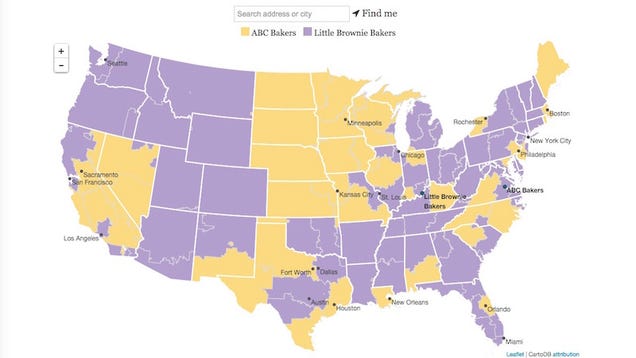
It might seem like Girl Scout cookies are all the same, but it turns out the Girl Scouts use two bakers, and which cookies you get depends on where you live. The LA Times has a map to help you figure out which you’ll get.

Read more...


19 Feb 21:36

Make This Tangy Citrus Dessert With a Simple Ratio

by Claire Lower on Skillet, shared by Andy Orin to Lifehacker

Bright, tangy fruits are necessary for getting through the cold winter months, and citrus curd has a way of bringing sunshine to the darkest of days. Lemon is classic, but this ratio lets you make delicious curd out of limes, oranges, or any citrus fruit.

Read more...


15 Feb 15:34

Driver in crash that killed 5 had DUI incident hours earlier

by wtopstaff

DAYTON, Ohio (AP) — The driver of a wrong-way car that killed five, including himself, in an Ohio interstate crash was jailed just over a day earlier on suspicion of drunken driving, records show.

An investigation continues into the early Saturday crash on Interstate 75 in downtown Dayton that killed driver James Pohlabeln and four people in an SUV he slammed into, including three members of a local hard-rock band.

Pohlabeln was arrested early Thursday after his car collided with a parked car in Dayton, the Dayton Daily News reported Sunday (http://bit.ly/1QfoLVS ).

The report listed the offense as “operating a motor vehicle without reasonable control.” The paper reported that Pohlabeln was arrested for operating a vehicle while intoxicated and failure to control. He was released about 7 p.m. Thursday on his own recognizance after pleading not guilty in municipal court, according to the paper.

Investigators suspect Pohlabeln had been drinking when the head-on collision happened about 3 a.m. Saturday. He’s also suspected of driving the wrong way on nearby State Route 4 before the crash.

Ten fatal crashes occurred in Ohio in 2014 involving drivers traveling the wrong way or on the wrong side, according to the most recent Ohio Department of Public Safety records. Twelve such crashes were reported the previous year.

Three men killed in the SUV were members of a hard-rock band, CounterFlux, that played across the region as well as Kentucky. A female passenger in the SUV was also killed.

“There’s nothing worse than losing friends, family or otherwise,” surviving members of the band posted on the band’s Facebook page.

___

Information from: Dayton Daily News, http://www.daytondailynews.com

The post Driver in crash that killed 5 had DUI incident hours earlier appeared first on WTOP.

15 Feb 15:32

Mystery brain disorder robs patients of their words

by wtopstaff

WASHINGTON (AP) — A mysterious brain disorder can be confused with early Alzheimer’s disease although it isn’t robbing patients of their memories but of the words to talk about them.

It’s called primary progressive aphasia, and researchers said Sunday they’re finding better ways to diagnose the little-known syndrome. That will help people whose thoughts are lucid but who are verbally locked in to get the right kind of care.

“I’m using a speech device to talk to you,” Robert Voogt of Virginia Beach, Virginia, said by playing a recording from a phone-sized assistive device at a meeting of the American Association for the Advancement of Science. “I have trouble speaking, but I can understand you.”

Even many doctors know little about this rare kind of aphasia, abbreviated PPA, but raising awareness is key to improve care — and because a new study is underway to try to slow the disease by electrically stimulating the affected brain region.

PPA wasn’t identified as a separate disorder until the 1980s, and while specialists estimate thousands of Americans may have it, there’s no good count. Families may not even seek care because they assume a loved one’s increasingly garbled attempts to communicate are because of age-related dementia, said Dr. Argye Elizabeth Hillis of Johns Hopkins University. Often, it’s when those people reach neurologists who realize they aren’t repeating questions or forgetting instructions that the diagnosis emerges.

“Nobody’s talking to them, nobody’s involving them. It’s very sad,” said Dr. Margaret Rogers of the American Speech-Language-Hearing Association. Yet for many, “they can handle their own finances, they can drive, they can appreciate music. There’s a lot that still works for them.”

Speech and language are hugely complex. Just to speak requires activating 100 muscles between the lungs and lips to produce at least 14 distinct sounds per second, said Dr. Joseph Duffy of the Mayo Clinic.

Stroke or brain injury patients often have trouble making sounds or retrieving words. PPA occurs for a different reason, because the brain regions that control language become diseased and degenerate, resulting in communication difficulties that may mimic broader dementia.

Special MRI scans can tell the difference, Hillis said. They also can help identify whose aphasia will worsen faster, and who has a subtype that can morph to become Alzheimer’s-like, where they eventually do lose memory and the ability to understand language.

Standard language therapy has patients match pictures to the correct word, to keep the wiring involved as active as possible. Now, Hillis’ team is testing if a kind of brain stimulation that sends electrical signals through the skull can rev up the effects of that treatment.

In the first 19 patients tested, people did better retrieving the right words for about two months after receiving the electrical stimulation than when they received sham zaps with their regular therapy, Hillis reported Sunday. They were more able to name objects they hadn’t practiced, and brain scans showed better connectivity in the affected region. But it will take far more study to prove if the treatment produces lasting effects, she cautioned.

Until there’s better medical treatment, Voogt, the Virginia patient, illustrates how assistive communication devices can help patients’ quality of life.

Now 66, Voogt was diagnosed 10 years ago, with a form of PPA that makes him unable to say words even though he can understand and type them via email, text or his assistive device. He owns a brain-injury rehabilitation center, and knew how to track down a specialist for diagnosis when he first had trouble retrieving words.

Sunday, Voogt patiently answered Hillis’ questions by typing into a device called the MiniTalk, or calling up verbal phrases he’d pre-programmed into it. Asked to say “dog,” Voogt forced out only a garble. But asked what cowboys ride, he typed horses and the device “said” the word.

His form of PPA also impacts grammar so that he has difficulty forming full sentences, Hillis said. Asked to write that’s “it’s a cold day in Washington,” Voogt typed a minute or two and the device’s recorder emitted “cold Washington D.C.”

Voogt typed that he started relying on the device in 2012, but lives independently and travels internationally. But asked how difficult the loss of language is to live with, he typed out a pretty bad rating — 70 percent.

The post Mystery brain disorder robs patients of their words appeared first on WTOP.

15 Feb 15:08

Prince William County community calendar - Washington Post


Prince William County community calendar
Washington Post
Dale City winter farmers market 10 a.m.-1 p.m. Dale City farmers market, Dale Boulevard, Dale City. 703-670-7112, Ext. 227 (Betty Finney). Free. Lucasville School open house In celebration of African American Heritage Month, the one-room school house ...

and more »
14 Feb 16:45

Puppy’s collar likely caused Mississippi home’s explosion

by wtopstaff

GULFPORT, Miss. (AP) — Blame the dog.

That’s the conclusion fire investigators have reached regarding a gas explosion at a Mississippi home.

Luckily no one was home at the time Wednesday, and the family’s four dogs were all safely removed, but the blast left part of the house in ruins.

Gulfport Fire Chief Mike Beyerstedt tells WLOX-TV (http://bit.ly/20Y9AlA ) that a puppy’s collar somehow got hooked on a gas valve in the laundry room. The valve opened. Gas leaked out, seeped into a vent, and flowed into the attic. Once trapped there, investigators believe either the furnace or the water heater kicked on. One of those units became the ignition source, creating an explosion that blew a hole into the house.

Beyerstedt said a dryer used to be connected to the valve but the owners replaced it with an electric appliance.

___

Information from: WLOX-TV, http://www.wlox.com

The post Puppy’s collar likely caused Mississippi home’s explosion appeared first on WTOP.

14 Feb 16:40

Autopsy: Police shot man 20 times, including 6 in back

by wtopstaff

SAN FRANCISCO (AP) — An autopsy report shows a young black man shot dead by San Francisco police suffered 20 gunshot wounds, including six in the back, and had drugs in his system when he died in the shooting that sparked protests and calls for the chief’s removal.

The San Francisco coroner’s report released Thursday showed that Mario Woods, 26, also had two gunshot wounds in his buttocks and others to his head, legs, abdomen and hands. Some of the wounds could have been from the same bullet, the autopsy says.

It also shows that Woods had used methamphetamine, marijuana, antidepressants and cough medicine before he was shot.

Investigators have said five officers opened fire on the knife-wielding Woods on Dec. 2 and that 27 shell casings were recovered at the scene where Woods died.

Police had encountered him while searching for an assailant who stabbed a stranger earlier in the day.

Police say Woods ignored commands to drop the knife and resisted even after he was shot several times by a “bean-bag” gun and pepper-sprayed.

The shooting was captured on video and circulated widely online, igniting ongoing protests over police tactics.

The department, district attorney and police commission have each launched an investigation.

“It is difficult for anyone to watch videos of the shooting. Similarly, it is equally as difficult to read the medical examiner’s report,” the San Francisco Police Department said in a prepared statement.

It said the agency is “committed to a thorough review of the shooting, and this report will be an important component of all three ongoing independent investigations.”

Chief Greg Suhr says he won’t resign as a result of the shooting and Mayor Ed Lee says he won’t fire him.

Suhr and the mayor called on the U.S. Department of Justice to review department policy and procedures and advise the city on reforms. The DOJ said last week it would conduct the review.

Woods family has filed a legal claim against the police and the city, arguing that officers didn’t have to open fire.

The family’s attorney John Burris told the San Francisco Chronicle (http://sfg.ly/1o8oXdp )that the autopsy report bolsters the legal claim and that “the officers should have taken the time when they saw he was not responding, and not created a confrontation with him.”

The post Autopsy: Police shot man 20 times, including 6 in back appeared first on WTOP.

14 Feb 16:34

Huge New Jersey fire that burned for 20 hours is contained

by wtopstaff

HILLSBOROUGH, N.J. (AP) — Firefighters on Friday contained a massive warehouse fire that burned out of control for nearly 20 hours and generated so much smoke that it was detected by weather radar and forced some school closures.

The blaze did not pose an imminent public health threat, officials said. But schools were closed Friday in Hillsborough because of smoke from it.

The fire started Thursday afternoon at Veterans Industrial Park. Plastic pellets were being stored in most of the complex. Those pellets continued to burn even after officials contained the fire from spreading late Friday morning.

The complex once housed old military munitions and is near historic Duke Farms, the estate that belonged to late tobacco heiress Doris Duke.

The winter weather posed challenges to firefighters almost immediately, Hillsborough Fire Marshal Chris Weniger said. Strong winds fueled the blaze Thursday afternoon, and cold temperatures led to problems with freezing water.

Weniger said an outdated sprinkler system and aging fire hydrants on the property led to problems with water pressure for firefighters.

Firefighters also had to be rotated in and out of service. One suffered a minor leg injury.

Mayor Frank DelCore said there were some initial environmental concerns because a property adjacent to the fire was once a federal stockade for mercury, a highly toxic element.

However, the Republican mayor said the federal government had moved the mercury off the site several years ago. Nonetheless, state and federal environmental officials were on the scene to test air quality.

The post Huge New Jersey fire that burned for 20 hours is contained appeared first on WTOP.

14 Feb 16:11

Lawmakers vote to make W. Virginia right-to-work state

by wtopstaff

CHARLESTON, W.Va. (AP) — West Virginia, a suffering coal mining state shaped by the sometimes-bloody history of its organized labor, is set to become the 26th state with a so-called right-to-work law.

In House and Senate party-line votes Friday, lawmakers rebuked a veto Thursday by Democratic Gov. Earl Ray Tomblin. The move will solidify a law that proponents say will draw in business and give workers more freedom over their ties to unions, but which opponents say is solely meant to undercut unions. The law becomes effective July 1.

Along similar partisan lines Friday, the Legislature dealt another blow to unions by overriding a second Tomblin veto, of a law that will eliminate the state’s prevailing wage on public construction projects. The law becomes effective in May.

Both the right-to-work and prevailing-wage-repeal proposals drew thousands of protesting union workers to the Capitol over the past month. Both also snagged a handful of ‘no’ votes from House Republicans.

Even with a slim 18-16 edge in the Senate, the GOP had the advantage of a much easier veto override requirement than in most states: Only a simple majority of both chambers was required.

The two pieces of legislation were top priorities of a Republican leadership team that grabbed the reins of the Legislature for the first time in more than eight decades after the 2014 elections. The GOP swept control from Democrats on a campaign linking them to President Barack Obama, who is deeply unpopular in the state, largely for his environmental policies that target coal.

During debate on the bills, Republicans said a new path is necessary for a state that is shedding jobs in coal due to economic, geological and regulatory factors. They also pointed to the overall high unemployment, a drug epidemic and the worst population loss of any state in the country.

“We know that we have to do something different if we, in fact, want those different results,” said Senate President Bill Cole, a Mercer County Republican and candidate for governor. “And my goodness, it’s time for different results. We have to put West Virginians back to work.”

Right-to-work laws prohibit companies from requiring workers to pay union dues as a condition of employment. Unions are still required to represent every worker. The law applies to new collective bargaining agreements. Employees can currently be forced to pay fees, but can’t be forced to join the union under federal law.

Democrats said right-to-work would let people enjoy union benefits without paying for them, and they expressed concerns that unions would be crippled without any economic benefit. Studies on right-to-work vary on economic impacts, but they largely agree that union employment drops.

During debate, House Democrats also detailed the hardships workers endured to unionize. Union membership has been steadily declining.

Organizing battles raged in Appalachia throughout the 20th century, most notably the 1921 Battle of Blair Mountain in West Virginia, where thousands of striking miners fought a shooting war with law enforcement and replacement workers, ending in dozens of deaths. One year earlier, 10 people had died in Matewan, West Virginia, in a skirmish over eviction notices served to miners who had joined the union.

“The union I come from, if you tried to better yourself, you got shot at by company thugs,” said Del. Mike Caputo, a Marion County Democrat and United Mine Workers of America leader. “If you went on strike, they threw you out of the company house.”

On the prevailing-wage repeal, Republicans contend the wage is inflated and say repealing it would save taxpayer money. Democrats say the repeal wouldn’t produce savings, but would reduce pay and benefit out-of-state contractors. The wage applies to union and non-union contracts.

Lawmakers backed off of repealing the wage last year, and instead agreed to a compromise that would eliminate the wage for projects costing $500,000 or less and let Tomblin’s administration recalculate the pay levels.

Republicans said the resulting changes didn’t do enough to adjust the rates, while the Tomblin administration believed a good middle ground was found.

In his veto message, Tomblin wrote that the repeal was an “about-face from our 81-year history of paying laborers, workers, and mechanics fairly for constructing public improvements.”

Eighteen states have no prevailing-wage law. Most highway construction falls under a federal prevailing wage.

Cole said the bills aren’t part of campaign to drive away unions, and could benefit them.

“I think it will force the unions to offer a better product,” Cole said of right-to-work. “They have to sell themselves now, rather than just hide behind, ‘If you want a job here, you have to be a member and you have to pay dues.'”

The post Lawmakers vote to make W. Virginia right-to-work state appeared first on WTOP.

14 Feb 15:59

Alabama woman convicted in girl’s running death dies

by wtopstaff

BIRMINGHAM, Ala. (AP) — An Alabama woman convicted of capital murder in the running death of her 9-year-old granddaughter died Friday less than a year into her life-without-parole sentence for the killing.

Joyce Hardin Garrard, 50, died five days after being stricken at the state’s women’s prison, prison spokesman Bob Horton said.

The cause of death wasn’t immediately available, but defense attorney Dani Bone said Garrard apparently suffered a heart attack Sunday minutes after visiting relatives at the state women’s prison. She was taken from the prison by helicopter ambulance to a Montgomery hospital where she was placed on life support and eventually died.

“This is another loss for a family that already has lost so much,” Bone said.

Last year, an Etowah County jury convicted Garrard of killing 9-year-old Savannah Hardin by making her run as punishment for a lie about eating candy in 2012. Evidence during the trial showed that girl ran for hours outside Garrard’s home in rural northeastern Alabama.

Garrard testified that she never meant to harm the girl but stayed outside running and picking up sticks with the child as they talked about the importance of telling the truth. Garrard also claimed she was coaching the girl in how to run faster in school races.

“If she was running, I was running,” Garrard said.

But jurors convicted her of capital murder, siding with prosecutors who called the woman the “drill sergeant from hell” and described the child’s death as agony imposed by a woman she loved and trusted.

“She was tortured,” prosecutor Carol Griffith told jurors in closing arguments.

The child’s stepmother, Jessica Mae Hardin, is set for trial in June on a murder charge for allegedly failing to stop the punishment. Hardin, who is free on bond, has pleaded not guilty.

The post Alabama woman convicted in girl’s running death dies appeared first on WTOP.

14 Feb 15:55

Police: Shooting at Phoenix-area school was a murder-suicide

by wtopstaff

GLENDALE, Ariz. (AP) — A shooting at a suburban Phoenix high school that killed two 15-year-old girls and caused panic among parents was a murder-suicide, police said.

Police announced that a suicide note was found at the scene of the shooting Friday morning near the cafeteria area of Independence High School in Glendale. They said the girls each were shot once, were declared dead at the scene and a weapon was found near the bodies.

“Information gathered by detectives reveal the two girls were very close friends, appeared to also be in a relationship,” Glendale police spokeswoman Tracey Breeden said in a statement Friday afternoon.

It is believed nobody witnessed the shooting, Breeden said.

Both teens have been identified, but Breeden said “their names will not be confirmed or released at this time by the police department due to their juvenile status.”

Hours before the lockdown of the school was lifted, hundreds of worried parents crowded the parking lots of nearby discount and convenience stores.

One woman gnawed on her fingernails as she spoke on a cellphone, while another had tears streaming down her face. Other parents chain-smoked as they waited for news.

Cheryl Rice said she went to a store after a friend called about the shooting and asked about Rice’s 15-year-old daughter. But the girl called to say she was safe as Rice arrived at the store.

She said it was horrible waiting for word about her child.

“You don’t know if it’s your daughter or not. You don’t know who’s being bullied. You don’t know who is being picked on. You don’t know anything. It could be anybody,” Rice said.

Lanie Walter, who is a senior at the school, heard ambulances on her way to campus but didn’t think much of it until her first class was locked down.

When she called her parents to tell them she was safe, “my mom was actually really relieved because she was watching it on the news,” she said.

Parents were bused to the school to be reunited with their children. Some cut through a nearby field as they rushed toward their kids in emotional reunions. Other students who got permission from their parents left campus on their own.

The Glendale Union High School District alerted parents to the shooting through emails and automatic phone calls and released information on social media, Superintendent Brian Capistran said.

Students typically are not allowed to use their cellphones during lockdowns, but as calls from parents flooded the district, officials asked teachers to have students call family, Capistran said.

Social workers and counselors will be available to students and staff when school resumes Tuesday, the superintendent said.

Minnie Kramer, mother of a 15-year-old student, said she rushed out of work when she got a text from her son right after the shooting, telling her that he was OK.

As she waited to be reunited with her son, Kramer said she worried about whether any of his friends were harmed.

“I know that my son is OK, but, emotionally, you don’t know what it does, especially at 15, especially if it’s someone he knew,” Kramer said.

___

Associated Press photographer Matt York and writer Samantha Shotzbarger contributed to this report.

The post Police: Shooting at Phoenix-area school was a murder-suicide appeared first on WTOP.

14 Feb 15:49

Court cases challenge ‘Shaken Baby’ diagnosis

by wtopstaff

SAN FRANCISCO (AP) — A California jury convicted Alan Gimenez of killing his infant daughter Priscilla after medical testimony revealed what some doctors say is a tell-tale sign she had been shaken: brain swelling and bleeding inside her skull and behind her eyes.

More than 20 years later, Gimenez still maintains his innocence, and is now contesting his conviction in court on the grounds that the three symptoms his daughter showed are no longer considered a clear indication of abuse.

“I never shook my daughter. I never abused her,” said Gimenez, who was paroled in June after nearly 24 years in prison.

The case before the 9th U.S. Circuit Court of Appeals is among a spate of recent challenges to “shaken baby syndrome” diagnoses that, like Gimenez’s case, include a similar trio of symptoms without evidence of neck injuries.

Many of the cases also have no additional signs of abuse such as bruising or fractures.

Defense attorneys say new research discredits shaking as the most likely cause of bleeding inside the skull and behind the eyes and brain swelling. But medical experts are divided, with some still putting stock in the three symptoms as a strong indicator of shaking or other abusive head trauma even without other injuries.

The court challenges have had some success.

“There does seem to be a movement in the direction of greater skepticism on the part of the judiciary,” said Deborah Tuerkheimer, a professor at Northwestern’s Pritzker School of Law who has written a book about flawed “shaken baby” convictions.

An Illinois federal judge in 2014 freed a daycare worker who was convicted of killing an infant she was accused of shaking. The judge said recent research “arguably suggests that a claim of shaken baby syndrome is more an article of faith than a proposition of science.”

An Arizona judge in 2012 dismissed a murder charge against Drayton Witt after the county medical examiner said developments in the understanding of shaken baby syndrome and some of the conditions that mimic its symptoms contributed to his decision to reclassify the death of Witt’s girlfriend’s infant son as natural, not a homicide.

Witt had spent 10 years in prison in “blind rage” over being falsely accused of shaking the child to death, he said. While he remains angry, he said he’s moved on.

“I got a new deck of cards,” said Witt, 34, who married his girlfriend and has a 2-year-old daughter with her. “I’m healthy. I’m alive. I’m breathing. I have a roof over my head. My bills are paid. My daughter’s beautiful. My daughter’s healthy. My marriage is great.”

Alma Calderaro is challenging her “shaken baby” conviction in New York on similar grounds as Gimenez. She was accused of shaking a 7-month-old girl while serving as a nanny, leaving the girl brain damaged, and convicted in 2009 of first-degree assault and endangering the welfare of a child.

Abusive head trauma, a condition that includes shaken baby syndrome, is often triggered by frustration from excessive crying, according to the Centers for Disease Control and Prevention. Prosecutors file dozens of new cases alleging shaking each year, although Tuerkheimer said cases involving just the trio of symptoms appear to be rarer these days.

Gimenez’s attorneys say he took his daughter to the hospital on August 10, 1991 after she vomited and showed signs of a seizure. She died a few days later, just 49 days old.

What the San Diego County jury that convicted Gimenez, now 47, didn’t hear was that the girl had been in an out of the hospital and had a blood clotting problem, according to Gimenez’s 2012 petition challenging his conviction. Doctors who have since reviewed her medical records for the defense conclude she likely had bleeding in her skull since birth, and died of a stroke-like blood clot, Gimenez’s attorneys say.

Prosecutors stand by the shaken baby syndrome theory used in Gimenez’s prosecution and cite a rib fracture on Priscilla’s body and a tear under her tongue as additional evidence of abuse. A federal judge in 2013 recommended that Gimenez’s petition be dismissed, rejecting his contention that scientific advances in the understanding of shaken baby syndrome show he is innocent.

Gimenez’s attorneys have appealed the dismissal to the 9th Circuit, which could issue a ruling any day now.

The American Academy of Pediatrics says bleeding inside the skull with brain injury and bleeding behind the eyes are “hallmarks” of abusive head trauma such as shaken baby syndrome, though it cautions that doctors have to consider additional factors, including a child’s medical history and other signs of injury.

“The elements you look for and information you gather hasn’t changed dramatically,” said Robert Sege, a member of the Academy of Pediatrics’ committee on child abuse and neglect.

Patrick Lantz, a professor of pathology at Wake Forest Baptist Medical Center in North Carolina, said the trio of conditions, including retinal hemorrhages, or bleeding behind the eyes, could just as easily manifest itself in cases where the child was accidentally dropped or has an infection or disease.

“People who tell me you can be really sure it’s abuse based on the number, location and type of retinal hemorrhages and the presence of blood and swelling in the skull to me are probably about as scientific as a fortune teller reading tea leaves,” he said.

The post Court cases challenge ‘Shaken Baby’ diagnosis appeared first on WTOP.

14 Feb 15:48

Noise harder on children than adults, hinders how they learn

by wtopstaff

WASHINGTON (AP) — From the cacophony of day care to the buzz of TV and electronic toys, noise is more distracting to a child’s brain than an adult’s, and new research shows it can hinder how youngsters learn.

In fact, one of the worst offenders when a tot’s trying to listen is other voices babbling in the background, researchers said Saturday at a meeting of the American Association for the Advancement of Science.

“What a child hears in a noisy environment is not what an adult hears,” said Dr. Lori Leibold of Boys Town National Research Hospital in Omaha, Nebraska.

That’s a Catch-22 in our increasingly noisy lives because “young children learn language from hearing it,” said Dr. Rochelle Newman of the University of Maryland. “They have a greater need for understanding speech around them but at the same time they’re less equipped to deal with it.”

It’s not their ability to hear. For healthy children, the auditory system is pretty well developed by a few months of age.

Consider how hard it is to carry on a conversation in a noisy restaurant. Researchers simulated that background in a series of experiments by playing recordings of people reading and talking while testing how easily children detected words they knew, such as “playground,” when a new voice broke through the hubbub, or how easily they learned new words.

The youngest children could recognize one person’s speech amid multiple talkers, but only at relatively soft noise levels, Newman said. Even the background noise during relatively quiet day care story time can be enough for tots to miss parts of what’s read, she said.

It’s not just a concern for toddlers and preschoolers. The ability to understand and process speech against competing background noise doesn’t mature until adolescence, Leibold said.

Nor is the challenge just to tune out the background buzz. Brief sudden noises — someone coughs, a car horn blares — can drown out part of a word or sentence. An adult’s experienced brain automatically substitutes a logical choice, often well enough that the person doesn’t notice, Newman said.

“Young children don’t do this. Their brain doesn’t fill in the gaps,” she said.

Children who were born prematurely may have an additional risk. When preemies spend a long time in an incubator, their brains get used to the constant “white noise” of the machine’s fan — different from a full-term baby who develops hearing mom’s voice in the womb and thus is wired to pay more attention to voices, said Dr. Amir Lahav of Harvard Medical School.

He had mothers of preemies record themselves singing lullabies or reading stories, and filtered them along with the sound of mom’s heartbeat into the incubator three times a day when she wasn’t otherwise visiting. The brain’s auditory cortex became more developed in babies given that extra womb-like exposure compared with preemies with typical incubator care, Lahav found. Moreover, when those babies were big enough to leave the hospital, they paid more attention to speech, he said.

“Exposure to noises and sounds very early in life will spill over to affect how our brain is going to function,” Lahav said.

Noise also is a special challenge for children with hearing loss, who may need technology beyond standard hearing aids to cope, Leibold said, describing special receivers that can transmit a teacher’s voice directly to the ear so it’s not lost in classmates’ chatter.

The research has implications for classroom design, too, Leibold added, as the type of flooring or ceiling height can either soften kids’ natural noise or bounce it around.

But learning starts at home, and University of Maryland child language specialist Nan Bernstein Ratner often has parents ask if they should stimulate a tot’s environment with interactive toys and educational TV.

“We tend to think bustling environments and creating background noise is stimulating for kids,” she said. But, she said, “what’s stimulating on the part of the parent may not be for the child.”

Among the tips:

—Don’t leave the TV, radio and other electronics on in the background. It’s not clear whether soft music is distracting, but lyrics might be, Ratner said.

—Speak clearly and make eye contact.

—Especially in noise, make sure tots see your face. They can pick up on mouth movements, Newman said.

—If the child doesn’t understand, try again with simpler words.

—If a child’s having school behavior problems, make sure being unable to hear in class isn’t the problem.

The post Noise harder on children than adults, hinders how they learn appeared first on WTOP.

14 Feb 15:48

Idaho hiking reopens, with hikers warned not to feed goats

by wtopstaff

CLARK FORK, Idaho (AP) — A hiking trail in northern Idaho reopened Saturday, but with an admonishment to hikers: don’t feed the goats.

The U.S. Forest Service closed Scotchman Peak Trail in Kaniksu National Forest last fall after human handouts had made mountain goats aggressive.

One of the hoofed animals bit a hiker. Others had tried to heat-butt hikers in an attempt to get food. The agency said some hikers had even let the goats eat from their hands.

But the goats have since had time to find other food sources.

Visitors should practice good goat etiquette, the Forest Service said. That means not feeding the wild animals and educating hikers that do.

The post Idaho hiking reopens, with hikers warned not to feed goats appeared first on WTOP.

14 Feb 15:46

102 pythons caught as state snake hunt enters final weekend

by wtopstaff

MIAMI (AP) — A state-sanctioned hunt on public lands for invasive Burmese pythons is about to end.

The monthlong Python Challenge ends Sunday at 7 p.m. As of Friday, 102 pythons had been caught since the competition began Jan. 16.

Researchers believe tens of thousands of pythons may be slithering through the Everglades, decimating native mammal populations.

The first public python hunt in 2013 netted 68 snakes. Cool temperatures and more training appeared to help this year’s hunters, who are competing for prizes awarded for the longest python and the most snakes captured.

The hunt’s final tally will be announced at an awards ceremony Feb. 27.

All the snakes captured were killed and turned over to researchers trying to find clues to help control the python population.

The post 102 pythons caught as state snake hunt enters final weekend appeared first on WTOP.

14 Feb 14:44

Fredericksburg police deliver Valentine’s Day cards, chocolate to seniors

by Michael Stankiewicz

WASHINGTON — Some seniors didn’t have to wait until Feb. 14 to celebrate Valentine’s Day.  On Saturday, several officers from the Fredericksburg Police Department visited seniors in the city to deliver cards and chocolates.

Officer Pastell recorded his visit with Ms. Stevens on his body camera. Her adorable reaction is in our gallery.

The post Fredericksburg police deliver Valentine’s Day cards, chocolate to seniors appeared first on WTOP.

14 Feb 14:41

Justice Antonin Scalia, influential conservative, dead at 79

by wtopstaff

WASHINGTON (AP) — Antonin Scalia, the influential conservative and most provocative member of the Supreme Court, has died, leaving the high court without its conservative majority and setting up an ideological confrontation over his successor in the maelstrom of a presidential election year. Scalia was 79.

Scalia was found dead Saturday morning at private residence in the Big Bend area of West Texas, after he’d gone to his room the night before and did not appear for breakfast, said Donna Sellers, speaking for the U.S. Marshals Service in Washington. The cause of death was not immediately known. A gray hearse was seen at the entrance to the Cibolo Creek Ranch, near Shafter, on Saturday accompanied by an SUV.

President Barack Obama made clear Saturday night he would nominate a successor to Scalia, despite calls from Republicans to leave that choice — and the certain political struggle over it — to the next president. He promised to do so “in due time” while paying tribute to Scalia as “one of the towering legal figures of our time.”

Scalia’s death most immediately means that that the justices could be split 4-4 in cases going to the heart of the some of the most divisive issues in the nation — over abortion, affirmative action, immigration policy and more.

Scalia was part of a 5-4 conservative majority — with one of the five, Anthony Kennedy, sometimes voting with liberals on the court. In a tie vote, the lower court opinion prevails.

Senate Majority Leader Mitch McConnell, as well as Republican presidential candidates Ted Cruz and Marco Rubio, said the nomination should fall to the next president.

Democrats were outraged at that idea, with Sen. Harry Reid, the chamber’s top Democrat, saying it would be “unprecedented in recent history” for the court to have a vacancy for a year.

Leaders in both parties were likely to use the high court vacancy to implore voters to nominate candidates with the best chance of winning in the November general election.

Scalia used his keen intellect and missionary zeal in an unyielding attempt to move the court farther to the right after his 1986 selection by President Ronald Reagan. He also advocated tirelessly in favor of originalism, the method of constitutional interpretation that looks to the meaning of words and concepts as they were understood by the Founding Fathers.

Scalia’s impact on the court was muted by his seeming disregard for moderating his views to help build consensus, although he was held in deep affection by his ideological opposites Ruth Bader Ginsburg and Elena Kagan. Scalia and Ginsburg shared a love of opera. He persuaded Kagan to join him on hunting trips.

His 2008 opinion for the court in favor of gun rights drew heavily on the history of the Second Amendment and was his crowning moment on the bench.

He could be a strong supporter of privacy in cases involving police searches and defendants’ rights. Indeed, Scalia often said he should be the “poster child” for the criminal defense bar.

But he also voted consistently to let states outlaw abortions, to allow a closer relationship between government and religion, to permit executions and to limit lawsuits.

He was in the court’s majority in the 2000 Bush v. Gore decision, which effectively decided the presidential election for Republican George W. Bush. “Get over it,” Scalia would famously say at speaking engagements in the ensuing years whenever the topic arose.

Bush later named one of Scalia’s sons, Eugene, to an administration job, but the Senate refused to confirm him. Eugene Scalia served as the Labor Department solicitor temporarily in a recess appointment.

A smoker of cigarettes and pipes, Scalia enjoyed baseball, poker, hunting and the piano. He was an enthusiastic singer at court Christmas parties and other musical gatherings, and once appeared on stage with Ginsburg as a Washington Opera extra.

Ginsburg once said that Scalia was “an absolutely charming man, and he can make even the most sober judge laugh.” She said that she urged her friend to tone down his dissenting opinions “because he’ll be more effective if he is not so polemical. I’m not always successful.”

He could be unsparing even with his allies. In 2007, Scalia sided with Chief Justice John Roberts in a decision that gave corporations and labor unions wide latitude to air political ads close to elections. Yet Scalia was upset that the new chief justice’s opinion did not explicitly overturn an earlier decision. “This faux judicial restraint is judicial obfuscation,” Scalia said.

Quick-witted and loquacious, Scalia was among the most persistent, frequent and quotable interrogators of the lawyers who appeared before the court.

During Scalia’s first argument session as a court member, Justice Lewis F. Powell leaned over and asked a colleague, “Do you think he knows that the rest of us are here?”

Scalia’s writing seemed irrepressible and entertaining much of the time. But it also could be confrontational. It was a mocking Scalia who in 1993 criticized a decades-old test used by the court to decide whether laws or government policies violated the constitutionally required separation of church and state.

“Like some ghoul in a late-night horror movie that repeatedly sits up in its grave and shuffles abroad, after being repeatedly killed and buried, (the test) stalks our … jurisprudence once again, frightening the little children and school attorneys,” he wrote.

Scalia showed a deep commitment to originalism, which he later began calling textualism. Judges had a duty to give the same meaning to the Constitution and laws as they had when they were written. Otherwise, he said disparagingly, judges could decide that “the Constitution means exactly what I think it ought to mean.”

A challenge to a Washington, D.C., gun ban gave Scalia the opportunity to display his devotion to textualism. In a 5-4 decision that split the court’s conservatives and liberals, Scalia wrote that an examination of English and colonial history made it exceedingly clear that the Second Amendment protected Americans’ right to have guns, at the very least in their homes and for self-defense. The dissenters, also claiming fidelity to history, said the amendment was meant to ensure that states could raise militias to confront a too-powerful federal government if necessary.

But Scalia rejected that view. “Undoubtedly some think that the Second Amendment is outmoded in a society where our standing army is the pride of our Nation, where well-trained police forces provide personal security, and where gun violence is a serious problem. That is perhaps debatable, but what is not debatable is that it is not the role of this Court to pronounce the Second Amendment extinct,” Scalia wrote.

His dissents in cases involving gay rights could be as biting as they were prescient. “By formally declaring anyone opposed to same-sex marriage an enemy of human decency, the majority arms well every challenger to a state law restricting marriage to its traditional definition,” Scalia wrote in dissent in 2013 when the court struck down part of a federal anti-gay marriage law. Six months later, a federal judge in Utah cited Scalia’s dissent in his opinion striking down that state’s constitutional ban on same-sex marriage.

Scalia was passionate about the death penalty. He wrote for the court when in 1989 it allowed states to use capital punishment for killers who were 16 or 17 when they committed their crimes. He was on the losing side in 2005 when the court changed course and declared it unconstitutional for states to execute killers that young.

“The Court thus proclaims itself sole arbiter of our Nation’s moral standards — and in the course of discharging that awesome responsibility purports to take guidance from the views of foreign courts and legislatures,” Scalia wrote in a scathing dissent.

In 2002, he dissented from the court’s decision to outlaw executing the mentally disabled. That same year, Scalia surprised some people with a public declaration of independence from his Roman Catholic church on the death penalty. He said judges who follow the philosophy that capital punishment is morally wrong should resign.

Scalia also supported free speech rights, but complained too. “I do not like scruffy people who burn the American flag,” he said in 2002, but “regrettably, the First Amendment gives them the right to do that.”

A longtime law professor before becoming a judge, Scalia frequently spoke at law schools and to other groups. Later in his tenure, he also spoke at length in on-the-record interviews, often to promote a book.

He betrayed no uncertainty about some of the most contentious legal issues of the day. The framers of the Constitution didn’t think capital punishment was unconstitutional and neither did he.

“The death penalty? Give me a break. It’s easy. Abortion? Absolutely easy. Nobody ever thought the Constitution prevented restrictions on abortion. Homosexual sodomy? Come on. For 200 years, it was criminal in every state,” Scalia said during a talk that preceded a book signing at the American Enterprise Institute in 2012.

The only child of an Italian immigrant father who was a professor of Romance languages and a mother who taught elementary school, Scalia graduated first in his class at Georgetown University and won high honors at the Harvard University Law School.

He worked at a large Cleveland law firm for six years before joining the faculty of the University of Virginia’s law school. He left that job to work in the administrations of Presidents Richard Nixon and Gerald Ford.

From 1977 to 1982, Scalia taught law at the University of Chicago.

He then was appointed by Reagan to the U.S. Circuit Court of Appeals for the District of Columbia. Scalia and his wife, Maureen, had nine children.

The post Justice Antonin Scalia, influential conservative, dead at 79 appeared first on WTOP.

14 Feb 14:40

In victory or dissent, Scalia was a man of strong opinions

by wtopstaff

WASHINGTON (AP) — Supreme Court Justice Antonin Scalia kept your attention, whether you liked him or not.

He was a big personality who rather enjoyed the spotlight, and he did not often shy from controversy.

Scalia deeply influenced a generation of conservative legal thinkers and was a lightning rod for criticism from the left almost from the moment President Ronald Reagan put him on the court in 1986.

A gifted writer who produced gems and barbs in equal measure, Scalia even occasionally took aim at his usual allies if they disagreed with his view of a case.

Scalia died overnight Friday. The justice, 79, would have been 80 next month.

Like all justices, he liked to be in the majority. But Scalia himself said he also liked writing dissents because that justice did not have to pull punches, as the author of the court’s majority opinion must sometimes do to ensure his opinion keeps its five votes.

In dissent, Scalia said, he was able to write opinions the way they should be written. He wrote dissents that were entertaining, clear-headed, furious, sarcastic and sometimes just plain mean.

His close friend, Justice Ruth Bader Ginsburg, once said that Scalia was “an absolutely charming man, and he can make even the most sober judge laugh.” She said that she urged her friend to tone down his dissenting opinions “because he’ll be more effective if he is not so polemical. I’m not always successful.”

His dissents in cases involving gay rights could be as biting as they were prescient.

“By formally declaring anyone opposed to same-sex marriage an enemy of human decency, the majority arms well every challenger to a state law restricting marriage to its traditional definition,” Scalia wrote in dissent in 2013 when the court struck down part of a federal anti-gay marriage law. Less than a year later, federal judges in Kentucky, Ohio, Oklahoma, Utah and Virginia cited Scalia’s dissent in their opinions striking down all or parts of state bans on same-sex marriage.

It was a mocking Scalia who in 1993 criticized a decades-old test used by the court to decide whether laws or government policies violated the constitutionally required separation of church and state.

“Like some ghoul in a late-night horror movie that repeatedly sits up in its grave and shuffles abroad, after being repeatedly killed and buried, (the test) stalks our … jurisprudence once again, frightening the little children and school attorneys,” he wrote.

Dissenting from an opinion forbidding states from executing killers who were 16 or 17 when they committed their crimes, Scalia wrote, “The Court thus proclaims itself sole arbiter of our Nation’s moral standards — and in the course of discharging that awesome responsibility purports to take guidance from the views of foreign courts and legislatures.”

He could be unsparing even with his allies. In 2007, Scalia sided with Chief Justice John Roberts in a decision that gave corporations and labor unions wide latitude to air political ads close to elections. Yet Scalia was upset that the new chief justice’s opinion did not explicitly overturn an earlier decision. “This faux judicial restraint is judicial obfuscation,” Scalia said.

Quick-witted and loquacious, Scalia was among the most persistent, frequent and quotable interrogators of the lawyers who appeared before the court.

During Scalia’s first argument session as a court member, Justice Lewis F. Powell leaned over and asked a colleague, “Do you think he knows that the rest of us are here?”

He showed a deep commitment to originalism, which he later began calling textualism. In other words, judges had a duty to give the same meaning to the Constitution and laws as they had when they were written. Otherwise, he said disparagingly, judges could decide that “‘the Constitution means exactly what I think it ought to mean.”

A challenge to a Washington, D.C., gun ban gave Scalia the opportunity to display his devotion to concept. In a 5-4 decision that split the court’s conservatives and liberals, he wrote that an examination of English and colonial history made it exceedingly clear that the Second Amendment protected Americans’ right to have guns, at the very least in their homes and for self-defense. The dissenters, also claiming fidelity to history, said the amendment was meant to ensure that states could raise militias to confront a too-powerful federal government if necessary.

But Scalia rejected that view. “Undoubtedly some think that the Second Amendment is outmoded in a society where our standing army is the pride of our Nation, where well-trained police forces provide personal security, and where gun violence is a serious problem. That is perhaps debatable, but what is not debatable is that it is not the role of this Court to pronounce the Second Amendment extinct,” Scalia wrote.

He could be a strong supporter of privacy in cases involving police searches and defendants’ rights. Indeed, Scalia often said he should be the “poster child” for the criminal defense bar.

But he also voted consistently to let states outlaw abortions, to allow a closer relationship between government and religion, to permit executions and to limit lawsuits.

Scalia was in the court’s majority in the 2000 Bush v. Gore decision, which effectively decided the presidential election for Republican George W. Bush. “Get over it,” Scalia would famously say at speaking engagements in the ensuing years whenever the topic arose.

Bush later named one of Scalia’s sons, Eugene, to an administration job, but the Senate refused to confirm him. Eugene Scalia served as the Labor Department solicitor temporarily in a recess appointment.

The justice relished a good fight. In 2004, when an environmental group asked him to step aside from a case involving Vice President Dick Cheney after reports that Scalia and Cheney hunted ducks together, the justice responded with a 21-page memorandum explaining his intention to hear the case. He said “the nation is in deeper trouble than I had imagined,” if people thought a duck-hunting trip could sway his vote.

Two years later, The Boston Herald reported that Scalia employed an obscene hand gesture while leaving a church in response to another question about his impartiality. Scalia penned a scathing letter to the newspaper, taking issue with the characterization. He explained that the gesture —the extended fingers of one hand moving slowly back and forth under the raised chin — was dismissive, not obscene.

“From watching too many episodes of ‘The Sopranos,’ your staff seems to have acquired the belief that any Sicilian gesture is obscene,” he said.

Scalia did not think much of the media, which he generally found to be shallow and more than a little biased against him and his fellow conservatives. He told a visitor to his office at the court that he wished supermarket checkout stands carried the University of Chicago Law Review instead of tabloids. Reporters cared too much whether the “little old lady won or lost” before the Supreme Court. Scalia said, “I couldn’t care less, as long as we get the law right.”

A smoker of cigarettes and pipes, Scalia enjoyed baseball, poker, hunting and playing the piano. He was an enthusiastic singer at court Christmas parties and other musical gatherings, and once appeared on stage with Ginsburg as a Washington Opera extra.

Born in New Jersey, he was the only child of an Italian immigrant father who was a professor of Romance languages and a mother who taught elementary school. He attended public schools, graduated first in his class at Georgetown University and won high honors at the Harvard University Law School. He taught law and served in Republican administrations before Reagan made him an appeals court judge in Washington in 1982. Scalia and his wife, Maureen, had nine children.

Scalia’s impact on the court was muted by his seeming disregard for moderating his views to help build consensus, but he was held in deep affection by his ideological opposites Ginsburg and Elena Kagan. He persuaded Kagan to join him on hunting trips. While on his high school drill team, Scalia carried his rifle in a case on the New York City subways. Decades later, he taught the Upper West Sider Kagan how to shoot a gun.

Scalia and Ginsburg shared a love of opera, and their contrasting views inspired the opera Scalia/Ginsburg by composer Derrick Wang, who said he got the idea while a law student at the University of Maryland.

In one aria, the Scalia character rages about justices who see the Constitution evolving with society.

The operatic Scalia fumes: “The justices are blind. How can they spout this? The Constitution says absolutely nothing about this.”

The real-life Scalia certainly agreed.

The post In victory or dissent, Scalia was a man of strong opinions appeared first on WTOP.

13 Feb 15:59

Police say bones found in Manassas woods are those of a murder victim - Washington Post


NBC4 Washington

Police say bones found in Manassas woods are those of a murder victim
Washington Post
Prince William County police believe that a person whose bones were found last month in the woods in the Manassas area was a victim of murder. The human remains were found near the 8000 block of Barrett Drive on Jan. 13. On Thursday, the police ...
Man Found in Wooded Area Was Murdered: PoliceNBC4 Washington
Police investigating murder after human remains found in wooded area in ManassasWJLA
Murder investigation launched after human remains found in ManassasW*USA 9
Patch.com
all 7 news articles »
13 Feb 15:53

Saturday's Best Deals: Cuisinart Kitchen Gear, Rainfall Shower Head, and More

by Shep McAllister, Commerce Team

Cuisinart kitchen gear, an EyeFi SD card, and a $17 rainfall shower head lead off Saturday’s best deals. Bookmark Kinja Deals and follow us on Twitter to never miss a deal. Commerce Content is independent of Editorial and Advertising, and if you buy something through our posts, we may get a small share of the sale. Click here to learn more.

Read more...

13 Feb 15:37

Senate Passes Bill Making Internet Tax Ban Permanent

by Chris Morran

(Steve)
Nearly two decades ago, Congress passed the first Internet Tax Freedom Act, establishing that — with a handful of grandfathered exceptions — local, state, and federal governments couldn’t impose taxes on Internet access. Problem is, that law has had to be renewed over and over, each time with an expiration date. But today, the U.S. Senate finally passed a piece of legislation that would make the tax ban permanent.

Recent attempts to make this ban permanent — by simply striking out the current end date on the latest of the Tax Freedom Act — had stalled in both the House and Senate. And so, as we reported in December, the language was simply tacked on to HR 644, Trade Facilitation and Trade Enforcement Act of 2015, a piece of legislation authorizing funding for Customs and Border Protection, that was deemed likely to pass. Today, it passed the Senate with a 75-20 vote.

“Internet Tax Freedom saves Oregonians and most Americans hundreds of dollars a year in taxes,” writes Oregon Sen. Ron Wyden, a co-author of the original Tax Freedom Act and an outspoken proponent of the permanent ban. “There’s no ban on wireless taxes and Americans pay an average 17 percent (!) tax on their mobile service.”

In addition to removing the end date on the existing tax ban, the revised law puts an end date of June 30, 2020 for those few states that are still collecting sales tax on Internet services.

When the original law was passed, more than a dozen states were allowed to continue charging taxes for online access. In the intervening years, many have opted to drop these taxes. Currently, only Hawaii, New Mexico, North Dakota, Ohio, South Dakota, Texas, and Wisconsin still collect taxes for going online.

What the legislation does not resolve is the hotly contested issue of taxes for online purchases. For example, states are currently allowed to collect sales tax from an online retailer if it has a physical presence in that state. It’s a wrestling match that has resulted in a patchwork of settlements and arrangements around the country, with many larger e-tailers like Amazon collecting taxes in some states but not in others. The retail industry has repeatedly pushed for a federal law that would be more precise about exactly when states can collect sales tax, but to no avail.

13 Feb 15:36

Police Investigating Death During Walmart Shoplifting Incident

by Laura Northrup

(Soon Koon)
Early on Sunday morning, a 62-year-old man piled DVDs worth $380.74 in a shopping cart at a Florida Walmart and headed for the door. When he couldn’t produce a receipt for the greeter, he ran out the door, and employees followed him. He collapsed and was resuscitated, but died in the hospital 12 hours later.

Police initially said that the man’s death was being investigated as a homicide, but now just say that it’s still under investigation. Walmart suspended the employees involved in the incident, which is their normal policy.

Local news reported that while the man tried to flee, he tripped––his pants may have fallen down––and fell to the ground, and the Walmart employees realized that he had stopped breathing. Police were already on the way, and the employees and first responders began CPR. He officially died at the hospital later that day.

The police are looking for more witnesses to the crime and the chase to figure out what happened. The medical examiner ruled that the man didn’t die due to a medical condition, but didn’t release any information about what injuries he had or rule on the cause of death.

In a statement, Walmart said:

Our condolences go out to the family. We are working with police as part of an ongoing investigation and performing a review of our own. All associates involved in this incident have been suspended pending the investigation as we continue to learn all of the details.

Lakeland police back off calling shoplifting suspect’s death a homicide [Tampa Tribune]
Walmart employees suspended after suspect’s death [Fox 13]
Lakeland Walmart shoplifter chased by employees dies; cause of death being investigated [WPTV] (warning: auto-play video)

13 Feb 15:36

Of Course Everyone Wanted To See Burger King’s Hot Dog Training Video Starring Snoop Dogg

by Laura Northrup

doggCall us cynical, but we’re pretty sure that Burger King’s new Grilled Dogs training videos were never intended as an “internal use only” tool to train employees on how to top and sell the chain’s new grilled hot dogs. The company claims that once word got out that the videos existed, the public clamored to see them. It’s believable that people wanted to see the videos, but maybe less believable that this wasn’t their plan all along.

training

The Grilled Dogg video was first “leaked,” then released on YouTube, along with a version for Spanish-speaking employees starring the performer Charo that is not, strictly speaking, in Spanish.

It could be that the boring details were left out for a public release, but neither video actually shows you how to cook or dress the hot dogs. They describe the toppings, sure, but both are more about marketing the new product than about training.

Yet we’ve embedded the videos here for you, and we enjoyed them, so Burger King gets exactly what it wanted without having to buy nationwide ad time. Well played, Burger King.

13 Feb 15:34

Ohio Company Sells Etch A Sketch Rights To Canadian Toymaker

by Mary Beth Quirk

(creating in the dark)
The company behind the toy that has been teaching children about the impermanence of the human condition for more than 50 years has decided to shake things up and sell the rights to make Etch A Sketch to a Canadian toymaker.

The Ohio Art Company, based in Bryan, OH, says that in an effort to focus on its metal lithography business, it has sold the licenses for the famous, red rectangular Etch A Sketch as well as Doodle Sketch to Spin Master Corp., a global toymaker based in Toronto. No terms of the deal were disclosed, perhaps because executives wrote them out on an Etch A Sketch and then shook the thing accidentally.

“We are very happy that children around the world will continue to be able to enjoy Etch A Sketch, one of the world’s most iconic toys, as Spin Master is committed to building upon the success that The Ohio Art Company has created and sustained for more than 50 years,” Ohio Art CEO Elena West said in a statement.

The familiar toy was invented by French electrical technician André Cassagnes, the National Toy Hall of Fame says, who used “the clinging properties of an electrostatic charge to invent a mechanical drawing toy with no spare parts.”

He called it the L’Ecran Magique, and debuted it at the International Toy Fair in Nuremberg, Germany, in 1959. The Ohio Art Company paid $25,000 to license the toy and dubbed it the Etch A Sketch. It was the “must-have-item” in Christmas 1960 after an advertising blitz, the National Toy Hall of Fame says, and has continued to delight and dismay children and adults alike since.

13 Feb 15:32

Google Shutting Down Picasa Photo Service

by Ashlee Kieler

Screen Shot 2016-02-12 at 2.24.01 PMNearly 12 years after acquiring Picasa, Google announced plans to shut down the service, asking customers to use its new Google Photos service instead. 

In a blog post Friday, the tech company said it would shutter Picasa over the next several months in order to focus on one service: Google Photos.

“We believe we can create a much better experience by focusing on one service that provides more functionality and works across mobile and desktop, rather than divide our efforts across two different products,” the post states.

As of March 15, Google say it will no longer support the Picasa desktop application. However, users who have downloaded the app, or who download it in the coming weeks, can continue to use the service as they do today, but no further updates will be provided.

The biggest changes will start in May, Google says: starting then, users will only be able to view their photos, while developers will lose some API functions.

Picasa users can access all their photos and video in Picasa Web Albums via Google Photos. Users can use that service to upload and organize content.

For those who don’t want to use Google Photos, the company will create a “new place for you to access your Picasa Web data.”

Through this site, users can view, download, or delete your Picasa Web Albums, but they won’t be able to create, organize or edit albums, Google said in the post.

13 Feb 15:32

Carrot Cake Hershey Kisses Are An Actual Thing, Available At Walmart

by Laura Northrup

carrot_cake_kissesWhat are the flavors of Easter? We know that the flavors of Valentine’s Day are red velvet and strawberry shortcake, and the flavors of fall are pumpkin spice and caramel apple, but the Easter candy season apparently needs more novelty flavors. That’s why Hershey has brought us white chocolate-based carrot cake kisses. At least they aren’t plain carrot cake flavor?

We learned about these from The Impulsive Buy, and can tell you that they are definitely available at Walmart. They also turned up on Reddit a few weeks ago, but that was a single item that could have been a promotional candy handed out to insiders or a test product.

As seasonal novelty flavors go, we have to say that at least in concept, this is better than either Easter grass Twizzlers or marshmallow Peeps milk.

SPOTTED ON SHELVES: Hershey’s Carrot Cake Kisses [The Impulsive Buy]

13 Feb 14:22

How to Survive a Wolf Attack

Wolves are dangerous, powerful predatory animals. They usually do not show aggression toward people, but it never hurts to be prepared for the worst when you find yourself in wolf territory. If you are attacked by a wolf, do not run away. Maintain eye contact, make yourself look large, and make loud, intimidating noises. Get to a safe place as soon as you can.

EditSteps

EditEscaping an Attack

  1. Avoid being seen. If you see the wolf before it sees you, walk away silently. Stay vigilant. Remember: where there's one wolf, there are likely more wolves around. Wolves sometimes travel alone, but they almost always hunt in packs.
    Survive a Wolf Attack Step 1 Version 2.jpg
  2. If the wolf sees you, back away slowly. Always maintain eye contact, and do not turn your back. If you try to escape, keep the wolves in front of you. If the wolves get behind you, their predatory instincts may kick in. Slowly back away while facing the pack.
    Survive a Wolf Attack Step 2 Version 2.jpg
  3. Don't run away. Wolves are faster than you, especially when you're navigating the woods. Furthermore, running will cause a wolf's prey drive to kick in. If the wolves weren't chasing you before, there's a good chance that they'll start chasing you when you run.
    Survive a Wolf Attack Step 3 Version 2.jpg
  4. Do not throw food to a wolf. Feeding wolves helps habituates them to humans, making them bolder and less wary of our kind. Hand-fed wolves may be more likely to attack humans in the future, as they are no longer afraid.[1]
    Survive a Wolf Attack Step 4 Version 2.jpg

EditReacting to an Attack

  1. Act aggressively and loudly if approached. Step towards the wolf, make noise, yell, and clap. Back away slowly. Keep acting aggressively, and keep making noise. Maintain eye contact with the wolf, and do not turn your back.[2]
    Survive a Wolf Attack Step 5 Version 2.jpg
    • Do not try to fight the wolves unless you have absolutely no other option. Wolves are strong and smart, with powerful jaws and a killer instinct. There's a chance that you'll be able to fend off a lone wolf, but you don't want to find yourself at odds with a group.[3]
    • Breathe deeply and try to keep calm. Wolves can sense your fear. If you panic, you risk freezing or running, thereby losing your ability to fight to save your life.
  2. Fight back. If the wolf attacks, fend it off with sticks, rocks, bear spray, air horns, or any weapon that you have.[4] Find an easily-defensible position: stand with your back against a tree or a large rock. You don't want the wolves to get behind you.
    Survive a Wolf Attack Step 6 Version 2.jpg
    • Do not try to "hide in plain sight" or curl up into a fetal position. This will not stop a wolf from killing you. In most cases, an attacking wolf will only leave if you intimidate it and present a bigger threat than it is willing to chance.
  3. Stay alert. If you do manage to drive off the wolf, get to safety calmly and quickly. Climb a tree, a boulder, or another high landscape feature. If possible, get inside a nearby car or building.[5]
    Survive a Wolf Attack Step 7 Version 2.jpg
    • Do not relax just yet. The wolf may be skulking near you or your campsite, awaiting another chance. If a wolf is particularly hungry, it may try to attack again.
  4. Band together. If you are in a group that's being attacked by wolves, make sure to keep all children and injured people in the center. When wolves attack herds of prey, they target the weakest link: young, the old, and the sick. No matter what, do not break the group up. Make sure that you have a person watching in every direction so that the wolves can't outflank your group.
    • Wolves aim to find the weakest link in prey groups. They are viewing you all as prey. Children are the most likely to be targeted, as they are the smallest and the weakest. When wolves do attack humans, they attack children in an overwhelming majority of cases.[6]
    • This is how arctic wolves hunt musk oxen. They watch the herd from a distance, waiting for the flanks to open up when one of the adult oxen is distracted. They penetrate the interior of the herd to get to the weaker oxen within.
  5. Keep a close eye on your dog. If you are hiking with your dog in wolf territory, keep the dog in your sight. Pick up its poop, keep it quiet, and try to keep it from peeing everywhere. All of these actions will attract wolves, and they will view you and your dog as intruders. Both wolves and dogs use urine and droppings—along with scratches from their claws and scent rolling—to mark their territory, and wolves may attack a dog that they feel is encroaching on their territory.[7]
    Survive a Wolf Attack Step 9 Version 2.jpg

EditCamping

  1. Build a fire. If wolves are prowling around your camp, light a smoky fire to keep them at bay. Use green leaves and damp wood to make as much smoke as possible. When you have some smoking embers, move them near a tree, or disperse them between several trees. Apply sap or resin to the branches, and light them. Try to waft the smoke downwind toward the wolves.
    Survive a Wolf Attack Step 10 Version 2.jpg
    • Wolves dislike fire and smoke because it appears dangerous to them. If the wolves have pups around (which is likely in spring, when wolf pups are born), then the fire may cause them to move to another den site if the breeding female believes that that safety of her pups is being threatened.
  2. Create a defensive shelter. Use branches, stones, sharp sticks, and other solid objects to create a barrier around your site. If well-constructed, this may keep wolves from getting in – but don't forget that they'll still be able to smell you and hear you.
    Survive a Wolf Attack Step 11.jpg
  3. Make a lot of noise. Wolves howl to claim their territory, and they may interpret the noise as you claiming your territory. If you are in a group, sing and shout together. Be as loud and fierce as possible.
    Survive a Wolf Attack Step 12.jpg
    • Avoid trying to imitate a wolf howl. This may draw the wolf to you. Lone wolves howl to locate the other members of their pack, and wolves have been known to come running when humans imitate wolf howls.[8]

EditTips

  • Lone wolves will rarely attempt to attack you head-on. Make yourself look larger and more intimidating by spreading your arms, flapping your jacket, and holding things in your hands.
  • If wolves are trying to attack you, don't run! Wolves have evolved to chase fleeing prey, so running away will activate their natural hunting instinct.
  • If possible, research wolves before heading out into wolf-populated area. The more you know about wolf behavior, the better your chances of survival.
  • Wolves are highly protective of their young, and they don't appreciate strangers touching their cubs. If you encounter wolf pups, avoid them!
  • Don't treat the wolf as if it were a dog. Wolves have a biting power of 1,500 lbs. per square inch. That's much more painful than an average dog bite!

EditWarnings

  • Do not try to outrun a wolf or a pack. Hold your ground in a group and keep children in the middle. Throw rocks at the wolves, make a lot of noise, and try to make yourself intimidating. One in five wolf hunts ends empty-pawed, usually when the prey stands its ground.
  • If you are bitten by a wolf, call 911 and go straight to a hospital. This is unlikely unless you provoke them, but it is certainly possible. You may need either a rabies vaccination or a booster shot for a rabies vaccination, just in case.
  • It was once said that "the strength of the pack is the wolf, and the strength of the wolf is the pack". If the wolves are in a pack formation, you may be outnumbered and it may be harder to drive them away. This is especially true if the pack is very large. Wolf packs are usually no larger than six, but may occasionally include up to thirty wolves.
  • Do not leave children unsupervised when hiking, camping, or otherwise moving through wolf territory. Children are vulnerable due to their size and lack of strength. They may also fail to recognize the signs of danger.

EditRelated wikiHows

EditSources and Citations


Cite error: <ref> tags exist, but no <references/> tag was found


12 Feb 01:14

Former NASCAR racer Lennie Pond dies at 75

by wtopstaff

RICHMOND, Va. (AP) — Lennie Pond, who raced for 17 years in NASCAR’s premier series, has died. He was 75.

The J.T. Morriss & Son Funeral Home in Chester, Virginia, said Pond died Wednesday but did not give a cause of death.

A native of Ettrick, Virginia, Pond was a regular competitor at Virginia short tracks and won five Late Model championships. He ran one race in NASCAR’s top series in 1969 and 1970, then joined the sport full-time in 1973. He was the rookie of the year that season, beating out Hall of Famer Darrell Waltrip.

Pond ran 234 career races at the Cup level, and garnered his only victory in the 1978 Talladega 500. He finished in the top five 39 times.

He drove his final Cup-level race in 1989.

The post Former NASCAR racer Lennie Pond dies at 75 appeared first on WTOP.