Shared posts

15 May 18:09

From Stolen Wallet to ID Theft, Wrongful Arrest

by BrianKrebs

It’s remarkable how quickly a stolen purse or wallet can morph into full-blown identity theft, and possibly even result in the victim’s wrongful arrest. All of the above was visited recently on a fellow infosec professional whose admitted lapse in physical security led to a mistaken early morning arrest in front of his kids.
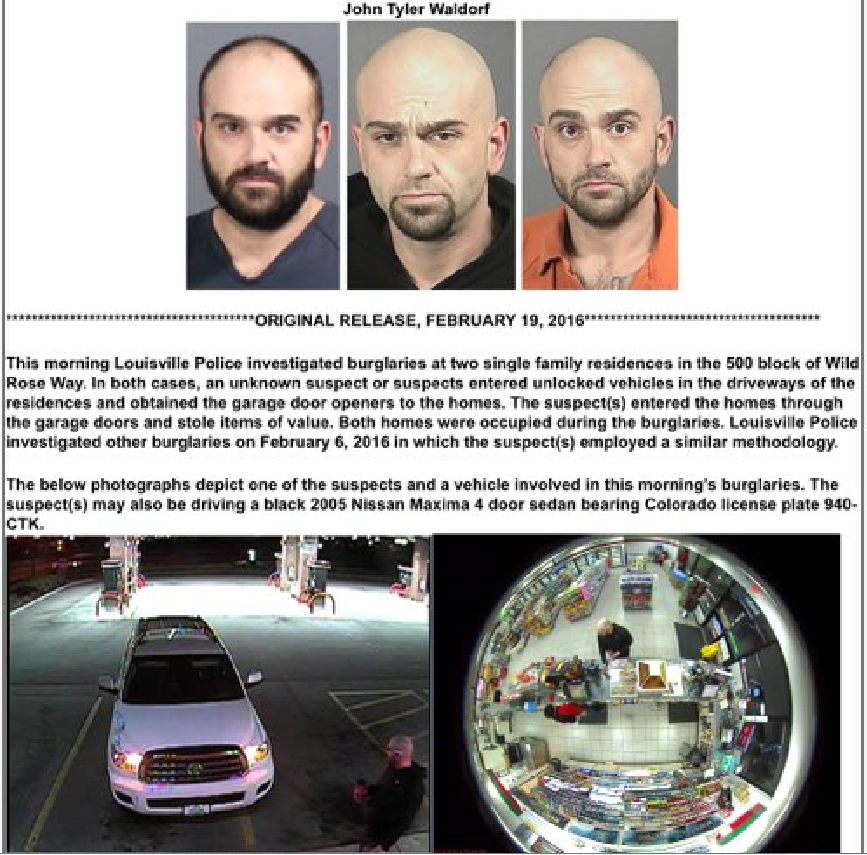
The guy police say stole Miller's wallet and got him wrongfully arrested was himself apprehended earlier this month.

The guy police say stole Miller’s wallet and got him wrongfully arrested was himself apprehended earlier this month.

On the morning of Feb. 20, Lance Miller was arrested in front of his two children by local sheriffs in Golden, Colo. Miller, a managing partner at cybersecurity recruitment firm Curity, had discovered his wallet was missing three days prior to his arrest, reported it to the local police and canceled his credit cards. In the meantime someone had drained his checking account of approximately $5,000, and maxed out his credit cards for almost another $5,000.

“I was standing there in front of my kids saying, ‘You guys are crazy. Do I look like a burglar?'” Miller recalled. “The cop goes, ‘Well, I don’t know what a burglar looks like,’ and they put me in cuffs and in the car.”

Miller said it wasn’t until the 30-minute, handcuffed drive to police station that the local police and the local sheriff’s office began comparing notes, discovering in the process that they’d grabbed the wrong guy and removing the cuffs. Miller soon learned the thief who’d stolen his wallet had impersonated him during multiple traffic stops. A car the impostor was driving also was spotted speeding away from the scene of a burglary, but Miller said the police in that case didn’t give chase in that case because it wasn’t a violent crime.

“He started doing all kinds of stuff, and when he got pulled over he gave them my ID,” Miller said. “The first time he got pulled over and gave them my ID he was riding shotgun in a car with stolen plates that hadn’t yet been reported stolen. They let the guy go that night but then came and arrested me the next morning.”

Miller’s arrest came less than 24 hours after the local Arvada Police Department called to alert him that someone had tried to use his credit card at a nearby bank. Not long after that, a fuel station owner called the cops after getting suspicious about a customer and writing down his license plates.

“When we got to the [police] station, the police chief met me in the parking lot and apologized, then brought me 3 cups of coffee,” Miller said.

According to Miller, the police eventually arrested the guy suspected of stealing his wallet and other crimes that were previously pinned on Miller. The authorities now believe the man responsible is one John Tyler Waldorf, a 37-year-old suspect who had at least 16 warrants for his arrest pending in surrounding counties in connection with burglary and other alleged offenses.

Miller said investigators told him that Waldorf was suspected of associating with a white supremacist crime ring involved in identity theft, drug dealing and serial burglary.

“When these guys are not in prison, they’re expected to earn for the gang,” Miller said. “And apparently one of the best earning methods for these guys is ID theft.”

Louisville, Colo. police issued a bulletin explaining that Waldorf and his associates were known to have entered unlocked vehicles in the driveways of local residences and grabbed the garage door openers to the homes. “The suspect(s) entered the homes through the garage doors and stole items of value,” the police explained. “Both homes were occupied during the burglaries.”

Miller allows that the thieves in his case didn’t need to open the garage or enter his home: He’d absent-mindedly left his wallet in the car overnight while the vehicle was parked in the open garage. He now vows to tighten up his personal security habits.

“We live in a pretty nice area, and I got lulled into the idea that the garage was safe,” he said. “But in the end, it’s all on me. I’m an infosec guy, and if I can’t practice better operational security like that at my house, I should get the hell out of this industry.”

If your wallet or purse is lost or stolen, it’s a good idea to do most – if not all — of these things:

-File a police report as soon as possible to establish a record of the loss. If possible, get a physical copy of the police report at some point. You may be able to file a report and obtain a copy of it online, or you may have to go down to the local police station and pay a small administrative fee to get a copy. Either way, this report can be very useful in getting you a freeze on your credit file or an extended fraud alert at no cost if you decide to do that down the road.

-Contact your bank and report any checks or credit/debit cards lost or stolen. Most banks issue credit and debit cards with “zero liability” provisions, meaning you’re not on the hook for fraudulent charges or withdrawals — provided you report them promptly. The Truth In Lending Act limits consumer liability to $50.00 once a credit card is reported lost or stolen, although many card issuers will waive that amount as well. Fraudulent debit card charges are a different story: The Electronic Fund Transfer Act limits liability for unauthorized charges to $50.00, if you notify your financial institution within two business days of discovering that your debit card was “lost or stolen.” If you wait longer, but notify your bank within 60 days of the date your statement is mailed, you may be responsible for up to $500.00. Wait longer than that and you could lose all the money stolen from your account.

-Contact one of the major credit reporting bureaus (Equifax, Experian, Innovis and Trans Union) and at the very least ask to put a fraud alert on your file, to prevent identity theft in the future. By law, the one you alert has to share the alert with the other three. The initial fraud alert stays on for 90 days. If you have that police report handy, you can instead request an extended fraud alert, which stays in effect for seven years.

-Fraud alerts are okay, but consider placing a security freeze on your credit file with the major bureaus. For more on the importance of a security freeze, check out How I Learned to Stop Worrying and Embrace the Security Freeze.

-Order a free copy of your credit report from one of the major bureaus. By law, you are entitled to a free report from each of the bureaus once a year. The only real free place to get your report is via the site mandated by the federal government: annualcreditreport.com.

20 Mar 16:19

Pennsylvania couple held in starvation of 10-pound toddler

by wtopstaff

UNIONTOWN, Pa. (AP) — A Pennsylvania couple has been jailed in the starvation death of their 23-month-old daughter, who weighed just 10 pounds when she died last month.

Twenty-six-year-old Andrea Dusha and 32-year-old Michael Wright Jr. were charged Thursday with criminal homicide and endangerment charges in the death of Lydia Wright.

Police say the toddler began foaming at the mouth and stopped breathing after she was left in a car seat for over 13 hours at the family’s squalid Uniontown home. An autopsy determined she died of dehydration and malnutrition.

Online court records didn’t list attorneys for the couple, who face a preliminary hearing March 29. They were ordered jailed without bond.

The post Pennsylvania couple held in starvation of 10-pound toddler appeared first on WTOP.

20 Mar 03:27

Something People Actually Do: Hiring A “Vacation Photographer”

by Chris Morran

For all the advances that have made photography more affordable, user-friendly, and accessible, no selfie stick in the world is going to give you that perfectly posed vacation photo that will inspire jealousy and “likes” from the followers and friends you don’t really know on Facebook, Twitter, and Instagram. That’s why hiring a “vacation photographer” is something that real people actually do.

Condé Nast Traveler — better known as the “Places You Probably Can’t Afford To Visit” magazine — has a peek under the hood of this field, which is apparently burgeoning in spite of the fact that just about anyone with a phone can now take a decent looking photo.

One NYC photog tells CN Traveler that she stumbled into the work when she spotted the trend of European couples visiting the city for a special occasion — honeymoon, anniversary, Arbor Day… we guess — and hiring photographers to document their holiday.

She now has a business with three other photographers and a marketing executive who “makes every photo tour smooth,” and charges anywhere from $250 for a one-hour shoot, resulting in 25 digital pics shot at one or two locations, to $600 for three hours (90 photos at upwards of four locations).

Another Florida-based vacation photographer offers her services — minimum package price $350 — in resort towns from the state’s panhandle all the way down to Key West, but she also travels to Paris and Hawaii to shoot those pics that your friends will briefly glance at while skimming through their newsfeeds before uploading their own photos of whatever happens to be on their plate at the moment.

CN Traveler also recently profiled a company with a network of photographers in six continents willing to be paid to take photos that make you look like a vacationing globetrotting celebrity. The reporter for that story noted he did indeed look good in all the photos he got from his experiment with the service, but balked at the price tag of $350 for 30 digital pics, “particularly considering that the photos are just of me hanging around Lisbon.” He did acknowledge that someone celebrating a truly special occasion might find it worth the money.

Take Our Poll
20 Mar 02:47

These Redskins stadium renderings look an awful lot like they're in Oxon Hill, Md. - Washington Post


Washington Post

These Redskins stadium renderings look an awful lot like they're in Oxon Hill, Md.
Washington Post
It isn't often a company commissions architectural models of a billion-dollar real estate project without knowing where the project will be built, the way the Washington Redskins owners did in hiring Bjarke Ingels Group to lay out a vision for a new ...
See Even More Renderings of the Redskins' New Stadium Design—Including the Moat in WinterWashingtonian.com
Unobstructed View: Will The New Pigskins Stadium Be a Good Place to Watch Football?Washington City Paper (blog)

all 4 news articles »
17 Mar 19:03

Tomb radar: King Tut’s burial chamber shows hidden rooms

by wtopstaff

CAIRO (AP) — Radar scans of King Tutankhamun’s burial chamber have revealed two hidden rooms, a tantalizing discovery that could resolve a mystery as old as the pyramids: What was the fate of Egypt’s beautiful Queen Nefertiti?

At a packed Cairo news conference Thursday to announce the find in King Tut’s tomb in Luxor, Antiquities Minister Mamdouh el-Damaty declined to comment on whether any royal treasure or more mummies might be inside the rooms.

But he said the unexplored chambers could hold some kind of organic or metal objects.

Most experts say that while the scans might reveal another tomb behind the false walls, it’s unlikely to be crammed with solid gold and a royal mummy like Nefertiti, whose 3,300-year-old bust on display in Berlin is one of the most famous symbols of ancient Egypt and classical beauty.

“Quite often, people have done these sorts of scans, and when actually investigated, things have turned out to be nothing like predicted,” said Aidan Dodson, an archaeologist at the University of Bristol in England. “If they are chambers, most likely they’d be filled with more funeral objects of Tutankhamun, possibly including some gilded statuettes of gods, or perhaps even the mummy of a young child who predeceased Tut.”

Still, the discovery has ignited massive interest, and el-Damaty cast the discovery as potentially huge. He said the radar scans of the chamber, taken last year and analyzed in Japan, will be repeated at the end of the month.

“It means a rediscovery of Tutankhamun … for Egypt it is a very big discovery, it could be the discovery of the century,” el-Damaty said. “It is very important for Egyptian history and for all the world.”

The discovery could also renew excitement in Egypt’s antiquities and help reinvigorate its flagging tourism industry, which has been hit hard in recent years by political violence, an insurgency in the northern Sinai Peninsula, and persistent attacks since the military’s 2013 overthrow of an elected but divisive Islamist president.

The contents of the newly found rooms could shine a light on one of ancient Egypt’s most turbulent times, and one prominent researcher has theorized that the remains of Nefertiti could be inside.

British Egyptologist Nicholas Reeves speculates that Tutankhamun, who died at age 19, may have been rushed into an outer chamber of what was originally Nefertiti’s tomb. The queen was one of the wives of Tutankhamun’s father, the Pharaoh Akhenaten.

El-Damaty said it was too early to tell what the metal and organic matter could be, saying only that he thinks the chambers could contain the tomb of a member of Tutankhamun’s family, possibly a woman.

Luxor, in southern Egypt, served as the Pharaonic capital and is home to sprawling temples and several highly decorated ancient tombs in the Valley of the Kings.

The discovery in 1922 of King Tut’s nearly intact tomb by Howard Carter yielded unprecedented treasures, including the boy king’s sarcophagus and iconic golden burial mask.

Reeves reached his theory after high-resolution images discovered what he said were straight lines in Tut’s tomb. These lines, previously hidden by the color and texture of the stones, indicate the presence of a sealed chamber, he said. The images were broadcast live on national television in September.

At the Cairo news conference, el-Damaty showed the results of radar scans that revealed anomalies in the walls of the tomb, indicating a possible hidden door and rooms behind false walls that were covered up and painted over with hieroglyphics.

Tut’s tomb, the most intact one ever discovered in Egypt, was packed with well-preserved artifacts when it was discovered, but the fact that it was relatively small for the Valley of the Kings is boosting theories that there is more to be discovered.

For many, Tut embodies ancient Egypt’s glory, because his tomb was packed with the glittering wealth of the rich 18th Dynasty, from 1569 to 1315 B.C.

Nefertiti was the primary wife of the Pharaoh Akhenaten, who unsuccessfully tried to switch Egypt to an early form of monotheism. Akhenaten was succeeded by a pharaoh referred to as Smenkhare, and then Tut, who was proven by genetic testing to have been Akhenaten’s son.

Many Egyptologists cite strong DNA evidence to argue that Nefertiti’s mummy is, in fact, one that already was found more than 100 years ago and is in Cairo’s Egyptian Museum.

Reeves believes that Smenkhare and Nefertiti are the same person, with the queen simply changing her name during her rule.

El-Damaty believes that if anyone is buried in the new antechambers it is likely Kia, believed by some to be the mother of Tutankhamun.

Tut, Nefertiti and Akhenaten’s family ruled Egypt during one of its most turbulent times, which ended with a military takeover by Egypt’s top general, Horemheb. The family’s names were later erased from official records.

___

Follow Brian Rohan on Twitter at: —www.twitter.com/brian_rohan

The post Tomb radar: King Tut’s burial chamber shows hidden rooms appeared first on WTOP.

17 Mar 18:58

Court approves Ontario’s 1st doctor-assisted death

by wtopstaff

TORONTO (AP) — A Canadian judge on Thursday agreed that doctors may help a terminally ill man die, the first case in Ontario and the third in the country where someone has pursued an exemption to the law on assisted suicide under a recent Supreme Court ruling.

Neither the federal nor provincial government opposed the 81-year-old man’s request. The man, who is identified only by his initials in the ruling, was diagnosed in 2012 with lymphoma.

Under Canadian law, doctor-assisted suicide is still a crime. However, the Supreme Court last year struck down laws that bar doctors from helping someone die, but put the ruling on hold for one year. Quebec has its own legislative regime on the issue.

In February, the court granted the government a four-month extension but said the terminally ill could ask courts for an exemption to the ban during that period.

The judge said the married grandfather’s condition and circumstances meet all the criteria for the exemption, which included him being mentally competent, in extreme pain, and freely making the assisted-death request without coercion or manipulation.

The judge also noted the man’s family and doctors support his request.

___

Corrects to say this is the third case in Canada in which someone has sought assisted suicide.

The post Court approves Ontario’s 1st doctor-assisted death appeared first on WTOP.

17 Mar 18:21

Ohio zoo: 2 polar bears wander into back hallway from den

by wtopstaff

CINCINNATI (AP) — The Cincinnati zoo says its two curious polar bears wandered into a behind-the-scenes service hallway through an open den door but never left a secondary containment area.

The zoo says the 17-year-old female, named Berit, and the 26-year-old male, named Little One, entered an inappropriate area Wednesday but remained contained and were never loose or a threat to the public.

A statement from zoo director Thane Maynard says staff followed protocols and safely returned the bears to their main holding area within two hours.

Visitors were moved inside as a precaution but were free to leave the zoo.

No injuries were reported, and the bears weren’t hurt.

The zoo said the bears were resting in their den later Wednesday and could be back on exhibit as soon as Friday.

The post Ohio zoo: 2 polar bears wander into back hallway from den appeared first on WTOP.

17 Mar 18:16

Cops say they cracked case of who egged home 100-plus times

by wtopstaff

EUCLID, Ohio (AP) — Police say they have finally cracked the case of who egged a Cleveland-area home more than 100 times over a year.

A former neighbor, 30-year-old Jason Kozan, has been charged with feloniously vandalizing the Euclid home starting in May 2014 and ending in June 2015, according to court records.

Albert Clemens Sr. has said the attacks damaged his home and kept his family on edge.

The lengthy investigation included undercover stakeouts, neighborhood canvassing and testing of eggshells at a crime lab. A surveillance camera was also installed on Clemens’ home.

Clemens has said his home was egged several times a week. He told cleveland.com in March 2015 that whoever was responsible demonstrated “phenomenal” accuracy, launching five or six at a time and often hitting the front door of the green, two-story home that he and his late wife bought nearly six decades ago. The after-dark attacks sometimes sounded like gunshots as eggs splattered on the aluminum siding, creating a residue that strips the paint, he said.

“I would live and die in this house — but it’s been kind of a nightmare,” Clemens said last year.

He used to clean up each time but stopped because it was happening so often. Clemens said his insurer wouldn’t settle a claim until police caught the vandal, so Clemens said he would wait until then to make repairs.

Detectives haven’t identified a motive for the eggings, Lt. Mike Knack said Wednesday.

The eggings largely stopped once Kozan moved away.

“Somebody is deeply, deeply angry at somebody in that household for some reason,” Lt. Mitch Houser said earlier.

Kozan had no attorney on record with Euclid Municipal Court. His bond was set Tuesday at $2,000.

A Cuyahoga County grand jury will review Kozan’s case for a possible indictment, police said.

The post Cops say they cracked case of who egged home 100-plus times appeared first on WTOP.

17 Mar 18:14

SeaWorld to stop breeding orcas, making them perform tricks

by wtopstaff

ORLANDO, Fla. (AP) — After years of pressure, SeaWorld made a surprise announcement on Thursday: It no longer breeds killer whales in captivity and will soon stop making them leap from their pools or splash audiences on command.

Surrendering finally to a profound shift in how people feel about using animals for entertainment, the SeaWorld theme parks have joined a growing list of industries dropping live animal tricks. Ringling Bros. and Barnum & Bailey Circus is retiring all of its touring elephants in May. Once-popular animal shows in Las Vegas have virtually disappeared.

“Society’s attitude toward these very, very large, majestic animals under human care has shifted for a variety of reasons, whether it’s a film, legislation, people’s comments on the Internet,” said SeaWorld Entertainment CEO Joel Manby. “It wasn’t worth fighting that. We needed to move where society was moving.”

SeaWorld’s 29 killer whales will remain in captivity, but in “new, inspiring natural orca encounters,” according to the company. SeaWorld’s orcas range in age from 1 to 51 years old, so some could remain on display for decades.

Attendance at SeaWorld’s parks declined after the 2013 release of “Blackfish,” a highly critical documentary. Some top musical acts dropped out of SeaWorld-sponsored concerts at the urging of animal rights activists, who kept up a visible presence demonstrating outside the parks’ gates.

Still, the decision shocked advocates who have spent decades campaigning against keeping marine mammals captive, and it represents a sharp U-turn from SeaWorld’s previous reaction to the documentary.

In August 2014, SeaWorld announced major new investments in the orca program, including new, larger tanks, first in San Diego and then at its parks in Orlando and San Antonio, Texas.

But the California Coastal Commision didn’t approve the $100 million expansion until last October, and when it did, it banned orca breeding as part of the decision. SeaWorld sued, arguing that the commission overstepped its authority, but said it would end its San Diego orca shows by 2017.

Meanwhile, SeaWorld brought in a new leader with more experience in regional theme parks than zoos and aquariums, which have been fending off such protests for decades. Manby was hired as SeaWorld CEO last March 19 after running Dollywood and other musically-themed parks. He said Thursday that he brought a “fresh perspective” to the killer whale quandary, and soon realized that “society is shifting here.”

Orcas have been a centerpiece of the SeaWorld parks since shows at the Shamu stadium in San Diego became the main draw in the 1970s. But criticism has steadily increased in the decades since and then became sharper after an orca named Tilikum battered and drowned trainer Dawn Brancheau after a “Dine with Shamu” show in Orlando in 2010.

Her death was highlighted in “Blackfish,” and it wasn’t the first for Tilikum. The whale also killed an animal trainer and a trespasser in the 1990s.

“Blackfish” director Gabriela Cowperthwaite said she applauds SeaWorld’s decision, “but mostly I applaud the public for recalibrating how they feel ethically about orcas in captivity.”

The new orca shows will begin next year at the San Diego park, before expanding to its San Antonio park and then to Orlando in 2019, Manby said.

What about shows involving dolphins and other marine mammals?

“Stay tuned on that,” Manby said. “A lot of people don’t understand how hard it is internally to make these kinds of decisions. We need to execute this well. We need to make sure we have the organization in the same direction. Then we will apply those learnings elsewhere.”

SeaWorld has not only discontinued breeding orcas through artificial insemination; it also feeds the whales birth control medication, Manby said.

One of SeaWorld’s most prolific breeders has been Tilikum. The 35-year-old whale has sired 14 calves during his 23 years in Orlando, but he’s gravely ill now and not expected to live much longer.

“So you’re saying you’re ending your breeding program? Well, guess what? Your breeding program is ending anyhow. I think it’s greenwashing,” said Ric O’Barry, who directs the DolphinProject.net advocacy group.

In 2012, SeaWorld sent workers to infiltrate the animal rights group People for the Ethical Treatment of Animals, which has been particularly critical. Manby confirmed the effort last month. He said the undercover workers were sent to protect the safety of SeaWorld employees and customers, but he vowed to end the practice.

Now, SeaWorld hopes to turn a less strident foe, the Humane Society, into a collaborator, helping to educate guests about animal welfare and conservation through interpretive programs and expanded advocacy for wild whales, seals and other marine creatures.

Humane Society CEO Wayne Pacelle, who called SeaWorld’s about-face a “monumental announcement,” said his organization is by no means naive about SeaWorld, but sees a chance to make progress for animal rights.”

“We didn’t want to be endlessly mired in conflict,” Pacelle said.

PETA wasn’t satisfied, insisting Thursday that SeaWorld should give up its orcas altogether.

“SeaWorld must open its tanks to the oceans to allow the orcas it now holds captive to have some semblance of a life outside these prison tanks,” PETA spokeswoman Colleen O’Brien said in a statement.

Manby countered that no captive dolphin or orca has been successfully released into the wild.

SeaWorld is abandoning plans to expand its orca tanks now that the breeding program has ended, the company said. A spokeswoman for the California Coastal Commission praised this, and suggested that SeaWorld drop its lawsuit as well.

Manby said SeaWorld’s three marine parks may move closer to the balance of rides, shows and animals found at the company’s Busch Gardens parks. They need a mixture of experiences to keep a family at the park all day, he said.

“I do think you have to have more rides,” Manby said. “Some of these messages about animal welfare … You can’t hit them with that all day because sometimes it’s a heavy message. You have to balance it.”

___

This story has been changed to correct the spelling of Gabriela Cowperthwaite’s name.

___

Associated Press writer Freida Frisaro in Miami contributed this report.

The post SeaWorld to stop breeding orcas, making them perform tricks appeared first on WTOP.

17 Mar 18:11

Automakers agree to put automatic braking in cars by 2022

by wtopstaff

WASHINGTON (AP) — Automatic braking will be standard in most cars and light trucks within six years and on heavier SUVs and pickup trucks within eight years under an agreement that transportation officials and automakers announced on Thursday.

The voluntary agreement with 20 car manufacturers means that the important safety technology will be available more quickly than if the government had gone through the lengthy process of issuing mandatory rules, said Mark Rosekind, head of the National Highway Traffic Safety Administration.

However, some safety advocates have filed a petition asking the government to issue mandatory regulations. They say voluntary agreements aren’t enforceable, and that since automatic braking is already available in some cars, issuing rules requiring the technology could be done faster than the six to eight years allowed under the agreement.

Automatic braking systems use cameras, radar and other sensors to see objects that are in the way and slow or stop a vehicle if the driver doesn’t react. It’s the most important safety technology currently available that’s not already required in cars.

“A commitment of this magnitude is unprecedented, and it will bring more safety to more Americans sooner,” Rosekind said.

Deborah Hersman, president of the National Safety Council, said the agreement “has the potential to save more lives than almost anything else we can accomplish in the next six years.”

There are about 1.7 million rear-end crashes a year in the U.S., killing more than 200 people, injuring 400,000 others and costing about $47 billion. More than half of those crashes could be avoided or mitigated by automatic braking or systems that warn drivers of an impending collision, NHTSA has estimated.

Of the 194 most popular vehicle models already on the market, 17 come with automatic braking as standard equipment. It is available as part of an options package in 71 other models.

The reason automakers don’t want to be required to put automatic braking into vehicles sooner than the six to eight years promised in the voluntary agreement is that they don’t want to have to redesign vehicles and change production schedules sooner than planned, said safety advocate Joan Claybrook, a former NHTSA administrator.

“This six- to nine-year lead time is all about the auto companies saving money,” she said.

The agreement requires that automatic braking be standard in most cars and light trucks with weighing up to 8,500 pounds no later than Sept. 1, 2022. The braking would have to be standard on nearly SUVs and pickup trucks with weighing between 8,501 and 10,000 pounds beginning no later than Sept. 1, 2025.

NHTSA estimates that the agreement will make automatic braking standard on new cars three years faster than could be achieved through the formal regulatory process. During those three years, according to Insurance Institute for Highway Safety estimates, the technology will prevent 28,000 more crashes and 12,000 more injuries than without the agreement.

However, the standards for how effective the brakes must be are set so low under the agreement that few if any lives will be saved, said Clarence Ditlow, executive director of the Center for Auto Safety.

___

Follow Joan Lowy at twitter.com/AP_Joan_Lowy. Her work can be found at http://bigstory.ap.org/content/joan-lowy

The post Automakers agree to put automatic braking in cars by 2022 appeared first on WTOP.

17 Mar 18:10

Reaction to SeaWorld’s decision to stop orca breeding

by wtopstaff

MIAMI (AP) — Following years of criticism and the death of a trainer, SeaWorld Entertainment said it will no longer breed killer whales. Thursday’s announcement was widely applauded by animal rights groups, but lamented by a trade group for aquariums and theme parks as a hindrance to science and conservation. Some comments:

___

“SeaWorld’s decision to end captive breeding, and make no additional wild captures in the future, means that the current generation of captive orcas in their parks will be the last.”

— Rep. Adam Schiff, D-California, who authored the Orca Responsibility and Care Advancement Act in 2015.

___

“This decision means that in 30 or 40 years, after the last of SeaWorld’s orcas have passed away, future generations of American children will no longer be able to see and experience the awe-inspiring physicality and intelligence of these apex predators up close and be inspired to help conserve them in the wild.”

— Kathleen Dezio, president and CEO of the Alliance of Marine Mammal Parks and Aquariums.

___

“We don’t come to this discussion, or this collaboration with any naivete or any lack of knowledge about the operations of SeaWorld. We didn’t want to be endlessly mired in conflict with SeaWorld. The goal was to make progress for animal rights.”

— Wayne Pacelle, CEO of the Humane Society of the United States, which announced a conservation and education partnership with SeaWorld on Thursday.

___

“The decision to end its orca breeding program globally and to commit to ending the collection of exhibit animals from the wild, as well as to a “no orca” policy should SeaWorld expand its brand into new international markets, is a monumental and important first step forward in achieving a more humane business model for the company.”

— Dr. Naomi Rose, marine mammal specialist at the Washington-based Animal Welfare Institute.

___

“I’m a mother who used to take her kids to SeaWorld. I just asked a question, and that question was, ‘Why did a top-level SeaWorld trainer come to be killed by a killer whale?’ Very few people see documentaries anyway — I never imagined there would be a sea change. I think it struck a nerve … and I think this resonated with children. I call kids these days the “I-can’t-believe-we-used-to-do-that” generation. They’re the ones who decide where families go on vacation.”

— Gabriela Cowperthwaite, director of the 2013 documentary “Blackfish.”

___

“‘Blackfish’ is full of lies … I blame CNN for this. They bought the rights and have aired it a number of times. Frankly, sooner or later, if someone tells enough lies about you, people are going to believe those perceptions. It’s a sad day for journalism. It’s a sad day for the zoo and aquarium field and a sad day for the people at SeaWorld who care so much about those animals. because of places like SeaWorld.”

— Grey Stafford, incoming president of the International Marine Trainers’ Association.

___

“I can envision a day coming soon when children will be repelled by the idea of keeping any wild and sentient animals in captivity. Caging tigers, lions, elephants, orcas and other dolphins, to name a few, will become just as repulsive to an evolved civilization as smoking in restaurants.”

— Louie Psihoyos, director of the 2009 documentary “The Cove,” which showed the killing of dolphins in Japan.

___

“The Coastal Commission is gratified to have played a role in SeaWorld’s decision to end its breeding program.”

— Noaki Schwartz, spokeswoman for the California Coastal Commission, which banned orca breeding last year.

___

“Keeping and breeding large, intelligent animals in small underwater cages for the sake of entertainment and profit is simply unethical.  Consumers have woken up and sent a clear message to SeaWorld that they won’t pay to watch animal cruelty in action.

— Angus Wong of SumOfUs, an international consumer watchdog organization.

___

“SeaWorld needs to go all the way and remove them from the stadium and put them into a sanctuary. And I believe the public will follow. If you put them in a natural setting, somewhere really beautiful, the public will go. They won’t make as much money because they won’t do stupid tricks and have a spectacular show, but the public will still support that.”

— Ric O’Barry, trainer of TV’s “Flipper,” founder of the DolphinProject.net and subject of the documentary “The Cove.”

___

“We’re eager for them to move a little faster toward the next step, which is a sea pen option. It’s difficult, it has to be done on a case by case basis so it’s not simply dumping them in the ocean. We’re not trying to free the whales — we know they can’t live in the ocean, for the most part, (but) there’s more that they can do.”

— Howard Garrett, founder of the Orca Network, which has pushed Miami Seaquarium to release its orca, Lolita.

___

“The marine mammal shows at Miami Seaquarium are constantly evolving in order to incorporate important educational and conservational elements. As a result, several months ago the killer whale presentation at Miami Seaquarium transitioned into an educational presentation about killer whales, their natural behaviors and the endangered Southern Resident Killer Whale population.”

— Andrew Hertz, General Manager, Miami Seaquarium.

The post Reaction to SeaWorld’s decision to stop orca breeding appeared first on WTOP.

17 Mar 18:08

Americans pony up record $60B keeping pets healthy, happy

by wtopstaff

LOS ANGELES (AP) — Americans spent just over $60 billion on their pets last year, a record fueled by a big jump in what owners shelled out for services like grooming, boarding and training.

Two age groups drove the increase: millennials, because of their lifestyle, and baby boomers, because of their age, said Bob Vetere, president and CEO of the American Pet Products Association.

Those groups in particular often look to others to keep their pets exercised and looking and feeling good. They also tend to hire pet-sitters and use boarding services.

Americans spent $5.4 billion on such pet services last year, up nearly 12 percent from 2014, according to the association’s annual report released Thursday at the Global Pet Expo trade show in Florida. Here are some of its other findings:

___

NO LOVE LOST

By having others care for their pets, are owners not showing as much love as they used to?

“No, no, no,” Vetere said. “I don’t see this as a way people are trying to farm out their love for a pet. I think it’s a way of increasing exposure to loving people.”

The spike in service spending is expected to moderate in 2016 but still increase nearly 6 percent, more than any other area of pet spending.

___

MORE PILLS, FEWER VISITS TO THE VET

The proliferation of reality TV shows featuring veterinarians like “The Incredible Dr. Pol” and “Dr. Oakley, Yukon Vet” have focused more attention on the profession.

But the spending report found people are turning more to pharmacies, pet stores and food supplement stores for products to increase their animals’ health and longevity.

Medications are being refined and mass marketed, increasing their quality and availability.

Spending on pet supplies and medication increased nearly 4 percent, compared with a 2.5 percent hike for veterinary services.

“If a pet is sick or injured, today’s owner will run to the vet, but routine visits to the vet are down,” Vetere said.

___

LIVE LONG AND PROSPER

Americans are spending more to take care of their pets, but they aren’t buying as many pets to begin with.

People in the U.S. spent about $2.1 billion on animals last year, down 1.4 percent from 2014. It was the second year in row that sales fell, and a third dip is expected in 2016, though the decline should moderate.

Reasons for the drop: Pets are living longer. The oldest baby boomers are reaching 70 and not replacing their animal companions.

Also, a growing number of cities across the country have banned the sale of dogs in pet stores in efforts to put puppy mills out of business.

The post Americans pony up record $60B keeping pets healthy, happy appeared first on WTOP.

17 Mar 18:08

Section of National Zoo to remain closed until Friday

by wtopstaff

WASHINGTON — A section of the Smithsonian National Zoo will remain closed for the rest of the day after a possible chlorine release Thursday morning.

The American Trail area of the zoo, which is home to North American species like ducks, pelicans and wolves, was closed shortly after 11 a.m. so D.C. Fire and EMS crews could investigate. The fire department determined the outdoor areas were safe for staff to return about 2 p.m. However the trail won’t reopen to the public until Friday morning, the zoo said in a statement.

According to the zoo, a contractor was working in a mechanical room that houses water treatment and filtration equipment near the beaver and otter exhibits when he detected the strong odor of chlorine. The contractor left the room and then heard a loud bang, said zoo spokeswoman Devon Murphy. There was no smoke or fire.

Zoo officials believe there was a chlorine emission, Murphy said.

Chlorine is used in the water filtration system at the zoo.

The contractor was not hurt, nor were any staff, visitors or animals, zoo officials say.

WTOP’s Kate Ryan contributed to this report.

The post Section of National Zoo to remain closed until Friday appeared first on WTOP.

17 Mar 17:47

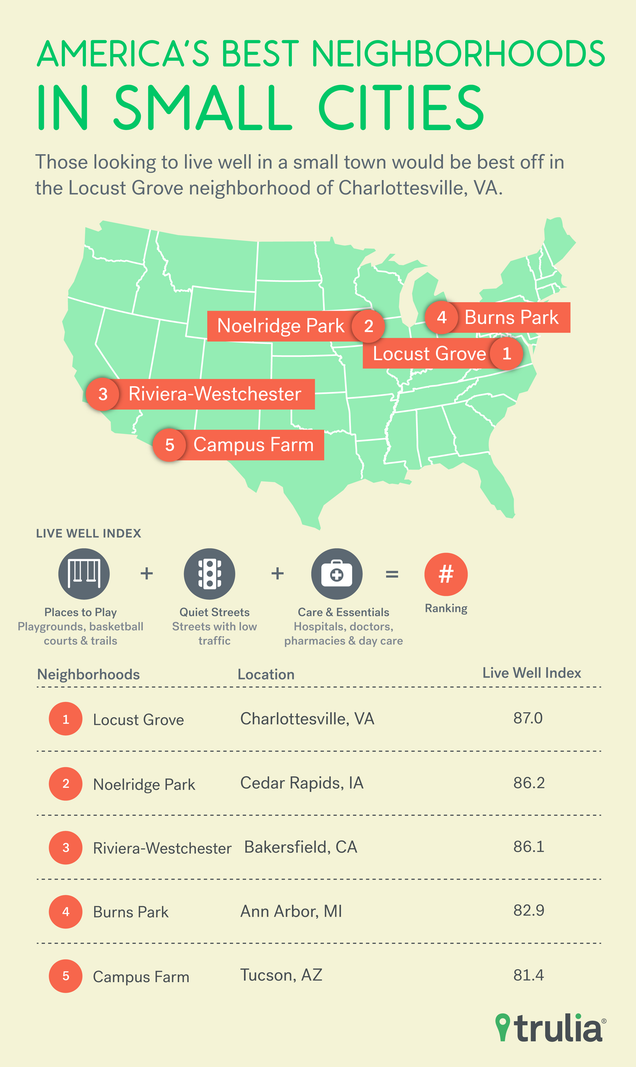
The Best Neighborhoods for Living Well in the US

by Melanie Pinola

Choosing where to live is more than just about the cost of rent or buying a home . If you’re looking for quiet neighborhoods where you can stay active and healthy, Trulia’s new maps can help.

Read more...


17 Mar 17:45

Use Up Stale Bread by Making This Classic, Hearty Soup

by Heather Yamada-Hosley

Using up stale bread isn’t difficult, but making it into a filling, tasty meal is easier than you think. All you need is some stale bread and a couple items you probably already have in your pantry.

Read more...


17 Mar 17:42

How to Navigate the Confusing and Expensive World of Medical Billing

by Beth Skwarecki on Vitals, shared by Andy Orin to Lifehacker

Not long after a visit to the emergency room or any serious medical procedure, the bills start showing up in the mail. Some look like duplicates, many are hard to decipher, and some actually aren’t bills at all. Here how to decipher and identify all those confusing pieces of paper before someone comes looking for money you didn’t know you owed.

Read more...


17 Mar 17:41

Free Shipping Not Actually Zero-Cost Or Zero Effort, And FedEx Wants Retailers To Pay Their Share

by Kate Cox

We’re nearly two decades now into the e-commerce era. Shop everywhere! Shop from your phone. Shop from your tablet. Shop (during your breaks, of course) from your work computer. But all that online shopping shares one thing in common: unless 3D printers become a lot more like Star Trek‘s replicators, and a lot more affordable, all those goods ordered in the cloud have to get to actual consumers on good, old-fashioned planes, trains, and trucks.

That’s where FedEx comes in, as the Wall Street Journal reports. The shipping giant’s expenditures are up — way up — but the payment it’s getting from e-commerce vendors isn’t keeping pace.

The company that handles your packages when they absolutely, positively have to get there overnight — or at least, sometime this week we hope — has been spending a lot more money on improving their own business, but isn’t bringing in as much as they had hoped, executives announced with recent financial filings. Capital expenditures this year have increased to $4.8 billion, but their third quarter net income still managed to drop by 19%.

That isn’t to say revenues are down; in ground shipping, the part of the company that handles most online orders, revenue is up by 40%. Costs, however, are also increasing, particularly due to holiday season demand.

FedEx executives implied to the WSJ, however, the the online retailers are perhaps not necessarily picking up their fair share of the costs.

“There’s an enormous interest in people having things delivered to themselves. It does not change, one iota, the input costs of the delivery,” CEO Fred Smith told the WSJ.

CFO Alan Graf echoed that sentiment, telling the WSJ that the charges for shipping really need to match the reality of the costs. “We can’t build these networks and spend this kind of capital and not get a return on it,” Graf told the WSJ.

And so consumers can expect costs for the weird, big, bulky, or hard-to-ship items (like kayaks, apparently) to go up.

As for Amazon’s attempts to take over the shipping part of business directly, those don’t scare FedEx, executives told the WSJ. Amazon airplanes might move goods coast to coast and ocean shipping might get goods in from overseas, but you still need trucks on the ground, Smith said. Or, specifically, he said, “The key driver of any delivery system is route density and revenue per delivery stop.”

Even if you do try to get a fleet of local folks to carry packages for you, that’s not quite the same thing.

No single business, including Amazon, accounts for more than 3% of FedEx’s revenue currently, according to the WSJ, so even if the Seattle giant’s delivery business took off like gangbusters for all the goods they sell right away, it would still take a fair while to hit FedEx’s bottom line.

FedEx Says Retailers Should Be Paying More for Web Delivery [Wall Street Journal]

17 Mar 16:46

Today's Best Deals: Cheap Drones, Phone Protection, Cleaner Carpets

by Shane Roberts, Commerce Team

Minimalist phone cases are just the start of today’s deal offering. Bookmark Kinja Deals and follow us on Twitter to never miss a deal. Commerce Content is independent of Editorial and Advertising, and if you buy something through our posts, we may get a small share of the sale. Click here to learn more, and don’t forget to sign up for our email newsletter.

Read more...

17 Mar 16:44

SeaWorld Ending Signature Killer Whale “Shamu” Shows; Will Stop Breeding Orcas

by Chris Morran

For decades, SeaWorld parks have been associated with the visual of orca killer whales — most famously Shamu — jumping into the air for the amusement of large audiences. But amid growing criticism about the treatment of these animals and the safety of their trainers, SeaWorld has committed to not only ending these shows, but to also cease breeding orcas in captivity.

SeaWorld’s flagship park in San Diego had previously announced that it would phase out the theatrical killer whale shows in favor of an orca exhibit that was more educational about the animal.

Today, in a joint statement with the Humane Society of the United States, SeaWorld officially commits to ending these shows at all parks, and to end its practice of breeding the whales.

The orcas that are already at SeaWorld parks will continue to live out their lives there, though they will be the last of the orcas in captivity at the world-famous tourist attractions.

SeaWorld and the orca shows have been heavily criticized in recent years, especially in the wake of the 2013 documentary Blackfish, which chronicles the alleged mistreatment of orcas and apparent lapses in safety for their trainers.

The documentary looked at the death of SeaWorld Orlando trainer Dawn Brancheau, who was killed in front of park visitors when an orca named Tilikum pulled her into the water and kept her under during a performance.

The company has been trying to repair its tarnished public image ever since, launching a campaign called “Ask SeaWorld” and pledging to spend $10 million on orca research and expand the whale environment at the park, among other things.

Although SeaWorld has said it beefed up safety measures for its workers, in May 2015, the Occupational Safety and Health Administration in California cited SeaWorld San Diego for not properly protecting employees.

17 Mar 16:44

Chicago Raises Smoking Age To 21, Exempts Feminine Hygiene Products From Sales Tax

by Ashlee Kieler

Yesterday, the Chicago City Council voted to approve a pair of hot-button measures: One that raises the minimum age for buying cigarettes in the Windy City, and another that does away with the so-called “pink tax” or  “tampon tax” on feminine hygiene products.

21 & Up

The Chicago Tribune reports that the city council voted 35-10 to approve upping the minimum age for buying tobacco from 18 to 21.

In addition to raising the smoking age, under the anti-smoking plan, Chicago will no longer accept coupons or discounts on smoking products.

The measure also made changes to the city’s tobacco tax, by increasing fees tacked on to cigars, roll-your-own tobacco and smokeless tobacco.

Taxes on small cigars will increase $0.20, while the per-ounce tax on roll-your-own tobacco will now be $1.80.

In all, the tax increase is expected to bring in an additional $6 million. The city already had the nation’s highest cigarette tax at $7.17 per pack, the Tribune reports.

A separate measure was also approved, banning the use of chewing tobacco at the city’s baseball games and other professional and amateur sporting events. The Tribune reports that it’s unclear how that ban would be enforced.

No More Tampon Tax

While the Illinois state legislature is considering a bill to exempt feminine hygiene and incontinence products from state sales tax, the Chicago City Council has gone ahead and voted to stop collecting city sales taxes on these items.

Taxes on tampons and similar products have drawn a lot of attention from critics who believe they are unfair and unevenly applied.

Earlier this month, five women in New York sued the state’s Department of Taxation and Finance, claiming that the “department’s double standard for men and women finds no support in the tax law and serves no purpose other than to discriminate.”

Aldermen raise smoking age, OK 50-cent cab credit card fee, ban chewing tobacco at games [The Chicago Tribune]

17 Mar 16:43

Driver Ticketed After Police See Facebook Video Of Him Ignoring A Stop Sign

by Chris Morran

A man in Colorado recently received a traffic ticket for blowing through a Stop sign — not because a police officer witnessed the violation in person, but because the driver posted video of the incident on Facebook.

CBS Denver reports that the driver made the video to demonstrate how he avoids traffic in his area by cutting through the parking lot of an apartment complex.

(We’re not sure why exactly you’d want to share that information with the world, as it could only result in more people using that shortcut, thereby increasing the traffic on your previously secret route, but oh well.)

Among the people who viewed the video were the local police, who noticed that at one point in the clip the driver seems to roll right through a Stop sign. So they tracked him down and delivered a traffic ticket to his home a few days later.

The driver/shortcut spoiler, who says he will fight the citation, appears to believe the police went too far in using the video to issue that ticket.

“Is this where we’re at?” he asks CBS Denver. “Can they use videos from Facebook to give me a traffic violation? Can they do that to everybody?”

According to a local police sergeant, yes.

“You have a First Amendment right to post whatever you want,” acknowledges the officer, “but if you’re breaking the law and it’s in our jurisdiction then we can do something about it.”

17 Mar 16:41

Segway Patent Complaint Could Result In Import Ban On Most “Hoverboard” Scooters

by Chris Morran

Long before “hoverboard” scooters were catching fire in America’s living rooms, the Segway personal transport was the pricey, bulky self-balancing butt of jokes. But Segway may have the last laugh, after the U.S. International Trade Commission has moved to bar the import of hoverboards that allegedly infringe on Segway patents.

Starting in 2014, Segway filed complaints with the ITC, accusing more than a dozen scooter-making companies of infringing on their patents. A number of these companies failed to respond to ITC investigators’ inquiries, or did not comply fully, so Segway sought a summary declaration in its favor. In the meantime, one of the alleged infringers, Ninebot Inc., acquired Segway.

Yesterday, the ITC announced [PDF] that it was general exclusion order (GEO) “barring the unlicensed entry of certain personal transporters” that infringe on one of the Segway patents, and a limited exclusion order (LEO) “prohibiting the unlicensed entry of infringing personal transporters, components thereof, and manuals therefor manufactured abroad by or on behalf of certain respondents that are covered by one or more asserted U.S. patents and copyright.”

The “certain respondents” referred to in the LEO are UPTECH, U.P. Technology, U.P. Robotics, FreeGo China, EcoBoomer, and Roboscooters.

But more problematic for the entire hoverboard industry is the GEO, which bars the importing of devices infringing on the Segway patent for “Control of a personal transporter based on user position.”

That patent may cover a lot of the same technology currently used in many hoverboard scooters, notes Ars Technica. So if the president signs the GEO, it would likely mean fewer hoverboards available in the U.S.

Ninebot-made or licensed hoverboards would be fine, since the company acquired the patent when it purchased Segway in 2015.

Of course, the devices aren’t readily available at retail right now, with Amazon, Target, Toys R Us, and others pulling them from sale after the Consumer Product Safety Commission declared that the boards must meet new safety standards.

17 Mar 13:04

It’s a baby! Bald eagle hatches, second is ‘pipping’ (Photos)

by Ginger Whitaker

WASHINGTON — The first of two baby bald eagles has emerged from its shell at the National Arboretum — and millions are watching.

At 8:27 a.m., the baby eagle shed its original home and was occasionally visible on the Bald Eagle Nest Cam before being covered by one of its parents.

Two bald eagles, known as “Mr. President” and “The First Lady,” have been nesting in a tree at the U.S. National Arboretum since 2014. This year, one egg was laid Feb. 10; a second, on Valentine’s Day.

The hatching process began Wednesday evening.

“The eaglet is breathing real air on its own now,” Al Cecere, founder and president of the American Eagle Foundation .

Cecere projects the second egg will begin hatching Sunday, since it was laid several days after the first. On Saturday the egg  was in the process of “piping,” which comes right before the egg shells are completely broken.

Getting out of the egg takes effort.

“They go in bits and spurts,” says Cecere. “They gotta rest a little bit, and sometimes they get enough strength to kick a little bit more, or peck at the egg shell a bit more — it’s just a gradual process.”

It doesn’t appear that the eaglet has eaten since emerging. Cecere says it received nutrition through an umbilical cord that was attached to the membrane.

“Remember, [the mother] also got another egg in there that she continues to incubate, and it has to be rotated,” says Cecere. “She’s also working on her nest cup, to keep the eggs warm — just straightening up the household a bit.”

Cecere’s daughter Julia, the publicity and marketing manager for the eagle foundation, says the birth has captured the nation’s attention.

“There are 23 or 24,000 people watching right now,” she said during the interview. “Overall, it’s probably close to two million now.”

The baby eaglet will have a busy first week, Al Cecere says: “Eaglets can’t really focus their eyes until after several days, maybe five days.”

The eaglet will get its first meal quickly. “The parents will try to bring some food to the eaglet fairly soon after it comes out of the egg,” says Cecere. “But before they do that, they’ll drop their own saliva inside the mouth of the eaglet, as an initial nutrition.”

After the saliva feast, the bald eagle parents will change the baby’s diet.

Even before the eaglet was out of its shell, its parents had brought a fish from the Anacostia River back to the nest.

“They’re going to chew it up into tiny, fine little bits, and they’re going to put it in the baby’s mouth,” says Cecere.

In short order, the eaglet will be very vocal when it wants to eat.

“It won’t be very long until the eaglet will be standing up, erect, with its head up, and whenever it’s hungry it’ll be squeaking away and begging for food,” Cecere says.

The eaglet will be ready to fledge — develop the feathers needed to fly — at approximately 12 to 13 weeks, says Cecere.

“We’re hoping that they’ll survive, but with nature you never know,” says Cecere. “A raccoon could do some damage, but if a red tail hawk flies onto the nest [the parents will] go after it and tear it to pieces if it gets near one of their babies.”

“There’s about a 50-50 percent chance — the same in all wild nests,” says Cecere. “Less than 50 percent survive the first year, but once they survive the first year, their chances go up because they’ve learned to survive on their own.”

Living in the nation’s capital, or any major city, the young eagles chances of survival will depend on their ability to adapt to human-made dangers, including power lines, traps and poison.

“They’re genetically engineered to catch a fish,” says Cecere. “They have to learn some things the hard way.”

WTOP’s Meg Hasken, Michelle Basch and Ginger Whitaker contributed to this report.

The post It’s a baby! Bald eagle hatches, second is ‘pipping’ (Photos) appeared first on WTOP.

17 Mar 13:03

The Latest: DC subway shutdown ends, systemic issues remain

by wtopstaff

WASHINGTON (AP) — The Latest on a shutdown of the Washington area’s Metro subway system (all times local):

5:05 a.m.

Commuters in the nation’s capital can return to their regular routines after an unprecedented daylong shutdown of the Washington subway system.

Metro tweeted early Thursday that it has resumed service on all lines of its subway system.

But the problems that led to the closure won’t be fixed so easily and will continue to cause headaches for riders, some of whom have already abandoned the aging system because of safety and reliability concerns.

The 29-hour shutdown ended at 5 a.m. Thursday. It was ordered to allow workers to inspect 600 third-rail power cables throughout the Metro transit system. Metro General Manager Paul Wiedefeld said the inspection was essential to ensure passenger safety after an electrical fire on the tracks Monday.

The inspections revealed 26 areas needing replacement or repair, including three that Wiedefeld called “show-stoppers.”

___

3:55 a.m.

Commuters in the nation’s capital are returning to their regular routines after an unprecedented daylong shutdown of the Washington subway system.

But the problems that led to the closure won’t be fixed so easily and will continue to cause headaches for riders, some of whom have already abandoned the aging system because of safety and reliability concerns.

The 29-hour shutdown is scheduled to end at 5 a.m. Thursday. It was ordered to allow workers to inspect 600 third-rail power cables throughout the Metro transit system. Metro General Manager Paul Wiedefeld said the inspection was essential to ensure passenger safety after an electrical fire on the tracks Monday.

The inspections revealed 26 areas needing replacement or repair, including three that Wiedefeld called “show-stoppers.”

The post The Latest: DC subway shutdown ends, systemic issues remain appeared first on WTOP.

17 Mar 13:01

Reston Zoo Opening With New Name, New Owner on March 19 - Patch.com


Patch.com

Reston Zoo Opening With New Name, New Owner on March 19
Patch.com
See baby animals and more at Roer's Zoofari, formerly the Reston Zoo. An Easter event will be held March 26-27. Find out the details here. Herndon, VA. By Sharon Reed (Patch Staff) - March 16, 2016 4:04 pm ET. ShareTweetGoogle ...

and more »
17 Mar 13:01

Fairfax County community calendar, March 17-24, 2016 - Washington Post


Fairfax County community calendar, March 17-24, 2016
Washington Post
Fairfax Antique Arts Association meeting Discussion on Jackie Kennedy's choice of crystal and china for the White House. Nonmembers welcome. 10 a.m. Green Acres Center, 4401 Sideburn Rd., Fairfax City. 703-273-6090. Free. Parkinson aquatic exercise ...

and more »
16 Mar 22:55

Arlington Pet of the Week: Nola

by wtopstaff

12140576_10109573747051054_6841788809810250951_n
IMG_8150
IMG_8156
1899875_750548931683829_6209977862475077908_n
IMG_8153
10850097_10107771351311564_6697751586291610666_n

This week’s Arlington Pet of the Week is a studious French Bulldog named after the great city of New Orleans.

Nola is a happy two-year-old pup who isn’t afraid to put small yard critters and other dogs in their rightful place in nature’s pecking order. Here’s what owner Mary had to say about her Frenchie.

Je m’appelle Nola. I am a 2 year old French Bulldog. I am named after New Orleans for many reasons, 1. I’m a French Bulldog, 2. My biological mom’s name is Las Vegas, keeping with the U.S. city theme, and 3. My new mommy got me around her 30th bday which she celebrated in New Orleans!

My hobbies are chasing squirrels and rabbits, one day I will catch one! I also like playing chase with the neighborhood dogs!

I often forget that I’m a small dog because I’m used to bossing around 2 bull terriers when I visit my second home Pittsburgh. I grew up with them so I really don’t know any better.

Other than that you can find me cuddling with just about any human at home and saying hi to just about every human I meet on the streets of Arlington! I am very spoiled with attention! I won’t lie, I am the apple of my mommy’s eye and I work that to my advantage :) Au revoir!

Want your pet to be considered for the Arlington Pet of the Week? Email arlingtonnews@gmail.com with a 2-3 paragraph bio and at least 3-4 horizontally-oriented photos of your pet. Please don’t send vertical photos, they don’t fit in our photo galleries!

Each week’s winner receives a sample of dog or cat treats from our sponsor, Becky’s Pet Care, along with $100 in Becky’s Bucks. Becky’s Pet Care is the winner six consecutive Angie’s List Super Service Awards, the National Association of Professional Pet Sitters’ 2013 Business of the Year and a proud supporter of the Arlington County Pawsitively Prepared Campaign.

Becky’s Pet Care provides professional dog walking and pet sitting in Arlington and all of Northern Virginia, as well as PetPrep training courses for Pet Care, CPR and emergency preparedness.

The post Arlington Pet of the Week: Nola appeared first on WTOP.

16 Mar 22:51

Prince William County community calendar, March 17-23, 2016 - Washington Post


Prince William County community calendar, March 17-23, 2016
Washington Post
AARP income-tax preparation help Thursday and Tuesday, 11 a.m.-3:30 p.m. Sundays, noon-3 p.m. through April 14, Chinn Park Regional Library, 13065 Chinn Park Dr., Woodbridge. 703-792-4800; and Thursday noon-8 p.m. Saturday 10 a.m.-2 p.m. ...

and more »
16 Mar 20:12

Senate Votes Down Bill That Would Have Overturned States’ GMO Labeling Laws

by Chris Morran

Regardless of whether you’re against, for, or ambivalent about genetically modified foods, surveys show that an overwhelming majority of Americans at least want to know whether the items they buy contain genetically engineered ingredients, and some states have enacted laws intended to require labeling of GMO and GE products. Today, the U.S. Senate voted to strike down a new piece of legislation that would have overturned these local laws in favor of a voluntary labeling program.

The Senate legislation — technically an amendment [PDF] to earlier legislation (more on that in a bit) — was effectively no different from the House’s Safe and Accurate Food Labeling Act, or as it was dubbed by critics, the “DARK Act,” standing for “Deny Americans the Right to Know.”

It directs the Secretary of Agriculture to establish a “national voluntary” standard for labeling bioengineered food. More importantly, it puts the kibosh on existing state laws about GMO labels.

More importantly, the legislation prohibits states and municipalities from establishing — or allowing to continue “any requirement relating to the labeling or disclosure of whether a food is bioengineered” unless that local requirement is “identical” to the one ultimately established by the Secretary of Agriculture.

When the bill came up on the Senate floor today, only 48 senators voted to pass the legislation, one vote short of the nays, and 12 short of the 60 votes needed for the bill to move on. The vote was mostly along party lines, with three Democratic senators breaking rank to vote in favor of the bill and seven Republicans voicing their opposition.

The legislation, introduced by Senator Pat Roberts (KS), was able to skip over much of the usual procedural red tape by having Senate Majority Leader Mitch McConnell present it as an amendment to an earlier Senate bill to defund Planned Parenthood (a bill that was originally intended to reauthorize the National Sea Grant College program). The amendment wiped out all the existing text of the Planned Parenthood legislation, meaning all that remained was the GMO labeling bill.

Earlier this week, Sen. Jeff Merkley (OR) criticized this fast-lane attempt to push the bill through the Senate.

“This legislation has never been heard in committee,” said the senator. “It was crafted over the last few hours. Here we are with a fundamental issue of citizens’ right to know, and the majority leader of this Chamber has decided to bypass any ordinary consideration to jam this through on behalf of
Monsanto.”

In response to today’s vote, Sen. Richard Blumenthal (CT) called the failed legislation “deceitful” and a “brazen attack” on consumers’ rights to know what is in their food.

“This legislation would have undermined strong state GMO-labeling laws, like Connecticut’s, and thwarted efforts to ensure consumers have access to basic, on-package information about their food,” said Blumenthal. “The American people have overwhelmingly called for mandatory GMO labeling, and now it is time for us to take up commonsense legislation to provide a strong mandatory on-package GMO labeling standard.”

Our colleagues at Consumers Union, who had voiced their opposition to both this legislation and the House version, applauded the Senate for voting down the bill.

“Consumers have a right to know what they are eating. ​As the vote makes clear, meaningful, mandatory labeling that provides consumers with the information they want about whether their food is genetically engineered​ is the only answer,” said Jean Halloran, director of food policy initiatives for Consumers Union. “And consumers​ want it on the package, not via​ a code that has to be scanned with a​ smartphone, or by searching​ a website, or by ​calling​ a 1-800 number, ​before putting every item in their cart.”

16 Mar 19:53

Payday Loan Operator MoneyTree Latest Company To Fall For CEO Email Scam

by Ashlee Kieler

Employees of payday lending company Moneytree are used to taking the personal information of customers in exchange for short-term cash infusions. Some of those workers recently found themselves on the other side of the fence after someone at the company fell for the CEO email scam. 

The company’s actually CEO and co-founder Dennis Bassford informed employees in early March — via email, no less — that their Social Security numbers, salary and address information had been shared with scammers, Krebs on Security reported Wednesday.

“Moneytree was apparently targeted by a scam in which the scammer impersonated me and asked for an emailed copy of certain information about the company’s payroll including team member names, home addresses, Social Security numbers, birthdates and W2 information,” Bassford wrote to employees.

The scam affected both current and former Moneytree employees who worked at U.S. stores in 2015 or were hired in early 2016.

“The good news is that our servers and security systems were not breached, and our millions of customer records were not affected,” Bassford said in the email. “The bad news is that our Team Members’ information has been compromised.”

While a Moneytree employee confirmed the breach to Krebs on Security, she couldn’t provide an exact number of workers affected.

Moneytree joins Snapchat and Seagate, and probably others, in falling victim to the CEO email scam in recent months.

Thieves Phish Moneytree Employee Tax Data [Krebs on Security]