Red wine on a sofa or dog pee on a living room rug is a special kind of heartbreak. But if you know what to do, you can skip the drama and calmly deal with even the nastiest messes on the spot. We asked some pros for the best remedies for the worst stains we could thing of — pet messes, chewing gum, ball-point ink, chocolate and more. The secret to removing these stains might just surprise you (for example, did you know that Bengay is one of our favorite mess busters?)
We also talk to cleaning pros who share their tips for the best DIY stain-fighting tools. Tops on the list? Heaps of clean, white towels or napkins. You’ll be able to see the stain you’re lifting, and you’ll also be able to tell whether you’re removing color from the fabric.
We love shopping. It's kind of a job requirement here at ShopSmart! But what we love most is discovering new ways to save money. For our first-ever Top 10 List issue, we gathered up the best money-saving websites we know. Some are places to shop online or to find online coupons, others are tools to find deals to show you how to save money. Here's a sneak peek at three sites we love:
Yipit.com: Love the big savings that come with daily deals, but don't love the zillions of emails? Sign up at Yipit.com and get one email dail with deal offers from all of the sites you subscribe to, including Groupon, Living Social, and local sites.
Slice.com: Register the email address you use to shop online and Slice will track your spending. Even better, the site alerts you if there's been a price reduction or if there's a recall on something you bought.
RetailMeNot.com: Click on this site for daily deals before you check out. We bet you'll find an online coupon! For example, we found 20 percent off small appliances at BestBuy.com and a printable coupon code for 20 percent off one item at H&M. Not bad!
To see the whole list, you'll have to pick up a copy of our May issue. Armed with the full list, we bet you'll save a bundle on your next online purchase!
Today, Google updated the Chrome Web Store to let developers charge for extensions and themes as well as offer in-app payments. You can find out more on the Chromium Blog.
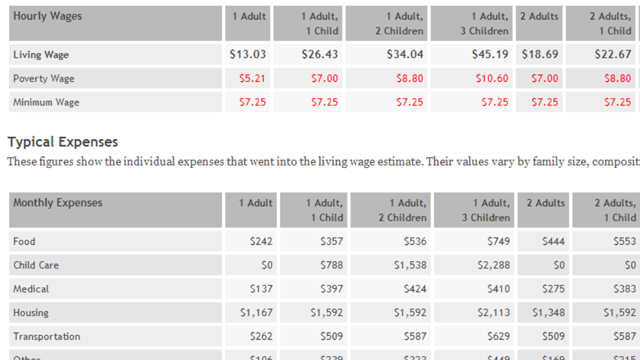
Ever wonder just how much money is enough to survive on? This calculator from MIT tells you how much you need to earn to be able to support yourself and your family without government assistance, based on typical expenses in your area.
Your home is gross. Don't worry, everyone's is. Between cooked food, moldy wood, rusty metal, and our own bodies that make all manner of nasty byproducts, it's a wonder our homes are ever clean. Washing dishes or tidying a bedroom is easy. For the harder, grimier stuff, you can still keep your home clean with basic stuff in your home.
I've worked for a telemarketing company for two years and made a lot of unwanted calls. I have to keep making them because most people don't know how to get rid of us, but the right approach can make all the difference. Here's how you can get rid of telemarketers like me and save us both a lot of time.
Do you remember, back in August of 2012, when the Instacube took Kickstarter by storm? The product is a square digital picture frame that connects to the Internet and is shaped like the Instagram logo. The product was a hit on the crowdfunding site, raising more than $600,000 and pre-selling a bunch of cubes. Which were supposed to arrive in backers’ hands in the spring of 2013. Only it didn’t. Why?
We may never know why, because everyone who knows the details of where all that money went has apparently signed a non-disclosure agreement. However, that didn’t stop Savannah Peterson, a marketer who worked on the Instacube project during its funding phase, from discussing the Instacube and the broader challenges of crowdfunding in a session at the South By Southwest tech conference over the weekend.
The Instacube raised its money in the summer of 2012, and was supposed to ship about a year ago. When it didn’t, backers became understandably irate. Peterson can’t discuss a lot of what went down at the company, D2M, but did say that they underestimated the costs and challenges of having new hardware manufactured in China.
When the Instacube didn’t ship, angry investors went after D2M’s employees, attacking them on social media and even tracking down their private contact information and posting it publicly online. Peterson says that she still doesn’t use voicemail, since hers is always crammed with messages from angry Instacube backers. Even though she no longer works for the company.
Manufacturing stuff is hard. Manufacturing new products is hard. It’s especially hard if you’re a startup and don’t have established relationships with suppliers and manufacturers. Kickstarter is trying to prevent undelivered projects in future by requiring that the possible challenges of a project be included in initial crowdfunding requests, and no longer allowing campaigns to be created for hardware that only exists in renderings or sketches.
Good news if you were looking forward to having an Instacube: they’re shipping in a few weeks, the company claims, and people who didn’t back the original Kickstarter project will be able to buy them too. Maybe wait until the ‘Cubes are actually sitting in the warehouse, though.
That’s the thing with Kickstarter and its more liberal counterpart, Indiegogo: as we’ve covered before, crowdfunding sites are not stores. Backing a project in return for a finished item might feel like placing a pre-order, but it really isn’t.
A group of 33 passengers who were on the ill-fated “Poop Cruise” last year — also known as the Carnival ship Triumph — have been in court suing the cruise line and are now asking the company to shell out $5,000 in damages per person, every month for the rest of their lives.
That money is for medical bills and mental anguish, reports Reuters. An engine fire left the Triumph adrift at sea for days in February 2013, with many passengers complaining of overflowing, non-working toilets and other deplorable conditions.
If this group of passengers succeeds, it could change how cruise lines protect themselves in the future from other lawsuits, maritime legal experts told Reuters. There’s also another lawsuit pending with triple the number of plaintiffs that could do some damage as well.
Most cruise lines include ticketing contracts that bar passengers from bringing legal action. But nevertheless, Carnival was unsuccessful in trying to get these lawsuits dismissed based on those ticketing contracts.
A federal judge in South Florida — where Carnival’s ticketing contract requires litigation to take place, due to that being its home state — finished hearing three weeks of testimony from passengers recently and should issue a judgment in the next two months.
It’s the first Poop Cruise lawsuit to go to trial, and has the potential to change cruise tickets forever if the judge finds that the terms of conditions on those tickets, or “contracts of adhesion,” are overreaching.
Carnival said in a statement that it understands that guests experienced “uncomfortable conditions,” but ultimately everyone got home safely and received a full refund, along with a voucher for a free cruise and $500. So that should be enough, in Carnival’s opinion.
“This is an opportunistic lawsuit brought by plaintiff’s counsel and plaintiffs who seek to make a money grab,” a company spokeswoman said.
The judge has already ruled that the engine catching fire is proof of negligence on the part of Carnival, a major blow to Carnival according to one maritime lawyer.
“It would seem rather obvious that ships shouldn’t just catch fire and then have fire suppression systems that don’t work,” he said.
Following last year’s firing of an Applebee’s waitress who dared to post a receipt from a cheapskate customer claiming to be a pastor who gives “10% to God” and thus shouldn’t be required to pay the 18% tip mandated for large parties, a real pastor at a church in Tennessee decided to create a website to remind churchgoers that they shouldn’t stiff their restaurant servers.
SundaysAreTheWorst.com is a place for servers to share their stories of customers who shortchange the tip, especially for those after-church meals with the family.
“We knew there was a huge disconnect between the serving community and the church crowd on Sundays,” writes pastor Chad Roberts, creator of the site. “Because there are many servers who attend our church, we began asking ourselves, ‘What can we do to begin a dialogue with the serving community? How can we let them know that not all Christians are like this?’”
Chad says he initially tried to create a Facebook page where servers could shine a light on customers who leave thin tips, but employees at restaurants were worried because their employers often had social media policies that made them careful about what they shared online.
The pastor explains that the purpose of the site isn’t just to tip-shame, but “to create conversation. Our hope is that the church crowd will read the thoughts and experiences from the serving community and that it would cause them to re-think their actions and attitudes on Sundays.”
The site has only been up since the beginning of the month and already has more than 120 stories from servers venting about being stiffed on a Sunday.
If you’ve signed up for the Do Not Call List, you shouldn’t get phone solicitations except from companies you do business with and charitable organizations. If you’re getting calls from a group you aren’t interested in sending money to, or you just don’t like making donations over the phone, they’re just as annoying as commercial calls.
Don’t hang up. No, really. Most important: don’t hang up without saying anything. Anything that you do say to the caller might be put on your profile with the organization along with your donation history, so don’t chat about the best times to call you or other numbers where you can be contacted. However, what you should remember is not to hang up immediately, because this will count against you as if you had never answered the call at all. They consider this no answer.
No, no, no. Once you do answer, it’s your job to keep saying “no” until the person goes away. “A good telemarketer uses the ‘Three Nos’ rule: don’t let the customer go until they have said ‘no’ three times during the phone call,” Elson explains. This rule works in in-person sales as well, including store credit cards and other big upsells. The caller may not let you go until you’ve said “no” three times, so stay firm and keep at it.
If the caller listens to you and then suggests calling back later, say no unless you really do intend to buy or donate on the next call. This is a common tactic: after all, the seed has been planted, you know who’s calling, and you’ve already heard the sales pitch. From the caller’s point of view, a potential donor or customer who they already have a relationship with might be more receptive than a cold call.
Put me on the list. Of course, once you’re done saying “no” politely, ask to be put on their do-not-call list. If the caller demurs, ask for a supervisor, and insist on speaking to a supervisor, just like when you’re calling customer service.
Even if you don’t get put on the organization’s indefinite do-not-call list, at least they’ll leave you alone for a while. “[M]ost non-profits run seasonal campaigns,” Elson notes, “so at least your lead will be put to rest for three to 11 months.”
If you have a phone number and haven’t signed up for the Do Not Call list, you have no one to blame but yourself.
It may be a coincidence that Comcast’s proposed acquisition of Time Warner Cable is occurring during the lead-up to a midterm election season where candidates from both parties need cash to hold on to their seats in the Congress and Senate, but that very need for funds is giving the Kabletown Krew a good opportunity to grease the wheels on Capitol Hill.
Politico reports that, through varied means, Comcast has to 32 of the 39 members of the House Judiciary Committee, which will likely have a hand in helping regulators determine whether or not the merger gets approved.
Additionally, 15 of the 18 members of the Senate Judiciary Committee have received help from the Comcast coffers, including Illinois Senator Dick Durbin, Texas’s Ted Cruz, Lindsey Graham of South Carolina, and Amy Klobuchar of Minnesota.
Two House Energy and Commerce Committee and the Senate Commerce, Science and Transportation Committee may not end up being directly involved in the merger approval process, but they do have some oversight over Comcast and the cable/Internet industry in general. Thus, reports Politico, members of those committees are awash in Comcash, with 50 of the 54 members of the House committee receiving money from the company, and 20 of 24 Senate members feeding from the Comcast trough.
Comcast says that critics are misinterpreting their donations.
“Comcast NBCUniversal operates in 39 states and has 130,000 employees across the country,” a company mouthpiece tells Politico. “It is important for our customers, our employees and our shareholders that we participate in the political process. The majority of our PAC contributions are to the senators and members who represent our employees and customers.”
And just think about it — if the deal goes through, Comcast will control an even larger customer base, meaning that more Senators and Congresspersons will “represent” Comcast customers, and thus need to be paid in kind.
We’ve been following the story out of Michigan of the woman who disappeared into her own house for more than five years, with no one noticing her absence because all of her bills were on auto-pay. As investigators try to figure out what happened to her, they’ve found another mystery: she appears to have voted in 2010, even though the evidence shows that she died in 2008.
Hold your Chicago jokes. The most obvious answer is that someone made a clerical error, but investigators haven’t ruled out more sinister possibilities. The woman probably didn’t show up at the polls herself, though. Experts pointed out to the Detroit Free Press that people who don’t vote often are more likely to show up during a presidential campaign year, not for a gubernatorial election, which 2010 was in Michigan. The deceased had registered to vote locally in 2006, but records show that she didn’t make it to the polls until 2010, two years after her presumed death.
The last time that the woman was seen in public was in October 2008, when she received a traffic ticket for not carrying proof of insurance. Her car’s tags were last renewed in 2008, and neighbors and colleagues don’t report seeing her after that. She missed a court hearing regarding that ticket in January 2009.
There was still gasoline in the tank of her Jeep, and while the keys were in the ignition, they were in the “off” position and the key partially pulled out. The woman was found in the backseat of the Jeep, with her body mummified due to the lack of air circulation.
That said, the body still hasn’t been definitively identified as the homeowner, a former Chrysler employee named Pia Farrenkopf. Authorities are still looking for old dental records for comparison with the body found in her Jeep. The body shows no signs of trauma or anything suspicious. Her sister, who lives in Boston, told the media that she suspects foul play, but the siblings clearly weren’t very close.
The ranch house itself is being treated as a biohazard, infested with black mold after years of neglect.
Say you’re faced with making a decision between multiple brands or change service providers. Your willingness to seek variety, or make a change — even if it requires additional effort — may be tied to how confident and empowered you feel at that moment.
A new study published in the Journal of Consumer Research looks at how a consumer’s personal sense of empowerment impacts their desire to seek out something new and deal with the hassles of making changes.
“[P]lacing consumers in a high state of power leads to a greater propensity to engage in product/brand switching,” write the researchers from Hong Kong Polytechnic University and the Kellogg School of Management at Northwestern University.
The researchers undertook numerous experiments to test their hypotheses. For example, one experiment asked a group off 100 students to first recall times where they felt either powerful or powerless. They were then presented with the situation of moving into a new apartment and being given the option of either sticking with the current Internet service provider or finding out more about a second ISP.
“We found that participants with a high state of power (46.6%) were more likely to consider switching to another brand in the form of seeking out additional information than participants primed with low power (28.4%),” reads the paper.
A later experiment with a different set of subjects changed the scenario to test consumers’ willingness to deal with hassles as it relates to personal notions of power.
One group of subjects was told they had moved into a new apartment and could stick with their current ISP just by making a quick phone call. They could also change to a new ISP, but that would require downloading and printing an installation form, signing it, and then faxing or mailing back to the new company. While most subjects chose to stick with the current provider, those who identified as feeling empowered were 1.5 times more likely to switch ISPs, in spite of the extra effort required.
Meanwhile, a second group of test subjects were given the opposite of that situation — keeping the current ISP would require going through all the downloading/signing/returning of forms, but switching was just a phone call away. Not surprisingly, most subjects said they would switch, but those who said they felt highly empowered were more likely to deal with the pain of maintaining their current service.
The authors say this particular experiment “demonstrated that it is not that high power leads to a preference for switching per se, but that it leads to a preference for action, which typically facilitates switching.”
Another experiment once again started by putting people in mindsets of high/low power, then gave them some party planning obligations.
Subjects were asked to pick from a variety of ice cream flavors for a series of three upcoming parties. In one scenario, the subjects were told that whatever flavors they picked would then be used for all three events. The results found virtually no difference between high and low levels of empowerment.
However, a second scenario involved giving the subjects the ability to change the ice cream varieties from event to event. In that case, the highly empowered subjects made choices that allowed for a wider variety than those selected by subjects identified with low levels of empowerment.
“Many companies have succeeded by empowering consumers,” write the researchers, citing ad campaigns from companies like the Old Spice commercial featuring Brian Urlacher. “Thus, a brand deciding to target other consumers to switch might follow these examples by focusing on the empowered consumer.”
There are times when you can’t convince a business to do the right thing. Or a dispute with your neighbor won’t come to a close. Or, well, stuff happens. When you try to reach an agreement with another party but you just can’t work it out, you might choose to let a judge decide.
In that spirit: Hear ye! Hear ye! Here’s how to not suck at your day in small claims court.
Plan For the Worst First
When you make a purchase or sign on for a service, you never expect for things to go wrong. But they do.
Enter the journal. Or the notebook. Or any place of permanence you can keep and maintain detailed records of all your contact with a company.
You need a place to keep a log of all your contact with a company — and scribbling on a receipt isn’t good enough. Instead, you should take copious notes.
If you have to make a call to the company on any dissatisfaction, write it down. Maybe you’ll only need to make one call and your issue will be resolved, but it’s very possible you’ll have a dispute that goes on for months, or longer.
Log the date and time you call, who you talked to and what they suggested to you, or promised to you. If the CSR was rude, that’s not really important (however annoying). What matters is the good old who, what, where, why and how of it all.
Every detail and fact counts.
If you ever need to take the company to court, you can use this log as evidence — and as a reminder to you — of how everything went down.
Pick the right court
If your dispute with a company can’t be solved amicably, court may be your only option.
You just need to pick the right one.
If you don’t file in the correct court, you could face delays, and you don’t want that. For example, some small claims courts only allow a certain dollar figure to be disputed. If the amount you say you’re owed is more, you may need to file in a superior court.
To see what your state allows, check Nolo.com’s handy list of the limits of courts in different states.
The Paperwork
Every court has its own set of paperwork that needs to be completed before you go before a judge. Read the directions. Take your time. And do it right, otherwise it will be bounced back to you and you’ll have to start from scratch.
Know Your Case
Think of your time before the judge as an oral exam. Know your facts. Stick to the facts. Be brief, and be organized.
And don’t expect the person you’ve taken to court to make it easy for you (like this guy). Be prepared to offer a counter-argument if the person or business you’re suing presents allegations against you.
Present Yourself
It’s not a fashion show, and you won’t be expected to look like a $500 per hour attorney, but show the court some respect. Business-wear is best. Business casual comes in second. But really, if you’re fighting for your money, you can leave the jeans, sneakers and concert t-shirts at home, right?
And please, be sure to show up on time, lest you want to be glitter-bombed like a Lohan.
Remember The Evidence
Make sure to bring copies of all relevant documents. This would include contracts, your journal of contact with the company, cancelled checks, photos of damage or items that are in dispute, and if the actual item in dispute isn’t too large, bring it.
Also think about bringing witnesses. We don’t mean your grandma or your first grade teacher who are willing to vouch for you personally, but think about bringing anyone who physically saw or experienced the situation that brought you to court in the first place.
Watch, and then Practice
Small claims court isn’t like anything you’ve seen on television. It’s not Judge Judy, and it sure as heck isn’t Law & Order. And it’s certainly not A Few Good Men.
You’ll be lucky if you get 10 minutes to tell your tale, so drama will be kept to a minimum.
Spend a few hours at the court where you plan to present your argument. You’ll get a feel for what the judge expects and how the courtroom is run. It will make you much more comfortable when it’s your day.
Before your date, practice your argument in front of friends or family. Have them ask you the kinds of pointed questions a judge is likely to ask, and then you can present your side.
Remember to stick to the facts and not your feelings. And practice makes perfect, for sure.
If You Win
Don’t expect your adversary to whip out a checkbook and pay what the judge says he should.
You’ll have a judgment against the company or individual, but collecting is a whole other story. Ah yes, a future HTNS…
And we couldn’t post this story without sharing this one:
Have a topic you’d like to see covered in How To Not Suck? Or maybe you’re an expert who would like to share your insight with Consumerist readers? Send us a note at notsuck@consumerist.com.
DISCLAIMER: Any websites, services, retailers, or brands mentioned in the story above are only intended as some of many options available to consumers, and do not constitute an endorsement by Consumerist, Consumerist Media LLC (CML) or its staff. Per Consumerist’s No Commercial Use Policy, such information may not be used by others in advertising or to promote a company’s product or service. In addition, this policy precludes any commercial use of any of CML’s published information in any form, or of the names of Consumers Union®, Consumer Media, Consumer Reports®, The Consumerist, consumerist.com or any other of CU or CML’s publications or services without CU or CML’s express written permission.
We’re not sure why you would want to snuggle up with a giant pillow shaped like a chicken leg. If that’s a longtime dream of yours, it might as well be a super-realistic one, though, right? that’s why the company Beloved offers this stunning, hyper-realistic pillow shaped like an enormous chicken leg for all of your combined nap/snacktime needs. [Beloved via Foodbeast]
We always thought mall parking lots were asphalt jungles in more of a “It’s tough out there to find a parking spot” kind of way. Not an actual predator vs. prey, “I will bite off your finger if you take my spot” kind of way. On that note, guess what terrifying thing happened in a mall parking lot in New Jersey?
Yes, one woman is accusing her fellow shopper of biting off her finger during a dispute over a parking spot in a crowded mall lot, reports ABC 6.
The victim says she had just parked after circling the lot multiple times to find a spot on Saturday, pulling into one finally when she saw a car pull in and then out of a spot, then leave. She says two women then approached her car, one of them using some choice words.
“As soon as I got out of the car she started calling me all types of B-words,” the woman said of the suspect. “She got this close to my face, her nose touched my nose. She was yelling and screaming then she hit me in the face,” she claims.
She says she put her hands up in defense of her face — which is when one of the women bit her finger and nearly severed it — as she “proceeded to chomp.” We’ll leave the rest of the description there because that’s just enough for now.
The victim was taken to the hospital and released Monday afternoon. Police are now looking for the two women, saying they fled into the parking lot after the incident.
“This is an aggravated assault. There is a female here who was planning on going out to dinner with a friend, the next thing she’s hospitalized for a couple days with the possibility of having part of her finger amputated,” said a police rep.
As for whether or not her finger can be saved, the victim says she’ll know within the week if that’s possible.
“Otherwise they are going to have to amputate,” she said.
Manassas council votes down amendment limiting access to abortion Inside NoVA Despite more than three hours of emotional testimony from about 85 speakers, two-thirds advocating against abortion, the Manassas City Council decided Monday against requiring special approval for new medical facilities – a zoning change some said ...
Manassas debate called 'political attack on abortion providers' Inside NoVA The city of Manassas is poised to become the next battleground in the long-simmering fight over access to abortion rights in Virginia, thanks to a proposed zoning change some say unfairly targets women's health clinics. Tonight's city council meeting ...
The shelves of pharmacies are full of pills, tablets, capsules, and liquids that are worth a lot of money, especially to addicts. So when more than 37,000 prescription pain pills vanish from handful of CVS stores, the authorities get involved.
The L.A. Times’ David Lazarus reports that the U.S. Drug Enforcement Administration and the California Board of Pharmacy are investigating the disappearance of prescription pain meds from four stores in California.
The DEA served the stores with warrants almost a year ago after learning about prescription drugs like Vicodin that were not present and accounted for.
The company now faces up to 2,973 separate violations of the federal Controlled Substances Act because its records don’t match the actual inventory of the drugs in question. CVS could be forced to pay upwards of $29 million in penalties for these possible violations.
A rep for the U.S. Attorney’s office tells Lazarus that CVS has yet to respond to a letter sent last month detailing all of the alleged shortages.
The DEA investigation has been going on since 2012, when a DEA investigator learned of missing hydrocodone pills from a store near Sacramento. A pharmacy worker at the store eventually admitted to her employers that she had stolen some 20,000 pills.
Checking the temperature of other stores in the region, the investigator looked through the records of other CVS stores in the area and found 16,000 pills missing from one CVS; 11,000 from another and two additional stores with around 5,000 missing pills each.
A rep for the drugstore chain tells the Times that the purpose of the ongoing DEA investigations is “assuring compliance with state and federal requirements for administrative record keeping related to invoices and inventory for controlled substances.”
Last year, Walgreens agreed to pay $80 million following a DEA investigation into larger-than-usual orders for prescription painkillers from certain Florida distribution centers and stores.
Subsequently released documents showed that some stores had dramatically increased their orders on painkillers like oxycodone, and that the DEA believed store management was ignoring that prescriptions were being filled to consumers with questionable motives, including some customers who had been previously arrested at these locations for drug offenses.
Ah, romance is in the air! Or it might’ve been if the groom hadn’t allegedly gotten drunk and fought with the bride on their way to the the honeymoon, forcing a Delta Air Lines plane to make an emergency landing. Sounds like the honeymoon was over before it ever got a chance to start.
According to authorities, the flight was headed from Atlanta to Costa Rica, but instead was forced to stop and land on Grand Cayman island, reports Reuters. Officials say the man got into a drunken disagreement with his new wife on the plane, and the man was escorted from the flight after it landed.
He was held on a charge of drunk and disorderly conduct by the local police and could be facing more charges under international air law.
A spokeswoman for Delta confirmed that a “disruptive customer” was the impetus for the plane’s diverted route.
“The flight landed without incident and the customer was met by local authorities,” she added.
The bride reportedly stayed on the plane for the rest of the flight to San Jose, Costa Rica, so let’s hope she at least has a relaxing trip.
You can follow MBQ on Twitter if you’re not that cranky guy who doesn’t like social media promotion, apparently, even when it’s encouraged by an employer: @marybethquirk
food restaurant. Nearly three decades later, the baby is all grown up and looking for her biological mother, and tens of thousands of people are trying to help.
- In the Iditarod Trail Sled Dog Race, there's always a heart-pounding thrill at the finish line in Nome, a rollicking frontier city on Alaska's western coast.
- Law enforcement, government agencies and others are itching to use drones for everything from finding lost hikers to tracking shifting wildfires. But privacy watchdogs are urging state legislatures to step in and head off any potential privacy violations.







 Do you remember, back in August of 2012, when the Instacube took Kickstarter by storm? The product is a square digital picture frame that connects to the Internet and is shaped like the Instagram logo. The product was a hit on the crowdfunding site, raising more than $600,000 and pre-selling a bunch of cubes. Which were supposed to arrive in backers’ hands in the spring of 2013. Only it didn’t. Why?


 We’ve been following the story out of Michigan of the woman who disappeared into her own house for more than five years, with


 We’re not sure why you would want to snuggle up with a giant pillow shaped like a chicken leg. If that’s a longtime dream of yours, it might as well be a super-realistic one, though, right? that’s why the company Beloved offers this stunning, hyper-realistic pillow shaped like an enormous chicken leg for all of your combined nap/snacktime needs. [


