Shared posts
Indiana withdrawing from Common Core standards
Ask an Expert: All About Sexuality

Say hello to Vanessa Marin, a sex therapist and licensed psychotherapist based in San Francisco. Talking about sex is uncomfortable for many people, and Vanessa helps both individuals and couples talk openly about human sexuality to deal with any issues they may have, hopefully leading to more fulfilling sex lives. Vanessa will be here for the next hour to answer your questions—ask away!

    
|
Google Now Comes to Chrome, Is Out of Beta
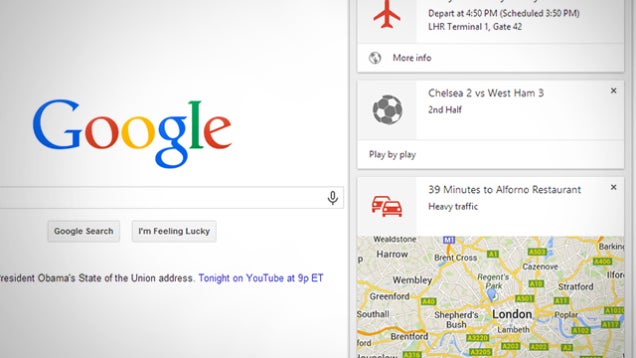
Windows/OS X: If you've been using the Chrome beta or dev channel , you've been able to enjoy the benefits of Google Now cards right in your browser. Now, users on the stable channel get to join the fun.

|
|
What Online Learning Platforms are Best for Teaching?

More and more, schools are starting to offer online courses, sometimes as full replacements for regular classes and sometimes as supplemental learning. If you have advice to share about teaching or taking classes online, jump in and help out a fellow reader!

|
|
Make a DIY Vertical Corner Garden with Wood Pallets

If you don't have a lot of room, a vertical garden you can stash in some corner is perfect for growing herbs or even starting vegetables. And you can build one for pretty much free using old wood shipping pallets.

|
|
Don’t Recycle Your Personal Information Into Identity Thieves’ Hands

(Sh4rp_i)
“No one could possibly be that stupid!” you might say. No, plenty of members of the general public don’t realize what they’re recycling when they throw paperwork away. Our cross-cut shredding colleagues down the hall at Consumer Reports poked around at a public recycling facility near their headquarters in New York’s suburbs to see what they could find.
Highlights (lowlights?) included direct deposit pay stubs with non-negotiable checks. (At least they weren’t real checks.) They might have had the employee’s Social Security number redacted, but earnings and withholdings to date are on that statement.
People also toss bills and statements sensitive health information in the recycling bin un-shredded. Our colleagues found a retirement account statement, a mortgage statement with late fees tacked on, medical bills with detailed information about tests and procedures, and an auto insurance cancellation notice.
Since the items in your recycling bin aren’t covered with coffee grounds and potato peelings, it’s a lot easier and more pleasant for someone digging for information about you to paw through them.
Ask yourself: even if the person who found this item doesn’t have nefarious intentions, would I really want this piece of paper to blow into my neighbor’s yard? If the answer is “no,” tear them up or keep a shredder handy in your home.
Don’t be a recycling identity theft victim [Consumer Reports]

March Recall Roundup – Don’t Put A Cork In It
 In this month’s Recall Roundup, cork toys crumble but aren’t edible, heaters overheat, and Grumpy Cat has a lot to be unhappy about.
Babies
Vera Bradley Bear Ring Rattles and Bunny Toys – choking hazard
Home & Kitchen
Dalton Ottomans with Storage Compartments – small children can get trapped in compartment
Duraflame electric space heaters – risk of overheating; can melt or catch fire
Hitachi Koki Grass Trimmers – risk of overheating, can catch fire or burn user
Design Ideas and Neatlife Rubber Ducky Magnets – magnets may detach, be ingested by small children
Design Ideas Blowfish and Splat Magnets – magnets may detach, be ingested by small children
Therapedic twin and full-size mattresses (BJ’s Wholesale Club) – do not meet flammability standard
The Conran Shop Pondicherry Dining Tables – lead paint
Autumn 2013 Gardeners Eden Light-Up Decorations (T.J. Maxx, Marshalls, and HomeGoods) -
exposed wiring; fire hazard
Schneider Electric Square D-Brand F and K Frame Circuit Breakers - fire hazard
Bedz King Bunk Beds with Side Ladder – entrapment hazard

Packaging Tape Inc. Air Movers/Blowers – risk of overheating and fire
Toys
A Harvest Company Cork Stacker block sets – pieces of cork can fall off; choking hazard
Minga Fair Trade Imports Wooden Flipping Acrobat Toys – lead paint
Graco Stuffed Grumpy Cats: 8″, 5″ and 4″ Keychains – eyes may detach, choking hazard

Sports & Outdoors
STX Shield throat protector – does not protect throat from lacrosse balls
Fitness Anywhere TRX Dip and Hammer Bars – welds can break, causing user to fall
Tektro USA and TRP Spyre and Spyre SLC dual-piston mechanical disc brake calipers – may over-rotate, causing brakes to fail
LP Hornet zip line trolleys – side plates may fall off, user could fall
Stromer ST1 electric bicycles – fork may break, which is bad
Electronics
Canon PowerShot SX50 HS Digital Cameras – chemical used on rubber near viewfinder can cause skin irritation
Fitbit Force Wristbands – risk of rashes and skin irritation
MobilePower Instant Boost 500 power packs (QVC) – overheating and fire hazard
Vehicles
Arctic Cat Prowler 500 HD – possible fuel leaks; fire hazard

Starting A Fire Is Not A Good Way To Get Out Of A Bar Tab

(coffeego)
Things got a little heated at Mark’s Sports Pub when a 33-year-old man was arrested on a slew of charges after allegedly setting the men’s room trashcan on fire and punching two bar patrons when he tried to flee the bar without paying his bill, 1150 WNDB News reports.
According to South Daytona Police the man ordered $80 worth of Jagermeister shots, drinking them one after the other, before going to the restroom and allegedly setting the trashcan on fire.
Police think the fire was set as a diversion so the man could leave the bar without paying his tab.
“The patrons put the fire out before [the] fire department arrived,” a police lieutenant tells 1150 WNDB News. “[There was] no serious damage done to the bathroom or business, just [the] trash can.”
The diversion didn’t seem to work.
In an attempt to stop the man from leaving through a back door two fellow patrons stepped in and a scuffle ensued.
The man allegedly punched a patron over 70 years of age in the face. At that point another patron blocked the man’s path and was punched in the face, causing a large open cut.
After the fight, the man ran out of the bar toward a nearby bank where police caught up to him.
He was held on $18,500 bond on six charges, including criminal mischief, aggravated battery, defrauding an inn keeper, assaulting a law enforcement officer, battery on an elderly person and arson.
South Daytona PD: Man Set Fire At Sports Pub To Back Out Of Tab [1150 WNDB]

Verizon Accused Of Deliberately Neglecting Landline Service To Push Customers To FiOS

In an emergency petition [PDF] filed with the California Public Utilities Commission, a group called The Utility Reform Network (TURN) claims that “Verizon is engaging in business practices that are contrary to its statutory obligation to provide adequate service and are harmful to the interests of its California customers.”
More precisely TURN alleges that Verizon is “deliberately neglecting the repair and maintenance of its copper network with the explicit goal of migrating basic telephone service customers who experience service problems,” and is asking CPUC to “order Verizon to repair the service of copper-based landline telephone customers who have requested repair or wish to retain the copper services they were cut off of.”
The petition states that when landline customers request repair service, Verizon is sometimes migrating them from its copper wire network to other Verizon Internet-based services, whether it’s VoIP phone service via FiOS or the wireless Voice Link, which the company tried to push on some areas devastated by Hurricane Sandy in 2012. TURN claims that there have been instances in which customers were migrated to the new services without their knowledge.
TURN also says that Verizon is not making customers aware of the potential shortcomings of Internet-based services, most importantly the fact that VoIP service will not last long during a prolonged power outage.
According to the petition, when a standard customer makes two service calls for outside repairs within a 6-month period, they are labeled a “chronic customer,” and that “it is Verizon’s goal to migrate ‘chronic customers’ to Voice Link, in lieu of maintaining and repairing copper plant.”
When reached for comment by Ars Technica, a rep for Verizon said the claims in the TURN petition are “blatantly false.”
“We have identified certain customers in fiber network areas who have had recurring repair issues over their copper-based service recently or clusters of customers in areas where we have had recurring copper-based infrastructure issues,” the rep told Ars. “Moving them to our all-fiber network will improve the reliability of their service. When these customers contact us with a repair request, we suggest fiber as a repair option. If the customer agrees, we move their service from our copper to our all-fiber network. There is no charge for this work, and customers will pay the same rate for their service. Most customers recognize and appreciate the increased reliability of fiber and gladly agree to the move to fiber. Few customers across our service area have chosen to stay with copper and, once on fiber, few ask to return to copper… Nobody is forced to take our services, nor are customers given new services without consent or knowledge.”
But Ars points to the recent testimony by a Verizon employee at a public hearing before the California Senate’s Energy, Utilities and Communications Committee to show that the company may not be giving consumers the option of retaining their current copper landline service.
“I have been trying to help a customer who has been out of service since January,” said the employee, who testified that she brought the matter to a supervisor who then told her “it would be too expensive to repair and that the only customer’s only option would be Voice Link… To this date the customer has been out of service.”
Furthermore, she says Verizon’s policy is for employees to not tell customers that they can take their complaints to CPUC.
In the TURN petition, customers complain that they are told the only way to get timely phone repairs is to switch to FiOS.
“Verizon is threatening that if we don’t switch over to digital and get rid of copper that their response time for fixing any phone problems will go from one to two days to two weeks,” says one customer.
The FCC recently decided to allow telephone companies to begin voluntary tests of replacing existing landlines with VoIP service, but only in limited, approved areas. It will take some time, potentially years, before these tests are sufficient to placate regulators.

Pizza With 90 Slices Of Jalapeno Pepperoni Has Advertisers Sweating Over Its Naughty Name

The baddest.
What’s in a name? you might be asking, if you were conveniently setting me up to answer that question with the following post. A whole lot, especially if you name your pizza something that translates to something very naughty in another language.
The pizza topped with 90 jalapeño-infused pepperonis at Texas-based restaurant chain has some customers all fired up, and not because of the searing, peppery blaze in their mouths.
The pie is called “La Chingona,” reports Reuters, a word that translates sort of like “badass” if you’re being polite, and into something more offensive and profane that could be seen as an insult against one’s mother if you’re not trying to display nice manners.
Broadcasters haven’t been airing ads for the pizza, saying the profanity could get them banned, and some franchise owners of the chain won’t put it on their menus. But the company is defending the name, saying it’s just relating to its customers.
“It’s a colloquial Mexican term that’s used very commonly among our core customers, which is a Mexican-born, Spanish-speaking customer, in part of their everyday lifestyle,” said the chain’s brand director. The chain has locations in states with large Hispanic populations like California, Arizona and Florida.
The chain also posted a statement regarding the pizza in both Spanish and English on its site, saying it stand behind the name:
“We have been here before. The unique cultural insight inherent in many of our campaigns continues to provoke a deluge of varying opinions. Our goal is simple – to connect with and serve our customers better.”
This isn’t the first time the company has tried to stand out with controversial campaigns — in the past it allowed U.S. customers to pay in Mexican pesos.
So is this really a big deal? Kind of sounds like it — Univision Radio, the largest U.S. Hispanic radio network, has refused to run ads because the name is a profanity and could violate FCC regulations. Other local and national radio stations have also put the kibosh on the naughty phrase. And about 20 of the chain’s 90 outlets have kept it off their menus.
As a result, some ads have censored the name to keep it out there, but perhaps less shocking for those with delicate sensibilities, displaying it as “La Ch!#gona” in print campaigns.
“We thought we’d do a little bit of self-censorship, tongue-in-cheek, and add the exclamation point and hashtag inside the word,” the brand director said. “But if you know the word, you can still read it very easily.”
Pizza served with Mexican slang causes stir in U.S. border states [Reuters]
Follow MBQ on Twitter if you’re a fan of mostly profanity-free tweets, when it comes to pizza at least: @marybethquirk

Is In-Person Banking Going The Way Of The Dodo?

A new survey from BankRate.com found that 30% of all bank or credit union customers hadn’t been to their local branch in at least six months. That’s about the same percentage of people who had visited the bank within the previous week.
So with those two ends of the spectrum accounting for a total of 60% of consumers, it’s that 40% of people who sometimes go to the bank who will determine whether it’s important to have a local bank branch or not.
If you believe the children (or in this case, those were recently children) are our future, then the future of in-person banking is bleak. According to the BankRate numbers, fewer than 1-in-5 people under the age of 30 visited a bank branch on a weekly basis, while nearly one-third of customers over the age of 30 are popping by the local branch on a regular basis.
But is this a matter of the younger generation choosing to bank online or via ATM, or is it because these youngsters haven’t started earning enough money to merit regular visits to the bank? The BankRate survey found a sizable difference in bank visits based on customers’ incomes.
29% of those earning below $30,000 a year said they hadn’t been to a bank in at least a year, nearly double the percentage of respondents earning at least $75,000 a year.
But even as that group begins to earn more money, it seems likely that in-person banking will continue to decline in popularity. More employees receive their pay via direct-deposit, and many workers are only paid twice-monthly (or sometimes only once a month), so even if they do get paper checks, the visit to the bank is less frequent. Additionally, a number of banks now offer customers the ability to deposit checks via smartphone apps.
Given the BankRate data, banks would seem more likely to keep branches open in affluent areas, where customers not only have more on deposit but are more likely to request that person-to-person contact. Meanwhile, financial institutions may choose to close branches where customers are not taking advantage of these services and where customers are less likely to meet with bank staffers about things like high-value auto and home loans, or shifting funds between accounts.
While some may shrug off the decline in popularity of in-person banking as an inevitability, it may have the unfortunate side-effect of harming the communities where local bank branches are needed the most.

Train Jumps Tracks And Climbs Escalator At Chicago O’Hare Airport, Injuring Dozens

This is what the station normally look like, without a train on the escalator. (bclinesmith)
The eight-car train crashed through the barrier at the end of the tracks early this morning at around 2:50 a.m. as it was pulling into O’Hare. It even made its way up the escalator somewhat, injuring at least 32 people, says Chicago’s Transit Authority. No injuries are thought to be life-threatening, adds USA Today.
“The train actually climbed over the last stop, jumped up on the sidewalk and then went up the stairs and escalator,” said Chicago Fire Commissioner Jose Santiago.
A CTA spokesman said the agency is trying to figure out how, exactly, the train jumped the tracks, but it could be a matter of too much speed. The Blue Line has been suspended between O’Hare and Rosemont this morning, so if you’re heading to the airport, you’ll need to figure out alternate transportation.
“We will be looking at everything — equipment, signals, the human factor,” he said.
As someone who’s spent some time traveling in and out of Chicago, I can attest to wanting the train to speed up a bit, or deliver me directly to my gate. I just never thought it would actually attempt such a feat.
Dozens injured in train derailment at O’Hare airport [USA Today]

Use Sandpaper or Cookie Sheets to Keep Cats off the Kitchen Counters
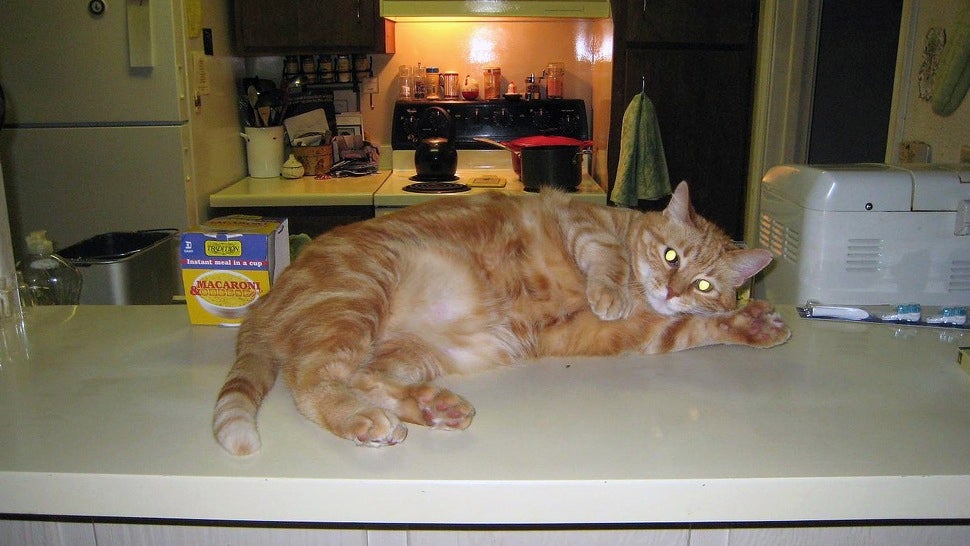
If you have cats, it may be a losing battle to keep them off the kitchen countertops all the time, but you definitely don't want them there while you're cooking. Thankfully, there are plenty of ways to do the job without resorting to a spray bottle of water.

|
|
Use Your Phone to See Without Glasses, Navigate Offline, and More
Our smartphones are incredibly powerful tiny computers, and they're useful for a lot. This video roundup from the folks at Buzzfeed go over some clever ways to use your phone to get around, see without your glasses, save money at the store, and keep tabs on things you normally lose track of.

|
|
Start Your Chicken in a Cold Skillet for Delicious, Crispy Skin
If you're looking for deliciously crispy pan seared chicken, the folks at America's Test Kitchen suggest that—contrary to what you might think—the key is a cold pan or skillet, not a searing hot one like you'd have for a steak. Here's why.

|
|
Pantene Changes Anti-Frizz Rhetoric, Removes 1.7 Ounces From Conditioner Bottle
Jeremy picked up a bottle of Pantene conditioner during his recent trip to Walmart. They made some changes to the bottle and to the company’s promises about what their product does. The redesign also included trimming the bottle size just a tiny bit.
Here’s the old bottle (left) next to the newer one (right) hanging out in their natural habitat. Mostly we’re amused that the previous label bragged that the product “fights frizz” while the newer version claims that it “tames frizz.” Saying that your product can tame something means that it’s succeeding. When you say that a conditioner “fights frizz for 72 hours,” that doesn’t mean that it even defeats frizz in a single strand of hair.


This is Consumerist, though, not an advanced advertising copy workshop. We’re mostly just sad about losing that 1.7 ounces. That’s a whole day’s worth of frizz-fighting. Or taming. Or something.

In California, chefs fight for bare-hand contact
GWAR frontman Brockie found dead in Virginia home
D.C. woman leaves ambulance when paramedics argue (Video)
Use the "Triple Nod" for More Engaging Small Talk
It's not easy for everyone to turn small talk into conversation , but the triple nod by body language expert Vanessa Van Edwards is a neat trick to come across as engaging while encouraging the other person to talk more.

|
|
DIY Shower Cleaner Spray Makes Future Scrubbings Easy

Cleaning the shower is one of those tasks that you know you should be doing more often than you are. The Prairie Homestead has come up with a DIY shower cleaner that slows down grime build-up, thus letting you take your time between cleanings.

|
|
Set a Post-It Note Dollar Limit Before Shopping Online

Because shopping online is just a matter of a few clicks, there is the chance that you pay more than you should or don't get the real value of an item. To stop over-spending, psychologist Susan Krauss Whitbourne advises sticking a post-it note with a maximum budget before you go online.

|
|
Proofread Resumes by Reading Reverse in a Different Font
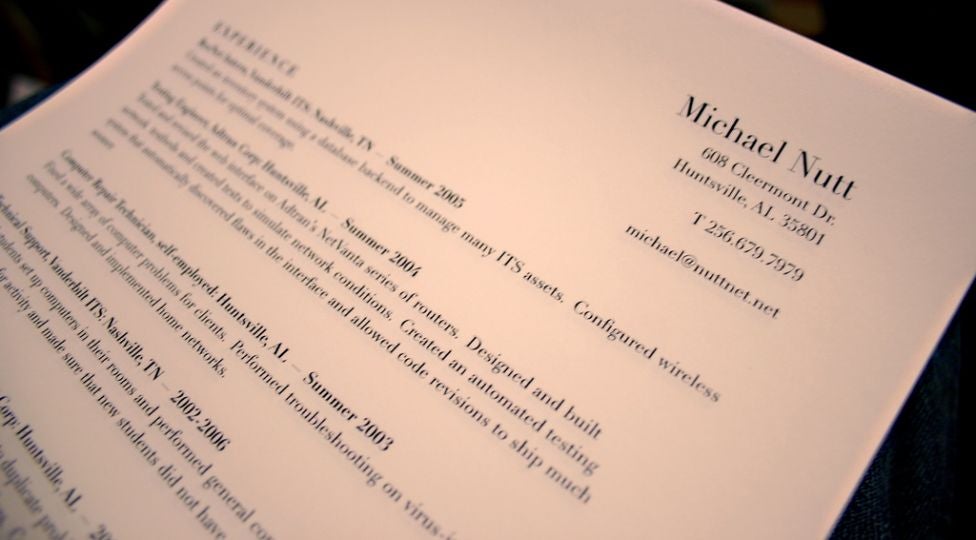
A common trick used by editors could serve you well in ensuring your resume does not have any mistakes: change the font and read it in reverse, advises proofreader Adrian Granzella Larssen.

|
|
How to Find the Right Tablet For You

In only a few short years, the world has gone from having almost no tablets worth owning to far too many. Between iPads, the various Android tablets, and Microsoft's not-quite-laptop offerings, how do you know which ones are worth your money? With our handy guide, of course.

|
|
Unmark Turns Your Overflowing Bookmarks into a To-Do List

Many people have given up using bookmarks in favor of services like Pocket or Readability , but if you still have way more bookmarks than you know what to do with (like I do), Unmark helps you organize them, access them anywhere, and even follow up, reading articles and visiting sites you meant to try later.

|
|
The Consumerist 101 Guide To Understanding Your Financial Regulators
 Washington, D.C., might as well be called Acronym City. It feels like there are a zillion different, discrete agencies, organizations, bureaus, boards, and commissions within the federal government, each with its own graceless three-, four-, or five-initial moniker, forming the tangled web of a bureaucracy that regulates… well, almost everything. So what are the key regulatory agencies, anyway? Who oversees what, and who do they report to, and how does it all work?
For our first installment in a series on how to understand your regulators, we thought we’d begin with the agencies and departments that regulate and oversee everyone’s favorite thing: money.
 The Federal Reserve System
Also called: The Fed, The Federal Reserve
Area of focus: Banking and the economy
Specifically responsible for: Four major areas of focus:
- Creating and enacting monetary policy
- Maintaining the stability of the entire financial system
- Regulating and supervising banking institutions
- Acting as a central bank providing financial services to banks and the government
The Federal Reserve was created in response to bank and financial panics, and expanded in response to crises like the Great Depression. The Federal Reserve Act lays out a mandate for the Fed that their policies should meet the goals of maximum employment, stable prices, and moderate long-term interest rates. The Fed also performs and publishes an enormous amount of economic research.
What they DON’T do: Create and print money (Treasury); regulate stock markets (SEC); get into the nitty-gritty of bank regulation (OCC)
Falls under / reports to: The Federal Reserve is an independent agency, meaning it’s separate from all of the executive (cabinet-level) departments. It is subject to oversight and potential alteration (changes in scope, mission, and so on) from Congress.
Leadership: Officially, what we think of as the Federal Reserve is “The Board of Governors of the Federal Reserve System.” The current Chair of that board is Janet Yellen, who just took over the position in February. Ben Bernanke held the position prior to Yellen. The Chair and the other members of the Board are appointed by the President and approved by the Senate.
Parent agency of: The CFPB
 The Department of the Treasury
Also called: Treasury
Area of focus: Currency, government cash flow
Specifically responsible for: The Treasury, at its most basic level, manages money that comes into or goes out of the federal government. Their major areas of focus are:
- Collecting money paid to the government, including taxes and duties
- Creating currency and coinage
- Managing federal finances, government accounts, and the public debt
- Advising on “domestic and international financial, monetary, economic, trade and tax policy”
- Enforcing finance and tax laws, including investigating and prosecuting tax evaders and counterfeiters
What they DON’T do: Regulate banks (Federal Reserve); regulate stock markets (SEC)
Falls under / reports to: The Department of the Treasury is an executive department; it reports to the President.
Leadership: The Treasury is headed by the Secretary of the Treasury, a Cabinet-level position. The current Secretary is Jack (Jacob) Lew, who took over the job in 2013.
Parent agency of: Many offices and bureaus, but key ones include the IRS, the OCC, and the Mint.

Office of the Comptroller of the Currency
Also called: OCC
Area of focus: Banks
Specifically responsible for: The OCC charters, regulates, and supervises banks to “ensure that they operate in a safe and sound manner and in compliance with laws requiring fair treatment of their customers.” Specifically, their areas of activity are:
- Approving or denying applications for new banking charters, branches, or “other changes in corporate or banking structure”
- Enforcing relevant laws and regulations by taking “supervisory actions” against banks that don’t comply with them. Those actions can include removing a bank’s officers or directors, negotiating agreements with a bank for it to change practices, and issuing cease and desist orders along with fines.
- Issuing rules and regulations relating to “investments, lending, and other practices.”
What they DON’T do: Set banking policy (Federal Reserve); make currency (Treasury); regulate stock markets (SEC); help some certain consumer complaints related to financial products (CFPB).
The jurisdictional split between the OCC and the CFPB for consumer complaints has to do with (1) the type of complaint (if it falls under “certain consumer protection laws”) and (2) the size of the bank being complained about. The big ones go to the CFPB.
Falls under / reports to: The OCC’s parent agency is the Department of the Treasury.
Leadership: The OCC is headed by the Comptroller of the Currency, a position nominated by the President and approved by the Senate. Current Comptroller Thomas Curry was sworn in to his term in 2012.
 Consumer Financial Protection Bureau
Also called: CFPB
Area of focus: Financial protection for consumers
Specifically responsible for: The CFPB was created in 2011 in response to the economic crisis that kicked off in 2007-2008. Its mandate is to educate consumers, to enforce existing federal laws relating to consumer finance, and to do a whole lot of research related to those issues. As compared to many other government agencies, they are a very end-user-facing, consumer-friendly organization more likely to use plain language. Their core role is to:
- Enforce federal consumer financial protection and anti-discrimination laws
- Restrict unfair, deceptive, or abusive acts or practices
- Research consumer behavior, accept consumer complaints and promote financial education
- Write rules and regulations that companies have to work within
What they DON’T do: Regulate banks (OCC); regulate stock markets (SEC)
Falls under / reports to: The CFPB’s parent agency is the Federal Reserve.
Leadership: The CFPB is run by a director, appointed by the President and confirmed by the Senate. Richard Cordray assumed the office in 2012.
 Securities and Exchange Commission
Also called: SEC
Area of focus: Stocks, stock markets, publicly traded companies
Specifically responsible for: The SEC interprets and enforces laws relating to securities, brokers, corporate finance, and pretty much all related areas. Their core functions are to:
- Enforce existing federal securities laws
- Issue and amend relevant rules
- Oversee “the inspection of” securities firms, investment advisers, brokers, and ratings agencies, and also to oversee private regulatory organizations in related fields
The SEC operates in five major divisions, each of which oversees a different area:
- Corporation Finance: tracks public companies’ disclosures, mergers, etc
- Trading and Markets: oversees the agencies that register and license brokers and investment houses
- Investment Management: oversees investment advisors and mutual fund companies
- Enforcement: enforces relevant law through investigations and civil actions
- Economic and Risk Analysis: does all the research for rule- and law-making, and analysis of current and potential future risks in the market
What they DON’T do: issue monetary policy or set interest rates (Federal Reserve)
Falls under / reports to: The SEC is an independent agency, meaning it’s separate from all of the executive (cabinet-level) departments. It is subject to oversight and potential alteration (changes in scope, mission, and so on) from Congress.
Leadership: The SEC is run by a five-member commission headed by a chair. The current Chair, Mary Jo White, began her term in 2013. Other commissioners are Luis Aguilar, Daniel Gallagher, Kara Stein, and Michael Piwowar. Commissioners are appointed by the President and approved by the Senate. No more than three of the five commissioners may belong to the same political party.
 Federal Deposit Insurance Corporation
Also called: FDIC
Area of focus: Insuring the money in banks
Specifically responsible for: The FDIC basically exists to guarantee that if a bank closes, the customers who deposited their cash into that bank don’t go broke. Its core areas of responsibility are:
- Insuring deposits
- Supervising financial institutions for safety, soundness and consumer protection
- Managing receiverships
Deposit accounts at FDIC-backed banks are generally insured to $250,000 — so if your bank announces financial trouble, there’s no need to cause a run on it to get your money back, thus making the situation worse. The FDIC also manages receivership in the event of bank failure.
What they DON’T do: any of the above for credit unions (NCUA); insure investment accounts
Falls under / reports to: The FDIC is an independent agency, meaning it’s separate from all of the executive (cabinet-level) departments. It is subject to oversight and potential alteration (changes in scope, mission, and so on) from Congress.
Leadership: The FDIC is run by a five-member board of directors headed by a chair. The current Chair, Martin Gruenberg, began his tenure in 2012.
Two of the five director positions go to the Comptroller of the Currency and the director of the CFPB, so are currently held by Thomas Curry and Richard Cordray respectively. The remaining two directors are Thomas Hoenig and Jeremiah Norton. Directors are appointed by the President and approved by the Senate. No more than three of the five members of the board of directors may belong to the same political party.

National Credit Union Administration
Also called: NCUA
Area of focus: Credit unions
Specifically responsible for: The NCUA regulates, charters, and insures the deposits in credit unions. While banking regulatory authority is more spread out across agencies, most credit union oversight lies with the NCUA.
What they DON’T do: insure the money in banks (FDIC)
Falls under / reports to: The NCUA is an independent agency, meaning it’s separate from all of the executive (cabinet-level) departments. It is subject to oversight and potential alteration (changes in scope, mission, and so on) from Congress.
Leadership: The NCUA is run by a three-member board of directors headed by a chair. Current Chair Debbie Matz began her six-year term in 2009. The other two members of the board are Michael Fryzel and Rick Metsger. Directors are appointed by the President and approved by the Senate. No more than two of the three members of the board of directors may belong to the same political party.
