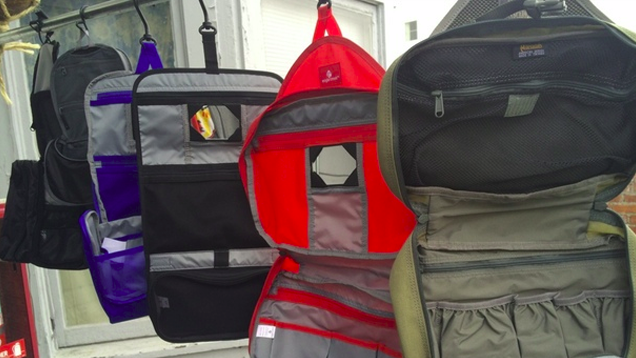
Having the right gear (and remembering to pack it) can make all the difference between an enjoyable trip and one that makes you wish you never left home. This shopping list from Wirecutter is a curated collection of the best travel items.

Having the right gear (and remembering to pack it) can make all the difference between an enjoyable trip and one that makes you wish you never left home. This shopping list from Wirecutter is a curated collection of the best travel items.
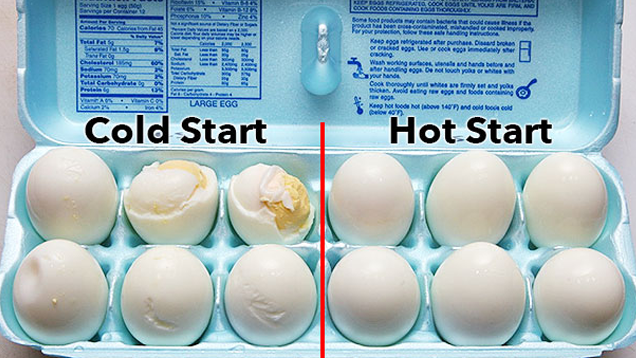
Don't you hate it when you're peeling a boiled egg and half of it breaks off with the shell? Serious Eats tested several egg boiling methods to find the most foolproof method to avoid that catastrophe. The factor that made the biggest difference: The temperature you start cooking the eggs in.

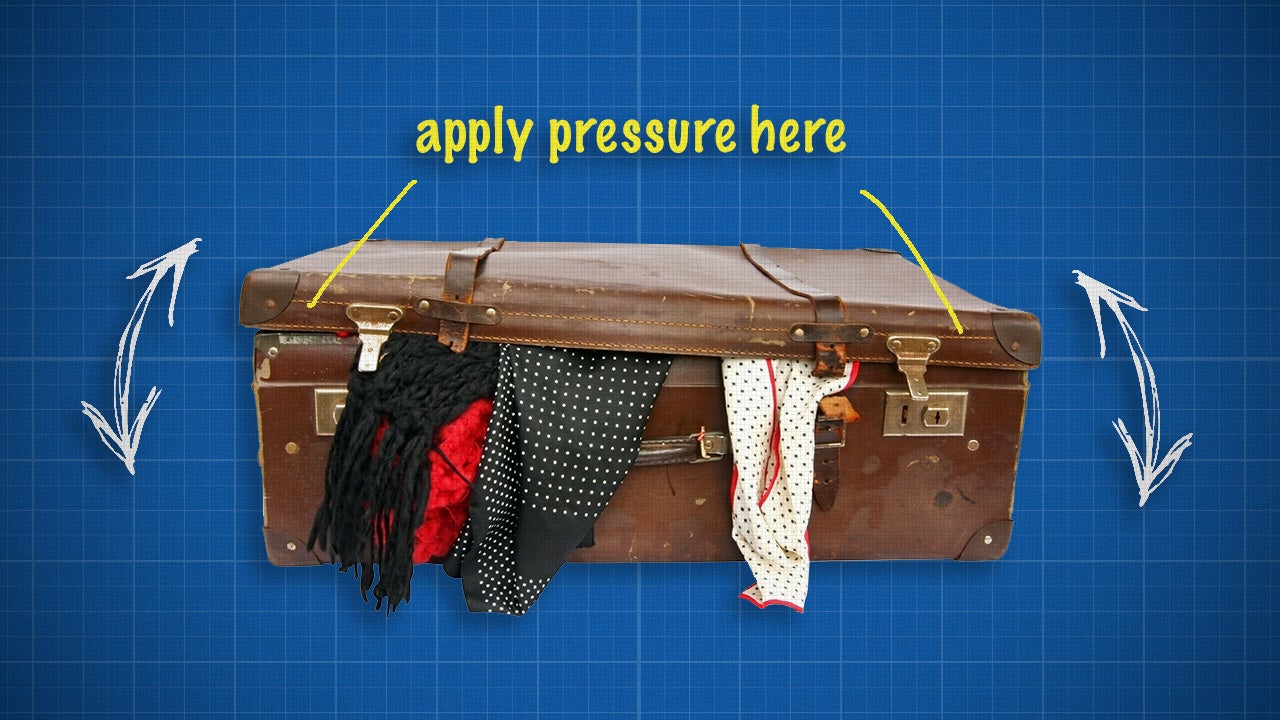
When you're traveling, the way you pack can be essential. Whether you're a space-saver, or just like things as organized as possible, you've probably picked up a few tricks along the way. Here are some of the best ideas.

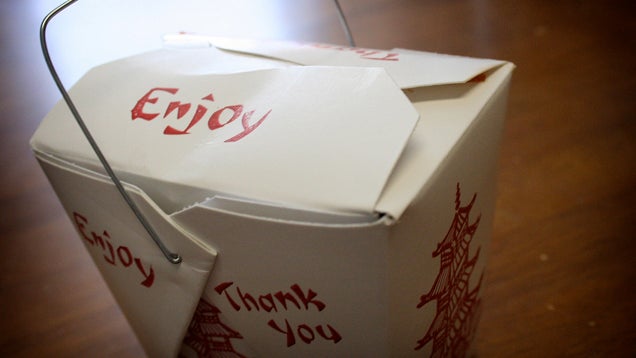
Often, when I go out to dinner, I'll order something large knowing that I'll take half of it home for lunch tomorrow. The Simple Dollar notes that this isn't exactly a money-saving trick.

Federal Housing Finance Agency director Mel Watt announced today that regulators would attempt to loosen lending standards that have made it difficult for consumers to purchase homes since the recession began, The New York Times reports.
Regulators chose not to implement a reduction in the size of loans Fannie Mae and Freddie Mac could buy for fear that a reduction may have worsened the health of the current housing market. Additionally, by easing the standards for instances when a bank is required to repurchase a faulty mortgage – often called a mortgage put-back – regulators hope to loosen the tight credit requirements that have hindered the housing market recovery.
“Repurchase risk remains a top concern for the mortgage industry,” Watt said. “Ultimately, this undermines the goal of improving access to mortgage credit for creditworthy borrowers.”
The new policies relax mortgage payment history requirements lenders would need to meet in order for a loan to be exempt from put-back. Currently, no payments can be delinquent, but under the new standard mortgages could be exempt if borrowers made at least 34 of the first 36 payments on time. Banks could also complete certain reviews to avoid repurchasing loans.
Watt also addressed a new pilot program currently being tested in Detroit in which homeowners who owe more than their home’s market value can refinance loans owned or guaranteed by Fannie Mae or Freddie Mac.
Regulators plan to expand the pilot to other parts of the nation hit hardest by foreclosures.
Regulator Opens Door Wider for Americans on Mortgages [The New York Times]

 Automated Postal Centers (APCs) are kiosks that are available when post office lines are too long, the service counter is closed, or you want to avoid bothersome human interaction. They’re set up very much like ATMs that print postage instead of dispensing cash. Like any other machine that accepts debit cards and is accessible to the public, APCs have been the target of card-skimming scammers.
Skimmers turn up in a variety of places: banks, gas pumps, subway stations, and now post offices. What these machines all have in common is that they’re places where customers use their credit and (better yet) debit cards, but the machines are unattended or isolated enough for crooks to install devices to capture card numbers and PINs, without attracting notice.
People in the banking industry alerted security blogger Brian Krebs that their customers’ card numbers appeared to have been stolen after using APCs. So far, possible postal breaches have been reported in thirteen states and the District of Columbia. The U.S. Postal Service has its own investigations bureau, the U.S. Postal Inspection Service, and they confirmed to Krebs on Security that the USPS is investigating these incidents, and they have warned post office staff to check kiosks for skimming equipment.
How can you protect yourself? It’s a good idea to check the equipment on payment kiosks and ATMs, especially if it’s your first visit to that store or bank. Here’s a quick 3-step guide to identifying external skimmers:
Also consider using a credit card instead of a debit card, if that option is available to you: credit cards offer better fraud protections in general, and also don’t let baddies walk away with your entire bank account balance, even temporarily.
Also consider covering your hand while entering your PIN on any machine: assume that there is always a camera lurking above you, maybe disguised as an electric plug like the PIN cameras recently found in a New York City subway station.
Postal Service: Beware Stamp Kiosk Skimmers [Krebs On Security]


The students and staff have written a thank you letter for the anonymous customer. It will be left at the restaurant in case she returns.
The group students with autism, along with their teachers and speech therapists were enjoying their outing to Jose Tejas Restaurant in Woodbridge, NJ, last week when they got the surprise.
“At the end of our meal, the manager came over and told us our entire $485 bill was paid for by a fellow patron, and she chooses to remain anonymous because she told the manager she has a grandchild with special needs,” one teacher tells MyCentralJersey.com. “She wanted to show her appreciation to us on Teacher Appreciation Day.”
The students had brought their own money to pay for the lunch, which was the conclusion of an extended lesson on Cinco de Mayo. But with some benefactor choosing to foot the bill, the teachers told the kids to save the money for another outing.
While only the restaurant knows who the generous customer was, the teachers are hoping that the person(s) will see news items about the gift and know that it was appreciated. The students have even made a card that will be held at the restaurant in case the customer comes back.
“We’d like to thank her and give her a hug and let her know how much it meant,” says the teacher.

Joining the ranks of other AAA organizations that have started fixing bikes and giving stranded cyclists a lift, clubs in Colorado and Southern New England (covering Connecticut, Massachusetts, New Jersey and Rhode Island) announced new bike services ahead of Bike to Work Day this week, reports NPR News.
The added benefit comes with existing memberships, so AAA members in those areas won’t have to add any new services or pay an extra fee.
“Whether for sport, transportation or family fun, the number of people riding bicycles is on the rise. So in line with our goal to help keep our members moving, it made sense to extend our roadside assistance to include bicycles. It’s a natural,” Mary Wyatt, senior vice president of marketing and publications for AAA Southern New England told NPR.
The AAA plan covers both members and any teenage kids who might not have a driver’s license yet, and is along the lines of similar plans other AAA clubs have rolled out in recent years: Washington state’s AAA has had a bike program since 2012, while Colorado joined the bike bandwagon this month and Minneapolis covers bikes as well now.
Trucks outfitted with bike racks will be available in some programs, but that means that if you’re biking on an isolated path away from a road, you’ll still have to make your way to a place where those trucks can drive. Cyclists can ride with AAA trucks for up to 10 miles without a fee, and can use two bicycle calls per year.
More Cyclists Can Now Call AAA For Help [NPR]

 There are thousands of scholarships available to prospective college students each year. But there are only so many Division 1 athletic scholarships to go around and snagging one of those could be considered an incredible feat.
While we can’t condone selling yourself on eBay, one Los Angeles-area high school senior did just that in an attempt to attract the attention of baseball recruiters and acquire a scholarship, KTLA reports.
When Austin, who has strong credentials on the diamond including being named All League Ventura County, All Marmonte League and Offensive Play of the Year in 2013, had a difficult time catching the eye of college baseball recruiters, he did the next logical thing – he auctioned himself on eBay.
In the post, titled “Baseball Outfielder – High School Senior Looking for D1 College Scholarship”, Austin describes himself as “new without tags” with a “natural athleticism” and being “passionate about the game and playing at the next level.”
The teen admits that his posting was a bit unconventional but it did attract some attention. Austin garnered eight bids in his attempt to acquire a scholarship. While it’s unclear if any baseball coaches showed interest in the senior, someone did make a winning bid of $22.50 for him.
Local Athlete Lists Himself on eBay to Get College Scholarship [KTLA]

SeattlePI.com reports that the man and his family walked into the Subway on Sunday night. The man then entered the bathroom alone and proceeded to take his good old time.
Even his wife was apparently concerned, knocking on the bathroom door and inquiring about his extended stay in the loo.
The family got their food and left without the man, who remained behind in the bathroom, only to eventually exit in a hurry, carrying a plastic garbage bag.
That’s when the employees noticed that the man had made off with a toilet tank valued at $550.
The Toilet Taker — Yet another Bad Consumer to add to our rogues gallery.

Sick of seeing people buffet customers fill up their plates with food only to leave it uneaten, the owner of the restaurant decided to add a surcharge of 5 Swiss francs ($5.62) for patrons who don’t finish everything on their dishes.
“I wanted to send a strong signal,” he explains, according to The Local. “It made me sick to see so much food being thrown out.”
The president of the regional federation of restaurateurs, supports the plan, saying, “It’s perfectly legal, and for me a good way of combating waste.”
As Eater.com points out, this isn’t the first restaurant to try this sort of surcharge. One restaurant in the U.K. tacks on £20 ($33.66) for buffet customers who don’t finish up.
Disputes over “all you can eat” deals are unfortunate but not uncommon.
In 2011, a man in L.A. sued a sushi restaurant for cutting him off because he wasn’t eating any of the rice in his “all you can eat” sushi dinner; just picking off the fish and eating it on its own. The restaurant pointed out that sushi is not sushi without the rice, and that this man was trying to get away with enjoying an “all you can eat” sashimi platter.
Then in 2012, a Wisconsin diner called the police to complain that, after eating 12 pieces of fish in a single sitting, he had been cut off from eating his fill at an “all you can eat” fish fry. And even though the restaurant gave him another eight pieces after that, he still came back two days later to protest in the parking lot.
That same year, a Pennsylvania man was sentenced to three months of house arrest after punching another buffet customer in the face over a dispute involving who took the last of the crab legs.
Perhaps we should add “The Buffet Abuser” to our list of Bad Consumers who ruin things for the rest of us?

A. posted it to YouTube. The clip didn’t exactly go viral; maybe a half-dozen people had watched it before someone other than A. sent it to Consumerist. It’s not about how many people watch your video, though: the important thing is who watches your video. At least two of those viewers sent the link on to Sonic.
Here’s a copy of her original video:
Based on previous experience with this Sonic, A. knew that the normal customer service channels wouldn’t be much use. “If you call the [corporate] hot line, they just brush you off. I’ve called about so many things and nothing changes,” A. told us. We usually recommend asking to speak to a manager on the spot in situations like this, and asked her whether she had tried that. “Not this time, but I have in the past. The manager usually just looks at you blankly,” A. explained.
Here in the Consumerist media hut, we thought the video was pretty obnoxious, and sent it over to Sonic’s public relations department. Another YouTube viewer had sent it over shortly before we did, and they were already looking into the situation, VP for Public Relations Patrick Lenow told us. A short time after that, we got an update from Sonic HQ: the worker will have to take his racist impersonations elsewhere, since he no longer works at that restaurant. Sonic sent us this statement:
The franchise owner of the location has reviewed the video and confirmed that the incident did occur at his location. The owner found this behavior unacceptable and reports that the employee involved in the incident is no longer employed at the location.
Should it take public shaming and a PR nudge from a blog from Consumerist to end this kind of behavior in any customer-facing employee? No, it really shouldn’t. There’s goofing off at work, and there’s acting out an obnoxious stereotype when you don’t know who is going to pull up to the drive-thru next. A., as it turns out, is married to a man from India, and found the drive-thru worker’s impression especially offensive, but you can watch the video for yourself and judge.

The study published today in the Canadian Medical Association Journal says there’s extra risk for women in the second trimester, which is when they’re feeling pretty darn pregnant, but don’t have the bigger third trimester belly that might prompt them to drive more carefully.
To blame? That condition known commonly by every woman I’ve ever known who’s had a baby — “pregnancy brain,” reports USA Today.
“A normal pregnancy is associated with fatigue, nausea, insomnia, anxiety and distraction,” one of the authors explains. “All those changes could contribute to driver error.”
He and his co-authors combed through records for more than 500,000 women who gave birth in Ontario, who were tracked for four years before giving birth and one year afterward.
Researchers tallied up each car crash that was serious enough to send the woman driver to the emergency room and found that the number of serious crashes for all the women was 177 per month before pregnancy, or 4.5 per 1,000. That figure held through the first month of pregnancy, but by the fourth month, those same women were having 299 serious crashes a month, at a rate of 7.6 per 1,000.
In the last month of pregnancy, the rate fell to only 2.7 per 1,000 and then stayed down in the year after the births. At that time, new moms might not be as likely to be driving or had their babies with them and drove extra carefully.
“We are not saying that pregnant women shouldn’t drive,” one of the co-author says. A good point to make — also note that this is just one study and not every pregnant woman is a disaster on wheels.
And handing the wheel to a male partner won’t help either, as men have worse crash rates than women whether there’s a bun in the oven or not, he says. Instead, he suggests driving just like you would with a big belly or your newborn in the car.
“Just slow down and follow the rules of the road,” he says.
Or ask your un-pregnant galpals to ferry you around, because we totally will. But I need to borrow your car.
Study: Pregnant drivers may have more car crashes [USA Today]

Nearly eight in 10 Americans carry less than $50 cash and two out of five carry less than $20 cash on a daily basis, according to a new report by Bankrate.com. Additionally, about 9% of consumers surveyed say they don’t carry cash at all.
“If we move to a truly cashless society, it won’t be much of an adjustment for most Americans,” Greg McBride, Bankrate.com’s chief financial analyst, says.
The report also found that men were more likely than women to carry cash. Nearly 77% of women carry $50 or less daily, while 61% of men carry the same amount.
McBride theorizes that women may carry less cash to reduced the risk of being a target for criminal activity.

Average amount of cash consumers carry on a daily basis.
Having less cash on hand is just another sign that the traditional tender no longer dominates when it comes to consumer spending. That shouldn’t be much of a surprise considering the plethora of options available to consumers, from debit and credit cards to electronic payment systems on smartphones.
In fact, one expert told Bankrate that while cash won’t be going away anytime soon, the trend toward mobile payments continues to increase.
The electronic payments industry “is doing a good job shifting people away from cash,” George Peabody, a payments strategist at Glenbrook Partners, a payments research firm in Menlo Park, CA, tells Bankrate. “Cash is going to be remarkably resilient. I’m not expecting cash to disappear anytime soon.”
But consumers have many reason for not carrying cash. Many consumers tell Bankrate that having less cash on hand means they can more easily control their spending. Hannah, a student at the University of Missouri, says she tends to carry less than $20 each day.
“Cash for me is so much easier for me to spend,” she says. “If I have a lot in my wallet, I’m immediately going to spend it. Twenty dollars is enough to go out on the weekend or get lunch between classes, but not enough to go buy something crazy.”
Hannah isn’t alone in her sentiment that having more cash makes you want to spend more. Joydeep Srivastava, a professor of marketing at the University of Maryland, says many consumers consider cash in their wallet as petty cash.
“As soon as you draw it from the ATM, it’s like you’ve already spent it,” he says. “You don’t feel that pang of guilt of spending it anymore.”
Even with recent high-profile data security breaches at retailers nationwide, some experts say consumers feel more secure using plastic than cash. If a consumer loses a $20 bill from their wallet, they’re out $20. But if someone fraudulently charges $20 to your credit card, you often don’t have any liability, Jason Oxman, CEO of the Electronics Transactions Association tells Bankrate.
Carrying $50 or less doesn’t seem to be hurting the overall popularity of cash though. An April report by the Federal Reserve found that cash was still the most frequently used payment method, although the value of those transactions totaled significantly lower than other methods.

Cash accounted for nearly 40% of all transactions in October 2012, but only 14% of the value of total payments for that time.
The tender was the most popular when it came to transactions less than $10.
Financial Security Index: Cash’s cachet [Bankrate.com]


Happy birthday, here’s a baby! (KFYR-TV)
At 34 weeks along (40 weeks being full-term, for anyone who’s never had a baby or lives under a rock), the 24-year-old woman said she was stretching before climbing into her vehicle and realized her baby was coming, and he was coming fast.
“I was kind of panicking and slightly embarrassed. I couldn’t believe I was having a baby in the parking lot of Walmart,” she tells KFYR-TV. “Plus I knew I was 6 weeks early and so you know there’s always a concern any time you have a baby that early even when you are in a hospital.”
Some of her fellow shoppers came to help her and called 9-1-1, but it seems like the little guy just didn’t want to wait. One bystander says she grabbed a sweatshirt from the car for the baby and got down on the ground to help. When she saw the baby’s head, she knew he was on his way, and fast.
“I just said ‘Okay, you gotta push one more time.’ And as she was pushing I grabbed the shoulders and kind of pulled as she was pushing and the baby came out and he was crying,” the no-doubt thunderstruck witness explained.
The new mother says she’s grateful that there were people around to help her with the unexpected delivery.
“I got really lucky that not only were they there but everything that could have gone wrong… didn’t,” she says.
Her son is doing well in the NICU, despite being born premature, and should be out of the hospital in about a week. And he’ll have a pretty good party story to tell for the rest of his life.
Woman Delivers Baby in Walmart Parking Lot [KFYR-TV.com]

It’s not that we want to make fun of Target and their shelf tags stuffed with fuzzy math. We can’t help it. If only Target would try applying some logic to the signs it posts in its stores, we would stop posting those signs here on the site.
Reader Andrew spotted this sale at his local Target store. There’s no issue with this promotion… unless you expect any single sign to agree with itself.

“The actual sale was a $5 gift card with purchase of 2, though the sign says the opposite,” writes Andrew. Ah, but it also gives the correct information. Silly Consumerist, expecting retailers to agree with themselves.


(Photos, from l-r: Steve R.; Enokson; frankieleon)
With that in mind, here is our list of the usual shopping suspects…
Modus Operandi: Trots out the threat of a bad review on social media in order to receive preferential treatment.
How It Hurts The Rest Of Us: Social media can be a very powerful and effective tool for sharing opinions and for resolving complaints. Every jerk that dangles the sword of a bad Yelp review or a nasty writeup on TripAdvisor in order to be treated like a VIP taints the overwhelming majority of legitimate reviews, making it more difficult for consumers to find dependable information and giving business owners another reason to disregard crowdsourced opinions.
Modus Operandi: Takes advantage of stores’ return policies in order to use a new TV, computer, camera, for a short period of time and then get a refund.
How It Hurts The Rest Of Us: Because of serial returners, more retailers are increasingly skeptical of all returns. In addition to restocking fees for people who return items, a growing number of stores are now scanning IDs of customers who return products and rejecting some returns if a remote computer’s algorithm determines a shopper has made too many returns.
Modus Operandi: Fakes disabilities or illnesses to receive special treatment, like being able to board early on airplanes.
How It Hurts The Rest Of Us: This one is particularly nasty, as it takes advantage of the very fact that not all disabilities are visible. To most of us, the notion that you’d fake a disability just to save a few minutes at the airport, or just to scalp good concert tickets, is anathema. In the end, this repugnant form of line-jumping just slows the whole process down. Even worse, some people with legitimate disabilities may feel like they are being scrutinized because of the actions of others.
Modus Operandi: Takes a legitimate customer service complaint and immediately escalates into nuclear meltdown mode without giving the employee a chance to fix things first; often jumps straight to threats of filing complaints with Better Business Bureau, the Attorney General, their local legislator, or pursuing legal action.
How It Hurts The Rest Of Us: It’s this sort of hair-trigger rash behavior that has resulted in much of the lawyer-scripted robo-speak you hear from customer service representatives. A company would rather have an employee stick to that “I’m sorry you feel that way and I understand your frustration” script than say anything that a fire-breathing, potentially litigious customer could later use against them, even if it’s well-meaning. But since the Escalator rarely makes good on his/her threat, it often has the unintended effect of making the company take a customer less seriously when escalation is threatened.
Modus Operandi: No matter how trivial the issue, this shopper believes it demands immediate attention and will head directly to the front of any line.
How It Hurts The Rest Of Us: Aside from making our waits longer, it also tends to put everyone on both sides of the counter in a bad mood, and if there’s one thing that we need less of in customer service, it’s bad moods. And again, since the Exception’s problem could probably have waited, anyone with a genuinely urgent issue is now looked upon skeptically. Another side effect is that the Exception can result in the formation of the next Bad Consumer on our list…
Modus Operandi: Constantly complains during every second spent waiting in line, even if the wait is not worthy of a complaint. Noticeable traits include a persistent wrinkling of the nose, continual muttering, regular checking of wristwatch and/or phone.
How It Hurts The Rest Of Us: Like a less active version of the Exception, the Huffer/Puffer tends to darken the mood. And when it becomes the Huffer/Puffer’s turn to speak with customer service, there is a tendency to waste time by venting — “Do you know how long I’ve been waiting?” — that only engenders more Huffer/Puffery in the queue that is forming behind them.
Modus Operandi: Comes out swinging (verbally). Automatically assumes that customer service will be antagonistic and overreacts accordingly. Common battle calls of the Fighter — “I know you’re just going to pass me off to someone else but…”; “I’m hoping that may you know how to do your job…”
How It Hurts The Rest Of Us: Instantly puts customer service on the defensive, making them less like to go above and beyond to help. After all, why would you help someone who is pre-judging you to the point of insult? It tends to result in jaded customer service employees who come to expect to be blamed for problems caused by someone else. And it’s also a massive waste of time.
Modus Operandi: Selfishly allows their children to run wild in stores, on planes, and in restaurants while they focus single-mindedly on their own shopping needs.
How It Hurts The Rest Of Us: First, it’s annoying; to both shoppers who have to dodge the brats, and to employees who become de facto babysitters. Inevitably, when the Solipsistic Parent goes to pay at the cashier, at least one of the children tries to add some item discovered during their in-store play date, or breaks something that must be paid for, or is wandering around and won’t come out of hiding, resulting in shouts of “Jeremy! Jeremy! Get out from under those potato chips now!” while we all turn into Huffer/Puffers.
Modus Operandi: Repeatedly expresses statement that he/she doesn’t “believe” in tipping, as if its existence is up for debate. Rather than leave tips for servers who rely on them to survive, leaves rude messages on receipt, or “clever” verbal tips, that always begin with “I’ve got a tip for ya…” and would end with a fist in their mouth if there were any justice in the world.
How It Hurts The Rest Of Us: In addition to making things harder for the server — who has to continue working knowing he or she is getting paid, at best, minimum wage for the effort — it furthers this misconception that tipping at a restaurant is some sort of add-on that you only pay if you “believe” in tipping and if the service really knocked your socks off. With some incredibly rare exceptions, restaurant operators assume that you will tip and build a certain level of tipping into their prices. For every diner that balks on the tip, the restaurant has to go out of pocket to make sure the server makes at least minimum wage. If you want to change the system, petition the nation’s chain restaurants to change the system; don’t take it out on the servers, who may then take it out on our food.
There are certainly other categories of Bad Consumer that we missed. If you can name one and describe its identifying traits, shoot us an e-mail at tips@consumerist.com

 Fast food outlets, why must all of your most ridiculous offerings be in your foreign outposts? Could it be that Americans simply don’t need any more tortilla chips than we already eat? … Well, that’s probably true. The film “Godzilla” comes out this month, though, and Burger King is marking the occasion with some enormous wraps topped with tortilla chips.
The items in the Godzilla lineup are all called “Raksasa,” which means something like “giant” or “monster” in Malaysian. The line is a Godzilla promotion, maybe because the burgers and wraps are monstrously huge. Both food selections also include tortilla chips, perhaps so diners can imagine they’re an enormous lizard crunching through the bones of any person foolish enough to get in its way. Or tortilla chips are just tasty.
The Raksasa burger can have up to three chicken or beef patties, barbecue sauce, mayonnaise, and cheese if you get three meat patties. The wrap is pretty much the same thing, but with only one chicken patty and in wrap form.
Rounding out the Raksasa menu for no particular reason is a special beverage: iced Milo (a chocolate-malt beverage that you can make at home from a powder) topped with crunchy chocolate cereal.
Around the World: Burger King Malaysia – New Godzilla Burgers [Brand Eating]

Chrysler issued a recall for 645,000 model year 2010-2014 Town and Country and Dodge Grand Caravans with power third-row windows, The Los Angeles Times reports.
The National Highway Traffic Safety Administration reports [PDF] the company found a short circuit could be caused when liquid, such as rain, snow or car washing residue, is spilled or comes in contact with the window switch on the driver’s door. If a short happens the switch could overheat and cause a fire.
The issue was found in 2012 when Chrysler Regulatory Affairs identified six 2010 and one 2011 model minivans with melted vent switches, according to paperwork [PDF] the company submitted to NHTSA. Upon further investigation the company determined the cause and created a fix.
Officials with Chrysler say there have been no injuries or accidents reported associated with the recall.
Owners of affected vehicles will be notified beginning in June and dealers will replace the vent switch with a newer version free of charge. If you simply can’t wait to hear from the company, customers can visit their dealers after May 14 to have the issue fixed.
Chrysler Group recalling 645,000 minivans for fire risk [Los Angeles Times]

The kindergartener with a heart of gold handed over all $,650 he got for his birthday through his own special fundraising efforts to the local police department, after donating last year’s loot to the firefighters in town, reports the Orlando Sentinel.
That $1,210.25 donation was the largest one-time donation ever to the city’s firefighters, who put the money toward a volunteer program that paints fire hydrants and builds wheelchair ramps for the disabled.
He asked for donations for local businesses as well as holding a “dough-raiser” at a pizza shop that brought in some money as well. His donation will go toward defraying the costs for police running a summer-education program for kids.
“He keeps nothing for himself,” said his mom, adding, “During all of this, he amazed me with his courage in standing in front of large groups of people talking about what he was doing.”
Ocoee boy keeps promise, donates birthday money to police [Orlando Sentinel]

Police arrest five in Manassas street gang crack down Inside NoVA Michael Marshall of Manassas is charged with several felonies in a crack down on gang activity in Manassas. FINK.jpeg. Adam Fink of Manassas is charged with several felonies in a crack down on gang activity in Manassas. mugshot escobar jose.jpeg. Five alleged Bloods gang members charged in Manassas CityWashington Post all 2 news articles » |
Prince William Police Reviewing Viral Video of Arrest PotomacLocal.com MANASSAS, Va. – A viral video shows a man being arrested at a McDonalds across from Manassas Mall. Later, the person shooting the video with their cell phone camera was told by another officer, who identified himself as Jennings, to stop filming and ... and more » |


