
When you give a presentation, you need to captivate your audience. Just like a good movie or TV show, appealing to people's emotions can help you engage them.

When you give a presentation, you need to captivate your audience. Just like a good movie or TV show, appealing to people's emotions can help you engage them.

When you've got some leftover opened beer from a party, don't pour it down the drain. Instead, take that beer and soak your rings in it or give your pots and pans some sparkle.


Creating strong passwords is essential to protecting your accounts. Getting your children involved at an early age sets a great habit for life. Over at the Wall Street Journal, they suggest making privacy into a game.

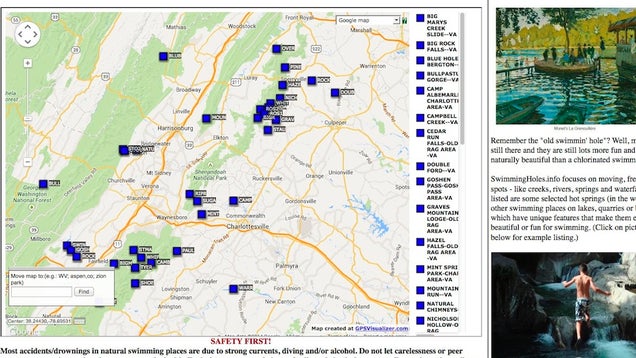
With the weather getting warmer, you might be tempted to get away from it all and cool off. If you wouldn't mind a refreshing dip while you're at it, SwimmingHoles.info can show you where your area you can go for a swim without the crowds and concrete, no pool pass required.

The good news: This transition will give you lots of freedom. The not-so-good news: It will also give you many money challenges.
Get started on the right foot and have a plan.
Here’s how to not suck at transitioning from college to the real world.
No matter what kind of degree you have, you need a job. Even if you have no idea what you want to do with the rest of your life, you need cash. We know this isn’t always easy, and you probably won’t find your dream job right after graduation.
Even if you have to resort to flipping burgers, that’s still a job that pays actual money and it’s important to start your life as a grown up with income. Perhaps you can find a job with flexible hours that will allow you to go on more interviews for jobs in your field. Plus, prospective employers will see that you’re not just loafing around.
If nothing else, having some income will allow you to get on track with a budget and learn how to pay your own way — even if it’s just keeping up with student loans and giving your parental landlords some financial payback for taking you back into their home.
Whether you’ve started your first real job or you’re still looking, you need to carefully consider how you spend your money. Start by tracking every nickel you spend so you can see where your money is going.
Let’s say you’re living with your parents rent-free, but you hope to get an apartment of your own someday. You should create a line-item on your budget that represents what you’d pay in rent if you moved out, and you should pay that to a savings account each month. It will help you get used to paying the rent, and you’ll build a cash cushion to use for future expenses.
When you finally do rent, don’t forget about renter’s insurance.
You may have gotten away with handing in your Advanced German Literature term paper late, but your creditors won’t be so lenient.
Paying your bills on time — even if you can’t pay them in full — is one of the most important actions you can take to build a positive credit history. Meanwhile, failure to keep up with your bills is an easy way to get off on the wrong foot, financially speaking.
If you ever find an error on your credit report, make sure to get it fixed.
Some of your friends may have gotten higher-paying jobs, and it’s understandable if you’re a little jealous while they’re enjoying their new incomes by spending it on clothes, dining out and maybe even buying a snazzy new car.
Things are not always as they seem.
We’re willing to bet many of them are spending more than they earn as they try to make up for the lean college years (or try to impress others without thinking of the long-term consequences of debt).
Don’t make that mistake. If you’re like the average graduate, you have lots of debt already.
A recent survey found more than 75% of renters between the ages of 18 and 24 spent more than they earned each month.
Another study [PDF] found that 2013 college graduates walked away with an average of $35,200 in college debt and an average of $3,000 in credit card debt, too.
Don’t add to your personal money burden by going hog wild at happy hour with $15 cocktails.
If you’ve already accumulated significant debt, here’s how you can get out.
When you start bringing in some cash, come up with a plan for the future. Build a list of goals and determine how you’ll be able to reach them. You’ll need to balance your short-term expenses, such as food and transportation costs, with the need to save for longer-term goals, such as for a rent deposit, a down payment on a car and more.
But before you can save for long-term goals, you need to plan for emergencies. Financial advisors recommend you have between three and six months of expenses in a bank account that you don’t touch unless it’s absolutely necessary. It’s not sexy, but this is the first place you should save.
The easiest way to save is to pay yourself first, and putting savings on auto-pilot will increase your chances for success.
Set it up so that certain amounts of money come out of your paycheck automatically — before it’s deposited into your checking account and you have a chance to spend it.
You can have small amounts redirected to a bank account for your emergency fund, and also to other accounts that are earmarked for your other goals.
Also make sure to get started early with retirement savings, especially if your employer offers a 401(k) plan. Yes, retirement is many years away, but studies show if you start early, you’ll have a larger nest egg than those who start later — even if you’re saving a smaller amount. (Learn more about retirement savings options here.)
In case you haven’t figured it out yet, there are some major differences between college and the real world.
Before you go running back to the welcoming, familiar embrace of another degree and more student loan debt, try being a sensible adult in the real world for a while; it’s better than it sounds.
Have a topic you’d like to see covered in How To Not Suck? Or maybe you’re an expert who would like to share your insight with Consumerist readers? Send us a note at notsuck@consumerist.com.
You can read Karin Price Mueller’s stories for The Star-Ledger at NJ.com, follow her on Facebook, and on Twitter @kpmueller.
PREVIOUSLY ON HOW TO NOT SUCK:
How To Not Suck At Spring Cleaning
16 Ways To Not Suck At Making Mother’s Day Special
10 Ways To Not Suck At Spending Your Tax Refund
15 Things Everyone Needs To Know About Disability Insurance
15 Things People Of All Ages Need To Know About Long-Term Care Insurance
15 Things You Need To Know About Life Insurance
15 Things Everyone (Including Renters) Should Know About Homeowner’s Insurance
15 Things You Need To Know About Buying Auto Insurance
How To Not Suck… At Going To Small Claims Court
How To Not Suck… At Buying In Bulk
How To Not Suck At Planning Your Wedding, Part 5: Spending Your Wedding Cash
How To Not Suck At Planning Your Wedding, Part 4: The Honeymoon
How To Not Suck At Planning Your Wedding, Part 3: The Costly Little Extras
How To Not Suck At Planning Your Wedding, Part 2: The Stuff People Pay Too Much For
How To Not Suck At Planning Your Wedding, Part 1: The Most Expensive Steps
How To Not Suck… At Teaching Your Kids About Money
How To Not Suck… At Valentine’s Day Gifts
How To Not Suck… At Merging Your Money When You Marry
How To Not Suck… At Borrowing For College
How To Not Suck… At Saving For College
How To Not Suck… At Pre-Paying For Your Funeral
How To Not Suck… At Making Financial New Year’s Resolutions
How To Not Suck… At Last-Minute Christmas Gifting
How To Not Suck… At Saving For The Holidays
How To Not Suck… At Charitable Giving
How To Not Suck… At Disputing Credit Report Errors
How To Not Suck… At Lowering Your Utility Bills
How To Not Suck… At Home Inspections
How To Not Suck… At Understanding Credit Card Rewards
How To Not Suck… At Getting Ready For Tax Season
How To Not Suck… At Picking A Retirement Plan
How To Not Suck… At Deciding When To DIY
How To Not Suck… At Getting Out Of Debt
How To Not Suck… At First Year College Budgets
DISCLAIMER: Any websites, services, retailers, or brands mentioned in the story above are only intended as some of many options available to consumers, and do not constitute an endorsement by Consumerist, Consumerist Media LLC (CML) or its staff. Per Consumerist’s No Commercial Use Policy, such information may not be used by others in advertising or to promote a company’s product or service. In addition, this policy precludes any commercial use of any of CML’s published information in any form, or of the names of Consumers Union®, Consumer Media, Consumer Reports®, The Consumerist, consumerist.com or any other of CU or CML’s publications or services without CU or CML’s express written permission.


Whenever a company (or a company’s top executive) does something that ticks off a segment of the population, there’s usually talk of people calling for boycotts of that company’s products and services. But can a boycott bring about change on its own, or does it risk only hurting the low-level employees who are probably not the target of the protest? A boycott’s success frequently has less to do with an immediate loss of revenue than it does with the public’s reaction to the boycott.
 Sometimes, money really does talk and a well-organized boycott can result in changing the way a company does business.
Take Fruit of the Loom for example. In 2009, a group called United Students Against Sweatshops launched a campaign in response to reports of workers being mistreated, forced dismissals, factory closures, and trade unionists facing death threats in Honduras.
The activists succeeded in persuading 96 U.S. colleges and 10 British universities to sever their contracts with the undergarment company. After losing an estimated $50 million, Fruit of the Loom re-opened the factory and rehired employees who had lost their jobs.
But for every boycott that succeeds in bringing about the desired change, there are dozens that fail or only result in compromise. These cases often go beyond a company’s business activities and involve moral and ethical questions about a company’s owners or corporate leadership.
For example, consider the current attempts to boycott the Beverly Hills Hotel, the Hotel Bel-Air and other ritzy hotels, spas and restaurants run by the Dorchester Collection, which is in turn owned by the Southeast Asian sultanate of Brunei.
These protests are in response to the recent declaration by Brunei’s billionaire Sultan Hassanal Bolkiah that he will be imposing strict sharia law — including harsh and potentially deadly penalties for homosexuality and adultery — on his country’s residents.
While the celebrity-driven boycott has resulted in several organizations changing plans to host events at the hotel, the boycotts haven’t effected the laws in Brunei.
“They won’t stop the implementation of the new laws,” the hotel group’s CEO recently told the L.A. Times about the boycotts, adding that they will “only hurt the [hotel's] employees.”
Indeed, given the Sultan’s immense personal wealth, the Dorchester hotels’ reputation among the world’s wealthiest travelers, and Hollywood’s tendency to give up on a cause after a few minutes, it’s highly doubtful that even the combined star-power of boycotters Jay Leno and Ellen DeGeneres will halt the rollout of these cruel laws. The best that protesters could hope for is that Brunei sells off its hotels, but so far that doesn’t seem to be in the cards.
Earlier this year, activists called for boycotts on the Winter Olympics in Sochi, Russia, in response to the country’s treatment of lesbian, gay, bisexual and transgender people.
Many people, including President Barack Obama and German President Joachim Gauck, supported a political boycott of the Sochi games by not attending, but continued to support the athletes at the games.
The boycott may have sent a message that the United States and other countries value fair human rights, but it seemed to have very little impact on the Russian human rights issue or the success of the games.
Just because the Dorchester boycotts may not result in policy change or the hotels’ sale doesn’t mean that upset consumers should just give in and start hosting their big galas and dirty weekends at these top-dollar getaways. Similarly, those opposed to Russia’s anti-LGBT policies shouldn’t feel cowered into conceding victory and booking that Moscow vacation they’ve always wanted to take.
Our history is filled with examples of boycotts that were less about bringing about an immediate response, but more about drawing a line in the sand.
The boycotts in response to the Tea Act of 1773 ultimately led to the Boston Tea Party, itself a step toward the eventual war for independence from England.
In the wake of numerous incidents, including the Dec. 1, 1955 arrest of Rosa Parks, black residents of Montgomery, Alabama, boycotted the city’s public transportation system. The boycott that lasted nearly 13 months and helped to start a national discussion on civil rights and segregation.
While these boycotts were just the first stages in battles for human rights and independence, most boycotts do not deal with matters of such gravity.
“Boycotts are shockingly common,” writes Maurice Schweitzer, a professor of operations and information management at U.Penn’s Wharton School. “One group or another has boycotted almost every major company at some point, whether it’s Walmart for its development procedures or union policies, Procter & Gamble for the treatment of animals, Nike for employment practices or Kentucky Fried Chicken for the treatment of chickens.”
And though terms like “boycott” and “protest” may evoke images of a small group picketing in a circle, chanting while brandishing handmade signs, that’s only one possible way of raising one’s voice against a company’s business practices.
A successful boycott really needs both dedicated activists and the support of consumers. And most importantly, it should be based on verifiable and definitive reasons.
“Also needed are an issue and solution easily understood and appreciated by consumers,” explains Monroe Friedman, a Professor Emeritus of Psychology at Eastern Michigan University, to Consumerist.
Friedman says you’ll also need a “savvy and well-financed organization familiar with boycotts” that is willing and able to continue the campaign and support activists for an extended period of time. He says organizers need to think in terms of “months, rather than weeks or days.”
Once a target is chosen, the design of the campaign must aim for achievable results: lowering prices, increasing the quality of products, improving the environment for employees or creating a more accepting corporate climate for employees and consumers.
So boycotts can — and often do — include picketing, but the most effective boycotts succeed in bringing together large groups of consumers and an attentive audience.
“Boycotts can be an effective means to change in several conditions are present, including a consumer issue which is not resolvable by other means, such as letters to the offending business and to the news media,” Friedman tells Consumerist.
While many boycotts include a call to suspend the purchase of goods and services from the targeted company, this tactic doesn’t always produce the desired outcome.
“Boycotts don’t tend to work in the way people think, meaning by hurting the bottom line,” Brayden King, author of a report on the social movement of boycotts, said about the 2010 protests against BP’s massive 2010 oil spill.
BP wasn’t hurt financially by those drivers who refused to fill up their gas tanks at BP stations (though some operators of BP stations felt the sting). What really cost the company was the huge amount of money it had to spend in an effort to improve its public image. Just ask former CEO Tony Hayward, whose botched attempts at damage control lost him his job.
One of the most effective means for activists to enact change is through the media. While this can include rallying like-minded consumers, it often contains powerful, and hurtful, publicity against a company. A number of times these campaigns will include a call for a boycott, but the intention isn’t necessarily to have an immediate financial impact on the targeted business.
“Many are not really boycotts, but calls for boycotts which their advocates hope will be treated as full-fledged boycotts by the affected businesses,” Friedman tells Consumerist. “If this tactic works, the advocates may succeed in getting valuable publicity for their cause that will lead to the desired company changes they are seeking.”
Brayden King’s report [PDF], which studies 221 boycotts between 1990 and 2005, found companies were more likely to give in to boycotter’s demands when the issue garnered a great amount of press coverage.
Additionally, companies were found to give into boycotter’s demands when they perceived a hit to their reputation, rather than for fear of lost sales.
Creating a successful boycott takes dedication, time, and a supportive community. Even if activists lack some of those qualities, change is possible through other means.
Online petition site change.org bills itself as a platform that “enables anyone, anywhere to start a petition, mobilize support, and win change in anything from local concerns to global issues.”
Tim Newman, deputy campaign director for change.org, tells Consumerist that through he’s seen first-hand the changes online petitions have created.
“Online petitions are just another tool that consumers can use to have their voice heard on issues that are important to them,” Newman explains. “It makes it easier for them to find supporters that agree and mobilize those people.”
One such petition was created by a 22-year-old nanny asking Bank of America to drop an unexpected $5/month banking fee. The petition garnered national attention and support from hundreds of thousands of consumers, and less than a month later, Bank of America dropped the fee.
While the use of petitions on change.org can have a positive impact in-and-of themselves, just like boycotts, it’s often about more than just the number of signatures gathered.
“What we usually see online is just a starting point for a broader campaign,” Newman tells Consumerist. “Someone starts to campaign on issue, then gathers support, then people organize off-line actions with calls, going to stores, all kinds of actions. Sometimes people sign our petitions and deliver it directly to the decision maker.”
Another alternative to boycotts is what Friedman calls their flip-side: “Buycotts.”
This tactic takes on a decidedly different characteristic than petitions or boycotts in that it attempts to induce shoppers to buy the products or services of selected companies in order to reward them for behavior which is consistent with the goals of the activists.
In his report [PDF], “A Positive Approach to Organized Consumer Action: The “Buycott” as Alternative to the Boycott,” Friedman points to the Buy American campaign, which persuaded consumers to buy products with “Made in America” labels, as an example of a buycott. By spending money on these products, consumers were effectively boycotting companies that didn’t have the Made in America labeling.
In a sense, this is what so-called “cord-cutters” — consumers who have ditched cable TV in favor of getting all their entertainment over the Internet — are doing in response to rising cable rates. They aren’t merely getting rid of their cable provider; they are telling the cable industry that they are taking some of their money elsewhere.
Note that we emphasized “some” in that last sentence, as most consumers still have to get their Internet access from the very cable company they are trying to leave.
While the effort needed to create, organize, and maintain a successful boycott may often be greater than the changes that result, the practice doesn’t look to be ending anytime soon.
In fact, with crowd-sourcing advances like online petitions and social networking, along with a 24-hour news cycle that is always hungry for headlines, boycotts may be coming into their own.
“It’s cool to see micro-movements pop-up and people are able to connect through the internet,” Newman tells Consumerist. “People see they aren’t alone in their situation.”

The agency already laid out why it thinks Tesla should be allowed to sell directly to consumers, but today’s missive outlining the subject of its comments to New Jersey and Missouri lays out exactly how each state’s proposed law would harm consumers.
Staff from the FTC’s Office of Policy Planning, Bureau of Competition, and Bureau of Economics note in the comments that current laws in both jurisdictions “operate as a special protection for [independent motor vehicle dealers] – a protection that is likely harming both competition and consumers.”
It’s not like the FTC wants to pick on N.J. or Missouri, of course — any state law that would mandate a single method of “distributing automobiles to consumers” is one that the staff would oppose.
Specifically in Missouri, the FTC feels that the proposed amendments to current law — which the staff says already dampens innovation in manufacturers’ ability to sell to customers in what could be a more cost-effective and responsive manner — would only serve to “amplify the adverse effects of the current prohibition” and “discourage innovation.”
And while in New Jersey the legislative proposals currently on the table simply provide a strict set of exceptions to the laws banning direct sales and could possibly increase competition, the bills don’t go far enough.
“New Jersey’s consumers would more fully benefit from a complete repeal of the prohibition on direct sales by all manufacturers, rather than any limited, selective set of exceptions,” the staff comment states, noting that “current New Jersey law . . . is very likely anticompetitive and harmful to consumers.”
The FTC notes that of course, all of these proposals bring Tesla’s efforts to mind. But it’s not just about that one company — it’s about the bigger picture of giving consumers more choice about how they spend their money, and who they buy products from.
“FTC staff offer no opinion on whether automobile distribution through independent dealerships is superior or inferior to direct distribution by manufacturers,” the comments note. “Consumers are the ones best situated to choose for themselves both the cars they want to buy and how they want to buy them.”


(Zollfahndungsamt Frankfurt/Frankfurt customs)
Some of the reptiles found in the man’s suitcase included endangered species, reports the Associated Press.
He was flying from Mexico City to Barcelona when his bag was X-rayed in Frankfurt, where he was changing planes. Upon opening the bag, customs officials found 55 turtles, 30 arboreal alligator lizards, four horned vipers and a five-keeled spiny-tailed iguana.
One of the animals is believed to be worth about $82,000 had already died. So pour one out for that little reptile buddy, no one wants to shuffle off this mortal coil stuck in a crowded suitcase.
Authorities are now investigating the man on suspicion of violating the international Convention on International Trade in Endangered Species and Germany’s animal protection laws.
Man arrested at German airport with suitcase full of animals [Associated Press]


Charlotte Bronte’s earliest known writing. (British Library)
The Library unveiled the treasure trove today, which contains digital versions of 1,200 handwritten manuscripts, diaries and letters from Romantic and Victorian writers including Charles Dickens, William Wordsworth, the Bronte sisters, Wilde, Austen and more, reports the Associated Press.
One big draw — an 1826 miniature book with a short story illustrated with tiny drawings by Charlotte Bronte for her sister Anne. It’s the earlies known work by Bronte, and shows signs that the family was already on the writerly path early on.
You can also see a lock of Percy Bysshe Shellye’s hair or check out William Blake’s notebook with sketches and drafts of poems like “The Tyger,” as well as notes from Austen talking about dealing with critiques of her work. One such note from a peer calls Pride and Prejudice “downright nonsense.”
It is a truth universally acknowledged that you showed those haters what for on that front, huh Jane?

Reuters reports on a new discussion paper, put forth by Sweden and the Netherlands, about food waste in the European Union and calling into question the need for “best before” dates on products with a long shelf life.
According to the researchers, 100 million tons of food is unnecessarily thrown away every year in the EU because of this confusion. This waste has a two-pronged impact — environmentally, it’s more stuff being thrown out that doesn’t need to be; economically, it’s consumers paying for food they don’t eat, or stores throwing away food they don’t sell.
Stateside, former Trader Joe’s president Doug Rauch has been launching a pilot store called The Daily Table, to sell perfectly good food that grocery stores like his former employer would deem no longer sellable because it has passed a certain date.


The KlearGear Terms of Sale still have this ridiculous Non-Disparagement Clause that levies a $3,500 penalty against anyone who writes something negative about a purchase on the site.
Back in 2012, the customers placed an order for some sort of trinket from KlearGear, but after the purchase never arrived and they canceled their order, they posted a complaint about KlearGear on an online gripe forum.
That’s when KlearGear attempted to charge them a $3,500 fine for posting something negative online about a KlearGear.com purchase.
See, buried deep in the site’s terms of sale is the following:
Non-Disparagement Clause
In an effort to ensure fair and honest public feedback, and to prevent the publishing of libelous content in any form, your acceptance of this sales contract prohibits you from taking any action that negatively impacts KlearGear.com, its reputation, products, services, management or employees.
Should you violate this clause, as determined by KlearGear.com in its sole discretion, you will be provided a seventy-two (72) hour opportunity to retract the content in question. If the content remains, in whole or in part, you will immediately be billed $3,500.00 USD for legal fees and court costs until such complete costs are determined in litigation. Should these charges remain unpaid for 30 calendar days from the billing date, your unpaid invoice will be forwarded to our third party collection firm and will be reported to consumer credit reporting agencies until paid.
Thing is, this clause wasn’t put into the KlearGear.com terms until after the purchase was made by the customers. So KlearGear’s attempt to collect — and then send this fake debt to collections and to alert credit reporting agencies about it — was never legal to begin with, argued Public Citizen, which represented the couple in their suit against KlearGear.
And this week, a federal court agreed.
“[The Plaintiff] does not now, and never did, owe KlearGear.com or any other party any money based on KlearGear.com’ s “non-disparagement clause” or any money based on [the Plaintiff's] failure to make any payment allegedly owing under that clause,” reads the summary judgement [PDF] against KlearGear.
The Utah-based court also ruled that KlearGear violated the federal Fair Credit Reporting Act, along with being liable for “defamation, for intentional interference with prospective contractual relations, and for intentional infliction of emotional distress.”
The court still needs to determine how much KlearGear must pay the plaintiffs to resolve the issue, so the story is not done yet.
Sadly, the court ruling does also not put an end to these kinds of clauses.
And anyone who shops on KlearGear.com should be warned in advance that the Non-Disparagement Clause still exists in the company’s Terms of Sale.
But there’s a huge problem with how KlearGear hides these terms.
We went through the process of buying something off the site (though we didn’t actually finalize the transaction). Before sending your payment information, you do have to check a box saying that you agree to the terms:
However, those who click on that link given next to the check box are not actually taken to the Terms of Sale page, but to this Help page, which then contains a link, about three-quarters of the way down the page under the heading of “Chargeback and Dispute Policy.”
So in order to get to the terms, you need to read the site’s Help section, think click again to even get to the Terms, where the Non-Disparagement nonsense is the 12th item on the page.
Just to buy a stupid trinket or Tee you can get from thousands of other sites that don’t have clauses that “ensure fair and honest public feedback” by restricting customers’ right to make factually accurate statements about the company.
We attempted to reach out to KlearGear, but our e-mail was bounced back.

 You wouldn’t dream of eating the tiny beads found in your face wash, right? Well, even if that’s the case, if you like seafood there’s a possibility you’ll be digesting that microbead at some point.
A new report [PDF] from the New York Environmental Protection Bureau outlines just how the 19 tons of microbeads dumped into New York waterways each year impact the environment – and consumers’ stomachs.
The report is the latest effort by officials in New York to propel the Microbead-Free Waters Act, which would ban the tiny beads from personal hygiene products sold in the state. The Act, first introduced in February, would be the first of its kind in the United States.
“New York has always been at the forefront of national progress when it comes to addressing the issue of plastic pollution,” Attorney General Eric Schneiderman says in a news release. “We require plastic bag recycling in large stores. We banned harmful chemicals in baby bottles and pacifiers. We are expanding our bottle deposit law to include plastic water bottles. By passing the Microbead-Free Waters Act, we will show that New York remains a leader in protecting the health of our families and our environment.”
According to the report, after microbeads are washed from our bathrooms, they easily travel through wastewater treatment plants and enter our waterways. The tiny beads then act as sponges for toxic chemical pollutants and become an attractive snack for marine wildlife. And because we humans often like to eat seafood, that means there’s a pretty good chance microbeads could end up in your stomach.
A 2012 survey of New York’s Great Lakes revealed that some of the highest concentrations of microplastics were prevalent in the water. Researchers used a mesh collector to gather 21 samples from the water. It was then determined that Lake Erie accounted for the vast majority of plastic collected with nearly 1 million particles present.

While wastewater treatment plants are instrumental in keeping waters in New York clean, the current facilities would need major overhauls in order to remove microbeads. To make those changes taxpayers would have to foot the bill.
And so, officials say the Microbead-Free Waters Act is the most cost-effective approach to eliminating the toxins from waterways.
Since announcing the Act earlier this year, several major manufacturers, such as Proctor & Gamble, Unilever and Colgate-Palmolive, have pledged to phase out use of plastic microbeads.
In February, L’Oréal said it would begin phasing out the materials this year in their Biotherm products and continue with Body Shop products in 2015. All of the company’s products are expected to be microbead-free by 2017.
“There is no greater gift we can give the next generation than protection of our waterways,” Congressman Brian Higgins, a member of the Congressional Great Lakes Task Force, said in a news release
A.G. Schneiderman Releases Report Outlining Urgent Need To Pass Microbeads Ban [Attorney General Eric Schneiderman's Office]

Blue Buffalo on Wednesday filed suit accusing Nestle Purina of alleged defamation, unfair competition, false advertising, and violations of trade practice statutes.
The complaint claims that Nestle Purina blanketed the media with blatantly false ads about Blue Buffalo’s ingredients and created malicious attacks on Blue Buffalo’s integrity.
“In response to Nestle Purina’s malicious attacks against us, we have initiated a lawsuit against them demanding that Nestle Purina and the individuals working in concert with them be held accountable for their false accusations about Blue Buffalo, and that their carefully orchestrated smear campaign against the BLUE brand cease,” Bill Bishop, founder of Blue Buffalo, says in a news release.
The company is seeking injunctive relief, corrective advertising and damages for Purina’s alleged false and deceptive advertising campaign.
In a letter to consumers, Bishop goes on to claim Purina uses tricks to sell their products.
“Their Beneful brand is a great example of this type of sleight of hand, as the front of the bag features real beef, chicken or fish, while the ingredient listing features corn and chicken by-product meal as the leading ingredients…but, to be fair, salmon finally shows up as the 6th ingredient listed on their Beneful Healthy Radiance dog food…right after animal fat!”
Officials with Nestle Purina say they expected Blue Buffalo to create a distraction from Purina’s attempt of “being honest with the public about the ingredients in Blue Buffalo’s pet food.”
“We stand by our complaint,” Purina says in a news release [PDF]. “As detailed in our lawsuit, independent test results show that Blue Buffalo is not being honest with pet owners about the ingredients in their pet food.”
Last week, Purina filed suit [PDF] against Connecticut-based Blue Buffalo accusing the company of false advertising, disparagement and unjust enrichment.
The lawsuit claims that Blue Buffalo’s ads stating its products contain “only the finest natural ingredients” and “no chicken or poultry byproduct meals” are false and violate the Federal Lanham Act.
Purina alleges that testing conducted by an independent lab revealed several of Blue Buffalo’s top-selling Life Protection products contain significant percentages of poultry by-product meal. Additionally, the complaint claims the testing also found Blue Buffalo LifeSourceBits contain poultry by-products meal and corn.
Blue Buffalo Sues Nestle Purina for False Advertising and Unfair Trade Practices [Blue Buffalo]


(eric371)
A new Pew Research report “Young Adults, Student Debt and Economic Well-Being” examines just how college debt affects the overall wealth of consumers and why having a degree, despite the debt associated, is still better in the long run.

Nearly four-in-ten U.S. households headed by an adult younger than 40 currently have student debt and a median net worth of just $8,700.
That’s a stark contrast to the median net worth of $64,700 that young college graduates without student debt have accumulated. Additionally, consumers without a degree and without student debt have a net worth of $10,900, once again greater than that of degree holders with debt.
While student loan debt does play a large role in the low median wealth of college graduates with student loan obligations, Pew found these consumers were more likely to take on other debts that contributed to the wealth gap.

Student debtors have an average of $13,000 in loan obligations, but their debts don’t end there. Those consumers are more likely to owe for mortgages, car loans and credit cards. In fact, the indebtedness for young college-educated consumers is $137,010, twice that of similar households with no student debt.
The median young household with debts spends about 18% of monthly household income to service those debts. A common benchmark to determine financial distress occurs when households must devote more than 40% of monthly income to repay debts.
With a low net wealth and high amounts of debt it might not be surprising that households heads who borrowed for college are less satisfied in their personal financial situation. Nearly 30% of student loan debtors were dissatisfied financially, while only 14% of graduates without student loan debt were dissatisfied.
 Despite these findings Pew reports that the income of college graduates with student loans doesn’t seem to be impacted. College-educated student debtors typically have a household income of $57,941, nearly twice that of homes in which the heads do not have bachelor’s degrees.
That number only reiterates Pew’s findings earlier this year that the earnings gap between millennials with a college degree and those with only a high school diploma is the highest it’s ever been.
Student debt doesn’t just affect a graduates economic well-being, it’s also been found to affect the nation’s economic well-being. In February, the Consumer Financial Protection Bureau found that rising student debt could prove to be one of the most painful aftershocks of the Great Recession. Housing experts related the debt to a decline in first-time home buyers entering the housing market.
Young Adults, Student Debt and Economic Well-Being [Pew Research Center]


“UGH YOU ARE SO BLUE AND AWFUL, OCEAN!” — hypothetical complaint (Binary Blogger)
Travel booking site Skyscanner took a survey of 400 international hotel staff to find both the craziest complaints hotel workers have fielded, as well as some of the most unusual requests. And let’s just say it goes way the usual noise complaints and asking for a wake-up call.
A few of our favorite complaints:
• The sea was too blue
• Waiter was too handsome (Editor’s note: not possible)
• Girlfriend’s snoring kept guest awake (discount requested)
• Guest’s dog didn’t enjoy his stay (refund requested)
• Hotel had no ocean view (in Mayfair, London and Italy, 80km from coast)
And those odd requests are just as fun:
• One glass of water on the hour every hour, throughout the night
• A dead mouse.
• 16 pillows (for single guest)
• Sound of goats bells to aid sleep
• Toilet to be filled with mineral water
Check out the rest of the list at Skyscanner for the next time you want to give a hotel staff fits of laughter. And stay away from those blue bodies of water — they’re nothing but trouble, I hear. The browner, the better, as my Great Uncle Hugh never said.
World’s weirdest hotel requests and complaints [Skyscanner]

Bloomberg News explains why national drugstore chains like CVS and Walgreens can’t currently get into the potentially lucrative medical marijuana business.
While marijuana dispensaries in states where the drug’s medical use is legalized may require a prescription, these businesses are not pharmacies that are registered with the federal Drug Enforcement Agency.
Under federal law, marijuana is still a Schedule I controlled substance, meaning it can’t lawfully be prescribed or dispensed. This is why federal agents occasionally pull raids on dispensaries otherwise deemed legal by the state. And it’s why drugstore chains simply can’t get into the business.
A rep for CVS confirms to Bloomberg that it has no plans to sell medical marijuana because it would violate the company’s registration with the DEA. Without that registration, it wouldn’t be able to operate its pharmacy business.
There currently isn’t much of a profit incentive for drugstores to push for the ability to dispense medical marijuana in these states, as 18 of the states that allow the medical use of pot and its derived products have regulations that only allow for nonprofits to distribute them.
Additionally, while there are numerous forms of marijuana-based products that could eventually be dispensed through a drugstore pharmacy, these products are not going through the federal regulatory approval process for drugs and tobacco products.


(WXIA)
A woman in the Atlanta area is warning her fellow good-hearted folk to avoid the arms of a stranger, after she says her bank card was scanned during a hug.
She tells WXIA (warning: link has video that autoplays) that she was pumping gas when a woman walked up and asked her for some money to put gas in the tank. And because she’s a nice person, she felt obliged to help.
“So I gave her my last $20 in my pocket,” she said. “She was ecstatic,” she said. “She said , ‘Thank you so much, I really appreciate it..can I please have a hug?’ “
Sounds like a normal reaction to such kindness, right? A man who was with the woman got out of the car and repeated the thanks, as well as the request for a hug, which she granted and told them to just pay it forward.
“But the hug was different,” our Good Samaritan adds.
The next day she noticed that her bank account was leaking money, all because of that hug — she was missing about $3,000, with the first charge showing up a mere two hours after she left the gas station.
It seems that her debit card and other credit cards were scanned through her front pocket, where she had them tucked into her cellphone case.
Even after getting scammed in such a personal manner, the woman says she’s not going to quit helping out those in ened.
“Everyone’s not a bad person,” she said. “You take the lesson from the setback, but I’ll never stop helping people.”
Good Samaritan scammed by couple she helped [WXIA]

The birds are singing. The flowers are budding. Yup, it’s time for spring cleaning.
After a nasty winter, throw open the windows and let the sun shine in; but that’s just the beginning.
To tackle this big job, use a checklist to create a plan of attack, and don’t plan to get it all done in one day.
Most of these tasks take fewer than 10 minutes each, so give yourself smaller blocks of time with breaks in between so you don’t get discouraged or sick of it.
There’s no need for massive amounts of store-bought chemical sprays. You can clean just about anything with items you probably already have in your home, with mostly white vinegar, baking soda, and lemons or lemon juice.
One must-have is an empty box or laundry basket. As you clean, add any homeless or misplaced items in the container, and when you’re done cleaning, you can find a permanent place for clutter or paperwork.
Here’s how to not suck at spring cleaning.
•The sink: It’s one of the dirtiest places in your kitchen. Start by cleaning with soap and water, then create your own disinfectant with a mist of vinegar, followed by a separate mist of hydrogen peroxide (that stuff that stung when mom put it on your scraped knees). If you have a garbage disposal, put in a cut-up lemon, salt and a few ice cubes, run the water and flip the switch. The folks at Woman’s Day say it will get rid of residue and odors.
•The Dishwasher: You can kill bacteria by running the machine with 1/4 cup of ammonia. To get rid of grime on the outside and in the harder-to-reach edges, add baking soda to a damp rag and wipe. Use a Q-Tip-like cotton swab for any little spots you can’t reach with a rag.
•The Microwave: You have a few options here. To make stains easier to wipe away, put lemon slices in a bowl of water and run the microwave for 45 seconds. Or try the same with a water and vinegar mixture, and heat it for two to three minutes. The vapors will make the ugly stuff easier to wipe down.
•The Coffeemaker: Run the machine with equal parts water and vinegar, but shut the machine halfway through the cycle. After letting it soak for an hour, turn the machine on again.
The Refrigerator: Water and a damp cloth will get rid of most of the stuff mucking up your fridge. When you clean, don’t forget the coils, which will help extend the life of your machine and prevent overheating. Use your vacuum cleaner’s attachment to suck up dust and dirt.
•The Oven & Stove: If you don’t have a self-cleaning oven, use baking soda and with steel wool — or create your own abrasive with crumpled up aluminum foil. Or try one of these recipes.
To clean your burners without scrubbing, place them in sealed plastic bags overnight with 1/4 cup of ammonia. Wipe them clean the next morning.
•The Toilet: There are lots of non-toxic ways to clean the throne. Woman’s Day recommends adding a teaspoon of Tang Drink Mix. After it sits for a few minutes, the citric acid will get to work, and then you can use the good old toilet brush and flush. To get rid of limescale and other stains, some folks claim you can use good old Coca-Cola. Can’t say we’ve tried this one, but the video looks promising.
•Shower Doors: To get rid of scummy build-up, dampen a used dryer sheet and wipe. To clean the glass, put a few tablespoons of lemon juice mixed with water in a spray bottle, spray and wipe it down. If you want to prevent water spots on your shower doors, try rubbing a teaspoon of lemon oil on the glass. Spraying vinegar on the shower walls and curtains is supposed to prevent mildew.
• Shower Head & Faucets: To remove mineral deposits from the showerhead, put vinegar in a plastic bag and tie it to the shower head, letting it soak overnight. Rinse with water in the morning. For the faucets, rub with lemon juice or an actual lemon.
•Grout: If your tiled floors and walls are looking grimy, make a paste from lemon juice and a teaspoon of cream of tartar, which Earth911.com says is a natural bleaching agent. Grab an old toothbrush and get scrubbing.
•Moldy walls: Yuck. But if yours are growing unwelcome bacterial guests, spray with vinegar and rinse after 15 minutes.
•Couches: Sprinkle with baking soda and vacuum to get rid of odors emanating from upholstered furniture. You can do this on your carpets, too.
•Wood Floors: A few tablespoons of white vinegar added to water will clean your floors and help them shine.
•Wood Furniture: Make some homemade polish with a teaspoon of lemon juice and a pint of vegetable or mineral oil.
•Tile Floors: Half a cup of baking soda mixed with water will clean no-wax and tile floors without scratching them. When you’re done, you can use the same mixture to clean lawn furniture.
•Glass: Whether it’s windows or a glass table, mix a few tablespoons of lemon juice with water.
•Hard-to-Reach Spaces: To clean the crevices of tracks for sliding glass doors or windows, dip a Q-Tip into a little vinegar or dampen and dunk in baking soda.
•Vents: Take off your vents, wash them with soap and water, then add a coat of wax to minimize future dust build-up.
•Electronic Screens: Wipe your television and computer monitor with a coffee filter to remove lint.To remove dust between the keys of your keyboard, use a sticky-note or tape wrapped around a credit card.
•Blinds: Use an old sock, a feather duster, a rag wrapped around a ruler, a paintbrush or even a can of compressed air. To prevent dust build-up, wipe each slat with a dryer sheet.
Don’t ignore your closets. You can make room by getting rid of old clothes and donating them to charity (and getting a tax write-off at the same time, so get a receipt). If you’re not sure what to get rid of, try a year-long experiment. Hang all your clothes with the hangers facing the same direction. As you wear something, turn the hanger to face the opposite direction. Anything that’s still facing in the original direction after a year should be given away when you spring clean next year.
Have a topic you’d like to see covered in How To Not Suck? Or maybe you’re an expert who would like to share your insight with Consumerist readers? Send us a note at notsuck@consumerist.com.
You can read Karin Price Mueller’s stories for The Star-Ledger at NJ.com, follow her on Facebook, and on Twitter @kpmueller.
PREVIOUSLY ON HOW TO NOT SUCK:
16 Ways To Not Suck At Making Mother’s Day Special
10 Ways To Not Suck At Spending Your Tax Refund
15 Things Everyone Needs To Know About Disability Insurance
15 Things People Of All Ages Need To Know About Long-Term Care Insurance
15 Things You Need To Know About Life Insurance
15 Things Everyone (Including Renters) Should Know About Homeowner’s Insurance
15 Things You Need To Know About Buying Auto Insurance
How To Not Suck… At Going To Small Claims Court
How To Not Suck… At Buying In Bulk
How To Not Suck At Planning Your Wedding, Part 5: Spending Your Wedding Cash
How To Not Suck At Planning Your Wedding, Part 4: The Honeymoon
How To Not Suck At Planning Your Wedding, Part 3: The Costly Little Extras
How To Not Suck At Planning Your Wedding, Part 2: The Stuff People Pay Too Much For
How To Not Suck At Planning Your Wedding, Part 1: The Most Expensive Steps
How To Not Suck… At Teaching Your Kids About Money
How To Not Suck… At Valentine’s Day Gifts
How To Not Suck… At Merging Your Money When You Marry
How To Not Suck… At Borrowing For College
How To Not Suck… At Saving For College
How To Not Suck… At Pre-Paying For Your Funeral
How To Not Suck… At Making Financial New Year’s Resolutions
How To Not Suck… At Last-Minute Christmas Gifting
How To Not Suck… At Saving For The Holidays
How To Not Suck… At Charitable Giving
How To Not Suck… At Disputing Credit Report Errors
How To Not Suck… At Lowering Your Utility Bills
How To Not Suck… At Home Inspections
How To Not Suck… At Understanding Credit Card Rewards
How To Not Suck… At Getting Ready For Tax Season
How To Not Suck… At Picking A Retirement Plan
How To Not Suck… At Deciding When To DIY
How To Not Suck… At Getting Out Of Debt
How To Not Suck… At First Year College Budgets
DISCLAIMER: Any websites, services, retailers, or brands mentioned in the story above are only intended as some of many options available to consumers, and do not constitute an endorsement by Consumerist, Consumerist Media LLC (CML) or its staff. Per Consumerist’s No Commercial Use Policy, such information may not be used by others in advertising or to promote a company’s product or service. In addition, this policy precludes any commercial use of any of CML’s published information in any form, or of the names of Consumers Union®, Consumer Media, Consumer Reports®, The Consumerist, consumerist.com or any other of CU or CML’s publications or services without CU or CML’s express written permission.


