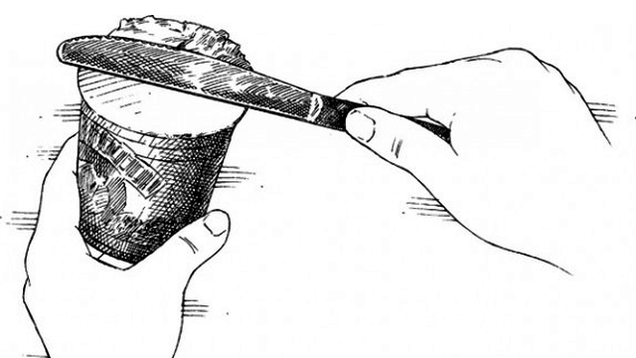
Don't throw away a yogurt cup when you're done eating. These plastic cups are perfect for measuring ingredients, and have a few other uses too.

Don't throw away a yogurt cup when you're done eating. These plastic cups are perfect for measuring ingredients, and have a few other uses too.
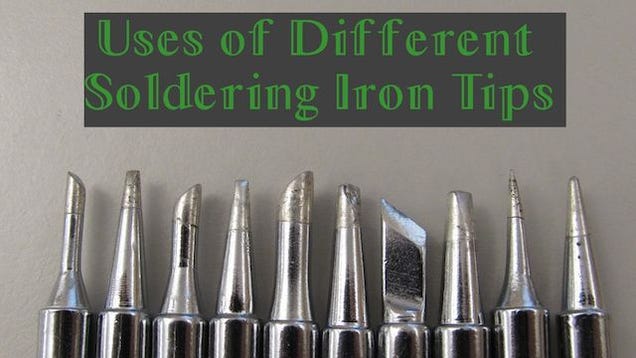
Soldering irons have a ton of different tips, and each of them is better suited for different tasks. However, which tips are best suited for what isn't always obvious, so Instructables user JColvin91 breaks down the best uses for each.

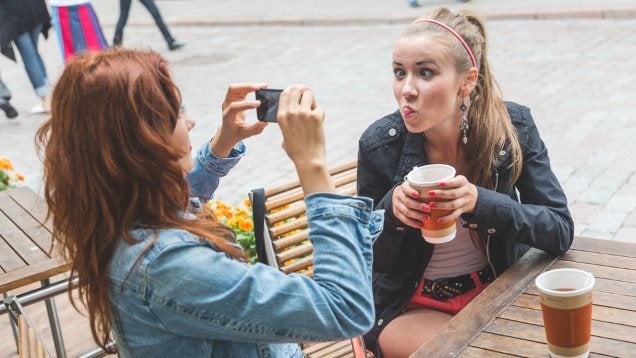
A New York restaurant discovered complaints about slow service were rising year over year, despite adding more staff. After comparing security footage from 2014 with similar footage from 2004, a surprising culprit was identified—the humble smartphone.

Michael, a Staten Island veteran, lost his legs above the knee after stepping on a land mine in Vietnam, reports WABC-7 News. He’s waiting on a new chair from the Veterans Administration office, but says that despite repeated inquiries, he’s still stuck relying on his old wheelchair to get around.
Last week, he felt it give way while shopping at Lowe’s.
“I said, ‘Oh no Michael, what are we going to do? We don’t have any tools,’ ” his wife explained. “And he said, ‘Hello are you crazy? We’re in Lowes. We’re in the tool capital of the world!’”
The couple planned to pick up the right stuff to fix the chair themselves at home, but three Lowe’s associates took over right then and there instead.
“They tore the wheelchair apart. They tried all different types of bolts,” Michael said. “I was thanking them and they said, ‘you’re not leaving here until the wheelchair is like new.’ “
He adds that while he’s looking forward to finally getting a new wheelchair, he’s got a great backup in place now. He thanked the employees, who told him, “It was our honor.”
“Our associates go above and beyond to take care of the community. They think of them as family,” said a Lowe’s manager.
LOWE’S EMPLOYEES REPAIR AMPUTEE VETERAN’S WHEELCHAIR [WABC-7 News]

Soap residue on clothes: Make sure you’re using a detergent designed for high efficiency machines if you have that type of machine. If that isn’t the issue, make sure that you’re putting your detergent in at the bottom of the tub, especially if you use detergent pods. If all else fails, add an extra rinse cycle.
Fabric pills: These are little balls of evil. The best way to banish them is to limit which fabric types you wash together. It’s all about fiber length: keep your fleece blankets away from your bed sheets, for example.
Bleeding colors: It might seem okay to wash everything at once, especially if you’re using a ginormous-capacity laundromat machine, but be careful. Separate items by color and use the appropriate temperature.
Mildewy and moldy washers: Consumer Reports cites this as an issue with front-loading machines, mainly because we tend to close the front door so things look nice and curious children and pets don’t climb inside. That’s not such a good idea, though: leave the door open when possible to let the tub wear out. If you have mold issues, periodically run the machine empty on a hot-water setting, or an empty load with some bleach.
4 common laundry problems and how to solve them [Consumer Reports]

 It all began with hidden camera footage of a men using the restroom. This footage appeared on a porn site, and was later taken down after an investigation revealed that the models were unwitting. A police detective has been indicted for planting the camera. The trouble is, still frames from the ill-gotten footage live on…on Tumblr.
How does someone find out that there’s secret footage of them using the toilet on the Internet, anyway? In this case, KTVI says that a viewer of the website noticed identifiable company logos. We’re guessing that he traced those logos to St. Louis-area companies, then contacted KTVI about it.
The news station found one victim, also using the legible company logo on a shirt seen on camera. “When I saw myself pooping, I was like, ‘you’ve gotta be kidding me,” he said.
The victim had only lived in the area for three weeks. After the man listed every bathroom he remembered using in the area, the news station visited each one, looking for a match to the bathroom seem on camera.
“Three weeks and I’m already on a poop cam…everybody’s seen me poop? That’s terrible. Hahaha,” he said. Hahaha indeed. It turns out that the footage was taken in a gas station, but the camera was gone by the time a reporter arrived.
The TV station handed their reporting over to local police, and one of their own detectives was arrested. Just this week, he was indicted on felony invasion of privacy charges. The site has come down, but the pictures remain on the blogging platform Tumblr, which has a vibrant porn-sharing community. A “concerned citizen” saw the screen grabs on the site and sent a tip to the news station.
Unfortunately, Tumblr only wants to hear from people who were caught on the poop cam.
If Tumblr removed all copyrighted material, the place would be a ghost town. That’s why a policy requiring the copyright holder or someone featured in content to personally contact the site makes sense.
Yet maybe the threshold to take an item down could be that if someone has been indicted on felony charges for capturing those images, they shouldn’t be on the site. We don’t run Tumblr: it’s just a suggestion.
Tumblr refuses to remove illegal hidden camera bathroom pics [KTVI]


(WFTV)
It just so happened that the traveler who faced the confused agent is a Cox reporter for WFTV in Orlando, which means the slip-up made the local news.
Reporter Justin Gray lives in D.C. and was flying out of Orlando International Airport over the weekend. He says he handed over his D.C. license to the agent at a security checkpoint, who seemed confused and then asked for his passport.
He didn’t have it — because who brings extra ID when you’ve got an up-to-date form already? — so he asked why the agent needed it.
That’s when the agent admitted he didn’t recognize the license, Gray says, and during a quick chat, he realized the worker didn’t know what the District of Columbia is. He eventually made it through security and told a supervisor.
A TSA spokesman Tweeted back to Gray a few minutes after he wrote about the problem, and confirmed that yes, people in the District of Columbia can use their licenses as ID at the airport. Your first grade teacher would agree.
“Officers are trained to identify fraudulent documents, which can potentially deter and detect individuals attempting to circumvent this layer of security,” the spokesman said, adding that all TSA agents in Orlando will now be shown copies of the D.C. driver’s license for future reference.
Reporter stopped by TSA agent who didn’t know District of Columbia is in US [WFTV]


Watch those fingers, girl. (YouTube)
A new social robot designed to hang out at your house and help with anything from reading books to kids to alerting you to calendar reminders called Jibo is available for preorders at a price of $499, reports Business Insider, and I can’t decide if I’m more terrified of the bigger implications for our race or the fact that it will actually face whoever’s talking like an immobile EVE from Wall-E.
The embedded cameras in its head can “see” what’s around it, and the swiveling body is made of three pieces that move according to who’s talking to it. He even “intelligently tracks the action around him.” Sounds sneaky, even if it does take nice photos.
Because it can’t actually go anywhere without you picking it up — meaning it can’t creep into your room at night and analyze your soul — that keeps its price point low, says MIT roboticist and creator Dr. Cynthia Breazal.
So it can’t walk or hug (when it eventually learns emotions), but make no mistake, we’re still on robot road. Today Jibo, tomorrow, our unfeeling overlords with a serious superiority complex.


(Liz West)
At first glance it wouldn’t appear that the United States Postal Service and banks have much in common. But that might soon come to an end if an idea to expand banking services to local post office branches in an attempt to meet the needs of the underbanked.
But would consumers really be open to banking at the same place they send off letters to grandma? According to a new survey report from Pew Charitable Trusts a majority of consumers don’t really care.
The Postal Banking Consumer Survey [PDF] asked more than 1,600 consumers, many of whom do not have access to traditional banking services, whether or not USPS should enter the banking arena.

Most consumers surveyed by Pew did not have an opinion on whether USPS should offer banking services.
Most consumers, about 63%, reported that the addition of services, such as bill paying, check cashing, and small-dollar loans, would not matter to them.
However, a majority, about 58%, of consumers support the argument that providing financial services at USPS branches would expand access to safe financial products for low- and middle-income Americans while providing a new sources of revenue for the Postal Service.

Nearly 64% of consumers who identify as using alternative financial services believe the expansion of safe financial services would be beneficial to both consumers and the postal service.
Conversely, only 32% of those surveyed said they believe that providing financial services at Postal Service branches would divert resources from mail delivery and give the government-run Postal Service an unfair advantage over privately-run companies that already offer financial services.
“There is a market here but it’s limited,” Alex Horowitz, research officer for Pew Charitable Trusts, says. “When we look at people who already are using alternative services it changes. There is quite a bit of interest for lower-cost services among those who already use alternative services.”
Nearly 78% of consumers said they would be unlikely to go to the post office to deposit a check on a prepaid card, 74% said they were unlikely to pay a bill through an expanded postal service. Likewise, 78% were unlikely to purchase prepaid cards and 83% were unlikely to take out small-dollar loans from the post office.

Consumers who use alternative banking services say they would be likely to use low-cost services though USPS.
Consumers who currently use alternative financial services were more likely to use lower-cost services though their local post office branch.
Nearly 46% would use check-cashing, 27% would purchase prepaid cards, 46% would use bill-pay services and 41% would consider payday loans through the postal service.
While it appears the majority of consumers don’t feel they would be impacted by expanded financial services through the postal service, those who did have an opinion were mostly supportive.
The idea of expanding the postal service’s offerings began in January after the Post Office Inspector General released a white paper suggesting the additional offerings could boost the revenue of the organization while meeting the needs of the underbanked.
“Millions of Americans do not have a bank account, or use costly services like payday loans and check cashing exchanges just to make ends meet,” reads the report. “The entire underserved population comprises more than a quarter of all U.S. households — some 68 million adults. They are an economically diverse mix of working and middle class families, poor and unemployed people hurt by the recent economic crisis, young people, immigrants, and others who are trying to make it paycheck to paycheck. Together, they represent a huge market. In 2012, they spent about $89 billion just on interest and fees for alternative financial services.”
Soon after the report was released, Sen. Elizabeth Warren voice her support for the idea that the USPS could use its infrastructure to extend basic banking needs, such as debit cards and small-dollar loans, to those who are ignored by the banking industry.
“With post offices and postal workers already on the ground, USPS could partner with banks to make a critical difference for millions of Americans who don’t have basic banking services because there are almost no banks or bank branches in their neighborhoods,” she wrote at the time.
Although consumers’ feelings on expanding financial service through the USPS were only lukewarm, a recent survey from Accenture found that people were interested in banking outside of traditional banks. Granted a majority of their first choices included banking with Google, Amazon, Apple, Costco and other companies they have frequent interactions with.


An image from the newest Nordstrom catalog.
 Back in 1997, the high-end department store’s catalog began including models in wheelchairs, amputees, people with Down syndrome, and others, right alongside the models one might normally expect to see sporting $450 boots and carrying $418 handbags.
Additionally, the models’ disabilities are not mentioned in the catalog copy, and the clothing has not been modified.
“We serve diverse customers and it’s an opportunity for them to see themselves when they’re looking through the book or online,” says a rep for the company. “We don’t promote it or go out and talk about it. We just think they look great.”
“Identifying companies that utilize models or actresses with disabilities has been like finding a needle in a haystack,” Meg O’Connell, a partner at the consulting firm Global Disability Inclusion, tells the AP.
 In addition to the Nordstrom catalogs, she points to recent ads from Swiffer, Duracell, H&M, and Diesel that featured people with disabilities.
There is a mountain of money to be made by marketing to disabled Americans, and O’Connell says that “companies that understand this will have an advantage.”

“Over the last year key input costs have been volatile and remain at levels that are above historical averages,” said Michele G. Buck, President, North America, The Hershey Company, in a statement. “Commodity spot prices for ingredients such as cocoa, dairy and nuts have increased meaningfully since the beginning of the year. Given these trends, we expect significant commodity cost increases in 2015.”
The last price increase from the company came three years ago, lifting prices by 9.7%.
The announcement is expected to result in similar increases from competitors like Kraft and Nestle, meaning even those who don’t eat Hershey-branded chocolates will likely see prices go up in the coming months.

This is just one of many tricks that restaurants play to help customers along in racking up bigger checks that Business Insider recently rounded up. Selling you food is the entire point of restaurants, so we don’t begrudge them that, but it’s still good to be aware of these tricks and how they work. Here are a few interesting ones.
Back to those dollar signs: the researchers found that even spelling out the price (“Eighteen dollars”) leads diners to spend more, because we connect dollar signs on price tags with real money.
Another tactic is to put very expensive items on the menu, even if the kitchen rarely ever serves them. One three-figure price on a meal suddenly makes the rest of the menu look downright cheap. Even if it isn’t.
Four cents can make a big difference: Prices that end in .95 are seen as friendlier and somehow classier than prices ending in .99, which people associate with “value” and discounts.
Naming a dish after a relative, even an imaginary one, draws diners to that item on the menu. They are more likely to purchase “Grandpa Northrup’s Bean Soup” than just “bean soup.”
11 Psychological Tricks Restaurants Use To Make You Spend More Money [Business Insider]
$ or Dollars: Effects of Menu-price Formats on Restaurant Checks [Cornell University]


This one’s great. I’ll take it! ( j&a + g&o)
This sounds wacky, but also makes more sense than our current processes for buying mattresses. Sure, you can order a mattress online, but it’s not possible to try it out before your purchase. The store, called HASSLEss Mattress, would have a mattress showroom, security surveillance, and a computer so customers can order their favorites.
The problem with the current model is that people are hesitant to try out a mattress with a salesperson hovering over them. …No, we don’t mean “try out” a mattress like that, but something as simple as lying down and rolling over a few times makes you feel silly. “People are not particularly comfortable just flopping down,” a retail consultant told the Milwaukee Journal Sentinel. Would they feel more comfortable in a room dedicated to flopping on mattresses, where only the security guard is watching?
Mattress chain would leave customers alone [Journal-Sentinel](Thanks, Kate!)


Another day, another four frankenflavors.
You reap what you sow, which means whoever out there suggested that it would be a great idea to make cappuccino-flavored potato chips has turned that freaky bit of frankenfood fantasy into reality.
It’s down to four flavors of Lay’s potato chips in this year’s Do Us A Flavor competition from Frito-Lay, which is actually more of a PR stunt designed to get consumers engaged in the hopes that we’ll all run out and buy a lot of wacky chip flavors.
That being said, Cappuccino is joined by fellow finalists Cheddar Bacon Mac & Cheese, Mango Salsa and Wasabi Ginger. Which makes three food-like flavors and one that belongs in a hot drink destined for a tired body, but whatever, you all did this. There’s no actual caffeine or coffee in the chips, by the way.
The four flavors will hit shelves later this month, with voting open to decide on the public’s favorite running through Oct. 18. The winner will join the triumphant 2013 winner Cheesy Garlic Bread in the annals of customer-created flavor fame, and win its inventor a $1 million reward.
Lay’s newest flavor: Cappuccino? [Associated Press]


(KHOU 11)
According to a news report from KHOU 11, shoppers in a parking lot in Katy, Texas yesterday afternoon noticed that a small boy and girl were inside a hot Jeep with the windows rolled up, on a day with temperatures above 90 degrees.
One shop owner in the strip center stepped outside when he heard the kids and shot video of the subsequent rescue.
“The kids were in there crying,” he said. “I mean you would understand. It’s real hot.”
He says one man even used a hammer to shatter the car’s windows, but even then it was hard to get the doors open because of the child lock.
The children were eventually freed, with no apparent harm done to them. But the mom — who reportedly said she had left the kids there “temporarily” so she could get a haircut — pleaded with onlookers and asked them not to call the police calling it a “terrible mistake,” so no one did.
Again, while it’s unclear how long those kids were sitting inside, it doesn’t matter. No time stuck in hot cars for kids is safe. None at all. And if you do, you’re lucky if the worst thing that happens is a couple of smashed windows.
Shoppers smash window to save 2 kids in hot car [KHOU 11]


(YouTube)
In a clip that’s been viewed over a million times since it was posted a few weeks ago, the Raleigh, N.C. dad explains what’s pretty obvious, as sweat runs down his face.
“As you can see, I’m sweating like I can barely breathe out here and my system is stronger than these little kids’ systems,” he says in the 90-second clip. “This is sad, man.”
He goes on to bemoan recent news events where children have died after being stuck in locked vehicles, whether their parents claimed to have simply forgotten them or in certain cases, as officials allege, may have left them there on purpose.
He tells the New York Daily News he managed to last only 20 minutes in the car before he had to free himself.
“It was hot outside, and as soon as I stepped into the hot air, even though it was hot, I loved it,” he says of his stay. “It was almost like someone was in the car choking me and I couldn’t breathe.”
Of course, it isn’t smart to sit inside a hot car yourself, adult or not. So don’t try this at home, please.
SEE IT: Terry Bartley, N.C. father of 3, films himself baking in hot car to show dangers [New York Daily News]

Distractify [via Eater] recently wrote about a since-deleted CraigsList rant from an anonymous Gotham eatery that says its research shows that service hasn’t gotten worse in the last decade; it’s the customers who are slowing things down.
According to the restaurant, in the hope of finding out just how its service had slipped in the last decade, it dug up old in-store surveillance tapes from July 1, 2004 and compared them to footage from July 3, 2014 to compare.
The two days had the same amount of business, and the waiters and kitchen are still seating and serving customers at the same speed, but the CraigsList poster says customer behavior has changed in multiple ways:
In 2004, only three of 45 customers asked to be reseated upon entering. In 2014, that number jumped to 18 out of 45.
In 2004, customers averaged 8 minutes before indicating they were ready to order. In 2014, the rant claims that diners now spend minutes taking photos, using their smartphones and asking wait staff about in-restaurant WiFi service before they even crack open the menu. This all results in an average of 21 minutes before customers order.
Ten years ago, it was virtually unheard of to take photos of your food at the table. But the restaurant says 26 of the 45 customers in 2014 wasted an average of three minutes snapping pics of their food before eating. Then there were the 14 customers who posed with friends and food for photos, passing around the camera for approval and possible reshoots. Tack on another 4 minutes for that.
Even after the meal, customers get lost in doing stuff on their phones, explains the unnamed eatery. This adds to both the time between eating and requesting the check, and the time between getting the check and actually leaving.
In total, all this added up to a 2014 average of 1 hour, 55 minutes per table. That’s 50 minutes longer than the 1 hour, 5 minute average in 2004.

BB bullets flew after a customer was allegedly driven to bite a Taco Bell drive-thru employee in Massachusetts, reports Masslive.com.
According to police, the customer in question was disgruntled after his presence went unnoticed at the drive-thru window a little before 4 a.m. The restaurant was open, but the customer told police later that he was waiting at the window for “a very long time,” finally resorting to parking his car and walking over to bang on the door to complain.
That brought a worker around to the door and, as these things often go, a fight broke out. The employee allegedly pushed the customer who at some point, is accused of biting the worker on the arm.
At that point, cops say the Taco Bell worker went to his car to get a BB pistol and allegedly shot the customer several times with it, before hitting him as well.
The worker triggered the hold-up alarm, bringing the police. They confiscated the gun and arrested the worker on two counts of assault and battery with a dangerous weapon and a single count of assault and battery.
It would appear that the allegedly snappy customer wasn’t arrested, but it’s doubtful he got any tacos, either.
Springfield police: Taco Bell employee arrested after he allegedly fired BB gun at customer angered over wait time at drive-thru [Masslive.com]

A $27.4 billion merger between the No. 2 and No. 3 cigarette companies in the United States might might cut down the number of players on the tobacco industry playing field, but it’s also cause for concern for health advocates.
On Tuesday, the second-largest tobacco company R.J. Reynolds, maker of Camel and Pall Mall, announced it plans to buy Lorillard, the maker of Newport cigarettes, USA Today reports.
The proposed purchase by Reynolds would create a formidable rival for current top cigarette company Altria Group, the maker of Marlboros. Altria currently accounts for 46% of the U.S. cigarette market, while Reynolds has about 25% and Lorillard about 12% of the market.
In an effort to escape some regulatory scrutiny, Reynolds and Lorillard also announced they would sell several of their smaller brands. Imperial Tobacco will pay $7.1 billion to buy Reynolds’ Kool and Salem brands, as well as Lorillard’s blu eCigs brand. The purchase will make Imperial the third-largest cigarette company in the U.S.
Lorillard’s decision to sell blu eCigs comes as a surprise to some analysts who believed that Reynolds was particularly interested in that brand. However, during Tuesday’s announcement officials with Reynolds said the company will stick with its newly launched VUSE product, saying it “offers superior technology and has received very positive early results in its national rollout.”
The proposed deal is expected to give Reynolds over $11 billion in revenue and approximately $5 billion in operating income to invest in innovation, consolidate production, sales and overhead – all of which worry health advocates.
“There’s serious concern that a merged company with increased resources poses a real threat to increased tobacco marketing to America’s kids,” says Matthew Myers, president of the Campaign for Tobacco-Free Kids tells USA Today. “This is a marriage of Joe Camel and Newport — two brands that have played a major role in youth tobacco use.”
The Food and Drug Administration has put emphasis on curbing teen smoking this year with its first ever anti-smoking campaign aimed at teens. The $115 million multimedia education campaign aims to show youth the true costs and health consequences of smoking by focusing on how tobacco affects one’s outward appearance.
Reynolds American buys rival Lorillard for $27B [USA Today]

TmoNews.com points to threads on Reddit and other forums where dozens of T-Mobile customers are venting their gripes about this issue.
Over on the Reddit thread, users on a wide variety of wireless devices say their T-Mo data will suddenly stop working, forcing them to toggle Airplane mode on/off or restart their phones to obtain a working connection.
TmoNews’s Cam Bunton suggests the following band-aid solutions:
• Toggle Airplane Mode off/on: The easiest way to try to reset your connection to the T-Mo network.
• Reboot your phone: Like many electronic devices, phones sometimes just need to be rebooted to get working again.
• Call Customer Service: They may be able to tell you if there is a problem with your account or a known connection issue in your area.
• Request a “Cancel Location”: This is when T-Mo Customer Service disconnects and reconnects your handset from the tower. Some users have mentioned this resolved their problems.

 In July’s recall roundup, the Consumer Products Safety Commission is out to protect us all from shocking air conditioners, exploding wine bottles, leaking snow throwers, and dangerous mobile device chargers.
Home
Napoleon Propane Gas Fireplaces – Glass front may break from gas pressure
Coravin Wine Access System – may cause wine bottles to explode
Trane XB300 and American Standard Silver SI Air Conditioning Systems – Some units are not grounded and could cause electric shock
M&M’s Pint And Shot Glasses – contain lead and cadmium

Clothing
Julie Vos women’s scarves – do not meet federal flammability standards

Lawn & Garden
All Power America Single-Stage Snow Throwers – risk of fuel leak and fire hazard

Sports & Outdoors
MTech USA Karambit Neck Knife and Sheath(Big 5 Sports) – knife does not stay in sheath
SR Suntour forks on model year 2011 through 2013 Scott and Trek bicycles – fork may break

Electronics
Gemini USB Power Adapter/Chargers – fire and burn hazard
Lily Pulitzer, Ban.do, and Jonathan Adler licensed iPhone and iPad adapter kits – risk of overheating, fire, and prongs remaining in the electric outlet.
Sony VAIO Flip PC Laptops – Batteries may overheat and catch fire
Roland Digital Pianos – power cord can be plugged into wrong socket
Medications
Panadol Advance pain reliever, 100-count bottles (Puerto Rico only) – bottle is not child-resistant.

Fireworks
Big Fireworks Sword-Shaped Sparklers – Device may explode during use, which is not a good feature in a handheld fireworks item. (We’re a little late on this one: CPSC announced this recall on July 3rd.)

Prince William County community calendar, July 17 to 23, 2014 Washington Post “Canvasing the 1940s,” artists Mary Reilly, Christine Raymond and Lu Wyer Harris portray military and civilian life during the 1940s. 11 a.m.-6 p.m. Thursday and-Saturday, 11 a.m.-9 p.m. Friday, Creative Brush Studio, 9082 Center St., Manassas. Free. and more » |
Manassas utility department installs automated meters Inside NoVA Manassas utility crews won't have to make trips to read meters in the city anymore, after the city's utility department installed a new automated meter system. The new system will allow city utility workers and residents to access real-time information ... |


