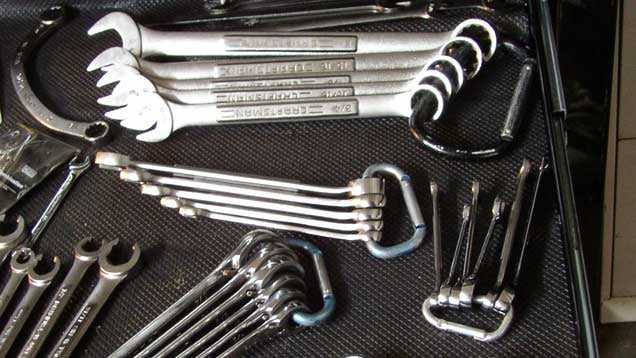
It's tough keeping your tool chest organized, especially when you have loose wrenches rattling around in drawers. Grab a few carabiners and gain control of your tools.

It's tough keeping your tool chest organized, especially when you have loose wrenches rattling around in drawers. Grab a few carabiners and gain control of your tools.
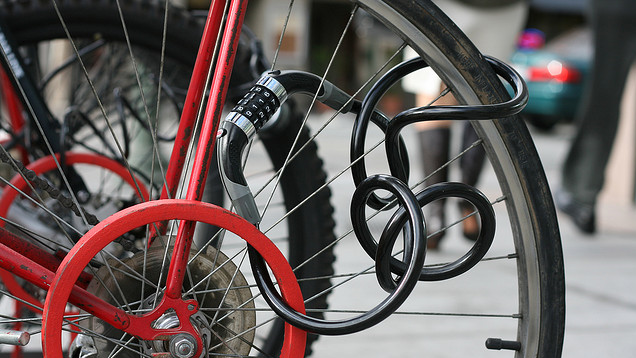
Everyone knows a car has its own unique identification serial. Fewer might know that bicycles have them too. Before you take yours out, write down the serial number and keep it somewhere safe in case yours gets stolen.

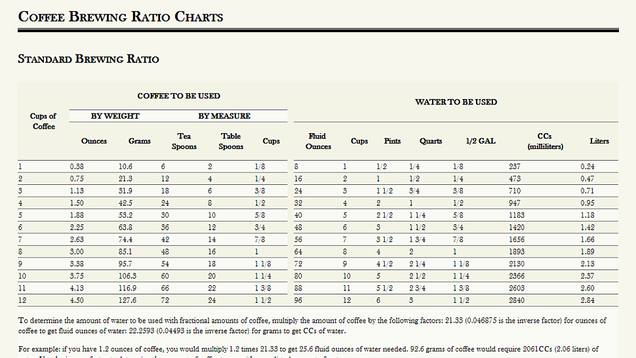
The ratio of coffee to water is key to making a great cup of joe. The Black Bear Micro Roastery has made a chart for easy reference, showing you the right amount of water to use with your freshly-ground coffee.


Healthy eating and weight loss requires vegetables. There's no way around it. Some of us though would rather fill our plates with meat and bread. If you discover a "gateway vegetable" you'll start eating them more often.

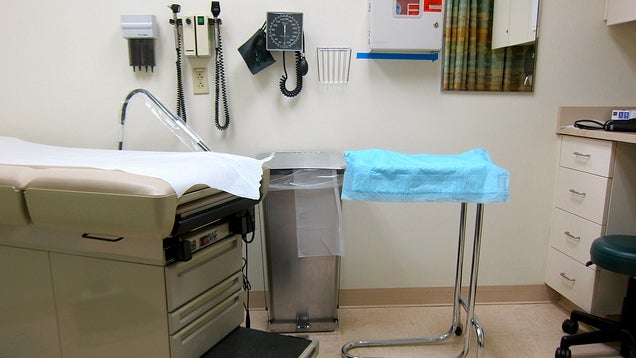
The Affordable Care Act (aka the ACA, aka "Obamacare") doesn't just let more people buy health insurance. The ACA gives everyone certain health screenings at no charge and without a deductible.


If you're a consumer, odds are you can get money back as part of many class action lawsuits (like this week's big Red Bull suit ). Top Class Actions lists current settlements so you can see what you might be eligible for.


We tend to think of personality traits as "good" and "bad". Being kind and humble is good , for example, but being lazy and pessimistic are "bad". Things aren't always so cut and dry, though. Here are 10 traits that people often see as negative, but can actually be good.

Whether you're abroad, or going out to a foreign restaurant locally, you need to be sensitive to the dining etiquette of the culture. This chart gives you a broad overview of table manners around the world.


We've talked about how to properly lock your bicycle before, but some bike racks—particularly cheaper comb racks—might require a few tricks. Here's what you need to do.


Your ideas are special to you. You want to get credit for them. However, in many cases, trying to vie for credit on a big breakthrough only discourages collaboration down the road. Give the whole group credit and encourage them to work together more.

With three major smartphone AIs giving out answers, it's hard to say which one is the best. In a study that asked all three major AIs over 3000 different queries, see who came out on top.


It's incredibly easy to injure yourself while exercising, but if you know what signs to look for you can prevent yourself from hurting yourself too bad. Over at WonderHowTo, Dr. Brian Parr explains which symptoms are normal and which to watch out for.


Some days, even the best job can be a bit of a drag. If you want to get things done—but still keep your sanity—Jay Shirley's "Must, Should, Want" method can go a long way.


If you've ever been to a fancy cocktail bar, you've probably noticed drinks served with giant spheres of ice. If you want to recreate that experience at home, it's surprisingly cheap and easy.


Grocery stores are full of spending temptations and tricks . In trying to stick to your food budget, it helps to know what grocery store products are usually overpriced.


The process of selecting a blender is not nearly as simple as it should be. The potential feature set is as long as the price range is wide, and factors like durability, versatility, and even interface are all important. So head for the comments and tell us, what's the best blender?

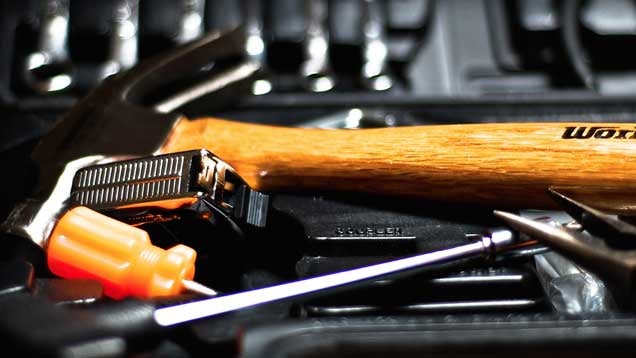
Whether you’re an apartment dweller or simply don’t feel the need to store a box full of tools, everyone needs some basic tools to assist in various household tasks. We’ve compiled a group of tools that won’t take up valuable closet space, but will also have you prepared for the next fix-it job around the house.


Actual house and spiders not pictured. (Scott Lynch)
That’s a species of spider that is venomous, but rarely lashes out and attacks people. You know, that’s why they’re called “recluses.” Still, no one wants six thousand roommates, venomous or not, and the family was not happy about the infestation and less happy that the previous owners of the house hadn’t warned them.
The first hints of trouble were when the family noticed large spider webs on the light fixtures that hadn’t been there when they did their final walk-through before purchase. After they moved in, they began to find spiders everywhere: falling from the ceiling, crawling out of the walls, scampering up the window treatments.
Here’s where things get kind of weird: the previous owners’ insurance company, State Farm, defended them when the new owners sued them. There was a trial with a jury, and the new owners won an award of $472,110. However, they weren’t able to collect: the previous owners declared bankruptcy, and State Farm refused to pay the claim. Why? A spider infestation doesn’t count as actual damage to a home. Also, the policy rules out some very specific things, which include infestations of insects. The scientific argument that spiders are not “insects” didn’t work on State Farm.
Fannie Mae owns the house now that it has gone into foreclosure. This week, the house will be tented and fumigated, a pest control method normally associated with termite infestations, or with a plotline from the fifth season of the TV show “Breaking Bad.” Will this work where other pest control methods haven’t? “There’ll be nothing alive in there after this,” the man tasked with killing the spiders told he St. Louis Post-Dispatch. Tenting houses is a new method for dealing with brown recluse spiders that wasn’t in use three years ago when the family abandoned the house.
Extreme case of brown recluse spiders drives owners from Weldon Spring home [St. Louis Post-Dispatch]
Take Our Poll

(YouTube)
An unidentified American passenger on a US Airways flight traveling from Philadelphia to Punta Cana on in the Dominican Republic on Wednesday reportedly shouted out things like, “I’ve been to Africa!” and, according to media reports, “I have Ebola, you’re all screwed!” right before the plane landed, reports Fox News Latino.
Though it’s unclear/unconfirmed exactly what he said, passengers and crew were not amused, as the Ebola outbreak has killed almost 4,000 people in Africa and infectious diseases are just not something you kid around about, causing a bit of a scene on the plane.
Upon the plane’s arrival, a passenger chronicled what happens next on video, of course, because that is what one does in the times we live in.
The flight crew tells everyone to sit down, and on come the blue hazmat suits, while the passenger in question was taken away to the airport’s medical center for tests, even while saying, “I ain’t from Africa.”
He was reportedly coughing during the flight and some reports say he appeared “unbalanced.”
An official with the airport says the plane was detained on the tarmac for almost two hours while medical and airline people made sure there was no risk to the more than 200 passengers on board.
“We apologize for any inconvenience this may have caused, but the safety of our customers and crews is our main priority,” a statement from US Airways said, noting that the plane had been cleared by authorities.
Apparently the man hadn’t been to Africa lately, and the most recent trip he’d taken abroad was a 2012 trip to Europe.
“We don’t know why he did it, but he thought it would be a cute joke that would not be so serious,” a rep from the airport explained. “Thankfully it was only a scare.”
Forget bombs: Joke about Ebola on flight to the Dominican Republic causes havoc [Fox News Latino]

By the numbers alone, basically everyone in the country has been the victim of at least one data breach in the past year, if not more. 106 million Americans had their card data stolen from Target and Home Depot alone, to say nothing of the data breaches at Jimmy John’s, Dairy Queen, P.F. Chang’s, UPS, Albertsons, Jewel-Osco, ACME, Shaw’s, Sally Beauty Supply, Goodwill, some Marriott hotels, Neiman Marcus, and Michael’s craft stores. And that isn’t even considering other breaches that were too small to make national headlines, or that simply haven’t been discovered yet.
Websites, online services, and databases get hacked too, of course, as Chase, Adobe, and Sony could unhappily tell you. But hacks in good old-fashioned brick-and-mortar retail stores have skyrocketed in recent years. And it’s not just about how often they happen; it’s about how widespread they are able to become.
So if you, as you replace your credit card for the third time in a year, are tempted to shout to the sky, “Why?! Why does this keep happening? Make it stop!,” then read on.
The means? You need three things: a computer, an internet connection, and an education, either formal or informal, in how to use them. It’s a big world, with a lot of people in it who have plenty of coding know-how and both the desire and ability to break — or break into — something.
So why use those powers for evil, instead of for good? That’s a driving motive easy enough for anyone to understand: if you are good at it, crime pays. It pays really, really well.
Indeed, the annual Verizon Data Breach Investigations Report (2014 version available here), finds that although ideology and espionage are both also drivers, the vast majority of attacks, hacks, and breaches are motivated by plain old financial gain.
The Big Retail Hacks2008: Heartland Payment Systems
• 130 million cards
2007: TJX Companies
• 94 million cards
2014: Home Depot
• 56 million cards
2013: Target
• 40 million cards (110 million total records)
2005: CardSystems Solutions
• 40 million cards
Security expert Brian Krebs — the man who discovered and broke the news about both the Target and Home Depot hacks, among others — has delved into the markets where stolen card numbers are resold. When the cards stolen from Target were new, he found, they went for between $26.60 and $44.80 each. By February, prices were as low as $8 because the card numbers were less likely still to be valid.
Krebs later estimated that somewhere around 2%-4% of the card numbers stolen from Target were successfully sold. Out of 40 million cards, that’s somewhere between 800,000 and 1.6 million sales. Even if you assume none of those sold for more than $8, that’s still a total of between $6.4 and $12.8 million.
That’s the lowest, most conservative estimate. More likely, the group who sold those credit card numbers netted something like $15-$20 million for them all, if not far more.
Not a bad haul for a few months’ work done from the comfort of a desk chair. And certainly a much better risk-benefit proposition than walking into a bank with a gun and a note.
And opportunity? Well, that’s everywhere. In the specific sense, many stores’ payment systems are not as secure as they should be (more about that in a moment) and since they can be hacked, they will be.
But in the broader sense, globalization, and the worldwide reach of the internet, also help provide the opportunity. The malware is often designed and sold by Russian hackers, who are able easily to target American stores, and can then sell the stolen credit cards to buyers worldwide.
Criminals can reach across national borders more quickly than retailers and law enforcement can. That’s not to say that the FBI can’t catch crooks who make their home bases abroad, because they can. But catching Americans is easier.
There are also some political underpinnings. The individuals and groups behind the Target and Home Depot hacks, specifically, have some anti-western, anti-American leanings and are happy to target American capitalism for political reasons as well as the practical ones.
The window of opportunity, though, may eventually be closing. The United States is poised finally to begin joining the rest of the world with smarter credit card technology, that’s less susceptible to POS attacks, in 2015 and beyond.
Sneak into a company's network
Install malware on the system
Let credit card numbers roll in
Profit!!!
But of course, the devil is in the details.
• Cash registers don’t transmit raw credit card data to banks. It’s encrypted before being sent out.
• But the register may very briefly hold on to that unencrypted data in its memory.
• If hackers can access the RAM of these vulnerable registers, they may be able to steal that unencrypted data for their own use.
The 2014 Verizon report does note a “renaissance” of POS malware attacks in the past year, and that’s where the big headline-grabbing hacks came from.
The malware that was used against both Target and Home Depot is called BlackPOS. IT security experts discussed the highly technical ins and outs with Krebs earlier this year, but the gist is that BlackPOS is a “RAM scraper” that manages to grab unencrypted information out of a terminal’s memory. It’s not the first — RAM-scraping is an old idea — but it is, for now, the biggest.
When we go shopping, most of us just swipe or tap our cards at the register and don’t really think about it much more than that. But a point-of-sale (POS) system is, like so many other things, basically just a small and specialized computer. It has the part you physically slide your card through, which is the hardware. And it has the programmed parts that tell the hardware what to do and how to do it, and that capture information from the magnetic strip in your card and turn that information into payment: the software.
The malware used in the retail hacks is basically a giant virtual skimmer: it captures information from the payment card at the moment you swipe, and sends that information flitting away through the internet into the bad guys’ virtual pocket.
The vendors who create payment systems aren’t stupid; they (are supposed to) adhere to a set of data security standards that requires payment information to be encrypted end-to-end. That is, data is encrypted when it’s transmitted or received. But that leaves two vulnerable moments: when the data is captured before being transmitted, and when the data is decrypted for processing after being received.
A payment system, like most other computer systems, has short-term system memory that it uses to hold information while it processes. The RAM-scraping malware installed on POS systems reaches into that memory in the instant the card has been swiped, and grabs the shadow of the unencrypted payment information in the split second before it vanishes.
Retailers and payment vendors do of course use industrial-strength virus and malware scanners to identify and remove threats from their systems. But the bad guys who make the malware are often one step ahead. In the case of BlackPOS, Krebs explains, the version of the software that hit Home Depot was able to disguise itself as part of that very antivirus program.
Almost any system has a way to break in.
In the case of Target, hackers didn’t steal access information from anyone at Target. Instead, they focused on a weaker link: a third-party vendor. That vendor, a heating and air conditioning company, had a connection to Target’s networks that they used for “for electronic billing, contract submission and project management,” as they explained in a statement last February.
Home Depot, meanwhile, did leave themselves vulnerable, according to former IT employees. After talking with those employees, the New York Times reports that in 2012 and 2013, Home Depot was still using security software from 2007-2008, and also not thoroughly scanning their network for suspicious activity. By the time the store finally took strong action, in the wake of the Target data breach, it was too late: the hack was already in progress.
Two years ago, in 2012, the company did finally hire a new IT security architect to deal with their network issues, and they promoted him in 2013. However, in April of this year he was convicted of sabotaging network security at his previous employer and sentenced to four years in federal prison. So… not exactly the most reliable guy to fix your glaring network security holes.
In fact, people are the weakest link in pretty much any network security setup. The infamous annual hacker conference, DEFCON, has for several years run a very successful social engineering competition, in which the hackers use simple web research and phone calls to get all of the information they need out of unsuspecting company employees.
In 2012, for example, the contest’s winner successfully got a Walmart store manager to tell him everything he would need to know in order to infiltrate the store’s whole network, which would give a less ethical hacker all the access he needed to work some malware into the system. And while the Walmart call was the winner, for collecting the most “flags” (pieces of vital information), participants calling Target, FedEx, Verizon, Cisco, AT&T, Hewlett-Packard, and UPS were also able to extract a significant amount of information within the twenty-minute time limit.
And of course, there’s the good old-fashioned trick of stealing login credentials directly, either through phishing expeditions or through website hacks. That’s why we’re all supposed to use different passwords for every site and network. That way when your password for a hobbyist forum is stolen, the thieves who stole and possibly sell it won’t get anywhere trying to use it on other sites and networks you access — both personal and professional.
Home Depot employs over 340,000 people. Target has 366,000. And Walmart employs over 1.3 million just in the U.S. (over 2 million worldwide). With a pool of tens or hundreds of thousands of potential targets at the country’s biggest corporations, chances are someone, somewhere will make a critical error and let the wrong information slip.
So how does a pile of thousands or millions of stolen credit card numbers become cold, hard cash?
The hackers who collect them don’t use them; they sell them, in bulk and wholesale batches. There are plenty of sites among which the discerning cybercriminal can choose.
As a computer security expert explained to USA Today last week, there’s a whole supply chain for stolen cards. So the hackers are the manufacturers and the wholesalers. Then come middlemen.
The people who buy black-market credit card numbers use them to make cloned cards. The equipment to take a bunch of plastic blanks and throw embossed numbers and magnetic strips onto them costs about $500 — a very low barrier of entry. So the middlemen take their list of numbers and expiration dates and make passably valid cards.
(This is why chip-and-pin (EMV) card technology is less susceptible to POS hacking: because without the computer chip in the original card being physically present, no cloned card will work. Duplicating the information in the magnetic strip alone is not enough to create a working EMV card.)
Armed with a nice big stack of fake credit cards, the folks at the next level down in the operation get to work. They go out and buy things that can be resold for large amounts of cash. So there are plenty of big-screen TVs and Xboxes on the shopping list, as you might expect. But, USA Today explains, one of the most popular targets? Gift cards.
Pretty much any grocery or drug store these days has in it a display containing gift cards for dozens or hundreds of other stores. They are incredibly effective money-laundering tools: once there’s $100 on a gift card, it stays valid. It doesn’t matter where that hundred bucks came from or if the credit card used to fill the gift card is cancelled.
After that, the gift cards can either be kept and used, or — like big-ticket physical goods — resold for cash in hand.
Give your statements a good strong look.
And do it several times per week. Remember balancing the checkbook? Approach your review with that mentality: look for any transactions, no matter how small, that you can’t identify.
If you see anything “off,” call your bank and report the fraud immediately. The sooner you report any fraudulent transactions, the less liability you have for them.
Call your card-issuing bank.
Some banks proactively contact customers and/or issue new cards, after a major data breach makes headlines. If your bank doesn’t, call them! Tell them which data breach you got dinged in and that your number is out in the wild. They’ll probably offer to replace your card.
That free credit monitoring won’t help (but it probably won’t hurt, either).
It’s stage 2 of the public mea culpa every company goes through: offering a year of free credit report monitoring to affected consumers… even though credit report monitoring is completely useless for protection when just payment card info is stolen. And don’t forget to do your own free credit report monitoring as well.
That’s not to say that we shouldn’t all be aware of security best practices, and we’ve heard them all a thousand times: use good passwords. Change them often. Don’t re-use them. Enable two-factor authentication on all the things. Be smart about where you shop. Look for skimmers. Cover the PIN pad when you enter your code. Keep an eye on your surroundings. Don’t use sketchy-looking stand-alone ATMs. Check your credit and debit card statements regularly. Get your annual credit reports.
But almost every action an individual consumer can take is about mitigating or recovering from harm, not preventing it. And most of what we know how to do deals with online or mobile shopping, not traditional brick-and-mortar stores.
Whether it’s a mom-and-pop candy shop or the world’s largest Walmart, protecting point-of-sale transactions is something that retailers and payment processors have to work out on their end. We can’t do much except choose where (not) to shop.
So what is it retailers need to do differently?
The Verizon report concludes its section on point-of-sale hacks with some common-sense admonitions to retailers of every size. Among them: Restricting outside access to the network, enforcing strong password policies, forbidding the use of social activities on computers that also have sale functions, and using (and updating!) anti-virus software.
But although those are all good ideas and best practices, those tricks alone will not protect a nationwide retailer. Not by a long shot. For a national chain, the Verizon report has a few extra suggestions.
One: stores need to “debunk the flat network theory.” The POS network, the report suggests, should be treated completely separately from the corporate network. That way someone who gets into the latter can’t run rampant in the former.
Two: retailers really need to be looking for suspicious network activity. Watch the traffic! If there is network traffic going out when it shouldn’t be, from a place where it shouldn’t be, that’s a sign that there is a problem.
And three: what’s good for individuals is good for business. The report recommends that companies really should develop and enable two-factor authentication processes for both internal users and authorized third parties. If the hacker somewhere in Eastern Europe doesn’t have the cell phone that a network access request texted a passcode to, that would prevent a host of potential problems right there.
The combination of internal protections like two-factor authentication, combined with smarter, more hack-proof EMV cards, will almost certainly help companies and consumers both by dramatically cutting down on the number of store hacks and the amount of physical credit card fraud we see.
But in the meantime, we will almost certainly keep hearing of small- and medium-scale hacks pretty much every week. It’s all but inevitable: there are literally more hacks, breaches, and “incidents” happening every minute. And the next giant breach on the scale of Target or Home Depot? That one’s probably already underway somewhere, too.


(m01229)
Marketwatch has put together a roundup of such non-value Costco purchases, but since it’s a slideshow and everyone hates slideshows, we’ll save you some trouble of having to click-click-click.
Stuff you might want to avoid buying at Costco.
• Books and Other Media
The prices might not be bad at Costco, but the selection is often wanting and you’ll probably do a lot better in terms of both price and suggestion online.
It’s impulse buys like this — you see some bestseller a friend recommended and decide to pick it up — that help Costco make up for the bottom-dollar prices on other things, but it’s not your job to improve a store’s bottom line.
• Oversized Condiments
The Marketplace story flat-out says to not buy condiments because the containers are so large that they will spoil before you use them up.
But large families or people who cook frequently may indeed use these up before they go bad. And as we’ve written numerous times, a sell-by or use-by date on food does not mean it’s actually gone south.
Our rule of thumb would be: If you’re not sure that you’ll use up all that ketchup in the next few months, don’t buy it.
• Diapers
This one surprised me (of course, the closest I’ve come to small children is waving politely at my friends’ babies), but Marketplace claims that Amazon, Target and Walmart have better prices on diapers.
• Paper Items
Another one we weren’t expecting, as one of the stereotypical Costco purchases is the massive car-sized block of toilet paper or paper towels, but Marketplace says you may be able to do better with coupons at the supermarket.

The Grocery Shrink Ray is what we call it when the manufacturers of food and consumer goods make their products smaller––sometimes almost imperceptibly smaller––rather than raise prices. You know what it looks like: it’s why your toilet paper doesn’t quite fill the holder anymore, and why you don’t get as many servings of hot chocolate as you used to. We know that it’s been in action for decades, but is there proof? Yes: one need only turn to collectors of consumer ephemera like boxes and cans.
There are a surprising number of vintage food packaging and ad collectors out there, and one of them is one of the generous and talented frequent contributors to the Consumerist Flickr pool that we use to illustrate many of our posts. Bluwmongoose has provided us with quality vintage artwork for years now, and we decided to check on the current sizes on some cool pieces from her collection that had been submitted to the pool.
Our first example comes from the vegetable aisle. It’s not clear when this can of Libby’s creamed corn was sold, but the label has a very ’70s look. The can is 16.5 ounces.

In addition to losing two of the iterations of “Libby’s” on the label, the same product has lost 1.75 ounces over the years. Here’s the contemporary version for sale at Walmart:

It’s only 14.75 ounces. As far as I’m concerned, cream corn is an evil and vile food and the less of it there is in the world the better. That could also be my 6-year-old self talking about my parents’ love of bowls of the stuff served plain and cold.
How about elsewhere in the canned food aisle? Hunt’s pasta sauces are a staple for many consumers. Similar products across brands tend to shrink to the same size over time, and we know that competitor Del Monte shrank their cans a little bit earlier this year. Even when we can’t find original cans or cardboard packaging, the evidence of a product’s former size remains in classic recipes. For example, this recipe for Hunt’s from 1989 calls for one can of sauce. How big is that can?

If you look for recipes from food manufacturers today, the evidence shows something different. Here’s a recipe for a Beefy Ziti Skillet that also calls for a can of Hunt’s pasta sauce.

That can is 24 ounces, just like the Del Monte example from February.
Or how about some nice shelled walnuts? Here’s a nice vintage can. Surely as a “pound” of coffee or other nuts have lost a few ounces over the years, so have walnuts. Right?

Nope! I have almost the same exact can on my counter right now, but here’s the same pound of nuts available at Walmart in the same full pound. A bag is easier to transport and store than a can, but the whole 16 ounces is there in either type of packaging.

Sometimes the changes were not what we expected. For example, back in the ’80s, Pop-Tarts came in boxes of six. Here’s a box from 1983:

Today, the standard smallest box you can find on the shelf is a box of 8.


The death of a beloved pet is a horrible experience. It’s even more heart-rending when that pet dies while in the care of someone else while you’re away. So it’s not surprising that a Texas couple is upset that they couldn’t get information about what may have caused their 3-year-old dog to pass away while staying at a PetSmart Hotel.
The couple tells CBS Dallas/Fort Worth that they had boarded their pair of miniature poodles, Max and Rex, at a PetSmart Hotel operation in the area while they were out of town on a cruise.
Only a few days into their vacation, PetSmart began contacting them with worrying updates about Max.
“They said he threw up clear bile,” recalls the couple. “They watched him through the day and then sometime during the night he passed away.”
The couple say that Max had a clean bill of health before being left at the PetSmart, and they have been trying to get an explanation from the company as to what happened.
But they tell CBS that the store won’t have over any documentation or provide any answers.
When reporters got involved, employees at the PetSmart said they needed to contact company HQ in Arizona for comment.
“We care greatly about the health and safety of the pets entrusted in our care, and we are truly saddened by the loss of Max in our PetsHotel,” reads a statement from the company. “This incident is still under investigation, and at this time, we’re waiting on test results and will work with the pet parent to convey those results.”
The couple were then able to get the results of an autopsy commissioned by PetSmart, but were saddened to find that the results were inconclusive.
PetSmart is now telling the couple that more tests are needed to determine the cause of Max’s death.

