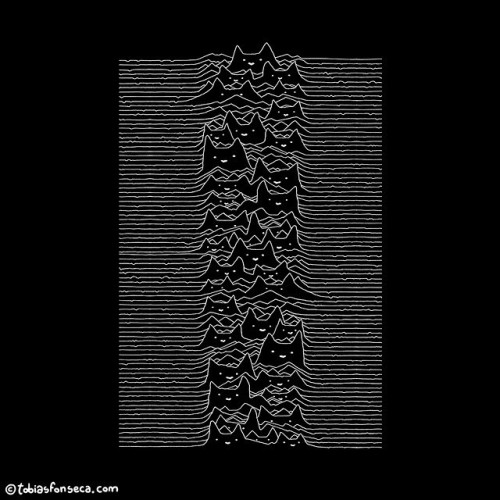
This is exactly how having ferrets in the house goes.
I want one
What the hell is he building underneath there that he needs all that shit, lol
A time machine
lol
CAN. CONFIRM. Although ours were especially obsessed with kids’ Crocs, of which there were many pairs in the house.
D: I’ve wanted a ferret because my husband is allergic to cats… but I made the mistake - in 2008 - of telling him about a coworkers ferret stealing and hiding his Iphone in a hole in the wall (it was never recovered)…
she should greet jane as if nothing happened and see how jane reacts
she should avoid school the next day. And the next. Every night, she should put on the exact outfit she had on that day, hose herself down until she’s completely drenched and stand in Jane’s yard. When Jane is home alone, she should approach the window, staring at her. Knock on it if you don’t have her attention.
That’ll get her back for killing you and trying to hide the evidence.
On Tuesday, The Guardian’s Spencer Ackerman reported on the “equivalent of a CIA black site” operated by police in Chicago. When computer program analyst Kory Wright opened the story, he told me, “I immediately recognized the building” — because, the Chicago resident says, he was zip-tied to a bench there for hours in an intentionally overheated room without access to water or a bathroom, eventually giving false statements to try and end his ordeal.
A friend of Wright’s swept up in the same police raid described his own brutal treatment at the facility, known as Homan Square, including attacks to his face and genitals. The experiences of the two men line up with the way defense attorneys described the “black site” warehouse to Ackerman: as a place where detainees were held off the books, without access to lawyers, while being beaten or shackled for long periods of time.
Wright claims that nine years ago, he spent “at least six [brutal] hours” at the Homan facility on his 21st birthday. He says that he was never read his Miranda rights, and that his arrest was not put into the police system until after his ordeal was over. Wright was reminded of the facility again this week when he noticed a tweet from a writer he admires, The Atlantic’s Ta-Nehisi Coates, linking to Ackerman’s story. Ackerman compared Homan Square to the network of shadowy torture centers built by the CIA across the Middle East — but focused “on Americans, most often poor, black and brown,” rather than on purported overseas terrorists.
Another way Homan Square differed from CIA black sites was that the facility wasn’t a completely furtive enterprise. Several lawyers and anti-police brutality advocates with whom I spoke knew that suspects were routinely detained at Homan. The facility houses many of the police department’s special units, including the anti-gang and anti-drug task forces, along with the evidence-retrieval unit. Once suspects arrived at Homan, they did not have to be booked immediately, at least not as far as the police department was concerned, according to the people with whom I spoke. In fact, it was possible that a suspect’s arrest report wouldn’t show that he or she had ever been to Homan. Further, police could detain individuals at Homan for hours, or disappear them, before shipping them off to a district station for processing.
The Chicago Police Department declined to address the specific allegations from Wright and his friend, providing only a general statement denying abuses at Homan Square. (The same statement also appears in Ackerman’s story.) “CPD abides by all laws, rules and guidelines pertaining to any interviews of suspects or witnesses, at Homan Square or any other CPD facility,” the statement read. “There are always records of anyone who is arrested by CPD, and this is not any different at Homan Square.”
Kory Wright disagrees.
It was late on the hot morning of June 29, 2006 — Kory Wright’s 21st birthday — when he set out for the North Lawndale residence of a relative, a short walk from his own. “I know they got a lot of connections over there, and he said I can get my hair braided, so I came over and I was getting my hair braided,” Wright says. He says this relative sold crack cocaine, and that his mother had warned him prior to June 29 to keep his distance, but “you know, they good people.”
Kory Wright about one month before his detention at Homan Square.
As Wright was having his hair braided on the porch, “a nice clean lady comes and asks to buy some drugs.” According to Wright, the woman “had a fifty [dollar bill]. And I exchanged the fifty. I gave her the change and then she completed her transaction with my [relative].”
Wright claims the drug-buyer was an undercover cop, and that the entire transaction was recorded by Chicago police, because two or three minutes after the drug deal, officers in plain clothes swarmed the house and detained Wright, two of his relatives, and one of his friends, Deandre Hutcherson. “They searched us first and then they took us all down to that one place I’m talking about,” Wright says, referring to the Homan interrogation site. Wright and Hutcherson both insist the police never read them their Miranda rights.
“When we first got to that place, we went in a garage and they walked us up the stairs,” he says. Phone calls to counsel and family were denied, Wright and Hutcherson say, while no fingerprints were taken, and no paperwork was filled out — which means there was no evidence they were ever there. “I tried to tell them it was my birthday,” he says, “and I think I was in the wrong place at the wrong time. He [a Chicago police officer] got the nerve to go get his friend, and they, like, sung happy birthday.” Wright believes the virulent police officers were taunting him. “I see it [Homan] everyday. I shudder,” says Wright, whose neighborhood was just south of the facility.
The four men were split up and placed in small, separate rooms that were the size of office cubicles. It was a steamy summer day, and Wright was sweating profusely at Homan; he believes the police either turned the heat on, or turned the air conditioning off, to sweat him out. “When we first got in there it was room-temperature, and before he [a Chicago police officer] left, he was like, ‘It’s gon’ get a little hot in here,’” says Hutcherson, now 29.
For six hours, a sweaty Wright sat zip-tied to a bench with no access to a restroom, a telephone or water. “They strapped me — like across, kind of — to a bench, and my hands were strapped on both sides of me,” he says. “I can’t even scratch my face.” When Wright first arrived at Homan, he was left alone for a while in the hot room. Wright asked the police if he could call his mother, but instead, various police officers came “in and out. They were badgering me with questions. ‘Tell me about this murder!’” one officer shouted. Wright provided his interrogator with false information and names, with the hope of making it stop. He told me he was “trying to get out of the situation and give them something they wanted.”
Meanwhile, Hutcherson — also shackled to a bench — was being interrogated in another room. “He [a Chicago police officer] gets up, walking toward me,” Hutcherson alleges. “I already know what’s finna happen. I brace myself, and he hit me a little bit and then take his foot and stepped on my groin.” According to Hutcherson, the officer struck him two or three times in the face before kicking his penis.
“You must think I’m a fucking idiot,” Hutcherson says his attacker told him. Within an hour, Hutcherson, who was in town for his mother’s funeral, faked an asthma attack that unnerved the police. He says they then released him from detention and sent him on his way.
The descriptions that Wright and Hutcherson provided of their experiences at Homan are eerily similar to how Tracy Siska, executive director of the Chicago Justice Project, described such torture inThe Atlantic:
Isolation, deprivation of food, other outside contact. It’s meant to be a lot of touchless torture. So they’re not touching you, which in the human-rights field is more powerful and scary because it doesn’t leave marks but leaves huge internal wounds.
Siska has known about the goings-on at Homan “since about the mid- to late-2000s.” Siska also said that most of those detained at Homan are poor, black and brown people suspected of street crimes. When I asked why reporters haven’t covered the abuses allegedly occurring there, Siska replied with a slight chuckle, “That’s the million dollar question. The problem is a lot of reporters agree with the police perspective.”
More broadly, Wright’s tale is typical of low-income, minoritized people victimized by America’s criminal justice system. Eventually, he was taken to Cook County jail, where he was processed and charged with distribution of heroin and cocaine. Given his low-income status, Wright’s only option for counsel was a public defender.
Wright’s lawyer, he says, was pregnant and overworked, while Wright suffered through multiple continuances. When his public defender gave birth, Wright was assigned a new attorney, who also, naturally, had a taxing caseload. In the end, the drug charges against Wright were thrown out, though not before he’d spent six months under house arrest because his mother lacked the money to fund a bond for release.
Kory Wright was attending Wilbur Wright Community College, and taking criminal justice courses, when he was detained at Homan. He says he had hopes of becoming a police officer in the city of Chicago before that June day. Wright told me a story about how police — when he was 16 years old — had roughed up him up, along with some friends of his. Afterwards, Wright decided he wanted to be a counterweight to that sort of police-initiated harassment, which regularly afflicts communities such as North Lawndale. But his experience at Homan, and his subsequent arrest, caused him to miss a semester of school.
Fortunately, Wright recovered, and today, at age 29, he is working on his master’s degree in network engineering at DePaul University. He lives in Bronzeville, a neighborhood on Chicago’s South Side, and is the father of a new baby girl. But the touchless torture he says he suffered at Homan continues to haunt him. “The whole thing caused a rift between me and my mom. I didn’t like being black at all after that, and when I got to DePaul, I started trying to be as white as possible,” a doleful Wright told me. “Being black is a curse.”
Photo: Scott Olson/Getty (top); Courtesy of Kory Wright (second)
Yahunh, Verizon isn't likely to win this time. But the real danger is that the FCC itself will go the other way if we lose a commissioner.
The Federal Communications Commission chairman is expecting lawsuits challenging the FCC's net neutrality order, but is confident that this time the rules will survive.
Verizon sued to block rules issued in 2010, and won when a federal appeals court said in January 2014 that the FCC erred by imposing per se common carrier regulations on broadband providers, which the FCC had never classified as common carriers. The latest net neutrality order, passed yesterday, fixes that, Wheeler said in a press conference after the vote.
"The DC Circuit sent the previous Open Internet Order back to us and basically said, 'hey, you're trying to impose common carrier-like regulation without stepping up and saying, 'these are common carriers,'" Wheeler said yesterday. "We have addressed that issue, that is the underlying issue, that is the sine qua non of the all the debates we've had so far. That gives me great confidence going forward."
Law professor Roger Fisher suggested that nuclear launch codes be implanted in a volunteer’s heart. The president would be required to personally take the life of an innocent person before taking the lives of hundreds of millions. (Source)
Ever wonder how often people pay for drugs, alcohol or sex through the mobile pay site Venmo? Wonder no more. Vicemo now lets you see all the people doing just that in real time.
Obviously it’s some kind of bot that’s going through and doing this. For one thing, no human would just sit around and manually look for all of this (I hope). Besides that, it clearly just focuses on key words — like weed, drink and grass — which can lead to some pretty harmless payments showing up in the feed. Although, if you’re willing to use a service that openly posts your shit, maybe you deserve that. Then of course there are the people who are clearly joking because pretending to pay someone for drugs and/or sexual favors is just super hilarious.
Gemalto, the SIM card manufacturer and allegedly the target of one of the largest NSA hacks of all time, has announced that it's not going to sue the intelligence agency. But it should.
Last week, a report by The Intercept based on classified documents leaked by the former NSA contractor Edward Snowden showed that the NSA had stolen million of encryption keys from Gemalto, which makes SIM cards, allowing the agency to scrape phone call and text message information from smartphones as they were connecting to cell networks worldwide. The documents also showed that the NSA conducted surveillance on specific employees of the firm.
Its difficult to prove our conclusions legally, so were not going to take legal action, Olivier Piou, Gemalto's CEO, said at a press conference this morning in Paris. The history of going after a state shows it is costly, lengthy and rather arbitrary.
"It's rare that companies have such clear evidence to present in court"
On that, he's wrong, experts say. The specificity of the documents, and the results of a hasty internal investigation by Gemalto provide actionable intelligence (that's a term the NSA likes, right?) that gives the company an unprecedented opportunity to take the NSA to court. And it may have a moral obligation to do so.
"We encourage Gemalto to take legal action wherever possiblewhether in US courts or in Europeagainst the NSA and GCHQ for attacking the company and the security of its users," Peter Micek, an attorney at digital rights nonprofit Access, told me.
Earlier this month, a federal judge in California ruled that ordinary citizens cannot sue the NSA for mass surveillance unless they can specifically prove when it happened without revealing state secrets. That's problematic in lots of ways, but Gemalto seemingly has the opportunity here to take the NSA to court and prove, with its own internal investigation, supplemented with already-leaked documents, that the NSA hacked it.
"It's rare that companies have such clear evidence to present in court," Micek said. "For example, despite revelation after revelation, remedy has been nearly impossible to reach for victims of NSA surveillance due to standing issues and national security claims to rebuild trust, companies need to use every possible opportunity to haul the NSA into courteven just to get some discovery or clarify legal arguments."
He's right. The initial documents leaked by Snowden was evidence that the NSA was scraping call information from Verizon, and a followup revealed PRISM, in which the NSA had direct access to the servers of Google, Apple, Microsoft, Yahoo, and other major tech companies. The idea that any American-made tech could be subject to surveillance has scared off investors. In fact, the Chinese government just announced it would no longer do business with many American tech companies. While companies have condemned the NSA, few have actually taken the agency to court.
In France, the telecom company Orange is currently suing the NSA because it believes communications between its customers either were or would be collected. "We want to know more about the eventuality that Orange data may have been intercepted," a spokesperson said at back in December, 2013, when news about the suit first broke.
We haven't heard much more from Orange since then, because French courts have sealed the proceedings (I've reached out to Orange for an update and will modify the article if I hear back).
In US court, however, it seems less likely, though not impossible, that a court would completely seal the case. Gemalto confirmed to me in an email that it does not plan on pressing charges and would not comment further.
"Existing cases against the NSA show that US courts are willing to entertain lawsuits despite the government's claim that state secrets are at issue," Micek said.
Twitter, for instance, has an ongoing suit with against the federal government in which it's trying to push for more transparency about when the government asks it to hand over user data. The proceedings of that case, and the allegations Twitter is making about the surveillance state, are mostly public.
Gemalto has a huge opportunity here, but it appears content to squander it.
Artificial intelligence, machines and software with the ability to think for themselves, can be used for a variety of applications ranging from military technology to everyday services like automated telephone systems. However, none of the systems that currently exist exhibits learning abilities that would match the human intelligence. Recently, scientists have wondered whether an artificial agent could be given a tiny bit of human-like intelligence by modeling the algorithm on aspects of the primate neural system.
Using a bio-inspired system architecture, scientists have created a single algorithm that is actually able to develop problem-solving skills when presented with challenges that can stump some humans. And then they immediately put it to use learning a set of classic video games.
Scientists developed the novel agent (they called it the Deep Q-network), one that combined reinforcement learning with what's termed a "deep convolutional network," a layered system of artificial neural networks. Deep-Q is able to understand spatial relationships between different objects in an image, such as distance from one another, in such a sophisticated way that it can actually re-envision the scene from a different viewpoint. This type of system was inspired by early work done on the visual cortex.
After
two years of experience with marijuana legalization, a new
Quinnipiac University poll finds, Coloradans are at least as likely
to support that policy as they were when voters approved it.
Amendment 64, Colorado's legalization initiative,
passed with support from 55 percent of voters in November 2012.
According to the
new poll, 58 percent of registered voters think that was a wise
decision, while 38 percent disagree, compared to the 45 percent who
voted no in 2012. The poll's margin of error is three percentage
points.
A majority of Coloradans has consistently supported legalization
since the 2012 election. Quinnipiac put support at 58 percent in
February 2014 and at 54 percent in August 2013, April 2014, and
July 2014. As usual, the most recent poll found that support is
stronger among Democrats (74 percent) than among Republicans (36
percent), among men (63 percent) than among women (53 percent), and
among 18-to-34-year-olds (63 percent) and 35-to-54-year-olds (53
percent) than among older voters (48 percent).
The same poll also asked Coloradans if they had consumed
cannabis since legal recreational sales began in January 2014. One
in five (19 percent) said they had, which is similar to the
percentage of Coloradans who
reported marijuana use during the previous year in the 2013
National Survey on Drug Use and Health. More than half of the
Quinnipiac respondents (53 percent) said they had tried marijuana
at some point in their lives. That percentage is up slightly from
the previous Quinnipiac polls, which put it at 51 percent except in
April 2014, when it was 49 percent.











 After
two years of experience with marijuana legalization, a new
Quinnipiac University poll finds, Coloradans are at least as likely
to support that policy as they were when voters approved it.
Amendment 64, Colorado's legalization initiative,
passed with support from 55 percent of voters in November 2012.
According to the
new poll, 58 percent of registered voters think that was a wise
decision, while 38 percent disagree, compared to the 45 percent who
voted no in 2012. The poll's margin of error is three percentage
points.
After
two years of experience with marijuana legalization, a new
Quinnipiac University poll finds, Coloradans are at least as likely
to support that policy as they were when voters approved it.
Amendment 64, Colorado's legalization initiative,
passed with support from 55 percent of voters in November 2012.
According to the
new poll, 58 percent of registered voters think that was a wise
decision, while 38 percent disagree, compared to the 45 percent who
voted no in 2012. The poll's margin of error is three percentage
points.