Simply a collection of some amazing recent aerial images showing the vast diversity of landscapes across China, from cities to mountains, deserts to sea shores, and much more.
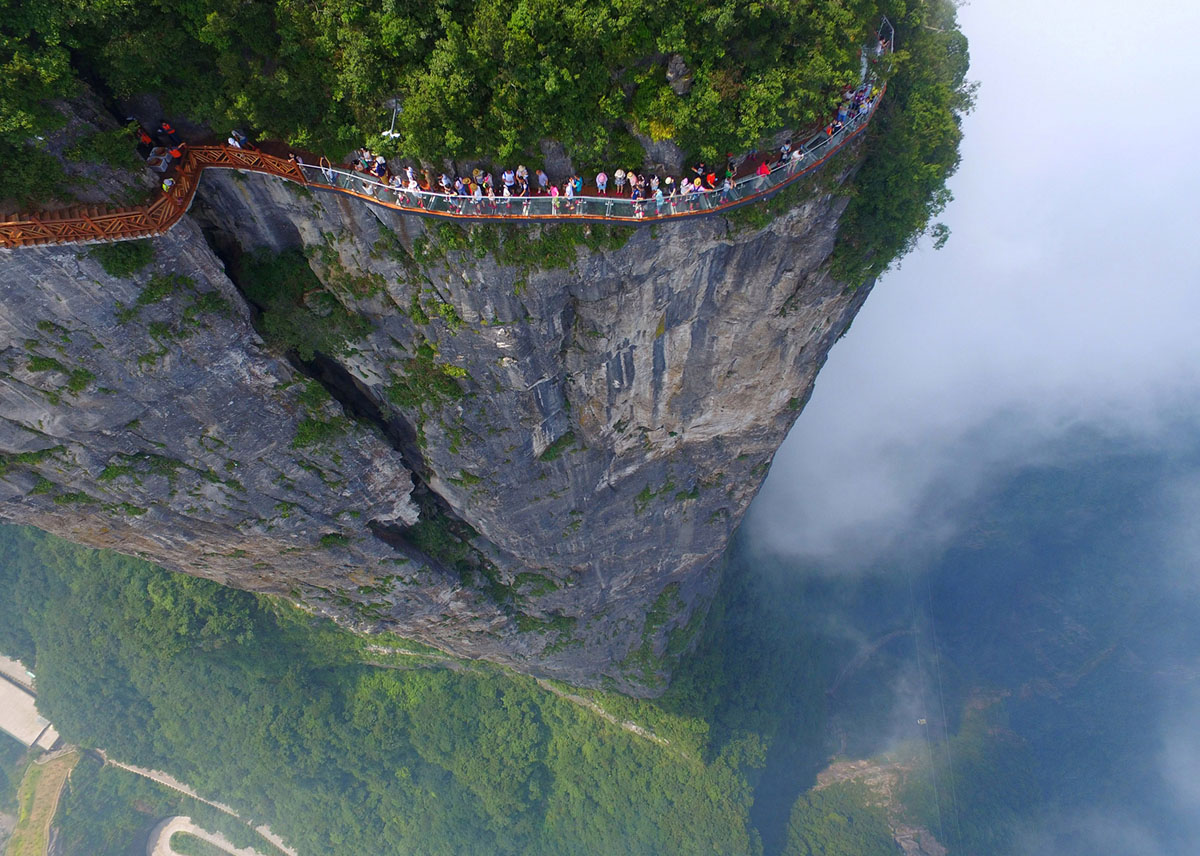
Simply a collection of some amazing recent aerial images showing the vast diversity of landscapes across China, from cities to mountains, deserts to sea shores, and much more.

 When you send thousands of FOIA requests, you are bound to get some very weird responses from time to time.
What you are looking at here is "psycho-electronic" weapons that purportedly use electromagnetism to do a wide variety of horrible things to people, such as reading or writing your mind, causing intense pain, "rigor mortis," or most heinous of all, itching. [...]Just check the detail on these slides too. The black helicopter shooting off its psychotronic weapons, mapping your brain, broadcasting your thoughts back to some fusion center. I wish their example of "ELF Brain stimulation" was a little clearer though.
The image includes such great subheadings as:
Previously, previously, previously, previously, previously, previously, previously, previously, previously, previously, previously.

a list of problem areas will be sent to your co-workers and family to keep you accountable
Mahmoudthis seems very familiar, and also very awesome.
Mahmoudjwz still legit software 2018
Four new hacks this time! Three by me.
For RazzleDazzle, I spent a lot of time looking at historical dazzle paint-jobs to try and get a sense of whether there was some basic algorithm under the technique, and came to the conclusion of, "no". Most of it seems to be, "you know it when you see it", but I didn't discern any simple universal rules about the underlying mesh. But, taking a grid and doing a random-walk on each node in it, with some constraints that they try to avoid passing each other, seemed to get the basic sense of it. Even though the pattern is fundamentally rectangular, after a few iterations a lot of sharp triangles show up anyway.
The infinite scroll effect is achieved by running the grid on a torus that is twice the size of the screen, so by the time you see that piece a second time, those points have moved. For the ship stencils, I just traced some old photos by hand.
Fun fact about Peepers: eyeballs are a really funny shape! The iris is kind of a smooshed torus, and is concave-ish compared to the sphere, while the lens is highly convex. But, from many angles the iris actually looks convex because of the diffraction of the lens. So it's hard to get this right in OpenGL, which doesn't do ray tracing. I think a little transparency kind-of got the job done, though. Inspired by PaintYourDragon's Adafruit Snake Eyes Raspberry Pi Bonnet, obviously. And as seen in Cyclopian glory in DNA Pizza.
On X11, try it as "peepers -mode xeyes -count 2" or "-mode beholder"
Crumbler is ok, but I had hoped for more complex shapes. Possibly those would emerge at higher resolutions and number of subdivisions, but the convex hull library that I grabbed is not ideal; it does a O(n^2) malloc at startup, and is kind of slow on top of that. Oh well. If you know of a small, fast quickhull in C, lemme know. I didn't feel like writing my own.
I'm told that the maze thing will be nostalgic for certain people who led childhoods of tragic deprivation, desktop-wise. My thoughts and prayers are with you.
Elsewhere:
Things work a lot better on Mac Retina displays (since I have one now). Turns out a lot of the older screen savers made crazy assumptions like "a single pixel is a thing that you can actually see".
Loading images from RSS feeds works more better, and Android is able to load images from your photo roll.
And on X11, fonts will hopefully look OK on your shitty-assed Linux distro that doesn't ship exotic, avant garde fonts like Helvetica by default, which is apparently a lot of them. Basically as soon as it fails to load a font, it goes scorched-earth and tries like a thousand different things until something works. Fuck it.
Also, internally I converted all of the image assets from XPM to PNG, because what year is it? This means several things have better color and better alpha, but mostly it's just less weird and bloated. But it probably makes some things display incorrectly on 8-bit pseudocolor displays, about which I have decided to just not care.
Mahmoudman what are all those lawyers by his side good for if they don't talk to the ops people actually running the zuckbot. this was the one thing they didn't want to happen.
Mahmoudcome stay at my house and catch the morning flight, doesn't get better than this

Mahmoudthey're doin it, 1st time in the USA babey

Mahmoudlol

Enlarge / Signage stands at the Oracle Corp. headquarters campus in Redwood City, California, on March 14, 2016. (credit: Michael Short/Bloomberg via Getty Images)
The case of Oracle v. Google is Silicon Valley’s lawsuit that will seemingly never die.
On Tuesday, the US Court of Appeals for the Federal Circuit ruled in favor of Oracle, finding that Google may owe billions in damages. Nearly 7.5 years after the original lawsuit was filed, the case will now be sent back down to federal court in San Francisco to figure out how much Google should pay.
"Google’s use of the Java API packages was not fair," the court ruled Tuesday.
Read 7 remaining paragraphs | Comments
 As reported by Law 360, Dr. James Lilja earned some brownie points with the jury recently. Lilja was the drummer for The Offspring from '84-'87 and is now a San Jose obstetrician-gynecologist. Earlier this week was the first day of trial for a Medical Malpractice case brought against Lilja. During the trial, a juror went into cardiac arrest. Lilja jumped into action and saved the juror's life by performing CPR and then applying an external defibrillator. The judge then declared a mistrial, ruling that the action would influence the jury's opinion of Lilja. “No good deed goes unpunished,” Lilja told Law360. A new trial starts April 2.
Mahmoudi played so hard


Enlarge / Huh, never seen that before. (credit: Getty | AFP)
Newly identified networks of interconnected, fluid-filled chambers that line tissues throughout the human body may qualify as a completely new organ, researchers report in a study published Tuesday in Scientific Reports.
Researchers found the web-like tissue on the underside of skin, around the digestive tract, bladder, lungs, arteries, and within muscles. They speculate that the tissues—dubbed the “interstitium”—may act as “shock absorbers,” allowing our organs to swell and compress as we go about our business of breathing, eating, and living in general. The fluid it contains may also play heretofore unappreciated roles in basic biology and disease. For instance, the liquid could act as a conduit for cellular signals or harmful molecules, play a role in the development of edema (excessive fluid retention in tissues), and even help cancer cells spread.
The finding may “necessitate reconsideration of many of the normal functional activities of different organs and of disordered fluid dynamics in the setting of disease,” the authors conclude. And preliminary data “raises the possibility that direct sampling of the interstitial fluid could be a diagnostic tool,” they add.
Read 7 remaining paragraphs | Comments
During the first three months of ICE's 2018 fiscal year, the agency deported 56,710 people, 46 percent of whom had not been convicted of a crime. This year, ICE expects to deport 209,000 people. It is highly unlikely that Palij will be among them -- even though Palij is a war criminal, the last Nazi war criminal living in the United States.Palij served as a guard during World War II at the Trawniki forced labor camp, which also trained those participating in "Operation Reinhard," a plan to exterminate every Jew in German-occupied Poland. He entered the country in 1949 without divulging his past and was later awarded citizenship, of which he was stripped by a federal judge in 2004 and ordered deported. [...]
"[Germany has] done a pretty good job the last few years in pursuing individuals for Nazi atrocities who were found in Germany," said Drimmer. "What they have not done a good job of is taking guys like Jakiw Palij, who were found outside of Germany, but are every bit as culpable, if not more culpable, than the individuals found inside Germany's borders." [...]
According to ICE statistics, 8,275 people with deportation orders remained in the U.S. between 2012 and 2015 because no other country would take them; the agency says it "does not have the authority to force removals upon a sovereign nation". An ICE spokesperson said nine countries are currently classified as "uncooperative": Burma; Eritrea; Cambodia; Hong Kong; China; Laos; Cuba; Iran; and Vietnam. Germany, Ukraine, and Poland are not on the list.
ICE declined to comment and said to speak to the State Department, which also declined to comment.
Previously, previously, previously, previously, previously, previously, previously.
 When one thinks of large-scale piracy, sites like The Pirate Bay and perhaps 123Movies spring to mind.
Offering millions of viewers the chance to watch the latest movies and TV shows for free the day they’re released or earlier, they’re very much hated by the entertainment industries.
Tomorrow, however, there’s the very real possibility of a huge copyright infringement controversy hitting large parts of Mexico, all centered around the hugely popular anime series Dragon Ball Super.
This Saturday episode 130, titled “The Greatest Showdown of All Time! The Ultimate Survival Battle!!”, will hit the streets. It’s the penultimate episode of the series and will see the climax of Goku and Jiren’s battle – apparently.
The key point is that fans everywhere are going nuts in anticipation, so much so that various local governments in Mexico have agreed to hold public screenings for free, including in football stadiums and public squares.
“Fans of the series are crazy to see the new episode of Dragon Ball Super and have already organized events around the country as if it were a boxing match,” local media reports.
For example, Remberto Estrada, the municipal president of Benito Juárez, Quintana Roo, confirmed that the episode will be aired at the Cultural Center of the Arts in Cancun. The mayor of Ciudad Juarez says that a viewing will go ahead at the Plaza de la Mexicanidad with giant screens and cosplay contests on the sidelines.
Many local government Twitter accounts sent out official invitations, like the one shown below.
AYUNTAMIENTO CAPITALINO TRANSMITIRÁ FINAL DE DRAGÓN BALL EN PLAZA DEL CARMEN – El próximo sábado 17 de marzo, el evento dirigido a los fans de las series animadas japonesas y de los cómics… https://t.co/NhMn42toqj pic.twitter.com/meJiojPk65
— Ayuntamiento de SLP (@AytoSLP) March 10, 2018
But despite all the preparations, there is a big problem. According to reports, no group or organization has the rights to show Dragon Ball Super in public in Mexico, a fact confirmed by Toei Animation, the company behind the show.
“To the viewers and fans of Dragon Ball. We have become aware of the plans to exhibit episode # 130 of our Dragon Ball Super series in stadiums, plazas, and public places throughout Latin America,” the company said in an official announcement.
“Toei Animation has not authorized these public shows and does not support or sponsor any of these events nor do we or any of our titles endorse any institution exhibiting the unauthorized episode.
“In an effort to support copyright laws, to protect the work of thousands of persons and many labor sectors, we request that you please enjoy our titles at the official platforms and broadcasters and not support illegal screenings that incite piracy.”
Armando Cabada, mayor of Ciudad Juarez, Chihuahua, was one of the first municipal officials to offer support to the episode 130 movement. He believes that since the events are non-profit, they can go ahead but others have indicated their screenings will only go ahead if they can get the necessary permission.
Crunchyroll, the US video-streaming company that holds some Dragon Ball Super rights, is reportedly trying to communicate with the establishments and organizations planning to host the events to ensure that everything remains legal and above board. At this stage, however, there’s no indication that any agreements have been reached or whether they’re simply getting in touch to deliver a warning.
One region that has already confirmed its event won’t go ahead is Mexico City. The head of the local government there told disappointed fans that since they can’t get permission from Toei, the whole thing has been canceled.
What will happen in the other locations Saturday night if licenses haven’t been obtained is anyone’s guess but thousands of disappointed fans in multiple locations raises the potential for the kind of battle the Mexican authorities can well do without, even if Dragon Ball Super thrives on them.
Source: TF, for the latest info on copyright, file-sharing, torrent sites and more. We also have VPN reviews, discounts, offers and coupons.
 When Spotify launched its first beta in the fall of 2008, many people were blown away by its ease of use.
With the option to stream millions of tracks supported by an occasional ad, or free of ads for a small subscription fee, Spotify offered something that was more convenient than piracy.
In the years that followed, Spotify rolled out its music service in more than 60 countries, amassing over 160 million users. While the service is often billed as a piracy killer, ironically, it also owes its success to piracy.
As a teenager, Spotify founder and CEO Daniel Ek was fascinated by Napster, which triggered a piracy revolution in the late nineties. Napster made all the music in the world accessible in a few clicks, something Spotify also set out to do a few years later, legally.
“I want to replicate my first experience with piracy,” Ek told Businessweek years ago. “What eventually killed it was that it didn’t work for the people participating with the content. The challenge here is about solving both of those things.”
While the technical capabilities were certainly there, the main stumbling block was getting the required licenses. The music industry hadn’t had a lot of good experiences with the Internet a decade ago so there was plenty of hesitation.
The same was true of Sweden, where The Pirate Bay had just gained a lot of traction. There was a pro-sharing culture being cultivated by Piratbyrån, Swedish for the Piracy Bureau, which was the driving force behind the torrent site in the early days.
After the first Pirate Bay raid in 2006, thousands of people gathered in the streets of Stockholm to declare their support for the site and their right to share.
Pro-piracy protest in Stockholm (Jon Åslund, CC BY 2.5)
Interestingly, however, this pro-piracy climate turned out to be in Spotify’s favor. In a detailed feature in the Swedish newspaper Breakit Per Sundin, CEO of Sony BMG at the time, suggests that The Pirate Bay helped Spotify.
“If Pirate Bay had not existed or made such a mess in the market, I don’t think Spotify would have seen the light of the day. You wouldn’t get the licenses you wanted,” Sundin said.
With music industry revenues dropping, record labels had to fire hundreds of people. They were becoming desperate and were looking for change, something Spotify was promising.
At the time, the idea of having millions of songs readily and legally available was totally new. Many immediately saw it as an “alternative to music piracy” and even Pirate Bay founder Peter Sunde was impressed.
“It was great. It was always what was missing in the pirate services, that intuitive interface,” Sunde told Breakit.
Sunde also believed that The Pirate Bay and all the buzz around piracy in Sweden was a great boon to Spotify. But while the latter turned into a billion-dollar business that’s about to go public, Sunde and the other TPB founders still owe the labels millions in damages.
“Without file-sharing, The Pirate Bay and the political work done by Piratbyrån, it was not possible to get the licensing agreements Spotify received,” Sunde said. “Sometimes I think I should have received 10, 20 or 30 percent of Spotify, as a thank you for the help.”
In addition to creating the right climate for the major record labels to get on board, The Pirate Bay also appears to have been of more practical assistance.
When Spotify first launched several people noticed that some tracks still had tags from pirate groups such as FairLight in the title. Those are not the files you expect the labels to offer, but files that were on The Pirate Bay.
Also, Spotify mysteriously offered music from a band that decided to share their music on The Pirate Bay, instead of the usual outlets. There’s only one place that could have originated from.
The Pirate Bay.
Source: TF, for the latest info on copyright, file-sharing, torrent sites and more. We also have VPN reviews, discounts, offers and coupons.
Mahmoud7.9/10
Mahmoud7.2/10
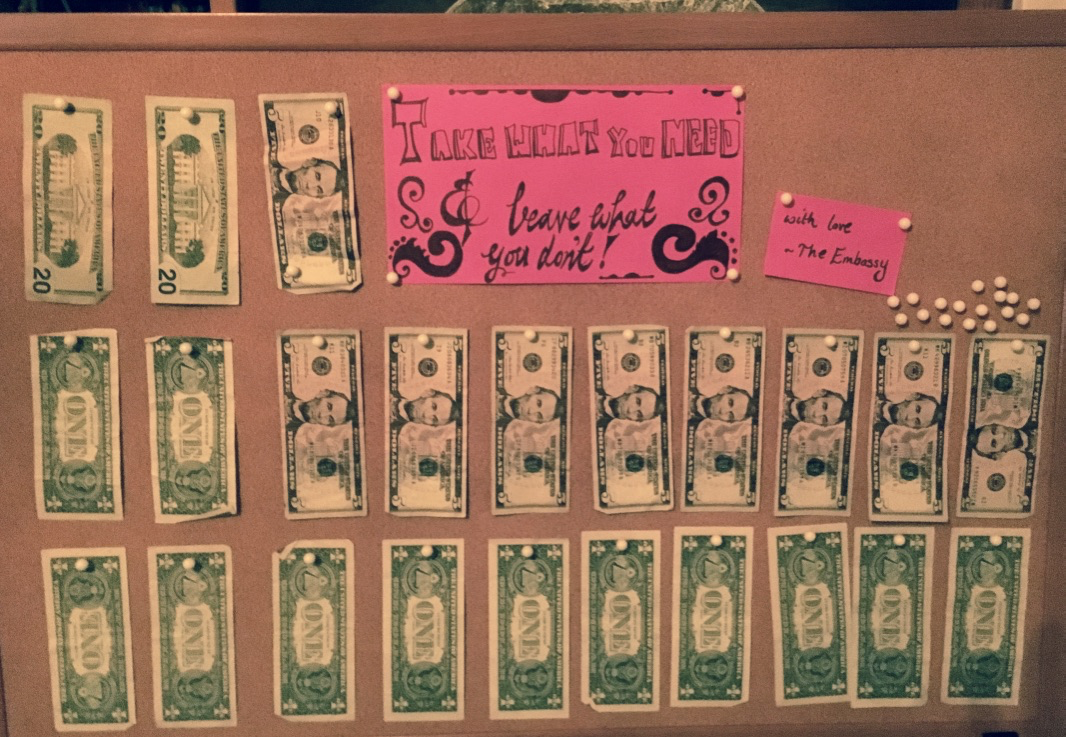
Zarinah Agnew lives at the Red Victorian, a modern-day commune in San Francisco's Haight neighborhood. Six months ago, as an experiment, she and her roommates thumbtacked $80 in cash on three different corkboards (at the Red Vic and another local intentional community called The Embassy). They then attached small pink signs that read, “Take what you need, leave what you don’t!”
They called each of their experimental corkboards, the "Great Wall of Money."
Here's what happened next, according to Agnew:
We left them up in our houses and watched. It was kind of amazing.I watched them stay pristine for a few days, and slowly gain extra funds. Once they had been touched, the notes started to move and disappear. The $1s went first, but again once a $20 had gone, the others followed suit. But they oscillated back and forth in a healthy manner.
Then one night the board was cleared, presumably by a single person. It was full at 3am and gone by 6am that morning. I was sort of delighted by this as it demonstrated to me that the board wasn’t remaining replenished through politeness. People were using it as it was intended. And lo, after a week, the empty board, started to collect notes once more...
Before long the Red Vic Great Wall of Money collected bart tickets, maps, notes, and all sorts of things. Eventually, the community moved it out onto the street where it collected even more goods and services — half smoked blunts and items of clothing were pinned to the board.
Read the entire story here: Experiments into other ways: The great wall of money
photo via Zarinah Agnew, used with permission
Thanks, SFSlim!
Mahmouddoesn't even have protected bike lanes. also i can tell ya from experience, these "vision" images ain't cheap!


Mahmoudcoworker mentioned this was top of /r/python atm
bucket = []But let's say you really wanted to empty it, well the clearest way is clear:
bucket.clear()But even the docs say this is equivalent to:
del bucket[:]I guess that's crossing the obvious line. Of course, it may be more obvious than Norvig's "dumbell" operator:
bucket[:]=[]Actually the slice assignment can take any iterable, so our list can lift plates of many shapes:
bucket[:]={}If you don't want your list getting ripped and/or cut, maybe keep it warm with Norvig's ski hat:
bucket *=0The ski hat is of particular interest because it's using a very obvious list feature, much more commonly used than list.clear(). Nobody would bat an eye at:
bucket = [0, 1, 2, 3] * 2If you multiply any list by 0, you make a new list of length 0. Bizarrely, this is actually true of any multiplier less than 0, too.
# bucket = [0, 1, 2, 3, 0, 1, 2, 3]
bucket *= -3Safe to say we are deep in the territory of the unobvious. Is there a syntax we might meditate on to take us further?
# bucket = []
Mahmoudmaaaaan wish this'd stay up north, all these people milling about in the new airbnbs around my house...






#/media/File:Mynttorget,_Stockholm_during_the_June_3,_2006_pro-piracy_protest.jpg)