Shared posts

28 May 18:39

Pilgrimage to Tokyo for Kimi no Na wa.

by Michael

Pilgrimage to Tokyo for Kimi no Na wa. 東京 君の名は。 聖地巡礼 舞台探訪

I had the opportunity to see Shinkai Makoto’s latest work Kimi no Na wa. in 2016 September, a few weeks after its original premiere in Japan, as well as visit many of the real locations that provided the basis for settings in the film. This article covers locations in Tokyo, a relatively compact swath of places between Shinjuku, Yotsuya, Roppongi and Shibuya. A second article covers locations in Hida, Gifu Prefecture.

At the time of writing, Kimi no Na wa. is about to be released as Your Name. in selected theaters in North America, but it has already surpassed Miyazaki’s Sen to Chihiro no Kamikakushi (Spirited Away) to become the highest-grossing anime film globally. It is currently the fourth highest-grossing film in Japan, behind Spirited Away, Titanic and Frozen. It is also the eighth highest-grossing traditionally animated film globally, and the highest-grossing Japanese film and 2D animated film in China. The magnitude and reach of the film’s commercial success make it Shinkai’s undisputed first blockbuster, but among anime watching circles he has long been a cherished creator. I remember how floored I was the first time I saw Hoshi no Koe (Voices of a Distant Star) and Byōsoku Go Senchimētoru (5 Centimeters Per Second), and was equally amazed by Shinkai’s humbleness and thoughtfulness when I saw him in person at a talk he gave at New York Comic Con 2011.

The lush background art and immersive environments Shinkai creates, many of which are modeled on real locations, also make his works favorites among the butaitanbou (scene hunting) community and seichijunrei (holy land pilgrimage) fans. The mainstream success of Kimi no Na wa. has raised awareness of anime-induced tourism in Japan and drawn many new participants into the mix. Both the film’s title and the term seichijunrei were among the candidates on the list of buzzwords annually selected by publishing house Jiyukokuminsha.

My own pilgrimage to the Tokyo locations was also special in that it was my first opportunity to meet fellow butaitanbou enthusiast Mike Hattsu (@mikehattsu) in person. Mike—his net handle is a play on Hatsune Miku—is from Norway, but has opportunities for extended stays in Japan a few times each year. He regularly publishes detailed butaitanbou reports in English of current and past anime works on his blog Anime Journeys, featuring side-by-side comparisons of screen captures and location photos.

Mike and I planned our walking route using what we knew from the official trailers and maps created by Yoko (横 @touyoko_com) and Fūko (風子 @mo_om921), who spearheaded scene hunting for the film. Astral (アストラル @fragments_sue), who has also explored Kimi no Na wa. locations, graciously provided me with a handful of film scenes scanned from printed material that I was missing for these articles.

Roppongi

Pilgrimage to Tokyo for Kimi no Na wa. 東京 君の名は。 聖地巡礼 舞台探訪

Mike and I originally wanted to meet at Toho Cinemas Roppongi Hills for the first showing of a weekday morning, which would allow us to first see the film, then step out of the theater and right into our walk. To our surprise, though we waited outside for the theater to open, the last few tickets for the show we wanted were already sold by the time we got to the machine. Almost a month after the opening day, we hadn’t anticipated demand would still be so high that we couldn’t get tickets at the door.

With a light rain beginning to fall and threatening to become heavier later in the day, we decide it makes the most sense to just begin our walk early with our existing information. In hindsight, this may have been a good thing, as the film is such a visual feast that we might have found it difficult to complete our route within the day had we also been searching for all of the new scenes we’d just watched. It means that we have to pass by our first planned stop at The National Art Center, which is not yet open at 8:30 in the morning, but our day is otherwise unaffected.

Pilgrimage to Tokyo for Kimi no Na wa. 東京 君の名は。 聖地巡礼 舞台探訪

We walk north along an arterial road from Roppongi, past the museum, until we arrive at and cross over this pedestrian footbridge.

Kimi no Na wa. Your Name. 君の名は。

The footbridge is loosely used in this scene with Okudera and Taki, but as we anticipated from reports by those who had already investigated, it doesn’t quite match with what’s actually here.

Pilgrimage to Tokyo for Kimi no Na wa. 東京 君の名は。 聖地巡礼 舞台探訪

With the orientation of the bridge to the curve of the road you can’t actually get the Roppongi Hills Mori Tower and the traffic signal in the shot together.

Pilgrimage to Tokyo for Kimi no Na wa. 東京 君の名は。 聖地巡礼 舞台探訪

The blue traffic sign isn’t on the bridge itself, but hangs over the road about 300 meters to the north.

Kasumigaokamachi

Kimi no Na wa. Your Name. 君の名は。Pilgrimage to Tokyo for Kimi no Na wa. 東京 君の名は。 聖地巡礼 舞台探訪

We wander over to Meiji Jingū Gaien for this shot of Taki and friends with the Meiji Memorial Picture Gallery in the far background. As we take a route through the park on our continuation north, we notice many temporary barriers and scaffolding. This area, now a public park and sports facility, was the primary venue for the 1964 Tokyo Olympics, and is again undergoing extensive redevelopment in preparation for the 2020 games.

Pilgrimage to Tokyo for Kimi no Na wa. 東京 君の名は。 聖地巡礼 舞台探訪

As we head northwest toward Sendagaya, the NTT Docomo Yoyogi Building comes into view. The tower is an important landmark for Shinkai, appearing in several of his films, including a breathtaking helicopter fly-by pan shot in Kotonoha no Niwa.

Sendagaya Station

Pilgrimage to Tokyo for Kimi no Na wa. 東京 君の名は。 聖地巡礼 舞台探訪

When we reach Sendagaya Station, we first encounter its brand new entrance. But this is not the one we’re looking for.

Kimi no Na wa. Your Name. 君の名は。Pilgrimage to Tokyo for Kimi no Na wa. 東京 君の名は。 聖地巡礼 舞台探訪

We actually want the old entrance, which was permanently closed just days before our visit. Renovation at Sendagaya and other stations is also part of preparations for the 2020 Olympics.

Pilgrimage to Tokyo for Kimi no Na wa. 東京 君の名は。 聖地巡礼 舞台探訪

As if to tease us, we find a Fun!Tokyo! poster nearby depicting the old entrance as it appeared in Kimi no Na wa. Fun!Tokyo! is a marketing campaign of rail operator JR East. It promotes interesting neighborhoods, events and tourism spots that are reachable via the lines the railway operates in the city. At the time of the Kimi no Na wa. release, a promotional collaboration is in full swing. Over the course of the day, we come across Fun!Tokyo! posters featuring art from the film at all of the JR stations we pass through.

Yoyogi Station

Kimi no Na wa. Your Name. 君の名は。Pilgrimage to Tokyo for Kimi no Na wa. 東京 君の名は。 聖地巡礼 舞台探訪

We enter at Sendagaya and take the Chūō-Sobu Line one stop to Yoyogi Station for this shot of Mitsuha wating for a train. Note the cross-promotion here, there are Fun!Tokyo! posters in the film background.

Shinanomachi

Pilgrimage to Tokyo for Kimi no Na wa. 東京 君の名は。 聖地巡礼 舞台探訪

We head back in the direction from which we came and get off at Shinanomachi, passing more Fun!Tokyo! posters on our way out of the station. These feature the film’s key visual from nearby Sugachō, as well a vista of the Shinjuku skyscrapers. We’ll reach both of these places later in the day.

There are several shots just outside Shinanomachi Station.

Kimi no Na wa. Your Name. 君の名は。Pilgrimage to Tokyo for Kimi no Na wa. 東京 君の名は。 聖地巡礼 舞台探訪

Shinanomachi footbridge

Kimi no Na wa. Your Name. 君の名は。Pilgrimage to Tokyo for Kimi no Na wa. 東京 君の名は。 聖地巡礼 舞台探訪

NTT Docomo Yoyogi Building

Kimi no Na wa. Your Name. 君の名は。Pilgrimage to Tokyo for Kimi no Na wa. 東京 君の名は。 聖地巡礼 舞台探訪

Looking west over the Chūō Line tracks

Kimi no Na wa. Your Name. 君の名は。Pilgrimage to Tokyo for Kimi no Na wa. 東京 君の名は。 聖地巡礼 舞台探訪

Pilgrimage to Tokyo for Kimi no Na wa. 東京 君の名は。 聖地巡礼 舞台探訪

We walk east along the south side of the tracks for a bit before crossing over again.

Pilgrimage to Tokyo for Kimi no Na wa. 東京 君の名は。 聖地巡礼 舞台探訪

Kimi no Na wa. Your Name. 君の名は。Kimi no Na wa. Your Name. 君の名は。

Taki’s apartment building, from which he observes the meteor shower, is located in a quiet residential neighborhood in this area.

Pilgrimage to Tokyo for Kimi no Na wa. 東京 君の名は。 聖地巡礼 舞台探訪

If you seek out and travel to this location on your own pilgrimage, bear in mind that this is a private property. Please be considerate of the people who live here and refrain from trespassing.

Pilgrimage to Tokyo for Kimi no Na wa. 東京 君の名は。 聖地巡礼 舞台探訪

If my memory is right, there is a cut of the trains traveling through this tunnel in the film.

Yotsuya Station

Pilgrimage to Tokyo for Kimi no Na wa. 東京 君の名は。 聖地巡礼 舞台探訪

There are some scenes along the sotobori to the east of Akasaka Palace, which we skip due to time and not having reference images, but we do swing by the palace gate on our way to Yotsuya. I think I remember parts of the palace appearing in the background during one scene.

Kimi no Na wa. Your Name. 君の名は。Pilgrimage to Tokyo for Kimi no Na wa. 東京 君の名は。 聖地巡礼 舞台探訪

Yotsuya Station

Kimi no Na wa. Your Name. 君の名は。Pilgrimage to Tokyo for Kimi no Na wa. 東京 君の名は。 聖地巡礼 舞台探訪

Kimi no Na wa. Your Name. 君の名は。Pilgrimage to Tokyo for Kimi no Na wa. 東京 君の名は。 聖地巡礼 舞台探訪

Sugachō

From the station we head west and down into Sugachō. Because the key visual—the work’s primary marketing background image and artwork—comes from this neighborhood, this location has received the lion’s share of visitors curious about the film’s setting, but there are many interesting details here beyond the now infamous stairs.

Kimi no Na wa. Your Name. 君の名は。Pilgrimage to Tokyo for Kimi no Na wa. 東京 君の名は。 聖地巡礼 舞台探訪

Pilgrimage to Tokyo for Kimi no Na wa. 東京 君の名は。 聖地巡礼 舞台探訪

Kimi no Na wa. Your Name. 君の名は。

Kimi no Na wa. Your Name. 君の名は。Pilgrimage to Tokyo for Kimi no Na wa. 東京 君の名は。 聖地巡礼 舞台探訪

A pedestrian unwittingly becomes a stand-in for Mitsuha.

Kimi no Na wa. Your Name. 君の名は。Pilgrimage to Tokyo for Kimi no Na wa. 東京 君の名は。 聖地巡礼 舞台探訪

The steps lead up to Suga Jinja, though the shrine itself never appears in the film.

Pilgrimage to Tokyo for Kimi no Na wa. 東京 君の名は。 聖地巡礼 舞台探訪

Pilgrimage to Tokyo for Kimi no Na wa. 東京 君の名は。 聖地巡礼 舞台探訪

Pilgrimage to Tokyo for Kimi no Na wa. 東京 君の名は。 聖地巡礼 舞台探訪

Kimi no Na wa. Your Name. 君の名は。

The full canvas from which the various crops of the key visual are taken reveals some interesting differences between Shinkai’s vision of the world in the film and what’s actually on the ground. There are obvious parts, like the large concrete wall that in real life blocks much of the vista to the east, and that the elevation of the top of the stairs is depicted in the film as much higher than it actually is. But if you comb through a high-resolution version of the art, you’ll find interesting details like the Mori Tower in the far background, which in reality is in the opposite direction and not visible from this location.

Kimi no Na wa. Your Name. 君の名は。Pilgrimage to Tokyo for Kimi no Na wa. 東京 君の名は。 聖地巡礼 舞台探訪

Pilgrimage to Tokyo for Kimi no Na wa. 東京 君の名は。 聖地巡礼 舞台探訪

Mike gets his stair photos. We’ve been lucky in that there has been intermittent light rain throughout the morning, but nothing heavy enough to slow our progress.

Pilgrimage to Tokyo for Kimi no Na wa. 東京 君の名は。 聖地巡礼 舞台探訪

Suga Jinja

Pilgrimage to Tokyo for Kimi no Na wa. 東京 君の名は。 聖地巡礼 舞台探訪

Pilgrimage to Tokyo for Kimi no Na wa. 東京 君の名は。 聖地巡礼 舞台探訪

Kimi no Na wa. Your Name. 君の名は。Pilgrimage to Tokyo for Kimi no Na wa. 東京 君の名は。 聖地巡礼 舞台探訪

Kimi no Na wa. Your Name. 君の名は。Pilgrimage to Tokyo for Kimi no Na wa. 東京 君の名は。 聖地巡礼 舞台探訪

Yotsuya 4-chōme

We head back up into Yotsuya and west toward Shinjuku, stopping for the Yotsuya 4-chōme intersection en route.

Kimi no Na wa. Your Name. 君の名は。Pilgrimage to Tokyo for Kimi no Na wa. 東京 君の名は。 聖地巡礼 舞台探訪

Shinjuku

We had planned to replace our lunch at The National Art Center with one at the Cafe La Bohéme Shinjuku Gyoen shop, another location used in the film. When we arrive, there is a long line out the door and around the block. We apparently aren’t the only ones with this idea. Though we’re hungry already, we decide we’ll power through the rest of the scenes in Shinjuku and loop back for a late meal. While we’re here, I duck into the Shinjuku Piccadilly cinema to buy tickets to see Kimi no Na wa. and Koe no Katachi the following day.

Everyone has his or her own image of a place or neighborhood that stands in for Tokyo. Shinkai has commented in interviews that, for him, it’s Shinjuku. The world’s busiest train station, the commercial hub surrounding it, and notable locations around the periphery of Shinjuku have played significant parts in the setting and story in Byōsoku Go Senchimētoru, Kotonoha no Niwa, and now Kimi no Na wa.

Pilgrimage to Tokyo for Kimi no Na wa. 東京 君の名は。 聖地巡礼 舞台探訪

Kimi no Na wa. Your Name. 君の名は。

Kimi no Na wa. Your Name. 君の名は。Pilgrimage to Tokyo for Kimi no Na wa. 東京 君の名は。 聖地巡礼 舞台探訪

Yunika Building

Pilgrimage to Tokyo for Kimi no Na wa. 東京 君の名は。 聖地巡礼 舞台探訪

Kimi no Na wa. Your Name. 君の名は。Pilgrimage to Tokyo for Kimi no Na wa. 東京 君の名は。 聖地巡礼 舞台探訪

Songai Hoken Japan Head Office Building

In the film, there are a number of cuts featuring this spider-like pedestrian footbridge that sprawls across the Shintoshin intersection.

Pilgrimage to Tokyo for Kimi no Na wa. 東京 君の名は。 聖地巡礼 舞台探訪

The unique traffic signal at the Shinjuku Keisatsusho-ura intersection has also appeared in the Monogatari series.

Kimi no Na wa. Your Name. 君の名は。Pilgrimage to Tokyo for Kimi no Na wa. 東京 君の名は。 聖地巡礼 舞台探訪

The perspective in this shot is challenging to recreate. You’d have to put the camera down at ground level and stand almost under the signal in the traffic lane. You might be able to get away with this early in the morning, but at midday Mike and I are not looking to test our luck.

Kimi no Na wa. Your Name. 君の名は。Pilgrimage to Tokyo for Kimi no Na wa. 東京 君の名は。 聖地巡礼 舞台探訪

We come around the west side of Shinjuku Station and climb up to the pedestrian footbridge spanning the Kōshū Kaidō for the wide shot facing east. Everything on the south side of the street, the Kōshū Kaidō gate, New South gate and retail development above the station have only recently opened after many years of extensive construction.

Kimi no Na wa. Your Name. 君の名は。Pilgrimage to Tokyo for Kimi no Na wa. 東京 君の名は。 聖地巡礼 舞台探訪

Kimi no Na wa. Your Name. 君の名は。Pilgrimage to Tokyo for Kimi no Na wa. 東京 君の名は。 聖地巡礼 舞台探訪

Shinjuku Southern Terrace

Pilgrimage to Tokyo for Kimi no Na wa. 東京 君の名は。 聖地巡礼 舞台探訪

In the film, there are many cuts that use the ticket gate and concourse at the Shinjuku Station south entrance.

Kimi no Na wa. Your Name. 君の名は。

MdN Design & Graphic magazine featured some of the film art from this location on its 2016 October cover.

Kimi no Na wa. Your Name. 君の名は。Pilgrimage to Tokyo for Kimi no Na wa. 東京 君の名は。 聖地巡礼 舞台探訪

Cafe La Bohéme

We eventually make our way back to La Bohéme only to find that the line hasn’t shortened much since we were here earlier, and it’s already 2:30 in the afternoon. I overhear passers-by, who seem to be office workers from nearby blocks, incredulous that there had suddenly developed such intense interest in their regular afternoon break spot, a nice but not particularly remarkable chain Italian restaurant. Everyone in line with us is talking about Kimi no Na wa. Word travels quickly.

Kimi no Na wa. Your Name. 君の名は。Kimi no Na wa. Your Name. 君の名は。

In the film, the restaurant is called “Il Giardino delle Parole”, which is a little inside joke, as this is the Italian title of Shinkai’s previous film Kotonoha no Niwa. That film made extensive use of the gardens at Shinjuku Gyoen, which is across the street.

Pilgrimage to Tokyo for Kimi no Na wa. 東京 君の名は。 聖地巡礼 舞台探訪

Finally inside, we have the chance for much needed rest and replenishment, as well as to turn away from the task at hand to talk about how we each came to discover butaitanbou and seichijunrei. The extent of Mike’s anime-related travels and the body of work he has put out is really remarkable. I would very much like to put together a detailed review of his accomplishments once I’ve had a chance to go through the years of material.

Pilgrimage to Tokyo for Kimi no Na wa. 東京 君の名は。 聖地巡礼 舞台探訪

Pilgrimage to Tokyo for Kimi no Na wa. 東京 君の名は。 聖地巡礼 舞台探訪

Pilgrimage to Tokyo for Kimi no Na wa. 東京 君の名は。 聖地巡礼 舞台探訪

At the time of our visit, restaurant staff are very accommodating to anime pilgrims, allowing photography that doesn’t capture other patrons and reserving this open table at the front of the restaurant so that you can take a shot of the gardens through the window.

Pilgrimage to Tokyo for Kimi no Na wa. 東京 君の名は。 聖地巡礼 舞台探訪

A Fun!Tokyo! poster featuring Shinjuku Station, in Shinjuku Station

Shibuya

Our final stop of the day comes just in time, as the heavy rain begins to arrive.

Kimi no Na wa. Your Name. 君の名は。Pilgrimage to Tokyo for Kimi no Na wa. 東京 君の名は。 聖地巡礼 舞台探訪

The shot of the Starbucks in the Q-Front Building is likely taken from the Shibuya Ekimae Building, right up on the scramble crossing. For us, a telephoto shot from the enclosed flyover walkway connecting Shibuya Station and Shibuya Mark City is close enough and keeps us nice and dry.

Pilgrimage to Tokyo for Kimi no Na wa. 東京 君の名は。 聖地巡礼 舞台探訪

We’re able to stay mostly under cover as we work our way through a concourse on the west side of Shibuya Station down to the large pedestrian footbridge spanning Tamagawa-dōri.

Pilgrimage to Tokyo for Kimi no Na wa. 東京 君の名は。 聖地巡礼 舞台探訪

Kimi no Na wa. Your Name. 君の名は。Pilgrimage to Tokyo for Kimi no Na wa. 東京 君の名は。 聖地巡礼 舞台探訪

Pilgrimage to Tokyo for Kimi no Na wa. 東京 君の名は。 聖地巡礼 舞台探訪

When I see the film the next day it becomes clear that, for all the walking we did, we had really only scratched the surface. But it was a great way to get to know Mike. Working together through an intense shared experience is a good way to quickly become friends. Of all the elements of pop culture tourism that I study, I enjoy this one the most.

* * * * * *
You're reading Pilgrimage to Tokyo for Kimi no Na wa. by Michael Vito, originally posted at likeafishinwater.com. This post may be reused under a Creative Commons Attribution-NonCommercial-ShareAlike 3.0 Unported License, which requires crediting Michael Vito as the author, linking to the original post, the absence of any commercial purpose, such as banner and link advertising, and including the same Creative Commons license in the derivative work or reprint.

30 Apr 16:30

Some pictures of upcoming “The Dam Keeper”...


Some pictures of upcoming “The Dam Keeper” series.
Directed by Erick Oh with Tonko House studio for Hulu.

23 Apr 12:00

The Department of Labor Is Alleging "Extreme" Gender Pay Discrimination At Google

We've seen what the gender pay gap looks like — and it's not pretty. Women getting paid equally to their male counterparts seems like it should be a non-issue in 2017, but in many fields — like, infamously, the male-dominated Silicon Valley tech world — women are getting the short end of the stick. Now, a Department of Labor investigation alleges that Google has a huge pay gap issue — even for the tech industry.

"We found systemic compensation disparities against women pretty much across the entire workforce," Janette Wipper, a Department of Labor regional director, testified in court in San Francisco on Friday, according to the Guardian.

The hearing pertained to the lawsuit the Department of Labor filed against Google when the tech giant refused to provide job and salary history for employees to prove it's complying with the equal opportunity laws. As a federal contractor, according to TechCrunch, Google is "required to let the government review documents and other relevant information that is relevant to the company’s compliance with equal employment laws."

"The investigation is not complete, but at this point the department has received compelling evidence of very significant discrimination against women in the most common positions at Google headquarters," Janet Herold, a regional solicitor for the Department of Labor, told The Guardian. "The government’s analysis at this point indicates that discrimination against women in Google is quite extreme, even in this industry," she added. Google has previously said that the Department of Labor is going overboard with their request, according to TechCrunch, and that providing the information requested would be a violation of employees' privacy.

The tech company has also previously positioned itself as a champion of salary parity, tweeting the following on Equal Pay Day: "We're proud to share that we have closed the gender pay gap globally, and also provide equal pay across races in the U.S., according to our annual compensation analysis. At our re:Work site, we're sharing some of the lessons we've learned, to help other business close the pay gap."

Google also made a statement to The Guardian rejecting the Department of Labor's allegations: "We vehemently disagree with [Wipper’s] claim. Every year, we do a comprehensive and robust analysis of pay across genders, and we have found no gender pay gap. Other than making an unfounded statement which we heard for the first time in court, the [Department of Labor] hasn't provided any data or shared its methodology."

The Department of Labor's allegations come after finding pay disparities in 2015 salaries, which prompted further investigation. Until Google complies with the government audit, the labor department has requested that the court cancel any of Google's federal contracts and stop the company from future government business until it complies with the investigation.

More From Glamour:
• http://www.glamour.com/story/12-real-people-discover-what-the-pay-gap-looks-like
• Which Career Fields Are Most Off-Limits to Women? It's Not Just Tech
• McKinsey Report: Women Face Barriers to Senior Leadership at Work

• Want a Raise? Here's Exactly What You Need to Do

Photo Credit: Getty Images

16 Apr 15:49

Rereading The Handmaid’s Tale: The Legacy of Margaret Atwood and Offred

by Natalie Zutter

Margaret Atwood writing The Handmaid's Tale Berlin 1984

“Novels are not slogans,” Margaret Atwood said in a 1986 New York Times feature in response to assertions that The Handmaid’s Tale was a feminist tract. “If I wanted to say just one thing I would hire a billboard. If I wanted to say just one thing to one person, I would write a letter. Novels are something else. They aren’t just political messages. I’m sure we all know this, but when it’s a book like this you have to keep on saying it.”

What’s fascinating about the legacy of The Handmaid’s Tale is how it’s spread to almost every medium: reimagined on stage and screen, buzzing on the airwaves and between your ears, inked earnestly onto skin and snarkily onto protest signs, embodied in real bodies through viral marketing and political action. This is not meant to be an exhaustive list; rather, it’s a look at the breadth of Atwood’s influence, and how you can see Offred’s story from tech conferences to the Senate floor.

For most books, there’ll be a movie or TV adaptation; not only does Handmaid have both, but they are far from the only interpretations. In the early 2000s, both BBC Radio 4 and CBC Radio released dramatic radio plays. The former, adapted by John Dryden, takes a documentary-style approach and was lauded for its “faultless acting and imaginative, varied, and multi-layered sound effects.” Playwright Michael O’Brien adapted the Canadian take, with a robust cast and a more streamlined narrative that focuses on the most dramatic moments of the book.

Secrets, Crimes & Audiotapes’ podcast adaptation is perhaps the biggest departure from the source material (at least in the audio sphere): It presents Offred’s story chronologically, beginning with her, Luke, and her daughter trying to cross the border; then her capture and training at the Red Center; and only then does she become Offred. We don’t even meet the rest of the household until a few episodes in (there are six installments total). While this was initially jarring, having just reread the book with its jumping back and forth between present and past, I appreciate the commitment to a more linear narrative, carrying us along with Offred so that we experience her emotions in the moment (instead of in retrospect) and change along with her.

The Handmaid's Tale stage adaptation one-woman show solo show

Photo: Daniel R. Winters (via Sarah Beth Hall)

On the stage, we have seen Offred’s story in the form of a both a traditional play adaptation (in 2002) and a one-woman show (in 2015). The latter is set entirely in Offred’s room—a bed, a lamp, a chair—from which the Handmaid relates her tale; the lead’s ability to “frequently and skillfully [quote] dialogue from other characters” communicates the scope of Gilead outside of her small prison. A 2003 opera, commissioned by the Royal Danish Opera, fell short of its ambitions, despite its inventive use of staging (including video) and “wonderfully committed” performances. A decade later, the Royal Winnipeg Ballet’s “dance-drama” take on Atwood’s dystopia was praised as “edgy” and “gripping.”

One of my personal favorite demonstrations of the book’s legacy was the Handmaid’s Tale tattoo chain collaboration among Book Riot Live, Litographs, and Random House in 2015: They took the text of the first two chapters of Atwood’s classic dystopian novel, broke it into 350 lines or phrases, then distributed the temporary tattoos to volunteers at Book Riot Live. Each person photographed their arms or necks or other body parts, with the end result being a photo series of the text as written across 350 bodies. Atwood herself kicked off the tattoo chain with the first line.

Margaret Atwood Book Riot Live The Handmaid's Tale tattoos Litographs

Photo: @BookRiot

A 1986 NYT feature on Atwood and the novel emphasizes the hope in there being a post-Gilead era:

“You’ll notice,” she says, “and not many people have, that the section on Newspeak at the end of Nineteen Eighty-Four talks about Newspeak in the past tense. It’s written in ordinary language, not Newspeak. The obvious implication from that is that the regime has fallen, that someone in the future, we don’t know who, has lived to tell the tale and to write this analysis of Newspeak in the past tense.

“And my book isn’t totally bleak and pessimistic either, for several reasons. The central character—the Handmaid Offred—gets out. The possibility of escape exists. A society exists in the future which is not the society of Gilead and is capable of reflecting about the society of Gilead in the same way that we reflect about the 17th century. Her little message in a bottle has gotten through to someone—which is about all we can hope, isn’t it?”

Illustrations from the Folio Society edition of The Handmaid’s Tale, by Anna and Elena Balbusso

A new edition of the audiobook (narrated by Claire Danes) plays to this optimism, with Atwood contributing new material that builds on the final line of Are there any questions? Professor Pieixoto answers 10 of them: How was the footlocker of cassette tapes discovered? Was Offred ever reunited with her daughter? Have there been attempts to recover DNA samples from that time period? When asked about the Mayday resistance, Pieixoto mentions that they might have uncovered some new material, which could be Atwood’s sly way of hinting at new work:

“I and my team have made some fresh discoveries, but I am not yet at liberty to share them. We do not wish to rush to publication before we have double and triple checked our material from the standpoint of authenticity. People have been taken in by clever forgeries before. Long ago there were the spurious Hitler diaries and more recently, I have to say, the very well done Aunt Lydia’s Log Book. We wish to be sure of our ground, but give us a year or two, and I hope you will be pleasantly surprised.”

The Handmaid's Tale nolite te bastardes carborundorum NYCC

Photo: Natalie Zutter

For all that The Handmaid’s Tale is enjoying a resurgence of attention decades after its publication, Atwood knows that the dystopian genre is ever-shifting. When NPR asked her what she thinks the next big dystopian novel is, she was thinking outside of pages and spines:

Well, it won’t be a book, according to Atwood. “The question to be asked is, if somebody does write such a novel where will it be published?” she says. “I think we might go back to newspaper serials … Because events are evolving so fast it would almost take a serial form to keep up with them.”

One installment a week, Atwood says, and “I would make my narrator somebody from within one of the alt-Twitter handles that are popping up all over—as alternative Department of Justice, alternative Parks Department, alternative Education.” Someone inside the government, who’s risking their job to leak information to the public.

A profile in the New Yorker crowning Atwood the “prophet of dystopia” makes mention of how at least one participant in the Women’s March held up a sign reading “MAKE MARGARET ATWOOD FICTION AGAIN.” Two months later, activists dressed as Handmaids walked into the Texas Senate to protest two anti-abortion bills.

That’s free marketing for the Hulu series, which has been utilizing its richly visual source material for viral marketing opportunities. I spotted the above graffiti painted (though made to look as if it had been scratched) in the bathrooms at last year’s New York Comic-Con. But then Hulu upped the ante at SXSW last month by hiring women to walk through Austin, TX, dressed as handmaids, with the official Twitter account inviting onlookers to ask the women if they would like to walk to the river. While that particular publicity stunt might have been a bit creepier than Hulu intended, it was certainly memorable.

The Handmaid's Tale Hulu viral marketing SXSW

Photo: @Adweek

“Why do I do such a painful task?” Atwood asked during her acceptance speech for the National Book Critics Circle award ceremony in early 2017. “For the same reason I give blood. We must all do our part, because if nobody contributes to this worthy enterprise then there won’t be any, just when it’s most needed.”


Next week, we’re watching the 1990 film adaptation of The Handmaid’s Tale! I’ve never seen it (though the trailer looks delightfully dramatic), and I figured it would make for a good visual comparison to the TV series, which premieres the following week.

Top photo via margaretatwood.ca

Natalie Zutter is seriously considering a Nolite te bastardes carborondorum tattoo, among many others inspired by this job. Find her on Twitter and Tumblr.

14 Apr 23:55

Eggslut, Breakfast-Sandwich Royalty From L.A., Arrives in New York This Week

by Hugh Merwin

Alvin Cailan is breakfast-famous in Los Angeles. As the chef and founder of Eggslut, his morning creations are widely considered to be among the city’s best. Each of Eggslut’s four locations go through 2,100 eggs a day; 2 million people have watched a six-minute video of...More »

14 Apr 23:46

What’s the Deal With Starbucks’s New ‘Unicorn Frappuccinos’?

by Clint Rainey

It appears Starbucks is about to release a drink it’s christened the Unicorn Frappuccino. For the past few days, baristas on Reddit’s Starbucks page have been posting pictures of pink and blue powders, as it arrives in stores. Based on drink pics that have also More »

14 Apr 23:45

These Are the New Ice-Cream Flavors That Are Definitely Worth Trying This Spring

by Sierra Tishgart

Ice cream is a treat that should be enjoyed year-round, of course, but it’s understandable that some New Yorkers prioritize it in the warmer months. Finally, it seems that spring weather is here for good, and that means pastry chefs are seriously stepping up their game, unveiling bold flavors like...More »

02 Apr 16:35

Netflix Announces Its First Animated Feature – America: The Motion Picture – And It’s Rated R

by Amid Amidi

The directors of "Archer" and "The Lego Movie" are involved.

The post Netflix Announces Its First Animated Feature – America: The Motion Picture – And It’s Rated R appeared first on Cartoon Brew.

27 Mar 15:49

Disney Slammed With ‘Zootopia’ Theft Lawsuit by ‘Total Recall’ Screenwriter

by Brian Gabriel

Gary Goldman, a screenwriter of "Total Recall," alleges Disney's 2016 hit "Zootopia" was based on his own project, also titled "Zootopia."

The post Disney Slammed With ‘Zootopia’ Theft Lawsuit by ‘Total Recall’ Screenwriter appeared first on Cartoon Brew.

19 Mar 00:42

School Sends Kid Home With Note Shaming Mom’s Homemade Chocolate Cake

by Clint Rainey

An Australian mom who packed a slice of chocolate cake in her 3-year-old’s lunch got a note from the school telling her to “choose healthier options” next time. The warning, which included a large frowny face, has gone viral after Melinda Tankard Reist, a popular author...More »

19 Mar 00:40

Oh, Great, So Now We Have to Protest Candy?

by Clint Rainey

Mars, Hershey, and Jelly Belly have discovered the strategy used by others who want to butter up President Trump, like the Kingdom of Bahrain and the Asian diplomat who said, “Isn’t it rude to come to his city and say, ‘I am staying at your competitor?’”...More »

19 Mar 00:39

Ben & Jerry’s Now Sells Cereal-Milk Ice Cream

by Clint Rainey

Proving yet again that America will never hit peak cereal milk, Ben & Jerry’s has launched a new trio of flavors that it’s calling Cereal Splashbacks. The idea, of course, relies on the same throwback factor Christina Tosi masterfully captured with her Milk Bar version, a...More »

19 Mar 00:13

20 Classic Mystery Science Theater 3000 Episodes Premiere on Netflix Today!

by Leah Schnelbach

MST3K Laser Blast

Are you ready for the return of Mystery Science Theater 3000 next month? Are you, like some of us here, quivering with anticipation? Just in case you can’t wait another thirty interminable days for more riffs, Shout Factory has released twenty classic episodes on Netflix, and they’re premiering today! The best part is they’ve included fantastic episodes from both the Joel and the Mike eras, so you can revisit both hosts’ styles before Jonah Ray steps into the jumpsuit next month.

Check out the whole list below.

Look at all these options!

Catalina Caper
 Eegah!
 Future War
 The Giant Gila Monster
 Hercules Against the Moon Men
 Horrors of Spider Island
 I Accuse My Parents
 Jack Frost
 Laserblast
 Manos: The Hands of Fate
 Merlin’s Shop of Mystical Wonders
 Pod People
 Puma Man
 Santa Claus Conquers the Martians
 Sidehackers
 Space Mutiny
 Teenagers from Outer Space
 Time Chasers
 Werewolf
 Zombie Nightmare

Personally? I would be hard heckin’ pressed to select a favorite among these. Is it Puma Man, flying like a moron? Big McLargehuge thwarting a Space Mutiny? Trumpy, doing stupid things in Pod People? Or The Giant Gila Monster‘s hero, reminding us to “Sing Whenever [We] Sing Whenever [We] Sing”?

I can’t choose, you can’t make me!

You can, however, watch my all-time-favorite-ever host segment, courtesy of Eegah, below:

Now get thee to Netflix and binge MST3K.

FOR CASTLETON!

[via Paste]

12 Mar 12:56

The New Wave of European Animated Features: Small Budgets, Big Freedom

by Tunde Vollenbroek

"It’s not going to look like a Pixar movie, where you see money on the screen," says "Ernest & Celestine" director Benjamin Renner.

The post The New Wave of European Animated Features: Small Budgets, Big Freedom appeared first on Cartoon Brew.

12 Mar 12:49

This Sony Playstation Summer Camp for Girls Interested In Game Development Is Incredible

For the fourth time ever, Sony PlayStation will host its annual Girls Make Games summer camp — a camp for girls interested in game development.

According to Polygon, this three-week camp takes place in California from July 10-28, and "by the end of the camp, they'll have created fully functional games with the help of local game studios and other industry pros at Sony."

What's more? For those who qualify to attend the program, Sony will offer scholarships and match those girls with mentors.

To learn more about the summer camp and programs offered by Girls Make Games, visit their site.

NEXT: The Ponytail Posse and Rubies Shatter Stereotypes About Girls in STEM »

Related Stories:
Sony Hacks and the Gender Wage Gap in Hollywood
Sony Will Bring a Female Superhero to the Big Screen — Finally

Photo Credit: Mario Tama/Getty Images

12 Mar 12:46

Game of Thrones Season 7 Will Premiere on July 16

by Stubby the Rocket

Game of Thrones season 7

HBO has announced, by way of a block of melting ice yes really*, that the first half of Game of Thrones season 7 will debut on Sunday, July 16, 2017.

The final season of Game of Thrones was been cut in two by HBO, with the first half airing this year and consisting of only 7 episodes. The second half will air in 2018 in what is sure to be an epic 6-episode sprint to the finish.

Last we knew, Daenerys was making her way in a giant fleet to Westeros. Leaked set pics have shown some strange alliances and events. (DEFINITE spoilers in those links! Proceed with caution!) Season 7 promises to be very, very interesting….

*The reveal itself was an interesting example of Not Doing The Science First. The Game of Thrones reveal feed pointed two flamethrowers at a block of ice measuring one foot thick by 3 feet wide and 3.5 feet high. The bottom edge of the plate revealing the premiere date is about 1 foot down, so really all they had to do was melt the ice that far down.

Unfortunately, while flame-throwers are really awesome, they’re not going to get the job done.

Game of Thrones ice block

Why? Because the heat that the flamethrowers are adding to the block is only affecting a small, small portion of the surface area of the ice. Most of the heat provided by the flames is being lost as it travels upwards towards the ice block.

Melting ice quickly is TOUGH. Drop an ice cube into a pot of boiling water at home. That’s how much ambient heat you have to surround the ice with in order for it to speedily warm beyond the melting point. The ice’s temperature ranges from 30 F to -10 F. Boiling water is around 200 F. It takes THAT much energy to melt ice quickly, and that temperature has to be surrounding the ice block, or the heat doesn’t transfer as completely.

(The Game of Thrones crew eventually tore off a big chunk of the ice block to speed up the process. It also helped that the interior of the ice block appeared to be hollow.)

Guess the Wall will be a little tougher to melt than we thought, eh?

01 Mar 01:41

The Speakeasy #086: Fire Emblem Heroes, Voltron S2, Comiket, Wrestle Kingdom

by reversethieves

Ongoing Investigations: Fire Emblem Heroes from Intelligent Systems, Granblue Fantasy the Animation ep. 1 from A-1 Pictures, Voltron: Legendary Defender S2.

Song: “Rainmaker” by Yonosuke Kitamura (Kazuchika Okada’s theme)

Food for Thought: What Japanese event would you plan a trip around?

Topics: We talk with Patz Prime about his recent trip to Japan.

DOWNLOAD


Filed under: Anime, Cartoons, Editorials, Podcasts, The Speakeasy, Video Games Tagged: Fire Emblem, Granblue Fantasy, Voltron
23 Feb 20:37

Anime Industry Celebrates 100th Anniversary by Streaming Oldest Works With Subtitles

64 works, including oldest surviving film from 1917, available streaming
23 Feb 20:36

Report: 2.5 Million Funimation Accounts Compromised in Data Breach

User names, dates of birth, email addresses, passwords exposed
20 Feb 23:22

The Kellogg’s NYC Pop-Tarts Cafe Is the Pop-Up Your Inner Child Has Been Waiting For

by Melissa McCart

Sweet, sweet nachos, tacos, and burritos for one week only

Tonight, Kellogg’s NYC will transform from its signature red into a Pop-Tarts blue space in preparation for a week-long pop-up as Pop-Tarts Cafe, starting tomorrow at 8 a.m. through Sunday —with a menu of tacos, burritos, pizza, cheesecake, milkshakes, and nachos, all made from the more than two-dozen flavors of the sweet toaster pastry.

The $9 nachos, for example, are Confetti Cupcake-flavored Pop-Tarts, cut into chips, drizzled with strawberry salsa, dolloped with frosting, sprinkles, and topped with a candle. “Looks like nachos, tastes like birthday,” says partner, Sandra Di Capua.

The six types of milkshakes seem to borrow a little inspiration from the baroque Black Tap creations. The hot fudge sundae milkshake is a blend of chocolate ice cream, milk, sprinkles, a whole fudge Pop-Tart, then another whole Pop-Tart is used as garnish in the whipped cream.

Kellogg’s NYC opened in July at 1600 Broadway, dedicated to bowls of cereal curated by Milk Bar chef Christina Tosi. The small restaurant, co-owned by Per Se alum Anthony Rudolf and Di Capua, seemed ridiculous — why would anyone pay $7.50 for a bowl of something that they can get a whole box of for less than $5? Yet because they do, it comes as no surprise that Pop-Tarts concoctions like tacos run for $9 and burritos average $12 each.

This isn’t the first Pop-Tarts pop-up in New York. The first had a more grandiose name, Pop-Tarts World Cafe, with a vast menu that included Pop-Tarts sushi, as well as machine that allowed visitors to make their own Pop-Tarts box with The Varietizer.

20 Feb 21:21

The Fiend with Twenty Faces: Many Masks Hiding One True Face

by reversethieves

narutaki_icon_4040_round Reading the Boy Detectives (or the Detective Boys) by Edogawa Rampo (or Ranpo) is like picking up the American classics Nancy Drew and The Hardy Boys. Various people might have different reactions to hearing the name Nancy Drew, but we can probably all agree it conjures the idea of a bygone era. And yet these stories endure and are still childhood classics; the same is true of the Boy Detectives. Well-worn copies of the Boy Detectives books will always be found in Japanese libraries.

The Fiend with Twenty Faces is the first of the Boy Detectives stories and became a mega hit. The story cements not only the Boy Detectives, but also phantom thief Twenty Faces, and even the already known Detective Kogoro, as characters that would remain popular for generations.

hisui_icon_4040_round “This time I have them for sure.” says the detective. This time will be different. Each time this thief has made law enforcement a laughing-stock by boldly send a letter to the victim in advance as if daring anyone to stop them. The phantom thief has gotten past the police several times but now they think they understand their criminal mind. The thief is part spy, part magician, and part strategist all blended together in a villainous package. Every precaution has been taken. The museum has been swept for surprises that may have been planted there. Every staff member and officer are known to the detective so no flimsy disguises can be used. And this time there is an unexpected trap in place to catch the thief unawares. Tonight will be different. Tonight justice will triumph.

If you have been reading manga and watching anime for more than a few years that story should be very familiar to you.  The great battle between the phantom thief and the great detective has played out many times over the years in Japan media. The Lupin Gang vs. Inspector Zenigata. Detective Conan vs. the Kaito Kid. Cat’s Eye vs. Toshio Utsumi. Saint Tail vs. Asuka Jr. The list goes on but you see a pattern there. Each of those rivalries is a little different. One might add a romantic angle while another might sprinkle in a magical girl twist. How evil or benevolent the thief is can vary from story to story. Sometimes the thief and the detective are even forced to work together. But no matter the iteration they all have a common ancestor. They all trace their conflict back to the battle of Detective Kogoro and his Boy Detectives vs. the dastardly Twenty Faces.

The Fiend with Twenty Faces has become part of the very DNA of Japanese storytelling. While the concept of the Phantom Thief is older than the book it is clearly the story that took an idea that was somewhat popular in Japan and made it a part of the cultural lexicon. Any book that influential to detective fiction in Japan seems necessary reading to us on the Reverse Thieves so with decided to give this book a long overdue look.

narutaki_icon_4040_round The introduction in the book is nearly as interesting as the actual story. In it we learn much including how Edogawa Rampo gained mainstream success through these stories, how the stories changed due to censors, and how the series endured even through WWII.

Despite the Boy Detectives being such a cultural institution, I felt going in they were the ones I knew the least about when compared to Detective Kogoro and Twenty Faces. But I was wrong! Kobayashi, the leader of the boys, is an absolute blueprint for Detective Conan. He is quite capable, ingenious, and even carries a set of gadgets around. Kobayashi takes on the cases of his mentor while he is out of town, and foils Twenty Faces. He does get himself kidnapped, but gets himself out handily. The other boys don’t play a huge role in this book, so it remains to be seen how the other kids in Detective Conan stack up.

While Twenty Faces is obviously inspired by Arsène Lupin, Twenty Faces possesses less of an image of a charming gentleman thief. He is a master of disguise, one of such caliber that it is basically magic, and a great actor who even takes on the role of detective Kogoro at one point. He adheres to a code of non-killing. But the “fiend” part of this book title comes from his penchant of kidnapping children with nary a thought. And from reading the introduction, this comes back in even greater force later.

hisui_icon_4040_round As Kate mentioned the Kurodahan Press translation of the story starts off with an extremely useful preface that does a great deal to put the book in a better historical context. The first ten pages already got the gears in my head turning about this novel before I had read the opening paragraph of the story itself.

The first thought that popped into my head was how much censorship had shaped this book. Edogawa Rampo started his career as the author of shocking and perverse sexual stories. Some but not all of these were also detective stories. While they were popular and groundbreaking the winds of change in Japan had put him in a bit of a slump. Interestingly enough it was the far stricter conditions of writing a children’s novel that reinvigorated his muse.

All of this makes me reexamine the classic theory of why American comics became so dominated by superheroes for the longest time while Japanese comics have had so many flourishing genres over the years. The simple answer was that the Comics Code Authority in America created an environment that restricted all other genres but Japan dodged that bullet letting its range of storytelling be far broader for far longer. In the end, it is not that was utterly untrue it was more that was a simplification. Japan and America have both had its periods where children’s content was censored and repressed. The key difference is more what the reaction of the creators and consumers were to such restrictions.

There is a much longer conversation that would require much more research. But that is beyond this post. It was more something I wanted to point out jumping at me from the preface.

This preface also explains Rampo Kitan: Game of Laplace. I wondered why they added so much odd and seemingly unnecessary perversion to the mystery stories of Edogawa Rampo. As it turns out they were merely trying to update the shocking and scandalous elements of his original stories while adapting his entire body of work for a modern age. The series is not any better for this but at least it put into context what they show was attempting. It also still does not explain why so many other series can’t adapt the stories of Edogawa Rampo into anything entertaining but one mystery at a time.

As for the story itself, the first thing I noticed was the narrator. It is a third-person omniscient narrator but not the mechanically detached version you’re used to. This narrator asks questions and provides commentary to the reader as if they were an audience. It seems much more like a stage performer or a street entertainer telling the story of the Boy Detectives and Twenty Faces than the more standard voiceless method of delivery.

The narrative the broken up into two distinct halves. The first half introduces the Fiend with Twenty Faces and has him face off against the boy detective Kobayashi while his mentor is overseas. The second half has Detective Kogoro finally face off against the master criminal who is attempting to steal a treasure trove of artwork from several sources to create his own personal museum.

Kobayashi is the origins of so many later boy detectives in Japanese fiction. At first, he is underestimated by the people who hire him but he quickly proves his worth with a mixture of disarming charm and raw genius. He also has a Batman-like toolkit of gadgets to help him be on even footing with older opponents. The influences of Kobayashi on Detective Conan are unmistakable. I also cracked up by the clear need to make the character as adult friendly as possible. The fact that all the Boy Detectives vow only to fight crime in ways that won’t interfere with their homework is almost delightfully hokey. It felt like how they forced PSA into 80’s cartoons.

When Detective Kogoro faces off against Twenty Faces the more traditional detective vs. phantom thief narrative takes hold. The fact that Twenty Face pretends to be Kogoro when he robs the fortified mansion is a trick that would be used by countless stories afterward. It makes a great middle of the story twist. It would feel a bit cheap as the final solution for anything other than a short story as it clearly breaks several rules of Knox’s Decalogue but it works in the middle of the story. It shows the skill of the thief before the final caper which can then have a more traditional finale.

narutaki_icon_4040_round I was very pleased to add this story to my knowledge bank. It feels like a big piece of a larger puzzle. I’m glad to have a better handle on where characters and tropes come from.

Even though this is a book introducing the Boy Detectives, the biggest star is certainly Twenty Faces. Seeing the origin of Twenty Faces was a fascinating look into what people have taken away from the character. Anime and manga definitely enjoy the character of Twenty Faces and many times have brought a lot more charm to him than the original story possesses.

There is something undeniably charming to me about these old mystery serials. Just as I love Nancy Drew, I can happily put the Boy Detectives on the shelf next to her.

hisui_icon_4040_round In many ways, the later iterations of Twenty Faces is the character Edogawa Rampo wanted to write. The later versions of the character like in Man of Many Faces, The Daughter of Twenty Faces, the Kaitou Kid follow that love rouge archetype set by Arsène Lupin. You can even argue Lupin the Third is exactly the type of Twenty Faces Rampo would have written with no restraints on him. Lupin the Third is a dashing and lovable rouge with just enough perversion to be within Rampo’s wheelhouse.

I think it is also telling that so many of the later versions of Twenty Faces have gone onto to be the heroes of their own works. Much like Sherlock Holmes, it seems that Detective Kogoro’s DNA is very diffuse but direct in the characters he influences whereas Twenty Faces’ has become prevalent in an inverted fashion. The descendants of Twenty Faces refuse to play second fiddle to their detective rivals and steal the stage for themselves as the protagonist.

But perhaps this was for the best. This far more sanitized version of the character was able to connect with a younger audience and insert himself into the imagination of a generation that would go on to reuse, reinterpret, and reinvent the character in countless different ways. In a fashion, each of these characters has become a new mask of the original which is all too fitting a legacy of such a devious mastermind of disguise.


Filed under: Books/Novels/Light Novels, Mystery, Reviews Tagged: The Fiend with Twenty Faces
20 Feb 16:29

Ishida Akira’s Amazing Voice Work in Showa Genroku Rakugo Shinjuu

by sdshamshel

yakumo-old

One of the best anime of 2016, Showa Genroku Rakugo Shinjuu, has returned for the Winter 2017, and with it some of the finest voice acting in recent anime history. Given that rakugo performers are themselves supposed to be able to take on many roles while telling a story, it requires the seiyuu playing these characters to have a great deal of convincing range. Nowhere is this more evident than in the voice of Ishida Akira, who plays Yuurakutei Yakumo the Eighth.

Ishida Akira has been a major player in anime since the 1990s, with roles such as Xelloss from Slayers and Athrun Zala from Gundam SEED to his name. However, what made me realize the sheer skill Ishida possesses is an audio clip of him performing seven different people, male and female, of all ages. From a young girl to an elderly grandpa, he can do it all. So, when he first appeared in Rakugo Shinjuu as Yakumo, I expected great things—an expectation that was fulfilled in spades. There’s a clear distinction in season 1 between Yakumo’s younger self in the past, and his elderly demeanor in the present.

To my surprise, season 2 turns out to show off Ishida’s chops even better. In this sequel, Yakumo is even older, and Ishida actually goes as far as to modify his performance to further show the passing of time. Often, I find that voice actors will have an “elderly voice,” but will not necessarily make the distinction between someone in his 60s versus someone in his 70s, for example. Ishida, however, does just that. His voice in season 1 had the weight of many years in it, but by season 2 it’s slower, deeper, and just a bit less coherent, as if that weight has finally started dragging his body down.

What’s even more impressive is when he performs privately for Yotarou (a.k.a. the new Sukeroku). Here, despite the strain it puts on him, Yakumo gives an extremely lively rakugo show. Pay attention to Ishida’s acting here, as he’s not just changing his voice to play younger characters as you would expect from any other professional voice actor. Instead, Ishida purposely plays a man in the twilight of his life imitating younger people as he performs. His enunciation is much clearer when he’s “on-stage,” but nevertheless has that characteristic elderly drawl. When he finishes and appears completely exhausted, and his voice reverts to “normal.”

Ishida’s performance is just one aspect of why Showa Genroku Rakugo Shinjuu is amazing, but it gives the series as a whole such a powerful presence. It’s great to see the guy in a role where he can really show the full extent of his talent.


20 Feb 11:53

1st poster and new stills for “Lu no Uta” animated...


1st poster and new stills for “Lu no Uta” animated feature film by Masaaki Yuasa (Mind Game, Tatami Galaxy, Ping Pong)

20 Feb 11:45

ca-tsuka:European animated feature films projects selected for...


ca-tsuka:

European animated feature films projects selected for Cartoon Movie 2017 (professional festival) :

- “Princess Dragon” by Anthony Roux & Jean-Jacques Denis - Ankama Animations (France)

- “Panique Organique” (Organic Panic) by Pierre Volto & Marion Montaigne - Je suis bien content (France)

- “Le Voyage du Prince” (The Prince’s Journey) by Jean-François Laguionie - Blue Spirit Productions (France)

- “The Nazis, my Father and Me” by Remy Schaepman - Folivari (France)

- “Miss Saturne” by Jérôme Combe & Barbara Israël - Prima Linea Productions (France), Artemis Productions (Belgium), Fortiche Production (France)

- “Unicorn Wars” by Alberto Vazquez - Uniko (Spain), Abano Productions (Spain), Autour de Minuit (France), Schmuby Productions (France)

- “Icarus” by Carlo Vogele (ex Pixar) - Iris Productions (Luxembourg), Iris Films (Belgium), Rezo Productions (France)

- “FLEE” by Johan Poher Rasmussen - Sun Creature Studio (Denmark), Final Cut For Real (Denmark), Vivement Lundi! (France)

- “The Siren” by Sepideh Farsi - Les Films d'Ici (France), Lunanime (Belgium)

- “Super Vinamotor” by Stéphanie Lansaque & François Leroy - Je suis bien content (France)

20 Feb 11:43

Time to gear up and drive the weasels out of Toad Hall...


Time to gear up and drive the weasels out of Toad Hall #WindInTheWillows

20 Feb 11:41

oxboxer: Swords and sorcery, fashionable superheroes, and...


oxboxer:

Swords and sorcery, fashionable superheroes, and offbeat adventurers await you in my Gumroad shop! Click here to check it out!

18 Feb 23:47

“Let Trump Go”: Orlando Residents Launch Campaign Calling on Disney To Leave Trump Council

by Amid Amidi

Orlando, Florida residents want the Walt Disney Company to "Let Trump Go."

The post “Let Trump Go”: Orlando Residents Launch Campaign Calling on Disney To Leave Trump Council appeared first on Cartoon Brew.

18 Feb 23:17

Karen Berger to Launch Berger Books Imprint at Dark Horse

Pioneering former Vertigo executive editor Karen Berger returns to comics publishing with a new imprint at Dark Horse focused on creator-owned comics and graphic novels.
18 Feb 12:37

Rue de Sèvres Publishes Late Manga Creator Jiro Taniguchi's La Forêt Millénaire Project

French publisher releases unfinished work about boy, grandfather this fall
17 Feb 20:18

Opposites Connect: 3D Kanojo – “Real Girl”

by sdshamshel

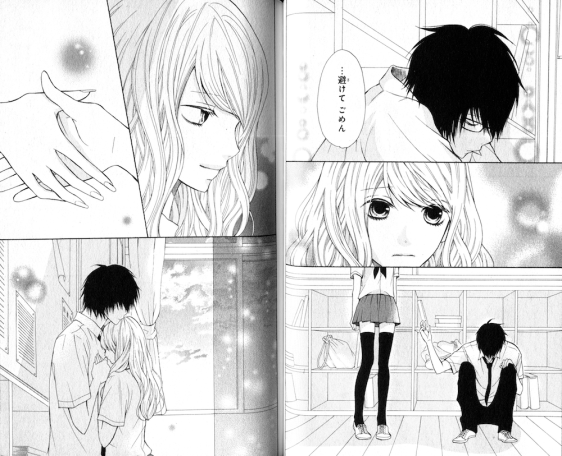
3dkanojo-couple-small In 2013, I came across a shoujo manga called 3D Kanojo by Nanami Mao, Although I had some initial misgivings based on the title alone (it means “3D girlfriend”), the series ended up becoming one of my favorite manga. It recently finished just last year, so I’d like to give my overall thoughts about this excellent work.

The idea of a socially awkward young man winning the affections of the beautiful girl has long been a popular trope. America has seen Revenge of the Nerds, Beauty and the Geek, and the hyper-popular The Big Bang Theory. Japan has been home to Densha Otoko, and numerous manga and anime premised around this idea such as The World God Only Knows and Love Hina. Within these works are three recurring ideas: the nerd as underdog, the nerd as the nice guy vs. the jerks, and the notion that nerds carry hidden charms buried deep inside shells of social awkwardness.

One difference between the stereotypical image of the American “geek” and the Japanese “otaku” is that while the geek guy worships at the altar of characters who are live actors (e.g. Princess Leia), otaku go for the “2D girls” of anime, manga, and games. Reality, where actual “3D girls” reside, is thought to be a frightening realm that can eat otaku alive. So, with a title like 3D Kanojo, I had wondered if this might be one of those wish fulfillment fantasies where an otaku boy gets the girl just by being nice without any real substance, while the girl ends up as some kind of virginal ideal, a typical “2D girl come to life” scenario. Fortunately, within one chapter 3D Kanojo defies those assumptions, and shows itself to be a robust, considerate, and even progressive approach to this idea.

When the series begins, Hikari Tsutsui is an otaku who is unable to handle social interaction outside of talking to his only friend, a fellow hardcore fan. His ideal girl is a magical girl from an anime. One day at school, he sees one of his classmates, the beautiful Igarashi Iroha, being accosted by a guy angry at Igarashi for cheating on him. When the guy tries to hit her, Tsutsui jumps in to defend Iagarashi.. only to get his ass kicked because he’s a wimp with no physical ability.

At first glance, this is ground already traveled by stories like Densha Otoko and Back to the Future—a chivalrous act by a geek shows the strength of his heart, and makes the girl fall in love with him. However, with 3D Kanojo, the relationship even at the early stages possesses a lot more depth. Many times, the girls in these stories only appear to be very sexually active but are actually secretly virgins, giving them a sense of idealized purity. Not so with Iroha, who freely admits that she was two-timing the guys she was with. Rather than shunning her for being a “slut,” Tsutsui accepts her for who she is, especially once the two of them spend more time together and are able to open up to each other more readily. What’s important isn’t that she’s had others in the past, but how they feel about each other now. And as the series continues, it becomes clear that their love for each other burns red-hot.

It isn’t all roses, of course. Romantic rivals show up for both character, such as an otaku girl and a handsome guy (it’s a shoujo manga, after all). Igarashi’s sexual experience isn’t a deal breaker, but it’s intimidating for a guy who, up to that point, didn’t even talk to girls other than his own mother. Tsutsui’s constantly questioning whether or not he’s good enough for her, but it’s important to note that she’s doing the same just as often. In spite of how different they are on the surface and even in many elements of their personalities, there’s a mutual longing for understanding.

While I thought highly of the series very early on, there is a particular chapter that solidified my opinion that 3D Kanojo is a great series. Most of the time, the story is told from Tsutsui’s perspective, but in one chapter it’s Igarashi’s head we’re in. Through her, we see her relationship history. As an extremely attractive girl, she’s had numerous suitors, but the apparent issue is that all of them only paid attention to her appearance. In this way, her looks became a curse. At one point, she had even tried to open up to a boyfriend, only for the guy to treat it as basically, “There, there. Okay, now that I’ve comforted you, are you gonna put out?”

3dkanojo-exbf-small

Here, it becomes plainly obvious what Igarashi saw in Tsutui. He isn’t just generally “nice” and “considerate,” he connects and empathizes with her on the level both of them desire. While occupy different strata of the high school hierarchy, both of them are familiar with being unfairly judged by their looks, and their ability to see what is truly inside each other is what draws them closer and closer.

Ultimately, even as the series goes through some fairly well-worn shoujo manga plot developments, the sheer robustness of this core relationship, as well as a solid cast of supporting characters, keeps the series from feeling old-hat. I felt a genuine desire to cheer on Tsutsui and Igarashi, not because they were “supposed” to be together as the main couple, but that everything they had been through together showed why they should be as one.

The last thing I’d like to mention is that 3D Kanojo technically isn’t the real title. That’s how it’s written out, but due to quirks in how the Japanese written language is used, it’s actually supposed to be pronounced “Real Girl.” In retrospect, the two titles fit this series perfectly. While Igarashi comes across at first as the mysterious girlfriend of the “3D realm,” her “realness,” both in the sense of her lived human experience and her candor, are what foster her romance with Tsutsui.

Save

Save