Leahgates
Shared posts

Rescued Sea Lion's Amazing Journey to Oklahoma City Zoo
Leahgatesfully glazed donut
A California Sea Lion pup’s amazing journey includes her rescue near Santa Barbara, a three-month stay in a rehabilitation center, release back into the Pacific, crossing a busy street, visiting a hotel lobby, and an eventual arrival at the Oklahoma City Zoo.
Photo Credit: Oklahoma City Zoo
The pup, named Isla, has experienced a lot in her 11 months of life. She was most likely born last spring off the California coast and was found emaciated and malnourished at the Santa Barbara Harbor in November 2018. When concerned citizens called the Channel Islands Marine and Wildlife Institution (CIMWI), volunteers came to rescue the little pup.
The pup was transported to CIMWI’s facility to be rehabilitated in hopes of returning her back to the wild. After 90 days at the center, which included medication, increased fish intake, and daily health checks, Isla was released 25 miles offshore around other wild Sea Lions.
Nine days later, Isla swam the 25 miles back to Santa Barbara Harbor, got out of the water, crossed a busy street, and made her way into the lobby of the Alma Mar Motel. Once again, the CIMWI staff was contacted to rescue Isla.
Once back at CIMWI, the staff found that in the nine days Isla had been back in the ocean, she had lost nine pounds, meaning that she was unable to forage for herself in the wild. After weeks of observation, it became clear that Isla was more habituated to humans than she was to the other marine mammals in the institute’s care. CIMWI caretakers were certain that Isla would not thrive in the wild, so for her safety and well-being, she was deemed non-releasable.
Once it was decided that Isla could not return to the wild, CIMWI contacted National Marine Fisheries Service (a division of the National Oceanic and Atmospheric Administration or NOAA) to locate a zoo or aquarium, accredited by the Association of Zoos and Aquariums (AZA), that could become Isla’s permanent home, and the Oklahoma City Zoo was selected. Two zoo staff members went to Santa Barbara to bring Isla to Oklahoma City in mid-May.
“By becoming a forever home for Isla and providing her with care, veterinary monitoring and an enriching environment, not only are we ensuring her survival, but we are also safeguarding the future of her species,” said Sierra Chappell, lead marine mammal trainer. “Her energetic spirit and inspiring story will resonate with Zoo guests and create a connection that will last a lifetime.”
Considered to be highly intelligent animals, California Sea Lions’ survival is based on the health of the ocean’s ecosystem. Sea Lions are threatened by plastic pollution and are vulnerable to the effects of climate change on ocean currents, which impact their fish prey abundance. They are also victims of bycatch in fisheries. The Oklahoma City Zoo participates in AZA’s Species Survival Plan for California Sea Lions.
Grandma is visiting today! She will definitely give me whatever I want. Now dad just has to leave the house. #ipittytheb...
LeahgatesPiney loves to hold hands

Female Elephant Calf Celebrated as Breeding Success
Leahgateslook how proud this elephant is of showing off her baby
Taronga is thrilled to announce the birth of an Asian Elephant calf at Taronga Western Plains Zoo in Dubbo.
The healthy female calf was born in the zoo’s elephant barn on June 14 to mother Porntip, and was sired by Perth Zoo’s bull, Putra Mas, via artificial insemination in late 2016. The birth sees a new genetic bloodline created in the Australasian region’s Asian Elephant population.
“The fact that this calf is a female, and heralds the beginning of a new genetic blood line for the wider Asian Elephant conservation and breeding program, is a great achievement,” said Taronga Director and CEO, Cameron Kerr.
“I’m delighted to report that mother and calf are doing well and veterinarians are happy with the calf’s progress at this early stage.”
Photo Credits: Taronga Conservation Society Australia
The calf was standing on its own within the first hour and is now suckling from mother Porntip.
“We are absolutely delighted by the arrival of Taronga Western Plains Zoo’s second Asian Elephant calf. Experienced mother Porntip is doing a wonderful job and the keepers and veterinary staff are to be commended for their dedication and hard work, ensuring such a successful outcome. Every birth is so important for this endangered species and helps to secure their future,” said Zoo Director, Steve Hinks.
Keepers and vets monitored Porntip throughout the labor and birth of the calf, with staff staying overnight at the elephant barn for the past week to keep a close eye on her.
“Everything went to plan with the birthing process. Porntip and the calf are doing well and are spending time together in the elephant barn and behind the scenes paddock. Porntip is a very maternal elephant and already we are pleased with the attentive and nurturing behavior we are observing,” said Elephant Keeper, Bradd Johnston.
“Porntip gave birth to her first calf, Pathi Harn at Taronga Zoo in 2010 and has since been a very supportive and caring aunty to Sabai here in Dubbo,” said Bradd.
Taronga has now welcomed six elephant calves, across both Zoos, since the breeding program commenced 12 years ago, with four calves born in Sydney and two at Dubbo.
This successful breeding program is just one aspect of Taronga’s work in conserving this species. Taronga is working in the field with governments and conservation agencies in Asia to turn around the decline of Asian Elephants. Taronga also funds wildlife protection units and ranger stations in Thailand and Sumatra to help suppress elephant poaching.
Taronga Western Plains Zoo is now home to nine Asian Elephants, following the arrival of bull Gung in early 2018 and now Porntip’s calf in June 2018.
Mother and calf will be given further time to bond behind-the-scenes before making their public debut, and the Zoo will soon be announcing a competition to help choose a name for the calf.
I’m still not feeling great so I’m laying low. In the meantime, please enjoy the time I was like an aggravated rabbit in...
Leahgatesme in the snow:hyped, but also grumpy

Biggest Bush Dog Litter Ever Born at Chester Zoo Emerges From Den
LeahgatesDog, or Bear
The biggest Bush Dog litter ever born at Chester Zoo has emerged from its den.
The six pups, born to mother Mana, age 7, and dad Franco, age 4, have made their public debuts after spending their first few weeks of life tucked away in their underground burrows.
Photo Credit: Chester Zoo
Keepers believe the first of the sextuplets arrived on May 13, which is when they first heard tiny cries coming from the dens as they performed their morning rounds.
The litter, which is above the average size for Bush Dogs and is made up of two boys and four girls, is the largest to be born at the zoo.
Now, the youngsters have come out to play and have begun exploring the outside world under the watchful eye of their parents.
Tim Rowlands, Curator of Mammals at the zoo, said, “Mana is doing a wonderful job of caring for her new pups but with it being her biggest litter ever, she’s certainly got her paws full. We’ve seen fairly big litters of four or five pups born in the past, but never have we had a litter of six.
The zoo’s Bush Dog pack now contains 16 individuals. In the next few weeks, the newest pups will be weighed and sexed by the care team.
Bush Dogs belong to the canine family and live in small isolated populations in the wet forests and grasslands of Central and South America. They have evolved over thousands of years to have a web of skin between their toes, which makes them excellent swimmers.
Sightings of Bush Dogs in the wild are becoming increasingly rare with the International Union for Conservation of Nature (IUCN) listing the species as Near Threatened. Their wild numbers have dropped by more than 25% in just 12 years. This decline is caused by destruction of natural areas for farms and other human developments, poaching for their meat, and diseases contracted from domestic dogs.
Chester Zoo has supported partners in Misiones, Argentina, where conservationists helped to create a biological corridor of habitat for a range of carnivorous species to help improve the movement between different areas of fragmented forest.
See more photos of the sextuplets below.
Tomorrow I get to be a fly in the wall at Emerson Elementary in Long Beach with @luckydog.humaneeducation and I also ge...
Leahgatesthis is my favorite instagram dog right now
his name is piney and his insta is Big Hiney Piney because he is a chonk

Porcupette First of His Kind Born at Brookfield Zoo
The Chicago Zoological Society, which manages Brookfield Zoo, is getting right to the “point” by announcing the birth of a Prehensile-tailed Porcupine on July 2. The little male porcupette is the first of his kind to be born at Brookfield Zoo.
After monitoring the mother, 5-year-old Lucia, for an extended period of time, it became clear that she was not allowing the baby to nurse and would not be able to provide her offspring proper maternal care. At that time, animal care and veterinary staff made the decision to intervene and hand-rear the porcupette, who is now thriving.
Photo Credits: Jim Schulz / Chicago Zoological Society / (Images 4-7 feature Maggie Chardell, a lead animal care specialist for the CZS, assisting in hand-rearing)
Following a gestation of about 203 days, the baby was born weighing just under a pound. The baby has soft quills that protect the mom during the birthing process, but after a few days, the quills harden with keratin, which gives them their sharpness.
Baby porcupines are relatively mature and mobile immediately following birth. Prehensile-tailed Porcupines are born with a rusty-brown colored coat that help them blend in with their environment. Similar to a young deer fawn, a porcupette hides and waits for its mother to come to it for nursing. A baby will typically continue to nurse until it is weaned at approximately 10 weeks of age.
Both Lucia and the porcupette’s dad, 4-year-old Eddie, are members of Brookfield Zoo’s Animal Ambassador Program and can be seen in Hamill Family Play Zoo. Once the young porcupine is weaned from the bottle, he will also be a part of this program, which offers guests the opportunity to have up-close experiences with many of the animals.
Prehensile-tailed Porcupines are native to South America and live in high-elevation rain forests. Their long tail is used to wrap around branches while climbing.
Despite what some might think, porcupines do not shoot their quills, which are just modified hairs made out of the same substance found in human hair and fingernails. Porcupines have muscles at the base of each quill that allow the quills to stand up when the animal is excited or alarmed. Like all hairs, quills do shed, and when the porcupines shake, loose quills come out. The ends of Prehensile-tailed Porcupines’ quills have a small barb (like a fish hook) that snags the flesh, keeping the quill stuck.
More pics below the fold!
Sea Lion Pups Double the Excitement at UK Zoo
ZSL Whipsnade Zoo’s keepers have a couple of exciting new additions to care for, with the arrival of two California Sea Lion pups.
Adventurous male pup, Hanno, was born to first-time mum, Lara, on June 10. Laid-back male, Oakley, was born to second-time mum, Bailey, on June 23.
After giving birth at the UK’s largest Zoo, ten-year-old, Lara, and eleven-year-old, Bailey, have taken to motherhood swimmingly and are already proving to be doting mums to the lively pups.
Team Leader, Tim Savage, is overjoyed at the new arrivals and said, “The first pup was immediately so curious and adventurous, we decided to name him Hanno, after the fifth century oceanic explorer. At night he goes on little missions and explores the sea lion house!”
“Lara’s always been the cheekiest member of the group, but she’s so attentive with Hanno, never letting him out of her sight. Every time Hanno tries to go near the water, she pulls him back. This isn’t Bailey’s first pup, so she’s much more confident and relaxed. She leaves Oakley to snooze while she goes off for a swim.”
Tim continued, “They’ve both had a little splash in the pool, but neither of the pups are strong swimmers yet. Over the next month they will learn to dive, and practice holding their breath, and soon visitors will see them confidently swimming around the pool with their mums, and dad Dominic.”
Photo Credits: ZSL Whipsnade Zoo (Images 1-4: Hanno /Images 5-8: Oakley)
Covered in fur, the pups will eventually grow to be over two meters long. The new pups are a valuable addition to the colony of California Sea Lions at ZSL Whipsnade Zoo and the European conservation breeding programme for the species.
Originating from the rocky coastlines of the Pacific Ocean, along the west coast of the USA, California Sea Lions (Zalophus californianus) live in large colonies, led by a dominant male and his harem of female mates.
Tim shared, “After a birth, male Sea Lions guard their harem of females, which means they do not leave to get food. Although Dominic has no competition and plenty of food available to him here, he acts in exactly the same way, fasting for a month and making a lot of noise to show this is his territory! Don’t feel too bad for him though, he prepared for his fast by eating lots before the births!”
Summer visitors to ZSL Whipsnade Zoo will be able to see Hanno and Oakley learning to swim alongside the rest of the Sea Lion clan. Visit www.zsl.org to find out more.
Why do the cops keep protecting white supremacists?
LeahgatesWhen I was at the inauguration day protest in Brooklyn I started crying and a cop came over to ask if I was okay and it became clear that she thought I was sad people were protesting and not distraught that we had elected a protofascist (also that she was only interested in my feelings because I was a white woman, there were plenty of visibly upset black people there)
This past weekend in Chapel Hill, North Carolina, dozens of police assaulted and arrested community members holding an anti-racist canned food drive and potluck on the campus of the University of North Carolina.
The community potluck was a response to the wave of right-wing backlash since a racist Jim Crow-era confederate statue on the campus was finally toppled three weeks ago. In response, white supremacists have gathered at the pedestal of the former “Silent Sam” statue with heavy police protection – while police have pepper-sprayed, beaten and arrested UNC students and community who came out to oppose them.
Police providing special protection to Nazis, the KKK, and other right-wing groups is far from a new trend. But the pattern feels especially stark this summer given the way police have responded to a series of rallies meant to continue the racist terror spree of Charlottesville. At a Portland alt-right rally in August, police attacked anti-fascist protesters with flash grenades, giving one protestor third-degree chemical burns and nearly killing another. At the main Unite the Right 2 rally in Washington, D.C., police provided an escort and private train to a group that included Charlottesville architect and “white civil rights activist” Jason Kessler.
I saw this firsthand at a rally hosted by Nazi front group Resist Marxism in Boston last month. Police were laughing and palling around with Nazis while they shoved and harassed anti-fascist protesters. Boston police provided a barricade of protection and private escort to the train station for the white supremacists once it became clear that the hundreds of us counterprotesting were not going away.
“Cops and Klan go hand in hand” is more than just a protest chant. U.S. police departments have assisted white supremacists in doxxing leftist activists and arrested the people of color that Nazis and KKK members attack. Whether or not individual cops are members of white supremacist groups (although there are many who are), the institution of police serves the same goal: protect white property and white power by violently suppressing and controlling black people. The police’s job is to crush protests using the full might of the state to assault, imprison, and murder—and they do so based not on whether protests are peaceful or legal, but on how threatening the state finds them.
The violent police response to the anti-racist activism in Charlotte is evidence that the police’s allegiance is first and foremost to white supremacy. As UNC activist Maya Little said, “The symbols we put in our public square reflects what happens on the ground. They reflect our law, our politics and our culture.”
Like the statues they protect, the police are a symbol and a tool of a white supremacist society.
Image credit: Jonathan Drake via The San Diego Union-Tribune
Baby Giraffe Goes Outside And Shows Off New Shoes
Leahgatesready to z o o m
A baby Giraffe born May 2 at Woodland Park Zoo reached three milestones in the past two weeks: he was given a name, got new shoes, and went outdoors for the first time.
The little Giraffe will be called Hasani, after his paternal grandfather. The name was chosen by zoo staff for this handsome calf who has already stolen hearts across the Pacific Northwest and beyond.
Then, on May 17, Hasani went outdoors for the first time to show off custom-made therapeutic shoes designed to correct a foot problem.
Photo Credit: Jeremy Dwyer-Lindgren/Woodland Park Zoo
Immediately after female Giraffe Olivia gave birth to her calf, the zoo’s animal health team noticed that the baby’s rear feet were not in normal alignment. The condition, known as hyperextended fetlocks, is well documented in Horses and has been reported to occur in Giraffes. One day after the Giraffe was born, the zoo’s animal health team applied casts on both rear legs to help stabilize his limbs.
A week after the calf's birth, Woodland Park Zoo’s exhibits team constructed temporary therapeutic shoes for the baby Giraffe. Meanwhile, the zoo’s veterinary team consulted with a Kentucky-based equine veterinarian who specializes in foot conditions. He visited the zoo to evaluate the calf, and crafted new custom shoes based on the zoo’s specifications. He modified a design that he has used to successfully treat numerous foals with the same condition. The shoes will do the heavy lifting in the next phase of treatment of the baby’s rear leg abnormalities. Huge thanks to Dr. Scott Morrison and Manuel Cruz of Rood and Riddle Equine Hospital for their support and expertise with this shoe design.
The new shoes are made of metal with a textured bottom for extra grip. An acrylic molding wraps around to secure the shoe to the hoof. “This whole-toe wrap binds the toes more snugly to stabilize the shoe and provide a stronger grip to the hoof,” says Dr. Tim Storms, associate veterinarian at Woodland Park Zoo. The shoes are more water-resistant than the previously made wooden shoes. “This will be better for walking outdoors on wet ground and will allow him to exercise more, which is critical to his development.”
Kinesiology tape – often used by runners and athletes – helps to stimulate and support Hasani’s muscles and replaces the bandages that were put on his legs right after birth.
Hasani’s treatment may last several months. “While we are happy with Hasani’s response so far and these new shoes, he’s not out of the woods yet. His condition is still guarded and we’re keeping him under close observation. We’ll continue assessing the best course of action to help him walk and grow normally, and to find a good balance between supporting his limbs and strengthening his tendons,” adds Storms.
Other than the abnormalities in his rear legs, Hasani remains in good health and is nursing and bonding with mom. He weighed 155 pounds at birth and now weighs 180 pounds, so he is growing and growing!
Giraffes are widespread across southern and eastern Africa, with smaller isolated populations in west and central Africa. New population surveys estimate an overall 40 percent decline in the Giraffe population; fewer than 100,000 exist today. Of the currently recognized subspecies of Giraffe, five have decreasing populations, while three are increasing and one is stable.
‘Baby Makes Three’ at Point Defiance Zoo & Aquarium
Leahgatesrull or not rull (or too rull)
First there was Walnut, a male Beaver living at Point Defiance Zoo & Aquarium. Then came Nutmeg, a female who arrived from Northwest Trek Wildlife Park as a companion for Walnut…and now baby makes three!
Born April 29, the new kit is thriving and growing daily. Fuzzy brown, around 13 inches long and weighing just under 24 ounces, the baby Beaver is a nursing champion, taking every chance it can get to nestle up to mom. He or she also eagerly explores the habitat behind-the-scenes at the zoo’s Wild Wonders Outdoor Theater. The kit is not yet viewable by the public.
Staff aren’t yet sure about the sex of the kit. Beavers’ genitalia are hidden inside, making it impossible to determine their sex just by looking. In a few weeks, the veterinary team will send a blood sample for genetic testing, which will reveal the sex. At that point, the Wild Wonders staff will choose a name.
Photo Credits: Katie Cotterill/PDZA
Beavers are born precocial, meaning they are a miniature version of adults, seeing well and moving independently.
The new baby spends most of each day snuggled up with mom and dad in their maternity suite at the zoo, where Nutmeg and Walnut have been crowd favorites in the Wild Wonders Outdoor Theater live animal show. They’re also popular during Close Encounters, where guests can get up-close views of various animals.
Meanwhile, the zoo’s veterinary team is visiting daily, weighing the Beaver kit to track growth and check on its health.
“It’s doing very well,” said Point Defiance Zoo & Aquarium Head Veterinarian, Karen Wolf. “Since birth, this kit has been an ‘eager beaver’ – if you’ll excuse the pun! – stomping around and looking for a nipple to nurse.”
A second kit also was part of the litter, but sadly, it had medical problems, and wasn’t able to nurse. Keepers took shifts around the clock to bottle-feed the little one every two hours, but after a week the veterinary team made the difficult but compassionate decision to euthanize it. A necropsy revealed multiple severe internal problems that would have prevented the kit from surviving.
“It’s sad, but it’s a part of life,” Wolf said. “We gave it our best effort, and it shows the incredible dedication of our zoo staff to care for every animal.”
Nutmeg and Walnut are vigilant parents, taking turns to nudge their kit when it roams too far, and snuggling up together for much of the day.
“They’re really good parents,” said Maureen O’Keefe, senior staff biologist at Wild Wonders. “If Nutmeg or Walnut go for a swim outside, they’ll cover the kit up with straw to keep it hidden.”
Dad, Walnut, has also started pulling branches across to the door leading out of the den to the outdoor swimming area.
“We think he might be building a ramp for the baby,” O’Keefe said. “He’s never done that before now.”
Beavers are nature’s engineers, using their phenomenal chewing powers to alter their environment and build lodges (indoor dens) and dams. They’re also very social animals, with family units living together. And, of course, they’re excellent swimmers, with kits learning skills in shallow pools inside the lodge. Keepers are giving the kit supervised swimming time each day in a baby-sized pool.
Walnut, who has lived at the zoo since he was two months old, is already happy to be back at his role in the Wild Wonders show, where he walks up a ramp and into a pool to show off his swimming skills.
Nutmeg and baby will rest behind the scenes for a few months. Sometime this summer, all three will make an appearance during a Close Encounter, O’Keefe said.
For more information, go to www.pdza.org .
Prodigious Pigeon Hatches at Chester Zoo
Leahgatesthe Aloof smugness when u know u r gonna grow up to have great hair
The world’s largest member of the pigeon family, a Victoria Crowned Pigeon, recently hatched at Chester Zoo.
Photo Credits: Chester Zoo
According to the Zoo, the newly fledged little bird is now bright blue, rocks the best mowhawk, and can be seen strutting its stuff! When fully grown, the chick will be similar in size to a turkey.
Native to Indonesia and New Guinea, the Victoria Crowned Pigeon (Goura victoria) is supposedly named after Queen Victoria who had a penchant for wearing elaborate, feathered headwear.
One of the closest living relatives of the now extinct Dodo, the Victoria Crowned Pigeon is itself declining in the wild, largely due to habitat loss as its forest home is cleared to make way for unsustainable palm oil plantations. It is also a bird that is prized by hunters and popular in the illegal pet trade, due to its beautiful appearance and spectacular plumage. As a result, it is a species listed as “Vulnerable” to extinction by the International Union for the Conservation of Nature (IUCN).
Mark Vercoe, Assistant Curator of Birds, said, “Along with the Nicobar Pigeon and the Tooth-billed Pigeon, the Victoria Crowned Pigeon is a descendant of the Dodo – a bird that has been famously lost from the planet because of the actions of humans.”
“This is something we don’t want to see a repeat of and it’s a lesson we really should learn from. Sadly, however, many bird species, including the likes of the Victoria Crowned Pigeon, are in trouble for many of the same reasons – human activity. Hopefully this chick can help us to highlight how important it is that we act for wildlife now; we cannot possibly let these beautiful birds go the same way as their extinct cousins.”
Victoria Crowned Pigeons are monogamous birds that pair for life. The male delivers sticks to the female, which they both then use to construct a nest. Both parents share in the incubation duties of just one egg.
Unlike most other species of bird, both parents also produce special milk, which is used to feed the chick in the first few weeks of its life and both will continue to care for the chick for up to three months after they fly the nest.
Two Harbor Seal Pups Join the Pod at Zoo Berlin
Leahgatestruly the doggos of the sea
On a recent morning, keepers at Zoo Berlin began their daily inspection of the Harbor Seal habitat. One of the keepers’ first tasks is to perform a head count of the seven animals under their care. As they began to count, they noticed not seven pairs of dark eyes staring back at them, but eight! It soon became clear that female Shiva, age 23, gave birth to a pup during the night. A few days later, the same scenario: now there are nine Seals in the habitat! This time Molly, age 13, is the proud mother of a brand-new pup.
Photo Credit: Zoo Berlin
Zoo Berlin is home to a large extended family of Harbor Seals. Male Leopold, age 21, sired two pups last year. His sons Gregor and Herbert are still part of the group, which also includes females Lara, age 18, and Yohanna, age one.
Harbor Seals have a gestation period of up to eleven months. Pups are born with the same smooth fur as the adults and can swim almost from birth.
Harbor Seal pups are weaned at around two months old. “Seal pups are much more vulnerable to attack on sand banks than they are in the water, so they have to grow up quickly,” explains Zoo and Tierpark Director Dr. Andreas Knieriem. “Before too long, the newborn Seals will be almost indistinguishable from their parents.”
In the wild, these aquatic mammals are found all over the northern hemisphere – on the Atlantic and Pacific coasts as well as in the North Sea and the Baltic. However, they are very rare on the northern European coasts. Commercial hunting of Harbor Seals was banned several decades ago in most countries around the world. Only native peoples are permitted to hunt these seals for subsistence hunting.
Threatened Snakes Hatch at Jacksonville Zoo
Leahgatesthis snek is so G R E E N
Jacksonville Zoo and Gardens is celebrating the hatching of two Eastern Indigo Snakes. The hatchlings emerged on July 10 and 11, and they mark the first time the Zoo hatched this vulnerable species since 1997.
The species is listed as “Threatened” under the Endangered Species Act, and population numbers are decreasing rapidly in its native range of the southeastern United States due to habitat loss.
Photo Credits: Jacksonville Zoo & Gardens
Jacksonville Zoo and Gardens recognized the importance of increasing the population of Eastern Indigo Snakes, and in 2012 received a pair with a breeding recommendation. The snakes recently reached sexual maturity and the female laid her first clutch. Eastern Indigos, while nonvenomous, can be both territorial and voracious eaters, so the breeding pair was only together for a brief time.
According to the Zoo’s Deputy Director for Animal Care & Conservation, Dan Maloney, “We are very proud and excited to welcome such significant new additions to the Jacksonville Zoo and Gardens family. Six years ago, we acquired young snakes in hopes that they would be future parents. To finally have healthy hatchlings is extremely satisfying and lays the foundation for a successful, sustainable breeding program.”
The two hatchlings emerged from their 4-inch eggs after a 100-day incubation. They are 13-inches long now but will quickly grow into the longest native snake species in the United States.
Eastern Indigo Snakes are a top predator and have a wildly varied diet consisting of everything from small mammals, birds, and amphibians, all the way up to one of their favorite prey items, Eastern Diamond Rattlesnakes.
The decline of rattlesnake and Gopher Tortoise populations is contributing to the rapid decline in Eastern Indigo Snakes. Gopher Tortoise burrows serve as an important shelter for the snakes in winter months. These three threatened animals are linked by their habits and habitats, and their decline helps highlight the importance of keystone species to entire ecosystems.
The Zoo hopes that the new hatchlings can serve as ambassadors for local conservation efforts and reinforce our message of Living Well With Wildlife.
The mother of the two hatchlings can be viewed in the Wild Florida herpetology house. She shares her enclosure with a Box Turtle and a three-legged, rescued Gopher Tortoise.
Tree Kangaroo Joey Makes Itself Known at Zoo Miami
An endangered Matchie’s Tree Kangaroo joey from New Guinea has begun to peek out of its mother’s pouch at Zoo Miami. It is still basically confined to the pouch, where it will continue to develop for the next several months before venturing away from its mother. It will not be totally weaned until it is around a year old.
Photo Credits: Zoo Miami/Ron Magill
Though it is just now revealing itself on a regular basis, this joey was actually born October 14, 2018. As with most marsupials, Tree Kangaroos are born in an almost embryonic state after a pregnancy of about 44 days. The newborn is only the size of a jellybean and slowly crawls into the mother’s pouch where it locks onto a nipple and then the majority of development takes place. It takes several months before the joey actually sticks its head out of the pouch and is visible.
The mother, named Zayna, is 9 ½ years old and was born at the Sedgwick County Zoo in Kansas and the almost 11 year old father, named Banyon, was born at the Bronx Zoo in New York. The sex of their new offspring has not been determined, but it will eventually become part of an international captive breeding program. Zoo Miami has been a long time contributor to Matchie’s Tree Kangaroo conservation efforts in the wilds of New Guinea. Though this is Zayna’s third baby, it is the ninth of its kind to be born at Zoo Miami.
Matchie’s Tree Kangaroos (Dendrolagus matschiei) live at high elevations in the Huon Peninsula of Papua New Guinea where they spend most of their time up in trees feeding on a variety of leaves, ferns, moss, and bark. They are believed to be solitary animals, and the only strong social bond formed is between a mother and her offspring.
More great pics below the fold!
Help Name Cleveland's Baby Sloth Bear
After waiting four months for its new Sloth Bear cub to emerge from the den, staff at the Cleveland Metroparks Zoo gave the cub its first checkup. They learned that the cub is a female!
Photo Credit: Cleveland Metroparks Zoo
Born on January 14, the cub is the first to be born at the zoo in 30 years. The cub’s parents are mom Shiva and dad Balawat, and this is the first cub for both. ZooBorns reported on the cub’s birth here.
Fans are invited to help name the little cub by visiting the Sloth Bear habitat at the zoo, or by going online and make a donation to the Future for Wildlife Fund. You can choose one of the following names by midnight on May 27:
- Lali, meaning darling
- Nisha, meaning night
- Shala, an homage to mom Shiva and dad Balawat
The names reflect the native home of Sloth Bears in India.
The cub stays close to Shiva for now, and she will ride on mom’s back until she is about six months old. As an adult, the cub will weigh around 300 pounds.
Sloth Bears have flexible snouts which help to suck up grubs and termites from trees. Sloth Bears also feed on fruits, flowers, sugar cane, and honey.
Sloth Bears are listed as Vulnerable by the International Union for Conservation of Nature (IUCN). Factors such as habitat loss, poaching, and human-wildlife conflict threaten Sloth Bears’ survival. The zoo participates in a project to protect Sloth Bears in Nepal, where populations have plummeted in recent years. Donations made through the naming contest go toward this project.
Your Afternoon Animal Fix
Leahgateswill keep an eye out for rhonda for sure
If you have any animal/pet photos you’d like to share please send an email to princeofpetworth(at)gmail(dot)com with ‘Animal Fix’ in the title and say the name of your pet and your neighborhood. If you love the animal fix and want to ensure PoPville’s long term viability please consider donating to our Patreon here.
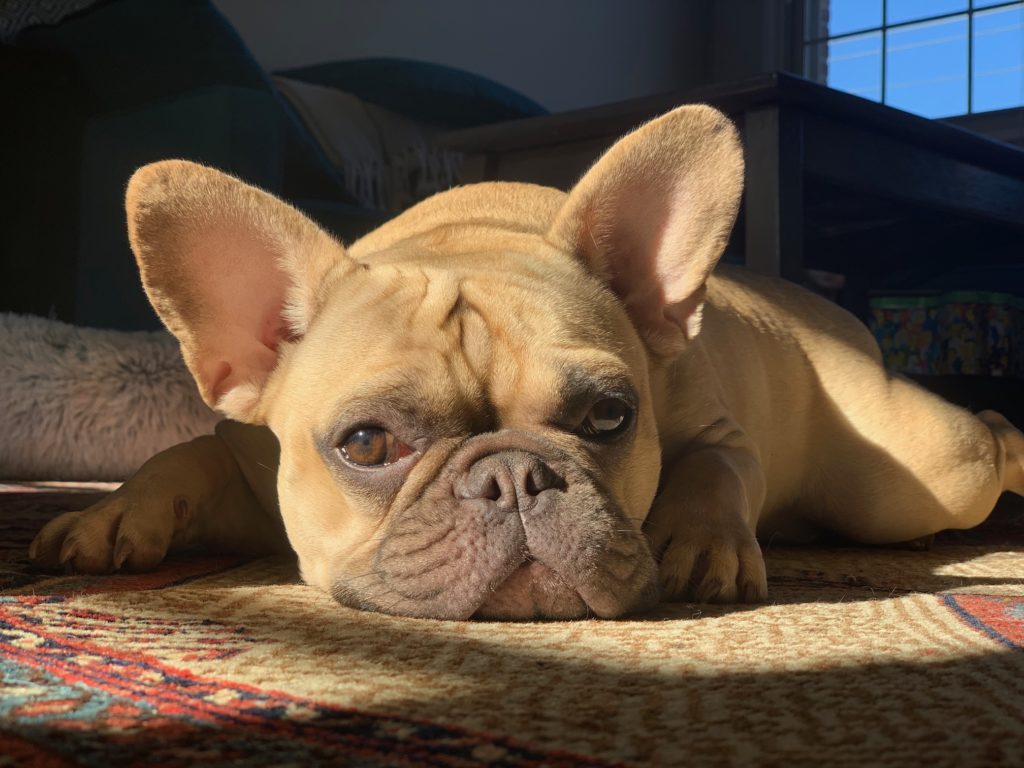
“This is Rhonda from Petworth! She’s a year and a half old. She loves long walks and PEOPLE. If you see her out and about, please say hi! Her instagram is @dc_rhonda”
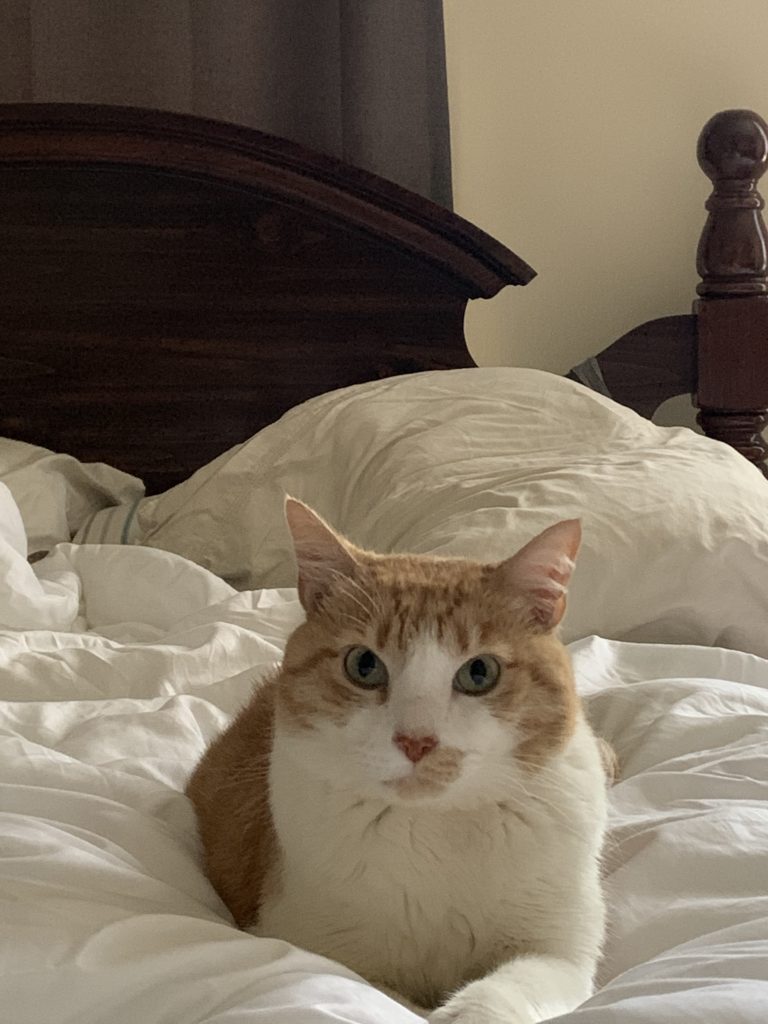
“James of Glover Park, taking over the bed as we get ready to leave the apartment for work”
Rare Baby Aye-aye Born at Denver Zoo
Leahgatesgood muppet or bad muppet
Denver Zoo welcomed a rare baby Aye-aye and is now home to three of these unusual creatures. With only 24 residing in seven zoos in the United States and an unknown number in the wild, Aye-ayes are among the rarest animals in the world. The new baby, a female, is named Tonks and was born on August 8.
Tonks, who was born to mom Bellatrix and dad Smeagol, is healthy and thriving; however, her first days were worrying for Denver Zoo’s animal care staff and veterinarians.
Photo Credit: Denver Zoo
“We noticed that Bellatrix wasn’t showing typical mothering behaviors, so we decided to step in to give Tonks some supportive care,” said Lead Primate Keeper Becky Sturges. “We provided 24-hour care for the first week and had to teach Bellatrix how to nurse, but now she is nursing well and Tonks has gained a lot of weight. Now we’re just monitoring them to make sure things continue to go well.”
Aye-ayes are born weighing just a few ounces, grow to a weight of five pounds as adults, and live up to 20 years.
Tonks is still in the nest box with Bellatrix and is not expected to emerge for a few more months, so she is not yet visible to zoo guests.
Aye-ayes have a distinctive appearance, thanks to a number of unique adaptations including coarse dark hair, a long bushy tail, rodent-like teeth, large eyes, and bony hands that feature extra-long middle fingers. The middle fingers are used to tap on tree branches and locate hollow spaces that may contain grubs. After chewing a hole in the branch, the grubs are extracted using the clawed fingertips.
Aye-ayes are classified as Endangered on the International Union for Conservation of Nature’s Red List of Threatened Species and are found only in remote parts of Madagascar. They were thought to be extinct in 1933, but were rediscovered in 1957. Their odd appearance caused Aye-ayes to be labeled as harbingers of death in Madagascan traditional cultures, and the animals were often killed on sight. The dramatic loss of Madagascar’s original forest cover has also contributed to Aye-ayes’ Endangered status.
Rub-a-dub-dub, A Pygmy Hippo In The Tub
LeahgatesS H I N E
A Pygmy Hippo calf born at The Toronto Zoo on August 10 is already hugely popular thanks to videos shared by her care team that show her climbing, snuggling, taking a bath, and being generally adorable.
Born to mom Kindia and dad Harvey, the female calf is the first to be born at the zoo in more than 20 years. Pygmy Hippos are pregnant for 180-210 days. So far, Kindia is being an excellent mom and the calf nurses from her regularly. Pygmy Hippo calves nurse for six to eight months, and they begin eating solid foods around two to four months of age.
The calf has not yet been named.
Photo Credit: The Toronto Zoo
At birth, Pygmy Hippos weigh about 10 – 14 pounds. This little calf is gaining weight steadily, and already weighed more than 25 pounds at three weeks of age. Adults weigh 400-600 pounds.
Each morning, the baby gets a bath so she can get clean and become acclimated to water, which is where adult hippos spend much of their time. Her care team notes that she rolls over in the tub and even blows bubbles. Even when it’s not officially bathtime, the calf sneaks in a little soak by climbing into her water dish for a quick dip.
Kindia and her calf are currently living in a private maternity habitat and are not visible to the public. This allows mother and baby time to bond and for the care team to maintain a close eye on the new arrival.
This birth is very important for Pygmy Hippopotamus conservation as the species is currently listed as Endangered by the International Union for Conservation of Nature (IUCN) Red List of Threatened Species. Only 2,000-3,000 remain in West Africa’s forests, with most of that population in Liberia. Small numbers are also found in Sierra Leone, Guinea and the Ivory Coast.
Over the past 100 years, Pygmy Hippo habitat has declined dramatically as a result of logging, farming, and human settlement. As deforestation continues and their habitat becomes more fragmented, newly accessible populations are coming under increasing pressure from hunters.
Kindia arrived at the Toronto Zoo from Parc Zoologique de La Fleche in Sarthe, France in 2016 as part of a global breeding program. The Toronto Zoo is part of the Pygmy Hippopotamus Species Survival Plan (SSP), which aims to establish and maintain a healthy, genetically diverse population, and to support conservation efforts to save this incredible species.
“Partnering with our colleagues by bringing Kindia over from France to mate with our male Hippo has allowed us to strengthen the genetics of the global population,” said Maria Franke, Curator of Mammals, Toronto Zoo.
Woodland Park Zoo's Red Panda Sisters Given Names
Leahgatespanders
The results are in! Names have been chosen for Woodland Park Zoo’s Red Panda sisters.
The first fuzzy cub is now known as Zeya (ZAY-uh), meaning “success” in Burmese, and the second cub has been named Ila (EE-la), meaning “earth” in Sanskrit.
Zeya’s name was chosen by more than 1,600 participants in online voting between three names selected by the zookeepers. Ila’s name was chosen by the Rosauer family (longtime friends and of the zoo).
Photo Credits: Jeremy Dwyer-Lindgren/Woodland Park Zoo
The Red Panda cubs, like many of the zoo’s other animals, were named to honor the land that they are native to. Red Pandas are indigenous to the Himalayan mountain region that includes parts of Nepal, Myanmar, China and northern regions of India. “Zeya” is derived from the Burmese language, which is the official language of Myanmar. “Ila” can be translated as “earth” and comes from the ancient Sanskrit language from which many modern languages spoken in India are derived.
The twin cubs were born in June to 2-year-old first-time mom, Hazel, and 13-year-old dad, Yukiko. This was the first successful birth of Red Pandas at the zoo in nearly three decades – the last successful birth was in 1989.
Mom, Hazel, lives in a private, indoor climate-controlled den where she can continue to nurse and bond with her babies in a calm and quiet environment; the den is off view to zoo guests. Yukiko does not yet have contact with his new family, but introductions may be planned in the near future.
The zoo anticipates putting Hazel and her cubs in the outdoor public exhibit in mid-October to late November.
Red Pandas share the name of Giant Pandas, but more closely resemble raccoons. Recent studies suggest they are closely related to skunks, raccoons and weasels. Red Pandas are an endangered species native to the bamboo forests of China, the Himalayas and Myanmar. Because of deforestation, increased agriculture and cattle grazing, and continued pressure from growing local populations, fewer than 10,000 Red Pandas remain in the wild.
Woodland Park Zoo supports the Red Panda Network, whose multi-prong approach aims to conserve this flagship species in Nepal. The public can help support the project by adopting a Red Panda through Woodland Park Zoo’s ZooParent Adoption Program.
The Endangered Species Act protects endangered animals, like Red Pandas, and is under threat by proposed changes that would significantly weaken protections for endangered species. These changes are open to public comment. For more information and to join Woodland Park Zoo in urging the U.S. Fish and Wildlife Service to rescind the proposed rule changes, visit: https://www.zoo.org/esa
Summer Baby Boom at San Diego Zoo Safari Park
Leahgatessmugephant
There’s been a late summer baby boom at the San Diego Zoo Safari Park, eliciting lots of “oohs and aahs” from visitors of all ages.
Among the new baby animals that can be seen at the Park, there’s a Greater One-horned Rhino calf, named Tio, who was born on July 9 to mom, Tanaya.
Also, a male Giraffe calf, named Kumi, was born August 6, and a handsome male African Elephant was born August 12 and has been named Umzula-zuli.
A young Scimitar Horned Oryx can be seen sticking close to his mom at the Park, and a one-month-old Grevy’s Zebra foal enjoys sunning with mom.
San Diego Safari Park visitors may see the baby animals and all the Safari Park has to offer from an African Tram Safari, a Caravan Safari or private Cart Safari.
Photo Credits: Ken Bohn/ San Diego Zoo Global
Since 1969, more than 37,600 animals have been born at the Safari Park, including 23,000 mammals, 12,800 birds, 1,500 amphibians and 40 reptiles. The Safari Park’s successful breeding programs help conserve numerous species, many of which are threatened or endangered, like the Scimitar Horned Oryx.
Bringing species back from the brink of extinction is the goal of San Diego Zoo Global. As a leader in conservation, the work of San Diego Zoo Global includes on-site wildlife conservation efforts (representing both plants and animals) at the San Diego Zoo, San Diego Zoo Safari Park, and San Diego Zoo Institute for Conservation Research, as well as international field programs on six continents. The work of these entities is made accessible to children through the San Diego Zoo Kids network, reaching out through the internet and in children’s hospitals nationwide. The work of San Diego Zoo Global is made possible by the San Diego Zoo Global Wildlife Conservancy and is supported in part by the Foundation of San Diego Zoo Global.
Wallaby Joey Trio Moves Into Their New Home
LeahgatesI love when a person carries them around in the pouch
they always just look so pleased to be in the couch
A Red-necked Wallaby joey was photographed out with her keeper on September 4, just before exploring her new home at the San Diego Zoo Safari Park’s newest exhibit: “Walkabout Australia”.
The almost 11-month-old Wallaby is one of three joeys—Laura, Thelma and Tatum—who’ve finally settled into their grassy habitat at Walkabout Australia after weeks of commuting back and forth from their previous home at the Ione and Paul Harter Animal Care Center, where they were hand raised.
Photo Credits: Ken Bohn/ San Diego Zoo Global
The joeys currently stand over 20 inches tall and weigh between 9 and 13 pounds each. When full grown, Wallaby females can weigh between 26 and 35 pounds and reach a length of up to 3 feet from head to tail.
Animal care staff continues to bottle-feed the trio three times a day, but they will be gradually reducing the amount until the joeys are completely weaned by the end of October.
Guests visiting the Safari Park can see the Wallaby joeys in Walkabout Australia—an immersive, interactive experience that allows guests to discover the wildlife and habitats of the Land Down Under, and learn how Australia’s one-of-a-kind species interact with humans who share their world.
Second Giant Anteater Birth for Beardsley Zoo
Leahgatesa good nose from my baby animal backlog
For the second time in the facility’s history, a Giant Anteater has been born at Connecticut’s Beardsley Zoo. Arriving on the evening of July 30, the little male is now nine pounds and was born after a 175-day gestation period.
Proud parents are second time dad, EO, and third time mom, Pana. The pair was brought to Connecticut’s only Zoo with the hopes of successful breeding, which occurred for the first time in 2016. Mother and baby are currently in seclusion most of the day, with brief forays into the outdoor habitat for fresh air and sunshine.
Photo Credits: Connecticut’s Beardsley Zoo
“Our fingers were crossed that our Giant Anteaters would repeat having another youngster, and we couldn’t be happier that the breeding was successful a second time,” explained Gregg Dancho, Zoo Director. “We encourage everyone to follow the baby’s growth and progress on our Facebook and Instagram pages until the baby is a bit larger.”
Mochilla, the pair’s first offspring, is now in residence at Alexandria Zoo in Louisiana.
Female Anteaters give birth to one offspring, and the baby rides on mom’s back for the first several months of life, occasional venturing off not too far from mom to explore its surroundings. For the first week, mom spends most of her time sleeping while bonding occurs and the baby gains strength and weight.When Pana and her son are outside, EO will not be allowed to be in the same habitat due to the mother’s protectiveness and the potential of the father hurting the baby. Pana and the baby will be outside for guests to view into the fall, alternating with EO.
The Giant Anteater parents arrived at the Zoo from Palm Beach Zoo in Palm Beach, Florida. Both Pana and EO are nine years old. They arrived in late May 2015 and are a highlight of the Pampas Plains habitat, which opened in August 2015. Featuring animals from the Pampas region of Argentina, Uruguay, and Brazil, the new exhibit represents phase one of the Zoo’s South American Adventure exhibit.
Giant Anteaters (Myrmecophaga tridactyla) can live up to 26 years old in human care and are usually solitary animals. They can weigh up to 100 pounds, and are five to seven feet long. Their home range is from southern Belize to northern Argentina and they live in grasslands, humid forests, and woodland areas.
Anteaters have one of the lowest body temperatures in the animal kingdom at 91 to 97 degrees Fahrenheit and can eat up to 30,000 ants per meal in the wild. The Latin name for Anteater is Vermillingua, meaning "worm tongue," which can be as long as two feet.
Lively Litter of Cheetah Cubs Pass Health Checks
Leahgateskitten going through an emo phase
Taronga Western Plains Zoo’s six Cheetah cubs have been given a clean bill of health from Zoo veterinarians following their recent health check behind the scenes. The cubs were born on June 6 to mother, Kyan, and father, Jana.
The lively cubs currently weigh between 6 – 7 kilograms each. During their health check, keepers were also able to determine the sexes: three females and three males.
“The six cubs are now very active, spending the mornings running around and climbing on logs and rocks in their behind the scenes yard, all under the watchful eye of their mother, Kyan,” said Cheetah Keeper, Jordan Michelmore. “Kyan is being a great mum, she is very protective and likes to be able to see all six cubs at all times, ensuring they don’t stray too far from her side.”
Photo Credits: Rick Stevens/Taronga Western Plains Zoo
The cubs are now rarely observed drinking milk from their mother, preferring to drink water and eat solid foods. Currently they are eating a variety of meats but usually prefer to eat whatever Kyan is eating.
“We have found this large litter to be much more active than our previous litters,” said Jordan. “We think this is because there are so many cubs that there is always some action! Whenever one of the cubs has a rest they are shortly joined by a sibling wanting to wrestle, race or explore.”
Over the coming months, keepers will introduce the cubs to more foods and expect to see them start practicing hunting behaviors, such as stalking and pouncing, as well as more play activity.
“Kyan and the cubs will remain behind the scenes a little longer, and then we’ll start the process of moving the family to the Cheetah exhibit. We expect that visitors will be able to see them in October. We are looking forward to our visitors being able to see them on exhibit, as we have never had this big a Cheetah family before! It will be fascinating to watch them interact and play with each other out there,” said Jordan.
Brevard Zoo Welcomes Tiny New Ungulate
Leahgatesone month old and already judgin you
Brevard Zoo welcomed a new face on April 15 when three-year-old Klipspringer, Deborah, gave birth to a calf.
A neonatal exam revealed that the new arrival (who weighed less than two pounds at birth) is a female and is properly nursing from her mother. The tiny beauty has been named Clarice.
“This adorable little girl is doing wonderfully,” said Michelle Smurl, the Zoo’s director of animal programs. “Deborah is taking great care of her, grooming her often.”
Photo Credits: Brevard Zoo
The newborn, who was sired by four-year-old Ajabu, is currently behind the scenes with her mother and will be introduced to dad, Ajabu, before transitioning into the public-facing habitat in Expedition Africa.
The Klipspringer (Oreotragus oreotragus) is a small antelope found in eastern and southern Africa. As an adult, the species reaches 43–60 centimeters (17–24 inches) at the shoulder and weighs from 8 to 18 kilograms (18 to 40 lbs.).
After a gestation period of six to seven months, Klipspringer typically give birth to one offspring. They are sexually mature at one year and can live up to 18 years in human care. With specialized hooves each roughly the diameter of a dime as an adult, the Klipspringer is a skilled climber; it is typically found around mountains, hills and rocky outcrops in its native Africa.
The Klipspringer does not face any major threats, but it is sometimes hunted for use as meat or leather.
Climate change has already worsened economic inequality

Global warming has increased economic inequality since the 1960s, research shows.
Temperature changes as a result of growing concentrations of greenhouse gases in Earth’s atmosphere enriched cool countries like Norway and Sweden, while dragging down economic growth in warm countries such as India and Nigeria.
“Our results show that most of the poorest countries on Earth are considerably poorer than they would have been without global warming,” says lead author Noah Diffenbaugh, a professor in the School of Earth, Energy & Environmental Sciences at Stanford University.
“At the same time, the majority of rich countries are richer than they would have been.”
The study finds that, from 1961 to 2010, global warming decreased the wealth per person in the world’s poorest countries by 17 to 30 percent. Meanwhile, the gap between the group of nations with the highest and lowest economic output per person is now approximately 25 percent larger than it would have been without climate change.

Although economic inequality between countries has decreased in recent decades, the research suggests the gap would have narrowed faster without global warming.
The study builds on previous research in which Burke and coauthors analyzed 50 years of annual temperature and GDP measurements for 165 countries to estimate the effects of temperature fluctuations on economic growth. They demonstrated that growth during warmer than average years has accelerated in cool nations and slowed in warm nations.
Not too hot, not too cold
“The historical data clearly show that crops are more productive, people are healthier, and we are more productive at work when temperatures are neither too hot nor too cold,” says coauthor Marshall Burke, an assistant professor of Earth system science. “This means that in cold countries, a little bit of warming can help. The opposite is true in places that are already hot.”
“This is on par with the decline in economic output seen in the US during the Great Depression.”
In the current study, Diffenbaugh and Burke combined Burke’s previously published estimates with data from more than 20 climate models developed by research centers around the world. Using the climate models to isolate how much each country has already warmed due to human-caused climate change, the researchers were able to determine what each country’s economic output might have been had temperatures not warmed.
To account for uncertainty, the researchers calculated more than 20,000 versions of what each country’s annual economic growth rate could have been without global warming. The estimates in the paper capture the range of outcomes those thousands of different routes delivered.
“For most countries, whether global warming has helped or hurt economic growth is pretty certain,” says Burke. Tropical countries, in particular, tend to have temperatures far outside the ideal for economic growth. “There’s essentially no uncertainty that they’ve been harmed.”
It’s less clear how warming has influenced growth in countries in the middle latitudes, including the United States, China, and Japan. For these and other temperate-climate nations, the analysis reveals economic impacts of less than 10 percent.
“A few of the largest economies are near the perfect temperature for economic output. Global warming hasn’t pushed them off the top of the hill, and in many cases, it has pushed them toward it,” Burke says. “But a large amount of warming in the future will push them further and further from the temperature optimum.”
A price already paid
While the impacts of temperature may seem small from year to year, they can yield dramatic gains or losses over time.
“This is like a savings account, where small differences in the interest rate will generate large differences in the account balance over 30 or 50 years,” says Diffenbaugh. For example, after accumulating decades of small effects from warming, India’s economy is now 31 percent smaller than it would have been in the absence of global warming.
“The more these countries warm up, the more drag there’s going to be on their development.”
At a time when climate policy negotiations often stall over questions of how to equitably divide responsibility for curbing future warming, Diffenbaugh and Burke’s analysis offers a new measure of the price many countries have already paid.
“Our study makes the first accounting of exactly how much each country has been impacted economically by global warming, relative to its historical greenhouse gas contributions,” says Diffenbaugh, who is also a senior fellow in the Stanford Woods Institute for the Environment.
While the biggest emitters enjoy on average about 10 percent higher per capita GDP today than they would have in a world without warming, the lowest emitters have been dragged down by about 25 percent.
“This is on par with the decline in economic output seen in the US during the Great Depression,” Burke says. “It’s a huge loss compared to where these countries would have been otherwise.”
The researchers emphasize the importance of increasing sustainable energy access for economic development in poorer countries. “The more these countries warm up, the more drag there’s going to be on their development,” Diffenbaugh says.
“Historically, rapid economic development has been powered by fossil fuels. Our finding that global warming has exacerbated economic inequality suggests that there is an added economic benefit of energy sources that don’t contribute to further warming.”
The study appears in the Proceedings of the National Academy of Sciences.
The Center for Computational Earth and Environmental Science, the Stanford Research Computing Center, and Stanford University supported the research.
Source: Stanford University
The post Climate change has already worsened economic inequality appeared first on Futurity.
The Stakes of Steak

In the United States, men have higher rates of life-threatening health conditions than women — including uncontrolled high blood pressure and heart disease. Recent research published in Socius shows they are also less likely than women to consider becoming vegetarian, and changing these eating habits may be important for their health and for the environment.
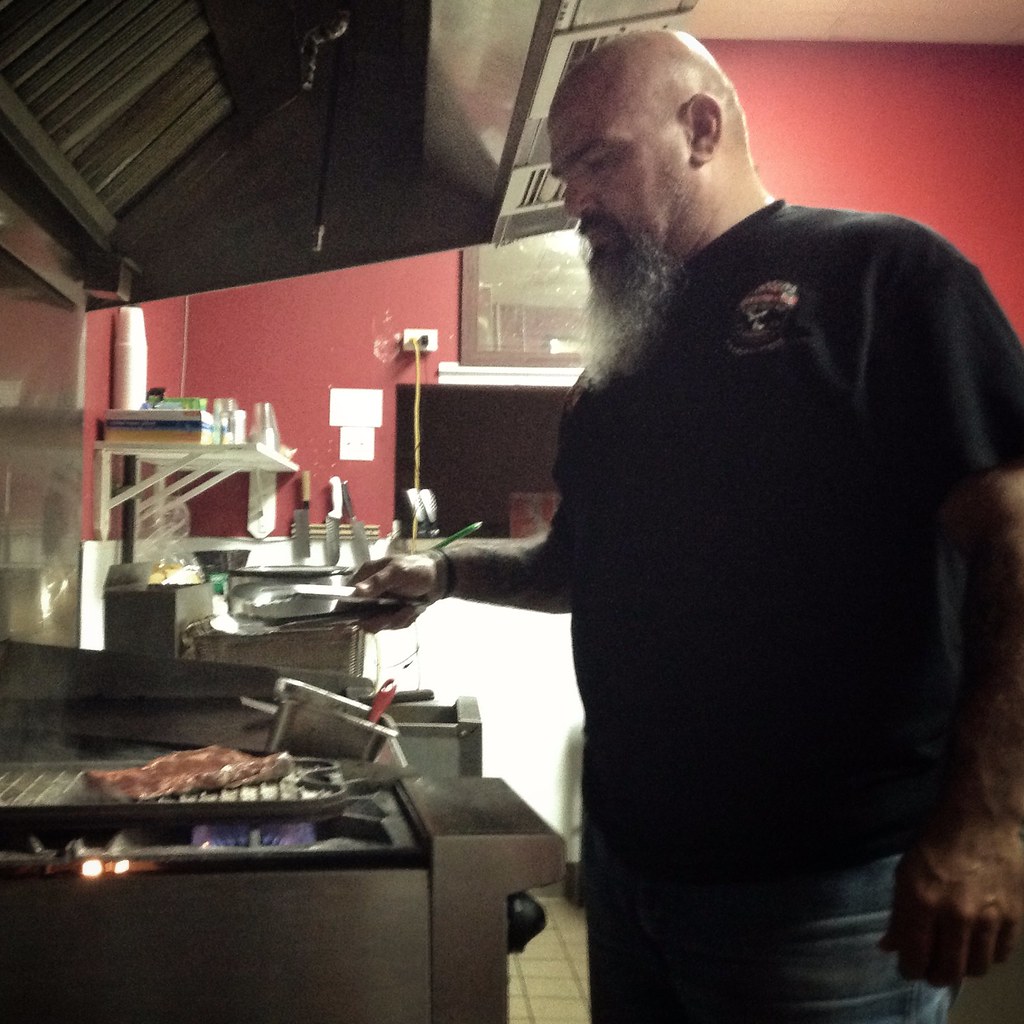
To learn more about meat and masculinity, Researchers Sandra Nakagawa and Chloe Hart conducted experiments to test whether a threat to masculinity influences men’s affinity to meat. In one experiment, the researchers told some men their answers from a previous gender identity survey fell in the “average female” range, while others fell into the “average male” range. The authors expected men who received “average female” results to feel like their masculinity was in question, and possibly express stronger attachment to meat on later surveys.
Men who experienced a threat to their masculinity showed more attachment to meat than those who did not experience the threat. They were also more likely to say they needed meat to feel full and were less likely to consider switching to a diet with no meat. This study shows how gendered assumptions about diet matter for how men think about maintaining their health, highlighting the standards men feel they must meet — and eat.
Allison Nobles is a PhD candidate in sociology at the University of Minnesota and Graduate Editor at The Society Pages. Her research primarily focuses on sexuality and gender, and their intersections with race, immigration, and law.
(View original at https://thesocietypages.org/socimages)

Go Home Already: Meet Skateboarding Pug Mr. Butts
LeahgatesIn order:
-Great, 12/10
-This is literally not new or interesting
-Fine (except for Jimmy Fallon)
-Fuck you
-Affordable Housing
In short, only the first one matters
- Happy Friday, meet Mr. Butts. [WJLA]
- Is Liz your friend or your apartment building? On the trend of “residential anthropomorphism.” [Post]
- José Andrés on Jimmy Fallon. [Twitter]
- George Mason University leaders defend the decision to hire Brett Kavanaugh. [HuffPo]
- Capitol Crossing is switching a planned residential building to a hotel. [UrbanTurf]
The post Go Home Already: Meet Skateboarding Pug Mr. Butts appeared first on DCist.
Dusky Pademelon Joey Peeks Out of Pouch
Keepers at Chester Zoo are celebrating the birth of the zoo’s first Dusky Pademelon – a small cousin of the Kangaroo from Indonesia.
Photo Credit: Chester Zoo
The joey has just started to peek out from the pouch of first-time mother Styx.
Dusky Pademelons, also known as Dusky Wallabies, are small, hopping marsupials found in forests on the island of New Guinea, as well as some neighboring islands.
Infants are born 30 days after mating and then continue to grow inside their mother's pouch until they fully emerge at around seven months.
Dave White, Team Manager of the zoo’s Twilight team, said, “Just like Kangaroos and other marsupials, newborn Dusky Pademelons will climb up to the safety of mum’s pouch to nurse when they are merely the size of jellybeans. It’s in that pouch that they receive all of the nourishment and protection they need as they develop, right up to the moment they are old enough to begin exploring the outside world for themselves.”
“An adult Dusky Pademelon’s pouch has a powerful muscle to prevent the joey from falling out, but it won’t be too long until it’s ready to fully emerge and start hopping around on its own two feet. That’s when we’ll discover whether it’s a boy or a girl and choose its name,” White said.
The Dusky Pademelon is listed as Vulnerable to Extinction by the International Union for the Conservation of Nature (IUCN). Its population is estimated to have declined by 30% in the last 15-20 years, largely due to trapping, hunting and habitat loss.
Tim Rowlands, the zoo’s Curator of Mammals, said, “Relatively little is known about the Dusky Pademelon and we’re working to better understand these fantastic animals. Through the scientific observations we’re making at the zoo, and all that we’re learning as mum brings up her new joey, we’re able to better document Dusky Pademelon behavior. This could help add to the baseline of data that already exists and help other conservation teams to ensure its long-term survival in the wild.”
See more photos of the joey below.