Shared posts

14 Jan 21:14

I like this idea a lot. I think it could be really cool as...


I like this idea a lot. I think it could be really cool as stockings (ones that would make you think).

roseaposey:

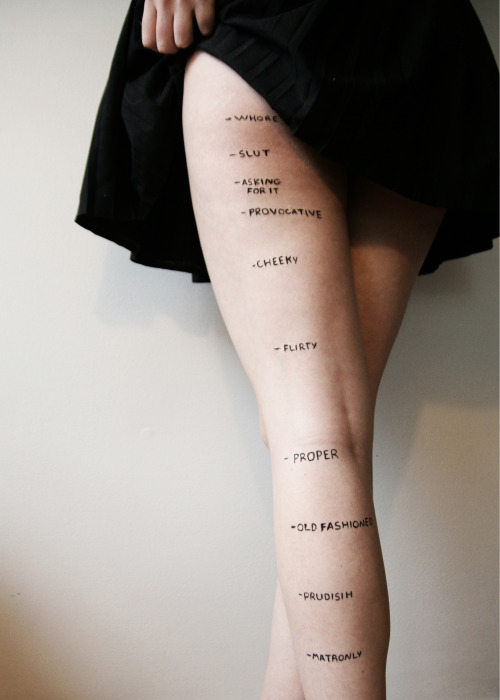
“Judgments”

I took this last year, but in retrospect, I think it’s my strongest piece from high school.

Working on this project really made me examine my own opinions, preconceptions and prejudices about “slutty” women and women who choose to cover all of their skin alike. I used to assume that all women who wore Hijabs were being oppressed, slut-shame, and look down on and judge any woman who didn’t express her sexuality in a way that found appropriate.

I’d like to think I’m more open now.

14 Jan 21:12

(Image)

Justine Marie Sherry

Blogger? PhD student!

13 Jan 20:18

Photo


12 Jan 20:41

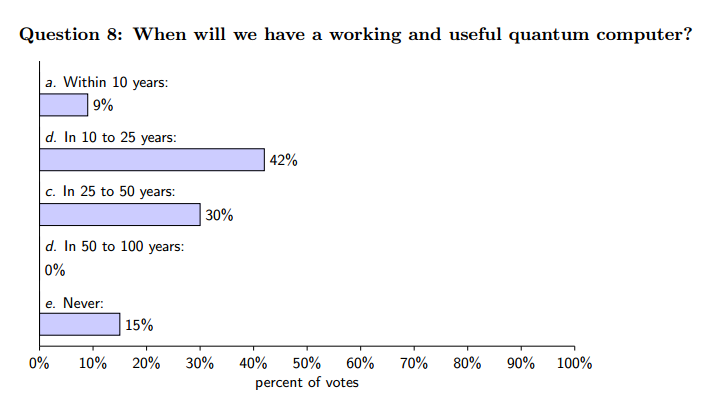
Poll Reveals Quantum Physicists' Disagreement About the Nature of Reality

A survey of leading thinkers shows that they are as far as ever from agreeing on the nature of reality

07 Jan 21:20

First 50th Anniversary Book by Eoin Colfer

by DWTV

Eoin-Colfer-book-a-big-hand-for-the-doctorIn honour of Doctor Who’s 50th anniversary year, Eoin Colfer, author of the ‘Artemis Fowl’ seri Read more ...

02 Jan 20:10

doctorspockspaceman: dyingforthewinchesterbrothers: rei-loki-de...


doctorspockspaceman:

dyingforthewinchesterbrothers:

rei-loki-de-asgard:

harryelemsuperwholock-uponatime:

dependingontheweather:

abouttherealawesomestuff:

“I’ve been online and looked at all the theories and there’s one clue that everyone’s missed. It’s something that Sherlock did that was very out of character, but which nobody has picked up on.” - Steven Moffat


Sherlock has his phone (looks to me like that at least) in his hands there, hiding it cleverly in his coat sleeve most of the times.

Why? That leads to my idea related to quote above from Steven Moffat.

I am referring to the conversation between Sherlock and Jim on the roof. Sherlock is doing something out of character there: He’s asking questions, he seems confused. But only that much to not make Jim suspicious.


Sherlock: But the rhythm … 

Jim: Partita no. 1, thank you, Johann Sebastian Bach

Sherlock: But then how did you …?


And then Jim explains his entire plan how he broke in several important buildings at once. It’s not the only time in that conversation where Sherlock acts like the “dumber one” of both, of course not too bluntly so Jim doesn’t realize what’s going on.

Why does Sherlock act like he’s lost and hasn’t figured out Jim’s entire plan? So he can record what Jim is saying (in sense of a confession) on his phone, which he has in his hand/coat sleeve.

When you watch the scene again, Sherlock steps to the edge of the roof, till to that point he was acting. Then he starts laughing, cause he feels like he has won. The most important parts he probably has recorded. So he steps back down again. Now he’s back to his “normal self”. I feel like you can see it in his attitude even (comparing 2nd screenshot with 3rd)

Later, when he’s on the phone with John, Sherlock says: “This is my note.”

Before he jumps of the building, he throws the phone away, to leave it on the roof. 


Hmm, these are my thoughts to the scene so far.

EVERYONE READ THIS THIS IS AMAZING AND SO PERFECT.

READ 

JUST READ IT OKAY?

oooooo the note was the physical phone and not the phone call *mind explosion*

GENIUS!

This is the sherlock fandom. We can solve crimes and shit.

This is very interesting. hmm. I knew Sherlock did seem a bit off while watching this scene.

01 Jan 12:27

ffffffffffffoooo

ffffffffffffoooo

Follow @nataliedee on Twitter or join the Natalie Dee Facebook Page.
01 Jan 06:50

Tom Bates and Loni Hancock visit sister city in Cuba

by Frances Dinkelspiel
Justine Marie Sherry

Of course our sister city is in Cuba.

bateswithkids

Mayor Tom Bates stands with a group of middle school students in Berkeley’s sister city, Palma Soriano. Bates and his wife, State Senator Loni Hancock, brought 13 indestructible soccer balls made by One World Futbol Project for the kids. Photo: Alan S. Kay

Bearing 13 indestructible soccer balls, toys, shampoo, conditioner, and a bunch of T-shirts, Mayor Tom Bates and his wife, State Senator Loni Hancock, recently visited Palma Soriano, Berkeley’s sister city in Cuba.

The soccer balls were the biggest hit.

As soon as Bates, Hancock and the four others in their group arrived at Haydee Tamara Bunke Bider Middle School (named after Che Guevara’s translator), they pulled out the bright blue balls made by Berkeley’s One World Futbol Project. Bates started to play with one ball and even threw a few hoops with it, prompting the students to surge down the school steps and out onto the play yard.(...)

Read the rest of Tom Bates and Loni Hancock visit sister city in Cuba (775 words)

By Frances Dinkelspiel. | Permalink | 11 comments |
Post tags: Alan S. Kay, Berkeley sister city, Carol Norris, Green Cities Fund, Loni Hancock, Mariela Castro, Nhu Miller, One World Futbol Project, Palma Soriano, Raul Castro, Ricardo Alcaron, Tom Bates, Tom Miler

30 Dec 20:31

Myths and the Media: A Case Study

by Gwen Sharp, PhD

For the last week of December, we’re re-posting some of our favorite posts from 2012.

This morning NPR aired a segment on media stories about the “boomerang generation,” college-educated children who return to live with their parents after graduation. A widely-repeated figure is that currently 85% of recent college grads are moving back in with their parents, taken as a sign of the ongoing, and potentially long-term, consequences of the economic crisis.

Except for the part where it’s not true.

You may have heard this figure. CNN Money seems to be the first to cite it, in 2010; Time and the New York Post, among others, repeated the number:

It  continued to spread, most recently ending up in a political ad from American Crossroads that attacks President Obama.

But PolitiFact recently looked into the claim and declared it false. It supposedly came from a survey conducted by a marketing and research firm from Philadelphia. Yet as they dug further into the story, PolitiFact found many things that might make you suspicious. For instance, some people listed as employees claimed never to have worked for them, while others seem to be fictional, their photos taken from stock photo archives. One employee they did find turned out to be the company president’s dad. When they found the president, David Morrison, he said the survey was conducted “many years ago” but refused to release any information about the methodology, saying he had a non-disclosure agreement with the (unnamed) client.

But as the story of this shocking trend was reproduced, it appears reporters did not try to access the original survey to fact-check it, or surely they would have discovered at least some of these discrepancies, or the lack of any available data to back up the claim.

In contrast to the 85% figure, a Pew Center report (based on a sample of 2,048) found that for young adults aged 18-34, 39% were either currently living with their parents or had temporarily moved in with them at some point because of the economic downturn:

And importantly, of those currently living with their parents, the vast majority of 18-24 year-olds said the economy wasn’t the reason they were doing so. The study found no significant differences by education for those under 30 (42% of graduates were living at home, compared to 49% of those who never attended college), but for those 30-34, only 10% of college graduates were living at home (compared to 22% of non-college graduates).

But once the more shocking 85% figure had been cited by a mainstream news source, it was quickly reproduced in many other outlets with little fact-checking. As PolitiFact sums up,

…once a claim enters the mainstream media, it’s hard to put the genie back in the bottle. “The dynamic of trust is built with each link,” Wemple said. “It barely occurs to anybody that all those links may be built on a straw foundation.”

Gwen Sharp is an assistant professor of sociology at Nevada State College. You can follow her on Twitter.

(View original at http://thesocietypages.org/socimages)

30 Dec 01:25

The Inactivation of the Body Scanners

by Michael Grabell

X-raying passengers for airline security became a lot less common in 2012.

The use of radiation by security agencies, especially at airport checkpoints, was the subject of a ProPublica series in late 2011 and early 2012.

The investigation found that the Transportation Security Administration had glossed over the small cancer risk posed by even low doses of radiation. The stories also showed that the United States was almost alone in the world in X-raying passengers and that the Food and Drug Administration had gone against its own advisory panel, which recommended the agency set a federal safety standard for security X-rays. In addition, ProPublica reported that, outside airports, other security agencies are exposing people to radiation in more settings and in increasing doses.

Now, many of the TSA's 250 X-ray body scanners worth about $14 million are sitting in a Texas warehouse after being removed from most of the biggest U.S. airports, including Los Angeles, Chicago O'Hare, New York's John F. Kennedy, Boston Logan, Charlotte Douglas and Orlando.

The TSA said it replaced the X-ray machines with scanners that use another technology, millimeter waves, to make the lines move faster, allowing the agency to screen more passengers for explosives. But the result, intended or not, is that far fewer airline passengers are being exposed to radiation during screening. Millimeter waves, a form of high-frequency radio waves like those used in cell phones, have not been shown to cause cancer.

The manufacturer of the X-ray scanners, Rapiscan Systems, has also faced problems in developing its privacy software. Such software produces a generic cartoon image of passengers' bodies, allaying privacy groups' complaints that the scans amount to a "virtual strip search." The TSA faces a June 2013 congressional deadline to install the software on all its body scanners.

In November, the TSA sent Rapiscan a "show cause letter," which is typically issued when the government is considering terminating a contract. The agency hasn't said why. Rapiscan said the letter questioned whether the company changed the machine in a way that didn't conform with the design the TSA approved. Rapiscan says it did conform.

Rep. Mike Rogers, the Republican head of the House transportation security subcommittee, cited an allegation that Rapiscan had falsified a software test, which the company denies.

Selected articles on body scanners:

Following months of congressional pressure, in December, the TSA agreed to contract with the National Academy of Sciences to evaluate the health effects of body scanners. A provision to require such a test was included in the Homeland Security funding bill that passed the Senate appropriations committee in May; the final bill has not yet passed. It is not clear if the proposed study will add much to what is already known about the scanners, because it's unclear if the academy will conduct new tests of the machines or merely review previous studies.

Passengers traveling through Seattle-Tacoma, Phoenix Sky Harbor, Washington Dulles and several other airports still must pass through an X-ray scan or opt out and receive a pat-down search.

The TSA says it hopes to eventually move the scanners from storage to smaller airports after resolving the issue with Rapiscan. In addition, the agency is considering an X-ray machine made by another company under a contract for the next generation of body scanners.

The last X-ray scanners in use in Europe were removed from Manchester Airport in the United Kingdom in September. Israel, which is small but influential in the security world, has installed an X-ray body scanner for testing at Ben Gurion Airport in Tel Aviv.

A side-by-side comparison of the TSA's body scanners, including photographs of them, can be found here. And here are some key points about the two types of scanners:

Safety: The X-ray machine, known as the backscatter, uses ionizing radiation, which has long been linked to cancer. According to many studies, the dose of the machine is very small, equivalent to the cosmic radiation received in a few minutes of the flight. The TSA cites those studies in claiming they're safe. The National Academy of Sciences has concluded that there is no known dose of radiation that does not increase the risk of cancer, and radiation groups recommend that the public limit its exposure as much as reasonably possible.

Although there has been some doubt about the long-term safety of millimeter waves, scientists have not found a mechanism for such waves to mutate genes and cause cancer.

Privacy: The millimeter wave machine contains privacy software that scans a passenger's body for anything unusual that might be hidden under his or her clothes. It then creates a generic image of a body and highlights any potential threat with a yellow box. No human being analyzes the image; it is all automated.

The manufacturers of the X-ray scanner are working on similar software. But for now, the machine creates a heavily filtered image of the person's naked body, which is viewed in a separate room by a TSA screener who cannot see the passenger.

Detection: Federal officials have released no information about the detection rates of the two machines. Security experts say that in their original forms, the image of the X-ray machine was clearer than that of the millimeter wave machine. But any difference was made minimal through training and now by the computer algorithms that automatically scan the passenger, they say. Government inspectors have repeatedly found "vulnerabilities" with the machines, but to what degree is not known.

False alarms: Based on reports and interviews with foreign officials, the millimeter wave machine has a much higher false-alarm rate than the X-ray scanner, tripping on innocuous things such as folds in clothing, ties and even sweat. Those false alarms require a quick search of the area where the anomaly was detected, whereas alarms with the X-ray scanner usually require a full-body pat-down.

29 Dec 23:37

Abortion, Newtown, and the Feast of the Holy Innocents

by Katie Grimes

Today, on the Feast of the Holy Innocents, the church remembers the thousands of Jewish male infants killed by kingly decree “in the days of Herod.”   In the weeks after the massacre at Newtown, those of us living in the United States feel the agony of this Feast like never before.  We hear of Herod’s slaughter and think of the children slain at Sandy Hook.  We count them among “the holy innocents” commemorated on this day.  Some of us also wish to include in this category of holy innocents aborted fetuses.

But in making this feast day about abortion or even Sandy Hook, we risk missing its meaning.

Some may see a resemblance between the “innocents” massacred by Herod and the “innocents” ended by abortion.  But as Sonja has brilliantly shown in an earlier post, we err both when we identify fetuses as “innocent” and when we identify innocence as the reason they should not be aborted.   Like Sonja, I remain wary of moral schemas that use innocence to distinguish those who deserve not to be killed from those that do.  Too often, we define innocence ideologically in ways that support the status quo.  For example, in a white supremacist society like the United States, a “black” fetus is innocent, but a black man (i.e., Trayvon Martin, Jordan Davis, Sean Bell) is not.

An anecdote further illustrates the ideological operation of “innocence” in the contemporary United States.  I remember a few years ago in a nearby town, an African-American woman named Tarika Wilson was shot and killed by police who stormed into her house in order to arrest her boyfriend for a drug crime.  Shot while holding her infant daughter in her arms, her killing provides a kind of inverse Pietà.  Though never even accused of any crime, I remember hearing white friends say of her, “That’s what you get for dating a drug dealer!” and, “What kind of woman would let a drug dealer in her house?!” and so on.  Never mind that her boyfriend had yet to be convicted.  Never mind the absurdity of inflicting capital punishment upon those convicted of dealing drugs.

In a similar way we impute guilt by association to the children we kill in war.  The death by drone strike of the 16 year old American son of al Qaeda operative Abdulrahman al-Awlaki does not qualify as a tragedy, our government assures us, because this teenager was not innocent.  As President Obama’s senior advisor Robert Gibbs quips, al-Awlaki’s son “ought to have [had] a far more responsible father.”  His death was his own fault.

When we identify “innocence” as the reason fetuses should never be killed, we imply that the guilty deserve whatever death befalls them.  And in a world marked by unequal power, the disproportionately powerful will decide not only who counts as guilty but also which types of guilt merit death.  In leaning so heavily on “innocence,” we also confuse juridical notions of guilt and innocence with moral and ontological ones.  Though juridically innocent people exist, no human being possesses complete moral innocence.  We all operate under the shadow of original sin.  In reality, nobody’s innocent.  Not even fetuses.

And these analogies also de-politicize the story of Herod’s slaughter in theologically dangerous ways.  Though we cannot reduce scripture to mere politics, when we de-politicize the gospel, we distort its theological message.

The gospel of Matthew depicts King Herod as an agent of Roman imperial rule.  He uses his Jewish identity to justify his rulership over Judea and to camouflage his allegiance to Rome.  The author of the gospel of Matthew intends to expose Herod as a type of modern-day Pharaoh while also identifying a newborn baby as the true king.  Hearing word of the birth of this king, Herod sends three magi out on a secret mission to find this baby so that Herod can kill him.  When the magi find the baby Jesus swaddled and sleeping under fantastically bright starlight, they bow down in awe before him and abandon their mission.  Without the magi, Herod has no way to find the baby revolutionary in his midst.  Unable to conduct a targeted strike as originally planned, Herod turns to wholesale slaughter:

“[Herod] ordered the massacre of all the boys in Bethlehem and its vicinity two years old and under.”

Jesus survives this slaughter only because Joseph takes him out of Judea and into Egypt.  Egypt, originally a place of bondage, now provides safe haven.  Herod, though claiming fidelity to the God of Israel, acts as Pharaoh, turning Judea into Egypt.

The story of the massacre of the innocents is not about the killing of children.  In fact, it is not really about children at all.  Jesus provides its protagonist.  This story supplies the following christological insights: first, it identifies Jesus with the victims of this type of imperial violence.  The slaughter of innocents foreshadows the crucifixion– Jesus suffers in solidarity with the crucified people of every history.  Second, it contrasts the kingship of Jesus with that of rulers like Herod who wield worldly power oppressively.  Unlike Herod, Jesus does not kill in order to save himself.  Remarkably, Jesus refrains from killing to save himself even though he alone possesses unblemished innocence.  In this way, the slaughter of innocents provides the ultimate contrast to the crucifixion.


Tagged: abortion, Herod, Jesus, lament, liturgical year, Massacre of the Holy Innocents, Newtown, the cross, the crucified peoples, the Feast of Holy Innocents, white supremacy
29 Dec 23:35

From Appearance to Identity: How Census Data Collection Changed Race in America

by Lisa Wade, PhD

For the last week of December, we’re re-posting some of our favorite posts from 2012. Originally cross-posted at Global Policy TV.

Publicizing the release of the 1940 U.S. Census data, LIFE magazine released photographs of Census enumerators collecting data from household members.  Yep, Census enumerators. For almost 200 years, the U.S. counted people and recorded information about them in person, by sending out a representative of the U.S. government to evaluate them directly.

By 1970, the government was collecting Census data by mail-in survey. The shift to a survey had dramatic effects on at least one Census category: race.

Before the shift, Census enumerators categorized people into racial groups based on their appearance.  They did not ask respondents how they characterized themselves.  Instead, they made a judgment call, drawing on explicit instructions given to the Census takers.

On a mail-in survey, however, the individual self-identified.  They got to tell the government what race they were instead of letting the government decide.  There were at least two striking shifts as a result of this change:

  • First, it resulted in a dramatic increase in the Native American population.  Between 1980 and 2000, the U.S. Native American population magically grew 110%.  People who had identified as American Indian had apparently been somewhat invisible to the government.
  • Second, to the chagrin of the Census Bureau, 80% of Puerto Ricans choose white (only 40% of them had been identified as white in the previous Census).  The government wanted to categorize Puerto Ricans as predominantly black, but the Puerto Rican population saw things differently.

I like this story.  Switching from enumerators to surveys meant literally shifting our definition of what race is from a matter of appearance to a matter of identity.  And it wasn’t a strategic or philosophical decision. Instead, the very demographics of the population underwent a fundamental unsettling because of the logistical difficulties in collecting information from a large number of people.  Nevertheless, this change would have a profound impact on who we think Americans are, what research about race finds, and how we think about race today.

See also the U.S. Census and the Social Construction of Race and Race and Censuses from Around the World. To look at the questionnaires and their instructions for any decade, visit the Minnesota Population Center.  Thanks to Philip Cohen for sending the link.

Lisa Wade is a professor of sociology at Occidental College. You can follow her on Twitter and Facebook.

(View original at http://thesocietypages.org/socimages)

29 Dec 23:30

santosha65: This incredible photo marks the end of Matador...


santosha65:

This incredible photo marks the end of Matador Torero Alvaro Munera’s career. He collapsed in remorse mid-fight when he realized he was having to prompt this otherwise gentle beast to fight. He went on to become an avid opponent of bullfights. Even grievously wounded by picadors, he did not attack this man.

Torrero Munera is quoted as saying of this moment: “And suddenly, I looked at the bull. He had this innocence that all animals have in their eyes, and he looked at me with this pleading. It was like a cry for justice, deep down inside of me. I describe it as being like a prayer - because if one confesses, it is hoped, that one is forgiven. I felt like the worst shit on earth.”

Wow. Moving and strange.

27 Dec 19:00

Who Was First in the Race to the Moon? The Tortoise

by Alexis Madrigal
In the race to the moon, who came in first? 
You might say the answer is Neil Armstrong, Buzz Aldrin, and that other guy Michael Collins, the crew of Apollo 11. Or you could represent for the crew of Apollo 10, which reached the moon in May 1969 and then headed back to Earth without landing. 
But there is a much stranger answer to this question, depending on how much you care about humans and what your definition of reaching the moon might be. Before any people arrived at the moon, other animals got there first. And unlike the dogs and monkeys that were made famous in early space shots and Earth orbits, the first vertebrates to reach the moon were a pair of steppe tortoises, Discovery's Amy Shira Teitel reminds us
tortoisesaroundthemoon.jpg

The tortoises in question (Energia.ru).

The Soviet Zond 5 sent the animals around the moon -- although not into lunar orbit -- during a mission in the middle of September, 1968. The unmanned craft then returned to Earth and splashed down in the Indian Ocean, after which the Russians recovered the craft. 
A month later, Soviet scentists revealed that the Zond had been a tiny ark, carrying the tortoises, "wine flies, meal worms, plants, seeds, bacteria, and other living matter." A small dummy packed with radiation sensors flew, too. 
The tortoises, as history (i.e. the AP) records, lost about 10 percent of their body weight, but had a healthy appetite when they returned to Earth. In checkups afterwards comparing the animals to "stay-at-home turtles used as a test control," most things seemed normal, aside from some hazily explained problems with the liver and spleen. 
What this all means is that, as Teitel tweeted, "The first living beings to see an Earthrise from the Moon were communist turtles." As far as I can tell, the animals were not named. 

26 Dec 08:38

In my experience, waking in an unfamiliar room is seldom a good...

by djag2
Justine Marie Sherry

I know those guys.


In my experience, waking in an unfamiliar room is seldom a good thing. Especially if you wake tied to a dining table to find three past masters staring down at you.

25 Dec 20:25

Photo

by joberholtzer


24 Dec 03:28

Shopping Days

by nedroid

Shopping Days

24 Dec 03:26

Reppin’ my team

Justine Marie Sherry

PROUD OF MY SISTER


Reppin’ my team

21 Dec 02:27

Star Trek bridge officers

by joberholtzer


Star Trek bridge officers

21 Dec 02:04

Victory for the tabloids! Online porn to be filtered by default in UK

by Joe Mullin
Enlarge flickr / bizgovuk

Save the children! UK Prime Minister David Cameron wants porn filters to come on, by default, in any British houses that have children in them.

"A silent attack on innocence is underway in our country today, and I am determined that we fight it with all we've got," wrote Cameron in today's Daily Mail.

The system Cameron promises will be in the works by February, when British ISPs will have to present plans for how they will present the filter options. Every owner of a new computer will be asked when they log in through their Internet service provider if they have children in the house. If they answer yes, it will immediately prompt them to set up filters blocking content, individual sites, or restricting access at particular times of day, according to the Mail.

Read 9 remaining paragraphs | Comments

20 Dec 00:42

I had the same paper rejected one year ago.  STRONG REJECT!


I had the same paper rejected one year ago.  STRONG REJECT!

19 Dec 18:46

Being a Stay-at-Home Dad Can Make Me Feel Like a Petulant 10-Year-Old

by Andy Hinds

Relying on your wife for financial support isn't emasculating, but it can be infantilizing sometimes.

hinds_upallnight_post.jpg NBC

"Daddy," my 3-and-a-half-year-old daughter Olivia said through a febrile haze, "Everybody bosses you." I nodded in agreement. "I boss you, and Maddy bosses you, and Mommy bosses you," she continued.

"You ain't whistling Dixie, Pumpkin," I said. Between coughing fits, snot-frothing meltdowns, and attacks on her twin sister Madeleine, the kid had delivered a number of startlingly perceptive pronouncements during her bout with the latest preschool plague.

I've been a stay-at-home dad since my daughters were four months old and my wife returned to work as a family practice doctor at a community clinic. Being a parent, and having the luxury of sharing almost every moment of my children's early life, has been the most intense and rewarding experience I've ever had. My resentments have been fleeting, and the only regrets I have are my daily parenting failures, which my kids have been willing to forgive, so far.

The sense of achievement in childrearing is sometimes obscured by the daily indignities a parent must suffer. But consciously, at least, even when I'm feeling the most oppressed or impotent, I don't feel like less of a man because my wife provides the roof over our heads, the groceries in our bellies, and the clothes on our backs, while I alternately mind the children and struggle to earn enough to pay the preschool tuition. I just feel like less of an adult.

Being stuck at home with two sick kids recently reminded me of how servile my role at home often is. Quarantined and cranky, we had worn each other down to raw nerve endings; but being the parent, I had done the best I could to act like a reasonable adult. My daughters didn't extend me the same courtesy. They screamed complicated orders that I just couldn't get right. I brought them the wrong shoes, poured the milk when they wanted to do it themselves, flushed the toilet without permission, tied the sashes wrong on the garments of tiny panda bears, and committed countless other transgressions that required intensive damage control. I was walking on eggshells for a week. So when my wife came home from work one night and said, "Hey, could you..." I fired ocular death-rays that shut her down mid-request and put a chill on the rest of the evening. I didn't feel like my masculinity had been infringed upon by the indignities of my role at home; but rather, I felt like a petulant 10-year-old longing for a modicum of self-determination.

I recently had the surreal experience of appearing as a character in a bestselling book by The Atlantic's Hannah Rosin. Rosin interviewed me for a series of articles she was writing about "breadwinning wives," and later used some snippets from our conversation in The End of Men. In it, she portrayed me as a sad sack who is "wistful" about my past in the working world, and "defensive" about my masculinity. I responded in an essay where I insisted that, far from being an emasculated wretch, I'm happier and more secure about myself than I've ever been. Naturally, spending most of my time with 3-year-olds can be frustrating; but when I take the long view, I realize that I've doing the absolute best thing I can for my family during this time, even if it has involved a lot of mindless drudgery.

Related Story

Growing a Beard, Getting a Mortgage: When Do Men Become Grown-Ups?

In reading a conversation on this site among the writers of the excellent DadWagon website I noticed that many of the commenters were upset that these men didn't admit to being depressed that their wives made more money than they did. Nathan, Matt, and Theodore copped to personal shortcomings and professional disappointments, but didn't provide any evidence for the popular theory that men who make less money than their wives feel like they have either failed to live up to their gender expectations or been denied their manly birthright. Despite being out-earned by their wives, they agreed, they are still men.

My wife and I have been together for 20 years, and for the last ten of those, she has made at least double the money I have. My work history is eclectic: I've had jobs, gigs, and businesses, mostly in the fields of construction, teaching, and, more recently, writing; but I've never had what you would call a "career." Like the DadWagon guys, I sometimes wished I could make more money, and even thought I deserved to. But, while the knuckleheads on the construction site were quick to point out that I should feel like less of a man (whatever that means) because my wife made more money than me, I never connected any wage-angst I felt to gender.

When my wife got pregnant, there was no question that she would need and want to continue working. But we could afford for me to stay with the kids, and so I jumped at the opportunity. For almost three years, I never seriously questioned my own contribution to our family's welfare. It helped that, for the first year, I was spending naptimes, evenings and weekends finishing the addition that I had started building on our house when we found out we were having twins, eventually doubling its size to a modest 1600 square feet. Not only was I caring for the children, but I was also increasing our home equity. I was earning! Even after the addition was finished, I still felt indispensable in that I was meeting the grueling demands of keeping two helpless babies alive. Surely, no one could do this job as well as a parent!

Slightly before the girls turned three, though, things changed. We were offered two spots in our "long-shot" preschool, three months before we had planned to launch the girls' "academic" careers, and we accepted the offer rather than risk losing it by waiting. Suddenly I had two more days off from childcare responsibilities per week. My wife was working four days a week, so I really only had the kids by myself on Mondays and Wednesdays. There was no reason I shouldn't be working outside of the home.

Before being blindsided by preschool, I had a vague vision of what I would do when the kids started spending their days elsewhere. I'm not sure where the money was coming from in this vision: just that it involved me sitting in a quiet, sun-drenched study, writing about my fascinating and marketable thoughts and feelings. What the vision didn't include was pounding the proverbial pavement to see if anyone needed decks built or windows replaced.

But pound the pavement I did, and I found good-paying work for clients who understood that I would be completing their projects around my kids' schedules. I should be thankful for that, and I am. At the same time, though, it's not lost on me that, at age 45, having earned multiple degrees and taught college and even grad school classes, and actually gotten some writing published, I'm back to doing the same kind of work I did fresh out of high school. It's honest work, to be sure, and maybe even noble—although I always used to hate it when lily-palmed pencil-pushers romanticized the building trades—but it doesn't quite live up to what I had imagined would be the Next Phase.

So there's your self-indulgent whine from a man who earns a fraction of the money his wife does. I'm not "wistful" about my past as Rosin suggested; but there are times, especially when I look at my career-oriented peers, including my wife, and feel like, for lack of a better term, a loser. I have friends who talk about managing their "staffs." In my construction gigs, I am the staff, except for on the rare occasions when I pick up a day-laborer. And the fact that I'm working outside the home more now, while virtual strangers care for my children, sometimes makes the stay-at-home dad part of my life seem less like an adult occupation too. When I hear other parents talking about their babysitters—usually just kids themselves—it sometimes strikes me that the bulk of my responsibilities at home are not so different from the ones they take on for 12 bucks an hour. Being an adult generally entails responsibility and confers status; and at my age, by conventional standards, and regardless of my gender, I should be at the top of my game. But instead, I'm hustling for chump change and getting bossed around by small children.

Whether or not I qualify as an adult, though, should be of little consequence to me, maybe as little as whether I'm living up to some construct of masculinity or another. The day I'll know that I'm truly a grownup is the day I do what I need to do to provide what my family needs from me, without entertaining nagging desires to satisfy someone else's idea of what a man or an adult is.

18 Dec 11:36

December 18, 2012


Don't forget to check out the kickstarter for James and Marque's new cooking show!

17 Dec 18:28

High-Profile Studies Overrate Going to College and Picking the Right Major

by Andrew G. Biggs

There are obvious advantages to going to college. And yes, science majors have much higher lifetime earnings than art majors. But the reasons why aren't as simple as some studies would have you believe.

615 college graduation hire.jpg

Reuters

Whether to attend college and, if so, what to study are decisions of great financial and personal importance for younger Americans. It has become conventional wisdom that as many people as possible should graduate college and that college students should increasingly major in technical fields such as engineering, math and computer science. But college is a major investment. Average annual tuition at public four-year colleges today tops $13,000, with tuition at private schools exceeding $31,000. Moreover, the college major chosen by students guides the types of jobs they may hold for the rest of their lives, which influences not only income but also personal satisfaction from work. These choices should not be entered into lightly or lacking solid information.

Unfortunately, popular research on the costs and benefits of higher education is plagued by basic statistical errors, generating misleading conclusions and encouraging bad public policy. It is a basic tenet of statistics that correlation does not imply causation: simply because two things tend to occur together -- such as college attendance and higher incomes -- does not necessarily mean that one causes the other. While both college attendance and choice of major do affect earnings, their effects are much smaller than has been reported.

In a recent study, Michael Greenstone and Adam Looney of the Hamilton Project conducted a seemingly simple cost-benefit analysis: While four years of college today can cost in excess of $100,000, a typical college graduate earns roughly $13,000 more per year than a high school graduate. They conclude that, despite rising tuition costs, the annual "return" to college education tops 16 percent, far exceeding investments such as stocks or bonds.

Since college loans carry interest rates well below 16 percent, their result implies that attending college -- even if you must borrow tens of thousands of dollars to do so -- will prove to be a very good financial choice. There are policy implications as well. The authors state that "Ensuring that all students have access to this investment requires both a commitment to making it financially feasible at all income levels..." But federal aid such as Pell Grants, work-study programs and tuition tax credits have more than tripled over the last decade, reaching $65 billion in 2011. Washington also made over $100 billion in subsidized student loans last year. The implication is that even more college aid is needed.

There are two problems with this analysis. First, it conflates going to college with graduating from college. They're definitely not the same. Data from the National Center for Education Statistics show that only 58 percent of new college students who began in 2004 had graduated six years later. Dropout rates are even higher at less selective colleges, whose students are presumably most on the margin between attending college following high school and entering the workforce. Dropouts can end up holding the bag for thousands in college debt, but earn significantly less on average than college graduates. Calculating returns to education only for those who attend college and graduate is like measuring stock returns for Google while ignoring those for General Motors. University of Rochester economist Gonzalo Castex has found that dropout risk accounts for a significant portion of the seemingly high returns to college education.

Greenstone and Looney also assumes that high school graduates who attend college are the same as those who don't, meaning that college education is the only thing driving earnings differences later in life. This is far from true. High school students who go on to college took a more rigorous high school curriculum, scored better on tests of reading and math, came from higher-income families, were in better physical and mental health, and were less likely to have been arrested. These are all correlated with higher earnings regardless of whether a person attends college, either because they contribute directly to higher pay or because they proxy for other factors that do. How much a college education increases the incomes of those who attend is a different question than the simple difference in earnings between college grads and individuals with only a high school diploma.

Using the 1997 National Longitudinal Survey of Youth it is possible to control for these and other differences between college grads and the rest of us. Once you control for both the risk of not graduating from college and differing personal characteristics, the earnings boost attributable to college attendance is cut in half. Looking at data that includes people from a wider age range confirms these results. Treating the entire wage gap between high school and college graduates as if it's due to going to college significantly overstates the financial benefits of attending college.

THE MAJOR QUESTION

A similar logical flaw affects widely-publicized studies on the "best" college majors, interpreted as those leading to higher pay following graduation. For instance, a report from the Center on Education and the Workforce at Georgetown University details the "economic value" of different college majors. Relying on data from the Census Bureau's American Community Survey, studies such as this purport to show that technical fields of study lead to much higher earnings after graduation, while "softer majors" pay far less. For instance, median earnings for individuals with a Bachelor's degree in engineering, mathematics or computer science top $70,000, while BA holders who majored in the arts, education or social work earn less than $47,000. Unemployment rates also differ by college major, with the Georgetown group arguing that "choice of major determines unemployment."

Once again, this study claims that education determines differences in pay and employment that may actually arise from other causes. For instance, high school graduates aiming for high-earning majors such as engineering enter college with higher average SAT scores, according to the National Center for Education Statistics, while those aiming for lower-paying majors have lower average SAT scores. But  SAT scores almost certainly are correlated with higher incomes regardless of college major chosen. Similarly, high-paying jobs also entail longer work hours. Numerous studies, including by Daniel Hamermesh and Steven Gould of the University of Texas and by Joseph Altonji, Erica Blom and Costas Meghir of Yale, have found that controlling for SAT scores, hours worked and other factors explains most of the pay differences that initially appear to be driven by choice of college major.

In addition, while skill-specific technical fields may have higher average earnings they also exhibit greater variations in earnings. For instance, an engineer can earn very high wages if his skills are in demand, but changes in technologies or markets can render his skills less valuable and retraining in a different specialty can take time. On the other hand, majors imparting more general skills have both lower average earnings and less earnings risk. A history major may not earn much, but he has a wide variety of professions to choose from. In part at least, following one of the "better" college majors may not be like winning the sweepstakes so much as purchasing a stock: higher returns, but more risk.

REAL TALK ABOUT COLLEGE'S ADVANTAGES

None of this is to say that attending college isn't worthwhile or that students shouldn't consider the more technical majors in deciding where to specialize. Moreover, a college education comes with many benefits beyond a higher income. But to say that "college isn't for everyone" isn't to be patronizing. It's simply to say that the income gains attributable to holding a college degree aren't as large as is claimed, and some people could come out ahead financially by not attending college.

Any investment is about value added -- what you get relative to what you started with. Popular studies regarding whether to attend college and what field to study ignore the skills and abilities different students start with, as well as their different preferences regarding job stability and the types of hours they'd like to work.


17 Dec 18:19

Wrote using Microsoft Word.  STRONG REJECT.


Wrote using Microsoft Word.  STRONG REJECT.

16 Dec 03:22

Complimentary Angles

by SpikedMath
This was made for a grade 7 worksheet so thought I'd share it on here too!

Spiked Math Comic - Complimentary Angles
15 Dec 04:59

Mr. Rogers on helping kids deal with tragic news events

by Jason Kottke

Mr Rogers' advice on how to talk to children about tragic news events is worth a read for parents and, well, everyone really.

When I was a boy and I would see scary things in the news, my mother would say to me, "Look for the helpers. You will always find people who are helping." To this day, especially in times of "disaster," I remember my mother's words and I am always comforted by realizing that there are still so many helpers -- so many caring people in this world.

Tags: Mr. Rogers
14 Dec 22:15

How the UN's 'Game-Changing' Internet Treaty Failed

by Megan Garber
[optional image description] German delegates on the fourth day of the 12-day-long World Conference on International Telecommunications (ITU/Flickr)

Did you know that, for the past two weeks, the future of the Internet has been at stake? 

Yes, it has. Those two weeks hosted the World Conference on International Telecommunications (also hosted, technically, by Dubai). And they hosted, as well, a fairly dramatic face-off -- often between blocs led by Iran, Russia, and China and blocs led by the United States, the UK, and Canada. The purpose of the summit? To rewrite a multilateral communications treaty (official name: International Telecommunications Regulations) that has been the official governing document of the Internet since the late 1980s. The treaty, if passed with a meaningful consensus, could have significantly altered the way the Internet is governed -- and, therefore, it could have significantly altered the Internet itself.

But go ahead and exhale: Late last night, a faction led by the United States walked out of negotiations, refusing to sign the treaty. "It's with a heavy heart and a sense of missed opportunities that the US must communicate that it's not able to sign the agreement in the current form," Terry Kramer, the U.S. ambassador to the summit, put it. "The internet has given the world unimaginable economic and social benefit during these past 24 years."

So what went down last night -- and what does it mean for us, the users of (and reliers on) the Internet? Here's a guide.

So what was the treaty?
One of the stated goals of the document was to help nations coordinate efforts to fight against spam -- and to widen their access to the web. But many of the summit's discussions ended up questioning whether countries should have equal rights to the development of the Internet's technical foundations -- an extension of the original, stated purpose of the document. 

Why was it deemed necessary?
The age of our current governing treaty, most obviously. The current communications treaty that governs Internet communications was last overhauled 24 years ago, in 1988 -- basically hundreds of years ago, in Internet Time.

Who proposed it?
UN's International Telecommunication Union (ITU) organized the 12-day conference in order to make the changes.

Who refused to sign it?
More than 80 countries -- among them the United States, the United Kingdom, and Canada.

So why didn't they go for it?
Some of it had to do with governance -- in particular, the idea that the U.S. government should get to determine which decide which body should regulate the Internet's address system as a legacy of its funding for ARPANET. (The U.S. maintain's that this structure allows its experts to make "agile, rapid-fire decisions" about the Internet's development, adding that another system might be used for purposes of censorship, interference in the operation of ISPs, and the interruption of U.S.-run operations like Google and Facebook.) Much of it came down to the idea that the content of the Internet, rather than its regulation alone, was at stake in the treaty's language.

But didn't they know that from the beginning?
Yes and no. It seems that many of the aspects of the treaty that proved most objectionable to some delegates weren't introduced until later in the game. And the breaking point, per the BBC, was the addition of text relating to "human rights." A proposal from Russia, China, Algeria, Saudi Arabia, and Sudan, for example, -- one calling for equal rights for all governments to manage "Internet numbering, naming, addressing and identification resources" -- was proposed during the proceedings. And then eventually shelved. 

Later, an African bloc of countries began calling for a paragraph to be added to the treaty's preamble that would similarly relate to "human rights." (Proposed language: "These regulations recognize the right of access of member states to international telecommunication services.") 

But, I mean, human rights! What's wrong with that?
Again: "human rights." The U.S. and its allies suggested that the proposals weren't about the rights of countries' citizens, but rather the rights of their governments to regulate their use of the Internet. They viewed the Russian/Chinese/Saudi Arabian/African proposals, therefore, as a semi-veiled attempt to extend the treaty's regulations to cover Internet governance and content -- regulation of content being, from an open-web perspective, pretty much the worse thing you can do to the Internet. 

So how did they end up actually walking out? After a break for sleep, Iran called for a vote on the African proposal -- this despite the ITU's earlier promise that disputed issues would be resolved by consensus, rather than a majority vote.  When the vote was carried by 77 to 33 in favor of the proposal, the U.S., the UK, and Canada said they could no longer ratify the treaty. As Simon Towler, the head of the UK delegation, put it: "My delegation came to work for revised international telecommunication regulations, but not at any cost. We prefer no resolution on the Internet at all, and I'm extremely concerned that the language just adopted opens the possibility of Internet and content issues."

Were there others opposed to the treaty? 
Yes, many. And not just countries. Vint Cerf and Tim Berners-Lee -- two of the founders of the Internet and the World Wide Web, respectively -- came out strongly against its ratification. Google ran an adamant campaign against the treaty and the process that wanted to overhaul it, declaring, "A free and open world depends on a free and open Internet. Governments alone, working behind closed doors, should not direct its future."

What about the other countries involved? 
Many of them basically half-refused to sign. Delegates from Chile, Costa Rica, the Czech Republic, Denmark, Finland, Greece, Italy, Kenya, the Netherlands, New Zealand, Portugal, and Sweden essentially voted "present": Though they didn't flat-out refuse to sign, they also said that they'd need to confer with their national governments -- ""consult with capital" -- about how to proceed. 

But what about the other countries?
Many of them, including Russia, Iran, and Qatar, supported the treaty -- and, this morning, the remaining members of the ITU (which is made up of 193 countries), signed it. But, as Forbes's Elise Ackerman points out, given that so many major players refused to ratify the document, "the gesture in many ways was hollow."

Why's that, exactly?
Because, like other UN agencies, the ITU derives its power from consensus. Without that -- without buy-in from its members, particularly its more powerful ones -- any treaties under its auspices are extremely difficult to enforce, and therefore largely meaningless.

So what does that mean for the countries that did sign?
Despite this setback, the ITU's secretary-general, Dr. Hamadoun Toure, insisted that signing countries would enjoy benefits including "increased transparency in international mobile roaming charges and competition." He also stressed, however, that the treaty did not address content-related telecommunications -- a note to which effect has also been added to the final text of the treaty. 

What does this mean for the ITU?
Toure tried to put a positive spin on the proceedings: "History will show," he said, "that the conference has achieved something extremely important. It has succeeded in bringing unprecedented public attention to the different and important perspectives that govern global communications." Which, okay. But this was a loss, and an embarrassing one, for the ITU. As Ackerman put it, "the collapse of negotiations around the treaty update exposed the ITU as woefully out of step with the most technologically advanced sectors of the global society." 

What does this mean for the rest of us?
It means, basically, that we won't see much change in how the Internet is currently run, at least when it comes to international regulations. But the treaty's defeat as a matter of consensus might also have more far-reaching implications for how the world gets together to regulate (or not regulate) the Internet. Closed-door sessions are in some ways at odds with the ideal -- and, for the most part, the reality -- of a free and open Internet. The ITU debacle was, on top of everything else, a reminder of that. 

14 Dec 08:23

We Need a Path to Citizenship for All Americans, Not Just Immigrants

by Eric Liu

Comprehensive immigration reform is on the agenda for 2013, but it should be coupled with revamped civics education, national service, and more.

citizenship.banner.reuters.jpg.jpg New U.S. citizens take the Oath of Allegiance. (Lucas Jackson/Reuters)

"A path to citizenship." Get used to that phrase: We're going to be hearing it a lot in 2013. Since the Republican Party got hard electoral evidence of its problem with Latino voters (and Asian voters, and basically voters of color and immigrants in general), some GOP leaders have become highly motivated to negotiate a deal for comprehensive immigration reform.

A key part of any such deal will be whether and how undocumented immigrants can step out of the shadows and onto a much-discussed but ill-defined path to citizenship. The DREAMers -- young undocumented immigrants who, under the long-stalled DREAM Act would've been able to earn citizenship by going to the military or to college -- are the hopeful face and voice of reform advocacy. And because they embody an appealing case for reform, they may be able to lead a push that normalizes life for millions of other immigrants, documented or not.

That would be great, for them and ultimately for the entire country. But for all the attention being paid to the creation of a path, we're neglecting the destination: citizenship itself. What is this thing that needs to be earned? What, besides a bundle of rights, does the status entail and require? What do longstanding citizens take for granted and what is asked of brand-new Americans?

These kinds of questions aren't just for immigrants. Which is why we need to couple immigration reform with a citizenship agenda -- one that revitalizes the content and meaning of citizenship for everyone, and that connects the process of becoming American with the work of being American.

A robust citizenship agenda should have several core components. First, fixing the franchise. Inconsistent registration standards, unclear processes for voting, epically long lines at the ballot -- the stories are still fresh, and with the election behind us there's a narrow window for a national push to reform registration and voting procedures and to rationalize the rules of democratic participation.

Second, redoubled support for civic education. The rationale for having compulsory public schooling at all, as Justice Sandra Day O'Connor often points out, is to make citizens. But today, in an age of reading and math testing, civics courses have atrophied or disappeared altogether in many of our schools. Civic education needs more funding, more teachers, more creativity in the curriculum, and more champions in national politics.

Third, a redoubled emphasis on the importance of Americanization. Yes, that word conjures up images of 19th-century busybodies trying to Anglicize Italians, Jews, and other non-WASPs. But properly understood, Americanization -- ensuring that a diverse new generation buys into the content of our national creed  -- remains a vital, necessary endeavor. We need to recommit to it in an inclusive 21st-century way -- in classrooms and communities, and through new civic rituals that make something from our diversity.

Fourth, a revitalized national-service movement that amplifies existing programs for young people like AmeriCorps but also does much more to activate Americans of every age to serve. The Aspen Institute has launched the Franklin Project to push national service onto the elite political and cultural agenda. What's needed is a deeply local counterpart. Returning veterans can be a particular focus: Plugging them into the civic life of their hometowns is a win-win.

And fifth, using government in savvy and catalytic ways to foster orders of magnitude more citizen-driven social innovation. The Obama Administration has already started doing this, as have some congressional Republicans. One approach could be to seed a public-private "C Prize" in the spirit of the X Prize: a set of sizable challenge awards that stimulate creative forms of citizen problem-solving at the local level. Meanwhile, there is now a generation of social entrepreneurs whose nonprofit ventures like City Year or the Harlem Children's Zone have made positive civic impact. Let's disseminate that know-how to more people by creating a network of civic "extension agents" akin to those in agricultural states who spread effective methods of planting and farming.

A great citizenship agenda, like an optimal immigration-reform deal, should appeal to both right and left. Because such an agenda will encourage people to govern themselves more actively rather than relying on the state as the solution of first resort, conservatives will appreciate it. Because it connects the challenges and experiences of immigrant communities to the core of national life, progressives will value it.

Moreover, when the so-called fiscal cliff and debt-ceiling fights have finally ended, either we will need a period of serious reconciliation or we will be on a collective high about a new politics of compromise. Either way, the time will be right to promote a common citizenship agenda.

The time is right in a bigger sense too. The face and voice of America are changing more rapidly than our national self-story and institutions. Globalization, migration, technology, and the speed of media -- these forces are centrifugal. We need a new American centripetal force, a movement of politics and culture and civic religion. Citizenship in a democracy can't be just a matter of law; it has to be way of life. So yes, let's get more immigrants on the path to citizenship -- then let's make sure the destination is more than an afterthought.

14 Dec 08:20

Iranian Sociologist’s Dying Wish to Join His Family—Rejected by the U.S.

by Cora Currier

A dying Iranian sociologist has been trying desperately to come to the U.S. in order to be with his family and receive potentially life-saving cancer treatment. The U.S. has just given the family its final answer: No.

We detailedDr. Rahmatollah Sedigh Sarvestani’s story last month. The 64-year-old retired professor suffers from prostate cancer and a pelvic tumor. His doctors in Iran say they have exhausted the care available there.

His wife and several children live in the U.S., where two of his daughters were born.

 The family had applied for humanitarian parole for Sarvestani — a temporary travel permit granted in extraordinary circumstances.

Sarvestani had originally been denied a visa last March, on the basis of “espionage or sabotage.” His lawyer says national security concerns appear to be the reason for the latest parole rejection as well.

But neither Sarvestani’s lawyer nor family knows what the exact concerns are. Parole is discretionary, and U.S. Citizenship and Immigration Services (USCIS) is not required to provide an explanation in denying an application.

Sarvestani studied in the U.S. starting in the late 1970s and supported the Iranian Revolution at the time. In an interview this week, he maintained that he never held an official position in Iran, and in recent years has been openly critical of the government there. “When I was a young person,” Sarvestani said, “I was pro-Revolution, but gradually during the years staying in Iran, I was really disappointed.”

USCIS says it does not comment on individual cases. But a spokesman said parole applicants undergo several background checks independent of those performed for previous visa decisions. Any red flags are reviewed with the agency where they originated, he said.

None of that process is made available to the applicant. 

Without any details made public, it’s basically impossible to refute them.

The government “just doesn’t have to tell us anything,” said Denyse Sabagh, an immigration lawyer who specializes in national security cases and represents Sarvestani. “It’s always hard to know which agency is driving the denial.”

Sarvestani applied for the visa in 2003, and has been in limbo for the last nine years. After the 9/11 attacks, the visa process became more protracted, according to immigration experts. Sarvestani says that he received no indication of the security concerns when his initial application was approved or during the years of waiting.

Sarvestani’s family suspects the charges date back to his student days, but it is impossible to say what more recent information the U.S. may have.

While studying for his PhD in Ohio decades ago, Sarvestani joined demonstrations in support of the Revolution and says he promoted Islamic culture through the Muslim Students Association, Persian Speaking Group. Documents and news reports from the time show that the group was under federal scrutiny for potential ties to the Iranian government. According to Sarvestani, FBI agents once questioned his department chair about Sarvestani. (See our original story for more details about the group and Sarvestani’s life.)

 In response to an information request filed by the family this year, the FBI indicated it has some 2,000 pages, but has yet to release them.  

“We were looking closely at Iranian students in the U.S.,” said Dale Watson, former assistant director of counterterrorism at the FBI. But “just because he’s a member of a student group, it wouldn’t be a showstopper,” said Watson, who said he has no specific knowledge about the case. “There must be more to the story than that.” The FBI did not respond to requests for comment.

Sarvestani says that his only direct interaction with authorities in the U.S. came on the eve of his departure, when he was approached by two government officials who encouraged him to stay in the U.S. He skipped a meeting with them, and returned to a teaching position at the University of Tehran.

Sarvestani came back to the U.S. once, in 1994, to spend a sabbatical year in California. He recalled being held up at customs in Los Angeles for hours. When an officer questioned him, he said, it was a short conversation, about his academic plans. “He told me, the State Department doesn’t want you here,” Sarvestani says. But the officer allowed him to enter, telling him to check in with officials at U.C. Davis, where he was spending the sabbatical.

Sarvestani returned to Iran in 1995 but his wife and children stayed behind to attend school in the U.S. “I never wanted to go to the U.S. and stay there,” Sarvestani said. “I was eager to visit them, but I actually wanted to stay here and do something, and be in my country.”

Sarvestani says that he was cautious about corresponding with colleagues in the U.S. after returning to Iran. He was frequently criticized as too pro-Western. Just the fact that he had extended his sabbatical for a few unpaid months, he said, led to rumors. “All U.S. educated people were naturally labeled as U.S. spies,” he said. Early in his career, an Islamic student group successfully campaigned for his resignation as dean of social sciences.

Former students described him as having a moderating role at the university, where proponents of secular education frequently battled Islamic hardliners. “Many theses and proposals could be denied if [Sarvestani] was not on the committee,” said Vahid Tooloei, a former student who now lives in Canada.

Sarvestani supported the reformist Green movement in Iran’s disputed 2009 presidential election. He also started a blog that was openly critical of the government. In one post, entitled “A House Collapses on Its Own Weight,” he wrote. "Freedom of expression, freedom of thought and opinion, freedom of belief, are the essential rights of all human beings. I wish this bitter play would end soon.”

 “Authorities were warning me about the danger of this blog, but I really didn’t care,” he said. “I said at my 60 years of age, I have to do something, I have to say something.”

Not long after the election, Sarvestani’s blog was shut down, and he was pressured to retire from teaching.

Asked whether he was concerned about remaining in Iran given his political position, Sarvestani said, “right now my cancer is governing me, mentally and physically.” He says he is in constant pain and has trouble sleeping. He has fallen in the street several times.

The family has not decided what’s next now that the parole decision has been issued. One of his daughters lives in Germany, and has looked into options there. Oncologists’ recommendations, reviewed by ProPublica, say that the treatments he needs are available only in the U.S.

More than 2,500 people, many of them identifying themselves as former students, have signed an online petition encouraging the government to allow Sarvestani in.

Parole decisions are sometimes revised, according to Sabagh, Sarvestani’s lawyer. But it’s unclear what the chances are of that happening.

There are few avenues to challenge an immigration decision in court. Sabagh believes it might be possible, given that some of Sarvestani’s children are U.S. citizens, to get standing in federal court. In such cases, the government can be compelled to show that it had a “facially legitimate” reason to deny the visa – something beyond just citing the category under which it was denied.

But those cases are rare, lengthy, and costly. “Because of our limited financial resources, and my father’s limited life expectancy, I don’t think that contesting it in court will get us anything in the time we have,” said Sarvestani’s daughter, Sahra.