Today on Toothpaste For Dinner: time and money
The Worst Things For Sale is Drew's blog. It updates every day. Subscribe to the Worst Things For Sale RSS!
The Department of Energy has issued two awards on January 15 under their Funding Opportunity Announcement of July 31, 2015.
In what took many of us by great surprise and delight, one of the announced winners was a molten-salt reactor concept. This marks the first time that the Department of Energy has committed any funding to an actual molten-salt reactor.
Southern Company Services—partnering with TerraPower, Electric Power Research Institute, Vanderbilt University, and Oak Ridge National Laboratory to perform integrated effects tests and materials suitability studies to support development of the Molten Chloride Fast Reactor. The MCFR is also a next generation design with the most advanced safety features that enable its potential use across the country.
(Some may quibble with this and point out that the DOE has previously funded research work around solid-fueled reactors that are cooled by molten salt, but I am not one of those who considers these reactors to be molten-salt reactors.)
Southern Company later released their own announcement:
But the particular type of molten-salt reactor selected for further research was an even bigger surprise. It is based on chlorides, rather than fluorides, and is intended to operate in a fast neutron spectrum. Molten-chloride fast-spectrum reactors are a lesser known variant of molten-salt reactors that have been of interest to many of us for some time.
In October 2015 during a conference celebrating the 50th anniversary of the Molten-Salt Reactor Experiment at Oak Ridge National Laboratory, TerraPower announced that they were working on a chloride fast reactor design. During the presentation by Jeff Latkowski, the general advantages of molten salt reactors were mentioned, such as the chemical stability of the coolant, the strongly negative temperature and void coefficients, and the fact that the reactor can operate with essentially no excess reactivity. The salt-based fuel did not require conventional fuel fabrication and online refueling is simple and straightforward. High core power density is achievable as well as high thermal conversion efficiency to electricity. Actinides do not have to be removed from the core but can remain until they are fully consumed in the fission reaction.
But these attributes are general to most molten salt reactors. Those of us looking for the particulars of a chloride reactor realized that very few technical details of the design were disclosed at that meeting. But the fact that TerraPower would be working on a molten-salt reactor of any sort was quite exciting considering that they had been focused on the “travelling-wave reactor” for many years. The travelling-wave reactor was a solid-fueled, fast-spectrum reactor that used liquid sodium coolant and a conventional steam turbine power conversion system. The chloride fast reactor was quite a departure from the travelling-wave design.

The chloride fast reactor shares many of the same advantages of thermal-spectrum, fluoride salt reactors developed at Oak Ridge during the Molten Salt Reactor Program of the 1950s and 1960s. Both designs avoid the need for fuel fabrication and can feature simplified chemical processing techniques. Both designs have salt mixtures that have good thermal capacity and are chemically stable, although the exact relative properties between chloride and fluoride designs still waits on the disclosure of more technical details by TerraPower.
But there are also important differences between fluoride and chloride designs. Fluoride reactors don’t necessarily have to be thermal-spectrum, but usually they are, using graphite as a moderator to slow down the high-energy neutrons of fission. In a similar vein, chloride reactors don’t have to be fast-spectrum, but they usually are intended to be, since chlorine is a less effective moderator of neutrons than fluorine. In fact, chlorine is such a poor neutron moderator that chloride reactors have the potential of having VERY fast neutron spectra, and that opens up new possibilities for missions that chloride reactors can fulfill.
So considering that fluoride in general implies thermal-spectrum and that chloride in general implies fast-spectrum, the main differences in the missions for fluoride and chloride reactors are the differences in thermal and fast reactors.
Fast-spectrum reactors have the advantage that the capture-to-fission ratio for actinides of all types improves considerably in the fast spectrum. They have the disadvantage that the overall cross sections go down by orders-of-magnitude. Thermal cross-sections for many actinides like plutonium are large, but the capture-to-fission ratio often isn’t very good. The beautiful advantage of the thorium fuel cycle is realized in the thermal-spectrum reactor, since uranium-233 has an excellent capture-to-fission ratio in the thermal spectrum. It improves slightly in the fast spectrum but it’s already excellent in the thermal spectrum. This is why thorium reactors can breed in the thermal spectrum, and as I have repeatedly emphasized, this is their central advantage.
In the fast-spectrum, cross-sections are tiny. That means that it takes many more nuclei to achieve a given reaction rate than it does in the thermal spectrum. But for many fuels, namely plutonium, capture-to-fission ratios improve a great deal in the fast spectrum. If one wants to build a breeder reactor using uranium, or in other words, if one wants to build a nuclear reactor that efficiently consumes uranium, a fast-spectrum reactor is required, and a chloride reactor is probably the best kind of fast-spectrum reactor.
Why is it the best? Because a chloride reactor doesn’t have to have any material in the core region other than fuel. Things in the core other than fuel, like coolant, cladding, and control materials, are the real problem in most fast reactor designs. Solid-fueled reactors have to have a coolant and cladding in the core, and usually that coolant will have some degree of moderating capability associated with it. Sodium is the classic example. Its small amount of moderation can lead to what is called a “positive void coefficient”, which means that if the sodium isn’t there, the reaction rate increases. There are a variety of ways to address this, usually through changes to the geometry of the fuel of the core, but it would be easier if the problem didn’t exist in the first place. Having no “coolant” in the core is a beautiful solution, and the chloride reactor enables this, since it serves both as the fuel and “coolant”, carrying the thermal power out of the core to the primary heat exchanger.
Liquid-fueled chloride reactors have been imagined ever since the molten-salt reactor concept was first proposed in the early 1950s. Alvin Weinberg mentioned the chloride reactor option in his 1957 paper. Other work took place in the 1960s. A Swiss-Polish scientist, Dr. Mieczyslaw Taube, wrote a series of papers in the 1960s and 70s about chloride reactors and their advantages, and was kind enough to have them sent to me when I made inquiries about the idea back in 2004.
But no one has ever taken the chloride reactor concept to a demonstration stage, and this is unfortunate. Hopefully, with these new resources, this promising concept will advance in technological readiness and be able to fulfill certain missions that lay beyond the capabilities of fluoride reactors.
2010-04-16: Graphical relationships of chloride and fluoride reactors in thorium development
2009-08-06: A post about a proposal to ARPA-E that included chloride reactors
Scientists at MIT have been dabbling with some tech which could see the incandescent lightbulb make a comeback at energy efficiencies far exceeding current LED and compact fluorescent (CFL) alternatives.…

The post Organized chaos is a real and beautiful thing. appeared first on Indexed.
The explosive side effects of overheated lithium-ion batteries have long been documented, and have caused everything from groin burns to the suspension of Boeing 787 flights.…

The post So this one time, on Tatooine… appeared first on Indexed.
This 1966 NSU Spider is one of 2,375 built over a four year period ending in 1967. The world’s first production car powered by a Wankel rotary engine, these little cars are packed full of interesting engineering and look great when restored properly. This one needs a bit of work, but includes a rebuilt engine and is said to roll and steer easily. Find it here on Craigslist in South Lyon, Michigan for $5,500 OBO. Special thanks to BaT reader Jack H. for this submission.

The seller mentions three non-structural rust spots that will need simple patching, but adds that the car is very solid otherwise with only surface corrosion and no Bondo or other filler to be found. The car has several dings and dents, and a handful of trim as well as the convertible top is missing, but overall this one seems too nice to not be restored.

The interior is a bit of a mixed bag, but seems like a decent place to start. The driver’s seat will need to be reupholstered, but the passenger item and both door trim panels are said to be in good shape. Big, clearly marked gauges look to be in good condition as well, and window lifts are said to have been rebuilt to “better than new.” New keys for the doors, engine compartment and front luggage compartment have been made as well.

The seller says that the 498cc single rotor was rebuilt prior to purchase but has yet to be reinstalled–confusingly, it looks very much installed in several photos including the one below. Additionally, though said to push and steer easily, the car doesn’t sound to be running currently. If truly rebuilt this would be a huge plus, as parts for these motors can’t be easy to come by. Some missing ignition pieces are mentioned, and may be the reason it remains un-started.

If this were closer to our California HQ it’d already be on a trailer. Best of luck to the seller and new owner.

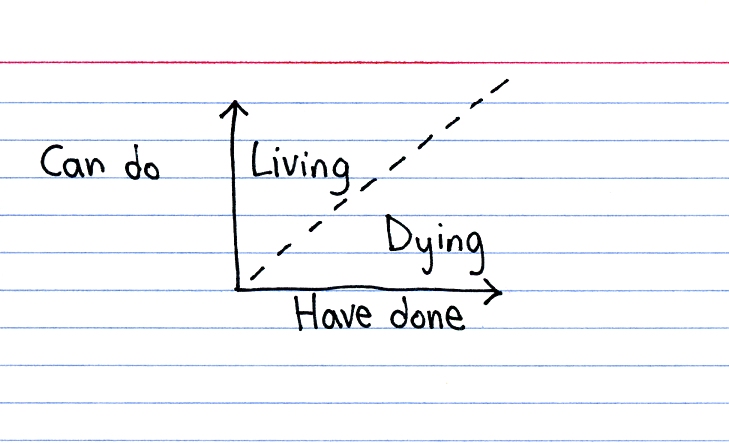
The post It’s not over until you give up. appeared first on Indexed.
This 2005 Volvo V70R wagon offers a five cylinder turbo coupled with AWD with a rare 6-speed manual. The 2.5 liter engine is rated at 296 HP and stopping power comes via a set of factory Brembo brakes. New, these were priced around $40k–well above their base models–and Volvo made the most of that extra money. Find it here on Craigslist for $7,950 in Alexandria, Virginia.

A subtle rear spoiler, more aggressive bumpers and ‘R’-badged 17″ wheels are among the details that differentiate this model from the standard V70. A moonroof, fog lights and headlight wipers complete the exterior accessories. Nicely finished in Titanium Gray Metallic, this full-sized wagon should really fly under the radar. Minor dings and scratches are noted by the seller, although none seem too bad in photos.

With room for seven people–including a rear-facing bench in the hatch for children–these are cars are big on practicality. Though not equipped with the polarizing, baseball-glove-orange “Atacama” interior, the cool “Spaceball” shift mechanism is a cool touch. Seats are showing their age but appear soft and without any serious damage, and the driver can select from three suspension settings.

The higher-output turbo models are not known for their fuel economy, but they put out a lot of power and sound great. More power isn’t too difficult to attain, either. Combined with the proven Haldex Traction system, traction should be excellent, and a nice set of snow tires could make this Swedish machine a safe kid-hauler during winter.

A recent mechanical refresh included new brake pads and rotors, clutch, suspension components and a timing belt. Full service records are available from the seller, and the car sounds ready to take you and lots of your stuff and/or friends wherever you need to be.


Research presented to this week's IEEE International Conference on Network Protocols suggests a fairly simple enhancement to Wi-Fi could help deal with the chronic congestion caused by its popularity.…
In honour of Boole’s 200th, here’s his episode in the Thrilling Adventures!


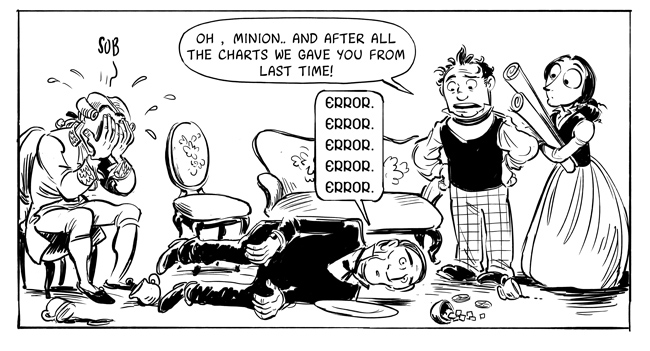
1. Boole is someone I’ve shamefully neglected making fun of in this comic. He was a rather obscure professor of mathematics in Cork, Ireland, son of a housemaid and a cobbler, with a pleasant story of self-made modest success. He was born the same year as Lovelace, and outlived her by a bit over a decade; he did some boring but useful work in differential calculus. He also laid down the foundations for the logic that makes modern computers possible in a medium-sized book, dense with equations, called An Investigation of the Laws of Thought [full text at Project Gutenberg].
Ada Lovelace’s tutor Augustus de Morgan had been working in the 1830s and ’40s towards a mathematical system of logic, to replace the Aristotelean verbal propositions that had been taught to schoolboys for two thousand years. Boole took this idea and ran with it to an extreme of obsessive simplicity. He reduced all possible logical conditions down to two states: true or false, yes or no– expressed as 0 and 1*; and three relationships: AND (multiplication), OR (addition), NOT (negation). A sample from his book serves to show how extremely weird this must have seemed to a Victorian reader:
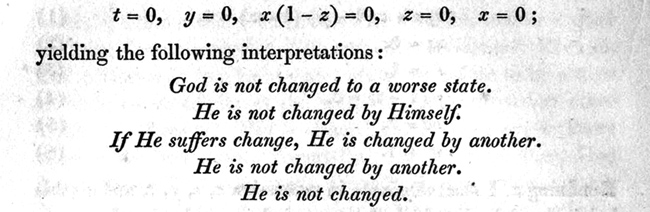
2. Boole’s answers to Minion’s three questions in the comic demonstrate NOT (No, I will not not come in), OR (Yes, I would like [coffee or tea]), and AND (No, I do not want both). Boole developed his algebra of logic not for machinery but as a theory of how the human mind worked “to collect from the various elements of truth brought to view in the course of these inquiries some probable intimations concerning the nature and constitution of the human mind.” We have scarcely more of an idea of how the human mind is constituted now than in Boole’s day, but the radical simplicity of Boole’s system made it ideal for mechanisation— making Lovelace’s vision of an Analytical Engine run on logic a practical possibility. Lovelace, alas, was two years dead when Laws of Thought was published in 1854. Babbage did own a copy, and he wrote ‘This man is a real thinker’ on the flyleaf.**
Babbage and Boole met once briefly, at the Great Exhibition of 1862; Babbage suggested Boole read Lovelace’s paper. A bystander gives a dazzling glimpse of what must have been one of the most extraordinary conversations of the 19th century: “As Boole had discovered that means of reasoning might be conducted by a mathematical process, and Babbage had invented a machine for the performance of mathematical work, the two great men together seemed to have taken steps towards the construction of that great prodigy a Thinking Machine.” [the amazing letter describing their meeting!]
This notion was first picked up by William Stanley Jevons, an economist who was, like Lovelace, a student of Augustus de Morgan. Jevons became obsessed with making a machine from Boole’s work, to which end he built a “Logic Piano” in the 1860s. This little wooden box slid labelled slats to which the user would assign propositions and relationships by pressing keys. Jevons’ own example of the sort of thing the Logic Piano could work out was:
Iron is a metal
Metal is an element
Iron=metal
Metal=element
Therefore
Iron=element
Which goes to show you that logic isn’t everything. [more on the Logic Piano, with pictures!].
* Boole’s system is actually considerably more complicated– he viewed 0 and 1 as the extremes between which the mind assigns a probability. So “Do I want tea?” might be 0 if you loathe tea and 1 if you’re panting for a cup, but usually something like 0.54 if you’re wondering if it’s worth getting up to boil the kettle. Boolean logic as used by computers uses only pure 0 and 1 however, and most of Boole’s own work treats it this way also.
**I have this beautiful little fact from my favourite book on Babbage, Mr. Babbage’s Secret; The Tale of Cypher and APL, by Danish computer engineer Ole Franksen.
And some bonus Booles:

The post Why there’d better be wine at networking events. appeared first on Indexed.
This listing is for three different, apparently home-built radio-controlled replicas of various Volvo and Liebherr construction vehicles. Finished in 1:2.5 scale, workmanship looks very impressive and the seller claims that they are the largest of their type in the world. Fully functional and well-detailed, all three (wheel loader, six wheel dump truck and excavator) are powered by 800cc Kohler V-twins. Sale includes an equally well-made looking, four axle, 16 wheel trailer. Find the whole play set here on anibis.ch in Barberêche, Switzerland for 127k CHF (~$130,700 USD today). Special thanks to BaT reader Hannes J. for this submission.

Though the two loaders shown here are a bit different, we have no doubt that there’s a real Volvo machine with near-identical proportions and detailing out there somewhere. We’re guessing the trailer wheels are 10 inchers, meaning it probably wouldn’t be suitable for adapting to tow-behind road use. It sure looks cool, though.

Here’s the loader demonstrating a logging device. Weight for this rig is quoted at 1,700 kg, suggesting it’s been built strongly–as if this photo isn’t enough evidence of the same. All machines appear to be controlled with conventional, off-the-shelf twin stick controllers.

The man in the middle of this photo seems to be the builder and seller. Weighing 2,300 kg, the dumper’s load capacity is estimated to be a hugely impressive 4,000 kg or nearly 9,000 pounds! Tires look accurate and must have been custom made.

Check out that chassis and suspension articulation. Both wheeled machines are driven on all axles. We wish we could see some guts, or even better, browse a detailed, 50 plus-page build thread–sadly, a quick Googling reserved no results.
This four minute-long, German language video shows all three vehicles in operation and also provides a look at the Liebherr excavator replica–no photos of it are included elsewhere in the ad, unfortunately. We want to buy the whole set under the pretense that it’d be for the kids, but the sandbox is a bit on the small side.
Joe ElliottIt's probably a good thing I don't live there anymore, or I might be crazy enough to buy this.
This 1971 Lotus Europa is one of the lowest-priced examples we have seen in a long time, and as can be expected, it will thus need some of everything. The seller states that it belonged to his brother, and has been sitting for at least ten years. The original Renault drivetrain is included, but its running condition is unknown. Find it here on Craigslist in East Wichita, KS for $1500. Special thanks to BaT reader Robert F. for this submission.

While the seller does provide a few shots of the car, written details are scant. The bodywork itself looks very tired, and the fiberglass in the rear may be delaminating. This does not bode well for the metal chassis underneath, which already suffers from some fairly notorious rust problems.

Frankly, this car has us wondering whether or not anyone has made a rat rod out of one of these before. It’s likely not financially logical to go through the expense of restoring this example when a good one can likely be had for significantly less coin. If the chassis is actually rusted, however, then this may simply be a parts car.

It’s always interesting to see old pictures of such worn cars in their prime. We can only speculate as to what happened to this car between the time this picture was taken and now.

Many of these cars have received interesting engine swaps over the years, and if that interests you and it can be salvaged, this may be a good candidate for that. Otherwise, it is still a relatively good price for a Europa parts car.
This 1970 NSU Ro80 (chassis 3800113027) is a rare find in any condition. While body rot may not be for the faint of heart, a donor car and spares are included. Notably, this one comes with a completely rebuilt Wankel that looks clean enough for a museum display. We hope it runs as good as it looks, as these are preferable with their original motors instead of commonly retrofitted Mazda rotaries. Find this one here on eBay in Austin, Texas with reserve at $4k.

The seller states that the major issue with this car is rust. The driver side floor and rocker area show the most severe rot, while door bottoms and sunroof add to the list. Still, more has been done with less, and the engine bay and the rest of the body appear to be in decent condition. The car also comes with three spare windshields, various other spares and a donor car.

The interior appears largely complete, with typical wear for a car of this age. The dash, looking not unlike a late Saab 96 or 99, appears complete and in good shape. This goes too for seat covers and door cards, though mildew in some spots is a definite concern. The headliner also appears moldy, but hopefully it can be saved.

While the styling was bold and creative when it appeared, the real story of the Ro80 were the mechanicals. Powered by a rotary linked to a semi-automatic transmission, the car also featured disc brakes on all four wheels, semi-trailing arm rear suspension and rack and pinion steering–pretty remarkable for a car introduced in 1967. While NSU’s Wankel woes are well known, this examples comes with a completely rebuilt and restored motor ready to go. If that’s not enough of a hook, the seller adds that they’ve restored these cars before, and would be willing to help with tech support.

While it remains a serious project despite the rebuilt motor, once completed it would no doubt prove to be a stylish and sophisticated saloon, arguably as good if not better than anything else Europe was producing at that time.
4/5/2016 Update: Seven months later and this 1988 Merkur XR4Ti (VIN WF1BT80W5JM698451) has not sold, despite a claimed ~18k miles and what appears to be a remarkably good state of preservation. The seller has dropped the price by a grand, but as cool as this car is, its market must be quite narrow. The seller says it’s fully functional, including A/C, heated seats, and lots of other accessories for this highly-optioned, good-looking 5-speed example. Find it here on Craigslist in Cincinnati, Ohio for $8,500 OBO. Special thanks to BaT reader Kyle K. for this submission.

From 9/20/2015:
This 1988 Merkur XR4Ti (VIN WF1BT80W5JM698451) has just 18k miles and shows a level of care and preservation seldom given to these cars. Featuring the desireable 2.3 liter turbo backed by a 5-speed gearbox, this rare coupe should offer an interesting alternative to other 80’s turbo tin tops like the SAAB 900 SPG and Mustang SVO. Find it here on Craigslist in Cincinnati, Ohio for $9,500. Special thanks to BaT reader Douglas G. for this submission.

Wrapped in wet looking black paint and sitting over BBS-esque mesh wheels, the car looks very promising. While the general shape recalls the SAAB 900 and the Audi Coupe it competed with, the unheard of brand, slightly odd detailing and largely disinterested Lincoln/Mercury dealer network really challenged American car buyers. Though the seller mentions some door dings, things look quite straight overall. Even after 30 years, we still dig the A/B/C/D pillar arrangement on these cars.

Inside, this example appears very well kept, with no rips or splitting in the six-way adjustable, heated black leather seats. While these interiors have not aged as well as their counterparts from Audi and BMW, Ford’s choice of materials at least seems less crack-prone. With just 18k on the odometer, the minimal level of wear is just what we’d expect.

Ford’s 175 horsepower, turbocharged 2.3 liter four appears just as well kept as the rest of the car. The ad mentions a new battery, newer tires and a full exhaust fitted just five months ago. Additionally, the car is said to have been garaged its whole life and has never seen snow.

Though they never really found a market, a combination of good performance, aftermarket support from the overseas Sierra community and unusual but attractive styling has seen modern day interest rise appreciably over the past few years. It won’t ever be as valuable as or carry the same cachet as an equally well preserved E30, but for some that will be a big part of the appeal.
Joe ElliottMeanwhile, in Australia...