
Shared posts
18 Feb 03:48
The Worst Things For Sale is Drew's blog. It updates every day. Subscribe to the Worst Things For Sale RSS!
nice to meet you my name
Today on Toothpaste For Dinner: nice to meet you my name
The Worst Things For Sale is Drew's blog. It updates every day. Subscribe to the Worst Things For Sale RSS!
08 Feb 19:55
This goldfish and its steerable robot tank will destroy humanity
by Gareth Corfield
Mark our words. First this uni campus, then the world
RotM Students at Carnegie Mellon University have made a mobile goldfish bowl that the lucky fish can drive around by itself – and they've filmed it for posterity.…
07 Feb 20:34
Gimme some skin: Boffins perfect 3D bioprinter that emits slabs of human flesh
by Iain Thomson
Just imagine what a printer jam looks like
Vid 3D printing for most users is limited to polymer printing, or in some cases metal – but now a team from Spain has built hardware that can print actual human skin.…
05 Feb 05:20
The Worst Things For Sale is Drew's blog. It updates every day. Subscribe to the Worst Things For Sale RSS!
urine trouble
Today on Toothpaste For Dinner: urine trouble
The Worst Things For Sale is Drew's blog. It updates every day. Subscribe to the Worst Things For Sale RSS!
21 Jan 21:54
Wankel Powered Crusher Dodger: 1975 Citroen GS Birotor
by bringatrailer
This 1975 Citroen GS Birotor is one of just 847 Wankel-powered cars built, many (if not most) of which were bought back and destroyed. Introduced in late 1973 just as that year’s fuel shortage hit, sales were disappointing, and Citroen wanted to avoid the need to build and stockpile spares for such a small number of cars. This one sounds to be recently restored, and looks to be in fine shape throughout. Find it here on Car and Classic in Budapest, Hungary for 109k GBP (~$133k USD today). Special thanks to BaT reader Kyle K. for this submission.

Interestingly, Citroen built another rotary-powered car a few years prior, but the M35 as it was known was never officially sold, but rather distributed to loyal dealers and customers for evaluation–it was the direct result of that car’s successful testing that a twin-rotor version of its Comotor (an NSU and Citroen collaboration) designed and-built single was developed for use in the GS Birotor, itself sometimes referred to as the GZ. External differences between the GS Birotor and (relatively) conventionally-powered examples included flared fenders and wheels with five lugs–two more than usual. Behind said wheels now rested four-wheel discs.

Inside, more luxurious cabin fittings further distinguished Birotors from their more common stablemates, and the lack of a clutch pedal marked another key difference–transmissions were semi-automatic 3-speeds based on the design fitted to Comotor partner NSU’s similarly Wankel-powered Ro80. Apart from a copy-and-paste history lesson, the ad contains essentially no additional information apart from price, however a throwaway final sentence seems to suggest that this particular car has seen a full restoration.

No direct engine bay photos are provided, but the 995cc twin rotor developed a healthy 106 HP and exactly the same amount of torque measured in lb. ft. Though substantially lighter, more powerful, and faster than more common flat-four powered GS models, poor fuel economy (not to mention a 70% greater list price when compared to a typical GS) resulted in slow sales, and as noted above, Citroen’s efforts to crush as many as they could. Fortunately, a few owners resisted buy-back offers.
Even if engine bay shots were available, there’d be little visible underneath the model’s standard front-mounted spare tire. Instead, check out what appears to be the same car featured here really belting away from a stop, revving out like a large-capacity two-stroke sports bike driven in anger, albeit with a much slower rate of acceleration of course.
20 Jan 16:41
Repeal and destroy
by Jen Sorensen
I realize Obamacare wasn’t perfect — my own premiums have spiked, in part because so many people in Texas had gone without coverage for so long that they overwhelmed the system. But I’d still take the Affordable Care Act over what we had before any day. As a self-employed person, health insurance has been the bane of my existence for much of my career. For a few blissful years, I didn’t have to worry about it. Now I’m back to worrying. Why does Trump hate small businesspeople?
Of course I wish we had universal health care like most other industrialized nations on earth, but that wasn’t politically possible at the time Obama sought reform, and something had to be done. The ACA saved lives, and for that I’m grateful.
Joe Elliott, Tom Roche likes this



06 Jan 22:02
The Worst Things For Sale is Drew's blog. It updates every day. Subscribe to the Worst Things For Sale RSS!
order special instructions
Today on Toothpaste For Dinner: order special instructions
The Worst Things For Sale is Drew's blog. It updates every day. Subscribe to the Worst Things For Sale RSS!
02 Jan 19:55
The Worst Things For Sale is Drew's blog. It updates every day. Subscribe to the Worst Things For Sale RSS!
give a man
Today on Toothpaste For Dinner: give a man
The Worst Things For Sale is Drew's blog. It updates every day. Subscribe to the Worst Things For Sale RSS!
Joe Elliott likes this
28 Dec 11:49
The Worst Things For Sale is Drew's blog. It updates every day. Subscribe to the Worst Things For Sale RSS!
fish temperature
Today on Toothpaste For Dinner: fish temperature
The Worst Things For Sale is Drew's blog. It updates every day. Subscribe to the Worst Things For Sale RSS!
02 Dec 05:19
The Worst Things For Sale is Drew's blog. It updates every day. Subscribe to the Worst Things For Sale RSS!
my driver license
Today on Toothpaste For Dinner: my driver license
The Worst Things For Sale is Drew's blog. It updates every day. Subscribe to the Worst Things For Sale RSS!
28 Nov 19:38
The Worst Things For Sale is Drew's blog. It updates every day. Subscribe to the Worst Things For Sale RSS!
your password is invalid prime
Today on Toothpaste For Dinner: your password is invalid prime
The Worst Things For Sale is Drew's blog. It updates every day. Subscribe to the Worst Things For Sale RSS!
23 Nov 21:07
The Worst Things For Sale is Drew's blog. It updates every day. Subscribe to the Worst Things For Sale RSS!
antibiotics farm
Today on Toothpaste For Dinner: antibiotics farm
The Worst Things For Sale is Drew's blog. It updates every day. Subscribe to the Worst Things For Sale RSS!
13 Nov 20:35
Oil Companies and Big Polluters are Desperately Trying to Stop I-732 (the Carbon Tax Swap Initiative)
by Cliff Mass
Big Oil and Big Carbon Polluters are very worried.
They obviously believe that Washington State's I-732 (the revenue-neutral carbon tax initiative) may pass and they are spending massive amounts of money on advertising to stop it.
For example, during the past week, the infamous Koch Brothers, far right oil barons, donated $ 50,000 to the No on I 732 campaign. Kaiser Aluminum threw in another $300,000. Puget Sound Energy, which heavily uses coal, threw in $125,000. And the oil company lobbyists (American Fuel & Petrochemical Manufacturers) contributed $250,000.



And then there is the deeper question. Can moderates make policy and govern our country? The extremes are locked into positions and reject compromise and pragmatic/moderate approaches. Are there enough folks in the middle to move the state and nation forward? Or will the extremes dominate the national discourse, leading to deadline on critically important issues like the environment and the nation's economy?
They obviously believe that Washington State's I-732 (the revenue-neutral carbon tax initiative) may pass and they are spending massive amounts of money on advertising to stop it.
For example, during the past week, the infamous Koch Brothers, far right oil barons, donated $ 50,000 to the No on I 732 campaign. Kaiser Aluminum threw in another $300,000. Puget Sound Energy, which heavily uses coal, threw in $125,000. And the oil company lobbyists (American Fuel & Petrochemical Manufacturers) contributed $250,000.

Clearly, the oil companies believe that if I-732 passes, the demand for their product will decline.
Is it not ironic that the Sierra Club, Seattle's Climate Solutions, the Washington Environmental Council, and the Alliance for Jobs and Clean Energy are aligned with the most reactionary, anti-environmental players in the nation (e.g., the Koch brothers and the Petroleum Manufacturer groups). These left -eaning "climate justice" enthusiasts are both totally naive and working against their own self-interests and those of their members.

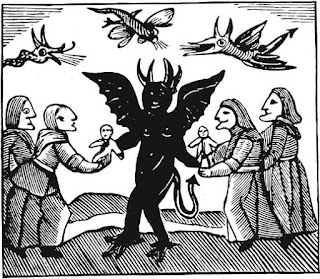
Some Washington environment and "climate justice" groups are in league with climate denier "devils"
The irony of this situation is stunning. While some "climate justice" groups and their fellow-travelers claim that I-732 will not be effective in reducing carbon emissions, the folks who produce and massively use carbon-based fuels are so convinced it WILL be effective that they are desperately throwing money at the No on I-732 campaign.
But the fascination of the I-732 saga does not end there. A lazy media has been complicit in the No on I732 campaign, just as it was complicit in the rise of Donald Trump. For example, the biggest objection to I 732 (and one repeated by the Seattle Times and others) is simply not true: that somehow the revenue-neutral I-732 will suck money out of the state budget, hurting schools, the environment, and orphans. The truth, outlined by the independent Sightline Foundation and shown in detail on the I-732 website, is that I-732 is extraordinarily well-designed is as close to neutrality as humanly possible. And in any case, the state legislature can do what it always does--make adjustments to ensure income meets requirements of the APPROVED STATE BUDGET. But the lazy media hasn't independently run the numbers to show that the No on 732 campaign is just blowing smoke.
But something amazing has happened during the past several weeks. An amazing bipartisan consortium of interests and groups have come together to support I-732:
- A coalition of environmental groups ranging from WA Audubon to the WA Green Party.
- Major political leaders such as Slade Gorton, Rob McKenna, Brady Walkinshaw, Jim McDermott, and Ron Sims.
- Virtually the entire climate research community of the Pacific Northwest and national climate leaders such as Jim Hansen.
- National environment activities like Leonardo DiCaprio and Robert Kennedy, Jr.
- An army of millennials and young people determined that the world they will experience in 50 years will be livable.
All of these folks realize that the time for talk and self interest is over. The time to act on global warming is now. To put it another way, a moderate, pragmatic, non-ideological center is congealing to support I-732 and to push for real steps for finally dealing with climate change, first in WA state and then the nation.

Will the Koch Brothers, oil producers, and some self-interested, naive "climate justice" activists stop the nation's best hope for progress in dealing with climate change? Will they stop I-732's potentially huge contribution to making our State's tax system less regressive?
On Tuesday we will know. And if you haven't voted yet, please consider carefully on which side you want to be on. A future in which our state and national finally deals firmly with global warming and pushes away the current grid-lock and status quo. Can moderates and reasonable folks bring rational action to play to deal with the threat of increasing greenhouse gases?
And then there is the deeper question. Can moderates make policy and govern our country? The extremes are locked into positions and reject compromise and pragmatic/moderate approaches. Are there enough folks in the middle to move the state and nation forward? Or will the extremes dominate the national discourse, leading to deadline on critically important issues like the environment and the nation's economy?
10 Nov 20:21
The Worst Things For Sale is Drew's blog. It updates every day. Subscribe to the Worst Things For Sale RSS!
you must log in
Today on Toothpaste For Dinner: you must log in
The Worst Things For Sale is Drew's blog. It updates every day. Subscribe to the Worst Things For Sale RSS!
30 Oct 23:10
The Worst Things For Sale is Drew's blog. It updates every day. Subscribe to the Worst Things For Sale RSS!
republicans democrats women
Today on Toothpaste For Dinner: republicans democrats women
The Worst Things For Sale is Drew's blog. It updates every day. Subscribe to the Worst Things For Sale RSS!
23 Oct 00:58
The Worst Things For Sale is Drew's blog. It updates every day. Subscribe to the Worst Things For Sale RSS!
you shouldent of done that
Today on Toothpaste For Dinner: you shouldent of done that
The Worst Things For Sale is Drew's blog. It updates every day. Subscribe to the Worst Things For Sale RSS!
18 Oct 19:12
Trusting Trump with Secrets
by Richard Erlich
Looking back on World War II as a young adult, I got the impression that parts of US culture put a bit too much emphasis on secrecy and spying and code-breaking for reasons having more to do with the Cold War than with the victory against the Fascists of the Second.
* I had grown up on George Orwell's Nineteen Eighty-Four and knew how important fear and suspicion of "spies and saboteurs" are for reinforcing loyalty and group solidarity. As Senator Arthur Vandenberg advised President Truman, the government had to "scare the hell out of the American people" to get support for the Cold War — and the scaring the hell out continued, including stoking fears of spies.
* Stressing the elegance of code-breaking and triumphs of spying drew attention away from how much the Allies owed for victory to the brute-force barbarism of the Red Army smashing its way west into Hitler's Reich.
* Stressing the elegance of code-breaking and triumphs of spying drew attention away from how much Allied victory was the result of US Federal government coordination and to some extent cooptation of US industrial production and other aspects of a directed, highly regulated capitalism.
* Stressing Russian theft of American secrets helped denigrate the ability of the Soviets to use their German scientists almost as well as we used our German scientists for the rocket, missile, and other programs of the Cold War, and helped justify the execution of Ethel Rosenberg.
Well, etc. We did have intelligence and spy-craft triumphs during the Second World War, and "spies and saboteurs" are a threat — and terrorists as well; but my highly unoriginal feeling was and continues that the threat is often overblown and over-emphasized.
Which brings me to Hillary Clinton's 33,000 deleted e-mails and Donald Trump's attack thereon early in the debate of 9 October 2016. (I don't know if they went back to it, since I returned from the gym where I was watching the ... show to finally write this blog post.)
What got me was Mr. Trump's chiding former-Secretary Clinton for not know that a circled "C" on a document indicated classified/confidential material. Hence, Mr. Trump indicated, Ms. Clinton couldn't be trusted with secrets. And the following went through my mind, coming from the big story of the weekend of Mr. Trump's comments on a bus about imposing kisses and, well, grabbing what once was called "queynte."
If one is going to confess to a possible crime, much less to brag about committing one, it is well to check if you are in the presence of someone wearing a "wire." Mr. Trump bragged about a couple acts somewhere between crude and criminal on a bus at a television studio while people around him were clearly wearing microphones and he himself was miked.
There was no subtle "C" here; there were obvious microphones, and if he was sufficiently stupid to admit to groping or assault in the presence of visible microphones — while wearing a microphone! — he is in no position to talk about anyone else's handling of confidential material unless they're sending pdf's of it to ISIS and the Iranian Revolutionary Guard.
It's not so much that "Power corrupts," including, apparently "star power." The crucial thing is that Power regularly "makes arrogant," and "arrogant makes stupid"; and Mr. Trump clearly is too arrogantly stupid to be trusted with secrets, even his own.
15 Oct 00:07
Two points: (1) James Carville, "Between Paoli and Penn Hills, Pennsylvania is Alabama without the blacks." (2) It's not just interesting, it's readily understandable from migration patterns of Appalachians, the folk-ways analyzed in Nancy Isenberg's WHITE TRASH: THE 400-YEAR [...] HISTORY OF CLASS IN AMERICA, and James Webb's more friendly BORN FIGHTING: HOW THE SCOTS-IRISH SHAPED AMERICA, and Colin Woodard's AMERICAN NATIONS [...]. Appalachian Mountain folk were used by their, ahem, "betters" to keep the Indians out and the Blacks down, and "the old schooling sticks." Almost as important to the Powers that Were and more subtly still be, the caste system "kept in their place" poor Whites.
Bob Dylan summed it up, back in 1963: They remain pawns in the game.
The Most Racist Places in America, According to Google
by Richard Erlich
"Interestingly, on the map above the most concentrated cluster of racist searches
happened not in the South, but rather along the spine of the
Appalachians running from Georgia all the way up
to New York and southern Vermont."
Two points: (1) James Carville, "Between Paoli and Penn Hills, Pennsylvania is Alabama without the blacks." (2) It's not just interesting, it's readily understandable from migration patterns of Appalachians, the folk-ways analyzed in Nancy Isenberg's WHITE TRASH: THE 400-YEAR [...] HISTORY OF CLASS IN AMERICA, and James Webb's more friendly BORN FIGHTING: HOW THE SCOTS-IRISH SHAPED AMERICA, and Colin Woodard's AMERICAN NATIONS [...]. Appalachian Mountain folk were used by their, ahem, "betters" to keep the Indians out and the Blacks down, and "the old schooling sticks." Almost as important to the Powers that Were and more subtly still be, the caste system "kept in their place" poor Whites.
Bob Dylan summed it up, back in 1963: They remain pawns in the game.
14 Oct 19:28
What We Are
by monbiot
Democracy cannot work as it is meant to; human nature does not allow it.
By George Monbiot, published in the Guardian 5th October 2016
What if democracy doesn’t work? What if it never has and never will? What if government of the people, by the people, for the people is a fairytale? What if it functions as a justifying myth for liars and charlatans?
There are plenty of reasons to raise these questions. The lies, exaggerations and fear-mongering on both sides of the Brexit non-debate; the xenophobic fables that informed the Hungarian referendum; Donald Trump’s ability to shake off almost any scandal and exposure; the election of Rodrigo Duterte in the Philippines, who gleefully compares himself to Hitler: are these isolated instances, or do they reveal a systemic problem?
Democracy for Realists, published earlier this year by the social science professors Christopher Achen and Larry Bartels, argues that the “folk theory of democracy” – the idea that citizens make coherent and intelligible policy decisions, on which governments then act – bears no relationship to how it really works. Or could ever work.
Voters, they contend, can’t possibly live up to these expectations. Most are too busy with jobs and families and troubles of their own. When we do have time off, not many of us choose to spend it sifting competing claims about the fiscal implications of quantitative easing. Even when we do, we don’t behave as the theory suggests.
Our folk theory of democracy is grounded in an Enlightenment notion of rational choice. This proposes that we make political decisions by seeking information, weighing the evidence and using it to choose good policies, then attempt to elect a government that will champion those policies. In doing so, we compete with other rational voters, and seek to reach the unpersuaded through reasoned debate.
In reality, the research summarised by Achen and Bartels suggests, most people possess almost no useful information about policies and their implications, have little desire to improve their state of knowledge, and have a deep aversion to political disagreement. We base our political decisions on who we are, rather than what we think.
In other words, we act politically not as individual, rational beings, but as members of social groups, expressing a social identity. We seek out the political parties that seem to correspond best to our culture, with little regard to whether their policies support our interests. We remain loyal to political parties long after they have ceased to serve us.
Of course, shifts do happen, sometimes as a result of extreme circumstances, sometimes because another party positions itself as a better guardian of a particular cultural identity. But they seldom involve a rational assessment of policy.
The idea that parties are guided by the policy decisions made by voters also seems to be a myth; in reality, the parties make the policies and we fall into line. To minimise cognitive dissonance – the gulf between what we perceive and what we believe – we either adjust our views to those of our favoured party or avoid discovering what the party really stands for. This is how people end up voting against their interests.
We are suckers for language. When surveys asked Americans whether the federal government was spending too little on “assistance to the poor”, 65% of them agreed. But only 25% agreed that it was spending too little on “welfare”. In the approach to the 1991 Gulf War, nearly two thirds of Americans said they were willing to “use military force”. Fewer than 30% were willing to “go to war”.
Even the less ambitious notion of democracy – that it’s a means by which people punish or reward governments – turns out to be divorced from reality. We can remember only the past few months of a government’s performance (a bias known as “duration neglect”) and we are hopeless at correctly attributing blame. A great white shark that killed five people in July 1916 caused a 10% swing against Woodrow Wilson in the beach communities of New Jersey. In 2000, according to another analysis by the authors, 2.8 million voters punished the Democrats for the severe floods and droughts which struck that year. Al Gore, they say, lost Arizona, Louisiana, Nevada, Florida, New Hampshire, Tennessee and Missouri as a result; which is ironic in view of his position on climate change.
The obvious answer is better information and civic education. But this doesn’t work either. Moderately-informed Republicans were more inclined than Republicans with the least information to believe that Bill Clinton oversaw an increase in the budget deficit (it declined massively). Why? Because, unlike the worst-informed, they knew he was a Democrat. The tiny number of people with a very high level of political information tend to use it not to challenge their own opinions but to rationalise them. Political knowledge, Achen and Bartels argue, “enhances bias”.
Direct democracy – referenda and citizens’ initiatives – seems to produce even worse results. In the US, initiatives are repeatedly used by multi-million dollar lobby groups to achieve results that state legislatures won’t grant them. They tend to replace taxes with user fees, stymie the redistribution of wealth and degrade public services. Whether representative or direct, democracy comes to be owned by the elites.
This is not to suggest that it has no virtues, just that they are not the principal virtues we ascribe to it. It allows governments to be changed without bloodshed, limits terms in office, and ensures that the results of elections are widely accepted. Sometimes public attribution of blame will coincide with reality, which is why you don’t get famines in democracies.
In these respects it beats dictatorship. But is this all it has to offer? A weakness of the book is that most of its examples are drawn from the US, and most of those are old. Had the authors examined popular education groups in Latin America, participatory budgets in Brazil and New York, the fragmentation of traditional parties in Europe and the movement that culminated in Bernie Sanders’s near miss, they might have discerned more room for hope. This is not to suggest that the folk theory of democracy comes close to reality anywhere, but that the situation is not as hopeless as they propose.
Persistent, determined, well-organised groups can bring neglected issues to the fore and change political outcomes. But in doing so they cannot rely on what democracy ought to be. We must see it for what it is. That means understanding what we are.
www.monbiot.com
28 Sep 04:17
The Worst Things For Sale is Drew's blog. It updates every day. Subscribe to the Worst Things For Sale RSS!
fermented anyway
Today on Toothpaste For Dinner: fermented anyway
The Worst Things For Sale is Drew's blog. It updates every day. Subscribe to the Worst Things For Sale RSS!
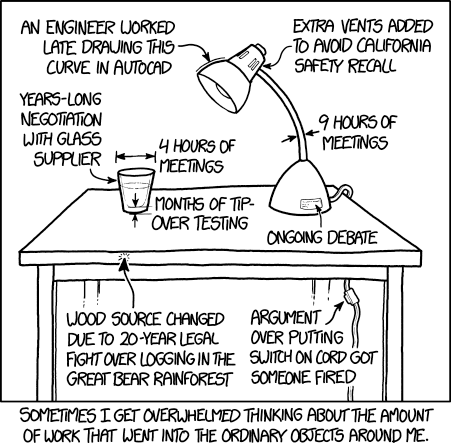
![[After setting your car on fire] Listen, your car's temperature has changed before.](http://imgs.xkcd.com/comics/earth_temperature_timeline.png "[After setting your car on fire] Listen, your car's temperature has changed before.")