07 Sep 15:54
by Lusina Mantry, Rajaram Maayuri, Vikash Kumar and Parthasarathy Gandeepan
Abstract
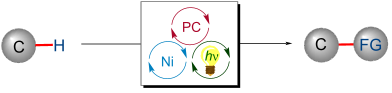
Catalytic C‒H functionalization has become a powerful strategy in organic synthesis due to the improved atom-, step- and resource economy in comparison with cross-coupling or classical organic functional group transformations. Despite the significant advances in the metal-catalyzed C‒H activations, recent developments in the field of metallaphotoredox catalysis enabled C‒H functionalizations with unique reaction pathways under mild reaction conditions. Given the relative earth-abundance and cost-effective nature, nickel catalysts for photoredox C‒H functionalization have received significant attention. In this review, we highlight the developments in the field of photoredox nickel-catalyzed C‒H functionalization reactions with a range of applications until summer 2021.
Beilstein J. Org. Chem. 2021, 17, 2209–2259. doi:10.3762/bjoc.17.143
07 Sep 15:50
by Ahmed M. Sheta,
Anas Alkayal,
Mohammad A. Mashaly,
Samy B. Said,
Saad S. Elmorsy,
Andrei V. Malkov,
Benjamin R. Buckley

Electrosynthetic hydrocarboxylation of α,β-unsaturated olefins with excellent regioselectivity is reported. The method requires no sacrificial electrode and is thus amenable to a flow configuration. The products are purified by simple crystallization. The synthesis of a precursor to ethosuximide, which contains an all-carbon quaternary center, illustrates the potential of the process. Finally, a robustness study has benchmarked the process for future users.
Abstract
The carboxylation of low-value commodity chemicals to provide higher-value carboxylic acids is of significant interest. Recently alternative routes to the traditional hydroformylation processes that used potentially toxic carbon monoxide and a transition metal catalyst have appeared. A significant challenge has been the selectivity observed for olefin carboxylation. Photochemical methods have shown a viable route towards the hydrocarboxylation of α,β-unsaturated alkenes but rely on the use of an excess reducing or amine reagent. Herein we report our investigations of an electrochemical approach that is able to hydrocarboxylate α,β-unsaturated alkenes with excellent regioselectivity and the ability to carboxylate hindered substrates to afford α-quaternary center carboxylic acids. The reported process requires no chromatography and the products are purified by simple crystallization from the reaction mixture after work-up.
04 Sep 11:27
by Shintaro Okumura and Yasuhiro Uozumi

Organic Letters
DOI: 10.1021/acs.orglett.1c02592

02 Sep 09:45
by Yufen Lv,
Jinyun Luo,
Muze Lin,
Lin He,
Hui-Lan Yue,
Ruisheng Liu,
Wei Wei

Abstract
A metal-free multi-component sulfur dioxide insertion reaction of alkynes, sodium metabisulfite, aryldiazonium, and quinoxalin-2-ones has been developed under visible-light photoredox-catalysis. This photocatalytic tandem reaction would be conducted at room temperature by using of Rhodamine 6G as organic photocatalyst and sodium metabisulfite as the SO2 surrogate. This protocol provides a synthetic strategy for the construction of various quinoxalin-2-one-containing vinyl sulfones with favourable functional group tolerance, in which one C−C bond and two C−S bonds were constructed in one pot procedure.
01 Sep 10:23
Chem. Commun., 2021, 57,9956-9967
DOI: 10.1039/D1CC04073A, Feature Article

Open Access
Antonio Pulcinella, Daniele Mazzarella, Timothy Noël
The conversion of light alkanes into bulk chemicals is becoming an important challenge as it effectively avoids the use of prefunctionalized alkylating reagents.
The content of this RSS Feed (c) The Royal Society of Chemistry

01 Sep 09:01
by Katrina Bergmann and Rebecca L. Davis

Organic Letters
DOI: 10.1021/acs.orglett.1c02387

01 Sep 08:54
by Zhe Dong
Nature, Published online: 31 August 2021; doi:10.1038/s41586-021-03920-6
Metallaphotoredox-enabled deoxygenative arylation of alcohols

28 Aug 16:54
Publication date: 11 November 2021
Source: Chem, Volume 7, Issue 11
Author(s): Si-Shun Yan, Shi-Han Liu, Lin Chen, Zhi-Yu Bo, Ke Jing, Tian-Yu Gao, Bo Yu, Yu Lan, Shu-Ping Luo, Da-Gang Yu
28 Aug 16:52
by Jurczyk, J., Lux, M. C., Adpressa, D., Kim, S. F., Lam, Y.-h., Yeung, C. S., Sarpong, R.
Saturated heterocycles are found in numerous therapeutics and bioactive natural products and are abundant in many medicinal and agrochemical compound libraries. To access new chemical space and function, many methods for functionalization on the periphery of these structures have been developed. Comparatively fewer methods are known for restructuring their core framework. Herein, we describe a visible light–mediated ring contraction of α-acylated saturated heterocycles. This unconventional transformation is orthogonal to traditional ring contractions, challenging the paradigm for diversification of heterocycles including piperidine, morpholine, thiane, tetrahydropyran, and tetrahydroisoquinoline derivatives. The success of this Norrish type II variant rests on reactivity differences between photoreactive ketone groups in specific chemical environments. This strategy was applied to late-stage remodeling of pharmaceutical derivatives, peptides, and sugars.
28 Aug 16:41
by Adam J. Rieth, Miguel I. Gonzalez, Bryan Kudisch, Matthew Nava, and Daniel G. Nocera

Journal of the American Chemical Society
DOI: 10.1021/jacs.1c06844

28 Aug 16:28
by Chen Li, Jiang Li, Ling Qin, Piaoping Yang, and Dionisios G. Vlachos

ACS Catalysis
DOI: 10.1021/acscatal.1c02551

26 Aug 09:06
by Bianca T. Matsuo, Pedro H. R. Oliveira, José Tiago M. Correia, and Márcio W. Paixão

Organic Letters
DOI: 10.1021/acs.orglett.1c02353

26 Aug 09:01
Catal. Sci. Technol., 2021, 11,6401-6410
DOI: 10.1039/D1CY00991E, Paper
Pooja Singh, Rajesh K. Yadav, Krishna Kumar, Yubin Lee, Abhishek K. Gupta, Kuldeep Kumar, B. C. Yadav, S. N. Singh, D. K. Dwivedi, Sang-Ho Nam, Atul P. Singh, Tae Wu Kim
The successful development of eosin-Y and sulfur-codoped g-C3N4 composite as a highly efficient photocatalyst for the regeneration of NADH/NADPH (64.38%/81.14%) and the light-driven oxidation of sulfide to sulfoxide with an yield of 99.6%.
The content of this RSS Feed (c) The Royal Society of Chemistry

26 Aug 08:54
by Xiaoye Yu,
Constantin Gabriel Daniliuc,
Fatmah Ali Alasmary,
Armido Studer

Direct cross-coupling of organo(tristrimethylsilyl)silanes with alkylamine and aldehyde feedstocks has been achieved. A wide range of highly functionalized α-aminosilanes can be obtained with generally good yields and optically pure α-aminosilanes are accessible with excellent stereocontrol. This method provides a novel disconnection strategy for the synthesis of a diverse range of α-aminosilanes.
Abstract
α-Aminosilanes are an important class of organic compounds that show biological activity. In this communication, a new approach to α-aminosilanes that utilizes photoredox catalysis to enable three-component coupling of organo(tristrimethylsilyl)silanes with feedstock alkylamines and aldehydes is presented. A wide range of highly functionalized α-aminosilanes can be obtained in good yields under mild conditions. Both primary amines and secondary amines are compatible with this transformation. Moreover, optically pure α-aminosilanes are accessible by using chiral amines. Mechanistic studies indicate that reactions proceed through radical/radical cross-coupling of silyl radicals with α-amino alkyl radicals.
23 Aug 10:21
by Yun-Cheng Luo, Fei-Fei Tong, Yanxia Zhang, Chun-Yang He, and Xingang Zhang

Journal of the American Chemical Society
DOI: 10.1021/jacs.1c07459

18 Aug 16:13
Green Chem., 2021, 23,6926-6930
DOI: 10.1039/D1GC02670D, Communication
Yongqiang Zhang, Yunhe Jin, Lifang Wang, Qingqing Zhang, Changgong Meng, Chunying Duan
A visible light-induced metal-free C(sp3)–H phenanthridinylation of simple alkanes with isonitrile is developed with H2O2 as a terminal sustainable oxidant.
The content of this RSS Feed (c) The Royal Society of Chemistry

17 Aug 10:52
by Jinhui Xu, Jilei Cao, Xiangyang Wu, Han Wang, Xiaona Yang, Xinxin Tang, Ren Wei Toh, Rong Zhou, Edwin K. L. Yeow, and Jie Wu

Journal of the American Chemical Society
DOI: 10.1021/jacs.1c05994

17 Aug 10:49
by Zhikun Zhang,
Xile Hu

Deracemization is an attractive approach in asymmetric synthesis, but it is challenging owing to thermodynamic and kinetic barriers. Here we describe a method for deracemization of alcohols based on tandem photochemical dehydrogenation and thermal enantioselective hydrogenation, using light as the only driving force.
Abstract
Deracemization of racemic chiral compounds is an attractive approach in asymmetric synthesis, but its development has been hindered by energetic and kinetic challenges. Here we describe a catalytic deracemization method for secondary benzylic alcohols which are important synthetic intermediates and end products for many industries. Driven by visible light only, this method is based on sequential photochemical dehydrogenation followed by enantioselective thermal hydrogenation. The combination of a heterogeneous dehydrogenation photocatalyst and a chiral molecular hydrogenation catalyst is essential to ensure two distinct pathways for the forward and reverse reactions. These reactions convert a large number of racemic aryl alkyl alcohols into their enantiomerically enriched forms in good yields and enantioselectivities.
12 Aug 15:23
Chem. Commun., 2021, 57,9064-9067
DOI: 10.1039/D1CC04188F, Communication
Lili Zhang, Shuai Chen, Hengchi He, Weipeng Li, Chengjian Zhu, Jin Xie
We report a general, practical and scalable hydroacylation reaction of ethylene with aromatic carboxylic acids with the synergistic combination of nickel and photoredox catalysis.
The content of this RSS Feed (c) The Royal Society of Chemistry

12 Aug 15:22
Chem. Commun., 2021, 57,9414-9417
DOI: 10.1039/D1CC03668H, Communication
Xian Zhao, Shengqing Zhu, Feng-Ling Qing, Lingling Chu
A photoredox and nickel dual catalyzed Markovnikov-selective hydrobenzylation of alkynes and benzyl chlorides with an alkyl amine as the source of nickel hydride is described.
The content of this RSS Feed (c) The Royal Society of Chemistry

12 Aug 10:07
by Xingliang Nie,
Tianxiao Xu,
Yuhao Hong,
Honghai Zhang,
Chenxi Mao,
Saihu Liao

A new class of sulfonyl fluoride hubs, β-chloro alkenylsulfonyl fluorides (BCASF) is introduced. BCASF can serve as a versatile platform for the synthesis of a wide spectrum of alkenylsulfonyl fluorides.
Abstract
Sulfonyl fluorides have widespread applications in many important fields, including ligation chemistry, chemical biology, and drug discovery. Therefore, new methods to increase the synthetic efficiency and expand the available structures of sulfonyl fluorides are highly in demand. Here, we introduce a new and powerful class of sulfonyl fluoride hubs, β-chloro alkenylsulfonyl fluorides (BCASF), which can be constructed via radical chloro-fluorosulfonyl difunctionalization of alkynes under photoredox conditions. BCASF molecules exhibit versatile reactivities and well undergo a series of transformations at the chloride site while keeping the sulfonyl fluoride group intact, including reduction, Suzuki coupling, Sonogashira coupling, as well as nucleophilic substitution with various nitrogen, oxygen, and sulfur nucleophiles. By using BCASF as a synthetic hub, a wide range of sulfonyl fluorides becomes readily accessible, such as cis alkenylsulfonyl fluorides, dienylsulfonyl fluorides, and ynenylsulfonyl fluorides, which are challenging or even not possible to synthesize before with the known methods. Moreover, further application of BCASF to the late-stage modification of peptides and drugs is also demonstrated.
10 Aug 07:35
Chem. Commun., 2021, 57,9240-9243
DOI: 10.1039/D1CC04038C, Communication
Meishan Ji, Chenyang Chang, Xinxin Wu, Chen Zhu
Disclosed herein is a novel radical-mediated intermolecular carboarylation of alkenes by cleaving inert C–O bonds.
The content of this RSS Feed (c) The Royal Society of Chemistry

06 Aug 14:56
by Rupeng Qi, Chao Wang, Yumei Huo, Hongli Chai, Hongying Wang, Zijian Ma, Liangyu Liu, Rui Wang, and Zhaoqing Xu

Journal of the American Chemical Society
DOI: 10.1021/jacs.1c05890

05 Aug 12:32
J. Mater. Chem. A, 2021, 9,17855-17864
DOI: 10.1039/D1TA05450C, Paper
Jiawei Xia, Neeta Karjule, Biswajit Mondal, Jiani Qin, Michael Volokh, Lidan Xing, Menny Shalom
A new family of melem-based supramolecular assemblies coupled with small molecules is designed for polymeric carbon nitride (CN) synthesis, exhibiting state-of-the-art photocatalytic activity for hydrogen evolution and CO2 reduction reactions.
The content of this RSS Feed (c) The Royal Society of Chemistry
23 Jul 10:42
by Pu Chen,
Jun Xie,
Zan Chen,
Biquan Xiong,
Yu Liu,
Chang-An Yang,
Kewen Tang
![Visible-Light-Mediated Nitrogen-Centered Radical Strategy: Preparation of 3-Acylated Spiro[4,5]trienones](https://onlinelibrary.wiley.com/cms/asset/0458d0a9-7852-4412-9df5-c375d667c041/adsc202100852-toc-0001-m.png)
Abstract
A nitrogen-centered radical strategy for the preparation of 3-acylated spiro[4,5]trienones via visible-light-mediated acylation/ipso-cyclization of alkynes with acyl oxime esters is reported. The alkyl- and aryl-substituted acyl radicals, which generate from the cleavage of carbon-carbon σ-bonds in acyl oxime esters via nitrogen-centered radical pathway, attack the carbon-carbon triple bonds in propiolamides and then undergo ipso-cyclization. This method provides a way for the construction of 3-acyl-substituted spiro[4,5]trienones, which can introduce aryl- or alkyl-substituted acyl into spiro[4,5]trienone skeletons.
22 Jul 11:14
by Kun Zhang,
David Rombach,
Nicolas Yannick Nötel,
Gunnar Jeschke,
Dmitry Katayev

The trifluoroacyl radical is generated by C−O bond fragmentation of trifluoroacetic anhydride under photoredox conditions and undergoes olefinic C−H bond trifluoroacetylation in a mechanistically unique fashion. The protocol is operationally simple, scalable, and enables the late-stage diversification of complex biorelevant molecules delivering the corresponding α,β-unsaturated trifluoromethyl ketones in one step.
Abstract
We report a mild and operationally simple trifluoroacylation strategy of olefines, that utilizes trifluoroacetic anhydride as a low-cost and readily available reagent. This light-mediated process is fundamentally different from conventional methodologies and occurs through a trifluoroacyl radical mechanism promoted by a photocatalyst, which triggers a C−O bond fragmentation. Mechanistic studies (kinetic isotope effects, spectroelectrochemistry, optical spectroscopy, theoretical investigations) highlight the evidence of a fleeting CF3CO radical under photoredox conditions. The trifluoroacyl radical can be stabilized under CO atmosphere, delivering the trifluoroacetylation product with higher chemical efficiency. Furthermore, the method can be turned into a trifluoromethylation protocol by simply changing the reaction parameters. Beyond simple alkenes, this method allows for chemo- and regioselective functionalization of small-molecule drugs and common pharmacophores.
14 Jul 14:15
by Sheng-Qiang Lai,
Bang-Yi Wei,
Jia-Wei Wang,
Wei Yu,
Bing Han

A tunable protocol for anti-Markovnikov hydro- and aminooxygenation of unactivated olefins under visible-light photocatalysis has been developed. Mechanistic studies reveal that this reaction is initiated through an energy-transfer-mediated N−O bond homolysis of ketoxime carbonates, followed by an oxygen-centered radical addition.
Abstract
A tunable photocatalytic method is reported for anti-Markovnikov hydro- and aminooxygenation of unactivated alkenes using readily accessible ketoxime carbonates as the diverse functionalization reagents. Mechanistic studies reveal that this reaction is initiated through an energy-transfer-promoted N−O bond homolysis of ketoxime carbonates leading to alkoxylcarbonyloxyl and iminyl radicals under visible-light photocatalysis, followed by the addition of alkoxylcarbonyloxyl radical to alkenes. By taking advantage of the different stability of the iminyl radicals, the generated carbon radical either abstracts a hydrogen atom from the media to form the anti-Markovnikov hydrooxygenation product, or it is trapped by the persistent iminyl radical to furnish the aminooxygenation product. Notably, this is the first example of direct hydrooxygenation of unactivated olefins with anti-Markovnikov regioselectivity involving an oxygen-centered radical.
29 Jun 11:36
by Chia-Yu Huang
Nature Communications, Published online: 29 June 2021; doi:10.1038/s41467-021-24280-9
Hydrogen atom abstraction from C(sp3)–H bonds of naturally abundant alkanes for alkyl radical generation represents a promising yet underexplored strategy in the alkylation reaction designs. Here the authors show a photo-induced and chemical oxidant-free cross-dehydrogenative coupling between alkanes and heteroarenes using catalytic chloride and cobalt catalyst.

29 Jun 11:33
by Jitender Singh,
Anuj Sharma

Abstract
Functionalized oxindoles are privileged heterocyclic scaffolds and common core structural motifs that are broadly present in numerous natural products and serve as key intermediates in the synthesis of biological products, agrochemicals, and pharmaceuticals. Oxindoles exhibit a broad pharmacological and physiological activities, and diverse range of applications in medicinal chemistry and biomedical research. Owing to these fascinating biological and physiological activities of oxindoles, several methodologies have been developed for the construction of oxindoles. In the past decade, the visible light mediated methodologies have attracted substantial attention and emerged as a promising approach for the construction of oxindoles. In this review, the visible light mediated synthesis of oxindoles have been described.
23 Jun 16:20
by Kuo Zhao,
Gesa Seidler,
Robert R Knowles

A method is described for the isomerization of acyclic allylic alcohols into β-functionalized ketones via 1,3-alkyl transposition. This reaction proceeds via light-driven proton-coupled electron transfer (PCET) activation of the O−H bond in an allylic alcohol substrate, followed by C−C β-scission of the resulting alkoxy radical to form an enone and an alkyl radical that may recombine via radical conjugate addition.
Abstract
A method is described for the isomerization of acyclic allylic alcohols into β-functionalized ketones via 1,3-alkyl transposition. This reaction proceeds via light-driven proton-coupled electron transfer (PCET) activation of the O−H bond in the allylic alcohol substrate, followed by C−C β-scission of the resulting alkoxy radical. The transient alkyl radical and enone acceptor generated in the scission event subsequently recombine via radical conjugate addition to deliver β-functionalized ketone products. A variety of allylic alcohol substrates bearing alkyl and acyl migratory groups were successfully accommodated. Insights from mechanistic studies led to a modified reaction protocol that improves reaction performance for challenging substrates.


