Shared posts

23 Apr 23:29

Matt Taibbi Talks About Criminalized Poverty and Why Wall Street Is Above the Law

by Matt Taylor
Dance Magers

Good read

Matt Taibbi. Photo by Robin Holland, courtesy of Random House

It's not exactly breaking news that the American criminal justice system is wildly unfair. The war on drugs sends thousands of black and Hispanic kids to prison for using the same illegal substances that their white peers can more often get away with smoking or snorting; meanwhile, the Wall Street bankers responsible for the financial crisis get off with zero punishment and huge bonuses. These gross disparities in how the rich and poor are treated by the police and courts are the subject of The Divide: American Injustice in the Age of the Wealth Gap, a book illustrated by VICE columnist Molly Crabapple and written by Matt Taibbi, the former Rolling Stone investigative journalist who has made a career of lampooning our entitled upper class (and just left that magazine to start a new website about political corruption).

I called Taibbi to chat about how America got to this terrible, dystopian place and where we should go from here.

VICE: The core theme of the book is that we've seen two parallel, and very different, systems of criminal justice emerge in this country—one for the wealthy and powerful, another for the poor and brown. That concept in and of itself might not totally shock people, but the timeframe—just how novel that phenomenon is in our democracy—should, right?
Matt Taibbi:
Obviously it's not a new story that the rich get off and poor people get screwed. I think that's a narrative that probably couldn't be more obvious, but there are some new developments that have made this situation worse. There are these parallel policy and political developments that happened in the early 90s that mirrored each other, with the Democrats coming over on the issue of welfare reform and also deciding to follow the Republicans in terms of courting money from the financial services and hopping on board with deregulation. I think what both of those decisions meant was that, basically, poor people no longer had a lobby in Washington consistently, and the very wealthy now had a consensus behind them. So we started to have this phenomenon of much more aggressive law enforcement against the poor. On the other side, it begins with deregulation of white-collar commerce, and then it kind of ends in non-enforcement of white-collar crime. That also seems to be a political consensus. It's not just the same old story that has gone back to the beginning of time... This is also a new political development that has to do with the alignment of the two political parties in this country and how they've changed recently.

Broadly speaking, how does the justice system treat you when you don't have money?
You get the individual attention of a human being in the criminal justice system if you're a person of means, whereas if you're a nobody you fall into this machine. It's very merciless, as I tried to document in the book—once you get put into this meat grinder, it's very very difficult to get somebody to listen to you and to your individual story, whatever it may be, while if you're a person on the other side, you get to pay a phalanx of lawyers to have a sit-down with people at the highest levels of the criminal justice system and make a personal plea, and they may very well listen to you. That's the difference: a machine for the people at the bottom and a human being for the person at the top.

Is it fair to say we've criminalized poverty in this country?
It's fair to say in a sense. It's not illegal per se to just have no money. But the problem with being broke or being broke and being undocumented is it puts you in a situation where any false move will result in a negative consequence, whereas if you're working at JPMorgan Chase, there almost can't be an individual consequence for you anymore, no matter what you do [in the course of doing your job]. Your company may end up paying the fine, but you won't personally pay at all. In a way, we've made it incredibly easy for people to become criminals when they're in that situation.

Are judges basically just tax collectors now, appropriating wealth from the poor?
There is actually a bizarre financial motive that drives a lot of this behavior. There are all sorts of little and not-so-little financial unfairnesses that are built into the system. One that drove me nuts was this idea that whenever you get arrested, you have to have a DNA test done and you have to pay for that. You have to pay for your own lab test, your own disenfranchisement. There are other little things, like the fact that when you are at Chase or HSBC and get fined a gazillion dollars, you can write that off as a deduction, whereas if you get a speeding ticket or you have to pay for your DNA test or pay a $250 processing fine for a prostitution conviction, you can't write that off. We're almost subsidizing white-collar crime at the top, whereas at the bottom there are all these ways we're squeezing people who don't have money anyway. There's this really awkward comic element to the whole thing, where if you're sitting and watching this over and over again, it does start to become funny and upsetting at the same time.

Why is it so hard for some poor people to get out of a cycle of prison and recidivism?
Once you're in it, all sorts of things happen. If you have a conviction, first of all that will bar you from being able to get a whole range of professional licenses. In New York, if you have a certain kind of criminal conviction, you can't even work in a pet cemetery. There's hundreds of things you can't do anymore if you have a criminal conviction; it might mean being evicted from your home if you have Section 8 housing. It's already hard to get ahead—if you're trying to do it in the context of working in fast-food restaurants, you're tired, you're raising kids, you have a couple hours a day to sleep or relax. If you start adding complications, if you can't get 200 different professional licenses, you can't drive a car, you can't get public assistance, you can't get credit [because of a criminal record], you start adding all those things up, then it becomes impossible.

Jacket art by Molly Crabapple

If we ended the war on drugs—decriminalized or even legalized all drugs tomorrow—would the prison population be immediately reduced? Or are there other structural problems and incentives that keep our incarceration rate high?
It's obviously sort of a huge unwritten subtext through the whole book. One of the things that I talk about in the introduction was this thing I'd seen in Russia where a certain thing was against the law, but some people could get arrested for it and other people couldn't. Everybody in Soviet Russia had [American] dollars, but only some people would get busted for that. Our version of that is the drug laws. Everybody in America does drugs. If you threw a net over Lower Manhattan on a Friday night or Saturday night, half the people you picked up would have some kind of illegal drug on them, whether it's Vicodin or ecstasy or coke. But we selectively enforce the drug laws, and we use extreme aggression in some areas when we enforce them. We do things like seize all your property, whereas on the flip side, if you look at HSBC [a bank that profited from drug trafficking], they literally could have taken all the assets of that company if they had wanted to, because that was a drug case. Instead they negotiated this settlement. So the war on drugs is the place where we get to selectively prosecute people. It's our excuse for going after one population and not another. If we got rid of it, I think things would improve, but I also think something else would substitute for that.

You suggest more than once that the Bush administration, including its Department of Justice, was much tougher on financial crime than the Obama White House. How much of the blame for that can we lay on Attorney General Eric Holder and how much can be attributed to Obama and his prerogatives?
I never buy the excuse that the president has been misinformed or the president has been duped by his advisers. We've heard that excuse in other arenas: the national-security arena, the civil-rights arena, the whole question of rendition and torture and drone assassinations. We hear people saying, "Oh, if only Obama knew!" This is funny for me, because in Russia they have this saying: "If only the czar knew!" That existed for centuries—people had this implicit belief that the czar was a good man and it was just the people around him doing all these terrible things at the local level. That speaks to the desire of people to want to believe in the goodness of their leaders. I voted for Obama; I spent time around him on the campaign trail. I like him personally, you know, from a distance, just as a person. And he's smart. But there's just no way around it—on this issue he hasn't been good. And it's hard to make any other argument that he's not responsible for a lot of this. I wish there was a way to make that argument.

The long line at the entrance to Rikers Island prison. Illustration by Molly Crabapple

You refer in the book to a sort of new model of citizenship, even a new, twisted concept of civil rights. What do you mean by that?
The idea of being a citizen or being a part of a nation-state is sort of disappearing for a certain class of people. They kind of live in this stateless archipelago. They're essentially untouchable personally; they receive the benefits of living in whatever country they're in, but they don't have to make any of the sacrifices that you would normally make as a citizen. This begins with paying less in taxes than the rest of us do, and now it's extended to not having to be responsible for crimes you commit in those territories. That's the subtext of this whole thing—a collapse in patriotism among this class of people, because you wouldn't have all this totally socially nonproductive activity, like selling worthless mortgages to old people, if any of these people had a conscience or felt any burden of citizenship. They don't feel like they owe us anything.

Is there a way out of this mess?
I have to work at the optimism thing. But I do think one more disaster would make it almost inevitable that we took serious steps down the road to cleaning up at least the white-collar side. The other side of it, the jailing of millions of poor and non-white people, I'm a little bit more worried about. There's almost an unstoppable political imperative that drives that—politicians who advocate for being tough on people from bad neighborhoods or from poor neighborhoods, they almost always do well when they [speak about] those themes. Voters respond to those themes. So even if stop-and-frisk is overturned by a judge, some politician will find a way to replace it with some other policy that will allow them to circumvent probable cause and whatever else. I worry about that. I think the big prison numbers are a result of politics more than anything else, and [changing that] would require a shift in American attitudes, a return to a more compassionate way of looking at other people. I just don't know. I just don't see that happening terribly soon.

You can buy Taibbi's book online here and follow him on Twitter.

Follow Matt Taylor on Twitter.

23 Apr 22:31

Use Google Maps To Look Backwards In Time

by Ria Misra
Dance Magers

Pretty cool

Use Google Maps To Look Backwards In Time

We've gotten so used to seeing our maps loaded with satellite imagery, that it doesn't seem so remarkable. But what if you could see not just a mapped area in its present, but also look back through the years, at what it used to be?

Read more...


23 Apr 22:29

This Guy Has Been Trolling Neo-Nazis for Nearly a Decade

by Nelson Groom

Photo courtesy of the author

Last month, an extreme right-wing party called Australia First posted details online of the man they believed to be behind the pseudonym Andy Fleming. For the past decade, "Fleming" has been aggravating local neo-Nazis. They aren’t particularly pleased. He’s received countless threats and racial abuse from them, which warrants his efforts to remain anonymous.

Studies show that racism is a mounting concern in Australia, and Fleming is a natural protagonist to rise against it. He decided to take a stand after seeing the racist underbelly of the punk scene in his hometown of Melbourne. In order to evade a curb stomp, he needed to veil his identity. Fleming resolved to use Anonymous-esque tactics to infiltrate these circles and disseminate his findings on his radio show and blog. In doing so, he has garnered quite a following (the latter has received more than 2.75 million views)—and Fleming is showing no signs of stopping any time soon.

I managed to speak with the man behind the alias to find out more about battling white supremacists down under.

Neo-Nazi skinhead with a patch in German that reads "Skinheads: White and Proud." Photo courtesy of Wikimedia Commons

VICE: How did you respond when you first saw the leak?
Andy Fleming: It’s not the first time these groups have misidentified me. There was one profile on my blog's Facebook page that was repeatedly making hostile comments. I kicked them off the page, and then the leak was uploaded on the Australia First website.

I received an email from the misidentified man, who told me he was receiving some ominous calls and messages. I invited him onto my radio show to clarify things, but many of them still aren’t buying it.

How did you become involved in challenging these groups?
I sort of fell into the role from the recommendation of others. I opened my blog, SlackBastard, around 2005, as a means of channeling my political opinions. Things sort of sprouted from there.

I understand you were broadcasting information about the groups on your radio show. What was the fallout from this?
There have been a number of threats towards the station. It’s a pre-recorded show, so if the groups were to come into the station, the DJ working at the time could be identified as me. This is obviously very precarious, but the station is supportive. We are in discussions at the moment about how we can work around it.

How does the punk scene relate to neo-Nazis?
There's an element of punk culture that is attractive to the extreme right wing. This peaked with the neo-Nazi movements in the late 80s, and there was a lot of conflicts at the gigs. But I like to think most punks uphold the Dead Kennedys slogan: “Nazi Punks Fuck Off.”

What sort of tactics have you used to protect yourself?
I sometimes disguise my IP address, and I never reveal my name or traceable details. A number of people I knew who have written about the far right have received a lot of resulting intimidation.

What is the worst threat you have received?
There have been lots of death threats. I published a compilation of these on my blog recently. There’s also a lot of abuse arising from my presumed status of being Jewish.

What is your biggest goal in doing this?
Promoting anti-fascism and anarchism. My own politics are deeply antithetical to fascism—we exist on opposite ends of the political spectrum—so promoting my views is very important to me.

How does the extreme white in Australia compare with groups in other Western countries, like the US or the UK?
Nazis are marginal in Western society. This is not the case in countries like Greece and Hungary. They're on the extreme end of the spectrum, and there are a number of similar parties popping up. This has been a growth in the likes of the Tea Party in America, UKIP in Britain, and in the past One Nation in Australia. These parties express similar concerns to fascism, without being as far right.

It could be mentioned that in the West, anti-semitism amongst neo-Nazis has been largely replaced by anti-Muslim sentiment, which has been informed by the War on Terror.

What are neo-Nazis orchestrating online?
Many of them are very active on social media—the biggest community being StormFront. Many of these groups organize events, meet-ups, and occasionally arrange to gate-crash far-left gatherings.

How often would you say bashings—like that of Vietnamese man Minh Duongare occurring?
There have definitely been others incidents of migrant bashings in Melbourne, but it’s sometimes difficult to confirm the motives. It’s difficult to distinguish them from, say, a random beating. What’s really concerning is the popularization of the belief that these attacks are legitimized by the victims being non-white and non-Australian.

Recent studies expose that racism is the biggest concern of migrants living in Australia. In general, do you think racism is getting worse there?
I do. If you look at politics and the media, race is being deployed in a way that’s becoming increasingly vulgar and open. There’s a large rhetoric on protecting Australia’s borders, which invokes a lot of paranoia.

How would this be impacted by Prime Minister Tony Abbott's plan to amend the Racial Discrimination Act?
I think these changes would encourage those who had been reluctant to do so to more forcefully present racism, as it will be understood to be acceptable. It would make matters a lot worse.

I understand there is a distinction between skinheads and boneheads?
Skinheads developed in the UK in the late 60s and early 70s. Boneheads were the right-wing infiltration of the scene. It’s largely contradictory that white supremacism should be a part of the skinhead ideology, because it drew largely upon Jamaican culture in terms of fashion and music. Bonehead is a term for the skinheads who had betrayed the roots of the culture.

How should ethnic Australians go about avoiding these groups?
Swastikas are an obvious hint—but the reality is that it’s sometimes not apparent. In many places, neo-Nazis have adopted the fashions of the far left. It’s definitely not that easy to identify them.

They do have gatherings and concerts, so it’s obvious that you should avoid these like the plague. The group mentality always promotes violence.

23 Apr 02:25

Ex-Soldiers Are Being Given MDMA to Help Them Forget About War

by Jack Gilbert
Dance Magers

I've read about this before. Pretty cool if they could get it legal and work out some of the downsides.

Tony Macie

If hanging out with a bunch of strangers in a foreign country shooting at other strangers for a living isn't damaging enough, post-traumatic stress disorder (PTSD) is always there to prolong the trauma once combat soldiers return from war. Around 25 percent of discharged American soldiers suffer from the disorder.

Tony Macie, an Iraq veteran, is one of those soldiers. Traumatized by the deaths of two of his friends in a truck-bomb attack, Macie was prescribed conventional medication to treat his PTSD after returning to the US. When that wasn’t working out for him, he started to research alternative remedies and came across the Multidisciplinary Association for Psychedelic Studies (MAPS), which was offering an experimental treatment with MDMA.

I gave Tony a call and spoke to him about using the drug to try to overcome his post-Iraq trauma.

Tony in Iraq

VICE: Hi, Tony. Can you tell me about your experience of serving in Iraq?
Tony Macie: I was there for 15 months. A lot of the time I was clearing roads, and there was a constant fear of being ambushed. I think it was six months into my tour. I wasn’t there when it happened, but a petrol base got hit by a truck bomb and killed a couple of my buddies. That was really upsetting; it was the point when I was like, "This is real. This is war."

Do you think you were suffering more than your colleagues? Or was everyone in the same boat?
I think everyone was suffering. At times we didn’t realize it, though, because we were so focused on staying alive.

Were there any points when you felt particularly afraid for your life?
Probably just after the car bomb went off. We were there for three days straight guarding the road, just waiting for another car bomb to come. There was a point when we were sitting in the Humvee and we thought there was going to be an attack. Nothing happened in the end, but I was out there for three days, on night duty, just waiting for something to happen. Over there, death could have happened at any point. I was always expecting an ambush or a firefight.

How did you feel when you got back to America?
At first, there was a lot of relief. I was glad to be back and felt kind of safe. But after a couple of days I couldn’t really sleep and I started overheating. After a couple of weeks I started drinking to go to sleep, and a month or two after that I started to have anxiety and panic attacks. That’s when I decided to go to the doctors.

What did they prescribe you?
They gave me antidepressants; I don’t remember which ones. Then Xanax and a couple of sleeping pills.

Did that have any positive effect?
I’m not a big fan of anti-depressants; they had side effects that didn’t help at all. If anything, they made things worse. I ended up taking even more medication.

How did you first find out about the MDMA trials for your PTSD?
I looked at alternative treatment for PTSD on the internet, read about how MDMA was used in treatment and found out about the Multidisciplinary Association for Psychedelic Studies (MAPS). I contacted them to give it a shot.

Can you tell me about your MDMA trial?
The dose was 75 mg, which I took once in pill form. I went to meet with the guys three or four times before I took the MDMA, just to talk with them about the trial. I was on the coach and just relaxing for the first hour after I took it, but I started to feel a lot of anxiety when the MDMA was about to kick in. I think I was trying to fight it.

Then the MDMA kicked in and I started to feel good. I felt relaxed and calm, and a complete peace came over me. Memories came up I was previously trying to ignore, but then as soon as I would let the memory come up I would have a wave of pleasure, so I think my body was telling me to accept the memories. I also felt I needed to take the positives out of everything, no matter what the situation is. I also came to a lot of realizations when I was on the MDMA.

Tony in Iraq

What kind of realizations?
I was using painkillers, and when I was in the session I realized that I was very dependent on them. I also realized that I had to accept the past how it was. I needed to move on; there was nothing I could do to change it.

How did the MDMA treatment affect your relationships with friends and family?
I realized that I was pushing people away, so I rekindled a lot of relationships with my family and friends, and I was more open to love. I also felt I was able to talk and communicate again. When I got home I couldn’t really communicate with my family, but I think I'm a lot closer to them now. But just in general, I don’t try to say negative things to people now. My relationship with PTSD has also changed completely.

How long did the positive feelings last for? 
I think it’s been something I have actually been feeling more and more. I feel I can open up more now and talk to people about things. It’s a continual thing.

Did you feel any negative effects when you were coming down?
Not really. The only side effect was that my jaw might have been a little sore, but I didn’t really feel any negative effects from the treatment. It was a very positive experience.

Are you going to do more sessions?
If I start to drink or suffer from symptoms again, then I would try to do it if I could—if it was legal.

Would you recommend the MDMA treatment to other veterans?
I wouldn’t recommend that anyone try it off the street, but I feel there should be more trials and research into this treatment. I want anyone who is lost as a result of trauma to be able to have this tool at his or her disposal. For me, MDMA-assisted psychotherapy opened the doors to compassion, love, and moving on.

Thanks for chatting to me, Tony.

23 Apr 00:06

Is America Ready to Finally Elect Presidents by Popular Vote?

by Matt Taylor
Dance Magers

Finally

Bizarre 2012 electoral college proceedings in Massachusetts. Photo via Flickr user Governor Deval Patrick

US presidential elections are frequently the butt of jokes worldwide, and deservedly so. Between the eye-popping fundraising totals, the awkward pandering to billionaires, and the shameless jockeying for the support of key interest groups in weird places like Iowa and New Hampshire, there's a lot to hate.

Much of this can be blamed on the electoral college. Instead of simply counting votes nationwide and giving the Oval Office to the guy or gal with the most ballots, America holds 50 statewide elections, then awards points called "electors" to the winner of each election. It's a confusing system that makes winning 51 percent of the votes in California more than ten times as valuable as winning 100 percent of the votes in Nebraska, and gives special status to the few swing states that could go either way. Standard practice nowadays is for candidates to camp out in the dozen or so of these key states, which enjoy special status because their cities are surrounded by dense, conservative suburbs that balance out the votes of liberal urbanites. This means millions of voters are effectively stuck on the margins of political life, and thanks to our system we risk disaster every four years.

George W. Bush's incredible non-victory in 2000—which came, of course, thanks to an assist from his dad's pals on the Supreme Court—may be the the most recent example, but it doesn't even scratch the surface of the twisted intrigue that the electoral college has encouraged over the years. After the 1876 election saw the electors go one way and the popular vote the other, the "compromise" that was reached set the stage for a flood of Jim Crow laws and racial terrorism into the American South, as a key concession from the Republicans was to remove occupying federal troops that had been in the former Confederate states since the Civil War.

Never one to pass up an opportunity to pander to idealistic young voters who think this sort of thing is ridiculous, earlier this month Governor Andrew Cuomo of New York signed a bill into law making his state the 11th in the country to join the National Popular Vote (NPV) compact, which supporters expect to soon pave the way for the demise of the electoral college.

The idea is that if states comprising a majority of electoral votes (the magic number is currently 270) pass laws agreeing to award their share to the winner of the national popular vote as soon as a sufficent number of other states have done the same thing, the reluctance of federal lawmakers to overhaul what many believe to be an absurdly archaic system would instantly be rendered irrelevant.

That Cuomo was able to get lots of Republicans on board with the idea might lead you to think this is a bipartisan cause. But all of the states on the NPV bandwagon have one thing in common: They lean Democratic, or are so-called "Blue States." Which presents a pretty big problem if you want to get to the threshold that you'd need to make nationwide changes to the system.

"Republicans have this perception out of the 2000 presidential election that the electoral college favors them," said Michael McDonald, an expert on voter behavior at George Mason University. "Now the truth of the matter is, who knows? In 2004 Republicans were very worried [John] Kerry was going to win the electoral college and lose the popular vote."

That, obviously, did not happen. Spooked by his party's popular vote meltdown in 2000, infamous GOP strategist Karl Rove made sure Evangelical turnout ramped up in safely Republican states like Georgia in order to bolster their national margin, and Bush secured re-election by a healthy three million votes.

The reformist thinking, as captured by the New Yorker's Hendrik Hertzberg's recent blog post on the subject, holds that the electoral college skews voter intent by making most of us a sideshow, and leads to the TV airwaves being flooded in those states unfortunate enough to be closely divided. He dreams of a more democratic America where money's influence is dispersed across the 50 states and presidential campaigns are about winning over the entire country rather than some angry steelworkers in Ohio. Experts agree a truly national eleciton would probably increase turnout, as those of us living in predictable states like Texas and California would suddenly have a motivation to head to the polls.

Lost in all of this is that most Republicans, according to surveys, feel the same way about the electoral college as the rest of the planet. But elite signaling by GOP powerbrokers—who tend to decry reform proposals as tantamount to a left-wing coup d'état—inevitably seems to turn them against the idea whenever it comes up on their territory. Even so, Oklahoma's senate passed the NPV this winter (it's currently stuck, waiting for the state house to act).

Despite the palpable sense of momentum, it's tough to see this playing out as electoral college foes might like.

"We're reaching the upper limit of where this NPV compact can go at the moment," McDonald told me, before throwing in a warning: "If you don't like money in politics now, you would not like what would have to happen for a national popular vote plan."

His fear is that nationwide campaigns would be even more dominated by money, as expensive TV ad markets in coastal cities like San Francisco and New York would require huge investments from campaigns, which would leave them with less to spend on grassroots organizing. Inevitably, candidates would have to raise even greater amounts of cash than they do now, and dozens of new super PACs would crop up on both sides to help buoy the official campaigns.

Making things extra complicated is that some constitutional scholars question whether the NPV is even legal.

"The proposed NPV compact is plainly unconstitutional for a reason that has received very little attention," Daniel H. Lowenstein of the UCLA School of Law wrote me in an email. "The legislature has plenary authority to select a means by which the state selects electors. The legislature is not authorized to select a means by which someone else, such as the Pope, or the Queen of England, or the United Nations General Assembly, or a majority of voters in the United States can select electors."

So don't go getting your hopes up for an end to this system any time soon. Besides, the obscenity of the electoral college is arguably a distraction from more urgent problems like corruption, which may not be baked into the Constitution but always, somehow, seems to find a way.

Follow Matt Taylor on Twitter.

22 Apr 14:17

This Guy Is Trying to Collect Every Single Copy of the Movie 'Speed' on VHS

by Georgia Perry

Ryan Beitz owns over 500 copies of the movie Speed on VHS. He also owns 26 laser discs of the film, but those aren’t part of the collection. He just holds onto them so he can use them as bargaining chips to get more on VHS. His goal is a simple one: To collect every copy of Speed on VHS ever made. His other goal? To trick out his 15-passenger van to look just like the bus in the movie.

In order to see the World Speed Project in action, I decided to visit him at his current residence in Moscow, Idaho, where he has scattered all his copies of Speed throughout the van in anticipation of my arrival, and lined the ceiling with them. As we talk, he drives me and a handful of his friends out through the woods via a restricted-access sheep farm on his college campus. As he drives, copies of Speed periodically fall from the ceiling onto the floor.

VICE: Are we allowed to be back here?
Ryan Beitz: Yeah, whatever. The signs just say “No Public Access.” We got official business. I don’t have car insurance now, but that’s OK because I only drive the van around for show. We’re going like 35, and I feel like we’re being respectful. We’re not trying to scare the sheep or like, steal them. Although we could put a sheep in here.

Why don’t you tell me what got you started collecting the Speeds?
I lived in Seattle and was super broke, and I had to come up with Christmas presents for my family. Usually I would just, like, dumpster-dive books or something and give them to them, but when I was at the pawn shop they had six copies of Speed, and I thought it would be really funny to get everybody in my family the same gift, even me. I wanted to watch them open them one at a time and go, “Oh, Speed. Don't we already have this?” Somebody else would go, “Oh, Speed. Really funny, Ryan.” Then by the time you went around, everybody would have gotten the same gift from me. Then I could tell them that I love them all equally, you know? Just some bullshit.

Then when I bought all six it was, like, way too good. I realized it was really fascinating to have that many, like, same copies of a thing. What really cemented it was when I went to another pawn shop, and they had, like, 30 copies. I said, “I’ll take them all.” They sold them to me for 11 cents a copy.

How many copies do you have right now?
I don’t know, like 550 or something. I haven’t counted in a while 'cause who really cares?

And you’re going to collect them all.
Yeah. People always go, “Dude how many of these things are you going to get?” And I'm like, “All of them, duh.”

Isn’t that impossible?
I mean, probably, because of unknown human forces, the logistics of tracking them all down, and just the sheer expense.  I don’t want to spend money on this. If a copy’s more than $4, I’ll just steal it. But that’s not going to make me stop. That’d be the same as somebody saying like, “It’s impossible to make the world a good place, so I’m not going to try.” If the idea is awesome, I’m just going to devote myself to it regardless.

So you’d say the World Speed Project is awesome?
I think the World Speed Project is awesome in the truest sense of the word. It's larger than life. Imagine all of them in one place! It’s uncompromising.

Yeah, it’s like a radical dedication to uselessness.
Totally. I don’t give a shit whether what I do is practical or not; I just don’t want to perpetuate society’s shitty capitalism forever. If you see everything needs a use or an instrumental value as like part of a capitalistic worldview, then the World Speed Project is anti-that.

Cool. Why does it says something about Freud on the World Speed Project's Facebook page?
I say it’s a practice in the repetition compulsion, which is Freud. Basically, Freud thinks that the goal of your unconscious is to repeat. You just have to repeat over and over again. I can’t remember exactly why. I think it has something to do with eros—you know, the life force or whatever?

The World Speed Project is satisfied by a compulsion to repeat because when you get one, you want to get another! And another! And another! Like the bus in Speed, we collectively cannot—and will not—stop.

Ryan is currently running a Kickstarter campaign to fix up his bus to resemble the one in the movie, and to purchase auto insurance so he can tour his collection around the country. Take part in the global effort and send any and all copies of Speed to:

Chairman Ryan Beitz
The World Speed Project
20204 SR 195 
Pullman, WA
99163 USA

22 Apr 14:10

​What Creators of Doom and Myst Thought Of Each Other's Games in 1993

by Evan Narcisse on Kotaku, shared by Robert T. Gonzalez to io9
Dance Magers

Good rwad

​What Creators of Doom and Myst Thought Of Each Other's Games in 1993

'"It's an adventure game! It's mass market! It's the anti-Doom! We have to crush this game!" "'What is this?! Demons on Mars?! People are playing this?!"

Read more...


21 Apr 14:06

Just How Stupid is Portland for Dumping 38-Million Gallons of Water?

by Robert T. Gonzalez
Dance Magers

So stupid.

Just How Stupid is Portland for Dumping 38-Million Gallons of Water?

A teenager peed into one of Portland, Oregon's drinking water reservoirs – a 38-million gallon repository of good, potable H2O – and now the city intends to drain it. This is a very, very dumb idea.

Read more...


18 Apr 15:23

CHOO CHOO!: Train Conductor Kicks Idiot Trying To Take Selfie Right By The Train Tracks In His Stupid Head

selfie-train-kick-in-face.jpg This is a video of some jackass trying to take a video of himself right in front of a train as it passes. Thankfully, the conductor, who clearly identified this little nobgoblin from a mile away, boots him in the face. Some people are speculating it's fake, which I don't think it is, but regardless -- you can definitely still masturbate to to it. Just ask my roommate. *knocking on bedroom door* "JUST A MIIIIIINUTE." Dammit Derrek, you're going to go blind! At least drink some Gatorade and stay hydrated, your climax is gonna look like a dust bunny. Keep going for the video. Thanks to Reid, who once got yelled at by a conductor for trying to flatten pennies on the train tracks.
17 Apr 02:10

Owning Porno Used to Mean Something, Damnit

by Blake Butler
Dance Magers

Weird that our kids will never relate to this.

Photo courtesy of the author's personal collection

1. When I was in high school I kept my porn in a white box. Inside the box was a stack of magazines—almost entirely Playboys, because I liked the clean stuff—as well as a purple folder full of the images I liked best, so that I could spread them out on my bedroom floor and sit in the middle of them, kind of like a crude manual version of Tumblr. 

2. The internet really changed the way people masturbate. Today, if you want to see someone naked you just press the buttons and poof, there’s a boob. But as a teenager I remember thinking of pictures of naked women as a kind of secret relic, something you had to search out, anticipate and covet, which made them that much better when you got them.

3. I saw my first porn magazine in fourth grade when some kids in my class were passing one around under the lunch table. I remember feeling a weird sense of doom, like I was going to get caught the second I touched the paper, even though everyone else was laughing about it. I’m not sure what magazine it was, but the pictures were of naked women holding automatic weapons, dressed up like military personnel. I remember the feeling of seeing more than I actually saw.

4. The kid who owned that magazine briefly ran a business where you could buy a page out of other, similar magazines for a dollar. He carried them around in a duffel bag with a padlock on it. They were his dad’s magazines, he said, and there were more where those came from, if you had the money. I never bought one. Eventually he was caught and suspended. 

5. I used to occasionally go to work with my dad. I remember feeling an insane sense of agency whenever he would stop at this one gas station that had a rack of tattoo magazines with tits in them. I would stand in front of the rack and wait until I knew I had half a second with no one watching, and then I would open the magazine as if I didn’t mean to, in case someone caught me. So instead of full visions, I caught flashes and tried to embed them deep in my memory so that I would be able to see them for a long time afterward whenever I shut my eyes.

6. A very brief, insanely vivid memory from when I was probably four or five, of picking up a magazine my dad’s friends were passing around at a camp in the woods, and the men laughing as my dad took it away from me before I could see. I remember my uncle saying something to the effect of, “one day you can have that,” and everyone laughing. I don’t remember many other things from that early stage in my life.

7. One of the first full-frontal pictures I saw was in a modded version of DOOM for PC. A friend’s older neighbor had edited the program to replace the tapestries on the walls with a jpeg of Pamela Anderson. It meant nothing to him, but I couldn’t stop staring. I asked my friend for weeks after that to please get me a copy of the game, over and over. I lost sleep waiting. I asked and asked. When the 3.5” floppy disc finally arrived it was just the regular old version of DOOM. No Pamela, just blood and guns. I think I played it anyway.

8. Eventually, probably while snooping, I came across my dad’s small collection of adult magazines on the high shelf in his closet, covered with a t-shirt. This was probably the most common way for kids to find their first pornos back then. My dad had mostly Playboys, a couple Penthouses, and Penthouse Letters. I would wait for my parents to leave the house, then I would take the magazines into my room and look at them carefully, trying not to leave fingerprints.

Image via Flickr user FiDalwood

9. I was extremely worried about getting caught, of his knowing I had seen. I traced the images I liked best with tracing paper. That gave me a boner even more than looking at the pictures. Eventually I got the nerve to cut a page out of one of the magazines, tearing carefully along the seam so as not to leave jagged remnants. I stored the page in one of those plastic slips used to hold valuable comics. Even though my tastes were pretty tame, I was some kind of acquisitive weirdo.

10. I remember reading Penthouse Letters in the bathtub. In writing, the idea seemed more putrid to me—not glossy like the images. But it was also strangely compelling, like a portion of being a human I had yet to find the keys to, but that was buried somewhere in me.

11. There was a certain convenience store everyone knew sold porn to anyone without asking ages. Once I got my license I drove there many times, so nervous I was literally shaking. The first few times I went in I browsed, pretending that I was looking for gum or something, and ended up just buying the gum. Eventually I paid a kid who looked way older than me $20 to get me a Playboy, like a dork.

12. I remember sitting behind the bookshelf in my room for the first time with my own magazine. I had the door locked. I turned each page one by one, carefully examining the image before continuing to the next. It was an issue with Jenny McCarthy in it. She was taking a bath in a bunch of the pictures. I probably masturbated to that same issue more than 50 times. Each time was different.

13. After a while I finally got the nerve to buy one myself. I went to the Happy Mart, driving around for a while first trying to gather my nerve. I can still remember how my warbly voice sounded telling the 50-year-old man across the counter what I wanted. After that first time buying, feeling like I’d been just released from prison walking back out to my car, I pulled out and immediately drove through a red light and got pulled over by the cops. I was sure I’d been caught. I was shaking with the Playboy in the bag under my seat, like it was drug money.

14. Eventually I removed and mounted my favorite pages on cardboard so they wouldn’t get bent, unless the page was good on both sides, then I would slide it in another plastic sleeve. To supplement the images, I had a tape recording of audio from the Spice Channel, a pay-per-view cable station that blurred its visual stream but still had all the sounds of girls pretending to be fucked. With my white Walkman, surrounded with 2D cardboard icons, it almost seemed like they were alive.

15. I’m pretty sure the idea of having the thing was as exciting as the thing itself. Like I could feel a strange power in possession. And soon, with the limited range of what there was to see, I could see it in my mind without even the paper. Certain images are so burned into my brain I know they’ll be there until I die. Now, nothing online stands out more than any other for any longer than the seconds you spend with it before clicking forward to the next.

16. I only recently found the purple folder again. Looking at it now feels pretty weird, like entering a museum no one else knows has a door. Inside it are totems I used over and over to get off to. Each one has a little history that is all mine. I have no idea why I deemed the shot of Pamela Anderson in a cowboy hat washing her ass in a sink worthy of a plastic casing. Years of easy porn online have changed these relics into something more like comic books, clothes I used to wear, each of which seemed like mine alone. There was no address millions of others could type in to get the same secret. Despite a print run of millions, it seemed like a thing made just for me.

17. The girl in the orange bikini top spread on a life raft making a face that looks less sex-related and more like she’s dreaming about a buffet; the girl squirting cake icing on her tits; the girl pulling her Mickey Mouse halter top down with one hand and raising her glasses with the other; the blonde girl covered in soap in the bath: here it is again all in my lap, like a portable, defunct internet of its own, one I’ve kept stored in a closet for more than a decade.

18. By now, it’s clear the excitement was in the hunt. The day we got America Online the first thing I did was download a photo of Jenny McCarthy, not so different from the ones I already had, but now in countless iteration. It was suddenly always there, and always more than I could ever jerk off to. Pretty soon the folder got put into its box, crammed down under all the rest of the junk I never touch, like a blanket or a toy, left behind for a world where it’s so easy to get a copy of almost anything it’s hard to imagine how anybody ever remembers what they want.

Follow Blake Butler on Twitter

17 Apr 01:52

The Great Desert Hunt For Underbutt at Coachella

by Kim Taylor Bennett and Jason MacDonald
Dance Magers

Pretty funny read

The Great Desert Hunt For Underbutt at Coachella
17 Apr 01:31

Today, A Spacecraft From 1978 Took Our Lunch Money

by Ria Misra
Dance Magers

Cool project. I'll give it $10

Today, A Spacecraft From 1978 Took Our Lunch Money

A spacecraft from 1978 resurfaced, today — and then it took our lunch money. This is not a story about time travel, though. It's a story about the internet, money, space, and, of course, lunch. And it's all true.

Read more...


16 Apr 20:35

Men Without Beards Could Soon Have An Evolutionary Advantage

by George Dvorsky

Men Without Beards Could Soon Have An Evolutionary Advantage

Hipsters take note: Beards may be all the rage — and they might be making you more attractive for now — but this is a fashion trend that could ultimately be the cause of its own undoing.

Read more...


16 Apr 17:31

Little Boy Gets Star Wars Themed Funeral As Final Wish

Dance Magers

I'm crying.

boys-star-wars-funeral-1.jpg You know what's behind the helmet? Tears. In heartbreaking news, these are photos of 4-year old Jack Robinson's Star Wars themed funeral. Because life isn't fair in the least, Jack, of Hampshire, England, was diagnosed with an inoperable brain tumor and developed a bucket list of things he'd like to do before passing. Having his parents organize a Star Wars themed funeral was the last. Here, I'm just going to copy/paste while I excuse myself for a second.
His carriage was covered floral tributes, including one reading 'Jedi' and wreaths in the shape of a lightsaber, Yoda and R2-D2. Inside the church a brass band played the film's The Binary Sunset music - known as Luke Skywalker's theme - and the order of service read: 'Master Jack Robinson, joined the force 1st April 2014'. Jack always had that cheeky grin on his face. Even when we were in hospital and I was sleeping next to him, he would poke me in the back with a lightsaber, then very quickly hid it and grin at me. In just four-and-a-half years, Jack achieved what many people spend a lifetime doing. He was only a little boy but he brought people together, from all over the world.
Jack also got to ride in a firetruck as an early birthday present, meet singer Gary Barlow, and had a personal video message sent to him by the 11th Doctor, Matt Smith (who also sang him the show's theme song). Rest in peace, Jack. Keep going for a couple more shots, but you will cry if you're not already. boys-star-wars-funeral-2.jpgboys-star-wars-funeral-3.jpgboys-star-wars-funeral-4.jpg Thanks to Alistair, who agrees Jack is probably riding around on Obi-Wan's back even as you read this.
16 Apr 17:24

A Treatment for Chemophobia [USA Science and Engineering Festival: The Blog]

by carlyo
Dance Magers

I've been saying this for a long time.

“It sounds more like a chemical than a food ingredient,” began a recent newspaper report about hydrolyzed vegetable protein, a common flavouring agent in foods: Well, if a food ingredient isn’t a chemical, what is it? Everything in the world is made up of chemicals, which are nothing other than the building blocks of all matter. The oxygen we breathe, the water we drink and the sugar we eat are all chemicals, as are the medications we swallow, the cosmetics we apply and the pesticides we spray. But somehow “chemical” has become a dirty word, synonymous with “toxin,” and “chemical-free” is now a popular, albeit a nonsensical, advertising slogan.

joe_schwarcz (2)Guest Blog By Festival X-STEM Speaker and Expo Performer  Dr. Joe Schwarcz

“Hey, aren’t you somebody?” the teenager queried as I got into the elevator. While I was pondering an appropriate answer to this deeply philosophical question, his crony spilled the beans: “Yeah, he’s that guy who talks about chemistry on TV.” This was just the ammunition the philosopher needed. “Oh no, we’re locked in an elevator with a scientist” he mocked, before volunteering the information that he got about 2% in chemistry in high school, and “that was with cheating.”

Sadly, I’ve heard such comments before. After many a public lecture I’ve been approached by people who somehow feel the need to unburden their soul and tell me with some sort of perverse pride how they slept through science classes or that chemistry was the only course they ever failed. Little wonder that there is mental chaos about chemicals and that “chemical-free” products are hot sellers. Of course if you are buying a truly chemical-free product, you are not getting a good deal. You’re buying nothing.

“It sounds more like a chemical than a food ingredient,” began a recent newspaper report about hydrolyzed vegetable protein, a common flavouring agent in foods: Well, if a food ingredient isn’t a chemical, what is it? Everything in the world is made up of chemicals, which are nothing other than the building blocks of all matter. The oxygen we breathe, the water we drink and the sugar we eat are all chemicals, as are the medications we swallow, the cosmetics we apply and the pesticides we spray. But somehow “chemical” has become a dirty word, synonymous with “toxin,” and “chemical-free” is now a popular, albeit a nonsensical, advertising slogan.

And what exactly does one food producer’s promise to use only “real ingredients” in its pizzas mean? Were they using imaginary ingredients before? Or perhaps fake ones? Plaster of Paris instead of flour? Play Dough instead of cheese? “It’s all about the ingredients,” the ad proclaims, “and good food, frozen or not, starts with real ingredients.” “We know that when you look at an ingredient list you want to see familiar ingredients, not ingredients you can’t pronounce,” it continues. Makes scientists want to scream a few words that can be pronounced easily.

What ingredients are to be removed? Specifically mentioned are sodium steroyl lactylate and sodium ascorbate. Why remove these? Both are approved food additives and have undergone rigorous testing.  Sodium steroyl lactylate is an emulsifier used in baked goods, such as pizza dough. It disperses the fats in the dough, allowing less fat to be used while softening the dough’s texture at the same time. Since it is made from lactic acid, found in milk, and stearic acid, found in beef tallow, you could even call it “natural.” Sodium ascorbate is just the sodium salt of vitamin C, and is used as an antioxidant to prevent fat from going rancid. These additives actually make for a better dough. Removing them just caters to the current wave of chemophobia.

Chemical absurdity has even made it into the courtroom. The prosecutor in a gang fight trial in California described “a situation very much like nitrogen meeting glycerin; it was guaranteed that there would be an explosion of violence.” He probably had some vague recollections about nitroglycerin being a potent explosive. But this substance is not made by combining glycerin with nitrogen. Actually, glycerin meets nitrogen all the time quite peacefully since nitrogen makes up 80% of air!

In a more serious vein, cleanup crews dressed in decontamination suits descended on a small town of to deal with a toxic emergency caused by a mercury spill. The culprit was not some careless chemical company, the culprit was chemical ignorance! A couple of teenagers found a 20 kg. batch of pure mercury in an abandoned neon light factory and proceeded to have some great fun with the shimmering substance. They played with it, distributed some to friends, spilled it on the floor at home and at school. As a result, eight homes had to be completely emptied of furnishings and six students ended up in hospital where they had plenty of time to contemplate the dangers of mercury, dangers they should have learned about in high school chemistry class!

This mercury episode is pretty scary in terms of what is says about science education. But even more chilling is the story of young Nathan Zohner who won the Greater Idaho Science Fair by getting 43 of 50 passers-by to sign a petition to ban dihydrogen monoxide because it can be fatal if inhaled, is a major component of acid rain and can be found in the tumors of terminal cancer patients. What was this horrible chemical?  Water of course (H2O)!

You’ve guessed by now that the preceding is an appeal for more and better science education at all levels. We are in trouble when a survey among 13 and 14 year olds reveals that they view scientists as “nerds and losers who are not accepted by society because they do not want to be.” We are in trouble when a magazine advises its readers to drink water frequently because “one third of water is oxygen and drinking it will keep you alert.” We are in trouble when it is possible to graduate from high school without ever having had a full course in chemistry, physics or biology. We are in trouble when a university student describes his professor as “someone who talks in someone else’s sleep.”

But there are also some positive signs. Science fairs in high schools are mushrooming. Educational institutions now offer programs which emphasize everyday applied science instead of esoteric theory. And we have the Science and Engineering Festival in Washington which exposes thousands to the wonders of science. It is always a thrill for me to accept an invitation to present at the Festival because it offers a chance to implant the seeds of science in some fertile minds and to meet some students brimming with ingenuity. Last time I met one who had developed a way to paint a toilet seat with a luminous chemical so that it could be easily located in the dark! I suspect he won’t be signing any petitions to ban dihydrogen monoxide.

Don’t miss the “Science of Paranormal” with Dr. Joe Schwarcz at the Festival! Click here for details. 

Brief Bio

Dr. Joe Schwarcz is Director of McGill University’s “Office for Science and Society” which is dedicated to demystifying science and separating sense from nonsense. He is well known for his informative and entertaining public lectures on topics ranging from the chemistry of love to the science of aging.  Professor Schwarcz has received numerous awards for teaching chemistry and for interpreting science for the public. He is the only non-American ever to win the American Chemical Society’s prestigious Grady-Stack Award for demystifying chemistry.  He hosts “The Dr. Joe Show” on Montreal radio, has appeared hundreds of times on television and is the author of 13 best sellers.  Also an amateur conjurer, Dr. Joe often spices up his presentations with a little magic.

16 Apr 14:56

There's a Bootleg Jurassic Park–Themed Restaurant in Los Angeles

by Jamie Lee Curtis Taete
Dance Magers

Man, I'm gonna have to see where this is when I'm out there in May or September

Weirdness is getting harder to find these days.

Between marketers, sitcom characters, and wacky dickheads in shirts that say things about ninjas and bacon, genuinly odd stuff is difficult to come by. So I was extremely excited to hear about Jurassic Restaurant, a (presumably) unofficial Jurassic Parkthemed Taiwanese restaurant in Industry, California. 

Weird shit used to be everywhere. If Tod Browning's Freaks is to be believed, it used to be that you could barely open your door without tripping over some undiscovered weirdo. 

But then lunacy got gentrified and oddness became mainstream—co-opted by Phoebe from Friends and printed on trucker caps to be sold at Hot Topic (over 600 locations nationwide).

American entertainment became about gawking at weirdos. TV shows centered around women who eat couches or get plastic surgery to look like celebrities became the norm. The guy with a 300-pound scrotum (RIP) got an agent. 

Marketers and advertisers got their claws in. Weirdness, once a pursuit for outsiders, is now cooked up by teams of market researchers, to be regurgitated by the Old Spice Guy or the Geico Gecko. 

Sites like Atlas Obscura, Time Out, and Roadside America popped up, blowing the lid off any remaining unknown weirdness left in the world. Now it's impossible to visit a "hidden gem" without being surrounded by other curiosity seekers Instagramming pics of themselves in official merchandise purchased from the suddenly savvy owners.

Gawking at weird stuff has become something you can do with your grandparents. Entire families are taking wholesome road trips to Salvation Mountain or the House on the Rock. People have started running paid urban exploration tours of Detroit, and Hamburger Mary's has opened a restaurant near Disneyworld. 

Sure, there are people that will argue that the world is still full of weird. But they're just easily fooled. Weird is now something studied and branded and accepted by those who're willing to take things at face value.

For instance, multiple people in Los Angeles told me about a "super weird" clown-themed strip club that had a salad bar. I, apparently, HAD to go there! But when I did visit, every patron was under 30 and wearing a plaid shirt. The strippers danced to Radiohead and had tattoos of designs you usually see on cups sold at Urban Outfitters. Everyone present seemed pleased with themselves for being so Out There. 

It's become important to be cynical when it comes to odd things. Nothing can be accepted at face value. Now when we see something like Dumb Starbucks, our first question is no longer "What the fuck is this?!"—it's "What the fuck is this viral marketing for?!"

Which is what makes something as purely eccentric as Jurassic Restaurant a real treat. 

The restaurant is located in a strip mall surrounded by strip malls. Its full name, according to the sign, is Jurassic Restaurant Full Line Tin. Which, to me at least, means nothing. 

The thing that makes Jurassic Restaurant so bizarre (beyond the fact that it hasn't been sued for copyright infringement in the eight years it's been open,) is its arbitrary interpretation of the Jurassic Park theme. It was as though the owners listed what they wanted to achieve with their restaurant's interior, then ran it through Google Translate into Mandarin and back again. 

You enter the restaurant through large wooden gates, and there are huge model dinosaurs dotted around. Which, yeah, is very much like the films.

But that's where the similarities end. On display around the joint there are Burger King kids meal Rugrats toys, Chinese lanterns, Halloween decorations, miniature pumpkins, neon beer signs, and a stage with an unintelligible word written across it in graffiti writing. (I think it said "LHESNOW"?)

Electing not to use the score of the movie, the music piped in to the eating area was the same five hip-hop tracks played on repeat. Chris Brown complained that "these hos aint loyal" at least 50 times over the course of my meal. 

Nothing made sense. It was perfect.

The waitresses were, naturally, dressed in Native American ensembles and accesorized with chokers that spelled out their names, Uggs, and a utility belt emblazoned with a pink triangle. (Possibly a reference to the Nazi concentration camp badge issued to homosexuals?)

According to a slideshow that was playing on a large fake iPhone attached to the wall, the waitresses also sometimes dress as sexy Rainbow Brites in flip-flops. 

I asked my waitress if they had anything vegan, but she was unfamiliar with the concept.

I don't mean that she didn't know the word. She was genuinely unable to wrap her head around the concept of eating food that contained neither meat or dairy. As I explained veganism to her, she made a face filled with so much confusion and shock I may as well have just dumped a bucket of ice water over her head. 

After what felt like an hour, she seemed to grasp what I was talking about, and assured me the chef would make me something vegan.

When she brought my food out, it was buried beneath a mountain of fried egg. "The chef said that it needs to have either pork or egg for taste," she told me. To be in Los Angeles and find somewhere that not only has no vegan menu items, but had never even encountered veganism before was a truly wonderful experience.

On the second attempt, she brought out something that was, seemingly, vegan:

It was completely fine. More "completely fine" than any other meal I've ever eaten in my life.

If forced to describe what it tasted like, the most accurate adjective I can conjure is "food." A semi-salty, sorta-savory, perfectly-consumable pile of beige carbs and MSG. I ate four mouthfuls and was full. 

But really, who cares what the food tastes like? You don't go to a copyright-violating Taiwanese Jurassic Park restaurant to enjoy good eats. You go to post Facebook pictures of yourself with giant fiberglass dinosaurs and Native American waitresses.

So go, enjoy the last beautiful, unspoiled oasis of weirdness in a major global city. At least until some jerk from a major website comes along and writes a blog post about it and the whole place fills up with assholes. 

Follow Jamie Lee Curtis Taete on Twitter

16 Apr 14:54

The Astro Alphabet (Synopsis) [Starts With A Bang]

by Ethan

“When I was having that alphabet soup, I never thought that it would pay off.” -Vanna White

A couple of years ago, I had the idea to make a special entry showcasing 26 different astronomical phenomena, one for each letter of the alphabet. Today, that idea’s been built upon and improved, and I’m happy to present to you, complete with rhyming couplets,

Image credit: Flickr user Image Editor / 11304375@N07.

Image credit: Flickr user Image Editor / 11304375@N07.

from A for Aurora to Z for Zenith

Image credit: The Milky Way through a Fisheye Lens, from Kitt Peak National Observatory.

Image credit: The Milky Way through a Fisheye Lens, from Kitt Peak National Observatory.

the Astro Alphabet! Go and enjoy the whole, beautiful thing!

16 Apr 14:47

China's Terra Cotta Army Heads to Indiana

Dance Magers

Cool stuff

You've probably heard about the excavated 8,000-plus statue army. Now is your chance to see them in the flesh.
16 Apr 02:11

The Futility Of Existence (aka Drunk Guy Versus Fence)

the-futility-of-existence.gif This is 'The Futility of Existence', a video from Youtuber Roman Prag of some dude trashed off his ass and his lifelong battle with a fence. I love how he squeezes through the bars one way only to immediately start climbing back over the other way. It's a perfect metaphor for life. And it's all set to a beautiful piano piece too -- it really is a piece of art. If you're going to watch it though, watch all the way to the end. Then take the rest of the day off and spend it crying softly on a park bench. Keep going for life in two minutes. Thanks to JP, Snowblown and Erika, who all agree if this doesn't win Sundance and every other film festival then they're all rigged.
16 Apr 02:11

Giant Excavators Playing Jenga With 600-Pound Blocks

giant-jenga.jpg This is a video from heavy equipment manufacturer Caterpillar featuring five excavators playing the world's largest game of Jenga with 27 blocks, each weighing 600 pounds. Cool, but a traditional game of Jenga is played with 54 blocks. This is only half a set. I expected more from you, Caterpillar. No I didn't, but I will take a free hard hat. I like to wear one whenever I'm playing construction foreman in the sandbox. I'm joking, I don't have a sandbox. But I do have upstairs neighbors who have such crazy sex that it's only a matter of time before they come through the ceiling. That's why I need the hard hat -- I have no intention of dying in some accidental threesome. Keep going for the video. Thanks to Matty, who claims he's a demolition expert although I suspect he's more of just a guy who loves to set fire to things.
15 Apr 13:23

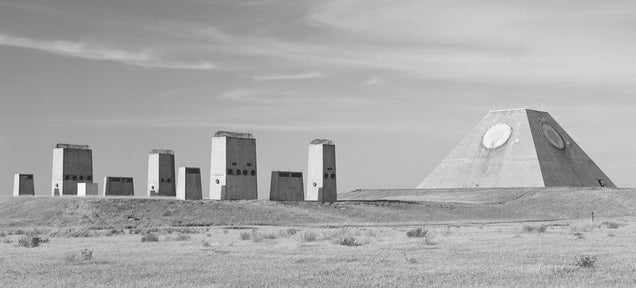
A Pyramid in the Middle of Nowhere Built To Track the End of the World

by Geoff Manaugh on Gizmodo, shared by Robert T. Gonzalez to io9

A Pyramid in the Middle of Nowhere Built To Track the End of the World

A huge pyramid in the middle of nowhere tracking the end of the world on radar. An abstract geometric shape beneath the sky without a human being in sight. It could be the opening scene of an apocalyptic science fiction film, but it's just the U.S. military going about its business, building vast and other-worldly architectural structures that the civilian world only rarely sees.

Read more...


15 Apr 02:41

Pulitzer Prize Is First Official Vindication of NSA Whistleblower

by Annalee Newitz

Pulitzer Prize Is First Official Vindication of NSA Whistleblower

The most prestigious award for journalism in the United States, the Pulitzer Prize, went this year to reporters who covered leaked documents from NSA whistleblower Edward Snowden. This award signals official recognition of the social good that grew out of Snowden's leaks.

Read more...


14 Apr 22:24

Advice for the Twitter Professional at US Airways Who Tweeted Hardcore Porn

by Harry Cheadle
Dance Magers

Amazingly, that photo stayed online FOR A FUCKING HOUR while everyone on Twitter was like “lol” and “wtf” and “smh” and “haha now we know where Flight 370 is right? oh shit too soon my bad.”

OK, now imagine this plane is much smaller and there is a woman putting it in her vagina—that's what @USAirways tweeted. Photo via Flickr user James Willamor

Late last night, someone was complaining to US Airways about a bad experience she had had with that airline. This is an entirely normal thing to do—as much as 75 percent of Twitter’s content is users bitching about airlines being awful and the airlines’ corporate Twitter accounts apologizing and asking the dissatisfied customers to fill out online complaint forms. The person running the @USAirways account followed the script when responding this afternoon, apologizing profusely and politely. Then @USAirways tweeted an extraordinarily graphic picture of a naked woman holding her legs up and apart to reveal a model airplane jammed rather immodestly into her vagina. That was not a normal thing to do. Here's how the exchange went:

@USAirways Unhappy that 1787 sat for an hour on tarmac in CLT because overweight, resulting in over hour late arrival in PDX...

— Elle (@ElleRafter) April 14, 2014

@ellerafter We truly dislike delays too and are very sorry your flight was affected.

— US Airways (@USAirways) April 14, 2014

@USAirways yeah, you seem so very sorry. So sorry, in fact, that you couldn't be bothered to address my other tweets.

— Elle (@ElleRafter) April 14, 2014
 

THEN THERE WAS A FUCKING PHOTO OF A LADY WITH A PLANE IN HER JUNK. (Link here, but it's NSFW because it's the kind of weird, vaguely funny porn that no one even masturbates to.)

Amazingly, that photo stayed online FOR A FUCKING HOUR while everyone on Twitter was like “lol” and “wtf” and “smh” and “haha now we know where Flight 370 is right? oh shit too soon my bad.” Then US Airways was like, “We apologize for an inappropriate image recently shared as a link in one of our responses. We’ve removed the tweet and are investigating,” as if there were a black box recording of a twentysomething hitting Command-V in the wrong text box, or as if there were some kind of vast conspiracy to make everyone look at a picture of some lady having carnal relations with a toy.

To see what kind of #SocialMedia and #Branding lessons could be drawn from this incident, I talked to Hanson O’Haver, the VICE Social Editor—a.k.a. the guy who runs the @VICE Twitter account.

VICE: What did the person running the US Airways do wrong? Or did they do anything wrong?
Hanson O’Haver: Well, I did a little digging and it looks like the image they posted actually came from this tweet:

[NSFW, obviously.]

If you delete a tweet where you uploaded a photo, the link would be dead, so you can tell it originates from someone else's account, not @USAirways.

What probably happened is that they were tweeted that link, copy/pasted it to send around for laughs or for some HR report, and then went to reply to the other person's comment. They just pasted in the link and didn't realize that the link they had meant to use hadn't copied.

OK, and from a social media point of view, if you're running a corporate Twitter account, do you generally want to tweet images of hardcore, graphic pornography? Or is that more of a social media “don't”?
I mean, yeah, that's generally looked down upon by clients. But in terms of increasing engagement, it's certainly effective. Put it this way: US Airways wasn't trending nationwide before they sent an angry customer a photo of a toy plane inside a vagina.

What advice would you give the US Airways Twitter guy, as one Twitter professional to another?
I think the most important thing here is to deflect the blame. From the inside it's going to be pretty clear that posting the photo wasn't an experimental social media strategy, so what they want to do is find someone else who's at fault. For example, maybe if their agency would hire some more social media professionals they wouldn't be so sloppy. And also: If the airlines didn't keep everyone waiting all the time and didn't offer such terrible service, they wouldn't need to have people responding to complaints on the internet.

That said, they can also point out that it's already been written about by BuzzFeed.

As in, like, “It's not so bad! Look at all the press we're getting!”
Yeah, exactly, I mean, “All publicity is good publicity” doesn't really work as a slogan in the airline industry, but you've gotta play the cards you're dealt.

Is “trying to not get fired because of a typo/screwup” a big part of a Twitter professional's job?
It's a huge part. No one's ever like, “Good job, Hanson, you spelled Transnistria right!" But you spell Colombia as Columbia and 300 people notice.

The whole week Obama ordered that raid on Osama bin Laden, I was terrified I'd write “Obama bin Laden” or something.

And you can get fired over shit like that, right? You think the guy or gal in charge of @USAirways still has a job?
I mean I think I'd be OK? VICE understands that mistakes happen. But @USAirways probably has a different Twitter person right now, yes.

Any advice for aspiring Twitter professionals? Any lessons they should learn from this?
I guess just double-check your links? And don't let mistakes stop you from getting back out there.

Follow Harry Cheadle on Twitter.

14 Apr 21:51

Keeping in Touch with Our Space Explorers

by Mika McKinnon on Space, shared by Charlie Jane Anders to io9

The Deep Space Network is a collection of antennas distributed around the world that allow us to keep in touch with our herd of extraterrestrial explorers. The complexes contain a mixture of 26-meter, 34-meter, and 70-meter antennas, all serving different functions.

Read more...


14 Apr 21:41

Harrison Ford Revealed His Powerful Opinion On Who Shot First

by Rob Bricken

Harrison Ford Revealed His Powerful Opinion On Who Shot First

During a Reddit AMA to promote his new movie Years of Living Dangerously, Harrison Ford was of course — of course asked for his thoughts regarding the eternal debate of who truly shot first in Star Wars. Ford did not disappoint.

Read more...


14 Apr 21:21

Disney Blu-rays, Pacific Rim, Mad Max, Rocky, 2DS Pokemon Bundle

by Shane Roberts, Commerce Team
Dance Magers

Rich, check out those 3DS/2DS bundles

Disney Blu-rays, Pacific Rim, Mad Max, Rocky, 2DS Pokemon Bundle

There's a great selection of Disney blu-rays at affordable prices today, including the greatest film ever made, Disney's Robin Hood. These are some of the more underrated classics, and this is a perfect excuse to fill in your collection with them.

Read more...


14 Apr 21:09

Animal Rights Activist Sentenced to 30 Months in Jail for Having Bolt Cutters in His Car

by Will Potter
Dance Magers

This article screams of ignorance on how the criminal justice system works.

Kevin Oliff and Tyler Lang. Photo by Dom Greco

An animal rights activist with a long history of activism—and an equally long rap sheet—was sentenced to 30 months in jail for having bolt cutters in the back of his Prius.

Kevin Olliff and Tyler Lang were driving through rural Illinois on August 15, 2013, at about 1 AM when they were pulled over by police. The cops say they stopped them because the brand-new green Prius had only temporary dealer plates. But rather than let them off with a warning, police asked to search the car.

Olliff and Lang refused to consent to the search and quickly realized that this wouldn't be a normal traffic stop. After police separated them into two squad cars, Lang heard one officer on the police radio say of Olliff, "He's on the terrorist watch list."

Police brought out drug-sniffing dogs, and not surprisingly, they say the dogs smelled something (Lang says "the hardest drug in the car was caffeine"). When police searched the car, they found, among other items, bolt cutters and wire cutters. The two were charged with "possession of burglary tools," a felony.

The items in Olliff's car certainly sound sketchy when police list them out: bolt cutters and wire cutters; duffel bags full of sweatpants, sweatshirts, gloves, and ski masks; spray paint; concrete stain; laptop computers; bear spray; head lamps; latex gloves; walkie-talkies; rags; bleach. Most of us can have those things in our cars and not worry about being charged with a felony. According to the FBI, Olliff and Lang are not most people, though: They're animal rights activists.

FBI agents made their presence known at the bail hearing, telling prosecutors that there have been unsolved fur-farm raids in the region and other farms may be targeted. They specifically mentioned the Aeschleman fox farm in Roanoke, one of the largest in the country and the site of the historic PETA investigation in the 1990s, which revealed sick and neglected animals pacing in their cages and being anally electrocuted.

Bail was set at $100,000 for Lang and $200,000 for Olliff, or more than ten times the typical amount.

They were not charged with any fur-farm raid, or any other illegal activity. But the FBI and prosecutors hung the threat of additional charges over their heads, and they eventually accepted plea agreements. Lang, who accepted a plea deal for time served and was released in November, will only say that the items in the car were an "inconvenient circumstance," and that they had no choice but to take a deal. Olliff was sentenced to 30 months in jail and is currently imprisoned in Vandalia, Illinois.

Lang says that although he received a much lighter sentence than Olliff, the FBI is clearly trying to send him a message. When he flew home from jail, he saw that he had four S's on his boarding pass; he was singled out for additional security checks. Now, every time he travels he is searched by TSA and Homeland Security. Meanwhile, both his mother and step-mother have been visited by the FBI. Both refused to talk to the agents and have been supportive throughout the ordeal.

"The day after I got home [from jail], I went to a protest," Lang says. "It was liberating for me, because I really did not want to let this make me afraid."

Olliff continues to deny his involvement in the Animal Liberation Front, but is outspoken in his support for illegal direct action. In a statement from prison, he told supporters: "Get out into the streets. Better yet, get out into the countryside. Do what you know in your heart is right. You won’t regret it."

His book list is like a giant middle finger to police, with Wireless Reconnaissance in Penetration Testing alongside Dressing the Man: Mastering the Art of Permanent Fashion. He also asked for a subscription to VICE.

His father, Stacey Olliff, says he's frustrated with his son's vocal support of direct action, and the fact that he has been in and out of jail for protesting and shoplifting throughout his 20s. But police are "taking things that otherwise wouldn't be illegal and criminalizing them," he says, "in order to turn the screws and send a message."

"It's frustrating to see this kind of repressive response from authorities," he says. "But their goal is shutting down this activity, and when they happen to catch somebody they know, they want to make an example of them."

Will Potter is the author of Green Is the New Red: An Insider’s Account of a Social Movement Under Siege. Follow him on Twitter.

14 Apr 15:33

Newly Released Color Films Show The Utter Devastation Wrought By WW2

by George Dvorsky

Newly Released Color Films Show The Utter Devastation Wrought By WW2

The Hoover Institution has just release five reels of recently restored color films taken by lieutenant colonel William P. Miller from 1943 to 1945. They provide a rare and disturbingly real glimpse into the era, including shots of the battle-scarred cities at the center of the conflict.

Read more...


12 Apr 01:41

Scientists Have Successfully Grown and Implanted Vaginas in Four Women

by Robert T. Gonzalez

Scientists Have Successfully Grown and Implanted Vaginas in Four Women

Four women born with abnormal or missing vaginas were recently implanted with lab-grown replacements created from their own cells. All four women are now sexually active and report normal vaginal function.

Read more...


12 Apr 01:40

An Interactive Map Showing Global Cyberattacks In Real Time

by George Dvorsky

An Interactive Map Showing Global Cyberattacks In Real Time

Security firm Kaspersky Lab has launched an interactive cyberthreat map that visualizes cyber security incidents occurring worldwide in real time. A quick glance shows that the world is a pretty scary place.

Read more...