Shared posts

06 Feb 15:08

Superb Owl Sunday II (28 photos)

Chris M

Second to the balk eagle (obviously). But damn these girds are kick a$$. I like the first picture.

A special Sunday event, a photographic essay celebrating a few of these magnificent raptors. Not Eagles (nor Patriots), these superb owls hail from Europe, Asia, North and South America, captured in photos over the past few years. If you have some time today before the big game (or are skipping the event entirely) I invite you to have a look.

A burrowing owl extends a wing. (Mike Jackson - TPCImagery / Shutterstock)
06 Feb 15:06

How To Build a Raised Garden Bed

Chris M

How to Build Raised Garden Beds
For the experienced gardener or the novice, raised garden beds take the hassle out of horticulture. Here are tips on planning, building, protecting and irrigating raised bed gardens.

raised garden bedsGETTY IMAGESRICK EGLINTON
By Fiona Gilsenan
Feb 6, 2018
44.4k
Experienced gardeners use raised beds to sidestep a long list of gardening challenges. These controlled experiments in plant parenthood are so easy, in fact, that they're also well-suited to novices picking up a shovel for the first time.

Bad dirt is out, because you fill a raised bed with a customized soil-and-compost blend. Drainage is built into the bed walls, which hold the soil in place to keep erosion in check. Greater exposure to the sun warms the bed, which allows more plant diversity and extends the growing season. Plants can be spaced closely together, so yields go up, water-use efficiency is maximized and weeds are crowded out. Finally, raising the soil level by even a foot reduces the back-bending effort needed for jobs such as planting, weeding and harvesting.

Beyond the ease is the control—as you grow your favorite foods, you feed and soak your plants with just what they need for optimum growth.

A raised bed is most productive and attractive as a bottomless frame set into a shallow trench. The sides can be almost any durable building material, including rock, brick, concrete and interlocking blocks. Watering troughs or claw-foot tubs can work, as long as they have the capacity and drainage.

But by far the most common material for raised beds is lumber. The major caveat, since raised beds are often used to grow edibles, is to steer clear of wood preserved with toxins. Avoid creosote-treated railroad ties; opt instead for naturally rot-resistant cedar or redwood. The EPA considers wood infused with alkaline copper quaternary (ACQ) to be safe for food crops, but if you use this pressure-treated wood you may want to line the bed interior with landscape fabric—an air-and-water-permeable screen—to prevent soil contact. Whether using pressure-treated or naturally rot-resistant wood, put the bed together with galvanized or stainless screws or bolts.

Location, Location

JODY ROGAC
A 3 x 6-ft bed should be wide enough to support sprawling tomatoes, but narrow enough to reach easily from both sides. The ideal height is 1 to 2 ft tall—you can go taller, but you need a considerable amount of soil to fill a 3-ft-high bed. Don't fill the bed with dirt from the garden. Instead, use peat moss, compost or a soil mix for planters. Use a 2 x 4 to level the soil,

then plant. If possible, build more than one bed, which makes it easier to rotate crops and meet the watering needs of specific plants. Aligning beds in straight rows simplifies the installation of an irrigation system.

Finding a flat spot spares a lot of digging—you want the walls to be level. In general, a north-south orientation takes full advantage of available light. Stay close to the kitchen, but avoid sites shaded by the house or beneath messy trees. Leave at least 18 in. between beds for walkways, or 2 ft if you need room for a wheelbarrow or lawnmower.

Planning, Building

JODY ROGAC
To prepare the site, get rid of turf and weeds. Outline the bed dimensions on the ground with chalkline or string, then dig with vertical strokes along the outline, just deep enough to bury about half of your first course of lumber. Raised beds are designed so water trickles down, eliminating most of the problem of poor drainage. But if your only viable location is bogged in a marsh, you can prevent the "bathtub effect" by digging a few inches deeper and putting a layer of coarse stone or pea gravel in the excavation. (You can also install perforated drainage pipes in trenches under or around the bed, or just drill weep holes at the base of the sides.) Likewise, if there is no turf between your beds, put down some landscape fabric and cover it with pavers or a layer of gravel to improve drainage—after running out in the rain for a fresh bell pepper, you'll appreciate the mud-free shoes.

Level the earth or gravel layer at the bottom of the bed, then put down a layer of weed-suppressing landscape fabric that extends to the outer edge of the wooden frame. Now is also the time to think about pest control. "The rich soil in a raised bed has worms and other delicacies that attract moles, and gophers and voles relish young veggie roots," Sausalito, Calif., garden designer Tom Wilhite says. "To keep out burrowing pests I always recommend a bottom layer of hardware cloth"—a mesh grid of steel or galvanized metal.

Build each wall separately, then fasten them together and put the bed into position. Raised-bed builders often sink posts into the ground for stability, either at the inside corners of the bed or halfway along the side walls. These help hold the bed in place, but can also reduce the outward pressure that a full bed exerts on the frame, which can dislodge the lumber after a single season. A cap railing that runs around the top of the bed ties everything together. Plus, it provides a handy place to set down gardening tools while working, or, when you're done, a seat to admire the fruits of your labor. Bed covers ward off insects and keep plants warm in cool weather.

Greenhouse Effect

JODY ROGAC
A simple framework of hoops and a lightweight cover can extend your growing season in cool areas, conserve moisture in dry areas and protect plants from birds or insects. Use galvanized pipe straps to mount 1-in. PVC pipe inside the bed walls. Cut ½-in. flexible PVC tubing twice as long as the beds' width. Bend it, mount it and clip a cover in place. Use clear polyethylene film to raise soil and air temperatures in early spring or fall—to get an early start on heirloom tomatoes, for instance, or to try your hand at exotic squashes. But be careful not to bake your plants on warmer days. Remove the cover or slit vents in it to avoid excessive heat buildup. For pest control, cover the bed with bird netting or with gauzelike fabrics known as floating row covers, which keep out flying insects but let in both light and air.

ADVERTISEMENT - CONTINUE READING BELOW


Watering

JODY ROGAC
Once you add an automatic watering system to your raised-bed garden, you're free to plant, weed and harvest. A simple micro-irrigation setup ensures that plants get water consistently—especially important for seedlings and leaf crops such as lettuce. "The sides of raised beds heat up quickly in the sun, baking the moisture out of the soil," Wilhite says. "Irrigation delivers the water evenly and gently. You can set your timer to water early in the morning—less will evaporate, and you resist disease."

A basic setup starts with a faucet or hose-bib attachment that is essentially a series of valves that prevent back flow into the plumbing, filter the water and control the water pressure.

These valves are designed with 1-in. or ¾-in. connections. From these, attach supply lines of flexible ½-in. poly tubing. The tubing's accessibility makes it easy to check for leaks and repair damage from punctures or bursts. To protect the tubing, bury it a few inches and cover the line with mulch.

Lay the tubing along the beds in lines 12 in. apart. Fit sections together with compression elbow and T-fittings. Install drip emitters at 12-in. intervals along the length of the tubing for even delivery of moisture to plants. Low-volume sprayers or misters on risers can also be used, but these lose more water to evaporation. Close the ends of each line with hose-end plugs and caps. Then sit back and let the system water for you.

Raised garden beds are the fastest, easiest route to bumper crop veggie harvests. Here’s how to make one in a weekend or less.

06 Feb 15:04

Elon Musk's Space Tesla Isn't Going to Mars. It's Going Somewhere More Important.

Why the Roadster's destination matters for the future of exploring the Red Planet.

06 Feb 14:44

DJI's Mavic Air drone is the best flying machine you can throw in your backpack

by stan.horaczek
Chris M

need it.

DJI Mavic Air Drone review

It doesn't have the same range as pro models, but it's a lot of drone in a very small package.

The DJI Mavic Air may be a middle child, but it's fast, compact, and comes with an excellent camera.
05 Feb 15:00

QuadHands Helping Hands

by mark
Chris M

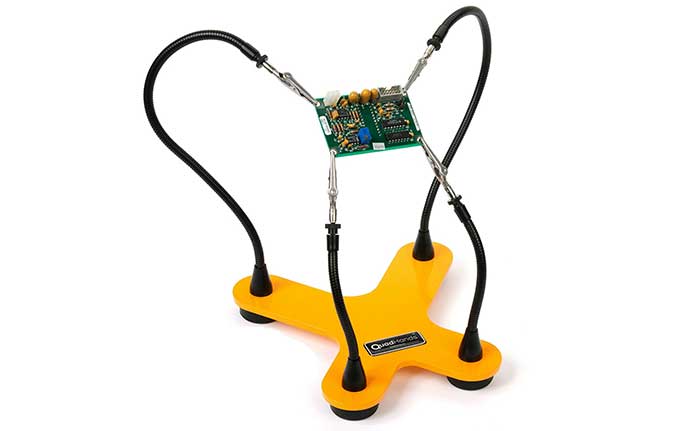
This think looks pretty neat for soldering or working on small stuff.

A lot of us are probably experienced with “Helping Hands” doodads that hold stuff for soldering, usually, though they can be used for other efforts as well. A small weighted base, some flexi-joints, a couple of alligator clips. I always hated those things. The base was never heavy enough, the joints sketchy, never really held things well or the way they needed to be. Yuk. Always frustrating. I’d gotten into the habit of rigging other things to avoid these “tools” by using rubber bands around plier handles or generally half-assing some goofy setup. That’s tiring too.

Looking for an upgrade, I found QuadHands. A heavy powder-coated steel base (with robust rubber feet) is, to me, the meat of the whole thing. There’s no flimsy, watch it! moments with it, no tipping or scooting away. And the arms are a lot more predictable than those crappy joints on cheap types. The clips are stainless and have silicone tips (just a snip of tubing, but it works). The clips screw onto the arms and have a jam nut wheel behind them to easily lock the clip from further rotation. Simple, but totally effective. In my version, the arms are screwed to the base; other versions are magnetically attached/movable.

Additional magnetic arms can be used with any of the QuadHands, so maybe I’ll add some… I’m using the simplest model, but may have to admit I might prefer the model that also mounts a Panavise. Really, a quibble, but I should’ve considered the options more deeply but that’s clearly my own issue now – anyone considering getting one of these, please think about the options! Anyway, the nut of things here is that the cheapie Helping Hands should no longer be an option to anyone even halfway serious about why they need such a thing – the QuadHands blows them away.

-- Wayne Ruffner

Third hand soldering tool and vise

31 Jan 20:33

EA Confirms New Battlefield for 2018

by Jonathon Dornbush
Chris M

pushed back for a new battlefield game...

Electronic Arts has confirmed previous reports that BioWare's upcoming game Anthem has been delayed to 2019, and in its place a new Battlefield game will debut this fall.

EA officially confirmed Anthem will release in Q1 2019, or Q4 of its 2019 fiscal year, during the company's Q3 earnings call today. However, EA denied to The Wall Street Journal that the delay was due to the game's development being behind schedule, as reported in a previous Kotaku piece. Instead, the 2019 release is, according to WSJ, a factor of EA's decision to release a new Battlefield game this October.

Continue reading…

30 Jan 15:28

Cleveland Indians Will Remove 'Chief Wahoo' From Uniforms In 2019

by Camila Domonoske
Chris M

of course they will.

Members of the Cleveland Indians wear uniforms featuring mascot Chief Wahoo as they stand on the field for the national anthem before a baseball game against the Baltimore Orioles in Baltimore in 2017.

For decades, Native Americans and their supporters have protested the baseball team's logo, a bright red caricature of a Native person. It's coming off uniforms — but staying on fan merchandise.

(Image credit: Patrick Semansky/AP)

29 Jan 19:29

U.S. Troops Accidentally Reveal Secret Bases by Going Jogging

Chris M

Yikes... and for some reason, they felt compelled to post this?


One of the most embarrassing security goofs in recent memory started with soldiers going for a run.

A GPS company called Strava Labs recently released what it calls the Global Heat Map, meant to be a neat visualization of where people exercise. Strava makes the GPS tech inside fitness trackers such as Fitbits and some smartphones, the stuff that makes it possible for you to track and map your runs and your bike rides. The map reveals the places where people track themselves the most.

For the most part, the Heat Map is just interesting to look at. Near the Popular Mechanics office in New York, for example, you can see the white-hot jogging paths within Central Park and alongside the Hudson River. But if you look at places like Somalia, Syria, or Afghanistan, what you see is a few hotspots in a sea of data darkness.

It doesn't take a super spy to figure out what's going on here. These are the exercise pathways of American soldiers, who are bound to be among the few people in these regions using U.S. GPS-tracking technology. Says Gizmodo:

It’s clear from the pink paths that those people were, perhaps, running laps around an airfield in Somalia, a country where the US is sending more and more troops these days. But it’s not just Somalia. Online sleuths have discovered potentially sensitive US military sites in Afghanistan and Syria, along with sensitive Russian military sites in Ukraine, and a secret missile site in Taiwan. Make that formerly secret.
Over the weekend, military analyst Nathan Ruser tweeted about the problem to raise the alarm about it.

Strava released their global heatmap. 13 trillion GPS points from their users (turning off data sharing is an option). https://t.co/hA6jcxfBQI … It looks very pretty, but not amazing for Op-Sec. US Bases are clearly identifiable and mappable pic.twitter.com/rBgGnOzasq

— Nathan Ruser (@Nrg8000) January 27, 2018
However, the Strava map has been online since November, making it very possible that foreign intelligence operatives have known about this oversight since then. And we're not just talking about the kind of aggregate data that could allow anyone to see the patterns of life on and around military bases. As the Guardian notes, it gets personal, too.

While the heatmap only shows information in aggregate, Strava’s own website allows users to drill down into the tracked runs to find the names of individuals, as well as the dates they set their personal best times on particular runs.
When applied to military bases, that information can be extremely sensitive. The leaderboard for one 600m stretch outside an airbase in Afghanistan, for instance, reveals the full names of more than 50 service members who were stationed there, and the date they ran that stretch. One of the runners set his personal best on 20 January this year, meaning he is almost certainly still stationed there.
As for the fallout: Militaries are now considering whether and how they should ban their people from using this tech. Strava itself is digging in against the criticism, arguing that users made the information public when they uploaded it (in other words, it's your own fault for not reading the terms of service and taking them seriously).

29 Jan 17:45

6 Easy and Effective Ford Maintenance Tips

by Certified Master Techs
Chris M

A little wax tip, if you run the pad of your pointer finger down your paint and it makes a rubbing sound, you need to wax your paint. You can do the three stage Meguiars. All can be applied by hand. Ultimate compound (gets minor swirls out), ultimate polosh (actually polishes the clear coat), and the ultimate wax (protects the clear coat). http://st.hotrod.com/uploads/sites/21/2013/04/Meguiars-ultimate-compound.jpg

Fords run like a dream when you treat them right. Nothing quite beats the feeling of driving down the road in an American-made vehicle.

But like any truck or car, Fords break down. It’s a part of car ownership we’re all too familiar with. It seems like there’s always something to work on.

And repairs are costly. The average person spends $100 per month on repair costs for their new car. The key word being new. Used cars cost even more.

That’s why we’re proponents of truck maintenance to stop issues before they arise. With the proper preventative maintenance, your monthly costs decrease, while your Ford’s lifespan increases.

To help keep your truck running for years to come, we’re bringing you our six best Ford maintenance tips.

Oil Changes

Changing your oil is the obvious first step in DIY Ford maintenance. Everyone knows the standard 3,000-mile oil change mantra.

However, there’s a little more to DIY oil changes than pouring new oil into your vehicle.

Oil keeps your engine lubricated. Without enough oil, or with dirty oil, your engine component won’t run smoothly. This causes what’s known as a “seized” engine.

You’ll need to periodically check your engine oil using the dipstick. When you’re taking the levels is also the time to check your oil’s color.

A lighter color means cleaner oil, while a dark black color means dirtier oil.

Changing your oil involves jacking up your car to access the oil reservoir. First, run the truck to get the oil moving.

Next, turn the truck off and position your oil pan under your oil reservoir. Unscrew the oil reservoir bolt (on the bottom of the reservoir) and let the oil drain.

While the oil drains change your oil filter (located under the truck’s hood). Once the oil drains, screw in the oil reservoir bolt and then add fresh oil through the dipstick hole under the hood.

Make sure to consult your owner’s manual for the correct type of oil.

Brake Inspections

Brake systems break down into three main components. We have your brake pads, rotors, and calipers.

Calipers use the fluid pressure from your brake fluid to push your brake pads against your rotors. The brake pads then create friction with the rotors which slows down your truck.

Checking your brake pads for wear is the easiest way to keep your brake system working. Worn pads damage your rotors prematurely, causing unnecessary maintenance costs.

Brake pads have small indicators that tell when they’re too worn to use. You’ll know to check your pads when you hear a slight grinding while braking.

First, jack up your truck. Next, use a tire iron to remove a tire’s lug nuts. Finally, unclip (small clips hold your brake pads against the rotors) the pads and check their wear.

Worn pads are easily replaceable at your local auto-parts store. Repeat the process for every tire on your vehicle.

Watch the Recalls

Our next Ford maintenance tip might be the easiest. Make sure you’re signed up for Ford’s mailing list to receive recall notices on your truck.

Sometimes things go wrong during even the smoothest manufacturing processes, and it’s impossible to know when a problem could arise.

Driving your truck with a recall could at worst put you in danger, and at best cause long-term damage to your vehicle.

If you do get a recall notice in the mail, visit the dealership as soon as possible to have the problem fixed.

Recalls are usually covered under warranty, making the work free. And free is the best price.

Wash

Washing your truck does more than keep it looking nice. Grim, dirt, and salt in colder climates can eat away at your truck’s body and undercarriage.

Road salt especially destroys undercarriages, rusting them extremely quickly. If you live in a place with lots of road salt, washing your undercarriage is crucial.

Though even if you live somewhere without road salt it’s still important to periodically wash your truck.

Normal wear and tear can wear away at your paint, which in turn causes rust.

Body Wax

Exterior Ford maintenance goes beyond just washing your truck. Taking care of your vehicle’s exterior is an involved process.

After you’ve done the aforementioned washing, wax your truck to finish the job. The wax protects your paint job, which in turn protects your truck from rust.

Wax is easy to find at any automotive store, with different types working best in different environments. Make sure to pick the kind that suits your environment.

Fluids Check

Regularly checking your vehicle’s fluids is our last Ford maintenance tip. Essentially, if it has a gauge under the hood, check the fluid.

This includes brake, wiper, coolant, and more.

Low brake fluid prevents you from stopping. Low coolant can overheat your car, and even low wiper fluid can damage your windshield wiper blades.

Brake fluid, oil, and coolant can all evaporate during normal usage. They’re all also prone to leaks.

While low wiper fluid might just mean new wiper blades, low coolant could mean an entirely new engine.

Take the few seconds to check and top-off your fluids on a routine basis.

Ford Maintenance is Simple

Taking care of your Ford truck takes nothing more than some time and knowing your way around your truck. And if you’re going to own the vehicle, you may as well know how to maintain it.

From oil changes to brakes, and washing to waxing, DIY Ford maintenance isn’t difficult. There’s no excuse not to extend your vehicle’s life.

But even though basic maintenance is easy, sometimes you’ll run into complex problems.

When you’re in need of some expert advice, we’re here to help. Our guides and repair manuals can help solve even the toughest problems.

We’re car enthusiasts, just like you. We take pride in providing like-minded people with high-quality information to make their lives easier.

So the next time you’re stuck, don’t stress! Just head over to our website and start searching. We’re confident you’ll find what you need.

The post 6 Easy and Effective Ford Maintenance Tips appeared first on Car Repair Information From MasterTechMark.

26 Jan 18:55

External Hard Drive Enclosure

by mark
Chris M

pretty neat.

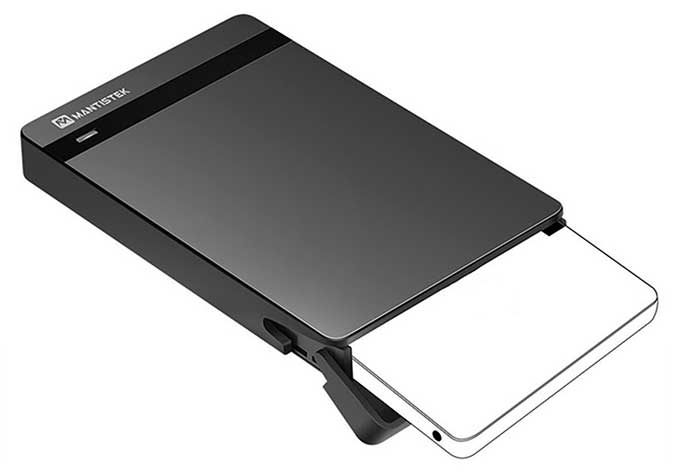
If you work with media as I do, you are always moving data around and backing up projects. I have built a few external drives from old internal drives in the past, and when I had a spare HD left over from an old laptop I went looking for a compact enclosure. This enclosure from Mantistek is made for slim 2.5″ SATA hard disk drives. I like this enclosure for it’s easy swapping in and out of drives. One end of the drive flips open and out pops the drive… slide another one in and off you go… no tools required. The USB 3.0 is fast enough for me and the price is right too. Get some extra life from those old hard disk drives you have laying around after upgrading to SDD.

-- Seth Wilson

Mantistek Ultra Slim USB 3.0 External Hard Drive Enclosure Case ($16)

Available from Amazon

23 Jan 20:00

Photos of the Week: Transport Mishaps, Epiphany Blessings, Bull Taming (35 photos)

Chris M

PIC 5..... How do you keep from dieing?

The pope’s visit to South America, big surf in Portugal, ski jumping in Japan, bull wrestling in India, a false alarm in Hawaii, animal blessings in Spain, a massive oil spill in the East China Sea, and much more.

Fighter jets of the Patrouille Suisse (Swiss patrol) and a commercial plane fly over the slopes ahead of the downhill race at the FIS Alpine Skiing World Cup in Wengen, Switzerland, on January 13, 2018. (Fabrice Coffrini / AFP / Getty)
18 Jan 20:11

Voyager's 40th Anniversary (34 photos)

Chris M

space stuff!

In August of 1977, the first of two identical robotic probes was launched from Cape Canaveral, Florida, bound for our outermost planets and beyond. Voyager 1 and Voyager 2 have each traveled more than 10 billion miles in the past 40 years, sending back invaluable observations and images. They discovered two dozen new moons, discovered active volcanoes on Jupiter’s moon Io, took a famous “family portrait” of our solar system, and much more. Voyager 1 recently became the first spacecraft to leave the heliosphere and enter interstellar space. The Voyagers are also famous for being our most remote emissaries, carrying with them identical “golden records” with images and sounds from Earth. On this 40th anniversary of the first launch, a look back at the still-running Voyager mission follows.

Voyager 2 launches from Cape Canaveral, Florida, aboard a Titan III-Centaur launch vehicle on August 20, 1977, about two weeks before the September 5 launch of Voyager 1. The two spacecraft were sent on different trajectories, and Voyager 1 was put on a path to reach its planetary targets, Jupiter and Saturn, ahead of Voyager 2. (NASA / JPL-Caltech)
18 Jan 19:27

China’s Red Army schools

Chris M

This looks more like North Korea...

The Yang Dezhi “Red Army” elementary school in Wenshui, Xishui country in Guizhou province was designated a “Red Army primary school” -- funded by China’s “red nobility” of revolution-era Communist commanders and their families, one of many such institutions that have been established across the country. Such schools are an extreme example of the “patriotic education” which China’s ruling Communist party promotes to boost its legitimacy -- but which critics condemn as little more than brainwashing. -- By AFP/Getty Images

Students reading in their classroom in the Yang Dezhi "Red Army" elementary school in Wenshui, Xishui country in Guizhou province. Yang Dezhi was designated a "Red Army primary school" -- funded by China's "red nobility" of revolution-era Communist commanders and their families, one of many such institutions that have been established across the country. (Fred Dufour/AFP/Getty Images)

18 Jan 19:25

150 Years Ago Today, the U.S. Bought Alaska From Russia for $7.2 Million (49 photos)

Chris M

I want to go here one day. Look at the fishing. Joe at work was born in Alaska back in 1954 or so, right before it got it's statehood.

On March 30, 1867, the United States gave the government of Russia a check for $7.2 million and took possession of 586,412 square miles (1,518,800 square kilometers) of new land which became the Alaska Territory, and later, in 1959, would become America’s 49th state. In the last 150 years, Alaska has seen several gold rushes, an oil boom, a groundbreaking distribution of lands to Native groups, a disastrous oil spill, a tremendous growth in tourism, and much more. As a former Alaskan tour guide, allow me to relive a past job I loved, and share with you some of this amazing history and phenomenal beauty on Alaska’s sesquicentennial—49 photos of the 49th state.

Denali, viewed from near Stony Dome, inside Denali National Park and Preserve, Alaska. (Tim Rains / U.S. National Park Service)
18 Jan 13:43

Destiny 2 Going Offline Tomorrow for Maintenance

by Brian Barnett

Destiny 2 servers are going offline tomorrow to undergo maintenance.

The maintenance is scheduled to last from 8:00 am to 12:00 pm Pacific time, after which Destiny 2 Hotfix 1.1.1.3 will become available. Details are available on Bungie.net.

Once maintenance begins, players will not be able to log into the game, and players already logged in will be returned to the title screen at 9:00 am Pacific. When the servers come back up, Bungie has confirmed that Faction Rallies will return, but the complete patch notes have not yet been released.

Recently, Bungie outlined updates that will be coming to the game in 2018. The previous patch opened up Iron Banner and Faction Rally for players who did not purchase the Curse of Osiris expansion, following player feedback.

Continue reading…

17 Jan 18:41

The 14 Kitchen Essentials Everybody Should Own

Chris M

Cutting Board
BUY NOW

A tough, wood-fiber composite board made by Epicurean is dishwasher-safe, and there’s no need to oil it.

2 of 14
GETTY
Wooden Spoon
BUY NOW

Wood is stiffer than plastic, a real advantage for stirring and mashing.

3 of 14
GETTY
Chef's Knife
BUY NOW

Victorinox makes a great, and affordable, introductory knife that will serve you well for years. If you’re ready for the next step, try something from Zwilling.

4 of 14
GETTY
Stainless Steel Measuring Cups
BUY NOW

Spring for the metal ones, which won’t stain or score like plastic

5 of 14
GETTY
Tongs
BUY NOW

They make a huge difference if you need to flip something.

6 of 14
GETTY
Half-Sheet Pan
BUY NOW

Perfect for roasting broccoli, asparagus, or potatoes. The smaller size is easier to store.

7 of 14
GETTY
Spatula
BUY NOW

Rubber will bend into corners and slide under eggs. Try OXO.

8 of 14
GETTY
Paring Knife
BUY NOW

Useful for more delicate tasks, like chopping shallots. Keep all knives sharp.

9 of 14
GETTY
Peppermill
BUY NOW

Fresh-ground pepper tastes better. Plus, whole peppercorns are cheaper than the pre-ground stuff.

10 of 14
GETTY
Dutch Oven
BUY NOW

A Staub, though pricey, will be the last you’ll ever buy. And it looks nice enough to keep on a shelf.

11 of 14
GETTY
Deep Saute Pan
BUY NOW

Demeyere pans are as pretty hanging as they are on the stove top. The depth lets you work larger quantities of food and fry bacon without splattering.

12 of 14
GETTY
Microplane
BUY NOW

Think fine cheese grater. Also known as a rasp. Works as well on cheese, garlic, nutmeg, and anytime a recipe calls for citrus peel.

13 of 14
GETTY
Cast-Iron Skillet
BUY NOW

Lodge is an American classic, but a new company, Field, is trying to redesign the old standard, and Klinger is a big fan. Either will set you straight.

14 of 14
GETTY
Strainer
BUY NOW

Whether you buy traditional metal or collapsible rubber, you’ll save yourself from burning your hands trying to strain pasta through the lid to your pot. Also great for washing vegetables.

Because no one should have to brown beef in the microwave.

17 Jan 18:39

Inside the country's biggest nuclear power plant tear-down

by Mary Beth Griggs
Chris M

1. Cool it
At the San Onofre nuclear power plant, workers transfer 2,668 fuel assemblies—holding 1,109 metric tons of radioactive uranium-235—to 17-foot-tall stainless-­steel containers. These sit inside a deep, steel-lined cooling pool for several years, chilling at temperatures around 68 degrees Fahrenheit, until workers can move them to storage.

2. Entomb it
After the fuel cools, workers fit the canisters into 20-foot-deep concrete casks embedded in the ground. The concrete helps trap the fuel’s radiation inside, while vents circulate air to keep it cool. These casks, which will be monitored and guarded around the clock, are strong enough to withstand earthquakes, tsunamis, even the impact of a jet crash.

RELATED: Why can't we decide what to do about nuclear energy?

3. Rip it
Remotely controlled tools cut up the highly contaminated equipment (less than .04 percent of the debris). Other robotic machines will remove the most tainted waste. Then workers—using hydraulic hammers, saws, and bulldozers—rip apart the buildings. Mundane office materials like shelving, furniture, and insulation fill out the junk pile.


4. Ship it
Demolition produces more than 25 million cubic feet of debris—rebar, concrete, and piping—enough to fill a decent-size college-­football stadium. The San Onofre site hosts up to 60 rail cars at a time, waiting to cart off the low-level radiation debris. Trucks haul the nontainted stuff—75 percent of the total—to landfills in Texas and Arizona.

5. Bury it
Freight cars carry the low-level radioactive debris—now packed in drums, bags, and large containers—to a nuclear-­waste landfill in the Utah desert. Workers there check and document radiation levels, then bury the stuff in “embankments,” from 8 feet below grade to 38 feet above grade, in sedimentary rock and covered in clay and rock.

atomic giant

Unbuilding an atomic giant.

Unbuilding an atomic giant, from cooling it to burying it.
17 Jan 18:37

How a 12-Year-Old Conned His Way Into the US Navy During World War II

Chris M

https://www.youtube.com/watch?v=gyPSxNN8uKo&feature=youtu.be

In 1942, Calvin Graham, a Texas native, enlisted in the U.S. Navy to fight in World War II. He was only 11 years old. Graham had run away from his abusive father and spent time on the street selling newspapers, but when the war began, he sensed an opportunity to get even further away, as is detailed in this video from Today I Found Out.
In the 1940s, faking your identity was a whole lot easier than it is today. All Graham had to do was fake his mother's signature and steal a notary stamp. He made it through the physical examination to get into the army, probably in part because he was big for his age, at 5'2" and 125 pounds.

After spending time at boot camp in San Diego, Graham was sent out on the USS South Dakota. The ship was attacked by Japanese aircraft during the Naval Battle of Guadalcanal, and Graham was injured. He spent the night taking care of the wounded, earning him a Bronze Star and a Purple Heart.

This glory wouldn't last long. Shortly after, Graham's mother contacted the Navy and told them her son's true identity. Instead of just releasing the child, the Navy threw him in the brig for three months in Texas, only releasing him when his sister threatened to contact the media. He was then dishonorably discharged and stripped of his medals.

This decision by the military lead to a lifetime of struggle for Graham to qualify for disability and to have medical expenses covered. Jimmy Carter reinstated all his medals besides the Purple Heart, but it wasn't until 1988 that Ronald Reagan gave him full disability and $18,000 of coverage for medical backpay. But even then, Graham wasn't able to find receipts from many doctors who had died in the time since he received treatment, and much of the money went unused. He died in 1992 of heart failure at the age of 62, and only in 1994 was his Purple Heart restored and given to his widow.

We can hope that a story like Graham's would be impossible today, with the improvements in identification. But more troubling than his young age at the time of his service is the reaction of the military and the denial of benefits this young veteran—a problem that is sadly still relevant to this day.

And why that was the beginning of a life of suffering.

16 Jan 15:19

Watch A River Crumble Into Giant Blocks of Ice

Chris M

Holy -blam-

This is what happens when a bomb cyclone and a river meet.

13 Jan 21:58

Lost Frank Lloyd Wright Buildings Brought Back to Life with AutoCAD

by Heather Miller
Chris M

neat'o

Architect David Romero Frank Lloyd Wright Renderings

This year marks the 150th birthday of Frank Lloyd Wright, and the celebration will culminate with the Frank Lloyd Wright Building Conservancy’s annual conference next week (September 13-15) at the Museum of Modern Art in New York City. Appropriately taking place in one of Wright’s most iconic buildings, the event will coincide with the MoMa’s major new exhibition “Frank Lloyd Wright at 150: Unpacking the Archive.” Outside of the museum, there will be tours of homes designed and built by Wright.

David Romero Frank Lloyd Wright Larkin Building AutoCAD Rendering

Rendering of the five-story Larkin Administration building’s interior, designed by Frank Lloyd Wright in 1903 and completed in 1906 for the Larkin Soap Company in Buffalo, New York. By 1943, the company was in declined and forced to sell. In 1950 the building was sold again and demolished for a truck stop that was never constructed. Courtesy David Romero.

According to the Frank Lloyd Wright Building Conservancy’s executive director Barbara Golden in The New York Times, Wright designed approximately 450 buildings of which 380 remain standing today. Some buildings and homes were never constructed at all. But one architect is aiming to bring those lost works back to life.

For Spanish architect David Romero, Wright has been a source of inspiration for years. What started out as a way to learn 3D modeling has turned into a mission (Hooked on the Past) to showcase Wright’s destroyed or unconstructed work through meticulous and beautiful renderings. He has recreated the Trinity Chapel that was never constructed; the Pauson House that was destroyed by fire just one year after completion; the unbuilt E.A. Smith house; and the demolished Larkin Administration building. He’s currently working on a modeling of Wright’s Ocotillo desert camp, and he hopes to begin exploring other designers and architects in the future.

David Romero Frank Lloyd Wright Pauson House AutoCAD Rendering

Rendering of the Rose Pauson House in Phoenix, Arizona. Designed by Wright in 1939, it was completed in 1942. One year later it was destroyed in a fire when an ember from the fireplace fell and ignited a nearby curtain. Courtesy David Romero.

In a recent Q&A on Inspired by AutoCAD, Romero shares how he uses AutoCAD to help create these renderings, the process, why it’s important for architecture to look to the past, and what he believes Wright would think about technology today.

AutoCAD Pauson House Frank Lloyd Wright David Romero

Screenshot in AutoCAD of Romero’s work for the Pauson House renderings. Courtesy David Romero.

Check out the full article for even more illustrations of his work as well.

The post Lost Frank Lloyd Wright Buildings Brought Back to Life with AutoCAD appeared first on AutoCAD Blog.

12 Jan 18:53

Bungie Outlines Destiny 2 Updates in 2018

by Jonathon Dornbush

Destiny 2's game director Christopher Barrett has outlined a number of changes and planned updates coming to the sequel in 2018, promising that the developer is "not just listening, we are doing."

Chief among the plans Barrett listed is a features roadmap, highlighting three key release windows for which Bungie will provide more details as each update nears. All content and features in these updates will be made available to all Destiny 2 players.

Barrett also explained the team is "shifting the balance of new content" away from Bright Engrams and more toward activity rewards. So items like Ghosts, Sparrows, and ships will be includes in achievement reward pools. Bungie pledges to "provide a gameplay path to earn Bright Engrams and all contained rewards," while also giving players "more direct purchase options."Barrett mentions some of these changes will begin with the Crimson Days event, which launches on February 13.

Continue reading…

11 Jan 15:56

GTA Online Breaks Its Player Record, 4 Years After Release

by Brian Barnett
Chris M

INSANE!

Rockstar Games has announced that Grand Theft Auto Online has broken its player record, four years after the release of the game.

According to Rockstar, December 2017 saw more players in GTA Online than ever before, although an official player count was not released. Back in November, it was announced that GTA V had sold-in 85 million copies, and it is currently one of the best selling video games of all time, ranking at #1 in the U.S. according to The NPD Group.

Continue reading…

11 Jan 15:56

What's Not To Love About This Lego Ship in a Bottle

Chris M

I've seen the word "leviathan" used more times than not lately.

10 Jan 20:10

SpaceX Aims to Test Fire Falcon Heavy This Week (Updated)

Chris M

Following what turned out to be an eventful Zuma launch on January 7, SpaceX is gearing up to perform a static fire test on Falcon Heavy as early as today, January 10. In the static fire test, SpaceX engineers will ignite all 27 of the heavy-lift rocket's engines nearly simultaneously for the first time, holding the rocket down on the launch pad while they do. The test is a crucial performance check before the maiden launch of Falcon Heavy, expected at the end of this month or early next.

"Falcon Heavy has been rolled out to launchpad LC-39A for a static fire later this week, to be followed shortly thereafter by its maiden flight," SpaceX president and COO Gwynne Shotwell said in a statement released yesterday. The first window for the static fire test is today between 1:00 p.m. and 7:00 p.m. EST, according to Spaceflight Now.

NASAspaceflight.com reported that workers were seen at the base of the pad this morning determining what work remains for the test fire, suggesting the test could be pushed back to later in the week. First SpaceX will perform what is known as a wet dress rehearsal, filling the rocket with fuel and performing all systems checks short of engine ignition. If everything goes perfectly, they could light the engines directly following the first wet dress rehearsal.

Employees at Kennedy Space Center were told to expect a longer test fire than normal for Falcon Heavy, up to 15 seconds, according to Spaceflight Now. Video of the test should be released shortly after the firing. All three cores of Falcon Heavy have been test fired individually at SpaceX's facilities in McGregor, Texas, but they have yet to light up together.

Once Falcon Heavy launches, it will be the most powerful rocket currently flying.

The rocket is being prepared to fire all 27 engines for the first time in advance of the maiden flight.

10 Jan 18:06

Slammed Pandem Ford Raptor Drops in Tokyo

by etahaney

Here’s something you don’t see everyday—a slammed, wide-bodied Ford Raptor. The Raptor is one of our favorite pickup trucks of all time, and it’s really hard to make it look any better, but the mad geniuses at Tra Kyoto, the parent company of Pandem/Rocket Bunny, managed to impress us with its latest creation.

Is it practical? No, but you can bet it would look pretty badass creeping along a Ginza promenade or doing the curbside crawl through the Roppongi district of Tokyo. Heck, it’ll probably even look good rolling down Paradise Road at next year’s SEMA Show in Las Vegas.

Aside from the obvious lowering kit, the front end gets a Pandem spoiler and a fat set of Toyo Tires all around. Chunky body panels around the wheelwells look bolted on, and the rear end looks mostly stock with dual shotgun pipes.

The Japanese aftermarket maker posted this silver bad boy on Facebook ahead of its debut at the 2018 Tokyo Auto Salon at the Toyo Tires booth.

Ken Block, BJ Baldwin, and Masato Kawabata will also be there with Block’s Mustang, Baldwin’s Tundra, and Kawabata’s surprise ride—so this rad Raptor should fit in nicely.

The 2018 Tokyo Auto Salon kicks off this weekend and runs January 12–14. Stay tuned for more wackiness from the show.

The post Slammed Pandem Ford Raptor Drops in Tokyo appeared first on Motor Trend.

10 Jan 18:05

The First Mirrors for the Extremely Large Telescope Have Been Cast

Chris M

The upcoming Extremely Large Telescope (ELT) is very aptly named. When it’s completed in 2024, it will be the largest optical telescope in the world, with a mirror more than 120 feet across. That gigantic mirror will be made of 798 separate mirror segments, and the first of those segments have just been cast.


The mirrors for the ELT are being made by German company Schott, which also built the mirrors for other large telescopes, such as the Keck Observatory. Schott will eventually manufacture 931 mirrors for the ELT, including 133 spare mirror segments.

To make the mirrors, liquid glass is heated to over 1,400 degrees Celsius and poured into molds, where they are left to cool and harden for several weeks. Once they harden, the mirrors are polished to within 15 millionths of a centimeter, making some of the smoothest surfaces in the world.

The first six mirrors that have just been casted will be used to calibrate and optimize the process, meaning future mirrors will be made more efficiently and precisely. At peak efficiency, Schott will be able to make around one mirror per day.


https://www.youtube.com/watch?v=6WOHfeCZNU4&feature=youtu.be

They are the first mirrors of what will become the world's largest telescope.

10 Jan 14:11

The 2018 Procession of the Black Nazarene (22 photos)

Chris M

this looks like something I don't want to be involved in...Ever... like, wtf are there so many people?

This week, in Manila, Philippines, hundreds of thousands of Catholic devotees took part in an annual procession lasting 22 hours, where they carry a centuries-old icon of Jesus Christ through the streets as barefoot worshipers climb over each other to kiss, touch, or rub bits of cloth on the statue. The Black Nazarene is an ebony statue of Jesus Christ brought to the Philippines in 1606, and is believed to have miraculous powers.

Devotees jostle one another as they try to touch the Black Nazarene replica during an annual procession in Quiapo, Manila, Philippines, on January 7, 2018. (Romeo Ranoco / Reuters)
05 Jan 18:12

Microsoft Announces Glow-in-the-Dark Xbox One Controller

by Matt Davidson

Microsoft has announced a tie-in accessory for upcoming pirate-themed action-adventure game Sea of Thieves, with a deep purple, glow-in-the-dark Xbox One controller, available as of next month.

Featuring a "translucent design" and "laser-etched barnacles", the controller also has its own hidden treasure in the form of one single golden trigger (it's the right trigger, if you're wondering) as well as a nautical design on the rear of the controller. The front face of the controller has as its centrepiece a glow-in-the-dark skull wearing an eyepatch, and continuing with the nautical theme, the left control stick has the appearance of a compass.

Continue reading…

04 Jan 14:18

You Wish You Had This Two-Story Hot Wheels Track When You Were a Kid

Oh, your track has a loop in it? That's adorable.

04 Jan 14:05

Here's What the Family Road Trip Looked Like in 1954

Chris M

Here's What the Family Road Trip Looked Like in 1954
No GPS, no satellite radio, and a nation without a unified highway system. Here's how your grandparents did it.
CHEVROLET

By Bob Sorokanich
Nov 21, 2017
134
Road tripping today is easy—pack up and hit the road. You don't even need to know where you're going: GPS guides you there, picking the fastest route with the least traffic. You can even start off aimlessly, only turning to your smartphone to find food and gas when needed.

It's a far cry from the family road trip of half a century ago.

I recently came across this 1954 film produced by Chevrolet, teaching the average American family how to have a happy, safe, stress-free road trip. Produced by Jam Handy, the prolific maker of training, instructional and engineering films, it's a charming look back at the concerns of the typical family heading out on the road.

Some of this advice is decidedly old-fashioned. This family—played by movie and television stars Gale Storm and Lee Bonnell—never buckles a seat belt, and the narrator advises Dad to adopt a "10:20" hand position on the steering wheel that's perplexing by today's standards. When they pull in to a gas station, they do a full check on the car, and they get hopelessly lost when they fail to chart out their route precisely.

But it's a charming look back at what road trips were like in the days before the Interstate Highway System. And while you might not need to use your wristwatch and the sun to fashion a makeshift compass today, there's some tips and tricks in here that are sure to make your next family road trip easy.

https://www.youtube.com/watch?v=ZnAiyAMefC4&feature=youtu.be

No GPS, no satellite radio, and a nation without a unified highway system. Here's how your grandparents did it.