31 Oct 01:28
by Cheng Zhou, Guichuan Zhang, Chengmei Zhong, Xiaoe Jia, Peng Luo, Rongguo Xu, Ke Gao, Xiaofang Jiang, Feng Liu, Thomas P. Russell, Fei Huang, Yong Cao
The chemical structure of conjugated polymers plays an important role in determining their physical properties that, in turn, dictates their performance in photovoltaic devices. 5-Fluoro-2,1,3-benzothiadiazole, an asymmetric unit, is incorporated into a thiophene-based polymer backbone to generate a hole conducting polymers with controlled regioregularity. A high dipole moment is seen in regioregular polymers, which have a tighter interchain stacking that promotes the formation of a morphology in bulk heterojunction blends with improved power conversion efficiencies. Aliphatic side chain substitution is systematically varied to understand the influence of side chain length and symmetry on the morphology and resultant performance. This side chain modification is found to influence crystal orientation and the phase separated morphology. Using the asymmetric side chain substitution with regioregularity of the main chain, an optimized power conversion efficiency of 9.06% is achieved, with an open circuit voltage of 0.72 V, a short circuit current of 19.63 mA cm−2, and a fill factor over 65%. These results demonstrate that the local chemical environment can dramatically influence the physical properties of the resultant material.

The unidirectional regioregular conjugated polymers using 5-fluoro-2,1,3-benzothiadiazole (FBT) asymmetric unit were synthesized. Compared with the regiorandom control polymers, the regioregular polymers with a unidirectional fluorine atom alignment can lead to a progressive dipole moment along the backbone. The regioregular FBT polymers exhibit tighter interchain stacking and better morphology in bulk heterojunction blends, giving rise to improved power conversion efficiency.
31 Oct 01:27
by Chuanfei Wang, Xiaofeng Xu, Wei Zhang, Jonas Bergqvist, Yuxin Xia, Xiangyi Meng, Kim Bini, Wei Ma, Arkady Yartsev, Koen Vandewal, Mats R. Andersson, Olle Inganäs, Mats Fahlman, Ergang Wang

The large energy loss (>0.6 eV) in polymer solar cells (PSCs) is limiting the improvement of photovoltage. In article number 1600148, Xiaofeng Xu, Wei Ma, Ergang Wang, and co-workers report that a low band gap (1.49 eV) polymer attains a high photovoltage of 1.0 V with efficiency of 6.7% in PSCs. It represents an impressively low energy loss of 0.49 eV, which challenges the current paradigm and reveals the potential to further enhance the performance of PSCs.
31 Oct 01:27
by Nan Li, Zonglong Zhu, Chu-Chen Chueh, Hongbin Liu, Bo Peng, Alessio Petrone, Xiaosong Li, Liduo Wang, Alex K.-Y. Jen
In this work, different from the commonly explored strategy of incorporating a smaller cation, MA+ and Cs+ into FAPbI3 lattice to improve efficiency and stability, it is revealed that the introduction of phenylethylammonium iodide (PEAI) into FAPbI3 perovksite to form mixed cation FAxPEA1–xPbI3 can effectively enhance both phase and ambient stability of FAPbI3 as well as the resulting performance of the derived devices. From our experimental and theoretical calculation results, it is proposed that the larger PEA cation is capable of assembling on both the lattice surface and grain boundaries to form quais-3D perovskite structures. The surrounding of PEA+ ions at the crystal grain boundaries not only can serve as molecular locks to tighten FAPbI3 domains but also passivate the surface defects to improve both phase and moisture stablity. Consequently, a high-performance (PCE:17.7%) and ambient stable FAPbI3 solar cell could be developed.

The introduction of a bulkier phenylethylammonium cation into FAPbI3 is revealed to effectively enhance both phase and ambient stability of FAPbI3. The larger hydrophobic cation is proposed to assemble on lattice surface and grain boundaries to form quasi-3D perovskite structures, which tightens FAPbI3 domains and passivates surface defects, leading to a efficient and stable FAPbI3 based solar cell.
31 Oct 01:01
Nanoscale, 2016, 8,18483-18488
DOI: 10.1039/C6NR05561C, Paper
Tsung Sheng Kao, Yu-Hsun Chou, Kuo-Bin Hong, Jiong-Fu Huang, Chun-Hsien Chou, Hao-Chung Kuo, Fang-Chung Chen, Tien-Chang Lu
We demonstrate that the perovskite nanocrystal sizes can be simply controlled by manipulating the precursor solution concentrations in a two-step deposition process, thus achieving the feasible tunability of the excitonic properties and the lasing performance.
The content of this RSS Feed (c) The Royal Society of Chemistry

31 Oct 01:00
Nanoscale, 2016, 8,18710-18717
DOI: 10.1039/C6NR05635K, Paper
Subash Adhikari, David J. Perello, Chandan Biswas, Arunabha Ghosh, Nguyen Van Luan, Jihoon Park, Fei Yao, Slava V. Rotkin, Young Hee Lee
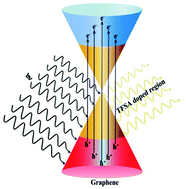
Absorption quenching due to Pauli blocking in graphene.
The content of this RSS Feed (c) The Royal Society of Chemistry

28 Oct 01:50
by Bryon W. Larson, Obadiah G. Reid, David C. Coffey, Stanislav M. Avdoshenko, Alexey A. Popov, Olga V. Boltalina, Steven H. Strauss, Nikos Kopidakis, Garry Rumbles
Photoinduced charge generation (PCG) dynamics are notoriously difficult to correlate with specific molecular properties in device relevant polymer:fullerene organic photovoltaic blend films due to the highly complex nature of the solid state blend morphology. Here, this study uses six judiciously selected trifluoromethylfullerenes blended with the prototypical polymer poly(3-hexylthiophene) and measure the PCG dynamics in 50 fs–500 ns time scales with time-resolved microwave conductivity and femtosecond transient absorption spectroscopy. The isomeric purity and thorough chemical characterization of the fullerenes used in this study allow for a detailed correlation between molecular properties, driving force, local intermolecular electronic coupling and, ultimately, the efficiency of PCG yield. The findings show that the molecular design of the fullerene not only determines inter-fullerene electronic coupling, but also influences the decay dynamics of free holes in the donor phase even when the polymer microstructure remains unchanged.

The generation efficiency of long-lived photoinduced charges in polymer: fullerene bulk heterojunctions increases dramatically as the strength of intermolecular electronic coupling in the fullerene phase improves. Ultrafast geminate recombination is suppressed when electron delocalization within fullerene clusters is strong, while the opposite is observed when delocalization within the cluster is poor.
28 Oct 01:50
by Wenzhe Li, Jiandong Fan, Yaohua Mai, Liduo Wang
The stability of single-crystalline/monocrystalline-like perovskite film is expected to be better than its microcrystalline counterparts. In the present work, highly orientated perovskite thin films (CH3NH3PbI3–xClx) are prepared by means of aquointermediates assisted solution process. It displays super-duper preferred-orientation along <110> direction that is close to the single crystal, and its diffraction intensity ratio of (110)/(310) is nearly two orders of magnitude higher in contrast to the films that prepared by traditional way. Owing to its superior performances, e.g., highly crystallized quality, stress-free inside films, longer electron lifetime, faster temporal response time, etc., the highly orientated perovskite-based solar cells accordingly allow realizing high efficiency while improving its thermal stability.

Highly orientated perovskite thin films (CH3NH3PbI3–xClx) are prepared by means of aquointermediate assisted one-step solution process. It demonstrates monocrystalline-like performances, e.g., extremely high preferred-orientation, stress-free inside films, longer electron lifetime, lower defect density, and faster temporal response time. The highly orientated perovskite-based solar cells allow realizing the efficiency as high as 16.9% while improving its thermal stability.
28 Oct 01:50
by John B. Cook, Hyung-Seok Kim, Terri C. Lin, Chun-Han Lai, Bruce Dunn, Sarah H. Tolbert
A synthesis methodology is demonstrated to produce MoS2 nanoparticles with an expanded atomic lamellar structure that are ideal for Faradaic-based capacitive charge storage. While much of the work on MoS2 focuses on the high capacity conversion reaction, that process is prone to poor reversibility. The pseudocapacitive intercalation-based charge storage reaction of MoS2 is investigated, which is extremely fast and highly reversible. A major challenge in the field of pseudocapacitive-based energy storage is the development of thick electrodes from nanostructured materials that can sustain the fast inherent kinetics of the active nanocrystalline material. Here a composite electrode comprised of a poly(acrylic acid) binder, carbon fibers, and carbon black additives is utilized. These electrodes deliver a specific capacity of 90 mAh g−1 in less than 20 s and can be cycled 3000 times while retaining over 80% of the original capacity. Quantitative kinetic analysis indicates that over 80% of the charge storage in these MoS2 nanocrystals is pseudocapacitive. Asymmetric full cell devices utilizing a MoS2 nanocrystal-based electrode and an activated carbon electrode achieve a maximum power density of 5.3 kW kg−1 (with 6 Wh kg−1 energy density) and a maximum energy density of 37 Wh kg−1 (with 74 W kg−1power density).

MoS2 nanocrystals are synthesized by the thermal sulfurization of hydrothermally prepared MoO2 nanocrystals. Composite electrodes are formulated to show high levels of pseudocapacitive charge storage in traditional slurry-based systems. These electrodes can be charged and discharged to 50% of their theoretical capacity in just 20 s and can be reversibly cycled 3000 times with greater than 80% capacity retention.
28 Oct 01:49
by Sooncheol Kwon, Hongkyu Kang, Jong-Hoon Lee, Jinho Lee, Soonil Hong, Heejoo Kim, Kwanghee Lee
Due to the short diffusion length of approximately 10 nm of an exciton in bulk heterojunction (BHJ) organic solar cells (OSCs) comprising electron donors and acceptors, a formation with well phase-separated nanomorphology in BHJ films has been one of the most important issues in achieving efficient charge separation and extraction in OSCs. By adding a small amount of a high boiling point solvent or molecules to a bulk heterojunction (BHJ) solution, processing additive techniques have recently begun to offer an attractive and efficient method for controlling the nanoscale BHJ morphology of state-of-the-art OSCs with power conversion efficiencies (PCEs) exceeding approximately 11%. However, it remains unknown whether the effect of processing additives can potentially pave the way for the ongoing development of various BHJ components and the commercialization of OSCs. Here, recent progress in understanding and developing the effects of processing additives on OSCs is highlighted. This overview suggests possible guidelines for a wide range of BHJ components with respect to morphological/structural evolution. Furthermore, the rational correlations among processing additives, BHJ components, and fabrication technologies and the performance of high-performance and low-cost OSCs are discussed along with future commercialization prospects.

For efficient charge separation and extraction in a device, the specific characteristics of processing additives, such as high boiling points and selective solubility, provide a special opportunity to form a well phase-separated nanomorphology in a bulk-heterojunction (BHJ) film. The applications of processing additives to commercial OPVs can be further developed with respect to future demands for various BHJ materials, such as high performance, long-term stability and eco-friendly fabrication.
28 Oct 01:49
by Chuantian Zuo, Liming Ding
The work functions for charge transport layers in perovskite solar cells affect device performance significantly. In this work, the regular poly(3,4-ethylenedioxythiophene):polystyrene sulfonate (PEDOT:PSS) is modified by adding a polymer electrolyte PSS-Na to improve its HTL function in perovskite solar cells. The modified PEDOT:PSS films (called m-PEDOT:PSS) possess higher work function than the regular one. Its energy level matches the valence band of perovskite very well, leading to enhanced Voc and PCE (power conversion efficiency). When CH3NH3PbI3 is used as the light absorber, the cell with PEDOT:PSS HTL gives a Voc of 0.96 V and a PCE of 12.35%, while the cell with m-PEDOT:PSS layer gives a Voc of 1.11 V and a PCE of 15.56%. Enhanced Voc and PCE are also achieved when CH3NH3PbI2Br or CH3NH3PbBr3 is used as the light absorber. The m-PEDOT:PSS/CH3NH3PbBr3/PC61BM solar cells demonstrate an outstanding Voc of 1.52 V.

A modified poly(3,4-ethylenedioxythiophene) (PEDOT) layer is developed and used as the HTL for perovskite solar cells, leading to enhanced performance. Using m-PEDOT:PSS (1:2) as the HTL and CH3NH3PbI3 as the light absorber, a Voc of 1.11 V and a power conversion efficiency of 15.56% are achieved. A Voc of 1.52 V is obtained from CH3NH3PbBr3 solar cells, which is the highest Voc for perovskite/PCBM solar cells.
28 Oct 01:49
by Yitong Guo, Weishuo Li, Hongtao Yu, Dmitrii F. Perepichka, Hong Meng

An electroactive polymer poly[4,7-bis(3,6-dihexyloxy-thieno[3,2-b]thiophen-2-yl)]-benzo[c][1,2,5]thiadiazole is synthesized and applied as a color-changing electrode material in supercapacitors via spray coating method. Using poly(3,4-ethylenedioxythiophene) as the negative electrode, the all-polymer asymmetric supercapacitors provide an energy density of 3.5–6.3 W h kg−1 and power density of 0.6–8.8 kW kg−1.
24 Oct 01:02
by Shuyan Shao, Mustapha Abdu-Aguye, Tejas S. Sherkar, Hong-Hua Fang, Sampson Adjokatse, Gert ten Brink, Bart J. Kooi, L. Jan Anton Koster, Maria Antonietta Loi
Despite the rich experience gained in controlling the microstructure of perovskite films over the past several years, little is known about how the microstructure affects the device properties of perovskite solar cells (HPSCs). In this work, the effects of the perovskite film microstructure on the charge recombination and light-soaking phenomenon in mixed halide HPSCs are investigated. Devices with noncompact perovskite morphology show a severe light soaking effect, with the power conversion efficiency (PCE) improved from 3.7% to 11.6% after light soaking. Devices with compact perovskite morphology show a negligible light soaking effect, with PCE slightly increased from 11.4% to 11.9% after light soaking. From device investigations, photoluminescence, and impedance spectroscopy measurements, it is demonstrated that interface electron traps at the grain boundaries as well as at the crystal surface dominate the light soaking effect. Severe trap-assisted recombination takes place in HPSCs using noncompact films, while it is effectively eliminated in devices with compact films. Moreover, how the grain size of the perovskite film affects the light soaking phenomenon is investigated. In the case of compact perovskite films, the size of the grains has a limited effect on the light soaking. In these compact films, grains are fused and trap states are effectively reduced.

The effects of the perovskite film microstructure on the charge recombination and light-soaking phenomenon are investigated in hybrid perovskite solar cells (HPSCs). It is demonstrated that interface electron traps at the grain boundaries as well as at the crystal surface dominate the light soaking effect.
24 Oct 01:02
by Wenxi Guo, Zijie Xu, Fayin Zhang, Shuyao Xie, Hongyao Xu, Xiang Yang Liu
The rapid development of the modern electronics gives rise to higher demands of flexible and wearable energy resources. Flexible transparent conducting electrodes (TCEs) are one of the essential components for flexible/wearable thin-film solar cells (SCs). In this regard, commercial indium tin oxide (ITO) on plastics has demonstrated superior optoelectronic performance although some drawbacks, i.e., the low abundance, film brittleness, low infrared transmittance, and poor chemical stability remain. On the other hand, several other transparent conducting oxide (TCO)-free transparent conductive materials, such as carbon nanotubes (CNTs), graphene, metallic nanowires (NWs), and conducting polymers, have experienced a rapid development to address these issues. In this feature article, an overview over the latest development of several flexible TCO-free thin film SCs, i.e., organic solar cells (OSCs), dye-sensitized solar cells (DSSCs), perovskite solar cells (pero-SCs), and fiber/wire-shaped SCs is provided. Three groups of flexible TCO-free thin film solar cells can be categorized according to their configurations: (i) front-side illuminated planar configuration; (ii) back-side illuminated planar configuration, and (iii) fiber-shaped solar cells (FSSCs). The article is focused on flexible TCO-free TCEs, including CNTs, graphene, metallic NW/nanotroughs, metallic grids, conducting polymers, metallic fiber, and carbon based fibers.

Three groups of flexible transparent conducting oxide (TCO)-free thin film solar cells can be categorized according to their configurations: (i) front-side illuminated planar configuration; (ii) back-side illuminated planar configuration; and (iii) fiber-shaped solar cells. This article is focused on flexible TCO-free transparent conducting electrodes, including carbon nanotubes, graphene, metallic nanowires/nanotroughs, metallic grids, conducting polymers, metallic fiber, and carbon-based fibers.
24 Oct 01:01
by Ming Yu Jin, Byung-Man Kim, Hyun Sil Jung, Jun-Hyeok Park, Deok-Ho Roh, Dong Guk Nam, Tae-Hyuk Kwon, Do Hyun Ryu

On page 6876, T.-H. Kwon, D. H. Ryu, and co-workers present indoline based sensitizers with a planar geometry and high molar extinction coefficient. Using a very thin active layer (1.8 μm) with an iodine electrolyte, a power conversion efficiency of 9.1% is achieved. On the cover two types of indoline based sensitizers that have different alkyl chain length are represented.
08 Oct 00:45
by Keyou Yan, Zhanhua Wei, Tiankai Zhang, Xiaoli Zheng, Mingzhu Long, Zefeng Chen, Weiguang Xie, Teng Zhang, Yuda Zhao, Jianbin Xu, Yang Chai, Shihe Yang
Trap states in semiconductors usually degrade charge separation and collection in photovoltaics due to trap-mediated nonradiative recombination. Here, it is found that perovskite can be heavily doped in low concentration with non-ignorable broadband infrared absorption in thick films and their trap states accumulate electrons through infrared excitation and hot carrier cooling. A hybrid one-sided abrupt perovskite/TiO2 p-N heterojunction is demonstrated that enables partial collection of these trap-filled charges through a tunneling process instead of detrimental recombination. The tunneling is from broadband trap states in the wide depleted p-type perovskite, across the barrier of the narrow depleted TiO2 region (<5 nm), to the N-type TiO2 electrode. The trap states inject carriers into TiO2 through tunneling and produce around-unity peak external quantum efficiency, giving rise to near-infrared photovoltaics. The near-infrared response allows photodetecting devices to work in both diode and conductor modes. This work opens a new avenue to explore the near-infrared application of hybrid perovskites.

Hybrid perovskite has detectable infrared response in thick film due to trap state absorption and perovskite/TiO2 p-N one-sided abrupt heterojunction that enables the partial collection of excited trap charges before recombination through tunneling. The tunneling behavior across the N-type depletion region of TiO2 allows the reverse conduction in a diode and high gain in photodetection in a wideband spectrum.
08 Oct 00:43
by Quan Lü, Haohan Wei, Wenzhao Sun, Kaiyang Wang, Zhiyuan Gu, Jiankai Li, Shuai Liu, Shumin Xiao, Qinghai Song

The role of excitons on the amplifications of lead halide perovskites has been explored. Unlike the photoluminescence, the intensity of amplified spontaneous emission is partially suppressed at low temperature. The detailed analysis and experiments show that the inhibition is attributed to the existence of exciton and a quantitative model has been built to explain the experimental observations.
Lucy, Hi and one other like this
08 Oct 00:41
by Youfeng Yue, NovianaTjitra Salim, Yongzhen Wu, Xudong Yang, Ashraful Islam, Wei Chen, Jian Liu, Enbin Bi, Fengxian Xie, Molang Cai, Liyuan Han

The molecular structure of pyridine derivatives is critical to perovskite solar cell performance, especially stability. Most of the pyridine additives easily form complexes with perovskite. A new pyridine additive with a long alkyl chain substituted at its o-position does not corrode perovskite. The stability of devices containing this additive is the highest among the investigated cells.
08 Oct 00:41
by Liang Li, Yihua Chen, Zonghao Liu, Qi Chen, Xindong Wang, Huanping Zhou

The coordination effects of additives during perovskite crystal growth are investigated, and a novel technique to fabricate high-quality perovskite thin films by introduction of weak coordination additives (e.g., acetonitrile) in the precursors is demonstrated.
08 Oct 00:40
by Yue Wang, Xiaoming Li, Sivaramapanicker Sreejith, Fei Cao, Zeng Wang, Mihaiela Corina Stuparu, Haibo Zeng, Handong Sun

Influence of light exposure on cesium lead halide nanostructures has been explored. A discovery of photon driven transformation (PDT) in 2D CsPbBr3 nanoplatelets is reported, in which the quantum-confined few-monolayer nanoplatelets will convert to bulk phase under very low irradiation intensity (≈20 mW cm−2). Benefiting from the remarkable emission color change during PDT, the multicolor luminescence photopatterns and facile information photo-encoding are established.
Hi and -1 others like this
08 Oct 00:40
by Soyeon Kim, Bernardi Sanyoto, Won-Tae Park, Seyul Kim, Saumen Mandal, Jong-Choo Lim, Yong-Young Noh, Jung-Hyun Kim

A highly conductive, air stable and scalable poly(3,4-ethylenedioxythiophene) (PEDOT): poly(4-styrenesulfonate) (PEDOT:PSS) are prepared by using mass production ultrafiltration. By effectively removing excess PSS and various reaction impurities using repeated 100 nm pore membrane filtration, purified PEDOT:PSS exhibit conductivity as high as 2000 S cm−1.
27 Sep 01:00
by Laraib Sarfraz Khanzada, Ievgen Levchuk, Yi Hou, Hamed Azimi, Andres Osvet, Rameez Ahmad, Marco Brandl, Patrick Herre, Monica Distaso, Rainer Hock, Wolfgang Peukert, Miroslaw Batentschuk, Christoph J. Brabec
Effective engineering of surface ligands in semiconductor nanocrystals can facilitate the electronic interaction between the individual nanocrystals, making them promising for low-cost optoelectronic applications. Here, the use of high purity Cu2ZnSnS4 (CZTS) nanocrystals as the photoactive layer and hole-transporting material is reported in low-temperature solution-processed solar cells. The high purity CZTS nanocrystals are prepared by engineering the surface ligands of CZTS nanocrystals, capped originally with the long-chain organic ligand oleylamine. After ligand removal, CZTS nanocrystals show substantial improvement in photoconductivity and mobility, displaying also an appreciable photoresponse in a simple heterojunction solar cell architecture. More notably, CZTS nanocrystals exhibit excellent hole-transporting properties as interface layer in perovskite solar cells, yielding power conversion efficiency (PCE) of 15.4% with excellent fill factor (FF) of 81%. These findings underscore the importance of removing undesired surface ligands in nanocrystalline optoelectronic devices, and demonstrate the great potential of CZTS nanocrystals as both active and passive material for the realization of low-cost efficient solar cells.

Effective ligand engineering of Cu2ZnSnS4 (CZTS) nanocrystal surface is demonstrated to lead to improvement of the electrical properties of the thin film. Furthermore, surface-modified CZTS nanocrystals exhibit excellent hole transporting properties as the interface layer in a perovskite solar cell. The perfomance of perovskite devices is shown to vary from 12.2% to 15.4% as a function of ligand removal.
27 Sep 01:00
by Fangyuan Jiang, Yaoguang Rong, Huawei Liu, Tiefeng Liu, Lin Mao, Wei Meng, Fei Qin, Youyu Jiang, Bangwu Luo, Sixing Xiong, Jinhui Tong, Yun Liu, Zaifang Li, Hongwei Han, Yinhua Zhou
Enhancing open-circuit voltage in CH3NH3PbI3(Cl) perovskite solar cells has become a major challenge for approaching the theoretical limit of the power conversion efficiency. Here, for the first time, it is demonstrated that the synergistic effect of PbI2 passivation and chlorine incorporation via controlling the molar ratio of PbI2, PbCl2 (or MACl), and MAI in the precursor solutions, boosts the open-circuit voltage of CH3NH3PbI3(Cl) perovskite solar cells over 1.15 V in both mesoscopic and inverted planar perovskite solar cells. Such high open-circuit voltage can be attributed to the enhanced photoluminescence emission and carrier lifetime associated with the reduced trap densities. The morphology and composition analysis using scanning electron microscopy, X-ray diffraction measurements, and energy dispersive X-ray spectroscopy confirm the high quality of the optimized CH3NH3PbI3(Cl) perovskite film. On this basis, record-high efficiencies of 16.6% for nonmetal-electrode all-solution-processed perovskite solar cells and 18.4% for inverted planar perovskite solar cells are achieved.

A synergistic effect of PbI2 passivation and chlorine incorporation induces suppression of non-radiative recombination in a perovskite film. This leads to a high open-circuit voltage exceeding 1.15 V in both mesoscopic and inverted planar CH3NH3PbI3(Cl)-based perovskite solar cells.
27 Sep 00:59
by Leilei Gu, Mohammad Mahdi Tavakoli, Daquan Zhang, Qianpeng Zhang, Aashir Waleed, Yiqun Xiao, Kwong-Hoi Tsui, Yuanjing Lin, Lei Liao, Jiannong Wang, Zhiyong Fan

Large-scale and highly ordered 3D perovskite nanowire (NW) arrays are achieved in nanoengineering templates by a unique vapor–solid–solid reaction process. The excellent material properties, in conjunction with the high integration density of the NW arrays, make them promising for 3D integrated nanoelectronics/optoelectronics. Image sensors with 1024 pixels are assembled and characterized to demonstrate the technological potency.
27 Sep 00:58
by Shengbin Shi, Qiaogan Liao, Yumin Tang, Han Guo, Xin Zhou, Yulun Wang, Tingbin Yang, Yongye Liang, Xing Cheng, Feng Liu, Xugang Guo

Narrow bandgap (1.37–1.46 eV) polymers incorporating a head-to-head linkage containing 3-alkoxy-3′-alkyl-2,2′-bithiophene are synthesized. The head-to-head linkage enables polymers with sufficient solubility and the noncovalent sulfur–oxygen interaction affords polymers with high degree of backbone planarity and film ordering. When integrated into polymer solar cells, the polymers show a promising power conversion efficiency approaching 10%.
27 Sep 00:57
by Daniel Pérez-del-Rey, Dávid Forgács, Eline M. Hutter, Tom J. Savenije, Dennis Nordlund, Philip Schulz, Joseph J. Berry, Michele Sessolo, Henk J. Bolink

The addition of Sr2+ in CH3NH3PbI3 perovskite films enhances the charge carrier collection efficiency of solar cells leading to very high fill factors, up to 85%. The charge carrier lifetime of Sr2+-containing perovskites is in excess of 40 μs, longer than those reported for perovskite single crystals.
27 Sep 00:57
by Jiho Oh, Kakaraparthi Kranthiraja, Changyeon Lee, Kumarasamy Gunasekar, Seonha Kim, Biwu Ma, Bumjoon J. Kim, Sung-Ho Jin

Side-chain fluorination of polymers is demonstrated as a highly effective strategy to improve the efficiency of all-polymer solar cells from 2.93% (nonfluorinated P1) to 7.13% (fluorinated P2). This significant enhancement is achieved by synergistic improvements in open-circuit voltage, charge generation, and charge transport, as fluorination of the donor polymer optimizes the band alignment and the film morphology.
27 Sep 00:56
by Tao Liu, Yuan Guo, Yuanping Yi, Lijun Huo, Xiaonan Xue, Xiaobo Sun, Huiting Fu, Wentao Xiong, Dong Meng, Zhaohui Wang, Feng Liu, Thomas P. Russell, Yanming Sun

Two different nonfullerene acceptors and one copolymer are used to fabricate ternary organic solar cells (OSCs). The two acceptors show unique interactions that reduce crystallinity and form a homogeneous mixed phase in the blend film, leading to a high efficiency of ≈10.3%, the highest performance reported for nonfullerene ternary blends. This work provides a new approach to fabricate high-performance OSCs.
21 Sep 01:07
by Weiqiang Liao, Dewei Zhao, Yue Yu, Niraj Shrestha, Kiran Ghimire, Corey R. Grice, Changlei Wang, Yuqing Xiao, Alexander J. Cimaroli, Randy J. Ellingson, Nikolas J. Podraza, Kai Zhu, Ren-Gen Xiong and Yanfa Yan

Journal of the American Chemical Society
DOI: 10.1021/jacs.6b08337

21 Sep 00:56
J. Mater. Chem. A, 2016, 4,15522-15535
DOI: 10.1039/C6TA06508B, Paper
Min Kim, Jaewon Lee, Sae Byeok Jo, Dong Hun Sin, Hyomin Ko, Hansol Lee, Seung Goo Lee, Kilwon Cho
This study presents an effective guide to vertical phase separation of polymer-fullerene blends based on systematic comparison of compatibility, crystallization, and processing conditions in observing the vertical morphology.
The content of this RSS Feed (c) The Royal Society of Chemistry
21 Sep 00:45
by Yaocheng Jin, Zhiming Chen, Sheng Dong, Nannan Zheng, Lei Ying, Xiao-Fang Jiang, Feng Liu, Fei Huang, Yong Cao

A novel naphtho[1,2-c:5,6-c′]bis([1,2,5]thiadiazole)-based narrow-bandgap π-conjugated polymer is designed for application in polymer solar cells. Remarkable power conversion efficiencies over 10% can be achieved based on both conventional and inverted device architectures with thick photoactive layers, which are processed by using chlorinated or nonhalogenated solvents, suggesting its great promise toward practical applications based on high-throughput roll-to-roll processing.