16 May 13:28
by Annalisa Bruno, Daniele Cortecchia, Xin Yu Chin, Kunwu Fu, Pablo P. Boix, Subodh Mhaisalkar, Cesare Soci
Despite their excellent power conversion efficiency, MAPbI3 solar cells exhibit strong hysteresis that hinders reliable device operation. Herein it is shown that ionic motion is the dominant mechanism underlying hysteresis of MAPbI3 solar cells by studying the effects of electrical poling in different temperature ranges. Complete suppression of the hysteresis below 170 K is consistent with temperature activated diffusion of I− anions and/or the motion of the MA+ cations. Ionic motion has important effect on the overall efficiency of the MAPbI3 solar cells: the initial decrease of the power conversion efficiency while lowering the operating temperature is recovered and even enhanced up to 20% of its original value by applying an electrical poling. The open circuit voltage significantly increases and the current density fully recovers due to the reduction of the electron extraction barrier at the TiO2/MAPbI3 interface driven by the charge accumulation at the interface. Moreover, beside TiO2/MAPbI3 interfacial charge transfer, charge transport in TiO2 strongly affects the photovoltaic performance, as revealed by MAPbI3/ms-TiO2 field effect transistors. These results establish the basis to develop effective strategies to mitigate operational instability of perovskites solar cells.

It is proven that ionic motion is the dominant mechanism behind MAPbI3 solar cell hysteresis by investigating electrical poling effects in a wide temperature range. The power conversion efficiency reduces at low temperature, but then recovers and improves up to 20% of its original value under electrical bias. This effect is attributed to the electron extraction barrier reduction at the TiO2/MAPbI3 interface.
16 May 13:27
by Shalinee Kavadiya, Dariusz M. Niedzwiedzki, Su Huang, Pratim Biswas
An electrospray deposition technique to fabricate a perovskite (CH3NH3PbI3) layer for highly stable and efficient perovskite solar cells at ambient humidity (30%–50% relative humidity) conditions is demonstrated. A detailed study is conducted to determine the effect of different electrospray parameters on the device performance and to provide a mechanistic explanation of the superior stability of the films. Due to the controlled reactivity that results in the formation of a smooth perovskite film, these cells exhibit stability exceeding 4000 h, in contrast to much lower stability of those fabricated by conventional spin coating methods. Furthermore, the perovskite film deposited by electrospray methods exhibits a self-healing behavior when exposed to moisture. The authors hypothesize the formation of an intermediate metastable phase and smooth morphology of the film as the reason for this enhanced stability. Electrospray is a scalable technique that provides precise control over the amount of material required for deposition, reducing significant material loss that occurs in conventional solution-based methods. Overall, this work shows that stability of perovskite solar cells can be improved by fabrication using a well controlled and optimized electrospray technique, without the use of any additives or cell encapsulants.

Fabricating highly stable perovskite solar cells using a simple and scalable electrospray deposition technique at ambient condition. Perovskite film formed by electrospray is uniform, smooth, and moisture-resistant in nature, making the cells fight against moisture without the use of additives or encapsulation.
16 May 13:26
by Huanle Chen, Weifei Fu, Chuyi Huang, Zhongqiang Zhang, Shuixing Li, Feizhi Ding, Minmin Shi, Chang-Zhi Li, Alex K.-Y. Jen, Hongzheng Chen
Two hole-extraction materials (HEMs), TPP-OMeTAD and TPP-SMeTAD, have been developed to facilitate the fabrication of efficient p-i-n perovskite solar cells (PVSCs). By replacing the oxygen atom on HEM with sulfur (from TPP-OMeTAD to TPP-SMeTAD), it effectively lowers the highest occupied molecular orbital of the molecule and provides stronger Pb![[BOND]](http://onlinelibrarystatic.wiley.com/undisplayable_characters/00f8ff.gif) S interaction with perovskites, leading to efficient charge extraction and surface traps passivation. The TPP-SMeTAD-based PVSCs exhibit both improved photovoltaic performance and reduced hysteresis in p-i-n PVSCs over those based on TPP-OMeTAD. This work not only provides new insights on creating perovskite-HEM heterojunction but also helps in designing new HEM to enable efficient organic–inorganic hybrid PVSCs.
S interaction with perovskites, leading to efficient charge extraction and surface traps passivation. The TPP-SMeTAD-based PVSCs exhibit both improved photovoltaic performance and reduced hysteresis in p-i-n PVSCs over those based on TPP-OMeTAD. This work not only provides new insights on creating perovskite-HEM heterojunction but also helps in designing new HEM to enable efficient organic–inorganic hybrid PVSCs.

Two hole-extraction materials (HEMs), TPP-OMeTAD and TPP-SMeTAD, are developed for the construction of p-i-n perovskite solar cells (PVSCs). Through replacing the oxygen atom with sulfur at the arylamine terminal substituents, TPP-SMeTAD exhibits superior energetics, charge extraction and trap passivation capabilities to perovskite, over those of TPP-OMeTAD. It leads to improved photovoltaic performance and reduced hysteresis in TPP-SMeTAD based p-i-n PVSCs.
12 May 00:42
by Jun Shao, Songwang Yang and Yan Liu

ACS Applied Materials & Interfaces
DOI: 10.1021/acsami.7b02323

12 May 00:32
by Gyu Min Kim and Tetsu Tatsuma

The Journal of Physical Chemistry C
DOI: 10.1021/acs.jpcc.7b02799

12 May 00:28
by Ramūnas Augulis, Marius Franckevičius, Vytautas Abramavičius, Darius Abramavičius, Shaik Mohammed Zakeeruddin, Michael Grätzel, Vidmantas Gulbinas
Charge carrier dynamics in organolead iodide perovskites is analyzed by employing time-resolved photoluminescence spectroscopy with several ps time resolution. The measurements performed by varying photoexcitation intensity over five orders of magnitude enable separation of photoluminescence components related to geminate and nongeminate charge carrier recombination and to address the dynamics of an isolated geminate electron–hole pair. Geminate recombination dominates at low excitation fluence and determines the initial photoluminescence decay. This decay component is remarkably independent of the material structure and experimental conditions. It is demonstrated that dependences of the geminate and nongeminate radiative recombination components on excitation intensity, repetition rate, and temperature, are hardly compatible with carrier trapping and exciton dissociation models. On the basis of semiclassical and quantum mechanical numerical calculation results, it is argued that the fast photoluminescence decay originates from gradual spatial separation of photogenerated weakly bound geminate charge pairs.

Ultrafast time-resolved measurements of methylammonium lead halide perovskite photoluminescence enable separation of the fast and slow decay components attributed to the geminate and nongeminate charge carrier recombination. The geminate recombination dominates at very low excitation intensities during initial several tens of picoseconds and reveals the gradual spatial separation of photogenerated weakly bound geminate charge pairs.
12 May 00:28
by Changlei Wang, Chuanxiao Xiao, Yue Yu, Dewei Zhao, Rasha A. Awni, Corey R. Grice, Kiran Ghimire, Danae Constantinou, Weiqiang Liao, Alexander J. Cimaroli, Pei Liu, Jing Chen, Nikolas J. Podraza, Chun-Sheng Jiang, Mowafak M. Al-Jassim, Xingzhong Zhao, Yanfa Yan
Through detailed device characterization using cross-sectional Kelvin probe force microscopy (KPFM) and trap density of states measurements, we identify that the J–V hysteresis seen in planar organic–inorganic hybrid perovskite solar cells (PVSCs) using SnO2 electron selective layers (ESLs) synthesized by low-temperature plasma-enhanced atomic-layer deposition (PEALD) method is mainly caused by the imbalanced charge transportation between the ESL/perovskite and the hole selective layer/perovskite interfaces. We find that this charge transportation imbalance is originated from the poor electrical conductivity of the low-temperature PEALD SnO2 ESL. We further discover that a facile low-temperature thermal annealing of SnO2 ESLs can effectively improve the electrical mobility of low-temperature PEALD SnO2 ESLs and consequently significantly reduce or even eliminate the J–V hysteresis. With the reduction of J–V hysteresis and optimization of deposition process, planar PVSCs with stabilized output powers up to 20.3% are achieved. The results of this study provide insights for further enhancing the efficiency of planar PVSCs.

Through detailed characterizations, it is identified that the current density-voltage hysteresis of planar perovskite solar cells using low-temperature atomic-layer deposited SnO2 electron selective layers originates from the poor-electrical conductivity of the SnO2 layers. A facile low-temperature thermal annealing in ambient air can effectively reduce the degrees of the hysteresis and improve the power conversion efficiency of planar perovskite solar cells.
12 May 00:26
by Jiang Huang, Hanyu Wang, Kangrong Yan, Xiaohua Zhang, Hongzheng Chen, Chang-Zhi Li, Junsheng Yu

A new approach to unlock highly efficient polymer solar cells is presented in article number 1606729 by Chang-Zhi Li, Junsheng Yu, and co-workers, in which two bulk heterojunction layers with complementary optoelectronic properties are vertically connected via a stamp-transfer method, and sandwiched between one set of cathode and anode for enabling over 12% power conversion efficiency.
11 May 02:36
by Wonho Lee, Seonju Jeong, Changyeon Lee, Gibok Han, Changsoon Cho, Jung-Yong Lee, Bumjoon J. Kim
Interfaces between the photoactive layers and electrodes play critical roles in controlling the performance of optoelectronic devices. Herein, a novel nonconjugated polymer additive (nPA), poly(2-vinylpyridine) (P2VP), is reported for modifying the interfaces between the bulk-heterojunction (BHJ) and cathode/metal oxide (MO) layers. The P2VP nPA enables remarkably enhanced power conversion efficiencies (PCEs) and ambient stability in different types of polymer solar cells (PSCs). Importantly, interfacial engineering can be achieved during deposition of the P2VP nPA-containing BHJ active layer via simple, one-step solution processing. The P2VP nPA has much higher surface energy than the BHJ active components and stronger interaction with the surface of MO, which affords spontaneous vertical phase separation from the BHJ layer on the MO surface by one-step solution processing. The self-assembled P2VP layer substantially reduces the work function and surface defect density of MO, thereby minimizing the charge-extraction barrier and increasing the PCEs of the PSCs significantly, i.e., PTB7-Th:PC71BM (10.53%![[RIGHTWARDS ARROW]](http://onlinelibrarystatic.wiley.com/undisplayable_characters/002192.gif) 11.14%), PTB7:PC71BM (7.37%8.67%), and PTB7-Th:P(NDI2HD-T) all-PSCs (5.52%6.14%). In addition, the lifetimes of the PSCs are greatly improved by the use of the P2VP nPA.
11.14%), PTB7:PC71BM (7.37%8.67%), and PTB7-Th:P(NDI2HD-T) all-PSCs (5.52%6.14%). In addition, the lifetimes of the PSCs are greatly improved by the use of the P2VP nPA.

Nonconjugated polymer additives (nPAs) are investigated for highly efficient and stable polymer solar cells (PSCs). The poly(2-vinylpyridine) (P2VP) nPA self-assembles vertically on the ZnO surface via a single coating process for the deposition of active materials. The self-assembled P2VP reduces the work function and surface defect density of ZnO, which leads to efficient and stable PSCs with up to 11.14% efficiency.
11 May 02:34
by Qifan Xue, Yang Bai, Meiyue Liu, Ruoxi Xia, Zhicheng Hu, Ziming Chen, Xiao-Fang Jiang, Fei Huang, Shihe Yang, Yutaka Matsuo, Hin-Lap Yip, Yong Cao

In article number 1602333, Shihe Yang, Yutaka Matsuo, Hin-Lap Yip, and co-workers simultaneously optimize both the power conversion efficiency (>12.5%) and average visible transmittance (>20%) of semitransparent perovskite solar cells (ST-PVSCs) through dual interfacial modifications. The success demonstration of high performance ST-PVSCs paves the way for using them as power generating windows, as illustrated in the image.
11 May 02:32
by Bin Sun, Oleksandr Voznyy, Hairen Tan, Philipp Stadler, Mengxia Liu, Grant Walters, Andrew H. Proppe, Min Liu, James Fan, Taotao Zhuang, Jie Li, Mingyang Wei, Jixian Xu, Younghoon Kim, Sjoerd Hoogland, Edward H. Sargent
Application of pseudohalogens in colloidal quantum dot (CQD) solar-cell active layers increases the solar-cell performance by reducing the trap densities and implementing thick CQD films. Pseudohalogens are polyatomic analogs of halogens, whose chemistry allows them to substitute halogen atoms by strong chemical interactions with the CQD surfaces. The pseudohalide thiocyanate anion is used to achieve a hybrid surface passivation. A fourfold reduced trap state density than in a control is observed by using a suite of field-effect transistor studies. This translates directly into the thickest CQD active layer ever reported, enabled by enhanced transport lengths in this new class of materials, and leads to the highest external quantum efficiency, 80% at the excitonic peak, compared with previous reports of CQD solar cells.

Pseudohalogens in solar cells are applied and the performance is increased by reducing trap densities and implementing thick colloidal quantum dot (CQD) films. The pseudohalide-exchanged CQD films have four times lower trap state density than the controls, as seen in field-effect transistor (FET) studies. This results in an external quantum efficiency of 80% at the infrared excitonic peak, the highest reported in CQD photovoltaics.
10 May 10:27
Nanoscale, 2017, 9,7650-7665
DOI: 10.1039/C7NR01422H, Paper
Zhuoran Wang, Raynald Gauvin, George P. Demopoulos
An ethanol/water solution coating method combined with annealing provides a superior nanocoating of CZTS on TiO2 nanorods as a potential sensitized photoanode heterostructure.
The content of this RSS Feed (c) The Royal Society of Chemistry

10 May 10:25
J. Mater. Chem. A, 2017, 5,10010-10020
DOI: 10.1039/C7TA02492D, Paper
Lingpeng Yan, Jinduo Yi, Qi Chen, Junyan Dou, Yongzhen Yang, Xuguang Liu, Liwei Chen, Chang-Qi Ma
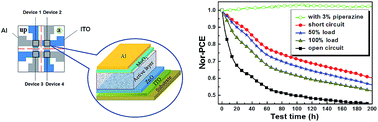
External load dependent degradation behavior of P3HT:PC61BM solar cells is demonstrated, which can be successfully suppressed by blending with an exciton quencher of PC61BM.
The content of this RSS Feed (c) The Royal Society of Chemistry
10 May 00:42
by Ghada H. Ahmed, Jun Yin, Riya Bose, Lutfan Sinatra, Erkki Alarousu, Emre Yengel, Noktan M. AlYami, Makhsud I. Saidaminov, Yuhai Zhang, Mohamed N. Hedhili, Osman M. Bakr, Jean-Luc Brédas and Omar F. Mohammed

Chemistry of Materials
DOI: 10.1021/acs.chemmater.7b00872

10 May 00:40
by Yu Chen, Yunpeng Qin, Yang Wu, Cheng Li, Huifeng Yao, Ningning Liang, Xiaochen Wang, Weiwei Li, Wei Ma, Jianhui Hou
Ternary blend is proved to be a potential contender for achieving high efficiency in organic photovoltaics, which can apparently strengthen the absorption of active layer so as to better harvest light irradiation. Much of the previous work in ternary polymer solar cells focuses on broadening the absorption spectrum; however, a new insight is brought to study the third component, which in tiny amounts influents the small-molecule acceptor-based device performance. Without contributing to complementing the absorption, a minute amount of fullerene derivative, Bis-PC70BM, can effectively play an impressive role as sensitizer in enhancing the external quantum efficiency of the host binary blend, especially for polymeric donor. Detailed investigations reveal that the minute addition of Bis-PC70BM can realize morphology modification as well as facilitate electron transfer from polymeric donor to small molecule acceptor via cascade energy level modulation, and therefore lead to an improvement in device efficiency.

Ternary blend is proved to be a potential contender for achieving high efficiency in organic photovoltaics. In contrast to complementing absorption, a minute amount of fullerene derivatives is found to play an impressive sensitizer role in enhancing the external quantum efficiency in small-molecule acceptor-based binary polymer solar cells, which is further carefully investigated and interpreted.
09 May 00:46
by Xiaoli Li, Wang Ye, Xianzhong Zhou, Feng Huang and Dingyong Zhong

The Journal of Physical Chemistry C
DOI: 10.1021/acs.jpcc.7b00419

09 May 00:45
J. Mater. Chem. A, 2017, 5,10798-10814
DOI: 10.1039/C7TA02562A, Review Article
Yongxi Li, Minchao Gu, Zhe Pan, Bin Zhang, Xutong Yang, Junwei Gu, Yu Chen
This review surveys recent research advances in the area of IDT-based conjugated materials for photovoltaic applications. The factors affecting the bandgaps, molecular energy levels, film morphologies, as well as the photovoltaic performance of these materials have also been discussed.
The content of this RSS Feed (c) The Royal Society of Chemistry
09 May 00:44
J. Mater. Chem. A, 2017, 5,10092-10109
DOI: 10.1039/C7TA02376F, Review Article
Wu-Qiang Wu, Dehong Chen, Rachel A. Caruso, Yi-Bing Cheng
This review article highlights recent progress on the n-type material-based electron transporting layers for high-performance perovskite solar cells.
The content of this RSS Feed (c) The Royal Society of Chemistry
09 May 00:44
J. Mater. Chem. A, 2017, 5,12811-12821
DOI: 10.1039/C7TA02617J, Paper
Jhao-lin Wu, Wen-Kuan Huang, Yu-Chia Chang, Bo-Chou Tsai, Yu-Cheng Hsiao, Chih-Yu Chang, Chin-Ti Chen, Chao-Tsen Chen
Mono-halogenated perylene diimides as solution-processable electron transporting layers in perovskite solar cells with ZnO nanoparticle cathode buffer layers.
The content of this RSS Feed (c) The Royal Society of Chemistry
09 May 00:43
J. Mater. Chem. A, 2017, 5,10640-10650
DOI: 10.1039/C7TA01327B, Paper
S. T. Williams, A. Rajagopal, S. B. Jo, C.-C. Chueh, T. F. L. Tang, A. Kraeger, A. K.-Y. Jen
Identification of growth route as strongest determinant of morphology enables analysis of compositional impacts of transition metal inclusion on perovskite.
The content of this RSS Feed (c) The Royal Society of Chemistry
09 May 00:41
by Ssu-Yu Lin, Tzu-Sen Su, Tsung-Yu Hsieh, Pei-Chia Lo, Tzu-Chien Wei
Recent research on fabricating scaffold-type perovskite solar cells on plastic substrates has reported noteworthy progress in replacing the high-temperature processing of TiO2 scaffolds and compact layers with various low-temperature processes. Herein, recent progress in the laboratory is reported regarding the development of electrodeposited TiOx compact layers and brookite TiO2 scaffolds, both of which can be processed under 150 °C without greatly sacrificing their photovoltaic performance. Through systematic characterization of device properties and careful optimization of the fabrication conditions, a record-high 15.76% power conversion efficiency of a plastic TiO2 scaffold-type perovskite solar cell is demonstrated. In addition, bending durability and preliminary stability tests on this plastic perovskite solar cell show promising results and indicate clear directions for future improvement.

An efficient plastic perovskite solar cell with a mesoporous scaffold structure is fabricated by using a low-temperature processable electrodeposited TiOx compact layer and spin-coated brookite TiO2 scaffold. The electrodeposition TiOx compact layer exhibits suitable morphology, favorable band position, and an extraordinary hole-blocking effect, while brookite TiO2 offers the capability to form a tightly packed scaffold without the need of sintering. Bending and dry-storage stability assessments are taken and showed promising results and clear direction of future improvements.
09 May 00:38
by Ting Hu, Tim Becker, Neda Pourdavoud, Jie Zhao, Kai Oliver Brinkmann, Ralf Heiderhoff, Tobias Gahlmann, Zengqi Huang, Selina Olthof, Klaus Meerholz, Daniel Többens, Baochang Cheng, Yiwang Chen, Thomas Riedl
Corrosive precursors used for the preparation of organic–inorganic hybrid perovskite photoactive layers prevent the application of ultrathin metal layers as semitransparent bottom electrodes in perovskite solar cells (PVSCs). This study introduces tin-oxide (SnOx) grown by atomic layer deposition (ALD), whose outstanding permeation barrier properties enable the design of an indium-tin-oxide (ITO)-free semitransparent bottom electrode (SnOx/Ag or Cu/SnOx), in which the metal is efficiently protected against corrosion. Simultaneously, SnOx functions as an electron extraction layer. We unravel the spontaneous formation of a PbI2 interfacial layer between SnOx and the CH3NH3PbI3 perovskite. An interface dipole between SnOx and this PbI2 layer is found, which depends on the oxidant (water, ozone, or oxygen plasma) used for the ALD growth of SnOx. An electron extraction barrier between perovskite and PbI2 is identified, which is the lowest in devices based on SnOx grown with ozone. The resulting PVSCs are hysteresis-free with a stable power conversion efficiency (PCE) of 15.3% and a remarkably high open circuit voltage of 1.17 V. The ITO-free analogues still achieve a high PCE of 11%.

Corrosive precursors used to prepare organo-metal-halide perovskite photoactive layers usually prevent the application of ultrathin metal layers in semitransparent bottom electrodes. A tin-oxide/metal/tin-oxide electrode is introduced, where the ultrathin metal layer is shielded by impermeable tin-oxide (SnOx) grown by atomic layer deposition. The SnOx concomitantly functions as an electron extraction layer that affords a high open-circuit voltage of 1.17 V.
09 May 00:37
by Xiaodong Li, Xiaohui Liu, Wenjun Zhang, Hai-Qiao Wang and Junfeng Fang

Chemistry of Materials
DOI: 10.1021/acs.chemmater.7b01615

08 May 06:22
by Titas Braukyla, Nobuya Sakai, Maryte Daskeviciene, Vygintas Jankauskas, Egidijus Kamarauskas, Regimantas Komskis, Tadas Malinauskas, Saulius Jursenas, Henry J. Snaith and Vytautas Getautis

The Journal of Physical Chemistry C
DOI: 10.1021/acs.jpcc.6b11880

06 May 00:41
J. Mater. Chem. A, 2017, 5,9418-9420
DOI: 10.1039/C7TA90087B, Correction

Open Access
Hui Huang, Lei Yang, Bigyan Sharma
The content of this RSS Feed (c) The Royal Society of Chemistry
06 May 00:37
by Honggi Kim, Bogyu Lim, Hyojung Heo, Geonik Nam, Hyungjin Lee, Ji Young Lee, Jaechol Lee and Youngu Lee

Chemistry of Materials
DOI: 10.1021/acs.chemmater.7b00595

05 May 00:50
by Sheng Cao, Jinju Zheng, Jialong Zhao, Zuobao Yang, Chengming Li, Xinwei Guan, Weiyou Yang, Minghui Shang and Tom Wu

ACS Applied Materials & Interfaces
DOI: 10.1021/acsami.7b03262

05 May 00:49
by Zhenhua Lin, Jingjing Chang, Chunfu Zhang, Dazheng Chen, Jishan Wu and Yue Hao

The Journal of Physical Chemistry C
DOI: 10.1021/acs.jpcc.6b12459

05 May 00:46
J. Mater. Chem. A, 2017, 5,11071-11077
DOI: 10.1039/C7TA02228J, Paper
Jie Cao, Hui Yu, Shuang Zhou, Minchao Qin, Tsz-Ki Lau, Xinhui Lu, Ni Zhao, Ching-Ping Wong
A new strategy is introduced to fabricate NiOx films over perovskite layers to achieve highly stable perovskite solar cells.
The content of this RSS Feed (c) The Royal Society of Chemistry
05 May 00:45
by Daniel Niesner, Haiming Zhu, Kiyoshi Miyata, Prakriti P. Joshi, Tyler J. S. Evans, Bryan J. Kudisch, M. Tuan Trinh, Manuel Marks and X.-Y. Zhu
Journal of the American Chemical Society
DOI: 10.1021/jacs.7b03606