Silent Film
Scott Lord
Shared posts
21 Oct 04:36
Blogger: User Profile: Scott Lord on Silent Film, Swedish Silent Film, Danish Silent Film,
Scott Lord, Scott Lord and 3 others like this
21 Oct 04:32
Swedish Silent Film, director George af Klercker
by Scott Lord on Silent Film
Anne-Kristin Wallengren, for Nordic Academic Press, only indirectly refers to the work of Gosta Werner and the restoration of lost silent film in the article, Welecome Home Mr. Swanson-Swedish Emigrants and Swedishness on Film. "There is the still extant film Storstadfaror (Perils of the Big City, Manne Gothson, 1918), in which a young man goes to America and at the end of the film, returns to Sweden, rich; however, while this was one of the very few films made in the 1910's to show America in a positive light, it is also significant that his was only a supporting role." The film Perils of the Big City was written by Gabrielle Ringertz and photographed by Gustav A. Gustavson. Appearing in the film were Mary Johnson, who, having made several films with George af Klerker, would later film under the direction of Mauritz Stiller. Appearing in the film with Johnson were actresses Agda Helin, Tekl Sjoblom and Lilly Cronin.
Author Peter Cowie, in his volume Swedish Cinema, From Ingeborg Holm to Fanny and Alexander, places Georg Af Klercker into his niche within the Golden Age of Swedish Silent Film by chronicling that Charles Magnusson in 1911 contacted Klercker to head the Lidingo studios, "None of his films from the Svenska Bio days are extant, but when one inspects the few films of Klercker's that have survived- all from the Gothenburg years- one is forced to recognize that here was a major talent.
Peter Cowie, in his volume Scandinavian Cinema, elaborates,"Several of the 27 features completed by Klercker at Hasselblad were enhanced by the etheral beauty of Mary Johnson,an actress in the mould of Lillian Gish; she would reachher apogee as Elsa Lilli in 'Sir Arne's Treasure'" The film apparently was the only film produced at Hasselblad Fotografiska, from its first film in 1915, untill it merged early in 1918 to become Filmindustri Skandia, not to have been directed by George af Klercker, Manne Gothson had previously been Klercker's assistant director. This having been said, scholar Astrid Soderberg Widding points out that Gosta Werner neglects or omits the films made by Af Klercker before he began with Hasselblad, almost to confer with other authors that place Sjostrom and Stiller at the forefront of Swedish Silent Film's Golden Age; Leif Furhammer has advanced that Af Klercker had been an Auteur only to heighten the comparison that can be made between George Af Klercker and Carl Th. Dreyer, despite Dreyer's having entered directing later and his only having scripted melodramas while searching for adaptations.
The fourty one minute film 'Mysteriet natter till den 25ie' proves to be more enigmatic than its director. it stars Swedish Silent Film actress Mary Johnson with Carl Barklind and was photographed by Sven Peutersson- one of the first films to demonstrate the need for silent film preservation, it was not shown to audiences until, 1975. Recently a genealogical study on the af Klercker family, which not only includes George af Klercker, but also Birgitta af Klercker and Fredrick af Klercker mentioned the film, but not as a film that had been lost, as many silent films have, or lost and then later found, but as a film that was originally banned by Swedish film censorship. The Swedish Film Institute confirms the film having been originally banned as a "Nick Carter" detective film, but that when the film became no longer lost, in 1975, the elements in the film that were objectionable were no longer able to be censored and the restored version was given a "for all" rating after having been missing for nearly sixty years. Describing the film as a "three act sensational drama", Peter Cowie writes, "Klercker's ingenuity yeilds constant suprises.", there being a sensibility in keeping with the director's eye evident in that "this fascination with mirrors and decor colours all Klercker's cinema".
Clearly George af Klercker was eclipsed by Mauritz Stiller and Victor Sjostrom in that af Klercker left had Svenska Bio before Stiller and Sjostrom had gained renown internationally for films of longer running length. The director Geroge af Klerker is portrayed by actor Bjorn Granath in the film "The Last Scream" ("The Last Gasp", Stig Bjornman, 1995), a two character play in one act lasting almost an hour which depicts a fictional, ie. Imaginary, meeting between the director Klercker and Charles Magnussion, founder of Svensk Filmindustri and which was written by Ingmar Bergman. Actress Anna Von Rossen stars as Miss Holm. The play was published by New Press in the volume, The Fifth Act, in which also appeared Monologue, After the Rehearsal and Presence of a Clown. Stig Bjorkman, noted for his interviews of Ingmar Bergman is also the director of I Am Curious Film, and But Film is My Mistress. It should be noted that Bjorn Granath portrays George af Klercker in the film "Jag ar nyfiken, film" (1999) in which he appears with, of course, Lena Nyman, who interviews Sven Nykvist, Eva Isaksen, Stefan Jarl and Liv Ullman, but it should also be noted that Victor Sjostrom and Ingmar Bergman are listed in the cast of players in the film "Images from the Playground" (Bilder fran Lekstugan,2009), written and directed by Stig Bjorkman, which appeared in the 2022 Cannes film festival- while many noted scholars have chosen to appraise Swedish film through the form of the essay, Stig Bjorkman has brought the interview into the onscreen literature of the documentary.
It is clear that Astrid Soderberg Widding outlines the ostensible difference between the director George af Klercker and his contemporaries Victor Sjostrom and Mauritz Stiller by accurately placing him as a director of "melodrama and sensational adventures" made in Denmark, those which had established the director Viggo Larsen ; he is also apart from the type of film made in Kristianstad before he had began with Svenska Bio at Lindingo. As academic writing among film historians can be cumulative, each seminal text nodding to what is salient in each of its predecessors, it is certain that Soderberg Widding will not only contribute to film history research, but will springboard later film theory. She describes the directing of Af Klercker with, "A purely film-theoretical aspect that becomes evident when looking at Af Klercker's production deserves to be highlighted. it has to do with the relationship between the visual and narrative elements: phenomena which in film-theoretical historiography are not infrequently regarded as counterpoints......Af Klercker's films are in their narratives quite conventional and typical of their time. They provide thrilling stories while expressing a supreme control over film as a medium." In describing this, Astrid Soderberg Widding articulates the interrelationship between content and form while praising the films of Af Klercker for their "stylistic stability and visual extravagance, if only to reiterate that characters are developed within the miss en scene context of their created environment in the narrative plots of both Danish and Swedish silent film "Here one encounters a driven visual narrator who demands a high degree of focus. many of the different narrative devices and stylistic features are noteworthy: his utilization of a qualified depth-of-focus cinematography aw well as the effect of advanced lighting." The author notes that one instance of this was Klerker's use of door frames within the image. In no academic papers already copyrighted, Soderberg Widding looks intricately at technique including the element of editing, so as not to neglect shot structure being in tandem with composition, by distinguishing a signature of Af Klercker's composition, "to use an undivided screen space where dissectons and doubling so takes place within a general frame rather than the introduction of several frames."
Swedish Silent Film director George af Klercker had been the head of the studios of Svenska Bio, Stockhom, his wife, Selma af Klercker often appearing on screen in his films. He was joined there by actorMauritz Stiler and Victor Sjostrom, who was then also leaving the theater. It has been noted that there were aprroximately 325 movie theaters open in Sweden during 1912.
Dodsritten under cirkuskupolen (1912) had been written by Charles Magnusson and photographed by Henrik Jaenzon. George Af Klercker had written his own screenplay to the 1912 film Jupiter pa Jorden, also filmed by Henrik Jaenzon. Although Af Klerker directed a short film photographed by Sven Petterson and starring actress Tyra Leijman Uppstrom during 1913, he that year also directed The Scandal (Skandalen) for Svenska Biographteatern, his photographer again Henrik Jaenzon, as was the case with the film Med Vapen I Hand that year,actress Selma Wiklund Af Klerker also returning for both films. As director, Klercker appeared on screen on camera in front of the lens of cameraman Henrik Jaenzon during "Med Vapen hand", which he did again while directing "For faderneslandent" with Jaenzon as camera man. Ragnar Ring codirected the film and wrote it's screenplay and actress Lilly Jacobsen starred in the film.
It has been noted that George af Klercker had spent time in Copenhagen and Paris after leaving Svenska Bio.
In Goteborg, Sweden, the two films produced by Hasselblads Fotofraphiska during 1915 were both filmed by George af Klerker and Sve Petterson. That year George af Klercker contributed the film "The Rose of Thistle Island" ("Rosen pa Tistelon), the first film in which actress Elsa Carlsson and Anna Lofstrom were to appear. The novel had been filmed previously by director Mauritz Stiller as "Pa livets Odesvager".
Among the films directed by George Af Klercker during 1916 was The Gift of Health (Aktie bolaget Halsams gave), the first film photographed by cinematographer Gustav Gustafson and the first film in which actress Tekla Sjoblom was to appear. Carl Gustaf Florin also is credited as having photographed with Gustafson. One of only two photoplays to be scripted by Gustaf Berg, the film is presumed to be lost with no suviving copies. Also starring in the film were Mary Johnson and Anna Lofstrom.
During 1916 cinematographer Carl Gustav Florin photographed the film "The Road Down" (Vagen Utfor) under the direction of Georg af Klercker for Hasselblad Photography. The film, starring actresses Sybil Simelova and Tekla Sjoblom, is presumed lost, with no surviving cooies existing. The running time of the film was a little over a half hour. That year Swedish film director Af Klercker also appeared on screen in the film Under the Spell of Memories (I minnenasband), in which he directed Elsa Carlsson, Tora Carlsson and Elsa Berglund. The film was written and photographed by Sven Pettersson. The 1916 film Hogsta Vinsten, in which director George Af Klercker appeared on screen with actress Gerda Thome Mattsson lasted a brief running time of only sixteen minutes at a time when the average running time had been increased from four reels to six. The film was photographed by Sven Pettersson. Also among the film's directed by George af Klercker in 1916 were "Triumph of Love" ("Karleken segrar") photographed by Carl Gustaf Florin and starring Mary Johnson, Teklas Sjoblom, Selma Wikland Klercker and Lily Cronwin in the first film in which she was to appear and the film "Mother in Law Goes for a Stroll" ("Svar pa rift") photographed by Gustav A. Gustafson and starring Greta Johansson, Maja Cassell and Zara Backman. Peter Cowie contrasts the directing of George af Klercker with that of Mauritz Stiller, "Mood and composition, however, distinguish Klercker's work more than performances." Cowie writes that the deep focus photography used in "Victory of Love" foreshadows that used by Renoir. Cowie adds, "Klercker seems equally at ease with natural or artificial light."
Af Klercker had gained renown not only for his blending artificial and natural light, but while at Hasselblad he innovated the techniques involved with a lens system that was suited for filming objects at a distance, ranging from a focal length of a few feet to that of a mile.
The Swedish Film Institute credits George af Klercker for having made two films in which actress Olga Hallgren starred whereas databases in the United States credit her with three films, all produced in Sweden during 1917 by Hasselblad studios. Klercker directed the 1917 "Ett Konstnarsode" photographed by Carl Gustaf Florin, in which Hallgren starred with actress Greta Pfeil and Klercker directed the 1917 film "Brottmalsdomanen" ("The Judge"), photographed by Carl Gustaf Florin, also starring Olga Hallgren. Sources from the United States credit Klercker with the film "Det Finns Inga Gudar pa Jordan" ("There are no Gods on Earth") from 1917 in which Olga Hallgren again starred with Greta Pfeil.
It wasn't untill 2017 that there was an unearthed copy of the 1926 film "Flickorna pa Solvik", the last film to be directed by George af Klercker, when it was rediscovered in a private collection. One of only two photoplays scripted by John Larson, the film starred actress Wanda Rothgardt, Anna Wallin and a young director Alice O Fredericks appearing in the film as an actress.
During 1918, George af Klercker directed the films "The Lighthouse Keeper's Daughter" (Fryvaktarens Dottar), photographed by Gosta Staring and starring Mary Johnson and Agnes Obergsson, "Night Music" (Nattliga Toner), photographed by Gustaf A. Gustafson and starring Agda Helin, Helge Kihlberg and Tekla Sjoblom, and "Nobelpristagaren".
Klercker would appear on screen as an actor during 1925, at the helm Carl Barklind to man the ship's wheel for the film "Tre Lejon", his costars Edit Rolf and Marta Ottoson. The film was photographed by Carl Hilmers.
"Flickorna pa Solvik", which George af Klercker directed in 1926 was thought to be a lost film untill 2017, left unseen by audiences untill then with no surving copies presumed to exist. The film stars actress Wanda Rothgardt.
Danish Silent Film
Victor Sjostrom and Mauritz Stiller
Swedish Silent Film
Swedish Sound Film
Greta Garbo Silent Film
Author Peter Cowie, in his volume Swedish Cinema, From Ingeborg Holm to Fanny and Alexander, places Georg Af Klercker into his niche within the Golden Age of Swedish Silent Film by chronicling that Charles Magnusson in 1911 contacted Klercker to head the Lidingo studios, "None of his films from the Svenska Bio days are extant, but when one inspects the few films of Klercker's that have survived- all from the Gothenburg years- one is forced to recognize that here was a major talent.
Peter Cowie, in his volume Scandinavian Cinema, elaborates,"Several of the 27 features completed by Klercker at Hasselblad were enhanced by the etheral beauty of Mary Johnson,an actress in the mould of Lillian Gish; she would reachher apogee as Elsa Lilli in 'Sir Arne's Treasure'" The film apparently was the only film produced at Hasselblad Fotografiska, from its first film in 1915, untill it merged early in 1918 to become Filmindustri Skandia, not to have been directed by George af Klercker, Manne Gothson had previously been Klercker's assistant director. This having been said, scholar Astrid Soderberg Widding points out that Gosta Werner neglects or omits the films made by Af Klercker before he began with Hasselblad, almost to confer with other authors that place Sjostrom and Stiller at the forefront of Swedish Silent Film's Golden Age; Leif Furhammer has advanced that Af Klercker had been an Auteur only to heighten the comparison that can be made between George Af Klercker and Carl Th. Dreyer, despite Dreyer's having entered directing later and his only having scripted melodramas while searching for adaptations.
The fourty one minute film 'Mysteriet natter till den 25ie' proves to be more enigmatic than its director. it stars Swedish Silent Film actress Mary Johnson with Carl Barklind and was photographed by Sven Peutersson- one of the first films to demonstrate the need for silent film preservation, it was not shown to audiences until, 1975. Recently a genealogical study on the af Klercker family, which not only includes George af Klercker, but also Birgitta af Klercker and Fredrick af Klercker mentioned the film, but not as a film that had been lost, as many silent films have, or lost and then later found, but as a film that was originally banned by Swedish film censorship. The Swedish Film Institute confirms the film having been originally banned as a "Nick Carter" detective film, but that when the film became no longer lost, in 1975, the elements in the film that were objectionable were no longer able to be censored and the restored version was given a "for all" rating after having been missing for nearly sixty years. Describing the film as a "three act sensational drama", Peter Cowie writes, "Klercker's ingenuity yeilds constant suprises.", there being a sensibility in keeping with the director's eye evident in that "this fascination with mirrors and decor colours all Klercker's cinema".
Clearly George af Klercker was eclipsed by Mauritz Stiller and Victor Sjostrom in that af Klercker left had Svenska Bio before Stiller and Sjostrom had gained renown internationally for films of longer running length. The director Geroge af Klerker is portrayed by actor Bjorn Granath in the film "The Last Scream" ("The Last Gasp", Stig Bjornman, 1995), a two character play in one act lasting almost an hour which depicts a fictional, ie. Imaginary, meeting between the director Klercker and Charles Magnussion, founder of Svensk Filmindustri and which was written by Ingmar Bergman. Actress Anna Von Rossen stars as Miss Holm. The play was published by New Press in the volume, The Fifth Act, in which also appeared Monologue, After the Rehearsal and Presence of a Clown. Stig Bjorkman, noted for his interviews of Ingmar Bergman is also the director of I Am Curious Film, and But Film is My Mistress. It should be noted that Bjorn Granath portrays George af Klercker in the film "Jag ar nyfiken, film" (1999) in which he appears with, of course, Lena Nyman, who interviews Sven Nykvist, Eva Isaksen, Stefan Jarl and Liv Ullman, but it should also be noted that Victor Sjostrom and Ingmar Bergman are listed in the cast of players in the film "Images from the Playground" (Bilder fran Lekstugan,2009), written and directed by Stig Bjorkman, which appeared in the 2022 Cannes film festival- while many noted scholars have chosen to appraise Swedish film through the form of the essay, Stig Bjorkman has brought the interview into the onscreen literature of the documentary.
It is clear that Astrid Soderberg Widding outlines the ostensible difference between the director George af Klercker and his contemporaries Victor Sjostrom and Mauritz Stiller by accurately placing him as a director of "melodrama and sensational adventures" made in Denmark, those which had established the director Viggo Larsen ; he is also apart from the type of film made in Kristianstad before he had began with Svenska Bio at Lindingo. As academic writing among film historians can be cumulative, each seminal text nodding to what is salient in each of its predecessors, it is certain that Soderberg Widding will not only contribute to film history research, but will springboard later film theory. She describes the directing of Af Klercker with, "A purely film-theoretical aspect that becomes evident when looking at Af Klercker's production deserves to be highlighted. it has to do with the relationship between the visual and narrative elements: phenomena which in film-theoretical historiography are not infrequently regarded as counterpoints......Af Klercker's films are in their narratives quite conventional and typical of their time. They provide thrilling stories while expressing a supreme control over film as a medium." In describing this, Astrid Soderberg Widding articulates the interrelationship between content and form while praising the films of Af Klercker for their "stylistic stability and visual extravagance, if only to reiterate that characters are developed within the miss en scene context of their created environment in the narrative plots of both Danish and Swedish silent film "Here one encounters a driven visual narrator who demands a high degree of focus. many of the different narrative devices and stylistic features are noteworthy: his utilization of a qualified depth-of-focus cinematography aw well as the effect of advanced lighting." The author notes that one instance of this was Klerker's use of door frames within the image. In no academic papers already copyrighted, Soderberg Widding looks intricately at technique including the element of editing, so as not to neglect shot structure being in tandem with composition, by distinguishing a signature of Af Klercker's composition, "to use an undivided screen space where dissectons and doubling so takes place within a general frame rather than the introduction of several frames."
Swedish Silent Film director George af Klercker had been the head of the studios of Svenska Bio, Stockhom, his wife, Selma af Klercker often appearing on screen in his films. He was joined there by actorMauritz Stiler and Victor Sjostrom, who was then also leaving the theater. It has been noted that there were aprroximately 325 movie theaters open in Sweden during 1912.
Dodsritten under cirkuskupolen (1912) had been written by Charles Magnusson and photographed by Henrik Jaenzon. George Af Klercker had written his own screenplay to the 1912 film Jupiter pa Jorden, also filmed by Henrik Jaenzon. Although Af Klerker directed a short film photographed by Sven Petterson and starring actress Tyra Leijman Uppstrom during 1913, he that year also directed The Scandal (Skandalen) for Svenska Biographteatern, his photographer again Henrik Jaenzon, as was the case with the film Med Vapen I Hand that year,actress Selma Wiklund Af Klerker also returning for both films. As director, Klercker appeared on screen on camera in front of the lens of cameraman Henrik Jaenzon during "Med Vapen hand", which he did again while directing "For faderneslandent" with Jaenzon as camera man. Ragnar Ring codirected the film and wrote it's screenplay and actress Lilly Jacobsen starred in the film.
It has been noted that George af Klercker had spent time in Copenhagen and Paris after leaving Svenska Bio.
In Goteborg, Sweden, the two films produced by Hasselblads Fotofraphiska during 1915 were both filmed by George af Klerker and Sve Petterson. That year George af Klercker contributed the film "The Rose of Thistle Island" ("Rosen pa Tistelon), the first film in which actress Elsa Carlsson and Anna Lofstrom were to appear. The novel had been filmed previously by director Mauritz Stiller as "Pa livets Odesvager".
Among the films directed by George Af Klercker during 1916 was The Gift of Health (Aktie bolaget Halsams gave), the first film photographed by cinematographer Gustav Gustafson and the first film in which actress Tekla Sjoblom was to appear. Carl Gustaf Florin also is credited as having photographed with Gustafson. One of only two photoplays to be scripted by Gustaf Berg, the film is presumed to be lost with no suviving copies. Also starring in the film were Mary Johnson and Anna Lofstrom.
During 1916 cinematographer Carl Gustav Florin photographed the film "The Road Down" (Vagen Utfor) under the direction of Georg af Klercker for Hasselblad Photography. The film, starring actresses Sybil Simelova and Tekla Sjoblom, is presumed lost, with no surviving cooies existing. The running time of the film was a little over a half hour. That year Swedish film director Af Klercker also appeared on screen in the film Under the Spell of Memories (I minnenasband), in which he directed Elsa Carlsson, Tora Carlsson and Elsa Berglund. The film was written and photographed by Sven Pettersson. The 1916 film Hogsta Vinsten, in which director George Af Klercker appeared on screen with actress Gerda Thome Mattsson lasted a brief running time of only sixteen minutes at a time when the average running time had been increased from four reels to six. The film was photographed by Sven Pettersson. Also among the film's directed by George af Klercker in 1916 were "Triumph of Love" ("Karleken segrar") photographed by Carl Gustaf Florin and starring Mary Johnson, Teklas Sjoblom, Selma Wikland Klercker and Lily Cronwin in the first film in which she was to appear and the film "Mother in Law Goes for a Stroll" ("Svar pa rift") photographed by Gustav A. Gustafson and starring Greta Johansson, Maja Cassell and Zara Backman. Peter Cowie contrasts the directing of George af Klercker with that of Mauritz Stiller, "Mood and composition, however, distinguish Klercker's work more than performances." Cowie writes that the deep focus photography used in "Victory of Love" foreshadows that used by Renoir. Cowie adds, "Klercker seems equally at ease with natural or artificial light."
Af Klercker had gained renown not only for his blending artificial and natural light, but while at Hasselblad he innovated the techniques involved with a lens system that was suited for filming objects at a distance, ranging from a focal length of a few feet to that of a mile.
The Swedish Film Institute credits George af Klercker for having made two films in which actress Olga Hallgren starred whereas databases in the United States credit her with three films, all produced in Sweden during 1917 by Hasselblad studios. Klercker directed the 1917 "Ett Konstnarsode" photographed by Carl Gustaf Florin, in which Hallgren starred with actress Greta Pfeil and Klercker directed the 1917 film "Brottmalsdomanen" ("The Judge"), photographed by Carl Gustaf Florin, also starring Olga Hallgren. Sources from the United States credit Klercker with the film "Det Finns Inga Gudar pa Jordan" ("There are no Gods on Earth") from 1917 in which Olga Hallgren again starred with Greta Pfeil.
It wasn't untill 2017 that there was an unearthed copy of the 1926 film "Flickorna pa Solvik", the last film to be directed by George af Klercker, when it was rediscovered in a private collection. One of only two photoplays scripted by John Larson, the film starred actress Wanda Rothgardt, Anna Wallin and a young director Alice O Fredericks appearing in the film as an actress.
During 1918, George af Klercker directed the films "The Lighthouse Keeper's Daughter" (Fryvaktarens Dottar), photographed by Gosta Staring and starring Mary Johnson and Agnes Obergsson, "Night Music" (Nattliga Toner), photographed by Gustaf A. Gustafson and starring Agda Helin, Helge Kihlberg and Tekla Sjoblom, and "Nobelpristagaren".
Klercker would appear on screen as an actor during 1925, at the helm Carl Barklind to man the ship's wheel for the film "Tre Lejon", his costars Edit Rolf and Marta Ottoson. The film was photographed by Carl Hilmers.
"Flickorna pa Solvik", which George af Klercker directed in 1926 was thought to be a lost film untill 2017, left unseen by audiences untill then with no surving copies presumed to exist. The film stars actress Wanda Rothgardt.
Danish Silent Film
Victor Sjostrom and Mauritz Stiller
Swedish Silent Film
Swedish Sound Film
Greta Garbo Silent Film
Scott Lord, Scott Lord and 3 others like this
21 Oct 04:32
Scott Lord Scandinavian Silent Film: Den Flyvende Circus (The Flying Circus, Alfred Lind, ...
by Scott Lord on Silent Film
Lilly Beck starred in over ten films made by Mauritz Stiller during the first four years of Svenska Biografteatern and almost ten films directed then by Victor Sjsotrom. Before that, Charles Magnusson had directed her in the 1911 film "The Talsiman" (Amuletten). By 1912 she was married to Erik Magnusson and starred in the film "The Fying Circus" as Lilli Beck Magnusson. Actress Stella Lind, who died in 1919 at the age of 26, also appears in the film. During 1912 Beck also appeared in the sequel to the film, entitled "The Bear Tamer from the Flying Cicus", her having been billed as Lilli Beck , as well as having that year costarred with Rasmus Ottesen in the film "The Strong Power". She was married to Victor Sjostrom, whom she also divorcd, from 1914-1916.
Alfred Lind had begun as a photogtapher on the film "The Little Hornblower" for director Eduard Schnedler-Sornensen in 1019. He is listed as having been cinematographer to the film "The Flying Circus" as well as having coscripted the photoplay with Carl Dumreicher.
Silent Film
Swedish Silent Film
Scott Lord, Scott Lord and 3 others like this
21 Oct 04:32
During 1912, Lilli Beck appeared in the sequel to the film "The Flying Circus" (Lind, 1912), again appearing on the screen as a snake charmer under the direction of Alfred Lind in "The Bear Tamer of the Flying Circus".
Alfred Lind is notable for having directed the seven reel film "The Masque of Life/The Jockey of Death" during 1916 if only for its having been an example of an early attempt to create a new genre of "Thrill" movies in it continuance of circus themes and motifs, the publicity for the film similar to that of serials, or "cliffhangers", a later short film directed by Lind survives from 1923 entitiked "Filmens vovehals" (Daredevil of the Movies", starring Emilie Sannom.
During 1913, Motography Magazine in the United States introduced The Great Northern Film Company to its readers by defining the "circus thrill" film as an emerging genre, "The natural scenery in the suburbs of Copenhagen and in the country surrounding this old city afford all that could be desired for the taking of motion pictures and the atmospheric conditions have been pronounced as ideal by experts in the art of motography. The companyy boasts of a perfectly equipped circus arena in which many of its talked of feature productions are made." Lilli Beck Silent Film
Scott Lord Scandinavian Silent Film: Bjrnetaemmern (Bear Tamer of the Fl...
by Scott Lord on Silent Film
During 1912, Lilli Beck appeared in the sequel to the film "The Flying Circus" (Lind, 1912), again appearing on the screen as a snake charmer under the direction of Alfred Lind in "The Bear Tamer of the Flying Circus".
Alfred Lind is notable for having directed the seven reel film "The Masque of Life/The Jockey of Death" during 1916 if only for its having been an example of an early attempt to create a new genre of "Thrill" movies in it continuance of circus themes and motifs, the publicity for the film similar to that of serials, or "cliffhangers", a later short film directed by Lind survives from 1923 entitiked "Filmens vovehals" (Daredevil of the Movies", starring Emilie Sannom.
During 1913, Motography Magazine in the United States introduced The Great Northern Film Company to its readers by defining the "circus thrill" film as an emerging genre, "The natural scenery in the suburbs of Copenhagen and in the country surrounding this old city afford all that could be desired for the taking of motion pictures and the atmospheric conditions have been pronounced as ideal by experts in the art of motography. The companyy boasts of a perfectly equipped circus arena in which many of its talked of feature productions are made." Lilli Beck Silent Film
Scott Lord, Scott Lord and 4 others like this
21 Oct 04:32
Actress Linda Arvidson, writing in the periodcial Film Fun during 1916, includes the "now historic" film "The Advntures of Dollie" (one reel) directed by D.W Griffith for the Biograph Film Companyin 1908. Arvidson wrote under the name Mrs. D.W. Griffith. In one installment she reminisces about travelling to film exterior scenes, claiming they hadn't automobiles yet and visited locations by train or by boat. In a later installment she dicusses her salary for the film, "How much money I made! Twenty eight dollars in two weeks, enough for a whole spring outfit." What is more enjoyable is the autobiography of Mrs. D.W. Griffith, When Movies Were Young, published in 1925. Much of the material from the Film Fun periodical is repeated, worded similarly, as she gives an account of D.W. Griffith the actor being offered a provisional chance to direct his first film, "The Adventures of Dollie", given that he could return to acting if necessary. Mrs. D.W. Griffith exlains Griffith having been accepted as a director for Biograph, "For one year now, those movies so covered with slime and so degraded would have to come first to come first in his thoughts and affections....agonizing days when he would have given his life to be able to chuck the job." She includes not only the studio on East Fourteenth Street but the theaters on Third and Ninth Avenues as places into which one would not be seen going.
Author Edward Wagenkneckt, in his volume The Films of D.W. Griffith, chronicles that 'The Adventures of Dollie", filmed in July of 1908, was the first of 450 films directed by D.W. Griffith for the Biograph Film Company before leaving in September of 1913 all but eleven having been one reelers. The cinematographer to the film was Arthur Marvin. Arthur Marvin also during 1908 photographed the film "Behind the Scenes" for D.W. Griffith, the film having starred Florence Lawrence, Kate Bruce and Gladys Egan.
Lillian Gish, i her autobiography The Mr. Griffith and Me, with writer Ann Pinchot, chronicles that "The Adventures of Dollie" was the film that had begun Griffith's catapult to fame, "Although Billy Bitzer was not the photographer to the film, he helped with the direction...Soon everyone wanted more films by the man who was responsible for 'Dollie' . On the momentum of his first success, he turned out ten more pictures in a month." Lillian Gish quotes G.W. Bitzer in the chapter, but note that Bitzer's autobiography was published four years after Gish's.
Author Roger Manvell, in his sixty page introduction to the anthology "Experiment in the Film" credits "The Adventures of Dollie" as the first film in which D.W. Griffith had used the flashback.
Peter Cowie, in his volume Eighty Years of Cinema, notes that it was in 1908, in the film "For Love of Gold", that D.W. Griffith had first used the close up shot in film.
In regard to my webpage series "Lost Films, Found Magazines", begun at a time when film preservation was unearthing many unseen masterpieces from the silent era, author Tom Gunning, in his volume D.W. Griffith and the origins of American Narrative Film, lends a caution that supports the premise of needing a film history detective while dismissing the perfect accuracy of historiography and the endeavor. "The accounts of Griffith's biograph films given by Lewis Jacobs, George Sandoul and Jean Mitry are filled with descriptions that do not correspond with the actual films. Based primarily on written descriptions rather than on the films themselves, these errors are recycled in textbooks on film history." Gunning cites in particular the autobiography of the wife of D.W. Griffith, Linda Arvidson. According to Gunning, the point of departure used by Lewis Jacobs was primarily the editing that Griffith employed; while looking at Terry Ramsaye and his analysis of shot structure, Gunning adds the phrases "screen grammar" and "pictorial rhetoric" to the familiar "syntax of film narration". "For Sandoul, Griffith's stylistic innovation shattered the theatrical unity of space by introducing the ubiquity of the camera and a unity of action." Gunning also advances the semilogical analysis of Christian Metz as a review of Griffith at Biograph having brought a "liberation of film from theatrical tradition" with the creation of a "film language.", the cinema of attractions bringing new "codified constuctions" to accomadate the cinema of narrative integration, "syntagmas in which individual shots depend on their relation to other shots in the chain for their meaning." Tom Gunning writes, "Dollie's story forms a perfect match with Todorov's "minimal complete plot" although Griffith structures the story through a "spatial as well as narrative circuit". Gunning is referring to the writing of Tzvetan Todorov on narrative equilibrium, progress and resolution who places plot among the elements of narrative, which also include characters, point of view, setting, theme, comflict and style.
Arthur Knight, in his volume The Livliest Art gives one summary of the importance of D.W. Griffith, "He created the art of the film, its language, its syntax. It has often been said that Griffith 'invented' the close-up, that he 'invented' cutting, the camera angle, or the last minute rescuse...He refined these elements already present in motion pictures."
Silent Film
Scott Lord Silent Film: Linda Arvidson in The Adventures of Dollie (D.W....
by Scott Lord on Silent Film
Actress Linda Arvidson, writing in the periodcial Film Fun during 1916, includes the "now historic" film "The Advntures of Dollie" (one reel) directed by D.W Griffith for the Biograph Film Companyin 1908. Arvidson wrote under the name Mrs. D.W. Griffith. In one installment she reminisces about travelling to film exterior scenes, claiming they hadn't automobiles yet and visited locations by train or by boat. In a later installment she dicusses her salary for the film, "How much money I made! Twenty eight dollars in two weeks, enough for a whole spring outfit." What is more enjoyable is the autobiography of Mrs. D.W. Griffith, When Movies Were Young, published in 1925. Much of the material from the Film Fun periodical is repeated, worded similarly, as she gives an account of D.W. Griffith the actor being offered a provisional chance to direct his first film, "The Adventures of Dollie", given that he could return to acting if necessary. Mrs. D.W. Griffith exlains Griffith having been accepted as a director for Biograph, "For one year now, those movies so covered with slime and so degraded would have to come first to come first in his thoughts and affections....agonizing days when he would have given his life to be able to chuck the job." She includes not only the studio on East Fourteenth Street but the theaters on Third and Ninth Avenues as places into which one would not be seen going.
Author Edward Wagenkneckt, in his volume The Films of D.W. Griffith, chronicles that 'The Adventures of Dollie", filmed in July of 1908, was the first of 450 films directed by D.W. Griffith for the Biograph Film Company before leaving in September of 1913 all but eleven having been one reelers. The cinematographer to the film was Arthur Marvin. Arthur Marvin also during 1908 photographed the film "Behind the Scenes" for D.W. Griffith, the film having starred Florence Lawrence, Kate Bruce and Gladys Egan.
Lillian Gish, i her autobiography The Mr. Griffith and Me, with writer Ann Pinchot, chronicles that "The Adventures of Dollie" was the film that had begun Griffith's catapult to fame, "Although Billy Bitzer was not the photographer to the film, he helped with the direction...Soon everyone wanted more films by the man who was responsible for 'Dollie' . On the momentum of his first success, he turned out ten more pictures in a month." Lillian Gish quotes G.W. Bitzer in the chapter, but note that Bitzer's autobiography was published four years after Gish's.
Author Roger Manvell, in his sixty page introduction to the anthology "Experiment in the Film" credits "The Adventures of Dollie" as the first film in which D.W. Griffith had used the flashback.
Peter Cowie, in his volume Eighty Years of Cinema, notes that it was in 1908, in the film "For Love of Gold", that D.W. Griffith had first used the close up shot in film.
In regard to my webpage series "Lost Films, Found Magazines", begun at a time when film preservation was unearthing many unseen masterpieces from the silent era, author Tom Gunning, in his volume D.W. Griffith and the origins of American Narrative Film, lends a caution that supports the premise of needing a film history detective while dismissing the perfect accuracy of historiography and the endeavor. "The accounts of Griffith's biograph films given by Lewis Jacobs, George Sandoul and Jean Mitry are filled with descriptions that do not correspond with the actual films. Based primarily on written descriptions rather than on the films themselves, these errors are recycled in textbooks on film history." Gunning cites in particular the autobiography of the wife of D.W. Griffith, Linda Arvidson. According to Gunning, the point of departure used by Lewis Jacobs was primarily the editing that Griffith employed; while looking at Terry Ramsaye and his analysis of shot structure, Gunning adds the phrases "screen grammar" and "pictorial rhetoric" to the familiar "syntax of film narration". "For Sandoul, Griffith's stylistic innovation shattered the theatrical unity of space by introducing the ubiquity of the camera and a unity of action." Gunning also advances the semilogical analysis of Christian Metz as a review of Griffith at Biograph having brought a "liberation of film from theatrical tradition" with the creation of a "film language.", the cinema of attractions bringing new "codified constuctions" to accomadate the cinema of narrative integration, "syntagmas in which individual shots depend on their relation to other shots in the chain for their meaning." Tom Gunning writes, "Dollie's story forms a perfect match with Todorov's "minimal complete plot" although Griffith structures the story through a "spatial as well as narrative circuit". Gunning is referring to the writing of Tzvetan Todorov on narrative equilibrium, progress and resolution who places plot among the elements of narrative, which also include characters, point of view, setting, theme, comflict and style.
Arthur Knight, in his volume The Livliest Art gives one summary of the importance of D.W. Griffith, "He created the art of the film, its language, its syntax. It has often been said that Griffith 'invented' the close-up, that he 'invented' cutting, the camera angle, or the last minute rescuse...He refined these elements already present in motion pictures."
Silent Film
Silent Film
Scott Lord, Scott Lord and 4 others like this
03 Jun 22:06
My Sixtieth Birthday, Boston Common, Boston, Massachusetts
by Scott Lord on Silent Film, Swedish Silent Film, Danish Silent Film,
Donna has been asking all summer to go on the Swan Boats; her church is at the top of Boston Common and the Public Garden is at the bottom, so after lunch we went for my Sixtieth Birthday. Donna is Sixty Two.
She had to go into the Ritz Carlton for a minute, so I photographed one of its paintings. The hotel was built in 1927.
The Swan Boats, or the Hydrocycle rather, was originally powered by the bicycle and pedalled across the water when introduced in the late nineteenth century.

 photo: Scott Lord


Scott Lord Mystery Film, Scott Lord and 2 others like this
03 Jun 22:06


 The poetry of August.

Lunch down town Boston on Temple Place, fairly quiet monday
by Scott Lord on Silent Film, Swedish Silent Film, Danish Silent Film,


Scott Lord Mystery Film, Scott Lord and 2 others like this
03 Jun 22:06

ps. there weren't many out of print anniversary cards, but I hope you like the photography.
I owed you a pizza date from Memorial Day, which meant alot under the circumstances, so thank you for going with me to the Atlantic Ocean last night for Fried Clams (now that I've already had Fried Oysters) to watch the wind surfing in the cold rain and and thank you for going tolunch at the cafe (ham and cheese creoes/banana pancakes just so you'll remember) off Tremont Street. Glad there was thunder and lightning twelve years later. Love, Scott
Thank you Donna for Twelve Beautiful Years, Happy Anniversary
by Scott Lord on Silent Film, Swedish Silent Film, Danish Silent Film,

ps. there weren't many out of print anniversary cards, but I hope you like the photography.
I owed you a pizza date from Memorial Day, which meant alot under the circumstances, so thank you for going with me to the Atlantic Ocean last night for Fried Clams (now that I've already had Fried Oysters) to watch the wind surfing in the cold rain and and thank you for going tolunch at the cafe (ham and cheese creoes/banana pancakes just so you'll remember) off Tremont Street. Glad there was thunder and lightning twelve years later. Love, Scott
Scott Lord, Scott Lord and 2 others like this
03 Jun 22:06
Scott Lord: Donna on the Atlantic, Nahant, Massachusetts
by Scott Lord on Silent Film, Swedish Silent Film, Danish Silent Film,
Scott Lord, Scott Lord and 2 others like this
04 Jan 18:05
Scott Lord on Silent Film: 2023
Scott Lord, Scott Lord Mystery Film and 2 others like this
04 Jan 18:05
Scott Lord on Silent Film
Silent Film
Tags: Silent silent film
Scott Lord, Scott Lord Mystery Film and 2 others like this
04 Jan 18:00
Scott Lord on Silent Film: 2023
Silent Film
Tags: Silent silent film
Scott Lord, Scott Lord Mystery Film and 2 others like this
04 Jan 18:00
Scott Lord on Silent Film: 2023
Silent Film
Tags: Silent silent film
Scott Lord, Scott Lord Mystery Film and 2 others like this
04 Jan 17:59
Scott Lord on Silent Film
silent film
Tags: Silent silent film
Scott Lord, Scott Lord Mystery Film and 2 others like this
04 Jan 17:59
Scott Lord on Silent Film
Silent Film
Tags: Silent silent film
Scott Lord, Scott Lord Mystery Film and 2 others like this
04 Jan 17:59
Silent Film
Silent Film
Tags: silent film Silent
Scott Lord, Scott Lord Mystery Film and 2 others like this
03 Sep 03:40
Mystery: Chesterfield Studios-The Lady in Scarlet (1935)
by Scott Lord on Silent Film, Swedish Silent Film, Danish Silent Film,
Scott Lord, Scott Lord Mystery Film and 2 others like this
01 Jan 00:06
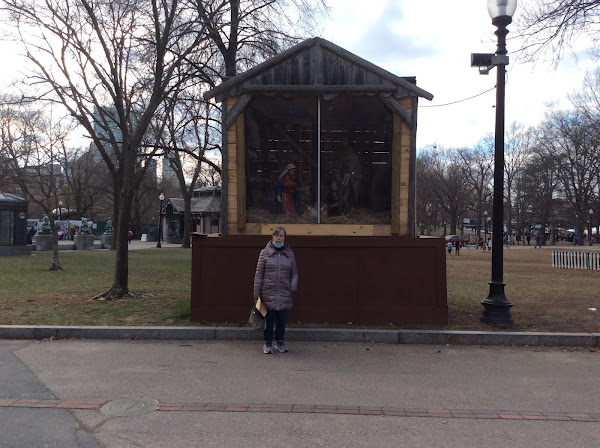

Happy New Year
by Scott Lord on Silent Film, Swedish Silent Film, Danish Silent Film,


Scott Lord, Scott Lord Mystery Film and 2 others like this
17 Apr 23:39
Scott Lord Silent Film: The Last Performance (Paul Frejos, 1929)
by Scott Lord on Silent Film
The stockmarket had apparently already crashed by the time "The Last Performance", starring Conrad Veidt and Mary Philbin, was screened first run at the Park Theatre in Boston. Universal Weekly, primarily an advertising journal, after having remarked the film was "conspicuous for its camera effects and discriminating direction" tied in the New England premiere to its reception by excerpting three "leading newspapers", The Boston Globe, The Boston Herald and the Daily Record. The Daily Record mentioned the film as having been one of the two "first rate pictures" then on the marquee of the Park Theatre, the other also produced by Universal. It may be important to the history of film appreciation that the paper had written, "The Philbin-Veidt is part talkie. But in some cases, the less talk, the better the picture. This is one of those cases, for Veidt is a high rating character actor and needs no dialogue to score his points."
An earlier issue of Universal Weekly, while noting that Conrad Veidt and Mary Philbin had previously costarred together in the film "The Man Who Laughs", showed the trick photography in the film "The Last Performance" by providing a still from the film where the magician Veidt is holding Philbin in his hand. The Universal Weekly, owned by Universal Pictures Corporation, clarified itself with its captioned subtitle, "A Magazine for Motion Picture Exhibitors" and listed its editor as Paul Gulick. Letters to the editor to be published were addressed to Carl Laemmle, President.
Silent Film Lon Chaney Bela Lugosi
An earlier issue of Universal Weekly, while noting that Conrad Veidt and Mary Philbin had previously costarred together in the film "The Man Who Laughs", showed the trick photography in the film "The Last Performance" by providing a still from the film where the magician Veidt is holding Philbin in his hand. The Universal Weekly, owned by Universal Pictures Corporation, clarified itself with its captioned subtitle, "A Magazine for Motion Picture Exhibitors" and listed its editor as Paul Gulick. Letters to the editor to be published were addressed to Carl Laemmle, President.
Silent Film Lon Chaney Bela Lugosi
Scott Lord, Scott Lord Mystery Film and 2 others like this
17 Apr 23:39
Scott Lord Silent Film: The Lonedale Operator (Griffith, 1912)
by Scott Lord on Silent Film
In her autobiography, Lillian Gish discusses D.W. Griffith's cutting between camera distances in "The Lonedale Operator" (one reel). The photoplay was written by Mack Sennett and photographed by G.W. Bitzer for the Biograph Film Company durin 1912.
Linda Arvidson, writing as Mrs. D. W. Griffith, in her autobiography entitled "When the Movies Were Young" recounts the importance of "The Lonedale Operator" to the career of actress Blanche Sweet, "Mr. Griffith, as of yet unwilling to grant that she had any soul or feeling in her work, was using her for 'girl' parts. But he changed his opinion with 'The Lonedale Operator'. That was the picture in which he first recognized ability in Miss Sweet." Arvidson later phrases it as "screen acting that could be recognized as a portrayal of human conduct". In another account contained in the volume, Arvidson chronicles D.W. Griffith having met with Blanche Sweet "on the road" with an offer to film two reelers in Calfornia neccesitated by the departure of Mary Pickford to the IMP Studios.
The account Lillian Gish gives of the "Lonedale Operator" in her autobiography The Movies, Mr. Griffith and Me includes D.W. Griffith being preemptive of his film's editor, "he refined the devices for building suspense...To increase suspense and build up to the climax, Mr. Griffith again employed crosscutting, switching from the girl to the sweetheart in evershortening intervals."
Arthur Knight, in his volume The Liveliest Art, describes Griffith's use of the insert shot in "The Lonedale Operator" when Blanche Sweet uses a wrench that is thought to be a pistol. "It was the close up that let us in on the secret, when the director was ready to reveal it. Griffith discovered that one basic function of the close up was to emphasize the inanimate, to make tings a dynamic part of the world through which the actors move. But the close up does more than emphasize what is in a scene, it elimantes everything else."
Magazine advertisements paid for by the Biograph Film Company described "The Londale Operator", reading: "With this Biograph subject is presented without a doubt the most thrilling melodramatic story ever produced." Silent Film
D.W. Griffith
Biograph Film Company
The account Lillian Gish gives of the "Lonedale Operator" in her autobiography The Movies, Mr. Griffith and Me includes D.W. Griffith being preemptive of his film's editor, "he refined the devices for building suspense...To increase suspense and build up to the climax, Mr. Griffith again employed crosscutting, switching from the girl to the sweetheart in evershortening intervals."
Arthur Knight, in his volume The Liveliest Art, describes Griffith's use of the insert shot in "The Lonedale Operator" when Blanche Sweet uses a wrench that is thought to be a pistol. "It was the close up that let us in on the secret, when the director was ready to reveal it. Griffith discovered that one basic function of the close up was to emphasize the inanimate, to make tings a dynamic part of the world through which the actors move. But the close up does more than emphasize what is in a scene, it elimantes everything else."
Magazine advertisements paid for by the Biograph Film Company described "The Londale Operator", reading: "With this Biograph subject is presented without a doubt the most thrilling melodramatic story ever produced." Silent Film
D.W. Griffith
Biograph Film Company
Silent Film
Scott Lord, Scott Lord Mystery Film and 2 others like this
17 Apr 23:39
Scott Lord Silent Film: Mae Marsh in Hoo Doo Ann (Ingraham, 1916)
by Scott Lord on Silent Film
In her autobiography entitled "Screen Acting", it is invigorating that actress Mae Marsh remains steadfast to her subject- just that, the silent film actress in front of the camera acting, perhaps more so than Lillian Gish in her autobiography. As part of the integrated instances autobiographical reminiscence sprinkled sparingingly within, Marse briefly casts a fond, but brief cursory glance at some of her films, "Yet no pictures I will ever make will be dearer to me than say...... The Escape, Hoo Doo Ann, The Wharf Rat, ect...".
The films "Hoo Doo Ann" (five reels) and "The Wharf Rat" (five reels) were both filmed during 1916 for Triangle Films, the former with a photoplay by producer D. W. Griffith, the later with a photoplay by Anita Loos. Mae Marsh that year also starred in "Wild Girl of the Sierras" (five reels) scripted by Anita Loos and co-starred with Robert Harron in "The Marriage of Molly-O" [D.W. Griffith) and "Child of the Paris Streets" (Lloyd Ingraham). Mae Marsh appears prominently with Robert Harron in the 1916 film "Intolerance" directed by D. W. Griffith, the titles of which were written by Anita Loos.
Silent Film
D.W. Griffith
Silent Film
D.W. Griffith
Silent Film
Scott Lord, Scott Lord Mystery Film and 2 others like this
17 Apr 23:39
Scott Lord SIlent Film: Wax Works (Paul Leni, 1924)
by Scott Lord on Silent Film
Paul Leni directed the expressionistic film "Wax Works" before coming to America to direct the films "The Cat and the Canary" and "The Last Warning". Silent Film
Scott Lord Mystery Film, Scott Lord and one other like this
17 Apr 23:38
E and M Robson, in their volume The Film Answers Back, note that upon being established in 1909, the Swedish Biograph Company "immediately excerted a great influence upon European cinema". Leslie Wood, in Mirace of the Movies adds that Swedish Silent Film during 1909 had propitiated a "comparatively late start compared with other nations and its output at first confined to scenic subjects".
Before Charles Magnusson, who became manager of Svenska Bio during 1909, had initiated the beginning of the classic period of the Golden Age of Swedish Silent Film, while Victor Sjostrom and Mauritz Stiller were involved with acting and theater production on the stages of Sweden, Sweden was not far behind other nations in producing one reel news footage and actualities. Documentary like news footage of royalty, Presidents and poltical personages was not uncommon during the transnational cinema of attractions and, notably, while under N.E. Sterner of Svenska Kinematograf, Charles Magnusson had photographed "Konung Haakongs mottanging i Kristiana" (1906), a short film on the King of Norway's visit to Kristiania, almost as though to presage that it would be there rather in the later Rasunda that the groundwork of his beginning the Swedish film industry would be laid, his also having directed the short films "Gosta Berlingsland Bilder fran Frysdan" ("Bilder fran Fryksdaeln,1907) an early lost Swedish Silent Film and example of his interest in the work of Selma Lagerlof and the Swedish landscape joining him tighter with the Golden Age of Swedish Silent Film and "Krigsbilder fran Bohusian", leaving the question of how much influence the cinema of attractions through the travelougue documentaries and newsreels of Magnusson had had upon the later camerawork of Jules Jaenzon. Photographer Charles Magnusson for Biokronan followed with "Gota elf katastafen" (1908) and Resa Stockholm-Goteborg genom Gota och Trollhatte kanalor" (1908).
Peter Cowie notes that despite the weather conditions of thick fog, Magnusson had shot the most professional footage of the event of the royal visit of the King of Norway when compared to other Swedish cameramen of the time. Peter Cowie writes about the dynamic between Charles Magnusson and the cinema of attractions, "He sensed that the short farces made by the aristocratic Carl Florman would only play into the hands of the showmen who were determined to exploit the cinema as if it were some circus spectacle.
Photographer Robert Olsson is listed as having worked on the filming of King Oscar in Kristianstad, his having filmed several of the earliest films photographed in Scandinavia before working with Carl Engdahl, among them "Pictures of Laplanders" (Lappbilder, 1906), "Herring Fishing in Bohuslan" (Sillfiske i Bohuslan, 1906) and "Equal to Equal" (Tit for Tat, Lika mot lika, 1906), directed by Knut Lambert and starring Tollie Zelman. John Fullerton, in his paper Intimate Theatres and imaginary scenes: film exhibition in Sweden before 1920, notes the presentational mode within the cinema of attractions in one reel comedies such as "Tit for Tat" suggesting a dynamic between fiction and actuality.
During 1897, Ernest Florman photographed Oscar II, King of Sweden, in a one minute film, "Landing of the King of Siam at the Logardtrappen", featuring the Crown Prince Gustaf. Author Peter Cowie, in his volume Scandinavian Cinema, credits Ernest Oliver Florman with having directed Sweden's first fiction film, "The Village Barber". During 1903 Florman directed actress Anna Norrie in the short film "Skona Helena".
Jan Christopher Horak typifies the cinema of attractions as a "fascination with movement within the frame". William Rothman writes that only one sixth of the silent film shot before 1907 had storyline. Author Charles Musser maintains that no more than four fifths of the films made by the Edison studios between 1904-1907 were narrative, or stage fiction. It is not suprising that Kenneth Magowan writing as ealy as 1965 in Behind the Screen divides early silent film into three periods: 1896-1905; 1906-1915 and 1916-1925. Form and content in film technique seem to have developed together. This can apparently refer to Sweden as well. Scholar Sandra Walker, University of Zurich writes, "At the time of Svenska Bio's first operations approximately 75% of the film produced in Sweden were nature films and journalistic reportage films. The journalistic films, such as the funeral of King Oscar II, in 1907, have been mentioned inconnection with the development of narrative techniques." It would be interesting to as if from the choice of these subjects we could infer a need or desire to view narrative on the screen or if the subjects were suggestive of real life stories that might be expanded into fictional fantasy, a deigesis that might be exotic or with which we were ordinarily familiar, causing us to wonder what would happen later, identifying with the subject for that reason.
Film historians have noted that Kristianstad, Sweden was home to another early Swedish Silent Film, "The Man Who Takes Care of the Villian" (Han som clara boven), filmed in 1907. Produced by Franz Wiberg, the film has never been released theatrically. It appears to be the first example of narrative integration, ie. fiction film, in Sweden. On further study, the film was the only film directed by Oscar Soderholm, who went on to be an actor for director Carl Engdahl in 1910. The film has been listed as being presumed lost, with no surviving copies existing.
Forsyth Hardy, in his volume Scandinavian Film mentions cameraman Julius Jaenzon as having been in the United States during 1907 to make a film of Teddy Roosevelt (Report from the United States on President Theodore Roosevelt). Author Aleksander Kwiatkowski gives an account of Charles Magnusson having sent Julius Jaenzon to America during 1911 to shoot footage of Niagra Falls. Ironically, Julius Jaenzon has been credited with having photographed the funeral of playwright August Strindberg in Stockholm (August Strindberg's Begravning, 1912). The film was produced by Pathe Freres at a time when Jaenzon had directed himself almost entirely to narrative films. Not incidentally, the Intima Teatern (Intimate Theater) was closed with Strindberg's death, it already having had been long bankrupt. John Fullerton leaves a reminder that Mauritz Stiller performed on stage during the premiere of August Strindberg's play "Leka med elden", which he later directed at the Lilla Teatern for the 1912 sixty third birthday of the playwright.
Writing about what control Theodore Roosevelt may have had over his likeness or public image, Roosevelt supressing an early newsreel due to a woman in a skirt with sensuous legs having entered the frame, scholar Jan Olsson sees the cinema of attractions as having been flaneuran but while discussing the "unnoticed camera", Olsson comes near to a cinema of attractions cinema of narrative integration chronology by looking to Richard deCardova's discourse analysis and screen bodies, the plasticity of human form onscreen, models posing as photographic discourse and performers acting as theatrical discourse.
The periodical Nickelodeon in 1909 chronicled the Swedish National Moving Picture Company, headed by Ture Marcus, as having exhibited footage showing "scenes from the life of King Oscar" and his funeral to audiences in the United States.
Laura Horak, in The Global Distribution of Swedish Silent Film notes that before 1910 the film made by Charles Magnusson and Svenska Bio did not circulate widely outside Sweden, the first widely popular Swedish export, "To Save a Son" (Massosonns offer), it having had been directed by Alfred Lind for Frans Lundberg in 1910. The film features actress Agnes Nyrup Christensen in the first of a handful of appearances as a Swedish Silent film actress.
Swedish Silent Film producer Frans Lundberg in 1910 filmed "The People of Varmland" (Varmlandinggarna) directed by Ebba Lindkvist, photographed by Ernst Dittmer and starring actresses Agda Malmberg, Astrid Nilsson and Esther Selander.
In Kristianstad, Sweden, Svenska Biografteatern released the film "The People of Varmland" (Varmlannigarne)directed by Carl Engdahl during 1910, the film having starred actresses Ellen Stroback, Kattie Jacobsson, Ellen Hallberg and Frida Greiff.
Peter Cowie, in his volume Scandinavian Cinema notes that the early silent narrative films of Carl Engdahl filmed in Kristianstad exhibited "the bucolic, folkloric tinge that would colour so much of Swedish cinema in the years ahead." Forsyth Hardy, in his volume Scandinavian Film, prefigures the historiography of transnational analysis within genre theory when noting that "Men of Varmland", filmed at Kristianstad, held a "national theme that could not be duplicated elsewhere" 'and a "characteristic Swedish concern with national folklore and national landscape".
With an onscreen running time of over a half hour, the film "Entrusted Funds" (Anfortrodda medel), directed in 1911 by Ernest Dittmer for Frans Lundberg brought actresses Phillipa Fredrikssen and Agnes Nyring Christensen to the screen. The film is presumed lost with no surviving copies existing. Ernest Dittmer that year also directed the lost silent film "Rannsakningsdomaren", starring actresses Gerda Malberg and Ebba Bergman for Frans Lundberg. "The Black Doctor" (Den Svarte Doktorn), also directed that year for Stora Biografteatern by Frans Lundberg, held theatergoers in their seats for three quarters of an hour. Actress Olivia Norrie stars in the film, which is presumed lost, with no surviving copies existing.
In 1911, Gustaf Linden directed the film "The Iron Carrier" (Jarnbararen) photographed Robert Olsson and starring Ana-lisa Hellstrom and Gucken Cederborg. Scholar Mattias Lofroth, Stockholm University, includes the film among early Swedish Silent fiction films that illustrate an intermediality in an early Swedish cinema that "depended on their association on other media" in regard to "pictorialism and literary presentation", an intermediality that perhaps paved the way for audiences to find themselves no longer viewing a cinema of attractions, but a cinema of narrative integration.
Aleksander Kwaitowski, in his volume Swedish Film Classics, chronicles the shift if early cinema from documentary to fiction feature, "With Magnusson, Svenska Bio soon surged ahead. The result was a whole series of films patterned after the French film'dart, painstakingly crafted to the extent that limited running time allowed. Extremely stage-orientated versions of literary works were directed for the firm by Gustaf Linden. a theatrical director from Stovkholm."
While chronicling the move of Svenska Biografteatern from Kristianstad to Stockholm, then, during 1911, comprised of Julius Jaenzon and Charles Magnusson, author Forsyth Hardy in his volume Scandinavian Film, describes Swedish Silent Film prior to its Golden Age, "The camera remained static and the action was artificially concentrated in a small area in front of it." Hardy is describing the exingencies of the cinema of narrative integration after the theatricality of the novelties and actualities of the cinema of attractions, the second hand filmed theater left over from the camera technique of earlier news and travel footage.
Leslie Woods, author of Miracle of the Movies described Charles Magnusson, "He regarded the screen as much more akin to the printed page than to either the stage or photograph. Every Swedish film hpad an intellectual, almost lyrical, appeal to the mind rather than the eye or to emotions."
Author Bo Florin, Stockholm University, mentions that Julius Jaenzon's brother, Henrik Jaenzon, was also present at Svenska Bio in Lindingo. Among the first films for Svenska Biografteatern to which Henrik Jaenzon was assigned cinematographer were two directed by George af Klercker during 1912, "Jupiter pa Jordan" and "Musikas makt", starring Lilly Jacobsson. Both films are presumed to be lost, with no surviving copies existing.
During 1912 JuliusJaenzon was the photographer and director of the film "Condemned by Society".
Swedish Silent Film Director Anna Hofmann-Uddgren Silent Film
Swedish Silent Film Swedish Silent Film
Early Scandinavian SIlent Film,: FIlmed Theater and the Cinema of Attractions/Cinema of Narrative Integration
by Scott Lord on Silent Film
E and M Robson, in their volume The Film Answers Back, note that upon being established in 1909, the Swedish Biograph Company "immediately excerted a great influence upon European cinema". Leslie Wood, in Mirace of the Movies adds that Swedish Silent Film during 1909 had propitiated a "comparatively late start compared with other nations and its output at first confined to scenic subjects".
Before Charles Magnusson, who became manager of Svenska Bio during 1909, had initiated the beginning of the classic period of the Golden Age of Swedish Silent Film, while Victor Sjostrom and Mauritz Stiller were involved with acting and theater production on the stages of Sweden, Sweden was not far behind other nations in producing one reel news footage and actualities. Documentary like news footage of royalty, Presidents and poltical personages was not uncommon during the transnational cinema of attractions and, notably, while under N.E. Sterner of Svenska Kinematograf, Charles Magnusson had photographed "Konung Haakongs mottanging i Kristiana" (1906), a short film on the King of Norway's visit to Kristiania, almost as though to presage that it would be there rather in the later Rasunda that the groundwork of his beginning the Swedish film industry would be laid, his also having directed the short films "Gosta Berlingsland Bilder fran Frysdan" ("Bilder fran Fryksdaeln,1907) an early lost Swedish Silent Film and example of his interest in the work of Selma Lagerlof and the Swedish landscape joining him tighter with the Golden Age of Swedish Silent Film and "Krigsbilder fran Bohusian", leaving the question of how much influence the cinema of attractions through the travelougue documentaries and newsreels of Magnusson had had upon the later camerawork of Jules Jaenzon. Photographer Charles Magnusson for Biokronan followed with "Gota elf katastafen" (1908) and Resa Stockholm-Goteborg genom Gota och Trollhatte kanalor" (1908).
Peter Cowie notes that despite the weather conditions of thick fog, Magnusson had shot the most professional footage of the event of the royal visit of the King of Norway when compared to other Swedish cameramen of the time. Peter Cowie writes about the dynamic between Charles Magnusson and the cinema of attractions, "He sensed that the short farces made by the aristocratic Carl Florman would only play into the hands of the showmen who were determined to exploit the cinema as if it were some circus spectacle.
Photographer Robert Olsson is listed as having worked on the filming of King Oscar in Kristianstad, his having filmed several of the earliest films photographed in Scandinavia before working with Carl Engdahl, among them "Pictures of Laplanders" (Lappbilder, 1906), "Herring Fishing in Bohuslan" (Sillfiske i Bohuslan, 1906) and "Equal to Equal" (Tit for Tat, Lika mot lika, 1906), directed by Knut Lambert and starring Tollie Zelman. John Fullerton, in his paper Intimate Theatres and imaginary scenes: film exhibition in Sweden before 1920, notes the presentational mode within the cinema of attractions in one reel comedies such as "Tit for Tat" suggesting a dynamic between fiction and actuality.
During 1897, Ernest Florman photographed Oscar II, King of Sweden, in a one minute film, "Landing of the King of Siam at the Logardtrappen", featuring the Crown Prince Gustaf. Author Peter Cowie, in his volume Scandinavian Cinema, credits Ernest Oliver Florman with having directed Sweden's first fiction film, "The Village Barber". During 1903 Florman directed actress Anna Norrie in the short film "Skona Helena".
Jan Christopher Horak typifies the cinema of attractions as a "fascination with movement within the frame". William Rothman writes that only one sixth of the silent film shot before 1907 had storyline. Author Charles Musser maintains that no more than four fifths of the films made by the Edison studios between 1904-1907 were narrative, or stage fiction. It is not suprising that Kenneth Magowan writing as ealy as 1965 in Behind the Screen divides early silent film into three periods: 1896-1905; 1906-1915 and 1916-1925. Form and content in film technique seem to have developed together. This can apparently refer to Sweden as well. Scholar Sandra Walker, University of Zurich writes, "At the time of Svenska Bio's first operations approximately 75% of the film produced in Sweden were nature films and journalistic reportage films. The journalistic films, such as the funeral of King Oscar II, in 1907, have been mentioned inconnection with the development of narrative techniques." It would be interesting to as if from the choice of these subjects we could infer a need or desire to view narrative on the screen or if the subjects were suggestive of real life stories that might be expanded into fictional fantasy, a deigesis that might be exotic or with which we were ordinarily familiar, causing us to wonder what would happen later, identifying with the subject for that reason.
Film historians have noted that Kristianstad, Sweden was home to another early Swedish Silent Film, "The Man Who Takes Care of the Villian" (Han som clara boven), filmed in 1907. Produced by Franz Wiberg, the film has never been released theatrically. It appears to be the first example of narrative integration, ie. fiction film, in Sweden. On further study, the film was the only film directed by Oscar Soderholm, who went on to be an actor for director Carl Engdahl in 1910. The film has been listed as being presumed lost, with no surviving copies existing.
Forsyth Hardy, in his volume Scandinavian Film mentions cameraman Julius Jaenzon as having been in the United States during 1907 to make a film of Teddy Roosevelt (Report from the United States on President Theodore Roosevelt). Author Aleksander Kwiatkowski gives an account of Charles Magnusson having sent Julius Jaenzon to America during 1911 to shoot footage of Niagra Falls. Ironically, Julius Jaenzon has been credited with having photographed the funeral of playwright August Strindberg in Stockholm (August Strindberg's Begravning, 1912). The film was produced by Pathe Freres at a time when Jaenzon had directed himself almost entirely to narrative films. Not incidentally, the Intima Teatern (Intimate Theater) was closed with Strindberg's death, it already having had been long bankrupt. John Fullerton leaves a reminder that Mauritz Stiller performed on stage during the premiere of August Strindberg's play "Leka med elden", which he later directed at the Lilla Teatern for the 1912 sixty third birthday of the playwright.
Writing about what control Theodore Roosevelt may have had over his likeness or public image, Roosevelt supressing an early newsreel due to a woman in a skirt with sensuous legs having entered the frame, scholar Jan Olsson sees the cinema of attractions as having been flaneuran but while discussing the "unnoticed camera", Olsson comes near to a cinema of attractions cinema of narrative integration chronology by looking to Richard deCardova's discourse analysis and screen bodies, the plasticity of human form onscreen, models posing as photographic discourse and performers acting as theatrical discourse.
The periodical Nickelodeon in 1909 chronicled the Swedish National Moving Picture Company, headed by Ture Marcus, as having exhibited footage showing "scenes from the life of King Oscar" and his funeral to audiences in the United States.
Laura Horak, in The Global Distribution of Swedish Silent Film notes that before 1910 the film made by Charles Magnusson and Svenska Bio did not circulate widely outside Sweden, the first widely popular Swedish export, "To Save a Son" (Massosonns offer), it having had been directed by Alfred Lind for Frans Lundberg in 1910. The film features actress Agnes Nyrup Christensen in the first of a handful of appearances as a Swedish Silent film actress.
Swedish Silent Film producer Frans Lundberg in 1910 filmed "The People of Varmland" (Varmlandinggarna) directed by Ebba Lindkvist, photographed by Ernst Dittmer and starring actresses Agda Malmberg, Astrid Nilsson and Esther Selander.
In Kristianstad, Sweden, Svenska Biografteatern released the film "The People of Varmland" (Varmlannigarne)directed by Carl Engdahl during 1910, the film having starred actresses Ellen Stroback, Kattie Jacobsson, Ellen Hallberg and Frida Greiff.
Peter Cowie, in his volume Scandinavian Cinema notes that the early silent narrative films of Carl Engdahl filmed in Kristianstad exhibited "the bucolic, folkloric tinge that would colour so much of Swedish cinema in the years ahead." Forsyth Hardy, in his volume Scandinavian Film, prefigures the historiography of transnational analysis within genre theory when noting that "Men of Varmland", filmed at Kristianstad, held a "national theme that could not be duplicated elsewhere" 'and a "characteristic Swedish concern with national folklore and national landscape".
With an onscreen running time of over a half hour, the film "Entrusted Funds" (Anfortrodda medel), directed in 1911 by Ernest Dittmer for Frans Lundberg brought actresses Phillipa Fredrikssen and Agnes Nyring Christensen to the screen. The film is presumed lost with no surviving copies existing. Ernest Dittmer that year also directed the lost silent film "Rannsakningsdomaren", starring actresses Gerda Malberg and Ebba Bergman for Frans Lundberg. "The Black Doctor" (Den Svarte Doktorn), also directed that year for Stora Biografteatern by Frans Lundberg, held theatergoers in their seats for three quarters of an hour. Actress Olivia Norrie stars in the film, which is presumed lost, with no surviving copies existing.
In 1911, Gustaf Linden directed the film "The Iron Carrier" (Jarnbararen) photographed Robert Olsson and starring Ana-lisa Hellstrom and Gucken Cederborg. Scholar Mattias Lofroth, Stockholm University, includes the film among early Swedish Silent fiction films that illustrate an intermediality in an early Swedish cinema that "depended on their association on other media" in regard to "pictorialism and literary presentation", an intermediality that perhaps paved the way for audiences to find themselves no longer viewing a cinema of attractions, but a cinema of narrative integration.
Aleksander Kwaitowski, in his volume Swedish Film Classics, chronicles the shift if early cinema from documentary to fiction feature, "With Magnusson, Svenska Bio soon surged ahead. The result was a whole series of films patterned after the French film'dart, painstakingly crafted to the extent that limited running time allowed. Extremely stage-orientated versions of literary works were directed for the firm by Gustaf Linden. a theatrical director from Stovkholm."
While chronicling the move of Svenska Biografteatern from Kristianstad to Stockholm, then, during 1911, comprised of Julius Jaenzon and Charles Magnusson, author Forsyth Hardy in his volume Scandinavian Film, describes Swedish Silent Film prior to its Golden Age, "The camera remained static and the action was artificially concentrated in a small area in front of it." Hardy is describing the exingencies of the cinema of narrative integration after the theatricality of the novelties and actualities of the cinema of attractions, the second hand filmed theater left over from the camera technique of earlier news and travel footage.
Leslie Woods, author of Miracle of the Movies described Charles Magnusson, "He regarded the screen as much more akin to the printed page than to either the stage or photograph. Every Swedish film hpad an intellectual, almost lyrical, appeal to the mind rather than the eye or to emotions."
Author Bo Florin, Stockholm University, mentions that Julius Jaenzon's brother, Henrik Jaenzon, was also present at Svenska Bio in Lindingo. Among the first films for Svenska Biografteatern to which Henrik Jaenzon was assigned cinematographer were two directed by George af Klercker during 1912, "Jupiter pa Jordan" and "Musikas makt", starring Lilly Jacobsson. Both films are presumed to be lost, with no surviving copies existing.
During 1912 JuliusJaenzon was the photographer and director of the film "Condemned by Society".
Swedish Silent Film Director Anna Hofmann-Uddgren Silent Film
Swedish Silent Film Swedish Silent Film
Silent Film
Scott Lord, Scott Lord and 3 others like this
17 Apr 04:02
Scandinavian Silent Film: Victor Sjostrom as Seastrom, Mauritz Stiller, John Brunius, Greta Garbo: Scott Lord Silent Film: An Unseen Enemy (Griffith, 1912)
Scott Lord, Scott Lord and 2 others like this
12 Apr 03:18
Scott Lord on Silent Film: Swedish Silent Film, The Golden Age in Decline
silent film
Tags: Silent silent film
Scott Lord, Scott Lord and 2 others like this
12 Apr 03:17
Scandinavian Silent Film: Victor Sjostrom as Seastrom, Mauritz Stiller, John Brunius, Greta Garbo: Early Scandinavian SIlent Film,: FIlmed Theater and the Cinema of Attractions
Scott Lord, Scott Lord and 2 others like this