Scott Lord
Shared posts
06 May 00:38
: Sherlock Holmes- A Study In Scarlet
by Scott Lord on Silent Film
Scott Lord, Scott Lord and 2 others like this
06 May 00:38
Sherlock Holmes- The Woman In Green (Roy William Neal)
by Anonymous
Scott Lord, Scott Lord and 2 others like this
06 May 00:38
Sherlock Holmes- Sign of the Four
by Scott Lord on Silent Film
Scott Lord, Scott Lord and 2 others like this
08 Aug 03:22
Scott Lord Silent Film: Mary Pickford in The Old Actor (D.W.Griffith, Biograph 1912)
by Scott Lord on Silent Film, Swedish Silent Film, Danish Silent Film,
"The Old Actor" (two reels) was directed by D.W. Griffith for the Biograph Film Company during 1912and was photographed by G.W.Bitzer with a scenario by George Hennessy. The film stars Mary Pickford with Kate Bruce.
Silent Film
Silent Film
Silent Film
Scott Lord, Scott Lord and 2 others like this
19 Mar 20:48
Sherlock Holmes Trailers-Pearl of Death
by Scott Lord on Silent Film, Swedish Silent Film, Danish Silent Film,
Scott Lord, Scott Lord Mystery Film and 2 others like this
04 Jan 18:05


I was asked during an online course of film to view the silent film Street Angel starring Janet Gaynor. The instructor of the course, Professor Scott Higgins of Wesleyean University has recently written two papers, Technicolor Confections and Color at the Center.
Authur Knight, in his volume The Liveliest Art chronicles Herbert Kalmus having in 1923/marketted a Technicolor film, "a two-color process in which the red-orange-yellow portion of the spectrum was photographed on one negative, the green-blue-purple portion on another. When prints from the two negatives were laminated together, they produced a pleasing, though still far from accurate color scale."
There is an astonishing relationship between lost film, films which there are no longer prints of due to the celluloid having deteriorated, and the history of technicolor films; even up untill the 1935 film "Beck Sharp" there were two-tone and three-tone inserts, including a 1923 adaptation of "Vanity Fair" directed by Hugo Ballin that is incidentally a lost film.
"So This Is Marriage?" (Hobart Henley, 1924) starring Conrad Nagel and Eleanor Boardman is a lost film that contained technicolor sequences.
One consideration in the use of Technicolor during the production of silent film was running length and how expensive, or perhaps lucrative, it would be to advance from two-reelers to seven reelers. The four reel film had been introduced over a decade earlier and with it the narrative film had become to be expected in movie theaters. While John Gilbert and Greta Garbo were being reviewed in magazines for their acting in the film "Love", so we're Olga Baclanova and David Mir for the film The Czarina's Secret. The Film Spectator reported,"The Czarist's Secret is another artistic gem of the series that Technicolor is making for Metro release. There are to be six, each presenting a great moment in history, and this is the fourth....Dramaticly it is a splendid picture and the technicolor process has made it gorgeous pictorially. technicolor has brought its process to a point of perfection that our big producers cannot ignore much longer. They cannot keep giving us only white and black creations with such a color process is available." Actress Olga Baclanova that same year co-starred with Pola Negri in the feature film "Three Sinners" (eight reels), directed by Roland V. Lee, the film considered lost with no surviving copies; actress Olga Baclanova later costarred with John Gilbert and Virginia Bruce in the impeccable early sound film "Downstairs".
Technicolor and artificial lighting were used in tandem the first time in 1924 by director George Fitzmaurice to bring Irene Rich, Alma Rubens, Betty Bronson and Constance Bennett to the screen for First National in the film "Cytherea" (eight reels). Admittedly, an early pioneer of Technicolor described the film as two component subtractive print that had only been used as "an insert", but that in that it had been the "photographing of an interior set on a darkened stage" the silent film director had been "delighted with the results".

Tiffany Productions used magazine advertisements during 1927 to boast of having filmed "30 Color Classics, single reels technicolor". There is an account that as many as thirteen of the films Tiffany Productions filmed that year are now lost films, with as many as twenty two films made during the following year that also remain lost, with no surviving copies.
"The King of Kings" (fourteen reels) directed by Cecil B. DeMille in 1927 used toned images, tinted images and Technicolor dye-transfer images. Actress Dorothy Cummings stars as Mary in the film.


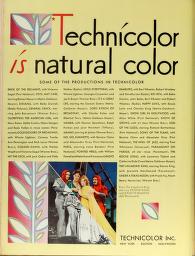


 "Cleopatra" (two reels) directed by Roy William Neil in 1928 used a subtractive 2 color process, which washed away gelatin to leave reliefs which could be dyed. Actress Dorothy Revier played the titular role in the film. 600 feet of the technicolor short "The Virgin Queen", starring actress Dorothy Dwan, directed by Roy William Neil during 1928 has been preserved and 800 feet of the technicolor short "Madame Du Barry, also directed by Roy William Neil during 1928 has been restored as an incomplete print. "The Lady of Victories" a technicolor short shot by Roy William Neil toward the end of 1927 starring actress Agnes Ayres also has been preserved as an incomplete print.
The periodical Film Daily during 1929 announced that London had developed a new color process for making color film, Cinecolor.
Bela Belaz, in his 1952 volume Theory of the Film, points out that color in the film "has artistic significance only if it expresses some specifically filmic experience". He reminds us that color films are still "moving pictures" and therefore "moving colors" that should avoid shots composed as static, pictorial, beauty in nature itself being an event, "a change in color, a transition from one spectacle to the next." He anticipates Ingmar Bergman's film Cries and Whispers by claiming that color can have a symbolic significance, and although dependent upon the dramaturgical structure, can play a dramaturgical part.
Greta Garbo
 Swedish Silent Film

Silent Film Hollywood, Color and Tint in Film
by Scott Lord on Silent Film, Swedish Silent Film, Danish Silent Film,


The Film Daily magazine during early 1928 made one of its many pertinent announcements entitled Janet Gaynor Goes Abroad, which read, "Janet Gaynor, who recently signed a five year contract with Fox, will leave for Europe upon the completion of 'The Four Devils', F.W. Murnau picture, to work in exteriors for 'Blossom Time' with Frank Borzage directing. 'The Four Devils' went into production Friday."
The Four Devils, directed by F.W. Murnau, is a lost silent film, with no available surviving copies. Picture Play magazine reported having had an interview with Janet Gaynor early that year. "The other week I came across Janet Gaynor on the Fox lot...'I have to get used to doing these stints and turns. That is if I don't twist myself into something that can't be undone.' This she explained her role in 'The Four Devils'. Nevertheless risking all when such dire mishaps, Janet continued to work on her contortions. When Hollywood learned that Janet Gaynor and Charles Farrell were chosen for the leads in 'Blossom Time' and that part of the picture might be filmed in Vienna, the Cinderella chorus sang once more." In the article, almost now seemingly out of place while below a picture of a bare shouldered actress turned so that her chin touched her shoulder demurely, was a caption which read, "Nancy Drexel was long obscure before she was given a leading role in 'The Four Devils", the age of the actress in the photo implying that her initial fame had only been fleeting.
I was asked during an online course of film to view the silent film Street Angel starring Janet Gaynor. The instructor of the course, Professor Scott Higgins of Wesleyean University has recently written two papers, Technicolor Confections and Color at the Center.
Authur Knight, in his volume The Liveliest Art chronicles Herbert Kalmus having in 1923/marketted a Technicolor film, "a two-color process in which the red-orange-yellow portion of the spectrum was photographed on one negative, the green-blue-purple portion on another. When prints from the two negatives were laminated together, they produced a pleasing, though still far from accurate color scale."
There is an astonishing relationship between lost film, films which there are no longer prints of due to the celluloid having deteriorated, and the history of technicolor films; even up untill the 1935 film "Beck Sharp" there were two-tone and three-tone inserts, including a 1923 adaptation of "Vanity Fair" directed by Hugo Ballin that is incidentally a lost film.
"So This Is Marriage?" (Hobart Henley, 1924) starring Conrad Nagel and Eleanor Boardman is a lost film that contained technicolor sequences.
One consideration in the use of Technicolor during the production of silent film was running length and how expensive, or perhaps lucrative, it would be to advance from two-reelers to seven reelers. The four reel film had been introduced over a decade earlier and with it the narrative film had become to be expected in movie theaters. While John Gilbert and Greta Garbo were being reviewed in magazines for their acting in the film "Love", so we're Olga Baclanova and David Mir for the film The Czarina's Secret. The Film Spectator reported,"The Czarist's Secret is another artistic gem of the series that Technicolor is making for Metro release. There are to be six, each presenting a great moment in history, and this is the fourth....Dramaticly it is a splendid picture and the technicolor process has made it gorgeous pictorially. technicolor has brought its process to a point of perfection that our big producers cannot ignore much longer. They cannot keep giving us only white and black creations with such a color process is available." Actress Olga Baclanova that same year co-starred with Pola Negri in the feature film "Three Sinners" (eight reels), directed by Roland V. Lee, the film considered lost with no surviving copies; actress Olga Baclanova later costarred with John Gilbert and Virginia Bruce in the impeccable early sound film "Downstairs".
Technicolor and artificial lighting were used in tandem the first time in 1924 by director George Fitzmaurice to bring Irene Rich, Alma Rubens, Betty Bronson and Constance Bennett to the screen for First National in the film "Cytherea" (eight reels). Admittedly, an early pioneer of Technicolor described the film as two component subtractive print that had only been used as "an insert", but that in that it had been the "photographing of an interior set on a darkened stage" the silent film director had been "delighted with the results".
Tiffany Productions used magazine advertisements during 1927 to boast of having filmed "30 Color Classics, single reels technicolor". There is an account that as many as thirteen of the films Tiffany Productions filmed that year are now lost films, with as many as twenty two films made during the following year that also remain lost, with no surviving copies.
"The King of Kings" (fourteen reels) directed by Cecil B. DeMille in 1927 used toned images, tinted images and Technicolor dye-transfer images. Actress Dorothy Cummings stars as Mary in the film.


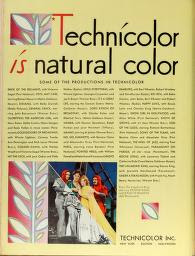


The periodical Film Daily during 1929 announced that London had developed a new color process for making color film, Cinecolor.
Bela Belaz, in his 1952 volume Theory of the Film, points out that color in the film "has artistic significance only if it expresses some specifically filmic experience". He reminds us that color films are still "moving pictures" and therefore "moving colors" that should avoid shots composed as static, pictorial, beauty in nature itself being an event, "a change in color, a transition from one spectacle to the next." He anticipates Ingmar Bergman's film Cries and Whispers by claiming that color can have a symbolic significance, and although dependent upon the dramaturgical structure, can play a dramaturgical part.
Greta Garbo


Scott Lord, Scott Lord and 3 others like this
04 Jan 18:04


Motion Picture News explained that Corrinne Griffith would begin filming "Into Her Kingdom", based on a nobel by Ruth Comfort Mitchell, upon the completion of the film "Mllo. Modiste" of which she was then currently on the set.
The photo caption beneath Einar Hanson's photograph Picture Play Magazine read, "Einar Hanson, who, made his debut in Corinne Griffith's Into her Kingdom is romantic adventurous, much more like a Latin than Scandinavian." In the article Two Gentlemen from Sweden, Myrtle Gebhardt relates about having dinner with him, her having at first hoped to interview Lars Hanson and Einar Hanson together in the same room. "For it appeared that Einar was working not for Metro, but for First National...Two evenings later I ringed spaghetti around my fork in a nook of an Italian cafe with Einar Hansen...Prepared for a big, blond man, whose bland face would be overspread with seriousness, I was startled by his breathtaking resemblance to Jack Gilbert. "Ya," he admitted, "Down the street I drive and all the girls call, 'Hello Yack' and I wave to them."
Motion Picture News announced the decision for the directorial assignment to the film with Director or Interpreter, "Svend Gade, the Danish director now making Into Her Kingdom is wondering whether he is engaged as a megaphone weirder or interpreter. In directing Miss Griffith, of course, he uses English; but Einar Hanson receives his instructions in Swedish" Meanwhile it also introduced Griffith's co-star, "Einar Hansen, 'The Swedish Barrymore' has arrived in Hollywood to appear opposite Corinne Griffith in her newest First National starring vehicle, Into Her Kingdom, by Ruth Comfort Mitchell." it had been announced by the magazine during early 1926 that, "Corinne Griffith is already planning to start work the first week of March on Into Her Kingdom though now she is only now finishing Mlle. Moditte, both of which are to be First National releases. It is uncertain whether a viewable copy of "Into Her Kingdom" exists, it has appeared as a lost film among films listed as not surviving made by First National, and it seems omitted on lists of lost silent films as either being missing or as being surviving, but at any rate locating a copy held by a museum which preserve films seems beyond public access.
During 1926, Einar Hanson also starred in the eight reel silent comedy "Her Big Night" (Brown).
There is also every indication that there is no existing copy of the lost silent film "The Lady in Ermine" (seven reels, James Flood) in which Einar Hanson starred with Corinne Griffith during 1927. The photoplay to the film was written by Benjamin Glazer . Two weeks before the film went into production, the periodical Motion Picture News announced that Einar Hanson and Frances X. Bushman has been assigned important roles in the film. The periodical Motion Picture World explained, "While the idea is rather sensational and treads perilously close to the risque in its inferences there are no objectionable scenes and the solution is clever and satisfactory." It neglected mentioning Einar Hansen but noted that Frances X. Bushman had been given a "thankless role". Not incidentally, a print of the film "Three Hours" in which James Flood directed actress Corrine Griffith during 1927 does exist.


Motion Picture Magazine in 1927 published an oval portrait of Einar Hansen with the caption, "In Fashions for Women, Einar is the first man to be directed by Paramount's first woman director. How's that for a record? Incidentally, Einar has become a popular leading man as quickly as anyone that ever invaded Hollywood." The caption to the somber portrait published in Picture Play magazine that year held a more sundry description, "Einar Hansen, the young man from Sweden who looks so like a Latin has fared well during his year in this country. he is now under contract to Paramount and has the lead opposite Esther Ralston in Fashions For Women." The film was the first directed by Dorothy Azner, who had worked uncredited with Fred Niblo on Blood and Sand. Gladys Unger, who a year later worked on the scenario to the film "The Divine Woman" (Victor Seastrom), wrote the screenplay to the film "Fashions for Women". The running length of the film consisted of seven reels. The periodical Exhibitor's Herald explained that it was the first starring vehicle for actress Esther Ralston and the first venture weilding the microphone" for director Dortohy Arzner.
Einar Hanson appeared with Anna Q. Nilsson in the lost silent film "The Masked Woman" (six reels) during 1927. The film is presently presumed to be lost with no known surving copies existing.

Of the film "Children of Divorce", Motion Picture News wrote, "It is a picture which is easy to guess the denoument...Frank Lloyd, the director, has overcome much of the plot shortcomings with his lighting and other technical efforts. he provided some charming settings and gotten every ounce of dramatic flavoring from the story." Joseph Von Sternberg's work on the film is uncredited.
Hanson had filmed in Europe before coming to the United States. In his native Denmark, he had appeared in the Danish silent film So "Bilberries" ("Misplaced Highbrows", "Takt, Ture Og Tosser", Lau Lauritzen, 1924) and "Mists of the Past" (Fra Plazza del Polo, Anders W. Sandberg, 1925), the latter having starred Karina Bell.
In Sweden, Einar Hanson starred with Inga Tiblad in "Malarpirater", written and directed by Gustaf Molander in 1924 and with Mona Martenson in "Skeppargatan 40", directed by Swedish Silent Film director Gustaf Edgren in 1925.
Before travelling to Turkey with Mauritz Stiller and Greta Garbo, Einar Hanson appeared under the direction of G.W. Pabst with Greta Garbo and Asta Nielsen in "The Joyless Street" (1925). Greta Garbo biographer Norman Zierold gives an account of Garbo having been offered a second film for Pabst of which Garbo had neglected to inform Stiller who learned of it from Einar Hanson. When Stiller accused Garbo of betraying him she broke off negotiations with Pabst. It had been Stiller who had arranged Greta Garbo's appearance in "The Joyless Street", demanding that Einar Hanson appear with her.
Greta Garbo
Greta Garbo
Greta Garbo
Danish Silent Film
Remade by Greta Garbo
Silent Film
Greta Garbo before Hollywood- Einar Hanson
by Scott Lord on Silent Film, Swedish Silent Film, Danish Silent Film,


Motion Picture News explained that Corrinne Griffith would begin filming "Into Her Kingdom", based on a nobel by Ruth Comfort Mitchell, upon the completion of the film "Mllo. Modiste" of which she was then currently on the set.
The photo caption beneath Einar Hanson's photograph Picture Play Magazine read, "Einar Hanson, who, made his debut in Corinne Griffith's Into her Kingdom is romantic adventurous, much more like a Latin than Scandinavian." In the article Two Gentlemen from Sweden, Myrtle Gebhardt relates about having dinner with him, her having at first hoped to interview Lars Hanson and Einar Hanson together in the same room. "For it appeared that Einar was working not for Metro, but for First National...Two evenings later I ringed spaghetti around my fork in a nook of an Italian cafe with Einar Hansen...Prepared for a big, blond man, whose bland face would be overspread with seriousness, I was startled by his breathtaking resemblance to Jack Gilbert. "Ya," he admitted, "Down the street I drive and all the girls call, 'Hello Yack' and I wave to them."
Motion Picture News announced the decision for the directorial assignment to the film with Director or Interpreter, "Svend Gade, the Danish director now making Into Her Kingdom is wondering whether he is engaged as a megaphone weirder or interpreter. In directing Miss Griffith, of course, he uses English; but Einar Hanson receives his instructions in Swedish" Meanwhile it also introduced Griffith's co-star, "Einar Hansen, 'The Swedish Barrymore' has arrived in Hollywood to appear opposite Corinne Griffith in her newest First National starring vehicle, Into Her Kingdom, by Ruth Comfort Mitchell." it had been announced by the magazine during early 1926 that, "Corinne Griffith is already planning to start work the first week of March on Into Her Kingdom though now she is only now finishing Mlle. Moditte, both of which are to be First National releases. It is uncertain whether a viewable copy of "Into Her Kingdom" exists, it has appeared as a lost film among films listed as not surviving made by First National, and it seems omitted on lists of lost silent films as either being missing or as being surviving, but at any rate locating a copy held by a museum which preserve films seems beyond public access.
During 1926, Einar Hanson also starred in the eight reel silent comedy "Her Big Night" (Brown).
There is also every indication that there is no existing copy of the lost silent film "The Lady in Ermine" (seven reels, James Flood) in which Einar Hanson starred with Corinne Griffith during 1927. The photoplay to the film was written by Benjamin Glazer . Two weeks before the film went into production, the periodical Motion Picture News announced that Einar Hanson and Frances X. Bushman has been assigned important roles in the film. The periodical Motion Picture World explained, "While the idea is rather sensational and treads perilously close to the risque in its inferences there are no objectionable scenes and the solution is clever and satisfactory." It neglected mentioning Einar Hansen but noted that Frances X. Bushman had been given a "thankless role". Not incidentally, a print of the film "Three Hours" in which James Flood directed actress Corrine Griffith during 1927 does exist.


Motion Picture Magazine in 1927 published an oval portrait of Einar Hansen with the caption, "In Fashions for Women, Einar is the first man to be directed by Paramount's first woman director. How's that for a record? Incidentally, Einar has become a popular leading man as quickly as anyone that ever invaded Hollywood." The caption to the somber portrait published in Picture Play magazine that year held a more sundry description, "Einar Hansen, the young man from Sweden who looks so like a Latin has fared well during his year in this country. he is now under contract to Paramount and has the lead opposite Esther Ralston in Fashions For Women." The film was the first directed by Dorothy Azner, who had worked uncredited with Fred Niblo on Blood and Sand. Gladys Unger, who a year later worked on the scenario to the film "The Divine Woman" (Victor Seastrom), wrote the screenplay to the film "Fashions for Women". The running length of the film consisted of seven reels. The periodical Exhibitor's Herald explained that it was the first starring vehicle for actress Esther Ralston and the first venture weilding the microphone" for director Dortohy Arzner.
Einar Hanson appeared with Anna Q. Nilsson in the lost silent film "The Masked Woman" (six reels) during 1927. The film is presently presumed to be lost with no known surving copies existing.

Of the film "Children of Divorce", Motion Picture News wrote, "It is a picture which is easy to guess the denoument...Frank Lloyd, the director, has overcome much of the plot shortcomings with his lighting and other technical efforts. he provided some charming settings and gotten every ounce of dramatic flavoring from the story." Joseph Von Sternberg's work on the film is uncredited.
Essayist Tommy Gustafsson almost besmirches Einar Hanson by claiming him to have a Bohemian image, that while carrying with it a "soft masculinity", appeared "unsound" when part of his after hours social life, although the author doesn't specifically include Gosta Ekman, Mauritz Stiller or Greta Garbo leaving it only a generic impression. He noted that there was a posthumous "negative attitude" toward Hanson due to "considerable media exposure he received for 'Pirates of Lake Malaren' and 'The Blizzard' as well as great commotion surrounding the trial following his car accident the same year...This is an example of a new connecting link, a kind of intertexuality, that was created between the real people and the characters they played." Gustafsson stops there, only to infer, without making an obvious conclusion and before speculating that Stiller had brought Garbo and Sjostrom to the United States to avoid having been placed in any nocturnal subculture or artistic society of artists that may not have been entirely accepted in Sweden or Europe.
The six reel lost silent film "The Woman on Trial", directed by Mauritz Stiller was released in October of 1927, more than three months after the death of Einar Hanson. The film which starred actress Pola Negri is presumed lost, with no surviving copies.
The body of Einar Hanson was crushed between the steering wheel and a ten inch drainpipe along the highway. Photoplay Magazine reported, "Here is a tragedy- and a mystery. Einar Hansen was found fatally injured, pinned beneath his car on the ocean road. Earlier in the evening, he had given a dinner party for Greta Garbo, Swedish Silent Film director Mauritz Stiller and Dr. And Mrs. Gistav Borkman...Hanson was unmarried and he is survived by he parents in Stockholm."
The six reel lost silent film "The Woman on Trial", directed by Mauritz Stiller was released in October of 1927, more than three months after the death of Einar Hanson. The film which starred actress Pola Negri is presumed lost, with no surviving copies.
The body of Einar Hanson was crushed between the steering wheel and a ten inch drainpipe along the highway. Photoplay Magazine reported, "Here is a tragedy- and a mystery. Einar Hansen was found fatally injured, pinned beneath his car on the ocean road. Earlier in the evening, he had given a dinner party for Greta Garbo, Swedish Silent Film director Mauritz Stiller and Dr. And Mrs. Gistav Borkman...Hanson was unmarried and he is survived by he parents in Stockholm."
Hanson had filmed in Europe before coming to the United States. In his native Denmark, he had appeared in the Danish silent film So "Bilberries" ("Misplaced Highbrows", "Takt, Ture Og Tosser", Lau Lauritzen, 1924) and "Mists of the Past" (Fra Plazza del Polo, Anders W. Sandberg, 1925), the latter having starred Karina Bell.
In Sweden, Einar Hanson starred with Inga Tiblad in "Malarpirater", written and directed by Gustaf Molander in 1924 and with Mona Martenson in "Skeppargatan 40", directed by Swedish Silent Film director Gustaf Edgren in 1925.
Before travelling to Turkey with Mauritz Stiller and Greta Garbo, Einar Hanson appeared under the direction of G.W. Pabst with Greta Garbo and Asta Nielsen in "The Joyless Street" (1925). Greta Garbo biographer Norman Zierold gives an account of Garbo having been offered a second film for Pabst of which Garbo had neglected to inform Stiller who learned of it from Einar Hanson. When Stiller accused Garbo of betraying him she broke off negotiations with Pabst. It had been Stiller who had arranged Greta Garbo's appearance in "The Joyless Street", demanding that Einar Hanson appear with her.
Greta Garbo
Greta Garbo
Greta Garbo
Danish Silent Film
Remade by Greta Garbo
Silent Film
Scott Lord, Scott Lord and 3 others like this
04 Jan 18:04
Scott Lord Silent Film: Knight of the Trail (Ince, 1915)
by Scott Lord on Silent Film, Swedish Silent Film, Danish Silent Film,
Frank Borzage stars with director William S. Hart and
actress Leona Hutten, in the two reeler "Knight of Trail". Borzage shortly thereafter went on to direct silent film for The Triangle Film Corporation and although copies of the 1918 film "The Gun Woman" still exist, the remaining seven films directed by Borazge during 1918, "Innocents Pogress", "The Shoes That Danced", "Society For Sale", "An Honest Man", "Who Is To Blame", "The Ghost Flower" and "The Atom" (five reels) are presumed to be lost films, with no surviving copies existing, as are the remaining two silent films Frank Borzage directed for the Triangle Film Corporation during 1919, "Tonton the Apache" and "Prudence on Broadway" (five reels).
Silent Film
Scott Lord, Scott Lord and 3 others like this
04 Jan 18:04
Scott Lord Silent Film: Burstrup Holmes Murder Case (Alice Guy-Blanche, ...
by Scott Lord on Silent Film, Swedish Silent Film, Danish Silent Film,
Scott Lord, Scott Lord and 3 others like this
04 Jan 18:01
Sherlock Holmes Murder At The Baskervilles
by Unknown
Scott Lord, Scott Lord and 2 others like this
04 Jan 18:01
Sherlock Holmes Murder At The Baskervilles
by Unknown
Scott Lord, Scott Lord and 2 others like this
04 Jan 18:00
Silent Film: Scott Lord Danish Silent Film: Mormonens Offer (Au...
by Scott Lord Silent Film
Scott Lord, Scott Lord and 2 others like this
04 Jan 18:00
Sherlock Holmes Murder At The Baskervilles
by Unknown
Scott Lord, Scott Lord and 2 others like this
04 Jan 17:59
Scott Lord Silent Film: Burstrup Holmes Murder Case (Alice Guy-Blanche, ...
by noreply@blogger.com (Scott Lord on Silent Film, Swedish Silent Film, Danish Silent Film,)
Scott Lord, Scott Lord and 2 others like this
19 Dec 02:32
Scott Lord Silent Film: The Girl and Her Trust (Griffith, Biograph, 1912)
by Scott Lord on Silent Film, Swedish Silent Film, Danish Silent Film,
DUring 1912 actress Dorothy Bernard starred in for director D.W. Griffith at Biograph in the one reel "The Girl and Her Trust". The cinematographer to the film was G. W. Bitzer.
In regard to the grammar of film, shot structure prefiguring, that is to say before, considerations of narrative or mise-en-scene, Kemp R. Niver, in his volume D.W. Griffith, the Biograph films in perspective, writes, "In the space of five years, Griffith progressed from directing 'Adventures of Dollie' with 13 scenes and 12 camera positions to 'The Girl and Her Trust' with 130 scenes photographed from 35 camera positions and the suprising thing is the projection time of both films is about the same." This sentiment is reiterated by Robert M. Henderson in his volume D.W. Griffith, the years at Biograph. "This film is a remake of 'The Lonedale Operator' and a comparison quickly shows how far Griffith's editorial and camera techniques have progressed...Additional shots were made from an automobile riding parallel to the handcar and pursuing the train. These last came to be known as 'tracking' shots."
Dorothy Bernard went on to film for the Fox Film Corporation, beginning with the 1915 film "The Song of Hate" (seven reels) directed by J. Gordon Edwards.The film is presumed to be a Lost Silent Filmwith no surviving copies.
Silent Film
In regard to the grammar of film, shot structure prefiguring, that is to say before, considerations of narrative or mise-en-scene, Kemp R. Niver, in his volume D.W. Griffith, the Biograph films in perspective, writes, "In the space of five years, Griffith progressed from directing 'Adventures of Dollie' with 13 scenes and 12 camera positions to 'The Girl and Her Trust' with 130 scenes photographed from 35 camera positions and the suprising thing is the projection time of both films is about the same." This sentiment is reiterated by Robert M. Henderson in his volume D.W. Griffith, the years at Biograph. "This film is a remake of 'The Lonedale Operator' and a comparison quickly shows how far Griffith's editorial and camera techniques have progressed...Additional shots were made from an automobile riding parallel to the handcar and pursuing the train. These last came to be known as 'tracking' shots."
Dorothy Bernard went on to film for the Fox Film Corporation, beginning with the 1915 film "The Song of Hate" (seven reels) directed by J. Gordon Edwards.The film is presumed to be a Lost Silent Filmwith no surviving copies.
Silent Film
Silent Film
Scott Lord, Scott Lord and 3 others like this
11 Nov 03:31
The Moonstone
by Scott Lord on Silent Film, Swedish Silent Film, Danish Silent Film,
Scott Lord, Scott Lord and one other like this
11 Nov 03:31
The Cat and the Canary (1927)
by Scott Lord on Silent Film, Swedish Silent Film, Danish Silent Film,
Scott Lord, Scott Lord and one other like this
11 Nov 03:30
The Triumph of Sherlock Holmes
by Scott Lord on Silent Film, Swedish Silent Film, Danish Silent Film,
Scott Lord, Scott Lord and one other like this
11 Nov 03:30
The Moonstone
by Scott Lord on Silent Film, Swedish Silent Film, Danish Silent Film,
Scott Lord, Scott Lord and one other like this
11 Nov 03:00
Fay Wray in The Evil Mind
by Scott Lord on Silent Film, Swedish Silent Film, Danish Silent Film,
Scott Lord, Scott Lord and one other like this
11 Nov 02:56
Silent Sherlock Holmes
by Scott Lord on Silent Film, Swedish Silent Film, Danish Silent Film,
Scott Lord, Scott Lord and one other like this
11 Nov 00:35
Mystery: Dr Jekyll and Mr Hyde 1913
by Scott Lord on Silent Film, Swedish Silent Film, Danish Silent Film,
Scott Lord, Scott Lord and one other like this
02 Nov 00:53
Scott Lord Horror Comedy: Scared Stiff (McDonald, 1945)
by Scott Lord on Silent Film, Swedish Silent Film, Danish Silent Film,
Scott Lord, Scott Lord and one other like this
24 Oct 02:36
Scott Lord Horror Comedy: The Missing Corpse (Albert Herman, 1945)
by Scott Lord on Silent Film, Swedish Silent Film, Danish Silent Film,
Scott Lord, Scott Lord and one other like this
24 Oct 02:34
Scott Lord Horror Comedy: One Frightened Night (Christy Cabanne, 1935)
by Scott Lord on Silent Film, Swedish Silent Film, Danish Silent Film,
Scott Lord, Scott Lord and one other like this