Shared posts

18 Jul 03:46

Some worrying trends in Modi governance

by Raghu Krishnan

It's 50 days since the Modi government took over and there are some worrying trends on the quality of governance. When you have a very strong prime minister and any number of first-time ministers, there is always the likelihood of decisions being taken in a hurry. The converse can also happen, with decisions not being taken as the new government gets into a routine and the prime minister is busy attending to the BRICS (pun intended) of multilateral summits.


It's 50 days since the Modi government came to power but India still doesn't have a full-time defence minister. The finance minister continues to look after defence. It could be argued that not having a full-time defence minister is better than having the wrong person. However, the Modi government was elected on the premise that it would transform governance for the better. The question is not one of whether the finance minister Jaitley will have the time to deal with a crisis on the defence front. A good full-time defence minister would from day one have facilitated contingency planning so as to ensure that all systems and men and equipment are in place for any anticipated crisis.


An ad-hoc response cannot be a solution. Relying on the bureaucracy alone to deliver the goods is neither sound strategy nor good governance, especially if the bureaucracy itself is being affected. For perhaps the first time since Independence, the annual Civil Service preliminary exams are being postponed from the scheduled date of August 24 because a section of students from the Hindi-speaking states argue that there should be a `proper' Hindi translation for the English comprehension paper. And so what if those organizing the Civil Services Aptitude Test (CSAT) maintain that the English comprehension required is of the Class Ten level.


While a committee is now being set up to look into the complaints of this section of students from the Hindi-speaking states, surely this year's CSAT need not have been arbitrarily postponed. The CSAT could have been held on schedule and the committee's recommendations could have been implemented for next year's prelims. If the English comprehension paper has to have a `proper' Hindi translation, you could end up with demands from civil-service aspirants from the non-Hindi speaking states that their languages also get parity with Hindi.


There is always the likelihood that any abrupt change in India's civil-service exams could be for the worse. The Modi government needs to guard against knee-jerk responses to demands from student leaders even if they are of the BJP's student-wing ABVP dispensation and not just the RJD, JD(U) or SP variety. In the globalized world we live in today, countries like China are giving more and more importance to English even while India appears to be bent on forfeiting the one linguistic advantage it has enjoyed for the last 67 years.


If the PM does not want a Planning Commission or an economic advisory council, so be it. However, defence and the civil service examinations are far too important to be decided on the basis of street agitations of the kind which could only trigger off counter agitations.

17 Jul 02:57

Adapting to failures in entrepreneurship

by Ashvini Kumar Saxena

Failure is a term that evokes sometimes fear and sometimes awe. Few of the spectacular failures eventually led to success.

Michael Faraday could not complete his education in school. The father of electromagnetism had to teach himself.

Walt Disney was rejected many times by studios. Albert Einstein did bad in school as well.

Failure is essential part of life. We fail many times after the moment we set out to do something. As a result of failure we may sometimes give up completely.

As an entrepreneur , we face failures more often than others who are into regular jobs and predictable lifestyles. Failures lead to disappointment which may become an obstacle if we want to start something new.

Failure gives us more vigour to do new things but repeated failures may also bring us down. Repeated failures may often dent our self image and cause us to stop taking action.

Actually failure is a false test of success. Because we are determined by parameters of success that even in the entrepreneurial world are determined by society. Don’t believe me on that ? You think that entrepreneurs break social barriers ?

Failure Stay motivatedYes they do, most of the time. But entrepreneurs are part of a group where successes are measured by how much spectacular they were. They are determined by how much money raised and how a few entrepreneurs are buying yachts and big bungalows. But rarely someone picks up a pioneer in a field or an idea that was ahead of time. The spectrum of entrepreneurial success and failure is large.

However a great takeaway is that there are a large number of people at every level and most of them are raring to go despite occasional failures.

Failure is not a bad thing.

In fact it is the only thing that teaches us to be humble and persuade us to learn more . If there were no failures, there would hardly be a progress towards doing things in a better way. People in job rarely learn outside their area of work. Entrepreneurs cannot afford doing that.

Here is my take on failure

  1. Failure is inevitable
  2. Failure gives us time to rethink our strategy
  3. Its better to fail early rather than late ( late failures may be costly)
  4. Use failures to adopt to new situation
  5. See failure as a system restore point ( in a computer for example). Return to it to start again
  6. Be tough
  7. Use failure to advantage by for example exploring new markets, creating new products
  8. Be motivated and motivate others
  9. Build on experiences from failures
  10. Enjoy failures

Image courtesy of Stuart Miles / FreeDigitalPhotos.net

17 Jul 02:57

What crony capitalism? This Modi govt is taking on big business

by Sriram Ramakrishnan

What crony capitalism? Modi govt is taking on big business


People who make predictions for a living (including journalists) lead a high risk life. Either they become heroes because what they say comes true, or they end up looking like fools as events shatter their carefully laid out scenarios.


Among the many dire forecasts made about life under prime minister Narendra Modi was this one about crony capitalism and alleged closeness to business. Opposition politicians, media columnists, academics lost no opportunity in touting Big Business’ support for him and his own economic record in Gujarat as evidence of his alleged crony capitalism. Life under a Modi government, they argued would be hell for the common man as the government would turn a blind eye to corporate excesses. 


Well, we have had a Modi government now for more than a month. It is probably a good time to take stock of what has happened and explode a few myths. And here, according to me, are a few of these myths.


Myth No 1: Modi will shower Big Business with goodies and do things that favour them: The budget is a good example of where Modi’s priorities lie in the first five years, and it is clear that it does not lie in favouring businessmen and industrialists with tax sops or goodies. The much-reviled retrospective tax law was widely expected to repealed but it was not. British firm Vodafone and a number of other multinational would have benefitted from such a repeal. The government’s explanation was simple. Laws are not made or unmade to please a company or a clutch of companies. The Modi administration was widely expected to increase the natural gas price to over $8 per mmbtu as proposed by the previous government. That has not happened. What is more, Reliance Industries, supposedly a Modi favourite, has been slapped with a $579 mln for not fulfilling its production quota from the KG D-6 gas fields. Third, a clean energy cess was imposed on imported coal. Guess which company is one of the biggest coal importers: Adani Power, part of a group whose promoter is very close to Narendra Modi.


Myth No 2: Modi government’s agenda will be driven by business and not consumer interests. So far, there is no evidence to support such an assertion. In fact, there is evidence to suggest that things are the other way round. According to the Economic Times, the government has fixed the prices of 50 important anti-diabetic and cardio-vascular drugs sending the drug industry is in a tizzy. These drugs were not under price control and are not a part of the National List of Essential Medicines (NLEM) and the government invoked a rarely-used provision in the Drug Price Control Order (DPCO) to do this. On Monday, there was even more disturbing news for India Inc. In an unprecedented move, the government decided that it will challenge the merger of Sesa Goa, a private sector iron ore miner, owned by the London-based Vedanta group with Sterlite Industries, group company owning copper mines. The merger was first proposed in 2012 and was approved by shareholders and the court in 2013. The government’s explanation for this seemingly bizarre move: The merger was ostensibly designed to evade taxes worth Rs 845 crore.


Now, all these things put together paint a picture that is very different from the one sought to the projected by its critics. Sure, one can argue that these are initial days and that the Modi government will show its true colours later on. One can also argue that the Vedanta court case is tokenism (it is a ham-handed move) and that it is being done to project an image of an activist government. All this may be true but a raft of social welfare measures, the cutting of drug prices indicate that Modi’s critics have misread him badly.


It will not be the first time that this is happening. Same time last year, the smart money was on Modi losing not winning. A hung parliament and the clipping of Modi’s wings by a resurgent BJP old guard was the prevailing narrative. The December election victories and the collapse of the Congress in key states did little to change the impression that Modi will fall flat and not be able to secure anything close to a majority.


Modi’s critics need to realise two things. One, Modi is neither a capitalist nor a socialist. Attempts to analyse his ideology and economic vision through the prism of these two western economic models will fail, and fail spectacularly. Modi is a product of the RSS and the RSS ideology is not about following capitalism and socialism blindly. For those who have taken the effort to understand it, RSS’s teachings in a very broad sense is about reviving this country through indigenuous efforts. The RSS belives that India like Japan can aspire to greatness by focusing on its core strengths and its core beliefs. Modi knows this too well and his approach will be to try and achieve this aim without getting himself entangled in debates about economic philosophy.


The second point follows from the first. In an article in the Hindu on Wednesday, S Gurumurthy has pointed to an interesting announcement that lies in deep inside Jaitley’s speech. Para 102 of the speech, Gurumurthy says, talks about revitalising the small and medium scale sector in India through a new financial mechanism to be suggested by a committee comprising the RBI, the finance ministry and the ministry of small and medium enterprises. Though it is the largest employer and the largest contributor to the GDP, it gets very little organised sector funding. This committee will suggest a new financial architecture for the sector. Mr Gurumurthy says that there are two reasons why this is important. One, expanding funding for the sector will boost GDP and growth substantially. This will happen over a number of years, not immediately. Secondly, many companies and enterprises in this sector are owned and operated by scheduled castes, tribes and OBCS, the weakest section of our society.


Modi, the consummate politician knows that he needs the support of these groups if his party is to have a durable control over politics in the country. By focusing on improving their economic lot, Modi can reap the political windfall when it comes. For Modi, the important economic task is not FDI in multibrand retail or defence; it is not about the finer points of socialism and capitalism. It is about improving the living standards of the bulk of the country’s population, many of whom live in slums, shanties and in the vast hinterland of our country. It is about giving them a shot at better living standards with a view to capturing their support permanently for the party. A successful government is not necessarily an ideological one. Remember this the next time you watch a debate on Modi’s economic agenda.


16 Jul 13:49

Inflation, Infrastructure and Quality

by subra

Are you wondering what is the connection between Inflation, Infrastructure and Quality?

There is a huge connection. Let me explain.

I once had a German shoe which I used for almost 7 years – lot of tough use. Lots of walking, travelling by public transport like train – where it would get abused. It was a leather shoe which I used through 3-4 Mumbai monsoons – I wanted to get rid of it.

However the shoe lived through all that abuse. After so much of use, I got rid of it, BECAUSE I was bored using it.

Now stop wondering why would an Indian have a LEATHER shoe made in Germany? No, the story is about quality.

I was once given a FREE umbrella by Standard Chartered Bank (this must have been n 1991) – and it IS a really superior quality umbrella. I STILL HAVE IT, AND USED IT TODAY. Imagine an umbrella lasting you about 23 years. A shoe for 7 years.

Now take the prices of food stuff in India. You may find it difficult to believe that tomatoes for which you can pay as high a price as Rs. 100 a kilo in retail can fetch as less as Rs. 5 for the farmer. Most of the money in between go to the rent seekers.

If the government provided excellent infra (at a fee perhaps) like cold storage, regional collection centers, regional processing centers, good roads, and make sure that the number of intermediaries are dramatically reduced, ….at what price would you get tomatoes?

I am sure you are able to see the connect between quality and inflation (if a shoe lasts 8 years and EVEN if it were to cost Rs. 4000 for a pair, it means about Rs. 500 a month for a perod of 8 years!). In case of clothes we have reached that stage – most of us throw out out dresses because we are tired of them, not because they are torn. We change phones and other electronic stuff because some new features have been added in new phones. We change cars because insurance and maintenance costs keep rising for an old car. WE HAVE A CHOICE.

India has significant amount of unused land, a huge unemployed population, significant amount of water going waste – Imagine if all this were to be nicely used to grow vegetables, fruits, etc – Infra provided by the government….imagine what this can do to availability fruits, vegetables, milk, and consequently to prices!

Clear??

Post Footer automatically generated by Add Post Footer Plugin for wordpress.

15 Jul 03:05

Food sector: Investment opportunities

by Atul Chaturvedi

With Onion and Potatoes on the boil and creating lot of political heat the recently organized seminar on 'Opportunities for Investment in Food Sector' jointly by Rabobank and Economic Times could not have been better timed. Inspite of it being 'Budget Day' the attendance and enthusiasm of the delegates reflected the changed mood of the nation. India once again appears to be on the radar of investors and the budget has done nothing to dampen that enthusiasm.


The deliberations at the daylong seminar, at which yours truly was also a speaker, focused largely on India's potential both as a market and sourcing hub and challenges in realizing the potential. The speakers also talked about the 'Dos and Don'ts' on doing business in India apart from what needs to be done by 'New Policy Makers' to make the environment business friendly. Needless to mention India ranks very low on "Business Friendly Index" in world. Key takeaways of the Conference are given below.


India's Potential : Market and Sourcing hub 


>> 1.25 bln population with rising aspirations


>> Young India : Exposure to global eating habits : Processed foods is turning out to be the preferred food by children and the youth


>> Burgeoning Population, Growing Middle Class, Rising Disposable Incomes and Declining Poverty are pillars for India's Food and Agribusiness growth


>> By 2025 India is poised to become 5th largest consumer in the world from current 12th position.


>> Domestic Food market is estimated to reach $ 258 bln. By 2015.


>> Edible oil consumption is skyrocketing..Expected to touch 34 mln. tons by 2025 with imports touching about 25mln.tons.


>> Rural Incomes are rising and almost 50% revenue of FMCG Companies now comes from Rural India.


Sourcing Advantages


>> With access to large natural resource base of 160 million hectares of arable land, 15 million hectares of fresh water reservoirs, the largest livestock population in the world & diverse agro-climatic conditions, India is very well placed for growth in the food industry and become a global outsourcing hub


>> India is one of the largest producer of several Agri commodities viz cashew nuts, coconuts, tea, ginger, turmeric, pepper, Coffee, rice, wheat, pulses, coarse grains, tobacco, cotton, sugar, sugarcane, peanuts, jute & spices.


>> India accounts for 10% of world fruit production with first rank in banana & cheeku.


>> With more than 9 Mln. Tons production, India is 2nd largest fish producer in the world.


>> Agricultural exports have shown a healthy growth during last few years & expected to account for 5 % of world's agriculture exports.


>> India has improved its position in agricultural & food exports to 10th rank globally.


India Strategy


>> Indian palate is different and localization of processed food is a must: Mc Aloo Tikki is an apt example. The humble Nimbu pani is now bottled and branded. Aam Panna is another classic example.


>> Localisation is far less costly to implement and has much easier acceptability.


>> Many Big brands failed miserably when they tried entering India with Global Strategy. One has to understand the traditional Indian mentality and Value driven market.


GLOCALISATION IS THE NAME OF THE GAME


>> Marketers should have a more flexible approach to marketing, using a mixture of both global and local strategies, i.e., a global strategy with local implementation.


Role of innovation and R&D


>> India needs to develop an appreciation of R&D and innovation in Food.


>> R&D in Food Sector long touted as SUNRISE SECTOR is practically nil. Value addition in India at 7% is not worth talking about when you compare with Phillipines at 45% and China at 23%.


>> India's continued opposition to GM Food Crops inspite of pitiable yields is unacceptable. We need to be realistic and look at India's long term interest.


Challenges - What needs to be done


India inspite of such great advantages is still not able to utilize its potential and continues to languish in the 'Food Sector'. With almost 60% of the population engaged in Agriculture and contributing 14% to our GDP we need to wake up and make this sector more 'user friendly'.


>> Indian Agriculture needs to be unshackled. Enough has been written on the much maligned APMC. It's high time APMC is made "optional" which will ensure better service. A good beginning has been made by removing fruits and vegetables from its ambit. We need to add all other Agri Commodities to this list.


>> The policy makers in India need to come out of 1960's socialist mindset. Essential Commodities Act (ECA) which has recently been enlarged to cover Onions and Potatoes is a relic of the past and needs to be given a decent burial. India can do without the food inspectors breathing down your neck and demanding their pound of flesh for minor technical mistakes. This single Act has done more harm to the Nation than good. No big company is willing to stick its neck out and be termed a criminal.


>> Conducive Policy environment needs to be created for improving Post Harvest Infrastructure like Cold Chains and Modern Grain Storages. Private sector needs to be encouraged to invest in this sector.


>> Policies need to be long term to attract investment, as flip flops in policy discourages investment.


>> Indian yields are less than 50% of the world average in practically all Agri Produce. With less and less arable land remaining unfarmed our continued opposition to GM seeds looks laughable. India has to securitise its food requirement, and stop opposing GM. The example of success of BT cotton can no longer be overlooked.


>> The supply chain in case of fruits and vegetables in India is very long. Encouraging FDI in retail can be a Game Changer in improving and shortening the Supply Chain. Needless to say our handling losses in Fruit and Vegetables currently pegged at about 30% would come down significantly.


With Modi Government at the helm a whiff of fresh air is blowing across the Nation. New ideas and policies are being encouraged and I am sure "Food Sector" would get the required attention and encouragement. If India has to progress "Acche Din" have to come for long neglected "Food Sector".

15 Jul 03:00

Who is responsible……Part 2

by subra

A few days ago I wrote a post saying that children should take responsibility for their parents portfolio. I got very strong reactions about the same, but generally saying the following:

1. It is to embarrassing to ask our parents about their money.

2. They will think I want to know how much I will inherit, so I will not ask.

3. My parents are very possessive, so I THINK they will not give up control.

4. My parents will NOT give up control.

5. I do not have time to talk to my parents (about money I guess!!).

6. Anyway I am supporting them – they will think I am asking so that I can stop.

7. My siblings will be suspicious, so I will not talk. In fact none of us do.

To me all this sound very genuine, and I know that there are people who will not be comfortable in delegating. In fact unless my daughter is in the Investment business, I would rather handle it myself :-) .

If suppose my daughter were a practicing doctor how comfortable would I be in handing over my portfolio to her? I will be not.

So the children have to prove the following to the parents:

1. There is no conflict of interest in managing the money: I know one son-in-law who put an old lady’s money in a LIC annuity plan WITH RETURN OF PREMIUM – this was done innocently, but the lady lost access to Rs. 500,000 at age 76. She died at the age of 82. If the amount had been kept in a bank, she would have got a much better yield and had full access to the money.

2. Show that you are competent: Not many parents like the way their kids handle their own money! How many people will be comfortable handing over the money to a person who they DO NOT THINK IS COMPETENT? I will not be, surely.

3. Communicate: Parents and Children are both a little hesitant talking about money. Make offers like saying ‘my office is planning to cover YOU for medical insurance…’ and such talk can be the starting point. Or saying ‘I have a guy coming to our office to file tax returns..do you want your returns filed by him…it is free’.

Even if these statements are not true (my friend flies his parents J class saying it is all from the travel miles accumulated – this is not always true, but saves him the need to accompany them on a journey and saves him a lot of time, and they fly comfortably keeping in touch a minute before take off !!)..

4. Do the paper work and co-ordinate on the tax forms like 15F, 15g, etc. -BANKS treat senior citizens shabbily. Link your accounts and make sure that they are in Imperia, Wealth, Privilege – ensures that work gets done better :-). My aunt leaves Rs. 2 million in her SB account AND GETS TREATED SHABBILY :-) caveat.

More to follow based on response :-)

Post Footer automatically generated by Add Post Footer Plugin for wordpress.

14 Jul 03:09

In selfie world, a statue is just a photo background

by Sudeshna Sen

What is it about statues and the public imagination? It’s been a week of two statues. First, the one of Mahatma Gandhi in Parliament Square in London, and now the row about Vallabhai Patel’s proposed statue in Gujarat. In an age when there’s enough digital, photographic and archival evidence about the achievements of any person, great or small is a statue really needed?


Historically, statues were put up as sculptural depictions of the great (or victorious) so that future generations could see who they were. Unlike portraits, statues were for the common people, the masses, good PR for posterity. Before everyone jumps on me, let’s take a look at what actually happens to statues, say the ones in Parliament Square.


Reactions to the Gandhi statue has been met with cynicism, approval, random objections, and an intense analysis of Gandhi’s life and actions, all of which is already in the public domain. His life is extremely well-documented, warts and all. After everyone has had time to take sides, get agitated, re-run Attenborough’s film, et al, what will happen?


There are, at last count, almost a dozen statues in Parliament Square. All they’re used for is as background for thousands of tourists taking holiday snaps. The Americans gravitate to Lincoln, the Japanese and Chinese take in everyone. Even Mandela, who’s reasonably popular, usually spends his days alone, supervising traffic jams. Nobody much poses with poor old Churchill, except troops of visiting schoolchildren. Even after passing through the square virtually every day for almost eight years, I still can’t remember which one is Jan Smuts and which one is Disraeli. I have only the vaguest idea of what those 18th Century prime ministers were supposed to have done.


In today’s world, nobody looks at a statue to learn about those longdead greats. They pick the faces they know, and put themselves in the foreground. It’s a selfie generation. And there’s too much competition. Take Trafalgar Square. People take photos of the lions, and the fourth plinth, which always has something weird on it – currently it’s a giant cockerel. Nobody takes photos of the other three plinths. Most don’t know who they are.


So now about Vallabhai Patel. Please note, I take no sides in the debate. I’m cynical enough to shrug at a few crores out of the exchequer being spent on frivolities. They all do it. As for Sardar Patel, there’s no doubt that his contribution to history has been somewhat sidelined by the noise generated by decades of Nehru-Gandhi rule.


I’m all for giving him more publicity. But will a giant statue achieve that? I don’t know where it’s going to be, but I sort of doubt the Sardar lends himself to being a Statue of Liberty or Nelson’s Column kind of landmark. Might improve the tourist trade, but more likely hundreds of long-suffering schoolchildren will end up singing the anthem in front of him in a scorching sun. I gather that the government also wants to build a war memorial in Delhi, which is a project I approve of far more heartily.


Memorials to unknown soldiers belong to everyone, and can act as a focal point for generations of bereaved families. Does good things to the morale of the current armed forces as well. Who, I’d like to know, is going to look at a giant statue of a kindly-looking uncle with a bald head, and be inspired to learn all about Sardar Patel? They’re likely to be impressed or inspired if they read a book, or see a film. If Modi and Co really want to reinvent Sardar Patel, with the kind of budget they have, they’d be better off commissioning a mega-Hollywood/Bollywood director to do a grand movie of his life.


After all, Richard Attenborough did more to immortalise Gandhi than any number of statues and memorials.

13 Jul 04:25

Guru poornima – another post

by subra

Many people know that Saraswathi (Saraswati) is the Goddess of Learning. Learning of course is important. On google you will find a lot of articles which say “what i learnt from Warren Buffet”, “what I learnt from Peter Lynch” or what I learnt from Rakesh Jhunjhunwala” or “what I learnt from Charles Munger” or “What I learnt from Vallabh Bhansali”. Good learning is always a nice thing, but is it enough?

The role of the Guru is very much underplayed in this day and age. Really sad. Parents talk so disparagingly about teachers that kids are convinced (by the time they are in class 7) that teachers are teaching in schools and colleges because they did not get a better job elsewhere. SO THEY ARE ROTTING TEACHING ….and have no great career ahead of them.

Having said that, let us look at the learning process from our mythology point of view……

Many people know that Hanuman is the Guru according to Hindu mythology (for the very philosophically minded, Hanuman caused the Atma (Sita) to join the Parmatma (Ram) – and that is the essence of Ramayana. So you need a Guru to teach you from the learnings of all the great people mentioned above. However is that enough?

Many people know – and many others may not know – that Parvati (Uma) is the Hindu Goddess of Wisdom. Wisdom is about doing what you know. This is the crucial link. Training, Learning is all fine – but for it to translate into action, you need wisdom. That is the crux.

So knowing that compounding creates wealth, living a simple life gives peace, tobacco free, alcohol free, stress free living gives peace is not enough.

Seeking a simple life, doing a simple sip (and sitting tight during turbulent times), having a term insurance, one credit card, IS ABOUT DOING all that you know. That will give you nirvana. So as Nike says, Just Do it.

Post Footer automatically generated by Add Post Footer Plugin for wordpress.

12 Jul 18:29

One More Note on Failure

by David Merkel

Recently, we had a problem at the Merkel house: a toilet overflowed and the water did not shut off, flooding the room, and leaked into the basement.  Why did this happen?  Two things went wrong at the same time:

  1. The toilet needed to be plunged, because there was a blockage preventing water discharge, and
  2. The flapper malfunctioned, and so water continued to flow.

If only one of these problems had happened, we would have had an ordinary problem.  I can plunge a toilet, easy.  I can hear the toilet singing, and know that the flapper is up, jiggle the handle, and end the problem.

Most of the time, when we plan against failure, we look at solutions that address single failures.  We do not contemplate two things going wrong at once.

Yet, when we look at big failures in investment, there are often two things that went wrong at the same time.  Usually it follows a pattern like this:

  1. Take a risk that in ordinary times often works out, but
  2. You don’t get that times are not ordinary, and so the odds are actually stacked against you.

I have several examples for this.  Taking on debt to buy a house was a wonderful strategy until overall debt levels to finance housing got to high, but at that time, the momentum effect of rising house prices was sucking people into buying houses, because they thought it was easy money.

Financial stocks were the market leaders for many years up through 2007, as investors assumed that ordinary risk control would protect the banking system.  But what happens when debt levels are too high, so that many debts are incapable of being paid?

As Warren Buffett has said (something like), “We get paid to think about the things that can’t happen.”  Multiple failures leading to large bad results are worth thinking about.  So what aren’t we thinking about now?

  • Failures in retirement security systems as the Baby Boomers age.
  • Failures in government debt as overleveraged governments can’t make debt payments.
  • Inflation rises rapidly as the economy revives amid increased lending from banks.
  • Deflation persists as the central bank tries to force-feed credit to an already overleveraged economy.

(There are many patting themselves on the back thinking that the Central Banks and Governments got us out of a crisis, when they only delayed the crisis.  High nominal debt levels relative to GDP create their own crisis.)

I would encourage you to think about your investments, and ask the following questions:

  • Are there hidden factors that could lead to a big failure?  (Think of what happened to mortgage REITs in 2008 when the repo market crashed.)
  • How well would the investment fare if inflation went up significantly?
  • How well would the investment fare if real interest rates went up significantly?
  • How well would the investment fare if we hit another patch where financing is not available?  Can the investment self-fund?
  • How much future prosperity does the current price of the investment embed in its valuation?

I know, glum words.  But this might be a good time to look at what you own, and ask how survivable it is under stressed conditions.

All for now.

12 Jul 04:48

The Reason for Failure Matters

by David Merkel

When I was a young actuary, say in the early 90s, my boss came to me, and gave me an unrequested lesson.  He said something to the effect of:

Most pricing actuaries make assumptions.  Well, I test assumptions.  That involves checking how actual results are coming in expected, but in the early phases of a new product, you are living under the law of small numbers — you don’t have enough data to be statistically credible.  You should still do the statistical analysis, but I take it one step further.

I pull the first 10-20 claim files and look at the cause for the claim.  If the qualitative causes are not chance events, but are indications that the business is being sold improperly to those who know they are close to death (or disability) and evade the limited underwriting of the group coverage, that means the group is low quality, and the program should be discontinued, or severely modified.

He then told me about some credit life insurance that the company was offering through two well known, prestigious banks, and how the deaths were coming in from non-random causes: AIDS, Cancer, Drowned in the Hudson River, Murder, etc.

He fought to get that insurance line shut down, and it took him five years, as the line manager argued there was not enough experience.  The line manager tried to get my boss fired, and finally, the line manager was fired.  But if the company had listened early they would have lost $10M.  As it was, they lost several hundreds of millions of dollars.

Now, most of my readers don’t care much about insurance, but this tale is meant to illustrate that reason for losses matters as much, and sometimes more than the absolute amount lost.  Now to illustrate this for a different and perhaps more timely reason:

Wups, wups, wups, wups, pop, Pop, POP, Yaaaaaauuughhhh!

Maybe I am growing up a little, but I am trying to have better titles for my articles.  The subheading above would have been my title.  But let me explain what it means:

The credit cycle tends to be like this: in the bull phase, a long period (4-7 years) with few defaults and low loss severity followed by a bear phase, a shorter period (1-3 years) with high defaults and high loss severity.  This is a phenomenon where history may not repeat exactly, but it will rhyme very well.

In the bull phase of the credit cycle there are a few defaults, but when you analyze the defaults, they occur for reasons unrelated to the economy as a whole.  What do the failures look like?  Fraud (think Enron), bad business plans from a megalomanic (think Reliance Insurance, ACH, Southmark, etc.) , a sudden shift in relative prices (think Energy Future Holdings), etc.  Bad banking — think Continental Illinois in 1984.

In the bull phase, companies that fail would fail in any environment.  But now let’s talk about the transition between the bull and bear phase — that is the “pop, Pop, POP.”

As the credit cycle shifts, a few companies fail that are closely related to the crisis that will come.  They are your early warning.  Think of the subprime lenders under stress in 2007, or the failure of Bear Stearns in early 2008.  Think of LTCM in 1998, or the life insurers that came under stress for writing too many GICs [Guaranteed Investment Contracts] in the late 80s and invested the money in commercial mortgages.

As the cycle moves on defaults become more closely related to the financial economy as a whole.  Fed policy is tight, and a bunch of things blow up that borrowed too much money short term.  This is when the correlated failures happen:

  • Banks, mortgage insurers, and overly leveraged homeowners default 2008-2011.
  • Dot-coms fail because they can’t pay their vendor finance.
  • Mexico and the mortgage markets blow up in 1994.
  • Commercial mortgages blow up in the early 90s.
  • LDC loans blow up in the early 80s.

To the Present

The present is always confusing.  I get it right more often than most, but not by a large margin.  We have companies threatening to fail in China and Portugal, but I don’t see much systemic lending risk in the US yet, aside from what is leftover from the last crisis.

It is worth noting that deleveraging has occurred more in word than in deed over the last five years.  Yes, debt has traveled from public to private hands, but that only defers the problems, as governments will either have to inflate, tax more, or default to deal with the additional debts.

I am not trying to sound the alarm here.  I am trying to tell you to be ready.  During the intermediate phase between bull and bear, the weakest companies fail from unrecognized systemic risk.  Personally, I think I have heard the first ‘pop.”  It is coming from nations that did not delever, and that may suffer further if the bad debts overwhelm the banking systems.

Are you ready for the bear phase of the credit cycle?  Screen your portfolios, and look for weak names that will not survive a general panic where only the best names can get credit.

12 Jul 04:10

“Do Not Self Select Yourself Out” : How ClearTax Made It To YCombinator

by Team NextBigWhat

ClearTax is the first India focused startup accepted in the most sought after startup accelerator programme, i.e. YCombinator.

ClearTax helps Individuals e-File their Tax returns online via their website. All a user has to do is upload their Form-16 PDF and the ClearTax software prepares the tax return instantly and automatically. ClearTax reads everything and fills out the correct tax form at the right places so that you don’t have to.ClearTax_Logo_web

What’s very interesting about clearTax’s YC entry is that the company so far is purely India focused, which is quite unlike YC, as they seem to be more comfortable with ideas focused on US (and developed) markets.

Here is an interview with ClearTax founder, Archit Gupta who demystifies a few myths.

NextBigWhat: Did YC take you up for your Indian plans? Or for the global plan?

Archit Gupta: I think YC looks at founders first and then the business. Right now we are very focused on India and continuing to grow here. We applied to YC with ClearTax. With that said, we have a great example in InMobi where a strong International focus has helped accelerate the company’s growth trajectory. Taxes are country and region specific so it is not an automatic transition. We have different plans that we are validating with experiments.

NextBigWhat: What has been the interview process? what has been your learning from all of this?

Archit Gupta: We applied to Y Combinator via the standard application process. We filled out the YC application form online. At the time of application, we didn’t submit the video (a video of the founders is required as part of the application) as we were in different cities running sales or meetings. We got a message from YC to upload a video to complete the application. We recorded that and later on, we were asked to show up for a ten-minute interview at YC. We flew to California for that and then got in.

Archit, ClearTax CoFounder

Archit, ClearTax CoFounder

The learning is: Don’t self select yourself out. Many startups don’t apply because they make assumptions about how YC or other accelerators think. This applies to business development activities as well. We applied last minute. I wrote the application out a on the last day, few hours before the deadline.

The other learning is to be persistent and patient. Also, find friends who understand the journey to make the journey fun. For example, Vijay Shekhar Sharma (who’s startup journey has been documented by NextBigWhat), has been an incredible friend and was always looking out for us when no one else cared.

For startup founders looking for advice on the application: Writing well is key. I have learned this over time (and it requires a lot of work). For the actual interview, we prepped with six YC alumni who were really helpful. There is a lot of great application advice on ycombinator.com which is useful for applying. We are also happy to help founders in any way we can.

Now within YC, we are getting a lot useful advice from the YC partners and we are working hard to help India e-file!

NextBigWhat:  Future plans for ClearTax?

Archit Gupta: We want to help every tax payer in India to e-file their Tax Return via ClearTax. The plan is to continue to grow in India and help every single tax payer e-file. If users want to self-file, we have software. If users want our CA to assist them in their tax returns, we have CAs. If users go to an outside CA, we have TaxCloud India which is India’s largest online platform for CAs to e-File today. We are very excited about Android and the opportunity it offers.

We are also excited about global opportunity that YC enables us to reach.

Checkout ClearTax’s introduction video

[Note : If you are an entrepreneur, willing to share #StartupLessons, do connect with us : editorial@nextbigwhat.com]

- Also : How to crack YC (Interviewstreet Interview).

- Recommended Read : Here’s How You Can Make it to Startup Chile

The post “Do Not Self Select Yourself Out” : How ClearTax Made It To YCombinator appeared first on NextBigWhat.

11 Jul 02:53

Budget 2014: Hits & Misses for a Retail Investor

by Shiv Kukreja

This post is written by Shiv Kukreja, who is a Certified Financial Planner and runs a financial planning firm, Ojas Capital in Delhi/NCR. He can be reached at skukreja@investitude.co.in

It was Modi Government’s first budget on Thursday and it made the investors sit on a roller-coaster ride in the stock markets. Some must have enjoyed the ride, but some would have found themselves caught at a higher level even after having a so called “Excellent Budget”.

Before we find out why the markets fell even after having a good budget, let’s first look at some of the hits and misses of Budget 2014 from a retail investor’s perspective.

Hits:

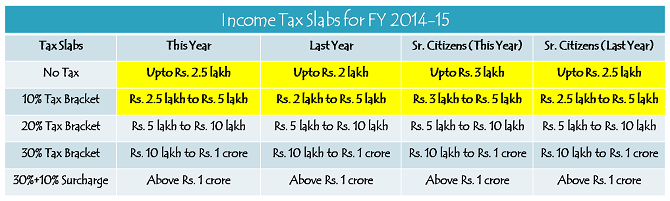
* Basic tax exemption limit has been increased to Rs. 2.5 lakhs as against Rs. 2 lakhs earlier – The proposal will help you save Rs. 5,150 in tax irrespective of the tax bracket you are in.

Picture3

For Senior citizens, the limit has been hiked to Rs. 3 lakhs from Rs. 2.5 lakhs earlier. So, even if you are a Senior citizen or a taxpayer in the 30% tax bracket, the benefit will be of Rs. 5,150 only.

* Exemption under section 80C has been increased to Rs. 1.5 lakhs as against Rs. 1 lakh earlier – The proposal will help you save Rs. 5,150 if you are in the 10% tax bracket, Rs. 10,300 if you are in the 20% tax bracket and Rs. 15,450 if you are in the 30% tax bracket.

* Exemption limit under section 24 on account of interest on home loan in respect of self-occupied property has been increased to Rs. 2 lakhs as against Rs. 1.5 lakhs earlier – If you have taken a home loan and the property is a self-occupied property, then this proposal will help you save another Rs. 5,150, Rs. 10,300 and Rs. 15,450, if you are in the 10%, 20% and 30% tax brackets respectively.

* Investment limit in PPF has been hiked to Rs. 1.5 lakhs as against Rs. 1 lakh earlier – The proposal will help the Senior citizens or investors who are saving for their retirement years or the conservative investors in building up a healthier corpus for achieving their financial goals.

Misses:

* LTCG Period & Tax Rate on Debt Mutual Funds Hiked – This is one bad news for the debt fund investors, especially the fixed maturity plan (FMP) investors. April 1, 2014 onwards, your investment in a debt mutual fund will have to wait for 36 months (or 3 years) to qualify for the status of a long term capital asset as against the 12 months period earlier.

Though the step has been taken to stop the corporate investors from using these debt fund schemes as a tax arbitrage opportunity, this proposal is definitely going to reduce retail participation in debt mutual funds in a substantial manner. Overall, it is going to hit the mutual fund industry very badly as they have majority of their assets under the debt category.

Moreover, this financial year onwards, the tax rate has also been hiked to 20% from 10% earlier. So, it will be a double blow for the debt fund investors.

* RIP Tax-Free Bonds – In his budget speech, Finance Minister Arun Jaitley did not mention anything about tax-free bonds which got extremely popular with the investors in the last 2-3 years. So, like Infra Bonds which used to carry tax exemption u/s 80CCF till a couple of years back, I think fresh issuance of tax-free bonds has also been discontinued now. So, now onwards, the investors will have to explore some other investment opportunities which could earn them a tax free income.

* RGESS Left Untouched – UPA’s fractured investment scheme, Rajiv Gandhi Equity Savings Scheme (RGESS), got no treatment from the NDA either. In fact, Arun Jaitley did not even mention the scheme in his budget speech. So, all those investors, who were expecting the Finance Minister to make some changes in this scheme, got nothing but a big disappointment.

* Infrastructure Bonds u/s 80CCF Not Reintroduced – After getting ignored by the former Finance Ministers, investors were hoping for a revival of exemption for infrastructure bonds which used to give Rs. 20,000 exemption under section 80CCF or a new investment opportunity with a separate tax exemption. But, their hopes were dashed by Mr. Jaitley as no new exemption got introduced by the new Finance Minister.

So, why the stock markets fell even after having the so called “Excellent Budget”?

It is not the budget disappointment which caused our markets to fall equally sharply after zooming up 475 points intraday, it was the fear & fall in the European markets which caused such a panic selling by the smart money here.

The panic was caused due to concerns of a possible default by the Espírito Santo Group and a sharp fall in the share price of Banco Espirito Santo, Portugal’s leading financial institution, which later got suspended for trading.

Most of the European stock indices were trading lower when our markets got closed for trading at 3:30 p.m.

Coming back to our budget, I think, with no tax-free bonds around this year and a quite unfavorable tax treatment for the debt mutual funds, the investors will find it very unattractive to deploy their money in some of the fixed income investments. Also, as it is termed as a progressive budget by most of the market experts, it was the best that Finance Minister Arun Jaitley could have done for the economy in such a short period of time.

Every clue is guiding the investors to invest their money in equities this year, what we need is a smiling Rain God. So, after a very long time, will the markets oblige with some healthy and steady returns this year? Only the time will tell.

11 Jul 02:51

Indifferent to the budget?

by subra

If you are an investor in India there are many people around you saying ‘How prepared are you for the budget’. If you are a Real Long Time Investor you should listen to Ayn Rand – and just ‘shrug’.

The budget is an activity which has no meaning at all for a retail investor. The budget is a document which says how much the government is expected to earn, borrow, lend, spend, save, and how the economy is LIKELY to take shape. It is just a hope document which may not mean anything for you!

As an investor you could be investing in bank fixed deposits, bonds, mutual funds (all varieties) , equity, land and gold.

In your investing life which could range from 20 years to say 90 years, what impact can ONE budget have? zilch. Nothing at all.

Now come to 2014 India. If you are an equity investor, you are in the MECCA OF TAXATION. No capital gains tax, no dividend tax, no wealth tax, – what more can you want. A well developed market, a fantastic back end, guaranteed trades. You can sell shares worth a few million dollars and get the money credited into your account in 48 hours. No hassles, fully safe, completely tax free. You can only pray that the Finance Minister does not do anything which upsets this equation.

Now the stupidest thing that an investor can do is to REACT to the budget. Let us assume one provision says ‘the government will encourage drip irrigation all over the country’. You rush to buy Jain Irrigation which has already shot up 10%. You feel happy with that till you see the prices of Jain Irrigation drop over the next 3 days. Why? Simply because the people who knew this would happen had already ‘bought on rumors and SOLD on news’. So reacting to the budget, well does not help the retail investor much. Might as well wait and take a calmer decision.

If you are a Gold investor, we both know that we are a gold hungry country and the recent track record is so good that people will continuously buy gold. There is Wealth tax on gold, SHORT TERM capital gains for gold UNLESS it is held for 3 years. After 3 years it still attracts LONG TERM capital gains. You will still buy gold because your wife said so…or for whatever reasons. So how does a national budget help you? Nothing.

If you are a bank depositor, chances are the bank transactions will be left untouched – but even if he were to tinker it could only be to improve the post tax return for the investor. Really nothing to look forward to as an investor / depositor.

Real Estate – another asset class which you buy, hold or sell depending on your own use requirement or friend’s advise! These are really long term decisions and one or 2 budgets do not really make / mar your decisions.

So as an investor if you sleep through the budget and woke up two days late, do you think it will matter? The answer is NO.

Instead of seeing what Arun Jaitely is doing with the country’s money (rather what he is promising) YOU should concentrate on YOUR own budget. Your asset allocation, your income and expenditure, your balance sheet, your goals.

That friends will give you a far superior RoT. Return on Time spent.

Post Footer automatically generated by Add Post Footer Plugin for wordpress.

10 Jul 03:13

A tiny sliver of humanity contributes more than 50 per cent to our progress and wealth. #2

by Sanjeev Sabhlok

I haven’t found many papers that explore the inequality of human contributions, about how a very small proportion of humanity contributes disproportionately to human progress and wealth.

This makes is crucial to nurture, develop and attract the world's top talent (both academics and students).

The previous paper I provided demonstrates the disproportionate value of top talent in the following ways:

a) Marginal product: The distribution of income and wealth is highly skewed. If we assume that income represents the marginal product in a competitive economy, this strongly indicates differences in productivity across each cohort, largely (based on other studies) based on human capital and innate capacity,

b) Publications: Journal publications by scientists follow a similar skewed distribution, particularly in terms of impact.

One can add Tyler Cowen's book, Average is Over, to the mix.

No society can be a leader in tomorrow's world without having a "pointy end" of super-bright scientists and technologists.

This does not mean that others don't need to be well-educated, but that a special strategy is needed to support the very top end of each cohort.

I believe the best mechanisms for this include total privatisation of higher education, along with special arrangements (preferably through private initiatives) to increase the quality of education in the physical sciences.

I don't agree that IQ is a proper measure of the quality of human capital. It is true that "the average income difference between a person with an IQ score in the normal range (100) and someone in the top 2 percent of society (130) is currently between $6,000 and $18,500 a year" [Source].

However, I'm talking about a combination of IQ, knowledge and passion that determines the very top contributors in society. These people are serious outliers, out by six sigmas or more, but not on IQ alone. 

I'm on the lookout for solid research on this topic, so would appreciate inputs.

KEYWORDS

The inequality of human contribution

Who contributes most?

09 Jul 14:47

When Was the Last Time We Had Two Down Days in a Row?

by David Merkel

I met with some board members from the local CFA Society for lunch today.  I commented, “When was the last time you saw two down days in a row?”  The answers ranged from at least a month, to sometime in May.  I use the S&P 500 as a measure, as most professionals do, and the answer is June 24th.  Admittedly, one of those declines was very small, but if you want to go back further, there were three down days in a row ending on June 12th.

This teaches a lesson: in a bull market, most professionals get skittish, and are looking for the turn, and think the market is running mindlessly higher without respite.

For investors that have reduced risk, sensing overvaluation, the continued rise in prices numbs the senses, and makes things seem worse than they are for those that are trying to beat the market.

Why do I write this?  We all need to take  step back and focus on first principles.  What are our goals for clients?  What time horizon are we looking at?  Why are we looking at day-to-day performance?

Far better to try to analyze what is being neglected, than agonize over past performance.

09 Jul 14:44

What the Railways Earns from Moving You Versus a Ton of Freight - And Why That Matters

by ET Data Blog

The Indian Railways earns 1.44 rupees for every ton of freight it moves by a kilometre. In contrast, it earns just about 35
paise from moving you by the same distance. And the good news for the railways this time round, is that the difference
between those two numbers has narrowed in recent years.


But why are these numbers important at all? Many analysts feel that a major reason why the Indian Railways faces a
financial crunch is that it cross-subsidises passengers such as you and me heavily, from the money it earns from moving freight across the country. Passenger fares are kept artificially low, and to compensate, freight rates are increased.


To some extent, this cross-subsidisation is a feature common to many rail systems around the world. The real question is the extent of the cross subsidy. If it is too much, you have a situation where the railways keeps hiking freight rates to stay profitable. This in turn, leads to rising costs of transport for key commodities every year. Ultimately, these have an impact on the price level and inflation.


Analysts measure the cross-subsidy by what they call the fare-freight ratio. This is the ratio of money earned from moving a passenger by one kilometre, versus the money earned from moving a ton of freight by one kilometre. A decline in the fare-freight ratio means the extent of the cross-subsidy rises. A rising ratio on the other hand, means that the cross subsidy is falling.


The good news for the railways is that this ratio has risen since 2012-13, after falling for atleast a decade before that. Further, if rail minister Sadananda Gowda's budget projections hold, the cross subsidy could fall even further in 2014-15.


The chart below gives a longer term perspective of how that cross-subsidy has evolved. As you can see, we still have a way to go, before the cross subsidy improves to the extent that prevailed even as of a few years ago, let alone the 50s or 60s.


But it's important to inject a note of caution about this number. As this article points out, a mere focus on increasing passenger fares or freight rates without any investment in improving amenities or rail infrastructure will be short-sighted. A longer-term improvement in the fare-freight ratio can only come from major improvements in these areas. Till then, any hikes in passenger fares or freight tariffs will be short-term measures.


Sources: 


Long term data on freight rates vs passenger tariffs is here. Data for recent years are from editions of the Explanatory Memorandum on the Rail Budget. The latest one is here. See tables IV and V.

09 Jul 14:43

Four Things the Economic Survey Tells Us This Government Will Do To Cut Inflation

by Deepak Shenoy

The economic survey for 2013-14 is out. The salient points they say brings us to some conjecture on what they will do tomorrow to contain inflation. Here’s the source.

Move To Market

(Read On...)
09 Jul 03:58

Who is responsible?

by subra

If your parent is an investor and invests in bank fixed deposits, equities, mutual funds or RE who is responsible for the record keeping?

When he is in the 70s your answer could be different, and when he is in his 80s your answer could be different! There are many children who think that they have no responsibility for the record keeping and whatever the parent is doing is fine. However, they have an interest on what is being left behind for them. Another set of people take full charge and handle the documentation well. I meet people from both the categories and do not have a strong view on both of them, but I do think that the first category just have poor communication skills. Some of them will even fret and fume about their parents poor financial / documentation skills but will not talk to them about it. Well, so be it.

But dying can be real messy, right?

I get at least one call a month saying…..somewhat like this: “My ………..(father, mother, brother,….aunt) has died and has left a motley group of shares, fixed deposits, mutual funds, bank accounts, …do you have somebody who can handle all this?”

“Actually I do not think it is worth more than Rs. 10 Lakhs (the figure can change, just one of the numbers heard recently), and me or my sisters do not care about this…but we need a closure.”

ME: Oh ye dutiful Next of Kin…..what were you doing when this person was alive?

“Oh he was MANAGING his own portfolio, and we thought he was doing everything right….we did not ask him”

ME: What about his demat account and trading account? “Arre he was trading in some shares, but I think over all he only lost some money over the past 3 years”

ME: You knew he was losing money?
Yes, Subra. But it was his only source of ENTERTAINMENT and we did not want to interfere.

ME: How many mutual fund schemes has he invested in? Not sure Subra, I think about 32 schemes ….
ME: and pray, how much is the amount…. Not sure Subra, but I do not think it is worth more than Rs. 2 lakhs in all the schemes put together. Subra tell me honestly what should I do with all this. Neither my sisters nor me are really interested in this money.
ME: Make a bonfire.
Subra you cannot be serious, right?

Well I am branded as a cynic, but if you guys had no time, no willingness, or no whatever to clear this mess when he/she was around, you will not want to go through the Indian messy legal system, right? Sorry, but your………..X did not ‘manage’ his portfolio, he GROSSLY MESSED UP and created a shit of a ‘portfolio’. Many of the shares are delisted, are part of a promoter’s quota, cannot be sold or just vanished. Yes you have some high value shares like Reliance, Tata Steel, ……but getting it transferred to your Mother’s name is not easy. Some of these shares are held in joint names with your sisters and brother – and the signatures have been ‘done’ by your dad. Even they do not know what kinda signatures have been used. The mutual funds are little less messy. All you have to do is to send the death certificate of your dads and get it ‘transmitted’ to your mother’s name.

However it makes sense to hold it in joint names of your Mom and you. For doing this you will have to get your KYC and your mother’s KYC done. This is a simple procedure but dealing with the mutual funds is avoidable if you have a choice.

I have no clue of any CA or lawyer who will be interested in a portfolio of Rs. 12 Lakhs, unless the fees is about Rs. 5 lakhs.

Your heart will not allow for this, because SOMEBODY else will tell you it can be done cheaper, really cheap. Frankly, BONFIRE is the best way out.

Afterall, you need to take the next flight out of the country do you not? Bon Voyage.

Post Footer automatically generated by Add Post Footer Plugin for wordpress.

08 Jul 16:20

Rail Budget’s Sublime Message On End Of Subsidy Raj

by MC GovardhanaRangan

The reaction to Railway Budget from many talking heads has been clichéd such as `path breaking’ or `no game changer’. But there is a sublime message on the principles of governance that is being missed. If at all anyone was looking for a sign of putting the economy back on rails and fix government finances, it was very much there.


Linking of periodic revision of passenger fare and freight rates fixes the fundamental problem at the heart of wrecked finances. With this, the government has at one stroke moved the Indian Railways to function on market principles, shedding its torn socialist clothes.


Subsidies were the bane. All that throwaways aimed at the so called economically weaker sections of the society have all along been lining the pockets of rich and undeserving middle class which splurged on entertainment and luxury rather than pay for essentials such as fuel or travel. From now on, it could be the `user pays’ theme playing out.


Extrapolated, this principle may well be the cornerstone of the Union Budget as well where Finance Minister Arun Jaitley faces bigger issues such as subsidies on fuel, and fertilizer.


If Jaitley borrows a leaf out of Rail Minister Sadananda Gowda’s book, the pricing of petrol, diesel, cooking gas, and kerosene, could also be moved closer to market prices.


It may not be advisable, or even possible, to link all fuel prices to market prices right away. But the beginning could be made with adjusting these prices based on crude oil prices on a periodic basis as the rail fare is to be. This could at least cap the government’s subsidy burden, eliminating the year end blues. Fuel shocks will be history and the cost of subsidy will be known.


Over a period of time if and when the crude prices ease, which is supposed to barring geopolitical reasons due to rising US shale revolution, the government could reduce its subsidies and link them to market prices.


The same formula could also be adopted for fertiliser subsidies. The government should also move on reducing the corporate subsidies in the form of tax exemptions. Many companies with billions of dollars of revenues pay an average tax rate of less than 18% when individuals pay 30%. These are as much subsidies as on petrol and diesel.


If the Rail Budget is an indication of things to come, it may well be the end of the subsidy raj.

08 Jul 16:16

Typical ~ Equity Investors are piling on at these Highs ~ they need to be cautious

by Gaurav Parikh
Sensex has crossed a record 26000 & Nifty is now ahead of 7700 Typical ~ Equity Investors are piling on at these Highs  ~ they need to be cautious ~ especially those who are returning or initiating fresh exposure now not having done so in 2013 or earlier in 2014 ~ advisable to await the [...]
08 Jul 16:13

5 (Solid) Reasons Why Prime Minister Modi Should Watch The World Cup Final In Brazil

by Indrajit Hazra

Notwithstanding ‘Achhe din’ round the corner and all that, Indians still have a tough time explaining to the world why they are so lousy in the world’s most-watched spectator sport. In the past, I have avoided contact with all foreigners during the World Cup.


My standard response during that period is that I avoid coming under the influence of decadent foreign culture. But let me be honest, I simply avoid being deeply embarrassed at the serious prospect of being confronted with that tremulous observation disguised as a question: Wow! Do you Indians watch football?!!


While India’s FIFA ranking is likely to be unchanged from the days when the UPA played ball – its current ranking of No. 154 still being better than the No. 169 low that it occupied in September 2012 – it is highly unlikely that animal spirits will be unleashed any time soon on the footie field. (My sources tell me that it is very unlikely that Arun Jaitley will announce any special concessions on anything remotely to do with football in his annual Budget next week, not even on referee’s whistles.)


But with Prime Minister Narendra Modi setting off on July 11 to Braseeeel! to attend the Brics Summit that kicks off on July 15, it would be a full-fledged pity if he doesn’t drop by to watch the World Cup final at the Maracanã in Rio on very late July 13. He has accepted German Chancellor Angela Merkel’s invitation of a two-day stopover in Germany -- while allegedly declining a visit to the Bitburger brewery.


But I reckon that Merckel will be only too happy if the Indian prime minister sticks to his original plan of making an overnight stay in Frankfurt on July 11 and gets on his way to Braseeeel! the next morning. Imagine Merkel constantly looking over Modi’s shoulders to catch the game if Germany does make it to the World Cup final two nights later. Oh, our media won’t like the slight at all.


And there are other very serious reasons why the PM should make it to the Maracanã next Sunday. Here are the top five reasons:


1. ‘You will be nearer to heaven through football than through the study of Gita.’ This is not something that some jholawala with an organic Che tattoo uttered in between a dharna and a seminar. It’s Modi’s hero Swami Vivekananda who said those uplifting words about football in the context of trying to tell India’s young to ‘be strong’ if not to bite fellow players. Modi attending the final is in keeping with Vivekananda’s soccer sadhana.


2. The slight that millions of Indians felt when Maria Sharapova a.k.a Maria Sharapova Who? failed to recognize The-Man-Whose-Name-Shall-Not-Be-Uttered-Because-We-All-Know-Who-He-Was-In-The-Wimbledon-Stands can be avenged when Modi is seen by billions across the globe watching the final along with other world leaders. It will also give all of us the opportunity to say, ‘Dilma Rousseff who?’ and also pretend that we don’t know who Vladmir Putin is. (Clue: He is the president of the country from which Maria Sharapova Who? is from.)


3. The nation has seen Narendra Modi chillin’ only while flying kites at the International Kite Festival next to the Sabarmati. While this is all very well to project the image of a man who never takes his eye off the ball, a relaxed, fun-loving Modi is something that would delight his fun-loving countrymen. One day at the Copacabana beachfront soaking in the scenery would do Modi’s otherwise stentorian image wonders. And he needn’t worry. Foreign minister Sushmaji won’t be watching.


4. The World Cup final is the ideal venue for the prime minister to start his campaign to project India as a tourist destination. Pitching the idea of using Facebook as a tool to market India as a tourist destination to Sheryl Sandberg is all very fine. But let’s face it, we know the kind of Comments that people will leave behind on those uploads. Instead, by being a brand ambassador for India in the biggest tourist spectacle of the year, Modi could actually turn India’s image as a dowdy, dusty, dorky, dinky travel destination into a full-fledged destination for sporty, adventure-seeking – and affluent – football fans. Manohar Parrikar kicking a ball with a Goan beach in the background can do the last-mile pitching of Incredulous !ndia. I mean, Incredible…


5. To go to Brazil around the time of the World Cup final and not watching it in the Mecca of Football is not only unfortunate but sinful. Especially if you’re a big shot who won’t have much problems getting into the stadium even though you haven’t booked the ticket years in advance. And the best part is that unlike in a cricket World Cup final, where an Indian defeat can cause serious embarrassment to any senior Indian leader, the prime minister doesn’t have to worry about the result here. In any case, Pakistan, ranked ten notches below India at No. 164, sucks at football even more than India.


So go for it, Mr Modi. The Maracanã will be a blast.


08 Jul 16:10

Understanding Xiaomi’s Marketing Strategy And Why They Deserve $10Bn Valuation

by Guest Author

The Xiaomi Mi3 is priced Rs. 14,999 which is like HALF of the exorbitant prices of Samsung Galaxy S4/5, and Apple iPhone 5 series with a similar hardware!

Mi-3 has been touted as one of the fastest smartphone in the world. The phone is powered by a quad-core Qualcomm Snapdragon 800 8274AB 2.3GHz processor running Android 4.3 optimized with MIUI version 5.

Mi3 in India

Mi3 in India

Despite its slim frame, with its thickness coming in at only 8.1mm with a 5.0 inch screen, the Mi-3 packs a 3050 mAh large battery (Galaxy S5 has a 2800 mAh, iphone 5s has 1570 mAh).Its camera feature is also pretty impressive, coming in at 13 megapixels with dual LED flash lights and a 16 GB storage space. Wow, that is some sexy hardware!

Ok, so now the obvious question:

How is Xiaomi able to price its phone cheaper with such a great hardware?

Well the answer could lie in their unique marketing / pricing strategy with a plan to sell high-end smartphone at slightly beyond the cost of materials and eventually monetize through software and services

Strategy 1: Earning profits from its software.

Xiaomi’s revenue stream comes from its software — the highly-customizable MIUI firmware that is based on Android which already has more than 30 million users, earning approx $4.9 million monthly revenue (via) from apps, games, and theme customizations installed on MIUI.xiaomi-mi3-india

Thus unlike Apple, for example, which makes money from margins on selling its phones,Xiaomi is a more like Amazon where it wants to earn via its ecosystem by selling various goodies and reap profits like an ecommerce company.

Thus net result is a lot cheaper phone + a great hardware = a happy buyer.

Strategy 2: Zero Advertising, All Product/Social Marketing        

Unlike regular phone companies, Xiaomi is able to save a ton of cash by avoiding crazy advertising costs and rather deploy some cool innovative marketing strategies.

Step 1: Build a tech fan base

When Lei Jun founded Xiaomi in 2009, the first product was MIUI operating system. Lei Jun didn’t want to spend money on marketing, so his crew began building brand awareness in forums. Their staff spent a lot of time on forums, making comments, sending posts and advertising. They used the same method to do marketing with zero budget, they set up MIUI mobile phone forum, which became the base camp of “me fan” with over 1 million registered users.

 Step 2: Engage with the fans – make them ‘loyal’

  • Every week, Xiaomi releases a new version of miUI, its customized Android skin, which is then scrutinized by a few hundred thousand hardcore users.
  • “Me fan” participated in product research, development, test, spread, marketing and public relation. Fans also organized offline city gatherings.
  • The company thus gained a whole lot of loyal fan-base by soliciting and adding user feedback into the design of its latest sets and Android skins.

Step 3: Sell to your fans. Let them spread the euphoria via social sites.

Naturally, the 1 million “me fan” users became the first buyers of MIUI smartphone.

At the same time, Sina Weibo grew more and more popular. (China’s top twitter like micro-blogging platform with 400 million members). In December 2012, Xiaomi announced that it will sell phones directly from Sina Weibo.

The unusual marketing tactic proved successful: within two days of the announcement, Xiaomi said it had sold 50,000 smartphones in five minutes, with 1.3 million additional reservations.

Final Take

A unique blend of innovative business strategies is really propelling this ~4 year old company by leaps and bounds which already has a valuation crossing $10 billion.

Xiaomi understands the power of influence. Just like a celebrity, Xiaomi knows how to make use of the power it has, and it is little wonder that the company has managed to climb so fast in such a short amount of time.

[Guest article contributed by Puneet Garg]

The post Understanding Xiaomi’s Marketing Strategy And Why They Deserve $10Bn Valuation appeared first on NextBigWhat.

08 Jul 16:08

Modi's Rail Budget: Lays track for railways of the future

by Sumit Gulati

Even with the Railway Budget 2014, the magic wand expectation lives on. Just like systemic inflation was supposed to be addressed in one month flat, we have a host of experts on TV channels calling Narendra Modi led NDA's railway budget 'directionless' and lacking vision. Yes, the rail budget could have been clearer on the specifics, but, directionless it certainly isn't.

This rail budget takes some very serious steps towards long term reform. It brings back attention on running railways as a commercial organisation, refocuses attention on freight, takes steps to cut non-core work such as maintenance of stations and - last but not the least -embarks on making a serious effort in improving passenger amenities. The last point has ramifications beyond just clean loos and safe drinking water at railway stations.

No previous government has - in its rail budget speech - categorically talked of getting foreign investment in to some segments of the huge railway network. It is a bold and if I may say so, a visionary step. While FDI is no panacea to all ills, permitting foreign investment in railways not only gets money, it also encourages big global players to invest in India. If implemented well, long term benefits can be big - it can generate thousands of jobs. Also, for instance, it may make sense to let the Japanese run bullet train operations completely, with 100% FDI. They take the business risk, leaving Indian Railways to focus on freight.

So it is with private investment. Weak railway finances can be supplemented with private money in select areas. It need not be core areas like laying of tracks or building rail bridges. Some kind of privatisation in the form of wagon leasing has been tried before but it has never been core policy to actively court private investment. This budget does that for the first time.

The budget also takes first steps in reducing cost of non-core operations. We know that staff is recruited & equipped to maintain stations. We know our stations stink - quite literally. Farming out station maintenance & some other ancillary activity all over India will cut a lot of overheads for the railways and bring better bang for the buck. Utilisation of vast railway assets for solar power generation can earn neat money over a period of time.

There is a policy intent to computerise and make operations efficient. Real time tracking of rolling stock as listed out in the speech can be useful for operational efficiencies & therefore control cost. There is clear mention of digitisation of rail assets including land and better utilisation of the same.

There is explicit talk in the budget of unviable projects, of time & cost overruns. There is the first step move towards splitting planning & implementation aspects of the Railway Board. There is clear recognition of unviable routes. The budget has explicitly recognised the ills that plague the railways, unlike in the past when the entire focus was on starting new trains.

There is disappointment over the absence of any announcement of a Tariff Regulatory Authority. The anguish over this is amusing. We have seen regulators like Trai, Sebi and even the central bank being slighted by short-term political interests over the last few years. There is no guarantee that a steep fare hike recommended by a Tariff Authority would necessarily be implemented by a spineless govt. The Rail Minister nevertheless mentions in his speech that fuel linked hikes will continue.

Importantly, there is shift in thought from new passenger trains to freight. The minister wants railways to be the largest freight carrier in the world. There is clear mention in the speech of connecting ports and connectivity with coal mines. Isn't this the direction the railways should be moving in?

Lastly, improved passenger amenities hold the key to ability of the railways to hike fares in future. Every fare hike is followed by sound bites of hassled commuters asking for better facilities in return. Clean stations, better ticketing, security will soften the consumer's resistance to hikes in future.

Yes, the minister did not speak of railway signalling or announce tall track expansion targets. It is clear why he didn't do it - he had no money. He has resisted the temptation to play Santa Claus and announce new trains & new stations. In so many of the measures - right from external funding to efficiency to curbing populism, he has done what the mighty oped writers have argued for in the last few years. Those who argue there was no vision in the rail budget, perhaps have no eyes.

08 Jul 16:05

Understanding Inflation

by subra

Inflation is perhaps one of the least understood risks in investing. Understanding the power of small numbers is not easy. That is the reason why people find it difficult to understand the impact of compounding too – after all inflation is just negative compounding.

Let us take an example. If you met a financial planner in 1968 and told him your monthly expenses were Rs. 700 per month, the figure looked reasonable. If the financial planner had asked the client “How much do you think will inflation be?” the client would have said say 12% – the prevailing rate then.

The planner would have quickly used a calculator and said – “Well Sir, your monthly expenses in 2009 would be Rs. 72,952 per month in retirement.”

A good chance that the client would have laughed at this – because his starting salary in 1968 would have been Rs. 950 as a freshly qualified Chartered Accountant! However if he had provided even for inflation at 9% per annum, the planner would have arrived at a figure of Rs. 16,424.

See how much difference even a 3% change in inflation rate can do to your expenses. This is exactly the opposite of compounding – in other words if you had invested just Rs. 700 (in 1968) in an asset class which gave you 12% yearly compounded returns, your money would have grown to Rs. 72,952 in the year 2009.

What exactly is inflation? It is a capitalist concept of the currency being able to buy less on a year to year basis caused by the erosion of purchasing power of the currency. It is a world wide sustained trend of increasing prices from one year to the next year. As seen earlier the rate of inflation is just as important – because the impact on the common man is quite harsh even if it is a small number but for a long period! Inflation is particularly harsh on people who have low income as well as those who have a fixed income.

If a person has a fixed income – like interest from a bank fixed deposit – or a pension which does not adjust for inflation, or an annuity, they get hurt very badly. The only way they can provide for a hedge against inflation is by investing in ‘growth but variable returns’ assets like direct equity, equity mutual funds, or real estate. You must have surely experienced inflation – remember the first time you went with your parent to a petrol pump?

Or when you went to buy a loaf of bread? Or when your grandmother tells you that her parents bought her gold worth Rs. 1000 for her marriage? If you compare the prices of 1970 to the prices of 2009, the impact is that of inflation.

I remember buying bread in 1970 for Rs. 0.70 and now I pay Rs. 29 for a loaf! Over a shorter period too – if you paid Rs. 50 for a cup of coffee in 2013 and you now pay Rs. 55 for a cup, inflation is 10% for the previous year. Of course not all items inflate at the same rate. Branded goods inflate at a higher rate than un-branded goods, and vegetables may inflate at a rate less than services.

Inflation is about money growth, and it is an indicator of too much money chasing too few products. This is the reason why, investors should try to buy investment products with returns that are equal to or greater than inflation.

For example, if a particular share returned 8% and inflation was 7%, then the actual return (real return) would be 1% (8%-7%). Though this sounds good in theory it is quite normal to see ‘savers’ talk about the golden times when they got 21% return on company fixed deposits. They forget that those were times when inflation too was at 17-18%! Effective interest then was also 21-18 = 3%.

This is the number that savers and investors should be chasing, not just nominal interest.

Post Footer automatically generated by Add Post Footer Plugin for wordpress.

08 Jul 16:03

Genial Gowda inaugurates a new era for Railways

by Sriram Ramakrishnan


An article in the Business Standard on June 20 by Aditi Phadnis contained this gem of a story about Sadanand Gowda, the railway minister who is at the centre of attention after presenting the Modi government’s first railway budget on Tuesday. Ms Phadnis starts off by saying that Mr Gowda appears clueless and amiable and his body language is non-threatening. She then goes on to say that the perception is wrong as Gowda can be ruthless and effective in getting his message across. For instance, during his short stint as Karnataka chief minister, Gowda had a unique way of bringing to line errant babus. if there were corruption reports about any district magistrate Gowda would make it a point to tour that particular district. He would talk to the DM at first gently, asking about problems and developments in the district. After completing the district tour, Gowda would gently point out that he had heard reports about him, and that, he (the DM), would be sacked if the reports continued. A thoroughly rattled DM would be left behind wondering what had hit him.


The article and the anecdote comes to mind after the former Karnataka chief minister presented his and the Modi government’s first railway budget. The budget has been panned and the markets appear to have given a thumbs down. Predictably, the Congress and the opposition are protesting and even senior media experts are calling it a disappointment. My question here is this. What if they are wrong? What if the budget instead of actually lacking vision contained seeds for the railway’s revival and growth? What if a brave attempt has been made to fix finances and while at the same time providing solution to fund future growth? And what if everybody, including the markets, are reading it the wrong way?.


The best way to analyse this would be to start from the beginning with a bit of background. As in many othe cases, a decent analysis would be inconclusive without some idea of where Mr Gowda is coming from. The railways, as an institution, has been in a mess for a long time. As a provider of services, it has a shoddy reputation. It does not have the money to fix things, let alone do big projects. Its safety record is abysmal. On top of all this, it is losing traffic to airlines and roads. The question before Mr Gowda was whether he can nudge the railways into improving its safety record, improve and increase the kind of services, reduce expenses and thereby the operating ratio and raise money to run operations and fund growth. Can the railways meet the needs and aspirations of new, young generation of Indians for whom rail travel is like a relic from the bullock cart era.


In my humble opinion, Mr Gowda has taken more than just a few steps towards achieving this objective. He has done four things, which if executed well, will set the railways on the way to high growth, better services and better profitability.


End to subsidy raj. June’s fare and freight rate hike will not be the last. The budget speech made it clear that the railways need to operate on commercial lines and cannot function as yet another government organisation with a large welfare, social agenda. Fare and freight rates have been linked to fuel cost and if the fuel cost goes up, expect your train fares also to rise. Agreed, something simlar was announced a year or two back, but that was the Congress-led UPA government which made a virtue out of dilly-dallying on decisions. This govt appears more decisive (atleast so far). Secondly, railways need money and need it badly so they are unlikely to baulk at increasing fares if prices go up. Mr Gowda’s speech also outlined how the railways will tap new sources of money for upcoming projects. One of them is foreign direct investment in rail infrastructure. Others are public private partnerships and using the resources of rail PSUs like RITES etc. Some of these measures will play out only over the long term so it is not possible to expect miracles immediately. India has not done well with public private partnerships so the railways will have to be ultra careful when teaming up with private sector for rail infrastructure and high speed trains etc.


Improving Services: Nothing illustrates the railways’ problem today than stinking toilets, shoddy railway stations and unclean carriages. Gowda has said the budget for cleanliness is 40% higher than the previous year and has promised to provide a raft of services from better ticketing infrastructure to better food in carriages. Some of these services like enhancing the ease of ticketing should help travellers but the bigger changes will have to wait. The trick here is to see how well the money is being spent. Gowda’s emphasis on cleanliness and amenities means he knows where the problem lies and seems determined to fix it.


Commercial nature. The market weakness on Tuesday is being attributed to investor disappointment over lack of any major capex or expansion plan. Stocks of railway companies had run up sharply hoping for major orders but fell after the budget. This is not necessarily a bad thing. Gowda emphasised in his speech that the railways will have to function in a commercial manner and most of his decisions seem to point to creating a private sector-minded commercial culture within the organisation. Again, this is a departure from that of his predecessors. Gowda has curbed the natural desire among politicians to announce pet projects and populist schemes and decided to focus on completing existing projects without throwing money after unnecessary ones. This is good for the railways in the long term and the markets have read this wrongly.


Dream projects. The Diamond Quadrilateral and the bullet train proposals are going to cost massive amounts of money and investments are likely to stretch well beyond the life of this government. Are they necessary? Absolutely. Are they going to be like white elephants? That depends on the financial model and how well it is executed. The railways have to modernise and also appeal to aspirational young Indians who want a better mode of travel. That is how they are going to compete with buses, cars and airlines. of course, this does not mean that safety aspects get the short shrift and using the safety argument is a bit like advocating against automation citing shopfloor accidents. Both need to go hand in hand.


To sum up, Gowda’s budget provides railways with a clear road map and a vision to tackle the financial crunch and improve service delivery. As always, the devil lies in details and in execution. If Gowda and his team can get that right, they would have succeeded in achieving one of the greatest turnarounds in Indian economic and business history.


08 Jul 16:01

How To Calculate Your Net Worth And Why It’s So Important?

by Hemant Beniwal
All of us should know our net worth and not just the business tycoons and high-profile CXOs. Net worth is the amount by which assets exceed liabilities. It can be used to determine the financial worth of an individual or a business. Net worth is a great parameter to measure your financial standing. It is […]
08 Jul 02:58

Real estate may be looking at strangulation

by Debasish Roy

The average Indian real estate company follows this template: 1) More and more exposure to projects so that the turnover increases every week. 2) Taking on more market / corporate debt so that working capital and funding for the execution of projects do not sag in any manner 3) Booking of land by paying 10 to 15 per cent of the total cost of the land to the titleholder funded by the 10 per cent of the total sale amount from an earlier project received as earnest money and finally 4) Delay execution of the projects till supplementary earnings from the projects such as undefined earnings under External Development Charges and Infrastructure Development Charges and Preferential Location Charges are realized for super profit.


Now, this is similar to the classic capitalism model where the template has to keep replicating itself to sustain its ill-gotten existence. 


Therefore, if we understand the above facts, we conclude that the Indian real estate company is not a healthy model in the business environment. Its aim is not to satisfy and retain customers but to realize the maximum from each project to balloon up turnover.

It is chiefly this model that has led to its downfall. Customers are not ready to buy today owing to non-completion of projects across the board in India.

Non-completion can be classified into three categories.

1) The project has been delayed for more than five years but is being promised completion everyday.

2) The project has been delayed for more than six years and there is no hope of completion despite the company going for other projects at other places.

3) The project has been wound up and the customer's earnest money stolen. The land is lying vacant with the original owners claiming that the project had never gained title to the land at any time.

It is a fallacy to think that interest rates for loans touching 10 per cent or above are the reason for drying up of real estate orders from lay customers. It is actually the thievery and robbery that has taken place in the last 10 years that is to blame for lack of any transactions taking place.

Both real estate companies and property dealers (aka real estate agents) are to blame for this crash. Owing to the template replicating itself time and again, the supply of apartments is increasing every day. Despite finding few or no buyers, the companies are going for more and more projects with more and more exposure to leverage.

Therefore, every surbuban area in India worth its name is being flooded with more and more badly built, badly designed and badly laid out apartments at the cost of prime farm land or fallow land bought from the farmers. This is leading to a lack of buyers in areas where speculators had bought apartments at unrealistic prices to sell at more unrealistic prices later. Moreover, these apartments do not enjoy any supporting infrastructure around them -- a fact that was totally ignored when speculators had lapped up apartments at double or triple the price from 2010 to 2014.

The bubble has burst and the ones who had bought an apartment for Rs 80 lakh to sell it at Rs 3 crore later may have to admit that the original price of Rs 30 lakh was much closer to the real satisfaction and price that was being offered to the buyer of such property. The number of apartments will keep on exploding as there are enough greedy numb skulls in the market to fuel supply. They cannot be checked either under law or under social sanction. The unscrupulous real estate barons have created their own nemesis.

There are sellers in Dwarka in New Delhi, Tollygunge in Kolkata, NOIDA in Uttar Pradesh, Andheri in Mumbai and Fraser's Town in Bengaluru who have been waiting for buyers for more than six months to no avail.

This is what I have come across. I am sure there are more places in this country where there are many times more sellers than there are buyers. In the end, these potential buyers never turn into real buyers. This is just the beginning. Everyone who jacked up prices artificially will regret it soon. This includes the government for encouraging black money by taxing transactions at more than the realistic two per cent. That however, is another story.
08 Jul 02:57

Are you Scared of Having a kid due to money reasons ? Here are 5 things you should know

by Nandish Desai

Day by day I am realizing that the impact of money is huge on our decision making capacity. The conversation of money is very deep rooted and not just limited to financial goals or wealth creation.

Today’s article is based on interaction I had with one my relative, who works in IT sector. We do not meet very often but as and when we meet, we make a point to update each other about, what’s new is happening in our work and life. He and his wife both are doing extremely good in their career and their pay scales are also good.

scared of having kids

Here is how our conversation went

Relative: So, Nandish How is life after becoming father?

Nandish: Life is wonderful, it is great becoming father and playing with my kid is great fun. I and my wife feel becoming parents is the greatest gift to receive in life.

Relative: That’s wonderful to know Nandish but I am really scared of this idea of “Having a kid”

Nandish: Scared? Why are you scared? What is so scary about becoming a parent. If you want we can have a conversation that can forward you in this matter.

Relative:  Thanks Nandish. I always like having conversation with you. You are my lifetime coach. Honestly speaking, I and my wife want to plan a kid, but we are scared whether we will be able to handle all the expenses that are related with kid or not?

Nandish: But you can always plan for your children related expenses and children related goals. Your savings per month and year according to me are sufficient.

Relative: When we see other people’s kid, we feel like we should plan a kid – but somewhere we are not confident about this whole process. I personally feel that becoming parent is a huge responsibility and it also calls for financial commitment.

Nandish: Yes, but why don’t you and your wife first get friendly with the thought of becoming parents. It may appear scary, but in reality it may not be so. There are some thoughts or beliefs that are holding you back.

Relative: I and my wife stay alone in a rented premises. Income wise we are good, but we still feel we are not ready financially. We dont know – how other people manage this big change but we are scared. Really scared…(He literally started crying)

Nandish: Hey don’t cry my friend. In life sometimes, we find ourselves on a cross-road. Such cross-road moments are painful but it is a point where you gather courage to make some BOLD choices in life. Over thinking or over worrying wont help you and your wife. Be clear whether you guys want to step into the realm of parenthood or not?

5 things I learnt from the interaction I had with my relative on parenthood

1. Imaginary world is scary

Our imaginary world is always more scary than the real world. We anticipate all the worst things to happen to us, but in reality things turn out very differently. I feel that a lot of people like my relative are sailing in the same boat. They have strange notions about parenthood and they envisage those strange notions will soon convert into reality.  They always come-up with reasons like let the family income reach to X level, or first let me first buy my own house. etc (Here reason is not important, but the point is you are in grip of money related concerns)

2. BOLD step is required

Life demands you to take BOLD steps. You have to step beyond your so called fears and worries and you need to take a stand in life. Take a stand to accept parenthood with a lot of power and grace. To bring new life into this world demands commitment. I am not saying, don’t examine your situation – but get present to what is stopping you and take a bold step in this area.

3. Don’t let conversation of money rule your decision

Don’t hand over all your power to money. Money is an integral part of your life, but at the same time money is not everything in life. When it comes to parenthood don’t let the money conversation hold you back. Take a step forward and don’t get stopped by financial concerns.

4. Trust your ecosystem

After the transition takes place you will start experiencing support coming from different corners of your family. Sharing from my own life, our parents  have brought huge strength and support into our life. After becoming parents I and my wife started experiencing true power of our family ecosystem that we are into. This whole transition became smooth for us, because of the family support we have. Look around and get in touch with your family eco-system.

5. The Age factor

I am not an  expert in this area, but all I know is that age of women matters when the couple wants to plan a kid. I have interacted with some clients of ours who kept on pushing parenthood for some initial years and finally they had to face some complications due to age factor. We suggest you to go and consult right person who can guide you better on age factor thing.

Conclusion 

Don’t let the conversation of money hold you back from experiencing parenthood or any other beautiful experience in life. Have conversation with your spouse and make a choice that serves you most.  It is a sensitive subject and our intention is to share our observation, we just want to share how money impacts our life decisions.

We are not asking you to do something or don’t do something, it is about getting present to the impact that money have on us.  Jagoinvestor as blog is not limited to personal finance education, we really want our readers to be happy in life. We want to spread happiness along with personal finance education. If you have experienced something like this in your life – feel free to share in comments section, if you want. Sometimes we are afraid of writing articles on such sensitive topics but as I mentioned in the article we also have to show boldness in our writing.

Lastly, Someone commented on our last article that we are trying to sell our investor workshop, yes we are inviting (selling workshop) investors to join our workshop because it is the best place to be in, where you get a chance to create a whole new relationship with money and life. We are proud of our work, we are proud of selling investors a great financial life.

08 Jul 02:57

Your Friendly Neighbourhood Loan Waiver Moral Hazard is Here.

by Deepak Shenoy

It’s incredible what kind of idiocy passes for politics in the country. In 2008-09, the UPA government threw a huge sop to farmers, telling them their unpaid loans would be forgiven.… (Read On...)

08 Jul 02:57

Tension is Natural

by Keenan

If there is no tension in the sales process, you’re not selling. You’re taking orders or you’re the customers bitch.

Truly selling means you are offering some type of fundamental change and tension is inherent to change.

Your buyer isn’t going to always agree with your view point, recommendation or suggestions and that’s OK. That’s healthy tension.

There are going to be detractors to your solution. The competition is going to add to the tension, spreading fear, uncertainty and doubt (fud). That’s brutal tension.

Your product won’t meet all their needs, that for sure creates tension.

New requirements will come out of the blue, the product team will miss a delivery timeline, budgets will be cut, prices will be too high and they all create tension.

Tension is natural. It’s part of the sales cycle. As a sales person, your job is not to reduce tension or avoid it but rather know how to manage it.

Tension gives you visibility into what your clients are doing. It’s provides insight into your buyers mind, their challenges, issues and concerns. Tension is the natural connection between your buyers fears and your solution. Embracing tension is how you get to the close and deliver.

Sales is not meant to be tension free, we’re creating change and change makes people nervous.

Embrace the tension, it means you’re heading in the right direction.