Davemichels
Shared posts
AudioCodes and Twilio Deliver Direct Routing PSTN For Microsoft Teams
Why Facebook and Apple are fighting over your privacy
Angry CEOs, operating system updates, and maybe even a lawsuit — the feud continues.
/cdn.vox-cdn.com/uploads/chorus_asset/file/19433750/open_sourced_story_logo.png)
Facebook and Apple’s fight over your data is heating up. Apple’s tracking-optional mobile operating system update is coming to iPhones this spring, and the new privacy-preserving features will give users the ability to opt out of being followed around the internet via trackers in their apps. Facebook — which makes the vast majority of its money from data collected through those trackers — really doesn’t like Apple’s new features. Now Facebook is considering suing Apple, and Apple is digging in its heels.
Late January saw the latest exchange of words between the two companies in a standoff that’s been going on for months. On January 27, Facebook CEO Mark Zuckerberg said in a quarterly earnings call that “we increasingly see Apple as one of our biggest competitors,” accusing Apple of using its “dominant platform position” to push its own apps while interfering with Facebook’s. Zuck added that Apple may frame this as a privacy service to its customers, but it’s really only in Apple’s own best anti-competitive interests. The following morning, the Information reported that Facebook was preparing an antitrust suit against Apple over its App Store rules (which, if filed, will join several others).
Apple is not backing down. The day after Facebook’s earnings call, CEO Tim Cook spoke at the Computers, Privacy and Data Protection conference. In his keynote address, Cook never mentioned Facebook by name, but the target of his pointed remarks about data and advertising was obvious.
“Technology does not need vast troves of personal data, stitched together across dozens of websites and apps, in order to succeed,” Cook said. “Advertising existed and thrived for decades without it. And we’re here today because the path of least resistance is rarely the path of wisdom. If a business is built on misleading users, on data exploitation, on choices that are no choices at all, then it does not deserve our praise. It deserves reform.”
The reform Cook is talking about would look like a mobile operating system that prevents companies from accumulating said vast troves of personal data, and Apple’s latest efforts bring its own mobile operating system, iOS, pretty close to that ideal. The iPhone maker has incorporated several privacy protections into its products and services over the years. In iOS 14, apps will have to tell users what information they collect and get their permission to do it. Some of these features are already live, including the so-called privacy nutrition labels, which are supposed to tell users if their data is being collected, how, and why (though, as the Washington Post points out, the labels appear to be operating on the honor system).
A potentially bigger deal, for users and developers alike, is the upcoming App Tracking Transparency (ATT) feature, which will require apps to get users’ permission to track them across other apps and websites. If users say no — and it’s likely that most of them will, given that people generally don’t like being tracked — companies that use targeted advertising will lose a major source of data, and, therefore, revenue. So Apple’s move could significantly harm the very mobile app ecosystem its iPhone helped to create.
Facebook, a company that has not historically been a major proponent of user privacy, is one of the biggest data collectors of all. Its trackers are buried in tons of mobile apps and on websites, and Facebook uses the data they collect for ads on its platforms and its Audience Network mobile app ad service. So you can imagine that the social media giant/data vacuum was somewhat alarmed to find out that potentially millions of iPhones would soon have a way to cut off some of those data streams. Facebook certainly isn’t the only company to balk at Apple’s new rules, but it is one of the biggest.
It has responded by framing Apple’s move as an attack on the small businesses that use Facebook ads to target potential customers. In a PR campaign last December, Facebook said that non-personalized ads would generate 60 percent fewer sales than personalized ones — while these businesses were struggling to stay afloat during a pandemic, no less. Apple shrugged and continued with its ATT rollout plans. On February 1, Facebook announced that Apple’s required tracking permission prompt would be accompanied by one from Facebook that “will provide more information” about how and why Facebook uses targeted ads. It will point out that the money those ads take in helps to keep apps free and gives the businesses that use them a better return on their investment than non-targeted ads do (according to Facebook, which might be a little biased).
Facebook and Apple are two of the biggest companies in the world, with very different points of view about user privacy. Apple has made user privacy part of its business strategy, even engaging in public spats with the Department of Justice to protect it. That’s because it deals in products and services — not data — and positions itself as the more private and secure alternative to Google, which very much does deal in data. Facebook was also built on user data, so its fights with the Department of Justice have been over user privacy violations.
But as Facebook (and several other companies) have pointed out, Apple has an incredible amount of control over every aspect of its devices. Apple mobile devices are only manufactured by Apple and can only use Apple’s operating system. Apple hardware must also use apps obtained through Apple’s App Store, and those apps have to meet Apple’s requirements, use Apple’s in-app features, pay Apple’s commissions, and compete against Apple’s own apps, which sometimes look a whole lot like their own. So Apple can make privacy part of its selling point for its customers, and it can also mandate it from any apps that want access to iPhone users. Even when those apps are made by companies as big and powerful as Facebook.
As for what all of this means to you, the user? Other than having some more privacy options when Apple’s update finally arrives this spring, probably not much for the time being. The ads won’t go away; they just won’t have as much access to your data to target them. Facebook has already said it will comply with Apple’s ATT requirements, so it won’t be pulling its apps from the App Store over this, nor will Apple be kicking them out.
This is good for both companies because Apple’s users want Facebook’s apps (Facebook, Instagram, and WhatsApp) on their iPhones, and Facebook wants their apps in front of as many people as possible. They may be feuding publicly — as they’ve done for years — but their mutually beneficial relationship is still very much intact.
Open Sourced is made possible by Omidyar Network. All Open Sourced content is editorially independent and produced by our journalists.
Welcome to Twitter, Jon Stewart

Jon Stewart has just joined Twitter, and is now the proud owner of a verified account. And, of course, his first tweet was about the redditors on r/WallStreetBets and their stonks.
While it may be the first time he’s made an appearance on Twitter, Stewart is already fitting right in — with a profile picture that’s not actually of him, but a dog.
This is bullshit. The Redditors aren't cheating, they're joining a party Wall Street insiders have been enjoying for years. Don't shut them down...maybe sue them for copyright infringement instead!!
— Jon Stewart (@jon_actual) January 28, 2021
We've learned nothing from 2008.
Love
StewBeef
Fellow late-night commentator Stephen Colbert jumped in to welcome him to the platform, giving Stewart a...
Twitter troll faces 10 years in prison for spreading vote-by-text hoax

The United States Department of Justice announced today that it has charged a Twitter user who allegedly spread misinformation during the 2016 presidential election using Twitter.
Douglass Mackey of West Palm Beach, Florida, is accused of conspiring with others to spread election misinformation in 2016, which was designed to deprive individuals of their constitutional right to vote. He has been charged with violating the civil rights conspiracy statute and, if convicted, will face up to 10 years in prison.
The complaint alleges that between September 2016 and November 2016, Mackey (who used the alias “Ricky Vaughn” on Twitter) spread fake information to his followers, trying to convince voters that it was possible to cast their vote by...
We Cannot Rely Exclusively on Vaccines to End the Pandemic

Otter.ai Launches Live Notes and Captions for Google Meet
Otter.ai, a leading provider of SaaS solutions for team communications and productivity, recently announced the arrival of a new solution. The Live Captions and notes integration for Google Meet aims to enhance the collaboration experience for more than 100 million users already on the app. Available now for all Otter customers, the service will transform business conversations into collaborative and interactive transcripts in real-time.
With one easy installation of a Chrome extension, users can open secure and live transcripts directly from Google Meet calls, and access live captions. Google Meet users can now improve business communications with innovative technology solutions that used to work with Zoom only.
Integrating Otter within Google Meet will help to improve meeting productivity and efficiency while reducing the risk of miscommunications in today’s remote working landscape.
An Intelligent Live Caption Experience
After a meeting, the Otter.ai web platform and the app will offer a range of features to enhance communications even further, including search by keyword capabilities, transcript reviews, and the option to highlight, add images, and share content. The arrival of the new integration will add a panel directly from the Chrome web browser within a Google Meet call.
 The panel, which is moveable, can capture a conversation and turn it into a transcript in real-time. In addition, users will have access to Live Captions that utilize Otter.ai’s market-leading ASR engine. This technology is specifically built to support custom vocabulary, and the captions are available to customise with different sizes and fonts.
According to Dave Michels, the Principal Analyst of TalkingPointz, Otter.ai is an indispensable tool for businesses using Zoom meetings already. The new extension for Google Meet users will take the fantastic functionality available to even more users on Google Meet.
Notably, Otter is available as a standalone app, ready to work with most video conferencing systems, and it’s quickly gaining recognition as a valuable AI solution for modern meetings. Capable of more than just transcription, Otter can store all transcripts for a business that uses both Meet and Zoom.
Making Meetings More Intelligent
All calls recorded with the Otter.ai extension will create a collaborative transcript that users can access after the meeting. The new launch is a valuable step forward in Otter.ai’s strategy to create a more streamlined and integrated experience of live transcription and note sharing for collaboration customers. According to CEO and Founder of Otter.ai, Sam Liang, Google Meet is a highly effective video tool used by over 100 million people each day.
Liang notes that Otter.ai has already achieved amazing outcomes with its Zoom integration, and now it’s ready to increase productivity and note-taking opportunities for Google Meet users too. The AI technology available within Otter.ai can accurately understand a range of accents and can therefore turn real-time conversations into live transcripts that are easy to follow and understand.
Otter.ai is helping to drive a more collaborative and cohesive experience for everyone on Google Meet. What’s more, the company plans to continue developing its comprehensive collaboration product to make it more effective for teams in a variety of different environments.
Just look at this amazing Pac-Man history book

Pac-Man celebrated its 40th anniversary last year, and to commemorate the occasion, Cook and Becker is releasing a history book later this year — and it looks incredible. While there’s a standard hardcover version of the book for $39, which is called Pac-Man: Birth of an Icon, you can also buy a $99 special edition that comes with an ingenious Pac-Man-shaped slipcase. There’s even a vinyl pressing of the single “Pac-Man Fever” included.
The book is described as “the first-ever official history book” for the iconic video games series, and it’s written by Arjan Terpstra and Tim Lapetino. Here’s the official description:
This new non-fiction narrative volume will journey from creator Toru Iwatani’s “pizza slice” inspiration to the game’s...
Workday nabs employee feedback platform Peakon for $700M
Workday started the work day with some big news today. It’s acquiring employee feedback platform Peakon for $700 million in cash.
One thing we have learned during the pandemic is that organizations need to find new ways to build stronger connections with their employees, and that’s precisely what Peakon provides. “Bringing Peakon into the Workday family will be very compelling to our customers — especially following an extraordinary past year that has magnified the importance of having a constant pulse on employee sentiment in order to keep people engaged and productive,” Workday co-founder and co-CEO Aneel Bhusri, said in a statement.
Without the ability to have face-to-face meetings with employees, managers have struggled throughout 2020 to understand how COVID, working from home and all the trials and tribulations of the last year have affected the workforce.
But this ability to check the pulse of employees goes beyond this crisis period. Managers of large organizations know that the bigger and more spread out your firm becomes, the more challenging it is to understand what’s happening across the company. The company uses weekly surveys to ask specific questions about the organization. For them it’s all about getting good data, and so far customers have used the platform to ask over 153 million questions since inception six years ago.
Peakon CEO and co-founder Phil Chambers sees Workday as a logical partner. “Workday excels at helping enable customers to leverage their data. Together, we’ll be able to help drive greater productivity, talent development and employee retention for our customers — and unify how employees interact with their organizations,” he said in a Workday blog post announcing the deal.
Peakon was founded in Copenhagen in 2014 and has raised $68 million along the way, according to Crunchbase data. Its most recent round was a $35 million Series B in March 2019. The deal is expected to close by the end of this quarter subject to typical regulatory review.
Social justice groups warn Biden against throwing out Section 230

A group of 75 activist groups and nonprofits have urged against sweeping changes to Section 230 of the Communications Decency Act, warning that it could silence marginalized communities while making online moderation harder.
“Section 230 is a foundational law for free expression and human rights when it comes to digital speech,” the letter says. The law protects websites and apps from being sued over user-generated content — making it safer to operate social networks, comment sections, or hosting services. “Overly broad changes to Section 230 could disproportionately harm and silence marginalized people, whose voices have been historically ignored by mainstream press outlets.”
The letter is signed by a variety of groups supporting racial...
HBO Max hits subscriber goal two years ahead of schedule

HBO Max has nearly 40 million US subscribers, AT&T disclosed in its first quarter earnings report on Wednesday. Combined with traditional HBO subscribers, the platform has surpassed a 41 million subscriber milestone the company says it didn’t expect to hit for two more years. Globally, AT&T says HBO now has more than 60 million subscribers.
There are a few caveats worth mentioning. For one, AT&T has different metrics for different levels of its subscriber base. Total subscribers includes not only people who pay for a standalone subscription, but also those with access to HBO Max either through an existing HBO subscription through a cable company or through a promotion via AT&T’s cell carrier business, regardless of whether they’ve even...
Microsoft Teams Direct Routing: More Complex Than It Seems
Direct Routing is a good option for voice calling, but be sure you understand all the considerations and the tradeoffs.
Playvox scores $25M investment and acquires Australian startup Agyle Time
It’s not every day you see a Latin American startup funded by a U.S. venture capital firm based in the midwest. Playvox, a Colombian startup that wants to bring a positive twist to customer service monitoring announced a $25 million investment from Five Elms Capital, a Kansas City, MO VC firm. It has now raised $34 million.
While it was at it, Playvox also announced something else unusual for an early stage company: an acquisition. The startup bought an Australian company called Agyle Time, a workforce monitoring SaaS tool. The acquisition brings together two companies with similar missions to provide a more complete customer service solution.
Playvox founder and CEO Oscar Giraldo founded the company in 2012 and has been quietly building it into an international business with brand name customers like Dropbox, Electronic Arts and Wish. The company’s Workforce Optimization platform works as a layer on top of customer service center management tools like Zendesk and Salesforce Service Cloud, allowing management to monitor digital channels and give customer service agents feedback to help them do their jobs better.
“When you call a contact center or a company, you may hear that ‘this call may be recorded for quality and training purposes’. So Playvox is a technology that works on the backend of [the customer service system] to manage the workforce that is responsible for providing a great customer experience,” Giraldo explained. It does this, but instead of for calls, it focuses on chat and email interactions.
Giraldo got the idea for the business nine years ago when he was working as a software engineer in Argentina and toured some customer service centers, where he observed a lot of disgruntled and unhappy employees. He wanted to start a company that would help give feedback to these employees in a more constructive and positive way.
“Instead of the traditional approach of customer service QA that was punishing the agents [for mistakes], what we do is we use that data to train them with a learning management system that is integrated in the platform, and have coaching tools that allow our customers to provide timely feedback to the agent so they can change their behavior for the better,” he said.
The Agyle Time acquisition enables the company to expand beyond this feedback system into customer service workforce scheduling and position them to compete in the enterprise market with a more complete toolset. “What we see is that combining the quality management agent optimization tools that Playvox has built with Agyle Time’s workforce management will allow us to be a unique vendor in the marketplace,” Giraldo said.
As for Five Elms, it’s a firm that invests between $4 and $40 million in companies that have between $2 and $20 million in revenue. They like SaaS companies in atypical places with portfolio companies in Fayetteville, AK, Columbus, OH and Brisbane Australia. Playvox fits nicely in that group.
“Playvox continues to deliver extraordinary products, add renowned brands to its customer base, and attract exceptional executives because of its company values and culture,” Ryan Mandl, managing director at Five Elms Capital said in a statement.
Telestax Announces Strategic Agreement with NEC to Bring Programmable Communications and CPaaS Applications to the NEC Global Enterprise User Base
AUSTIN, TX – – Today, Telestax, the leading provider of CPaaS enablement to global communications companies, announced a strategic agreement with NEC Corporation of America (NEC), the leading international provider and integrator of advanced IT, communications, and networking solutions. With this agreement, NEC is partnering with Telestax to bring CPaaS functionality to their extensive customer base and channel partner network. NEC has already incorporated the Telestax programmable SMS functionality into NEC UC-Suite, the company’s integrated unified communications solution. The agreement ensures NEC will continue to add programmable SMS and voice, and release new CPaaS turnkey applications to customers throughout the 2021 year.
NEC was most recently recognized as the world’s number one provider of call control products to the small and medium business markets (source: MZA Call Control Market Reports). With tens of millions of business users worldwide, NEC is in the top three globally for installed unified communications seats and ranks number one for global line shipments over the past three quarters. This partnership agreement with Telestax represents NEC’s rapid global expansion into programmable cloud-based communications and collaboration services.
“At NEC, we see the world’s SMB market as one of the top priorities to maintaining our leadership position,” said Ram Menghani, President of NEC Enterprise Communication Technologies. “By working with Telestax, we can now deliver the best CPaaS capability to this critical market we already know so well. Thanks to the Telestax business model, it has been simple to integrate and white label their CPaaS platform into a full NEC experience. The Telestax offerings are designed for companies like ours that are strategically focused on rapidly bringing programmable cloud communications to the market.”
With this agreement, NEC has SMS-enabled a number of their products to improve communications and create new digital channels. The Telestax CPaaS platform has allowed NEC to add multiple new features and benefits, including:
- SMS enable any fixed line: The NEC UC-SUITE UNIVERGE® SV9100 Contact Center application can now send text messages to colleagues, customers, and vendors just as easily as an internal chat message. With SMS enablement, any fixed line can now support SMS communication. This functionality ensures communications reside in the organization’s UC-Suite environment and opens up new opportunities for customer service and support channels.
- Text colleagues a visitor has arrived on-site: The NEC Front Desk Assistant has become critical in providing contactless check-in powered by biometrics. By integrating with the Telestax CPaaS platform, the Front Desk Assistant sends a text message to alert employees that their guest has arrived, fostering a better, socially distant process.
“As soon as we partnered with Telestax, we were off to the races in bringing API-based functionality to our products, customers, and channel partners,” said Menghani. “And we are absolutely not done. We are already working on several new cloud features and products with Telestax using their innovative voice and messaging capabilities. We are also examining their line of turnkey applications as new solutions for our customers. I personally can’t wait to introduce these new offerings later this year.”
Telestax Turnkey Applications include:
- Smart 2FA – the ability to send a one-time password using the user’s preferred channel – voice, messaging, or email. Two-factor authentication protects against phishing attacks and can provide customers with secure access to portals, account data, order status, and more.
- Number Masking – the ability to cloak a customer or agent’s number to ensure communications privacy during a phone or text exchange.
“We are extremely proud that a company as large as NEC rapidly applied our rich communications APIs to release new features to their global SMB footprint,” said Kevin Nethercott, Chief Commercial Officer for Telestax. “Before the global pandemic hit, we were not thinking of contactless screening, but with CPaaS it’s easy to pivot and innovate. Now NEC has a solution to ensure front desk areas have a safe way to intake visitors and send convenient SMS alerts to others. We enjoy working with the NEC team and look forward to more success stories this year.”
Solutions from NEC such as UC Suite with SMS enablement and Front Desk Assistant with thermal screening are available now. Learn more at https://www.necam.com/UnifiedCommunications/UCSuite/. To inquire about becoming a Telestax partner, please visit http://www.telestax.com or email Telestax at info@telestax.com.
About Telestax
Telestax is the leading CPaaS enabler for communications service providers and creator of the award-winning Restcomm API platform. Originating in the largest industry open source community, managed by Telestax, Restcomm has been tested by over 10,000 telecom developers and contains over 6 million lines of code. As a trusted partner in real-time communications, Telestax delivers Restcomm Cloud to innovative companies around the world. When service providers join with Telestax, their customers gain the advantage of a superior network and full CPaaS capabilities such as programmable SMS and voice. With bring your own carrier options, white labeling, and a complete suite of voice and messaging APIs, service providers benefit from new revenue streams and a competitive edge in the evolving digital transformation marketplace. Restcomm Cloud removes the friction in application development and business workflow integration with user-friendly tools like the Visual Designer. The Telestax RESTful API gives experienced developers control to create robust omnichannel applications alongside technologies such as advanced IVR and intelligent chatbots. Learn more about Telestax, Restcomm Cloud, and CPaaS enablement at www.telestax.com today.
About NEC Corporation of America
NEC Corporation of America (NEC) is a leading technology integrator providing solutions that improve the way people work and communicate. NEC delivers integrated Solutions for Society that are aligned with our customers’ priorities to create new value for people, businesses and society, with a special focus on safety, security and efficiency. We deliver one of the industry’s strongest and most innovative portfolios of communications, analytics, security, biometrics and technology solutions that unleash customers’ productivity potential. Through these solutions, NEC combines its best-in-class solutions and technology and leverages a robust partner ecosystem to solve today’s most complex business problems. NEC Corporation of America is a wholly-owned subsidiary of NEC Corporation, a global technology leader with a presence in 160 countries and $29 billion in revenues.
The post Telestax Announces Strategic Agreement with NEC to Bring Programmable Communications and CPaaS Applications to the NEC Global Enterprise User Base appeared first on Cloud Communications Alliance.
Apple reportedly set to mass-produce iPads outside China for the first time

Apple could start manufacturing iPads in Vietnam by the middle of this year, marking the first time a “significant number” of the tablets would be produced outside of China, Nikkei reports. As well as shifting iPad production, Apple is also reportedly increasing the number of iPhones manufactured in India, where it’s produced some iPhone 11 units since last year. It will reportedly begin producing iPhone 12 series devices in the country as early as this quarter.
The report paints a picture of a company that’s increasingly keen to diversify its manufacturing out of China, despite hopes that trade tensions could ease under President Biden. Nikkei notes that the new administration has said it won’t immediately ease tariffs on Chinese...
Biden wants to triple protected lands

Conserving 30 percent of land and 30 percent of ocean waters by 2030 would be a big win for the climate and biodiversity.
Biden took the next leap in pursuing his climate agenda Wednesday, signing the latest in a spate of environment-focused executive orders. One of the most ambitious goals buried in the order he put forward is to conserve nearly a third of US land and ocean waters by 2030.
Currently, only 12 percent of the country’s land and 26 percent of its oceans are protected, according to a 2018 report by the Center for American Progress. This was achieved by slowly expanding protected areas over the past few decades — until former President Trump took office. In his first year, his administration dramatically shrank two Utah monuments, Bears Ears and Grand Staircase-Escalante — the largest removal of federal land from protection in US history, according to the New York Times. Now the Biden administration will have to quickly reverse course to meet the new goal.
The “30 by 30” target is based on scientific recommendations for addressing the rapid loss of biodiversity and using natural ecosystems to fight climate change. The biodiversity crisis may still be invisible to many people, but it has had profound effects. One recent study found that North America has lost over a quarter of its bird population since 1970. And biodiversity isn’t just for birdwatchers, it also underpins the health of the ecosystems that sustain agriculture and many other essential activities.
Advocates of the 30 by 30 target, who’ve been pushing for it for several years, say addressing our various planetary crises requires this kind of bold action. “30 by 30 is rising to the level of ambition we need to see,” Greg Zimmerman, director at Protect 30x30, told Vox.
In the same executive order today, Biden announced a pause on new leases for oil and gas drilling on federal lands — a shift that could free up more land for conservation. And that is only one of many tools the administration might use to fulfill the new goal. Here’s a quick rundown of the science behind 30 by 30 and how it might become reality.
Why 30 by 30?
The target of 30 by 30 is ambitious, but it is actually only a step toward an aggressive new approach to conservation scientists say is needed to limit the biodiversity crisis and climate change.
Under the pressures of population growth, increasing consumption, habitat destruction, and rising temperatures, species have been disappearing alarmingly fast: going extinct at 100 to 1,000 times the normal rate seen over the past millions of years. In a major May 2019 biodiversity report, the UN warned that 1 million species are at risk of extinction across the world. The “sixth mass extinction” is in fact set to accelerate, a study published in PNAS one month later confirmed.
In 2019, conservation scientists called for a “Global Deal for Nature” to protect 50 percent of the planet. Achieving this goal would help restore the extinction rate to its natural tempo, preserving 90 percent of species. It would also protect valuable carbon sinks such as tropical forests that are critical to fighting global warming.
As a checkpoint on the way to that end goal, these scientists and others proposed reaching 30 percent protection by 2030. It is now the proposed goal for the biggest UN biodiversity negotiations in a decade, to be held in Kunming China in October. More than 50 countries have already pledged their support for the target.
Beyond topline numerical targets, conservation advocates also call for species from across a variety of ecosystems to be protected, rather than, say, just conserving one region in a country.
Getting to 30 percent
Like Biden’s other climate initiatives, reaching 30 by 30 in the US will require a massive push from across the government and civil society.
But the administration won’t be starting from scratch politically. The groundwork for the executive order was laid by companion 30 by 30 Congressional resolutions introduced by Rep. Deb Haaland and former Senator Tom Udall of New Mexico over the last two years. The target was also part of the Biden campaign’s climate platform.
The executive order will kick off the process of devising a strategy to achieve 30 by 30, but Biden has already taken some preliminary actions to achieve it. Last week, in his first climate executive order, he called for a review of Trump’s decisions to downsize national monuments.
Going forward, the administration could set aside a great deal of land and oceans through executive powers alone, by using the Antiquities Act to designate new monuments, for example. But protecting 30 percent of land (up from the current 12 percent) will require a more comprehensive effort.
On Wednesday, the administration said the executive order “launches a process for stakeholder engagement from agricultural and forest landowners, fishermen, Tribes, States, Territories, local officials, and others to identify strategies that will result in broad participation.”
Although setting a strong national goal and providing federal support is critical, solutions should also come from states, cities, and other stakeholders, said Zimmerman of the Wyss Campaign for Nature. ”If it is a top-down mandate, it will fail.”
Private land contains much of the nation’s biodiversity and carbon sinks, according to a New York Times op-ed published in December by UC Berkeley environmental scientists Arthur Middleton and Justin Brashares. They suggested that landowners can be compensated for protecting their land through existing tools such as conservation easements while new approaches may also be needed.
On oceans, the US is ahead of the curve. “The U.S. is well on its way to meeting a 30x30 goal for the ocean given strong bipartisan leadership by past administrations,” said Amy Kenney, executive director of the National Ocean Protection Coalition. But more work is needed to protect waters off of the continental US — most of today’s protected marine areas are around Hawaii and the western Pacific.
If approached carefully, Zimmerman said that conservation efforts can be bipartisan. A 2019 poll commissioned by the Center for American Progress found that 76 percent of Republicans supported setting a 30 by 30 target.
Reckoning with conservation’s racist past
At a time of reckoning over the racist roots of the mainstream conservation movement, advocates for 30 by 30 see it as an opportunity to address injustices.
In a December op-ed in Indian Country Today, four tribal leaders supported the initiative, while calling attention to the past. “The history of conservation in the United States began with human rights violations, including the displacement, massacre, and assimilation of tribal peoples to make way for the first National Parks: Yellowstone and Yosemite,” they wrote.
They outlined conditions for successful cooperation on 30 by 30, including calling for the government to respect tribal sovereignty, ensure tribal leadership in the decision-making, and not interfere with tribal rights to hunt, fish, and gather on their land.
To further address historical injustices, the Center for American Progress argued that the 30 by 30 initiative should expand access to nature. Currently, 74 percent of communities of color live in areas with less access to nature than the state median, compared to 23 percent of white communities, the center found in a report published last year.
Living in quarantine over the past year has further revealed the inequities of greenspace. “One of the only respites from the pandemic has been access to the outdoors,” said Zimmerman, “and the reality is that communities of color are disproportionately impacted by nature loss and have much less access to natural areas.”
Google’s BeyondCorp Enterprise security platform is now generally available
Google today announced that BeyondCorp Enterprise, the zero trust security platform modeled after how Google itself keeps its network safe without relying on a VPN, is now generally available. BeyondCorp Enterprise builds out Google’s existing BeyondCorp Remote Access offering with additional enterprise features. Google describes it as “a zero trust solution that enables secure access with integrated threat and data protection.”
Over the course of the last few years, Google — and especially its Cloud unit — has evangelized the zero trust model and built a large partner network around this idea. Those partners include the likes of Check Point, Citrix, CrowdStrike, Symantec and VMWare.
As part of BeyondCorp Enterprise, businesses get an end-to-end zero trust solution that includes everything from DDoS protection and phishing-resistant authentication, to the new security features in the Chrome browser and the core continuous authorization features that protect every interaction between users and resources protected by BeyondCorp.
“The rapid move to the cloud and remote work are creating dynamic work environments that promise to drive new levels of productivity and innovation. But they have also opened the door to a host of new security concerns and sparked a significant increase in cyberattacks,” said Fermin Serna, chief information security officer at Citrix. “To defend against them, enterprises must take an intelligent approach to workspace security that protects employees without getting in the way of their experience following the zero trust model.”
Verizon Outage Compounds Zoom, Gmail Issues Across Northeast

Poll: Most Americans want to break up Big Tech

Breaking up companies like Amazon and Facebook has rare bipartisan support but different rationale.
The Biden administration is inheriting a number of lawsuits aimed at breaking up Big Tech monopolies in the United States. It’s a cause most Americans support, according to a new poll by Vox and Data for Progress.
Some 59 percent of people surveyed in the online poll said they supported breaking up Big Tech monopolies, including 24 percent who said they strongly support it. Efforts to rein in tech monopolies could include undoing Facebook’s acquisition of Instagram or barring Amazon from being both an online marketplace and a seller in that marketplace.
An even higher percentage — nearly two-thirds — of Americans say the economic power of these tech companies is a problem facing the US economy. The Vox and Data for Progress poll was conducted in January among 1,164 likely US voters.
Strikingly, feelings about Big Tech antitrust are generally consistent among Democrats and Republicans, though Republicans were more likely to say it was a problem and that it should be broken up. This mirrors the rare bipartisan support the antitrust cases have seen from lawmakers. (The new data was consistent with a similar poll Vox and Data for Progress conducted in 2019.)
The reasons Democrats and Republicans have for believing tech companies hold too much power, however, vary.
To wit: Another poll question found that while 87 percent of Democrats approved Twitter’s decision to permanently suspend then-President Donald Trump in the wake of the Capitol riot, only 28 percent of Republicans approved; 67 percent of Republicans didn’t approve of the decision. The vast difference in responses points to divergent criticism of tech companies among the two parties. Those on the right have lambasted Big Tech for perceived censorship, while those on the left have accused companies like Facebook and Google of stoking online extremism.
Regardless, support for antitrust action is one of the reasons the government, after two decades of leniency, filed a total of five antitrust cases against Big Tech late last year. In December, both the Federal Trade Commission and attorneys general from 48 states and territories filed twin lawsuits against Facebook alleging it illegally maintained its social media monopoly through acquisitions of rival companies, including Instagram and WhatsApp. Google is facing three antitrust lawsuits on behalf of nearly all the states and the Justice Department: two involving its search engine and search ad business and another regarding its ad tech business. All three cases accuse the search engine behemoth of illegally maintaining its monopolies.
Back in October, Congress issued a 400-page report that said Facebook, Google, Apple, and Amazon all engaged in anti-competitive behavior. So it’s possible Apple and Amazon will face antitrust lawsuits in the future as well.
The existing cases will likely be combined into fewer lawsuits, whose outcomes could take years. They will also be dependent, in part, on the appointments President Biden makes to the government agencies that oversee antitrust cases: the FTC and the Justice Department.
Recode’s Jason Del Rey reported last week that Lina Khan, who served as legal counsel in the House antitrust investigation and is considered an enemy of Big Tech, is a top candidate for a commissioner role at the FTC. The leadership at the Justice Department might be more favorable to Big Tech. The American Prospect and the Intercept reported that the top two candidates to lead its antitrust division, Renata Hesse and Juan Arteaga, have both previously advised big tech companies.
Whoever ends up leading these agencies will have to consider how the American people are united — for once — in their scrutiny of Big Tech.
Digital Transformation is Calling…You Must Answer
The real opportunities lie in business model changes.
5G boxes are coming to people’s homes, whether they want them or not

When most people look out their windows in the morning, they likely aren’t expecting to be surprised by a chest freezer-sized box that’s feeding a 5G antenna, but that’s the exact experience some Houston residents have been having. Verizon has been installing the boxes as part of its 5G network rollout since at least 2019, and from the reporting done by the Houston Chronicle, it seems as if it’s been anything but smooth.
The boxes are known as “ground fixtures,” and they supply power and data to 5G antennas that are placed on utility poles nearby. The ones gracing people’s front window views are being set up to build out Verizon’s 5G home internet service. It’s well-known at this point that, while millimeter-wave tech is blazing-fast, it...
Warning Signal: the messaging app’s new features are causing internal turmoil

The fast-growing encrypted messaging app is making itself increasingly vulnerable to abuse. Current and former employees are sounding the alarm.
Unify Office by RingCentral Lands in the U.S.
RingCentral’s strategic partnerships share many similarities, but the one with Atos has two major differentiators.
Biden appoints Jessica Rosenworcel as acting FCC chair

President Joe Biden has appointed Democratic commissioner Jessica Rosenworcel to lead the Federal Communications Commission until an official chair is confirmed. Rosenworcel is the second woman to lead the agency as acting chair.
Rosenworcel was first nominated to the FCC by President Barack Obama and served from May 2012 to January 2017. She was later confirmed for an additional term in August 2017 where she currently serves as the most senior Democratic commissioner at the FCC. Over the course of her tenure at the FCC, Rosenworcel voted to impose and maintain net neutrality and pushed to close what she’s called the “homework gap,” an effort to extend broadband to every child in the country.
“I am honored to be designated as the...
Otter.ai’s new Chrome extension can transcribe Google Meet calls in real time
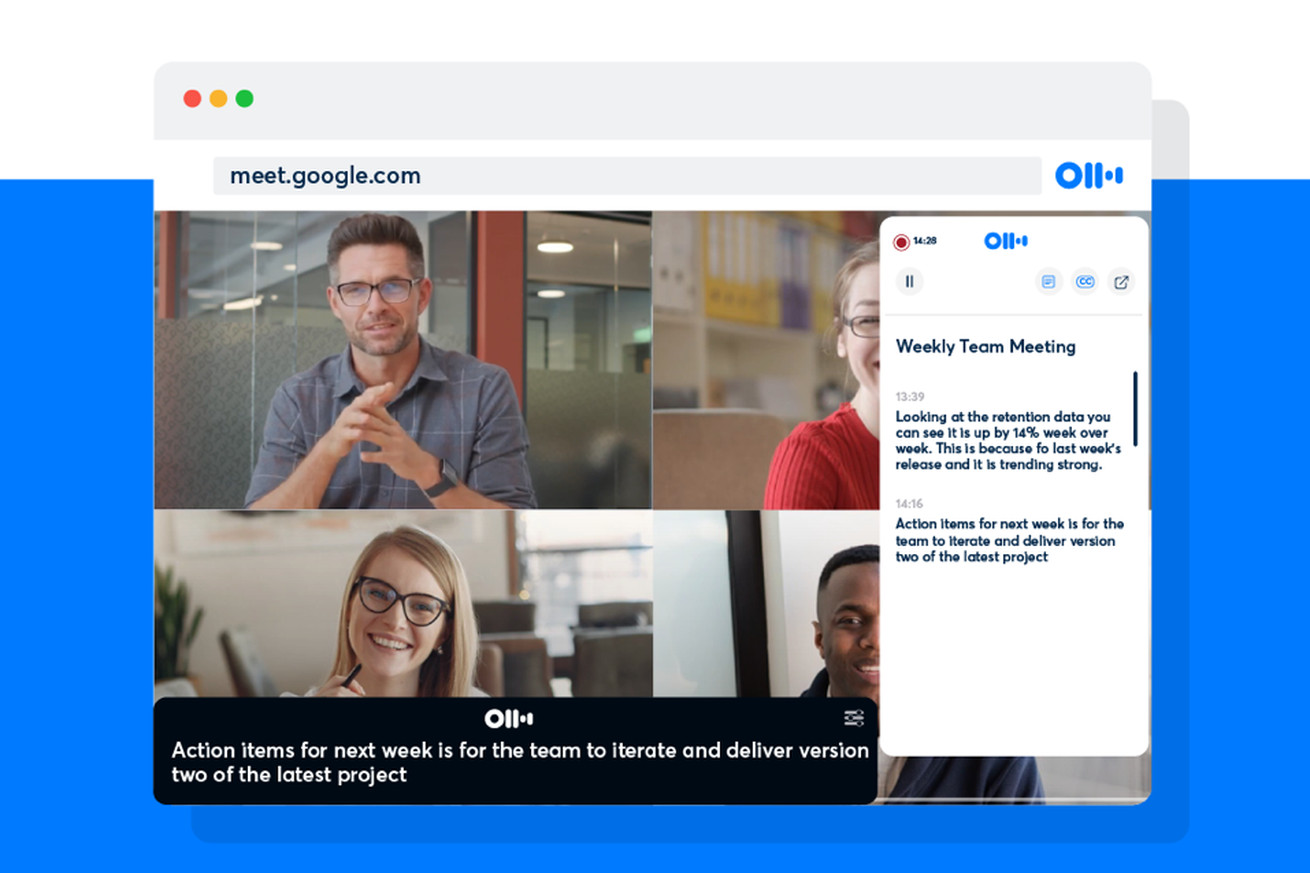
You can now use automated transcription service Otter.ai to transcribe and provide closed captions for Google Meet calls with the help of a new Chrome extension. Meetings will be transcribed in real time, and transcripts will be saved right to your Otter account so you can access and share them later.
Otter.ai says the extension works with all of its plans, meaning even free users will be able to take advantage of the tool.
To set it up, first download the Otter.ai Chrome extension here. Once you’ve installed it, head over to meet.google.com and then click on the Otter extension. (You might need to click the puzzle piece icon to open the extensions menu to find it.) Then, you may be prompted to log in to use the extension, though I...
IBM transformation struggles continue with cloud and AI revenue down 4.5%
A couple of months ago at CNBC’s Transform conference, IBM CEO Arvind Krishna painted a picture of a company in the midst of a transformation. He said that he wanted to take advantage of IBM’s $34 billion 2018 Red Hat acquisition to help customers manage a growing hybrid cloud world, while using artificial intelligence to drive efficiency.
It seems like a sound enough approach. But instead of the new strategy acting as a big growth engine, IBM’s earnings today showed that its cloud and cognitive software revenues were down 4.5% to $6.8 billion. Meanwhile cognitive applications — where you find AI incomes — were flat.
If Krishna was looking for a silver lining, perhaps he could take solace in the fact that Red Hat itself performed well, with revenue up 18% compared to the year-ago period, according to the company. But overall the company’s revenue declined for the fourth straight quarter, leaving the executive in much the same position as his predecessor Ginni Rometty, who led IBM during 22 straight quarters of revenue losses.
Krishna laid out his strategy in November, telling CNBC, “The Red Hat acquisition gave us the technology base on which to build a hybrid cloud technology platform based on open-source, and based on giving choice to our clients as they embark on this journey.” So far the approach is simply not generating the growth Krishna expected.
The company is also in the midst of spinning out its legacy managed infrastructure services division, which, as Krishna said in the same November interview, should allow Big Blue to concentrate more on its new strategy. “With the success of that acquisition now giving us the fuel, we can then take the next step, and the larger step, of taking the managed infrastructure services out. So the rest of the company can be absolutely focused on hybrid cloud and artificial intelligence,” he said.
While it’s certainly too soon to say his transformation strategy has failed, the results aren’t there yet, and IBM’s falling top line has to be as frustrating to Krishna as it was to Rometty. If you guide the company toward more modern technologies and away from the legacy ones, at some point you should start seeing results, but so far that has not been the case for either leader.
Krishna continued to build on this vision at the end of last year by buying some additional pieces like cloud applications performance monitoring company Instana and hybrid cloud consulting firm Nordcloud. He did so to build a broader portfolio of hybrid cloud services to make IBM more of a one-stop shop for these services.
As retired NFL football coach Bill Parcells used to say, referring to his poorly performing teams, “you are what your record says you are.” Right now IBM’s record continues to trend in the wrong direction. While it’s making some gains with Red Hat leading the way, it’s simply not enough to offset the losses, and something needs to change.
PwC: Remote work 'an overwhelming success' for employers, employees
Most executives surveyed still said employees need to work in the office to maintain a strong culture, however.
Google threatens to remove its search engine from Australia if new law goes into effect

Google is threatening to pull its search engine from an entire country — Australia — if a proposed law goes into effect that would force Google to pay news publishers for their content.
“If this version of the Code were to become law it would give us no real choice but to stop making Google Search available in Australia,” Google Australia and New Zealand VP Mel Silva told Australia’s Senate Economics Legislation Committee today.
“We have had to conclude after looking at the legislation in detail we do not see a way, with the financial and operational risks, that we could continue to offer a service in Australia,” she added, according to The Sydney Morning Herald.
The company, which has been lobbying against Australia’s plan for months,...
Grab an unlocked Google Pixel 3 XL for $300 at B&H Photo

If you are looking for a smartphone with a good camera but don’t want to spend a ton of money, B&H Photo is selling a 64GB unlocked Google Pixel 3 XL for $300. The phone was released in late 2018, but it is still a solid contender for people who prefer Google smartphones and want a camera that offers solid image quality.
The Google Pixel 3 XL includes a 6-inch QHD OLED screen display, a 12.2MP dual-pixel camera on the back, and two 8MP front-facing cameras. While this phone is almost three years old, it does come equipped with the latest Android 11 OS and will also receive Android 12, which will launch sometime this fall.
The Google Pixel 3 XL was one of the tech giant’s two flagship smartphones released in October 2018, with both...