Shared posts

19 Aug 00:14

The line between headphones and hearing aids is about to get way blurrier

by Nicole Wetsman
Apple AirPods Pro
Photo by Chris Welch / The Verge

Hearing aids will soon be able to be sold over the counter and without a prescription, the Biden administration announced Tuesday. A new final rule from the Food and Drug Administration created a new category for over-the-counter hearing aids — which wouldn’t need an exam or an expensive fitting. The devices could be in stores as soon as mid-October.

The rule could be a relief for the tens of millions of people in the United States with some level of hearing loss. The new landscape could also offer headphone makers and other tech companies an easier way to start selling headphone-like devices that function as hearing aids — a market that many big companies have been eyeing for years.

Over-the-counter hearing aids have been in the works...

Continue reading…

19 Aug 00:05

Now WhatsApp has a native app on Windows that works standalone

by Emma Roth
Illustration by Alex Castro / The Verge

WhatsApp’s new app on Windows no longer requires you to link your phone to send, receive, and sync messages. An update on WhatsApp’s site reveals the refreshed Windows app is out of beta and available to download on the Microsoft Store.

Previously, users on Windows had to download WhatsApp’s web-based desktop app or access the messaging service from their web browsers. The new app is native to Windows, which, as WhatsApp explains, should make the app faster and more responsive.

The redesigned WhatsApp has a slightly cleaner interface when compared to the previous version of the app but otherwise doesn’t look all that different. The biggest change is that you no longer need to keep your phone online to sync messages between your phone and...

Continue reading…

19 Aug 00:04

Joe Biden Is Now the Greenest President Since Nixon

by Nitish Pahwa
A chief executive hasn’t done this much for the environment in 50 years.
19 Aug 00:04

Google invested a whopping $1.5B into blockchain companies since September

Other notable corporate investors include BlackRock, Morgan Stanley, Samsung, and Goldman Sachs, according to a report from Blockdata.
16 Aug 16:13

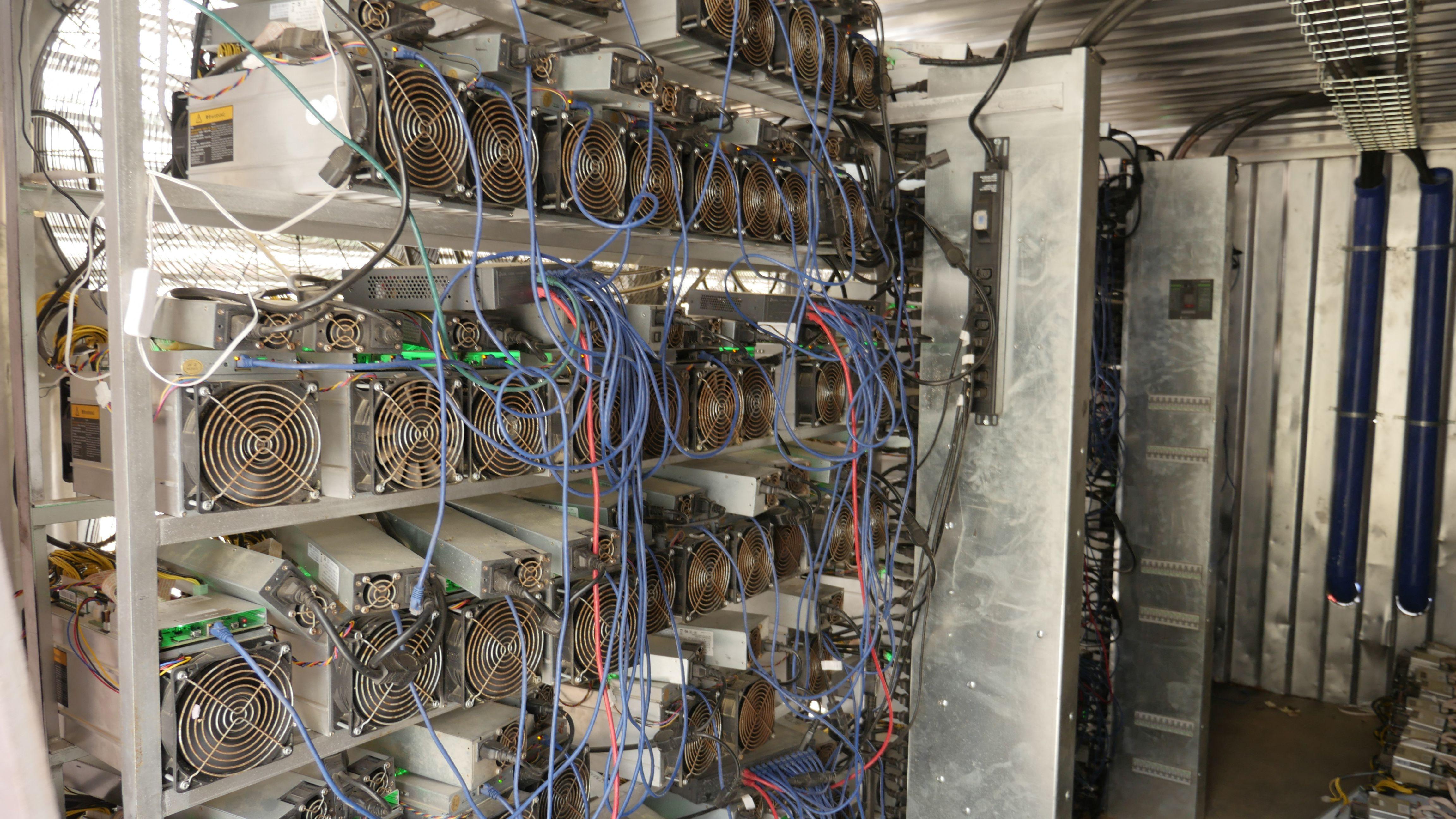
Can the Texas Power Grid Survive the Crypto Mining Boom?

by Sonari Glinton
“I don't want my AC to be competing against Bitcoin mines,” says Texas Monthly’s Russell Gold.
16 Aug 16:12

How the Western drought is pushing the power grid to the brink

by Umair Irfan
The Hoover Dam water intake towers at Lake Mead, the country’s largest man-made water reservoir, formed by the dam on the Colorado River in the Southwestern United States, has dropped 2 inches every day since February (26 feet in one year), are viewed at approximately 25% capacity on July 12, 2022 near Boulder City, Nevada.
Lake Mead, impounded by the Hoover Dam, reached record lows this year, leading to cuts in electricity production. | George Rose/Getty Images

The megadrought is costing us megawatts.

It takes a lot of water to make power.

From spinning turbines to hydraulic fracturing to refining fuel, the flow of water is critical to the flow of electrons and heat. About 40 percent of water withdrawals — water taken out of groundwater or surface sources — in the United States go toward energy production. The large majority of that share is used to cool power plants. In turn, it requires energy to extract, purify, transport, and deliver water.

So when temperatures rise and water levels drop, the energy sector gets squeezed hard. The consequences of water shortages are playing out now in swaths of the American West, where an expansive, decades-long drought is forcing drastic cuts in hydroelectric power generation. At the same time, exceptional heat has pushed energy demand to record highs. As the climate changes, these stresses will mount.

The United Nations Environment Programme warned this month that if drought conditions persist, the two largest hydroelectric reservoirs in the US — Lake Mead and Lake Powell —could eventually reach “dead pool status,” where water levels fall too low to flow downstream. Lake Mead fuels the Hoover Dam, which has a power capacity topping 2,000 megawatts while Lake Powell drives generators that peak at 1,300 megawatts at the Glen Canyon Dam.

Map of power plants in the US facing drought conditions National Integrated Drought Information System
Power plants across huge swaths of the Western United States are under drought conditions.

“Water supplies for agriculture, fisheries, ecosystems, industry, cities, and energy are no longer stable given anthropogenic climate change,” Camille Calimlim Touton, commissioner of the Bureau of Reclamation, told Congress in June.

With hydropower production falling in recent months, natural gas plants are filling the void in the United States, leading to even more greenhouse gas emissions that heat up the planet.

This isn’t just a problem in the US. Extreme weather around the world, worsened by climate change, is causing all sorts of stresses to power grids. France has had to curb output from its nuclear power plants because the water they use for cooling warmed up too much. French nuclear plants have also received allowances to discharge hotter water back into rivers to meet energy demand. Low water levels in the Rhine River are threatening to disrupt coal and gasoline shipments in Germany.

As average temperatures continue to rise, many parts of the world will see energy demands grow and supplies constrained, with water as the key factor on both sides of the equation.

The good news is that the energy sector is learning to do more with less water. In the US, the overall water use per unit of energy has been declining in recent years. But that trend will have to accelerate in order to keep people cool and slaked in a warmer world.

How drought is drying up energy production

The energy sector uses water differently than households, farms, and factories, because while it requires a lot, much of that water isn’t used up but instead goes back into reservoirs, rivers, and lakes. A dam can release water to spin a turbine to generate electricity and that water can be used again by another dam downstream, for instance.

In the US, 90 percent of electricity comes from thermal power plants. They use a fuel — coal, gas, nuclear — to boil water into steam to spin a turbine that turns a generator. That water is contained in a closed loop. To condense the steam, however, these plants often draw on water sources to cool down. Most US power plants also use a closed loop for cooling, recirculating water with minimal loss, but 36 percent of plants use “once-through” cooling, taking in water from a source and then discharging it back into the lake, river, or ocean it came from.

“The [thermal] power plants may withdraw a lot of water, but they return 98 percent of it, at a higher temperature,” said Bridget Scanlon, a senior research scientist at the Bureau of Economic Geology at the University of Texas Austin. “They don’t ‘consume’ a lot.”

Coal, gas, and nuclear plants don’t necessarily require freshwater, either, and can draw on brackish water or other sources that aren’t fit for drinking. That way, they don’t have to compete with cities and farms for fresh water.

But drought still affects power generation directly in several ways. For hydroelectric plants, lower water levels in a reservoir means there’s less energy available to produce electricity. Reservoirs like Lake Powell, behind the Glen Canyon Dam, store so much water that they can continue providing steady power even through drought years. But the long-term drying across the Western US has managed to drink up these reserves.

Water levels are at a historic low at Lake Powell on April 5, 2022 in Page, Arizona. RJ Sangosti/MediaNews Group/Denver Post via Getty Images
Lake Powell, impounded by the Glen Canyon Dam on the Colorado River, sits at record low water levels.

“Those are such large reservoirs that it does take multi-year droughts to put a significant dent in hydropower production, but that’s starting to happen,” said Jordan Kern, an assistant professor of forestry and environmental resources at North Carolina State University. “There is concern, not this summer, but potentially next summer and moving forward, that water levels could be so low that Hoover Dam might not be able to produce electricity.”

For thermal plants, droughts mean there is less water overall, including the marginal water sources that they can use. That’s compounded during heat waves, where water temperatures rise and lower water levels allow sources to heat up faster. Drawing on hotter water makes power plants operate less efficiently, reducing the amount of electricity they can make. Power plants heat up the water they use for cooling before it’s returned to the source. Too much of this hot water pumped back into nature can harm wildlife, which is why the Environmental Protection Agency regulates this “thermal pollution.” During heat waves, power plants face limits on how much water they can return to nature, or they must receive special permits to continue operating as normal.

Drought also hampers fuel production for power. Hydraulic fracturing, the technique that provides the most oil and gas in the US, requires enormous quantities of water pumped underground to fracture rock and release fossil fuels. On average, a fracking well uses about 4 million gallons of water. Refining oil also uses a lot of water: it takes 1.5 barrels of water to process 1 barrel of crude oil.

With less water to go around, all of these energy operations become more difficult and expensive.

That said, the Western US so far hasn’t seen major power cuts or plant shutdowns like those in Europe this summer. A big reason is that the region is vast, with hundreds of power plants connected through a massive power grid, including more than 600 hydroelectric dams. While many power plants face production shortfalls as a result of the drought, there are enough other generators that can fill the gap, and it’s much easier to shunt electricity around the country than water.

“The loss of those projects doesn’t mean lights out for ordinary people,” said Sean Turner, a water resources modeler at the Pacific Northwest National Laboratory.

And while some basins like the Colorado River are running low, other regions like the Pacific Northwest have had a surfeit of water this year, bolstered by robust snowfall this past winter. That has helped boost hydropower from the region to above-average levels. “If you take an overall picture of hydro over the whole West, the story is different to what you would consider if you just look at those isolated cases where drought is really making its impact,” Turner said.

Water well being drilling next to oil well and fracking site in almond orchard. Kern County, located over the Monterey Shale, has seen a dramatic increase in oil drilling and hydraulic fracking in recent years. San Joaquin Valley, California. Citizens of the Planet/Education Images/Universal Images Group via Getty Images
A well is drilled to supply water to a fracking site in San Joaquin Valley, California.

However, the situation has been dicier in Texas. Much of the state is covered by its own power grid that largely doesn’t integrate into the wider network across the West. As a result, Texas can’t easily buy power from elsewhere and has to meet its own demand within its borders. Drought coupled with record demand this summer led ERCOT, the state’s grid operator, to issue requests to Texans to conserve electricity and water.

While the grid has so far held up, the threat from drought to energy production is only growing, exacerbated by climate change.

“In the future, drought and severe heat waves will continue to pressure electricity generators, particularly hydropower and large thermal facilities,” said Kelly Twomey Sanders, an associate professor of civil and environmental engineering at the University of Southern California, in an email.

The long, dusty road to making energy less thirsty

Fortunately, there are ways to use less water to produce energy. In the US, the amount of water needed for power has fallen from 14,928 gallons per megawatt-hour in 2015 to 11,857 per MWh in 2020. That’s due largely to shifting toward natural gas-fired plants that generate electricity more efficiently and require less water for cooling. The proliferation of wind and solar power, both of which require minimal water, has also reduced water demands.

Some power plants are now using dry cooling, a technology that requires 95 percent less water than conventional methods. The trade-offs are that dry cooling systems are more expensive to install and require more energy to operate, which makes power plants less efficient. So a dry cooling system on a coal or gas power plant could end up saving water but lead to more greenhouse gas emissions.

Graph of cooling sources used in US power plants US Energy Information Administration
Most US power plants use a closed loop of water for cooling, but a growing number are using dry cooling technology.

However, to truly prepare for a hotter, drier future, planners will have to think and act beyond individual power plants. The West needs a diverse mix of energy sources to ensure that the strengths of one can compensate for the weaknesses of another.

Preparing the energy sector for future water shortages also requires rethinking some of the policies that helped create the situation. Water in the Colorado River basin is infamously overallocated, with more water claims than there is water to go around, creating a system that could lead to faster water depletion.

On the demand side, many of the fastest growing regions in the US are in places facing extreme water stress and higher temperatures.

Map of US population change between 2010 and 2018. US Census Bureau
Populations are growing rapidly in the Southwestern US, a region also facing water stress.

Mitigating this demand spike will require more efficient cooling systems, urban planning designed to reduce heat, and stricter water conservation.

Otherwise, the West is poised for even more energy supply shortages worsened by water constraints and surging power demand from the hottest regions, especially along the drought-parched Colorado River.

“Without significant change to water management and demand from the basin, it’s likely that this type of situation is going to continue to reemerge,” Turner said.

16 Aug 02:57

Microsoft finally admits Xbox One sales were less than half of the PS4

by Tom Warren
Xbox One S
Xbox One S | Photo by Tyler Pina / The Verge

Official Xbox One sales have largely been a mystery, but now Microsoft is finally admitting the obvious: the PS4 outsold the Xbox One — by a lot.

Microsoft stopped reporting its Xbox One sales figures at the beginning of its 2016 financial year, focusing instead on Xbox Live numbers. The change meant we’ve never officially known how well Xbox One was holding up compared to the PS4 after the Xbox One’s troubled launch. Analyst estimates have consistently put Microsoft in third place behind Sony and Nintendo, and now documents (Word doc) submitted to Brazil’s national competition regulator (spotted by Game Luster) finally shed some light on how the Xbox One generation went.

“Sony has surpassed Microsoft in terms of console sales and...

Continue reading…

16 Aug 02:15

Signal alerts 1,900 messaging users to a security threat from Twilio hackers

by Richard Lawler
In this photo illustration the Whatsapp, Telegram, Signal,...
Photo Illustration by Rafael Henrique / SOPA Images / LightRocket via Getty Images

A data breach earlier this month affecting Twilio, a gateway that helps web platforms communicate over SMS or voice, may have had repercussions for users of Signal, the encrypted messaging platform. Today, Signal announced it has alerted 1,900 users that their accounts were potentially revealed to whoever hacked Twilio and said that the attackers searched for three specific numbers during the time they had access.

So far, Signal says it has heard from one of those three users that the attackers used their Twilio access to re-register a new device associated with their number, which would allow them to send and receive messages from that account.

According to Signal, “message history, contact lists, profile information, whom they’d...

Continue reading…

14 Aug 06:28

Microsoft reportedly lays off team focused on winning back consumers

by Tom Warren
Image by Alex Castro / The Verge

Microsoft is reportedly laying off its team focused on winning back consumers. In 2018 the software giant originally detailed its efforts to win back the non-enterprise customers it let down, forming a Modern Life Experiences team to focus on professional consumers (prosumers). Business Insider now reports that Microsoft is laying off that team, and telling the roughly 200 affected employees to find another position at the company or take severance pay.

While Microsoft isn’t officially commenting on the end of its Modern Life initiative, a Microsoft senior designer revealed there was “hard news” for the Modern Life Experiences team this week in a LinkedIn post. The news comes weeks after Microsoft cut less than 1 percent of its...

Continue reading…

14 Aug 06:27

How Trump changed Facebook

by Shirin Ghaffary
Former President Donald Trump, in a black suit, white shirt, and black-and-silver striped tie, points with one hand and spreads the other open while talking to a crowd outdoors, with supporters and a Secret Service agent standing behind him.
Former President Donald Trump repeatedly tested Facebook’s policies on harmful speech during his term in office. | Jabin Botsford/Washington Post via Getty Images

Land of the Giants looks at how Facebook has grappled with its political power.

At one point in time, Facebook’s relationship with politicians was relatively uncontroversial.

But after the 2016 US elections, everything changed.

Early in the campaign, then-presidential candidate Donald Trump tested the limits of Facebook’s rules against hateful speech, at the same time that the company became a vehicle of political exploitation by foreign actors.

Facebook’s first test: dealing with a 2015 Facebook post from Trump calling for a “total and complete shutdown” of Muslims entering the US. While some inside the company saw a strong argument that Trump’s comments violated Facebook’s rules against religious hate speech, the company decided to keep the post up. Until then, most Facebook employees had never before grappled with the possibility that their platform could be used to stoke such division by a political candidate for the highest position of office.

“What do you do when the leading candidate for president posts an attack … on [one of the] the biggest religion[s] in the world?” former Facebook employee and Democratic lobbyist Crystal Patterson told us.

And it wasn’t just national politicians Facebook had to worry about, but foreign adversaries, too. Despite CEO Mark Zuckerberg’s initial post-election comments dismissing the “pretty crazy idea” that fake news on the platform could have influenced the elections, it soon became clear that propaganda from Russian Facebook accounts had reached millions of American voters — causing an unprecedented backlash and forcing the company to reckon with its culpability in influencing global politics.

Over time, Zuckerberg would acknowledge Facebook’s role as what he called “the Fifth Estate” — an entity as powerful as the government and media in shaping the public agenda — while at the same time trying to minimize the company’s role dictating the acceptable terms of political speech.

To offload the burden of political responsibility going forward, Facebook formed the Oversight Board in 2018, a Supreme Court-like body it set up to weigh in on controversial content decisions — including how to deal with Trump’s account. But the board is new, and we’re still learning how much power it has over Facebook. How much responsibility does Facebook still have to dictate the terms of its own platform? And can the board go far enough to change the social media platform’s underlying engine: its recommendation algorithms?

We explore these questions about Facebook’s role in moderating political speech in our fourth episode of Land of the Giants, Vox Media Podcast Network’s award-winning narrative podcast series about the most influential tech companies of our time. This season, Recode and The Verge have teamed up over the course of seven episodes to tell the story of Facebook’s journey to becoming Meta, featuring interviews with current and former executives.

Listen to the fourth episode of Land of the Giants: The Facebook/Meta Disruption, and catch the first two episodes on Apple Podcasts, Google Podcasts, Spotify, or wherever you get your podcasts.

14 Aug 05:35

Fight climate change. End fossilflation. Here’s how.

by Rebecca Leber
A customer pumps gas at an Exxon station in Houston, Texas, on July 29. | Brandon Bell/Getty Images

Yet another downside to fossil fuel dependence.

It’s a mundane day for errands: you run out to the store to pick up some groceries, some drugstore supplies, and fill up the gas tank. Afterward, you cook up some lunch on the gas stove.

For all this, you’d be spending roughly 8.5 percent more than you were a year ago, based on the Bureau of Labor Statistics’ July report on prices for consumer goods and services — over the course of the month, that translates into roughly $500 more for most households than last year.

Economists have pointed to energy prices as the main reason for high inflation. Americans have had to spend more on gasoline, on natural gas for stoves, water heaters, and furnaces, and on any electricity derived from oil and gas. But the impact from fossil fuels is bigger than that — energy prices indirectly affect virtually every part of the economy.

The impact of higher energy prices is especially evident in food prices, because most of the cost of food is based on how expensive it is to get from the farm to the shelf. But it’s also affecting other consumer goods. For example, Amazon recently hiked its Amazon Prime rates in European countries, citing rising costs for fuel and transportation.

Mark Zandi, Moody’s chief economist, said fossil fuels were a major cause of every period of inflation since World War II. “Invariably, it’s the high cost of oil and fossil fuels in general that drive big fluctuations and overall inflation,” Zandi said. “Every recession since World War II has been preceded by a jump in oil prices.”

Higher oil and gas prices are responsible for about 40 percent of the price increases across the economy (or 3.8 percentage points of the 8.5 percent inflation from July, according to calculations from Moody’s).

One big reason that inflation cooled down this month could be that energy prices are falling; natural gas and gasoline are cheaper than they were earlier in the year. But even though prices have decreased, they are still higher than a year ago. In general, the consumer can still expect to be paying a lot more for goods and services in the near future.

The interplay between the price of fuel and the price of everything else over the last year shows what a tight hold fossil fuels have on the economy. The US is trapped in a cycle where oil and gas prices go up, and political leaders try to do everything they can to bring them down again to lessen the burden on inflation. It pits renewable energy sources against the economy. Breaking free of this means shifting to more electricity that’s powered by solar and wind to fuel cars, homes, and businesses.

Reducing reliance on fossil fuels “will significantly reduce its grip on inflation in the broader economy,” said Zandi.

It’s the reason why economists eventually expect the Inflation Reduction Act to live up to the bill’s name.

Fossilflation, explained

A complicated set of factors is driving inflation right now — including but not limited to supply chain problems, insufficient labor, and anticipated gas shortages in Europe — but dig a bit deeper, and a common element is reliance on fossil fuels.

Inflation isn’t just an issue in the US or because of federal spending in the pandemic. It’s doubled in the last year in 37 advanced economies.

In some circles, economists have preferred to use “fossilflation” as the more accurate description of current inflation woes. European Central Bank executive board member Isabel Schnabel used the term in a March speech on the new age of inflation. “Fossilflation reflects the legacy cost of the dependency on fossil energy sources,” she said.

Volatility is always a feature of relying heavily on fuels to drive the economy. These are commodities that have to be stored, refined, and transported; as Gernot Wagner, a climate economist at Columbia Business School, explained, “commodities always fluctuate.”

This was especially true in the 1970s and ’80s when the economy suffered under even higher inflation. The circumstances driving higher prices today are different, of course. The oil industry has had a tumultuous few years during the pandemic: it is now drilling fewer wells and struggling with limited available refinery capacity that hasn’t matched the sharp rise in demand. And Russia’s invasion of Ukraine and the resulting global sanctions have lowered available supplies of oil and gas, and prices are higher accordingly in anticipation of winter shortages in Europe.

“A hundred years into the oil age it shouldn’t surprise us anymore that every decade or so something happens somewhere and prices go up,” Wagner said.

BLS’s July report actually showed no growth in inflation last month. The reason is the same: fossil fuel prices. Zandi explained that June’s high numbers reflected Europe’s decision to sanction Russian oil and gas. But investors seemed to have overestimated the impact on actual global oil and gas supplies, which is why prices came down a bit in the following weeks.

It’s not ideal to be this tethered to oil’s ups and downs. The oil industry is reaping rewards while consumers suffer higher prices. The 50 biggest oil and gas companies raked in $113 billion in profit so far in 2022, because of high prices, according to one calculation. And they’re still getting billions in subsidies, with the entire US oil and gas industry receiving more than $20 billion in tax breaks, according to a 2017 analysis from Oil Change International.

The solutions for climate change perform double duty and help consumers break free from this cycle. Green tech isn’t a panacea for the economy; in fact, “greenflation” is the term coined for higher demand for copper, lithium, and cobalt needed for clean technology. But moving off of fossil fuels does help in one major way. Rather than rely on fuel, a commodity, Wagner argues that the US adopting renewables will mean a switch to technological solutions. “Technologies, by definition, get better and get cheaper,” he said. “That’s the way to get off the unfortunate cycle of fossilflation.”

Breaking the cycle of “fossilflation”

What Congress’s investments could do, if they truly help to move the American economy off of its fossil fuel reliance, is to break the economy free from the volatility of oil markets.

The Inflation Reduction Act promises to help because it does a few simultaneous things. It invests in solutions that help to reduce consumer demand for fossil fuels, and incentivizes manufacturers and businesses to do the same. It also raises taxes on corporations, another way of curbing inflation, “not dissimilar to the Fed raising [interest] rates,” said Energy Innovation’s Robbie Orvis, an economic modeler who has studied the impact of the bill.

The IRA’s nearly $370 billion in climate measures aren’t going to make a dent in current inflation. But as the decade goes on, economists like Zandi expect that Americans may start to feel some difference.

Moody’s estimates that by 2030, the bill could reduce the typical American household’s spending on energy by more than $300 each year, in today’s dollars. It also may help with insurance rates for home and business properties because of its investments slashing emissions (which worsen climate change) and in physical climate adaptation.

Another report from Rewiring America finds even greater gains when tallying up the bill’s total tax credits for electric vehicles, rooftop solar, and electric appliances like heat pumps. Rewiring America found a household would save $1,800 annually if it adopted all this clean tech. Of course, doing all this in your household costs a lot of money up front. There are still some policies in the bill that target low-income households specifically, like expanding a low-income home rebate that covers the full cost of heat pump installation, with a cap of $8,000.

“That could go a long way to mitigating the ups and downs in the broader economy and our standard of living,” Zandi said.

These policies are too late to help with high prices in the immediate future, but they will stem the impact of the next major crisis.

14 Aug 05:28

Five9 International Study Finds 9 out of 10 Contact Centers Have Increased Focus on Agent and Employee Experience

by Amy Ralls

50% are focused on reducing agent/employee turnover and 44% are focused on implementing AI and automation to assist agents 

SAN RAMON, CA – August 11, 2022 – Five9, Inc. (NASDAQ: FIVN), a leading provider of the intelligent cloud contact center, today announced the results of its 2022 International Customer Service Index (CSI) Business Decision Makers Survey, which revealed new customer engagement and contact center workplace trends. Five9 partnered with Zogby Analytics to survey business leaders across 17 different industries to assess their views on the state of customer and agent experience, and for the first time, the CSI Business Decision Makers Survey expanded internationally, into Europe and Canada, to identify global attitudes and trends.

The survey found significant changes in the role of customer service representatives, with 86% of respondents reporting a massive increase in call volumes, 53% flagging the need for more emotional intelligence and empathy during customer interactions, and 43% indicating agent calls are longer and more complex. As a result, 90% of business decision makers are focusing more on their contact center agent and employee experience.

“The global pandemic has forced companies of all sizes to place new emphasis not just on customer loyalty, but on employee loyalty and retention as well,” said Blair Pleasant, President & Principal Analyst of COMMfusion LLC and author of the report. “Where ‘customer experience’ was once the rallying cry for many organizations, ‘employee experience’ has come to the forefront as well.”

Additional Key findings from the CSI survey include:

  • The changing workplace: More than half of respondents noted challenges related to returning to the office, including employees not being willing to go into the office full time (54%) and a lack of flexible work options such as hybrid workforce/shift scheduling (42%). Employee preference against going to the office full-time is by far the biggest challenge faced by businesses in North America (65%, 20-40 percentage points higher than in each of the European countries surveyed), while lack of flexible work options (45%) and agent engagement/productivity (43%) are more of a challenge in Europe.
  • Use of Digital and Non-Voice Channels Grows: 91% of respondents noted an increase in email, chat, and messaging as a percentage of interactions. More than two-thirds of respondents expect non-voice channel interactions to exceed 40% by 2024 (70% globally, 68% in North America, 73% in Europe). Similarly, 69% expect that over 40% of customer support interactions will be fully handled via self-service by 2024 (67% in North America, 72% in Europe).
  • Artificial Intelligence Emerging: Approximately three out of four contact centers currently use AI (73% globally, 67% in North America, 80% in Europe). Globally, 93% of decision makers agree that AI can enhance self-service so agents can focus on more complex or sensitive issues; and 91% agree that it can provide agent assistance such as knowledge and guidance. Of the 73% using AI, 79% use conversational AI or IVA for customer self-service.

“AI technologies are now part of the overall contact center arsenal, providing assistance to agents, customers, and contact center operations,” said Scott Kolman, Senior Vice President of Marketing at Five9. “By embracing collaborative intelligence, where AI and agents work together to enhance each other’s strengths, organizations can improve both customer and agent satisfaction, leading to better business outcomes.”

Since 2017, the Five9 Customer Service Index consumer and business decision maker surveys have provided data and insights to help businesses meet their customers’ ever changing needs and expectations. Read the full report to see how priorities and attitudes vary across regions, industries and company size.

The post Five9 International Study Finds 9 out of 10 Contact Centers Have Increased Focus on Agent and Employee Experience appeared first on Cloud Communications Alliance.

10 Aug 06:18

The Pleasurable Secret to Dealing With Extreme Heat

by Nicole Lewis
It's good for your body, your mind, and the planet.
10 Aug 05:45

Dozens of Whole Foods stores will soon let you pay with just a scan of your palm

by Umar Shakir
Image: Amazon

Amazon’s palm-scanning technology is expanding to 65 Whole Foods locations across California. The checkout devices were introduced in 2020 as part of the Amazon One payment service, allowing customers to pay with a scan of their palm. This is the biggest rollout by the company yet, with the first new Whole Foods locations adding support today in Malibu, Montana Avenue, and Santa Monica.

Customers can set up Amazon One by registering their palm print using a kiosk or at a point-of-sale station at participating stores. To register, you need to provide a payment card and phone number, agree to Amazon’s terms of service, and share an image of your palms. Once completed, you can take items to checkout and not have to take out your wallet — or...

Continue reading…

10 Aug 04:54

Slack resets passwords en masse after invite link vulnerability

by Matt Kapko

The bug, which went undetected for five years, impacts at least 60,000 users but likely more.

10 Aug 04:53

RingCentral Laying Off 50 Workers At California Headquarters

by Gina Narcisi
The cloud UC powerhouse is cutting dozens of employees from its headquarters in the San Francisco Bay Area following a very successful fiscal Q2 that included 38 percent mid-market and enterprise annual recurring revenue growth.
09 Aug 15:32

Twilio suffers data breach after its employees were targeted by a phishing campaign

by Emma Roth
Photo by Amelia Holowaty Krales / The Verge

Digital communication platform Twilio was hacked after a phishing campaign tricked its employees into revealing their login credentials (via TechCrunch). The company disclosed the data breach in a post on its blog, noting that only “a limited number” of customer accounts were affected by the attack. Twilio allows web services to send SMS messages and place voice calls over telephone networks and is used by companies including Uber, Twitter, and Airbnb.

The hack occurred on August 4th and involved a bad actor sending SMS messages to Twilio employees that asked them to reset their password or alerted them to a change in their schedule. Each message included a link with keywords, like “Twilio,” “SSO” (single sign-on), and “Okta,” the name...

Continue reading…

09 Aug 15:23

Business Is Booming for Layoff Specialists: 'Never Seen Anything Like This'

by Maxwell Strachan

Coming into the year, business was slow for the country’s layoff experts, as it had been for much of the past decade. Outside of a short period of tumult in 2020 at the beginning of the coronavirus pandemic, the U.S. economy had continued to roar along. Jobs were plentiful, layoffs were at a 52-year low, and The Great Resignation had led to worker shortages.

“Everybody was trying to do everything possible to hang on to every employee that they had,” said Dan Davenport,” the CEO of Randstad RiseSmart.

That had made life harder for companies like Davenport’s, which specialize in helping employers navigate the emotional and messy involuntary “exit” process.  

Layoff-focused companies help with a variety of areas to make a difficult process run smoothly. They help identify priorities and figure out the layoff list; ensure the layoffs comply with local law and do not disproportionately target underrepresented minorities; come up with a day-of communications plan; and make sure people receive the correct amount of severance. They sometimes also provide “outplacement” services, which help laid-off employees find a new job through outside training and guidance.

Such services are in high demand during periods of tumult, but less relevant when businesses are humming along and hiring.

“Our worst times as an industry are when the economy is screaming ahead,” said Darren Kimball, the CEO of GetFive, another such service. The strong economy had proven “challenging” for Kimball’s company, he said, as a bevy of positive headlines gave companies fewer reasons to go through the messy and emotional process of layoffs.

GetFive wasn’t alone. In order to remain relevant during the bull run of the last 10 years, Randstad RiseSmart had to diversify, adding broader career services on top of its focus on outplacement, according to James Warnette, the company’s communications director.

“Outplacement is great when the recession is here, and everything's going wrong, and people are laying off. But it's a business that gets exposed to positive times,” said Warnette.

Then, the tech industry started to collapse, and the companies came knocking. Rising interest rates had cut off the spigot of easy money that had long propped up the startup industry, and tech firms that had been focused on growth found themselves needing to stop burning cash and make sure they had enough runway to survive the downturn. For many, that meant layoffs, which led to a flood of inquiries to the layoff specialists.

“We've never seen anything like this,” said Kimball, referring specifically to the tech sector. “That part of our business has really taken off.”

Have you been laid off from your tech job? We want to hear from you. From a non-work device, contact our reporter at maxwell.strachan@vice.com or via Signal at 310-614-3752 for extra security.

GetFive received a record number of inquiries in July, according to Kimball, who added that early signs indicate “August will be better than July,” meaning worse for workers. Randstad RiseSmart has also seen a “dramatic” increase in requests for help from the tech sector, particularly from high-flying tech startups known as “unicorns,” Davenport said. So have others. “Everyone is preparing for the unknown,” said Sarah Rodehorst, the CEO of Onwards HR, an automated “separations platform” that helps companies avoid screwing up the layoff process. 

Sometimes, the startups decide to move at a blistering pace. One company called Rodehorst while she was on vacation and said it only had a week and a half to prepare for layoffs.

Nationally, the unemployment rate remains low and jobs are plentiful. But after more than a decade of rising valuations and good times, the tech sector is suddenly grappling with a far harsher reality. "A lot of these founders are still in a moment of shock,” said Nolan Church, the CEO of Continuum, a new startup that rents out executives with layoff experience to struggling companies.  “They didn't expect it. They haven't experienced it.”

Now they have. So far this year, almost 90,000 tech employees have been laid off around the world, according to LayoffsTracker.com. Based on the amount of inbound inquiries, Church expects that number to almost double in the third quarter of the year. 

“It's almost like a complete reverse,” said Rodehorst, who has also seen an influx. “And they’re finding—sometimes for the first time in their company's  lifetime—that they have to lay off employees, and they don't have that expertise in house.” That lack of experience has resulted in stressed out teams racing to figure out how to deliver bad news. “For years, things have been up and to the right. So the HR departments are really scrambling,” said Kimball.  

Too often, they've bungled it. Companies have long done a “rotten job” of figuring out who to let go and otherwise messed up the process, and they rarely give enough consideration to the long-term negative effects, according to Sandra Sucher, a professor at Harvard Business School who studies layoffs. 

Screen Shot 2022-08-08 at 5.37.58 PM.png
Randstad RiseSmart has seen a “dramatic” increase in requests for help from the tech sector, particularly from high-flying tech startups known as “unicorns,” said CEO Dan Davenport.

But the tech downturn has led to a particularly large number of missteps, most famously in December, when the CEO of the real estate-focused technology startup Better.com summarily laid off 900 employees over Zoom. Amanda, a manager at a fintech startup, told Motherboard she only realized she had been laid off in April when a member of her team called to say they couldn’t log onto Slack. Amanda had been recovering from COVID-19 at the time, but she tried to log in herself to see what was happening, only to realize she had lost Slack access as well. “That was pretty much an indication that I was laid off,” she said. “It was a very abrupt way of finding out.” She had been with the company for three years.

The company had already gone through a round of layoffs, so the decision didn’t entirely surprise her. What did was her inability to figure out who else from her team had lost their job. “Not knowing what their fate was one of, actually, the hardest things,” she said. Amanda ended up finding out weeks later, when people started to post on LinkedIn.

It’s no surprise that companies so often make mistakes during layoff announcements, according to Sarah Rodehorst, the CEO of Onwards HR. Even in the largest of corporate organizations, Rodehorst has found the process leading up to layoffs to be haphazardly managed with Excel spreadsheets, word documents, and dated templates. “It's basically the last corner of—I swear—the world that is completely manually managed,” she said. 

“Nobody wants to think about this, and even if they're doing it, they just don't even want to acknowledge they’re doing it,” Rodehorst added. “It's not a fun task.” That goes for HR experts too, she said. Convinced the good times would last and growth would continue, tech companies of all sorts aggressively hired and overextended themselves over the last decade. At a recent trip to a HR conference, where she pitched her startup, she couldn’t help but notice how many startups were dedicated to hiring and how few focused on the exit process. She noted the discrepancy, and her company won the pitch contest.

Onwards HR launched in 2019 after former co-workers of Rodehorst spoke about the issues they faced with layoffs, saying they found companies often paying people the wrong amount of money after laying them off. Now, the company automates and streamlines severance calculations. Onwards HR also helps companies discover discrepancies between how much severance should be and is offered to a given employee.

The startup finds a lot of mistakes. Onwards HR recently joined on to help a billion-dollar company out in California as it prepared to lay off 15 percent of its workforce. The company had previously prepared for layoffs using spreadsheets, and Onwards HR’s software found dozens of severance-related errors in the spreadsheets they had prepared for the current round of layoffs. The spreadsheets included older severance policies in numerous cases.

Considering the manual process—and the speed with which companies undertake layoffs in times of stress—mistakes can feel inevitable. But that doesn’t make it any less concerning. Mishandled, rushed layoffs can cause the remaining employees to want to leave, potential employees to turn down offers, and a process where layoffs disproportionately and unfairly affect women and people of color, which Onwards HR helps companies identify ahead of layoffs.

“It's an area where companies are at greatest risk of bias and discrimination, and it’s difficult for leadership to even know that it's happening when it's managed manually,” said Rodehorst. “It's just a huge risk to the organization, even if it doesn't end up in litigation.

The demand for help has become so high in the tech sector that some startups are pivoting to offer additional layoff expertise. When Nolan Church launched Continuum in 2020, layoffs were not top of mind. After stints at Google, DoorDash, and Carta, Church decided he wanted to start a service that provided executives with different specialties to startups on a part-time basis—a cheaper alternative to consulting titans like Bain and McKinsey. 

Like a lot of founders of his generation, he had come of age in the post-financial crisis bull market of the 2010s. “I've had 11 years of just ‘grow baby grow,’” he said. 

Then, in recent months, Church started to notice something odd. High-flying startups were repeatedly searching out the services of chief people officers. When Continuum tried to figure out why, the company found out that the startups needed advice on how to prepare for and run layoffs. The executives often had just left a board meeting where they had been instructed to cut costs enough to survive a downturn without much additional advice. The founders, he said, were left asking, “What the fuck do we do from here?”

“Because we've been in a bull market for 15 years, very few people have experience actually running layoffs,” he added. 

So many ended up asking the company for help that Continuum ended up pivoting and making layoff expertise a focus (the company now even has a “layoffs” tab on its website). Many of the tech founders seem genuine when they say they do not want to go through the layoffs but have no other choice, Church said but he added that some startups also seemed to be using the tech downturn as a cover for their own mismanagement in recent years. 

“There's definitely this aspect of some people and their businesses actually being just fine, but leveraging the moment to manage out their low performers,” Church said. “Those are the ones that actually aren't great customers for us.”

Continuum suggests the CEO take “full responsibility,” make sure each laid-off employee meets with a manager and HR representative, and not “herd the cattle into the corner” and impersonally inform them that they no longer work at the company, like Better.com did.

Darren Kimball, the CEO of GetFive, offers an additional service: helping laid-off employees find their next job. He started GetFive after he left the hedge fund business in search of more meaningful work than pushing stocks “up and down,” as he put it. Today, GetFive helps people learn new skills and otherwise “present as modern.”

Older layoff specialists had to diversify during the boom period of the 2010s in order to maintain as much relevancy. The Bay Area-based Randstad RiseSmart, for example, now offers a catalog of more than 1,500 career coaches and “personal brand” experts to people searching for a new job, as well as those who have been laid off. One of those coaches, Charmagne Shearrill, an HR professional, said she has had multiple people come to her who had been laid off twice in recent years, one now and once during the pandemic. “It's absolutely devastating for them,” she said. She tries to help them through their post-layoff transition, serving as a “cheerleader” but also providing resume help, interviewing tips, and an “elevator pitch.”

But the company has seen a recent influx of requests for help from large tech companies who are navigating the downturn, including Peloton. 

Hoping to maximize the moment, the company has also been trying to convince other tech startups they need their services, something that has not always been easy when leadership is intent on cutting costs and don’t want to enlist the services of a third-party company, according to Warnette, Randstad RiseSmart’s communications director.

But only thinking about the immediate bottom line can prove short-sighted, according to Sucher, the professor who studies layoffs. Not treating laid-off employees well can end up forever harming a company’s prospects, even if the balance sheet looks better for the moment. One person who has recently used Randstad RiseSmart’s services is Amanda, the fintech employee who learned of her layoff over Slack. She didn’t think much of it at first, but found herself appreciating the advice of her “work therapist,” as she put it. 

A month later, she found a position at a new company.

Davenport,  the CEO of Randstad RiseSmart, said the tech downturn remains the main area where his company’s services have been in demand this year. 

He doesn’t know where the economy is headed pr if other sectors will come asking for help, he said. But, he added, there are “certainly a lot of signs pointing to trouble ahead.” 

09 Aug 15:22

Google tries publicly shaming Apple into adopting RCS

by Jon Porter
The infamous green messaging bubbles. | Image: Google

Google is kicking off a new publicity campaign today to pressure Apple into adopting RCS, the cross-platform messaging protocol that’s meant to be a successor to the aging SMS and MMS standards.

The search giant has a new “Get The Message” website that lays out a familiar set of arguments for why Apple should support the standard, revolving around smoother messaging between iPhone and Android devices. Naturally, there’s also a #GetTheMessage hashtag to really get those viral juices flowing.

For most people, the problems Google describes are most familiar in the form of the green bubbles that signify messages to Android users in Apple’s Messages app. While the iPhone app uses Apple’s own iMessage service to send texts between iPhones...

Continue reading…

05 Aug 17:44

The best sleep gadgets to help you catch those Zzzs

by Victoria Song
Illustration of Whoop 4.0, Oura Ring, and Bose SleepBuds II
Sleep trackers, earbuds, and smart beds. | Image: Kristen Radtke / The Verge

Sleep tech is more than tracking. Here are the best gadgets I’ve tested that help you fall asleep, stay asleep, or wake up earlier.

Read the full story at The Verge.

05 Aug 17:40

2600Hz Announces Support of ALE Device Solution on KAZOO Platform

by Amy Ralls

HENDERSON, NV – August 1, 2022 – 2600Hz, a leading provider of unified business communications and the award-winning KAZOO platform, is proud to announce a new partnership with ALE Device. This new partnership sees full support for ALE devices in 2600Hz’s Advanced Provisioner—a powerful tool designed to speed up deployment and provision most popular SIP endpoints quickly and to auto-provision physical VoIP phones remotely.

“ALE Device is dedicated to making business communication easier and efficient, providing customers with UC terminals that meet and exceed their business needs,” said Ba Min SEIN AYE, Head of Product and Marketing at ALE Device. “By combining ALE Device voice solutions with 2600Hz’s KAZOO Advanced Provisioner, we will enhance productivity and improve the experience for customers.”

Auto-provisioning and certification has been completed on the Myriad and Halo series, including: M3, M5, M7, M8, H3G, H3P, H6. 2600Hz is also offering support for ALE Device’s Easy Deployment Server (EDS) for Zero Touch Provisioning.

“We are happy to support ALE Device in our Advanced Provisioner,” explained 2600Hz’s Co-Founder and Co-CEO, Patrick Sullivan. “Their innovative hardware offers a real value-add to our partners, and we look forward to continued collaboration with ALE Device.”

About 2600Hz:

2600Hz’s cloud communications platform KAZOO modernizes how businesses provide communications services to their customers. With thoughtfully engineered tools built by leaders in the telecom industry, KAZOO offers feature-rich UCaaS, CPaaS, and CCaaS solutions. For developers building their own telephony apps, 2600Hz offers 300+ APIs and provides access to the building blocks of the platform. For more information, visit http://www.2600Hz.com. 2600Hz is a privately owned company with a distributed team worldwide.

About ALE Device

ALE China Co., Ltd, operating under the “ALE Device” trade name, is an audio technology expert in the global DeskPhone market, designing and marketing communication devices for enterprises. The company focuses on innovative technologies to develop a wide range of enterprise communication devices such as SIP phones, headsets, audio and video equipment for Unified Communications. These products can be integrated into a variety of solutions with simple provisioning tools, in a cost-effective, secure and flexible manner. Visit our website for more information: www.aledevice.com.

The post 2600Hz Announces Support of ALE Device Solution on KAZOO Platform appeared first on Cloud Communications Alliance.

05 Aug 17:38

Lumen Technologies To Grow Slumping Enterprise, Midmarket Segments By Retooling Business Units

by Gina Narcisi
The carrier’s multi-faceted growth strategy to increase profit in its enterprise and mid-market segments is to regroup the business unit and focus on growth products and services, Lumen executives outlined during the company’s second-quarter 2022 earnings call on Wednesday evening.
05 Aug 17:36

How to minimize distractions when you work from home

by Joe Stanganelli
Illustration by Samar Haddad / The Verge | Photography by Robert Nickelsberg / Getty Images

I’ve been working from home for close to 15 years. I also have ADHD. And a lot of streaming subscriptions. And a PlayStation. And hundreds of books. And a partner who also sometimes works from home and is equally aware of the presence of said streaming subscriptions, PlayStation, and books.

The point is that my home is full of distractions. Yours probably is, too. Maybe different distractions from mine, but distractions nonetheless. And, like many workers, it may have taken you a pandemic to discover that it can be hard to avoid these distractions when working from home. (Work itself provides plenty of distractions already, if you’re not careful— the continuous pings of emails and Slacks can make you feel like you’re working all the time...

Continue reading…

05 Aug 17:30

This Guy Sued a Spam Texter and Got $1,200 (and You Can Too)

by Lorenzo Franceschi-Bicchierai

Like many of us, David Weekly regularly gets robocalls and spam text messages. Unlike the rest of us, he made $1200 by suing a company that sent him a spam text.. 

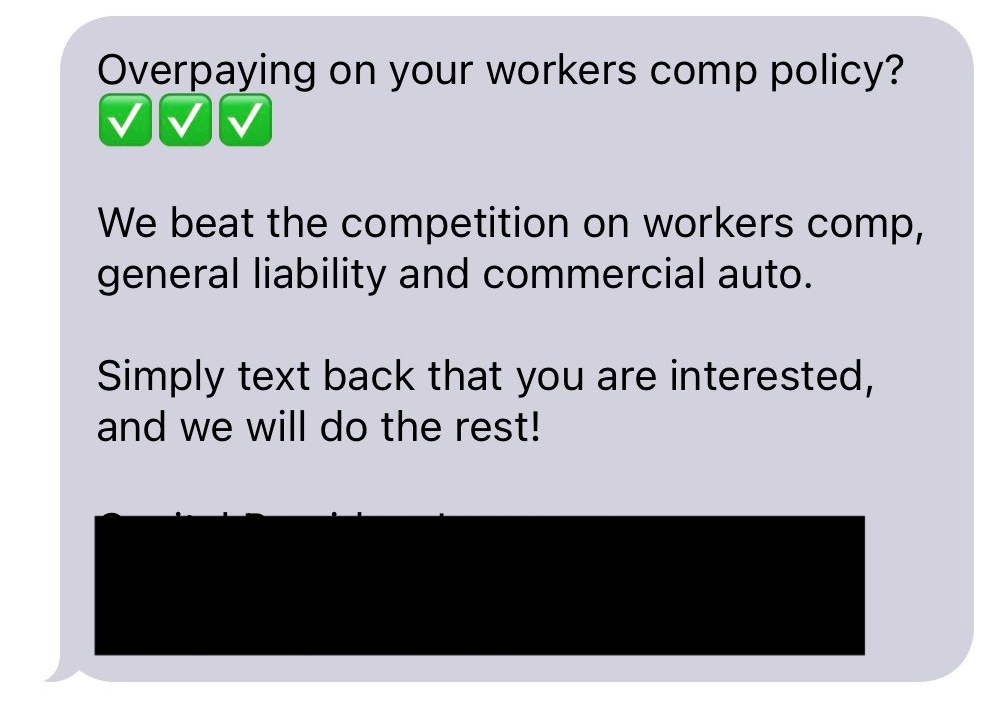
On June 20th, he got yet another annoying spam text from an insurance company. Fed up, Weekly decided to do something about it. He went to the email domain included in the spam text, realized that a company in California was behind the text, and decided to sue it based on the Telephone Consumer Protection Act or TCPA. 

Screen Shot 2022-07-29 at 12.11.59 PM.png

This federal law essentially makes it illegal to send spam texts or robocalls, and gives people who receive spam texts or calls an avenue to get between $500 and $1500 in damages, according to Anne Mitchell, a lawyer and CEO of the Institute for Spam and Internet Public Policy (ISIPP). The law originally only covered phone calls and faxes (yep, it’s that old), but in 2015 the FCC declared that the TCPA also applies to text messages.

After Weekly identified who was behind the spam texts, he filed a lawsuit against the company, “a pretty good way to get somebody’s attention,” as he put it in a call with Motherboard.  

Indeed, once it was served the lawsuit, the company reached out to Weekly in an attempt to settle the case out of court. Weekly, who stressed he is not a lawyer, went back and forth with the company, which eventually agreed to pay him $1,200. (Weekly asked Motherboard not to name the company, given that they apologized and agreed to send him damages.)

“It was just a kind of fun, surreal moment like, holy crap. I'm holding an actual check from a party who sent me a spam text message and apologized for it,” Weekly told Motherboard in a phone call. 

Weekly’s case provides a blueprint for others to follow. But he actually went a step beyond what most people would need to do to get compensated for receiving spam texts and calls. In most cases, according to Mitchell, there’s no need for a lawsuit. 

“In terms of going after these text message spammers, just the threat of filing that lawsuit is adequate, because they know you'll win,” she said in a phone call with Motherboard. “They know, they broke the law, they knew they were breaking the law before they ever sent that text message to you. They are very well aware of the law. And they're just counting on you not knowing.”

Motherboard spoke to Mitchell and Doc Compton, a consumer advocate who runs a project that helps people turn robocalls into cash. Both Mitchell and Compton sell kits with step-by-step instructions on how to demand spammers to pay damages. The kits include templates of demand letters to send to the spammers, based on real life cases where people were able to get paid damages. 

And there have been plenty of people who have scored wins against scammers. 

Based on what Mitchell and Compton told us, here’s our step by step guide on how to get damages from spammers. An important nore: this process will only work with marketing spammers, in other words, someone who’s trying to sell you something. It won’t work malicious scammers who try to steal your passwords or money, as those will be harder to track down and in any case won’t be swayed by a demand letter. While political text messages and robocalls are also covered in the TCPA, and there is no exemption for them, Mitchell said she does not recommend going after those as you’d go up after a “well-funded politician and political campaign who has lawyers on their staff who can respond to you all day long.” 

Register your number to the Do Not Call Registry

The first step is to register your phone number on the FTC’s National Do Not Call Registry, which in theory should prevent marketers and spammers from calling or texting you. This obviously doesn’t guarantee you’ll never get spam again, as companies and individuals can just ignore the registry even though they are required by law to check it. But doing this is the first requirement for you to take some legal action against the spammer, according to Mitchell. 

Registering your phone should just take a couple of minutes. Go to DoNotCall.gov and follow the instructions. 

Report the spam message to the your carrier

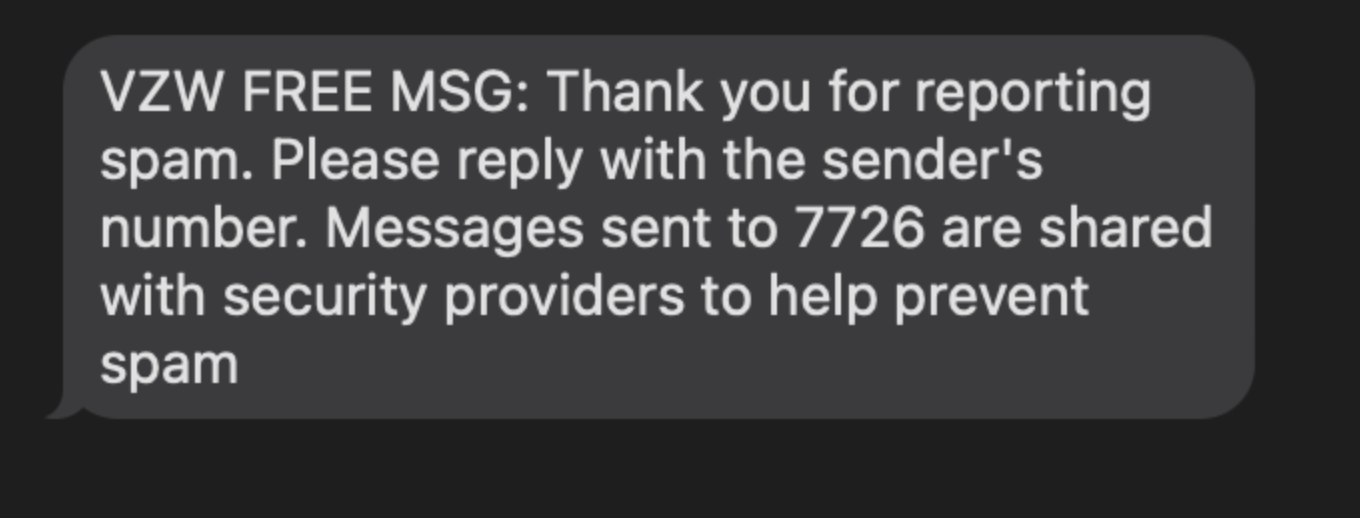
This step is not necessary to get damages, but helps carriers block numbers used for spam and make life harder for spammers. There’s a number provided by all U.S. and UK carriers for you to report spam texts, it’s 7726, a number that aptly spells “SPAM.” The flow of the process may be different from carrier to carrier but in essence the idea is that you copy or forward the spam text to 7726, and then send the phone number that sent the spam text. 

7726-spam.png

Take screenshots of the spam messages

Document everything you can, screenshot the original text messages, and any follow-ups you get. 

Try to find out who is behind the message or call

This is the crucial step of the process, and the one that’s harder to pull off. If you are able to figure out who called or texted you, then you know who to go after. Mitchell suggests going after the “low hanging fruit.” 

In the case of spam texts, that means the spammers who have included a link you can follow, a phone number you can trace, or those who will just interact with you and give away information if you pretend you’re falling for their trap, according to Mitchell. Be careful with links, as those may actually be phishing. Use a tool like URL Scan, which will show you information about the website and also display a screenshot of it—without you ever having to actually visit it. 

This step will be harder with robocalls, as there is no link to follow. Compton said the first step is to “pick up the phone and engage these callers, talk to them, play along, try to get the information out of them.” This takes a bit of practice, he said, but it can be done if you are willing to invest the time and lie to the spammers. 

Picking up the phone, moreover, may force the spammers to spend money, as they usually have to pay and pay based on how long the call is, according to Compton. 

“Doing that, if we all answered every robocall we got and kept them on the phone for a minute, for one month, we bankrupt every single telemarketer in the country,” Compton said. 

Send the demand letter

If you play your cards right, and get a bit lucky, you will hopefully find an email address or a physical address. That’s  where you can send a demand letter. According to the instructions in Mitchell’s and Compton’s kits, what you’ll write in the letter is, essentially, the following:

  • The reason you are sending the letter (the unsolicited call or text.) 
  • State that your phone number was on the Do Not Call Registry.
  • Show that the number is on the registry by attaching a screenshot after you use the Verify Your Registration tool on the Do Not Call Registry website. 
  • Attach all relevant screenshots of spam texts or a list of spam calls with numbers and dates. 
  • Cite the TCPA, including copying and pasting the relevant language, which is:

“It shall be unlawful for any person within the United States, or any person outside the United States if the recipient is within the United States... to make any call {or text} (other than a call made for emergency purposes or made with the prior express consent of the called party) to any telephone number assigned to a paging service, cellular telephone service, specialized mobile radio service, or other radio common carrier service, or any service for which the called party is charged for the call, unless such call is made solely to collect a debt owed to or guaranteed by the United States.”

And:

“A person or entity may, if otherwise permitted by the laws or rules of court of a State, bring in an appropriate court of that State...an action based on a violation of this subsection or the regulations prescribed under this subsection to enjoin such violation, an action to recover for actual monetary loss from such a violation, or to receive $500 in damages for each such violation, whichever is greater, or both such actions…”

  • Demand a payment of between $500 and $1,500, depending on whether there were one or more spam calls or texts.
  • And provide them a way to pay, such as a PayPal account.

To get a more detailed example of the letter, it may be worth purchasing the kits that Mitchell and Compton sell, or use one that’s public

Good luck! 

Subscribe to our podcast, CYBER. Subscribe to our new Twitch channel.

03 Aug 23:58

Mitel Expands UC Services to French-Speaking Africa

by James Stephen

Mitel has partnered with ATS Networks to deliver its unified communications and collaboration solutions to French-speaking Africa.  

The partnership with ATS enables Mitel to leverage the company’s reseller network across Algeria, Ivory Coast, Morocco, Senegal, and Tunisia.  

Mitel will also be able to benefit from the expertise ATS has surrounding UC technology.  

Fady Tabbal, Managing Director at ATS Networks, said: “We wanted to partner with a world-class vendor in the Unified Communication and Contact Center space to complement our portfolio of video, security and infrastructure solutions, so Mitel was an obvious choice.  

“Mitel offers best-of-class solutions in this space and has a real partner-first approach.  

“This is closely aligned to our business philosophy, so we are excited about working together to deliver more value and choice to customers in the region.”  

A core segment of ATS’ customer base is reportedly a perfect fit for Mitel’s product portfolio, which is targeted toward small and medium-sized enterprises (SMEs) and mid-market businesses.  

Mitel’s products include dedicated solutions which are suited for customers in key growth areas, such as healthcare, hospitality, and public services.  

ATS will serve as a Mitel distributor, but it will also manage the credit and finance, operations, and logistics and provide channel support for Mitel’s UC solutions in French.  

Mitel’s Channel Director of Middle East, Africa, Turkey and South Asia, Asif Khan, said: “Our key objective in our partnership with ATS Networks is to make our solutions more accessible for the channel partners in the region and be able to deliver the right level of support and service.  

“We are committed to offering choice and flexibility to our partners – whether it be from a portfolio perspective or purchase model, so that they can meet the needs of their customers at every stage of their communication journey.  

“The African UC market is growing, and we see a significant potential, particularly in the hospitality, government and the SME space. We are looking forward to working closely with ATS Networks to meet this market demand.”  

Mitel is a business communications provider with over two billion business connections. The company serves business and service providers to provide communication and collaboration services to their customers. Mitel currently has business users in more than one hundred countries.  

ATS describes itself as a “value-added distributor in unified communications, cybersecurity, and advanced networking”. It has over ten years of experience distributing solutions to its customers. The company has over 100 partners across North Africa and Sub-Saharan countries.  

Mitel recently spoke about how it creates its product offerings to ensure they are the right fit for customers.  

The communications company also discussed its future back in May, following its partnership with RingCentral.


03 Aug 23:56

AT&T Gets Yet Another Pathetic Wrist Slap After Making Millions From Shitty Fees

by Karl Bode

At some point U.S. regulators effectively declared that it was okay to rip off consumers with a dizzying array of bogus fees, letting companies falsely advertise one rate, then sock you with a bunch of additional surcharges when the bill comes due. That’s particularly true of the cable and broadband industry, which has saddled consumers with billions in fees for decades, with little real penalty.

Case in point: since 2013 or so, AT&T has been charging its wireless subscribers an “administrative fee.” AT&T openly admits this isn’t a government tax or surcharge; it’s just a completely bogus bit of nonsense AT&T says “helps cover a portion of costs to AT&T related to wireless service.” But that’s what your full bill is for. What it really does is allow AT&T to nickel-and-dime you beyond the advertised price.

With regulators completely AWOL (a common theme on this front) a class action lawsuit attempted to hold AT&T accountable. That lawsuit (Vianu v. AT&T Mobility) was quietly settled in May for $14 million, netting each impacted user a one-time payment of between $15 and $29. That will be credited back to your account, so there’s no opportunity to use it for anything other than AT&T service.

The Verge’s Sean Hollister notes that a Judge tentatively approved the settlement in June and AT&T is now getting ready to refund users a tiny fraction of the money that was taken from them:

That’s only a fraction of what AT&T’s own records show it charged: $180 per customer on average since 2015, according to documents. The settlement “represents a refund of approximately 6-11 months of the average fees,” they read. Meanwhile, the lawyers are likely to get $3.5 million.

This is just what we do here in America. We pay billions upon billions in predatory, completely nonsensical fees charged by companies that rarely see any accountability for fraud. And when they are “held accountable,” it usually involves a settlement far smaller than the total money stolen from U.S. consumers, incentivizing the telecom, bank, airline, or hotel industries to do the same thing all over again.

03 Aug 23:50

RingCentral Updates Phone System and Platform; Vyopta Adds Further Zoom Support

By Ryan Daily
In this No Jitter Roll, we feature the latest from RingCentral, Vyopta, and Microsoft.
03 Aug 18:33

Desk setup videos have taken over YouTube — and my life

by David Pierce
Illustration by Samar Haddad / The Verge | Photography by Brent Rose

How DeskTube reinvented my home office and solved the YouTube algorithm

Continue reading…

02 Aug 22:30

Strong company earnings show US recession fears are overblown, Goldman Sachs says

by hrobertson@businessinsider.com (Harry Robertson)
Traders work on the floor of the New York Stock Exchange (NYSE) on January 31, 2022 in New York City.
Companies fared relatively well in the second quarter, Goldman said.

Spencer Platt/Getty Images

US companies' strong second-quarter earnings suggest that fears of recession overblown, according to analysts at Goldman Sachs.

The investment bank said S&P 500 companies increased their earnings 9% year-on-year on average in the second quarter, with nearly three-quarters of the index's market capitalization having reported. It said revenues have grown in every sector.

The US economy contracted for two consecutive quarters, data showed last week, fulfilling the criteria for one common definition of a recession.

Meanwhile, CEO and consumer confidence has collapsed as the Federal Reserve rapidly increases borrowing costs in an effort to cool red-hot inflation, driving fears that the US economy is going backwards.

Yet "corporate financial results and management guidance indicate otherwise," Goldman Sachs analysts, including chief economist Jan Hatzius, said in a note on Monday.

Revenues will continue to grow in the third quarter, if company guidance is to be believed, Goldman Sachs said. Companies also look as if they're going to increase investment slightly, rather than cut it.

Goldman also said there are signs that the rise in wages — which has been contributing to inflation — is peaking. Only one out of the 88 Dow Jones companies that mentioned the labor market in their earnings reports said shortages were getting worse, while 35 said they were easing.

The bank said progress on inflation appears more mixed, however. It said its index that tracks company price announcements has stopped rising for the first time in eight quarters but is still at record highs.

"Thus far, Q2 earnings season has by and large been better than feared. S&P 500 earnings increased 9% year-on-year on 16% revenue growth," Goldman's analysts wrote.

Hatzius and colleagues said this backdrop will allow the Fed to keep hiking interest rates without worrying too much about the economy. But they said they expect the pace of rate hikes to slow, after the second 75 basis point increase in two months last week.

Read more: Snap up these 10 cheap stocks that now look significantly undervalued because they're not exposed to a potential US recession, according to Morningstar's top investing experts

Read the original article on Business Insider
01 Aug 03:56

Lenovo Smart Clock Essential with Alexa review: not essential at all 

by Jennifer Pattison Tuohy

Your kid might like it, but you probably won’t

Continue reading…