Shared posts

14 Sep 18:17

Intermedia Cloud Communications Receives 7th J.D. Power Certification for Excellence in Technical Support

by Barbara Bouchard

Intermedia was the first cloud company to receive this prestigious recognition in 2016, with the latest certification once again demonstrating the company’s unwavering commitment to outstanding customer support

SUNNYVALE, CA – September 13, 2023 – Intermedia Cloud Communications, a leading provider of intelligent cloud communications and collaboration solutions – including voice, video, chat, contact center, email, file management, productivity applications, and more – to businesses and the partners that serve them, today announced that it has once again received J.D. Power Certification for Providing an Outstanding Customer Experience in Assisted Technical Support.

For the seventh time, Intermedia has achieved a J.D. Power certification for its technical support services, with this latest certification again demonstrating the importance Intermedia places on surrounding great products with outstanding customer and partner experiences. The rigorous certification process is based on J.D. Power’s extensive technology industry benchmark customer satisfaction research, as well as a detailed audit of Intermedia’s support policies and procedures for its more than 135,000 business customers and 7,500 channel partners. For an organization to receive recognition in the technical support category, it must pass a rigorous assessment of its operations and exceed the J.D. Power benchmark for customer satisfaction excellence derived from customers of global software providers.

“Our seventh J.D. Power certification is a testament to the exceptional talent and dedication that permeates every aspect of our organization,” said Urvashi Sheth, Chief Customer Officer at Intermedia. “It reflects the tireless efforts of our global team, who consistently go above and beyond to ensure our partners and customers receive the highest quality support and assistance. I continued to be honored and humbled to be a part of such a talented group of individuals.”

Along with security, reliability, onboarding assistance, and regulatory compliance, exceptional support is one of the five key pillars that go into making Intermedia’s Worry-Free Experience™; a customer-centric approach to delivering world-class service so customers can focus on their businesses, not their IT. In today’s ever-changing work-from-wherever world, each of these pillars has proven to be critical to both Intermedia’s customers and partners looking to maintain and grow their businesses.

“Intermedia continues to impress and has again earned the Certified Assisted Technical Support distinction, proving their commitment to delivering an outstanding customer experience,” said Mark Miller, Practice Leader, Customer Service Advisory, J.D. Power. “As an objective third party measuring customer satisfaction, we impartially verify that Intermedia consistently surpasses customer expectations. Additionally, our rigorous evaluation covering more than 20 categories and nearly 100 practices, ensures certified organizations possess the infrastructure, culture, and operational acumen to sustain this exceptional level of customer satisfaction. To receive this recognition seven times is a testament to the hyper focus that Intermedia places on meeting and exceeding customer expectations and represents their thorough understanding of the critical connection between customer service excellence and greater business success.”

For more information about Intermedia’s exceptional cloud communications, collaboration, customer care, and productivity solutions and support, please visit https://www.intermedia.com. And for additional information on J.D. Power and its technical support certification process, visit https://www.jdpower.com/business/certified-assisted- technical-support-program.

About Intermedia

Intermedia is a cloud communications company that helps over 135,000 businesses connect better – through voice, video conferencing, chat, SMS, contact center, business email and productivity, file sharing and backup, security, archiving, and more – from wherever, whenever. We strive to eliminate the need for multiple communications service providers with a seamlessly integrated portfolio of intelligent communications and collaboration solutions, including our flagship product, Intermedia Unite®, all delivered through one highly reliable and secure platform. With month-to-month contract options, one monthly bill, and one intuitive point of administrative control, and having been certified by J.D. Power seven times for providing “An Outstanding Customer Service Experience” for Assisted Technical Support, Intermedia is committed to providing enterprise-grade products to businesses of all sizes through a simple, Worry-Free Experience.

As a partner-first company, Intermedia goes to work for over 7,500 channel partners by providing a comprehensive set of programs, resources, and support to help them grow their revenue and maximize their success. Programs include our Customer Ownership Reseller (CORE™) model – which enables partners to resell, package, and manage Intermedia’s solutions as if they were their own, while benefiting from highly attractive economic terms and maintaining ownership of their customer relationships – as well as agent models.

Intermedia is also proud to be the exclusive cloud communications platform provider for NEC, a leader in global market share for unified communications with an estimated 80+ million business phone users worldwide.

News on Intermedia

The post Intermedia Cloud Communications Receives 7th J.D. Power Certification for Excellence in Technical Support appeared first on Cloud Communications Alliance.

14 Sep 18:17

Vonage Recognized with Salesforce 2023 Partner Innovation Award

by Barbara Bouchard

Vonage Demonstrates Excellence within the Salesforce Ecosystem

HOLMDEL, NJ – September 13, 2023 – Vonage, a global leader in cloud communications helping businesses accelerate their digital transformation and a part of Ericsson (NASDAQ: ERIC), has been named a winner of the Salesforce Partner Innovation Awards in the Media Industries category for its customer success with ACS Technologies. The award recognizes Vonage’s innovative use of Salesforce Customer 360 and dedication to helping its customers drive results.

Based in South Carolina, ACS Technologies provides ministry administration software to enable easier management of members, donations, scheduling, website, and growth strategies. ACS benefits from multiple Vonage solutions, including Vonage Contact CenterVonage Business Communications and Vonage Premier for Service Cloud Voice, the company’s advanced, end-to-end intelligence and automation-driven contact center solution, to enhance its customer and employee experiences, accelerate its ability to coach agents, optimize workflows for better efficiency and future-proof its systems.

Dean Lisenby, Chief Integration Officer at ACS Technologies, said, “With Vonage Premier for Service Cloud Voice, we have been able to enhance conversations with customers, boost our agent engagement and have welcomed some much needed efficiency improvements. With Vonage, we know we have the ongoing support and solutions to continue driving results for our business and customers.”

“The Salesforce 2023 Partner Innovation awards recognize partners such as Vonage that are helping their customers drive productivity and growth with AI, data, and CRM,“ said Steve Corfield, Executive Vice President, Global Alliances and Channels and Emerging Technologies, Salesforce. “Salesforce partners are integral to driving digital transformation and AI adoption across the Salesforce ecosystem, paving the way for better customer experiences.”

“We are thrilled to have won this prestigious award from Salesforce for our dedication to our customers’ success,” said Reggie Scales, SVP of Global Sales Applications at Vonage. “With Vonage and Salesforce, ACS Technologies is able to deliver a full omnichannel experience with better engagement and operational improvements.”

The Salesforce economy is driven by partners, such as Vonage, that continue to innovate and drive customer growth. A study by IDC found that the Salesforce ecosystem is projected to produce 9.3 million new jobs and $1.6 trillion in new business revenue by 2026 and for every $1 Salesforce makes the ecosystem grows by $6.19. According to the study, Salesforce has found that more than 90% of its customers use partner apps and experts. The Salesforce ecosystem continues to expand thanks to partners driving innovations in AI, data and CRM.

The eleventh annual Partner Innovation Awards recognize the significant contribution Salesforce partners have made across clouds, industries, and the broader partner program – including consulting firms, digital agencies, resellers and ISV partners. For a full list of this year’s Partner Innovation Award winners, please see here.

Salesforce, Service Cloud and others are among the trademarks of Salesforce, Inc.

About Vonage

Vonage, a global cloud communications leader, helps businesses accelerate their digital transformation. Vonage’s Communications Platform is fully programmable and allows for the integration of Video, Voice, Chat, Messaging, AI and Verification into existing products, workflows and systems. The Vonage conversational commerce application enables businesses to create AI-powered omnichannel experiences that boost sales and increase customer satisfaction. Vonage’s fully programmable unified communications, contact center and conversational commerce applications are built from the Vonage platform and enable companies to transform how they communicate and operate from the office or remotely – providing the flexibility required to create meaningful engagements.

Vonage is headquartered in New Jersey, with offices throughout the United States, Europe, Israel and Asia and is a wholly-owned subsidiary of Ericsson (NASDAQ: ERIC), and a business area within the Ericsson Group called Business Area Global Communications Platform. To follow Vonage on Twitter, please visit www.twitter.com/vonage. To become a fan on Facebook, go to facebook.com/vonage. To subscribe on YouTube, visit youtube.com/vonage.

The post Vonage Recognized with Salesforce 2023 Partner Innovation Award appeared first on Cloud Communications Alliance.

14 Sep 17:57

Google Extends Chromebook Life by 2 Years After Right-to-Repair Campaign

by Ernie Smith

Chromebooks don’t have a reputation for lasting forever—it’s well-known that they have an expiration date, one that sometimes trips up parents and schools alike and creates tons of e-waste.

Now, Google is taking steps to ensure the deadline is at least a little further out in the future.

On Thursday, the company revealed that all new Chromebooks, along with any machine released from 2021 on, will have 10 years of automatic updates from the date of manufacture, up from eight years previously. Older machines dating back to 2019 will also be able to get the benefits of extended support time as well.

“For Chromebooks released before 2021 and already in use, users and IT admins will have the option to extend automatic updates to 10 years from the platform’s release when they receive their last automatic update,” ChromeOS Senior Directors of Engineering Ashwini Varma and Prajakta Gudadhe wrote in a blog post.

Additionally, the company has taken additional steps to better ensure that the machines, produced by a variety of major PC manufacturers, will last longer and be more sustainable. This includes a combination of software features (such as a forthcoming adaptive charging feature that aims to extend battery life) and supply chain improvements, including the increased use of post-consumer-recycled materials.

Google also plans to make it possible for authorized repair centers and technicians in school districts to repair the machines without the use of physical USB keys, which can slow down the repair process.

The decision to extend the effective life of the low-resource computers, popular in classrooms, comes at a time when the Chromebook model is gradually growing more controversial thanks to its strong uptick in use during the pandemic. During this period, many consumers bought Chromebooks that were already years old at the time of purchase, only to find that the devices had a limited shelf life.

School districts, meanwhile, tend to be more aware of the expiration dates—but when budgets are tight, that doesn’t make the loss of functionality easier to swallow.

A report from the U.S. PIRG Education Fund last spring raised serious concerns about Chromebook sustainability, particularly around physical incompatibilities between different models and parts-supply limitations that tended to make the devices harder to repair.

Lucas Gutterman, the director of PIRG’s Designed To Last campaign and the author of the “Chromebook Churn” report, welcomed the changes.

“I know that the teachers, the parents, and students that have been part of this effort to extend the life, they’re going to be really excited to hear that their wishes have sort of been granted here,” Gutterman, who led a campaign over the summer to get Google to extend the shelf life of older devices, said in an interview.

Adding two years of support time to Chromebooks is not trivial for Google, as the Alphabet subsidiary has to put each machine through a rigorous testing process to ensure that they continue to work after each given update—something the company emphasized by sending Motherboard photos of an array of testing racks, on which hundreds of Chromebook models go through rigorous automatic and manual checks before updates go out in the wild.

Over time, update speed has increased significantly, with Chromebooks now getting monthly updates—and the company is additionally taking steps to separate the operating system’s update cycle from that of its browser.

On the manufacturing and support end of things, the company says it’s working with a variety of partners earlier in the process to ensure everyone is on the same page and using consistent parts, with the goal of meeting the promises it sets for consumers. Recent models like the lower-end Acer Vero and high-end HP Elite Dragonfly Chromebook have taken steps to increase the use of sustainable materials.

While there are some ecosystem challenges still left to fight—for example, the tendency for out-of-date Chromebooks to linger on retail sites like Amazon well past their expiration date, which this decision will have a limited impact on—this move gives additional breath to a right-to-repair movement that is building momentum around perfectly functional devices with long shelf lives.

“There’s definitely still room to improve—not just Chromebooks, but our entire digital economy,” Gutterman added. “We are on this disposability treadmill—we’re buying more laptops, and phones and tablets and appliances that die. It’s really a step in the right direction—it just shows Google’s leadership in actually making devices that last for as long as possible. 

“Ten years is a really great place to start,” he said.

13 Sep 14:34

Amazon Is Forcing Employees to Sign NDAs That Prevent Union Organizing, NLRB Says

by Jules Roscoe

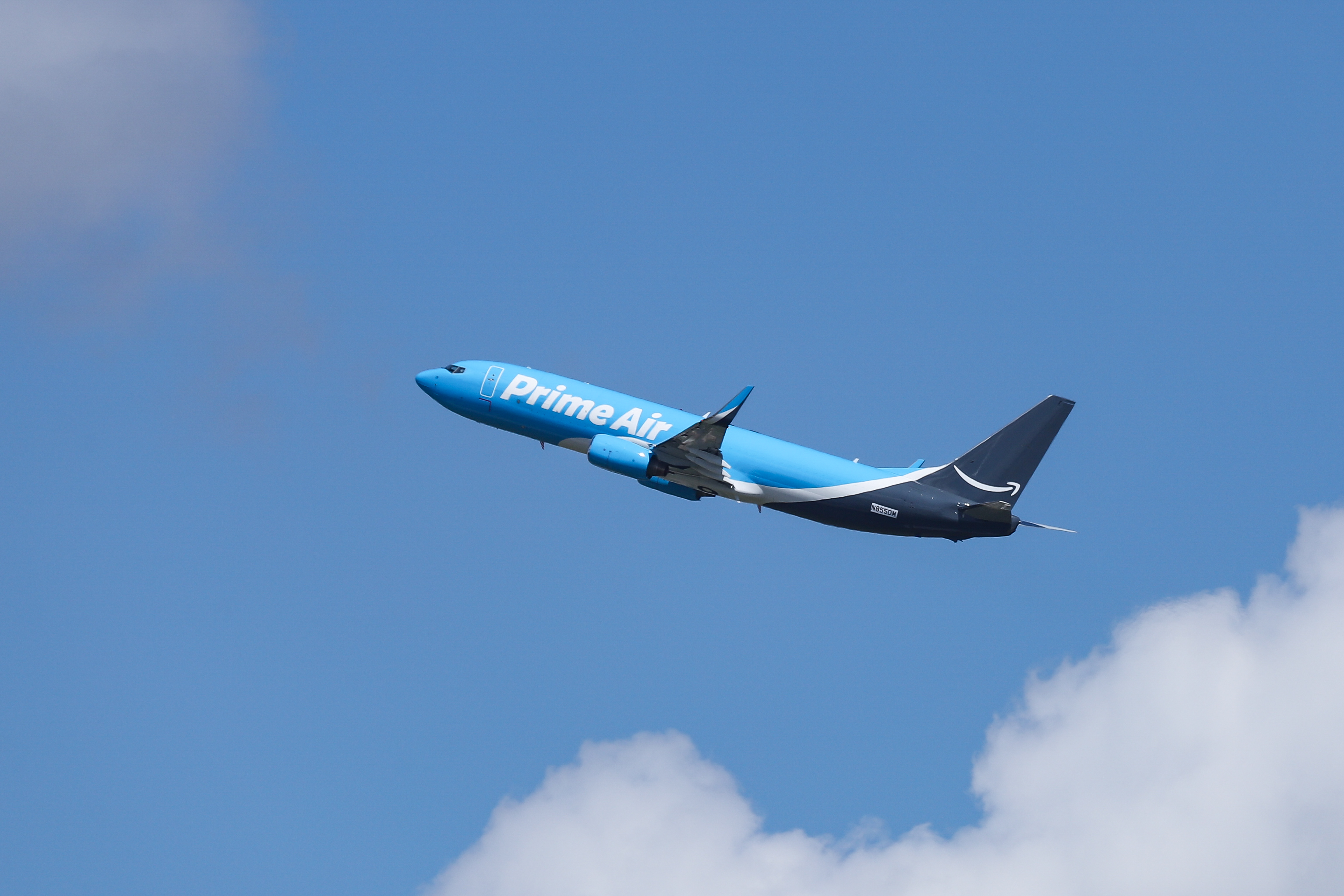
The National Labor Relations Board filed a complaint against Amazon on Monday for having its employees sign a confidentiality agreement that the Board says restricts their rights to unionization. The complaint names Andy Jassy, Amazon’s CEO, as well as two Amazon Prime Air supervisors, as people who required employees to sign the agreement. 

The complaint comes in response to an unfair labor practice charge filed in May by the plaintiff, Cheddi Skeete, who formerly worked on Amazon’s drone delivery program out of the company’s office in Seattle. As a condition of Skeete’s employment, Amazon had him sign a “Confidentiality, Noncompetition, and Invention Assignment Agreement” in August of 2021, the complaint states. It then quotes the confidentiality agreement in full. 

“During employment and at all times thereafter, Employee will hold all Confidential Information in strictest confidence and will not acquire, use, publish, disclose, or communicate any Confidential Information except as required in connection with Employee's work without the prior written approval of an authorized officer of Amazon,” the agreement states. 

The provision defines confidential information as: “proprietary or confidential information of Amazon in whatever form, tangible or intangible, whether or not marked or otherwise designated as confidential, that is not otherwise generally known to the public,” such as Amazon’s “business, projects, products, customers, suppliers, inventions, or trade secrets.” Some examples listed in the provision include “published and unpublished know-how…Amazon pricing policies…and future plans relating to any aspect of Amazon’s present or anticipated business.” Confidential information, the provision states, does not include the terms and conditions of the signer’s employment. 

The Board alleges in the complaint that because the nature of the confidential information policy was so broad, it restricted workers’ rights to unionize. 

“The language in Cheddi’s hiring agreement was overbroad,” said Seth Goldstein, a lawyer at Julien, Mirer, Singla and Goldstein, who represents Skeete. “It didn’t allow him to talk about anything at the company. You can’t talk about business functions, can’t talk about customers, can’t talk about anything at work. If you can’t talk about anything at work, it becomes very difficult to organize and engage in collective action, or speak out about anything.” 

Goldstein said this agreement applies to “almost a million” corporate Amazon employees. Indeed, the complaint states that the alleged illegal labor practices “affect employees at all of [Amazon's] U.S. locations” and demands that Amazon “rescind the unlawful confidentiality policy” and notify all its employees that it is no longer in effect. 

Amazon spokesperson Mary Kate Paradis told Motherboard in an email that nothing in the agreement restricted workers’ rights under the National Labor Relations Act.

“Confidentiality agreements are a common business practice,” Paradis said. “In this instance, the NLRB is taking one line of our agreement out of context and we look forward to showing that through the legal process.”

Paradis also said that Amazon disagreed that Skeete had been retaliated against, and said he was terminated for poor performance. 

Though the NLRB complaint focuses mainly on the confidentiality policy, Skeete was also asked to sign a non-compete agreement. The Board’s General Counsel recently decided that overly broad non-competition agreements are illegal, and retroactively rescinded. Such agreements, the Board said at the time, unduly restrict workers’ job opportunities. 

“This is a huge development,” Goldstein said. “I don’t know if this would have happened six months ago. I think it’s a cautionary tale to employers that they’d better get with the program and start looking at their policies, because we’re looking at them, and if there’s any violations we’re going to be sending it over to the Board.”

13 Sep 14:29

The iPhone Just Got a Little Less Special. Good!

by Nitish Pahwa
12 Sep 20:12

The scooter wars might be over, as Lime claims victory

by Andrew J. Hawkins
Lime and Tier scooter facing each other
Photo by Omar Havana / Getty Images

The shared electric scooter business has gone through a series of ups and downs over the last few years — mostly downs, if we’re being honest — but now, one company is ready to claim the mantle of victor.

Lime released a new set of financial figures that it says proves that last year’s slim profits were no fluke. The company reported gross bookings of $250 million in the first half of the year, a 45 percent increase over the same period last year. And it’s touting an adjusted EBITDA profitability of $27 million — the first time the company has achieved this for the first half of the year and a 45 percent margin increase over last year — and an unadjusted $20.6 million profitability.

To say that Lime is feeling itself would be an...

Continue reading…

12 Sep 20:07

The unconstitutional plan to stop women from traveling out of state for an abortion, explained

by Ian Millhiser
A brown building with a sign reading Women’s Reproductive Clinic, seen from the outside.
The exterior of the Women’s Reproductive Clinic, which provides legal medication abortion services, in Santa Teresa, New Mexico, on June 15, 2022. | Robyn Beck/AFP via Getty Images

The age of travel bans is now upon us.

More than a year ago, anti-abortion activists appeared eager to prohibit anyone seeking an abortion in a state where it is banned from traveling to another state where it is legal. Indeed, many lawmakers appeared so eager to enact such travel bans that Justice Brett Kavanaugh, of all people, attempted to cut off these laws before they could be enacted.

“May a State bar a resident of that State from traveling to another State to obtain an abortion?” Kavanaugh asked in his concurring opinion in Dobbs v. Jackson Women’s Health Organization (2022), the decision overruling Roe v. Wade. “In my view, the answer is no,” Kavanaugh replied to his own question, “based on the constitutional right to interstate travel.” The Constitution has long been understood to allow US citizens to travel among the states.

For the most part, state and local lawmakers have not tested whether Kavanaugh would hold to this view if a travel ban actually became law. But a few jurisdictions in Texas are now breaking with this consensus. As the Washington Post reports, two Texas counties and two Texas cities have passed local ordinances making it illegal to transport someone through one of these counties or cities for the purpose of obtaining an out-of-state abortion.

Notably, this list of anti-abortion localities includes Mitchell County, Texas, a sparse community of about 9,000 people. This matters because Interstate 20, the route that many people traveling from Dallas to New Mexico to receive an abortion will take, passes through Mitchell County. Several other counties with major highways or airports are also considering similar laws.

These ordinances and proposed ordinances largely track model legislation, which anti-abortion activist Mark Lee Dickson shared on Twitter, that is itself modeled after SB 8 — the statewide anti-abortion law that allows private bounty hunters to sue abortion providers and collect bounties of $10,000 or more.

In fairness, Dickson’s model legislation does prohibit such bounty hunter suits from being filed against “the pregnant woman who seeks to abort her unborn child.” But the legislation would potentially allow abortion funds that help pay for abortion care, or anyone who drives a pregnant patient to an out-of-state abortion clinic, to be sued.

Ordinarily, Kavanaugh’s preemptive rejection of travel bans would be a clear sign that these laws will not survive judicial review. But, in Whole Woman’s Health v. Jackson (2021), the Supreme Court effectively shut down federal lawsuits challenging unconstitutional laws that are enforced solely by bounty hunters. And Kavanaugh joined the Court’s decision in Jackson.

The upshot is that these unconstitutional Texas ordinances may succeed, not because they are lawful but because the Supreme Court has largely immunized them from constitutional review.

Travel bans are unconstitutional

Citizens of the United States have a right to travel freely among the states. As the Supreme Court said in Shapiro v. Thompson (1969), “the nature of our Federal Union and our constitutional concepts of personal liberty unite to require that all citizens be free to travel throughout the length and breadth of our land uninhibited by statutes, rules, or regulations which unreasonably burden or restrict this movement.”

Indeed, the Supreme Court held over 150 years ago that states may not impose even fairly insignificant barriers on US citizens who wish to travel outside that state. This issue arose in Crandall v. Nevada (1867), which struck down a Nevada law that imposed a tax of one dollar “upon every person leaving the State by any railroad, stage coach, or other vehicle engaged or employed in the business of transporting passengers for hire.”

In striking down this fairly small tax, the Court spoke in sweeping terms about each citizen’s right to travel freely. “We are all citizens of the United States, and as members of the same community must have the right to pass and repass through every part of it without interruption, as freely as in our own States,” the Court declared in Crandall.

Moreover, the Court also made clear that this rule applies equally to “persons residing in the State who may wish to get out of it, and upon persons not residing in it who may have occasion to pass through it.”

Again, Crandall involved a fairly minor imposition on travelers: a single dollar tax (about $18 in today’s value). If the Constitution does not permit such a small burden to be laid on interstate travelers, it follows that a state or local government may not effectively take someone hostage for months — potentially for the duration of their pregnancy — in order to prevent them from leaving the state to obtain an abortion.

As the Court explained in Saenz v. Roe (1999), the right to travel has “three different components” — the right of citizens to “enter and to leave another State,” the right to be treated “as a welcome visitor” when visiting another state, and the right to be treated the same way as established residents of a state after moving to that state. Each of these rights flows from a different provision of the Constitution.

Of those three components, the right to travel out of state to obtain an abortion flows from the right to citizens to “enter and leave another State,” and the Court indicated in Edwards v. California (1941) that this right is rooted in a doctrine known as the “Dormant Commerce Clause.” The Constitution gives Congress the power to “regulate commerce . . . among the several states,” and the Court has long held that, by vesting authority over multi-state commerce in the national government, the Constitution implicitly prevents states from enacting laws that impose excessive burdens on commerce among the states.

That includes laws that burden people’s ability to travel across state lines. As Edwards held, “it is settled beyond question that the transportation of persons is ‘commerce.’”

For what it’s worth, Dickson told the Washington Post that his model ordinance is lawful because it is similar to the federal Mann Act, which makes it illegal to transport “any woman or girl for the purpose of prostitution or debauchery, or for any other immoral purpose.” If the Mann Act is constitutional, he argued, so too must a travel ban targeting abortions be constitutional.

Dickson might have a point if Congress enacted a Mann Act-like law that prohibits interstate travel to obtain an abortion. But, again, the Constitution gives Congress, and not state or local governments, exclusive authority over interstate commerce. Neither Texas nor any Texas county may pass a law that targets conduct occurring in New Mexico. Nor may they prevent people in Texas from leaving the state.

The fact that travel bans are unconstitutional might not matter to this Supreme Court

The Court’s decision in Whole Woman’s Health v. Jackson looms over this discussion of travel bans like a plague. Dickson’s model legislation was clearly written with Jackson in mind, as it relies on the sort of private bounty hunters that the Court embraced in Jackson.

As a general rule, someone who fears that their rights will be curtailed by an unconstitutional state or local law may obtain a federal court order blocking that law. The Supreme Court held in Ex parte Young (1908) that someone seeking such a court order must sue the specific state official who is tasked with enforcing the unconstitutional law. So, for example, if Texas passed a law ordering the state police to blockade I-20 to prevent anyone from traveling on it to obtain an abortion, a plaintiff who wished to block this law might sue the head of the state’s police force.

SB 8, the law the Court embraced in Jackson, tried to immunize itself from judicial review by stating that no state official may attempt to enforce it — only private bounty hunters filing lawsuits could do so. And, in a 5-4 decision, the Supreme Court agreed that this bounty hunter framework immunized the law from federal lawsuits seeking to block it.

In fairness, someone who is sued under SB 8 could still allege at their trial that the law is unconstitutional. But SB 8 permits virtually anyone to sue any abortion provider who performs an abortion after the sixth week of pregnancy. So anyone accused of violating the law risked being bombarded with so many lawsuits that their legal fees would bankrupt them.

That’s why it was so important to block the law before anyone was sued under it, and why the Supreme Court’s decision to immunize SB 8 from federal review was such a harsh blow to abortion rights in Texas.

Meanwhile, Dickson’s model legislation uses a similar mechanism to evade judicial review. Under that legislation, the ban on traveling through the wrong Texas county to help someone obtain an abortion “shall be enforced exclusively through ... private civil actions.”

As a practical matter, it’s unclear if this framework will actually be effective in deterring people from traveling to New Mexico to seek abortions. If a man drives his pregnant girlfriend through Mitchell County on the way to an abortion clinic in New Mexico, how is anyone other than the two of them supposed to know where they are headed?

But the law could wind up deterring women in abusive relationships, or other patients whose acquaintances or family members learn that they are seeking an abortion. Indeed, according to the Washington Post, Dickson suggested that “a husband who doesn’t want his wife to get an abortion could threaten to sue the friend who offers to drive her.”

If that lawsuit happens, the wife’s friend should prevail — he can argue at trial that the Mitchell County ordinance violates the constitutional right to travel. But even if this friend does prevail, they will wind up having to hire legal counsel and endure the stress of a lawsuit that never should have been filed in the first place.

12 Sep 02:07

LinkedIn Is Glowing Up

by Lizzie O’Leary
08 Sep 15:33

Companies aren’t showing whether their environmental promises have any impact

by Justine Calma
A tree sapling surrounded by wire fencing
Oak saplings grow in tree guards in Montmorency Forest in France on Thursday, September 17th, 2020.  | Image: Cyril Marcilhacy / Bloomberg via Getty Images

A lot of companies that have pledged to restore ecosystems aren’t showing results, according to a new analysis of 100 of the world’s biggest businesses. They might have promised to plant trees and help dwindling forests gain more ground, but many of those companies have made vague commitments and aren’t sharing enough information to track their progress.

There’s so little transparency that it’s virtually impossible to know whether companies’ environmental commitments are having any positive impact. “Put simply, the evidence base supporting large corporations’ claims about ecosystem restoration is wholly insufficient,” says the analysis published today in the journal Science.

There’s so little transparency that it’s virtually impossible...

Continue reading…

08 Sep 15:32

BMW drops plan to charge a monthly fee for heated seats

by Andrew J. Hawkins
BMW i4 interior
Photo by Abigail Bassett for The Verge

BMW owners can now warm their buns with peace of mind, knowing they won’t have to pay a ridiculous monthly fee for the pleasure of a toasty backside during those cold winter months. BMW has dropped its plans for an $18 a month heated seats subscription after customers balked at the idea of paying extra to unlock existing functions in their cars.

This comes courtesy of Autocar’s interview with Pieter Nota, BMW board member for sales and marketing, during the IAA Mobility conference in Munich. Nota said the heated seats subscription fell under the automaker’s broader experiments with microtransactions — just not a very successful one.

“We thought that we would provide an extra service to the customer by offering the chance to activate...

Continue reading…

07 Sep 14:11

Zoom introduces Notes

by Barbara Bouchard

Zoom Notes allows users to collaborate before, during, and after meetings to help drive productivity and alignment

August 30, 2023 – Zoom has announced Notes, a new workspace to create and collaborate before, during, and after meetings. Zoom Notes allows users to create and share content within a Zoom Meeting and collaborate with others on the call for real-time inputs—eliminating the distraction of jumping between Zoom and third-party documents and tools. Users can even continue to work in Notes outside of meetings asynchronously and share them for collaboration anytime, anywhere.

“We wanted to offer a clean user experience that allows users to create agendas and notes while staying within the Zoom platform instead of jumping to other content management tools,” said Darin Brown, head of productivity applications at Zoom. “With Notes, it’s seamless to create and share personal and collaborative notes in and out of meetings.”

With Notes, Zoom users can seamlessly collaborate before, during, and after meetings so that all necessary stakeholders are on the same page:

  • Before a meeting: Create a note, build an agenda, and share it with attendees in advance of the meeting.
  • During a meeting: Open a note and share it with others so they can collaborate during the meeting.
  • After a meeting: Share a note with anyone who may benefit from the content.

Functionality 

Users will be able to easily access existing notes from the in-meeting navigation bar or start a new note during a meeting. Note creators will have the ability to initiate a sharing session during the meeting to collaborate in real-time, just like Zoom Whiteboard.

Zoom Notes offers a robust editor with extensive formatting options such as font, styling, bullets, colors, and more. Additionally, users can add images and links to their Notes, and content is auto-saved at regular intervals to preserve work. From quick and simple memos to robust notes and documentation, Notes provides a clean workspace to capture and share content in and out of meetings.

Notes creators have the ability to grant access to other attendees during a meeting only or to extend access after the meeting. If an attendee joins late and a note has already been shared in the meeting, they will see the shared note at the top of their Notes tab in the Zoom client. Users also have the ability to multitask by taking notes alongside the meeting, or by expanding and collapsing the right panel so they can take notes on another screen.

The Notes dashboard also offers the ability to sort, filter, and share Notes. Users can take advantage of key management functions like starring (favoriting) a note for later, and deleting, editing, or sharing a note directly from the dashboard.

Available for all users at no additional cost, Notes will roll out in the coming weeks.

About Zoom

Zoom is an all-in-one intelligent collaboration platform that makes connecting easier, more immersive, and more dynamic for businesses and individuals. Zoom technology puts people at the center, enabling meaningful connections, facilitating modern collaboration, and driving human innovation through solutions like team chat, phone, meetings, omnichannel cloud contact center, smart recordings, whiteboard, and more, in one offering. Founded in 2011, Zoom is publicly traded (NASDAQ:ZM) and headquartered in San Jose, California. Get more info at zoom.com.

The post Zoom introduces Notes appeared first on Cloud Communications Alliance.

07 Sep 10:28

Mini’s new Cooper EV centers a giant circular OLED on the dash

by Wes Davis
A picture of the interior of the 2025 Mini Cooper, seemingly taken from between the driver and passenger seats. It shows the steering wheel, center OLED screen, and dashboard.
The 2025 Mini Cooper EV’s interior. | Image: Mini

The 2025 Mini Cooper EV reveal is showing off a facelift, increased range, and a giant, round OLED screen floating in front of the dashboard. The company says the Cooper E and Cooper SE — the two EV variants — have 190 miles and 250 miles of range, respectively, as calculated using the European EV test cycle. (Those numbers could drop to around 175 miles and 215 miles each when the EPA test cycle is applied, per Ars Technica.)

But about that big OLED touchscreen that now floats in front of the center of the dashboard instead of the embedded rectangle in past models. The company teased the Cooper’s redesigned interior earlier this year with videos showing the screen’s animations and followed that up with another release with more detail...

Continue reading…

06 Sep 23:10

Zoom is even less happy about Microsoft Teams than you are

by Nathan Edwards
Illustration of the Zoom logo on a blue and black background.
Illustration by Alex Castro / The Verge

Hot on the heels of the EU forcing Microsoft to stop bundling Teams into Office in Europe, Zoom’s CEO is suggesting that the US Federal Trade Commission might want to look into doing the same stateside.

Bloomberg reports that Zoom CEO Eric Yuan made the remark at the Goldman Sachs Communacopia + Technology Conference in response to a question about Microsoft unbundling Teams in Europe. The unbundling comes after EU regulators opened an investigation in July in response to a complaint by Slack, another Teams competitor that Microsoft more or less crushed by adding Teams to Office 365 for no additional cost. “You should ask this question to the FTC as well,” Bloomberg quotes Yuan as saying.

He’s got a point about bundling! Vox Media...

Continue reading…

06 Sep 23:10

Zoom CEO Calls On Feds To Investigate Competitor Microsoft’s Teams Bundling

by Gina Narcisi
“We have huge competitors, sometimes they bundle everything together … No matter what, you’ve got to be fair,” Zoom CEO Eric Yuan said at the Goldman Sachs Communacopia + Technology Conference on Tuesday.
04 Sep 03:08

Sinch MessageMedia Announces Increased Capabilities of its HubSpot SMS & MMS Integration

by Barbara Bouchard

New Service Hub integration builds on the company’s existing offerings, which connect marketing, support, and sales teams to SMS customers and prospects directly from the HubSpot platform

DENVER, CO, USA and STOCKHOLM, SWEDEN – August 29, 2023 – Sinch (Sinch AB (publ) – XSTO: SINCH), which powers meaningful conversations between businesses and their customers through its Customer Communications Cloud, today announced that Sinch MessageMedia’s industry-leading, two-way SMS and MMS capabilities are being integrated into HubSpot’s Service Hub. This new integration provides marketing, sales and service teams with a 360-degree view of customers’ communications all within the platform, ensuring full visibility across their business and consistent message delivery across channels.

“Businesses today face the ongoing challenge of juggling customer inquiries and engagements across multiple channels — email, phone, SMS and social. Through this new SMS and MMS Service Hub integration, Sinch MessageMedia makes it easy to streamline communications throughout the entirety of the customer journey. By connecting each part of our customers’ businesses together — from marketing and sales to service and support — we ensure the right messages reach the right people on the platforms they prefer,” said Doug Rubingh, President, U.S. & U.K., Sinch MessageMedia.

“Our customers want to achieve great results fast, and we’re always looking to provide solutions and tools that will help them do their jobs quickly and streamline operations,” said Scott Brinker, VP of platform ecosystem at HubSpot. “Sinch MessageMedia’s offering is a great option for achieving that efficiency, and we’re excited that they’re a part of the App Partner Program.”

In today’s macroeconomic environment, it is increasingly important for brands to maintain a strong sense of connection with their customers, and conversational messaging bolsters these customer engagement efforts. In fact, research from Sinch MessageMedia shows customers are 82% more likely to have a favorable impression of a company’s brand simply by being able to engage in two-way conversations.

Sinch MessageMedia’s SMS for HubSpot solution provides powerful one-to-one conversational messaging that enables brands to build stronger relationships with their customers. In addition to this new Service Hub integration, Sinch MessageMedia is also compatible across other areas of HubSpot’s CRM platform, including the Marketing and Sales Hubs. Specific benefits include:

  • Real-Time Communication: Customers today expect instantaneous responses – especially when reaching out for support. Recent Sinch MessageMedia research found that 33% of customers expect an immediate response when digitally connecting with a brand; SMS can help businesses deliver prompt service, respond to urgent issues, and maintain real-time communication with customers, all within the Service Hub.
  • Customer Engagement: SMS messages have high open rates; using this channel for customer service can lead to higher engagement rates, more reliable delivery of critical updates and information, and more satisfied customers.
  • Personalized Service: With HubSpot’s CRM capabilities and Sinch MessageMedia’s integration, businesses can personalize their SMS communications based on customer information and previous interactions, improving customer experience. This can lead to more effective, customer-centric service, and save teams time getting up to speed.
  • Automation Opportunities: With HubSpot’s automation capabilities, businesses can automate certain SMS communications, such as appointment reminders, order updates, delivery reminders, and service updates. This helps businesses improve efficiency and consistency in their customer service.
  • 360-Degree View & Centralized Communication History: All SMS communications are logged within the same system as other customer interactions, providing support agents with a comprehensive view of each customer’s communication history, enabling them to deliver more informed and cohesive service.

To learn more about Sinch MessageMedia’s capabilities, visit the team at INBOUND (Booth 20) in Boston, September 5-8, 2023 or explore the website here.

The post Sinch MessageMedia Announces Increased Capabilities of its HubSpot SMS & MMS Integration appeared first on Cloud Communications Alliance.

01 Sep 03:01

The NYPD will police Labor Day parties with surveillance drones

by Sean Hollister
A Skydio 2 drone. | Photo by Vjeran Pavic / The Verge

If there’s a drone flying over your backyard party this Labor Day / J’Ouvert / West Indian Day Parade weekend in New York City, it might be the police — because the NYPD have apparently granted themselves the power to surveil the city that way.

“If a caller states there is a large crowd, a large party in the backyard, we’re going to be utilizing our assets to go up, go check on the party,” said assistant NYPD commissioner Kaz Daughtry, at a live press conference earlier today.

Lest you think we’re taking that out of context, here’s the full quote I just transcribed:

We’re going to be utilizing technology, we’re going to be utilizing drones for this J’ouvert weekend. The drones are going to be responding to non-priority calls and...

Continue reading…

31 Aug 19:15

Rivian’s new dual-motor R1T will get up to 410 miles of range

by Andrew J. Hawkins
Rivian R1T
Image: Rivian

Rivian revealed the range for its new dual-motor R1T, and it surely does not disappoint.

The Dual-Motor and Performance Dual-Motor R1T will have the “best range in our lineup,” Rivian said in a tweet, with an EPA estimated 410 miles when coupled with the company’s Max battery pack and 352 miles with the large pack. That’s all predicated on 21-inch wheels, which surely help propel the R1T to its full range. Range figures for the R1S SUV are still forthcoming, the company added.

Rivian opened up reservations for the Dual-Motor and Performance Dual-Motor R1T back in April. Recently, the company invited a bunch of reporters out to its Normal, Illinois, factory for a test drive (which I sadly was unable to join) as well as to experience its...

Continue reading…

31 Aug 19:11

The annual cost of owning a car has skyrocketed in the last year to over $12K

by Wes Davis
A picture of a car dealership showing the front of several cars in a lot, three blue and silver lines of streamers strung from poles above, and a small building behind them, on a cloudy day.
A July picture of a car dealership in Chicago, Illinois. | Photo by Scott Olson / Getty Images

Americans are now paying an average of $12,182 to own and operate a brand-new vehicle, or $1,015 per month, according to AAA.

That’s a big jump over 2022, when the average cost of owning a car was $10,728. The increase, AAA says, comes down to higher prices for new cars, increased depreciation after they’re purchased, and falling used car values — as well as the auto industry’s shift toward big, feature-laden vehicles at the expense of more utilitarian cars.

When The Verge’s Thomas Ricker covered a similar AAA report in his First Click newsletter discussing car sharing as an alternative in 2015, Americans spent just $8,698 annually for new cars.

In 2015, Americans spent just $8,698 annually for new cars

Half-ton pickup trucks are the...

Continue reading…

31 Aug 19:09

How Louisiana — one of the nation’s wettest states — caught on fire

by Li Zhou
Louisiana’s largest fire.
The Tiger Island Fire burns near the Beauregard parish in Louisiana. | Louisiana Department of Agriculture and Forestry

Even traditionally wet states are experiencing unprecedented wildfires.

An unprecedented series of wildfires is burning in Louisiana, making it the latest state to navigate a major natural disaster in recent months. Wildfires — though they take place in the state annually — aren’t typically as frequent or as big as they have been this year.

Much like other places, Louisiana is experiencing record-breaking heat and dryness, which have made it easier for wildfires to proliferate. Both issues are likely being made worse by climate change, which contributes to higher temperatures and drier vegetation. And what we’re witnessing this year is likely just the start: According to LSU researchers, wildfire risk in the state is expected to increase 25 percent by 2050, with the magnitude of property damage poised to grow by more than 100 percent.

“Our state has never been this hot and dry and we have never had this many fires,” Louisiana Gov. John Bel Edwards wrote in a recent social media post. And as Mike Strain, the state’s commissioner for agriculture and forestry, told the Washington Post, “This is probably the driest conditions, the most drought-prone conditions we’ve had in a generation.”

Currently, the largest fire in the state is the Tiger Island Fire, which covers more than 30,000 acres in southwestern Louisiana. Additionally, there are smaller fires across the state, including ones that have claimed two lives. Collectively, these fires have covered roughly 60,000 acres total, an area larger than the city of Washington, DC. They’ve led, too, to the declaration of a state of emergency in at least 17 Louisiana parishes and the evacuation of at least one town near the Texas border where the Tiger Island Fire is located.

Because the state has seen historically high temperatures and a massive drought, it’s been easier for fires to ignite from phenomena like lightning strikes that otherwise might not trigger blazes. In Louisiana, fallen trees and brush from recent hurricanes, as well as large swathes of dry pine forests, have helped provide kindling. Human activity like improperly discarded cigarettes or outdoor cooking may have also played a role in some fires, Strain told NPR. The state currently has a burn ban in place to try to cut down on some of these potential causes.

Louisiana’s unusual fire season comes as other places in the US and Canada have experienced similar conditions that have contributed to an unprecedented North American fire season. Earlier this month, the Hawaiian island of Maui also experienced a devastating wildfire buoyed by dry conditions and high winds. Canada, too, has seen an especially severe fire season due to how hot and dry it’s been in different parts of the country.

The Louisiana wildfire adds to an unusual wildfire season

Extreme heat has been a major driver behind how severe this wildfire season has been for certain states in the US and provinces in Canada.

Historically, Louisiana, which is known for being a wetter state, has seen an average of 771 fires per year that burn an average of 8,217 acres every year, according to the Washington Post. This year, it’s seen 600 wildfires in just one month, with the acreage burned surpassing tens of thousands of acres.

At the same time, the state has also seen some of the hottest temperatures it’s ever observed, with some places reaching upward of 110 degrees Fahrenheit. In New Orleans, for example, temperatures usually hover around a high of 91 degrees Fahrenheit in August, but the city hit a record 102 degrees Fahrenheit this year. Some of this is due to a unique high-pressure heat dome that’s trapped heat across many states in the south.

The impact of the heat has been compounded by the drought the state is in, which has meant significantly less rainfall than past years. Per the Louisiana Radio Network, the state has seen 20 inches less rain than it typically would at this time of year. Officials in Louisiana have emphasized that the state likely needs much more rain to combat the wildfires, which could continue through September, when it’s expected to stay dry. “This is not done. We expect a dry September. So we got to be prepared for this and all work together until the rain comes,” Strain told reporters at a Tuesday press conference.

The Louisiana National Guard as well as resources from neighboring states, including over 1,000 emergency responders in the South, have been deployed to fight the fires. As of earlier this week, the largest Tiger Island Fire has been 50 percent contained, meaning firefighters feel like there’s a strong enough boundary established to prevent that section of fire from spreading further. The focus on containment in the case of the Tiger Island Fire has been driven by the homes and people who could be harmed by it: It has destroyed 20 structures in Merryville, Louisiana, and could threaten other rural communities.

The challenges Louisiana faces with these fires are comparable to those in other areas, like Canada, which has seen similar dynamics fuel one of its worst fire seasons in years. In 2023, Canada has seen more than 37 million acres burned, which is over double the area that’s been affected in past years. More than 1,000 fires are still burning in Canada, with wildfire smoke drifting southward and affecting air quality in dozens of US cities.

According to a recent study from the World Weather Attribution, climate change has helped bolster the conditions needed for the fires in Canada to take place. Louisiana officials, including state climatologist Barry Keim, have pointed to climate change as a factor in their state’s fires as well.

“Hot, dry and gusty conditions like those that fed this year’s wildfires in eastern Canada are now at least twice as likely to occur there as they would be in a world that humans hadn’t warmed by burning fossil fuels,” writes Raymond Zhang in a New York Times story on the WWA study.

31 Aug 01:44

Bitcoin ETFs have 75% chance of approval this year: Bloomberg analysts

Bloomberg ETF analysts raised their odds for a spot Bitcoin ETF approval after the recent Grayscale victory against the SEC.
31 Aug 01:40

OnePlus’ impressive first tablet just received its first discount

by Brandon Widder
The OnePlus Pad in its keyboard case.
With high-end specs and a midrange price, the OnePlus Pad is a welcome return to form. | Image: Dan Seifert / The Verge

It’s been a surprisingly good year for Android tablets, with Samsung’s Galaxy Tab S9 series and the Google Pixel Tablet both having launched within the past couple of months. The OnePlus Pad also arrived earlier this year, and though it might not carry the same clout as a Google or Samsung tablet, it’s a solid device that’s available from OnePlus right now with a free OnePlus Stylo stylus for $429.99 ($50 off).

For the money, OnePlus’ first tablet packs a bit of punch. The 11.6-inch slate is less expensive than competing devices from Google, Apple, and Samsung, yet it comes with an array of high-end features, including a quad-speaker system and a pixel-dense LCD display that refreshes at up to 144Hz. It also features a 7:5 aspect ratio...

Continue reading…

28 Aug 21:12

Google Home automation just leapfrogged everyone

by Nathan Edwards
Photo of a phone running the Google Home app.
Google Home automations just got a lot more powerful. | Photo by Jennifer Pattison Tuohy / The Verge

Google Home is getting smarter. In a pair of blog posts published today, Google announced a bunch of new automation starters and actions rolling out in the Home app as well as some really cool features coming to the script editor for those enrolled in Public Preview.

The new starters in the Home app include the ability to trigger routines when devices open or close, in response to temperature or humidity changes or occupancy sensing, if devices are plugged in, start charging, or dock or undock, or if the volume is muted or unmuted.

Image: Google
The new automations go a long way toward making Google Home an actual smart home platform.

New actions include opening or closing devices (like shades), pausing or...

Continue reading…

28 Aug 21:06

SwitchBot’s new robot vacuum mop is the closest thing yet to a sci-fi cleaning robot

by Jennifer Pattison Tuohy
The SwitchBot S10, the company’s first robot vacuum for the US market, brings with it some unique features. | Image: SwitchBot

Smart home robotics company SwitchBot — of robot finger fame — has come up with another ingenious solution for automating boring chores in your home. This one is a sizable leap toward a Rosie the Robot vision of a fully autonomous robot house cleaner, though without the personality. The SwitchBot S10 is a new robot vacuum and mop that autonomously drains and refills its dirty and clean water tanks using a battery-powered water station that hooks directly into your plumbing.

Combined with an auto-empty charging dock that dries the mop, the S10 is the most fully automated floor cleaner I’ve seen. You won’t need to refill its mopping tank, deal with emptying dirty water post-clean, or mess with its mops. The only dirty work you need to do...

Continue reading…

23 Aug 21:45

SaaS prices jump 12% on average: report

by Alexei Alexis

Microsoft and Salesforce are among the enterprise software vendors that have increased prices in the last 12 months.

23 Aug 21:45

Netflix is justing giving DVDs away now

by Adam Clark Estes
Netflix founder Reed Hastings sitting in a mail crate full of red DVD envelopes.
Netflix founder Reed Hastings holds up a few dozen DVDs headed to eager households in 2002, when the company had 500,000 subscribers. | Justin Sullivan/Getty Images

Netflix is finally completing its pivot away from shipping DVDs — and it’s not asking for its discs back either.

Netflix is treating the end of the DVD era like a birthday party — or a funeral, depending on your point of view. The company announced in April that it would send its last DVD by mail on September 29, a little over 25 years after it sent the very first one. (Fun fact: The very first red Netflix envelope contained Tim Burton’s Beetlejuice.) If you’ve never heard of DVD.com or you thought Netflix got out of the disc-shipping business years ago, that’s understandable. But now is your chance to own a piece of it.

This week, Netflix said that DVD.com subscribers can keep all the discs they had rented just before the company went out of business. “We are not charging for any unreturned discs after 9/29,” the company explained in a tweet. “Please enjoy your final shipments for as long as you like!” And on top of that, DVD.com subscribers can sign up for a surprise shipment of up to 10 extra discs to show up in their mailbox after the site shuts down. Think of them as party favors on your way out the door.

You might not think this is so exciting if you’re one of the more than 1 million subscribers to DVD.com, many of whom are surely sore about the demise of the mail-order service. While the streaming wars have made it seem as though there’s more content online than anyone could ever watch or want, it’s easy to overlook the fact that Netflix’s DVD business still had huge appeal to people who lived in rural areas or who liked movies that were unlikely to show up on a streaming service. That Netflix is now going to let some of those folks keep a dozen or so discs for good makes the company look generous. But it also highlights how many of its most loyal customers it’s leaving behind.

The fact of the matter is that Netflix has been planning to abandon DVDs since the 20th century. Netflix co-CEO Ted Sarandos has recalled how Netflix founder Reed Hastings told him back in 1999 that he planned to take the business completely online as soon as the economics worked out. “Back then, [Hastings] said that postage rates were going to keep going up and the internet was going to get twice as fast at half the price every 18 months,” Sarandos told Variety in 2018. “At some point those lines would cross, and it would become more cost-efficient to stream a movie rather than to mail a video. And that’s when we get in.”

That happened in 2007, when Netflix launched its streaming business, which was not quite as slick as it is today. There were just 1,000 movies to choose from, and the system worked a lot like the DVD-by-mail service. If you had the $18-a-month plan, you could only download three movies at a time, and based on your plan, you would only be able to watch 18 hours of streaming content a month. A New York Times reporter also noted at the time that he had trouble getting started “because of a mismatch between the version of Microsoft’s antipiracy software expected by the Netflix viewer and the one loaded in the PC, and it took about 15 minutes to fix the problem with the help of a customer-support specialist.” That kind of thing never happened with a DVD.

By 2011, it was clear that streaming was the future not only for Netflix but for movies and TV shows in general. That was the year Hastings orchestrated what might be the most notorious move in Netflix history: the Qwikster pivot. Sensing that the DVD business could drag down Netflix’s burgeoning streaming ambitions, Hastings decided to split the company in two: Netflix for streaming and a new company called Qwikster for DVDs by mail. The problem was that existing Netflix subscribers would end up paying significantly more for two separate services if they wanted to keep getting streaming and DVDs. Many felt as though Netflix was taking the DVD service they loved away from them. Hundreds of thousands of people unsubscribed, Netflix stock plummeted, and three weeks later, Hastings reversed course and abandoned the Qwikster split.

And that’s why you’ve probably never heard of DVD.com. Although the company made a big deal of distancing itself from the Qwikster pivot, it still went ahead and quietly spun off its DVD business. It just called it DVD.com instead of Qwikster, and it left Netflix pricing alone. And millions of people kept getting DVDs by mail. In 2011, when the split happened, that number was about 16 million, and now it’s between 1.1 and 1.3 million. Netflix’s streaming service, by comparison, added 5.9 million subscribers last quarter alone, bringing its global total to 238.4 million.

When you step back and think about it, Netflix would have a hard time shipping that many DVDs regardless of the cost. At the end of the day, movies and TV shows are just a bunch of data, whether you put that data on a disc or through an ethernet cable. Netflix’s DVD-by-mail business was making a profit as recently as the fourth quarter of 2019, the last time the company included details of DVD.com in its earnings, but it was never what the future held. Plus, whatever resources Netflix has been devoting to its DVD-by-mail business, it needs everything it can get to fight the next battle of the streaming wars.

So for all you nostalgic movie fans out there, you’ve only got a few days left to experience the end of the Netflix DVD era and claim your prize. Until the end of the day on September 29, you can sign up for a DVD.com account and get in on that last shipment of red envelopes. You can request up to eight discs at a time, plus there’s that offer to receive 10 surprise discs. And again, you will not have to send those discs back. Hold on to them. Cherish them. In a few years, when they’re considered collectibles and extremely cool by the youngest generation’s standards, sell them so you can afford to subscribe to five different streaming services.

A version of this story was also published in the Vox technology newsletter. Sign up here so you don’t miss the next one!

23 Aug 21:00

Twilio Segment teams with Amazon SageMaker on new customer predictions product

by Ron Miller
The customer data platform provides a central place to collect first-party information about customers, but simply having a pile of data is not the point. Companies want to put it to work to improve customer experience and more precisely target certain groups, based on this information they have stockpiled. More and more companies are providing […]
23 Aug 02:00

Experian fined $650,000 for not letting you opt out of its spammy emails

by Wes Davis
A screenshot of an Experian email with an image of a car, asking if the reader owns a 2011 Ford.
A screenshot of one of the Experian emails exhibited in court documents. | Image: Federal Trade Commission

Credit reporting agency Experian must pay a $650,000 fine for violating spam laws. The US Justice Department and the FTC have announced a permanent injunction granted by the US District Court in central California, forbidding the company’s deceptive marketing email practices. The regulators’ complaint last week alleged that Experian had sent customers with free credit monitoring memberships deceptive marketing emails that lacked both “clear and conspicuous notice” of the ability to opt out and “a mechanism for doing so.”

The FTC says this violates the Controlling the Assault of Non-Solicited Pornography and Marketing Act (CAN-SPAM Act). The FTC referred the case to the DOJ to file the injunction before the court granted it, ordering...

Continue reading…

23 Aug 01:58

Meta refreshes promise to roll out default end-to-end encryption in Messenger this year

by Makena Kelly
Image of the Meta logo and wordmark on a blue background bordered by black scribbles made out of the Meta logo.
Illustration: Nick Barclay / The Verge

Meta plans to roll out default end-to-end encryption for its Messenger product by the end of this year, the company confirmed in a blog post Tuesday.

“Starting today, millions more people’s chats on Messenger will be upgraded to stronger encryption standards as part of our ongoing end-to-end encryption (E2EE) testing,” the blog said. “We remain on track to launch default E2EE for one-to-one friends and family chats on Messenger by the end of the year.”

Meta first reaffirmed this commitment in a letter sent to Fight for the Future earlier this month, which was viewed by The Verge, responding to a pro-encryption campaign launched by the digital rights group last year. In the letter, Meta’s deputy privacy officer, Rob Sherman, said that...

Continue reading…

22 Aug 14:01

Threads on the web is here

by Jay Peters
An image showing the Threads logo
Image: The Verge

Meta is finally launching a much more capable web app for Threads, the company announced on Tuesday. You’ll be able to post, interact with other posts, and look at your feed, spokesperson Christine Pai tells The Verge. It’s set to roll out over the next few days, Meta CEO Mark Zuckerberg said Tuesday, and many of my colleagues got access Wednesday night or Thursday morning.

So far, Threads on the web has essentially been a glorified way to look at somebody’s profile — you couldn’t even like or reshare a post even though the web app included the buttons to do so. (If you clicked them, Threads would show you a QR code to download the mobile app.) The new desktop web interface looks a lot like the one in the mobile app, though with some...

Continue reading…

22 Aug 14:01

Meta releases multilingual speech translation model

by Emilia David
An image of the Meta logo.
Illustration by Alex Castro / The Verge

Meta released a new speech-to-text model that can translate nearly 100 languages called SeamlessM4T, as the company continues to try to make a universal translator.

SeamlessM4T, which stands for Massively Multilingual and Multimodal Machine Translation, that the company said can translate speech-to-text and text-to-text for nearly 100 languages. For speech-to-speech and text-to-speech actions, it recognizes 100 input languages and converts them into 35 output languages.

It is released under a Creative Commons CC BY-NC 4.0 license, allowing researchers to iterate upon it.

Along with SeamlessM4T, Meta also released the metadata for its open translation dataset SeamlessAlign.

“Building a universal language translator, like the fictional...

Continue reading…